


Abstract
Hypertension and derived cardiovascular disease (CVD) are among the leading causes of death worldwide. Increased oxidative stress and inflammatory state are involved in different alterations in endothelial functions that contribute to the onset of CVD. Polyphenols, and in particular anthocyanins, have aroused great interest for their antioxidant effects and their cardioprotective role. However, anthocyanins are rarely detected in blood serum because they are primarily metabolized by the gut microbiota. This review presents studies published to date that report the main results from clinical studies on the cardioprotective effects of anthocyanins and the role of the gut microbiota in the metabolism and bioavailability of anthocyanins and their influence on the composition of the microbiota. Even if it seems that anthocyanins have a significant effect on vascular health, more studies are required to better clarify which molecules and doses show vascular benefits without forgetting the crucial role of the microbiota.
1. Introduction
Hypertension, also known as high blood pressure (BP), is an important public health issue affecting approximately 1 billion people globally [1]. Hypertension is a leading risk factor for cardiovascular disease (CVD) and a major contributor to the burden of disease worldwide [2]. Elevated BP has been estimated to be responsible for approximately 7.5 million deaths and 127.5 million disability-adjusted life years each year [3]. In addition to its well-established link to heart disease and stroke, hypertension has also been linked to an increased risk of kidney disease, vision loss, and cognitive decline [4]. A better understanding of the pathogenic mechanisms and risk factors, as well as effective strategies for prevention and management, is critical for improving the health outcomes of individuals with hypertension. Genetics, environmental factors, and lifestyle factors, such as diet, play a role in the development of hypertension [5]. Diet, in particular, has a significant impact on BP regulation: a diet high in salt, saturated and trans fats, and added sugars has been shown to increase the risk of developing hypertension [6], while consumption of fruits, vegetables, whole grains, and lean proteins is under investigation for potential beneficial effects [7]. Fruits and vegetables are rich sources of various bioactive compounds, including anthocyanins. These compounds are (poly)phenols belonging to the family of flavonoids responsible for the red, purple, blue, or black colors of many fruits and berry fruits, such as grapes, but also black beans and rice, red cabbage, and blood oranges [8]. Anthocyanins are widely distributed in the plant kingdom and have a variety of properties, including antioxidant effects in plants [9]. A growing body of research suggests that anthocyanins may have a potential role in preventing CVD [10,11] and reducing the risk of hypertension [12]. Emerging evidence suggests that these compounds are largely metabolized by the gut microbiota and, subsequently, their effects on cardiovascular health would eventually be mediated by their metabolites [13]. However, the majority of preclinical studies focus on the putative antioxidant effects of anthocyanin per se, while a summary of metabolite formation operated by the gut microbiota and their actual role on cardiovascular health has not been reviewed yet. Thus, the aim of this article is to summarize the existing clinical evidence regarding anthocyanin supplementation’s effects on BP and various parameters of endothelial health, to review mechanistic studies on the role of gut microbiota on anthocyanin metabolite production, and to discuss the implications for the use of anthocyanin supplementation as an intervention for the prevention of hypertension.
2. Markers of Vascular and Endothelial Function
BP is a primary risk factor for endothelial dysfunction [14]. Reactive oxygen species (ROS) are continuously generated at low concentrations in endothelial cells due to transitory hyper- and hypoglycemia, hypoxia, and ischemia/reperfusion further contributing to the pro-oxidative and proinflammatory processes.
These conditions lead to the production of inflammatory cytokines, such as interleukin (IL)-1 beta, tumor necrosis factor-alpha (TNF-α), and C-reactive protein [15]. These molecules bind to their receptors and trigger the inflammatory signaling pathways involving protein kinase B (PKB/Akt), transcription factor nuclear factor-kappa B (NF-κB), mitogen-activated protein kinase p38, and extracellular signal-regulated kinases (ERK)1/2 leading to activation of cell adhesion molecules, a significant group of endothelial markers important for maintaining the integrity of the blood vessels [16]. Other markers influenced by the inflammatory state are proteins involved in nitric oxide (NO) synthesis and molecular adhesion. NO is a gas molecule with great importance in cardiovascular health and disease. NO could be synthesized via three isoforms of nitric oxide synthase (NOS), namely inducible NOS, endothelial NOS (eNOS), and neuronal NOS, and the correct balance among these enzymes is essential for cardiovascular health [17]. In fact, endothelial dysfunction leads to an abnormal pro-inflammatory and prothrombotic phenotype of the endothelial cells lining the lumen of blood vessels, unbalancing NO bioavailability, impairing vascular tone, and ultimately causing vascular damage [18]. Adhesion molecules, such as intercellular adhesion molecule-1 (ICAM-1) and vascular cell adhesion protein-1 (VCAM-1), are constitutively present on endothelial cells. Inflammatory processes triggered by different factors can modify their expression, facilitating transmigration of leukocytes from blood vessels into tissues and contributing to the pathogenesis of cardiovascular conditions underlined by systemic oxidative stress and inflammation [19,20]. Anthocyanins are poorly absorbed in the gastrointestinal tract and are mainly metabolized by the gut bacteria in other molecules such as gallic acid (Gal), protocatechuic acid (PCA), syringic acid (SA), and vanillic acid (VA) [21]. Many studies have explored the antioxidant and anti-inflammatory effects of anthocyanins and their metabolites [22,23], demonstrating their capacity to regulate NO production and exhibit scavenger activity, thus reducing ROS concentration and production [24] (Figure 1).
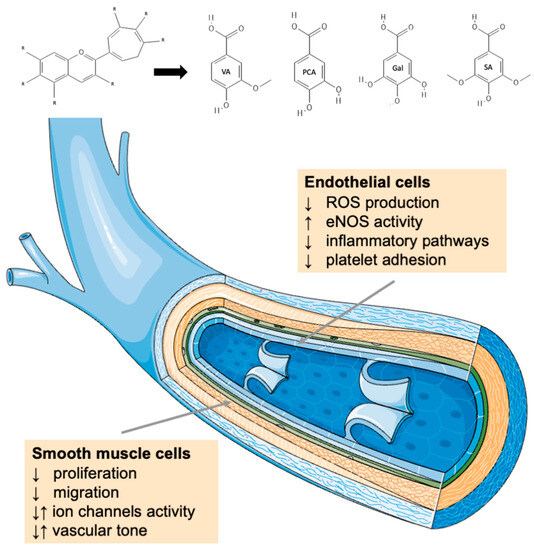
Figure 1.
Main pathways through which anthocyanins inhibit oxidative stress and inflammatory processes, including reactive oxygen species scavenging and inhibition of inflammatory cascades resulting in decreased expression of adhesion molecules and inhibition of platelet adhesion. Abbreviations: Gal (gallic acid); PCA (protocatechuic acid); SA (syringic acid); VA (vanillic acid).
3. Clinical Studies on Anthocyanin-Containing Whole Fruits
A summary of randomized clinical trials (RCTs) providing anthocyanin doses for interventions in endothelial and vascular outcomes is presented in Table 1. Only one study was conducted using whole fruits on healthy volunteers. A double-blind crossover RCT was carried out to explore the potential benefits of anthocyanins on endothelial function in 14 older participants, who were divided into the treatment group (which received 600 mg of New Zealand blackcurrant containing 210 mg anthocyanins daily) and the placebo group for seven days, followed by crossover to the other treatment, separated by 4 weeks of washout. At the end of the study, carotid–femoral pulse wave velocity (PWV) (p = 0.03) and central BP (p = 0.02) were significantly reduced after the intervention, while brachial systolic blood pressure (SBP; p = 0.03), diastolic blood pressure (DBP; p = 0.02), mean (p = 0.01), and the augmentation index (p = 0.03) decreased significantly after blackcurrant intake compared with baseline values [25]. Similar studies conducted on individuals at high cardiovascular risk showed mixed findings. Among the few studies providing whole fruits as an intervention arm, a single-blind RCT conducted on 71 individuals at higher cardiovascular risk (mean age 58 y) administered two portions of berries daily (containing 515 mg/day of anthocyanins) for 8 weeks showed a significant decrease in mean SBP in subjects with high baseline (p = 0.024) compared to control. Moreover, a significant increase in the closing time on the platelet function analyzer when ADP and collagen were used as platelet activators was detected (p = 0.018) [26]. Another 8-week single-blind clinical trial investigated the effects of blueberry consumption (containing 154 mg/day anthocyanins) in 48 individuals with metabolic syndrome (mean age 50 y) and reported a significant reduction in SBP (p = 0.003) and DBP (p = 0.04) in the blueberry group (−6 and −4%, respectively) compared to the control group (−1.5 and −1.2%) [27]. A double-blind parallel RCT investigated the cardiovascular effects of the daily supplementation of one or one half cup of blueberries (containing 364 mg or 182 mg of anthocyanins respectively) in 115 individuals with metabolic syndrome (50–75 y): after 6 months of supplementation, a significant improvement in flow-mediated dilation (FMD) (1.45% vs. 0.39%; p = 0.003) and augmentation index (−2.24% vs. 0.24%; p = 0.04) was found [28]. In another crossover RCT investigating the potential action of the daily consumption of 250 mg of raspberries (containing 225 mg of anthocyanins) in 22 adults (mean age 54 y) with elevated waist circumference and diabetes, no significant differences were observed [29]. Similarly, another double-blind RCT investigated the vascular effects of the daily supplementation of 60 mL of Montmorency tart cherry (containing 73.6 mg of anthocyanins) in 23 healthy non-smoking volunteers and reported no significant differences in SBP and DBP after 4 weeks of consumption [30].

Table 1.
Main characteristic of the clinical trials concerning anthocyanins and cardiovascular risk factors.
4. Clinical Studies on Anthocyanin-Containing Fruit Juices
Most studies investigating the potential effects of anthocyanins on vascular and endothelial health in healthy or low CVD-risk individuals have been performed by administering fruit juices. Among studies reporting significant findings, a crossover RCT investigating the effects of a 2-week oral treatment with Concord grape juice (CGJ) (containing 296 micromol/L of anthocyanins) on 26 healthy smokers on endothelial function, aortic stiffness, and BP showed that the treatment (7 cc/kg/d) led to a significant improvement in FMD (from 8.35 ± 2.83% to 9.49 ± 2.74%; p = 0.02) and PWV (from 6.13 ± 0.61 m/s to 5.63 ± 0.56 m/s; p = 0.04) in the CGJ group [31]. A double-blind parallel RCT conducted on 64 participants aimed to evaluate the effects of administration of 1000 mL per day of low-polyphenol content blackcurrant juice (40 mg/day anthocyanins), high-polyphenol content blackcurrant juice (142 mg/day anthocyanins), or placebo drink for 6 weeks, resulting in an increase in FMD (from 5.8 ± 3.1 to 6.9 ± 3.1%; p = 0.022) from the higher polyphenol content juice compared to placebo [32]. In another study conducted on 37 subjects (mean age of 55.8 years), it was observed that a daily intake of 1024 mg of anthocyanins from chokeberry (300 mL/day cold-pressed 100% chokeberry juice and 3 g/day oven-dried chokeberry powder) significantly decreased daytime ambulatory DBP (−1.64 mmHg p = 0.02) and tended to decrease 24-h DBP (−1.07 mmHg, p = 0.084) and the true awake ambulatory SBP (−2.71 mmHg, p = 0.077) and DBP (−1.62 mmHg, p = 0.057) compared to a placebo [33]. In another trial conducted on 112 healthy volunteers aged between 65 and 80 years, the effect of wild blueberry powder (500 mg and 1000 mg) or wild blueberry extract (111 mg) supplementation (which provided 1.35 mg/day, 2.7 mg/day and 7 mg/day of anthocyanins, respectively) or placebo for 6 months was evaluated: after treatment, the subjects administered the higher concentration reported a significant reduction in SBP compared to the placebo group (p = 0.039) [34]. A randomized controlled clinical trial evaluating the effect of administering 480 mL of tart cherry juice (450.6 mg/day of total phenolics and 95.9 mg/day total tannins) on BP showed that after 12 weeks of administration on a population of 34 participants (mean age of 72 years), a significant reduction of SBP in the treated group (from 141.4 ± 27.0 to 137.3 ± 5.6 mmHg; p = 0.04) compared to control group resulted [35]. Another single-blind crossover RCT was conducted on 15 healthy participants (with a mean age of 28.7 years) to evaluate the effects of 400 mL/day of blood orange juice (containing 960 mg anthocyanins): after 4 weeks, FMD increased significantly compared to the control drink (p = 0.001) [36].
In contrast to previous studies, an open-label, placebo-controlled trial conducted on 47 healthy adults with a mean age of 40 years showed that daily intake of 250 mL of cherry drink (providing 273.5 mg anthocyanins) did not lead to any significant change concerning BP or other endothelial parameters [37]. Another double-blind crossover RCT aiming to investigate the effects of CGJ (containing 167 mg of anthocyanidins and 334 mg of proanthocyanidins) in 19 healthy mothers (40–50 y) reported no effects on BP [38]. In a placebo-controlled single-blind crossover RCT, the effects of Montmorency tart cherry juice (MTCJ) on 11 healthy participants who consumed 260 mL/day of MTCJ (providing 540 mg of anthocyanins) or placebo for 20 days were evaluated, and no significant differences between conditions or interactions after the treatment were reported [39].
Among studies conducted in individuals at high CVD risk, 19 patients with an abnormal echo doppler of the carotids were separated to ingest either 50 mL/day of pomegranate juice (providing 19.2 mg of anthocyanins) or a placebo: after 1 year of treatment, common carotid intima-media thickness increased by 9% in the placebo group (from 1.52 ± 0.03 to 1.65 ± 0.04 mm; p < 0.01), whereas in the intervention group, it decreased by up to 30% (p < 0.01). An effect on carotid peak systolic velocity (p < 0.01), on end diastolic velocity (p < 0.01), and a decrease in SBP by 21% (p < 0.05) were also in evidence [40]. A small trial was conducted on 27 individuals with metabolic syndrome (mean age 47 y) who were recruited to investigate the effects of a strawberry beverage containing 154 mg of anthocyanins vs. a control group consuming 2 cups of water daily for 8 weeks resulted in a significant decrease of about 18% in VCAM-1 levels (from 272.7 ± 17.4 to 223.0 ± 14.0 ng/mL, p < 0.05) compared to the control group, but no significant changes were reported among the groups [41]. A double-blind crossover RCT compared the vascular effects of 4-week consumption of 480 mL double-strength cranberry juice per day (daily amount of anthocyanins 94 mg) vs. 480 mL of a placebo beverage per day in 44 overweight, middle-aged individuals with a high prevalence of cardiovascular risk factors resulting in mainly null effect on vascular parameters considered (brachial artery FMD, digital pulse amplitude tonometry, and carotid-radial PWV) but decreased carotid-femoral PWV by 0.5 m/s (6%) after cranberry juice consumption, while it increased by 0.4 m/s after placebo consumption (p = 0.003) [42]. In another study, 35 sedentary overweight men at high CVD risk were supplemented with 500 mL of cranberry juice (providing 20.8 mg of anthocyanins) or placebo juice per day for 4 weeks, followed by 4 weeks of washout before crossing. Significant differences were observed, showing a decrease in augmentation index, index of arterial stiffness, (from 19.8 ± 9.7 to 17.8 ± 10.9%; p = 0.027), and global endothelial function (from 1.02 ± 0.56 to 0.42 ± 1.93; p = 0.02) after the intervention [43]. Another double-blind RCT conducted on 36 participants with type-2 diabetes (mean age 51 y) investigated the effects of a freeze-dried strawberry drink (containing 154 mg of anthocyanins) versus placebo. After 6 weeks of administration, results showed a significant reduction in DBP in the intervention group compared to placebo (from 84.2 ± 8.03 to 78.7 ± 7.2 mmHg, p = 0.014) [44]. In a single-blind RCT in which 21 hypertensive participants were assigned to receive either 150 mL/day of pomegranate juice (containing 8.7 mg anthocyanins) or water for 2 weeks, the results were a significant reduction in SBP (from 130.91 ± 13 to 124.55 ± 15.72 mmHg; p = 0.008) and DBP (from 80 ± 8.94 to 76.36 ± 6.74 mmHg; p = 0.046) and a significant increase in FMD (%) (from 0.23 ± 0.09 to 0.29 ± 0.07; p = 0.034) in the intervention group compared to baseline; moreover, a significant reduction in VCAM-1 (p = 0.008) and a significant increase in E-selectin (p = 0.039) was reported [45]. In a double-blind RCT conducted for 12 weeks in 130 healthy individuals aged 50–70 years with high normal range BP (130/85–139/89 mmHg) or stage 1–2 hypertension (140/90–179/109 mmHg) were administered either 500 mL/day of a commercially available juice based on red grapes, cherries, chokeberries, and bilberries (anthocyanin content of 11.9 mg/100 g), an anthocyanin-enriched juice with polyphenol-rich extracts from blackcurrant press-residue (anthocyanin content 41.3 mg/100 g), or a placebo juice led to a significant decrease of SBP over time (6 and 12 weeks, respectively) in the intervention juice groups compared with the placebo group (−6.9 and −3.4 mmHg, respectively; p = 0.01), with more pronounced effects in hypertensive subjects (−7.3 and −6.8 mmHg, respectively; p = 0.04) [46]. Another study conducted on 42 adults aged 70 years or older with mild-to-moderate dementia investigated the effects of 200 mL/day of cherry juice (anthocyanins daily content: 138 mg) or 200 mL/day of commercially prepared apple juice led to a significant reduction in SBP (p = 0.038) at 6 and 12 weeks post-baseline (SBP at baseline: 138.2 ± 16.4 mmHg, 6 weeks: 133.7 ± 9.9 mmHg, 12 weeks: 130.5 ± 12.2 mmHg) and a similar trend for DBP, albeit not significant (p = 0.160) [47]. In a double-blind crossover RCT, the effect of 500 mL of pure pomegranate juice (containing 50.26 mg of anthocyanins) on 30 participants (mean age 51 y) with metabolic syndrome compared to a placebo group showed that the intervention was more effective in reducing SBP (from 139.43 ± 2.29 to 131.73 ± 73 mmHg, p < 0.0001) and DBP (from 92.7 ± 1.85 to 87.80 ± 1.40 mmHg; p = 0.02) than the control [48].
Otherwise, various studies did not find any significant difference between the treatment and placebo group among individuals at high CVD risk. In a double-blind parallel RCT, 32 obese, non-diabetic, and insulin-resistant individuals were supplemented with a smoothie of blueberries containing 668 mg of anthocyanins or with a placebo smoothie for 8 weeks; at the end of the treatment, no significant changes in BP were found [49]. A double-blind RCT was conducted to investigate the role of 480 mL/day cranberry juice supplementation (containing 24.8 mg of anthocyanins) on vascular health in 36 individuals (mean age 52 y) with metabolic syndrome; after 8 weeks of cranberry juice intervention, the authors reported a lack of significant findings in BP compared to baseline values [50]. Similar results were obtained from a double-blind RCT in which 21 participants (76 years) with mild age-related memory decline were supplemented with grape juice or placebo for 16 weeks and which reported no significant change in BP compared to placebo [51]. In another study, 69 participants (mean age 49 y) with peripheral endothelial dysfunction and cardiovascular risk factors were supplemented with 460 mL of cranberry juice (containing 69.46 mg anthocyanins, 1224.52 mg proanthocyanidins) or 460 mL of placebo per day for 4 months; results showed a significant decrease in osteoblastic marker osteocalcin positive endothelial progenitor cells (−8.64 ± 48.98 as compared to 19.13 ± 46.11, p = 0.019) [52]. In another study, 60 volunteers with abdominal adiposity and elevated serum lipids were supplemented with high-dose freeze-dried strawberry beverages (containing 115 mg of anthocyanins), low-dose freeze-dried strawberry beverages (containing 78 mg of anthocyanins), or a control beverage for 12 weeks, but no significant findings were noted in SBD and DBP between groups [53]. Similar results have been observed in a double-blind, placebo-controlled, parallel clinical trial that investigated the effects of 480 mL/day low-calorie cranberry juice consumption (containing 236 mg of proanthocyanidins) in 56 obese volunteers (25–65 y); after 8 weeks, DBP decreased significantly in the low-calorie cranberry juice group compared to the placebo beverage (69.2 ± 0.8 vs. 71.6 ± 0.8 mmHg; p = 0.048) [54]. Another study including 19 adults at high risk of type-2 diabetes mellitus (mean age 53 y) who received 240 mL of wild blueberry juice daily, containing 314 mg of anthocyanins, or a placebo beverage showed no significant results, but an increase of nitrite and nitrate, a NO index product, was observed after treatment (from 2.9 ± 0.4 μM to 4.1 ± 0.4 μM; p = 0.039) [55]. Additionally, another RCT involving 23 women (40–60 y) with metabolic syndrome investigated the effects of 300 mL pomegranate juice daily (containing 6.3 mg of anthocyanins) for 6 weeks showed that although not significantly, the consumption of pomegranate juice determined a tendency to decrease SBP [56]. An open-label, two-arm crossover RCT evaluated the effects of 500 mL/day of blood orange juice (containing 50 mg of anthocyanins) compared to blonde orange juice without anthocyanins on 41 obese participants treated for 4 weeks, with no significant differences observed between groups [57]. A double-blind crossover RCT investigated the effects of the daily consumption of 200 mL of agraz nectar, containing 4.66 mg of anthocyanins, on 40 women (28–66 y) with metabolic syndrome showed that both SBP and DBP were not affected by the treatment [58]. In a double-blind parallel RCT, the effect of chokeberry juice supplementation with different doses of anthocyanins (113.3 mg cyanidin-3-glucoside; 28.3 mg cyanidin-3-glucoside) on 80 adults (mean age 40 y) at CVD risk for 4 weeks was evaluated; however, no differences were observed after the treatment period [59]. Another single-blind parallel RCT was carried out to investigate the endothelial effects of 12-week supplementation with 480 mL/day of tart cherry juice (containing 176 mg of anthocyanins) in 26 individuals (20–40 y) with metabolic syndrome reported that at the end of the trial, no significant changes were reported in BP [60].
5. Clinical Studies on Anthocyanin-Containing Extracts
Some studies conducted on healthy or low CVD-risk subjects administered extracts from grapes and other fruits. In a parallel RCT involving 43 non-smoking adults (with a mean age of 35 years), researchers administered 7.5 g grape antioxidant dietary fiber (providing about 60 mg of anthocyanins) daily for 16 weeks and reported a significant decrease in SBP (from 126.5 ± 22.1 to 118.0 ± 19.6 mmHg; p < 0.05) and DBP (from 78.2 ± 11.7 to 74.4 ± 12.1 mmHg; p < 0.05) in the intervention group compared to baseline [61]. Similar results were observed on 70 healthy men and postmenopausal women, aged between 35 and 75 years, who underwent to a significant reduction of SBP (from 135 to 130 mmHg; p < 0.01) and DBP (from 81.9 to 79.1 mmHg; p < 0.01) compared to placebo group after administration of 300 mg of grape seed extract [providing monomeric procyanidins (4.3%), dimeric procyanidins (6.1%), trimeric procyanidins (2.5%), Gal (4.8%)] for 8 weeks [62]. A double-blind RCT involved 91 women (40–60 y) with at least one menopausal symptom each, who received grape seed extract tablets containing different doses of proanthocyanidins (100 mg/day or 200 mg/day) or placebo for 8 weeks; at the end of the trial, a significant reduction in SBP and DBP was detected in both low- and high-dose polyphenol groups (p < 0.001) [63]. Finally, two studies investigated the effects of Aronia melanocarpa extract (30 mg/day anthocyanins) after 12 [64] or 24 weeks (27 mg/day anthocyanins) [65] resulting in a significant increase in FMD and a significant reduction in brachial DBP, respectively.
In contrast, in an earlier double-blind four-armed parallel RCT, 69 healthy participants (38–74 y) were administered either (i) red wine (males: 300 mL/day, containing 87 mg of anthocyanins; females: 200 mL/day, containing 58 mg of anthocyanins), (ii) water and red grape extract tablets (wine-equivalent dose in terms of polyphenols: M: 71 mg anthocyanins; F: 48 mg anthocyanins), (iii) water and red grape extract tablets (half dose of polyphenols: M: 36 mg anthocyanins; F: 24 mg anthocyanins), or (iv) water and placebo tablets for 4 weeks. At the end of the study, no significant differences in SBP or DBP were observed among the groups [66]. Similarly, a double-blind crossover RCT examined the effects of 300 mg/day New Zealand blackcurrant extract (containing 105 mg anthocyanins) or a placebo in 14 healthy trained cyclists showed no differences in BP after 7 days of supplementation [67]. In a double-blind crossover RCT conducted on 17 participants (mean age 57 years) with osteoarthritis, the administration of 100 g/day of strawberry powder (providing 132 mg total anthocyanins, 440 mg ellagic acid, 100 mg phytosterols) for 26 weeks followed by crossover resulted in no differences in BP compared to control treatment [68]. More recently, another double-blind RCT aimed to investigate the effects of 3 months’ consumption of 60 mL/day of tart Montmorency cherry extract (containing 68–73.5 mg of anthocyanins) in 23 adults (mean age 23 y) reported no significant changes observed in BP and arterial stiffness between the groups [69]. In another randomized repeated measures crossover study conducted on 18 males, the administration of a wild blueberry drink for 6 weeks, which provided 375 mg/day of anthocyanins, did not show any significant changes in endothelial function compared to placebo [70]. Finally, a double-blind crossover RCT compared the effects of the daily supplementation of 320 mg of anthocyanins and placebo capsules in 16 healthy individuals (mean age 38 y); no significant findings were reported in BP and pulse [71].
Other studies used extracts and powder in individuals at high CVD risk. An earlier double-blind RCT tested the effects of 6 weeks of 85 mg of chokeberry flavonoid extract (containing 21 mg of anthocyanins) administered three times a day in 44 patients who had survived myocardial infarction and were under statin therapy (mean age of 66 y), which resulted in improvements in SBP and DBP compared to baseline levels by a mean average of 11 mmHg (p < 0.001) and 7.2 mmHg (p < 0.001), respectively, and lowering of the level of adhesion molecules VCAM, ICAM and monocyte-chemoattractant molecule 1 (MCP-1) while increasing adiponectin concentration as compared with placebo [72]. Significant findings have been obtained from a crossover study conducted on 24 men (mean age 50 y) with metabolic syndrome, which investigated the effects of grape polyphenols (46 g/day of grape powder containing 35.42 mg anthocyanins) on cardiovascular risk factors; after 30 days of treatment with 3 weeks of washout and crossover, the treatment led to a significant reduction in SBP (122 ± 11 mmHg of grape group vs. 128 ± 10 mmHg of placebo group; p < 0.025), a significant increase in FMD (5.7% ± 2.96% and 0.28 ± 0.15 mm in grape group versus 4.0% ± 2.4% and 0.20 ± 0.12 mm in the placebo group; p < 0.001), and a significant reduction in soluble intercellular CAM-1 concentration (p < 0.025) compared to the placebo [73]. Another double-blind RCT explored the effects of 22 g freeze-dried blueberry powder per day (providing 103.18 mg/day of anthocyanins) or 22 g control powder containing maltodextrin on 40 postmenopausal women with pre- and stage 1- hypertension for 8 weeks; at the end of the intervention, both SBP and DBP (131 ± 17 mmHg; p < 0.05 and 75 ± 9 mmHg; p < 0.01, respectively) and brachial-ankle PWV (1401 ± 122 cm/second; p < 0.01) were significantly lower than baseline levels in the intervention group [74]. Another study involving 44 adults with metabolic syndrome showed that 45 g/day of blueberry smoothie with freeze-dried blueberry powder (containing 580.6 mg anthocyanins) consumption did not differ from a placebo group in terms of BP and endothelial function; however, the mean change in resting endothelial function, expressed as reactive hyperemia index, was significantly more improved in the intervention group than in the placebo one (0.23 ± 0.14 vs. −0.23 ± 0.13; p = 0.024) [75]. In a double-blind parallel RCT, 60 postmenopausal women aged between 45 to 65 years with pre- and stage 1-hypertension were divided into three groups and supplemented with 25 g/day (containing 102.13 mg of anthocyanins) or 50 g/day (containing 204.26 mg of anthocyanins) of freeze-dried strawberry powder or 50 g/day of placebo for 8 weeks; a reduction of SBP, brachial- and femoral-ankle PWV (141 ± 3 to 135 ± 3 mmHg, p = 0.02; 15.5 ± 0.5 to 14.8 ± 0.4 m/s, p = 0.03, and 11.0 ± 0.2 to 10.4 ± 0.2 m/s, p = 0.02, respectively) ensued in the 25 g/day intervention arm, but no significant changes were apparent in the other arms [76]. An open-label RCT tested daily bilberry powder ingestion (containing 900 mg of anthocyanins) in 50 subjects with post-myocardial infarction (median age 68 y); after 8 weeks, non-significant reductions in SBP, DBP, and heart rate were reported in the bilberry group compared to the placebo group [77].
6. Clinical Studies on Anthocyanins Administered in Capsules/Tablets
A group of studies also administered anthocyanin extracts via capsules or tablets. Among larger studies, 146 hypercholesterolemic participants, aged 40–65 years, were treated with 4 anthocyanin capsules providing a total daily intake of 320 mg/day anthocyanins or placebo for 12 weeks, resulting in a significant decrease in SBP (from 126.2 ± 14.9 to 119.5 ± 12.5 mmHg, p < 0.05) and a significant increase in FMD (from 8.04 ± 1.82 to 10.91 ± 2.06%, p < 0.05) compared to baseline [78]. A similar double-blind RCT involving 51 individuals with metabolic syndrome who were treated with 4 capsules/day (equivalent to 750 mg/day of black raspberry and providing 0.75 mg cyanidin, 0.28 mg of catechin, 0.04 mg of epicatechin, 0.03 mg of quercetin, and 0.15 mg proanthocyanidins) showed a significant reduction in radial artery augmentation index was observed in the black raspberry group compared to the placebo group (−5% ± 10% vs. 3% ± 14%; p < 0.05) after a 12-week intervention [79]. However, other studies providing similar interventions reported null results. A clinical trial conducted among 52 healthy postmenopausal women with a mean age of 58 years investigated the effects of the daily consumption of 4 capsules of elderberry extract providing about 500 mg of anthocyanins compared to a placebo for 12 weeks led to no significant differences in BP and pulse rate [80]. Similar null results have been observed in a double-blind crossover RCT study in which the effects of anthocyanin capsules supplementation (providing 640 mg of anthocyanins) in 31 healthy men for 4 weeks were investigated [81]. A double-blind RCT was conducted in 42 overweight smokers (45–65 y) consuming either a standardized extract of maqui berry (providing 162 mg anthocyanins) or maltodextrin (placebo) capsule 3 times daily for 4 weeks showed no significant differences in BP levels after the treatment [82]. In another double-blind RCT, 146 hypercholesterolemic subjects aged between 44 and 65 years were assigned to consume 4 capsules containing 320 mg of anthocyanins or 4 placebo capsules daily: after 24 weeks, no significant results were observed in BP among the different groups [83]. In a parallel RCT, 72 postmenopausal women were supplemented with 60 mg/day of anthocyanins, 6 mg lutein +2 mg zeaxanthin/day, or a combination of both, in the form of capsule, for 8 months; at the end of the study, no differences were observed among groups [84].
7. Anthocyanins and Their Gut-Microbiota Derived Metabolites on CVD
The human gut is inhabited by trillions of microorganisms responsible for digesting a variety of compounds in the diet [85]. Due to the advances of the omics approach, such as sequencing technologies and bioinformatics, the gut microbial community has been linked to various diseases, including CVD. In particular, microbial community composition has garnered research interest due to the production of several metabolites that could exert positive or negative effects on human health. Several studies have investigated the possible relationship between microbiota and CVD (Figure 2).
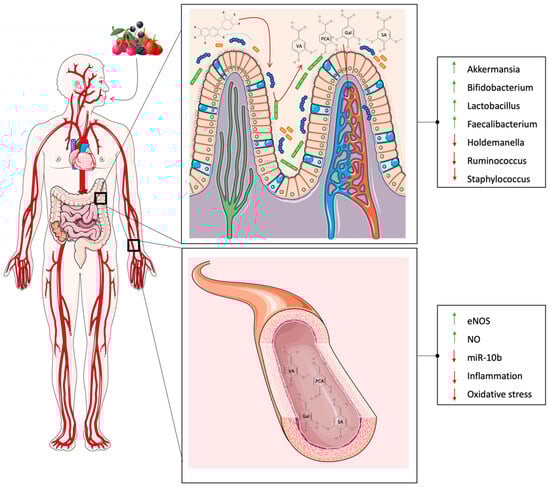
Figure 2.
Effects of anthocyanins’ derived metabolite on microbiota and cardiovascular system. Anthocyanins are metabolized by bacteria inhabiting the gut, producing different metabolites which exert their effect on the microbiota composition and on the cardiovascular system leading to an increase of beneficial bacteria and anti-inflammatory markers. Abbreviations: Gal (gallic acid); PCA (protocatechuic acid); SA (syringic acid); VA (vanillic acid).
In one cohort study, hypertensive and pre-hypertensive participants showed a significant increase of Prevotella and Klebsiella genera and a significant reduction of Faecalibacterium, Oscillibacter, Roseburia, Bifidobacterium, Coprococcus, and Butyrivibrio compared to healthy participants [86]. Other studies reported microbiota alterations in patients with heart failure, with decreased levels of the Faecalibacterium prausnitzii and Lachnospiraceae family and increased levels of Ruminococcus, Prevotella, Hungatella, and Succinclasticum genera compared to controls [87]. In addition, in early studies, gut microbial compositional changes have been discovered in patients with CVD risk factors, including hypertension, insulin resistance, dyslipidemia, and other metabolic phenotypes. It has already been established that gut microbial community is involved in anthocyanin metabolism, and their metabolites have a significant impact on cardiovascular health, both directly and indirectly, via the modulation of gut microbiota composition. Anthocyanin metabolism regulates the growth of specific bacteria in the gut, promoting the proliferation of healthy anaerobic bacteria. The main bacterial groups that can metabolize anthocyanins are the health-promoting genera Bifidobacterium and Lactobacillus. In vivo studies conducted on high-fat diet mice have shown that anthocyanin-rich berry extracts increased the genera Bifidobacterium, Lactobacillus, Roseburia, Faecalibaculum, and Parabacteroides, while reducing the genera Staphylococcus [88] Allobaculum, Anaerotruncus, Intestinimonas, Oscillibacter and Ruminiclostridium [89]. Additionally, F-344 rats supplemented with black raspberries exhibited a significant change in microbiota composition with a significant increase in Akkermansia and Desulfovibrio genera, known for their anti-inflammatory properties, and the Anaerostipes genus, which is a butyrate-producing bacteria [90]. Anthocyanin intake has led a significant reduction in Clostridium abundance and an increase in Barnesiella [91] as well as Clostridium XVIa, Roseburia, and Prevotella [92] in a mouse model. The reduction of Clostridium is generally considered beneficial, but Clostridium XVIa does not produce toxins or virulence factors and may inhibit macrophage infiltration in adipose and hepatic tissues [13]. The beneficial effects of berry intake and the consequent introduction of polyphenols can be correlated with the creation of a redox environment promoting the growth of strict anaerobes, such as Bacteroidetes and Actinobacteria populations [93]. Findings from in vitro and animal studies have shown that anthocyanins can regulate the expression of different genes involved in many cellular processes [94] (Figure 3).
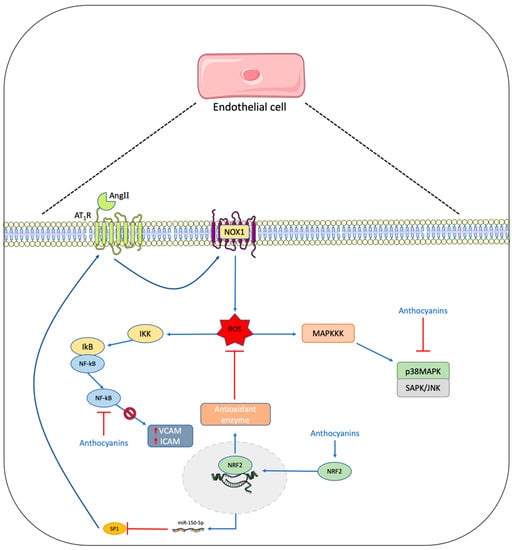
Figure 3.
The main mechanisms through which anthocyanins can influence the expression of proinflammatory and antioxidant proteins. Anthocyanins can block NF-κB, reducing the expression of VCAM and ICAM proteins, and can meanwhile activate NRF2-inducing antioxidant enzyme production and regulate miR-150 levels. Abbreviations: ATR (angiotensin II type-I receptor), AngII (angiotensin II), ICAM (intercellular adhesion molecule-1), IKB (inhibitor of nuclear factor-kappa B), IKK (IKB kinase), JNK (c-Jun N-terminal kinases), MAPKKK (MAPK kinase kinase), NF-κB (nuclear factor-kappa B), NOX1 (NADPH oxidase 1), NRF2 (nuclear factor erythroid 2-related factor 2), p38MAPK (MAP-kinase p38), ROS (reactive oxygen species), SAPK (stress-activated protein kinases), SP1 (specific protein 1), VCAM (vascular cell adhesion protein-1).
Anthocyanins have been observed to downregulate the expression of cell adhesion molecules such as E-selectin, VCAM-1, and ICAM-1 as well as genes involved in inflammatory response, such as IL-8 and MCP-1, and the NF-κB [95]. Furthermore, anthocyanins trigger eNOS phosphorylation, thereby increasing NO production [96], and are involved in the reduction of ROS production induced via endothelial cell activation [9]. Anthocyanin metabolites, such as Gal, 3-O-methylgallic acid, and 2,4,6-trihydroxybenzaldehyde (THBA), have also been reported to possess various health-promoting properties, such as antioxidant and anti-inflammatory effects [97]. It has been demonstrated that berry intake exerts antimicrobial, antifungal, and antiviral properties by counteracting biofilm formation and contributing to reduced inflammatory response [98]. However, when investigating the effects of anthocyanins on CV health, it is important to consider that after ingestion, polyphenols are rarely detected in serum, with just 1–2% maintaining their original structure [99], as they are metabolized by the gut microbiota and liver in other bioactive components [100]. Indeed, berry-derived polyphenols are generally hydrophilic molecules, making membrane-crossing very challenging. It has been observed that reducing the hydroxyl group increases hydrophobicity for membrane vesicles [101], a metabolic reaction that can be performed by the microbiota, producing completely dehydroxylated metabolites [102,103]. In the gut, anthocyanins are degraded as free anthocyanidins and PCA [104]. Other catabolites derived by anthocyanins include 3-O-methylgallic acid, Gal, SA, VA, and THBA [21,105]. Many of these have been widely studied and shown different beneficial effects on cardiovascular health and gut microbiota composition. Indeed, it has been observed that PCA can reduce miR-10b, increase ATP-binding cassette protein A1 and ATP-binding cassette protein G1 expression [106], and influence microbiota composition, reducing the genera Prevotella, Holdemanella, and Ruminococcus and increasing the Roseburia and Desulfovibrio genera [107]. Another important metabolite is Gal, which can increase NO levels via the phosphorylation of eNOS [108]. Furthermore, in a study conducted in spontaneously hypertensive rats, Gal inhibited angiotensin-I converting enzyme, leading to reduced BP, comparable to captopril [109]. Another study conducted by Clark and colleagues investigated the role of Gal in atherosclerosis using ApoE −/− mice. Results showed that Gal reduced plaque and led to the disappearance of Eubacterium fissicatena induced by high-fat diet in male but not in female mice [110]. Syringic acid is known for its antioxidant, anti-inflammatory, and anti-endotoxic properties [111]. Different in vivo and in vitro studies investigated the effects of SA on cardiovascular health, demonstrating that SA is efficient in reducing cardiac hypertrophic indices, inflammatory markers, and oxidative stress [112] and in modulating NOS production and vasodilation via the activation of the PI3K/Akt/GSK-3b signaling pathway [113]. Furthermore, in vitro gut microbiota fermentation has shown that SA is strongly positively correlated with the increase of the Bifidobacterium genus [114]. Similarly, VA is famous for its ability to scavenge ROS, and it is correlated with different pharmacological activities such as antimicrobial, antifungal, antimutagen, hepatoprotective, and cardioprotective effects, to name a few [115]. Concerning this last aspect, it has been observed that treatment with VA results in an upregulation of eNOS expression and a downregulation of endothelin-1 [116]. Furthermore, VA has been shown to exert its cardioprotective effects by modulating AMPK signaling pathways and upregulating endogenous antioxidant markers such as superoxide dismutase, catalase, glutathione peroxidase, and total antioxidant capacity [115,117,118], while an in vitro study conducted on H9c2 cell line showed that VA protection versus H2O2 damage could be mediated via the regulation of PINK1/Parkin/Mfn2 signaling pathway [119]. Moreover, VA treatment showed anti-inflammatory properties by reducing proinflammatory cytokines, particularly IL-1β, IL-6, and TNF-α [117], and modifying microbiota composition, restoring the relative abundance of Lactobacillus and decreasing Bacteroides genera [120]. Considering the aforementioned findings, it is evident that anthocyanins and their metabolites have a significant impact on cardiovascular health, both directly and indirectly, via the modulation of gut microbiota composition. However, it is crucial to note that the bioavailability and biotransformation of anthocyanins can be influenced by various factors such as the individuals’ genetic background, age, and lifestyle choices [100]. Moreover, interindividual variability in gut microbiota composition can also affect the metabolism of anthocyanins and the production of bioactive metabolites, resulting in different responses to anthocyanin-containing foods and supplements [121]. Therefore, further research is needed to elucidate the precise mechanisms underlying the cardioprotective effects of anthocyanins and their metabolites, as well as to determine the optimal dosage and duration of anthocyanin intake for maximum cardiovascular benefits. Additionally, a deeper understanding of the complex interplay between anthocyanins, gut microbiota, and host metabolism is required to develop personalized nutritional strategies aimed at preventing and managing CVDs. In conclusion, current evidence suggests that anthocyanins and their metabolites play a crucial role in promoting cardiovascular health via various mechanisms, including the modulation of gene expression, regulation of inflammatory responses, enhancement of endothelial function, reduction of oxidative stress, and alteration of gut microbiota composition. However, the exact molecular pathways and the interindividual variability in anthocyanin metabolism and gut microbiota composition require further investigation. Future research should focus on exploring the personalized effects of anthocyanin-rich foods and supplements as well as developing targeted interventions for the prevention and treatment of CVDs.
8. Strengths and Limitations of Existing Evidence
In this narrative review, the main results from clinical studies investigating the effects of anthocyanins on vascular and endothelial outcomes were investigated. Most studies reported significant effects on both vascular and endothelial outcomes, although a non-negligible number of studies showed no significant results. Several previous meta-analyses of individual food sources of anthocyanins, such as pomegranate juice [122] and berries [123], specifically strawberries [124] and chokeberries [125], showed that supplementation was a safe and effective intervention to reduce cardiovascular risk by affecting BP and reducing inflammatory biomarkers and endothelial function [126,127]. However, the evidence of the body of literature reviewed should be considered in light of some limitations. Clinical RCTs on this matter are quite heterogeneous in terms of exposure, number of participants, target population, and doses administered. Moreover, though significant, some results have limited clinical relevance and perhaps would better apply when considered during long-term administration or in pathological conditions. Potential challenges for nutraceutical application of polyphenols include the large variety of pharmacodynamic and pharmacokinetic properties of these molecules that make it difficult to optimize univocal preparations and formulations starting from food sources containing several different molecules (which, in fact, may also have cardioprotective effects, thus confounding the results). Other technical limitations may depend on the scarce bioavailability of certain classes of polyphenols, alteration in polyphenol content after food processing, the important transformation in the colonic gut into metabolites, and potential limitations in reaching the target cells.
9. Conclusions
In conclusion, significant effects have been observed for anthocyanins even if substantial heterogeneity in terms of exposure, target population, and doses administered makes it difficult to provide a conclusive opinion on their actual efficacy on BP and other vascular and endothelial outcomes. Further studies are needed to better identify the optimal dosages and formulations for an actual delivery of molecules of interest into the target tissues. Future studies should not only focus on the efficacy of the intervention but should also explore the source of the interindividual heterogeneity of the effects.
Author Contributions
Conceptualization, J.G. and G.G.; data curation, S.L., J.G., F.M.D.D. and G.G.; writing—original draft preparation, S.L., J.G. and G.G.; writing—review and editing, S.L., J.G., F.M.D.D., I.B., C.L.R., G.M.L., F.G. and G.G.; visualization, S.L. and J.G.; supervision, G.G. All authors have read and agreed to the published version of the manuscript.
Funding
The study was a part of the ABIOCOR (Role of dietary antioxidants and biofortification of vegetable crops for human health) project funded by the “PIAno di inCEntivi per la ricerca di Ateneo 2020/2022” of the University of Catania, Italy (G.G. and F.G.). J.G. was supported by the co-financing of the European Union—FSE-REACT-EU, PON Research and Innovation 2014–2020 DM1062/2021; CUP: E65F21002560001.
Data Availability Statement
Not applicable.
Acknowledgments
The figures have been generated using Servier Medical Art available at smart.servier.com (accessed on 15 April 2023).
Conflicts of Interest
The authors declare no conflict of interest.
Abbreviations
(AIX) augmentation index; (BP) blood pressure; (CGJ) concord grape juice; (CVD) cardiovascular disease; (DBP) diastolic blood pressure; (eNOS) endothelial nitric oxide synthase; (FMD) flow-mediated dilation; (Gal) gallic acid; (ICAM-1) intercellular adhesion molecule-1; (IL) interleukin; (MTCJ) Montmorency tart cherry juice; (NF-κB) nuclear factor-kappa B; (NO) nitric oxide; (NOS) nitric oxide synthase; (PKB/Akt) protein kinase B; (PCA) protocatechuic acid; (MCP-1) monocyte-chemoattractant molecule 1; (PWV) pulse wave velocity; (RCT) randomized clinical trials; (ROS) reactive oxygen species; (SA) syringic acid; (SBP) systolic blood pressure; (THBA) 2,4,6-trihydroxybenzaldehyde; (TNF-α) tumor necrosis factor-alpha; (VA) vanillic acid; (VCAM-1) vascular cell adhesion protein-1.
References
- NCD Risk Factor Collaboration (NCD-RisC). Worldwide trends in hypertension prevalence and progress in treatment and control from 1990 to 2019: A pooled analysis of 1201 population-representative studies with 104 million participants. Lancet 2021, 398, 957–980. [Google Scholar] [CrossRef] [PubMed]
- GBD 2019 Risk Factors Collaborators. Global burden of 87 risk factors in 204 countries and territories, 1990–2019: A systematic analysis for the Global Burden of Disease Study 2019. Lancet 2020, 396, 1223–1249. [Google Scholar] [CrossRef] [PubMed]
- GBD 2019 Diseases and Injuries Collaborators. Global burden of 369 diseases and injuries in 204 countries and territories, 1990–2019: A systematic analysis for the Global Burden of Disease Study 2019. Lancet 2020, 396, 1204–1222. [Google Scholar] [CrossRef] [PubMed]
- Oliveras, A.; de la Sierra, A. Resistant hypertension: Patient characteristics, risk factors, co-morbidities and outcomes. J. Hum. Hypertens. 2014, 28, 213–217. [Google Scholar] [CrossRef]
- GBD 2017 Diet Collaborators Health effects of dietary risks in 195 countries, 1990–2017: A systematic analysis for the Global Burden of Disease Study 2017. Lancet 2019, 393, 1958–1972. [CrossRef]
- Zhao, D.; Qi, Y.; Zheng, Z.; Wang, Y.; Zhang, X.-Y.; Li, H.-J.; Liu, H.-H.; Zhang, X.-T.; Du, J.; Liu, J. Dietary factors associated with hypertension. Nat. Rev. Cardiol. 2011, 8, 456–465. [Google Scholar] [CrossRef]
- Schwingshackl, L.; Schwedhelm, C.; Hoffmann, G.; Knüppel, S.; Iqbal, K.; Andriolo, V.; Bechthold, A.; Schlesinger, S.; Boeing, H. Food Groups and Risk of Hypertension: A Systematic Review and Dose-Response Meta-Analysis of Prospective Studies. Adv. Nutr. 2017, 8, 793–803. [Google Scholar] [CrossRef]
- Alappat, B.; Alappat, J. Anthocyanin pigments: Beyond aesthetics. Molecules 2020, 25, 5500. [Google Scholar] [CrossRef]
- Speer, H.; D’Cunha, N.M.; Alexopoulos, N.I.; McKune, A.J.; Naumovski, N. Anthocyanins and Human Health-A Focus on Oxidative Stress, Inflammation and Disease. Antioxidants 2020, 9, 366. [Google Scholar] [CrossRef] [PubMed]
- Grosso, G.; Micek, A.; Godos, J.; Pajak, A.; Sciacca, S.; Galvano, F.; Giovannucci, E.L. Dietary Flavonoid and Lignan Intake and Mortality in Prospective Cohort Studies: Systematic Review and Dose-Response Meta-Analysis. Am. J. Epidemiol. 2017, 185, 1304–1316. [Google Scholar] [CrossRef]
- Micek, A.; Godos, J.; Del Rio, D.; Galvano, F.; Grosso, G. Dietary Flavonoids and Cardiovascular Disease: A Comprehensive Dose-Response Meta-Analysis. Mol. Nutr. Food Res. 2021, 65, e2001019. [Google Scholar] [CrossRef]
- Godos, J.; Vitale, M.; Micek, A.; Ray, S.; Martini, D.; Del Rio, D.; Riccardi, G.; Galvano, F.; Grosso, G. Dietary Polyphenol Intake, Blood Pressure, and Hypertension: A Systematic Review and Meta-Analysis of Observational Studies. Antioxidants 2019, 8, 152. [Google Scholar] [CrossRef] [PubMed]
- Hair, R.; Sakaki, J.R.; Chun, O.K. Anthocyanins, microbiome and health benefits in aging. Molecules 2021, 26, 537. [Google Scholar] [CrossRef]
- Bencivenga, L.; De Souto Barreto, P.; Rolland, Y.; Hanon, O.; Vidal, J.-S.; Cestac, P.; Vellas, B.; Rouch, L. Blood pressure variability: A potential marker of aging. Ageing Res. Rev. 2022, 80, 101677. [Google Scholar] [CrossRef]
- Medina-Leyte, D.J.; Zepeda-García, O.; Domínguez-Pérez, M.; González-Garrido, A.; Villarreal-Molina, T.; Jacobo-Albavera, L. Endothelial dysfunction, inflammation and coronary artery disease: Potential biomarkers and promising therapeutical approaches. Int. J. Mol. Sci. 2021, 22, 3850. [Google Scholar] [CrossRef]
- Goncharov, N.V.; Nadeev, A.D.; Jenkins, R.O.; Avdonin, P.V. Markers and biomarkers of endothelium: When something is rotten in the state. Oxid. Med. Cell. Longev. 2017, 2017, 9759735. [Google Scholar] [CrossRef]
- Farah, C.; Michel, L.Y.M.; Balligand, J.-L. Nitric oxide signalling in cardiovascular health and disease. Nat. Rev. Cardiol. 2018, 15, 292–316. [Google Scholar] [CrossRef]
- Defagó, M.D.; Marchiori, G.N. Biomarkers of endothelial dysfunction in relation to nutrition. In Biomarkers in Nutrition; Patel, V.B., Preedy, V.R., Eds.; Biomarkers in disease: Methods, discoveries and applications; Springer International Publishing: Cham, Switzerland, 2022; pp. 1–21. ISBN 978-3-030-81304-8. [Google Scholar]
- Lawson, C.; Wolf, S. ICAM-1 signaling in endothelial cells. Pharmacol. Rep. 2009, 61, 22–32. [Google Scholar] [CrossRef] [PubMed]
- Cook-Mills, J.M.; Marchese, M.E.; Abdala-Valencia, H. Vascular cell adhesion molecule-1 expression and signaling during disease: Regulation by reactive oxygen species and antioxidants. Antioxid. Redox Signal. 2011, 15, 1607–1638. [Google Scholar] [CrossRef]
- Forester, S.C.; Choy, Y.Y.; Waterhouse, A.L.; Oteiza, P.I. The anthocyanin metabolites gallic acid, 3-O-methylgallic acid, and 2,4,6-trihydroxybenzaldehyde decrease human colon cancer cell viability by regulating pro-oncogenic signals. Mol. Carcinog. 2014, 53, 432–439. [Google Scholar] [CrossRef]
- Yahfoufi, N.; Alsadi, N.; Jambi, M.; Matar, C. The Immunomodulatory and Anti-Inflammatory Role of Polyphenols. Nutrients 2018, 10, 1618. [Google Scholar] [CrossRef] [PubMed]
- Arranz, S.; Chiva-Blanch, G.; Valderas-Martínez, P.; Medina-Remón, A.; Lamuela-Raventós, R.M.; Estruch, R. Wine, beer, alcohol and polyphenols on cardiovascular disease and cancer. Nutrients 2012, 4, 759–781. [Google Scholar] [CrossRef] [PubMed]
- Mattioli, R.; Francioso, A.; Mosca, L.; Silva, P. Anthocyanins: A comprehensive review of their chemical properties and health effects on cardiovascular and neurodegenerative diseases. Molecules 2020, 25, 3809. [Google Scholar] [CrossRef] [PubMed]
- Okamoto, T.; Hashimoto, Y.; Kobayashi, R.; Nakazato, K.; Willems, M.E.T. Effects of blackcurrant extract on arterial functions in older adults: A randomized, double-blind, placebo-controlled, crossover trial. Clin. Exp. Hypertens. 2020, 42, 640–647. [Google Scholar] [CrossRef] [PubMed]
- Erlund, I.; Koli, R.; Alfthan, G.; Marniemi, J.; Puukka, P.; Mustonen, P.; Mattila, P.; Jula, A. Favorable effects of berry consumption on platelet function, blood pressure, and HDL cholesterol. Am. J. Clin. Nutr. 2008, 87, 323–331. [Google Scholar] [CrossRef]
- Basu, A.; Du, M.; Leyva, M.J.; Sanchez, K.; Betts, N.M.; Wu, M.; Aston, C.E.; Lyons, T.J. Blueberries decrease cardiovascular risk factors in obese men and women with metabolic syndrome. J. Nutr. 2010, 140, 1582–1587. [Google Scholar] [CrossRef]
- Curtis, P.J.; van der Velpen, V.; Berends, L.; Jennings, A.; Feelisch, M.; Umpleby, A.M.; Evans, M.; Fernandez, B.O.; Meiss, M.S.; Minnion, M.; et al. Blueberries improve biomarkers of cardiometabolic function in participants with metabolic syndrome-results from a 6-month, double-blind, randomized controlled trial. Am. J. Clin. Nutr. 2019, 109, 1535–1545. [Google Scholar] [CrossRef]
- Schell, J.; Betts, N.M.; Lyons, T.J.; Basu, A. Raspberries Improve Postprandial Glucose and Acute and Chronic Inflammation in Adults with Type 2 Diabetes. Ann. Nutr. Metab. 2019, 74, 165–174. [Google Scholar] [CrossRef]
- Kimble, R.; Murray, L.; Keane, K.M.; Haggerty, K.; Howatson, G.; Lodge, J.K. The influence of tart cherries (Prunus cerasus) on vascular function and the urinary metabolome: A randomised placebo-controlled pilot study. J. Nutr. Sci. 2021, 10, e73. [Google Scholar] [CrossRef]
- Siasos, G.; Tousoulis, D.; Kokkou, E.; Oikonomou, E.; Kollia, M.-E.; Verveniotis, A.; Gouliopoulos, N.; Zisimos, K.; Plastiras, A.; Maniatis, K.; et al. Favorable effects of concord grape juice on endothelial function and arterial stiffness in healthy smokers. Am. J. Hypertens. 2014, 27, 38–45. [Google Scholar] [CrossRef] [PubMed]
- Khan, F.; Ray, S.; Craigie, A.M.; Kennedy, G.; Hill, A.; Barton, K.L.; Broughton, J.; Belch, J.J.F. Lowering of oxidative stress improves endothelial function in healthy subjects with habitually low intake of fruit and vegetables: A randomized controlled trial of antioxidant- and polyphenol-rich blackcurrant juice. Free Radic. Biol. Med. 2014, 72, 232–237. [Google Scholar] [CrossRef]
- Loo, B.-M.; Erlund, I.; Koli, R.; Puukka, P.; Hellström, J.; Wähälä, K.; Mattila, P.; Jula, A. Consumption of chokeberry (Aronia mitschurinii) products modestly lowered blood pressure and reduced low-grade inflammation in patients with mildly elevated blood pressure. Nutr. Res. 2016, 36, 1222–1230. [Google Scholar] [CrossRef]
- Whyte, A.R.; Cheng, N.; Fromentin, E.; Williams, C.M. A Randomized, Double-Blinded, Placebo-Controlled Study to Compare the Safety and Efficacy of Low Dose Enhanced Wild Blueberry Powder and Wild Blueberry Extract (ThinkBlueTM) in Maintenance of Episodic and Working Memory in Older Adults. Nutrients 2018, 10, 660. [Google Scholar] [CrossRef] [PubMed]
- Chai, S.C.; Davis, K.; Wright, R.S.; Kuczmarski, M.F.; Zhang, Z. Impact of tart cherry juice on systolic blood pressure and low-density lipoprotein cholesterol in older adults: A randomized controlled trial. Food Funct. 2018, 9, 3185–3194. [Google Scholar] [CrossRef]
- Li, L.; Lyall, G.K.; Martinez-Blazquez, J.A.; Vallejo, F.; A Tomas-Barberan, F.; Birch, K.M.; Boesch, C. Blood Orange Juice Consumption Increases Flow-Mediated Dilation in Adults with Overweight and Obesity: A Randomized Controlled Trial. J. Nutr. 2020, 150, 2287–2294. [Google Scholar] [CrossRef] [PubMed]
- Lynn, A.; Mathew, S.; Moore, C.T.; Russell, J.; Robinson, E.; Soumpasi, V.; Barker, M.E. Effect of a tart cherry juice supplement on arterial stiffness and inflammation in healthy adults: A randomised controlled trial. Plant Foods Hum. Nutr. 2014, 69, 122–127. [Google Scholar] [CrossRef]
- Lamport, D.J.; Lawton, C.L.; Merat, N.; Jamson, H.; Myrissa, K.; Hofman, D.; Chadwick, H.K.; Quadt, F.; Wightman, J.D.; Dye, L. Concord grape juice, cognitive function, and driving performance: A 12-wk, placebo-controlled, randomized crossover trial in mothers of preteen children. Am. J. Clin. Nutr. 2016, 103, 775–783. [Google Scholar] [CrossRef]
- Desai, T.; Bottoms, L.; Roberts, M. The effects of Montmorency tart cherry juice supplementation and FATMAX exercise on fat oxidation rates and cardio-metabolic markers in healthy humans. Eur. J. Appl. Physiol. 2018, 118, 2523–2539. [Google Scholar] [CrossRef]
- Aviram, M.; Rosenblat, M.; Gaitini, D.; Nitecki, S.; Hoffman, A.; Dornfeld, L.; Volkova, N.; Presser, D.; Attias, J.; Liker, H.; et al. Pomegranate juice consumption for 3 years by patients with carotid artery stenosis reduces common carotid intima-media thickness, blood pressure and LDL oxidation. Clin. Nutr. 2004, 23, 423–433. [Google Scholar] [CrossRef] [PubMed]
- Basu, A.; Fu, D.X.; Wilkinson, M.; Simmons, B.; Wu, M.; Betts, N.M.; Du, M.; Lyons, T.J. Strawberries decrease atherosclerotic markers in subjects with metabolic syndrome. Nutr. Res. 2010, 30, 462–469. [Google Scholar] [CrossRef]
- Dohadwala, M.M.; Holbrook, M.; Hamburg, N.M.; Shenouda, S.M.; Chung, W.B.; Titas, M.; Kluge, M.A.; Wang, N.; Palmisano, J.; Milbury, P.E.; et al. Effects of cranberry juice consumption on vascular function in patients with coronary artery disease. Am. J. Clin. Nutr. 2011, 93, 934–940. [Google Scholar] [CrossRef]
- Ruel, G.; Lapointe, A.; Pomerleau, S.; Couture, P.; Lemieux, S.; Lamarche, B.; Couillard, C. Evidence that cranberry juice may improve augmentation index in overweight men. Nutr. Res. 2013, 33, 41–49. [Google Scholar] [CrossRef] [PubMed]
- Amani, R.; Moazen, S.; Shahbazian, H.; Ahmadi, K.; Jalali, M.T. Flavonoid-rich beverage effects on lipid profile and blood pressure in diabetic patients. World J. Diabetes 2014, 5, 962–968. [Google Scholar] [CrossRef] [PubMed]
- Asgary, S.; Sahebkar, A.; Afshani, M.R.; Keshvari, M.; Haghjooyjavanmard, S.; Rafieian-Kopaei, M. Clinical evaluation of blood pressure lowering, endothelial function improving, hypolipidemic and anti-inflammatory effects of pomegranate juice in hypertensive subjects. Phytother. Res. 2014, 28, 193–199. [Google Scholar] [CrossRef] [PubMed]
- Tjelle, T.E.; Holtung, L.; Bøhn, S.K.; Aaby, K.; Thoresen, M.; Wiik, S.Å.; Paur, I.; Karlsen, A.S.; Retterstøl, K.; Iversen, P.O.; et al. Polyphenol-rich juices reduce blood pressure measures in a randomised controlled trial in high normal and hypertensive volunteers. Br. J. Nutr. 2015, 114, 1054–1063. [Google Scholar] [CrossRef]
- Kent, K.; Charlton, K.; Roodenrys, S.; Batterham, M.; Potter, J.; Traynor, V.; Gilbert, H.; Morgan, O.; Richards, R. Consumption of anthocyanin-rich cherry juice for 12 weeks improves memory and cognition in older adults with mild-to-moderate dementia. Eur. J. Nutr. 2017, 56, 333–341. [Google Scholar] [CrossRef] [PubMed]
- Moazzen, H.; Alizadeh, M. Effects of Pomegranate Juice on Cardiovascular Risk Factors in Patients with Metabolic Syndrome: A Double-Blinded, Randomized Crossover Controlled Trial. Plant Foods Hum. Nutr. 2017, 72, 126–133. [Google Scholar] [CrossRef] [PubMed]
- Stull, A.J.; Cash, K.C.; Johnson, W.D.; Champagne, C.M.; Cefalu, W.T. Bioactives in blueberries improve insulin sensitivity in obese, insulin-resistant men and women. J. Nutr. 2010, 140, 1764–1768. [Google Scholar] [CrossRef]
- Basu, A.; Betts, N.M.; Ortiz, J.; Simmons, B.; Wu, M.; Lyons, T.J. Low-energy cranberry juice decreases lipid oxidation and increases plasma antioxidant capacity in women with metabolic syndrome. Nutr. Res. 2011, 31, 190–196. [Google Scholar] [CrossRef]
- Krikorian, R.; Boespflug, E.L.; Fleck, D.E.; Stein, A.L.; Wightman, J.D.; Shidler, M.D.; Sadat-Hossieny, S. Concord grape juice supplementation and neurocognitive function in human aging. J. Agric. Food Chem. 2012, 60, 5736–5742. [Google Scholar] [CrossRef]
- Flammer, A.J.; Martin, E.A.; Gössl, M.; Widmer, R.J.; Lennon, R.J.; Sexton, J.A.; Loeffler, D.; Khosla, S.; Lerman, L.O.; Lerman, A. Polyphenol-rich cranberry juice has a neutral effect on endothelial function but decreases the fraction of osteocalcin-expressing endothelial progenitor cells. Eur. J. Nutr. 2013, 52, 289–296. [Google Scholar] [CrossRef] [PubMed]
- Basu, A.; Betts, N.M.; Nguyen, A.; Newman, E.D.; Fu, D.; Lyons, T.J. Freeze-dried strawberries lower serum cholesterol and lipid peroxidation in adults with abdominal adiposity and elevated serum lipids. J. Nutr. 2014, 144, 830–837. [Google Scholar] [CrossRef] [PubMed]
- Novotny, J.A.; Baer, D.J.; Khoo, C.; Gebauer, S.K.; Charron, C.S. Cranberry juice consumption lowers markers of cardiometabolic risk, including blood pressure and circulating C-reactive protein, triglyceride, and glucose concentrations in adults. J. Nutr. 2015, 145, 1185–1193. [Google Scholar] [CrossRef] [PubMed]
- Stote, K.S.; Sweeney, M.I.; Kean, T.; Baer, D.J.; Novotny, J.A.; Shakerley, N.L.; Chandrasekaran, A.; Carrico, P.M.; Melendez, J.A.; Gottschall-Pass, K.T. The effects of 100% wild blueberry (Vaccinium angustifolium) juice consumption on cardiometablic biomarkers: A randomized, placebo-controlled, crossover trial in adults with increased risk for type 2 diabetes. BMC Nutr. 2017, 3, 45. [Google Scholar] [CrossRef]
- Kojadinovic, M.I.; Arsic, A.C.; Debeljak-Martacic, J.D.; Konic-Ristic, A.I.; Kardum, N.D.; Popovic, T.B.; Glibetic, M.D. Consumption of pomegranate juice decreases blood lipid peroxidation and levels of arachidonic acid in women with metabolic syndrome. J. Sci. Food Agric. 2017, 97, 1798–1804. [Google Scholar] [CrossRef]
- Hollands, W.J.; Armah, C.N.; Doleman, J.F.; Perez-Moral, N.; Winterbone, M.S.; Kroon, P.A. 4-Week consumption of anthocyanin-rich blood orange juice does not affect LDL-cholesterol or other biomarkers of CVD risk and glycaemia compared with standard orange juice: A randomised controlled trial. Br. J. Nutr. 2018, 119, 415–421. [Google Scholar] [CrossRef]
- Espinosa-Moncada, J.; Marín-Echeverri, C.; Galvis-Pérez, Y.; Ciro-Gómez, G.; Aristizábal, J.C.; Blesso, C.N.; Fernandez, M.L.; Barona-Acevedo, J. Evaluation of Agraz Consumption on Adipocytokines, Inflammation, and Oxidative Stress Markers in Women with Metabolic Syndrome. Nutrients 2018, 10, 1639. [Google Scholar] [CrossRef]
- Pokimica, B.; García-Conesa, M.-T.; Zec, M.; Debeljak-Martačić, J.; Ranković, S.; Vidović, N.; Petrović-Oggiano, G.; Konić-Ristić, A.; Glibetić, M. Chokeberry juice containing polyphenols does not affect cholesterol or blood pressure but modifies the composition of plasma phospholipids fatty acids in individuals at cardiovascular risk. Nutrients 2019, 11, 850. [Google Scholar] [CrossRef]
- Johnson, S.A.; Navaei, N.; Pourafshar, S.; Jaime, S.J.; Akhavan, N.S.; Alvarez-Alvarado, S.; Proaño, G.V.; Litwin, N.S.; Clark, E.A.; Foley, E.M.; et al. Effects of Montmorency Tart Cherry Juice Consumption on Cardiometabolic Biomarkers in Adults with Metabolic Syndrome: A Randomized Controlled Pilot Trial. J. Med. Food 2020, 23, 1238–1247. [Google Scholar] [CrossRef]
- Jiménez, J.P.; Serrano, J.; Tabernero, M.; Arranz, S.; Díaz-Rubio, M.E.; García-Diz, L.; Goñi, I.; Saura-Calixto, F. Effects of grape antioxidant dietary fiber in cardiovascular disease risk factors. Nutrition 2008, 24, 646–653. [Google Scholar] [CrossRef]
- Ras, R.T.; Zock, P.L.; Zebregs, Y.E.M.P.; Johnston, N.R.; Webb, D.J.; Draijer, R. Effect of polyphenol-rich grape seed extract on ambulatory blood pressure in subjects with pre- and stage I hypertension. Br. J. Nutr. 2013, 110, 2234–2241. [Google Scholar] [CrossRef]
- Terauchi, M.; Horiguchi, N.; Kajiyama, A.; Akiyoshi, M.; Owa, Y.; Kato, K.; Kubota, T. Effects of grape seed proanthocyanidin extract on menopausal symptoms, body composition, and cardiovascular parameters in middle-aged women: A randomized, double-blind, placebo-controlled pilot study. Menopause 2014, 21, 990–996. [Google Scholar] [CrossRef] [PubMed]
- Istas, G.; Wood, E.; Le Sayec, M.; Rawlings, C.; Yoon, J.; Dandavate, V.; Cera, D.; Rampelli, S.; Costabile, A.; Fromentin, E.; et al. Effects of aronia berry (poly)phenols on vascular function and gut microbiota: A double-blind randomized controlled trial in adult men. Am. J. Clin. Nutr. 2019, 110, 316–329. [Google Scholar] [CrossRef]
- Ahles, S.; Stevens, Y.R.; Joris, P.J.; Vauzour, D.; Adam, J.; de Groot, E.; Plat, J. The Effect of Long-Term Aroniamelanocarpa Extract Supplementation on Cognitive Performance, Mood, and Vascular Function: A Randomized Controlled Trial in Healthy, Middle-Aged Individuals. Nutrients 2020, 12, 2475. [Google Scholar] [CrossRef]
- Hansen, A.S.; Marckmann, P.; Dragsted, L.O.; Finné Nielsen, I.L.; Nielsen, S.E.; Grønbaek, M. Effect of red wine and red grape extract on blood lipids, haemostatic factors, and other risk factors for cardiovascular disease. Eur. J. Clin. Nutr. 2005, 59, 449–455. [Google Scholar] [CrossRef] [PubMed]
- Cook, M.D.; Myers, S.D.; Blacker, S.D.; Willems, M.E.T. New Zealand blackcurrant extract improves cycling performance and fat oxidation in cyclists. Eur. J. Appl. Physiol. 2015, 115, 2357–2365. [Google Scholar] [CrossRef] [PubMed]
- Schell, J.; Scofield, R.H.; Barrett, J.R.; Kurien, B.T.; Betts, N.; Lyons, T.J.; Zhao, Y.D.; Basu, A. Strawberries Improve Pain and Inflammation in Obese Adults with Radiographic Evidence of Knee Osteoarthritis. Nutrients 2017, 9, 949. [Google Scholar] [CrossRef]
- Kimble, R.; Keane, K.M.; Lodge, J.K.; Howatson, G. The Influence of Tart Cherry (Prunus cerasus, cv Montmorency) Concentrate Supplementation for 3 Months on Cardiometabolic Risk Factors in Middle-Aged Adults: A Randomised, Placebo-Controlled Trial. Nutrients 2021, 13, 1417. [Google Scholar] [CrossRef] [PubMed]
- Riso, P.; Klimis-Zacas, D.; Del Bo’, C.; Martini, D.; Campolo, J.; Vendrame, S.; Møller, P.; Loft, S.; De Maria, R.; Porrini, M. Effect of a wild blueberry (Vaccinium angustifolium) drink intervention on markers of oxidative stress, inflammation and endothelial function in humans with cardiovascular risk factors. Eur. J. Nutr. 2013, 52, 949–961. [Google Scholar] [CrossRef]
- Thompson, K.; Hosking, H.; Pederick, W.; Singh, I.; Santhakumar, A.B. The effect of anthocyanin supplementation in modulating platelet function in sedentary population: A randomised, double-blind, placebo-controlled, cross-over trial. Br. J. Nutr. 2017, 118, 368–374. [Google Scholar] [CrossRef]
- Naruszewicz, M.; Laniewska, I.; Millo, B.; Dłuzniewski, M. Combination therapy of statin with flavonoids rich extract from chokeberry fruits enhanced reduction in cardiovascular risk markers in patients after myocardial infraction (MI). Atherosclerosis 2007, 194, e179–e184. [Google Scholar] [CrossRef] [PubMed]
- Barona, J.; Aristizabal, J.C.; Blesso, C.N.; Volek, J.S.; Fernandez, M.L. Grape polyphenols reduce blood pressure and increase flow-mediated vasodilation in men with metabolic syndrome. J. Nutr. 2012, 142, 1626–1632. [Google Scholar] [CrossRef] [PubMed]
- Johnson, S.A.; Figueroa, A.; Navaei, N.; Wong, A.; Kalfon, R.; Ormsbee, L.T.; Feresin, R.G.; Elam, M.L.; Hooshmand, S.; Payton, M.E.; et al. Daily blueberry consumption improves blood pressure and arterial stiffness in postmenopausal women with pre- and stage 1-hypertension: A randomized, double-blind, placebo-controlled clinical trial. J. Acad. Nutr. Diet. 2015, 115, 369–377. [Google Scholar] [CrossRef] [PubMed]
- Stull, A.J.; Cash, K.C.; Champagne, C.M.; Gupta, A.K.; Boston, R.; Beyl, R.A.; Johnson, W.D.; Cefalu, W.T. Blueberries improve endothelial function, but not blood pressure, in adults with metabolic syndrome: A randomized, double-blind, placebo-controlled clinical trial. Nutrients 2015, 7, 4107–4123. [Google Scholar] [CrossRef] [PubMed]
- Feresin, R.G.; Johnson, S.A.; Pourafshar, S.; Campbell, J.C.; Jaime, S.J.; Navaei, N.; Elam, M.L.; Akhavan, N.S.; Alvarez-Alvarado, S.; Tenenbaum, G.; et al. Impact of daily strawberry consumption on blood pressure and arterial stiffness in pre- and stage 1-hypertensive postmenopausal women: A randomized controlled trial. Food Funct. 2017, 8, 4139–4149. [Google Scholar] [CrossRef]
- Arevström, L.; Bergh, C.; Landberg, R.; Wu, H.; Rodriguez-Mateos, A.; Waldenborg, M.; Magnuson, A.; Blanc, S.; Fröbert, O. Freeze-dried bilberry (Vaccinium myrtillus) dietary supplement improves walking distance and lipids after myocardial infarction: An open-label randomized clinical trial. Nutr. Res. 2019, 62, 13–22. [Google Scholar] [CrossRef]
- Zhu, Y.; Xia, M.; Yang, Y.; Liu, F.; Li, Z.; Hao, Y.; Mi, M.; Jin, T.; Ling, W. Purified anthocyanin supplementation improves endothelial function via NO-cGMP activation in hypercholesterolemic individuals. Clin. Chem. 2011, 57, 1524–1533. [Google Scholar] [CrossRef]
- Jeong, H.S.; Kim, S.; Hong, S.J.; Choi, S.C.; Choi, J.-H.; Kim, J.-H.; Park, C.-Y.; Cho, J.Y.; Lee, T.-B.; Kwon, J.-W.; et al. Black Raspberry Extract Increased Circulating Endothelial Progenitor Cells and Improved Arterial Stiffness in Patients with Metabolic Syndrome: A Randomized Controlled Trial. J. Med. Food 2016, 19, 346–352. [Google Scholar] [CrossRef]
- Curtis, P.J.; Kroon, P.A.; Hollands, W.J.; Walls, R.; Jenkins, G.; Kay, C.D.; Cassidy, A. Cardiovascular disease risk biomarkers and liver and kidney function are not altered in postmenopausal women after ingesting an elderberry extract rich in anthocyanins for 12 weeks. J. Nutr. 2009, 139, 2266–2271. [Google Scholar] [CrossRef]
- Hassellund, S.S.; Flaa, A.; Sandvik, L.; Kjeldsen, S.E.; Rostrup, M. Effects of anthocyanins on blood pressure and stress reactivity: A double-blind randomized placebo-controlled crossover study. J. Hum. Hypertens. 2012, 26, 396–404. [Google Scholar] [CrossRef]
- Davinelli, S.; Bertoglio, J.C.; Zarrelli, A.; Pina, R.; Scapagnini, G. A Randomized Clinical Trial Evaluating the Efficacy of an Anthocyanin-Maqui Berry Extract (Delphinol®) on Oxidative Stress Biomarkers. J. Am. Coll. Nutr. 2015, 34 (Suppl. S1), 28–33. [Google Scholar] [CrossRef] [PubMed]
- Zhang, X.; Zhu, Y.; Song, F.; Yao, Y.; Ya, F.; Li, D.; Ling, W.; Yang, Y. Effects of purified anthocyanin supplementation on platelet chemokines in hypocholesterolemic individuals: A randomized controlled trial. Nutr. Metab. 2016, 13, 86. [Google Scholar] [CrossRef]
- Estévez-Santiago, R.; Silván, J.M.; Can-Cauich, C.A.; Veses, A.M.; Alvarez-Acero, I.; Martinez-Bartolome, M.A.; San-Román, R.; Cámara, M.; Olmedilla-Alonso, B.; de Pascual-Teresa, S. Lack of a Synergistic Effect on Cardiometabolic and Redox Markers in a Dietary Supplementation with Anthocyanins and Xanthophylls in Postmenopausal Women. Nutrients 2019, 11, 1533. [Google Scholar] [CrossRef] [PubMed]
- Cryan, J.F.; O’Riordan, K.J.; Cowan, C.S.M.; Sandhu, K.V.; Bastiaanssen, T.F.S.; Boehme, M.; Codagnone, M.G.; Cussotto, S.; Fulling, C.; Golubeva, A.V.; et al. The Microbiota-Gut-Brain Axis. Physiol. Rev. 2019, 99, 1877–2013. [Google Scholar] [CrossRef] [PubMed]
- Li, J.; Zhao, F.; Wang, Y.; Chen, J.; Tao, J.; Tian, G.; Wu, S.; Liu, W.; Cui, Q.; Geng, B.; et al. Gut microbiota dysbiosis contributes to the development of hypertension. Microbiome 2017, 5, 14. [Google Scholar] [CrossRef]
- Oniszczuk, A.; Oniszczuk, T.; Gancarz, M.; Szymańska, J. Role of gut microbiota, probiotics and prebiotics in the cardiovascular diseases. Molecules 2021, 26, 1172. [Google Scholar] [CrossRef] [PubMed]
- Si, X.; Bi, J.; Chen, Q.; Cui, H.; Bao, Y.; Tian, J.; Shu, C.; Wang, Y.; Tan, H.; Zhang, W.; et al. Effect of Blueberry Anthocyanin-Rich Extracts on Peripheral and Hippocampal Antioxidant Defensiveness: The Analysis of the Serum Fatty Acid Species and Gut Microbiota Profile. J. Agric. Food Chem. 2021, 69, 3658–3666. [Google Scholar] [CrossRef]
- Liu, J.; Hao, W.; He, Z.; Kwek, E.; Zhu, H.; Ma, N.; Ma, K.Y.; Chen, Z.-Y. Blueberry and cranberry anthocyanin extracts reduce bodyweight and modulate gut microbiota in C57BL/6 J mice fed with a high-fat diet. Eur. J. Nutr. 2021, 60, 2735–2746. [Google Scholar] [CrossRef]
- Pan, P.; Lam, V.; Salzman, N.; Huang, Y.-W.; Yu, J.; Zhang, J.; Wang, L.-S. Black Raspberries and Their Anthocyanin and Fiber Fractions Alter the Composition and Diversity of Gut Microbiota in F-344 Rats. Nutr. Cancer 2017, 69, 943–951. [Google Scholar] [CrossRef]
- Gu, J.; Thomas-Ahner, J.M.; Riedl, K.M.; Bailey, M.T.; Vodovotz, Y.; Schwartz, S.J.; Clinton, S.K. Dietary black raspberries impact the colonic microbiome and phytochemical metabolites in mice. Mol. Nutr. Food Res. 2019, 63, e1800636. [Google Scholar] [CrossRef]
- Liu, W.; Zhao, S.; Wang, J.; Shi, J.; Sun, Y.; Wang, W.; Ning, G.; Hong, J.; Liu, R. Grape seed proanthocyanidin extract ameliorates inflammation and adiposity by modulating gut microbiota in high-fat diet mice. Mol. Nutr. Food Res. 2017, 61, 1601082. [Google Scholar] [CrossRef] [PubMed]
- Overall, J.; Bonney, S.A.; Wilson, M.; Beermann, A.; Grace, M.H.; Esposito, D.; Lila, M.A.; Komarnytsky, S. Metabolic Effects of Berries with Structurally Diverse Anthocyanins. Int. J. Mol. Sci. 2017, 18, 422. [Google Scholar] [CrossRef] [PubMed]
- Grosso, G.; Godos, J.; Currenti, W.; Micek, A.; Falzone, L.; Libra, M.; Giampieri, F.; Forbes-Hernández, T.Y.; Quiles, J.L.; Battino, M.; et al. The effect of dietary polyphenols on vascular health and hypertension: Current evidence and mechanisms of action. Nutrients 2022, 14, 545. [Google Scholar] [CrossRef]
- Krga, I.; Milenkovic, D.; Morand, C.; Monfoulet, L.E. An update on the role of nutrigenomic modulations in mediating the cardiovascular protective effect of fruit polyphenols. Food Funct. 2016, 7, 3656–3676. [Google Scholar] [CrossRef] [PubMed]
- Festa, J.; Da Boit, M.; Hussain, A.; Singh, H. Potential benefits of berry anthocyanins on vascular function. Mol. Nutr. Food Res. 2021, 65, e2100170. [Google Scholar] [CrossRef] [PubMed]
- Witkowski, M.; Weeks, T.L.; Hazen, S.L. Gut microbiota and cardiovascular disease. Circ. Res. 2020, 127, 553–570. [Google Scholar] [CrossRef]
- Blumberg, J.B.; Basu, A.; Krueger, C.G.; Lila, M.A.; Neto, C.C.; Novotny, J.A.; Reed, J.D.; Rodriguez-Mateos, A.; Toner, C.D. Impact of cranberries on gut microbiota and cardiometabolic health: Proceedings of the cranberry health research conference 2015. Adv. Nutr. 2016, 7, 759S–770S. [Google Scholar] [CrossRef]
- Di Lorenzo, C.; Colombo, F.; Biella, S.; Stockley, C.; Restani, P. Polyphenols and human health: The role of bioavailability. Nutrients 2021, 13, 273. [Google Scholar] [CrossRef]
- Najjar, R.S.; Turner, C.G.; Wong, B.J.; Feresin, R.G. Berry-Derived Polyphenols in Cardiovascular Pathologies: Mechanisms of Disease and the Role of Diet and Sex. Nutrients 2021, 13, 387. [Google Scholar] [CrossRef]
- van Dijk, C.; Driessen, A.J.; Recourt, K. The uncoupling efficiency and affinity of flavonoids for vesicles. Biochem. Pharmacol. 2000, 60, 1593–1600. [Google Scholar] [CrossRef]
- Phipps, A.N.; Stewart, J.; Wright, B.; Wilson, I.D. Effect of diet on the urinary excretion of hippuric acid and other dietary-derived aromatics in rat. A complex interaction between diet, gut microflora and substrate specificity. Xenobiotica 1998, 28, 527–537. [Google Scholar] [CrossRef] [PubMed]
- Goodwin, B.L.; Ruthven, C.R.; Sandler, M. Gut flora and the origin of some urinary aromatic phenolic compounds. Biochem. Pharmacol. 1994, 47, 2294–2297. [Google Scholar] [CrossRef] [PubMed]
- Aura, A.-M.; Martin-Lopez, P.; O’Leary, K.A.; Williamson, G.; Oksman-Caldentey, K.-M.; Poutanen, K.; Santos-Buelga, C. In vitro metabolism of anthocyanins by human gut microflora. Eur. J. Nutr. 2005, 44, 133–142. [Google Scholar] [CrossRef] [PubMed]
- Tian, L.; Tan, Y.; Chen, G.; Wang, G.; Sun, J.; Ou, S.; Chen, W.; Bai, W. Metabolism of anthocyanins and consequent effects on the gut microbiota. Crit. Rev. Food Sci. Nutr. 2019, 59, 982–991. [Google Scholar] [CrossRef] [PubMed]
- Wang, D.; Xia, M.; Yan, X.; Li, D.; Wang, L.; Xu, Y.; Jin, T.; Ling, W. Gut microbiota metabolism of anthocyanin promotes reverse cholesterol transport in mice via repressing miRNA-10b. Circ. Res. 2012, 111, 967–981. [Google Scholar] [CrossRef]
- Hu, R.; He, Z.; Liu, M.; Tan, J.; Zhang, H.; Hou, D.-X.; He, J.; Wu, S. Dietary protocatechuic acid ameliorates inflammation and up-regulates intestinal tight junction proteins by modulating gut microbiota in LPS-challenged piglets. J. Anim. Sci. Biotechnol. 2020, 11, 92. [Google Scholar] [CrossRef]
- Radtke, O.A.; Kiderlen, A.F.; Kayser, O.; Kolodziej, H. Gene expression profiles of inducible nitric oxide synthase and cytokines in Leishmania major-infected macrophage-like RAW 264.7 cells treated with gallic acid. Planta Med. 2004, 70, 924–928. [Google Scholar] [CrossRef]
- Kang, N.; Lee, J.-H.; Lee, W.; Ko, J.-Y.; Kim, E.-A.; Kim, J.-S.; Heu, M.-S.; Kim, G.H.; Jeon, Y.-J. Gallic acid isolated from Spirogyra sp. improves cardiovascular disease through a vasorelaxant and antihypertensive effect. Environ. Toxicol. Pharmacol. 2015, 39, 764–772. [Google Scholar] [CrossRef]
- Clark, M.; Centner, A.M.; Ukhanov, V.; Nagpal, R.; Salazar, G. Gallic acid ameliorates atherosclerosis and vascular senescence and remodels the microbiome in a sex-dependent manner in ApoE-/- mice. J. Nutr. Biochem. 2022, 110, 109132. [Google Scholar] [CrossRef]
- Srinivasulu, C.; Ramgopal, M.; Ramanjaneyulu, G.; Anuradha, C.M.; Suresh Kumar, C. Syringic acid (SA)—A Review of Its Occurrence, Biosynthesis, Pharmacological and Industrial Importance. Biomed. Pharmacother. 2018, 108, 547–557. [Google Scholar] [CrossRef]
- Mirza, A.C.; Panchal, S.S.; Allam, A.A.; Othman, S.I.; Satia, M.; Mandhane, S.N. Syringic acid ameliorates cardiac, hepatic, renal and neuronal damage induced by chronic hyperglycaemia in wistar rats: A behavioural, biochemical and histological analysis. Molecules 2022, 27, 6722. [Google Scholar] [CrossRef]
- Liu, G.; Zhang, B.-F.; Hu, Q.; Liu, X.-P.; Chen, J. Syringic acid mitigates myocardial ischemia reperfusion injury by activating the PI3K/Akt/GSK-3β signaling pathway. Biochem. Biophys. Res. Commun. 2020, 531, 242–249. [Google Scholar] [CrossRef] [PubMed]
- Jia, M.; Li, D.; Wang, R.; Wang, A.; Strappe, P.; Wu, Q.; Shang, W.; Wang, X.; Zhuang, M.; Blanchard, C.; et al. Gut microbiota derived structural changes of phenolic compounds from colored rice and its corresponding fermentation property. Food Funct. 2022, 13, 10759–10768. [Google Scholar] [CrossRef] [PubMed]
- Yalameha, B.; Nejabati, H.R.; Nouri, M. Cardioprotective potential of vanillic acid. Clin. Exp. Pharmacol. Physiol. 2023, 50, 193–204. [Google Scholar] [CrossRef] [PubMed]
- Kumar, S.; Prahalathan, P.; Saravanakumar, M.; Raja, B. Vanillic acid prevents the deregulation of lipid metabolism, endothelin 1 and up regulation of endothelial nitric oxide synthase in nitric oxide deficient hypertensive rats. Eur. J. Pharmacol. 2014, 743, 117–125. [Google Scholar] [CrossRef]
- Lashgari, N.-A.; Roudsari, N.M.; Momtaz, S.; Abdolghaffari, A.H.; Atkin, S.L.; Sahebkar, A. Regulatory Mechanisms of Vanillic acid in Cardiovascular Diseases: A Review. Curr. Med. Chem. 2022, 30, 2562–2576. [Google Scholar] [CrossRef] [PubMed]
- Dianat, M.; Radmanesh, E.; Badavi, M.; Goudarzi, G.; Mard, S.A. The effects of PM10 on electrocardiogram parameters, blood pressure and oxidative stress in healthy rats: The protective effects of vanillic acid. Environ. Sci. Pollut. Res. Int. 2016, 23, 19551–19560. [Google Scholar] [CrossRef] [PubMed]
- Mei, M.; Sun, H.; Xu, J.; Li, Y.; Chen, G.; Yu, Q.; Deng, C.; Zhu, W.; Song, J. Vanillic acid attenuates H2O2-induced injury in H9c2 cells by regulating mitophagy via the PINK1/Parkin/Mfn2 signaling pathway. Front. Pharmacol. 2022, 13, 976156. [Google Scholar] [CrossRef]
- Tan, J.; Li, Y.; Hou, D.-X.; Wu, S. The Effects and Mechanisms of Cyanidin-3-Glucoside and Its Phenolic Metabolites in Maintaining Intestinal Integrity. Antioxidants 2019, 8, 479. [Google Scholar] [CrossRef]
- Manach, C.; Milenkovic, D.; Van de Wiele, T.; Rodriguez-Mateos, A.; de Roos, B.; Garcia-Conesa, M.T.; Landberg, R.; Gibney, E.R.; Heinonen, M.; Tomás-Barberán, F.; et al. Addressing the inter-individual variation in response to consumption of plant food bioactives: Towards a better understanding of their role in healthy aging and cardiometabolic risk reduction. Mol. Nutr. Food Res. 2017, 61, 1600557. [Google Scholar] [CrossRef]
- Sahebkar, A.; Ferri, C.; Giorgini, P.; Bo, S.; Nachtigal, P.; Grassi, D. Effects of pomegranate juice on blood pressure: A systematic review and meta-analysis of randomized controlled trials. Pharmacol. Res. 2017, 115, 149–161. [Google Scholar] [CrossRef] [PubMed]
- Luís, Â.; Domingues, F.; Pereira, L. Association between berries intake and cardiovascular diseases risk factors: A systematic review with meta-analysis and trial sequential analysis of randomized controlled trials. Food Funct. 2018, 9, 740–757. [Google Scholar] [CrossRef]
- Hadi, A.; Askarpour, M.; Miraghajani, M.; Symonds, M.E.; Sheikhi, A.; Ghaedi, E. Effects of strawberry supplementation on cardiovascular risk factors: A comprehensive systematic review and meta-analysis of randomized controlled trials. Food Funct. 2019, 10, 6987–6998. [Google Scholar] [CrossRef] [PubMed]
- Hawkins, J.; Hires, C.; Baker, C.; Keenan, L.; Bush, M. Daily supplementation with aronia melanocarpa (chokeberry) reduces blood pressure and cholesterol: A meta analysis of controlled clinical trials. J. Diet. Suppl. 2021, 18, 517–530. [Google Scholar] [CrossRef]
- García-Conesa, M.-T.; Chambers, K.; Combet, E.; Pinto, P.; Garcia-Aloy, M.; Andrés-Lacueva, C.; de Pascual-Teresa, S.; Mena, P.; Konic Ristic, A.; Hollands, W.J.; et al. Meta-Analysis of the Effects of Foods and Derived Products Containing Ellagitannins and Anthocyanins on Cardiometabolic Biomarkers: Analysis of Factors Influencing Variability of the Individual Responses. Int. J. Mol. Sci. 2018, 19, 694. [Google Scholar] [CrossRef]
- Fallah, A.A.; Sarmast, E.; Fatehi, P.; Jafari, T. Impact of dietary anthocyanins on systemic and vascular inflammation: Systematic review and meta-analysis on randomised clinical trials. Food Chem. Toxicol. 2020, 135, 110922. [Google Scholar] [CrossRef] [PubMed]
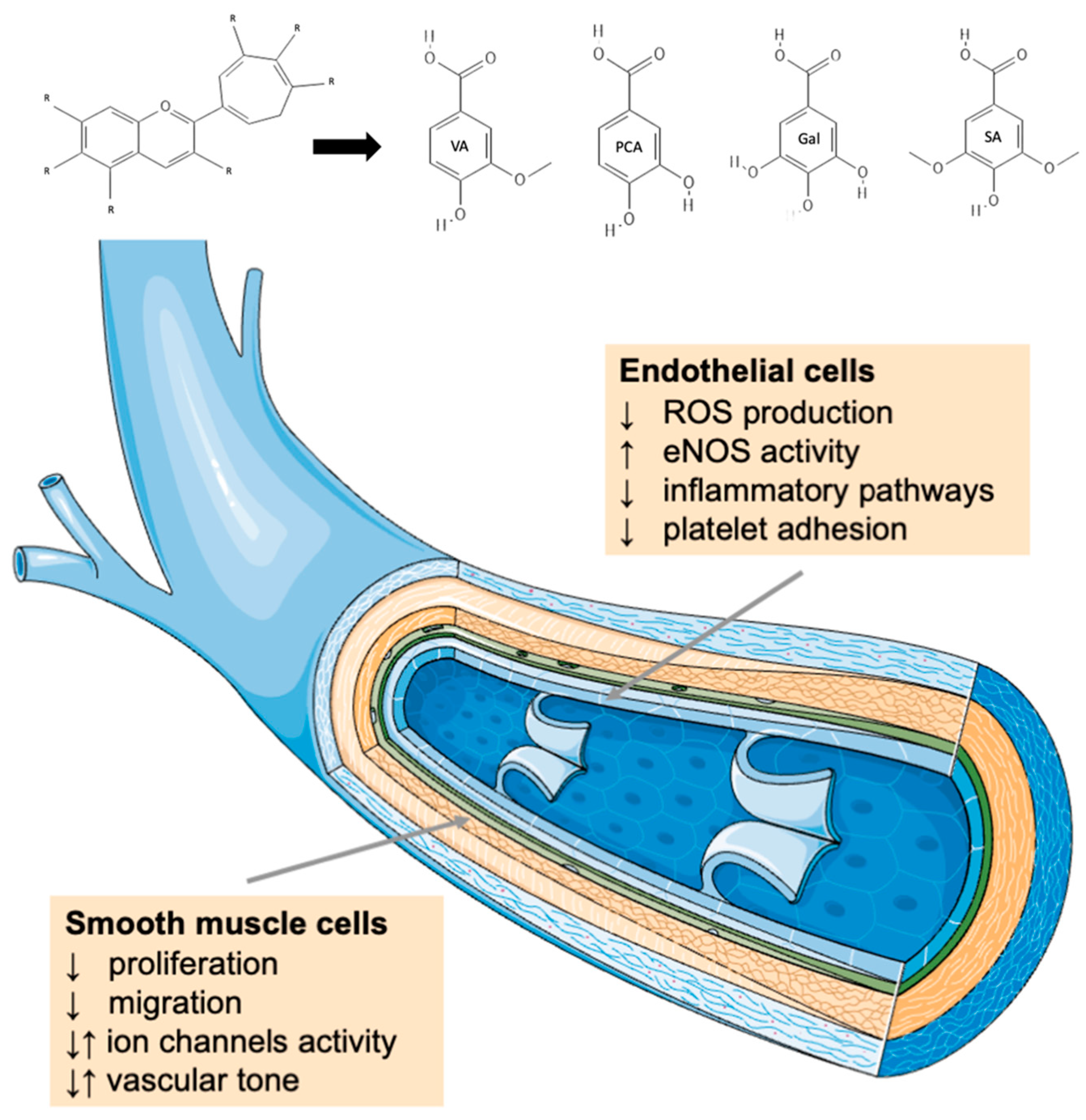
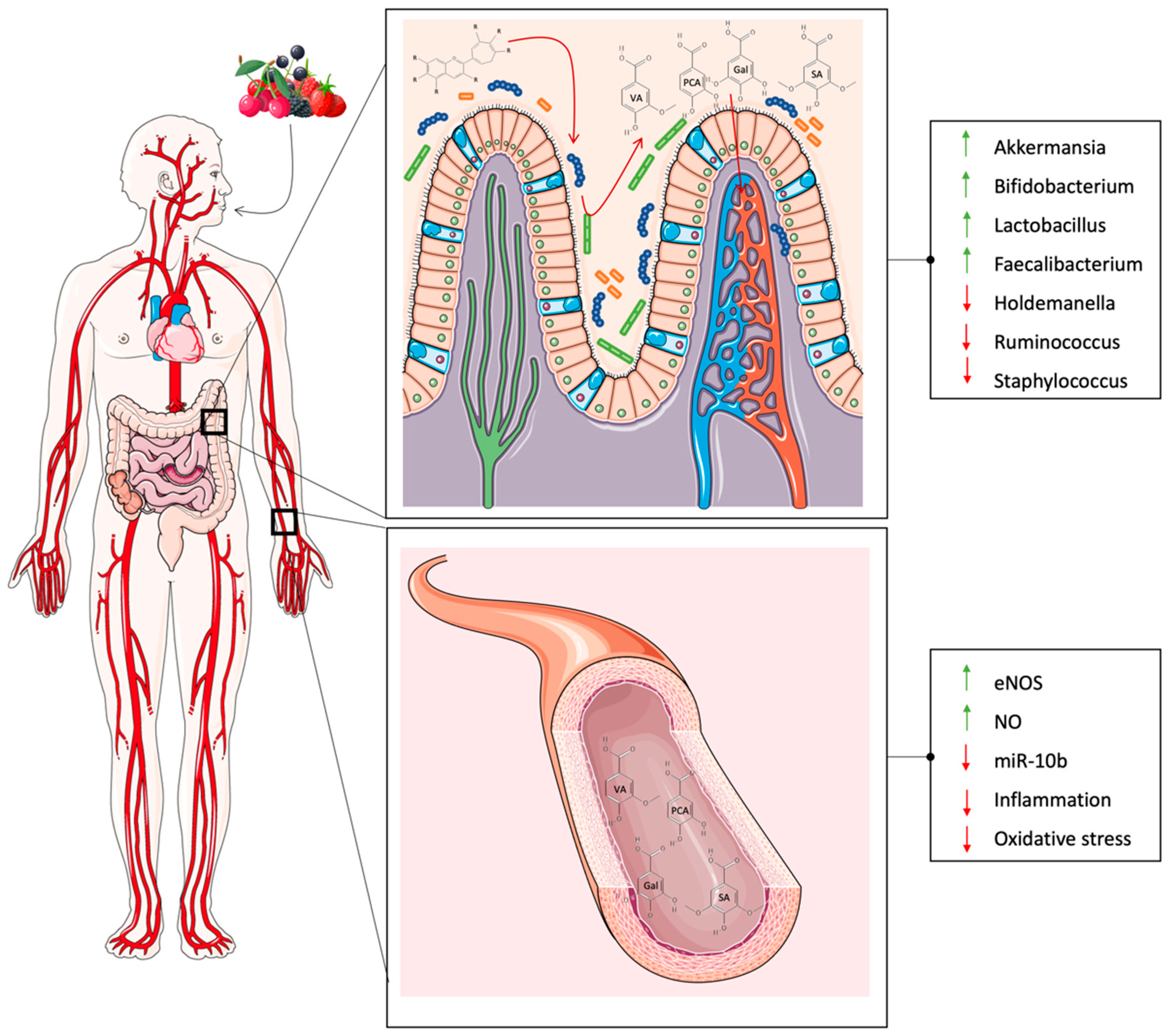
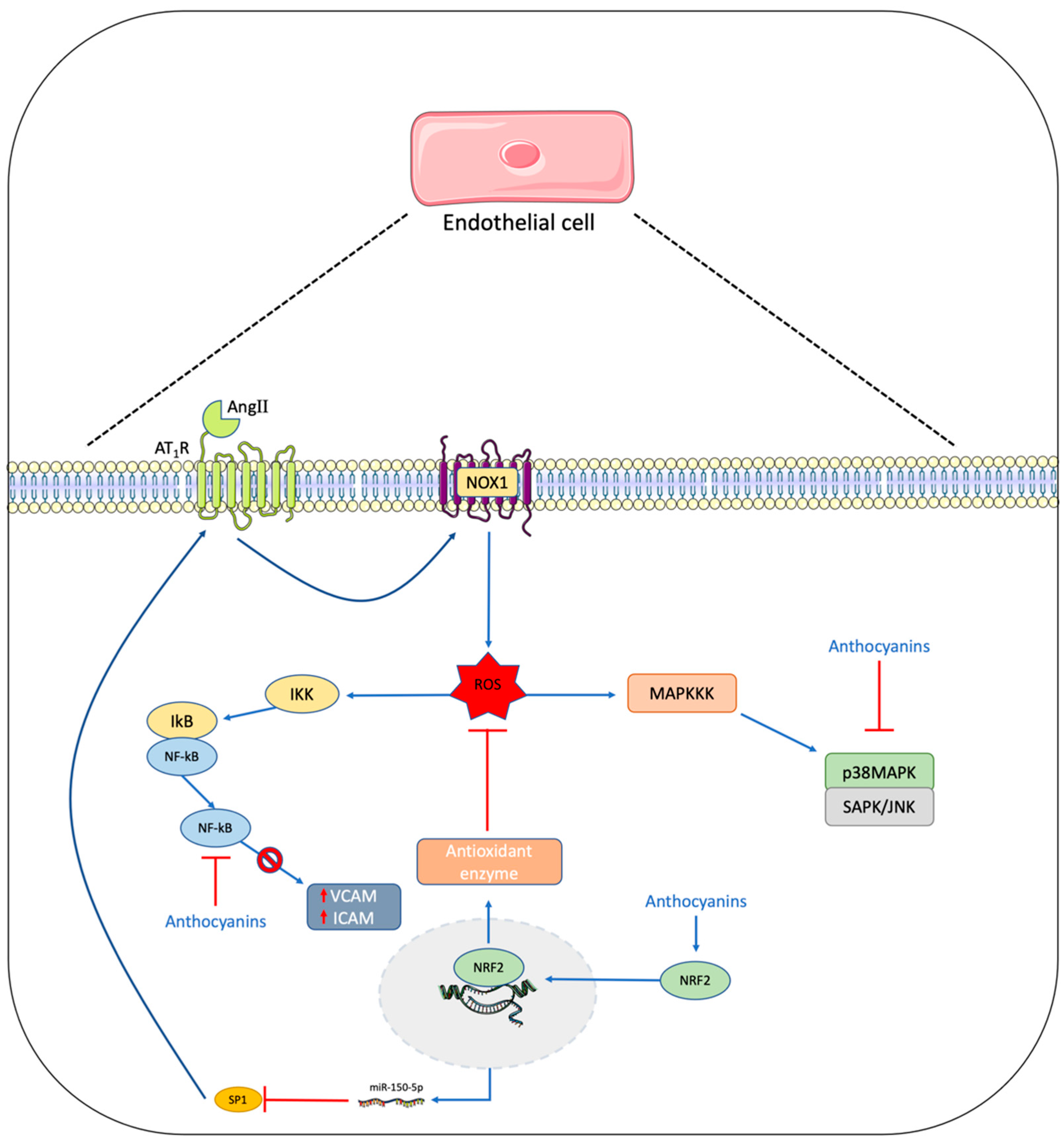
Disclaimer/Publisher’s Note: The statements, opinions and data contained in all publications are solely those of the individual author(s) and contributor(s) and not of MDPI and/or the editor(s). MDPI and/or the editor(s) disclaim responsibility for any injury to people or property resulting from any ideas, methods, instructions or products referred to in the content. |
© 2023 by the authors. Licensee MDPI, Basel, Switzerland. This article is an open access article distributed under the terms and conditions of the Creative Commons Attribution (CC BY) license (https://creativecommons.org/licenses/by/4.0/).