Topological Evolution and Prediction Method of Permeability in Fracture Networks



Abstract
1. Introduction
2. Complex Network Topology of Fractures
2.1. Stress Transfer Coefficient
2.2. Complex Network Connectivity and Fracture Connectivity Rate
3. Dynamic Equations of the Coupled Damage and Stress Nodes
3.1. Shear Stress Equation
3.2. Damage Evolution Equation
3.3. Damage Evolution Law
4. Evolutionary Model Calculation Process
Evolutionary Process
5. Verification
5.1. Permeability Comparison
5.2. Equivalent Stress Comparison
6. Conclusions
- (1)
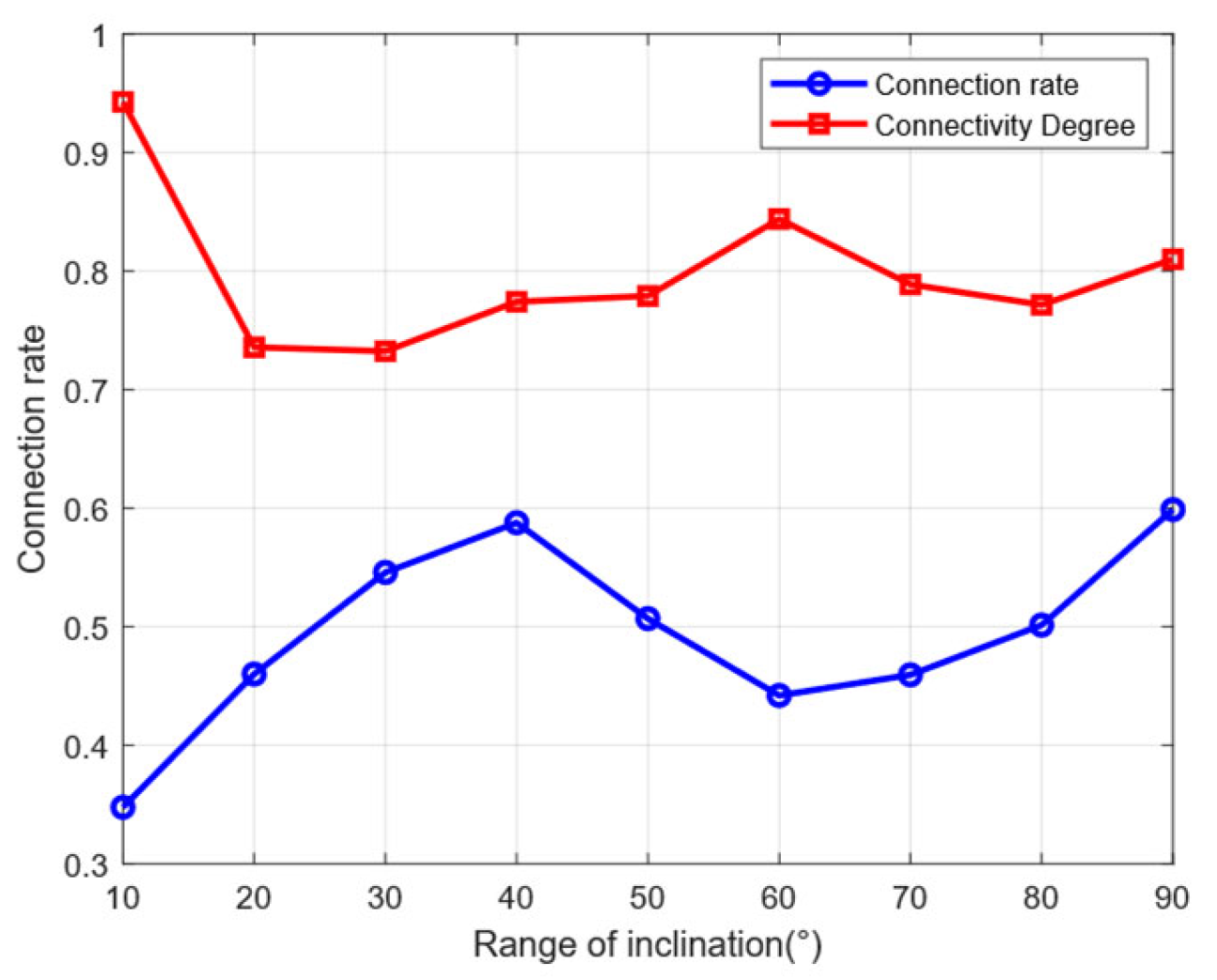
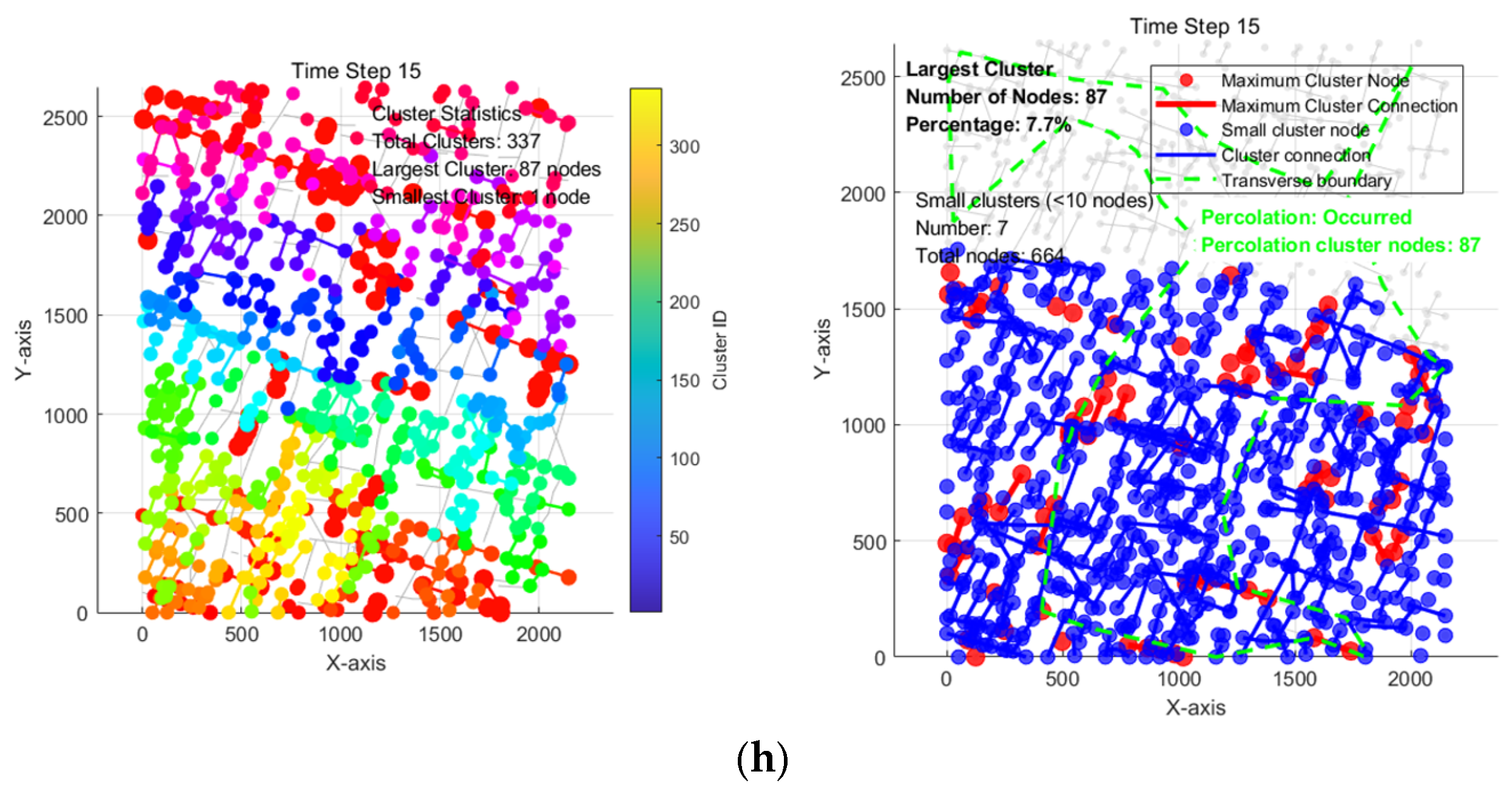
- Changes in the average degree and average clustering coefficient in the fracture network can characterize the connectivity and local aggregation characteristics inside the fracture. As show in its fitting relationship, the higher the average degree, the denser the connections between nodes, the better the overall connectivity of the fracture network, and the more serious the process of fracture expansion and intersection inside the rock under stress loading. The average clustering coefficient is related to the local aggregation degree of the fracture network; the higher the clustering coefficient, the closer the node connections in local regions of the fracture network, and the better the network connectivity.
- (2)
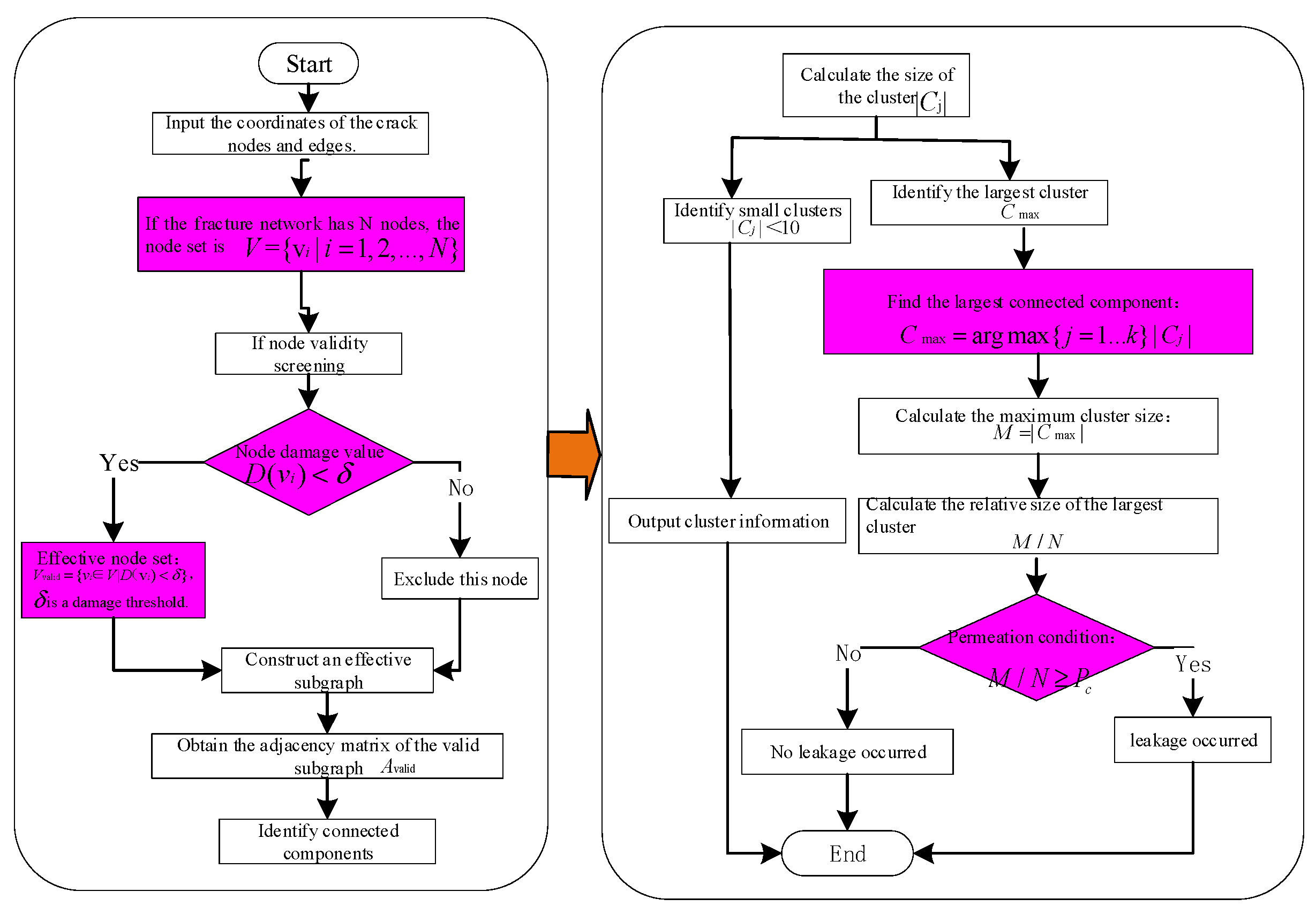
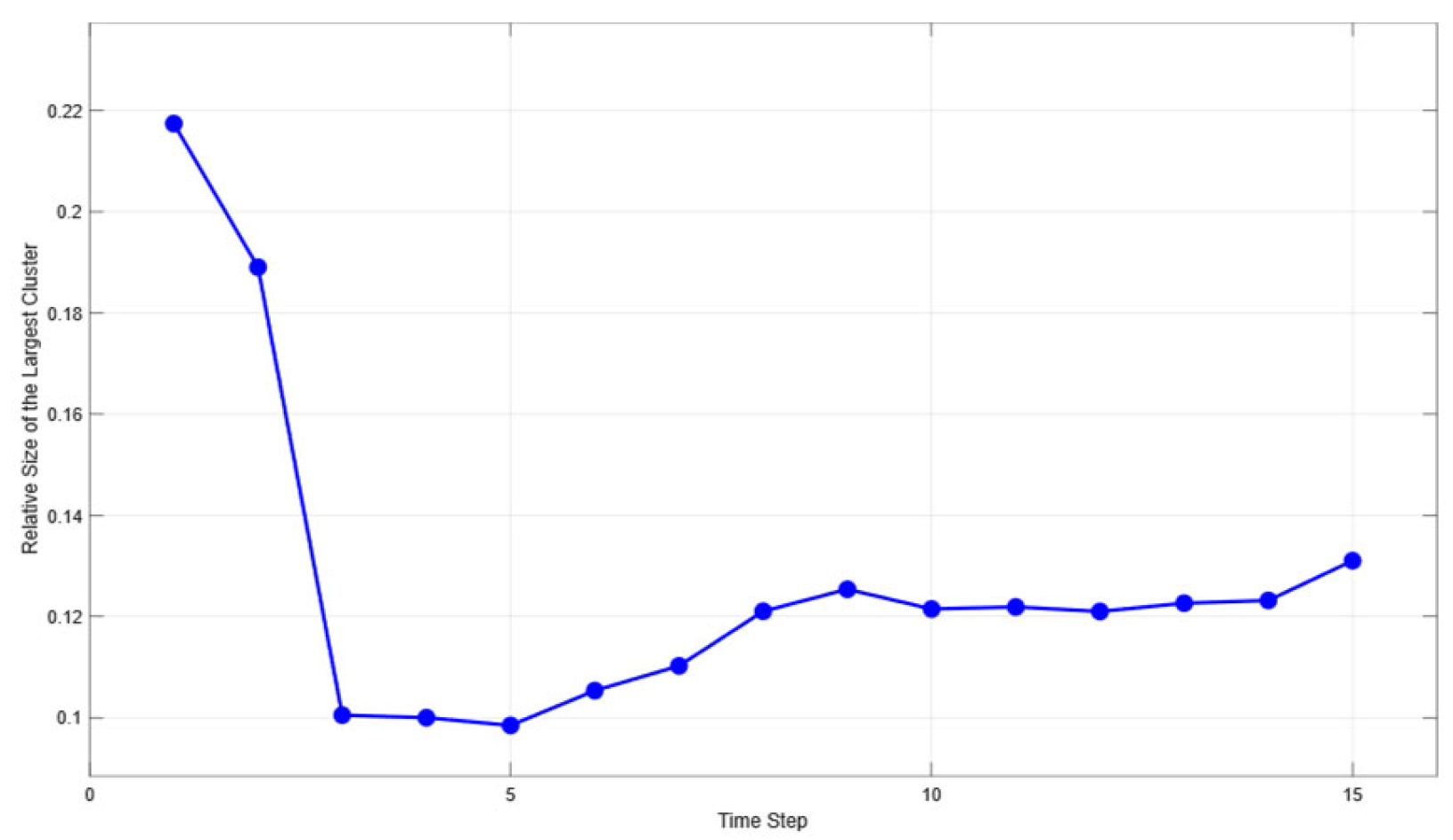
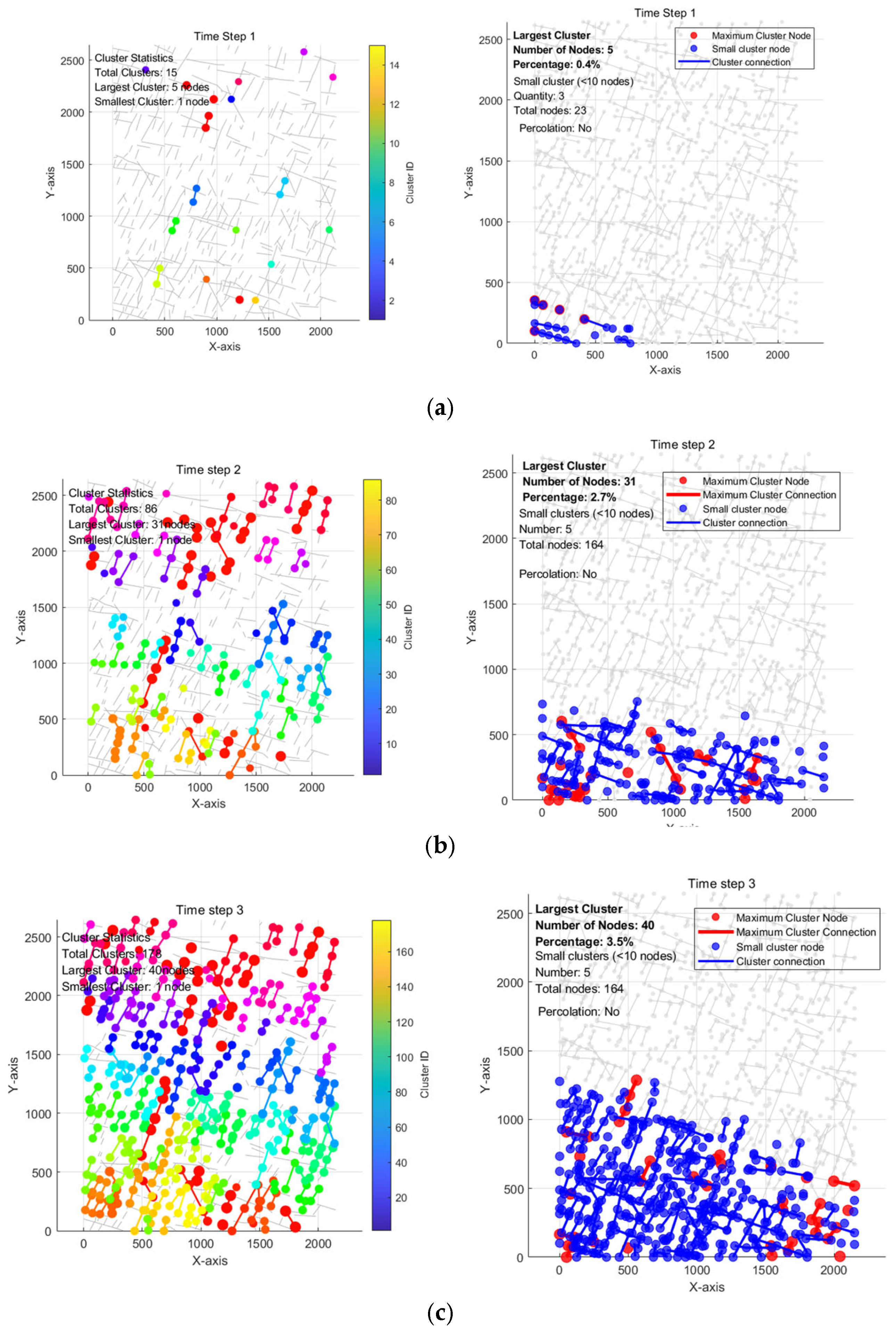
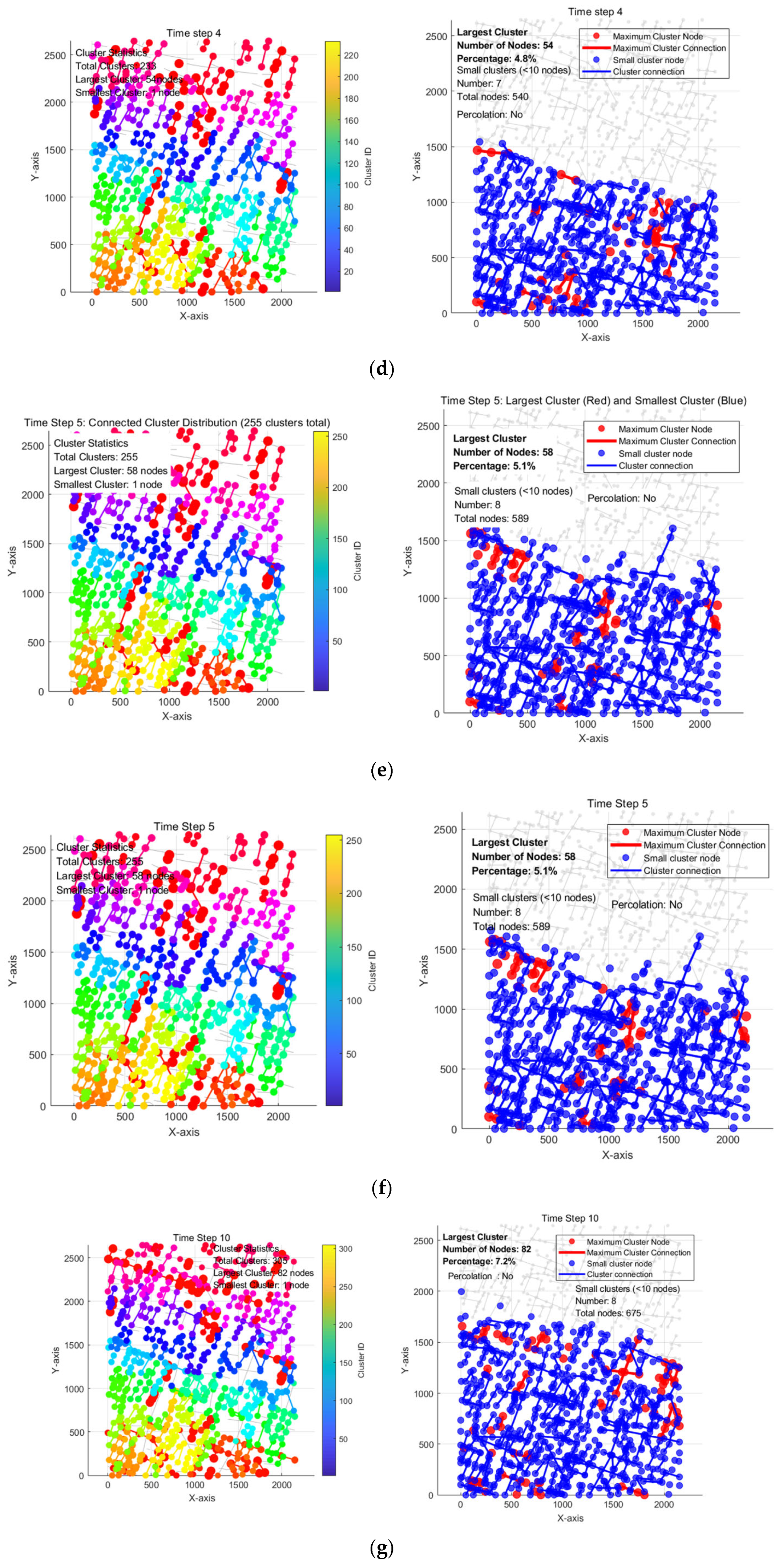
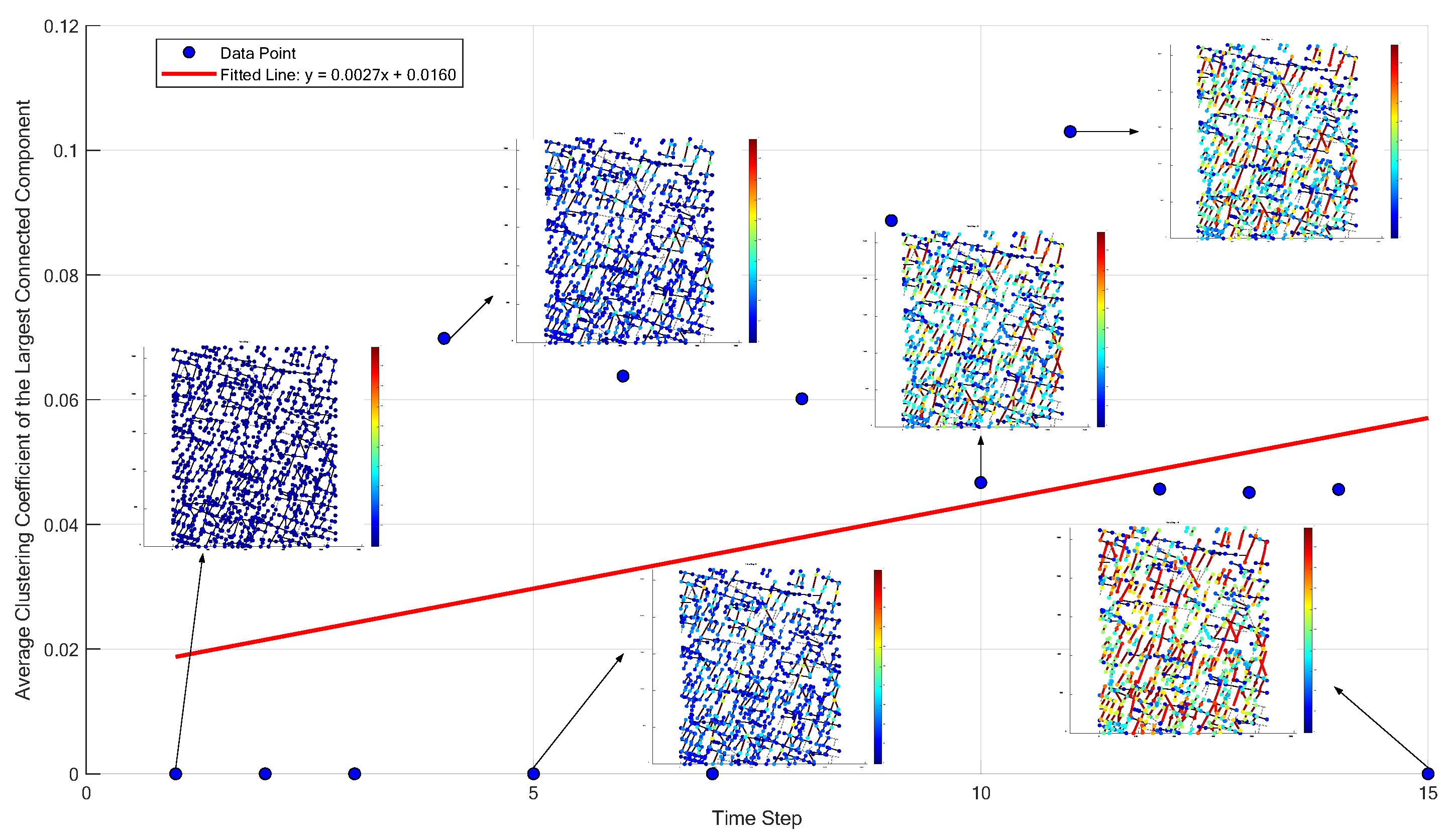
- The largest cluster can evaluate the permeability state of the fracture network. The relative size of the largest cluster is used to measure the change in fracture network connectivity during fracture evolution. Before the percolation critical point, M/N shows a steady growth trend, and the damage permeability area gradually increases; when approaching the percolation state, the largest cluster shows an increasing trend, and at this time, the largest cluster in the fracture network will become the preferential percolation channel of the fracture network.
- (3)
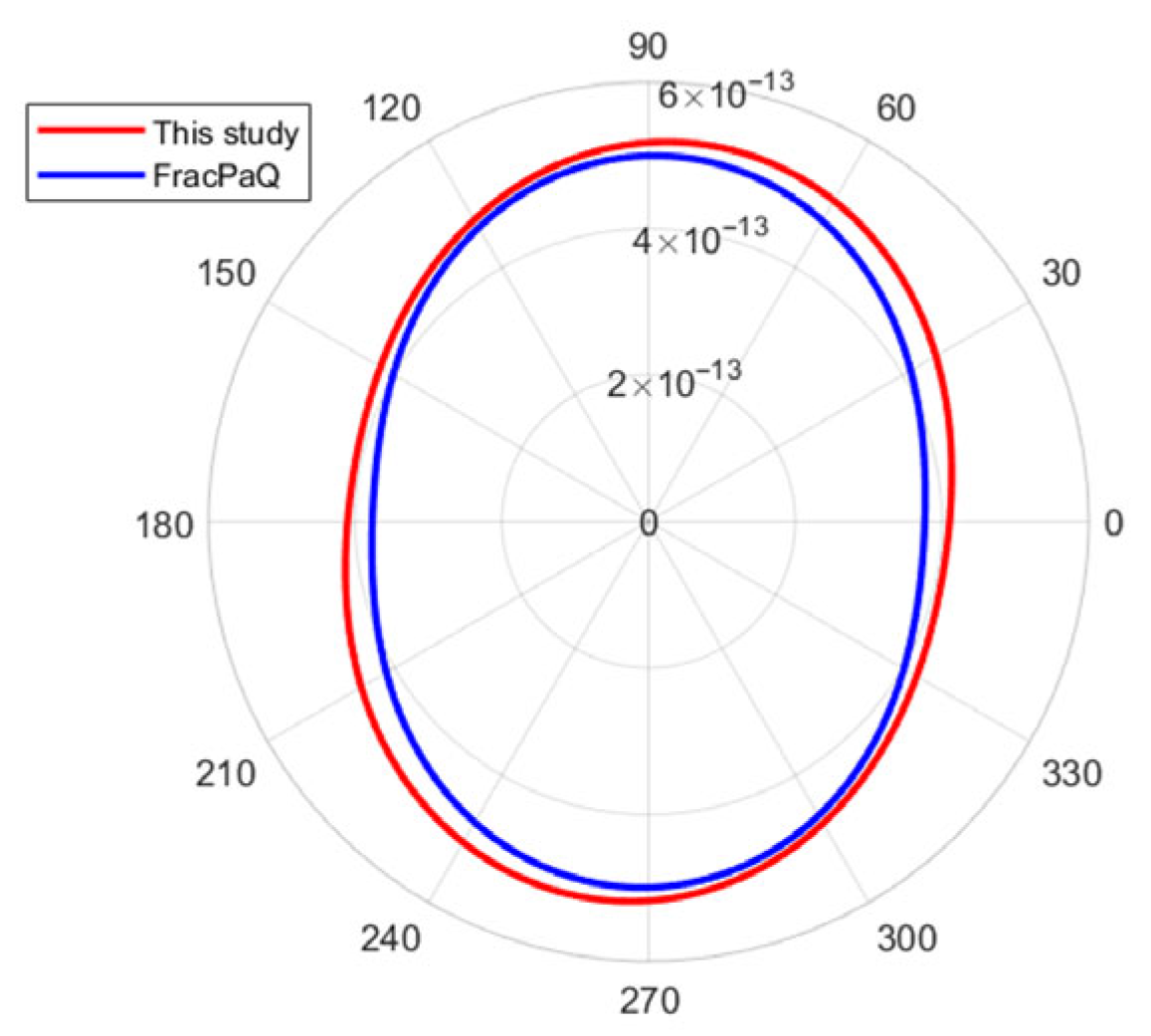
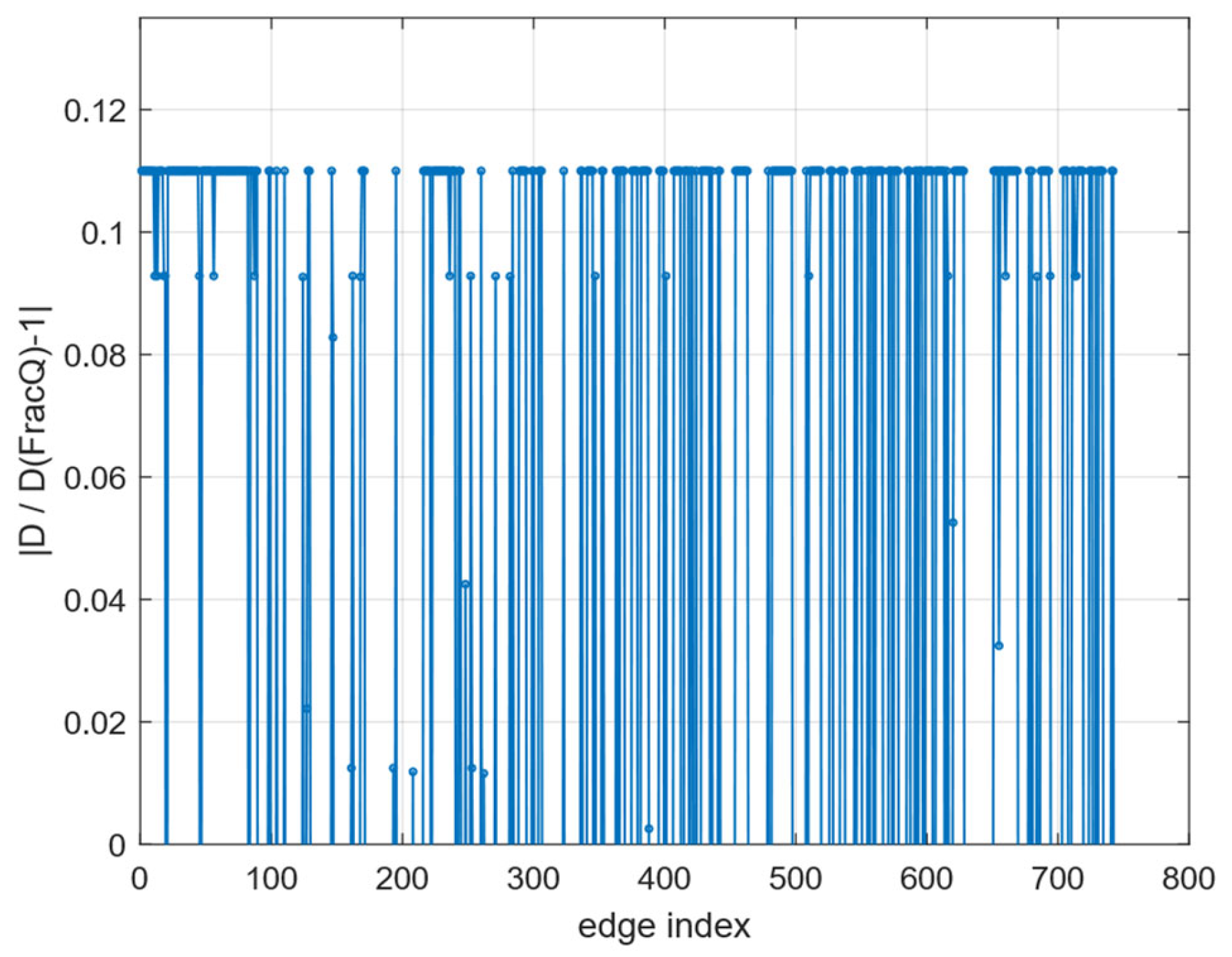
- Compared with the permeability of the FracPaQ fracture network, the maximum network permeability error is 3%, and the minimum error is controlled within 7%, indicating that this method can accurately predict the permeability process. By equivalent stress comparison, the edge error . This verifies the effectiveness of the proposed method for stress damage calculation.
Author Contributions
Funding
Institutional Review Board Statement
Informed Consent Statement
Data Availability Statement
Acknowledgments
Conflicts of Interest
References
- Suditu, S.; Dumitrache, L.; Brănoiu, G.; Prundurel, A.; Ghețiu, I. Carbon Capture and Storage Subsurface Study for a Natural Gas-Burning Power Plant in Oltenia, Romania. Processes 2024, 12, 1648. [Google Scholar] [CrossRef] [Scilit]
- Eparu, C.N.; Suditu, S.; Doukeh, R.; Stoica, D.B.; Ghețiu, I.V.; Prundurel, A.; Stan, I.G.; Dumitrache, L. Software for CO2 Storage in Natural Gas Reservoirs. Energies 2024, 17, 4984. [Google Scholar] [CrossRef] [Scilit]
- Cardona, A.; Finkbeiner, T.; Santamarina, J.C. Natural rock fractures: From aperture to fluid flow. Rock Mech. Rock Eng. 2021, 54, 5827–5844. [Google Scholar] [CrossRef] [Scilit]
- Fu, J.; Labuz, J.F.; Cheng, H.; Hou, R.; Zhu, W. Simulating progressive failure in fractured saturated rock under seepage condition using a novel coupled model and the application. Géoméch. Geophys. Geo-Energy Geo-Resour. 2022, 8, 42. [Google Scholar] [CrossRef] [Scilit]
- He, L.; Xiao, H.; Cui, Y.; Liu, S.; Chen, J. Review of visualisation methods of studying the seepage mechanism in fractured rocks. Géoméch. Geophys. Geo-Energy Geo-Resour. 2021, 7, 102. [Google Scholar] [CrossRef] [Scilit]
- Zhang, A.; Yang, J.; Cheng, L.; Ma, C. A simulation study on stress-seepage characteristics of 3D rough single fracture based on fluid-structure interaction. J. Pet. Sci. Eng. 2022, 211, 110215. [Google Scholar] [CrossRef] [Scilit]
- Chu, T.; Yin, Z.; Song, J.; Wu, J.; Wu, J. An efficient composite graph theory and machine learning method for estimating fracture equivalent permeability of the three-dimensional fracture networks based on topological parameters. J. Hydrol. 2025, 652, 132647. [Google Scholar] [CrossRef] [Scilit]
- Chen, X.; Shi, C.; Jia, Y.; Zhang, Y.; Ruan, H. Numerical study on seepage properties of rock mass with non-penetrating fracture using discrete element method. Int. J. Numer. Anal. Methods Géoméch. 2023, 48, 287–310. [Google Scholar] [CrossRef] [Scilit]
- Sun, K.; Liu, H.; Leung, J.Y.; Wang, J.; Feng, Y.; Liu, R.; Zhang, Y. Impact of effective stress on permeability for carbonate fractured-vuggy rocks. J. Rock Mech. Geotech. Eng. 2024, 16, 942–960. [Google Scholar] [CrossRef]
- Lian, Y.; Bui, H.H.; Nguyen, G.D.; Tran, H.T.; Haque, A. A general SPH framework for transient seepage flows through unsaturated porous media considering anisotropic diffusion. Comput. Methods Appl. Mech. Eng. 2021, 387, 114169. [Google Scholar] [CrossRef] [Scilit]
- Xue, K.; Zhang, Z.; Jiang, Y.; Luo, Y. Estimating the permeability of fractured rocks using topological characteristics of fracture network. Comput. Geotech. 2023, 157, 105337. [Google Scholar] [CrossRef] [Scilit]
- Huang, N.; Liu, R.; Jiang, Y.; Cheng, Y. Development and application of three-dimensional discrete fracture network modeling approach for fluid flow in fractured rock masses. J. Nat. Gas Sci. Eng. 2021, 91, 103957. [Google Scholar] [CrossRef] [Scilit]
- Li, Z.; Zhou, Z. Numerical Simulation of Rock Fracture and Permeability Characteristics Under Stress–Seepage–Damage Coupling Action. Int. J. Geomech. 2023, 23, 04022257. [Google Scholar] [CrossRef] [Scilit]
- Li, Z.Q.; Li, X.L.; Yu, J.B.; Cao, W.D.; Liu, Z.F.; Wang, M.; Wang, X.H. Influence of existing natural fractures and beddings on the formation of fracture network during hydraulic fracturing based on the extended finite element method. Geomech. Geophys. Geo-Energy Geo-Resour. 2020, 6, 58. [Google Scholar] [CrossRef] [Scilit]
- Yu, F.; Kong, X.; Yao, W.; Zhang, J.; Cai, S.; Lin, H.; Jin, J. Dynamics analysis, synchronization and FPGA implementation of multiscroll Hopfield neural networks with non-polynomial memristor. Chaos Solitons Fractals 2024, 179, 114440. [Google Scholar] [CrossRef] [Scilit]
- Jin, J.; Zhu, J.; Zhao, L.; Chen, L.; Chen, L.; Gong, J. A robust predefined-time convergence zeroing neural network for dynamic matrix inversion. IEEE Trans. Cybern. 2022, 53, 3887–3900. [Google Scholar] [CrossRef] [Scilit]
- Yu, S.; Ren, X.; Zhang, J.; Wang, H.; Sun, Z. An improved form of smoothed particle hydrodynamics method for crack propagation simulation applied in rock mechanics. Int. J. Min. Sci. Technol. 2021, 31, 421–428. [Google Scholar] [CrossRef] [Scilit]
- Xue, K.; Zhang, Z.; Zhong, C.; Jiang, Y.; Geng, X. A fast numerical method and optimization of 3D discrete fracture network considering fracture aperture heterogeneity. Adv. Water Resour. 2022, 162, 104164. [Google Scholar] [CrossRef] [Scilit]
- Zhu, W.; Khirevich, S.; Patzek, T.W. Impact of fracture geometry and topology on the connectivity and flow properties of stochastic fracture networks. Water Resour. Res. 2021, 57, 2. [Google Scholar] [CrossRef] [Scilit]
- Li, M.; Liu, R.-R.; Lü, L.; Hu, M.-B.; Xu, S.; Zhang, Y.-C. Percolation on complex networks: Theory and application. Phys. Rep. 2021, 907, 1–68. [Google Scholar] [CrossRef] [Scilit]
- Xu, Q.; Zheng, J.; Zhang, B.; Guo, J.; Yang, J. Quantitatively ranking the importance of fractures in seepage processes of rock masses: A complex network perspective. Phys. Fluids 2025, 37, 046604. [Google Scholar] [CrossRef] [Scilit]
- Artime, O.; De Domenico, M. Percolation on feature-enriched interconnected systems. Nat. Commun. 2021, 12, 2478. [Google Scholar] [CrossRef] [Scilit] [PubMed]
- Cañamón, I.; Rajeh, T.; Ababou, R.; Marcoux, M. Topological analysis of 3D fracture networks: Graph representation and percolation threshold. Comput. Geotech. 2022, 142, 104556. [Google Scholar] [CrossRef] [Scilit]
- Xia, B.; Luo, Y.; Hu, H.; Wu, M. Fractal permeability model for a complex tortuous fracture network. Phys. Fluids 2021, 33, 096605. [Google Scholar] [CrossRef] [Scilit]
- Jia, Z.X.; Wang, X.G. Calculation and application of connectivity rate for jointed rock masses containing oriented large fractures. Chin. J. Rock Mech. Eng. 2001, 20, 457–461. [Google Scholar]
- Handin, J.; Hager, R.V., Jr.; Friedman, M.; Feather, J.N. Experimental deformation of sedimentary rocks under con- fining pressure: Pore pressure tests. Bull. Am. Assoc. Petrol. Geol. 1963, 47, 717–755. [Google Scholar]
- Blanpied, M.L.; Lockner, D.A.; Byerlee, J.D. An earthquake mechanism basedon rapidsealing of faults. Nature 1992, 358, 574–576. [Google Scholar] [CrossRef] [Scilit]
- Handin, J. On the Coulomb-Mohr failure criterion. J. Geophys. Res. 1969, 74, 5343–5348. [Google Scholar] [CrossRef] [Scilit]
- Ma, Y.; Chen, M. Identification of gas outburst precursors based on outburst percolation theory. Sci. Rep. 2025, 15, 3228. [Google Scholar] [CrossRef] [Scilit]
- Mathur, G.K.; Jha, A.K.; Tiwari, G. Assessing fracture mechanics in thermally treated, uniaxial loaded grouted non-persistent medium-hard rock: A digital image correlation and FracPaQ analysis. Bull. Eng. Geol. Environ. 2025, 84, 172. [Google Scholar] [CrossRef] [Scilit]


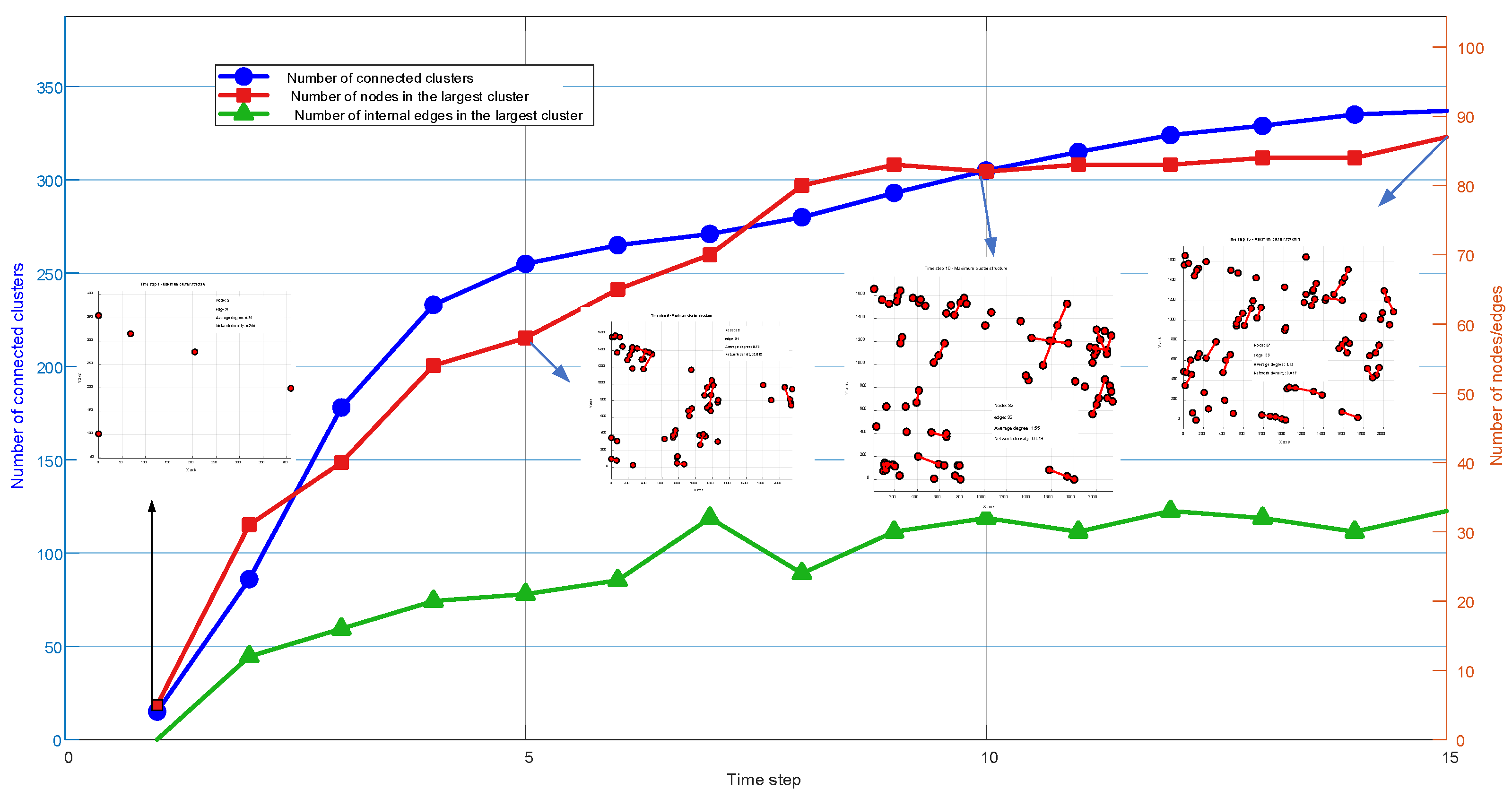


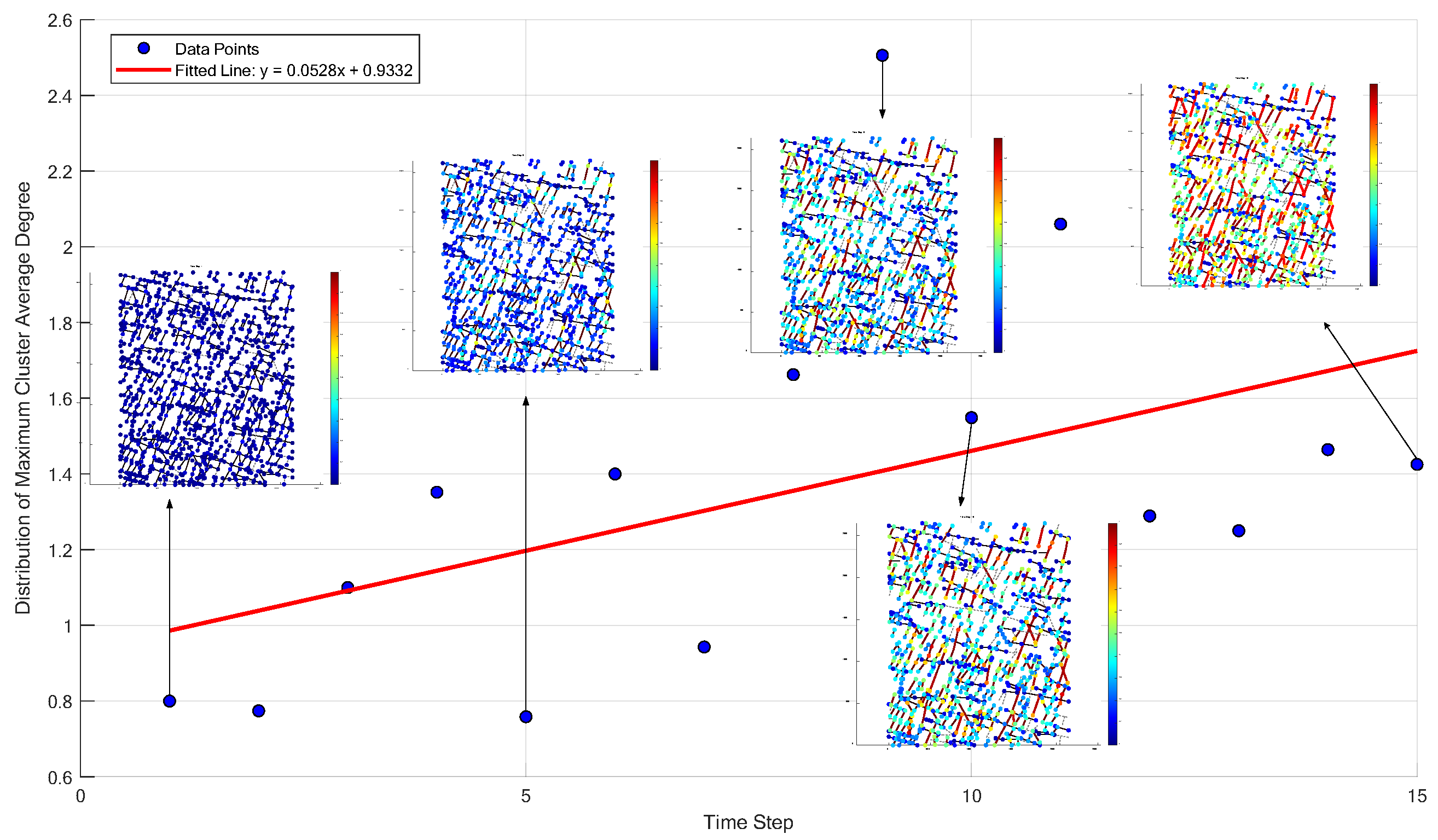



| Time Step | Number of Connected Clusters | Total Number of Nodes | Number of Nodes in Largest Cluster | Number of Internal Edges in Largest Cluster | Average Degree of Largest Cluster | Network Density of Largest Cluster | Percolation |
|---|---|---|---|---|---|---|---|
| 1 | 15 | 23 | 5 | 0 | 0.80 | 0.200 | No |
| 2 | 86 | 164 | 31 | 12 | 0.77 | 0.026 | No |
| 3 | 178 | 398 | 40 | 16 | 1.10 | 0.028 | No |
| 4 | 233 | 540 | 54 | 20 | 1.35 | 0.026 | No |
| 5 | 255 | 589 | 58 | 21 | 0.76 | 0.013 | No |
| 6 | 265 | 617 | 65 | 23 | 1.40 | 0.022 | No |
| 7 | 271 | 635 | 70 | 32 | 0.94 | 0.014 | No |
| 8 | 280 | 661 | 80 | 24 | 1.66 | 0.021 | No |
| 9 | 293 | 662 | 83 | 30 | 2.51 | 0.031 | No |
| 10 | 305 | 675 | 82 | 32 | 1.55 | 0.019 | No |
| 11 | 315 | 681 | 83 | 30 | 2.06 | 0.026 | No |
| 12 | 324 | 686 | 83 | 33 | 1.29 | 0.016 | No |
| 13 | 329 | 685 | 84 | 32 | 1.25 | 0.015 | No |
| 14 | 335 | 682 | 84 | 30 | 1.46 | 0.018 | No |
| 15 | 337 | 664 | 87 | 33 | 1.43 | 0.017 | Yes |
| Parameters | Value |
|---|---|
| rock elastic modulus (E) | 104 MPa |
| damage rate constant () | 0.01 |
| Poisson’s ratio () | 0.2 |
| cohesion () | 2 × 10⁶ Pa |
| internal friction angle () | 0.6 |
| percolation threshold () | 0.3 |
| Calculated Value | FracPaQ | This Paper | Error |
|---|---|---|---|
| Maximum Value | 4.9910 × 10⁻¹³ | 5.1986 × 10⁻¹³ | 3% |
| Minimum Value | 3.7636 × 10⁻¹³ | 4.0742 × 10⁻¹³ | 7% |
Disclaimer/Publisher’s Note: The statements, opinions and data contained in all publications are solely those of the individual author(s) and contributor(s) and not of MDPI and/or the editor(s). MDPI and/or the editor(s) disclaim responsibility for any injury to people or property resulting from any ideas, methods, instructions or products referred to in the content. |
© 2026 by the authors. Licensee MDPI, Basel, Switzerland. This article is an open access article distributed under the terms and conditions of the Creative Commons Attribution (CC BY) license.
Share and Cite
Chen, J.; Liu, X.; Li, Y.; Yu, F.; Jin, J. Topological Evolution and Prediction Method of Permeability in Fracture Networks. Appl. Sci. 2026, 16, 907. https://doi.org/10.3390/app16020907
Chen J, Liu X, Li Y, Yu F, Jin J. Topological Evolution and Prediction Method of Permeability in Fracture Networks. Applied Sciences. 2026; 16(2):907. https://doi.org/10.3390/app16020907
Chicago/Turabian StyleChen, Juan, Xiaofeng Liu, Yongfeng Li, Fei Yu, and Jie Jin. 2026. "Topological Evolution and Prediction Method of Permeability in Fracture Networks" Applied Sciences 16, no. 2: 907. https://doi.org/10.3390/app16020907
APA StyleChen, J., Liu, X., Li, Y., Yu, F., & Jin, J. (2026). Topological Evolution and Prediction Method of Permeability in Fracture Networks. Applied Sciences, 16(2), 907. https://doi.org/10.3390/app16020907