Filtration Solutions for Microplastic Mitigation: Cutting-Edge Filtration Technologies and Membrane Innovations for Environmental Protection


Abstract
1. Plastics and Microplastics
1.1. Definition of Plastics: Types and Properties
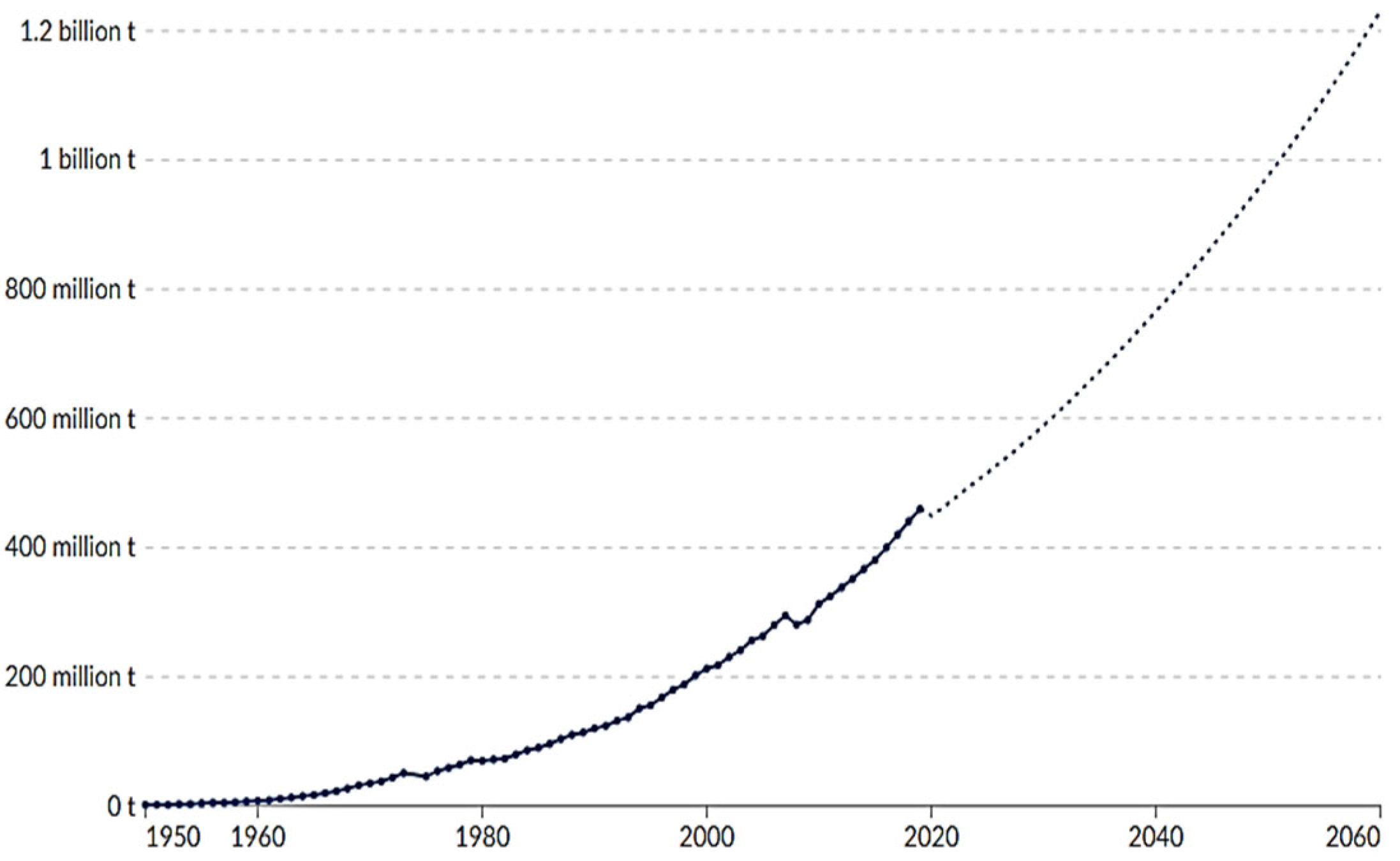
1.2. Plastic Production Has More than Doubled in the Last Two Decades
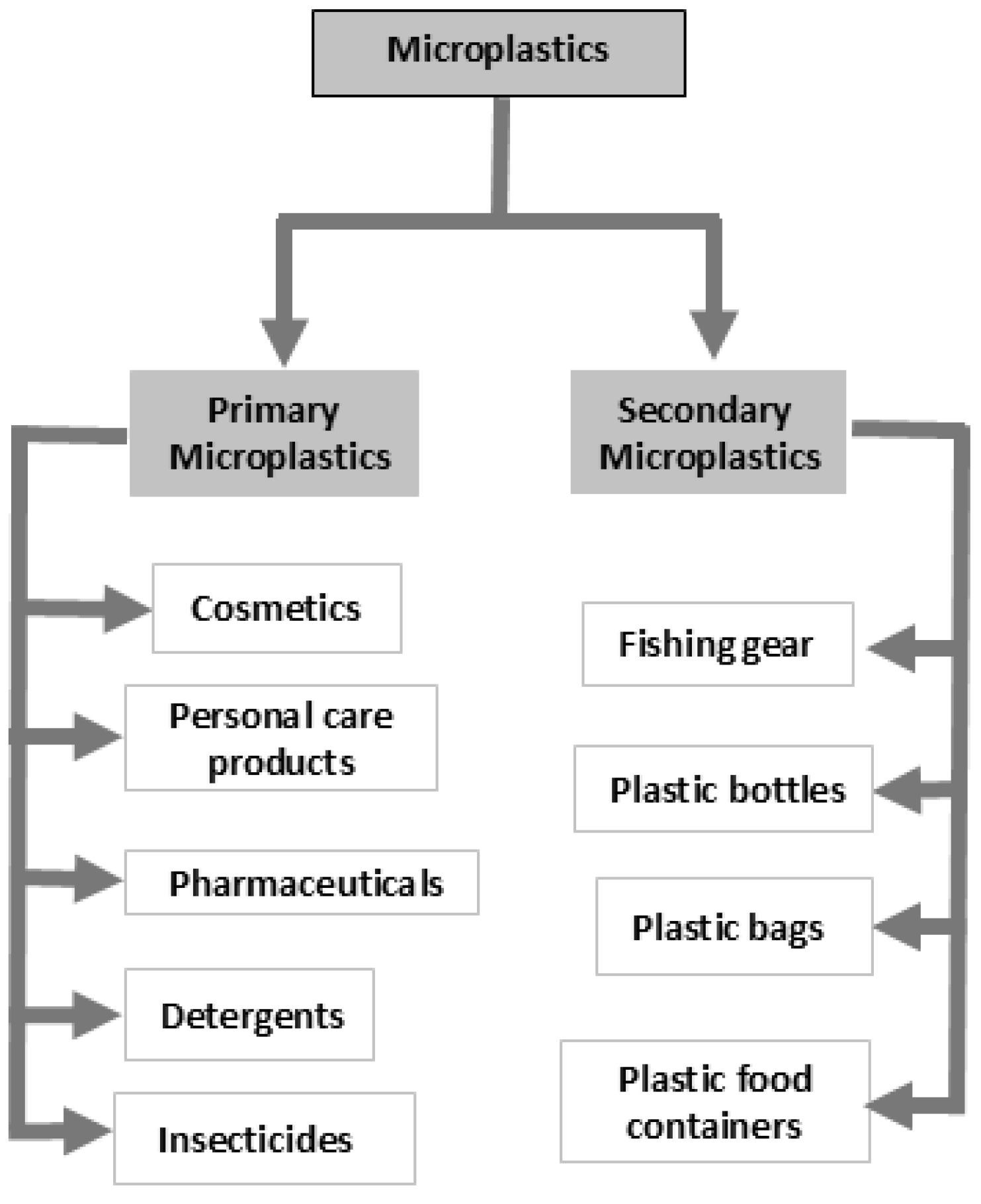
1.3. Types of Microplastics
1.3.1. Primary Microplastics
1.3.2. Secondary Microplastics
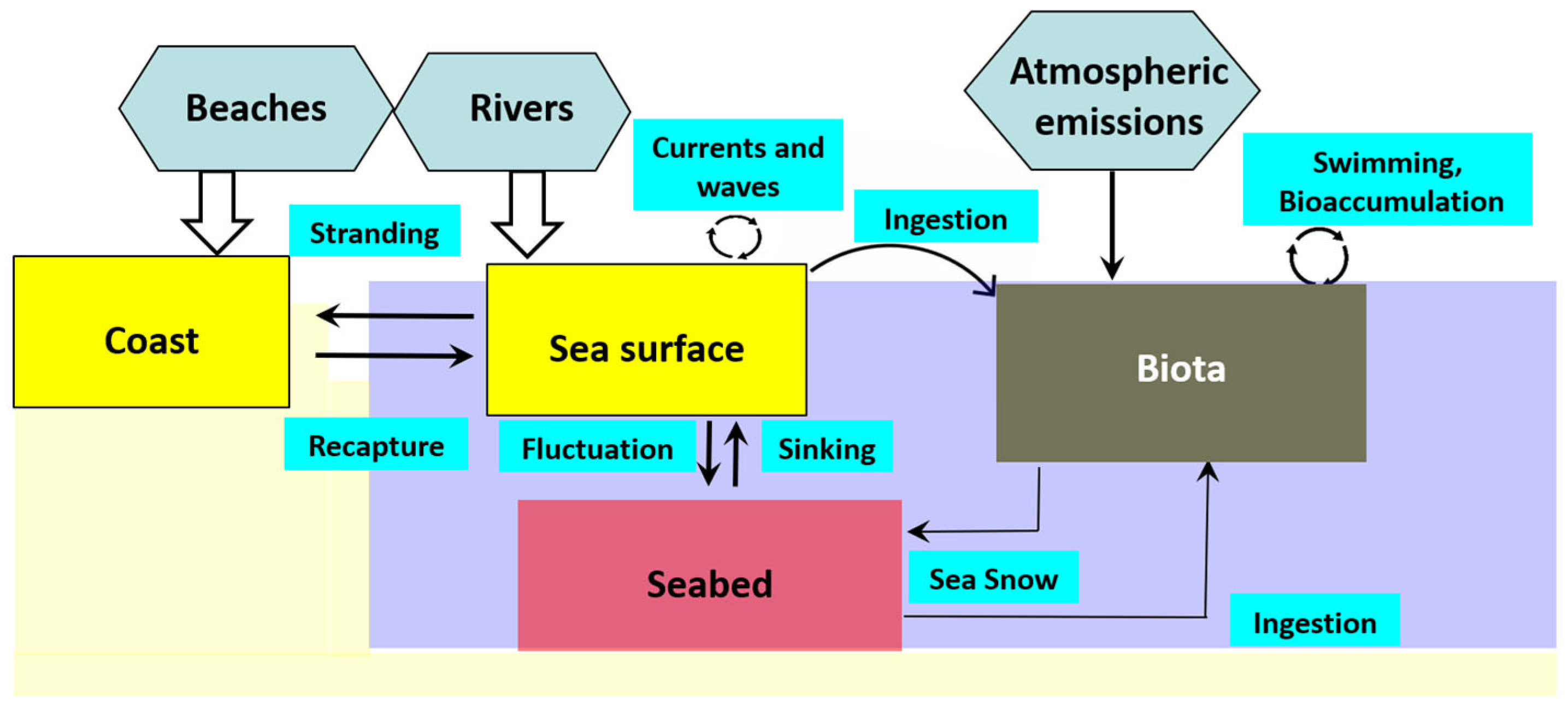
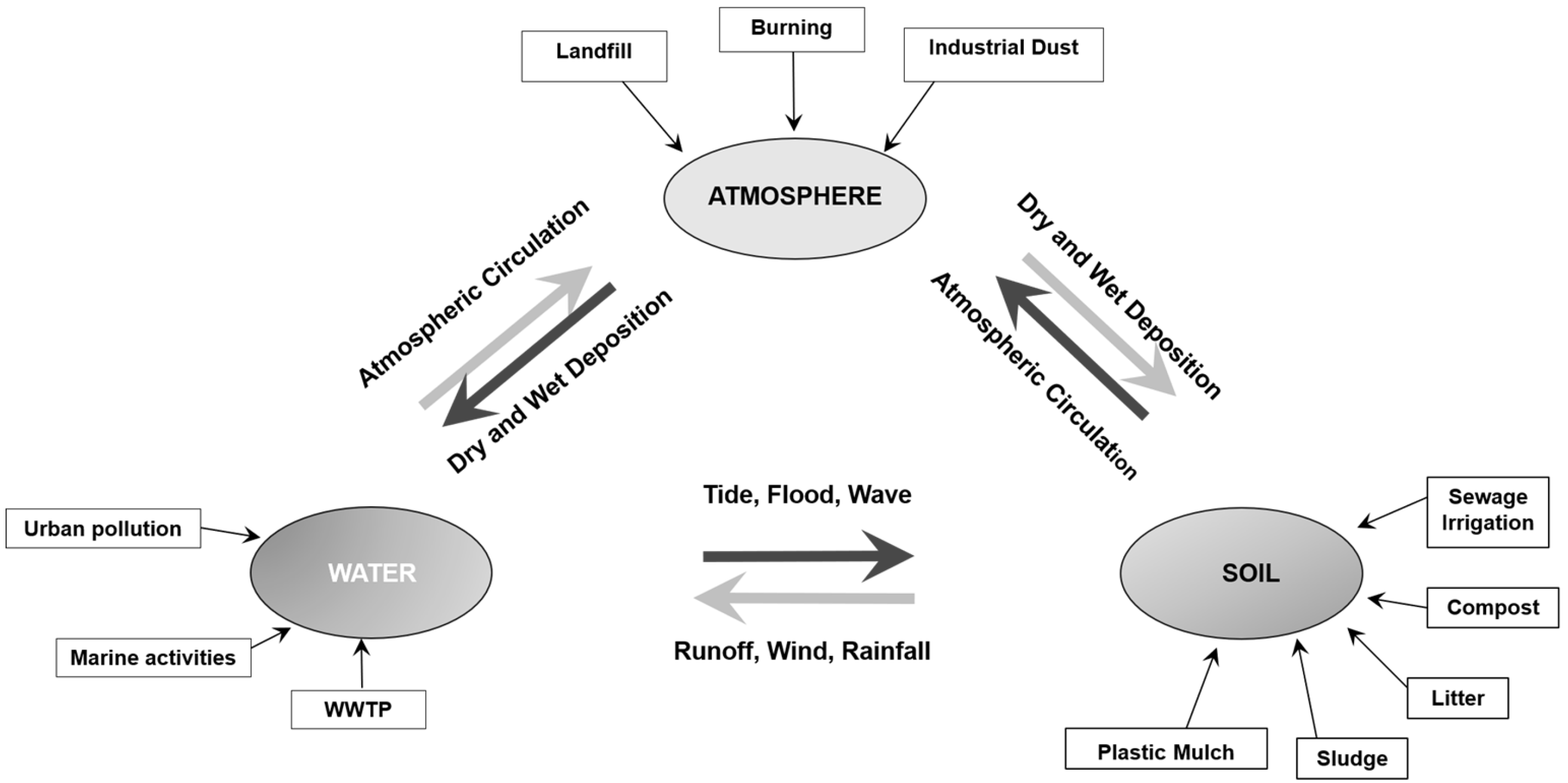
1.4. Microplastics in the Environment—Source and Characteristics
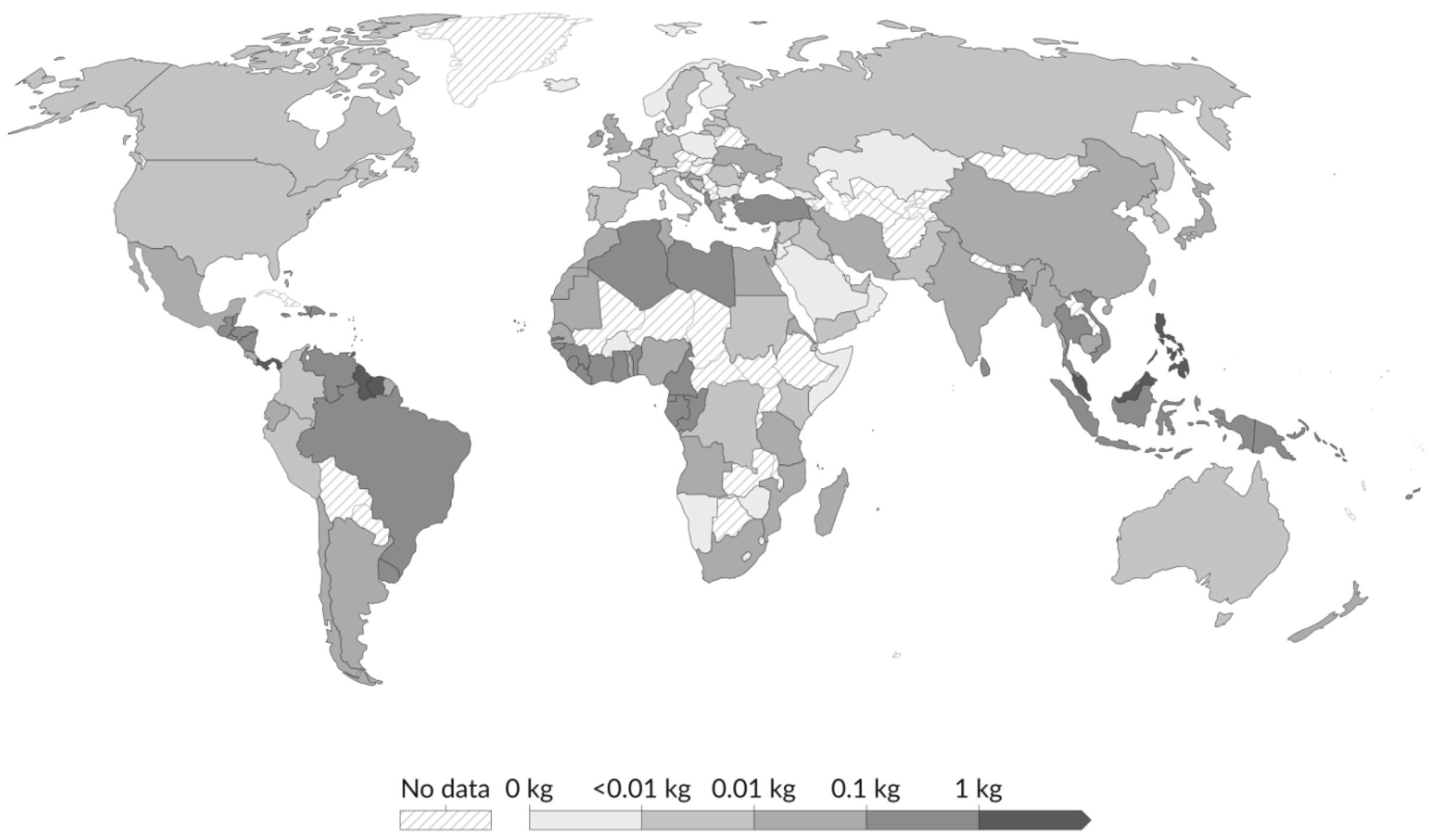
1.5. Main Sources of Microplastics and Their Distribution
1.6. Hazard and Risks Associated with the Release of Microplastics Settle
1.6.1. Plastic Ingestion by Marine Biota
1.6.2. Plastic as a Source and a Vector of Potential Toxins
1.6.3. Microplastics and Derivatives in Marine Organisms
1.7. Impacts of Microplastic Ingestion on Organisms
1.8. Microplastics and Domestic Wastewater—The Critical Importance of Microfibers
2. Processes Associated with Microplastic Removal
2.1. Membrane Applications in Water Treatment
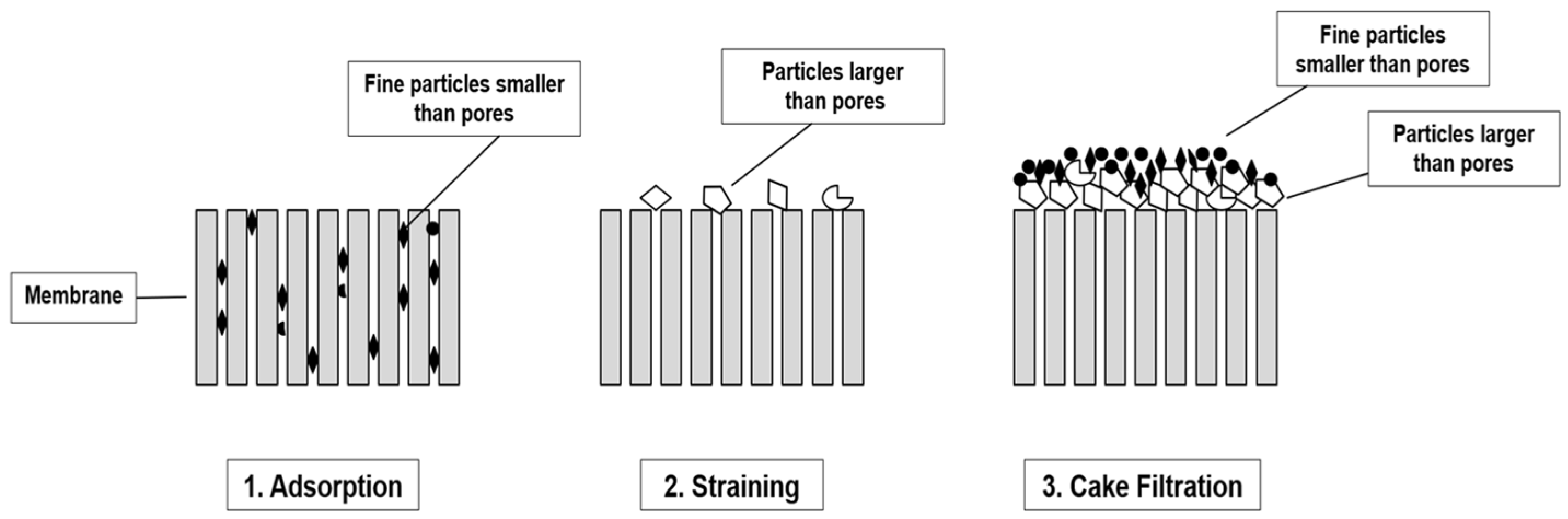
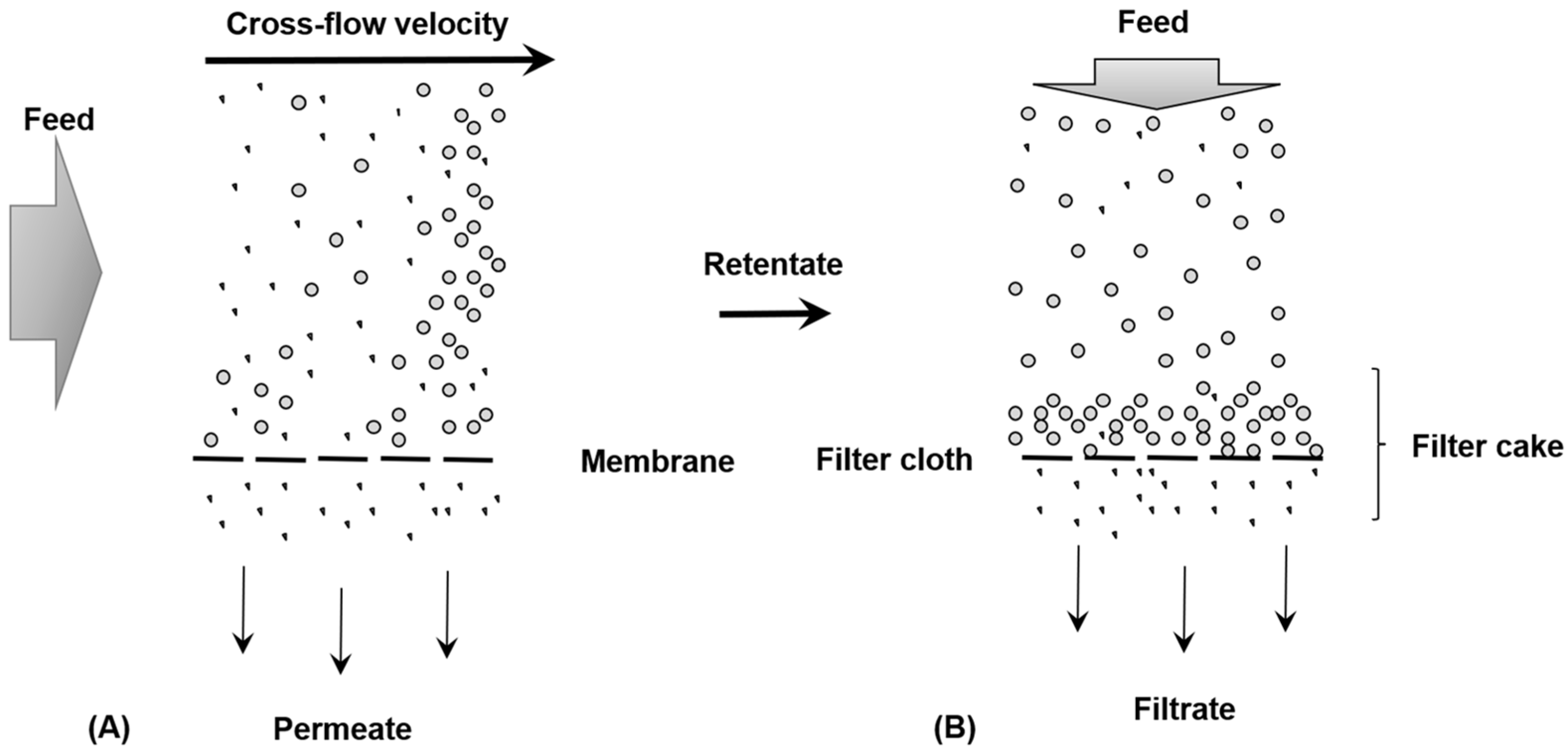
2.2. Membrane Filtration—Typology and Properties
2.3. Membrane Properties and Performances
2.3.1. Polymeric Membranes
2.3.2. Inorganic Membranes
3. Characterization of Different Membranes and Filtration Processes Involved in MP
3.1. Microfiltration Membranes
3.2. Ultrafiltration
3.3. Nanofiltration
3.4. Reverse Osmosis
3.5. Membrane Bioreactors
3.6. Dynamic Membranes Technology
3.7. Operational Viability, Cost, and Secondary Waste Management
3.8. Emerging Trends and Advanced Membrane Technologies
3.9. Future Outlook
4. Conclusions
Author Contributions
Funding
Data Availability Statement
Conflicts of Interest
References
- Geyer, R.; Jambeck, J.R.; Law, K.L. Production, use, and fate of all plastics ever made. Sci. Adv. 2017, 3, e1700782. [Google Scholar] [CrossRef] [Scilit]
- Jambeck, J.R.; Geyer, R.; Wilcox, R.; Siegler, T. Plastic waste inputs from land into the ocean. Science 2015, 347, 768–771. [Google Scholar] [CrossRef] [Scilit]
- Costa, J.P.; Santos, P.S.M.; Duarte, A.C.; Rocha-Santos, T. (Nano)plastics in the environment—Sources, fates and effects. Sci. Total Environ. 2016, 566, 15–26. [Google Scholar] [CrossRef] [Scilit] [PubMed]
- Akdogan, Z.; Guven, B. Microplastics in the Environment: A Critical Review of Current Understanding and Identification of Future Research Needs. Environ. Pollut. 2019, 254, 113011. [Google Scholar] [CrossRef] [Scilit]
- Talvitie, J.; Mikola, A.; Koistinen, A.; Setala, O. Solutions to microplastic pollution, removal of microplastics from wastewater effluent with advanced wastewater treatment technologies. Water Res. 2017, 123, 401–407. [Google Scholar] [CrossRef] [Scilit]
- Catic, I.; Cvjeticanin, N.; Galic, K.; Godec, D.; Grancaric, A.M.; Katavić, I.; Raos, P.; Rogic, A. Polimeri Od prapočetka do plastike i elastomera. Polimeri 2020, 31, 59–70. [Google Scholar]
- Van der Vegt, A.K. From Polymers to Plastics; Delft University Press: Delft, The Netherlands, 2006; pp. 255–263. [Google Scholar]
- Sazali, N.; Ibrahim, H.; Jamaludin, A.S. A short review on polymeric materials concerning degradable polymers. IOP Conf. Ser. Mater. Sci. Eng. 2020, 88, 012047. [Google Scholar] [CrossRef] [Scilit]
- Šaravanja, A.; Pušić, T.; Dekanić, T. Microplastics in wastewater by washing polyester fabrics. Materials 2022, 15, 2683. [Google Scholar] [CrossRef] [Scilit] [PubMed]
- GESAMP. Sources, Fate and Effects of Microplastics in the Marine Environment (Part 1); GESAMP: London, UK, 2016. [Google Scholar]
- OECD. Global Plastics Outlook: Economic Drivers, Environmental Impacts and Policy Options; OECD Publishing: Paris, France, 2022. [Google Scholar]
- Rillig, M.C.; Kim, S.W.; Kim, T.Y.; Waldman, W. The global plastic toxicity debt. Environ. Sci. Technol. 2021, 55, 2717–2719. [Google Scholar] [CrossRef] [Scilit]
- Zhu, X. The Plastic Cycle—An unknown branch of the carbon cycle. Front. Mar. Sci. 2021, 7, 609243. [Google Scholar] [CrossRef] [Scilit]
- Cole, M.; Lindeque, P.; Halsband, C.; Galloway, T.S. Microplastics as contaminants in the marine environment: A review. Mar. Pollut. Bull. 2011, 62, 2588–2597. [Google Scholar] [CrossRef] [Scilit]
- Goldstein, M.C.; Rosenberg, M.; Cheng, L. Increased oceanic microplastic debris enhances oviposition in an endemic pelagic insect. Biol. Lett. 2012, 8, 817–820. [Google Scholar] [CrossRef] [Scilit] [PubMed]
- Browne, M.A.; Niven, S.J.; Galloway, T.S.; Rowland, S.J.; Thompson, R.C. Microplastic moves pollutants and additives to worms, reducing functions linked to health and biodiversity. Curr. Biol. 2013, 23, 2388–2392. [Google Scholar] [CrossRef] [Scilit] [PubMed]
- van Sebille, E.; Wilcox, C.; Lebreton, L. A global inventory of small floating plastic debris. Environ. Res. Lett. 2015, 10, 124006. [Google Scholar] [CrossRef] [Scilit]
- Issac, M.N.; Balasubramanian, K. Effect of microplastics in water and aquatic systems. Environ. Sci. Pollut. Res. 2021, 28, 19544–19562. [Google Scholar] [CrossRef] [Scilit]
- Ruiz, C.E.; Esteban, M.A.; Cuesta, A. Microplastics in aquatic environments and their toxicological implications for fish. In Toxicology—New Aspects to This Scientific Conundrum; InTech: Rijeka, Croatia, 2016; pp. 113–145. [Google Scholar] [CrossRef] [Scilit]
- Poerio, T.; Piacentini, E.; Mazzei, R. Membrane Processes for Microplastic Removal. Molecules 2019, 24, 4148. [Google Scholar] [CrossRef] [Scilit] [PubMed]
- Hale, R.C.; Seeley, M.E.; La Guardia, M.J.; Mai, L.; Zeng, E.Y. A Global Perspective on Microplastics. J. Geophys. Res. Ocean. 2020, 125, e2018JC014719. [Google Scholar] [CrossRef] [Scilit]
- Meijer, L.J.; van Emmerik, T.; van der Ent, R.; Schmidt, C.; Lebreton, L. More than 1000 rivers account for 80% of global riverine plastic emissions into the ocean. Sci. Adv. 2021, 7, eaaz5803. [Google Scholar] [CrossRef] [Scilit]
- Frias, J.P.; Nash, R. Microplastics: Finding a consensus on the definition. Mar. Pollut. Bull. 2019, 138, 145–147. [Google Scholar] [CrossRef] [Scilit]
- Egessa, R.; Nankabirwa, A.; Ocaya, H.; Pabire, W.G. Microplastic pollution in surface water of Lake Victoria. Sci. Total Environ. 2020, 741, 140201. [Google Scholar] [CrossRef] [Scilit]
- Samandra, S.; Johnston, J.M.; Xie, S.; Currell, M.; Ellis, A.V.; Clarke, B.O. Microplastic contamination of an unconfined groundwater aquifer in Victoria, Australia. Sci. Total. Environ. 2022, 802, 149727. [Google Scholar] [CrossRef] [Scilit]
- Franco, A.A.; Arellano, J.P.; Albendín, G.; Rodríguez-Barroso, R.; Quiroga, J.M.; Coello, M.D. Microplastic pollution in wastewater treatment plants in the city of Cádiz: Abundance, removal efficiency and presence in receiving water body. Sci. Total Environ. 2021, 776, 145795. [Google Scholar] [CrossRef] [Scilit]
- Tong, H.; Jiang, Q.; Hu, X.; Zhong, X. Occurrence and identification of microplastics in tap water from China. Chemosphere 2020, 252, 126493. [Google Scholar] [CrossRef] [Scilit]
- Mason, S.A.; Welch, V.G.; Neratko, J. Synthetic Polymer Contamination in Bottled Water. Front. Chem. 2018, 6, 407. [Google Scholar] [CrossRef] [Scilit] [PubMed]
- Lambert, S.; Wagner, M. Characterisation of nanoplastics during the degradation of polystyrene. Chemosphere 2016, 145, 265–268. [Google Scholar] [CrossRef] [Scilit] [PubMed]
- Hartmann, N.B.; Hüffer, T.; Thompson, R.R.; Hassellöv, M.; Verschoor, A.; Daugaard, A.E.; Rist, S.; Karlsson, T.; Wagner, M. Are We Speaking the Same Language? Recommendations for a Definition and Categorization Framework for Plastic Debris. Environ. Sci. Technol. 2019, 53, 1039−1047. [Google Scholar] [CrossRef] [Scilit]
- Velasco, A.N.; Stéphan, R.G.; Zimmermann, S.; Le Coustumer, P.; Stoll, S. Contamination and removal efficiency of microplastics and synthetic fibres in a conventional drinking water treatment plant in Geneva, Switzerland. Sci. Total Environ. 2023, 880, 163270. [Google Scholar] [CrossRef] [Scilit]
- Wright, S.L.; Thompson, R.C.; Galloway, T.S. The physical impacts of microplastics on marine organisms: A review. Environ. Pollut. 2013, 178, 483–492. [Google Scholar] [CrossRef] [Scilit] [PubMed]
- Osman, A.I.; Hosny, M.; Eltaweil, A.S.; Omar, S.; Elgarahy, A.M.; Farghali, M.; Yap, P.S.; Wu, Y.S.; Nagandran, S.; Batumalaie, K.; et al. Microplastic sources, formation, toxicity and remediation: A review. Environ. Chem. Lett. 2023, 21, 2129–2169. [Google Scholar] [CrossRef] [Scilit]
- Amaral-Zettler, L.; Dudas, S.; Fabres, J.; Galgani, F.; Hardesty, D.; Hidalgo-Ruz, V.; Hong, S.; Kershaw, P.; Lebreton, L.; Lusher, A.; et al. Sources, Fate and Effects of Microplastics in the Marine Environment: Part 2 of a Global Assessment; FAO: Rome, Italy, 2016; Volume 93, p. 217. [Google Scholar]
- Sundt, P.; Schulze, P.; Syversen, F. Sources of microplastic-pollution to the marine environment (MEPEX). Mepex Nor. Environ. Agency 2014, 86, 20. [Google Scholar]
- Magnusson, K.K.; Eliasson, K.; Fråne, A.; Haikonen, K.; Hultén, J.; Olshamma, M.; Stadmark, J.; Voisin, A.; Stadmark, J.; Voisin, A. Swedish Sources and Pathways for Microplastic to the Marine Environment: A Review of Existing Data; IVL Swedish Environmental Research Institute Report; IVL Swedish Environmental Research Institute: Stockholm, Sweden, 2016. [Google Scholar]
- Thompson, R.C.; Olsen, Y.; Mitchell, R.P.; Davis, A. Lost at sea: Where is all the plastic? Science 2004, 304, 838. [Google Scholar] [CrossRef] [Scilit]
- Song, Y.K.; Hong, S.H.; Jang, M.; Han, G.M.; Jung, S.W.; Shim, W.J. Combined effects of UV exposure duration and mechanical abrasion on microplastic fragmentation by polymer type. Environ. Sci. Technol. 2014, 48, 8963–8970. [Google Scholar] [CrossRef] [Scilit]
- Jang, Y.C.; Lee, J.; Hong, S.; Lee, J.S.; Shim, W.J. Sources of plastic marine debris on beaches of Korea: More from the ocean than the land. Ocean Sci. J. 2014, 49, 151–162. [Google Scholar] [CrossRef] [Scilit]
- Adachi, K.; Tainosho, Y. Characterization of heavy metal particles embedded in tire dust. Environ. Int. 2004, 30, 1009–1017. [Google Scholar] [CrossRef] [Scilit]
- Jartun, M.; Pettersen, A. Contaminants in urban runoff to Norwegian fjords. J. Soils Sediments 2010, 10, 155–161. [Google Scholar] [CrossRef] [Scilit]
- Cooper, D.A.; Corcoran, P.L. Effects of mechanical and chemical processes on the degradation of plastic beach debris on the island of Kauai, Hawaii. Mar. Pollut. Bull. 2010, 60, 650–654. [Google Scholar] [CrossRef] [Scilit]
- Pegram, J.E.; Andrady, A.L. Polymer Degradation and Stability. Polym. Degrad. Stab. 1989, 26, 333–345. [Google Scholar] [CrossRef] [Scilit]
- Cornelissen, G.; Pettersen, A.; Nesse, E.; Eek, E.; Helland, A.; Breedveld, G.D. The contribution of urban runoff to organic contaminant levels in harbour sediments near two Norwegian cities. Mar. Pollut. Bull. 2008, 56, 565–573. [Google Scholar] [CrossRef] [Scilit] [PubMed]
- Zgheib, S.; Moilleron, R.; Saad, M.; Chebbo, G. Partition of pollution between dissolved and particulate phases: What about emerging substances in urban stormwater catchments? Water Res. 2011, 45, 913–925. [Google Scholar] [CrossRef] [Scilit] [PubMed]
- Arthur, C.; Baker, J.; Bamford, H. Proceedings of the International Research Workshop on the Occurrence, Effects, and Fate of Microplastic Marine Debris; University of Washington: Tacoma, WA, USA, 2009; Volumes 1–2. [Google Scholar]
- Leslie, H.A. Review of Microplastics in Cosmetics: Scientific Background on a Potential Source of Plastic Particulate Marine Litter to Support Decision-Making; IVM Institute for Environmental Studies: Amsterdam, The Netherlands, 2014; Volume 476, p. 33. [Google Scholar]
- Wagner, M.; Lambert, S. Microplastics are Contaminants of Emerging Concern in Freshwater Environments: An Overview; Wagner, M., Lambert, S., Eds.; Freshwater Microplastics; Springer: Berlin/Heidelberg, Germany, 2018. [Google Scholar]
- Li, J.; Liu, H.; Chen, J.P. Microplastics in freshwater systems: A review on occurrence, environmental effects, and methods for microplastics detection. Water Res. 2018, 137, 362–374. [Google Scholar] [CrossRef] [Scilit]
- Browne, M.A.; Galloway, T.; Thompson, R.C. Microplastic—An emerging contaminant of potential concern? Integr. Environ. Assess. Manag. 2007, 3, 559–561. [Google Scholar] [CrossRef] [Scilit]
- Chen, J.; Wang, W.; Liu, H.; Xu, X.; Xia, J. A review on the occurrence, distribution, characteristics, and analysis methods of microplastic pollution in ecosystems. Environ. Pollut. Bioavailab. 2021, 33, 227–246. [Google Scholar] [CrossRef] [Scilit]
- Vermeiren, P.; Muñoz, C.; Ikejima, K. Microplastic identification and quantification from organic-rich sediments: A validated laboratory protocol. Environ. Pollut. 2020, 262, 114298. [Google Scholar] [CrossRef] [Scilit]
- Murphy, F.; Ewins, C.; Carbonnier, F. Wastewater treatment works (WWTW) as a source of microplastics in the aquatic environment. Environ. Sci. Technol. 2016, 50, 5800–5808. [Google Scholar] [CrossRef] [Scilit]
- Cesa, F.S.; Turra, A.; Baruque-Ramos, J. Synthetic fibers as microplastics in the marine environment: A review from a textile perspective with a focus on domestic washings. Sci. Total Environ. 2017, 598, 1116–1129. [Google Scholar] [CrossRef] [Scilit] [PubMed]
- Laresa, M.; Ncibi, M.C.; Sillanpää, M. Occurrence, Identification and removal of microplastic particles and fibers in conventional activated sludge process and advanced MBR technology. Water Res. 2018, 133, 236–246. [Google Scholar] [CrossRef] [Scilit] [PubMed]
- Zhang, K.; Shi, H.; Peng, J. Microplastic pollution in China’s inland water systems: A review of findings, methods, characteristics, effects, and management. Sci. Total Environ. 2018, 630, 1641–1653. [Google Scholar] [CrossRef] [Scilit]
- Horton, A.A.; Walton, A.; Spurgeon, D.J. Microplastics in freshwater and terrestrial environments: Evaluating the current understanding to identify the knowledge gaps and future research priorities. Sci. Total Environ. 2017, 586, 127–141. [Google Scholar] [CrossRef] [Scilit] [PubMed]
- Rochman, C.M. Microplastics research: From sink to source. Science 2018, 360, 28–29. [Google Scholar] [CrossRef] [Scilit]
- Abbasi, S.; Keshavarzi, B.; Moore, F. Distribution and potential health impacts of microplastics and microrubbers in air and street dusts from Asaluyeh County, Iran. Environ. Pollut. 2019, 244, 153–164. [Google Scholar] [CrossRef] [Scilit]
- Peng, L.; Fu, D.; Qi, H. Micro- and nano-plastics in marine environment: Source, distribution and threats—A review. Sci. Total Environ. 2020, 698, 134254. [Google Scholar] [CrossRef] [Scilit]
- Eriksen, M.; Mason, S.; Wilson, S. Microplastic pollution in the surface waters of the Laurentian great lakes. Mar. Pollut. Bull. 2013, 77, 177–182. [Google Scholar] [CrossRef] [Scilit]
- Obbard, R.W.; Sadri, S.; Wong, Y.Q. Global warming releases the microplastic legacy frozen in Arctic Sea ice. Earth’s Future 2014, 2, 315–320. [Google Scholar] [CrossRef] [Scilit]
- Yuan, W.; Liu, X. Microplastic abundance, distribution and composition in water, sediments, and wild fish from Poyang Lake, China. Ecotoxicol. Environ. Saf. 2019, 170, 180–187. [Google Scholar] [CrossRef] [Scilit] [PubMed]
- Zhou, B.; Wang, J.; Zhang, H. Microplastics in agricultural soils on the coastal plain of Hangzhou Bay, east China: Multiple sources other than plastic mulching film. J. Hazard. Mater. 2019, 388, 121814. [Google Scholar] [CrossRef] [Scilit]
- Gasperi, J.; Wright, S.L.; Dris, R. Microplastics in air: Are we breathing it in? Curr. Opin. Environ. Sci. Health 2018, 1, 1–5. [Google Scholar] [CrossRef] [Scilit]
- Sighicellia, M.; Pietrelli, L.; Lecce, F. Microplastic pollution in the surface waters of Italian Subalpine Lakes. Environ. Pollut. 2018, 236, 645–651. [Google Scholar] [CrossRef] [Scilit]
- Panno, S.V.; Kelly, W.R.; Scott, J. Microplastic contamination in Karst groundwater systems. Ground Water 2019, 57, 189–196. [Google Scholar] [CrossRef] [Scilit] [PubMed]
- Zhang, B.; Yang, X.; Chen, L. Microplastics in soils: A review of possible sources, analytical methods and ecological impacts. J. Chem. Technol. Biotechnol. 2020, 95, 2052–2068. [Google Scholar] [CrossRef] [Scilit]
- Campanale, C.; Stock, F.; Massarelli, C. Microplastics and their possible sources: The example of the Ofanto river in Southeast Italy. Environ. Pollut. 2019, 258, 113284. [Google Scholar] [CrossRef] [Scilit]
- Eerkes-Medrano, D.; Thompson, R.C.; Aldridge, D.C. Microplastics in freshwater systems: A review of the emerging threats, identification of knowledge gaps and prioritisation of research needs. Water Res. 2015, 75, 63–82. [Google Scholar] [CrossRef] [Scilit]
- Mai, L.; You, S.N.; He, H. Riverine microplastic pollution in the Pearl River Delta, China: Are modelled estimates accurate? Environ. Sci. Technol. 2019, 53, 11810–11817. [Google Scholar] [CrossRef] [Scilit]
- Schmidt, C.; Krauth, T.; Wagner, S. Export of plastic debris by rivers into the sea. Environ. Sci. Technol. 2017, 51, 12246–12253. [Google Scholar] [CrossRef] [Scilit]
- Ivleva, N.P.; Wiesheu, A.C.; Niessner, R. Microplastics in aquatic ecosystems. Angew. Chem. Int. Ed. Engl. 2017, 56, 1720–1739. [Google Scholar] [CrossRef] [Scilit] [PubMed]
- Hardesty, B.D.; Lawson, T.J.; van der Velde, T. Estimating quantities and sources of marine debris at a continental scale. Front. Ecol. Environ. 2017, 15, 18–25. [Google Scholar] [CrossRef] [Scilit]
- Alimi, O.S.; Budarz, J.F.; Hernandez, L.M. Microplastics and nanoplastics in aquatic environments: Aggregation, deposition, and enhanced contaminant transport. Environ. Sci. Technol. 2018, 52, 1704–1724. [Google Scholar] [CrossRef] [Scilit]
- Peng, X.; Chen, M.; Chen, S. Microplastics contaminate the deepest part of the world’s ocean. Geochem. Perspect. Lett. 2018, 9, 1–5. [Google Scholar] [CrossRef] [Scilit]
- Zhao, S.; Zhu, L.; Teng, W. Suspended microplastics in the surface water of the Yangtze Estuary System, China: First observations on occurrence, distribution. Mar. Pollut. Bull. 2014, 86, 562–568. [Google Scholar] [CrossRef] [Scilit] [PubMed]
- Zheng, Y.; Li, J.; Cao, W. Distribution characteristics of microplastics in the seawater and sediment: A case study in Jiaozhou Bay, China. Sci. Total Environ. 2019, 674, 7–35. [Google Scholar] [CrossRef] [Scilit]
- Kane, I.A.; Clare, M.A. Dispersion, accumulation, and the ultimate fate of microplastics in deep-marine environments: A review and future directions. Front. Earth Sci. 2019, 7, 80. [Google Scholar] [CrossRef] [Scilit]
- Dris, R.; Gasperi, J.; Saad, M. Synthetic fibers in atmospheric fallout: A source of microplastics in the environment? Mar. Pollut. Bull. 2016, 104, 290–293. [Google Scholar] [CrossRef] [Scilit]
- Dris, R.; Gasperi, J.; Rocher, V. Microplastic contamination in an urban area: A case study in Greater Paris. Environ. Chem. 2015, 12, 592–599. [Google Scholar] [CrossRef] [Scilit]
- Allen, S.; Allen, D.; Phoenix, V.R. Atmospheric transport and deposition of microplastics in a remote mountain catchment. Nat. Geosci. 2019, 5, 339–344. [Google Scholar] [CrossRef] [Scilit]
- Villarrubia-Gómez, P.; Cornell, S.E.; Fabres, F. Marine plastic pollution as a planetary boundary threat—The drifting piece in the sustainability puzzle. Mar. Policy 2018, 96, 213–220. [Google Scholar] [CrossRef] [Scilit]
- Deng, Y.; Yan, Z.; Zhu, Q. Tissue accumulation of microplastics and toxic effects: Widespread health risks of microplastics exposure. In Microplastics in Terrestrial Environments; Springer: Cham, Switzerland, 2020; pp. 1–21. [Google Scholar]
- Derraik, J.G. The pollution of the marine environment by plastic debris: A review. Mar. Pollut. Bull. 2002, 44, 842–852. [Google Scholar] [CrossRef] [Scilit] [PubMed]
- Bergmann, M.; Gutow, L.; Klages, M. Marine Anthropogenic Litter; Springer: Berlin/Heidelberg, Germany, 2015. [Google Scholar]
- Rochman, C.M. The complex mixture, fate and toxicity of chemicals associated with plastic debris in the marine environment. In Marine Anthropogenic Litter; Springer: Cham, Switzerland, 2015; pp. 117–140. [Google Scholar]
- Thompson, R.C.; Moore, C.J.; vom Saal, F.S.; Swan, S.H. Plastics, the environment and human health: Current consensus and future trends. Philos. Trans. R. Soc. Lond. B Biol. Sci. 2009, 364, 2153–2166. [Google Scholar] [CrossRef] [Scilit] [PubMed]
- Rochman, C.M.; Browne, M.A. Classify plastic waste as hazardous. Nature 2013, 494, 169–171. [Google Scholar] [CrossRef] [Scilit] [PubMed]
- Lusher, A. Microplastics in the marine environment: Distribution, interactions and effects. In Marine Anthropogenic Litter; Bergmann, M., Gutow, L., Klages, M., Eds.; Springer: Cham, Switzerland, 2015; pp. 245–308. [Google Scholar]
- Teuten, E.L.; Rowland, S.J.; Galloway, T.S.; Thompson, R.C. Potential for Plastics to Transport Hydrophobic Contaminants. Environ. Sci. Technol. 2007, 41, 7759–7764. [Google Scholar] [CrossRef] [Scilit]
- Hammer, J.; Kraak, M.H.; Parsons, J.R. Plastics in the marine environment: The dark side of a modern gift. In Reviews of Environmental Contamination and Toxicology; Springer: New York, NY, USA, 2012; Volume 220, pp. 1–44. [Google Scholar] [CrossRef] [Scilit]
- Oehlmann, J.; Schulte-Oehlmann, U.; Kloas, W.; Jagnytsch, O.; Lutz, I.; Kusk, K.O.; Wollenberger, L.; Santos, E.M.; Paull, G.C.; Van Look, K.J.; et al. A critical analysis of the biological impacts of plasticizers on wildlife. Philos. Trans. R. Soc. Lond. B Biol. Sci. 2009, 364, 2047–2062. [Google Scholar] [CrossRef] [Scilit]
- Mato, Y.; Isobe, T.; Takada, H.; Kanehiro, H.; Ohtake, C.; Kaminuma, T. Plastic resin pellets as a transport medium for toxic chemicals in the marine environment. Environ. Sci. Technol. 2001, 35, 318–324. [Google Scholar] [CrossRef] [Scilit]
- Ogata, Y.; Takada, H.; Master, M.K.; Hirai, H. International pellet watch: Global monitoring of persistent organic pol-lutants (POPs) in coastal waters. Initial phase data on PCBs, DDTs, and HCHs. Mar. Pollut. Bull. 2009, 58, 1437–1466. [Google Scholar] [CrossRef] [Scilit] [PubMed]
- Hirai, H.; Takada, H.; Ogata, Y.; Yamashita, R. Organic micropollutants in marine plastics debris from the open ocean and remote and urban beaches. Mar. Pollut. Bull. 2011, 62, 1683–16921. [Google Scholar] [CrossRef] [Scilit]
- Koelmans, A.A. Modeling the role of microplastics in bioaccumulation of organic chemicals to marine aquatic organisms. A critical review. In Marine Anthropogenic Litter; Bergmann, M., Gutow, L., Klages, M., Eds.; Springer: Berlin/Heidelberg, Germany, 2015; pp. 313–328. [Google Scholar]
- Murray, F.; Cowie, P.R. Plastic contamination in the decapod crustacean Nephrops norvegicus (Linnaeus, 1758). Mar. Pollut. Bull. 2011, 62, 1207–1217. [Google Scholar] [CrossRef] [Scilit]
- Possatto, F.E.; Barletta, M.; Costa, M.F.; do Sul, J.; Dantas, D.V. Plastic debris ingestion by marine catfish: An unexpected fisheries impact. Mar. Pollut. Bull. 2011, 62, 1098–1102. [Google Scholar] [CrossRef] [Scilit]
- van Franeker, J.A.; Blaize, C.; Danielsen, J.; Fairclough, K.; Gollan, J.; Guse, N. Monitoring plastic ingestion by the northern fulmar Fulmarus glacialis in the North Sea. Environ. Pollut. 2011, 159, 2609–2615. [Google Scholar] [CrossRef] [Scilit]
- Foekema, E.M.; De Gruijter, C.; Mergia, M.T.; van Franeker, J.A.; Murk, A.J.; Koelmans, A.A. Plastic in North Sea fish. Environ. Sci. Technol. 2013, 47, 8818–8824. [Google Scholar] [CrossRef] [Scilit]
- Lusher, A.; McHugh, M.; Thompson, R.C. Occurrence of microplastics in the gastrointestinal tract of pelagic and demersal fish from the English Channel. Mar. Pollut. Bull. 2013, 67, 94–99. [Google Scholar] [CrossRef] [Scilit]
- Rebolledo, E.L.; van Franeker, J.A.; Jansen, O.E.; Brasseur, S.M. Plastic ingestion by harbour seals (Phoca vitulina) in The Netherlands. Mar. Pollut. Bull. 2013, 67, 200–202. [Google Scholar] [CrossRef] [Scilit] [PubMed]
- Bhattacharya, P.; Lin, S.; Turner, J.P.; Ke, P.C. Physical Adsorption of Charged Plastic Nanoparticles Affects Algal Photosynthesis. J. Phys. Chem. C 2010, 114, 16556–16561. [Google Scholar] [CrossRef] [Scilit]
- Fossi, M.C.; Panti, C.; Guerranti, C.; Coppola, D.; Giannetti, M.; Marsili, L.; Minutoli, R. Are baleen whales exposed to the threat of microplastics? A case study of the Mediterranean fin whale (Balaenoptera physalus). Mar. Pollut. Bull. 2012, 64, 2374–2379. [Google Scholar] [CrossRef] [Scilit]
- Fossi, M.C.; Coppola, D.; Baini, M.; Giannetti, M.; Guerranti, C.; Marsili, L.; Panti, C.; de Sabata, E.; Clò, S. Large filter feeding marine organisms as indicators of microplastic in the pelagic environment: The case studies of the Mediterranean basking shark (Cetorhinus maximus) and fin whale (Balaenoptera physalus). Mar. Environ. Res. 2014, 100, 17–24. [Google Scholar] [CrossRef] [Scilit]
- Zaki, M.R.; Zaid, S.H.; Zainuddin, A.H.; Aris, A.Z. Microplastic pollution in tropical estuary gastropods: Abundance, distribution and potential sources of Klang River estuary, Malaysia. Mar. Pollut. Bull. 2021, 162, 11866. [Google Scholar] [CrossRef] [Scilit]
- Cho, Y.; Shim, W.J.; Jang, M.; Han, G.M.; Hong, S. Nationwide monitoring of microplastics in bivalves from the coastal environment of Korea. Environ. Pollut. 2021, 270, 116175. [Google Scholar] [CrossRef] [Scilit] [PubMed]
- Wang, D.; Su, L.; Ruan, H.D.; Chen, J.; Lu, J.L. Quantitative and qualitative determination of microplastics in oyster, seawater and sediment from the coastal areas in Zhuhai, China. Mar. Pollut. Bull. 2021, 164, 112000. [Google Scholar] [CrossRef] [Scilit] [PubMed]
- Cole, M.; Galloway, T.S. Ingestion of nanoplastics and microplastics by Pacific oyster larvae. Environ. Sci. Technol. 2015, 49, 14625–14632. [Google Scholar] [CrossRef] [Scilit]
- Wójcik-Fudalewska, D.; Normant-Saremba, M.; Anastácio, P. Occurrence of plastic debris in the stomach of the invasive crab Eriocheir sinensis. Mar. Pollut. Bull. 2016, 113, 306–311. [Google Scholar] [CrossRef] [Scilit]
- Welden, N.A.; Cowie, P.R. Environment and gut morphology influence microplastic retention in langoustine, Nephrops norvegicus. Environ. Pollut. 2016, 214, 859–865. [Google Scholar] [CrossRef] [Scilit] [PubMed]
- Murphy, F.; Russell, M.; Ewins, C.; Quinn, B. The uptake of macroplastic and microplastic by demersal and pelagic fish in the Northeast Atlantic around Scotland. Mar. Pollut. Bull. 2017, 122, 353–359. [Google Scholar] [CrossRef] [Scilit]
- Nadal, M.A.; Alomar, C.; Deudero, S. High levels of microplastic ingestion by the semi-pelagic fish bogue Boops boops (L.) around the Balearic Islands. Environ. Pollut. 2016, 214, 517–523. [Google Scholar] [CrossRef] [Scilit]
- Nie, H.; Wang, J.; Xu, K.; Huang, Y.; Yan, M. Microplastic pollution in water and fish samples around Nanxun Reef in Nansha Islands, South China Sea. Sci. Total Environ. 2019, 696, 134022. [Google Scholar] [CrossRef] [Scilit]
- Zhu, L.; Wang, H.; Chen, B.; Sun, X.; Qu, K.; Xia, B. Microplastic ingestion in deep-sea fish from the South China Sea. Sci. Total Environ. 2019, 677, 493–501. [Google Scholar] [CrossRef] [Scilit] [PubMed]
- Schuyler, Q.; Hardesty, B.D.; Wilcox, C.; Townsend, K. Global analysis of anthropogenic debris ingestion by sea turtles. Conserv. Biol. 2014, 28, 129–139. [Google Scholar] [CrossRef] [Scilit] [PubMed]
- Clukey, K.E.; Lepczyk, C.A.; Balazs, G.H.; Work, T.M.; Lynch, J. Investigation of plastic debris ingestion by four species of sea turtles collected as bycatch in pelagic Pacific longline fisheries. Mar. Pollut. Bull. 2017, 120, 117–125. [Google Scholar] [CrossRef] [Scilit]
- Unger, B.; Rebolledo, E.L.; Deaville, R.; Gröne, A.; Jsseldijk, L.J.; Leopold, M.F.; Herr, H. Large amounts of marine de-bris found in sperm whales stranded along the North Sea coast in early. Mar. Pollut. Bull. 2016, 112, 134–141. [Google Scholar] [CrossRef] [Scilit]
- Tanaka, K.; Takada, H.; Yamashita, R.; Mizukawa, K.; Fukuwaka, M.A.; Watanuki, Y. Accumulation of plastic-derived chemicals in tissues of seabirds ingesting marine plastics. Mar. Pollut. Bull. 2013, 69, 219–222. [Google Scholar] [CrossRef] [Scilit]
- Nicastro, K.R.; Savio, R.L.; McQuaid, C.D.; Madeira, P.; Valbusa, U.; Azevedo, F.; Zardi, G. Plastic ingestion in aquatic-associated bird species in southern Portugal. Mar. Pollut. Bull. 2018, 126, 413–418. [Google Scholar] [CrossRef] [Scilit] [PubMed]
- Wick, P.J.; Clift, M.J.; Roesslein, M.; Roth, B. A brief summary of carbon nanotubes science and technology: A health and safety perspective. Chemsuschem 2011, 4, 905–911. [Google Scholar] [CrossRef] [Scilit]
- Berntsen, P.; Park, C.Y.; Rothen-Rutishauser, B.; Tsuda, A.; Sager, T.M.; Molina, R.M.; Zhou, E.H. Biomechanical effects of environmental and engineered particles on human airway smooth muscle cells. J. R. Soc. Interface 2010, 7, S331–S340. [Google Scholar] [CrossRef] [Scilit]
- Fröhlich, C.; Klitgaard, M.; Noer, J.B.; Kotzsch, A.; Nehammer, C.; Kronqvist, P.; Berthelsen, J.; Blobel, C.; Kveiborg, M.; Albrechtsen, R.; et al. ADAM12 is expressed in the tumour vasculature and mediates ectodomain shedding of several membrane-anchored endothelial proteins. Biochem. J. 2013, 452, 97–109. [Google Scholar] [CrossRef] [Scilit]
- Lehner, R.; Weder, C.; Petri-Fink, A.; Rothen-Rutishauser, B. Emergence of Nanoplastics in the Environment and Possible Impact on Human Health. Environ. Sci. Technol. 2019, 53, 1748–1765. [Google Scholar] [CrossRef] [Scilit]
- Mamun, A.A.; Prasetya, T.A.E.; Dewi, I.R.; Ahmad, M. Microplastics in human food chains: Food becoming a threat to health safety. Sci. Total Environ. 2023, 858, 159834. [Google Scholar] [CrossRef] [Scilit] [PubMed]
- Cole, M.; Lindeque, P.; Fileman, E.; Halsband, C.; Goodhead, R.; Moger, J.; Galloway, T.S. Microplastic ingestion by zooplankton. Environ. Sci. Technol. 2013, 47, 6646–6655. [Google Scholar] [CrossRef] [Scilit]
- Nobre, C.R.; Santana, M.F.; Maluf, A.; Cortez, F.S.; Cesar, A.; Pereira, C.D. Assessment of microplastic toxicity to embryonic development of the sea urchin Lytechinus variegatus (Echinodermata: Echinoidea). Mar. Pollut. Bull. 2015, 92, 99–104. [Google Scholar] [CrossRef] [Scilit]
- Moore, C.J. Synthetic polymers in the marine environment: A rapidly increasing, long-term threat. Environ. Res. 2008, 108, 131–139. [Google Scholar] [CrossRef] [Scilit]
- Wright, S.L.; Rowe, D.; Thompson, R.C.; Gallow, T.S. Microplastic ingestion decreases energy reserves in marine worms. Curr. Biol. 2013, 23, R1031–R1033. [Google Scholar] [CrossRef] [Scilit] [PubMed]
- Gregory, M.R. Environmental implications of plastic debris in marine settings—Entanglement, ingestion, smothering, hangers-on, hitch-hiking and alien invasions. Philos. Trans. R. Soc. Lond. B Biol. Sci. 2009, 364, 2013–2025. [Google Scholar] [CrossRef] [Scilit] [PubMed]
- Oliveira, M.; Ribeiro, A.; Hylland, K.; Guilhermino, L. Single and combined effects of microplastics and pyrene on juveniles (0+ group) of the common goby Pomatoschistus microps (Teleostei, Gobiidae). Ecol. Indic. 2013, 34, 641–647. [Google Scholar] [CrossRef] [Scilit]
- Perry, E.K.; Perry, R.H.; Blessed, G.; Tomlinson, B.E. Changes in brain cholinesterases in senile dementia of Alzheimer type. Neuropathol. Appl. Neurobiol. 1978, 4, 273–277. [Google Scholar] [CrossRef] [Scilit]
- Pohanka, M.; Hrabinova, M.; Kuca, K.; Simonato, J.P. Assessment of acetylcholinesterase activity using indoxyl acetate and comparison with the standard Ellman’s method. Int. J. Mol. Sci. 2011, 12, 2631–2640. [Google Scholar] [CrossRef] [Scilit]
- Hermabessiere, L.; Dehaut, A.; Paul-Pont, I.; Lacroix, C.; Jezequel, R.; Soudant, P.; Duflos, G. Occurrence and effects of plastic additives on marine environments and organisms: A review. Chemosphere 2017, 182, 781–793. [Google Scholar] [CrossRef] [Scilit]
- Mizukawa, K.; Takada, H.; Takeuchi, I.; Ikemoto, T.; Omori, K.; Tsuchiya, K. Bioconcentration and biomagnification of polybrominated diphenyl ethers (PBDEs) through lower-trophic-level coastal marine food web. Mar. Pollut. Bull. 2009, 58, 1217–1224. [Google Scholar] [CrossRef] [Scilit] [PubMed]
- Teuten, E.L.; Saquing, J.M.; Knappe, D.R.; Barlaz, M.A.; Jonsson, S.; Björn, A.; Rowland, S.J.; Thompson, R.C.; Galloway, T.S.; Yamashita, R.; et al. Transport and release of chemicals from plastics to the environment and to wildlife. Philos. Trans. R. Soc. Lond. B Biol. Sci. 2009, 364, 2027–2045. [Google Scholar] [CrossRef] [Scilit] [PubMed]
- Galgani, F.; Fleet, D.; Van Franeker, J.A.; Katsanevakis, S.; Maes, T.; Mouat, J. Marine Strategy Framework Directive-Task Group 10 Report Marine Litter; Office for Official Publications of the European Communities: Luxembourg, 2010. [Google Scholar]
- Collard, F.; Gilbert, B.; Compère, P.; Eppe, G.; Das, K.; Jauniaux, T.; Parmentier, E. Microplastics in livers of European anchovies (Engraulis encrasicolus L.). Environ. Pollut. 2017, 229, 1000–1005. [Google Scholar] [CrossRef] [Scilit]
- Krogdahl, Å.; Kortner, T.M.; Hardy, R.W. Antinutrients and adventitious toxins. In Fish Nutrition; Academic Press: Cambridge, MA, USA, 2022; pp. 775–821. [Google Scholar] [CrossRef] [Scilit]
- Browne, M.A. Sources and pathways of microplastic to habitats. In Marine Anthropogenic Litter; Bergmann, M., Gutow, L., Klages, M., Eds.; Springer: Berlin/Heidelberg, Germany, 2015; pp. 229–244. [Google Scholar] [CrossRef] [Scilit]
- Browne, M.A.; Crump, P.; Niven, S.J.; Teuten, E.; Tonkin, A.; Galloway, T.; Thompson, R. Accumulation of microplastic on shorelines worldwide: Sources and sinks. Environ. Sci. Technol. 2011, 45, 9175–9179. [Google Scholar] [CrossRef] [Scilit]
- Napper, I.E.; Thompson, R.C. Release of synthetic microplastic plastic fibres from domestic washing machines: Effects of fabric type and washing conditions. Mar. Pollut. Bull. 2016, 112, 39–45. [Google Scholar] [CrossRef] [Scilit] [PubMed]
- Corami, F.; Rosso, B.; Bravo, B.; Gambaro, A.; Barbante, C. A novel method for purification, quantitative analysis and characterization of microplastic fibers using Micro-FTIR. Chemosphere 2020, 238, 124564. [Google Scholar] [CrossRef] [Scilit]
- Belzagui, F.; Crespi, M.; Álvarez, A.; Gutiérrez-Bouzán, C.; Vilaseca, M. Microplastics’ emissions: Microfibers’ detachment from textile garments. Environ. Pollut. 2019, 248, 1028–1035. [Google Scholar] [CrossRef] [Scilit]
- Miranda, D.A.; de Carvalho-Souza, G.F. Are we eating plastic-ingesting fish? Mar. Pollut. Bull. 2016, 103, 109–114. [Google Scholar] [CrossRef] [Scilit]
- Muralikrishna, I.V.; Manickam, V. Wastewater Treatment Technologies. In Environmental Management, Butter-Worth-Heinemann; Elsevier: Amsterdam, The Netherlands, 2017; pp. 249–293. [Google Scholar] [CrossRef] [Scilit]
- Puteri, M.N.; Gew, L.T.; Ong, H.C.; Ming, L.C. Technologies to eliminate microplastic from water: Current approaches and future prospects. Environ. Int. 2025, 199, 109397. [Google Scholar] [CrossRef] [Scilit]
- Gatidou, G.; Arvaniti, O.S.; Stasinakis, A.S. Review on the occurrence and fate of microplastics in Sewage Treatment Plants. J. Hazard. Mater. 2019, 367, 504–512. [Google Scholar] [CrossRef] [Scilit]
- Carr, S.A.; Liu, J.; Tesoro, A.G. Transport and fate of microplastic particles in wastewater treatment plants. Water Res. 2016, 91, 174–182. [Google Scholar] [CrossRef] [Scilit] [PubMed]
- Sun, J.; Dai, X.; Wang, Q.; van Loosdrecht, M.C.M.; Ni, B.J. Microplastics in wastewater treatment plants: Detection, occurrence and removal. Water Res. 2019, 152, 21–37. [Google Scholar] [CrossRef] [Scilit] [PubMed]
- Gündoğdu, S.; Çevik, C.; Güzel, E.; Kilercioğlu, S. Microplastics in municipal wastewater treatment plants in Turkey: A comparison of the influent and secondary effluent concentrations. Environ. Monit. Assess. 2018, 190, 626. [Google Scholar] [CrossRef] [Scilit]
- Enfrin, M.; Dumée, L.F.; Lee, J. Nano/microplastics in water and wastewater treatment processes—Origin, impact and potential solutions. Water Res. 2019, 161, 621–638. [Google Scholar] [CrossRef] [Scilit]
- Gray, N.F. Chapter Thirty-Five—Filtration Methods. In Microbiology of Waterborne Diseases, 2nd ed.; Percival, S.L., Yates, M.V., Williams, D.W., Chalmers, R.M., Gray, N.F., Eds.; Academic Press: Cambridge, MA, USA, 2014; pp. 631–665. [Google Scholar]
- Othman, N.H.; Alias, N.H.; Fuzil, N.S.; Marpani, F.; Shahruddin, M.Z.; Chew, C.M.; Ng, K.M.D.; Lau, W.J.; Ismail, A.F. A Review on the Use of Membrane Technology Systems in Developing Countries. Membranes 2021, 12, 30. [Google Scholar] [CrossRef] [Scilit] [PubMed]
- Wang, Q.; Tang, X.; Liang, H.; Cheng, W.; Li, G.; Zhang, Q. Effects of filtration mode on the performance of gravity-driven membrane (GDM) filtration: Cross-flow filtration and dead-end filtration. Water 2022, 14, 190. [Google Scholar] [CrossRef] [Scilit]
- Vital, J.; Sousa, J.M. Polymeric membranes for membrane reactors. In Handbook of Membrane Reactor; Basile, A., Ed.; Woodhead Publishing: Cambridge, UK, 2013; Volume I, pp. 3–41. [Google Scholar]
- Algieri, C.; Chakraborty, S.; Pal, U. Efficacy of Phase Inversion Technique for Polymeric Membrane Fabrication. J. Phase Chang. Mat. 2021, 1. [Google Scholar] [CrossRef]
- Arefi-Oskoui, S.; Khataee, A.; Jabbarvand, B.S.; Vatanpour, V.; Haddadi, G.S.; Orooji, Y. Development of MoS2/O-MWCNTs/PES blended membrane for efficient removal of dyes, antibiotic, and protein. Sep. Purif. Technol. 2022, 280, 119822. [Google Scholar] [CrossRef] [Scilit]
- Farnam, M.; Bin, M.H.; Bin, M.S. A review on glassy and rubbery polymeric membranes for natural gas purification. ChemBioEng. Rev. 2021, 8, 90–109. [Google Scholar] [CrossRef] [Scilit]
- Jain, H.; Garg, M.C. Fabrication of polymeric nanocomposite forward osmosis membranes for water desalination. A review. Environ. Technol. Innov. 2021, 23, 101561. [Google Scholar] [CrossRef] [Scilit]
- Vatanpour, V.; Yavuzturk Gul, B.; Zeytuncu, B.; Korkut, S.; İlyasoğlu, G.; Turken, T.; Badawi, M.; Koyuncu, I.; Saeb, M.R. Polysaccharides in fabrication of membranes: A review. Carbohydr. Polym. 2022, 281, 119041. [Google Scholar] [CrossRef] [Scilit] [PubMed]
- Song, J.; Li, X.M.; Ursino, C.; Figoli, A.; Hoinkis, H.T. Removal of arsenic by nanofiltration: A case study on novel membrane materials. In Membrane Technologies for Water Treatment: Removal of Toxic Trace Elements with Em-Phasis on Arsenic, Fluoride and Uranium; CRC Press Taylor and Francis Group: London, UK, 2016; pp. 201–214. [Google Scholar]
- Safikhani, A.; Vatanpour, V.; Habibzadeh, S.; Saeb, M.R. Application of graphitic carbon nitrides in developing poly-meric membranes: A review. Chem. Eng. Res. Des. 2021, 173, 234–252. [Google Scholar] [CrossRef] [Scilit]
- Tahazadeh, S.; Mohammadi, T.; Tofighy, M.A.; Khanlari, S.; Karimi, H.; Motejadded Emrooz, H.B. Development of cellulose acetate/metal-organic framework derived porous carbon adsorptive membrane for dye removal applications. J. Membr. Sci. 2021, 638, 119692. [Google Scholar] [CrossRef] [Scilit]
- Zugenmaier, P. Characterization and physical properties of cellulose acetates. Macromol. Symp. 2004, 208, 81–166. [Google Scholar] [CrossRef] [Scilit]
- Sharma, P.R.; Sharma, S.K.; Lindstrom, T.; Hsiao, B.S. Nanocellulose-enabled membranes for water purification: Perspectives. Adv. Sustain. Syst. 2020, 4, 1900114. [Google Scholar] [CrossRef] [Scilit]
- Syamani, F.A. Cellulose-based membrane for adsorption of dye in batik industry wastewater. Int. J. Hydrol. 2020, 4, 281–283. [Google Scholar] [CrossRef] [Scilit]
- Ebnesajjad, S. Introduction to Fluoropolymers: Materials, Technology, and Applications; Andrew, W., Ed.; William Andrew Publishing: Norwich, NY, USA, 2020. [Google Scholar]
- Zhu, H.; Wang, H.; Wang, F.; Guo, Y.; Zhang, H.; Chen, J. Preparation and properties of PTFE hollow fiber membranes for desalination through vacuum membrane distillation. J. Membr. Sci. 2013, 446, 145–153. [Google Scholar] [CrossRef] [Scilit]
- Ibrahim, M.H.; El-Naas, M.-H.; Zhang, Z.; Van der Bruggen, B. CO2 capture using hollow fiber membranes: A review of membrane wetting. Energy Fuels 2018, 32, 963–978. [Google Scholar] [CrossRef] [Scilit]
- Saffarini, R.B.; Mansoor, B.; Thomas, R.; Arafat, H.A. Effect of temperature-dependent microstructure evolution on pore wetting in PTFE membranes under membrane distillation conditions. J. Membr. Sci. 2013, 429, 282–294. [Google Scholar] [CrossRef] [Scilit]
- Pizzichetti, A.R.; Pablos, C.; Álvarez-Fernández, C.; Reynolds, K.; Stanley, S.; Marugán, J. Evaluation of membranes performance for microplastic removal in a simple and low-cost filtration system. Case Stud. Chem. Environ. Eng. 2020, 3, 100075. [Google Scholar] [CrossRef] [Scilit]
- Kayvani Fard, A.; McKay, G.; Buekenhoudt, A.; Al Sulaiti, H.; Motmans, F.; Khraisheh, M.; Atieh, M. Inorganic Membranes: Preparation and Application for Water Treatment and Desalination. Materials 2018, 11, 74. [Google Scholar] [CrossRef] [Scilit]
- Hofs, B.; Ogier, J.; Vries, D.; Beerendonk, F.; Cornelissen, E.R. Comparison of ceramic and polymeric membrane per-meability and fouling using surface water. Sep. Purif. Technol. 2011, 79, 365–374. [Google Scholar] [CrossRef] [Scilit]
- He, Z.; Lyu, Z.; Gu, Q.; Zhang, L.; Wang, J. Ceramic-based membranes for water and wastewater treatment. Colloids Surf. A Physicochem. Eng. Asp. 2019, 578, 123513. [Google Scholar] [CrossRef] [Scilit]
- Wang, X.; Wang, X.; Xiao, P.; Li, J.; Tian, E.; Zhao, Y.; Ren, Y. High water permeable free-standing cellulose triacetate/graphene oxide membrane with enhanced antibiofouling and mechanical properties for forward osmosis. Colloids Surf. A Physicochem. Eng. Asp. 2016, 508, 327–335. [Google Scholar] [CrossRef] [Scilit]
- Fathurrahman, A.; Arisandi, R.; Fahrina, A.; Arahman, N.; Razi, F. Filtration performance of polyethersulfone (PES) composite membrane incorporated with organic and inorganic additives. IOP Conf. Ser. Mater. Sci. Eng. 2021, 1087, 012049. [Google Scholar] [CrossRef] [Scilit]
- Arahman, N.; Mulyati, S.; Fahrina, A.; Muchtar, S.; Yusuf, M.; Takagi, R.; Matsuyama, H.; Nordin, N.A.H.; Bilad, M.R. Improving Water Permeability of Hydrophilic PVDF Membrane Prepared via Blending with Organic and Inorganic Additives for Humic Acid Separation. Molecules 2019, 24, 4099. [Google Scholar] [CrossRef] [Scilit]
- Barbier, J.S.; Dris, R.; Lecarpentier, C.; Raymond, V.; Delabre, K.; Thibert, S.; Tassin, B. Microplastic Occurrence after Conventional and Nanofiltration Processes at Drinking Water Treatment Plants: Preliminary Results. Front. Water 2022, 4, 886703. [Google Scholar] [CrossRef] [Scilit]
- Takeuchi, H.; Tanaka, S.; Koyuncu, C.Z.; Nakada, N. Removal of microplastics in wastewater by ceramic microfiltration. J. Water Proc. Eng. 2023, 54, 104010. [Google Scholar] [CrossRef] [Scilit]
- LaRue, R.J.; Patterson, B.; O’Brien, S.; Latulippe, D.R. Evaluation of membrane fouling by microplastic particles in tertiary wastewater treatment processes. ACS ES&T Water 2022, 2, 955–966. [Google Scholar] [CrossRef] [Scilit]
- Maliwan, T.; Zhang, T.; Yeo, M.M.E.; Lohwacharin, J.; Hu, J. Revisiting microplastic removal and release by point-of-use ultrafiltration membranes: One-year monitoring and interpretable machine learning. Water Res. 2025, 285, 124053. [Google Scholar] [CrossRef] [Scilit] [PubMed]
- Jarrar, R.; Abbas, M.K.G.; Al-Ejji, M. Environmental remediation and the efficacy of ceramic membranes in wastewater treatment—A review. Emergent Matter 2024, 7, 1295–1327. [Google Scholar] [CrossRef] [Scilit]
- Song, M.; Park, J.Y. Removal of Microplastics in a Hybrid Treatment Process of Ceramic Microfiltration and Photocatalyst-Mounted PES Spheres with Air Backwashing. Membranes 2024, 14, 169. [Google Scholar] [CrossRef] [Scilit] [PubMed] [PubMed Central]
- Tarte, J.V.; Ahmed, M.B.; Tra, V.T. Large Scale Microplastic Fibre Analysis in Wastewater: A Comprehensive Review and Recommendations. Curr. Pollut. Rep. 2025, 11, 49. [Google Scholar] [CrossRef] [Scilit]
- Tarun, S.S.; Dakshesh, S.K.; Arthanareeswaran, G. Tuning of polymeric membranes to mitigate fouling and removal of dissolved compounds for wastewater treatment: A review. Front. Membr. Sci. Technol. 2024, 3, 1389239. [Google Scholar] [CrossRef] [Scilit]
- Moradihamedani, P.J.P.B. Recent advances in dye removal from wastewater by membrane technology: A review. Polym. Bull. 2022, 79, 2603–2631. [Google Scholar] [CrossRef] [Scilit]
- Pivokonsky, M.; Cermakova, L.; Novotna, K.; Peer, P.; Cajthaml, T.; Janda, V. Occurrence of microplastics in raw and treated drinking water. Sci. Total Environ. 2018, 643, 1644–1651. [Google Scholar] [CrossRef] [Scilit]
- Abid, M.F.; Zablouk, M.A.; Abid-Alameer, A.M. Experimental study of dye removal from industrial wastewater by membrane technologies of reverse osmosis and nanofiltration. Iran. J. Environ. Health Sci. Eng. 2012, 9, 17. [Google Scholar] [CrossRef] [Scilit] [PubMed]
- Kankanige, D.; Babel, S. Contamination by 6.5 μm-sized microplastics and their removability in a conventional water treatment plant (WTP) in Thailand. J. Water Process Eng. 2021, 40, 101765. [Google Scholar] [CrossRef] [Scilit]
- Shen, M.; Zeng, Z.; Wen, X.; Ren, X.; Zeng, G.; Zhang, Y.; Xiao, R. Presence of microplastics in drinking water from freshwater sources: The investigation in Changsha, China. Environ. Sci. Pollut. Res. Int. 2021, 28, 42313–42324. [Google Scholar] [CrossRef] [Scilit] [PubMed]
- Sharifi, H.; Movahedian Attar, H. Identification, quantification, and evaluation of microplastics removal efficiency in a water treatment plant (a case study in Iran) Air. Soil. Water Res. 2022, 15, 11786221221134945. [Google Scholar] [CrossRef] [Scilit]
- Long, Z.; Pan, Z.; Wang, W.; Ren, J.; Yu, X.; Lin, L.; Lin, H.; Chen, H.; Jin, X. Microplastic abundance, characteristics, and removal in wastewater treatment plants in a coastal city of China. Water Res. 2019, 155, 255–265. [Google Scholar] [CrossRef] [Scilit] [PubMed]
- Tadsuwan, K.; Babel, S. Microplastic contamination in a conventional wastewater treatment plant in Thailand. Waste Manag. Res. 2021, 39, 754–761. [Google Scholar] [CrossRef] [Scilit]
- Reneker, D.H.; Chun, I. Nanometre diameter fibres of polymer, produced by electrospinning. Nanotechnology 1996, 7, 216. [Google Scholar] [CrossRef] [Scilit]
- Acarer, S. A Review of Microplastic Removal from Water and Wastewater by Membrane Technologies. Water Sci. Technol. 2023, 88, 199. [Google Scholar] [CrossRef] [Scilit]
- Pramanik, B.K.; Pramanik, S.K.; Monira, S. Understanding the Fragmentation of Microplastics into Nanoplastics and Removal of Nano/Microplastics from Wastewater Using Membrane, Air Flotation and Nano-Ferrofluid Processes. Chemosphere 2021, 282, 131053. [Google Scholar] [CrossRef] [Scilit]
- Marsano, B.D.; Yuniarto, A.; Purnomo, A.; Soedjo, E.S. Comparison Performances of Microfiltration and Rapid Sand Filter Operated in Water Treatment Plant. IOP Conf. Ser. Earth Environ. Sci. 2022, 1111, 012048. [Google Scholar] [CrossRef] [Scilit]
- Luogo, B.D.; Salim, T.; Zhang, W.; Hartmann, N. Reuse of Water in Laundry Applications with Micro- and Ultrafiltration Ceramic Membrane. Membranes 2022, 12, 223. [Google Scholar] [CrossRef] [Scilit]
- Bitter, H.; Krause, L.; Kirchen, F.; Fundneider, T. Semi-Crystalline Microplastics in Wastewater Plant Effluents and Removal Efficiencies of Post-Treatment Filtration Systems. Water Res. X 2022, 17, 100156. [Google Scholar] [CrossRef] [Scilit]
- Yahyanezhad, N.; Bardi, M.J.; Aminirad, H. An Evaluation of Microplastics Fate in the Wastewater Treatment Plants: Frequency and Removal of Microplastics by Microfiltration Membrane. Water Pract. Technol. 2021, 16, 782–792. [Google Scholar] [CrossRef] [Scilit]
- Zhang, Z.; Su, Y.; Zhu, J.; Shi, J.; Huang, H.; Xie, B. Distribution and Removal Characteristics of Microplastics in Different Processes of the Leachate Treatment System. Waste Manag. 2021, 120, 240–247. [Google Scholar] [CrossRef] [Scilit] [PubMed]
- Ma, B.; Xue, W.; Hu, C.; Liu, H.; Qu, J.; Li, L. Characteristics of Microplastic Removal via Coagulation and Ultrafiltration during Drinking Water Treatment. Chem. Eng. J. 2019, 359, 159–167. [Google Scholar] [CrossRef] [Scilit]
- Tadsuwan, K.; Babel, S. Microplastic Abundance and Removal via an Ultrafiltration System Coupled to a Conventional Municipal Wastewater Treatment Plant in Thailand. J. Environ. Chem. Eng. 2022, 10, 107142. [Google Scholar] [CrossRef] [Scilit]
- Kara, N.; Sari Erkan, H.; Onkal Engin, G. Characterization and Removal of Microplastics in Landfill Leachate Treatment Plants in Istanbul, Turkey. Anal. Lett. 2023, 56, 1535–1548. [Google Scholar] [CrossRef] [Scilit]
- Dalmau-Soler, J.; Ballesteros-Cano, R.; Boleda, M.R.; Paraira, M.; Ferrer, N.; Lacorte, S. Microplastics from Headwaters to Tap Water: Occurrence and Removal in a Drinking Water Treatment Plant in Barcelona Metropolitan Area (Catalonia, NE Spain). Environ. Sci. Pollut. Res. 2021, 28, 59462–59472. [Google Scholar] [CrossRef] [Scilit] [PubMed]
- Sun, J.; Zhu, Z.R.; Li, W.R.; Yan, X.; Wang, L.K.; Zhang, L.; Jin, J.; Dai, X.; Ni, B. Revisiting Microplastics in Landfill Leachate: Unnoticed Tiny Microplastics and Their Fate in Treatment Works. Water Res. 2021, 190, 116784. [Google Scholar] [CrossRef] [Scilit]
- Ziajahromi, S.; Neale, P.A.; Rintoul, L.; Leusch, F.D. Wastewater Treatment Plants as a Pathway for Microplastics: Development of a New Approach to Sample Wastewater-Based Microplastics. Water Res. 2017, 112, 93–99. [Google Scholar] [CrossRef] [Scilit] [PubMed]
- Di Bella, G.; Corsino, S.F.; De Marines, F.; Lopresti, F.; La Carrubba, V.; Torregrossa, M.; Viviani, G. Occurrence of Microplastics in Waste Sludge of Wastewater Treatment Plants: Comparison between Membrane Bioreactor (MBR) and Conventional Activated Sludge (CAS) Technologies. Membranes 2022, 12, 371. [Google Scholar] [CrossRef] [Scilit] [PubMed]
- Moslehyani, A.; Ismail, A.F.; Matsuura, T.; Rahma, M.; Goh, P.S. Recent Progresses of Ultrafiltration (UF) Membranes and Processes in Water Treatment. In Membrane Separation and Applications; Elsevier: Amsterdam, The Netherlands, 2019; pp. 85–110. [Google Scholar]
- Jacquet, N.; Wurtzer, S.; Darracq, G.; Wyart, Y.; Moulin, L.; Moulin, P. Effect of Concentration on Virus Removal for Ultrafiltration Membrane in Drinking Water Production. J. Membr. Sci. 2021, 634, 119417. [Google Scholar] [CrossRef] [Scilit]
- Tomaszewska, M.; Mozia, S. Removal of Organic Matter from Water by PAC/UF System. Water Res. 2002, 36, 4137–4143. [Google Scholar] [CrossRef] [Scilit]
- Honarmandrad, Z.; Kaykhaii, M.; Gębicki, J. Microplastics removal from aqueous environment by metal organic frameworks. BMC Chem. 2023, 17, 122. [Google Scholar] [CrossRef] [Scilit]
- Muthumareeswaran, M.; Alhoshan, M.; Agarwal, G. Ultrafiltration Membrane for Effective Removal of Chromium Ions from Potable Water. Sci. Rep. 2017, 7, 41423. [Google Scholar] [CrossRef] [Scilit] [PubMed]
- Korus, I.; Loska, K.J. Removal of Cr(III) and Cr(VI) Ions from Aqueous Solutions by Means of Polyelectrolyte-Enhanced Ultrafiltration. Desalination 2009, 247, 390–395. [Google Scholar] [CrossRef] [Scilit]
- Puthai, W.; Kanezashi, M.; Nagasawa, H.; Tsuru, T. Development and Permeation Properties of SiO2–ZrO2 Nanofiltration Membranes with a MWCO of <200. J. Membr. Sci. 2017, 535, 331–341. [Google Scholar] [CrossRef] [Scilit]
- Kang, Y.; Jang, J.; Kim, S.; Lim, J.; Lee, Y.; Kim, I.S. PIP/TMC Interfacial Polymerization with Electrospray: Novel Loose Nanofiltration Membrane for Dye Wastewater Treatment. ACS Appl. Mater. Interfaces 2020, 12, 36148–36158. [Google Scholar] [CrossRef] [Scilit]
- Abdel-Fatah, M.A. Nanofiltration Systems and Applications in Wastewater Treatment: Review Article. Ain Shams Eng. J. 2018, 9, 3077–3092. [Google Scholar] [CrossRef] [Scilit]
- Pinto, P.E.; Giacobbo, A.; de Almeida, G.M.; Rodrigues, M.A.S.; Bernardes, A.M. Pressure-Driven Membrane Processes for Removing Microplastics. Membranes 2025, 15, 81. [Google Scholar] [CrossRef] [Scilit]
- Ansari, M.; Al-Obaidi, M.A.; Hadadian, Z.; Moradi, M.; Haghighi, A.; Mujtaba, I.M. Performance Evaluation of a Brack-ish Water Reverse Osmosis Pilot-Plant Desalination Process under Different Operating Conditions: Experimental Study. Clean. Eng. Technol. 2021, 4, 100134. [Google Scholar] [CrossRef] [Scilit]
- Indika, S.; Wei, Y.; Hu, D.; Ketharani, J.; Ritigala, T.; Cooray, T.; Hansima, M.A.; Makehelwala, M.; Jinadasa, K.B.; Weragoda, S.K.; et al. Evaluation of Performance of Existing RO Drinking Water Stations in the North Central Province, Sri Lanka. Membranes 2021, 11, 383. [Google Scholar] [CrossRef] [Scilit] [PubMed]
- Peters, T. Membrane Technology for Water Treatment. Chem. Eng. Technol. 2010, 33, 1233–1240. [Google Scholar] [CrossRef] [Scilit]
- Cai, Y.; Wu, J.; Lu, J.; Wang, J.; Zhang, C. Fate of Microplastics in a Coastal Wastewater Treatment Plant: Microfibers Could Partially Break through the Integrated Membrane System. Front. Environ. Sci. Eng. 2022, 16, 96. [Google Scholar] [CrossRef] [Scilit]
- Ahmed, S.F.; Islam, N.; Tasannum, N.; Mehjabin, A.; Momtahin, A.; Chowdhury, A.A.; Mofijur, M. Microplastic Remov-al and Management Strategies for Wastewater Treatment Plants. Chemosphere 2024, 347, 140648. [Google Scholar] [CrossRef] [Scilit]
- Nasir, M.S.; Tahir, I.; Ali, A.; Ayub, I.; Nasir, A.; Abbas, N.; Hamid, K. Innovative Technologies for Removal of Micro-plastic: A Review of Recent Advances. Heliyon 2024, 10, e25883. [Google Scholar] [CrossRef] [Scilit] [PubMed]
- Nguyen, D.; Nguyen, M.-K.; Truong, Q.-M.; Thai, V.-A.; Pham, M.-T.; Chang, S.W.; Nguyen, D.D. Microplastics and Pharmaceuticals from Water and Wastewater: Occurrence, Impacts, and Membrane Bioreactor-Based Removal. Sep. Purif. Technol. 2025, 361, 131489. [Google Scholar] [CrossRef] [Scilit]
- Beygmohammdi, F.; Nourizadeh Kazerouni, H.; Jafarzadeh, Y.; Hazrati, H.; Yegani, R. Preparation and Characteriza-tion of PVDF/PVP-GO Membranes to Be Used in MBR System. Chem. Eng. Res. Des. 2020, 154, 232–240. [Google Scholar] [CrossRef] [Scilit]
- Chen, K.; Zhao, W.; Xiao, C.; Zhu, H.; Wang, Q. Membrane Fouling Mechanism of HTR-PVDF and HMR-PVDF Hollow Fiber Membranes in MBR System. Water 2022, 14, 2576. [Google Scholar] [CrossRef] [Scilit]
- Yang, X.; López-Grimau, V.; Vilaseca, M.; Crespi, M. Treatment of Textile Wastewater by CAS, MBR, and MBBR: A Comparative Study from Technical, Economic, and Environmental Perspectives. Water 2020, 12, 1306. [Google Scholar] [CrossRef] [Scilit]
- Barreto, C.M.; Garcia, H.A.; Hooijmans, C.M.; Herrera, A.; Brdjanovic, D. Assessing the performance of an mbr operated at high biomass concentrations. Int. Biodeterior. Biodegrad. 2017, 119, 528–537. [Google Scholar] [CrossRef] [Scilit]
- Prasertkulsak, S.; Chiemchaisri, C.; Chiemchaisri, W.; Yamamoto, K. Removals of pharmaceutical compounds at different sludge particle size fractions in membrane bioreactors operated under different solid retention times. J. Hazard. Mater. 2019, 368, 124–132. [Google Scholar] [CrossRef] [Scilit]
- Rahman, T.U.; Roy, H.; Islam, M.R.; Tahmid, M.; Fariha, A.; Mazumder, A.; Tasnim, N.; Pervez, M.N.; Cai, Y.; Naddeo, V.; et al. The Advancement in Membrane Bioreactor (MBR) Technology toward Sustainable Industrial Wastewater Management. Membranes 2023, 13, 181. [Google Scholar] [CrossRef] [Scilit]
- Ramos, R.L.; dos Santos, C.R.; Drumond, G.P.; Santos, L.V.S.; Amaral, M.C. Critical review of microplastic in membrane treatment plant: Removal efficiency, environmental risk assessment, membrane fouling, and MP release. Chem. Eng. J. 2024, 480, 148052. [Google Scholar] [CrossRef] [Scilit]
- Zhang, Y.; Xia, S.; He, F.; Xu, D.; Kong, L.; Wu, Z. Phosphate Removal of Acid Wastewater from High-Phosphate Hema-tite Pickling Process by In-Situ Self-Formed Dynamic Membrane Technology. Desalin Water Treat. 2012, 37, 77–83. [Google Scholar] [CrossRef] [Scilit]
- Yang, T.; Ma, Z.; Yang, Q. Formation and Performance of Kaolin/MnO2 Bi-layer composite dynamic membrane for oily wastewater treatment: Effect of solution conditions. Desalination 2011, 270, 50–56. [Google Scholar] [CrossRef] [Scilit]
- Ma, J.; Wang, Z.; Xu, Y.; Wang, Q.; Wu, Z.; Grasmick, A. Organic Matter Recovery from Municipal Wastewater by Using Dynamic Membrane Separation Process. Chem. Eng. J. 2013, 219, 190–199. [Google Scholar] [CrossRef] [Scilit]
- Liu, H.; Wang, Y.; Yin, B.; Zhu, Y.; Fu, B.; Liu, H. Improving Volatile Fatty Acid Yield from Sludge Anaerobic Fermentation through Self-Forming Dynamic Membrane Separation. Bioresour. Technol. 2016, 218, 92–100. [Google Scholar] [CrossRef] [Scilit]
- Saleem, M.; Alibardi, L.; Cossu, R.; Lavagnolo, M.C.; Spagni, A. Analysis of Fouling Development under Dynamic Membrane Filtration Operation. Chem. Eng. J. 2017, 312, 136–143. [Google Scholar] [CrossRef] [Scilit]
- Li, L.; Xu, G.; Yu, H.; Xing, J. Dynamic Membrane for Micro-Particle Removal in Wastewater Treatment: Performance and Influencing Factors. Sci. Total Environ. 2018, 627, 332–340. [Google Scholar] [CrossRef] [Scilit]
- Rodríguez-Alegre, R.; Durán-Videra, S.; Pérez Megías, L.; Pérez-Moya, M.; García-Montaño, J.; Saiz, C.A.; You, X. Effect of Microfiltration Membrane Configuration in Microplastics Recovery from Wastewater Treatment Effluent. Membranes 2025, 15, 137. [Google Scholar] [CrossRef] [Scilit]



| Categories | Molecular Formula | Chemical Structure | Common Applications | Specific Density (g/cm3) | Recycle Symbol |
|---|---|---|---|---|---|
| Polyethylene terephthalate (PET) | (C10H8O4)n |  | Beverage bottles | 1.34–1.39 |  |
| High-density polyethylene (HDPE) | (C2H4)n |  | Containers for milk, motor oil, shampoos and conditioners, soap bottles, detergents, and bleaches | 0.933–1.27 |  |
| Polyvinyl chloride (PVC) | (C2H3Cl)n |  | Bags, tubes | 1.16–1.30 |  |
| Low-density polyethylene (LDPE) | (C2H4)n |  | Plastic bags, six-pack rings, bottles | 0.91–0.93 |  |
| Polypropylene (PP) | (C3H6)n |  | Rope, bottle caps, netting | 0.90–0.92 |  |
| Polystyrene (PS) | (C8H8)n |  | Cups, buoy Plastic utensils, food containers, packaging | 0.01–1.05 1.04–1.09 |  |
| Policarbonate (PC) | (CO3-R)n |  | Electronic compounds | 1.20–1.22 |  |
| Polyurethane (PU) | (R-CO2NH-R)n |  | Bedding, automotive and truck seating | 0.11–0.04 | |
| Polyhydroxyalkanoates (PHA) | (C2H3COO-R)n |  | Packaging, medicine or agriculture. | 1.0–1.3 | |
| Polyhydroxybutyrate (PHB) | (C4H8O3)n |  | Applications in medical sector, packaging industries, nanotechnology and agriculture. | 1.18–1.26 | |
| Polylactic acid (PLA) | (C4H8O2)n |  | Medical implants, food packaging and fibers for clothing. | 1.27 | |
| Polycaprolactone (PCL) | (C7H8O12)n |  | Packaging materials, scaffolding, prosthetic devices, sutures, drug delivery systems, films, and shopping bags. | 1.145 | |
| Polyamide (PA) | (C10H18N2O2)n |  | Ropes | 1.13–1.15 | |
| Cellulose Acetate (CA) | (C10H16O8)n |  | Filter cigarettes | 1.22–1.24 | |
| Polytetrafluoroethylene (PTFE) | (C2F4)n |  | Teflon items, tubes | 2.10–2.30 |
| Material | Marine Biota | References |
|---|---|---|
| Microplastics | Phytoplankton | [104] |
| Microplastics and phthalates | Planktons | [105,106] |
| Microplastics | Gastropods | [107] |
| Microplastics | Oysters and mussels | [108,109] |
| Microplastics | Crab | [110,111] |
| Microplastic | Norway lobster | [112] |
| Plastics/Microplastics | Fish | [113,114,115,116] |
| Plastics | Turtles | [117,118] |
| Phthalates | Whale | [106] |
| Plastic | Whale | [119] |
| Plastic-derived substances (brominated congeners, e.g., PBDEs) | Seabirds | [120] |
| PDMS, silicones | Seabirds | [121] |
| Microplastics | Humans (Placenta ex vivo) | [122] |
| Microplastics | Humans (Airway smooth muscle cell) | [123] |
| Microplastics | Humans (Endothelial cells—blood vessels) | [124] |
| Adverse Effects | Organisms/Class of Organisms | References |
|---|---|---|
| Alterations in photosynthesis, oxidative stress. | Algae—Chlorella and Scenedesmus | [104] |
| Negative impact on health. | Zooplankton | [127] |
| Alterations in embryonic development. | Sea urchin—Lytechinus variegatus | [128] |
| Bioaccumulation of chemical pollutants from plastic and hepatic stress. | Fish—Oryzias latipes | [89] |
| Reduction in the stomach space, leading gradually to starvation. | Birds and marine biota | [129] |
| Clog digestive paths and cause injuries and infections that could result in death. | Marine worms | [85,120,130,131] |
| Hindered acetylcholinesterase enzymatic activity (potential issues in seafood safety as this effect has been linked to Alzheimer’s disease in humans). | Marine biota | [132,133,134] |
| Alterations on endocrine disruption (Ingestion of plastic with plastic-derived compounds or sorbed from the ambient environment, such as PBDEs). | Marine organisms’ tissues | [120,135,136] |
| Alterations in the hormonal system. (Bisphenol-A) | Fish and other marine organisms | [137] |
| Growth rate reduction, reproductive failure. | Fish and other marine organisms | [138] |
| Translocation out of the digestive system, pancreas, liver or gill. | Bivalve and fish | [110,139] |
| Developmental abnormalities in embryos as well as interference in reproduction. | Fish | [140] |
| Aspect | Polymeric Membranes | Inorganic/Ceramic Membranes | Practical Note (MP-Focused) | References |
|---|---|---|---|---|
| Typical processes and pore ranges (relevant to MPs) | MF (0.1–10 μm), UF (1 kDa–0.1 μm), NF, RO (dense)—widely used in WWTP effluents and POU devices. | MF and UF ceramic modules (pore sizes from ≈0.05 μm to several μm); ceramic NF/RO are emerging but less common. | Use MF/UF to retain most MPs (>~1 μm); NF/RO trap even smaller particles but are costlier. | [180] |
| Typical microplastic removal performance | High for particles larger than pore size (many studies report large reductions in counts using UF/NF/RO); reported removal across WWTPs varies widely (≈65–99% depending on size and process). | Very effective for MF/UF—studies report >72% by ceramic MF in hybrid treatment and high final removal in combined trains; ceramics typically achieve comparable or better particle retention in practice. | Final effluent MP load also depends on pre-treatment, backwash efficacy, and secondary release. | [181] |
| Fouling by MPs and associated organic matter | Polymers are prone to organic/biofouling and accumulation of fibers and fragments; fouling reduces flux and can trap MPs in cake layer (changing apparent removal). | Ceramics show better fouling resistance and tolerate more aggressive cleaning (high T, strong chemicals)—so performance recovers better after cleaning. | Fouling influences both apparent removal and cleaning frequency—ceramics often win where highly loaded, fouling feeds occur. | [182] |
| Risk of secondary MP release (membrane shedding) | Emerging evidence that polymeric membranes (especially worn/abraded commercial POU UF membranes) can release small MPs under some operational scenarios (physical/chemical stress, aging). | Ceramic membranes do not shed polymeric MPs, but aggressive backwash can resuspend retained particles if not captured by waste stream. | Risk of polymeric-membrane derived MPs is an important consideration for POU and long-term operation. | [183] |
| Cleaning/regeneration and operational robustness | Cleaning limited by polymer tolerance (temperature, oxidants). Frequent chemical cleaning can shorten life and risk membrane damage. | Can withstand aggressive CIP (high temp, oxidants, acids/alkalis), frequent backwash and harsher conditions—longer service life in harsh effluents. | For heavily polluted or industrial streams, ceramics reduce downtime and allow strong cleaning that restores MP capture. | [184] |
| Integration with WWTP/hybrid trains | Widely used in MBRs and as polishing stages (UF/NF/RO). Hybrid designs (pre-coagulation + UF) improve MP capture. | Often used as MF/UF polishing after biological treatment or ahead of MD; hybrid ceramic–polymer modules and coagulation + ceramic MF show promising high removals. | Hybrid (coagulation + membrane) and MBRs are particularly effective for MP removal. | [185] |
| Selectivity: fibers vs. fragments vs. nanoplastics | Good for fibers and fragments > pore size; RO/NF needed for sub-micron/nano-plastics; polymer chemistry may interact with surface charges affecting retention. | Excellent for capturing fibers/fragments > pore size; ceramics with well-controlled pore size distribution provide reliable sieving; nano-plastics still require NF/RO or specialized methods. | Analytical detection of sub-micron particles remains challenging; choose membrane process by target size distribution. | [186] |
| Operational cost, lifecycle | Lower upfront cost; established large-scale manufacturing; shorter life under harsh cleaning regimes. | Higher capital cost and manufacturing complexity (sintering), but longer lifetime and potentially lower lifecycle replacement in harsh service. | Cost–benefit often favors polymeric for municipal water, ceramics for high-fouling industrial streams. | [184] |
| Environmental/contamination concerns | Potential for polymeric wear/fragmentation (shedding) and end-of-life disposal issues. | Higher embodied energy for manufacture (sintering), but longer life and no polymer shedding. | Consider life-cycle assessment when selecting membrane type for MP mitigation. | [184] |
| Recent trends for MP mitigation | Surface functionalization, anti-fouling coatings, POU UF optimization, combined coagulation + membrane trains; concern about polymer shedding spurred new POU tests. | Development of low-cost clay-derived ceramics, ceramic–polymer hybrids, and ceramic MD for stubborn MP-laden streams. | Both fields are active—hybrid/combined systems, and better monitoring methods are key near-term advances. | [187] |
| Membrane Type | Treatment Plant/Location | Membrane Characteristics | MP Abundance in Effluent (MP/L) (µg/L) | Removal Efficiency (%) | MP Size Range Removed | Permeate Flux | Energy Consumption/Operational Complexity | Scalability/TRL | References |
|---|---|---|---|---|---|---|---|---|---|
| MF | Laboratory | PVDF, 0.1 µm | – | Up to 91 | >0.1 µm | NR | Low energy; simple operation | High TRL (commercial MF) | [198] |
| MF | Laboratory | PC, CA, PTFE (5 µm) | 8000–127,000 | 94.3–99.8 | >5 µm | NR | Very low energy; simple | High TRL | [173] |
| MF | WTP, Indonesia | 0.05 µm | 5 | 81.5 | >0.05 µm | NR | Low energy | High TRL | [199] |
| MF | Laboratory | SiC/SiC support, 0.604 µm | 1250 | 98.5 | >0.6 µm | High (SiC membranes) | Moderate energy | Medium TRL | [200] |
| MF | WWTP, Germany | 0.1 µm | 0.67 | >94 | >0.1 µm | NR | Low energy | High TRL | [201] |
| UF | WWTP, Iran | PVDF/PET, 0.1 µm | 0–2 | 98.1–100 | >0.1 µm | NR | Moderate energy | High TRL (UF widely used) | [202] |
| UF | Laboratory | PES, 100 kDa | – | Up to 96 | ~0.01–0.1 µm | Moderate | Moderate energy | Medium TRL | [198] |
| UF | LLTP, China | – | ~0.1 | 75 | NR | NR | Moderate energy | Medium TRL | [203] |
| UF | Laboratory | SiC/ZrO2, 0.074 µm | 450 | 99.2 | >0.07 µm | High flux | Moderate energy | Medium TRL | [200] |
| UF | WTP, Indonesia | 0.07 µm | 22 | 37.1 | >0.07 µm | NR | Moderate energy | High TRL | [199] |
| UF | Laboratory | PVDF, 0.030 µm, flat sheet | 0 | 100 | >0.03 µm | NR | Moderate energy | Medium TRL | [204] |
| UF | WWTP, Thailand | PES/PVP blend, 0.1 µm | 2.33 | 78.16 | >0.1 µm | NR | Moderate energy | High TRL | [205] |
| UF | LLTP, Turkey | – | 6.5 | 96 | NR | NR | Moderate energy | Medium TRL | [206] |
| NF | LLTP, Turkey | – | ~10 | 96 | <1 µm | Lower flux vs. UF/MF | High energy | Medium TRL | [206] |
| NF | DWTP, France | Poly-piperazine-amide/PSF, MWCO 400 Da | 0–0.018 | – | Nanoplastics (<100 nm) | Lower | High energy | Medium–high TRL | [181] |
| RO | DWTP, Spain | – | 0.06 | 54 ± 27 | Nanoplastics | Low flux | Very high energy | High TRL (RO widely used) | [207] |
| RO | LLTP, China | 0.0001 µm | 0.4 | ~99.8 | Nanoplastics | Low flux | Very high energy | High TRL | [208] |
| RO | WWTP, Australia | – | 0.21 | – | Nanoplastics | Low | Very high energy | High TRL | [209] |
| MBR (Sludge) | WWTP, Italy | Hollow-fiber UF, 0.04 µm | 8.11 × 10³ | – | >0.04 µm | NR | High operational complexity | High TRL | [210] |
Disclaimer/Publisher’s Note: The statements, opinions and data contained in all publications are solely those of the individual author(s) and contributor(s) and not of MDPI and/or the editor(s). MDPI and/or the editor(s) disclaim responsibility for any injury to people or property resulting from any ideas, methods, instructions or products referred to in the content. |
© 2025 by the authors. Licensee MDPI, Basel, Switzerland. This article is an open access article distributed under the terms and conditions of the Creative Commons Attribution (CC BY) license.
Share and Cite
Silva, J.P.; Sampaio, P.S.; de Pablo, H. Filtration Solutions for Microplastic Mitigation: Cutting-Edge Filtration Technologies and Membrane Innovations for Environmental Protection. Appl. Sci. 2026, 16, 439. https://doi.org/10.3390/app16010439
Silva JP, Sampaio PS, de Pablo H. Filtration Solutions for Microplastic Mitigation: Cutting-Edge Filtration Technologies and Membrane Innovations for Environmental Protection. Applied Sciences. 2026; 16(1):439. https://doi.org/10.3390/app16010439
Chicago/Turabian StyleSilva, Joaquim Pedro, Pedro Sousa Sampaio, and Hilda de Pablo. 2026. "Filtration Solutions for Microplastic Mitigation: Cutting-Edge Filtration Technologies and Membrane Innovations for Environmental Protection" Applied Sciences 16, no. 1: 439. https://doi.org/10.3390/app16010439
APA StyleSilva, J. P., Sampaio, P. S., & de Pablo, H. (2026). Filtration Solutions for Microplastic Mitigation: Cutting-Edge Filtration Technologies and Membrane Innovations for Environmental Protection. Applied Sciences, 16(1), 439. https://doi.org/10.3390/app16010439