Influence of Silver Nanoparticles on Liposomal Membrane Properties Relevant in Photothermal Therapy

 ,
,  ,
,  ,
,  , ,
, ,  ,
,  , and
, and 
Abstract
1. Introduction
2. Materials and Methods
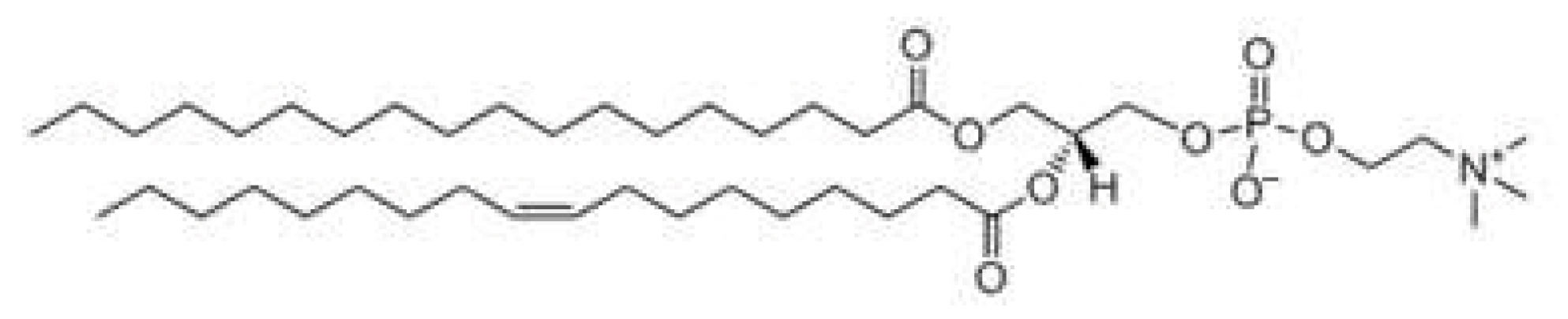
2.1. Materials Sample Preparation
2.2. Sample Preparation
2.2.1. Liposome Preparation for DSC and FTIR Spectroscopy
2.2.2. Preparation of Giant Unilamellar Vesicles (GUVs) for Shape Fluctuation Analysis
2.3. Infrared (IR) Spectroscopy
2.4. Differential Scanning Calorimetry (DSC)
2.5. Thermally Induced Shape Fluctuation Method
2.6. Laser Irradiation
3. Results
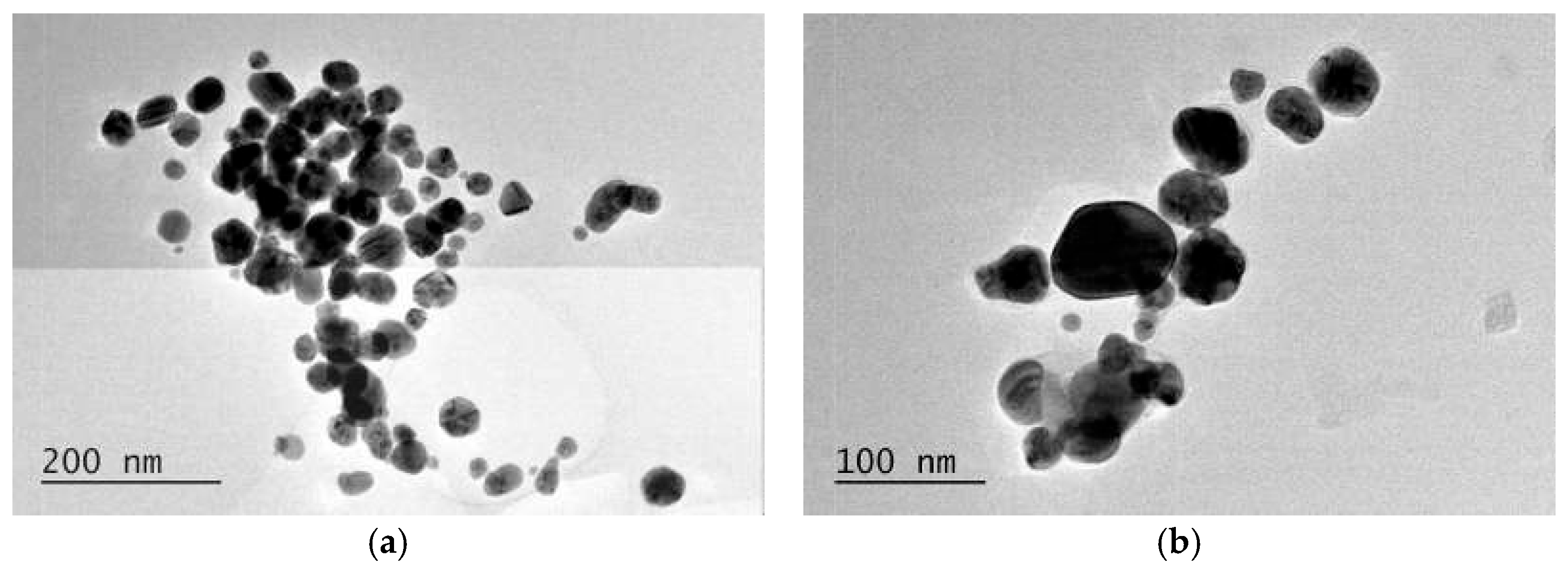
3.1. Transmission Electron Microscopy (TEM)
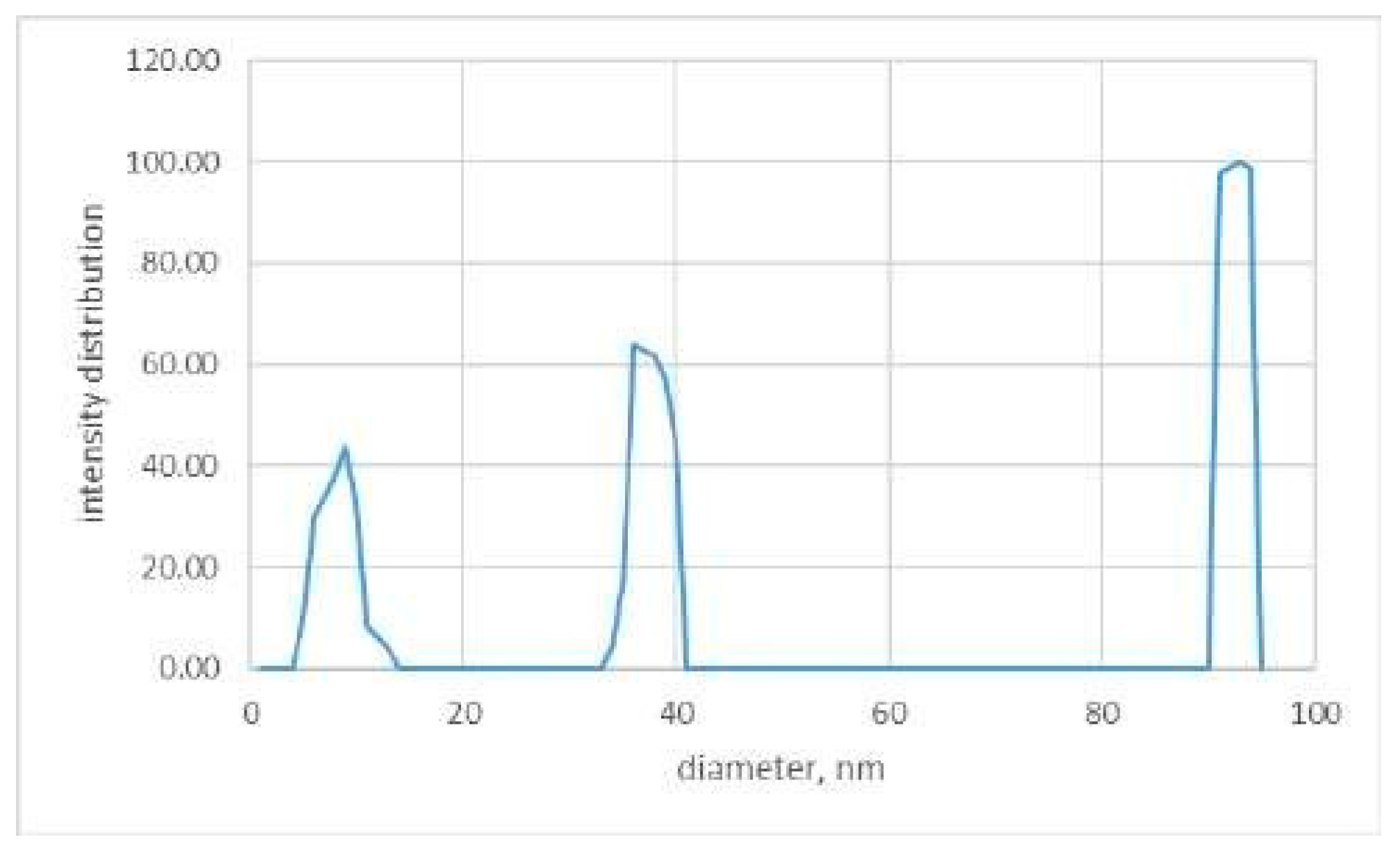
3.2. Dynamic Light Scattering (DLS)
3.3. Zeta Potential
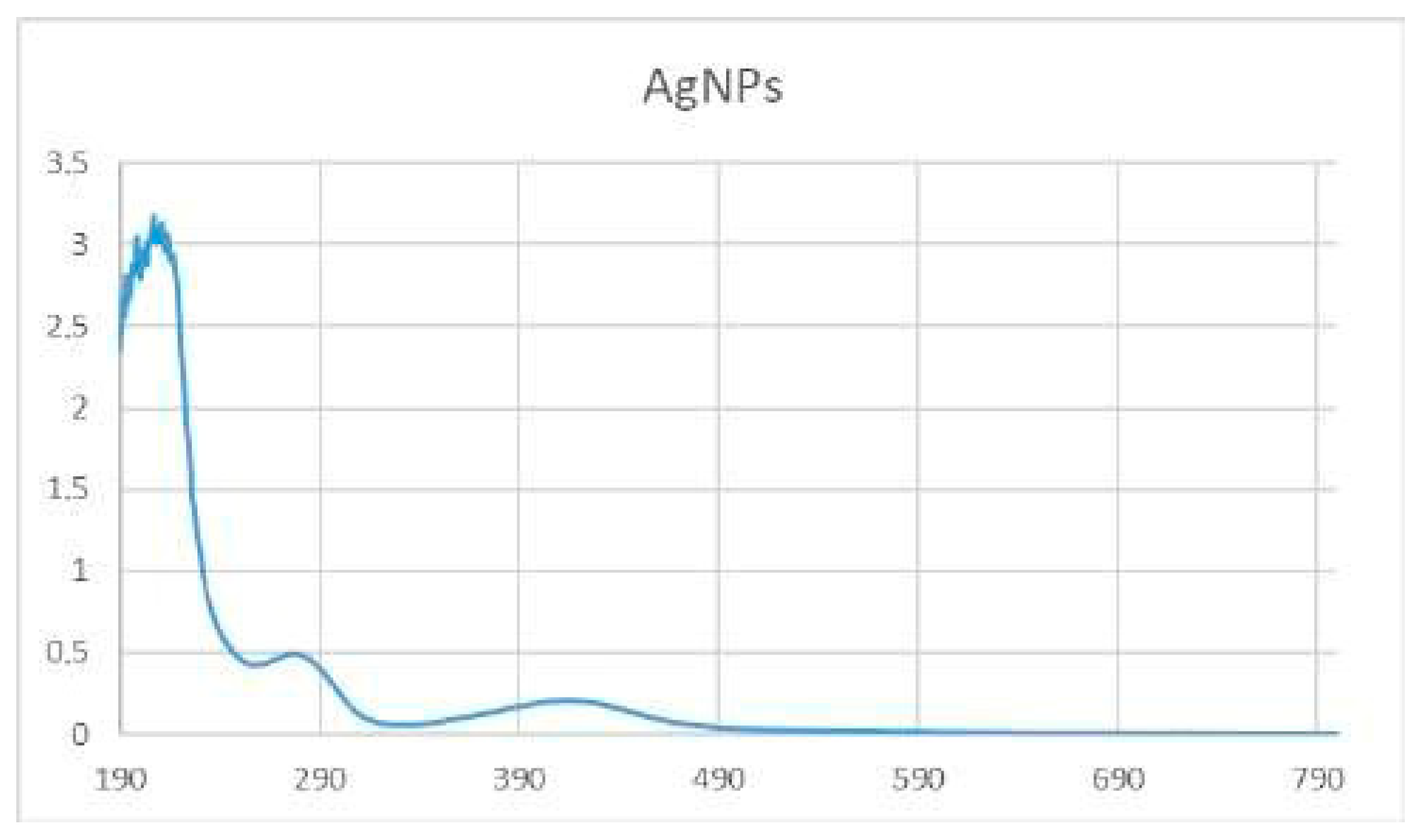
3.4. UV–Vis Spectroscopy
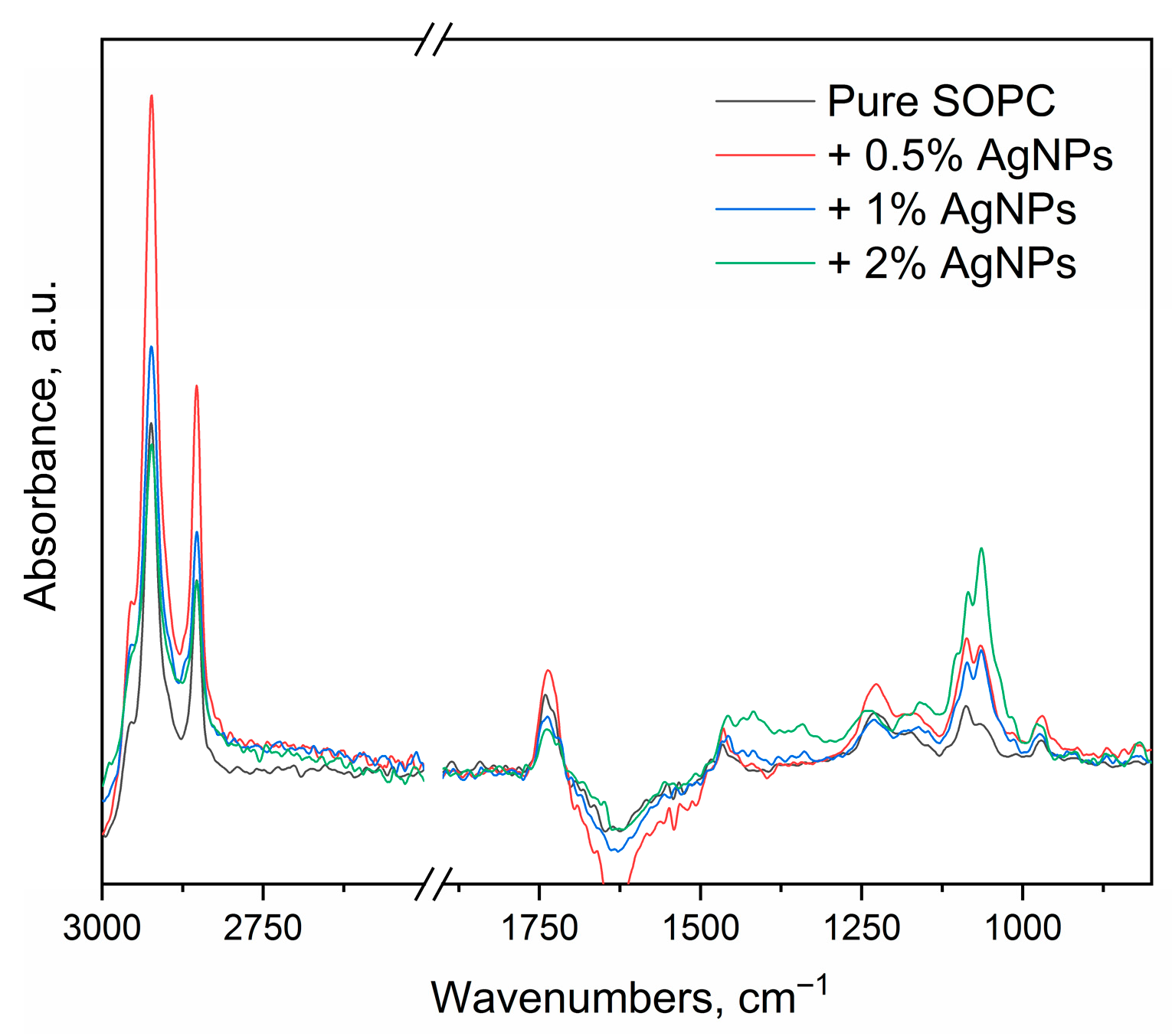
3.5. Infrared (IR) Spectroscopy
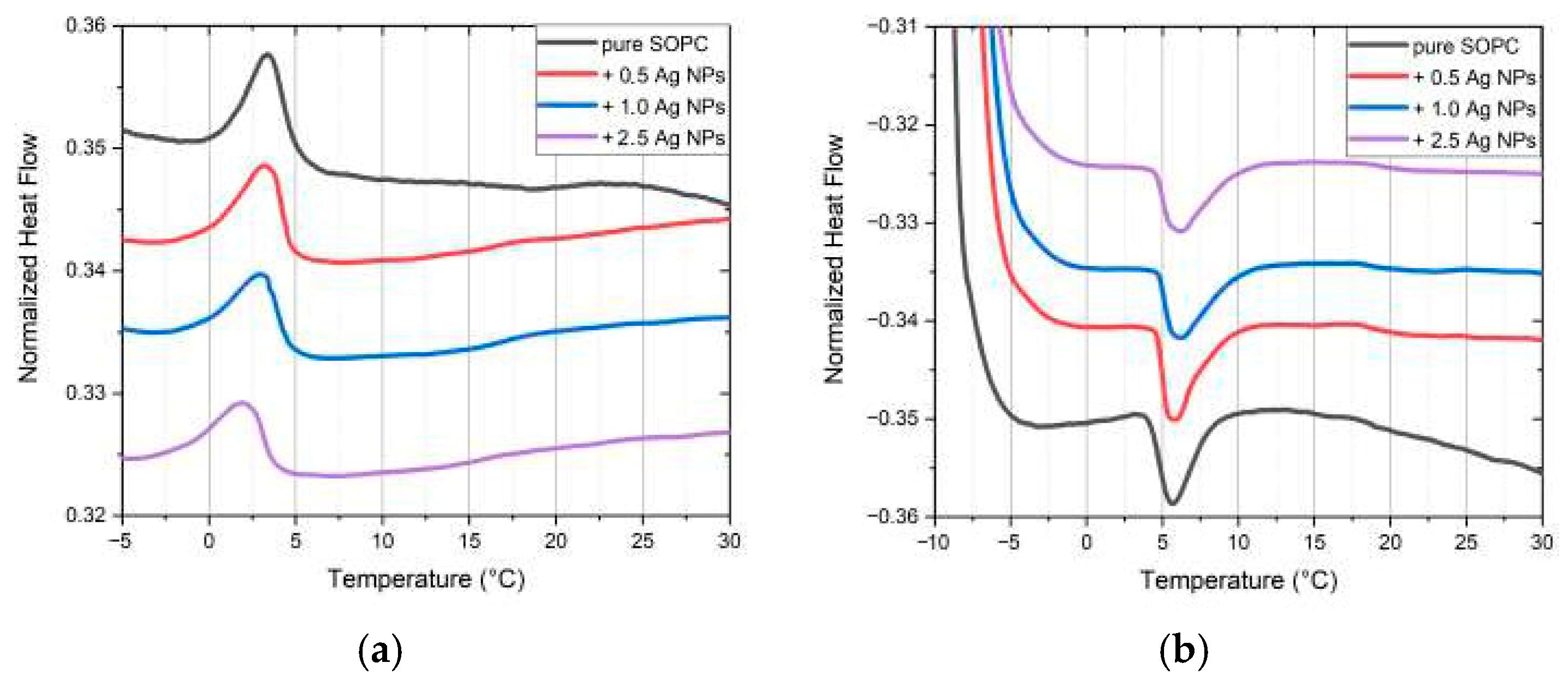
3.6. Differential Scanning Calorimetry (DSC)
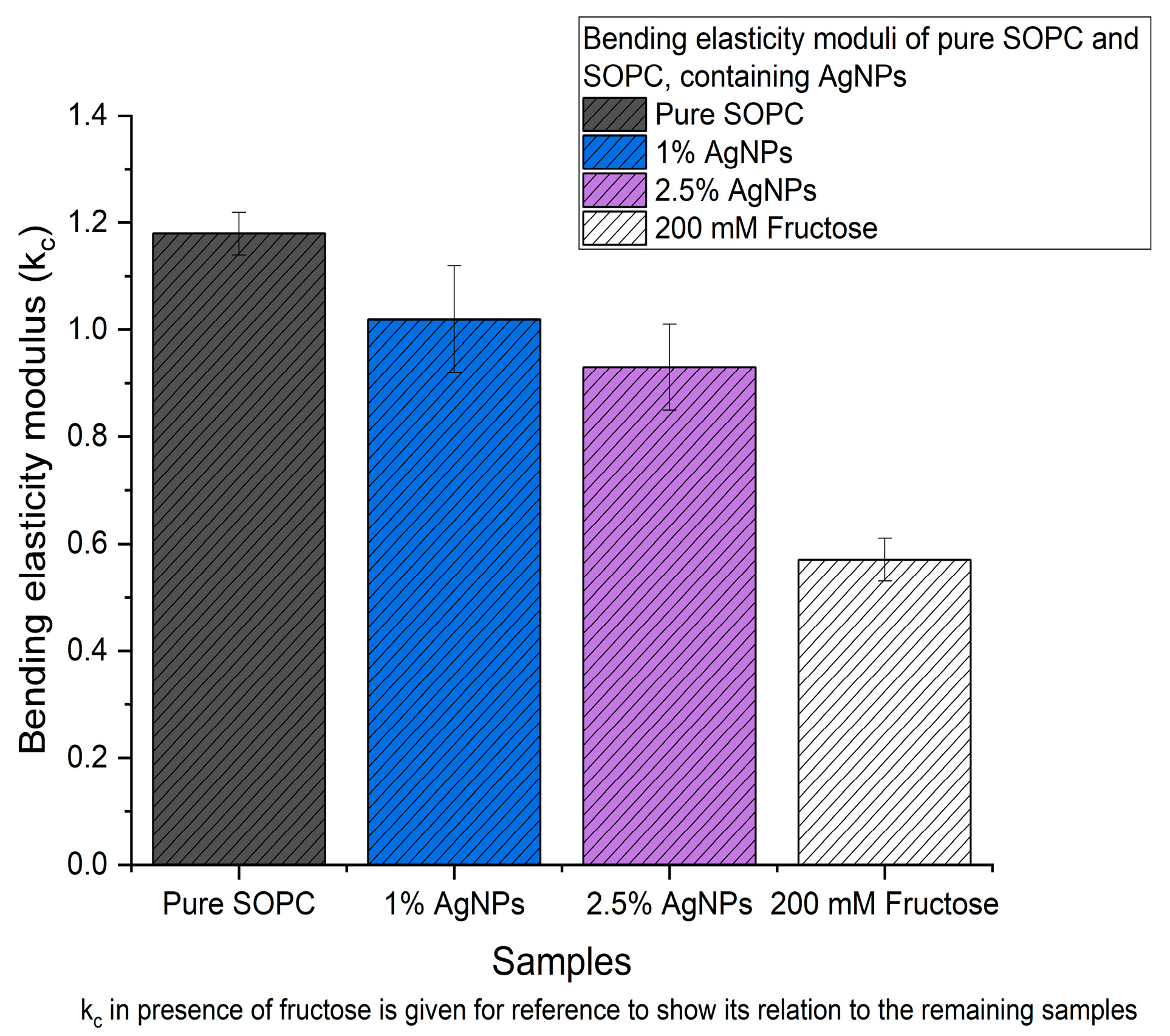
3.7. Thermally Induced Shape Fluctuation Method
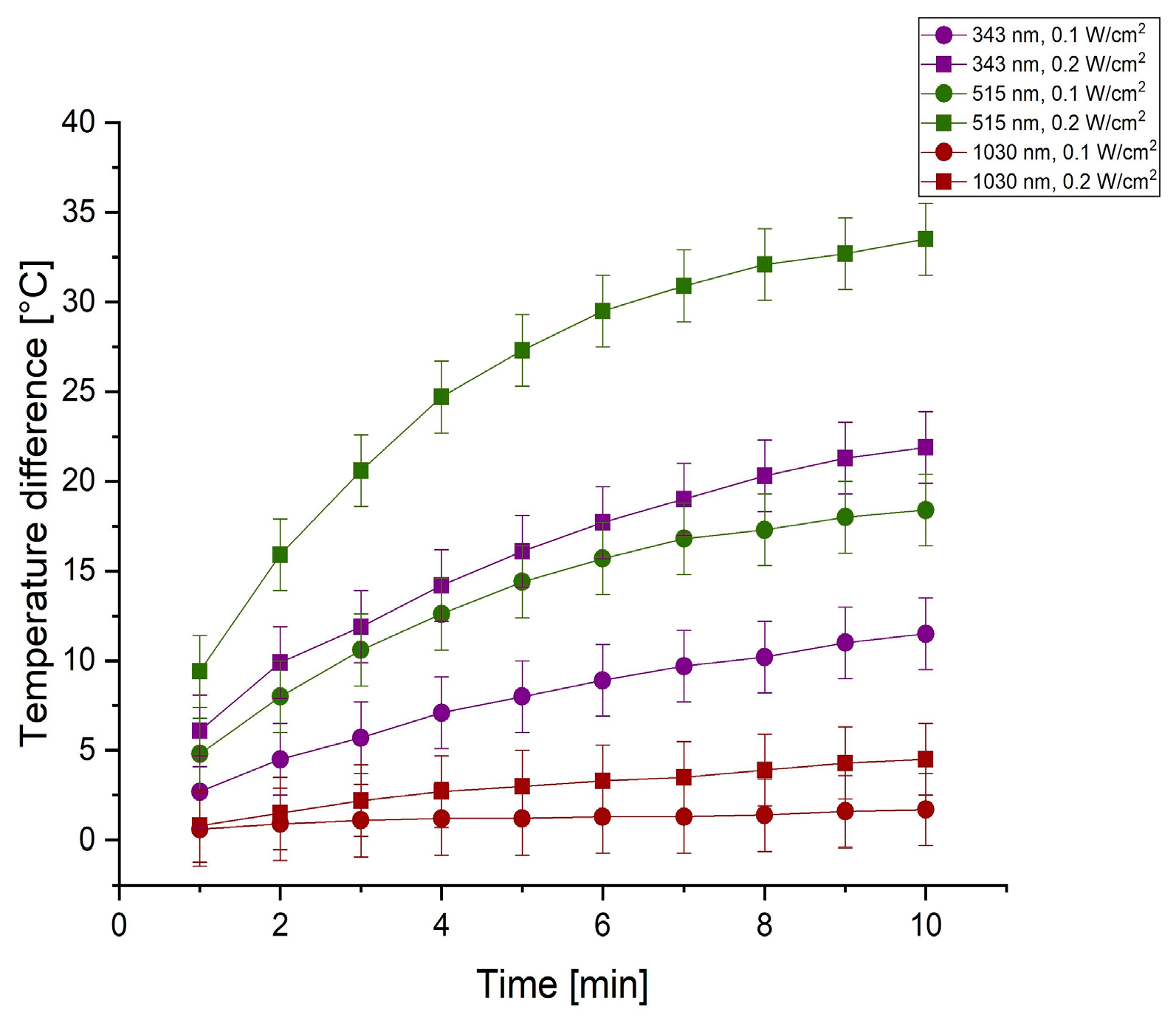
3.8. Temperature Changes Under the Effect of Laser Irradiation in the Presence of Silver Nanoparticles
4. Conclusions
Author Contributions
Funding
Data Availability Statement
Acknowledgments
Conflicts of Interest
Abbreviations
| AgNPs | Silver nanoparticles |
| DSC | Differential scanning calorimetry |
| SOPC | 1-stearoyl-2-oleoyl-sn-glycero-3-phosphocholine |
| FTIR-ATR | Fourier-transform infrared spectroscopy with attenuated total reflection |
| IR spectroscopy | Infrared spectroscopy |
| PTT | Photothermal therapy |
| NIR light | Near-infrared light |
| EPR effects | Enhanced permeability and retention |
| TEM | Transmission electron microscopy |
Appendix A. Calculation of Heating Enthalpies of a Set of Samples by DSC (Differential Scanning Calorimetry)
- File-based data input: the user specifies the name of a text file containing tabulated temperature and normalized heat flow measurements from the DSC experiment.
- Trapezoidal numerical integration: the enthalpy (ΔH) for the relevant transition is computed using the trapezoidal rule, applying the general formula.
- User-defined integration range: for each measurement, the user selects the temperature interval for integration to fully capture the enthalpic peak (as determined by the protocol guidance for each sample type).
- Calculation of error due to protocol: the program permits entry of a protocol reference value for enthalpy, against which the calculated result is compared, providing absolute and relative errors.
- Output: all results (file name, calculated ΔH, reference value, error) are displayed and saved as a C.SV file.
Appendix B. Protocol Adherence and Accuracy
References
- Ahmadi, S. The importance of silver nanoparticles in human life. Adv. Appl. NanoBio Technol. 2020, 1, 5–9. [Google Scholar]
- Zhao, X.; Xu, X.; Ai, C.; Yan, L.; Jiang, C.; Shi, J. Advantages of silver nanoparticles synthesized by microorganisms in antibacterial activity. In Nanobiotechnology for Plant Protection: Green Synthesis of Silver Nanomaterials; Chapter 22; Abd-Elsalam, K.A., Ed.; Elsevier: Amsterdam, The Netherlands, 2022; pp. 571–586. [Google Scholar] [CrossRef]
- Abbas, R.; Luo, J.; Qi, X.; Naz, A.; Khan, I.A.; Liu, H.; Yu, S.; Wei, J. Silver nanoparticles: Synthesis, structure, properties and applications. Nanomaterials 2024, 14, 1425. [Google Scholar] [CrossRef]
- Kryuchkov, M.; Adamcik, J.; Katanaev, V.L. Bactericidal and antiviral bionic metalized nanocoatings. Nanomaterials 2022, 12, 1868. [Google Scholar] [CrossRef] [PubMed]
- Stoyanova, M.; Milusheva, M.; Georgieva, M.; Ivanov, P.; Miloshev, G.; Krasteva, N.; Hristova-Panusheva, K.; Feizi-Dehnayebi, M.; Mohammadi Ziarani, G.; Stojnova, K.; et al. Synthesis, cytotoxic and genotoxic evaluation of drug-loaded silver nanoparticles with mebeverine and its analog. Pharmaceuticals 2025, 18, 397. [Google Scholar] [CrossRef] [PubMed]
- Melo, R.M.; Albuquerque, G.M.; Monte, J.P.; Pereira, G.A.L.; Pereira, G. Recent advances in the application of silver nanoparticles for enhancing phototherapy outcomes. Pharmaceuticals 2025, 18, 970. [Google Scholar] [CrossRef]
- Subramani, K.; Ahmed, W. Biomedical applications of nanoparticles. In Emerging Nanotechnologies in Dentistry; Elsevier: Amsterdam, The Netherlands, 2018; pp. 41–60. [Google Scholar]
- Khan, I.; Saeed, K.; Khan, I. Nanoparticles: Properties, applications and toxicities. Arab. J. Chem. 2019, 12, 908–931. [Google Scholar] [CrossRef]
- Rajendran, R.; Purushothaman, S.; Manogar, P.; Subramanian, R.; Srinivasan, R.; Venkatesan, T.; Karri, V.V.S.R.; Sankar, V.; Selvaraj, J. Nanotechnology-based approaches for targeting and delivery of drugs and genes. In New Look to Phytomedicine; Elsevier: Amsterdam, The Netherlands, 2019; pp. 639–668. [Google Scholar]
- Todorova, M.; Milusheva, M.; Kaynarova, L.; Georgieva, D.; Delchev, V.; Simeonova, S.; Pilicheva, B.; Nikolova, S. Drug-loaded silver nanoparticles—A tool for delivery of a mebeverine precursor in inflammatory bowel diseases treatment. Biomedicines 2023, 11, 1593. [Google Scholar] [CrossRef]
- Lewis, R.N.A.H.; McElhaney, R.N. Fourier transform infrared spectroscopy in the study of lipid phase transitions in model and biological membranes. In Methods in Membrane Lipids; Dopico, A.M., Ed.; Humana Press: Totowa, NJ, USA, 2007; Volume 400, pp. 207–226. [Google Scholar] [CrossRef]
- Derenne, A.; Claessens, T.; Conus, C.; Goormaghtigh, E. Infrared spectroscopy of membrane lipids. In Encyclopedia of Biophysics; Roberts, G.C.K., Ed.; Springer: Berlin/Heidelberg, Germany, 2013. [Google Scholar] [CrossRef]
- Mishra, S.; Khurana, M. A snapshot review: In vitro characterization of lipid membranes and their applications. MRS Adv. 2022, 7, 551–561. [Google Scholar] [CrossRef]
- Ohline, S.M.; Campbell, M.L.; Turnbull, M.T.; Kohler, S.J. Differential scanning calorimetric study of bilayer membrane phase transitions: A biophysical chemistry experiment. J. Chem. Educ. 2001, 78, 125. [Google Scholar] [CrossRef]
- Koyama, T.M.; Stevens, C.R.; Borda, E.J.; Grobe, K.J.; Cleary, D.A. Characterizing the gel to liquid crystal transition in lipid-bilayer model systems. Chem. Educ. 1999, 4, 12–15. [Google Scholar] [CrossRef]
- Mitov, M.D.; Faucon, J.-F.; Méléard, P.; Bothorel, P. Thermal fluctuations of membranes. In Advances in Supramolecular Chemistry; Gokel, G.W., Ed.; JAI Press Inc.: Greenwich, CT, USA, 1992; pp. 93–139. [Google Scholar]
- Helfrich, W. Elastic properties of lipid bilayers: Theory and possible experiments. Z. Für Naturforschung C 1973, 28, 693–703. [Google Scholar] [CrossRef]
- Bivas, I. Shape fluctuations of nearly spherical lipid vesicles and emulsion droplets. Phys. Rev. E 2010, 81, 061911. [Google Scholar] [CrossRef]
- Genova, J.; Vitkova, V.; Aladjem, L.; Méléard, P.; Mitov, M.D. The stroboscopic illumination gives new opportunities and improves the precision of bending elastic modulus measurements. J. Optoelectron. Adv. Mater. 2005, 7, 257–260. [Google Scholar]
- Genova, J.; Pavlic, J.I. Realization of Marin Mitov idea for the stroboscopic illumination used in optical microscopy. Bulg. J. Phys. 2012, 39, 65–71. [Google Scholar]
- Genova, J. Marin Mitov lectures: Measuring bending elasticity of lipid bilayers. In Advances in Planar Lipid Bilayers and Liposomes; Academic Press: Cambridge, MA, USA, 2013; Volume 17, pp. 1–27. [Google Scholar] [CrossRef]
- Bivas, I.; Hanusse, P.; Bothorel, P.; Lalanne, J.; Aguerre-Chariol, O. An application of optical microscopy to the determination of the curvature elastic modulus of biological and model membranes. J. Phys. 1987, 48, 855–867. [Google Scholar] [CrossRef]
- Milner, S.T.; Safran, S.A. Dynamical fluctuations of droplet microemulsions and vesicles. Phys. Rev. A 1987, 36, 4371–4379. [Google Scholar] [CrossRef] [PubMed]
- Vedelago, J.; Gomez, C.G.; Valente, M.; Mattea, F. Green synthesis of silver nanoparticles aimed at improving theranostics. Radiat. Phys. Chem. 2018, 146, 55–67. [Google Scholar] [CrossRef]
- Fahim, M.; Shahzaib, A.; Nishat, N.; Jahan, A.; Bhat, T.A.; Inam, A. Green synthesis of silver nanoparticles: A comprehensive review of methods, influencing factors, and applications. JCIS Open 2024, 16, 100125. [Google Scholar] [CrossRef]
- Dhaka, A.; Mali, S.C.; Sharma, S.; Trivedi, R. A review on biological synthesis of silver nanoparticles and their potential applications. Results Chem. 2023, 6, 101108. [Google Scholar] [CrossRef]
- Roy, A.; Dutta, R.; Kundu, N.; Banik, D.; Sarkar, N. A comparative study of the influence of sugars sucrose, trehalose and maltose on the hydration and diffusion of DMPC lipid bilayer at complete hydration: Investigation of structural and spectroscopic aspect of lipid–sugar interaction. Langmuir 2016, 32, 5124–5134. [Google Scholar] [CrossRef]
- Andersen, H.D.; Wang, C.; Arleth, L.; Peters, G.H.J.; Westh, P. Reconciliation of opposing views on membrane–sugar interactions. Proc. Natl. Acad. Sci. USA 2011, 108, 1874–1878. [Google Scholar] [CrossRef]
- Mu, Q.; Jiang, G.; Chen, L.; Zhou, H.; Fourches, D.; Tropsha, A.; Yan, B. Chemical basis of interactions between engineered nanoparticles and biological systems. Chem. Rev. 2014, 114, 7740–7781. [Google Scholar] [CrossRef]
- Demel, R.A.; Dorrepaal, E.; Ebskamp, M.J.M.; Smeekens, J.C.M.; de Kruijff, B. Fructans interact strongly with model membranes. Biochim. Biophys. Acta Biomembr. 1998, 1375, 36–42. [Google Scholar] [CrossRef]
- Vijn, I.; Smeekens, S. Fructan: More than a reserve carbohydrate? Plant Physiol. 1999, 120, 351–360. [Google Scholar] [CrossRef] [PubMed]
- Mulvaney, P.; Liz-Marzan, L.M.; Giersig, M.; Ung, T.J. Silica encapsulation of quantum dots and metal clusters. J. Mater. Chem. 2000, 10, 1259–1265. [Google Scholar] [CrossRef]
- Park, M.; Sohn, Y.; Shin, W.G.; Lee, J.; Ko, S.H. Ultrasonication assisted production of silver nanowires with low aspect ratio and their optical properties. Ultrason. Sonochem. 2015, 22, 35–40. [Google Scholar] [CrossRef] [PubMed]
- Chowdhury, S.; Yusof, F.; Faruck, M.O.; Sulaiman, N. Process optimization of silver nanoparticle synthesis using response surface methodology. Procedia Eng. 2016, 148, 992–999. [Google Scholar] [CrossRef]
- Huang, H.; Yang, X. Synthesis of polysaccharide-stabilized gold and silver nanoparticles: A green method. Carbohydr. Res. 2004, 339, 2627–2631. [Google Scholar] [CrossRef]
- Huang, Y.; Guo, X.; Wu, Y.; Chen, X.; Feng, L.; Xie, N.; Shen, G. Nanotechnology’s frontier in combatting infectious and inflammatory diseases: Prevention and treatment. Signal Transduct. Target. Ther. 2024, 9, 34. [Google Scholar] [CrossRef]
- Tamm, L.K.; Tatulian, S.A. Infrared spectroscopy of proteins and peptides in lipid bilayers. Q. Rev. Biophys. 1997, 30, 365–429. [Google Scholar] [CrossRef]
- Cameron, D.G.; Casal, H.L.; Mantsch, H.H. Characterization of the pretransition in 1,2-dipalmitoyl-sn-glycero-3-phosphocholine by Fourier transform infrared spectroscopy. Biochemistry 1980, 19, 3665–3672. [Google Scholar] [CrossRef]
- Genova, J.; Slavkova, Z.; Chamati, H.; Petrov, M. Gel–liquid crystal phase transition in dry and hydrated SOPC phospholipid studied by differential scanning calorimetry. Phase Transit. 2019, 92, 323–332. [Google Scholar] [CrossRef]
- Bothun, G.D. Hydrophobic silver nanoparticles trapped in lipid bilayers: Size distribution, bilayer phase behavior, and optical properties. J. Nanobiotechnol. 2008, 6, 13. [Google Scholar] [CrossRef]
- Westerhausen, C.; Strobl, F.G.; Herrmann, R.; Bauer, A.T.; Schneider, S.W.; Reller, A.; Wixforth, A.; Schneider, M.F. Chemical and mechanical impact of silica nanoparticles on the phase transition behavior of phospholipid membranes in theory and experiment. Biophys. J. 2012, 102, 1032–1038. [Google Scholar] [CrossRef]
- Faizi, H.A.; Granek, R.; Vlahovska, P.M. Curvature fluctuations of fluid vesicles reveal hydrodynamic dissipation within the bilayer. Proc. Natl. Acad. Sci. USA 2024, 121, e2413557121. [Google Scholar] [CrossRef]
- Genova, J.; Zheliaskova, A.; Mitov, M.D. The influence of sucrose on the elasticity of SOPC lipid membrane studied by the analysis of thermally induced shape fluctuations. Colloids Surf. A Physicochem. Eng. Asp. 2006, 282–283, 420–422. [Google Scholar] [CrossRef]
- Genova, J.; Zheliaskova, A.; Mitov, M.D. Monosaccharides (fructose, glucose) and disaccharides (sucrose, trehalose) influence the elasticity of SOPC membranes. J. Optoelectron. Adv. Mater. 2007, 9, 427–430. [Google Scholar]
- Genova, J.; Vitkova, V.; Bivas, I. Registration and analysis of the shape fluctuations of nearly spherical lipid vesicles. Phys. Rev. E 2013, 88, 022707. [Google Scholar] [CrossRef]
- Cacela, C.; Hincha, D.K. Low amounts of sucrose are sufficient to depress the phase transition temperature of dry phosphatidylcholine, but not for lyoprotection of liposomes. Biophys. J. 2006, 90, 2831–2842. [Google Scholar] [CrossRef]
- Moiset, G.; López, C.A.; Bartelds, R.; Syga, L.; Rijpkema, E.; Cukkemane, A.; Baldus, M.; Poolman, B.; Marrink, S.J. Disaccharides impact the lateral organization of lipid membranes. J. Am. Chem. Soc. 2014, 136, 15210–15213. [Google Scholar] [CrossRef] [PubMed]
- Toyran, N.; Severcan, F. Infrared spectroscopic studies on the dipalmitoyl phosphatidylcholine bilayer interactions with calcium phosphate: Effect of vitamin D2. Spectroscopy 2002, 16, 399–408. [Google Scholar] [CrossRef][Green Version]



| Sample | EXO Tm (°C) | EXO ΔH (J/g) | ENDO Tm (°C) | ENDO ΔH (J/g) |
|---|---|---|---|---|
| Pure | 3.41 | 0.280 | 5.80 | 0.263 |
| +0.5% AgNPs | 3.20 | 0.279 | 5.80 | 0.306 |
| +1.0% AgNPs | 3.33 | 0.261 | 5.92 | 0.264 |
| +2.5% AgNPs | 2.80 | 0.234 | 6.30 | 0.258 |
| Experimental System | Pure SOPC | SOPC + 1.0 wt% Ag | SOPC + 2.5 wt% Ag | 200 mM Fructose |
|---|---|---|---|---|
| kc × 10−19 [J] | 1.18 ± 0.04 | 1.02 ± 0.10 | 0.93 ± 0.08 | 0.57 ± 0.04 |
Disclaimer/Publisher’s Note: The statements, opinions and data contained in all publications are solely those of the individual author(s) and contributor(s) and not of MDPI and/or the editor(s). MDPI and/or the editor(s) disclaim responsibility for any injury to people or property resulting from any ideas, methods, instructions or products referred to in the content. |
© 2025 by the authors. Licensee MDPI, Basel, Switzerland. This article is an open access article distributed under the terms and conditions of the Creative Commons Attribution (CC BY) license.
Share and Cite
Lyudmilova, M.; Stoychev, L.; Yancheva, D.; Nikolova, S.; Todorova, M.; Xenodochidis, C.; Hristova-Panusheva, K.; Krasteva, N.; Genova, J. Influence of Silver Nanoparticles on Liposomal Membrane Properties Relevant in Photothermal Therapy. Appl. Sci. 2026, 16, 220. https://doi.org/10.3390/app16010220
Lyudmilova M, Stoychev L, Yancheva D, Nikolova S, Todorova M, Xenodochidis C, Hristova-Panusheva K, Krasteva N, Genova J. Influence of Silver Nanoparticles on Liposomal Membrane Properties Relevant in Photothermal Therapy. Applied Sciences. 2026; 16(1):220. https://doi.org/10.3390/app16010220
Chicago/Turabian StyleLyudmilova, Maria, Lyubomir Stoychev, Denitsa Yancheva, Stoyanka Nikolova, Mina Todorova, Charilaos Xenodochidis, Kamelia Hristova-Panusheva, Natalia Krasteva, and Julia Genova. 2026. "Influence of Silver Nanoparticles on Liposomal Membrane Properties Relevant in Photothermal Therapy" Applied Sciences 16, no. 1: 220. https://doi.org/10.3390/app16010220
APA StyleLyudmilova, M., Stoychev, L., Yancheva, D., Nikolova, S., Todorova, M., Xenodochidis, C., Hristova-Panusheva, K., Krasteva, N., & Genova, J. (2026). Influence of Silver Nanoparticles on Liposomal Membrane Properties Relevant in Photothermal Therapy. Applied Sciences, 16(1), 220. https://doi.org/10.3390/app16010220