


In the fast-evolving world of Sport Sciences, the pursuit of peak performance has become nothing short of an art form [1,2,3,4]. Gone are the days of training based on normative data [5,6,7,8,9,10]. Today, sports training is individualized down to the finest details [5,6,7,8,9,10]. In addition, athletes are not just training harder; they are training smarter. It is also true that even though the classic concepts and principles of sports training are still in place (sometimes just dressed up differently), cutting-edge technologies, data-driven insights, and innovative equipment are revolutionizing how performance is measured, refined, and optimized [1,2,3,4,5,6,7,8,9,10,11]. Coaches and scientists are collaborating like never before to decode the multifaceted relationship between training loads, recovery, and adaptation. This Special Issue, “Performance Analysis and Training Process in Sports: Bridging Science and Practice”, was conceived to strengthen the connection between scientific research and practical application, fostering dialog between researchers, coaches, and practitioners. From laboratory-based investigations exploring physiological adaptations to field studies assessing training load, recovery, and athlete monitoring, the selected papers emphasize how integrated methodologies can guide evidence-based decision-making in sports. A total of 18 manuscripts were submitted for consideration for our Special Issue. All submitted manuscripts underwent peer review, evaluating the originality and quality of the research, methodological rigor, clarity and relevance of the findings, and their applications. Ultimately, eight (n = 8) papers were accepted for this Special Issue (six articles, one review, and one case report with Elite Athletes).
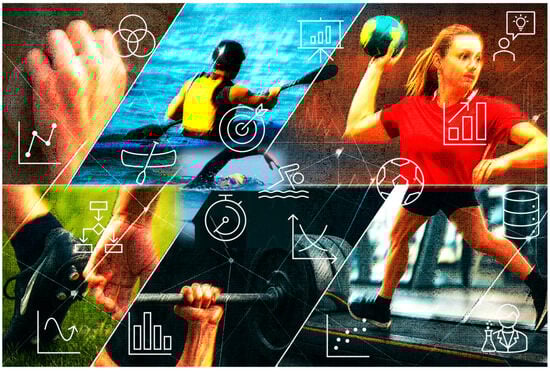
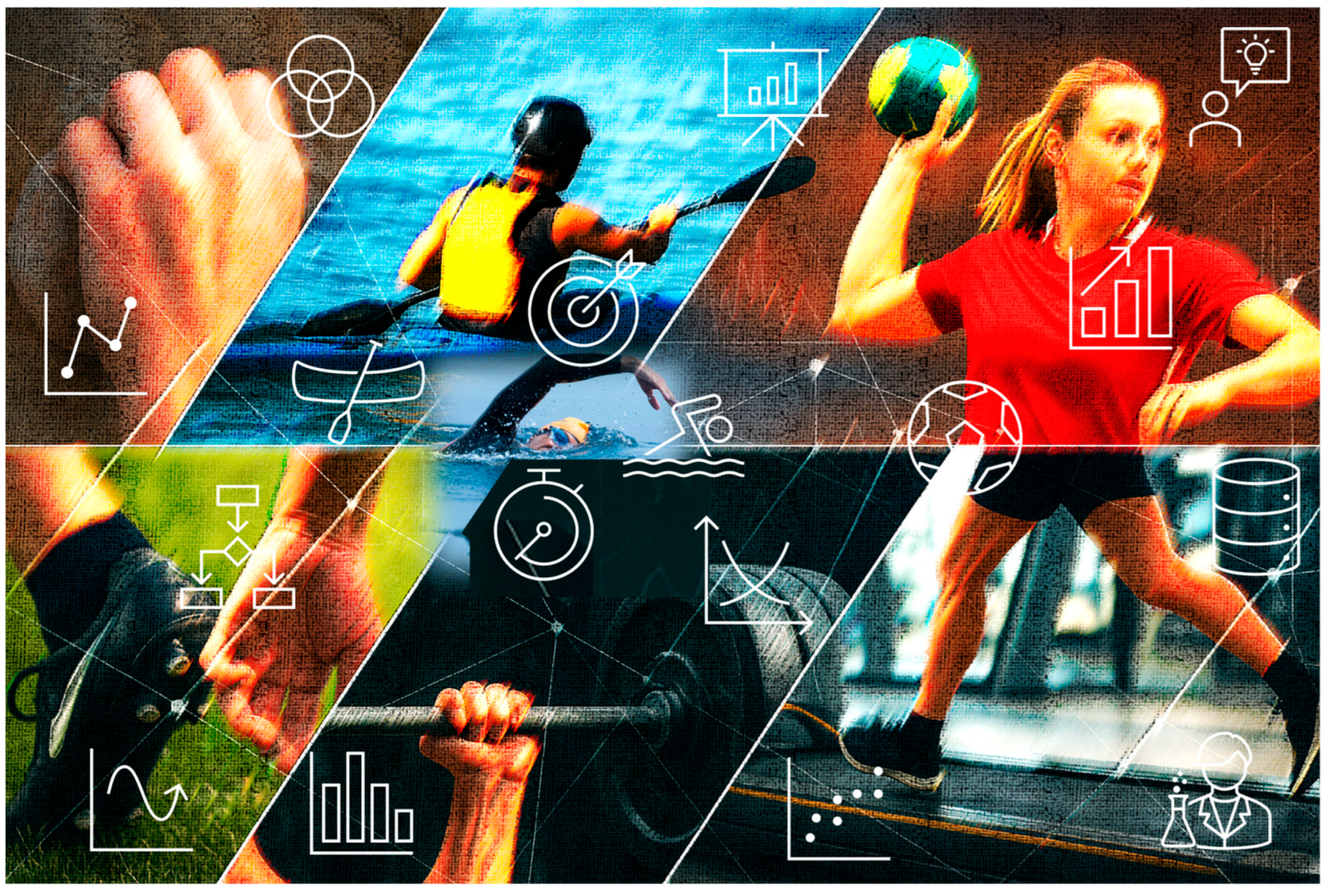
Among the published works (Figure 1), García-Heras and colleagues (Contribution 1) explored lower-limb performance determinants in sport climbing, highlighting the importance of strength and flexibility in indoor bouldering. Gnanasigamani and colleagues (Contribution 2) applied a multidomain correlational mapping approach to assess high-intensity interval training (HIIT)-induced adaptations in elite youth soccer players, demonstrating the value of integrating physiological, cognitive, and neuromuscular assessments. Dello Stritto and colleagues (Contribution 3) studied the stability of the accuracy of perception of velocity and perception of velocity loss after four weeks, during which participants did not receive any feedback on the velocity of the barbell’s movement during their training sessions. Zompanakis and colleagues (Contribution 4) examined anthropometric characteristics and biomarker associations with performance in ultra-marathon swimmers, providing evidence for personalized training strategies. Pappas and colleagues (Contribution 5) investigated the post-activation performance enhancement effects of drop jumps on lower-limb stiffness and the related mechanical and kinematic parameters during high-speed treadmill running. Śliż and colleagues (Contribution 6) compared the physical fitness performance and psychomotor abilities among trained young female handball players between U14 and U16, and the relationships between these abilities. Espoz-Lazo and Hinojosa-Torres (Contribution 7) explored how modern theories and approaches can be integrated to provide a deeper understanding of handball’s complexity from a broad and multidisciplinary perspective. Finally, José Augusto Rodrigues dos Santos, the oldest active Portuguese canoeist, who has twice made the podium in Montemor-o-Velho and competed at the 2025 Masters Canoe Sprint World Championships, together with his colleagues (Contribution 8), explored changes and relationships between physiological, body composition, and performance related factors in Elite male kayakers, both indoors (laboratory setting) and outdoors (on-field, i.e., kayaking/rowing track) throughout different training periods.
Figure 1.
Overview of the main research themes and populations addressed in the studies included in this Special Issue, highlighting multidisciplinary approaches to sport performance, training adaptations, and athlete development.
These studies were authored by researchers from various countries around the globe, including Chile, Greece, Italy, Poland, Portugal, Poland, Spain, and Switzerland. We are very grateful for the confidence placed in us and are confident that, upon reading this Special Issue, you will gain a fresh perspective on Sports Sciences. Together, these works highlight the value of integrating scientific rigor with practical application, advancing theoretical understanding while providing actionable insights for coaches and athletes seeking to optimize performance, prevent injuries, and individualize training programs. We sincerely appreciate the efforts of all authors, reviewers, and our editorial team. This Special Issue demonstrates how combining diverse expertise with innovative research can generate practical solutions and inspire new directions in the field.
Author Contributions
Conceptualization, R.Z. and G.G.A.; writing—original draft preparation, R.Z. and G.G.A.; writing—review and editing, R.Z. and G.G.A.; visualization, R.Z. and G.G.A. All authors have read and agreed to the published version of the manuscript.
Funding
R.Z. was supported by The Research Center in Physical Activity, Health and Leisure (CIAFEL), Faculty of Sport, University of Porto (FADEUP), which is part of the Laboratory for Integrative and Translational Research in Population Health (ITR); both are funded by the Fundação Para a Ciência e Tecnologia (FCT; grants Reference: UID/00617/2025 with DOI: https://doi.org/10.54499/UID/00617/2025; and Reference: LA/P/0064/2020 with DOI: https://doi.org/10.54499/LA/P/0064/2020).
Conflicts of Interest
The authors declare no conflicts of interest.
List of Contributions
- García-Heras, F.; Diez-Martín, M.; González-Martín, D.; Gutiérrez-Arroyo, J.; Molinero, O.; Salguero, A. Analysis of Lower Limb Performance Determinants in Sport Climbing. Appl. Sci. 2025, 15, 8797. https://doi.org/10.3390/app15168797.
- Gnanasigamani, M.; Kaczmarek, A.; Nosal, J.; Murawska-Ciałowicz, E.; Chmura, P. Multidomain Connectivity as a Marker of HIIT-Induced Adaptation in Elite Youth Soccer Players: A Correlational Mapping Approach. Appl. Sci. 2025, 15, 7550. https://doi.org/10.3390/app15137550.
- Dello Stritto, E.; Gramazio, A.; Romagnoli, R.; Piacentini, M.F. Temporal Stability and Practical Relevance of Velocity and Velocity-Loss Perception in Back Squat. Appl. Sci. 2025, 15, 7252. https://doi.org/10.3390/app15137252.
- Zompanakis, I.; Papadimitriou, K.; Koutlianos, N. Potential Associations Between Anthropometric Characteristics, Biomarkers, and Sports Performance in Regional Ultra-Marathon Swimmers: A Quasi-Experimental Study. Appl. Sci. 2025, 15, 7210. https://doi.org/10.3390/app15137210.
- Pappas, P.; Stavridis, I.; Paradisis, G. Acute Effects of Drop Jumps on Lower Limb Stiffness and Mechanical and Kinematic Parameters During High-Speed Treadmill Running. Appl. Sci. 2025, 15, 242. https://doi.org/10.3390/app15010242.
- Śliż, M.; Martins, F.; França, C.; Gouveia, É.R.; Przednowek, K. Physical Fitness Performance and Psychomotor Abilities in Trained Young Female Handball Players. Appl. Sci. 2025, 15, 13150. https://doi.org/10.3390/app152413150.
- Espoz-Lazo, S.; Hinojosa-Torres, C. Modern Handball: A Dynamic System, Orderly Chaotic. Appl. Sci. 2025, 15, 3541. https://doi.org/10.3390/app15073541.
- dos Santos, J.A.R.; Boppre, G.; Zacca, R. Monitoring of Training Load and Body Composition in Elite Male Kayakers. Appl. Sci. 2024, 14, 11826. https://doi.org/10.3390/app142411826.
References
- Hill, A.V.; Long, C.N.H.; Lupton, H. Muscular exercise, lactic acid, and the supply and utilisation of oxygen—Parts I–III. Proc. R. Soc. Lond. B 1924, 96, 438–475. [Google Scholar]
- Hill, A.V.; Long, C.N.H.; Lupton, H. Muscular exercise, lactic acid, and the supply and utilisation of oxygen—Parts IV–VI. Proc. R. Soc. Lond. B 1924, 97, 84–138. [Google Scholar]
- di Prampero, P.E. The energy cost of human locomotion on land and in water. Int. J. Sports Med. 1986, 7, 55–72. [Google Scholar] [CrossRef] [Scilit] [PubMed]
- Daniels, J. Daniels’ Running Formula; Human Kinetics: Champaign, IL, USA, 2022. [Google Scholar]
- Jones, A.M.; Kirby, B.S.; Clark, I.E.; Rice, H.M.; Fulkerson, E.; Wylie, L.J.; Wilkerson, D.P.; Vanhatalo, A.; Wilkins, B.W. Physiological demands of running at 2-hour marathon race pace. J. Appl. Physiol. 2021, 130, 369–379. [Google Scholar] [CrossRef] [Scilit] [PubMed]
- Botonis, P.G.; Arsoniadis, G.G.; Platanou, T.I.; Toubekis, A.G. Heart rate recovery responses after acute training load changes in top-class water polo players. Eur. J. Sport Sci. 2021, 21, 158–165. [Google Scholar] [CrossRef] [Scilit] [PubMed]
- Bruzzese, M.F.; García, G.C.; Arcuri, C.R.; Santander, M.D.; Secchi, J.D.; dos Santos, J.A.R.; Zacca, R. Aerobic power and capacity in highly trained national-level youth soccer players through on-field gas exchange assessment in an ecological context: A brief report. Physiologia 2025, 5, 14. [Google Scholar] [CrossRef] [Scilit]
- García, G.C.; Secchi, J.D. Test de ida y vuelta en 20 metros con etapas de 1 minuto. Una idea original que perdura hace 30 años. Apunt. Med. L’esport 2014, 49, 93–103. [Google Scholar] [CrossRef] [Scilit]
- Mujika, I.; Tian, R.; Zelenkova, I.; Pyne, D.B. Highly variable hemoglobin-mass changes during successive altitude training camps in world-class female water polo players. Int. J. Sports Physiol. Perform. 2025, 20, 1763–1767. [Google Scholar] [CrossRef] [Scilit] [PubMed]
- Ruiz-Navarro, J.J.; Gay, A.; Arellano, R.; Zacca, R. Anaerobic alactic energy assessment in short-distance maximal swimming performance. Int. J. Sports Med. 2025, 46, 982–989. [Google Scholar] [CrossRef] [Scilit] [PubMed]
- Zacca, R. Technological equity in elite sports: A matter of fairness and human evolution. J. Appl. Physiol. 2024, 137, 830. [Google Scholar] [CrossRef] [Scilit] [PubMed]
Disclaimer/Publisher’s Note: The statements, opinions and data contained in all publications are solely those of the individual author(s) and contributor(s) and not of MDPI and/or the editor(s). MDPI and/or the editor(s) disclaim responsibility for any injury to people or property resulting from any ideas, methods, instructions or products referred to in the content. |
© 2025 by the authors. Licensee MDPI, Basel, Switzerland. This article is an open access article distributed under the terms and conditions of the Creative Commons Attribution (CC BY) license.