


Abstract
Background: Creatine kinase (CK) serves as a biomarker of muscle stress and damage and is often elevated in athletes after intense training. Persistent CK elevations may indicate subclinical muscle dysfunction or incomplete recovery. Methods: This prospective, randomized study included 100 male adolescent soccer players (aged 13–15 years) with elevated CK levels (>1000 U/L). Participants were allocated into two equal groups: an intervention group receiving nutritional supplementation and a control group without supplementation. Both groups abstained from training for 7 days. CK was measured at baseline, day 3, and day 7. Non-parametric tests were used to compare groups. Additionally, multiple linear regression and Lasso regression models were applied to identify predictors of CK percentage reduction over 7 days. Results: The supplementation group exhibited significantly greater CK reduction at both day 3 (median decrease: 55% vs. 28%) and day 7 (84% vs. 50.8%) compared with controls (p < 0.001 for both). Regression analyses indicated that nutritional supplementation had the highest predictive weight for CK decrease. The Lasso model achieved strong performance (R2 = 0.714; MAE = 0.068), showing that approximately 71% of the variability in CK reduction could be explained by the intervention. Conclusions: Short-term nutritional supplementation with antioxidants and amino acids may significantly accelerate CK return toward athlete-appropriate CK values during rest in adolescent soccer players with elevated CK. Regression modeling confirmed supplementation as the main determinant of CK reduction, supporting the inclusion of targeted nutritional strategies in recovery protocols for youth athletes.
1. Introduction
Creatine kinase (CK) is a critical enzyme in energy metabolism, especially abundant in skeletal muscle. It supports rapid ATP regeneration during physical exertion by catalyzing the reversible formation of ATP and phosphocreatine [1]. When muscle cells experience stress or damage, CK is released into circulation, and its serum concentration becomes a useful biomarker for muscle injury, exercise-induced stress, and recovery status [2,3,4].
In athletic populations, CK elevations following high-intensity exercise are common and typically subclinical [2,5]. However, they have been correlated with muscle injury and fatigue, and may be an early sign of overtraining syndrome [6,7,8]. A persistently elevated CK, even in asymptomatic individuals, can signal ongoing muscle damage and increased risk for injury or impaired performance [9,10]. Elite athletes have reported CK-associated injuries, including stress fractures and microtrauma, especially during periods of elevated workload [4,11]. Monitoring CK trends in athletes has gained traction in recent years, especially among those engaged in high-volume training such as competitive soccer [11,12]. High CK levels may also reflect an elevated risk of more serious conditions like exertional rhabdomyolysis, especially when values exceed 5000 U/L and are accompanied by clinical symptoms or risk factors like dehydration or nonsteroidal anti-inflammatory drugs (NSAID) use. In such cases, guidelines recommend rest and careful monitoring to prevent complications, including rhabdomyolysis and acute kidney injury [13,14,15]. Beyond its role as a traditional biochemical marker, recent research highlights a broader trend toward integrating advanced analytical and computational approaches to improve the assessment and interpretation of physiological stress and tissue damage. For example, innovative methodologies such as deep learning–based real-time reconstruction of focal temperature fields in high-intensity focused ultrasound (HIFU) applications have shown how modern data-driven techniques would enhance the precision and clinical relevance of biological monitoring [16].
Nutritional interventions targeting oxidative stress and inflammation have shown promise in supporting post-exercise muscle recovery [17,18]. Antioxidants such as vitamin C, green barley extract, and B-complex vitamins may mitigate reactive oxygen species (ROS)-induced damage and improve mitochondrial resilience, while amino acids like glutamine and arginine contribute to membrane repair and immune modulation. Studies have highlighted the role of these compounds in reducing markers of muscle injury and accelerating creatine kinase clearance, particularly following strenuous physical exertion [19,20,21,22]. Therefore, the integration of such supplements in recovery protocols for youth athletes may represent a safe, non-invasive approach to facilitate muscle healing and reduce the duration of elevated CK levels.
Soccer is characterized by high-intensity intermittent activity, repeated eccentric muscle actions, and frequent changes in direction, all of which are associated with substantial muscle stress and elevations in creatine kinase, particularly in youth athletes undergoing rapid growth and high training loads [23].
Therefore, assessing CK kinetics and implementing recovery strategies such as rest and nutritional support may be crucial in youth athletes showing elevated baseline CK. This study aims to evaluate whether a short-term dietary supplementation protocol accelerates CK normalization and reduces associated injury risk during a 7-day rest period in adolescent soccer players.
2. Materials and Methods
2.1. Study Design and Participants
We conducted a prospective, randomized, controlled study in Bucharest, Romania. One hundred male adolescent soccer players (aged 13–15 years) who attended Chiajna Medical Center, Dudu, Romania with elevated serum CK levels (>1000 U/L), were enrolled from local sports clubs. Participants were included if they were asymptomatic and had engaged in regular training (>4 sessions/week). The inclusion threshold of CK > 1000 U/L was selected as a pragmatic safety cutoff commonly used in sports medicine to prompt rest and monitoring in asymptomatic athletes, rather than as a diagnostic indicator of pathology. Exclusion criteria included use of NSAIDs, known neuromuscular disorders, or recent infections.
Subjects were randomly assigned (1:1 ratio) to either a dietary intervention group or a control group using a computer-generated randomization list. All participants provided assent, and legal guardians signed informed consent forms. The study was approved by the Chiajna Medical Center Ethics Committee (approval no. 27/23 July 2025).
2.2. Procedures and Measurements
All athletes discontinued training for a 7-day rest period. CK levels were assessed via venous blood draw at baseline (day 0), day 3, and day 7. Samples were collected in the morning after a minimum 10 h fast. Serum CK was analyzed using a standardized enzymatic method in a certified laboratory. Anthropometric data (age, height, weight, BMI) were collected at baseline. Baseline CK measurements were obtained approximately 12–24 h after the last intense training session, reflecting the early post-exercise recovery period.
2.3. Supplementation Protocol
Participants in the intervention group received dietary supplementation, while the control group received no supplements. All supplements were commercially available products approved for use in Romania and compliant with European Union food supplement regulations. Participants were instructed to use the same brands, formulations, and dosages as specified in Table 1, and no alternative products were permitted.
Table 1.
Recommended dietary supplements for those with CK > 1000 U/L.
2.4. Statistical Analysis
The data were collected in Microsoft Excel 2016, and the analysis was performed using IBM SPSS version 26. The Shapiro–Wilk test was used to analyze the quantitative variables’ distribution. The data were found to be non-normally distributed (Shapiro–Wilk, p ≤ 0.05), and they were reported as medians with interquartile ranges according to their distribution. Quantitative variables were tested between independent groups using the Mann–Whitney U test. To assess the difference in CK levels between moments in time (baseline, 3 days, 7 days) within the same group of patients, we used the Related-Samples Wilcoxon Signed-Rank Test. A two-tailed significance level of 0.05 was considered statistically significant. To achieve 90% power at a significance level (α) of 0.05 using a two-sided independent samples t-test, a minimum of 12 participants per group would be required. The sample size of 50 participants per group used in this study was therefore more than sufficient to detect the observed treatment effect, providing very high statistical power and robustness to the findings. Multiple linear regression and Lasso regression with regularization were implemented in Python 3.7.7.
3. Results
The study includes 100 male subjects who were grouped into 2 equal groups (n = 50), one with dietary supplementation and one without supplements. There was no statistically significant difference between the two groups in age, height, weight, body mass index (BMI), or initial CK level (p > 0.05) (Table 2.).
Table 2.
Characteristics of the two groups.
3.1. CK Level at 3 Days
3.1.1. No Intervention Group
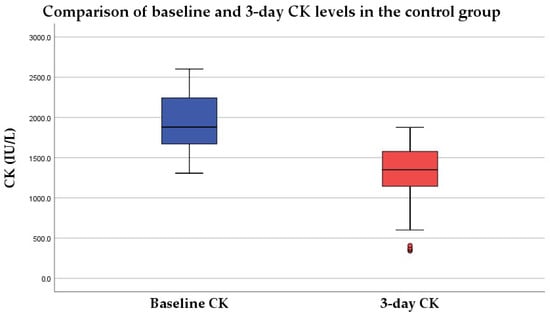
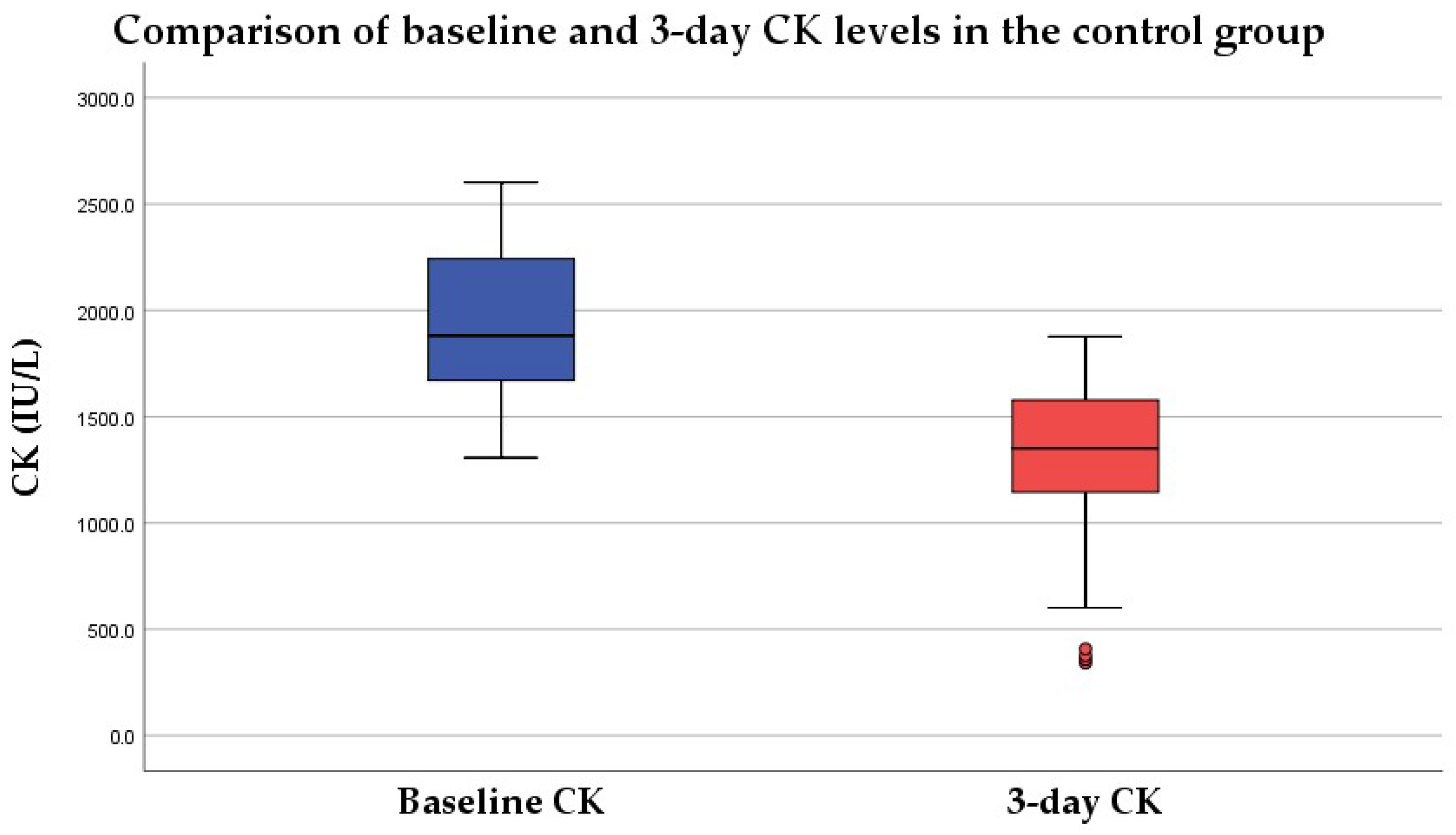
There was a statistically significant reduction in the control group’s CK levels from baseline to day 3 (p < 0.001). The median CK decreased from 1881 (1670.3–2246.7) U/L at baseline to 1351 (1136.9–1579.7) U/L at day 3, meaning a decrease by approximately 28% (Figure 1).
Figure 1.
Comparison of baseline and 3-day CK levels in the control group. The interior bars indicate the medians while the whiskers extend to the maximum and minimum of the data; ◦ = outlier.
3.1.2. Intervention Group
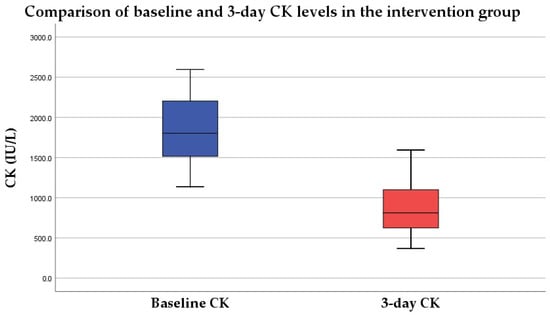
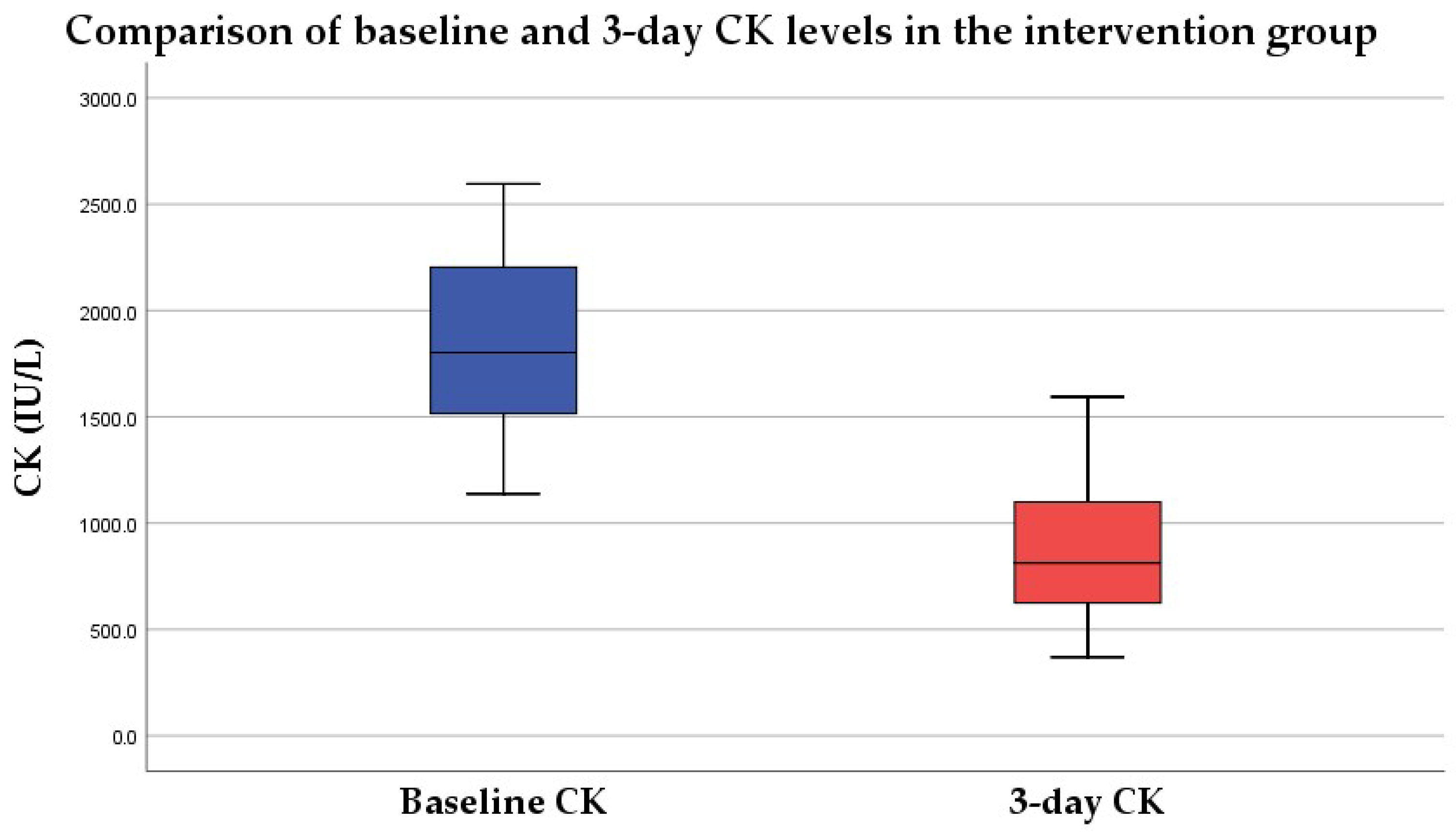
There was a statistically significant reduction in the dietary intervention group’s CK levels from baseline to day 3 (p < 0.001). The median CK decreased from 1802.3 (1511.7–2213.9) U/L at baseline to 812.5 (615.9–1099.2) U/L at day 3, representing a decrease by approximately 55% (Figure 2).
Figure 2.
Comparison of baseline and 3-day CK levels in the intervention group. The interior bars indicate the medians while the whiskers extend to the maximum and minimum of the data.
3.1.3. Group Comparison
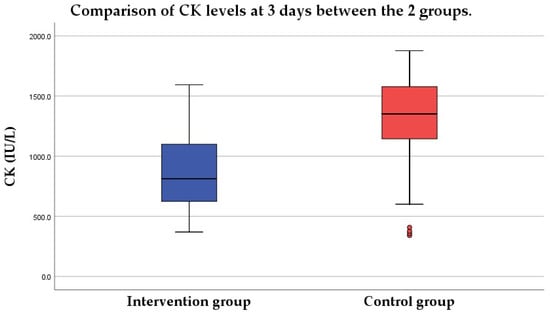
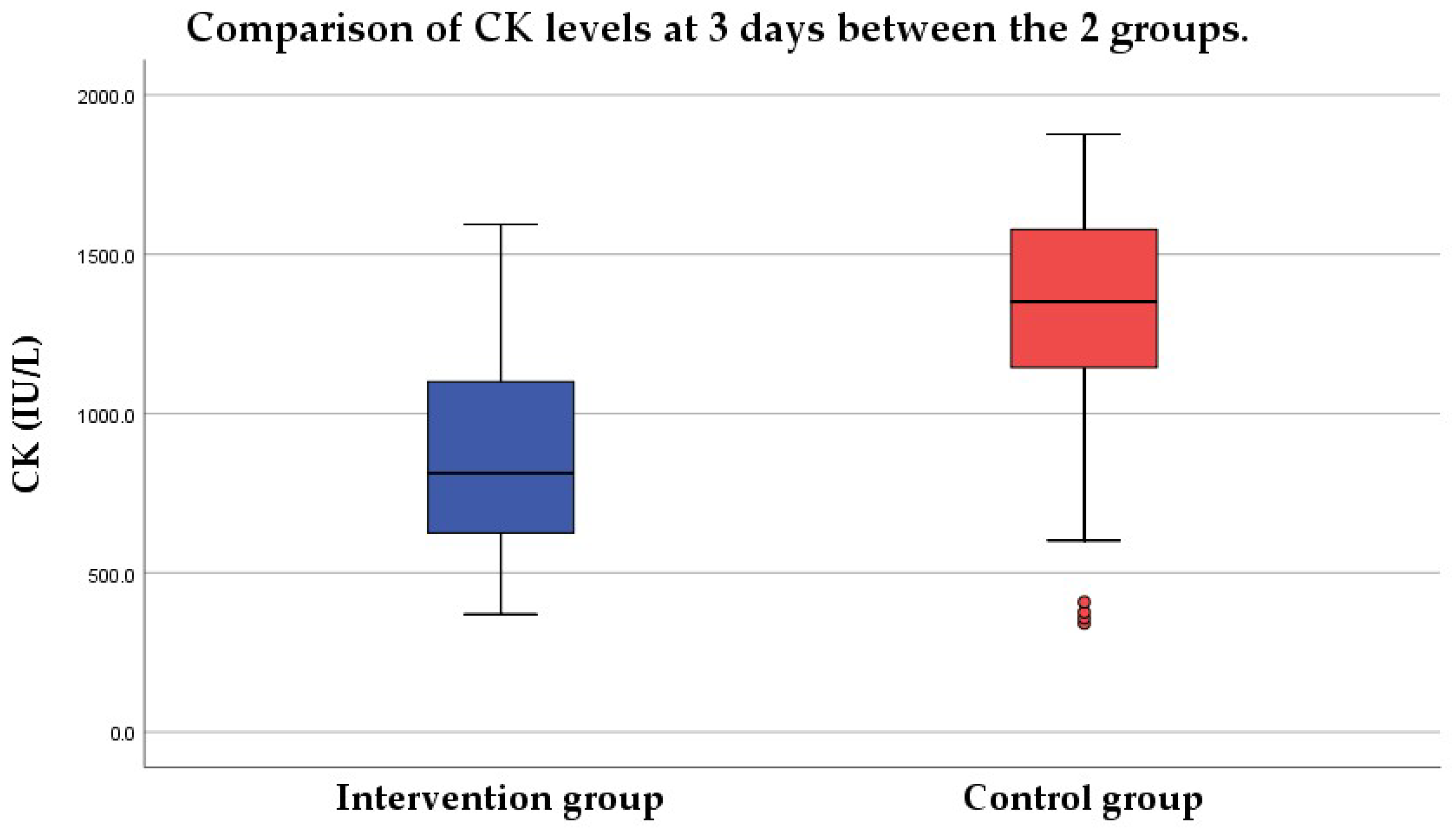
There was a statistically significant difference between the median CK after 3 days in the two groups; the group with dietary intervention had a lower CK at 3 days (812.5 (615.9–1099.2)) U/L compared to the no-intervention group (1351 (1136.9–1579.7)) U/L (p < 0.001) (Figure 3.). The decrease in the dietary intervention group was ~55% compared with 28% in the control group.
Figure 3.
Comparison of CK levels at 3 days between the 2 groups. The interior bars indicate the medians while the whiskers extend to the maximum and minimum of the data; ◦ = outlier.
3.2. CK Level at 7 Days
3.2.1. No-Intervention Group
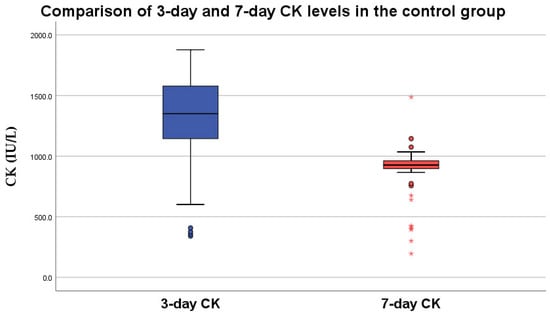
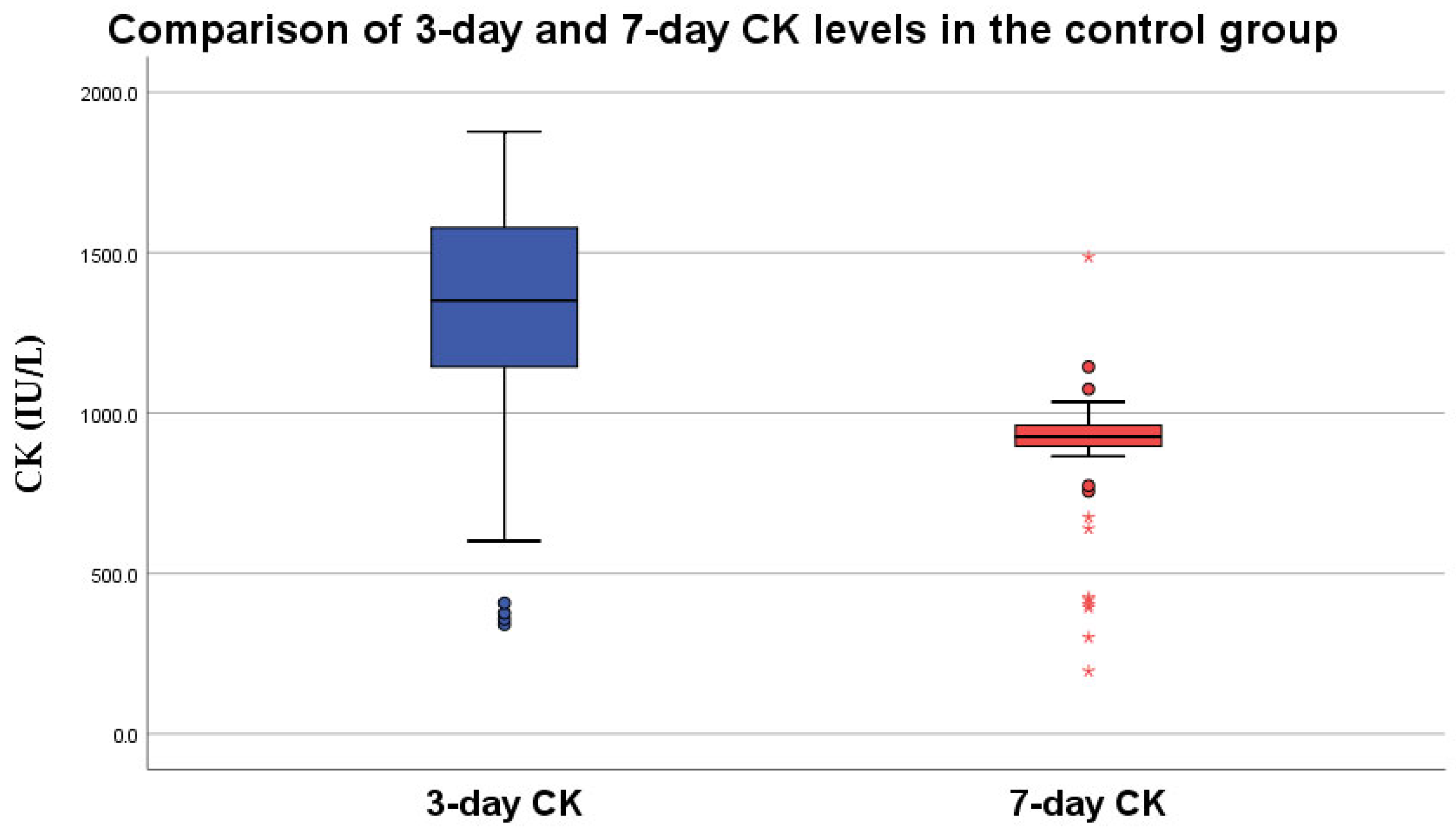
There was a statistically significant reduction in the control group CK levels from day 3 to day 7 (p < 0.001). The median CK decreased from 1351 (1136.9–1579.7) U/L U/L at baseline to 926 (894.2–965.2) U/L at day 3, meaning a decrease by approximately 31.5% (Figure 4).
Figure 4.
Comparison of 3-day and 7-day CK levels in the control group. The interior bars indicate the medians while the whiskers extend to the maximum and minimum of the data; ◦ = outlier; * = far outlier.
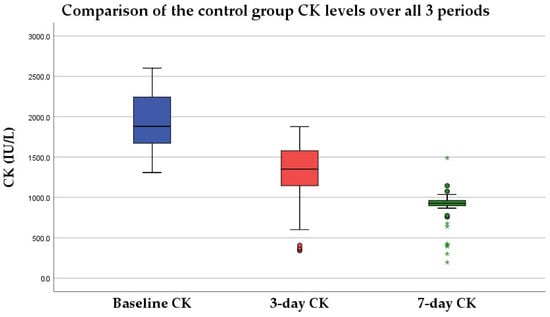
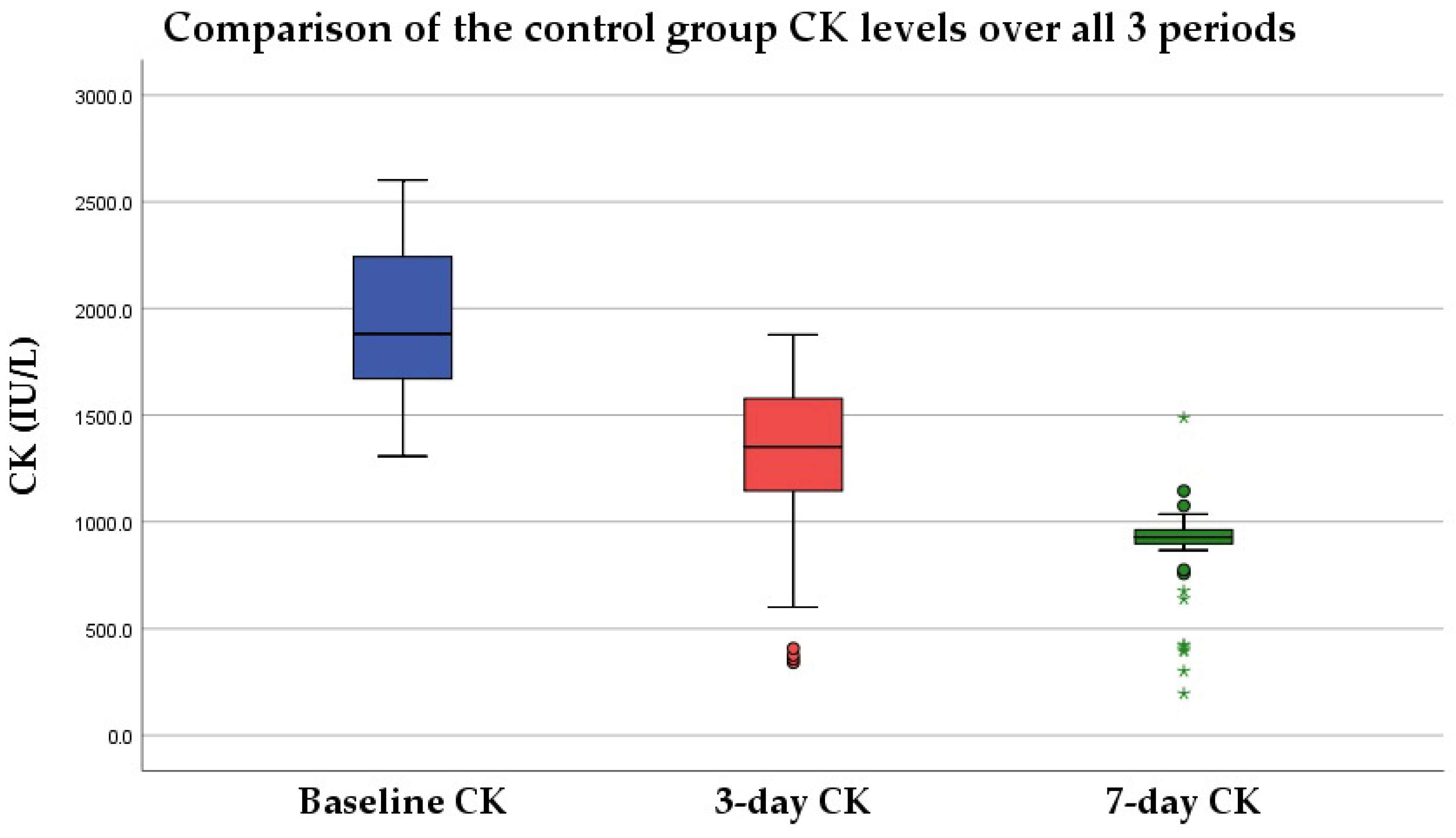
Comparing the baseline values with the 7-day values, there was a decrease by approximately 50.8% (p < 0.001) (Figure 5).
Figure 5.
Comparison of the control group CK levels over all 3 periods. The interior bars indicate the medians while the whiskers extend to the maximum and minimum of the data; ◦ = outlier; * = far outlier.
3.2.2. Intervention Group
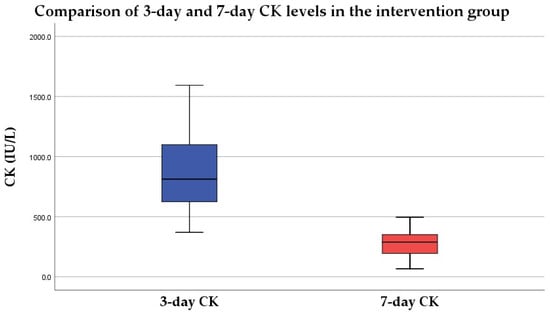
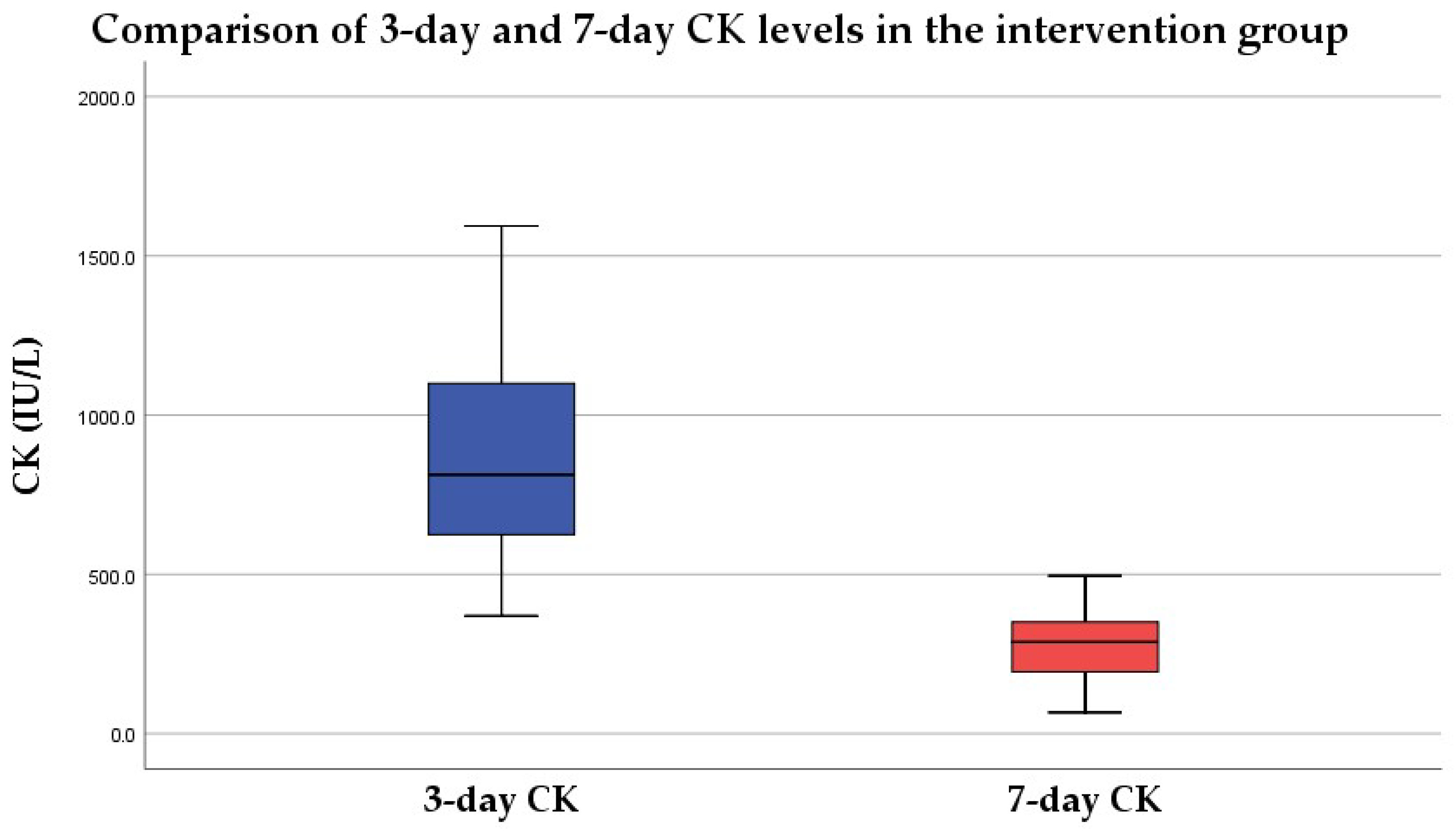
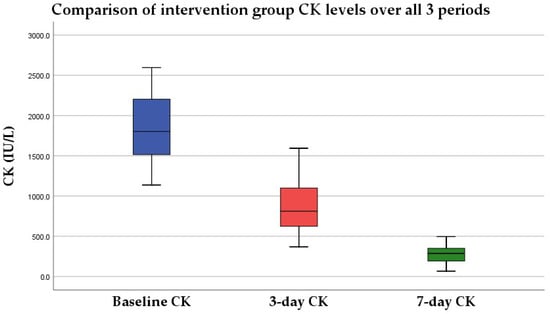
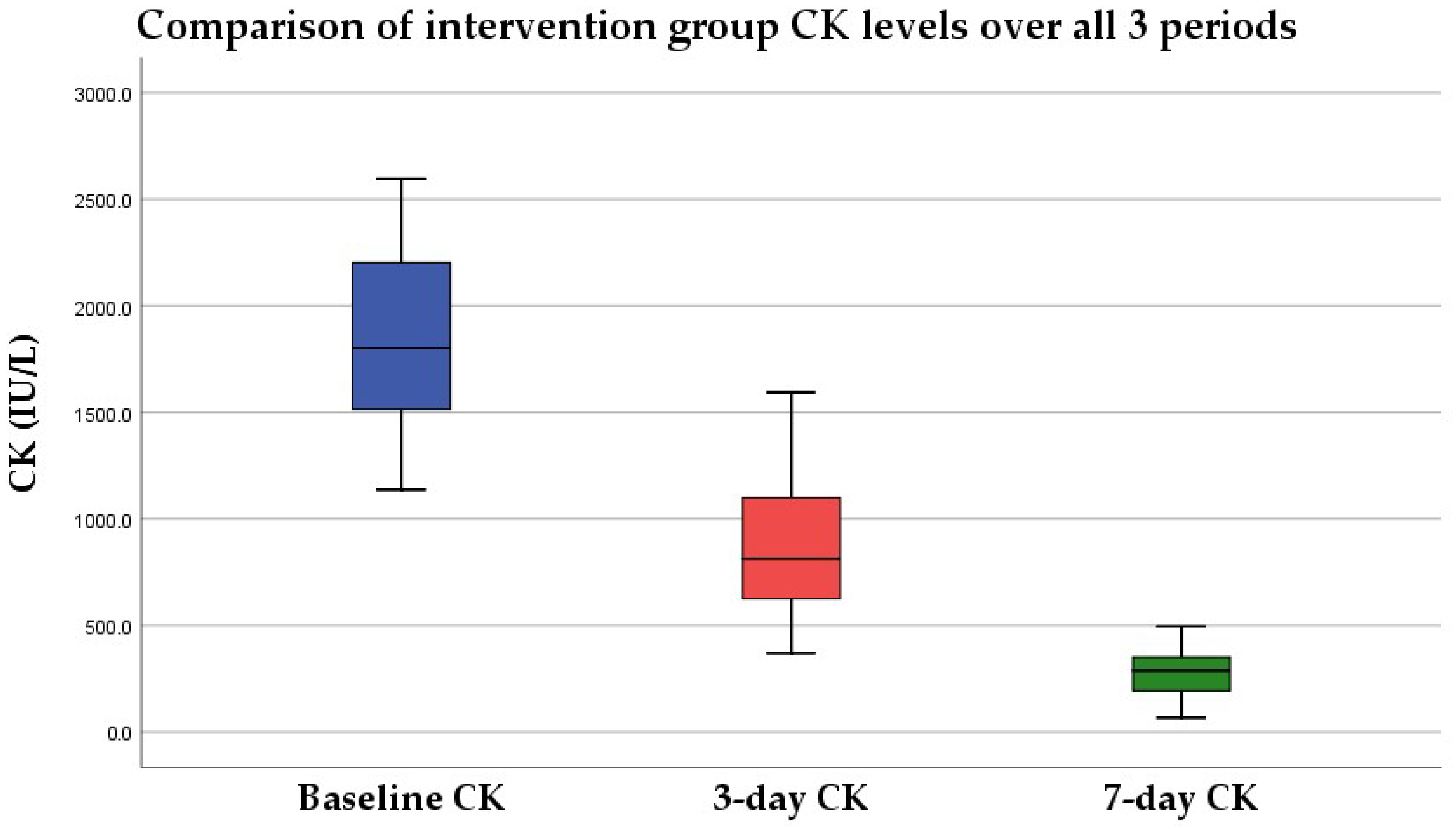
There was a statistically significant reduction in the dietary intervention group’s CK levels from day 3 to day 7 (p < 0.001). The median CK decreased from 812.5 (615.9–1099.2) U/L at day 3 to 287.7 (192.5–354.2) U/L at day 7, representing a decrease of approximately 64.5% (Figure 6).
Figure 6.
Comparison of 3-day and 7-day CK levels in the intervention group. The interior bars indicate the medians while the whiskers extend to the maximum and minimum of the data.
Comparing the baseline values with the 7-day values, there was a decrease of approximately 84% (p < 0.001) (Figure 7).
Figure 7.
Comparison of intervention group CK levels over all 3 periods. The interior bars indicate the medians while the whiskers extend to the maximum and minimum of the data.
3.2.3. Group Comparison
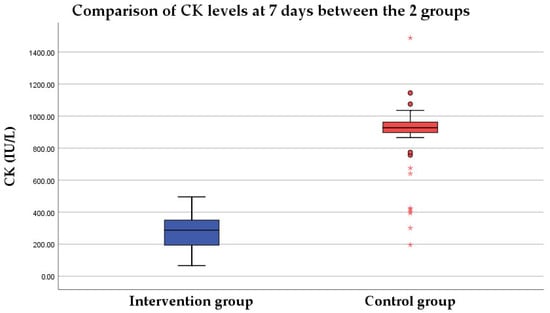
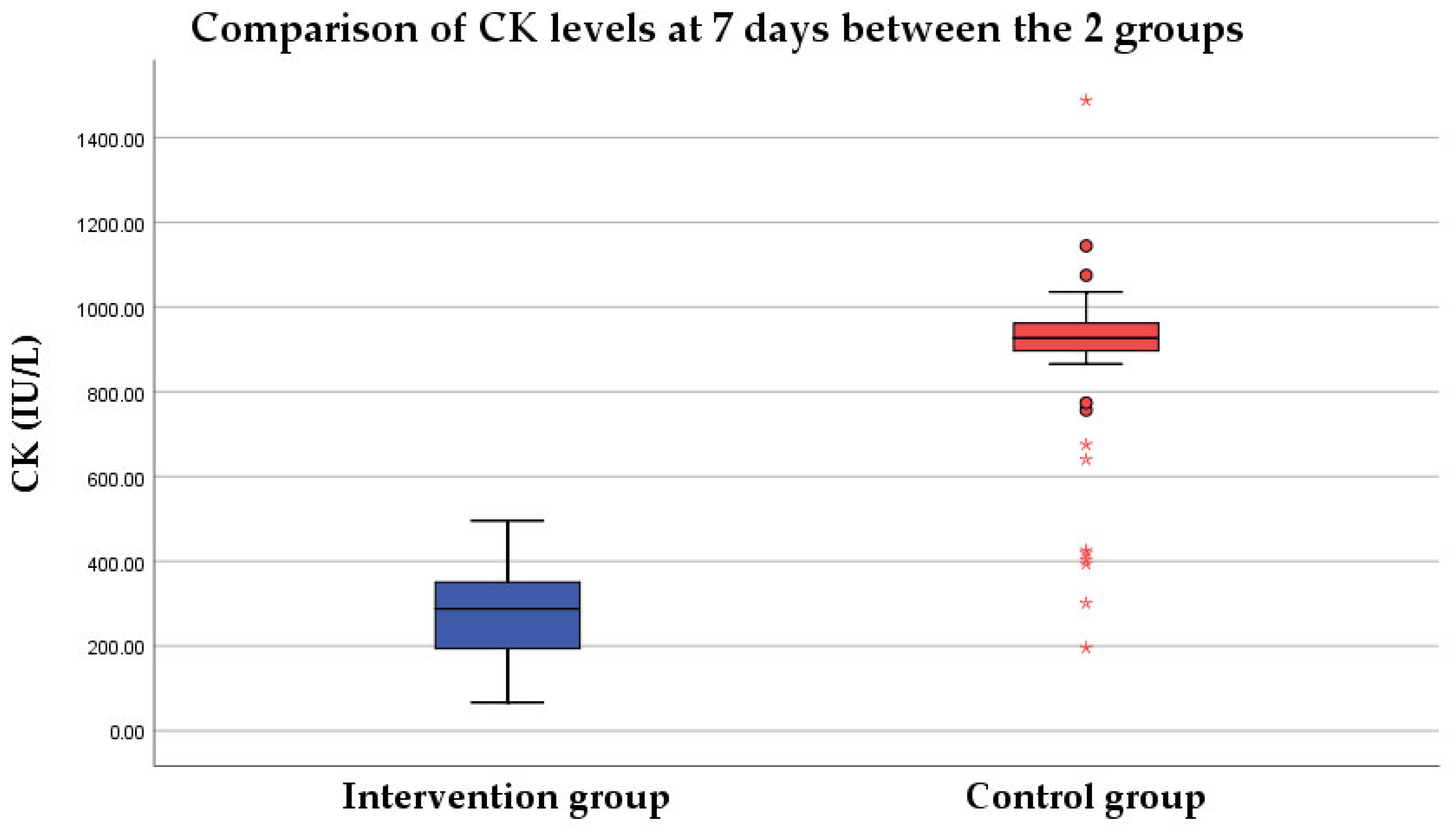
There was a statistically significant difference between the median CK at 7 days in the 2 groups; the group with dietary intervention had a lower CK at 7 days (287.7 (192.5–354.2)) U/L compared to the no intervention group (926 (894.2–965.2)) U/L (p < 0.001) (Figure 8.). The decrease in the dietary intervention group was by ~1.5 times compared with the 3-day level and by ~6.3 times compared with the baseline level. In comparison, in the control group, there was a decrease of 0.3 times compared with the 3-day level and by 0.5 times compared with the baseline value.
Figure 8.
Comparison of CK levels at 7 days between the 2 groups. The interior bars indicate the medians while the whiskers extend to the maximum and minimum of the data; ◦ = outlier; * = far outlier.
3.3. CK Regression Model
To explore the factors influencing the percentage reduction in CK levels after 7 days, a regression analysis was conducted. The analytical dataset included the following variables: Age (years), Height (cm), Weight (kg), Nutritional Supplementation (Supp) (coded as 0 = no dietary intervention, 1 = dietary intervention), baseline CK (CK), and CK at day 7 (CK_7).
The dependent variable’s percentage decrease (Percent), was calculated as follows:
This relative measure was considered more informative than the absolute decrease, as it adjusts for baseline variability in CK values.
Given that the dataset included 100 observations and a limited number of predictors, multiple linear regression and Lasso regression (with regularization) were applied to model the dependent variable as a function of the independent variables:
Multiple linear regression and Lasso regression with regularization were implemented in Python 3.7.7, leading to the following values of the regression coefficients, shown in Table 3.
Table 3.
The coefficients of the multiple linear regression line and of the Lasso regression line.
Both regression models indicated that the “Supp” variable had the highest coefficient, suggesting that dietary supplementation was the strongest determinant of CK percentage decrease after 7 days.
The Lasso regression model demonstrated robust predictive performance, indicating that approximatively 71.5% of the variance in the dependent variable (R2 = 0.714) was explained by the model, with a relatively low mean absolute error (MAE = 0.068), highlighting the significant role of nutritional supplementation in accelerating CK normalization and muscle recovery during rest.
Non-parametric analyses of absolute CK values (Mann–Whitney U and Wilcoxon signed-rank tests) yielded results consistent with percentage-based and regression analyses, demonstrating significantly greater CK reduction in the intervention group at both day 3 and day 7 (p < 0.001).
4. Discussion
Our findings show that dietary supplementation significantly expedited the reduction in serum CK levels in adolescent soccer players during a 7-day rest period. The intervention group demonstrated a median CK reduction of 84% by day 7, compared to 50.8% in the control group (p < 0.001), indicating a more effective muscle recovery process associated with nutritional support. This study should be interpreted as a pragmatic evaluation of a combined nutritional recovery strategy rather than as a placebo-controlled efficacy trial. The intervention included both dietary supplementation and nutritional counseling, and their individual contributions cannot be disentangled.
CK levels are subject to significant interindividual variability, influenced by factors such as age, sex, ethnicity, and muscle mass [11,24]. It is therefore essential to ensure homogeneity between study groups to isolate the effect of the intervention. In our study, the two groups were statistically similar in terms of age, weight, height, and body mass index (BMI), with no significant differences at baseline (p > 0.05 for all variables). This strengthens the validity of our findings, suggesting that the observed differences in CK kinetics were due to the dietary intervention rather than confounding anthropometric factors.
Persistent elevations in CK, even in asymptomatic athletes, are increasingly recognized as a marker of increased risk for muscle microtrauma, overtraining, and even more severe outcomes such as exertional rhabdomyolysis. Studies have demonstrated that athletes with consistently elevated CK may be predisposed to stress fractures, prolonged fatigue, and decreased performance, especially if they continue training without adequate recovery [7,25,26]. Some expert recommendations suggest resting or modifying activity when CK levels exceed thresholds (e.g., 1000–2000 U/L in asymptomatic athletes or >5000 U/L in symptomatic cases) to prevent progression to muscle damage or kidney injury [2,27,28,29]. Given the high baseline CK levels in our cohort (median ~1800 U/L), the decision to implement rest was justified and aligns with safety guidelines. Although CK reduction alone does not equate to full functional recovery, persistently elevated CK has been associated with ongoing muscle microtrauma, fatigue, and increased injury risk. The larger CK decline observed in the intervention group may reflect faster biochemical recovery and potentially a lower risk of cumulative muscle stress when returning to training, although functional outcomes were not assessed.
The observed decrease in CK in both groups reflects the natural decline expected after cessation of physical activity. However, the significantly greater reduction in the supplemented group indicates a probable enhancement in cellular recovery pathways, such as membrane repair, mitochondrial stabilization, and oxidative stress reduction. The supplements included antioxidants, B-complex vitamins, and amino acids, compounds known to support muscle regeneration and reduce post-exercise inflammation [30,31,32,33,34]. The regression modeling approach offers valuable practical insights for sports practitioners, particularly in the coach–athlete relationship. By quantifying the contribution of individual and nutritional factors to CK recovery, this model allows for more objective monitoring of muscle stress and recovery status in adolescent athletes. The strong predictive weight of nutritional supplementation suggests that targeted dietary strategies can be effectively integrated into recovery protocols to accelerate muscle regeneration. Coaches and sports scientists can use these data-driven insights to adjust training load, determine optimal rest periods, and minimize the risk of overtraining or injury. Moreover, providing athletes with objective feedback on their recovery dynamics can enhance communication, foster adherence to recovery plans, and promote a more individualized and science-based approach to performance management. The regression results demonstrate that nutritional supplementation was the main determinant of CK reduction, explaining over 70% of recovery variability. This finding provides coaches and sports practitioners with an objective tool to monitor muscle recovery, adjust training load, and optimize rest strategies in adolescent athletes.
Several studies have investigated the potential for antioxidant and amino acid supplementation to mitigate muscle damage and inflammation following intense physical activity. Poulab et al. (2015) showed that four weeks of vitamin C supplementation (1000 mg/day) reduced markers of inflammation and oxidative stress following eccentric exercise, with a lower increase in CK post exercise in the supplementation group [35]. In contradiction to our study, Bryer and Goldfarb (2006) demonstrate that high-dose vitamin C (3 g/day) may reduce early muscle soreness and oxidative stress, but has limited influence on creatine kinase (CK) clearance beyond 48 h [36]. The meta-analysis conducted by Righi et al. (2020) systematically reviewed 18 randomized clinical trials evaluating vitamin C supplementation effects on oxidative stress, inflammation, and muscle damage [37]. They found that vitamin C significantly reduced lipid peroxidation and interleukin-6 (IL-6) levels within 2 h post-exercise, but had no consistent effect on CK, C-reactive protein (CRP), cortisol, muscle soreness, or strength.
A recent animal study by Lu et al. (2023) investigated the effects of L-glutamine supplementation on muscle and organ damage induced by exhaustive exercise [38]. Rats receiving glutamine after exercise demonstrated significantly lower serum CK-MM levels, higher red blood cell (RBC) and platelet counts, and less histopathological damage in cardiac and renal tissues compared to the groups receiving glutamine before exercise or none at all. A double-blind, placebo-controlled crossover trial by Córdova-Martínez et al. (2021) investigated the effects of oral glutamine supplementation (6 g/day for 20 days) on muscle damage markers in professional basketball players [39]. The glutamine-supplemented group exhibited significantly lower levels of serum CK, myoglobin (Mb), and aspartate aminotransferase (AST) compared to the placebo group, suggesting a protective effect against exercise-induced muscle damage. Street et al. (2011) tested the therapeutic role of oral glutamine supplementation following eccentric exercise in physically active young men [40]. Participants ingested 0.3 g/kg/day of L-glutamine for four days post-exercise, resulting in significantly faster recovery of muscle soreness compared to placebo, but no difference in plasma CK activity was observed between groups. For L-arginine supplementation, a study by Andrade et al. (2018) found no significant difference in CK levels between a placebo group and an L-arginine-supplemented group (N = 10 per group) [41]. Zhao et al. (2019) in an experiment involving catfish hybrids described an antioxidative capacity and potential improvement in muscle growth and protein synthesis of Threonine [42]. In summary, there is no consensus in the literature about the influence of these supplements on CK serum levels.
Regression modeling confirmed supplementation as the strongest predictor of CK decrease, explaining approximately 71% of the variability in recovery (R2 = 0.714, MAE = 0.068). The regression modeling approach obtained in this study provides valuable practical insights for sports practitioners, particularly in the coach–athlete relationship. By quantifying the influence of individual and nutritional factors on CK recovery, the model enables objective monitoring of muscle stress and recovery status in adolescent athletes. The strong predictive contribution of nutritional supplementation highlights its effectiveness in accelerating muscle regeneration and supports its integration into evidence-based recovery protocols. These data-driven insights can help coaches and sports scientists tailor training loads, optimize rest periods, and reduce the risk of overtraining or injury, while enhancing communication and adherence to individualized recovery plans.
4.1. Limitations
This study had several limitations. It lacked a placebo-controlled design and blinding, which may introduce bias. This limitation reduces the ability to draw firm causal conclusions regarding the isolated effect of supplementation. The pragmatic design was chosen to reflect real-world pediatric sports medicine practice; however, the results should be interpreted as exploratory and hypothesis-generating. No functional performance or symptom assessments were performed to correlate CK changes with clinical outcomes. The results may not be generalizable to female athletes or other age groups. No independent laboratory verification of batch composition or potency was performed, and batch-to-batch variability of commercially available supplements could not be excluded. Dietary intake was not strictly standardized or quantitatively monitored in either group. No additional biochemical markers of oxidative stress, inflammation, or amino acid metabolism were measured in this study. Therefore, the proposed mechanisms underlying the observed CK reduction remain speculative and are inferred from the existing literature rather than directly demonstrated. The supplementation protocol combined amino acids, antioxidants, and B-complex vitamins based on their established roles in muscle repair, oxidative stress modulation, and energy metabolism. However, the study design does not allow attribution of effects to individual components or confirmation of synergistic interactions.
4.2. Future Directions
Future research should explore the effect of similar interventions across diverse sports disciplines, other age groups, and female athletes, and evaluate the clinical relevance of CK reductions in terms of recovery time, performance metrics, and injury prevention.
5. Conclusions
In adolescent soccer players with elevated creatine kinase (CK) levels, short-term nutritional supplementation with antioxidants and amino acids may significantly accelerate CK return toward athlete-appropriate CK values during rest during a 7-day rest period compared with controls. The supplemented group showed a median CK reduction of 84% versus 50.8% in non-supplemented athletes (p < 0.001). Regression modeling indicates that targeted nutritional support can enhance muscle recovery and may help prevent injuries associated with persistent CK elevation in youth athletes. Further research should aim to define optimal supplement combinations, dosing, and long-term outcomes across different sports and age groups.
Author Contributions
Conceptualization, A.-C.T.-F., A.D., M.-L.P. and R.M.N.; methodology, A.-C.T.-F., A.D., M.-L.P., H.V. and R.M.N.; software, A.D., H.V., A.P. and A.C.P.; validation, O.C.T. and R.M.N.; formal analysis, A.D., A.P. and A.C.P.; data curation, A.-C.T.-F., A.P., A.C.P. and A.D.; writing—original draft preparation, A.-C.T.-F., A.C.P., A.D. and A.P. and A.F.N.; writing—review and editing A.-C.T.-F., O.C.T. and R.M.N.; supervision, R.M.N. All authors have read and agreed to the published version of the manuscript.
Funding
This research received no external funding.
Institutional Review Board Statement
The study was conducted in accordance with the Declaration of Helsinki. This study was approved by the Chiajna Medical Center Ethical Board (31 from 22 December 2020), and the consent of the guardians has been obtained for the patients to be included in the study.
Informed Consent Statement
Informed consent was obtained from all subjects involved in the study.
Data Availability Statement
The data presented in this study are available on request from the corresponding author (privacy reason).
Conflicts of Interest
The authors declare no conflicts of interest.
Abbreviations
The following abbreviations are used in this manuscript:
| COVID-19 | Coronavirus disease 2019 |
| SARS-CoV-2 | Severe acute respiratory syndrome coronavirus 2 |
| CK | Creatine kinase |
References
- Aujla, R.S.; Zubair, M.; Patel, R. Creatine Phosphokinase. Available online: https://www.ncbi.nlm.nih.gov/books/NBK546624/ (accessed on 21 July 2025).
- Kindermann, W. Creatine Kinase Levels After Exercise. Dtsch. Arztebl. Int. 2016, 113, 344. [Google Scholar] [CrossRef] [Scilit]
- Pedersen, E.S.; Tengesdal, S.; Radke, M.; Rise, K.A.L. Kraftig Stigning i Kreatinkinase Etter Intensiv Trening. Tidsskr. Nor. Legeforening 2019, 139. [Google Scholar] [CrossRef] [Scilit]
- Baird, M.F.; Graham, S.M.; Baker, J.S.; Bickerstaff, G.F. Creatine-Kinase- and Exercise-Related Muscle Damage Implications for Muscle Performance and Recovery. J. Nutr. Metab. 2012, 2012, 960363. [Google Scholar] [CrossRef] [Scilit]
- Leite, C.D.F.C.; Zovico, P.V.C.; Rica, R.L.; Barros, B.M.; Machado, A.F.; Evangelista, A.L.; Leite, R.D.; Barauna, V.G.; Maia, A.F.; Bocalini, D.S. Exercise-Induced Muscle Damage after a High-Intensity Interval Exercise Session: Systematic Review. Int. J. Environ. Res. Public Health 2023, 20, 7082. [Google Scholar] [CrossRef] [Scilit] [PubMed]
- Ostapiuk-Karolczuk, J.; Dziewiecka, H.; Bojsa, P.; Cieślicka, M.; Zawadka-Kunikowska, M.; Wojciech, K.; Kasperska, A. Biochemical and Psychological Markers of Fatigue and Recovery in Mixed Martial Arts Athletes during Strength and Conditioning Training. Sci. Rep. 2025, 15, 24234. [Google Scholar] [CrossRef] [Scilit] [PubMed]
- Lee, E.C.; Fragala, M.S.; Kavouras, S.A.; Queen, R.M.; Pryor, J.L.; Casa, D.J. Biomarkers in Sports and Exercise: Tracking Health, Performance, and Recovery in Athletes. J. Strength Cond. Res. 2017, 31, 2920–2937. [Google Scholar] [CrossRef] [Scilit]
- Saračević, A.; Pekas, D.; Nikler, A.; Lazić, A.; Radišić Biljak, V.; Trajković, N. Post-Exercise Creatine Kinase Variability. Biochem. Med. 2025, 35, 186–200. [Google Scholar] [CrossRef] [Scilit]
- Berriel, G.P.; Costa, R.R.; da Silva, E.S.; Schons, P.; de Vargas, G.D.; Peyré-Tartaruga, L.A.; Kruel, L.F.M. Stress and Recovery Perception, Creatine Kinase Levels, and Performance Parameters of Male Volleyball Athletes in a Preseason for a Championship. Sports Med. Open 2020, 6, 26. [Google Scholar] [CrossRef] [Scilit]
- Mougios, V. Reference Intervals for Serum Creatine Kinase in Athletes. Br. J. Sports Med. 2007, 41, 674–678. [Google Scholar] [CrossRef] [Scilit]
- Brancaccio, P.; Maffulli, N.; Limongelli, F.M. Creatine Kinase Monitoring in Sport Medicine. Br. Med. Bull. 2007, 81–82, 209–230. [Google Scholar] [CrossRef] [Scilit]
- Szigeti, G.; Schuth, G.; Kovács, T.; Revisnyei, P.; Pasic, A.; Szilas, Á.; Gabbett, T.; Pavlik, G. Football Movement Profile Analysis and Creatine Kinase Relationships in Youth National Team Players. Physiol. Int. 2023, 110, 74–86. [Google Scholar] [CrossRef] [Scilit]
- Stanley, M.; Chippa, V.; Adigun, R. Rhabdomyolysis. Available online: https://www.ncbi.nlm.nih.gov/books/NBK448168/ (accessed on 22 July 2025).
- Furman, J. When Exercise Causes Exertional Rhabdomyolysis. J. Am. Acad. Physician Assist. 2015, 28, 38–43. [Google Scholar] [CrossRef] [Scilit]
- Rawson, E.S.; Clarkson, P.M.; Tarnopolsky, M.A. Perspectives on Exertional Rhabdomyolysis. Sports Med. 2017, 47, 33–49. [Google Scholar] [CrossRef] [Scilit] [PubMed]
- Luan, S.; Ji, Y.; Liu, Y.; Zhu, L.; Zhou, H.; Ouyang, J.; Yang, X.; Zhao, H.; Zhu, B. Real-Time Reconstruction of HIFU Focal Temperature Field Based on Deep Learning. BME Front. 2024, 5, 0037. [Google Scholar] [CrossRef] [Scilit] [PubMed]
- Poulios, A.; Papanikolaou, K.; Draganidis, D.; Tsimeas, P.; Chatzinikolaou, A.; Tsiokanos, A.; Jamurtas, A.Z.; Fatouros, I.G. The Effects of Antioxidant Supplementation on Soccer Performance and Recovery: A Critical Review of the Available Evidence. Nutrients 2024, 16, 3803. [Google Scholar] [CrossRef] [Scilit]
- O’Connor, E.; Mündel, T.; Barnes, M.J. Nutritional Compounds to Improve Post-Exercise Recovery. Nutrients 2022, 14, 5069. [Google Scholar] [CrossRef] [Scilit] [PubMed]
- Chen, Y.-M.; Li, H.; Chiu, Y.-S.; Huang, C.-C.; Chen, W.-C. Supplementation of L-Arginine, L-Glutamine, Vitamin C, Vitamin E, Folic Acid, and Green Tea Extract Enhances Serum Nitric Oxide Content and Antifatigue Activity in Mice. Evid.-Based Complement. Altern. Med. 2020, 2020, 8312647. [Google Scholar] [CrossRef] [Scilit]
- Raizel, R.; Tirapegui, J. Role of Glutamine, as Free or Dipeptide Form, on Muscle Recovery from Resistance Training: A Review Study. Nutrire 2018, 43, 28. [Google Scholar] [CrossRef] [Scilit]
- Panthi, M.; Subba, R.K.; Raut, B.; Khanal, D.P.; Koirala, N. Bioactivity Evaluations of Leaf Extract Fractions from Young Barley Grass and Correlation with Their Phytochemical Profiles. BMC Complement. Med. Ther. 2020, 20, 64. [Google Scholar] [CrossRef] [Scilit]
- Lee, M.-C.; Hsu, Y.-J.; Shen, S.-Y.; Ho, C.-S.; Huang, C.-C. A Functional Evaluation of Anti-Fatigue and Exercise Performance Improvement Following Vitamin B Complex Supplementation in Healthy Humans, a Randomized Double-Blind Trial. Int. J. Med. Sci. 2023, 20, 1272–1281. [Google Scholar] [CrossRef] [Scilit]
- Sinulingga, A.R.; Slaidiņš, K.; Salajeva, A.; Liepa, A.; Pontaga, I. Effect of Integrative Balance and Plyometric Training on Balance, Ankle Mobility, and Jump Performance in Youth Football Players: A Randomized Controlled Trial. Phys. Act. Health 2025, 9, 146–160. [Google Scholar] [CrossRef] [Scilit]
- Teschler, M.; Waranski, M.; Schmitz, B.; Mooren, F.C. Inter-Individual Differences in Muscle Damage Following a Single Bout of High-Intense Whole-Body Electromyostimulation. Front. Sports Act. Living 2024, 6, 1454630. [Google Scholar] [CrossRef] [Scilit] [PubMed]
- Miyamoto, T.; Oguma, Y.; Sato, Y.; Kobayashi, T.; Ito, E.; Tani, M.; Miyamoto, K.; Nishiwaki, Y.; Ishida, H.; Otani, T.; et al. Elevated Creatine Kinase and Lactic Acid Dehydrogenase and Decreased Osteocalcin and Uncarboxylated Osteocalcin Are Associated with Bone Stress Injuries in Young Female Athletes. Sci. Rep. 2018, 8, 18019. [Google Scholar] [CrossRef] [Scilit] [PubMed]
- Carrard, J.; Rigort, A.-C.; Appenzeller-Herzog, C.; Colledge, F.; Königstein, K.; Hinrichs, T.; Schmidt-Trucksäss, A. Diagnosing Overtraining Syndrome: A Scoping Review. Sports Health Multidiscip. Approach 2022, 14, 665–673. [Google Scholar] [CrossRef] [Scilit]
- Eichner, E.R. Exertional Rhabdomyolysis. Curr. Sports Med. Rep. 2008, 7, 3–4. [Google Scholar] [CrossRef] [Scilit]
- Scalco, R.S.; Snoeck, M.; Quinlivan, R.; Treves, S.; Laforét, P.; Jungbluth, H.; Voermans, N.C. Exertional Rhabdomyolysis: Physiological Response or Manifestation of an Underlying Myopathy? BMJ Open Sport Exerc. Med. 2016, 2, e000151. [Google Scholar] [CrossRef] [Scilit]
- Tietze, D.C.; Borchers, J. Exertional Rhabdomyolysis in the Athlete. Sports Health Multidiscip. Approach 2014, 6, 336–339. [Google Scholar] [CrossRef] [Scilit]
- Lee, D.; Jo, M.G.; Kim, S.Y.; Chung, C.G.; Lee, S.B. Dietary Antioxidants and the Mitochondrial Quality Control: Their Potential Roles in Parkinson’s Disease Treatment. Antioxidants 2020, 9, 1056. [Google Scholar] [CrossRef] [Scilit]
- Kurutas, E.B. The Importance of Antioxidants Which Play the Role in Cellular Response against Oxidative/Nitrosative Stress: Current State. Nutr. J. 2015, 15, 71. [Google Scholar] [CrossRef] [Scilit]
- Li, G.; Li, Z.; Liu, J. Amino Acids Regulating Skeletal Muscle Metabolism: Mechanisms of Action, Physical Training Dosage Recommendations and Adverse Effects. Nutr. Metab. 2024, 21, 41. [Google Scholar] [CrossRef] [Scilit]
- Gu, X.; Wang, W.; Yang, Y.; Lei, Y.; Liu, D.; Wang, X.; Wu, T. The Effect of Metabolites on Mitochondrial Functions in the Pathogenesis of Skeletal Muscle Aging. Clin. Interv. Aging 2022, 17, 1275–1295. [Google Scholar] [CrossRef] [Scilit] [PubMed]
- Hanna, M.; Jaqua, E.; Nguyen, V.; Clay, J.B. Vitamins: Functions and Uses in Medicine. Perm J. 2022, 26, 89–97. [Google Scholar] [CrossRef] [Scilit] [PubMed]
- Poulab, E.; Sajedinia, H.; Hafezi, F.; Khazaei, S.; Mabani, M. The Effect of A Four-Week Acute Vitamin C Supplementation on The Markers of Oxidative Stress and Inflammation Following Eccentric Exercise in Active Men. Int. J. Basic Sci. Appl. Res. 2015, 4, 190–195. [Google Scholar]
- Bryer, S.C.; Goldfarb, A.H. Effect of High Dose Vitamin C Supplementation on Muscle Soreness, Damage, Function, and Oxidative Stress to Eccentric Exercise. Int. J. Sport Nutr. Exerc. Metab. 2006, 16, 270–280. [Google Scholar] [CrossRef] [Scilit] [PubMed]
- Righi, N.C.; Schuch, F.B.; De Nardi, A.T.; Pippi, C.M.; de Almeida Righi, G.; Puntel, G.O.; da Silva, A.M.V.; Signori, L.U. Effects of Vitamin C on Oxidative Stress, Inflammation, Muscle Soreness, and Strength Following Acute Exercise: Meta-Analyses of Randomized Clinical Trials. Eur. J. Nutr. 2020, 59, 2827–2839. [Google Scholar] [CrossRef] [Scilit]
- Lu, C.-C.; Ke, C.-Y.; Wu, W.-T.; Lee, R.-P. L-Glutamine Is Better for Treatment than Prevention in Exhaustive Exercise. Front. Physiol. 2023, 14, 1172342. [Google Scholar] [CrossRef] [Scilit]
- Córdova-Martínez, A.; Caballero-García, A.; Bello, H.J.; Pérez-Valdecantos, D.; Roche, E. Effect of Glutamine Supplementation on Muscular Damage Biomarkers in Professional Basketball Players. Nutrients 2021, 13, 2073. [Google Scholar] [CrossRef] [Scilit]
- Street, B.; Byrne, C.; Eston, R. Glutamine Supplementation in Recovery from Eccentric Exercise Attenuates Strength Loss and Muscle Soreness. J. Exerc. Sci. Fit. 2011, 9, 116–122. [Google Scholar] [CrossRef] [Scilit]
- Andrade, W.B.; Jacinto, J.L.; da Silva, D.K.; Roveratti, M.C.; Estoche, J.M.; Oliveira, D.B.; Balvedi, M.C.W.; da Silva, R.A.; Aguiar, A.F. L-Arginine Supplementation Does Not Improve Muscle Function during Recovery from Resistance Exercise. Appl. Physiol. Nutr. Metab. 2018, 43, 928–936. [Google Scholar] [CrossRef] [Scilit]
- Zhao, Y.; Jiang, Q.; Zhou, X.-Q.; Xu, S.-X.; Feng, L.; Liu, Y.; Jiang, W.-D.; Wu, P.; Zhao, J.; Jiang, J. Effect of Dietary Threonine on Growth Performance and Muscle Growth, Protein Synthesis and Antioxidant-Related Signalling Pathways of Hybrid Catfish Pelteobagrus Vachelli ♀ × Leiocassis Longirostris ♂. Br. J. Nutr. 2020, 123, 121–134. [Google Scholar] [CrossRef] [Scilit]

Disclaimer/Publisher’s Note: The statements, opinions and data contained in all publications are solely those of the individual author(s) and contributor(s) and not of MDPI and/or the editor(s). MDPI and/or the editor(s) disclaim responsibility for any injury to people or property resulting from any ideas, methods, instructions or products referred to in the content. |
© 2025 by the authors. Licensee MDPI, Basel, Switzerland. This article is an open access article distributed under the terms and conditions of the Creative Commons Attribution (CC BY) license.