Abstract
In the metro traction power supply system, the metro acceleration and braking may cause fluctuations of bus voltage, and it is difficult for a single energy storage device to achieve both the proper response speed and energy density. In this article, a novel battery-supercapacitor hybrid energy storage system (HESS) was proposed to realise energy compensation and regulation under complex operating conditions of metros, in order to maintain a stable bus voltage. Using the short station distance working condition of Guangzhou Metro Line 4 as an example, four types of scenarios were designed for acceleration, braking, frequent acceleration-braking and two-metro simultaneous operation. The simulation results show that a single-mode energy storage could not effectively stabilise the bus voltage, while battery-supercapacitor HESS could control bus voltage fluctuation within 2 V. A comparative study on the proposed battery-supercapacitor HESS using a typical Buck-Boost DC/DC converter topology and a different Cuk DC/DC converter topology was carried out. Overall, this article provides a novel battery-supercapacitor HESS to stabilise the metro power system under complex acceleration and braking conditions, and lays the technical foundation for a hybrid energy storage system to be used in actual urban rail transit.
1. Introduction
With the acceleration of urbanisation and the continuous growth of urban population, metro, as an efficient and environmentally friendly high-capacity public transport mode, has been widely used worldwide [1,2]. Metro traction power supply systems generally use 1500 V DC bus [3]. In the process of train operation, the bus voltage fluctuation problem is very prominent [4]. When the train accelerates, the required traction power rises instantly, resulting in a sudden drop in bus voltage; in the braking process, the energy feedback will result in a sharp rise in bus voltage [5,6]. Rapid voltage fluctuations will not only cause over-voltage or under-voltage faults in the power supply system, but also reduce the efficiency of the regenerative energy utilisation [5,7], thus affecting the safety, stability and energy-saving level of the metro traction. With the increase in metro running density and the emergence of frequent acceleration-braking working conditions, the power quality problems become more and more prominent, which put forward higher requirements for voltage stability.
In order to cope with the fluctuation of bus voltage, energy storage devices have been gradually introduced [8,9]. Among them, the battery-supercapacitor hybrid energy storage system (HESS) has become a useful solution for suppressing voltage fluctuations due to its combination of high energy density and high power density [10]. Batteries can provide large energy support and are suitable for medium-term and long-term energy regulation [11], while supercapacitors have millisecond-level dynamic response capability and can quickly absorb or release energy [12]. In addition, the coordinated use of battery-supercapacitor HESS can effectively reduce the strain of deep discharge, thereby extending the life of batteries [13]. Different types of HESS and advanced energy transmission technologies could be used in DC microgrids [14,15], railway and marine systems [16,17,18], and transportation hubs [19]. Most existing battery-supercapacitor HESS research focuses on controlling voltage fluctuations under single working conditions or ideal conditions, and there are still some deficiencies in the research on bus voltage stability under the complex operating conditions of urban metro, such as short spacing and frequent acceleration/braking. In actual operation, the running status of urban railway is often frequently switched, acceleration, braking, re-acceleration and other conditions occur continuously within a few seconds, and voltage fluctuations are characterised by high frequency and multiple peaks [20]. Such complex working conditions not only put forward higher requirements on the response speed of the energy storage device, but also bring challenges to the rationality of the energy management strategy and the optimisation of the overall energy efficiency of the system.
Table 1 lists the comparison of 4 energy storage types, including flywheel, battery, supercapacitor, and the proposed battery-supercapacitor HESS. Flywheel can be used in metros and other types of urban railway [21], but it suffers drawbacks of mechanical loss, relatively slow response time and system complexity [22]. Supercapacitors were proposed to be used in the metro network via simulation [23]. Battery-supercapacitor HESS was modelled to mainly absorb the regenerative braking energy [24].
Table 1.
Battery-supercapacitor HESS vs. flywheel, single-mode battery and single-mode supercapacitor.
However, battery-supercapacitor HESS schemes for the energy compensation for both the metro acceleration and braking conditions, together with detailed comparative analysis on battery-supercapacitor HESS with different DC/DC converter topologies, are still missing.
To fill the research gap above, this article proposed a novel battery-supercapacitor hybrid energy storage system to be used into the typical operating conditions of Guangzhou Metro Line 4 as an example. This article studied the impact of the proposed battery-supercapacitor HESS on bus voltage stability under the metro conditions of acceleration, braking, frequent acceleration-braking and two-metro simultaneous operation. A comparative study on the proposed battery-supercapacitor HESS using a typical Buck-Boost DC/DC converter topology and a different Cuk DC/DC converter topology was carried out. Overall, this article provides a novel battery-supercapacitor HESS scheme for stabilising the metro traction power supply system under complex acceleration and braking conditions, but also lays a theoretical and technical foundation for a hybrid energy storage system to be practically used in urban rail transit.
2. Novel Battery-Supercapacitor Hybrid Energy Storage Scheme for Metros
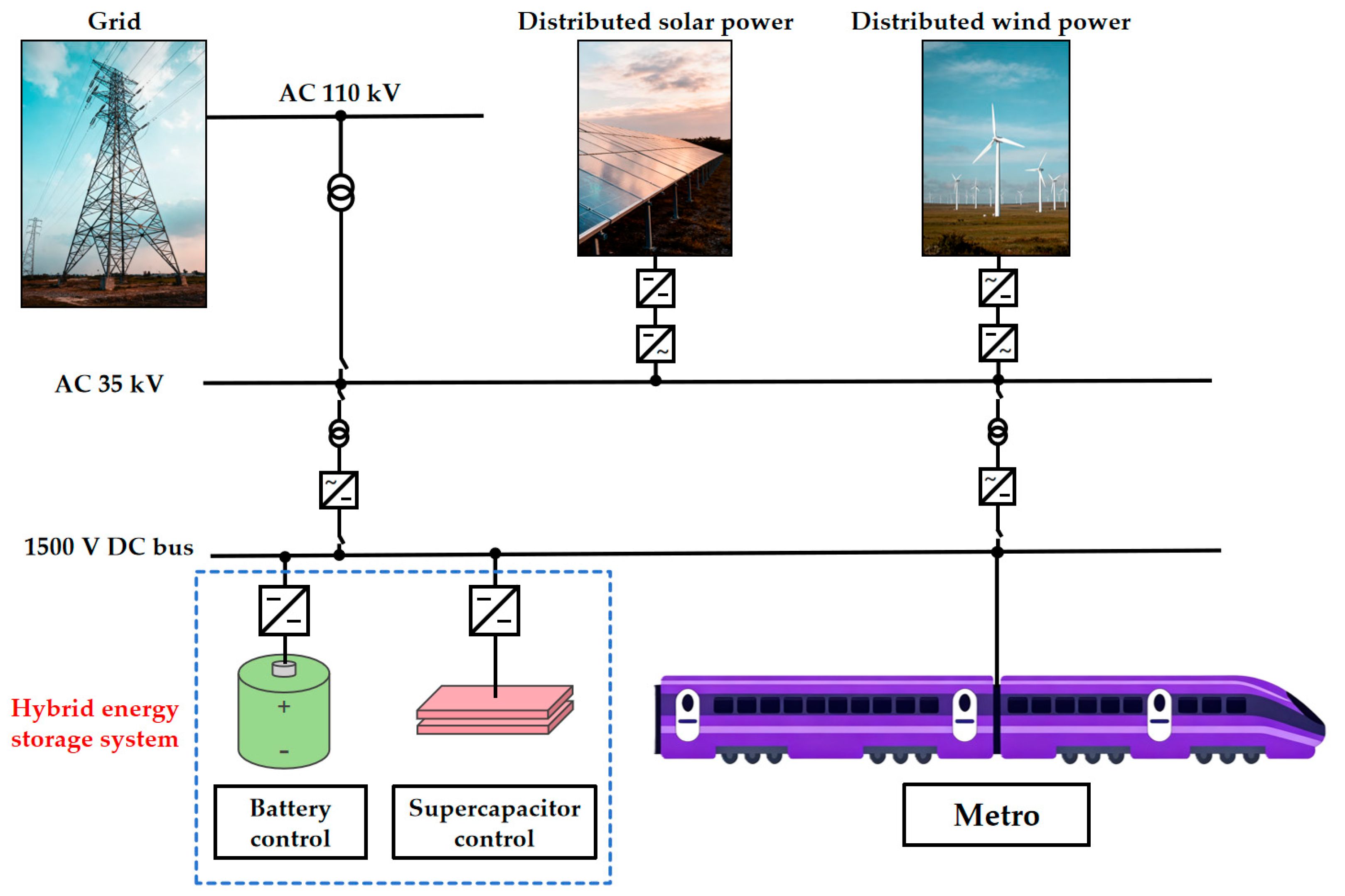
The structure of the proposed novel battery-supercapacitor hybrid energy storage power system is shown in Figure 1. The battery-supercapacitor hybrid energy storage system (HESS) was configured on a 1500 V DC traction bus, where similar configurations can be found in [25,26]. The system also included the higher-level AC grid, the station’s distributed solar power generation, and the wind power generation system. The system not only provided regulation support on the grid side, but also realised a two-way flow of energy during metro operation; the AC grid supplied power to the DC bus via rectifiers, while the HESS dynamically regulated the power under traction and braking conditions to maintain the stability of the bus voltage and to enhance the utilisation efficiency of regenerative energy.
Figure 1.
Battery-supercapacitor HESS for metros.
From the perspective of energy flow, when regenerative power was generated by braking of the metro vehicle, this part of energy was first absorbed by the supercapacitor, which suppressed the rapid rise in bus voltage by millisecond-level dynamic response. The filtered low-frequency power was borne by the battery, which realised a longer period of energy storage. When additional power was required to accelerate the metro vehicle, the supercapacitor discharged quickly to compensate for transient peaks, while the battery provided continuous power to ensure a stable supply of energy to the traction inverter and traction motors. If there were a surplus of regenerative energy, it could be fed back to reduce the energy consumption of the public grid and enhance the consumption of renewable energy. Through this mechanism, the system was able to smooth out bus voltage fluctuations under different conditions.
Despite the complementary characteristics of HESS in terms of response speed and energy density, the system still had some limitations. Supercapacitors had low energy density and could not supply energy independently for a long period of time, while batteries were prone to life decay under frequent charging and discharging conditions, resulting in higher maintenance costs. In addition, the control and energy management strategy of hybrid energy storage was relatively complex, requiring refined power allocation and condition monitoring, or else it was easy to cause efficiency degradation or unbalanced use of energy storage units [27]. Therefore, during the design process, designers need to weigh the equipment investment, energy efficiency and operational reliability to achieve better system performance.
3. Principle of HESS
3.1. Topology and Working Principle
HESS realised the power compensation of the metro traction power supply system through the synergistic characteristics of battery-supercapacitor, and its topology and dynamic characteristics were the core foundation of accurate power regulation. This section analysed the topology and energy flow.
3.1.1. Topology
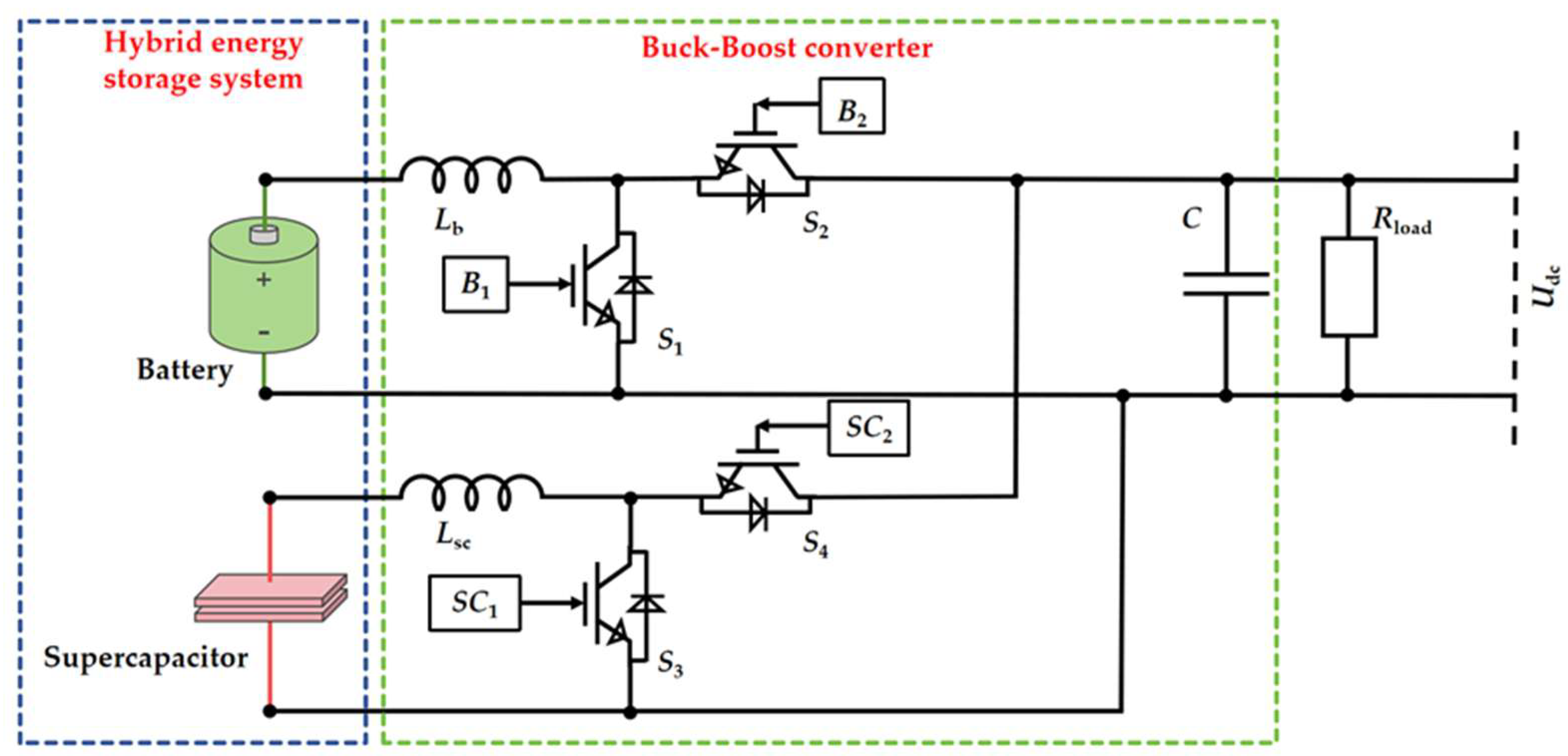
Figure 2 shows the topology of the hybrid energy storage system connected to the DC bus of the metro traction power supply, and the core components include Lithium-Ion Battery (LIB), Electric Double-Layer Capacitors (EDLCs), bidirectional DC/DC converter, and DC bus interface, converter, and other modules.
Figure 2.
Battery-supercapacitor HESS with a typical Buck-Boost DC/DC converter topology connected to the DC bus of the metro traction power supply.
The battery-supercapacitor parameters are shown in Table 2. After calculating the series-parallel expansion of the energy storage units, it could be obtained that the battery had a rated voltage of 614.4 V and a capacity of 160 Ah, and the supercapacitor bank had a rated voltage of 1036.8 V and a capacity of 8.46 F.
Table 2.
Battery and supercapacitor parameters [24].
3.1.2. Analysis of Energy Flow Under Different Conditions
For the three typical metro operating conditions of braking, acceleration, and constant speed, combined with the design (simulating metro acceleration and braking by adding and subtracting series loads in the main circuit at specific time points, using voltage closed-loop control to maintain the DC bus voltage at 1500 V, and connecting the battery circuit and supercapacitor circuit in parallel to the DC bus), the energy flow analysis of the hybrid energy storage system was as follows.
During metro braking, regenerative electrical energy was fed back to the DC bus, causing the bus voltage to start rising. At this time, the hybrid energy storage system entered charging mode through voltage closed-loop control, with the battery circuit and supercapacitor circuit connected in parallel to the DC bus, jointly responding to changes in bus voltage to absorb regenerative energy. When the bus voltage exceeded the set value of 1500 V, the two circuits, through their own characteristic differences, cooperatively absorb energy, suppress the rise in the bus voltage, and achieve braking energy recovery and storage.
During metro acceleration, the traction system’s power demand increased sharply, causing the bus voltage to start dropping. At this time, the hybrid energy storage system entered discharge mode through voltage closed-loop control, with the battery circuit and supercapacitor circuit connected in parallel to the DC bus, jointly releasing stored energy to charge the bus voltage, compensating for the traction system’s power demand, suppressing the drop in bus voltage, and ensuring a stable power supply during metro acceleration.
When the metro was in constant-speed operation, the system power demand was relatively stable, and the bus voltage fluctuates around 1500 V. At this time, the hybrid energy storage system maintains energy balance, with the battery circuit and supercapacitor circuit making small power charge and discharge adjustments according to minor bus voltage fluctuations, ensuring that the DC bus voltage remained stable at 1500 V and preparing for the next sudden change.
3.2. Hybrid Energy Storage Control Strategy
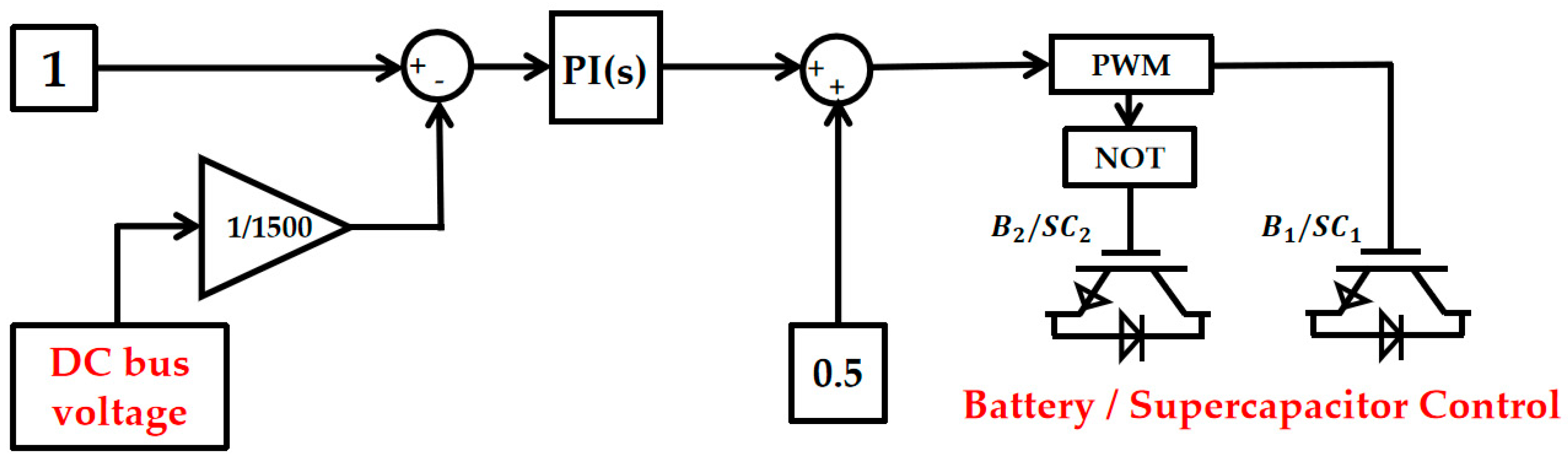
The bi-directional DC/DC converter was the core component of the hybrid energy storage system, interacting with the DC bus, which was able to realise the bi-directional energy flow between the battery and the supercapacitor when the bus voltage fluctuated. The control loop shown in Figure 3 and the system topology shown in Figure 2 were now combined to analyse the voltage closed-loop regulation logic and the Buck/Boost mode switching mechanism.
Figure 3.
Control loop.
3.2.1. PI Control
To enhance the stability and interference immunity of the DC/DC buck-boost circuit, this simulation employed a PI control strategy to regulate the energy storage system. PI control offered advantages such as simple structure, low implementation cost, and rapid response, enabling reliable output regulation.
The proportional coefficient range was first estimated based on energy storage component parameters and load impedance. The P value was then incrementally increased to achieve a faster dynamic response while ensuring no significant oscillation occurs at the waveform’s rising edge. After the completion of the proportional loop setting, the integral coefficient I was incrementally increased from 1 × 10⁻³. The system’s overall performance was assessed by observing the stability and overshoot of the output waveform. Through multiple rounds of fine-tuning, a balance was achieved between response speed and steady-state waveform quality, yielding the optimal PI parameter combination.
3.2.2. Loop Control Logic
As shown in Figure 3, in the proposed control strategy, the bus voltage was first compared with the reference voltage of 1500 V and normalised by proportional scaling to map the high-voltage value to the per-unit range for easier controller computation. The normalised voltage was compared with the reference value 1 to obtain the voltage deviation, which was used as the input signal of the PI controller for closed-loop regulation. The transfer function of the PI controller is:
The proportional coefficient Kp mainly determined the dynamic response speed of the system to voltage disturbances, while the integral coefficient Ki was used to eliminate steady-state errors and ensure that the bus voltage remains near the target value over the long term.
To ensure that the control signal was compatible with the PWM modulation module, a bias of 0.5 was introduced based on the PI output, so that the output always stayed within the [0, 1] range and was set as the system’s neutral operating point. In this way, when the bus voltage fluctuated, the control signal could adjust symmetrically around the bias point, thereby generating reasonable switching signals through PWM to achieve the subsequent operation mode switching and energy interaction of the DC/DC converter.
3.2.3. Buck/Boost Mode Switching
As shown in Figure 2, the bidirectional DC/DC converter, serving as the core unit for energy interaction between the HESS and the 1500 V DC traction bus, needed to dynamically switch operating modes according to the bus voltage deviation, enabling the charging (Buck mode) and discharging (Boost mode) of the energy storage devices. The switching logic was determined by the regulation signal output from the voltage loop PI controller, and through the complementary effect of a 0.5 bias and an inverter, it achieved the alternating conduction of the switches and the switching of the energy flow direction.
In Boost mode, when the bus voltage was below the reference value, the PI controller output signal was positive, and the PWM signal B1 (battery side)/SC1 (supercapacitor side) drove the corresponding switch S1 and S3 to turn on. The inverter generated an inverted signal B2/SC2 to turn off S2 and S4 synchronously. At this time, the energy storage device was discharged to the bus through S1 and S3 while storing energy in the inductor L. When S1 and S3 turned off, the inductor released magnetic energy through the freewheeling diode and superimposed with the energy storage unit voltage to jointly support the bus voltage, achieving boost and voltage stabilisation.
In Buck mode, when the bus voltage was above the reference value, the PI controller output signal was negative, and the PWM signal B2/SC2 drove the switch S2 and S4 to turn on, while the inverted signal B1/SC1 turned off S1 and S3, ensuring unidirectional energy flow. At this time, the DC bus charged the energy storage device through S2 and S4 and stored energy in the inductor. When S2 and S4 turned off, the inductor continues to supply current to the energy storage device through the freewheeling diode, ensuring a continuous and stable charging process, thereby achieving efficient absorption and reuse of the metro’s braking energy.
4. Case Study
In the subway traction power supply scenario, the metro’s power demand is not always a smooth single-step change; it may exhibit frequent oscillations with multiple sudden rises and drops within fractions of a second. Such conditions impose challenges on the response speed and power density of hybrid energy storage systems, exceeding those of conventional scenarios.
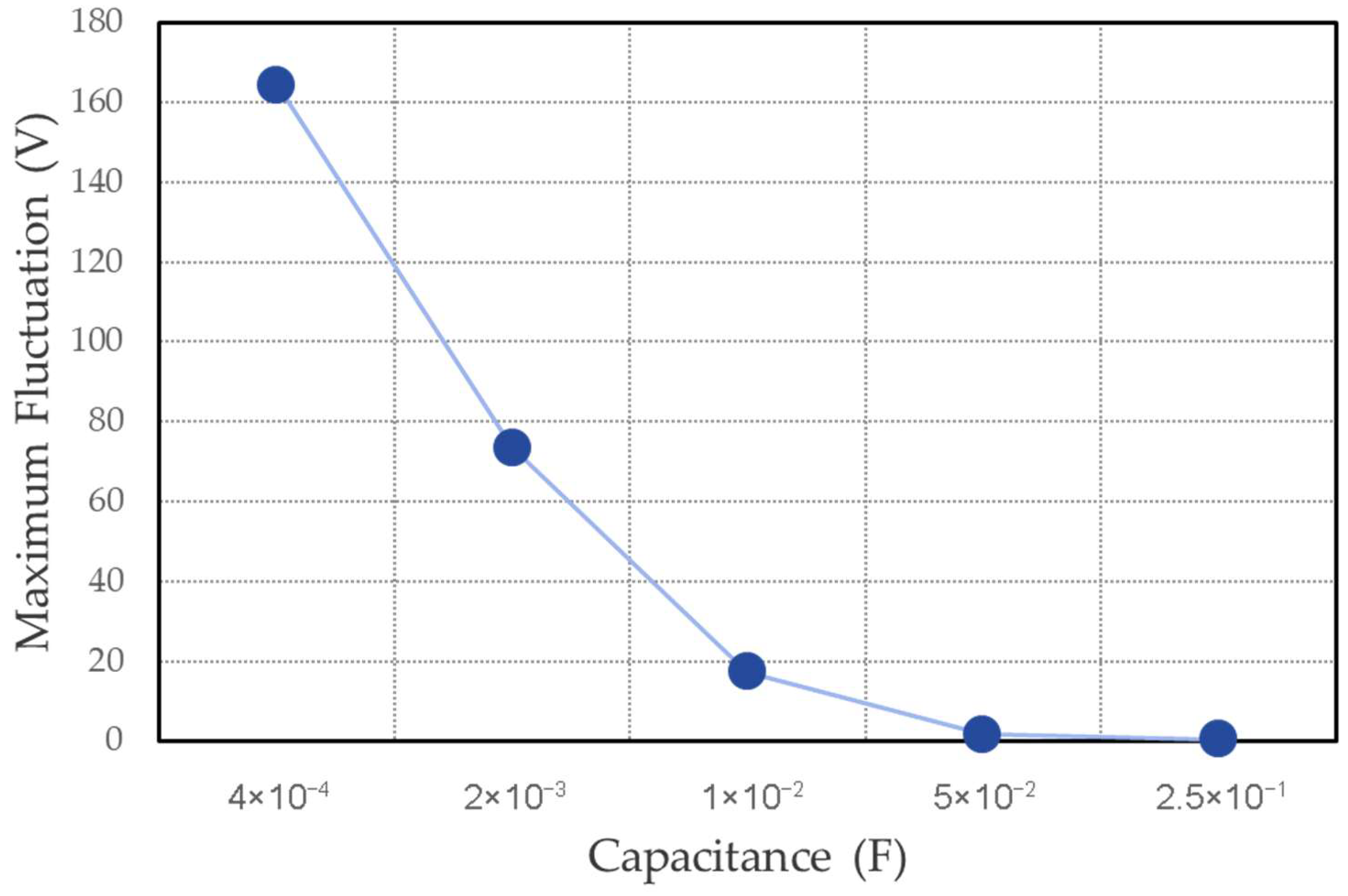
After the basic circuit parameters were set, the parameter optimisation for Capacitor C and Inductor Lb. was carried out. As shown in Figure 4, the Capacitor C value was increased from 4 × 10⁻⁴ F to 2.5 × 10⁻¹ F, where the maximum fluctuation saturated when the Capacitor C value was 5 × 10⁻² F. Although a further increase in Capacitor C value could lead to a very slight change in the maximum fluctuation, the cost and size of the capacitor would not be reasonable. Therefore, the Capacitor C value was optimised at 5 × 10⁻² F.
Figure 4.
Parameter optimisation: Capacitor C.
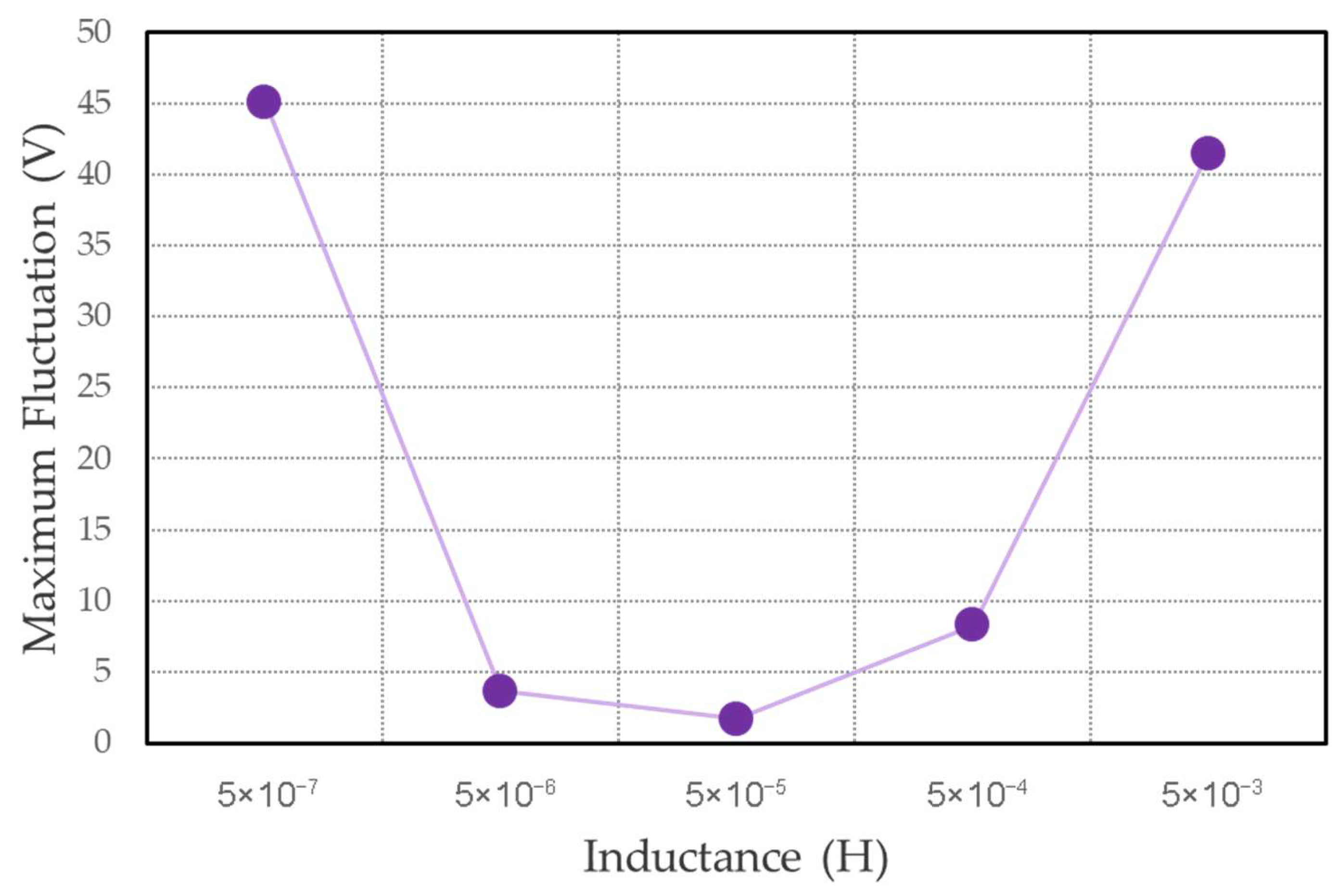
As shown in Figure 5, for Inductor Lb, the optimisation range was from 5 × 10⁻⁷ H to 5 × 10⁻³ H. The maximum fluctuation reached the minimum with inductor Lb at 5 × 10⁻⁵ H, and further increase in inductance would increase the fluctuation. Therefore, the Inductor Lb was optimised at 5 × 10⁻⁵ H.
Figure 5.
Parameter optimisation: Inductor Lb.
To verify the system’s performance under frequent acceleration-braking over a short period, this chapter used a typical short-station-distance section of Guangzhou Metro Line 4 as an example and conducted simulations using MATLAB/SIMULINK. Operating conditions involving multiple power fluctuations were designed, combined with core parameters of the AC grid voltage, DC bus voltage, and battery–supercapacitor, as shown in Table 3.
Table 3.
Parameters of the battery-supercapacitor HESS and the metro traction system.
4.1. Case Design
Four cases were set up to test and validate the performance of the energy storage system to sudden power changes.
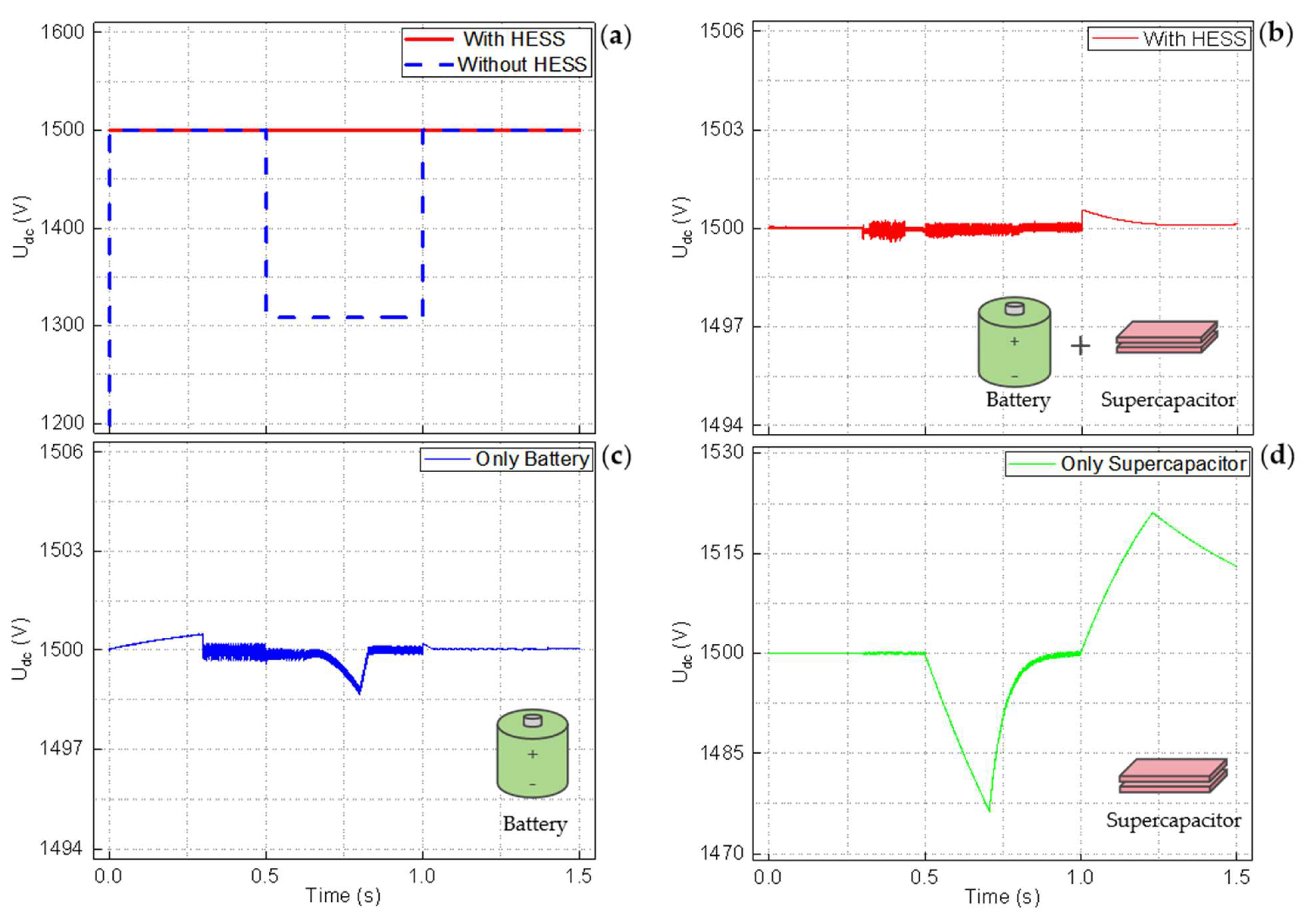
Case 1 acceleration: From 0 s to 0.5 s, the metro was in constant-speed operation. From 0.5 s to 1 s, the metro was accelerating. After 1 s, the metro re-entered the constant-speed operation. During this process, the comparison between single energy storage and hybrid energy storage was carried out.
Case 2 braking: From 0 s to 0.6 s, the metro was in constant-speed operation. From 0.6 s to 1 s, the metro was braking. After 1 s, the metro re-entered the constant-speed operation.
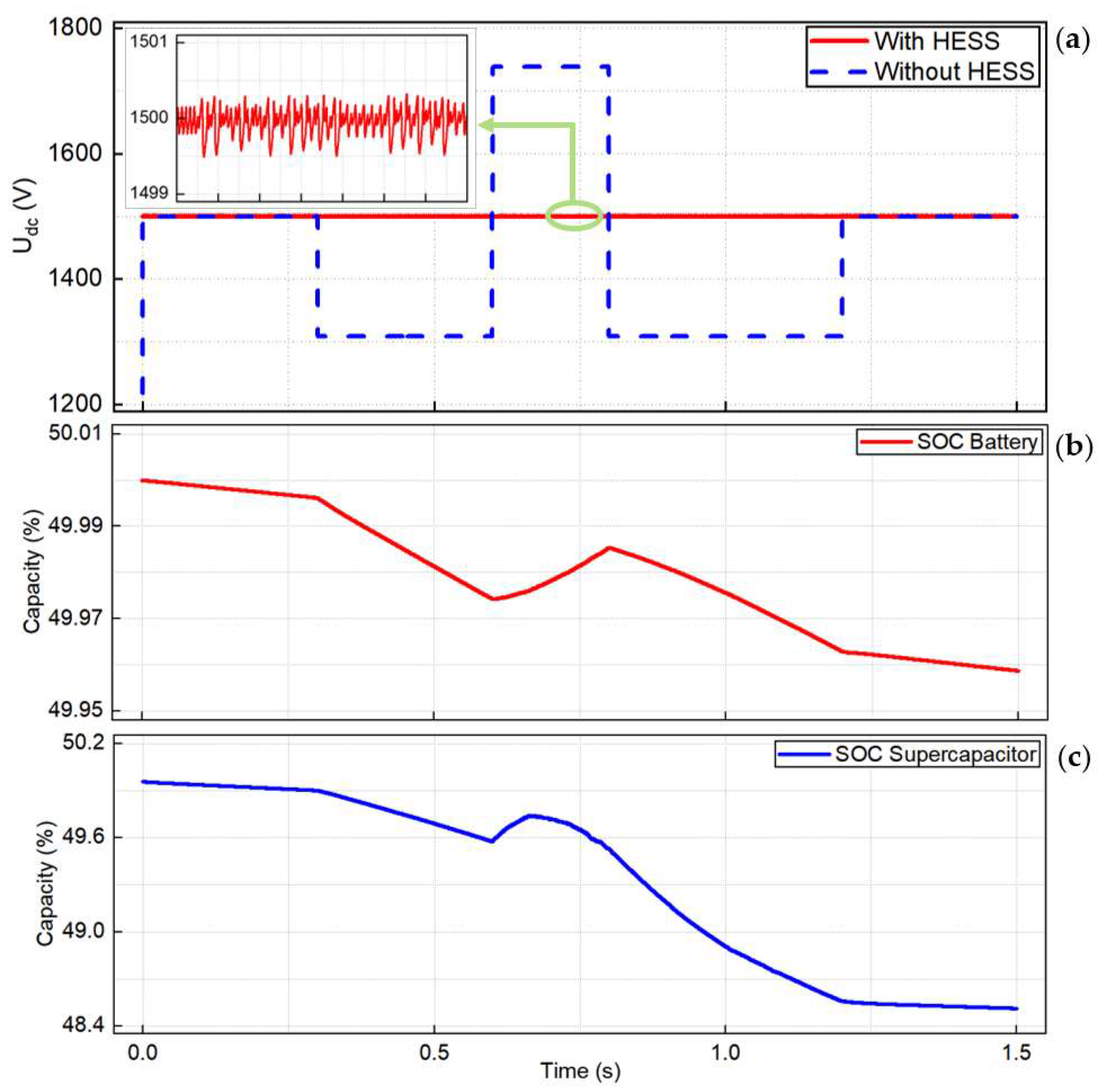
Case 3 multiple acceleration-braking: From 0 s to 0.3 s, the metro was in constant-speed operation. From 0.3 s to 0.6 s, the metro was accelerating. From 0.6 s to 0.8 s, the metro was braking. From 0.8 s to 1.2 s, the metro was accelerating. After 1.2 s, the metro entered the constant-speed operation.
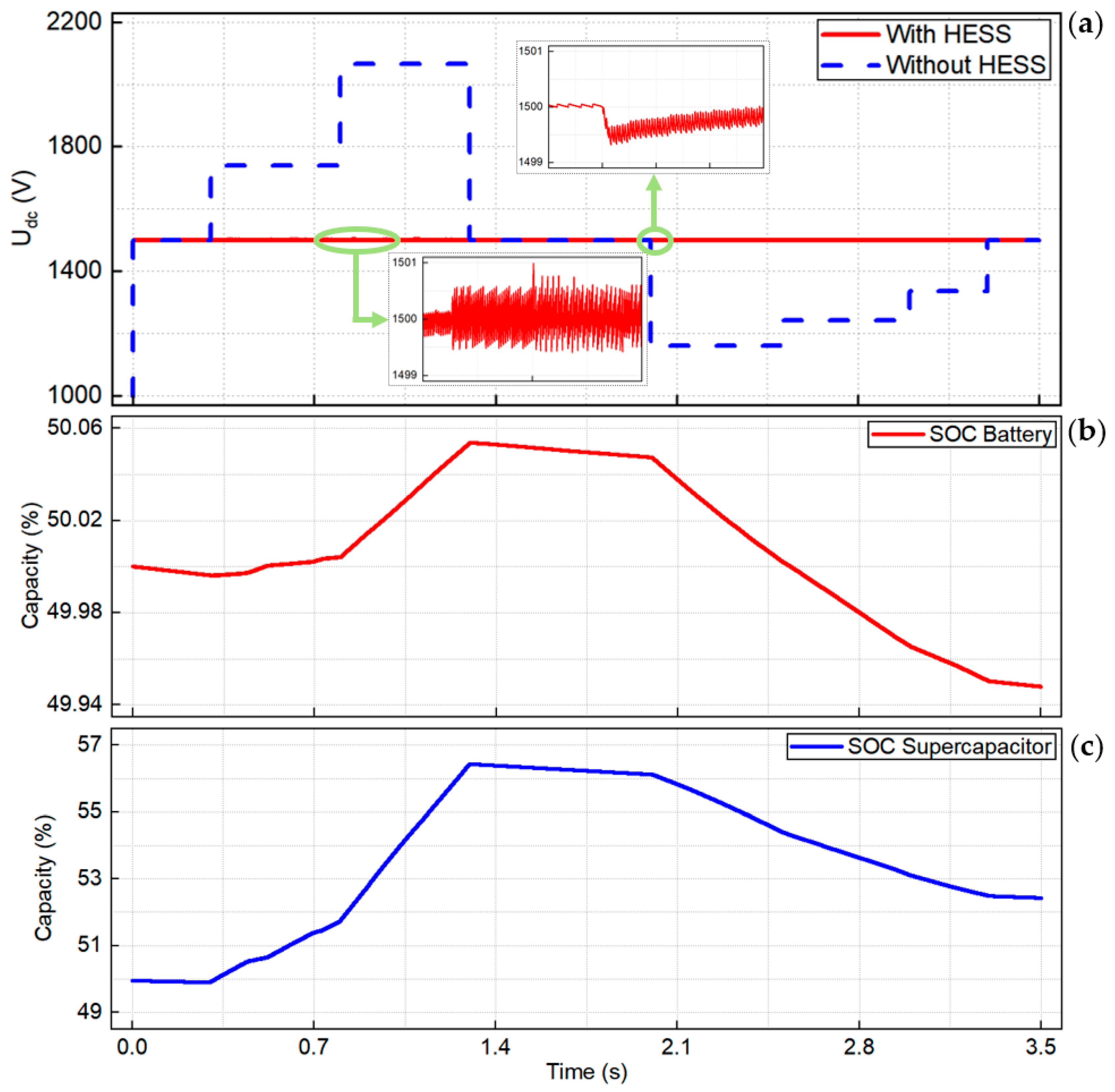
Case 4 two-metro simultaneous operation: From 0 s to 0.3 s, the two metros (Metro A and Metro B) were simultaneously running with a constant speed. From 0.3 s to 0.8 s, Metro A was braking, while Metro B was still running with a constant speed. From 0.8 s to 1.3 s, both the Metro A and Metro B were braking. From 1.3 s to 2 s, both the Metro A and Metro B were running with a constant speed. From 2 s to 2.5 s, both the Metro A and Metro B were accelerating. From 2.5 s to 3 s, Metro A was still accelerating, while Metro B was also accelerating but with a smaller power. From 3 s to 3.3 s, both Metro A and Metro B were accelerating with a smaller power. After 3.3 s, both Metro A and Metro B were again simultaneously running with a constant speed.
4.2. Case 1 Acceleration (Also with Comparison of Energy Storage Methods)
This case showed the advantages of HESS in dynamic response speed and voltage stability accuracy by comparing the effects of the single energy storage and the HESS. As shown in Figure 6a, when the metro started to accelerate at 0.5 s, the system without HESS could not provide such a large power instantaneously, causing a collapse of the DC bus voltage, which dropped to 1308.4 V. Under single energy storage, the DC bus voltage could be partly compensated, but the fluctuations were also obvious, as shown in Figure 6c,d. In contrast, after deploying HESS, the bus voltage was stabilised within a narrow range of 1499.6 V to 1500.6 V, as shown in Figure 6b.
Figure 6.
Acceleration: (a) Comparison of systems with and without HESS; (b) DC bus voltage with HESS; (c) DC bus voltage with single battery energy storage; (d) DC bus voltage with single supercapacitor energy storage.
4.3. Case 2 Braking
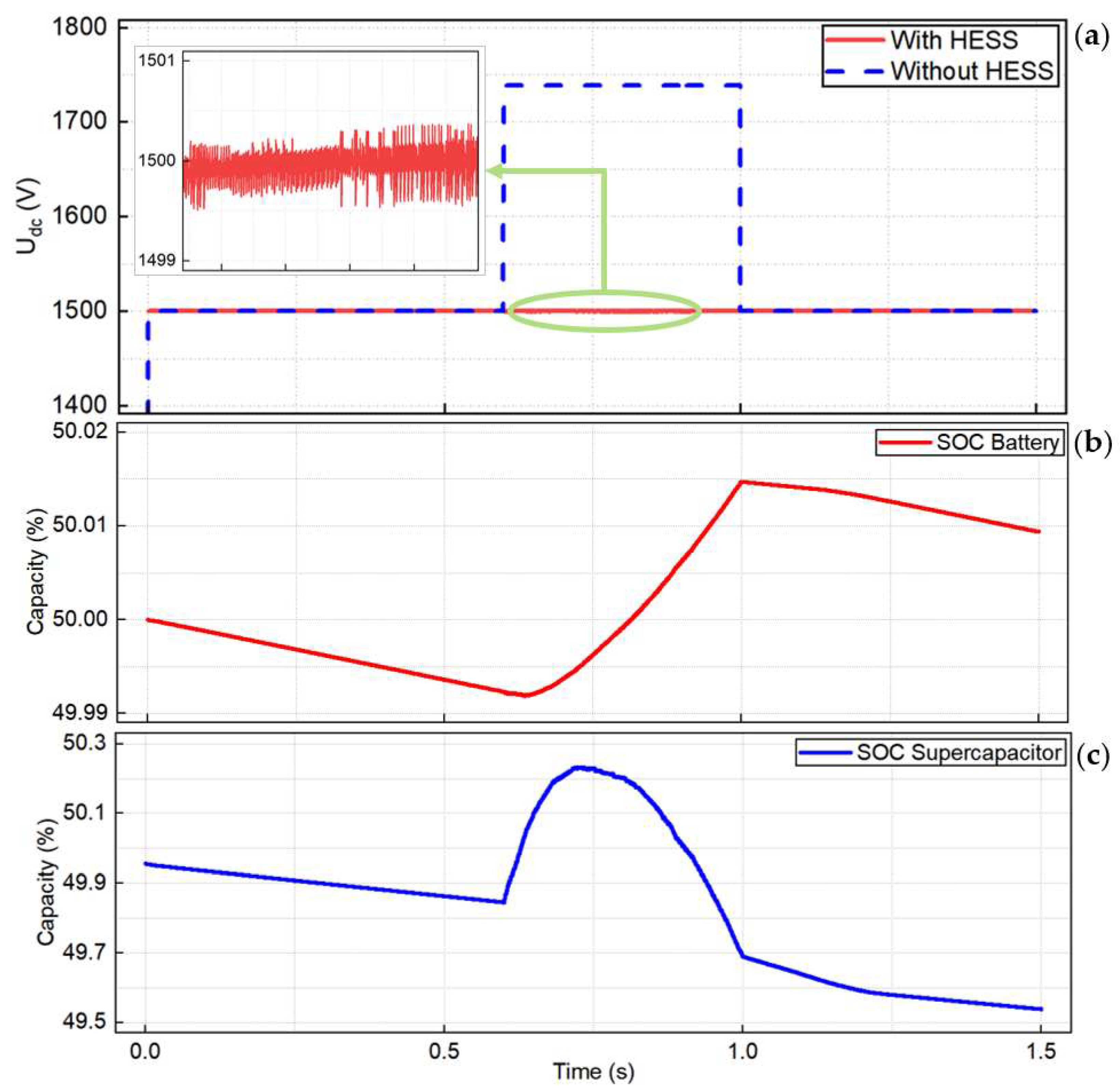
The regenerative braking process was shown in Figure 7a when the metro started to brake at 0.6 s. The system without HESS showed an overvoltage with a peak value of 1738.3 V, which could not be acceptable by the metro power system. After the proposed HESS was configured, the voltage was stabilised in the reasonable interval of 1499.5–1500.4 V, as shown in the zoom-in part of Figure 7a.
Figure 7.
Braking: (a) DC bus voltage; (b) SOC of battery; (c) SOC of supercapacitor.
The SOC variation curves shown in Figure 7b,c, revealed the energy management characteristics of the system. At the braking moment, the SOCs of the battery and the supercapacitor showed a coordinated rising trend, indicating that the energy was absorbed in an orderly manner. The coordination of the battery and the supercapacitor not only avoided energy loss but also ensured the efficient recovery of regenerative energy, which improved the safety and energy utilisation of the system under braking conditions.
4.4. Case 3 Multiple Acceleration-Braking
Under the multiple acceleration-braking conditions within a short period, the metro underwent continuous acceleration and braking in very short intervals, resulting in oscillations in power demand, which posed more challenges to the DC bus, as shown in Figure 8a. Simulation results indicated that after configuring the proposed HESS, the voltage was confined between 1499.5 and 1500.3 V (shown in the zoom-in part of Figure 8a), with a fluctuation amplitude of 0.05%. This demonstrated that the hybrid energy storage system could rapidly respond to frequent acceleration-braking switching and maintain voltage stability, exhibiting energy coordination capabilities under complex conditions. The HESS could effectively mitigate the impact of multiple power fluctuations on bus voltage, and support the safe operation of the system under frequent acceleration-braking conditions.
Figure 8.
Multiple acceleration-braking: (a) DC bus voltage; (b) SOC of battery; (c) SOC of supercapacitor.
4.5. Case 4 Two-Metro Simultaneous Operation
Under the two-metro multiple conditions, assuming the two metros almost simultaneously went for braking or acceleration, and the power superposition led to far greater impact than that in single-metro conditions, as shown in Figure 9a.
Figure 9.
Two-metro simultaneous operation: (a) DC bus voltage; (b) SOC of battery; (c) SOC of supercapacitor.
The simulation results showed that without HESS, the bus voltage fluctuated drastically between 1160 and 2067 V, with a maximum deviation of more than 500 V, which could exceed the safe margin, and the system was in an unstable state. However, after configuring HESS, the bus voltage was always stabilised between 1499.31 and 1500.99 V (shown in the zoom-in part of Figure 9a), with a fluctuation rate of 0.11%. The mechanism was that the supercapacitor quickly digested sharp power superposition by its transient absorption and release ability; while the battery took the role of smooth energy support and charge balancing, which made the whole system maintain voltage stability.
5. Comparative Study on the Proposed Battery-Supercapacitor HESS Using Different DC/DC Conversion Topologies for Metros
The results from the case study above indicated that the proposed battery-supercapacitor HESS was able to effectively suppress the bus voltage fluctuations under the conditions of metro acceleration, braking, and complex acceleration-braking, with a typical DC/DC Buck-Boost converter topology. It was meaningful to test if the battery-supercapacitor HESS could also be applied to other types of DC/DC conversion topologies for metros, and compare the performance with a typical Buck-Boost DC/DC converter topology.
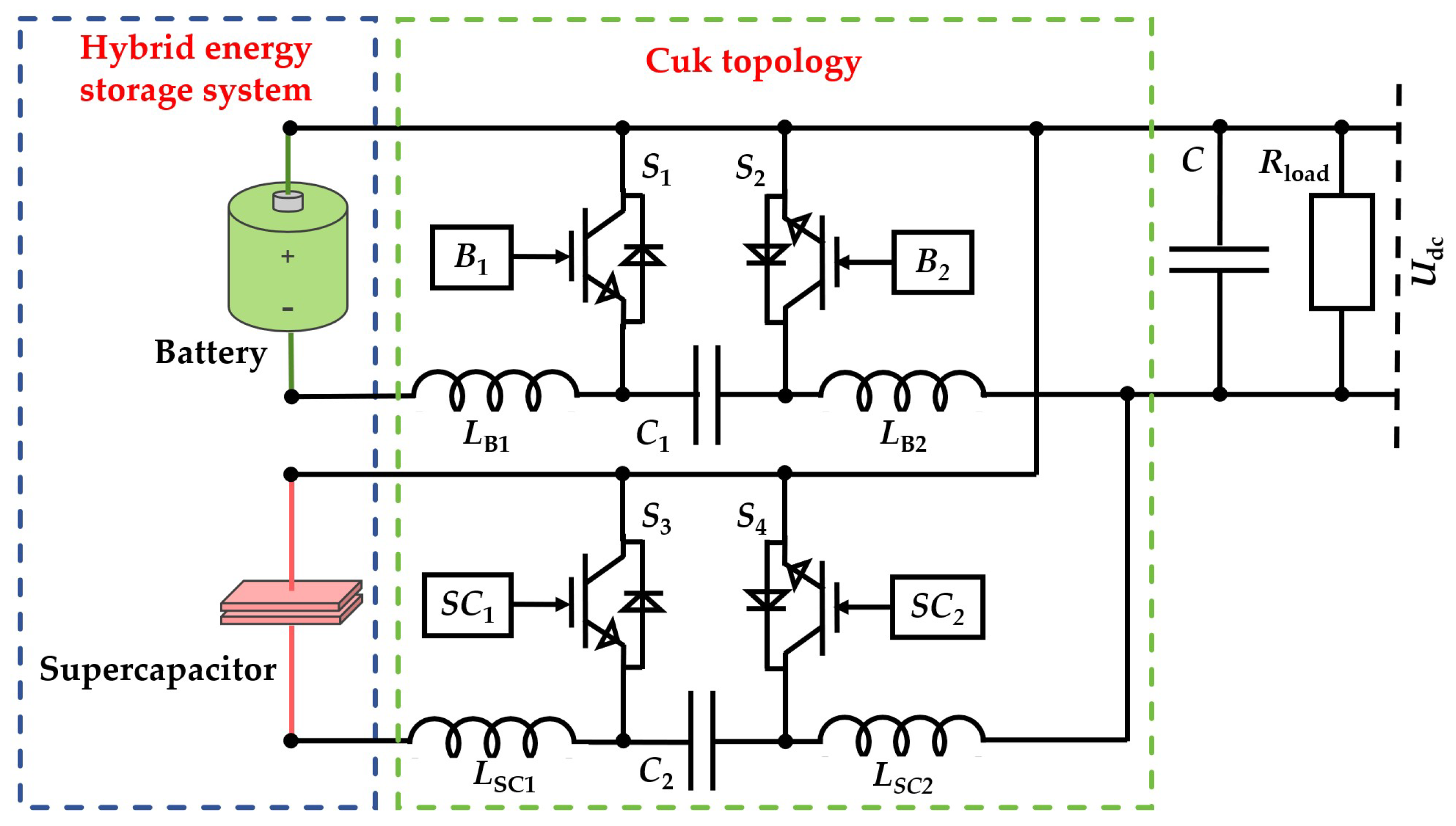
Figure 10 shows the proposed battery-supercapacitor HESS with a Cuk DC/DC converter topology for metros. Compared with the Buck-Boost DC/DC converter topology, the Cuk DC/DC converter topology has two inductors and one capacitor in the upper branch, and two switches in parallel. The same battery and supercapacitor were used in the Cuk DC/DC converter topology.
Figure 10.
Proposed battery-supercapacitor HESS with a Cuk DC/DC converter topology for metros, for comparison with a typical Buck-Boost DC/DC converter topology.
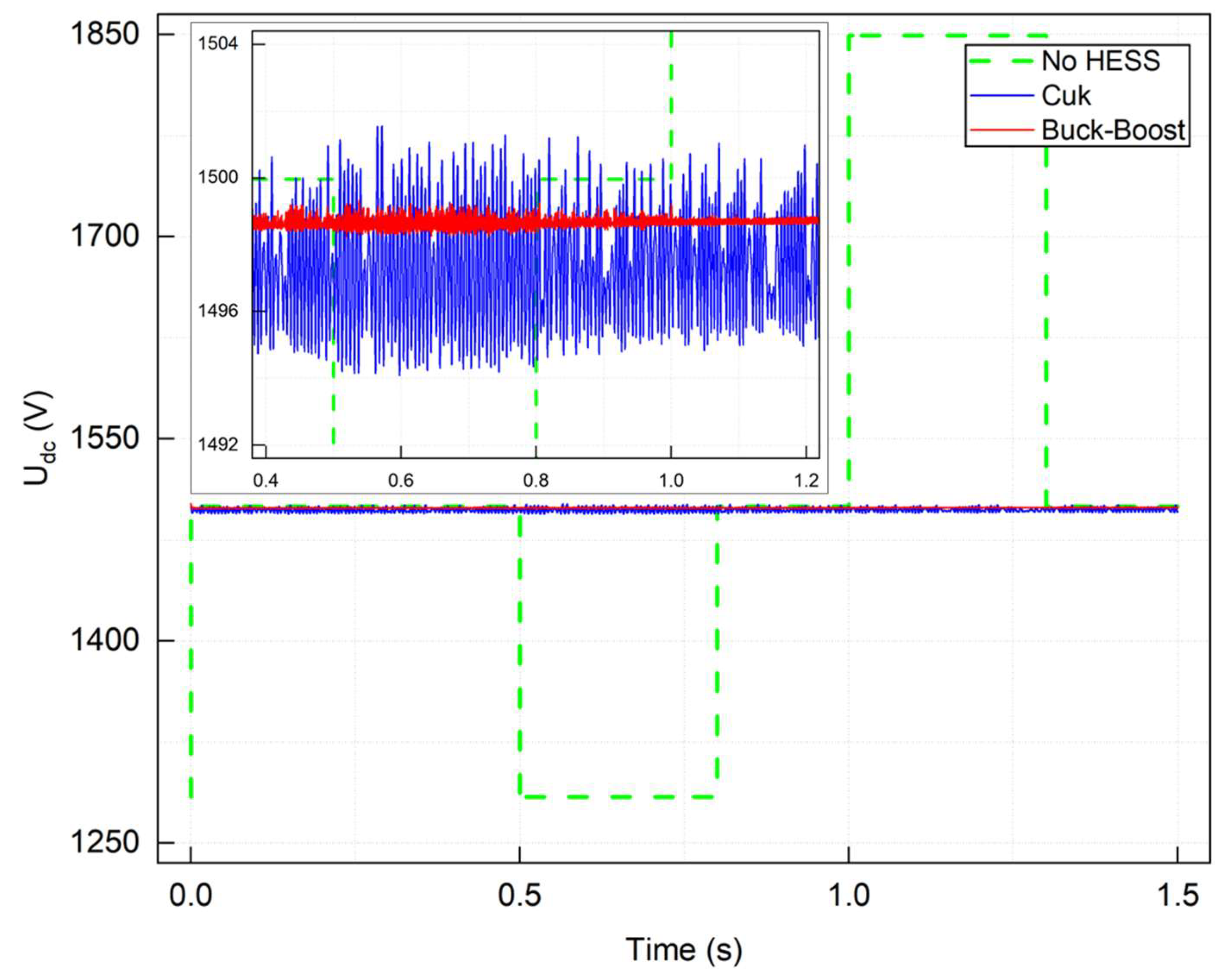
The simulation conditions were set. From 0 s to 0.5 s, the metro was in constant-speed operation. From 0.5 s to 0.8 s, the metro was accelerating. From 0.8 s to 1 s, the metro was in constant-speed operation. From 1 s to 1.3 s, the metro was braking. After 1.3 s, the metro re-entered the constant-speed operation. Figure 11 shows fluctuations in DC bus voltage with the proposed battery-supercapacitor HESS applied to a Cuk DC/DC converter topology, compared with a typical Buck-Boost DC/DC converter topology. For the case of the Cuk DC/DC converter topology, the maximum fluctuation was around 7 V, while for the case of the Buck-Boost DC/DC converter topology, the maximum fluctuation was around 0.8 V. It was apparent that the Buck-Boost DC/DC converter topology demonstrated better stability than the Cuk DC/DC converter topology, exhibiting smaller fluctuations and closer alignment with the bus voltage of 1500 V. In summary, the proposed battery-supercapacitor HESS with both topologies effectively maintained voltage stabilisation. However, the Buck-Boost DC/DC converter topology had superior performance.
Figure 11.
Fluctuations in DC bus voltage with the proposed battery-supercapacitor HESS applied to a Cuk DC/DC converter topology, compared with a typical Buck-Boost DC/DC converter topology.
6. Conclusions
This article proposed a novel battery-supercapacitor HESS to address the issue of bus voltage fluctuations in metro traction power systems under complex conditions, aiming to ensure power supply stability and energy efficiency. Modelling was conducted based on the short-station-distance operation conditions of Guangzhou Metro Line 4 to observe the effects of no energy storage, single mode energy storage systems, and the hybrid energy storage systems on DC bus voltage stability. Simulation results show that a single-mode energy storage system could not effectively stabilise voltage fluctuations, while the proposed battery-supercapacitor HESS could reduce the DC bus voltage fluctuation within 2 V under the metro conditions of acceleration, braking, frequent acceleration-braking and two-metro simultaneous operation. A comparative study was also performed on the proposed battery-supercapacitor HESS using a typical Buck-Boost DC/DC converter topology and a different Cuk DC/DC converter topology, and the fluctuations with the Buck-Boost DC/DC converter topology were smaller.
Some limitations, such as the model accuracy, would be solved by experimental tests in the on-site metro system. Future work can be carried out on battery degradation and thermal effects, particularly in long-term usage, as well as more detailed modelling of battery degradation considering thermal stress, Coulombic efficiency, and calendar ageing. In conclusion, this article offers a novel battery-supercapacitor HESS to stabilise the metro power system under complex acceleration and braking conditions, which establishes a theoretical and technical foundation for a hybrid energy storage system to be applied for urban rail transit.
Author Contributions
Conceptualisation, J.H., B.S. and L.F.; methodology, J.H., B.S. and L.F.; software, J.H., Y.C., M.L. and W.M.; validation, J.H., B.S. and L.F.; visualisation, J.H. and Y.Z.; writing—original draft preparation, J.H. and B.S.; writing—review and editing, B.S. and L.F.; supervision, B.S. and L.F.; project administration, B.S. All authors have read and agreed to the published version of the manuscript.
Funding
This work was supported in part by the National Natural Science Foundation of China under Grant No. 52472382, and the Fundamental Research Funds for the Central Universities.
Institutional Review Board Statement
Not applicable.
Informed Consent Statement
Not applicable.
Data Availability Statement
The data presented in this study are available on request from the corresponding author.
Conflicts of Interest
The authors declare no conflicts of interest.
Abbreviations
| AC | Alternating current |
| DC | Direct current |
| EDLCs | Electric Double-Layer Capacitors |
| HESS | Hybrid energy storage system |
| LIB | Lithium-Ion Battery |
| PWM | Pulse width modulation |
| SOC | State of charge |
References
- Lin, D.; Broere, W.; Cui, J. Metro systems and urban development: Impacts and implications. Tunn. Undergr. Space Technol. 2022, 125, 104509. [Google Scholar] [CrossRef]
- Zhu, Y.; Jiao, L.; Zhang, Y.; Wu, Y.; Huo, X. Sustainable development of urban metro system: Perspective of coordination between supply and demand. Int. J. Environ. Res. Public Health 2021, 18, 10349. [Google Scholar] [CrossRef] [PubMed]
- Cho, H.; Kim, J.; Jung, H.; Kim, H. Simultaneous DC Railway Power System Analysis Method Using Model-Based TPS. Appl. Sci. 2022, 12, 6929. [Google Scholar] [CrossRef]
- Zhang, D.; Jiang, J.; Zhang, L.; Zhou, Z.; Liu, Y.; Zhao, S. Voltage fluctuation suppression method for DC 1500V traction system based on flywheel energy storage system. In Proceedings of the 8th Renewable Power Generation Conference (RPG 2019), Shanghai, China, 24–25 October 2019; pp. 1–6. [Google Scholar]
- Zhao, F.; Zhu, X.; Chen, X.; Wang, Y. Regenerative Braking Energy Recovery System of Metro Train Based on Dual-Mode Power Management. Energy Eng. J. Assoc. Energy Eng. 2024, 121, 2585. [Google Scholar] [CrossRef]
- Zhao, L.; Liu, K.; Liu, D.; Jin, Z. Energy model based sensorless estimation method for operational temperature of braking resistor onboard metro vehicles. Railw. Sci. 2023, 2, 470–485. [Google Scholar] [CrossRef]
- Tian, Z.; Hillmansen, S.; Roberts, C.; Weston, P.; Zhao, N.; Chen, L.; Chen, M. Energy evaluation of the power network of a DC railway system with regenerating trains. IET Electr. Syst. Transp. 2016, 6, 41–49. [Google Scholar] [CrossRef]
- Fu, L.; Chen, Y.; Li, S.; Zhang, M.; Jiang, S.; Chen, X.; Shen, B. Hydrogen-electricity hybrid-energy system with superconducting-battery energy storage for urban rail transit: Design, case study, and techno-economic analysis. Appl. Energy 2026, 405, 127198. [Google Scholar] [CrossRef]
- Gabaldón, A.; Ruiz-Abellón, M.C.; Martínez, F.; Guillamón, A. Demand Management in Hybrid Locomotives Through Aggregated Models of Supercapacitors and Railway Units. Appl. Sci. 2025, 15, 2412. [Google Scholar] [CrossRef]
- Chirkin, V.G.; Khripach, N.A.; Petrichenko, D.A.; Papkin, B.A. A review of battery-supercapacitor hybrid energy storage system schemes for power systems applications. Int. J. Mech. Eng. Technol. 2017, 8, 699–707. [Google Scholar]
- Georgious, R.; Refaat, R.; Garcia, J.; Daoud, A.A. Review on energy storage systems in microgrids. Electronics 2021, 10, 2134. [Google Scholar] [CrossRef]
- Lin, K. A Control Strategy for Capacity Allocation of Hybrid Energy Storage System Based on Hierarchical Processing of Demand Power. arXiv 2020, arXiv:2010.01277. [Google Scholar] [CrossRef]
- Kim, Y.; Koh, J.; Xie, Q.; Wang, Y.; Chang, N.; Pedram, M. A scalable and flexible hybrid energy storage system design and implementation. J. Power Sources 2014, 255, 410–422. [Google Scholar] [CrossRef]
- Cheng, Q.; Xiang, C.; Zhu, Y.; Zhao, H. Power Fluctuation Suppression of Ship DC Microgrid Based on Variable Droop Control Strategy of Hybrid Energy Storage System. In Proceedings of the Annual Conference of China Electrotechnical Society, Beijing, China, 17–18 September 2022; pp. 826–833. [Google Scholar]
- Andújar Márquez, J.M.; Vivas Fernández, F.J.; Segura Manzano, F. A Complete Control-Oriented Model for Hydrogen Hybrid Renewable Microgrids with High-Voltage DC Bus Stabilized by Batteries and Supercapacitors. Appl. Sci. 2025, 15, 10810. [Google Scholar] [CrossRef]
- Li, S.; Shen, B.; Chen, Y.; Chen, X.; Fu, L. A real geographical case study on superconducting cables for high speed railway with electromagnetic and environmental analysis. Sci. Rep. 2025, 15, 42178. [Google Scholar] [CrossRef]
- Mutarraf, M.U.; Terriche, Y.; Niazi, K.A.K.; Vasquez, J.C.; Guerrero, J.M. Energy storage systems for shipboard microgrids—A review. Energies 2018, 11, 3492. [Google Scholar] [CrossRef]
- Kim, K.; An, J.; Park, K.; Roh, G.; Chun, K. Analysis of a Supercapacitor/Battery Hybrid Power System for a Bulk Carrier. Appl. Sci. 2019, 9, 1547. [Google Scholar] [CrossRef]
- Chen, Y.; Chen, X.; Fu, L.; Jiang, S.; Shen, B. Superconducting hydrogen-electricity multi-energy system for transportation hubs: Modeling, technical study and economic-environmental assessment. Appl. Energy 2025, 401, 126823. [Google Scholar] [CrossRef]
- Huang, K. Positive Rail Voltage Rise Behavior and Inhibition Analysis of Regenerative Braking of Medium–Low-Speed Maglev Train. Energies 2024, 17, 1782. [Google Scholar] [CrossRef]
- Rastegarzadeh, S.; Mahzoon, M.; Mohammadi, H. A novel modular designing for multi-ring flywheel rotor to optimize energy consumption in light metro trains. Energy 2020, 206, 118092. [Google Scholar] [CrossRef]
- Hossain, E.; Faruque, H.M.R.; Sunny, M.S.H.; Mohammad, N.; Nawar, N. A Comprehensive Review on Energy Storage Systems: Types, Comparison, Current Scenario, Applications, Barriers, and Potential Solutions, Policies, and Future Prospects. Energies 2020, 13, 3651. [Google Scholar] [CrossRef]
- Barrero, R.; Tackoen, X.; Van Mierlo, J. Improving energy efficiency in public transport: Stationary supercapacitor based Energy Storage Systems for a metro network. In Proceedings of the 2008 IEEE Vehicle Power and Propulsion Conference, Harbin, China, 3–5 September 2008. [Google Scholar]
- Lin, S.; Song, W.; Chen, M.; Feng, Z. Hybrid Energy Storage System and the Parameter Design for Metro Braking Energy Recovery. Urban Mass Transit 2020, 23, 75–79+83. [Google Scholar]
- Jafari Kaleybar, H.; Golnargesi, M.; Brenna, M.; Zaninelli, D. Hybrid energy storage system taking advantage of electric vehicle batteries for recovering regenerative braking energy in railway station. Energies 2023, 16, 5117. [Google Scholar] [CrossRef]
- Chen, R.; Yang, Y.; Jin, T. A hierarchical coordinated control strategy based on multi-port energy router of urban rail transit. Prot. Control. Mod. Power Syst. 2022, 7, 1–12. [Google Scholar] [CrossRef]
- Manoharan, P.; Chandrasekaran, K.; Chandran, R.; Ravichandran, S.; Mohammad, S.; Jangir, P. An effective strategy for unit commitment of microgrid power systems integrated with renewable energy sources including effects of battery degradation and uncertainties. Environ. Sci. Pollut. Res. 2024, 31, 11037–11080. [Google Scholar] [CrossRef]
Disclaimer/Publisher’s Note: The statements, opinions and data contained in all publications are solely those of the individual author(s) and contributor(s) and not of MDPI and/or the editor(s). MDPI and/or the editor(s) disclaim responsibility for any injury to people or property resulting from any ideas, methods, instructions or products referred to in the content. |
© 2025 by the authors. Licensee MDPI, Basel, Switzerland. This article is an open access article distributed under the terms and conditions of the Creative Commons Attribution (CC BY) license (https://creativecommons.org/licenses/by/4.0/).