Confirmation of the POLA Index and Its Association with COVID-19 and Influenza Incidence, Gut Microbiota, and Mucosal Immunity Markers in Young Women: A Pilot Cohort Study

 ,
,  ,
,  , , , , , and
Abstract
1. Introduction
2. Materials and Methods
2.1. Study Design and Participants
2.2. Anthropometry and Body Composition
2.3. Physical Activity Monitoring
2.4. Dietary Assessment
2.5. Gut Microbiota (Culture-Based)
2.6. Fecal Markers of Intestinal Inflammation and Immunity
2.7. Short-Chain Fatty Acids by High-Performance Liquid Chromatography
2.8. POLA Index Calculation
2.9. Statistical Analysis
2.10. Follow-Up Outcome Ascertainment
3. Results
3.1. Characteristics of Participants
3.2. POLA Index and Risk of COVID-19 or Influenza
3.3. Gut Microbiota
3.4. Mucosal Immunity Markers
3.5. Fecal Short-Chain Fatty Acids
4. Discussion
4.1. POLA Index and Incidence of COVID-19 or Influenza
4.2. Gut Microbiota
4.3. Markers of Intestinal Inflammation and Immunity
4.4. Short-Chain Fatty Acids
4.5. Strengths and Limitations
4.6. Implications and Future Directions
5. Conclusions
Author Contributions
Funding
Institutional Review Board Statement
Informed Consent Statement
Data Availability Statement
Conflicts of Interest
Abbreviations
| BIM | Beneficial Immunomodulation (POLA category ≤ 5) |
| CFU | Colony Forming Unit |
| CI | Confidence Interval |
| COVID-19 | Coronavirus Disease 2019 |
| DII | Dietary Inflammation Index |
| HBD-2 | Human Beta-Defensin 2 |
| HPLC | High-Performance Liquid Chromatography |
| HUBIM | Highly Unbeneficial Immunomodulation (POLA category ≥ 12) |
| OR | Odds Ratio |
| PAL | Physical Activity Level |
| SCFA | Short-Chain Fatty Acid |
| sIgA | Secretory Immunoglobulin A |
| TEE | Total Energy Expenditure |
| UBIM | Unbeneficial Immunomodulation (POLA category 6–11) |
References
- World Health Organization. Rolling Updates on Coronavirus Disease (COVID-19). Available online: https://www.who.int/emergencies/diseases/novel-coronavirus-2019/events-as-they-happen (accessed on 23 October 2024).[Green Version]
- Ioannidis, J.P.A. Reconciling estimates of global spread and infection fatality rates of COVID-19: An overview of system-atic evaluations. Eur. J. Clin. Investig. 2021, 51, e13554. [Google Scholar] [CrossRef] [PubMed] [PubMed Central]
- Pezzullo, A.M.; Axfors, C.; Contopoulos-Ioannidis, D.G.; Apostolatos, A.; Ioannidis, J.P. Age-stratified infection fatality rate of COVID-19 in the non-elderly population. Environ. Res. 2023, 216 Pt 3, 114655. [Google Scholar] [CrossRef] [PubMed] [PubMed Central]
- Isath, A.; Malik, A.H.; Goel, A.; Gupta, R.; Shrivastav, R.; Bandyopadhyay, D. Nationwide analysis of the outcomes and mortality of hospitalized COVID-19 patients. Curr. Probl. Cardiol. 2023, 48, 101440. [Google Scholar] [CrossRef]
- Geyer, R.E.; Kotnik, J.H.; Lyon, V.; Brandstetter, E.; Suchsland, M.Z.; Han, P.D.; Graham, C.; Ilcisin, M.; E Kim, A.; Chu, H.Y.; et al. Diagnostic Accuracy of an At-Home, Rapid Self-test for Influenza: Prospective Comparative Accuracy Study. JMIR Public Health Surveill. 2022, 8, e28268. [Google Scholar] [CrossRef] [PubMed] [PubMed Central]
- Xu, K.; Huo, X.; Zu, R.; Wang, S.; Qin, Y.; Dai, Q.; Qi, X.; Yu, H.; Chen, L.; Hong, L.; et al. Etiological characteristics of influenza-like illness in Jiangsu province from 2012 to 2016. J. Biomed. Res. 2019, 33, 398–407. [Google Scholar] [CrossRef] [PubMed Central]
- Ebell, M.H.; Rahmatullah, I.; Hulme, C.; Buhr, M.; Kotnik, J.H.; Geyer, R.; Thompson, M.; Lutz, B. Accuracy of individual signs and symptoms and case definitions for the diagnosis of influenza in different age groups: A systematic review with meta-analysis. BMJ Open 2025, 15, e067574. [Google Scholar] [CrossRef] [PubMed] [PubMed Central]
- Siddiqui, H.K.; Mehra, M.R. COVID-19 illness in native and immunosuppressed states: A clinical-therapeutic staging proposal. J. Heart Lung Transplant. 2020, 39, 405–407. [Google Scholar] [CrossRef] [PubMed]
- Clemente-Suárez, V.J.; Bustamante-Sanchez, Á.; Tornero-Aguilera, J.F.; Ruisoto, P.; Mielgo-Ayuso, J. Inflammation in COVID-19 and the effects of non-pharmacological interventions during the pandemic: A review. Int. J. Mol. Sci. 2022, 23, 15584. [Google Scholar] [CrossRef]
- Tosti, V.; Bertozzi, B.; Fontana, L. Health benefits of the Mediterranean diet: Metabolic and molecular mechanisms. J. Gerontol. A Biol. Sci. Med. Sci. 2018, 73, 318–326. [Google Scholar] [CrossRef]
- Ecarnot, F.; Maggi, S. The impact of the Mediterranean diet on immune function in older adults. Aging Clin. Exp. Res. 2024, 36, 117. [Google Scholar] [CrossRef] [PubMed]
- Jagielski, P.; Łuszczki, E.; Wnęk, D.; Micek, A.; Bolesławska, I.; Piórecka, B.; Kawalec, P. Associations of Nutritional Behavior and Gut Microbiota with the Risk of COVID-19 in Healthy Young Adults in Poland. Nutrients 2022, 14, 350. [Google Scholar] [CrossRef]
- Greene, M.W.; Roberts, A.P.; Frugé, A.D. Negative association between Mediterranean diet adherence and COVID-19 cases and related deaths in Spain and 23 OECD countries: An ecological study. Front. Nutr. 2021, 8, 591964. [Google Scholar] [CrossRef]
- Angelidi, A.M.; Kokkinos, A.; Katechaki, E.; Ros, E.; Mantzoros, C.S. Mediterranean diet as a nutritional approach for COVID-19. Metabolism 2021, 114, 154407. [Google Scholar] [CrossRef] [PubMed]
- Halim, C.; Howen, M.; Fitrisubroto, A.A.N.B.; Pratama, T.; Harahap, I.R.; Ganesh, L.J.; Siahaan, A.M.P. Relevance of Mediterranean diet as a nutritional strategy in diminishing COVID-19 risk: A systematic review. PLoS ONE 2024, 19, e0301564. [Google Scholar] [CrossRef]
- Shivappa, N.; Steck, S.E.; Hurley, T.G.; Hussey, J.R.; Hébert, J.R. Designing and developing a literature-derived, population-based dietary inflammatory index. Public Health Nutr. 2014, 17, 1689–1696. [Google Scholar] [CrossRef]
- Jagielski, P.; Wnęk, D.; Łuszczki, E.; Bolesławska, I.; Micek, A.; Kozioł-Kozakowska, A.; Piórecka, B.; Koczur, K.; Jankowska, K.; Gaździńska, A.; et al. Proposition of a new POLA index to assess the immunomodulatory properties of the diet and its relationship with the gut microbiota, using the example of the incidence of COVID-19 in a group of people without comorbidities. Nutrients 2022, 14, 4227. [Google Scholar] [CrossRef]
- Rychlik; Stoś, K.; Woźniak, A.; Mojska, H. (Eds.) Nutrition Standards for the Polish Population and Their Applied; NIPH–NIH: Warszawa, Poland, 2024. (In Polish) [Google Scholar]
- Dobrowolska, J.; Zagrodzki, P.; Woźniakiewicz, M.; Woźniakiewicz, A.; Zwolińska, M.; Winnicka, D.; Paśko, P. Procedure optimization for extracting short-chain fatty acids from human faeces. J. Pharm. Biomed. Anal. 2016, 124, 337–340. [Google Scholar] [CrossRef] [PubMed]
- Dobrowolska-Iwanek, J.; Lauterbach, R.; Huras, H.; Paśko, P.; Prochownik, E.; Woźniakiewicz, M.; Chrząszcz, S.; Zagrodzki, P. HPLC-DAD method for the quantitative determination of short-chain fatty acids in meconium samples. Microchem. J. 2020, 155, 104671. [Google Scholar] [CrossRef]
- Hao, X.; Li, S.; Yang, Y.; Dai, H.; Yan, Y.; Li, D. Association of dietary inflammatory index and the SARS-CoV-2 infection incidence, severity and mortality of COVID-19: A systematic review and dose-response meta-analysis. Nutr. J. 2024, 23, 21. [Google Scholar] [CrossRef] [PubMed]
- Aghajani, M.; Wong, A.; Azimi, M.; Harijani, S.M. Association between dietary antioxidant quality score and severity of coronavirus infection: A case-control study. Front. Nutr. 2023, 10, 1174113. [Google Scholar]
- Strokach, A.; Zoruk, P.; Boldyreva, D.; Morozov, M.; Olekhnovich, E.; Veselovsky, V.; Babenko, V.; Selezneva, O.; Zakharevich, N.; Larin, A. Comparative evaluation of sequencing technologies and primer sets for mouse gut microbiota profiling. Front. Microbiol. 2025, 16, 1584359. [Google Scholar] [CrossRef]
- Porcari, S.; Mullish, B.H.; Asnicar, F.; Ng, S.C.; Zhao, L.; Hansen, R.; O’TOole, P.W.; Raes, J.; Hold, G.; Putignani, L.; et al. International consensus statement on microbiome testing in clinical practice. Lancet Gastroenterol. Hepatol. 2025, 10, 154–167. [Google Scholar] [CrossRef]
- Pietrzak, B.; Tomela, K.; Olejnik-Schmidt, A.; Mackiewicz, A.; Schmidt, M. Secretory IgA in intestinal mucosal secretions as an adaptive barrier against microbial cells. Int. J. Mol. Sci. 2020, 21, 9254. [Google Scholar] [CrossRef]
- Li, Y.; Jin, L.; Chen, T. The effects of secretory IgA in the mucosal immune system. Biomed. Res. Int. 2020, 2020, 2032057. [Google Scholar] [CrossRef]
- Profir, M.; Enache, R.M.; Roşu, O.A.; Pavelescu, L.A.; Creţoiu, S.M.; Gaspar, B.S. Malnutrition and its influence on gut sIgA–microbiota dynamics. Biomedicines 2025, 13, 179. [Google Scholar] [CrossRef]
- Han, X.; Guo, J.; Qin, Y.; Huang, W.; You, Y.; Zhan, J. Dietary regulation of the SIgA–gut microbiota interaction. Crit. Rev. Food Sci. Nutr. 2022, 63, 6379–6392. [Google Scholar] [CrossRef] [PubMed]
- Kumar, N.; Arthur, C.P.; Ciferri, C.; Matsumoto, M.L. Structure of the secretory immunoglobulin A core. Science 2020, 367, 1008–1014. [Google Scholar] [CrossRef] [PubMed]
- Hoces, D.; Arnoldini, M.; Diard, M.; Loverdo, C.; Slack, E. Growing, evolving and sticking in a flowing environment: Understanding IgA interactions with bacteria in the gut. Immunology 2020, 159, 52–62. [Google Scholar] [CrossRef]
- Fernández-Veledo, S.; Grau-Bové, C.; Notararigo, S.; Huber-Ruano, I. The role of microbial succinate in the pathophysiology of inflammatory bowel disease: Mechanisms and therapeutic potential. Curr. Opin. Microbiol. 2025, 85, 102599. [Google Scholar] [CrossRef]
- Wei, Y.H.; Ma, X.; Zhao, J.C.; Wang, X.Q.; Gao, C.Q. Succinate metabolism and its regulation of host-microbe interactions. Gut Microbes 2023, 15, 2190300. [Google Scholar] [CrossRef] [PubMed]


| Variable | BIM n = 13 | UBIM + HUBIM n = 38 | Student’s t-Test | |||
|---|---|---|---|---|---|---|
| ± SD | ± SD | p-Value | ||||
| Age [years] | 33.9 ± 5.0 | 35.4 ± 5.8 | 0.3886 | |||
| Body weight [kg] | 58.8 ± 5.7 | 63.3 ± 7.5 | 0.0578 | |||
| Height [cm] | 165.8 ± 5 | 166.9 ± 6.2 | 0.5567 | |||
| BMI [kg/m2] | 21.3 ± 1.8 | 22.7 ± 2.5 | 0.0836 | |||
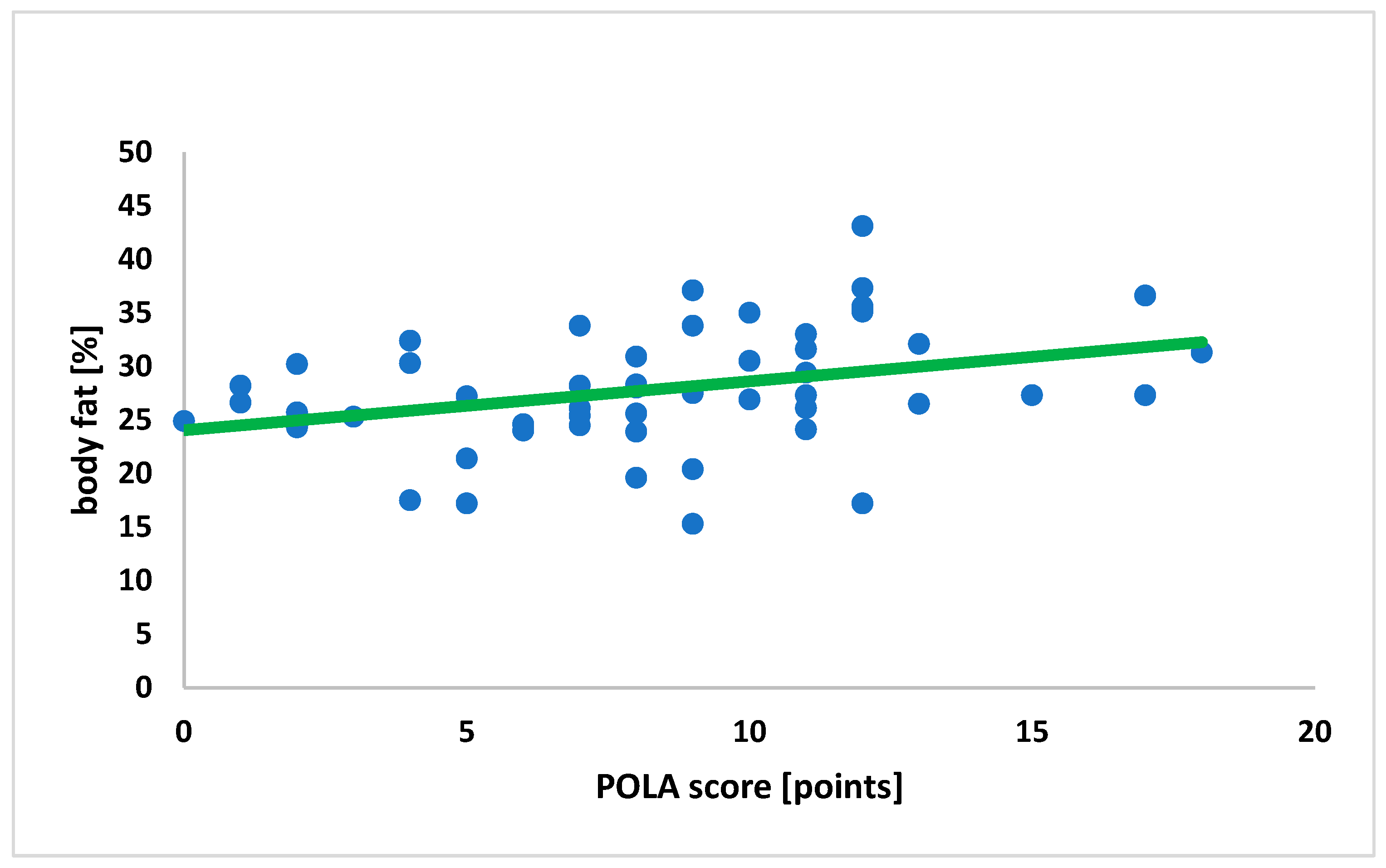
| Body fat [%] | 25.5 ± 4.6 | 28.7 ± 5.8 | 0.0539 | |||
| TEE [kcal] | 2086.7 ± 315.8 | 2098.8 ± 227.3 | 0.9003 | |||
| PAL | 1.53 ± 0.2 | 1.50 ± 0.14 | 0.5748 | |||
| Sleep duration [h] | 7:42 ± 0:30 | 7:31 ± 0:51 | 0.3497 | |||
| Steps | 14,765 ± 4554 | 13,161 ± 3944 | 0.2717 | |||
| POLA score [points] | 2.92 ± 1.71 | 10.2 ± 3.0 | <0.0001 | |||
| Variable | Category | n | % | n | % | Chi2 p-value |
| Diet type | Traditional | 8 | 61.5 | 28 | 73.7 | 0.4068 |
| Vegetarian | 5 | 38.5 | 10 | 26.3 | ||
| BMI category | Normal body weight | 13 | 100 | 30 | 78.9 | 0.0958 |
| Overweight | 0 | 0 | 8 | 21.1 | ||
| Marital status | Single/divorced | 9 | 69.2 | 15 | 39.5 | 0.1760 |
| Married/cohabiting | 4 | 30.8 | 23 | 60.5 | ||
| Body fat category | Underfat | 3 | 23.1 | 4 | 10.5 | 0.0904 |
| Normal | 10 | 76.9 | 24 | 63.2 | ||
| Overfat | 0 | 0.0 | 10 | 26.3 | ||
| Smoking status | No | 13 | 100 | 32 | 84.2 | 0.1272 |
| Yes | 0 | 0 | 6 | 15.8 | ||
| Education level | Secondary | 0 | 0 | 2 | 5.3 | 0.3987 |
| Higher | 13 | 100 | 36 | 94.7 | ||
| Self-rated physical activity (leisure) | Low | 3 | 23.1 | 9 | 23.7 | 0.1152 |
| Moderate | 4 | 30.8 | 22 | 57.9 | ||
| High | 6 | 46.2 | 7 | 18.4 | ||
| Variable | BIM n = 13 | UBIM + HUBIM n = 38 | U Mann–Whitney Test |
|---|---|---|---|
| Me (Q1–Q3) | Me (Q1–Q3) | p–Value | |
| Water (% of adequate intake) | 128.3 (121.5–181.3) | 119.9 (98.2–144.6) | 0.0631 |
| Total protein | 127.1 (103.6–153.8) | 116.4 (100–135.3) | 0.2520 |
| Total fat | 103.4 (92.1–118.4) | 85 (69.1–97.7) | 0.0038 |
| Fats Total saturated | 190.2 (164.8–206.6) | 161 (135.9–209) | 0.1476 |
| Linoleic acid LA (C18:2) | 114.1 (100.3–123.9) | 76.2 (56.9–93.8) | 0.0015 |
| α-Linolenic acid ALA (C18:3) | 134.3 (118.1–173.4) | 91.7 (76.9–143.6) | 0.0078 |
| Assimilable carbohydrates | 210.6 (192.9–231.2) | 185 (155.2–203.2) | 0.0196 |
| Dietary fiber | 126.8 (113–136.4) | 79.6 (72.7–93.3) | <0.0001 |
| Potassium | 110.6 (98.3–134.9) | 90.3 (75.9–103.2) | 0.0023 |
| Calcium | 98.4 (64.9–106.3) | 79.3 (61.2–90.8) | 0.0601 |
| Magnesium | 132.6 (123.5–170.5) | 103.5 (90.5–117) | <0.0001 |
| Iron | 102.5 (89.6–122) | 70.4 (61.4–75.6) | <0.0001 |
| Zinc | 149.5 (122.9–172.3) | 117.1 (99.2–126.1) | 0.0019 |
| Copper | 212.6 (189.5–260.7) | 150.8 (133.3–163.4) | <0.0001 |
| Manganese | 442.4 (364.3–475.2) | 273.4 (231.1–354) | 0.0001 |
| Vitamin A | 267.9 (203–307.5) | 140.5 (118.3–189.5) | 0.0003 |
| Vitamin E (alpha-tocopherol equivalent) | 182.6 (144.2–266.9) | 127.3 (103.1–146.1) | 0.0001 |
| Thiamin | 131.3 (115.5–195.2) | 96.3 (76.7–110.8) | 0.0003 |
| Riboflavin | 190.6 (165.6–242.7) | 141.7 (118.4–164.1) | 0.0021 |
| Niacin | 138.6 (113.2–192.6) | 115.6 (88.1–155.5) | 0.0800 |
| Vitamin B6 | 244.6 (150.9–316.9) | 125.8 (111.7–148.9) | 0.0002 |
| Folates | 115 (105.3–123.9) | 79 (65.8–87.5) | <0.0001 |
| Vitamin B12 | 231.9 (163.7–506.9) | 122.8 (93.7–172.6) | 0.0065 |
| Vitamin C | 228.6 (189.4–334.1) | 139.9 (92.1–233.6) | 0.0146 |
| Vitamin D | 201.3 (35.7–311.6) | 26.7 (16.1–92.6) | 0.0246 |
| Variable | BIM n = 13 | UBIM + HUBIM n = 38 | U Mann–Whitney Test | |||
|---|---|---|---|---|---|---|
| Me (Q1–Q3) | Me (Q1–Q3) | p-Value | ||||
| Groats and rice [g/day] | 14.5 (2.2–28.2) | 9 (1.6–20.2) | 0.6490 | |||
| Seeds [g/day] | 3.3 (1.7–11.4) | 0.8 (0–3.1) | 0.0110 | |||
| Nuts [g/day] | 18.3 (2.5–22.8) | 11.5 (2.2–20.2) | 0.4109 | |||
| Seeds and nuts [g/day] | 26.1 (15.4–36.8) | 12.5 (3.8–23.1) | 0.0743 | |||
| Fruit [g/day] | 242.9 (177.6–332.1) | 199.7 (119–281.1) | 0.1197 | |||
| Vegetables [g/day] | 439 (360.5–489.3) | 308.1 (221.2–376.1) | 0.0033 | |||
| Total vegetables and fruit (in market products) [g/day] | 663.4 (622.7–807) | 474 (391.5–639.3) | 0.0019 | |||
| Legumes [g/day] | 5.9 (0–45.5) | 4 (0–10.7) | 0.1980 | |||
| Variable | Category | n | % | n | % | Chi2 p |
| Fruit and vegetables | <400 g/day | 0 | 0.0 | 10 | 26.3 | 0.0001 |
| 400–<600 g/day | 1 | 7.7 | 15 | 39.5 | ||
| ≥600 g/day | 12 | 92.3 | 13 | 34.2 | ||
| Nuts | 10 g and more per day | 9 | 69.2 | 21 | 55.3 | 0.2918 |
| Up to 10 g per day | 4 | 30.8 | 17 | 44.7 | ||
| Model | OR (95% CI) | AR (95% CI) | ||
|---|---|---|---|---|
| POLA Index | BIM | UBIM + HUBIM | BIM | UBIM + HUBIM |
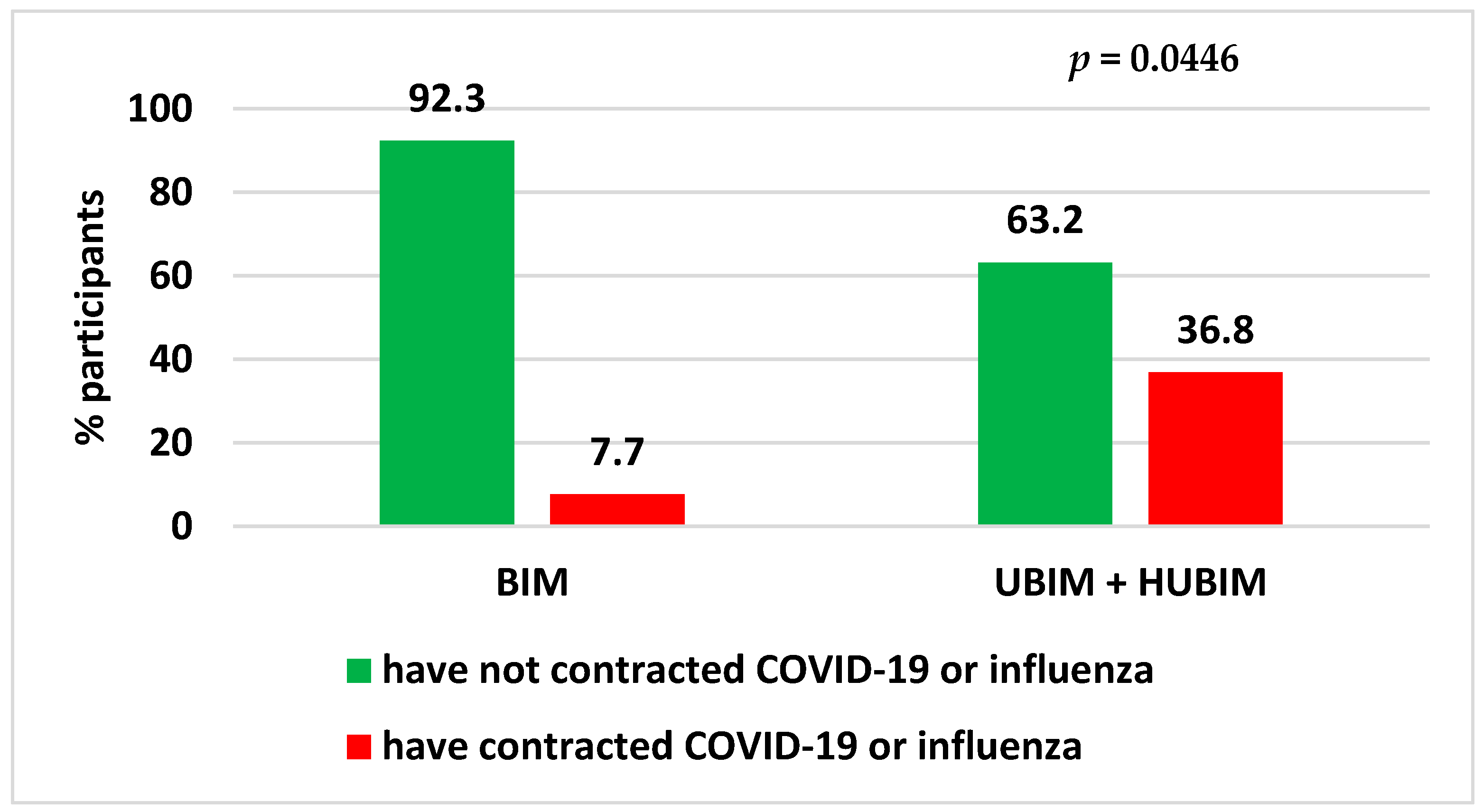
| Model 1 a | 1 (ref.) | 7.00 (1.18; 134.41) | 7.7% (1.1%, 39.1%) | 36.8% (23.2%, 53.0%) |
| Model 2 b | 1 (ref.) | 6.13 (0.84; 129.42) | 8.3% (0.8%, 51.9%) | 35.7% (14.5%, 64.5%) |
| Model 3 c | 1 (ref.) | 6.53 (1.02; 129.85) | 12.3% (1.4%, 58.1%) | 47.9% (26.1%, 70.6%) |
| Variable | BIM n = 13 | UBIM + HUBIM n = 38 | p-Value |
|---|---|---|---|
| Me (Q1–Q3) | Me (Q1–Q3) | ||
| Calprotectin [µg/g] | 9.07 (8.00–13.71) | 12.29 (6.7–24.01) | 0.2798 |
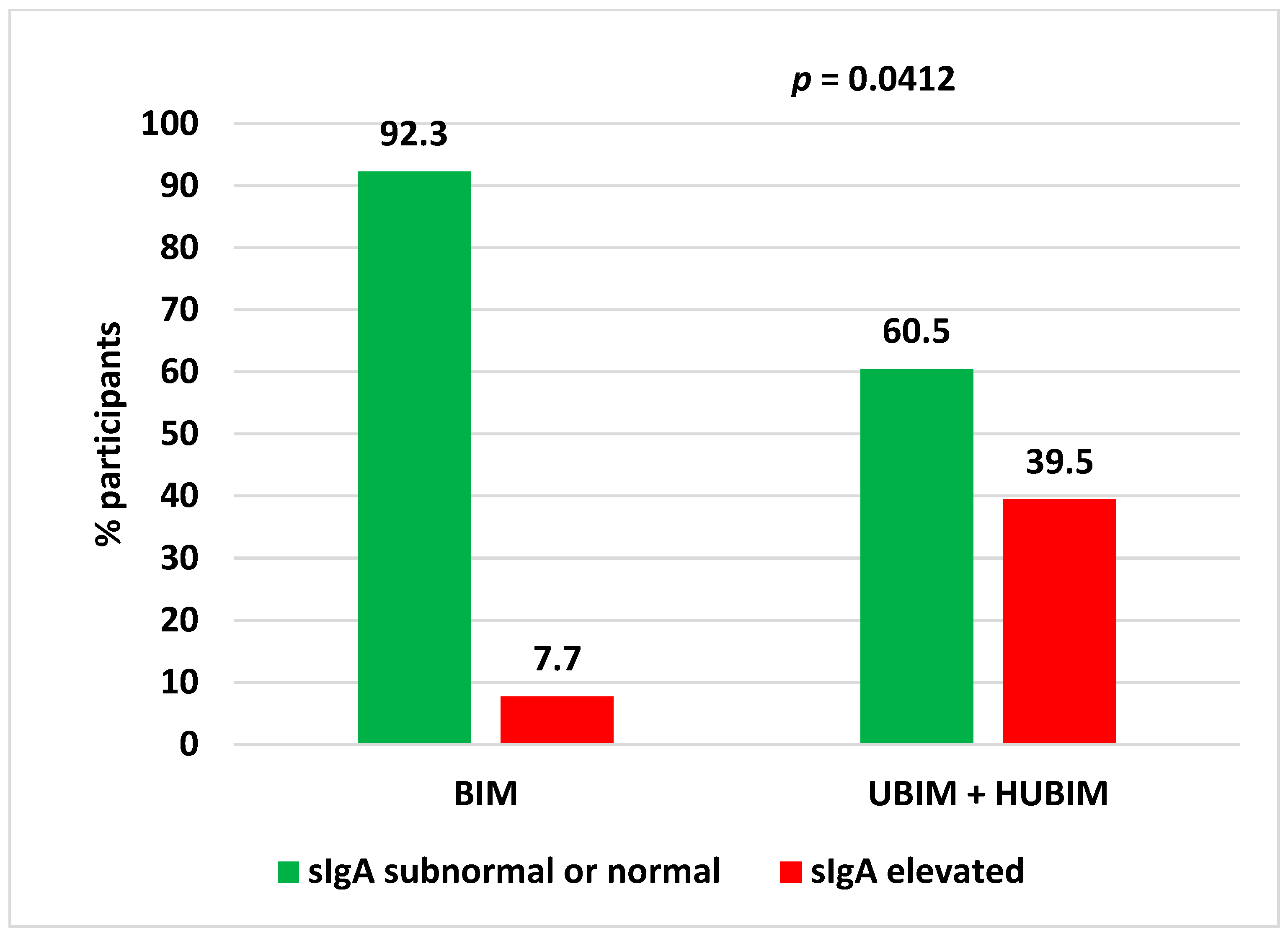
| sIgA [µg/g] | 1014 (349–1235) | 1640 (1118–2990) | 0.0125 |
| β-defensin [ng/mL] | 39.24 (13.88–88.21) | 37.21 (19.53–128.06) | 0.5890 |
| Variable | BIM n = 13 | UBIM + HUBIM n = 38 | p-Value |
|---|---|---|---|
| Me (Q1–Q3) | Me (Q1–Q3) | ||
| Acetic acid | 177.44 (121.5–220.0) | 168.98 (142.13–209.98) | 0.8121 |
| Succinic acid | 3.27 (1.26–3.81) | 4.32 (2.49–19.24) | 0.0422 |
| Propionic acid | 92.21 (59.47–113.0) | 81.93 (63.28–100.83) | 0.8968 |
| Butyric acid | 3.25 (2.59–4.16) | 3.27 (2.15–5.91) | 0.9223 |
| Isovaleric acid | 5.81 (3.55–21.69) | 10.97 (4.72–17.96) | 0.9785 |
Disclaimer/Publisher’s Note: The statements, opinions and data contained in all publications are solely those of the individual author(s) and contributor(s) and not of MDPI and/or the editor(s). MDPI and/or the editor(s) disclaim responsibility for any injury to people or property resulting from any ideas, methods, instructions or products referred to in the content. |
© 2025 by the authors. Licensee MDPI, Basel, Switzerland. This article is an open access article distributed under the terms and conditions of the Creative Commons Attribution (CC BY) license (https://creativecommons.org/licenses/by/4.0/).
Share and Cite
Jagielski, P.; Łuszczki, E.; Wnęk, D.; Ostachowska-Gąsior, A.; Micek, A.; Gąsior, A.; Dobrowolska-Iwanek, J.; Galanty, A.; Basiukiewicz, P.; Kawalec, P. Confirmation of the POLA Index and Its Association with COVID-19 and Influenza Incidence, Gut Microbiota, and Mucosal Immunity Markers in Young Women: A Pilot Cohort Study. Appl. Sci. 2025, 15, 13237. https://doi.org/10.3390/app152413237
Jagielski P, Łuszczki E, Wnęk D, Ostachowska-Gąsior A, Micek A, Gąsior A, Dobrowolska-Iwanek J, Galanty A, Basiukiewicz P, Kawalec P. Confirmation of the POLA Index and Its Association with COVID-19 and Influenza Incidence, Gut Microbiota, and Mucosal Immunity Markers in Young Women: A Pilot Cohort Study. Applied Sciences. 2025; 15(24):13237. https://doi.org/10.3390/app152413237
Chicago/Turabian StyleJagielski, Paweł, Edyta Łuszczki, Dominika Wnęk, Agnieszka Ostachowska-Gąsior, Agnieszka Micek, Anna Gąsior, Justyna Dobrowolska-Iwanek, Agnieszka Galanty, Paweł Basiukiewicz, and Paweł Kawalec. 2025. "Confirmation of the POLA Index and Its Association with COVID-19 and Influenza Incidence, Gut Microbiota, and Mucosal Immunity Markers in Young Women: A Pilot Cohort Study" Applied Sciences 15, no. 24: 13237. https://doi.org/10.3390/app152413237
APA StyleJagielski, P., Łuszczki, E., Wnęk, D., Ostachowska-Gąsior, A., Micek, A., Gąsior, A., Dobrowolska-Iwanek, J., Galanty, A., Basiukiewicz, P., & Kawalec, P. (2025). Confirmation of the POLA Index and Its Association with COVID-19 and Influenza Incidence, Gut Microbiota, and Mucosal Immunity Markers in Young Women: A Pilot Cohort Study. Applied Sciences, 15(24), 13237. https://doi.org/10.3390/app152413237