Anionic Effects on Flocculation and Consolidation of Sediments Contaminated by Heavy Metals


Abstract
1. Introduction
2. Materials and Methods
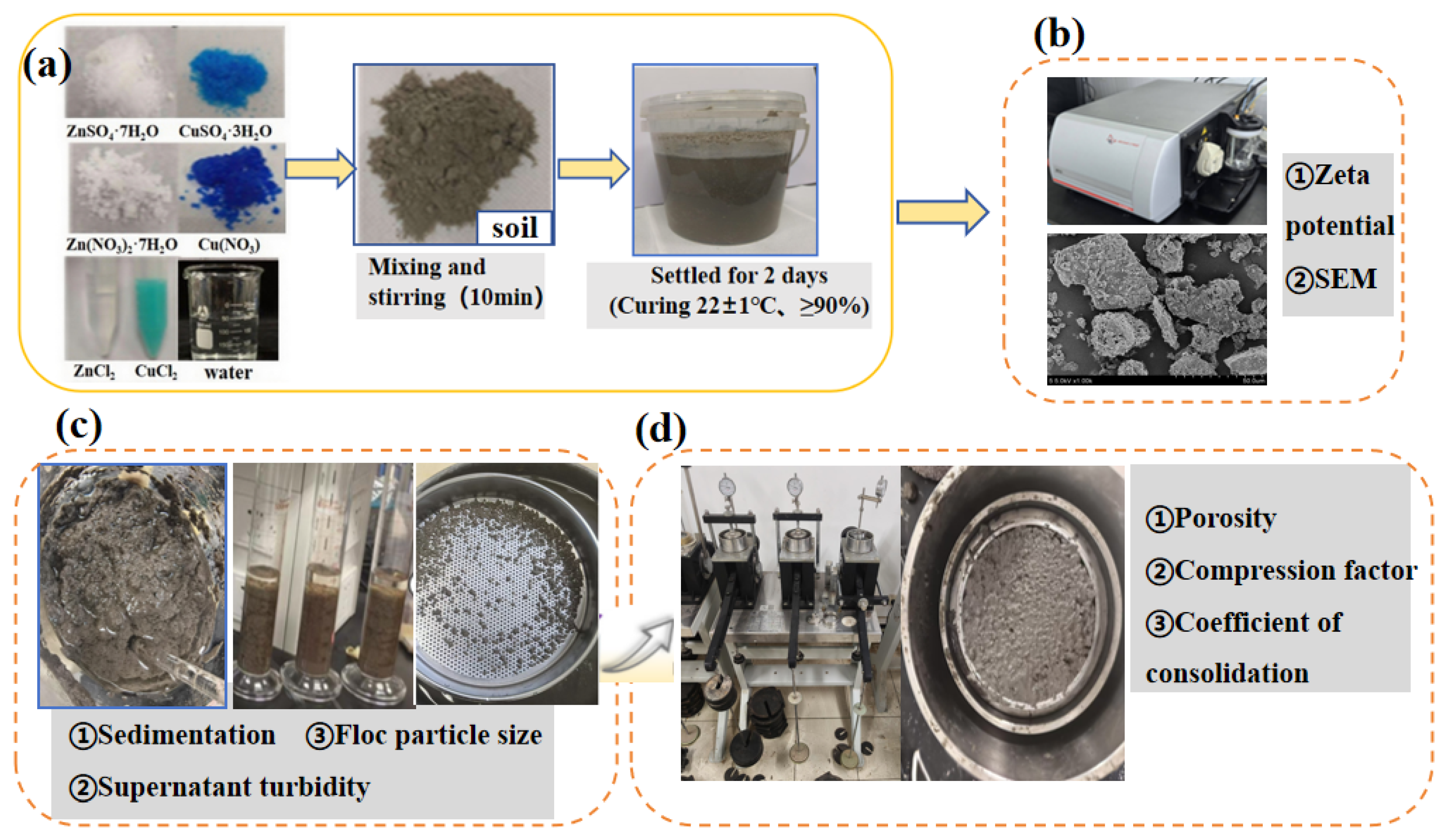
2.1. Preparation of Sediment Samples
2.1.1. Sediment Samples
2.1.2. Pretreatment Configuration of the Contaminated Sediments
2.2. Physical Properties Testing
2.2.1. Sedimentation Column Test and Turbidity Determination
2.2.2. Particle Size Analysis Testing
2.2.3. Consolidation Testing
2.3. Microscopic Testing
2.3.1. Zeta Potential Measurement
2.3.2. Scanning Electron Microscopy (SEM)
3. Results and Discussion
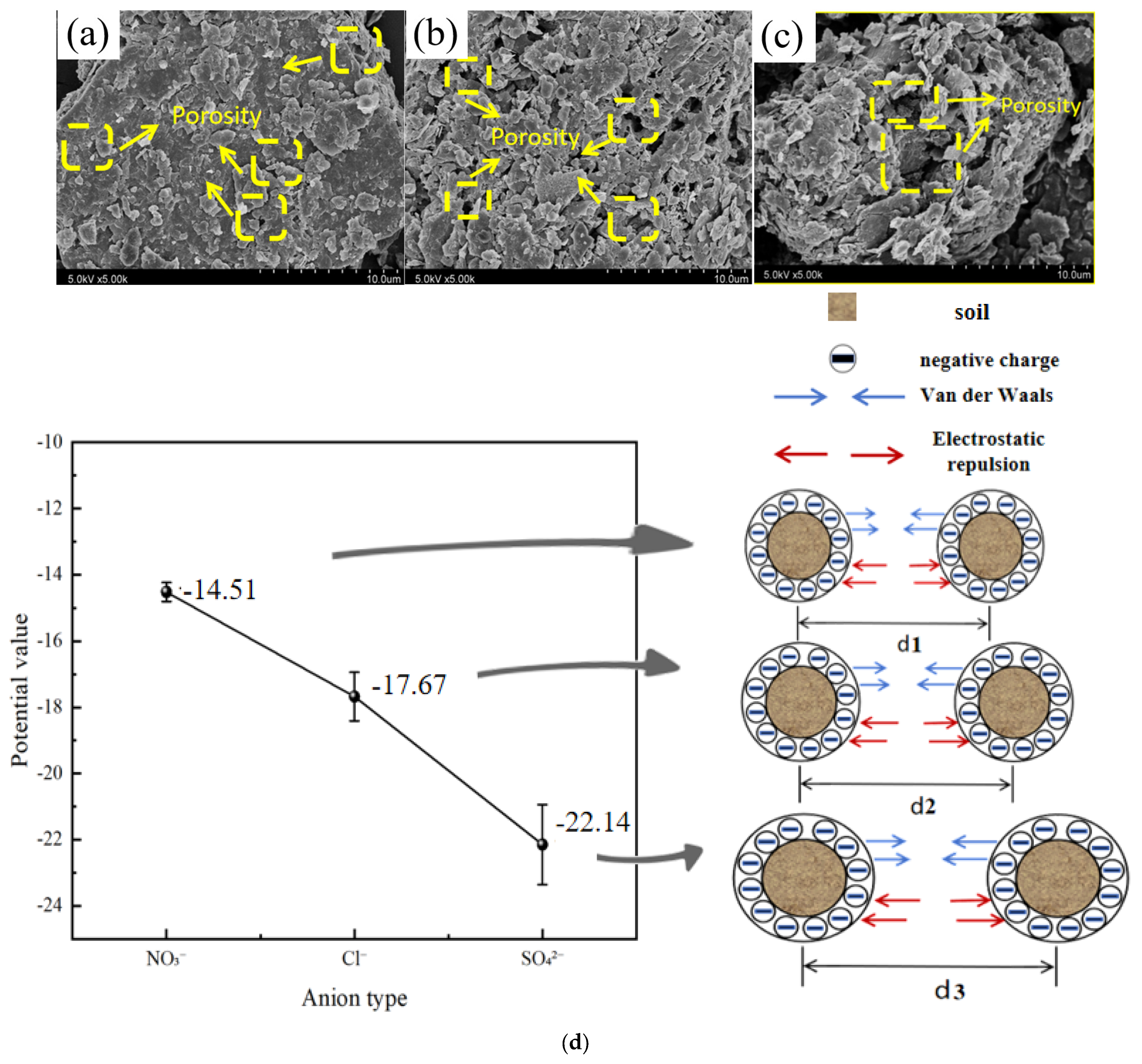
3.1. Micro Characterization and Zeta Potential Value
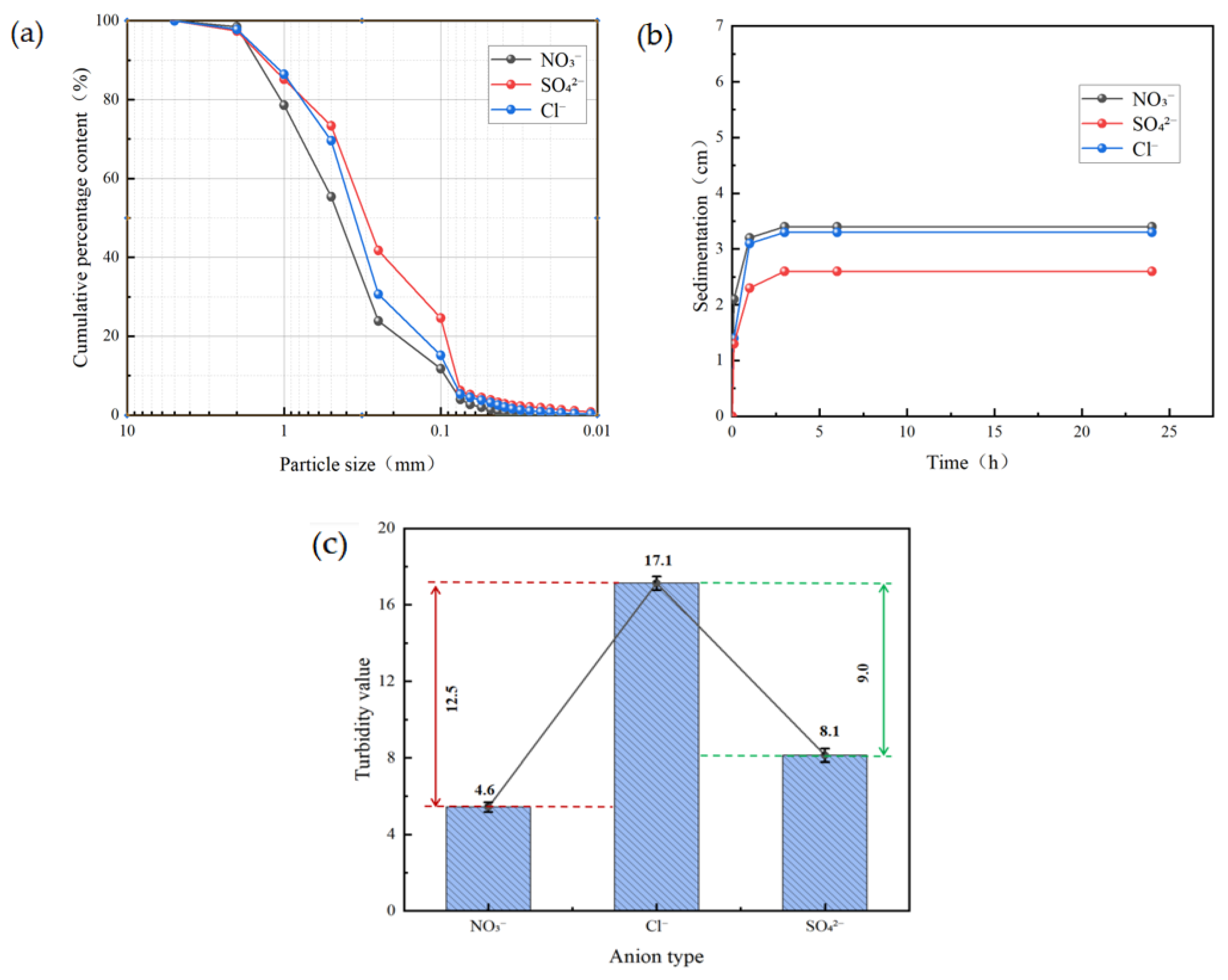
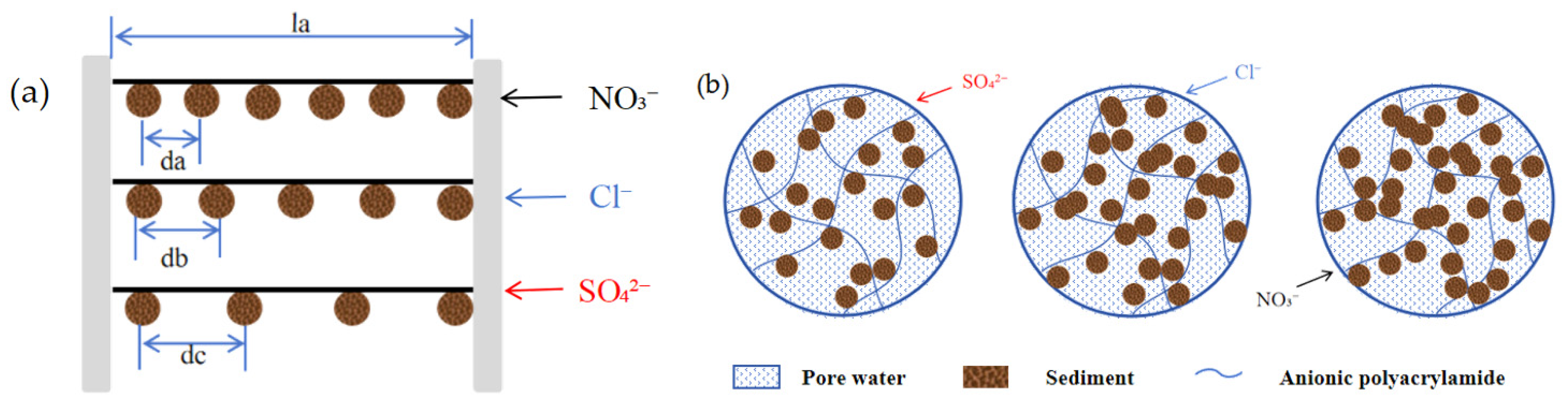
3.2. Flocculation Sedimentation Efficiency
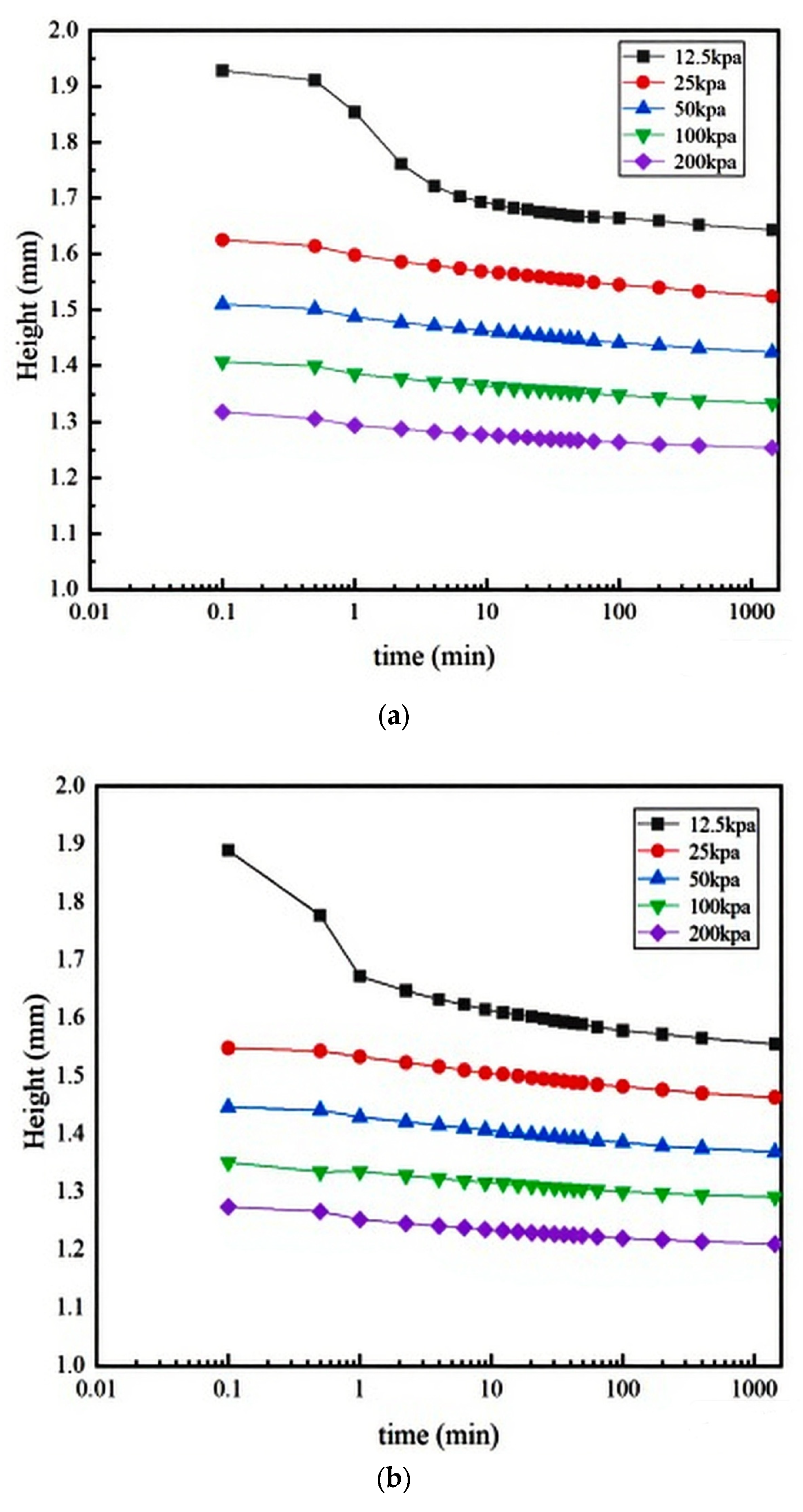
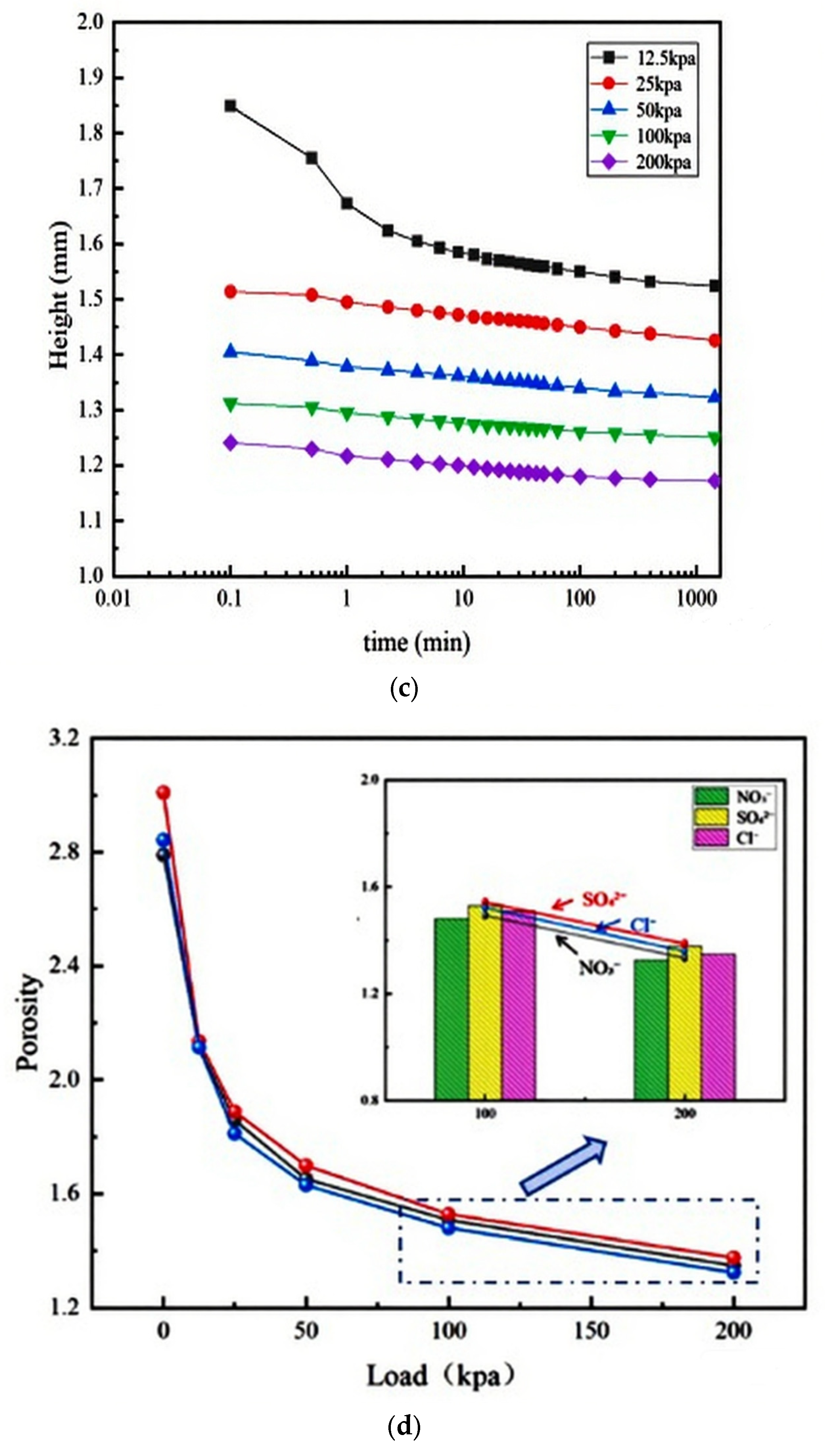
3.2.1. Porosity
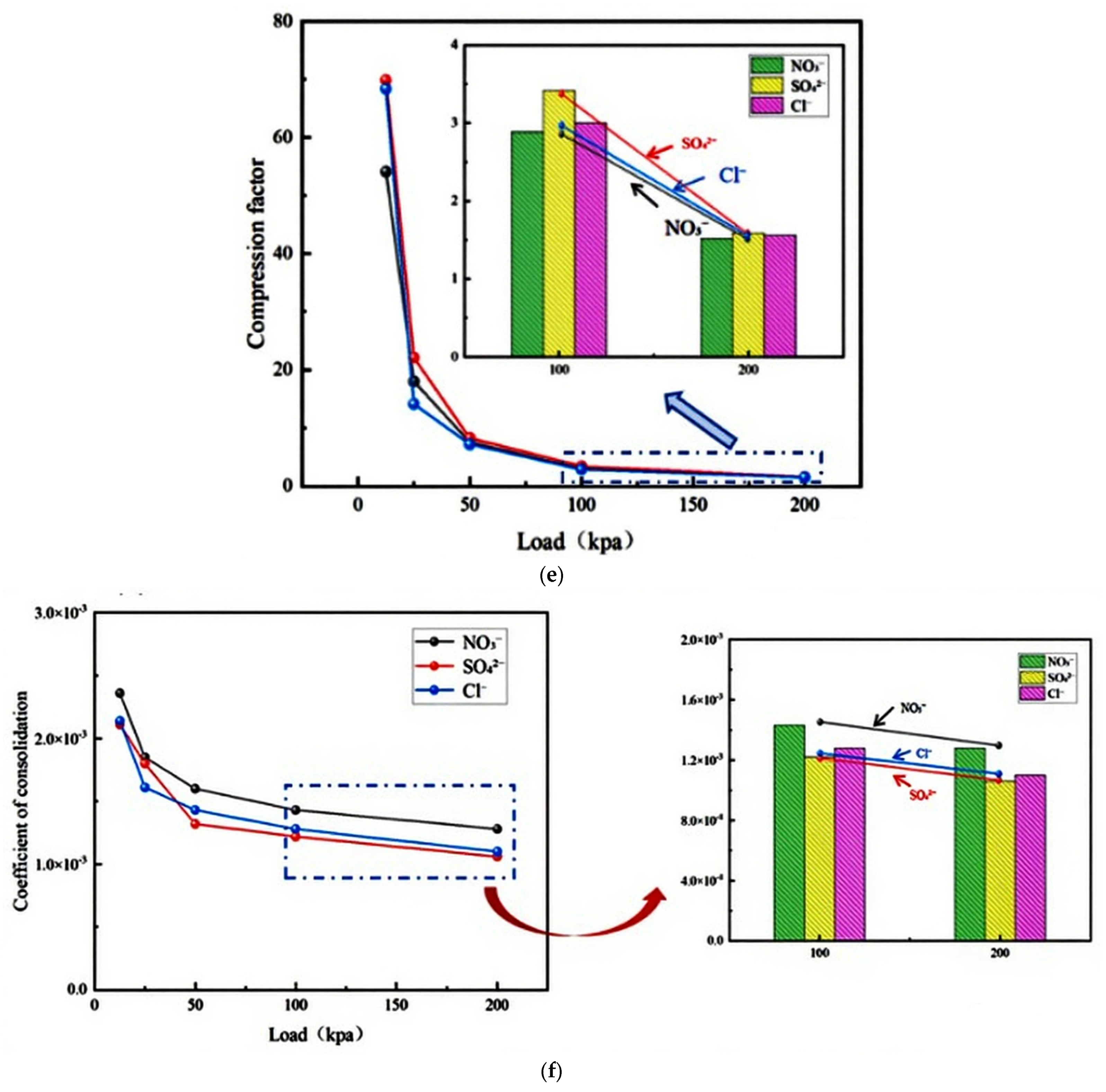
3.2.2. Compression Factor
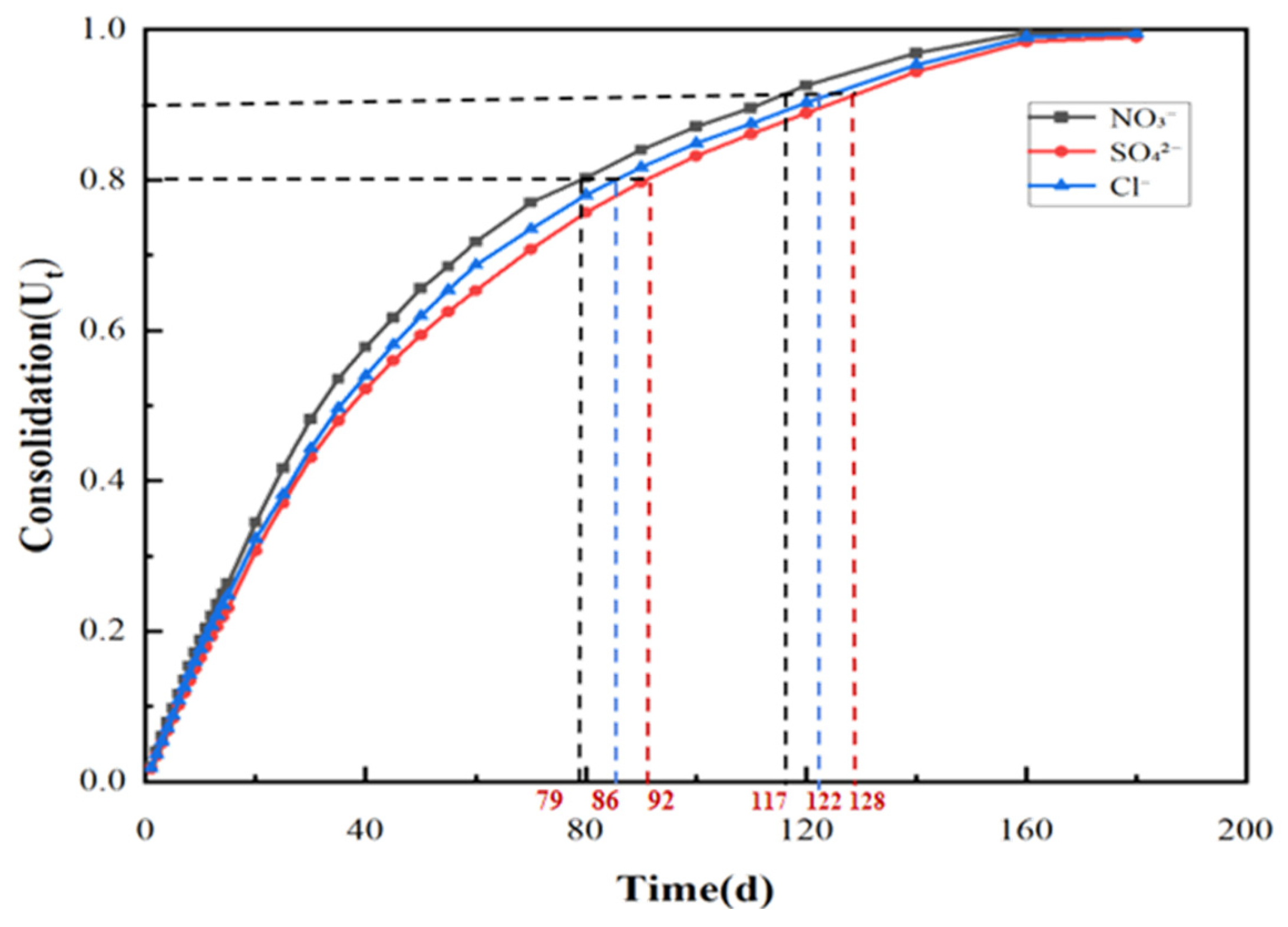
3.2.3. Consolidation Coefficient
4. Conclusions
Author Contributions
Funding
Institutional Review Board Statement
Informed Consent Statement
Data Availability Statement
Acknowledgments
Conflicts of Interest
References
- Crocetti, P.; González-Camejo, J.; Li, K.; Foglia, A.; Eusebi, A.L.; Fatone, F. An overview of operations and processes for circular management of dredged sediments. Waste Manag. 2022, 146, 20–35. [Google Scholar] [CrossRef]
- Li, Y.; Yu, H.; Liu, L. Application of co-pyrolysis biochar for the adsorption and immobilization of heavy metals in contaminated environmental substrates. J. Hazard. Mater. 2021, 420, 126655. [Google Scholar] [CrossRef]
- Liu, Q.; Sheng, Y.; Wang, W.; Liu, X. Efficacy and microbial responses of biochar-nanoscale zero-valent iron during in-situ remediation of Cd-contaminated sediment. J. Clean. Prod. 2021, 287, 125076. [Google Scholar] [CrossRef]
- Sun, C.; Gong, W.; Pan, G. Comprehensive effects of sediment dredging on environmental risk and bioavailability of heavy metals from the sediment of Lake Taihu, China. J. Hazard. Mater. 2025, 484, 136789. [Google Scholar] [CrossRef] [PubMed]
- Liu, Q.; Sheng, Y.; Wang, Z. Co-pyrolysis with pine sawdust reduces the environmental risks of copper and zinc in dredged sediment and improves its adsorption capacity for cadmium. J. Environ. Manag. 2023, 334, 117502. [Google Scholar] [CrossRef] [PubMed]
- Abdelhady, A.A.; El-Sayed, A.A.; Abdel-Satar, M.M. Potential biodiversity threats associated with the metal pollution in the Nile–Delta ecosystem (Manzala lagoon, Egypt). Ecol. Indic. 2019, 98, 844–853. [Google Scholar] [CrossRef]
- Abuzaid, A.S.; Bassouny, M.A. Total and DTPA-extractable forms of potentially toxic metals in soils of rice fields, north Nile Delta of Egypt. Environ. Technol. Innov. 2020, 18, 100717. [Google Scholar] [CrossRef]
- Azhar, U.; Ahmad, H.; Shafqat, H. Remediation techniques for elimination of heavy metal pollutants from soil: A review. Environ. Res. 2022, 214, 113918. [Google Scholar] [CrossRef]
- Li, K.; Yao, J.; Masakorala, K.; Li, X.; Li, S.; Li, X. Innovation and prospects of heavy metal solidification/stabilization techniques: A comprehensive review on materials, mechanisms, and evaluation systems. Environ. Technol. Innov. 2025, 37, 104040. [Google Scholar] [CrossRef]
- Ma, Q.; Lei, J.; He, J.; Chen, Z.; Li, W. Epoxy resin for solidification/stabilization of soil contaminated with copper (II): Leaching, mechanical, and microstructural characterization. Environ. Res. 2024, 240, 117512. [Google Scholar] [CrossRef]
- Tang, Y.; Jiang, H.; Yang, Z.; Xiong, S.; Xu, G.; Chen, J.; Shu, S. Strength and deformation characteristics of waste mud–solidified soil. Sci. Rep. 2024, 14, 16976. [Google Scholar] [CrossRef] [PubMed]
- Li, D.; Pan, B.; Han, X.; Lu, Y.; Wang, X. Toxicity risks associated with trace metals call for conservation of threatened fish species in heavily sediment-laden Yellow River. J. Hazard. Mater. 2023, 448, 130928. [Google Scholar] [CrossRef] [PubMed]
- Çevikbilen, G.; Başar, H.M.; Karadoğan, Ü.; Teymur, B. Assessment of the use of dredged marine materials in sanitary landfills: A case study from the Marmara Sea. Waste Manag. 2020, 113, 70–79. [Google Scholar] [CrossRef] [PubMed]
- Ferrans, L.; Schmieder, F.; Mugwira, R.; Marques, M.; Hogland, W. Dredged sediments as a plant-growing substrate: Estimation of health risk index. Sci. Total Environ. 2022, 846, 157463. [Google Scholar] [CrossRef]
- Baran, A.; Tack, F.; Delemazure, A. Use of selected amendments for reducing metal mobility and ecotoxicity in contaminated bottom sediments. J. Environ. Manag. 2024, 360, 121183. [Google Scholar] [CrossRef]
- Cui, Y.L.; Pan, F.R.; Zhang, B.B.; Wang, X.Q.; Diao, H.G. Laboratory test of waste mud treated by the flocculation-vacuum-curing integrated method. Constr. Build. Mater. 2022, 328, 127086. [Google Scholar] [CrossRef]
- Wu, Y.; Xu, Y.; Zhang, X.; Lu, Y.; He, X.; Song, B.; Zhang, Y.; Ji, J. Experimental study on treating landfill sludge by preconditioning combined with vacuum preloading: Effects of freeze-thaw and FeCl3 preconditioning. Sci. Total Environ. 2020, 747, 141092. [Google Scholar] [CrossRef]
- Zhang, Q. Sequential usage of charged polyacrylamide for positive feedback in enhancing dewaterability of dredged sediment. J. Water Process Eng. 2024, 57, 104632. [Google Scholar] [CrossRef]
- Ayyanar, A.; Tang, N.C.; Suresh, L.K. Enhanced electrokinetic remediation (EKR) for heavy metal-contaminated sediments focusing on treatment of generated effluents from EKR and recovery of EDTA. Water Environ. Res. 2021, 93, 136–147. [Google Scholar] [CrossRef]
- Barciela-Rial, M.; van den Bosch, B.A.P.; van Kessel, T.; Griffioen, J.; Winterwerp, J.C. Experimental and numerical analysis of underwater consolidation of dredged sediment: A case study for the Marker Wadden. Front. Mar. Sci. 2024, 11, 1466650. [Google Scholar] [CrossRef]
- Wang, J.; Fu, H.; Zhang, W.; Ni, J.; Li, X.; Cai, Y. Effect of pressurization frequency and duration on the consolidation of a dredged soil using air booster vacuum preloading combined with prefabricated horizontal drains. Geotext. Geomembr. 2023, 51, 209–218. [Google Scholar] [CrossRef]
- Besser, J.M.; Brumbaugh, W.G.; Ingersoll, C.G. Characterizing toxicity of metal-contaminated sediments from mining areas. Appl. Geochem. 2015, 57, 73–84. [Google Scholar] [CrossRef]
- Charriau, A.; Lesven, L.; Gao, Y.; Leermakers, M.; Baeyens, W.; Ouddane, B.; Billon, G. Trace metal behaviour in riverine sediments: Role of organic matter and sulfides. Appl. Geochem. 2011, 26, 80–90. [Google Scholar] [CrossRef]
- Roberts, A.D.; Besser, J.M.; Hundley, J.F.; Mosby, D.E.; Rosenberger, A.E.; Bouska, K.L. An assessment of the relation between metal contaminated sediment and freshwater mussel populations in the Big River, Missouri. Sci. Total Environ. 2023, 876, 162743. [Google Scholar] [CrossRef]
- Yurtsever, A.; Basaran, E.; Ucar, D.; Sahinkaya, E. Self-forming dynamic membrane bioreactor for textile industry wastewater treatment. Sci. Total Environ. 2021, 751, 141572. [Google Scholar] [CrossRef]
- Chu, Y.; Liu, S.; Wang, F. Electric conductance response on engineering properties of heavy metal polluted soils. J. Environ. Chem. Eng. 2018, 6, 5552–5560. [Google Scholar] [CrossRef]
- Li, D.; Tan, X.-Y.; Wu, X.-D.; Pan, C.; Xu, P. Effects of electrolyte characteristics on soil conductivity and current in electrokinetic remediation of lead-contaminated soil. Sep. Purif. Technol. 2014, 135, 14–21. [Google Scholar] [CrossRef]
- Wu, Y.; Xu, Y.; Zhang, X.; Lu, Y.; Chen, G.; Wang, X.; Song, B. Experimental study on vacuum preloading consolidation of landfill sludge conditioned by Fenton’s reagent under varying filter pore size. Geotext. Geomembr. 2021, 49, 109–121. [Google Scholar] [CrossRef]
- Bai, D.R. Heavy metal pollution distribution and ecological risk assessment of river sediments in Suzhou ancient city area. Environ. Sci. 2021, 42, 3206–3214. [Google Scholar] [CrossRef]
- Du, Y.J.; Jiang, N.J.; Liu, S.Y.; Jin, F.; Singh, D.N.; Puppala, A.J. Engineering properties and microstructural characteristics of cement-stabilized zinc-contaminated kaolin. Can. Geotech. J. 2014, 51, 289–302. [Google Scholar] [CrossRef]
- Ashley, A.W.; Mookherjee, M.; Xu, M.; Yu, T.; Manthilake, G.; Wang, Y. Viscosity measurements at high pressures: A critical appraisal of corrections to Stokes’ law. J. Geophys. Res.—Solid Earth 2024, 129, e2023JB028489. [Google Scholar] [CrossRef]
- Gwon, Y.; Kwon, S.; Kim, D.; Won, I.; You, H. Estimation of shallow stream bathymetry under varying suspended sediment concentrations and compositions using hyperspectral imagery. Geomorphology 2023, 433, 108722. [Google Scholar] [CrossRef]
- Li, Y.; Zhu, Y.; Ding, W.; Liu, X.; Li, H. An analytical approach to estimating electrostatic repulsion between soil particles. Soil Tillage Res. 2022, 223, 105488. [Google Scholar] [CrossRef]
- Cui, G.; Liu, Y.; Chen, Y.; Song, T.; Tong, S. Experiments and simulation of co-migration of copper-resistant microorganisms and copper ions in saturated porous media. J. Contam. Hydrol. 2021, 242, 103857. [Google Scholar] [CrossRef]
- Ding, J.W. Collaborative effects of red mud and phosphogypsum on geotechnical behavior of cement-stabilized dredged clay. Bull. Eng. Geol. Environ. 2024, 83, 200. [Google Scholar] [CrossRef]
- Liu, H.Y.; Lv, S.R.; Zhang, L.M.; Yuan, X.P. A dynamic damage constitutive model for a rock mass with persistent joints. Int. J. Rock Mech. Min. Sci. 2015, 75, 132–139. [Google Scholar] [CrossRef]
- Zhao, Y. Technical and environmental assessment of sludge-derived slag generated from high temperature slagging co-gasification process as a sustainable construction material. Waste Manag. 2024, 190, 186–196. [Google Scholar] [CrossRef]
- Chai, J.; Rondonuwu, S.G. Surcharge loading rate for minimizing lateral displacement of PVD improved deposit with vacuum pressure. Geotext. Geomembr. 2015, 43, 558–566. [Google Scholar] [CrossRef]



| Items | Sampling Depth (m) | Water Content (%) | Specific Gravity | Density (g/cm3) | Liquid Limit wl (%) | Plastic Limit, wp (%) |
|---|---|---|---|---|---|---|
| sludge | 7–9 m | 38.4% | 2.62 | 1.61 | 41.92% | 20.14% |
| Basic Properties | Original Soil | NO3− | Cl− | SO42− |
|---|---|---|---|---|
| Cu content (mg/kg) | 30.4 | 143.6 | 142.5 | 140.3 |
| Zn content (mg/kg) | 54.7 | 384.9 | 382.5 | 380.4 |
| Basic Properties | NO3− | Cl− | SO42− |
|---|---|---|---|
| Fraction of Particles < 0.075 mm (%) | 3.98 | 5.32 | 6.22 |
| Final Settling Height (cm) | 3.52 | 3.35 | 2.67 |
| Supernatant Turbidity (NTU) | 4.6 | 8.1 | 17.1 |
| Compression Coefficient, av (MPa−1, at 100–200 kPa) | 1.52 | 1.56 | 1.58 |
| Consolidation Coefficient, Cv (10−3 cm2/s, at 100–200 kPa) | 1.27 | 1.10 | 1.06 |
Disclaimer/Publisher’s Note: The statements, opinions and data contained in all publications are solely those of the individual author(s) and contributor(s) and not of MDPI and/or the editor(s). MDPI and/or the editor(s) disclaim responsibility for any injury to people or property resulting from any ideas, methods, instructions or products referred to in the content. |
© 2025 by the authors. Licensee MDPI, Basel, Switzerland. This article is an open access article distributed under the terms and conditions of the Creative Commons Attribution (CC BY) license (https://creativecommons.org/licenses/by/4.0/).
Share and Cite
Sun, W.; Sun, Y.; Lu, Y. Anionic Effects on Flocculation and Consolidation of Sediments Contaminated by Heavy Metals. Appl. Sci. 2025, 15, 13224. https://doi.org/10.3390/app152413224
Sun W, Sun Y, Lu Y. Anionic Effects on Flocculation and Consolidation of Sediments Contaminated by Heavy Metals. Applied Sciences. 2025; 15(24):13224. https://doi.org/10.3390/app152413224
Chicago/Turabian StyleSun, Wenjing, Yijie Sun, and Yitian Lu. 2025. "Anionic Effects on Flocculation and Consolidation of Sediments Contaminated by Heavy Metals" Applied Sciences 15, no. 24: 13224. https://doi.org/10.3390/app152413224
APA StyleSun, W., Sun, Y., & Lu, Y. (2025). Anionic Effects on Flocculation and Consolidation of Sediments Contaminated by Heavy Metals. Applied Sciences, 15(24), 13224. https://doi.org/10.3390/app152413224