Research on Cutter Anomaly Identification in Slightly Weathered Metamorphic Rock Formations Based on BO-Light GBM Model

Abstract
1. Introduction
- A novel integrated framework: We propose a BO-Light GBM model specifically for cutter anomaly identification, which synergizes Bayesian Optimization for hyperparameter tuning with the Light GBM algorithm for efficient and accurate recognition.
- Enhanced interpretability and validation: We establish a multi-parameter dataset derived from key tunneling parameters and, for the first time in this context, employ SHAP value theory to interpret the model and quantify the marginal contribution of each feature, thereby improving the reliability and providing actionable insights.
- Practical engineering applicability: The developed method is characterized by low memory consumption, fast training speed, and distributed processing capability, making it particularly suitable for deployment in resource-constrained shield tunneling environments with massive and frequently updated data.
2. Model Principle
2.1. Unsupervised Learning Algorithm
2.2. Supervised Learning Algorithms
- (1)
- Related model algorithms
- (2)
- Light GBM
2.3. Bayesian Optimization Algorithm
3. Research Methodology
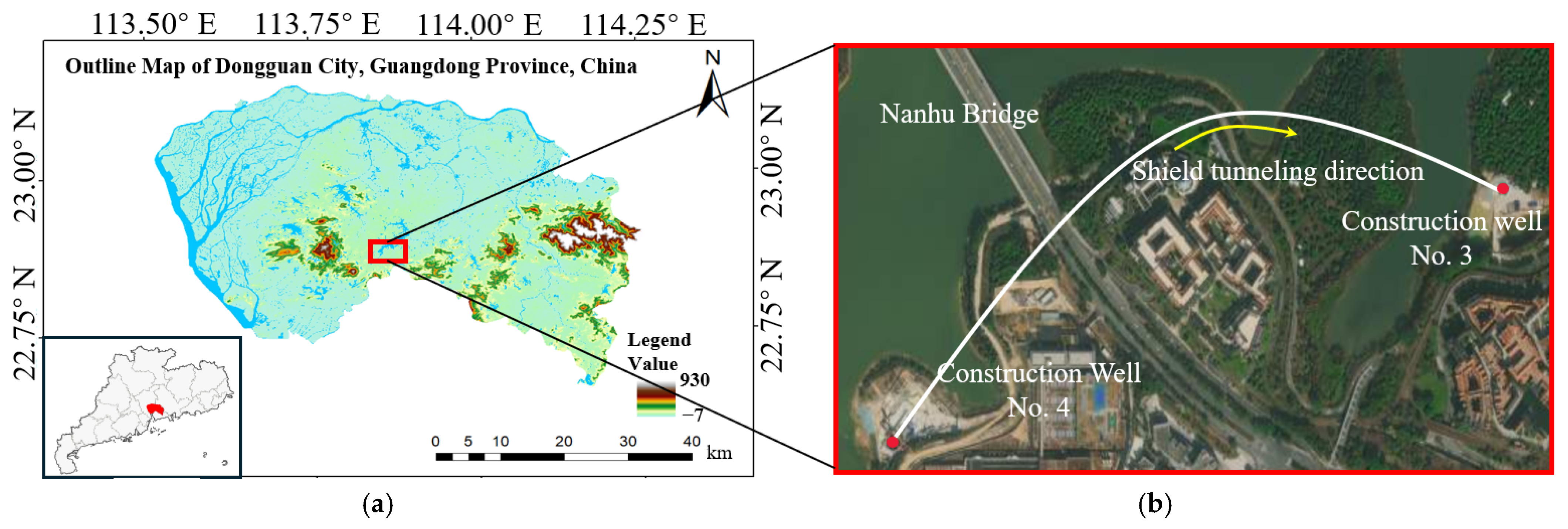
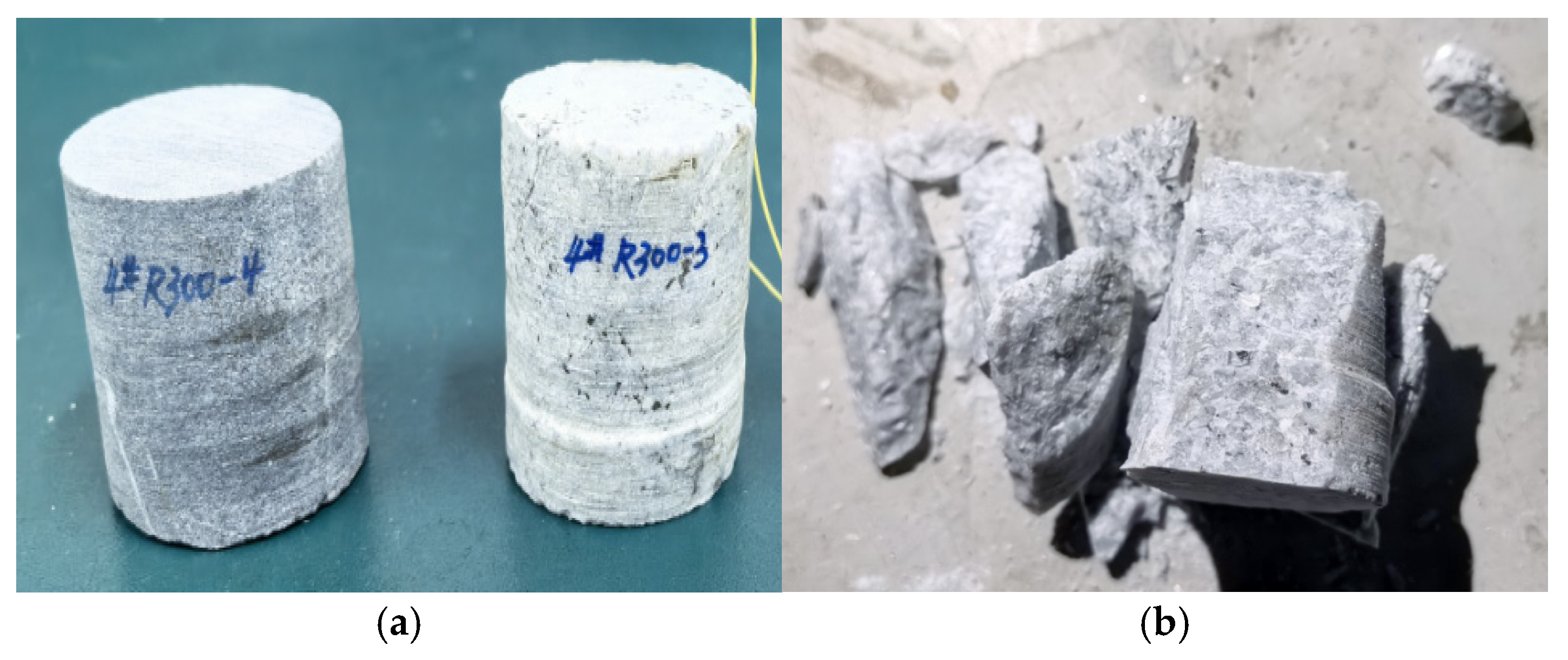
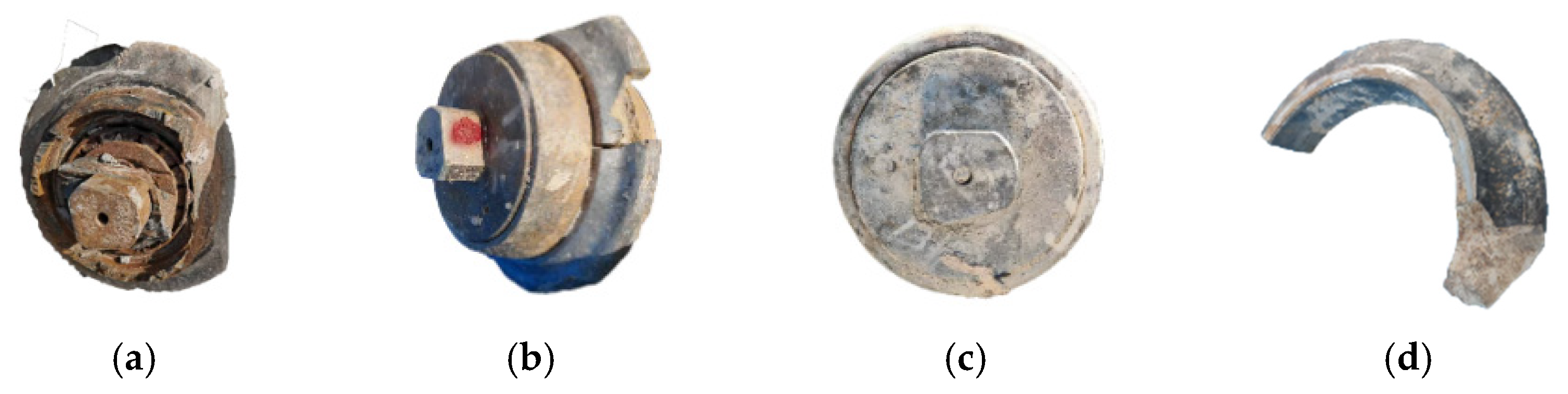
3.1. Data Collection
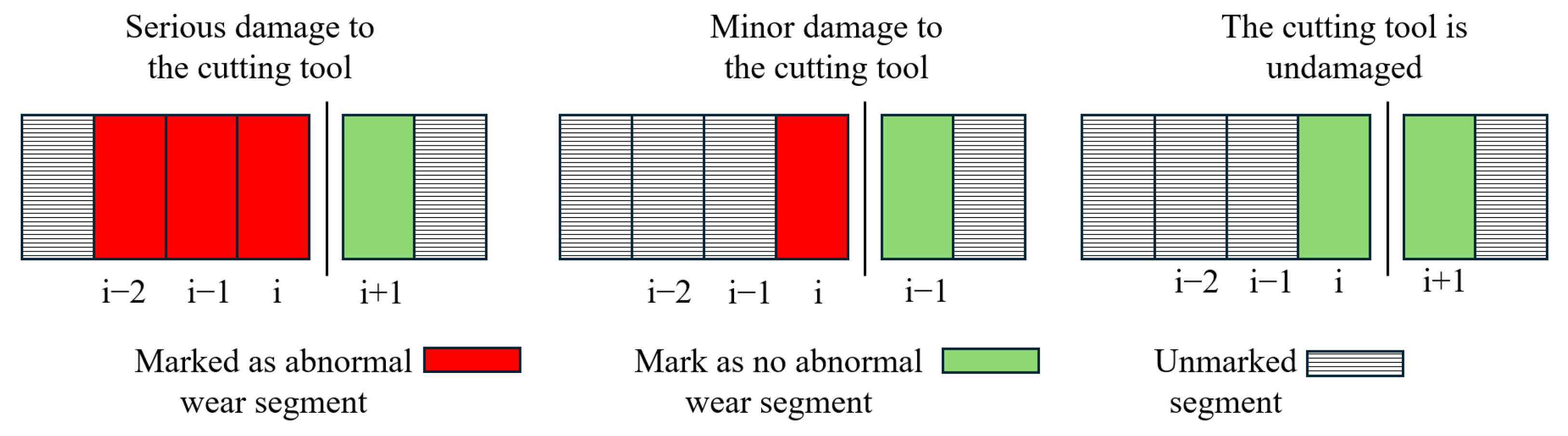
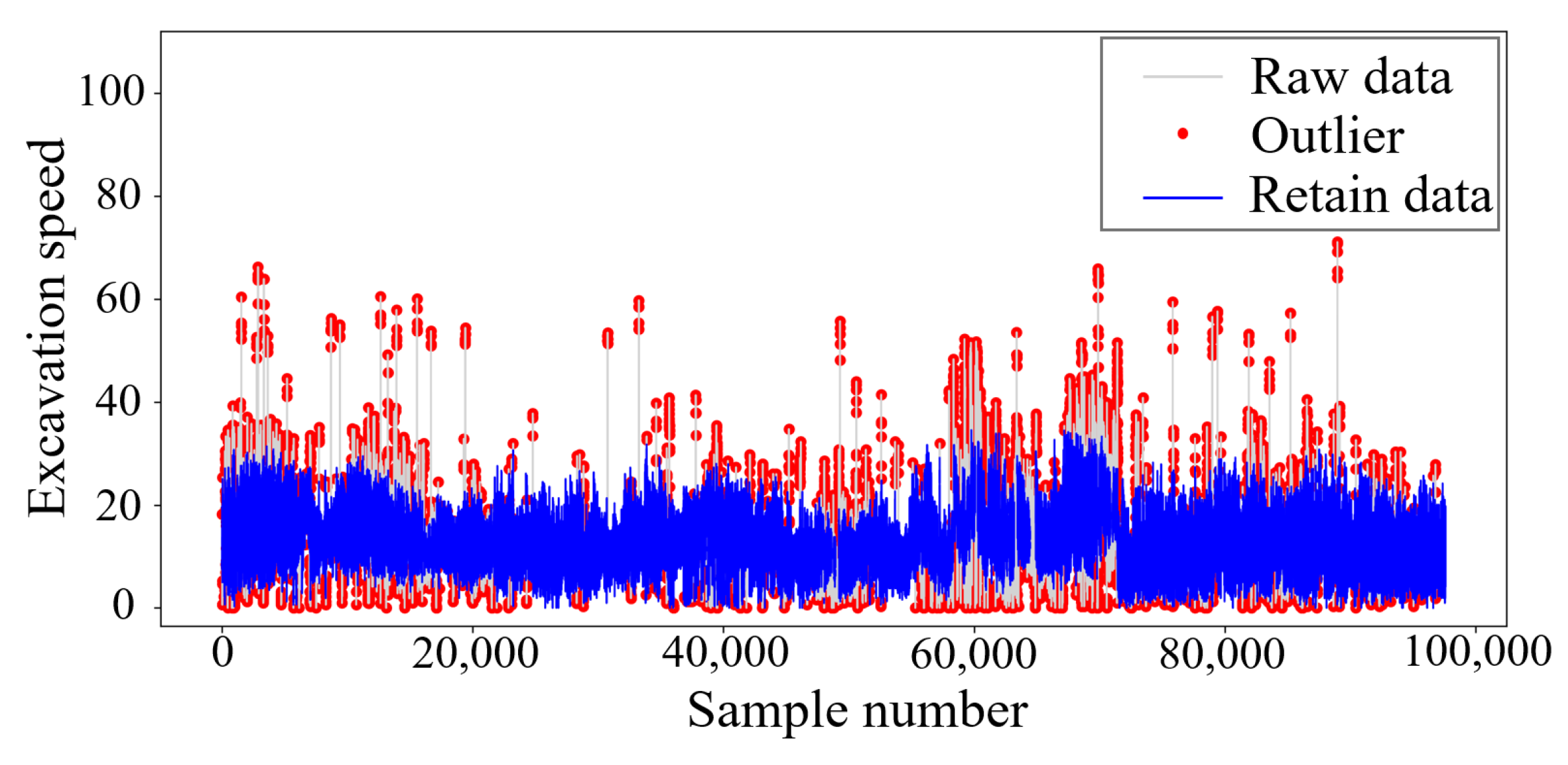
3.2. Data Processing
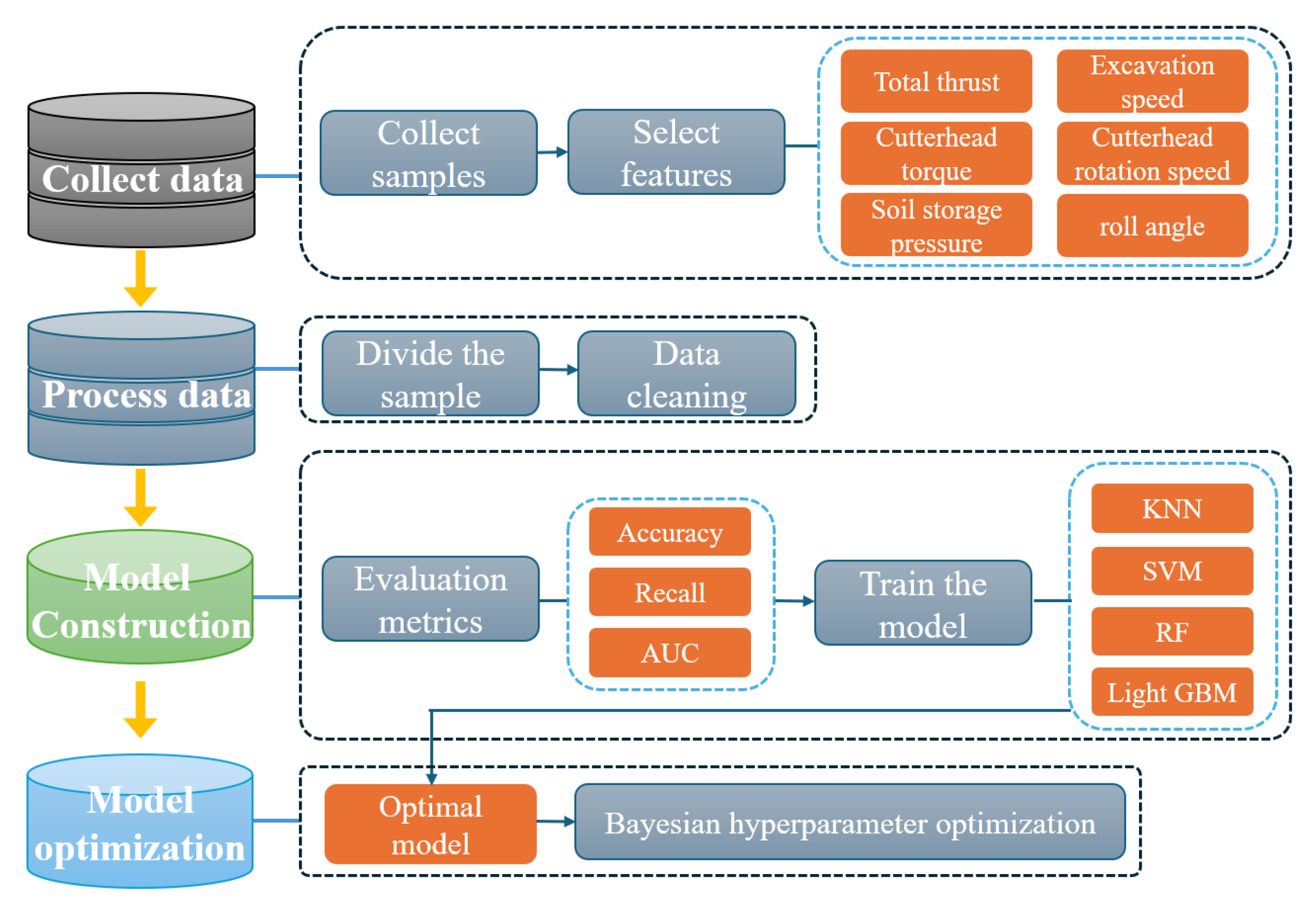
3.3. Model Construction
- (1)
- Construction Process
- (2)
- Evaluation Metrics

| Designation | Symbol | Meaning |
|---|---|---|
| True positive example | TP | The number of samples predicted as normal and actually normal |
| False positive example | FP | The number of samples predicted as normal but actually abnormal |
| False negative example | FN | The number of samples predicted as abnormal but actually normal |
| Ture negative example | TN | The number of samples predicted as abnormal and actually abnormal |
- (3)
- Model Training
- For the KNN model, the voting weight (weights) was set to uniform, the number of voting neighbors (n_neighbors) was set to 5, and the distance metric (metric) was set to Minkowski.
- For the SVM model, the penalty coefficient C was set to 1, the kernel function (kernel) was selected as the Gaussian (RBF) kernel, and probability estimation (probability) was enabled.
- For the RF model, the number of trees (n_estimators) was set to 100, the maximum depth of the trees (max_depth) was set to 10, and the minimum number of samples required at a leaf node (min_samples_leaf) was set to 20.
- For the Light GBM model, the objective task (objective) was set to binary classification, the boosting type (boosting_type) was set to Gradient Boosting Decision Tree (gbdt), the learning rate (learning_rate) was set to 0.1, and the number of leaves (num_leaves) was set to 100.
3.4. Model Optimization
4. Model Interpretability and Validation Analysis
4.1. Theoretical Analysis of SHAP Value
4.2. Global Interpretability Analysis
4.3. Model Validation Analysis
5. Conclusions
- (1)
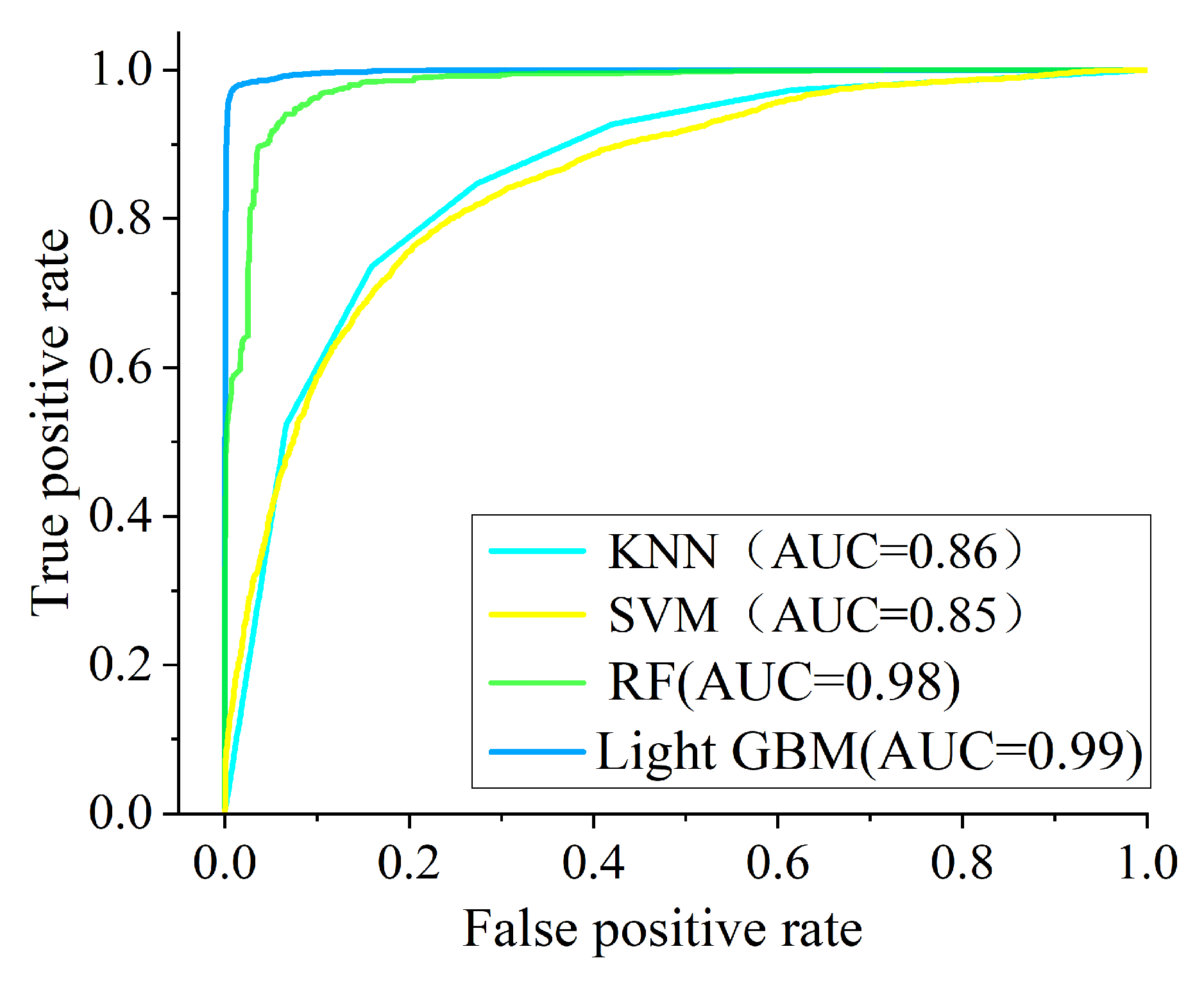
- The Light GBM model demonstrated superior performance in the cutter anomaly identification task compared to KNN, SVM, and RF. Even with constraints of limited depth and fewer decision trees, it achieved an identification accuracy of 96.04%, effectively capturing changes in tunneling parameters caused by alterations in cutter condition. This indicates its stability and applicability under complex working conditions.
- (2)
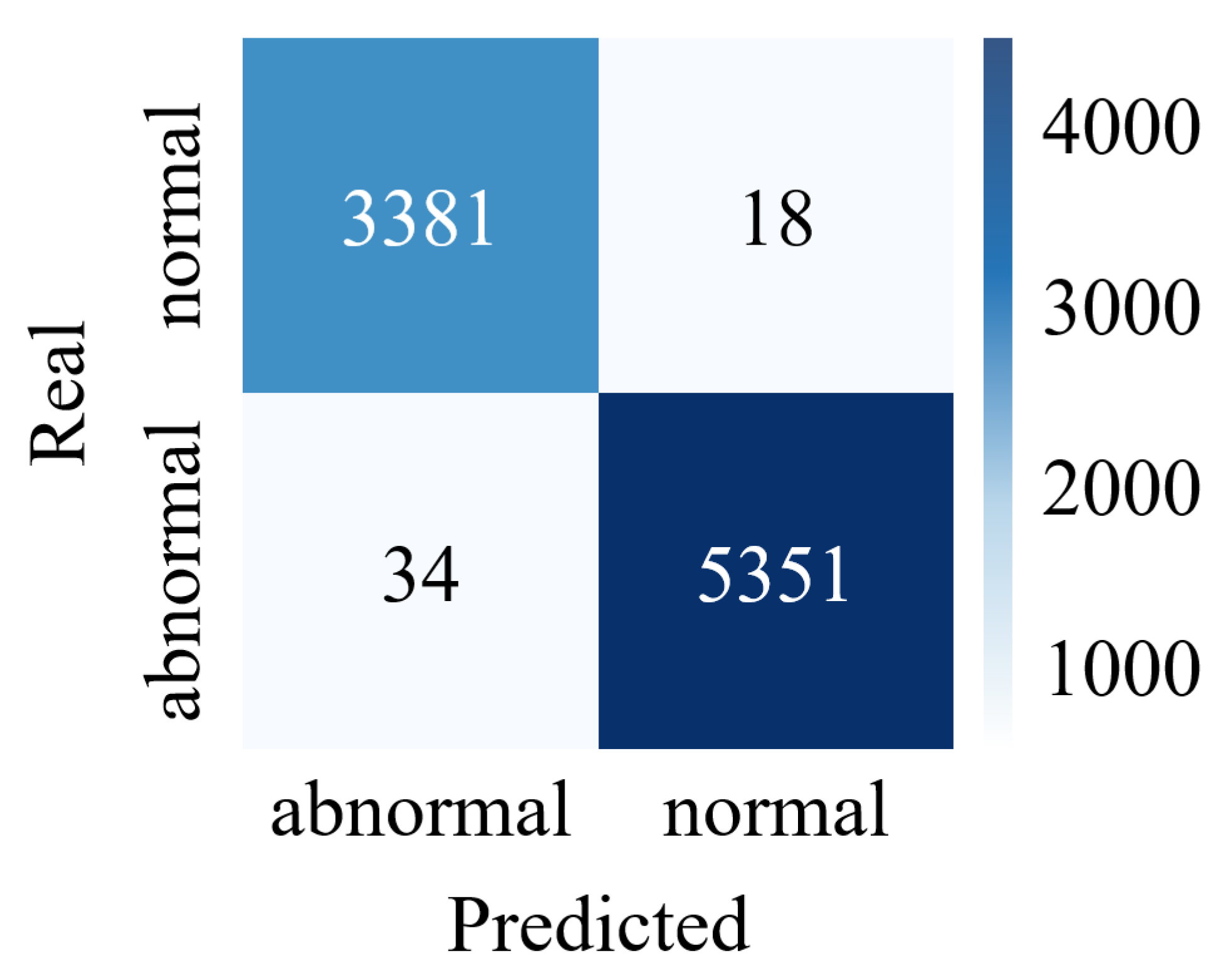
- Employing the Bayesian optimization algorithm to optimize the Light GBM model resulted in a significant improvement in model identification accuracy, reaching 99.40%. The optimized model maintained highly balanced performance in identifying both normal and abnormal samples, with a markedly reduced gap in recall between the positive and negative classes. This demonstrates the model’s strong robustness and generalization capability even under conditions of class imbalance.
- (3)
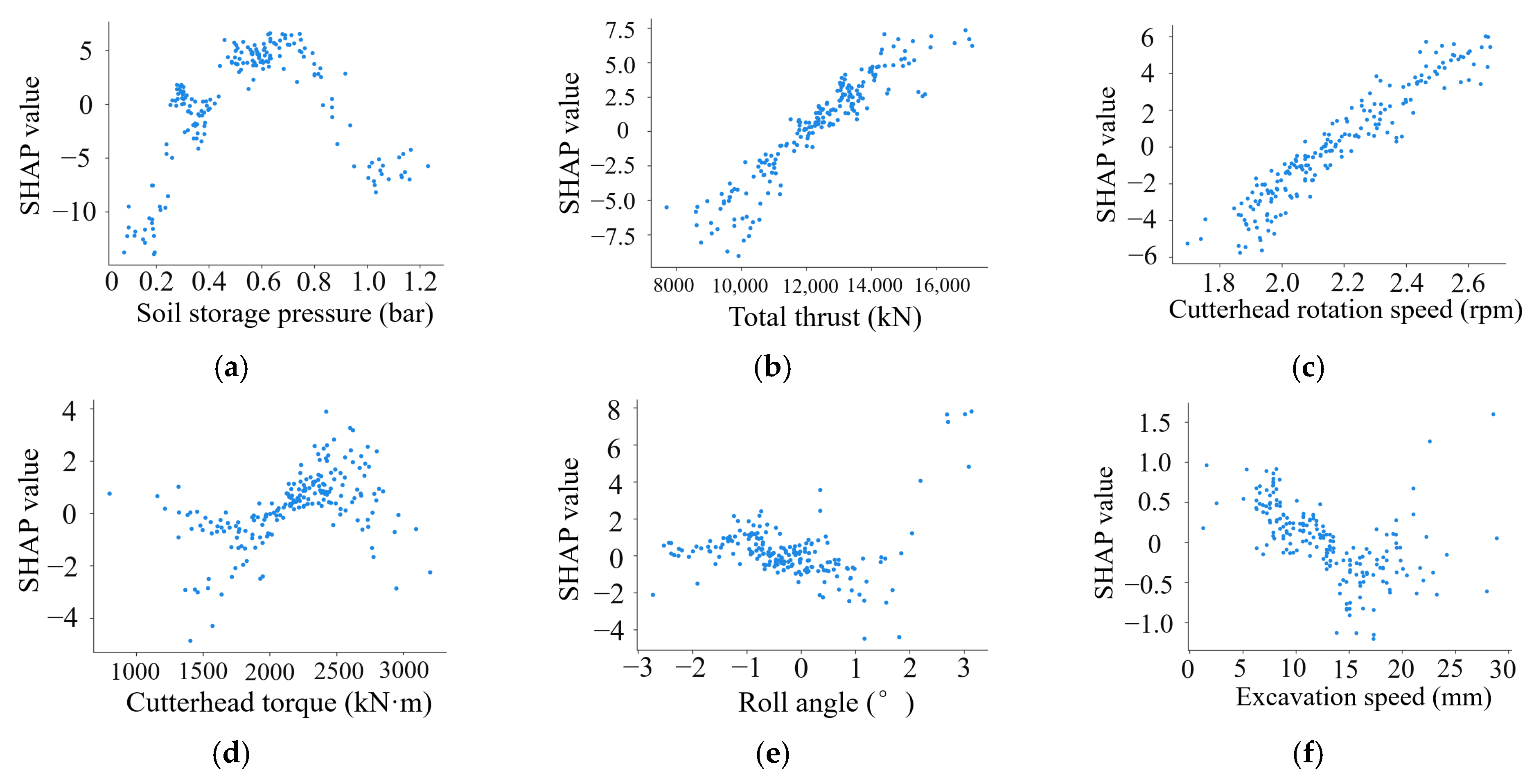
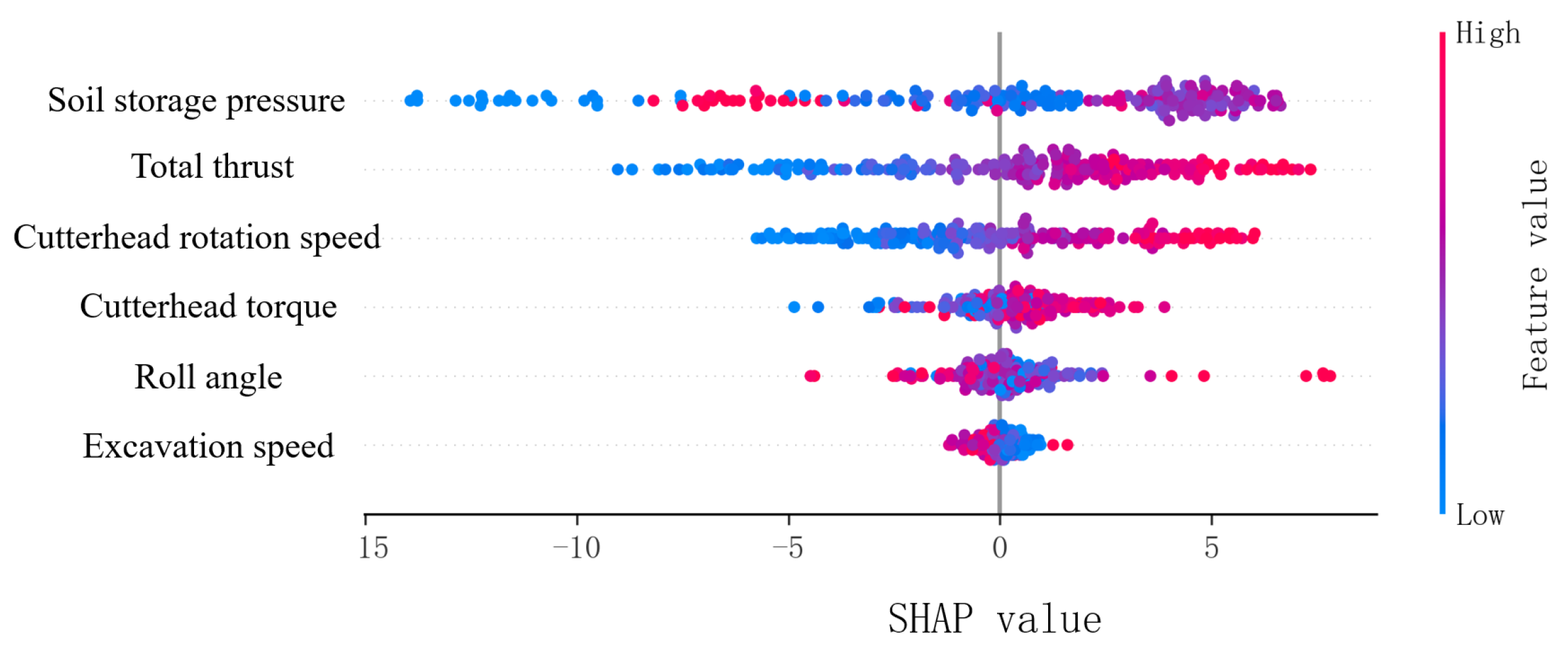
- The results from the theoretical analysis of SHAP value indicate that chamber pressure, cutterhead rotation speed, total thrust force, and cutterhead torque are the key features influencing the model’s discrimination results, contributing significantly to anomaly identification. The overall contributions of the rolling angle and Excavation speed were limited. The distribution of SHAP value aligns highly consistently with actual tunneling conditions, further validating the identification accuracy and reliability of the BO-Light GBM model.
- (4)
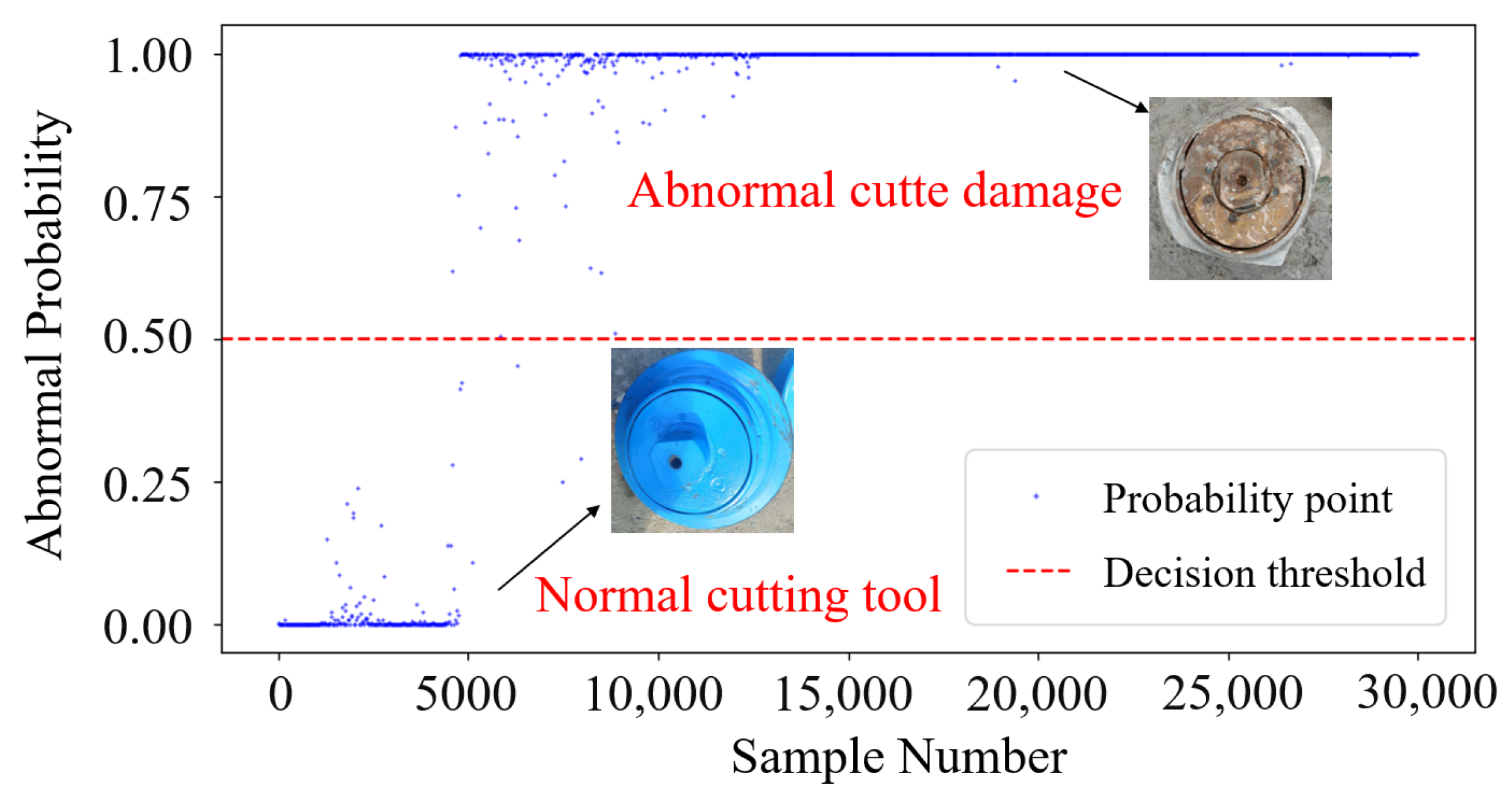
- The cutter anomaly identification based on the BO-Light GBM model effectively detected the onset time of cutter anomalies in real-time data discrimination. This provides crucial guidance for timely chamber entry, adjustment, or cutter replacement, thereby helping to mitigate negative impacts.
Author Contributions
Funding
Data Availability Statement
Conflicts of Interest
References
- Wu, J.; Chen, X.; Shen, X.; Dong, S.; Zhang, Y.; Yao, Z.; Wang, X. Evaluation method and application for cutter wear of large-diameter shield in composite stratum: A case study. Measurement 2025, 242, 115789. [Google Scholar] [CrossRef]
- Fang, Y.; Wang, X.; Cao, Y.; Jiang, F.; Liu, Z.; Zhang, L.; Li, X. Wear analysis of disc cutters in atmospheric cutterhead of large-diameter slurry shield: A case study of the second Jiaozhou Bay subsea tunnel. China Civ. Eng. J. 2024, 57, 167–172. [Google Scholar]
- Yang, Y.; Chen, K.; Li, F.; Zhou, J. Disc cutter wear prediction model. J. China Coal Soc. 2015, 40, 1290–1296. [Google Scholar]
- Shen, S.; Zhang, N.; Zhou, A. Investigation of disc cutter wear during shield tunnelling in weathered granite: A case study. Tunn. Undergr. Space Technol. 2023, 140, 105323. [Google Scholar] [CrossRef]
- Zhang, H. Research on detection methods of shield cutter wear in composite strata. In Proceedings of the 2005 Shanghai International Tunnel Engineering Symposium: Large-Diameter Tunnels and Urban Rail Transit Engineering Technology, Shanghai Tunnel Engineering Co., Ltd.; Guangzhou Shield Construction Underground Engineering Co., Ltd.: Guangzhou, China, 2005; pp. 472–482. [Google Scholar]
- Park, M.; Ju, M.; Kim, J.; Jeong, H. Measurement of TBM disc cutter wear using eddy-current sensor in different TBM chamber conditions: Insights from laboratory tests. Sensors 2025, 25, 2045. [Google Scholar] [CrossRef]
- Ding, X.; Xie, Y.; Xue, H.; Huang, W. Prediction of shield machine disc cutter wear based on neural network. Chin. J. Undergr. Space Eng. 2023, 19, 560–570. [Google Scholar]
- Fan, Y.; Zhao, D.; Wei, D.; Fu, F. Mechanical analysis of shield cutterhead under abnormal working conditions. Constr. Mech. 2015, 36, 59–63. [Google Scholar]
- Zhang, M.; Sun, R.; Mo, J.; Zhou, Z. Frictional contact-vibration coupling model for TBM rock cutting with multi-cutter. Comput. Geotech. 2024, 176, 106724. [Google Scholar] [CrossRef]
- Zhou, X.; Zhang, Y.; Gong, G.; Yang, H. Impact of disc-cutter partial wear on tunneling parameters and a high-accuracy method for discrimination of partial wear. J. Zhejiang Univ.-Sci. A 2025, 26, 359–375. [Google Scholar] [CrossRef]
- Sun, R.; Mo, J.; Zhang, M.; Zhou, Z. Interaction between partial-worn TBM cutters and rocks: Experimental and numerical investigation. Bull. Eng. Geol. Environ. 2023, 82, 111. [Google Scholar] [CrossRef]
- Qin, C.; Wu, R.; Huang, G.; Tao, J.; Liu, C. A novel LSTM-autoencoder and enhanced transformer-based detection method for shield machine cutterhead clogging. Sci. China Technol. Sci. 2023, 66, 512–527. [Google Scholar] [CrossRef]
- Jia, D.; Shi, B. Research of shield machine fault prediction system based on improved Elman network algorithm. In Proceedings of the 33rd Chinese Control Conference, Nanjing, China, 28–30 July 2014; pp. 7660–7666. [Google Scholar]
- Shi, B.; Xu, J.; Jiang, T. Fault diagnosis method of shield machine based on Bagging algorithm. Autom. Inf. Eng. 2020, 41, 5–9. [Google Scholar]
- Chen, K.; Chang, J.; Wang, H.; Wu, L. The fault diagnosis of shield disc cutter based on neural network. In 3rd Annual International Conference on Mechanics and Mechanical Engineering (MME 2016); Atlantis Press: Dordrecht, The Netherlands, 2016; pp. 752–756. [Google Scholar]
- Sun, H.; Jia, L.; Wei, X.; Lin, F.; Meng, X. Research on fault diagnosis method of disc cutter in atmospheric cutterhead shield based on machine learning. Tunn. Constr. 2023, 43, 550–557. [Google Scholar]
- Wang, S. Evaluating cross-building transferability of attention-based automated fault detection and diagnosis for air handling units: Auditorium and hospital case study. Build. Environ. 2025, 287, 113889. [Google Scholar] [CrossRef]
- Wang, S. A hybrid SMOTE and Trans-CWGAN for data imbalance in real operational AHU AFDD: A case study of an auditorium building. Energy Build. 2025, 348, 116447. [Google Scholar] [CrossRef]
- Schölkopf, B.; Platt, J.C.; Shawe-Taylor, J.; Smola, A.J.; Williamson, R.C. Estimating the support of a high-dimensional distribution. Neural Comput. 2001, 13, 1443–1471. [Google Scholar] [CrossRef]
- Cover, T.; Hart, P. Nearest neighbor pattern classification. IEEE Trans. Inf. Theory 1967, 13, 21–27. [Google Scholar] [CrossRef]
- Qin, J.; He, Z. A SVM face recognition method based on Gabor-featured key points. In Proceedings of the 2005 International Conference on Machine Learning and Cybernetics, Guangzhou, China, 18–21 August 2005; Volume 8, pp. 5144–5149. [Google Scholar]
- Breiman, L. Random Forests. Mach. Learn. 2001, 45, 5–32. [Google Scholar] [CrossRef]
- Ke, G.; Meng, Q.; Finley, T.; Wang, T.; Chen, W.; Ma, W.; Ye, Q.; Liu, T. Light GBM: A highly efficient gradient boosting decision tree. Adv. Neural Inf. Process. Syst. 2017, 30, 3146–3154. [Google Scholar]
- Malkomes, G.; Schaff, C.; Garnett, R. Bayesian optimization for automated model selection. In Proceedings of the 2016 Workshop on Automatic Machine Learning (AutoML 2016), New York, NY, USA, 24 June 2016; JMLR Workshop and Conference Proceedings. pp. 41–47. [Google Scholar]
- Kwon, K.; Choi, H.; Jung, J.; Kim, D.; Shin, Y.J. Prediction of abnormal TBM disc cutter wear in mixed ground condition using interpretable machine learning with data augmentation. J. Rock Mech. Geotech. Eng. 2025, 17, 2059–2071. [Google Scholar] [CrossRef]
- Wang, X.; Yuan, D.; Jin, D.; Yao, Z.; Chen, X. Calculation method of thrust redistribution considering shield attitude during simultaneous thrusting and segment assembling. China J. Highw. Transp. 2023, 36, 157–170. [Google Scholar]
- Wu, J.; Chen, X.; Zhang, H.; Xiong, L.; Lei, H.; Deng, S. Hyperparameter optimization for machine learning models based on Bayesian optimization. J. Electron. Sci. Technol. 2019, 17, 26–40. [Google Scholar]
- Lundberg, S.M.; Lee, S.I. A unified approach to interpreting model predictions. Adv. Neural Inf. Process. Syst. 2017, 30, 4765–4774. [Google Scholar]


| Inspection Number | Abnormal Number of Cutting Tools | Number of Rings Marked as Abnormal | Number of Rings Marked as Abnormal | Number of Abnormal Samples | Number of Normal Samples |
|---|---|---|---|---|---|
| 1 | 9 | 2 | 1 | 15,991 | 5692 |
| 2 | 0 | 0 | 2 | 0 | 16,594 |
| 3 | 5 | 2 | 1 | 13,980 | 6430 |
| 4 | 3 | 1 | 1 | 6488 | 6240 |
| 5 | 15 | 3 | 1 | 21,032 | 5141 |
| total | 32 | 8 | 6 | 57,491 | 40,097 |
| Input Features | Maximum | Minimum | Mean | Median | Standard Deviation | Variance |
|---|---|---|---|---|---|---|
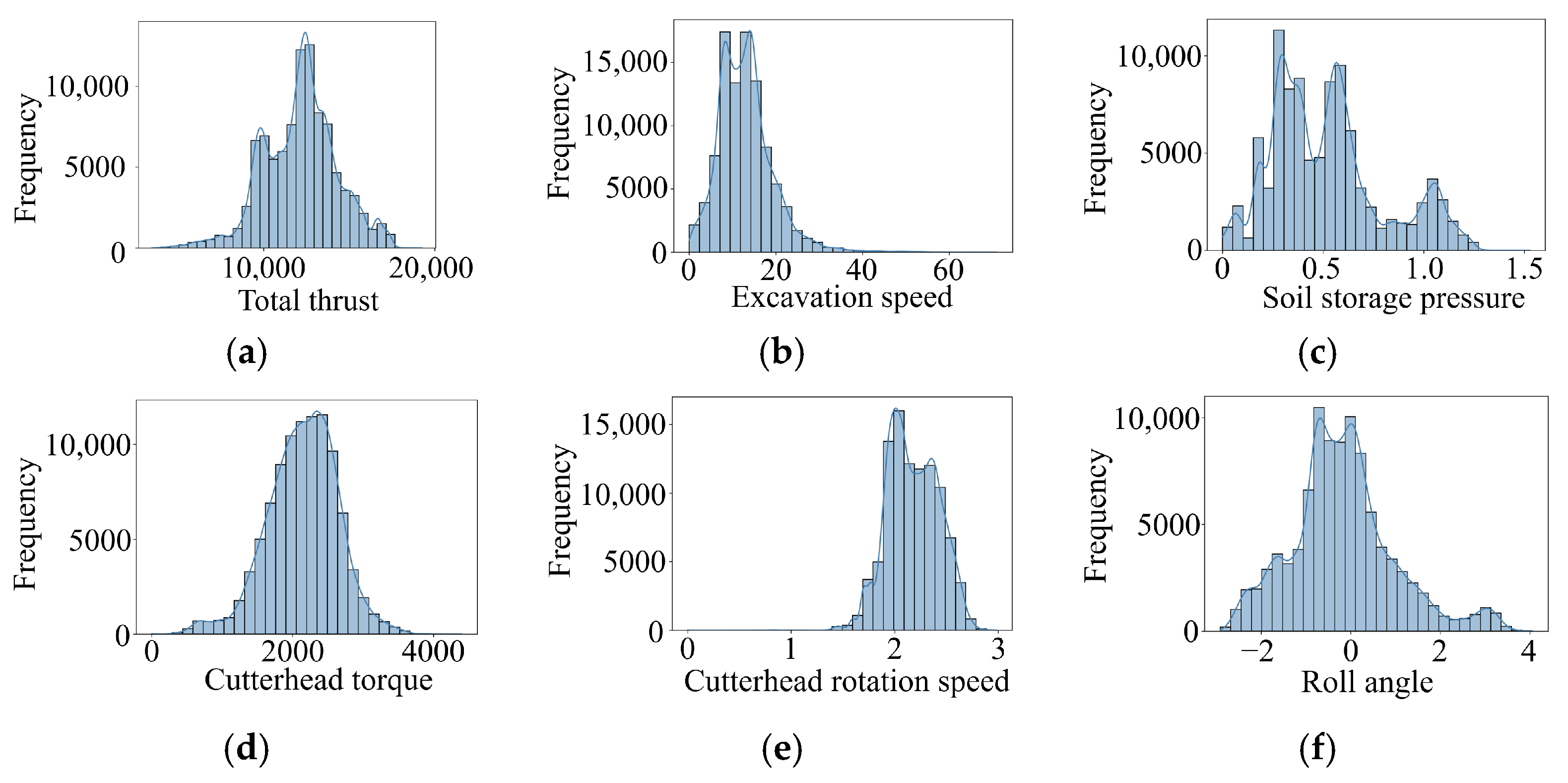
| Total thrust/kN | 19,255.07 | 3482.84 | 12,165.26 | 12,300.06 | 2135.07 | 4,558,537.20 |
| Excavation speed/(mm·min−1) | 71.08 | 0.00 | 13.00 | 12.54 | 6.37 | 40.59 |
| Cutterhead torque/(kN·m) | 4401.86 | 0.00 | 2143.93 | 2173.60 | 501.15 | 251,154 |
| Cutterhead rotation speed/(r·min−1) | 2.98 | 0.00 | 2.17 | 2.16 | 0.25 | 0.06 |
| Soil chamber pressure/(bar) | 1.53 | 0.00 | 0.52 | 0.49 | 0.28 | 0.08 |
| Roll angle (°) | 3.31 | −5.00 | 0.19 | 0.17 | 0.86 | 0.75 |
| Model | Parameter Configuration |
|---|---|
| KNN | n_neighbors = 5; weights = uniform; metric = minkowski |
| SVM | C = 1; kernel = rbf; probability = true |
| RF | n_estimators = 100; max_depth = 1; min_samples_leaf = 20 |
| Light GBM | boosting_type = binary; boosting_type = gbdt; learning_rate = 0.1; num_leaves = 30; max_depth = 3; learning_rate = 0.1;subsample = 0.1;coslsample_bytree = 1; reg_alpha = 1; reg_lambd = 1 |
| ACC | P | PR | F1-Score | ||
|---|---|---|---|---|---|
| KNN | Normal | 80.05% | 75% | 73% | 74% |
| Abnormal | 83% | 85% | 84% | ||
| SVM | Normal | 77.02% | 78% | 56% | 65% |
| Abnormal | 76% | 90% | 83% | ||
| RF | Normal | 93.60% | 96% | 88% | 91% |
| Abnormal | 93% | 97% | 95% | ||
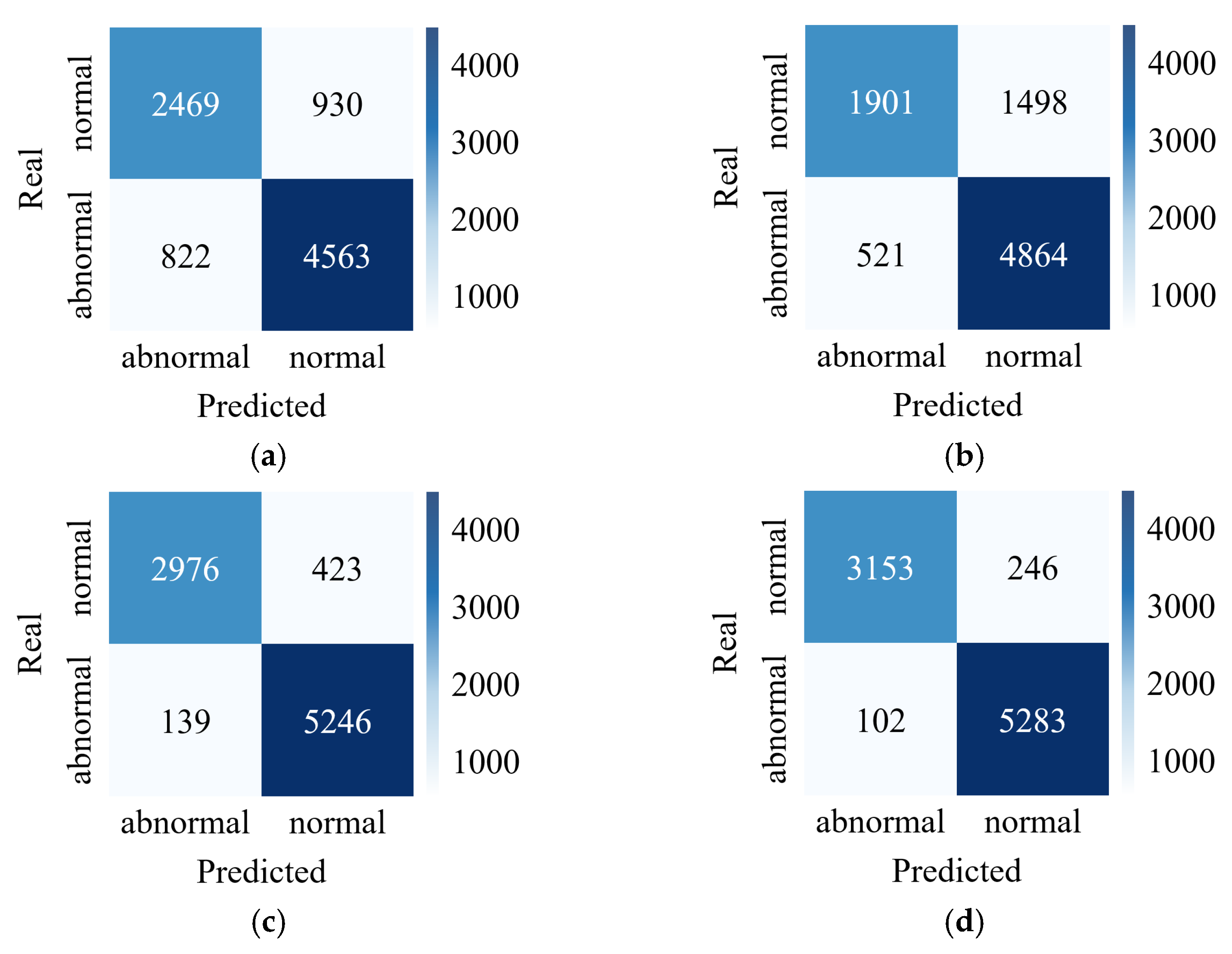
| Light GBM | Normal | 96.04% | 97% | 93% | 95% |
| Abnormal | 96% | 98% | 97% |
| Hyperparameter Category | Adjustment Range |
|---|---|
| num_leaves | 20–60 |
| max_depth | 3–7 |
| learning_rate | 0.01–1 |
| subsample | 0.5–1 |
| coslsample_bytree | 0.5–1 |
| reg_alpha | 0–1 |
| reg_lambd | 0–1 |
| ACC | P | PR | F1-Score | Time-Consuming | ||
|---|---|---|---|---|---|---|
| Light GBM | Normal | 96.04% | 96.87% | 92.76% | 94.77% | 25s |
| Abnormal | 95.55% | 98.11% | 96.81% | |||
| GR- Light GBM | Normal | 99.39% | 99.16% | 99.26% | 99.21% | 163.91s |
| Abnormal | 99.54% | 99.47% | 99.50% | |||
| BO- Light GBM | Normal | 99.40% | 99.15% | 99.29% | 99.22% | 83.72s |
| Abnormal | 99.55% | 99.46% | 99.51% |
Disclaimer/Publisher’s Note: The statements, opinions and data contained in all publications are solely those of the individual author(s) and contributor(s) and not of MDPI and/or the editor(s). MDPI and/or the editor(s) disclaim responsibility for any injury to people or property resulting from any ideas, methods, instructions or products referred to in the content. |
© 2025 by the authors. Licensee MDPI, Basel, Switzerland. This article is an open access article distributed under the terms and conditions of the Creative Commons Attribution (CC BY) license (https://creativecommons.org/licenses/by/4.0/).
Share and Cite
Wu, Q.; Zhang, J. Research on Cutter Anomaly Identification in Slightly Weathered Metamorphic Rock Formations Based on BO-Light GBM Model. Appl. Sci. 2025, 15, 13167. https://doi.org/10.3390/app152413167
Wu Q, Zhang J. Research on Cutter Anomaly Identification in Slightly Weathered Metamorphic Rock Formations Based on BO-Light GBM Model. Applied Sciences. 2025; 15(24):13167. https://doi.org/10.3390/app152413167
Chicago/Turabian StyleWu, Qixing, and Junfeng Zhang. 2025. "Research on Cutter Anomaly Identification in Slightly Weathered Metamorphic Rock Formations Based on BO-Light GBM Model" Applied Sciences 15, no. 24: 13167. https://doi.org/10.3390/app152413167
APA StyleWu, Q., & Zhang, J. (2025). Research on Cutter Anomaly Identification in Slightly Weathered Metamorphic Rock Formations Based on BO-Light GBM Model. Applied Sciences, 15(24), 13167. https://doi.org/10.3390/app152413167