1. Introduction
In the southern region of the Korean Peninsula, demand for large-scale power generation facilities has increased rapidly, driven by expansion of data centers supporting artificial intelligence infrastructure and major urban development projects. Critical national infrastructure, including approximately 26 currently operating nuclear power plants, additional units planned for construction, and associated spent nuclear fuel management facilities, requires stringent seismic safety considerations within this geographically concentrated area. Because seismic design is mandatory for such lifeline facilities, comprehensive evaluations of seismic design parameters specific to the southern Korean Peninsula have become critically important.
Seismic design parameters are typically established through design response spectra that explicitly account for regional seismotectonic characteristics and seismic wave attenuation properties. Performance-based seismic design methodologies have been widely adopted, enabling definition of design spectra according to functional importance and seismic performance requirements [
1,
2,
3]. Despite the Korea Building Code 2016 update replacing the 2009 version, questions remain regarding its applicability to Korean seismo-tectonic conditions due to limited empirical studies focused on the peninsula’s unique seismic environment [
4]. The 2016 Korea Building Code (KBC) introduced some changes related to earthquake-resistant design compared to the 2009 version, primarily driven by the need to reflect recent seismic activity and international standards.
Historically, seismic response spectra were systematized by Housner (1959), who analyzed horizontal ground-motion records from major earthquakes [
5]. Extensive research has demonstrated that strong-motion response spectra are influenced by multiple parameters including soil conditions, epicentral distance, fault mechanisms, earthquake magnitude, and site resonance frequency [
6,
7,
8].
Recent Korean studies have focused on response spectra from the 2016 Gyeongju earthquake (ML 5.8) and 2017 Pohang earthquake (ML 5.4) [
9,
10]. However, these studies primarily concentrated on individual events, leaving gaps in understanding regional seismic response characteristics where critical infrastructure is concentrated. Recent response spectrum analyses of the 2016 Gyeongju and 2017 Pohang earthquakes show that ground motions in the southern Korean Peninsula are enriched in mid-to-high-frequency energy (<0.5 s period range), exceeding the spectral accelerations specified in KBC 2016, even for SE site conditions corresponding to the most conservative criteria [
11,
12].
The characteristics of seismic ground motions, particularly the relationship between vertical (V) and horizontal (H) components, are critical for accurate structural design, yet they show significant regional and event-specific variability. Early foundational work by Bozorgnia and Campbell (2004) established comprehensive, period- and magnitude-dependent models for the vertical-to-horizontal (V/H) response spectral ratio, offering tentative procedures for developing simplified vertical design spectra [
6]. Subsequent studies, such as Yang and Lee (2007) and Kawase et al. (2011), have continued to refine the understanding of V/H ratios and their dependency on site-specific conditions and near-source effects, further underscoring the limitations of applying universal V/H ratios (e.g., 2/3) in all contexts [
13,
14]. Kim et al. (2019) also investigated the vertical [
11] and horizontal spectral characteristics of the 2016 Gyeongju Earthquake series, providing essential data for understanding ground-motion features in the Korean Peninsula. Building upon this, Kim et al. (2021) extended the analysis to the Jeju Island Region, characterizing the local V and H response spectra to address seismic hazard assessment in that specific geographical area [
12].
This study analyzes over 300 ground-motion accelerograms recorded at 10 major seismic stations from 10 moderate-magnitude earthquakes (ML 4.5–5.8), including recent Gyeongju and Pohang events operated by KMA (Korea Meteorological Agency) and KIGAM (Korea Institute of Geosciences and Mineral Resources). The resulting empirical response spectra are systematically compared with two principal seismic design standards: USNRC Regulatory Guide 1.60 (1973) for nuclear facilities and KBC 2016 for general structures. By evaluating these design criteria against observed ground-motion characteristics, this study provides critical insights for seismic design frameworks for critical infrastructure in southern Korea [
15].
2. Ground Motions
This study utilizes strong-motion recordings from 10 earthquakes (ML 4.5–5.8) in the southern Korean Peninsula, summarized in
Table 1 and
Table 2. These moderate-magnitude events characterize regional seismicity relevant to the seismic design of critical infrastructure.
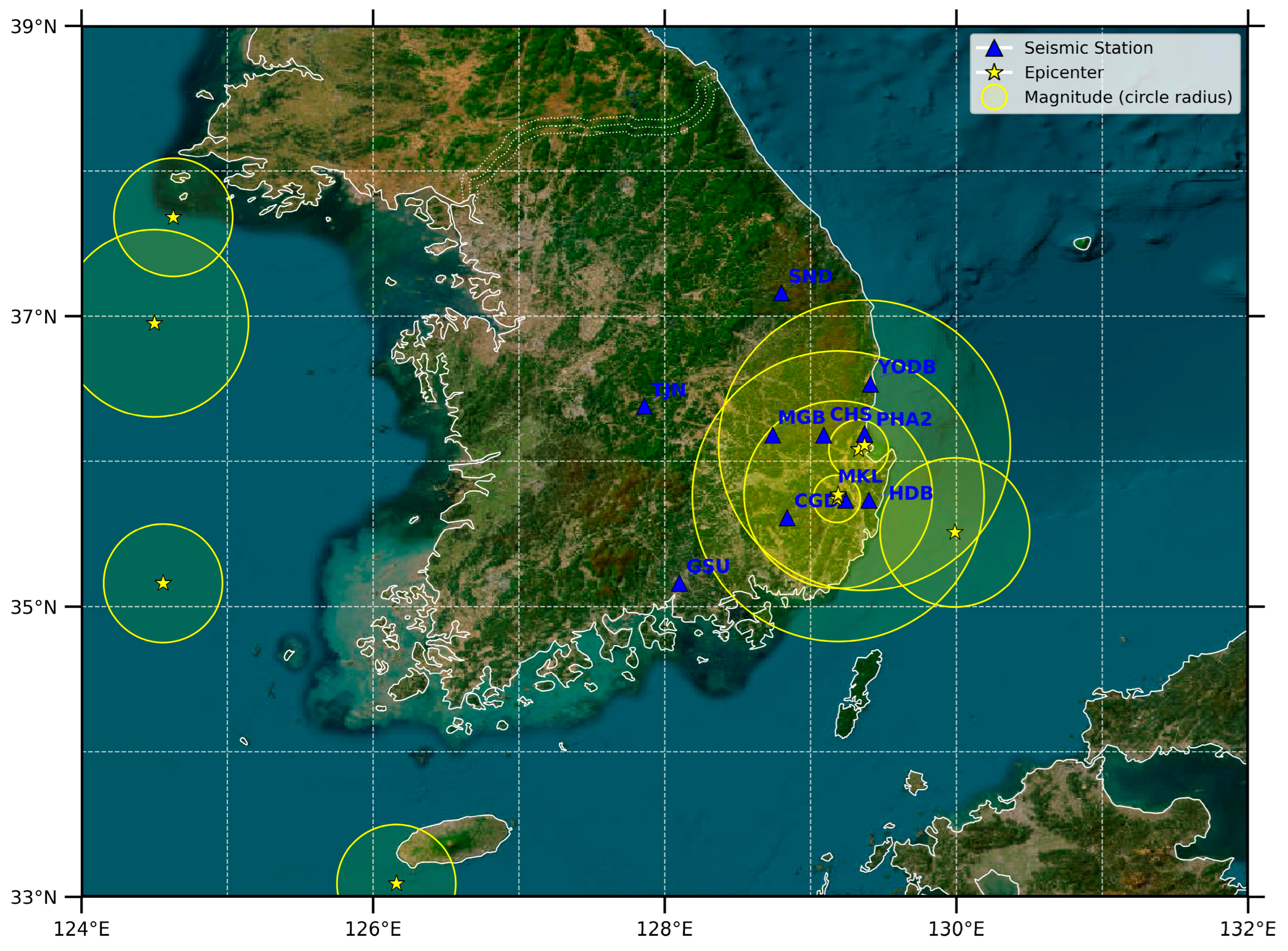
Figure 1 presents the spatial distribution of earthquake epicenters and the 10 major seismic stations used in this analysis (
Table 1 and
Table 2). For commercial sensor names (accelerometer) and related information, please refer to the KIGAM and KMA homepages.
Stations were strategically distributed to capture spatial variability in source and site effects, enhancing the database’s representativeness for engineering applications.
The dataset comprises over 300 three-component ground-motion records (horizontal and vertical). Following quality control for noise levels and measurement integrity, 100 records were selected for analysis. Each record was processed using 5% cosine taper and baseline-drift correction to preserve signal fidelity for spectral analysis, following standard engineering ground-motion methodologies [
5]. Acceleration time histories, sampled at 0.01 s (100 Hz), formed the basis for response-spectra derivation. While S-wave characteristics vary with earthquake magnitude and epicentral distance (
Table 1), a standardized 300 s window was adopted for consistency across the dataset.
Ground motions were acquired from both downhole sensors (installed at depths > 30 m) and surface accelerometers at the 10 stations (
Table 2;
Figure 1). This dual-instrumentation approach enables assessment of site amplification and depth-dependent characteristics, providing high-quality data for seismic-hazard studies. Such comprehensive datasets are essential for developing response spectra tailored to the Korean Peninsula’s seismic environment.
3. Normalization of the Response Spectra and Frequency Bands
The governing equation for the acceleration response spectra in this study is given below:
where
is the acceleration response spectrum,
is the relative acceleration,
is the relative velocity, ξ is the damping value, and ωn is the angular velocity [
5].
We calculated responses over a frequency range of 0.1–50 Hz at equal intervals on a log scale. The ground motions of high-frequency bands (>30 Hz) were attenuated rapidly when traveling through the surface and subsurface, posing minimal threats to structures because they exceeded the resonance periods of most buildings but not those of attached components. Reg. Guide 1.60, which sets the standards for nuclear power plant construction, suggests that responses range to only ∼33 Hz. However, we calculated and compared responses up to 50 Hz to allow a safety margin.
Although the resonance period is unique to each structure, most buildings have resonance frequency bands in the range of 0.5–5 Hz. Thus, the characteristics of structures in this band are particularly important. Because the maximum accelerations of ground motions depend on the epicentral distance, the magnitude of the earthquake, and the site profile response spectra, etc., it must be normalized to the peak ground acceleration (PGA) of each motion or to another norm. Although three normalization methods (involving the PGA, the effective peak acceleration, and spectral intensity) have been suggested, the PGA, which is most generally applied for normalization such as in NUREG-0800 (1975) and Regulatory Guide 1.165 (USNRC, 1997) and 1.208 (USNRC, 2007) 13, was employed in this study.
4. Results and Discussion
4.1. Observed Frequency Distribution Corresponding to Maximum Response and Geological Interpretation
The response-spectrum analysis at 10 seismic stations across the southern Korean Peninsula reveals how geological setting, wave-propagation characteristics, and sensor installation conditions shape observed site responses.
Table 3 and
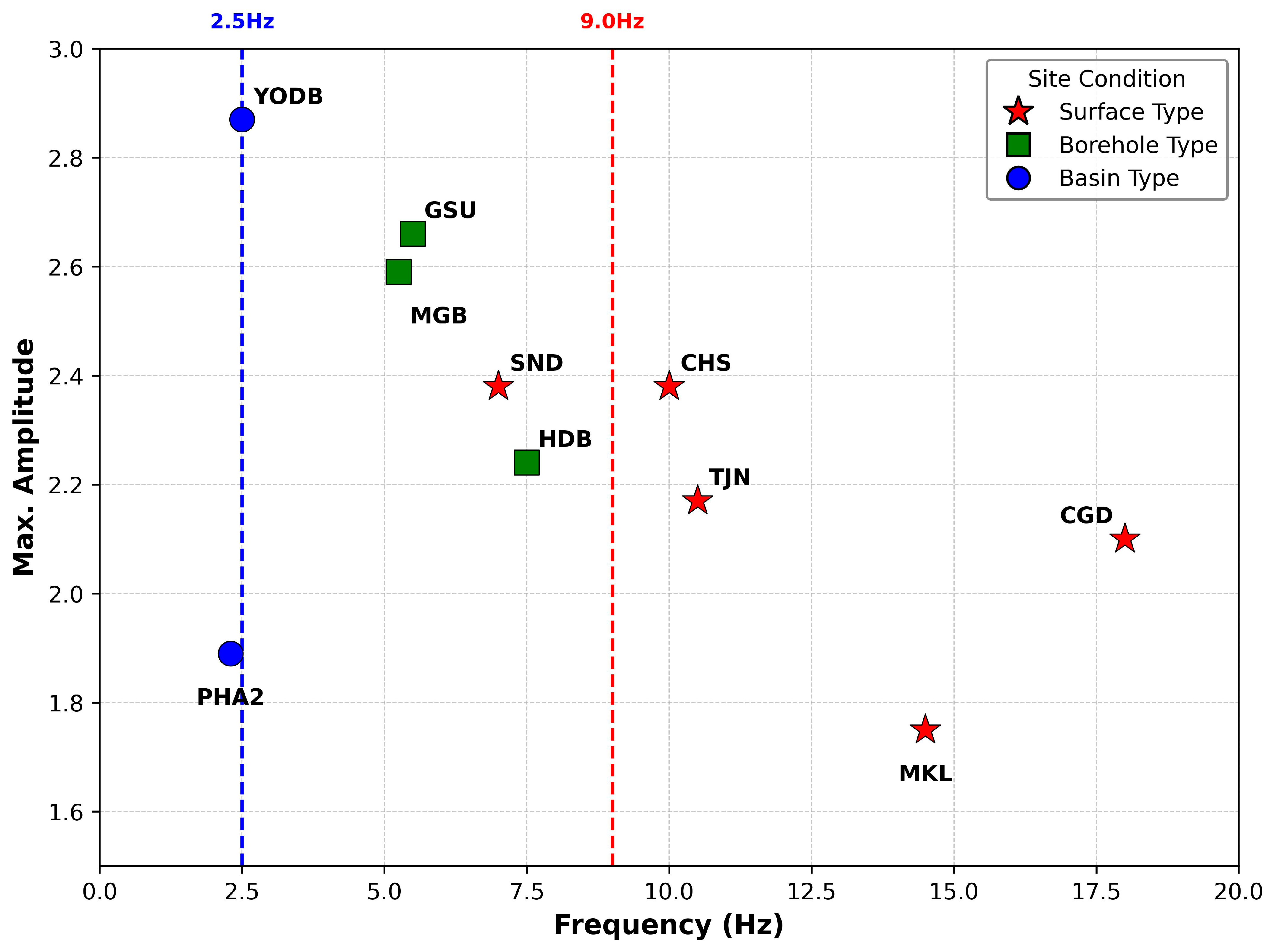
Figure 2 summarize, for each station, the frequency at maximum spectral response and its amplitude, together with sensor type (surface or borehole).
Figure 2 shows, for 10 seismic stations, the frequency at which the response spectrum reaches its maximum value (
x-axis) against the corresponding maximum amplitude (
y-axis), with symbols distinguishing surface (red star), borehole (green square), and basin sites (blue circle). Two vertical dashed lines at 2.5 Hz (blue) and 9.9 Hz (red) highlight representative low- and intermediate-frequency control points specified in Reg. Guide 1.60 (1973).
Figure 2 also shows that basin stations (PHA2 and YODB) cluster near 2.5 Hz, borehole stations (MGB, GSU, and HDB) peak between about 5 and 8 Hz, and surface stations (SND, CHS, TJN, MKL, and CGD) mainly peak near or above 9.9 Hz with varying amplitudes.
The frequencies corresponding to maximum spectral amplitudes could serve as diagnostic parameters for seismic hazard, particularly when benchmarked against the control frequencies of 0.25, 2.5, 9, and 33 Hz specified in the Reg. Guide 1.60 (1973) [
15]. These control points define standard design spectrum segments widely applied in the nuclear and critical infrastructure sectors. Overall, station responses reveal a distinct dichotomy between sedimentary basin sites (blue circle) and non-basin bedrock sites (red star, green square) further modulated by anthropogenic noise (red star) and borehole sensor type (green square).
4.1.1. Basin Sites—Low-Frequency Dominance
Stations located within the Yeongdeok and Pohang sedimentary basins—specifically YODB (borehole) and PHAB (surface) (blue circle)—exhibit anomalously low peak response frequencies of 2.3 Hz and 2.5 Hz, respectively (
Table 3 and
Figure 2). As illustrated in
Figure 2, these stations are clearly situated to the left of or directly on the 2.5 Hz control line. As shown in
Figure 1, both sites are situated at the southeastern coastal margin between latitudes 36–37° N and longitudes 129–130° E.
The dominant spectral peaks of YODB and PHAB identified in this study (
Figure 2) occur at frequencies lower than or equal to the 2.5 Hz, control point specified in Regulatory Guide 1.60, indicating a pronounced basin effect that is widely recognized in engineering seismology. Both geological and borehole data confirm that the Yeongdeok and Pohang basins comprise approximately 3–4 km of unconsolidated Cenozoic sediments and volcanic deposits overlying a Mesozoic crystalline basement [
16]. This stratigraphic composition of loosely consolidated basin fills is a strong candidate for producing maximum spectral amplitudes primarily in the low-frequency range (below than or equal to 2.5 Hz), leading to strong attenuation of high-frequency components and amplification of long-period motions through resonance. Deep stratigraphic cross-sections and seismic modeling in the Pohang area also further substantiate these interpretations [
17]. Consequently, such deep basin sites are expected to exhibit pronounced long-period spectral responses, which is a critical consideration in the seismic design of tall buildings, long-span bridges, and nuclear facilities that are particularly sensitive to low-frequency excitations. Although alternative source- or path-related explanations cannot be completely excluded, the pronounced dominance of low-frequency energy emphasizes the need for future studies on the attenuation characteristics of low-frequency ground motions in this region, with the aim of developing robust, site-specific seismic design parameters.
Figure 2 presents the maximum response values corresponding to each frequency across 10 seismic stations, ranging from 1.75 to 2.87. Notably, PHA2, located in a basin region, exhibited a response amplitude of 1.89, which is the second lowest among the stations, while YODB, situated in another basin area, showed the highest maximum response amplitude of 2.87.
The absence of a distinct regional trend in the basin’s amplitude is also evident in the normalized acceleration responses at the 10 stations, which range from 1.75 to 2.87, indicating only limited dispersion as summarized in
Table 3. This behavior results from normalizing the basin response spectra by their respective peak ground accelerations (PGAs), which causes a proportional increase in the normalized values where the PGA is large, thereby reducing apparent variability across the sites.
Consequently, the maximum normalized response using PGA, a widely accepted normalization method for real ground motion, demonstrates relatively minimal regional dependence. This observation aligns with findings reported by Nishikawa and Miyajima (2011) and Ghosh et al. (2009) [
18,
19].
4.1.2. Non-Basin Sites: High-Frequency Retention
In contrast, non-basin stations such as CGD, CHS, MKL, and TJN (red star) recordrf maximum response frequencies of 18 Hz, 10 Hz, 14.5 Hz, and 10.5 Hz, respectively (
Table 3 and
Figure 2). In
Figure 2, these stations are distributed to the right of the 9.0 Hz red dashed line, which corresponds to the upper control frequency of the Reg. Guide 1.60 plateau. These values centered around or exceeded the 9 Hz Reg. Guide 1.60 (1973) control point, indicating that shallow weathered layers and competent bedrock promote efficient transmission of high-frequency energy. The CGD station response at 18 Hz approaches even the upper 33 Hz control point limit in Reg. Guide 1.60 (1973), underscoring that minimal overburden and strong basement rock enhance high-frequency amplification. These spectral patterns are typical of stiff-soil-to-rock site classes, which predominantly influence short-period structures, nonstructural elements, and high-precision instruments.
An outlier is the SND station in
Figure 2, which, despite using a surface ES-T sensor, records a peak frequency of 7 Hz. This places it within the intermediate zone defined by the two control lines (2.5 Hz and 9.0 Hz), alongside the borehole sensors (GSU, MGB, HDB; green square) which recorded peak responses between 5.25 Hz and 7.5 Hz. This intermediate behavior of the SND station may suggest the influence of local weathered rock, the sedimentary cover effect, or reduced ambient noise, demonstrating that site response cannot be solely attributed to instrumentation type (surface or borehole) without accounting for local geology. The fact that borehole sensors (green square) consistently fall within this 2.5–9.0 Hz band may suggest they are effectively shielded from high-frequency surface noise.
4.1.3. Sensor Type and Anthropogenic Noise
Anthropogenic noise emerges as a significant variable influencing high-frequency observations. Frequency peaks in the 5–25 Hz range overlap with urban and industrial noise sources such as vehicular traffic, heavy machinery, and manufacturing operations [
20]. Several surface-mounted stations (CGD, CHS, MKL, SND, TJN;
Table 3) (red star) fall within this band, implying potential contamination that artificially inflates high-frequency spectral energy. Observations during periods of reduced human activity such as during the COVID-19 pandemic corroborate this correlation through measurable decreases in high-frequency amplitudes [
21].
Conversely, borehole-installed ES-DH sensors (GSU, MGB, HDB) (green square) recorded peak responses between 5.25 Hz and 7.5 Hz, being minimally affected by surface noise. This highlights the superior reliability of borehole instrumentation in noise-prone environments [
22]. Notably, SND’s surface sensor alignment with borehole frequency values may suggest that meticulous installation and environmental shielding could mitigate, though not completely eliminate, anthropogenic noise interference.
4.1.4. Geological and Engineering Implications
The spatial pattern of maximum response frequencies across the southern Korean Peninsula confirms that subsurface geology exerts primary control over spectral behavior. Basin conditions tend to lower the dominant frequencies, while bedrock dominance increases them. These contrasts have direct implications for both seismic hazard evaluation and structural design. First, basin sites amplify long-period ground motions, thus increasing the seismic demand on flexible, tall, or long-period-sensitive structures. Secondly, bedrock sites concentrate energy in the short-period range, imposing higher loads on low rise buildings, industrial equipment, and nonstructural systems. Surface-only data near urban environments may overestimate high-frequency content due to noise contamination, necessitating corrections via borehole measurements or filtering techniques.
For critical facilities, including nuclear power plants, large dams, and high-rise clusters, these findings emphasize that site-specific design spectra are strongly recommended to replace generic design envelopes. The convergence between borehole and fairly well-shielded surface data (e.g., SND) highlights the importance of integrated geophysical surveys, κ mapping, and borehole monitoring to distinguish genuine seismic signatures from anthropogenic artifacts.
This investigation demonstrates a pronounced spectral bifurcation between basin and non-basin sites in the southern Korean Peninsula. The sedimentary basins produce low-frequency peaks (equal to or less than 2.5 Hz), while bedrock-dominated sites exhibit higher-frequency peaks (>9 Hz). Borehole sensors provide the most reliable recordings and are largely immune to anthropogenic noise. Collectively, these findings reaffirm that geological setting and instrumentation strongly govern seismic response characteristics and underscore the need for site-specific seismic design spectra for critical infrastructure in the region.
4.2. Comparative Analysis of Seismic Response Spectra in the Southern Korean Peninsula
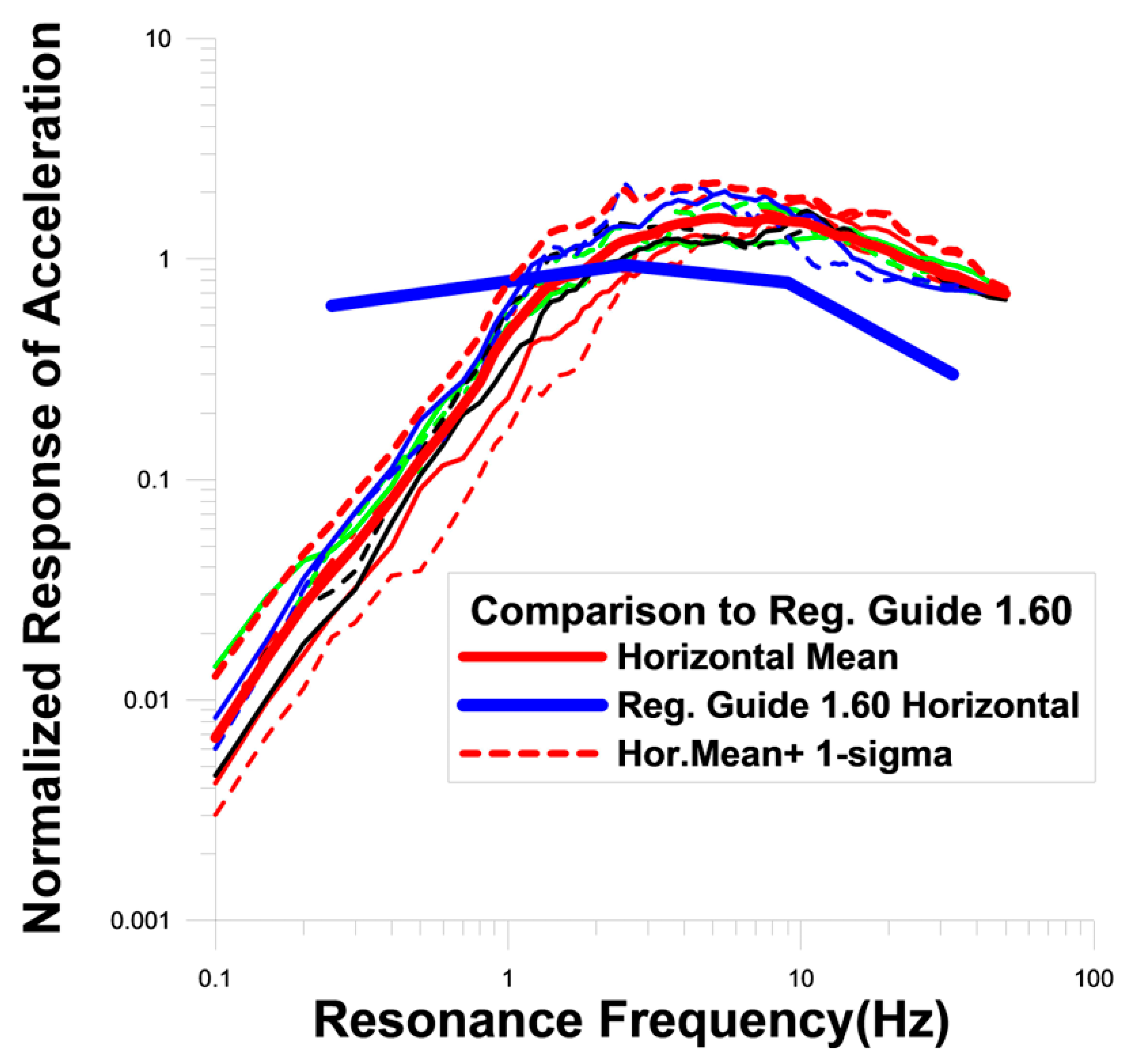
The seismic ground-motion characteristics of the southern Korean Peninsula was examined through a comparative analysis between locally observed response spectra and the Reg. Guide 1.60 (1973) (blue thick line). Horizontal response spectra, calculated as the vector sums of the east–west and north–south components (red thick line), were determined for 10 seismic stations by averaging the spectra derived from 10 local earthquakes (
Figure 3). Although the Reg. Guide 1.60 (1973) spectrum was developed using data from the western United States, it remains widely applied to critical infrastructure, notably nuclear power plants. To this day, Reg. Guide 1.60 still defines a key axis of the seismic design framework for nuclear facilities operating on the southern Korean Peninsula.
Although Reg. Guide 1.60 (1973) [
15], which still partially plays a major role in standards for nuclear power plant construction, specifies that the response range should be considered only up to 33 Hz, this study extended the analysis and comparison of responses up to 50 Hz to account for an appropriate safety margin. The resonance period varied across individual structures; however, most buildings demonstrated resonance frequencies spanning a broad range, dependent on their height and structural characteristics. Consequently, it is imperative to account for structural-specific attributes within this frequency band.
Since the maximum ground-motion accelerations primarily depend on the epicentral distance, earthquake magnitude, and local site conditions, the response spectra of individual motions should be normalized to the peak ground acceleration (PGA) or another appropriate reference parameter. Among the established normalization approaches based on PGA, effective peak acceleration, and spectral intensity, the PGA method is the most widely applied due to its simplicity and consistency with recorded ground-motion parameters. In this study, response spectra were normalized using the PGA approach, following the methodology prescribed in NUREG-0800 (USNRC, 1975), Regulatory Guide 1.165 (USNRC, 1997), and Regulatory Guide 1.208 (USNRC, 2007) [
2,
23,
24]. Accordingly, all response spectra presented in the subsequent sections refer to PGA-normalized spectra.
The study results reveal substantial deviations between the Reg. Guide 1.60 (1973) reference spectrum and locally observed southern Korean spectra across several frequency bands. Individual and mean response spectra of 10 seismic stations horizontal components using moderate-magnitude events in the southern Korean Peninsula are shown in
Figure 3.
4.2.1. Frequency Band-Specific Comparison
Low-Frequency Range (<2.5 Hz)
In Reg. Guide 1.60 (1973), the control frequencies for displacement and acceleration are defined at 0.25, 2.5, 9, and 33 Hz. Structures with long natural periods are primarily influenced by motions within this low-frequency band. As presented in
Figure 3, the average observed spectra for the southern Korean Peninsula initiate at a relatively low acceleration level and increase steeply with frequency. By contrast, the Reg. Guide 1.60 (1973) spectrum exhibits substantially higher initial acceleration, suggesting that it may provide an overly conservative design basis for flexible, long-period structures in the region. As frequency approaches 2–3 Hz, the observed and Reg. Guide 1.60 (1973) curves intersect, but overall, Reg. Guide 1.60 (1973) appears to overestimate seismic demand in this domain.
Mid-Frequency Range (2.5–9 Hz)
This range encompasses the predominant natural frequencies of common civil and industrial structures. As shown in
Figure 3, the average observed spectrum displays a fairly broad peak around 3–5 Hz, with normalized accelerations exceeding those prescribed by Reg. Guide 1.60 (1973). While Reg. Guide 1.60 (1973) maintains a relatively flat plateau across this band, the local dataset consistently indicates greater spectral accelerations near the peak range. These results imply that exclusive reliance on Reg. Guide 1.60 (1973) may underestimate seismic demands that are most critical for the safety and performance of typical buildings and infrastructure in southern Korea.
High-Frequency Range (>9 Hz)
For stiffer structures and short-period components, both the observed and Reg. Guide 1.60 (1973) [
15] spectra decline beyond the 9 Hz control point. Nevertheless,
Figure 3 shows that the observed spectra consistently remain higher than the Reg. Guide 1.60 (1973) predictions across much of the high-frequency field, with convergence occurring only at very high frequencies. The sharper attenuation in Reg. Guide 1.60 (1973) suggests that it fails to represent the strong high-frequency content characteristic of earthquakes around the southern Korean Peninsula, potentially leading to under-designed equipment and nonstructural elements that are sensitive to short-period vibrations. The observed trend, where the response reaches a maximum within the mid-frequency range and subsequently decreases at higher frequencies, is consistent not only with the findings of this study but also with established seismic design standards, such as Regulatory Guides 1.60, 1.165 and 1.208 (US NRC, 1973, 1997, 2007), as well as the ASME code [
25].
4.2.2. Implications for Seismic Design
Empirical data from the southern Korean Peninsula reveal that regional ground motions are systematically enriched in mid-to-high-frequency energy compared to Reg. Guide 1.60 (1973) forecasts. This enrichment likely reflects a combination of regional seismo-tectonic factors, including higher stress drops, shallower crustal sources, and distinctive attenuation characteristics, that enhance high-frequency retention. Numerous recent studies demonstrate that ground motions observed in the southern Korean Peninsula are consistently enriched in the mid-to-high-frequency range compared to having low-frequency content, reflecting regional source characteristics and crustal structure [
26].
Thus structures with natural frequencies in the 2–33 Hz range are subjected to greater acceleration demands than those anticipated by Reg. Guide 1.60 (1973). This finding is particularly consequential for Korea’s general building stock and for sensitive facilities such as nuclear power plants and spent fuel storage. The Reg. Guide 1.60 (1973) standard was established based on the tectonic context of the western United States, an area dominated by active plate boundary zone earthquakes with larger magnitudes and longer periods. In contrast, Korea’s intraplate setting typically generates moderate-magnitude earthquakes rich in high-frequency energy [
27,
28,
29]. Direct adoption of Reg. Guide 1.60 (1973) without regional calibration therefore may risk underestimating regional seismic demand, especially in frequency bands crucial for structural and equipment performance.
Consequently, this comparative analysis demonstrates that Reg. Guide 1.6 (1973) does not fully capture the spectral characteristics of seismic ground motions in the southern Korean Peninsula—particularly within the mid-to-high-frequency domain. Regionally observed spectra indicate higher acceleration demands across frequencies most relevant to buildings and to vital infrastructure, including nuclear facilities such as nuclear power plants and spent fuel storage. Similar results were obtained in other recent studies using seismic data from the Korean Peninsula. To achieve resilient and reliable performance, Korean seismic design standards must be localized using empirical response spectral data that reflect the true seismic environment, thereby ensuring both public safety and long-term structural integrity [
11,
30].
4.3. Evaluation of Vertical-to-Horizontal Ground Motion Ratios in the Southern Korean Peninsula
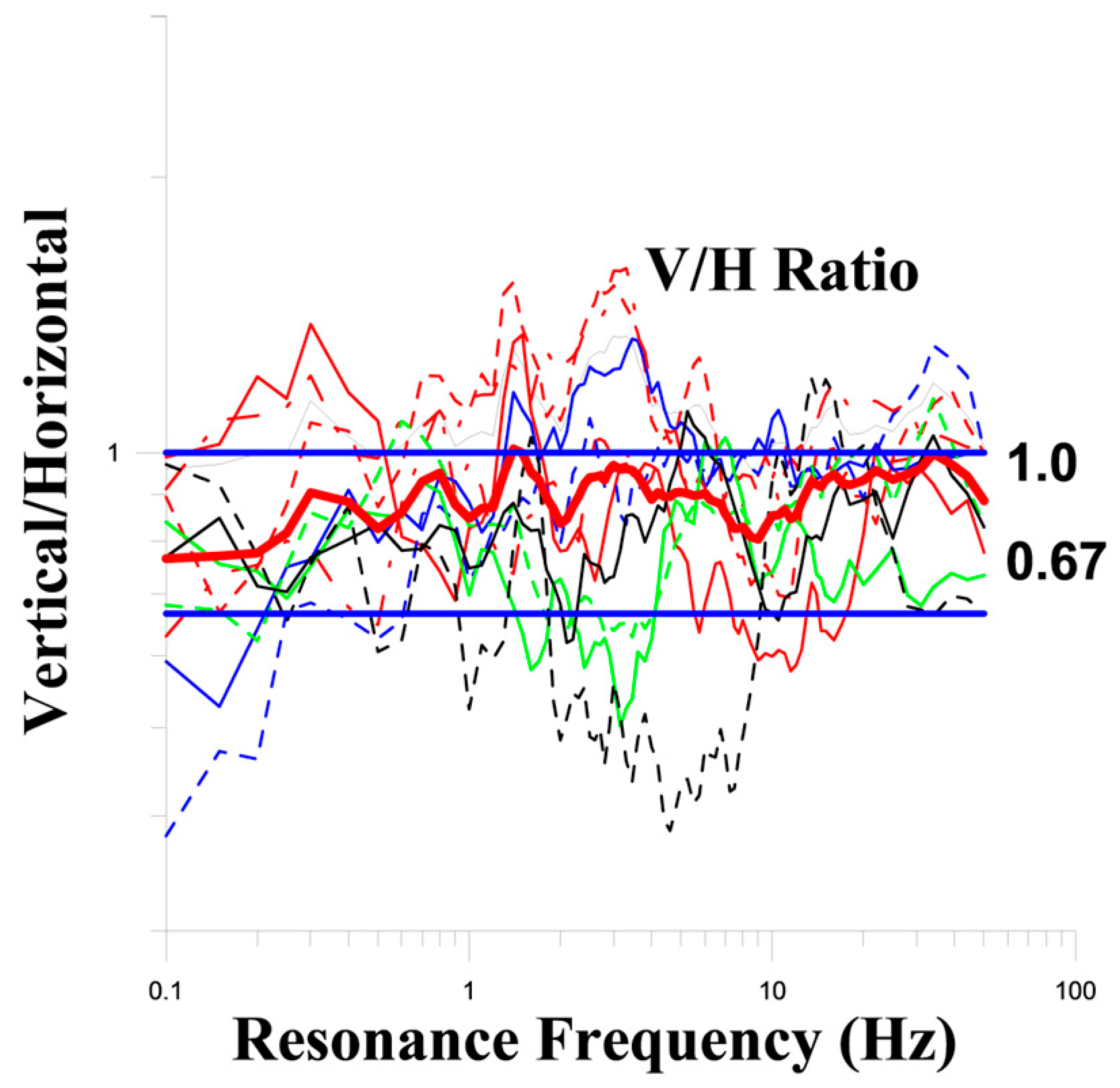
Figure 4 presents the average and individual vertical-to-horizontal (V/H) spectral acceleration ratios obtained from 10 seismic stations. The analysis identified an average V/H ratio of approximately 0.67 (two thirds) across the entire frequency range. While this aligns closely with the constant ratio specification in ASCE 4-16 (
Table 4), substantial variability was observed, particularly at higher frequencies [
31].
In contemporary earthquake engineering, horizontal ground motions have traditionally received greater emphasis because they dominate the lateral force demands on structures. However, vertical ground motions can also produce significant effects especially in structural systems such as long span bridges, base-isolated buildings, liquid storage tanks, and vibration-sensitive equipment. Neglecting these effects can lead to underestimation of seismic demand and compromise overall structural safety [
5,
32,
33].
The V/H spectral acceleration ratio serves as a key parameter for quantifying the influence of vertical motion. It expresses the relationship between vertical and horizontal 5% damped response spectra as a function of frequency. International seismic design standards, including adopt either constant or simplified frequency dependent V/H ratios for design purposes. In this study, the horizontal and vertical response spectra were represented by the geometric mean of the orthogonal components, and V/H ratios were evaluated for frequencies between 0.1 Hz and 50 Hz.
4.3.1. Observed Characteristics of V/H Ratios
Figure 4 illustrates two key features of the observed vertical-to-horizontal (V/H) spectral ratios. First, there is a clear frequency dependence, with V/H ratios increasing from approximately 0.5 to 0.6 at lower frequencies (below 2 Hz) to 0.7 or greater at frequencies exceeding 10 Hz. Second, the figure reveals high-frequency peaks, where in several records among the 10 analyzed, the V/H ratio surpasses 1.0 at frequencies above 10 Hz. This suggests instances in which vertical ground accelerations are equal to or greater than the horizontal components, highlighting significant variability and the potential for extreme vertical motions in rare seismic events.
These observations indicate that while the mean value of 0.67 is suitable for many design scenarios, a frequency-independent constant ratio cannot fully capture the variability and high-frequency amplification evident in the Korean dataset.
4.3.2. Comparison with International Design Standards (Table 4)
The observed V/H ratios from this study were compared against representative international code provisions:
ASCE 4-16: Constant ratio of 0.67, closely matching the Korean mean values but incapable of modeling high-frequency exceedances [
6].
NEHRP (FEMA 450): Variable ratio of 0.5 (low frequency) to 0.7 (high frequency). The high-frequency ratio aligns well with local observations, whereas the low-frequency provision underestimates Korean results [
7].
Eurocode 8 Type 1: Constant ratio of 0.9, conservative across most frequencies and inclusive of the upper-range Korean values [
11].
Eurocode 8 Type 2: Constant ratio of 0.45, substantially lower than the observed data and therefore not conservative for Korean applications [
11].
U.S. NRC RG 1.60 (1973): Frequency-dependent ratios of 0.67 (low frequency) and 1.0 (high frequency). The high-frequency value captures most extreme Korean measurements and remains intentionally conservative for safety critical facilities [
12].
These comparisons reveal that certain international provisions (e.g., ASCE 4-16 and NEHRP high frequency) approximate average behavior from southern Korean empirical data, but none replicate the observed frequency dependence or variability. Simplified constant or dual value representations therefore insufficiently characterize regional seismic response patterns.
4.3.3. Seismological and Engineering Implications
The distinct spectral behavior observed in southern Korea reflects its intra-plate seismotectonic setting [
23]. Earthquakes in stable continental crust generate greater high-frequency energy relative to those in plate boundary regions. Local site amplification and near-surface geological heterogeneity further contribute to elevated vertical motion amplitudes and the observed V/H scatter.
For conventional building structures with natural periods exceeding 0.5 s, a design V/H ratio of 0.67 appears adequate. However, for short-period systems (<0.2 s), high-frequency-sensitive equipment, and critical infrastructure such as nuclear-related facilities, long span bridges, or base-isolated systems, more conservative design approaches are warranted. It is strongly recommended to consider adopting either higher constant ratios (e.g., Eurocode 8 Type 1 or U.S. NRC RG 1.60 (1973) high-frequency values) or probabilistic frameworks informed by regional data distributions. Failure to account for observed high-frequency amplification could lead to underestimation of vertical seismic demands.
Finally, the present analysis identifies a mean V/H ratio of approximately 0.67 for the southern Korean Peninsula, consistent with several international standards. However, the data exhibit strong frequency dependence and substantial scatter, with observed ratios occasionally exceeding 1.0. These findings emphasize the limitations of simplified constant ratio design assumptions. Similar results were obtained in other recent studies using seismic data from the Korean Peninsula.
4.4. Comparison with KBC 2016
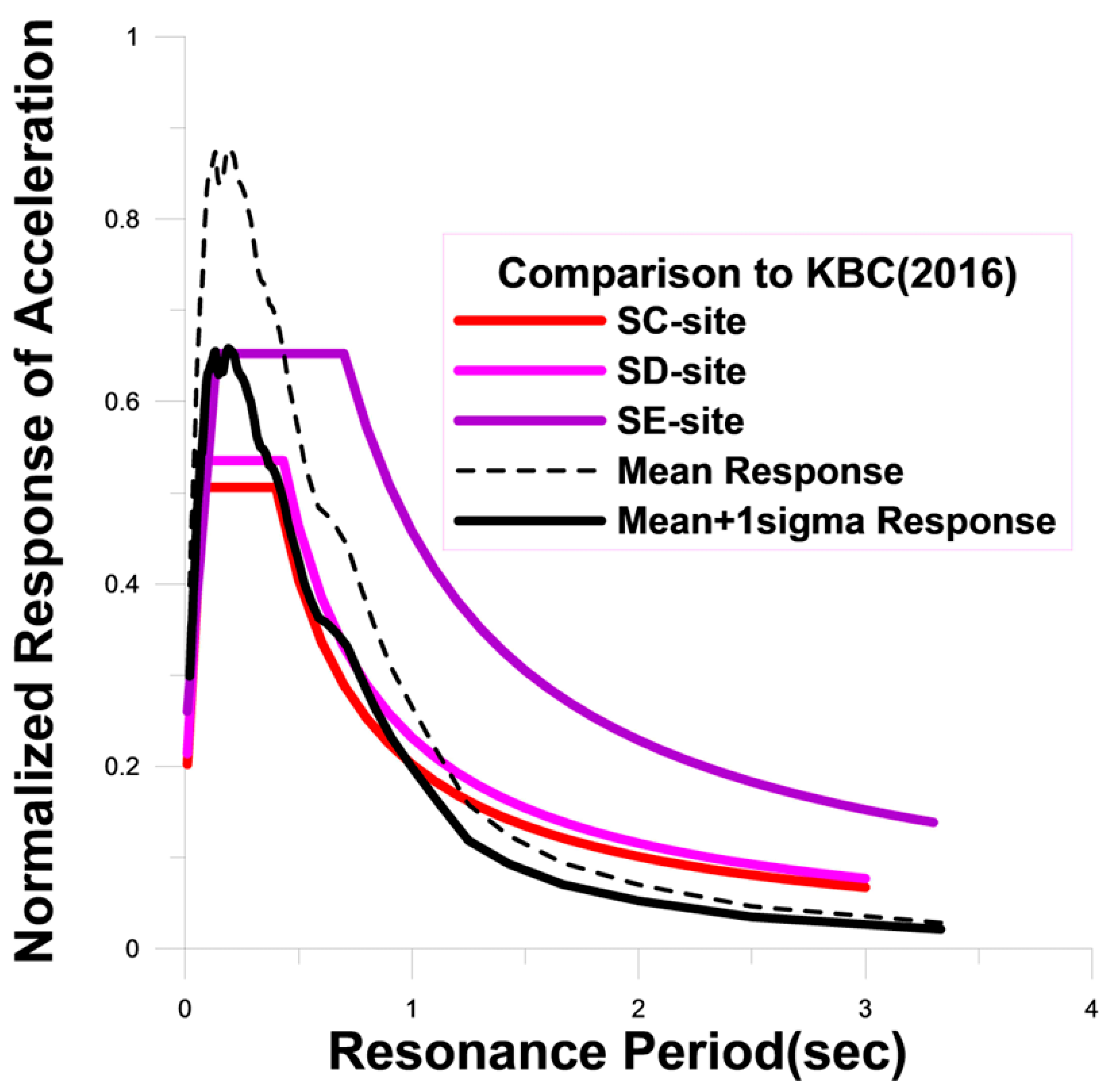
In addition to examining Reg. Guide 1.60, this study compared the mean and mean + 1 σ response spectra of 10 inland seismic stations (horizontal components represented by the vector sum of the north–south and east–west motions) with the design spectra specified in the KBC 2016. The KBC 2016 spectrum serves as the national seismic design standard for ordinary structures, including residential buildings, schools, and hospitals, as depicted in
Figure 4.
Unlike Reg. Guide 1.60, KBC 2016 does not differentiate between vertical and horizontal components. Its design response spectrum accounts for both short-period (SDs) and long-period (SDl) hazards through site amplification factors Fa and Fv, respectively. These coefficients quantify local site effects according to soil classification and are central to the seismic hazard adjustment procedures prescribed in KBC Section 0306.3.3.
For this analysis, only the three soil categories most commonly encountered in Korea—SC, SD, and SE—were considered, following the KBC 2016 guidelines.
Figure 5 illustrates the corresponding design spectra plotted in increasing order of site amplification (SC → SD → SE). Based on the reference to KBC 2016, a seismic hazard with a return period of 2400 years was adopted. This return period represents an importance-level dependent standard reflecting both functional and social performance requirements for essential and ordinary buildings. The KBC 2016 design spectrum was generated by synthesizing both seismic coefficients and site amplification terms Fa and Fv in accordance with the procedures outlined in Clause 0306.3.3. As expected, site amplification and permissible design hazard levels increase in the order SC < SD < SE.
Comparisons in
Figure 5 indicate that for frequencies below 3.3 Hz (periods longer than 0.3–0.4 s), all three site standards in KBC 2016 (SC, SD, and SE) tend to be appreciably more conservative than the mean observed ground-motion spectra derived from regional datasets. However, for periods around 0.3–0.4 s, the SE criterion, which exhibits the highest values among the three site standards, is slightly less conservative than the mean observed ground-motion spectra. When comparing the mean observed ground-motion spectra obtained in this study with the SC and SD criteria, both of which have lower thresholds than the SE criterion, the observed spectra significantly exceed these two criteria, substantially not compromising their conservatism. Accordingly, future revisions and improvements of all three sites criteria (SC, SD, and SE) are strongly reconsidered to better reflect regional seismic hazard. Similar findings have been reported in recent studies analyzing seismic data from the Korean Peninsula [
29,
30,
33].
According to KBC 2016 criteria, fundamental periods of 0.3–0.4 s correspond roughly to buildings with 6–8 stories for reinforced concrete (RC) frames and 4–6 stories for steel systems, as specified in Clauses 0306.5.6 and 0306.5.7. Consequently, for buildings within these ranges, the KBC design spectrum may be considerably less conservative, warranting careful calibration of design demands to more realistically reflect regional ground-motion characteristics.
5. Conclusions
This comprehensive analysis of response spectral characteristics from moderate earthquakes in the southern Korean Peninsula provides important insights for seismic design of critical infrastructure. Key findings include the following:
Frequency Response Characteristics: Analysis of 10 seismic stations revealed distinct frequency response patterns controlled by geological setting and sensor installation. Basin sites (YODB, PHA2) exhibited low-frequency dominance (2.3–2.5 Hz), while bedrock sites showed high-frequency peaks (7–18 Hz). Borehole sensors provided more reliable data and were less affected by anthropogenic noise contamination.
Comparison with Design Standards: Observed response spectra significantly exceeded Reg. Guide 1.60 (1973) predictions in mid-to-high-frequency ranges (3–33 Hz). This enrichment reflects distinctive intraplate seismicity characteristics, potentially including higher stress drops and shallower sources that favor high-frequency energy retention.
Vertical-to-Horizontal Ratios: Mean V/H ratios were approximately 0.67, consistent with ASCE 4-16 specifications. However, significant frequency dependence and scatter were observed, with ratios exceeding unity at high frequencies. This variability highlights limitations of constant ratio design prescriptions for frequency-sensitive structures.
KBC 2016 Adequacy: Comparison with KBC 2016 revealed that observed spectra exceeded slightly design standards for periods longer than 0.3–0.4 s, particularly for higher soil classifications such as for SE site. This suggests potential insufficient conservatism in current Korean building codes for certain structural periods.
Direct adoption of international standards may inadequately represent Korean seismic conditions. For critical infrastructure, particularly nuclear facilities concentrated in the southern Korean Peninsula, site-specific response spectra incorporating regional characteristics are essential for robust design.
It is recommended that future seismic design practice employ region-specific response spectra, particularly for critical facilities. Expansion of the strong-motion database through continued monitoring and development of Korean Peninsula-specific ground-motion prediction equations are needed.
This study demonstrates the necessity of region-specific seismic design parameters that reflect the unique intraplate seismicity of the Korean Peninsula, moving beyond generic international standards toward risk-informed, locally calibrated design methodologies.
Future research should focus on several key areas, including the development of frequency-dependent, region-specific ground-motion prediction equations; investigation of site response contributions to variability in vertical-to-horizontal (V/H) spectral ratios; expansion of the national strong-motion database; and conducting structure-specific sensitivity analyses to better understand vertical motion effects. Ultimately, this refined understanding of V/H behavior in the southern Korean Peninsula provides the foundation for regionally calibrated, risk-informed seismic design bridging the gap between generalized international standards and the unique seismic characteristics of intraplate environments.
To consider future designs, it is necessary to adopt performance-based design approaches that consider rare but possible exceedances of code spectra, particularly in the short-period range, by incorporating site-specific spectra. For dense urban or critical facility sites, it is also necessary to conduct micro-zonation studies and site-specific response modeling, as local heterogeneity (not fully captured by general code classes) can lead to significant deviations in spectral amplification.
Author Contributions
Conceptualization, J.K.K.; methodology, J.K.K.; software, J.C. and H.K.; validation, J.K.K. and H.K.; formal analysis, J.C. and J.K.K.; investigation, D.P. and H.K.; resources, H.K. and J.C.; data curation, D.P. and J.K.K.; writing—original draft preparation, J.K.K.; writing—review and editing, J.K.K., D.P., J.C., and H.K.; visualization, H.K. and J.C.; supervision, J.K.K.; project administration, D.P. and J.K.K.; funding acquisition, D.P. All authors have read and agreed to the published version of the manuscript.
Funding
This work was supported by the Korea Institute of Energy Technology Evaluation and Planning (KETEP) and the Ministry of Climate, Energy & Environment (MCEE) of the Republic of Korea (No. 2021171020001A).
Institutional Review Board Statement
Not applicable.
Informed Consent Statement
Not applicable.
Data Availability Statement
The original contributions presented in this study are included in the article. Further inquiries can be directed to the corresponding author.
Conflicts of Interest
Author Heejun Kwon was employed by the company YOOKSONG Co., Ltd. The remaining authors declare that the research was conducted in the absence of any commercial or financial relationships that could be construed as a potential conflict of interest.
References
- Oh, S.H.; Kim, Y.H.; Ryu, H.S.; Kim, Y.J.; Park, H.Y. Experimental Verification of Seismic Performance of Built-Up Beam-to-Column Connections with Ductile Detail. J. Constr. Steel Res. 2021, 176, 106397. [Google Scholar] [CrossRef]
- U.S. Nuclear Regulatory Commission. Regulatory Guide 1.208: A Performance-Based Approach to Define the Site-Specific Earthquake Ground Motion; U.S. Nuclear Regulatory Commission: Washington, DC, USA, 2007. Available online: https://www.nrc.gov/docs/ML0703/ML070310619.pdf (accessed on 1 November 2025).
- Hahm, D.G.; Seo, J.M.; Choi, I.K.; Rhee, H.M. Uniform Hazard Spectrum Evaluation Method for Nuclear Power Plants on Soil Sites Based on the Hazard Spectra of Bedrock Sites. Korea J. Earthq. Eng. Soc. 2012, 16, 35–42. [Google Scholar] [CrossRef]
- MOLIT. Korean Building Code—Building Structural Code (KBC 2016); Ministry of Land, Infrastructure and Transport (MOLIT): Seoul, Republic of Korea, 2016. Available online: https://www.codil.or.kr/viewDtlConWrkDtlSch.do?gubun=std&pMetaCode=CIGCDC190010 (accessed on 1 November 2025).
- Housner, G.W. Behavior of Structures during Earthquakes. J. Eng. Mech. Div. 1959, 85, 109–129. [Google Scholar] [CrossRef]
- Bozorgnia, Y.; Campbell, K.W. The Vertical-to-Horizontal Response Spectral Ratio and Tentative Procedures for Developing Simplified V/H and Vertical Design Spectra. J. Earthq. Eng. 2004, 8, 175–207. [Google Scholar] [CrossRef]
- Elgamal, A.; He, L. Vertical Earthquake Ground Motion Records: An Overview. J. Earthq. Eng. 2004, 8, 663–697. [Google Scholar] [CrossRef]
- Shahrour, F.A.D.M.; Elgawad, M.M.M.S. The influence of rupture directivity and fault mechanism on the response spectral ordinates of near-fault ground motions. Earthq. Eng. Struct. Dyn. 2024, 53, 101–119. [Google Scholar] [CrossRef]
- Shin, D.H.; Hong, S.J.; Kim, H.J. Investigation on Effective Peak Ground Accelerations Based on the Gyeongju Earthquake Records. J. Earthq. Eng. 2016, 20, 425–434. [Google Scholar] [CrossRef]
- Heo, T.M.; Kim, J.H.; Lee, J.H.; Kim, J.K. Response Spectra of 2017 Pohang Earthquake and Comparison with Korean Standard Design Spectra. J. Earthq. Eng. Soc. Korea 2018, 22, 129–137. [Google Scholar] [CrossRef]
- Kim, J.K.; Wee, S.H.; Yoo, S.H. Characteristics of the Vertical and Horizontal Response Spectra of the Gyeongju Earthquake (12 September 2016, ML = 5.8) Series. Explor. Geophys. 2019, 50, 136–143. [Google Scholar] [CrossRef]
- Kim, J.K.; Wee, S.-H.; Yoo, S.-H.; Kim, K.-H. Characteristics of the Vertical and Horizontal Response Spectra of Earthquakes in the Jeju Island Region. Appl. Sci. 2021, 11, 10690. [Google Scholar] [CrossRef]
- Yang, C.M.; Lee, A.C. Geomechanical and petrophysical properties of mudrocks: Introduction. Eng. Geol. 2007, 94, 100–108. [Google Scholar] [CrossRef]
- Kawase, H.; Matsuo, M.; Satoh, T. The optimal use of horizontal-to-vertical spectral ratios of earthquake motions for velocity inversions based on diffuse-field theory for plane waves. Bull. Seismol. Soc. Am. 2011, 101, 2309–2324. [Google Scholar] [CrossRef]
- U.S. Nuclear Regulatory Commission. Regulatory Guide 1.60: Design Response Spectra for Seismic Design of Nuclear Power Plants; Revision 1; U.S. NRC: Washington, DC, USA, 1973. Available online: https://www.nrc.gov/docs/ML1335/ML13350A358.pdf (accessed on 1 November 2025).
- Park, S.H.; Kim, H.J.; Lee, C.I.; Son, J.S. Crustal Structure and Tectonic Evolution of the Southeastern Korean Peninsula Based on Seismic Reflection and Gravity Data. J. Geol. Soc. Korea 2012, 48, 137–157. [Google Scholar]
- An, H.; Manandhar, S.; Kim, D.S. Stratigraphic Cross-Sections of 22 Deep Boreholes in the Pohang Basin. J. Geol. Soc. Korea. 2018. Available online: https://jgsk.or.kr/_common/do.php?a=full&bidx=353&aidx=4377 (accessed on 1 November 2025).
- Nishikawa, H.; Miyajima, M. A Study on Evaluation of an Acceleration Response Spectrum at Local Government Sites Using Peak Acceleration Ratio and Predominant Period of Spectrum for Crustal Earthquake. J. Jpn. Assoc. Earthq. Eng. 2011, 11, 1–13. [Google Scholar] [CrossRef]
- Ghosh, S.; Chakraborty, S. Probabilistic seismic hazard analysis and synthetic ground motion generation for seismic risk assessment of structures in the Northeast India. Int. J. Geotech. Earthq. Eng. 2017, 8, 39–59. [Google Scholar] [CrossRef]
- Seto, E.Y.W.; Holt, A.; Rivard, T.; Bhatia, R. Spatial Distribution of Traffic-Induced Noise Exposures in a US City: An Analytic Tool for Assessing the Health Impacts of Urban Planning Decisions. Int. J. Health Geogr. 2007, 6, 24. [Google Scholar] [CrossRef]
- Grecu, B.; Borleanu, F.; Tiganescu, A.; Poiata, N.; Dinescu, R.; Tataru, D. The Effect of 2020 COVID-19 Lockdown Measures on High-Frequency Seismic Noise. Solid Earth 2021, 12, 2351–2368. [Google Scholar] [CrossRef]
- Bensen, G.D.; Ritzwoller, M.H.; Barmin, M.P.; Levshin, A.L.; Lin, F.; Moschetti, M.P.; Shapiro, N.M.; Yang, Y. Processing Seismic Ambient Noise Data to Obtain Reliable Broad-Band Surface-Wave Dispersion Measurements. Geophys. J. Int. 2007, 169, 1239–1260. [Google Scholar] [CrossRef]
- U.S. Nuclear Regulatory Commission. NUREG-0800: Standard Review Plan for the Review of Safety Analysis Reports for Nuclear Power Plants: LWR Edition; U.S. NRC: Washington, DC, USA, 1975; Current Online Compilation. Available online: https://www.nrc.gov/reading-rm/doc-collections/nuregs/staff/sr0800/ (accessed on 1 November 2025).
- U.S. Nuclear Regulatory Commission. Regulatory Guide 1.165: Identification and Characterization of Seismic Sources and Determination of Safe Shutdown Earthquake Ground Motion; U.S. NRC: Washington, DC, USA, 1997. Available online: https://www.nrc.gov/docs/ML0037/ML003740084.pdf (accessed on 1 November 2025).
- Gupta, A.K. Response Spectrum Method in Seismic Analysis and Design of Structures; CRC Press/Taylor & Francis: Boca Raton, FL, USA, 2017. [Google Scholar] [CrossRef]
- Kim, S.K.; Lee, K. Stochastic Prediction of Strong Ground Motions in Southern Korea. J. Earthq. Eng. Soc. Korea 2001, 5, 57–68. [Google Scholar]
- Silva, W.J.; Youngs, R.R.; Idriss, I.M. Development of Design Response Spectral Shapes for Central and Eastern U.S. (CEUS) and Western U.S. (WUS) Rock Site Conditions. In Proceedings of the OECD/NEA Workshop on the Engineering Characterisation of Seismic Input, Upton, NY, USA, 15–17 November 1999; NEA/CSNI/R(2000)2. Volume 1, pp. 185–268. [Google Scholar]
- Kim, K.H.; Park, J.H.; Park, Y.; Hao, T.Y.; Kim, H.J. Crustal Structure Beneath the Southern Korean Peninsula from Local Earthquakes. Geophys. J. Int. 2017, 209, 969–978. [Google Scholar] [CrossRef]
- Kim, J.K.; Oh, T.S.; Kwon, Y.J.; Noh, J.S. Characteristics of the Horizontal and Vertical Response Spectra of the Pohang Earthquake. Disaster Adv. 2018, 11, 22–31. [Google Scholar]
- American Society of Civil Engineers (ASCE). Seismic Analysis of Safety-Related Nuclear Structures; ASCE/SEI 4-16; ASCE: Reston, VA, USA, 2017. [Google Scholar] [CrossRef]
- Federal Emergency Management Agency (FEMA). NEHRP Recommended Provisions for Seismic Regulations for New Buildings and Other Structures (FEMA 450); 2003 Edition; Building Seismic Safety Council, National Institute of Building Sciences: Washington, DC, USA, 2003. Available online: https://www.nehrp.gov/pdf/fema450provisions.pdf (accessed on 1 November 2025).
- European Committee for Standardization (CEN). Eurocode 8: Design of Structures for Earthquake Resistance—Part 1: General Rules, Seismic Actions and Rules for Buildings; (EN 1998-1:2004/AC:2009/A1:2013); CEN: Brussels, Belgium; Available online: https://www.phd.eng.br/wp-content/uploads/2015/02/en.1998.1.2004.pdf (accessed on 1 November 2025).
- Cho, H.I.; Manandhar, S.; Kim, D.S. Site Classification and Design Response Spectra for Seismic Code Provisions—(III) Verification. J. Earthq. Eng. Soc. Korea 2016, 20, 257–268. (In Korean) [Google Scholar] [CrossRef]
Figure 1.
Locations of the 10 earthquakes (yellow circles) and 10 seismic stations (blue triangles). The diameter of each circle is proportional to the earthquake magnitude.
Figure 1.
Locations of the 10 earthquakes (yellow circles) and 10 seismic stations (blue triangles). The diameter of each circle is proportional to the earthquake magnitude.
Figure 2.
Peak response-spectrum amplitudes and frequencies at surface, borehole, and basin stations relative to RG 1.60 control points (2.5 Hz and 9.0 Hz).
Figure 2.
Peak response-spectrum amplitudes and frequencies at surface, borehole, and basin stations relative to RG 1.60 control points (2.5 Hz and 9.0 Hz).
Figure 3.
Comparison of normalized response spectra from 10 stations (average and individual responses) with the horizontal response spectrum of Regulatory Guide 1.60 scaled to 0.3 g. The x-axis represents resonance frequency, and the y-axis denotes the amplification factor, corresponding to the normalized acceleration response.
Figure 3.
Comparison of normalized response spectra from 10 stations (average and individual responses) with the horizontal response spectrum of Regulatory Guide 1.60 scaled to 0.3 g. The x-axis represents resonance frequency, and the y-axis denotes the amplification factor, corresponding to the normalized acceleration response.
Figure 4.
Average and individual vertical-to-horizontal (V/H) spectral ratios for the 10 seismic stations. The x-axis indicates frequency, and the y-axis represents the V/H ratio.
Figure 4.
Average and individual vertical-to-horizontal (V/H) spectral ratios for the 10 seismic stations. The x-axis indicates frequency, and the y-axis represents the V/H ratio.
Figure 5.
Comparison of response spectra from 10 stations with those specified in the Korean Building Code (KBC, 2016) for SC, SD, and SE soil conditions (2400-year return period). The x-axis represents the structural resonance period, and the y-axis corresponds to the response spectra.
Figure 5.
Comparison of response spectra from 10 stations with those specified in the Korean Building Code (KBC, 2016) for SC, SD, and SE soil conditions (2400-year return period). The x-axis represents the structural resonance period, and the y-axis corresponds to the response spectra.
Table 1.
Occurrence time, magnitude, focal depth, and epicentral location of the earthquakes. (UT is 9 h subtracted from KST.)
Table 1.
Occurrence time, magnitude, focal depth, and epicentral location of the earthquakes. (UT is 9 h subtracted from KST.)
| NO | Area Type | Occurrence Time (KST) | Magnitude (ML) | Depth (km) | Latitude | Longitude |
|---|
| 01 | Offshore | 2021-12-14 17:19:14 | 4.9 | 17 | 33.09 | 126.16 |
| 02 | Inland | 2018-02-11 05:03:03 | 4.6 | 14 | 36.08 | 129.33 |
| 03 | Inland | 2017-11-15 14:29:31 | 5.4 | 7 | 36.11 | 129.37 |
| 04 | Inland | 2016-09-19 20:33:58 | 4.5 | 14 | 35.74 | 129.18 |
| 05 | Inland | 2016-09-12 20:32:54 | 5.8 | 15 | 35.76 | 129.19 |
| 06 | Inland | 2016-09-12 19:44:32 | 5.1 | 15 | 35.77 | 129.19 |
| 07 | Offshore | 2016-07-05 20:33:03 | 5.0 | 19 | 35.51 | 129.99 |
| 08 | Offshore | 2014-04-01 04:48:35 | 5.1 | 8 | 36.95 | 124.50 |
| 09 | Offshore | 2013-05-18 07:02:24 | 4.9 | 11 | 37.68 | 124.63 |
| 10 | Offshore | 2013-04-21 08:21:27 | 4.9 | 5 | 35.16 | 124.56 |
Table 2.
Station information, including name, station coordinates, network agency, and commercial sensor type.
Table 2.
Station information, including name, station coordinates, network agency, and commercial sensor type.
| Station Name | Lat. | Lon. | Agency | Commercial Sensor Name (Accelerometer) |
|---|
| CGD | 35.61 | 128.84 | KIGAM | ES-T |
| CHS | 36.18 | 129.09 | KIGAM | ES-T |
| MKL | 35.16 | 128.10 | KIGAM | ES-DH |
| TJN | 36.64 | 128.21 | KIGAM | ES-DH |
| SND | 35.73 | 129.24 | KIGAM | ES-T |
| GSU | 37.16 | 128.80 | KIGAM | ES-T |
| HDB | 35.73 | 129.40 | KIGAM | ES-DH |
| MGB | 36.19 | 129.37 | KMA | ES-T-A |
| PHA2 | 36.38 | 127.86 | KIGAM | ES-T |
| YODB | 36.53 | 129.41 | KMA | ES-DH-A |
Table 3.
Station information, including name, frequency (Hz, with maximum response amplitude), maximum response amplitude, commercial sensor type, sensor location type (surface, borehole).
Table 3.
Station information, including name, frequency (Hz, with maximum response amplitude), maximum response amplitude, commercial sensor type, sensor location type (surface, borehole).
Station
Name | Frequency
(Hz, Max Response
Amplitude) | Maximum Response Amplitude | Commercial Sensor Name (Accelerometer) | Sensor
Location |
|---|
| CGD | 18 | 2.1 | ES-T | Surface |
| CHS | 10 | 2.38 | ES-T | Surface |
| MKL | 14.5 | 1.75 | ES-T | Surface |
| TJN | 10.5 | 2.17 | ES-T | Surface |
| SND | 7 | 2.38 | ES-T | Surface |
| GSU | 5.5 | 2.66 | ES-DH | Borehole |
| HDB | 7.5 | 2.24 | ES-DH | Borehole |
| MGB | 5.25 | 2.59 | ES-DH | Borehole |
| PHA2 | 2.3 | 1.89 | ES-T | Surface |
| YODB | 2.5 | 2.87 | ES-DH-A | Borehole |
Table 4.
Vertical-to-horizontal ratios of international seismic standards.
Table 4.
Vertical-to-horizontal ratios of international seismic standards.
| Standards | V/H Ratio |
|---|
High Frequency
(Short Period) | Low Frequency
(Long Period) |
|---|
| Eurocode 8 (Type 1) | 0.9 | 0.9 |
| Eurocode 8 (Type 2) | 0.45 | 0.45 |
| US NRC | 1 | 2/3 |
| ASCE 4-16 | 2/3 | 2/3 |
| NEHRP | 0.7 | 1/2 |
| Disclaimer/Publisher’s Note: The statements, opinions and data contained in all publications are solely those of the individual author(s) and contributor(s) and not of MDPI and/or the editor(s). MDPI and/or the editor(s) disclaim responsibility for any injury to people or property resulting from any ideas, methods, instructions or products referred to in the content. |
© 2025 by the authors. Licensee MDPI, Basel, Switzerland. This article is an open access article distributed under the terms and conditions of the Creative Commons Attribution (CC BY) license (https://creativecommons.org/licenses/by/4.0/).