1. Introduction
Modern industrial metrology plays a key role in ensuring the high quality of manufactured elements and verifying their compliance with design requirements. Precise measurements are fundamental for advanced manufacturing, supporting integration, and high accuracy of production processes [
1]. With the increasing complexity of the geometry of mechanical parts and increasing requirements for their accuracy, it is necessary to use advanced inspection methods. Coordinate measuring technique, which has replaced metrology of geometrical quantities in many respects, requires an in-depth analysis of accuracy issues related to the influence of measurement conditions on the reliability of the measurement results obtained [
2]. The growing complexity of shapes of manufactured parts, assembly tasks and the increase in performance demand for mechanical products require speed and/or accurate inspection. Evaluation of form errors of machined parts is fundamental in quality inspection to verify their conformance to the expected tolerances [
3]. One of the basic issues in dimensional metrology is the assessment of form, including the analysis of roundness, which is of significant importance for the correct functioning of many machine components and precision devices. Sample geometry, including irregularities and slight deviations from the ideal shape, can cause operational problems, increased friction, wear and deterioration of the overall mechanical properties of the components and have a huge impact on the diameter measurement results [
4]. Therefore, it is necessary to develop effective methods for evaluating diameter measurements that will allow obtaining reliable results while minimizing measurement errors and/or shortening the inspection time.
In coordinate measuring technique, devices employing tactile measurement are used to assess form deviation. One of the main challenges in this field is to find a balance between the accuracy of geometry mapping and the time efficiency of the measurement process. Increasing the number of points in the measurement strategy allows for a more accurate representation of the geometry, whereas reducing the number of points decreases the inspection time [
5]. Direct analysis of a large number of measurement points is a time-consuming process and requires the use of efficient computational algorithms that will allow for a quick and precise assessment of the shape [
6]. Selecting the appropriate number of measurement points is a key issue that requires taking into account the specificity of the tested object, because the measured values are technically limited to the set of points collected by the probe. This means that in the absence of additional information, the shape of the analyzed element cannot be unambiguously determined, but only its geometry can be approximated based on the collected data sample [
7]. Once the number of points is determined, the next crucial step is the arrangement and location of these points. The placement of measurement points is particularly important in contexts such as measuring diameters and small angular sections, where the position of the contour vertex changes. In such cases, if the points are not properly distributed, significant measurement errors may occur. This issue was discussed in greater detail in a previous study [
8]. It demonstrated that even with the same value of roundness deviation (
RONt), variations in the angular position and width of the measurement arc can lead to significant discrepancies in the determined diameter values. The research also examined how the position of the measuring sector in relation to the roundness extreme affects the measurement accuracy and the potential loss of valuable information about the object being measured [
9]. This problem is particularly important in the assessment of diameter, where both the number of points and their location affect the obtained measurement results and their interpretation. Proper distribution of the points is therefore key to obtaining accurate results. The literature emphasizes the need to develop objective methods for selecting both the number and the location of measurement points to optimize the inspection process and ensure its repeatability. Weckenmann et al. have highlighted the importance of a good sampling strategy and the necessity of objective methods for determining the best measurement strategy [
10]. The evaluation of roundness involves determining the relative measurement error and selecting the appropriate sample size [
11]. The sample size refers to the number of points that describe the true geometry. Additionally, depending on the part of the arc in which the points are located, the points may represent the curvatures to different extents. Although much of the scientists focuses on estimating the required sample size or density, there is relatively little work on determining the optimal locations for sampling [
7]. The precise location of measurement points becomes particularly important, especially within areas where the contour shape changes. Roundness irregularities can affect diameter measurement accuracy [
12]. Variations in the positions of contour extremes can significantly influence the representation of geometry. Therefore, ensuring the correct location of points is essential for achieving an accurate assessment of the object.
The measurement process under real conditions is complex and influenced by multiple factors that can introduce errors and result uncertainty [
13]. According to Hocken R. et al., the most influential factors were considered to be: machine geometrical errors, probe errors, number and position of points in the measurement strategy, workpiece shape error and evaluation algorithm [
14]. In coordinate metrology, both the appropriate selection of the measurement strategy and the analysis of potential sources of errors that can occur at different stages of the inspection are of key importance.
Contemporary coordinate metrology increasingly uses simulation methods as a tool supporting error analysis and optimization of measurement strategies. However, when the measured detail has deviations, it could affect the measurement results as well [
15]. One of the approaches used in this field is the use of virtual computational models, which allow for the simulation of the measurement process under controlled conditions [
16]. As a result, simulations can help develop more uniform measurement procedures, increasing the consistency and comparability of results [
17]. Typical virtual CMM models are based on determining certain sources of errors occurring in coordinate measurements. Based on this knowledge, their influence on the measurement result can be simulated multiple times [
18]. Advanced simulation techniques can help identify and mitigate potential errors in real measurements, enhancing overall accuracy [
19]. This enables simulation experiments to be conducted to evaluate the influence of various metrological parameters on the final measurement accuracy, eliminating the need for time-consuming laboratory testing.
In the assessment of value of the diameter and roundness of round workpieces, reference elements: Least Squares Reference Circle (LSCI), Minimum Circumscribed Circle (MCCI), Maximum Inscribed Circle (MICI), and Minimum Zone Reference Circle (MZCI), assume significant importance [
20]. Each methodological approach possesses distinct characteristics that influence the resultant measurement outcomes. The LSCI method provides a balanced mean fit that is less sensitive to outliers, making it suitable for general roundness assessment [
21]. It is widely used in coordinate measurement systems due to its simple calculation [
22]. Mathematical models, such as least squares methods, are used to calculate the center and radius of the profile circle for roundness measurements. These models are particularly useful for interrupted roundness profiles where eccentricity is large relative to the workpiece diameter [
23]. The MCCI tends to overestimate the roundness error because it is very sensitive to the outermost points [
24]. It is useful in applications where it is important to ensure that any part of the workpiece extends beyond a critical boundary [
25]. In contrast to the MCCI reference, the MICI reference can underestimate the roundness error by focusing on the innermost points, which can be beneficial in ensuring that no part of the workpiece falls below a specified limit [
26]. The MZCI is defined by two concentric circles with the minimum radial separation that must enclose all the measured points. Therefore, it can be considered that it provides the most accurate roundness error by minimizing the maximum deviation, making it the best method for roundness evaluation [
27]. As can be observed, the choice of reference element has a significant impact on the measurement of diameter and roundness. Each method offers different advantages and disadvantages but is best adapted to different applications based on the specific requirements of the measurement task.
Ideal measurement conditions assume no errors, but in reality, each test is burdened with a certain level of error, which affects the obtained results and their interpretation [
28]. This article aims to propose a measurement strategy that ensures the metrological reliability of the information concerning the analyzed curvature. For this purpose, simulated measurements of 100 mm circle were performed, taking into account the key factors influencing the measurement results. The analysis included an assessment of the influence of the angular length of the arc, roundness deviations, the position of the contour apex, and random measurement errors on the final diameter values, as well as on the range of results and the measurement uncertainty. This study constitutes a continuation and methodological extension of the authors’ earlier research on incomplete round profile evaluation [
8]. While the previous publication investigated multiple circle diameters and focused on the geometric effects related to arc length and profile orientation, without considering the impact of instrument error. The present work develops this research further by introducing a realistic 5 μm random measurement error, performing repeated simulation runs, and analyzing not only the measured diameter but also the associated variability and metrological uncertainty. Consequently, the conducted analyses provide a deeper insight into the performance of different reference-circle methods under real measurement conditions, offering practical guidelines for selecting a robust measurement strategy when both form deviations and instrument noise affect the reliability of the obtained results.
2. Materials and Methods
A small arc length is a common measurement challenge that directly affects the accuracy of results. For short arc segments (e.g., 15°, 30°, or 45°), measurements become particularly sensitive to errors arising from instrument inaccuracies, alignment precision, part geometry deviations, and sampling limitations. The limited arc span provides insufficient curvature information, which makes reliable circle fitting difficult due to the inadequate representation of the element’s actual geometry. They are also more susceptible to local form deviations caused by surface irregularities of the workpiece. Therefore, a simulation study was carried out on a circle with a nominal diameter of 100 mm, focused on analyzing the influence of roundness deviation (
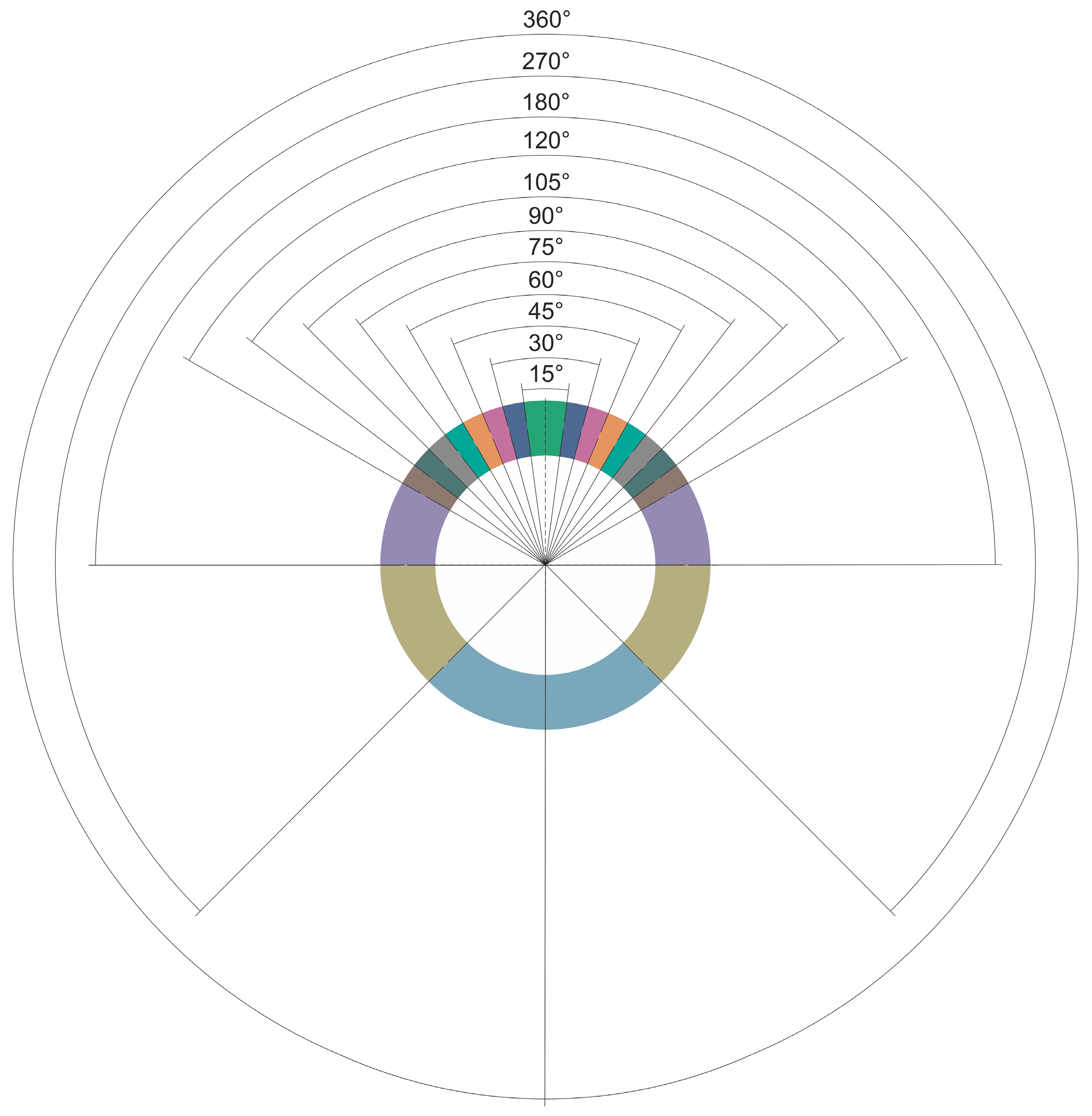
RONt) on measurement results. The evaluation of both the full contour and partial arc segments is essential to fully understand the impact of this factor on measurement outcomes. Accordingly, in each case, the full contour (360°) and arc segments of 270°, 180°, 120°, 105°, 90°, 75°, 60°, 45°, 30°, and 15° were assessed, as illustrated in
Figure 1.
For the simulations, an algorithm based on a harmonic representation of form deviations was applied, where the contour deformation was described using trigonometric cosine functions. All selected parameters form a complete input system that enables the generation of measurement point sets with full control over the Fourier-based description of roundness, the orientation of extremes, arc length, and random errors. This configuration enables the analysis of the influence of each factor on the calculated circle parameters and can be used both for validating methods of geometrical error evaluation and for testing the robustness of data-processing algorithms.
In the section concerning angle generation and base values, each point was sequentially numbered from 1 to 1441, corresponding to a uniform division of the full circle into 0.25° increments, yielding a total of 1440 intervals. Each point was assigned a corresponding angular value expressed in degrees, starting from 0° in the first row and increasing by 0.25° with each subsequent step, until reaching 360°.
where
denotes the point number and 0.25° represents the angular step.
One of the fundamental parameters used in the simulations was the angular position of the deformation peak. The simulation tested cases with phase shifts of 0°, 45°, and 90°, which altered the distribution of form errors along the contour circumference (
Figure 2).
In the calculations, the following formula was applied to simulate the position of the form deviation along the contour:
where:
In the analyzed example, the contour deformation was assumed to have a second-order harmonic character, what is equal to ovality. A cosine function was applied for the mathematical description of this deformation, as it naturally models the variation of the radius with respect to the polar angle:
where:
N—harmonic number corresponds to ovality,
—position of the form deviation on the profile,
This means that the form deviation is “shifted” by a certain angle according to the specified harmonic, which corresponds to the classical description of the second harmonic with a phase shift of the contour by a selected angle [
29].
Another parameter considered in the study is the total roundness deviation RONt, which in the simulations was set to 10 µm, 50 µm, and 100 µm, corresponding to RONt10, RONt50, and RONt100, respectively.
According to the theory of form deviations, the radius deformation can be expressed by the following equation:
where:
—amplitude of the deviation calculated based on the specified RONt,
—harmonic number,
—angular position of the point in degrees,
—peak position in degrees (location of the deviation peak).
The amplitude
was defined as:
The fundamental input parameter used in the simulation is the base radius, which defines the nominal shape of the contour before considering any deformations or measurement errors. Subsequent modifications resulting from the imposed geometric contour deformation and the measuring instrument error are added relative to this value. The error is random for all measurement points and was set to a limiting value of 5 μm. Consequently, the actual simulated radius for each point is calculated according to the following formula:
where:
—base (nominal) radius of the contour,
—radius deformation resulting from the form deviation,
—random error of the measuring instrument.
In the final stage of the simulation, after accounting for contour deformation and random error, the radius
is calculated for each point. Together with the corresponding angle
, these values are used to determine the spatial coordinates of the point in a two-dimensional reference system. The transformation from the polar system, in which the radius and angle define the point position, to the Cartesian system is carried out using classical trigonometric equations. The coordinates
and
, describing the position of a given point in the plane, are computed according to the following formulas:
3. Results
The performed calculations resulted in a complete set of points representing the deformed contour of the analyzed element, combining imposed form deviations with random measurement errors across different angular segments. For each parameter configuration, 30 independent simulation runs were carried out, which enabled the determination of the mean diameter value as well as the analysis of result dispersion across various arc lengths. Sample sizes (n > 30) are commonly recommended when the objective is to obtain a statistically reliable estimation of the standard deviation of the simulated observations. When the number of repetitions is sufficiently large, the empirical standard deviation can be considered a stable estimator of the theoretical variability of the measurement process, allowing the results to be interpreted as representative of repeated measurements performed under identical conditions. In each of the independent simulation runs, only the random measurement error of the points was regenerated, while all geometric parameters of the profile (including the nominal radius and the angular positions of the points) remained fixed. Thus, every run was performed on the same nominal geometry, differing solely in the random realization of the instrument error. The data generated in this way, consistent with the developed computational procedure, were imported into the metrological software Inspect V8. Within this environment, diameter values were calculated using four fitting methods: LSCI, MZCI, MICI, and MCCI. The developed computational model enabled the assessment of the influence of arc length on the diameter value, thereby providing the basis for a conscious selection of the optimal measurement strategy depending on the required precision and the geometrical characteristics of the inspected object.
3.1. The Least Squares Reference Circle (LSCI)
Based on the simulations performed using the LSCI method, a clear influence of contour peak orientation, analyzed arc length, and roundness deviation (
RONt) on the obtained mean diameter values and measurement range was identified. In
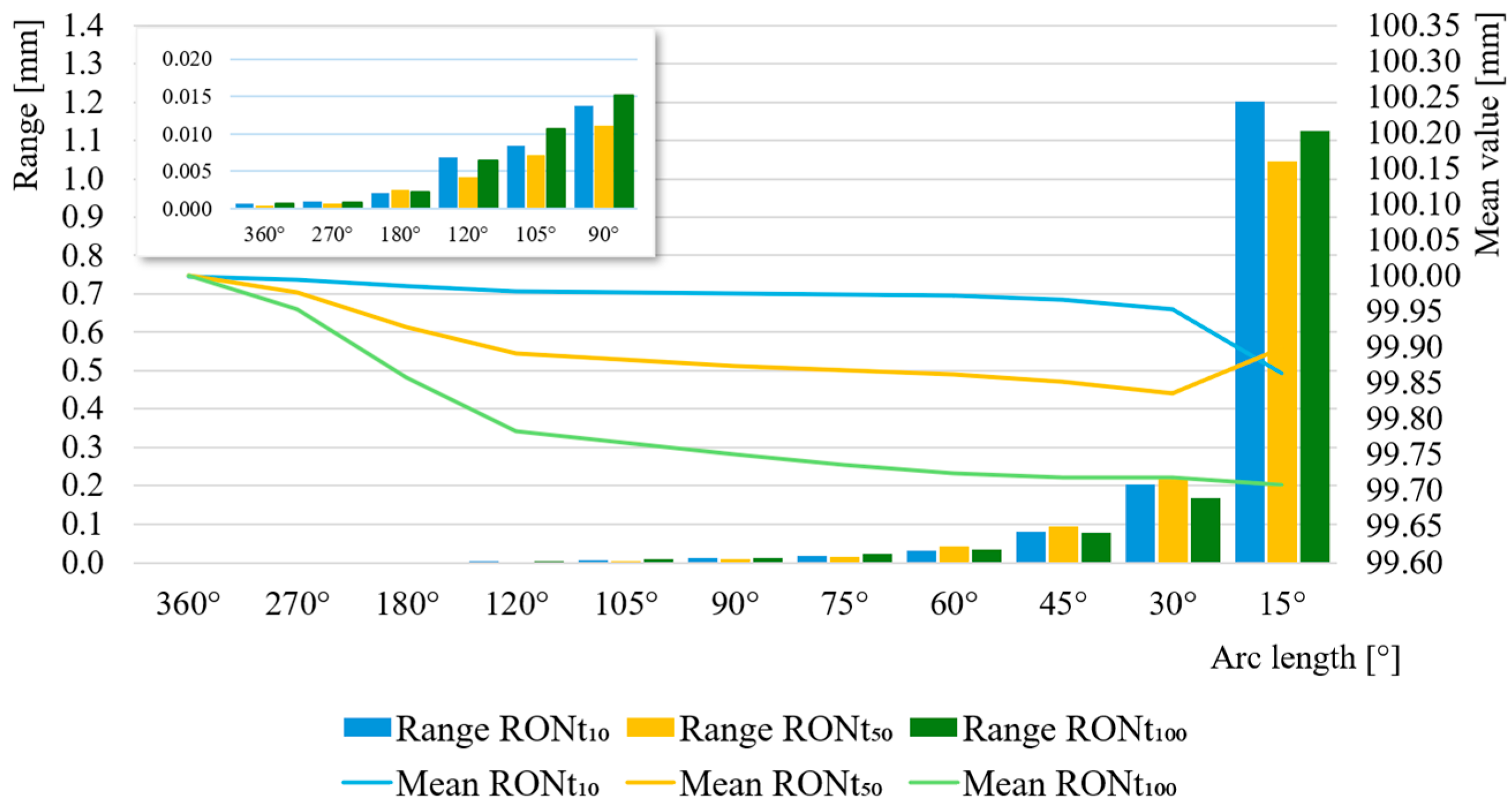
Figure 3, corresponding to the contour peak located at the top of the arc, a distinct decreasing trend of mean diameter values was observed as the analyzed arc length was reduced. The mean values for the full contour (360°) were very close to the nominal diameter of 100 mm, whereas for 15° arcs they consistently dropped below 99.9 mm, reaching approximately 99.71 mm for
RONt100. This indicates that in this orientation the obtained diameter value corresponds to the evaluated contour segment rather than the entire geometry, particularly for large form deviations and short arc segments. At the same time, the range of 30 repeated diameter measurements remained very low for long arcs, but increased sharply with decreasing arc length, reaching more than 1.2 mm at
RONt10 and a 15° arc. This suggests a significant reduction in measurement repeatability, as well as a substantial impact of the maximum permissible error (MPE) on the obtained results.
In the intermediate 45° position (
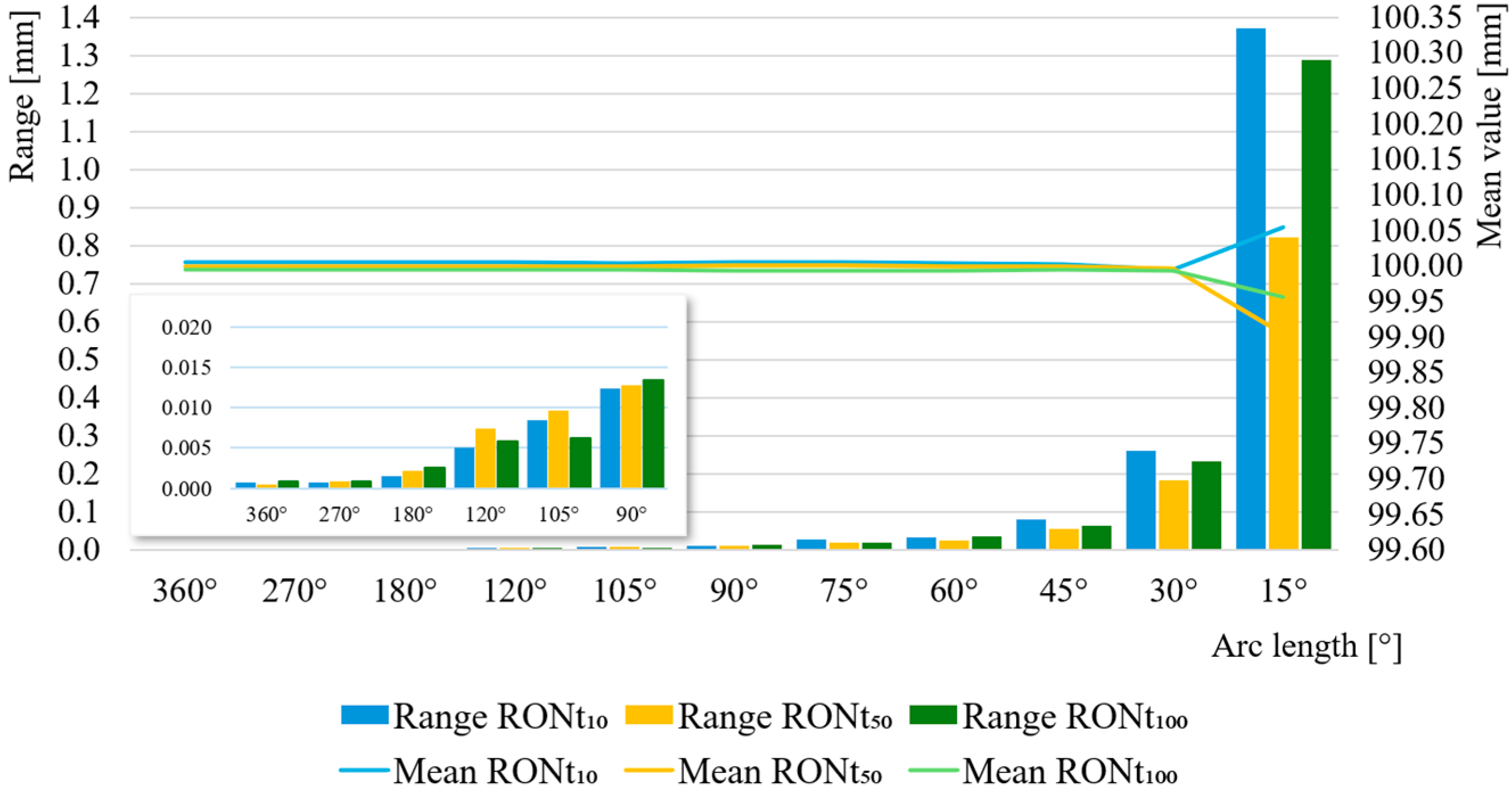
Figure 4), the mean values remained very stable across most arc lengths and were close to the nominal value. Deviations became noticeable only at arc lengths of 30° and 15°, but on a much smaller scale compared to the other positions. Notably, only for
RONt10 at a 15° arc did the mean value exceed 100 mm, reaching approximately 100.05 mm, which indicates a higher measured diameter value. In all other cases, the values remained slightly below the nominal diameter, confirming the high stability of this position. Nevertheless, the range of measurements also showed a strong dependence on arc length. For the 15° arc with
RONt10, the range exceeded 1.37 mm, which was the highest among all configurations. These results indicate that although mean values in the 45° position are the most resistant to the influence of form and data range, the range of measurement results also increases significantly for very short arcs.
In the 90° position (
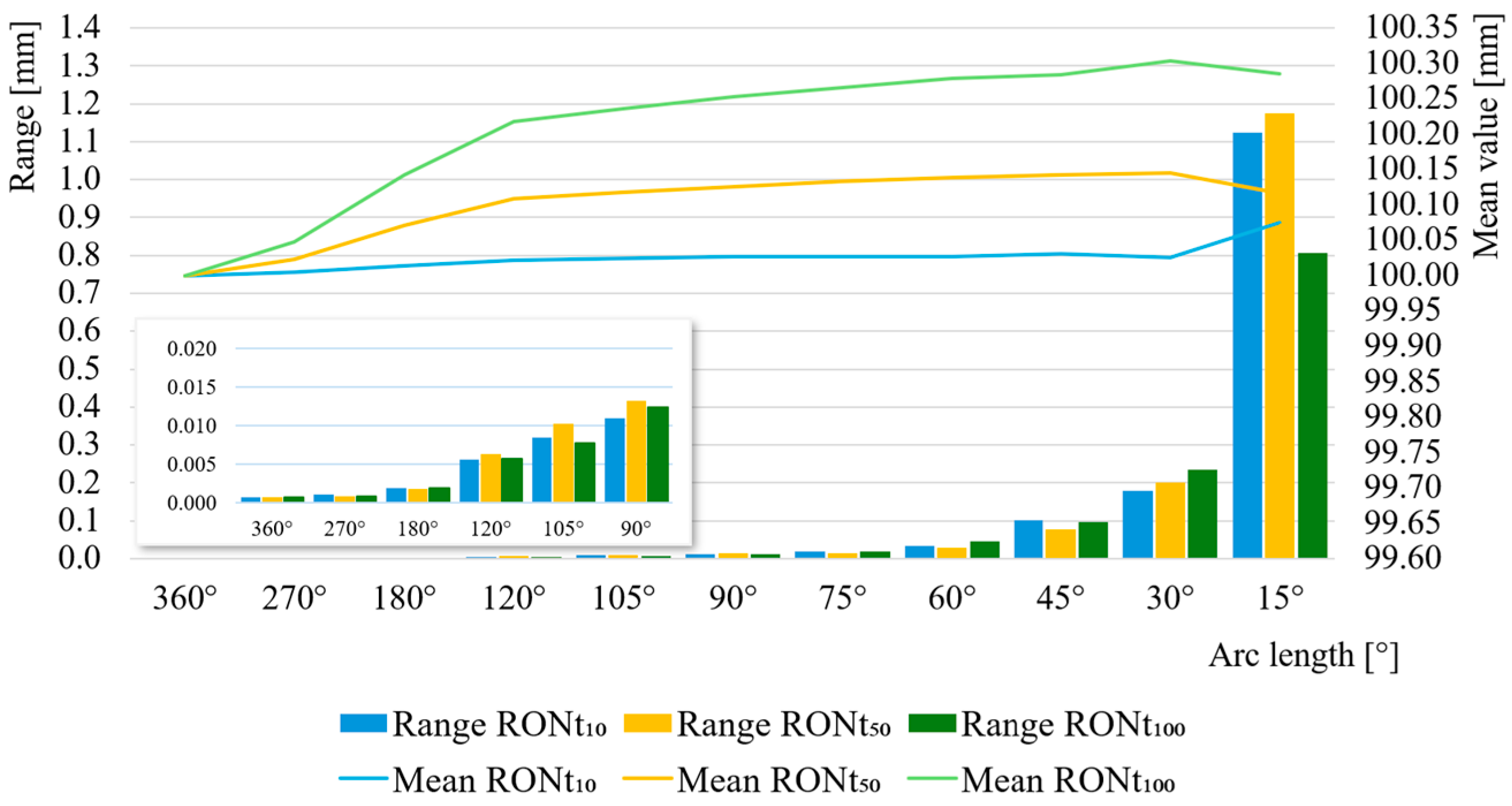
Figure 5), corresponding to the contour peak located in the valley, the opposite trend to that observed at 0° was identified. With decreasing arc length, particularly at higher
RONt values, the mean diameter values systematically increased, exceeding the nominal value. For
RONt100 and a 30° arc, the mean value reached approximately 100.30 mm, which represents the largest positive deviation among all analyzed cases. Even for the 15° arc, the values remained significantly above the nominal diameter. The range of measurements, as in the other cases, increased strongly with shorter arcs. However, in this position the range values were slightly lower than those obtained at 0° and 45°. For
RONt100 and a 15° arc, the range amounted to about 0.81 mm.
3.2. The Minimum Zone Reference Circle (MZCI)
Based on the simulations performed using the MZCI method, the obtained results revealed clear differences in the method’s behavior depending on the contour orientation. Compared to the LSCI method, MZCI exhibited greater robustness against limitations of the measurement data range and lower sensitivity to local geometric deformations. In the case of the contour peak at the 0° position (
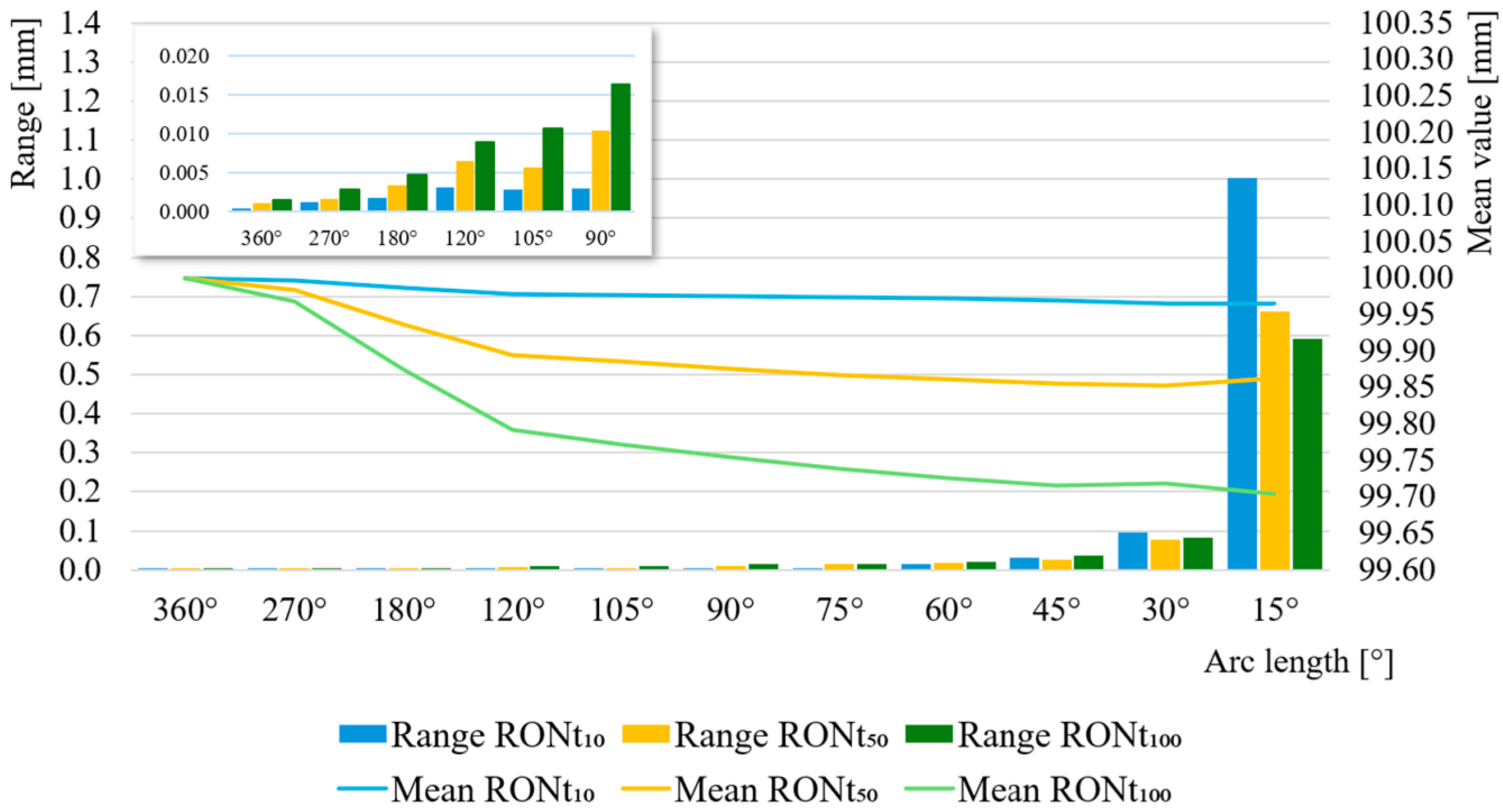
Figure 6), a systematic decrease in the mean diameter value was observed with decreasing arc length. For the full contour (360°), the mean values were close to the nominal diameter of 100 mm, whereas at an arc length of 15° they decreased to about 99.70 mm for
RONt100. At the same time, the range of measurements in this configuration was strongly dependent on arc length: for the 360° arc it was negligible (on the order of a few micrometers), whereas at the 15° arc it reached as much as 1 mm. This phenomenon reflects the limited repeatability and stability of results under short arc conditions, consistent with the observations for the LSCI method, where similar conditions also led to significant underestimation of the diameter and an increase in variability.
In the intermediate 45° position (
Figure 7), the MZCI method demonstrated stability. Regardless of the
RONt value and the analyzed arc length, the mean diameter values oscillated in the immediate vicinity of the nominal value. Even under the most unfavorable conditions (short arcs and high
RONt), the changes in the mean were minimal and did not exceed a few hundredths of a millimeter. The range of results showed the expected increase with decreasing arc length, but did not surpass the values observed in other positions. It should be emphasized that, in terms of maintaining the mean diameter values, the 45° position in the MZCI method proved to be the most resistant to disturbances, surpassing the stability of results obtained with the same method at 0° and 90°, as well as the corresponding outcomes of the LSCI method. In the case of LSCI, at the 45° position clear deviations were already observed, with the mean for a 15° arc and
RONt10 even rising above 100.05 mm.
For the contour peak positioned in the valley (90°) (
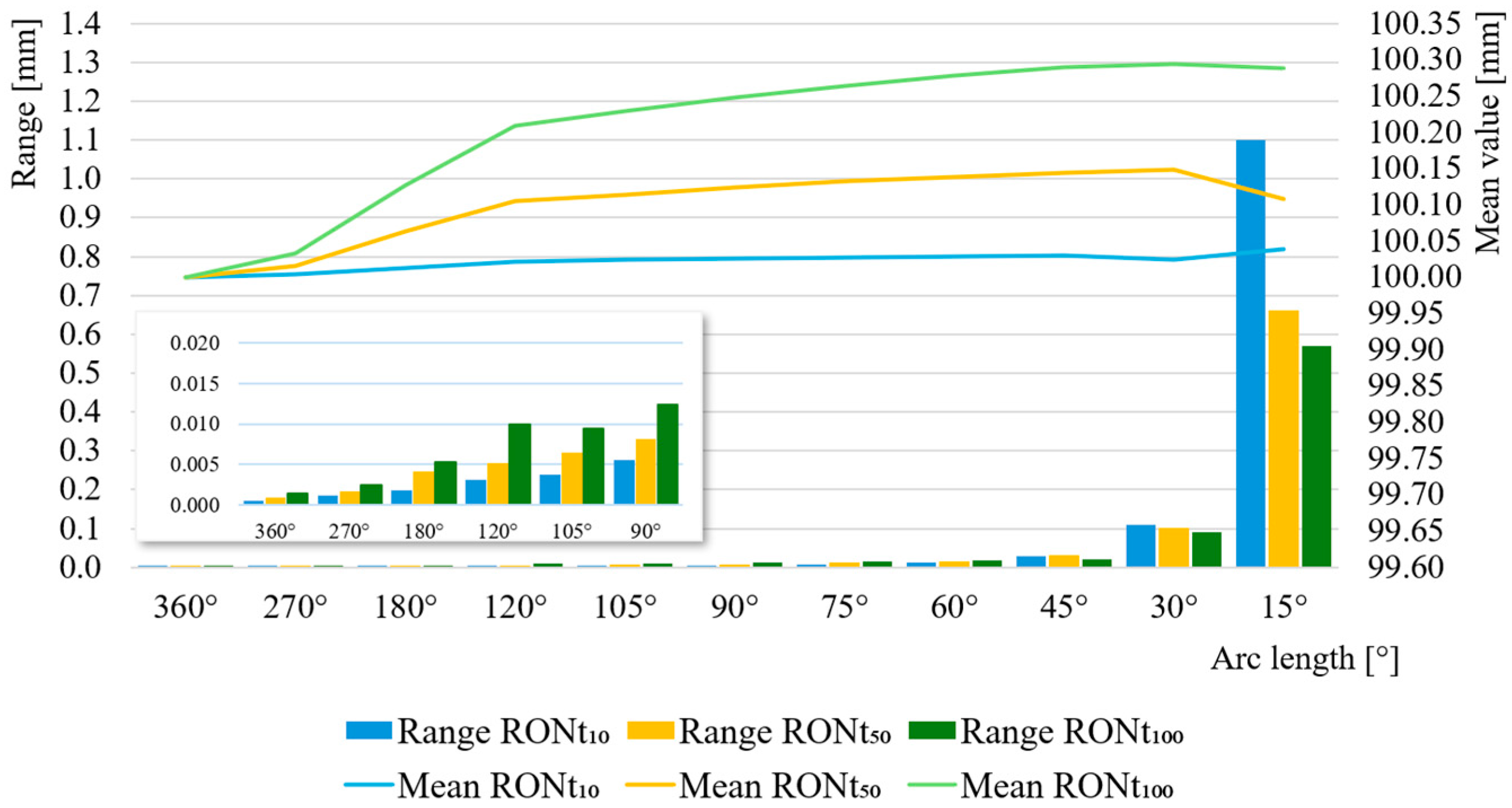
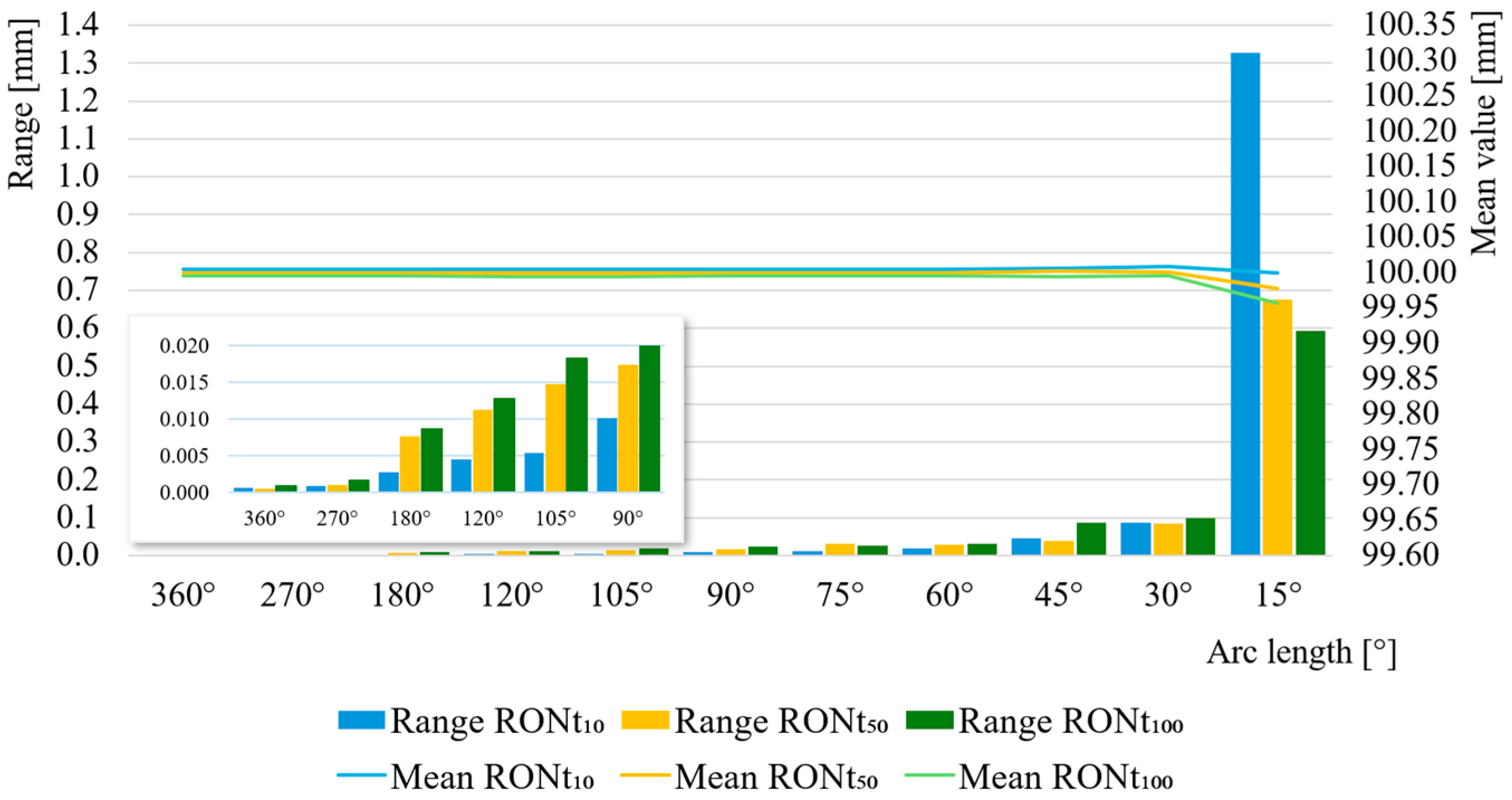
Figure 8), the results exhibited a different behavior compared to the other positions. No decrease in the mean values below 100 mm was observed, even at high
RONt values and short arcs. On the contrary, the mean values for this position consistently remained above the nominal value across the entire arc length range, reaching approximately 100.30 mm for arcs of 30–45° at
RONt100. The increase in the mean was particularly evident with decreasing arc length, especially at moderate and high levels of form deviation. Compared to the LSCI method, where the same configuration produced the largest overestimations (up to about 100.34 mm), the MZCI method maintained the mean values at a similar level but with noticeably smaller range. In this position, the highest variability was also observed at a 15° arc, where the range of 30 results exceeded 1 mm, yet it still remained lower than in LSCI under analogous conditions.
3.3. The Maximum Inscribed Circle (MICI)
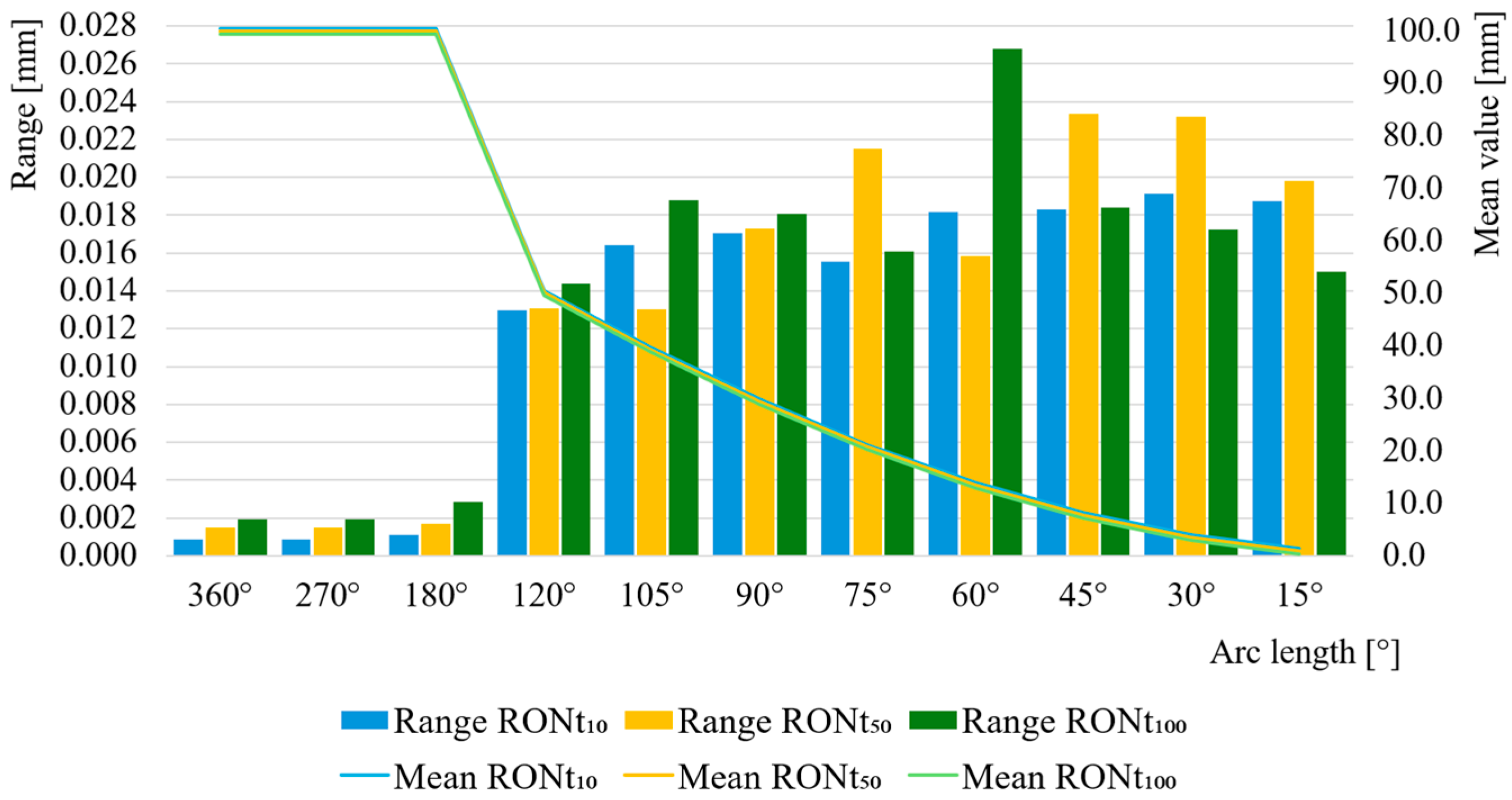
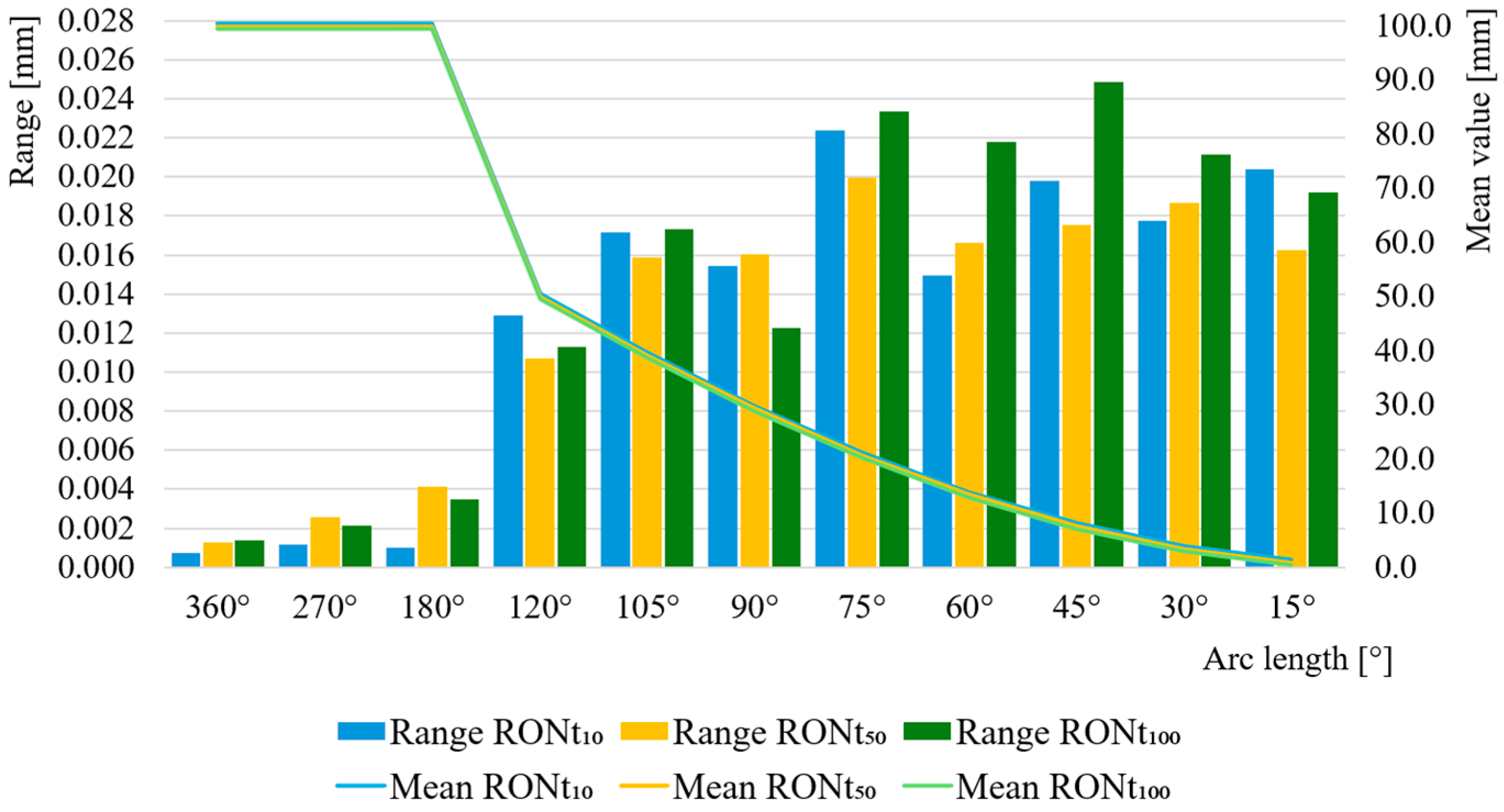
In the configuration where the contour peak is located at the peak of the profile (0°), the change in mean diameter values shows a clear, almost linear dependence on arc length: at small angles (15°), the obtained diameters are extremely low—only 0.89 mm—regardless of the
RONt level (
Figure 9). With increasing arc length, the diameter of the inscribed circle grows systematically. For example, at 45° the mean is 7.6 mm, at 90° it reaches 29.3 mm, at 120° it is 50 mm, and at 180° it already exceeds 99.98 mm. The mean values in the range from 180° to 360° stabilize at 99.98–100.00 mm, practically independent of
RONt. The range of results increases with arc length, reaching maximum values for arcs of about 45–75° (for
RONt100: 0.027 mm;
RONt50: 0.023 mm;
RONt10: 0.019 mm), and then decreases to below 0.002 mm for arcs greater than or equal to 270°. This indicates that result stability is highest for full contours, while for short segments, despite the low mean values, a larger range of data is observed—although still clearly smaller than in the case of the LSCI and MZCI methods.
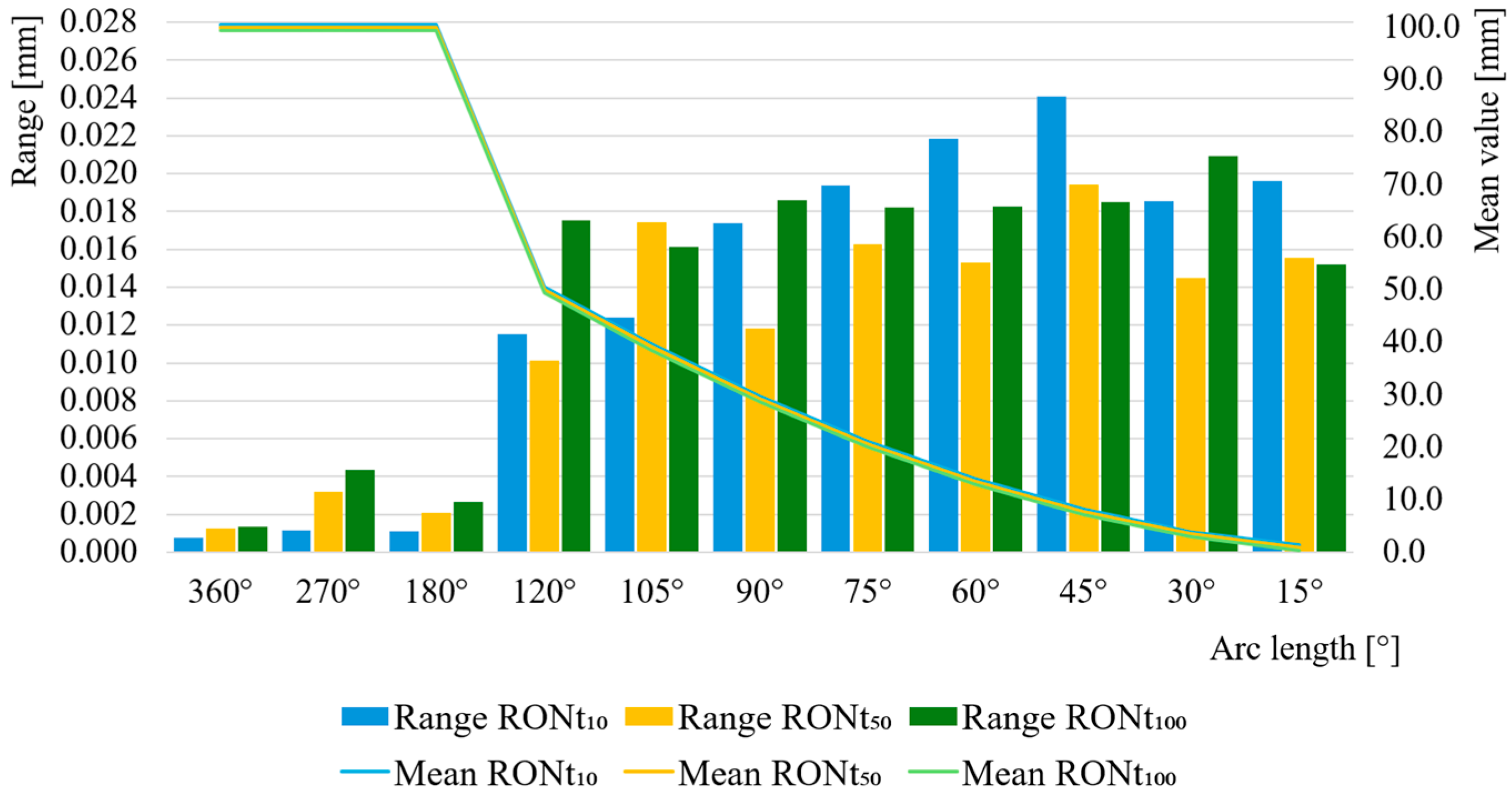
With the contour peak positioned at 45° (
Figure 10), the course of the plots remains very similar to the 0° position, although slightly greater stability is observed in the mid-range and a smaller influence of
RONt on the final result. At 15°, for
RONt10,
RONt50, and
RONt100, the mean diameter is approximately 0.89 mm. Maximum values exceeding 99.99 mm appear already at 180° and are maintained up to the full contour. Differences between
RONt levels are minimal for long arcs and become noticeable only for short arcs. The range reaches its maximum in the 60–75° range, for example 0.022 mm for
RONt10 and 0.024 mm for
RONt100, and then decreases to 0.0007–0.001 mm at 360°. This indicates high resistance of this configuration to deformations, particularly for arcs ≥180°, making it the most stable among the analyzed settings.
For the contour extreme located in the valley at 90° (
Figure 11), the overall shape of the plots remains consistent: the mean values increase with arc length from 0.89 mm at 15° to 99.98 mm for segments in the 270–360° range. A noticeable difference is that the maximum mean shifts toward 270°, where 99.99 mm was obtained for
RONt10 and 99.95 mm for
RONt100. In terms of range, the 90° configuration shows the largest deviations for arcs of 30–60°: for
RONt100 the maximum reached 0.021 mm, while for
RONt10 it was 0.024 mm. For arcs ≥270°, the range decreases to levels of 0.0008 mm, confirming full stabilization of the method for the complete contour.
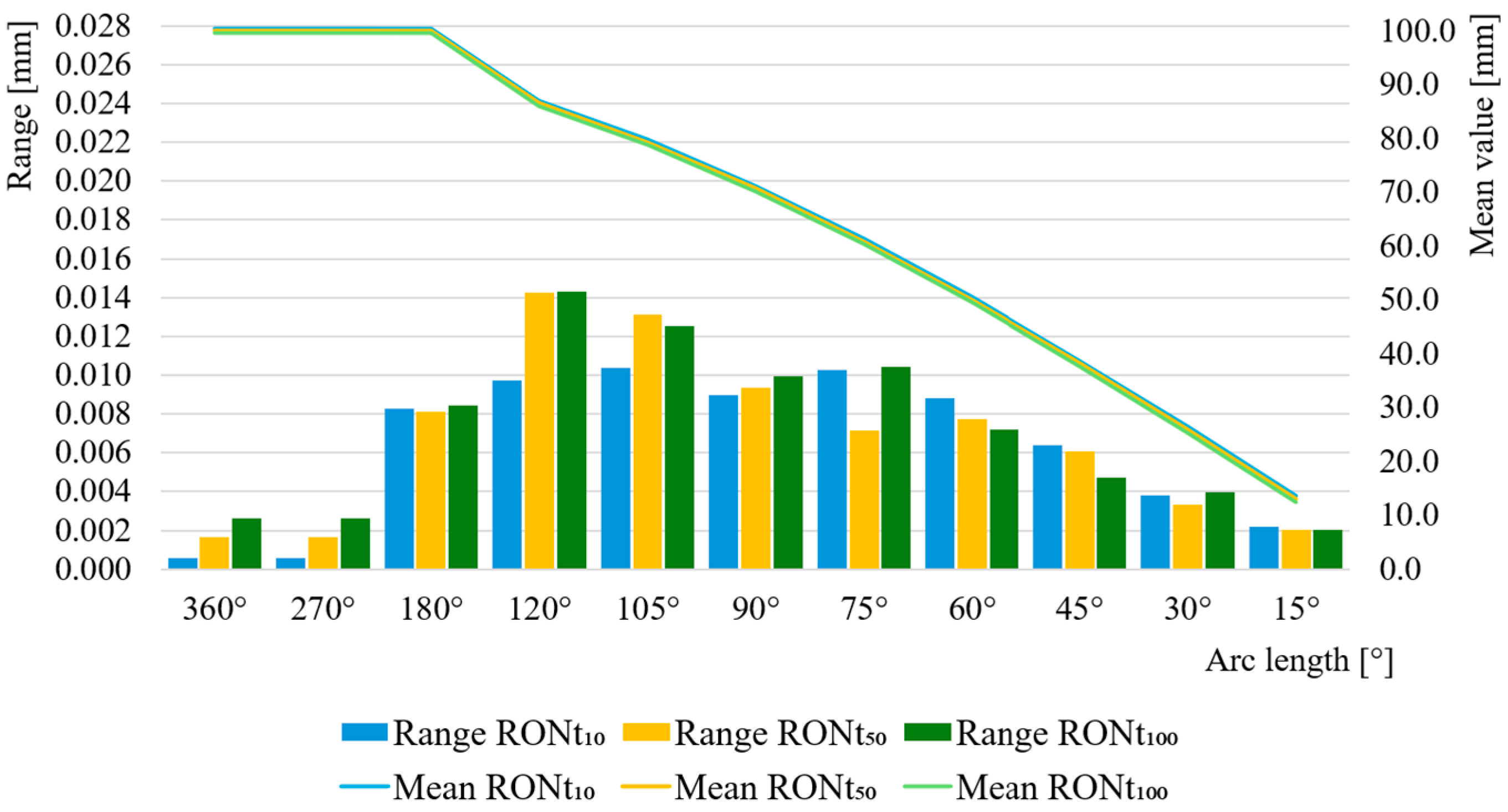
3.4. The Minimum Circumscribed Circle (MCCI)
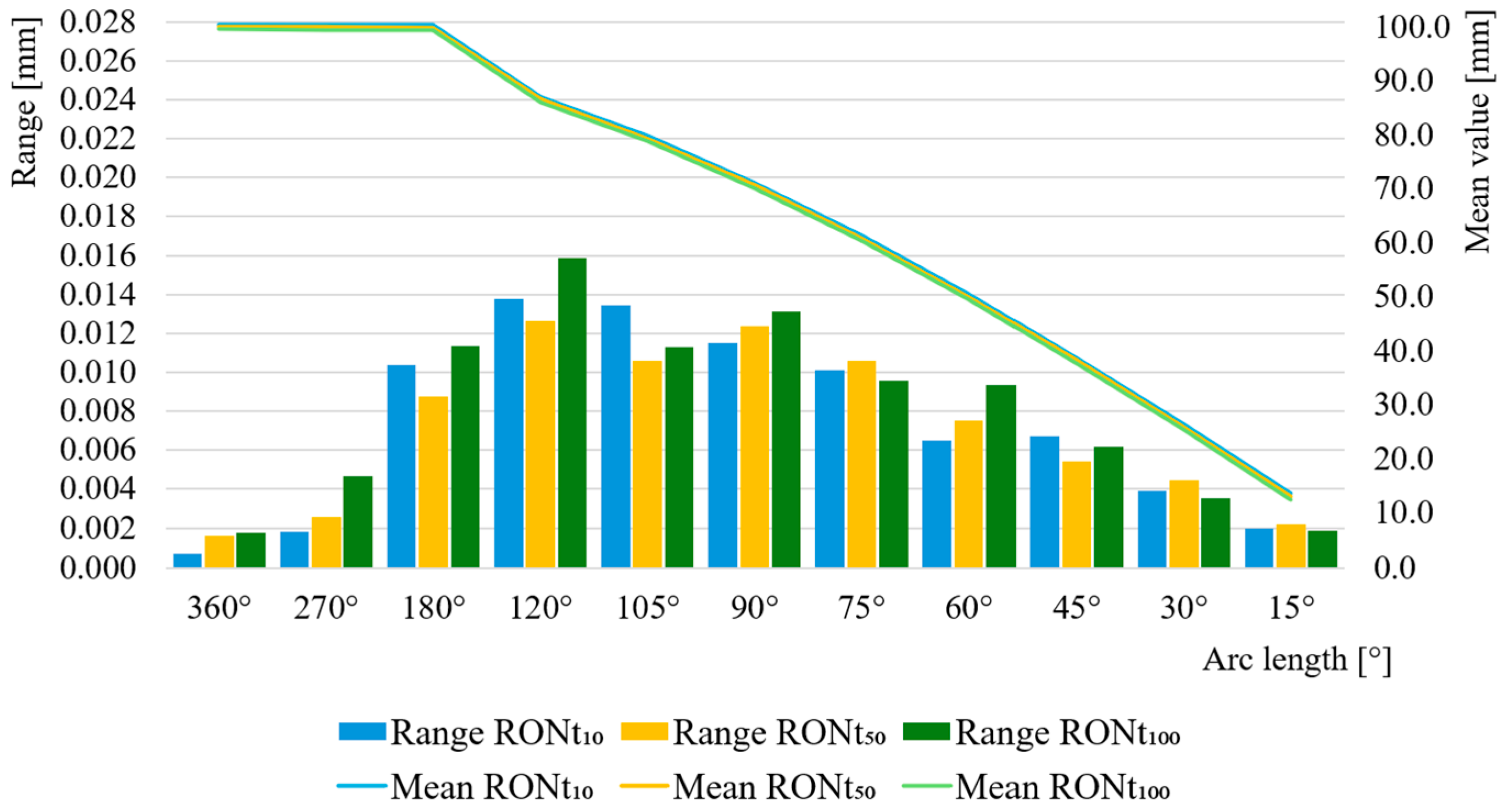
For the contour peak at 0° (
Figure 12), the mean determined diameter for the full profile (360°) is about 100.02 mm for
RONt10. At 270° and 180°, the means are similarly close to the nominal value—100.013 mm and 99.995 mm, respectively. Below 180°, a sharp decrease occurs: for a 120°arc the diameter drops to 86.597 mm, and for 105°it falls to 79.33 mm. For shorter arcs, the values decrease almost proportionally to arc length. This indicates that for arcs ≤ 120°, the diameters are lower than the nominal value. The range of results is minimal for the full contour (on the order of 0.001–0.002 mm) and increases for shorter arcs. The largest range, about 0.014 mm for
RONt10 and about 0.016 mm for
RONt100, occurs at the 120° arc. For shorter arcs (e.g., 45–60°) the range is smaller than at 120°, but still much larger than for the full profile. It is evident that the shorter the arc of measured points, the worse the repeatability of results—at 15° the range drops to 0.002–0.006 mm. Subtle differences were also observed for different
RONt levels: with increasing
RONt, the mean diameter for the full profile increases from 100.02 mm to 100.10 mm, while the range increases slightly from 0.001 mm to 0.002 mm.
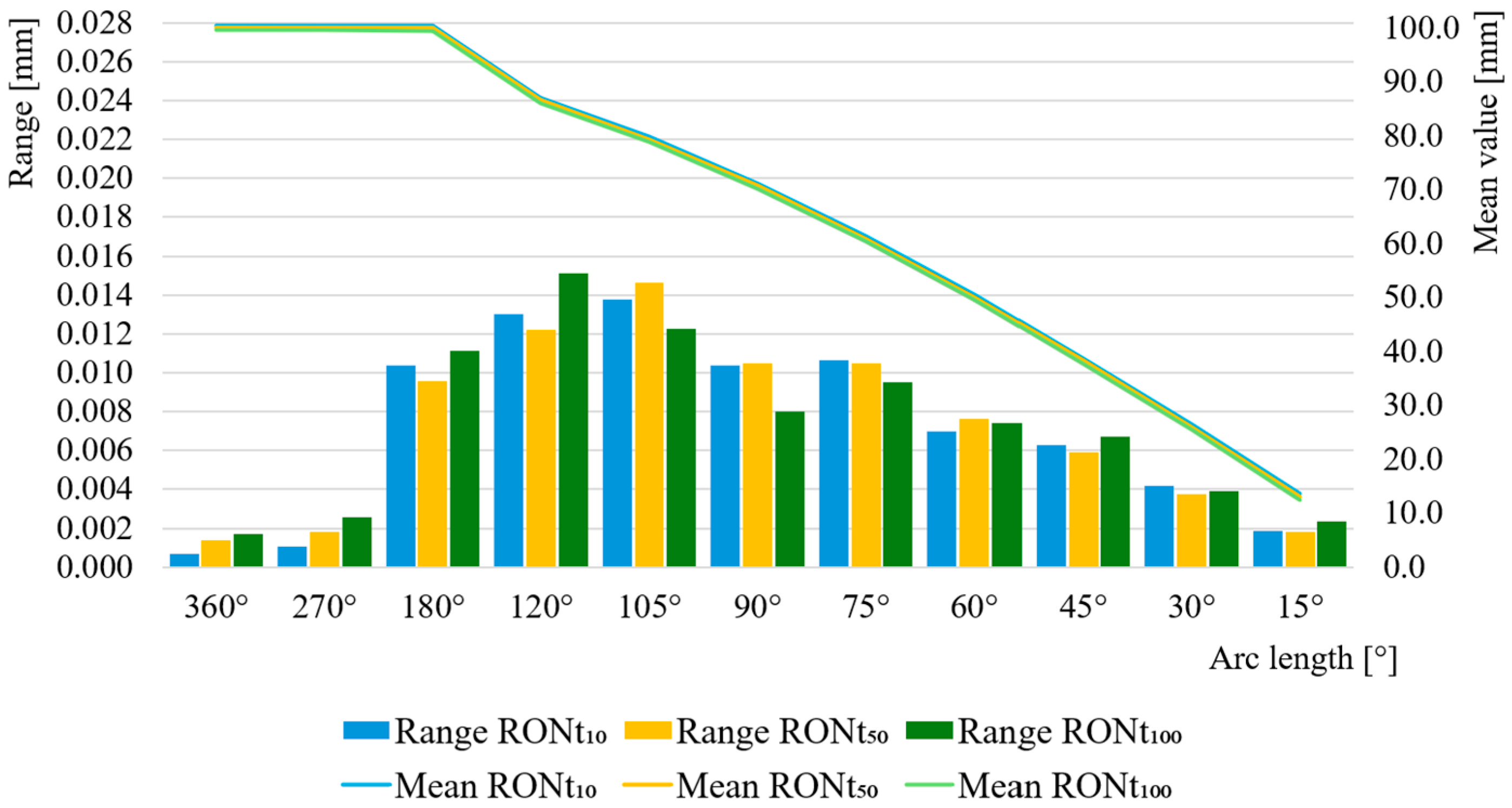
For the contour peak at 45° (
Figure 13), the course of the relationship is very similar to the 0° case. The mean values at 360°, 270°, and 180° also oscillate around the nominal diameter, approximately 100.02 mm for the full profile and 100.004 mm at the 180° arc for all
RONt levels. The drop belong 180° is also sharp. The mean values for different
RONt levels practically overlap down to about 105°. For the full profile,
RONt50 and
RONt100 result in an increase in the mean diameter to 100.059 mm and 100.109 mm, respectively. The mean range of results increases from the full contour toward arcs of 120–105°. The smallest ranges, 0.001–0.002 mm, occur for the longest arcs as well as for the shortest arcs of 15° and 30°, although at these short arcs the obtained diameters are already very small. Overall, at the 45° peak position the results are the most stable: the mean values are practically nominal for large arcs, and although the ranges increase at shorter arcs, they remain correlated and within a similar scale as for the other orientations.
For the 90° position (
Figure 14), a similar behavior is observed: the mean at 360° is 100.02 mm for
RONt10, 100.059 mm for
RONt50, and 100.109 mm for
RONt100, while at 180° it is 100.015 mm, 100.055 mm, and 100.104 mm, respectively. The contour peak shifted by 90° at 180° is symmetrical to the 0° case—in this case, the diameter is slightly above the nominal value. It can be noted that the mean values at a given arc length practically do not change with peak position (differences < 0.005 mm), except at the 180° arc, where the 90° position yields an overestimation, while the 0° position results in an underestimation. The ranges for the 90° peak position are also similar: up to about 0.014 mm for
RONt50 and
RONt100 at 120°, the lowest for the full contour, and about 0.002–0.003 mm at 30° and about 0.006 mm at 45°.
4. Uncertainty Analysis
In this study, measurement uncertainty was evaluated using a Type A statistical method based on repeated observations. The procedure involves performing
n measurements of the same feature, in an unchanged position, using the same instrument and under identical repeatability conditions. The standard uncertainty
was determined from the experimental standard deviation
, calculated as:
where the arithmetic mean
is defined as:
where:
Equation (10) is applicable under the assumption that the number of repeated measurements is sufficiently large for the correction factor associated with Student’s t-distribution factor to approach unity. Consequently, the simplified form of the standard uncertainty is appropriate predominantly for long measurement series, typically comprising several dozen observations or more. In cases where the number of repetitions is limited, the full formulation of the standard uncertainty, incorporating the corresponding t-distribution factor, should be applied to ensure statistical correctness.
The resulting standard uncertainty can be assigned to each individual observation
, …,
separately. The expanded uncertainty
is defined as the interval around the measurement result within which the true value is expected to lie. It was determined by multiplying the standard uncertainty by the coverage factor:
where:
—the expanded uncertainty,
—the standard uncertainty,
—the coverage factor corresponding to the adopted confidence level p.
For the purposes of this study, a coverage factor of
≈ 2 was adopted, corresponding to an approximate 95% level of confidence [
30].
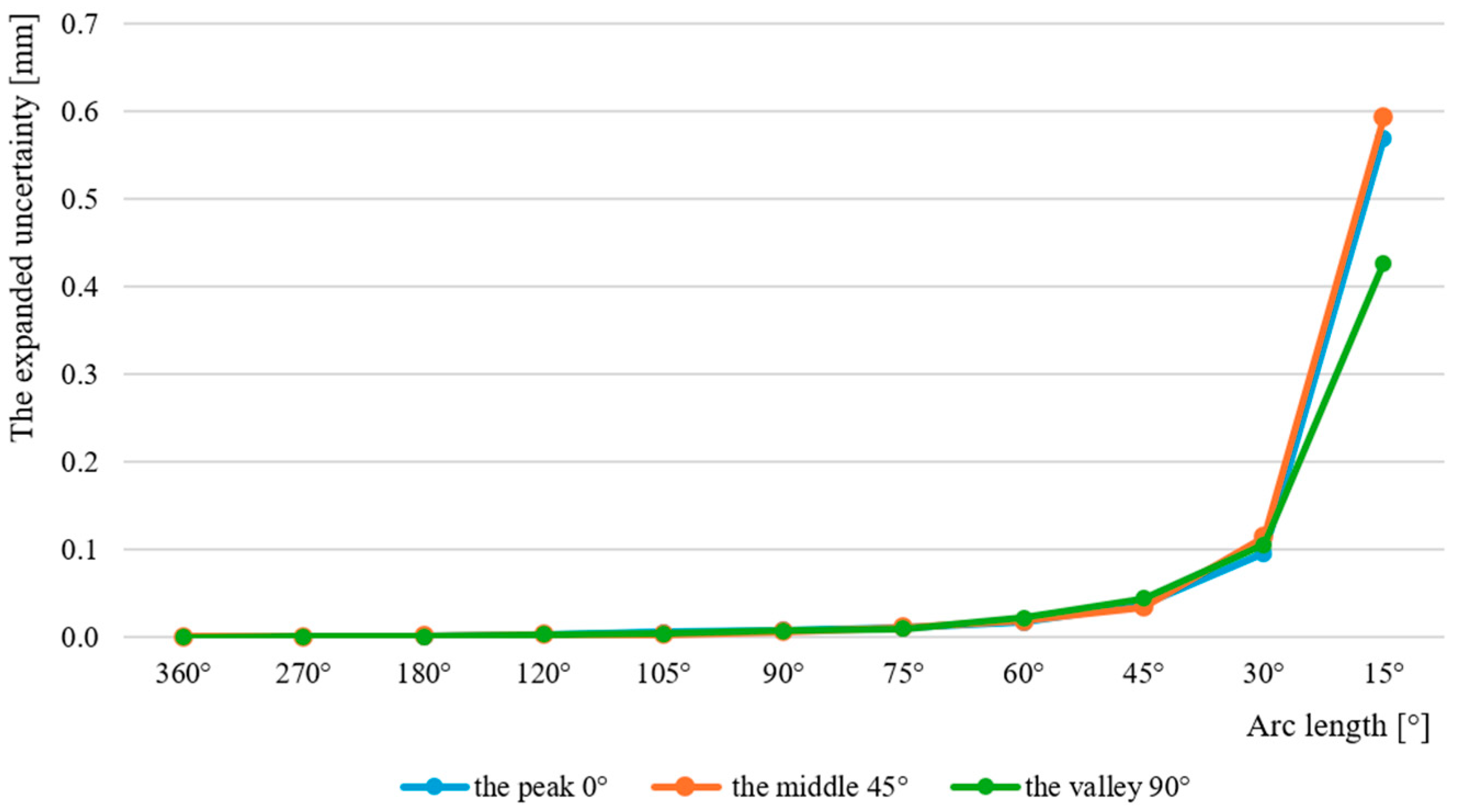
Figure 15 presents an example of the expanded uncertainty values obtained for the LSCI method at the
RONt100 deviation level for three different positions of the contour apex (0°, 45°, and 90°).
The results show a clear and consistent trend: the expanded uncertainty increases as the arc length decreases, with a particularly rapid growth for arcs shorter than 45°. For arc lengths between 360° and 90°, the uncertainty remains very low and nearly constant for all contour orientations, confirming the stability of the LSCI method under favourable sampling conditions. As the arc length decreases below 60°, the uncertainty begins to rise, and for arcs of 30° and especially 15°, the values increase by up to two orders of magnitude compared to full-circle measurements. Although slight differences between the three apex positions can be observed, the general trend is similar for all orientations, demonstrating that arc length has a significantly stronger influence on the measurement uncertainty than the position of the contour extremum.
The remaining methods (LSCI, MZCI, MICI, and MCCI), together with the corresponding standard deviations and expanded uncertainties calculated for all contour positions and RONt levels, are summarized in the Supplementary Data for completeness. The analysis of standard deviations and expanded uncertainties U for all four circle-fitting methods (LSCI, MZCI, MCCI, MICI) shows that the dominant factor determining the stability of the results is the length of the analyzed arc, whereas the position of the profile apex plays a secondary role and does not alter the general character of the observed trends. For long arcs 360–180°, all methods exhibit low standard deviations (on the order of 10−4–10−3 mm) and correspondingly small expanded uncertainties, with the largest increase in U observed for LSCI and MZCI at the RONt100 level. As the arc length decreases below 120°, the differences between the methods become more pronounced: in the case of LSCI the uncertainty increases almost exponentially, reaching approximately 0.57 mm for RONt100 at an arc of 15°, while for MZCI it reaches approximately 0.26–0.34 mm. This indicates a very large range of results for short arc segments and sensitivity of these methods to local form deviations and instrument error. In contrast, the MCCI and MICI methods maintain expanded uncertainty values across the entire arc range at the level of a few thousandths of a millimeter (up to about 0.01 mm), and the variation of U with arc length remains relatively small, with MCCI even showing a decrease in uncertainty for the shortest arcs. This means that, in terms of statistical variability, MICI and MCCI are markedly more resistant to arc-length reduction than LSCI and MZCI. At the same time, it should be emphasized that the low uncertainty of these methods for short arcs does not eliminate their systematic deviations from the nominal diameter, as described in the results section; consequently, these methods may yield repeatable but significantly biased results. Overall, the calculated uncertainties quantitatively reflect the spread observed in the plotted curves, very small for long arcs and rapidly increasing for short ones, particularly for LSCI and MZCI, which confirms the consistency of the uncertainty analysis with the variability observed in the simulation data.
5. Discussion
The paper presents the results of simulated measurements of a circle with a diameter of 100 mm and form deviation in the shape of an oval, enabling a comprehensive analysis of the influence of various factors on measurement outcomes. The simulations account for varying conditions and evaluate how these factors affect the final result. They also support optimization of the measurement process, particularly for short arc segments, and provide a more flexible approach for control cases, including situations beyond standard norms. The study investigates the influence of different parameters, such as arc length, form deviation, contour peak orientation, and instrument error, on the final measurement result.
The analysis clearly confirms that both the length of the analyzed arc and the orientation of the profile peak have a significant effect on the accuracy and repeatability of diameter determination when using different reference elements. The LSCI method shows a distinct dependence on contour orientation: a systematic decrease in the mean diameter value is observed at the 0° peak position, and an increase at 90°. The 45° position is the most neutral—mean values remain close to nominal under a wide range of conditions, with moderate range. Regardless of contour orientation, measurements based on shorter arcs exhibit greater variability in the results, producing the largest range at 15°, especially at low deformation levels (e.g., RONt10). This occurs because short arcs provide incomplete geometric representation of the measured feature. This effect is also related to the ratio between the measurement error and the form deviation amplitude. At low RONt values, the measurement error represents a significant proportion of the total deviation, which increases its visibility in the results. As the form deviation grows, the same absolute error becomes less significant, diminishing its impact on the measured diameter. At low deformation, the influence of random factors is additionally amplified, resulting in greater range. The lowest ranges were obtained for the full contour (360°), independent of RONt, confirming the high repeatability of the LSCI method under complete-profile measurement conditions. However, this method is prone to extreme deviations with incomplete data, depending on the direction of local deformation.
For the MZCI method, which minimizes the zone between the inner and outer circles, the effects of local deformation orientation are also present but significantly less extreme than in LSCI. In the 0° and 90° configurations, tendencies toward smaller and larger diameter values become more distinct as the arc length decreases. The 45° position again proves the most stable, both in terms of mean values and range. MZCI demonstrates clearly greater robustness against local deformation variability than LSCI, particularly under short arc conditions. Although the range also increases with shorter arcs, it remains within predictable and controlled limits. Therefore, MZCI can be recommended when the complete contour is not available for measurement.
The MICI method, which determines the maximum inscribed circle, is the most extreme in its response to shorter arcs. In all contour configurations, for arcs ≤ 90°, the mean diameters fall below 1 mm, representing an error exceeding 99% relative to the nominal 100 mm. This result is consistent with the mathematical definition of MICI—with only a few points, the inscribed circle can only be very small. Despite excellent repeatability for the full contour (range < 0.001 mm), this method becomes unusable for fragmentary measurements, and its application in such cases should be clearly restricted. The 45° position again shows slightly better stability than 0° and 90°, but still does not provide reliable results for arcs < 120°.
In the MCCI method, which determines the minimum circumscribed circle, milder values are observed compared to MICI, though the dependence of mean values on arc length is similar. For short arcs (e.g., 15°), the mean diameters in MCCI are about 3.4 mm. With increasing arc length, the values rise rapidly, reaching approximately 100 mm at 180–270°, depending on the RONt level. The 45° position again proves the most stable—mean values are closest to nominal, and the range is lower than in the 0° and 90° configurations. For full contours, ranges drop to 0.001–0.003 mm, which is a very good result. Compared to MICI, MCCI provides more usable results even at short arcs; compared to LSCI, it shows lower sensitivity to contour orientation and random error. MCCI can be considered an intermediate method in terms of stability and accuracy—more robust than MICI, more predictable than LSCI, though less precise than MZCI.
The introduction of uncertainty analysis confirmed the trends previously observed in the variability of the results: for the LSCI and MZCI methods, both the standard deviation and the expanded uncertainty increase as the arc length decreases, reaching their highest values at 15°, which clearly demonstrates the sensitivity of these methods to incomplete profile and to form deviations. In contrast, the MICI and MCCI methods exhibit lower statistical variability; their uncertainties remain on the order of only a few thousandths of a millimeter even for very short arcs, reflecting their repeatability. However, the low uncertainty of these methods does not imply correctness of the results: both MICI and MCCI remain systematically biased, and their small uncertainties primarily result from the fact that their mean values deviate strongly from the nominal diameter. These relationships are fully consistent with the behavior of the curves presented in the results section, the determined uncertainties quantitatively reproduce the observed range of the data, reinforcing the qualitative interpretation of the simulation outcomes.
6. Conclusions
The results fully confirm that the choice of reference circle, the length of the analyzed arc, and the location of the geometric deformation have a decisive impact on the quality of the obtained results. Optimization of these parameters is therefore crucial for the reliability of measurements in industrial and metrological applications. A common conclusion for all methods is that reducing the arc length below 120° causes a significant increase in errors, regardless of the selected computational method. This effect is amplified by the presence of deformation: the greater the roundness deviation RONt, the more pronounced both the differences in mean values and the range become. The contour configuration with the peak at 45° shows the greatest resistance to these factors, providing the most balanced results across all methods. In practical terms, LSCI is suitable for measurements of full contours, but with attention to the deformation orientation. MZCI is the most stable for fragmentary measurements. MICI is applicable only for full contours; for arcs <180° it becomes unsuitable. MCCI serves as a compromise method, performing well for contours ≥180° and showing moderate sensitivity to arc shortening. The analysis enabled a detailed comparison of four reference-element methods—LSCI, MZCI, MICI, and MCCI—under simulated measurements of circular contour segments. The uncertainty analysis confirmed that the statistical stability of the methods is strongly dependent on the arc length: LSCI and MZCI exhibit a rapid increase in expanded uncertainty for arcs shorter than 60°, whereas MICI and MCCI maintain low expanded uncertainty values across the entire range, even though their mean values may remain significantly biased. The determined uncertainties are fully consistent with the ranges observed in the plots, confirming the coherence of the simulation model and the reliability of the statistical assessment. It should be emphasized that the conclusions apply to simulations performed for a circle with a nominal diameter of 100 mm. They concern exclusively oval-type deviations and may not directly apply to other types of form errors. Moreover, the applied simulation method assumed conditions including instrument error, but did not consider environmental influences that may occur in real measurements. The presented data represent a significant contribution to the understanding of different reference methods and fragmentary measurements and may serve as a basis for further studies, especially with other types of form deviations. Future work will focus on extending the analysis to more complex geometric forms, including higher-order harmonics and their combinations, to evaluate the robustness of the reference-circle methods under more irregular profiles. Additional studies will also consider reduced sampling densities to reflect typical contact-based measurement strategies and examine how limited point distributions interact with form deviations. Furthermore, experimental validation using real coordinate measuring systems is planned to confirm the simulation findings and assess their applicability in industrial inspection scenarios.