Abstract
Video-centric applications have seen significant growth in recent years with HTTP Adaptive Streaming (HAS) becoming a widely adopted method for video delivery. Recently, low-latency (LL) adaptive bitrate (ABR) algorithms have recently been proposed to reduce the end-to-end delay in HTTP adaptive streaming. This study investigates whether low-latency adaptive bitrate (LL-ABR) algorithms, in their effort to reduce delay, also compromise video quality. To this end, this study presents both objective and subjective evaluation of user experience with traditional DASH and low-latency ABR algorithms. The study employs crowdsourcing to evaluate user-perceived video quality in low-latency MPEG-DASH streaming, with a particular focus on the impact of short segment durations. We also investigate the extent to which quantitative QoE (Quality of Experience) metrics correspond to the subjective evaluation results. Results show that the Dynamic algorithm outperforms the low-latency algorithms, achieving higher stability and perceptual quality. Among low-latency methods, Low-on-Latency (LOL+) demonstrates superior QoE compared to Learn2Adapt-LowLatency (L2A-LL), which tends to sacrifice visual consistency for latency gains. The findings emphasize the importance of integrating subjective evaluation into the design of ABR algorithms and highlight the need for user-centric and perceptually aware optimization strategies in low-latency streaming systems. Our results show that the subjective scores do not always align with objective performance metrics. The viewers are found to be sensitive to complex or high-motion content, where maintaining a consistent user experience becomes challenging despite favorable objective performance metrics.
Keywords:
ABR algorithms; buffering; crowd-sourcing; playback; QoE; streaming; subjective; quality switching 1. Introduction
Video streaming has grown rapidly in recent years and now makes up more than 80% of global internet traffic. This increasing demand places significant pressure on network resources and energy consumption [1]. The widespread availability of video streaming is largely enabled by the development of the Dynamic Adaptive Streaming over HTTP (DASH) standard [2]. In DASH, the video content is divided into multiple segments. The streaming server generates a manifest file that describes the encoding parameters and URLs of these segments. The client first requests the manifest file, which it then uses to dynamically select and download video segments [3]. ABR algorithms running on the client side determine the quality level of the next segment to be downloaded. The ABR algorithms make these decisions based on playback rate, buffer, and throughput measures [4]. The objective of the ABR algorithms is to optimize the user experience.
In video streaming, quality is often objectively assessed using video quality metrics such as bitrate, start delay, rebuffering frequency, and video resolution [5]. These technical metrics alone are insufficient to capture the user experience. It is essential to obtain feedback from real users to evaluate overall user satisfaction. As the Human Visual System (HVS) receives and views the streaming videos, subjective opinion and feedback are crucial and a reliable approach to evaluate the QoE of videos in the streaming domain [6]. Multiple approaches have been proposed for the development of models to evaluate QoE in adaptive video streaming systems. These models have limitations such as a limited dataset and network distortion patterns [7,8]. The ABR algorithms should also be evaluated by real subjects. Moreover, these data sets should be made publicly available, in order to support other researchers in this domain to test and build robust models [9,10].
In recent years, the demand for low-latency video streaming has grown significantly due to the high demand of live-streaming, live-gaming, video conferencing, and virtual reality applications. MPEG-DASH (Dynamic Adaptive Streaming over HTTP) is a popular protocol to support adaptive streaming under varying network conditions [5]. The latency in DASH can be reduced by decreasing the duration of the segment. It enables clients to request and decode segments more frequently and, in turn, reduces end-to-end delay. However, this approach presents new challenges, especially in terms of playback stability and bitrate fluctuation, which could lead to degradation of the user experience [3]. While objective metrics provide valuable technical insights into performance, they may fail to capture user perception, particularly in low-latency scenarios where responsiveness is critical [10]. Existing studies have evaluated and compared the QoE performance of low-latency algorithms; however, they have largely overlooked the subjective evaluation of these algorithms. Existing studies [11,12,13] have evaluated and compared the QoE performance of low-latency algorithms; however, they have largely overlooked the subjective evaluation of these algorithms. Their focus has been on the objective evaluation of the ABR algorithms by comparing video quality metrics such as video quality, quality switches, and rebuffering. While objective evaluation provides quantitative metrics such as bitrate and video quality, subjective evaluation captures the user’s perceptual and emotional response to the content. To this end, this study focuses on evaluating user-perceived video quality in low-latency MPEG-DASH environments by examining the effects of short segment durations across traditional DASH and LL-ABR algorithms. The results from these experiments are used to create a video content based on source videos encoded under various network conditions. We perform both objective and subjective analyses on the data. For subjective analysis, the data is evaluated using a Prolific crowd-sourced platform. The test participants were asked to provide their opinion based on the video viewing experience. The Mean Opinion Scores (MOS) are collected in order to provide a view of user perception while watching the video sequences. This study presents a comprehensive subjective evaluation of both traditional and low-latency ABR algorithms in MPEG-DASH streaming environments.
The main contributions of this work are as follows:
- We evaluated, compared, and analyzed the performance of low-latency and traditional ABR algorithms to determine whether low-latency algorithms can simultaneously optimize QoE metrics while prioritizing latency reduction.
- A comparative analysis is performed between conventional DASH algorithms (Dynamic, Throughput) and low-latency approaches (L2A-LL, LOL+) to determine their relative strengths in maintaining QoE under fluctuating bandwidth.
- An ABR video dataset is created by running adaptive bitrate algorithms and capturing segment-level bitrate and resolution outputs using real-world testbed. This provides a foundation for both objective and subjective quality evaluation.
- To our knowledge, this work is the first to use a crowd-sourced subjective evaluation to study the perceptual impact of low-latency ABR algorithms and network dynamics on user QoE. The crowd-source evaluation provides scalable and diverse participant feedback.
- This work identifies critical limitations of current ABR algorithms, showing that both low-latency and traditional DASH-based approaches are unable to consistently maintain perceptual video quality under fluctuating network conditions. Our work highlights the need for content-aware and network-robust adaptive streaming strategies that maintain perceptual quality across diverse video types and network environments.
2. Literature Review
Here, we present a detailed background on subjective research in video streaming. We also discuss the existing datasets and methods used to evaluate video quality.
The study in [11] shows that the bit rate of the video and the interruption of playback affect the user experience the most. Additionally, frequent bitrate fluctuations negatively impact the QoE. However, there is a trade-off between selecting a high video rate and the risk of playback interruption [14]. Evaluation [15] is performed on the basis of ABR algorithms and user opinion is collected. The results indicate that objective quality metrics alone are insufficient and understanding human perception and behavior is equally important. In research [16], subjective evaluation is carried out. The initial loading delay and its impact on user perception are measured. Based on these findings, a probability model is proposed to evaluate user unacceptability using logistic regression analysis. The authors in [17] conducted a subjective evaluation for live streaming over mobile networks with MPEG-DASH. The Absolute Category Rating (ACR) was used to assess the impact of audio and video quality on the QoE. The findings reveal that providing low audio quality has a minimal impact on the QoE, compared to low video quality. In [18], the authors proposed a model to assess the cumulative quality in HTTP Adaptive Streaming. The model is based on a sliding window of a video segment as the foundation. Through subjective testing and statistical analysis, the model identifies recency, average, minimum, and maximum window qualities as key factors, outperforming existing models while remaining efficient for real-time deployment.
The research work [19] assesses the impact of stall events and quality switching on QoE. The results demonstrate that shorter duration stalls are not noticeable. The findings also mention that users prefer the quality of the video over the stall event. A study on latency [19] investigates techniques to enhance user experience in adaptive video streaming with a focus on reducing latency. It evaluates the trade-offs between latency, video quality, and stability, proposing methods that achieve lower delays while maintaining smooth playback and consistent quality.
In [13], a model is developed to measure video latency and its impact on QoE. The HAS and low-latency ABR algorithms were evaluated. The results demonstrate that the Dynamic algorithm outperforms low-latency algorithms.
Various data sets have been developed especially to evaluate video quality in the streaming domain. The data set in [20] presents 208 distorted video sequences generated using mobile phones. In this research, subjective evaluation of video sequences is performed and several Video Quality Assessment (VQA) algorithms are evaluated. Another data set presented in [7] includes 20 High Definition (HD) uncompressed source video sequences. The source videos are distorted in a streaming session, and a total of 450 distorted versions are acquired. The streaming sessions were created with various ABR algorithms. This work is evaluated both using objective and subjective assessment methods. The multicodec data set is produced in [21]. The AVC, HEVC, VP9, and AV1 codecs were taken into account. The dataset was evaluated using a range of network profiles. The evaluation is performed to assess the encoding efficiency in the DASH streaming environment. The video dataset [22] was also collected from mobile environments. The 174 video sequences were created in this database. In this dataset, stall events were generated and a subjective evaluation was performed to measure the impact of stalls on video QoE. The results reveal that stalls degrade the video quality and overall user experience.
An Ultra High Definition (UHD) video dataset was created in [23]. The data set contains video encoded using H.264, HEVC, and VP9 codecs. This data set is evaluated using objective and subjective assessment methods. The results show a trade-off between bitrates, resolution, frame rate, and video content. A database [24] presented 4K resolution video content. The content was encoded using the AVC, HEVC, VP9, AVS2, and AV1 codecs. The subjective assessment performed on videos to assess the video quality. The data set is also evaluated using objective models.
The video data set in [25] consists of HD content. This data set was created using 12 source videos and 96 Processed Video Sequences (PVS). This data set is evaluated using subjective evaluation to measure video quality. The 4K resolution database [26] is created by the Open Ultra Video Group. These video sequences are presented in the original RAW format (YUV). Encoding is performed by deploying HEVC and VVC codecs. The video sequences were assessed using objective and subjective evaluation methods. The MPEG-DASH dataset [27] is made up of 8K video contents. The AVC, HEVC, AV1, and VVC codecs are deployed for the encoding process. The sequence is 322 s long and the segment is 4 s and 8 s in duration.
The research demonstrated that crowd-source methods can be used to measure high-resolution content. Researchers [28,29] demonstrate that patch-based and center-crop approaches enable accurate UHD quality evaluation on typical consumer devices, achieving correlations with lab results above 0.9. This work is complemented by [30], as this research use large-scale crowdsourcing to reveal how screen size and viewing distance strongly influence perceived video quality, highlighting limitations of current objective models. Together, these works confirm that crowdsourcing is a practical and dependable approach for modern QoE and adaptive streaming research.
There are several gaps in the current literature concerning subjective evaluation in adaptive streaming. Existing studies have evaluated ABR algorithms; however, they have overlooked a comparative analysis between low-latency and conventional ABR approaches to determine whether low-latency algorithms can simultaneously optimize QoE metrics while minimizing latency. Furthermore, most subjective evaluation studies are not based on the actual outputs of ABR algorithms; instead, they rely on pre-distorted video sources that do not accurately reflect ABR-driven adaptations. This work addresses these limitations through comprehensive objective and subjective evaluations of DASH and low-latency ABR algorithms, employing video data produced by the algorithms themselves instead of using artificially distorted sources. Table 1 presents a list of recent studies that analyze the performance of ABR algorithms, with a particular focus on low-latency approaches. Each study has its own limitations, as noted in the table. For instance, O’Hanlon et al. [13] deployed a real-world testbed, but their primary focus was on understanding how latency targets impact the quality of experience. Their study did not include a subjective analysis. Lyko et al. [5], on the other hand, conducted their evaluation using network simulations and focused exclusively on low-latency algorithms. In contrast, our work compared low-latency algorithms with traditional DASH-based ABR algorithms using real-world testbed. Additionally, while Lyko et al. [5] used fixed video configurations, our evaluation incorporates a broader range of video settings, offering a more comprehensive assessment. In addition, our study represents the only crowd-sourced subjective evaluation of low-latency video streaming.
Table 1.
Comparison of related studies on low-latency video streaming.
3. Methodology
This section describes the experimental methodology adopted to evaluate the QoE in segment-based adaptive streaming. This study combines objective metrics of network and video quality with subjective assessments to evaluate user perception across varying conditions. A controlled testbed was implemented using a DASH.js client and Apache HTTP server. The video was fragmented into small segments of 2-s and multiple ABR algorithms were tested, and both playback logs and user ratings were collected for detailed analysis.
3.1. Test Scenarios
In this experiment, 24 videos were prepared having various quality levels. These videos were created based on the experiments executed using specialized test-bed. The video is encoded and streamed using both traditional DASH and low-latency ABR algorithms. These algorithms are dynamic, Throughout, L2A-LL, and LOL+. The duration of the video sequence was 1 min (60 s).
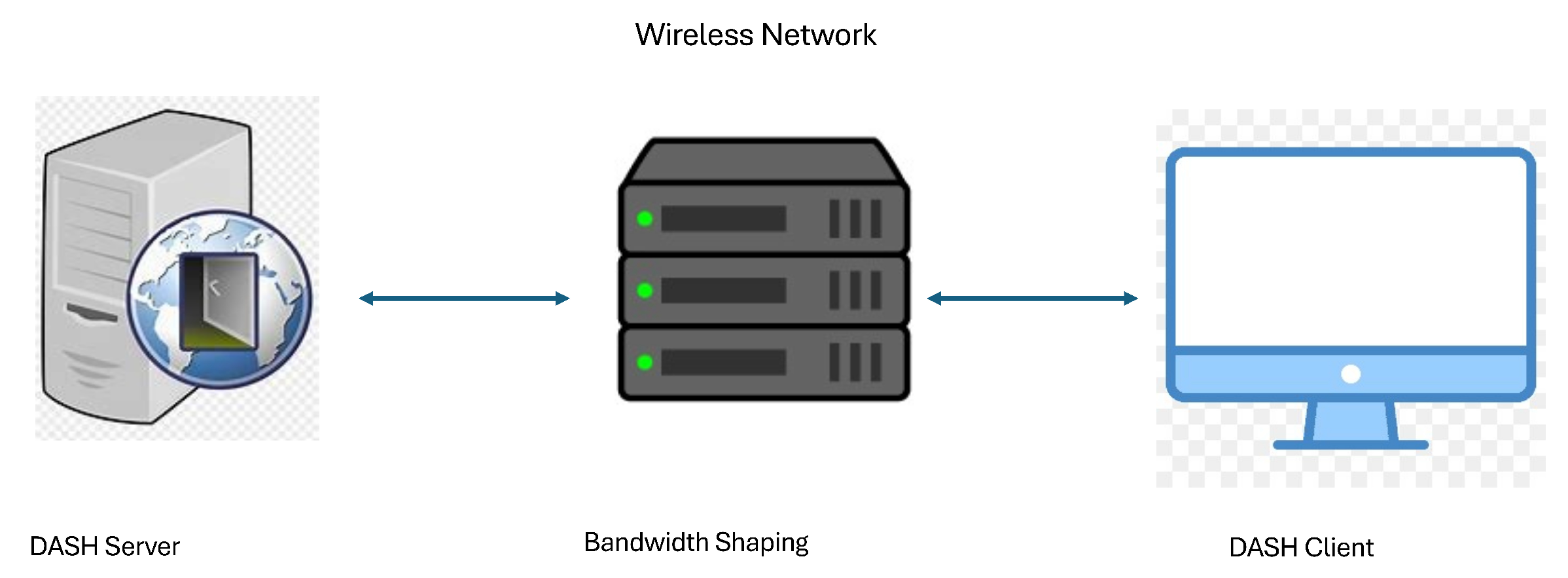
To conduct objective evaluation, a dash.js based test bed is deployed. The test bed architecture is shown in Figure 1. A streaming server is deployed using apache web-server. The DASH client and server were connected through wi-fi network. To simluate diverse network conditions, Linux Traffic Control (tc) utility is deployed. The Linux Traffic Control is a standard tool for shaping, scheduling, and controlling network traffic in experimental environments. The tc framework provides fine-grained control over parameters such as bandwidth, round-trip delay, jitter, and packet loss, which are critical for evaluating adaptive bitrate (ABR) algorithms under realistic conditions. The encoded videos are stored on the Apache server. The client streams the video sequences using ABR algorithms, which are deployed on the client side. The detailed architecture is shown in Figure 1.
Figure 1.
Wireless network test bed [12].
3.2. Methods
The following sections will describe the experimental procedures, including content selection, encoding procedure, viewing conditions, and demographics.
3.2.1. Source Content Selection
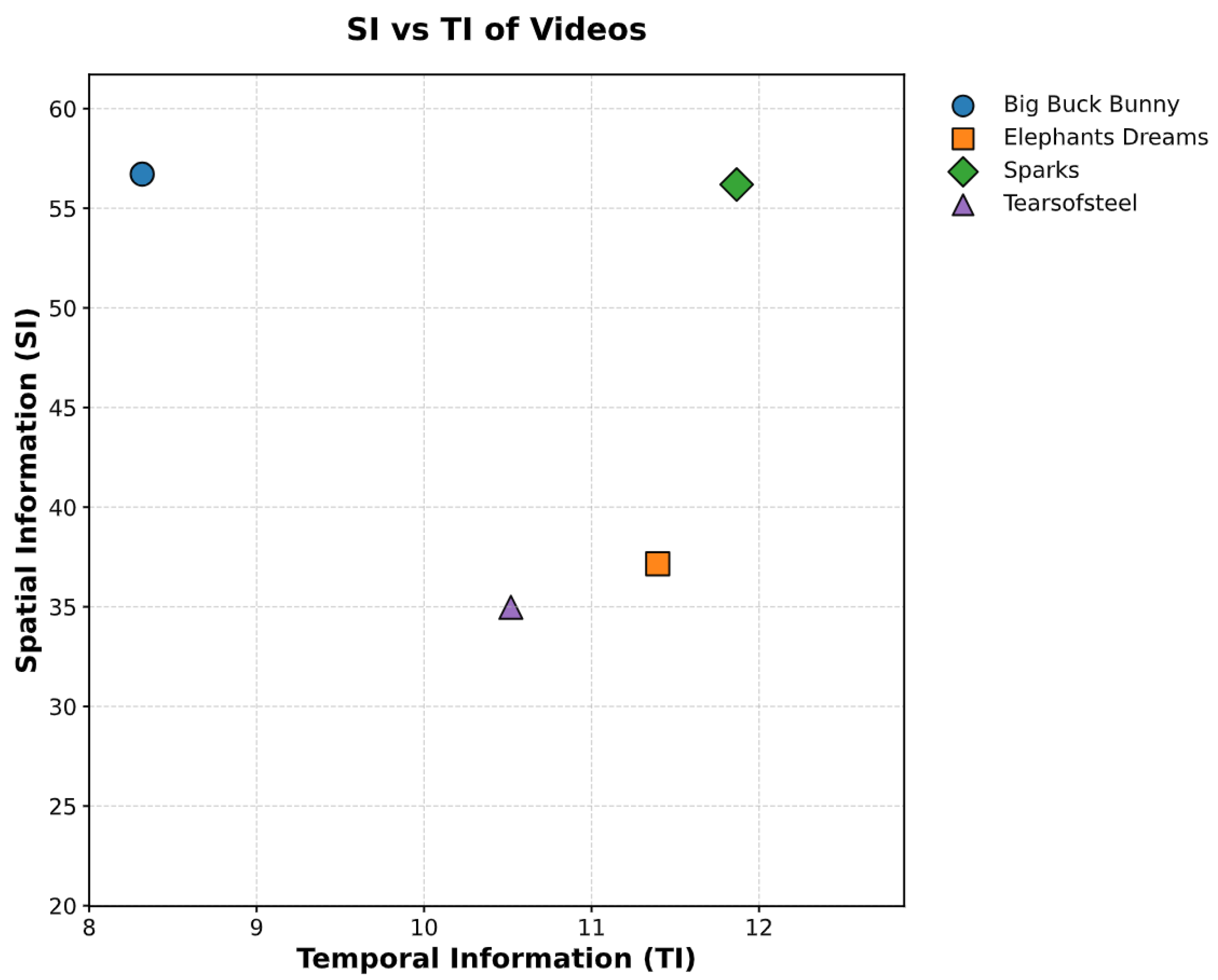
The source content is selected from [31]. The following video sequences were used in our evaluation: Big Buck Bunny, Elephant, Tears of Steel, and Spark. The content is diverse in nature and consists of content from movies and animation. Each clip was 1 min long (60 s). The sequence frame rate (FPS) was 24 FPS. To provide a comprehensive assessment of ABR algorithms, four source videos were chosen. These videos were selected to represent a range of spatial and temporal features: An animation segment (with synthetic graphics, sharp edges, and uniform areas), and a movie trailer (cinematic content with varied motion). The SI and TI characteristics are shown in Figure 2. The figure depicts that the Sparks video exhibits both high TI and SI values, indicating high spatial complexity and significant motion. In contrast, Tears of Steel demonstrates moderate complexity and relatively low motion. The BBB video has high visual complexity but the motion is the least among all video. Finally, the Elephants Dream video exhibits moderate levels of both visual complexity and motion. This configuration enabled the evaluation of ABR performance under both bandwidth-intensive and bandwidth-constrained conditions. All videos were encoded using a segment-based DASH profile with multiple bitrate options at 1080p resolution to ensure fair comparison across algorithms. This selection aligns with standard practices in adaptive streaming research, where diverse content is crucial to capture different Quality of Experience (QoE) aspects affected by motion complexity and visual traits.
Figure 2.
Spatial Information (SI) vs. Temporal Information (TI) of the source videos.
3.2.2. Encoded Content
The test sequences are prepared using FFMPEG version 7.0.3 [32] and then converted into DASH segments. The quality levels are presented in Table 2. The encoding schemes are based on VBR encoding with minBitrate and maxBitrate and vbvBuffer parameters all set to the relevant bitrates. This ladder covers a range of network conditions while maintaining perceptual quality across resolutions, in line with recommended streaming profiles. The 2-s segment is chosen in order to support low-latency playback, with each segment packaged into fragmented MP4 (fMP4) chunks. The GOP size was aligned with the segment length to ensure consistent random access points and minimize decoding overhead. All encoded contents were packaged into MPEG-DASH format using GPAC/MP4Box, with manifest files (MPDs) generated for use in the Dash.js player. These encoding parameters were chosen to balance latency, compression efficiency, and playback stability, thereby providing a fair basis for comparing ABR algorithm performance under controlled conditions.
Table 2.
Video sequences encoding and bitrate ladder.
3.2.3. Bandwidth Profiles for Evaluation
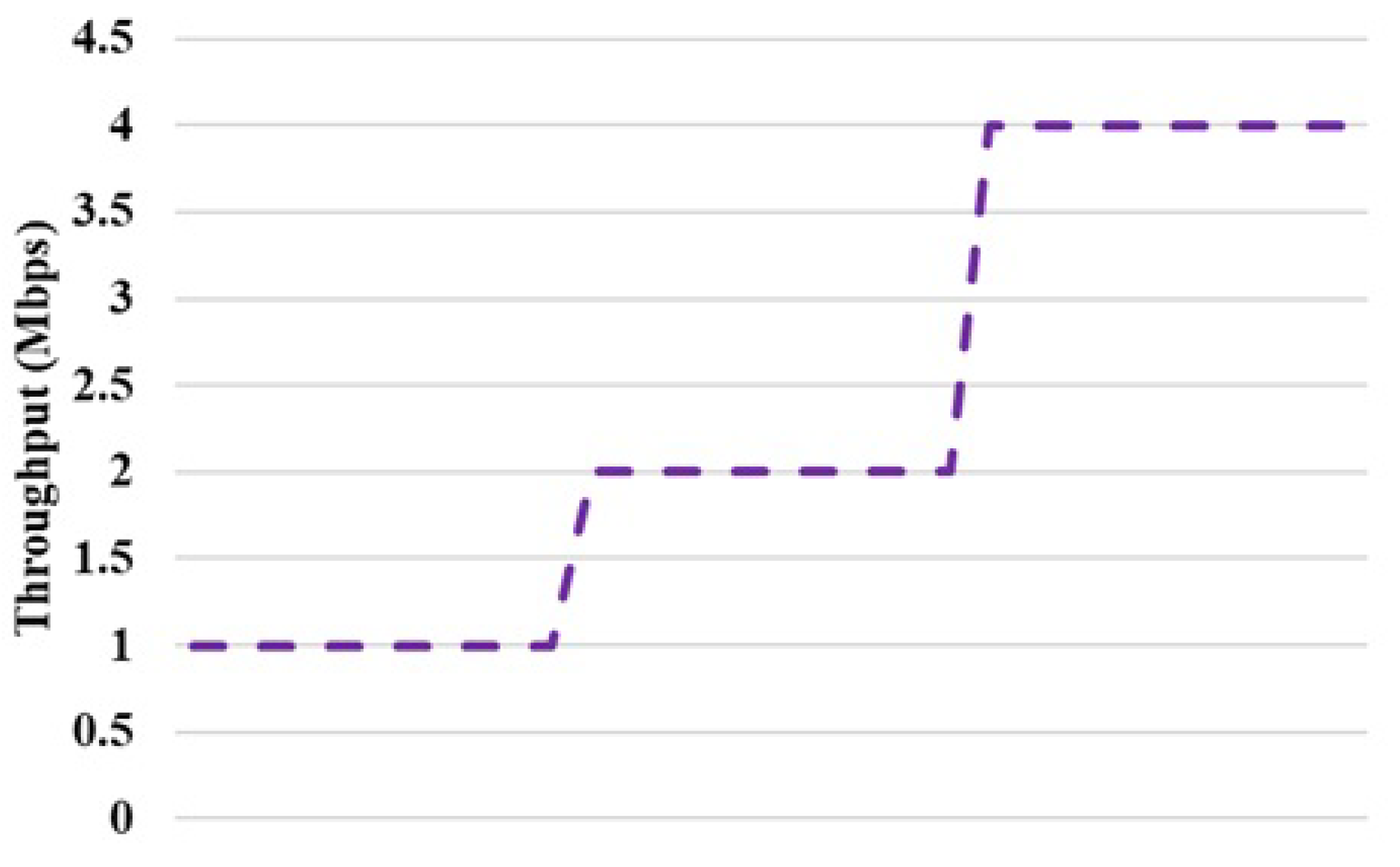
For the evaluation, controlled network profiles with stepwise bandwidth variations are created as shown in Figure 3. This gradual change in the throughput allowed us to emulate realistic network dynamics, where capacity improves over time, and to observe how different algorithms adjust their bitrate selection and buffer management in response.
Figure 3.
Network profile used for evaluation.
3.2.4. Experimental Procedure
The subjective evaluation is performed using the Absolute Category Rating (ACR) method [33]. This method is aligned with the recommendations provided by ITU-T release P.910 [34]. The ACR, is a single stimulus method in which the one video sequence is presented to participants. The test participants are asked to watch the video sequence and then rate the overall quality. The Likert scale is provided to test participants as 1—bad, 2—poor, 3—fair, 4—good, and 5—excellent. For each video sequence, an MOS (Mean Opinion Score) is calculated. The MOS is the arithmetic mean of all scores and has a (95%) confidence interval [35,36].
3.2.5. Adaptive Bitrate (ABR) Algorithms
Adaptive Bitrate (ABR) algorithms play a key role in HTTP Adaptive Streaming (HAS) by allowing video players to automatically modify the video quality based on changing network conditions [37]. In this work, the ABR algorithms are considered on the basis of their working principles. These algorithms include both rate-based and low-latency types. The dynamic, BOLA, throughput, L2A-LL, and LOL+ algorithms have been implemented within a dynamic adaptive streaming framework known as dash.js. This framework utilizes the open-source implementation of the MPEG-DASH standard.
- Throughput: The throughput-based algorithm selects the video quality level by estimating the available network bandwidth from the download times of recent segments. The player request higher quality level that is expected to be sustainable under the measured throughput. This algorithm calculates the average throughput of the previous video segment that was downloaded [38].
- BOLA (Buffer Occupancy-based Lyapunov Algorithm): The BOLA is the buffer-based ABR algorithm. This algorithm leverages Lyapunov optimization to balance video quality against the risk of rebuffering. The BOLA makes adaptation decisions based on buffer occupancy, aiming to maximize utility while maintaining playback stability. The BOLA algorithm is well-suited for situations where bandwidth varies [39].
- Dynamic: A dynamic ABR algorithm working on principle adapting video quality decisions by combining estimated throughput and buffer occupancy. The throughput-based algorithms are based on hybrid strategy. These hybrid or adaptive strategies are more robust than static approaches. These algorithms continuously adjust their decision logic based on the streaming context [40].
- Learn2Adapt Low Latency (L2A-LL): The Learn2Adapt Low Latency (L2A-LL) algorithm is a reinforcement learning-based ABR approach. The L2A-LL is designed for low-latency streaming scenarios. This algorithm uses the online convex optimization principle. The reinforcement learning agent is trained to balance competing objectives, including maintaining low playback latency, reducing rebuffering, and minimizing quality fluctuations. By leveraging data-driven decision-making, L2A-LL adapts more effectively to highly variable network conditions compared to traditional rule-based strategies, making it a strong candidate for next-generation low-latency adaptive streaming systems [19,41].
- Low on Latency (LOL+): The Low on Latency (LOL+) algorithm original LOL extends approach by explicitly incorporating playback latency into the adaptation logic, alongside traditional parameters such as buffer occupancy and throughput. The LOL+ is a heuristic algorithm that uses learning principles to optimize the parameters for the best QoE. This algorithm is implemented on a SOM (self-organizing map) model. The SOM model which accounts for different QoE metrics and changes in the network. There are crucial modules in LOL+. The LOL+ playback speed control module is based on a hybrid algorithm that estimates latency and the buffer level and administers the playback speed. The second module which is LOL+ and the QoE evaluation module and that is accountable for QoE computation based on metrics such as segment bitrate, switching, rebuffer events, latency, and playback speed [40,41,42].
4. Evaluation Results
In this section, we present both the objective and subjective evaluations of our results. The experiments were conducted according to the methodology described in Section 3. To create the content for subjective evaluation, we adaptively streamed all videos using both traditional DASH and low-latency algorithms.
4.1. Objective Evaluation Outcome
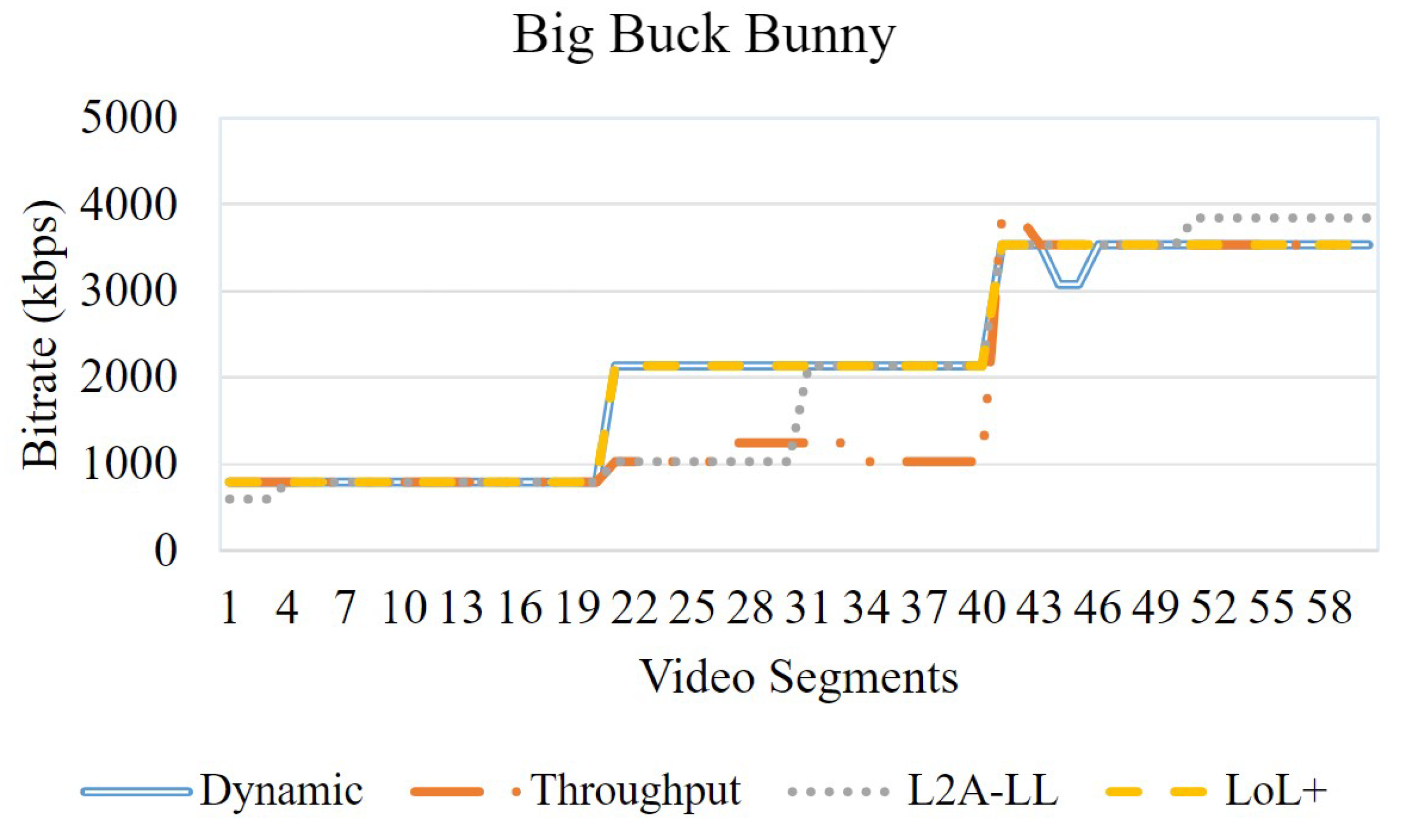
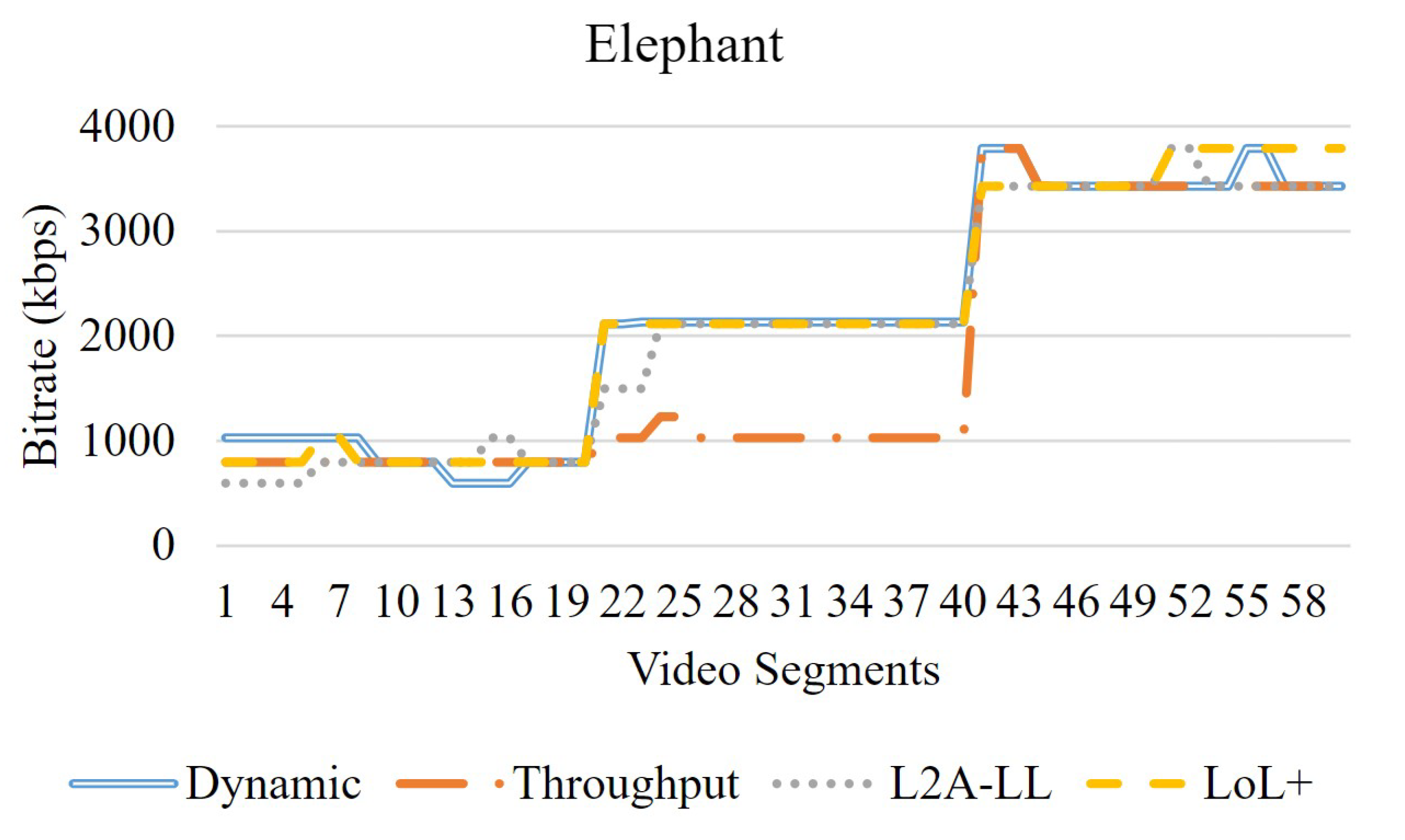
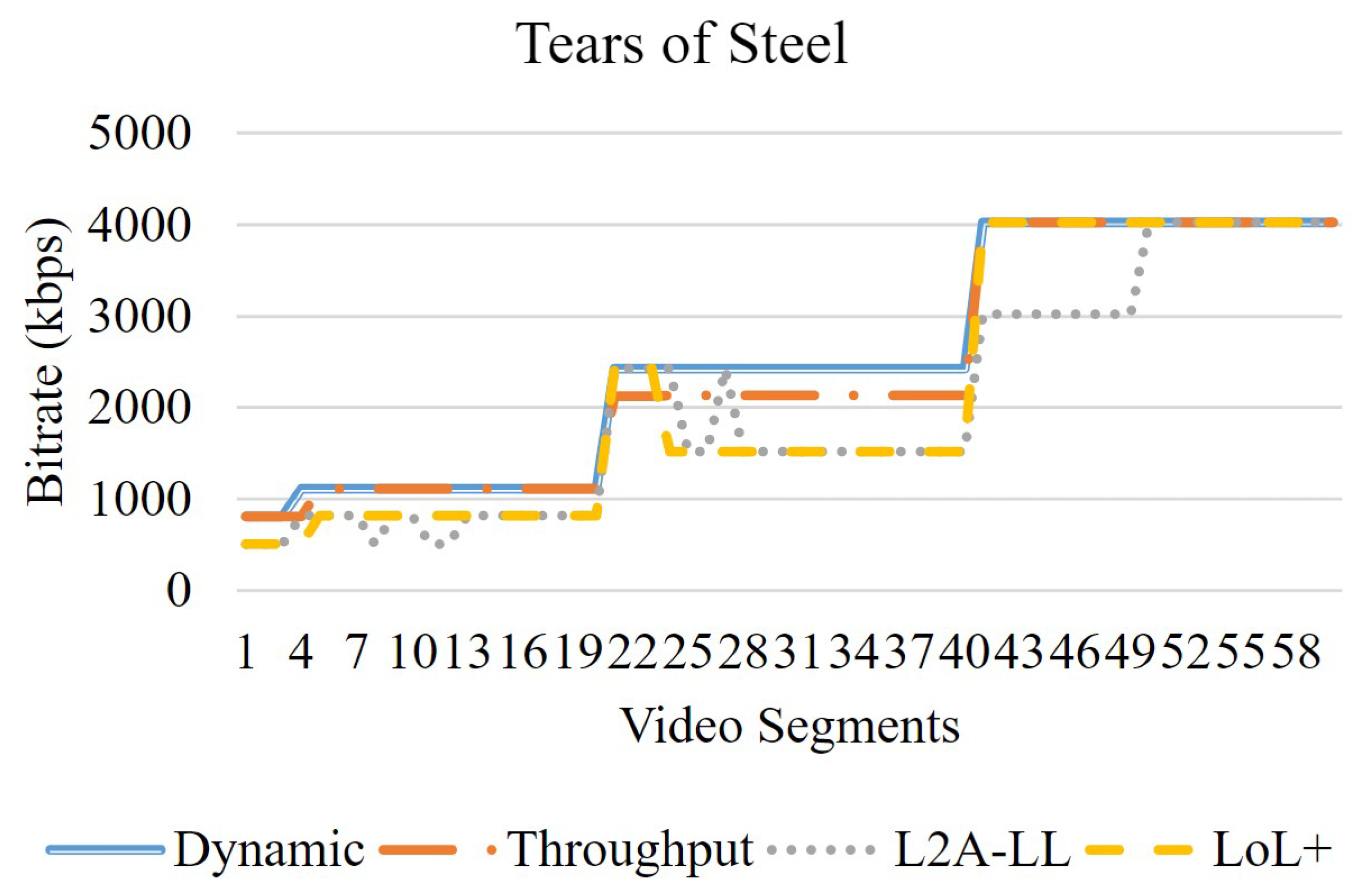
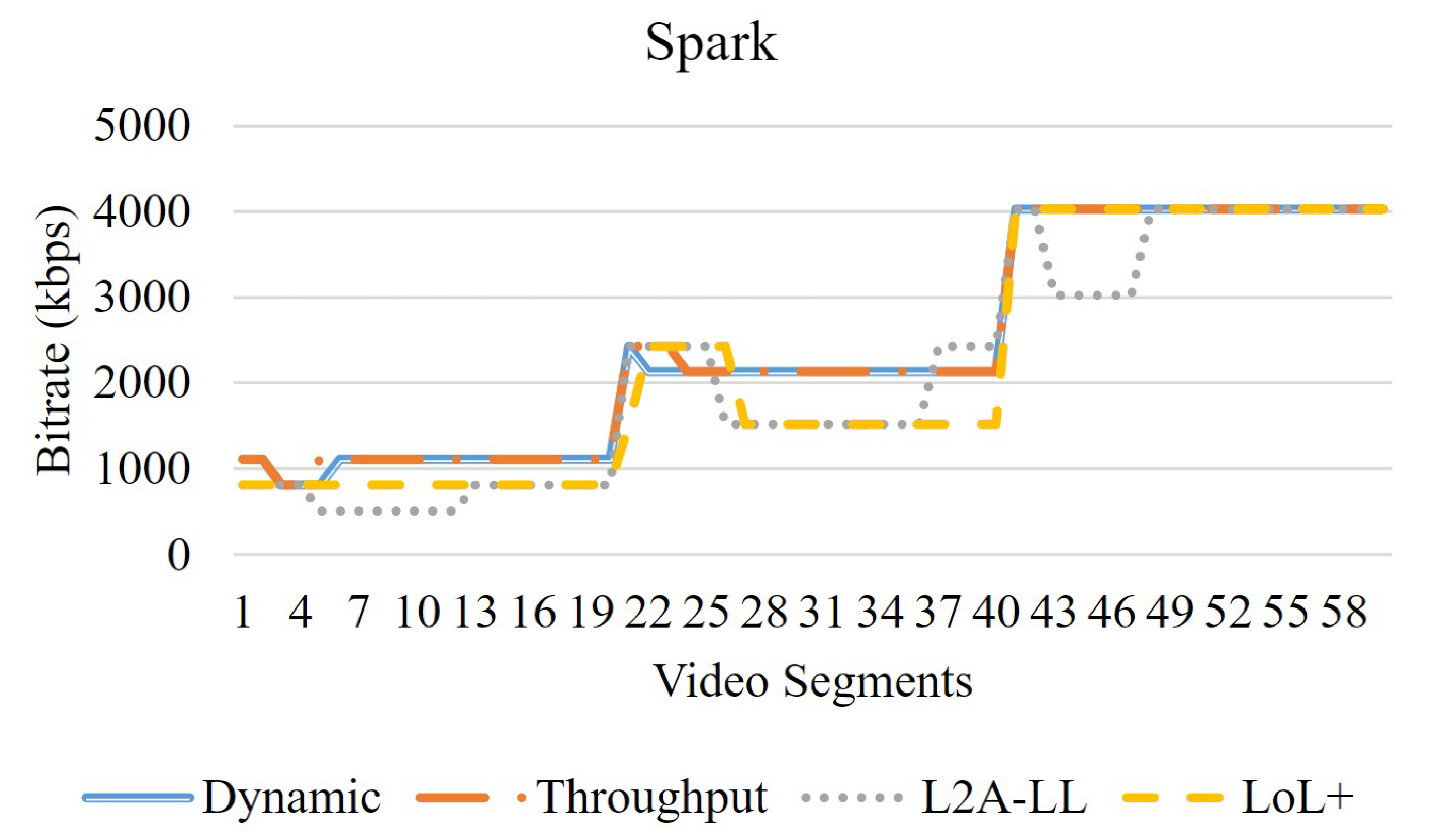
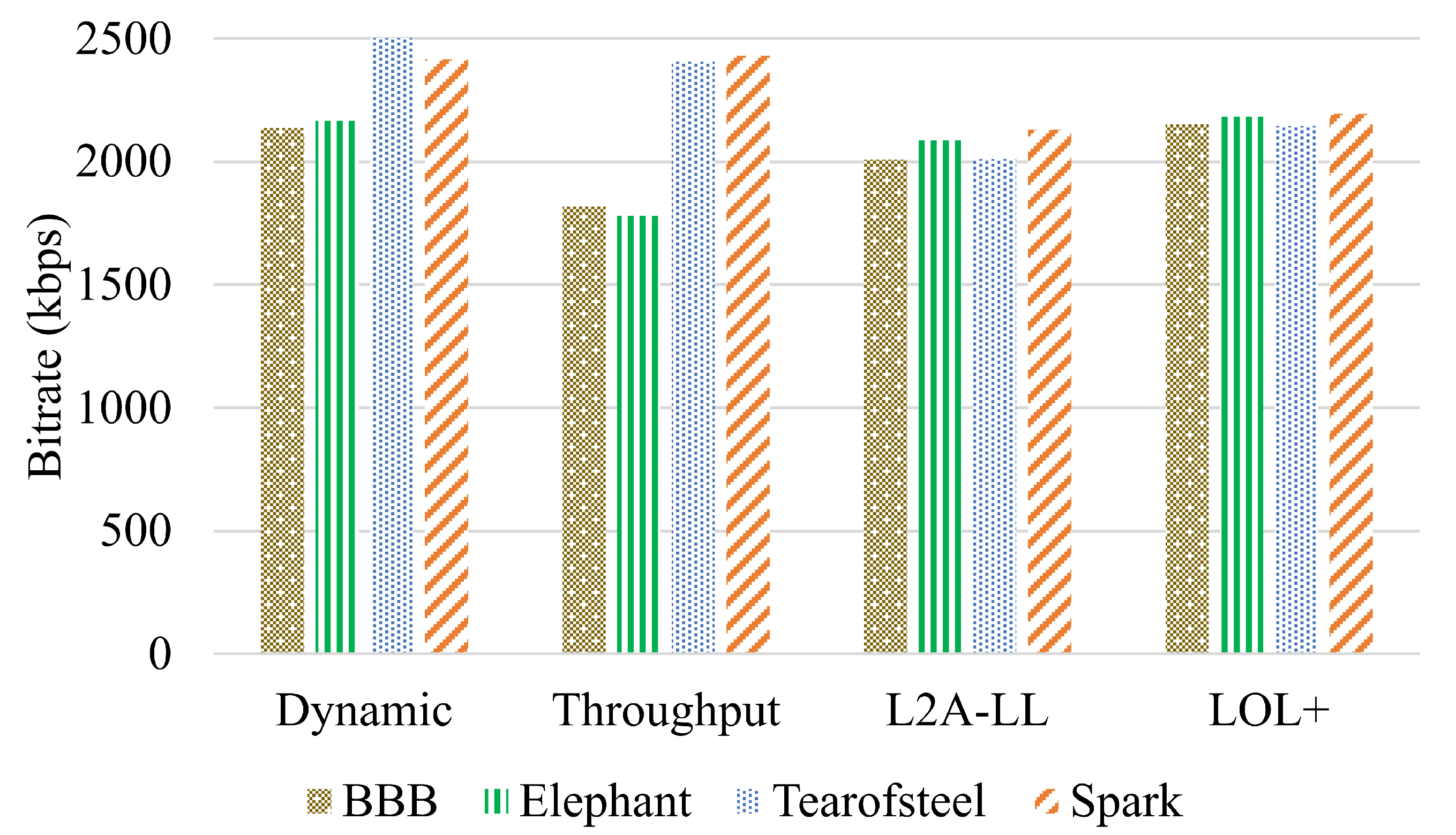
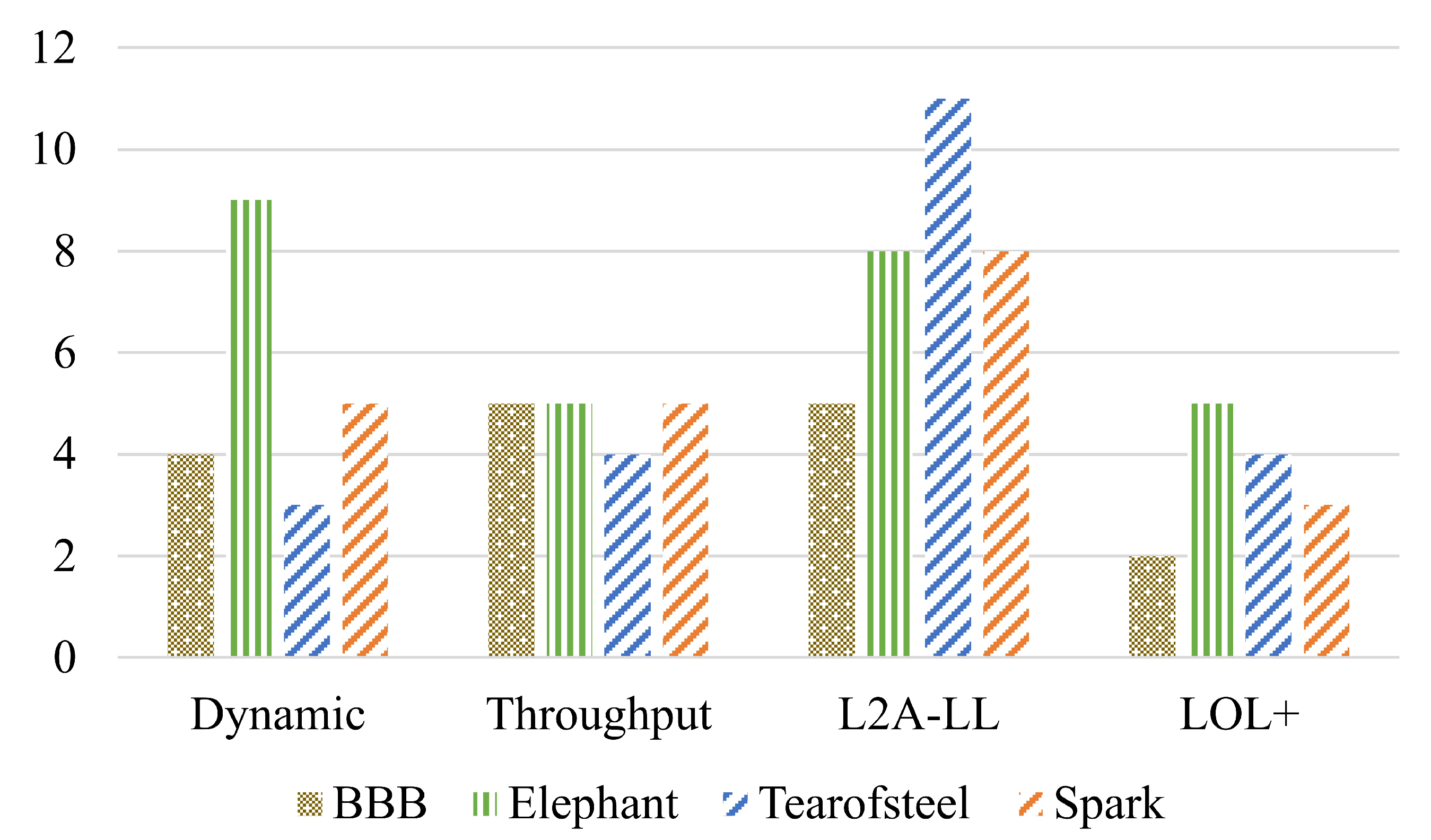
In this section, the objective evaluation is presented. The detailed analysis is published [12]. In Figure 3, shows the network profile used for the experiments. The streaming session began at a bandwidth of 1 Mbps, which was subsequently increased to 2 Mbps and then to 4 Mbps. The video sequences consist of 2-s segments. Figure 4 depicts the variations in bitrates for algorithms for the video Big Buck Bunny. Among all algorithms, LOL+ and the dynamic increases the bitrate when the bandwidth increases from 1 Mbps to 4 Mbps. However, the L2A-LL and Throughput algorithms delay increasing the bitrate to minimize the risk of interruption. Figure 5, Figure 6 and Figure 7 demonstrate that the dynamic algorithm performs consistently across all videos. In Figure 8, all algorithms are compared. The dynamic algorithm achieves the maximum video rates in all streaming sessions regardless of video sequences. The LOL+ reacts abruptly to the network variations while streaming Big Buck Bunny and Elephant. During the streaming of Tears of Steel and Spark, it increased bitrate initially but quickly reduced to prevent playback interruptions. The Throughput algorithm carefully increases the bitrate for Big Buck Bunny and Elephant but more aggressively improves the video quality when streaming Tears of Steel and Spark. A comparison is shown in Figure 8, demonstrating that traditional DASH algorithms yield higher bitrates streaming Tears of Steel and Spark compared to BBB and Elephant. However, low-latency algorithms LOL+ and L2A-LL algorithms achieved the similar average bitrates in all streaming sessions. Figure 9 depicts the number of bitrate switches; the LoL+ algorithm experiences the lowest number of video rate switches followed by traditional DASH algorithms. On the other hand, the L2A-LL algorithm had the highest number of bitrate switches. As illustrated in Figure 4, Figure 5, Figure 6 and Figure 7, most of these changes were minor and probably would not be noticed by the user. The significant bitrate changes occurred when the available bandwidth prompted the algorithms to raise the bitrate. Overall, both Dynamic and LOL+ maintained high video quality across all streaming sessions while ensuring minimal and stable bitrate fluctuations. The Figure 4, Figure 5, Figure 6, Figure 7, Figure 8 and Figure 9, taken from the objective evaluation part and already published in [12].
Figure 4.
Bitrate analysis—Big Buck Bunny [12].
Figure 5.
Bitrate analysis—Elephant Dream [12].
Figure 6.
Bitrate analysis—Tears of Steel [12].
Figure 7.
Bitrate analysis—Sparks [12].
Figure 8.
Average video bitrates achieved by the algorithm under network profile 1 [12].
Figure 9.
Number of switches experienced by the algorithms under network profile 1 [12].
4.2. Subjective Evaluation Outcome
This section focuses on the subjective evaluation of the ABR algorithms. The test content was generated based on the quality levels determined by the ABR algorithms discussed in the preceding section.
4.2.1. Video Sequences
In this experiment, 24 video sequences were generated, each reflecting the quality levels selected by the ABR algorithms. The test sequences were presented in six (6) different groups. The reason for this was to randomize the order of presentation to avoid displaying the same source sequence again. Table 3 shows the source sequences assigned to each group. In these sequences, 16 sequences are of varying quality. Four (4) sequences have low quality, and four (4) sequences have source quality. In order to minimize the risk of bias, the order of the Processed Video Sequences (PVS) was randomized for each participant. The sequences were ordered such that no two consecutive PVS originated from the same source content. This minimizes the impact of content familiarity on subjective ratings.
Table 3.
Division of Video Files into Groups.
4.2.2. Duration of Stimuli
The quantity and variety of test scenes are essential for accurately interpreting the results of subjective evaluations. According to the ITU-T recommendations (ITU-T P.910) four to six scenes are sufficient, provided there is diversity in the content. The audiovisual material should be engaging both in terms of audio and video individually, as well as combined. In this work we prepared 20 test sequences to have a better understanding of the video quality in the streaming domain.
4.2.3. Study Description
Consent was obtained from all test participants. Once participants agreed to the study procedure, they were automatically redirected to the test screen. An automatic check was applied on the bandwidth and screen resolution at the test participant end. Participants were required to have a minimum internet speed of 40 Mbps to take part in the study. The Full HD (1920 × 1080) resolution was required for the study. The Windows display scale was required to be set at 100%. The test consisted of automatically and sequentially presenting a series of videos (without audio), each lasting up to one minute, with a total viewing duration of approximately 22 to 25 min. Participants were instructed to complete the assessment within 30 min to avoid the risk of rejection. After viewing each video, participants were asked to evaluate its visual quality by selecting one of five quality levels: Excellent, Good, Fair, Poor, or Bad.
4.2.4. Selection of Test Participants
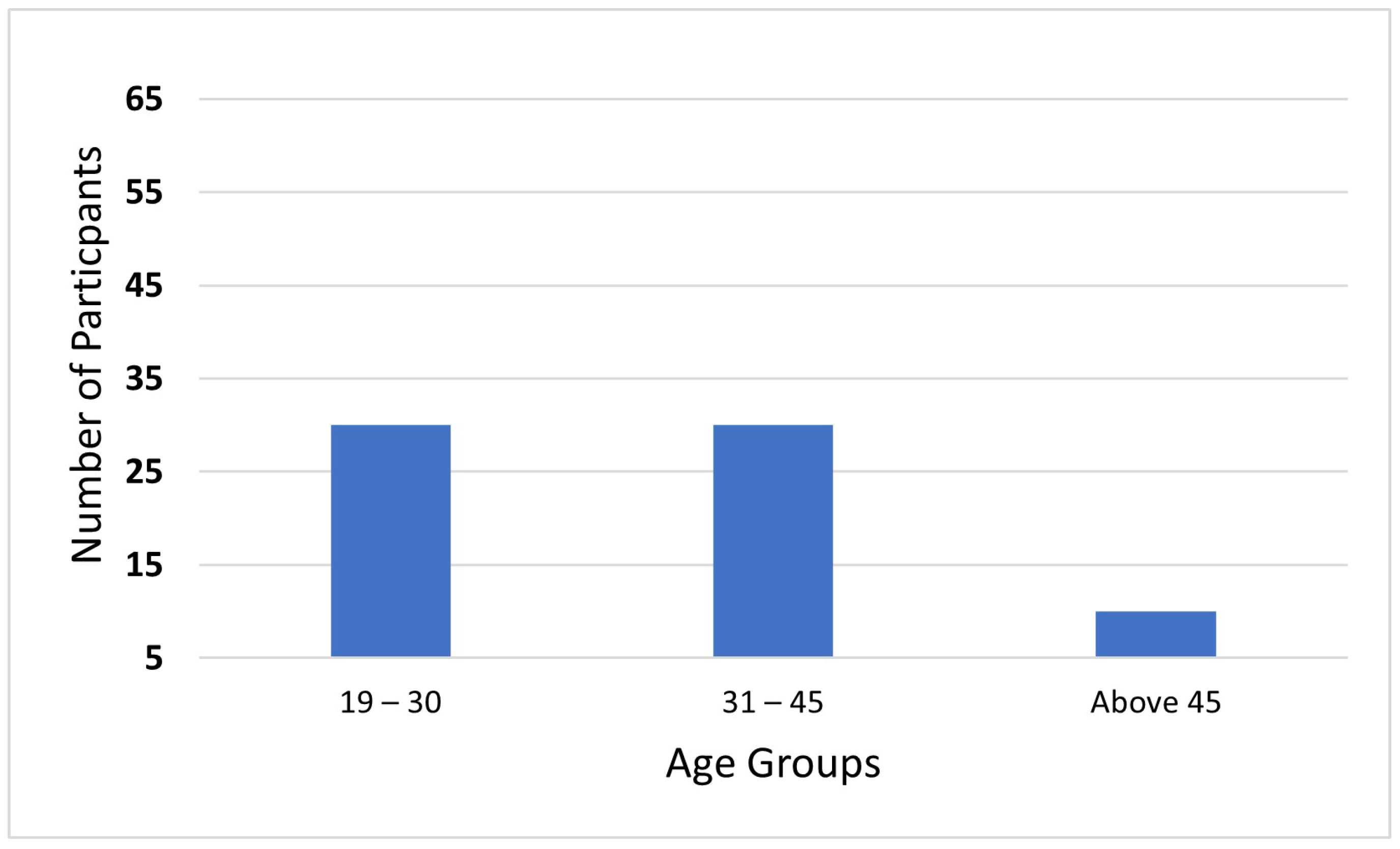
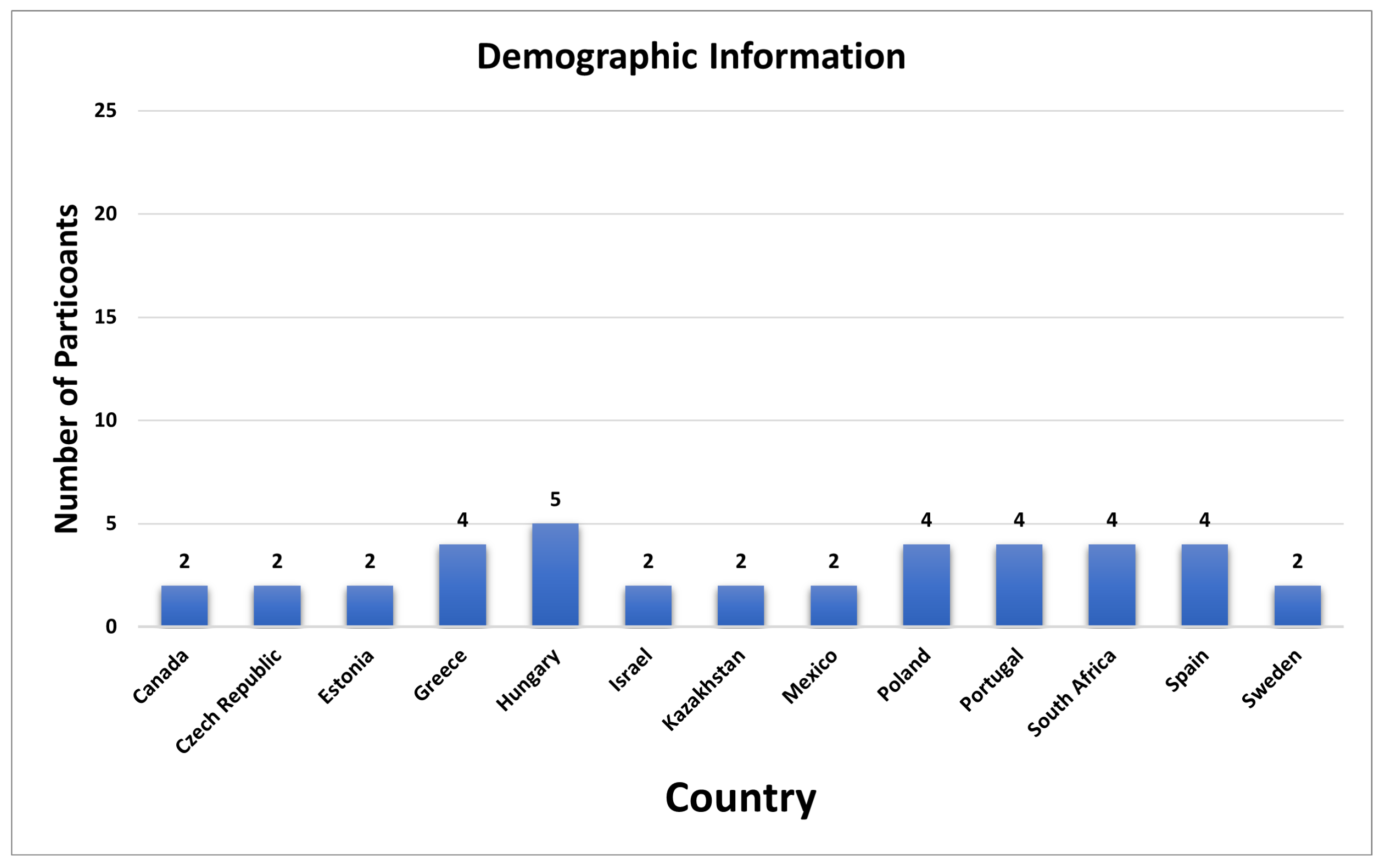
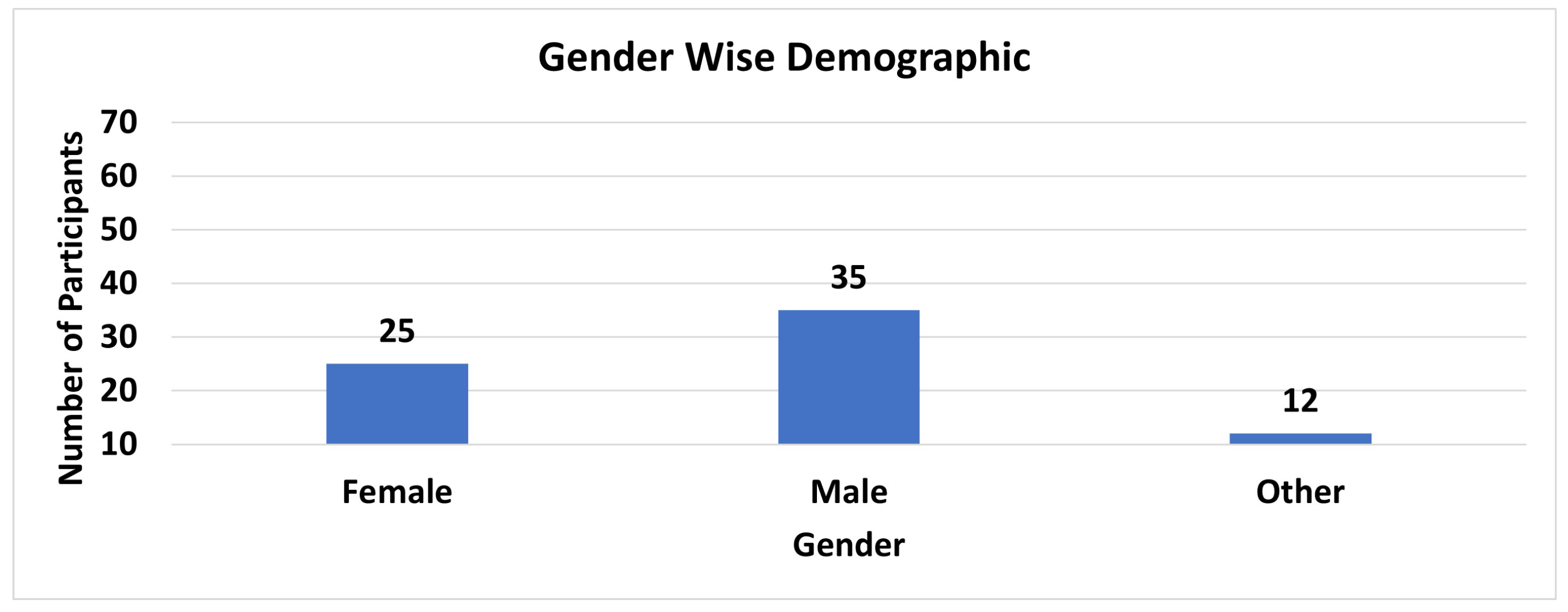
The prolific crowd-source-based platform was used to recruit test participants [43]. A total of 70 test participants participated in the study. The demographic data is shown below in Figure 10. The age distribution is mentioned in Figure 11, and Figure 12 provides gender-specific information. Participants were selected to represent typical end-users of adaptive video streaming services. It is challenging to collect data through crowd-sourced platforms. The data should be checked for validity and consistency. We included multiple data-quality controls, which included attention checks, minimum viewing times, and response-time screening. The test participants were required to respond within 35 min. If they fail to respond within the stipulated time, the record is discarded. The Pearson correlation was used to include the significant results. The Pearson correlation coefficient was 0.75. The significant test participants selected were 25 in total. We used methods in ITU-R recommendation BT.500-13 [44] to include and exclude test scores. Inconsistent or suspicious responses were identified and excluded. These measures ensured that only high-quality, reliable data were used in the analysis. Prior to the experiment, participants were informed of the study procedure and provided written consent in accordance with ethical guidelines. No specialized knowledge of video coding or streaming was required, ensuring that the ratings reflected the perception of general viewers rather than domain experts.
Figure 10.
Participant Demographic Information.
Figure 11.
Participant Age Groups Information.
Figure 12.
Participant Gender Information.
4.2.5. Mean Opinion Score
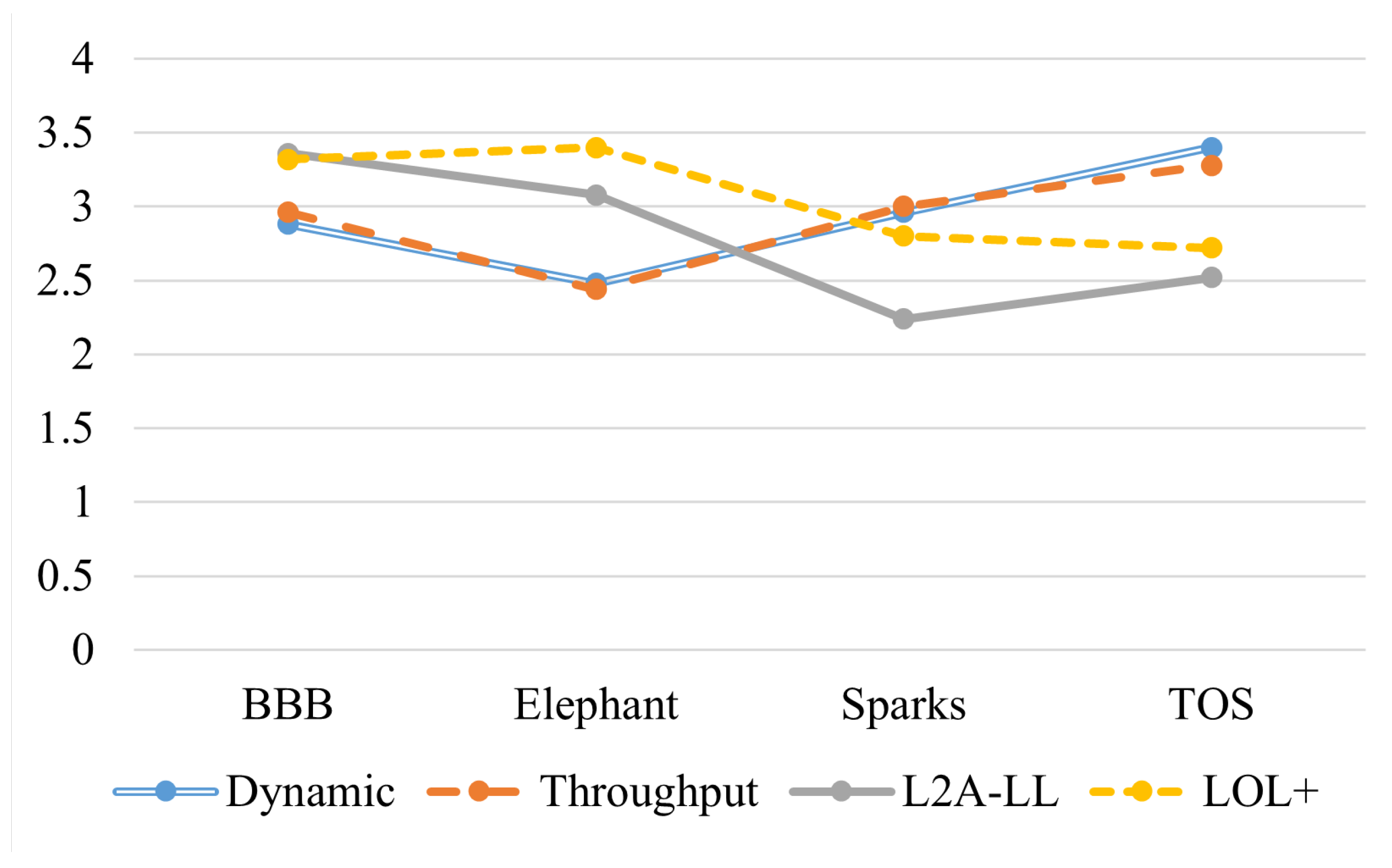
Figure 13 shows the MOS scores for the algorithms evaluated across four video sequences (Big Buck Bunny (BBB), Elephant, Sparks, and Tears of Steel (TOS). Figure depicts that the Dynamic and Throughput algorithms demonstrate comparable performance, maintaining moderate perceptual quality across all videos, with slightly improved ratings for TOS. L2A-LL exhibits the lowest MOS values, particularly for Sparks, indicating instability in quality adaptation and reduced robustness under fluctuating conditions. In contrast, LOL+ consistently achieves the highest MOS scores, especially for BBB and Elephant, suggesting its effectiveness in sustaining high visual quality while minimizing playback degradation.
Figure 13.
Mean opion scores of HAS Algorithms.
The results suggest that algorithms emphasizing latency reduction, such as L2A-LL, may compromise perceptual quality when network variability is high. Conversely, LOL+ demonstrates a favorable balance between responsiveness and visual stability, leading to superior user-perceived quality. These findings underscore the importance of designing adaptive algorithms that optimize both QoE and stability rather than focusing solely on latency minimization.
The results are mostly consistent with the findings from our objective evaluation. As illustrated in Figure 9, the frequent bitrate switches observed in the L2A-LL algorithm correspond to lower MOS values. This indicates that abrupt quality variations negatively affect user perception. However, Tears of Steel was expected to yield the lowest MOS score; surprisingly, its score is higher than that of Sparks. Since the Sparks video contains high visual complexity and significant motion, it often leads users to assign it lower subjective ratings. Similarly, the lower average video quality produced by the Throughput algorithm results in reduced MOS scores for the Big Buck Bunny and Elephant sequences. A comparison of Figure 8, Figure 9 and Figure 13 shows that the Big Buck Bunny and Elephants Dream videos were expected to receive similar MOS scores since both video were streamed a similar bitrates. However, Elephants Dream obtained a noticeably lower score, likely due to its higher visual complexity. Interestingly, although Big Buck Bunny exhibits greater motion content, the results suggest that users were more influenced by visual complexity than by motion. For the Dynamic algorithm, the Elephants Dream video received the lowest MOS score, primarily due to frequent bitrate switches. However, the Tears of Steel video achieved a considerably higher score than Sparks, despite their similar objective quality metrics. This further suggests that users tend to assign higher ratings to videos with lower visual complexity. The most unexpected MOS results were observed for the LOL+ algorithm, which downloaded videos with similar bitrates; however, viewers perceived the video quality differently from what the objective metrics indicated.
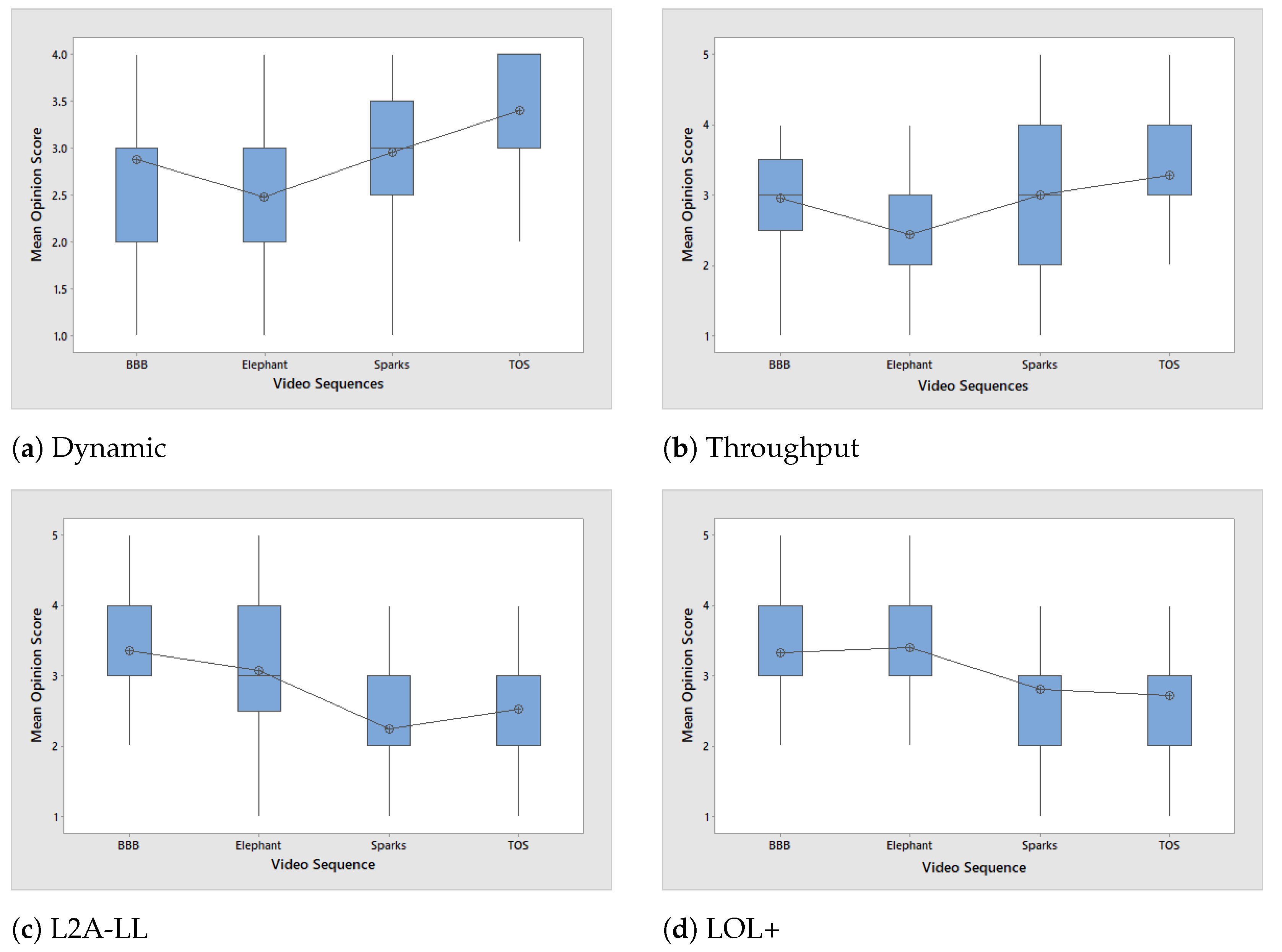
Figure 14, presents the MOS distributions for four ABR algorithms—Dynamic, Throughput, L2A-LL, and LOL+. The box plots provide insights into both the central tendency and the variability of user ratings. The Dynamic and Throughput algorithms exhibit relatively narrow interquartile ranges with consistent median MOS values around three. This indicates a stable performance and limited perceptual fluctuation across different video contents. In contrast, the L2A-LL algorithm demonstrates a larger spread of scores, particularly for Sparks and TOS. This suggests a higher inconsistency in perceived quality. This variability can be attributed to its latency-oriented adaptation strategy, which may result in more frequent bitrate changes and visual fluctuations.
Figure 14.
Comparison of video score distributions across four ABR algorithms: (a) Dynamic, (b) Throughput, (c) L2A-LL, and (d) LOL+.
The LOL+ algorithm achieves higher median MOS scores for BBB and Elephant, indicating strong perceptual quality under favorable conditions. However, its increased score dispersion and presence of outliers for Sparks suggest sensitivity to complex or high-motion content, where the algorithm may struggle to maintain consistent user experience despite favorable objective metrics. Overall, the results indicate that Dynamic and Throughput provide more stable subjective quality, while L2A-LL and LOL+ exhibit greater variability. It highlights the trade-off between achieving low latency and maintaining consistent perceptual quality across diverse video content.
The descriptive statistics presented in Table 4, Table 5, Table 6 and Table 7 reveal that the Dynamic and Throughput algorithms exhibit relatively low standard deviations (0.65–0.79) and narrow confidence intervals. This indicates a stable perceptual quality. The consistency suggests that both algorithms deliver smooth visual experiences with minimal perceptual fluctuations across diverse content types. In contrast, the L2A-LL algorithm demonstrates higher variability, with standard deviations reaching up to 0.997 for the Elephant sequence and wider confidence intervals across all videos. These results imply less stable performance and greater perceptual inconsistency. It is likely due to its aggressive latency-oriented adaptation strategy that leads to frequent bitrate changes and visible quality oscillations. The LOL+ algorithm, on the other hand, shows narrow confidence intervals for low-motion content such as Big Buck Bunny and Elephant, reflecting a high level of user consensus and stable visual quality. However, slightly broader intervals observed for more complex content, such as Tears of Steel. This suggests that scene dynamics and motion intensity may still influence the perceived quality.
Table 4.
Descriptive Statistics of Mean Opinion Scores—Dynamic.
Table 5.
Descriptive Statistics of Mean Opinion Scores—Throughput.
Table 6.
Descriptive Statistics of Mean Opinion Scores—L2A-LL.
Table 7.
Descriptive Statistics of Mean Opinion Scores—LOL+.
Overall, the statistical dispersion and confidence analyses highlight that Dynamic and Throughput achieve steady perceptual outcomes. The L2A-LL introduces instability under fluctuating conditions, and LOL+ sustains high but content-sensitive consistency in subjective quality assessments.
4.2.6. Scatter Plot Analysis of Algorithms and MOS Score
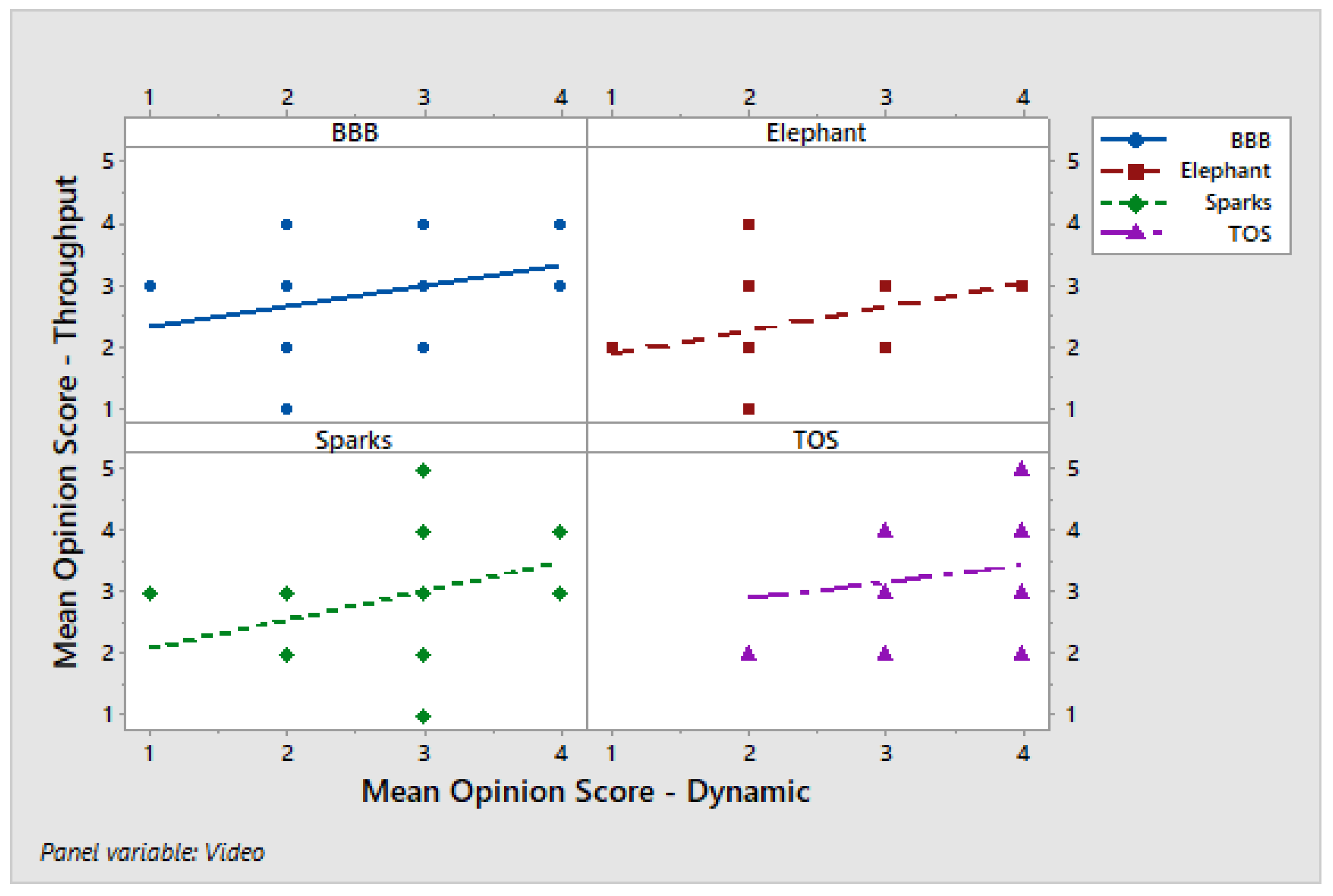
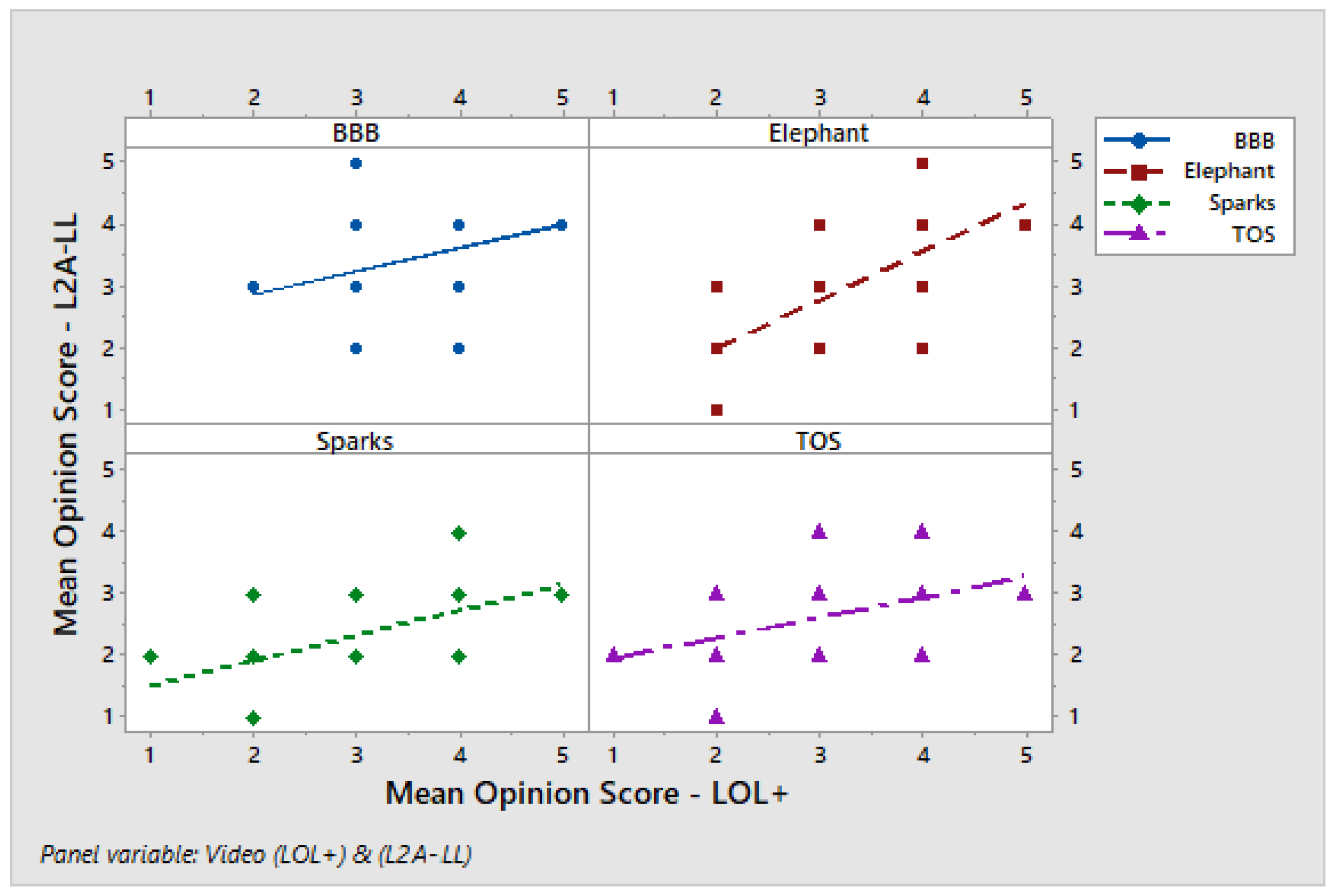
To examine the consistency of user perceptions across different adaptive streaming algorithms, we present scatter plots of opinion scores comparing traditional HAS and low-latency algorithms. Figure 15 presents the scatter plot of opinion scores for the Dynamic and Throughput HAS algorithms. The figure illustrates the relationship between their subjective ratings across different video sequences. The subplots include regression lines that represent the trend between the opinion scores of the two algorithms across different video sequences. The correlation between the two algorithms is further examined to assess consistency in user perception. For BBB, the data reveal a weak but positive association, indicating that participants who rated Dynamic higher generally tended to assign slightly higher scores to Throughput as well. The Elephant sequence exhibits a shallow positive trend, where the ratings for both algorithms are correlated but display considerable dispersion. This suggests a modest agreement among participants. In this case, Throughput scores are more tightly clustered around the mid-range values, regardless of variations in Dynamic ratings. In contrast, the Sparks sequence shows a more pronounced upward trend, implying a stronger alignment in subjective evaluations and more consistent high ratings for both algorithms, although some variability remains across individual scores.
Figure 15.
HAS ABR Algorithms (Dynamic and Throughput) Comparison Scatterplot.
Figure 16 illustrates the comparative analysis between the low-latency algorithms, L2A-LL and LOL+ to assess user rating patterns. As evident from the user evaluations, the Elephant sequence exhibits a strong positive correlation, indicating that participants who assigned higher ratings to L2A-LL also tended to rate LOL+ favorably. In contrast, the BBB content shows weaker consistency among user ratings. This suggests a limited correlation and greater perceptual variability. For the Sparks and TOS sequences, a moderate to strong positive relationship is observed which reflects a greater alignment in user perception of quality between the two algorithms. Overall, the correlation analysis demonstrates that while both L2A-LL and LOL+ perform similarly for certain content types, perceptual agreement diminishes for less predictable or visually complex videos such as TOS.
Figure 16.
Low-latency ABR Algorithms L2A-LL and LOL Comparison Scatterplot.
4.2.7. Regression Analysis of Low-Latency Algorithms
To further assess the relationship between two low-latency algorithms, a linear regression analysis was conducted comparing opinion scores from L2A-LL and LOL+ for all videos.
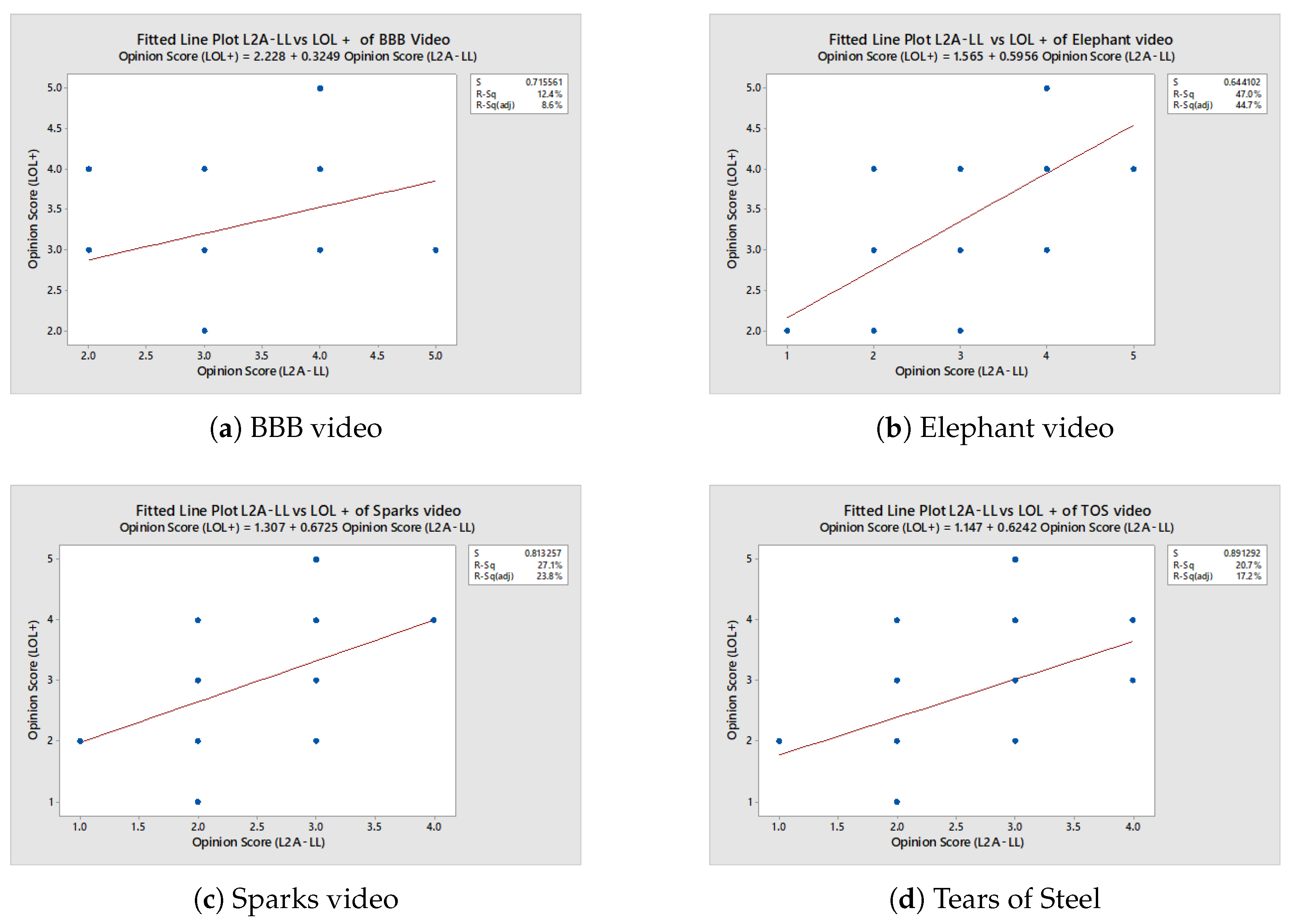
Figure 17a illustrates the regression relationship between the two algorithms, while Table 8 summarizes the corresponding statistical parameters. First, a linear regression relationship is demonstrated between the opinion scores obtained from the L2A-LL and the LOL+ for the Big Buck Bunny (BBB) video. The equation is shown in (1). The regression yielded the following model:
Figure 17.
Fitted Line Plots L2A-LL vs. LOL+ for different videos.
Table 8.
Statistical Analysis of Variance—BBB.
The equation above indicates that increases in L2A-LL scores are accompanied by slight increases in LOL+ scores. This suggests a weak positive association that lacks strong predictive capability. The presence of outliers highlights inconsistencies in participant evaluations, reflecting inherent subjectivity and variability in user perception. These findings suggest the need to consider additional predictors, such as content complexity, motion characteristics, and participant demographics, to more accurately explain differences in perceived QoE.
Next, we assess the relationship between two low-latency algorithms for the Elephant video. Figure 17b illustrates a clear upward trend, indicating that users provide consistent ratings when evaluating this video. A detailed analysis is presented in Table 9. The relationship between the two metrics is modeled by the regression Equation (2):
Table 9.
Statistical Analysis of Variance—Elephant Dream.
This implies that for every one-point increase in the L2A-LL score, the LOL+ score is expected to increase by approximately 0.60 units.
Next, the Spark video sequence was presented to users for subjective rating. Figure 17c illustrates reveals a clear trend line that indicates a moderate to strong positive correlation. The corresponding analysis of variance is summarized in Table 10. Based on the regression analysis, the following regression Equation (3) was derived:
Table 10.
Statistical Analysis of Variance—Sparks.
This implies that for every one-unit increase in the L2A-LL score, the LOL+ score is expected to increase by approximately 0.67 units. The positive slope confirms a positive association between the two sets of ratings. However, the noticeable scatter around the regression line indicates variability. This suggests that while the overall trend holds, individual respondents’ ratings often deviate from the predicted values.
Finally, we assess the relationship for the TOS video. As shown in Figure 17d, the trend line indicates a moderate to strong positive relationship in users’ opinion scores for this content. The detailed analysis is summarized in Table 11. Using the regression analysis, the relationship between the variables can be represented by the following Equation (4):
Table 11.
Statistical Analysis of Variance—Tears of Steel.
The regression equation shows a positive slope of 0.6242. This indicates that for each one-unit increase in the L2A-LL score, the LOL+ score is expected to increase by approximately 0.62 units. This reflects a moderate positive association in respondent opinions across the two algorithms. For the TOS content, the relationship between L2A-LL and LOL+ scores is both moderate and statistically significant. The participants tended to rate the video in a similar manner under both scoring methods. However, the strength of agreement was lower than that observed for the Elephant content, with noticeable individual differences remaining. This variability implies that respondent ratings may have been influenced by contextual factors or subjective interpretation, rather than by the algorithmic method alone.
5. Conclusions and Future Work
This study presents a comprehensive subjective evaluation of ABR algorithms in low-latency MPEG-DASH streaming environments. The work combines objective metrics with large-scale crowd-sourced subjective assessments to analyze user-perceived video quality across both traditional and low-latency ABR strategies. The ABR algorithms were tested using short two-second segments to simulate real-world low-latency streaming. The evaluation employed the ACR method following ITU-T P.910 standards, with data collected via the Prolific platform. Diverse video content was used, including animation and cinematic clips, to capture variations in spatial and temporal complexity. Results indicate that the Dynamic algorithm consistently achieved higher Mean Opinion Scores and exhibited greater robustness across network fluctuations. For low-latency algorithms, LOL+ outperformed L2A-LL, maintaining superior perceptual quality and playback stability. However, L2A-LL’s aggressive latency optimization resulted in greater bitrate variability and lower user satisfaction. The findings highlight that objective performance metrics alone do not fully capture user perception. Frequent quality switches and visual instability were found to reduce subjective QoE significantly. The study underscores the importance of designing ABR algorithms that balance responsiveness, stability, and perceptual quality rather than focusing solely on latency or bitrate.
Future research can advance in several directions. Additional content types and genres should be incorporated to capture a broader range of visual and motion characteristics. Increasing the number and diversity of participants would enhance the statistical reliability and representativeness of subjective evaluations. The dataset can be expanded by including more resolutions and network profiles to reflect real-world streaming environments more accurately. Furthermore, future subjective studies should focus on assessing video quality in ultra-low-latency scenarios to better understand user perception under extreme delay constraints. These efforts will contribute to the development of next-generation adaptive streaming systems that are both technically optimized and user-centric.

Author Contributions
Conceptualization, S.U.; methodology, S.U. and M.L.; software, S.U. and W.u.R.; validation, S.U., M.G. and M.L.; formal analysis, S.U.; investigation, S.U.; resources, M.L.; data curation, S.U.; writing—original draft preparation, S.U.; writing—review and editing, S.U., M.L. and W.u.R.; visualization, S.U.; supervision, M.L.; project administration, S.U. and M.L. All authors have read and agreed to the published version of the manuscript.
Funding
This research was funded by QuickStream Project entitled “Technology for Secure and Reliable Delivery of Professional Audio/Video Contribution Live Transmissions with the Lowest Possible Latency”.
Institutional Review Board Statement
The study was conducted according to the guidelines provided by ITU-T. All subjective user evaluations were performed in a crowd-source environment, ensuring participant anonymity and voluntary consent.
Data Availability Statement
The data of this experimental work will be publihed online after approval.
Acknowledgments
This research work is based on the QuickStream Project entitled “Technology for Secure and Reliable Delivery of Professional Audio/Video Contribution Live Transmissions with the Lowest Possible Latency”. The project was carried out under Sub-measure 1.1.1 of the Intelligent Development Operational Program 2014–2020 and co-financed from the Polish National Center for Research and Development. It was implemented as part of the National Center for Research and Development’s Fast Path competition.
Conflicts of Interest
The authors declare no conflicts of interest.
Abbreviations
The following abbreviations are used in this manuscript:
| ABR | Adaptive Bitrate |
| CMAF | Common Media Application Format |
| DASH | Dynamic Adaptive Streaming over HTTP |
| QoE | Quality of Experience |
| QoS | Quality of Service |
| RTT | Round Trip Time |
| MOS | Mean Opinion Score |
| LL-DASH | Low-Latency DASH |
| HTTP | HyperText Transfer Protocol |
| LL | Low-Latency |
| L2A-LL | Learn2Adapt-LowLatency |
| LOL+ | Low-on-Latency |
| ACR | Absolute Category Rating |
| VQA | Video Quality Assessment |
References
- Kumar, T.; Sharma, P.; Tanwar, J.; Alsghier, H.; Bhushan, S.; Alhumyani, H.; Sharma, V.; Alutaibi, A.I. Cloud-based video streaming services: Trends, challenges, and opportunities. CAAI Trans. Intell. Technol. 2024, 9, 265–285. [Google Scholar] [CrossRef]
- Bentaleb, A.; Zhan, Z.; Tashtarian, F.; Lim, M.; Harous, S.; Timmerer, C.; Hellwagner, H.; Zimmermann, R. Low Latency Live Streaming Implementation in DASH and HLS. In Proceedings of the 30th ACM International Conference on Multimedia (MM ’22), Lisboa, Portugal, 10–14 October 2022; Association for Computing Machinery: New York, NY, USA; pp. 7343–7346. [Google Scholar] [CrossRef]
- Shih, W.-C.; Wang, Z.-Y.; Kristiani, E.; Hsieh, Y.-J.; Sung, Y.-H.; Li, C.-H.; Yang, C.-T. The Construction of a Stream Service Application with DeepStream and Simple Realtime Server Using Containerization for Edge Computing. Sensors 2025, 25, 259. [Google Scholar] [CrossRef] [PubMed]
- Bouraqia, K.; Sabir, E.; Sadik, M.; Ladid, L. Quality of Experience for Streaming Services: Measurements, Challenges and Insights. IEEE Access 2020, 8, 13341–13361. [Google Scholar] [CrossRef]
- Lyko, T.; Broadbent, M.; Race, N.; Nilsson, M.; Farrow, P.; Appleby, S. Improving quality of experience in adaptive low latency live streaming. Multimed. Tools Appl. 2024, 83, 15957–15983. [Google Scholar] [CrossRef]
- Barakovic Husic, J.; Barakovic, S. Multidimensional modelling of quality of experience for video streaming. Comput. Hum. Behav. 2021, 129, 107155. [Google Scholar] [CrossRef]
- Duanmu, Z.; Rehman, A.; Wang, Z. A Quality-of-Experience Database for Adaptive Video Streaming. IEEE Trans. Broadcast. 2018, 64, 474–487. [Google Scholar] [CrossRef]
- Barman, N.; Martini, M. QoE Modeling for HTTP Adaptive Video Streaming—A Survey and Open Challenges. IEEE Access 2019, 7, 30831–30859. [Google Scholar] [CrossRef]
- Chen, W.; Lan, F.; Wei, H.; Zhao, T.; Liu, W.; Xu, Y. A comprehensive review of quality of experience for emerging video services. Image Commun. 2024, 128, 117176. [Google Scholar] [CrossRef]
- Chavez, M.A.; Feanny, M.; Seita, M.; Thompson, B.; Delk, K.; Officer, S.; Glasser, A.; Kushalnagar, R.; Vogler, C. How Users Experience Closed Captions on Live Television: Quality Metrics Remain a Challenge. In Proceedings of the 2024 CHI Conference on Human Factors in Computing Systems (CHI ’24), Honolulu, HI, USA, 11–16 May 2024; Association for Computing Machinery: New York, NY, USA; p. 54. [Google Scholar] [CrossRef]
- Rahman, W.U.; Bilal Amin, M.; Hossain, M.D.; Hong, C.S.; Huh, E.-N. QoE optimization for HTTP adaptive streaming: Performance evaluation of MEC-assisted and client-based methods. J. Vis. Commun. Image Represent. 2022, 82, 103415. [Google Scholar] [CrossRef]
- Uddin, S.; Grega, M.; Leszczuk, M.; Rahman, W.U. Evaluating HAS and Low-Latency Streaming Algorithms for Enhanced QoE. Electronics 2025, 14, 2587. [Google Scholar] [CrossRef]
- O’Hanlon, P.; Aslam, A. Latency Target based Analysis of the DASH.js Player. arXiv 2023. [Google Scholar] [CrossRef]
- Rahman, W.U.; Chung, K. A multi-path-based adaptive scheme for multi-view streaming over HTTP. IEEE Access 2018, 6, 77869–77879. [Google Scholar] [CrossRef]
- Duanmu, Z.; Liu, W.; Li, Z.; Chen, D.; Wang, Z.; Wang, Y.; Gao, W. Assessing the Quality-of-Experience of Adaptive Bitrate Video Streaming. arXiv 2020, arXiv:2008.08804. [Google Scholar]
- Liu, W.; Xu, Y.; Yi, S.; Zhao, T.; Fang, Y. The Impact of Multimedia Synchronization and Buffering on Quality of Experience (QoE) in Audiovisual Transmission. In Proceedings of the 2019 IEEE International Conference on Real-Time Computing and Robotics (RCAR), Irkutsk, Russia, 4–9 August 2019; pp. 604–609. [Google Scholar] [CrossRef]
- Rodrigues, R.; Počta, P.; Melvin, H.; Bernardo, M.; Pereira, M.; Pinheiro, A. Audiovisual Quality of Live Music Streaming over Mobile Networks using MPEG-DASH. Multimed. Tools Appl. 2020, 79, 24595–24619. [Google Scholar] [CrossRef]
- Huyen, T.; Pham Ngoc, N.; Hossfeld, T.; Seufert, M.; Cong Thang, T. Cumulative Quality Modeling for HTTP Adaptive Streaming. arXiv 2019. [Google Scholar]
- Taraghi, B.; Nguyen, M.; Amirpour, H.; Timmerer, C. Intense: In-Depth Studies on Stall Events and Quality Switches and Their Impact on the Quality of Experience in HTTP Adaptive Streaming. IEEE Access 2021, 9, 118087–118098. [Google Scholar] [CrossRef]
- Ghadiyaram, D.; Pan, J.; Bovik, A.C.; Moorthy, A.; Panda, P.; Yang, K.-C. Subjective and objective quality assessment of Mobile Videos with In-Capture distortions. In Proceedings of the 2017 IEEE International Conference on Acoustics, Speech and Signal Processing (ICASSP), New Orleans, LA, USA, 5–9 March 2017; pp. 1393–1397. [Google Scholar] [CrossRef]
- Zabrovskiy, A.; Feldmann, C.; Timmerer, C. Multi-Codec DASH Dataset. arXiv 2018. [Google Scholar] [CrossRef]
- Ghadiyaram, D.; Pan, J.; Bovik, A.C. A Subjective and Objective Study of Stalling Events in Mobile Streaming Videos. IEEE Trans. Circuits Syst. Video Technol. 2019, 29, 183–197. [Google Scholar] [CrossRef]
- Rao, R.R.R.; Göring, S.; Robitza, W.; Feiten, B.; Raake, A. AVT-VQDB-UHD-1: A Large Scale Video Quality Database for UHD-1. In Proceedings of the 2019 IEEE International Symposium on Multimedia (ISM), San Diego, CA, USA, 9–11 December 2019; pp. 17–177. [Google Scholar] [CrossRef]
- Li, Z.; Duanmu, Z.; Liu, W.; Wang, Z. AVC, HEVC, VP9, AVS2 or AV1?—A Comparative Study of State-of-the-Art Video Encoders on 4K Videos. In Proceedings of the Image Analysis and Recognition: 16th International Conference, ICIAR 2019, Proceedings, Part I.. Waterloo, ON, Canada, 27–29 August 2019; Springer: Berlin/Heidelberg, Germany; pp. 162–173. [Google Scholar] [CrossRef]
- Lin, J.Y.; Song, R.; Wu, C.-H.; Liu, T.-J.; Wang, H.; Jay Kuo, C.-C. MCL-V: A streaming video quality assessment database. J. Vis. Commun. Image Represent. 2015, 30, 1–9. [Google Scholar] [CrossRef]
- Mercat, A.; Viitanen, M.; Vanne, J. UVG dataset: 50/120fps 4K sequences for video codec analysis and development. In Proceedings of the 11th ACM Multimedia Systems Conference (MMSys ’20), Istanbul, Turkey, 8–11 June 2020; Association for Computing Machinery: New York, NY, USA; pp. 297–302. [Google Scholar] [CrossRef]
- Taraghi, B.; Amirpour, H.; Timmerer, C. Multi-codec ultra high definition 8K MPEG-DASH dataset. In Proceedings of the 13th ACM Multimedia Systems Conference (MMSys ’22), Athlone, Ireland, 14–17 June 2022; Association for Computing Machinery: New York, NY, USA; pp. 216–220. [Google Scholar] [CrossRef]
- Göring, S.; Ramachandra Rao, R.R.; Raake, A. Quality assessment of higher resolution images and videos with remote testing. Qual. User Exp. 2023, 8, 2. [Google Scholar] [CrossRef]
- Rao, R.R.R.; Göring, S.; Raake, A. Towards High Resolution Video Quality Assessment in the Crowd. In Proceedings of the 2021 13th International Conference on Quality of Multimedia Experience (QoMEX), Montreal, QC, Canada, 14–17 June 2021; pp. 1–6. [Google Scholar] [CrossRef]
- Bampis, C.G.; Krasula, L.; Li, Z.; Akhtar, O. Measuring and Predicting Perceptions of Video Quality Across Screen Sizes with Crowdsourcing. In Proceedings of the 2023 15th International Conference on Quality of Multimedia Experience (QoMEX), Ghent, Belgium, 20–22 June 2023; pp. 13–18. [Google Scholar] [CrossRef]
- Montgomery, M. Xiph.org Video Test Media [Derf’s Collection]. 2010. Available online: https://media.xiph.org/video/derf/ (accessed on 1 January 2025).
- FFmpeg Developers. FFmpeg—A Complete, Cross-Platform Solution to Record, Convert and Stream Audio and Video. Available online: https://ffmpeg.org (accessed on 20 December 2024).
- Uhrina, M.; Holesova, A.; Bienik, J.; Sevcik, L. Impact of Scene Content on High Resolution Video Quality. Sensors 2021, 21, 2872. [Google Scholar] [CrossRef] [PubMed] [PubMed Central]
- ITU-T. Subjective video quality assessment methods for multimedia applications. In ITU-TRecommendation P.910; International Telecommunication Union (ITU): Geneva, Switzerland, 2023. [Google Scholar]
- Alkharusi, H. A descriptive analysis and interpretation of data from Likert scales in educational and psychological research. Indian J. Psychol. Educ. 2022, 12, 13–16. [Google Scholar]
- South, L.; Saffo, D.; Vitek, O.; Dunne, C.; Borkin, M. Effective Use of Likert Scales in Visualization Evaluations: A Systematic Review. Comput. Graph. Forum 2022, 41, 43–55. [Google Scholar] [CrossRef]
- de Fez, I.; Belda, R.; Guerri, J.C. New objective QoE models for evaluating ABR algorithms in DASH. Comput. Commun. 2020, 158, 126–140. [Google Scholar] [CrossRef]
- Aslam, M.A.; Wei, X.; Ahmed, N.; Saleem, G.; Shuangtong, Z.; Xu, Y.; Hongfei, H. TQP: An Efficient Video Quality Assessment Framework for Adaptive Bitrate Video Streaming. IEEE Access 2024, 12, 88264–88278. [Google Scholar] [CrossRef]
- Marx, E.; Yan, F.Y.; Winstein, K. Implementing BOLA-BASIC on Puffer: Lessons for the use of SSIM in ABR logic. arXiv 2020, arXiv:2011.09611. [Google Scholar] [CrossRef]
- Spiteri, K.; Sitaraman, R.; Sparacio, D. From Theory to Practice: Improving Bitrate Adaptation in the DASH Reference Player. ACM Trans. Multimed. Comput. Commun. Appl. 2019, 15, 67. [Google Scholar] [CrossRef]
- Lim, M.; Akcay, M.N.; Bentaleb, A.; Begen, A.C.; Zimmermann, R. When they go high, we go low: Low-latency live streaming in dash.js with LoL. In Proceedings of the 11th ACM Multimedia Systems Conference (MMSys ’20), Istanbul, Turkey, 8–11 June 2020; Association for Computing Machinery: New York, NY, USA; pp. 321–326. [Google Scholar] [CrossRef]
- Bentaleb, A.; Akcay, M.N.; Lim, M.; Begen, A.C.; Zimmermann, R. Catching the Moment with LoL+ in Twitch-Like Low-Latency Live Streaming Platforms. IEEE Trans. Multimed. 2022, 24, 2300–2314. [Google Scholar] [CrossRef]
- Peer, E. Prolific: Crowdsourcing Academic Online Research. In The Cambridge Handbook of Research Methods and Statistics for the Social and Behavioral Sciences; Edlund, J.E., Nichols, A.L., Eds.; Cambridge Handbooks in Psychology: Cambridge, UK; Cambridge University Press, 2024; Volume 2, pp. 72–92. [Google Scholar]
- ITU-T. P.1401: Methods, Metrics and Procedures for Statistical Evaluation, Qualification and Comparison of Objective Quality Prediction Models; International Telecommunication Union: Geneva, Switzerland, 2012. [Google Scholar]
Disclaimer/Publisher’s Note: The statements, opinions and data contained in all publications are solely those of the individual author(s) and contributor(s) and not of MDPI and/or the editor(s). MDPI and/or the editor(s) disclaim responsibility for any injury to people or property resulting from any ideas, methods, instructions or products referred to in the content. |
© 2025 by the authors. Licensee MDPI, Basel, Switzerland. This article is an open access article distributed under the terms and conditions of the Creative Commons Attribution (CC BY) license (https://creativecommons.org/licenses/by/4.0/).