Review

Effect of Drying Methods on the Physical and Surface Properties of Blueberry and Strawberry Fruit Powders: A Review


1
Agricultural and Biological Engineering, Purdue University, West Lafayette, IN 47907, USA
2
Departamento de Farmacia, Facultad de Ciencias, Sede Bogotá, Universidad Nacional de Colombia, Carrera 30 # 45-03, Bogotá 111321, D.C., Colombia
3
Departamento de Ingeniería Bioquímica, Instituto Politécnico Nacional, Escuela Nacional de Ciencias Biológicas, Carpio y Plan de Ayala S/N Santo Tomás, Ciudad de México 11340, Mexico
*
Author to whom correspondence should be addressed.
Appl. Sci. 2025, 15(24), 13094; https://doi.org/10.3390/app152413094
Submission received: 20 September 2025 / Revised: 21 October 2025 / Accepted: 31 October 2025 / Published: 12 December 2025

Featured Application

These insights are particularly valuable for designing stable, free-flowing berry powder ingredients for use in functional foods, nutritional supplements, and clean-label formulations where maintaining bioactivity and physical integrity during storage and handling is essential.

Abstract

Strawberries and blueberries are globally recognized for their dense nutritional profile, bioactive compounds, and health-promoting properties. Yet, their perishability and seasonality limit their availability, stability, and functionality in food and nutraceutical formulations. Drying technologies, particularly spray drying and freeze drying, are effective preservation strategies that convert fresh berries into stable, shelf-ready powders. However, the high sugar content, low glass transition temperature (Tg), and hygroscopic nature of berry matrices pose significant challenges in maintaining powder flowability, preventing caking, and ensuring structural integrity during processing, storage, and transportation. This review examines the physicochemical and surface properties of strawberry and blueberry powders as influenced by the drying method, environmental conditions, and carrier selection (e.g., maltodextrin, gum arabic, and whey proteins). Emphasis is placed on glass transition phenomena, moisture sorption behavior, and surface composition as determinants of physical stability and shelf life. The roles of water activity (aw), particle morphology, and interparticle interactions are analyzed in the context of formulation design and powder performance. Analytical techniques in characterizing bulk properties for the amorphous structure and sorption kinetics and probing surface properties of powders are crucial for understanding interactions with water, assessing flow, caking, sintering, and dissolution. By integrating insights from food physical chemistry and materials surface properties, this review provides a framework for the rational design of berry-based powders with improved handling, stability, and bio-functionality. The findings have direct implications for scalable production, global distribution, and the development of functional ingredients aligned with health and wellness priorities worldwide.

1. Introduction

The increasing interest in plant-based nutrition and the global emphasis on preventive health have fueled significant research into the nutritional, functional, and processing attributes of fruits, particularly berries. Among them, blueberries (Ericaceae) and strawberries (Rosaceae) are valued not only for their sensory appeal but also for their dense composition of bioactive compounds, including anthocyanins, vitamins, and dietary fiber. These bioactives have been associated with antioxidant, anti-inflammatory, neuroprotective, and anticarcinogenic effects, drawing attention from both the food and pharmaceutical sectors as part of functional ingredient development strategies [1,2].
From an agronomic and commercial perspective, regions such as Central and South America, especially Colombia, have become key producers and exporters of berries due to a favorable climate, low production costs, and infrastructure for cold-chain logistics. Recent statistics show a sharp rise in strawberry production in Colombia, accompanied by ambitious projections to expand blueberry exports to meet the global market demand [3,4]. These developments highlight not only the economic potential but also the necessity of addressing postharvest perishability and supply chain limitations [5]. In the United States, where strawberries rank among the top fruits in production volume and export value, processing into stable powders presents both an agronomic opportunity to reduce postharvest losses and a commercial strategy to extend market reach beyond seasonal constraints [6,7].
Berries such as strawberries and blueberries are highly valued for their rich nutritional profiles, sensory appeal, and health-promoting bioactive compounds, including polyphenols, flavonoids, anthocyanins, vitamins, and dietary fiber [8]. These attributes have positioned them at the forefront of the functional food and nutraceutical industries, where the demand for naturally sourced, minimally processed ingredients continues to grow. As awareness surrounding chronic health conditions, including obesity, diabetes, and cardiovascular disease, continues to rise, dietary strategies aimed at prevention and management are gaining global traction. In this context, the ancient maxim by Hippocrates, “Let food be thy medicine and medicine be thy food,” remains a relevant guiding principle for the development of food-based health solutions.
To address seasonality and spoilage, the transformation of fresh berries into powder form has emerged as a viable strategy to extend shelf life and expand their incorporation into value-added food systems, including functional beverages, yogurts, confections, and supplements. The global fruit powder market, in one recent report, is valued at about USD 16.23 billion in 2025, with a projected rise to USD 22.01 billion by 2030 at a CAGR of ~6.28% [9], reflecting the commercial significance of such ingredients.
Despite their benefits, the inherent perishability and seasonal availability of strawberries and blueberries pose significant challenges for preservation, processing, and global distribution. Their high moisture content and susceptibility to enzymatic degradation and microbial spoilage contribute to postharvest losses and limit their industrial scalability. Drying techniques, particularly spray drying and freeze drying, offer a practical means to extend the shelf life and retain nutritional and functional properties by transforming fresh berries into powdered form.
However, berry powders are particularly challenging to stabilize. Their high content of low-molecular-weight sugars and organic acids results in low glass transition temperatures (Tg) and high hygroscopicity, which predispose them to undesirable physical transformations such as stickiness, agglomeration, and caking during processing and storage [10]. These transformations compromise product performance, flowability, and reconstitution, factors critical to their successful use in formulations such as beverages, baby food, tablets, snacks, and dietary supplements.
Understanding the influence of drying methods, powder surface chemistry, and formulation additives is crucial for optimizing powder functionality and physical stability. While freeze drying preserves the microstructure and antioxidant capacity more effectively, spray drying is often preferred for its cost-efficiency and scalability, albeit with a higher risk of structural collapse if not properly controlled [11,12].
The incorporation of carriers such as maltodextrin, gum arabic, or protein-based excipients during spray drying or freeze drying has been employed to mitigate the adverse effects of these operations [13,14,15]. Yet, the success of these strategies depends on a nuanced understanding of the interplay between formulation composition, surface chemistry, drying technique, and environmental stressors. Furthermore, the powder’s surface properties, governing water sorption, reconstitution, and cohesion, are often under-characterized despite being central to stability and processability [16].
This review examines the impact of two drying methods on the physical and surface properties of strawberry and blueberry powders. Emphasis is placed on factors such as glass transition temperature, moisture sorption behavior, flowability, and caking tendency, along with strategies for carrier selection and predictive modeling. This integrated perspective aims to support the rational design of berry-based powders for enhanced stability, handling, and bio-functionality under diverse global processing and storage conditions.

2. Fruit Berries Composition

2.1. Strawberries

Strawberries (Fragaria x ananassa Dutch) are widely consumed both fresh and in processed products such as jams, yogurts, and juices [17]. Beyond their appealing taste and aroma, strawberries are valued for their bioactive compounds and health-promoting properties [18]. These include antioxidant, anti-thrombotic, anticarcinogenic, and neuroprotective effects, largely attributed to phenolic compounds like ellagic acid, anthocyanins, and flavonoids [19,20]. Additionally, the anti-cancer activity from the strawberry extracts is associated with the ellagic acid in the fruit, indicated to block the carcinogenesis and the proliferation of tumors [20,21]. Furthermore, preliminary studies have indicated that strawberry-rich diets may also provide benefits to decline brain aging [20]. Table 1 summarizes the typical composition of strawberries [22,23].
The primary soluble sugar components in the fruit are glucose and fructose, both are found at an almost equal concentration, making up 80% of total sugars and 40% of the total dry weight, and are critical towards Tg and other surface properties [24]. The red color of the berries is linked to the presence of pelargonidin- and cyanidin-based anthocyanins, which are also key players in their antioxidant activity [21,25]. Their characteristic flavor is a combination of sweetness, acidity, and aroma and, in particular, arises from a mixture of methyl- and ethyl-esters of butanoic and hexanoic acids, alcohols, aldehydes, and sulfur compounds [21].

2.2. Blueberry

Blueberries (Vaccinium spp.) encompass over 450 species and are small, indigo-hued fruits developed on evergreen perennial shrubs. Commercially significant species include highbush (V. corymbosum L.), lowbush (V. angustifolium), and rabbiteye (V. ashei) varieties [26,27]. Cultivars such as Biloxi, Legacy, and Sharpblue (often tetraploid highbush types) are widely grown in the Southern Hemisphere [26].
Blueberries are rich in polyphenolic compounds, including anthocyanins, hydroxycinnamic acids, flavonols, proanthocyanidins, and stilbenes. These compounds are found in both free and conjugated forms with sugars, organic acids, and other biomolecules [1]. Extensive research links blueberry consumption to reduced risks of cardiovascular disease, diabetes, and cancer, as well as improved cognitive and ophthalmic functions [28,29]. This group comprises hydroxybenzoic acids, hydroxycinnamic acids, anthocyanins, proanthocyanins, flavonoids, stilbenes, and lignans; each can be present in a free state or in conjunction with sugars, acids, and other biomolecules. In addition to the above-mentioned health benefits, the berries are also associated with anticarcinogenic activity, anti-obesity properties, and improve ophthalmologic disorders and neuroprotective actions by preventing oxidative stress [1,28,29]. Besides their antioxidant effect, the fruit also provides significant health benefits due to their high content of provitamin A, B complexes, vitamin C, minerals, fiber, and sugars (Table 2) [1,2,26,29].
Table 2 highlights their nutrient composition, which includes provitamin A, B-complex vitamins, vitamin C, minerals, dietary fiber, and simple sugars [2,26,30,31]. The high anthocyanin content, responsible for their characteristic color, also plays a central role in the fruit’s health-promoting properties.

3. Drying Methods to Produce Fruit Powders

Perishability is a major challenge in fruit and vegetable production, contributing significantly to global food waste [32]. Converting fruits into powders extends their shelf life and enhances their utility across various food systems. Drying techniques reduce water activity (aw) below 0.6, inhibiting microbial growth and biochemical degradation, while also improving handling, transportation, and packaging efficiency. Fruit powders serve as natural thickeners, flavor enhancers, and colorants [33]. Among the available methods, spray drying (SD) and freeze drying (FD) are the most widely applied for fruit juice and purée systems [34,35].
During the drying process, moisture is removed from the product through phase changes including evaporation and sublimation, the suppliance of thermal energy, and exposing the food to long-time heating. Common problems that arise during the spray drying of fruit juices include stickiness; the sticky product could settle on the wall causing agglomeration and a lower yield [36]. To obtain a free-flowing powder, the incorporation of carrier agents such as maltodextrin, gums, and proteins is commonly employed. These carriers not only mitigate the inherent hygroscopicity of fruit-derived powders but also confer protective effects on thermolabile and oxidation-sensitive bioactive compounds, including phenolics, vitamins, and carotenoids, thereby enhancing powder stability during processing and storage [37,38,39]. The drying method and the use of carrier agents play a crucial role in determining powder quality, especially for thermally sensitive components like anthocyanins or vitamin C. These carriers reduce hygroscopicity, prevent stickiness, and preserve bioactive compounds. Selection criteria for carriers include the GRAS status, solubility, film-forming ability, and low solution viscosity [32].
The choice of drying method plays a pivotal role in the successful production of fruit powders, especially due to the high sugar and organic acid content in fruit juices that leads to elevated viscosity and prevents direct pulverization [40]. Because these sugars and acids exhibit low glass transition temperatures, fruit juices are prone to visco-plastic behavior during drying. To address this, high-molecular-weight carrier agents are essential not only to improve powder flowability [33] but to also stabilize bioactive compounds such as polyphenols and to mitigate the formation of unwanted processing byproducts.
Various biopolymers are employed as carrier agents to modulate the physicochemical properties of the resulting powders. Common carriers include maltodextrin, gum arabic, whey protein, pectin, and inulin, each contributing distinct benefits in terms of powder stability, porosity, moisture content, and solubility. Maltodextrin is one of the most commonly used carriers due to its transparency, neutral taste and odor, good solubility, and cost-effectiveness [38,40]. Likewise, gum arabic is an edible biopolymer valued for its low viscosity, non-toxic nature, and excellent emulsifying properties [39,41].

3.1. Spray Drying

Spray drying is one the most cost-effective drying technologies in the food industry, with drying times significantly shorter than freeze drying [42]. The technique involves atomizing a liquid feed into fine droplets that rapidly dry in a hot air stream, forming mostly spherical particles with a low moisture content (2–5%) [32]. Spray-dried powders typically exhibit good shelf stability due to their low aw, which minimizes degradation reactions such as Maillard browning, lipid oxidation, and enzymatic activity. However, challenges arise from stickiness and caking, especially with sugar-rich matrices. To mitigate these effects, carrier agents (e.g., maltodextrin or proteins) are incorporated to raise the Tg and reduce surface stickiness [43].
The quality of the final product is dependent on the parameters such as the feed concentration, inlet and outlet air temperature, feed-flow rate, compressor air-flow rate, drying air-flow rate, type of atomizer, and atomizer speed [32]. Therefore, it is necessary to investigate the effect of operating conditions during the spray-drying process of fruit juices and optimize the spray-drying parameters. Though thermal exposure can degrade sensitive compounds like vitamin C and phenolic compounds, the short residence time in the dryer helps preserve various functional ingredients [32]. Figure 1 shows the glass transition temperature and the water content depending on the water activity [44] during processes like spray drying. All of them are critical towards the final powder properties, including color, solubility, and nutrient retention.

3.2. Freeze Drying

Freeze drying (lyophilization) is widely recognized for its ability to retain nutritional and sensory quality in food powders, although it involves higher costs and energy consumption [32]. The method relies on sublimation, the direct phase transition of ice into vapor under vacuum, thereby minimizing the thermal damage to bioactive compounds [45].
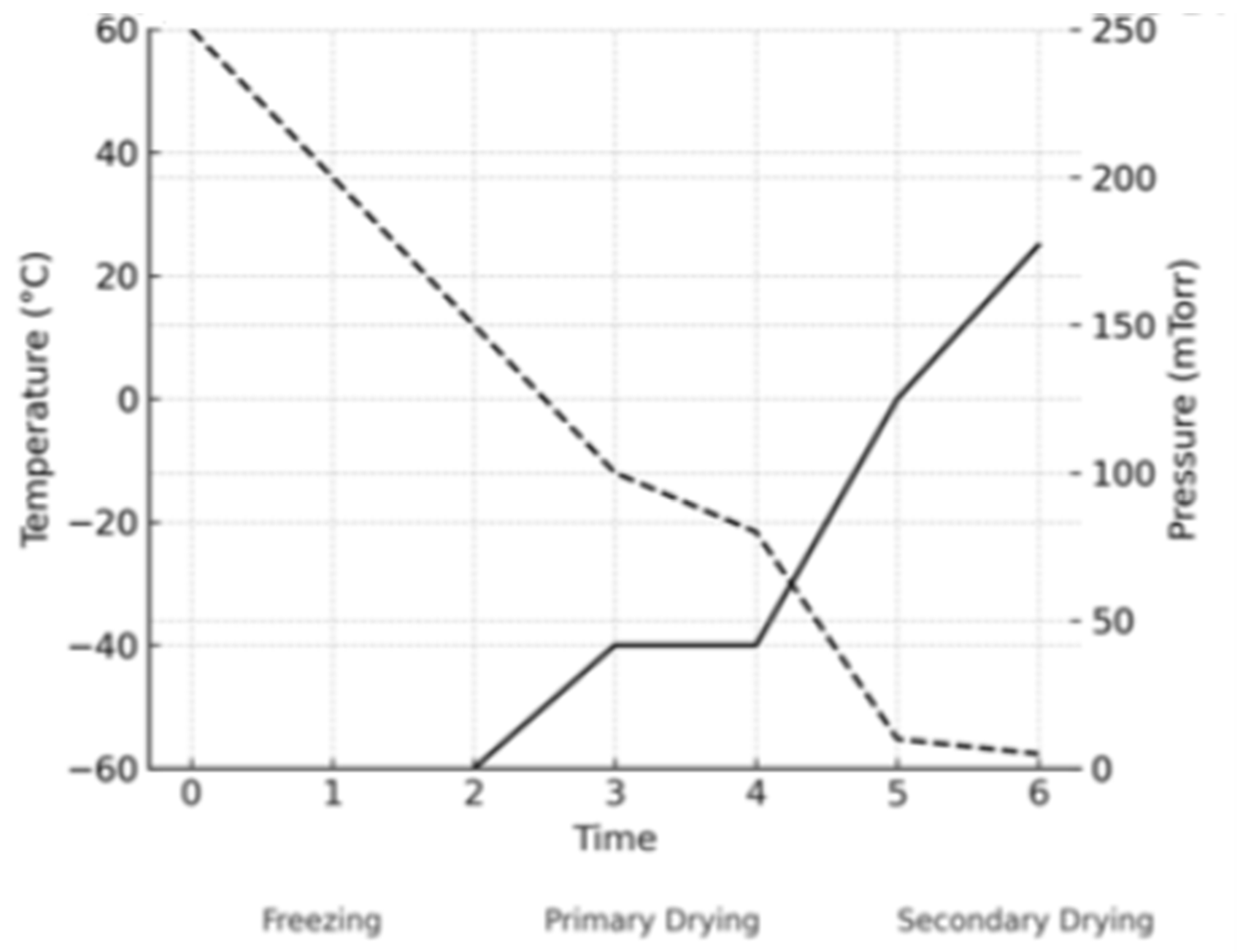
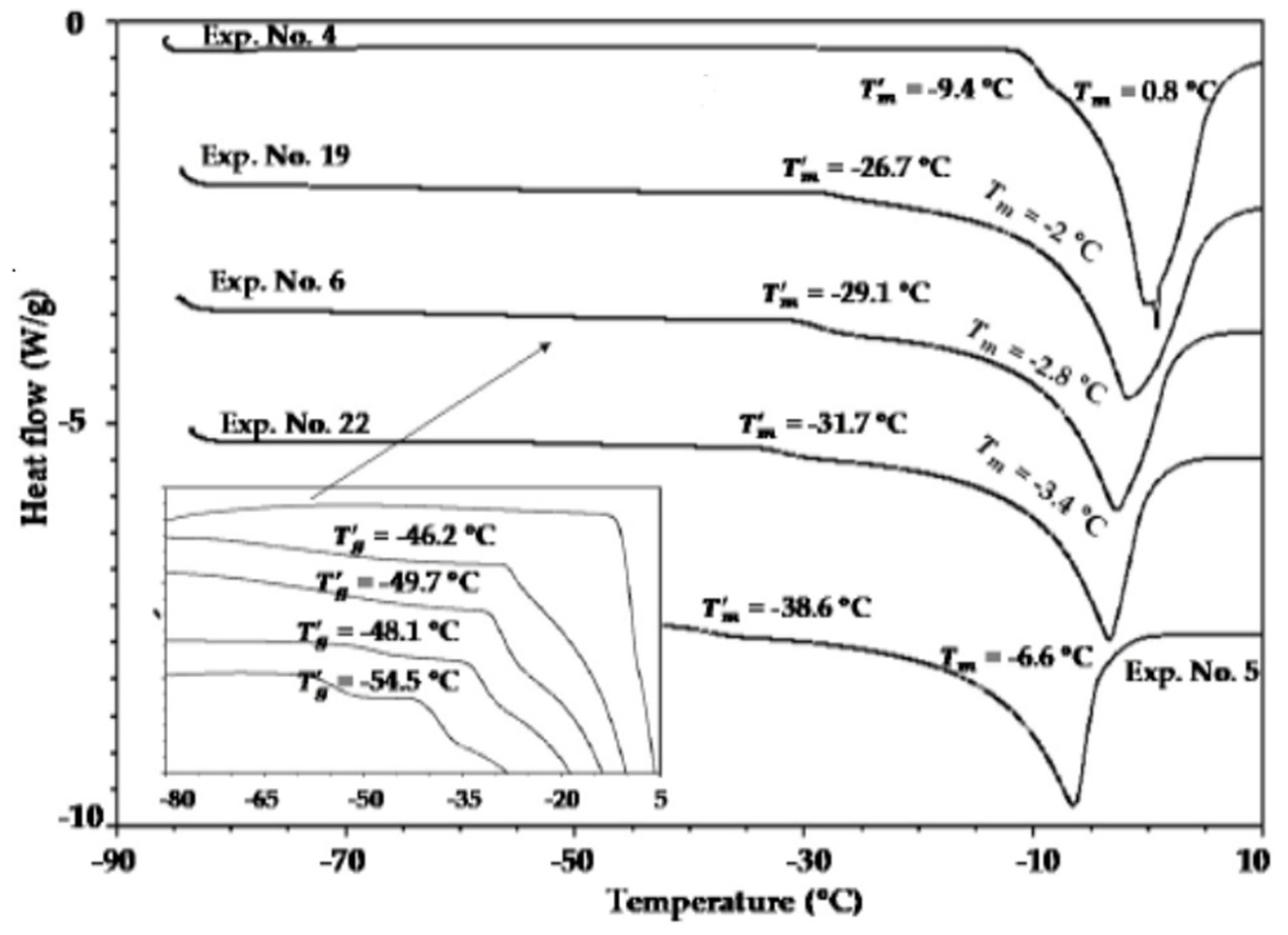
Freeze drying involves (1) freezing the product below the triple point of water; (2) primary drying, where sublimation removes ice under vacuum; and (3) secondary drying, where bound water is removed at slightly elevated temperatures (Figure 2). The product first cools down to the freezing temperature until completely frozen and then down to temperatures below that of the water triple point (0.01 °C). For sublimation to take place, energy must be provided in the form of heat and sublimation of ice (ΔHs = 670 Cal/g). Temperatures must be high enough to allow sublimation but not so high that they cause melting of the frozen material. When the ice has completely sublimated, the product increases its temperature during the secondary drying stage until it is 2–3 degrees below the temperature of the heating plate. The aim of secondary drying is to remove the unfrozen water, which typically accounts for around 20% of the material’s weight. In contrast to primary drying, secondary drying occurs through diffusion, where molecules move from a region of high concentration to a lower concentration [46]. Figure 2 shows a typical temperature profile during freeze drying.
This process yields powders with high porosity, excellent rehydration properties, and minimal loss of volatiles or structure [45,46]. In fact, freeze drying has shown the highest polyphenol retention among drying methods [40]. The inclusion of biopolymers during freeze drying reduces the formation of degradation byproducts such as hydroxymethylfurfural. Further, freeze drying extends the shelf life and reduces shipping and handling costs [47].
The final morphology of freeze-dried powders depends on the freezing rate, extent of supercooling, and whether an annealing step is applied to enhance structural stability and prevent Tg depression [45,46,48].
Despite its advantages, freeze drying remains less favored for large-scale commercial use due to its long cycle times and high capital costs. However, its superior performance in preserving labile nutrients makes it attractive for premium or pharmaceutical-grade applications.
Ultimately, the interplay between the drying technique and carrier composition significantly influences product yield, shelf life, and reconstitution behavior. Optimizing both factors is essential to ensure the production of stable, functional, and consumer-acceptable fruit powders. Table 3 summarizes the challenges in fruit powder processing, especially for strawberries and blueberries, along with their underlying causes and impact on quality and processing, which could help the formulator to look for manipulation or mitigation strategies.

4. Material Science for Food Powders

Understanding the principles of material science is essential for food powders, as the molecular structure of a substance fundamentally governs the behavior of its constituent particles and, ultimately, dictates how they interact, agglomerate, and perform as a bulk powder.

Material Properties, Environmental Conditions (Water, Temperature, Pressure, and Additives)

  • Microstructure—Crystalline, Amorphous
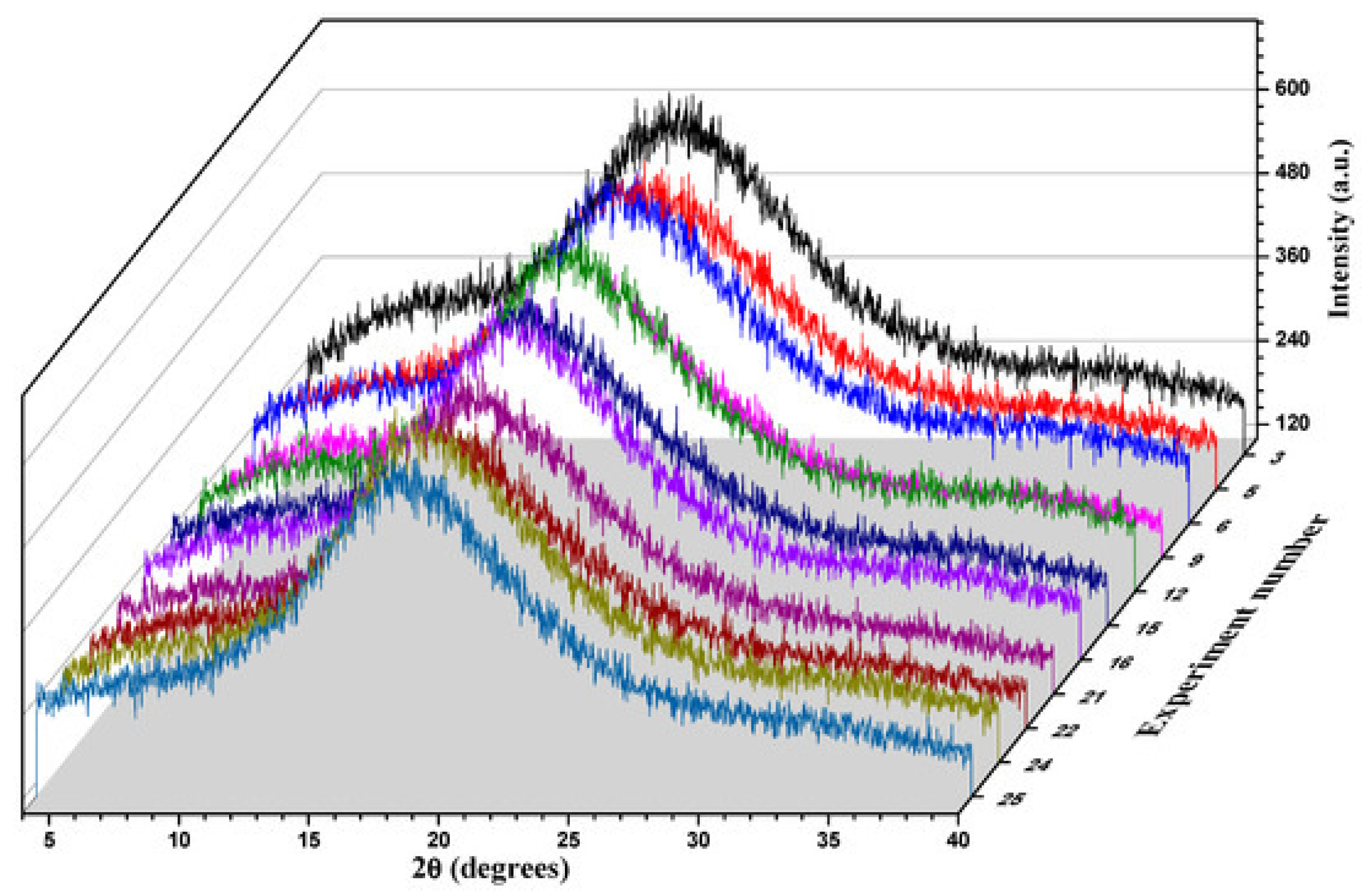
Berry-based powders produced via spray drying (SD) and freeze drying (FD) are predominantly amorphous due to the high sugar and organic acid content. Their amorphous nature is commonly confirmed using Differential Scanning Calorimetry (DSC) and Powder X-Ray Diffraction (PXRD) [30,54,55,56]. The microstructure of the berry powders has been analyzed using scanning electron microscopy (SEM), whose results evidence that freeze-dried and spray-dried fruit powders are amorphous materials.
Diffractograms reveal an amorphous phase for both fruit powders, which is denoted as one peak with a lot of noises; these results are presented for BP produced by freeze drying and spray drying, even if they are obtained from whole fruit, pomace, or juice with WPI or MD [30]. No crystalline fractions are exhibited except for spray drying BP with inulin; in aw above of 0.434, there is an occurrence of well-defined peaks, which reflects a change in the microstructure from the metastable state (amorphous) to a thermodynamically stable state (crystalline), probably provoked for molecular mobility. Figure 3 shows the amorphous phase of BP with MD, XRD of blueberry powder [56].
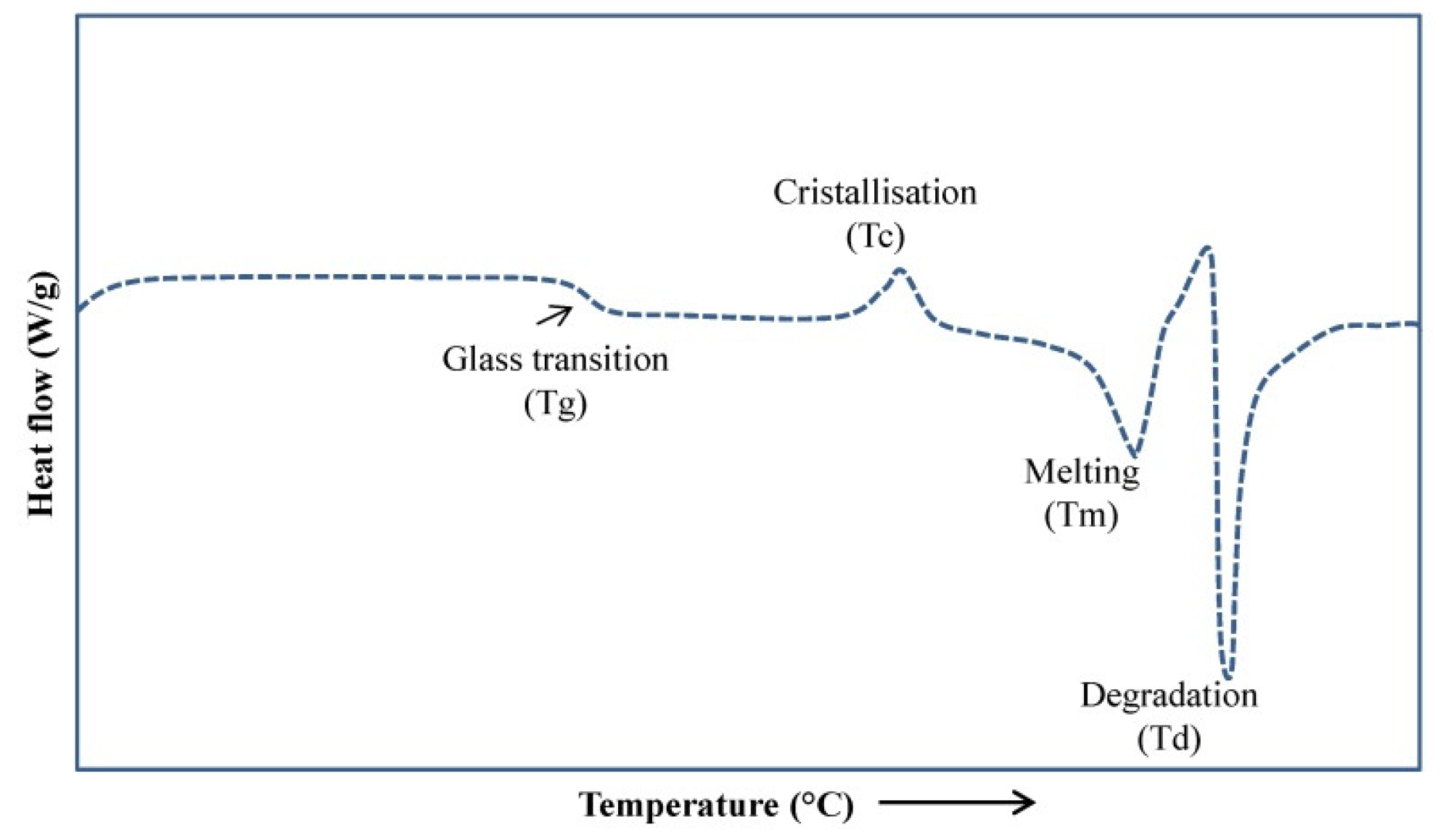
Strawberries and blueberries are naturally rich in low-molecular-weight sugars (glucose, fructose, and sucrose) and organic acids. These sugar crystalline components undergo phase transformation upon processing from crystalline to amorphous with a low glass transition temperature (Tg), increasing the molecular mobility of amorphous solids even at room temperature (Figure 4). Thus, the most common methods for determining Tg in food systems are calorimetric techniques such as Differential Scanning Calorimetry (DSC) and Differential Thermal Analysis (DTA), which provide insights into thermal transitions like recrystallization, ante-melting, and melting through the measurement of heat capacity changes (ΔCp) as a function of temperature [55,56]. To mitigate issues like stickiness during processing, high Tg, additives, or anti-caking agents are often incorporated to improve powder handling and shelf stability [57]. Understanding and optimizing Tg behavior is thus fundamental to ensuring product quality and functional stability during drying, packaging, and storage of fruit-based powders. This will be discussed further in the next section.
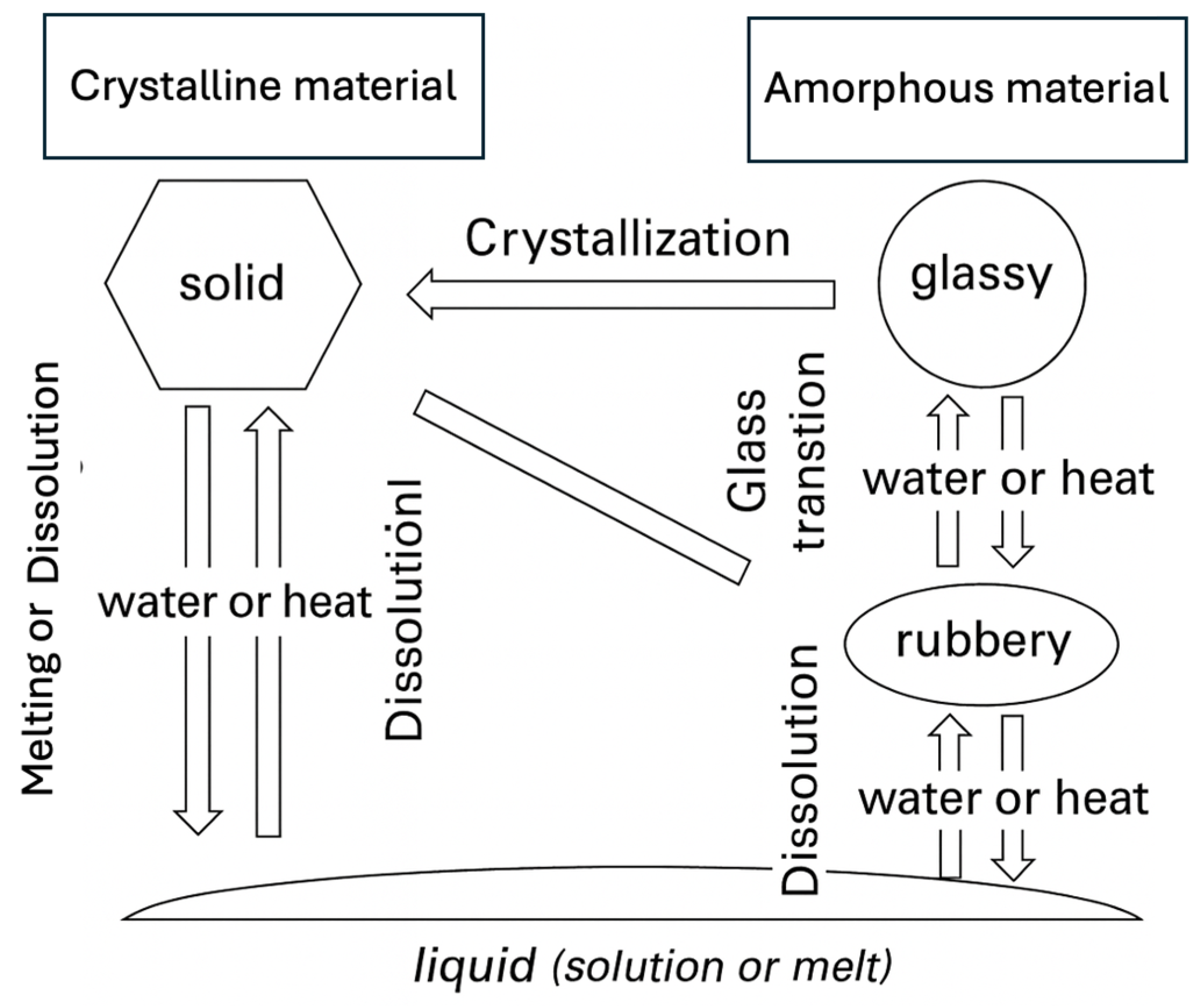
Figure 5 shows the phase transition of crystalline and amorphous components triggered by water and temperature changes, and Table 4 is a summary of the physical and solid-state properties.
b.
Moisture Content and Water Sorption Behavior
Moisture control is essential for preserving the stability and quality of berry powders. Reducing the free water limits microbial growth and inhibits reactions like oxidation, Maillard browning, and pigment degradation [28,64].
Berry powders are highly hygroscopic, attributed to their high low-molecular-weight sugar content (sucrose, glucose, and fructose), which reduces Tg and increases the water uptake risk [14,54]. For instance, blueberry powders reach moisture equilibrium (18.9–21.1%) after 5–6 h at 75% RH and 23 °C. Adding 8% WPI mitigates this uptake and aids in freeze drying [54]. Water activity (aw), which quantifies the availability of free water, is directly influenced by environmental factors such as relative humidity (RH) and temperature, making their regulation crucial during processing and storage [64]. If moisture levels increase, food powders may undergo undesirable physical and chemical transformations including oxidation, stickiness, structural collapse, and caking [28]. The relationship between a product’s moisture content and surrounding RH is often described using water sorption isotherms, which are valuable tools in predicting the shelf life, selecting appropriate packaging materials, and designing optimal storage conditions [54].
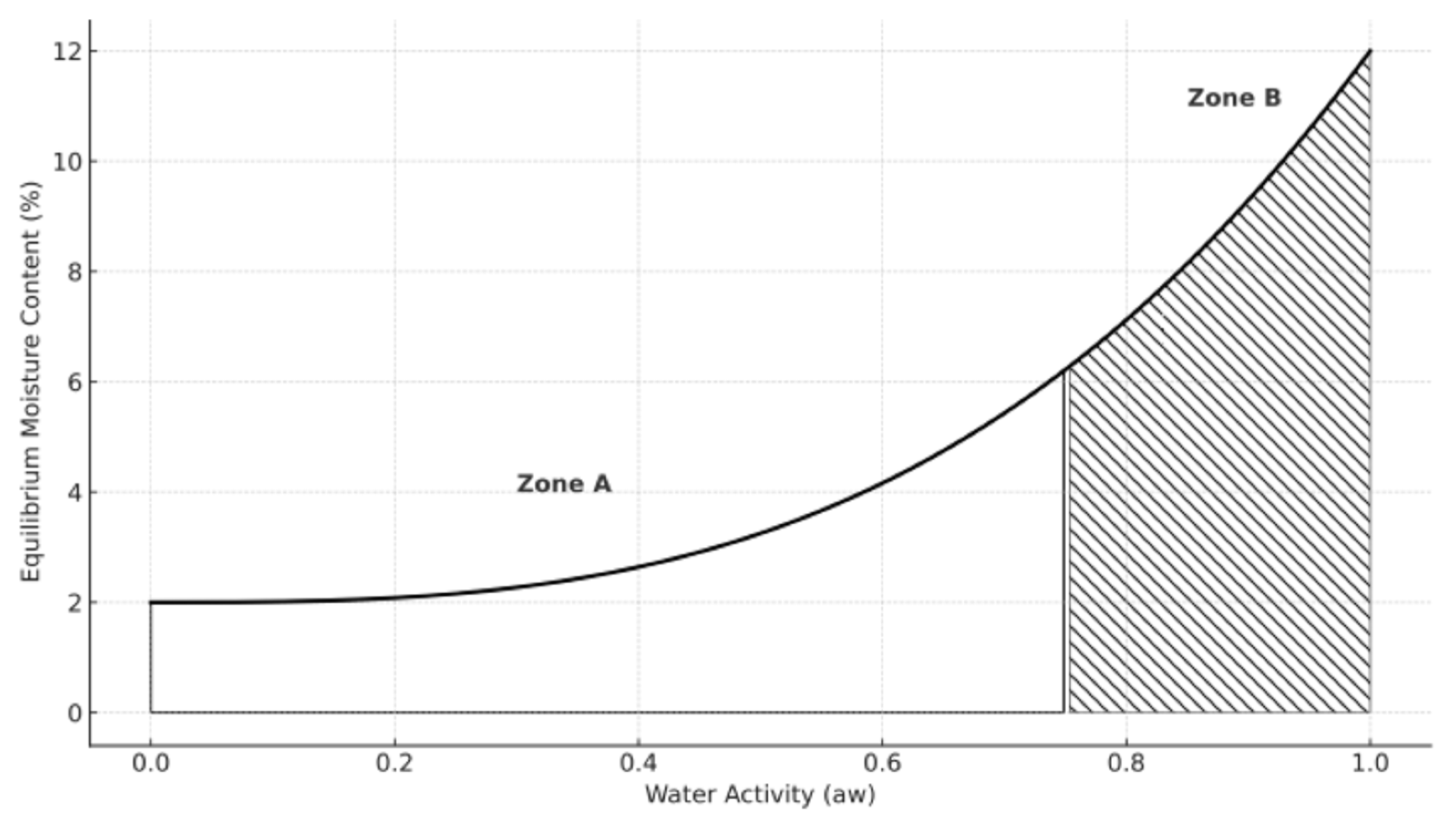
The sorption process is exhibited in a slow increasing trend as the aw increases from 0 to an intermediate range [14,54]. At low and intermediate aw, a monolayer is first found and followed by a multilayer region (Figure 6 Zone A) in which components progressively interact with water less firmly. Later, the water starts acting as a solvent for low-molecular-weight solutes (mainly sugars) and as a medium to ease biochemical reactions. After a critical and high aw region, a sharp increase is observed, which is characteristic of capillary condensation (Figure 6 Zone B), meaning that the hygroscopic material readily adsorbs the excess of water that is present in the macro-capillaries or as part of the fluid phase. However, the adsorption could promote microbial growth and hence result in major deteriorative reactions [54,65]. Further, Giampieri, et al., [28] observed that at an RH above 75% and 23 °C the material collapses, turning from dark brown to purple in color after 20 h of exposure. This change is a direct result of the oxidation of pigments, mainly anthocyanins, which are highly unstable and prone to degradation, as they are sensitive to light, temperature, oxygen, and enzymatic activities [66]. In addition, oxidative or hydrolytic reactions could impact the flavor, color, and texture of the product, crucial factors in achieving customer satisfaction [24].
The hysteresis loop can be explained as follows: at a high RH, the material holds more moisture content, and when water is adsorbed, it is expected that almost all polar sites are covered and lead to strong interactions between the solid surface and water molecules. This interaction may be a result of H-bonds producing a stable structure and, consequently, leading to greater moisture retention during desorption than along the adsorption process [68]. This displays an irreversible conformational and structural arrangement of components.
As the relative humidity increases, water can additionally act as a plasticizer in amorphous materials, and the changes can modify thermo-physical properties, possibly affecting the stability and organoleptic properties. For instance, it is well known that Tg is dependent on moisture content. The higher the moisture content, the lower the Tg will be, leading to a rubbery state that is responsible for stickiness and caking [54].
Several theoretical models have been developed to describe and predict the sorption of isotherms of food. The literature reports that foods rich in soluble components, as in berry powders, show Type III isotherms, according to Brunauer’s classification [14,54,65,67]. The GAB model (Guggenheim, Anderson, and Boer) is the one that best fits to isotherm data of these fruits [14,28,54,69,70]. The parameters of the mathematical model are used to analyze the change in equilibrium moisture content as a function of water activity and its relationship with stability. In Equation (1), Me is the equilibrium moisture content (kg H2O/kg dry matter), Mo is the monolayer moisture content (kg H2O/kg dry matter), and C and K are constants related to the surface enthalpy and adsorption of multiple layers of moisture, respectively.
M e = M o C K α w ( 1 K α w ) ( 1 K α w + C K α w )          
Mo refers to the water amount strongly bound or immobilized on specific sites of the food surface and is considered as an optimum value of moisture content to minimize the deterioration or quality loss of food during its storage [14,28,54].
Tao et al. reported that the monolayer moisture content (Mo) decreased with increasing temperature (20, 35, and 50 °C) across all blueberry powder types. Specifically, Mo values declined from 0.105 to 0.086 for freeze-dried blueberry juice powders formulated with whey protein isolate (WPI), from 0.096 to 0.063 for whole blueberry powders, and from 0.045 to 0.041 for pomace powders. These results indicate that higher drying temperatures reduce Mo, reflecting the lower affinity of water molecules for the material surface at elevated thermal conditions. Notably, the incorporation of WPI as a drying aid led to higher Mo values, which can be attributed to the increased presence of polar functional groups in the carrier matrix that bind water more effectively. As expected, temperature influences water molecule mobility by providing additional energy to desorb water from active sorption sites, thus explaining the inverse relationship between the Mo and temperature for berry-based powders [54].
Vásquez et al. explains that, although the critical water content (CWC) is a better parameter of stability reference than Mo, both values agree that the lyophilized blueberry should be stored at aw < 0.1 to minimize deteriorative changes [71]. CWC values have been considered as a determinant for stability, as well as in strawberry powders, by ensuring that the glassy state is less than 0.094 at 20 °C for the powder without carriers and between 0.237 and 0.341 at 20 °C when MD or AG are included at 9.3%. Since the glass transition can occur at these points, Tg and aw must be treated together as the reference to maintain the stability, quality, and safety of the food [14].
c.
Phase Transformations, Additives
Phase transformations induce process instability, requiring careful control of the drying air temperature and the addition of high Tg carrier agents such as maltodextrin or gum arabic [41]. Berry powders are highly hygroscopic. This behavior depends on relative humidity (RH) and water activity (aw) and leads to structural and functional deterioration, such as, for instance, increased caking and loss of flowability, reduced storage stability and shelf life, and the degradation of anthocyanins and other sensitive bioactive compounds due to moisture-induced reactions [14,72,73,74,75]. Therefore, maintaining the powders below the critical water content (CWC) and under Tg is essential to prevent these effects. During freeze drying, structural collapse can occur if the product temperature exceeds the collapse temperature Tc or Tg of the matrix. In spray drying, exceeding Tg during drying causes viscous flow, leading to particle coalescence and surface stickiness, particles deformed or fused, issues of poor rehydration and flow behavior due to high cohesion and interparticle friction due to their small particle size, irregular morphology, and electrostatic charging during drying or packaging, leading to difficulty in handling, packaging and transportation, and poor shelf-life storage. This results in reduced dispersibility and poor reconstitution in water, primarily due to caking and undesirable agglomeration, ultimately leading to decreased consumer acceptability caused by the formation of lumps [76,77,78,79].
The glass transition temperature (Tg) is a critical parameter for assessing the stability of amorphous powders and is, therefore, essential in food processing applications [80]. Since fruit powders are typically amorphous and rich in low-molecular-weight sugars and organic acids, they are particularly susceptible to stickiness and other transitions associated with glass transition due to their increased molecular mobility even at relatively low temperatures [57,81]. As such, the effect of drying methods on the physicochemical quality attributes of these powders must be carefully considered. Tg represents the temperature at which an amorphous material transitions from a rigid, glassy state to a more flexible, rubbery state due to increased molecular mobility and decreased viscosity [45,57]. This temperature-specific property is closely related to product deterioration during thermal processing and is primarily influenced by both the final moisture content and the thermal history of the material [45,82]. In particular, the presence of solutes such as sugars lowers Tg due to their plasticizing effects, and this effect becomes more pronounced as the moisture content and water activity increase.
The most common methods for determining Tg in food systems are calorimetric techniques such as Differential Scanning Calorimetry (DSC) and Differential Thermal Analysis (DTA), which provide insights into thermal transitions like recrystallization, ante-melting, and melting through the measurement of heat capacity changes (ΔCp) as a function of temperature [55,56]. To mitigate issues like stickiness during processing, high Tg, additives, or anti-caking agents are often incorporated to improve powder handling and shelf stability [57]. Understanding and optimizing Tg behavior is thus fundamental to ensure product quality and functional stability during the drying, packaging, and storage of fruit-based powders.
Predictive modeling of Tg in mixtures is frequently achieved using the Gordon–Taylor equation, which is especially useful for binary polymer systems or food–water systems. This equation assumes that components have similar sizes and shapes and maintain a consistent packing fraction throughout the mixture, allowing for the estimation of the combined Tg while accounting for water’s plasticizing role [83]:
T g = X a T g a + K X b T g b X a + K X b
where Tg, Tga, and Tgb are the glass transition temperatures of the mixture components a and b, respectively. Xa and Xb are weight fractions of the components a and b, respectively. K represents the ratio of the thermal expansion coefficient differences between a glassy state and liquid state of components a and b. It is an empirical parameter and is related with the interaction forces between components of the system and the susceptibility of the solid to interact with water [83,84]. A limitation of the use of the Gordon–Taylor equation is the assumption of uniformity of the particles and hence their packing fraction.
Some authors used a linear regression to predict Tg as a function of aw at 25 °C. Khalloufi et al. [85] reported that the relationship between Tg and aw can be considered linear from 0.1 to 0.8 of aw:
T g = T g s + T g w T g s a w 25
where Tgs and Tgw are the glass transition temperatures of the dry solid and water, respectively [85].
Although many studies have reported glass transition temperatures (Tg) for low-molecular-weight sugars, these values can vary significantly for the same compound due to several influencing factors. Key variables include the purity of the crystalline material, the presence of residual water, the specific method and duration of the measurement, and potential thermal decomposition of the sugars during the analysis process [86]. For instance, Saavedra-Leos et al. [86] reported Tg values of 32.2 °C for glucose and 14 °C for fructose, whereas Shishir and Chen [32] found slightly lower values of 31 °C and 5 °C for the same sugars, respectively, underscoring the variability linked to experimental conditions.
Maltodextrin, by contrast, exhibits significantly higher Tg values, ranging from 100 °C to 243 °C depending on its dextrose equivalent (DE), and is thus commonly used as a carrier in sugar-rich food formulations to enhance stability during drying and storage [87]. Other additives known to elevate Tg include whey protein, which is widely applied in the microencapsulation of flavors, lipids, and micronutrients, offering protective benefits against oxidation. Inulin, a naturally occurring nondigestible fructooligosaccharide (FOS), also contributes to improved thermal stability, with its anhydrous form demonstrating Tg values reaching up to 120 °C [88]. These additives play a pivotal role in modulating the glass transition behavior of food powders, improving their processability and mitigating undesirable phenomena such as stickiness and caking.
Another important factor influencing the glass transition temperature (Tg) of food powders is the drying method. Studies by Jaya & Das [57] and Saavedra-Leos et al. [86], as referenced by Garcia-Coronado et al. [30], have shown that sugar-rich systems are particularly susceptible to structural collapse during spray drying. This collapse is attributed to molecular relaxation occurring at temperatures exceeding the system’s overall Tg. If the Tg is not correctly determined and accounted for during process optimization, the dried product may appear as a viscous syrup and adhere to the inner walls of the spray dryer, which is indicative of a failed drying process [30].
To ensure the successful drying of thermally sensitive and amorphous materials, either the spray dryer configuration must be carefully tailored or carrier agents should be incorporated into the feed formulation to elevate the system’s Tg. During spray drying, the feed solution is atomized into droplets, which undergo transformations in size, shape, and surface properties depending on the process parameters. These changes influence whether the resulting material solidifies in a crystalline or amorphous state [89]. Importantly, the resulting surface morphology plays a critical role in the powder’s moisture interactions, which in turn affect the glass transition temperature of the dried system. Irregular, porous, or partially collapsed surfaces may promote moisture uptake and lower the Tg, while smoother and more uniform morphologies, often achieved through appropriate carrier selection, enhance thermal and physical stability.
Garcia-Coronado et al. [30] produced blueberry juice powders via spray drying using inulin and maltodextrin (MD) as carrier agents to preserve the antioxidant activity and investigate the impact of carriers on the physical properties of the final product. Fresh blueberries were processed by crushing and pulp removal to obtain the juice, which was then combined with the carriers in two separate formulations: inulin–blueberry juice (I-BJ) and maltodextrin–blueberry juice (MX-BJ), each at a 30:70 weight ratio (carrier–juice). Spray drying was carried out under controlled conditions, with a feed temperature of 40 °C, a flow rate of 7 mL/min, air pressure of 1.5 bar, and an air-flow rate of 28 m3/h. The inlet and outlet drying temperatures were set at 180 °C and 70 °C, respectively. To assess the thermal behavior of the powders, the glass transition temperature (Tg) was determined using modulated Differential Scanning Calorimetry (MDSC). The reversible heat-flow signal revealed clear Tg transitions: 118 °C for the maltodextrin-based powder (MX-BJ) and 96 °C for the inulin-based powder (I-BJ), highlighting the influence of the carrier type on the thermal stability of the resulting powders.
According to the Tg values found in the previously mentioned reports, systems with inulin as a carrier agent presented lower Tg values than systems with MD as a carrier agent. This may be due to the properties of carrier agents, such as molecular weight, crystalline form, moisture content, and ramified structure (Figure 7). MD is mainly used in materials that are difficult to dry since it is an encapsulating agent that stabilizes dehydrated food by plasticizing the effect of water on the molecular disorder; with the presence of water, the polymeric system loses its compaction and rigidity [30]. The caking mechanism of MD molecules happens by sinter bridge formation, which occurs at storage temperatures higher than Tg and a high RH [15,63].
Similarly, studies have compared the glass transition temperature (Tg) of strawberry powders (SP) obtained through different drying methods, particularly freeze drying and spray drying. Gong et al. [13] investigated the influence of whey protein isolate (WPI) and maltodextrin (MD) as carrier agents on the spray drying of strawberry purée, focusing on their effect on Tg. The formulations were prepared with a fixed strawberry content of 60% (dry basis), while the MD and WPI concentrations were varied systematically in the following dry mass ratios: 60:40:0, 60:39.5:0.5, 60:39:1, 60:35:5, 60:30:10, 60:20:20, 60:10:30, and 60:0:40 (strawberry–MD–WPI). Each formulation was spray dried under identical conditions using a co-current air-flow system, with an aspirator rate of 100% (35 m3/h), an atomizing air-flow of 439 L/h (30 mm rotameter), an inlet temperature of 165 ± 1 °C, an outlet temperature of 85 ± 1 °C, and a feed rate of 3 mL/min. The reported Tg values of pure MD and WPI were 141.14 °C and 128.6 °C, respectively. Results showed that the Tg of the spray-dried powders increased significantly with rising WPI content. Specifically, decreasing the MD concentration from 40% to 30% and increasing WPI from 0% to 10% led to a progressive increase in Tg from 32.60 ± 1.16 °C to 38.39 ± 1.83 °C [13]. These findings highlight the key role of carrier composition in modulating the thermal stability and handling characteristics of strawberry powders.
In the freeze-drying process, both the freezing and drying temperatures play critical roles in determining the final quality of the resulting powder. One key parameter to consider is the collapse temperature, which represents the maximum allowable product temperature during drying at which the material remains amorphous. Collapse occurs due to the viscous flow of the freeze-concentrated matrix, resulting in the breakdown of the microstructure established during freezing and a subsequent reduction in surface area [46].
The optimization and control of operating parameters during freeze drying are highly dependent on the specific characteristics of the product being processed [45,48]. As noted by Khalloufi and Ratti [45,48], two critical thermal limits must be observed to preserve quality: (1) The temperature of the frozen core must remain below the ice melting onset temperature, and (2) the temperature of the dried matrix must stay below the glass transition temperature (Tg) of the dry solids. However, determining the first thermal limit in practice is challenging due to the lack of comprehensive data on the ice melting onset temperature for food products and the technical difficulty of measuring core temperatures during the drying process.
Given these constraints, further experimental and theoretical investigations are needed to define optimal freeze-drying conditions. Such studies are essential to ensure the production of high-quality food powders with desirable physical and functional properties.
Table 5 shows a compilation of values of both temperatures for food-related materials and data [45]. Limit temperatures are shown as T1 and T2. The glass transition temperature of the maximally freeze-concentrated matrices (T’g) and glass transition temperature of dry solids (Tgs) are also shown.
Sado et al. [54] produced different BPs, including blueberry juice powder containing 8% WPI, with the aim of quantifying the water plasticizing effect on blueberry powders by measuring the Tg value. Blueberry juice was freeze dried under a pressure lower than 0.003 mBar at −45 °C for 48 h. The estimated Tg value for blueberry juice powder was 68.2 °C, with a higher Tg value observed in powder containing WPI due to its additive effect.
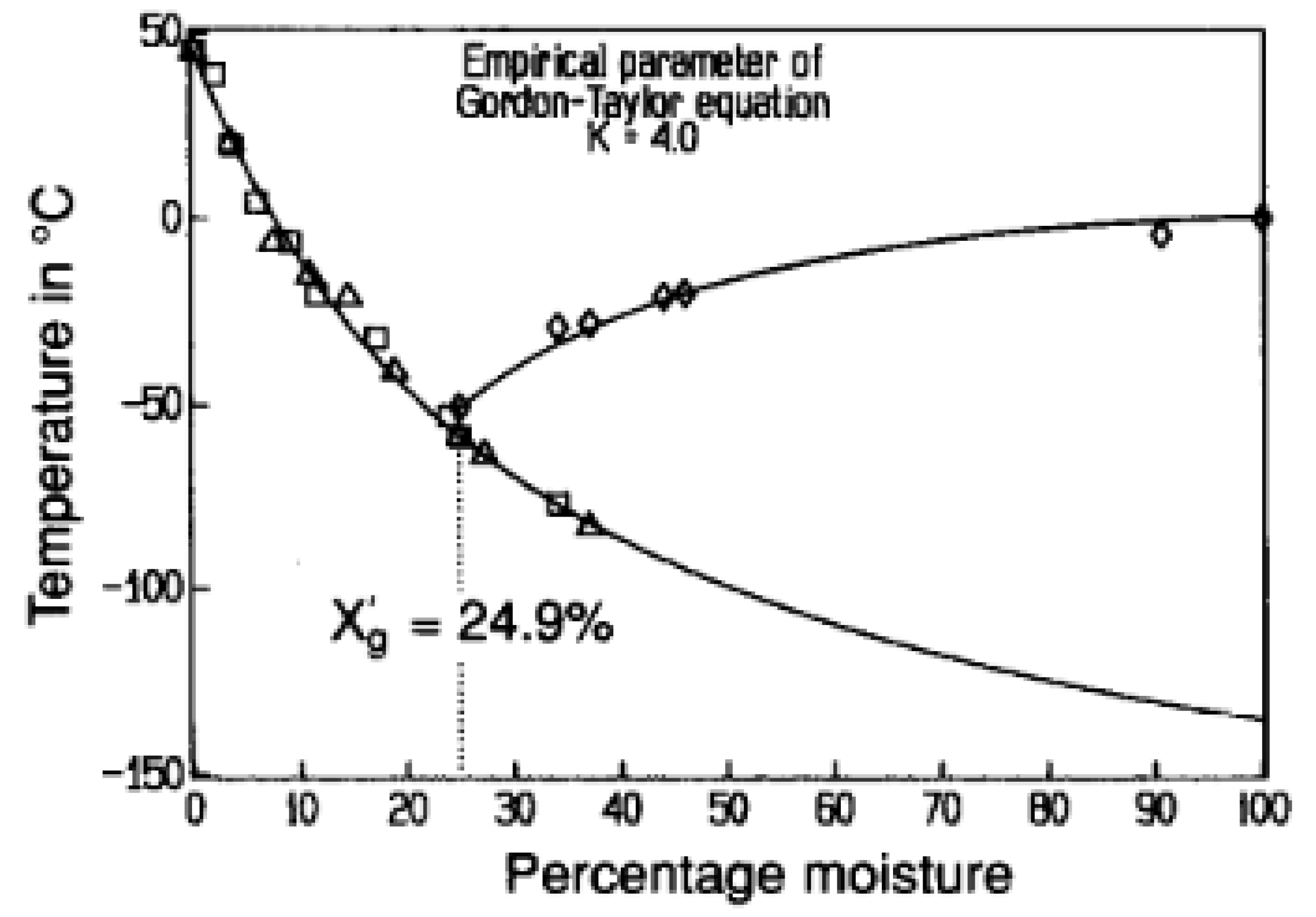
In the case of freeze-dried strawberries, Sa and Sereno [84] determined the phase transition associated with the thermo-physical properties of strawberries after freeze drying. Strawberries were hulled and the seeds were taken out; round slices were cut followed by freeze drying. For freeze drying, strawberries were frozen at −40 °C and subjected to 65 Pa.
The plots obtained for strawberries indicated that samples equilibrated at less than 85% RH showed an absence in the formation of freezing, and following rewarming, only one glass transition was observed. The state diagrams and dependence of the onset glass transition Tg on the water activity is shown in Figure 8.
d.
Particle Morphology
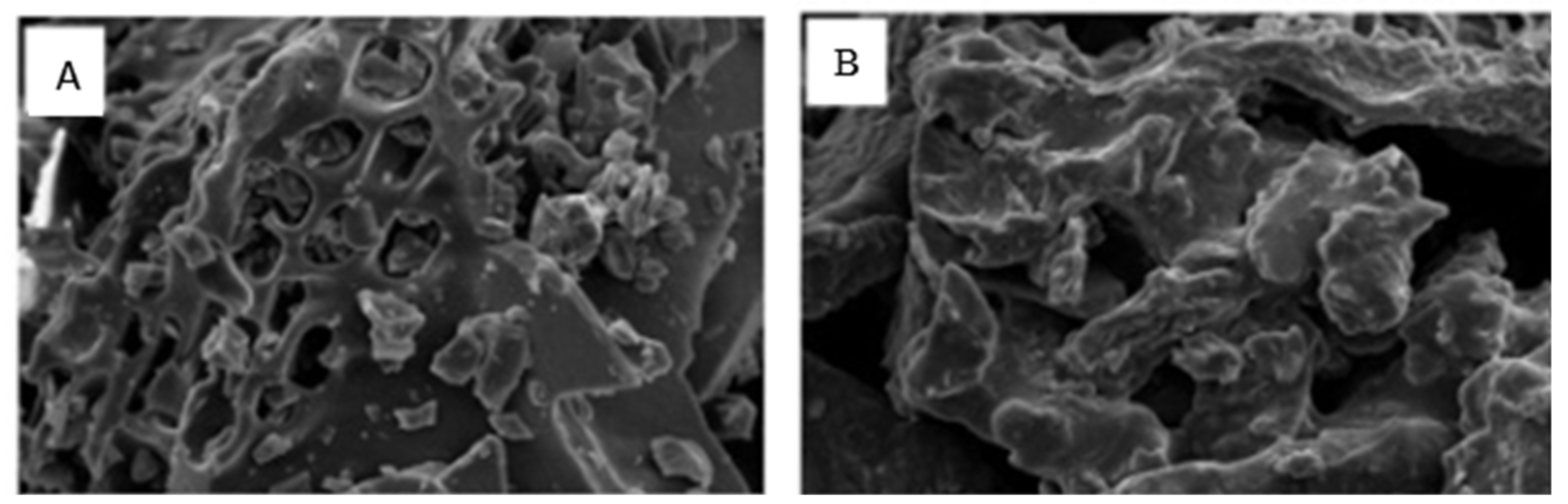
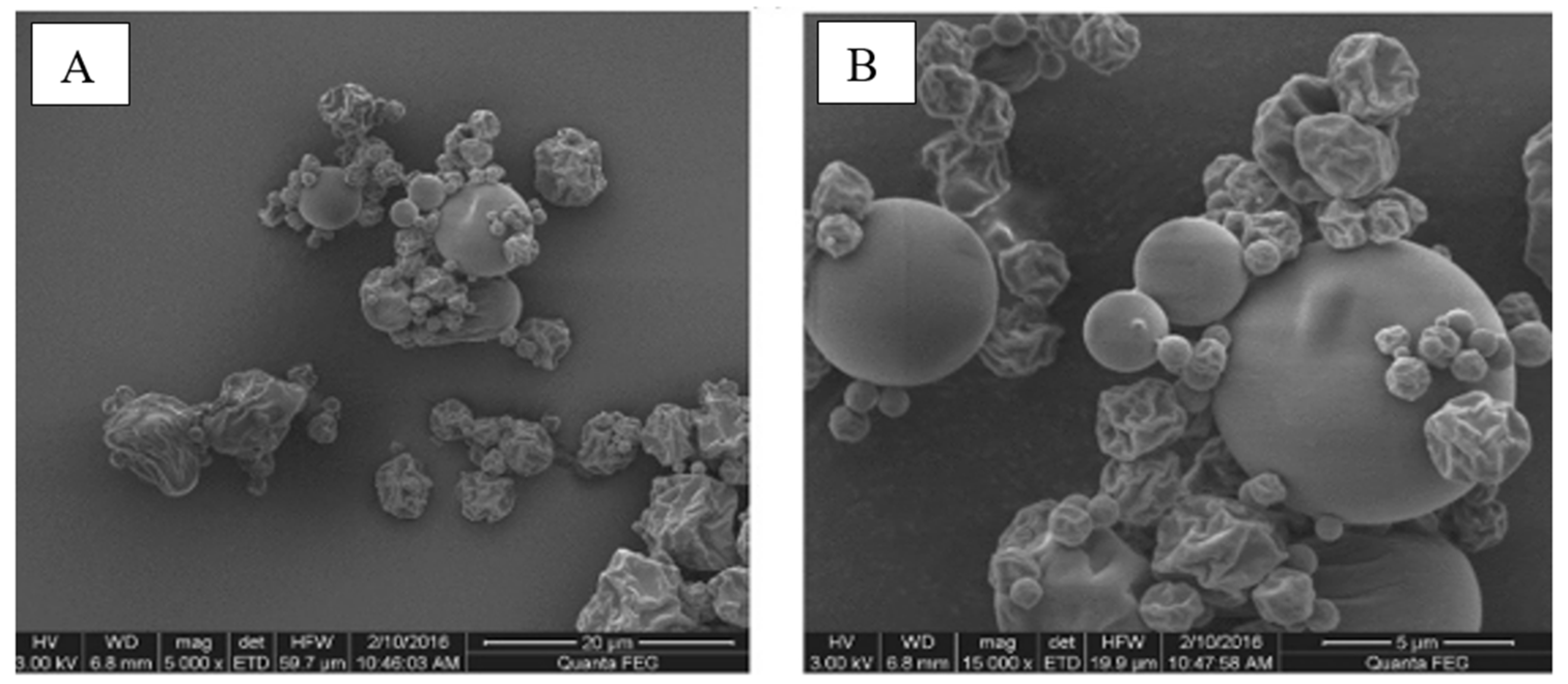
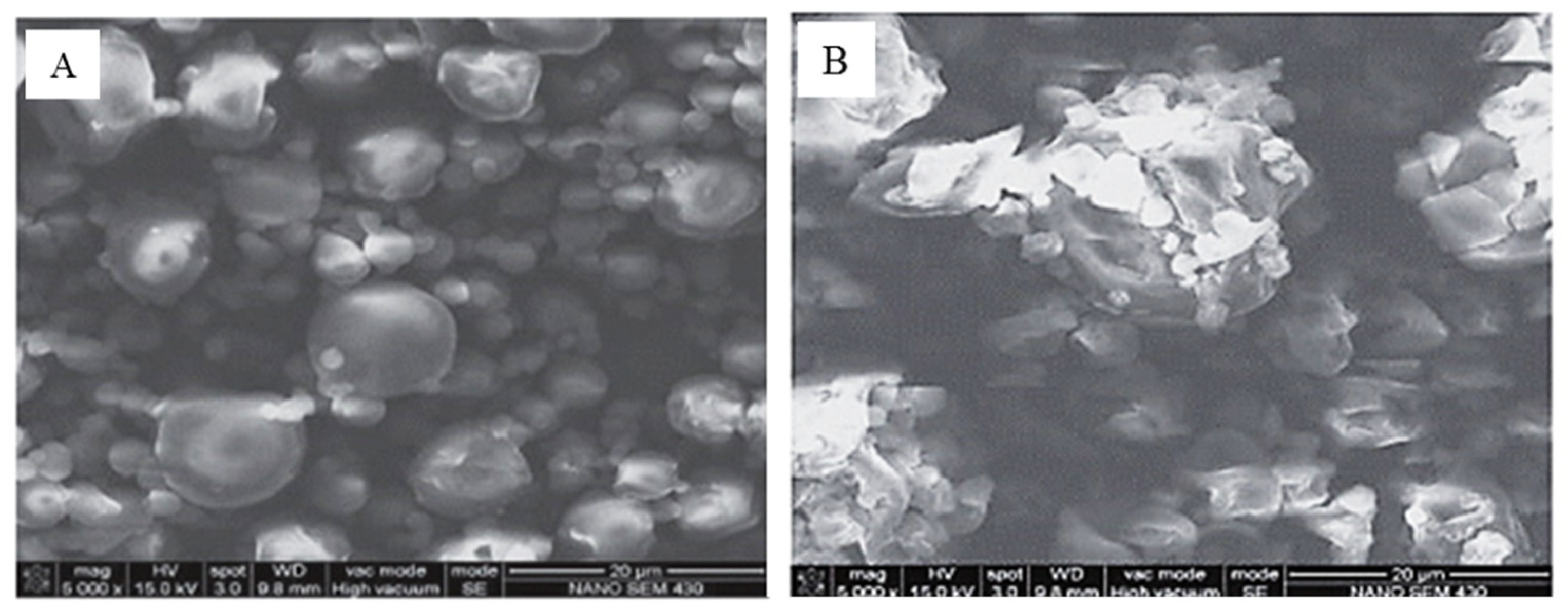
Particle size and morphology are primarily influenced by the drying technique, feed composition, environmental conditions, and carrier type and concentration. The scanning electron microscopy (SEM) technique is widely employed to examine powder surface topology and morphological features. SEM images reveal distinct differences between FD and SD powders. Figure 9, Figure 10, Figure 11 and Figure 12 illustrate morphology differences due to carrier composition, drying method, and environmental exposure.
Spray-dried strawberry powders (SP), particularly with 40% total solids using maltodextrin (MD) and WPI, yield spherical particles with sizes decreasing from 8.87 to 7.12 μm as the WPI increases [13]. Spray-dried blueberry powders (BP) demonstrate particle size variation based on MD content: 53–63 μm (MD 95%), 38–45 μm (MD 90%), and 32–45 μm (MD 70%) [90], suggesting MD may promote agglomeration. Lyophilized blueberry powders (Figure 9B) show irregular, porous structures with ridges and concavities. The addition of carriers such as whey protein isolate (WPI) (8%) produces smoother surfaces with enhanced porosity (Figure 9A; [54]). As not many particles size studies have been reported for both berries, it is vital to understand how drying methods affect the particle size of common powders.
Comparatively, spray-dried whole milk powder has been reported to have a particle size range between 0.3 and 100 μm [90]. An average particle size for spray-dried skim milk powder is around 19.32 ± 0.91 μm, while freeze-dried skim milk powder resulted in larger particles, with 410 ± 9.41-μm sized particles even after grinding. Spray-dried powders result in spherical shapes and smooth surfaces, which are characteristic morphological and topographical effects by this technique [64]. These features are often observed by including maltodextrin (MD), but this is not the case with the addition of whey protein isolate (WPI) in strawberry powder (SP), as presented by Gong et al. [13] (Figure 10).
The spray drying of blueberries with the addition WPI/MD at weight ratios Between 0.4 and 3.2 result in small spherical particles with a smoother surface [64]. Similarly, the inclusion of WPI (even at 0.5% of solids) has altered the morphology of the strawberry powder by inducing the cohesion of smaller particles to larger particles, with additional surface shrinkage (Figure 10B). Furthermore, it was noted that changes in the microstructure take place when the material is subjected to different environmental conditions. This was evidenced for spray-dried BP with MD (Figure 10A), where above an aw of 0.434, the particles started to coalesce, forming larger and irregular shapes of particles [13]. It is also clear that the choice of carrier also alters the morphology (Figure 11).
Similar results were reported for spray-dried BP with inulin that led to the loss of their spherical morphology due to the large agglomeration of deformed particles [30]. Hence, it is also crucial to identify and consider moisture content, as water sorption can influence the morphology and appearance of the particles. It is important to note that capillary and viscose forces between the particles decline with the reduction in free moisture content, ideally increasing the flowability of the powder [91,92].
For instance, MD leads to spherical, smooth particles [64], whereas WPI promotes surface shrinkage and particle clustering [13], and inulin resulted in particle collapse and agglomeration [30].
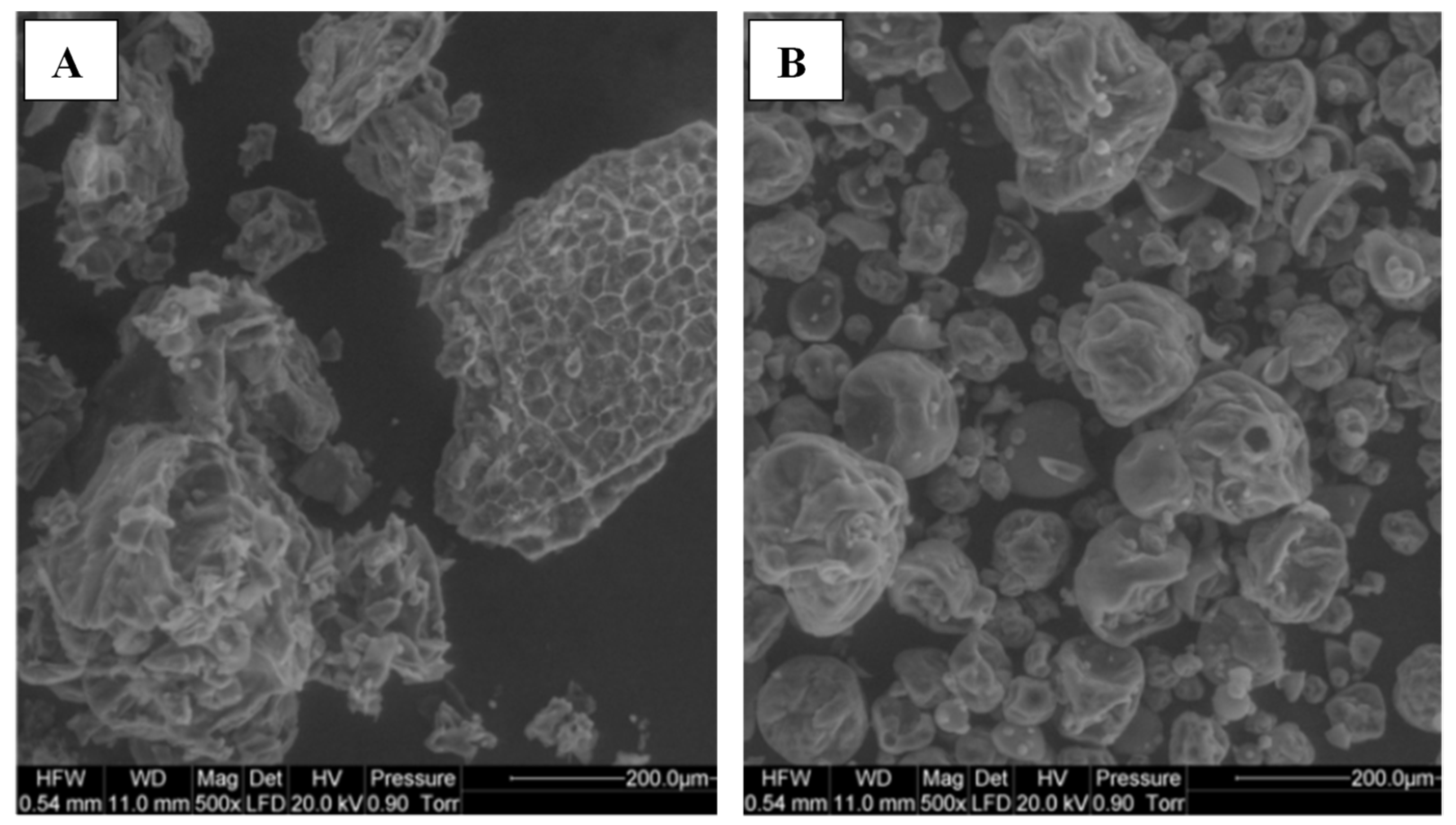
The microstructure of freeze-dried and spray-dried strawberry powders is different depending on the drying process (Figure 12).
Figure 12. Microstructure of (A) freeze-dried and (B) spray-dried strawberry powders, as shown by scanning electron microscopy (magnification 500× for strawberry powders. Ref. [93].
Applsci 15 13094 g012
Environmental factors like humidity also affect morphology. The effect of %RH showed that above aw = 0.434, spray-dried BP particles began coalescing into irregular shapes. Capillary and viscous forces decline as the free moisture content decreases, enhancing flowability [92].
The above findings should be considered to further study physical properties, since it is understood that the surface area and surface energy is associated with particle size and further affects the water uptake, water holding capacity, bulk density, and flowability of the powder [54]. As expected, spray drying strawberries results in uniform, smooth, and spherical particles [93].
e.
Powder Performance—Caking, Flow properties, Reconstitution
Powder flowability is primarily governed by two fundamental forces: cohesion and friction. Cohesion refers to the attractive forces and resistance to separation between like particles and arises from a combination of van der Waals interactions, electrostatic forces, and mechanical interlocking [94,95]. Among these, particle size plays a crucial role—van der Waals forces become more prominent as the particle diameter decreases, while electrostatic interactions depend on the chemical composition, shape, and size distribution of the particles. Mechanical interlocking is especially significant in powders composed of fine, irregularly shaped particles, where surface asperities can hinder movement [94,95].
Cohesive interactions can also be amplified by the formation of liquid and solid bridges between particles. These bridges, often resulting from residual moisture or recrystallized solutes, can contribute to particle agglomeration and promote caking behavior. Friction, on the other hand, is the resistance encountered by particles as they slide past one another at points of contact. This force increases with greater surface roughness and contact area and with higher stresses required to shear the interparticle junctions. Interestingly, the presence of adsorbed moisture may reduce frictional resistance by acting as a lubricating layer, facilitating particle mobility and decreasing shear forces [96].
Understanding the interplay between cohesion and friction is critical for predicting powder behavior during storage, transport, and processing. These flow properties are particularly relevant when evaluating the performance of spray- or freeze-dried fruit powders, which are often amorphous and prone to caking or compaction due to their hygroscopic and fine-particle nature.
Several critical factors influence the flow properties of powders, including moisture content, material composition, particle size, and packing density. These parameters collectively determine the ease with which a powder flows, which is particularly important in food processing and storage. Moisture content plays a key role in promoting cohesion through the formation of liquid bridges, while particle size and surface morphology influence both cohesion and frictional resistance [91,94,95]. The yield stress of pre-consolidated powder samples, measured under varying normal loads, is often used to derive flow functions that characterize powder flow behavior. This method provides insights into the mechanical properties of powders under compression and shear, as demonstrated by Mathlouthi and Rogé [97]. Surface attributes such as rugosity, porosity, and cohesiveness further modulate flowability, emphasizing the need to consider both bulk and surface-level properties. Information on powder flow is essential not only for optimizing equipment design and powder handling but also for predicting issues like poor mass flow in hoppers and the potential for caking.
Due to the limited number of detailed studies on berry powders, components such as sugars offer a useful lens to investigate flow behavior. For example, Gagneten et al. [98] evaluated spray-dried fruit powders formulated with 20% w/w maltodextrin as a carrier, resulting in antioxidant-rich powders from elderberry, blackcurrant, and raspberry. Bulk and tapped density, cohesiveness, and flowability were assessed using standard indicators such as the Hausner ratio and the Carr compressibility index. Elderberry and blackcurrant powders exhibited low cohesiveness, with Hausner ratios of 1.08 and 1.15, while raspberry powder showed intermediate cohesiveness with a ratio of 1.23. Similarly, Carr index values of 5.89, 15.35, and 18.45 for elderberry, blackcurrant, and raspberry, respectively, suggested excellent flow properties for elderberry and good-to-fair flow for the other two powders. The authors attributed variability in flow behavior largely to differences in particle shape and size rather than composition alone [98].
In another study, Mathlouthi and Rogé [97] used a Jenike shear cell to assess the flow properties and caking potential of sugar powders. The shear cell allowed for the evaluation of shear stress at various consolidation levels by applying fixed normal loads and measuring the response at a controlled shear rate of 6 mm/min. This technique enabled the construction of flow functions and the calculation of flow indices, which are essential for classifying powders by their flowability. Additionally, friability was examined by placing sugar samples in Petri dishes equilibrated at specific relative humidities. Results showed that powders with particle sizes below 250 µm or above 500 µm exhibited higher friability angles, indicating greater compaction and reduced flow. Powders with particles smaller than 100 µm were classified as cohesive, while those with larger particle sizes were categorized as free flowing. These findings underscore the importance of particle size distribution in defining powder behavior under storage and handling conditions.
To better understand the flow behavior of amorphous powders obtained by spray drying, Wang et al. [99] investigated the effects of whey protein isolate (WPI) and maltodextrin on spray-dried soy sauce powders. Cohesiveness and caking tests revealed that increasing the concentration of WPI reduced powder cohesiveness, indicating an improvement in flowability. Conversely, smaller particle sizes were associated with stronger van der Waals interactions and larger surface contact areas, leading to greater cohesive forces. The incorporation of WPI also delayed heat-induced caking, demonstrating its stabilizing role in spray-dried systems [99]. Moreover, the study highlighted the importance of optimizing spray-drying parameters, particularly inlet and outlet temperatures, to minimize the formation of solid and liquid bridges that can promote agglomeration or caking. While these findings provide valuable insights into the behavior of protein–carbohydrate systems, further research is needed to verify and extend these observations to berry powders, such as those derived from strawberries and blueberries, which possess distinct sugar, acid, and polyphenol compositions that may alter their flow and stability characteristics.
During the processing of fruit powders, changes in mechanical properties are often attributed to a phenomenon known as caking, which results from structural collapse and solute crystallization in the rubbery state of the material [14]. Caking refers to the spontaneous and undesirable transformation of free-flowing powder into a cohesive mass [100]. This process typically begins with the development of surface stickiness due to the formation of a low-viscosity liquid layer, eventually leading to bridging between particles, agglomeration, compaction, and finally, liquefaction [101,102].
These transitions can significantly impair manufacturing efficiency, as powders adhering to equipment walls reduce the process yield and quality while complicating cleaning procedures [103]. The root causes of caking include moisture-driven surface wetting, recrystallization, thermal fluctuations, and electrostatic attractions between particles. Additional factors such as crystal morphology, particle size, and solubility in water also play key roles in caking susceptibility [100].
Sugars, in particular, exhibit high hygroscopicity due to their distinctive crystal structures. Flowability studies have demonstrated that powders composed of smaller sugar particles are more prone to caking, largely because their larger surface area increases moisture uptake from the environment [97]. Ultimately, the mechanical integrity of powdered systems is closely governed by environmental factors including temperature, relative humidity, applied pressure, and mechanical stress.
Caking can be classified into four main classes, depending on the involved binding forces [104]. The four classes are the following: mechanical caking, plastic flow caking, chemical caking, and electrical caking. Another approach is the quantitative measure of the so-called “caking index”. The caking index is defined as the state of the system at any time relative to an initial state. The states are defined by two morphological indicators: (1) the ratio of instant system porosity to initial system porosity ( p t p 0 ) and (2) ratio of interparticle bridge diameter to particle diameter ( D b r i d g e D p a r t i c l e ).
Table 6 describes how the stages of caking reflect changes in system porosity and particle diameter; the examples of morphology are also portrayed.
Tg is an important measure to define the probability of caking. At an increasing temperature close to Tg, the void spaces between particles in an amorphous matrix increase and enhance molecular mobility. With increasing values of temperatures, the material viscosity drops dramatically from magnitudes of 1011–12 Pa.s to 106–8 Pa.s [105]. This behavior can be described with the Williams, Landel, and Ferry (WLF) equation (Equation (4)):
l o g η η g = C · T T g B   + T T g
where η and ηg are the viscosity at the environment temperature T, and where the viscosity of the amorphous powder will be in a glassy state or close to Tg. Constants B and C take values of 51.5 K and 17.44 K, respectively, and are applicable to the majority of polymers [105].
Quantitative techniques have been widely used to characterize the caking phenomenon, often adapted from methods traditionally utilized to evaluate powder flowability, angle of repose, interparticle cohesion, particle size distribution, and morphology [102]. Beyond these mechanical measures, thermal and compositional factors also play a critical role in caking behavior. In particular, the glass transition temperature (Tg), drying method, and resulting moisture content significantly influence the tendency of powders to cake. These parameters collectively affect the microstructure, component distribution, and surface properties of the constituent particles, ultimately determining the powder’s stability and handling performance.
Modeling kinetics of caking can be useful to predict the degree of caking of a food powder during storage. However, this poses a difficult task, as many factors can affect the caking behavior. Some experimental data has shown a first-order kinetic model for the caking phenomenon in food products, described by Equation (5):
1 ϕ t 100 = e x p t t d τ
where ϕ t represents the caking index (fraction of particles in the sample that are retained by a given mesh), t refers to time, t d takes a value of 5.60 ± 0.19 h in the delay time, and τ indicates the relaxation time for caking [102]. By means of Equation (5), the caking index can be plotted as a function of storage time at different storage conditions.
Although research on the caking and flow properties of berry powders remains limited, important contributions have begun to elucidate their behavior under varying environmental conditions. In a notable study, Mosquera et al. [70] evaluated the stability and mechanical properties of freeze-dried strawberry powders, both with and without the addition of maltodextrin (MD) and arabic gum (AG). The freeze-dried samples were ground using a crushing machine and subsequently exposed to controlled relative humidity levels ranging from 11% to 52%. Mechanical strength was assessed through uniaxial compression testing; samples were weighed and compressed in a cylindrical probe of 10 mm in diameter at a fixed distance of 3 mm and a constant rate of 0.05 mm/s. The maximum force during testing was recorded as Fmax, and the results showed a sigmoid behavior [101].
Results demonstrated a sigmoidal relationship between Fmax/min and the relative humidity, suggesting a distinct mechanical transition. A similar sigmoidal pattern was observed when Fmax/min was plotted against the temperature differential (ΔT) between the analysis temperature (20 °C) and the glass transition temperature (Tg) of the system. Interestingly, no significant differences were found between samples with or without the carrier agents, indicating that MD and AG did not substantially alter the mechanical response under these conditions [101].
Furthermore, as the samples approached the onset of Tg, a clear decrease in mechanical strength was observed, signifying the softening of powders and their transition from a glassy to a rubbery state [91,101]. The researchers identified ΔT = 0 as a critical threshold, marking the point at which structural collapse and caking begin to manifest. These observations provide valuable insight into how environmental moisture and thermal conditions can compromise the physical stability of berry powders during storage and handling. (See Figure 5 and Figure 6 from Ref. [101]). Figure 5 [101] shows the maximum force per mass unit as function of aw in freeze-dried strawberry powders. FS refers to strawberry without carrier agent. FS-M refers to strawberry with maltodextrin. FS-G refers to strawberry with gum Arabic. Figure 6 [101] displays the maximum force per mass unit as function of T-Tgm in freeze-dried strawberry powders. FS refers to strawberry without carrier agent. FS-M refers to strawberry with maltodextrin. FS-G refers to strawberry with gum Arabic.
It is important to prevent the onset of caking in fruit powders by maintaining the amorphous matrix in its glassy state [70]. Achieving this requires careful control of the glass transition temperature (Tg), moisture content, and storage conditions—particularly by keeping powders at temperatures well below their Tg. One effective strategy to mitigate caking involves the incorporation of anti-caking agents. These substances improve powder flowability by competing for available moisture and acting as physical barriers on the surface of particles. As a result, they minimize moisture-induced interactions and bridging between powder particles. This prevention mechanism can either work by increasing the overall Tg of the amorphous phase or by forming a moisture-protective coating that remains separate from the amorphous matrix [102]. Such approaches are particularly valuable in preserving powder quality during storage and handling.

5. Trends in the Food Industry and Future Direction

In recent years, there has been a growing global emphasis on healthier consumption habits and self-care, particularly as chronic diseases such as diabetes, cardiovascular disorders, and obesity continue to rise in prevalence. Diet has become a cornerstone in the prevention and management of these conditions, reinforcing the importance of functional and nutrient-rich foods. In a world increasingly burdened by diet-related chronic diseases, this perspective underscores the value of food not only as sustenance but also as a powerful tool for promoting wellness. Within this context, fruit-based ingredients, especially those derived from berries, have garnered significant attention from both the nutraceutical and food industries due to their vibrant colors, appealing flavors, and high concentrations of bioactive compounds.
Berry powders, in particular, are being explored for a wide range of applications, including instant beverages, bakery products, baby foods, yogurts, ice creams, extruded cereals, snack fillings, dips, and confections [28,54,106,107]. As this review has focused on the physical properties of berry powders, future research must also explore nutrient retention, chemical stability, and physical transformations that occur during processing and storage under variable conditions. For example, while fruit powders are recognized as potential natural colorants, it remains critical to optimize processing parameters to preserve their antioxidant properties and achieve high-quality pigmentation. Additionally, raw material composition, including protein content, can significantly influence dissolution behavior. For instance, high levels of whey protein isolate (WPI) may reduce dissolution rates, making it unsuitable for certain applications such as beverage mixes [108].
Given the sensitivity of fruit powders to environmental conditions, novel strategies such as compaction into tablet form have shown promise in improving handling, packaging, and shelf stability. Tablet formulations not only enhance consumer convenience and aesthetic appeal but also reduce the surface area, thereby lowering susceptibility to microbial contamination and humidity-related degradation [106]. Fast-dispersing fruit tablets offer advantages for on-the-go use, but to optimize their performance, thorough knowledge of the powder’s physicochemical properties is required [107]. Factors such as flowability, hygroscopicity, and solubility must be tailored through appropriate drying techniques and carrier selection.
Comparative assessments of drying methods are particularly important, as they influence dissolution profiles, a key metric in instant product development. Freeze drying, for instance, produces powders with a highly porous structure that enhances water penetration and dissolution [109]. However, detailed data on the collapse temperatures of strawberry and blueberry powders remain limited, and this knowledge is crucial to avoid undesired phenomena such as caking during processing or storage. Moreover, due to the inherently low glass transition temperatures (Tg) of berry powders, owing to their high content of low-molecular-weight sugars like sucrose, fructose, and glucose, drying and storage processes become more challenging. Selecting appropriate carriers such as maltodextrin, which exhibits Tg values between 100 °C and 243 °C, can help mitigate issues like caking. Furthermore, recent studies have shown that incorporating WPI into spray-dried systems, such as soy sauce powders, may delay heat-induced caking. However, further investigations are necessary to confirm whether similar benefits can be achieved in berry-based systems.

6. Summary

Blueberries and strawberries stand out not only for their nutritional richness but also for their growing agronomic and economic significance in regions such as Colombia and the United States. Converting these perishable fruits into powder form represents a valuable strategy to extend their shelf life and broaden their industrial applications. However, the production of berry powders remains challenging due to their high content of low-molecular-weight sugars and hygroscopic compounds, which can compromise stability and handling. To ensure consistent quality, it is essential to establish suitable production and storage parameters tailored to each drying method and formulation system.
Both freeze drying and spray drying must be optimized based on powder composition and the desired physical attributes of the final product. In spray drying, parameters such as particle size, outlet temperature, moisture content, and process yield are critical for achieving stable and free-flowing powders. For freeze drying, preventing structural collapse requires maintaining the frozen core below the ice-melting onset temperature and ensuring that the dry matrix temperature remains lower than the glass transition temperature (Tg) of the solids. Understanding the relationships among the microstructure, moisture sorption, Tg, flow, and caking behavior is fundamental to controlling these phenomena and maintaining powder integrity.
The plasticizing effects of water on the Tg and microstructure were evident in both blueberry and strawberry powders. Particle size, morphology, and the inclusion of carrier agents such as maltodextrin, arabic gum, and whey protein play major roles in influencing flowability and caking behavior. These agents increase Tg, reduce water uptake, and limit the formation of solid and liquid bridges that promote agglomeration. Improved flow properties can be achieved when cohesion and frictional forces are minimized, while packaging systems with low water vapor permeability help maintain the amorphous matrix in the glassy state, reducing degradation during storage. The addition of anti-caking agents presents another practical approach to enhancing stability by competing for moisture or forming protective barriers between particles.
Given the limited data on the flow and caking behavior of berry powders, predictive modeling using parameters such as water sorption isotherms, Tg, and moisture content could be a valuable tool for optimizing processing and storage conditions. The findings summarized in this review provide guidance for the rational design of berry-based powder products, enabling improvements in process efficiency, handling, and packaging. Future research should also consider the impact of dehydration on the nutritional, functional, and sensory attributes of the powders to ensure that product quality and bioactivity are preserved throughout the drying and storage processes.
One of the primary functional attributes expected from fruit powders is their ability to reconstitute rapidly and completely in water, which is particularly essential for applications such as instant beverages, baby foods, nutritional supplements, and other convenience products. However, the reconstitution behavior of strawberry and blueberry powders is frequently compromised by their intrinsic physical and surface properties (factors that are closely tied to the drying method used, the nature of carrier agents incorporated, and storage) and related environmental exposure. Spray-dried powders, often characterized by smooth, glassy surfaces or waxy outer layers, tend to exhibit poor wettability and dispersibility, leading to floating particles and delayed dispersion. In contrast, freeze-dried powders, though more porous and capable of faster water uptake, can be mechanically fragile and prone to collapse under improper storage conditions. Additionally, powders with high sugar content and collapsed amorphous structures (from suboptimal freeze drying) may display slow solubility or gritty sediment due to partial dissolution or crystallinity. Formulations containing protein-based carriers such as whey protein isolate (WPI) may introduce foaming issues during reconstitution, which can be undesirable in some product formats. These challenges collectively highlight the need for targeted formulation strategies and optimized drying processes to ensure consistent reconstitution performance and consumer acceptability of berry-based powders (Table 7).
In conclusion, advancing the development of berry powders will require an integrated approach that encompasses drying technology optimization, carrier system design, and in-depth characterization of both physical and functional properties. Such efforts will support the formulation of stable, high-quality products that meet evolving consumer demands in both health-focused and convenience-driven markets.
The information presented in this review provides guidance to set adequate conditions for product design, process optimization, handling, storage, and suitable packaging regarding the effects of the surrounding environment on physical properties. However, changes in chemical compounds should also be considered during the dehydration process to keep the nutritional, functional, and organoleptic properties of the fruits.

Author Contributions

Conceptualization, Y.B., M.T.C. and K.A.; validation, G.F.G.-L.; investigation, V.P.O. and A.L.Y.H.; writing—original draft preparation, V.P.O. and A.L.Y.H.; writing—review and editing, R.M., Y.B., G.F.G.-L., K.A. and M.T.C.; visualization, V.P.O. and A.L.Y.H.; supervision, Y.B., M.T.C. and K.A. All authors have read and agreed to the published version of the manuscript.

Funding

This research received no external funding.

Acknowledgments

The authors would like to thank Ministerio de Ciencia, Tecnologia e Innovación (Colombia) for the research scholarship, Universidad Nacional de Colombia, and the department of Agricultural and Biological Engineering, Purdue University for lending us to carry out this project. Extended gratitude to I. Monroy-Rodríguez, Universidad Autónoma del Estado de Hidalgo, Ciudad del Conocimiento. Área Académica de Química, Licenciatura Química en Alimentos. Carretera Pachuca-Tulancingo km 4.5 s/n, Mineral de la Reforma, Hidalgo 42184, México for her constructive comments. The contents of this paper reflect the views of the authors, who are responsible for the facts and the accuracy of the data presented herein, and do not necessarily reflect the official views or policies of the sponsoring organizations. These contents do not constitute a standard, specification, or regulation.

Conflicts of Interest

The authors declare no potential conflicts of interest with respect to the research, authorship, and/or publication of this article.

References

  1. Skrovankova, S.; Sumczynski, D.; Mlcek, J.; Jurikova, T.; Sochor, J. Bioactive compounds and antioxidant activity in different types of berries. Int. J. Mol. Sci. 2015, 16, 24673–24706. [Google Scholar] [CrossRef]
  2. Nile, S.H.; Park, S.W. Edible berries: Bioactive components and their effect on human health. Nutrition 2014, 30, 134–144. [Google Scholar] [CrossRef]
  3. Ortiz Pineda, C.; Temesgen, T.T.; Robertson, L.J. Multiplex Quantitative PCR Analysis of Strawberries from Bogotá, Colombia, for Contamination with Three Parasites. J. Food Prot. 2020, 83, 1679–1684. [Google Scholar] [CrossRef]
  4. FreshPlaza Colombia Wants to Become a Top 10 Blueberry Exporter in 2020. Available online: https://www.freshplaza.com/article/9189354/colombia-wants-to-become-a-top-10-blueberry-exporter-in-2020/ (accessed on 17 April 2020).
  5. González, L.K.; Rugeles, L.N.; Magnitskiy, S. Effect of different sources of nitrogen on the vegetative growth of andean blueberry (Vaccinium meridionale swartz). Agron. Colomb. 2018, 36, 58–67. [Google Scholar] [CrossRef]
  6. Yeh, D.A.; Kramer, J.; Calvin, L.; Weber, C.E.; United States, Department of Agriculture, Economic Research Service. The Changing Landscape of U.S. Strawberry and Blueberry Markets: Production, Trade, and Challenges from 2000 to 2020; Economic Research Service, U.S. Department of Agriculture: Washington, DC, USA, 2023. [CrossRef]
  7. Wu, F.; Guan, Z.; Whidden, A. An Overview of the US and Mexico Strawberry Industries; IFAS Extension, University of Florida: Gainesville, FL, USA, 2015; pp. 1–4. [Google Scholar]
  8. Kang, J.; Thakali, K.M.; Jensen, G.S.; Wu, X. Phenolic Acids of the Two Major Blueberry Species in the US Market and Their Antioxidant and Anti-inflammatory Activities. Plant Foods Hum. Nutr. 2015, 70, 56–62. [Google Scholar] [CrossRef]
  9. Mordor Intelligence Research & Advisory. Fruit Powder Market Size & Share Analysis—Growth Trends & Forecasts; Mordor Intelligence: Nanakramguda, India, 2025. Available online: https://www.mordorintelligence.com/industry-reports/fruit-powder-market (accessed on 30 August 2025).
  10. Roos, Y.; Karel, M. Phase Transitions of Mixtures of Amorphous Polysaccharides and Sugars. Biotechnol. Prog. 1991, 7, 49–53. [Google Scholar] [CrossRef]
  11. Buljeta, I.; Pichler, A.; Šimunović, J.; Kopjar, M. Polysaccharides as Carriers of Polyphenols: Comparison of Freeze-Drying and Spray-Drying as Encapsulation Techniques. Molecules 2022, 27, 5069. [Google Scholar] [CrossRef]
  12. Kocaman, B.; Acun, S.; Seyrekoğlu, F.; Ay, E.B. Impact of drying techniques on strawberry powder characteristics. J. Food Meas. Charact. 2025, 19, 6694–6704. [Google Scholar] [CrossRef]
  13. Gong, Z.; Yu, M.; Wang, W.; Shi, X. Functionality of spray-dried strawberry powder: Effects of whey protein isolate and maltodextrin. Int. J. Food Prop. 2018, 21, 2229–2238. [Google Scholar] [CrossRef]
  14. Mosquera, L.H.; Moraga, G.; Martínez-Navarrete, N. Critical water activity and critical water content of freeze-dried strawberry powder as affected by maltodextrin and arabic gum. Food Res. Int. 2012, 47, 201–206. [Google Scholar] [CrossRef]
  15. Kurozawa, L.E.; Park, K.J.; Hubinger, M.D. Effect of maltodextrin and gum arabic on water sorption and glass transition temperature of spray dried chicken meat hydrolysate protein. J. Food Eng. 2009, 91, 287–296. [Google Scholar] [CrossRef]
  16. Pinal, R.; Carvajal, M.T. Integrating Particle Microstructure, Surface and Mechanical Characterization with Bulk Powder Processing. KONA Powder Part. J. 2020, 37, 195–213. [Google Scholar] [CrossRef]
  17. Tulipani, S.; Mezzetti, B.; Battino, M. Impact of strawberries on human health: Insight into marginally discussed bioactive compounds for the Mediterranean diet. Public Health Nutr. 2009, 12, 1656–1662. [Google Scholar] [CrossRef]
  18. Giampieri, F.; Tulipani, S.; Alvarez-Suarez, J.M.; Quiles, J.L.; Mezzetti, B.; Battino, M. The strawberry: Composition, nutritional quality, and impact on human health. Nutrition 2012, 28, 9–19. [Google Scholar] [CrossRef]
  19. Hannum, S.M. Potential Impact of Strawberries on Human Health: A Review of the Science. Crit. Rev. Food Sci. Nutr. 2004, 44, 1–17. [Google Scholar] [CrossRef]
  20. Restrepo, A.M.; Cortés, M.; Rojano, B. Determinación de la vida útil de la fresa (Fragaria ananassa duch.) Fortificada con vitamina e vida útil de la fresa (Fragaria ananassa duch.) Fortificada con vitamina e misael cortés. Año 2009, 76, 163–175. [Google Scholar]
  21. Hummer, K.E.; Hancock, J.; Folta, K.M. Strawberry Genomics: Botanical History, Cultivation, Traditional Breeding, and New Technologies. In Genetics and Genomics of Rosaceae. Plant Genetics and Genomics: Crops and Models; Springer: New York, NY, USA, 2009. [Google Scholar]
  22. Hancock, J.F.; Sjulin, T.M.; Lobos, G.A. Strawberries. In Temperate Fruit Crop Breeding: Germplasm to Genomics; Springer: Berlin/Heidelberg, Germany, 2008; pp. 393–437. ISBN 9781402069079. [Google Scholar]
  23. Aaby, K.; Mazur, S.; Nes, A.; Skrede, G. Phenolic compounds in strawberry (Fragaria x ananassa Duch.) fruits: Composition in 27 cultivars and changes during ripening. Food Chem. 2012, 132, 86–97. [Google Scholar] [CrossRef]
  24. Shishehgarha, F.; Makhlouf, J.; Ratti, C. Freeze-drying characteristics of strawberries. Dry. Technol. 2002, 20, 131–145. [Google Scholar] [CrossRef]
  25. da Silva, F.L.; Escribano-Bailón, M.T.; Pérez Alonso, J.J.; Rivas-Gonzalo, J.C.; Santos-Buelga, C. Anthocyanin pigments in strawberry. LWT Food Sci. Technol. 2007, 40, 374–382. [Google Scholar] [CrossRef]
  26. Cortés-Rojas, M.E.; Mesa-Torres, P.A.; Grijalba-Rativa, C.M.; Pérez-Trujillo, M.M. Rendimiento y calidad de frutos de los cultivares de arándano Biloxi y Sharpblue en Guasca, Colombia. Agron. Colomb. 2016, 34, 33–41. [Google Scholar] [CrossRef]
  27. Kalt, W.; McDonald, J.E.; Ricker, R.D.; Lu, X.; Canada, A.-F.; Ricker, J.E.; Lu, R.D.; Et Lu, R.D. Anthocyanin content and profile within and among blueberry species. Can. J. Plant Sci. 1999, 79, 617–623. [Google Scholar] [CrossRef]
  28. Kim, M.; Kerr, W. Vacuum-Belt Drying of Rabbiteye Blueberry (Vaccinium ashei) Slurries: Influence of Drying Conditions on Physical and Quality Properties of Blueberry Powder. Food Bioprocess Technol. 2013, 6, 3227–3237. [Google Scholar] [CrossRef]
  29. Norberto, S.; Silva, S.; Meireles, M.; Faria, A.; Pintado, M.; Calhau, C. Blueberry anthocyanins in health promotion: A metabolic overview. J. Funct. Foods 2013, 5, 1518–1528. [Google Scholar] [CrossRef]
  30. García-Coronado, P.; Flores-Ramírez, A.; Grajales-Lagunes, A.; Godínez-Hernández, C.; Abud-Archila, M.; González-García, R.; Ruiz-Cabrera, M.A. The Influence of Maltodextrin on the Thermal Transitions and State Diagrams of Fruit Juice Model Systems. Polymers 2020, 12, 2077. [Google Scholar] [CrossRef]
  31. Michalska, A.; Łysiak, G. Bioactive compounds of blueberries: Post-harvest factors influencing the nutritional value of products. Int. J. Mol. Sci. 2015, 16, 18642–18663. [Google Scholar] [CrossRef]
  32. Shishir, M.R.I.; Chen, W. Trends of spray drying: A critical review on drying of fruit and vegetable juices. Trends Food Sci. Technol. 2017, 65, 49–67. [Google Scholar] [CrossRef]
  33. Tkacz, K.; Wojdyło, A.; Michalska-Ciechanowska, A.; Turkiewicz, I.P.; Lech, K.; Nowicka, P. Influence Carrier Agents, Drying Methods, Storage Time on Physico-Chemical Properties and Bioactive Potential of Encapsulated Sea Buckthorn Juice Powders. Molecules 2020, 25, 3801. [Google Scholar] [CrossRef]
  34. Bilbao-Sainz, C.; Sinrod, A.J.G.; Chiou, B.-S.; McHugh, T. Functionality of strawberry powder on frozen dairy desserts. J. Texture Stud. 2019, 50, 556–563. [Google Scholar] [CrossRef]
  35. Nemzer, B.; Vargas, L.; Xia, X.; Sintara, M.; Feng, H. Phytochemical and physical properties of blueberries, tart cherries, strawberries, and cranberries as affected by different drying methods. Food Chem. 2018, 262, 242–250. [Google Scholar] [CrossRef]
  36. Muzaffar, K.; Nayik, G.; Kumar, P. Stickiness Problem Associated with Spray Drying of Sugar and Acid Rich Foods: A Mini Review. Food Nutr. Sci. 2015, S12, 3. [Google Scholar] [CrossRef]
  37. Etzbach, L.; Meinert, M.; Faber, T.; Klein, C.; Schieber, A.; Weber, F. Effects of carrier agents on powder properties, stability of carotenoids, and encapsulation efficiency of goldenberry (Physalis peruviana L.) powder produced by co-current spray drying. Curr. Res. Food Sci. 2020, 3, 73–81. [Google Scholar] [CrossRef]
  38. Ferrari, C.C.; Marconi Germer, S.P.; Alvim, I.D.; de Aguirre, J.M. Storage Stability of Spray-Dried Blackberry Powder Produced with Maltodextrin or Gum Arabic. Dry. Technol. 2013, 31, 470–478. [Google Scholar] [CrossRef]
  39. Todorović, A.; Šturm, L.; Salević-Jelić, A.; Lević, S.; Osojnik Črnivec, I.G.; Prislan, I.; Skrt, M.; Bjeković, A.; Poklar Ulrih, N.; Nedović, V. Encapsulation of Bilberry Extract with Maltodextrin and Gum Arabic by Freeze-Drying: Formulation, Characterisation, and Storage Stability. Processes 2022, 10, 1991. [Google Scholar] [CrossRef]
  40. Turkiewicz, I.P.; Wojdyło, A.; Tkacz, K.; Lech, K.; Michalska-Ciechanowska, A.; Nowicka, P. The influence of different carrier agents and drying techniques on physical and chemical characterization of Japanese quince (Chaenomeles japonica) microencapsulation powder. Food Chem. 2020, 323, 126830. [Google Scholar] [CrossRef]
  41. Šturm, L.; Osojnik Črnivec, I.G.; Istenič, K.; Ota, A.; Megušar, P.; Slukan, A.; Humar, M.; Levic, S.; Nedović, V.; Kopinč, R.; et al. Encapsulation of non-dewaxed propolis by freeze-drying and spray-drying using gum Arabic, maltodextrin and inulin as coating materials. Food Bioprod. Process. 2019, 116, 196–211. [Google Scholar] [CrossRef]
  42. Santivarangkna, C.; Kulozik, U.; Foerst, P. Alternative drying processes for the industrial preservation of lactic acid starter cultures. Biotechnol. Prog. 2007, 23, 302–315. [Google Scholar] [CrossRef]
  43. Fazaeli, M.; Emam-Djomeh, Z.; Kalbasi Ashtari, A.; Omid, M. Effect of spray drying conditions and feed composition on the physical properties of black mulberry juice powder. Food Bioprod. Process. 2012, 90, 667–675. [Google Scholar] [CrossRef]
  44. Palzer, S. Agglomeration of pharmaceutical, detergent, chemical and food powders—Similarities and differences of materials and processes. Powder Technol. 2011, 206, 2–17. [Google Scholar] [CrossRef]
  45. Ratti, C. Freeze Drying for Food Powder Production; Woodhead Publishing Limited: Sawston, UK, 2013; ISBN 9780857098672. [Google Scholar]
  46. Nail, S.L.; Jiang, S.; Chongprasert, S.; Knopp, S.A. Fundamentals of Freeze-Drying. Pharm. Biotechnol. 2002, 14, 281–360. [Google Scholar] [CrossRef]
  47. Liu, Y.; Zhao, Y.; Feng, X. Exergy analysis for a freeze-drying process. Appl. Therm. Eng. 2008, 28, 675–690. [Google Scholar] [CrossRef]
  48. Khalloufi, S.; Ratti, C. Quality deterioration of freeze-dried foods as explained by their glass transition temperature and internal structure. J. Food Sci. 2003, 68, 892–903. [Google Scholar] [CrossRef]
  49. Nowak, D.; Jakubczyk, E. The Freeze-Drying of Foods—The Characteristic of the Process Course and the Effect of Its Parameters on the Physical Properties of Food Materials. Foods 2020, 9, 1488. [Google Scholar] [CrossRef]
  50. Anantawittayanon, S.; Mochizuki, T.; Kawai, K. Effects of Water Activity and Temperature on the Caking Properties of Amorphous Carbohydrate Powders. J. Appl. Glycosci. 2025, 72, 7201103. [Google Scholar] [CrossRef]
  51. Lechanteur, A.; Evrard, B. Influence of Composition and Spray-Drying Process Parameters on Carrier-Free DPI Properties and Behaviors in the Lung: A review. Pharmaceutics 2020, 12, 55. [Google Scholar] [CrossRef]
  52. Depaz, R.A.; Pansare, S.; Patel, S.M. Freeze-Drying Above the Glass Transition Temperature in Amorphous Protein Formulations While Maintaining Product Quality and Improving Process Efficiency. J. Pharm. Sci. 2016, 105, 40–49. [Google Scholar] [CrossRef]
  53. Lee, J.; Taip, F.; Abdullah, Z. Effectiveness of additives in spray drying performance: A review. Food Res. 2018, 2, 486–499. [Google Scholar] [CrossRef]
  54. Tao, Y.; Wu, Y.; Yang, J.; Jiang, N.; Wang, Q.; Chu, D.T.; Han, Y.; Zhou, J. Thermodynamic sorption properties, water plasticizing effect and particle characteristics of blueberry powders produced from juices, fruits and pomaces. Powder Technol. 2018, 323, 208–218. [Google Scholar] [CrossRef]
  55. Roos, Y.H. Effect of Moisture on the Thermal Behavior of Strawberries Studied using Differential Scanning Calorimetry. J. Food Sci. 1987, 52, 146–149. [Google Scholar] [CrossRef]
  56. Noel, T.R.; Ring, S.G.; Whittam, M.A. Glass transitions in low-moisture foods. Trends Food Sci. Technol. 1990, 1, 62–67. [Google Scholar] [CrossRef]
  57. Jaya, S.; Das, H. Glass transition and sticky point temperatures and stability/mobility diagram of fruit powders. Food Bioprocess Technol. 2009, 2, 89–95. [Google Scholar] [CrossRef]
  58. Leyva-Porras, C.; Cruz-Alcantar, P.; Espinosa-Solís, V.; Martínez-Guerra, E.; Piñón-Balderrama, C.I.; Martínez, I.C.; Saavedra-Leos, M.Z. Application of Differential Scanning Calorimetry (DSC) and Modulated Differential Scanning Calorimetry (MDSC) in Food and Drug Industries. Polymers 2019, 12, 5. [Google Scholar] [CrossRef]
  59. Damond, C. Food Science: Mastering Powders. In Proceedings of the Nestlé Food Science & Technology Seminars, Online, 10 October 2025; Available online: https://events.zoom.us/ev/Ag35fF4KK5b66xmWg5-YAABSG4VG435NvUAIPqYFcZhLV08JET0K~Ap0hI96iG4bUeB63MLM9dX_MGAMmLi8ghXbT4jCCnbVp17lA6sKzzwYTxA (accessed on 10 October 2025).
  60. Peng, Y.; Han, Y.; Gardner, D.J. Spray-drying cellulose nanofibrils: Effect of drying process parameters on particle morphology and size distribution. Wood Fiber Sci. 2012, 44, 448–461. [Google Scholar]
  61. Kawai, K.; Fukami, K.; Thanatuksorn, P.; Viriyarattanasak, C.; Kajiwara, K. Effects of moisture content, molecular weight, and crystallinity on the glass transition temperature of inulin. Carbohydr. Polym. 2011, 83, 934–939. [Google Scholar] [CrossRef]
  62. Chegini, G.R.; Ghobadian, B. Effect of spray-drying conditions on physical properties of orange juice powder. Dry. Technol. 2005, 23, 657–668. [Google Scholar] [CrossRef]
  63. Descamps, N.; Palzer, S.; Roos, Y.H.; Fitzpatrick, J.J. Glass transition and flowability/caking behaviour of maltodextrin de 21. J. Food Eng. 2013, 119, 809–813. [Google Scholar] [CrossRef]
  64. Darniadi, S.; Ho, P.; Murray, B.S. Comparison of blueberry powder produced via foam-mat freeze-drying versus spray-drying: Evaluation of foam and powder properties. J. Sci. Food Agric. 2018, 98, 2002–2010. [Google Scholar] [CrossRef]
  65. Al-Muhtaseb, A.H.; McMinn, W.A.M.; Magee, T.R.A. Moisture sorption isotherm characteristics of food products: A review. Food Bioprod. Process. Trans. Inst. Chem. Eng. Part C 2002, 80, 118–128. [Google Scholar] [CrossRef]
  66. Cai, X.; Du, X.; Cui, D.; Wang, X.; Yang, Z.; Zhu, G. Improvement of stability of blueberry anthocyanins by carboxymethyl starch/xanthan gum combinations microencapsulation. Food Hydrocoll. 2019, 91, 238–245. [Google Scholar] [CrossRef]
  67. Iglesias, H.A.; Chirife, J. An alternative to the Guggenheim, Anderson and De Boer model for the mathematical description of moisture sorption isotherms of foods. Food Res. Int. 1995, 28, 317–321. [Google Scholar] [CrossRef]
  68. Xiao, C.; Shi, P.; Yan, W.; Chen, L.; Qian, L.; Kim, S.H. Thickness and Structure of Adsorbed Water Layer and Effects on Adhesion and Friction at Nanoasperity Contact. Colloids Interfaces 2019, 3, 55. [Google Scholar] [CrossRef]
  69. Lim, L.T.; Tang, J.; He, J. Moisture Sorption Characteristics of Freeze Dried Blueberries. J. Food Sci. 1995, 60, 810–814. [Google Scholar] [CrossRef]
  70. Mosquera, L.H.; Moraga, G.; Fernández de Córdoba, P.; Martínez-Navarrete, N. Water Content–Water Activity–Glass Transition Temperature Relationships of Spray-Dried Borojó as Related to Changes in Color and Mechanical Properties. Food Biophys. 2011, 6, 397–406. [Google Scholar] [CrossRef]
  71. Vásquez, C.; Díaz-Calderón, P.; Enrione, J.; Matiacevich, S. State diagram, sorption isotherm and color of blueberries as a function of water content. Thermochim. Acta 2013, 570, 8–15. [Google Scholar] [CrossRef]
  72. Do, H.T.T.; Nguyen, H.V.H. Effects of Spray-Drying Temperatures and Ratios of Gum Arabic to Microcrystalline Cellulose on Antioxidant and Physical Properties of Mulberry Juice Powder. Beverages 2018, 4, 101. [Google Scholar] [CrossRef]
  73. Ogrodowska, D.; Tańska, M.; Brandt, W. The Influence of Drying Process Conditions on the Physical Properties, Bioactive Compounds and Stability of Encapsulated Pumpkin Seed Oil. Food Bioprocess Technol. 2017, 10, 1265–1280. [Google Scholar] [CrossRef]
  74. ElGamal, R.; Song, C.; Rayan, A.M.; Liu, C.; Al-Rejaie, S.; ElMasry, G. Thermal Degradation of Bioactive Compounds during Drying Process of Horticultural and Agronomic Products: A Comprehensive Overview. Agronomy 2023, 13, 1580. [Google Scholar] [CrossRef]
  75. Estupiñan-Amaya, M.; Fuenmayor, C.A.; López-Córdoba, A. Evaluation of mixtures of maltodextrin and gum Arabic for the encapsulation of Andean blueberry (Vaccinium meridionale) juice by freeze–drying. Int. J. Food Sci. Technol. 2022, 57, 7379–7390. [Google Scholar] [CrossRef]
  76. Tonon, R.; Baroni, A.; Brabet, C.; Gibert, O.; Pallet, D.; Hubinger, M. Water sorption and glass transition temperature of spray dried açai (Euterpe oleracea Mart.) juice. J. Food Eng. 2009, 94, 215–221. [Google Scholar] [CrossRef]
  77. Vehring, R. Pharmaceutical Particle Engineering via Spray Drying. Pharm. Res. 2008, 25, 999–1022. [Google Scholar] [CrossRef]
  78. Roos, Y. Importance of glass transition and water activity to spray drying and stability of dairy powders. Lait 2002, 82, 4. [Google Scholar] [CrossRef]
  79. Adhikari, B.; Howes, T.; Bhandari, B.R.; Truong, V. Stickiness in Foods: A Review of Mechanisms and Test Methods. Int. J. Food Prop. 2001, 4, 1–33. [Google Scholar] [CrossRef]
  80. Welti-Chanes, J.; Guerrero, J.; Barcenas, M.; Aguilera, J.; Vergara, F.; Barbosa-Canovas, G. Glass transition temperature (Tg) and water activity (aw) of dehydrated apple products. J. Food Eng. 1998, 22, 91–101. [Google Scholar] [CrossRef]
  81. Franceschinis, L.; Salvatori, D.M.; Sosa, N.; Schebor, C. Physical and Functional Properties of Blackberry Freeze- and Spray-Dried Powders. Dry. Technol. 2014, 32, 197–207. [Google Scholar] [CrossRef]
  82. Roos, Y.; Karel, M. Plasticizing Effect of Water on Thermal Behavior and Crystallization of Amorphous Food Models. J. Food Sci. 1991, 56, 38–43. [Google Scholar] [CrossRef]
  83. Seo, J.A.; Kim, S.J.; Kwon, H.J.; Yang, Y.S.; Kim, H.K.; Hwang, Y.H. The glass transition temperatures of sugar mixtures. Carbohydr. Res. 2006, 341, 2516–2520. [Google Scholar] [CrossRef]
  84. Sá, M.M.; Sereno, A.M. Glass transitions and state diagrams for typical natural fruits and vegetables. Thermochim. Acta 1994, 246, 285–297. [Google Scholar] [CrossRef]
  85. Khalloufi, S.; El-Maslouhi, Y.; Ratti, C. Mathematical model for prediction of glass transition temperature of fruit powders. J. Food Sci. 2000, 65, 842–848. [Google Scholar] [CrossRef]
  86. Saavedra-Leos, M.Z.; Alvarez-Salas, C.; Esneider-Alcalá, M.A.; Toxqui-Terán, A.; Pérez-García, S.A.; Ruiz-Cabrera, M.A. Towards an improved calorimetric methodology for glass transition temperature determination in amorphous sugars. CYTA J. Food 2012, 10, 258–267. [Google Scholar] [CrossRef]
  87. Goula, A.M.; Adamopoulos, K.G. Effect of maltodextrin addition during spray drying of tomato pulp in dehumidified air: I. Drying kinetics and product recovery. Dry. Technol. 2008, 26, 714–725. [Google Scholar] [CrossRef]
  88. Zimeri, J.E.; Kokini, J.L. The effect of moisture content on the crystallinity and glass transition temperature of inulin. Carbohydr. Polym. 2002, 48, 299–304. [Google Scholar] [CrossRef]
  89. Alexander, K.; Judson King, C. Factors Governing Surface Morphology Of Spray-Dried Amorphous Substances. Dry. Technol. 1985, 3, 321–348. [Google Scholar] [CrossRef]
  90. Lim, K.; Ma, M.; Dolan, K.D. Effects of Spray Drying on Antioxidant Capacity and Anthocyanidin Content of Blueberry By-Products. J. Food Sci. 2011, 76, H156–H164. [Google Scholar] [CrossRef]
  91. Hassan, B.; Mustapha, A.T.; Al-Awaadh, A.M.; Ahmed, K.A.M. Physical and moisture sorption thermodynamic properties of Sukkari date (Phoenix dactylifera L.) powder. CyTA J. Food 2020, 18, 264–273. [Google Scholar] [CrossRef]
  92. Walton, D.E.; Mumford, C.J. Spray Dried Products—Characterization of Particle Morphology. Chem. Eng. Res. Des. 1999, 77, 21–38. [Google Scholar] [CrossRef]
  93. Sadowska, A.; Świderski, F.; Hallmann, E. Bioactive, Physicochemical and Sensory Properties as Well as Microstructure of Organic Strawberry Powders Obtained by Various Drying Methods. Appl. Sci. 2020, 10, 4706. [Google Scholar] [CrossRef]
  94. Chávez Montes, B.E.; Martínez-Alejo, J.M.; Lozano-Perez, H.; Gumy, J.C.; Zemlyanov, D.; Carvajal, M.T. A surface characterization platform approach to study Flowability of food powders. Powder Technol. 2019, 357, 269–280. [Google Scholar] [CrossRef]
  95. Chamarthy, S.P.; Pinal, R.; Carvajal, M.T. Elucidating raw material variability-importance of surface properties and functionality in pharmaceutical powders. AAPS PharmSciTech 2009, 10, 780–788. [Google Scholar] [CrossRef]
  96. Dawoodbhai, S.; Rhodes, C.T. The effect of moisture on powder flow and on compaction and physical stability of tablets. Drug Dev. Ind. Pharm. 1989, 15, 1577–1600. [Google Scholar] [CrossRef]
  97. Mathlouthi, M.; Rogé, B. Water vapour sorption isotherms and the caking of food powders. Food Chem. 2003, 82, 61–71. [Google Scholar] [CrossRef]
  98. Gagneten, M.; Corfield, R.; Mattson, M.G.; Sozzi, A.; Leiva, G.; Salvatori, D.; Schebor, C. Spray-dried powders from berries extracts obtained upon several processing steps to improve the bioactive components content. Powder Technol. 2019, 342, 1008–1015. [Google Scholar] [CrossRef]
  99. Wang, W.; Jiang, Y.; Zhou, W. Characteristics of soy sauce powders spray-dried using dairy whey proteins and maltodextrins as drying aids. J. Food Eng. 2013, 119, 724–730. [Google Scholar] [CrossRef]
  100. Samain, S.; Dupas-Langlet, M.; Leturia, M.; Benali, M.; Saleh, K. Caking of sucrose: Elucidation of the drying kinetics according to the relative humidity by considering external and internal mass transfer. J. Food Eng. 2017, 212, 298–308. [Google Scholar] [CrossRef]
  101. Mosquera, L.H.; Moraga, G.; Martínez-Navarrete, N. Mechanical Changes in Freeze-Dried Strawberry Powder As Affected By Water Activity, Glass Transition and Carbohydrate Polymers Addition. Food Res. Int. 2011, 47, 201–206. [Google Scholar] [CrossRef]
  102. Aguilera, J.M.; del Valle, J.M.; Karel, M. Caking phenomena in amorphous food powders. Trends Food Sci. Technol. 1995, 6, 149–155. [Google Scholar] [CrossRef]
  103. Chuy, L.E.; Labuza, T.P. Caking and Stickiness of Dairy-Based Food Powders as Related to Glass Transition. J. Food Sci. 1994, 59, 43–46. [Google Scholar] [CrossRef]
  104. Afrassiabian, Z.; Saleh, K. Caking of anhydrous lactose powder owing to phase transition and solid-state hydration under humid conditions: From microscopic to bulk behavior. Powder Technol. 2020, 363, 488–499. [Google Scholar] [CrossRef]
  105. Haider, C.I.; Hounslow, M.J.; Salman, A.D.; Althaus, T.O.; Niederreiter, G.; Palzer, S. Influence of environmental conditions on caking mechanisms in individual amorphous food particle contacts. AIChE J. 2014, 60, 2774–2787. [Google Scholar] [CrossRef]
  106. Ong, M.Y.; Yusof, Y.A.; Aziz, M.G.; Chin, N.L.; Amin, N.A.M. Characterisation of fast dispersible fruit tablets made from green and ripe mango fruit powders. J. Food Eng. 2014, 125, 17–23. [Google Scholar] [CrossRef]
  107. Saifullah, M.; Yusof, Y.A.; Chin, N.L.; Aziz, M.G. Physicochemical and flow properties of fruit powder and their effect on the dissolution of fast dissolving fruit powder tablets. Powder Technol. 2016, 301, 396–404. [Google Scholar] [CrossRef]
  108. Legard, D. Dietary Supplements Containing Dehydrated Strawberry. US20180078598A1, 22 March 2018. Available online: https://patents.google.com/patent/US20180078598A1/en (accessed on 21 May 2020).
  109. Çopur, Ö.U.; İncedayı, B.; Karabacak, A.Ö. Technology and Nutritional Value of Powdered Drinks. In Production and Management of Beverages; Elsevier: Amsterdam, The Netherlands, 2019; pp. 47–83. [Google Scholar]
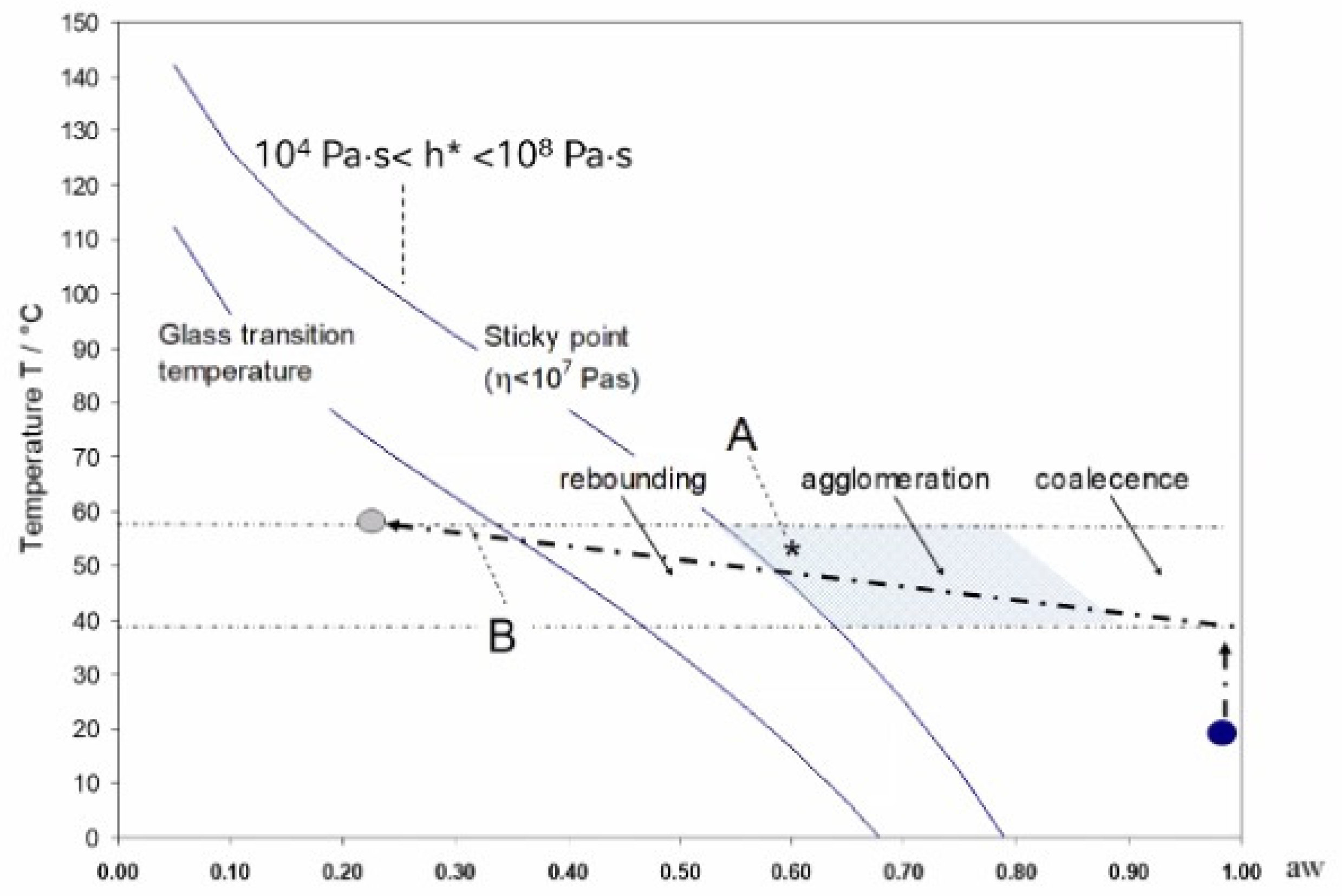
Figure 1. Particle behavior under various temperatures and aw. Zone A shows rubbery (softened, viscoelastic) where stickiness starts and agglomerates whereas state B shows glassy (brittle, solid-like) state. Adapted from Ref. [44].
Applsci 15 13094 g001
Figure 2. Shows a typical freeze-drying temperature and pressure profile over time.
Applsci 15 13094 g002
Figure 3. Amorphous phase of BP. XRD patterns of BJ-MX samples after the spray drying process. Blueberry powder of whole fruit. Ref. [56].
Applsci 15 13094 g003
Figure 4. Schematic representation of thermal transitions from amorphous to crystalline materials exhibited in different thermograms. Ref. [58].
Applsci 15 13094 g004
Figure 5. Phase transformations of crystalline–amorphous due to water and temperature. (Modified from Ref. [59]).
Applsci 15 13094 g005
Figure 6. Representation of an adsorption isotherm type III. (Modified from [67]).
Applsci 15 13094 g006
Figure 7. DSC thermograms used for thermal analysis in model food systems: the effects of maltodextrin concentration on the Tg, Tm, and Tm values of samples prepared at 60% w.b. Ref. [30].
Applsci 15 13094 g007
Figure 8. State diagram for freeze-dried strawberries. (Δ refers to Tg values from Roos, effect of moisture on the thermal behavior of strawberries studied using DSC [55]. □ refers to Tg values from Sa and Sereno, glass transitions, and state diagrams for typical natural fruits and vegetables Ref. [84]. ◊ refers to melting temperatures).
Applsci 15 13094 g008
Figure 9. Micrographs of lyophilized blueberry powders. (A) Blueberry juice powders containing 8% WPI. (B) Blueberry fruit powder Ref. [54].
Applsci 15 13094 g009
Figure 10. (A,B) SEM images of spray-dried BP at WPI/MD = 3.2 Ref. [13].
Applsci 15 13094 g010
Figure 11. Micrographs of spray-dried strawberry powder. (A) Strawberry puree + 40% MD. (B) Strawberry puree + 30% MD + 10% WPI. Ref. [13].
Applsci 15 13094 g011
Table 1. Composition of strawberries.
ComponentContent
Water90%
Carbohydrates7.68%
Sugars4.89%
Sucrose0.47%
Glucose1.99%
Fructose2.44%
Protein0.67%
Fat0.3%
Dietary fiber2.0%
Vitamin C58.8 mg/100 g
Polyphenols57 to 133 mg/100 g
Anthocyanins8.5–65.9 mg/100 g
Flavan-3-ols11–45 mg/100 g
Ellagitannins7.7–18.2 mg/100 g
Table 2. Composition of blueberries.
ComponentContent
Water84%
Carbohydrates9.7%
Sucrose0.11%
Glucose4.88%
Fructose4.97%
Protein0.6%
Lipids0.4%
Dietary fiber3–3.5%
Vitamin C10 mg/100 g
Polyphenols48–304 mg/100 g
Anthocyanin25–495 mg/100 g
Delphinidin27–40%
Malvidin22–33%
Petunidin19–26%
Cyanidin6–14%
Table 3. Challenges in fruit powder processing—causes and impacts. (Information adapted from [49,50,51,52,53]).
ChallengeUnderlying Cause(s)Impact on Powder or Process
Stickiness during dryingHigh sugar content; Low Tg; Exceeding Tg during spray dryingPowder adheres to dryer wall, reduces yield, clogs equipment
CakingMoisture uptake; Hygroscopic matrix; Structural collapseLoss of flow, formation of lumps, poor rehydration
Agglomeration / LumpingCapillary bridges; Mechanical compression; Surface stickinessReduced powder quality and handling; impaired uniformity in final product
Low reconstitution performanceLow wettability; Crystalline regions; Surface hydrophobicityPoor solubility, slow dispersion, sedimentation, floating particles
Foaming during rehydrationUse of protein-based carriers (e.g., WPI); rapid agitationExcessive foam formation in beverages or reconstituted products
Structural collapse (freeze drying)Exceeding collapse temp (Tc); Insufficient control of sublimation frontLoss of porous matrix, shrinkage, texture degradation
Flowability issuesFine particle size; Irregular shape; Surface electrostatics; High cohesionDifficulty in handling, packaging, and dosing; segregation; poor compaction
Anthocyanin & Vitamin C degradationExposure to oxygen, light, high tempLoss of antioxidant activity, faded color, off-flavors
Batch-to-batch variabilityVariations in fruit composition (e.g., solids content, pH, sugar:acid ratio)Inconsistent powder properties; poor process reproducibility
Economic constraintsFreeze drying is expensive; spray drying has low yield without carriersTrade-off between cost and quality; limited adoption for premium products
Lack of predictive modelingInsufficient data on Tg, aw, CWC for specific fruit matricesEmpirical trial-and-error dominates R&D; poor scalability
Table 4. Summary of the physicochemical properties, solid-state, and performance of drying fruit powders obtained by spray drying and freeze drying.
Spray DryingFreeze DryingReferences
Physico-chemical properties
  • Particles have spherical shapes and smooth surfaces.
  • Low moisture content can vary from 2% to 5%.
  • Sugar-rich foods are difficult to directly spray dry. These systems tend to collapse during the process at temperatures above the overall Tg system.
  • Fruit juice powders present problems with stickiness and hygroscopicity.
  • Particles have irregular shapes, concavities, and ridges.
    High recovery of volatiles to preserve structure.
  • Concavities promote water holding.
  • It presents collapse–the components remain amorphous during the process–and is caused by viscous flow of the freeze-concentrated solute, with a loss of established microstructure.
  • Fruit juice powders present problems with stickiness and hygroscopicity.
Garcia-Coronado et al. [30]; Santivarangkna et al. [42]; Fazaeli et al. [43]; Nail et al. [46]; Peng et al. [60]; Gong et al. [13]; Kawai et al. [61].
Solid-StateAmorphousAmorphous
Performance
  • Liquid and solid bridges can contribute to aggregation and caking.
  • Presence of adsorbed moisture tends to reduce frictional forces opposing the relative motion of particles.
  • Most economic drying technique.
  • Mechanical interlocking is more significant in particles with a smaller size and irregular surface.
  • Mechanical interlocking related to particle shape and surface roughness promotes cohesion and adhesion.
  • Products reconstitute with water very quickly.
  • Deterioration reactions slowed down due to the absence of water, oxygen under vacuum, and low temperatures.
Chegini and Ghobadian [62]; Descamps et al. [63]; Kawai et al. [61]; Kurozawa et al. [15].
Table 5. Collapse temperatures during freeze drying [45].
ProductT1 (K)T2 (K)T’g (K)Tgs (K)
Dextran264.15-~261.15357.15
Fructose225.15310.15216.15286.15
Glucose233.15308.15216.15312.15
Sucrose241.15329.15227.15, 238.85343.15
Sorbitol228.15-210.15, 225.25270.15
Blueberry powder---295.15
Strawberry powder---314.15
Table 6. Stages of caking process considering porosity and diameter and respective morphology [102].
Stage p t p 0 D b r i d g e D p a r t i c l e Morphology
Free flowing10Applsci 15 13094 i001
Bridging~1~0Applsci 15 13094 i002
Agglomeration<1>0Applsci 15 13094 i003
Compaction~0~1Applsci 15 13094 i004
Liquefaction01Applsci 15 13094 i005
Table 7. Comparative assessment of both spray and freeze drying in fruit powder processing. Comparative Table: Spray Drying vs. Freeze Drying in Fruit Powder Processing.
AspectSpray DryingFreeze Drying (Lyophilization)
Primary Applications- Instant beverages
- Infant foods
- Snack seasonings
- Nutraceutical blends
- High-value functional foods
- Nutraceutical tablets
- Space or military rations
- Medical nutrition products
Product AppearanceFine, spherical particles; moderate solubilityPorous, sponge-like matrix; high solubility
Nutrient RetentionModerate – susceptible to thermal degradationHigh–preserves heat-sensitive compounds (vitamin C, polyphenols)
Glass Transition Temperature (Tg) ConcernsLow Tg due to sugar content can lead to stickiness and agglomeration during dryingCollapse risk if the product temperature exceeds Tg or ice melting onset temperature during drying
Caking RiskHigh, especially without carriers; stickiness on dryer walls; yield lossModerate to high if stored improperly; porous structure may reabsorb moisture easily
Carrier Agent UseEssential (e.g., maltodextrin, gum arabic, WPI) to raise Tg and improve flowOptional but useful to increase Tg and reduce collapse during drying
Thermal SensitivityExposes product to high inlet temperatures (150–200 °C)Operates at low temperatures under vacuum; better for heat-sensitive ingredients
Particle Size & FlowabilityPoor flow due to electrostatic behavior; risk of wide PSD without optimizationPoor flow due to low bulk density, highly hygroscopic, crystallization
Water Sorption BehaviorNeeds monitoring; higher water activity increases stickiness and agglomerationVery low initial moisture; but highly hygroscopic post-processing
Energy and CostEconomical, fast, scalableExpensive, energy-intensive, slower throughput
Equipment RequirementsAtomizer, hot air generator, cyclone separatorVacuum chamber, condenser, refrigeration and heating systems
Packaging NeedsMoisture barrier packaging requiredHigh-barrier packaging mandatory due to porous, hygroscopic structure
Suitability for Tablet CompactionModerate–better if flow and compression properties are adjusted with carriersExcellent, porous matrix allows fast dispersion and rehydration
Challenges- Stickiness
- Wall deposits
- Thermal degradation
- Low Tg
- Collapse during drying
- Poor flow
- High cost
Disclaimer/Publisher’s Note: The statements, opinions and data contained in all publications are solely those of the individual author(s) and contributor(s) and not of MDPI and/or the editor(s). MDPI and/or the editor(s) disclaim responsibility for any injury to people or property resulting from any ideas, methods, instructions or products referred to in the content.