Multi-Level Evaluation for Flexible Load Regulation Potential in Distribution Network Based on Ensemble Clustering


Abstract
1. Introduction
- (1)
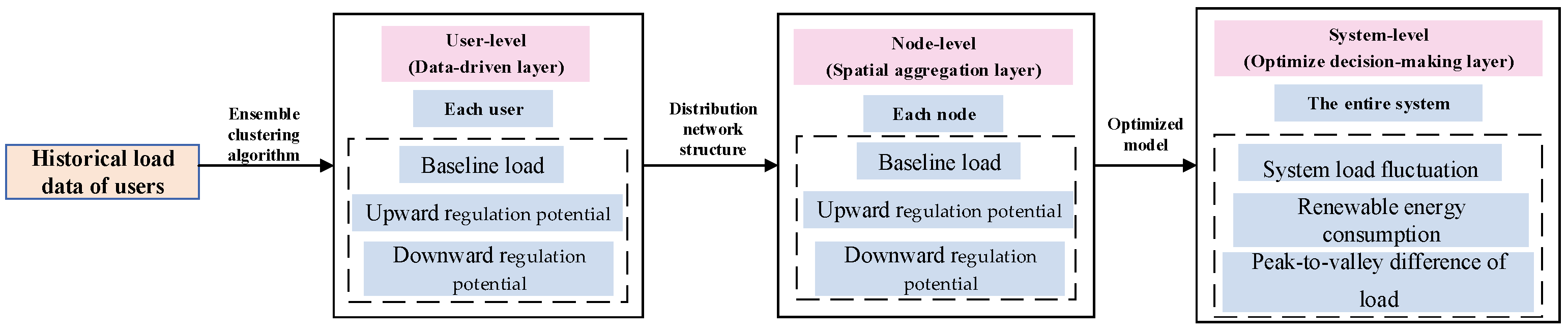
- A “user–bus–system” evaluation framework is established, thereby enabling a comprehensive assessment of flexible load regulation potential across multiple levels.
- (2)
- The stability and robustness of load clustering are enhanced by the ensemble clustering algorithm, thus providing a reliable foundation for bus-level assessment.
- (3)
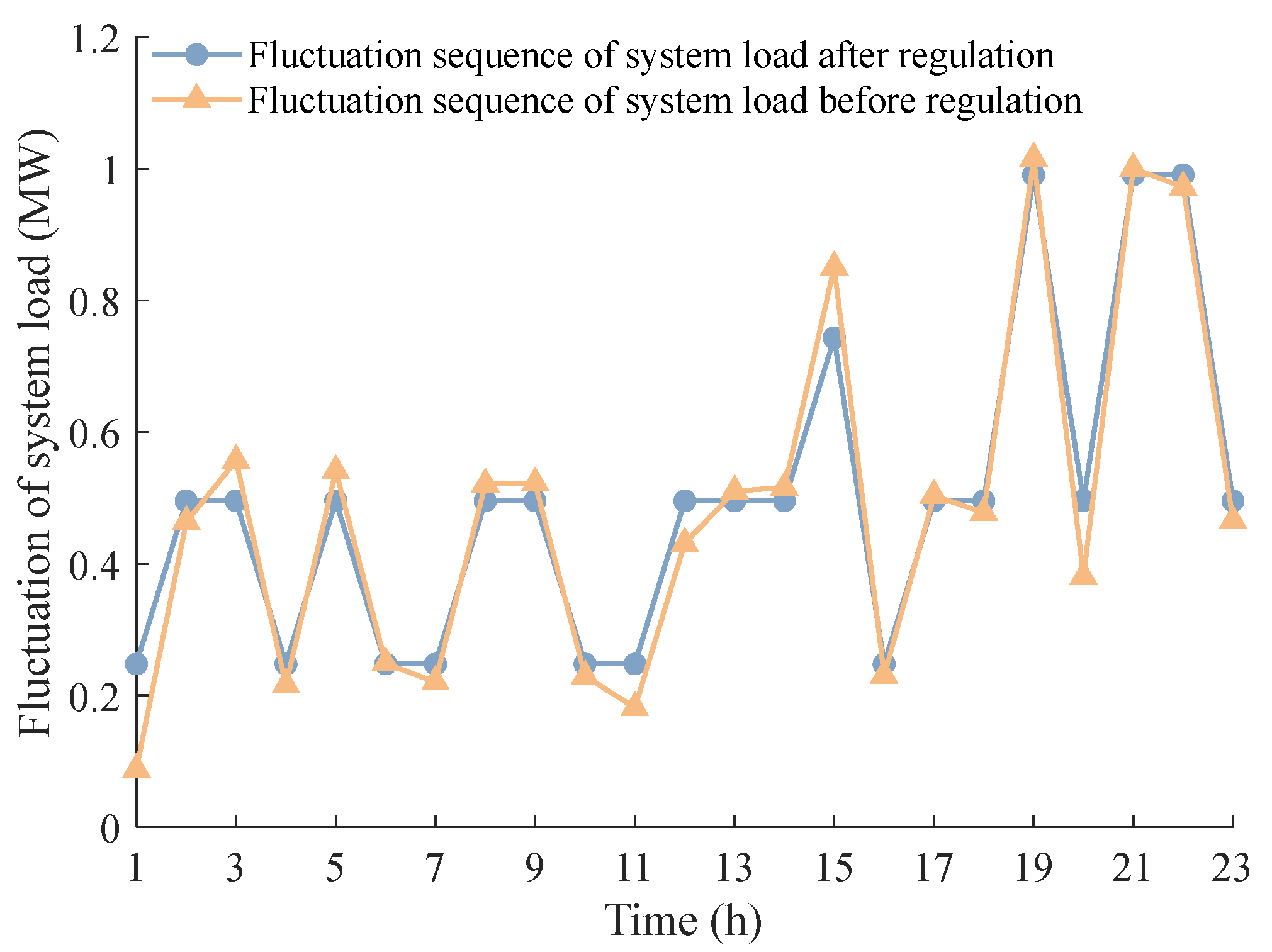
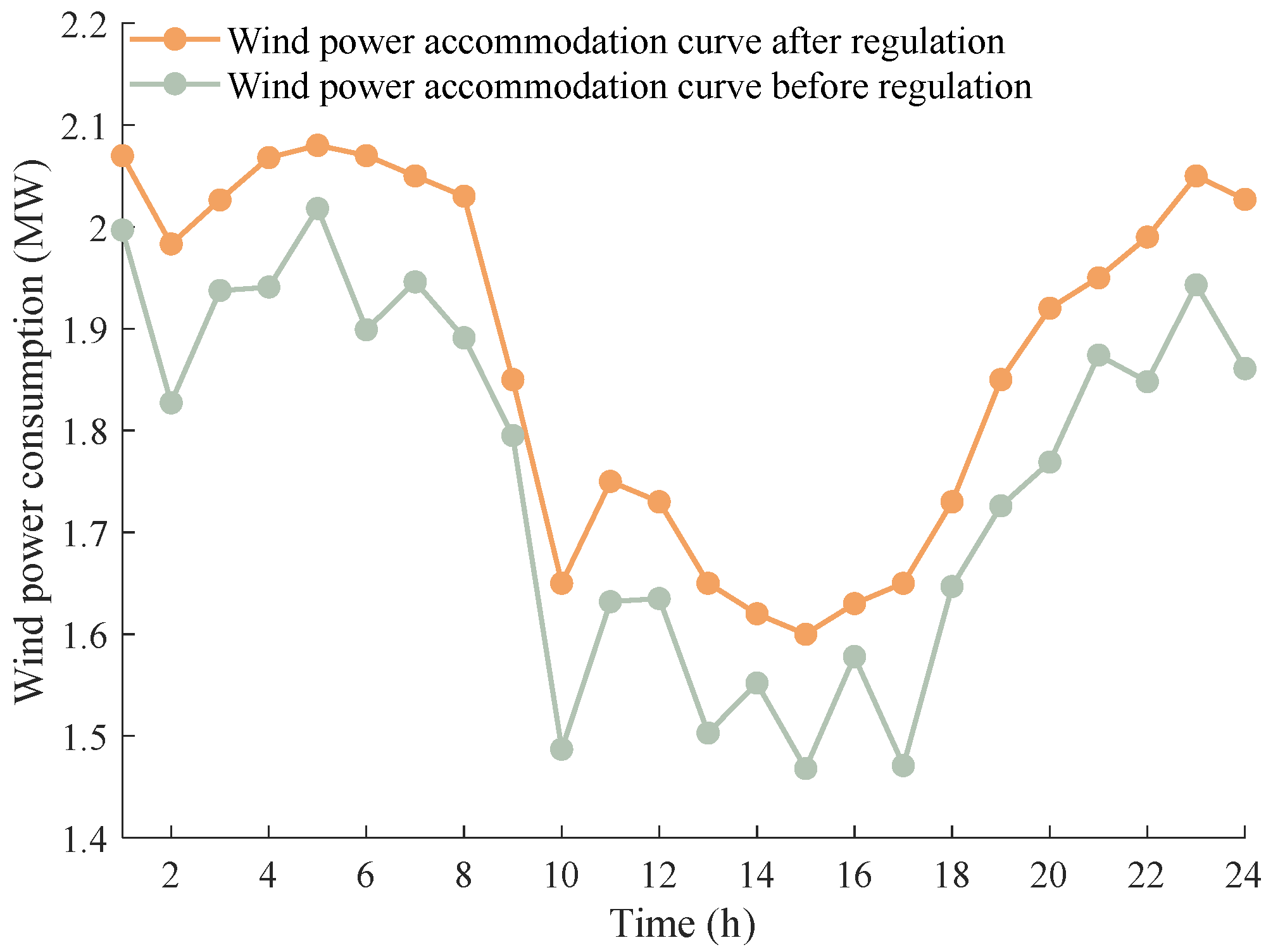
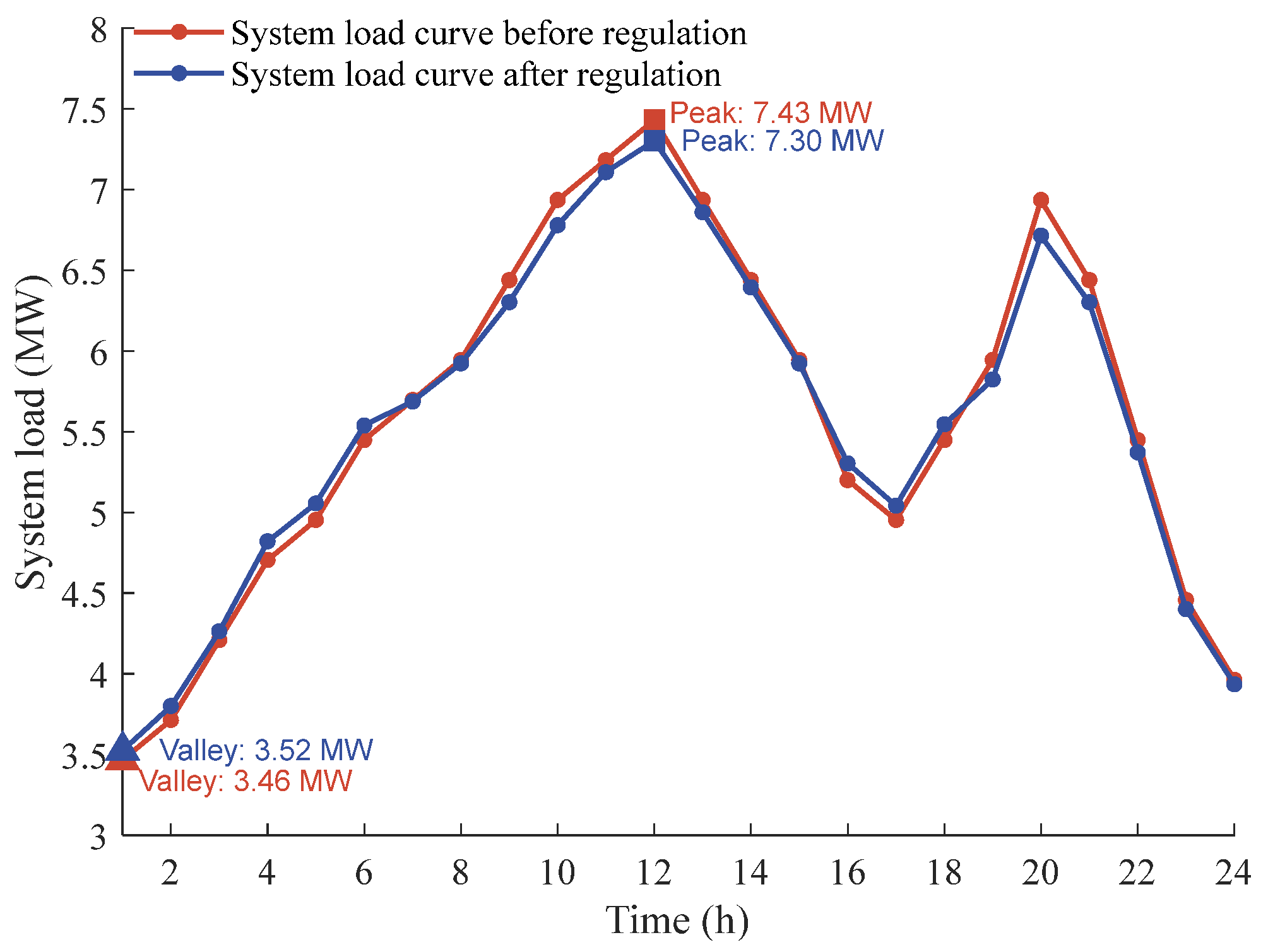
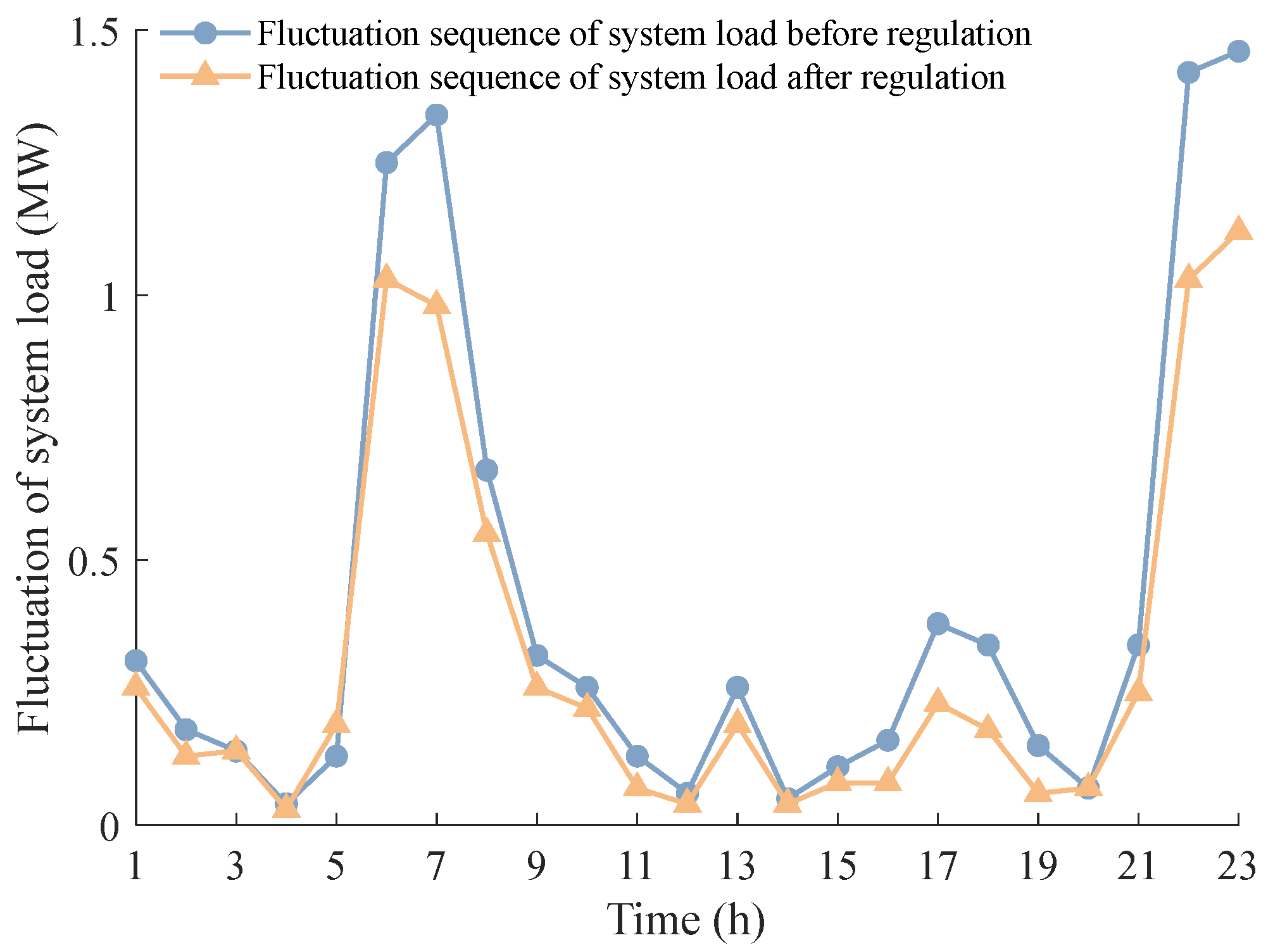
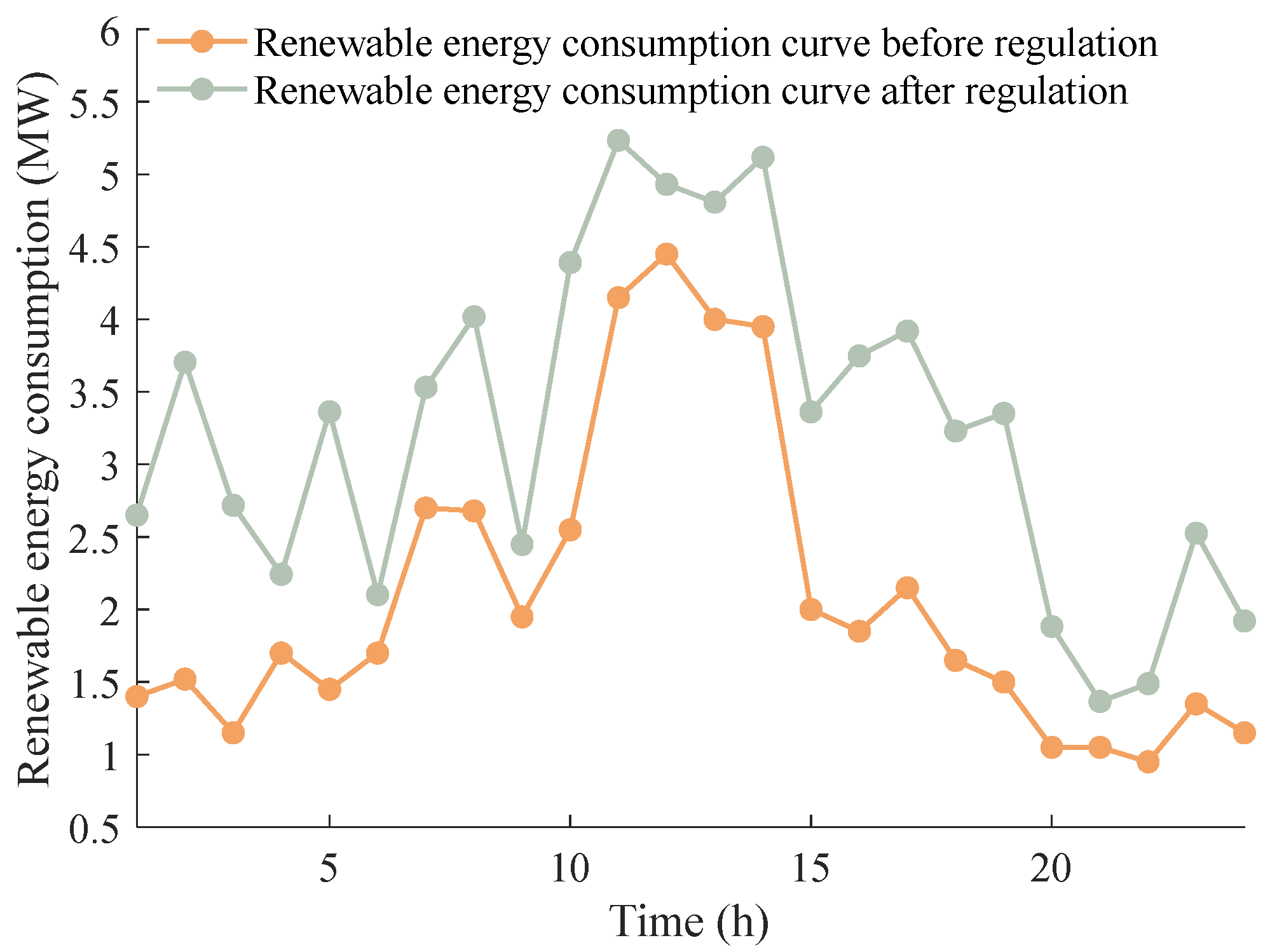
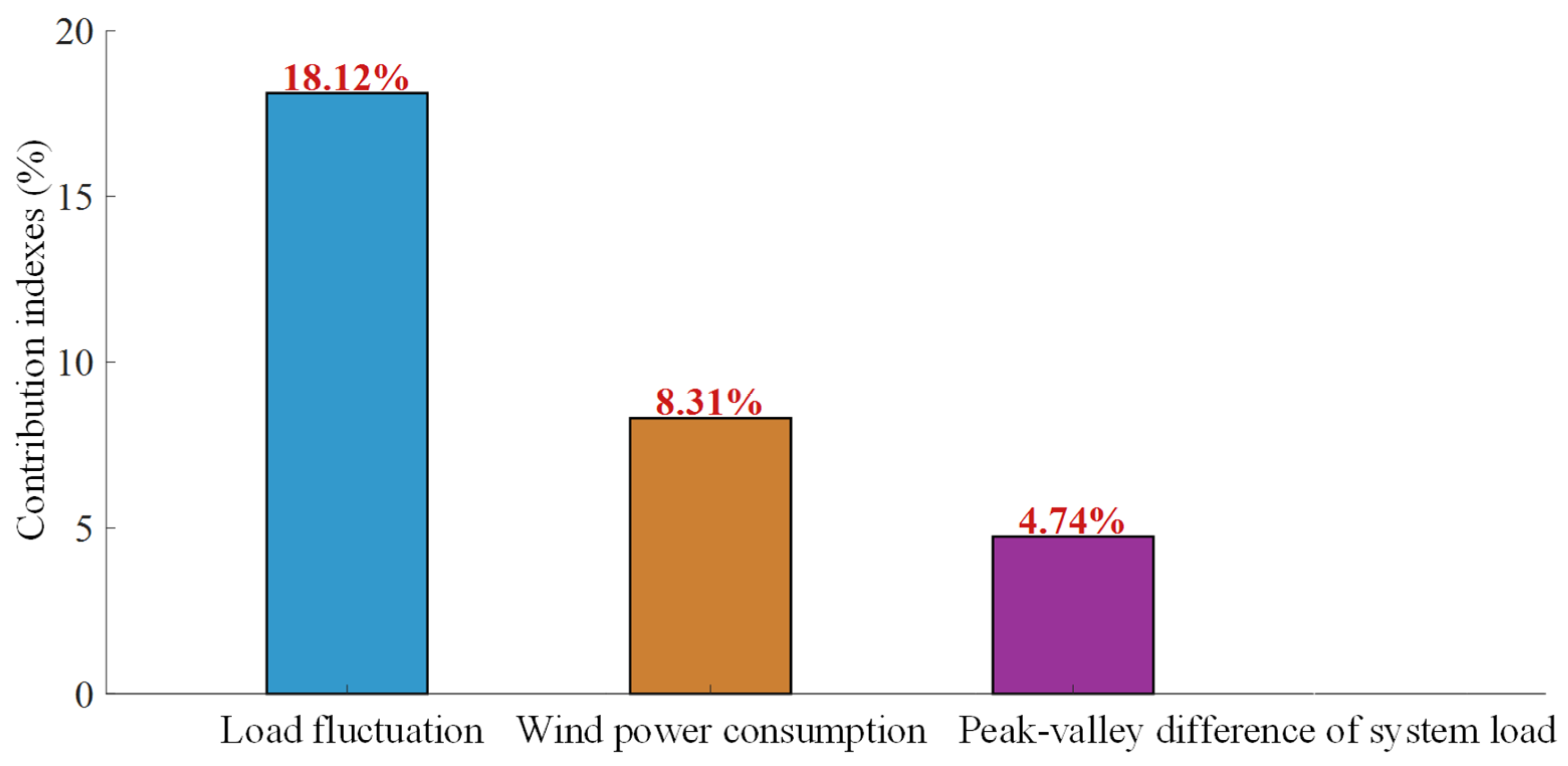
- The system-level regulation effects of flexible loads are quantified by solving multiple system-level optimization models, which address minimizing the average fluctuation of system load, maximizing renewable energy consumption, and reducing the peak-valley difference in system load, respectively, and by a set of system contribution indexes.
2. Quantitative Evaluation of User-Level Flexible Load Regulation Potential
2.1. Quantitative Evaluation Framework for Multi-Level Flexible Load Regulation Potential
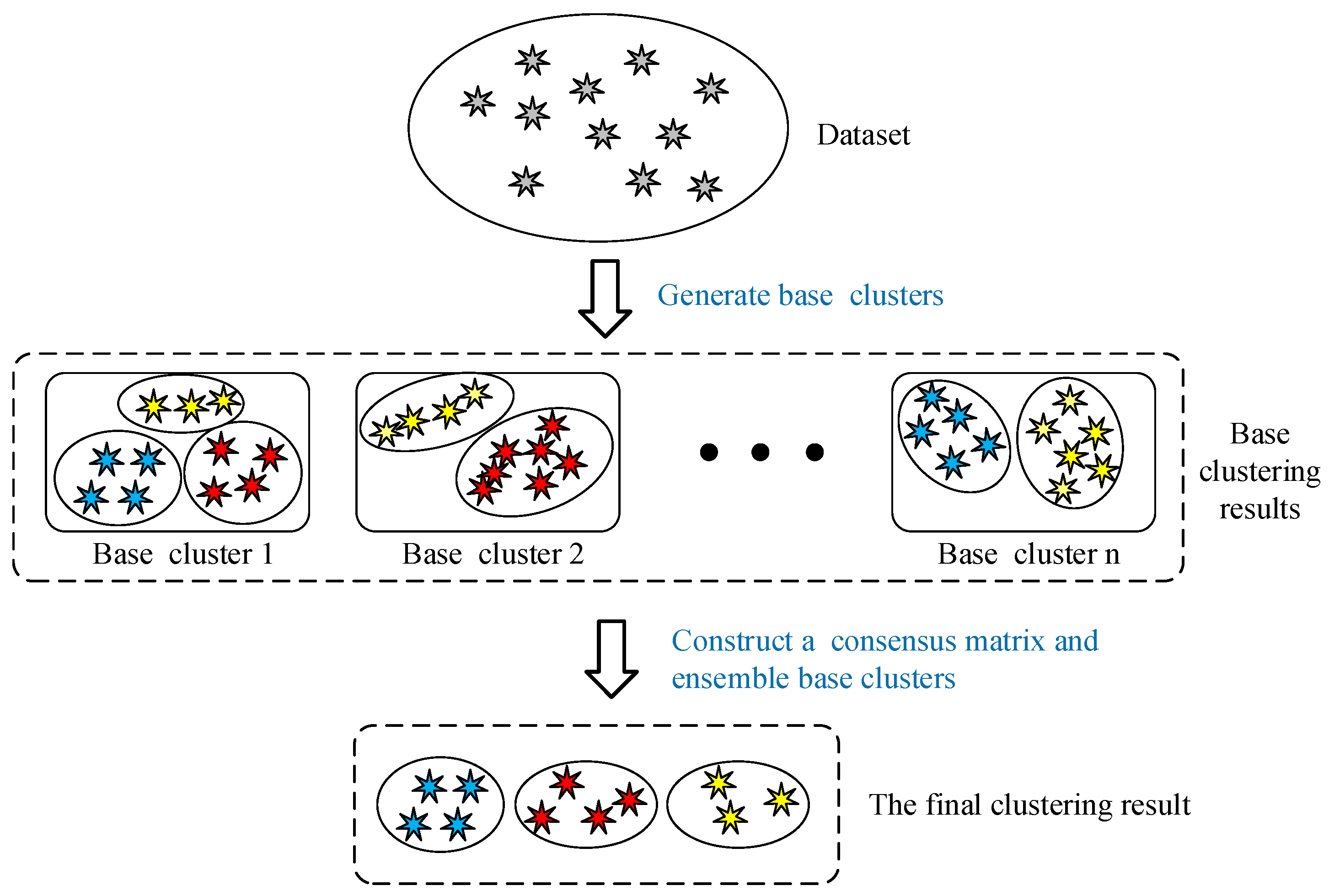
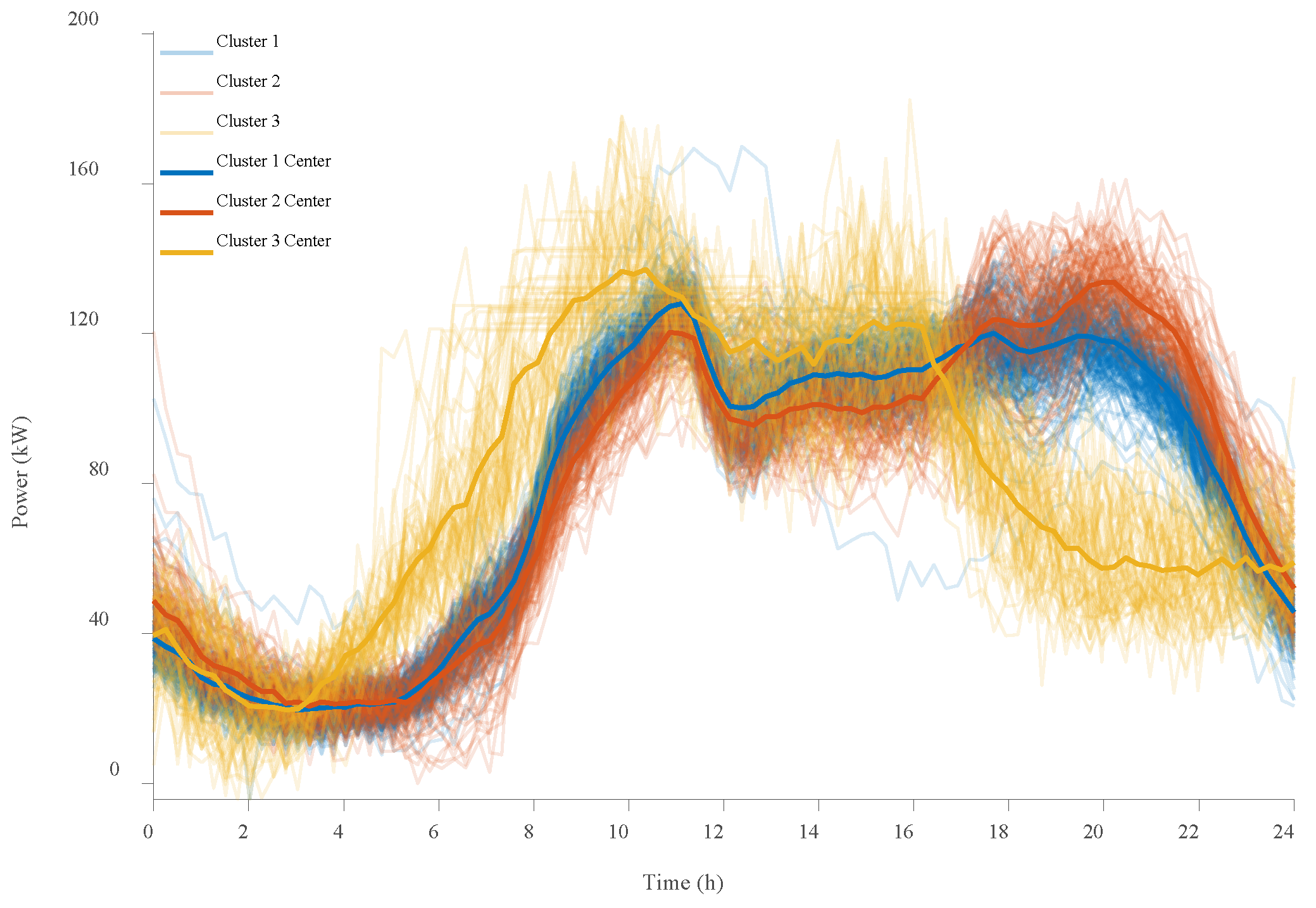
2.2. Ensemble Clustering Algorithm
- (1)
- Perform B times of Bootstrap Resampling on the original dataset to generate B training sample sets . The original dataset contains N historical load curves, where represents the i-th load curve in the dataset .
- (2)
- Perform K-Means clustering on each training sample set to obtain B base cluster results , where represents the b-th base cluster, and denotes the i-th cluster in the b-th base cluster.
- (3)
- Based on these base clusters, a consensus matrix is constructed. The consensus matrix records the frequency at which any two load curves in the original dataset are assigned to the same cluster across all base clusters. It is an matrix, and the calculation formula for its element (located at the i-th row and j-th column) is as follows:
- (4)
- Based on the consensus matrix, a hierarchical clustering algorithm is used to perform the final clustering division on the original dataset . Each load curve in the original dataset is regarded as an independent cluster, and then the two clusters with the highest similarity are merged iteratively until the number of clusters reaches the optimal number of clusters , at which point the final clustering result is obtained. The calculation formula for the inter-cluster similarity is as follows:
2.3. Quantitative Evaluation of User-Level Regulation Potential
- (1)
- A full year of historical load data prior to the regulation date is first acquired for each user. This period is chosen as it is considered to virtually encompass the entire spectrum of the user’s electricity consumption characteristics [15].
- (2)
- By calculating the average power of the user’s load during the days before regulation, the user’s baseline load curve is constructed:
- (3)
- The baseline load curve is classified into the cluster with which it has the maximum membership degree. The calculation formula for the membership degree between the baseline load curve and cluster is as follows:
- (4)
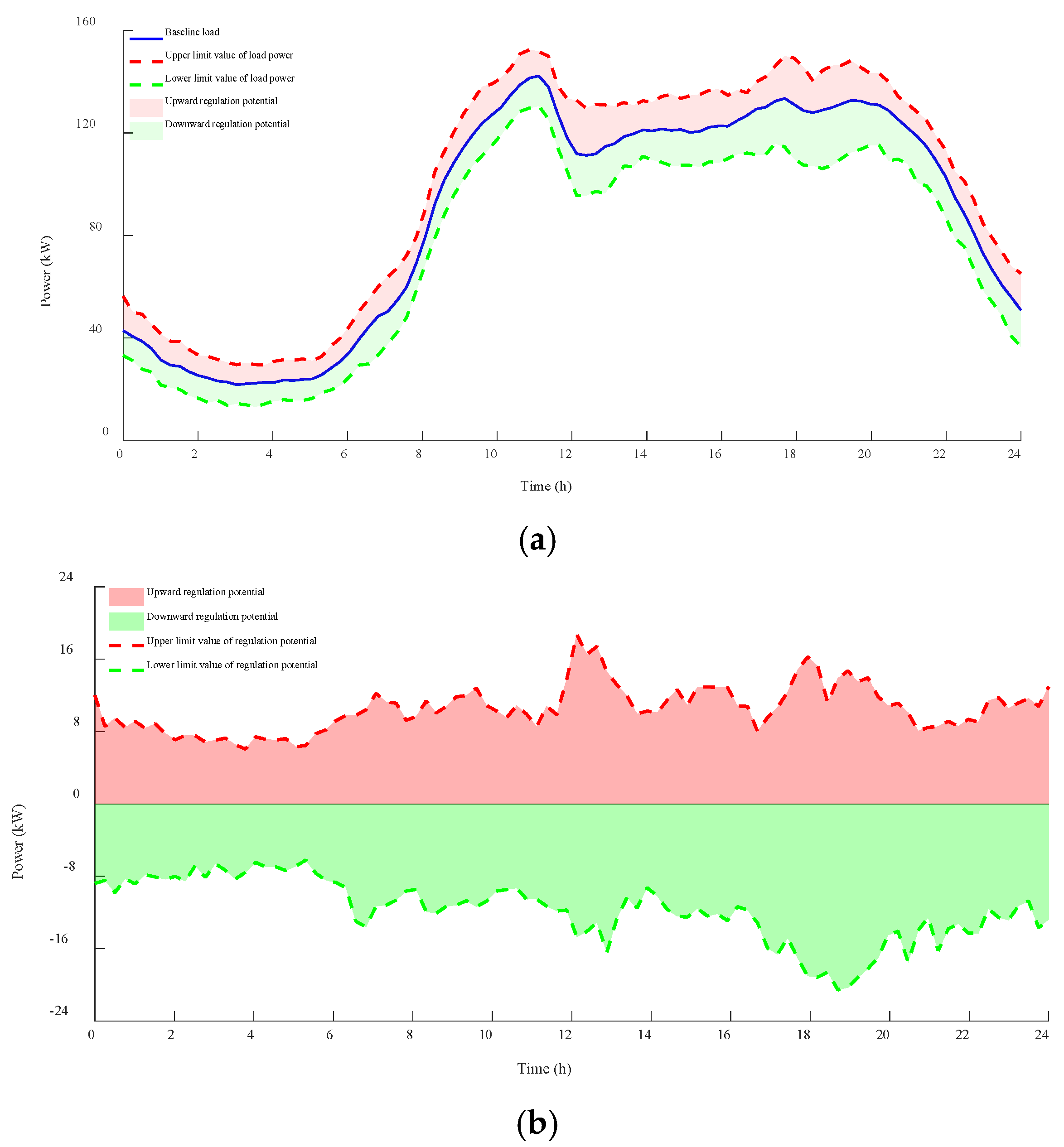
- After determining the cluster to which the user’s baseline load curve belongs, load power values are extracted at each time from the historical load data in the cluster . The 0.95th and 0.05th percentiles of these values are then calculated, which are defined as the user’s upper power limit and lower power limit at time , respectively. The interval represents the typical power fluctuation range of the user at time t.
- (5)
- By comparing the baseline load on the regulation day with the fluctuation interval , the user-level regulation potential is quantified as follows:
3. Quantitative Evaluation of Flexible Load Regulation Potential at Bus-Level and System-Level
3.1. Quantitative Evaluation of Bus-Level Regulation Potential
3.2. Quantitative Evaluation of System-Level Regulation Potential
3.2.1. Optimization Objectives
- (1)
- With the objective of minimizing the average fluctuation of system load,
- (2)
- With the objective of maximizing the consumption of renewable energy,
- (3)
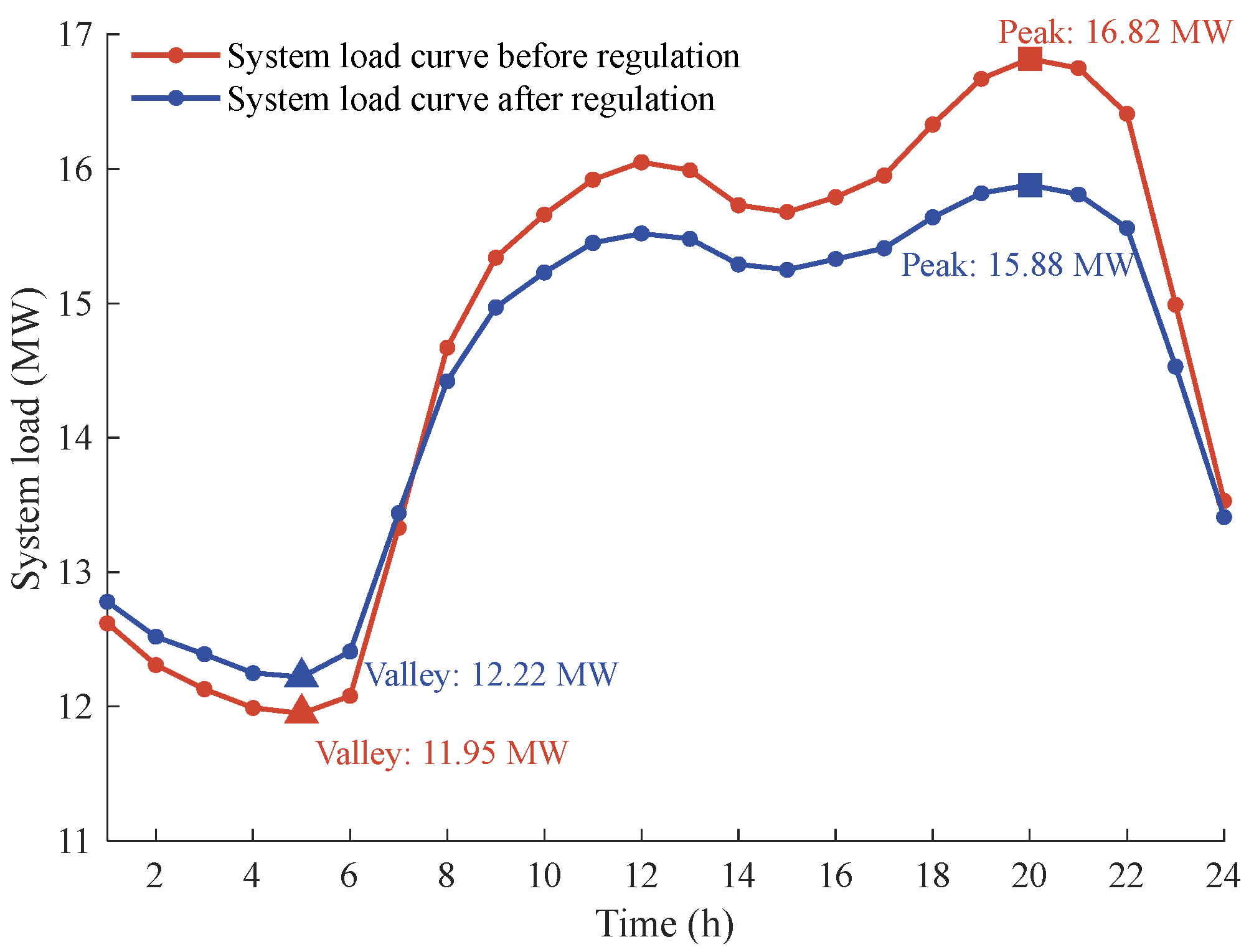
- With the objective of minimizing the peak-valley difference in system load,
3.2.2. Constraints
- (1)
- Power flow balance constraints. These constraints ensure the real-time balance of active power and reactive power in the distribution network:
- (2)
- Bus voltage and branch current constraints. These constraints ensure that the voltage of all buses is within the allowable range and that the branch current does not exceed the thermal limit, to prevent equipment overload and ensure power supply safety:
- (3)
- Regulation potential constraints. These constraints ensure that the actual load adjustment amount of each bus does not exceed its upper and lower limits, and that the output of renewable energy does not exceed the predicted value:
3.2.3. Convex Relaxation of the Optimization Model
- (1)
- The network topology is radial.
- (2)
- The objective function is monotonically increasing with respect to branch power losses.
- (3)
- The system does not operate at the boundary of the feasible region (e.g., no line power reaches its limit, and node voltages are far from the upper and lower bounds).
- (1)
- The IEEE 33-bus and PG&E 69-bus test systems used in the case studies are radial in structure and operate within normal voltage and current limits, thus fulfilling conditions (1) and (3).
- (2)
- The primary objective functions defined in Equations (12) and (14), which aim to minimize load fluctuation and peak-valley difference, respectively, inherently discourage excessive power flow and associated losses. Since branch power losses are monotonically increasing functions of the squared current magnitude , minimizing system-level power variations implicitly creates pressure to reduce . Therefore, these objective functions are consistent with the requirement of being non-decreasing with respect to branch losses, ensuring the relaxation’s exactness. For the objective of maximizing renewable consumption (Equation (13)), the relaxation remains exact in radial networks as the solution typically lies within a non-boundary operating point.
3.2.4. Contribution Degree Indexes
- (1)
- Contribution degree to the average fluctuation of system load:
- (2)
- Contribution degree to renewable energy consumption:
- (3)
- Contribution degree to the peak-valley difference in system load:
4. Case Study Analysis
4.1. Case Introduction
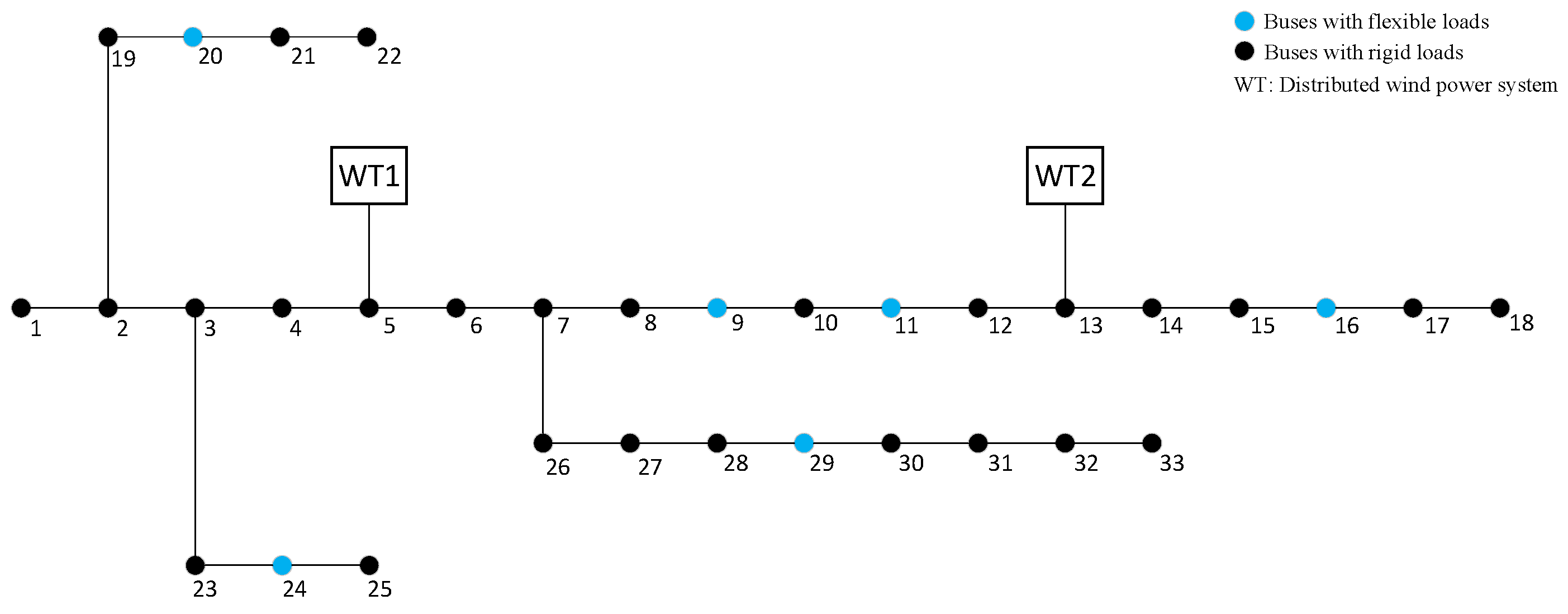
- (1)
- The stability and robustness of the proposed ensemble clustering algorithm in the quantitative evaluation of user-level regulation potential;
- (2)
- The effectiveness of the proposed system-level optimization model in quantitatively evaluating the system-level contribution of flexible loads to the distribution network.
4.2. Performance Verification of Ensemble Clustering
- (1)
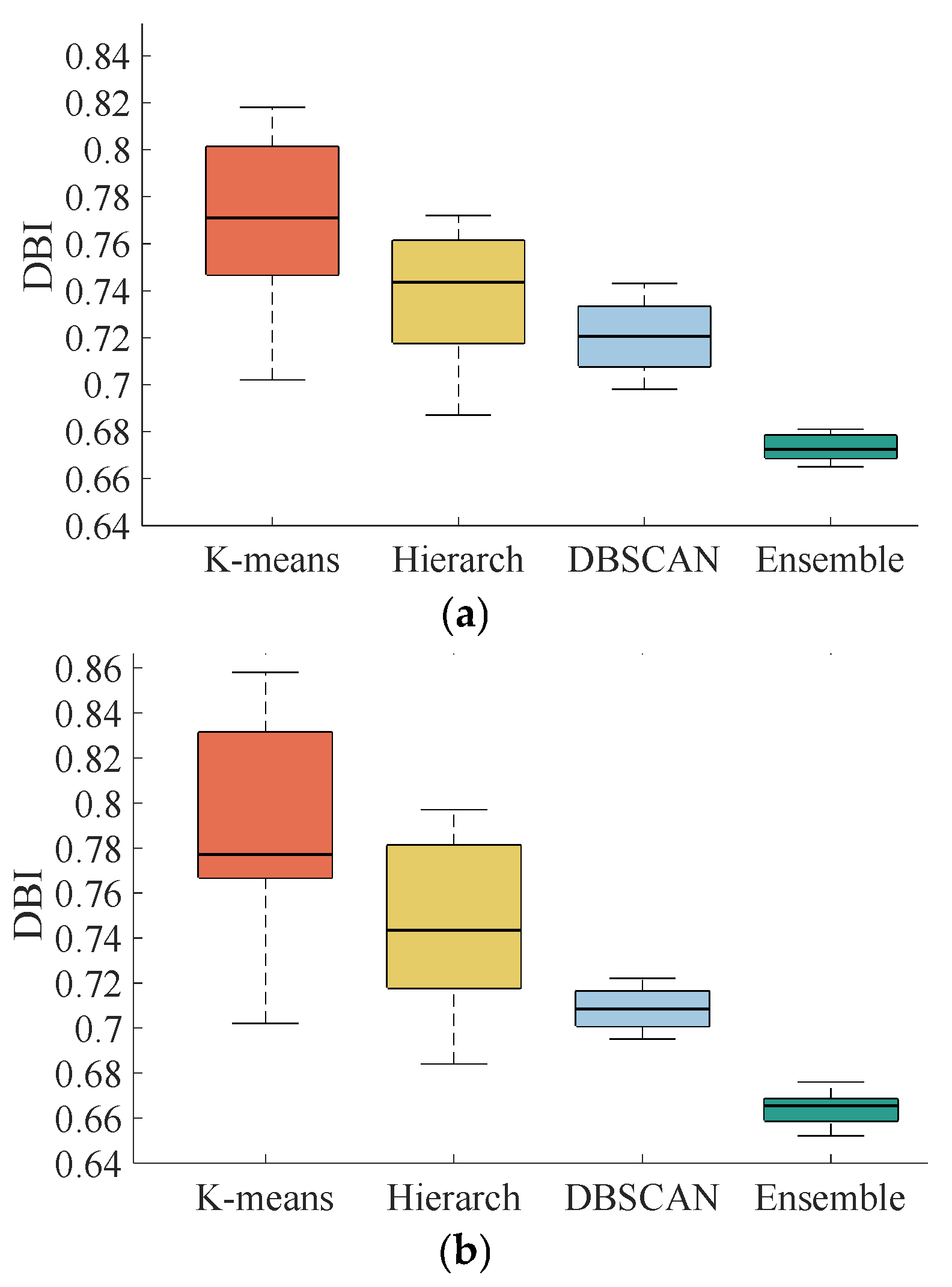
- Stability analysis of ensemble clustering
- (2)
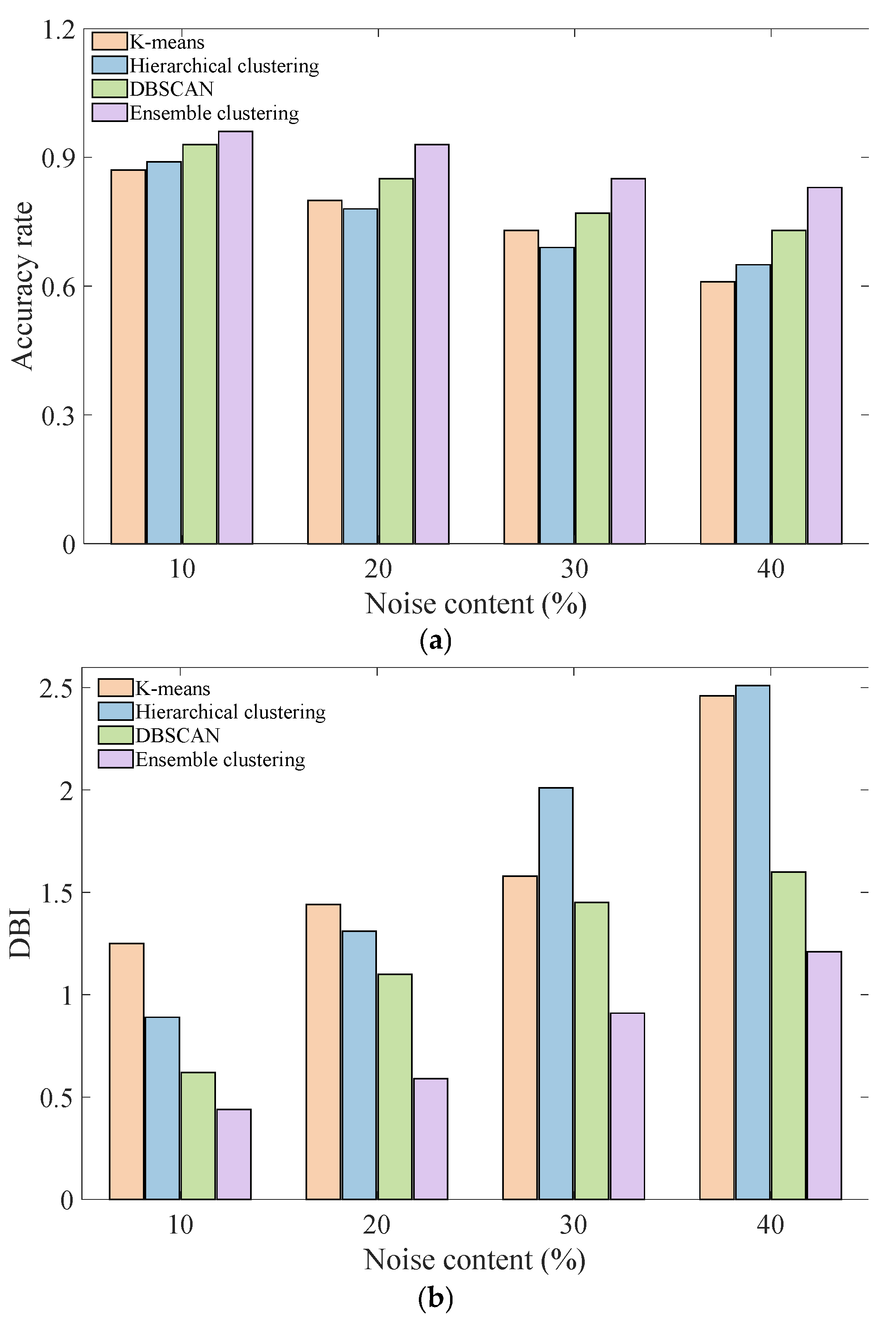
- Robustness analysis of ensemble clustering
4.3. Evaluation of User-Level Regulation Potential
4.4. Evaluation of System-Level Regulation Potential
4.5. Cross-System Validation Based on the PG&E 69-Bus System
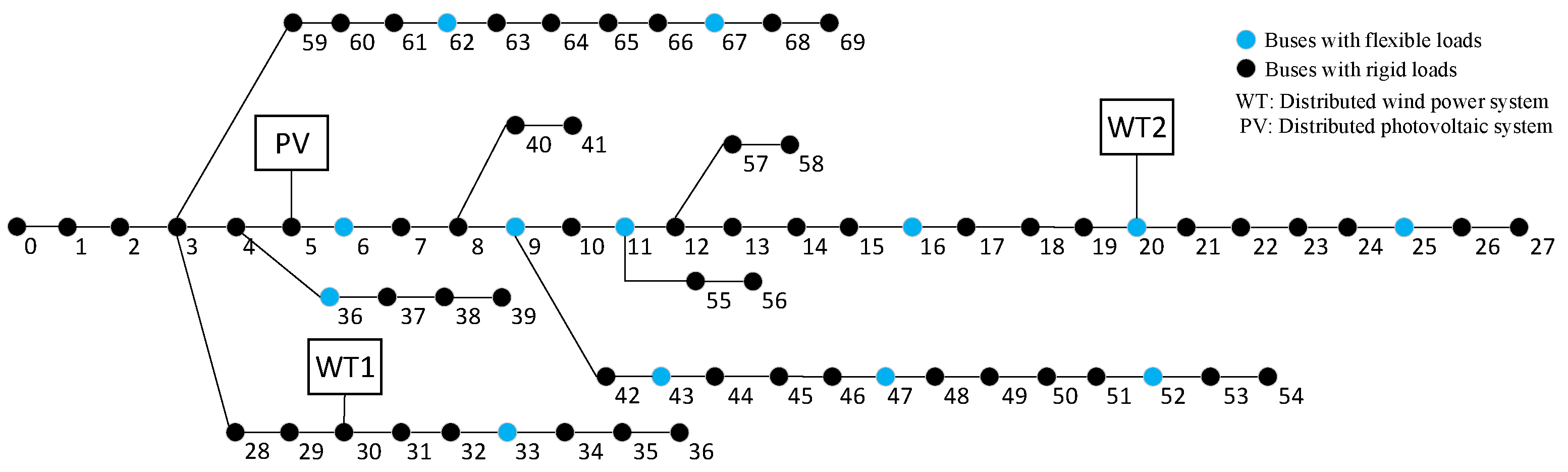
4.5.1. Case Introduction for the Modified PG&E 69-Bus Distribution System
4.5.2. Evaluation of System-Level Regulation Potential for the Modified PG&E 69-Bus Distribution System
5. Conclusions
- (1)
- Compared to some traditional single clustering algorithms, the ensemble clustering algorithm adopted in this paper can effectively improve the stability and robustness of load clustering, thus providing a guarantee for the stability of the quantitative evaluation results of flexible load regulation potential.
- (2)
- The “user–bus–system” three-level evaluation framework constructed in this paper enables quantitative evaluation of flexible load regulation potential at multiple levels. Firstly, the power regulation range of each user can be accurately characterized based on the ensemble clustering algorithm. Then, the regulation potential of each bus in the distribution network can be obtained through aggregation calculation. Finally, by solving multiple system-level optimization models, the regulation effects of flexible loads in aspects such as minimizing the average fluctuation of system load, maximizing renewable energy consumption, and minimizing the peak-valley difference in system load can be achieved. Moreover, the system-level regulation effects in various aspects can be accurately quantified through multiple system contribution indexes.
Author Contributions
Funding
Institutional Review Board Statement
Informed Consent Statement
Data Availability Statement
Conflicts of Interest
References
- Nikoobakht, A.; Aghaei, J.; Shafie-Khah, M.; Catalao, J.P.S. Assessing increased flexibility of energy storage and demand response to accommodate a high penetration of renewable energy sources. IEEE Trans. Sustain. Energy 2018, 10, 659–669. [Google Scholar] [CrossRef]
- McPherson, M.; Stoll, B. Demand response for variable renewable energy integration: A proposed approach and its impacts. Energy 2020, 197, 117205. [Google Scholar] [CrossRef]
- Huang, S.; Abedinia, O. Investigation in economic analysis of microgrids based on renewable energy uncertainty and demand response in the electricity market. Energy 2021, 225, 120247. [Google Scholar] [CrossRef]
- Yang, X.; Xu, C.; He, H.; Yao, W.; Wen, J.; Zhang, Y. Flexibility provisions in active distribution networks with uncertainties. IEEE Trans. Sustain. Energy 2020, 12, 553–567. [Google Scholar] [CrossRef]
- Huang, C.; Zhang, H.; Song, Y.; Wang, L.; Ahmad, T.; Luo, X. Demand response for industrial micro-grid considering photovoltaic power uncertainty and battery operational cost. IEEE Trans. Smart Grid 2021, 12, 3043–3055. [Google Scholar] [CrossRef]
- Jing, Z.; Gao, L.; Mu, Y.; Liang, D. Flexibility-Constrained Energy Storage System Placement for Flexible Interconnected Distribution Networks. Sustainability 2024, 16, 9129. [Google Scholar] [CrossRef]
- Wang, G.; Li, Z.; Wang, F. Enhanced sufficient battery model for aggregate flexibility of thermostatically controlled loads considering coupling constraints. IEEE Trans. Sustain. Energy 2021, 12, 2493–2496. [Google Scholar] [CrossRef]
- Zhou, Z.; Guo, X.; Xiong, Y.J.; Xia, C.-M. Kalman-SSM: Modeling long-term time series with kalman filter structured state spaces. IEEE Signal Process. Lett. 2024, 31, 2470–2474. [Google Scholar] [CrossRef]
- Zhang, J.C.; Li, M.; Liu, Z.W.; Tan, J.; Tao, Y.G.; Luo, T.L. An evaluation method for multi-type flexible resource regulation capability on the user side of distribution networks. Electr. Power 2023, 56, 96–103. [Google Scholar]
- Gao, A.; Zheng, J.; Mei, F.; Liu, Y. Substation-Level flexible load disaggregation based on hierarchical federated perception algorithm. IEEE Trans. Smart Grid 2024, 15, 5787–5798. [Google Scholar] [CrossRef]
- Wang, B.; Zhao, D.; Dehghanian, P.; Tian, Y.; Hong, T. Aggregated electric vehicle load modeling in large-scale electric power systems. IEEE Trans. Ind. Appl. 2020, 56, 5796–5810. [Google Scholar] [CrossRef]
- Ge, W.; Wang, X. Study of source-load interaction in demand response considering the potential of flexible load dispatch. Chin. J. Electr. Eng. 2024, 10, 141–151. [Google Scholar] [CrossRef]
- Lu, S.; Ding, J.; Chen, M.; Gu, W.; Zhu, J.; Xu, Y.; Dong, Z.; Sun, Z. On the solution uniqueness of data-driven modeling of flexible loads. IEEE Trans. Smart Grid 2024, 16, 1993–1996. [Google Scholar] [CrossRef]
- Cao, Y.; Wei, W.; Mei, S.; Shafie-Khah, M.; Catalao, J.P.S. Analyzing and quantifying the intrinsic distributional robustness of CVaR reformulation for chance-constrained stochastic programs. IEEE Trans. Power Syst. 2020, 35, 4908–4911. [Google Scholar] [CrossRef]
- Xu, W.; Zeng, S.; Du, X.; Zhao, J.; He, Y.; Wu, X. Reliability of active distribution network considering uncertainty of distribution generation and load. Electronics 2023, 12, 1363. [Google Scholar] [CrossRef]
- Kong, X.; Ma, Y.; Ai, Q.; Zhang, X.; Li, C.; Xiao, B. Review on electricity consumption characteristic modeling and load forecasting for diverse users in new power system. Autom. Electr. Power Syst. 2023, 47, 2–17. [Google Scholar]
- Peng, D.; Pei, W.; Xiao, H.; Yang, Y.; Tang, C. Data-driven consumer demand response behavior modelization and application. Power Syst. Technol. 2021, 45, 2577–2586. [Google Scholar]
- Baoyi, W.; Jin, L.; Shaomin, Z. Study of residential power load patterns based on clustering and deep belief network. J. Netw. Comput. Appl. 2017, 2, 7–13. [Google Scholar] [CrossRef]
- Li, C.; Dong, Z.; Chen, G.; Zhou, B.; Zhang, J.; Yu, X. Data-driven planning of electric vehicle charging infrastructure: A case study of Sydney, Australia. IEEE Trans. Smart Grid 2021, 12, 3289–3304. [Google Scholar] [CrossRef]
- Wang, Y.; Chen, Q.; Kang, C.; Xia, Q. Clustering of electricity consumption behavior dynamics toward big data applications. IEEE Trans. Smart Grid 2016, 7, 2437–2447. [Google Scholar] [CrossRef]
- Chen, T.; Wan, W.; Li, X.; Qin, H.; Yan, W. Flexible load multi-step forecasting method based on non-intrusive load decomposition. Electronics 2023, 12, 2842. [Google Scholar] [CrossRef]
- Wang, K.; Du, H.; Wang, J.; Jia, R.; Zong, Z. An ensemble deep learning model for provincial load forecasting based on reduced dimensional clustering and decomposition strategies. Mathematics 2023, 11, 2786. [Google Scholar] [CrossRef]
- Sun, Y.; Mao, Y.; Li, Z.; Zhang, X.; Li, F. A comprehensive clustering method of user load characteristics and adjustable potential based on power big data. Proc. CSEE 2021, 41, 6259–6271. [Google Scholar]
- Zhang, B.; Zhuang, C.; Hu, J.; Chen, S.; Zhang, M.; Wang, K.; Zeng, R. Ensemble clustering algorithm combined with dimension reduction techniques for power load profiles. Proc. CSEE 2015, 35, 3741–3749. [Google Scholar]
- Pereira, E.C.; Barbosa, C.H.N.R.; Vasconcelos, J.A. Distribution network reconfiguration using iterative branch exchange and clustering technique. Energies 2023, 16, 2395. [Google Scholar] [CrossRef]
- Sarmas, E.; Fragkiadaki, A.; Marinakis, V. Explainable AI-based ensemble clustering for load profiling and demand response. Energies 2024, 17, 5559. [Google Scholar] [CrossRef]
- Huang, D.; Wang, C.D.; Lai, J.H.; Kwoh, C.-K. Toward multidiversified ensemble clustering of high-dimensional data: From subspaces to metrics and beyond. IEEE Trans. Cybern. 2021, 52, 12231–12244. [Google Scholar] [CrossRef]
- Li, X.; Wang, P.; Liu, Y.; Xu, L. Massive load pattern identification method considering class imbalance. Proc. CSEE 2020, 40, 128–137. [Google Scholar]
- Farivar, M.; Low, S.H. Branch flow model: Relaxations and convexification—Part I. IEEE Trans. Power Syst. 2013, 28, 2554–2564. [Google Scholar] [CrossRef]
- Baran, M.E.; Wu, F.F. Optimal capacitor placement on radial distribution systems. IEEE Trans. Power Deliv. 2002, 4, 725–734. [Google Scholar] [CrossRef]







| Bus | 9 | 11 | 16 | 20 | 24 | 29 |
| Number of flexible load users | 11 | 9 | 12 | 10 | 11 | 9 |
| System Contribution Degree Indexes | IEEE 33-Bus System | PG&E 69-Bus System |
|---|---|---|
| System load fluctuation | 18.12% | 55.96% |
| Renewable energy consumption | 8.31% | 24.45% |
| Peak-valley difference in system load | 4.74% | 24.84% |
Disclaimer/Publisher’s Note: The statements, opinions and data contained in all publications are solely those of the individual author(s) and contributor(s) and not of MDPI and/or the editor(s). MDPI and/or the editor(s) disclaim responsibility for any injury to people or property resulting from any ideas, methods, instructions or products referred to in the content. |
© 2025 by the authors. Licensee MDPI, Basel, Switzerland. This article is an open access article distributed under the terms and conditions of the Creative Commons Attribution (CC BY) license (https://creativecommons.org/licenses/by/4.0/).
Share and Cite
Lou, W.; Zhao, C.; Pan, M.; Zhen, C.; Liu, H.; Qi, X. Multi-Level Evaluation for Flexible Load Regulation Potential in Distribution Network Based on Ensemble Clustering. Appl. Sci. 2025, 15, 12885. https://doi.org/10.3390/app152412885
Lou W, Zhao C, Pan M, Zhen C, Liu H, Qi X. Multi-Level Evaluation for Flexible Load Regulation Potential in Distribution Network Based on Ensemble Clustering. Applied Sciences. 2025; 15(24):12885. https://doi.org/10.3390/app152412885
Chicago/Turabian StyleLou, Wei, Cheng Zhao, Min Pan, Chao Zhen, Hao Liu, and Xianjun Qi. 2025. "Multi-Level Evaluation for Flexible Load Regulation Potential in Distribution Network Based on Ensemble Clustering" Applied Sciences 15, no. 24: 12885. https://doi.org/10.3390/app152412885
APA StyleLou, W., Zhao, C., Pan, M., Zhen, C., Liu, H., & Qi, X. (2025). Multi-Level Evaluation for Flexible Load Regulation Potential in Distribution Network Based on Ensemble Clustering. Applied Sciences, 15(24), 12885. https://doi.org/10.3390/app152412885