Users’ Expectations of Smart Devices during Physical Activity—A Literature Review


Abstract
1. Introduction
1.1. Background
1.2. Objectives
2. Materials and Methods
2.1. Searching Strategy, Inclusion and Exclusion Criteria
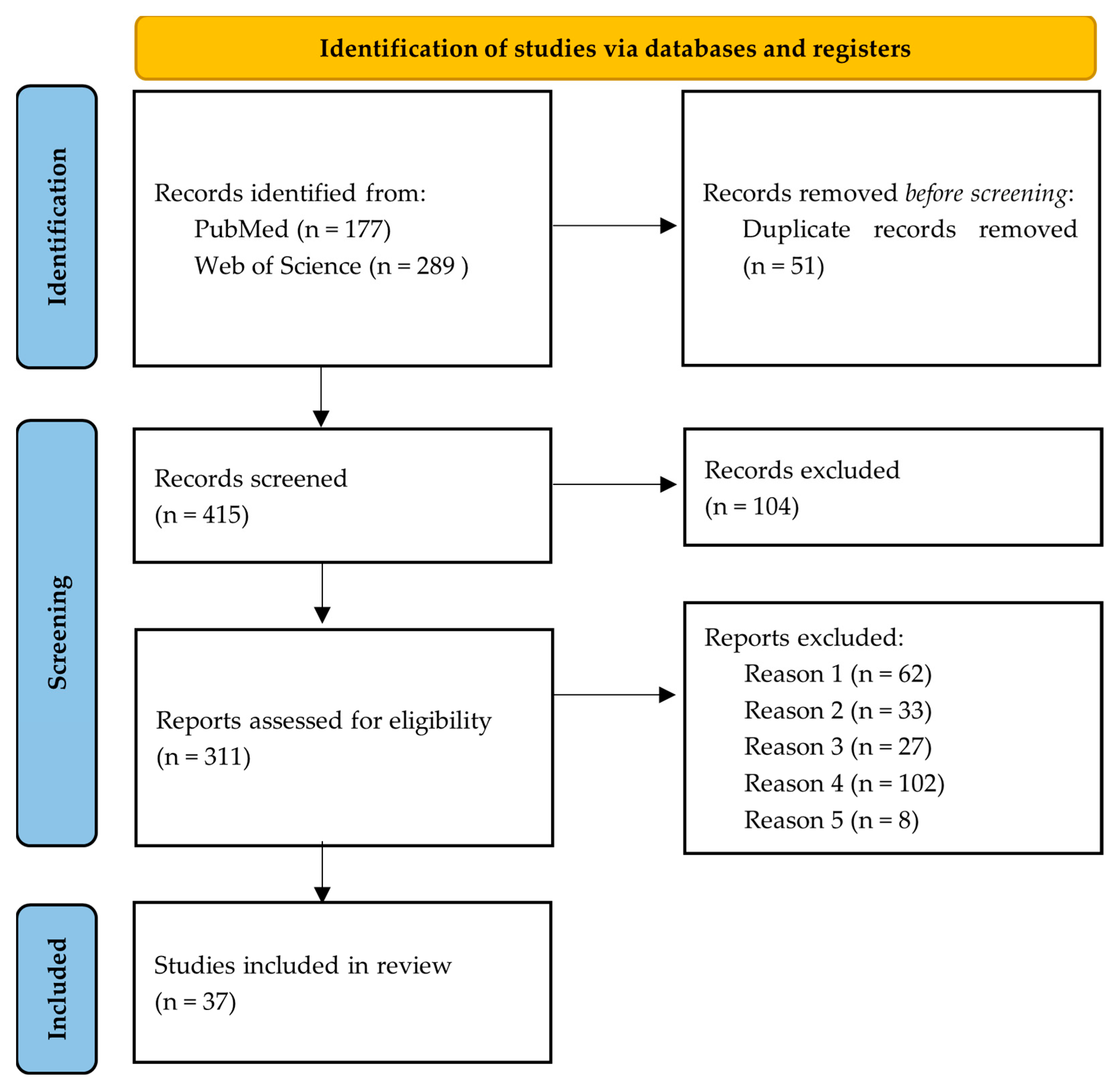
2.2. The Selection Process
3. Results
3.1. Main Findings and Citation
3.2. Citation of the Articles
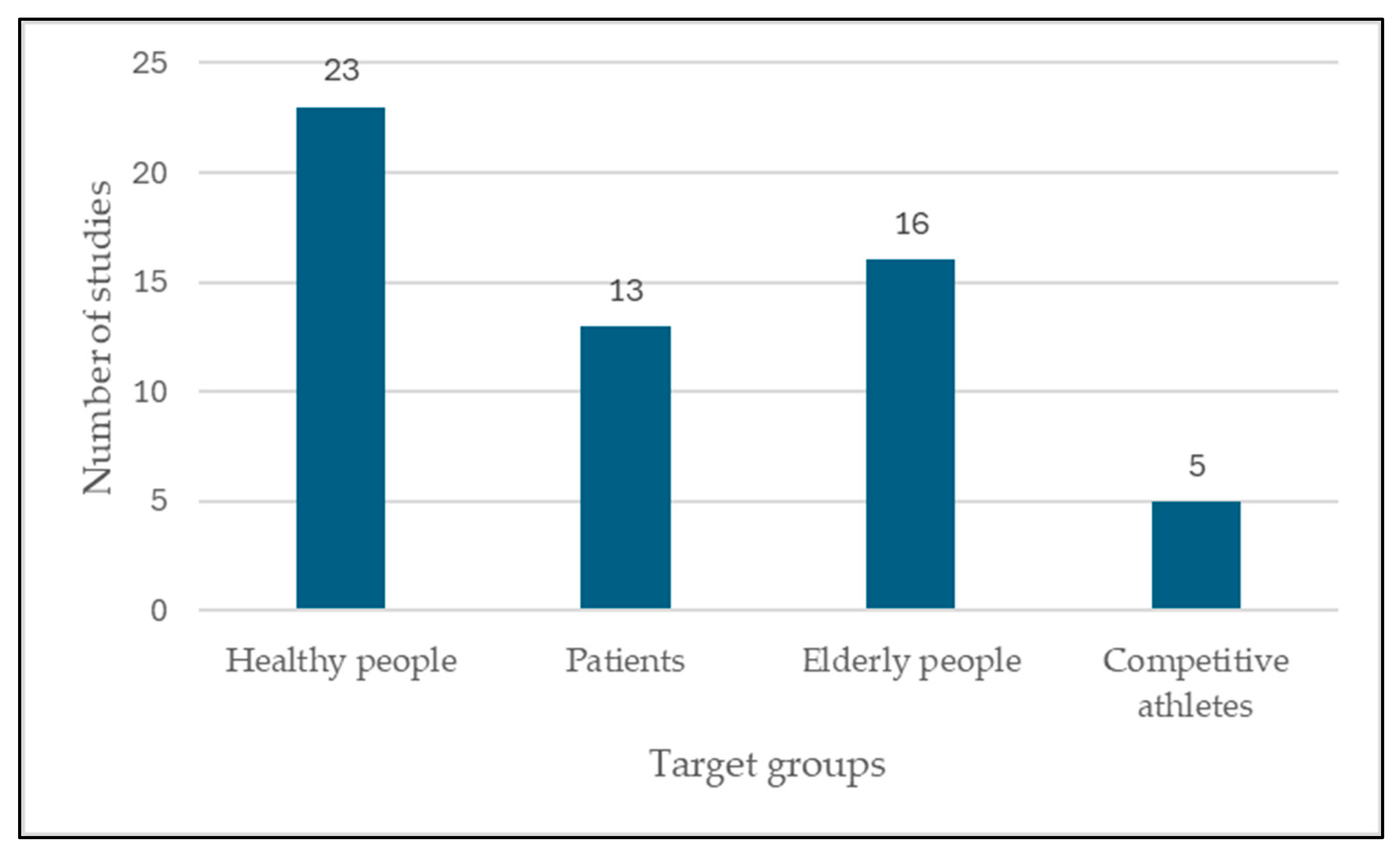
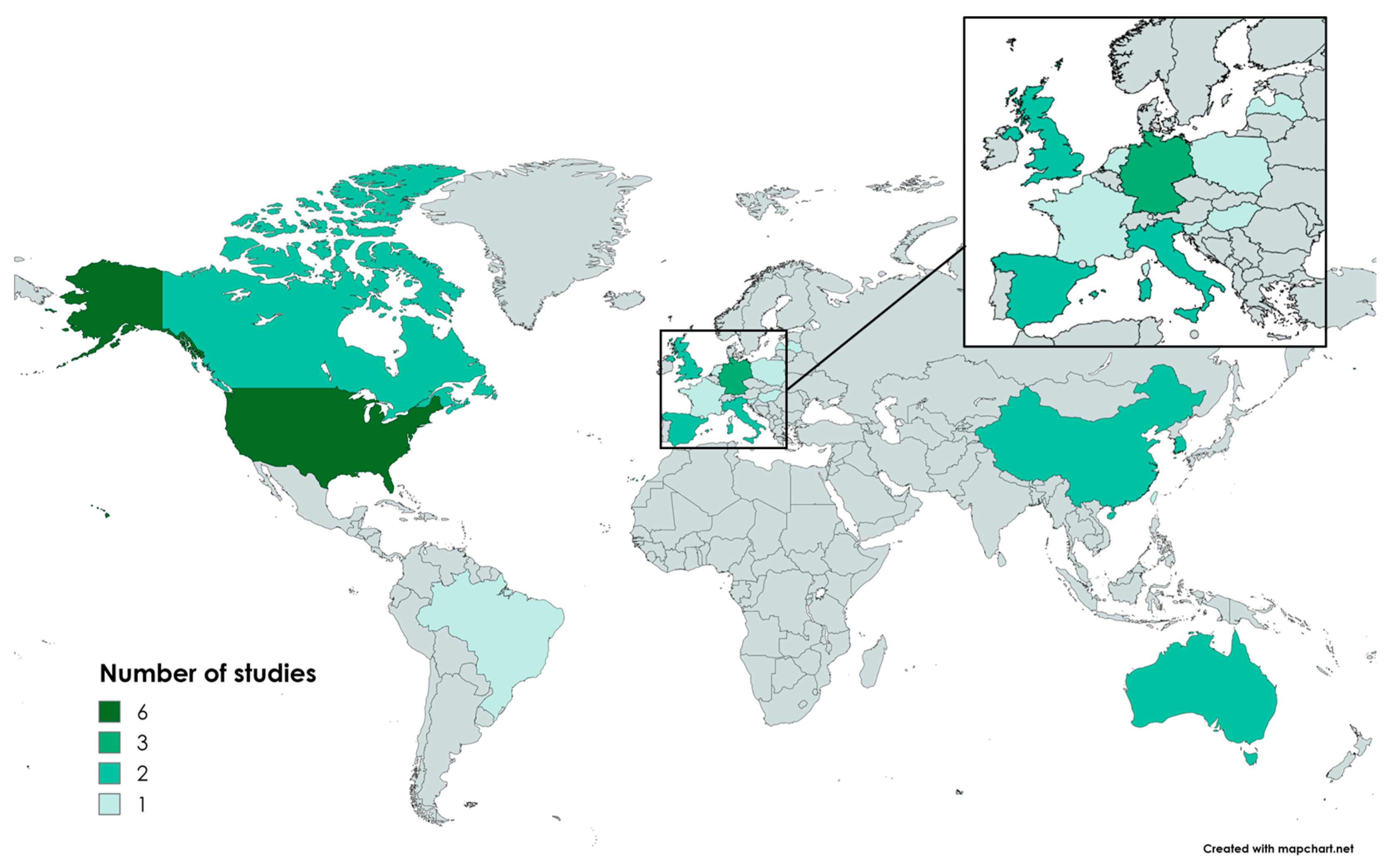
3.3. Definition of Target Groups and Their Geographical Location
- Physical activity stimulation in a group of healthy people;
- Smart devices and physical activity of patients;
- Examining the impact of smart devices on the performance of competitive athletes;
- Smart devices for health protection among the elderly.
3.4. Most Frequently Used Devices and Keywords
3.5. Target Groups’ Expectations, Expected Characteristics
4. Discussion
4.1. Stimulating Physical Activity among Healthy Individuals
4.2. Smart Devices and Physical Activity of Patients
4.3. Improving the Performance of Athletes
4.4. Stimulating Activity among Elderly People
5. Conclusions
Author Contributions
Funding
Conflicts of Interest
References
- Blanco-García, C.; Acebes-Sánchez, J.; Rodriguez-Romo, G.; Mon-López, D. Resilience in Sports: Sport Type, Gender, Age and Sport Level Differences. Int. J. Environ. Res. Public Health 2021, 18, 8196. [Google Scholar] [CrossRef]
- Charlton, R.; Gravenor, M.B.; Rees, A.; Knox, G.; Hill, R.; A Rahman, M.; Jones, K.; Christian, D.; Baker, J.S.; Stratton, G.; et al. Factors associated with low fitness in adolescents—A mixed methods study. BMC Public Health 2014, 14, 764. [Google Scholar] [CrossRef]
- Drake, K.M.; Longacre, M.R.; MacKenzie, T.; Titus, L.J.; Beach, M.L.; Rundle, A.G.; Dalton, M.A. High school sports programs differentially impact participation by sex. J. Sport Health Sci. 2015, 4, 282–288. [Google Scholar] [CrossRef]
- Jiménez-Pavón, D.; Ortega, F.B.; Ruiz, J.R.; Chillón, P.; Castillo, R.; Artero, E.G.; Martinez-Gómez, D.; Vicente-Rodriguez, G.; Rey-López, J.P.; Gracia, L.A.; et al. Influence of socioeconomic factors on fitness and fatness in Spanish adolescents: The AVENA study. Pediatr. Obes. 2010, 5, 467–473. [Google Scholar] [CrossRef] [PubMed]
- Guszkowska, M.; Kuk, A.; Zagórska, A.; Skwarek, K. Self-esteem of physical education students: Sex differences and relationships with intelligence. Curr. Issues Pers. Psychol. 2016, 4, 50–57. [Google Scholar] [CrossRef][Green Version]
- Golle, K.; Granacher, U.; Hoffmann, M.; Wick, D.; Muehlbauer, T. Effect of living area and sports club participation on physical fitness in children: A 4 year longitudinal study. BMC Public Health 2014, 14, 499. [Google Scholar] [CrossRef] [PubMed]
- Thompson, W.R. Worldwide Survey of Fitness Trends for 2022. ACSM’S Health Fit. J. 2022, 26, 11–20. [Google Scholar] [CrossRef]
- Barrett, S.; Rodda, K.; Begg, S.; O’Halloran, P.D.; Kingsley, M.I. Exercise and COVID-19: Reasons individuals sought coaching support to assist them to increase physical activity during COVID-19. Aust. N. Z. J. Public Health 2021, 45, 133–137. [Google Scholar] [CrossRef] [PubMed]
- Gong, W.; Tong, L.; Huang, W.; Wang, S. The optimization of intelligent long-distance multimedia sports teaching system for IOT. Cogn. Syst. Res. 2018, 52, 678–684. [Google Scholar] [CrossRef]
- Yu, L. Cloud storage–based personalized sports activity management in Internet plus O2O sports community. Concurr. Comput. Pract. Exp. 2018, 30, e4932. [Google Scholar] [CrossRef]
- Baecke, J.; Burema, J.; Frijters, J.E. A short questionnaire for the measurement of habitual physical activity in epidemiological studies. Am. J. Clin. Nutr. 1982, 36, 936–942. [Google Scholar] [CrossRef] [PubMed]
- Jacobs, D.R., Jr.; Ainsworth, B.E.; Hartman, T.J.; Leon, A.S. A simultaneous evaluation of 10 commonly used physical activity questionnaires. Med. Sci. Sports Exerc. 1993, 25, 81–91. [Google Scholar] [CrossRef] [PubMed]
- Sallis, J.F.; Saelens, B.E. Assessment of Physical Activity by Self-Report: Status, Limitations, and Future Directions. Res. Q. Exerc. Sport 2000, 71 (Suppl. 2), 1–14. [Google Scholar] [CrossRef] [PubMed]
- Craig, C.L.; Marshall, A.L.; Sjöström, M.; Bauman, A.E.; Booth, M.L.; Ainsworth, B.E.; Pratt, M.; Ekelund, U.L.; Yngve, A.; Sallis, J.F.; et al. International Physical Activity Questionnaire: 12-Country Reliability and Validity. Med. Sci. Sports Exerc. 2003, 35, 1381–1395. [Google Scholar] [CrossRef] [PubMed]
- Maddison, R.; Ni Mhurchu, C. Global positioning system: A new opportunity in physical activity measurement. Int. J. Behav. Nutr. Phys. Act. 2009, 6, 73. [Google Scholar] [CrossRef] [PubMed]
- Scruggs, P.W.; Beveridge, S.K.; Eisenman, P.A.; Watson, D.L.; Shultz, B.B.; Ransdell, L.B. Quantifying Physical Activity via Pedometry in Elementary Physical Education. Med. Sci. Sports Exerc. 2003, 35, 1065–1071. [Google Scholar] [CrossRef] [PubMed]
- Yang, C.-C.; Hsu, Y.-L.; Yang, C.-C.; Hsu, Y.-L. A Review of Accelerometry-Based Wearable Motion Detectors for Physical Activity Monitoring. Sensors 2010, 10, 7772–7788. [Google Scholar] [CrossRef] [PubMed]
- Wan, J.; Al-Awlaqi, M.A.A.H.; Li, M.; O’grady, M.; Gu, X.; Wang, J.; Cao, N. Wearable IoT enabled real-time health monitoring system. EURASIP J. Wirel. Commun. Netw. 2018, 2018, 298. [Google Scholar] [CrossRef]
- Xiao, N.; Yu, W.; Han, X. Wearable heart rate monitoring intelligent sports bracelet based on Internet of things. Measurement 2020, 164, 108102. [Google Scholar] [CrossRef]
- Evenson, K.R.; Catellier, D.J.; Gill, K.; Ondrak, K.S.; McMurray, R.G. Calibration of two objective measures of physical activity for children. J. Sports Sci. 2008, 26, 1557–1565. [Google Scholar] [CrossRef] [PubMed]
- Riddoch, C.J.; Mattocks, C.; Deere, K.; Saunders, J.; Kirkby, J.; Tilling, K.; Leary, S.D.; Blair, S.N.; Ness, A.R. Objective measurement of levels and patterns of physical activity. Arch. Dis. Child. 2007, 92, 963–969. [Google Scholar] [CrossRef] [PubMed]
- Reilly, J.J.; Penpraze, V.; Hislop, J.; Davies, G.; Grant, S.; Paton, J.Y. Objective measurement of physical activity and sedentary behaviour: Review with new data. Arch. Dis. Child. 2008, 93, 614–619. [Google Scholar] [CrossRef] [PubMed]
- Dinh, A.; Teng, D.; Chen, L.; Ko, S.B.; Shi, Y.; McCrosky, C.; Basran, J.; Del Bello-Hass, V. A wearable device for physical activity monitoring with built-in heart rate variability. In Proceedings of the 2009 3rd International Conference on Bioinformatics and Biomedical Engineering, Beijing, China, 11–13 June 2009; IEEE: Piscataway, NJ, USA, 2009; pp. 1–4. [Google Scholar] [CrossRef]
- Allet, L.; Knols, R.H.; Shirato, K.; de Bruin, E.D. Wearable Systems for Monitoring Mobility-Related Activities in Chronic Disease: A Systematic Review. Sensors 2010, 10, 9026–9052. [Google Scholar] [CrossRef] [PubMed]
- Consolvo, S.; Everitt, K.; Smith, I.; Landay, J.A. Design requirements for technologies that encourage physical activity. In Proceedings of the SIGCHI Conference on Human Factors in Computing Systems; IEEE: Piscataway, NJ, USA, 2006; pp. 457–466. [Google Scholar] [CrossRef]
- Trost, S.G.; Pate, R.R.; Sallis, J.F.; Freedson, P.S.; Taylor, W.C.; Dowda, M.; Sirard, J. Age and gender differences in objectively measured physical activity in youth. Med. Sci. Sports Exerc. 2002, 34, 350–355. [Google Scholar] [CrossRef] [PubMed]
- Sirard, J.R.; Pate, R.R. Physical Activity Assessment in Children and Adolescents. Sports Med. 2001, 31, 439–454. [Google Scholar] [CrossRef]
- Chuo, Y.; Marzencki, M.; Hung, B.; Jaggernauth, C.; Tavakolian, K.; Lin, P.; Kaminska, B. Mechanically Flexible Wireless Multisensor Platform for Human Physical Activity and Vitals Monitoring. IEEE Trans. Biomed. Circuits Syst. 2010, 4, 281–294. [Google Scholar] [CrossRef] [PubMed]
- Strain, T.; Wijndaele, K.; Dempsey, P.C.; Sharp, S.J.; Pearce, M.; Jeon, J.; Lindsay, T.; Wareham, N.; Brage, S. Wearable-device-measured physical activity and future health risk. Nat. Med. 2020, 26, 1385–1391. [Google Scholar] [CrossRef] [PubMed]
- Dooley, E.; Golaszewski, N.M.; Bartholomew, J.B. Estimating Accuracy at Exercise Intensities: A Comparative Study of Self-Monitoring Heart Rate and Physical Activity Wearable Devices. JMIR mHealth uHealth 2017, 5, e34. [Google Scholar] [CrossRef] [PubMed]
- Bunn, J.A.; Navalta, J.W.; Fountaine, C.J.; Reece, J.D. Current state of commercial wearable technology in physical activity monitoring 2015–2017. Int. J. Exerc. Sci. 2018, 11, 503. [Google Scholar] [PubMed]
- Xie, J.; Wen, D.; Liang, L.; Jia, Y.; Gao, L.; Lei, J. Evaluating the Validity of Current Mainstream Wearable Devices in Fitness Tracking Under Various Physical Activities: Comparative Study. JMIR mHealth uHealth 2018, 6, e94. [Google Scholar] [CrossRef]
- Sharma, A.; Singh, A.; Gupta, V.; Arya, S. Advancements and future prospects of wearable sensing technology for healthcare applications. Sens. Diagn. 2022, 1, 387–404. [Google Scholar] [CrossRef]
- Williams, G.J.; Al-Baraikan, A.; E Rademakers, F.; Ciravegna, F.; van de Vosse, F.N.; Lawrie, A.; Rothman, A.; Ashley, E.; Wilkins, M.R.; Lawford, P.V.; et al. Wearable technology and the cardiovascular system: The future of patient assessment. Lancet Digit. Health 2023, 5, e467–e476. [Google Scholar] [CrossRef]
- Campo-Prieto, P.; Cancela-Carral, J.M.; Rodríguez-Fuentes, G. Wearable Immersive Virtual Reality Device for Promoting Physical Activity in Parkinson’s Disease Patients. Sensors 2022, 22, 3302. [Google Scholar] [CrossRef] [PubMed]
- Nahavandi, D.; Alizadehsani, R.; Khosravi, A.; Acharya, U.R. Application of artificial intelligence in wearable devices: Opportunities and challenges. Comput. Methods Programs Biomed. 2022, 213, 106541. [Google Scholar] [CrossRef] [PubMed]
- Farrell, L.; Shields, M.A. Investigating the Economic and Demographic Determinants of Sporting Participation in England. J. R. Stat. Soc. Ser. A 2002, 165, 335–348. [Google Scholar] [CrossRef]
- Humphreys, B.R.; Ruseski, J. The Economics of Participation and Time Spent in Physical Activity; Working Paper No. 2009-9; Department of Economics, University of Alberta: Edmonton, AB, Canada, 2009. [Google Scholar]
- Hallmann, K.; Breuer, C. The influence of socio-demographic indicators economic determinants and social recognition on sport participation in Germany. Eur. J. Sport Sci. 2014, 14, S324–S331. [Google Scholar] [CrossRef] [PubMed]
- Elena-Bucea, A.; Cruz-Jesus, F.; Oliveira, T.; Coelho, P.S. Assessing the Role of Age, Education, Gender and Income on the Digital Divide: Evidence for the European Union. Inf. Syst. Front. 2021, 23, 1007–1021. [Google Scholar] [CrossRef]
- Page, M.J.; McKenzie, J.E.; Bossuyt, P.M.; Boutron, I.; Hoffmann, T.C.; Mulrow, C.D.; Shamseer, L.; Tetzlaff, J.M.; Akl, E.A.; Brennan, S.E.; et al. The PRISMA 2020 statement: An updated guideline for reporting systematic reviews. BMJ 2021, 372, 71. [Google Scholar] [CrossRef] [PubMed]
- Moore, K.; O’Shea, E.; Kenny, L.; Barton, J.; Tedesco, S.; Sica, M.; Crowe, C.; Alamäki, A.; Condell, J.; Nordström, A.; et al. Older Adults’ Experiences with Using Wearable Devices: Qualitative Systematic Review and Meta-synthesis. JMIR mHealth uHealth 2021, 9, e23832. [Google Scholar] [CrossRef] [PubMed]
- Yen, H.-Y. Smart wearable devices as a psychological intervention for healthy lifestyle and quality of life: A randomized controlled trial. Qual. Life Res. 2021, 30, 791–802. [Google Scholar] [CrossRef] [PubMed]
- Chong, W.; Kim, S.; Yu, C.; Woo, S.; Kim, K. Analysis of Health Management Using Physiological Data Based on Continuous Exercise. Int. J. Precis. Eng. Manuf. 2021, 22, 899–907. [Google Scholar] [CrossRef]
- Beltrame, T.; Amelard, R.; Wong, A.; Hughson, R.L. Extracting aerobic system dynamics during unsupervised activities of daily living using wearable sensor machine learning models. J. Appl. Physiol. 2018, 124, 473–481. [Google Scholar] [CrossRef] [PubMed]
- Golbus, J.R.; A Pescatore, N.; Nallamothu, B.K.; Shah, N.; Kheterpal, S. Wearable device signals and home blood pressure data across age, sex, race, ethnicity, and clinical phenotypes in the Michigan Predictive Activity & Clinical Trajectories in Health (MIPACT) study: A prospective, community-based observational study. Lancet Digit. Health 2021, 3, e707–e715. [Google Scholar] [CrossRef] [PubMed]
- Ye, J.; Ma, Q. The effects and patterns among mobile health, social determinants, and physical activity: A nationally representative cross-sectional study. AMIA Annu. Symp. Proc. 2021, 2021, 653. [Google Scholar]
- Ruiz-Cárdenas, J.D.; Rodríguez-Juan, J.J.; Smart, R.R.; Jakobi, J.M.; Jones, G.R. Validity and reliability of an iPhone App to assess time, velocity and leg power during a sit-to-stand functional performance test. Gait Posture 2018, 59, 261–266. [Google Scholar] [CrossRef]
- Hartwig, T.B.; del Pozo-Cruz, B.; White, R.L.; Sanders, T.; Kirwan, M.; Parker, P.D.; Vasconcellos, D.; Lee, J.; Owen, K.B.; Antczak, D.; et al. A monitoring system to provide feedback on student physical activity during physical education lessons. Scand. J. Med. Sci. Sports 2019, 29, 1305–1312. [Google Scholar] [CrossRef] [PubMed]
- Dong, Y.; Wang, K.; Zhu, S.; Li, W.; Yang, P. Design and Development of an Intelligent Skipping Rope and Service System for Pupils. Healthcare 2021, 9, 954. [Google Scholar] [CrossRef] [PubMed]
- Lee, P.H.; Tse, A.C.Y.; Wu, C.S.T.; Mak, Y.W.; Lee, U. Temporal association between objectively measured smartphone usage, sleep quality and physical activity among Chinese adolescents and young adults. J. Sleep Res. 2021, 30, e13213. [Google Scholar] [CrossRef] [PubMed]
- Ráthonyi, G.; Ráthonyi-Odor, K.; Bendíková, E.; Bába, É.B. Wearable Activity Trackers Usage among University Students. Eur. J. Contemp. Educ. 2019, 8, 600–612. [Google Scholar] [CrossRef]
- Yen, H.-Y.; Liao, Y.; Huang, H.-Y. Smart Wearable Device Users’ Behavior Is Essential for Physical Activity Improvement. Int. J. Behav. Med. 2021, 29, 278–285. [Google Scholar] [CrossRef] [PubMed]
- Gonze, B.D.B.; Padovani, R.D.C.; Simoes, M.D.S.; Lauria, V.; Proença, N.L.; Sperandio, E.F.; Ostolin, T.L.V.D.P.; Gomes, G.A.D.O.; Castro, P.C.; Romiti, M.; et al. Use of a Smartphone App to Increase Physical Activity Levels in Insufficiently Active Adults: Feasibility Sequential Multiple Assignment Randomized Trial (SMART). JMIR Res. Protoc. 2020, 9, e14322. [Google Scholar] [CrossRef] [PubMed]
- Polo-Peña, A.I.; Frías-Jamilena, D.M.; Fernández-Ruano, M.L. Influence of gamification on perceived self-efficacy: Gender and age moderator effect. Int. J. Sports Mark. Spons. 2020, 22, 453–476. [Google Scholar] [CrossRef]
- Żarnowski, A.; Jankowski, M.; Gujski, M. Use of Mobile Apps and Wearables to Monitor Diet, Weight, and Physical Activity: A Cross-Sectional Survey of Adults in Poland. Med. Sci. Monit. 2022, 28, e937948. [Google Scholar] [CrossRef] [PubMed]
- Kim, J.; Choi, J.; Kim, H.; Lee, T.; Ha, J.; Lee, S.; Park, J.; Jeon, G.; Cho, S. Physical Activity Pattern of Adults with Metabolic Syndrome Risk Factors: Time-Series Cluster Analysis. JMIR Mhealth Uhealth 2023, 11, e50663. [Google Scholar] [CrossRef]
- Paré, G.; Leaver, C.; Bourget, C. Diffusion of the Digital Health Self-Tracking Movement in Canada: Results of a National Survey. J. Med. Internet Res. 2018, 20, e177. [Google Scholar] [CrossRef] [PubMed]
- Zhai, Y.; Nasseri, N.; Pöttgen, J.; Gezhelbash, E.; Heesen, C.; Stellmann, J.-P. Smartphone Accelerometry: A Smart and Reliable Measurement of Real-Life Physical Activity in Multiple Sclerosis and Healthy Individuals. Front. Neurol. 2020, 11, 688. [Google Scholar] [CrossRef]
- Aminorroaya, A.; Dhingra, L.S.; Nargesi, A.A.; Oikonomou, E.K.; Krumholz, H.M.; Khera, R. Use of Smart Devices to Track Cardiovascular Health Goals in the United States. JACC Adv. 2023, 2, 100544. [Google Scholar] [CrossRef] [PubMed]
- Bentley, C.L.; Powell, L.; Potter, S.; Parker, J.; A Mountain, G.; Bartlett, Y.K.; Farwer, J.; O’Connor, C.; Burns, J.; Cresswell, R.L.; et al. The Use of a Smartphone App and an Activity Tracker to Promote Physical Activity in the Management of Chronic Obstructive Pulmonary Disease: Randomized Controlled Feasibility Study. JMIR mHealth uHealth 2020, 8, e16203. [Google Scholar] [CrossRef] [PubMed]
- Sokolovska, J.; Ostrovska, K.; Pahirko, L.; Varblane, G.; Krilatiha, K.; Cirulnieks, A.; Folkmane, I.; Pirags, V.; Valeinis, J.; Klavina, A.; et al. Impact of interval walking training managed through smart mobile devices on albuminuria and leptin/adiponectin ratio in patients with type 2 diabetes. Physiol. Rep. 2020, 8, e14506. [Google Scholar] [CrossRef] [PubMed]
- Patel, M.S.; Small, D.S.; Harrison, J.D.; Hilbert, V.; Fortunato, M.P.; Oon, A.L.; Rareshide, C.A.L.; Volpp, K.G. Effect of Behaviorally Designed Gamification with Social Incentives on Lifestyle Modification Among Adults with Uncontrolled Diabetes. JAMA Netw. Open 2021, 4, e2110255. [Google Scholar] [CrossRef] [PubMed]
- Hauguel-Moreau, M.; Naudin, C.; N’guyen, L.; Squara, P.; Rosencher, J.; Makowski, S.; Beverelli, F. Smart bracelet to assess physical activity after cardiac surgery: A prospective study. PLoS ONE 2020, 15, e0241368. [Google Scholar] [CrossRef] [PubMed]
- Frith, G.; Carver, K.; Curry, S.; Darby, A.; Sydes, A.; Symonds, S.; Wilson, K.; McGregor, G.; Auton, K.; Nichols, S. Changes in patient activation following cardiac rehabilitation using the Active+me digital healthcare platform during the COVID-19 pandemic: A cohort evaluation. BMC Health Serv. Res. 2021, 21, 1–12. [Google Scholar] [CrossRef] [PubMed]
- Ormel, H.L.; van der Schoot, G.G.F.; Westerink, N.-D.L.; Sluiter, W.J.; Gietema, J.A.; Walenkamp, A.M.E. Self-monitoring physical activity with a smartphone application in cancer patients: A randomized feasibility study (SMART-trial). Support. Care Cancer 2018, 26, 3915–3923. [Google Scholar] [CrossRef] [PubMed]
- Van Blarigan, E.L.; Dhruva, A.; E Atreya, C.; A Kenfield, S.; Chan, J.M.; Milloy, A.; Kim, I.; Steiding, P.; Laffan, A.; Zhang, L.; et al. Feasibility and Acceptability of a Physical Activity Tracker and Text Messages to Promote Physical Activity During Chemotherapy for Colorectal Cancer: Pilot Randomized Controlled Trial (Smart Pace II). JMIR Cancer 2022, 8, e31576. [Google Scholar] [CrossRef] [PubMed]
- Van Blarigan, E.L.; Chan, H.; Van Loon, K.; Kenfield, S.A.; Chan, J.M.; Mitchell, E.; Zhang, L.; Paciorek, A.; Joseph, G.; Laffan, A.; et al. Self-monitoring and reminder text messages to increase physical activity in colorectal cancer survivors (Smart Pace): A pilot randomized controlled trial. BMC Cancer 2019, 19, 1–9. [Google Scholar] [CrossRef] [PubMed]
- Hardcastle, S.J.; Maxwell-Smith, C.; Cavalheri, V.; Boyle, T.; Román, M.L.; Platell, C.; Levitt, M.; Saunders, C.; Sardelic, F.; Nightingale, S.; et al. A randomized controlled trial of Promoting Physical Activity in Regional and Remote Cancer Survivors (PPARCS). J. Sport Health Sci. 2024, 13, 81–89. [Google Scholar] [CrossRef] [PubMed]
- Passos, J.; Lopes, S.I.; Clemente, F.M.; Moreira, P.M.; Rico-González, M.; Bezerra, P.; Rodrigues, L.P. Wearables and Internet of Things (IoT) Technologies for Fitness Assessment: A Systematic Review. Sensors 2021, 21, 5418. [Google Scholar] [CrossRef] [PubMed]
- Wiesner, M.; Zowalla, R.; Suleder, J.; Westers, M.; Pobiruchin, M. Technology Adoption, Motivational Aspects, and Privacy Concerns of Wearables in the German Running Community: Field Study. JMIR mHealth uHealth 2018, 6, e201. [Google Scholar] [CrossRef] [PubMed]
- Pobiruchin, M.; Suleder, J.; Zowalla, R.; Wiesner, M. Accuracy and Adoption of Wearable Technology Used by Active Citizens: A Marathon Event Field Study. JMIR mHealth uHealth 2017, 5, e24. [Google Scholar] [CrossRef]
- Giménez-Egido, J.M.; Ortega, E.; Verdu-Conesa, I.; Cejudo, A.; Torres-Luque, G. Using Smart Sensors to Monitor Physical Activity and Technical–Tactical Actions in Junior Tennis Players. Int. J. Environ. Res. Public Health 2020, 17, 1068. [Google Scholar] [CrossRef] [PubMed]
- Barricelli, B.R.; Casiraghi, E.; Gliozzo, J.; Petrini, A.; Valtolina, S. Human Digital Twin for Fitness Management. IEEE Access 2020, 8, 26637–26664. [Google Scholar] [CrossRef]
- McCaskey, M.A.; Schättin, A.; Martin-Niedecken, A.L.; de Bruin, E.D. Making More of IT: Enabling Intensive Motor Cognitive Rehabilitation Exercises in Geriatrics Using Information Technology Solutions. BioMed Res. Int. 2018, 2018, 4856146. [Google Scholar] [CrossRef] [PubMed]
- Jang, I.-Y.; Kim, H.R.; Lee, E.; Jung, H.-W.; Park, H.; Cheon, S.-H.; Lee, Y.S.; Park, Y.R. Impact of a Wearable Device-Based Walking Programs in Rural Older Adults on Physical Activity and Health Outcomes: Cohort Study. JMIR mHealth uHealth 2018, 6, e11335. [Google Scholar] [CrossRef] [PubMed]
- Fioranzato, M.; Comoretto, R.I.; Lanera, C.; Pressato, L.; Palmisano, G.; Barbacane, L.; Gregori, D. Improving Healthy Aging by Monitoring Patients’ Lifestyle through a Wearable Device: Results of a Feasibility Study. Int. J. Environ. Res. Public Health 2021, 18, 9806. [Google Scholar] [CrossRef] [PubMed]
- Hvalič-Touzery, S.; Šetinc, M.; Dolničar, V. Benefits of a Wearable Activity Tracker with Safety Features for Older Adults: An Intervention Study. Int. J. Environ. Res. Public Health 2022, 19, 15723. [Google Scholar] [CrossRef] [PubMed]



| Articles to be Included | Ineligible Articles |
|---|---|
| Measures the physical activity of a healthy sample using a smart device. | Reason 1: It is about the effects of an IT tool or technology, not a wearable device (e.g., smart home), and/or not specifically about encouraging physical activity. |
| Measures the physical activity of a group of patients using a smart device. | Reason 2: It is about a system to measure physical activity, but there are no concrete results yet (e.g., science-promoting articles, theories, study protocols, device designs, etc.). |
| The smart device helps to make school-based movement (e.g., PE lessons) more effective. | Reason 3: The research focuses on the accuracy of the technology, not on motivation and activity. |
| The smart device helps professional/competitive athletes to train more efficiently. | Reason 4: It examines the impact of using a smart device from a non-physical activity perspective (e.g., impact on sleep, cognitive function, aging, identification of a disease). |
| An attitude survey on the use of smart devices during physical activity is presented. | Reason 5: It is not a smart device, it is looking at the impact of social media, television, etc., on movement. |
| Reason 6: Does not include any testing using an IT tool (e.g., prevention of harmful effects of IT, non-IT PA programmes). |
| No. | Article | Findings | Total Number of Citation | IF | Normalised Citations * | Notes |
|---|---|---|---|---|---|---|
| Cited/IF | ||||||
| 1. | [42] Moore et al. | The value of wearable devices is determined by the balance between motivation, device features, ease of use, purpose, and user experience, and therefore a supportive framework needs to be built to encourage and align user preferences. | 31 | 5. | 5.44 | 5 years |
| Older adults’ experiences with using wearable devices: Qualitative systematic review and meta-synthesis | ||||||
| JMIR mHealth and uHealth, 2021 | ||||||
| 2. | [43] Yen, H. Y. | Individuals who wore and frequently checked their watches were more prone to altering their exercise habits. Such behaviours can be positively impacted by the design of a device that is convenient and comfortable for the user. | 13 | 4.4 | 2.95 | 5 years |
| Smart wearable devices as a psychological intervention for healthy lifestyle and quality of life: a randomized controlled trial | ||||||
| Quality of Life Research; 2021 | ||||||
| 3. | [44] Chong et al. | The three-subject study found that the combination of a smartwatch and a smart scale increased maximum heart rate (BPM), improving adaptation to exercise. In addition, this combination reduced body weight, thus improving the subjects’ body mass index (BMI). | 2 | 1.9 | 1.05 | 5 years |
| Analysis of Health Management Using Physiological Data Based on Continuous Exercise | ||||||
| International Journal of Precision Engineering and Manufacturing; 2021 | ||||||
| 4. | [45] Beltrame et al. | Research shows wearable devices effectively measure blood oxygen levels, providing insights into individual adherence to healthy lifestyles and assessing changes in aerobic system dynamics, including cardiorespiratory fitness and overall health index. | 30 | 3.6 | 8.33 | 5 years |
| Extracting aerobic system dynamics during unsupervised activities of daily living using wearable sensor machine learning models | ||||||
| Journal of Applied Physiology; 2018 | ||||||
| 5. | [46] Golbus et al. | Researchers found variations in blood pressure and heart rate linked to sex, age, race, and ethnicity using smartwatch data; men had higher blood pressure, while those 65 and older had lower heart rates, and women and older individuals took fewer steps and walked less. | 28 | 31 | 0.91 | 5 years |
| Wearable device signals and home blood pressure data across age, sex, race, ethnicity, and clinical phenotypes in the Michigan Predictive Activity & Clinical Trajectories in Health (MIPACT) study: a prospective, community-based observational study | ||||||
| The Lancet Digital Health; 2021 | ||||||
| 6. | [47] Ye & Ma | A nationally representative survey in the USA explored sociodemographic factors affecting the impact of smart devices on physical activity, with approximately half of respondents not using them, but notably, many users were younger; for wearables, women, higher-educated and higher-income individuals, and those in relationships showed more usage inclination. | 29 | - | - | no IF data |
| The effects and patterns among mobile health, social determinants, and physical activity: a nationally representative cross-sectional study | ||||||
| AMIA Annual Symposium Proceedings; 2021 | ||||||
| 7. | [48] Ruiz-Cárdenas et al. | This study was based on data collected from 48 individuals using an iPhone app. Here, activity scores from the app were moderately or very strongly associated with age and grip strength, but not with walking speed. | 33 | 2.4 | 13.75 | only 2022 |
| Validity and reliability of an iPhone App to assess time, velocity and leg power during a sit-to-stand functional performance test | ||||||
| Gait & Posture; 2018 | ||||||
| 8. | [49] Hartwig et al. | Based on systematic literature reviews, the study revealed that activity levels in physical education classes fall short of WHO recommendations, suggesting that providing feedback to teachers and students could boost activity, though it found accelerometers inaccurate and recommends pedometers instead. | 25 | 4.1 | 6.10 | only 2022 |
| A monitoring system to provide feedback on student physical activity during physical education lessons | ||||||
| Scandinavian journal of medicine & science in sports; 2019 | ||||||
| 9. | [50] Dong et al. | The research showed that despite limited instruction, skipping rope can be a fun exercise for students, especially with gamification, highlighting the importance of social support and the need for parental guidance; however, many parents express concerns about smart devices, which could affect children’s development. | 38 | 3 | 12.67 | 5 years |
| Design and Development of an Intelligent Skipping Rope and Service System for Pupils. | ||||||
| Healthcare; 2021 | ||||||
| 10. | [51] Lee et al. | The study found a positive association between the use of social networking sites, instant messaging apps, multimedia, and overall smartphone usage with increases in step count and moderate-intensity physical activity. Importantly, the study utilised objective measures, rather than relying on self-report questionnaires, to gather data. | 16 | 4.4 | 3.64 | only 2022 |
| Temporal association between objectively measured smartphone usage, sleep quality and physical activity among Chinese adolescents and young adults | ||||||
| Journal of Sleep Research; 2021 | ||||||
| 11. | [52] Ráthonyi et al. | Among over 500 university students surveyed, approximately 26% reported using a wearable device; users showed a significant increase in exercise days compared to non-users, with 70.6% of smartwatch wearers reporting a positive impact on activity, while 42.1% of wristband users reported increased activity. | 8 | 1.6 | 5.09 | 4 years |
| Wearable Activity Trackers Usage among University Students | ||||||
| European Journal of Contemporary Education; 2019 | ||||||
| 12. | [53] Yen et al. | Research conducted on smartwatches revealed that individuals who wore and frequently checked their watches were more inclined to modify their exercise routines. | 29 | 2.7 | 10.74 | 5 years |
| Smart Wearable Device Users’ Behavior Is Essential for Physical Activity Improvement | ||||||
| International Journal of Behavioral Medicine; 2021 | ||||||
| 13. | [54] Gonze et al. | A Brazilian study aimed to modify the habits of physically inactive adults by establishing a daily step goal. After 24 weeks, individuals who initially did not respond to the intervention demonstrated a positive increase in step count after transitioning to a new group utilising an app equipped with gamification features. | 41 | 1.8 | 22.21 | 4 years |
| Use of a smartphone app to increase physical activity levels in insufficiently active adults: Feasibility Sequential Multiple Assignment Randomized Trial (SMART) | ||||||
| JMIR research protocols; 2020 | ||||||
| 14. | [55] Polo-Peña et al. | The effectiveness of utilising gamification to promote regular exercise is greater among women compared to men, and also more pronounced among older users than younger ones. | 30 | 3.5 | 8.49 | 4 years |
| Influence of gamification on perceived self-efficacy: gender and age moderator effect | ||||||
| International Journal of Sports Marketing and Sponsorship; 2020 | ||||||
| 15. | [56] Zarnowski et al. | The study investigated mHealth technology adoption among Polish adults, highlighting the usage of mobile apps and wearables for tracking diet, weight, and physical activity; findings indicated 23.2% used wearables for activity monitoring, 14.4% owned smart scales, and 16.3% used mobile apps for activity tracking, with factors such as younger age and healthy lifestyle habits associated with adoption, indicating potential for promoting health and reducing disparities. | 40 | 2.6 | 15.35 | 5 years |
| Use of Mobile Apps and Wearables to Monitor Diet, Weight, and Physical Activity: A Cross-Sectional Survey of Adults in Poland | ||||||
| Medical Science Monitor; 2022 | ||||||
| 16. | [57] Kim et al. | The study examined individuals with metabolic syndrome risk factors, identifying two distinct physical activity patterns (early bird and night owl) for weekdays and weekends, categorising participants into stable and shifting groups based on activity patterns, revealing age-related differences and emphasising the potential of TADPole clustering and age in understanding physical activity behaviours. | 40 | 5.7 | 7.02 | 5 years |
| Physical Activity Pattern of Adults With Metabolic Syndrome Risk Factors: Time-Series Cluster Analysis | ||||||
| JMIR mHealth and uHealth; 2023 | ||||||
| 17. | [58] Paré et al. | A Canadian survey collected data on various demographics and health-related parameters, with 66.20% of respondents regularly monitoring health metrics; digital self-monitors tend to be young or adult, healthy, employed, university graduates, and high-income earners, but a significant portion of individuals with chronic conditions avoid using such devices. | 43 | 7.6 | 5.66 | 5 years |
| Diffusion of the digital health self-tracking movement in Canada: results of a national survey | ||||||
| Journal of medical Internet research; 2018 | ||||||
| 18. | [59] Zhai et al. | Monitoring assists clinicians in tracking disease progression or rehabilitation across various clinical conditions and empowers patients to self-monitor their condition. When paired with motivational and educational tools, it can enhance physical activity levels regardless of the underlying diseases. | 45 | 3.4 | 13.24 | only 2023 |
| Smartphone accelerometry: A smart and reliable measurement of real-life physical activity in multiple sclerosis and healthy individuals | ||||||
| Frontiers in neurology; 2020 | ||||||
| 19. | [60] Aminorroaya et al. | The study explored smart device usage for health goal tracking among US individuals with cardiovascular disease (CVD) or risk factors, finding that 46% of adults and 42% with CVD or risk factors used such devices, with usage linked to younger age, gender, race, higher education, and higher income, yet disparities among older and low-income groups underscore the necessity for digital health interventions to mitigate cardiovascular risk management disparities. | 31 | - | - | no IF data |
| Use of Smart Devices to Track Cardiovascular Health Goals in the United States | ||||||
| JACC: Advances; 2023 | ||||||
| 20. | [61] Bentley et al. | The study evaluated an mHealth app aimed at assisting COPD patients. It emphasised the necessity of providing training for utilising the technology, considering the circumstances, motivations, and abilities of the participants, and highlighting the significance of effective communication with healthcare professionals. | 88 | 5.7 | 15.44 | 5 years |
| The use of a smartphone app and an activity tracker to promote physical activity in the management of chronic obstructive pulmonary disease: randomized controlled feasibility study | ||||||
| JMIR mHealth and uHealth; 2020 | ||||||
| 21. | [62] Sokolovska et al. | The study examined the effects of interval walking training with smart device support on type 2 diabetes patients, showing significant reductions in albuminuria and leptin/adiponectin ratios over four months, with slight improvements in HbA1c levels, yet adherence to the exercise plan remained low, possibly due to lack of reminder features in the app. | 5 | 2.5 | 2.00 | only 2022 |
| Impact of interval walking training managed through smart mobile devices on albuminuria and leptin/adiponectin ratio in patients with type 2 diabetes | ||||||
| Physiological Reports; 2020 | ||||||
| 22. | [63] Patel et al. | In a diabetic patient population, gamification was explored as a motivational tool, resulting in a notable increase in physical activity over a one-year period. This effect was observed when gamification was implemented to amplify support or competition, yet not cooperation. | 49 | 14 | 3.55 | only 2023 |
| Effect of behaviourally designed gamification with social incentives on lifestyle modification among adults with uncontrolled diabetes: a randomized clinical trial | ||||||
| JAMA network open; 2021 | ||||||
| 23. | [64] Hauguel-Moreau et al. | Among heart surgery patients, 61% found smart bracelets significantly beneficial for their recovery, with 41% reporting lifestyle changes and 77% continuing use post-rehabilitation, highlighting the importance of standardised design and functionality for such devices. | 23 | - | - | no IF data |
| Smart bracelet to assess physical activity after cardiac surgery: A prospective study | ||||||
| PloS one; 2020 | ||||||
| 24. | [65] Frith et al. | The study found that remotely monitored cardiac rehabilitation led to increased PAM scores in high-risk patients, with no change in medium and low-risk groups, along with decreases in resting systolic blood pressure and waist circumference; participation in standard rehabilitation with Active+me improved patient skills, knowledge, and confidence in managing their condition. | 32 | 3.5 | 9.14 | 5 years |
| Changes in patient activation following cardiac rehabilitation using the Active+ me digital healthcare platform during the COVID-19 pandemic: a cohort evaluation | ||||||
| BMC health services research; 2021 | ||||||
| 25. | [66] Ormel et al. | A study examining the effect of a smartphone app on cancer patients’ physical activity levels over 12 weeks found significant improvement by week 6 compared to baseline, yet no significant difference was observed between week 6 and week 12 measurements. | 45 | 3.5 | 12.86 | 5 years |
| Self-monitoring physical activity with a smartphone application in cancer patients: a randomized feasibility study (SMART-trial) | ||||||
| Supportive care in cancer; 2018 | ||||||
| 26. | [67] Van Blarigan et al. | Patients undergoing chemotherapy received smartwatch and SMS interventions, with 63% expressing satisfaction, 68% reporting motivation to exercise, 74% finding the frequency (1–3 days) ideal, and 79% preferring morning and evening SMS delivery. | 29 | 28 | 1.04 | only 2023 |
| Feasibility and Acceptability of a Physical Activity Tracker and Text Messages to Promote Physical Activity During Chemo-therapy for Colorectal Cancer: Pilot Randomized Controlled Trial (Smart Pace II) | ||||||
| JMIR cancer; 2022 | ||||||
| 27. | [68] Van Blarigan et al. | In an experimental study, 21 individuals receiving smartwatch notifications and text messages showed increased daily physical activity by an average of 13 min compared to a control group, despite a declining response rate to the messages over time. | 28 | 4.3 | 6.51 | 5 years |
| Self-monitoring and reminder text messages to increase physical activity in colorectal cancer survivors (Smart Pace): a pilot randomized controlled trial | ||||||
| BMC cancer; 2019 | ||||||
| 28. | [69] Hardcastle et al. | The study evaluated the impact of combining wearable technology with health coaching on physical activity levels among breast and colorectal cancer survivors in regional and remote areas of Australia, showing a significant increase in moderate-to-vigorous physical activity favouring the intervention group, indicating the effectiveness of this approach in enhancing activity levels for non-metropolitan cancer survivors. | 57 | 12 | 4.67 | only 2023 |
| A randomized controlled trial of Promoting Physical Activity in Regional and Remote Cancer Survivors (PPARCS) | ||||||
| Journal of Sport and Health Science; 2024 | ||||||
| 29. | [70] Passos et al. | The study found that wearable technologies are used to monitor athletes’ internal and external workload, employing physiological condition monitoring, activity recognition, and tracking techniques, with their primary advantage being objectivity through quantifying the impact on athletes. | 66 | 4.1 | 16.30 | 5 years |
| Wearables and Internet of Things (IoT) Technologies for Fitness Assessment: A Systematic Review | ||||||
| Sensors; 2021 | ||||||
| 30. | [71] Wiesner et al. | Among the group surveyed, 73.0% reported using technology to monitor activity during events or exercise, with male distance runners and younger runners (aged 16–29 years) showing greater inclination toward using tracking devices; additionally, 42.0% of those using wearable technology expressed no concern about the device manufacturer sharing their data without consent. | 42 | 5.7 | 7.37 | 5 years |
| Technology adoption, motivational aspects, and privacy concerns of wearables in the German running community: field study | ||||||
| JMIR mHealth and uHealth; 2018 | ||||||
| 31. | [72] Pobiruchin et al. | The results of a German survey in 2016 showed that most participants (75%) of a sport competition used smart devices to exercise, with a lower proportion of women and older athletes using smart devices to exercise. | 33 | 5.7 | 5.79 | 5 years |
| Accuracy and Adoption of Wearable Technology Used by Active Citizens: A Marathon Event Field Study | ||||||
| JMIR mHealth and uHealth; 2017 | ||||||
| 32. | [73] Giménez-Egido et al. | The study of junior tennis players using sensor-equipped rackets revealed a reliance on fundamental stroke techniques and preferred sides during matches, highlighting a reluctance to explore beyond their comfort zone and emphasising the need for enhanced practice of these specific strokes within the studied population. | 60 | 3.8 | 15.84 | 5 years |
| Using smart sensors to monitor physical activity and technical–tactical actions in junior tennis players | ||||||
| International Journal of Environmental Research and Public Health; 2020 | ||||||
| 33. | [74] Barricelli et al. | SmartFit generates accurate predictions regarding athletes’ conditions and offers valuable recommendations for coaches to implement optimisation of athletes’ behaviour. | 159 | - | - | no IF data |
| Human Digital Twin for Fitness Management | ||||||
| BioMed Research International; 2020 | ||||||
| 34. | [75] McCaskey et al. | The research was targeted at IT tools for senior people and their motor and cognitive rehabilitation, also mentioning the positive effects of gamification. It is highlighted that by using such programmes and games, older people can interact socially with other people, which also affects physical activity. | 166 | - | - | no IF data |
| Making more of IT: enabling intensive motor cognitive rehabilitation exercises in geriatrics using information technology solutions | ||||||
| BioMed Research International; 2018 | ||||||
| 35. | [76] Jang et al. | In a study of elderly individuals in rural areas, coaching combined with smart device usage for 6 months, followed by 6 months of self-management, led to increased activity levels, highlighting the importance of coaching compared to studies solely relying on smart devices. | 33 | 5.7 | 5.79 | 5 years |
| Impact of a wearable device-based walking programs in rural older adults on physical activity and health outcomes: cohort study | ||||||
| JMIR mHealth and uHealth; 2018 | ||||||
| 36. | [77] Fioranzato et al. | Involving patients with type 2 diabetes and their healthcare providers, the study found that 75% of patients expressed satisfaction levels above 80% with the device’s features, with weak correlations observed between health professionals’ perceptions and patient parameters, particularly in collaboration dimensions and web interface ease of use, along with average step count and sleep duration. | 25 | - | - | no IF data |
| Improving Healthy Aging by Monitoring Patients’ Lifestyle through a Wearable Device: Results of a Feasibility Study | ||||||
| International Journal of Environmental Research and Public Health; 2021 | ||||||
| 37. | [78] Hvalič-Touzery et al. | The study in Slovenia investigated integrating wearable activity monitors and telecare for older adults, finding that activity trackers effectively encouraged physical activity, while safety features were deemed crucial for all participants, regardless of health or activity level. | 95 | 1.7 | 55.88 | 5 years |
| Benefits of a Wearable Activity Tracker with Safety Features for Older Adults: An Intervention Study | ||||||
| Public Health; 2022 |
| Type of Smart Device Used | ||||
|---|---|---|---|---|
| Smartwatch | Smart bracelet | Smartphone | Any wearable device | Other |
| 12 | 12 | 12 | 5 | 15 |
| Keyword | Occurrence |
|---|---|
| Physical activity | 11 |
| Exercise | 9 |
| Wearables | 7 |
| Wearable device | 6 |
| Smart device | 5 |
| Activity trackers | 4 |
| Mobile health | 3 |
| Digital health | 3 |
| Groups & | Healthy People | Patients | Competitive Athletes | Elderly People | Articles & | |
|---|---|---|---|---|---|---|
| Expectations # | ||||||
| Accuracy | ** | * | *** | [49,59,70,73,74] | ||
| Prediction | ** | [70,74] | ||||
| Gamification | * (1) * (2) | * | [50,55,75] | |||
| Data protection | * (3) | * | [71,78] | |||
| Customisability | ** | [61,67] | ||||
| (Custom) notifications | *** | [62,67,68] | ||||
| Easy to use | ** | *** | ** | [47,54,61,76,77] | ||
| Number of measurable parameters | * | [58] | ||||
| Achievable goals | * | [54] | ||||
| Coaching | * | ** | [69,75,76] | |||
| Competition | * | * | [47,63] | |||
| Rewarding | * | [47] | ||||
| Small size | * | [70] | ||||
| Energy consumption | * | [70] | ||||
Disclaimer/Publisher’s Note: The statements, opinions and data contained in all publications are solely those of the individual author(s) and contributor(s) and not of MDPI and/or the editor(s). MDPI and/or the editor(s) disclaim responsibility for any injury to people or property resulting from any ideas, methods, instructions or products referred to in the content. |
© 2024 by the authors. Licensee MDPI, Basel, Switzerland. This article is an open access article distributed under the terms and conditions of the Creative Commons Attribution (CC BY) license (https://creativecommons.org/licenses/by/4.0/).
Share and Cite
Tóth, K.; Takács, P.; Balatoni, I. Users’ Expectations of Smart Devices during Physical Activity—A Literature Review. Appl. Sci. 2024, 14, 3518. https://doi.org/10.3390/app14083518
Tóth K, Takács P, Balatoni I. Users’ Expectations of Smart Devices during Physical Activity—A Literature Review. Applied Sciences. 2024; 14(8):3518. https://doi.org/10.3390/app14083518
Chicago/Turabian StyleTóth, Kitti, Péter Takács, and Ildikó Balatoni. 2024. "Users’ Expectations of Smart Devices during Physical Activity—A Literature Review" Applied Sciences 14, no. 8: 3518. https://doi.org/10.3390/app14083518
APA StyleTóth, K., Takács, P., & Balatoni, I. (2024). Users’ Expectations of Smart Devices during Physical Activity—A Literature Review. Applied Sciences, 14(8), 3518. https://doi.org/10.3390/app14083518