Skip Content
You are currently on the new version of our website. Access the old version .
Applied SciencesApplied Sciences
  • Article
  • Open Access

19 July 2024

Early Detection and Stability Assessment of Hazardous Rock Masses in Steep Slopes

,
and
1
School of Civil Engineering, Beijing Jiaotong University, Beijing 100044, China
2
Jiangsu Communications Planning and Design Institute Limited by Share Ltd., Nanjing 210019, China
*
Author to whom correspondence should be addressed.
This article belongs to the Topic Dynamic Disaster Control, Mine Multi-Source Disaster Monitoring and Intelligent Analysis

Abstract

The assessment of slope stability plays a critical role in the prevention and management of slope disasters. Evaluating the condition and stability of hazardous rock masses is essential for predicting potential collapses and assessing treatment effectiveness. However, conventional measurement techniques are inadequate in high slope areas, which lack sufficient spatial data to support subsequent calculations and analyses. Therefore, this paper presents a method for the early identification and evaluation of unstable rock masses in high slopes using Unmanned Aerial Vehicle (UAV) digital photogrammetry and geographic information technology. By considering nine evaluation indices including geology, topography, and induced conditions within the study area, weights for each index are determined through an analytic hierarchy process. A semi-automatic approach is then utilized to extract and analyze rock mass stability. The reliability of this early identification method is confirmed by applying the limit equilibrium principle. The findings reveal that 17.6% of dangerous rock masses in the study area fall into the unstable category (W4, W6, W10). This method effectively assesses slope rock mass stability while providing technical support for disaster monitoring systems, warning mechanisms, and railway infrastructure safety defense capability to ensure safe mountain railway operations.

1. Introduction

Currently, the identification of high-level hazardous rock masses primarily depends on the analysis of detailed topographic, geological, and rock mass structure data [1,2,3]. Traditional survey methods can only be conducted on site using basic tools, making it difficult to cover inaccessible areas and resulting in undiscovered hidden dangerous rocks [4,5]. To address this issue, some scholars have begun exploring geological hazard monitoring and identification research based on terrain conditions. Since the 1970s, various types of satellite optical remote sensing have been utilized for geological disaster detection and analysis [6,7,8]. The spatial resolution, spectral resolution, and temporal resolution of optical remote sensing have continuously improved. Remote sensing data have evolved into a multi-temporal and multi-data source format from static geological hazard identification and form analysis to dynamic monitoring [9]. While terrain information can be quickly obtained through remote sensing technology, on-site investigation is still required for geological and rock mass structure data [10]. Xu Qiang et al. proposed an integrated space–space–earth geological disaster hidden danger identification system that integrates satellite remote sensing technology, three-dimensional laser scanning technology, and other data sources. This system can rapidly and accurately identify various geological disasters while providing real-time monitoring and early warning [11]. Although satellite remote sensing technology offers good timeliness with rich information content, it is susceptible to meteorological factors as well as orbital altitude regression period influences [12,13,14]. The use of 3D laser technology allows for quick acquisition of 3D coordinate data from object surfaces through laser scanning but comes at a relatively high cost [15,16]. When UAVs are used for safety investigations on high steep slopes, a single data acquisition scheme results in low equipment efficiency or model accuracy, especially in high steep slopes where image distortion may occur [17,18,19].
To address these issues, this study proposes a method for processing UAV point-cloud-based early identification of dangerous rock masses on high slopes which fully utilizes the UAV model to analyze and extract useful information enabling early identification.
In the field of dangerous rock engineering on high slopes, there are two main stability evaluation methods: the limit-equilibrium-theory-based analysis method and numerical simulation [20,21,22,23]. Currently, the stability evaluation method based on the limit equilibrium theory lacks a relatively complete index system [23,24,25,26]. The numerical simulation method considers slope failure mechanisms more realistically [27,28]; however, later numerical simulation methods take into account complex stress–strain relationships within rock materials making calculations more complicated with less practical application [29,30]. It is challenging to apply continuous deformation analysis methods to dangerous rock masses found in high slopes, creating a gap between models and practice [31,32,33,34]. Although finite element software currently includes crack simulation units, when numerous cracks exist, there are usually restrictions such as no rotation due to small displacement limitations present [35,36,37].
Given these limitations, this study proposes a stability evaluation method for dangerous rock masses found in high slopes based upon UAV digital photogrammetry technology. Utilizing UAVs for on-site aerial surveys to extract topographic data enables the early identification of potential hidden danger zones. Establishing a reasonable system of stability evaluation indices facilitates rapid and accurate assessments of site stability.

2. Brief Report on Engineering Background and Geological Setting

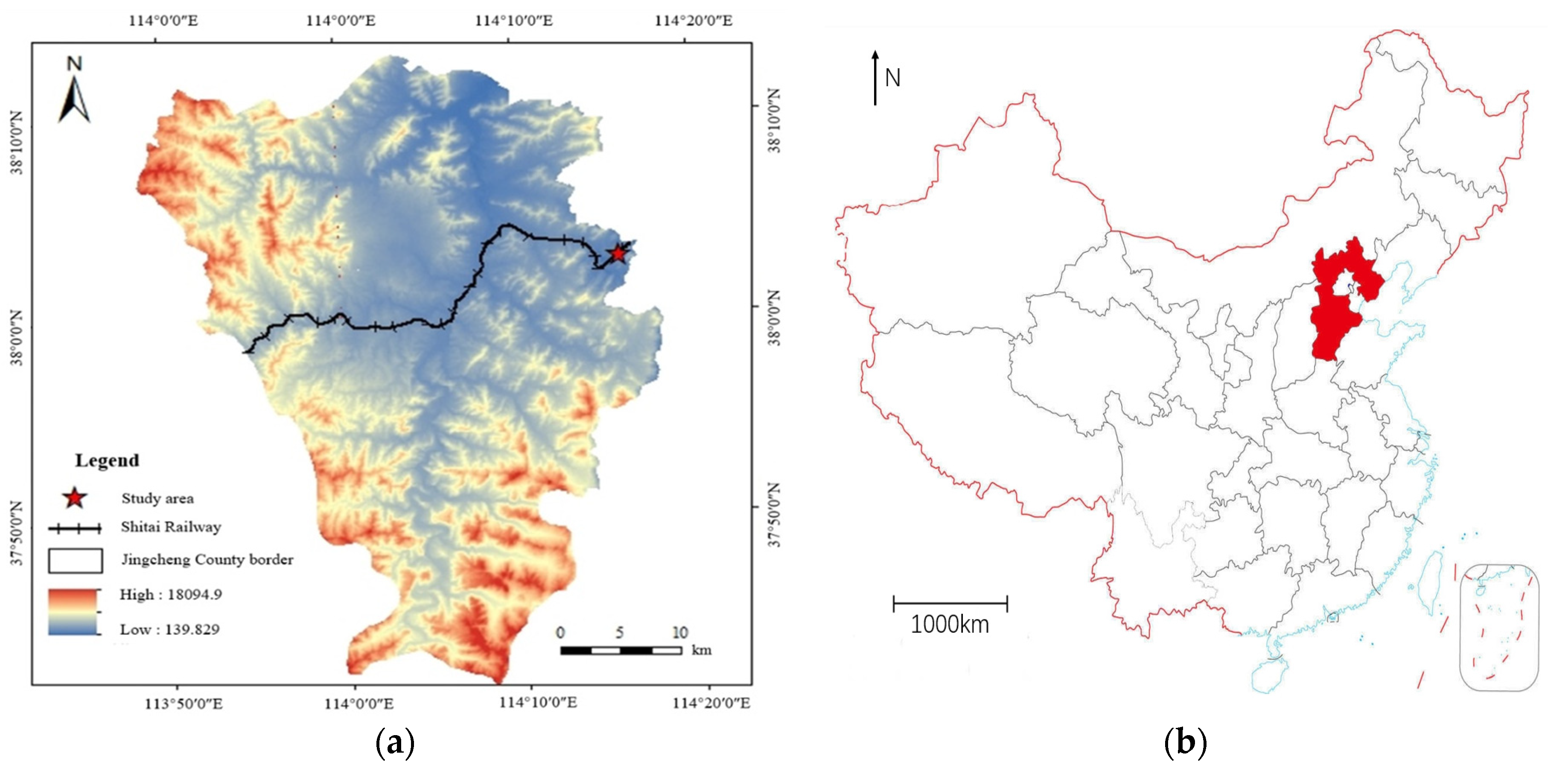
The research area is situated in the eastern part of Jingxing County, Shijiazhuang City, Hebei Province, China, with geographical coordinates of 114.26° east longitude and 38.04° north latitude. The total area covers approximately 113,547 square meters. Influenced by the Shi-Tai Railway, it is located within a secondary branch of the Taihang Mountains, characterized by low hills ranging from 160 to 257 m above sea level. The terrain is relatively gentle, featuring a few isolated hills with rounded peaks and gullies between 5 and 10 m deep (as depicted in Figure 1).
Figure 1. Geographical location of the study area. (a) The geographical location of the research area; (b) schematic diagram of the location of Hebei Province within China.
The railway slope in the study area exhibits a relatively gentle gradient, ranging from 30° to 45°, while the lower cutting section of the slope is steeper, with a gradient between 70° and 90°. Surface water shows signs of infiltration due to the water-scarce and arid environment, resulting in sparse vegetation dominated by low shrubs. The strata mainly consist of non-metamorphic or mildly metamorphic marine sedimentary rocks on a platform. The top layer is covered with gray chert-bearing dolomites, followed by purple and grayish-white medium-grained quartz sandstone, then purple medium-grained quartz sandstone, and finally quartz sandstone and dolomite with gravel at the bottom.
Located in the transitional zone between the Taihang Mountain uplift and the Hebei Plain depression, the research area experiences a semi-humid to semi-arid monsoon climate within the north temperate zone. The rainfall within the study area was constantly monitored throughout 2021. The elevation of the Taihang Mountains influences an annual precipitation exceeding 600 mm in this area with an inter-annual variation rate as high as 26%. The difference in rainfall between wet and dry years can reach up to 1000 mm. Please refer to Table 1 for average annual climate characteristics statistics.
Table 1. Statistical table of average annual climatic characteristics.
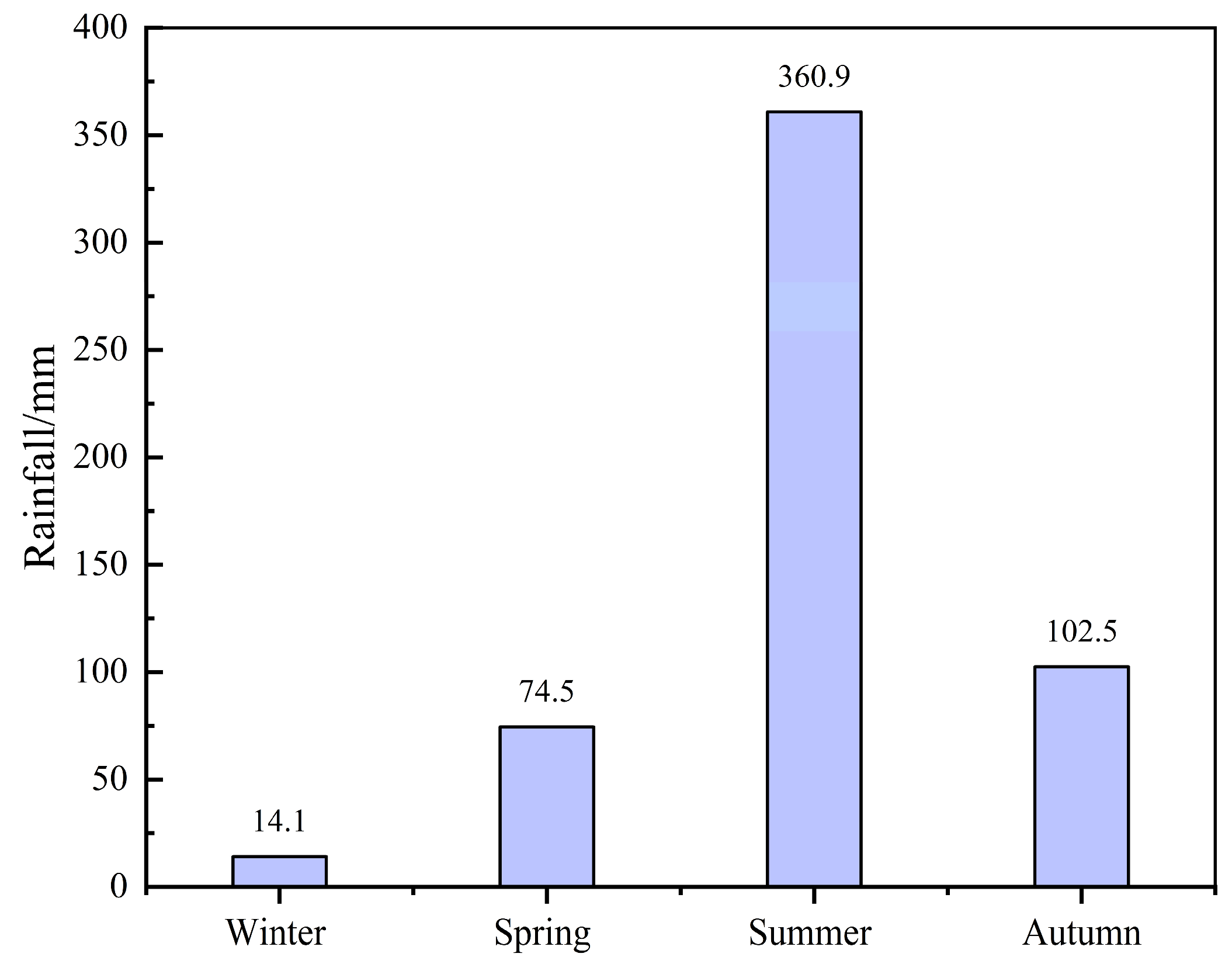
Affected by the monsoon climate, the annual distribution of precipitation in the study area is uneven. Winter precipitation only accounts for 2% to 3%, approximately 13 to 18 mm; in spring, it accounts for 12% to 13%, around 60 to 70 mm; during summer, it comprises 65% to 67%, reaching up to 310 to 360 mm; and autumn contributes about 17% to 18%, or roughly 80 to 100 mm [33]. The seasonal rainfall in the study area is depicted in Figure 2, primarily occurring from June to September, and sudden heavy rain may directly result in hazardous rock collapse disasters.
Figure 2. Seasonal rainfall histogram.

3. Method

3.1. Processing of Aerial Survey Image Data

Currently, the utilization of images and point-cloud models from drone aerial surveys remains rudimentary, with singular processing methods that fail to fully extract geological insights. To address this, this study introduces a method for processing aerial survey image data of high-risk rock masses on high slopes, utilizing unmanned aerial vehicle point clouds. The steps are as follows:
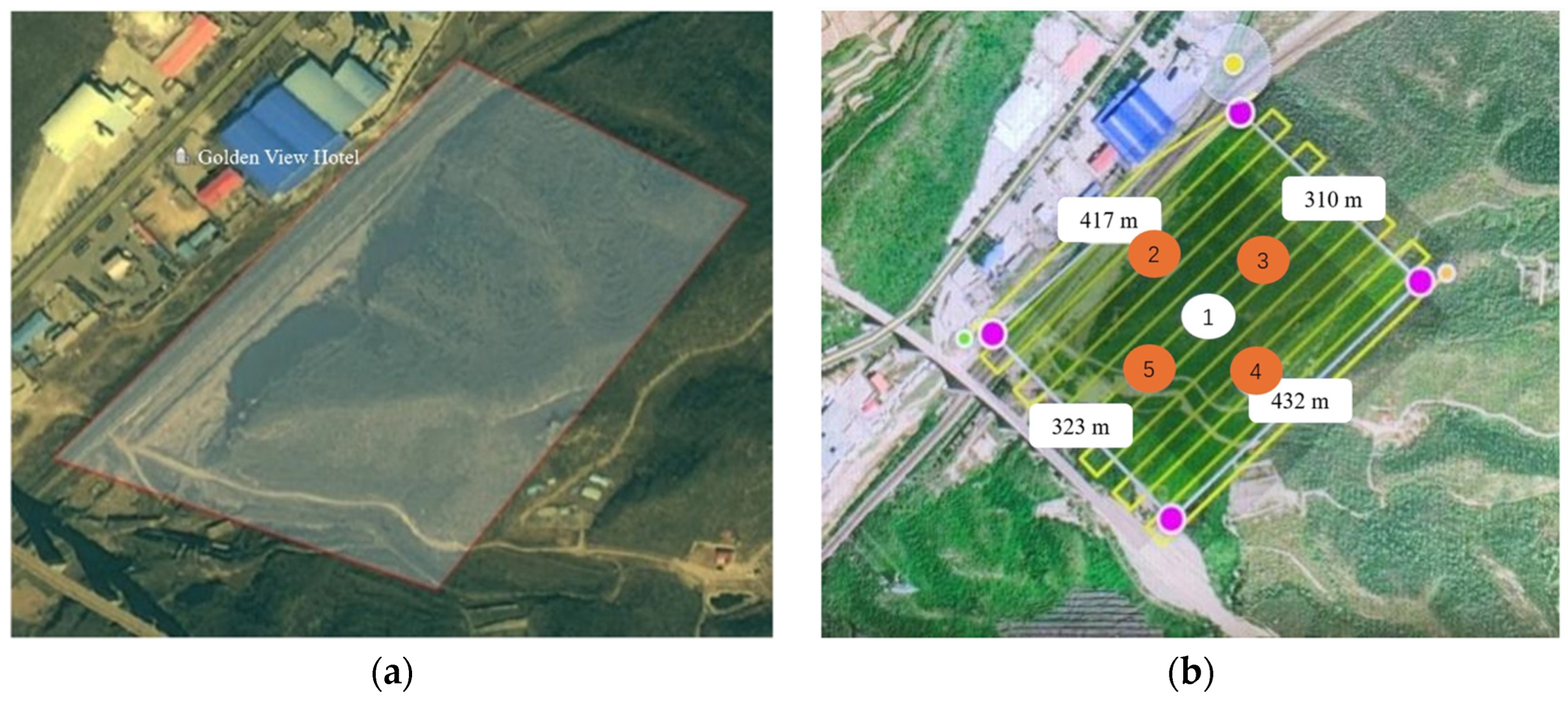
The airworthiness area and optimal flight path were determined through on-site surveys, encompassing a total area of 113,547 square meters and a perimeter of 1400 m, as depicted in Figure 3.
Figure 3. Diagram of route planning (a) The airworthiness area (b) The optimal flight path.
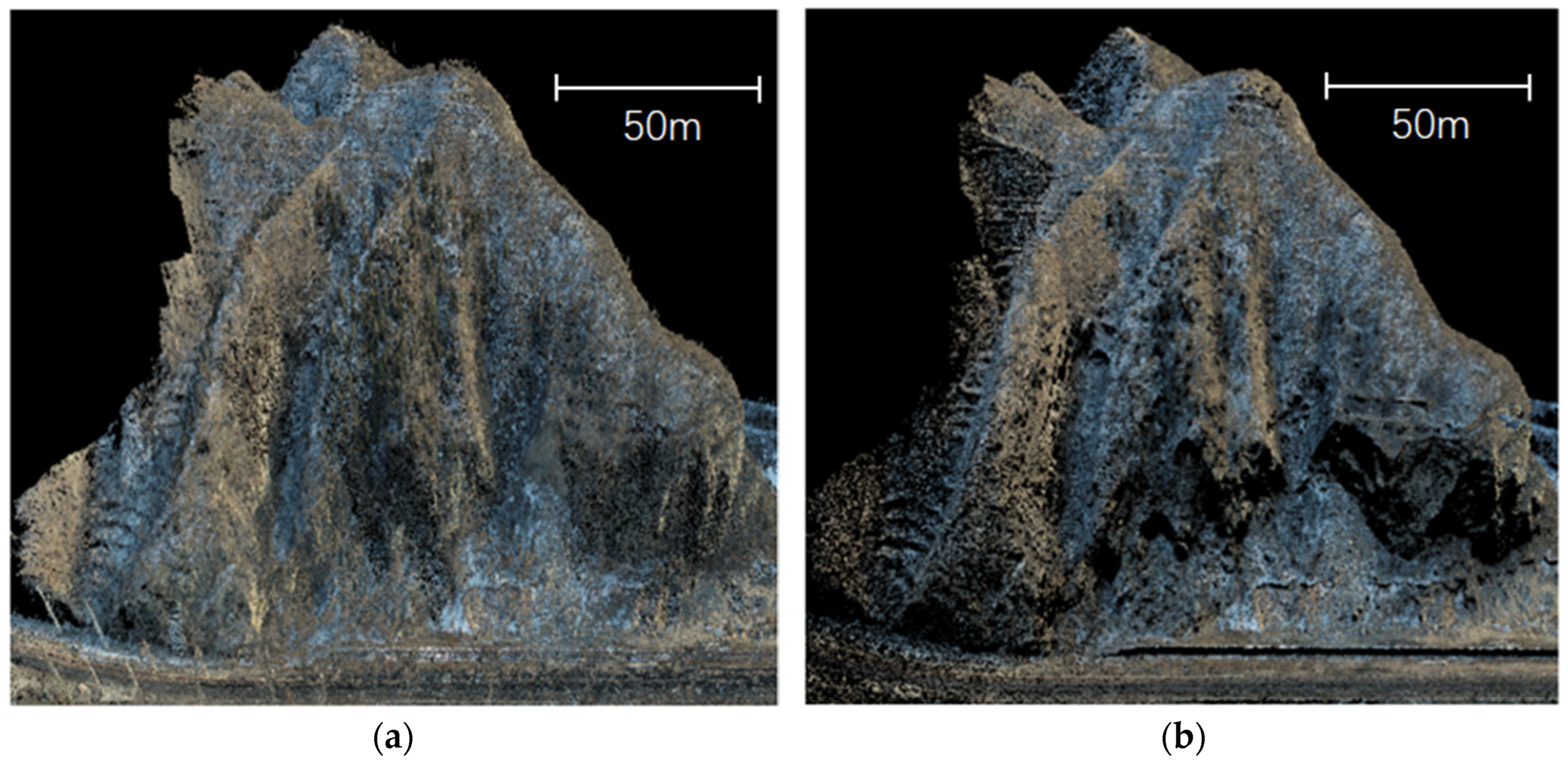
In order to conduct measurements, two different methods, vertical and oblique photography, were utilized. This led to the gathering of 961 digital orthophoto images and 714 digital oblique images from a total of 7 flights. Subsequently, the image data underwent processes for name point matching and free network adjustment. Following this, air triangulation calculation was carried out to produce three-dimensional dense point-cloud data for the measurement object. The resulting three-dimensional point-cloud data then underwent filtration in order to generate a digital elevation model as depicted in Figure 4.
Figure 4. Point-cloud model filtering. (a) Point-cloud model before filtering; (b) point-cloud model after filtering.
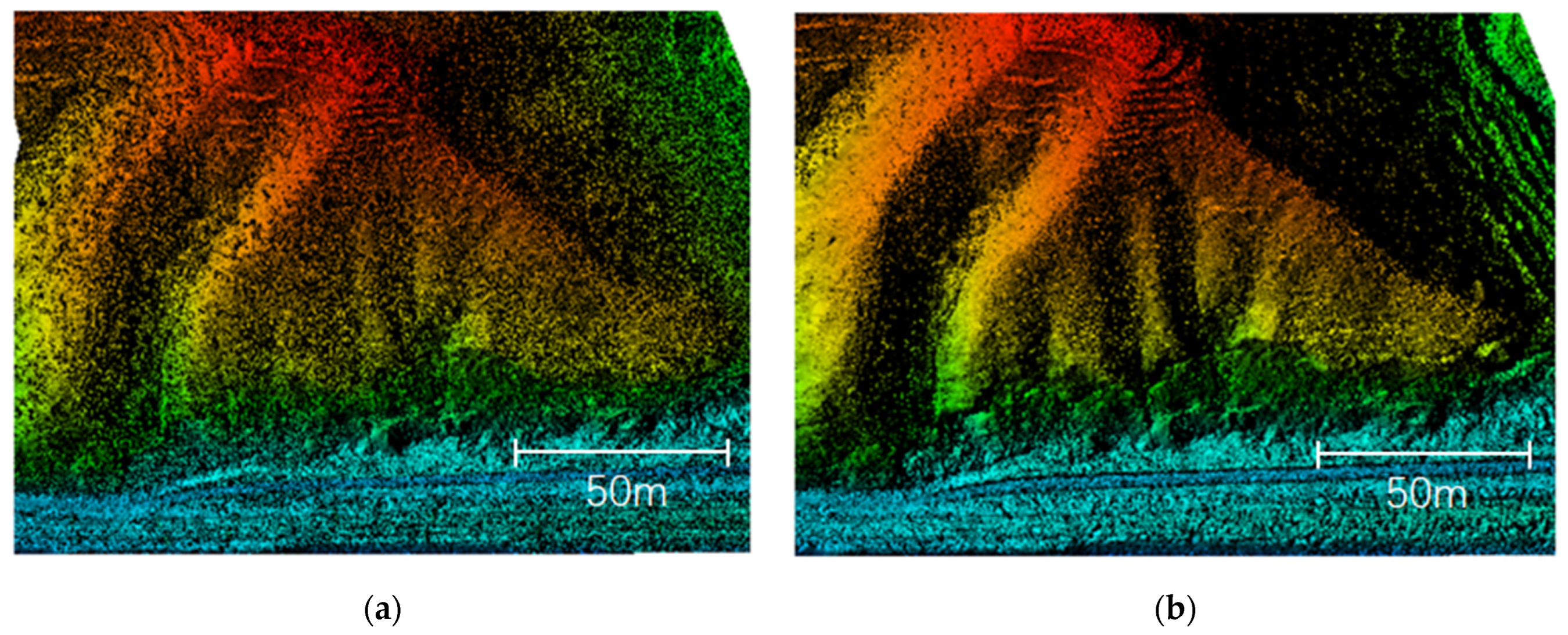
The DEM data undergo projection using the WGS84 coordinate system and are subsequently converted to the UTM coordinate system, resulting in the generation of a digital orthophoto. Filtering is applied to point-cloud data to remove ground object points and create an elevation grid for DEM development within the study area. Furthermore, unfiltered point-cloud data can be utilized for DSM generation, as demonstrated in Figure 5.
Figure 5. DTM of study area. (a) DSM; (b) DEM.
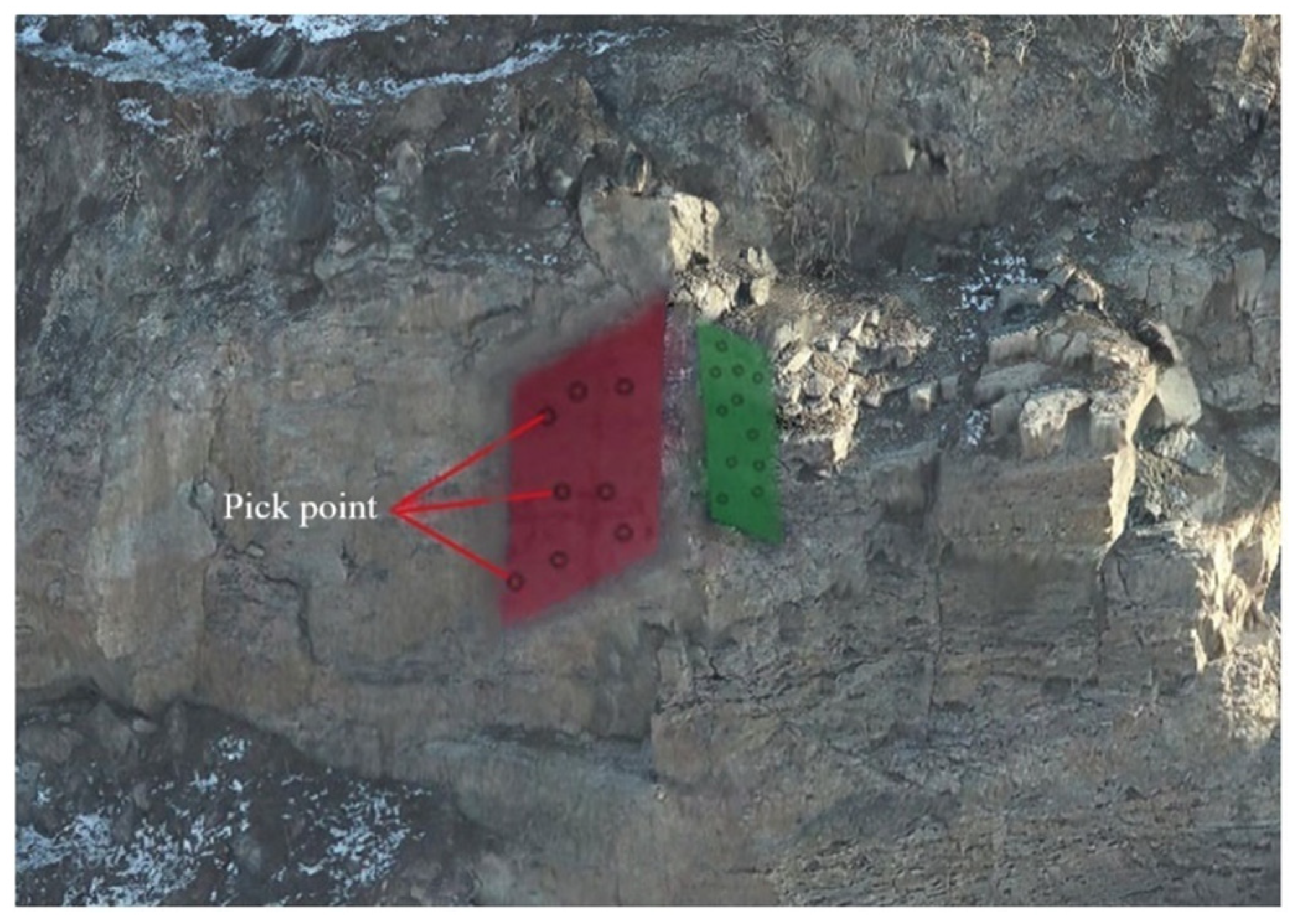
The base level is established using the three-dimensional model of the study area to outline the range of hazardous rock masses and calculate their volume. As depicted in Figure 6, structural planes are identified, representative feature points (n ≥ 3) are selected, and the least square method is employed for plane fitting to obtain more precise occurrence information. Based on the theory of plane fitting, MATLAB (MATLAB R2018a) is utilized for data centralization, and the least linear square method is applied to fit the structural plane, further measuring and calculating the risk of railway slope rock masses.
Figure 6. Pick up feature points to fit the structural plane.

3.2. Early Identification Model of Dangerous Rock Mass

Dangerous rock disasters have the characteristics of multiple points and wide areas, strong concealment, high suddenness, and difficult prediction. The traditional survey method requires a lot of manpower and material resources, but for the linear engineering of railways, the difficulty of engineering geological surveys is increased due to the complexity of terrain relief and geological conditions. If the engineering geological conditions are insufficient, it is difficult to identify dangerous rocks quickly and accurately. To solve the above problems, this study proposed an early identification model of dangerous rock masses based on four topographic conditions, including slope direction, slope, topographic elevation difference, and vegetation coverage rate, as key indicators, which could be used to identify potentially dangerous rock mass areas by using the digital elevation model for analysis, as well as independent of rock mass quality and structure information [38]. Four terrain conditions, including slope direction, slope, topographic height difference, and vegetation coverage rate, were selected as key indicators for superposition calculation and analysis:
S = D ( W A A + W C C + W V V )
In the formula, S—dangerous rock identification zone value;
D—slope zone value; A is the slope zone value;
C—terrain contrast partition value;
V—zone value of vegetation coverage;
WA, Wc, Wv—weight of slope, terrain contrast, and vegetation coverage.
According to the importance of each index to the identification of dangerous rock [38,39], and referring to previous research and actual engineering situations, the weight of each index is determined, as shown in Table 2.
Table 2. Parameter weights for terrain analysis.
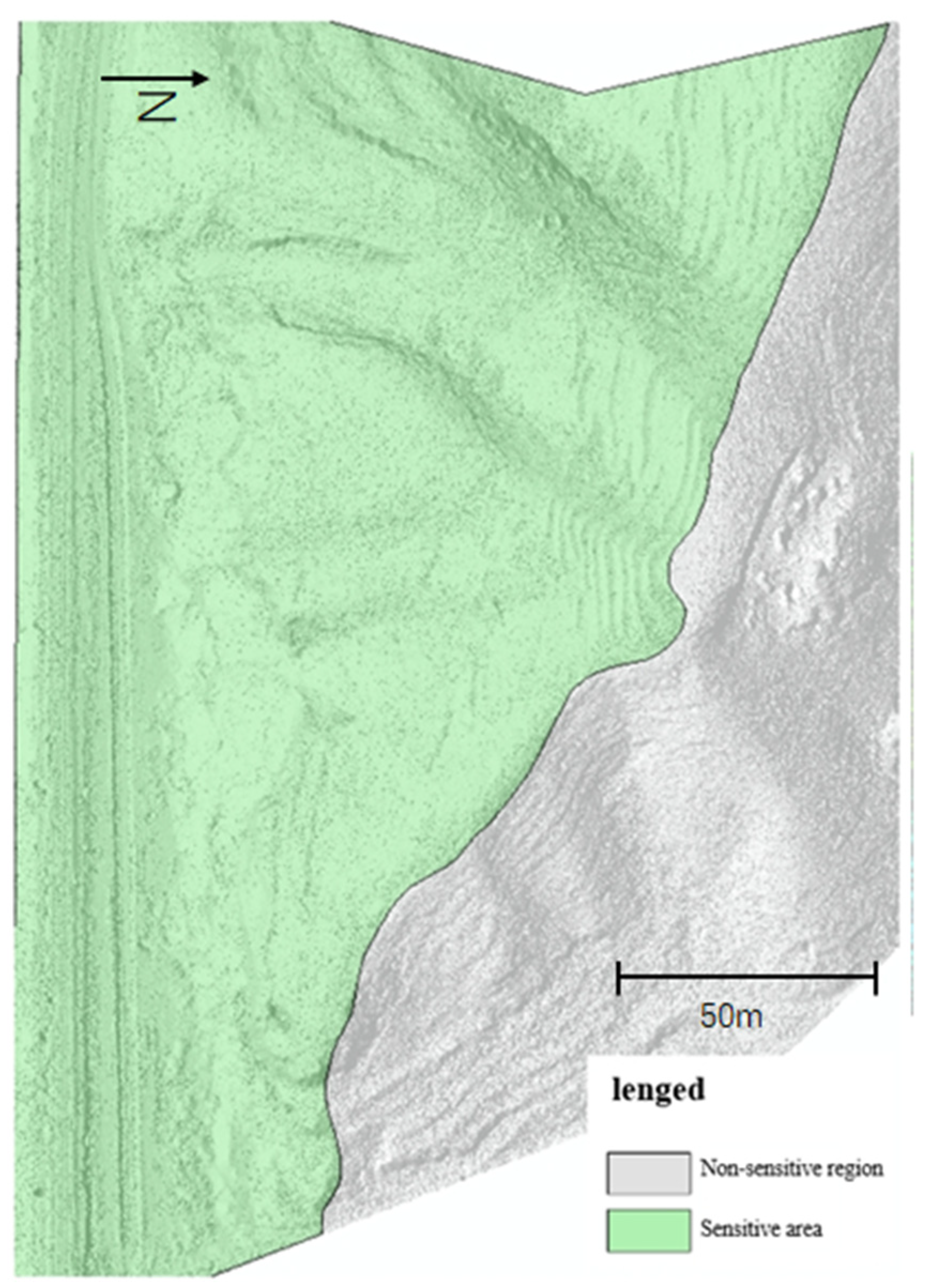
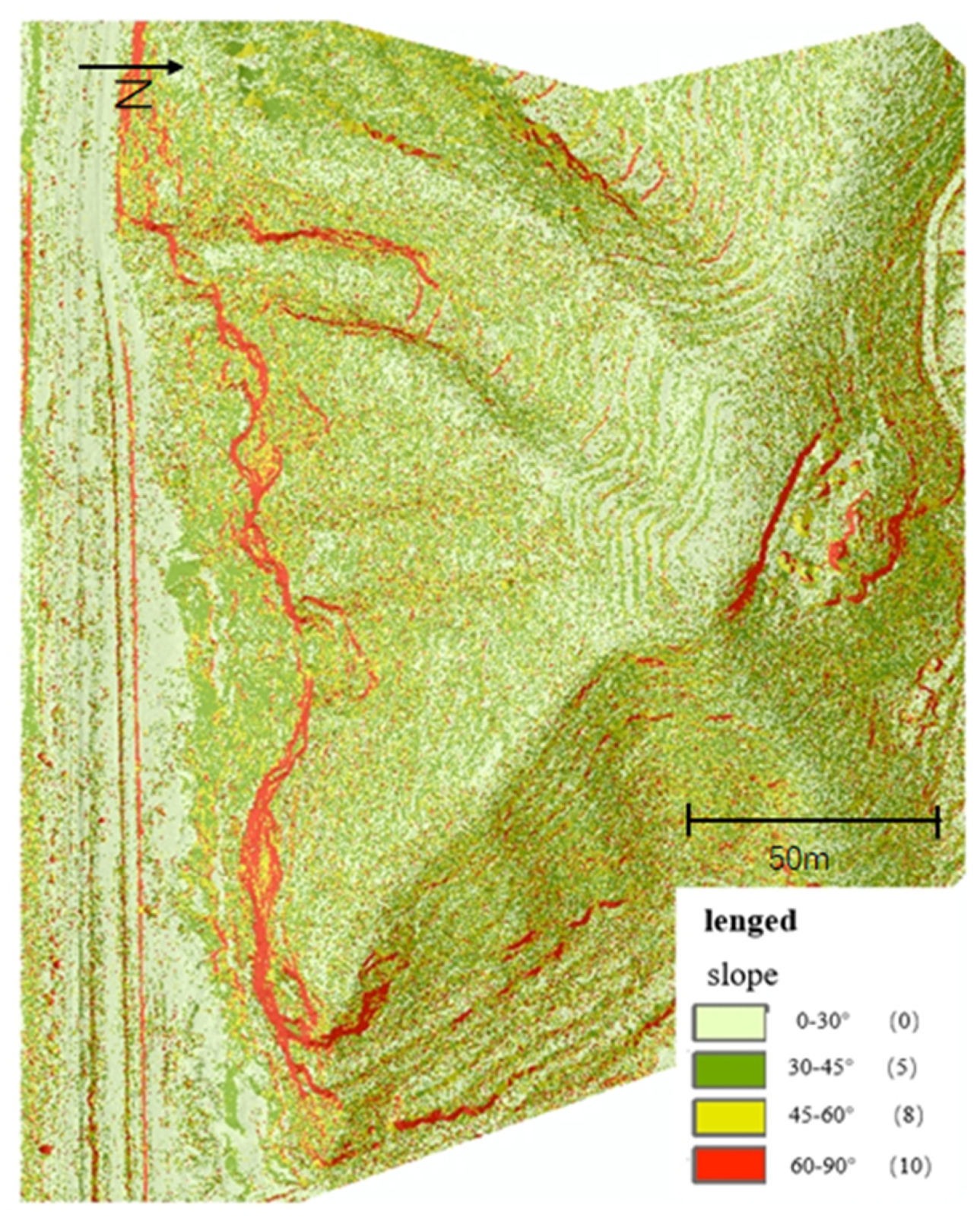
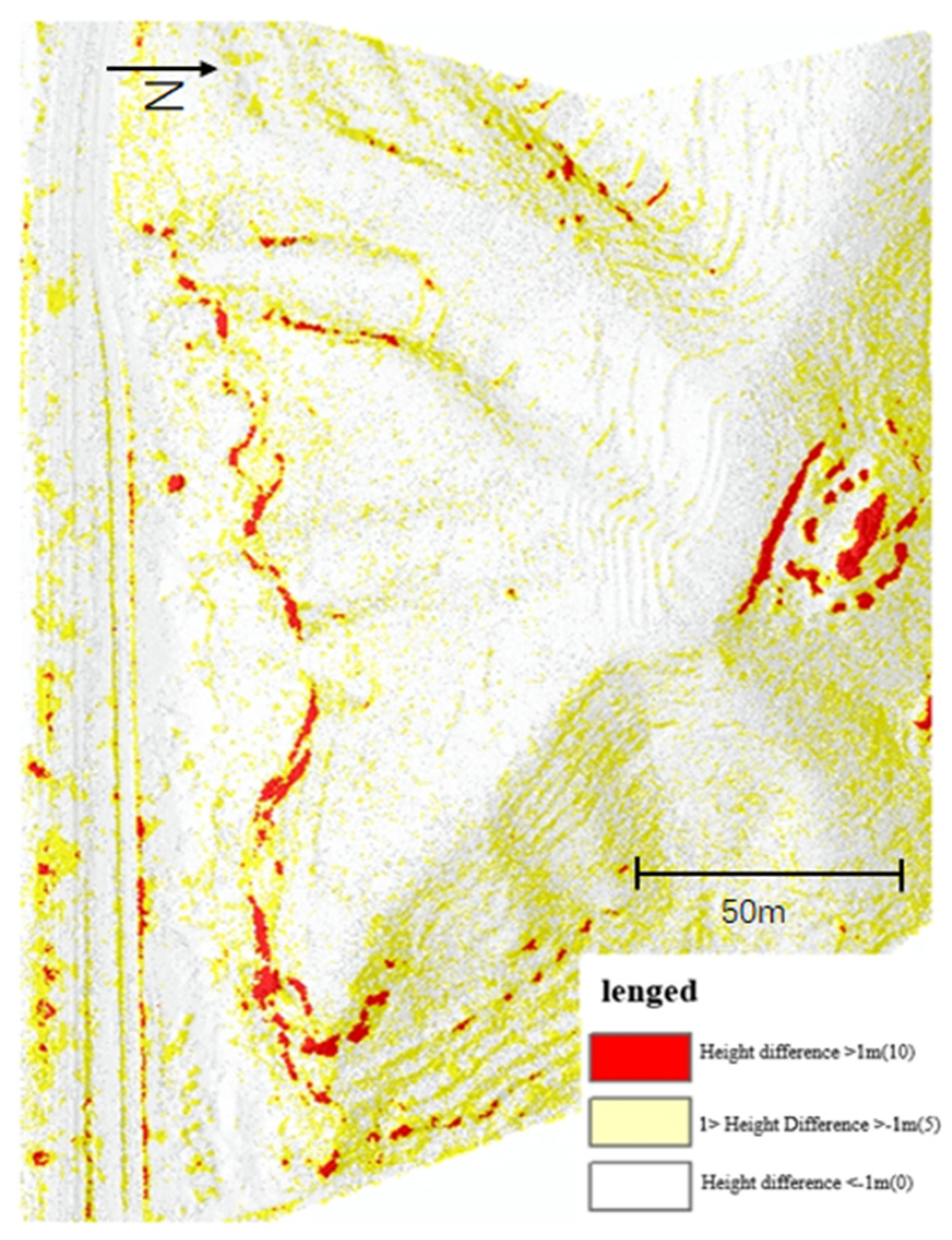
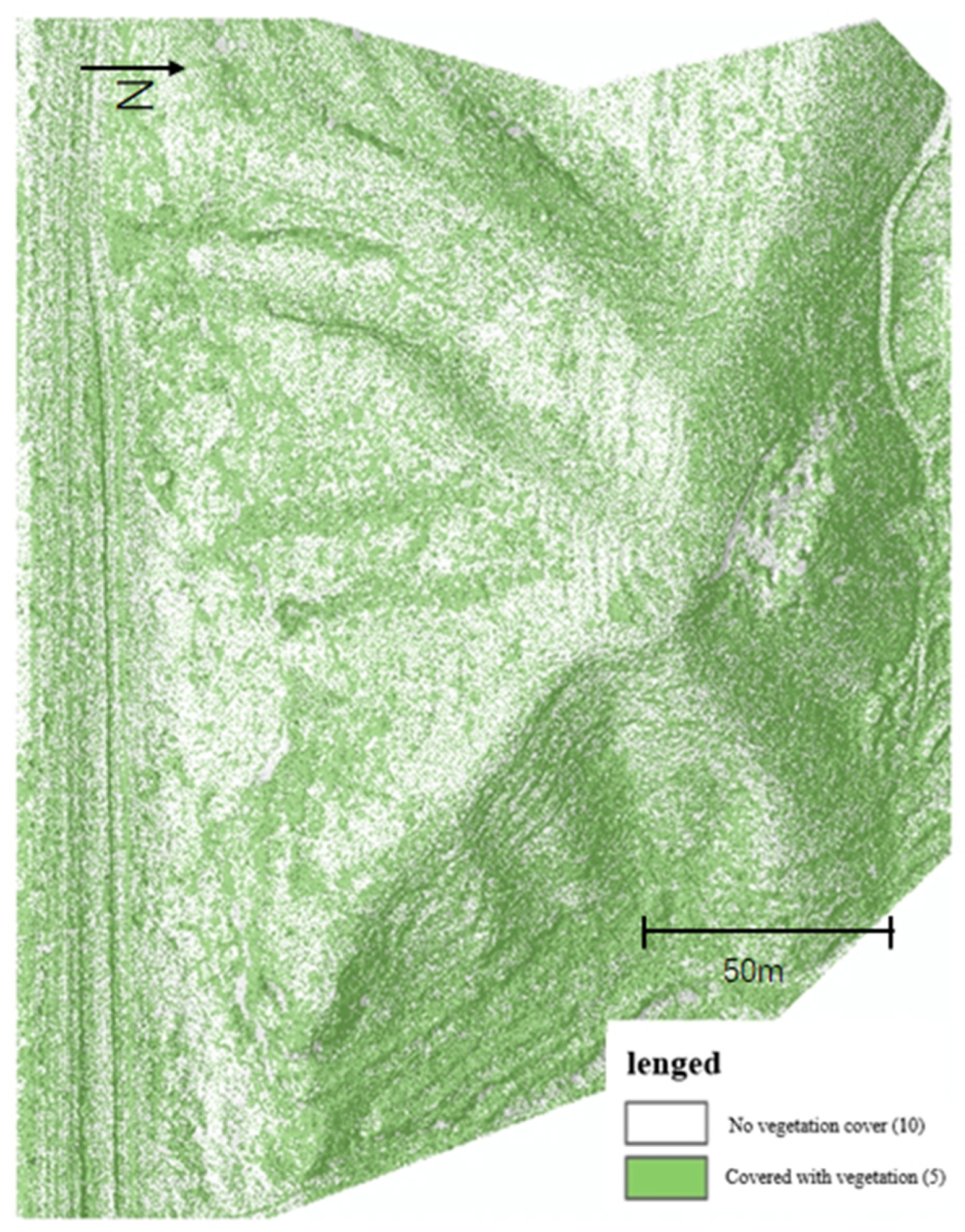
Utilizing the ridgeline of the railway slope as a reference, we identify the rockfall track area adjacent to the railway as sensitive (marked as 1), while designating all other areas as non-sensitive (marked as 0) in order to generate a map delineating different slope zones. The study area’s slopes are then categorized based on their gradient to produce a zoning map. Subsequently, we compute and allocate regions of abrupt topographic change by comparing DEMs with varying sampling intervals, resulting in a partitioned map displaying differences in topographic height. Vegetation coverage can be assessed through identification of RGB values corresponding to vegetation in point-cloud data obtained from drone photogrammetry or by comparing DSM with DEM. Finally, weighted superposition analysis is performed to derive a hazard zone map for potential rock disasters.

3.3. Stability Evaluation Index System and Weight Analysis

When evaluating the stability of hazardous rock masses, it is crucial to establish an appropriate system for assessing indices. The selection and quantification of these indices are vital for obtaining precise analysis results due to the qualitative and uncertain nature of most influencing factors. Since UAV surveys can only capture surface-level information, it is not feasible to consider all factors when conducting stability assessments. Therefore, this study focuses on identifying the primary influencing factors.
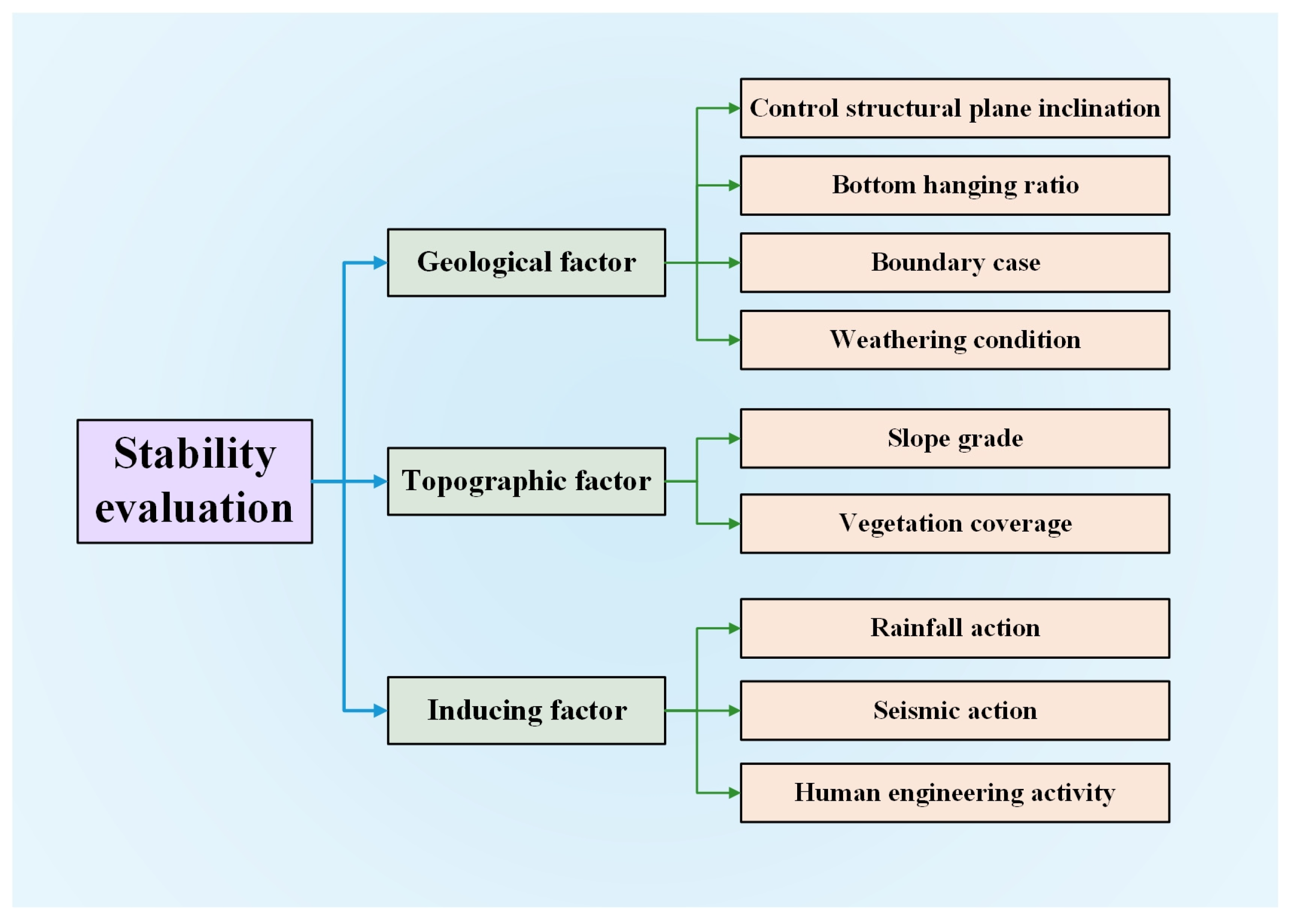
In this research, the elements impacting the stability of dangerous rock masses are classified into terrain, geological, and inducement categories. The analysis includes an assessment of each factor’s contribution to the likelihood of dangerous rock disasters occurring. Geological aspects encompass parameters such as the dip angle of the main structural plane, the bottom overhang ratio, boundary crack development, and weathering; topographic features include slope and vegetation coverage. Terrain and geology reflect natural state stability whereas inducing factors involve rainfall, earthquakes, and human activities (see Figure 7).
Figure 7. Stability assessment index system of dangerous rock.
The above 9 influencing factors are selected to form a rapid evaluation index system for the stability of dangerous rock masses, and the evaluation index system for the stability of dangerous rock masses is formed in Table 3 [40,41]. Among them, the earthquake grade is judged according to the Code for Seismic Design of Buildings.
Table 3. The index system for evaluating the stability of dangerous rock.
The issues are methodically arranged and categorized, forming a hierarchical structure model. This model is comprised of three tiers: the uppermost tier being the purpose layer, followed by the criterion layer in the middle, and lastly, the scheme layer at the bottom. The number of tiers varies based on the complexity and level of detail needed for problem analysis. Typically, each tier contains no more than nine elements. The criteria within the criterion layer carry varying weights, which are determined using a scale from 1 to 9 and their reciprocals based on their significance in decision-making processes. The structure is as follows:
A = ( a i j ) n × n
The judgment matrix of the structural model is shown in Table 4.
Table 4. Structural model judgment matrix.
Among them, the numerical scale of the relative importance of aij—Ai to Aj is defined in Table 5.
Table 5. Judgment matrix scalar definition.
The computation consistency index CI (consistency index) is as follows:
C I = λ max n n 1
In the formula, λmax is the maximum eigenvalue of the judgment matrix.
The value of CI is usually affected by the size of the judgment matrix, so it is necessary to introduce a consistency ratio CR to correct the value of CI. The calculation method of CR is to divide CI by the random consistency index RI, which is a random index that depends on the size of the judgment matrix and can be found in Table 6.
Table 6. Average consistency index.
The consistency index RI was found, as shown in Table 6.
The value range of CR is between 0 and 1, and it is generally believed that when CR is less than or equal to 0.1, the judgment matrix has good consistency. Calculate the consistency ratio CR (consistency radio) as follows:
When CR < 0.10, the consistency of the judgment matrix is considered acceptable; otherwise the judgment matrix should be appropriately modified.
Find out the ranking weight of each element, especially the lowest scheme to the target, and carry out the scheme comparison. Also, carry out the consistency test of the overall ranking of the hierarchy, calculate the comprehensive weight of each layer of elements to the overall goal of the system, and sort the selected scheme.
The stability evaluation of dangerous rock masses is taken as the target layer. The geological and topographic conditions which affect the stability of dangerous rock masses are taken as the criterion layer. With further subdivisions into 9 influencing factors, such as the main control plane inclination angle, bottom hanging ratio, slope, etc., as the scheme layer, the hierarchical structure model is established.
According to the relative importance of each layer factor relative to the upper target, the judgment matrix is constructed. The maximum feature root and corresponding feature vector are calculated to facilitate the consistency test of the judgment matrix. The results are shown in Table 7, Table 8, Table 9, Table 10 and Table 11.
Table 7. SXi judgment matrix.
Table 8. X1X1j judgment matrix.
Table 9. X2X2j judgment matrix.
Table 10. X3X3j judgment matrix.
Table 11. Weighting of stability evaluation factors of dangerous rock.

4. Results and Discussion

4.1. Early Identification Results of Dangerous Rock Masses

The slope direction zoning map, slope zoning map, topographic height difference zoning map, and vegetation coverage zoning map of dangerous rock in the study area are shown in Figure 8, Figure 9, Figure 10 and Figure 11.
Figure 8. Slope direction zoning map.
Figure 9. Slope zone map.
Figure 10. Topographic contrast zone map.
Figure 11. Vegetation cover zone map.
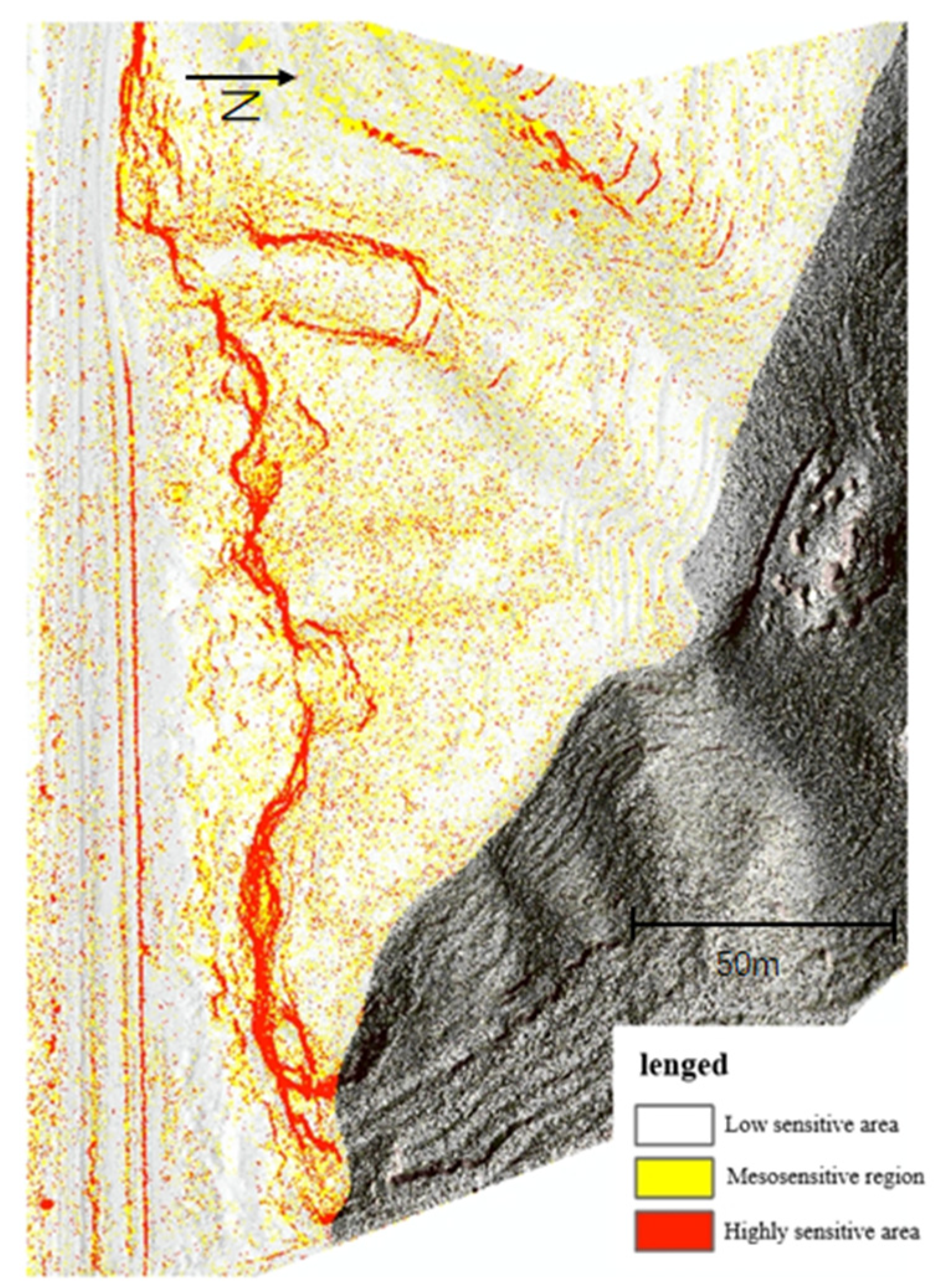
The geographical information system was used to carry out the weighted superposition analysis of each index zoning map, and to draw a zoning map of dangerous rock disaster hazards (Figure 12).
Figure 12. Early identification of dangerous rock zone map.
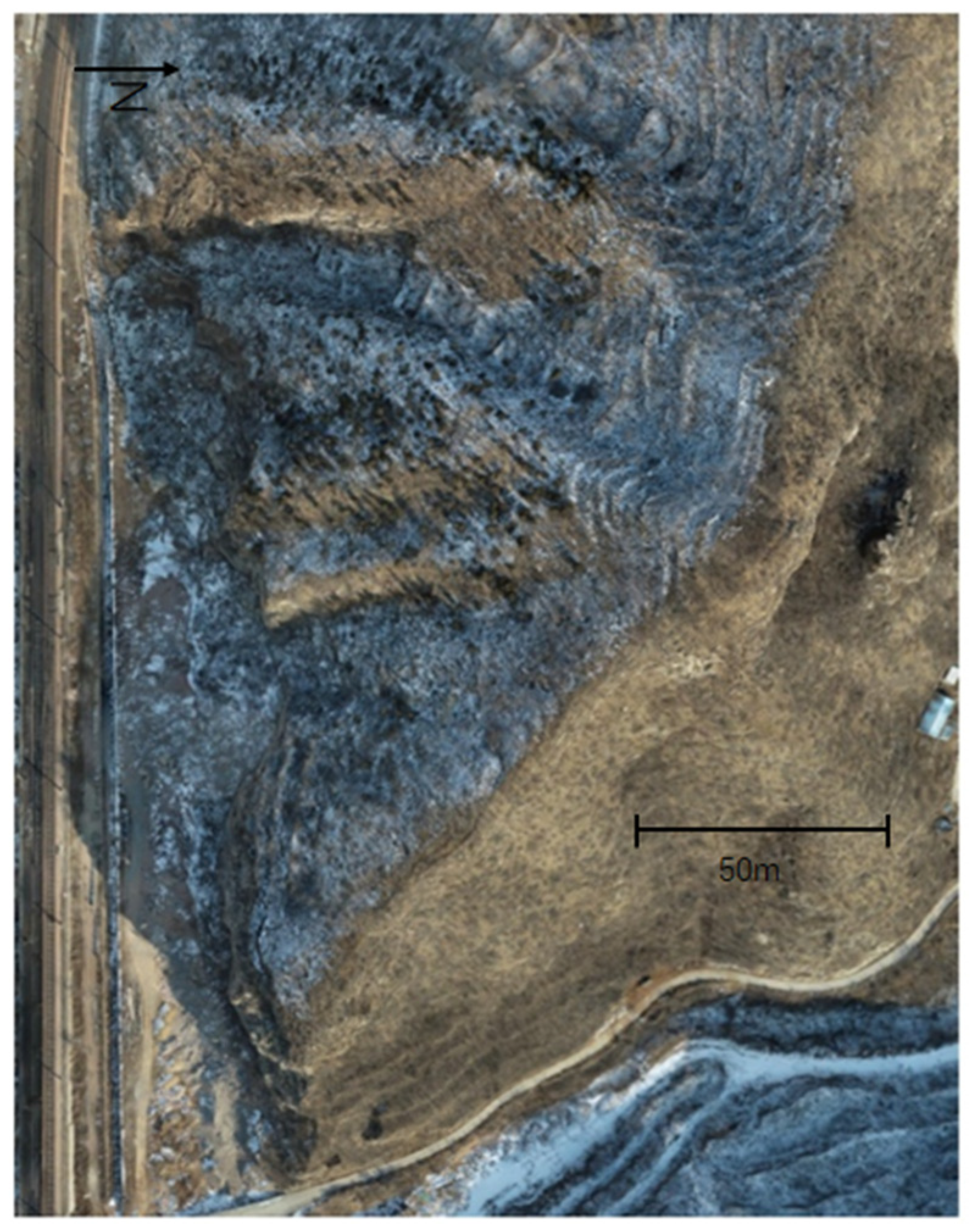
The high-risk hidden danger area identified in the early stage of dangerous rock is represented by the red grid in Figure 12. Upon comparing it with the digital projection image (Figure 13), it becomes evident that this area contains steep ridges, steep slopes, and exposed rock masses conducive to the development of dangerous rock. This serves as a demonstration that the proposed early identification method can effectively and accurately identify areas with hidden dangerous rocks quickly and intuitively. In comparison to traditional empirical subjective identification using remote sensing images, this method proves more effective at identifying concealed hazardous rock masses. Moreover, unlike wide-range susceptibility analysis methods, it does not necessitate geological conditions or information on rock mass structure while still efficiently pinpointing dangerous rock risk areas, thereby narrowing down the subsequent investigation scope and fully leveraging its advantages for early identification.
Figure 13. Digital orthophoto map of study area.

4.2. Stability Evaluation Results and Verification

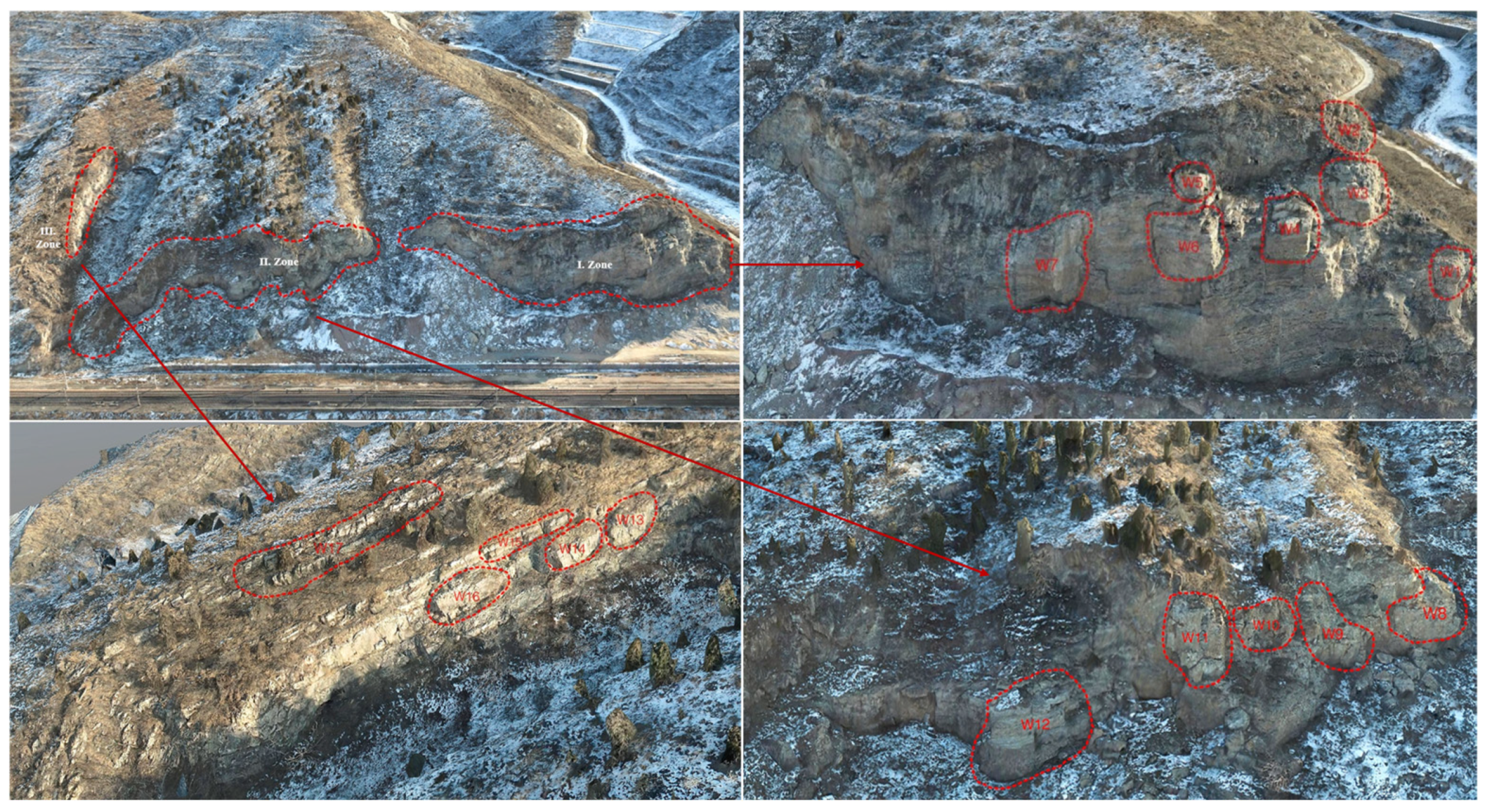
According to the early identification results, a total of 17 dangerous rock masses were identified, mainly distributed at the cut slope of the slope foot, and the whole risk area was in a band. According to the distribution, they were divided into three dangerous rock belts, and the spatial location and distribution range are shown in Figure 14.
Figure 14. Spatial location and distribution.
According to the established system for evaluating the stability of hazardous rock masses, 17 such masses in the study area have been assessed and categorized. The assessment took into account the uneven distribution of rainfall throughout the year, with summer precipitation representing 65% to 67% of the annual total. Consequently, the rainfall index was calculated based on the most unfavorable conditions.
The weight and importance of the influence of indicators on the stability of dangerous rock masses are analyzed qualitatively and quantitatively by AHP method. The instability probability P of dangerous rock masses is used to measure the stability of dangerous rock masses. The formula is as follows:
P = i = 1 n γ i j S i j
In the formula, the following apply:
Sij—the basic score of the JTH secondary index among the i primary index in the index system;
γij—the weight coefficient of the JTH secondary index in the i primary index in the index system.
According to the value range of instability probability P, the stability levels of dangerous rock masses are divided into three levels: unstable, relatively stable, and stable, as shown in Table 12.
Table 12. Stability classification table of dangerous rock masses.
The specific results of this stability evaluation can be found in Table 13. These findings are an important point of reference for implementing appropriate protective and management measures to ensure security and stability within the relevant region.
Table 13. Evaluation results of dangerous rock stability in the study area.
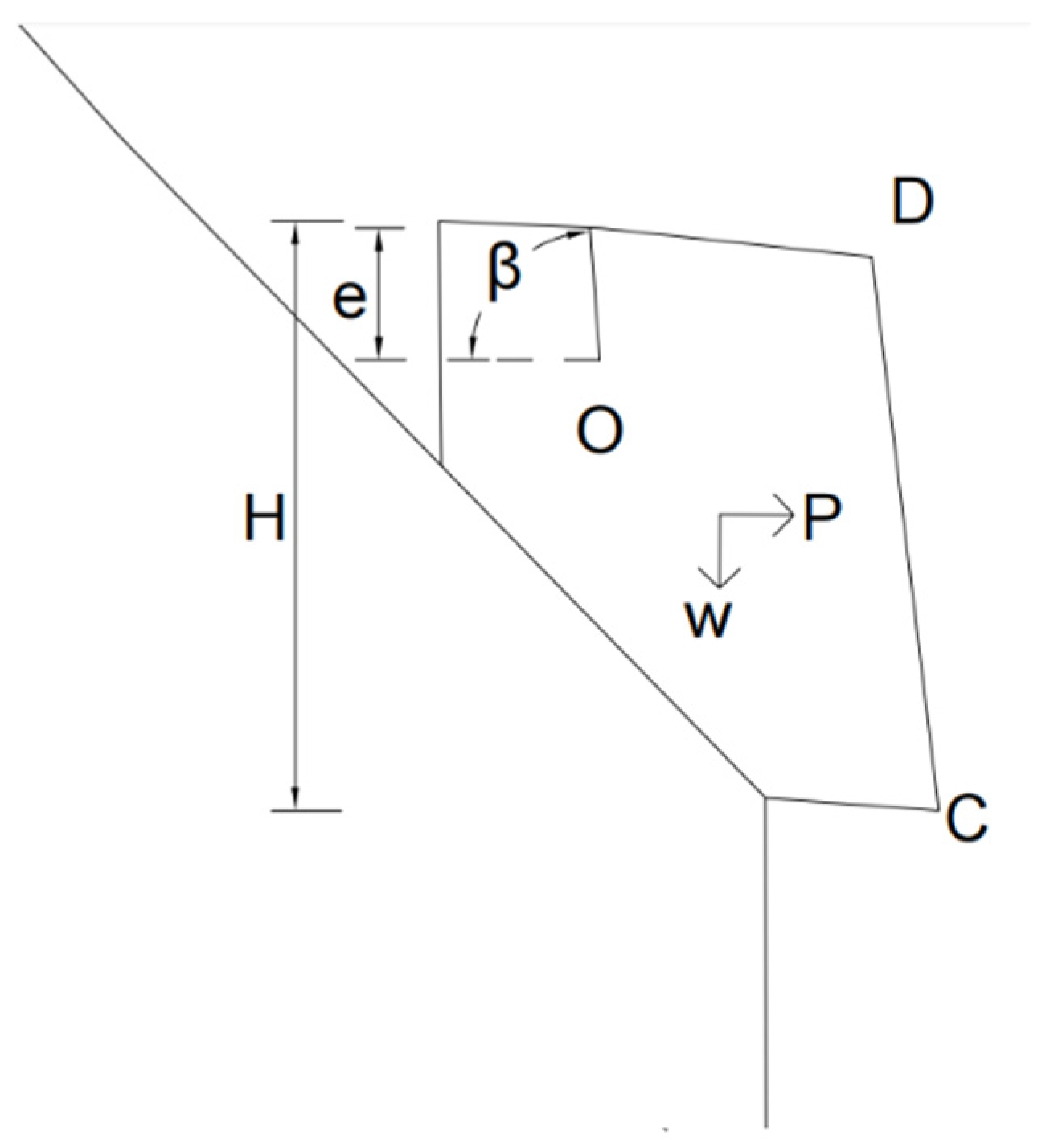
The limit equilibrium theory is used to calculate the stability coefficient of dangerous rock masses and verify the results of the rapid stability evaluation. Figure 15 shows the calculation model of dangerous rock [42,43].
Figure 15. Calculation model.
In the figure, the following apply: W—dead weight of dangerous rock mass (kN);
H—the vertical distance from the top of the posterior edge crack to the unpenetrated segment (m);
e—master plane deviation distance (m);
β —main control structural plane inclination (°);
P—horizontal seismic force (kN).
Load combination 1: dead weight + pore water pressure (natural state).
K 1 = 0.5 W sin 2 β tan φ + c H W sin 2 β
Load combination 3: dead weight + pore water pressure (natural state) + seismic force.
K 3 = ( W cos β P sin β ) tan φ + c H sin β W sin β + P cos β
In the formula, c —Adhesive force (kPa);
φ —Internal friction Angle (°).
Among them, the calculation method of the shear strength parameters of the critical rock main control structural plane is as follows:
c = k c C ¯ R c
φ = k φ φ ¯ φ 0
C ¯ = 0.0016 R 2 + 0.09398 R + 5.2815
φ ¯ = 0.0001 R 2 + 0.0073 R + 0.8996
In the formula, R —Penetration rate (%);
C ¯ —equivalent bond force;
φ ¯ —equivalent internal friction angle;
R c —standard value of uniaxial compressive strength of intact rock (kPa);
φ 0 —internal friction angle of intact rock of dangerous rock;
k c , k φ —the strength correction coefficient can be determined according to the safety level of the prevention and control project.
Referring to the evaluation criteria for the stability of dangerous rock [43] (Table 14), according to the measured results, it can be seen that the height of dangerous rock W14 is 4.5 m, the inclination is 86.7°, the fracture depth is 1.0156 m, and the volume is 103 m3. According to the engineering geological data of the study area, the density of the dangerous rock mass is 2.85 g/cm3, the seismic intensity is level VII, and the seismic impact coefficient is 0.5.
Table 14. Criteria for evaluating the stability of dangerous rock.
According to the data, the stability coefficient of dangerous rock mass W14 is 0.69 under the working condition 1 and 0.68 under the working condition 3. According to the evaluation criteria of the stability of dangerous rock, the dangerous rock mass W14 is assessed as unstable, which is consistent with the evaluation results, which proves that the stability evaluation method of dangerous rock masses is reliable.

4.3. Limitations of the Proposed Approach

The UAV photogrammetry technology and analytic hierarchy process adopted in this study show good applicability in the early identification and stability evaluation of dangerous rock masses of high slopes, which can quickly and accurately determine potential risk areas, helping to narrow the detailed investigation scope and improve the efficiency of dangerous rock identification. However, it is also important to note the limitations of these approaches. The operation of drone photogrammetry technology in adverse weather conditions may be limited, which may affect data acquisition and accuracy. In the process of determining index weights, the analytic hierarchy process relies heavily on expert experience, which may be subjective and uncertain. Whether the early identification model and stability evaluation index system of dangerous rock masses established in this paper are applicable to other areas and under different conditions still needs to be discussed. Therefore, in practical application, it is necessary to consider a variety of factors and combine geological prospecting and monitoring methods to further improve the accuracy and reliability of the evaluation results.

5. Conclusions

This paper introduces a method for the early identification and stability evaluation of dangerous rock masses of high slopes, which is based on the data processed by UAV. This method is mainly aimed at high side slopes, and uses a series of calculation models and methods to identify dangerous rock masses and evaluate their stability. The results obtained can directly serve the disaster prevention of dangerous rock masses. The key findings are as follows:
  • The UAV photogrammetry technology was utilized to acquire high-resolution remote sensing images, a three-dimensional point-cloud model, and other data results. The topographic conditions of the slope were extracted and superimposed through the geographic information system in order to identify potential dangerous rock areas and generate a map of hazardous rock zones.
  • Based on the three-dimensional model, a detailed investigation was conducted into the development characteristics and instability mode of the hazardous rocks. The distribution and development characteristics of the hazardous rock mass were categorized into three dangerous rock belts, with consensus identifying 17 hazardous rock masses. These masses were primarily distributed within an elevation range of 150~200 m, mostly small- to medium-sized in scale.
  • An evaluation index system for assessing the stability of hazardous rock masses has been established, with nine influencing factors selected as stability evaluation indices. The weights of these indices have been determined using analytic hierarchy process. Evaluation results indicate that W4, W6, and W10 rocks in the study area are unstable, accounting for 17.6% based on verification by applying the limit equilibrium principle.

Author Contributions

Conceptualization, M.B.; data curation, K.M.; formal analysis, Z.C.; funding acquisition, M.B.; investigation, K.M.; methodology, M.B.; project administration, K.M.; resources, M.B.; software, Z.C.; supervision, K.M.; validation, M.B.; visualization, K.M.; writing—original draft, M.B.; writing—review and editing, Z.C. All authors have read and agreed to the published version of the manuscript.

Funding

This work was supported in part by the National Natural Science Foundation of China (NSFC) (grant no. 42172311).

Institutional Review Board Statement

Not applicable.

Data Availability Statement

The original contributions presented in the study are included in the article, further inquiries can be directed to the corresponding author.

Conflicts of Interest

Author Kai Mou was employed by the company Jiangsu Communications Planning and Design Institute Limited by Share Ltd. The remaining authors declare that the research was conducted in the absence of any commercial or financial relationships that could be construed as a potential conflict of interest.

References

  1. Chen, H.; Wang, R.; Tang, H. Review on research status and trend of dangerous rock. J. Chongqing Jiaotong Univ. (Nat. Sci. Ed.) 2003, 22, 18–22. [Google Scholar]
  2. Jia, Y.; Li, Z.; Jiang, T.; Li, Y.; Wang, S.; Song, G. Study on Early Identification of Landslide Perilous Rocks Based on Multi-Dynamics Parameters. Sustainability 2023, 15, 6296. [Google Scholar] [CrossRef]
  3. Hu, H. Collapse and Falling Rock; China Railway Publishing House: Beijing, China, 1989. [Google Scholar]
  4. Du, Y.; Xie, M. Indirect method for the quantitative identification of unstable rock. Nat. Hazards 2022, 112, 1005–1012. [Google Scholar] [CrossRef]
  5. Jia, Y.; Song, G.; Wang, L.; Jiang, T.; Zhao, J.; Li, Z. Research on Stability Evaluation of Perilous Rock on Soil Slope Based on Natural Vibration Frequency. Appl. Sci. 2023, 13, 2406. [Google Scholar] [CrossRef]
  6. Perrotti, M.; Godone, D.; Allasia, P.; Baldo, M.; Fazio, N.L.; Lollino, P. Investigating the susceptibility to failure of a rock cliff by integrating Structure-from-Motion analysis and 3D geomechanical modelling. Remote Sens. 2020, 12, 3994. [Google Scholar] [CrossRef]
  7. Emil, B.; Manfred, B.; Martin, K. Radar Remote Sensing to Supplement Pipeline Surveillance Programs through Measurements of Surface Deformations and Identification of Geohazard Risks. Remote Sens. 2020, 12, 3934. [Google Scholar] [CrossRef]
  8. Guo, C.; Xu, Q.; Dong, X.; Li, W.; Zhao, K.; Lu, H.; Ju, Y. Geohazard Recognition and Inventory Mapping Using Airborne LiDAR Data in Complex Mountainous Areas. J. Earth Sci. 2021, 32, 1079–1091. [Google Scholar] [CrossRef]
  9. Zhang, Z.; Duan, P.; Li, J.; Chen, D.; Peng, K.; Fan, C. A time-series InSAR processing chain for wide-area geohazard identification. Nat. Hazards 2023, 118, 691–707. [Google Scholar] [CrossRef]
  10. Kong, D.; Saroglou, C.; Wu, F.; Sha, P.; Li, B. Development and application of UAV-SfM photogrammetry for quantitative characterization of rock mass discontinuities. Int. J. Rock Mech. Min. Sci. 2021, 141, 104729. [Google Scholar] [CrossRef]
  11. Xu, Q.; Dong, X.; Li, W. Early identification, monitoring and early warning of major geological hazards based on the integration of space-space-earth. J. Wuhan Univ. (Inf. Sci. Ed.) 2019, 44, 957–966. [Google Scholar]
  12. Menegoni, N.; Giordan, D.; Perotti, C. Reliability and Uncertainties of the Analysis of an Unstable Rock Slope Performed on RPAS Digital Outcrop Models: The Case of the Gallivaggio Landslide (Western Alps, Italy). Remote Sens. 2020, 12, 1635. [Google Scholar] [CrossRef]
  13. Alvioli, M.; Santangelo, M.; Fiorucci, F.; Cardinali, M.; Marchesini, I.; Reichenbach, P.; Rossi, M.; Guzzetti, F.; Peruccacci, S. Rockfall susceptibility and network-ranked susceptibility along the Italian railway. Eng. Geol. 2021, 293, 106301. [Google Scholar] [CrossRef]
  14. Damhuis, J.M.R.; Roux, L.P.; Fourie, S.J.C. The identification and mitigation of geohazards using shallow airborne engineering geophysics and land-based geophysics for brown- and greenfield road investigations. Q. J. Eng. Geol. Hydrogeol. 2020, 53, 321–332. [Google Scholar] [CrossRef]
  15. Albarelli, D.; Mavrouli, O.C.; Nyktas, P. Identification of potential rockfall sources using UAV-derived point cloud. Bull. Eng. Geol. Environ. 2021, 80, 6539–6561. [Google Scholar] [CrossRef]
  16. Kong, D.; Wu, F.; Saroglou, C. Automatic identification and characterization of discontinuities in rock masses from 3D point clouds. Eng. Geol. 2020, 265, 105442. [Google Scholar] [CrossRef]
  17. Rodriguez, J.; Macciotta, R.; Hendry, M.T.; Roustaei, M.; Gräpel, C.; Skirrow, R. UAVs for monitoring, investigation, and mitigation design of a rock slope with multiple failure mechanisms—A case study. Landslides 2020, 17, 2027–2040. [Google Scholar] [CrossRef]
  18. Mancini, F.; Dubbini, M.; Gattelli, M.; Stecchi, F.; Fabbri, S.; Gabbianelli, G. Using unmanned aerial vehicles (UAV) for high-resolution reconstruction of topography: The structure from motion approach on coastal environments. Remote Sens. 2013, 5, 6880–6898. [Google Scholar] [CrossRef]
  19. Hao, Y.; He, M.; Liu, Y.; Liu, J.; Meng, Z. Range–Visual–Inertial Odometry with Coarse-to-Fine Image Registration Fusion for UAV Localization. Drones 2023, 7, 540. [Google Scholar] [CrossRef]
  20. Wang, L.; Zhang, J.; Xia, W.; Huang, X.; Tan, G. Dynamic Stability and Fuzzy Reliability Analysis of Toppling Perilous Rock Under Seismic Excitation. J. Earth Sci. 2024, 35, 248–262. [Google Scholar] [CrossRef]
  21. Peng, H.; Xie, Q.; Chen, B.; Tan, K.; Cao, Z.; Wu, B. Failure mode of the hazardous Diaozui rock mass of the Qutang Gorge in the Three Gorges Reservoir area based on a three-dimensional numerical analysis. Bull. Eng. Geol. Environ. 2024, 83, 100. [Google Scholar] [CrossRef]
  22. Zuo, R. Evaluation on the Status Quo of Geo-Ecological Environment in Shijiazhuang Area; Hebei University of Geosciences: Shijiazhuang, China, 2016. [Google Scholar]
  23. Tao, Y.; Xue, Y.; Zhang, Q.; Yang, W.; Li, B.; Zhang, L.; Qu, C.; Zhang, K. Risk Assessment of Unstable Rock Masses on High-Steep Slopes: An Attribute Recognition Model. Soil Mech. Found. Eng. 2021, 58, 175–182. [Google Scholar] [CrossRef]
  24. Sestras, P.; Bilașco, Ș.; Roșca, S.; Veres, I.; Ilies, N.; Hysa, A.; Spalević, V.; Cîmpeanu, S.M. Multi-Instrumental Approach to Slope Failure Monitoring in a Landslide Susceptible Newly Built-Up Area: Topo-Geodetic Survey, UAV 3D Modelling and Ground-Penetrating Radar. Remote Sens. 2022, 14, 5822. [Google Scholar] [CrossRef]
  25. Liu, W.L.; Dong, J.X.; Sui, S.G.; Xu, H.H.; Yang, R.X.; Shen, Z.L. Trajectory Analysis and Risk Evaluation of Dangerous Rock Mass Instability of an Overhang Slope, Southwest of China. Adv. Civ. Eng. 2021, 2021, 7153535. [Google Scholar] [CrossRef]
  26. Liu, W.L.; Dong, J.X.; Sui, S.G.; Xu, H.H.; Yang, R.X.; Shen, Z.L. Stability Assessment of Dangerous Rock Mass of an Overhanging Slope in Puerdu Town, Southwestern China. Adv. Civ. Eng. 2021, 2021, 6526417. [Google Scholar] [CrossRef]
  27. Mammoliti, E.; Pepi, A.; Fronzi, D.; Morelli, S.; Volatili, T.; Tazioli, A.; Francioni, M. 3D Discrete Fracture Network Modelling from UAV Imagery Coupled with Tracer Tests to Assess Fracture Conductivity in an Unstable Rock Slope: Implications for Rockfall Phenomena. Remote Sens. 2023, 15, 1222. [Google Scholar] [CrossRef]
  28. Ghorbanzadeh, O.; Meena, S.R.; Blaschke, T.; Aryal, J. UAV-Based Slope Failure Detection Using Deep-Learning Convolutional Neural Networks. Remote Sens. 2019, 11, 2046. [Google Scholar] [CrossRef]
  29. Zheng, L.; Wu, Y.; Zhu, Z.; Ren, K.; Wei, Q.; Wu, W.; Zhang, H. Investigating the Role of Earthquakes on the Stability of Dangerous Rock Masses and Rockfall Dynamics. Front. Earth Sci. 2022, 9, 824889. [Google Scholar] [CrossRef]
  30. Zhang, H.; Li, Z.; Chen, G.; Reven, A.; Scharfenberg, B. UAV-based smart rock localization for bridge scour monitoring. J. Civ. Struct. Health Monit. 2021, 11, 301–313. [Google Scholar] [CrossRef]
  31. Chen, H.; Wang, S.; Chen, J. Theoretical framework of physical evolution of dangerous rock collapse disaster and disaster outbreak time. J. Chongqing Norm. Univ. (Nat. Sci. Ed.) 2020, 37, 121–128. [Google Scholar]
  32. Wang, M.; Cao, X.; Jia, Q.L. Detailed investigation of dangerous rock mass and 3D scene simulation of collapse process: A case study of high slope of a hydropower station in Southwest China. Chin. J. Geol. Hazards Prev. 2019, 34, 86–96. [Google Scholar]
  33. Lu, G. Experimental Study on a New Type of Energy Dissipation Reinforced Structure of Sliding Dangerous Rock Mass under Strong Earthquake; Shandong Jianzhu University: Jinan, China, 2023. [Google Scholar]
  34. Zhang, J.; Wang, L.; Xia, W. Stability reliability calculation of dangerous rock based on fuzzy failure criteria. J. Disaster Prev. Reduct. Eng. 2022, 42, 695–704. [Google Scholar]
  35. Peng, X.; Wang, Z.; Ma, K. Study on Influence of Slope Blasting Excavation on Stability of Adjacent Dangerous Rock Mass. IOP Conf. Ser. Earth Environ. Sci. 2020, 455, 012084. [Google Scholar] [CrossRef]
  36. Wang, L.; Yin, Y.; Huang, B.; Dai, Z. Damage evolution and stability analysis of the Jianchuandong Dangerous Rock Mass in the Three Gorges Reservoir Area. Eng. Geol. 2020, 265, 105439. [Google Scholar] [CrossRef]
  37. Abellán, A.; Oppikofer, T.; Jaboyedoff, M.; Rosser, N.J.; Lim, M.; Lato, M.J. Terrestrial laser scanning of rock slope instabilities. Earth Surf. Process. Landf. 2014, 39, 80–97. [Google Scholar] [CrossRef]
  38. Macciotta, R.; Martin, C.D. Preliminary approach for prioritizing resource allocation for rock fall hazard investigations based on susceptibility mapping and efficient three-dimensional trajectory modelling. Bull. Eng. Geol. Environ. 2019, 78, 2803–2815. [Google Scholar] [CrossRef]
  39. Lan, H.; Martin, C.D.; Zhou, C.; Lim, C.H. Rockfall hazard analysis using LiDAR and spatial modeling. Geomorphology 2010, 118, 213–223. [Google Scholar] [CrossRef]
  40. Liu, W. Research on Stability, Movement Characteristics and Control Measures of Dangerous Rock Mass in High and Steep Slope; Chengdu University of Technology: Sichuan, China, 2008. [Google Scholar]
  41. Huang, H. Dangerous Rock Identification and Risk Assessment in Mountainous Areas Based on UAV Remote Sensing Technology; Chengdu University of Technology: Chengdu, China, 2020. [Google Scholar]
  42. Chen, H.; Tang, H. Calculation method of strength parameters of critical rock main control structural plane. J. Eng. Geol. 2008, 16, 37–41. [Google Scholar] [CrossRef]
  43. Chen, H. Principle of Prevention and Control of Dangerous Rock; Seismological Press: Beijing, China, 2006. [Google Scholar]
Disclaimer/Publisher’s Note: The statements, opinions and data contained in all publications are solely those of the individual author(s) and contributor(s) and not of MDPI and/or the editor(s). MDPI and/or the editor(s) disclaim responsibility for any injury to people or property resulting from any ideas, methods, instructions or products referred to in the content.

Article Metrics

Citations

Article Access Statistics

Multiple requests from the same IP address are counted as one view.