1. Introduction
The hospitality industry is a highly volatile and resource-demanding sector in terms of human capital globally (
Belias et al., 2025), where the quality of leadership has a direct impact on the hotel company’s financial results, as well as the well-being of the employees and the level of customer service (
Ali, 2024). In Greece, tourism and hospitality are major contributors to the country’s economy, accounting for a significant share of the national Gross Domestic Product (GDP) and employment. The tourism industry employs approximately 900,000 employees during high seasons and provides over 12 billion euros in revenue annually (
SETE, 2022).
Despite the importance of leadership being widely recognized in the hospitality environment (
García-Guiu et al., 2020), there are few empirical studies that have explored different leadership styles and their impact on employee outcomes in the Greek hospitality industry. This research fills an essential void by examining how the three leadership styles (transformational, transactional, and passive) influence employees’ extra effort, effectiveness, and satisfaction in four- and five-star hotels across the major Greek regions.
This study aims to validate the Multifactor Leadership Questionnaire (MLQ) tool by
Bass and Avolio (
1993) in the Greek hospitality industry. After evaluating the MLQ tool in the Greek hotel industry, the authors will investigate the connection between different leadership styles and employee outcomes (extra effort, effectiveness, and satisfaction) in the Greek hotel industry.
Bass and Avolio’s (
1993) Full Range Leadership Model (FRLM) is derived from
Burns’ (
1978) ground-breaking work on transformational and transactional leadership, which was later broadened by
Bass (
1985). This model offers an inclusive framework for understanding leaders’ behaviors, ranging from passive–avoidant behaviors to transformational and transactional strategies (
Bass & Avolio, 1993). This framework suggests that transformational and transactional leadership are not distinct sets of behaviors but rather different aspects that can be used simultaneously to varying extents (
Avolio et al., 1999).
The MLQ-5x short form, which identifies the nine leadership dimensions in the three main styles and additionally measures the three leadership outcomes, has been validated across several organizational contexts and cultures, demonstrating strong psychometric properties (
Antonakis et al., 2003;
Avolio & Bass, 2004). By applying this well-established theoretical model to the Greek hotel sector, this study contributes to the knowledge of how global leadership values manifest within specific cultural and organizational environments.
The significance of this research is very considerable for both academic knowledge and the hospitality industry. From an academic perspective, the investigation contributes to a major gap in the research: although the MLQ tool has been widely used in manufacturing, healthcare, education, and the military, there has been little research on its use in the hospitality industry, especially in Southern European countries like Greece (
Kim et al., 2023;
Abolnasser et al., 2023).
The research on leadership in the hospitality sector has mainly drawn its data from the Western European and North American regions; little has been performed on the hospitality sector in the Mediterranean, which is influenced by different cultural values, family-owned business structures, and seasonal patterns of operation (
García-Guiu et al., 2020;
Ariza-Montes et al., 2017). Understanding the leadership style that has the greatest impact on employee outcomes provides the most practical guidance for leadership development programs, recruiting strategies, and performance management systems in Greek hotels (
Tracey & Hinkin, 1994). With employees’ well-being receiving attention, along with organizational resilience and service quality recovery, the need to identify effective leadership strategies has become quite pressing for hospitality companies worldwide (
Abolnasser et al., 2023).
The innovation of this study lies in several key domains. First, the present research represents a pioneering work in the comprehensive application of the MLQ tool in the Greek hotel industry; thereby, it offers solid empirical data on the validity and utility of the Full Range Leadership Model in an uncharted environment. Although some studies have examined the dimensions of leadership in hospitality settings, very few have considered all nine MLQ dimensions and three outcome variables simultaneously within a single national context (
Quintana et al., 2014;
Kim et al., 2023). Second, this work employs a highly thorough statistical approach, utilizing confirmatory factor analysis as one of the techniques to demonstrate the MLQ factor structure for the Greek hospitality industry. Thus, it meets the demand for local validation of leadership tools (
Antonakis et al., 2003). Third, the study’s range of locations—extending beyond a single focus and encompassing major Greek tourism regions, such as Attica, Crete, and Chalkidiki—provides insight into leadership practices in diverse tourism markets and various operational contexts (
Sekaran & Bougie, 2016). Finally, examining the impact of leadership on the recovery period following the pandemic allows this study to reveal leadership changes during a pivotal moment for employees’ psychological health and organizational agility (
Abolnasser et al., 2023).
Consequently, the research objectives of this study are presented as follows:
RO1: To validate the MLQ tool on the Greek hotel industry.
RO2: To examine the relationship between the transformational leadership style and the employees’ outcome (extra efforts, effectiveness, satisfaction).
RO3: To examine the relationship between the transactional leadership style and the employees’ outcome (extra efforts, effectiveness, satisfaction).
RO4: To examine the relationship between the passive leadership style and the employees’ outcome (extra efforts, effectiveness, satisfaction).
2. Literature Review
The theoretical framework of the Multifactor Leadership Questionnaire (MLQ) was introduced by
Burns’ (
1978) research on transformational and transactional leadership styles. This work was extended later by
Bass’s (
1985) empirical studies. According to
Bass (
1985), a leader’s behavior can be described from passive avoidant (laissez-faire) behavior through transactional to transformational behavior. The Full Range Leadership Model is described by these three leadership behaviors (
Bass & Avolio, 1993). This comprehensive framework differs from earlier leadership theories by proposing that transformational and transactional leadership styles are not two separate entities but complementary dimensions that a leader can combine to varying degrees (
Avolio et al., 1999).
The MLQ tool has evolved over the years of its implementation, with the most recent version of MLQ-5x Short Form representing the current standard tool for measuring three leadership styles. This measurement tool comprises 45 items that assess nine leadership dimensions and three leadership outcomes (
Avolio & Bass, 2004). The development of this measurement tool focused on fulfilling psychometric concerns and improving construct validity (
Antonakis et al., 2003). Several studies across different organizational environments have supported the fundamental element of the Full Range Leadership Theory, as they have revealed relationships between leadership styles and organizational outcomes such as employee performance, satisfaction, and commitment (
Bass, 1990;
Lowe et al., 1996).
The first leadership style measured by the MLQ tool is the transformational leadership. Transformational leaders motivate and encourage their followers to transcend their personal interests and commit to common organizational goals; this behavior can lead to higher levels of motivation, morality, and performance (
Bass, 1985;
Bass & Riggio, 2006). The transformational leadership style is considered to be extremely effective in the hospitality industry. A transformational leader used teamwork and motivation to inspire employees and achieve positive outcomes, such as commitment, empowerment, higher levels of performance, and service innovation (
Della Lucia & Giudici, 2021).
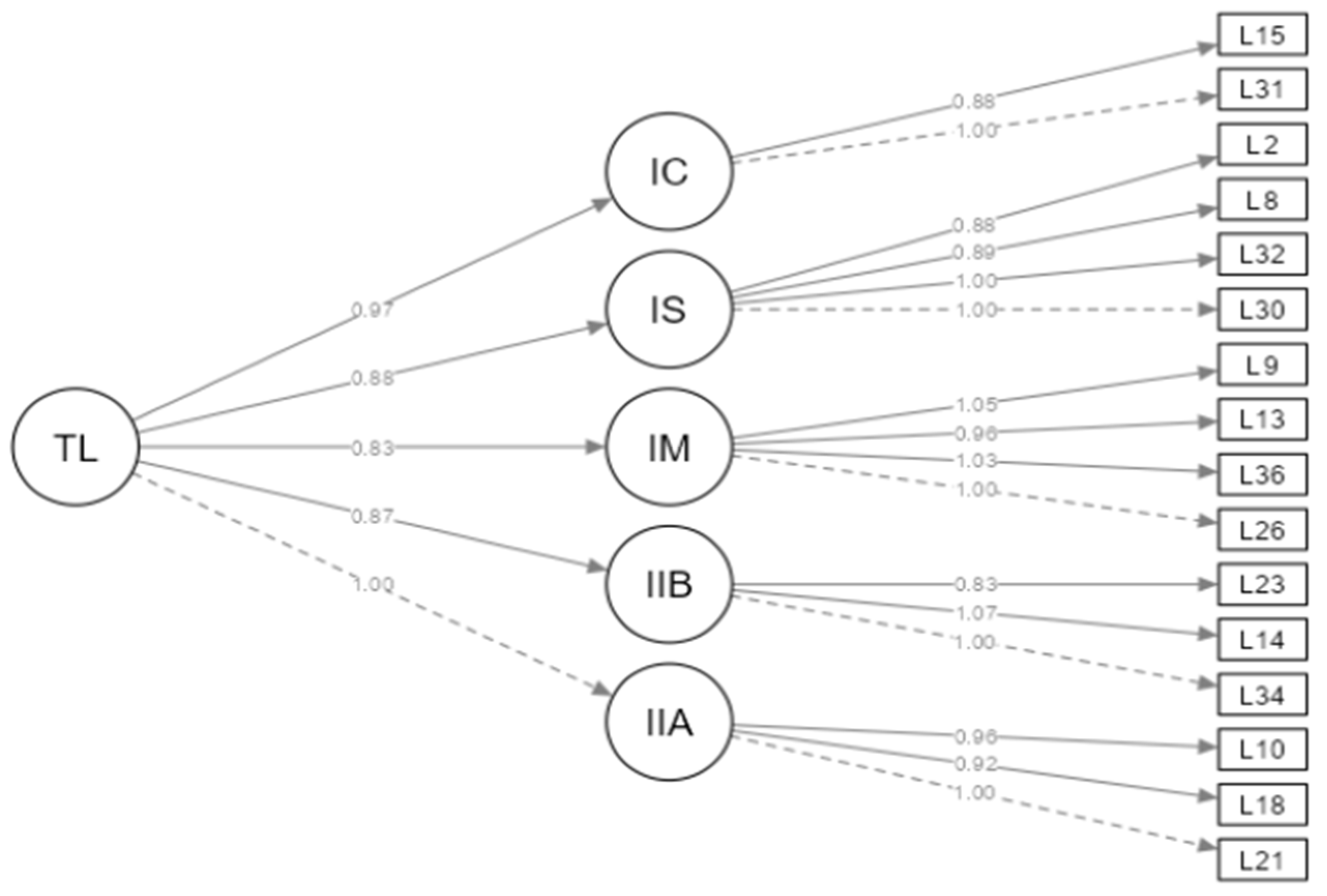
Transformational leadership (TL) comprises five different but interrelated dimensions. Idealized influence (attributed) (IIA), which is also known as “Builds Trust,” measures the level to which leaders gain trust, inspire power, and go beyond their own interests to help the followers (
Avolio & Bass, 2004). This dimension refers to the charismatic characteristics of a leader that make him/her respected and admired by the followers. Idealized influence (behavior) (IIB), also known as “Acts with integrity,” refers to the leader’s moral and ethical behavior. Leaders’ followers tend to imitate this behavior.
Inspirational motivation (IM), also known as “Encourages Others,” refers to leaders’ ability to articulate compelling visions, convey their beliefs in the followers’ capabilities, and use symbols to direct the followers’ energy (
Bass, 1985;
Avolio & Bass, 2004). Studies in the hospitality industry have revealed that inspirational motivation was one of the most significant factors in employees’ engagement and organizational identification.
Intellectual stimulation (IS), also called “Encourages innovative thinking,” refers to the leaders’ characteristics to develop creativity in employees, question existing beliefs, and ask employees for help in solving problems (
Bass & Bass, 2008). Recent studies on hotel environments show that the dimension of intellectual stimulation helps hotel employees to develop new creative ideas in hotel services (
Shafi et al., 2020).
Individualized consideration (IC), or “Coaches and develops people,” describes the ability of the leaders to focus on the developmental needs of the followers. In other words, leaders tend to act as mentors or coaches who provide personalized support to the followers (
Bass, 1985). Recent research in the hospitality industry found that this dimension significantly affects employees’ performance by fostering personal relationships between leaders and followers. More specifically, it has been observed that when employees receive personal attention, their satisfaction increases significantly (
Khalil & Sahibzadah, 2017;
Khan et al., 2020).
The second leadership style measured by the MLQ tool is Transactional leadership (TSL). This leadership style refers to the exchange relationships between leaders and followers that are focused on rewards, punishments, and clarification of work requirements to achieve the goals determined by the organization (
Bass, 1985;
Bass et al., 2003). This leadership style emphasizes maintaining the organization’s stability, ensuring that standard procedures are followed, and achieving the short-term goals through defined expectations and performance-based outcomes (
Avolio et al., 1999).
One of the dimensions of transactional leadership is Contingent reward (CR), also known as “Rewards achievement”. According to this dimension, transactional leaders outline, communicate, set goals, and reward employees when their performance is successful (
Avolio et al., 1999;
Bass et al., 2003). In other words, contingent rewards help specify employees’ roles and tasks, set performance criteria, and provide rewards when the goal is achieved (
Goodwin et al., 2001;
Wang et al., 2011). Regarding the hotel environment, contingent rewards have been recognized as key factors that can lead to employees’ extra effort, efficiency, and satisfaction (
Quintana et al., 2014).
Management-by-exception (active) (MBEA), or “Monitors deviations and mistakes,” includes the capability of a leader to observe the performance of their followers. These types of leaders seek deviations from set standards and take the necessary corrective measures to prevent mistakes from escalating (
Avolio & Bass, 2004). This dimension of leadership helps to maintain high performance standards.
Management-by-exception (passive) (MBEP), or “Fights Fires,” refers to the type of leaders who intervene to solve a problem, only after it becomes very serious and it deviates from performance standards (
Hinkin & Schriesheim, 2008). Because this leader intervenes only when the problems have arisen and the situation has become very difficult, this dimension has been linked to less positive results than active management-by-exception.
Passive leadership (PasL) or laissez-faire leadership describes the absence of leadership when the leader tries to avoid making decisions, abdicates leadership responsibilities, and intervenes very little, even when correction is required (
Bass & Avolio, 1995;
Skogstad et al., 2007). This dimension, also known as “Avoids involvement,” measures the times the leaders refuse to get involved in significant issues, are absent when needed, delay responses to urgent situations, and fail to follow up on subordinates’ requests (
Avolio & Bass, 2004).
Laissez–faire leadership is considered the most passive and least effective leadership style of the Full Range Leadership Model (
Antonakis et al., 2003). Contemporary studies have confirmed the negative impacts of passive laissez-faire leadership. More specifically, research on the hotel industry has shown a strong negative relationship between passive leadership and employees’ engagement. In particular, the dimension of laissez-faire can lead to role conflict, role ambiguity, and interpersonal conflict (
Kelloway et al., 2005;
Skogstad et al., 2007). In a few words, the behavior of laissez-faire leaders in hotel environments who do not involve themselves in situations can easily lead to employee turnover. Consequently, if personnel are under-motivated and work under job pressure, they will likely be unwilling to continue their work; thus, the rate of employees’ retention would be low (
Fouad, 2019;
Mwesigwa, 2018).
Several empirical studies have discovered that laissez-faire leadership is directly connected with high levels of work stress and workplace bullying, and lower levels of work confidence. Moreover, these studies revealed that passive leadership is negatively correlated with employees’ burnout, emotional exhaustion, and job satisfaction in the hospitality industry (
Guchait et al., 2016;
Che et al., 2017;
Glambek et al., 2018). The passive nature of laissez-faire leadership leads the followers to believe that their leader is not engaged with them, and he/she does not care about their development. This attitude can create negative interdependence, which can harm workplace outcomes (
Hinkin & Schriesheim, 2008).
Apart from leadership styles, the MLQ instrument measures the impact of leadership on followers (
Zerva et al., 2024;
Ntalakos et al., 2023,
2024a,
2024c). Extra effort (EE), also known as “Generates extra effort,” measures the extent to which the leaders influence followers to put in more effort than is usual without them being asked for it (
Avolio & Bass, 2004). Recent research has indicated that transformational leaders who communicate clearly and comprehensively, develop organizational goals, motivate employees to go beyond self-interests, and encourage them to put extra effort into difficult tasks (
Douglas, 2012;
Jackson et al., 2012). Regarding the hospitality industry, the two dimensions of idealized attribute (transformational leadership) and contingent reward (transactional leadership) have been identified as the key factors that can positively influence employees’ extra effort (
Quintana et al., 2014).
Effectiveness (EF), or “Is productive,” measures the efficiency of leaders when they interact with different organizational levels (
Avolio & Bass, 2004). According to
Hinkin and Tracey’s (
1994) research in the hospitality industry, the transformational leadership style has a direct impact on leaders’ effectiveness in areas such as communication openness, mission, and role clarity. Another study found a significant positive association between the dimensions of transformational leadership and the effectiveness of classroom and organizational leadership (
Pounder, 2008).
Satisfaction (SF), or “Generates satisfaction,” evaluates the employees’ satisfaction with the leaders’ methods of working with others (
Avolio & Bass, 2004). Transformational leadership can increase followers’ satisfaction when leaders direct followers to identify the organization’s goals (
Bartram & Casimir, 2007;
Bono & Judge, 2003). In the hotel environment, the implementation of transformational leadership can be seen as a source of trust, as followers believe leaders can combine the leadership roles with personality traits (such as showing concern for the followers’ needs) (
Whitener et al., 1998). According to
García-Guiu et al. (
2020), three of four transformational leadership dimensions are sufficient to enhance hotel employees’ job satisfaction.
The hospitality industry is characterized by strong employee–customer interactions, high intensity, and complex operations. Since hotel employees are the primary aspect of the hotel company that delivers service quality, it is very important to understand how leadership affects employee outcomes (
Kim et al., 2023). Several studies on the tourism industry suggest that transformational leadership is the main factor in driving employees’ job satisfaction, organizational identification, creativity, and task performance (
Tracey & Hinkin, 1994;
Hinkin & Tracey, 1994).
Empirical studies in Spanish hotels have shown that most transformational leadership dimensions (such as individualized consideration, intellectual stimulation, and idealized influence) can increase job satisfaction among both internal employees and external workers (
García-Guiu et al., 2020). A similar study in six-star hotels in Saudi Arabia, conducted after the COVID-19 pandemic, found that transformational leadership has a significant and positive effect on the employees’ engagement, job satisfaction, and psychological well-being. In addition, these variables mediate the relationship between transformational leadership and employee well-being (
Abolnasser et al., 2023).
Kim et al.’s (
2023) research in Korean hotels revealed that the different dimensions of transformational leadership have varying effects on the identification with the organization and creativity. One of the most direct effects of transformational leadership was an increase in employees’ identification with the organization, which in turn enhanced employees’ creativity and task performance (
Kim et al., 2023). From the same point of view,
Teoh et al. (
2022) suggested that the dimensions of transformational leadership (especially inspirational motivation and intellectual stimulation) have significantly influenced employee performance during challenging periods (
Teoh et al., 2022).
Regarding transactional leadership, research in Spanish luxury hotels found that employee outcomes (extra effort, perceived efficiency, and satisfaction) are strongly and positively associated with contingent rewards and idealized attributes (
Quintana et al., 2014). Research in the Egyptian hospitality industry has shown that transactional leadership has a positive effect on organizational agility. More specifically, this relationship is mediated by organizational trust and the use of ambidexterity, with contingent rewards serving as crucial motivational tools (
Elbaz et al., 2023).
On the contrary, passive leadership has been connected with negative outcomes in the tourism and hospitality industry. More specifically, a study of hotels in the United States found that passive leadership is significantly and negatively correlated with employees’ engagement (
Alonderiene & Majauskaite, 2016). Research in the Turkish hotel industry revealed that laissez-faire leadership did not significantly influence job satisfaction, suggesting that this leadership style was less effective than active leadership styles (
Sürücü & Sagbas, 2021).
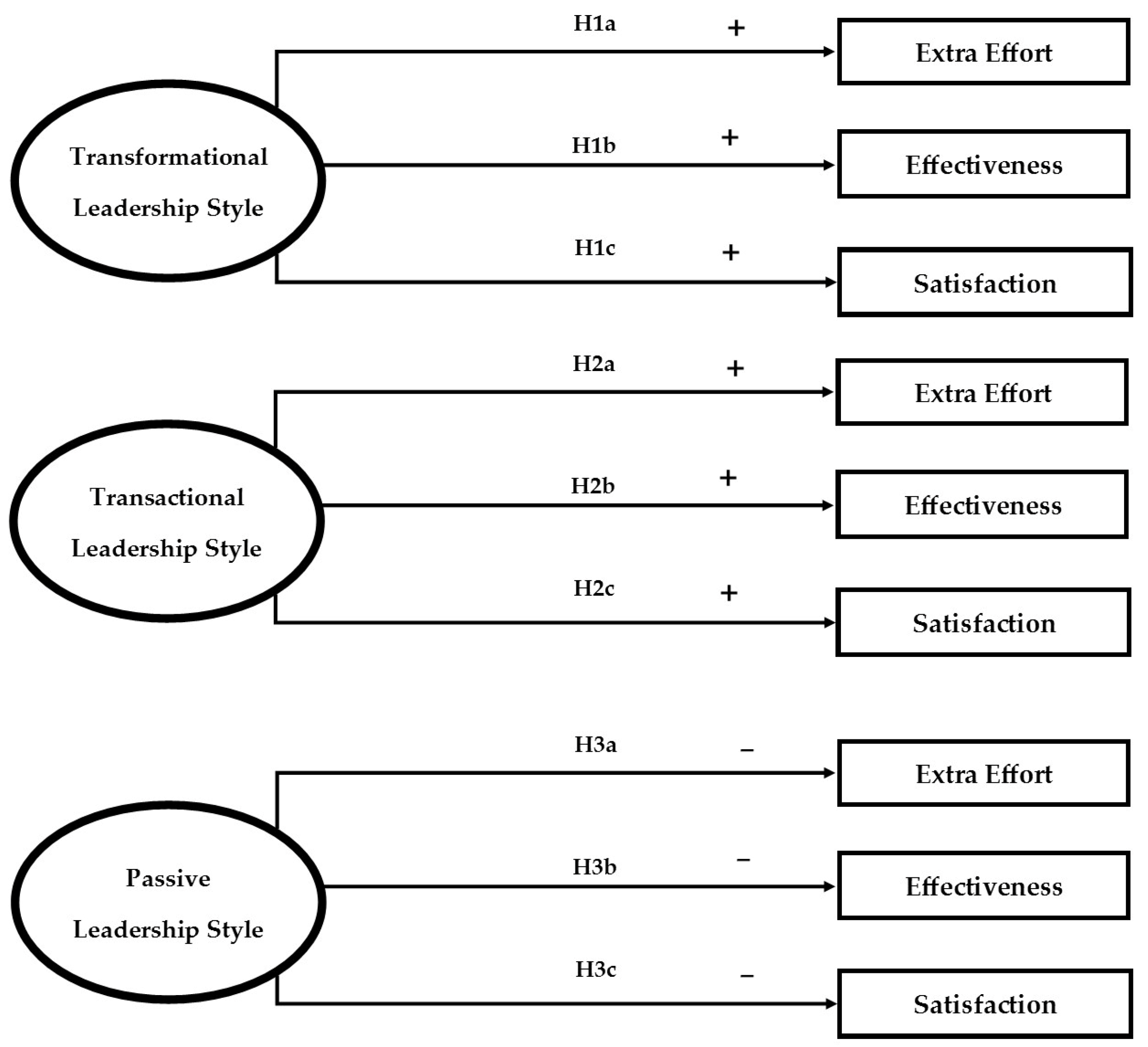
The literature review did not identify any significant empirical findings on the implementation of the MLQ measurement tool regarding the Greek hotel industry. Based on previous worldwide research, the authors formulated nine hypotheses to examine the validation and the relationship between different leadership styles and the employees’ extra effort, effectiveness, and satisfaction. These hypotheses, which are illustrated in
Figure 1, are the following:
H1: Transformational leadership is positively associated with the outcome of leadership.
H1a: Transformational leadership is positively associated with the extra effort of employees.
H1b: Transformational leadership is positively associated with the effectiveness of employees.
H1c: Transformational leadership is positively associated with the satisfaction of employees.
H2: Transactional leadership is positively associated with the outcome of leadership.
H2a: Transactional leadership is positively associated with the extra effort of employees.
H2b: Transactional leadership is positively associated with the effectiveness of employees.
H2c: Transactional leadership is positively associated with the satisfaction of employees.
H3: Passive leadership is negatively associated with the outcome of leadership.
H3a: Passive leadership is negatively associated with the extra effort of employees.
H3b: Passive leadership is negatively associated with the effectiveness of employees.
H3c: Passive leadership is negatively associated with the satisfaction of employees.
5. Discussion
The primary purpose of the present study was to investigate the implementation of the Multifactor Leadership Questionnaire in the Greek hotel industry. Additionally, the authors examined the relationships between transformational, transactional, and passive leadership and their associations with employee outcomes (extra effort, effectiveness, and satisfaction). The results largely confirm the proposed hypotheses and align with the latest empirical studies in international hospitality research, while also uncovering undetected patterns specific to the Greek hotel context (
García-Guiu et al., 2020;
Abolnasser et al., 2023).
The results of this research strongly support Hypothesis H1 and its sub-hypotheses (H1a, H1b, H1c), demonstrating that transformational leadership significantly and positively associates with the three employees’ outcome variables. To be more precise, the two dimensions—idealized influence attributed and individualized consideration—were singled out as the most significant predictors of extra effort, effectiveness, and satisfaction. These results align with recent systematic studies that consistently identify transformational leadership as a key factor in enhancing employees’ satisfaction, motivation, and performance regarding the hospitality industry (
Ali, 2024;
Kim et al., 2023). The range of
(82.3% to 86.3%) found in this study is indicative of the high association that transformational leadership has in the Greek hotel sector, possibly even to a greater extent than in other environments (
Filani et al., 2025).
The strong impact of idealized influence across all three outcomes aligns with current research highlighting the critical role of trust-building and ethical leadership in the hospitality sector (
Abolnasser et al., 2023). In the post-COVID-19 era, employees increasingly seek leaders who are faithful to their words and possess strong moral principles. Previous research shows that these leaders’ attitudes have a profoundly positive impact on the psychological well-being and job satisfaction of hotel employees (
Abolnasser et al., 2023). The Greek hotel environment, characterized by strong interpersonal relationships and collectivistic cultural values, may further emphasize the significance of idealized influence as employees seek leaders who are trustworthy and ethical (
García-Guiu et al., 2020).
Similarly, the major association of individualized consideration on employee outcomes aligns with recent findings from worldwide hospitality research.
Kim et al. (
2023) found that individualized consideration directly leads to organizational identification and creativity among Korean hotel employees, resulting in increased task performance. Regarding the Spanish hotel industry,
García-Guiu et al. (
2020) found that individualized consideration was one of three transformational factors sufficient to raise the level of job satisfaction among internal employees and outsourced workers. The characteristics of caring and support for development seem to be very important among hotel employees, as they often work in stressful situations, are at the frontline of customer service, and must perform emotional labor (
Helalat et al., 2025).
One of the most interesting discoveries of this research is that intellectual stimulation shows a significant association with effectiveness alone, while the relationship with extra effort and satisfaction has not been observed. Although intellectual stimulation is associated with creative thinking, which usually elevates perceptions of productivity and organizational effectiveness, it may not induce employees to a higher level of extra effort or personal satisfaction (
Teoh et al., 2022). Additionally, contemporary research in the Malaysian hospitality industry has revealed that the primary role of intellectual stimulation is to initiate creative problem-solving and the adoption of new behaviors, rather than quickly generating positive emotions such as satisfaction (
Teoh et al., 2022). As a result, the Greek hotel sector, which is progressively focusing on service innovation and differentiation, can serve as a source of inspiration for leaders, helping them develop new solutions to operational issues (
Shafi et al., 2020).
That employee outcomes are primarily influenced by transformational leadership is consistent with recent theoretical advances that question the traditional linear perspective on the impact of leadership styles on performance.
Ali (
2024) conducted a meta-analysis of transformational leadership in tourism and hospitality settings, revealing that the path by which transformational behaviors affect outcomes is significantly more complex than previously thought. It was previously known that contextual moderators, such as organizational size, market segment, and cultural dimensions, highly modify the strength and direction of the effects. This more context-dependent view is well supported by
Helalat et al. (
2025), whose study of hotels in Jordan found that work engagement is the primary mediator of the effect of transformational leadership on employee performance, indicating that the leadership-outcome link is indirect, operating through engagement. Likewise,
Filani et al. (
2025) illustrated in their study of Lagos hotels that the success of transformational leadership varies widely depending on organizational infrastructure and HR practices, with leadership behaviors having a greater impact in organizations with a strong performance management system.
These recent works change our perspective by focusing not on whether transformational leadership has an effect, but on how and under what conditions it leads to better results. This change in focus has significant implications for the interpretation of our Greek hotel data, in which the level of idealized influence and individualized consideration may be indicative of particular cultural expectations regarding leader-follower relationships in Mediterranean organizational environments.
Moreover, the findings of this study strongly support Hypothesis H2 with its sub-hypotheses (H2a, H2b, H2c), indicating that transactional leadership is positively associated with extra effort, effectiveness, and satisfaction. In fact, contingent reward was the only significant facet of transactional leadership, showing strong positive associations with all three outcomes (
values varying between 74.9% and 85.7%). This outcome is supported by another study of Spanish luxury hotels, which identified contingent reward as the most influential factor in positive employee outcomes (
Quintana et al., 2014).
It is worth noting that management-by-exception (active) surprisingly did not have a significant association in this research. On the contrary, several previous studies indicate its important role in maintaining performance standards (
Hinkin & Schriesheim, 2008). This result may indicate a cultural preference in the Greek hospitality sector for positive reinforcement over corrective action. In addition, this result may suggest that the monitoring and corrective aspects of transactional leadership, which are aimed at service environments, are less effective in those environments that require a high degree of autonomy and initiative (
Elbaz et al., 2023;
Ali et al., 2024). Another contemporary study in hospitality suggests that although contingent rewards remain effective, excessive monitoring may negatively affect employees’ inspirational motivation and creativity, which are essential for providing excellent service (
Book et al., 2019).
The research findings partially support Hypotheses 3 and its sub-hypotheses (H3a, H3b, H3c), revealing a complex pattern. On one hand, laissez-faire leadership is negatively associated with the three outcome variables (extra effort, effectiveness, and satisfaction). On the other hand, management-by-exception (passive) surprisingly associates positively with these variables. The strong negative impact of laissez-faire leadership on extra effort (
β = −0.643), effectiveness (
β = −0.661), and satisfaction (
β = −0.726) confirms recent research, which emphasized the catastrophic effects of passive leadership in the hospitality industry (
Sürücü & Sagbas, 2021;
Che et al., 2017).
The passive leadership results align with previous systematic reviews indicating that a laissez-faire leadership style increases job stress, workplace bullying, and emotional exhaustion; at the same time, it lowers job confidence and satisfaction in the hospitality industry (
Guchait et al., 2016;
Glambek et al., 2018). The lack of a leader’s intervention appears to be particularly important in the hotel industry, where employees are in a continuous and unpredictable interaction with customers and service problems that must be solved immediately with the help of a supervisor (
Skogstad et al., 2007). According to
Sürücü and Sagbas’s (
2021) research on the Turkish hotel industry, the laissez-faire leadership style does not have a significant effect on job satisfaction, suggesting that it is incompatible with the dynamic, high-interaction nature of the hospitality environment (
Sürücü & Sagbas, 2021).
On the contrary, the surprising positive associations between management-by-exception (passive) and all three outcome variables create a fascinating paradox that warrants cautious interpretation. This result differs from the conventional MLQ theory, which assumes that passive management-by-exception is a source of negative leadership behavior (
Avolio & Bass, 2004). A potential reason for that can be found in recent research on leadership autonomy and employees’ empowerment in the hospitality environment.
Baum (
2015) highlighted that it is very important for the frontline employees to be empowered and able to make decisions without frequently consulting their supervisors. Under these circumstances, the passive management-by-exception dimension may not be considered a neglectful absence, but rather a delegation of authority and trust in employees’ competencies (
Zhang & Bartol, 2010).
This interpretation aligns with recent research on servant and empowering leadership styles, which indicates that usually effective leaders refrain from dominating as they give their subordinates the opportunity to use their own judgment and creativity (
Liden et al., 2015). In the Greek hotel industry, where experienced hospitality professionals are typically highly knowledgeable in operations, the lack of interference in daily activities (a feature of passive management-by-exception) may actually lead to an increase in autonomy, self-efficacy, and job satisfaction. Nevertheless, this positive effect must be distinguished from the actual transfer of responsibility, which is a characteristic of laissez-faire leadership. Although management-by-exception (passive) refers to leaders who intervene when needed while maintaining distance most of the time, laissez-faire leaders avoid involvement even when help is obviously required (
Hinkin & Schriesheim, 2008).
Recent studies have started to investigate these differences more carefully.
Skogstad et al. (
2015) found that the impact of laissez-faire leadership could spread over time; hence, the non-significant effects at the beginning could become significantly negative in longitudinal studies. According to
Bagheri et al. (
2015), the he long-term detrimental effects of a passive leadership style can erode organizational culture and employees’ well-being. Future research should focus on longitudinal designs to test whether the seemingly positive effects of management-by-exception (passive) remain valid over time or represent a temporary perception of autonomy that later turns into the feeling of being left alone.
6. Theoretical Implications
The findings of the present study contribute to the evidence that the Multiple Multifactor Questionnaire is a universally valid concept in the hospitality industry; this study also uncovered significant cultural and contextual differences. The main association of transformational leadership in explaining employee outcomes, along with the helping effect of contingent reward from transactional leadership, indicates that leadership in the Greek hotel environment requires a balanced approach. On the one hand, leaders should inspire and develop their employees with the implication of transformational leadership methods. On the other hand, supervisors should provide recognition structures through transactional mechanisms (
Bond, 1998;
Prabowo et al., 2018).
The MLQ’s successful validation in the Greek hospitality industry has a profound impact not only on cross-cultural leadership research but also on the revelation of cultural differences in leadership measurement. A series of recent studies on the Full Range Leadership Model’s validation across diverse cultures has shown that, while the model is universally applicable, it may require local adjustments.
To illustrate,
Batista-Foguet et al. (
2021), through their work with Spanish and American samples, challenged traditional beliefs about reflective measurement by uncovering formative factor structures in the MLQ, suggesting that cultural contexts shape how leadership dimensions form higher-order constructs. Meanwhile,
Gruszczynska et al.’s (
2022) Polish validation study culminated in an 18-item short form with a 3-factor structure comprising transformational-supportive, inspirational goal-oriented, and passive–avoidant leadership, thereby demonstrating that factor reduction is possible without compromising construct validity across various organizational settings. In their work with Iranian medical faculty,
Bagheri et al. (
2015) had to limit the MLQ to 18 items across six subscales, underscoring the need for adaptations to the instrument when working with Middle Eastern cultural norms and organizational hierarchies.
On the other hand, African studies of validation present contradictory results: while
Ugwu and Okojie (
2016) managed to reconfirm the full nine-factor MLQ structure in Nigerian organizational environments,
Adarkwah and Zeyuan (
2020) revealed a low correlation between the self-reported transformational leadership of the principals and teachers’ motivation in the Ghanaian schools. The current Greek hotel research, which managed to validate the nine-factor model except for having to use a second-order model for the removal of two items, thereby indirectly conforming to the comprehensive figures of the validation studies and implying that the Mediterranean hospitality cultures might be structurally similar to the Western organizational contexts, yet they operate differently.
Leading a Greek hotel team based on idealized influence (attributed) and individualized consideration, which prominently predicts staff behaviors, is not alien to, and even extends, a picture of recent international hospitality and organizational studies; at the same time, it uncovers local preferences in leadership behaviors.
Carter et al. (
2024) report that ‘personalized leadership’ was the most potent predictor of outcomes (
) in the Australian pharmacy setting, which is conceptually in line with the individualized consideration component that this study has identified; thus, the relationally focused leadership is possibly a dominant theme in the service-oriented professions of varying cultural backgrounds. The Nigerian validation work by
Ugwu and Okojie (
2016) also emphasized the transformational elements. However, it acknowledged that factors such as hierarchical organizational structures and power distance modulated the implementation of idealized influence behaviors in African organizations.
On the other hand, a Polish study identified inspirational, goal-oriented, and transformationally supportive leadership as distinct factors rather than as merged constructs (
Gruszczynska et al., 2022), suggesting that the visionary and supportive sides of transformational leadership in Central European regions might be more independent. Such comparative results suggest that the core structures of the Full Range Leadership Model exhibit stable, universal applicability; nevertheless, cultural values, organizational contexts, and industry-specific demands moderate the relative significance and manifestations of particular leadership facets. Trust-building (idealized influence attributed) and providing personalized developmental support (individualized consideration) carried out in the Greek hotel industry probably point to the overlap of the Mediterranean cultural values that emphasize collectivism, the family business model widely seen in Greek hospitality, and the need for a high-touch service that is typical of the tourism sector. This cross-cultural interaction implies that leadership training programs should not only be tailored to organizational contexts but also to the specific cultural backgrounds of leaders and followers, thus going beyond
Avolio and Bass’s (
2004) initial claim of universal applicability to culturally intelligent implementation.
7. Practical Implications
The result of this research provides practical insights for hotel managers and HR professionals in the Greek hospitality sector. First, leadership development initiatives must align the training with the dimensions of idealized influence and individualized consideration, which, according to research, have the strongest effects on employee outcomes. For instance, specific ethical decision-making, trust-building communication, and personalized developmental support models could focus on providing developmental support to meet employees’ diverse needs (
Abolnasser et al., 2023). Second, the organization should establish strong contingent reward systems that clearly connect performance, recognition, and promotion, as this transactional element has a considerable positive impact on motivation and satisfaction (
Elbaz et al., 2023).
Hotel companies should develop psycho-structured leadership projects that combine formal education and experiential learning (
Viterouli et al., 2025b). Recent studies in the hospitality industry have shown that a leadership training program is more successful when it incorporates role-playing, case study analysis of actual hotel situations, and a mentoring relationship between a senior leader and an emerging leader (
Tracey & Hinkin, 1994). These programs should address the unique challenges of the hospitality environment, such as managing diversity and multicultural teams, handling customer service situations under pressure, and maintaining employee morale during seasonal fluctuations (
Kara et al., 2013). Greek hotels should establish leadership academies or partnerships with hospitality management institutions to offer continuous professional development opportunities for supervisors and managers.
To implement individualized consideration, hotel managers must develop intricate employee assessment and development systems. Hotels are required to formulate personalized development plans for every employee. These plans would be related to specific career aspirations, skill deficits, and learning preferences (
Kim et al., 2023). The content of regular one-to-one meetings between supervisors and subordinates should not only focus on performance evaluation, but also personal growth, career progression, and even work–life balance concerns (
Khan et al., 2020). According to recent research on international hotels, leaders demonstrate a genuine interest in employees’ personal development and career goals, employees’ turnover intentions are significantly reduced, and their organizational commitment increases (
Book et al., 2019). Greek hotels operating in competitive tourism markets could thus become employers of choice by differentiating themselves through investment in comprehensive employee development programs that manifest individualized consideration.
Recognition and reward systems should be restricted to guarantee their transparency, fairness, and alignment with the organization’s values. Contemporary research in luxury hotels indicates that the most effective contingent reward systems must provide a combination of incentives (such as bonuses, pay increases, and profit-sharing) as well as non-monetary recognition (such as employee-of-the-month programs, public acknowledgment, extra responsibilities, and career advancement opportunities) (
Quintana et al., 2014). Hotels should define clear performance standards that employees understand and consider attainable. For these reasons, the reward criteria should be objective, measurable, and consistently applied across all departments (
Elbaz et al., 2023). Moreover, recent research in the Egyptian hospitality sector reveals that when employees perceive reward systems as fair and transparent, they are more engaged with the organization (
Elbaz et al., 2023). In the Greek hotel industry, hotel companies may benefit from real-time recognition tools, enabling managers and coworkers to instantly recognize excellent performance, which could foster a culture of continuous positive reinforcement.
Hotels’ human resource departments must create detailed recruitment and selection processes to evaluate candidates’ fit with transformational leadership cultures (
Belias et al., 2025;
Ntalakos et al., 2024b). Research within the hospitality sector has shown that when hotels hire individuals who recognize the need for ethical leadership and for teamwork, then transformational leadership practices are strengthened (
García-Guiu et al., 2020). The selection interview should comprise behavioral questions that evaluate the candidates’ attitudes towards ethical dilemmas, their willingness to receive feedback, and their ability to work independently without much supervision (
Filani et al., 2025). Furthermore, hotels should invest in comprehensive onboarding programs that introduce the hotel’s values, explain leadership expectations, and inform new employees about development resources, so they are aware of the hotel’s leadership culture from their first day (
Abolnasser et al., 2023).
The focus of hotels’ performance management systems must shift towards integrating both outcome-based metrics and the behavioral aspects of leadership effectiveness.
Teoh et al. (
2022) discovered that conventional systems for performance evaluation, which usually emphasize financial results or customers’ satisfaction scores, may lead to the unintended consequence of merely facilitating the increase in transactional leadership behaviors by managers while ignoring the transformational ones. Therefore, hotels are recommended to install 360-degree feedback instruments that allow employees to express their opinions on their supervisors’ leadership behaviors. This would provide valuable data for leadership development interventions (
Hinkin & Tracey, 1994). These evaluations should be conducted regularly and include specific action planning sessions, during which managers receive coaching in areas of development identified through the feedback (
Kim et al., 2023). Greek hotels may use leadership effectiveness as a benchmark for measuring managers’ performance; hence, decisions on managers’ salaries and promotions may be partially based on employee feedback on leadership quality.
To reverse the effects of laissez-faire leadership style, hotels need to combat such a style actively. Organizations should regularly conduct leadership effectiveness assessments using valid instruments, such as the MLQ, to identify managers who exhibit high levels of passive–avoidant dimensions (
Avolio & Bass, 2004). When a leader is identified as passive, the response should be immediate coaching through the manager’s intervention. The coaching focus should be on increasing the leader’s visibility, being more responsive to employees’ concerns, and more proactive in solving problems (
Skogstad et al., 2007). Recent research in the Turkish hospitality industry reveals that laissez-faire leadership is more prevalent during periods of high workload and stress. As a result, during these periods, it is better to offer relaxation rather than additional work or support, and resources should also be empowered during peak seasons and in the face of operational challenges (
Sürücü & Sagbas, 2021). Hotels should establish clear mechanisms to ensure that managers maintain regular contact with their employees, respond promptly to their requests, and actively participate in the department’s work, rather than remaining passive and isolated in administrative roles.
The key problems of the hospitality industry, such as high employee turnover, emotional exhaustion, and work–life imbalance, require targeted leadership interventions. Transformational leaders who focus on employees’ well-being, maintain their own work–life balance, and foster supportive team atmospheres have great potential to reduce employee burnout and the intention to quit (
Abolnasser et al., 2023). Greek hotels should implement wellness programs that encompass stress management, offer employees flexible schedules, and regularly assess employees’ mental health and satisfaction in the hotel industry (
Kara et al., 2013). By training leaders, managers could recognize burnout symptoms in employees, especially when they have lost their enthusiasm, have become absent, and the quality of service has been lowered without even notifying them. As a result, managers should respond by having supportive conversations and providing assistance to their employees before the problems escalate (
Guchait et al., 2016). Hotels should plan to create cultures in which discussing job stress is a regular occurrence and in which people, rather than being stigmatized, are encouraged to seek support.
Furthermore, hotel companies need to leverage the use of the internet to enhance leadership effectiveness. Online platforms can facilitate more frequent and in-depth leader-member interactions, especially in large hotels where physical proximity between supervisors and employees may be limited (
Book et al., 2019). Mobile applications can facilitate real-time recognition, allowing managers to instantly acknowledge excellent performance and share positive feedback with the entire team (
Elbaz et al., 2023). Hotels are required to subscribe to learning management systems that offer employees unlimited access to professional development resources, enabling individualized consideration by accommodating different learning preferences and schedules (
Filani et al., 2025). Additionally, data analytics tools can help identify trends in employees’ performance, engagement, and satisfaction. This could enable managers to take more proactive and personalized leadership actions (
Teoh et al., 2022).
Greek hotels operating in family-owned or small-to-medium companies face leadership issues distinct from those in big companies and require a culturally sensitive approach. The research shows that in family-run hotel companies, leadership succession planning is the most important, as young employees of these family companies may not have received management training or may find it difficult to obtain the approval of the employees who have been with the company for a long time (
Ariza-Montes et al., 2017). These types of organizations should consider external leadership coaching and mentoring programs to guide new leaders in acquiring the necessary transformational skills while preserving traditional organizational cultures (
García-Guiu et al., 2020). Small hotels may not have a human resource department, and hence owner–managers must be provided with learning training that equips them with knowledge of employee development, performance management, and conflict resolution (
Sürücü & Sagbas, 2021).
Finally, organizations in the hotel industry and hospitality education institutions in Greece should collaborate to establish leadership standards and certification programs that are valid throughout the hospitality industry. Recent research reveals that adopting specific leadership frameworks enables these organizations to share knowledge, benchmark, and achieve continuous improvement across the sector (
Kim et al., 2023). One way these institutes can contribute to leadership excellence is by creating leadership excellence awards. These awards would acknowledge the hotels that demonstrate admirable leadership behaviors, encourage positive competition among hotels, and push organizations to dedicate more resources to leaders’ development (
Tracey & Hinkin, 1994). Furthermore, hospitality management programs should integrate research-based leadership training that equips students with knowledge of leadership theories and the skills to practice both transformational and transactional leadership effectively in the hospitality industry (
Teoh et al., 2022). The Greek hospitality industry will become more competitive, offer a better quality of service, and create better working conditions for thousands of tourism employees.
8. Limitations and Future Directions
Although this paper is instrumental in shedding light on hospitality leadership in Greece and in adapting the MLQ to a novel cultural context, several methodological and conceptual constraints need to be recognized. Additionally, there are suggestions for further studies that could build on and expand these results.
A relatively small sample size of 211 hotel employees that barely meets the minimum requirements for structural equation modeling (
Wolf et al., 2013) is undoubtedly a limitation when validating complex multidimensional instruments such as the MLQ. According to the latest methodological guidelines, CFA models typically require 200–400 respondents to yield reliable results, especially when they include several latent factors with moderate-to-high loadings (
Gaskin et al., 2025;
Wolf et al., 2013). The sample in this study demonstrated adequate fit indices. The factor loadings in the study were, by and large, strong (most items exceeded 0.60); however, a larger sample would be more statistically sound, allowing detection of minimal differences between leadership dimensions, and would also provide greater generalizability. Subsequent validation studies in the Greek hospitality field would do well to include a sample of 300–500 participants to obtain more reliable parameter estimates and greater confidence in the factor structure’s invariance across different hotel segments and areas.
The cross-sectional design used in this paper has inherent limitations in this type of research and limits causal inference; at the same time, it might be a source of standard method variance (CMV). The entire dataset was collected at a single point in time via employee self-reports, which, in addition to shared method variance, might further inflate the correlation between the variables (
So et al., 2025). Even though the authors tried to reduce confusion and bias (e.g., by maintaining respondents’ confidentiality and segmenting the predictor and outcome variables on the same questionnaire), they still could not eliminate CMV.
Several methodological investigations in the hospitality industry have shown that longitudinal studies significantly reduce standard method bias and improve construct validity compared to cross-sectional studies (
So et al., 2025). Research that attempts to replicate the study’s results, using longitudinal methods with multiple measurement moments, is necessary to verify the temporary stability of the MLQ factor structure, identify changes in leadership styles and their effects, and provide support for causal relationships between leadership behaviors and employee outcomes.
Moreover, a multi-source approach to data collection (e.g., 360-degree assessments that include self-reports, peer evaluations, and subordinate ratings) would not only eliminate single-source bias but also provide a more comprehensive picture of leadership effectiveness (
Antonakis et al., 2003).
The research was limited to four- and five-star hotels, so the findings cannot be generalized to other segments of the hospitality industry (e.g., budget hotels, boutique establishments, or restaurants). The unique features of upscale hotels, such as more formal hierarchies, greater organizational resources, and typical service expectations, may affect how leadership behaviors are expressed and how employees perceive them. Subsequent studies need to broaden MLQ validation across various hospitality contexts, including small-to-medium family-owned hotels, which constitute the majority of the Greek tourism sector; seasonal resort properties with temporary workforces; and other service sectors beyond hotels.
In addition, cross-cultural comparative studies investigating MLQ measurement invariance between Greek hotels and hospitality organizations and those in other Mediterranean countries (e.g., Italy, Spain, Portugal) will reveal the extent to which the current results reflect pan-Mediterranean cultural values rather than solely Greek organizational dynamics.
Even though the model fit is acceptable, it is necessary to recognize that removing two items from the transformational leadership scale and adopting a second-order factor structure may represent areas for refinement of the instrument. Recent critical reviews of the MLQ have revealed persistent psychometric issues, including very high intercorrelations among the dimensions of transformational leadership and difficulty differentiating some transactional and passive behavior types (
Batista-Foguet et al., 2021). It raises a new question: why is there a positive correlation between management-by-exception (passive) and employee outcomes? This relationship should be studied further using qualitative research methods. Further research should be conducted using a mixed-methods approach, combining quantitative validation with qualitative interviews, to examine how Greek hotel employees and managers understand and experience various leadership behaviors in real life. The findings could pave the way for culturally sensitive versions of the MLQ that retain cross-cultural comparability while capturing the nuance of context-specific leadership.
Given the dynamic nature of the hospitality industry and ongoing post-pandemic organizational transformations, longitudinal research tracking leadership development programs and their effects on employee outcomes would provide valuable insights for both theory and practice. Future investigations should examine whether leadership training interventions that emphasize transformational and contingent reward behaviors produce sustained improvements in employee extra effort, effectiveness, and satisfaction over time. Additionally, research examining how leadership effectiveness varies across different operational contexts (e.g., high-season versus low-season periods, crisis management situations, or organizational change initiatives) would enhance ecological validity and practical applicability of the Full Range Leadership Model in hospitality settings.
9. Conclusions
The present study is a research work that furthers hospitality leadership knowledge, both theoretically and practically, by offering solid empirical evidence for the Multifactor Leadership Questionnaire in the hotel industry of Greece. First, this research paper theoretically elaborates on the Full Range Leadership Model in the largely uncharted Mediterranean cultural and organizational context, thus providing evidence that although the central concepts of transformational, transactional, and passive leadership are universal, their significance and the way they are exhibited are influenced by cultural values and industry-specific requirements. This study confirmed the nine-factor structure of the MLQ; thus, the performance of a second-order model for transformational leadership represents a good step towards continuous methodological improvement in leadership measurement across diverse cultural settings, as well as in cross-cultural leadership theory.
The findings provide substantial grounds for the contention that among the various dimensions of transformational leadership, the main ways in which it impacts employee extra effort, effectiveness, and satisfaction in Greek hospitality organizations are through idealized influence (attributed) and individualized consideration. The contingent reward also shows significant additional effects, whereas laissez-faire leadership is consistently linked to adverse employee outcomes. Such outcomes are consistent with international hospitality research and, at the same time, reveal particular culturally specific elements that reflect Mediterranean collectivistic values and Greek organizational culture, which relies on relationships.
This study serves as a valuable guide, backed by scientific evidence, for managers in the hospitality sector and human resource professionals on leadership development, hiring strategies, and performance management systems. Trust-building and personalized developmental assistance have a significant impact on leadership training; therefore, these programs must be employed in areas such as ethical decision-making, sincere communication, and one-on-one employee development. Companies ought to put in place open and fair recognition systems that associate performance with truly significant rewards; at the same time, they must be on the lookout for, and thus actively tackle, passive leadership behaviors that derail employee engagement and lower organizational performance.
Further research can overcome the limitations of this study by adopting longitudinal designs, including larger, more diverse samples from across segments of the hospitality industry, and using mixed-method approaches to capture the real-life experiences of leadership in Greek hotels. As the hospitality industry worldwide undergoes a post-pandemic transformation, leadership research should also evolve to address issues arising from digital transformation, the imperative of sustainability, and changing workforce expectations. Leadership that combines an engaging vision with real developmental support and fair recognition will remain crucial not only for employees’ well-being but also for the organization’s success in this ever-changing, people-dependent sector.