


Abstract
Problem: Entrepreneurship education continues to expand, yet it remains fragmented across disciplines and loosely connected to the knowledge, innovation, and venture ecosystems that shape entrepreneurial success. At the same time, AI is transforming research, collaboration, and venture development, but its use in education is typically limited to narrow, task-specific applications rather than ecosystem-level integration. Objective: This paper seeks to develop a comprehensive conceptual model for integrating AI into entrepreneurship education by positioning AI as a connective infrastructure that links and activates the knowledge, innovation, and venture ecosystems. Methods: The model is derived through an integrative synthesis of literature, programs, and activities on entrepreneurship education, ecosystem-based learning, and AI-enabled research and innovation practices, combined with an analysis of gaps in current educational approaches. Key Findings: The proposed model defines a progressive learning pathway consisting of (1) AI competency training that builds foundational capacities in critical judgment, responsible application, and creative adaptation; (2) AI praxis labs that use AI-curated ecosystem data to support iterative, project-based learning; and (3) venture studios where students scale outputs into innovations and ventures through structured ecosystem engagement. This pathway demonstrates how AI can function as a structural mediator of problem definition, research design, experimentation, analysis, and narrative translation. Contributions: This paper reframes entrepreneurship education as an iterative, inclusive, and ecosystem-connected process enabled by AI infrastructure. It offers a new theoretical lens for understanding AI’s educational role and provides actionable implications for curriculum design, institutional readiness, and policy development while identifying avenues for future research on competency development and ecosystem impacts.
1. Introduction
Entrepreneurship education has become an integral element of graduate training across diverse disciplines Bauman and Lucy (2021). Universities have invested heavily in certificates, incubators, accelerators, and venture studios that prepare students to translate ideas into innovations and transform innovations into ventures Jardim et al. (2021). While these initiatives have generated significant value, they are often developed in relative isolation, with programs contained within specific academic units or institutional contexts Ballesteros et al. (2023). As a result, the essential connections among knowledge generation, innovation processes, and venture ecosystems remain underdeveloped. Strengthening these connections is crucial for preparing students to operate in complex, interdisciplinary, and rapidly evolving environments where entrepreneurship requires the integration of diverse expertise and collaboration across organizational boundaries.
At the same time, AI has emerged as both a transformative technology and a bridging infrastructure for knowledge creation, innovation, and venture development Neştian et al. (2020); Vecchiarini and Somia (2023). Advances in large language models, knowledge graphs, and agentic models and systems now make it possible to synthesize literature rapidly, identify expert networks, map market needs, and connect to investors and communities Brand et al. (2023); J. Chen et al. (2024); Córdova-Esparza (2025); Kong et al. (2024); Susnjak et al. (2025); Y. Wang et al. (2023). These capabilities open new possibilities for rethinking entrepreneurship education—not as a siloed and discipline-bound practice but as an AI-augmented model that integrates knowledge, innovation, and venture ecosystems in more inclusive, scalable, and adaptive ways.
Central to this reconceptualization is the principle of AI for everyone Mihalcea et al. (2025). The goal is not to turn all students into AI developers but to prepare them to engage meaningfully with AI in ways that strengthen entrepreneurial practice Vecchiarini and Somia (2023); Winkler et al. (2023). Students must be equipped to interrogate AI outputs with critical judgment, apply AI responsibly in varied contexts, and adapt it creatively when pursuing opportunities Bearman et al. (2024). Importantly, the model does not assign students to fixed roles. Instead, they may fluidly move among roles as users, evaluators, and innovators, depending on the context of their entrepreneurial journey R. Bell and Bell (2023). At one stage, a student may act as a user, employing AI to scan literature or explore market trends. At another, the same student may serve as an evaluator, critically assessing the accuracy, reliability, and ethical implications of AI-generated insights. In yet another context, the student may become an innovator, experimenting with or adapting AI tools for novel applications in pursuit of venture opportunities. This flexibility reflects the very nature of entrepreneurship, which demands the integration of multiple skills, perspectives, and modes of thinking Kuratko and Covin (2025). By embedding AI as both a partner in discovery and a subject of critique, entrepreneurship education can cultivate graduates who are not only entrepreneurial in mindset but also prepared to navigate—and shape—the evolving landscape of AI Giuggioli and Pellegrini (2023).
The objective of this paper is to develop a comprehensive conceptual model that integrates AI into entrepreneurship education—not as an add-on tool but as connective infrastructure linking knowledge generation, innovation pipelines, and venture ecosystems. Specifically, this paper proposes an AI-augmented graduate model that explains how AI can curate ecosystem data, scaffold iterative learning cycles, and support students in fluid roles as users, evaluators, and innovators.
This model was developed through an integrative synthesis methodology. We conducted a structured review of the literature on entrepreneurship education, ecosystem-based learning, and AI-enabled research and innovation; examined representative programs such as incubators, capstones, and venture studios; and performed a gap analysis of existing educational structures (summarized in Section 2). This conceptual grounding reflects analysis of program limitations, emerging AI capabilities, and persistent disconnections between current educational practices and ecosystem needs. The resulting framework is conceptual rather than empirical but is systematically derived from the convergence of these domains.
The scope of the model is twofold. At the ecosystem level, it positions AI as enabling infrastructure that supports real-time connectivity among universities, industry, policymakers, and communities. At the pedagogical level, it articulates a progressive, iterative learning–venture pathway consisting of competency-based foundations, AI praxis labs, and venture studios. Throughout, AI is embedded not only as a partner in discovery and design but also as an object of critical evaluation.
By articulating a clear objective and methodological foundation, the Introduction situates the AI-augmented model as both a theoretical contribution and a practical roadmap for reimagining entrepreneurship education in the age of AI. The subsequent sections elaborate on this framework and examine its implications for pedagogy, institutions, policy, and future research.
2. Background and Related Work
2.1. Pedagogical Foundations for Entrepreneurship Education
Entrepreneurship education is deeply informed by Experiential Learning Theory, which conceptualizes learning as an iterative cycle of concrete experience, reflective observation, abstract conceptualization, and active experimentation Motta and Galina (2023). This cyclical structure provides a pedagogical foundation for many forms of entrepreneurship training—such as design thinking, lean startup, and venture-based learning—that rely on repeated cycles of ideation, testing, and reflection. The theory also emphasizes learning as a dynamic, recursive process rather than a linear progression—a perspective that aligns closely with the iterative learning venture cycle proposed in this paper. By foregrounding the importance of experience, reflection, and experimentation, experiential learning provides a natural bridge to AI-augmented approaches, where AI can support rapid exploration, scaffold reflective analysis, and accelerate cycles of application L. Chen et al. (2024).
Complementing experiential theory, constructivist and sociocultural learning perspectives position entrepreneurship education as fundamentally embedded within authentic contexts and social interactions Akpomi and Kayii (2022). Constructivist theories view learners as active participants who build understanding through engagement with real problems, while sociocultural theories emphasize the role of communities of practice, mentorship, and collaborative knowledge construction. These perspectives illuminate why ecosystem-based entrepreneurship education—connecting students with industry partners, community stakeholders, and interdisciplinary collaborators—is developmentally powerful. They also expose the limitations of isolated or discipline-bound programs, which restrict students’ opportunities to engage in authentic, socially mediated learning, underscoring the need for educational environments that facilitate interaction across knowledge, innovation, and venture ecosystems.
A third pedagogical foundation comes from knowledge-building and epistemic cognition frameworks, which focus on how learners collaboratively generate, refine, and mobilize ideas across contexts Bratland and El Ghami (2024). Knowledge-building theory emphasizes not only the acquisition of information but also contribution to the advancement of collective understanding through processes such as idea improvement, epistemic agency, and sustained inquiry. Within entrepreneurship education, these theories highlight the importance of helping students engage with knowledge as creators rather than consumers—developing the ability to synthesize research and produce insights to be translated into innovations. They also illuminate the epistemological demands of navigating complex ecosystems where students must interpret evidence, make judgments under uncertainty, and iteratively refine emerging ideas. Viewed through this lens, AI represents not merely a computational tool but a potential knowledge-building partner that can scaffold inquiry, surface patterns, curate evidence, and support epistemic agency across learning contexts.
These pedagogical traditions—experiential learning, constructivist and sociocultural learning, and knowledge-building theory—provide the theoretical spine for evaluation of existing models of entrepreneurship education and identification of their shortcomings. They also motivate the need for an AI-augmented framework capable of strengthening iterative cycles, facilitating participation across ecosystems, and enhancing students’ capacity to construct, critique, and advance knowledge through entrepreneurial practice.
2.2. Entrepreneurship Education Models Through Pedagogical Lenses
Universities employ a wide range of entrepreneurship education formats—formal degree programs, certificate offerings, business plan competitions, incubators, accelerators, venture studios, and experiential courses—each contributing valuable outcomes such as opportunity recognition, mindset development, and venture initiation Boldureanu et al. (2020); Maheshwari et al. (2023); Schimperna et al. (2021). As summarized in Table 1, these models differ in focus, strengths, and limitations, offering a broad yet fragmented landscape.
Table 1.
Existing models of entrepreneurship education and their limitations.
When examined in light of the outlined pedagogical foundations, several systematic limitations become clear. Traditional formats such as degree programs and business plan competitions align only partially with experiential learning theory. They often emphasize linear instruction and hypothetical exercises rather than the iterative cycles of experience, reflection, and experimentation central to entrepreneurial learning George (2023). Moreover, these formats provide limited access to authentic contexts or communities of practice, and Table 1 shows that they can become siloed within business curricula, restricting interdisciplinary engagement.
Experiential and venture-based models—including incubators, accelerators, and venture studios—offer stronger alignment with constructivist and sociocultural theories by embedding students in real-world problems, mentorship networks, and applied innovation environments. However, their benefits are constrained by scalability, selectivity, and uneven integration with academic programs Clark et al. (2021); Rocha et al. (2024); Wijaya (2023). As Table 1 indicates, these models often support small cohorts, require substantial resources, and may operate independently of curricular structures, limiting their accessibility and impact.
Interdisciplinary and translational models such as design thinking courses, capstones, and maker-space initiatives reflect principles of collaborative knowledge building by fostering teamwork and hands-on problem solving. Nonetheless, many of these experiences remain episodic and course-bound, lacking the sustained inquiry, cumulative knowledge refinement, and ecosystem linkage emphasized in epistemic cognition frameworks Bergman and McMullen (2022); Holienka et al. (2016); Wijaya (2023). Table 1 highlights how these models generate valuable experiential outcomes but often fail to translate insights into broader innovation or venture pipelines.
Therefore, the models summarized in Table 1 illustrate a consistent pattern: while each format embodies certain pedagogical strengths, none fully integrates iterative learning, authentic ecosystem participation, and sustained knowledge-building—the three pillars of the pedagogical theories outlined earlier. This discrepancy highlights a structural gap in entrepreneurship education: existing models succeed in isolated ways but fall short of creating cohesive, scalable, and epistemically grounded learning environments. Addressing this gap requires a new framework that connects knowledge, innovation, and venture ecosystems while supporting iterative learning and epistemic growth—an imperative that motivates the AI-augmented model introduced in the next section.
2.3. Ecosystem and Interdisciplinary Approaches: A Pedagogical Reinterpretation
Entrepreneurship is increasingly understood as an ecosystem-embedded practice in which learning occurs through participation in networks of researchers, industry partners, policymakers, and communities. This perspective emphasizes that entrepreneurial capability emerges from engagement with authentic problems, access to social capital, and collaboration across institutional boundaries Beliaeva et al. (2020); Cai and Ahmad (2023); Cai and Etzkowitz (2020); Cerver Romero et al. (2021); Etzkowitz and Zhou (2017); Fernandes and Ferreira (2022); Liu et al. (2021); Malerba and McKelvey (2020); Satalkina and Steiner (2020).
Viewed through this lens, several epistemological challenges become visible. Knowledge flows across the research–innovation–venture continuum are fragmented, limiting students’ ability to build ideas iteratively across contexts Motta and Galina (2023); Rodrigues (2023). Translational mechanisms between university research, innovation pipelines, and market or community needs remain weak, hindering authentic learning Hardie et al. (2020); Suguna et al. (2024). Access to networks and expertise is also uneven, producing inequitable opportunities for students who are not already embedded in particular disciplinary or institutional structures.
Educational models that aim to address these issues—including interdisciplinary capstones, dual-degree programs, collaborative venture studios, community-engaged entrepreneurship initiatives, and triple-helix partnerships—offer significant strengths but remain limited in scale or sustainability. As summarized in Table 2, these approaches enhance interdisciplinarity and stakeholder engagement but are often localized, resource-intensive, or dependent on individual champions. They do not, on their own, provide the infrastructure needed to systematically integrate knowledge, innovation, and venture ecosystems.
Table 2.
Ecosystem and interdisciplinary approaches in entrepreneurship education: examples and limitations.
This suggests a structural gap: ecosystem-based entrepreneurship education lacks an enabling mechanism that can connect diverse actors, data, and practices in real time. Addressing this gap requires infrastructure that can support continuous knowledge integration, opportunity identification, and ecosystem feedback loops. Emerging AI capabilities—such as large language models, knowledge graphs, and ecosystem recommender systems—offer a promising pathway to create this connective infrastructure. The pedagogical model proposed in the following sections builds directly on this need.
2.4. AI in Education and Entrepreneurship: Extending Pedagogical Theories
AI has begun to reshape both higher education and entrepreneurial practice, yet its adoption remains largely instrumental rather than pedagogically transformative Abulibdeh et al. (2024); Chalmers et al. (2021); Crompton and Burke (2023); Giuggioli and Pellegrini (2023); Obschonka and Audretsch (2020). Current uses of AI can be interpreted through pedagogical lenses, revealing both their potential and their limitations.
In educational environments, AI acts as a powerful cognitive scaffold—facilitating literature synthesis, tutoring, personalized feedback, and problem solving—while helping learners externalize their reasoning, accelerate iteration, and work with diverse forms of knowledge representation Maghsudi et al. (2021); Park et al. (2025); Rane et al. (2023). For example, large language models can generate alternative interpretations of research, prompting reflection similar to the “reflective observation” phase of experiential learning Park et al. (2025). Likewise, AI-assisted synthesis aligns with knowledge-building theory, helping students explore, refine, and restructure evolving ideas. However, such uses typically stop short of enabling students to participate in larger knowledge-building communities or to engage AI as a partner in co-constructing understanding.
AI’s capacity to curate real-world data—market trends, stakeholder needs, and community priorities—also positions it as a tool for situated learning and sociocultural participation Khavasi (2025). By surfacing contextually relevant information, AI can enable students to engage more authentically with entrepreneurial ecosystems. In principle, AI could support students in participating in expanded communities of practice that include industry experts, policymakers, and local stakeholders. However, in practice, as shown in Table 3, AI is used mainly for isolated tasks: market scanning in venture settings, automated writing support in education, or trend analysis for investors. These applications enrich context but do not create sustained pathways for collaboration or allow students to inhabit meaningful roles within entrepreneurial ecosystems.
Table 3.
AI in education and entrepreneurship: current applications and limitations.
Despite rapid technological progress, existing uses of AI lack the systemic integration required to meaningfully transform entrepreneurship education Maoz (2024). As summarized in Table 3, AI tools tend to enhance discrete processes—tutoring, due diligence, customer segmentation, and generative prototyping—without serving as a unifying infrastructure that links knowledge generation, innovation processes, and venture development. The result is an instrumental rather than epistemic role for AI: it improves performance but does not reconfigure pedagogical structures, ecosystem participation, or knowledge-building cycles. Crucially, existing implementations do not draw on experiential, constructivist, or knowledge-building theories, leaving a gap between what AI could enable and how it is actually deployed.
These observations underscore the fact that AI’s transformative potential lies not merely in automating tasks but in functioning as pedagogical and ecosystem-level infrastructure. To support experiential iteration, epistemic agency, and ecosystem participation, AI must be positioned as a system that curates multi-ecosystem data; connects students with authentic contexts; and facilitates continuous cycles of inquiry, experimentation, and reflection. This perspective motivates the AI-augmented framework developed in the subsequent sections of this paper.
2.5. The Gap: Toward an AI-Augmented Model
The literature reviewed above underscores both the progress and the persistent shortcomings of current approaches to entrepreneurship education. Existing models—ranging from formal programs to incubators and venture studios—have successfully nurtured entrepreneurial mindsets and produced tangible ventures. Ecosystem perspectives and interdisciplinary initiatives have further highlighted the importance of connecting diverse domains of knowledge, innovation processes, and venture networks. At the same time, AI is beginning to reshape both education and entrepreneurial practice, offering new tools for discovery, analysis, and design.
However, these developments remain fragmented and unevenly connected. Entrepreneurship education is still shaped by disciplinary silos and localized initiatives that rarely extend beyond their immediate contexts. Ecosystem-oriented experiments, while valuable, tend to be episodic and reliant on individual champions rather than embedded as systemic features of graduate training. Similarly, AI applications in both education and entrepreneurship are typically conceived in narrow, instrumental terms—supporting discrete tasks or processes rather than enabling integration across systems.
What is missing is an integrative framework that brings these strands together. Specifically, there is no model that positions AI not merely as a tool for individual learners or ventures but as enabling infrastructure that connects knowledge generation, innovation processes, and venture ecosystems in real time and at scale. Addressing this gap, the present paper proposes an AI-augmented graduate model of entrepreneurship education designed to realize this vision of systemic, dynamic, and inclusive integration.
3. Conceptual Framework: AI-Augmented Graduate Model
3.1. Conceptual Framework: An AI-Augmented Graduate Model of Entrepreneurship Education
This framing builds directly on the pedagogical foundations outlined in Section 2, particularly experiential learning’s emphasis on iterative inquiry and sociocultural theories’ focus on participation in authentic communities of practice. It also reflects knowledge-building perspectives, which view learning as the continual refinement of ideas across contexts. Within this theoretical landscape, this section introduces a conceptual framework for reimagining entrepreneurship education in the era of AI. Rather than treating AI as a discrete instructional or productivity tool, the framework positions AI as connective infrastructure that links knowledge, innovation, and venture ecosystems. It also conceptualizes students as dynamic agents who shift fluidly among roles—user, evaluator, and innovator—depending on the demands of their entrepreneurial process. At the pedagogical level, the model aligns with experiential principles by structuring entrepreneurship as an ongoing cycle of exploration, application, and reflection, with AI serving both as a partner in discovery and an object of critical scrutiny. Together, these dimensions form a layered and adaptive framework that interconnects ecosystems, supports multifaceted student engagement, and fosters continuous learning and refinement.
3.2. Framing the Model
Grounded in the theoretical perspectives discussed above, this subsection positions AI as an infrastructural layer that reshapes the epistemic and social conditions of entrepreneurial learning. Experiential learning theory highlights the need for environments that support iterative cycles of inquiry, while sociocultural frameworks emphasize the centrality of mediated interaction within communities of practice. From this standpoint, the proposed model reframes AI from an auxiliary tool into a structural enabler of connectivity—one that organizes interactions among people, knowledge sources, and institutional contexts. Rather than functioning at the periphery of instruction, AI is conceptualized as a medium through which knowledge creation, innovation processes, and venture development become coherently integrated.
A defining feature of the model is its multi-level orientation. At the ecosystem level, AI facilitates integration across the knowledge ecosystem of universities and research institutes; the innovation ecosystem of incubators and accelerators’ and the venture ecosystem of capital providers, policymakers, and communities. At the student level, the model positions learners as active agents who engage with AI in multiple capacities, shifting fluidly between roles as users, evaluators, and innovators. At the pedagogical level, entrepreneurship education is framed as an iterative cycle of exploration, application, and reflection, with AI embedded throughout as both a partner in discovery and an object of critique.
By aligning these levels, the model addresses the isolation and fragmentation that characterize much of current entrepreneurship education. It responds to the need for stronger connections among knowledge generation, innovation processes, and venture ecosystems while also providing a scaffold that enables students to experiment with, evaluate, and apply AI in ways that reflect the integrative nature of entrepreneurial practice. In this sense, the framework is not only a proposal for how AI can support graduate education but also a broader vision for how entrepreneurship itself might evolve in an era where AI functions as connective infrastructure, as illustrated in Figure 1.
Figure 1.
Layered conceptual framework for AI-augmented graduate entrepreneurship education. The diagram illustrates how AI functions as connective infrastructure at the center of the model, linking the knowledge, innovation, and venture ecosystems. Surrounding this core, students engage with AI through fluid roles—as users, evaluators, and innovators—depending on the context of their entrepreneurial journey. At the pedagogical level, entrepreneurship education is conceived as an iterative cycle of exploration, application, and reflection, with AI embedded throughout. Together, these layers demonstrate how the model integrates ecosystems, student engagement, and learning processes into a unified vision of AI-augmented entrepreneurship education.
3.3. AI Technologies Underpinning the Model
A set of maturing AI technologies supports the connective, iterative, and ecosystem-oriented functions of the proposed model. These tools provide the operational backbone that enables AI to curate knowledge, coordinate actors, scaffold student learning cycles, and guide innovation and venture development. Four categories of technologies are central to this framework.
Large Language Models (LLMs) and Contextual Engineering Systems. Large language models such as GPT, Claude, Gemini, and Llama serve as the analytical backbone of the model S. Wang et al. (2024), drawing on academic literature, patents, policy documents, and open business datasets to support literature synthesis, opportunity mapping, and early prototyping. In foundational training, they help students develop critical judgment by comparing claims and assessing credibility, while in AI praxis labs, they generate alternative problem framings, experimental approaches, and cross-disciplinary translations that accelerate iteration. Contextual engineering systems—LLMs integrated with retrieval, ecosystem databases, and workflow tools—further ground these outputs in real scientific evidence, community needs, and industry constraints, enabling students to connect projects authentically to knowledge, innovation, and venture ecosystems Q. Zhang et al. (2025).
Knowledge Graphs and Ecosystem Mapping Tools. Knowledge graphs, such as Open Knowledge Networks National Science Foundation (2022), the Semantic Scholar Open Research Corpus Lo et al. (2020), and domain-specific knowledge maps Kejriwal (2019), provide structured representations of concepts, relationships, and actors across the knowledge–innovation–venture continuum. By integrating scholarly outputs, local innovation assets, university expertise, patent networks, and community priorities, these systems help students visualize complex ecosystems and identify translational pathways. Within the pedagogical model, knowledge graphs support opportunity discovery, reveal interdisciplinary linkages, map research-to-application trajectories, and help situate project ideas within broader ecosystem contexts. In effect, they operationalize epistemic-cognition principles by enabling students to engage with knowledge not only as consumers but as contributors within dynamic, collaborative knowledge-building environments.
Agentic AI Systems for Ecosystem Navigation. Agentic AI systems—comprising autonomous or semi-autonomous agents layered on top of LLMs and data services—enhance ecosystem connectivity by performing goal-directed tasks such as expert matching, mentor recommendations, investor identification, and partnership scouting Vecchiarini and Somia (2023); S. Zhang et al. (2025). These systems aggregate data from faculty profiles, publication databases, startup ecosystems, regional innovation networks, grant repositories, and industry directories to recommend stakeholders whose expertise or needs align with student project trajectories. In AI praxis labs, agentic systems help students identify potential collaborators, community partners, and technology-transfer resources. In the venture studio stage, they assist with investor outreach, dossier preparation, and competitive intelligence gathering. By automating navigation across complex networks, these systems translate sociocultural learning theory into practice, expanding access to authentic communities of practice.
AI Design and Development Tools. AI-assisted design and development tools support rapid prototyping, multimodal exploration, and technical implementation Kolthoff et al. (2025); Makatura et al. (2024); Shukla et al. (n.d.). Generative design platforms such as Stable Diffusion, Midjourney, and other domain-specific generative AI tools (e.g., generative CAD Byrne et al. (2025)) help students create visual prototypes, user-interface sketches, system architectures, and communication materials with minimal friction. Meanwhile, AI code assistants such as Cursor, Claude Code, and Amazon CodeWhisperer accelerate software development, simulation building, data pipeline construction, and integration of hardware or analytics components. These tools lower barriers to experimentation, enabling learners with varied technical backgrounds to participate meaningfully in prototyping and innovation. Within the venture studio, AI design tools support refinement of minimum viable products, testing of alternative configurations, and preparation of investor- or stakeholder-ready artifacts.
3.4. Ecosystem Connectivity: AI as Infrastructure
Knowledge-building theory similarly underscores the need for sustained access to diverse ideas, expertise, and epistemic resources. From this theoretical standpoint, the model conceptualizes AI as infrastructure that enables students to navigate and integrate the knowledge ecosystem (research outputs and expert networks), the innovation ecosystem (incubators, R&D units, and translational pipelines), and the venture ecosystem (markets, investors, and community stakeholders) Belitski and Heron (2017); Breznitz and Zhang (2022); Kansheba and Wald (2020). Each ecosystem performs essential functions, yet they often operate in relative isolation, leaving students and faculty without systematic pathways for traversing the boundaries among them.
AI offers the capacity to function as connective infrastructure across these ecosystems. Within the knowledge ecosystem, AI can serve as a knowledge amplifier by rapidly synthesizing vast volumes of literature, patents, and datasets to surface state-of-the-art insights—such as identifying emerging biomedical technologies or mapping gaps in climate adaptation research Cheong et al. (2022); Gu et al. (2023). Within the innovation ecosystem, AI can act as a connector by identifying potential collaborators across departments, aligning research outputs with unmet societal or industrial needs, and suggesting pathways for prototyping or translational development. Within the venture ecosystem, AI can function as a bridge and navigator by revealing investment patterns; recommending funding opportunities; or linking ventures with customers, policy initiatives, or community partners.
Crucially, AI not only accelerates processes within each ecosystem but also facilitates feedback loops among them. For example, scholarly findings surfaced by AI can be directly aligned with industry roadmaps, while community and market data aggregated in the venture ecosystem can be fed back to inform future research priorities. In this way, AI operates as a structural layer that enables ecosystems to function as an integrated whole rather than as fragmented domains.
Positioning AI as infrastructure underscores the argument that entrepreneurship education must evolve from isolated programmatic initiatives to models that are deeply embedded in and responsive to the broader ecosystem. Students who engage with AI in this capacity are not merely learning to use individual tools but are developing the ability to navigate complex networks where knowledge, innovation, and venture activities intersect. This integrative orientation provides the foundation for the subsequent dimensions of the framework, which focus on student engagement and the iterative learning–venture process.
3.5. Student Engagement: Fluid Roles with AI
Informed by constructivist and epistemic cognition theories, this subsection focuses on how students construct understanding through active engagement with tools, contexts, and communities. These theories reject fixed learner categories—such as novice or expert—and instead view learning as fluid movement across roles depending on context, goals, and available resources. Applying this lens, the model supports students in transitioning among roles as AI-augmented users, evaluators, and innovators as their projects evolve. This flexibility reflects both the interdisciplinary nature of entrepreneurship and the evolving capabilities of AI itself, which continues to expand in scope yet exhibits varying levels of maturity across domains.
The first role—that of the AI-augmented user—involves the employment of AI to extend the reach and efficiency of discovery, analysis, and communication. In this role, students use AI to scan and synthesize research literature, identify potential markets, or generate initial prototypes and business models. Here, AI acts as a partner in augmenting students’ capacity to process information and explore possibilities, enabling them to concentrate on higher-order decision making and creativity.
The second role—that of the evaluator—requires students to critically assess the quality, reliability, and ethical implications of AI-generated insights. Because AI systems are prone to bias, hallucination, and contextual blind spots, students must learn to interrogate outputs rather than accept them uncritically. In this role, AI is not simply a productivity aid but an object of judgment, inviting reflection on its accuracy, accountability, and appropriateness for entrepreneurial contexts.
The third role—that of the innovator—positions students as experimenters who adapt, extend, or even develop AI tools to address entrepreneurial challenges. For some, this may involve tailoring existing AI platforms to new domains or workflows; for others, it may entail collaborating with technical experts to design new algorithms or applications. By engaging as innovators, students contribute not only to venture creation but also to the evolution of AI itself as a domain of innovation.
These roles are not discrete tracks, nor are they determined by disciplinary affiliation. A humanities student may act as an innovator by creatively adapting AI for cultural entrepreneurship, just as a computer science student may act primarily as an evaluator when assessing the societal implications of AI-driven ventures. What matters is that entrepreneurship education provides the conditions for students to transition across roles as needed, cultivating agility in how they approach problems and opportunities. By fostering dynamic role engagement, the model reflects the integrative practice of entrepreneurship, where success depends on the ability to combine multiple perspectives and skills.
3.6. Pedagogical Process: Iterative Learning–Venture Cycle
The pedagogical process at the heart of the model is grounded in experiential learning theory, which frames learning as a cyclical movement among concrete experience, reflective observation, abstract conceptualization, and active experimentation. It is also informed by knowledge-building frameworks that emphasize iterative refinement of ideas, as well as sociocultural theories that anchor learning in authentic practice. Applying these lenses, the model presents entrepreneurship as an iterative learning–venture cycle of exploration, application, and reflection. When AI is embedded throughout this cycle, it supports rapid inquiry, structured experimentation, and deeper reflective analysis—strengthening the recursive dynamics that experiential learning identifies as essential for entrepreneurial development.
In the exploration phase, students use AI to identify opportunities, synthesize knowledge, and uncover connections that might otherwise remain hidden. For instance, large language models and retrieval systems can rapidly scan research literature, market reports, patent filings, and community needs. At this stage, AI acts as a partner in discovery, expanding the scope of what students can access and helping them generate a more comprehensive view of possible venture directions.
In the application phase, students translate insights into tangible entrepreneurial activities. AI can support prototyping, customer analysis, business model development, and stakeholder engagement. For example, students might use AI-powered design tools to generate product concepts, apply predictive analytics to assess market fit, or leverage recommendation systems to identify potential collaborators or early adopters. Here, AI augments the experimentation and execution that are central to entrepreneurial practice.
In the reflection phase, students critically assess both the outcomes of their ventures and the role of AI in shaping those outcomes. This includes evaluating the accuracy and reliability of AI outputs, questioning the ethical and societal implications of AI-supported decisions, and considering how AI tools might be refined for future use. Thus, reflection positions AI as an object of critique, not merely a background instrument, encouraging students to cultivate accountability and adaptive learning strategies.
By cycling through exploration, application, and reflection, students engage in a process that mirrors the iterative nature of entrepreneurship itself while also building adaptive capacities for working with AI. Importantly, these stages are not sequential endpoints but overlapping modes of engagement: insights gained in reflection feed back into exploration, and new discoveries prompt renewed applications. With AI embedded throughout, the cycle becomes both more efficient and more critical, fostering students who can harness AI’s potential while remaining vigilant to its limitations.
3.7. Integrative View
The dimensions outlined above establish a layered conceptual framework that situates AI as infrastructural, dynamic, and pedagogical. At the ecosystem level, AI functions as connective infrastructure, linking knowledge, innovation, and venture systems that have traditionally operated in isolation. At the student level, the framework positions learners as agile actors who move fluidly across roles as AI-augmented users, evaluators, and innovators. At the pedagogical level, entrepreneurship education is conceived as an iterative cycle of exploration, application, and reflection, with AI embedded throughout.
The novelty of this model lies not in any single dimension but in their interaction. AI infrastructure enables stronger connections across ecosystems; students’ fluid role taking allows for adaptive and interdisciplinary engagement, and the iterative learning–venture cycle ensures that these engagements are critical, reflective, and creative. This integration is represented in the conceptual diagram (Figure 1), which visualizes how ecosystems, student roles, and iterative processes converge around AI as connective infrastructure.
This integrative configuration also advances and extends insights from international studies on entrepreneurship education and AI. Research in Europe and Asia has demonstrated the value of experiential and ecosystem-oriented approaches, while AI has typically been deployed as a productivity enhancer or as support for isolated instructional tasks. Similarly, international programs—such as EU venture studios, Singaporean innovation hubs, and Australian AI-enabled entrepreneurship curricula—highlight the importance of applied learning but lack mechanisms to sustain connectivity across research, innovation, and venture domains. The proposed model addresses these gaps by combining iterative learning, epistemic agency, and AI-enabled ecosystem orchestration within a unified, scalable framework. In doing so, it offers a more holistic and theoretically grounded approach to AI-supported entrepreneurship education than is currently reflected in global practice.
4. Pedagogical Model: Pathways and Stakeholders in AI-Augmented Entrepreneurship Education
The pedagogical model presented in this section operationalizes the theoretical foundations established in Section 2 by translating them into a structured educational pathway. The competency-based foundations correspond to epistemic cognition theories, which emphasize evaluative judgment, reflective reasoning, and responsible knowledge use. AI praxis labs directly enact experiential and constructivist learning principles by engaging students in iterative, authentic projects that require exploration, application, and reflection. Venture studios extend sociocultural learning by embedding students in real innovation and venture ecosystems, where they interact with industry partners, community stakeholders, and policymakers. In this way, each stage of the model is explicitly anchored in established pedagogical theories and collectively offers a theoretically grounded roadmap for AI-augmented entrepreneurship education.
The conceptual framework proposed in Section 3 establishes AI as connective infrastructure across ecosystems, dynamic roles, and iterative cycles. To translate this framework into practice, we propose a pedagogical model, as shown in Figure 2, that operates on two levels. First, it defines a progressive pathway through which students advance from foundational competencies to AI-augmented project-based learning, then to innovation and venture creation. Second, it demonstrates how this pathway is sustained by and contributes to the engagement of multiple stakeholders—faculty, industry, policymakers, and communities—whose participation ensures that entrepreneurial learning is authentic, scalable, and impactful.
Figure 2.
AI-augmented pedagogical model for entrepreneurship education. The model integrates competency-based foundations (critical judgment, creative adaptation, and responsible application), AI praxis labs (iterative project-based learning through problem definition, research design, experimentation, analysis, reflection, and narrative translation), and venture studios (scaling through research outputs, prototypes, customer discovery, and ethical standards). AI functions as the connective infrastructure, curating metadata from the knowledge ecosystem (literature, patents, and technical reports), innovation ecosystem (prototypes, incubator pipelines, and technology transfer), and venture ecosystem (funding landscapes, community needs, and policy strategies). Feedback loops ensure that project outcomes flow back into ecosystems, enabling iterative cycles of learning, innovation, and venture creation.
By combining these perspectives, the model emphasizes both the student journey and the ecosystem convergence that make AI-augmented entrepreneurship education distinctive. Students experience a sequence of learning stages that build competencies and agency, while ecosystems supply data, problems, and opportunities that keep learning relevant and connected to real-world contexts. In this sense, pedagogy itself becomes an ecosystem practice, with AI serving as the medium that curates information, catalyzes projects, and connects diverse actors.
4.1. Establishing Foundations: AI Competency Training
The pedagogical pathway begins with competency-based learning that ensures all students—regardless of disciplinary background—acquire a shared foundation for engaging with AI in entrepreneurial contexts. Unlike traditional entrepreneurship education, which has often emphasized discrete skills such as opportunity recognition, pitching, or financial modeling, the AI-augmented model focuses on the development of transferable, enduring competencies that align with industry and societal needs. These competencies—critical judgment, responsible application, and creative adaptation—equip graduates to thrive in AI-enabled entrepreneurial ecosystems and resonate with what industry partners increasingly demand: professionals who can engage with AI not only productively but also thoughtfully and imaginatively.
Critical judgment refers to the ability to interrogate AI outputs, assess their reliability, and make decisions that balance efficiency with accuracy. For instance, a student team might receive AI-generated forecasts about consumer demand; without critical judgment, they risk misallocating resources toward illusory markets. Developing this competency ensures that students can distinguish between actionable insight and algorithmic error and apply discernment when AI becomes overly persuasive or opaque.
Responsible application involves the ethical and accountable use of AI within entrepreneurial practice. Students must be able to anticipate reputational, regulatory, and societal risks associated with AI deployment. For example, a venture experimenting with AI-driven hiring or health diagnostics must ensure compliance with fairness standards and maintain transparency in decision making. Training students in responsible application prepares them to design ventures that are not only innovative but also socially legitimate and sustainable.
Creative adaptation captures the capacity to repurpose or extend AI tools in novel ways. Rather than relying on AI solely for predefined tasks, students must learn to adapt it to emerging problems and contexts. This may mean applying generative AI to accelerate prototyping or customizing machine learning models to address specific industry or community challenges. For students, cultivating creative adaptation transforms AI from a static resource into a dynamic partner for entrepreneurial imagination.
These competencies can be introduced through self-paced modules, hybrid courses, or workshops, ensuring accessibility at scale and adaptability across disciplines. For example, a student in public health might cultivate critical judgment by evaluating AI-synthesized epidemiological trends for reliability; a student in design might demonstrate creative adaptation by using AI to generate prototypes of assistive devices; and another student in social innovation might practice responsible application by customizing an AI-based recommender system while ensuring fairness and transparency.
By embedding competency-based training at the outset, the model ensures inclusivity: every student begins with a common foundation but also gains clarity about how competencies translate into different modes of engagement—as users, evaluators, and innovators. In this way, early training not only levels the playing field but also prepares students for the next stage of the pathway—AI praxis labs—where competencies are deepened and roles are enacted in authentic, project-based contexts.
4.2. AI Praxis Labs: Project-Based Learning Across Ecosystems
After establishing foundational competencies, students enter AI praxis labs, where learning takes the form of iterative, project-based cycles. Each cycle begins with AI curating inputs from the three ecosystems—knowledge, innovation, and venture—and culminates in outputs that feed back into these ecosystems, setting the stage for the next iteration. In this way, praxis Labs transform entrepreneurship education from a set of isolated exercises into a recursive process of discovery, experimentation, and translation.
At the front end of each cycle, AI integrates ecosystem data to generate candidate project ideas. From the knowledge ecosystem, AI draws on scholarly literature, patents, and technical reports; from the innovation ecosystem, it incorporates prototypes, incubator databases, and technology transfer pipelines; and from the venture ecosystem, it synthesizes industry reports, funding landscapes, community needs assessments, and policy priorities. By linking these inputs, AI highlights emerging intersections—such as how advances in energy storage research (knowledge) and ongoing pilot projects in clean technology (innovation) align with regional sustainability initiatives and investment priorities (venture).
Students and faculty then co-select projects, designing them with AI support. In this stage, AI helps scaffold research design by suggesting hypotheses, mapping methods, and pointing to relevant datasets. As students move into experimentation and data collection, AI tools assist with tasks such as data cleaning, simulation, or analysis. Throughout, students exercise their foundational competencies: applying critical judgment to AI-suggested insights, practicing responsible application in addressing ethical and societal implications, and demonstrating creative adaptation by repurposing or customizing AI systems to meet project-specific needs.
At the end of each cycle, project outcomes are formalized and translated into ecosystem contributions. Scholarly results may be written up as research articles or patents, prototypes may be refined for incubators or accelerators, and venture concepts may be pitched to investors or aligned with community partners. These outputs re-enter the ecosystems, enriching the very data sources that future cycles will draw upon.
The iterative character of praxis Labs ensures that learning is cumulative. A project developed in one semester becomes a foundation for future cohorts, who inherit refined knowledge bases, validated methods, and updated connections to industry or policy priorities. Over time, this recursive design allows students to engage in increasingly sophisticated cycles of inquiry and application, while ecosystems benefit from a steady stream of new ideas, innovations, and ventures.
In this way, AI praxis labs operationalize the model of entrepreneurship education as iterative ecosystem practice: students and faculty do not simply complete projects but contribute to a living system in which knowledge, innovation, and venture development are continually regenerated and recombined.
4.3. Active, Critical Engagement with AI
While AI tools enhance productivity among consumers by accelerating routine tasks (Tasheva & Karpovich, 2024), there is a corresponding risk of over-reliance. Students, at times, may defer too readily to AI-generated responses (Jafari & Keykha, 2024), bypassing the reflective processes necessary for deep learning. Evidence from a systematic review of AI’s impact on higher education suggests that AI can promote passive engagement that erodes critical thinking and information retention (Melisa et al., 2025), thereby limiting students’ ability to transfer knowledge into novel contexts. Career readiness surveys show that employers rate new graduates’ proficiency in critical thinking about 25 percentage points lower than students rate themselves, revealing a perceived gap in foundational skills (Gray, 2025). Though one cannot fully attribute increased AI adoption to this critical thinking assessment disparity, it is important to note that a large proportion of current college students use generative AI to assist in their studies (Hirabayashi et al., 2024).
To address this challenge, pedagogy must deliberately embed mechanisms for active engagement. Structured reflection checkpoints, debate exercises, or “human-only” drafts prior to AI augmentation can encourage students to approach AI as a reasoning partner rather than a substitute. These safeguards align with concept of evaluative judgment proposed by Bearman et al. (2024), which emphasizes students’ capacity to appraise both their own work and AI outputs.
One promising strategy is the use of provocations: targeted prompts or interventions that encourage students to critique, challenge, or question AI outputs. Provocations serve to restore critical thinking by highlighting limitations, biases, and risky assumptions in AI-generated responses (Drosos et al., 2025). Beyond provocations, comparative evaluation exercises—where students juxtapose human- and AI-generated outputs—can deepen evaluative judgment, while iterative prompting assignments allow students to witness how different queries shape AI performance (Walter, 2024). These exercises cultivate resilience, reflective practice, and critical engagement, ensuring that AI serves as an augmentation tool rather than a cognitive crutch.
By embedding these practices, educators create environments where students develop foundational critical capacities while still benefiting from the efficiency gains AI affords. The dual focus on productivity and evaluative judgment ensures that graduates enter the workforce prepared to engage with AI critically, creatively, and responsibly.
4.4. Venture Studios and Internships: Scaling Innovation
After students complete initial project cycles in AI praxis labs, they transition into venture studios and internships, where the focus shifts from exploratory learning to the scaling and translation of innovation. This stage represents a deepening of the iterative model: students consolidate what they have learned in previous cycles, refine outputs into more advanced forms, and prepare them for broader application within innovation and venture ecosystems.
Venture studios function as structured environments where students take promising prototypes, research outputs, or venture concepts from the lab and develop them into viable innovations. AI continues to play an enabling role, analyzing market trends, identifying potential collaborators, and mapping regulatory or policy environments. Students apply their competencies in more complex contexts, exercising critical judgment when testing the robustness of prototypes against real-world data, demonstrating responsible application when navigating legal and ethical standards, and practicing creative adaptation as they modify AI tools to meet the demands of commercialization or policy engagement.
Internships and applied partnerships extend this iterative process by embedding students directly in industry and community settings. Working alongside entrepreneurs, R&D teams, or nonprofit organizations, students refine their competencies under conditions where stakes and expectations are higher. Here, iteration often takes the form of rapid prototyping and feedback loops, where AI is used to test solutions quickly, evaluate responses from users or stakeholders, and adapt accordingly. For example, a student intern at a healthcare startup might use AI to accelerate clinical data analysis while also engaging with patient advocacy groups to ensure that the solution aligns with community values.
The outcomes of this stage feed back into all three ecosystems. Successful ventures may produce startups or licensing opportunities that enrich the innovation ecosystem; research advances formalized into publications or patents expand the knowledge ecosystem; and internships and partnerships contribute directly to workforce development, community well-being, and industry transformation within the venture ecosystem.
Just as in praxis labs, the iterative structure remains central. Each project scaled in the venture studio or tested in an internship becomes a new data point, case study, or best practice that informs future cycles of competency training and lab projects. The recursive design ensures that learning and innovation do not stop with a single venture outcome but continue to evolve, shaping future cohorts of students and enriching the ecosystems to which they are connected.
In this way, venture studios and internships extend the pedagogical model beyond academic contexts into real-world systems of innovation and impact. They ensure that AI-augmented entrepreneurship education does not end with classroom learning but culminates in cycles of practice that continually regenerate knowledge, expand innovation pipelines, and drive sustainable venture creation.
4.5. Iteration and Feedback Loops
A defining feature of the pedagogical model is its iterative design. Rather than treating projects, studios, or internships as isolated experiences, the model links them through cycles of learning, innovation, and translation. Each cycle produces outputs that flow back into the ecosystems, enriching the very resources that future students and faculty will draw upon.
In AI praxis labs, iteration occurs as project ideas are curated from ecosystem inputs, tested in design and experimentation, and formalized as outputs. These outputs—whether research papers, patents, prototypes, or early-stage ventures—re-enter the knowledge, innovation, and venture ecosystems. They become part of the input landscape for the next cohort, ensuring that projects build on rather than repeat prior efforts.
In venture studios and internships, iteration takes the form of scaling and translation. Prototypes are stress-tested in real-world contexts, business models are refined in response to investor or community feedback, and AI tools are adapted to specific domains. The lessons from these experiences flow back into the educational process, informing new competency training modules, reshaping lab projects, and refining institutional partnerships.
Crucially, iteration is not only technical but also pedagogical. Students experience multiple cycles of growth, moving from novice users of AI tools to evaluators of their reliability and eventually to innovators capable of adapting or advancing AI systems. Faculty, likewise, refine their mentoring strategies with each cohort, drawing on accumulated insights to better guide research design, ethical reflection, and innovation. Ecosystem stakeholders also participate: industries share feedback on workforce readiness, communities highlight evolving needs, and policymakers recalibrate frameworks based on evidence generated through educational projects.
The recursive structure ensures that entrepreneurship education is cumulative, adaptive, and generative. Each cycle strengthens the connection between ecosystems and education, creating a living system in which knowledge, innovation, and venture development are continually updated. Over time, this iterative process builds momentum: outputs from one generation of students form the foundation for the next, and the ecosystem, as a whole, evolves in tandem with the educational model.
In this way, iteration is not simply a pedagogical technique but the engine of sustainability and renewal in AI-augmented entrepreneurship education. It guarantees that learning remains current with technological and societal change while ensuring that educational practices continually regenerate value for students, institutions, and the ecosystems they serve.
4.6. Designing for Scale and Impact: Policy and Curriculum Innovation
The iterative model of competency training, AI praxis labs, and venture studios demonstrates how entrepreneurship education can be immersive and ecosystem-connected. However, a persistent challenge is scale: the most impactful forms of project-based learning and venture support are typically resource-intensive, reaching only a fraction of the student body. The AI-augmented model addresses this challenge by using AI not only to personalize learning but also to extend project generation, research design, and innovation translation across larger and more diverse populations of students.
At the curricular level, AI functions as enabling infrastructure that supports every stage of the project-based learning cycle. It helps to define project problems by curating signals from the knowledge, innovation, and venture ecosystems, surfacing challenges that are both research-grounded and socially relevant. It then organizes metadata—from literature, patents, and technical reports; from incubators, prototypes, and interdisciplinary labs; and from industry needs assessments, investment flows, and community priorities—into structured knowledge graphs. Students and faculty can use these curated insights to co-select projects with authentic relevance.
AI also assists in research design, offering scaffolds for hypotheses, suggesting methods, and mapping available data sources. During execution, AI supports data collection and analysis, whether through automated cleaning, simulation, or advanced statistical interpretation. At the final stage, AI helps students to formalize outputs into narratives tailored for different ecosystems: research papers and patents for the knowledge ecosystem, prototypes and technical demonstrations for the innovation ecosystem, and business plans or community-facing reports for the venture ecosystem. In this way, AI enables students to participate in complex projects that would otherwise be infeasible at scale while also ensuring that their outputs are translated into formats that ecosystems can readily absorb.
At the policy level, AI integration creates opportunities for governance and accountability. Aggregated data from AI-enabled platforms can reveal patterns across thousands of student projects, such as which industries are most frequently engaged, which communities are benefiting, and how outcomes align with regional or national priorities. Policymakers and institutional leaders can use these insights to allocate resources strategically, incentivize cross-sector collaboration, and refine educational frameworks based on evidence rather than intuition. Governance structures must also address issues of fairness, transparency, and intellectual property, ensuring that AI-supported scaling enhances inclusion rather than reinforcing inequities.
A case example illustrates this dual potential. In a national initiative on green entrepreneurship, AI was used to curate opportunities by linking advances in renewable energy research with community sustainability needs and investor interest Raman et al. (2024). Students across disciplines could enter projects at different levels of complexity, guided by AI-supported research design and analysis. Policymakers, drawing on aggregated project outcomes, could then track which technologies gained traction, which regions benefited most, and where gaps remained, using this evidence to refine funding streams and shape national sustainability strategies.
By linking curricular processes with policy frameworks, the AI-augmented model demonstrates how entrepreneurship education can move beyond small-scale pilots to systemic transformation. AI enables not just personalization of learning but also the scaling of authentic, ecosystem-embedded projects—defining problems, curating inputs, assisting om analysis, and shaping outputs into actionable narratives. In parallel, policy frameworks ensure that this scaling is transparent, accountable, and aligned with societal priorities. Together, they establish a foundation for entrepreneurship education that is both expansive in reach and rigorous in practice.
4.7. Universities as Ecosystem Hubs
For the AI-augmented model to succeed, universities must embrace their role as ecosystem hubs, serving as orchestrators of connections across knowledge, innovation, and venture systems. In this role, universities are not simply providers of courses but curators and coordinators of entrepreneurial ecosystems, ensuring that students, faculty, industry partners, policymakers, and communities are linked through shared problems, data, and opportunities. AI provides the infrastructure that enables this orchestration to occur systematically and at scale.
At the institutional level, AI can integrate and map the distributed expertise, resources, and opportunities that are often siloed within universities. Faculty research profiles, project repositories, and technology transfer pipelines can be connected through AI-driven platforms that highlight synergies across departments. A student interested in AI for healthcare, for instance, might be matched with a biomedical engineering lab developing imaging technologies, a business faculty member specializing in health markets, and a local hospital seeking innovative diagnostics. In this way, AI reduces reliance on informal networks or serendipitous encounters and, instead, establishes systematic pathways for collaboration.
At the community level, universities act as conduits between student projects and local or regional needs. AI-enabled analysis of community data—such as health disparities, workforce trends, or environmental challenges—can be used to surface entrepreneurial opportunities that align with local priorities. For example, AI might synthesize municipal sustainability reports, regional industry forecasts, and community surveys to highlight opportunities in renewable energy or public health innovation. These insights can then be fed into AI praxis labs or venture studios, ensuring that student projects are grounded not only in academic knowledge but also in the lived realities of the communities they serve.
The feedback loops established through this hub role are critical. Outputs from student projects—research articles, patents, prototypes, and ventures—can be aggregated by AI systems to provide universities with real-time dashboards of their ecosystem contributions. These dashboards can help institutions demonstrate impact to policymakers and funders while also guiding internal strategy by revealing which areas of research and entrepreneurship are thriving and which require more support.
An illustrative example might involve a university partnering with city government and local nonprofits on urban resilience. AI could map vulnerabilities in housing, infrastructure, and climate adaptation; connect these with student projects in architecture, engineering, and policy; and channel results back to community stakeholders in the form of actionable proposals. In this scenario, the university acts as the anchor institution, but AI provides the connective tissue that ensures projects are aligned, cumulative, and impactful.
By embracing the role of ecosystem hub, universities reframe entrepreneurship education as a systemic practice rather than a collection of isolated initiatives. AI makes it possible to move from ad hoc collaborations to structured, scalable, and adaptive connections across stakeholders. In doing so, universities not only prepare students for entrepreneurial careers but also contribute directly to innovation capacity, workforce development, and community well-being.
4.8. Toward Convergence: Integrating Stakeholders in AI-Augmented Entrepreneurship Education
The preceding subsections traced two complementary dimensions of the AI-augmented pedagogical model. On one hand, students advance through a progressive learning pathway: they begin with competency training, apply their learning in iterative project cycles within AI praxis labs, and move toward innovation and venture creation through studios and internships. On the other hand, the model is sustained by the engagement of ecosystem stakeholders: faculty as facilitators of iterative learning, industry partners as articulators of workforce competencies, policymakers as architects of scale and accountability, and communities as sources of needs and feedback.
The convergence of these perspectives is what makes the model distinctive. AI serves as the connective infrastructure that binds them together, ensuring that learning is not confined to the classroom, research is not isolated in disciplinary silos, and entrepreneurial ventures are not detached from social and community needs. Student projects become sites where ecosystems intersect—a lab experiment informed by knowledge curation, shaped by innovation pipelines, and directed toward venture opportunities. Faculty guidance, industry mentorship, policy frameworks, and community engagement all flow into these projects, while project outcomes, in turn, feed back into ecosystems, creating recursive loops of learning and innovation.
4.9. Illustrative Case Examples
To demonstrate the practical relevance of the proposed AI-augmented model, this subsection presents a set of illustrative case examples that reflect typical university settings, emerging global practices, and real capabilities of current AI systems. These cases are not empirical studies; rather, they are theoretically informed and evidence-aligned scenarios that show how the model’s components—competency-based foundations, AI praxis labs, and venture studios—can operate in practice. Each example highlights how AI functions as connective infrastructure across ecosystems and how students move fluidly among roles as users, evaluators, and innovators within iterative learning cycles.
Example 1.
STEM Research-to-Venture Pathway
A graduate engineering student interested in developing a telehealth rehabilitation sensor begins with the foundational competency modules, focusing on AI-supported literature synthesis, research-question development, and the cultivation of critical judgment for evaluation of AI-generated insights. In the AI praxis lab, AI integrates multi-ecosystem data: scientific literature and prior prototypes from the knowledge and innovation ecosystems, patent and regulatory information from the technology-transfer ecosystem, and market analyses and investor theses from the venture ecosystem.
Based on these inputs, the AI system identifies several viable project opportunities—such as optimizing affordability-to-functionality ratios in wearable rehabilitation sensors or improving remote monitoring accuracy for mobility impairments. Working with a faculty mentor, the student selects one concept and uses AI-generated experimental protocols, simulation models, and design suggestions to build a research plan. As data collection progresses, AI assists with preprocessing, anomaly detection, and preliminary analysis, enabling rapid iteration.
The resulting prototype moves into the venture studio, where the student partners with business students and industry mentors to assess commercialization pathways. AI supports this phase by generating market-entry scenarios and identifying potential partners. This case illustrates how AI-enabled knowledge curation, iterative research cycles, and cross-ecosystem alignment can accelerate translational STEM research into venture-ready innovation.
Example 2.
Community-Engaged Social Innovation
A public health graduate student seeking to address rural health disparities begins in the competency phase by developing evaluator and innovator competencies, learning how to integrate heterogeneous public health datasets and assess the credibility, ethics, and limitations of AI-assisted analyses.
In the AI praxis lab, the student explores the problem of rural healthcare access. AI synthesizes data from multiple ecosystems: peer-reviewed research on health disparities, community needs assessments, geospatial data on clinic access, local health system reports, and state policy documents. Through this ecosystem integration, AI identifies concrete challenges—such as underserved regions in mobile clinic routing or gaps in preventive screening access.
Working with community partners, the student uses AI to compare alternative intervention strategies, simulate policy outcomes, and generate multimodal narratives that communicate findings to non-technical audiences. The project culminates in a data-driven proposal for optimizing mobile health service routes or reallocating preventive care resources. This proposal then transitions into the venture studio or a community-based partnership, where implementation planning and sustainability evaluations occur. This example demonstrates how AI expands sociocultural participation, strengthens community-engaged learning, and supports iterative problem solving in authentic public health contexts.
Example 3.
Interdisciplinary Innovation and Venture Studio Team
A multidisciplinary team from engineering, business analytics, supply-chain management, and public policy domains collaborates on the development of an AI-enhanced predictive maintenance solution for small and medium-sized manufacturers (SMMs). After completing the baseline competency modules, students enter the AI praxis lab with complementary strengths. AI curates and integrates data across ecosystems to tailor insights to each student’s disciplinary role.
- Engineering: AI surfaces literature on vibration analysis, industrial sensor networks, and degradation models; recommends sensor configurations; simulates hardware options; and generates preliminary algorithms using synthetic datasets.
- Business analytics: AI compiles industry reports on failure costs, models subscription and hardware-as-a-service revenue scenarios, and generates segmentation profiles of SMM customers.
- Supply-chain management: AI maps manufacturing networks, identifies potential bottlenecks, and evaluates how predictive maintenance could reduce lead-time variability.
- Public policy: AI reviews federal and state manufacturing incentives, workplace-safety regulations, and data-ownership requirements and synthesizes relevant case law.
Throughout the project, AI mediates interdisciplinary collaboration by translating technical details into business implications, converting market intelligence into design constraints, and visualizing regulatory data as system diagrams. The team uses AI-generated synthetic datasets to test early failure-detection models and track decision points during iterative prototyping.
In the venture studio, the team develops SMARTRun, an AI-powered predictive maintenance platform tailored to SMMs. AI assists by generating competitor analyses, simulating cost savings for potential pilot partners, and producing investor-ready technical documentation. Mentors from regional manufacturing networks contribute feedback, which AI organizes into design priorities. By the end of the studio phase, the team produces a pilot-ready architecture, a validated business model, and a roadmap for partnerships with local manufacturers and economic development agencies. This case illustrates how AI enables interdisciplinary collaboration, accelerates technical and market discovery, and strengthens the integration of innovation and venture ecosystems.
5. Implications and Future Directions
5.1. Implementation Conditions and Educational Implications
The AI-augmented model reshapes the foundations of entrepreneurship education by embedding AI not as an add-on tool but as a structural element of learning design. This shift repositions entrepreneurship education from a static focus on content delivery to a dynamic, iterative process in which AI mediates discovery, collaboration, and venture creation across multiple cycles of learning.
A central implication is the need to redesign teaching practices around project-based and experiential learning that unfolds iteratively. Rather than assigning AI to isolated tasks such as writing support or market research, educators can structure courses so that AI supports interdisciplinary teams in defining problems, designing research strategies, experimenting with prototypes, analyzing data, and translating outcomes into ecosystem contributions. Each project becomes one cycle in a recursive process, with outputs feeding back into knowledge, innovation, and venture ecosystems, setting the stage for future iterations. The model also reframes how student development is conceptualized. Instead of focusing narrowly on discrete skills such as opportunity recognition or financial modeling, entrepreneurship education is anchored in three enduring competencies: critical judgment, responsible application, and creative adaptation. These competencies align with the roles students enact—whether as users drawing on AI for discovery, evaluators interrogating its outputs, or innovators adapting its tools—and they extend across multiple cycles of project-based learning. Students must not only apply AI productively but also question its reliability, reflect on its ethical and societal implications, and adapt it creatively for new challenges.
Finally, the model underscores the importance of flexibility and inclusivity. Because AI enables differentiated engagement, students can meaningfully participate, regardless of disciplinary background or technical expertise. A student from the humanities might focus on critical evaluation of AI-supported narratives, while a computer science student might contribute to the adaptation of models for prototyping. By embedding pathways for diverse levels of involvement, the model lowers barriers to entry while still enabling deeper technical specialization for those who pursue it.
International studies on entrepreneurship education—such as ecosystem-based models in the European Union, collaborative innovation programs in Nordic countries, and interdisciplinary venture pathways across East Asia—similarly emphasize experiential learning and cross-sector engagement. However, these approaches typically rely on localized structures and lack mechanisms for integrating AI as systemic, connective infrastructure. In contrast, the proposed model uses AI to scale opportunities, curate multi-ecosystem data, and sustain iterative cycles of learning and venture development. This comparison highlights how the framework complements and extends global approaches to entrepreneurship education by offering a more integrated and technologically enabled pathway for students and institutions. These implications suggest that entrepreneurship education must be reconceived as a recursive, inclusive learning environment where AI functions as connective infrastructure. In this design, students do not merely learn about entrepreneurship; they practice it iteratively, advancing competencies that prepare them to discover, create, and evaluate ventures in AI-enabled ecosystems.
5.2. Institutional Readiness and Ecosystem Integration
The adoption of an AI-augmented model of entrepreneurship education requires universities to move beyond being course providers and become ecosystem hubs. In this role, institutions orchestrate connections across knowledge, innovation, and venture systems, positioning themselves as platforms where students, faculty, industry partners, policymakers, and communities collaborate through AI-enabled infrastructure.
Realizing this vision depends on institutional investment and governance. Universities must ensure broad access to AI platforms, computational resources, and curated datasets, while also establishing policies around ethical use, intellectual property, and algorithmic accountability. These safeguards ensure that engagement with AI is equitable and responsible, preventing the technology from becoming a privilege limited to a few disciplines or well-funded programs.
The model also calls for a reorganization of collaboration within institutions. Many universities remain structured around silos that discourage cross-college interaction. AI-augmented education, however, demands interdisciplinary pathways such as venture studios that span departments, cross-listed courses, and joint capstone projects. Incentives for faculty participation—recognition for mentorship, team teaching, and contributions to interdisciplinary initiatives—are critical to sustaining this model.
Externally, AI-enabled entrepreneurship education strengthens the connective tissue between universities and their surrounding ecosystems. Industry partners can identify emerging innovations more quickly, policymakers can track ecosystem activity through real-time dashboards, and communities can articulate their needs in ways that directly shape student projects. A regional economic development agency, for example, might use AI-driven analytics of student ventures to align policy priorities with grassroots entrepreneurial activity.
Equally important is ecosystem governance. As AI accelerates the flow of information and opportunities, institutions must ensure that these connections remain inclusive and sustainable. Key questions emerge: Who benefits from AI-enabled entrepreneurship? Which communities are represented in the data and project selection? How are outcomes evaluated and communicated? By actively engaging with these challenges, universities can reinforce their legitimacy as trusted anchors in innovation ecosystems while also advancing societal values.
5.3. Ethical and Governance Considerations
Integrating AI into entrepreneurship education is not only an academic challenge but also a societal and policy concern L. Chen et al. (2024). As universities, industries, and communities begin to adopt AI-augmented models, policymakers must confront questions of access, ethics, and accountability Huang et al. (2022). The way these questions are addressed will determine whether AI becomes a driver of inclusive innovation or a force that reinforces existing disparities S. A. Bell and Korinek (2023).
Accessibility is the first priority. AI platforms require computational resources, datasets, and technical expertise that are unevenly distributed across institutions and regions Gelles et al. (2024). Without deliberate policy interventions, well-resourced universities may accelerate ahead while smaller or underfunded institutions fall further behind. Ensuring that AI-augmented entrepreneurship education is supported through open data initiatives, shared computational resources, and training programs is critical to the democratization of participation.
Policies must also provide ethical governance frameworks. Students and faculty need guidance on issues such as data privacy, algorithmic transparency, intellectual property, and responsible deployment. At the same time, regulatory frameworks must extend beyond compliance to encourage experimentation within guardrails—allowing ventures to innovate while minimizing risks to individuals and communities. A balanced approach positions AI as both a catalyst for entrepreneurship and a subject of ethical scrutiny.
Another implication is the need for societal accountability. Ventures developed through AI-augmented education will inevitably shape industries, communities, and labor markets. Policymakers have a responsibility to ensure that these ventures contribute to broad-based economic development and public value rather than concentrating benefits in narrow sectors. Funding incentives could be directed toward ventures that address societal challenges—such as health disparities, environmental resilience, or workforce development—ensuring that entrepreneurial education aligns with inclusive innovation goals.
Finally, AI-augmented entrepreneurship education can serve as a laboratory for the future of work and policy. By embedding AI into iterative cycles of problem definition, research design, and venture creation, universities generate real-time insights into how humans and AI collaborate, where accountability challenges emerge, and which skills are most urgently needed. These insights can inform broader policy debates on workforce readiness, economic competitiveness, and social resilience in an AI-driven world.
5.4. Future Directions
The AI-augmented model of entrepreneurship education opens a wide field of inquiry for researchers while also pointing to promising directions for future practice. Because the framework outlined here is primarily conceptual, it must be tested, refined, and extended through empirical study and practical experimentation. At the same time, emerging developments in AI and entrepreneurship suggest opportunities to broaden the model across different educational levels, modalities, and geographies.
A primary future research agenda concerns the assessment of student learning in AI-augmented environments. Although the model identifies three core competencies—critical judgment, responsible application, and creative adaptation—questions remain about how these competencies develop, interact, and evolve across multiple cycles of project-based learning. Longitudinal studies that follow students from foundational competency modules into praxis labs, then into venture studios will be essential for the understanding of developmental trajectories. Mixed-method approaches that combine performance assessments, reflective journals, learning analytics, and competency-based rubrics will help capture not only cognitive gains but also ethical reasoning, epistemic growth, and shifts in student agency.
A second line of research concerns the design and evaluation of pedagogy. Comparative studies across disciplines and institutions could identify which instructional strategies—such as interdisciplinary team teaching, reflective assignments, or venture studios—most effectively support iterative project-based learning. Researchers should also examine how AI curation of problems and data affects project quality, collaboration dynamics, and student agency.
Equally important is the need for systematic research on ecosystem impacts. AI-enabled entrepreneurship education alters how knowledge flows between universities, industries, policymakers, and communities. Researchers must develop and validate metrics that capture these ecosystem-level effects, including indicators of interdisciplinary collaboration, community engagement, partner diversity, regional innovation spillovers, and the evolution of institutional knowledge graphs. A key question is whether AI-enabled connectivity expands inclusion and opportunity or risks amplifying structural inequities—an inquiry that requires attention to representation, data completeness, and governance practices.
Looking forward, several future directions suggest themselves. The model can be extended beyond graduate education to undergraduates, professional programs, and lifelong learning. Undergraduate programs may focus on building foundational competencies, while graduate and professional contexts emphasize innovation and scaling. Lifelong learners, including industry professionals and community leaders, could participate in AI-enabled platforms that connect continuing education with real-time entrepreneurial ecosystems.
Emerging AI modalities also create new possibilities for entrepreneurial education. Multimodal AI systems can integrate text, images, sound, and simulation, enabling students to generate product designs from sketches, simulate adoption scenarios, or visualize community needs in novel ways. Embodied AI systems and generative design platforms promise even more interactive and immersive forms of project-based learning.
Finally, a particularly important future direction is the creation of feedback loops between education and AI innovation itself. As students and faculty stress test AI tools in entrepreneurial contexts, their evaluations and adaptations can inform the design of next-generation systems. In this sense, entrepreneurship education becomes not only a site of AI application but also a driver of AI innovation, linking pedagogy, practice, and technology development in a mutually reinforcing cycle.
6. Conclusions
This paper has proposed an AI-augmented model of entrepreneurship education that positions AI as connective infrastructure linking knowledge, innovation, and venture ecosystems. The model reframes entrepreneurship education as an iterative practice, where students cycle through discovery, experimentation, and translation while engaging with AI not as a peripheral tool but as a core element of learning design.
The pedagogical framework unfolds as a progressive pathway: competency training builds foundational capacities of critical judgment, responsible application, and creative adaptation; AI praxis labs provide iterative, project-based learning grounded in curated ecosystem data; and venture studios and internships enable the scaling of outputs into innovations and ventures. This structure ensures inclusivity across disciplines while fostering differentiated opportunities for deeper technical engagement.
By aligning student learning with ecosystem connectivity, the model creates value for multiple stakeholders—students, faculty, industry, policymakers, and communities. It offers educators new pathways for curriculum design, researchers new metrics for assessing competencies and ecosystem impacts, and policymakers new tools for ensuring equity and accountability. As AI technologies continue to evolve, the model provides a flexible foundation for preparing graduates not only to navigate but also to shape AI-enabled entrepreneurial ecosystems.
Author Contributions
Conceptualization, J.G. (Jiaqi Gong) and J.G. (James Geyer); methodology, J.G. (Jiaqi Gong), J.G. (James Geyer) and D.W.L.; investigation, J.G. (Jiaqi Gong); validation, H.Y.L.; resources, J.G. (James Geyer), D.W.L., H.Y.L. and K.H.; visualization, J.G. (Jiaqi Gong); writing—original draft preparation, J.G. (Jiaqi Gong); writing—review and editing, J.G. (James Geyer), D.W.L., H.Y.L. and K.H.; project administration, J.G. (Jiaqi Gong). All authors have read and agreed to the published version of the manuscript.
Funding
This research received no external funding.
Institutional Review Board Statement
Not applicable.
Informed Consent Statement
Not applicable.
Data Availability Statement
No new data were created.
Acknowledgments
The authors would like to thank Xiaoming Guo and Jiacheng Cao for their careful review and constructive feedback on earlier drafts of this manuscript, which significantly improved its clarity and coherence. During the preparation of this manuscript, the authors used Grammarly Pro and ChatGPT-5. (OpenAI, 2025 release) for assistance in wording refinement. The authors have thoroughly reviewed, revised, and edited all AI-generated content and take full responsibility for the final version of this publication.
Conflicts of Interest
The authors declare no conflicts of interest.
Abbreviations
The following abbreviations are used in this manuscript:
| AI | Artificial Intelligence |
| LLM | Large Language Model |
| PBL | Project-Based Learning |
| Praxis Labs (AI Praxis Labs) | AI-Augmented Project-Based Learning Laboratories |
| R&D | Research and Development |
| IP | Intellectual Property |
| STEM | Science, Technology, Engineering, and Mathematics |
| MBA | Master of Business Administration |
| PhD | Doctor of Philosophy |
References
- About us | stanford d.school. (n.d.). Available online: https://dschool.stanford.edu/about (accessed on 23 September 2025).
- Abulibdeh, A., Zaidan, E., & Abulibdeh, R. (2024). Navigating the confluence of artificial intelligence and education for sustainable development in the era of industry 4.0: Challenges, opportunities, and ethical dimensions. Journal of Cleaner Production, 437, 140527. [Google Scholar] [CrossRef] [Scilit]
- Akpomi, M. E., & Kayii, N. (2022). Constructivist approaches: A budding paradigm for teaching and learning entrepreneurship education. International Journal of Education, Teaching, and Social Science, 2(1), 31–44. [Google Scholar]
- Ballesteros, L. A. A., Esquivel, F. A., Moreno, S. E. R., García, S. J. A., & Cerrillo, M. A. R. (2023). University entrepreneurship. South Florida Journal of Development, 4(6), 2504–2516. [Google Scholar] [CrossRef] [Scilit]
- Bauman, A., & Lucy, C. (2021). Enhancing entrepreneurial education: Developing competencies for success. The International Journal of Management Education, 19(1), 100293. [Google Scholar] [CrossRef] [Scilit]
- Bearman, M., Tai, J., Dawson, P., Boud, D., & Ajjawi, R. (2024). Developing evaluative judgement for a time of generative artificial intelligence. Assessment & Evaluation in Higher Education, 49(6), 893–905. [Google Scholar] [CrossRef] [Scilit]
- Beliaeva, T., Ferasso, M., Kraus, S., & Damke, E. J. (2020). Dynamics of digital entrepreneurship and the innovation ecosystem: A multilevel perspective. International Journal of Entrepreneurial Behavior & Research, 26(2), 266–284. [Google Scholar]
- Belitski, M., & Heron, K. (2017). Expanding entrepreneurship education ecosystems. Journal of Management Development, 36(2), 163–177. [Google Scholar] [CrossRef] [Scilit]
- Bell, R., & Bell, H. (2023). Entrepreneurship education in the era of generative artificial intelligence. Entrepreneurship Education, 6(3), 229–244. [Google Scholar] [CrossRef] [Scilit]
- Bell, S. A., & Korinek, A. (2023). AI’s economic peril. Journal of Democracy, 34(4), 151–161. [Google Scholar] [CrossRef] [Scilit]
- Bergman, B. J., & McMullen, J. S. (2022). Helping entrepreneurs help themselves: A review and relational research agenda on entrepreneurial support organizations. Entrepreneurship Theory and Practice, 46(3), 688–728. [Google Scholar] [CrossRef] [Scilit]
- Berkeley skydeck. (n.d.). Available online: https://skydeck.berkeley.edu/ (accessed on 23 September 2025).
- Boldureanu, G., Ionescu, A. M., Bercu, A.-M., Bedrule-Grigoruță, M. V., & Boldureanu, D. (2020). Entrepreneurship education through successful entrepreneurial models in higher education institutions. Sustainability, 12(3), 1267. [Google Scholar] [CrossRef] [Scilit]
- Brand, J., Israeli, A., & Ngwe, D. (2023). Using LLMs for market research. Harvard business school marketing unit working paper No. 23-062. Available online: https://ssrn.com/abstract=4395751 (accessed on 23 September 2025).
- Bratland, E., & El Ghami, M. (2024). Radical visible pedagogy and cumulative knowledge-building in education. International Educational Research, 7(2), 1. [Google Scholar] [CrossRef] [Scilit]
- Breznitz, S. M., & Zhang, Q. (2022). Entrepreneurship education and firm creation. Regional Studies, 56(6), 940–955. [Google Scholar] [CrossRef] [Scilit]
- Byrne, D., Hargaden, V., & Papakostas, N. (2025). Application of generative AI technologies to engineering design. Procedia CIRP, 132, 147–152. [Google Scholar] [CrossRef] [Scilit]
- Cai, Y., & Ahmad, I. (2023). From an entrepreneurial university to a sustainable entrepreneurial university: Conceptualization and evidence in the contexts of European university reforms. Higher Education Policy, 36(1), 20–52. [Google Scholar] [CrossRef] [Scilit]
- Cai, Y., & Etzkowitz, H. (2020). Theorizing the Triple Helix model: Past, present, and future. Triple Helix, 7(2–3), 189–226. [Google Scholar] [CrossRef] [Scilit]
- Cerver Romero, E., Ferreira, J. J., & Fernandes, C. I. (2021). The multiple faces of the entrepreneurial university: A review of the prevailing theoretical approaches. The Journal of Technology Transfer, 46(4), 1173–1195. [Google Scholar] [CrossRef] [Scilit]
- Chalmers, D., MacKenzie, N. G., & Carter, S. (2021). Artificial intelligence and entrepreneurship: Implications for venture creation in the fourth industrial revolution. Entrepreneurship Theory and Practice, 45(5), 1028–1053. [Google Scholar] [CrossRef] [Scilit]
- Chandra, Y., & Shang, L. (2024). Finetuning artificial intelligence for entrepreneurial pitching effectiveness. In Academy of management (Vol. 2024, p. 15981). Academy of Management. [Google Scholar]
- Chen, J., Liu, Z., Huang, X., Wu, C., Liu, Q., Jiang, G., Pu, Y., Lei, Y., Chen, X., Wang, X., & Zheng, K. (2024). When large language models meet personalization: Perspectives of challenges and opportunities. World Wide Web, 27(4), 42. [Google Scholar] [CrossRef] [Scilit]
- Chen, L., Ifenthaler, D., Yau, J. Y.-K., & Sun, W. (2024). Artificial intelligence in entrepreneurship education: A scoping review. Education+ Training, 66(6), 589–608. [Google Scholar] [CrossRef] [Scilit]
- Cheong, S.-M., Sankaran, K., & Bastani, H. (2022). Artificial intelligence for climate change adaptation. Wiley Interdisciplinary Reviews: Data Mining and Knowledge Discovery, 12(5), e1459. [Google Scholar] [CrossRef] [Scilit]
- Clark, D. N., Reboud, S., Toutain, O., Ballereau, V., & Mazzarol, T. (2021). Entrepreneurial education: An entrepreneurial ecosystem approach. Journal of Management & Organization, 27(4), 694–714. [Google Scholar]
- College, B. (n.d.). Babson full time mba program | #1 mba for entrepreneurship | babson college. Available online: https://www.babson.edu/graduate/academics/full-time-business-programs/mba/ (accessed on 23 September 2025).
- Córdova-Esparza, D.-M. (2025). Ai-powered educational agents: Opportunities, innovations, and ethical challenges. Information, 16(6), 469. [Google Scholar] [CrossRef] [Scilit]
- Crompton, H., & Burke, D. (2023). Artificial intelligence in higher education: The state of the field. International Journal of Educational Technology in Higher Education, 20(1), 22. [Google Scholar] [CrossRef] [Scilit]
- Current & past projects | engineering interdisciplinary capstone. (n.d.). Available online: https://icap.engineering.arizona.edu/projects/current-past-projects (accessed on 23 September 2025).
- Deshmukh, N., Venkatesh, A. S., Mathew, A., Madugula, M., Merchant, P. M., Lanham, M. A., & Shirodkar, S. (2024). Harnessing LLMs to build an autonomous marketing agent. In World congress in computer science, computer engineering & applied computing (pp. 271–282). Springer Nature. [Google Scholar]
- Drosos, I., Sarkar, A., & Toronto, N. (2025). “It makes you think”: Provocations help restore critical thinking to ai-assisted knowledge work. Available online: https://arxiv.org/html/2501.17247v1 (accessed on 23 September 2025).
- Dutta, S., Ranjan, S., Mishra, S., Sharma, V., Hewage, P., & Iwendi, C. (2024, February 21–23). Enhancing educational adaptability: A review and analysis of AI-driven adaptive learning platforms. 2024 4th International Conference on Innovative Practices in Technology and Management (ICIPTM), Noida, India. [Google Scholar]
- Economic development & community engagement—APLU. (n.d.). Available online: https://www.aplu.org/our-work/5-archived-projects/economic-development-and-community-engagement/ (accessed on 23 September 2025).
- Entrepreneurship, D. I. (n.d.). The duke i&e ecosystem | duke innovation & entrepreneurship. Available online: https://entrepreneurship.duke.edu/about/ecosystem/ (accessed on 23 September 2025).
- Entrepreneurship and innovation center—UF warrington college of business. (n.d.). Available online: https://warrington.ufl.edu/faculty-research/research-centers/entrepreneurship-innovation-center/ (accessed on 23 September 2025).
- Entrepreneurship full-time certificate | UC berkeley extension. (n.d.). Available online: https://extension.berkeley.edu/academic-areas/business/entrepreneurship-cohort/ (accessed on 23 September 2025).
- Etzkowitz, H., & Zhou, C. (2017). The triple helix: University–industry–government innovation and entrepreneurship. Routledge. [Google Scholar]
- Fernandes, A. J., & Ferreira, J. J. (2022). Entrepreneurial ecosystems and networks: A literature review and research agenda. Review of Managerial Science, 16(1), 189–247. [Google Scholar] [CrossRef] [Scilit]
- Gelles, R., Kinoshita, V., Musser, M., & Dunham, J. (2024). Resource democratization: Is compute the binding constraint on AI research? In Proceedings of the aaai conference on artificial intelligence (Vol. 38, pp. 19840–19848). AAAI Press. [Google Scholar]
- George, A. S. (2023). Preparing students for an AI-driven world: Rethinking curriculum and pedagogy in the age of artificial intelligence. Partners Universal Innovative Research Publication, 1(2), 112–136. [Google Scholar]
- Giuggioli, G., & Pellegrini, M. M. (2023). Artificial intelligence as an enabler for entrepreneurs: A systematic literature review and an agenda for future research. International Journal of Entrepreneurial Behavior & Research, 29(4), 816–837. [Google Scholar]
- Gray, K. (2025). The gap in perceptions of new grads’ competency proficiency and resources to shrink it. National Association of Colleges and Employers. Available online: https://www.naceweb.org/career-readiness/competencies/the-gap-in-perceptions-of-new-grads-competency-proficiency-and-resources-to-shrink-it (accessed on 30 September 2025).
- Gu, J., Gao, C., & Wang, L. (2023). The evolution of artificial intelligence in biomedicine: Bibliometric analysis. JMIR AI, 2, e45770. [Google Scholar] [CrossRef] [Scilit] [PubMed]
- Hardie, B., Highfield, C., & Lee, K. (2020). Entrepreneurship education today for students’ unknown futures. Journal of Pedagogical Research, 4(3), 401–417. [Google Scholar] [CrossRef] [Scilit]
- Harvard innovation labs. (n.d.). Available online: https://innovationlabs.harvard.edu/ (accessed on 23 September 2025).
- Hirabayashi, S., Jain, R., Jurković, N., & Wu, G. (2024). Harvard undergraduate survey on generative AI. arXiv, arXiv:2406.00833. Available online: https://arxiv.org/html/2406.00833v2 (accessed on 30 September 2025). [CrossRef] [Scilit]
- Holienka, M., Holienková, J., & Gál, P. (2016). Entrepreneurial characteristics of students in different fields of study: A view from entrepreneurship education perspective. Acta Universitatis Agriculturae et Silviculturae Mendelianae Brunensis, 63(6), 1879–1889. [Google Scholar] [CrossRef]
- Home—Stanford technology ventures program. (n.d.). Available online: https://stvp.stanford.edu/ (accessed on 23 September 2025).
- Huang, C., Zhang, Z., Mao, B., & Yao, X. (2022). An overview of artificial intelligence ethics. IEEE Transactions on Artificial Intelligence, 4(4), 799–819. [Google Scholar] [CrossRef] [Scilit]
- Imagine what we can become.—MIT media lab. (n.d.). Available online: https://www.media.mit.edu/about/overview/ (accessed on 23 September 2025).
- Interdisciplinary capstone design projects | p.c. rossin college of engineering & applied science. (2019). Available online: https://engineering.lehigh.edu/academics/undergraduate/special-opportunities/interdisciplinary-capstone-design-lehigh-1 (accessed on 23 September 2025).
- Intrapreneurship—Ecornell. (2018). Available online: https://ecornell.cornell.edu/certificates/leadership-and-strategic-management/intrapreneurship/ (accessed on 23 September 2025).
- Jafari, F., & Keykha, A. (2024). Identifying the opportunities and challenges of artificial intelligence in higher education: A qualitative study. Journal of Applied Research in Higher Education, 16(4), 1228–1245. [Google Scholar] [CrossRef] [Scilit]
- Jardim, J., Bártolo, A., & Pinho, A. (2021). Towards a global entrepreneurial culture: A systematic review of the effectiveness of entrepreneurship education programs. Education Sciences, 11(8), 398. [Google Scholar] [CrossRef] [Scilit]
- Kansheba, J. M. P., & Wald, A. E. (2020). Entrepreneurial ecosystems: A systematic literature review and research agenda. Journal of Small Business and Enterprise Development, 27(6), 943–964. [Google Scholar] [CrossRef] [Scilit]
- Kejriwal, M. (2019). Domain-specific knowledge graph construction. Springer. [Google Scholar]
- Khavasi, A. (2025). Exploring the integration of generative ai in entrepreneurship education pedagogical and ethical dimensions: Case study in a Finnish University of Applied Sciences. Available online: https://www.theseus.fi/handle/10024/882806 (accessed on 23 September 2025).
- Kolthoff, K., Kretzer, F., Bartelt, C., Maedche, A., & Ponzetto, S. P. (2025, April 27–May 3). GUIDE: LLM-Driven GUI generation decomposition for automated prototyping. 2025 IEEE/ACM 47th International Conference on Software Engineering: COMPANION Proceedings (ICSE-Companion) (pp. 1–4), Ottawa, ON, Canada. [Google Scholar]
- Kong, Y., Nie, Y., Dong, X., Mulvey, J. M., Poor, H. V., Wen, Q., & Zohren, S. (2024). Large language models for financial and investment management: Models, opportunities, and challenges. Journal of Portfolio Management, 51(2), 211–231. [Google Scholar] [CrossRef] [Scilit]
- Kuratko, D. F., & Covin, J. G. (2025). Fifty years of entrepreneurship: Recalling the past, examining the present, & foreshadowing the future. Journal of Business Research, 186, 114980. [Google Scholar]
- Lazarev, A., & Sedov, D. (2024, November 13–15). Utilizing modern Large Language Models (LLM) for financial trend analysis and digest creation. 2024 6th International Conference on Control Systems, Mathematical Modeling, Automation and Energy Efficiency (SUMMA) (pp. 317–321), Lipetsk, Russia. [Google Scholar]
- Li, Y., Liu, Y., & Yu, M. (2025). Consumer segmentation with large language models. Journal of Retailing and Consumer Services, 82, 104078. [Google Scholar]
- Liu, H., Kulturel-Konak, S., & Konak, A. (2021). Key elements and their roles in entrepreneurship education ecosystem: Comparative review and suggestions for sustainability. Sustainability, 13(19), 10648. [Google Scholar] [CrossRef] [Scilit]
- Lo, K., Wang, L. L., Neumann, M., Kinney, R., & Weld, D. S. (2020, July 5–10). S2ORC: The semantic scholar open research corpus. 58th Annual Meeting of the Association for Computational Linguistics (pp. 4969–4983), Online. [Google Scholar] [CrossRef] [Scilit]
- Lu, T., Garcia, E., & Lee, J. (2024). Optimizing supply chain demand forecasting and inventory management using large language models. International Journal of Innovative Research in Computer Science and Technology, 12, 89–94. [Google Scholar]
- Maghsudi, S., Lan, A., Xu, J., & van Der Schaar, M. (2021). Personalized education in the artificial intelligence era: What to expect next. IEEE Signal Processing Magazine, 38(3), 37–50. [Google Scholar] [CrossRef] [Scilit]
- Maheshwari, G., Kha, K. L., & Arokiasamy, A. R. A. (2023). Factors affecting students’ entrepreneurial intentions: A systematic review (2005–2022) for future directions in theory and practice. Management Review Quarterly, 73(4), 1903–1970. [Google Scholar] [CrossRef] [Scilit]
- Makatura, L., Foshey, M., Wang, B., Hähnlein, F., Ma, P., Deng, B., Tjandrasuwita, M., Spielberg, A., Owens, C., Chen, P. Y., & Zhao, A. (2024). How can large language models help humans in design and manufacturing? Part 2: Synthesizing an end-to-end LLM-enabled design and manufacturing workflow. Harvard Data Science Review, (5). [Google Scholar] [CrossRef] [Scilit]
- Malerba, F., & McKelvey, M. (2020). Knowledge-intensive innovative entrepreneurship integrating Schumpeter, evolutionary economics, and innovation systems. Small Business Economics, 54(2), 503–522. [Google Scholar]
- Maoz, H. (2024, September 10–12). Transforming education: Integrating AI-driven adaptation and multimodal approaches for advanced engineering skills. 5th Asia Pacific Conference on Industrial Engineering and Operations Management, Tokyo, Japan. [Google Scholar] [CrossRef] [Scilit]
- Mba > academic-experience > joint degree programs > engineering sciences | mba. (2025). Available online: https://www.hbs.edu/mba/academic-experience/joint-degree-programs/ms-mba-engineering-sciences (accessed on 23 September 2025).
- Melisa, R., Ashadi, A., Triastuti, A., Hidayati, S., Salido, A., Ero, P. E. L., Marlini, C., Zefrin, Z., & Al Fuad, Z. (2025). Critical thinking in the age of AI: A systematic review of AI’s effects on higher education. Educational Process: International Journal, 14, e2025031. Available online: https://www.ceeol.com/search/article-detail?id=1338520 (accessed on 23 September 2025). [CrossRef] [Scilit]
- Mihalcea, R., Ignat, O., Bai, L., Borah, A., Chiruzzo, L., Jin, Z., Kwizera, C., Nwatu, J., Poria, S., & Solorio, T. (2025). Why AI is WEIRD and shouldn’t be this way: Towards AI for everyone, with everyone, by everyone. In Proceedings of the AAAI conference on artificial intelligence (Vol. 39, pp. 28657–28670). AAAI Press. [Google Scholar]
- M:ipd degree—IPD: Integrated product design. (n.d.). Available online: https://ipd.me.upenn.edu/ipd-programs/m-ipd-degree/ (accessed on 23 September 2025).
- Mit $100k. (n.d.). Available online: https://www.mit100k.org/ (accessed on 23 September 2025).
- Motta, V. F., & Galina, S. V. R. (2023). Experiential learning in entrepreneurship education: A systematic literature review. Teaching and Teacher Education, 121, 103919. [Google Scholar] [CrossRef] [Scilit]
- National Science Foundation. (2022). Open knowledge network (okn) roadmap: Building a national infrastructure for interoperable knowledge (Tech. Rep.). Version 0.3. National Science Foundation. Available online: https://nsf-gov-resources.nsf.gov/2022-09/OKN%20Roadmap%20-%20Report_v03.pdf (accessed on 30 September 2025).
- Neştian, A., Tiţă, S., & Guţă, A. L. (2020). Incorporating artificial intelligence in knowledge creation processes in organizations. In Proceedings of the international conference on business excellence (Vol. 14, pp. 597–606). Sciendo. [Google Scholar]
- Nuvention: Media: Farley center—Northwestern university. (n.d.). Available online: https://farley.northwestern.edu/academics-resources/courses/descriptions/nuvention-media.html (accessed on 23 September 2025).
- Obschonka, M., & Audretsch, D. B. (2020). Artificial intelligence and big data in entrepreneurship: A new era has begun. Small Business Economics, 55(3), 529–539. [Google Scholar] [CrossRef] [Scilit]
- Ouyang, F., Zheng, L., & Jiao, P. (2022). Artificial intelligence in online higher education: A systematic review of empirical research from 2011 to 2020. Education and Information Technologies, 27(6), 7893–7925. [Google Scholar] [CrossRef] [Scilit]
- Papageorgiou, G., Skamnia, E., & Economou, P. (2025). AI-assisted literature review: Integrating visualization and geometric features for insightful analysis. Wiley Interdisciplinary Reviews: Data Mining and Knowledge Discovery, 15(2), e70016. [Google Scholar] [CrossRef] [Scilit]
- Park, J.-H., Kim, S.-J., & Lee, S.-T. (2025). AI and Creativity in Entrepreneurship Education: A Systematic Review of LLM Applications. AI, 6(5), 100. [Google Scholar] [CrossRef] [Scilit]
- Raman, R., Gunasekar, S., Kaliyaperumal, D., & Nedungadi, P. (2024). Navigating the nexus of artificial intelligence and renewable energy for the advancement of sustainable development goals. Sustainability, 16(21), 9144. [Google Scholar] [CrossRef] [Scilit]
- Rane, N., Choudhary, S., & Rane, J. (2023). Education 4.0 and 5.0: Integrating artificial intelligence (AI) for personalized and adaptive learning. Available at SSRN 4638365. Available online: https://ssrn.com/abstract=4638365 (accessed on 23 September 2025).
- Rice business plan competition—Largest and richest student startup competition. (n.d.). Available online: https://rbpc.rice.edu/ (accessed on 23 September 2025).
- Rocha, R. G., do Paco, A., & Alves, H. (2024). Entrepreneurship education for non-business students: A social learning perspective. The International Journal of Management Education, 22(2), 100974. [Google Scholar] [CrossRef] [Scilit]
- Rodrigues, A. L. (2023). Entrepreneurship education pedagogical approaches in higher education. Education Sciences, 13(9), 940. [Google Scholar] [CrossRef] [Scilit]
- Satalkina, L., & Steiner, G. (2020). Digital entrepreneurship and its role in innovation systems: A systematic literature review as a basis for future research avenues for sustainable transitions. Sustainability, 12(7), 2764. [Google Scholar] [CrossRef] [Scilit]
- Sava, M., & Militaru, G. (2024). Dynamically meta-optimized business processes using generative artificial intelligence. In International conference on business excellence (pp. 285–307). Springer Nature. [Google Scholar]
- Schimperna, F., Nappo, F., & Marsigalia, B. (2021). Student entrepreneurship in universities: The state-of-the-art. Administrative Sciences, 12(1), 5. [Google Scholar] [CrossRef] [Scilit]
- Shukla, A., Vijay, J. K., Sen, U., & Jain, J. (n.d.). From Prototyping to Production: LLM Chains carrying the Software Development Pipeline. International Journal of Engineering Trends and Applications, 11, 193–200. [Google Scholar]
- Stanford mba program | stanford graduate school of business. (n.d.). Available online: https://www.gsb.stanford.edu/programs/mba (accessed on 23 September 2025).
- Stanford venture studio | stanford graduate school of business. (n.d.). Available online: https://www.gsb.stanford.edu/experience/learning/entrepreneurship/beyond-classroom/venture-studio (accessed on 23 September 2025).
- Suguna, M., Sreenivasan, A., Ravi, L., Devarajan, M., Suresh, M., Almazyad, A. S., Xiong, G., Ali, I., & Mohamed, A. W. (2024). Entrepreneurial education and its role in fostering sustainable communities. Scientific Reports, 14(1), 7588. [Google Scholar] [CrossRef] [Scilit]
- Susnjak, T., Hwang, P., Reyes, N., Barczak, A. L., McIntosh, T., & Ranathunga, S. (2025). Automating research synthesis with domain-specific large language model fine-tuning. ACM Transactions on Knowledge Discovery from Data, 19(3), 1–39. [Google Scholar] [CrossRef] [Scilit]
- Tasheva, Z., & Karpovich, V. (2024). Supercharge human potential through AI to increase productivity the workforce in the companies. American Journal of Applied Science and Technology, 4(2), 24–29. Available online: https://inlibrary.uz/index.php/ajast/article/view/37343 (accessed on 23 September 2025). [CrossRef] [Scilit]
- Thanasi-Boçe, M., & Hoxha, J. (2024). From ideas to ventures: Building entrepreneurship knowledge with LLM, prompt engineering, and conversational agents. Education and Information Technologies, 29(18), 24309–24365. [Google Scholar] [CrossRef] [Scilit]
- The foundation | research triangle park. (n.d.). Available online: https://www.rtp.org/the-foundation/ (accessed on 23 September 2025).
- Triple helix model of international collaboration | international business blog | university of nevada, reno. (n.d.). Available online: https://www.unr.edu/business/international/blog/triple-helix-model (accessed on 23 September 2025).
- University, F. (n.d.). About the center for community engaged learning | fordham. Available online: https://www.fordham.edu/about/living-the-mission/center-for-community-engaged-learning/about-us/ (accessed on 23 September 2025).
- Vecchiarini, M., & Somia, T. (2023). Redefining entrepreneurship education in the age of artificial intelligence: An explorative analysis. The International Journal of Management Education, 21(3), 100879. [Google Scholar] [CrossRef] [Scilit]
- Venture lab | yale ventures. (n.d.). Available online: https://ventures.yale.edu/programs/venture-lab (accessed on 23 September 2025).
- Verma, M., Sharma, V., & Singh, V. (2025). Artificial intelligence in patent and market intelligence: A new paradigm for technology scouting. arXiv, arXiv:2507.20322. [Google Scholar] [CrossRef] [Scilit]
- Walter, Y. (2024). Embracing the future of Artificial Intelligence in the classroom: The relevance of AI literacy, prompt engineering, and critical thinking in modern education. International Journal of Educational Technology in Higher Education, 21(1), 15. Available online: https://link.springer.com/article/10.1186/s41239-024-00448-3 (accessed on 23 September 2025). [CrossRef] [Scilit]
- Wang, S., Xu, T., Li, H., Zhang, C., Liang, J., Tang, J., Yu, P. S., & Wen, Q. (2024). Large language models for education: A survey and outlook. arXiv, arXiv:2403.18105. [Google Scholar] [CrossRef] [Scilit]
- Wang, Y., Liu, J., Xu, X., Ke, X., Wu, T., & Gou, X. (2023). Efficient and effective academic expert finding on heterogeneous graphs through (k, P)-core based embedding. ACM Transactions on Knowledge Discovery from Data, 17(6), 1–35. [Google Scholar] [CrossRef] [Scilit]
- Wijaya, M. I. (2023). A decade of ERP teaching practice: A systematic literature review. Education and information technologies, 28(11), 14117–14137. [Google Scholar]
- Winkler, C., Hammoda, B., Noyes, E., & Van Gelderen, M. (2023). Entrepreneurship education at the dawn of generative artificial intelligence (Vol. 6, No. 4). SAGE Publications. [Google Scholar]
- Zawacki-Richter, O., Marín, V. I., Bond, M., & Gouverneur, F. (2019). Systematic review of research on artificial intelligence applications in higher education–where are the educators? International Journal of Educational Technology in Higher Education, 16(1), 1–27. [Google Scholar]
- Zhang, Q., Hu, C., Upasani, S., Ma, B., Hong, F., Kamanuru, V., Rainton, J., Wu, C., Ji, M., Li, H., & Thakker, U. (2025). Agentic context engineering: Evolving contexts for self-improving language models. arXiv, arXiv:2510.04618. [Google Scholar] [CrossRef] [Scilit]
- Zhang, S., Fan, J., Fan, M., Li, G., & Du, X. (2025). Deepanalyze: Agentic large language models for autonomous data science. arXiv, arXiv:2510.16872. [Google Scholar] [CrossRef] [Scilit]
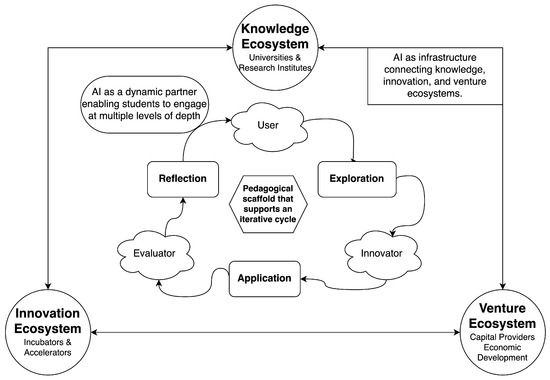
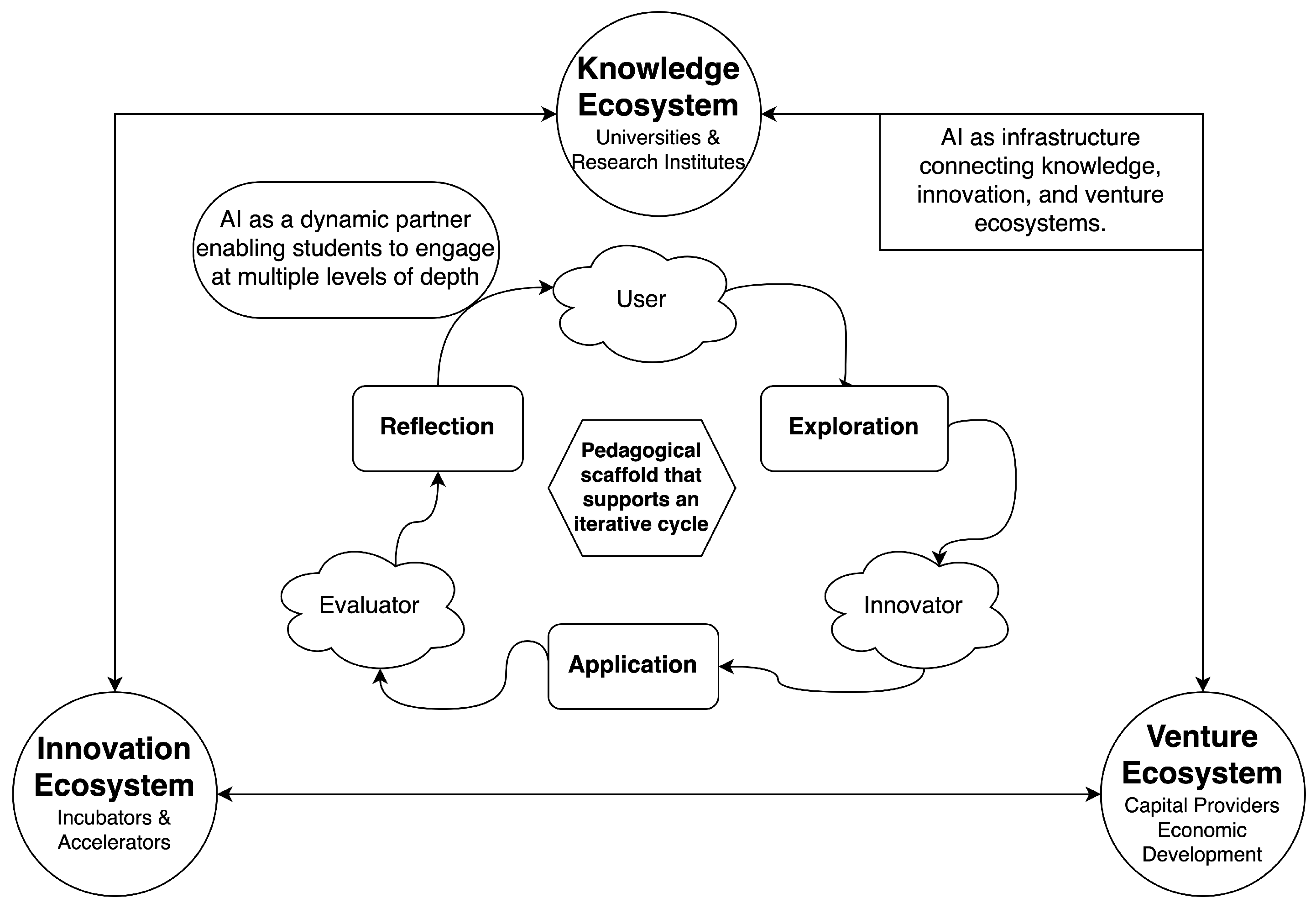
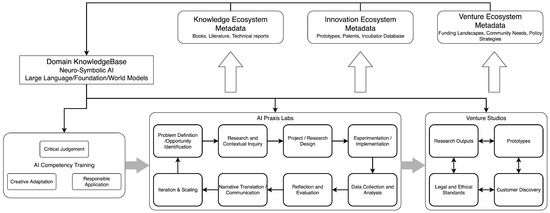
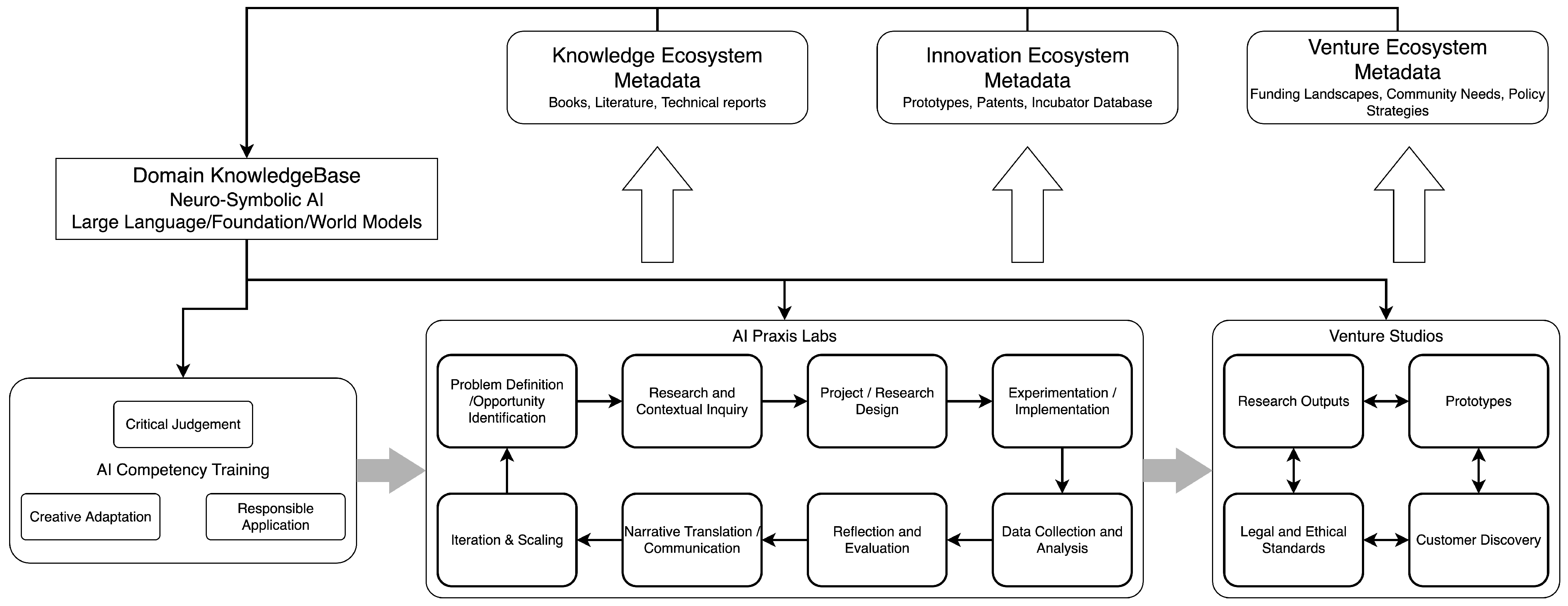

Disclaimer/Publisher’s Note: The statements, opinions and data contained in all publications are solely those of the individual author(s) and contributor(s) and not of MDPI and/or the editor(s). MDPI and/or the editor(s) disclaim responsibility for any injury to people or property resulting from any ideas, methods, instructions or products referred to in the content. |
© 2026 by the authors. Licensee MDPI, Basel, Switzerland. This article is an open access article distributed under the terms and conditions of the Creative Commons Attribution (CC BY) license.