


Abstract
This systematic review evaluates recent scientific and technological advances in water quality monitoring and pollution alarms for ports, based on records retrieved from seven databases following the PRISMA protocol. A total of 414 documents were screened, resulting in 141 articles (TRL 3) and 56 patents (TRL 4–5). Bibliometric, patentometric, and thematic analyses were conducted using Bibliometrix and ORBIT®. Results show sustained growth in both academic and technological outputs, with a patent Compound Annual Growth Rate (CAGR) of 32%, compared with 13% for scientific publications, indicating accelerated translation from research to innovation. The conversion rate from scientific research to patenting increased from 14% (2010–2015) to 47% (2020–2023). Analysis of patent legal status reveals that 52% of patent families remain valid (48% granted; 4% pending), while 33% are lapsed, 13% revoked, and 2% expired, reflecting the dynamic and emerging character of the field. Technological ownership is highly concentrated, with China accounting for nearly all active patents, whereas scientific production is more geographically distributed. Thematic analysis identifies four main scientific clusters: environmental monitoring, chemical pollutants, seashore hazards, and eutrophication. The main technological domains of the patents are analysis of biological materials, control, and environmental technologies. Emerging areas of focus at TRL 3 and TRL 4–5 include microplastics, climate-change impacts, aquaculture risks, real-time sensing, IoT-enabled platforms, machine-learning analytics, autonomous monitoring systems, and bioindicator-based early-warning tools. This review provides a quantitative roadmap to support sustainable port operations, coastal ecosystem protection, and progress toward multiple synergistic United Nations Sustainable Development Goals (SDGs).
1. Introduction
Humanity depends strongly on water quality and pollution alert technologies for survival on Our Home, Planet Earth [1], as well as on the development of ecological solutions [2]. This dependency underpins a conceptual transition from strong anthropocentrism, through weak anthropocentrism and biocentrism, toward ecocentrism [3], which values all living organisms and extends moral standing to ecosystems and ecological processes, respecting nature [4]. Such a shift shapes future-oriented strategies in which justificatory logics, decision rules, and evaluation metrics evolve as intrinsic ecological value is incorporated into decision-making priorities [5].
Ports, as aquatic logistics hubs for cargo loading and unloading, coexist with local bioeconomy activities, as recognized by the Brazilian Center for Management and Strategic Studies [6], the Food and Agriculture Organisation of the United Nations [7], the Organisation for Economic Co-Operation and Development [8], and the BRICS [9]. They constitute critical infrastructures for safeguarding water quality, given the diversity and potential impacts of associated pollution sources, both in specific regions [10] and in the recommendations of transnational agencies [10].
1.1. Ports as Indispensable Infrastructure
Maritime transport accounts for around 80% of global trade by volume [11]. Consequently, port waters are exposed to pollution associated with maritime and port activities. Oil spills are recognized as a major source of water pollution in port environments, accounting for approximately 59% of port accidents [12].
Accordingly, special attention is required to prevent contamination in these environments, while also reducing the impacts of port development on the decoupling between urban growth and hinterland pollution [13].
Most ports are located in areas of high economic activity and industrial intensity [14]. In this context, they can operate as strategic water-quality monitoring and control stations, particularly when positioned near large industrial facilities with potential emissions, water-treatment plants, wastewater discharge outlets, as well as fishing and aquaculture areas and related infrastructure.
1.2. Ports in the Context of SDGs: Monitoring Stations and Pollution Warning Systems
In recent years, biodiversity and habitat protection have become key considerations in environmental valuation and economic decision-making, and are expected to gain further relevance in the near future [15].
The United Nations (UN) highlights this issue in the 2030 Agenda [16], as several Sustainable Development Goals (SDGs) [17] depend critically on the prevention of water pollution, and ports play an essential role in achieving these goals [18].
Within SDG 14, Target 14.1 explicitly aims to “by 2025, prevent and significantly reduce marine pollution of all kinds, in particular from land-based activities, including marine debris and nutrient pollution” [19].
The World Ports Sustainability Program [20] considers the 17 SDGs to be indivisible and identifies particularly strong linkages with SDGs 6, 7, 8, 9, 13, and 14, selecting six priority themes: digitalization, infrastructure, health, safety and security, and environmental care, among others. Within the environmental dimension, water pollution plays a central role and is closely associated with freshwater protection, water consumption, waste collection, reuse and recycling, marine litter reduction initiatives, soil and sediment contamination, and habitat protection and biodiversity enhancement.
Green and sustainable ports require performance evaluation [21] based on feasible methodologies and clear indicators [22], associated with planning and implementation processes [23], and aligned with policy frameworks such as those proposed by the European Union [24]. They should not only monitor and maintain local water quality [25], but also enable self-diagnostic capabilities [26]. In this role, ports may function as regional monitoring and regulatory nodes, contributing to pollution prevention. In already polluted environments, ports may also support the mapping and identification of pollution sources [27]. In addition, biodiversity-related risks, such as the introduction of alien species, must be monitored [28]. Collectively, these functions enhance the efficiency, resilience, and intelligence of water-quality assessment in estuarine and coastal systems.
To achieve these objectives, ports should operate as integrated water-pollution surveillance and early-warning systems, combining traditional and innovative approaches.
Mapping the scientific knowledge (papers) and technological developments (patents) currently being generated in this field is therefore essential for assessing future options.
1.3. Emerging Science and Technology Development: Intermediary Technological Readiness Levels
Technologies that may be used in future water-quality evaluation and pollution alert systems in ports can be observed during the scientific research and technological development (R&D) stages by mapping intermediate levels of Technology Readiness Level (TRL).
The TRL scale ranges from TRL 1 (initial testing of basic ideas) to TRL 2 (preliminary research on a concept), TRL 3 (research supported by initial favorable experimental results), TRL 4 and TRL 5 (technological development and validation in laboratory and relevant environments), TRL 6 (technology demonstration), TRL 7 (demonstration in an operational environment), TRL 8 (qualified technology), and TRL 9 (fully operational technology available in the market) [29].
As metrics, scientific articles have been used to represent TRL 3, patents for TRL 4–5, and the countries where patents are filed as proxies for TRL 9, as these locations represent potential future markets for the technologies [30].
This approach to evaluating R&D through articles and patents has been successfully applied to insect-based feed for aquaculture [31], cross-country comparisons of food technologies [32], and biotechnology [33], as well as comparative assessments of BRICS versus non-BRICS technologies in enhanced oil recovery [34] and associated waste and effluent treatment technologies [35].
Several bibliometric reviews (TRL 3) have examined topics related to ports. Examples include scientometric and meta-analytic studies on environmental performance measurement in ports [36], bibliometric analyses of shipping port performance [37], and scientometric and Theory of Solace (ToS) metaphor analyses addressing digital maritime transport and port operations in the transition toward smart, green, and sustainable technologies [38]. Additional studies focus on specific port-related aspects, including article-based systematic reviews of sustainable port operations and environmental initiatives in specific locations [39], systematic reviews of seaport maritime pilotage [40], and bibliometric studies of maritime transport logistics [41].
However, systematic reviews have rarely addressed technological development through patent analysis, that is, patentometric analysis at TRL 4–5.
Several technological bottlenecks continue to constrain the realization of comprehensive water quality monitoring and early-warning pollution systems in ports, thereby driving further scientific research and technological development.
1.4. Ports and Bottlenecks of Water Monitoring and Pollution Alerts
Several methodological procedures already incorporate alarm and control systems designed to prevent the discharge of contaminants, such as the metrics and criteria for environmental risk assessment in port areas at the European Union level [42].
Other systems not only detect pollution events, but also support the implementation of monitoring tasks, including the allocation of emergency resources and response procedures for port water-pollution incidents, following established contingency plans. These systems provide technical guidance for managing water-pollution incidents in port environments [43].
According to the European Court of Auditors, in its assessment of European Union actions addressing sea pollution from ships, improvements are required in the monitoring capacity and effectiveness of pollution-alert tools, increasing their current level of deployment and operational performance [44].
However, to evolve into smart ports, it is essential to prioritize artificial systems, computational experimentation, and parallel data-processing architectures [43], as well as satellite-based water-quality observations coupled with machine-learning techniques [45]. These approaches should be implemented with a strong emphasis on precautionary and preventive management, ensuring efficient and sustainable water use, while also offering opportunities for complementary funding mechanisms beyond traditional sources.
In water-quality management, beyond investment-related challenges typically addressed through governmental regulation and subsidies, several international policy frameworks provide guidance. These include United Nations recommendations for port sustainability [18], Organisation for Economic Co-operation and Development guidelines addressing financial stability and water-related risks [46], as well as the use of governmental subsidies [47], and strategic investments in water-management infrastructure [48].
Nevertheless, technological challenges remain significant. The deployment of multi-sensor monitoring devices is essential, requiring the careful selection of key parameters tailored to local environmental conditions, such as salinity regimes. Financial and technological constraints further necessitate the use of mobile data-collection platforms.
To enable effective port-based early-warning systems, real-time water-pollution monitoring is required, together with the definition of appropriate alarm parameters, which may depend strongly on local edaphoclimatic conditions. Digitalization and automation are also essential, preferably integrated with intelligent systems that support autonomous decision-making.
Although air-pollution research is relatively advanced, knowledge and technologies for water-pollution monitoring and early-warning systems in ports remain limited. This gap applies to pollution arising from cargo spills, fuel leaks, the transfer of non-native organisms (toxic or non-toxic) via ballast water, chemical discharges from cleaning products, tank residues, leaching of antifouling paints, wastewater and other contamination pathways [14]. Also, although understanding hydrological volumes and water-flow dynamics is essential, such knowledge is primarily required to characterize pollutant fluxes and represents a necessary condition for maintaining adequate water quality [49].
Although specific port-related aspects have been addressed in bibliometric reviews, no study has examined water-pollution alert systems in ports in a comprehensive manner, nor the available early-warning alert technologies. Furthermore, no study has incorporated patentometric analysis covering TRL 4–5, nor has it clearly distinguished technological development stages between TRL 3 and TRL 4–5.
In addition, existing studies do not examine the geopolitical distribution of scientific production (TRL 3) and technological development (TRL 4–5) and their potential implications for future technologies, nor do they assess potential future patent markets.
To contribute to the current body of knowledge, the present study addresses the following research questions:
- What R&D activity exists globally at intermediate maturity levels for port-based water monitoring and pollution alert systems, considering research at TRL 3 (scientific articles) and technological development at TRL 4–5 (patents)?
- What are the temporal growth patterns of TRL 3 and TRL 4–5, and what is the conversion rate from TRL 3 to TRL 4–5?
- How is this field geopolitically distributed in terms of scientific output, patent ownership, active intellectual property rights, and potential markets?
- Which dominant, emerging, declining, and niche scientific themes are shaping future directions?
- Which technological domains and trends dominate current innovation trajectories at TRL 4–5?
- Do these emerging technologies support the achievement of the United Nations Sustainable Development Goals (SDGs)?
2. Materials and Methods
To address the research questions, this study mapped recent scientific articles and patents, examined temporal trends, origins, collaboration networks, and potential patent markets, and conducted a detailed thematic analysis of scientific topics, including emerging, declining, niche, motor, and basic themes. Future technologies and their applications were systematically mapped and analyzed.
Articles used to assess TRL 3 were retrieved in 2025 and updated on 29 January 2026 from three databases (Scopus, Web of Science, and PubMed). Searches were conducted using keywords combined with truncation characters and Boolean operators, in accordance with the query rules of each database. The fields searched included title, abstract, and keywords.
To ensure the inclusion of peer-reviewed documents prior to publication and to focus exclusively on original research, only the document type “article” was considered. To capture recent technological and scientific developments, publication years were restricted to 2004 onward. The search strategy was:
with the keywords being:
WATER QUALITY AND ALARM AND SEAWATER AND PORT
- WATER QUALITY—“water*quality*”
- SEAWATER—seawater* OR “salt water*” OR ocean* OR marine* OR maritim*
- ALARM—alarm* OR emergenc* OR safet* OR alert* OR warn* OR disaster* OR hazard*
- PORT—harbor* OR harbour* OR port* OR marina* OR harborage* OR dock* OR berth* OR anchorage* OR quay* OR pier* OR seaport*
Articles were retrieved from three databases (the search strings applied in each database are provided in Table S1 of the Supplementary Materials). The retrieved documents were processed in accordance with the Preferred Reporting Items for Systematic Reviews and Meta-Analyses (PRISMA) 2020 guidelines [50] (Figure 1).
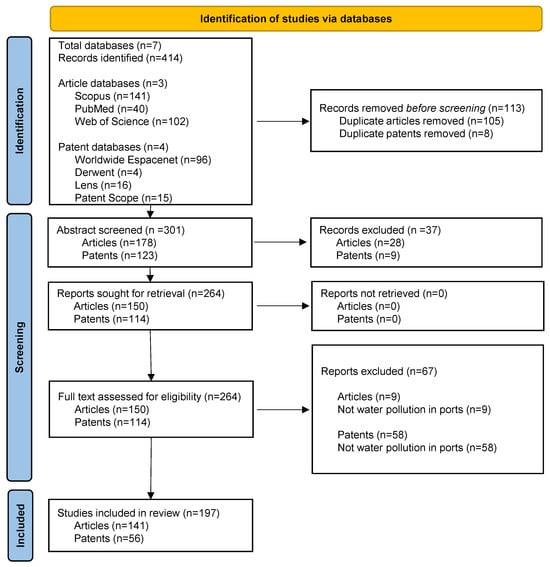
Figure 1.
Preferred Reporting Items for Systematic Reviews and Meta-Analyses (PRISMA) study flow diagram.
A total of 283 articles were identified through manual searches across the databases and downloaded in CSV or Excel format. Duplicates were removed using DOI identifiers and, when DOIs were unavailable, by screening titles and abstracts, resulting in 178 records (Figure 1).
Titles and abstracts were independently screened by at least two authors, leading to the exclusion of 28 articles that did not address pollution in ports, leaving 150 records. Exclusions were primarily due to keyword ambiguities, including cases in which the term “port” referred to data input/output ports in electronic equipment, the city of Porto, or the country Portugal, and cases in which “marine” referred to unicellular flagellates. Articles based exclusively on laboratory analyses using samples not originating from port environments were also excluded.
The full texts of the remaining 150 articles were retrieved and read in full. Of these, nine articles were excluded because they did not address water pollution in ports.
Ultimately, 141 articles were included in the analysis. Their metadata were downloaded from Scopus and Web of Science, converted to Microsoft Excel, and analyzed. Subsequently, metadata were processed in R using Biblioshiny from the Bibliometrix package (v. 2023.12.1) [51]. The dataset showed 100% completeness for titles, abstracts, affiliations, journals, and publication years, with high keyword coverage (93.8%). A total of 24,402 keywords were analyzed in detail and standardized.
For the patent search, patent families (hereafter referred to simply as “patents”) were used, considering that each family may include multiple applications across different countries [52].
To identify recent technological developments, the search was restricted to patents with a first priority year between 2004 and 2023. This time window was selected to account for the 18-month patent confidentiality period and the maximum 20-year legal protection term.
Patent data were manually retrieved in May 2025 from four databases and updated on 30 January 2026. The worldwide database of the European Patent Office (EPO) [53], which periodically imports patent records from more than one hundred countries, was accessed using ORBIT software (version 2.0.0) by Axonal for data extraction, which provides English translations of patent documents [54]. Patents were also searched in the PATENTSCOPE database [55] of the World Intellectual Property Organisation (WIPO), the Lens database [56], and the Derwent database [57].
The search was conducted using the International Patent Classification (IPC) code G01N-033/18 (investigating or analyzing water quality), which yielded 37,215 patent families, many of which were overly generic and not aligned with the intended scope. To refine the search, this IPC code was combined within each patent database with database-specific keywords, search fields, truncation characters, and Boolean operators, applied to titles, abstracts, invention descriptions, advantages of the invention, and independent claims.
The search scope combining the IPC code and keywords was:
with the full expressions being:
WATER QUALITY AND ALARM AND SEAWATER AND PORT
- WATER QUALITY—G01N-033/18
- ALARM—alarm OR emergency notification OR safety announcement OR urgent alert system OR real-time warning system OR instant notification system OR disaster notification system OR critical warning system OR risk alerting OR hazard notification OR disaster warning OR emergency indicator OR distress call OR warning OR emergency notice OR alert
- SEAWATER—sea OR seawater OR saltwater OR ocean OR maritime OR marine OR oceanic OR estuary OR coastal lagoon OR bay OR watercourse
- PORT—harbor OR port OR marina OR harborage OR dock OR berth OR anchorage OR harbour OR quay OR pier OR seaport
The search strings applied in each database are provided in Table S1 of the Supplementary Materials. A total of 131 patent families were identified. The retrieved documents were processed in accordance with the Preferred Reporting Items for Systematic Reviews and Meta-Analyses (PRISMA) 2020 guidelines [50] (Figure 1). Eight duplicates were removed based on first-priority numbers, titles, and abstracts, resulting in 123 patents (Figure 1). Titles and abstracts were screened, and nine patents were excluded because they did not address pollution analysis in ports.
Subsequently, full texts of all remaining documents were retrieved and read in full by at least two authors. Of these, 58 patents were excluded for being outside the study scope, including documents related to air pollution, agricultural irrigation, laboratory biochemical oxygen demand (BOD) analysis, domestic water treatment, swimming pool treatment, fire-protection devices, rain measurement and monitoring, metal mine drainage ditches, water purification devices, leak detection in taps and household plumbing, irrigation systems for artificial green areas such as gardens and parks, water electrolysis devices, river flow-increase detectors, and other unrelated applications.
The remaining 56 patents were processed using ORBIT tools [58]. The data were exported to CSV files and analyzed in Microsoft Excel, where tables were edited, and calculations were performed.
Temporal evolution trends were assessed using the Compound Annual Growth Rate (CAGR) composite indicator, previously applied to studies on aquaculture feed [31], food technologies [32], biotechnology [33], enhanced oil recovery [34] and waste and effluent treatment [35]. To evaluate more recent trends and minimize the influence of atypical years, biennial averages for 2019–2020 and 2022–2023 were calculated using Equation (1).
where t0 is the start time, is the end time, is the number of documents at the start time, is the number of documents at the end time .
Figures were generated using Microsoft Excel, Biblioshiny, and ORBIT, and refined using Microsoft PowerPoint.
3. Results and Discussion
Temporal trends in pollution detection and early warning in ports are analyzed using cumulative annual growth and CAGR. A global geopolitical analysis of the origins of scientific articles and patents and an assessment of potential patent markets are then conducted. At TRL 3, a thematic analysis of scientific articles examines the temporal evolution of themes, alongside a detailed assessment of analytical, microbiological, and sensor-based water-pollution monitoring methods. At TRL 4–5, technological domains, technologies, and their applications are analyzed.
3.1. Temporal Trends
Figure 2 presents the cumulative temporal evolution of patents and scientific articles, as well as the most recent CAGR for the period 2019–2020 to 2022–2023. Both article and patent outputs exhibit an upward trend, indicating that pollution alert technologies in ports remain an ongoing technological and societal challenge. The sustained growth reflects continued scientific engagement with this topic, alongside the translation of research findings into technological developments.
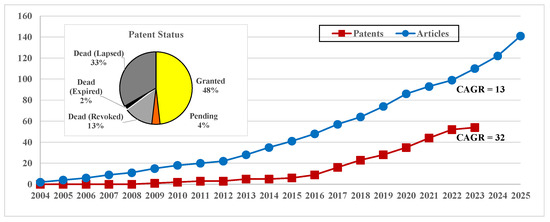
Figure 2.
Cumulative annual evolution of total patents (red squares) and scientific articles (blue circles), as well as the Compound Annual Growth Rate (CAGR) between the 2019–2020 and 2022–2023 biennia. The inset shows the overall percentage distribution of patent legal status, including granted (yellow), pending (orange), expired (black), lapsed (dark gray), and revoked (light gray) patents.
A degree of parallelism is observed between the patent curve and the article curve, which can be attributed to the conversion rate from TRL 3 (articles) to TRL 4–5 (patents). Between 2010 and 2015, this conversion rate averaged 14%, then increased substantially, reaching an average of 47% between 2020 and 2023, indicating that these technologies remain in an emerging phase.
Analysis of recent CAGR shows that the patent growth rate (32%) is more than double that of scientific articles (13%), supporting the interpretation that pollution alarm technologies for ports are advancing in technological maturity and transitioning from academic research environments toward productive and industrial sectors.
A more detailed examination of patent legal status (inset of Figure 2) indicates that more than half of the patents remain valid, with 48% granted and 4% still under examination. The relatively low share of pending patents may be associated with fast examination timelines in certain national patent offices. Countries such as China and the USA report short average examination periods, on the order of about 16 months and 26 months, respectively. This reflects the recent acceleration of patent examination procedures in China [59] and the average examination timelines reported for the USA [60].
Approximately 13% of patents are revoked (Figure 2), meaning they were invalidated after grant through administrative or judicial decisions. This outcome may result from insufficient novelty, obviousness, procedural errors, or accelerated examination processes lacking deeper substantive review. Expired patents account for a very small proportion (2%), which is atypical and suggests that pollution alarm technologies for ports are relatively recent. In addition, 33% of patents are classified as lapsed, indicating that applicants discontinued maintenance-fee payments—an outcome commonly associated with strategic portfolio adjustments or barriers to technology transfer and commercialization.
These findings raise key questions: Which countries are leading the growth of pollution alarm technologies for ports? Are the technology-developing countries also the primary users, or are these export-oriented innovations? What are the principal potential patent markets?
3.2. Global Distribution of Article and Patent Origins and Potential Markets
Figure 3 presents world maps showing the country-level distributions of scientific articles, patent origins, active patents, and their potential patent markets.
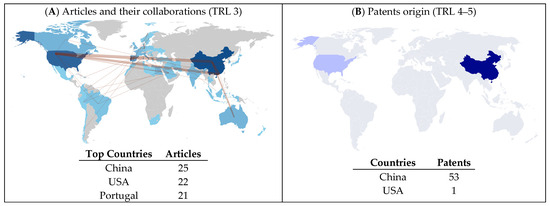
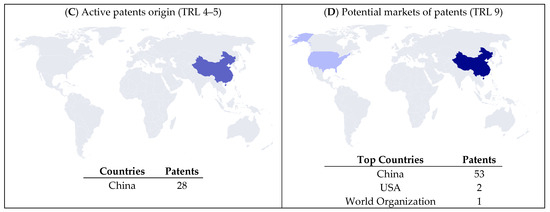
Figure 3.
World maps and top-country tables showing: (A) scientific articles and their international collaborations; (B) first-priority countries representing the origins of patents; (C) first-priority countries with active patents; and (D) countries where patents have been filed beyond the first priority, indicating potential commercial markets. A complete list of the number of published articles per country is provided in Table S2 of the Supplementary Materials.
Scientific discoveries (Figure 3A) are primarily published by China, the United States, and Portugal, each contributing approximately two dozen articles. Strong international collaborations are observed between the United States, China, and Australia. Publications span 51 countries across all continents, indicating that the pursuit of new knowledge is globally distributed.
In contrast, the remaining world maps show activity concentrated in only one or two countries, suggesting that most countries worldwide still exhibit relatively low levels of technological maturity in this domain.
A total of 223 institutions contributed to the analyzed articles (Table S3 in the Supplementary Materials). The leading organisations include the University of Porto (22 articles), The University of Hong Kong (15), Kuwait Institute for Scientific Research (14), Ocean University of China (13), University of California (13), University of Coimbra (13), School of Basic Medical Sciences (11), and IH Cantabria—Instituto de Hidráulica Ambiental de la Universidad de Cantabria (10).
The articles were authored by 798 researchers, with an average of 10.8 authors per article and an international co-authorship rate of 28.47%, indicating extensive cross-country collaboration, consistent with patterns shown in Figure 3A. The average number of citations per document is high (30.12), suggesting strong academic visibility and sustained interest in pollution alarm technologies in ports.
The most prominent collaboration networks occur in Portugal, Brazil, Spain, China, and Korea.
Although three countries rank among the top contributors in scientific publications, only one has clearly advanced to TRL 4–5, namely China, which holds nearly twice as many patents as articles. This pattern points to a scientific confidentiality strategy, in which patent filings precede journal publications (Figure 3B). By contrast, the United States holds only one patent, and Portugal has none.
Technological development is predominantly conducted independently, with limited co-ownership and cross-institutional patent collaborations, including:
- Nanjing Tonghai Port Channel Survey Technology Consulting Service with Changjiang Downstream Hydrology & Water Resources Investigation Bureau and Changjiang Water Conservancy Commission Hydrological Bureau (CN113311129);
- Shenzhen Ankang Test Technology with Jiangxi Ankang Environmental Science (CN112881635);
- Guangdong Polytechnic Normal University with Guangdong Oking Information Industry (CN115902137);
- Changzhou University with the Nanjing Institute of Environmental Sciences, Ministry of Environmental Protection, and the Changzhou Environmental Monitoring Center; (US10852287)
- Wuxi Taiyue Machinery with the Wuxi Institute of Arts and Technology (CN211122814).
The most cited patent belongs to PowerChina Water Governance (WO2018/032826), which has 20 patented inventions (19 granted and one dead) in several technological domains.
Analysis of active patents (Figure 3C), which remain enforceable for intellectual property rights, shows that all valid patents are Chinese, meaning that only China currently holds enforceable patent rights in this technological domain. A closer inspection indicates that these patents are restricted to the domestic Chinese market, with limited export orientation. Many explicitly target specific Chinese regions within patent descriptions.
China’s prominence can be attributed to structural factors, including the substantial increase in its R&D expenditure since the beginning of the twenty-first century, which has positioned the country in third place in the global ranking. This trend has been accompanied by a clear policy in recent years linking TRL 3 research with TRL 4–5 technological development, aimed at addressing technological challenges and reducing risks related to access to advanced technologies [61]. This effort has led China to first place in global patent filings [59]. In effect, this systematic state policy commitment, focused on developing domestic innovation capacity, is closely associated with internal economic policy objectives, aiming to sustain high rates of economic growth [62].
A total of 29 applicants hold valid patents, each owning one patent, except for Sun Yat-sen University, which holds two patents focused on river and estuarine water monitoring and early-warning alarms. These systems integrate flow velocity probes, liquid-level probes, temperature probes, pH probes, ORP probes, conductivity probes, and dissolved oxygen probes (CN202222431524; CN201910488129). Patent applicants are primarily from the industrial sector (23 entities), with five academic institutions and one government organisation.
Potential patent markets largely mirror patent origin countries, with China as the dominant market and the United States at a substantially smaller scale (Figure 3D). Only one patent was filed through the Patent Cooperation Treaty (PCT) aiming for exportation (WO2018/032826). It refers to an automatic control system for contaminated water industrial treatment.
Given the wide range of countries contributing at TRL 3, a key question arises: What thematic areas characterize their scientific publications?
3.3. Science (TR3)
Table 1 presents articles representing each of the most relevant scientific themes.

Table 1.
Representative articles for each major scientific theme across the analyzed periods.
Scientific studies are analyzed through pattern identification, temporal trend analysis, and in-depth discussion.
3.3.1. Thematic Analysis of Scientific Articles
Figure 4 presents the keyword word cloud derived from the analyzed articles. The dominant concept is environmental monitoring, a core requirement for detecting state changes attributable to pollution. The second most prominent theme relates to chemical pollutants originating from multiple sources. This is followed by the high relevance of risk assessment, particularly in marine and coastal waters.
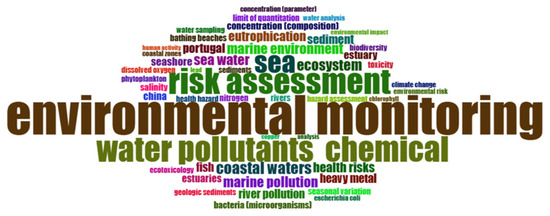
Figure 4.
Word cloud of the top 50 article keywords, after excluding the scope-obvious expression “water quality”.
This word cloud can be interpreted in conjunction with the keyword co-occurrence network map (Figure S1 in the Supplementary Materials), which groups keywords into four clusters: Environmental Monitoring, Chemical Water Pollutants, Seashore Hazards, and Eutrophication.
The Environmental Monitoring cluster focuses on human activities and their impacts on ecosystems that undergo environmental change. Monitoring approaches include water sampling and geological sediment analysis. Target environments include estuaries, marine and coastal systems, and groundwater, with seasonal variability playing a relevant role.
The Chemical Water Pollutants cluster emphasizes pollutant concentration levels, analytical detection limits, and associated risk and hazard assessments, including ecotoxicological impacts. Representative contaminants include copper and other heavy metals.
The Seashore Hazards cluster addresses public health risks, particularly in bathing beaches, and highlights the presence of microorganisms such as bacteria.
The Eutrophication cluster focuses on the excessive nutrient enrichment of aquatic ecosystems, driven primarily by phosphorus in freshwater systems and nitrogen in marine environments. This process is commonly linked to agricultural runoff, wastewater treatment plants, detergents, and industrial effluents, leading to algal blooms, oxygen depletion (hypoxia), and ecological impacts such as dead zones and biodiversity loss. Relevant indicators include salinity, chlorophyll, and dissolved oxygen, as well as broader connections to climate change.
3.3.2. Temporal Dynamics of Article Themes
To examine temporal thematic evolution, the 20-year study period was divided into time slices (Figure 5), covering the early period (2004–2007), the intermediate years (2008–2023), and the most recent period (2024–2026).
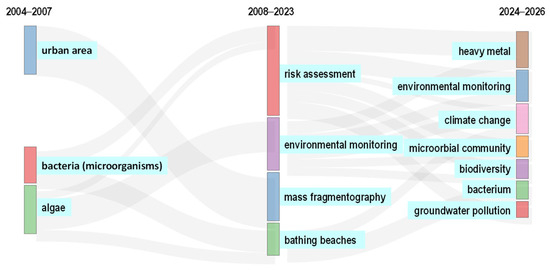
Figure 5.
Thematic temporal evolution of scientific articles across three periods: the early phase (2004–2007), the intermediate period (2008–2023), and the most recent years (2024–2026).
Thematic evolution indicates that, approximately two decades ago, scientific research on pollution alerts in ports focused primarily on pollution in port areas near urban centers, including contamination by heavy metals [63]. Fecal bacteria were used as indicators in coastal areas [64], and studies examined health effects associated with beach exposure [65], as well as the seafood production cycle from environmental origin to final consumer products [66]. Eutrophication was investigated in relation to algal blooms [67], sludge management and treatment operations [68], and variations in phytoplankton community structure [69].
During the intermediate period (Figure 5), substantial scientific progress addressed the limits of quantification of pollutants, which became especially relevant around 2015 and reached a median keyword prominence in 2023, reflecting its current importance (Figure S2 of Supplementary Materials). This period saw the development of analytical techniques combining chromatography with multiple mass spectrometry platforms, including time-of-flight detectors, as well as the creation of spectral databases for chemical compound identification (commonly referred to as mass fragmentography) [70]. These advances enabled the detection of a broader range of contaminants at lower concentrations, including endocrine disruptors in the Iberian Ave River and its coastline [71], pesticides [72], and endocrine disruptors in the Mondego River [73] and the Ria Formosa lagoon [79].
Beach water quality has also continued to be monitored through the development of indices and forecasting tools for early alerts, such as the Spatially Explicit Index of Chesapeake Bay Health [74], the Hong Kong marine beach daily prediction system [75], the Hong Kong 3D deterministic forecasting model [76], and the Algal Bloom Risk Forecast System for Mariculture Management [77]. Risk assessments expanded to include seawater and sediments [78]. Large-scale environmental monitoring programs were implemented [80], incorporating multivariate analytical approaches [81] and autonomous naval drones [82].
In the most recent years (Figure 5), scientific research shows a broader diversification of topics, which can be classified according to their degree of technological development and relevance (Figure 6).
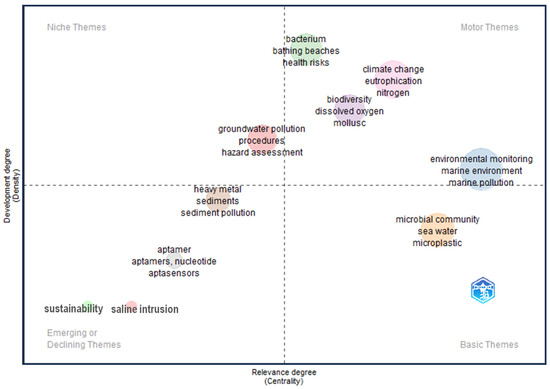
Figure 6.
Map of the thematic development and relevance degree of scientific articles in recent years.
The maturation of biotechnology has enabled the application of synthetic DNA and RNA molecules and aptamer-based sensors (electrochemical, photochemical, and electroluminescent) for detecting environmental contaminants, including heavy metals and pesticides. These technologies offer advantages in cost efficiency, robustness, and rapid on-site detection, particularly for cyanotoxins and diarrheal shellfish toxins. Examples include the detection of okadaic acid [83], and microcystin-LR [84].
Sustainability has emerged as a cross-cutting theme, reflecting the interdependence between societal resilience, public health, and the economic sustainability of coastal communities. This has driven broader temporal monitoring frameworks integrating multiple environmental parameters [85].
The theme of heavy metals in sediments as pollution indicators remains under active investigation, increasingly supported by unmanned monitoring platforms and historical accumulation analyses in mining-impacted regions, such as the Port of Gdynia [86], and areas downstream of Tar Creek [87].
Emerging themes include saline intrusion monitoring, hazardous pollutant tracking, and real-time early-warning systems, such as those developed for saline-water intrusion [88] and pollutant detection [89]. Closely related is a niche theme addressing hazardous pollutants in coastal groundwater, including predictive modeling of health risks [89] and the study of persistent mobile organic chemicals [90].
Among the motor themes, environmental monitoring for pollution alerts in ports stands out as highly relevant despite relatively low thematic density. This topic emerged in 2015, reached a median prominence in 2018, and remains highly current (Figure S2 of Supplementary Materials). It functions as a transversal theme integrating multiple domains. Examples include machine-learning modeling to map risks of per- and polyfluoroalkyl substances (PFAS) in European seas [91] and sustainable coastal-zone management [85]. These findings reinforce the relevance and timeliness of the present study.
Climate-change concerns began appearing in port-pollution alert research around 2021 (Figure S2 of Supplementary Materials), often linked to eutrophication, nitrogen concentration variability, algal blooms, and marine ecosystem impacts, including fish mortality and toxicity dynamics. Research also explores long-term atmospheric and anthropogenic influences, such as summer dust storms in the northern Arabian Gulf [92].
Biodiversity became prominent in port-pollution alert studies starting in 2019, with a median keyword year of 2024, indicating a highly current research challenge (Figure S2 of Supplementary Materials). Biodiversity maintenance, strongly linked to dissolved oxygen levels, has been examined through benthic diatom nutrient-tolerance studies in mangrove estuaries [93], declines in mollusk species richness under long-term abiotic stress [94], and threat assessments for local coastal ecosystems [95].
As another motor theme, public-health risks from bacteria at bathing beaches continue to be investigated [96], although their relative thematic prominence has declined as other research areas expand. Another foundational theme involves microbial communities, expanding earlier microorganism-focused research toward understanding their roles in beach waters. Related developments include a multimetric water-quality index for bivalves and consumer safety, integrating salinity, unionized ammonia, dissolved oxygen, suspended solids, chlorophyll-a, Escherichia coli, and toxigenic phytoplankton, as well as studies on coastal lagoon systems exposed to wastewater discharges [97].
Microplastics, although introduced only recently (2024) in the port-pollution alert literature, have already generated a substantial volume of publications (Figure S2 of Supplementary Materials). This theme has become a core research topic, focusing on microplastic mapping in seawater and ecological risk assessment, such as studies conducted in the South Yellow Sea [98] and the Southwestern Pacific Ocean [99].
Chronological analysis of article keywords (Figure S2 of Supplementary Materials) indicates that phosphorus quantification has remained a persistent research issue since 2013, with a median prominence in 2025, underscoring its current scientific importance. Similarly, phytoplankton gained relevance from 2019, reaching a median in 2023, reflecting continued research interest.
Aquaculture represents a very recent theme within port-pollution alert research, emerging in 2024 and reaching a median prominence in 2025, suggesting its potential expansion as a future research frontier (Figure S2 of Supplementary Materials).
3.4. Technological Development (TRL4–5)
Initially, technological domains are analyzed, followed by an in-depth discussion of the technologies and their applications.
3.4.1. Technological Domains
While TRL 3 articles report research conducted within specific knowledge areas, TRL 4–5 patents are focused on the application of that knowledge, which can be deployed across multiple technological domains.
Figure 7 shows that patents are clearly concentrated in the technological domain [100]. Analysis of Biological Materials (49%), with a strong focus on water quality analysis, as expected given the search scope based on IPC G01N33/18.
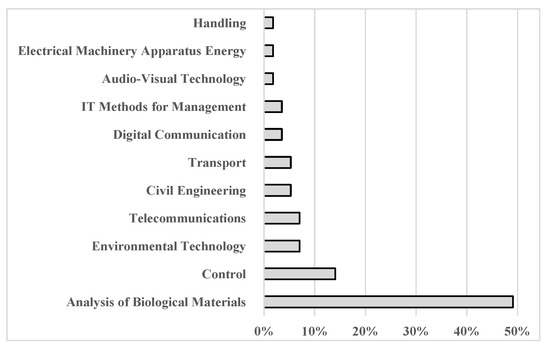
Figure 7.
Percentage distribution of technological domains for active patents.
The Control technological domain ranks second (14%) (Figure 7), confirming that the search scope is appropriate and that patent objectives are aligned with process control for ensuring water quality in port pollution early-warning systems. Examples include remote control devices integrating early-warning systems for river-network water levels and water quality, as well as predictive functionalities (CN115902137; CN103605308).
Additional complementary technological domains essential for remote monitoring and pollution alert generation are also represented (Figure 7).
In the Telecommunications domain, patents include water outlet management and automatic control systems for drainage liquid level, water volume, and water quality, as well as intelligent sampling terminals capable of monitoring temperature, flow, pH, and conductivity, and high-precision positioning of unmanned aerial monitoring vessels (CN114428156; CN114088902; CN110456013).
The domains of Information Technology Methods for Management and Digital Communication encompass patents related to water outlet management and control, rapid water-quality forecasting, and early-warning systems based on distributed computing and IoT–enhanced algorithms, such as the improved 53H algorithm (CN111310976; CN114062625; CN114428156).
The Audio-Visual Technology domain includes patents focused on river and lake water-quality monitoring equipment (CN220207580).
The third most represented technological domain (Figure 7) is Environmental Technology (7.0%), which is consistent with the role of pollution alerts in ports as a key mechanism for environmental protection. These patents extend beyond reactive monitoring by enabling proactive pollution management, including floating water-quality monitoring and purification devices that can be deployed near pollution sources, as well as industrial treatment technologies for polluted river and lake sediments (CN207192906; WO2018/032826, equivalent to CN106116076).
Domains such as Civil Engineering, Transport, Handling, and Electrical Machinery and Energy Apparatus include automatic monitoring devices for water-quality assessment, pollution-level evaluation, and alarm generation.
3.4.2. Technologies and Applications
Table 2 presents patents representing each type of technological development (see also Table S4 of Supplementary Materials).
Table 2.
Representative patents for each category of technological development.
Figure 8 presents a detailed breakdown of technological functions and application areas, based on the IPC assigned to each patent.
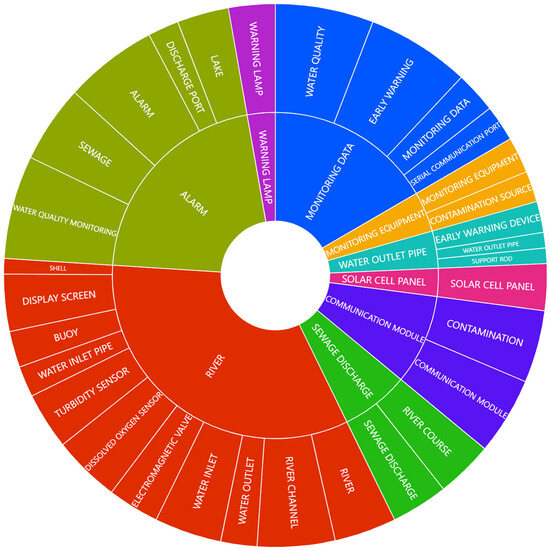
Figure 8.
Water-pollution alarm technologies in ports and their applications, classified according to their International Patent Classifications (IPC).
Sewage discharges and associated water-pollution risks are mentioned in approximately one quarter of the analyzed patents. Monitoring systems typically integrate multiple sensors, most commonly for pH, temperature, dissolved oxygen, turbidity, and heavy metals (CN202111161510), as well as chemical oxygen demand, residual chlorine, and pH (CN201922331101), metal-ion concentration and trace non-metal elements (CN201721321894), and flow rate and pressure (CN202310054164). Beyond detection, some patents also address pollution-source traceability (CN113053086; CN114088905).
Automatic unmanned surface and underwater vehicles are frequently described, typically equipped with multiple sensor arrays, including flow-velocity probes, liquid-level probes, temperature probes, pH probes, ORP probes, conductivity probes, and dissolved-oxygen probes (CN201910488129). Certain platforms support up to 17 sensing modules, covering parameters such as temperature, pH, dissolved oxygen, CODMn, BOD5, CODCr, suspended solids, ammonia nitrogen, total phosphorus, petroleum hydrocarbons, and coliform bacteria (CN201610950214). Some devices operate at the water surface (CN201811387175), whereas others perform submerged monitoring (CN201320087769).
Biological pollution detection represents a recent technological trend, using living organisms as bioindicators, including plankton (e.g., Daphnia magna), algae, and zebrafish. These systems monitor behavioral and physiological responses, integrating physical, chemical, and bio-coupled sensing (CN201811046616; CN201910127288; CN201510775831).
Approximately one quarter of patents specify riverine environments as their primary application area, while others target rivers, lakes, estuaries, seas, and oceanic systems. Around 20% of patents do not specify a fixed application environment, indicating high operational versatility.
Early-warning alarm mechanisms include visual alerts (indicator lamps, flashing lights), short-message notifications (SMS) to responsible personnel, and auditory alarms such as sirens. Some systems incorporate satellite or aerial image-based visual comparison for anomaly detection (CN201910127288; CN202310054164).
Alarm-triggering data are typically transmitted wirelessly to remote management platforms (CN202111037623; CN202110114400), including systems using ZigBee communication (CN200910155282), intelligent telemetry (CN201020611593), and cloud-based platforms (CN202111572813), enabling remote industrial control (CN201310581499).
In several systems, alarm sensitivity thresholds can be user-defined (CN201510775831), allowing configuration of early-warning limits (CN201921557098) or adaptive triggering based on comparative analysis (CN201910808768). IoT architectures are also employed (CN202111161510).
Some technologies integrate warning lamps on ocean-monitoring buoys, serving both water-quality signaling and collision prevention, given the vulnerability of floating monitoring stations to vessel impacts (CN206594154; CN114216902; CN115356455).
Power supply systems for pollution-monitoring devices include conventional batteries, grid-based electricity (CN202221978328), solar energy (US10852287; CN212275732; CN108614085; CN106596193; CN203222101; CN2095899060), wind-energy generation with battery storage (CN201720302259; CN202111400707), hydropower-based systems (CN202310054164), and wireless charging technologies (CN201910488129).
4. Conclusions
This systematic review clarifies how the technology production chain at intermediate Technology Readiness Levels (TRL 3–5) for port-based water-pollution alert systems is structured and evolving. The results demonstrate an accelerating translation from scientific knowledge to technological innovation, with the conversion rate from scientific publications (TRL 3) to patenting activity (TRL 4–5) increasing from 14% (2010–2015) to 47% (2020–2023). This confirms that port water-pollution alert technologies are transitioning from exploratory research toward applied and commercially viable solutions.
Temporal analysis reveals that these technologies are in an expansion phase rather than stabilization or decline, as evidenced by a CAGR of 32% for patents, more than double the 13% CAGR for scientific publications. This divergence indicates rapid technological maturation and growing private-sector engagement.
Thematic mapping of scientific research shows a dynamic evolution from traditional pollution detection toward emerging, multidisciplinary themes, including real-time environmental monitoring, biodiversity protection, climate-change impacts, microplastics, aquaculture sustainability, and machine-learning-based early-warning systems. Core and emerging research themes increasingly emphasize multiparameter sensing, biological and microbiological indicators, predictive analytics, and ecosystem-level risk assessment, shaping future scientific and technological trajectories.
Geopolitical analysis uncovers a highly concentrated innovation landscape. While scientific knowledge production is globally distributed across 51 countries, technological ownership at TRL 4–5 is overwhelmingly concentrated in China, which holds nearly 100% of active and enforceable patents in this domain. Special attention should therefore be given to technology diffusion, which may enable broader access to strategic environmental-monitoring capabilities and contribute to more inclusive global technological development.
However, methodological limitations of the present study should also be considered. At TRL 3, results depend on the coverage of scientific databases, which do not include all peer-reviewed journals. In the case of patents, underrepresentation may occur due to corporate strategies to maintain technological developments confidential within organisations or through the use of trade secrets rather than patent filings in national intellectual property offices. In both TRL 3 and TRL 4–5, additional limitations arise from the use of keyword-based search strategies for retrieving articles and patents.
Current technological trajectories are dominated by multi-sensor platforms, IoT-enabled telemetry, autonomous surface and underwater vehicles, remote and satellite sensing, and bioindicator-based early-warning systems. Patents focus primarily on the Analysis of Biological Materials (49%), followed by Control (14%) and Environmental Technology (7%), highlighting the integration of chemical, biological, and digital monitoring architectures.
Despite rapid progress, persistent technological bottlenecks remain, including sensor durability in harsh marine environments, false-alarm reduction, scalable low-cost deployment, robust discrimination between natural variability and pollution events, and limited international technology transfer. Overcoming these constraints is essential to enable widespread adoption beyond technologically dominant countries.
Overall, this study demonstrates that, from TRL 3 scientific research to TRL 4–5 technological development, port-based water-pollution alert technologies represent a strategically important innovation frontier, with strong potential to enhance environmental sustainability, strengthen aquaculture resilience, protect public health, and support multiple United Nations Sustainable Development Goals, particularly SDGs 2, 6, 9, 12, 13, and 14, which are strongly interconnected. By integrating scientific discovery, technological development, and geopolitical foresight, the findings provide a global roadmap for advancing cleaner, smarter, and more resilient ports, while underscoring the need for more inclusive, cooperative, and internationally balanced innovation ecosystems.
Supplementary Materials
The following supporting information can be downloaded at: https://www.mdpi.com/article/10.3390/environments13030176/s1, Table S1: Search scopes for articles and patents; Table S2: Number of published articles by country; Table S3: Number of published articles by organisation; Table S4: List of cited patent documents; Figure S1: Co-occurrence network of article keywords showing four clusters: Environmental Monitoring, Chemical Water Pollutants, Seashore Hazards, and Eutrophication; Figure S2: Trend topics showing their initial year, final year, and median year.
Author Contributions
Conceptualization: C.M.Q., R.S. and A.M.A.T.M.; methodology: C.M.Q. and N.B.; validation: C.M.Q., N.B., R.S. and A.M.A.T.M.; formal analysis: C.M.Q. and N.B.; investigation: C.M.Q., N.B., R.S. and A.M.A.T.M.; data curation: C.M.Q. and N.B.; writing—original draft preparation: C.M.Q.; writing—review and editing: all authors; supervision: A.M.A.T.M. All authors have read and agreed to the published version of the manuscript.
Funding
This work was produced within the scope of the Agenda “NEXUS—Pacto de Inovação—Transição Verde e Digital para Transportes, Logística e Mobilidade”, financed by the Portuguese Recovery and Resilience Plan (PRR), with no. C645112083-00000059 (investment project no. 53). The study was also supported by national funds from FCT—Fundação para a Ciência e a Tecnologia, I.P. (Portugal) through projects UID/04292/2025 and UID/PRR/04292/2025, awarded to MARE—Marine and Environmental Sciences Center, and by project LA/P/0069/2020 (https://doi.org/10.54499/LA/P/0069/2020), awarded to the Associate Laboratory ARNET—Aquatic Research Network.
Data Availability Statement
The original contributions presented in this study are included in the article/Supplementary Materials. Further inquiries can be directed to the corresponding author.
Acknowledgments
C.M.Q. acknowledges a productivity fellowship in technological development research from the National Council for Scientific and Technological Development of Brazil (CNPq). The authors acknowledge Axonal and Questel for providing access to their ORBIT v2.0.0 software as part of the Professional Master’s in Intellectual Property and Technology Transfer for Innovation (PROFNIT) program. The authors also acknowledge Periódicos CAPES (Coordination for the Improvement of Higher Education Personnel of Brazil) for providing access to the Derwent Patent Search database, as well as to scientific article databases. The authors have reviewed and edited the output and take full responsibility for the content of this publication.
Conflicts of Interest
The authors declare no conflicts of interest.
Abbreviations
The following abbreviations are used in this manuscript:
| CAGR | Compound Annual Growth Rate |
| IoT | Internet of Things |
| IPC | International Patent Classification |
| R&D | Scientific Research and Technological Development |
| SDG | Sustainable Development Goal |
| TRL | Technology Readiness Level |
References
- Joseph, J.A. The Ethical Interface of Sustainable Prosperity in the Teachings of Pope Francis. J. Dharma 2021, 46, 279–294. [Google Scholar]
- Fincham, G. “A World Not Our Own to Define”: Ecological Solutions to Global Catastrophe in the Works of Barry Lopez. Engl. Acad. Rev. 2024, 41, 33–46. [Google Scholar] [CrossRef]
- Porat Wojakowski, M.; Porat-Butman, S. A One Health Call to Re-Examine Medical Practice: Going beyond Strong Anthropocentrism. Sci. One Health 2025, 4, 100129. [Google Scholar] [CrossRef] [PubMed]
- Taylor, P.W. The Ethics of Respect for Nature. Environ. Ethics 1981, 3, 197–218. [Google Scholar] [CrossRef]
- Rouley, R. Is There a Need for a New, an Environmental Ethic. In Proceedings of the XVth World Congress of Philosophy; Sofia Press: Nashua, NH, USA, 1973; Volume 1, pp. 205–210. Available online: https://www.academia.edu/9264203/ (accessed on 16 March 2026).
- Carbonell, S.A.M.; Cortez, L.A.B.; Madi, L.F.C.; Anefalos, L.C.; Baldassin Junior, R.; Leal, R.L.V. Bioeconomy in Brazil: Opportunities and Guidelines for Research and Public Policy for Regional Development. Biofuels Bioprod. Biorefining 2021, 15, 1675–1695. [Google Scholar] [CrossRef]
- Food and Agriculture Organization of the United Nations. FAO Blue Transformation-Roadmap 2022–2030. Available online: https://openknowledge.fao.org/items/467191e5-111b-4191-a4d3-843e491fd418 (accessed on 29 August 2025).
- Organisation for Economic Co-Operation and Development. Meeting Policy Challenges for a Sustainable Bioeconomy. Available online: https://www.oecd.org/en/publications/policy-challenges-facing-a-sustainable-bioeconomy_9789264292345-en.html (accessed on 29 August 2025).
- BRICS. Países Do BRICS Aprovam Declaração Conjunta Com Foco Em Segurança Alimentar. Available online: https://brics.br/pt-br/noticias/paises-do-brics-aprovam-declaracao-conjunta-com-foco-em-seguranca-alimentar (accessed on 29 August 2025).
- Environmental Navegation Comission. Sustainable Port-Guide for Port Authorities. Available online: https://sustainableworldports.org/wp-content/uploads/EnviCom-WG-150-FINAL-VERSION.pdf (accessed on 27 January 2026).
- UNCTAD-United Nations Conference on Trade and Development. Review of Maritime Transport 2021; UNITED NATIONS: Geneva, Switzerland, 2022; ISBN 9789211130263. [Google Scholar]
- Khan, R.U.; Yin, J.; Mustafa, F.S. Accident and Pollution Risk Assessment for Hazardous Cargo in a Port Environment. PLoS ONE 2021, 16, e0252732. [Google Scholar] [CrossRef]
- Ji, X.; Ding, X.; Zhang, Y.; Wang, C. The Effect of Port Development on the Decoupling of Urban Development and Hinterland Pollution. Sci. Rep. 2025, 15, 40995. [Google Scholar] [CrossRef]
- OECD. The Competitiveness of Global Port-Cities; OECD: Paris, France, 2014; ISBN 9789264205260. [Google Scholar]
- Olukolajo, M.A.; Oyetunji, A.K.; Amaechi, C.V. A Scientometric Review of Environmental Valuation Research with an Altmetric Pathway for the Future. Environments 2023, 10, 58. [Google Scholar] [CrossRef]
- United Nations. Transforming Our World: The 2030 Agenda for Sustainable Development. Available online: https://sdgs.un.org/2030agenda (accessed on 19 July 2025).
- United Nations. Sustainable Development Goals. Available online: https://sdgs.un.org/goals (accessed on 19 July 2025).
- Alamoush, A.S.; Ballini, F.; Ölçer, A.I. Revisiting Port Sustainability as a Foundation for the Implementation of the United Nations Sustainable Development Goals (UN SDGs). J. Shipp. Trade 2021, 6, 19. [Google Scholar] [CrossRef]
- United Nations. Life Below Water Tragets. Available online: https://globalgoals.org/goals/14-life-below-water/ (accessed on 6 February 2026).
- WPSP World Ports Sustainability Program. Available online: https://sustainableworldports.org/areas-of-interest/ (accessed on 6 February 2026).
- Kan, E.; Tezcan, Ö. Meta-Synthesis of Research on Green Port Performance Evaluation Criteria. Pomorstvo 2023, 37, 227–239. [Google Scholar] [CrossRef]
- Fei, H.; Shi, H.; Pan, X. A Systematic Review of Green Port Evaluation: Methods, Subjects, and Indicators. J. Mar. Sci. Eng. 2025, 13, 604. [Google Scholar] [CrossRef]
- Peričin, L.; Grbić, L.; Vučetić, Š.; Šundov, M. Green Port Policy: Planning and Implementation of Environmental Projects—Case Study of the Port of Gaženica. Sustainability 2025, 17, 9557. [Google Scholar] [CrossRef]
- European Union. The Green Ports Concept and PROMPT. Available online: https://civil-protection-knowledge-network.europa.eu/stories/green-ports-concept-and-prompt (accessed on 27 January 2026).
- Puig, M.; Darbra, R.M. Innovations and Insights in Environmental Monitoring and Assessment in Port Areas. Curr. Opin. Environ. Sustain. 2024, 70, 101472. [Google Scholar] [CrossRef]
- Darbra, R.M.; Ronza, A.; Casal, J.; Stojanovic, T.A.; Wooldridge, C. The Self Diagnosis Method. Mar. Pollut. Bull. 2004, 48, 420–428. [Google Scholar] [CrossRef] [PubMed]
- Ying, S.; Yao, P.; Wang, Z.; Luo, Y.; Zhao, B.; Guan, R.; Cao, M.; Xuan, M.; Xu, R.; He, Y.; et al. Research on Water Pollution Monitoring and Qualitative Source Identification in a Typical Coastal River Network. Environments 2025, 13, 1. [Google Scholar] [CrossRef]
- Aranha, S.; Rakauskas, F.; da Silva, L.F.; Fontana, C.F.; Ferreira, M.L. Threat of Alien Species to Native Biodiversity in Mangroves near Latin America’s Largest Port: Pathways for Technological Innovation and Strengthening of Regulations. Environments 2025, 12, 483. [Google Scholar] [CrossRef]
- NASA. The TRL Scale as a Research & Innovation Policy Tool. NASA EARTO Recommendations. Available online: https://www.earto.eu/wp-content/uploads/The_TRL_Scale_as_a_R_I_Policy_Tool_-_EARTO_Recommendations_-_Final.pdf (accessed on 6 August 2025).
- Nesta, L.; Patel, P. National Patterns of Technology Accumulation: Use of Patent Statistics. In Handbook of Quantitative Science and Technology Research; Kluwer Academic Publishers: Dordrecht, The Netherlands, 2004; pp. 531–551. [Google Scholar]
- Quintella, C.M.; Ghesti, G.F.; Salgado, R.; Mata, A.M.A.T. From Science to Innovation in Aquatic Animal Nutrition: A Global TRL-Based Assessment of Insect-Derived Feed Technologies via Scientific Publications and Patents. Animals 2025, 15, 3174. [Google Scholar] [CrossRef]
- Quintella, C.M.; Pires, E.A.; dos Santos, W.P.C. Brazil’s Food Technology: A Pre-Pandemic Assessment to Achieve Zero Hunger SDG2 Goal, Benchmarking against USA. World Pat. Inf. 2023, 75, 102240. [Google Scholar] [CrossRef]
- Quintella, C.M.; Hanna, S.A.; dos Santos, S.C. Brazil’s Biotechnology Assessment of Potential to Achieve Sustainable Development Goals, Benchmarking against the USA. World Pat. Inf. 2024, 77, 102275. [Google Scholar] [CrossRef]
- Quintella, C.M.; Rodrigues, P.D.; Nicoleti, J.L.; Ramos-de-Souza, E.; Carvalho, E.B.; Hanna, S.A. EOR Technology (Patents) and Science (Articles) Assessment of BRICS and NonBRICS with Growth Rates and Specializations within Responsible Global Energy Transition: A Critical Review. Energies 2024, 17, 3197. [Google Scholar] [CrossRef]
- Quintella, C.M. Environmental Protection in Enhanced Oil Recovery and Its Waste and Effluents Treatment: A Critical Patent-Based Review of BRICS and Non-BRICS (2004–2023). Sustainability 2025, 17, 2896. [Google Scholar] [CrossRef]
- Vega-Muñoz, A.; Salazar-Sepulveda, G.; Espinosa-Cristia, J.F.; Sanhueza-Vergara, J. How to Measure Environmental Performance in Ports. Sustainability 2021, 13, 4035. [Google Scholar] [CrossRef]
- Kishore, L.; Pai, Y.P.; Ghosh, B.K.; Pakkan, S. Maritime Shipping Ports Performance: A Systematic Literature Review. Discov. Sustain. 2024, 5, 108. [Google Scholar] [CrossRef]
- Gerrero-Molina, M.-I.; Vásquez-Suárez, Y.-A.; Valdés-Mosquera, D.-M. Smart, Green, and Sustainable: Unveiling Technological Trajectories in Maritime Port Operations. IEEE Access 2024, 12, 47713–47723. [Google Scholar] [CrossRef]
- Bahri, M.S.S.; Shariff, S.S.R.; Yahya, N. Sustainable Port Operations and Environmental Initiatives in Malaysia: A Focus on Environmental Sustainability. Asian J. Shipp. Logist. 2025, 41, 38–51. [Google Scholar] [CrossRef]
- Issa-Zadeh, S.B.; Garay-Rondero, C.L. Maritime Pilotage and Sustainable Seaport: A Systematic Review. J. Mar. Sci. Eng. 2025, 13, 945. [Google Scholar] [CrossRef]
- Alzate, P.; Isaza, G.A.; Toro, E.M.; Jaramillo-Garzón, J.A. Advances and Emerging Research Trends in Maritime Transport Logistics: Environment, Port Competitiveness and Foreign Trade. Int. J. Prod. Manag. Eng. 2024, 12, 1–18. [Google Scholar] [CrossRef]
- Ondiviela, B.; Juanes, J.A.; Gómez, A.G.; Sámano, M.L.; Revilla, J.A. Methodological Procedure for Water Quality Management in Port Areas at the EU Level. Ecol. Indic. 2012, 13, 117–128. [Google Scholar] [CrossRef]
- Guo, J.; Jiang, Z.; Chu, X.; Wang, W. Parallel Intelligent Monitoring System of Port Water Quality Based on the ACP Method. J. Mar. Sci. Eng. 2024, 12, 218. [Google Scholar] [CrossRef]
- European Court of Auditors. EU Actions Tackling Sea Pollution by Ships–Not yet out of Troubled Waters (Special Report 06/2025). Available online: https://www.eca.europa.eu/ECAPublications/SR-2025-06/SR-2025-06_EN.pdf (accessed on 11 March 2026).
- Mukonza, S.S.; Chiang, J.-L. Meta-Analysis of Satellite Observations for United Nations Sustainable Development Goals: Exploring the Potential of Machine Learning for Water Quality Monitoring. Environments 2023, 10, 170. [Google Scholar] [CrossRef]
- OECD. Embedding Water-Related Risks in Financial Stability Frameworks; OECD Publishing: Paris, France, 2025; ISBN 9789264707467. [Google Scholar]
- Xie, F.; Zhou, Z. Port Green Investment Strategy under Government Subsidization and Regulation Policy. Front. Mar. Sci. 2025, 12, 1661382. [Google Scholar] [CrossRef]
- Brown, C.; Boltz, F.; Dominique, K. Strategic Investment Pathways for Resilient Water Systems. 2022; Environment Working Paper No. 202. Available online: https://one.oecd.org/document/ENV/WKP(2022)14/en/pdf (accessed on 16 March 2026).
- Chen, Y.-C.; Lung, W.-S.; Yang, H.-C.; Chen, B.-J.; Chen, C.-H. Pollutant Flux Estimation in an Estuary Comparison between Model and Field Measurements. Environments 2014, 1, 107–123. [Google Scholar] [CrossRef]
- Haddaway, N.R.; Page, M.J.; Pritchard, C.C.; McGuinness, L.A. PRISMA2020: An R Package and Shiny App for Producing PRISMA 2020-compliant Flow Diagrams, with Interactivity for Optimised Digital Transparency and Open Synthesis. Campbell Syst. Rev. 2022, 18, e1230. [Google Scholar] [CrossRef]
- Bibliometrix Biblioshiny. Available online: https://www.bibliometrix.org/home/index.php/layout/biblioshiny (accessed on 29 August 2025).
- Questel Orbit. The Fampat Collection. Available online: https://intelligence.help.questel.com/en/support/solutions/articles/77000436698-fampat-family-construction-rules (accessed on 6 August 2025).
- European Patent Office. Worldwide Database. Available online: https://worldwide.espacenet.com (accessed on 6 August 2025).
- Questel Orbit Intelligence. Available online: https://www.orbit.com (accessed on 1 November 2025).
- WIPO Patentscope. Available online: https://patentscope.wipo.int/search/en/search.jsf (accessed on 6 February 2026).
- Global Patent Analysis Lens. Available online: https://www.lens.org/lens/search/patent/structured (accessed on 6 February 2026).
- Clarivate Derwent Patent Search. Available online: https://clarivate.com/intellectual-property/derwent/patent-search/ (accessed on 6 February 2026).
- Pires, E.A.; Ribeiro, N.M.; Quintella, C.M. Sistemas de Busca de Patentes: Análise Comparativa Entre Espacenet, Patentscope, Google Patents, Lens, Derwent Innovation Index e Orbit Intelligence. Cad. Prospecção 2020, 13, 13. [Google Scholar] [CrossRef]
- Xinhua China Accelerates Patent Review Process to Improve Innovation Protection. Available online: https://english.cnipa.gov.cn/art/2024/12/5/art_2975_196448.html (accessed on 26 December 2025).
- USPTO. Patents Pendency Data December 2025. Available online: https://www.uspto.gov/dashboard/patents/pendency.html (accessed on 27 January 2026).
- Zhou, Y.; Dahal, S. Has R&D Contributed to Productivity Growth in China? The Role of Basic, Applied and Experimental R&D. China Econ. Rev. 2024, 88, 102281. [Google Scholar] [CrossRef]
- Gulati, A.; Fan, S.; Dalafi, S. The Dragon and the Elephant: Understanding the Development of Innovation Capacity in China and India: Summary of a Conference; National Academies Press: Washington, DC, USA, 2010; ISBN 978-0-309-15160-3. [Google Scholar]
- Ashley, P.M.; Napier, M.E. Heavy-Metal Loadings Related to Urban Contamination in the Kooloonbung Creek Catchment, Port Macquarie, New South Wales. Aust. J. Earth Sci. 2005, 52, 843–862. [Google Scholar] [CrossRef]
- Reeves, R.L.; Grant, S.B.; Mrse, R.D.; Copil Oancea, C.M.; Sanders, B.F.; Boehm, A.B. Scaling and Management of Fecal Indicator Bacteria in Runoff from a Coastal Urban Watershed in Southern California. Environ. Sci. Technol. 2004, 38, 2637–2648. [Google Scholar] [CrossRef] [PubMed]
- Bonilla, T.D.; Nowosielski, K.; Cuvelier, M.; Hartz, A.; Green, M.; Esiobu, N.; McCorquodale, D.S.; Fleisher, J.M.; Rogerson, A. Prevalence and Distribution of Fecal Indicator Organisms in South Florida Beach Sand and Preliminary Assessment of Health Effects Associated with Beach Sand Exposure. Mar. Pollut. Bull. 2007, 54, 1472–1482. [Google Scholar] [CrossRef] [PubMed]
- Caruso, G.; Maimone, G.; Mancuso, M.; Modica, A.; Genovese, L. Microbiological Controls Across the Productive Cycle of Dicentrarchus labrax L. and Sparus aurata L.: A Study from the Environment to the Final Product. Aquac. Res. 2004, 35, 184–193. [Google Scholar] [CrossRef]
- Imai, I.; Yamaguchi, M.; Hori, Y. Eutrophication and Occurrences of Harmful Algal Blooms in the Seto Inland Sea, Japan. Plankton Benthos Res. 2006, 1, 71–84. [Google Scholar] [CrossRef]
- Sweeney, D.G.; O’Brien, M.J.; Cromar, N.J.; Fallowfield, H.J. Changes in Waste Stabilisation Pond Performance Resulting from the Retrofit of Activated Sludge Treatment Upstream: Part II–Management and Operating Issues. Water Sci. Technol. 2005, 51, 17–22. [Google Scholar] [CrossRef]
- Álvarez-Góngora, C.; Herrera-Silveira, J.A. Variations of Phytoplankton Community Structure Related to Water Quality Trends in a Tropical Karstic Coastal Zone. Mar. Pollut. Bull. 2006, 52, 48–60. [Google Scholar] [CrossRef] [PubMed]
- Rocha, M.J.; Cruzeiro, C.; Rocha, E. Development and Validation of a GC–MS Method for the Evaluation of 17 Endocrine Disruptor Compounds, Including Phytoestrogens and Sitosterol, in Coastal Waters–Their Spatial and Seasonal Levels in Porto Costal Region (Portugal). J. Water Health 2013, 11, 281–296. [Google Scholar] [CrossRef] [PubMed]
- Rocha, M.J.; Cruzeiro, C.; Rocha, E. Quantification of 17 Endocrine Disruptor Compounds and Their Spatial and Seasonal Distribution in the Iberian Ave River and Its Coastline. Toxicol. Environ. Chem. 2013, 95, 386–399. [Google Scholar] [CrossRef]
- Rocha, M.J.; Rocha, E. Chemical Survey and Risk Assessment of 56 Pesticides in the Sado River Estuary (Iberian Peninsula, Portugal). Toxics 2023, 11, 457. [Google Scholar] [CrossRef]
- Rocha, M.J.; Cruzeiro, C.; Reis, M.; Pardal, M.Â.; Rocha, E. Spatial and Seasonal Distribution of 17 Endocrine Disruptor Compounds in an Urban Estuary (Mondego River, Portugal): Evaluation of the Estrogenic Load of the Area. Environ. Monit. Assess. 2014, 186, 3337–3350. [Google Scholar] [CrossRef]
- Williams, M.; Longstaff, B.; Buchanan, C.; Llansó, R.; Dennison, W. Development and Evaluation of a Spatially-Explicit Index of Chesapeake Bay Health. Mar. Pollut. Bull. 2009, 59, 14–25. [Google Scholar] [CrossRef]
- Thoe, W.; Wong, S.H.C.; Choi, K.W.; Lee, J.H.W. Daily Prediction of Marine Beach Water Quality in Hong Kong. J. Hydro-Environ. Res. 2012, 6, 164–180. [Google Scholar] [CrossRef]
- Chan, S.N.; Thoe, W.; Lee, J.H.W. Real-Time Forecasting of Hong Kong Beach Water Quality by 3D Deterministic Model. Water Res. 2013, 47, 1631–1647. [Google Scholar] [CrossRef]
- Guo, J.; Dong, Y.; Lee, J.H.W. A Real Time Data Driven Algal Bloom Risk Forecast System for Mariculture Management. Mar. Pollut. Bull. 2020, 161, 111731. [Google Scholar] [CrossRef] [PubMed]
- Yona, D.; Vernandes, D.; Kasitowati, R.D.; Sari, S.H.J. Spatial Distribution and Contamination Assessment of Lead (Pb) in the Seawater and Surface Sediments of the Coastal Area of Prigi Bay, Trenggalek, East Java. J. Ilm. Perikan. Kelaut. 2020, 12, 140–148. [Google Scholar] [CrossRef]
- Rocha, M.J.; Cruzeiro, C.; Reis, M.; Rocha, E.; Pardal, M. Determination of Seventeen Endocrine Disruptor Compounds and Their Spatial and Seasonal Distribution in Ria Formosa Lagoon (Portugal). Environ. Monit. Assess. 2013, 185, 8215–8226. [Google Scholar] [CrossRef] [PubMed]
- Zainuddin, A.H.; Roslan, M.Q.J.; Razak, M.R.; Yusoff, F.M.; Haron, D.E.M.; Aris, A.Z. Occurrence, Distribution, and Ecological Risk of Bisphenol Analogues in Marine Ecosystem of Urbanized Coast and Estuary. Mar. Pollut. Bull. 2023, 192, 115019. [Google Scholar] [CrossRef] [PubMed]
- Vieira, L.R.; Morgado, F.; Nogueira, A.J.A.; Soares, A.M.V.M.; Guilhermino, L. Integrated Multivariate Approach of Ecological and Ecotoxicological Parameters in Coastal Environmental Monitoring Studies. Ecol. Indic. 2018, 95, 1128–1142. [Google Scholar] [CrossRef]
- Carlson, D.F.; Akbulut, S.; Rasmussen, J.F.; Hestbech, C.S.; Andersen, M.H.; Melvad, C. Compact and Modular Autonomous Surface Vehicle for Water Research: The Naval Operating Research Drone Assessing Climate Change (NORDACC). HardwareX 2023, 15, e00453. [Google Scholar] [CrossRef]
- Chen, Y.; Liu, Y.; Zhu, P.; Liu, S.; Wang, M.; Liu, Y.; Wang, Z.; Chen, W.; Qu, Z.; Du, L.; et al. A 2D Carbon Nitride-Based Electrochemical Aptasensor with Reverse Amplification for Highly Sensitive Detection of Okadaic Acid in Shellfish. Anal. Methods 2024, 16, 1538–1545. [Google Scholar] [CrossRef]
- Lee, J.; Oh, B.; Park, J.; Kim, J.Y.; Son, J.; Kim, H.S.; Choi, Y.-E. On-Site Microfluidic Aptasensor for Rapid and Highly Selective Detection of Microcystin-LR. Talanta 2025, 293, 128147. [Google Scholar] [CrossRef]
- Nayak, S. Sustainable Coastal Zone Management in India. J. Geol. Soc. India 2025, 101, 942–946. [Google Scholar] [CrossRef]
- Bojke, A.; Galer-Tatarowicz, K.; Flasińska, A.; Chybicki, A.; Łubniewski, Z.; Kargol, J.; Ostrowska, D.; Cichowska, A. The Application of a Mobile Unmanned Device for Monitoring Water and Sediment Pollution in the Port of Gdynia. Water 2024, 16, 252. [Google Scholar] [CrossRef]
- Miess, S.; Ipek, Y.; Dzialowski, A.R. Heavy Metal Accumulation in Deep Sediment Benthic Invertebrates Downstream from a Historical Mining District. Environ. Pollut. 2025, 386, 127230. [Google Scholar] [CrossRef]
- Seeboonruang, U.; Tanachaichoksirikun, P.; Anuwongpinit, T.; Sirikaew, U. Design and Implementation of a Hybrid Real-Time Salinity Intrusion Monitoring and Early Warning System for Bang Kachao, Thailand. Water 2025, 17, 2162. [Google Scholar] [CrossRef]
- Sun, Z.; Yang, X.; Liu, S.; Wang, J.; Li, M. Spatial Distribution and Health Risk Assessment of Saline Water Intrusion and Potentially Hazardous Pollutants in a Coastal Groundwater Environment. Water 2024, 16, 2573. [Google Scholar] [CrossRef]
- Zhang, Z.; Wang, S.; Li, L. Insights from Modeling the Fate of and Exposure to Persistent and Mobile Organic Chemicals Using the Refined PROTEX Model. Environ. Toxicol. Chem. 2025, 44, 3349–3362. [Google Scholar] [CrossRef] [PubMed]
- Zhao, L.; Chen, J.; Wen, J.; Li, Y.; Zhang, Y.; Wu, Q.; Yu, G. Unveiling PFAS Hazard in European Surface Waters Using an Interpretable Machine-Learning Model. Environ. Int. 2025, 199, 109504. [Google Scholar] [CrossRef]
- Madhusoodhanan, R.; Al-Yamani, F.; Al-Said, T.; Saburova, M.; Al-Kandari, M.; Yamamoto, T.; Ahmed, A.; Fernandes, L.; Sarkar, A.; Habeebullah, S.F.K.; et al. Environmental Triggers and Ecological Implications of a Harmful Algal Bloom in the Northern Arabian/Persian Gulf: Insights into the Driving Forces and Consequences. Sci. Total Environ. 2025, 960, 178254. [Google Scholar] [CrossRef]
- Nunes, M.; Lemley, D.A.; Machite, A.; Adams, J.B. Benthic Diatom Diversity in Microtidal Mangrove Estuaries. Mar. Pollut. Bull. 2024, 206, 116706. [Google Scholar] [CrossRef]
- Chen, G.; Mo, Y.; Gu, X.; Wang, W.; Yue, L.; Cui, B.; Zhu, Z. Interactions of Multiple Abiotic Stresses Exacerbate Mollusk Diversity Loss in a High-Discharge Coastal Mangrove Wetland. Mar. Pollut. Bull. 2026, 222, 118775. [Google Scholar] [CrossRef]
- Kondratev, S.I.; Orekhova, N.A. Potential Threats to the Ecological State of Water in the Sevastopol Bay. Lomonosov Geogr. J. 2024, 78, 3–14. [Google Scholar] [CrossRef]
- Magalhães, E.A.; de Jesus, H.E.; Pereira, P.H.F.; Gomes, A.S.; dos Santos, H.F. Beach Sand Plastispheres Are Hotspots for Antibiotic Resistance Genes and Potentially Pathogenic Bacteria Even in Beaches with Good Water Quality. Environ. Pollut. 2024, 344, 123237. [Google Scholar] [CrossRef]
- Li, D.; Van De Werfhorst, L.C.; Noble, R.T.; Blackwood, D.; Ervin, J.; Steets, B.; Smith, J.; Holden, P.A. Bacterial Community Analysis of Recreational Beach Waters Reveals Human Fecal Contamination and Pathogenicity across Varying Field Conditions. Water Res. 2025, 281, 123697. [Google Scholar] [CrossRef]
- Guo, Q.; Ding, C.; Meng, Q.; Shen, X.; Yang, K.; Li, Z.; Chen, X.; Wang, C.; Wu, J.; Yu, J.; et al. Abundance, Characteristics and Ecological Risks of Microplastics from South Yellow Sea Mudflat. Sci. Total Environ. 2024, 950, 175374. [Google Scholar] [CrossRef]
- Recabarren, T.; Torres, M.; Jacobsen, C.; Aybar, M.; Martínez, C.; Ahumada-Rudolph, R.; Nova, M.; Novoa, V.; Bermúdez, R.A.; Pozo, K. Tracking Microplastics and the Associated Ecological Risk in the Southwestern Pacific Ocean. Mar. Pollut. Bull. 2026, 222, 118613. [Google Scholar] [CrossRef]
- Schmoch, U. IPC and Technology Concordance Table. Available online: https://www.wipo.int/meetings/en/doc_details.jsp?doc_id=117672 (accessed on 29 August 2025).
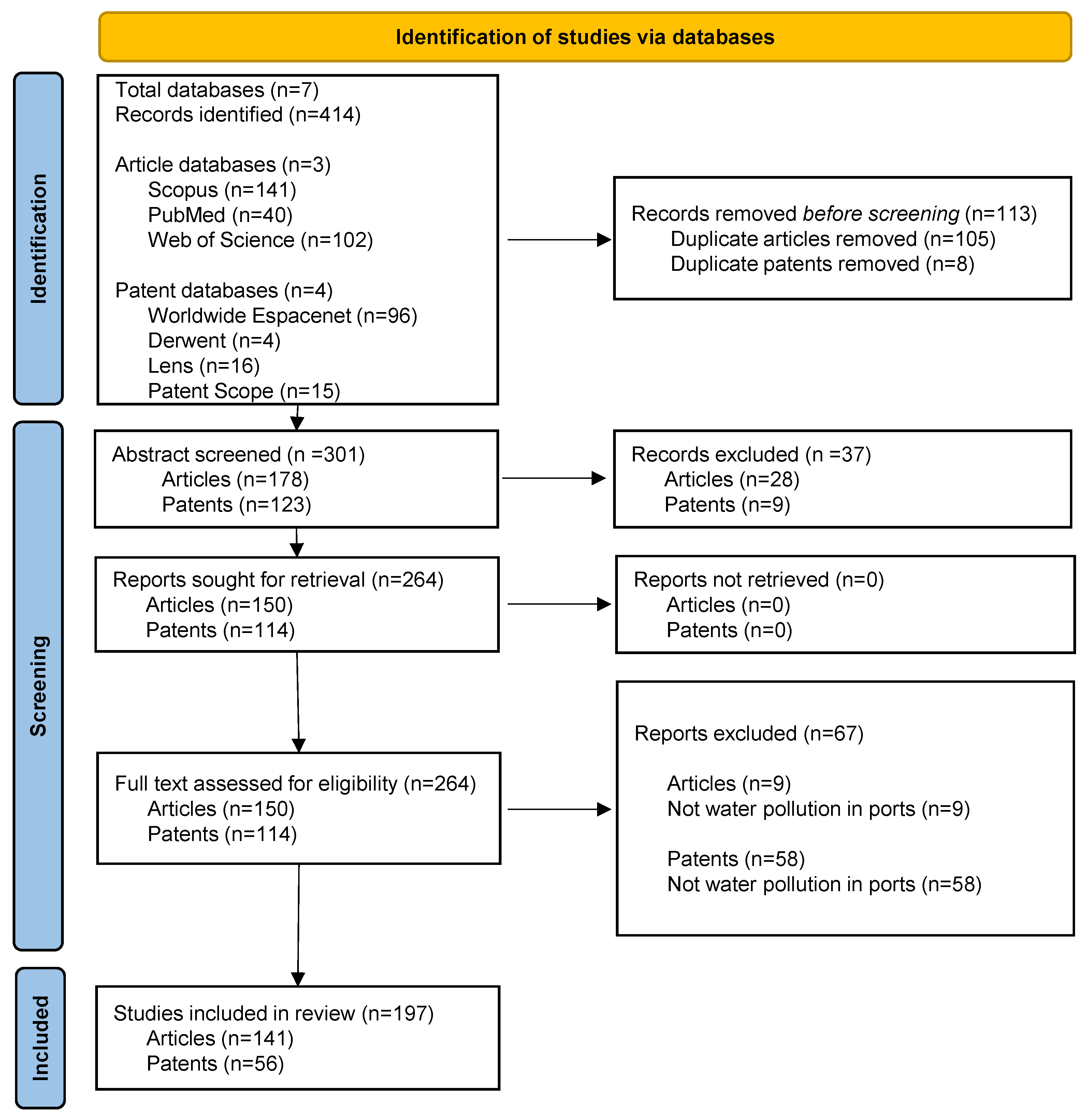
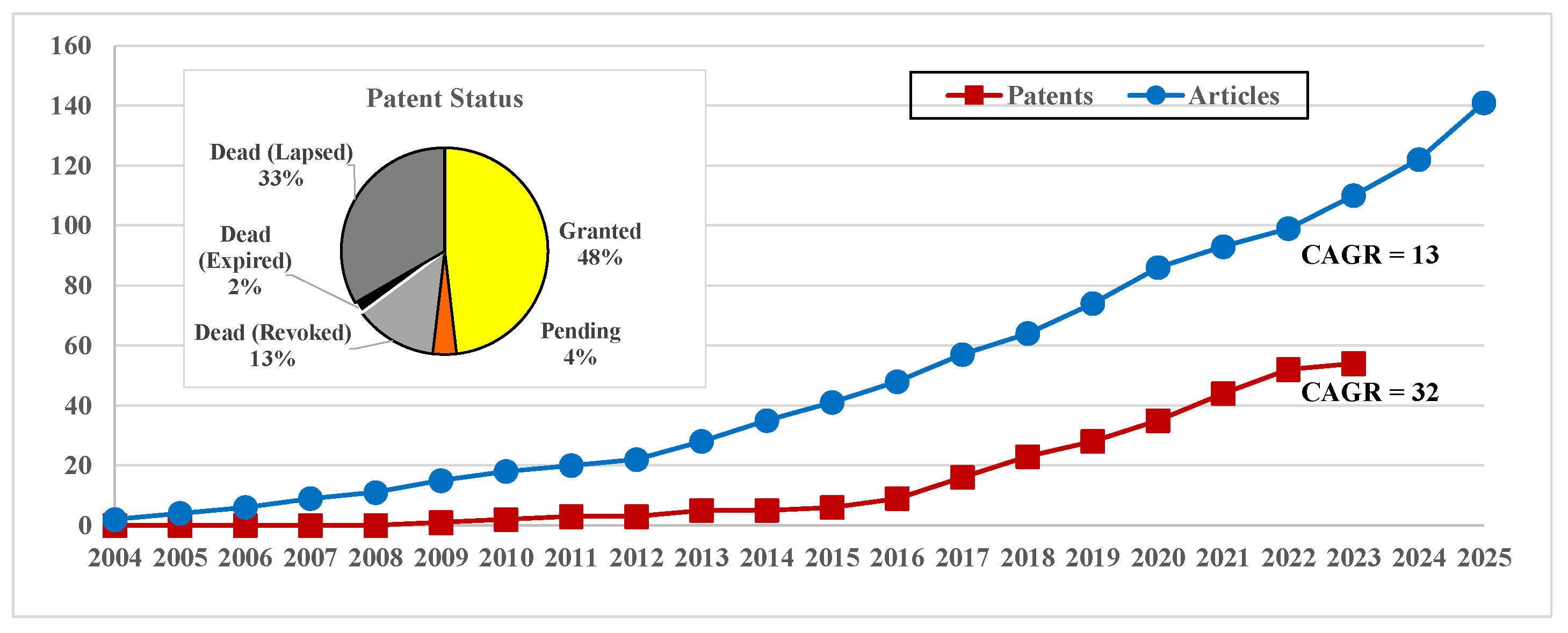
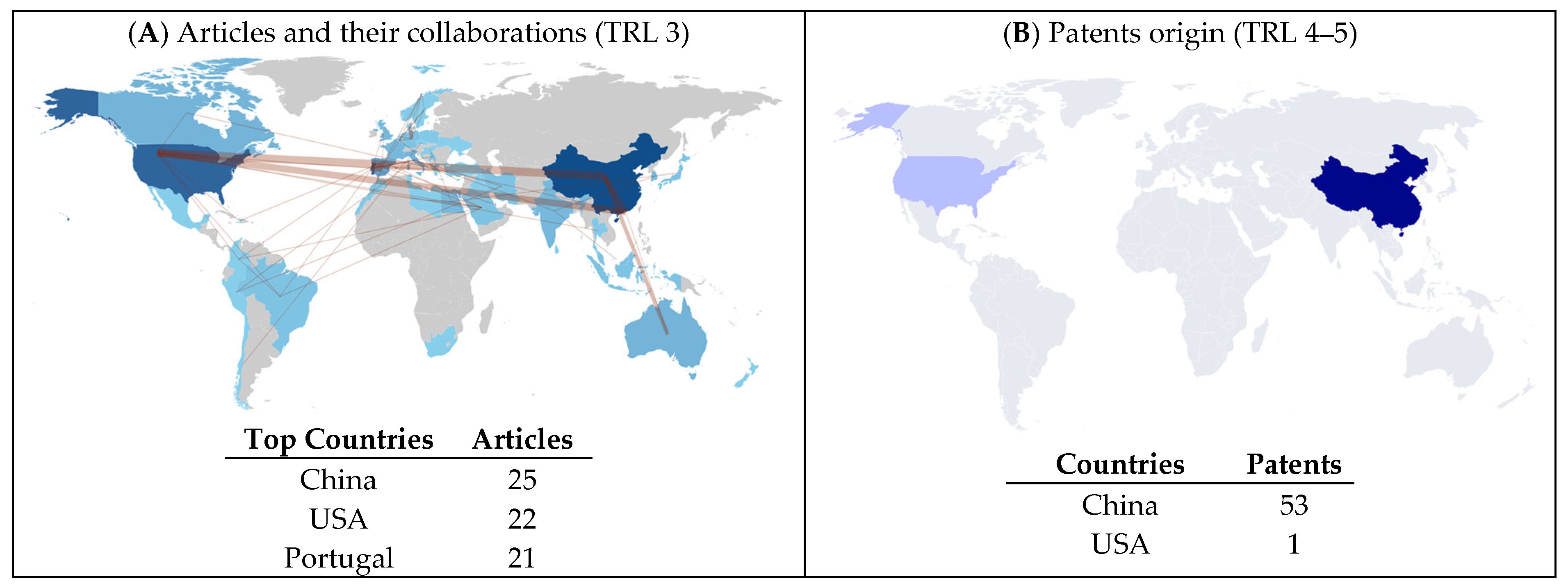
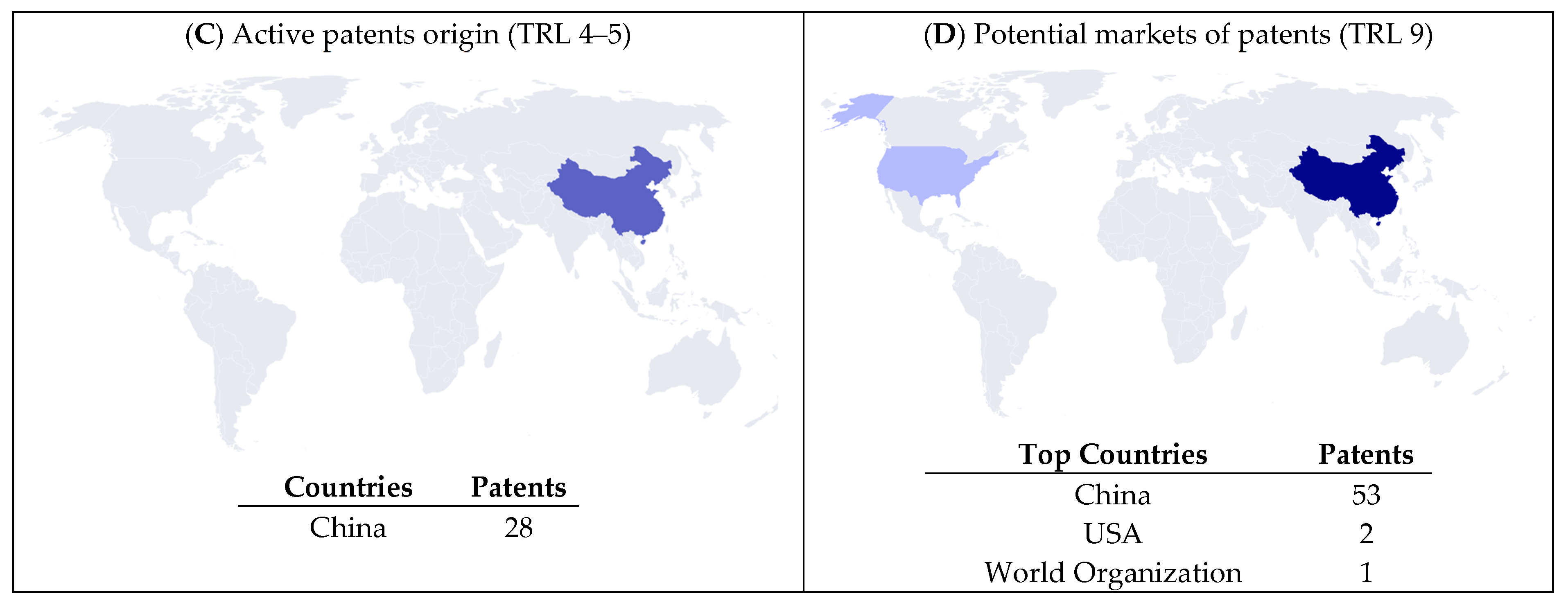
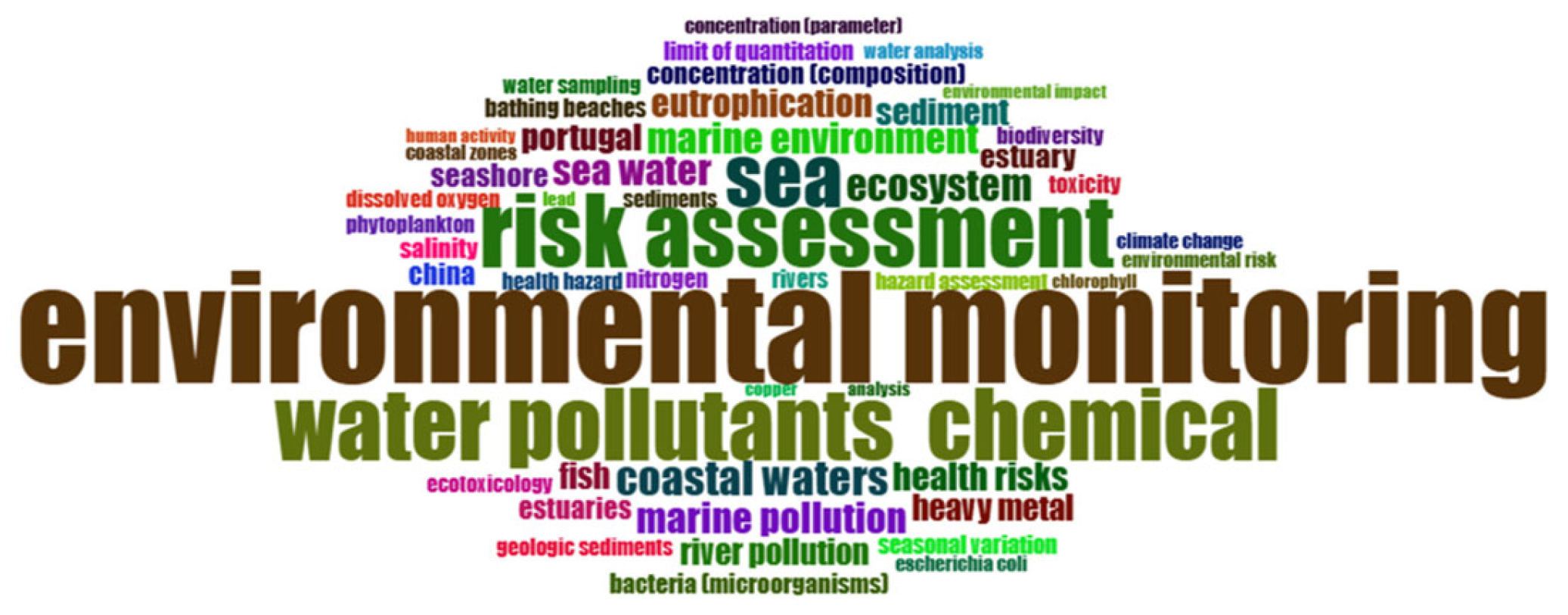
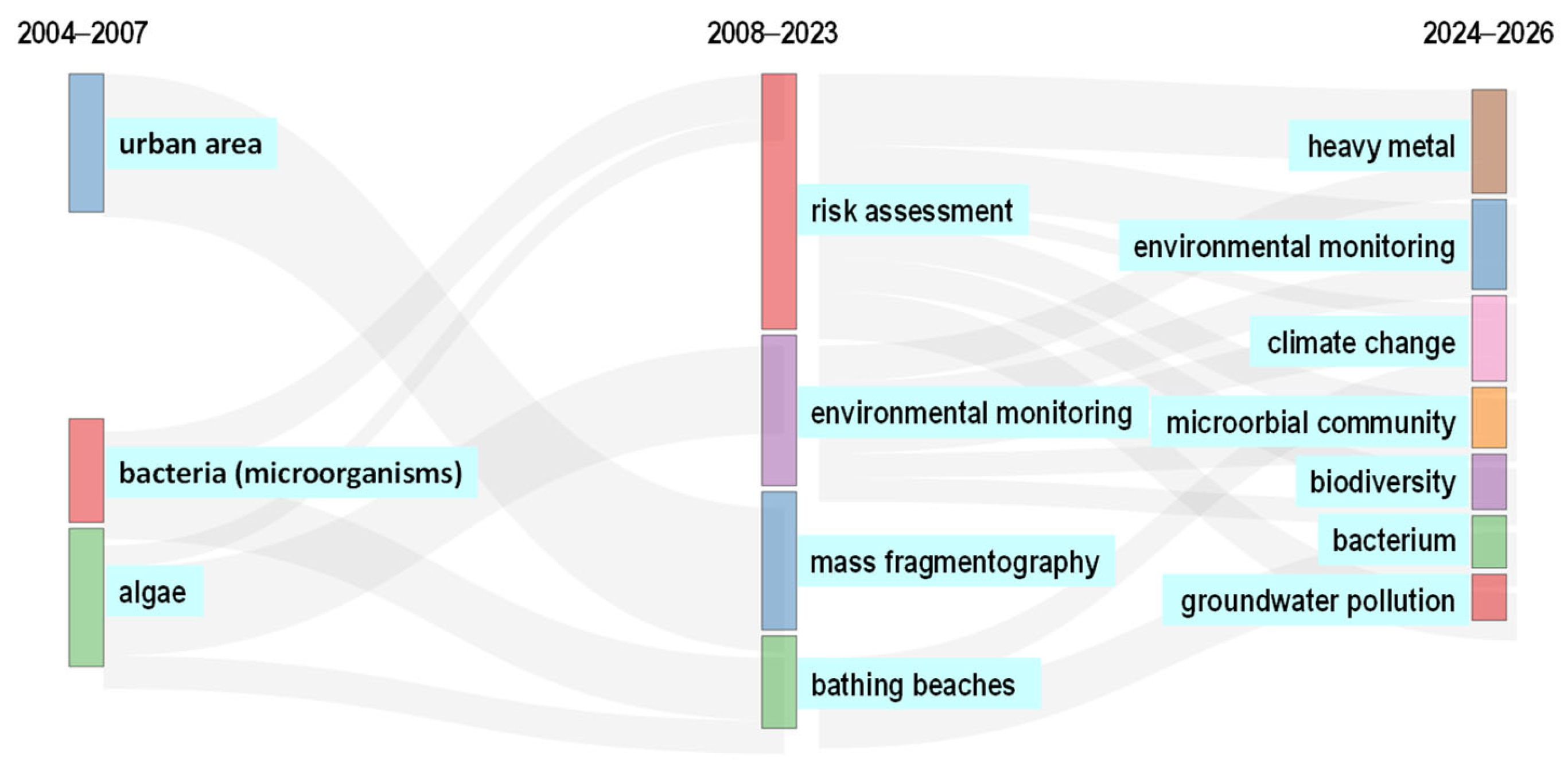
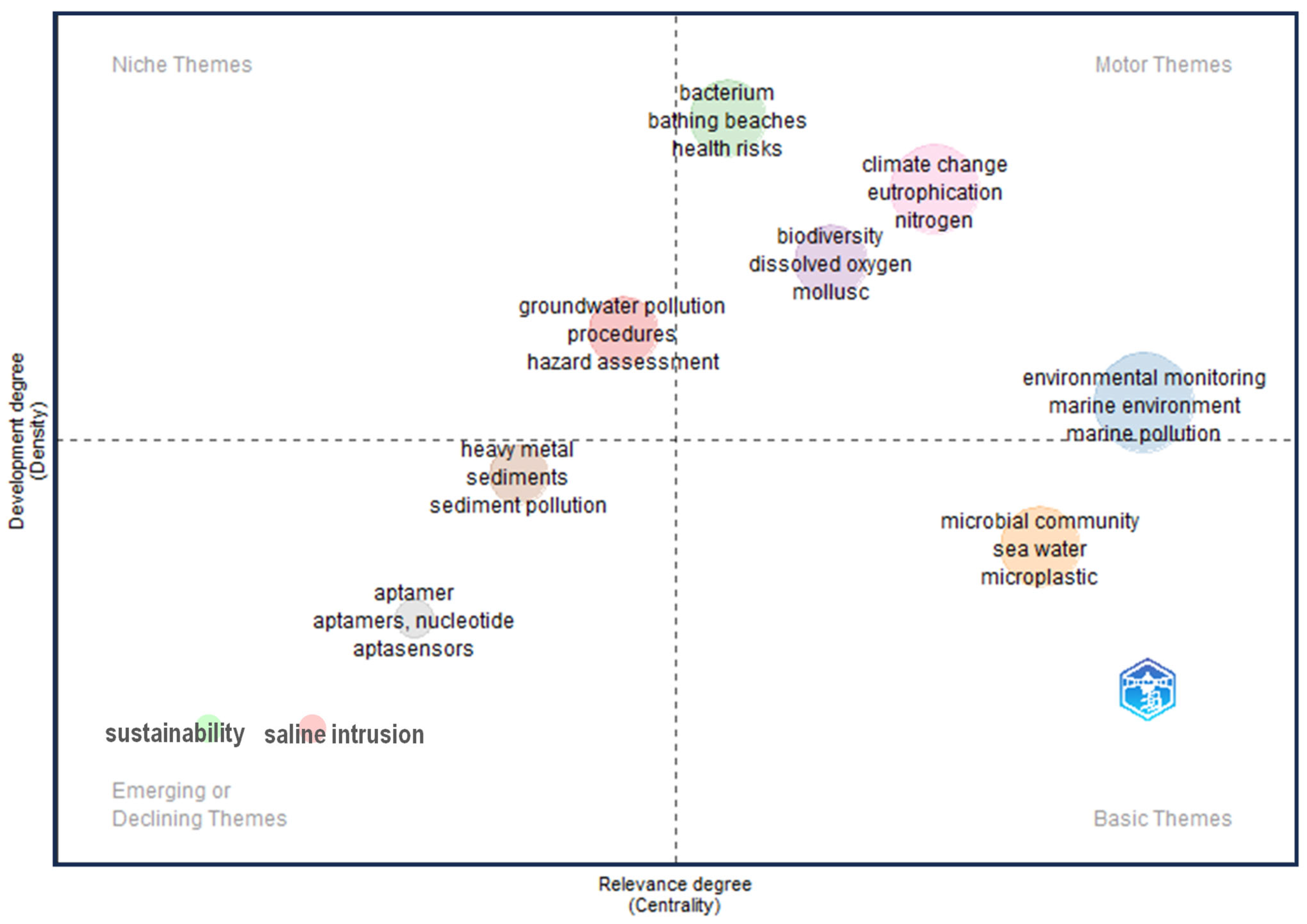
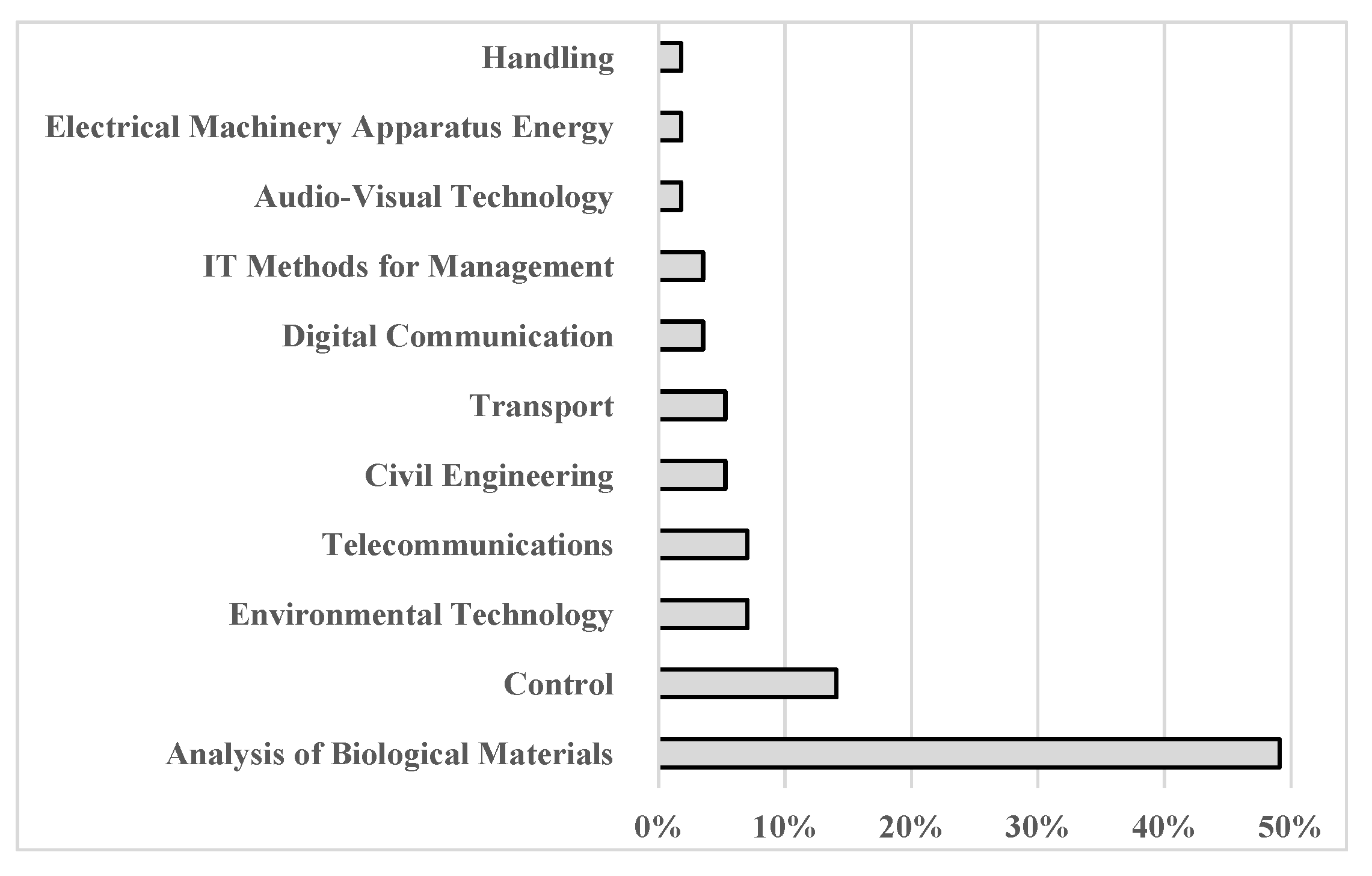
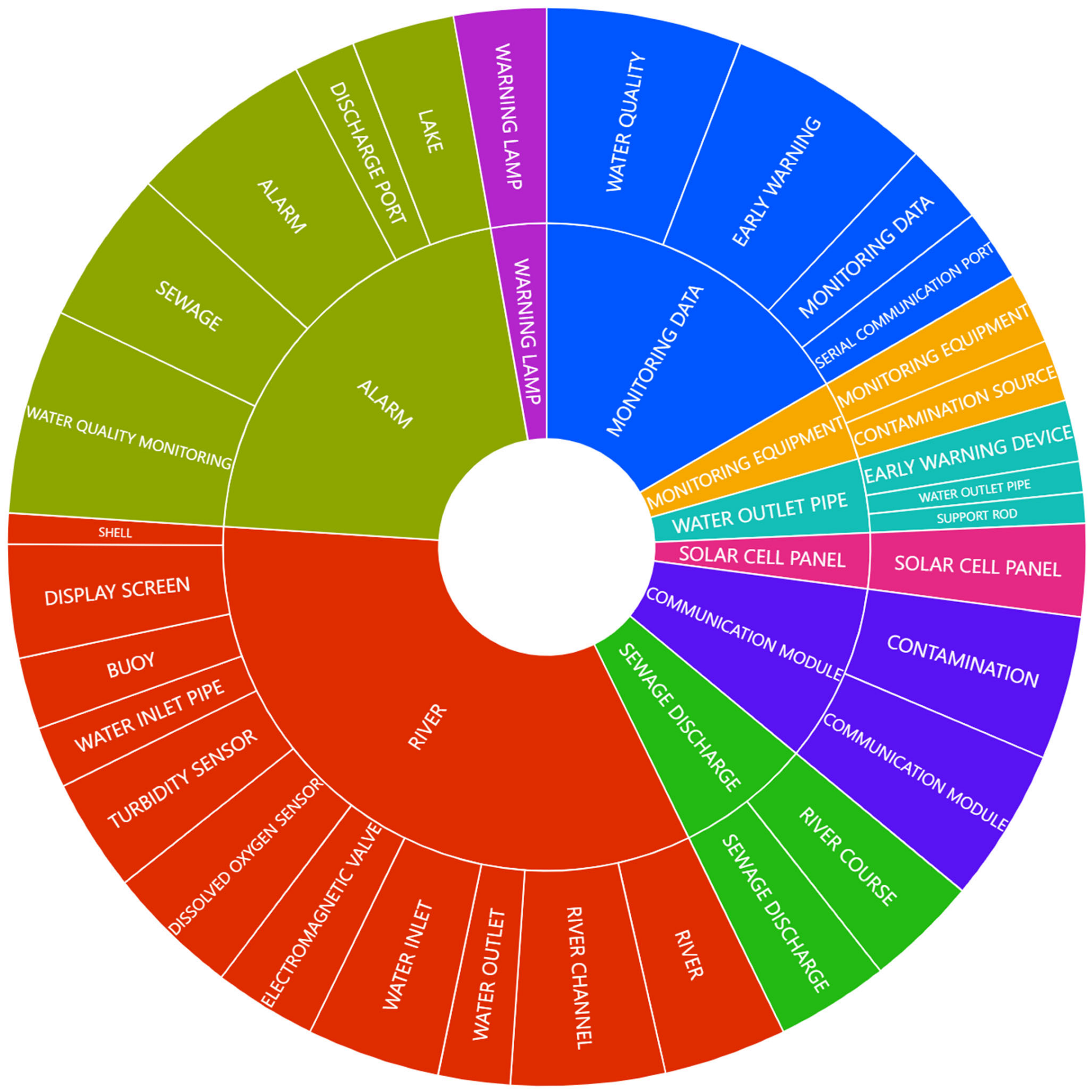
Disclaimer/Publisher’s Note: The statements, opinions and data contained in all publications are solely those of the individual author(s) and contributor(s) and not of MDPI and/or the editor(s). MDPI and/or the editor(s) disclaim responsibility for any injury to people or property resulting from any ideas, methods, instructions or products referred to in the content. |
© 2026 by the authors. Licensee MDPI, Basel, Switzerland. This article is an open access article distributed under the terms and conditions of the Creative Commons Attribution (CC BY) license.