
3.1. BTZ, NaCl, and Na2SO4 Individual Ecotoxicity Towards Lactuca sativa
Bioassays using higher plants allow for the collection of ecotoxicity data during the early stages of seed germination and growth. More specifically, inhibition of root elongation is considered a valid and sensitive indicator of environmental ecotoxicity [
15].
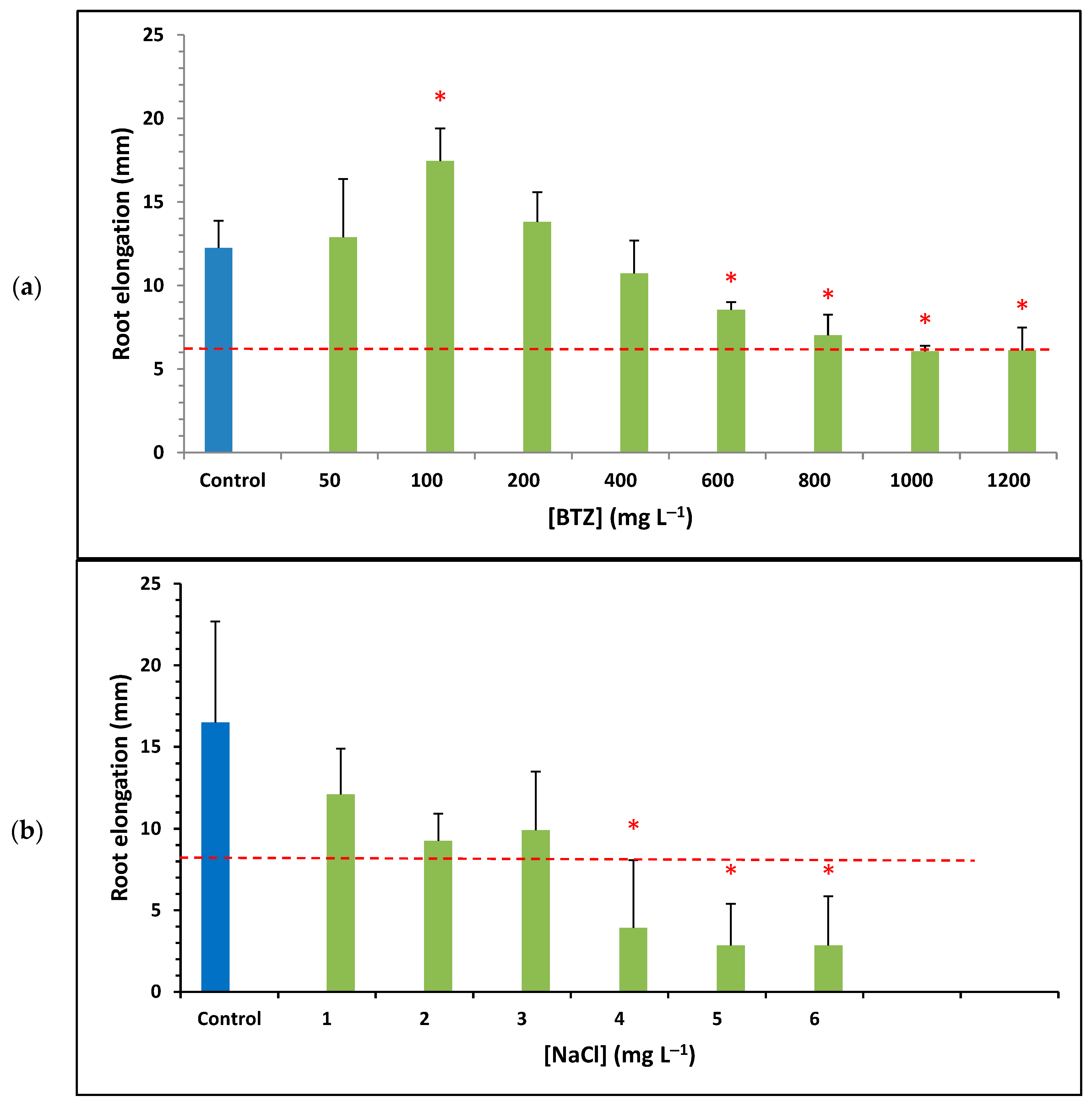
Figure 2 shows the results of the average root elongation obtained for different concentrations of BTZ and
(green bars), as well as for the ultrapure water control (blue bar); the standard deviation is shown using error bars. The red asterisk above a bar indicates that the data have a
p-value < 0.05, meaning that the difference from the control is statistically significant at a 95% confidence level. The horizontal dashed red line represents 50% of the root elongation observed for the control sample. Based on this, samples with an average root elongation below the red line and an asterisk are considered toxic, according to the US EPA OPPTS 850.4200 standard [
41].
Figure 2a shows that, at low concentrations of BTZ (up to 200 mg L
−1), the root elongation of the seeds is similar to, or even greater than, that of the control sample, especially at 100 mg L
−1, where a significant increase is observed. Furthermore, at low BTZ concentrations, root elongation increases as the BTZ concentration increases, reaching a maximum at 100 mg L
−1. Beyond this value, root elongation decreases as the BTZ concentration increases. This behavior can be attributed to a hormetic effect of the herbicide. Herbicides act on the physiological processes of plants, inhibiting their growth; however, when applied at low doses, they can have a positive effect on plant development. The molecular mechanism of herbicide-induced hormesis is still unknown, although it is known that mild stress triggers a compensatory response, leading to greater growth and more efficient reproductive processes [
42]. Other authors have also observed the hormetic effect of BTZ on common sage plants (
Salvia officinalis), indicating that the plant’s enzymatic systems can neutralize the toxic effects of the herbicide [
43].
At concentrations above 800 mg L−1, BTZ is considered toxic to Lactuca sativa since the observed root elongation is less than 50% of that of the control solution, which is corroborated by the p-value. The toxicity threshold was calculated by linearly interpolating the data starting from 100 mg L−1 and finding the point of intersection with the horizontal line representing 50% of root elongation for ultrapure water. Thus, the ecotoxicity value of BTZ towards Lactuca sativa, expressed as EC50 (5 days), was determined to be 900 mg L−1 (3.75 mmol L−1).
Figure 2b shows the root elongation of the seeds at different
concentrations. For all concentrations tested, root elongation is lower than that of the control sample. Furthermore, as the
concentration increases, root elongation decreases; and at a concentration of 4 mg L
−1, the
solution was already toxic towards
Lactuca sativa. After performing a linear interpolation of the data, the ecotoxicity towards
Lactuca sativa of
, expressed as EC
50 (5 days), is 2.53 g L
−1 (43.29 mmol L
−1). Other researchers also analyzed the ecotoxicity towards
Lactuca sativa of
and obtained an EC
50 (5 days) value equal to 5.7 g L
−1 for germination. However, they observed effects on root growth even at a concentration of 1 g L
−1 of
, concluding that root growth is more sensitive to
than germination [
44].
Regarding the ecotoxicity towards
Lactuca sativa of
, this was not determined experimentally because it had already been established in a previous study, with an EC
50 (5 days) value equal to 4.8 g L
−1 (33.79 mmol L
−1) [
35].
When comparing the ecotoxicity towards
Lactuca sativa of the three compounds in mmol L
−1, BTZ herbicide is about 10 times more toxic than the two salts studied (
and
). This is because a 10-times-lower concentration of BTZ is required to inhibit the root elongation of
Lactuca sativa seeds by 50%. In turn, the ecotoxicity of
is somewhat greater than that of
, as 33.79 mmol L
−1 of the former is required, compared to 43.29 mmol L
−1 of the latter, to inhibit root elongation by 50%. This behavior is similar to that found in the literature for the ecotoxicity towards the microcrustacean
Daphnia magna, expressed as EC
50 (48 h), of these two salts: 0.874 g L
−1 (14.96 mmol L
−1) for
[
45] and 1.766 g L
−1 (12.43 mmol L
−1) for
[
46]. However, the EC
50 (48 h) value towards
Daphnia magna for BTZ is 3900 mg L
−1 (16.23 mmol L
−1) [
14]; that is, the BTZ herbicide exhibits lower toxicity towards the microcrustacean than the two salts studied, although of the same order of magnitude in mmol L
−1.
3.2. Synergistic Effect on Ecotoxicity Towards Lactuca sativa of BTZ, NaCl, and Na2SO4
Synergy is the phenomenon by which two or more factors, when interacting, produce an effect greater than the sum of their individual effects. In the field of ecotoxicity, synergy refers to the ability of two or more substances to produce toxic effects greater than those they would produce if their individual toxic effects were considered additively.
To analyze the potential synergy between the three compounds under study, the following two variables were compared: the observed
DRE and the predicted
DRE, both defined in
Section 2.2.
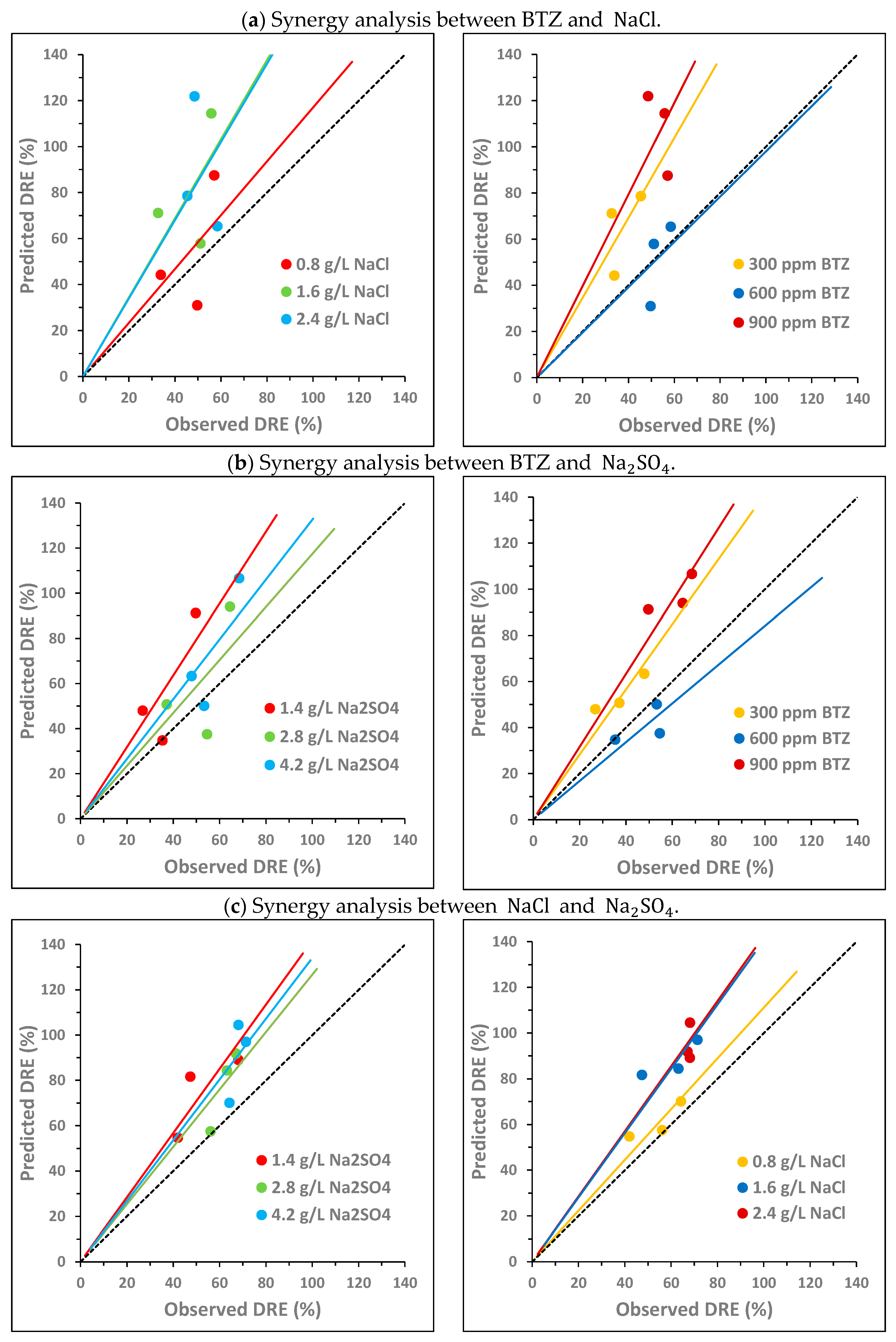
Figure 3 and
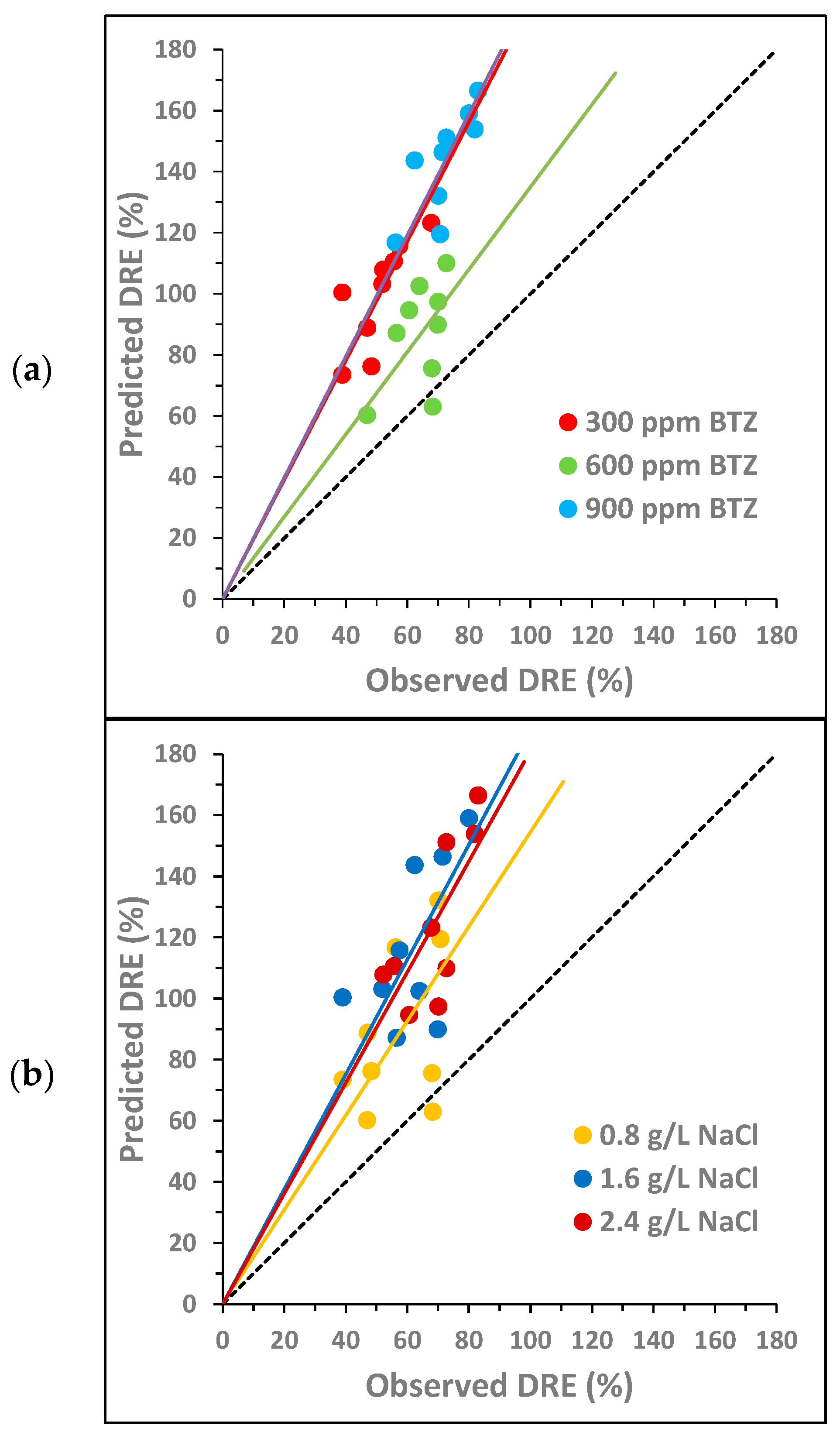
Figure 4 plot the predicted
DRE versus the observed
DRE for the samples from the experimental design described in
Section 2.1 (
Table S1 shows the data used to obtain these values). In the graphs, the black dashed line represents the bisector, which is the area in which the observed
DRE equals the predicted
DRE. Each point in the graph corresponds to one of the concentration combinations studied. None of the points above the bisector show synergy, since the additive effect is greater than the observed effect. In this case, an antagonistic effect occurs between the compounds. Conversely, if a point is below the bisector, this implies that the observed effect is greater than the additive effect. Therefore, there is synergy between the compounds, since the experimental decrease is greater than the predicted decrease as a sum of the individual decreases. Finally, when a point is located on the bisector, then the effect is additive; that is, the observed decrease is equal to the sum of the individual decreases.
Figure 3 analyzes the potential pairwise synergy of BTZ,
, and
using nine combinations of BTZ and
(
Figure 3a); nine combinations of BTZ and
(
Figure 3b); and nine combinations of
and
(
Figure 3c). The concentrations of the compounds are as follows: 300, 600, and 900 mg L
−1 of BTZ; 0.8, 1.6, and 2.4 g L
−1 of
; and 1.4, 2.8, and 4.2 g L
−1 of Na
2SO
4. For each pair of compounds, two graphs are shown, each with the same points but colored differently depending on the concentration of each substance. The solid lines indicate the general trend of points with the same color, i.e., with the same concentration of a given compound.
For the BTZ–
pair,
Figure 3a shows that, in general, there is no synergy between the compounds in the range of concentrations studied. In
Figure 3a (left), it is observed that, as the NaCl concentration increases, the points move further away from the bisector, increasing the antagonistic effect between both compounds. In
Figure 3a (right), it is also observed that, as the BTZ concentration increases, the antagonistic effect between both compounds is greater. However, at the intermediate BTZ concentration (600 mg L
−1), the general trend of the points overlaps with the bisector, indicating an additive effect. In fact, the point corresponding to the combination of 600 mg L
−1 of BTZ and the lowest
concentration (0.8 g L
−1) is below the bisector, suggesting a synergistic effect between BTZ and
under these conditions. The interactions between pesticides and sodium chloride in freshwater systems are complex and can exhibit synergistic, additive, or antagonistic effects on toxicity [
47]. Other authors observed that the presence of
in irrigation water, at a higher concentration than those analyzed in this study (11.7 g L
−1 of
), provided partial protection against Cd- and Cu-induced toxicity in the halophyte species
Atriplex halimus [
48].
For the BTZ–
pair, in general,
Figure 3b does not show a significant synergistic effect between both compounds in the range of concentrations analyzed. In
Figure 3b (left), it is observed that, at the highest
concentrations, the points get closer to the bisector, decreasing the antagonistic effect between both compounds. This behavior is contrary to that observed for
. In
Figure 3b (right), the behavior of BTZ is very similar to that observed in combination with
: the higher the BTZ concentration, the greater the antagonistic effect with
. And again, an exception is observed at 600 mg L
−1 of BTZ. For this intermediate BTZ concentration, the points are slightly below the bisector for the three
concentrations evaluated, indicating that there is a slight synergistic effect between both compounds, especially at 2.8 g L
−1 of
. In a previous study of atenolol toxicity towards
Lactuca sativa, a clear antagonistic effect was also observed at the lowest
concentration studied (2 g L
−1). Furthermore, the magnitude of the antagonistic effect also decreased as the
concentration increased until an additive effect was observed at the highest concentration analyzed (6 g L
−1) [
49]. Other authors have studied the toxicity of Cd towards a microalga (
Chlamydomonas moewussi) and have also observed that
produces an antagonistic/synergistic effect depending on its concentration [
50]. They attribute this behavior to the fact that sulfate is an important nutrient that can induce physiological responses to mitigate Cd toxicity. However, an excess of nutrients can be toxic to microorganisms, increasing the toxic behavior of Cd.
Finally, for the
–
pair,
Figure 3c shows that no synergy occurs between both compounds in the range of concentrations studied.
Figure 3c (left) shows that, at higher
concentrations, the antagonistic effect between both compounds decreases. However,
Figure 3c (right) shows that as the
concentration increases, the antagonistic effect increases. Therefore, the behavior of both compounds is similar to that observed for each of them in combination with BTZ. The point closest to the bisector (additive effect) corresponds to the combination of 0.8 g L
−1 of
and 2.8 g L
−1 of
. Other authors have also observed a similar behavior of both compounds when analyzing their toxicity towards two crustaceans (
Hyalella azteca and
Ceriodaphnia dubia). At low
concentrations, the toxicity of
showed a positive correlation with the chloride concentration. In contrast, at high
concentrations,
toxicity showed a negative correlation with chloride concentration [
51].
In summary, the pairwise analysis of the potential synergistic effect of the three compounds shows that, in general, their behavior is antagonistic. However, pairwise synergy could occur at concentrations of 600 mg L
−1 of BTZ, 0.8 g L
−1 of
, and 2.8 g L
−1 of
. The statistical analysis of the pairwise interactions by ANOVA is shown in
Section 3.3.
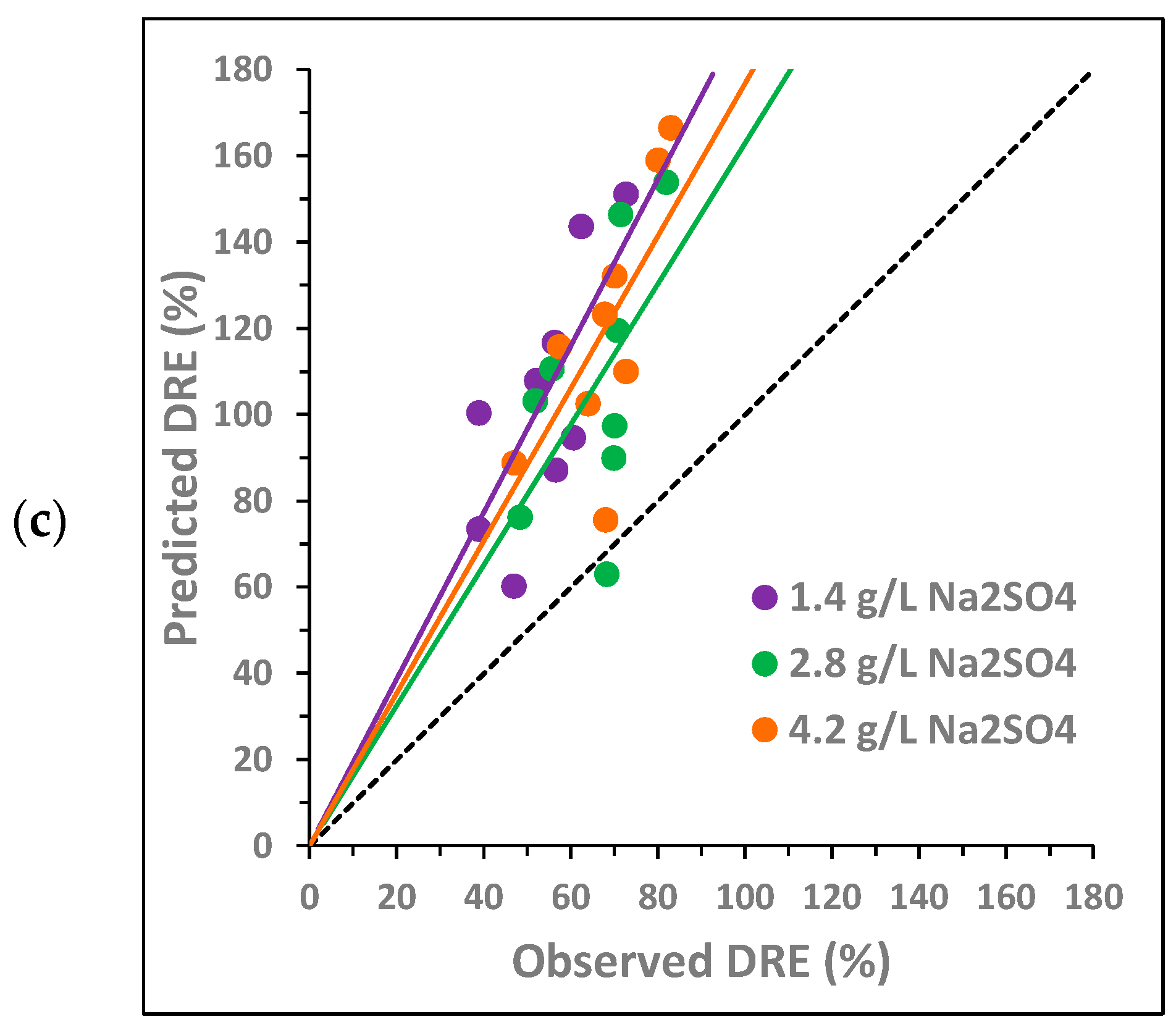
Figure 4 analyzes the potential synergy of the three compounds (BTZ,
, and
) using 27 concentration combinations. The three graphs represent the same points, but they are colored differently depending on the concentration of each compound. Again, the solid lines indicate the general trend of points with the same color, i.e., at the same concentration of a given compound.
For the joint combination of BTZ
–
,
Figure 4 shows that no synergy occurs between the three compounds in the range of concentrations analyzed. As observed in the pairwise analysis, the antagonistic effect is lower at the concentration of 600 mg L
−1 of BTZ (
Figure 4a), the lower NaCl concentration (
Figure 4b), and the higher concentrations of Na
2SO
4 (
Figure 4c). The only point below the bisector corresponds to the combination of 600 mg L
−1 of BTZ, 0.8 g L
−1 of
, and 2.8 g L
−1 of
, and a synergistic effect between the three compounds may occur under these conditions. These concentrations are the same as those observed in the pairwise analysis as potential inducers of a synergistic effect.
3.3. Ecotoxicity Threshold Towards Lactuca sativa for Mixtures of BTZ, NaCl, and Na2SO4
The statistical analysis of the observed
DRE identified only one outlier, and the corresponding sample was discarded from the study.
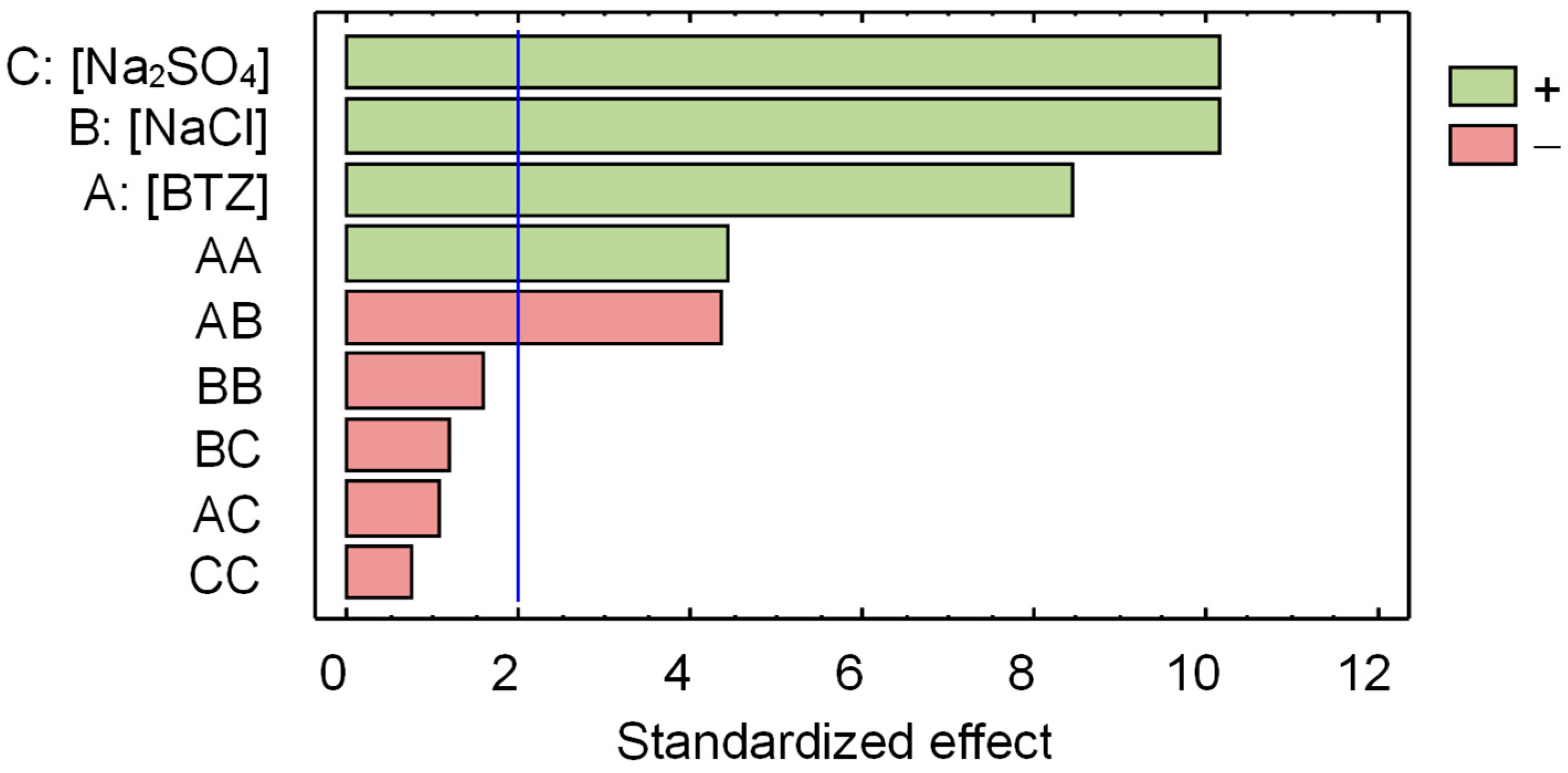
Figure 5 shows the Pareto chart obtained using ANOVA. This is a bar graph that quantifies the effect of the three compounds’ concentrations and their interactions on the observed
DRE. The vertical blue line represents the significance threshold at a 95% confidence level. Factors and interactions that do not exceed this line are considered statistically insignificant. As can be seen in
Figure 5, the concentrations of all three compounds have a statistically significant effect on the
DRE. Moreover, their effects are positive, indicating that as their values increase, the
DRE value increases. It should be noted that the effect of
and
concentrations has the same significance on the
DRE; and this is greater than the effect of BTZ concentration. Regarding the pairwise interactions between the three compounds’ concentrations, only the pair BTZ–
(AB in
Figure 5) has a statistically significant effect on the
DRE.
After discarding the statistically non-significant interactions between factors identified by ANOVA (see BB, BC, AC, and CC in
Figure 5), the RSM methodology was applied. The result was the following second-order regression model that relates the
DRE, expressed as a percentage, to the concentrations of the three compounds (Equation (2)):
where [BTZ] is the concentration of BTZ, expressed in mg L
−1; and [
] and [
] are the concentrations of
and
, respectively, both expressed in g L
−1. Equation (2) has an R
2 value of 84.1%, indicating that it can model almost all the variability in the experimental data.
Table S3 shows the standard error for the coefficients of Equation (2),
p-values, and confidence limits.
The mathematical model in Equation (2) was used to estimate the EC
50 (5 days). It is defined as the concentrations of BTZ,
, and
that produce a 50% inhibition of root elongation in
Lactuca sativa seeds relative to the ultrapure water control. To this end, the
DRE in Equation (2) was set equal to 50%, and the terms were rearranged, yielding Equation (3):
Equation (3) represents a surface whose points are all combinations of BTZ,
, and
concentrations that produce a 50% inhibition of root elongation in
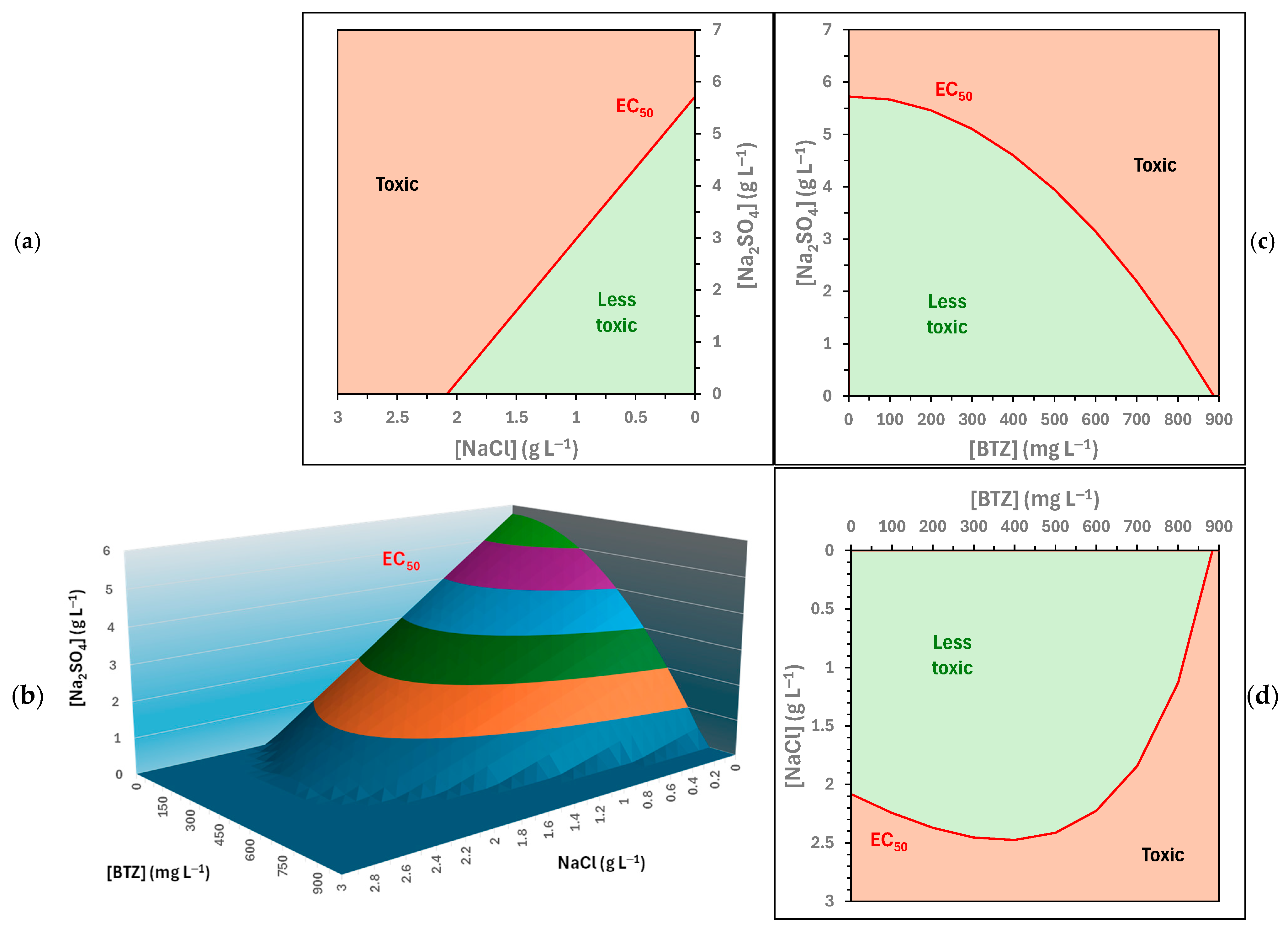
Lactuca sativa seeds relative to the ultrapure water control. If the concentrations of the compounds are set equal to zero two by two in Equation (3), the ecotoxicity of the third compound is obtained, expressed as EC
50 (5 days): 888.1 mg L
−1 for BTZ, 2.1 g L
−1 for
, and 5.7 g L
−1 for
. These values calculated with the mathematical model (Equation (3)) are of the same order of magnitude as those obtained by linear interpolation from the experimental data (
Section 3.1). This fact demonstrates the goodness of the model.
Figure 6 presents Equation (3) for positive values of the concentrations of the three compounds. All combinations of BTZ,
, and
concentrations above the three-dimensional surface represent toxic solutions towards
Lactuca sativa.
Figure 6 also shows the intersections between this surface and the Cartesian planes; the red lines represent the ecotoxicity thresholds for the substances in pairs.
The ecotoxicity threshold (EC
50 (5 days)) towards
Lactuca sativa for combinations of
and
(
Figure 6b) exhibits a linear relationship with a negative slope. That is, a higher concentration of
requires a lower concentration of
for a sample to be considered toxic, and vice versa. Since the relationship is linear, it can be concluded that the two compounds have a simple and direct combined effect on ecotoxicity.
Regarding the ecotoxicity threshold (EC
50 (5 days)) towards
Lactuca sativa for combinations of
and BTZ (
Figure 6c), this exhibits a convex parabolic relationship. Therefore, when the BTZ concentration is low, higher concentrations of
are required to reach toxic levels compared to a linear relationship. And, as the BTZ concentration increases, a progressively lower concentration of
is required to cause toxic effects, with this decrease being smaller than if the relationship was linear. This behavior could be attributed to the fact that
is a nutrient.
Finally, the ecotoxicity threshold (EC
50 (5 days)) towards
Lactuca sativa for combinations of
and BTZ (
Figure 6d) also shows a convex curve; but in this case, it exhibits an inflection point at a BTZ concentration equal to 381.7 mg L
−1. This fact implies that, below 381.7 mg L
−1, as the BTZ concentration increases, the
concentration must also increase for the samples to be toxic. However, above 381.7 mg L
−1, as the BTZ concentration increases, a lower
concentration is required for the sample to be toxic, and vice versa. The behavior at low BTZ concentrations can be attributed to a possible hormetic effect of this herbicide. This fact was confirmed by ecotoxicity analysis (
Figure 2a), since at low BTZ concentrations the root elongation of the seeds was greater than with the ultrapure water control.
Lastly, the three-dimensional graphical representation of the ecotoxicity thresholds (EC
50 (5 days)) towards
Lactuca sativa (
Figure 6a) is not a plane, but a surface of greater complexity, as expected from its intersections with the Cartesian planes. In general, it is observed that the progressive increase in the concentrations of the three substances leads to an increase in the ecotoxicity of the system. Regarding the inflection point detected for BTZ combined with
, it shifts towards lower concentrations of BTZ as the
concentration increases.
3.4. Ecotoxicity of Solutions After Applying Electrooxidation and Photoelectrooxidation Processes
The second objective of this study is to analyze the efficacy in ecotoxicity reduction for electrooxidation and photoelectrooxidation processes using an Sb- ceramic anode coated with a photocatalyst.
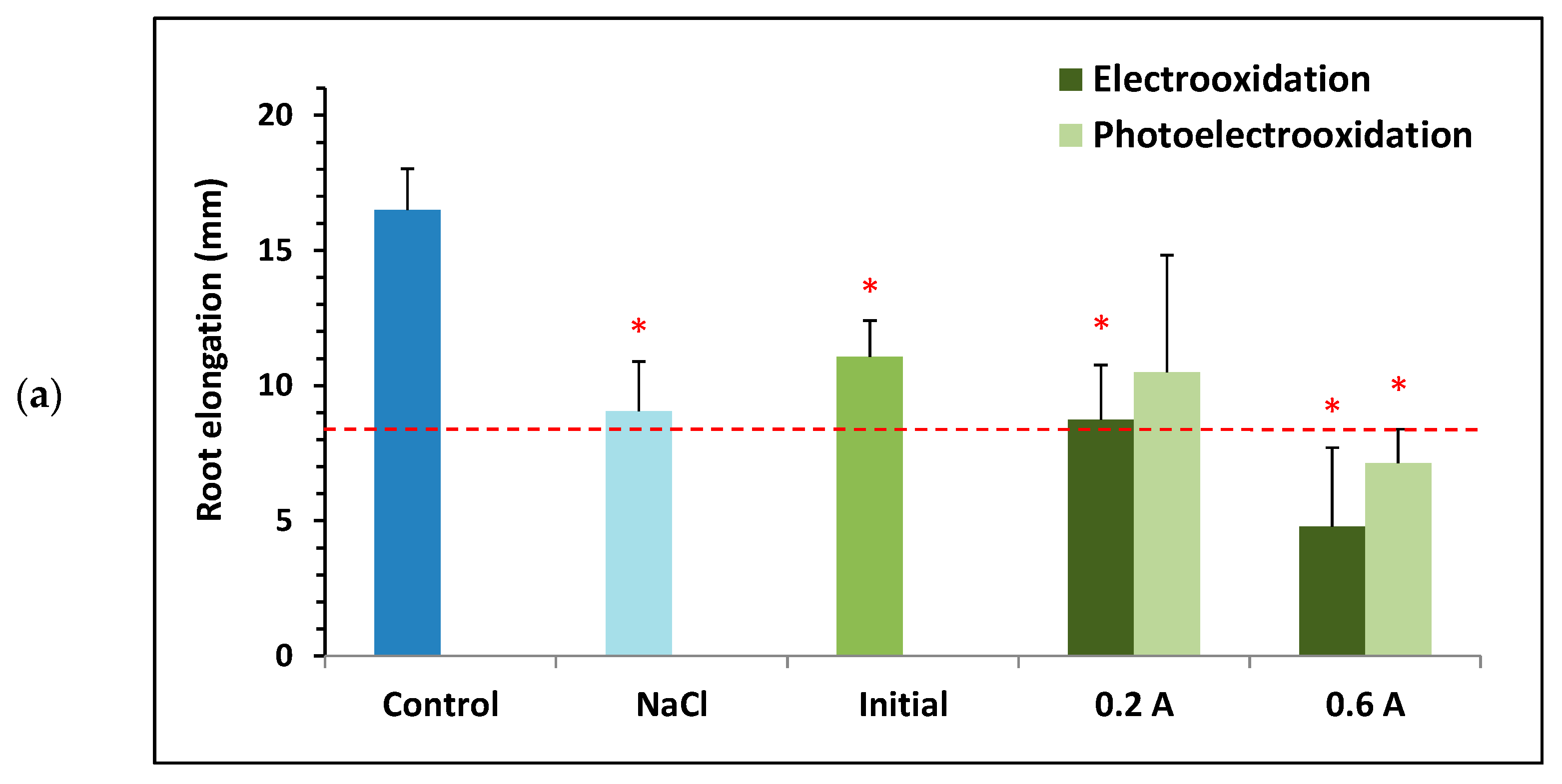
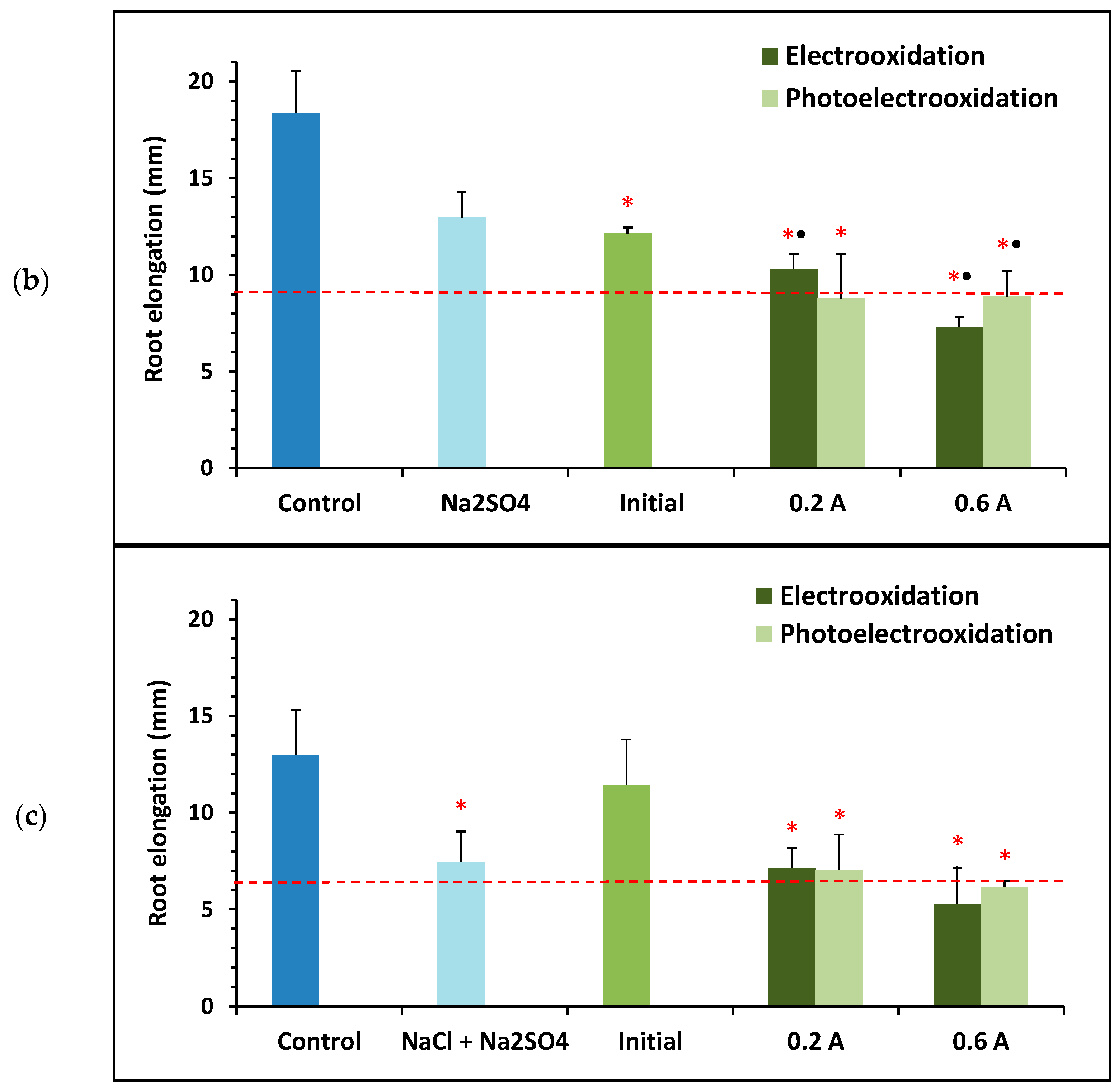
Figure 7 shows the mean root elongation results of
Lactuca sativa seeds obtained for the initial BTZ sample and those treated under different operating conditions (green bars), that is, using different supporting electrolytes (
,
, and a mixture of both), applying current intensities of 0.2 and 0.6 A, and in the presence or absence of ultraviolet light provided by a lamp. Also shown is the root elongation of the seeds for the control sample corresponding to ultrapure water (dark blue bars) and for each of the supporting electrolytes tested (light blue bars). As in
Figure 2, the error bars show the standard deviation of root elongation, and the red asterisk indicates a statistically significant difference from the control sample at a 95% confidence level.
Figure 7 also includes a black dot when root elongation shows a statistically significant difference from the supporting electrolyte (in the absence of BTZ) at a 95% confidence level. Finally, the horizontal dashed red line marks 50% of the root elongation observed for the control sample. Therefore, samples with a mean root elongation below the red line and marked with an asterisk are considered toxic.
Figure 7 shows that the control sample (ultrapure water) exhibits the greatest root elongation in all assays. Furthermore, none of the three initial samples are considered toxic, as predicted by the mathematical model obtained with the Statgraphics Plus 5.1 software (
Figure 6). Regardless of the supporting electrolyte tested, all electrochemically treated samples show greater ecotoxicity than the untreated initial sample, although not all are considered toxic towards
Lactuca sativa. Furthermore, in general, applying 0.6 A leads to a higher final toxicity than applying 0.2 A; and with the electrooxidation process, the final toxicity is higher than with the photoelectrooxidation process.
When analyzing each supporting electrolyte tested,
Figure 7a shows that root elongation for the initial solution of 100 mg L
−1 of BTZ and 1.65 g L
−1 of
is lower than that for the control (showing a statistically significant difference), but higher than that for the sample containing only
. This is consistent with the hormetic effect of BTZ observed in previous sections, since at low concentrations of this herbicide greater root elongation is favored compared to its absence. When
is used as the supporting electrolyte, the two samples treated at the highest current intensity (0.6 A) are considered toxic because they show root elongation below 50% of the control. Furthermore, for the two current intensities tested, when ultraviolet light is applied the samples are less toxic than if treated in the absence of light. In fact, the sample treated at 0.2 A by photoelectrooxidation is the least toxic of all, with root elongation very close to that of the initial sample. Finally, comparing the treated samples with the solution containing only
, only those subjected to the highest current intensity (0.6 A) show greater toxicity, although the difference is not statistically significant.
Figure 7b shows that the initial sample containing 100 mg L
−1 of BTZ and 2 g L
−1 of
showed less root elongation than the control (with a statistically significant difference), but similar to that of the sample containing only
. At this
concentration, the hormetic effect of BTZ does not appear to be observed. When
is used as the supporting electrolyte, most of the electrochemically treated samples are toxic compared to the control. And compared with the solution containing only
, all samples are found to be more toxic with a statistically significant difference.
Finally,
Figure 7c shows that root elongation for the initial sample containing 100 mg L
−1 of BTZ, 0.46 g L
−1 of
, and 1.3 g L
−1 of
is somewhat lower than that for the control but greater than root elongation for the sample containing only the supporting electrolyte. In this case, the presence of
allows the hormetic effect of BTZ to be observed again. When using a mixture of
and
as the supporting electrolyte, only the samples treated at the highest current intensity of 0.6 A are toxic, as when using
individually. Similarly, root elongation for these two samples is also lower than that for the sample containing only
and
, although the difference is not statistically significant.
In summary, whether the supporting electrolytes are tested individually or together, treatment with a lower current intensity and applying ultraviolet light appears to result in greater root elongation, i.e., the final samples are less toxic.
Table 1 shows the degradation and mineralization percentages achieved with each of the electrochemical tests after 4 h of treatment. It also shows ecotoxicity towards
Vibrio fischeri determined with the Microtox equipment. The degradation degree refers to the disappearance of BTZ due to oxidation of this compound, forming other species. The mineralization degree refers to the disappearance of BTZ due to complete oxidation according to Equation (4) [
40] and was determined by measuring total organic carbon (TOC). Based on these definitions, a percentage of mineralization lower than the degradation percentage implies that not all BTZ that has disappeared has undergone complete oxidation. That is, intermediate organic products have been formed.
For all experiments,
Table 1 shows that the mineralization degree achieved is lower than the degradation degree. Therefore, intermediate organic products are formed. Among them, acetate and formate have been identified, but chlorinated organic compounds can also be formed by direct chlorination of BTZ [
40]. The formation of these compounds could explain the increased toxicity of the treated samples compared to the initial solution (
Figure 7). However, an analysis of the degradation and mineralization values in
Table 1 shows that a higher percentage of degradation and mineralization does not always translate into lower final toxicity. When
is used as the supporting electrolyte, on the one hand, the samples treated at 0.6 A show the highest degradation and mineralization values. However, as seen in
Figure 7, they also show the highest toxicity towards
Lactuca sativa, which is corroborated by the Microtox analysis. On the other hand, for the two current intensities tested, the application of ultraviolet light results in an increase in the degradation and mineralization percentages. However, according to the seed tests, in this case the toxicity of the final samples is lower. This behavior can be justified by considering the by-products formed during the electrochemical oxidation process. Comparing the two tests with a similar degradation percentage (0.6 A without light and 0.2 A with light), the one with the lower percentage of mineralization shows lower toxicity. This implies that the higher toxicity cannot be attributed to the organic intermediates formed since, if these were more toxic than BTZ, the sample with the lower percentage of mineralization should be more toxic, which is not the case. This fact suggests that during these treatments other by-products are generated that come from the oxidation of the supporting electrolyte (
, in this case), such as chlorate ions [
40], which contribute to the oxidation of BTZ but are more toxic than the starting chlorides. According to the literature, the EC
50 (48 h) for
Daphnia magna of sodium chlorate is 1.093 g L
−1 (10.27 mmol L
−1) [
52] compared to 0.874 g L
−1 (14.96 mmol L
−1) for
[
45]. This would explain the increase in ecotoxicity at higher applied intensities, since a greater amount of chlorinated by-products would be formed, contributing at the same time to improved BTZ elimination. Regarding the application of ultraviolet light, it favors the photogeneration of reactive chlorinated species, such as
●Cl and
●HClO radicals [
40]. These species are highly reactive with organic pollutants so they quickly disappear, contributing to BTZ degradation but without increasing toxicity.
In summary, the results suggest that electrochemical treatments of BTZ with at 0.6 A generally provide more toxic final effluents than applying 0.2 A and that the use of ultraviolet light in the process may have a mitigating effect on toxicity. Thus, the choice of the most favorable treatment should not depend solely on its efficiency, but also on the nature of the by-products generated as these can increase the final toxicity of the treated effluents.
When
is used as the supporting electrolyte, when comparing the results obtained with
Lactuca sativa with those of the Microtox assay (
Table 1), some similarities are identified. The sample treated at 0.6 A without light shows moderate toxicity (5 TU), consistent with the reduced root elongation observed in
Figure 7. The samples with zero toxicity (0.6 A with light and 0.2 A without light) correspond to those that show the greatest root elongation. It should be noted that for low toxicity values, the test with lettuce seeds is more sensitive than the Microtox assay. Therefore, lettuce seeds allow us to observe that the sample treated at 0.6 A with light presents greater toxicity than the sample treated at 0.2 A without light. Finally, the high toxicity observed with Microtox for the sample treated at 0.2 A with light is inconclusive, since in
Figure 7 this sample shows one of the greatest root elongations.
Analyzing the degradation and mineralization percentages in
Table 1 when working with
as the supporting electrolyte, the samples treated at 0.6 A show the highest degradation and mineralization values. However, as seen in
Figure 7, they also show the highest toxicity values with
Lactuca sativa, as occurred when working with
as the supporting electrolyte. Regarding the treatment carried out by applying light, greater degradation is observed for both current intensities and greater mineralization also occurs at 0.6 A. In the latter case, the higher degradation and mineralization percentages do not lead to greater toxicity, but quite the opposite (corroborated with both seeds and Microtox), as was observed when working with
. This behavior can be justified by considering the by-products formed during the electrochemical oxidation process. In previous works it was verified that, when working with
as the supporting electrolyte, persulfates are formed during the electrochemical process, which contribute to the indirect oxidation of the organic pollutant but increase the toxicity of the samples [
49]. This is because the toxicity of sodium persulfate is higher than that of sodium sulfate. According to the literature, the EC
50 (48 h) for
Daphnia magna of sodium persulfate is 0.120 g L
−1 (0.5 mmol L
−1) [
53] compared to 1.766 g L
−1 (12.43 mmol L
−1) of
[
46]. The formation of persulfates would explain the increase in ecotoxicity at higher applied intensities, since a greater amount of these by-products would be formed. Regarding the application of light, it can activate persulfates towards the formation of sulfate radicals (
), which are highly oxidizing [
40]. Therefore, as they disappear quickly, they contribute to the degradation of BTZ and its intermediate degradation products but do not increase toxicity.
In summary, as observed using as the supporting electrolyte, the results obtained with suggest that electrochemical treatments at 0.6 A generally provide more toxic final effluents than applying 0.2 A. Moreover, the use of ultraviolet light in the process may have a mitigating effect on toxicity.
Finally, when a mixture of
and
is used as the supporting electrolyte, comparing the results obtained with
Lactuca sativa with those of the Microtox assay (
Table 1), no clear trends are observed. This could be attributed to the fact that the toxicity values detected are low and, as indicated above, the test with lettuce seeds is more sensitive for low toxicity values, allowing differences to be observed that are not appreciated with Microtox.
Analyzing the degradation and mineralization percentages in
Table 1, the samples treated at 0.6 A exhibit the highest degradation and mineralization values. However, as seen in
Figure 7, they also exhibit the highest toxicity values with
Lactuca sativa. Regarding the application of light during treatment, greater degradation and mineralization are achieved for both current intensities. However, in this case, the toxicity is lower than or of the same order of magnitude as in the absence of light, according to the seed tests. These trends are generally the same as those observed when working with
or
separately, and the same explanation regarding the formation of by-products from the two compounds used as supporting electrolytes is valid.
The results obtained with the mixed electrolyte for BTZ show intermediate degradation and mineralization values between those achieved with the two pure electrolytes; applying 0.6 A, they are very close to the maximum values achieved with pure . Furthermore, for this current intensity, the toxicity of the final effluents achieved with the mixed electrolyte is significantly lower than working with pure , especially when light is applied, since in this case root elongation is very close to 50% of the control. Therefore, working with the mixed electrolyte has shown that the results for BTZ from the combined perspective of final degradation/mineralization and toxicity, are better, in addition to more closely resembling the conditions found in the Albufera lake.
In summary, the photoelectrooxidation process applying 0.6 A with the mixed electrolyte is the most effective technique from the combined point of view of final degradation (90.9%), mineralization (62.4%), and toxicity. Moreover, the degradation degree achieved is greater than 80%, which is the minimum value required by Directive (EU) 2024/3019 to reduce the concentration of micropollutants [
3]. Therefore, the photoelectrooxidation could be used as a quaternary treatment in WWTPs with the following additional advantages. This technique does not need the addition of chemical additives, and energy consumption could be supplied by alternative energy sources, especially in small communities [
54].