


Abstract
The foremost priority of the Sendai Framework for Disaster Risk Reduction (SFDRR) is the increased understanding of disaster risk and strengthening its management. Detailed insights into African disaster risk drivers and assessment of policies for Disaster Risk Reduction (DRR) are sparse, hence this study. Using the Index for Risk Management (INFORM) data for 2022, this study determines important disaster risk drivers in Africa using a random forest machine learning model. Violent conflicts, current and projected, emerge as the only hazard factor significantly predictive of disaster risk in Africa, from the analyzed data. Other factors are mostly the sub-components of lack of coping capacity. Furthermore, 25 policies of the 10 countries of very high disaster risk were analyzed to evaluate their inclusion of pre-identified disaster risk factors. The findings of this study depart from the viewpoint of giving natural hazards greater attention in African disaster risk literature. Moreover, identified disaster risk drivers in Africa coincide with the social dimension of disasters, and broader continental developmental and policy issues. As Africa grapples with the complex interplay of environmental, socioeconomic, and conflict-related factors shaping disaster risk, the imperative arises for the development and implementation of comprehensive policies aimed at poverty and vulnerability-reduction to foster resilience across the region.
1. Introduction
The integrity of sustainable development faces an inherent threat from disasters, often stemming from a convergence of hazards, vulnerability, and a lack of coping mechanisms. Vlachogiannis et al. [1] underscore the exacerbating impact of climate change on associated hazards and their consequences. Concurrently, Nicodemus and Dennis [2] emphasize that deficient coping capabilities and heightened vulnerabilities amplify the risks, losses, and damages caused by disasters, especially in developing economies. Similarly, Eze and Siegmund [3] specify that the literature lacks emphasis on specific components of vulnerability and lack of coping capacity, despite their significant contribution to fueling disaster risk. These circumstances pose a direct challenge to comprehensive frameworks, such as the United Nations Agenda 2030, the Sendai Framework for Disaster Risk Reduction (SFDRR), and the Agenda 2063 of the African Union, which ambitiously strive for human well-being, peace, and prosperity within the realms of environmental and economic sustainability.
Africa stands out among the most vulnerable and least resilient regions to disasters, as highlighted in prior research. For example, Manyena [4] emphasizes that factors like poverty, climate change, rapid urbanization, and structural transformation significantly exacerbate the impacts of natural hazards in this region. Additionally, Paul et al. [5] estimate that disasters have inflicted various losses on over half a billion people in Africa over the past five decades. The hindrances posed by disaster risks have notably hampered developmental progress in Africa, attributed to deficiencies in risk identification, knowledge management, and governance, as highlighted by The African Union [6].
Subsequent reports and studies, including those by Bhavnani et al. [7], and Tiepolo and Braccio [8], reaffirm these critical gaps in risk identification and assessment within the African context. These shortcomings significantly compromise the availability of essential information required for effective disaster risk reduction (DRR) and management, as noted by van Niekerk et al. [9], potentially obstructing the attainment of the SFDRR 2015–2030 goals if not adequately addressed.
This study resonates with the advocacy for paradigm shifts emphasized by Kimengsi and Mbih [10], advocating for a comprehensive understanding of underlying disaster risk factors. Such understanding is essential in facilitating effective risk identification, reduction, and resilience enhancement in sub-Saharan Africa. Addressing these risk factors is imperative to counteract the failure to mitigate the fundamental drivers of disaster risks, as highlighted by Keating et al. [11]. A recent study by Eze and Siegmund [12] presents a comprehensive analysis of disaster risk trends, hotspots, factors, and their interaction effects on disaster risks across Africa, utilizing a decade-long dataset.
Notably, the literature lacks sufficient evaluations of African disaster risk plans. Tiepolo and Braccio [8] undertook a policy assessment encompassing the development plans of 21 African nations, revealing the absence of localized characterization and widespread omission of risk reduction objectives within these plans. Additionally, earlier observations about Africa by van Niekerk [13] have reported the inadequacies of countries’ disaster risk governance in aligning with the goals outlined in the defunct Hyogo Framework for Action, indicating a lack of responsiveness in this domain.
This study is driven by the overarching question: How well do relevant policies and national action plans incorporate disaster risk drivers? The need for data-driven insights into underlying disaster risk factors becomes evident as Kimengsi and Mbih [10] suggest, addresses gaps and bolsters resilience against hazards, aligning with DRR objectives. Furthermore, the assessment of national policies like DRR policies, Nationally Determined Contributions (NDCs), and National Adaptation Programmes of Action (NAPAs) in the context of these disaster risk factors yields valuable insights into the effectiveness of crucial policies. The phrase ‘core policies’ is used to collectively refer to these three policies in the subsequent sections of the paper. As highlighted by Bello et al. [14], policy assessments extend beyond hazard evaluations; they serve to diminish vulnerability and prompt public engagement in DRR efforts.
Consequently, this study seeks to initiate an assessment of the responsiveness of core policies in addressing disaster risk drivers in Africa. Initially, we identify disaster risk drivers using the 2022 Index for Risk Management (INFORM) data to assess their inclusion levels within relevant core policies. Subsequently, a content analysis of core policies from countries rated as very high in the disaster risk index is performed. The countries selected were chosen for expediency in providing an initial overview rather than serving as a representative sample for the study.
2. Potential Contributions of This Study
The study holds potential contributions that can significantly impact DRR efforts in Africa. Firstly, it offers unique insight into the fundamental factors driving disaster risk in the continent, empowering policymakers with specific knowledge to refine and bolster existing DRR policies. Highlighting the pivotal role of vulnerability and the underrepresentation of certain hazards within core policies lays the groundwork for more focused and targeted policy interventions.
Secondly, this research broadens the conventional understanding of disaster risks in Africa. The findings shift the lens from solely natural hazards to encompassing human-induced hazards and social vulnerabilities. This holistic perspective prompts a more comprehensive approach to disaster risk assessment and mitigation, emphasizing the critical need to address social, economic, and governance-related factors to effectively manage disaster risks.
Moreover, the study emphasizes inclusive and adaptive policy frameworks, which resonate with international development goals like the SFDRR and the Sustainable Development Goals of Agenda 2030. By advocating for policies that encompass the multifaceted nature of disaster risks, the study aligns with global efforts towards sustainable development and resilience-building in vulnerable regions.
Furthermore, this research lays a foundation for future investigations. It sets the stage for detailed country-specific studies, encouraging deeper exploration of disaster risk drivers across different African regions. This approach promises to unveil more relatable insights into region-specific vulnerabilities, thereby enriching the understanding of disaster risk factors and offering tailored solutions for more effective DRR strategies.
3. Materials and Methods
3.1. Data
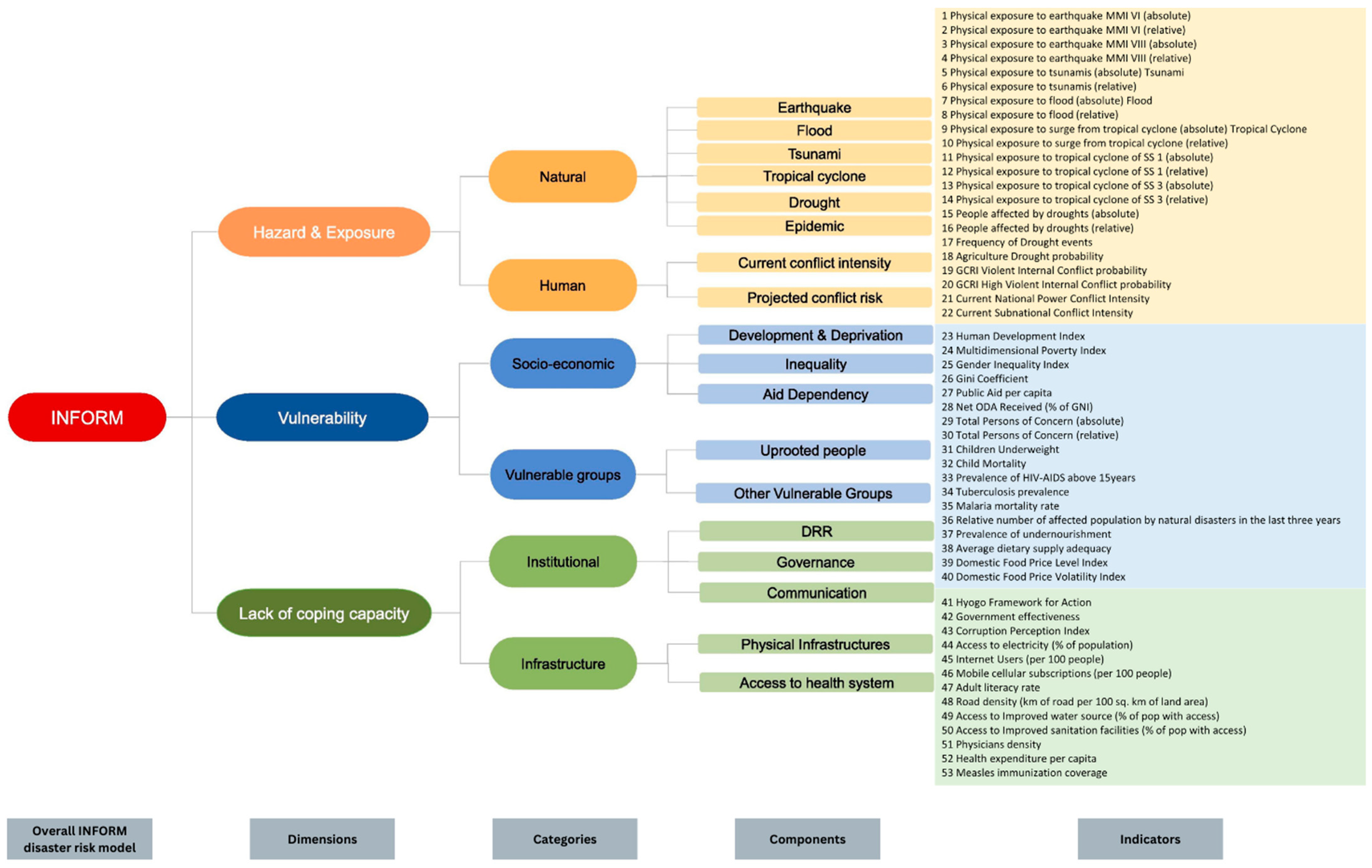
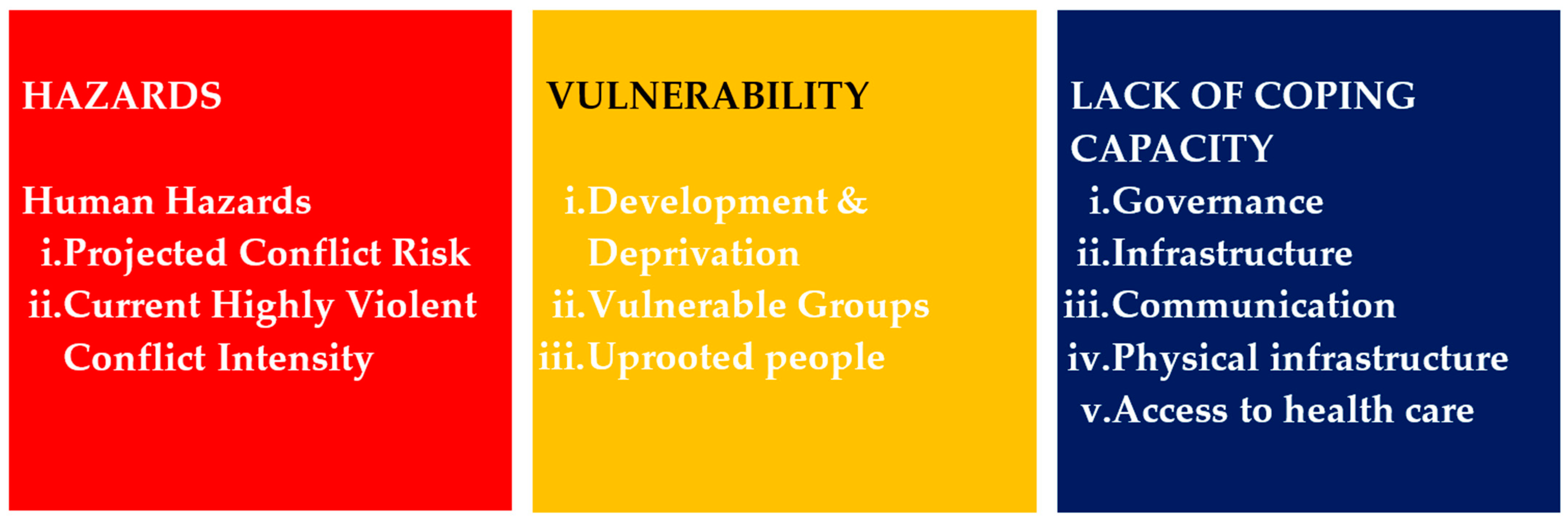
This study utilizes data from the 2022 INFORM disaster risk index and various policy documents. Downloaded in the XLS format, the INFORM dataset encompasses all variables detailed in Figure 1 and was sourced from https://drmkc.jrc.ec.europa.eu/inform-index/ (accessed on 15 December 2022). The INFORM dataset is curated by The Joint Research Center of the European Commission, serving as the primary scientific resource for multiple stakeholders, including the humanitarian and development sectors, donors, and technical partners.
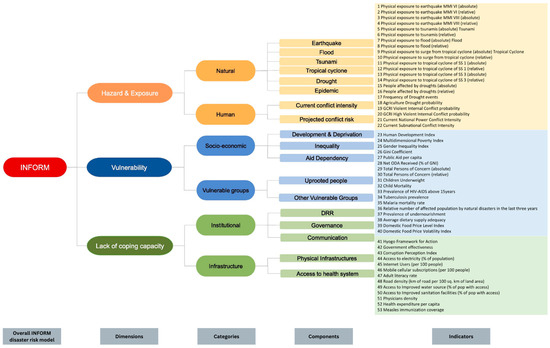
Figure 1.
Components of the INFORM model. Source: Eze and Siegmund [12].
This global open-source tool aims to offer an objective and transparent understanding of risks associated with humanitarian crises. A comprehensive report of the concepts, procedure and methodology involved in generating the INFORM dataset is contained in Marin-Ferrer et al. [15]. Also, Eze and Siegmund [12] systematically conceptualized all key components of the INFORM dataset, deeming the data reliable and consistent for decadal-level analyses of disaster risk drivers in Africa. Readers are to refer to these materials to obtain further clarity.
Our reliance on the INFORM dataset is reinforced by previous studies affirming its reliability. Egawa et al. [16] express confidence in the INFORM dataset as a robust representation of the disaster risk index. Additionally, Birkmann et al. [17] conducted analyses demonstrating a high level of inherent consistency among indicators, reflected in near-perfect reliability scores of 0.948 for Cronbach Alpha and 0.954 for Guttman Lambda.
Moreover, our study involved the analysis of core policies from ten African countries exhibiting a very high INFORM disaster risk index. These documents include DRR policies, Nationally Determined Contributions (NDC), and National Adaptation Programmes of Action for Climate Change (NAPA). Detailed information regarding these documents is presented in Table 1, with full references provided subsequently in Appendix Table A1. We deem these documents reliable and suitable for this study as they are published by national agencies of the respective countries following global frameworks.

Table 1.
Publication year of policy documents used for the content analyses in this study.
3.2. Data Analyses
3.2.1. Variable Importance Analysis
Variable importance analysis was conducted using the randomForestExplainer package developed by Paluszynska et al. [18] in R version 4.2.1. This package employs a model that identifies and ranks the most significant variables in random forest (RF) analyses based on their predictive capability of the dependent variable. We consider the randomForestExplainer package an ancillary tool to retrieve further information from an RF analysis. An RF consists of ensembles of recursive partitioning tree models, introducing randomization to enhance predictive performance [19]. Its advantages include compatibility with diverse data types, flexibility with non-parametric distributions, and the ability to capture complex relationships without prior assumptions about functional forms, hence its increasing application in the social sciences. However, the limited interpretability of RF is acknowledged by Levi [20] who describes a “black box” challenge in explaining RF outcomes, suggesting that only ancillary tools can “white box” the RF results for relevant information. Hence we use Paluszynska’s [18] package to extract useful information on important variables on disaster risk index from INFORM data for 2022.
Our study incorporated all hazard, vulnerability, and lack of coping capacity factors from the INFORM data for Africa as independent variables, while the INFORM risk index served as the dependent variable (Figure 1). An RF regression model consisting of 500 trees was generated to determine the minimal depth distribution within the generated forest via the min_depth_distribution function. The model computed various importance measures, including the number of nodes, accuracy decrease (MSE increase), Gini decrease (node purity increase), number of trees, times_a_root, and p-value. Technical details regarding the RF model operations are available in Paluszynska [21] for a deeper understanding. The resulting important disaster risk drivers in Africa are presented in the Section 4.
3.2.2. Content Analyses of Core Policies
Content analysis was conducted on the documents listed in Table 1 to determine the extent of their inclusion of disaster risk-driving factors identified through the RF variable importance analyses within selected policies. Specifically, the analysis focused on ten countries characterized by very high disaster risk indexes according to the INFORM data. The selection of these countries for the present study does not aim at generalization to other African nations. Instead, they serve as unique case studies to explore the topic as a pioneer study.
The study employed a summative content analysis approach following the methodology outlined by [22]. This technique involves counting specific keywords or concepts in the selected documents to derive contextual insights. Prior to data analysis, keywords were selected and later refined based on the components corresponding to disaster risk variables, including hazards, vulnerability, and lack of coping capacity. These keywords, aligned with the INFORM Methodology [15], are outlined in Table 2, presenting the keywords used and their significance as positive indicators in the content analyses.
Table 2.
Coding schematics used for keyword search hits in selected policy documents.
To ensure the reliability of the coding scheme, an inter-rater reliability test was conducted. An independent reviewer analyzed six randomly selected policy documents using our predefined keywords. The analysis demonstrated a substantial agreement of 90.73% in coding (Appendix Table A2), yielding an “almost perfect” Cohen kappa rating according to the classification of [23].
4. Results
4.1. Disaster Risk Index of African Countries
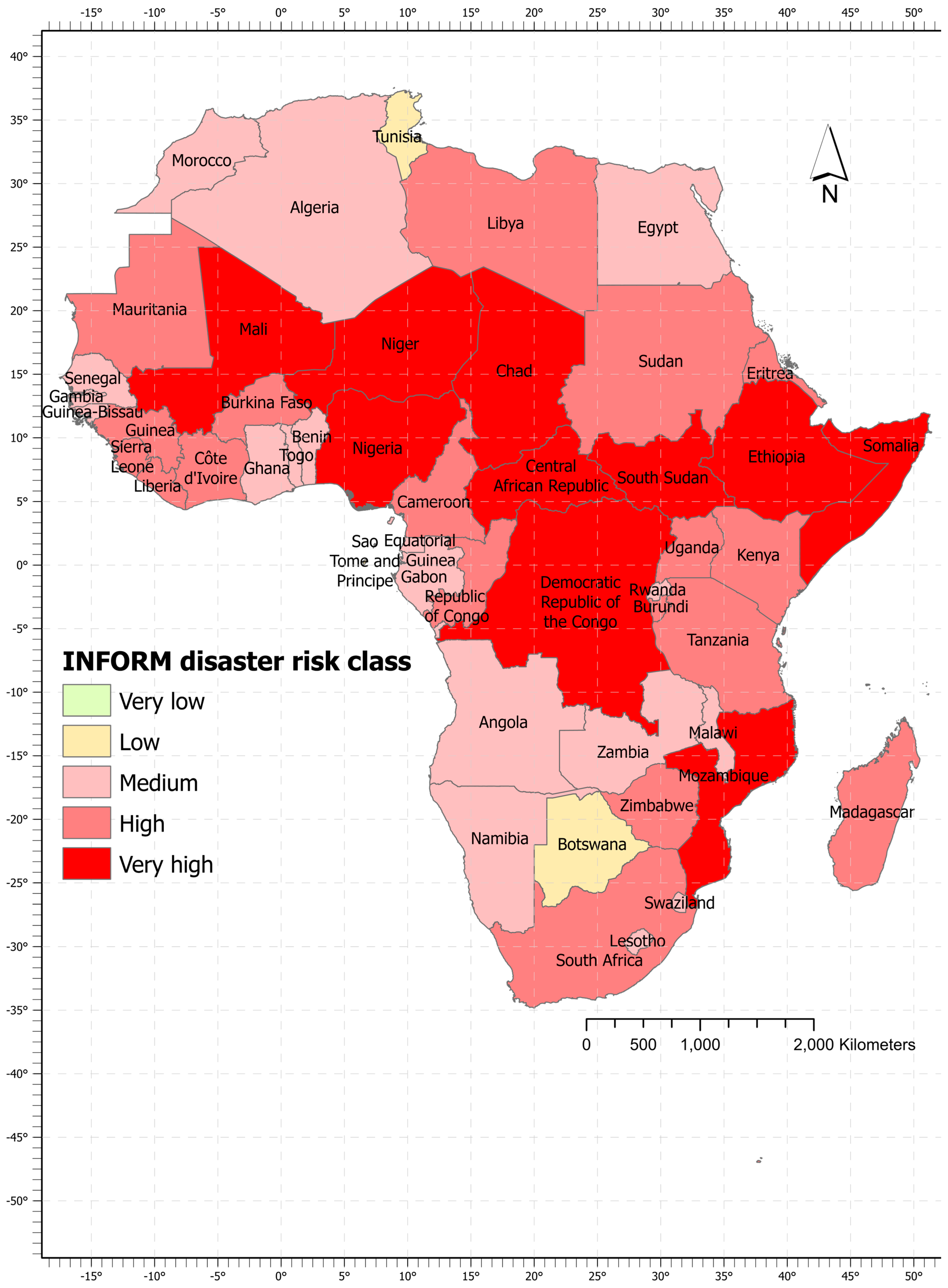
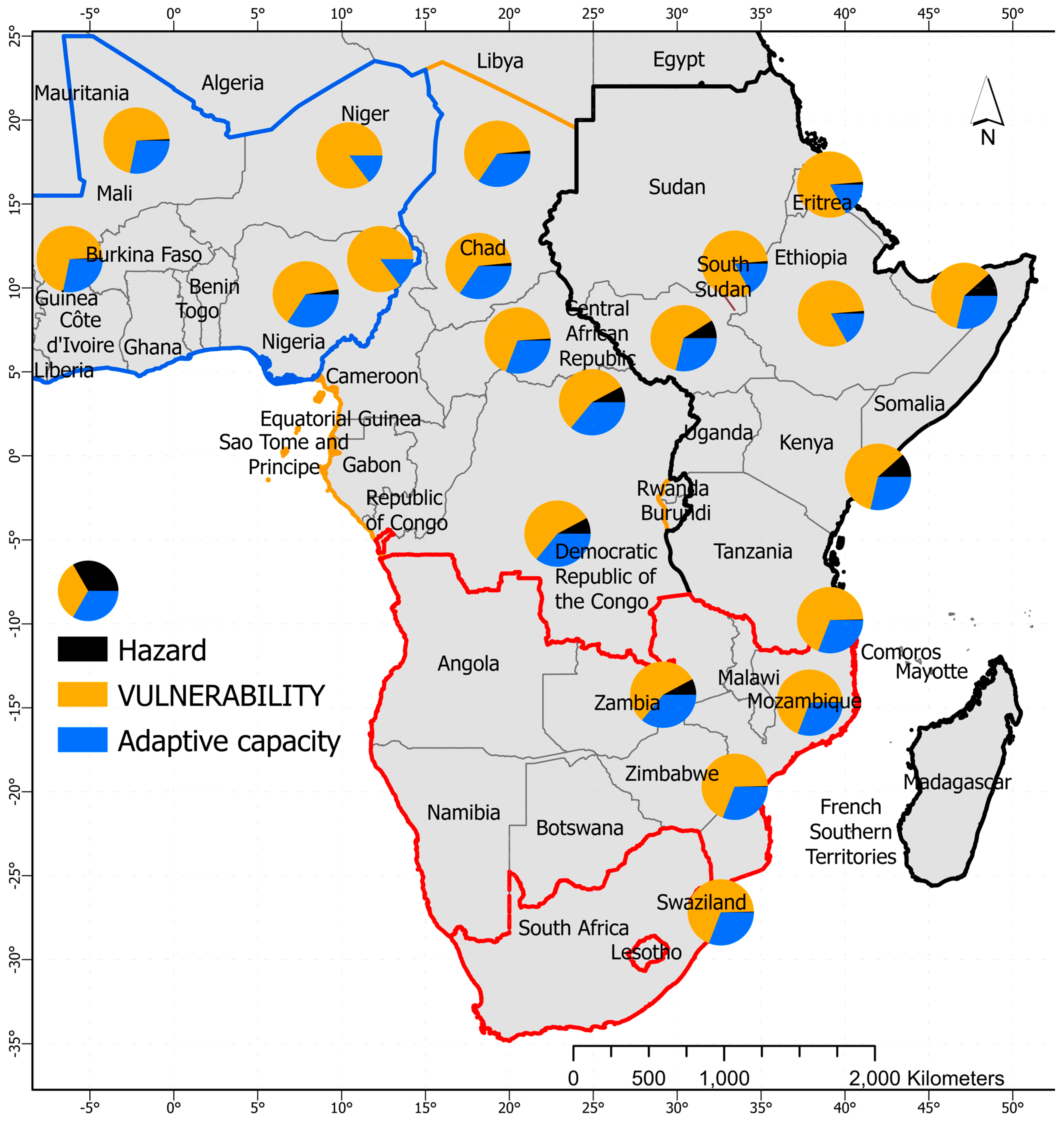
From the 2022 INFORM disaster risk index, ten African countries had very high disaster risk indexes, while twenty countries were categorized as having high-risk rankings. Additionally, eighteen countries fell into the medium-risk category. Conversely, a subset of six countries, namely Botswana, Cabo Verde, Mauritius, Sao Tome and Principe, Seychelles, and Tunisia, exhibited very low to low-risk indexes. Notably, four of these countries are primarily island states (Figure 2).
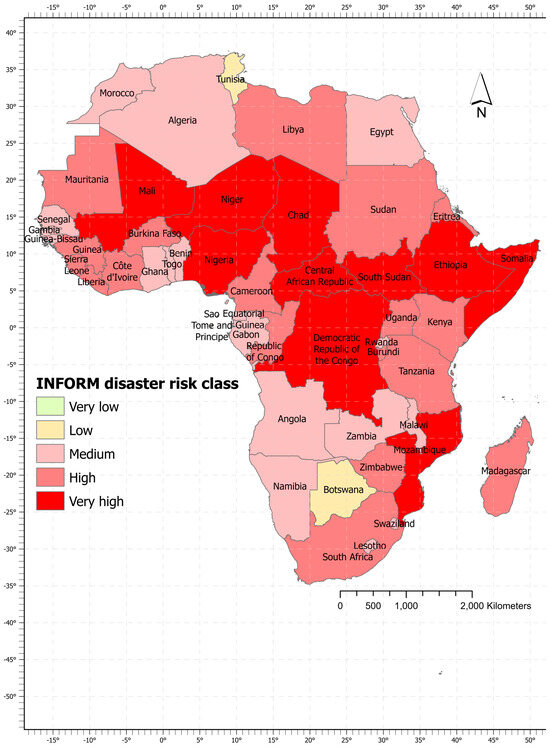
Figure 2.
Disaster risk index classes of African countries. Source: INFORM dataset, 2022.
4.1.1. Important Variables of Disaster Risk in Africa
Based on our analysis of the INFORM data, the Random Forest (RF) model consisted of 500 trees without a specified limit on the maximum number of terminal nodes in a tree. The model tested eight variables at each split. The RF regression algorithm achieved a high accuracy, explaining 86% of the variance of listed variables.
4.1.2. Variable Importance Measures: Distribution of Minimal Depth
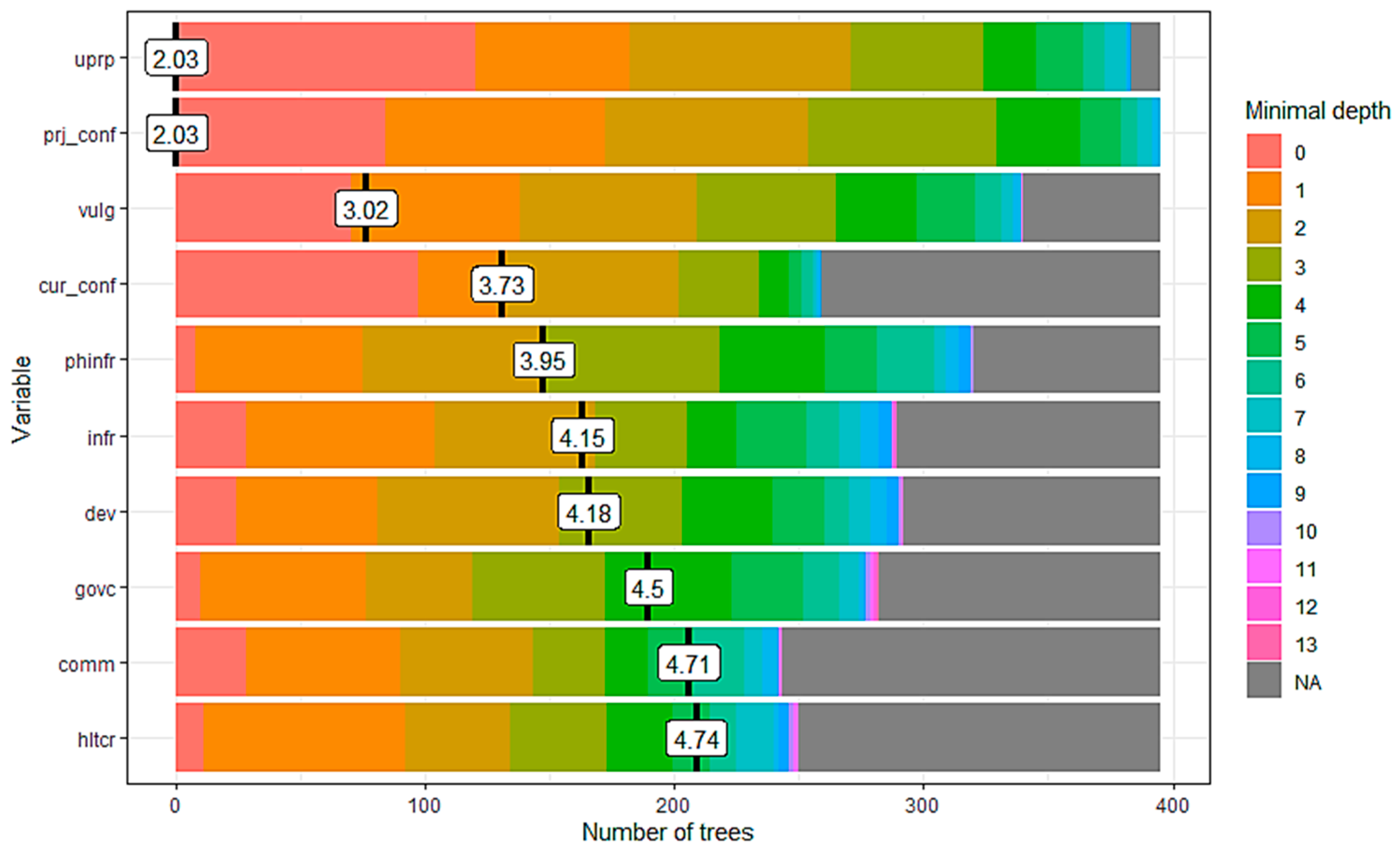
The minimal depth of a variable signifies its proximity to the root of the tree and its correlation with the dependent variable (risk index). In Figure 3, the top 10 variables display lower mean minimal depths, indicating trees were split up to a depth of 13. Figure 4 illustrates the notable variables selected from the RF analysis (Figure 1), emphasizing their closeness to the root of the tree and their correlation with the overall risk index.
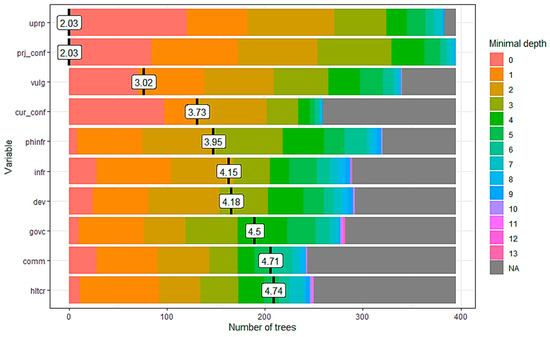
Figure 3.
Distribution of minimal depth among the forest trees. A black vertical bar marks the mean of the distribution, and a value label is inscribed. Abbreviations: uprp—Uprooted people; prj_conf—Projected Conflict Risk; vulg—Vulnerable Groups; cur_conf—Current Highly Violent Conflict Intensity; phinfr –Physical infrastructure; infr—Infrastructure; dev—Development & Deprivation; govc—Governance; comm—Communication; hltcr—Access to health care. Source: Own analysis.
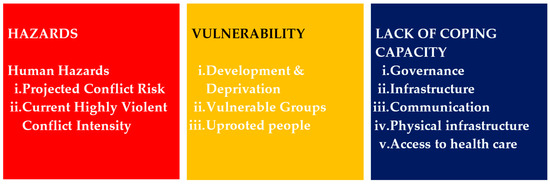
Figure 4.
Resulting important variables of disaster risk index for Africa. Source: Own analysis.
Therefore, the ten key disaster risk drivers identified by the variable importance analyses include projected conflict risk, current highly violent conflict intensity, development and deprivation, vulnerable groups, uprooted people, governance, infrastructure, communication, physical infrastructure, and access to health care (Figure 4).
4.2. Important Disaster Risk Factors Included within Analysed Policies
Among the 25 analyzed policy documents from the ten high-risk countries, a total of 3958 keywords were identified. These keywords were categorized into the hazard, vulnerability, and lack of coping capacity concepts, representing 4.27%, 64.96%, and 30.77% respectively of the total keyword count in the policies. For a comprehensive breakdown of the keyword counts per risk factor and sub-components, please refer to Table 3. Also, more details are contained in Appendix Table A3.
Table 3.
Total inclusion of disaster risk driver keywords within selected policies.
Core policies of the ten African countries rated as having very high disaster risk (or at-most-risk) did not significantly integrate (human) hazard drivers identified in this study. Only a few policies from nations like Somalia, South Sudan, and the Democratic Republic of Congo (DRC) displayed limited mentions of conflict-related aspects. In contrast, vulnerability-related concepts were more commonly incorporated, followed by indicators depicting a lack of coping capacity (Table 3). Moreover, a weak positive correlation was observed; a higher risk index corresponded to increased counts of the key concepts included in the examined policies (R = 0.17, Figure 5). Hence, countries with higher disaster risk indexes incorporated more concepts related to disaster risk drivers within their policies.
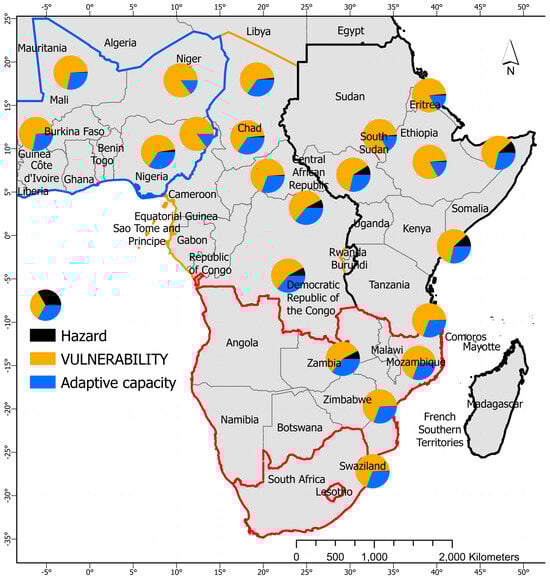
Figure 5.
Disaster risk keyword-inclusion rates in selected policies for African countries of very high disaster risk index. Source: Own analysis.
5. Discussion
5.1. Disaster Risk and Important Drivers in Africa
A significant portion of African countries, precisely 20 out of the total, placed at high levels on the disaster risk index. Interestingly, half of this subset, accounting for 10 countries, falls into the classification of very high risk. This underscores the widespread vulnerability and exposure to disasters across the continent. Conversely, only six African countries, mainly island states, demonstrate very low to low risk indexes. According to the UNISDR [24] definition of disaster risk, these 30 countries face elevated probabilities of experiencing loss of life, injuries, and damages due to disasters. Interestingly, findings derived from the INFORM data slightly contrast with a similar risk index presented by [25], which considers exposure, susceptibility, coping, and adaptive capacity. Notably, countries categorized as having medium risks by the World Risk Index (WRI) of [25], such as Uganda, Kenya, South Africa, the Central African Republic (CAR), and the DRC, are designated as high to very high risk based on the INFORM dataset. This variation in results may be attributed to disparities in data sources and methodologies between the INFORM and WRI assessments.
The key drivers of African countries’ disaster risk index encompass factors such as uprooted populations, anticipated conflict risks, vulnerable groups, prevailing highly violent conflicts, physical infrastructure, development status, deprivation levels, governance effectiveness, communication networks, and access to healthcare. Notably, among these factors, five are associated with the lack of coping capacity, three with vulnerability, and two with human (rather than natural) hazards. Factors such as governance, migration, and conflicts have been previously identified as drivers of environmental challenges in parts of Sub-Saharan Africa by the Global Environment Facility [26]. Consequently, lack of coping capacity and vulnerability stand out as the primary drivers of disaster risk in Africa. This aligns with the findings reported by [27], who indicate that African nations exhibit the highest vulnerability on a global scale. Additionally, the projection of [28] regarding Africa bearing an increasing share of the globally exposed and vulnerable population to the impacts of global warming remains relevant. In general, our findings are in harmony with Imperiale and Vanclay’s [29] perspective on the social aspects of risks. We therefore argue that in Africa, natural hazards, in isolation, are not the primary triggers of disasters; rather, the complex interplay of various social factors. Many of these factors, identified as disaster risk drivers in our study, contribute significantly to the dynamics of disasters on the continent.
Violent conflicts, whether ongoing or anticipated in the future, emerge as critical predictors of disaster risk in Africa, demanding substantial attention and concern. These conflicts often find roots and are intricately linked to multifaceted issues like poverty, human rights violations, governance challenges, ethnic marginalization, and the proliferation of small arms [30]. Remarkably, these conflict-related factors exhibit close associations with crucial elements contributing to vulnerability and lack of coping capacity, such as vulnerable groups, development status, deprivation levels, and governance quality. Importantly, most of these elements share similarities with the conditions of poverty. The literature presents various perspectives on the relationship between poverty and conflicts in Africa. While [30] emphasizes poverty as a primary driver of conflicts, recent findings by [31] suggest that poverty may stimulate rather than cause conflicts, attributing political, structural, and sociological factors as primary drivers. Furthermore, Witmer et al. [32] forecast that inadequate improvements in political rights within sub-Saharan Africa, coupled with population growth and rising temperatures, could escalate violence in the region.
Climate change has emerged as a significant contributing factor to conflicts in Africa, primarily perpetuating existing conflicts rather than initiating new ones, as noted by van Weezel [33]. The impact of varying degrees of climate change on critical aspects like agriculture, resource scarcity, and migration significantly heightens armed conflicts across the continent [34]. Similarly, ref. [35] present compelling evidence linking climate change, especially rising temperatures, to various violent outcomes such as large-scale group conflicts, interpersonal conflicts, and self-harm across continents and various timeframes. Notably, these influences may differ by geographic location in Africa. The findings of [36] suggest that changing climatic conditions elevate conflict risks in Northern and large parts of Eastern Africa while potentially reducing conflict risks in the West and northern Sahel regions. It is crucial to recognize that violent conflicts, in turn, exacerbate the vulnerability of populations, emphasizing the intricate relationship between environmental changes, conflicts, and increased societal vulnerability.
Conflicts have a profound effect on displacing populations, particularly impacting vulnerable groups such as individuals living with disabilities, pregnant and lactating women, the elderly, children, religious minorities, and indigenous communities. The mid-year report by the United Nations High Commissioner for Refugees [UNHCR] [37] highlights a staggering 4.95 million refugees and asylum-seekers in the Eastern Africa region, with approximately 2.35 million originating from South Sudan. Moreover, conflict and natural disasters have led to the displacement of 12.83 million Internally Displaced Persons (IDPs), primarily concentrated in countries like Sudan, South Sudan, Ethiopia, Somalia, and Burundi. These findings underscore the multifaceted impact of conflicts, indicating further complexities considered in this study.
5.2. Inclusion of Important Disaster Risk Factors in Selected National Action Plans
Based on the analysis of policy documents, it is evident that most concepts integrated into core policies (i.e., DRR policies, NDCs, and NAPAs) largely pertain to vulnerability and adaptive capacity variables. Notably, the crucial hazard variable of violent conflict is clearly underrepresented in these documents. Core policies of countries such as the DRC, Somalia, and South Sudan have demonstrated comparatively higher levels of inclusion of the violent conflict concept than their counterparts of very high disaster risk index such as countries like Nigeria, Chad, the CAR, Ethiopia, and Mali, which minimally incorporated the concept. Moreover, Mozambique and Niger depicted near-zero inclusion of violent conflict concepts in their core policy documents.
According to global reports, the 10 countries classified as having very high disaster risk levels, as considered in this study, exhibit varying degrees of current highly violent conflicts. Specifically, four of these countries—the CAR, the DRC, Somalia, and South Sudan—rank among the 10 least-peaceful nations, according to the Institute for Economics and Peace (IEP) [38]. Additionally, seven out of the ten countries included in this study, such as Chad, DRC, Mali, Mozambique, Niger, Nigeria, and Somalia, are among the most impacted countries by terrorism [39]. Moreover, recent years have seen successful coups in Chad, Mali, and Niger alongside unsuccessful attempts in CAR. Furthermore, current interstate tensions are evident between several countries including DRC and Rwanda, Ethiopia and Sudan, Kenya and Somalia, and Sudan and South Sudan, as reported by the International Institute for Strategic Studies [40].
The limited inclusion of violent conflict concepts within the chosen policy documents addressing disaster risk in Africa may pose challenges to effective disaster risk management, DRR and sustainable development [11]. Failure to address human-induced hazards, vulnerability, and inadequate coping capacity, while attributing disasters solely to natural causes, could lead to authorities evading their responsibilities. This will perpetuate an unjust status quo where the most vulnerable populations bear the brunt of disasters repeatedly [41].
Policies geared towards effective disaster risk reduction should comprehensively address all aspects of risk, including hazards, vulnerability, and coping capacity. Inadequate coverage of (any of) these elements within policies may lead to inefficiency in tackling disaster risks, exacerbated by current and future impacts of climate change [42]. Therefore, it is imperative for African countries, particularly those facing medium to very high risk, to enhance the content and caliber of their DRR policy frameworks [6].
6. Conclusions
This study unveils important factors that predict disaster risk in Africa and evaluates their representation within major core policies. Remarkably, among the identified drivers, only violent conflict emerged as a hazard component, while most drivers fell under lack of coping capacity, followed by vulnerability factors. Collectively, these drivers underscore the human-induced nature of disaster risks in Africa. We found a limited inclusion of concepts related to violent conflicts, but a higher inclusion of concepts linked to vulnerability in the core policies examined. Our findings challenge prevalent assumptions within Africa’s disaster risk literature. Firstly, the absence of natural hazards among the identified significant variables diverges from the traditional focus on natural hazards in the region’s disaster risk discussions. Secondly, the social aspects of disaster risks, with facets of human vulnerability and inadequate coping capacity were underscored in our study. Future iterations of DRR policy frameworks must encompass these identified factors, aligning with Africa’s broader developmental challenges, notably in sub-Saharan Africa.
In conclusion, comprehensive policy frameworks in addressing disaster risks, particularly in vulnerable regions such as sub-Saharan Africa are vital. Our findings emphasize that effective DRR requires policies that holistically incorporate factors of hazards, vulnerability, and coping capacity. Policies should encompass disaster drivers and regionally relevant factors that hold the key to reducing disaster risk in countries facing high or very high levels of risk. Such policies are essential to fortify resilience and advance progress towards the objectives outlined in the SFDRR and the Sustainable Development Goals of Agenda 2030. An integral aspect of revised policies should aim to alleviate poverty within the population as a means of diminishing vulnerability, enhancing coping capacity, and fostering resilience against disaster risks.
Therefore, collectively addressing all elements of risk is essential to mitigate the devastating impacts of disasters, especially in regions facing high disaster risks. Furthermore, the study highlights the need for increased attention to the inclusion of human hazards, such as violent conflicts, within DRR policies. Neglecting these human-induced risks can impede sustainable development and exacerbate the vulnerabilities of the most marginalized populations during crises. Thus, we advocate for robust, inclusive, and adaptive policy frameworks to enhance resilience and support sustainable development efforts in disaster-prone regions.
7. Limitations and Suggestions for Further Research
This study draws upon pre-existing datasets and policy documents, which, by nature, could harbor certain limitations, such as potential incompleteness or issues concerning data quality. While the findings provide valuable insights, particularly in the analysis of policy content, it is essential to note that these outcomes might not comprehensively represent the entirety of the African continent. The study focused solely on core policies from ten countries classified as having very high disaster risk indexes, potentially limiting the generalizability of the conclusions to the broader African context.
Moreover, the content analyses could be subject to limitations due to translation challenges. Some documents underwent machine translation from French to English before analysis, which might have impacted the accuracy or nuanced understanding of the content, potentially influencing our interpretations. Also, the absence of spatiotemporal assessments in this study is noteworthy. These assessments, which track changes over time and across different regions, were not incorporated. Their inclusion could have offered a more dynamic perspective, reflecting evolving circumstances and variations across various temporal and geographic contexts. However, a recent study [12] offers detailed spatiotemporal analyses using INFORM decadal data. Using decadal data, the extrapolation of disaster risk drivers for prediction is an aspect that could be explored in future research.
Despite these limitations, this research augments the comprehension of disaster risk dynamics in Africa, offering invaluable guidance for policymakers, researchers, and practitioners in the field of DRR. Given the complex interplay of environmental, socioeconomic, and conflict-driven factors contributing to disaster risk in Africa, future comprehensive case studies of at-most-risk African countries are vital. These studies should identify specific country- or community-driven risk factors, thereby shaping more tailored policy frameworks and national developmental strategies to enhance coping mechanisms and mitigate vulnerabilities toward both natural and human hazards. Further content analyses, particularly latent content analyses, would transcend keyword-based methodologies, integrating interpretation and contextualization of textual data, enriching future policy explorations.
Author Contributions
Conceptualization, E.E.; methodology, E.E.; formal analysis, E.E.; resources, A.S. and E.E.; data curation, E.E.; writing—original draft preparation, E.E.; writing—review and editing, E.E. and A.S.; visualization, E.E.; supervision, A.S. All authors have read and agreed to the published version of the manuscript.
Funding
This research received no external funding.
Data Availability Statement
Part of the data that support the findings of this study are publicly available online at https://drmkc.jrc.ec.europa.eu/inform-index/ (accessed on 15 December 2022). The list of the policies analyzed in this study and their sources are presented in the Appendix Table A1.
Acknowledgments
Author E.E. expresses sincere gratitude to the German Academic Exchange Service (DAAD) for their generous doctoral grant stipends that supported the research reported in this paper. Special appreciation is extended to Chinazaekpere Peace for their invaluable support during the research process. The paper’s grammar structure was enhanced using Grammarly.
Conflicts of Interest
The authors declare that there are no known competing financial interests or personal relationships that influenced the work reported in this paper.
Appendix A
Table A1.
List of policy documents used for content analysis.
Table A1.
List of policy documents used for content analysis.
|
Table A2.
Inter-rater reliability measurement results.
Table A2.
Inter-rater reliability measurement results.
| Concepts Searched | Coded Count | Matched Coding | Percentage Match/Accuracy |
|---|---|---|---|
| Violent conflict | 64 | 22 | 34.38 |
| Uprooted people | 48 | 44 | 91.67 |
| Vulnerable Groups | 62 | 78 | 125.81 |
| Development & Deprivation | 504 | 500 | 99.21 |
| Physical infrastructure | 204 | 139 | 68.14 |
| Governance | 37 | 39 | 105.41 |
| Communication | 65 | 68 | 104.62 |
| Access to health care | 19 | 20 | 105.26 |
| 1003 | 910 | 90.73 |
Note: Coded count is from authors’ Analyses; matched coding is from independent rater analysis.
Table A3.
Disaster risk indexes and concept count results from national action plans.
Table A3.
Disaster risk indexes and concept count results from national action plans.
| COUNTRY | Central African Republic (CAR) | Chad | Congo DR | Ethiopia | Mali | Mozambique | Niger | Nigeria | Somalia | South Sudan |
|---|---|---|---|---|---|---|---|---|---|---|
| INFORM Risk Index | 7.7 | 7.8 | 7.6 | 6.9 | 7 | 7.2 | 7.4 | 6.5 | 8.8 | 8.5 |
| Current Highly Violent Conflict Intensity Index | 8 | 9 | 9 | 9 | 9 | 9 | 9 | 9 | 10 | 9 |
| DRR | NA | NA | 26 | 3 | 3 | 0 | NA | 3 | NA | 9 |
| NDC | 0 | 2 | 2 | 1 | NA | 0 | 0 | 2 | 3 | 25 |
| NAPA | 3 | 3 | 25 | 0 | 0 | 1 | 0 | 8 | 31 | 19 |
| Uprooted people Index | 9.8 | 9.3 | 9.5 | 8.5 | 7.4 | 8.2 | 8 | 8.1 | 10 | 10 |
| DRR | NA | NA | 13 | 1 | 20 | 2 | NA | 7 | NA | 5 |
| NDC | 0 | 1 | 1 | 0 | NA | 2 | 1 | 2 | 5 | 4 |
| NAPA | 0 | 1 | 4 | 2 | 1 | 3 | 0 | 5 | 15 | 5 |
| Vulnerable Groups Index | 8.7 | 7.7 | 8.1 | 6.7 | 6.9 | 7.7 | 7.2 | 6.4 | 9.4 | 9.3 |
| DRR | NA | NA | 8 | 11 | 25 | 2 | NA | 1 | NA | 5 |
| NDC | 12 | 7 | 46 | 3 | NA | 5 | 1 | 8 | 5 | 15 |
| NAPA | 18 | 14 | 17 | 2 | 13 | 2 | 22 | 16 | 11 | 22 |
| Development & Deprivation Index | 10 | 10 | 8.9 | 9.3 | 9.4 | 9.3 | 10 | 8.2 | 9.7 | 9.7 |
| DRR | NA | NA | 82 | 40 | 108 | 84 | NA | 71 | NA | 82 |
| NDC | 37 | 104 | 122 | 61 | NA | 52 | 20 | 79 | 29 | 185 |
| NAPA | 144 | 78 | 90 | 132 | 122 | 42 | 112 | 148 | 110 | 46 |
| Infrastructure Index | 9.3 | 9.75 | 8.85 | 9.05 | 6.95 | 8.15 | 9.2 | 7.4 | 8.1 | 9.65 |
| DRR | NA | NA | 47 | 3 | 51 | 13 | NA | 15 | NA | 2 |
| NDC | 32 | 67 | 64 | 18 | NA | 39 | 6 | 30 | 60 | 42 |
| NAPA | 28 | 13 | 20 | 14 | 17 | 9 | 3 | 62 | 45 | 17 |
| Governance Index | 7.9 | 7.9 | 8.3 | 6.2 | 7.2 | 7 | 6.5 | 7.3 | 9 | 9.3 |
| DRR | NA | NA | 2 | 0 | 1 | 12 | NA | 13 | NA | 3 |
| NDC | 1 | 7 | 25 | 0 | NA | 0 | 9 | 3 | 0 | 19 |
| NAPA | 3 | 3 | 2 | 1 | 0 | 1 | 0 | 10 | 5 | 2 |
| Communication Index | 9.1 | 8.9 | 7.4 | 7.4 | 6.9 | 7.4 | 8.9 | 6.5 | 7.9 | 9.4 |
| DRR | NA | NA | 23 | 0 | 8 | 1 | NA | 3 | NA | 2 |
| NDC | 4 | 21 | 27 | 11 | NA | 9 | 7 | 19 | 3 | 81 |
| NAPA | 25 | 0 | 18 | 5 | 27 | 2 | 1 | 14 | 8 | 0 |
| Access to health care Index | 9.4 | 9.5 | 8 | 7.8 | 7.9 | 6.3 | 7.5 | 9.1 | 9.6 | 9.4 |
| DRR | NA | NA | 19 | 0 | 8 | 0 | NA | 1 | NA | 0 |
| NDC | 0 | 0 | 0 | 0 | NA | 1 | 0 | 1 | 0 | 3 |
| NAPA | 2 | 0 | 3 | 0 | 3 | 0 | 1 | 11 | 7 | 0 |
Note: DRR = Disaster Risk Reduction policies; NDC = Nationally Determined Contribution; NAPA = National Adaptation Programme of Action.
References
- Vlachogiannis, D.; Sfetsos, A.; Markantonis, I.; Politi, N.; Karozis, S.; Gounaris, N. Quantifying the Occurrence of Multi-Hazards Due to Climate Change. Appl. Sci. 2022, 12, 1218. [Google Scholar] [CrossRef]
- Nicodemus, N.; Dennis, O. Achieving Sendai Framework in Africa: Progress and challenges toward Target E. Nat. Hazards Earth Syst. Sci. Discuss. 2021. preprint. [Google Scholar] [CrossRef]
- Eze, E.; Siegmund, A. Disaster risk factors and spatiotemporal trends in Africa. In Proceedings of the EGU General Assembly 2023, Vienna, Austria, 24–28 April 2023. [Google Scholar]
- Manyena, B. After Sendai: Is Africa bouncing back or bouncing forward from disasters? Int. J. Disaster Risk Sci. 2016, 7, 41–53. [Google Scholar] [CrossRef]
- Paul, N.; Silva, V.; Amo-Oduro, D. Development of a uniform exposure model for the African continent for use in disaster risk assessment. Int. J. Disaster Risk Reduct. 2022, 71, 102823. [Google Scholar] [CrossRef]
- Africa Union. Africa Regional Strategy for Disaster Risk Reduction; Disaster Risk Reduction for Sustainable Development in Africa; Africa Union: Addis Abeba, Ethiopia, 2004. [Google Scholar]
- Bhavnani, R.; Vordzorgbe, S.; Owor, M.; Bousquet, F. Report on the Status of Disaster Risk Reduction in the Sub-Saharan Africa Region; Commission of the African Union, World Bank, UNISDR: Nairobi, Kenya, 2008. [Google Scholar]
- Tiepolo, M.; Braccio, S. Mainstreaming disaster risk reduction into local development plans for rural tropical Africa: A systematic assessment. Sustainability 2020, 12, 2196. [Google Scholar] [CrossRef]
- Van Niekerk, D.; Coetzee, C.; Nemakonde, L. Implementing the Sendai Framework in Africa: Progress against the targets (2015–2018). Int. J. Disaster Risk Sci. 2020, 11, 179–189. [Google Scholar] [CrossRef]
- Kimengsi, J.N.; Mbih, R.A. International Disaster Risk Management Policies and Instruments: A Review. In Disaster Management in Sub-Saharan Africa: Policies, Institutions and Processes; Balgah, R.A., Kimengsi, J.N., Eds.; Emerald Publishing Limited: Bingley, UK, 2022; pp. 35–56. [Google Scholar]
- Keating, A.; Campbell, K.; Mechler, R.; Magnuszewski, P.; Mochizuki, J.; Liu, W.; Szoenyi, M.; McQuistan, C. Disaster resilience: What it is and how it can engender a meaningful change in development policy. Dev. Policy Rev. 2017, 35, 65–91. [Google Scholar] [CrossRef]
- Eze, E.; Siegmund, A. Identifying disaster risk factors and hotspots in Africa from spatiotemporal decadal analyses using INFORM data for risk reduction and sustainable development. Sustain. Dev. 2024. online before print. [Google Scholar] [CrossRef]
- Van Niekerk, D. Disaster risk governance in Africa: A retrospective assessment of progress against the Hyogo Framework for Action (2000-2012). Disaster Prev. Manag. 2015, 24, 397–416. [Google Scholar] [CrossRef]
- Bello, O.; Bustamante, A.; Pizarro, P. Planning for Disaster Risk Reduction within the Framework of the 2030 Agenda for Sustainable Development; ECLAC: Santiago, Chile, 2021; p. 57. [Google Scholar]
- Marin-Ferrer, M.; Vernaccini, L.; Poljansek, K. Index for Risk Management INFORM Concept and Methodology Report—Version 2017 (EUR 28655); European Commission: Brussels, Belgium, 2017. [Google Scholar] [CrossRef]
- Egawa, S.; Jibiki, Y.; Sasaki, D.; Ono, Y.; Nakamura, Y.; Suda, T.; Sasaki, H. The correlation between life expectancy and disaster risk. J. Disaster Res. 2018, 13, 1049–1061. [Google Scholar] [CrossRef]
- Birkmann, J.; Jamshed, A.; McMillan, J.M.; Feldmeyer, D.; Totin, E.; Solecki, W.; Ibrahim, Z.Z.; Roberts, D.; Kerr, R.B.; Poertner, H.-O. Understanding human vulnerability to climate change: A global perspective on index validation for adaptation planning. Sci. Total Environ. 2022, 803, 150065. [Google Scholar] [CrossRef]
- Paluszynska, A.; Biecek, P.; Jiang, Y. Explaining and visualizing Random Forests in terms of variable importance. R. News. 2020. Available online: https://cran.r-project.org/web/packages/randomForestExplainer/index.html (accessed on 15 December 2022).
- Breiman, L. Random Forests. Mach. Learn. 2001, 45, 5–32. [Google Scholar] [CrossRef]
- Levi, S. Country-level conditions like prosperity, democracy, and regulatory culture predict individual climate change belief. Commun. Earth Environ. 2021, 2, 51. [Google Scholar] [CrossRef]
- Paluszynska, A. Structure Mining and Knowledge Extraction from Random Forest with Applications to the Cancer Genome Atlas Project. Master’s Thesis, University of Warsaw, Warsaw, Poland, 2017. [Google Scholar]
- Hsieh, H.-F.; Shannon, S.E. Three approaches to qualitative content analysis. Qual. Health Res. 2005, 15, 1277–1288. [Google Scholar] [CrossRef] [PubMed]
- McHugh, M.L. Interrater reliability: The kappa statistic. Biochem. Med. 2012, 22, 276–282. [Google Scholar] [CrossRef]
- UNISDR. Sendai Framework for Disaster Risk Reduction 2015–2030; UNISDR: Geneva, Switzerland, 2015; p. 32. [Google Scholar]
- Welle, T.; Birkmann, J. The world risk index–an approach to assess risk and vulnerability on a global scale. J. Extrem. Events 2015, 2, 1550003. [Google Scholar] [CrossRef]
- Strategic Country Cluster Evaluation (SCCE): Sahel and Sudan-Guinea Savanna Biomes. Available online: https://www.gefieo.org/evaluations/scce-biomes (accessed on 15 January 2024).
- Birkmann, J.; Welle, T. The WorldRiskIndex 2016: Reveals the necessity for regional cooperation in vulnerability reduction. J. Extrem. Events 2016, 3, 1650005. [Google Scholar] [CrossRef]
- Masson-Delmotte, V. Global Warming of 1.5 °C: An IPCC Special Report on Impacts of Global Warming of 1.5 °C above Pre-Industrial Levels and Related Global Greenhouse Gas Emission Pathways, in the Contex of Strengthening the Global Response to the Thereat of Blimate Change, Sustainable Development, and Efforts to Eradicate Poverty; Cambridge University Press: Cambridge, UK, 2018. [Google Scholar]
- Imperiale, A.J.; Vanclay, F. Conceptualizing community resilience and the social dimensions of risk to overcome barriers to disaster risk reduction and sustainable development. Sustain. Dev. 2021, 29, 891–905. [Google Scholar] [CrossRef]
- Annan, N. Violent conflicts and civil strife in West Africa: Causes, challenges and prospects. Stability 2014, 3, 1–16. [Google Scholar] [CrossRef]
- Okunlola, O.C.; Okafor, I.G. Conflict–poverty relationship in Africa: A disaggregated approach. J. Interdiscip. Econ. 2022, 34, 104–129. [Google Scholar] [CrossRef]
- Witmer, F.D.; Linke, A.M.; O’Loughlin, J.; Gettelman, A.; Laing, A. Subnational violent conflict forecasts for sub-Saharan Africa, 2015–65, using climate-sensitive models. J. Peace Res. 2017, 54, 175–192. [Google Scholar] [CrossRef]
- Van Weezel, S. Local warming and violent armed conflict in Africa. World Dev. 2020, 126, 104708. [Google Scholar] [CrossRef]
- Cappelli, F.; Costantini, V.; Paglialunga, E.; Sforna, G.; Markandya, A. The Climate–Conflicts Nexus and the Role of Geographical Spillovers. In Climate and Development; World Scientific: Singapore, 2022; pp. 221–255. [Google Scholar]
- Burke, M.; Hsiang, S.M.; Miguel, E. Historical and future influence of climate on human violence. In Proceedings of the AGU Fall Meeting Abstracts, Online, 1–17 December 2020; p. GH019-02. [Google Scholar]
- Hoch, J.M.; de Bruin, S.P.; Buhaug, H.; Von Uexkull, N.; van Beek, R.; Wanders, N. Projecting armed conflict risk in Africa towards 2050 along the SSP-RCP scenarios: A machine learning approach. Environ. Res. Lett. 2021, 16, 124068. [Google Scholar] [CrossRef]
- UNHCR. East and Horn of Africa, and the Great Lakes Region Operational Update (April–June 2022); United Nations High Commission for Refugees (UNHCR): Geneva, Switzerland, 2022. [Google Scholar]
- Global Peace Index 2022: Measuring Peace in a Complex World. Available online: https://www.visionofhumanity.org/wp-content/uploads/2022/06/GPI-2022-web.pdf (accessed on 22 December 2022).
- Global Terrorism Index 2022: Measuring the Impact of Terrorism. Available online: https://www.visionofhumanity.org/wp-content/uploads/2022/03/GTI-2022-web.pdf (accessed on 22 December 2022).
- The Armed Conflict Survey 2022: Sub-Saharan Africa Regional Analysis. Available online: https://www.iiss.org/blogs/analysis/2022/11/acs-2022-sub-saharan-africa#:~:text=Adding%20complexity%2C%20inter-state%20disputes,and%20Sudan%20and%20South%20Sudan (accessed on 22 December 2022).
- Raju, E.; Boyd, E.; Otto, F. Stop blaming the climate for disasters. Commun. Earth Environ. 2022, 3, 1. [Google Scholar] [CrossRef]
- Pilli-Sihvola, K.; Väätäinen-Chimpuku, S. Defining climate change adaptation and disaster risk reduction policy integration: Evidence and recommendations from Zambia. Int. J. Disaster Risk Reduct. 2016, 19, 461–473. [Google Scholar] [CrossRef]
Disclaimer/Publisher’s Note: The statements, opinions and data contained in all publications are solely those of the individual author(s) and contributor(s) and not of MDPI and/or the editor(s). MDPI and/or the editor(s) disclaim responsibility for any injury to people or property resulting from any ideas, methods, instructions or products referred to in the content. |
© 2024 by the authors. Licensee MDPI, Basel, Switzerland. This article is an open access article distributed under the terms and conditions of the Creative Commons Attribution (CC BY) license (https://creativecommons.org/licenses/by/4.0/).