Treatment and Prevention of Cardiogenic Arterial Thromboembolism in the Cat: A Systematic Review


Simple Summary
Abstract
1. Introduction
2. Materials and Methods
2.1. Stage 1—Searching Strategy
2.2. Stage 2—Screening
2.3. Stage 3—Eligibility
- Peer-reviewed papers in the English language focusing on interventions for ATE secondary to heart disease in cats. Papers reporting interventions applied to any cat presenting or previously diagnosed with other forms of ATE (i.e., neoplastic or infectious ATE) were excluded.
- Papers reporting primary research results, including case series, observational cohort studies, and randomized controlled trials (RCT). Studies such as literature reviews and single-case reports were excluded from the analysis.
- Incomplete studies lacking essential data about treatments and their efficacy (i.e., missing data concerning the type and dosage of the active agent administered or regarding the effectiveness of treatment) were excluded.
2.4. Risk-of-Bias Assessment
2.5. Data Collection
3. Results
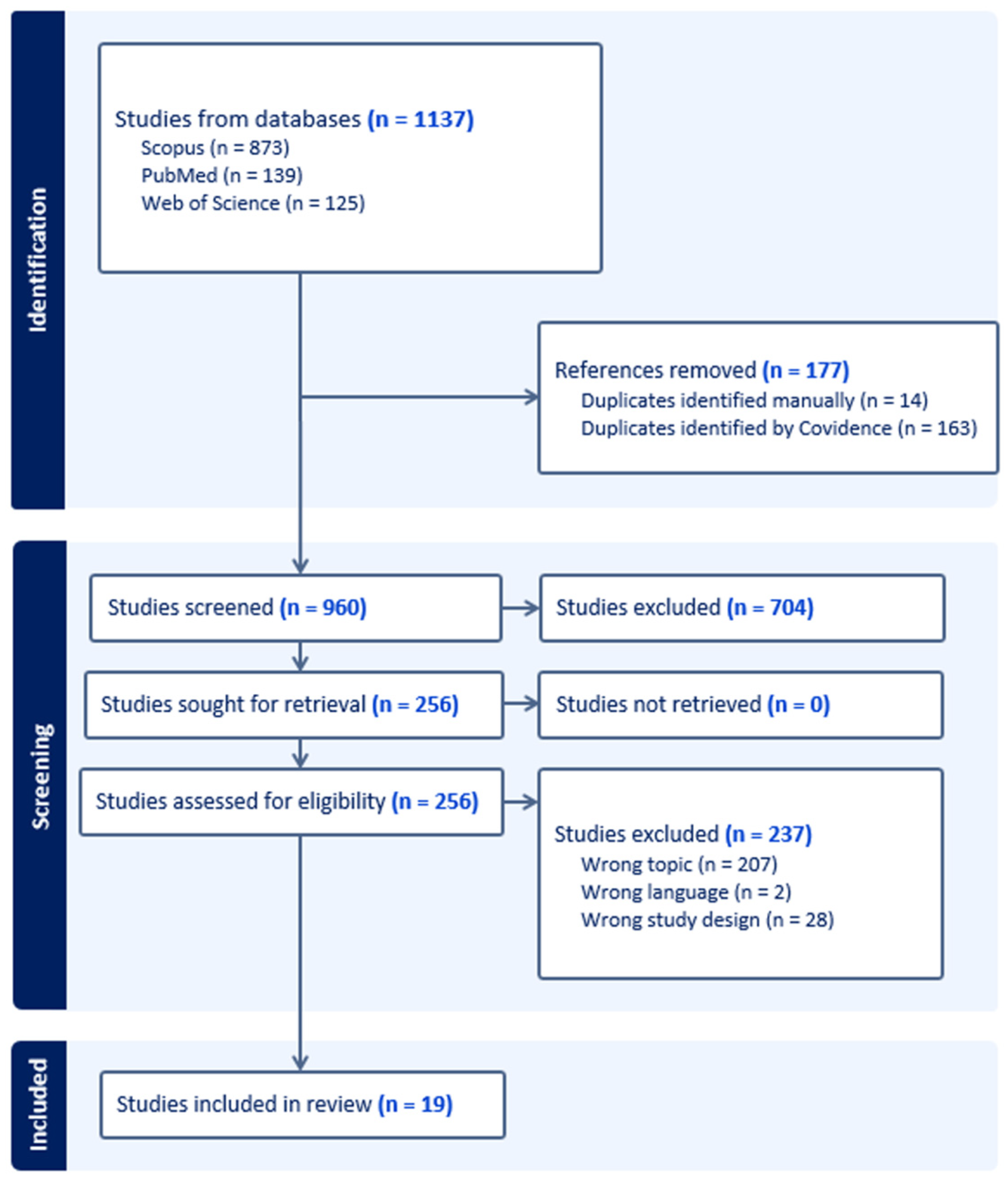
3.1. Identification and Selection of Relevant Articles
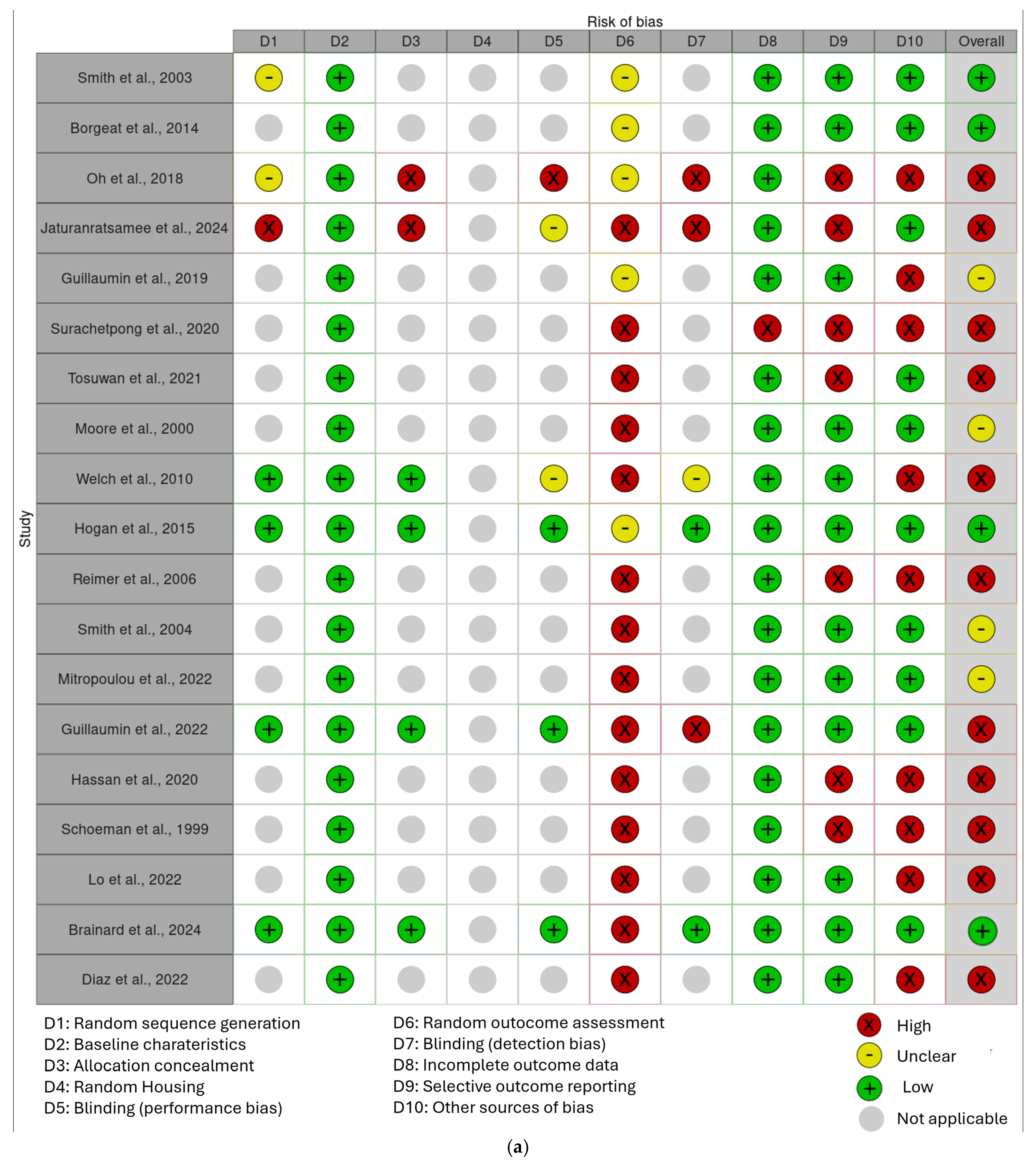
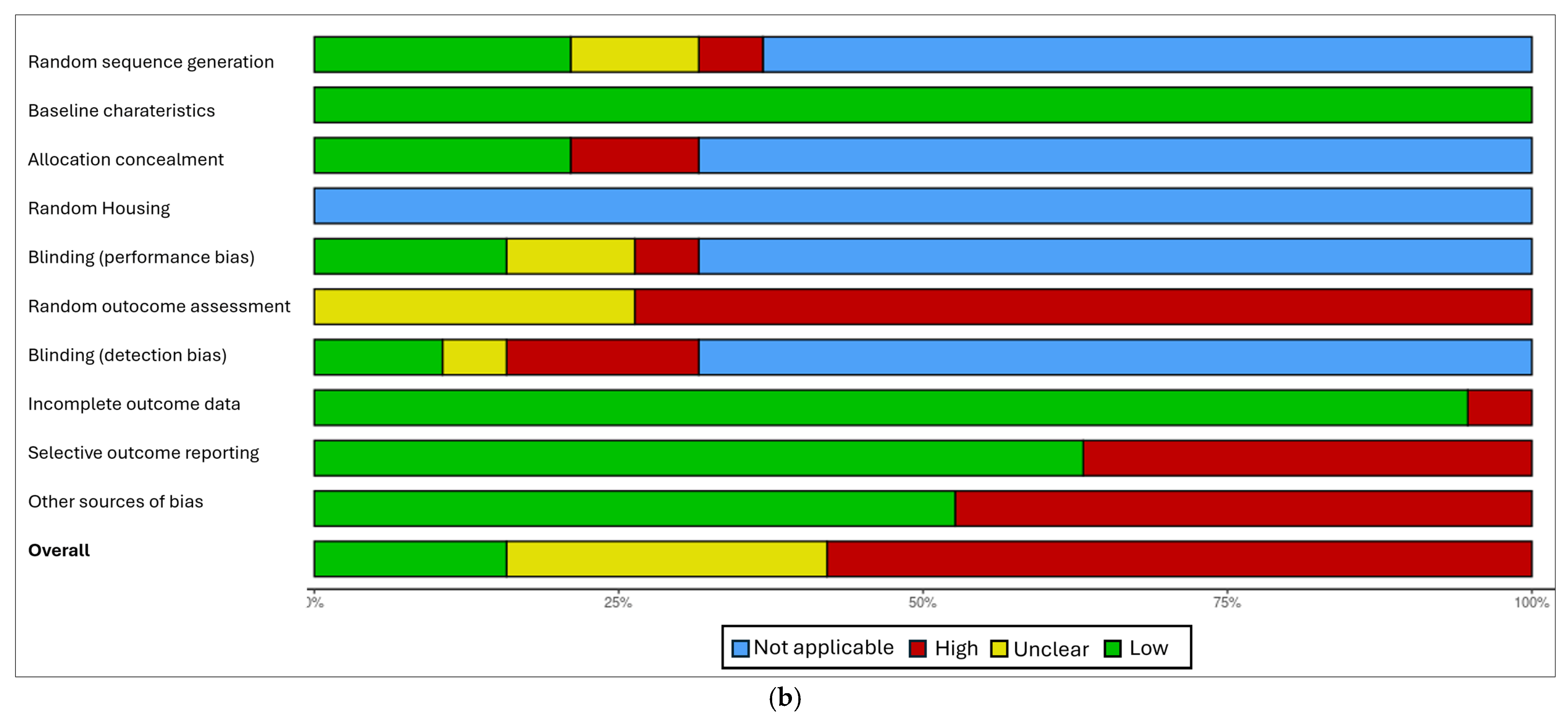
3.2. Study Characteristics and Risk-of-Bias Assessment
3.3. Treatment Approach
3.3.1. Preventive Treatment
3.3.2. Acute Treatment
3.3.3. Chronic Treatment
4. Discussion
4.1. Preventive Treatment
4.2. Acute Treatment
4.3. Chronic Treatment
5. Conclusions
Supplementary Materials
Author Contributions
Funding
Institutional Review Board Statement
Informed Consent Statement
Data Availability Statement
Conflicts of Interest
Abbreviations
| AF | Atrial Fibrillation |
| ALI | Acute Limb Ischemia |
| CHF | Congestive Heart Failure |
| CURATIVE | Consensus on the Rational Use of Antithrombotics and Thrombolytics in Veterinary Critical Care |
| DCM | Dilated Cardiomyopathy |
| HCM | Hypertrophic Cardiomyopathy |
| IV | Intravenous route of administration |
| MST | Median Survival Time |
| NSCM | Nonspecific Cardiomyopathy |
| PO | Oral route of administration |
| PRISMA | Preferred Reporting Items for Systematic Reviews and Meta-Analysis |
| PROSPERO | International Prospective Register of Systematic Reviews |
| RCM | Restrictive Cardiomyopathy |
| RCT | Randomized Controlled Trial |
| SC | Subcutaneous route of administration |
| SYRCLE | SYstematic Review Centre for Laboratory Animal Experimentation |
| t-PA | Tissue Plasminogen Activator |
References
- Guillaumin, J. Feline Aortic Thromboembolism: Recent Advances and Future Prospects. J. Feline Med. Surg. 2024, 26, 1098612X241257878. [Google Scholar] [CrossRef]
- Hogan, D.F.; Fox, P.R.; Jacob, K.; Keene, B.; Laste, N.J.; Rosenthal, S.; Sederquist, K.; Weng, H.-Y. Secondary Prevention of Cardiogenic Arterial Thromboembolism in the Cat: The Double-Blind, Randomized, Positive-Controlled Feline Arterial Thromboembolism; Clopidogrel vs. Aspirin Trial (FAT CAT). J. Vet. Cardiol. 2015, 17, S306–S317. [Google Scholar] [CrossRef]
- Shaverdian, M.; Li, R.H.L. Preventing Cardiogenic Thromboembolism in Cats: Literature Gaps, Rational Recommendations, and Future Therapies. Vet. Clin. N. Am. Small Anim. Pract. 2023, 53, 1309–1323. [Google Scholar] [CrossRef]
- Guillaumin, J.; DeFrancesco, T.C.; Scansen, B.A.; Quinn, R.; Whelan, M.; Hanel, R.; Goy-Thollot, I.; Bublot, I.; Robertson, J.B.; Bonagura, J.D. Bilateral Lysis of Aortic Saddle Thrombus with Early Tissue Plasminogen Activator (BLASTT): A Prospective, Randomized, Placebo-Controlled Study in Feline Acute Aortic Thromboembolism. J. Feline Med. Surg. 2022, 24, e535–e545. [Google Scholar] [CrossRef] [PubMed]
- Borgeat, K.; Wright, J.; Garrod, O.; Payne, J.R.; Fuentes, V.L. Arterial Thromboembolism in 250 Cats in General Practice: 2004–2012. J. Vet. Intern. Med. 2014, 28, 102–108. [Google Scholar] [CrossRef] [PubMed]
- Hogan, D.F. Feline Cardiogenic Arterial Thromboembolism: Prevention and Therapy. Vet. Clin. N. Am. Small Anim. Pract. 2017, 47, 1065–1082. [Google Scholar] [CrossRef]
- Hassan, M.H.; Abu-Seida, A.M.; Torad, F.A.T.; Hassan, E.A. Feline Aortic Thromboembolism: Presentation, Diagnosis, and Treatment Outcomes of 15 Cats. Open Vet. J. 2020, 10, 340–346. [Google Scholar] [CrossRef] [PubMed]
- Smith, S.A.; Tobias, A.H.; Jacob, K.A.; Fine, D.M.; Grumbles, P.L. Arterial Thromboembolism in Cats: Acute Crisis in 127 Cases (1992-2001) and Long-Term Management with Low-Dose Aspirin in 24 Cases. J. Vet. Intern. Med. 2003, 17, 73–83. [Google Scholar] [CrossRef] [PubMed]
- Eberlé, O.; Pouzot-Nevoret, C.; Thomas-Cancian, A.; Lurier, T.; Nectoux, A.; Ségard-Weisse, E. Ultrasonographic Findings of Feline Aortic Thromboembolism. J. Feline Med. Surg. 2022, 24, e588–e594. [Google Scholar] [CrossRef] [PubMed]
- Brainard, B.M.; Coleman, A.E.; Kurosawa, A.; Rush, J.E.; Hogan, D.F.; Brooks, M.B.; Kraus, M.S. Therapy with Clopidogrel or Rivaroxaban Has Equivalent Impacts on Recurrence of Thromboembolism and Survival in Cats Following Cardiogenic Thromboembolism: The SUPERCAT Study. J. Am. Vet. Med. Assoc. 2024, 263, 1–10. [Google Scholar] [CrossRef] [PubMed]
- Lo, S.T.; Walker, A.L.; Georges, C.J.; Li, R.H.; Stern, J.A. Dual Therapy with Clopidogrel and Rivaroxaban in Cats with Thromboembolic Disease. J. Feline Med. Surg. 2022, 24, 277–283. [Google Scholar] [CrossRef]
- Schober, K.E.; Maerz, I. Assessment of Left Atrial Appendage Flow Velocity and Its Relation to Spontaneous Echocardiographic Contrast in 89 Cats with Myocardial Disease. J. Vet. Intern. Med. 2006, 20, 120–130. [Google Scholar] [CrossRef]
- Payne, J.R.; Borgeat, K.; Brodbelt, D.C.; Connolly, D.J.; Luis Fuentes, V. Risk Factors Associated with Sudden Death vs. Congestive Heart Failure or Arterial Thromboembolism in Cats with Hypertrophic Cardiomyopathy. J. Vet. Cardiol. 2015, 17 (Suppl. S1), S318–S328. [Google Scholar] [CrossRef] [PubMed]
- Jaturanratsamee, K.; Jiwaganont, P.; Panprom, C.; Petchdee, S. Rivaroxaban versus Enoxaparin plus Clopidogrel Therapy for Hypertrophic Cardiomyopathy-Associated Thromboembolism in Cats. Vet. World 2024, 17, 796–803. [Google Scholar] [CrossRef]
- Smith, C.E.; Rozanski, E.A.; Freeman, L.M.; Brown, D.J.; Goodman, J.S.; Rush, J.E. Use of Low Molecular Weight Heparin in Cats: 57 Cases (1999–2003). J. Am. Vet. Med. Assoc. 2004, 225, 1237–1241. [Google Scholar] [CrossRef] [PubMed]
- Luis Fuentes, V.; Abbott, J.; Chetboul, V.; Côté, E.; Fox, P.R.; Häggström, J.; Kittleson, M.D.; Schober, K.; Stern, J.A. ACVIM Consensus Statement Guidelines for the Classification, Diagnosis, and Management of Cardiomyopathies in Cats. J. Vet. Intern. Med. 2020, 34, 1062–1077. [Google Scholar] [CrossRef]
- Blais, M.-C.; Bianco, D.; Goggs, R.; Lynch, A.M.; Palmer, L.; Ralph, A.; Sharp, C.R. Consensus on the Rational Use of Antithrombotics in Veterinary Critical Care (CURATIVE): Domain 3-Defining Antithrombotic Protocols. J. Vet. Emerg. Crit. Care 2019, 29, 60–74. [Google Scholar] [CrossRef]
- Goggs, R.; Bacek, L.; Bianco, D.; Koenigshof, A.; Li, R.H.L. Consensus on the Rational Use of Antithrombotics in Veterinary Critical Care (CURATIVE): Domain 2-Defining Rational Therapeutic Usage. J. Vet. Emerg. Crit. Care 2019, 29, 49–59. [Google Scholar] [CrossRef] [PubMed]
- Sharp, C.R.; deLaforcade, A.M.; Koenigshof, A.M.; Lynch, A.M.; Thomason, J.M. Consensus on the Rational Use of Antithrombotics in Veterinary Critical Care (CURATIVE): Domain 4-Refining and Monitoring Antithrombotic Therapies. J. Vet. Emerg. Crit. Care 2019, 29, 75–87. [Google Scholar] [CrossRef]
- Page, M.J.; Moher, D.; Bossuyt, P.M.; Boutron, I.; Hoffmann, T.C.; Mulrow, C.D.; Shamseer, L.; Tetzlaff, J.M.; Akl, E.A.; Brennan, S.E.; et al. PRISMA 2020 Explanation and Elaboration: Updated Guidance and Exemplars for Reporting Systematic Reviews. BMJ 2021, 372, n160. [Google Scholar] [CrossRef]
- Hooijmans, C.R.; Rovers, M.M.; de Vries, R.B.; Leenaars, M.; Ritskes-Hoitinga, M.; Langendam, M.W. SYRCLE’s Risk of Bias Tool for Animal Studies. BMC Med. Res. Methodol. 2014, 14, 43. [Google Scholar] [CrossRef] [PubMed]
- Schoeman, J.P. Feline Distal Aortic Thromboembolism: A Review of 44 Cases (1990–1998). J. Feline Med. Surg. 1999, 1, 221–231. [Google Scholar] [CrossRef] [PubMed]
- Moore, K.E.; Morris, N.; Dhupa, N.; Murtaugh, R.J.; Rush, J.E. Retrospective Study of Streptokinase Administration in 46 Cats with Arterial Thromboembolism. J. Vet. Emerg. Crit. Care 2000, 10, 245–257. [Google Scholar] [CrossRef]
- Reimer, S.B.; Kittleson, M.D.; Kyles, A.E. Use of Rheolytic Thrombectomy in the Treatment of Feline Distal Aortic Thromboembolism. J. Vet. Intern. Med. 2006, 20, 290–296. [Google Scholar] [CrossRef]
- Welch, K.M.; Rozanski, E.A.; Freeman, L.M.; Rush, J.E. Prospective Evaluation of Tissue Plasminogen Activator in 11 Cats with Arterial Thromboembolism. J. Feline Med. Surg. 2010, 12, 122–128. [Google Scholar] [CrossRef]
- Oh, Y.-I.; Hwang, H.-J.; Han, S.-H.; Lee, S.-H.; Lee, J.-H.; Lee, G.-J.; Joo, B.-S.; Jang, D.-S.; Cho, H.-M.; Park, J.-H.; et al. Comparison Between a Continuous Rate Infusion Protocol and an Accelerated Dosing Protocol Using Tissue Plasminogen Activator for Thrombolysis in Cats and Dogs. Int. J. Appl. Res. Vet. Med. 2018, 16, 149–155. [Google Scholar]
- Guillaumin, J.; Gibson, R.M.; Goy-Thollot, I.; Bonagura, J.D. Thrombolysis with Tissue Plasminogen Activator (TPA) in Feline Acute Aortic Thromboembolism: A Retrospective Study of 16 Cases. J. Feline Med. Surg. 2019, 21, 340–346. [Google Scholar] [CrossRef]
- Surachetpong, S.D.; Pairor, S.; Atiptamvaree, T.; Mangklabruks, T. Survival Time and Factors Influencing Survival Time in Cats with Arterial Thromboembolism in Thailand. Thai J. Vet. Med. 2020, 50, 149–154. [Google Scholar] [CrossRef]
- Tosuwan, J.; Hunprasit, V.; Surachetpong, S.D. Usefulness of Peripheral Venous Blood Gas Analyses in Cats with Arterial Thromboembolism. Int. J. Vet. Sci. Med. 2021, 9, 44–51. [Google Scholar] [CrossRef]
- Mitropoulou, A.; Hassdenteufel, E.; Lin, J.; Bauer, N.; Wurtinger, G.; Vollmar, C.; Henrich, E.; Hildebrandt, N.; Schneider, M. Retrospective Evaluation of Intravenous Enoxaparin Administration in Feline Arterial Thromboembolism. Animals 2022, 12, 1977. [Google Scholar] [CrossRef] [PubMed]
- Diaz, D.M.; Scansen, B.A.; Lake, Z.; Shropshire, S.; Orton, E.C.; Guillaumin, J. Clinical Use of Tissue Plasminogen Activator for Systemic Thrombolysis in Dogs and Cats. J. Vet. Cardiol. 2022, 41, 154–164. [Google Scholar] [CrossRef] [PubMed]
- McGuinness, L.A.; Higgins, J.P.T. Risk-of-Bias VISualization (Robvis): An R Package and Shiny Web App for Visualizing Risk-of-Bias Assessments. Res. Synth. Methods 2021, 12, 55–61. [Google Scholar] [CrossRef]
- Björck, M.; Earnshaw, J.J.; Acosta, S.; Bastos Gonçalves, F.; Cochennec, F.; Debus, E.S.; Hinchliffe, R.; Jongkind, V.; Koelemay, M.J.W.; Menyhei, G.; et al. Editor’s Choice—European Society for Vascular Surgery (ESVS) 2020 Clinical Practice Guidelines on the Management of Acute Limb Ischaemia. Eur. J. Vasc. Endovasc. Surg. 2020, 59, 173–218. [Google Scholar] [CrossRef]
- Gornik, H.L.; Aronow, H.D.; Goodney, P.P.; Arya, S.; Brewster, L.P.; Byrd, L.; Chandra, V.; Drachman, D.E.; Eaves, J.M.; Ehrman, J.K.; et al. 2024 ACC/AHA/AACVPR/APMA/ABC/SCAI/SVM/SVN/SVS/SIR/VESS Guideline for the Management of Lower Extremity Peripheral Artery Disease: A Report of the American College of Cardiology/American Heart Association Joint Committee on Clinical Practice Guidelines. Circulation 2024, 149, e1313–e1410. [Google Scholar] [CrossRef] [PubMed]
- De Haro, J.; Bleda, S.; Varela, C.; Cañibano, C.; Acin, F. Meta-Analysis and Adjusted Indirect Comparison of Direct Oral Anticoagulants in Prevention of Acute Limb Ischemia in Patients with Atrial Fibrillation. Curr. Med. Res. Opin. 2016, 32, 1167–1173. [Google Scholar] [CrossRef] [PubMed]
- Dimitriadis, K.; Adamopoulou, E.; Pyrpyris, N.; Iliakis, P.; Beneki, E.; Konstantinidis, D.; Fragkoulis, C.; Antonopoulos, A.; Papanikolaou, A.; Aznaouridis, K.; et al. Combined Catheter Ablation and Left Atrial Appendage Occlusion in Atrial Fibrillation: From Data to Clinical Reality. Cardiovasc. Drugs Ther. 2025, 1–32. [Google Scholar] [CrossRef] [PubMed]
- Katsanos, K.; Spiliopoulos, S.; Saha, P.; Diamantopoulos, A.; Karunanithy, N.; Krokidis, M.; Modarai, B.; Karnabatidis, D. Comparative Efficacy and Safety of Different Antiplatelet Agents for Prevention of Major Cardiovascular Events and Leg Amputations in Patients with Peripheral Arterial Disease: A Systematic Review and Network Meta-Analysis. PLoS ONE 2015, 10, e0135692. [Google Scholar] [CrossRef] [PubMed]
- Yeh, N.S.; Shaverdian, M.; Li, R.H.L. Evolving FATE: A New Lens on the Pathogenesis and Management of Feline Cardiogenic Arterial Thromboembolism. Animals 2025, 15, 1630. [Google Scholar] [CrossRef] [PubMed]
- Sharp, C.R.; Blais, M.-C.; Boyd, C.J.; Brainard, B.M.; Chan, D.L.; de Laforcade, A.; Goggs, R.; Guillaumin, J.; Lynch, A.; Mays, E.; et al. 2022 Update of the Consensus on the Rational Use of Antithrombotics and Thrombolytics in Veterinary Critical Care (CURATIVE) Domain 6: Defining Rational Use of Thrombolytics. J. Vet. Emerg. Crit. Care 2022, 32, 446–470. [Google Scholar] [CrossRef] [PubMed]
- Mazzolai, L.; Teixido-Tura, G.; Lanzi, S.; Boc, V.; Bossone, E.; Brodmann, M.; Bura-Rivière, A.; De Backer, J.; Deglise, S.; Della Corte, A.; et al. 2024 ESC Guidelines for the Management of Peripheral Arterial and Aortic Diseases: Developed by the Task Force on the Management of Peripheral Arterial and Aortic Diseases of the European Society of Cardiology (ESC) Endorsed by the European Association for Cardio-Thoracic Surgery (EACTS), the European Reference Network on Rare Multisystemic Vascular Diseases (VASCERN), and the European Society of Vascular Medicine (ESVM). Eur. Heart. J. 2024, 45, 3538–3700. [Google Scholar] [CrossRef]
- Suwirya, A.P.; Pande, N.N.U.W.; Ds, B.A.P. Streptokinase or Alteplase for Acute Limb Ischemia? A Meta-Analysis. Biosci. Med. J. Biomed. Transl. Res. 2025, 9, 5896–5909. [Google Scholar] [CrossRef]
- Page, M.J.; McKenzie, J.E.; Bossuyt, P.M.; Boutron, I.; Hoffmann, T.C.; Mulrow, C.D.; Shamseer, L.; Tetzlaff, J.M.; Akl, E.A.; Brennan, S.E.; et al. The PRISMA 2020 statement: An updated guideline for reporting systematic reviews. BMJ 2021, 372, n71. [Google Scholar] [CrossRef]



| First Author (Reference) | Year | Study Design | Overall Sample Size | Cardiac Disease | ATE N (%) | Concomitant Non-CD N (%) |
|---|---|---|---|---|---|---|
| Schoeman, J.P. [22] | 1999 | CaS | 44 | HCM | 44 (100) | NR |
| Moore, K.E. [23] | 2000 | CaS | 46 | HCM, DCM, MD/TD, AMD | 46 (100) | 2 (4.34) |
| Smith, S.A. [8] | 2003 | CaS | 127 | DCM, NSCM, HOCM, HCM, MS | 127 (100) | 18 (14) |
| Smith, C.E. [15] | 2004 | CaS | 57 | HCM, NSCM, RCM, DCM | 20 (46,5) | 4 (7) |
| Reimer, S.B. [24] | 2006 | PCT | 6 | HCM, RCM | 6 (100) | NR |
| Welch, K.M. [25] | 2010 | RCT | 11 | NSCM | 11 (100) | 2 (18.18) |
| Borgeat, K. [5] | 2014 | CaS | 250 | NR | 250 (100) | 17 (6.8) |
| Hogan, D.F. [2] | 2015 | RCT | 75 | HCM, NSCM, HOCM, RCM, DCM, MS | 75 (100) | NR |
| Oh, Y.I. [26] | 2018 | RCT | 13 | HCM, DCM | 12 (92) | 5 |
| Guillaumin, J. [27] | 2019 | RCS | 16 | HCM, RCM, NSCM, CM | 16 (100) | 2 (12.5) |
| Surachetpong, S.D. [28] | 2020 | CaS | 89 | HCM, HOCM, NSCM, RCM, TCM | 89 (100) | 1 (1.4) |
| Hassan, M.H. [7] | 2020 | CaS | 15 | HCM | 15 (100) | 0 (0) |
| Tosuwan, J. [29] | 2021 | CaS | 47 | HCM, RCM | 47 (100) | 3 (6.3) |
| Mitropoulou, A. [30] | 2022 | CaS | 36 | HCM, HOCM, NSCM, AS, AM | 36 (100) | 3 (8) |
| Guillaumin, J. [4] | 2022 | RCT | 40 | NSCM | 40 (100) | 3 (7.5) |
| Lo, S.T. [11] | 2022 | CaS | 32 | HCM, RCM, SAS, CHD | 18 (56.3) | NR |
| Diaz, D.M. [31] | 2022 | CaS | 4 | HCM, NSCM | 4 (100) | 3 (75) |
| Jaturanratsamee, K. [14] | 2024 | RCT | 23 | HCM | 8 (34.8) | 0 (0) |
| Brainard, B.M. [10] | 2024 | RCT | 45 | HCM, HOCM, NSCM, RCM, DCM | 45 (100) | NR |
| First Author (Reference) | Year | Treatment | Improvement in Clinical Sign N (%) | Death N (%) | MST Days (Range) | Recurrence of ATE N (%) | Time Interval for Recurrence of ATE Days (Range) |
|---|---|---|---|---|---|---|---|
| Schoeman, J.P. [22] | 1999 | Analg, AntiPlat, AntiCoag, CardT | NR | 27/44 (61.3) | 402 (3–2190) | 4/17 (24) | 30–360 |
| Moore, K.E. [23] | 2000 | AntiCoag, Thrombo | RoP: 25/46 (54.3) RoMF: 14/46 (30.4) | 31/46 (67.3) | 51 (2–690) | 7/15 (47) | 100 (7–690) |
| Smith, S.A. [8] | 2003 | Analg, AntiPlat, AntiCoag, CardT | 44/127 (35) | 118/127 (93) | 117 | 11/44 (25) | 191 ± 152 |
| Smith, C.E. [15] | 2004 | AntiPlat, AntiCoag | NR | 36/47 (76.5) | 190 (3–1223) | 5/20 (25) | 4–487 |
| Reimer, S.B. [24] | 2006 | Thrombo, Reo | 3/6 (50) | 3/6 (50) | 0–730 | 1/3 (33) | 120 |
| Welch, K.M. [25] | 2010 | Analg, Thrombo, CardT | 7/11 (63) | 4/11 (36) a 8/11 (73) | 110–547 | 1/11 (9) | NR |
| Borgeat, K. [5] | 2014 | Analg, AntiPlat, AntiCoag, CardT, OT | 68/250 (27) | 30/68 (44) a 6/30 (20) b | 94 (7–2614) | 14/30 (46) | 118 (7–2614) |
| Hogan, D.F. [2] | 2015 | AntiPlat, CardT | NR | Clo 7/39 (18) Asa: 6/36 (17) | Clo: 248 Asa: 128 | Clo: 19/39 (49) Asa: 27/36 (75) | Clo: 146 (7–990) Asa: 83 (6–883) |
| Oh, Y.I. [26] | 2018 | Analg, Thrombo | Group A: 8/10 (20) Group B: 5/7 (72) | Group A: variable (0–50) c Group B: variable (39–45) c | NR | NR | NR |
| Guillaumin, J. [27] | 2019 | Analg, AntiPlat, AntiCoag, Thrombo, CardT, OT | Tpa: 9/16 (56.3) SOC: 11/38 (28.9) | Tpa: 7/16 (43.8) a SOC: 23/38 (60.5) a | Tpa: 148 (61–1366) | Tpa: 4/7 (57) | Tpa: 106 (34–483) |
| Surachetpong, S.D. [28] | 2020 | AntiPlat, AntiCoag, CardT | Enx + Clo: 14/27 (52) Clo: 4/10 (40) | Enx + Clo: 52/79 (66) Clo: 6/10 (60) | 31 (3–59) | 4/89 (4.5) | 10 |
| Hassan, M.H. [7] | 2020 | Analg, AntiPlat, AntiCoag, Thromb, CardT, OT | 9/15 (60) | 4/15 (26) | NR | 0/9 (0) | NR |
| Tosuwan, J. [29] | 2021 | Analg, AntiPlat, AntiCoag, CardT | NR | 17/39 (43.6) a | 7 (3–202) | NR | NR |
| Mitropoulou, A. [30] | 2022 | Analg, AntiPlat, AntiCoag, CardT | 20/36 (56) | 19/36 (53) a | NR | NR | NR |
| Guillaumin, J. [4] | 2022 | Analg, AntiPlat, AntiCoag, Thromb, CardT | Tpa: 12/20 (60) a Placebo: 8/20 (40) a | Tpa: 9/20 (45) a Placebo: 11/20 (55) a Tpa: 15/20 (77) b Placebo: 20/20 (100) b | Tpa: 45 (3–649) Placebo: 59 (1–156) | NR | NR |
| Lo, S.T. [11] | 2022 | AntiPlat, AntiCoag, CardT | NR | 24/32 (75) | All: 257 Cats with ATE: 502 | 3/18 (16.7) | 46–616 |
| Diaz, D.M. [31] | 2022 | Thromb | 1/4 (25) | 3/4 (75) | NR | 1/4 (25) | 18 |
| Jaturanratsamee, K. [14] | 2024 | AntiPlat, AntiCoag | NR | 8/23 (35) | NR | Rvx: 0/6 (0) | NR |
| Brainard, B.M. [10] | 2024 | AntiPlat, AntiCoag, OT | NR | Clo: 7/19 (37) Rvx: 11/26 (42.3) | Clo: 335 (150–515) Rvx: 296 (209–510) | Clo: 7/19 (37) Rvx: 10/26 (39) | Clo: 663 Rvx: 513 |
| First Author (Reference) | Year | Treatment | Treatment Duration Days (Range) | MST Days (Range) | Treatment-Related Side Effects N (%) | Occurence of ATE N (%) | Time Interval for Occurrence of ATE Days |
|---|---|---|---|---|---|---|---|
| Smith, C.E. [15] | 2004 | Dlt: 98.8 (47–220) U/kg q12–24h SC Asa: 3.3 (0.2–5.8) mg/kg q48–84h PO | Dlt: 172 (3–1223) | 190 (3–1233) | 5/47 (11) | Dlt: 1/23 (4) | 78 |
| Lo, S.T. [11] | 2022 | Rvx: 2.5 mg/kg q24h PO Clo: 18.75 mg/cat q24h PO | NR | 257 | 5/32 (15) | 0/14 (0) | NR |
| Jaturanratsamee, K. [14] | 2024 | Enx: 1 mg/kg q24h SC Clo: 3 mg/kg q24h PO Rvx: 2.5 mg/kg q24h PO | 60 | NR | Rvx: 0/3 (0) | NR | NR |
| First Author (Reference) | Year | Treatment | Improvement in Clinical Signs N (%) | Death N (%) | Duration of Hospitalization Days (Range) | Treatment Related Side Effects N (%) |
|---|---|---|---|---|---|---|
| Schoeman, J.P. [22] | 1999 | AN, CardT, SUP Asa: 75 mg/cat q72h PO Ufh: 50–200 IU/kg q6–8h | NR | 27/44 (61.3) | NR | NR |
| Moore, K.E. [23] | 2000 | Sk: 47(18–158) U/kg 4 h IV Ufh: 50–232 U/kg q6h SC | RoP: 25/46 (54.3) RoMF: 14/46 (30.4) | 31/46 (67.3) | NR | 27/46 (58) |
| Smith, S.A. [8] | 2003 | SUP, AN, CardT, Asa, Ufh: 75–500 U/kg IV | 44/127 (35) | 83/127 (65) | 2 (0–10) | NR |
| Reimer, S.B. [24] | 2006 | Rt, Sk (45,000 IU INS) | 3/6 (50) | 3/6 (50) | NR | 3/3 (100) |
| Welch, K.M. [25] | 2010 | Tpa groupA: 5 mg/cat 4 h CRI Tpa groupB: 1 mg bolus + 2.5 mg over 30 min + 1.5 mg over 1 h | 7/11 (63) | 4/11 (36) a 8/11 (73) | NR | 11/11 (100) |
| Borgeat, K. [5] | 2014 | AN, CardT, Ufh, Asa, Clo, Ufh + Asa, Ufh + Clo, Ufh + Asa + Clo | 68/250 (27) | 220/250 (88) a | 2 (0–7) | NR |
| Oh, Y.I. [26] | 2018 | AN, Tpa group A: 20 mg 4 h CRI IV c Tpa group B: bolus + 0.5 mg/kg/h IV c | Group A: 8/10 (20) c Group B: 5/7 (71.4) c | Group A: NR (0–50) Group B: NR (39–45) | NR | 7/17 (41.7) c |
| Guillaumin, J. [27] | 2019 | AN, CardT, OT, SUP, Asa, Clo, Enx, Ufh, Ndr Tpa: 1 mg/kg IV | Tpa group: 9/16 (56) SOC group: 11/38 (28.9) | Tpa group: 7/16 (43.8) a SOC group: 23/38 (60.5) a | Tpa group: 2 (0–11) SOC group: 1.5 (0–7) | Tpa group: 6/16 (37.5) SOC group: 14/38 (36.8) |
| Surachetpong, S.D. [28] | 2020 | CardT, Clo alone Enx 2.64 ± 0.86 mg/kg q8–12h SC + Clo | Enx + Clo: 14/27 (52) Clo: 4/10 (40) | Enx + Clo: 52/79 (66) Clo: 6/10 (60) | 6 (3–14) | Enx + Clo: 4/79 (5) |
| Hassan, M.H. [7] | 2020 | CardT, SUP, OT Ufh: 300 IU/kg q12h SC Enx: 1 mL/kg q12h SC Crl: 2 mg/kg q24h for 6 d IM Asa: 10 mg/kg q36h PO | 9/15 (60) | 4/15 (26) | NR | NR |
| Tosuwan, J. [29] | 2021 | AN, CardT, Clo: 18.75 mg/cat q24h PO Enx: 1 mg/kg q6–12h, SC | NR | 17/39 (44) a | 6.3 | NR |
| Mitropoulou, A. [30] | 2022 | Enx: 1 mg/kg IV + 3 mg/kg/day CRI IV Clo: 75 mg/cat + 18.75 mg/cat q24h PO | 20/36 (56) | 19/36 (53) | 7 (4–20) | 8/36 (22) |
| Guillaumin, J. [4] | 2022 | CardT, AN, SUP, Enx/Dlt: 1 mg/kg SC Tpa: 5.15 mg/cat (3.7–6.0) IV Clo: 17.5 mg/cat q24h PO | Tpa: 12/20 (60) a Placebo: 8/20 (40) a | Tpa: 9/20 (45) a Placebo:11/20 (55) a Tpa: 15/20 (77) b Placebo: 20/20 (100) b | NR | Tpa: NR (55) Placebo: NR (38) |
| Lo, S.T. [11] | 2022 | CardT, Rvx: 2.5 mg/cat q24h PO Clo: 18.75 mg/cat q24h PO | NR | 24/32 (75) | NR | 5/32 (15.6) |
| Diaz, D.M. [31] | 2022 | Tpa: 1 (0.6–1.4) mg/kg IV | 1/4 (25) | 3/4 (75) | NR | NR |
| First Author (Reference) | Year | Treatment | Survival Time Days (Range) | Recurrence of ATE N (%) | Time Interval for Recurrence of ATE Days (Range) | Treatment Related Side Effects N (%) |
|---|---|---|---|---|---|---|
| Schoeman, J.P. [22] | 1999 | Asa: 75 mg/cat q72h PO | 402 (3–2190) | 4/17 (24) | NR | NR |
| Smith, S.A. [8] | 2003 | Hda: 40 mg/cat q24–72h PO Lda: 5 mg/cat q72h PO | 117 Hda:149 Lda: 105 | 11/44 (25) | 191 ± 152 | Hda: 4/18 (22) Lda: 1/24 (4) |
| Smith, C.E. [15] | 2004 | Dlt: 98.8 (47–220) U/kg q12–24h SC Asa: 3.3 (0.2–5.8) mg/kg q48–84h PO | 190 (3–1223) | 5/20 (25) | 4–487 | 5/47 (11) |
| Hogan, D.F. [2] | 2015 | Clo: 18.75mg/cat q24h PO Asa: 81 mg tablet/cat q72h PO | Clo: 248 Asa: 128 | Clo: 19/39 (49) Asa: 27/36 (75) | Clo: 146 (7–990) Asa: 83 (6–883) | Clo: 1/39 (2.5) Asa: 1/36 (2.7) |
| Lo, S.T. [11] | 2022 | Rvx: 2.5 mg/cat q24h PO Clo: 18.75 mg/cat q24h PO | Total: 257 Initial ATE event: 502 | 3/18 (16.7) | 46–616 | 5/32 (16) |
| Jaturanratsamee, K. [14] | 2024 | Enx: 1 mg/kg q24h SC Clo: 3 mg/kg q24h PO Rvx: 2.5 mg/kg q24h PO | NR | Rvx: 0/3 (0) | NR | Rvx: 0/3 (0) |
| Brainard, B.M. [10] | 2024 | Rvx: 2.5 mg/cat q24h PO Clo: 18.75 mg/cat q24h PO | Clo: 335 (150–515) Rvx: 296 (209–510) | Clo: 7/19 (37) Rvx: 10/26 (39) | Clo: 663 Rvx: 513 | Clo: 0/19 (0) Rvx: 2/26 (7.7) |
Disclaimer/Publisher’s Note: The statements, opinions and data contained in all publications are solely those of the individual author(s) and contributor(s) and not of MDPI and/or the editor(s). MDPI and/or the editor(s) disclaim responsibility for any injury to people or property resulting from any ideas, methods, instructions or products referred to in the content. |
© 2025 by the authors. Licensee MDPI, Basel, Switzerland. This article is an open access article distributed under the terms and conditions of the Creative Commons Attribution (CC BY) license (https://creativecommons.org/licenses/by/4.0/).
Share and Cite
Arcuri, G.; Bresolin, P.; Guglielmini, C. Treatment and Prevention of Cardiogenic Arterial Thromboembolism in the Cat: A Systematic Review. Animals 2025, 15, 3539. https://doi.org/10.3390/ani15243539
Arcuri G, Bresolin P, Guglielmini C. Treatment and Prevention of Cardiogenic Arterial Thromboembolism in the Cat: A Systematic Review. Animals. 2025; 15(24):3539. https://doi.org/10.3390/ani15243539
Chicago/Turabian StyleArcuri, Giulia, Pietro Bresolin, and Carlo Guglielmini. 2025. "Treatment and Prevention of Cardiogenic Arterial Thromboembolism in the Cat: A Systematic Review" Animals 15, no. 24: 3539. https://doi.org/10.3390/ani15243539
APA StyleArcuri, G., Bresolin, P., & Guglielmini, C. (2025). Treatment and Prevention of Cardiogenic Arterial Thromboembolism in the Cat: A Systematic Review. Animals, 15(24), 3539. https://doi.org/10.3390/ani15243539