

Coccidia (Apicomplexa: Eucoccidiorida) of Freshwater Fish


Abstract
1. Introduction
2. Study Design
3. Adeleorina
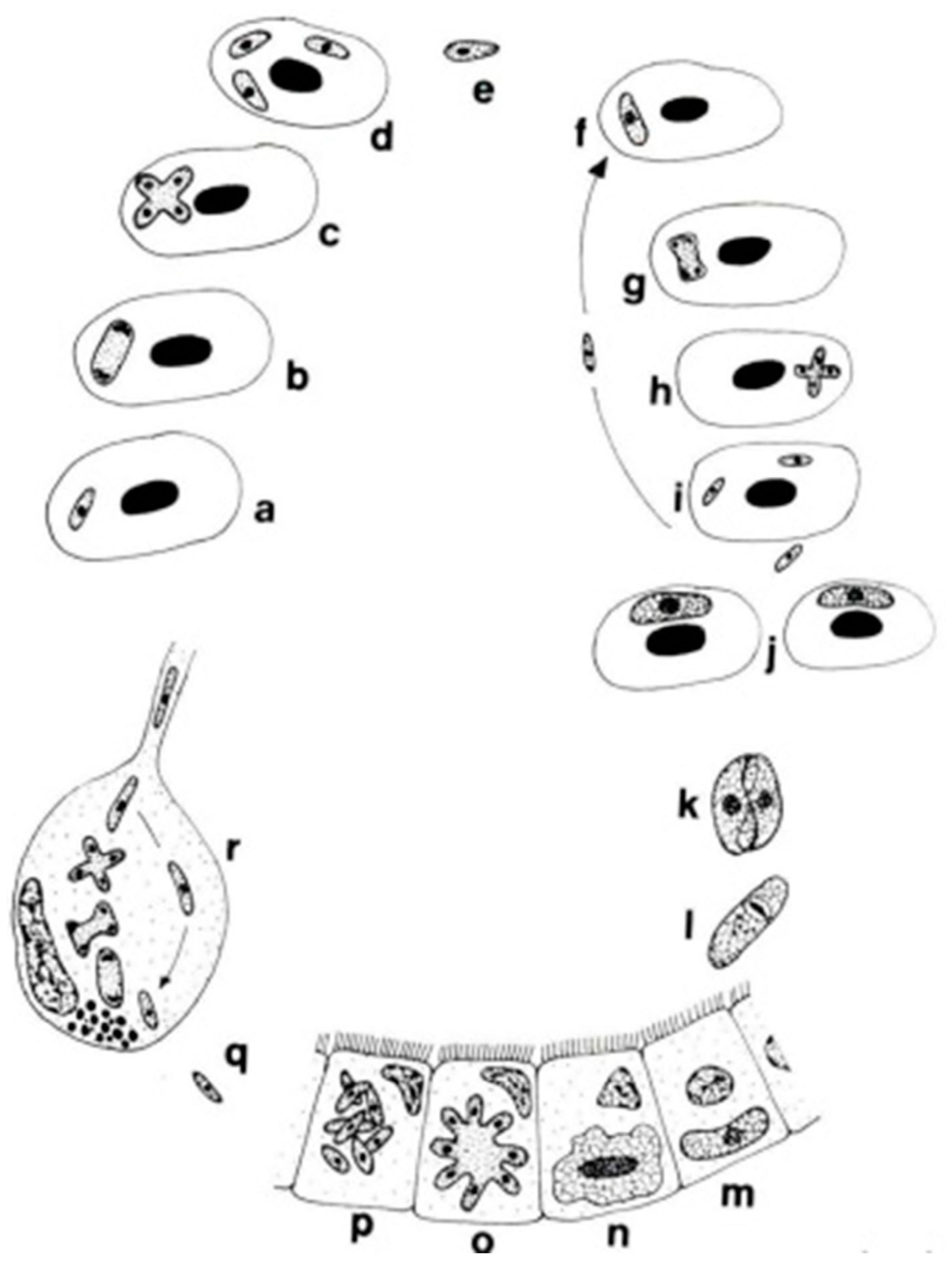
3.1. Dactylosoma and Babesiosoma
3.2. Haemogregarina, Cyrilia, and Desseria
3.3. Hepatozoon
4. Eimeriorina
4.1. Calyptospora
4.2. Cryptosporidium
4.3. Eimeria, Goussia, Isospora, Octosporella
5. Distribution of Coccidian Freshwater Fish
5.1. Distribution of Coccidia by Order of Freshwater Fish
5.2. Distribution of Coccidian Freshwater Fish by Continent
6. Conclusions
Author Contributions
Funding
Conflicts of Interest
Appendix A

| Class | Subclass | Order | Suborder | Family | Genus | Main Morphological Characteristics |
| Conoidasida Levine, 1988 | Coccidia Leuckart, 1879 | Eucoccidiorida Leger, 1911 | Adeleorina Leger, 1911 | Dactylosomatidae Jakowska & Nigrelli, 1955 emend. Levine, 1971 | Dactylosoma Labbe 1894 | Merogony produced 3 to 8 merozoites in erythrocytes, often in a fan-like arrangement [5]. |
| Babesiosoma Jakowska & Nigrelli, 1956 | Merogony produced not more than 4 merozoites in rosettes or a cross-shaped arrangement [5]. | |||||
| Haemogregarinidae Leger, 1911 | Haemogregarina Danilewsky, 1885 | Gamonts are elongate or crescent-shaped, frequently with one end tapered and the other rounded, and are often as long as erythrocytes. Meronts in the erythrocytes or leucocytes are rounded or worm-like, and each meront can produce 2–36 oval to crescent-shaped merozoites. Oocysts of the genus Haemogregarina contain eight or more naked sporozoites [6]. | ||||
| Cyrilia, Lainson, 1981 | Vermicular meronts in vertebrate erythrocytes. Sporogony intracellular in leech (Glossiphoniidae) intestinal epithelial cells, acystic, single sporogonic germinal center producing more than 16 sporozoites [6]; oocysts of the genus Cyrilia contain 20–30 sporozoites [7]. | |||||
| Desseria, Siddall, 1995 | Lack of erythrocytic merogony. Gametogenesis and sporogony intracellular in the leech (Piscicolidae) intestinal epithelial cells; microgametogenesis producing 4 aflagellate microgametes; sporogony acystic, single sporogonic germinal center producing more than 16 sporozoites [6]. | |||||
| Hepatozoidae Wenyon, 1926 | Hepatozoon, Miller, 1980 | Gamonts are enveloped in a thick membrane and are often situated in the centre of the neutrophil and compress its lobulated nucleus toward the cell membrane. Produce enormous oocysts with numerous sporocysts, each with 4, 16 or more sporozoites [6]. | ||||
| Eimeriorina Leger, 1911 | Calyptosporidae Overstreet, Hawkins & Fournie, 1984 | Calyptospora Overstreet, Hawkins & Fournie, 1984 | Oocysts with 4 sporocysts, each with 2 sporozoites; sporocysts with sporopodia [8]. | |||
| Cryptosporidiidae Leger, 1911 | Cryptosporidium Tyzzer, 1907 | Oocyst with four sporozoites [8]. | ||||
| Eimeriidae Minchin, 1903 | Eimeria Schneider, 1875 | Oocysts with 4 sporocysts, each with 2 sporozoites, merogony intracellular [8]. | ||||
| Goussia Labbe, 1896 | Oocysts with 4 sporocysts, each with 2 sporozoites; dehiscence suture longitudinal [8]. | |||||
| Isospora Schneider, 1875 | Oocysts with two sporocysts, each with 4 sporozoites [8]. | |||||
| Epieimeria Dykov & Lom, 1981 | Oocysts with 4 sporocysts, each with 2 sporozoites, merogony and gamogony extracellular; sporogony intracellular [8]. | |||||
| Crystallospora Labbe, 1896 | Oocysts with 4 sporocysts, each with 2 sporozoites; sporocysts resemble crystals [8]. | |||||
| Octosporella Ray & Ragavachari, 1942 | Oocysts with 8 sporocysts, each with 2 sporozoites [8]. |
| Species | Type Host | Type Locality | Morphometric Parameters | References |
|---|---|---|---|---|
| Dactylosoma salvelini Fantham, Porter & Richardson, 1942 | Salvelinus fontinalis (Brook trout)—Salmoniformes | North America (Canada) | Secondary merogony: Meronts: 5.8–8.5 × 3.7–7.0 Gamonts: 4.4–7.8 × 1.5–3.0 | [21] |
| Dactylosoma lethrinorum Saunders, 1960 | Lethrinus nebulosus (Spangled emperor), L. lentjan (Pink ear emperor)—Eupercaria | Africa (Red Sea (Egypt)) | Meronts: 8.0 × 10.5 Merozoties: 1.9 × 2.4 | [22] |
| Babesiosoma mariae—Hoare, 1930; Baker, 1960 (syns: Dactylosoma mariae, Babesiosoma hannesi Paperna, 1981) | Haplochromis nubilus (Blue Victoria mouthbrooder), H. cinereus, H. serranus and H. sp. (Teleostei), Oreochromis esculentus (Singida tilapia), Serranochromis angusticeps (Thinface largemouth tilapia)—Cichliformes | South Africa | Merozoites: 2.8 × 0.9 Trophozoites: 3.8–5.7 × 1.9–5.0 Gamonts: 6.6–8.5 × 1.9–3.5 (Crescent); 5.7–6.6 × 3.8–5.7 (Rounded) | [17,18] |
| Mugil cephalus (Flathead grey mullet), Chelon richardsonii (South African mullet), C. dumerili (Grooved mullet)—Mugiliformes. | South Africa | Merozoites: 2.9 ± 0.2 × 0.4 Trophozoites: 3.8 ± 0.5 × 1.2 ± 0.1 Meronts: 3.8 × 1.4 (with 2 nuclei); 3.8 × 3.5 (with 4–8 nuclei) | [19] | |
| Chrysichthys auratus (Golden Nile catfish)—Siluriformes | Africa (Egypt) | Meront: 4.8 × 5.5 Meront: 4.2–4.5 × 4.5–4.9 (Cruciform) Merozoites: 2.2–2.6 × 2.8–4.0 Gamonts: 2.0–2.2 × 4.7–5.7 (Micro); 2.8 × 7.2 (Macro) | [26] | |
| Babesiosoma tetragonis Becker & Katz, 1965 | Catostomus sp.—Cypriniformes | North America (California, US) | Trophozoites: 2.2–3.7 × 4.4–6.6 (Elliptical); 3.3–4.8 × 3.8–5.5 (Oval) Meronts: 3.0–3.9 × 5.5–6.7 (Tetranueleate); 5.5–6.9 × 5.8–7.4 (Cruciform) Merozoites: 1.4–2.6 × 2.6–5.3 Gamonts: 3.0–4.8 × 6.1–8.2 (Macro); 1.6–2.8 × 4.9–7.2 (Micro) Extracellular merozoites: 1.5–3.1 × 2.3–3.4 | [28] |
| Babesiosoma ophicephali Misra et al., 1969 (syns: Dactylosoma striata Sarkar & Haldar, 1979 & D. notopterae Kundu & Haldar, 1984) | Ophicephalus punctatus = Channa punctatus (Spotted snakehead), O. striatus = C. striatus (Striped snakehead)—Anabantiformes; | Asia (West Bengal, India) | Youngest forms: 2.0 × 3.0 Trophozoites: 2.0–2.5 × 3.5–6 Schizonts: 2.5 × 4.0 Macrogametocyte: 2.5 × 3.5 Microgametocyte: 1.5 × 5.0 | [29] |
| Babesiosoma hareni Haldar et al., 1971 | Ophicephalus punctatus = Channa punctatus (Spotted snakehead)—Anabantiformes | Asia (West Bengal, India) | Youngest forms: 1.5 × 2.0 Trophozoites: 1.5 × 2.5 Schizonts: 3.0 × 3.5 Macrogametocyte: 2.5 × 2.5 Microgametocyte: 1.5–2.5 × 5.0–6.5 | [30] |
| Babesiosoma batrachi Chaudhuri & Choudhury, 1983 | Clarias batrachus (Philippine catfish)—Siluriformes | Asia (West Bengal, India) | Youngest forms: 1.6 × 1.75 Trophozoites: 3.0 × 5.0 Schizonts: 4.0 × 4.5 Macrogametocyte: 1.7 × 1.7 Microgametocyte: 2.4 × 5.8 | [31] |
| Babesiosoma sp. | Cyprius carpio (Common carp)—Cypriniformes; Clarias gariepinus (African catfish)—Siluriformes | Africa (Nile river) | [32] | |
| Barbus grypus (Shabout), Barbus sharpeyi (Bunnei), Carasobarbus luteus (Yellow barbell)—Cypriniformes | Asia (Iraq) | [33] | ||
| Triplophysa marmorata (Kashmir triplophysa-loach)—Cypriniformes | Asia (Kashmir) | Cruciform meronts: 4.3 ± 0.58 × 5.3 ± 0.58 Merozoites: 2.7 ± 0.5 × 3.0 ± 0.82 Gamonts: 3.1 ± 0.47 × 5.3 ± 0.64 | [34] | |
| Haemogregarina catostomi Becker, 1962 | Catostomus macrochelius (Largescale sucker), C.columbianus (Bridgelip sucker)—Cypriniformes | North America (USA, Washington state) | Qametosytes: 4.57 (3.52–6.32 × 14.5 (12.08–16.48) Nucleus: 3.37 (1.87–4.48) × 4.1 (2.32–6.24) | [35,36] |
| Haemogregarina vltavensis Lom et al., 1989 | Perca fluviatilis (European perch)—Perciformes | Europe (Czechoslovakia) | Intra-erythrocytic gametocytes: 10 × 22 Nucleus: 2.0 × 4.1 Mature gametocytes: 3.4 (2.2–4 0.9) × 12.5 (9.7–5.4) Free gametocytes: 3.1 (2.1–4 0.1) × 14.8 (12.0–16 0.9) | [37] |
| Haemogregarina majeedi Al-Salim, 1993 | Barbus sharpeyi (Bunnei)—Cypriniformes | Asia (Shalt al Arab river, Basrah, Iraq) | Merozoites: 0.7 × 4.2 Nucleus: 0.7 × 0.7 Free merozoites: 2.5 × 7.0 Mature gametocytes: 0.9–2.1 × 11.7–12.0 | [38] |
| Haemogregarina daviesensis Esteves-Silva et al., 2019 | Lepidosiren paradoxa (South American lungfish)—Ceratodontiformes | South America (Eastern Amazon region) | Qametosytes: 6 ± 0.97 (5–8) × 16 ± 0.12 (13–18) | [39] |
| Haemogregarina cyprini Smirnoviç 1971 | Cyprius carpio (Common carp)—Cypriniformes | Asia (Iraq) | [40] | |
| Haemogregarina meridianus Al-Salim, 1989 | Planiliza abu (Abu mullet)—Mugiliformes | Asia (Iraq) | [41] | |
| Haemogregarina acipenseris Nawrotzky, 1914 | Acipenser ruthenus marsiglii (Siberian starlet)—Acipenseriformes | Asia (Irtysh river) | [42] | |
| Haemogregarina sp. | Glarias gariepinus (North African catfish)—Siluriformes | Africa (Sudan) | [43] | |
| Oreochromis niloticus (Nile tilapia)—Cichliformes | Africa (Egypt) | [44] | ||
| Barbus grypus (Shabout), Barbus sharpeyi (Bunnei), Carasobarbus luteus (Yellow barbell)—Cypriniformes; Planiliza abu (Abu mullet)—Mugiliformes | Asia (Iraq) | [33] | ||
| Neoarius graeffei (Blue salmon catfish)—Siluriformes | Australia (Brisbane River) | [45] | ||
| Leocottus kesslerii (Kessler’s sculpin)—Perciformes | Asia (Lake Baikal) | [46] | ||
| Cyrilia lignieresi Laveran, 1906 | Synbranchus marmoratus (Marbled swamp eel)—Synbranchiformes | South America (Belem, Para, North Brazil) | Macrogamonts: 5.0–11 Microgamonts: 4.7–88 | [7,47] |
| Cyrilia sp. | Potamotrygon cf. Histrix (Porcupine river stingray)—Myliobatiformes | South America (Mariua Archipelago, Negro River, in the Brazilian Amazon Basin) | Trophozoite or merozoite: 2.5 ± 0.6 × 12.6 ± 1.5 Nucleus: 2.2 ± 0.6 × 4.4 ± 1.0 Meronts: 5.1 ± 1.1 × 12.1 ± 1.7 Nucleus: 4.7 ± 1.1 × 4.4 ± 0.9 Pregamonts: 4.7 ± 0.6 × 18.5 ± 1.5 Nucleus: 4.1 ± 0.6 × 4.3 ± 0.9 Macrogamonts: 5.8 ± 0.7 × 15.8 ± 1.6 Nucleus: 5.3 ± 0.8 × 4.3 ± 0.8 Microgamonts: 4.6 ± 1.0 × 13.3 ± 1.6 Nucleus: 4.3 ± 0.9 × 4.4 ± 0.8 | [47] |
| Hepatozoon caimani Carini, 1909 | Hoplias aimara (anjumara) —Characiformes | South America (Eastern Amazon) | Cysts: 9.8 × 10.28 Cystozoites: 1.68 × 11.04 | [48] |
| Fish Order | Species | Type Host | Type Locality | Site of Infection | Oocysts | Sporocysts | Sporozoites | References | ||
|---|---|---|---|---|---|---|---|---|---|---|
| Form | Size (µ) | Sporocyst Residuum | Size (µ) | Size (µ) | ||||||
| Cichliformes | Calyptospora paranaidji Silva et al., 2019 | Cichla piquiti (Blue Peacock Bass) | South America (Tocantins River, Brazil) | liver | spherical | 22.1 ± 1.5 × 22.1 ± 1.5 | + | 4.6 ± 0.6 × 9.7 ± 0.5 | [69] | |
| Calyptospora spinosa Azevedo et al., 1994 | Crenicichla lepidota (Pike cichlid) | South America (Amazon river, Brazil) | liver, gonads | spherical | 21.5–23.4 × 21.5–23.4 | - | 3.6–4.1 × 8.9–9.5 | [68] | ||
| Calyptospora tucunarensis Bekesi & Molnar, 1991 | Cichla ocellaris (Peacock cichlid) | South America (River Curfi, Brazil) | liver | spherical | 23.0–26.0 × 23.0–26.0 | - | 3.5–5.0 × 7.2–9.1 | 1.1–1.4 × 5.4–6.3 | [67] | |
| Calyptospora sp. | Cichla temensis (Speckled pavon, | South America (Brazil) | liver | spherical | 21.2 × 21.2 | - | 3.1 × 9.2 | [75] | ||
| Aequidens plagiozonatus | South America (Brazil) | liver | [76] | |||||||
| Characiformes | Calyptospora gonzaguensis Silva et al., 2020 | Triportheus angulatus (Dusky Narrow Hatchetfish) | South America (Eastern Brazilian Amazon) | liver, gallbladder, adipose tissue | spherical | 19.6 ± 1.4 × 19.6 ± 1.4 | + | 3.9 ± 0.2 × 9.2 ± 0.6 | [70] | |
| Calyptospora serrasalmi Cheung et al., 1986 | Serrasalmus niger (Redeye piranha) | South America (Amazon, Brazil) | liver | spherical | 23.8 ± 1.5 × 23.8 ± 1.5 | + | 5.9 ± 0.4 × 11.7 ± 1 | [65] | ||
| Serrasalmus striolatus, S. rhombeus (Redeye piranha) | South America (Amazon, Brazil) | liver | spherical | 25.5 × 25.5 | + | 6.0 × 11.8 | [66] | |||
| Calyptospora sp. | Triportheus guentheri, Tetragonopterus chalceus | South America (Brazil) | liver, intestine | spherical | 24.5 × 24.5 | - | 4.5 × 11.5 | [73] | ||
| Calyptospora empristica Fournie et al., 1985 | Fundulus notti (Sterlet sturgeon)—Cyprinodontiformes | North America (Mississippi) | liver | spherical | 19.6–24.5 × 19.6–24.5 | - | 7.0–9.5 × 4.5–7.5 | [71] | ||
| Calyptospora sp. | Brachyplatystoma vaillantii (Laulao catfish)—Siluriformes | South America (Brazil) | liver | spherical | 20.8 × 20.8 | - | 4.1 × 8.9 | [74] | ||
| Calyptospora sp. | Arapaima gigas (Arapaima)—Osteoglossiformes | South America (Amazon, Brazil) | liver | spherical | 19.0 ± 4.2 × 19.0 ± 4.2 | - | 4.0 ± 0.4 × 9.0 ± 1.4 | [72] | ||
| Species | Type Host | Other Natural Hosts | Identification Technique | Geographic Origin | Site of Infection | Oocyst Size (mean ± S. D.; μ): | References |
|---|---|---|---|---|---|---|---|
| Cryptosporidium molnari Álvarez-Pellitero & Sitjà-Bobadilla, 2002 | Sparus aurata (Giilthead sea bream)—(marine fish) | Dicentrarchus labrax (European sea bass)—(marine fish) | PCR, histological analysis | Cantabric, Mediterranean, South Atlantic, Spain | stomach | 4.7 ± 0.5 × 4.5 ± 0.5 | [88] |
| Synodontis nigriventris (Upside down cat fish)—Siluriformes | PCR | Western Australia | stomach | [98] | |||
| Maccullochella peelii peelii (Murray cod) –Centrarchiformes | Fluorescent-antibody staining assay | Australia | stomach | 4.0 × 5.0 | [99] | ||
| Esox lucius (Northern pike)—Esociformes | PCR, histological analysis | Europe (Lake Geneva, France) | stomach | [100] | |||
| Onchorhynchus mykiss (Rainbow trout)—Salmoniformes | PCR, microscopy | Europe (Galicia, NW Spain) | pyloric caeca, intestine | [101] | |||
| Clarias gariepinus (North African catfish) –Siluriformes | PCR, microscopy, ELISA | Africa (Egypt) | stomach | 3.20–4.5 × 3.90–6.05 | [102] | ||
| Clarias gariepinus (North African catfish)—Siluriformes | Microscopy, ELISA, PCR | Africa (Nile river) | stomach | [103] | |||
| Cryptosporidium molnari—like | Crossocheilus aymonieri (Golden algae eater)—Cypriniformes; Synodontis nigriventris (Blotched upsidedown catfish)—Siluriformes | PCR | Western Australia | intestine, stomach | [98] | ||
| Poecilia reticulata (Guppy)—Cyprinodontiformes | PCR, microscopy, histological analysis | Australia | stomach | [104] | |||
| Carassius auratus (Goldfish)—Cypriniformes; Poecilia reticulate (Guppy)—Cyprinodontiformes; Astronotus ocellatus (Oscar)—Cichliformes | PCR | Western Australia | intestine, stomach | [93] | |||
| Salmo trutta (Sea trout)—Salmoniformes | Immunofluorescence microscopy | Europe (Galicia, NW Spain) | intestine | [105] | |||
| Cryptosporidium huwi Ryan et al., 2015 | Poecilia reticulate (Guppy)—Cyprinodontiformes | Paracheirodon innesi (Neon tetra), Puntigrus tetrazona (Tiger barb), Moenkhausia sanctaefilomenae (Red eye tetra)—Characiformes | PCR | Australia | intestine, stomach | [89,93,98,106] | |
| Cryptosporidium bollandi Bolland et al., 2020 | Pterophyllum scalare (Freshwater angelfish)—Cichliformes | PCR | South America (USA, Washington) | intestine, stomach | 3.11 ± 0.45 × 2.82 ± 0.42 | [107] | |
| Astronotus ocellatus (Oscar)—Cichliformes; Paracheirodon innesi (Neon tetra)—Characiformes | PCR | Australia | intestine, stomach | [89,93,98,108] | |||
| Cryptosporidium abrahamseni Zahedi et al., 2021 | Moenkhausia sanctaefilomenae (Redeye tetra)—Characiformes | Paracheirodon innesi (Neon tetra)—Characiformes | PCR, histological analysis | Western Australia, Perth | intestine | 3.82 ± 0.22 × 3.16 ± 0.18 | [93,95,106,107] |
| Cryptosporidium parvum Tyzzer, 1912 | Mus musculus (House mouse) | Onchorhynchus mykiss (Rainbow trout)—Salmoniformes | IFAT | Europe (Spain rivers) | gastrointestinal tract | 5.0 × 7.0 | [109] |
| Oreochromis niloticus (Nile tilapia)—Cichliformes; Puntius gonionotus (Silver barb)—Cypriniformes | PCR | Australia (New Guinea) | intestine, stomach | [110] | |||
| Rutilus rutilus (Roach)—Cypriniformes; Perca fluviatilis (European perch)—Perciformes; Salvelinus alpinus (Arctic char), Coregonus lavaretus (European whitefish)—Salmoniformes; Esox lucius (Northern pike)—Esociformes | PCR, histological analysis | Europe (Lake Geneva, France) | intestine, stomach | [100] | |||
| Onchorhynchus mykiss (Rainbow trout)—Salmoniformes | PCR, microscopy | Europe (Galicia, NW Spain) | pyloric caeca, intestine | [101] | |||
| Salmo trutta (Sea trout)—Salmoniformes | Microscopy | Europe (Galicia, NW Spain) | intestine | [105] | |||
| Carassius auratus (Goldfish)—Cypriniformes | PCR, microscopy | Asia (Iran) | intestine | [111] | |||
| Cryptosporidium hominis Morgan-Ryan et al., 2002 | Homo sapiens (Human) | Salmo salar (Atlantic salmon), Salmo trutta (Sea trout)—Salmoniformes | PCR | Europe (England) | intestine | [112] | |
| Cryptosporidium sp. | Cyprinus carpio (Common carp)—Cypriniformes | Microscopy | Europe (Czechoslovakia) | intestine | [92] | ||
| Cryptosporidium sp. | Oreochromis aureus (Blue tilapia) × Oreochromis niloticus (Nile tilapia)—Cichliformes | Microscopy, histological analysis | Meronts: 2.4–3.1 × 3.1–3.7 Macrogamonts: 2.2–4.8 × 3.4–7.0 Microgamonts: 2.8–3.1 × 3.8–4.4 Oocysts: 2.5– 4.0 × 3.5–4.7 | [113] | |||
| Cryptosporidium sp. | Oreochromis aurea (Blue tilapia)—Cichliformes | Microscopy | Europe (lake Kinneret, Israel) | stomach | [114] | ||
| Cryptosporidium sp. | Salmo trutta (Sea trout)—Salmoniformes | Microscopy | Europe (England) | intestine | [115] | ||
| Cryptosporidium sp. | Tilapia nilotica = Oreochromis niloticus (Nile tilapia)—Cichliformes; Clarias lazera= Clarias gariepinus (North African catfish), Bagrus bajad (Bayad)—Siluriformes | Microscopy | Africa (Egypt) | feces | 3.0 × 5.0 | [116] | |
| Cryptosporidium sp. | Plecostomus sp. (Catfish)—Siluriformes | Microscopy, histological analysis | South America | intestine | [117] | ||
| Cryptosporidium sp. | Planiliza abu (Abu mullet)—Mugiliformes | Microscopy | Asia (Tigers River, Mosul, Iraq) | 3.0 × 7.0 | [118] | ||
| Cryptosporidium sp. | Pterophyllum scalare (Freshwater angelfish) –Cichliformes | PCR | North America | gastric epithelial cells | 3.4 ± 0.4 × 3.4 ± 0.4 | [108] | |
| Cryptosporidium sp. | Clarias gariepinus (North African catfish)—Siluriformes | Microscopy | Africa (lakes and ponds in Zaria, Nigeria) | gastrointestinal tract and gills | [119] | ||
| Cryptosporidium sp. | Pterophyllum scalare (Angelfish)—Cichliformes; Poecilia latipinna (Sailfin molly)—Cyprinodontiformes | Microscopy | Asia (Iran) | intestine | [120] | ||
| Cryptosporidium sp. | Onchorhynchus mykiss (Rainbow trout)—Salmoniformes | PCR, microscopy | Europe (Galicia, NW Spain) | pyloric caeca, intestine | [101] | ||
| Cryptosporidium sp. | Poecilia latipinna (Sailfin molly), Xiphophorus maculatus (Platy)—Cyprinodontiformes; Pethia conchonius (Rosy barb), Carassius auratus (goldfish)—Cypriniformes; Trichopodus leerii (pearl gourami), Betta splendens (Siamese fighting fish)—Anabantiformes; Labidochromis caeruleus (Electric yellow)—Cichliformes. | PCR, microscopy | Asia (Iran) | intestine | [111] | ||
| Cryptosporidium sp. | Abramis brama (Freshwater bream), Rutilus caspicus (Caspian roaches), Carassius gibelio (Prussian carp)—Cypriniformes | Microscopy | Asia (Kura River) | gut epithelium | 3.12–4.52 × 3.34–5.01 | [121] | |
| Pisgine genotype III | Carassius auratus (Goldfish)—Cypriniformes | PCR | Western Australia | intestine, stomach | [93] | ||
| Pisgine genotype IV | Astronotus ocellatus (Oscar)—Cichliformes; Crossocheilus aymonieri (Golden algae eater)—Cypriniformes | PCR | Western Australia | intestine, stomach | [98] | ||
| Paracheirodon innesi (Neon tetra)—Characiformes | PCR | Australia | intestine, stomach | [106] | |||
| Apteronotus albifrons (Black ghost)—Gymnotiformes | PCR | Australia | intestine, stomach | [107] | |||
| Pisgine genotype V | Pterophyllum scalare (Angelfish)—Cichliformes; Crossocheilus aymonieri (Golden algae eater)—Cypriniformes | PCR | Western Australia | intestine, stomach | [98] | ||
| Pterophyllum altum (Angelfish)—Cichliformes; Apteronotus albifrons (Black ghost)—Gymnotiformes; Carassius auratus (Goldfish)—Cypriniformes; Poecilia reticulate (Guppy), Xiphophorus maculatus (Southern platyfish)—Cyprinodontiformes | PCR | Western Australia | intestine, stomach | [93] | |||
| Pisgine genotype VI | Poecilia reticulate (Guppy)—Cyprinodontiformes, | PCR | Western Australia | intestine, stomach | [98] | ||
| Trichogaster trichopterus (Three spot gourami)—Anabantiformes | PCR | Australia | intestine, stomach | [106] | |||
| Novel genotype | Astronotus ocellatus (Oscar)—Cichliformes; Cyprinus carpio (Common carp)—Cypriniformes | PCR | Western Australia | intestine, stomach | [91,93] | ||
| Rat genotype III | Carassius auratus (Goldfish)—Cypriniformes | PCR | Australia | intestine, stomach | [106] |
| Fish Order | Species | Type Host | Type Locality | Site of Infection | Oocysts | Sporocysts | Sporozoites | References | ||||||
|---|---|---|---|---|---|---|---|---|---|---|---|---|---|---|
| Form | Mycropile | Polar Granule | Oocyts Residuum | Size (µ) | Sporocyst Residuum | Stieda Body | Size (µ) | Size (µ) | ||||||
| Cypriniformes | Eimeria amudarinica Davronov, 1987 | Scardinius erythrophthalmus (Rudd) | Eurasia | intestine | spherical | - | + | - | 22.1–28.9 × 22.1–28.9 | - | + | 5.1–8.6 × 15.3–18.7 | [9] | |
| Eimeria amurensis Dogiel & Akhperov, 1959 | Pseudorasbora parva (Stone moroko), Sarcocheilichthys sinensis (Chinese lake gudgeon) | Asia | liver, kidneys | spherical | - | - | - | 18.0–29.2 × 18.0–29.2 | - | - | 7.3–8.6 × 12–15 | [9] | ||
| Eimeria aristichthysi Lee & Chen, 1964 | Aristichthys nobilis (Bighead carp), Hypophthalmichthys molitrix (Silver carp) | Asia | intestine | spherical | - | - | - | 10.5–13.3 × 10.5–13.3 | + | - | 7.8–9.4 × 3.9–4.4 | [9] | ||
| Eimeria aurati Hoffman, 1965 (Syn.: Goussia aurati Hoffman, 1965) | Carassius auratus (Goldfish) | North America (Pennsylvania, U.S.A) | anterior intestinal epithelium, feces | ellipsoid | - | - | - | 14.0–17.0 × 16.0–24.0 | - | - | 6.5–8.0 × 11.0–13.0 | 2.0–2.5 × 10.0–13.0 | [125] | |
| Eimeria barbi Davronov, 1987 | Luciobarbus capito (Bulatmai barbel) | Eurasia (Aral, Caspian basin) | intestine | ellipsoid | + | - | - | 17.0–23.8 × 20.4–27.2 | + | + | 5.1–8.5 × 6.8–11.9 | [9] | ||
| Eimeria baueri Alvarez-Pellitero & Gonzalez-Lanza, 1986 | Carassius carassius (Crucian carp) | Eurasia (Esla River) | kidneys, spleen, liver, urinary tract, gallbladder, heart | subspherical | - | - | - | 13.5–19.0 × 15.5–22.5 | + | + | 5.5–7.5 × 9.5–13.0 | 2.0–3.0 × 8.0–13.5 | [126] | |
| Eimeria branchiphila Dyková, Lom & Grupcheva, 1983 | Rutilus rutilus (Roach) | Eurasia | kidneys, spleen, muscles and brain | ellipsoidal | - | - | - | 9.0–10.0 × 19.0–22.0 | + | + | 4.0–5.0 × 8.0–10.0 | [127] | ||
| Eimeria carassii Yakimoff & Gousseff, 1935 | Carassius carassius (Crucian carp) | Eurasia (Belorusia) | intestine | spherical | - | - | - | 19.52–4.4 × 19.52–24.4 | - | - | [9] | |||
| Eimeria carassiusaurati Rodriguez, 1978 | Carassius carassius (Crucian carp) | Eurasia | intestine | spherical | - | + | - | 13.3–15.2 × 13.3–15.2 | + | - | 5.8 × 13.6 | [9] | ||
| Eimeria catostomi Molnár & Hanek, 1974 | Catostomus commersoni (White sucker) | North America (Ontario) | mucus and epithelium of the foregut | spherical | - | + | - | 6.5–7.5 × 6.5–7.5 | + | - | 3.6–4.0 × 5.2–5.9 | 4.4–4.8 × 1.3–1.6 | [128] | |
| Eimeria cheissini Schulman & Zaika, 1962 | Gobio gobio (Gudgeon), Hemibarbus labeo (Barbel steed), Hemiculter leucisculus (Sharpbelly), Leuciscus leuciscus (Common dace) | Eurasia | pleura, wall of intestine, gallbladder | spherical | - | - | - | 18.0–22.0 × 18.0–22.0 | + | - | 6.0–8.0 × 8.5–10.5 | [9] | ||
| Eimeria chenchingensis Chen, 1984 | Carassius carassius (Crucian carp) | Eurasia | spleen | oval | - | - | - | 7.3–19.2 × 21.5–23.8 | + | - | [9] | |||
| Eimeria cobitis Stankovitch, 1923 | Cobitis taenia (Spined loach), C. lutheri (Luther’s spiny loach) | Eurasia | liver | spherical | - | - | - | 19.0–21.0 × 19.0–21.0 | + | - | 7.0 × 14.0–15.0 | [9] | ||
| Eimeria ctenopharyngodoni Li, Wen et Yu, 1995 | Ctenopharyngodon idella (Grass carp) | Asia | kidneys | spherical | - | - | - | 21.4–30.4 × 21.4–30.4 | + | - | 15.3 × 19.5 | 3.1–4.6 × 12.2–16.5 | [9] | |
| Eimeria culteri Lee & Chen, 1964 | Erythroculter erythropterus (Predatory carp) | Asia | intestine | spherical | - | - | - | 10.1 × 10.1 | + | - | 6.7 × 7.2 | [9] | ||
| Eimeria cylindrospora Stankovich, 1921 | Alburnus alburnus (Bleak) | Europe | intestine | spherical | - | - | - | 10.0–11.0 × 10.0–11.0 | + | - | 3.5–4.5 × 7.0–8.0 | [9] | ||
| Eimeria cyprinorum Stankovich, 1921 (syns. Goussia carpelli Léger & Stankovitch, 1921, Eimeria carpelli Léger et Stankovitch, 1921; Eimeria cyprini Plehn, 1924) | Abramis brama (Freshwater bream), Alburnus alburnus (Bleak), Barbus barbus (Barbel), Leucaspius delineates (Belica), Phoxinus phoxinus (Eurasian minnow), Rhodeus sericeus (Bitterling), Rutilus rutilus (Roach), Scardinius erythrophthalmus (Rudd) | Eurasia | intestine | spherical | - | - | - | 8.5–13.0 × 8.5–13.0 | + | - | 3.5–4.5 × 6.0–8.0 | [9] | ||
| Abramis brama (Freshwater bream), Rutilus caspicus (Caspian roaches), Alburnus filippi (Kura bleak) | Asia (Kura River) | gut epithelium | spherical | - | - | - | 12.0–14.0 × 12.0–14.0 | + | - | 4.5 × 7.5 | [121] | |||
| Eimeria degiustii Molnár & Fernando, 1974 | Notropis cornutus (Common shiner), Pimephales notatus (Bluntnose minnow), P. promelas (Fathead minnow) | North America (Ontario) | speleen | spherical | - | + | - | 19.2–22.0 × 19.2–22.0 | + | - | 6.5–8.5 × 13.0–14.5 | 2.5–2.8 × 10.5–12.0 | [129] | |
| Eimeria fernandoae Molnár & Hanek, 1974 | Catostomus commersoni (White sucker) | North America (Ontario) | mucus and epithelium of the foregut | ellipsoid | - | - | - | 6.5–7.0 × 7.8–9.0 | + | - | 2.6–3.4 × 6.8–7.5 | 1.0–1.3 × 5.2–6.5 | [128] | |
| Eimeria freemani Molnár & Fernando, 1974 | Notropis cornutus (Common shiner) | North America (Ontario) | kidneys, renal parenchyma, renal tubes | ellipsoid | - | + | - | 17.0–18.0 × 22.0–24.0 | + | - | 5.0–6.5 × 16.0–17.0 | 2.5–3.5 × 14.0–15.5 | [129] | |
| Eimeria haichengensis Chen, 1984 | Cyprinus carpio (Common carp) | Eurasia (Basin Amur) | intestine | spherical | - | - | - | 7.7–8.6 × 7.7–8.6 | + | - | 3.4 × 4.7 | [9] | ||
| Eimeria hemibarba Su & Chen, 1987 | Hemibarbus maculatus (Spotted steed) | Eurasia (Basin Amur) | intestine | spherical | - | - | - | 9.0–10.0 × 9.0–10.0 | + | - | 4.0–4.5 × 5.5–7.0 | [9] | ||
| Eimeria hemiculterii Chen & Hsieh, 1964 | Hemiculter leucisculus (Sharpbelly) | Asia | intestine | spherical | - | - | - | 9.9–11.6 × 9.9–11.6 | + | - | 3.9 × 4.4 | [9] | ||
| Eimeria huanggangensis Su & Chen, 1987 | Misgurnus mohoity (Misgurnus) | Asia | intestine | spherical | - | - | - | 31.0–39.0 × 31.0–39.0 | + | - | 8.5 × 19.8 | 4.7 × 12.7 | [9] | |
| Eimeria hupehensis Chen & Hsieh, 1964 | Carassius auratus (Goldfish) | Asia | intestine | spherical or irregular | 9.2–11.1 × 9.2–11.1 | 4.4–5.6 × 6.6–7.8 | [9] | |||||||
| Eimeria hybognath Molnar & Fernando, 1974 | Hybognathus hankinsoni (Brassy minnow) | North America (Ontario) | gut epithelium, feces | spherical | - | - | - | 14.0–14.5 × 14.0–14.5 | + | - | 5.7–6.0 × 9.5–10.0 | 2.0–2.6 × 9.0–9.2 | [129] | |
| Eimeria hypophthalmichthys Dogiel & Akhperov, 1959 | Hypophthalmichthys molitrix (Silver carp) | Asia | kidneys | spherical | - | - | + | 21.0–24.0 × 21.0–24.0 | + | - | 2.5 × 16.0–18.0 | [9] | ||
| Eimeria iroquoina Molnar & Fernando, 1974 | Notropis cornutus (Common shiner) | North America (Ontario) | gut epithelium, feces | spherical | - | - | - | 9.0–11.0 × 9.0–11.0 | + | - | 4.0–4.5 × 7.8–8.0 | 1.5–1.7 × 7.5–7.7 | [129] | |
| Eimeria liaohoensis Chen, 1984 | Carassius auratus (Goldfish) | Asia | kidneys | spherical | - | - | + | 24.2–30.8 × 24.2–30.8 | + | - | [9] | |||
| Eimeria liaoningensis Chen, 1984 | Carassius auratus (Goldfish), Abbotina rivularis (Chinese false gudgeon) | Asia | intestine | spherical | - | - | - | 7.3–8.4 × 7.3–8.4 | + | - | [9] | |||
| Eimeria liuhaoensis Li, Wen &Yu, 1995 | Aristichthys nobilis (Bighead carp), Hypophthalmichthys molitrix (Silver carp) | Asia | intestine | spherical or ellipsoid | - | - | - | 20.3–25.9 × 21.3–29.3 | + | - | 6.1–8.7 × 13.3–18.8 | 2.3–4.6 × 11.2–16.3 | [9] | |
| Eimeria macroresidualis Schulman & Zaika, 1964 | Romanogobio albipinnatus (White-finned gudgeon) | Eurasia | intestine | spherical | - | - | - | 8.5–18.0 × 8.5–18.0 | + | - | 5–6.5 × 10.5–12 | [9] | ||
| Eimeria misgurni Stankovitch, 1923 | Cobitis taenia (Spined loach), Misgurnus fossilis (Weatherfish), M. mohoity (Misgurnus) | Eurasia | intestine | spherical | - | - | - | 15.0–16.0 × 15.0–16.0 | + | - | 5.3 × 11.0–12.0 | [9] | ||
| Eimeria molnari Jastrzębski, 1982 | Gobio gobio (Gudgeon) | Europe | middle part of the digestive tract | oval | - | - | - | 11.4–13.8 × 18.6–20.5 | + | - | 4.9–6.1 × 10.2–12.5 | [9] | ||
| Eimeria muraiae Molnár, 1978 | Misgunus fossilis (Weatherfish) | Europe (Hungary) | kidneys, renal tubes | ellipsoid or oval | - | - | - | 35.8– 37.1 × 45.5–47.0 | + | - | 8.4–9.5 × 22.1–24.8 | 5.1–5.5 × 17.2–18.1 | [130] | |
| Eimeria nemethi Molnár, 1978 | Alburnus alburnus (Bleak) | Europe (Hungary) | kidneys, liver, spleen | ellipsoid | - | - | - | 11.5–13.5 × 17.0–20.2 | + | + | 3.9–4.1 × 11.4–12.6 | 2.1–2.5 × 6.9–7.5 | [130] | |
| Eimeria newchongensis Chen, 1984 | Carassius auratus (Goldfish), Erythroculter erythropterus (Predatory carp) | Asia | intestine, liver | spherical | - | - | + | 17.3–20.0 × 17.3–20.0 | [9] | |||||
| Eimeria nicollei Yakimoff & Gousseff, 1935 | Carassius auratus (Goldfish), | Asia | intestine | oval | - | - | - | 13.0–19.0 × 22.0–32.0 | + | - | [9] | |||
| Eimeria ochetobiusi Lee & Chen, 1964 | Ochetobius elongates (Ochetobius) | Asia | intestine | spherical | - | - | - | 7.8 × 7.8 | + | - | 2.8–3.3 × 5.6–6.4 | [9] | ||
| Eimeria orientalis Chen, 1984 | Misgurnus mohoity (Misgurnus) | Asia | kidneys | spherical | - | - | + | 26.2–34.8 × 26.2–34.8 | [9] | |||||
| Eimeria pastuszkoi Jastrzębski, 1982 | Barbatula barbatulus (Stone loach) | Europe | intestine | subspherical | - | - | - | 11.4–12.1 × 13.1–14.6 | + | - | 4.0– 6.2 × 8.9–11.2 | 1.8–2.9 | [9] | |
| Eimeria pseudorasbori Chen, 1984 | Pseudorasbora parva (Stone moroko) | Asia | kidneys | spherical | - | - | - | 24.2–28.8 × 24.2–28.8 | + | - | [9] | |||
| Eimeria radae Moshu, 1992 | Cobitis taenia—(Spined loach) | Eurasia | kidneys, rarely in the liver and intestinal contents | oval | - | + | - | 19.2–28.8 × 24.0–30.0 | + | - | 8.4–11.2 × 15.6–21.2 | 2.8–4.2 × 7.2–12.5 | [9] | |
| Eimeria rhodei Kandilov, 1964 | Rhodeus sericeus (Bitterling) | Asia | intestine | spherical | - | - | - | 19.0 × 19.0 | - | - | 6.3 × 10.5 | [9] | ||
| Eimeria rouxi Elmassian, 1909 | Tinca tinca—(Tench) | Eurasia | small intestine | spherical | - | - | - | 10.0 × 10.0 | - | - | 6.0 | [9] | ||
| Eimeria rutili Dogiel & Bychowsky, 1939 | Rutilus rutilus (Roach) | Eurasia | kidneys, intestine | oval, elliptical | - | - | - | 8.0–11.0 × 27.0– 32.0 | + | - | 5.0 × 10.5–12.0 | [9] | ||
| Eimeria saurogobii Chen, 1984 | Saurogobio dabryi (Chinese lizard gudgeon), Ctenopharyngodon idella (Grass carp) | Asia | intestine | spherical | - | - | - | 8.5–9.2 × 8.5–9.2 | + | - | 4.4–5.6 × 5.6–7.8 | [9] | ||
| Eimeria schulmani Kulemina, 1969 | Leuciscus cephalus (Chub), L. idus (Ide) | Eurasia | feces | spherical | - | - | - | 18.0–22.0 × 18.0–22.0 | + | - | 6.9–7.8 × 15.0–17.0 | [9] | ||
| Eimeria strelkovi Schulman & Zaika, 1962 | Pseudorasbora parva (Stone moroko) | Asia | kidneys | spherical | - | - | - | 15.0–16.0 × 15.0–16.0 | + | - | 6.6–7.6 × 9.0–10.0 | [9] | ||
| Eimeria syrdarinica Davronov, 1987 | Ctenopharyngodon idella (Grass carp) | Asia | feces | spherical | - | - | + | 20.4–30.6 × 24.0–30.6 | - | - | 8.5–11.9 × 13.6–18.7 | [9] | ||
| Eimeria sp. | Carassius auratus (Goldfish) Puntius conchonius (Rosy barb) | Asia (Iran) | [120] | |||||||||||
| Percciformes | Eimeria acerinae Pellérdy & Molnár, 1971 | Gymnocephalus cernuus (Ruffe) | Eurasia | intestine | spherical | - | - | - | 10.0–12.0 × 10.0–12.0 | + | - | 5.0–5.5 × 8.0–8.5 | 2.0–2.5 × 8.5–9.0 | [9] |
| Eimeria cotti Gauthier, 1921 | Cottus gobio (Bullhead) C.cognatus (Slimy sculpin) | Europe North America | intestine | spherical | - | - | - | 9.0–11.0 × 9.0–11.0 | + | + | 4.2 × 7.5 | [9] | ||
| Eimeria daviesae Molnár, 2000 | Ponticola kessleri (Bighead goby) | Europe (River Danube, Budapest) | mucus and epithelium of the foregut | spherical | - | + | - | 13.0–14.0 × 13.0–14.0 | - | + | 4.8–5.2 × 7.5–8.2 | 1.8–2.3 × 9.5–10.0 | [131] | |
| Eimeria duszynskii Conder, Oberndorfer, & Heckmann, 1980 | Cottus bairdi (Mottled sculpin) | North America (Utah, U.S.A.) | intestinal epithelium, feces | irregular | - | - | - | 11.6 × 12.9 | - | - | 6.5–8.0 × 11.0–13.0 | 2.0–2.5 × 10.0–13.0 | [132] | |
| Eimeria etheostomae Molnár & Hanek, 1974 | Etheostoma exile (Iowa darter) | North America (Ontario) | mucus and epithelium of the foregut | spherical | - | - | - | 9.1–10.4 × 9.1–10.4 | + | - | 5.2–6.3 × 8.4–10.0 | 1.4–1.8 × 7.8–9.0 | [128] | |
| Eimeria fluviatili Belova & Krylov, 2001 | Perca fluviatilis (European perch) | Eurasia (Neman river) | feces | spherical | - | - | + | 20.0–22.5 × 20.0–22.5 | - | + | 7.5 × 12.5 | [133] | ||
| Eimeria haneki Molnar & Fernando, 1974 | Culaea inconstans (Brook stickleback) | North America (Ontario) | gut epithelium, feces | spherical | - | + | - | 7.1–7.8 × 7.1–7.8 | + | - | 3.9–4.5 × 5.6–6.5 | 1.3–2.0 × 5.6–6.0 | [129] | |
| Eimeria kwangtungensis Chen & Hsieh, 1960 | Ophiocephalus argus (Snakehead) | Asia | intestine | spherical | - | + | - | 9.1–11.9 × 9.1–11.9 | + | - | 3.5–5.0 | [9] | ||
| Eimeria laureleus Molnár & Fernando, 1974 | Perca flavescens (American yellow perch) | Norta America | gut epithelium, feces | spherical | - | - | - | 11.0–12.0 × 11.0–12.0 | + | - | 5.0–5.8 × 9.2–11.0 | 1.5–2.0 × 9.0–10.0 | [129] | |
| Eimeria macropoda Su & Chen, 1991 | Macropodus opercularis (Paradisefish) | Asia (Japan, China, Korea) | gut epithelium, feces | spherical | - | - | - | 9.0–10.2 × 9.0–10.2 | + | - | 6.7–7.7 × 3.1–3.8 | [9] | ||
| Eimeria micropteri Molnár & Hanek, 1974 | Micropterus salmoides (Largemouth black bass) | North America (Ontario) | mucus and epithelium of the foregut | spherical | - | - | - | 11.7–12.5 × 11.7–12.5 | + | - | 6.0–6.5 × 11.0–11.7 | 2.0–2.2× 8.9–9.3 | [128] | |
| Eimeria odontobutis Su & Chen, 1987 | Odontobutis obscura (Odontobutis) | Asia | intestine | spherical | - | + | - | 11.9–14.8 × 11.9–14.8 | + | + | 4.7–5.0 × 7.2–8.0 | [9] | ||
| Eimeria ojibwana Molnár & Fernando, 1974 | Cottus bairdi (Mottled sculpin) | North America (Ontario) | gut epithelium, feces | spherical | - | - | - | 10.4–11.0 × 10.4– 11.0 | + | - | 5.0–5.8 × 9.0–9.2 | 2.0–2.5 × 8.4–8.7 | [129] | |
| Eimeria ophiocephalae Chen & Hsieh, 1960 | Ophiocephalus argus (Snakehead) | Asia | intestine | spherical | + | - | + | 7.3–10.0 × 7.3–10.0 | [9] | |||||
| Eimeria patersoni Lom, Desser & Dyková, 1989 | Lepomis gibbosus (Pumpkinseed) | North America | kidneys, liver, spleen | subspherical ellipsoid | - | - | - | 10.6 × 11.9 9.9 × 11.9 8.6 × 15.8 | + | - | 2.6–4.0 × 9.9–11.2 | [9] | ||
| Eimeria percae Riviere, 1914 | Perca fluviatilis (European perch) | Eurasia | liver and stomach wall | spherical | - | - | - | 12.0–13.0 × 12.0–13.0 | + | + | 5.0–6.0 × 8.0–9.0 | [9] | ||
| Eimeria piraudi Gauthier, 1921 | Cottus gobio (Bullhead) | Europe | intestinal wall | spherical | - | - | - | 11.0–12.0 × 11.0– 12.0 | + | - | 5.1 × 7.9 | [9] | ||
| Eimeria pungitii Molnár & Hanek, 1974 | ngitius pungitius (Ninespine stickleback) | North America (Ontario) | foregut epithelium, feces | ellipsoid | - | - | - | 8.6–10.4 × 12.1–13.0 | + | - | 3.4–3.9 × 9.1–10.4 | 2.1–2.4 × 8.4–9.1 | [128] | |
| Eimeria stizostedioni Belova & Krylov, 2003 | Sander lucioperca (Pike-perch) | Eurasia (Neva river) | feces | oval | - | - | - | 7.5–8 × 10–12.5 | + | + | 3.5 × 6.4 | 2.5 × 5.5 | [134] | |
| Eimeria tedlai Molnár & Fernando, 1974 | Perca flavescens (American yellow perch) | Norta America (Ontario) | gut epithelium, feces | spherical | - | + | - | 9.5–10.0 × 9.5–10.0 | + | + | 4.5–4.7 × 8.4–8.7 | 1.6–2.1 × 6.0–6.5 | [129] | |
| Esociformes | Eimeria evaginata Dogiel, 1948 | Esox lucius (Northern pike) | Eurasia | epithelium of the pilorium appendages of the intestine | spherical | - | - | - | 10.0–12.0 × 10.0–12.0 | + | - | 4.0–4.5 × 6.0–6.5 | [9] | |
| Eimeria hoffmani Molnár & Hanek, 1974 | Umbra limi (Central mudminnow) | North America (Ontario) | epitelium of gut’s anterior portion, feces | ellipsoid | - | + | - | 9.1–9.6 × 11.0–12.2 | + | - | 3.4–3.9 × 9.6–10.4 | 1.3–1.5 × 8.4–8.7 | [128] | |
| Eimeria kassaii Molnár, 1978 | Umbra krameri (Mudminnow) | Europe (Hungary) | gut epithelium, feces | spherical | - | - | - | 11.5–12.0 × 11.5–12.0 | + | - | 6.0–6.5 × 10.2–11.0 | 1.9–2.1 × 9.3–10.1 | [130] | |
| Eimeria matskasii Molnár, 1978 | Umbra krameri (Mudminnow) | Europe (Hungary) | gut epithelium, feces | spherical | - | + | - | 10.5–11.5 × 10.5–11.5 | + | - | 3.5–4.5 × 8.5–9.1 | 1.4–1.7 × 7.7–8.5 | [130] | |
| Eimeria meszarosi Molnár, 1978 | Umbra krameri (Mudminnow) | Europe (Hungary) | gut epithelium, feces | spherical | - | + | - | 10.4–11.0 × 11.0–11.5 | + | - | 2.7–3.4 × 9.9–10.6 | 1.0–1.5 × 9.1–9.7 | [130] | |
| Siluriformes | Eimeria huizhouensis Su & Chen, 1991 | Clarias fuscus (Hong Kong catfish) | Asia (Japan, China, Taiwan) | gut epithelium, feces | spherical | - | - | - | 11.0–13.2 × 11.0–13.2 | + | - | 5.0–6.6 × 6.7–7.8 | [9] | |
| Eimeria ictaluri Molnár & Fernando, 1974 | Ameiurus nebulosus (Brown bullhead) | North America (Ontario) | gut epithelium, feces | spherical | - | - | - | 9.0–10.5 × 9.0–10.5 | + | - | 3.6–4.2 × 7.8–8.4 | 1.5–1.8 × 7.1–7.8 | [129] | |
| Eimeria parasiluri Lee & Chen, 1964 | Parasilurus asotus (Amur catfish) | Asia | gut epithelium, feces | spherical | - | + | - | 8.9–11.1 × 8.9–11.1 | + | - | 3.3– 3.90 × 6.7–7.8 | [9] | ||
| Eimeria siluri Davronov, 1987 | Silurus glanis (Wels catfish) | Eurasia | feces | oval | - | - | - | 18.7–25.5 × 22.1–28.9 | + | - | 5.1–8.5 × 11.9–15.3 | [9] | ||
| Eimeria sp | Clarias gariepinus (North African catfish) | Africa (Nigeria) | [135] | |||||||||||
| Astronotus ocellatus (Oscar) | Asia (Iran) | [120] | ||||||||||||
| Centarchiformes | Eimeria ashburneri Molnar et Rhode, 1988 | Macquaria ambigua (Golden perch) | Australia (New South Wales) | mucosa of the intestine and pyloric caeca | spherical | - | + | - | 7.7–9.2 × 7.7–9.2 | + | + | 3.8–4.6 × 5.9–6.7 | 0.8–1.1 × 4.8–5.3 | [136] |
| Eimeria micropteri Molnár & Hanek, 1974 | Micropterus salmoides (Largemouth black bass) | North America (Ontario) | mucus and epithelium of the foregut | spherical | - | - | - | 11.7–12.5 × 11.7–12.5 | + | - | 6.0–6.5 × 11.0–11.7 | 2.0–2.2× 8.9–9.3 | [128] | |
| Eupercaria | Eimeria glenorensis Molnár & Fernando, 1974 | Morone americana (White perch) | North America, Ontario | gut epithelium, feces | spherical | - | + | - | 10.5–12.0 × 10.5–12.0 | - | + | 5.7–6.0 × 8.0– 9.5 | 2.0–2.2 × 5.0– 5.3 | [129] |
| Eimeria glenorensis Molnár & Fernando, 1974 | Morone americana (White perch) | North America, Ontario | gut epithelium, feces | spherical | - | + | - | 7.2–8.0 × 7.2–8.0 | + | + | 3.9–4.0 × 5.7– 6.0 | 1.5–2.0 × 5.0– 5.4 | [129] | |
| Cichliformes | Eimeria vanasi Landsberg & Paperna, 1987 | Oreochromis (Blue tilapia) aureus x O. niloticus (Nile tilapia) | Europe (Israel) | intestine | spherical | - | - | - | 13.3 ± 0.57 × 16.2 ± 0.99 | - | - | 5.2 ± 0.46 × 12.7 ± 1.32 | 3.2 ± 0.55 × 11.8 ± 1.24 | [114] |
| Eimeria sp. | Oreochromis niloticus (Nile tilapia) | Africa (Egypt) | [124] | |||||||||||
| Asipenceriformes | Epieimeria lomae Daoudi, Radujkoviç, Marques & Bouix, 1987 | Acipenser ruthenus (Sterlet sturgeon) | Eurasia | intestine | spherical | - | + | - | 8.5 × 10.1 | + | - | 3.4 × 8.1 | [9] | |
| Gobiiformes | Eimeria philypnodoni Molnar & Rhode, 1988 | Philypnodon grandiceps (Flathead gudgeon) | Australia (Clarence River) | mucosa of the intestine | spherical | - | + | - | 8.4–9.2 × 8.4–9.2 | + | - | 3.8–4.2 × 5.8–6.7 | 1.4–1.7 × 4.9–5.2 | [136] |
| Salmoniformes | Eimeria salvelini Molnár & Hanek, 1974 | Salvelinus fontinalis (Brook trout) | North America, Ontario | foregut epithelium, feces | spherical | - | - | - | 11.7–12.5 × 11.7–12.5 | + | + | 5.0–5.3 × 9.0– 9.4 | 1.3–1.7 × 6.5– 7.1 | [128] |
| Osmeriformes | Eimeria osmeri Molnár & Fernando, 1974 | Osmerus mordax (Rainbow smelt) | North America, Ontario | gut epithelium, feces | spherical | - | + | - | 10.4–11.0 × 10.4–11.0 | - | + | 4.3–4.7 × 7.1– 7.8 | 1.3–1.7 × 6.0– 7.1 | [129] |
| Mugiliformes | Eimeria sp. | Planiliza abu (Abu mullet) | Asia (Iraq) | [137] | ||||||||||
| Fish Order | Species | Type Host | Type Locality | Site of Infection | Oocysts | Sporocysts | Sporozoites | References | ||||||
|---|---|---|---|---|---|---|---|---|---|---|---|---|---|---|
| Form | Mycropile | Polar Granule | Oocyts Residuum | Size (µ) | Sporocyst Residuum | Stieda Body | Size (µ) | Size (µ) | ||||||
| Cypriniformes | Goussia alburni (Stankovitch, 1920) (Syn.: Eimeria alburni Stankovitch, 1920) | Gobio gobio (Gudgeon), Rutilus rutilus (Roach), Scardinius erythrophthalmus (Rudd) | Eurasia | intestine | spherical | - | - | - | 19.0–20.0 × 19.0–20.0 | + | _ | 6 × 13 | [9] | |
| Goussia anopli Molnar et al., 2004 | Barbus anoplus (Chubbyhead barb) | South Africa (Nyl River) | mucus and epithelium of the foregut | spherical | - | - | - | 8.3 ± 2.3 × 8.3 ± 2.3 | + | - | 3.9 ± 0.63 × 5.3 ± 1.9 | 1.7 ± 0.25 × 7.44 ± 0.43 | [138] | |
| Goussia arinae Belova &t Krylov, 2001 | Pelecus cultratus (Sichel) | Eurasia (Neman river) | feces | ellipsoid | - | - | + | 12.5 × 17.5 | - | - | 5.0 × 7.5 | [133] | ||
| Goussia balatonica Molnár, 1989 | Blicca bjoerkna (White bream) | Eurasia | intestine | oval | - | - | - | 15.0–19.0 × 17.0–22.0 | + | - | 5.0–7.0 × 12.0–7.0 | 2.0–2.5 × 10.0–12.5 | [9] | |
| Goussia biwaensis Molnár & Ogawa, 2000 | Pseudogobio esocinus (Gudgeons) | Asia (Lake Biwa, Japan) | mucus and epithelium of the foregut | spherical | - | + | - | 8.0–9.0 × 8.0–9.0 | + | - | 3.5–4.0 × 5.0–6.0 | 1.0–1.5 × 6.5–7.0 | [139] | |
| Goussia bohemica Lukeš, 1994 | Gobio gobio (Gudgeon) | Eurasia | intestine | ellipsoid | - | - | - | 12.8–13.9 × 13.4–15.7 | + | - | 5.3–6.1 × 10.6–12.4 | [9] | ||
| Goussia carassici Su, 1987 | Carassius auratus (Goldfish) | Asia | liver | spherical | - | - | - | 16.7–19.6 × 16.7–19.6 | + | - | 5.8–7.8 × 11.8–13.0 | [9] | ||
| Goussia castravetsi Moshu, 1992 | Cobitis taenia (Spined loach) | Eurasia | intestine, liver, gallbladder and kidneys | oval | - | - | - | 16.2–19.0 × 18.0–27.0 | + | - | 6.0–8.6 × 14.4–18.0 | 2.0–3.5 × 17.0–24.5 | [9] | |
| Goussia chalupskyi Lukeš, 1995 | Leuciscus cephalus (Chub) | Eurasia | feces | spherical | - | - | - | 10.5–11.5 × 10.5–11.5 | + | - | 5.0–6.5 × 7.0–8.5 | [9] | ||
| Goussia cheni Schulman & Zaika, 1962 | Aristichthys nobilis (Bighead carp), Hypophthalmichthys molitrix (Silver carp) Mylopharyngodon piceus (Black carp) | Asia | gut epithelium | spherical | - | - | - | 8.5–9.7 × 8.5–9.7 | + | - | 3.4–4.1 × 5.3–6.4 | [9] | ||
| Goussia cultrati Belova & Krylov, 2001 | Pelecus cultratus (Sichel) | Eurasia (Neman river) | feces | spherical | - | - | - | 22.5 × 30.5 | - | - | 12.5 × 15 | [133] | ||
| Goussia degiustii (Molnar & Fernando, 1974) Dykova & Lom, 1981. Syn: Eimeria spleni DeGiusti & Hnath, 1968; Eimeria degiusti Molnar & Fernando, 1974. | Notropis cornutus (Common shiner), Pimephales notatus (Bluntnose minnow), P. promelas (Fathead minnow), Campostoma anomalum (Central stoneroller) | North America (Ontario, Canada) | spleen | spherical | - | + | - | 19.0–22.0 × 19.0–22.0 | + | - | 6.5–8.5 × 13.0–14.5 | 2.5–2.8 × 10.5–12.0 | [132] | |
| Gussia erythroculteri Lee & Chen, 1984 (Syn.: Eimeria erythroculteri Chen, 1984) | Erythroculter erythropterus (Predatory carp) | Asia | kidneys | oval | - | - | + | 25.0–28.8 × 32.5–42.4 | + | - | [9] | |||
| Goussia grygieri Molnár & Ogawa, 2000 | Pseudogobio esocinus (Gudgeons) | Asia (Lake Biwa, Japan) | mucus and epithelium of the foregut | spherical | - | - | - | 10.0–11.0 × 10.0–11.0 | + | - | 4.5–5.5 × 9.0–10.0 | 1.0–2.0 × 11.0–13.0 | [139] | |
| Goussia janae Lukeš & Dyková, 1990 | Leuciscus leuciscus (Common dace), Leuciscus cephalus (Chub) | Eurasia | anterior and middle parts of the intestine | spherical | - | - | - | 12.7–18.0 × 12.7–18.0 | - | - | 5.0 × 13.5 | [9] | ||
| Goussia koertingi Baska, 1997 | Barbus barbus (Barbel) | Europe | gut epithelium | oval | - | - | - | 12.8–13.5 × 15.8–16.5 | + | - | 4.1–4.5 × 10.5–11.0 | 2.0–2.2 × 8.6–9 | [9] | |
| Goussia leucisci Schulman & Zaika, 1964 Syn.: Eimeria leucisci Schulman & Zaika, 1964; E. scardinii Pellé- rdy & Molnár, 1968; G. scardinii Pellérdy & Molnár,1968 | Abramis brama (Freshwater bream) Alburnus alburunus (Bleak), Blicca bjoerkna (White bream), Leuciscus leuciscus—(Common dace), Scarddinius erythrophthalmus (Rudd) | Eurasia | in the kidneys and walls of the gallbladder | spherical | - | + | - | 24.0–29.0 × 24.0–29.0 | + | - | 7–8.5 × 16.5–18.5 | [9] | ||
| Goussia metchnikovi Laveran, 1897 Syn: Coccidium metchnikovi Laveran, 1897; Eimeria metchnikovi Laveran, 1897 | Gobio gobio (Gudgeon) | Eurasia | spleen, kidneys and liver | spherical | - | - | - | 20.0–27.0 × 20.0–27.0 | + | - | 5.0–9.5 × 10.5–5.9 | [9] | ||
| Goussia minuta Thélohan, 1892 | Tinca tinca—(Tench) | Eurasia | in the middle part of the intestine, liver, kidneys, spleen | spherical | - | - | - | 9.0–12.0 × 9.0–12.0 | - | - | 2.0 × 6.0 | [9] | ||
| Goussia mylopharyngodoni Chen, 1956 | Mylopharyngodon piceus (Black carp) | Asia | anterior part of the small intestine, liver, kidneys | spherical | - | - | - | 12.0–14.0 × 12.0–14.0 | + | - | 5.3–6.3 × 7.5–8.0 | [9] | ||
| Goussia nipponica Molnár & Ogawa, 2000 | Tribolodon hakonensis (Big-scaled redfin) | Asia (Lake Biwa, Japan) | epithelium of the foregut, feces | spherical | - | - | - | 10.0–12.0 × 10.0–12.0 | + | - | 2.5–3.0 × 7.8–8.5 | 1.0–1.5 × 8.0–9.0 | [139] | |
| Goussia pannonica Molnár, 1989 | Blicca bjoerkna (White bream) | Eurasia | gut epithelium | ellipsoid | - | - | - | 11.0–14.0 × 14.0–16.0 | + | - | 3.0–4.5 × 11.0–13.0 | 2.0–2.5 × 8.5–10.5 | [9] | |
| Goussia peleci Belova & Krylov, 2001 | Pelecus cultratus (Sichel) | Eurasia (Neman river) | feces | irregular | - | - | - | 37.5–45.0 × 35.0–42.5 | + | - | 15.0–17.5 × 20–22.5 | [133] | ||
| Goussia pigra Léger & Bory, 1932 Syn.: Eimeria pigra Léger & Bory, 1932. | Scardinius erythrophthalmus (Rudd), | Eurasia | feces | ellipsoid | - | - | - | 14.0 × 17.0– 20.0 | - | - | 4.5–5.0 × 15.0 | [9] | ||
| Goussia polylepidis Alvarez-Pellitero & Gonzalez-Lanza, 1985 | Pseudochondrostoma polylepis (Iberian nase) | Europe (Esla River, Spain) | feces | subspherical | - | - | - | 14.0–20.0 × 15.0–23.0 | + | - | 4.0–6.0 × 9.0–13.0 | 1.5–2.0 × 7.0–10.0 | [140] | |
| Goussia siliculiformis Schulman & Zaika, 1962 Syn.: Eimeria siliculiformis Schulman & Zaika, 1962 | Abramis brama (Freshwater bream), Alburnus alburnus (Bleak), Gobio gobio (Gudgeon), Rutilus rutilus—(Roach), Scardinius erythrophthalmus (Rudd) | Eurasia | serotic shell of a bladder, intestine, liver, kidney | ellipsoid | - | - | - | 14.4 × 26.8 | + | - | 5.2–8.0 × 11.7–15.7 | [9] | ||
| Goussia sinensis Chen, 1956; Syn.: Eimeria sinensis Chen, 1956 | Aristichthys nobilis (Bighead carp), Hypophthalmichthys molitrix (Silver carp) | Asia | intestine | spherical | - | - | - | 8.9–11.1 × 8.9–11.1 | + | - | 3.4–4.0 × 7.0–9.5 | [9] | ||
| Goussia stankovitchi Stankovitch, 1920 | Alburnus alburnus (Bleak), Aspius aspius (Asp), Scardinius erythrophthalmus (Rudd) | Eurasia | epithelium of intestinal tissue | spherical | - | - | - | 10.0 × 10.0 | + | - | 5 × 7 | [9] | ||
| Goussia subepithelialis Moroff & Fiebiger, 1905 Syn.: Eimeria subepithelialis Moroff & Fiebiger, 1905 | Cyprinus carpio (Common carp) | Eurasia | kidneys | spherical | - | - | - | 14.5–22.0 × 14.5–22.0 | + | - | 4.6–8.0 × 9.3–18.0 | 1.7 × 15.5 | [9] | |
| Goussia vimbae Belova & Krylov, 2001 | Vimba vimba (Vimba bream) | Eurasia (Neman river) | feces | ellipsoid | - | - | - | 15.0 × 22.5 | - | - | 5.0 × 7.5 | [133] | ||
| Perciformes | Goussia cernui Belova & Krylov, 2001 | Gymnocephalus cernuus (Ruffe) | Eurasia (Neman river) | feces | spherical | - | + | - | 15.0–22.5 × 15.0–22.5 | - | - | 5.0 × 12.5 | [133] | |
| Goussia desseri Molnár, 1996 | Sander lucioperca (Pike-perch), S. volgensis (Volga pikeperch) | Eurasia | gut epithelium | spherical | - | - | - | 17.0–20.0 × 17.0–20.0 | + | - | 6.5–7.0 × 13.5–14.5 | [9] | ||
| Lepomis macrochirus (Bluegill) | North America (USA, Assunpink Lake) | 14.5–16.7 × 15.2–17.8 | + | - | 4.8–7.8 × 10.6–14.7 | [141] | ||||||||
| Goussia gymnocephali Belova & Krylov, 2001 | Gymnocephalus cernuus (Ruffe) | Eurasia (Neman river) | feces | spherical | - | - | - | 25.0 × 25.0 | - | - | 10.0 × 12.5 | [133] | ||
| Goussia kessleri Molnár, 2000 | Ponticola kessleri (Bighead goby) | Europe (River Danube, Budapest) | mucus and epithelium of the foregut | spherical | - | - | - | 7.0–8.5 × 7.0–8.5 | - | - | 3.8–4.0 × 5.0–6.0 | 1.5 × 7.0 | [131] | |
| Goussia laureleus Molnár& Fernando, 1974 Syn.: Eimeria laureleus Molnár & Fernando, 1974 | Perca flavescens (American yellow perch), Lepomis gibbosus (Pumpkinseed) | North America | gut epithelium, feces | spherical | - | - | - | 11.0–12.0 × 11.0–12.0 | + | - | 5.0–5.8 × 9.2–11.0 | [129] | ||
| Goussia luciopercae Belova & Krylov, 2001 | Sander lucioperca (Pike-perch) | Eurasia (Neman river) | feces | irregular | - | - | - | 30 × 30–35 | + | - | 10–12.5 × 12.5–15 | [133] | ||
| Goussia szekelyi Molnár, 2006 | Neogobius fluviatilis (Monkey goby) | Eurasia | mucus and epithelium of the foregut | oval, spherical | - | - | - | 13.8–16.7 × 13.1–15.2 | + | - | 4.9–6.6 × 9.3–11.7 | [9] | ||
| Centarchiformes | Goussia langdoni Molnar & Rhode, 1988 | Macquaria ambigua (Golden perch) | Australia (New South Wales) | mucosa of the intestine and pyloric caeca | spherical | - | + | - | 10.5–12.0 × 10.5–12.0 | + | - | 4.2–4.6 × 8.1–8.4 | 1.1–1.3 × 6.7–7.1 | [136] |
| Goussia lomi Molnar & Rhode, 1988 | Maccullochella peeli (Murray cod) | Australia (New South Wales) | mucosa of the intestine and pyloric caeca | spherical | - | - | + | 14.3–16.8 × 14.3–16.8 | + | - | 4.9–5.2 × 8.8–9.6 | 1.8–2.0 × 7.6–8.4 | [136] | |
| Goussia washuti Lovy et al., 2019 | Lepomis macrochirus (Bluegill) | North America (USA, Assunpink Lake) | intestinal epithelium | spherical to elliptical | - | - | - | 20.3–33.4 × 24.4–33.4 | - | - | 5.2–8.1 × 11.3–24.4 | 2.7–4.8 × 11.5–14.8 | [141] | |
| Goussia lepomi Lovy et al., 2019 | Lepomis macrochirus (Bluegill) | North America (USA, Assunpink Lake) | intestinal epithelium | spherical | - | - | - | 8.4–12.2 × 9.2–13.8 | - | - | 3.9–6.2 × 5.4–9.4 | 1.8–3.0 × 6.1–8.1 | [141] | |
| Asipenceriformes | Goussia acipenseris Molnár, 1986 | Acipenser ruthenus (Sterlet sturgeon) | Eurasia | pilorium appendages | ellipsoid | - | + | - | 8.5 × 10.1 | + | - | 3.4 × 8.1 | [142] | |
| Epieimeria lomae Daoudi, Radujkoviç, Marques & Bouix, 1987 | Acipenser ruthenus (Sterlet sturgeon) | Eurasia | pilory appendages of the intestine | ellipsoid | - | + | - | 8.5 × 10.1 | + | - | 3.4 × 8.1 | [9] | ||
| Goussia vargai Molnár, 1986 | Acipenser ruthenus (Sterlet sturgeon) | Eurasia | gut epithelium, pilory appendages of the intestine | spherical | - | + | - | 12.6–20.0 × 12.6–20. | - | - | 4.5–6.0 × 10.4–14.0 | [9] | ||
| Cyprinodontiformes | Goussia malayensis Molnar et al., 2003 | Apocheilus panchax (Blue panchax) | Asia (Malaysia) | epithelium of the foregut | spherical | - | - | - | 35.3 ± 2.1 × 35.3 ± 2.1 | + | - | 5.6 ± 0.63 × 23.9 ± 1.9 | 5.4 ± 0.5 × 14.0 ± 1.3 | [143] |
| Goussia piekarskii Lom & Dykova, 1995 | Gambusia holbrooki (Eastern mosquitofish) | Australia | small intestine | spherical | - | - | - | 8.5–10.0 × 8.5–10.5 | + | - | 3.5–5.5 × 6.5–8.5 | 7 x 1.5 | [144] | |
| Gobiiformes | Goussia callinani Molnar & Rhode, 1988 | Hypseleotris compressa (Empire gudgeon) | Australia (Clarence River) | mucosa of the intestine | spherical | - | - | - | 8.4–9.2 × 8.4–9.2 | + | - | 3.8–4.2 × 5.8–6.3 | 1.1–1.3 × 5.0–5.4 | [136] |
| Goussia wakabayashii Molnar & Ogava, 2000 | Tridentiger kuroiwae brevispinis (Gobiidae) | Asia (Lake Biwa, Japan) | mucus and epithelium of the foregut | spherical | - | - | - | 8.0–9.0 × 8.0–9.0 | + | - | 3.8–4.3 × 6.5–7.5 | 1.0–1.5 × 7.0–9.0 | [139] | |
| Siluriformes | Goussia molnarica Mansy, 2008 | Clarias gariepinus (North African catfish) | Africa (River Nile, Egypt) | mucus and epithelium of the foregut | elliptical, irregular | - | - | - | 9.7–13.9 × 13.6–16.3 | + | - | 3.9–7.0 × 7.5–10.6 | 0.7–2.1 × 5.5–9.1 | [142] |
| Beloniformes | Goussia pogonognathi Molnar et al., 2003 | Apocheilus panchax (Blue panchax) | Asia (Malaysia) | epithelium of the foregut | spherical | - | - | - | 21.04 ± 1.0 × 21.04 ± 1.0 | + | - | 4.0 ± 0.14 × 6.0 ± 0.35 | [143] | |
| Anabantiformes | Goussia bettae Molnar et al., 2003 | Apocheilus panchax (Blue panchax) | Asia (Malaysia) | epithelium of the foregut | spherical | - | - | - | 8.0 ± 0.4 × 8.0 ± 0.4 | + | - | 2.5 ± 0.28 × 6.7 ± 2.11 | 1.0 × 6.3 ± 0.21 | [143] |
| Characiformes | Goussia guamaensis Silva et al., 2019 | Thoracocharax stellatus (Spotfin hatchetfish) | South America (Guamá River, Brazil) | intestine | spherical | - | - | - | 14.9–17.6 × 14.9–17.6 | + | - | 6.2–8.2 × 7.2–9.8 | 1.0–1.5 × 7.0–9.0 | [139] |
| Species | Type Host | Type Locality | Site of Infection | Oocysts | Sporocysts | Sporozoites | References | ||||||
|---|---|---|---|---|---|---|---|---|---|---|---|---|---|
| Form | Mycropile | Polar Granule | Oocyts Residuum | Size (µ) | Sporocyst Residuum | Stieda Body | Size (µ) | Size (µ) | |||||
| Isospora lotae Krylov & Belova, 2001 | Lota lota (Burbot) –Gadiformes | Europe | intestine | spherical | - | - | - | 25.0–27.5 × 25.0–27.5 | - | - | 10.0 × 12.5 | [9] | |
| Isospora sinensis Chen, 1984 | Hemiculter leucisculus (Sharpbelly)—Cypriniformes | Asia | intestine | oval | - | - | + | 19.5–25.8 × 22.7–36.5 | + | - | 11.0 × 13.0 | [9] | |
| Iospora sp | Oreochromis niloticus (Nile tilapia)—Cichliformes | Africa (Egypt) | [124] | ||||||||||
| Octosporella notropis Li & Desser, 1985 | Notropis cornutus = Luxilus cornitus (Common shiner)—Cypriniformes | North America (Ontario) | intestine, spleen and swim bladder | spherical | - | - | + | 19.0–21.5 × 19.0–21.5 | - | - | 3.0–5.0 × 15.0–19.0 | 0.5–1.5 × 10.0–12.0 | [145] |
| Octosporella opeongoensis Li & Desser, 1985 | Notemigonus crysoleucas (Golden shiner)—Cypriniformes | North America (Ontario) | swim bladder | spherical | - | - | + | 15.0–18.0 × 15.0–18.0 | - | - | 2.5–4.0 × 12.5–14.5 | 0.5–1.5 × 10.0–12.0 | [145] |
| Octosporella sasajewunensis Li & Desser, 1985 | Notemigonus crysoleucas (Golden shiner)—Cypriniformes | North America (Ontario) | swim bladder | spherical | - | - | + | 15.0–17.0 × 15.0–17.0 | - | - | 1.0–2.5 × 12.5–14.0 | 0.5 × 10.0–11.5 | [145] |
| Genus of Coccidia | |||||||||||||
| Orders of Fish | Dactylosoma | Babesiosoma | Haemogregarina | Cyrilia | Hepatozoon | Calyptospora | Cryptosporidium | Eimeria | Goussia | Isospora | Octosporella | ||
| 1. | Cypriniformes | + | + | + | + | + | + | + | 7 | ||||
| 2. | Cichliformes | + | + | + | + | + | + | 6 | |||||
| 3. | Siluriformes | + | + | + | + | + | + | 6 | |||||
| 4. | Perciformes | + | + | + | + | 4 | |||||||
| 5. | Characiformes | + | + | + | + | 4 | |||||||
| 6. | Mugiliformes | + | + | + | + | 4 | |||||||
| 7. | Salmoniformes | + | + | + | 3 | ||||||||
| 8. | Cyrinidontiformes | + | + | + | 3 | ||||||||
| 9. | Centarchiformes | + | + | + | 3 | ||||||||
| 10. | Anabantiformes | + | + | + | 3 | ||||||||
| 11. | Asipenceriformes | + | + | + | 3 | ||||||||
| 12. | Esociformes | + | + | 2 | |||||||||
| 13. | Gobiiformes | + | + | 2 | |||||||||
| 14. | Eupercaria | + | + | 2 | |||||||||
| 15. | Gymnotiformes | + | 1 | ||||||||||
| 16. | Osmeriformes | + | 1 | ||||||||||
| 17. | Gadiformes | + | 1 | ||||||||||
| 18. | Ceradontiformes | + | 1 | ||||||||||
| 19. | Osteoglossiformes | + | 1 | ||||||||||
| 20. | Beloniformes | + | 1 | ||||||||||
| 21. | Synbranchiformes | + | 1 | ||||||||||
| 22. | Myliobatiformes | + | 1 | ||||||||||
| Orders of fish each genus | 2 | 5 | 7 | 2 | 1 | 5 | 12 | 12 | 10 | 3 | 1 | ||
| Described species of Coccidia in each genus | 2 | 5 | 7 | 1 | 1 | 6 | 6 | 88 | 52 | 2 | 3 | 173 | |
| Asia | Europe | North America | South America | Africa | Australia | |||||||||
| Babesiosoma | Haemogregarina | Haemogregarina | Dactylosoma | Babesiosoma | Haemogregarina | Haemogregarina | Cyrilia | Hepatozoon | Dactylosoma | Babesiosoma | Haemogregarina | Haemogregarina | ||
| Cypriniformes Babesiosoma—4, Haemogregarina—4 | 2 | 3 | 0 | 0 | 1 | 1 | 0 | 0 | 0 | 0 | 1 | 0 | 0 | 8 (27.6%) |
| Siluriformes Babesiosoma—3, Haemogregarina—2 | 1 | 0 | 0 | 0 | 0 | 0 | 0 | 0 | 0 | 0 | 2 | 1 | 1 | 5 (17.2%) |
| Mugiliformes Babesiosoma—1, Haemogregarina—2 | 0 | 2 | 0 | 0 | 0 | 0 | 0 | 0 | 0 | 0 | 1 | 0 | 0 | 3 (10.3%) |
| Anabantiformes Babesiosoma—2 | 2 | 0 | 0 | 0 | 0 | 0 | 0 | 0 | 0 | 0 | 0 | 0 | 0 | 2 (6.7%) |
| Perciformes Haemogregarina—2 | 0 | 1 | 1 | 0 | 0 | 0 | 0 | 0 | 0 | 0 | 0 | 0 | 0 | 2 (6.7%) |
| Cichliformes Babesiosoma—1, Haemogregarina—1 | 0 | 0 | 0 | 0 | 0 | 0 | 0 | 0 | 0 | 0 | 1 | 1 | 0 | 2 (6.7%) |
| Asipenceriformes Haemogregarina—1 | 0 | 1 | 0 | 0 | 0 | 0 | 0 | 0 | 0 | 0 | 0 | 0 | 0 | 1 (3.4%) |
| Eupercaria Dactylosoma—1 | 0 | 0 | 0 | 0 | 0 | 0 | 0 | 0 | 0 | 1 | 0 | 0 | 0 | 1 (3.4%) |
| Salmoniformes Dactylosoma—1 | 0 | 0 | 0 | 1 | 0 | 0 | 0 | 0 | 0 | 0 | 0 | 0 | 0 | 1 (3.4%) |
| Ceradontiformes Haemogregarina—1 | 0 | 0 | 0 | 0 | 0 | 0 | 1 | 0 | 0 | 0 | 0 | 0 | 0 | 1 (3.4%) |
| Characiformes Hepatozoon—1 | 0 | 0 | 0 | 0 | 0 | 0 | 0 | 0 | 1 | 0 | 0 | 0 | 0 | 1 (3.4%) |
| Synbranchiformes Cyrilia—1 | 0 | 0 | 0 | 0 | 0 | 0 | 0 | 1 | 0 | 0 | 0 | 0 | 0 | 1 (3.4%) |
| Myliobatiformes Cyrilia—1 | 0 | 0 | 0 | 0 | 0 | 0 | 0 | 1 | 0 | 0 | 0 | 0 | 0 | 1 (3.4%) |
| 5 (17.2%) | 7 (24.3%) | 1 (3.4%) | 1 (3.4%) | 1 (3.4%) | 1 (3.4%) | 1 (3.4%) | 2 (6.7%) | 1 (3.4%) | 1 (3.4%) | 5 (17.2%) | 2 (6.7%) | 1 (3.4%) | 29 | |
| Eurasia | Asia | Europe | North America | South America | Australia | Africa | ||||||||||||||||||||
|---|---|---|---|---|---|---|---|---|---|---|---|---|---|---|---|---|---|---|---|---|---|---|---|---|---|---|
| Eimeria | Goussia | Cryptosporidium | Eimeria | Goussia | Isospora | Cryptosporidium | Eimeria | Goussia | Isospora | Calyptospora | Cryptosporidium | Eimeria | Goussia | Octosporella | Cryptosporidium | Calyptospora | Goussia | Cryptosporidium | Eimeria | Goussia | Cryptosporidium | Eimeria | Isospora | Goussia | ||
| Cypriniformes Cryptosporidium—14, Eimeria—52, Goussia—30, Octosporella—3, Isospora—1 | 18 | 18 | 3 | 22 | 8 | 1 | 2 | 5 | 2 | 0 | 0 | 0 | 7 | 1 | 3 | 0 | 0 | 0 | 9 | 0 | 0 | 0 | 0 | 0 | 1 | 100 (43.4%) |
| Perciformes Cryptosporidium—1, Eimeria—20, Goussia—7 | 4 | 5 | 0 | 4 | 0 | 0 | 1 | 3 | 1 | 0 | 0 | 0 | 9 | 1 | 0 | 0 | 0 | 0 | 0 | 0 | 0 | 0 | 0 | 0 | 0 | 28 (12.2%) |
| Cichliformes Cryptosporidium—15, Calyptospora—5, Eimeria—2, Isospora—1 | 0 | 0 | 2 | 0 | 0 | 0 | 2 | 1 | 0 | 0 | 0 | 3 | 0 | 0 | 0 | 0 | 5 | 0 | 7 | 0 | 0 | 1 | 1 | 1 | 0 | 23 (10.0%) |
| Siluriformes Cryptosporidium—8, Eimera—6, Goussia—1, Calyptospora—1 | 1 | 0 | 0 | 3 | 0 | 0 | 0 | 0 | 0 | 0 | 0 | 0 | 1 | 0 | 0 | 1 | 1 | 0 | 2 | 0 | 0 | 5 | 1 | 0 | 1 | 16 (6.9%) |
| Characiformes Cryptosporidium—5, Calyptospora—4, Goussia—1 | 0 | 0 | 0 | 0 | 0 | 0 | 0 | 0 | 0 | 0 | 0 | 0 | 0 | 0 | 0 | 0 | 4 | 1 | 5 | 0 | 0 | 0 | 0 | 0 | 0 | 10 (4.3%) |
| Salmoniformes Cryptosporidium—9 Eimeria—1 | 0 | 0 | 0 | 0 | 0 | 0 | 9 | 0 | 0 | 0 | 0 | 0 | 1 | 0 | 0 | 0 | 0 | 0 | 0 | 0 | 0 | 0 | 0 | 0 | 0 | 10 (4.3%) |
| CyprinodontiformesCryptosporidium—6 Calyptospora—1 Goussia—2, | 0 | 0 | 1 | 0 | 1 | 0 | 0 | 0 | 0 | 0 | 1 | 0 | 0 | 0 | 0 | 0 | 0 | 0 | 5 | 0 | 1 | 0 | 0 | 0 | 0 | 9 (3.9%) |
| Esociformes Cryptosporidium—2, Eimeria—5 | 1 | 0 | 0 | 0 | 0 | 0 | 2 | 3 | 0 | 0 | 0 | 0 | 1 | 0 | 0 | 0 | 0 | 0 | 0 | 0 | 0 | 0 | 0 | 0 | 0 | 7 (3.1%) |
| Centarchiformes Cryptosporidium—1, Eimera—2, Goussia—4 | 0 | 0 | 0 | 0 | 0 | 0 | 0 | 0 | 0 | 0 | 0 | 0 | 1 | 2 | 0 | 0 | 0 | 0 | 1 | 1 | 2 | 0 | 0 | 0 | 0 | 7 (3.0%) |
| AsipenceriformesEimeria—1, Goussia—3 | 1 | 3 | 0 | 0 | 0 | 0 | 0 | 0 | 0 | 0 | 0 | 0 | 0 | 0 | 0 | 0 | 0 | 0 | 0 | 0 | 0 | 0 | 0 | 0 | 0 | 4 (1.7%) |
| Gobiiformes Eimera—1, Goussia—2 | 0 | 0 | 0 | 0 | 1 | 0 | 0 | 0 | 0 | 0 | 0 | 0 | 0 | 0 | 0 | 0 | 0 | 0 | 0 | 1 | 1 | 0 | 0 | 0 | 0 | 3 (1.3%) |
| Anabantiformes Cryptosporidium—2 Goussia—1 | 0 | 0 | 1 | 0 | 1 | 0 | 0 | 0 | 0 | 0 | 0 | 0 | 0 | 0 | 0 | 0 | 0 | 0 | 1 | 0 | 0 | 0 | 0 | 0 | 0 | 3 (1.3%) |
| Eupercaria Eimeria—2 | 0 | 0 | 0 | 0 | 0 | 0 | 0 | 0 | 0 | 0 | 0 | 0 | 2 | 0 | 0 | 0 | 0 | 0 | 0 | 0 | 0 | 0 | 0 | 0 | 0 | 2 (0.9%) |
| Gymnotiformes Cryptosporidium—2 | 0 | 0 | 0 | 0 | 0 | 0 | 0 | 0 | 0 | 0 | 0 | 0 | 0 | 0 | 0 | 0 | 0 | 0 | 2 | 0 | 0 | 0 | 0 | 0 | 0 | 2 (0.9%) |
| Mugiliformes Cryptosporidium—1, Eimera—1 | 0 | 0 | 1 | 1 | 0 | 0 | 0 | 0 | 0 | 0 | 0 | 0 | 0 | 0 | 0 | 0 | 0 | 0 | 0 | 0 | 0 | 0 | 0 | 0 | 0 | 2 (0.9%) |
| Osmeriformes Eimeria—1 | 0 | 0 | 0 | 0 | 0 | 0 | 0 | 0 | 0 | 0 | 0 | 0 | 1 | 0 | 0 | 0 | 0 | 0 | 0 | 0 | 0 | 0 | 0 | 0 | 0 | 1 (0.4%) |
| Beloniformes Goussia—1 | 0 | 0 | 0 | 0 | 1 | 0 | 0 | 0 | 0 | 0 | 0 | 0 | 0 | 0 | 0 | 0 | 0 | 0 | 0 | 0 | 0 | 0 | 0 | 0 | 0 | 1 (0.4%) |
| Gadiformes Isospora—1 | 0 | 0 | 0 | 0 | 0 | 0 | 0 | 0 | 0 | 1 | 0 | 0 | 0 | 0 | 0 | 0 | 0 | 0 | 0 | 0 | 0 | 0 | 0 | 0 | 0 | 1 (0.4%) |
| Osteoglossiformes Calyptospora—1 | 0 | 0 | 0 | 0 | 0 | 0 | 0 | 0 | 0 | 0 | 0 | 0 | 0 | 0 | 0 | 0 | 1 | 0 | 0 | 0 | 0 | 0 | 0 | 0 | 0 | 1 (0.4%) |
| 25 (10.9%) | 26 (11.3%) | 8 (3.5% | 30 (13.0%) | 12 (5.2%) | 1 (0.4%) | 16 (6.9%) | 12 (5.2%) | 3 (1.3%) | 1 (0.4% | 1 (0.4%) | 4 (1.7%) | 23 (10.1%) | 4 (1.7%) | 3 (1.3%) | 1 (0.4%) | 11 (4.8%) | 1 (0.4%) | 32 (13.9%) | 2 (0.9%) | 4 (1.7% | 6 (2.6%) | 2.9%) | 1(0.4% | 2 (0.9% | 230 | |
References
- Golomazou, E.; Karanis, P. Cryptosporidium species in fish: An update. Environ. Sci. Proc. 2020, 2, 13. [Google Scholar] [CrossRef] [Scilit]
- Couso-Pérez, S.; Ares-Mazás, E.; Gómez-Couso, H. A review of the current status of Cryptosporidium in fish. Parasitology 2022, 149, 444–456. [Google Scholar] [CrossRef] [Scilit]
- Pellerdy, L.P. Coccidia and Coccidiosis, 2nd ed.; Verlag Paul Parey: Berlin, Germany, 1974; 959p. [Google Scholar]
- Davies, A.J. The biology of fish haemogregarines. Adv. Parasitol. 1995, 36, 117–203. [Google Scholar] [CrossRef] [Scilit]
- Bruno, D.W.; Nowak, B.; Elliott, D.G. Guide to the identification of fish protozoan and metazoan parasites in stained tissue sections. Dis. Aquat. Organ. 2006, 70, 1–36. [Google Scholar] [CrossRef] [Scilit]
- Davies, A.J.; Johnston, M.R.L. The biology of some intraerythrocytic parasites of fishes, amphibian and reptiles. Adv. Parasitol. 2000, 45, 1–107. [Google Scholar]
- Diniz, J.A.; Silva, E.O.; Souza, W.; Lainson, R. Some observations on the fine structure of trophozoites of the haemogregarine Cyrilia lignieresi (Adeleina: Haemogregarinidae) in erythrocytes of the fish Synbranchus marmoratus (Synbranchidae). Parasitol. Res. 2002, 88, 593–597. [Google Scholar] [CrossRef] [Scilit] [PubMed]
- Belova, L.M.; Krylov, M.V. Rasprostranenie koktsidiĭ (Sporozoa: Coccidiida) u razlichnykh sistematicheskikh grupp ryb [Distribution of coccidians (Sporozoa: Coccidiida) in various systematic groups of fishes]. Parazitologiia 2000, 34, 522–533. (In Russian) [Google Scholar] [PubMed]
- Pugachev, O.N.; Krylov, M.V.; Belova, L.M. Fish Coccidia of the Order Eimeriida of Russia and Adjacent Territories; RAS Zoological Institute: St. Petersburg, Russia, 2012; 101p. (In Russian) [Google Scholar]
- Haddaway, N.R.; Page, M.J.; Pritchard, C.C.; McGuinness, L.A. PRISMA2020: An R package and Shiny app for producing PRISMA 2020-compliant flow diagrams, with interactivity for optimised digital transparency and Open Synthesis. Campbell Syst. Rev. 2022, 18, e1230. [Google Scholar] [CrossRef] [Scilit] [PubMed]
- Votýpka, J.; Modrý, D.; Oborník, M.; Šlapeta, J.; Lukeš, J. Apicomplexa. In Handbook of the Protists; Archibald, J.M., Simpson, A.G.B., Slamovits, C.H., Eds.; Springer International Publishing: Cham, Switzerland, 2017; pp. 567–624. ISBN 978-3-319-28147-6. [Google Scholar]
- Schoch, C.L.; Ciufo, S.; Domrachev, M.; Hotton, C.L.; Kannan, S.; Khovanskaya, R.; Leipe, D.; Mcveigh, R.; O’Neill, K.; Robbertse, B.; et al. NCBI Taxonomy: A comprehensive update on curation, resources and tools. Database 2020, 2020, baaa062. [Google Scholar] [CrossRef] [Scilit] [PubMed]
- Barta, J.R. The Dactylosomatidae. Adv. Parasitol. 1991, 30, 1–37. [Google Scholar] [CrossRef] [Scilit]
- Lee, J.; Leedale, G.; Bradbury, P. An illustrade guide to the protozoa. 2nd ed. Soc. Protozool. 2000, 1, 689. Available online: https://protistologists.org/wp-content/uploads/2023/07/5APICOMPLEXA.pdf (accessed on 3 February 2025).
- Jakowska, S.; Nigrelli, R.F. Babesiosoma gen. nov. and other babesioids in erythrocytes of cold-blooded vertebrates. Ann. N. Y. Acad. Sci. 1956, 64, 112–127. [Google Scholar] [CrossRef] [Scilit]
- Baker, J.R. Trypanosomes and dactylosomes from the blood of fresh-water fish in East Africa. Parasitology 1960, 50, 515–526. [Google Scholar] [CrossRef] [Scilit] [PubMed]
- Hoare, C.A. On a new Dactylosoma occurring in fish of Victoria Nyanza. Ann. Trop. Med. Parasitol. 1930, 24, 241–248. [Google Scholar] [CrossRef] [Scilit]
- Smit, N.J.; Van As, J.G.; Davies, A.J. Observations on Babesiosoma mariae (Apicomplexa: Dactylosomatidae) from the Okavango Delta, Botswana. Folia Parasitol. 2003, 50, 85–86. [Google Scholar] [CrossRef] [Scilit]
- Paperna, I. Dactylosoma hannesi sp. (Dactylosomatidae, Piroplasmia) found in the blood of Grey Mullets (Mugilidae) from South Africa. J. Protozool. 1981, 28, 486–491. [Google Scholar] [CrossRef] [Scilit]
- Negm-Eldin, M.M. Life cycle, host restriction and longevity of Babesiosoma mariae Hoare, 1930 (Apicomplexa: Dactylosomatidae). Dtsch. Tierarztl. Wochenschr. 1998, 105, 367–374. [Google Scholar]
- Fantham, H.B.; Porter, A.; Richardson, L.R. Some haematozoa observed in vertebrates in eastern Canada. Parasitology 1942, 34, 199–226. [Google Scholar] [CrossRef] [Scilit]
- Saunders, D.C. A Survey of the blood parasites in the fishes of the Red Sea. Trans. Am. Microscop. Soc. 1960, 79, 239. [Google Scholar] [CrossRef] [Scilit]
- Mohammed, K.M.; Mbaya, A.W.; Ahmed, M.I.; Mohammed, K.; Kyari, F. Prevalence of Haemoparasites in Clarias Species (Cat Fish) In Lake Chad. J. Vet. Med. Res. 2020, 7, 1186. [Google Scholar]
- Netherlands, E.C.; Cook, C.A.; Du Preez, L.H.; Vanhove, M.P.M.; Brendonck, L.; Smit, N.J. An overview of the Dactylosomatidae (Apicomplexa: Adeleorina: Dactylosomatidae), with the description of Dactylosoma kermiti n. sp. parasitising Ptychadena anchietae and Sclerophrys gutturalis from South Africa. Int. J. Parasitol. Parasites Wildl. 2019, 11, 246–260. [Google Scholar] [CrossRef] [Scilit] [PubMed]
- Lal, M.S. Dactylosoma notopterae n. sp. from the freshwater teleost. Notopterus notopterus (Pallas). Riv. Parasit. 1980, 45, 391–398. [Google Scholar]
- Rasha, S.A.; El-Lateif, A.; Basem, R.N. Diagnosis of some prevailing blood parasites in fresh water fish Chrysichthys auratus at Al Fath center in Assiut Governorate, Egypt. Anim. Health Res. J. 2019, 7, 200–212. [Google Scholar]
- Cruz, C.; Davies, A.J. Some observations on Babesiosoma bettencourti (França, 1908) n. comb. (syns. Haemogregarina bettencourti França, 1908; Desseria bettencourti Siddall, 1995) from eels, Anguilla anguilla L., in Portugal. J. Fish Dis. 1998, 21, 443–448. [Google Scholar] [CrossRef] [Scilit]
- Becker, C.D.; Katz, M. Babesiosoma tetragonis n. sp. (Sporozoa: Dactylosomidae) from a California teleost. J. Protozool. 1965, 12, 189–193. [Google Scholar] [CrossRef] [Scilit]
- Misra, K.K.; Haldar, D.P.; Chakravarty, M.M. Babesiosoma ophicephali n. sp. from the Freshwater Teleost Ophicephalus punctatus Bloch. J. Protozool. 1969, 16, 446–449. [Google Scholar] [CrossRef] [Scilit]
- Haldar, D.P.; Misra, K.K.; Chakravarty, M.M. Observations on Babesiosoma hareni n. sp. (Protozoa: Sporozoa) from a fresh water teleost fish. Arch. Protistenk 1971, 113, 1–6. [Google Scholar]
- Chaudhuri, S.R.; Choudhury, A. Babesiosoma batrachi n. sp. from Clarias batrachus (L.) with a note on the genus Babesiosoma (Apicomplexa: Sporozoea). Arch. Protistenkd. 1983, 127, 335–341. [Google Scholar] [CrossRef] [Scilit]
- Ali, A.A.; Refat, N.A.; Mowafy, R.E.; Gaheen, S.A.; AbdelMageed, M.A. Impact of ultrastructural and molecular identified Babesiosoma spp. in both Egyptian freshwater fishes (common carp and African catfish): Hematological, biochemical, and histopathological findings. Open Vet. J. 2024, 14, 407–415. [Google Scholar] [CrossRef] [Scilit]
- Alhayali, N.S.; Mohammed, N.H.; Al-lahaibi, B.Y. Detection of blood parasites in Fish. J. Pure Appl. Microbiol. 2023, 17, 421–426. [Google Scholar] [CrossRef] [Scilit]
- Shahi, N.; Yousuf, M.A.; Yaseen, F. First report of blood parasites in fishes from Kashmir and their effect on the haematological profile. Open Vet. J. 2013, 5, 89–95. [Google Scholar] [CrossRef] [Scilit]
- Becker, C.D. A new Haemogregarine from the blood of a fresh-water fish, Catostomus macrocheilus Girard. J. Parasitol. 1962, 48, 596–600. [Google Scholar] [CrossRef] [Scilit] [PubMed]
- Becker, C.D. Haematozoa from resident and anadromous fishes of the central Columbia River: A survey. Can. J. Zool. 1980, 58, 356–362. [Google Scholar] [CrossRef] [Scilit]
- Lom, J.; Kepr, T.; Dykov, I. Haemogregarina vltavensis n. sp. from perch (Perca fluviatilis) in Czechoslovakia. Syst. Parasitol. 1989, 13, 193–196. [Google Scholar] [CrossRef] [Scilit]
- Al-Salim, N.K. Haemogregarina majeedi n. sp. from the freshwater fish Barbus sharpeyi Günther (Cyprinidae). Zool. Middle East 1993, 9, 97–102. [Google Scholar]
- Esteves-Silva, P.H.; da Silva, M.R.L.; O’Dwyer, L.H.; Tavares-Dias, M.; Viana, L.A. Haemogregarina daviesensis sp. nov. (Apicomplexa: Haemogregarinidae) from South American lungfish Lepidosiren paradoxa (Sarcopterygii: Lepidosirenidae) in the eastern Amazon region. Parasitol. Res. 2019, 118, 2773–2779. [Google Scholar] [CrossRef] [Scilit] [PubMed]
- Al-Salim, N.K. First record and pathology of Cyprinus carpio L. infected by Haemogregarina cyprini in Iraq. Mar. Mesopot. 1993, 7, 195–201. [Google Scholar]
- Al-Salim, N.K. The occurrence of Myxobolus pfeifferi Thelohan, and Haemogregarina meridianus n. sp. in freshwater fish Liza abu Heckel (family Mugilidae) from Shatt Al-Arab river, Basrah, Iraq. Boll. Mus. Reg. Sci. Nat. Torino 1989, 7, 287–295. [Google Scholar]
- Liberman, E.L. Haematophagous parasites of some fish species in the Lower Irtysh. Russ. J. Parasitol. 2021, 15, 23–31. (In Russian) [Google Scholar] [CrossRef] [Scilit]
- Adam, H.M.; Samia, H.; Sayied, A.S. Protozoan parasites of two freshwater fish species (Oreochromis niloticus and Clarias gariepienus). Sud. J. Vet. Sci. Anim. Husb. 2009, 48, 44–50. [Google Scholar]
- El Asely, A.M.; Abd El-Gawad, E.A.; Soror, E.I.; Amin, A.A.; Shaheen, A.A. Studies on some parasitic diseases in Oreochromis niloticus fish hatchery with emphasis to life stages. J. Adv. Vet. Res. 2015, 5, 99–108. [Google Scholar]
- Kelly, E.; Barbosa, A.D.; Gibson-Kueh, S.; Lymbery, A.J. Haematozoa of wild catfishes in northern Australia. Int. J. Parasitol. Parasites Wildl. 2018, 17, 12–17. [Google Scholar] [CrossRef] [Scilit] [PubMed]
- Khamnueva, T.R.; Baldanova, D.R. The first record of haemogregarine infection in fish of Lake Baikal. Parazitologiya 2016, 50, 92–95. [Google Scholar]
- Magro, N.M.; de Oliveira, A.T.; O’Dwyer, L.H. First report and description of a Cyrilia sp. (Apicomplexa: Haemogregarinidae) from a freshwater Cururu Stingray Potamotrygon cf. histrix (Elasmobranchii: Potamotrygonidae), from the Amazon Region, Brazil. J. Fish. Dis. 2015, 39, 907–911. [Google Scholar] [CrossRef] [Scilit] [PubMed]
- Cardoso, W.A.; Perles, L.; Picelli, A.M.; Correa, J.K.C.; André, M.R.; Viana, L.A. Hepatozoon parasites (Apicomplexa: Hepatozoidae) in fish Hoplias aimara (Characiformes, Erythrinidae) from the Eastern Amazon, Brazil. Parasitol. Res. 2022, 121, 1041–1046. [Google Scholar] [CrossRef] [Scilit] [PubMed]
- Siddall, M.E. Phylogeny of adeleid blood parasites with a partial systematic revision of the haemogregarine complex. J. Eukaryot. Microbiol. 1995, 42, 116–125. [Google Scholar] [CrossRef] [Scilit] [PubMed]
- Davies, A.J.; Smit, N.J.; Hayes, P.M.; Seddon, A.M.; Wertheim, D. Haemogregarina bigemina (Protozoa: Apicomplexa: Adeleorina)—Past, present and future. Folia Parasitol. 2004, 51, 99–108. [Google Scholar] [CrossRef] [Scilit] [PubMed]
- Barta, J.R. Suborder Adeleorina Leger, 1911. In The Illustrated Guide to the Protozoa; Lee, J.J., Leesdale, G.F., Bradbury, P., Eds.; Allen Press: Lawrence, KS, USA, 2000; pp. 305–318. [Google Scholar]
- Davies, A.J.; Hosein, S.; Merrett, N.R. Haematozoans from deep water fishes trawled off the Cape Verde Islands and over the Porcupine Seabight, with a revision of species within the genus Desseria (Adeleorina: Haemogregarinidae). Folia Parasitol. 2012, 59, 1–11. [Google Scholar] [CrossRef] [Scilit]
- Lainson, R. On Cyrilia gomesi (Neiva and Pinto, 1926) gen. nov. (Haemogregarinidae) and Trypanosoma bourouli Neiva and Pinto, in the fish Synbranchus marmoratus: Simultaneous transmission by the leech Haementeria lutzi. In Parasitological Topics, Society of Protozoologists Special Publication 1; Canning, E.U., Ed.; Society of Protozoologists: London, UK, 1981; pp. 150–158. [Google Scholar]
- Lainson, R. A protozoologist in Amazonia: Neglected parasites, withparticular reference to members of the Coccidia (Protozoa: Apicomplexa). Cienc. Cult. 1992, 44, 81–93. [Google Scholar]
- Turiel-Silva, M.; Wendt, C.; Silva, E.O.; Rodrigues, A.P.D.; de Souza, W.; Miranda, K.; Diniz, J.A.P. Three-dimensional architecture of Cyrilia lignieresi gametocyte-stage development inside red blood cells. J. Eukaryot. Microbiol. 2022, 69, e12894. [Google Scholar] [CrossRef] [Scilit] [PubMed]
- Smit, N.J.; Van As, J.G.; Davies, A.J. Taxonomic re-evaluation of the South African fish haemogregarine. Desseria fragilis. J. Parasitol. 2003, 89, 151–153. [Google Scholar] [CrossRef] [Scilit]
- Negm-Eldin, M.M. Life cycle, host restriction and longevity of Cyrilia nili (Haemogregarina nili Wenyon, 1909) n. comb. Dtsch. Tierärztl. Wochenschr. 1999, 106, 191–199. [Google Scholar]
- Al-Quraishy, S.; Abdel-Ghaffar, F.; Dkhil, M.A.; Abdel-Gaber, R. Haemogregarines and criteria for identification. Animals 2021, 11, 170. [Google Scholar] [CrossRef] [Scilit]
- Smith, T.G. The genus Hepatozoon (apicomplexa: Adeleina). J. Parasitol. 1996, 82, 565–585. [Google Scholar] [CrossRef] [Scilit] [PubMed]
- Pereira, G.R.; Soares, P.; Gomes, M.Q.; Viana, L.A.; de Abreu Manso, P.P.; Machado, M.P.; Lourenço-de-Oliveira, R. Are fish paratenic natural hosts of the caiman haemoparasite Hepatozoon caimani? Parasitol. Res. 2014, 113, 39–45. [Google Scholar] [CrossRef] [Scilit]
- Dykova, I.; Lom, J. Fish coccidia—An annotated list of described species. Fol. Parasitol. 1983, 30, 193. [Google Scholar]
- Overstreet, R.M.; Hawkins, W.E.; Fournie, J.W. The coccidian genus Calyptospora n. g. and family Calyptosporidae n. fam. (Apicomplexa), with members infecting primarily fishes. J. Protozool. 1984, 31, 332–339. [Google Scholar] [CrossRef] [Scilit]
- Martins, M.L.; Cardoso, L.; Marchiori, N.; Benites de Pádua, S. Protozoan infections in farmed fish from Brazil: Diagnosis and pathogenesis. Rev. Bras. Parasitol. Veterinária 2015, 24, 1–20. [Google Scholar] [CrossRef] [Scilit]
- Duszynski, D.S.; Solangi, M.A.; Overstreet, R.M. A new and unusual eimerian (Protozoa: Eimeriidae) from the liver of the Gulf killifish, Fundulus grandis. J. Wildl. Dis. 1979, 15, 543–552. [Google Scholar] [CrossRef] [Scilit]
- Cheung, P.J.; Nigrelli, R.F.; Ruggieri, G.D. Calyptospora serrasalmi sp. nov. (Coccidia: Calyptosporidae) from liver of the black piranha, Serrasalmus niger Schomburgk. J. Aquaricult. Aquat. Sci. 1986, 4, 54–57. [Google Scholar]
- Casal, G.; Padovan, I.; Matos, E.; Padovan, P.; Matos, P.; Guimaraes, A.; Azevedo, C. Morphological and ultrastructural redescription of Calyptospora serrasalmi Cheung, Nigrelli & Ruggieri, 1986 (Apicomplexa: Calyptosporidae), a parasite found in two new host species of the genus Serrasalmus. Braz. J. Morphol. Sci. 2007, 24, 11–16. [Google Scholar]
- Békési, L.; Molnár, K. Calyptospora tucunarensis n. sp. (Apicomplexa: Sporozoea) from the liver of tucunare Cichla ocellaris in Brazil. Syst. Parasitol. 1991, 18, 127–132. [Google Scholar] [CrossRef] [Scilit]
- Azevedo, C.; Matos, P.; Matos, E. Morphological data of Calyptospora spinosa n. sp. (Apicomplexa, Calyptosporidae) parasite of Crenicichla lepidota Heckel, 1840 (Teleostei) from Amazon river. Eur. J. Protistol. 1993, 29, 171–175. [Google Scholar] [CrossRef] [Scilit]
- Silva, M.F.; da Silva, D.T.; Giese, E.G.; Hamoy, I.G.; Matos, E.R. Morphology and phylogeny of Calyptospora paranaidji n. sp. (Eimeriorina: Calyptosporidae), an apicomplexan parasite of the hepatic tissue of Cichla piquiti Kullander & Ferreira, 2006, from a eservoir in the Brazilian Amazon Region. J. Eukaryot. Microbiol. 2019, 66, 608–616. [Google Scholar] [CrossRef] [Scilit] [PubMed]
- Silva, M.F.; Orlanda, J.F.F.; Araújo-Costa, M.J.; Hamoy, I.; Matos, E. Hepatic Coccidiosis in Triportheus angulatus Spix & Agassiz, 1829 (Characiformes: Triportheidae), a tropical fish from the Eastern Brazilian Amazon, with the description of a new species of Calyptospora (Apicomplexa: Calyptosporidae). J. Eukaryot. Microbiol. 2020, 67, 352–358. [Google Scholar] [CrossRef] [Scilit] [PubMed]
- Fournie, J.W.; Hawkins, W.E.; Overstreet, R.M. Calyptospora empristica n. sp. (Eimeriorina: Calyptosporidae) from the liver of the starhe ad topminnow, Fundulus notti. J. Protozool. 1985, 32, 542–547. [Google Scholar] [CrossRef] [Scilit]
- Bonar, C.J.; Poynton, S.L.; Schulman, F.Y.; Rietcheck, R.L.; Garner, M.M. Hepatic Calyptospora sp. (Apicomplexa) infection in a wild-born, aquarium-held clutch of juvenile arapaima Arapaima gigas (Osteoglossidae). Dis. Aquat. Org. 2006, 70, 81–92. [Google Scholar] [CrossRef] [Scilit]
- Albuquerque, M.C.; Brasil-Sato, M.C. First report of Calyptospora sp. (Apicomplexa, Calyptosporidae) in forage characid fish from the três Marias Reservoir, São Francisco Basin, Brazil. Eur. J. Protistol. 2010, 46, 150–152. [Google Scholar] [CrossRef] [Scilit]
- Silva, M.C.; São-Clemente, S.C.; Picanço Júnior, J.A.; Silva, M.V.O.; Matos, E.R. Calyptospora sp. in Brachyplatystoma vaillantii trapped at the Vigia, State of Pará, Brazil. Rev. Bras. Parasitol. Vet. 2012, 21, 176–178. [Google Scholar] [CrossRef] [Scilit] [PubMed]
- Santiago, H.; Corrêa, J.L.; Tortelly, R.; Menezes, R.C.; Matos, P.; Matos, E. Morphology and histopathology of Calyptospora sp. (Apicomplexa: Calyptosporidae) in speckled peacock bass, Cichla temensis Humboldt, 1821 (Perciformes: Cichlidae), from the Marajó-Açu River, Marajó Island, Brazil. Parasitol. Res. 2012, 110, 2569–2572. [Google Scholar] [CrossRef] [Scilit] [PubMed]
- Videira, M.; Velasco, M.; Tortelly, R.; Menezes, R.C.; São Clemente, S.C.; Matos, E. An anatomopathological study of hepatic coccidios is (Calyptospora sp.) in the Acarápixuna, Aequidens plagiozonatus Kullander, 1984 from the Brazilian state of Pará. Arq. Bras. Med. Vet. Zootec. 2013, 65, 91–94. [Google Scholar] [CrossRef] [Scilit]
- Xiao, L.; Fayer, R.; Ryan, U.; Upton, S. Cryptosporidium taxonomy: Recent advances and implications for public health. Clin. Microbiol. Rev. 2004, 17, 72–97. [Google Scholar] [CrossRef] [Scilit]
- Plutzer, J.; Karanis, P. Genetic polymorphism in Cryptosporidium species: An update. Vet. Parasitol. 2009, 165, 187–199. [Google Scholar] [CrossRef] [Scilit] [PubMed]
- Reghaissia, N.; Maxamhud, S.; Laatamna, A.; Dahmane, A.; Berima, R.; Abdelli, A.; Hakem, A.; Baroudi, D.; Tsaousis, A. First epidemiological report on the prevalence and associated risk factors of Cryptosporidium spp. in farmed marine and wild freshwater fish in Central and Eastern Algeria. Acta Parasit. 2022, 67, 1152–1161. [Google Scholar] [CrossRef] [Scilit]
- Ryan, U. Cryptosporidium in birds, fish and amphibians. Exp. Parasitol. 2010, 124, 113–120. [Google Scholar] [CrossRef] [Scilit] [PubMed]
- Ziarati, M.; Zorriehzahra, M.J.; Hassantabar, F.; Mehrabi, Z.; Dhawan, M.; Sharun, K.; Emran, T.B.; Dhama, K.; Chaicumpa, W.; Shamsi, S. Zoonotic diseases of fish and their prevention and control. Vet. Q. 2022, 42, 95–118. [Google Scholar] [CrossRef] [Scilit] [PubMed]
- Golomazou, E.; Malandrakis, E.E.; Panagiotaki, P.; Karanis, P. Cryptosporidium in fish: Implications for aquaculture and beyond. Water Res. 2021, 201, 117357. [Google Scholar] [CrossRef] [Scilit] [PubMed]
- Fayer, R.; Xiao, L. Cryptosporidium and Cryptosporidiosis, 2nd ed.; CRC Press: Boca Raton, FL, USA, 2007. [Google Scholar] [CrossRef] [Scilit]
- Hijjawi, N.S.; Meloni, B.P.; Ryan, U.M.; Olson, M.E.; Thompson, R.C. Successful in vitro cultivation of Cryptosporidium andersoni: Evidence for the existence of novel extracellular stages in the life cycle and implications for the classification of Cryptosporidium. Int. J. Parasitol. 2002, 32, 1719–1726. [Google Scholar] [CrossRef] [Scilit] [PubMed]
- Karanis, P.; Aldeyarbi, H.M. Evolution of Cryptosporidium in vitro culture. Int. J. Parasitol. 2011, 41, 1231–1242. [Google Scholar] [CrossRef] [Scilit]
- Aldeyarbi, H.M.; Karanis, P. The ultra-structural similarities between Cryptosporidium parvum and the Gregarines. J. Eukaryot. Microbiol. 2016, 63, 79–85. [Google Scholar] [CrossRef] [Scilit]
- Ryan, U.; Paparini, A.; Monis, P.; Hijjawi, N. It’s official—Cryptosporidium is a gregarine: What are the implications for the water industry? Water Res. 2016, 105, 305–313. [Google Scholar] [CrossRef] [Scilit]
- Álvarez-Pellitero, P.; Sitjà-Bobadilla, A. Cryptosporidium molnari n. sp. (Apicomplexa: Cryptosporidiidae) infecting two marine fish species, Sparus aurata L. and Dicentrarchus labrax L. Int. J. Parasitol. 2002, 32, 1007–1021. [Google Scholar] [CrossRef] [Scilit] [PubMed]
- Ryan, U.; Paparini, A.; Tong, K.; Yang, R.; Gibson-Kueh, S.; O’hara, A.; Lymbery, A.; Xiao, L. Cryptosporidium huwi n. sp. (Apicomplexa: Eimeriidae) from the guppy (Poecilia reticulata). Exp. Parasitol. 2015, 150, 31–35. [Google Scholar] [CrossRef] [Scilit]
- Yang, R.; Dorrestein, G.M.; Ryan, U. Molecular characterisation of a disseminated Cryptosporidium infection in a Koi carp (Cyprinus carpio). Vet. Parasitol. 2016, 226, 53–56. [Google Scholar] [CrossRef] [Scilit]
- Ryan, U.M.; Feng, Y.; Fayer, R.; Xiao, L. Taxonomy and molecular epidemiology of Cryptosporidium and Giardia—A 50 year perspective (1971–2021). Int. J. Parasitol. 2021, 51, 1099–1119. [Google Scholar] [CrossRef] [Scilit]
- Pavlasek, I. Cryptosporidium sp. in Cyprinus carpio Linn’ e, 1758 in Czechoslovakia. Folia Parasitol. 1983, 30, 248. [Google Scholar]
- Yang, R.; Palermo, C.; Chen, L.; Edwards, A.; Paparini, A.; Tong, K.; Gibson-Kueh, S.; Lymbery, A.; Ryan, U. Genetic diversity of Cryptosporidium in fish at the 18S and actin loci and high levels of mixed infections. Vet. Parasitol. 2015, 214, 255–263. [Google Scholar] [CrossRef] [Scilit] [PubMed]
- Paparini, A.; Yang, R.; Chen, L.; Tong, K.; Gibson-Kueh, S.; Lymbery, A.; Ryan, U.M. Cryptosporidium in fish: Alternative sequencing approaches and analyses at multiple loci to resolve mixed infections. Parasitology 2017, 144, 1811–1820. [Google Scholar] [CrossRef] [Scilit] [PubMed]
- Zahedi, A.; Bolland, S.J.; Oskam, C.L.; Ryan, U. Cryptosporidium abrahamseni n. sp. (Apicomplexa: Cryptosporidiiae) from red-eye tetra (Moenkhausia sanctaefilomenae). Exp. Parasitol. 2021, 223, 108089. [Google Scholar] [CrossRef] [Scilit] [PubMed]
- Alvarez-Pellitero, P.; Quiroga, M.I.; Sitjà-Bobadilla, A.; Redondo, M.J.; Palenzuela, O.; Padrós, F.; Vázquez, S.; Nieto, J.M. Cryptosporidium scophthalmi n. sp. (Apicomplexa: Cryptosporidiidae) from cultured turbot Scophthalmus maximus. Light and electron microscope description and histopathological study. Dis. Aquat. Org. 2004, 62, 133–145. [Google Scholar] [CrossRef] [Scilit]
- Ryan, U.; O’Hara, A.; Xiao, L. Molecular and biological characterization of a Cryptosporidium molnari-like isolate from a guppy (Poecilia reticulata). Appl. Environ. Microbiol. 2004, 70, 3761–3765. [Google Scholar] [CrossRef] [Scilit]
- Zanguee, N.; Lymbery, J.A.; Lau, J.; Suzuki, A.; Yang, R.; Ng, J.; Ryan, U.M. Identification of novel Cryptosporidium species in aquarium fish. Vet. Parasitol. 2010, 174, 43–48. [Google Scholar] [CrossRef] [Scilit]
- Barugahare, R.; Dennis, M.M.; Becker, J.A.; Slapeta, J. Detection of Cryptosporidium molnari oocysts from fish by fluorescent-antibody staining assays for Cryptosporidium spp. affecting humans. Appl Environ. Microbiol. 2011, 77, 1878–1880. [Google Scholar] [CrossRef] [Scilit] [PubMed]
- Certad, G.; Dupouy-Camet, J.; Gantois, N.; Hammouma-Ghelboun, O.; Pottier, M.; Guyot, K.; Benamrouz, S.; Osman, M.; Delaire, B.; Creusy, C.; et al. Identification of Cryptosporidium species in fish from Lake Geneva (Lac Léman) in France. PLoS ONE 2015, 10, e0133047. [Google Scholar] [CrossRef] [Scilit]
- Couso-P’erez, S.; Ares-Maz’as, E.; Gomez-Couso, H. Identification of a novel piscine Cryptosporidium genotype and Cryptosporidium parvum in cultured rainbow trout (Oncorhynchus mykiss). Parasitol. Res. 2018, 117, 2987–2996. [Google Scholar] [CrossRef] [Scilit]
- Saad-Alla, G.I.; Shaapan, R.M.; Varjabedian, K.G.; Abdel Ghafar, F.A.; Khalil, F.A.M. Cryptosporidiosis in Clarias gariepinus fish: Incidence and molecular aspect. Egyp. J. Aquat. Biol. Fis. 2022, 26, 775–786. [Google Scholar] [CrossRef] [Scilit]
- Shaapan, R.M.; Abdel-Ghaffar, F.A.; Varjabedian, K.G.; Saad-Alla, G.I. Prevalence and molecular epidemiology of Cryptosporidium infection in Clarias gariepinus fish in Egypt. Acta Parasitol. 2022, 67, 437–445. [Google Scholar] [CrossRef] [Scilit]
- Ryan, U.; Fayer, R.; Xiao, L. Cryptosporidium species in humans and animals: Current understanding and research needs. Parasitology 2014, 141, 1667–1685. [Google Scholar] [CrossRef] [Scilit]
- Couso-P’erez, S.; Ares-Mazas, E.; Gomez-Couso, H. First report of Cryptosporidium molnari-like genotype and Cryptosporidium parvum zoonotic subtypes (IIaA15G2R1 And IIaA18G3R1) in brown trout (Salmo trutta). J. Parasitol. 2019, 105, 170–179. [Google Scholar] [CrossRef] [Scilit] [PubMed]
- Morine, M.; Yang, R.; Ng, J.; Kueh, S.; Lymbery, A.J.; Ryan, U.M. Additional novel Cryptosporidium genotypes in ornamental fishes. Vet. Parasitol. 2012, 190, 578–582. [Google Scholar] [CrossRef] [Scilit] [PubMed]
- Bolland, S.; Zahedi, A.; Oskam, C.; Murphy, B.; Ryan, U. Cryptosporidium bollandi n. sp. (Apicomplexa: Cryptosporidiiae) from angelfish (Pterophyllum scalare) and Oscar fish (Astronotus ocellatus). Exp. Parasitol. 2020, 217, 107956. [Google Scholar] [CrossRef] [Scilit] [PubMed]
- Murphy, B.G.; Bradway, D.; Walsh, T.; Sanders, G.E.; Snekvik, K. Gastric cryptosporidiosis in freshwater angelfish (Pterophyllum scalare). J. Vet. Diagn. Investig. 2009, 21, 722–727. [Google Scholar] [CrossRef] [Scilit] [PubMed]
- Freire-Santos, F.; Vergara-Castiblanco, C.A.; Tojo-Rodriguez, J.L.; Santamarina Fernandez, T.; Ares-Mazas, E. Cryptosporidium parvum: An attempt at experimental infection in rainbow trout Oncorhynchus mykiss. J. Parasitol. 1998, 84, 935–938. [Google Scholar] [CrossRef] [Scilit]
- Koinari, M.; Karl, S.; Ng-Hublin, J.; Lymbery, A.J.; Ryan, U.M. Identification of novel and zoonotic Cryptosporidium species in fish from Papua New Guinea. Vet. Parasitol. 2013, 198, 1–9. [Google Scholar] [CrossRef] [Scilit] [PubMed]
- Shahbazi, P.; Sheikhzadeh, N.; Nematollahi, A.; Ashrafi Helan, J. Identification of zoonotic Cryptosporidium parvum in freshwater ornamental fish. J. Zoonotic Dis. 2020, 4, 9–16. [Google Scholar] [CrossRef] [Scilit]
- Hayes, L.; Robinson, G.; Chalmers, R.M.; Ormerod, S.J.; Paziewska-Harris, A.; Chadwick, E.A.; Durance, I.; Cable, J. The occurrence and zoonotic potential of Cryptosporidium species in freshwater biota. Parasit Vectors 2023, 16, 209. [Google Scholar] [CrossRef] [Scilit]
- Landsberg, J.; Paperna, I. Ultrastructural study of the coccidian Cryptosporidium sp. from stomachs of juvenile cichlid fish. Dis. Aquat. Organ. 1986, 2, 13–20. [Google Scholar] [CrossRef] [Scilit]
- Landsberg, J.H.; Paperna, I. Intestinal infections by Eimeria (s. l.) vanasi n. sp. (Eimeriidae, Apicomplexa, Protozoa) in cichlid fish. Ann. Parasitol. Hum. Comp. 1987, 62, 283–293. [Google Scholar] [CrossRef] [Scilit] [PubMed]
- Rush, B.A.; Chapman, P.A.; Ineson, R.W. Cryptosporidium and drinking water. Lancet 1987, 2, 632–633. [Google Scholar] [CrossRef] [Scilit] [PubMed]
- Hefnawy, Y. Cryptosporidium affections of fresh water Nile fish in Assiut Province. Assiut Vet. Med. J. 1989, 21, 130–134. [Google Scholar]
- Muench, T.R.; White, M.R. Cryptosporidiosis in a tropical freshwater catfish (Plecostomus spp.). J. Vet. Diagn. Investig. 1997, 9, 87–90. [Google Scholar] [CrossRef] [Scilit] [PubMed]
- Altaee, A.F. Endoparasites of the fresh water fish Liza abu in Mosul, Iraq. Iraqi J. Vet. Sci. 2008, 22, 25–29. [Google Scholar] [CrossRef] [Scilit]
- Atawodi, J.C.; Bichi, A.H. Occurrence of Cryptosporidium species in catfish (Clarias gariepinus) Harvested from twolakes and artificial ponds in Zaria, Northern Nigeria. J. Coast. Life Med. 2013, 1, 6–11. [Google Scholar]
- Nematollahi, A.; Jaberi, S.; Helan, J.A.; Sheikhzadeh, N. Histopathological study on parasites in freshwater ornamental fishes in Iran. J. Parasit. Dis. 2016, 40, 756–759. [Google Scholar] [CrossRef] [Scilit]
- Mamedova, S.; Karanis, P. Cryptosporidium spp. and Eimeria spp. (Apicomplexa: Eimeriorina) of freshwater Cyprinid fish species in the Kura River basin in Azerbaijan territory. J. Water Health 2024, 22, 773–784. [Google Scholar] [CrossRef] [Scilit] [PubMed]
- Levine, N.D. Taxonomy and review of the coccidian genus Cryptosporidium (protozoa, apicomplexa). J. Protozool. 1984, 31, 94–98. [Google Scholar] [CrossRef] [Scilit] [PubMed]
- Dykova, I.; Lom, J. Fish coccidia: Critical notes on life cycles, classification and pathogenicity. J. Fish Dis. 1981, 4, 487–505. [Google Scholar] [CrossRef] [Scilit]
- Abd-ELrahman, S.M.; Gareh, A.; Mohamed, H.I.; Alrashdi, B.M.; Dyab, A.K.; El-Khadragy, M.F.; Khairy Elbarbary, N.; Fouad, A.M.; El-Gohary, F.A.; Elmahallawy, E.K.; et al. Prevalence and Morphological Investigation of Parasitic Infection in Freshwater Fish (Nile Tilapia) from Upper Egypt. Animals 2023, 13, 1088. [Google Scholar] [CrossRef] [Scilit]
- Hoffman, G.L. Eimeria aurati n. sp. (Protozoa:Eimeriidae) from goldfish (Carassius auratus) in North America. J. Protozool. 1965, 12, 273–275. [Google Scholar] [CrossRef] [Scilit]
- Alvarez-Pellitero, M.P.; Gonzalez-Lanza, M.C. Eimeria spp. from cyprinid fish of the Duero basin (north-west Spain). J. Fish Dis. 1986, 9, 325–336. [Google Scholar] [CrossRef] [Scilit]
- Dykova, I.; Lom, J.; Grupcheva, G. Eimeria branchiphila sp. nov. sporulating in the gill filaments of roach, Rutilus rutilus L. J. Fish Dis 1983, 6, 13–18. [Google Scholar] [CrossRef] [Scilit]
- Molnar, K.; Hanek, G. Seven new Eimeria spp. (Protozoa, Coccidia) from freshwater fishes of Canada. J. Protozool. 1974, 21, 489–493. [Google Scholar] [CrossRef] [Scilit]
- Molnar, K.; Fernando, C.H. Some new Eimeria (Protozoa, Coccidia) from freshwater fishes in Ontario, Canada. Can. J. Zool. 1974, 52, 413–419. [Google Scholar] [CrossRef] [Scilit]
- Molnar, K. Five new Eimeria species (Protozoa: Coccidia) from freshwater fishes indigenous in Hungary. Parasitol. Hung. 1978, 11, 5–11. [Google Scholar]
- Molnár, K. Two new coccidia, a Goussia and Eimeria spp. from the gut of Kessler’s goby (Gobius kessleri Günther) in the River Danube. Acta Protozool. 2000, 39, 323–329. [Google Scholar]
- Upton, S.J.; Reduker, D.W.; Current, W.L.; Duszynski, D.W. Taxonomy of North America fish Eimeriidae; Natational Oceanic and Atmospheric; Administration; Technical Report; NMFS: Silver Spring, MD, USA, 1984; Volume 11, 19p. [Google Scholar]
- Belova, L.M.; Krylov, M.V. Vosem’ novykh vidov koktsidiĭ (Sporozoa, Coccidia) ryb kontinental’nykh vod Rossii [Eight new species of coccidia (Sporozoa, Coccidia) in fishes from the continental waters of Russia]. Parazitologiia 2001, 35, 221–227. (In Russian) [Google Scholar]
- Belova, L.M.; Krylov, M.V. Noviy vid koktsidiĭ Eimereia stizostedioni sp. n. (Sporozoa: Coccidea) iz obyknovennogo sudaka Stizostedion lucioperca (Perciformes) [New species of coccidia Eimeria stizostedioni sp. n. (Sporozoa: Coccidea) from the pike perch Stizostedion lucioperca (Perciformes)]. Parazitologiia 2003, 37, 162–165. (In Russian) [Google Scholar] [PubMed]
- Adah, A.D.; Lawal, S.; Oniye, S.J.; Okunbanjo, O.O.; Ola-Fadunsin, S.D.; Adah, A.S. Occurrence and risk factors associated with Eimeria species infections in Clarias gariepinus and Heteroclarias species. Niger. J. Parasitol. 2022, 43, 93–101. [Google Scholar] [CrossRef] [Scilit]
- Molnar, K.; Rhode, K. New coccidians from freshwater fishes of Australia. J. Fish Dis. 1988, 11, 161–169. [Google Scholar] [CrossRef] [Scilit]
- Molnár, K.; Avenant-Oldewage, A.; Székely, C. A survey of coccidian infection of freshwater fishes in South Africa, with the description of Goussia anopli n. sp. (Apicomplexa: Eimeriidae). Syst. Parasitol. 2004, 59, 75–80. [Google Scholar] [CrossRef] [Scilit] [PubMed]
- Silva, M.F.; de Araújo, R.S.; da Silva, D.T.; Sanches, O.; Hamoy, I.; Matos, E. Gastric coccidiosis in Thoracocharax stellatus caused by Goussia guamaensis n. sp. (Apicomplexa: Eimeriidae) from the Amazon region. J. Fish. Dis. 2019, 42, 905–912. [Google Scholar] [CrossRef] [Scilit] [PubMed]
- Molnár, K.; Ogawa, K. A survey on coccidian infection of Lake Biwa fishes in Japan, with the description of four new species of Goussia Labbe, 1896 (Apicomplexa). Syst. Parasitol. 2000, 47, 215–222. [Google Scholar] [CrossRef] [Scilit] [PubMed]
- Alvarez-Pellitero, M.P.; Gonzalez-Lanza, M.C. Goussia polylepidis n. sp. (Apicomplexa: Sporozoea: Coccidia) from Chondrostoma polylepis (Pisces: Cyprinidae) of the Duero basin (NW Spain). J. Protozol. 1985, 32, 570–571. [Google Scholar] [CrossRef] [Scilit]
- Lovy, J.; Friend, S.E.; Lewis, N.L. Seasonal intestinal coccidiosis in wild bluegill Lepomis macrochirus is associated with a spring bacterial epizootic. J. Fish Dis. 2019, 42, 1697–1711. [Google Scholar] [CrossRef] [Scilit]
- El-Mansy, A. Goussia molnarica n. sp. (Apicomplexa: Coccidia) infecting the gut of the freshwater catfish Clarias gariepinus in Egypt. Dis. Aquat. Organ. 2008, 82, 165–169. [Google Scholar] [CrossRef] [Scilit]
- Molnár, K.; Shaharom-Harrison, F.; Székely, C. A survey of coccidian infections of freshwater fishes of Peninsular Malaysia, with descriptions of three species of Goussia Labbé, 1896 (Apicomplexa: Eimeriidae). Syst. Parasitol. 2003, 55, 11–18. [Google Scholar] [CrossRef] [Scilit]
- Lom, J.; Dyková, I. Studies on protozoan parasites of Australian fishes. Notes on coccidian parasites with description of three new species. Syst. Parasitol. 1995, 31, 147–156. [Google Scholar] [CrossRef] [Scilit]
- Li, L.; Desser, S. Three new species of Octosporella (Protozoa: Coccidia) from cyprinid fish in Algonquin Park, Ontario. Can. J. Zool. 1985, 63, 1859–1862. [Google Scholar] [CrossRef] [Scilit]
- Saraiva, A.; Eiras, J.C.; Cruz, C.; Xavier, R. Synopsis of the Species of Coccidians Reported in Marine Fish. Animals 2023, 13, 2119. [Google Scholar] [CrossRef] [Scilit]
- Fish Species Numbers in the FishBase Classification List. Available online: https://www.fishbase.se/tools/Classification/ClassificationList.php (accessed on 19 January 2025).
- Suyapoh, W.; Keawchana, N.; Sornying, P.; Tangkawattana, S.; Khirilak, P.; Jantrakajorn, S. Mixed Eimeria and Cryptosporidium infection and its effects on pathology and clinical outcomes in juvenile Asian seabass (Lates calcarifer) cultured in Thailand. J. Fish Dis. 2024, 47, e13914. [Google Scholar] [CrossRef] [Scilit] [PubMed]
- Moratal, S.; Dea-Ayuela, M.A.; Martí-Marco, A.; Puigcercós, S.; Marco-Hirs, N.M.; Doménech, C.; Corcuera, E.; Cardells, J.; Lizana, V.; López-Ramon, J. Molecular characterization of Cryptosporidium spp. in cultivated and wild marine fishes from Western Mediterranean with the first detection of zoonotic Cryptosporidium ubiquitum. Animals 2022, 12, 1052. [Google Scholar] [CrossRef] [Scilit] [PubMed]
- Reid, A.; Lymbery, A.; Ng, J.; Tweedle, S.; Ryan, U. Identification of novel and zoonotic Cryptosporidium species in marine fish. Vet. Parasitol. 2010, 168, 190–195. [Google Scholar] [CrossRef] [Scilit]
- Belova, L.M.; Krylov, M.V. Koktsidii (Eimeriidae) ryb (Perciformes) kontinental’nykh vod Rossii [Coccidia (Eimeriida) of perciform fishes (Perciformes) in the continental waters of Russia]. Parazitologiia 2006, 40, 527–534. (In Russian) [Google Scholar] [PubMed]
- Belova, L.M.; Krylov, M.V. Koktsidii (Eimeriidae) ryb (Cypriniformes) kontinental’nykh vod Rossii [Coccidia (Eimeriidae) of fishes (Cypriniformes) in the continental waters of Russia]. Parazitologiia 2006, 40, 447–461. (In Russian) [Google Scholar] [PubMed]
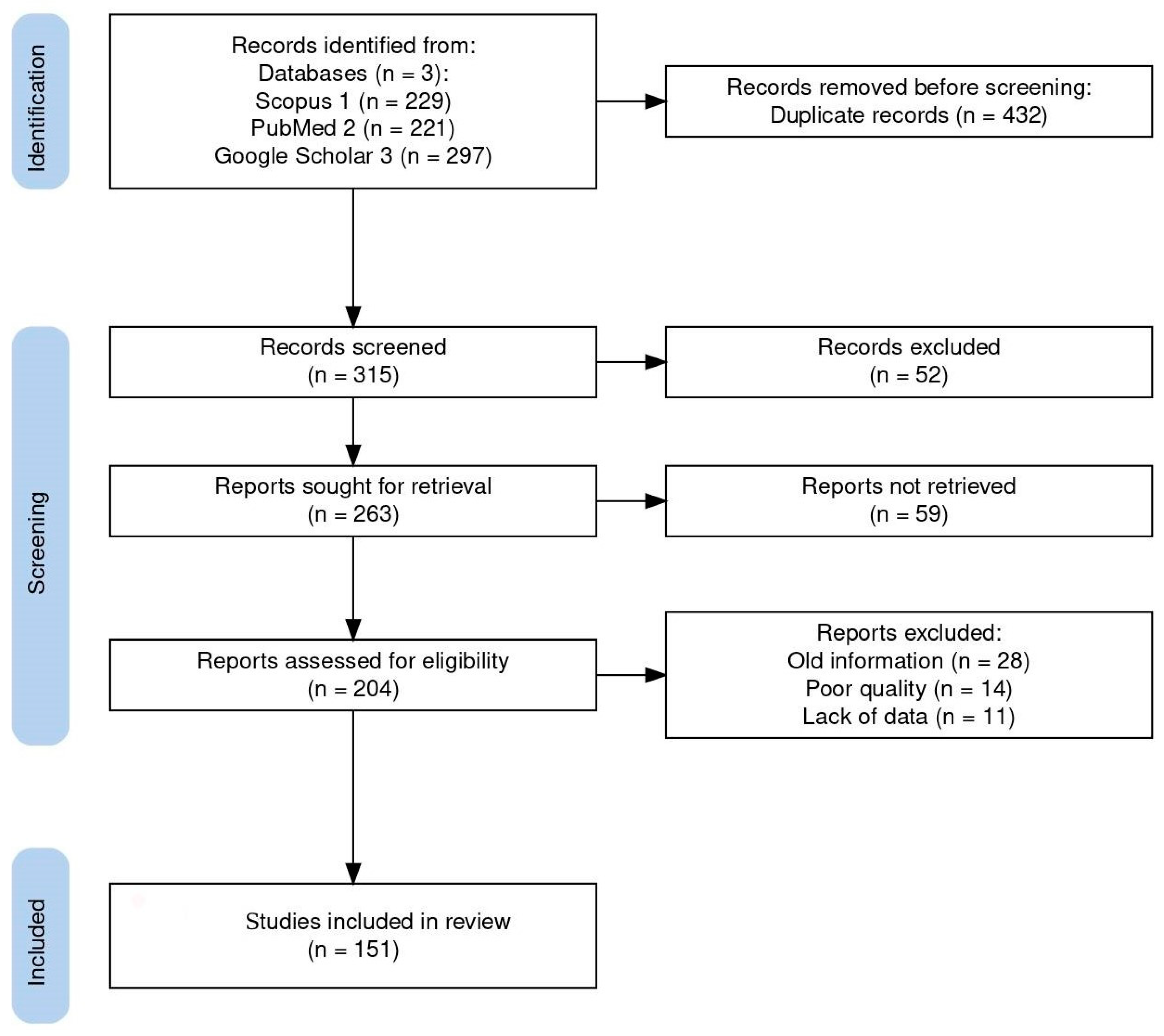

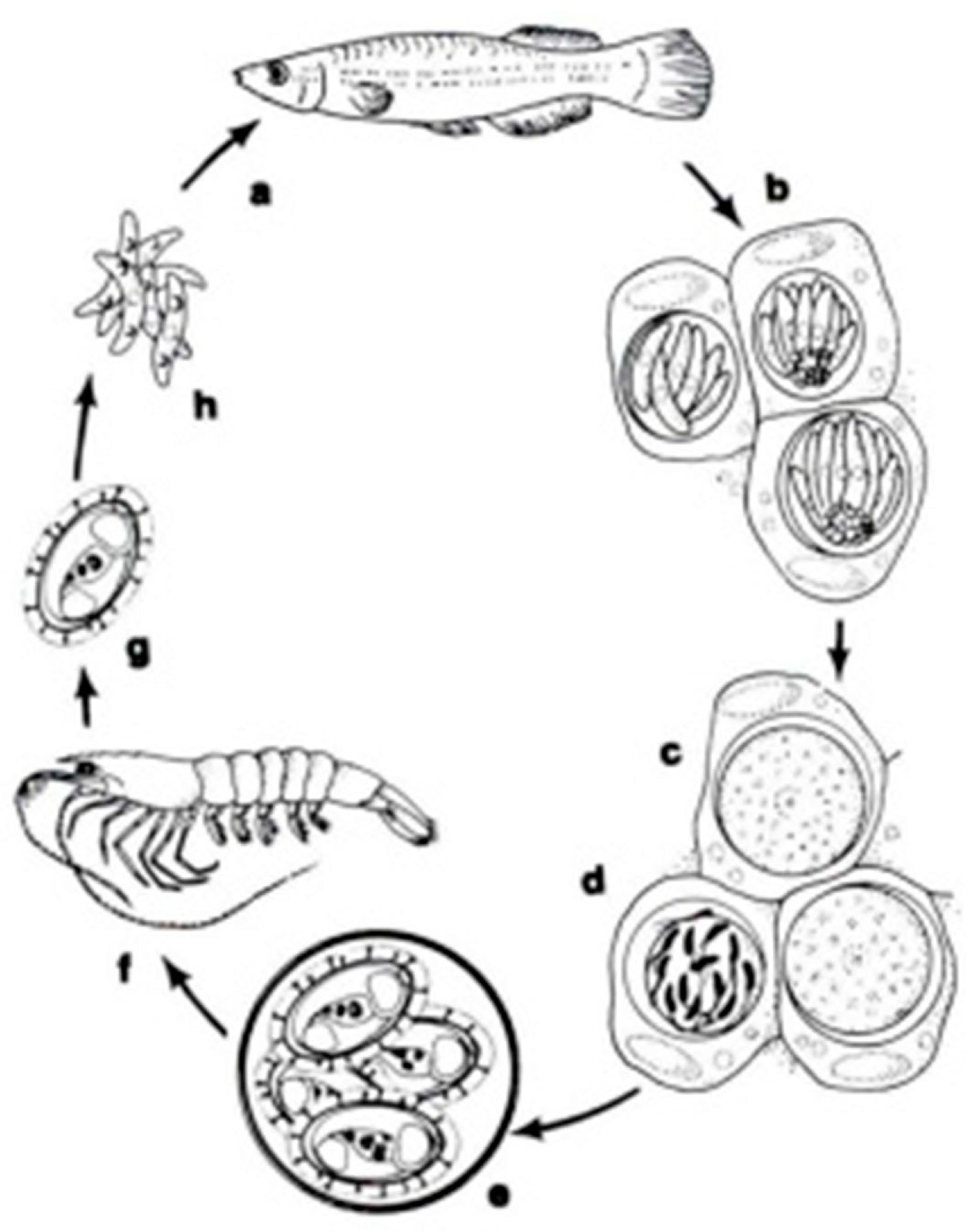
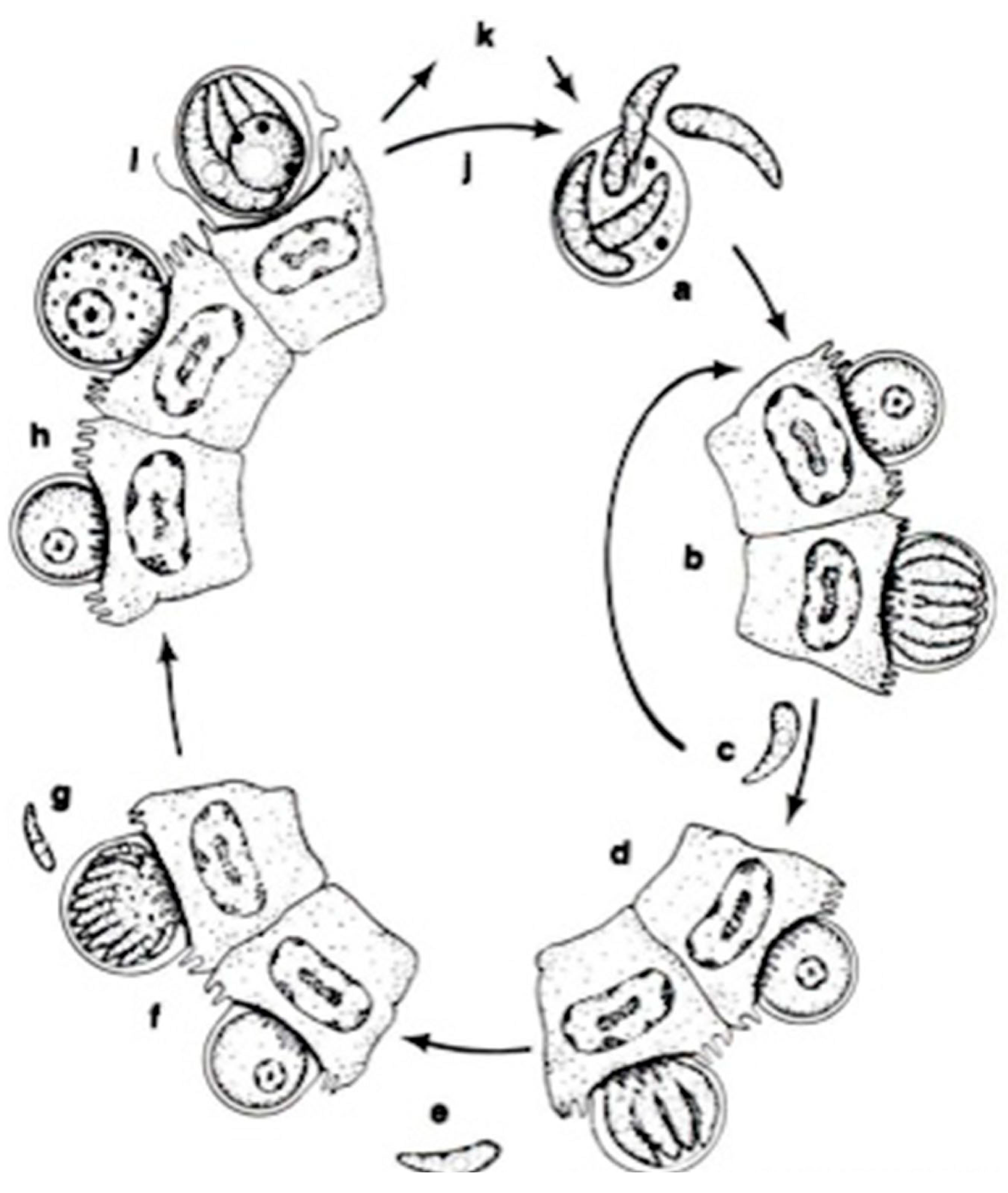
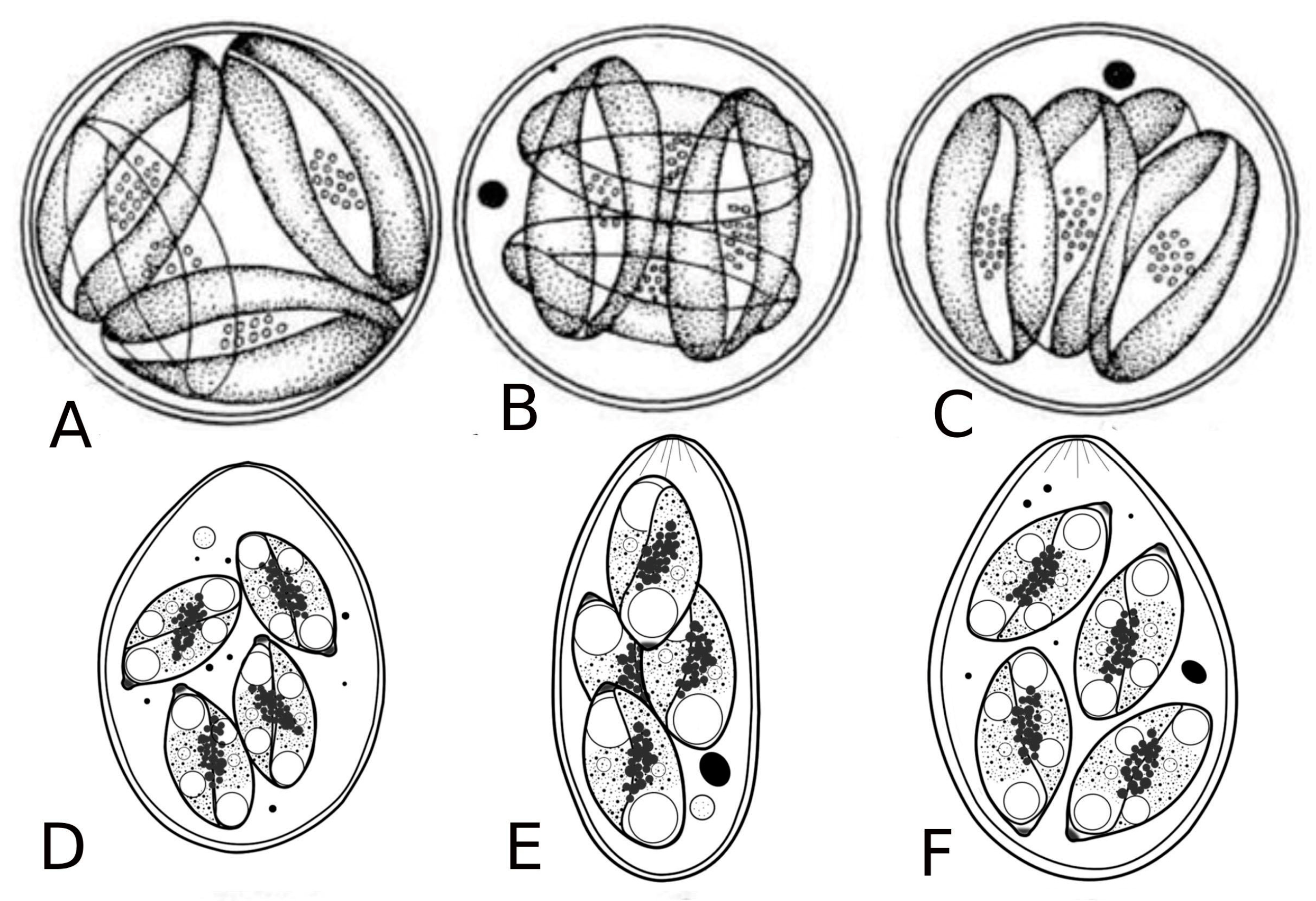

Disclaimer/Publisher’s Note: The statements, opinions and data contained in all publications are solely those of the individual author(s) and contributor(s) and not of MDPI and/or the editor(s). MDPI and/or the editor(s) disclaim responsibility for any injury to people or property resulting from any ideas, methods, instructions or products referred to in the content. |
© 2025 by the authors. Licensee MDPI, Basel, Switzerland. This article is an open access article distributed under the terms and conditions of the Creative Commons Attribution (CC BY) license (https://creativecommons.org/licenses/by/4.0/).
Share and Cite
Mamedova, S.; Karanis, P. Coccidia (Apicomplexa: Eucoccidiorida) of Freshwater Fish. Microorganisms 2025, 13, 347. https://doi.org/10.3390/microorganisms13020347
Mamedova S, Karanis P. Coccidia (Apicomplexa: Eucoccidiorida) of Freshwater Fish. Microorganisms. 2025; 13(2):347. https://doi.org/10.3390/microorganisms13020347
Chicago/Turabian StyleMamedova, Simuzar, and Panagiotis Karanis. 2025. "Coccidia (Apicomplexa: Eucoccidiorida) of Freshwater Fish" Microorganisms 13, no. 2: 347. https://doi.org/10.3390/microorganisms13020347
APA StyleMamedova, S., & Karanis, P. (2025). Coccidia (Apicomplexa: Eucoccidiorida) of Freshwater Fish. Microorganisms, 13(2), 347. https://doi.org/10.3390/microorganisms13020347