


Abstract
Anaerobic fungi (phylum Neocallimastigomycota) play a crucial role in degrading forages and fibrous foods in the gastrointestinal tract of mammalian herbivores, particularly ruminants. Currently, they are classified into twenty-two genera; however, recent research suggests the occurrence of several novel taxa that require further characterization. Anaerobic rumen fungi play a pivotal role in lignocellulose degradation due to their unique enzymatic capabilities. This review explores the enzymatic systems of rumen anaerobic fungi, highlighting their ability to produce a diverse array of carbohydrate-active enzymes (CAZymes), such as cellulases, hemicellulases, and pectinases. These enzymes facilitate the breakdown of complex plant polymers, making anaerobic fungi essential contributors to fiber degradation in the rumen ecosystem and valuable resources for biotechnological applications. This review summarizes the structural and functional diversity of fungal CAZymes, and the mechanical disruption of plant cell walls by fungal rhizoidal networks is discussed, showcasing the ability of fungi to enhance substrate accessibility and facilitate microbial colonization. Recent studies using genomic, transcriptomic, and biochemical approaches have uncovered several novel CAZymes in anaerobic fungi, including multifunctional xylanases, β-glucosidases, and esterases. These findings highlight the continued expansion of fungal enzyme repertoires and their potential for biotechnology and feed applications. Continued research in this field will enhance our understanding of microbial ecology and enzyme function, paving the way for applications that address global challenges in energy, food security, and environmental sustainability.
1. Introduction
A major bottleneck in converting biomass into ruminant feed sources and biofuels is the lack of an efficient enzymatic system for deconstructing the plant cell wall matrix and releasing all the fermentable sugars. The plant cell wall matrix is the major structural component of plants and consists of three main polymers (Figure 1): cellulose, hemicellulose, and lignin [1].

Figure 1.
Schematic representations of plant cell walls and their main components: cellulose, hemicellulose, and lignin. Adapted from Wunderlich et al. [2], published under Creative Commons Attribution 4.0 International (CC BY 4.0): https://link.springer.com/article/10.1186/s42523-022-00224-6 (accessed on 3 December 2025). Created in BioRender by Dhakal, R. (2025) [3]: https://BioRender.com/wr521rv.
Cellulose is a linear biopolymer of anhydroglucopyranose molecules that are connected by β-1,4-glycosidic bonds. Adjacent cellulose chains are bound together by hydrogen bonds, hydrophobic interactions, and Van der Waals forces, which cause a parallel alignment of crystalline structures known as microfibrils [4]. The second major component of lignocellulose is hemicellulose, which consists of heterogeneous polymer of pentoses (including xylose and arabinose), hexoses (mainly mannose, glucose, and galactose) and sugar acids [5]. The composition of hemicelluloses in nature varies considerably depending on plant material [6,7]. Lignin is the third primary polymer in the lignocellulosic biomass. Lignin is a complex, cross-linked phenolic polymer synthesized from three primary monolignols (p-coumaryl, coniferyl, and sinapyl alcohol) [1].
Those three major components of the plant cell wall (lignin, cellulose, and hemicellulose) form cross-link structures, which are the primary barriers to carbohydrase enzymes gaining access to specific substrates within the lignocellulosic fiber. Among these components, lignin is the most recalcitrant, posing significant challenges to rumen microorganisms during degradation, as its complex cross-linking with hemicellulose limits substrate accessibility and hinders the overall digestibility of the plant cell wall matrix [8,9,10]. However, lignin digestion is not only impaired by the limited fibrolytic capacity of the microbiome but also by the surface area available for enzyme attachment and by microbial accessibility to the inner parts of fibrous plant tissues [10,11]. Thus, lignin solubilization may represent a crucial step in enhancing the digestibility of fibrous biomass through microbial fermentation processes.
2. Anaerobic Fungi and Their Role in the Degradation of Recalcitrant Plant Cell Walls
Orpin [12,13] was the first to describe the life cycle of anaerobic fungi in 1975, identifying their presence in the gastrointestinal tract of herbivores, particularly in the rumen and caecum. These strictly anaerobic microbes, belonging to the phylum Neocallimastigomycota, play a key role in the degradation of lignocellulosic feedstuffs within the gut of ruminant and non-ruminant herbivores. Anaerobic fungi are currently grouped into twenty-two genera, based on recent taxonomic revisions [14]. They were characterized primarily using molecular biology and classical microscopy techniques [15,16], and have long been studied using traditional approaches. However, the advent of next-generation sequencing has uncovered a far greater biodiversity within these fungi than previously recognized [17], highlighting the limitations of earlier classification methods and opening new avenues for understanding their ecological roles. Each genus is distinguishable by morphological features, such as thallus morphology (monocentric vs. polycentric), rhizoid morphology (filamentous vs. bulbous), and zoospore flagellation (monoflagellate vs. polyflagellate) [18,19] (Table 1).
Anaerobic fungi have a complex lifecycle consisting of a free-living zoospore stage and an attached phase characterized by mycelial growth and sporangia [13,20]. The life cycle of Neocallimastigomycota (Figure 2), a phylum of anaerobic fungi, primarily involves asexual reproduction through the production of motile zoospores [21]. These zoospores are released from sporangia and use chemotaxis to locate and colonize plant material within the digestive tracts of herbivores. Upon reaching the plant cell surface, the zoospores germinate, forming a rhizoidal network that penetrates and physically disrupts the plant tissue. This network eventually develops into a new sporangium, completing the life cycle.

Figure 2.
The life cycle of Neocallimastigomycota in the rumen. Created in BioRender, by Dhakal, R. (2025) [22]: https://BioRender.com/38ghp37.

Table 1.
Known genera of anaerobic fungi, adapted from Ho et al. and McAllister et al. [16,23].
Table 1.
Known genera of anaerobic fungi, adapted from Ho et al. and McAllister et al. [16,23].
| Genus | Flagella per Zoospore | Thallus | Rhizoids |
|---|---|---|---|
| Agriosomyces | Uniflagellate | Monocentric | Filamentous |
| Aklioshbomyces | Uniflagellate | Monocentric | Filamentous |
| Anaeromyces | Uniflagellate | Polycentric | Filamentous |
| Aestipascuomyces | Polyflagellated | Monocentric | Filamentous |
| Astrotestudinimyces | Monoflagellated | Polycentri | Filamentous |
| Buwchfawromyces | Uniflagellate | Monocentric | Filamentous |
| Caecomyces | Uniflagellate | Monocentric | Bulbous |
| Capellomyces | Uniflagellate | Monocentric | Filamentous |
| Cyllamyces | Uniflagellate | Polycentric | Bulbous |
| Feramyces | Polyflagellate | Monocentric | Filamentous |
| Ghazallomyces | Polyflagellate | Monocentric | Filamentous |
| Joblinomyces | Uniflagellate | Monocentric | Filamentous |
| Khoyollomyces | Uniflagellate | Monocentric | Filamentous |
| Liebetanzomyces | Uniflagellate | Monocentric | Filamentous |
| Neocallimastix | Polyflagellate | Monocentric | Filamentous |
| Oontomyces | Uniflagellate | Monocentric | Filamentous |
| Orpinomyces | Polyflagellate | Polycentric | Filamentous |
| Pecoramyces | Uniflagellate | Monocentric | Filamentous |
| Piromyces | Uniflagellate | Monocentric | Filamentous |
| Testudinimyces | Monoflagellated | Polycentric | Filamentous |
| Paucimyces | Monoflagellated | Polycentric | Filamentous |
| Tahromyces | Uniflagellate | Monocentric | Filamentous |
During this attached growth phase, they act in concert with fibrolytic bacteria to break down plant materials and form symbiotic relationships with methanogenic archaea [24], both of which enhance fiber degradation. However, unlike bacteria, fungi can physically penetrate and disrupt the plant cell wall (Figure 2 and Figure 3) using an appressorium-like structure [25,26]. This disruption may increase the surface area for enzyme activity and bacterial attachment [13,25,26], consequently enhancing degradation of plant cell walls [27].
Several experiments have provided insights into the importance of anaerobic fungi in plant cell wall disruption and their contribution to fiber digestion, feed intake, rumen fermentation, and overall rumen metabolism [28]. The removal of these fungi from the rumen results in reduced voluntary feed intake and dry matter degradation, indicating their essential role in feed digestion [29,30,31]. In general, the elimination of anaerobic fungi from the rumen significantly reduces the degradation of dry matter, neutral detergent fiber, acid detergent fiber, and carboxymethylcellulase activity [32,33,34].

Figure 3.
Schematic representations of fiber degradation by anaerobic fungi in ruminants. Created in BioRender by Dhakal, R. (2025) [35]: https://BioRender.com/kb1qr0p.
3. Anaerobic Fungi and Their CAZymes
Microbes play a significant role in regulating the biochemical processes involved in feed digestion within the rumen [1,36] and serve as valuable sources of enzymes with various biotechnological applications [4]. Growing interest in the enzymatic saccharification of the plant cell wall matrix has led to the creation of an extensive database cataloging CAZymes families—structurally related enzymes, as well as carbohydrate-binding modules (CBMs). These databases are continually updated to cover all known CAZymes across various organisms and areas of glycoscience. CAZymes and their associated CBMs are classified based on sequence similarity and encompass biocatalysts that modify and cleave carbohydrates (glycoside hydrolases—GHs, polysaccharide lyases—PLs, and carbohydrate esterases—CEs), as well as synthesize them (glycosyltransferases) [37,38]. As of 2025, the CAZy database reports nearly 200 glycoside hydrolase (GH) families and over 100 carbohydrate-binding module (CBM) families, reflecting the rapidly expanding diversity of carbohydrate-active enzymes (https://www.cazy.org/, accessed on 5 December 2025).
More recent taxonomic updates indicate that Neocallimastigomycota comprise 22 genera (Table 1) and 38 species [14,23]. Fungi can degrade recalcitrant plant cell wall materials because of their ability to secrete a broad range of hydrolytic CAZymes [39,40,41]. Some of these enzymes are free, but most are bound to cellulosome complexes and exhibit unique characteristics compared to those from other microbes, such as fibrolytic bacteria [42,43]. Genome sequencing of anaerobic rumen fungus Orpinomyces strain C1A revealed a broader enzyme repertoire than that of aerobic fungi (Dikarya), consisting of 357 glycosyl hydrolases, 92 carbohydrate esterases, and 24 pectate lyases. Horizontal gene transfer from bacteria may help explain why anaerobic fungi have evolved robust and impressive cellulolytic and hemicellulolytic capability [15]. Among the diverse CAZymes secreted by anaerobic fungi, many are organized into large extracellular multi-enzyme complexes known as cellulosomes. These structures play a pivotal role in mediating plant fiber degradation and represent a unique adaptation among fibrolytic microbes [44].
3.1. Cellulosomes in Anaerobic Fungi
Cellulosomes are multiprotein complexes and can be categorized based on their structural and functional components [45]. These multienzyme complexes are primarily composed of two types of subunits: scaffoldins and catalytic subunits [46]. Each of these subunits contains various covalently linked modules further classified into four categories: assembly modules, catalytic modules, substrate-binding modules and cell-binding modules. Anaerobic fungi of the Neocallimastigomycota phylum possess powerful cellulosomes for plant biomass degradation [45]. These fungal cellulosomes are evolutionarily distinct from bacterial counterparts, featuring unique scaffoldin and dockerin domains [45,47]. Genomic analyses reveal an abundance of carbohydrate-active enzymes and cellulosome-related genes in these fungi, highlighting their exceptional cellulolytic capabilities [48]. The cellulosome structure can be exploited to design chimeric enzymes with enhanced properties, such as thermostability [47]. Cellulosome production and localization patterns vary across the fungal life cycle and environmental conditions, influencing biomass degradation efficiency [49]. Understanding these mechanisms is crucial for developing anaerobic fungi as platforms for converting waste biomass into valuable products, such as biofuels and chemicals [48,49].
Unlike bacterial cellulosomes, fungal cellulosomes contain long tandem arrays of fungal-specific dockerin repeats and unusually large multi-catalytic enzymes, often combining GH, CE, and CBMs within a single polypeptide [45,47]. Fungal scaffoldins and dockerins are sequence-divergent from their bacterial counterparts and do not resemble the canonical cohesin–dockerin architecture of Clostridium spp., indicating that fungal cellulosomes represent an independently evolved strategy for lignocellulose deconstruction [45,46,47,49].
3.2. Cellulases
Cellulases are family members of the broad group of GHs (e.g., GH1, GH3, GH5, GH6, GH7, GH8, GH9, GH45, GH48, GH124), which have gained interest for a number of biotechnological applications. This group of enzymes synergistically hydrolyze the β-1,4-glucosidic bonds in cellulose through three different types of enzymes [13]. Based on the structure and functionality, cellulases have been classified into three groups: (1) Endoglucanases, a group of cellulases that exhibits a deep cleft or groove to accommodate the cellulose chain at any point along its length in order to cleave internal bonds at amorphous sites of new chain ends; (2) Exoglucanases, in contrast, are a group of cellulases that possess the active site in an extended loop that forms a tunnel, through which one of the termini of a cellulose chain can be threaded; and (3) β-glucosidases, which are cellulases that hydrolyze cellobiose to generate two molecules of glucose, and are often associated with the microbial cell surface when cellodextrins are transported into the cell [8]. All three major cellulase types have been reported in the phylum Neocallimastigomycota [39,50,51,52], confirming that anaerobic rumen fungi are reservoirs of highly efficient cellulases [15].
Compared to aerobic fungi, anaerobic fungal cellulases frequently occur as large, multi-domain CAZymes and are often incorporated into cellulosomes, whereas many cellulolytic bacteria rely on smaller, single-function enzymes [45,47,49,53,54].
3.3. Hemicellulases
In contrast to cellulose degradation, the digestion of hemicelluloses poses a different challenge, as hemicelluloses include widely different types of sugars or non-sugar constituents with different types of bonds. Hemicellulases can be divided into two main groups: (a) those that cleave the mainchain backbone (e.g., mannanases and xylanases), and (b) those that degrade sidechain substituents or short end products (e.g., arabinofuranosidase) [15,55]. Consequently, the catalytic modules of hemicellulases can be either glycosyl hydrolases that hydrolyze glycosidic bonds, or carbohydrate esterases, which hydrolyze ester linkages of acetate or ferulic acid side groups [13,15,55]. Due to the different structures of hemicellulose, several enzymes are required for their catabolism. To date, anaerobic fungi have been reported to provide all the enzymes required to degrade the major hemicellulose constituents of the plant cell wall, namely β-glucans, mannans, and xylans [15,56]. In some cases, xylanase activity is higher than cellulase activity [57].
Omics studies show that anaerobic fungi encode an exceptionally broad array of xylan-active GH families—such as GH10, GH11, GH43, GH51, and GH115—many of which occur in multi-catalytic proteins, unlike the simpler xylanase repertoires typically found in rumen bacteria and aerobic fungi [58,59,60,61,62].
3.3.1. Mannanases
Mannan is a hemicellulose component consisting of β-1,4 linkages between mannose monomers that form the hemicellulose cross-linkages [17]. β-Mannanases (GH26) hydrolyze mannan-based hemicelluloses and release short β-1,4-manno-oligomers, which can be further hydrolyzed to mannose by the action of β-mannosidases. Recently, researchers have applied exogenous β-mannanases from Aspergillus niger in the animal feed industry as an additive to improve feed conversion efficiency in dairy cattle [18,63,64]. However, the rumen microbiome can degrade mannan, as demonstrated in the discovery of a multifunctional glycosyl hydrolase encoded in the genome of the bacterium Prevotella bryantti B14 [19].
Mannanase-encoding genes, including GH5 and GH26 families, are widely represented in the genomes and transcriptomes of anaerobic fungi such as Caecomyces, Neocallimastix, and Piromyces, highlighting their direct role in mannan degradation [58,65,66].
3.3.2. Arabinofuranosidases
Arabinose is found in conjunction with xylan as a hemicellulose component of plant cell walls, with arabinose units being attached to xylan via alpha-1,2,1,3,1,5 or linked to C2 or C3 positions on the arabinoxylan chain [13]. In the rumen, arabinose units can be cleaved off the xylose backbone by arabinofuranosidases (e.g., GH3, GH43) expressed by rumen bacteria such as Ruminococcus albus [28,67,68].
Anaerobic fungi also express arabinofuranosidases from GH43 and GH51 families, as demonstrated across multiple genera through genomic and transcriptomic surveys [58,65,66].
3.3.3. Ferulic Acid Esterases
Ferulic acid esterase (e.g., CE1) is a group of enzymes that forms a subclass of carboxylic ester hydrolases. These enzymes hydrolyze the bonds between hydroxycinnamates and sugars to release ferulic acid [12,19,69,70]. In the rumen, these ester bonds are cleaved by ferulic acid esterases encoded in the genome of the rumen fungi Anaeromyces mucronatus [20,71].
Anaerobic fungi possess CE1 feruloyl esterases, including recently described multifunctional enzymes capable of cleaving both ferulate–sugar and xylan linkages, which play a key role in disrupting lignin–carbohydrate complexes [60,72].
3.3.4. p-Coumaric Acid Esterases
p-Coumaric acid esterase or p-coumaroyl esterase (e.g., CE1) is an essential enzyme for efficient degradation of lignocellulose biomass in the rumen [14,18,19]. This enzyme targets the p-Coumaroyl ester bonds that connect lignin to hemicelluloses, releasing p-Coumaric acid. This type of enzyme is so far mainly reported from anaerobic fungi (Neocallimastigomycota); evidence in rumen bacteria is limited/underexplored [24], further strengthening the ecological role and significance of anaerobic fungi for deconstructing lignocellulose biomass in the rumen [18,25,26].
p-Coumaroyl esterases have been described primarily in anaerobic fungi, where they mediate cleavage of ester linkages between lignin and hemicellulose components, facilitating access for cellulases and xylanases [60,72].
3.3.5. Xylanases
The chemical structure of xylan molecule is complex and consists of β-1,4 linked xylopyranosyl residues and contains sidechains with acetyl group and L-arabinofuranosyl residues. Rumen fungi produce xylanases (e.g., GH5, GH8, GH10, GH11, GH26, GH30, GH31, GH39, GH43, GH51, GH74, GH94, and GH115) which are responsible for the hydrolysis of xylan by breaking the glycosidic linkages present in the xylan backbone [73]. Like cellulases, xylan-degrading enzymes include endoxylanases and β-xylosidases, while related carbohydrate esterases such as acetyl xylan esterases (AXEs) act on acetyl side groups of xylan rather than on the xylan backbone itself [74]. Therefore, AXEs complement xylanase activity but are not considered true xylanases. All three enzymes hydrolyze the xylan molecule, rendering D-xylose sugar [75]. The growing interest in xylanases is evidenced by the vast number of research papers published in recent years describing numerous xylanases applications in the pulp and paper industries [74,76], and as exogenous enzyme preparations marketed by the animal feed industry [41].
Recent studies confirm that anaerobic fungi produce a diverse suite of xylanases spanning GH10, GH11, GH43, and GH115 families, including newly characterized enzymes with broad specificity and industrial potential [58,59,61,62].
3.4. Pectinases
Pectin exists in the primary cell wall and represents the plant’s first line of defense against dehydration and penetration by phytopathogens. Pectin’s structure is a backbone of alpha-1,4-linked residues of D-galacturonate that is degraded by rumen pectinolytic enzymes (e.g., PL11, GH28), including pectin lyases, polygalacturonases, and pectin methylesterases [70]. One of the major pectinolytic bacterial species that reside in the rumen is Lachnospira multiparus, which produces pectin lyases and pectin methylesterases [77,78]. In addition to that bacterial species, rumen fungi also exhibit pectinolytic enzymes [12]. Early studies demonstrated the production of polygalacturonases and pectin methylesterases by anaerobic rumen fungi [79], and recent genomic analyses continue to identify CAZyme families (e.g., GH28, PL11) associated with pectin degradation in Neocallimastigomycota [58,66].
3.5. Polyphenol and Lignin-Degrading Enzymes
Feed consumed by ruminants contains not only the nutrients required by the host for maintenance and production but also holds naturally occurring plant secondary compounds such as tannins, saponins, phenolic acids, and silica that usually cause adverse effects on the activity of fibrolytic enzymes [80,81]. However, some gastrointestinal microbes of ruminants are able to break down tannin-protein complexes through an enzyme known as tannin acyl hydrolase (tannase), which catalyzes the hydrolysis of ester bonds present in gallotannins, complex tannins, and gallic acid esters [48,82,83,84]. While anaerobic fungi of the Neocallimastigomycota phylum are pivotal in the breakdown of fibrous plant components, their direct involvement in polyphenol degradation is limited due to the absence of specific lignin-degrading enzymes. Genomic analyses have revealed that these fungi lack genes encoding for lignin-degrading auxiliary activity enzymes, including laccases and peroxidases. This absence suggests a reduced intrinsic ability to decompose lignin and other polyphenolic substances [48]. In contrast to aerobic fungi, anaerobic fungi lack the enzymatic machinery to catabolize lignin. The enzymatic reaction to cleave the aromatic ring requires oxygen and, therefore, cannot take place in an anaerobic environment. However, it has been shown that Neocallimastix sp. could mediate the degradation of up to 34% of plant biomass-associated lignin by a physical alteration or chemical modification of the lignin structure instead of enzymatic catabolism [50].
Recent research has further advanced our understanding of lignin modification by anaerobic fungi. Lankiewicz et al. [72] provided evidence that certain Neocallimastigomycota harbor auxiliary enzyme families with potential oxidative or reductive activity toward lignin-derived aromatics, challenging the traditional view that lignin degradation is limited to aerobic fungi. These findings suggest that anaerobic fungal metabolism may contribute to lignin transformation through non-oxidative or redox-assisted mechanisms under anaerobic conditions, broadening the scope of their ecological function and biotechnological potential.
3.6. Recent Advances in Lignocellulose-Degrading Enzyme Discovery from Anaerobic Fungi
In recent years, significant progress has been made in researching the diversity, structure, and function of lignocellulose-degrading enzymes from anaerobic fungi. A large-scale screening campaign of putative carbohydrate-active enzymes identified a novel xylanase with broad substrate specificity and high catalytic efficiency from anaerobic gut fungi [59]. Similarly, genomic and transcriptomic characterization of Neocallimastix cameroonii var. constans revealed an expanded repertoire of CAZymes, providing new insights into the genomic basis of lignocellulose degradation in anaerobic fungi [58]. Structural and biochemical analyses have also advanced, with the discovery of multifunctional GH5 endoglucanases from Piromyces finnis [54] and detailed crystal structures of CelD (GH family 5 subfamily 4) from the same species, elucidating catalytic mechanisms and domain organization [53].
New β-glucosidases have been described, including a bifunctional enzyme from Neocallimastix patriciarum exhibiting both β-glucosidase and β-glucanase activity. In addition, Pecoramyces ruminantium F1 was shown to express a dual-functional feruloyl esterase–xylanase capable of cleaving both ester and glycosidic linkages, revealing enzymatic multifunctionality that enhances hemicellulose breakdown [60]. Complementary to these discoveries, studies of anaerobic gut fungi isolated from wild ruminants, such as Neocallimastix from Anatolian wild goat, continue to expand our taxonomic and enzymatic knowledge base, including novel xylanases, cellulases, and lichenases with potential for biotechnology applications [61].These findings, together with previous omics and structural studies [62,65,66], highlight continuing progress in fungal enzyme discovery, reinforcing the ecological and biotechnological significance of anaerobic fungi as a source of lignocellulose-degrading enzymes.
4. Approaches to Identifying Lignocellulolytic Enzymes in Anaerobic Rumen Fungi
Understanding the unique role of anaerobic fungi in lignocellulose degradation requires advanced tools and techniques that integrate microbial community analysis, enzymatic profiling, and bioinformatics approaches (Figure 4). These methods allow for identifying fungal strains with superior fiber-degrading capabilities and their subsequent application in biotechnological processes.
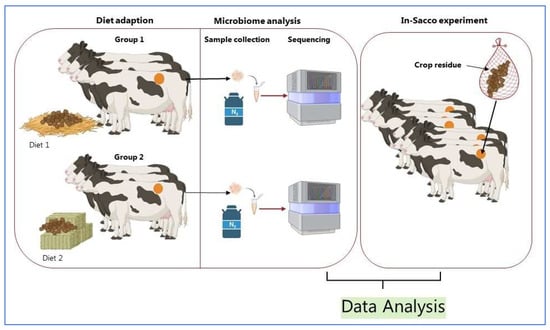
Figure 4.
Schematic representation of assessing anaerobic fungi in ruminants. Created in BioRender by Dhakal, R. (2025) [85]: https://BioRender.com/t5vtb87.
4.1. Microbial Community and CAZyme Analysis (General Approach)
Rumen samples need to be collected from animals adapted to high-fiber diets to investigate anaerobic fungi and ensure microbial stability (Figure 4). Cannulated cattle are commonly used, with samples obtained after a 14 to 28-day adaptation period [86]. Though there is no universal time for sampling, and rumen microbes are similar day to day [71], daily sampling over five days provides a robust dataset to monitor microbial changes [87,88]. Proper sample handling, including freezing at −80 °C and grinding under liquid nitrogen, ensures the integrity of DNA and RNA for metagenomic and metatranscriptomic analyses [89]. Molecular techniques, such as sequencing the Internal Transcribed Spacer 1 (ITS1) region, are employed to identify fungal taxa and assess diversity [90].
4.2. Evaluating Fiber Degradation Through In-Sacco Experiments
The in-sacco technique is a standard method to evaluate fiber degradation by anaerobic fungi. Fiber degradation in in sacco experiments depends on feed material, particle size, bag type, and ruminal conditions [91,92]. Polyester bags containing crop residues are incubated in the rumen for 1 to 144 h to assess the rate and extent of dry matter disappearance and fiber digestion. Rapid bacterial colonization is noted within 10 min, yet fiber disappearance follows a steady, linear path [93,94]. This method provides key kinetic parameters, including lag time and neutral detergent fiber digestibility. Such experiments are critical for correlating microbial activity with lignocellulosic degradation.
4.3. Isolation of Superior Anaerobic Fungal Strains
Anaerobic fungi isolated from animals with superior fiber-degrading capabilities are cultured on straw biomass using a basal growth medium to induce fibrolytic enzyme expression [95,96]. Biomass quantification and gas production measurements monitor strain growth over several days. This process identifies fungal strains with high enzymatic activity, enabling their use in enzyme discovery and biotechnological applications.
4.4. Enzyme Mining Tools
Advanced bioinformatics and omics-driven strategies are now central to discovering lignocellulose-degrading enzymes in anaerobic fungi. High-quality metagenomic and transcriptomic data enable genome annotation and comparative analyses that identify candidate CAZymes involved in plant-fiber deconstruction. Tools such as CAZy and dbCAN, combined with machine-learning prediction and docking simulations, have accelerated functional annotation and domain prediction in newly sequenced isolates [97,98,99].
Recent enzyme discovery pipelines integrate sequence-based screening with expression and biochemical validation. For instance, in silico mining of metatranscriptomes has revealed numerous previously uncharacterized dockerin-containing CAZymes, while recombinant expression systems now permit heterologous testing of fungal genes under anaerobic-like conditions [72,98]. Structure-guided engineering approaches are increasingly used to model thermostability and substrate specificity of CAZymes identified through these pipelines, bridging the gap between computational prediction and practical enzyme design.
These advances highlight how integrated omics, bioinformatics, and synthetic-biology tools are redefining enzyme mining in anaerobic fungi. The combination of functional genomics, structural modeling, and high-throughput screening is expected to accelerate the identification of novel lignocellulolytic enzymes with industrial potential.
5. Conclusions and Future Perspectives
Research on anaerobic fungi Neocallimastigomycota has highlighted their significant potential in the degradation of lignocellulosic biomass. These microbes possess unique enzymatic capabilities that enable them to break down complex plant polymers, which are otherwise resilient to degradation by most other microorganisms. The ability of anaerobic fungi to physically disrupt plant cell walls through the formation of rhizoidal networks provides a mechanical advantage in accessing and degrading plant biomass. The biotechnological potential of anaerobic fungi is vast. Their enzymes can be harnessed for various industrial applications, including the production of biofuels, animal feed, and other value-added products. Future research on anaerobic rumen fungi and their enzymes holds bigger potential for advancing our understanding of fiber degradation and its applications. Several key areas justify further investigation:
Enzyme Engineering: Optimizing fungal enzymes through protein engineering and directed evolution can enhance their stability, activity, and substrate specificity. Engineering efforts should focus on improving the performance of these enzymes under industrial conditions, such as high temperatures and varying pH levels.
Synthetic Biology: The development of synthetic biology approaches to construct microbial consortia that mimic the natural rumen environment can enhance fiber degradation. Co-culturing anaerobic fungi with other fibrolytic microorganisms, such as bacteria and archaea, can create synergistic interactions that improve overall biomass conversion.
Bioprocess Optimization: Integrating fungal enzymes into bioprocesses for biofuel production, performance enhancement on animals fed forages and fibrous foods, and other applications requires optimizing fermentation conditions, enzyme loading, and substrate pretreatment. Pilot-scale and industrial-scale studies will be key in translating laboratory findings into practical applications.
Future research should prioritize resolving the complete CAZyme inventories of anaerobic fungal genera, clarifying the organization and regulation of fungal cellulosomes across life stages, and determining how multi-catalytic enzymes evolved uniquely in these obligate anaerobes. Key gaps include limited structural data for fungal CE and PL families, incomplete genomic coverage of recently described genera, and poor understanding of how anaerobic fungi interact syntrophically with rumen bacteria and archaea to coordinate lignocellulose degradation.
Author Contributions
Conceptualization, A.L.A.N. and L.G.; literature search and data curation, R.D. and A.L.A.N.; writing—original draft preparation, L.G. and A.L.A.N.; writing—review and editing, R.D., W.G., R.A.M.V. and A.L.A.N.; visualization, R.D.; supervision, A.L.A.N., L.G. and R.A.M.V. All authors have read and agreed to the published version of the manuscript.
Funding
This research received no external funding.
Institutional Review Board Statement
Not applicable.
Informed Consent Statement
Not applicable.
Data Availability Statement
No new data were created or analyzed in this study. Data sharing is not applicable to this article.
Acknowledgments
The figures were created or adapted using BioRender.com (https://app.biorender.com/) in combination with Microsoft PowerPoint.
Conflicts of Interest
The authors declare no conflicts of interest.
References
- Bader, J.; Mast-Gerlach, E.; Popović, M.K.; Bajpai, R.; Stahl, U. Relevance of microbial coculture fermentations in biotechnology. J. Appl. Microbiol. 2010, 109, 371–387. [Google Scholar] [CrossRef]
- Wunderlich, G.; Bull, M.; Ross, T.; Rose, M.; Chapman, B. Understanding the microbial fibre degrading communities & processes in the equine gut. Anim. Microbiome 2023, 5, 3. [Google Scholar] [CrossRef]
- Dhakal, R. Schematic Representations of Plant Cell Walls and Their Main Components: Cellulose, hemicellulose, and Lignin. Creat BioRender. 2025. Available online: https://BioRender.com/wr521rv (accessed on 2 December 2025).
- Percival Zhang, Y.H.; Himmel, M.E.; Mielenz, J.R. Outlook for cellulase improvement: Screening and selection strategies. Biotechnol. Adv. 2006, 24, 452–481. [Google Scholar] [CrossRef]
- Bhatia, L.; Johri, S.; Ahmad, R. An economic and ecological perspective of ethanol production from renewable agro waste: A review. AMB Express 2012, 2, 65. [Google Scholar] [CrossRef]
- Saha, B.C. Alpha-L-arabinofuranosidases: Biochemistry, molecular biology and application in biotechnology. Biotechnol. Adv. 2000, 18, 403–423. [Google Scholar] [CrossRef]
- Saha, B.C. Hemicellulose bioconversion. J. Ind. Microbiol. Biotechnol. 2003, 30, 279–291. [Google Scholar] [CrossRef] [PubMed]
- Himmel, M.E.; Ding, S.-Y.; Johnson, D.K.; Adney, W.S.; Nimlos, M.R.; Brady, J.W.; Foust, T.D. Biomass Recalcitrance: Engineering Plants and Enzymes for Biofuels Production. Science 2007, 315, 804–807. [Google Scholar] [CrossRef] [PubMed]
- Sánchez, C. Lignocellulosic residues: Biodegradation and bioconversion by fungi. Biotechnol. Adv. 2009, 27, 185–194. [Google Scholar] [CrossRef] [PubMed]
- Tedeschi, L.O.; Adams, J.M.; Vieira, R.A.M. Forages and Pastures Symposium: Revisiting mechanisms, methods, and models for altering forage cell wall utilization for ruminants. J. Anim. Sci. 2023, 101, skad009. [Google Scholar] [CrossRef]
- Weimer, P.J.; Lopez-Guisa, J.M.; French, A.D. Effect of cellulose fine structure on kinetics of its digestion by mixed ruminal microorganisms in vitro. Appl. Environ. Microbiol. 1990, 56, 2421–2429. [Google Scholar] [CrossRef]
- Orpin, C.G. Studies on the Rumen Flagellate Neocallimastix frontalis. J. Gen. Microbiol. 1975, 91, 249–262. [Google Scholar] [CrossRef] [PubMed]
- Dollhofer, V.; Podmirseg, S.M.; Callaghan, T.M.; Griffith, G.W.; Fliegerová, K. Anaerobic fungi and their potential for biogas production. In Biogas Science and Technology; Springer: Berlin/Heidelberg, Germany, 2015; pp. 41–61. [Google Scholar]
- Hanafy, R.A.; Dagar, S.S.; Griffith, G.W.; Pratt, C.J.; Youssef, N.H.; Elshahed, M.S. Taxonomy of the anaerobic gut fungi (Neocallimastigomycota): A review of classification criteria and description of current taxa. Int. J. Syst. Evol. Microbiol. 2022, 72, 1–38. [Google Scholar] [CrossRef]
- Koetschan, C.; Kittelmann, S.; Lu, J.; Al-Halbouni, D.; Jarvis, G.N.; Müller, T.; Wolf, M.; Janssen, P.H. Internal transcribed spacer 1 secondary structure analysis reveals a common core throughout the anaerobic fungi (Neocallimastigomycota). PLoS ONE 2014, 9, e91928. [Google Scholar] [CrossRef]
- Ho, Y.W.; Barr, D.J.S. Classification of anaerobic gut fungi from herbivores with emphasis on rumen fungi from Malaysia. Mycologia 1995, 87, 655–677. [Google Scholar] [CrossRef]
- Ozkose, E.; Thomas, B.J.; Davies, D.R.; Griffith, G.W.; Theodorou, M.K. Cyllamyces aberensis gen.nov. sp.nov., a new anaerobic gut fungus with branched sporangiophores isolated from cattle. Can. J. Bot. 2001, 79, 666–673. [Google Scholar]
- Gruninger, R.J.; Puniya, A.K.; Callaghan, T.M.; Edwards, J.E.; Youssef, N.; Dagar, S.S.; Fliegerova, K.; Griffith, G.W.; Forster, R.; Tsang, A.; et al. Anaerobic fungi (phylum Neocallimastigomycota): Advances in understanding their taxonomy, life cycle, ecology, role and biotechnological potential. FEMS Microbiol. Ecol. 2014, 90, 1–17. [Google Scholar] [CrossRef]
- Lowe, S.E.; Theodorou, M.K.; Trinci, A.P. Cellulases and xylanase of an anaerobic rumen fungus grown on wheat straw, wheat straw holocellulose, cellulose, and xylan. Appl. Environ. Microbiol. 1987, 53, 1216–1223. [Google Scholar] [CrossRef]
- Leis, S.; Dresch, P.; Peintner, U.; Fliegerová, K.; Sandbichler, A.M.; Insam, H.; Podmirseg, S.M. Finding a robust strain for biomethanation: Anaerobic fungi (Neocallimastigomycota) from the Alpine ibex (Capra ibex) and their associated methanogens. Anaerobe 2014, 29, 34–43. [Google Scholar] [CrossRef] [PubMed]
- Mountfort, D.O. The rumen anaerobic fungi. FEMS Microbiol. Rev. 1987, 3, 401–408. [Google Scholar] [CrossRef]
- Dhakal, R. The Life Cycle of Neocallimastigomycota in the Rumen. Creat BioRender. 2025. Available online: https://BioRender.com/38ghp37 (accessed on 2 December 2025).
- McAllister, T.A.; Thomas, K.D.; Gruninger, R.J.; Elshahed, M.; Li, Y.; Cheng, Y. International Symposium on Ruminant Physiology: Rumen fungi, archaea, and their interactions; Presented as part of the Gastrointestinal Microbial Ecology, the Microbiome, and Gut Physiology Spanning from Microbial-Host Interactions to an Update on Methan. J. Dairy. Sci. 2025, 108, 7545–7566. [Google Scholar] [CrossRef] [PubMed]
- Ho, Y.W.; Abdullah, N.; Jalaludin, S. Colonization of guinea grass by anaerobic rumen fungi in swamp buffalo and cattle. Anim. Feed Sci. Technol. 1988, 22, 161–171. [Google Scholar] [CrossRef]
- Ho, Y.W.; Abdullah, N.; Jalaludin, S. Penetrating Structures of Anaerobic Rumen Fungi in Cattle and Swamp Buffalo. Microbiology 1988, 134, 177–181. [Google Scholar] [CrossRef]
- Lee, S.S.; Ha, J.K.; Cheng, K.J. Relative Contributions of Bacteria, Protozoa, and Fungi to In Vitro Degradation of Orchard Grass Cell Walls and Their Interactions. Appl. Environ. Microbiol. 2000, 66, 3807–3813. [Google Scholar] [CrossRef] [PubMed]
- Akin, D.E.; Borneman, W.S.; Windham, W.R. Rumen fungi: Morphological types from Georgia cattle and the attack on forage cell walls. Biosystems 1988, 21, 385–391. [Google Scholar] [CrossRef] [PubMed]
- Morrison, M.; Murray, R.M.; Boniface, A.N. Nutrient metabolism and rumen micro-organisms in sheep fed a poor-quality tropical grass hay supplemented with sulphate. J. Agric. Sci. 1990, 115, 269–275. [Google Scholar] [CrossRef]
- Gordon, G.L.R.; Phillips, M.W. The role of anaerobic gut fungi in ruminants. Nutr. Res. Rev. 1998, 11, 133–168. [Google Scholar] [CrossRef]
- Ford, C.W.; Elliott, R.; Maynard, P.J. The effect of chlorite delignification on digestibility of some grass forages and on intake and rumen microbial activity in sheep fed barley straw. J. Agric. Sci. 1987, 108, 129–136. [Google Scholar] [CrossRef]
- Gordon, G.L.R.; Phillips, M.W. Removal of anaerobic fungi from the rumen of sheep by chemical treatment and the effect on feed consumption and in vivo fibre digestion. Lett. Appl. Microbiol. 1993, 17, 220–223. [Google Scholar] [CrossRef]
- Gao, A.W.; Wang, H.R.; Yang, J.L.; Shi, C.X. The Effects of Elimination of Fungi on Microbial Population and Fiber Degradation in Sheep Rumen. Appl. Mech. Mater. 2013, 295–298, 224–231. [Google Scholar] [CrossRef]
- Borneman, W.S.; Akin, D.E.; Ljungdahl, L.G. Fermentation products and plant cell wall-degrading enzymes produced by monocentric and polycentric anaerobic ruminal fungi. Appl. Environ. Microbiol. 1989, 55, 1066–1073. [Google Scholar] [CrossRef]
- Wubah, D.A.; Akin, D.E.; Borneman, W.S. Biology, fiber-degradation, and enzymology of anaerobic zoosporic fungi. Crit. Rev. Microbiol. 1993, 19, 99–115. [Google Scholar] [CrossRef]
- Dhakal, R. Schematic representations of fiber degradation by anaerobic fungi in ruminants. Creat BioRender. 2025. Available online: https://BioRender.com/kb1qr0p (accessed on 2 December 2025).
- Trinci, A.P.J.; Davies, D.R.; Gull, K.; Lawrence, M.I.; Nielsen, B.B.; Rickers, A.; Theodorou, M.K. Anaerobic fungi in herbivorous animals. Mycol. Res. 1994, 98, 129–152. [Google Scholar] [CrossRef]
- Fanutti, C.; Ponyi, T.; Black, G.W.; Hazlewood, G.P.; Gilbert, H.J. The conserved noncatalytic 40-residue sequence in cellulases and hemicellulases from anaerobic fungi functions as a protein docking domain. J. Biol. Chem. 1995, 270, 29314–29322. [Google Scholar] [CrossRef]
- Steenbakkers, P.J.; Li, X.-L.; Ximenes, E.A.; Arts, J.G.; Chen, H.; Ljungdahl, L.G.; Op den Camp, H.J.M. Noncatalytic docking domains of cellulosomes of anaerobic fungi. J. Bacteriol. 2001, 183, 5325–5333. [Google Scholar] [CrossRef]
- Youssef, N.H.; Couger, M.B.; Struchtemeyer, C.G.; Liggenstoffer, A.S.; Prade, R.A.; Najar, F.Z.; Atiyeh, H.K.; Wilkins, M.R.; Elshahed, M.S. The genome of the anaerobic fungus Orpinomyces sp. strain C1A reveals the unique evolutionary history of a remarkable plant biomass degrader. Appl. Environ. Microbiol. 2013, 79, 4620–4634. [Google Scholar] [CrossRef] [PubMed]
- Harhangi, H.R.; Steenbakkers, P.J.M.; Akhmanova, A.; Jetten, M.S.M.; van der Drift, C.; Op den Camp, H.J.M. A highly expressed family 1 beta-glucosidase with transglycosylation capacity from the anaerobic fungus Piromyces sp. E2. EBiochim. Biophys.Acta 2002, 1574, 293–303. [Google Scholar] [CrossRef] [PubMed]
- Ljungdahl, L.G. The cellulase/hemicellulase system of the anaerobic fungus Orpinomyces PC-2 and aspects of its applied use. Ann. N. Y. Acad. Sci. 2008, 1125, 308–321. [Google Scholar] [CrossRef]
- Borneman, W.S.; Hartley, R.D.; Morrison, W.H.; Akin, D.E.; Ljungdahl, L.G. Feruloyl and p-coumaroyl esterase from anaerobic fungi in relation to plant cell wall degradation. Appl. Microbiol. Biotechnol. 1990, 33, 345–351. [Google Scholar] [CrossRef]
- Aylward, J.H.; Gobius, K.S.; Xue, G.-P.; Simpson, G.D.; Dalrymple, B.P. The Neocallimastix patriciarum cellulase, CelD, contains three almost identical catalytic domains with high specific activities on Avicel. Enzym. Microb. Technol. 1999, 24, 609–614. [Google Scholar] [CrossRef]
- Bayer, E.A. Cellulosomes and designer cellulosomes: Why toy with Nature? Environ. Microbiol. Rep. 2017, 9, 14–15. [Google Scholar] [CrossRef]
- Haitjema, C.H.; Gilmore, S.P.; Henske, J.K.; Solomon, K.V.; de Groot, R.; Kuo, A.; Mondo, S.J.; Salamov, A.A.; LaButti, K.; Zhao, Z.; et al. A parts list for fungal cellulosomes revealed by comparative genomics. Nat. Microbiol. 2017, 2, 17087. [Google Scholar] [CrossRef] [PubMed]
- Alves, V.D.; Fontes, C.M.G.A.; Bule, P. Cellulosomes: Highly Efficient Cellulolytic Complexes. Subcell. Biochem. 2021, 96, 323–354. [Google Scholar] [PubMed]
- Gilmore, S.P.; Lillington, S.P.; Haitjema, C.H.; de Groot, R.; O’Malley, M.A. Designing chimeric enzymes inspired by fungal cellulosomes. Synth. Syst. Biotechnol. 2020, 5, 23–32. [Google Scholar] [CrossRef] [PubMed]
- Kameshwar, A.K.S.; Qin, W. Genome Wide Analysis Reveals the Extrinsic Cellulolytic and Biohydrogen Generating Abilities of Neocallimastigomycota Fungi. J. Genom. 2018, 6, 74–87. [Google Scholar] [CrossRef]
- Lillington, S.P.; Chrisler, W.; Haitjema, C.H.; Gilmore, S.P.; Smallwood, C.R.; Shutthanandan, V.; Evans, J.E.; O’mAlley, M.A. Cellulosome Localization Patterns Vary across Life Stages of Anaerobic Fungi. mBio 2021, 12, e0083221. [Google Scholar] [CrossRef]
- McSweeney, C.S.; Dulieu, A.; Katayama, Y.; Lowry, J.B. Solubilization of lignin by the ruminal anaerobic fungus Neocallimastix patriciarum. Appl. Environ. Microbiol. 1994, 60, 2985–2989. [Google Scholar] [CrossRef]
- Hess, M.; Sczyrba, A.; Egan, R.; Kim, T.-W.; Chokhawala, H.; Schroth, G.; Luo, S.; Clark, D.S.; Chen, F.; Zhang, T.; et al. Metagenomic discovery of biomass-degrading genes and genomes from cow rumen. Science 2011, 331, 463–467. [Google Scholar] [CrossRef]
- Qi, M.; Wang, P.; O’Toole, N.; Barboza, P.S.; Ungerfeld, E.; Leigh, M.B.; Selinger, L.B.; Butler, G.; Tsang, A.; McAllister, T.A.; et al. Snapshot of the eukaryotic gene expression in muskoxen rumen—A metatranscriptomic approach. PLoS ONE 2011, 6, e20521. [Google Scholar] [CrossRef]
- Dementiev, A.; Lillington, S.P.; Jin, S.; Kim, Y.; Jedrzejczak, R.; Michalska, K.; Joachimiak, A.; O’mAlley, M.A. Structure and enzymatic characterization of CelD endoglucanase from the anaerobic fungus Piromyces finnis. Appl. Microbiol. Biotechnol. 2023, 107, 5999–6011. [Google Scholar] [CrossRef]
- Andrade, V.B.; Tomazetto, G.; Almeida, D.V.; Tramontina, R.; Squina, F.M.; Garcia, W. Enzymatic and biophysical characterization of a novel modular cellulosomal GH5 endoglucanase multifunctional from the anaerobic gut fungus Piromyces finnis. Biochim. Biophys. Acta (BBA) Proteins Proteom. 2024, 1872, 140963. [Google Scholar] [CrossRef]
- Denman, S.E.; McSweeney, C.S. Development of a real-time PCR assay for monitoring anaerobic fungal and cellulolytic bacterial populations within the rumen. FEMS Microbiol. Ecol. 2006, 58, 572–582. [Google Scholar] [CrossRef] [PubMed]
- Kumar, S.; Dagar, S.S.; Sirohi, S.K.; Upadhyay, R.C.; Puniya, A.K. Microbial profiles, in vitro gas production and dry matter digestibility based on various ratios of roughage to concentrate. Ann. Microbiol. 2013, 63, 541–545. [Google Scholar] [CrossRef]
- Kittelmann, S.; Naylor, G.E.; Koolaard, J.P.; Janssen, P.H. A proposed taxonomy of anaerobic fungi (Class Neocallimastigomycetes) suitable for large-scale sequence-based community structure analysis. PLoS ONE 2012, 7, e36866. [Google Scholar] [CrossRef]
- Blair, E.M.; A Navaratna, T.; Ahern, C.B.; Ragunathan, R.; Brown, J.L.; Mondo, S.J.; Lipzen, A.; A Hanafy, R.; LaButti, K.; Talag, J.; et al. Genomic and transcriptomic characterization of carbohydrate-active enzymes in the anaerobic fungus Neocallimastix cameroonii var. constans. G3 Genes Genomes Genet. 2025, 15, jkaf137. [Google Scholar] [CrossRef]
- Jin, S.; Farrand, I.R.; Chen, Y.; Gin, J.W.; Zhang, B.; Kirschke, E.; Petzold, C.J.; Adams, P.D.; O’Malley, M.A. A large-scale screening campaign of putative carbohydrate-active enzymes reveals a novel xylanase from anaerobic gut fungi. mBio 2025, 16, e0100725. [Google Scholar] [CrossRef]
- Shi, Q.; Ma, J.; Abdel-Hamid, A.M.; Li, Y.; Zhong, P.; Wang, D.; Sun, Z.; Tu, T.; Zhu, W.; Cheng, Y.; et al. Mining of latent feruloyl esterase resources in rumen and insight into dual-functional feruloyl esterase-xylanase from Pecoramyces ruminantium F1. FBioresour. Technol. 2025, 418, 131854. [Google Scholar] [CrossRef]
- Kar, B.; Torcan, B. Isolation, morphological identification, and xylanase characteristics of anaerobic gut fungi Neocallimastix from Anatolian wild goat. J. Basic Microbiol. 2022, 63, 377–388. [Google Scholar] [CrossRef]
- Stabel, M.; Hagemeister, J.; Heck, Z.; Aliyu, H.; Ochsenreither, K. Characterization and Phylogenetic Analysis of a Novel GH43 β-Xylosidase from Neocallimastix californiae. Front. Fungal Biol. 2021, 2, 692804. [Google Scholar] [CrossRef] [PubMed]
- Fliegerova, K.; Kaerger, K.; Kirk, P.; Voigt, K. Rumen Fungi. In Rumen Microbiology: From Evolution to Revolution; Springer: New Delhi, India, 2015; pp. 97–112. [Google Scholar]
- Tewoldebrhan, T.A.; Appuhamy, J.; Lee, J.-J.; Niu, M.; Seo, S.; Jeong, S.; Kebreab, E. Exogenous β-mannanase improves feed conversion efficiency and reduces somatic cell count in dairy cattle. J. Dairy Sci. 2017, 100, 244–252. [Google Scholar] [CrossRef] [PubMed]
- Henske, J.K.; Gilmore, S.P.; Knop, D.; Cunningham, F.J.; Sexton, J.A.; Smallwood, C.R.; Shutthanandan, V.; Evans, J.E.; Theodorou, M.K.; O’mAlley, M.A. Transcriptomic characterization of Caecomyces churrovis: A novel, non-rhizoid-forming lignocellulolytic anaerobic fungus. Biotechnol. Biofuels 2017, 10, 305. [Google Scholar] [CrossRef]
- Gruninger, R.J.; Nguyen, T.T.M.; Reid, I.D.; Yanke, J.L.; Wang, P.; Abbott, D.W.; Tsang, A.; McAllister, T. Application of Transcriptomics to Compare the Carbohydrate Active Enzymes That Are Expressed by Diverse Genera of Anaerobic Fungi to Degrade Plant Cell Wall Carbohydrates. Front. Microbiol. 2018, 9, 1581. [Google Scholar] [CrossRef]
- Liggenstoffer, A.S.; Youssef, N.H.; Couger, M.B.; Elshahed, M.S. Phylogenetic diversity and community structure of anaerobic gut fungi (phylum Neocallimastigomycota) in ruminant and non-ruminant herbivores. ISME J. 2010, 4, 1225–1235. [Google Scholar] [CrossRef]
- Lowe, S.E.; Theodorou, M.K.; Trinci, A.P.J.; Hespell, R.B. Growth of anaerobic rumen fungi on defined and semi-defined media lacking rumen fluid. J. Gen. Microbiol. 1985, 131, 2225–2229. [Google Scholar] [CrossRef]
- Rashamuse, K.J.; Burton, S.G.; Cowan, D.A. A novel recombinant ethyl ferulate esterase from Burkholderia multivorans. J. Appl. Microbiol. 2007, 103, 1610–1620. [Google Scholar] [CrossRef]
- Wang, Y.; McAllister, T.A. Rumen microbes, enzymes and feed digestion-A review. Asian-Australasian J. Anim. Sci. 2002, 15, 1659–1676. [Google Scholar] [CrossRef]
- Kabel, M.A.; Yeoman, C.J.; Han, Y.; Dodd, D.; Abbas, C.A.; de Bont, J.A.M.; Morrison, M.; Cann, I.K.O.; Mackie, R.I. Biochemical characterization and relative expression levels of multiple carbohydrate esterases of the xylanolytic rumen bacterium Prevotella ruminicola 23 grown on an ester-enriched substrate. Appl. Environ. Microbiol. 2011, 77, 5671–5681. [Google Scholar] [CrossRef]
- Lankiewicz, T.S.; Choudhary, H.; Gao, Y.; Amer, B.; Lillington, S.P.; Leggieri, P.A.; Brown, J.L.; Swift, C.L.; Lipzen, A.; Na, H.; et al. Lignin deconstruction by anaerobic fungi. Nat. Microbiol. 2023, 8, 596–610. [Google Scholar] [CrossRef]
- Bhagat, N.R.; Kumar, S.; Kumari, R.; Bharti, V.K. A Review on Rumen Anaerobic Fungi: Current Understanding on Carbohydrate Fermentation and Roughages Digestion in Ruminants. Appl. Biochem. Microbiol. 2023, 59, 231–249. [Google Scholar] [CrossRef]
- Beg, Q.; Kapoor, M.; Mahajan, L.; Hoondal, G. Microbial xylanases and their industrial applications: A review. Appl. Microbiol. Biotechnol. 2001, 56, 326–338. [Google Scholar] [CrossRef] [PubMed]
- Kosugi, A.; Murashima, K.; Doi, R.H. Characterization of xylanolytic enzymes in Clostridium cellulovorans: Expression of xylanase activity dependent on growth substrates. J. Bacteriol. 2001, 183, 7037–7043. [Google Scholar] [CrossRef] [PubMed]
- El Enshasy, H.A.; Kandiyil, S.K.; Malek, R.; Othman, N.Z. Microbial Xylanases: Sources, Types, and Their Applications BT. In Microbial Enzymes in Bioconversions of Biomass; Gupta, V.K., Ed.; Springer International Publishing: Cham, Switzerland, 2016; pp. 151–213. [Google Scholar]
- Russell, J.B.; Rychlik, J.L. Factors that alter rumen microbial ecology. Science 2001, 292, 1119–1122. [Google Scholar] [CrossRef]
- Silley, P. A note on the pectinolytic enzymes of Lachnospira multiparus. J. Appl. Bacteriol. 1985, 58, 145–149. [Google Scholar] [CrossRef]
- Kopečný, J.; Hodrová, B. Pectinolytic enzymes of anaerobic fungi. Lett. Appl. Microbiol. 1995, 20, 312–316. [Google Scholar] [CrossRef] [PubMed]
- McAllister, T.A.; Bae, H.D.; Jones, G.A.; Cheng, K.J. Microbial attachment and feed digestion in the rumen. J. Anim. Sci. 1994, 72, 3004–3018. [Google Scholar] [CrossRef]
- Bae, H.D.; McAllister, T.A.; Kokko, E.G.; Leggett, F.L.; Yanke, L.J.; Jakober, K.D.; Ha, J.; Shin, H.; Cheng, K.-J. Effect of silica on the colonization of rice straw by ruminal bacteria. Anim. Feed Sci. Technol. 1997, 65, 165–181. [Google Scholar] [CrossRef]
- Rodríguez, H.; Curiel, J.A.; Landete, J.M.; De las Rivas, B.; de Felipe, F.L.; Gómez-Cordovés, C.; Mancheño, J.M.; Muñoz, R. Food phenolics and lactic acid bacteria. Int. J. Food. Microbiol. 2009, 132, 79–90. [Google Scholar] [CrossRef] [PubMed]
- Ramírez, L.; Arrizon, J.; Sandoval, G.; Cardador, A.; Bello-Mendoza, R.; Lappe, P.; Mateos-Díaz, J.C. A new microplate screening method for the simultaneous activity quantification of feruloyl esterases, tannases, and chlorogenate esterases. Appl. Biochem. Biotechnol. 2008, 151, 711–723. [Google Scholar] [CrossRef]
- Cantarel, B.L.; Coutinho, P.M.; Rancurel, C.; Bernard, T.; Lombard, V.; Henrissat, B. The Carbohydrate-Active EnZymes database (CAZy): An expert resource for Glycogenomics. Nucleic Acids Res. 2009, 37, D233–D238. [Google Scholar] [CrossRef]
- Dhakal, R. Schematic Representation of Assessing Anaerobic Fungi in Ruminants. Creat BioRender. 2025. Available online: https://BioRender.com/t5vtb87 (accessed on 2 December 2025).
- Silvestre, A.M.; Souza, J.M.; Millen, D.D. Adoption of adaptation protocols and feed additives to improve performance of feedlot cattle. J. Appl. Anim. Res. 2023, 51, 282–299. [Google Scholar] [CrossRef]
- Johnson, A.J.; Vangay, P.; Al-Ghalith, G.A.; Hillmann, B.M.; Ward, T.L.; Shields-Cutler, R.R.; Kim, A.D.; Shmagel, A.K.; Syed, A.N.; Walter, J.; et al. Daily Sampling Reveals Personalized Diet-Microbiome Associations in Humans. Cell Host Microbe 2019, 25, 789–802.e5. [Google Scholar] [CrossRef]
- Mullins, C.R.; Mamedova, L.; Carpenter, A.; Ying, Y.; Allen, M.; Yoon, I.; Bradford, B. Analysis of rumen microbial populations in lactating dairy cattle fed diets varying in carbohydrate profiles and Saccharomyces cerevisiae fermentation product. J. Dairy Sci. 2013, 96, 5872–5881. [Google Scholar] [CrossRef] [PubMed]
- Liu, C.; Cheng, J.; Xie, Y.; Ouyang, K.; Qu, M.; Pan, K.; Qiu, Q. Dynamic Changes in Rumen Microbial Diversity and Community Composition Within Rumen Fluid in Response to Various Storage Temperatures and Preservation Times. Vet. Sci. 2025, 12, 234. [Google Scholar] [CrossRef]
- Trabelsi, H.; Neji, S.; Hadrich, I.; Khemakhem, N.; Sellami, H.; Makni, F.; Ayadi, A. Contribution of the internal transcribed spacer regions to the detection and identification of human fungal pathogens. Curr. Res. Transl. Med. 2019, 67, 100–106. [Google Scholar] [CrossRef] [PubMed]
- Casali, A.O.; Detmann, E.; Valadares Filho, S.d.C.; Pereira, J.C.; Henriques, L.T.; De Freitas, S.G.; Fonseca, M.P. Influence of incubation time and particles size on indigestible compounds contents in cattle feeds and feces obtained by in situ procedures. Rev. Bras. Zootec. 2008, 37, 335–342. [Google Scholar] [CrossRef]
- Van Soest, P.J.; Robertson, J.B.; Lewis, B.A. Methods for Dietary Fiber, Neutral Detergent Fiber, and Nonstarch Polysaccharides in Relation to Animal Nutrition. J. Dairy Sci. 1991, 74, 3583–3597. [Google Scholar] [CrossRef]
- Koike, S.; Pan, J.; Kobayashi, Y.; Tanaka, K. Kinetics of In Sacco Fiber-Attachment of Representative Ruminal Cellulolytic Bacteria Monitored by Competitive PCR. J. Dairy Sci. 2003, 86, 1429–1435. [Google Scholar] [CrossRef]
- da Silva Cabral, L.; de Campos Valadares Filho, S.; Zervoudakis, J.T.; Lima de Souza, A.; Detmann, E. Degradabilidade in situ da matéria seca, da proteína bruta e da fibra de alguns alimentos. Pesqui Agropecuária Bras. 2005, 40, 777–781. [Google Scholar] [CrossRef]
- Theodorou, M.K.; Mennim, G.; Davies, D.R.; Zhu, W.-Y.; Trinci, A.P.J.; Brookman, J.L. Anaerobic fungi in the digestive tract of mammalian herbivores and their potential for exploitation. Proc. Nutr. Soc. 1996, 55, 913–926. [Google Scholar] [CrossRef] [PubMed]
- Thongbunrod, N.; Chaiprasert, P. Potential of enriched and stabilized anaerobic lignocellulolytic fungi coexisting with bacteria and methanogens for enhanced methane production from rice straw. Biomass Convers. Biorefinery 2024, 14, 8229–8250. [Google Scholar] [CrossRef]
- Lankiewicz, T.S.; Lillington, S.P.; O’Malley, M.A. Enzyme Discovery in Anaerobic Fungi (Neocallimastigomycetes) Enables Lignocellulosic Biorefinery Innovation. Microbiol. Mol. Biol. Rev. 2022, 86, e0004122. [Google Scholar] [CrossRef] [PubMed]
- Ariaeenejad, S.; Gharechahi, J.; Shahraki, M.F.; Atanaki, F.F.; Han, J.-L.; Ding, X.-Z.; Hildebrand, F.; Bahram, M.; Kavousi, K.; Salekdeh, G.H. Precision enzyme discovery through targeted mining of metagenomic data. Nat. Prod. Bioprospect. 2024, 14, 7. [Google Scholar] [CrossRef] [PubMed]
- Kango, N.; Jana, U.K.; Choukade, R. Fungal Enzymes: Sources and Biotechnological Applications BT. In Advancing Frontiers in Mycology & Mycotechnology: Basic and Applied Aspects of Fungi; Satyanarayana, T., Deshmukh, S.K., Deshpande, M.V., Eds.; Springer: Singapore, 2019; pp. 515–538. [Google Scholar]
Disclaimer/Publisher’s Note: The statements, opinions and data contained in all publications are solely those of the individual author(s) and contributor(s) and not of MDPI and/or the editor(s). MDPI and/or the editor(s) disclaim responsibility for any injury to people or property resulting from any ideas, methods, instructions or products referred to in the content. |
© 2025 by the authors. Licensee MDPI, Basel, Switzerland. This article is an open access article distributed under the terms and conditions of the Creative Commons Attribution (CC BY) license (https://creativecommons.org/licenses/by/4.0/).