The Oral–Brain Axis in Alzheimer’s Disease: From Microbial Dysbiosis to Neurodegeneration
 ,
,  ,
,  , and
, and 
Abstract
1. Introduction
2. Materials and Methods
3. Oral Microbiome: From Symbiosis to Dysbiosis
3.1. The Oral Microbiome
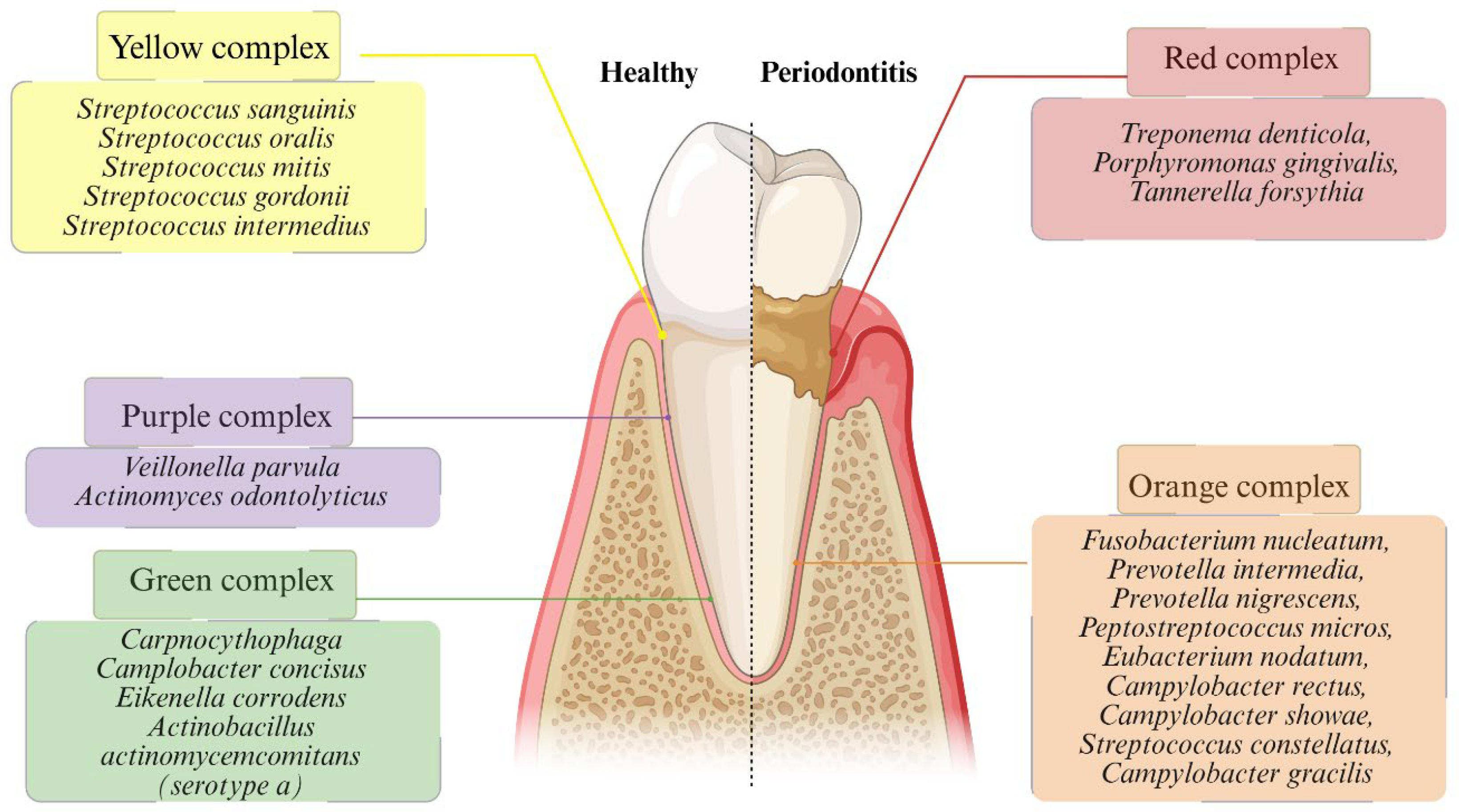
3.2. The Periodontal Microbial Complex Theory
3.3. Oral Dysbiosis at the Crossroads of Inflammation, Immunity, and Neurodegeneration
4. Oral Dysbiosis in Alzheimer’s Disease: Linking Microbial Imbalance to Neurodegeneration
4.1. Oral Microbiota at the Interface of Neuroinflammation and Alzheimer’s Disease
4.2. Oxidative Stress and Cell Death
4.3. Blood–Brain Barrier Dysfunction
4.4. Amyloidogenesis and Cross-Seeding
4.5. Oral–Gut Interactions in Alzheimer’s Disease
4.6. Oral Microbiota–Genetic Interactions in Alzheimer’s Disease
4.7. Epidemiological and Clinical Evidence
4.8. Oral Biomarkers and Salivary Diagnostics
4.9. Therapeutic Perspectives
4.10. Future Directions
5. Discussion
6. Conclusions
Author Contributions
Funding
Institutional Review Board Statement
Informed Consent Statement
Data Availability Statement
Conflicts of Interest
Abbreviations
| AD | Alzheimer’s Disease |
| BBB | Blood–Brain Barrier |
| CNS | Central Nervous System |
| LPSs | Lipopolysaccharides |
| Pg-LPSs | Porphyromonas gingivalis lipopolysaccharides |
| IL | Interleukin |
| OMVs | Outer membrane vesicles |
| TNF- α | Tumor Necrosis Factor-α |
| GSDMD | Gasdermin D |
| ROS | Reactive oxygen species |
| MDA | Malondialdehyde |
| 8-OHdG | 8-hydroxy-2′-deoxyguanosine |
| mtDNA | Mitochondrial DNA |
| ZO-1 | Zonula Occludens-1 |
| APP | Amyloid precursor protein |
| PS1 | Presenilin-1 |
| SNPs | Single-Nucleotide Polymorphisms |
| VDR | Vitamin D Receptor |
| MR | Mendelian Randomization |
| OR | Odds Ratio |
| CI | Confidence Interval |
| PET | Positron Emission Tomography |
| MMSE | Mini-Mental State Examination |
| AI | Artificial Intelligence |
| GSK3β | Glycogen synthase kinase-3 beta |
| hCMEC/D3 | Human cerebral microvascular endothelial cells |
| ApoE | Apolipoprotein E |
| ApoB | Apolipoprotein B |
| GPX4 | Glutathione peroxidase 4 |
| MIND | Mediterranean-DASH Intervention for Neurodegenerative Delay |
| FMT | Fecal Microbiota Transplantation |
| GCF | Gingival crevicular fluid |
References
- Popescu, C.; Munteanu, C.; Anghelescu, A.; Ciobanu, V.; Spînu, A.; Andone, I.; Mandu, M.; Bistriceanu, R.; Băilă, M.; Postoiu, R.-L.; et al. Novelties on Neuroinflammation in Alzheimer’s Disease–Focus on Gut and Oral Microbiota Involvement. Int. J. Mol. Sci. 2024, 25, 11272. [Google Scholar] [CrossRef]
- Borrego-Ruiz, A.; Borrego, J.J.; Borrego-Ruiz, A.; Borrego, J.J. Human Oral Microbiome and Its Influence on Mental Health and Brain Disorders. AIMS Microbiol. 2025, 11, 242–294. [Google Scholar] [CrossRef]
- Sarmiento-Ordóñez, J.M.; Brito-Samaniego, D.R.; Vásquez-Palacios, A.C.; Pacheco-Quito, E.-M. Association Between Porphyromonas Gingivalis and Alzheimer’s Disease: A Comprehensive Review. Infect. Drug Resist. 2025, 18, 2119–2136. [Google Scholar] [CrossRef]
- Sansores-España, L.D.; Melgar-Rodríguez, S.; Olivares-Sagredo, K.; Cafferata, E.A.; Martínez-Aguilar, V.M.; Vernal, R.; Paula-Lima, A.C.; Díaz-Zúñiga, J. Oral-Gut-Brain Axis in Experimental Models of Periodontitis: Associating Gut Dysbiosis with Neurodegenerative Diseases. Front. Aging 2021, 2, 781582. [Google Scholar] [CrossRef]
- Bello-Corral, L.; Alves-Gomes, L.; Fernández-Fernández, J.A.; Fernández-García, D.; Casado-Verdejo, I.; Sánchez-Valdeón, L. Implications of Gut and Oral Microbiota in Neuroinflammatory Responses in Alzheimer’s Disease. Life Sci. 2023, 333, 122132. [Google Scholar] [CrossRef]
- Santacroce, L.; Sardaro, N.; Topi, S.; Pettini, F.; Bottalico, L.; Cantore, S.; Cascella, G.; Prete, R.D.; Dipalma, G.; Inchingolo, F. The Pivotal Role of Oral Microbiota in Health and Disease. J. Biol. Regul. Homeost. Agents 2020, 34, 733–737. [Google Scholar] [CrossRef] [PubMed]
- Giordano-Kelhoffer, B.; Lorca, C.; March Llanes, J.; Rábano, A.; del Ser, T.; Serra, A.; Gallart-Palau, X. Oral Microbiota, Its Equilibrium and Implications in the Pathophysiology of Human Diseases: A Systematic Review. Biomedicines 2022, 10, 1803. [Google Scholar] [CrossRef] [PubMed]
- Arbildo-Vega, H.I.; Cruzado-Oliva, F.H.; Coronel-Zubiate, F.T.; Aguirre-Ipenza, R.; Meza-Málaga, J.M.; Luján-Valencia, S.A.; Luján-Urviola, E.; Echevarria-Goche, A.; Farje-Gallardo, C.A.; Castillo-Cornock, T.B.; et al. Association between Periodontal Disease and Alzheimer’s Disease: Umbrella Review. Front. Dent. Med. 2025, 6, 1635200. [Google Scholar] [CrossRef] [PubMed]
- Mangini, F.; Santacroce, L.; Bottalico, L. Periodontitis and systemic diseases. Clin. Ter. 2006, 157, 541–548. [Google Scholar]
- Zenobia, C.; Darveau, R.P. Does Oral Endotoxin Contribute to Systemic Inflammation? Front. Oral Health 2022, 3, 911420. [Google Scholar] [CrossRef]
- Deng, L.; Guan, G.; Cannon, R.D.; Mei, L. Age-Related Oral Microbiota Dysbiosis and Systemic Diseases. Microb. Pathog. 2025, 205, 107717. [Google Scholar] [CrossRef]
- Santacroce, L.; Jirillo, E.; Bottalico, L.; Topi, S.; Passarelli, P.C.; Mancini, A.; D’Addona, A.; Garcia Godoy, F.; Folliero, V.; Colella, M. Does a Link Exist Between Oral Microbiota and Oral Squamous Cell Carcinoma? A Review of Current Insights. J. Oral Microbiol. 2025, in press. [CrossRef]
- Santacroce, L.; Muzio, E.L.; Bottalico, L.; Spirito, F.; Charitos, I.A.; Passarelli, P.C.; Jirillo, E. Subversion of the Oral Microbiota and Induction of Immune-Mediated Systemic Inflammation with Special Reference to Periodontitis: Current Knowledge and Perspectives. Endocr. Metab. Immune Disord. Drug Targets 2023, 23, 470–484. [Google Scholar] [CrossRef]
- Gui, S.; Zeng, F.; Wu, Z.; Nonaka, S.; Sano, T.; Ni, J.; Nakanishi, H.; Moriyama, M.; Kanematsu, T. Lipopolysaccharides from Porphyromonas Gingivalis Indirectly Induce Neuronal GSK3β-Dependent Synaptic Defects and Cause Cognitive Decline in a Low-Amyloid-β-Concentration Environment in Alzheimer’s Disease. J. Alzheimer’s Dis. 2025, 105, 302–316. [Google Scholar] [CrossRef]
- Shawkatova, I.; Durmanova, V.; Javor, J. Alzheimer’s Disease and Porphyromonas Gingivalis: Exploring the Links. Life 2025, 15, 96. [Google Scholar] [CrossRef] [PubMed]
- Wu, H.; Qiu, W.; Zhu, X.; Li, X.; Xie, Z.; Carreras, I.; Dedeoglu, A.; Van Dyke, T.; Han, Y.W.; Karimbux, N.; et al. The Periodontal Pathogen Fusobacterium Nucleatum Exacerbates Alzheimer’s Pathogenesis via Specific Pathways. Front. Aging Neurosci. 2022, 14, 912709. [Google Scholar] [CrossRef] [PubMed]
- Kulkarni, M.S.; Miller, B.C.; Mahani, M.; Mhaskar, R.; Tsalatsanis, A.; Jain, S.; Yadav, H. Poor Oral Health Linked with Higher Risk of Alzheimer’s Disease. Brain Sci. 2023, 13, 1555. [Google Scholar] [CrossRef] [PubMed]
- Son, S.H.; Lee, S.; Chung, G. Loss of Dental Pulp Potentially Increased the Risk of Alzheimer’s Dementia. J. Dent. Sci. 2025, 20, 310–318. [Google Scholar] [CrossRef]
- Sun, X.; Lu, Y.; Hu, J.; Meng, S.; Wang, X.; Jiang, Q. Tooth Loss Impairs Cognitive Function in SAMP8 Mice by Aggravating Pyroptosis of Microglia via the cGAS/STING Pathway. Front. Aging Neurosci. 2025, 17, 1628520. [Google Scholar] [CrossRef]
- Goto, T.; Kuramoto, E.; Dhar, A.; Wang, R.P.-H.; Seki, H.; Iwai, H.; Yamanaka, A.; Matsumoto, S.-E.; Hara, H.; Michikawa, M.; et al. Neurodegeneration of Trigeminal Mesencephalic Neurons by the Tooth Loss Triggers the Progression of Alzheimer’s Disease in 3×Tg-AD Model Mice. J. Alzheimer’s Dis. 2020, 76, 1443–1459. [Google Scholar] [CrossRef]
- Adil, N.A.; Omo-Erigbe, C.; Yadav, H.; Jain, S. The Oral–Gut Microbiome–Brain Axis in Cognition. Microorganisms 2025, 13, 814. [Google Scholar] [CrossRef]
- Azzolino, D.; Carnevale-Schianca, M.; Santacroce, L.; Colella, M.; Felicetti, A.; Terranova, L.; Castrejón-Pérez, R.C.; Garcia-Godoy, F.; Lucchi, T.; Passarelli, P.C. The Oral–Gut Microbiota Axis Across the Lifespan: New Insights on a Forgotten Interaction. Nutrients 2025, 17, 2538. [Google Scholar] [CrossRef]
- Azzolino, D.; Felicetti, A.; Santacroce, L.; Lucchi, T.; Garcia-Godoy, F.; Passarelli, P.C. The Emerging Role of Oral Microbiota: A Key Driver of Oral and Systemic Health. Am. J. Dent. 2025, 38, 111–116. [Google Scholar]
- Schirinzi, A.; Cazzolla, A.P.; Lovero, R.; Lo Muzio, L.; Testa, N.F.; Ciavarella, D.; Palmieri, G.; Pozzessere, P.; Procacci, V.; Di Serio, F.; et al. New Insights in Laboratory Testing for COVID-19 Patients: Looking for the Role and Predictive Value of Human epididymis secretory protein 4 (HE4) and the Innate Immunity of the Oral Cavity and Respiratory Tract. Microorganisms 2020, 8, 1718. [Google Scholar] [CrossRef] [PubMed]
- Khadka, S.; Bowman, J.P.; Gautam, S.; Goldberg, L.R.; King, A.; Crocombe, L.; Bettiol, S.S. The Effect of 6-Week Advanced Oral Care on Oral Microbiome and Mycobiome Composition in People with Dementia Living in Residential Aged Care. Clin. Exp. Dent. Res. 2025, 11, e70212. [Google Scholar] [CrossRef] [PubMed]
- Tsatsanis, A.; McCorkindale, A.N.; Wong, B.X.; Patrick, E.; Ryan, T.M.; Evans, R.W.; Bush, A.I.; Sutherland, G.T.; Sivaprasadarao, A.; Guennewig, B.; et al. The Acute Phase Protein Lactoferrin Is a Key Feature of Alzheimer’s Disease and Predictor of Aβ Burden through Induction of APP Amyloidogenic Processing. Mol. Psychiatry 2021, 26, 5516–5531. [Google Scholar] [CrossRef] [PubMed]
- Li, Z.; Kang, Y.; Li, S.; Guo, S.; Zheng, H. Unveiling the Relationship Between Oral Microbiota and Alzheimer’s Disease: A Genetic Instrumental Variable Analysis via Mendelian Randomization. Brain Behav. 2025, 15, e70753. [Google Scholar] [CrossRef]
- Gharaibeh, S.; Alsabbah, A.; Alloubani, A.; Gharaibeh, A. Reciprocal Interactions Between Periodontal Disease and Alzheimer’s Disease: Implications for Mutual Triggering, Exacerbation, and Treatment Interventions—A Comprehensive Review of the Literature. Neurol. Int. 2025, 17, 81. [Google Scholar] [CrossRef]
- Paster, B.J.; Olsen, I.; Aas, J.A.; Dewhirst, F.E. The Breadth of Bacterial Diversity in the Human Periodontal Pocket and Other Oral Sites. Periodontol. 2000 2006, 42, 80–87. [Google Scholar] [CrossRef]
- Lof, M.; Janus, M.M.; Krom, B.P. Metabolic Interactions between Bacteria and Fungi in Commensal Oral Biofilms. J. Fungi 2017, 3, 40. [Google Scholar] [CrossRef]
- Shakya, M.; Kayastha, P.K.; Jioa, H. Oral Flora: Protection or Destruction of Dental Tissue. Int. J. Endorsing Health Sci. Res. 2018, 6, 47–57. [Google Scholar] [CrossRef]
- Listgarten, M.A. Structure of the microbial flora associated with periodontal health and disease in man. A light and electron microscopic study. J. Periodontol. 1976, 47, 1–18. [Google Scholar] [CrossRef]
- Jenkinson, H.F.; Lamont, R.J. Oral Microbial Communities in Sickness and in Health. Trends Microbiol. 2005, 13, 589–595. [Google Scholar] [CrossRef] [PubMed]
- Marsh, P.D. In Sickness and in Health—What Does the Oral Microbiome Mean to Us? An Ecological Perspective. Adv. Dent. Res. 2018, 29, 60–65. [Google Scholar] [CrossRef]
- Cheng, X.; Redanz, S.; Cullin, N.; Zhou, X.; Xu, X.; Joshi, V.; Koley, D.; Merritt, J.; Kreth, J. Plasticity of the Pyruvate Node Modulates Hydrogen Peroxide Production and Acid Tolerance in Multiple Oral Streptococci. Appl. Environ. Microbiol. 2018, 84, e01697-17. [Google Scholar] [CrossRef] [PubMed]
- Thurnheer, T.; Belibasakis, G.N. Streptococcus oralis Maintains Homeostasis in Oral Biofilms by Antagonizing the Cariogenic Pathogen Streptococcus mutans. Mol. Oral Microbiol. 2018, 33, 234–239. [Google Scholar] [CrossRef] [PubMed]
- Ho, M.-H.; Lamont, R.J.; Xie, H. A Novel Peptidic Inhibitor Derived from Streptococcus cristatus ArcA Attenuates Virulence Potential of Porphyromonas Gingivalis. Sci. Rep. 2017, 7, 16217. [Google Scholar] [CrossRef]
- Daep, C.A.; Novak, E.A.; Lamont, R.J.; Demuth, D.R. Structural Dissection and in Vivo Effectiveness of a Peptide Inhibitor of Porphyromonas Gingivalis Adherence to Streptococcus gordonii. Infect. Immun. 2011, 79, 67–74. [Google Scholar] [CrossRef]
- Kuboniwa, M.; Houser, J.R.; Hendrickson, E.L.; Wang, Q.; Alghamdi, S.A.; Sakanaka, A.; Miller, D.P.; Hutcherson, J.A.; Wang, T.; Beck, D.A.C.; et al. Metabolic Crosstalk Regulates Porphyromonas Gingivalis Colonization and Virulence during Oral Polymicrobial Infection. Nat. Microbiol. 2017, 2, 1493–1499. [Google Scholar] [CrossRef]
- Bertolini, M.M.; Xu, H.; Sobue, T.; Nobile, C.J.; Del Bel Cury, A.A.; Dongari-Bagtzoglou, A. Candida-Streptococcal Mucosal Biofilms Display Distinct Structural and Virulence Characteristics Depending on Growth Conditions and Hyphal Morphotypes. Mol. Oral Microbiol. 2015, 30, 307–322. [Google Scholar] [CrossRef]
- Duan, D.; Scoffield, J.A.; Zhou, X.; Wu, H. Fine-tuned Production of Hydrogen Peroxide Promotes Biofilm Formation of Streptococcus parasanguinis by a Pathogenic Cohabitant Aggregatibacter actinomycetemcomitans. Environ. Microbiol. 2016, 18, 4023–4036. [Google Scholar] [CrossRef]
- Whitmore, S.E.; Lamont, R.J. The Pathogenic Persona of Community-Associated Oral Streptococci. Mol. Microbiol. 2011, 81, 305–314. [Google Scholar] [CrossRef]
- Shaikh, H.F.M.; Patil, S.H.; Pangam, T.S.; Rathod, K.V. Polymicrobial Synergy and Dysbiosis: An Overview. J. Indian Soc. Periodontol. 2018, 22, 101–106. [Google Scholar] [CrossRef] [PubMed]
- Santacroce, L.; Passarelli, P.C.; Azzolino, D.; Bottalico, L.; Charitos, I.A.; Cazzolla, A.P.; Colella, M.; Topi, S.; Godoy, F.G.; D’Addona, A. Oral Microbiota in Human Health and Disease: A Perspective. Exp. Biol. Med. 2023, 248, 1288–1301. [Google Scholar] [CrossRef] [PubMed]
- Fakhruddin, K.S.; Kamal, I.; Maglaperidze, T.; Marya, A.; Samaranayake, L.; Porntaveetus, T. Autism and the Oral Microbiome: A Systematic Review of Host-Microbial Interactions and Diversity. Int. Dent. J. 2025, 75, 100957. [Google Scholar] [CrossRef] [PubMed]
- Brennan, C.A.; Garrett, W.S. Fusobacterium Nucleatum—Symbiont, Opportunist and Oncobacterium. Nat. Rev. Microbiol. 2019, 17, 156–166. [Google Scholar] [CrossRef]
- Berezow, A.B.; Darveau, R.P. Microbial Shift and Periodontitis. Periodontol. 2000 2011, 55, 36–47. [Google Scholar] [CrossRef]
- Foroughi, M.; Torabinejad, M.; Angelov, N.; Ojcius, D.M.; Parang, K.; Ravnan, M.; Lam, J. Bridging Oral and Systemic Health: Exploring Pathogenesis, Biomarkers, and Diagnostic Innovations in Periodontal Disease. Infection 2025, 53, 1–26. [Google Scholar] [CrossRef]
- Socransky, S.S.; Haffajee, A.D.; Cugini, M.A.; Smith, C.; Kent, R.L. Microbial Complexes in Subgingival Plaque. J. Clin. Periodontol. 1998, 25, 134–144. [Google Scholar] [CrossRef]
- Albahri, J.; Allison, H.; Whitehead, K.A.; Muhamadali, H. The Role of Salivary Metabolomics in Chronic Periodontitis: Bridging Oral and Systemic Diseases. Metabolomics 2025, 21, 24. [Google Scholar] [CrossRef]
- Mohanty, R.; Asopa, S.J.; Joseph, M.D.; Singh, B.; Rajguru, J.P.; Saidath, K.; Sharma, U. Red Complex: Polymicrobial Conglomerate in Oral Flora: A Review. J. Fam. Med. Prim. Care 2019, 8, 3480. [Google Scholar] [CrossRef]
- Yamazaki, K. Oral-Gut Axis as a Novel Biological Mechanism Linking Periodontal Disease and Systemic Diseases: A Review. Jpn. Dent. Sci. Rev. 2023, 59, 273–280. [Google Scholar] [CrossRef] [PubMed]
- Xi, M.; Ruan, Q.; Zhong, S.; Li, J.; Qi, W.; Xie, C.; Wang, X.; Abuduxiku, N.; Ni, J. Periodontal Bacteria Influence Systemic Diseases through the Gut Microbiota. Front. Cell Infect. Microbiol. 2024, 14, 1478362. [Google Scholar] [CrossRef] [PubMed]
- Holt, S.C.; Kesavalu, L.; Walker, S.; Genco, C.A. Virulence Factors of Porphyromonas Gingivalis. Periodontol. 2000 1999, 20, 168–238. [Google Scholar] [CrossRef] [PubMed]
- Liu, S.; Butler, C.A.; Ayton, S.; Reynolds, E.C.; Dashper, S.G. Porphyromonas Gingivalis and the Pathogenesis of Alzheimer’s Disease. Crit. Rev. Microbiol. 2024, 50, 127–137. [Google Scholar] [CrossRef]
- Vanaja, S.K.; Russo, A.J.; Behl, B.; Banerjee, I.; Yankova, M.; Deshmukh, S.D.; Rathinam, V.A.K. Bacterial Outer Membrane Vesicles Mediate Cytosolic Localization of LPS and Caspase-11 Activation. Cell 2016, 165, 1106–1119. [Google Scholar] [CrossRef]
- O’Donoghue, E.J.; Krachler, A.M. Mechanisms of Outer Membrane Vesicle Entry into Host Cells. Cell Microbiol. 2016, 18, 1508–1517. [Google Scholar] [CrossRef]
- Rathinam, V.A.K.; Zhao, Y.; Shao, F. Innate Immunity to Intracellular LPS. Nat. Immunol. 2019, 20, 527–533. [Google Scholar] [CrossRef]
- Miyauchi, E.; Yamazaki, K.; Tsuboi, Y.; Nakajima, T.; Ono, S.; Mizuno, K.; Takahashi, N.; Imamura, K.; Morita, H.; Miura, N.; et al. Patients with Periodontitis Exhibit Persistent Dysbiosis of the Gut Microbiota and Distinct Serum Metabolome. J. Oral Microbiol. 2025, 17, 2499284. [Google Scholar] [CrossRef]
- Kim, H.S.; Kim, S.; Shin, S.J.; Park, Y.H.; Nam, Y.; Kim, C.W.; Lee, K.W.; Kim, S.-M.; Jung, I.D.; Yang, H.D.; et al. Gram-Negative Bacteria and Their Lipopolysaccharides in Alzheimer’s Disease: Pathologic Roles and Therapeutic Implications. Transl. Neurodegener. 2021, 10, 49. [Google Scholar] [CrossRef]
- Choe, S.-H.; Choi, E.-Y.; Hyeon, J.-Y.; Keum, B.R.; Choi, I.S.; Kim, S.-J. Telmisartan, an Angiotensin II Receptor Blocker, Attenuates Prevotella Intermedia Lipopolysaccharide-Induced Production of Nitric Oxide and Interleukin-1β in Murine Macrophages. Int. Immunopharmacol. 2019, 75, 105750. [Google Scholar] [CrossRef]
- Zhang, S.; Zhao, Y.; Lalsiamthara, J.; Peng, Y.; Qi, L.; Deng, S.; Wang, Q. Current Research Progress on Prevotella Intermedia and Associated Diseases. Crit. Rev. Microbiol. 2025, 51, 545–562. [Google Scholar] [CrossRef]
- Ghanem, A.S.; Németh, O.; Móré, M.; Nagy, A.C. Role of Oral Health in Heart and Vascular Health: A Population-Based Study. PLoS ONE 2024, 19, e0301466. [Google Scholar] [CrossRef]
- Figuero, E.; Han, Y.W.; Furuichi, Y. Periodontal Diseases and Adverse Pregnancy Outcomes: Mechanisms. Periodontol. 2000 2020, 83, 175–188. [Google Scholar] [CrossRef] [PubMed]
- Li, Y.; Guo, R.; Oduro, P.K.; Sun, T.; Chen, H.; Yi, Y.; Zeng, W.; Wang, Q.; Leng, L.; Yang, L.; et al. The Relationship Between Porphyromonas Gingivalis and Rheumatoid Arthritis: A Meta-Analysis. Front. Cell Infect. Microbiol. 2022, 12, 956417. [Google Scholar] [CrossRef] [PubMed]
- Lim, Y.; Fukuma, N.; Totsika, M.; Kenny, L.; Morrison, M.; Punyadeera, C. The Performance of an Oral Microbiome Biomarker Panel in Predicting Oral Cavity and Oropharyngeal Cancers. Front. Cell Infect. Microbiol. 2018, 8, 267. [Google Scholar] [CrossRef]
- Chen, X.; Winckler, B.; Lu, M.; Cheng, H.; Yuan, Z.; Yang, Y.; Jin, L.; Ye, W. Oral Microbiota and Risk for Esophageal Squamous Cell Carcinoma in a High-Risk Area of China. PLoS ONE 2015, 10, e0143603. [Google Scholar] [CrossRef]
- Pourali, G.; Kazemi, D.; Chadeganipour, A.S.; Arastonejad, M.; Kashani, S.N.; Pourali, R.; Maftooh, M.; Akbarzade, H.; Fiuji, H.; Hassanian, S.M.; et al. Microbiome as a Biomarker and Therapeutic Target in Pancreatic Cancer. BMC Microbiol. 2024, 24, 16. [Google Scholar] [CrossRef]
- Seyama, M.; Yoshida, K.; Yoshida, K.; Fujiwara, N.; Ono, K.; Eguchi, T.; Kawai, H.; Guo, J.; Weng, Y.; Haoze, Y.; et al. Outer Membrane Vesicles of Porphyromonas Gingivalis Attenuate Insulin Sensitivity by Delivering Gingipains to the Liver. Biochim. Biophys. Acta Mol. Basis Dis. 2020, 1866, 165731. [Google Scholar] [CrossRef]
- Adams, B.; Nunes, J.M.; Page, M.J.; Roberts, T.; Carr, J.; Nell, T.A.; Kell, D.B.; Pretorius, E. Parkinson’s Disease: A Systemic Inflammatory Disease Accompanied by Bacterial Inflammagens. Front. Aging Neurosci. 2019, 11, 210. [Google Scholar] [CrossRef]
- Olsen, I.; Kell, D.B.; Pretorius, E. Is Porphyromonas Gingivalis Involved in Parkinson’s Disease? Eur. J. Clin. Microbiol. Infect. Dis. 2020, 39, 2013–2018. [Google Scholar] [CrossRef] [PubMed]
- Gaur, S.; Agnihotri, R. Alzheimer’s Disease and Chronic Periodontitis: Is There an Association? Geriatr. Gerontol. Int. 2015, 15, 391–404. [Google Scholar] [CrossRef] [PubMed]
- Leira, Y.; Domínguez, C.; Seoane, J.; Seoane-Romero, J.; Pías-Peleteiro, J.M.; Takkouche, B.; Blanco, J.; Aldrey, J.M. Is Periodontal Disease Associated with Alzheimer’s Disease? A Systematic Review with Meta-Analysis. Neuroepidemiology 2017, 48, 21–31. [Google Scholar] [CrossRef] [PubMed]
- Taati Moghadam, M.; Amirmozafari, N.; Mojtahedi, A.; Bakhshayesh, B.; Shariati, A.; Masjedian Jazi, F. Association of Perturbation of Oral Bacterial with Incident of Alzheimer’s Disease: A Pilot Study. J. Clin. Lab. Anal. 2022, 36, e24483. [Google Scholar] [CrossRef]
- Ding, Y.; Ren, J.; Yu, H.; Yu, W.; Zhou, Y. Porphyromonas Gingivalis, a Periodontitis Causing Bacterium, Induces Memory Impairment and Age-Dependent Neuroinflammation in Mice. Immun. Ageing 2018, 15, 6. [Google Scholar] [CrossRef]
- Lue, L.F.; Rydel, R.; Brigham, E.F.; Yang, L.B.; Hampel, H.; Murphy, G.M.; Brachova, L.; Yan, S.D.; Walker, D.G.; Shen, Y.; et al. Inflammatory Repertoire of Alzheimer’s Disease and Nondemented Elderly Microglia in Vitro. Glia 2001, 35, 72–79. [Google Scholar] [CrossRef]
- Yi, Y.-S. Caspase-11 Noncanonical Inflammasome: A Novel Key Player in Murine Models of Neuroinflammation and Multiple Sclerosis. Neuroimmunomodulation 2021, 28, 195–203. [Google Scholar] [CrossRef]
- Shi, J.; Zhao, Y.; Wang, Y.; Gao, W.; Ding, J.; Li, P.; Hu, L.; Shao, F. Inflammatory Caspases Are Innate Immune Receptors for Intracellular LPS. Nature 2014, 514, 187–192. [Google Scholar] [CrossRef]
- Leng, F.; Edison, P. Neuroinflammation and Microglial Activation in Alzheimer Disease: Where Do We Go from Here? Nat. Rev. Neurol. 2021, 17, 157–172. [Google Scholar] [CrossRef]
- Wang, K.; Sun, Q.; Zhong, X.; Zeng, M.; Zeng, H.; Shi, X.; Li, Z.; Wang, Y.; Zhao, Q.; Shao, F.; et al. Structural Mechanism for GSDMD Targeting by Autoprocessed Caspases in Pyroptosis. Cell 2020, 180, 941–955.e20. [Google Scholar] [CrossRef]
- Rühl, S.; Broz, P. Caspase-11 Activates a Canonical NLRP3 Inflammasome by Promoting K(+) Efflux. Eur. J. Immunol. 2015, 45, 2927–2936. [Google Scholar] [CrossRef]
- Ding, P.-H.; Yang, M.-X.; Wang, N.-N.; Jin, L.-J.; Dong, Y.; Cai, X.; Chen, L.-L. Porphyromonas Gingivalis-Induced NLRP3 Inflammasome Activation and Its Downstream Interleukin-1β Release Depend on Caspase-4. Front. Microbiol. 2020, 11, 1881. [Google Scholar] [CrossRef] [PubMed]
- Rosa, C.P.; Belo, T.C.A.; Santos, N.C.d.M.; Silva, E.N.; Gasparotto, J.; Corsetti, P.P.; de Almeida, L.A. Reactive Oxygen Species Trigger Inflammasome Activation after Intracellular Microbial Interaction. Life Sci. 2023, 331, 122076. [Google Scholar] [CrossRef] [PubMed]
- Verma, A.; Azhar, G.; Patyal, P.; Zhang, X.; Wei, J.Y. Porphyromonas Gingivalis-Lipopolysaccharide Induced Caspase-4 Dependent Noncanonical Inflammasome Activation Drives Alzheimer’s Disease Pathologies. Cells 2025, 14, 804. [Google Scholar] [CrossRef] [PubMed]
- Lönn, J.; Ljunggren, S.; Klarström-Engström, K.; Demirel, I.; Bengtsson, T.; Karlsson, H. Lipoprotein Modifications by Gingipains of Porphyromonas gingivalis. J. Periodontal Res. 2018, 53, 403–413. [Google Scholar] [CrossRef]
- Merchant, A.T.; Zhao, L.; Bawa, E.M.; Yaseri, A.F.; Lohman, M.; Zhang, J.; Clay-Gilmour, A.; Newman-Norlund, R.D.; Fridriksson, J. Apolipoprotein E4 Allele, Antibodies against Periodontal Microorganisms, and Cognition in Older Adults. J. Alzheimer’s Dis. Rep. 2025, 9, 25424823251370770. [Google Scholar] [CrossRef]
- Maurer, K.; Rahming, S.; Prvulovic, D. Dental Health in Advanced Age and Alzheimer’s Disease: A Possible Link with Bacterial Toxins Entering the Brain? Psychiatry Res. Neuroimaging 2018, 282, 132–133. [Google Scholar] [CrossRef]
- Kowaltowski, A.J.; de Souza-Pinto, N.C.; Castilho, R.F.; Vercesi, A.E. Mitochondria and Reactive Oxygen Species. Free Radic. Biol. Med. 2009, 47, 333–343. [Google Scholar] [CrossRef]
- Carlson, E.A.; Rao, V.K.; Yan, S.S. From a Cell’s Viewpoint: Targeting Mitochondria in Alzheimer’s Disease. Drug Discov. Today Ther. Strat. 2013, 10, e91–e98. [Google Scholar] [CrossRef][Green Version]
- Cenini, G.; Voos, W. Mitochondria as Potential Targets in Alzheimer Disease Therapy: An Update. Front. Pharmacol. 2019, 10, 902. [Google Scholar] [CrossRef]
- Picca, A.; Calvani, R.; Coelho-Junior, H.J.; Marzetti, E. Cell Death and Inflammation: The Role of Mitochondria in Health and Disease. Cells 2021, 10, 537. [Google Scholar] [CrossRef]
- Deng, Y.; Xiao, J.; Ma, L.; Wang, C.; Wang, X.; Huang, X.; Cao, Z. Mitochondrial Dysfunction in Periodontitis and Associated Systemic Diseases: Implications for Pathomechanisms and Therapeutic Strategies. Int. J. Mol. Sci. 2024, 25, 1024. [Google Scholar] [CrossRef]
- Luo, S.; Xu, T.; Zheng, Q.; Jiang, A.; Zhao, J.; Ying, Y.; Liu, N.; Pan, Y.; Zhang, D. Mitochondria: An Emerging Unavoidable Link in the Pathogenesis of Periodontitis Caused by Porphyromonas gingivalis. Int. J. Mol. Sci. 2024, 25, 737. [Google Scholar] [CrossRef]
- Papadakis, K.A.; Doufexi, A.-E.; Kalamaki, M.S.; Bourazanas, E.; Lymperaki, E. The Role of Oxidative Stress in the Relationship Between Periodontitis and Alzheimer’s Disease: A Review of the Literature. J. Pers. Med. 2025, 15, 384. [Google Scholar] [CrossRef] [PubMed]
- Ahmadi-Motamayel, F.; Goodarzi, M.T.; Jamshidi, Z.; Kebriaei, R. Evaluation of Salivary and Serum Antioxidant and Oxidative Stress Statuses in Patients with Chronic Periodontitis: A Case-Control Study. Front. Physiol. 2017, 8, 189. [Google Scholar] [CrossRef] [PubMed]
- Kurgan, Ş.; Önder, C.; Altıngöz, S.M.; Bağış, N.; Uyanık, M.; Serdar, M.A.; Kantarcı, A. High Sensitivity Detection of Salivary 8-Hydroxy Deoxyguanosine Levels in Patients with Chronic Periodontitis. J. Periodontal Res. 2015, 50, 766–774. [Google Scholar] [CrossRef] [PubMed]
- Shin, M.-S.; Shin, H.-S.; Ahn, Y.-B.; Kim, H.-D. Association between Periodontitis and Salivary 8-Hydroxydeoxyguanosine among Korean Rural Adults. Community Dent. Oral Epidemiol. 2016, 44, 381–389. [Google Scholar] [CrossRef]
- Canakçi, C.F.; Canakçi, V.; Tatar, A.; Eltas, A.; Sezer, U.; Ciçek, Y.; Oztas, S. Increased Salivary Level of 8-Hydroxydeoxyguanosine Is a Marker of Premature Oxidative Mitochondrial DNA Damage in Gingival Tissue of Patients with Periodontitis. Arch. Immunol. Ther. Exp. 2009, 57, 205–211. [Google Scholar] [CrossRef]
- Dede, F.Ö.; Ozden, F.O.; Avcı, B. 8-Hydroxy-Deoxyguanosine Levels in Gingival Crevicular Fluid and Saliva in Patients with Chronic Periodontitis after Initial Periodontal Treatment. J. Periodontol. 2013, 84, 821–828. [Google Scholar] [CrossRef]
- Lorente, L.; Hernández Marrero, E.; Abreu González, P.; Lorente Martín, A.D.; González-Rivero, A.F.; Marrero González, M.J.; Hernández Marrero, C.; Hernández Marrero, O.; Jiménez, A.; Hernández Padilla, C.M. High Salivary Malondialdehyde Levels Are Associated with Periodontitis Independently of Other Risk Factors. J. Clin. Med. 2025, 14, 2993. [Google Scholar] [CrossRef]
- Trivedi, S.; Lal, N.; Mahdi, A.A.; Singh, B.; Pandey, S. Association of Salivary Lipid Peroxidation Levels, Antioxidant Enzymes, and Chronic Periodontitis. Int. J. Periodontics Restor. Dent. 2015, 35, e14–e19. [Google Scholar] [CrossRef]
- Mouneshkumar Evaluation of Oxidative Stress Markers in Chronic Periodontitis: A Comparative Study of Salivary and Serum Levels of 8-OHdG. Int. J. Med. Toxicol. Leg. Med. 2024, 27, 394–407.
- Guan, P.; Ruan, Q.; Li, J.; Xi, M.; Qi, W.; Ko, K.I.; Ni, J. Ferroptosis in Periodontitis: Mechanisms, Impacts, and Systemic Connections. Cell Death Discov. 2025, 11, 283. [Google Scholar] [CrossRef] [PubMed]
- Qiao, S.; Li, B.; Cai, Q.; Li, Z.; Yin, Z.; He, J.; Li, Y.; Meng, W. Involvement of Ferroptosis in Porphyromonas Gingivalis Lipopolysaccharide-Stimulated Periodontitis in Vitro and in Vivo. Oral Dis. 2023, 29, 3571–3582. [Google Scholar] [CrossRef] [PubMed]
- Rodríguez, A.F.; Buitrago, J.S.; Castillo, Y.; Lafaurie, G.I.; Buitrago-Ramirez, D.M. Effects of Pro-Inflammatory Cytokines Induced by Porphyromonas Gingivalis on Cell Cycle Regulation in Brain Endothelial Cells. J. Oral Biosci. 2025, 67, 100668. [Google Scholar] [CrossRef] [PubMed]
- Verma, A.; Azhar, G.; Patyal, P.; Zhang, W.; Zhang, X.; Wei, J.Y. Proteomic Analysis of P. Gingivalis-Lipopolysaccharide Induced Neuroinflammation in SH-SY5Y and HMC3 Cells. Geroscience 2024, 46, 4315–4332. [Google Scholar] [CrossRef]
- Elashiry, M.; Carroll, A.; Yuan, J.; Liu, Y.; Hamrick, M.; Cutler, C.W.; Wang, Q.; Elsayed, R. Oral Microbially-Induced Small Extracellular Vesicles Cross the Blood-Brain Barrier. Int. J. Mol. Sci. 2024, 25, 4509. [Google Scholar] [CrossRef]
- Nonaka, S.; Kadowaki, T.; Nakanishi, H. Secreted Gingipains from Porphyromonas Gingivalis Increase Permeability in Human Cerebral Microvascular Endothelial Cells through Intracellular Degradation of Tight Junction Proteins. Neurochem. Int. 2022, 154, 105282. [Google Scholar] [CrossRef]
- Pritchard, A.B.; Fabian, Z.; Lawrence, C.L.; Morton, G.; Crean, S.; Alder, J.E. An Investigation into the Effects of Outer Membrane Vesicles and Lipopolysaccharide of Porphyromonas Gingivalis on Blood-Brain Barrier Integrity, Permeability, and Disruption of Scaffolding Proteins in a Human in Vitro Model. J. Alzheimer’s Dis. 2022, 86, 343–364. [Google Scholar] [CrossRef]
- Yoshida, K.; Yoshida, K.; Seyama, M.; Hiroshima, Y.; Mekata, M.; Fujiwara, N.; Kudo, Y.; Ozaki, K. Porphyromonas Gingivalis Outer Membrane Vesicles in Cerebral Ventricles Activate Microglia in Mice. Oral Dis. 2023, 29, 3688–3697. [Google Scholar] [CrossRef]
- Gong, T.; Chen, Q.; Mao, H.; Zhang, Y.; Ren, H.; Xu, M.; Chen, H.; Yang, D. Outer Membrane Vesicles of Porphyromonas Gingivalis Trigger NLRP3 Inflammasome and Induce Neuroinflammation, Tau Phosphorylation, and Memory Dysfunction in Mice. Front. Cell Infect. Microbiol. 2022, 12, 925435. [Google Scholar] [CrossRef] [PubMed]
- Ma, X.; Shin, Y.-J.; Yoo, J.-W.; Park, H.-S.; Kim, D.-H. Extracellular Vesicles Derived from Porphyromonas Gingivalis Induce Trigeminal Nerve-Mediated Cognitive Impairment. J. Adv. Res. 2023, 54, 293–303. [Google Scholar] [CrossRef] [PubMed]
- Magnusson, A.; Wu, R.; Demirel, I. Porphyromonas Gingivalis Triggers Microglia Activation and Neurodegenerative Processes through NOX4. Front. Cell Infect. Microbiol. 2024, 14, 1451683. [Google Scholar] [CrossRef] [PubMed]
- Nie, R.; Wu, Z.; Ni, J.; Zeng, F.; Yu, W.; Zhang, Y.; Kadowaki, T.; Kashiwazaki, H.; Teeling, J.L.; Zhou, Y. Porphyromonas Gingivalis Infection Induces Amyloid-β Accumulation in Monocytes/Macrophages. J. Alzheimer’s Dis. 2019, 72, 479–494. [Google Scholar] [CrossRef]
- Ishida, N.; Ishihara, Y.; Ishida, K.; Tada, H.; Funaki-Kato, Y.; Hagiwara, M.; Ferdous, T.; Abdullah, M.; Mitani, A.; Michikawa, M.; et al. Periodontitis Induced by Bacterial Infection Exacerbates Features of Alzheimer’s Disease in Transgenic Mice. NPJ Aging Mech. Dis. 2017, 3, 15. [Google Scholar] [CrossRef]
- Nelson, P.T.; Braak, H.; Markesbery, W.R. Neuropathology and Cognitive Impairment in Alzheimer Disease: A Complex but Coherent Relationship. J. Neuropathol. Exp. Neurol. 2009, 68, 1–14. [Google Scholar] [CrossRef]
- Ilievski, V.; Zuchowska, P.K.; Green, S.J.; Toth, P.T.; Ragozzino, M.E.; Le, K.; Aljewari, H.W.; O’Brien-Simpson, N.M.; Reynolds, E.C.; Watanabe, K. Chronic Oral Application of a Periodontal Pathogen Results in Brain Inflammation, Neurodegeneration and Amyloid Beta Production in Wild Type Mice. PLoS ONE 2018, 13, e0204941. [Google Scholar] [CrossRef]
- Poole, S.; Singhrao, S.K.; Chukkapalli, S.; Rivera, M.; Velsko, I.; Kesavalu, L.; Crean, S. Active Invasion of Porphyromonas Gingivalis and Infection-Induced Complement Activation in ApoE-/- Mice Brains. J. Alzheimer’s Dis. 2015, 43, 67–80. [Google Scholar] [CrossRef]
- Zhang, J.; Yu, C.; Zhang, X.; Chen, H.; Dong, J.; Lu, W.; Song, Z.; Zhou, W. Porphyromonas Gingivalis Lipopolysaccharide Induces Cognitive Dysfunction, Mediated by Neuronal Inflammation via Activation of the TLR4 Signaling Pathway in C57BL/6 Mice. J. Neuroinflamm. 2018, 15, 37. [Google Scholar] [CrossRef]
- Annaert, W.G.; Levesque, L.; Craessaerts, K.; Dierinck, I.; Snellings, G.; Westaway, D.; George-Hyslop, P.S.; Cordell, B.; Fraser, P.; De Strooper, B. Presenilin 1 Controls Gamma-Secretase Processing of Amyloid Precursor Protein in Pre-Golgi Compartments of Hippocampal Neurons. J. Cell Biol. 1999, 147, 277–294. [Google Scholar] [CrossRef]
- Wirths, O.; Multhaup, G.; Czech, C.; Blanchard, V.; Tremp, G.; Pradier, L.; Beyreuther, K.; Bayer, T.A. Reelin in Plaques of Beta-Amyloid Precursor Protein and Presenilin-1 Double-Transgenic Mice. Neurosci. Lett. 2001, 316, 145–148. [Google Scholar] [CrossRef]
- Botella-López, A.; Cuchillo-Ibáñez, I.; Cotrufo, T.; Mok, S.S.; Li, Q.-X.; Barquero, M.-S.; Dierssen, M.; Soriano, E.; Sáez-Valero, J. Beta-Amyloid Controls Altered Reelin Expression and Processing in Alzheimer’s Disease. Neurobiol. Dis. 2010, 37, 682–691. [Google Scholar] [CrossRef] [PubMed]
- Yi, L.X.; Zeng, L.; Wang, Q.; Tan, E.K.; Zhou, Z.D. Reelin Links Apolipoprotein E4, Tau, and Amyloid-β in Alzheimer’s Disease. Ageing Res. Rev. 2024, 98, 102339. [Google Scholar] [CrossRef] [PubMed]
- Kanagasingam, S.; von Ruhland, C.; Welbury, R.; Singhrao, S.K. Ex Vivo Detection of Amyloid-β in Naturally Formed Oral Biofilm. J. Alzheimer’s Dis. Rep. 2022, 6, 757–773. [Google Scholar] [CrossRef] [PubMed]
- Kunka, A.; Hribkova, H.; Vanova, T.; Pospisilova, V.; Havlasek, M.; Haviernik, J.; Ruzek, D.; Damborsky, J.; Bohaciakova, D.; Prokop, Z. Modulation of Amyloid-β Aggregation by Surface Proteins from Pathogens Associated with Alzheimer’s Disease. ACS Chem. Neurosci. 2025, 16, 3554–3566. [Google Scholar] [CrossRef]
- Lu, J.; Zhang, S.; Huang, Y.; Qian, J.; Tan, B.; Qian, X.; Zhuang, J.; Zou, X.; Li, Y.; Yan, F. Periodontitis-Related Salivary Microbiota Aggravates Alzheimer’s Disease via Gut-Brain Axis Crosstalk. Gut Microbes 2022, 14, 2126272. [Google Scholar] [CrossRef]
- Qian, X.; Lin, X.; Hu, W.; Zhang, L.; Chen, W.; Zhang, S.; Ge, S.; Xu, X.; Luo, K. Intestinal Homeostasis Disrupted by Periodontitis Exacerbates Alzheimer’s Disease in APP/PS1 Mice. J. Neuroinflamm. 2024, 21, 263. [Google Scholar] [CrossRef]
- Zhang, P.; Liu, Y.; Jin, X.; Hu, Z.; Yang, J.; Lu, H.; Hang, T.; Song, M. Alzheimer’s Disease-like Pathology Induced by Porphyromonas Gingivalis in Middle-Aged Mice Is Mediated by NLRP3 Inflammasome via the Microbiota-Gut-Brain Axis. J. Alzheimer’s Dis. 2025, 103, 487–505. [Google Scholar] [CrossRef]
- Xue, L.; Zou, X.; Yang, X.-Q.; Peng, F.; Yu, D.-K.; Du, J.-R. Chronic Periodontitis Induces Microbiota-Gut-Brain Axis Disorders and Cognitive Impairment in Mice. Exp. Neurol. 2020, 326, 113176. [Google Scholar] [CrossRef]
- Bao, J.; Li, L.; Zhang, Y.; Wang, M.; Chen, F.; Ge, S.; Chen, B.; Yan, F. Periodontitis May Induce Gut Microbiota Dysbiosis via Salivary Microbiota. Int. J. Oral Sci. 2022, 14, 32. [Google Scholar] [CrossRef]
- Chen, C.-K.; Wu, Y.-T.; Chang, Y.-C. Association between Chronic Periodontitis and the Risk of Alzheimer’s Disease: A Retrospective, Population-Based, Matched-Cohort Study. Alzheimer’s Res. Ther. 2017, 9, 56. [Google Scholar] [CrossRef]
- Ide, M.; Harris, M.; Stevens, A.; Sussams, R.; Hopkins, V.; Culliford, D.; Fuller, J.; Ibbett, P.; Raybould, R.; Thomas, R.; et al. Periodontitis and Cognitive Decline in Alzheimer’s Disease. PLoS ONE 2016, 11, e0151081. [Google Scholar] [CrossRef]
- Ramadan, Y.N.; Alqifari, S.F.; Alshehri, K.; Alhowiti, A.; Mirghani, H.; Alrasheed, T.; Aljohani, F.; Alghamdi, A.; Hetta, H.F. Microbiome Gut-Brain-Axis: Impact on Brain Development and Mental Health. Mol. Neurobiol. 2025, 62, 10813–10833. [Google Scholar] [CrossRef] [PubMed]
- Cichońska, D.; Mazuś, M.; Kusiak, A. Recent Aspects of Periodontitis and Alzheimer’s Disease—A Narrative Review. Int. J. Mol. Sci. 2024, 25, 2612. [Google Scholar] [CrossRef] [PubMed]
- Corder, E.H.; Saunders, A.M.; Strittmatter, W.J.; Schmechel, D.E.; Gaskell, P.C.; Small, G.W.; Roses, A.D.; Haines, J.L.; Pericak-Vance, M.A. Gene Dose of Apolipoprotein E Type 4 Allele and the Risk of Alzheimer’s Disease in Late Onset Families. Science 1993, 261, 921–923. [Google Scholar] [CrossRef] [PubMed]
- Yamazaki, Y.; Zhao, N.; Caulfield, T.R.; Liu, C.-C.; Bu, G. Apolipoprotein E and Alzheimer Disease: Pathobiology and Targeting Strategies. Nat. Rev. Neurol. 2019, 15, 501–518. [Google Scholar] [CrossRef]
- Cafiero, C.; Grippaudo, C.; Dell’Aquila, M.; Cimmino, P.; D’Addona, A.; De Angelis, P.; Ottaiano, M.P.; Costagliola, D.; Benincasa, G.; Micera, A.; et al. Association between Vitamin D Receptor Gene Polymorphisms and Periodontal Bacteria: A Clinical Pilot Study. Biomolecules 2022, 12, 833. [Google Scholar] [CrossRef]
- Zhou, C.; Gan, X.; Ye, Z.; Zhang, Y.; Yang, S.; He, P.; Zhang, Y.; Liu, M.; Wu, Q.; Qin, X. Serum 25-Hydroxyvitamin D, Vitamin D Receptor, and Vitamin-D-Binding Protein Gene Polymorphisms and Risk of Dementia Among Older Adults with Prediabetes. J. Gerontol. A Biol. Sci. Med. Sci. 2024, 79, glae015. [Google Scholar] [CrossRef]
- Sun, Y.-Q.; Richmond, R.C.; Chen, Y.; Mai, X.-M. Mixed Evidence for the Relationship between Periodontitis and Alzheimer’s Disease: A Bidirectional Mendelian Randomization Study. PLoS ONE 2020, 15, e0228206. [Google Scholar] [CrossRef]
- Beydoun, M.A.; Beydoun, H.A.; Hedges, D.W.; Erickson, L.D.; Gale, S.D.; Weiss, J.; El-Hajj, Z.W.; Evans, M.K.; Zonderman, A.B. Infection Burden, Periodontal Pathogens, and Their Interactive Association with Incident All-Cause and Alzheimer’s Disease Dementia in a Large National Survey. Alzheimer’s Dement. 2024, 20, 6468–6485. [Google Scholar] [CrossRef]
- Riviere, G.R.; Riviere, K.H.; Smith, K.S. Molecular and Immunological Evidence of Oral Treponema in the Human Brain and Their Association with Alzheimer’s Disease. Oral Microbiol. Immunol. 2002, 17, 113–118. [Google Scholar] [CrossRef] [PubMed]
- Su, X.; Tang, Z.; Lu, Z.; Liu, Y.; He, W.; Jiang, J.; Zhang, Y.; Wu, H. Oral Treponema Denticola Infection Induces Aβ1-40 and Aβ1-42 Accumulation in the Hippocampus of C57BL/6 Mice. J. Mol. Neurosci. 2021, 71, 1506–1514. [Google Scholar] [CrossRef] [PubMed]
- Yussof, A.; Yoon, P.; Krkljes, C.; Schweinberg, S.; Cottrell, J.; Chu, T.; Chang, S.L. A Meta-Analysis of the Effect of Binge Drinking on the Oral Microbiome and Its Relation to Alzheimer’s Disease. Sci. Rep. 2020, 10, 19872. [Google Scholar] [CrossRef] [PubMed]
- Meng, Q.; Gao, Q.; Mehrazarin, S.; Tangwanichgapong, K.; Wang, Y.; Huang, Y.; Pan, Y.; Robinson, S.; Liu, Z.; Zangiabadi, A.; et al. Fusobacterium Nucleatum Secretes Amyloid-like FadA to Enhance Pathogenicity. EMBO Rep. 2021, 22, e52891. [Google Scholar] [CrossRef]
- Gil-Montoya, J.A.; Gerez-Muñoz, M.J.; Triviño-Ibáñez, E.; Carrera-Muñoz, I.; Bravo, M.; Rashki, M.; Solis-Urra, P.; Esteban-Cornejo, I.; Gómez-Río, M. Periodontal Disease and Brain Amyloid Pathology in Mild Cognitive Impairment. Neurología 2025, 40, 641–650. [Google Scholar] [CrossRef]
- De Cicco, V.; Tramonti Fantozzi, M.P.; Ligori, S.; Cataldo, E.; De Cicco, D.; Bongioanni, P.; Dolciotti, C.; Bruschini, L.; Faraguna, U.; Manzoni, D. Trigeminal Influences and Locus Coeruleus: Tips for Countermeasures, Therapies and Precocious Diagnosis in Dementia. Brain Res. Bull. 2025, 230, 111528. [Google Scholar] [CrossRef]
- Zürcher, C.; Defrancesco, M.; Humpel, C. Phospho-Tau 181 Is Enhanced in Saliva and Plasma of Edentulous Patients: A First Sign of Dementia? Front. Oral Health 2025, 6, 1627681. [Google Scholar] [CrossRef]
- Clark, R.; Lira-Junior, R.; Jansson, L.; Eriksdotter, M.; Schultzberg, M.; Pussinen, P.; Buhlin, K.; Boström, E.A. Elevated Levels of Salivary Interleukin-34 in Patients Suffering from Alzheimer’s Disease. Clin. Oral Investig. 2025, 29, 303. [Google Scholar] [CrossRef]
- Cao, H.; Zhong, J.; Chen, L. Alterations of the Oral Microbiota in Mild Alzheimer’s Disease and the Appropriate Application of Chlorhexidine Gluconate. JAR Life 2025, 14, 100024. [Google Scholar] [CrossRef]
- Inoue, E.; Minatozaki, S.; Shimizu, S.; Miyamoto, S.; Jo, M.; Ni, J.; Tozaki-Saitoh, H.; Oda, K.; Nonaka, S.; Nakanishi, H. Human β-Defensin 3 Inhibition of P. Gingivalis LPS-Induced IL-1β Production by BV-2 Microglia through Suppression of Cathepsins B and L. Cells 2024, 13, 283. [Google Scholar] [CrossRef]
- Miranda, D.G.; Carrouel, F.; Attik, N.; Araujo, G.F.; Dos Santos Lopes, N.F.; Marcucci, M.C.; Rodrigues, F.P.; Caires, G.A.; Vigerelli, H.; Godoi, B.H.; et al. Juglans Regia and Pfaffia Paniculata Extracts: Implications for Periodontal Disease Treatment and Correlation with Alzheimer’s Risk. Front. Cell Infect. Microbiol. 2025, 15, 1585438. [Google Scholar] [CrossRef]
- Pedrosa, M.E.; Martin, V.; Fernandes, M.H.; Gomes, P.S. Gingipain Inhibitors as an Innovative Therapy for Periodontal and Associated-Systemic Diseases: A Systematic Review. Clin. Oral Investig. 2025, 29, 418. [Google Scholar] [CrossRef]
- Agnihotri, R.; Gaur, S. Therapeutic Applications of Dental Mesenchymal Stem Cells in Alzheimer’s Disease—A Scoping Review. Dent. J. 2025, 13, 288. [Google Scholar] [CrossRef] [PubMed]
- Ferreira da Silva, A.; Gomes, A.; Gonçalves, L.M.D.; Fernandes, A.; Almeida, A.J. Exploring the Link Between Periodontitis and Alzheimer’s Disease—Could a Nanoparticulate Vaccine Break It? Pharmaceutics 2025, 17, 141. [Google Scholar] [CrossRef] [PubMed]
- Tabaza, R.; Hartman, R.E. Impact of Gut-Brain Axis and Probiotics on Alzheimer’s Disease. Neurol. Int. 2025, 17, 153. [Google Scholar] [CrossRef]
- Peng, T.-R.; Lin, H.-H.; Tseng, T.-L.; Wu, T.-W. Effectiveness of Probiotic Supplements on Cognitive Function in Mild Cognitive Impairment and Alzheimer’s Disease: A Meta-Analysis of Randomized Controlled Trials. Gen. Hosp. Psychiatry 2025, 97, 284–293. [Google Scholar] [CrossRef]
- Ma, Y.-Y.; Li, X.; Yu, J.-T.; Wang, Y.-J. Therapeutics for Neurodegenerative Diseases by Targeting the Gut Microbiome: From Bench to Bedside. Transl. Neurodegener. 2024, 13, 12. [Google Scholar] [CrossRef]
- Kincaid, H.J.; Nagpal, R.; Yadav, H. Diet-Microbiota-Brain Axis in Alzheimer’s Disease. Ann. Nutr. Metab. 2021, 77, 21–27. [Google Scholar] [CrossRef]
- Solch, R.J.; Aigbogun, J.O.; Voyiadjis, A.G.; Talkington, G.M.; Darensbourg, R.M.; O’Connell, S.; Pickett, K.M.; Perez, S.R.; Maraganore, D.M. Mediterranean Diet Adherence, Gut Microbiota, and Alzheimer’s or Parkinson’s Disease Risk: A Systematic Review. J. Neurol. Sci. 2022, 434, 120166. [Google Scholar] [CrossRef]
- Jiang, X.; Zheng, Y.; Sun, H.; Dang, Y.; Yin, M.; Xiao, M.; Wu, T. Fecal Microbiota Transplantation Improves Cognitive Function of a Mouse Model of Alzheimer’s Disease. CNS Neurosci. Ther. 2025, 31, e70259. [Google Scholar] [CrossRef]
- Park, S.-H.; Lee, J.H.; Shin, J.; Kim, J.-S.; Cha, B.; Lee, S.; Kwon, K.S.; Shin, Y.W.; Choi, S.H. Cognitive Function Improvement after Fecal Microbiota Transplantation in Alzheimer’s Dementia Patient: A Case Report. Curr. Med. Res. Opin. 2021, 37, 1739–1744. [Google Scholar] [CrossRef]
- Ren, J.; Wang, Q.; Hong, H.; Tang, C. Fecal Microbiota Transplantation in Alzheimer’s Disease: Mechanistic Insights Through the Microbiota-Gut-Brain Axis and Therapeutic Prospects. Microorganisms 2025, 13, 1956. [Google Scholar] [CrossRef]
- Das, N.; Gade, K.R.; Addanki, P.K. Artificial Intelligence for Early Diagnosis and Risk Prediction of Periodontal-Systemic Interactions: Clinical Utility and Future Directions. World J. Methodol. 2025, 15, 105516. [Google Scholar] [CrossRef]
- Akbari, E.; Asemi, Z.; Daneshvar Kakhaki, R.; Bahmani, F.; Kouchaki, E.; Tamtaji, O.R.; Hamidi, G.A.; Salami, M. Effect of Probiotic Supplementation on Cognitive Function and Metabolic Status in Alzheimer’s Disease: A Randomized, Double-Blind and Controlled Trial. Front. Aging Neurosci. 2016, 8, 256. [Google Scholar] [CrossRef] [PubMed]
- Barnes, L.L.; Dhana, K.; Liu, X.; Carey, V.J.; Ventrelle, J.; Johnson, K.; Hollings, C.S.; Bishop, L.; Laranjo, N.; Stubbs, B.J.; et al. Trial of the MIND Diet for Prevention of Cognitive Decline in Older Persons. N. Engl. J. Med. 2023, 389, 602–611. [Google Scholar] [CrossRef] [PubMed]
- Nucci, D.; Sommariva, A.; Degoni, L.M.; Gallo, G.; Mancarella, M.; Natarelli, F.; Savoia, A.; Catalini, A.; Ferranti, R.; Pregliasco, F.E.; et al. Association between Mediterranean Diet and Dementia and Alzheimer Disease: A Systematic Review with Meta-Analysis. Aging Clin. Exp. Res. 2024, 36, 77. [Google Scholar] [CrossRef]


| Factor | Main Findings | Mechanism | Type of Evidence | Clinical Implications |
|---|---|---|---|---|
| Amyloid hypothesis | Classical model of AD pathology | β-amyloid accumulation, extracellular plaques, tau hyperphosphorylation | Molecular/Neuropathological | Basis for drug development (anti-amyloid, anti-tau therapies) |
| Oral dysbiosis/Periodontitis | Chronic infection increases AD risk | Bacterial translocation, systemic endotoxins, immune dysregulation | Epidemiological + Molecular | Oral health as a modifiable risk factor |
| Peripheral amyloidogenesis in oral biofilm | Oral biofilms as sites of amyloid formation | Bacterial amyloids mimic or seed cerebral Aβ aggregation | Molecular + Microbiological | Suggests role of oral biofilm in systemic amyloid burden |
| Porphyromonas gingivalis | Keystone pathogen linked to AD | Pg-LPSs and gingipains activate microglia and astrocytes → neuroinflammation, oxidative stress, synaptic loss | Molecular + Experimental | Potential therapeutic target (inhibitors, vaccines) |
| Fusobacterium nucleatum | Contributes to AD pathology in models | Promotes Aβ accumulation and tau phosphorylation | Experimental (animal studies) | Supports bacterial link with neurodegeneration |
| Oxidative stress and Ferroptosis | Promote neuronal damage in AD | ROS imbalance, lipid peroxidation, ferroptotic pathways | Molecular | Antioxidant and anti-ferroptosis strategies |
| Blood–brain barrier impairment | Facilitates entry of bacterial products & toxins | Altered permeability, inflammation-driven endothelial dysfunction | Molecular + Experimental | Target for neuroprotective therapies |
| Oral–gut–brain axis | Oral microbiota interacts with intestinal microbiome | Metabolites, extracellular vesicles, inflammatory mediators alter BBB permeability and glial activation | Molecular + Experimental | Rationale for microbiome-targeted interventions |
Disclaimer/Publisher’s Note: The statements, opinions and data contained in all publications are solely those of the individual author(s) and contributor(s) and not of MDPI and/or the editor(s). MDPI and/or the editor(s) disclaim responsibility for any injury to people or property resulting from any ideas, methods, instructions or products referred to in the content. |
© 2025 by the authors. Licensee MDPI, Basel, Switzerland. This article is an open access article distributed under the terms and conditions of the Creative Commons Attribution (CC BY) license (https://creativecommons.org/licenses/by/4.0/).
Share and Cite
Felicetti, A.; Azzolino, D.; Piro, P.P.; Lopes, G.C.D.; Rezaeinezhad, N.; Lovero, R.; Bocchio-Chiavetto, L.; Colella, M.; Passarelli, P.C. The Oral–Brain Axis in Alzheimer’s Disease: From Microbial Dysbiosis to Neurodegeneration. Microorganisms 2025, 13, 2741. https://doi.org/10.3390/microorganisms13122741
Felicetti A, Azzolino D, Piro PP, Lopes GCD, Rezaeinezhad N, Lovero R, Bocchio-Chiavetto L, Colella M, Passarelli PC. The Oral–Brain Axis in Alzheimer’s Disease: From Microbial Dysbiosis to Neurodegeneration. Microorganisms. 2025; 13(12):2741. https://doi.org/10.3390/microorganisms13122741
Chicago/Turabian StyleFelicetti, Alessia, Domenico Azzolino, Pietro Paolo Piro, Gabriel César Dias Lopes, Najmeh Rezaeinezhad, Roberto Lovero, Luisella Bocchio-Chiavetto, Marica Colella, and Pier Carmine Passarelli. 2025. "The Oral–Brain Axis in Alzheimer’s Disease: From Microbial Dysbiosis to Neurodegeneration" Microorganisms 13, no. 12: 2741. https://doi.org/10.3390/microorganisms13122741
APA StyleFelicetti, A., Azzolino, D., Piro, P. P., Lopes, G. C. D., Rezaeinezhad, N., Lovero, R., Bocchio-Chiavetto, L., Colella, M., & Passarelli, P. C. (2025). The Oral–Brain Axis in Alzheimer’s Disease: From Microbial Dysbiosis to Neurodegeneration. Microorganisms, 13(12), 2741. https://doi.org/10.3390/microorganisms13122741