
Article

Effects of Different Bacillus subtilis Supplementation Levels on Fecal Microbiota and Metabolites in Goats


1
Zhanjiang Experimental Station, Chinese Academy of Tropical Agricultural Sciences, Zhanjiang 524013, China
2
Institute of Agricultural and Animal Husbandry Industry Development, College of Animal Science and Technology, Guangxi University, Nanning 530004, China
3
Agricultural Products Processing Research Institute, Chinese Academy of Tropical Agricultural Sciences, Zhanjiang 524013, China
4
Tropical Crops Genetic Resources Institute, Chinese Academy of Tropical Agricultural Sciences, Haikou 571101, China
5
Department of Animal and Veterinary Sciences, Aarhus University, DK 8830 Tjele, Denmark
6
College of Veterinary Medicine, China Agricultural University, Beijing 100083, China
*
Authors to whom correspondence should be addressed.
Microorganisms 2025, 13(12), 2740; https://doi.org/10.3390/microorganisms13122740 (registering DOI)
Submission received: 25 October 2025 / Revised: 27 November 2025 / Accepted: 29 November 2025 / Published: 30 November 2025
(This article belongs to the Special Issue Dietary and Animal Gut Microbiota)

Abstract

This study investigated the effects of Bacillus subtilis (B. subtilis) supplementation on microbiota and metabolites in the feces of Leizhou goats. Eight Leizhou goats were used in a replicated 4 × 4 Latin square design according to their gender (nanny goats and billy goats) with a 4 × 2 factorial arrangement of treatments that included four B. subtilis additive doses (control [0 g/d; NC, BC], low [2.5 g/d, NL, BL], medium [5 g/d, NM, BM], and high [7.5 g/d, NH, BH]) and 28 d periods (n = 4 per group), each consisting of 27 d adaption and 1 d sample collection. After collecting 32 fecal samples, 16S rRNA gene sequencing and LC-MS were performed to analyze microbial composition and metabolites, respectively. At the genus level, the relative abundance of Rikenellaceae_RC9_gut_group was significantly higher (p < 0.05) in the NM group than in the NC group. The relative abundance of Treponema sp. was significantly lower (p < 0.05) in the NM group than in the NC group. In billy goats, the relative abundances of UCG-005 and Rikenellaceae_RC9_gut_group were significantly higher (p < 0.05) in the BH group than in the BC group. The relative abundance of Treponema sp. was significantly lower (p < 0.05) in the BL, BM, and BH groups than in the BC group. Furthermore, metabolomic analysis revealed that B. subtilis significantly altered the concentrations of glucose metabolism modulators (1-deoxynojirimycin, 1-DNJ) and certain bioactive peptides. Many amino acid metabolic pathways were also enriched. Correlation analysis demonstrated close connections between differential metabolites and the top 10 bacterial genera in fecal samples. These results provide new insights into the impact of B. subtilis on the microbial community and metabolic profile of the feces of Leizhou goats. In this experiment, the appropriate doses of B. subtilis for nanny goats and billy goats were 5 g/d and 7.5 g/d, respectively, but the optimal doses still need to be verified based on performance-based feeding tests in the next study.

1. Introduction

Gut microbial diversity and richness serve as critical biomarkers reflecting host intestinal nutrient metabolism and immune function [1]. Historically, antibiotics have been widely used to promote growth and treat diseases in farm animals, yet their drawbacks have become increasingly apparent. First, antibiotics indiscriminately disrupt gastrointestinal microbes, compromising microbial balance and weakening gut homeostasis [2]. Second, residual antibiotics in wastewater or manure accumulate persistently, polluting aquatic ecosystems and soil if released untreated [3]. Moreover, antibiotic residues may persist in meat, eggs, and dairy products, posing a latent health risk to consumers [4]. Probiotics, frequently referenced in food science, constitute a diverse category of beneficial microorganisms for humans and animals, encompassing commonly utilized strains such as lactobacilli, bacilli, and saccharomyces [5]. Contemporary research confirms their multifaceted mechanisms for suppressing enteric pathogens, establishing them as the most efficacious antibiotic alternative for maintaining gastrointestinal health [6,7]. B. subtilis is a biologically active probiotic that is directly viable for animal feeding and is widely present in the gastrointestinal tract [8]. B. subtilis secretes digestive enzymes, such as cellulase and protease, which facilitate the breakdown of feed components, thereby enhancing nutrient digestibility and reducing energy loss in animals [9,10]. Previous studies have shown that B. subtilis can affect lipid metabolism by regulating the ratio of Firmicutes to Bacteroides [11]. Zou et al. [12] found that adding B. subtilis to the feed can enhance the intestinal barrier function in poultry and reduce intestinal damage caused by Perfringens perfringens infection. The compound preparation of B. subtilis, Saccharomyces cerevisiae, and Enterococcus faecalis more effectively increases milk production in dairy goats and improves milk composition compared to using each strain alone [13]. These are quite likely related to B. subtilis-mediated modulatory effects on the regulation of the expression of related genes and intestinal flora composition.
The Leizhou goat is native to the Leizhou Peninsula, from which it derives its name. It is a unique goat breed in southern China. The Leizhou goat has unique heat tolerance and natural resistance to diseases, making it an ideal goat breed for cultivation in tropical and subtropical regions. Its meat is delicious and widely loved by consumers [14]. The Leizhou goat grows slowly, and the main farming method currently involves grazing combined with supplementary feeding. The efficiency of meat production is insufficient to meet market demand. In addition, the prices of major agricultural products such as soybeans, corn, and alfalfa in China have risen continuously. Therefore, more nutritional strategies need to be studied to enhance the efficiency of livestock farming. For instance, feed additives can be used to adjust the structure of the intestinal flora, thereby facilitating the digestion and absorption of nutrients by the animals.
Although a large number of studies have confirmed that B. subtilis plays a role in promoting gastrointestinal health and productivity in animals, its specific effects on the intestinal microbiota and metabolites have not been fully explored. There was still a research gap regarding the comprehensive impact of B. subtilis on the intestinal microbiota –metabolite interaction in Leizhou goats. No prior work has systematically assessed how B. subtilis supplementation alters the fecal microbiome and metabolome in this breed, nor whether responses differ between males and females. Therefore, a comprehensive study on the effects of adding B. subtilis on the fecal microbiota and metabolome of Leizhou goats is necessary. Thus, the primary objective of this study was to investigate the effects of B. subtilis on hindgut microbiota and metabolism using an integrated approach combining 16S rRNA gene sequencing and LC-MS metabolomics. We hypothesized that the addition of B. subtilis to the diet would alter the community structure of fecal microbiota at the genus level and intestinal metabolic activities in Leizhou goats, and the responses would vary between different genders. Meanwhile, in this experiment, different addition levels were set to seek the appropriate addition amounts of B. subtilis for female and male Leizhou goats. In future research, we will verify the application effects of B. subtilis at different doses on the production performance, feed digestion, and healthy immunity of Leizhou goats. This study lacks research on the production performance, nutrient digestion, and healthy immunity of Leizhou goats. Further research is still needed.

2. Materials and Methods

2.1. Animals, Experimental Design, and Diets

The experiment was conducted at a goat farm, located in Zhanjiang, Guangdong Province, China, owned by the Zhanjiang Experimental Station (ZES), Chinese Academy of Tropical Agricultural Sciences. It began in July 2024 and lasted for 112 days.
Four Leizhou billy goats and four Leizhou nanny goats were selected from the herd. Body weight (BW) at the start of the experiment was 14.01 ± 0.61 kg (mean ± SEM) and 10.71 ± 0.62 kg for billy and nanny goats, respectively. A replicated 4 × 4 Latin square design based on gender was employed for this trial, with 4 periods; 28 days each (27 days adaptation, 1 day for sample collection). B. subtilis PB6 probiotic (1 × 10¹³ CFU/g) was provided by Kemin (China) Technologies Co., Ltd. (Zhuhai, China). According to the manufacturer’s instructions, four supplementary gradients were set, as follows: 0 times, 0.5 times, 1 times, and 1.5 times the recommended dosage. Female or male animals were randomly allocated to one of the four following dietary treatments: diet + 0 g/d B. subtilis (Control), diet + 2.5 g/d B. subtilis (Low), diet + 5 g/d B. subtilis (Medium), and diet + 7.5 g/d B. subtilis (High). This resulted in eight treatment combinations, as follows: NC, NL, NM, NH for nanny goats and BC, BL, BM, BH for billy goats (n = 4 per group).
The goats were fed the experimental diets twice daily at 8:00 a.m. and 4:00 p.m. The animals had free access to drinking water. The amount offered to the goats fed ad libitum was adjusted to maintain orts at 10% of the total offered. All goats were fed a basal diet of oat hulls, corn, and soybean meal-based pelleted total mixed rations (PTMRs), as shown in Table 1.

2.2. Sample Collection and Measurement

2.2.1. Fecal Sample Collection

Fresh fecal samples were collected before the morning feeding by rectal palpation and were immediately transferred into sterile 10 mL centrifuge tubes and rapidly immersed in liquid nitrogen (−196 °C). Thereafter, they were stored in a −80 °C freezer for future microbiome and metabolome analyses.

2.2.2. 16S rDNA Gene Sequencing Analysis

DNA extraction of 32 fecal samples was carried out using the E.Z.N.A.® stool DNA Kit (Omega Bio-tek, Norcross, GA, USA) following the manufacturer’s instructions. The DNA extract was examined on 1% agarose gel, and DNA concentration and purity were determined by a NanoDrop2000 spectrophotometer (Thermo Scientific, Waltham, MA, USA). Primer pairs 338F (5′-ACTCCTACGGGAGGCAGCAG-3′) and 806R (5′-GGACTACHVGGGTWTCTAAT-3′) were used to amplify the V3-V4 region of the 16S rDNA gene using an ABI GeneAmp® 9700 thermocycler PCR system (Applied Biosystems, Waltham, MA, USA). The PCR reaction mixture was prepared using 10 μL 2 × Pro Taq, 0.8 μL of each primer (5 μM), 10 ng template DNA, and ddH2O to a final volume of 20 μL. The PCR amplification cycle was performed as follows: initial denaturation at 94 °C (5 min), 27 cycles of denaturation at 94 °C (30 s), annealing at 55 °C (30 s), extension at 72 °C (45 s), a single extension at 72 °C (10 min), and end at 4 °C. The PCR product was extracted from 2% agarose gel, purified using the PCR Clean-Up Kit (YuHua, Shanghai, China), and quantified using Qubit 4.0 (Thermo Fisher Scientific, USA) according to the manufacturer’s instructions. Aliquots of the samples were pooled, purified, and sequenced on the Illumina Nextseq2000 platform (Illumina, San Diego, CA, USA) using PE250 read lengths. We clustered purified sequence data via UPARSE, established operational taxonomic units (OTUs) at 97% sequence identity, and annotated species through reference database comparisons using the RDP classifier algorithm. To reduce the interference of sequencing depth, we normalized microbial community profiles to a uniform depth, setting the sequence count threshold to the lowest observed sequence count across samples, and then assessed species richness and diversity.

2.2.3. Analysis of Non-Target Metabolomics in the Feces

A 50 mg fecal sample, a 6 mm diameter grinding bead, and 0.4 mL of extraction solution (methanol:water = 4:1 (v:v)) containing 0.02 mg/mL of internal standard (L-2-chlorophenylalanine) were mixed in a 2 mL centrifuge tube. Samples were ground for 6 min at −10 °C, 50 Hz, followed by ultrasonic extraction for 30 min at 5 °C. The samples were stored at −20 °C for 30 min, centrifuged for 15 min (4 °C, 13,000× g), and the supernatant was transferred to the injection vial for LC-MS/MS analysis. In order to monitor the stability of the analysis, a quality control (QC) sample prepared by mixing all the samples in equal volumes was inserted every 15 samples.
Fecal samples were analyzed by LC-MS/MS using a Thermo UHPLC-Q Exactive HF-X system at Majorbio Bio-Pharm Technology Co., Ltd. (Shanghai, China). The mass spectrometric data were collected using a Thermo UHPLC-Q Exactive HF-X Mass Spectrometer equipped with an electrospray ionization (ESI) source operating in positive and negative modes. Data acquisition was performed in data-dependent acquisition (DDA) mode. Detection was carried out over a mass range of 70–1050 m/z.
LC/MS raw data were preprocessed using Progenesis QI (Waters Corporation, Milford, MA, USA) software (https://www.waters.com/nextgen/us/en/products/informatics-and-software/mass-spectrometry-software/progenesis-qi-software/progenesis-qi.html?srsltid=AfmBOoqeju1SLZTH5q7tQyE9x-M4POAk9Y8iccvWH-bmedE86riESk7A, accessed on 28 November 2025). Internal standard peaks, as well as any known false positive peaks (including noise, column bleed, and derivatized reagent peaks), were removed from the data matrix, and the data were then de-redunded and peak-pooled. At the same time, the metabolites were identified by searching the databases. The main databases were HMDB (http://www.hmdb.ca/, accessed on 30 August 2025), METLIN (https://metlin.scripps.edu/, accessed on 15 August 2025), and the Majorbio Database.
Metabolite features detected in ≥80% of samples were retained. Data were normalized by sum normalization, log10-transformed, and batch-corrected after removal of QC samples with RSD > 30%. OPLS-DA (R package “ropls”, version 1.6.2) was used to identify differential metabolites (VIP > 1, p < 0.05, unadjusted) using 7-fold cross-validation.
After quality control and preprocessing of the metabolomic raw data, differential metabolites were annotated in KEGG, screened, identified, and subjected to KEGG pathway enrichment analysis.

2.3. Data Analysis

Data were statistically analyzed using two-way analysis of variance in SPSS 25.0 software (IBM Corporation, Armonk, NY, USA). The statistical model was as follows:
Y i j k l = μ + D i + G j + P l + D G i j + e i j l
where Yijkl = observation; µ = overall mean for each parameter; Di = effect of dose; Gj = effect of host gender; Pl = effect of experimental period; DGij = interaction between gender and dose; and eijl = random error, used to test dose, host gender, and dose × host gender interactions. Spearman’s rank correlation was used to analyze the correlation between fecal microbiota and metabolites. Statistical differences were considered at p < 0.05.

3. Results

3.1. Microbial Community Structure of Feces

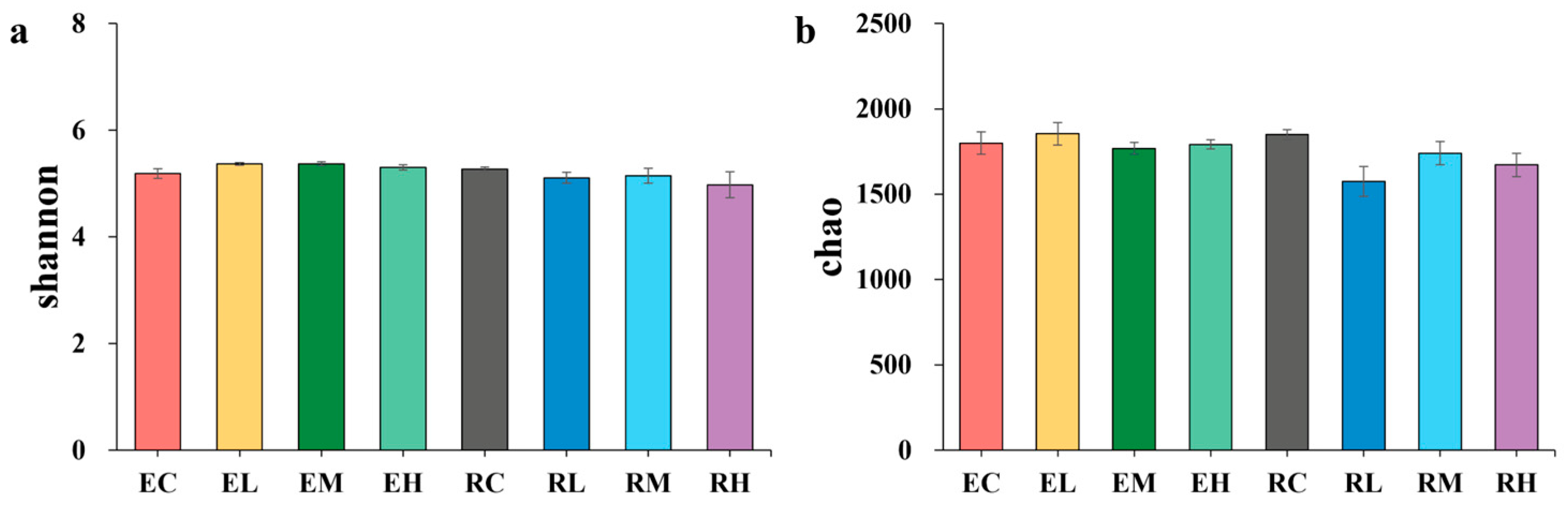
A total of 2,655,495 raw sequences were detected in the fecal microbiota. After quality control, an average of 2,597,696 optimized sequences were obtained based on a 97% similarity threshold, yielding 5707 OTUs. The intersection number of OTUs (Figure S1a) among the eight groups was 1272, accounting for 22.29% of the total OTUs; the numbers of unique OTUs in the NC, NL, NM, NH, BC, BL, BM, and BH groups were 301, 367, 289, 247, 312, 134, 241, and 232, respectively. The rarefaction curve (Figure S1b) demonstrates a plateau, showing that the sequencing depth was sufficient to cover microbial diversity present in the 32 samples. The alpha diversity indices (Shannon index (Figure 1a) and Chao1 index (Figure 1b)) showed no significant differences among groups (p > 0.05), indicating that B. subtilis supplementation did not affect the richness and diversity of the fecal microbiota. PCA (principal component analysis) revealed that microbial community structure did not differ significantly between the control and treatment groups.
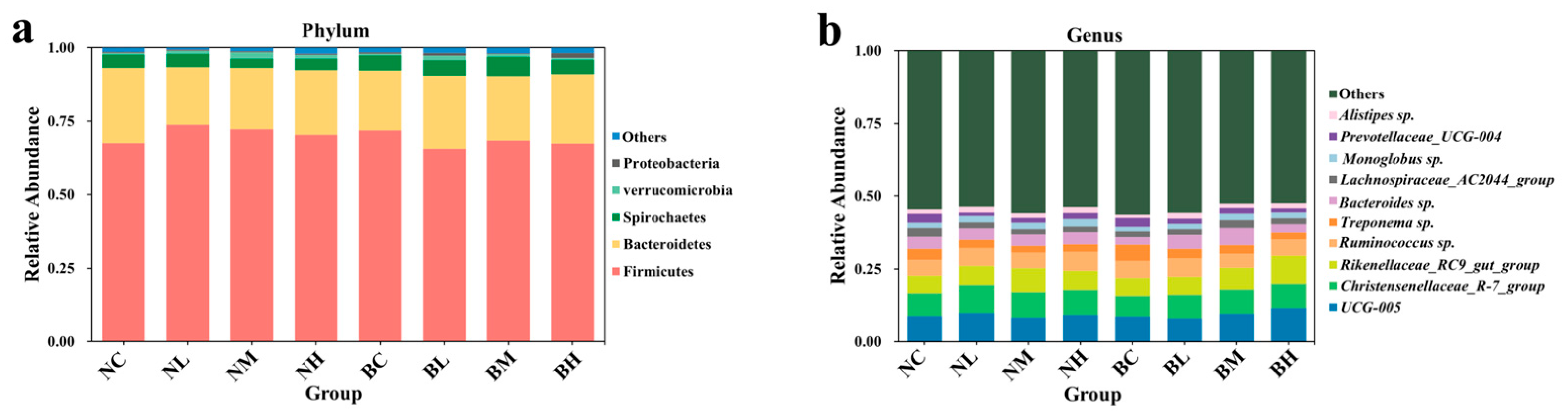
At the phylum level (Figure 2a, Table S3), Firmicutes (69.65%), Bacteroidetes (22.38%), Spirochaetota (4.77%), and Verrucomicrobia (1.04%) emerged as the dominant bacteria. At the genus level (Figure 2b, Table S3), the relative abundance exceeded 5% for UCG-005 (9.23%), Christensenellaceae_R-7_group (8.25%), Rikenellaceae_RC9_gut_group (7.26%), and Ruminococcus sp. (5.70%) across the eight groups. Nanny goats in the NM group exhibited a significantly higher relative abundance of Rikenellaceae_RC9_gut_group compared to the NC group (p < 0.05), while Treponema sp. showed a significantly lower relative abundance under the same conditions (p < 0.05). In billy goats, the relative abundance of UCG-005 and Rikenellaceae_RC9_gut_group increased significantly in the BH group compared to the BC group (p < 0.05). Relative to the BC group, Treponema sp. was markedly reduced in BL, BM, and BH groups (p < 0.05). The relative abundance of UCG-005, Rikenellaceae_RC9_gut_group, and Treponema sp. was significantly influenced by the interaction between the dose of B. subtilis and the gender of Leizhou goats (p < 0.05).

3.2. Fecal Metabolomics

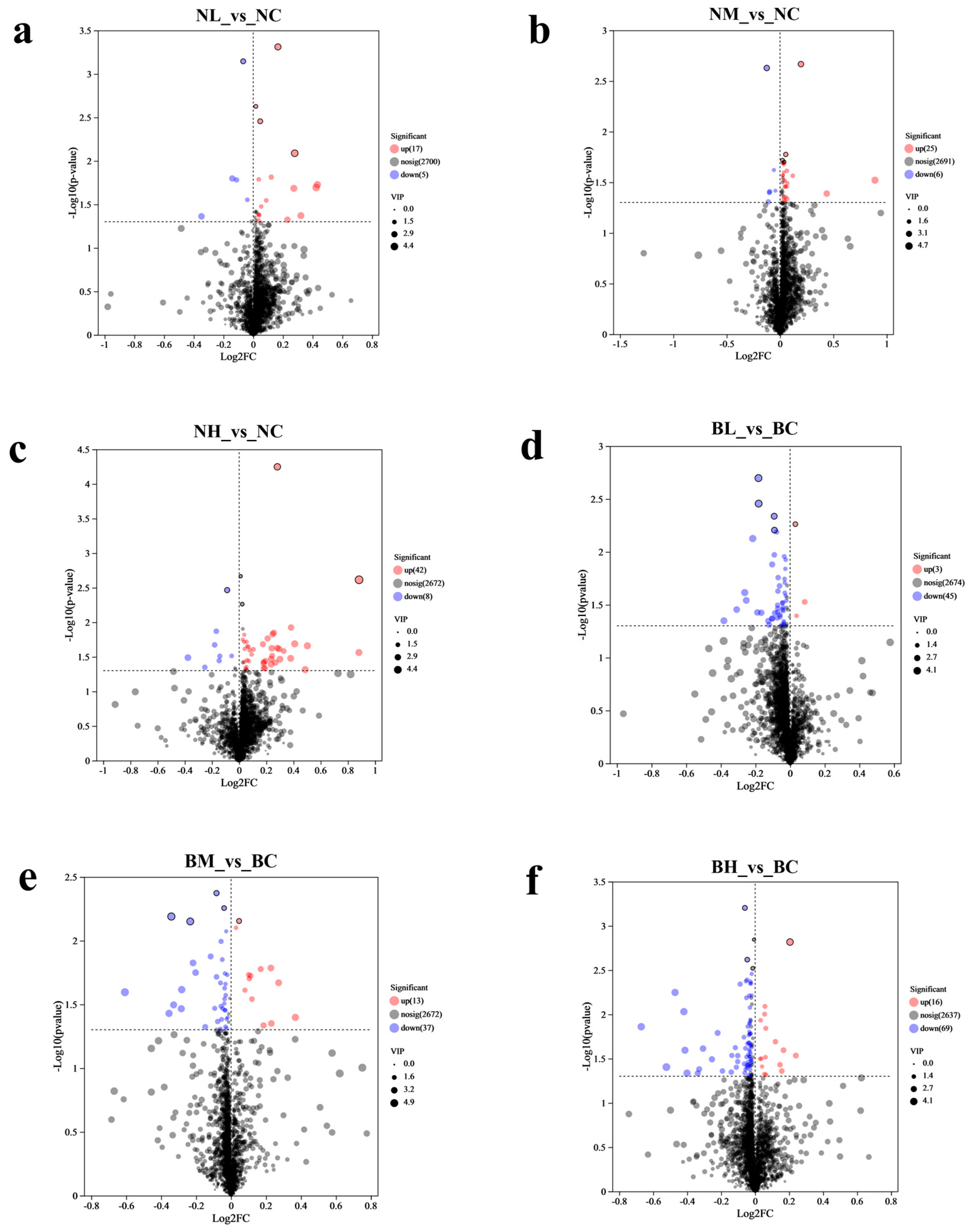
A total of 2722 metabolites were identified across the 32 fecal samples, with 1420 detected in the positive ion state (pos) while 1302 were identified in the negative ion (neg) state. Based on these metabolites, 20 third-level metabolic pathways were enriched, with the majority belonging to the “Metabolism” category (Figure S4). Variables with VIP > 1 and p-value < 0.05 were selected as potential metabolites. Relative to the NC group, the NL group (Figure 3a and Figure S5a) exhibited upregulated levels of 17 metabolites (including Trp-Lys-Tyr-Met-Val-D-Met, lyciumin B, and bis-ferulamidobutane), while 5 metabolites (such as 1-(3-methoxy-2-nitrostyryl) pyrrolidine, ferrostatin-1, and oxytetracycline) were significantly downregulated. In contrast to the NC group, the NM group (Figure 3b and Figure S5b) demonstrated increased levels of 25 metabolites (notably, 1-DNJ, oxaprozin, and Cyclo(le-Ala)), whereas 6 metabolites (particularly ferrostatin-1, Val Val Thr, and Dg (Pgf2Alpha/0:0/-22:0)) were markedly reduced. When compared with the NC group, the NH group (Figure 3c and Figure S5c) displayed increased levels of 42 metabolites (including 2-Galloyl-1,4-galactarolactone methyl ester, oxaprozin, and 1-isopropyl-1,2,3,4, -tetrahydro-beta-carboline-3-carboxylic acid); conversely, 8 metabolites were depressed. Differing from the BC group, the BL group (Figure 3d and Figure S5d) presented increased levels of 3 metabolites (including 1-DNJ and oxytetracycline), whereas 45 metabolites (specifically fumonisin B2, uric acid, and Cer (8:1_20/24:4)) were downregulated. The BC group served as the baseline; the BM group (Figure 3e and Figure S5e) showed increased levels of 13 metabolites (oxytetracycline, 3-(2,3-dihydroxypropyl)-6,8-dihydroxyisochromen-1-one, and Val Val Thr), but 37 metabolites (Glu-Lys-His, andrographolide, and enoxacin) displayed diminished concentrations. Unlike BC, the BH group (Figure 3f and Figure S5f) showed increased levels of 16 metabolites (Val Val Thr and 1-lsopropy1-1,2,3,4, -tetrahydro-beta-carboline-3-carboxylic acid), despite a simultaneous reduction in 69 metabolites (Glu-Lys-His, (1R,11S)-10-(thiophene-3-carbonyl)-3,10-diazabicyclo [9.3.0] tetradecan-2-One, and fumonisin B2).
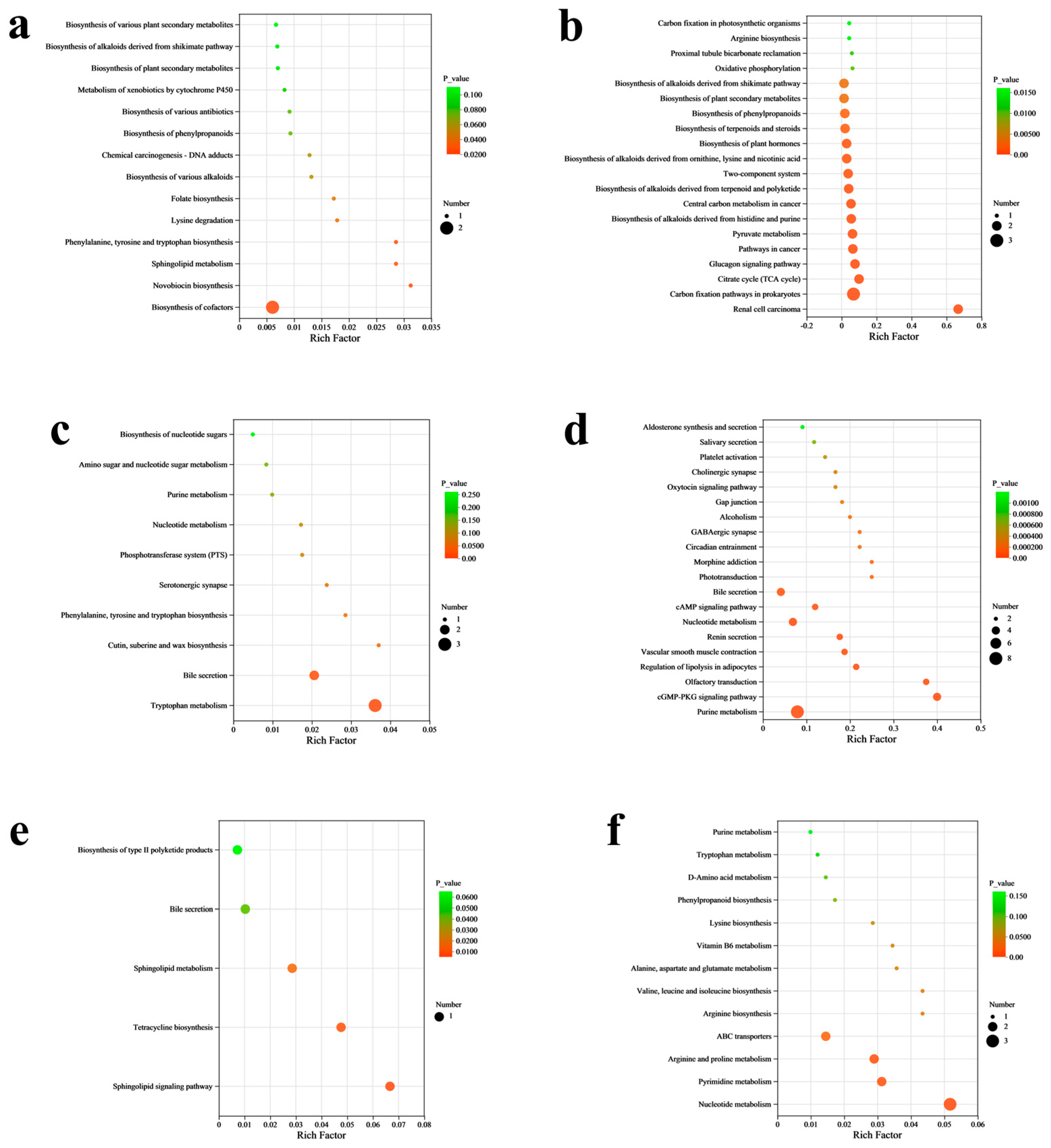
We performed KEGG pathway enrichment analysis of the differential metabolites and visualized the results using bubble plots. Lysine degradation emerged as the most significantly enriched pathway between NL vs. NC groups, followed sequentially by phenylalanine, tyrosine and tryptophan biosynthesis, sphingolipid metabolism, novobiocin biosynthesis, and biosynthesis of cofactors (Figure 4a). In the NM vs. NC groups, the glucagon signaling pathway, citrate cycle (TCA cycle), and carbon fixation pathways in prokaryotes were the significantly enriched metabolic pathways (Figure 4b). The main metabolic pathways altered between the NH and NC groups were serotonergic synapse; phenylalanine, tyrosine, and tryptophan biosynthesis; cutin, suberin, and wax biosynthesis; bile secretion; and tryptophan metabolism (Figure 4c). Comparative analysis between the BL and BC groups revealed significant perturbations in multiple metabolic pathways, including vascular smooth muscle contraction, regulation of lipolysis in adipocytes, olfactory transduction, cGMP-PKG signaling pathway, and purine metabolism (Figure 4d). Differential metabolites between the BM and BC groups were enriched in several pathways, such as biosynthesis of type II polyketide products, bile secretion, sphingolipid metabolism, tetracycline biosynthesis, and sphingolipid signaling pathway (Figure 4e). Lastly, KEGG pathway enrichment analysis between the BH and BC groups revealed that differential metabolites were mainly enriched in the metabolic pathways of arginine biosynthesis, ABC transporters, arginine and proline metabolism, pyrimidine metabolism, and nucleotide metabolism (Figure 4f).

3.3. Analysis of Differential Metabolites and Fecal Microbial Correlations

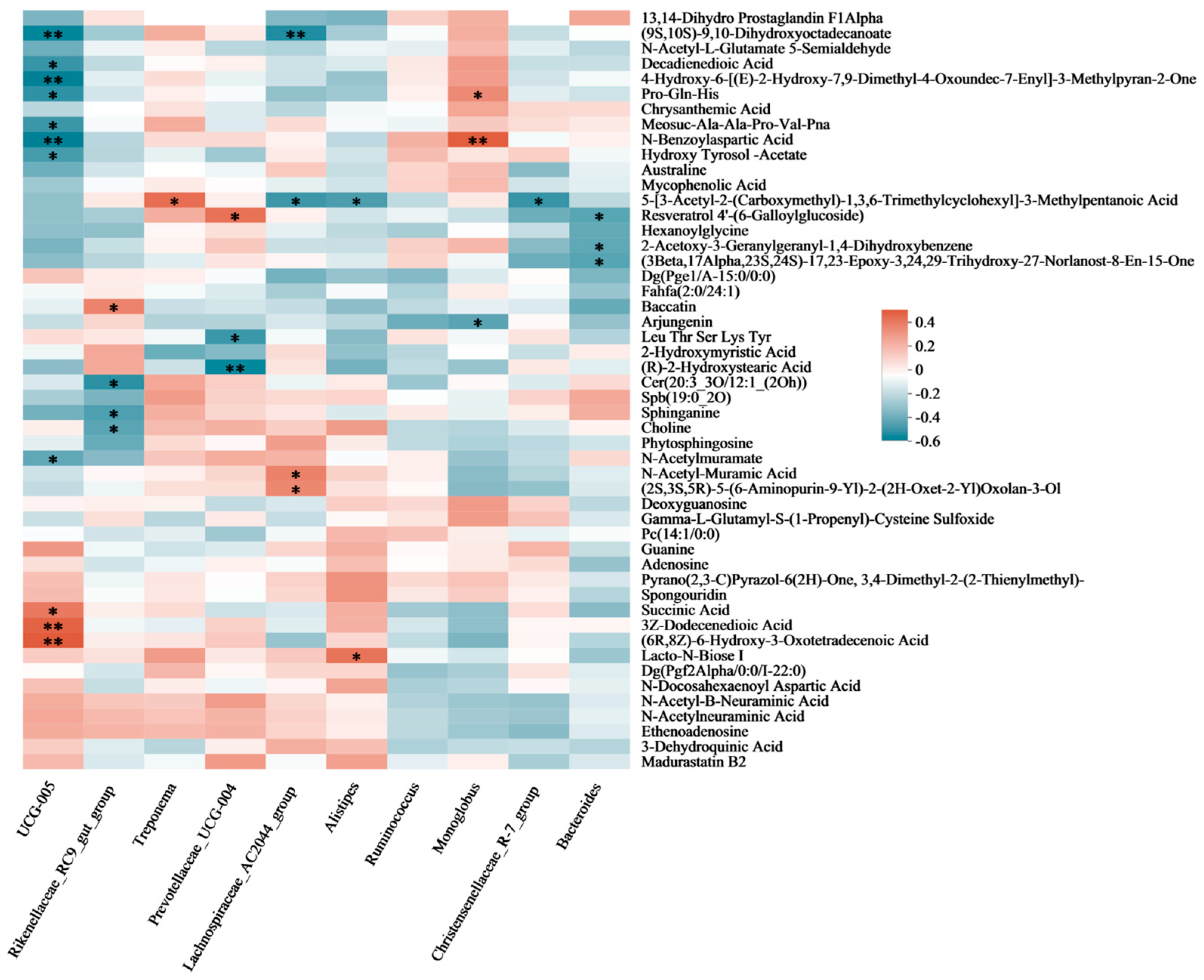
To further analyze the impact of B. subtilis on the intestinal tract, Spearman’s correlation analysis was conducted on the top 10 genera and differential metabolites. The results demonstrated the correlation between the microbiota and metabolites, further highlighting the obtained findings, especially the determination of the association between each genus and metabolite. As shown in Figure 5, UCG-005 showed a significant negative correlation with eight different metabolites, such as (9S,10S)-9,10-dihydroxyoctadecanoate, decadienedioic acid, and 4-hydroxy-6-[(E)-2-hydroxy-7,9-dimethyl-4-oxoundec-7-enyl]-3-methylpyran-2-one. However, it was significantly positively correlated with three different metabolites, such as succinic acid and 3Z-dodecenedioic acid. Rikenellaceae_RC9_gut_group was positively correlated with baccatin, whereas it was significantly negatively correlated with three differential metabolites, such as Cer (20:3_3O/12:1_(2Oh)). Treponema sp. was positively correlated with mycophenolic acid.

4. Discussion

Gastrointestinal microorganisms are regarded as the main forces responsible for degrading nutrients in feed; they play a significant role in the nutritional metabolism, digestion, and absorption in ruminants [15]. Their composition is complex and diverse, and is influenced by gender, age, environment, and diet [16]. Our analysis revealed no significant differences in α-diversity among groups supplemented with varying doses of B. subtilis. In this experiment, Firmicutes and Bacteroides were the dominant phyla, and the sum of their relative abundance exceeded 90%, which is consistent with previous studies [17,18,19]. In the intestinal microbiota systems of mammals such as humans, rats, and pigs, Firmicutes and Bacteroides also hold a dominant position [20,21]. Unlike in mammals, Firmicutes and Bacteroides account for a high proportion of the intestines of poultry, and a large number of Proteobacteria are also present [22]. Previous evidence indicated that Firmicutes and Bacteroides phyla play significant roles in the intestinal ecosystem [23]. These two dominant bacterial phyla in the intestines play different roles in nutrient degradation and fermentation [24,25]. Firmicutes form the core fibrolytic bacterial consortium, which secretes cellulases and hemicellulases to break down recalcitrant polysaccharides into fermentable substrates (e.g., glucose and oligosaccharides), thereby enhancing dietary energy harvest [26]. More specifically, Firmicutes mediate lipid deposition through (1) regulation of energy metabolism, (2) promotion of short-chain fatty acid (SCFA) absorption, (3) modulation of bile acid metabolism, and (4) tuning of host inflammatory responses [27,28,29]. Concurrently, Bacteroidetes contribute to complex carbohydrate digestion and organic matter fermentation [30]. Published evidence demonstrates significant differences in Firmicutes-to-Bacteroidetes ratios between obese and lean mice (elevated in obesity), a pattern also observed in horse and human gut microbiomes [31,32,33]. In nanny goats, the relative abundance of Firmicutes was higher in the NL, NM, and NH groups, whereas that of Bacteroidetes was lower compared to the control group. Research shows that a higher F/B ratio is a sign of excessive fat deposition in the body [34]. However, the effect is different in billy goats. After adding B. subtilis, the F/B ratio in the treatment group decreased, especially in the BL group. This indicates that for nanny goats, the addition of B. subtilis may be beneficial for fat deposition. This might be due to the different sensitivities of the intestinal flora caused by gender differences [35]. It might also be a statistical deviation caused by the small number of experimental animals used in this trial.
Further analysis at the genus level showed that UCG-005, Christensenellaceae_R-7_group, and Rikenellaceae_RC9_gut_group were the dominant genera in fecal microbiota. The addition of B. subtilis significantly stimulated the proliferation of UCG-005 and Rikenellaceae_RC9_gut_group, while suppressing the relative abundance of Treponema sp. Notably, UCG-005 exhibited a positive correlation with animal growth performance and body weight metrics [36]. Diarrhea in lambs can cause a significant reduction in their relative abundance, leading to a decrease in feed efficiency [37]. As a recognized beneficial commensal, UCG-005 demonstrates both anticoccidial properties and enteroprotective functions, likely mediated through competitive exclusion of opportunistic pathogens [38,39]. It is well known that UCG-005 is a specialized bacterium that degrades and ferments complex polysaccharides to produce SCFAs [34]. SCFAs can be used by goats as an energy source to support growth, and they can also activate immune cells and regulate the expression of pro-inflammatory factors IL-6, IL-12, and TNF-α [40]. Parallel observations indicated that Rikenellaceae_RC9_gut_group modulates host inflammatory sensitivity—a phenomenon potentially attributed to B. subtilis-induced enhancement of secretory IgA (sIgA) production, thereby fortifying resistance against enteric pro-inflammatory bacteria [41,42,43]. The higher relative abundances of UCG-005 and Rikenellaceae_RC9_gut_group suggest that these taxa contribute to improved host energy utilization efficiency and intestinal health. The relative abundance of Treponema sp. in billy goats fed with B. subtilis was significantly reduced. Previous studies suggested that Treponema sp. lysis elevates ruminal free lipopolysaccharide (LPS) concentrations, predisposing hosts to systemic inflammation [44]. This aligns with prior findings where dietary monensin and cashew nut shell extract (CNSE) similarly reduced Treponema spp. prevalence [45]. The appearance and evolution of antibiotic-resistant bacteria is one of the most serious problems associated with the use of antibiotics to kill or inhibit pathogenic bacteria; antibiotics can also disrupt the microbiota and impose a burden on the health of animals [46,47]. Research had indicated that probiotics were conducive to forming a synergistic or antagonistic effect with intestinal bacteria, further improving the intestinal environment and function [48,49,50]. Current evidence indicates that probiotics could potentially benefit animal growth performance and gastrointestinal function.
In our study, there was a significant interaction between the changes in the relative abundances of UCG-005, Rikenellaceae_RC9_gut_group, and Treponema sp. This indicates that the effect of B. subtilis is gender-specific. This observed difference may stem from sex-specific physiological mechanisms governing host responses to dietary B. subtilis supplementation. Gut microbiota diversity is significantly correlated with sex hormones and their metabolites [51,52]. Notably, the colonization dynamics of B. subtilis in the intestinal tract might be modulated by estrogens, progesterone, and androgens. Moreover, the typically higher feed intake and shorter intestinal retention time in rams may represent other limiting factors affecting the colonization efficiency and functional efficacy of B. subtilis in the gastrointestinal tract.
To elucidate the physiological impact of B. subtilis on gastrointestinal function, we conducted fecal metabolomic analyses. As terminal products of host–microbiota co-metabolism, fecal metabolites directly reflect feed efficiency, intestinal homeostasis, and systemic metabolic status [53]. Notably, both male and female goats exhibited elevated 1-DNJ levels following B. subtilis supplementation. Previous studies have shown that Bacillus can produce 1-DNJ—a potent inhibitor of α-amylase and α-glucosidase that delays glucose absorption, thereby exerting hypoglycemic effects [54,55,56]. B. subtilis may modulate glucose metabolism in Leizhou goats through a 1-DNJ-mediated mechanism. Furthermore, the experimental results showed that there are significant changes in the metabolic levels of various polypeptides, which play a significant role in interfering with the growth and development of the body, immune regulation, and metabolism. Certain peptides demonstrated antimicrobial, anticarcinogenic, and hypolipidemic properties [57,58]. These shifts likely stem from probiotic-induced modifications in protein digestion and microbial proteolysis, though mechanistic pathways warrant further investigation. Another interesting point is that supplementation with 2.5 g/d of B. subtilis markedly upregulated folate biosynthesis; folate is a nutrient whose demand increases during gestation. This enhanced microbial folate production could potentially support reproductive efficiency in does, though direct confirmation of breeding performance improvements would require further investigation. Finally, our research utilized a combined analysis of the microbiome and metabolism, and found that UCG-005 has a significant correlation with succinic acid, an intermediate of the tricarboxylic acid cycle. This discovery reveals the possible pathways by which B. subtilis regulates the energy metabolism of the organism. However, the potential mechanisms by which B. subtilis regulates intestinal microbiota and metabolite composition and promotes the growth and health of Leizhou goats still require further research.
Although the combined analysis of the fecal microbiome and metabolome in this study provided basic data on the relationship between intestinal microbial diversity and structure and host metabolism in goats, the sample size of this experiment was relatively small, and it still needs to be verified in a larger population. Furthermore, due to the limitations of objective conditions, we were unable to conduct long-term follow-up investigations on the experimental animals, and the growth performance and health of the animals could not be measured. More data need to be measured and explored, such as rumen microbiota, rumen metabolism, blood metabolism, and host genomics, and the combined analysis of these datasets is required to explore multiple interaction pathways of B. subtilis in relation to the production performance and health of Leizhou goats.

5. Conclusions

The results presented in this article provide new insights into the impacts of B. subtilis on the fecal microbiota and metabolites. The addition of B. subtilis alters the composition of the bacterial community, increasing the relative abundance of UCG-005 and Rikenellaceae_RC9_gut_group, while reducing the relative abundance of Treponema sp. Metabolomic analysis shows that the concentrations of 1-DNJ and peptide metabolites have significantly changed. Additionally, correlation analysis revealed potential links between bacterial genera and metabolites. These findings suggest potential effects on energy metabolism and intestinal health. Based on the microbiome and metabolome changes observed in this study, the doses producing the most substantial microbial and metabolic shifts were 5 g/d for nanny goats and 7.5 g/d for billy goats, but further performance trials are required before firm practical recommendations can be made.

Supplementary Materials

The following supporting information can be downloaded at: https://www.mdpi.com/article/10.3390/microorganisms13122740/s1, Figure S1: Venn diagram of fecal bacterial OTUs (a). Rarefaction curve to indicate whether the amount of sequencing data in the sample is sufficient (b). Figure S2: Principal Component Analysis (PCA) analysis of nanny goats (a) and billy goats (b). Table S1: Microbial community alpha diversity. Table S2: The relative abundance (%) of fecal bacterial phylum of Leizhou goat. Table S3: The relative abundance (%) of fecal bacterial genus of Leizhou goat. Figure S3: OPLS-DA score plots and permutation tests results. Figure S4: KEGG pathway classification: metabolites detected and annotated. Figure S5: Variation important projection (VIP) of metabolites ranked according to metabolite importance in group differentiation. (a) NC vs NL, (b) NC vs NM, (c) NC vs NH, (d) BC vs BL, (e) BC vs BM, and (f) BC vs BH. NC, NL, NM, and NH (nanny goats with 0, 2.5, 5, and 7.5 g B. subtilis in the diet, respectively); BC, BL, BM, and BH (billy goats with 0, 2.5, 5, and 7.5 g B. subtilis in the diet, respectively). n = 4 per group.

Author Contributions

Conceptualization, A.C.; data curation, H.L., J.H., S.H. and W.W.; funding acquisition, H.Z., H.L. and J.H.; investigation, A.C., Q.W., M.Z., W.P., Y.Y., K.W., J.H. and H.Z.; methodology, A.C., W.P., S.H., X.D., D.Z. and M.L.; software, S.H., Q.W. and M.Z.; validation, H.L. and D.Z.; formal analysis, X.D., Y.Y. and X.Z.; resources, J.H.; supervision, H.Z.; visualization, H.Z.; project administration, H.L. and H.Z.; writing—original draft, A.C. and H.L.; writing—review and editing, W.W., X.Z., S.H. and H.Z. All authors have read and agreed to the published version of the manuscript.

Funding

The present work was jointly supported by the Special Research Project of Zhanjiang Experimental Station, Chinese Academy of Tropical Agricultural Sciences (No. ZJSYZ2024002), the Special Fund for Agricultural Product Quality and Safety of the Ministry of Agriculture and Rural Affairs of China: “Evaluation of Nutritional Value and Parameter Establishment Energy Ingredients of Meat Sheep” (08250203), Research and Demonstration of Key Technologies for Grass-Livestock Integration in Hot Zones Science and Technology Innovation Team (No. CATASCXTD202530), Hainan Province Science and Technology Special Fund (ZDYF2024KJTPY034) and the Chongzuo Municipal Science and Technology Bureau (20231219).

Institutional Review Board Statement

All protocols, experimental procedures, and methods were approved by the Animal Care and Use Committee of the Zhanjiang Experiments Station, Chinese Academy of Tropical Agricultural Sciences (protocol number: CATAS-20240006ZES).

Informed Consent Statement

Not applicable.

Data Availability Statement

The data used are confidential and will be made available upon request from the corresponding author (Hanlin Zhou).

Conflicts of Interest

The authors declare no conflicts of interest.

References

  1. Wang, H.; Su, M.; Wang, C.; Li, D.; Li, Q.; Liu, Z.; Qi, X.; Wu, Y.; Zhao, Y.; Li, T.; et al. Yeast Culture Repairs Rumen Epithelial Injury by Regulating Microbial Communities and Metabolites in Sheep. Front. Microbiol. 2023, 14, 1305772. [Google Scholar] [CrossRef] [PubMed]
  2. Jena, R.; Singh, N.A.; Ahmed, N.; Choudhury, P.K. Bifidobacteria in Antibiotic-Associated Dysbiosis: Restoring Balance in the Gut Microbiome. World J. Microbiol. Biotechnol. 2025, 41, 297. [Google Scholar] [CrossRef]
  3. Bento, J.T.; Gomes-Gonçalves, S.; Cruz, R.; Esteves, F.; Baptista, A.L.; Aires Pereira, M.; Caseiro, P.; Carreira, P.; Figueira, L.; Mesquita, J.R.; et al. The Prevalence of Antimicrobial Resistance Genes in the Environments of Small Ruminant Farms from Central Portugal. Antibiotics 2025, 14, 576. [Google Scholar] [CrossRef]
  4. Kumar, A.; Panda, A.K.; Sharma, N. Determination of Antibiotic Residues in Bovine Milk by HPLC-DAD and Assessment of Human Health Risks in Northwestern Himalayan Region, India. J. Food Sci. Technol. 2022, 59, 95–104. [Google Scholar] [CrossRef]
  5. Novotny-Nuñez, I.; Perdigón, G.; Matar, C.; Martínez Monteros, M.J.; Yahfoufi, N.; Cazorla, S.I.; Maldonado-Galdeano, C. Evaluation of Rouxiella badensis Subsp Acadiensis (Canan SV-53) as a Potential Probiotic Bacterium. Microorganisms 2023, 11, 1347. [Google Scholar] [CrossRef]
  6. Qiu, K.; Li, C.-L.; Wang, J.; Qi, G.-H.; Gao, J.; Zhang, H.-J.; Wu, S.-G. Effects of Dietary Supplementation with Bacillus subtilis, as an Alternative to Antibiotics, on Growth Performance, Serum Immunity, and Intestinal Health in Broiler Chickens. Front. Nutr. 2021, 8, 786878. [Google Scholar] [CrossRef]
  7. Daneshazari, R.; Rabbani Khorasgani, M.; Hosseini-Abari, A. Preliminary in Vitro Assessment of Probiotic Properties of Bacillus subtilis GM1, a Spore Forming Bacteria Isolated from Goat Milk. Iran. J. Vet. Res. 2023, 24, 65–73. [Google Scholar] [CrossRef]
  8. Golnari, M.; Bahrami, N.; Milanian, Z.; Rabbani Khorasgani, M.; Asadollahi, M.A.; Shafiei, R.; Fatemi, S.S.-A. Isolation and Characterization of Novel Bacillus Strains with Superior Probiotic Potential: Comparative Analysis and Safety Evaluation. Sci. Rep. 2024, 14, 1457. [Google Scholar] [CrossRef]
  9. Deka, D.; Bhargavi, P.; Sharma, A.; Goyal, D.; Jawed, M.; Goyal, A. Enhancement of Cellulase Activity from a New Strain of Bacillus subtilis by Medium Optimization and Analysis with Various Cellulosic Substrates. Enzym. Res. 2011, 2011, 151656. [Google Scholar] [CrossRef]
  10. Yang, X.; Liu, T.; Zhou, J.; An, L.; Pan, F.; Zhang, H.; Wang, X.; Xu, G.; Zheng, C. Effects of Bacillus subtilis Addition to Milk Replacer on Growth Performance, Nutrient Digestibility, Intestinal Microbiota, and Short-Chain Fatty Acid Concentration of Hu Lambs. Anim. Feed Sci. Technol. 2025, 319, 116175. [Google Scholar] [CrossRef]
  11. Cui, C.; Shen, C.J.; Jia, G.; Wang, K.N. Effect of Dietary Bacillus subtilis on Proportion of Bacteroidetes and Firmicutes in Swine Intestine and Lipid Metabolism. Genet. Mol. Res. GMR 2013, 12, 1766–1776. [Google Scholar] [CrossRef] [PubMed]
  12. Zou, X.Y.; Zhang, M.; Tu, W.J.; Zhang, Q.; Jin, M.L.; Fang, R.D.; Jiang, S. Bacillus subtilis Inhibits Intestinal Inflammation and Oxidative Stress by Regulating Gut Flora and Related Metabolites in Laying Hens. Anim. Int. J. Anim. Biosci. 2022, 16, 100474. [Google Scholar] [CrossRef]
  13. Ma, Z.-Z.; Cheng, Y.-Y.; Wang, S.-Q.; Ge, J.-Z.; Shi, H.-P.; Kou, J.-C. Positive Effects of Dietary Supplementation of Three Probiotics on Milk Yield, Milk Composition and Intestinal Flora in Sannan Dairy Goats Varied in Kind of Probiotics. J. Anim. Physiol. Anim. Nutr. 2020, 104, 44–55. [Google Scholar] [CrossRef]
  14. Liu, H.; Peng, W.; Mao, K.; Yang, Y.; Wu, Q.; Wang, K.; Zeng, M.; Han, X.; Han, J.; Zhou, H. The changes in fecal bacterialcommunities in goats offered rumen-protected fat. Microorganisms 2024, 12, 822. [Google Scholar] [CrossRef]
  15. Ma, J.; Liu, H.; Liu, M.; Xu, J.; Lu, J.; Cao, S.; Li, S.; Ma, S.; Wang, Z.; Zhu, X.; et al. Effects of Diets Combining Peanut Vine and Whole-Plant Corn Silage on Growth Performance, Meat Quality and Rumen Microbiota of Simmental Crossbred Cattle. Foods 2023, 12, 3786. [Google Scholar] [CrossRef]
  16. Wu, D.; Vinitchaikul, P.; Deng, M.; Zhang, G.; Sun, L.; Gou, X.; Mao, H.; Yang, S. Host and Altitude Factors Affect Rumen Bacteria in Cattle. Braz. J. Microbiol. Publ. Braz. Soc. Microbiol. 2020, 51, 1573–1583. [Google Scholar] [CrossRef]
  17. Ley, R.E.; Hamady, M.; Lozupone, C.; Turnbaugh, P.J.; Ramey, R.R.; Bircher, J.S.; Schlegel, M.L.; Tucker, T.A.; Schrenzel, M.D.; Knight, R.; et al. Evolution of Mammals and Their Gut Microbes. Science 2008, 320, 1647–1651. [Google Scholar] [CrossRef] [PubMed]
  18. Oikonomou, G.; Teixeira, A.G.V.; Foditsch, C.; Bicalho, M.L.; Machado, V.S.; Bicalho, R.C. Fecal Microbial Diversity in Pre-Weaned Dairy Calves as Described by Pyrosequencing of Metagenomic 16S rDNA. Associations of Faecalibacterium Species with Health and Growth. PLoS ONE 2013, 8, e63157. [Google Scholar] [CrossRef] [PubMed]
  19. Huo, W.; Zhu, W.; Mao, S. Impact of Subacute Ruminal Acidosis on the Diversity of Liquid and Solid-Associated Bacteria in the Rumen of Goats. World J. Microbiol. Biotechnol. 2014, 30, 669–680. [Google Scholar] [CrossRef]
  20. Poupet, C.; Chassard, C.; Nivoliez, A.; Bornes, S. Caenorhabditis elegans, a Host to Investigate the Probiotic Properties of Beneficial Microorganisms. Front. Nutr. 2020, 7, 135. [Google Scholar] [CrossRef] [PubMed]
  21. Abbas, M.; Hayirli, Z.; Drakesmith, H.; Andrews, S.C.; Lewis, M.C. Effects of Iron Deficiency and Iron Supplementation at the Host-Microbiota Interface: Could a Piglet Model Unravel Complexities of the Underlying Mechanisms? Front. Nutr. 2022, 9, 927754. [Google Scholar] [CrossRef]
  22. Chen, X.; Hu, B.; Huang, L.; Cheng, L.; Liu, H.; Hu, J.; Hu, S.; Han, C.; He, H.; Kang, B.; et al. The Differences in Intestinal Growth and Microorganisms between Male and Female Ducks. Poult. Sci. 2020, 100, 1167–1177. [Google Scholar] [CrossRef]
  23. Gruninger, R.J.; Sensen, C.W.; McAllister, T.A.; Forster, R.J. Diversity of Rumen Bacteria in Canadian Cervids. PLoS ONE 2014, 9, e89682. [Google Scholar] [CrossRef]
  24. Liu, H.; Zhou, J.; Degen, A.; Liu, H.; Cao, X.; Hao, L.; Shang, Z.; Ran, T.; Long, R. A Comparison of Average Daily Gain, Apparent Digestibilities, Energy Balance, Rumen Fermentation Parameters, and Serum Metabolites between Yaks (Bos grunniens) and Qaidam Cattle (Bos taurus) Consuming Diets Differing in Energy Level. Anim. Nutr. 2023, 12, 77–86. [Google Scholar] [CrossRef] [PubMed]
  25. Liu, X.; Li, J.; Hao, L.; Degen, A.; Wang, D.; Ma, Y.; Niu, J.; Cheng, Y.; Liu, S. Effect of the Ratio of Dietary Metabolizable Energy to Nitrogen Content on Production Performance, Serum Metabolites, Rumen Fermentation Parameters, and Bacterial Diversity in Yaks. Front. Microbiol. 2022, 13, 1013980. [Google Scholar] [CrossRef]
  26. Zhang, Y.K.; Zhang, X.X.; Li, F.D.; Li, C.; Li, G.Z.; Zhang, D.Y.; Song, Q.Z.; Li, X.L.; Zhao, Y.; Wang, W.M. Characterization of the Rumen Microbiota and Its Relationship with Residual Feed Intake in Sheep. Anim. Int. J. Anim. Biosci. 2021, 15, 100161. [Google Scholar] [CrossRef] [PubMed]
  27. Zheng, Y.; Chen, J.; Wang, X.; Han, L.; Yang, Y.; Wang, Q.; Yu, Q. Metagenomic and Transcriptomic Analyses Reveal the Differences and Associations Between the Gut Microbiome and Muscular Genes in Angus and Chinese Simmental Cattle. Front. Microbiol. 2022, 13, 815915. [Google Scholar] [CrossRef]
  28. Dong, W.; Mao, Y.; Xiang, Z.; Zhu, J.; Wang, H.; Wang, A.; Jiang, M.; Gu, Y. Traditional Chinese Medicine Formula Jian Pi Tiao Gan Yin Reduces Obesity in Mice by Modulating the Gut Microbiota and Fecal Metabolism. Evid.-Based Complement. Altern. Med. ECAM 2022, 2022, 9727889. [Google Scholar] [CrossRef]
  29. Wang, Y.; Nan, X.; Zhao, Y.; Wang, Y.; Jiang, L.; Xiong, B. Ruminal Degradation of Rumen-Protected Glucose Influences the Ruminal Microbiota and Metabolites in Early-Lactation Dairy Cows. Appl. Environ. Microbiol. 2021, 87, e01908-20. [Google Scholar] [CrossRef] [PubMed]
  30. Wang, J.; Fan, H.; Han, Y.; Zhao, J.; Zhou, Z. Characterization of the Microbial Communities along the Gastrointestinal Tract of Sheep by 454 Pyrosequencing Analysis. Asian-Australas. J. Anim. Sci. 2017, 30, 100–110. [Google Scholar] [CrossRef]
  31. Zhu, Q.; Qi, N.; Shen, L.; Lo, C.C.; Xu, M.; Duan, Q.; Ollberding, N.J.; Wu, Z.; Hui, D.Y.; Tso, P.; et al. Sexual Dimorphism in Lipid Metabolism and Gut Microbiota in Mice Fed a High-Fat Diet. Nutrients 2023, 15, 2175. [Google Scholar] [CrossRef]
  32. Biddle, A.S.; Tomb, J.-F.; Fan, Z. Microbiome and Blood Analyte Differences Point to Community and Metabolic Signatures in Lean and Obese Horses. Front. Vet. Sci. 2018, 5, 225. [Google Scholar] [CrossRef]
  33. Fu, Z.D.; Cui, J.Y. Remote Sensing between Liver and Intestine: Importance of Microbial Metabolites. Curr. Pharmacol. Rep. 2017, 3, 101–113. [Google Scholar] [CrossRef] [PubMed]
  34. Du, C.; Zhou, X.; Zhang, K.; Huang, S.; Wang, X.; Zhou, S.; Chen, Y. Inactivation of the MSTN Gene Expression Changes the Composition and Function of the Gut Microbiome in Sheep. BMC Microbiol. 2022, 22, 273. [Google Scholar] [CrossRef]
  35. Peng, C.; Xu, X.; Li, Y.; Li, X.; Yang, X.; Chen, H.; Zhu, Y.; Lu, N.; He, C. Sex-Specific Association between the Gut Microbiome and High-Fat Diet-Induced Metabolic Disorders in Mice. Biol. Sex. Differ. 2020, 11, 5. [Google Scholar] [CrossRef] [PubMed]
  36. Tang, S.; Xin, Y.; Ma, Y.; Xu, X.; Zhao, S.; Cao, J. Screening of Microbes Associated With Swine Growth and Fat Deposition Traits Across the Intestinal Tract. Front. Microbiol. 2020, 11, 586776. [Google Scholar] [CrossRef]
  37. Wang, Y.; Zhang, H.; Zhu, L.; Xu, Y.; Liu, N.; Sun, X.; Hu, L.; Huang, H.; Wei, K.; Zhu, R. Dynamic Distribution of Gut Microbiota in Goats at Different Ages and Health States. Front. Microbiol. 2018, 9, 2509. [Google Scholar] [CrossRef]
  38. Kong, F.; Hua, Y.; Zeng, B.; Ning, R.; Li, Y.; Zhao, J. Gut Microbiota Signatures of Longevity. Curr. Biol. CB 2016, 26, R832–R833. [Google Scholar] [CrossRef]
  39. Liu, S.; Li, S.; Huang, S.; Liu, M.; Zhang, S.; Zhang, L.; Li, S.; Jian, F. Exploring the Anticoccidial Efficacy of Houttuynia Cordata: Insights into Gut Microbiota Modulation and Metabolic Enhancement in Lambs. Res. Vet. Sci. 2025, 194, 105821. [Google Scholar] [CrossRef]
  40. Vinolo, M.A.R.; Rodrigues, H.G.; Nachbar, R.T.; Curi, R. Regulation of Inflammation by Short Chain Fatty Acids. Nutrients 2011, 3, 858–876. [Google Scholar] [CrossRef]
  41. Tang, X.; Mao, M.; Zhang, X.; Gao, H.; Wang, Z.; Fang, R.; Cheng, H.-W.; Jiang, S. Cecal Microbiota Transplantation Enhances Calcium Retention through Modulation of Gut Microbiota and Intestinal Calcium Transporter Gene Expression in Chicks. Poult. Sci. 2025, 104, 105437. [Google Scholar] [CrossRef] [PubMed]
  42. Wu, Y.; Wu, C.; Che, Y.; Zhang, T.; Dai, C.; Nguyễn, A.D.; Duan, K.; Huang, Y.; Li, N.; Zhou, H.; et al. Effects of Glycyrrhiza Polysaccharides on Chickens’ Intestinal Health and Homeostasis. Front. Vet. Sci. 2022, 9, 891429. [Google Scholar] [CrossRef]
  43. Wang, X.; Wu, X.; Cong, X.; Ren, J.; Li, J.; Zhu, J.; Dai, M.; Hrabchenko, N.; Du, Y.; Qi, J. The Functional Role of Fecal Microbiota Transplantation on Salmonella Enteritidis Infection in Chicks. Vet. Microbiol. 2022, 269, 109449. [Google Scholar] [CrossRef]
  44. Monteiro, H.F.; Faciola, A.P. Ruminal Acidosis, Bacterial Changes, and Lipopolysaccharides. J. Anim. Sci. 2020, 98, skaa248. [Google Scholar] [CrossRef]
  45. Sarmikasoglou, E.; Sumadong, P.; Roesch, L.F.W.; Halima, S.; Arriola, K.; Yuting, Z.; Jeong, K.C.C.; Vyas, D.; Hikita, C.; Watanabe, T.; et al. Effects of Cashew Nut Shell Extract and Monensin on in Vitro Ruminal Fermentation, Methane Production, and Ruminal Bacterial Community. J. Dairy Sci. 2024, 107, 840–856. [Google Scholar] [CrossRef]
  46. Díaz-Formoso, L.; Contente, D.; Feito, J.; Hernández, P.E.; Borrero, J.; Muñoz-Atienza, E.; Cintas, L.M. Genomic Sequence of Streptococcus salivarius MDI13 and Latilactobacillus sakei MEI5: Two Promising Probiotic Strains Isolated from European Hakes (Merluccius merluccius, L.). Vet. Sci. 2024, 11, 365. [Google Scholar] [CrossRef]
  47. Koutsoumanis, K.; Allende, A.; Alvarez-Ordóñez, A.; Bolton, D.; Bover-Cid, S.; Chemaly, M.; Davies, R.; De Cesare, A.; Hilbert, F.; Lindqvist, R.; et al. Update of the List of QPS-recommended Biological Agents Intentionally Added to Food or Feed as Notified to EFSA 15: Suitability of Taxonomic Units Notified to EFSA until September 2021. EFSA J. 2022, 20, e07045. [Google Scholar] [CrossRef]
  48. Essa, M.O.A.; Cheng, C.; Li, J.; Han, X.; Wei, Z.K.; Abdelhadi, L.A.M.; Hassan, H.A.; Adam, S.Y.; Husien, H.M.; Saleh, A.A.; et al. Probiotic Administration Correlated with Reduced Diarrheal Incidence and Improved Gut Microbiota Diversity in Young Goats. Front. Vet. Sci. 2025, 12, 1604638. [Google Scholar] [CrossRef] [PubMed]
  49. Goetz, B.M.; Abeyta, M.A.; Rodriguez-Jimenez, S.; Mayorga, E.J.; Opgenorth, J.; Jakes, G.M.; Freestone, A.D.; Moore, C.E.; Dickson, D.J.; Hergenreder, J.E.; et al. Effects of Bacillus subtilis PB6 Supplementation on Production, Metabolism, Inflammatory Biomarkers, and Gastrointestinal Tract Permeability in Transition Dairy Cows. J. Dairy Sci. 2023, 106, 9793–9806. [Google Scholar] [CrossRef] [PubMed]
  50. Apás, A.L.; Arena, M.E.; Colombo, S.; González, S.N. Probiotic Administration Modifies the Milk Fatty Acid Profile, Intestinal Morphology, and Intestinal Fatty Acid Profile of Goats. J. Dairy. Sci. 2015, 98, 47–54. [Google Scholar] [CrossRef] [PubMed]
  51. Baker, J.M.; Al-Nakkash, L.; Herbst-Kralovetz, M.M. Estrogen-gut microbiome axis: Physiological and clinical implications. Maturitas. 2017, 103, 45–53. [Google Scholar] [CrossRef]
  52. Franasiak, J.M.; Scott, R.T., Jr. Introduction: Microbiome in human reproduction. Fertil. Steril. 2015, 104, 1341–1343. [Google Scholar] [CrossRef]
  53. Li, Y.; Ma, N.; Ren, L.; Wang, M.; Hu, L.; Shen, Y.; Cao, Y.; Li, Q.; Li, J.; Gao, Y. Microbiome-Metabolome Responses in Ruminal Content and Feces of Lactating Dairy Cows With N-Carbamylglutamate Supplementation Under Heat Stress. Front. Vet. Sci. 2022, 9, 902001. [Google Scholar] [CrossRef]
  54. Gao, Y.; Bian, W.; Fang, Y.; Du, P.; Liu, X.; Zhao, X.; Li, F. α-Glucosidase Inhibitory Activity of Fermented Okara Broth Started with the Strain Bacillus amyloliquefaciens SY07. Molecules 2022, 27, 1127. [Google Scholar] [CrossRef] [PubMed]
  55. Onose, S.; Ikeda, R.; Nakagawa, K.; Kimura, T.; Yamagishi, K.; Higuchi, O.; Miyazawa, T. Production of the α-Glycosidase Inhibitor 1-Deoxynojirimycin from Bacillus Species. Food Chem. 2013, 138, 516–523. [Google Scholar] [CrossRef] [PubMed]
  56. Zhu, Y.-P.; Yamaki, K.; Yoshihashi, T.; Ohnishi Kameyama, M.; Li, X.-T.; Cheng, Y.-Q.; Mori, Y.; Li, L.-T. Purification and Identification of 1-Deoxynojirimycin (DNJ) in Okara Fermented by Bacillus subtilis B2 from Chinese Traditional Food (Meitaoza). J. Agric. Food Chem. 2010, 58, 4097–4103. [Google Scholar] [CrossRef] [PubMed]
  57. Ryzhak, A.P.; Chalisova, N.I.; Lin’kova, N.S.; Nichik, T.E.; Dudkov, A.V.; Kolchina, N.V.; Ryzhak, G.A.; Khalimov, R.I. Effect of Polypeptides on Cell Proliferation and Apoptosis during Aging. Bull. Exp. Biol. Med. 2017, 162, 534–538. [Google Scholar] [CrossRef]
  58. Zhang, Y.; He, P.; Zhang, P.; Yi, X.; Xiao, C.; Chen, X. Polypeptides-Drug Conjugates for Anticancer Therapy. Adv. Healthc. Mater. 2021, 10, e2001974. [Google Scholar] [CrossRef]
Figure 1. Shannon index box plot (a). Chao 1 index box plot (b). NC, NL, NM, and NH (nanny goats with 0, 2.5, 5, and 7.5 g B. subtilis in the diet, respectively); BC, BL, BM, and BH (billy goats with 0, 2.5, 5, and 7.5 g B. subtilis in the diet, respectively). (n = 4 per group).
Microorganisms 13 02740 g001
Figure 2. Microbial community structure in the feces of Leizhou goats on the phylum level (a) and genus level (b). NC, NL, NM, and NH (nanny goats with 0, 2.5, 5, and 7.5 g B. subtilis in the diet, respectively); BC, BL, BM, and BH (billy goats with 0, 2.5, 5, and 7.5 g B. subtilis in the diet, respectively). (n = 4 per group).
Microorganisms 13 02740 g002
Figure 3. Volcano plots showing significantly differentially expressed metabolites for NC vs. NL (a), NC vs. NM (b), NC vs. NH (c), BC vs. BL (d), BC vs. BM (e), and BC vs. BH (f). NC, NL, NM, and NH (nanny goats with 0, 2.5, 5, and 7.5 g B. subtilis in the diet, respectively); BC, BL, BM, and BH (billy goats with 0, 2.5, 5, and 7.5 g B. subtilis in the diet, respectively). (n = 4 per group).
Microorganisms 13 02740 g003
Figure 4. KEGG pathway enrichment analysis of differentially expressed metabolites for NC vs. NL (a), NC vs. NM (b), NC vs. NH (c), BC vs. BL (d), BC vs. BM (e), and BC vs. BH (f). NC, NL, NM, and NH (nanny goats with 0, 2.5, 5, and 7.5 g B. subtilis in the diet, respectively); BC, BL, BM, and BH (billy goats with 0, 2.5, 5, and 7.5 g B. subtilis in the diet, respectively). (n = 4 per group).
Microorganisms 13 02740 g004
Figure 5. Correlation heatmap between differential metabolites and the top 10 microbial genera at the genus level. * and ** indicate significant differences at p < 0.05 and <0.01, respectively.
Microorganisms 13 02740 g005
Table 1. Basal diet composition and nutritional level (air-dry basis/%).
Dietary Composition%
Oat hulls40.00
Corn26.00
Soybean meal12.40
Wheat bran3.00
Soybean hulls7.60
Palm meal6.00
Soybean oil1.00
Premix (1)4.00
Nutritional levels (2)
Metabolizable energy/ME (MJ/kg)11.03
Dry matter, DM95.91
Crude protein, CP12.19
Ether extract, EE6.63
Organic matter, OM88.18
Neutral detergent fiber, NDF51.97
Acid detergent fiber, ADF20.12
(1) The premix provided the following per kg of diet: VA 4 000 IU, VD3 1 600 IU, VE 36 mg, Cu 10 mg, Fe 50 mg, Zn 40 mg, Mn 42 mg, I 0.12 mg, Se 0.12 mg. (2) ME is a calculated value, while the others are measured values.
Disclaimer/Publisher’s Note: The statements, opinions and data contained in all publications are solely those of the individual author(s) and contributor(s) and not of MDPI and/or the editor(s). MDPI and/or the editor(s) disclaim responsibility for any injury to people or property resulting from any ideas, methods, instructions or products referred to in the content.