Innovations in Biofilm Prevention and Eradication in Medical Sector: An Integrative Review



Abstract
1. Introduction
2. Materials and Methods
2.1. Protocol
2.2. Information Sources and Search Strategy
2.3. Eligibility Criteria
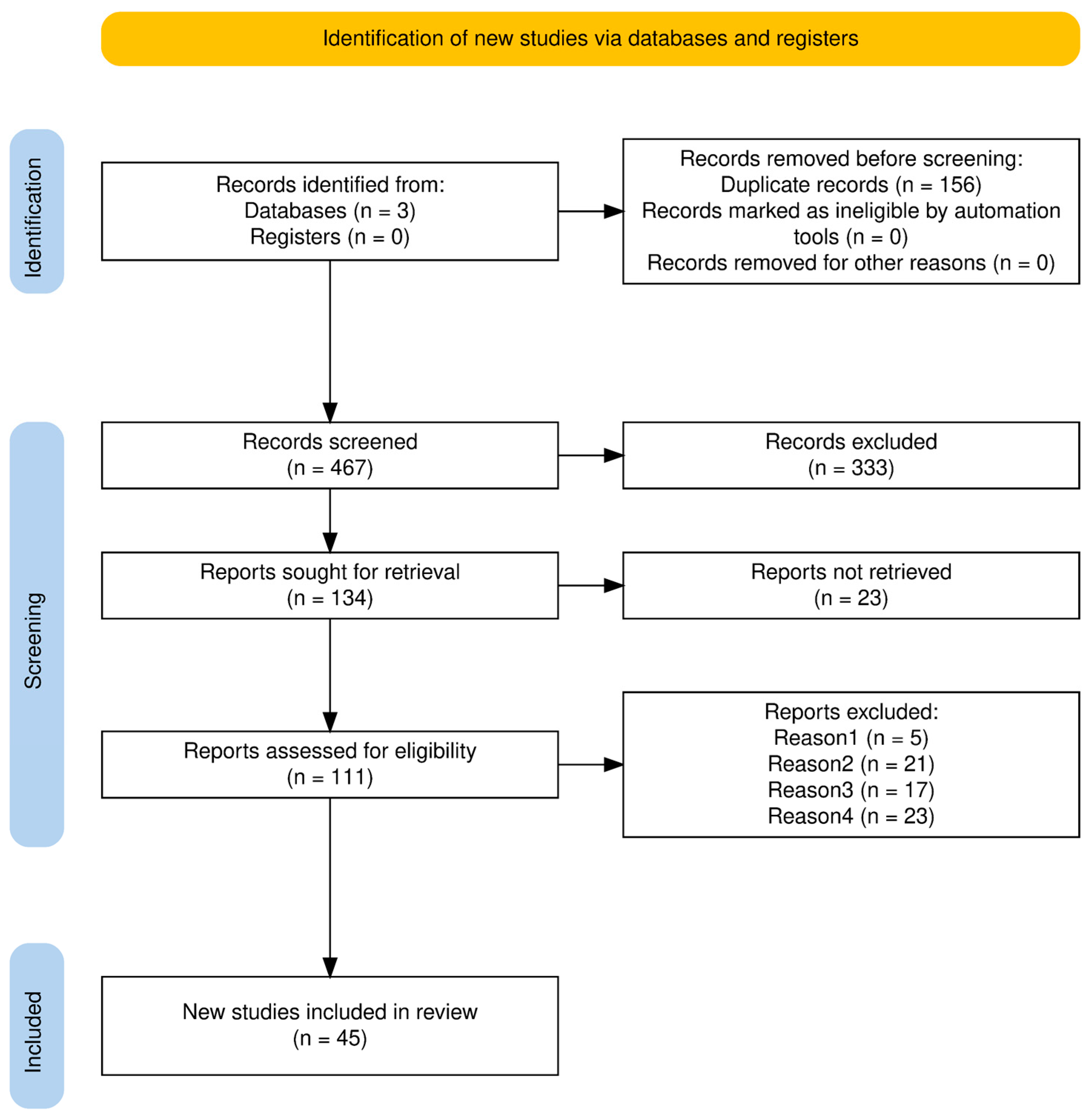
2.4. Selection Process
2.5. Data Synthesis
3. Results and Discussion
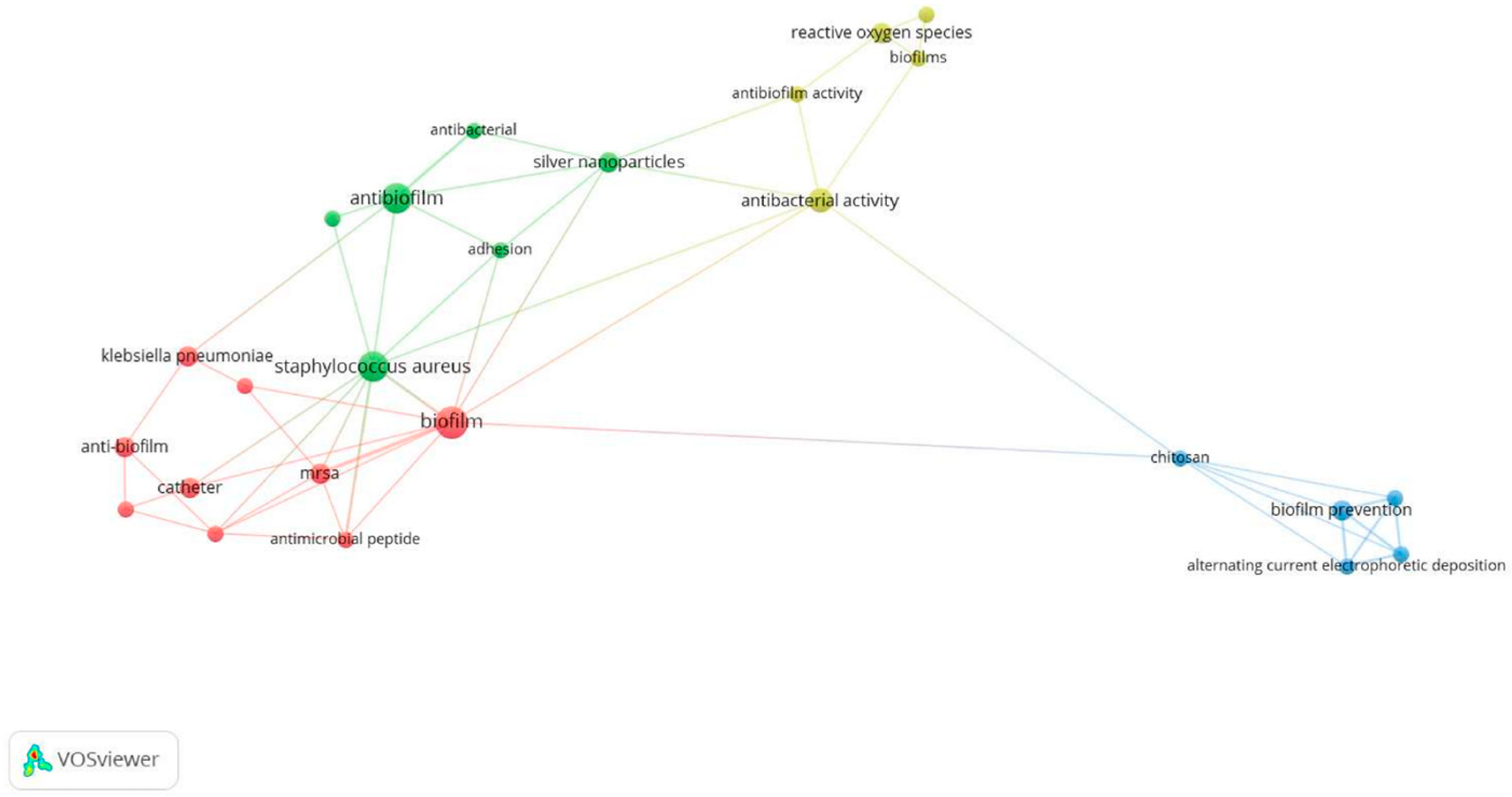
3.1. Summary of Studies
3.2. Chemical Strategies and Nanomaterials-Based Systems
3.2.1. Silver-Based Systems
3.2.2. Antimicrobial Peptides and Nitric–Oxide Hybrids
3.2.3. Cationic Polymer Coatings
3.2.4. Curcumin–Chitosan Magnetic Nanocarriers
3.2.5. Ni–Cu–Zn Ferrite Nanomaterials
3.2.6. Alginate–Kaolin–Silver Bio-Nanocomposites
3.2.7. Alginate–Polymer Nanozymes and Catalytic Nanostructures
3.3. Enzymatic Strategies
3.3.1. DNase I Coatings for Extracellular DNA Degradation
3.3.2. Lysostaphin-Functionalised Silicone Catheters
3.4. Physical and Photonic Approaches
3.4.1. Metallic Coatings with Contact-Killing and ROS-Mediated Effects
3.4.2. Photodynamic and Photocatalytic Systems
3.4.3. Microscale Enzyme–Photocatalyst Robots
3.5. Natural Compounds and Biological Systems
3.5.1. Natural and Plant-Derived Compounds
3.5.2. Marine Microbial Metabolites
3.5.3. Bacteriophage-Based Antibiofilm Systems
3.5.4. Biosurfactants and Molecules of Microbial Origin
3.6. Hybrid Bio-Material and Bio-Physical Systems
3.6.1. Hybrid Enzymatic and Photocatalytic Systems
3.6.2. Nanobubble and Fluidic Antibiofilm Systems
4. Conclusions
Author Contributions
Funding
Institutional Review Board Statement
Informed Consent Statement
Data Availability Statement
Conflicts of Interest
Abbreviations
| AgNPs | Silver nanoparticles |
| MDR | Multidrug-resistant |
| ROS | Reactive oxygen species |
| MIC | Minimum inhibitory concentration |
| CV | Crystal violet |
| SEM | Scanning electron microscopy |
| TEM | Transmission electron microscopy |
| EO | Ethylene oxide |
| QS | Quorum sensing |
| EPS | Extracellular polymeric substances |
| AMP | Antimicrobial peptide |
| PVC | Polyvinyl chloride |
| CLSM | Confocal laser scanning microscopy |
| MBEC | Minimum biofilm eradication concentration |
| eDNA | Extracellular DNA |
| AC-EPD | Alternating current electrophoretic deposition |
| NIR | Near-infrared (light) |
| MRSA | Methicillin-resistant Staphylococcus aureus |
| IL-6 | Interleukin-6 |
| TNF-α | Tumour necrosis factor alpha |
| MDR 2017/745 | EU Medical Device Regulation |
References
- Nunes, S.D.O.; Rosa, H.D.S.; Canellas, A.L.B.; Romanos, M.T.V.; Dos Santos, K.R.N.; Muricy, G.; Oelemann, W.M.R.; Laport, M.S. High Reduction of Staphylococcal Biofilm by Aqueous Extract from Marine Sponge-Isolated Enterobacter sp. Res. Microbiol. 2021, 172, 103787. [Google Scholar] [CrossRef]
- Vazquez, N.M.; Moreno, S.; Galván, E.M. Exposure of Multidrug-Resistant Klebsiella Pneumoniae Biofilms to 1,8-Cineole Leads to Bacterial Cell Death and Biomass Disruption. Biofilm 2022, 4, 100085. [Google Scholar] [CrossRef] [PubMed]
- Bletsa, E.; Merkl, P.; Thersleff, T.; Normark, S.; Henriques-Normark, B.; Sotiriou, G.A. Highly Durable Photocatalytic Titanium Suboxide—Polymer Nanocomposite Films with Visible Light-Triggered Antibiofilm Activity. Chem. Eng. J. 2023, 454, 139971. [Google Scholar] [CrossRef]
- Selem, E.; Mekky, A.F.; Hassanein, W.A.; Reda, F.M.; Selim, Y.A. Antibacterial and Antibiofilm Effects of Silver Nanoparticles against the Uropathogen Escherichia coli U12. Saudi J. Biol. Sci. 2022, 29, 103457. [Google Scholar] [CrossRef]
- Jayakumar, J.; Vinod, V.; Arumugam, T.; Sathy, B.N.; Biswas, L.; Kumar, V.A.; Biswas, R. Efficacy of Lysostaphin Functionalized Silicon Catheter for the Prevention of Staphylococcus aureus Biofilm. Int. J. Biol. Macromol. 2024, 256, 128547. [Google Scholar] [CrossRef] [PubMed]
- Liang, M.; Wang, Y.; Ma, K.; Yu, S.; Chen, Y.; Deng, Z.; Liu, Y.; Wang, F. Engineering Inorganic Nanoflares with Elaborate Enzymatic Specificity and Efficiency for Versatile Biofilm Eradication. Small 2020, 16, 2002348. [Google Scholar] [CrossRef]
- Page, M.J.; McKenzie, J.E.; Bossuyt, P.M.; Boutron, I.; Hoffmann, T.C.; Mulrow, C.D.; Shamseer, L.; Tetzlaff, J.M.; Akl, E.A.; Brennan, S.E.; et al. The PRISMA 2020 Statement: An Updated Guideline for Reporting Systematic Reviews. BMJ 2021, 372, n71. [Google Scholar] [CrossRef]
- Whittemore, R.; Knafl, K. The Integrative Review: Updated Methodology. J. Adv. Nurs. 2005, 52, 546–553. [Google Scholar] [CrossRef]
- Aktan, M.K.; Van Der Gucht, M.; Hendrix, H.; Vande Velde, G.; Baert, K.; Hauffman, T.; Killian, M.S.; Lavigne, R.; Braem, A. Anti-Infective DNase I Coatings on Polydopamine Functionalized Titanium Surfaces by Alternating Current Electrophoretic Deposition. Anal. Chim. Acta 2022, 1218, 340022. [Google Scholar] [CrossRef]
- Ibáñez-Cervantes, G.; Cruz-Cruz, C.; Durán-Manuel, E.M.; Loyola-Cruz, M.Á.; Cureño-Díaz, M.A.; Castro-Escarpulli, G.; Lugo-Zamudio, G.E.; Rojo-Gutiérrez, M.I.; Razo-Blanco Hernández, D.M.; López-Ornelas, A.; et al. Disinfection Efficacy of Ozone on ESKAPE Bacteria Biofilms: Potential Use in Difficult-to-Access Medical Devices. Am. J. Infect. Control 2023, 51, 11–17. [Google Scholar] [CrossRef] [PubMed]
- Ciandrini, E.; Morroni, G.; Cirioni, O.; Kamysz, W.; Kamysz, E.; Brescini, L.; Baffone, W.; Campana, R. Synergistic Combinations of Antimicrobial Peptides against Biofilms of Methicillin-Resistant Staphylococcus aureus (MRSA) on Polystyrene and Medical Devices. J. Glob. Antimicrob. Resist. 2020, 21, 203–210. [Google Scholar] [CrossRef]
- Vento, F.; Nicosia, A.; Mezzina, L.; Franco, D.; Zagami, R.; Mazzaglia, A.; Mineo, P.G. A PEGylated Star Polymer with a Silver-Porphyrin Core as an Efficient Photo-Antimicrobial Agent. Dye. Pigment. 2024, 223, 111957. [Google Scholar] [CrossRef]
- Peter, A.; Sadanandan, S.; Bindiya, E.S.; Mohan, N.; Bhat, S.G.; Abhitha, K. Biofilm Inhibition on Natural Rubber by Hydrophilic Modification Using Carboxymethyl Chitosan Stabilised High Energy Faceted Silver Nanoparticles. Carbohydr. Polym. Technol. Appl. 2023, 6, 100357. [Google Scholar] [CrossRef]
- Salazar-Sesatty, H.A.; Montoya-Hinojosa, E.I.; Villarreal-Salazar, V.; Alvizo-Baez, C.A.; Camacho-Ortiz, A.; Terrazas-Armendariz, L.D.; Luna-Cruz, I.E.; Alcocer-González, J.M.; Villarreal-Treviño, L.; Flores-Treviño, S. Biofilm Eradication and Inhibition of Methicillin-Resistant Staphylococcus Clinical Isolates by Curcumin-Chitosan Magnetic Nanoparticles. Jpn. J. Infect. Dis. 2024, 77, 260–268. [Google Scholar] [CrossRef]
- Klubthawee, N.; Wongchai, M.; Aunpad, R. The Bactericidal and Antibiofilm Effects of a Lysine-Substituted Hybrid Peptide, CM-10K14K, on Biofilm-Forming Staphylococcus epidermidis. Sci. Rep. 2023, 13, 22262. [Google Scholar] [CrossRef]
- Yu, K.; Alzahrani, A.; Khoddami, S.; Ferreira, D.; Scotland, K.B.; Cheng, J.T.J.; Yazdani-Ahmadabadi, H.; Mei, Y.; Gill, A.; Takeuchi, L.E.; et al. Self-Limiting Mussel Inspired Thin Antifouling Coating with Broad-Spectrum Resistance to Biofilm Formation to Prevent Catheter-Associated Infection in Mouse and Porcine Models. Adv. Healthc. Mater. 2021, 10, 2001573. [Google Scholar] [CrossRef] [PubMed]
- Mayorga-Martinez, C.C.; Zelenka, J.; Grmela, J.; Michalkova, H.; Ruml, T.; Mareš, J.; Pumera, M. Swarming Aqua Sperm Micromotors for Active Bacterial Biofilms Removal in Confined Spaces. Adv. Sci. 2021, 8, 2101301. [Google Scholar] [CrossRef] [PubMed]
- Agarwal, H.; Nyffeler, K.E.; Blackwell, H.E.; Lynn, D.M. Fabrication of Slippery Liquid-Infused Coatings in Flexible Narrow-Bore Tubing. ACS Appl. Mater. Interfaces 2021, 13, 55621–55632. [Google Scholar] [CrossRef]
- Fei, Y.; Wu, J.; An, H.-W.; Zhu, K.; Peng, B.; Cai, J.; Zhang, Y.; Li, L.-L.; Wang, H.; Huang, Z. Identification of New Nitric Oxide-Donating Peptides with Dual Biofilm Eradication and Antibacterial Activities for Intervention of Device-Related Infections. J. Med. Chem. 2020, 63, 9127–9135. [Google Scholar] [CrossRef]
- Ceresa, C.; Rinaldi, M.; Tessarolo, F.; Maniglio, D.; Fedeli, E.; Tambone, E.; Caciagli, P.; Banat, I.M.; Diaz De Rienzo, M.A.; Fracchia, L. Inhibitory Effects of Lipopeptides and Glycolipids on C. albicans–Staphylococcus spp. Dual-Species Biofilms. Front. Microbiol. 2021, 11, 545654. [Google Scholar] [CrossRef] [PubMed]
- Lu, X.; Yang, M.; Zhou, S.; Yang, S.; Chen, X.; Khalid, M.; Wang, K.; Fang, Y.; Wang, C.; Lai, R.; et al. Identification and Characterization of RK22, a Novel Antimicrobial Peptide from Hirudinaria Manillensis against Methicillin Resistant Staphylococcus aureus. Int. J. Mol. Sci. 2023, 24, 13453. [Google Scholar] [CrossRef] [PubMed]
- Ansari, M.A.; Akhtar, S.; Rauf, M.A.; Alomary, M.N.; AlYahya, S.; Alghamdi, S.; Almessiere, M.; Baykal, A.; Khan, F.; Adil, S.F.; et al. Sol–Gel Synthesis of Dy-Substituted Ni0.4Cu0.2Zn0.4(Fe2−xDyx)O4 Nano Spinel Ferrites and Evaluation of Their Antibacterial, Antifungal, Antibiofilm and Anticancer Potentialities for Biomedical Application. Int. J. Nanomed. 2021, 16, 5633–5650. [Google Scholar] [CrossRef] [PubMed]
- Souza, E.G.; Nascimento, C.D.D.D.; Aguzzoli, C.; Santillán, E.S.B.; Cuevas-Suárez, C.E.; Nascente, P.D.S.; Piva, E.; Lund, R.G. Enhanced Antibacterial Properties of Titanium Surfaces through Diversified Ion Plating with Silver Atom Deposition. J. Funct. Biomater. 2024, 15, 164. [Google Scholar] [CrossRef] [PubMed]
- Imani, M.M.; Ghorbani, F.; Gorji, P.; Mobarakeh, M.S.; Safaei, M. Optimization, Structural Characterization, Thermal Properties, and Bactericidal Activity of Novel Alginate/Kaolin/Ag Bionanocomposite against Streptococcus Mutans Biofilm. J. Nanomater. 2022, 2022, 3720499. [Google Scholar] [CrossRef]
- Kriechbaumer, L.K.; Happak, W.; Distelmaier, K.; Thalhammer, G.; Kaiser, G.; Kugler, S.; Tan, Y.; Leonhard, M.; Zatorska, B.; Presterl, E.; et al. Disinfection of Contaminated Metal Implants with an Er:YAG Laser. J. Orthop. Res. 2020, 38, 2464–2473. [Google Scholar] [CrossRef]
- Galdiero, E.; Di Onofrio, V.; Maione, A.; Gambino, E.; Gesuele, R.; Menale, B.; Ciaravolo, M.; Carraturo, F.; Guida, M. Allium ursinum and Allium oschaninii against Klebsiella pneumoniae and Candida albicans Mono- and Polymicrobic Biofilms in In Vitro Static and Dynamic Models. Microorganisms 2020, 8, 336. [Google Scholar] [CrossRef]
- Martínez Chamás, J.; Isla, M.I.; Zampini, I.C. Antibacterial and Antibiofilm Activity of Different Species of Fabiana sp. Extract Obtained via Maceration and Ultrasound-Assisted Extraction against Staphylococcus epidermidis. Plants 2023, 12, 1830. [Google Scholar] [CrossRef]
- Rouchon, C.N.; Harris, J.; Zubair-Nizami, Z.; Weinstein, A.J.; Roky, M.; Frank, K.L. The Cationic Antimicrobial Peptide Activity of Lysozyme Reduces Viable Enterococcus faecalis Cells in Biofilms. Antimicrob. Agents Chemother. 2022, 66, e02339-21. [Google Scholar] [CrossRef]
- Pradhan, L.; Sah, P.; Nayak, M.; Upadhyay, A.; Pragya, P.; Tripathi, S.; Singh, G.; Mounika, B.; Paik, P.; Mukherjee, S. Biosynthesized Silver Nanoparticles Prevent Bacterial Infection in Chicken Egg Model and Mitigate Biofilm Formation on Medical Catheters. J. Biol. Inorg. Chem. 2024, 29, 353–373. [Google Scholar] [CrossRef]
- Tarabal, V.S.; Abud, Y.K.D.; Da Silva, F.G.; Da Cruz, L.F.; Fontes, G.N.; Da Silva, J.A.; Filho, C.B.S.; Sinisterra, R.D.; Granjeiro, J.M.; Granjeiro, P.A. Effect of DMPEI Coating against Biofilm Formation on PVC Catheter Surface. World J. Microbiol. Biotechnol. 2024, 40, 6. [Google Scholar] [CrossRef]
- Firdausy, A.F.; Roza, L.; Khan, M.M.; Wafi, A. Antimicrobial and Anti-Biofilm Activities of Photosynthesized Ag@TiO2 and Ag@N-TiO2 Nanocomposites against Clinically Isolated Multidrug Resistance Klebsiella pneumoniae. Chem. Pap. 2024, 78, 9191–9203. [Google Scholar] [CrossRef]
- Riahi, A.; Mabudi, H.; Tajbakhsh, E.; Roomiani, L.; Momtaz, H. Optimizing Chitosan Derived from Metapenaeus affinis: A Novel Anti-Biofilm Agent against Pseudomonas aeruginosa. AMB Expr. 2024, 14, 77. [Google Scholar] [CrossRef]
- Noach, N.; Lavy, E.; Reifen, R.; Friedman, M.; Kirmayer, D.; Zelinger, E.; Ritter, A.; Yaniv, D.; Reifen, E. Zinc Chloride Is Effective as an Antibiotic in Biofilm Prevention Following Septoplasty. Sci. Rep. 2023, 13, 8344. [Google Scholar] [CrossRef]
- Bastos, C.G.; Livio, D.F.; De Oliveira, M.A.; Meira, H.G.R.; Tarabal, V.S.; Colares, H.C.; Parreira, A.G.; Chagas, R.C.R.; Speziali, M.G.; Da Silva, J.A.; et al. Exploring the Biofilm Inhibitory Potential of Candida sp. UFSJ7A Glycolipid on Siliconized Latex Catheters. Braz. J. Microbiol. 2024, 55, 2119–2130. [Google Scholar] [CrossRef]
- Villa, K.; Sopha, H.; Zelenka, J.; Motola, M.; Dekanovsky, L.; Beketova, D.C.; Macak, J.M.; Ruml, T.; Pumera, M. Enzyme-Photocatalyst Tandem Microrobot Powered by Urea for Escherichia coli Biofilm Eradication. Small 2022, 18, 2106612. [Google Scholar] [CrossRef] [PubMed]
- Verma, M.; Nisha, A.; Bathla, M.; Acharya, A. Resveratrol-Encapsulated Glutathione-Modified Robust Mesoporous Silica Nanoparticles as an Antibacterial and Antibiofilm Coating Agent for Medical Devices. ACS Appl. Mater. Interfaces 2023, 15, 58212–58229. [Google Scholar] [CrossRef]
- Poyil, M.M.; Shamna, K.P.; Ahmed, T.B.M. Prevention of Catheter Associated Urinary Tract Infection Biofilms Using Illicium verum Hook. f. Extract Coated Urinary Catheters. Ann. Phytomedicine 2022, 11, 326–331. [Google Scholar] [CrossRef]
- Xiao, Y.; Wan, C.; Wu, X.; Xu, Y.; Chen, Y.; Rao, L.; Wang, B.; Shen, L.; Han, W.; Zhao, H.; et al. Novel Small-Molecule Compound YH7 Inhibits the Biofilm Formation of Staphylococcus aureus in a sarX-Dependent Manner. mSphere 2024, 9, e00564-23. [Google Scholar] [CrossRef]
- Aktan, M.K.; Amoli, M.S.; Zayed, N.; Srivastava, M.G.; Teughels, W.; Bloemen, V.; Braem, A. Alternating Current Electrophoretic Deposition of Maleic Anhydride Modified Chitosan on Ti Implants to Combat Biofilm Formation. Surf. Coat. Technol. 2024, 493, 131182. [Google Scholar] [CrossRef]
- Fallon, M.; Lalrempuia, R.; Tabrizi, L.; Brandon, M.P.; McGarry, R.; Cullen, A.; Fernández-Alvarez, F.J.; Pryce, M.T.; Fitzgerald-Hughes, D. Novel Cyclometalated Iridium (III) Complexes as Antibacterial Agents for Photodynamic Inactivation. J. Photochem. Photobiol. A Chem. 2025, 462, 116218. [Google Scholar] [CrossRef]
- Hu, X.; Shang, J.; Mu, R.-X.; Qi, Q.; Quan, C.; Li, J.; Zhang, Y.-M. Rough Ag2S@H-CeO2 Photonic Nanocomposites for Effective Eradication of Drug-Resistant Bacteria and Improved Healing of Infected Cutaneous Wounds. Colloids Surf. B Biointerfaces 2024, 243, 114119. [Google Scholar] [CrossRef]
- Jang, J.; Choi, Y.; Tanaka, M.; Choi, J. Development of Silver/Graphene Oxide Nanocomposites for Antibacterial and Antibiofilm Applications. J. Ind. Eng. Chem. 2020, 83, 46–52. [Google Scholar] [CrossRef]
- Padmavathi, A.R.; Karthikeyan, B.; Rao, T.S.; Senthil Kumar, J.; Murthy, P.S. Polydimethylsiloxane Loaded Capsaicin Afflicts Membrane Integrity, Metabolic Activity and Biofilm Formation of Nosocomial Pathogens. Microb. Pathog. 2025, 200, 107282. [Google Scholar] [CrossRef] [PubMed]
- Singh, B.; Park, G.; Ryu, J.-H.; Park, M.-H. Micro-Nanobubble Technology in Surface Cleaning and Defouling. Appl. Sci. 2025, 15, 1197. [Google Scholar] [CrossRef]
- Huang, Z.; Ma, Y.; Yang, X.; Yang, X.; Cheng, Y.; Zhang, A. Ultrasound-Switchable Piezoelectric BiVO4/Fullerene Heterostructure for on-Demand ROS Modulation in MRSA-Infected Diabetic Wound Healing. Biomater. Adv. 2025, 174, 214307. [Google Scholar] [CrossRef]
- Suchithra, K.V.; Hameed, A.; Rekha, P.D.; Stothard, P.; Arun, A.B. A Novel Kayvirus Species Phage RuSa1 Removes Biofilm and Lyses Multiple Clinical Strains of Methicillin Resistant Staphylococcus aureus. Sci. Rep. 2025, 15, 7358. [Google Scholar] [CrossRef]
- Zuo, P.; Metz, J.; Yu, P.; Alvarez, P.J.J. Biofilm-Responsive Encapsulated-Phage Coating for Autonomous Biofouling Mitigation in Water Storage Systems. Water Res. 2022, 224, 119070. [Google Scholar] [CrossRef]
- ISO 10993-1:2018; Biological Evaluation of Medical Devices—Part 1: Evaluation and Testing Within a Risk Management Process. ISO: Geneva, Switzerland, 2018.
- ISO 10993-5:2020; Biological Evaluation of Medical Devices—Part 5: Tests for In Vitro Cytotoxicity. ISO: Geneva, Switzerland, 2020.
- ISO 10993-17:2002; Biological Evaluation of Medical Devices—Part 17: Establishment of Allowable Limits for Leachable Substances. ISO: Geneva, Switzerland, 2002.
- ISO 10993-18:2020; Biological Evaluation of Medical Devices—Part 18: Chemical Characterization of Medical Device Materials Within a Risk Management Process. ISO: Geneva, Switzerland, 2020.



| Inclusion | Exclusion |
|---|---|
| Describes the type of innovation used | Not published in English |
| Explains the mechanism of action | Full text not available |
| Specifies the application context (e.g., clinical or experimental, including medical devices) | Focuses on biofilms outside the medical sector (e.g., food industry) |
| Reports effectiveness outcomes (quantitative or qualitative) | Does not describe an innovative approach |
| Author, Year | Type of Innovation | Mechanism of Action (Brief) | Device/Context | Type/Efficacy Evaluation | Advantages | Limitations |
|---|---|---|---|---|---|---|
| Selem et al., 2022 [4] | Nanomaterials (AgNPs) | Anti-adhesive and bactericidal via ROS generation | Urinary catheters | In vitro; marked reduction in E. coli biofilm | Simple and effective material; broad antimicrobial spectrum | Potential cytotoxicity and uncontrolled Ag release |
| Aktan et al., 2022 [9] | Enzyme-coated surface (DNase I via AC-EPD) | Biofilm matrix degradation | Titanium discs (implant surface model) | In vitro; reduced biomass of S. aureus and E. coli | Targeted action; feasible electrodeposition method for implant coating | Limited enzyme stability; high production cost |
| Jayakumar et al., 2024 [5] | Enzymatic (lysozyme-like lysostaphin immobilised on silicone) | Cell wall lysis within biofilm | Silicone catheters | In vitro; strong activity against S. aureus biofilm | High specificity toward Staphylococcus spp. | Narrow antimicrobial spectrum |
| Ibanez-Cervantes et al., 2023 [10] | Physical technology (ozone, O3) | Oxidative biofilm disruption and degradation | Respirators/ventilator pathways | In vitro; reduced P. aeruginosa biofilm | Antibiotic-free approach; rapid antimicrobial action | Implementation and safety challenges in respiratory systems |
| Ciandrini et al., 2020 [11] | Antimicrobial peptides (AMPs) | Membrane disruption and anti-adhesive activity | CVC surfaces/polystyrene substrates | In vitro; inhibition of S. aureus biofilm formation | Novel class of bioactive molecules | Limited stability; high production cost; potential hemolytic effects |
| Vento et al., 2024 [12] | Nano-porphyrin (photodynamic therapy, PDT) | ROS-mediated bactericidal and biofilm-eradication effect (light-activated) | General medical devices | In vitro; eradication of S. aureus biofilm | Synergistic nano–light mechanism; high antimicrobial efficacy | Requires external light source; limited clinical translation so far |
| Nunes et al., 2021 [1] | Post-/probiotic approach (cell-free supernatant, CFS) | Competitive inhibition and interference with bacterial adhesion | Implantable/orthopaedic devices | In vitro; reduced surface colonisation | Natural origin; low cytotoxicity | Variable composition; unclear mechanism of action |
| Bletsa et al., 2023 [3] | Photocatalytic coatings (Ag/TiOx) | ROS generation and anti-adhesive surface activity | Medical device surfaces | In vitro; reduction in both Gram-positive and Gram-negative bacteria | Durable and long-term antimicrobial activity | Potential cytotoxicity related to metal release |
| Peter at al., 2023 [13] | Hydrophilic coatings with AgNPs | Anti-adhesive and bactericidal effects | Gloves, catheters, stethoscopes | In vitro; reduced bacterial adhesion and growth | Simple application to various medical devices | Limited coating durability under real-use conditions |
| Salazar-Sesatty et al., 2024 [14] | Magnetic nanocarriers with curcumin (nano-CS) | Targeted drug delivery and bactericidal activity | Medical implants | In vitro; strong biofilm reduction | Smart carrier system with natural compound; biocompatible | Early development stage; scalability and dosage control issues |
| Klubthawee et al., 2023 [15] | Hybrid antimicrobial peptide (CM-10K14K) | Bactericidal and anti-adhesive surface activity | Foley catheters | In vitro; strong reduction in E. coli biofilm | Synthetic, biofilm-targeted peptide design | Limited stability and retention of activity in vivo |
| Yu et al., 2021 [16] | PDA/uhPDMA superhydrophilic coating | Anti-adhesive effect; reduced bacterial colonisation | Catheters | In vitro; minimal or no bacterial adhesion | Biocompatible and durable surface coating | Lack of clinical validation data |
| Mayorga-Martinez et al., 2021 [17] | Micromotors (“Aqua Sperm”) | Mechanical scraping and biofilm disruption | Tubing/flow-line systems | In vitro; effective biofilm removal | Highly innovative physical removal strategy | Early proof-of-concept; complex implementation |
| Agarwal et al., 2021 [18] | SLIPS surface with controlled triclosan release | Anti-fouling and localised antimicrobial release | Tubing and medical device surfaces | In vitro; high resistance to biofouling | Advanced surface engineering; long-lasting effect | Regulatory restrictions associated with triclosan use |
| Fei et al., 2020 [19] | Peptide FOTyr-AMP (NO donor) | Nitric oxide release; biofilm disruption | Medical devices/implants | In vitro; significant biomass reduction | Multifunctional NO activity; anti-quorum sensing effect | Dose control and peptide stability challenges |
| Ceresa et al., 2021 [20] | Biosurfactants (lipopeptides/rhamnolipids) | Anti-adhesive effect; biofilm matrix destabilisation | Implant-mimicking discs | In vitro; reduced multispecies adhesion | Natural, metabolically derived agents | Variable composition; limited scalability |
| Lu et al., 2023 [21] | Anti-biofilm peptide (e.g., RK22) | Disruption of biofilm formation and planktonic cell activity | General medical device applications | In vitro; inhibition of biofilm development | Specifically targeted antibiofilm peptide | Limited peptide stability and production efficiency |
| Ansari et al., 2021 [22] | Ni–Cu–Zn nanoferrites (NSFs) | Contact-based bactericidal and anti-adhesive activity | General medical device applications | In vitro; decreased CFU count and biofilm biomass | Durable material with magnetic properties | Potential cytotoxicity due to metal ion release |
| Souza et al., 2024 [23] | Silver-coated titanium surfaces | Bactericidal and anti-adhesive activity (Ag-based) | Implants and surgical instruments | In vitro; significant biofilm reduction | Mature and well-established coating technology | Risk of silver release; potential biocompatibility concerns |
| Imani et al., 2022 [24] | Bio-nanocomposite (alginate/kaolin/Ag) | Barrier formation and bactericidal activity (Ag-based) | Dental materials | In vitro; reduced colonisation by S. mutans | Synergistic effect of matrix and silver components | Trade-off between durability and cytotoxicity |
| Kriechbaumer et al., 2020 [25] | Physical technology (Er:YAG laser) | Mechanical and thermal removal of biofilm biomass | orthopaedic plates and pins | In vitro/proof-of-concept; clear surface decontamination | Chemical-free method; rapid action | Requires specialised equipment; safety control for adjacent tissues |
| Vazquez et al., 2022 [2] | Natural small molecule (e.g., 1,8-cineole) | Membrane disruption and anti-adhesive activity; inhibition of biofilm-associated growth | Urinary catheters/polymeric surfaces | In vitro; decreased CFU and biofilm biomass | Inexpensive and widely available compound | Variable efficacy; lack of in vivo data |
| Galdiero et al., 2020 [26] | Plant-derived natural metabolites (Allium extracts) | Anti-adhesive effect; possible quorum-sensing interference | General medical device context | In vitro; reduced surface colonisation | Natural origin; low cytotoxicity | Variability in composition; difficult standardisation |
| Martínez Chamás et al., 2023 [27] | Plant-derived phenolic compounds | Inhibition of biofilm formation; antioxidant activity | General medical device surfaces | In vitro; biofilm reduction in both Gram-positive and Gram-negative bacteria | High chemical diversity; low production cost | Limited stability; lack of translational studies |
| Rouchon et al., 2022 [28] | Enzymes (lysozyme: hen egg white/recombinant human) | Peptidoglycan degradation; biofilm weakening | Catheters/surgical implants | In vitro; reduced adhesion and biofilm biomass | Biological selectivity; potential for surface immobilisation | Enzyme stability and production cost |
| Pradhan et al., 2024 [29] | Nanomaterial-based antibiofilm formulation | Anti-adhesive and contact bactericidal activity | Medical catheters | In vitro; reduced microbial colonisation | Easy coating process; compatible with polymeric substrates | Limited coating durability under practical use conditions |
| Tarabal et al., 2024 [30] | Cationic polymer (DMPEI) coating on PVC | Anti-fouling and anti-adhesive activity via cationic interaction | PVC catheters | In vitro; significant reduction in bacterial adhesion | Simple application to polymeric devices | Potential cytotoxicity of cationic agents; regulatory limitations |
| Firdausy et al., 2024 [31] | Photocatalytic coatings (Ag@TiO2/Ag@N–TiO2) | ROS generation under light activation combined with Ag-based bactericidal effect | Urinary catheters | In vitro; strong biofilm reduction | Long-term antimicrobial activity; high coating stability | Control of Ag release; dependence on UV/visible light activation |
| Riahi et al., 2024 [32] | Modified chitosan biopolymer | Anti-adhesive effect through polymeric barrier formation | Surgical instruments/catheters | In vitro; reduced microbial colonisation | Biocompatible and intrinsically antibacterial material | Limited long-term stability and mechanical durability |
| Noach et al., 2023 [33] | Zinc salt (ZnCl2) incorporated into silicone | Zn2+ ion release inhibiting bacterial growth and adhesion | Silicone nasal splints | In vitro; reduced biofilm formation | Simple, low-cost component enabling local ion delivery | Potential irritation; control of dosage and leaching required |
| Bastos et al., 2024 [34] | Biosurfactant (glycolipid from Candida sp.) | Anti-adhesive activity and biofilm matrix destabilisation | Siliconised latex catheters | In vitro; decreased bacterial adhesion and biofilm biomass | Natural origin; simple coating process | Variability in composition; challenges in standardisation |
| Liang et al., 2020 [6] | Nanozyme/enzyme-based catalytic system | ROS generation and biofilm matrix degradation | Medical implants | In vitro; reduction in multispecies biofilm | High catalytic activity; suitable for surface immobilisation | Control of catalytic activity and biosafety required |
| Villa et al., 2022 [35] | Micromotors (U-μrobot) | Mechanical scraping and biofilm dispersion | Urinary catheters | In vitro; effective biofilm removal | Highly innovative; directionally controllable | Complex implementation and regulatory challenges |
| Verma et al., 2023 [36] | Nano-SiO2 functionalised with resveratrol and glutathione (GSH) | Anti-adhesive and antioxidant surface modification | Silicone Foley catheters | In vitro; reduced bacterial adhesion and biofilm biomass | Smart surface modification combining physical and biochemical effects | Stability of surface loading and control of release kinetics |
| Poyil et al., 2022 [37] | Natural extract (Illicium verum) | Membrane disruption and quorum-sensing interference; anti-adhesive effect | Indwelling urethral catheters | In vitro; decreased CFU count and biofilm biomass | Low-cost and widely available natural compound | Variable potency; lack of in vivo validation |
| Xiao et al., 2024 [38] | Novel small molecule (maleimido-diselenide YH7) | ROS modulation and antioxidant-based antibiofilm activity | Medical implants | In vitro; strong inhibition of biofilm formation | Represents a new chemical class with dual redox–antibiofilm action | Early proof-of-concept; toxicological profile yet to be established |
| Aktan et al., 2024 [39] | Modified biopolymer (MA–chitosan) | Anti-adhesive barrier with cationic surface interactions | Ti6Al4V dental implants | In vitro; reduced microbial colonisation | Biocompatible material; simple coating process | Limited long-term stability under oral environmental conditions |
| Fallon et al., 2025 [40] | Photoactive iridium complexes | PDT/PTT-like ROS generation causing biofilm damage | Catheters/surgical instruments | In vitro; eradication of MRSA biofilm | Photo-functional compounds enabling precise activation | Requires external light source; potential phototoxicity |
| Hu et al., 2024 [41] | Nanocomposite (Ag2S@H–CeO2) | ROS generation via CeO2 redox cycling combined with Ag-based bactericidal effect | Wound treatment applications | In vitro; marked biofilm reduction | Synergistic interaction of components; high material stability | Control of ion/metal release required |
| Jang et al., 2020 [42] | Graphene–AgNP hybrid coating | Membrane damage and anti-adhesive surface effect | Catheters/implants | In vitro; decreased bacterial adhesion and CFU count | Strong surface-driven antibacterial activity | Potential cytotoxicity and metal ion release |
| Padmavathi et al., 2025 [43] | PDMS functionalised with capsaicin | Anti-adhesive effect through surface energy modification | PDMS-based biomedical implants/devices | In vitro; reduced microbial colonisation | Simple and cost-effective polymer additive | Long-term stability of surface loading and biocompatibility over time |
| Singh et al., 2025 [44] | Electro–self-cleaning membranes | Electrochemically generated ROS enabling surface decontamination | Sterilisation systems/medical fluid pathways | In vitro/proof-of-concept; effective biofilm removal | Chemical-free and on-demand cleaning mechanism | Power supply requirements and electrical safety considerations |
| Huang et al., 2025 [45] | Ultrasonically activated BiVO4/MCF composite | Ultrasound-triggered ROS generation leading to biofilm destruction | Coatings/inserts for medical devices | In vitro; strong antibiofilm effect | Precisely controllable and remotely activated system | Requires ultrasound equipment; heat generation control needed |
| Suchithra et al., 2025 [46] | Bacteriophage RuSa1 | Targeted bacterial lysis within biofilm | General medical device context | In vitro; decreased CFU and biofilm biomass | High specificity toward target bacteria | Narrow host range; potential for phage resistance |
| Zuo et al., 2022 [47] | Encapsulated bacteriophages | Enhanced stability and improved biofilm penetration | General medical device context | In vitro; high antibiofilm activity | Improved delivery and prolonged phage viability | Challenges in standardisation and large-scale production; potential immunogenicity |
Disclaimer/Publisher’s Note: The statements, opinions and data contained in all publications are solely those of the individual author(s) and contributor(s) and not of MDPI and/or the editor(s). MDPI and/or the editor(s) disclaim responsibility for any injury to people or property resulting from any ideas, methods, instructions or products referred to in the content. |
© 2025 by the authors. Licensee MDPI, Basel, Switzerland. This article is an open access article distributed under the terms and conditions of the Creative Commons Attribution (CC BY) license (https://creativecommons.org/licenses/by/4.0/).
Share and Cite
Niedźwiadek, K.; Polak-Berecka, M.; Waśko, A. Innovations in Biofilm Prevention and Eradication in Medical Sector: An Integrative Review. Pathogens 2025, 14, 1242. https://doi.org/10.3390/pathogens14121242
Niedźwiadek K, Polak-Berecka M, Waśko A. Innovations in Biofilm Prevention and Eradication in Medical Sector: An Integrative Review. Pathogens. 2025; 14(12):1242. https://doi.org/10.3390/pathogens14121242
Chicago/Turabian StyleNiedźwiadek, Konrad, Magdalena Polak-Berecka, and Adam Waśko. 2025. "Innovations in Biofilm Prevention and Eradication in Medical Sector: An Integrative Review" Pathogens 14, no. 12: 1242. https://doi.org/10.3390/pathogens14121242
APA StyleNiedźwiadek, K., Polak-Berecka, M., & Waśko, A. (2025). Innovations in Biofilm Prevention and Eradication in Medical Sector: An Integrative Review. Pathogens, 14(12), 1242. https://doi.org/10.3390/pathogens14121242