1. Introduction
Cyberbullying has become and emerging and growing problem in the educational system, being understood as those aggressive behaviors that occur frequently, individually or in groups, using information and communication technologies as a means to harm, mistreat and damage a victim (
Cachay León and Quispe Cruz 2019). the definitions of the concept agree on the core of the issue; for example,
Garaigordobil (
2011) defines it as the use of information and communication technologies, generally from mobile devices and through the internet, to harass and bully peers; the current type of bullying is cyberbullying and can be considered as a global and multifactorial problem (
Monelos et al. 2015), that is there is no single cause or factor that completely explains the problem but rather several elements interact in a complex manner.
This article seeks to identify and examine the academic networks that emerge from a bibliometric analysis of scientific literature focused on cyberbullying among adolescents, particularly within the contexts of school, family and social networks. The networks created and extracted from the bibliometric analyses (
Tomás-Górriz and Tomás-Casterá 2018) provide an overview of each network and the relationships and/or connections between the nodes or elements to be investigated—indicators such as, for example, co-authorship, which are used to study and analyze collaboration between authors in the production of scientific papers, and whose analysis focuses on examining co-authorship relationships between researchers; analyzing the frequency with which an author or group of authors publishes scientific papers is also an objective. This can provide information on productivity and consistency in scientific production. Another example is geographic distribution, which involves analyzing scientific collaborations that can help to identify patterns of collaboration at the national and international levels.
The questions (Qs) underlying this study are as follows:
- Q1.
What range and number of perspectives emerge from the analysis of scientific literature on adolescent cyberbullying within the contexts of school, family and social networks?
- Q2.
Which research and experiences focus on the most updated scientific papers based on cyberbullying in adolescents, and in school, family and social network contexts?
Applying a bibliometric study to the field of cyberbullying is of particular interest because, although there is extensive scientific output in disciplines such as psychology, education, health and law, no analyses have been carried out like the one presented in this study on knowledge networks that enable the identification of research areas, international synergies and related demands. For this reason, this study seeks to contribute to the scientific field by showing how the object of study impacts family, school and social contexts, with the aim of guiding future strategies focused on intervention and prevention.
1.1. Literature Review
Bullying is a public health problem that affects the minds of adolescents (
Han et al. 2025).
Olweus (
1993) defines bullying as when a student of any educational level is continuously and repeatedly exposed over a period of time to negative actions by his peers. These actions are not the result of chance but have a clear intention to harm the victim by manifesting an imbalance of power with their aggressor (
Smith and Sharp 1994;
Espelage and Swearer 2004). This bullying not only has a negative impact on the mental health of adolescents but also on the bullies, bystanders and their families.
Although bullying has traditionally taken place in face-to-face educational contexts, today these dynamics of violence have transcended to the internet, social networks and mobile devices (
Hinduja and Patchin 2008,
2010;
Nixon 2014;
Kowalski and Limber 2013;
Kowalski et al. 2014;
Tokunaga 2010;
Slonje and Smith 2008). The concept of cyberbullying was first used by the Canadian educator Bill Belsey in 1998, defining it as the use of telematic media to exercise psychological harassment among peers (
Ortega et al. 2008); however, it was not until 2005 when the first publications related to this concept began to appear. From the beginning, cyberbullying was already addressed in school environments and from different perspectives, including school policies, gender differences, legal responses and the assessment of characteristics and associated anxieties (
Shariff 2005); policies are beginning to be developed to provide a direct, equitable and effective response to address this form of school bullying (
Brown et al. 2006). An important aspect to highlight is that, towards the end of the first decade of the 21st century, studies began to explore the use of the internet by youth people, as well as the perceptions of cyberbullying and safety on social networks. Both institutions and specialists emphasized the need to promote digital and media literacy on the subject (
Guan and Subrahmanyam 2009;
Mishna et al. 2009;
Sharples et al. 2009).
1.2. Cyberbullying in the School Context
Educational institutions emerge as the spaces where cyberbullying is most frequent among adolescents. Traditionally, school bullying has been analyzed based on gender differences or the need to implement educational policies that provide equitable and effective responses. On this basis, it becomes evident that the school context plays a fundamental role in both the intervention and prevention of cyberbullying, affecting self-esteem, cognitive empathy and the relational dynamics that develop.
The concept is gaining strength and importance at this historical moment, as the medical and psychological community acknowledges the connection between cyberbullying and mental health. Although some studies have explored the relationship between cyberbullying and populations with specific conditions such as ADHD or Asperger’s syndrome (
Kowalski and Fedina 2011), the evidence indicates that cyberbullying has a transversal impact on adolescents with diverse profiles. Therefore, preventive efforts should be directed toward the entire youth population (
Kowalski and Fedina 2011;
Kraft and Wang 2009). Despite widespread attention from various sectors on cyberbullying, online aggression and victimization (
Sorrentino et al. 2023) have received limited conceptual development. However, opportunities for aggression online are different from those in offline social contexts (
Runions 2013).
1.3. Cyberbullying in the Family Context
Just as in the school context, the family context is also crucial for understanding this social phenomenon. There is no doubt that parenting styles influence bullying behaviors. The quality of attachment between parents and children, established from early ages, exerts a mediating effect of vital significance in these issues. The family, as in all situations experienced during childhood and adolescence, can serve as a fundamental protective environment, whose involvement in digital and media literacy initiatives can help mitigate the negative effects of situations that manifest in digital spaces.
It is important to note that there are different types of roles in adolescence bullying, identified as “latent classes of perpetrators and victims” (
Coyle et al. 2021). These are generally evaluated in relation to the impact of psychosocial factors and according to Agnew’s strain theory (
Li and Peng 2022). Several authors suggest new forms of cyberbullying that have become increasingly common on the Internet, such as cyber-racism. This notion presents a dual challenge for regulatory efforts: firstly, the absence of a unified definition regarding what constitutes unacceptable racist discourse, and secondly, the emergence of new and unforeseen forms through which racism manifests in digital environments (
Mason and Czapski 2017).
Cybersexual bullying, very commonly directed at celebrities and social network influencers (
Ramly and Salleh 2023), is also worth analyzing, although widely used in school settings for adolescents, through their personal networks. Nowadays, there is abundant research on cyberbullying, from different angles and especially in school settings, exploring gender-differentiated responses to bullying (
Stubbs-Richardson et al. 2018), especially focusing on the relationship between self-esteem and cognitive and affective empathy and its effects on cyberbullying dynamics between adults and young people (
Balakrishnan and Fernandez 2018;
Donat et al. 2023;
Hinduja and Patchin 2022a).
1.4. Cyberbullying on Social Media
Emerging digital platforms that are rapidly expanding within the digital environment have become spaces where continuous interface changes and the appeal of social impact particularly engage younger users. This phenomenon has intensified adolescents’ exposure to dynamics in which harassment manifests through aggressors’ profiles, employing hate, deception or digital exclusion as mechanisms of victimization, with detrimental consequences for the mental health of the most vulnerable (
Charalampous et al. 2018), ultimately compromising their psychological well-being (
Foody et al. 2019).
It is worth noticing the strong connection between adolescent suicide and the severity of cyberbullying as very serious consequences of these behaviors (
Hinduja and Patchin 2022b), as well as traumas, digital abuse and crimes produced in this age group, and for which Internet safety and cyber risk prevention programs are developed (
Paat and Markham 2021). The scientific literature analyzed coincides in addressing cyberbullying from a multidimensional approach, including education, regulation, psychological intervention, ongoing research and collaboration between various sectors of society. Awareness of the serious consequences of cyberbullying should be the driving force for the implementation of effective and sustainable measures.
Cyberbullying must be addressed from a multidimensional approach that encompasses schools, families and social networks, while taking into account educational, psychosocial and technological factors. Given the severity of its consequences, it is essential to articulate joint strategies and to develop public policies that promote safe environments for adolescents, along with digital and media literacy programs implemented through the very social networks themselves.
3. Results
This section presents bibliometric elements on cyberbullying and in relation to the adolescent stage, in contexts such as school, family and social networks; categories and disciplines from which the documents originate; organizational and/or institutional network; growth and general scientific production; production by country; authors with the greatest production and number of citations; co-authorship network; co-occurrences of words most used; main sources from which the scientific production originates; and scientific documents with the greatest impact. In addition, a tree diagram of the authorship of the scientific papers with the greatest impact is presented for each of the historical perspectives to which they belong.
3.1. Research Areas and/or Web of Science Categories
In relation to the 700 documents extracted in the search for this research, the areas and/or categories of the Web of Science database are shown in
Table 2. It should be noted that there are documents that can be combined with two or more categories of Web of Science, so a total of 1020 records were obtained, from which the percentage of each research area is calculated.
Table 2 identifies those areas that have at least 20 or more published documents. The documents extracted are centered on two areas, psychology and education and educational research, which, between them, make up more than 35% of the records. Other areas to highlight are criminology and penology, psychiatry, environmental public and occupational health, and family studies, among others.
3.2. Network of Institutions and Organizations
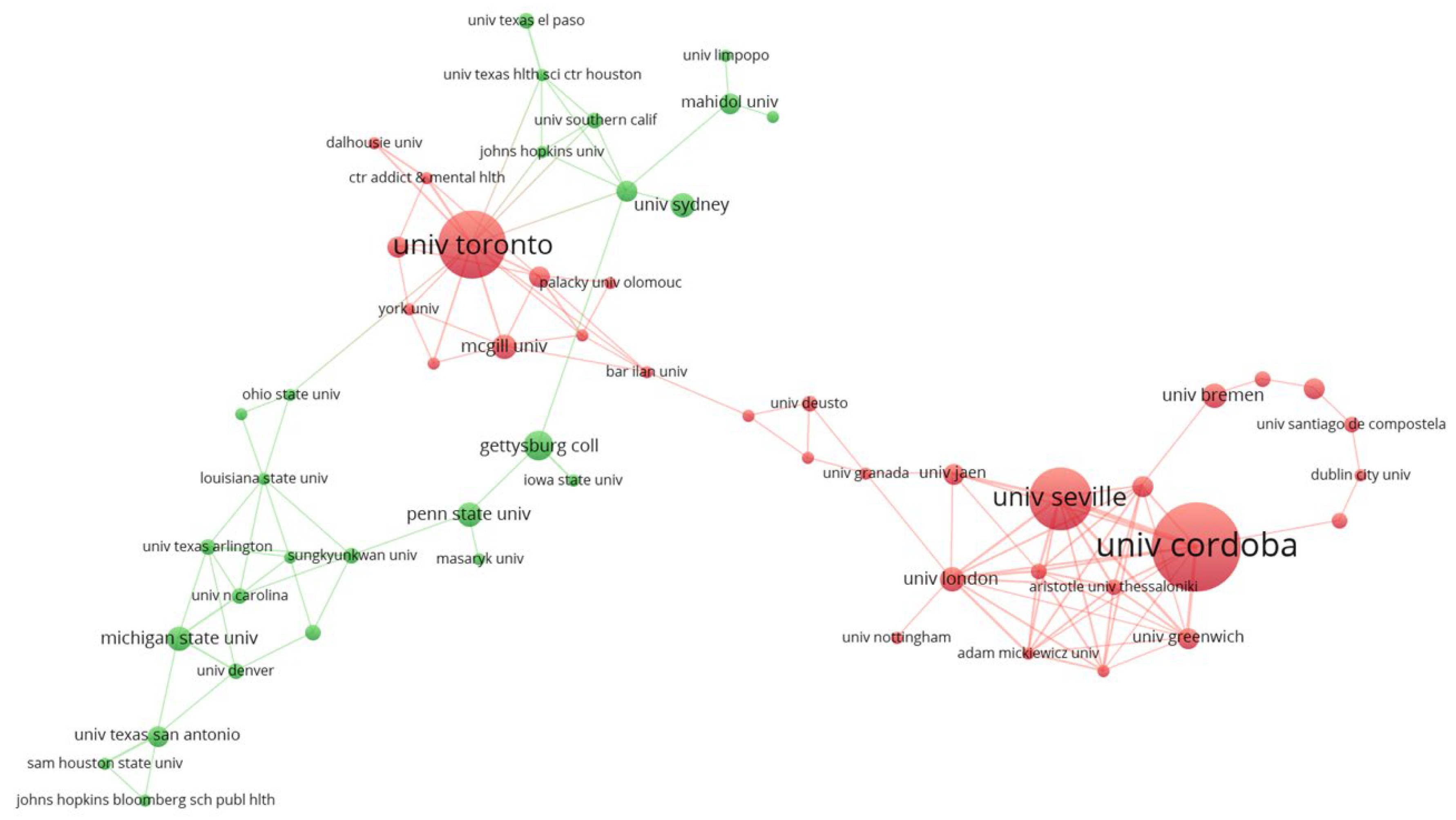
The primary search algorithm identified a total of 924 institutions and organizations that have published on the selected topic between 2005 and 2023. The institutional network is displayed in
Figure 2, highlighting those entities that have produced three or more publications. In this search 114 appear, of which 58 have connections between them, which are grouped in two clusters, with 126 connections and a total strength of 193. The organizations with the highest co-authorship link strength and the highest production of records are the University of Cordoba of Argentina with 21 documents and 10 connections; among these connections, the University of Seville has 15 documents, and the University of London has 6 documents. The second institution with the highest scientific production is the University of Toronto with 16 documents, 14 connections and a link strength of 20. The main connections with the University of Toronto are McGill University with six documents, University of Ottawa with five documents and Queen’s University with five documents. The third most productive institution is the University of Antwerp with 13 papers.
3.3. Scientific Production 2005–2023 and Growth
In this section,
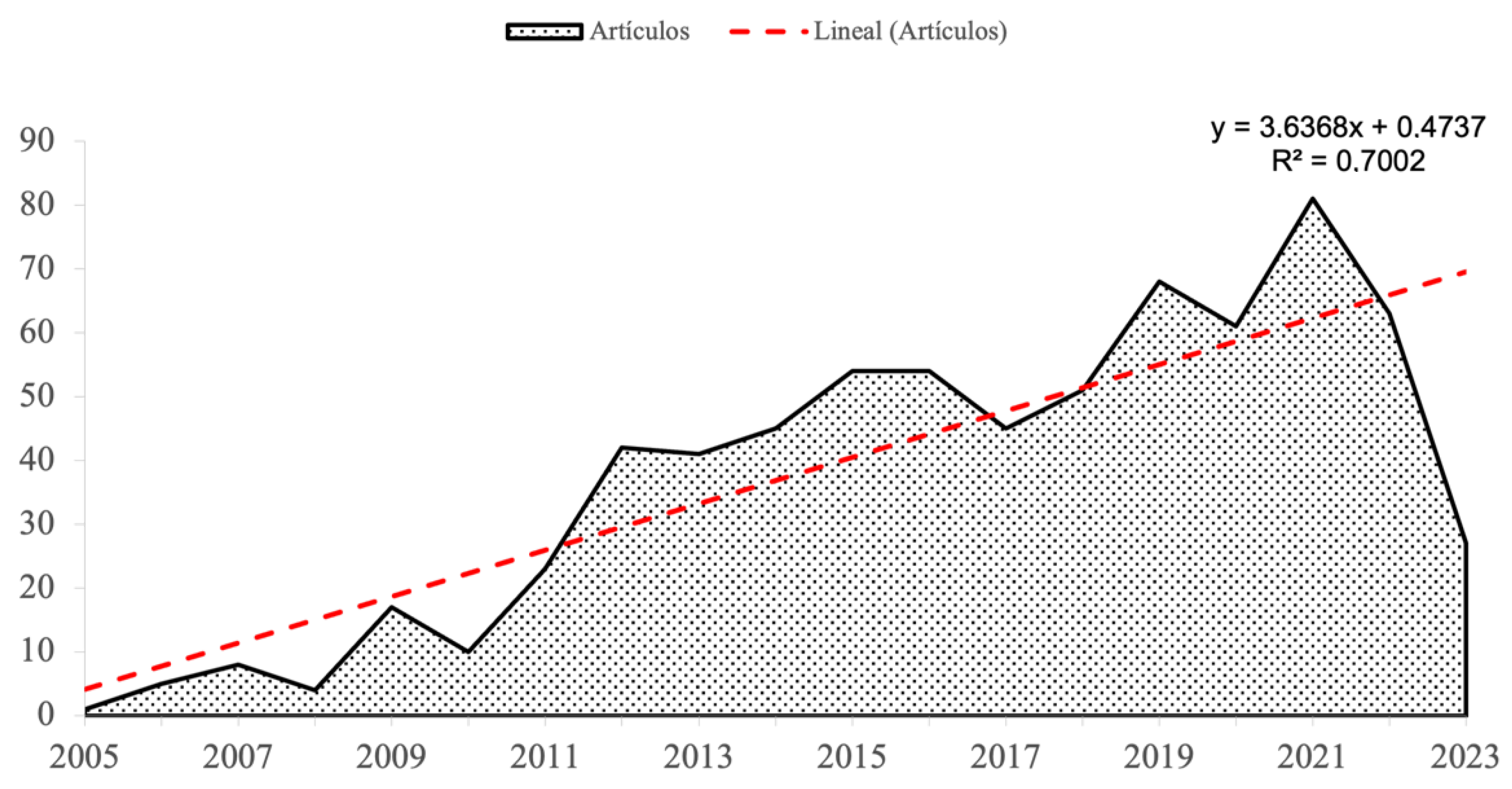
Scheme 1 shows the scientific articles published in the Web of Science database associated with cyberbullying, adolescence and school, family and social network contexts. The first publications appear in 2005 and up to 2023; a total of 700 documents were extracted (698 journal articles and two book chapters). From the year 2012 onwards, the production in this thematic area soars with 42 documents (doubling the previous year), increasing every year until reaching the most productive year to date, which is 2021 with 81 documents. From this point on, cyberbullying becomes a main topic in scientific publications due to its growing prevalence and the significant impact it has on mental health and well-being of people, especially in adolescence.
The data yield the trend line equation y = 3.6368x + 0.4737 with the coefficient of determination R2 = 0.7002. This coefficient evaluates the strength of the linear association between the two variables and indicates the proportion of data variability accounted for by the regression model. In this case, the result shows that approximately 70.02% of the variance in the dataset is explained by the trend line, implying that the linear regression model fits the data well, although 29.98% of the variability remains unexplained by the equation.
3.4. Production and Document Connections by Country
A total 79 countries have contributed scientific publications related to the topic under study. However, only those countries with 10 or more published articles were included, resulting in a selection of 21 countries, as presented in
Table 3.
The United States is the country with the highest scientific production and citations. It has a total of 175 documents and 8748 citations, 25% of all documents. It is the group with the highest number of connections with other countries in its productions, 15 in total, including Spain, England, Canada and Australia, among others. These data imply that this node has a greater strength than the rest, quantified at 40, according to the calculations and algorithm of the software used to process the data. Spain is the second-highest producer country with 75 documents, 10.70%, and 2834 citations. Spain has a total of eight connections with other countries, highlighting the United States and England, and a total link strength of 28 with respect to the rest. Other producing countries to highlight from these would be England (59; 8.43%), Canada (57; 8.14%), Turkey (47; 6.71%), Australia (45; 6.43%) and the People’s Republic of China (43; 6.14%).
3.5. Outstanding Authors in the Production of Documents
The search algorithm in the Web of Science database, in relation to the concepts related to this research, offers a total of 1937 authors in 700 documents.
Table 4 details the authorships that have produced at least six or more documents, with a total of 11 persons. Rosario Ortega Ruíz, professor and Chair of Psychology at the Public University of Córdoba (Argentina), with 17 documents and 1254 citations, stands out as the greatest producer, followed by Professor Rosario del Rey Alamillo from the University of Seville (Spain) with nine documents, and Professor Heidi Vandebosch from the University of Antwerp. It is also worth mentioning Professor Wang Jing in
Table 4, from the Department of Psychology at Renmin University (China), who, although with only six papers, is the most cited author of all with 1639 citations.
Table 4 is closely related to
Figure 3 (presented in the following section), which details the co-authorship network in relation to the documents extracted in this research.
3.6. Co-Authorship Network in Scientific Production
Through this data analysis,
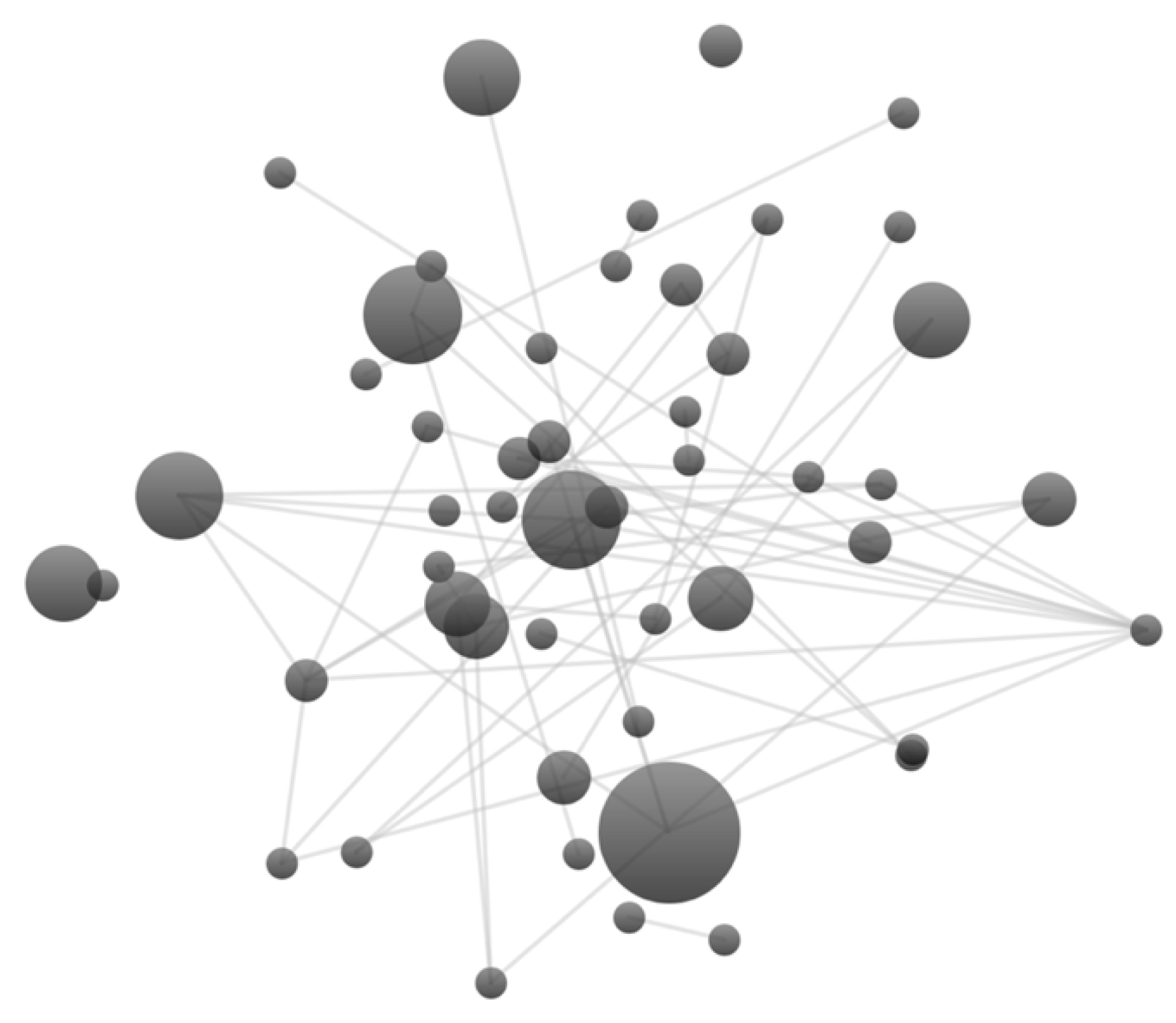
Figure 3 illustrates the co-authorship networks within the scientific literature, depicting the collaboration among authors in the collected set of documents. The nodes correspond to individual authors, while the links represent collaborative ties between them. The strength or thickness of these links reflects the frequency or intensity of collaboration between specific pairs of authors. This type of analysis allows us to understand the dynamics of collaboration in a scientific community and to identify possible trends and areas of focus within a specific field.
After analyzing
Figure 3, the following patterns of collaboration and groups of authors who frequently work together were identified, which provides insight into the general structure of the co-authorship network in the field of adolescence in school, family and social network contexts. The author Rosario Ortega Ruíz, from the University of Córdoba (Argentina), who is the largest producer of documents (17), has a total of 14 connections with other authors and a node strength of 38. Among her connections to highlight are Rosario del Rey, José A. Casas, Smith Peter K., Guarini Annalisa, Scheithauer Herbert, Brighi Antonella, Elipe Paz, etc. The author Smith Peter K also has a total of 14 connections, although with less strength in these, for a total of 17.
Figure 3 represents those authors who have at least three documents but who also have connections with other authors, establishing for this network a total of 17 people as the general structure of co-authorship in this field of study, since the existing connections are created among the named authors.
3.7. Documents and Scientific Registries with the Greatest Impact
The most cited article is entitled “Bullying and cyberbullying among American youth: the influence of six dimensions of education”. It has been cited 259 times and was published in the scientific journal Journal of Child and Family Studies in 2022, by authors Hinduja, S. and Patchin, JW. The text highlights the importance of bullying and cyberbullying prevention in schools, communities and families, underlining that positive parenting practices are key in this effort. Six dimensions of parenting (warmth, structure, autonomy support, rejection, chaos and coercion) are explored in relation to school and online bullying. Based on data from a survey of 1474 U.S. youth aged 12–17, parents who exhibit warmth, structure and autonomy support are found to have children less likely to bully, while those with parenting relationships marked by rejection, chaos and coercion are more likely to engage in peer aggression. Implications for strengthening parental relationships as a bullying prevention mechanism are discussed. Other papers to highlight for their impact include the following: “Bias-based cyberbullying among early adolescents: associations with cognitive and affective empathy,” published in 2022 in the Journal of Early Adolescence, with 179 citations; “Toward a conceptual model of motive and self-control in cyberaggression: rage, revenge, reward, and recreation,” published in 2013 in the Journal of Youth and Adolescence, with 173 citations; “Digital crime, trauma, and abuse: Internet safety and cyber risks for adolescents and emerging adults in the 21st century,” published in 2021 in the journal Social Work in Mental Health, with 151 citations; “The impact of stress, constraints, and morality in different cyberbullying roles: A partial test of Agnew’s general strain theory,” published in 2022 in the journal Frontiers in Psychology, with 136 citations; and, finally, the article “A meta-analysis of sex differences in cyberbullying behavior: the moderating role of age,” published in 2014 in the journal Aggressive Behavior, with 135 citations.
3.8. Keywords Most Used by the Authors
Figure 4 shows the relationship map of the most frequently used keywords in the documents and the connections between them. The graph shows the words that have at least three or more occurrences in each document; a total of 343 with 9378 connections and an overall strength of 22,119. It should be noted that, of the 700 records extracted for this research, a total of 2278 terms were obtained.
A Thesaurus was created to cluster occurrences of related terms. The words to highlight with the most occurrences are cyberbullying (406 occurrences, 326 connections with other terms and a total node strength of 2931); adolescents (214 occurrences, 284 connections with other terms and a total node strength of 1841); and victimization (167 occurrences, 280 connections with other terms and a total node strength of 1522). The set of words extracted from the search (343) covers topics related to cyberbullying and bullying in various contexts, particularly in the school and online environment. Aspects such as the prevalence of bullying, experiences of peer victimization, the impact on the mental health of children and adolescents, as well as risk factors and predictors are explored. The influence of technology, online violence, the relationship with health and well-being, and interventions for prevention are also recurrent themes. Dimensions such as gender, age, social networks and psychological factors are addressed, exploring both negative consequences and possible protective factors. In addition, research methodologies such as meta-analysis and the importance of intervention and awareness in the digital age are mentioned.
3.9. Sources with More Production of Scientific Documents and Origin
Table 5 details the sources with the highest scientific production, from the Web of Science database, which had at least seven documents or more; a total of 10 sources were extracted from a total of 405 of the 700 records. The citations of each source were also identified, as well as its Quartile ranking and the country of registration of the source. Among the top 10 sources, 5 originated from the United States, although none as the highest in production individually; this collectively positions the country as the leading producer in this field, alongside its significant contribution through the number of sources produced.
The source with the highest production, from the United Kingdom, is the specialized journal
Computer in Human Behavior, with 31 papers. It has a Q1 ranking and a total of 1899 citations. This journal focuses on the intersection between technology and human behavior and explores how online interactions affect behavior and mental health. The second most productive source, from India, is the
International Journal of Cyber Criminology, with 15 papers and 260 citations. With a Q2 rating, it specializes in the study and understanding of cybercrime and examines legal, social and psychological aspects of online crime. The third source, from the UK, with 14 papers and 1168 citations, is the scientific journal
Children and Youth Services, ranked Q1 and focused on studies of services for children and youth, exploring policies, interventions and programs aimed at improving the welfare of children and youth. Also, with 14 papers and ranked Q2 is the Swiss journal
International Journal of Environmental Research and Public Health, which addresses public and environmental health issues and examines the relationship between the environment, health and well-being, with possible implications for children and youth. The next source is from the United States and is ranked Q1, with 13 papers and 340 citations, called
Journal of Interpersonal Violence, which focuses on interpersonal violence in different contexts, explores risk factors, consequences and intervention strategies. The most cited source, with 3392 citations and 12 papers, is the Q1 ranked U.S. journal
Journal of Adolescent Health, focused on adolescent health and examining topics such as mental health, sexual behavior and disease prevention in this demographic group. The following sources, also detailed in
Table 5, generally focus on topics and research like those described.
3.10. Scientific Evolution Networks from a Historical Perspective
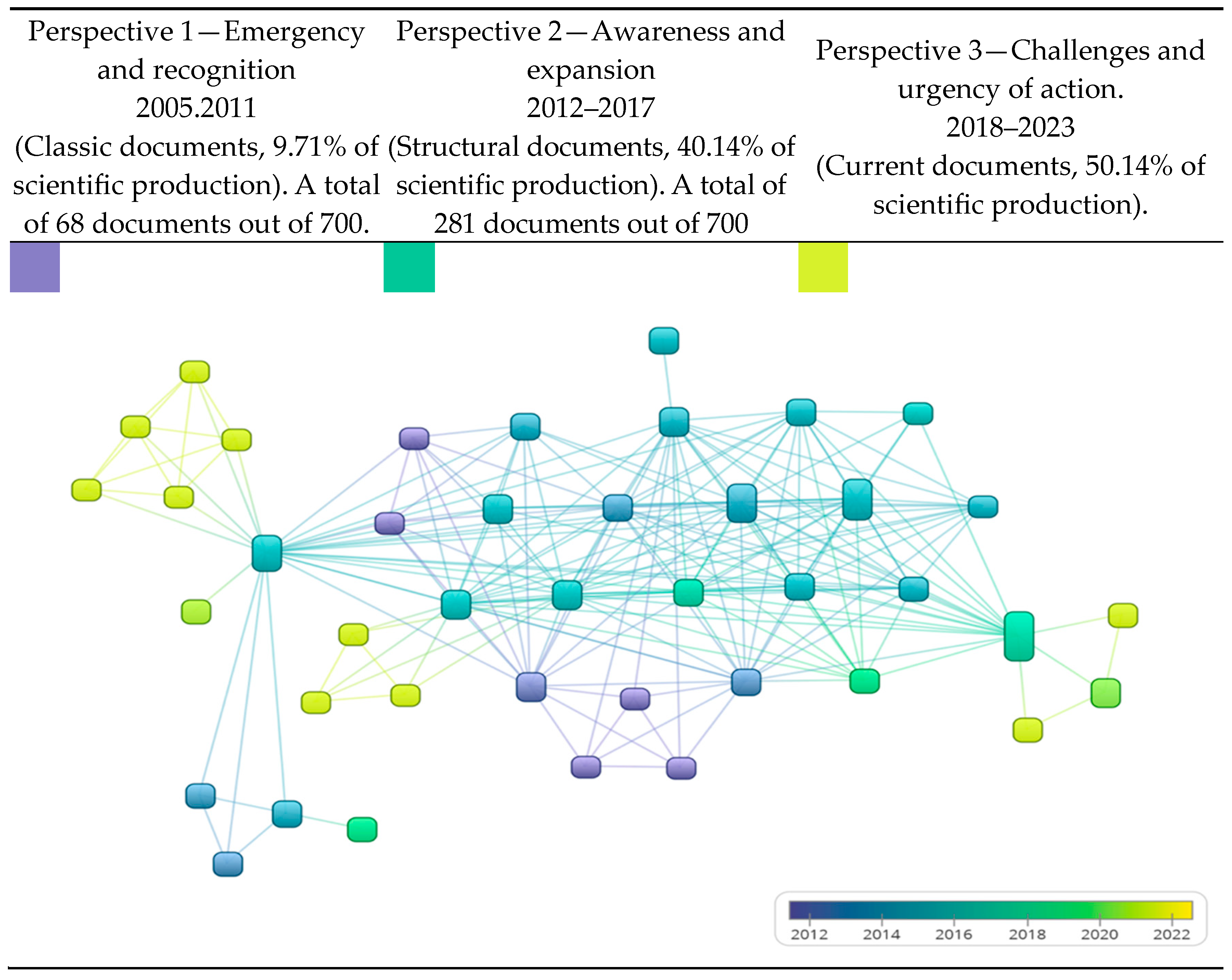
Figure 5 illustrates how the evolution of scientific production has unfolded across three historical phases. The first corresponds to a phase of emergence and recognition (2005–2011), followed by a phase of awareness and expansion (2012–2017), and finally a phase of challenges and urgency (2018–2023). These phases highlight the growing academic interest in the field of adolescent cyberbullying.
Figure 5 focuses on a temporal dimension, presenting the analyzed documents from a cross-sectional perspective that encompasses the school, family and social network contexts. The clusters group keywords and documents that reflect the interest of the scientific literature in examining the chosen subject of study and its impact on educational dynamics, as well as on social interactions in both analog and digital environments. These three highly interconnected contexts underscore the demand to address them at the educational level in a comprehensive manner.
The findings presented in this analysis highlight that cyberbullying in schools, families and social networks remains a pressing social concern. Consequently, there is a predominance of studies in the school context focusing on peer victimization, the relationship between traditional and digital bullying, and the implementation of educational intervention programs. Other studies examine the fundamental role of the family context in preventing cyberbullying. In the realm of social networks, the most cited studies emphasize risks associated with intensive use of virtual environments, gender differences in participation in bullying behaviors, and impacts on mental health. These results indicate that the three contexts highlighted in the research questions constitute central axes in the scientific production analyzed.
4. Discussion
The scientific and literary production on cyberbullying (
Ortega et al. 2008) can be divided into three phases and/or perspectives. The first phase, established between 2005 and 2011, is called the emergence and recognition of the concept of cyberbullying. During this phase, the concept emerges and is addressed in school environments, with the development of policies and equitable responses to intervene in this form of harassment. This phase represents the period with the least scientific production, accounting for 9.71% (68 documents out of 700 selected). The second perspective is identified as a phase of awareness and expansion of the concept of cyberbullying. This phase, established between 2012 and 2017, accounts for 40.14% of the total extracted documents and is characterized by the growing awareness in the public and professional spheres regarding cyberbullying. Studies on internet usage by young people intensify, leading to the recognition of the need for digital and media literacy on the subject. New forms of cyberbullying, such as cyber-racism and cybersexual harassment, come to the forefront, challenging the effectiveness of existing regulations (
Mishna et al. 2023;
Ojeda Pérez et al. 2023;
Rudnicki et al. 2023). Regarding the third perspective, identified as challenges and urgency in action, it was established between 2018 and the present day, becoming the phase with the highest production, totaling 50.14% of all extracted documents. In this more recent phase, despite widespread attention to cyberbullying, limited conceptual development regarding online aggression and victimization is observed (
Runions 2013). The link between cyberbullying and serious consequences, such as teenage suicide (
Nóbrega 2023), is underlined. The need for Internet safety programs and cyber risk prevention (
Kowalski and Limber 2013;
Kraft and Wang 2009) is emphasized in the face of traumas, digital abuses and crimes among the adolescent population (
Kokkinos and Antoniadou 2023).
This study has highlighted the concentration of scientific production within the fields of psychology and education, reflecting a concern for the consequences of cyberbullying from childhood through adolescence. The existence of international networks and highly influential authors has been observed within an academic field that, although consolidated, continues to evolve. The historical division into three perspectives—emergence, awareness and expansion, and urgency of action—illustrates how academic interest has progressed in parallel with the development of cutting-edge technology and its impact on the everyday lives of young people.
In this bibliometric study on cyberbullying from adolescence, within school, family and social network contexts, psychology and education and educational research have been identified as the main areas of scientific production. Other areas such as criminology, psychiatry, and social sciences also demonstrate increasing relevance. The University of Córdoba (Argentina) and the University of Toronto are highlighted as the main producers. In the year 2005, the first publications on cyberbullying began, and there was a significant growth starting from 2012, with 2021 being the year with the highest scientific production. The date from this research provides a comprehensive view of the landscape of cyberbullying in adolescence, highlighting its evolution, key actors, international collaborations and emerging research themes (
Kokkinos and Antoniadou 2023).
The findings of this type of study are particularly relevant due to their impact on the social sphere, and, in this specific case, on contexts such as educational institutions, families and social networks. The research conducted highlights a pressing need to address cyberbullying through a comprehensive educational approach that encompasses these three sectors. The bibliometric analysis performed has made it possible to identify gaps in the research, such as the lack of cross-country comparative studies and the limited attention to social networks, underscoring the importance of strengthening digital and media literacy in collaboration with families, researchers and policymakers.
Combating cyberbullying requires a comprehensive approach that involves various stakeholders, from educational institutions and parents (
Mercado et al. 2023) to online platforms and policymakers. Significant solutions and strategies that can contribute to the prevention and mitigation of cyberbullying, identified in the selected literary production, revolve around education and awareness. This involves implementing digital and media literacy programs that address cyberbullying, promote ethical and responsible technology use from early ages, and raise awareness about the emotional and psychological impacts of cyberbullying. Emphasizing the importance of online respect is crucial. It is important to involve families in the digital education of their children (
Willems et al. 2023), providing them with resources to understand and monitor online activity. Establishing communication channels within the entire educational community is essential for proactively addressing cyberbullying issues. The development and implementation of specific laws that penalize cyberbullying should not be forgotten. These laws should establish clear consequences for perpetrators and collaborate with online platforms to ensure the effective enforcement of policies against cyberbullying and the protection of users. Other important issues to highlight and continue working on include training for educational and social agents, the detection of behaviors by platforms, psychological support, the promotion of respect and empathy, and the development of socio-emotional skills. All of this is aimed at protecting the emotional integrity of individuals, contributing to the creation of healthier, safer and more inclusive communities in both digital and physical spaces, to build a future where technology is used for the well-being and progress of society.
This research, although relevant, presents several limitations that must be considered. As justified in the methodology section, the exclusive use of the Web of Science may introduce biases that could have been mitigated by incorporating additional databases. Furthermore, the predominance of studies published in English limits visibility in other languages. It should also be noted that, as with any bibliometric study, an in-depth content analysis is not possible, as would be offered by a systematic review, thereby opening avenues for further research.
Based on the data presented in this article, new research directions emerge that could enable more in-depth analyses through international comparative studies. Such studies could examine educational and social policies and their influence on scientific production related to cyberbullying. It is also essential to study the impact of social networks used by adolescents and their relationship with cyberbullying, as well as their effects in contexts such as the family and the school.
5. Conclusions
The research has shown that cyberbullying among adolescents is concentrated within family, school and social network contexts. This is reinforced by the existence of a network of authors, institutions and countries contributing to the construction of knowledge in these areas. Consequently, the findings provide guidance for educational and social practices that should be developed by the relevant stakeholders.
In the educational sector, it is essential to identify trends and approaches that underscore the need to implement educational projects in collaboration with families, focusing on digital and media literacy, as well as detection protocols and support mechanisms within schools.
In the policy-making sector, the patterns of scientific production and the observed international collaborations underscore the importance of designing public policies that integrate education, mental health and social media regulation.
In the digital platforms sector, the recognition of social networks as one of the main contexts of victimization entails the development and strengthening of reporting mechanisms, content moderation and awareness campaigns that promote safe and responsible use.
In conclusion, this study demonstrates that academic research can serve as a foundation for guiding more effective interventions in the field of cyberbullying. It is a complex problem that requires coordinated and effective action from educators, families, policymakers and technology companies.