


Abstract
Historical masonry minarets are highly vulnerable to seismic actions due to their slender geometry, limited tensile capacity, and material heterogeneity. However, their response to near-fault ground motions characterized by velocity pulses remains insufficiently explored. This study investigates the seismic response of the historical Tavanlı Mosque Minaret (1894, Trabzon, Türkiye) subjected to pulse-like (PL) and non-pulse-like (NPL) near-fault ground motions. A three-dimensional finite element model (FEM) was developed in ANSYS Workbench and systematically calibrated using empirical formulations to represent the current dynamic condition of the structure. Seismic performance was evaluated through linear dynamic analyses in terms of displacement demands, principal stress distribution, and drift-ratio-based performance levels. The results indicate that model calibration significantly modifies the dynamic characteristics, increasing the fundamental frequency from 0.734 Hz to 1.126 Hz and reducing displacement demands by approximately 35–76% across the considered records. Despite this improvement, PL ground motions consistently generate more critical deformation demands than NPL motions, frequently exceeding Collapse Prevention (CP) limits even when Peak Ground Acceleration (PGA) values are relatively low. A key finding is that seismic demand cannot be reliably predicted by peak intensity measures or pulse-period ratios () alone; rather, velocity-related parameters and pulse coherence govern the structural response. These results demonstrate that integrating empirical model calibration with pulse-sensitive seismic analysis is essential for reliable seismic assessment and conservation planning of slender historical masonry structures located in near-fault regions. The study offers a systematic framework that integrates model calibration and pulse-sensitive seismic analysis for evaluating the drift-controlled response of slender historical masonry minarets in near-fault regions.
1. Introduction
The conservation of historical buildings has gained increasing importance in recent decades due to the growing recognition of their architectural, cultural, and social significance, particularly in seismically active regions. Historic structures such as temples, bridges, castles, and traditional residential buildings serve as tangible witnesses to a society’s cultural identity, architectural evolution, and accumulated engineering knowledge. Preserving these structures is essential not only for safeguarding cultural heritage but also for ensuring the transmission of historical construction practices and aesthetic values to future generations [1,2,3,4,5,6]. However, most historical buildings were constructed using traditional techniques, including unreinforced masonry and timber structural systems, and were designed without consideration of modern seismic regulations. As a result, they are highly vulnerable to material degradation, aging effects, and seismic actions [6,7,8,9,10,11,12,13]. Consequently, achieving an accurate understanding of the structural behavior and seismic performance of historical buildings is a critical prerequisite for reliable risk assessment, as well as for the development of effective conservation, strengthening, and retrofitting strategies.
Historical masonry minarets have been extensively investigated in the literature due to their slender geometry, high seismic vulnerability, and cultural importance. Numerous studies have focused on understanding their dynamic characteristics, seismic response, and damage mechanisms using experimental measurements, numerical modeling, and seismic analyses [14,15,16,17,18,19,20,21,22]. Usta [23] assessed the seismic behavior of historical masonry minarets located in Antalya, Türkiye, using finite element modeling and time-history analyses. The results indicated that maximum shear stresses and damage concentrations frequently occur at transition segments and balcony levels, while the average drift capacity of the investigated minarets remained below critical performance limits. Nohutcu [24] investigated the seismic failure patterns of a historical brick masonry minaret under different earthquake records using calibrated finite element models based on ambient vibration data. Linear and nonlinear time-history analyses were performed, and the results showed that stress distributions obtained from linear analyses were not representative of nonlinear behavior. The study demonstrated that different earthquake records lead to distinct damage patterns, particularly at the transition zone of the minaret. Bayraktar et al. [25] conducted a comprehensive study on modal analysis, experimental validation, and finite element model calibration of a historical masonry minaret located in Trabzon, Türkiye. Ambient vibration tests were performed to identify natural frequencies, mode shapes, and damping ratios, and the numerical model was calibrated by updating material properties and boundary conditions. The calibration process significantly reduced discrepancies between analytical and experimental natural frequencies, highlighting the importance of model calibration for reliable structural assessment. Yanik et al. [26] examined the variations in natural frequencies of masonry and reinforced concrete minarets due to environmental effects such as temperature and humidity. Long-term ambient vibration measurements were conducted on several minarets in Trabzon over approximately six months. The results revealed that natural frequencies vary under environmental conditions, with changes reaching approximately 7%, indicating that frequency variations are not necessarily related to structural damage and should be carefully interpreted in structural health monitoring and model calibration studies. Türker et al. [27] investigated the seismic behavior of historically inclined masonry minarets subjected to near-fault and far-fault ground motions. Three-dimensional finite element models were developed, and time-history analyses were performed using selected earthquake records. The study showed that near-fault ground motions produce significantly larger displacement, base moment, and stress demands compared to far-fault motions, even when peak intensity measures are similar. Stress concentrations were predominantly observed at transition segments of the minarets. Hökelekli et al. [28] employed operational modal analysis to determine the dynamic properties of a historical masonry minaret and used the obtained experimental results to calibrate a finite element model. Linear and nonlinear seismic analyses were subsequently conducted using different earthquake acceleration records. The study concluded that nonlinear analyses provide more realistic stress distributions than linear analyses and that earthquakes can induce damage in critical regions of the minaret. Demirtaş et al. [29] presented a frequency-based damage detection approach combined with artificial neural networks (ANNs) for the seismic behavior assessment of a historical masonry tower in Trabzon, Turkey. Natural frequencies obtained from finite element modal analyses were used to train the ANN model under different damage scenarios. The results demonstrated that changes in dynamic characteristics can be effectively used to identify the location and severity of seismic damage. More recently, Usta Evci et al. [30] investigated seismic damage in masonry minarets observed during the 6 February 2023 Kahramanmaraş earthquakes. Modal and nonlinear time-history analyses were conducted on a historical minaret, and numerical damage patterns were compared with post-earthquake field observations. The study emphasized that site- and motion-specific seismic characteristics play a critical role in governing damage distribution and severity in slender masonry minarets. Despite these valuable contributions, most existing studies focus on peak response quantities, limited earthquake sets, or uncalibrated numerical models. In particular, the combined influence of pulse-like and non-pulse-like near-fault ground motions together with finite element model calibration on drift-controlled seismic performance of historical masonry minarets has not been systematically investigated. Işık et al. [31] conducted a structural and seismic evaluation of five historic minarets in Bitlis using non-destructive testing to characterize material properties and finite element modeling to examine stress distributions, natural periods, and displacement demands using the vertical and horizontal design spectrums. Trešnjo et al. [32] investigated the dynamic and seismic response of the Tabacica Mosque’s stone minaret in Bosnia and Herzegovina using field tests and numerical analyses based on the applied element method. Good agreement was reported between the experimentally measured and numerically obtained first natural frequencies. Erkek and Yetkin [33] conducted a seismic performance assessment of the historic Envar-ül Hamit Mosque minaret damaged in the 6 February 2023 Türkiye earthquakes. The study employed laboratory material testing, model updating based on operational vibration measurements, and nonlinear time history analyses using recorded earthquake accelerations, with numerical results compared to observed damage patterns.
Given their extreme slenderness and dynamic sensitivity, historical masonry minarets represent one of the most vulnerable components of religious heritage buildings, particularly in near-fault regions. Previous studies have predominantly assessed the seismic behavior of masonry minarets using uncalibrated numerical models, peak-based response measures, or a limited representation of ground-motion characteristics, while the combined influence of near-fault pulse effects and model calibration on drift-controlled seismic performance remains insufficiently explored. To address this gap, the present study investigates the linear seismic response of the Tavanlı Mosque Minaret (1894, Trabzon, Türkiye) subjected to PL and NPL near-fault ground motions. A three-dimensional finite element model is developed and systematically calibrated using an empirical formulation for the fundamental natural frequency of masonry minarets, enabling a realistic representation of the current structural condition. The seismic responses of the initial and calibrated models are comparatively evaluated in terms of displacement demand, principal stress distribution, and drift-ratio-based performance levels under selected PL and NPL records. By explicitly linking model calibration with pulse-sensitive seismic analysis, this study provides a systematic framework for evaluating the drift-controlled response of slender historical masonry minarets and highlights the limitations of conventional peak- and period-based intensity measures in near-fault seismic assessment.
2. Architectural and Structural Characteristics of the Tavanlı Mosque
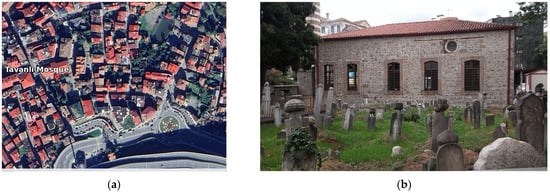
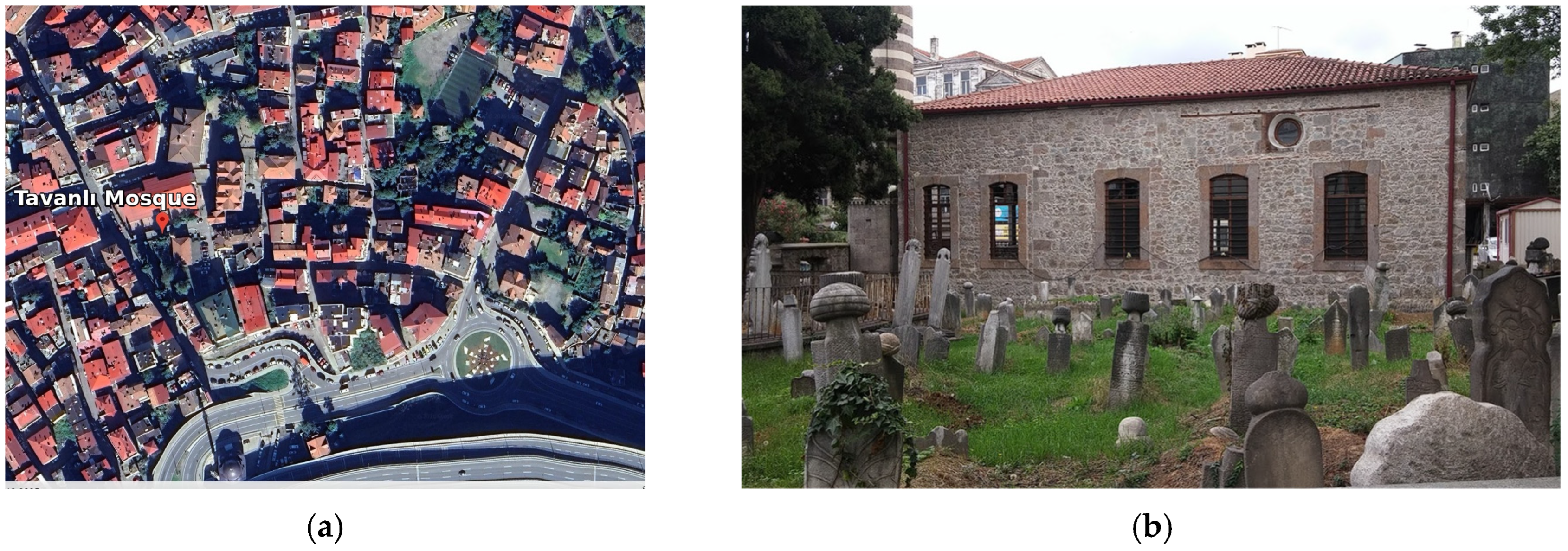
The Tavanlı Mosque Minaret is a registered cultural heritage structure listed by the Trabzon Regional Council for the Conservation of Cultural Heritage (Figure 1). The mosque complex is located in the Gazipaşa District of Ortahisar, within the historical urban core of Trabzon, Türkiye. The minaret is positioned at the northwest corner of the mosque and constitutes a dominant vertical element within the surrounding urban fabric. The mosque and its minaret underwent a comprehensive restoration in 2010 under the supervision of the Trabzon Regional Directorate of Foundations, following a conservation project approved by the Regional Conservation Council.
Figure 1.
Tavanlı Mosque: (a) Location map, (b) External view.
The minaret is constructed entirely of cut stone masonry and rises to a total height of approximately 24.58 m above ground level. It features a single-balcony configuration, which is characteristic of late Ottoman-period religious architecture in the Black Sea region. The minaret is structurally independent from the mosque and does not share a rigid connection with the mosque walls. Therefore, there is no structural interaction between the mosque and the minaret. The masonry shaft exhibits a circular cross-section along most of its height, transitioning at the base and balcony regions where geometric discontinuities are present.
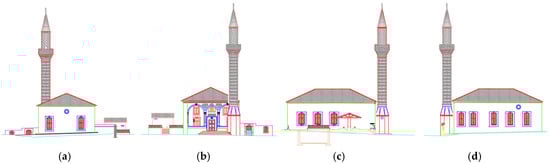
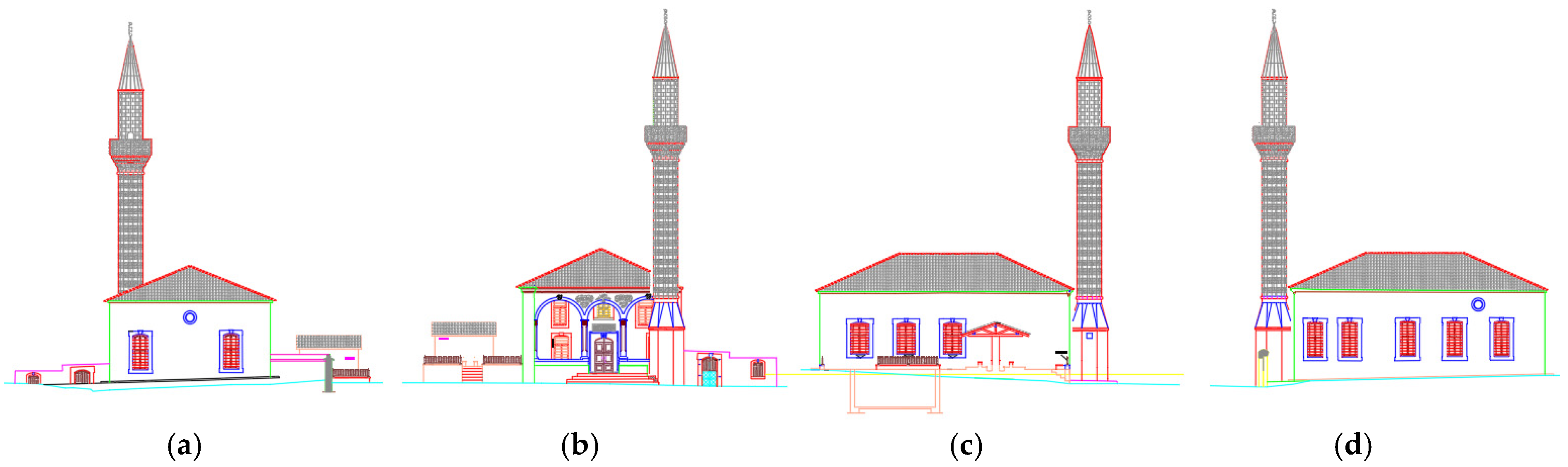
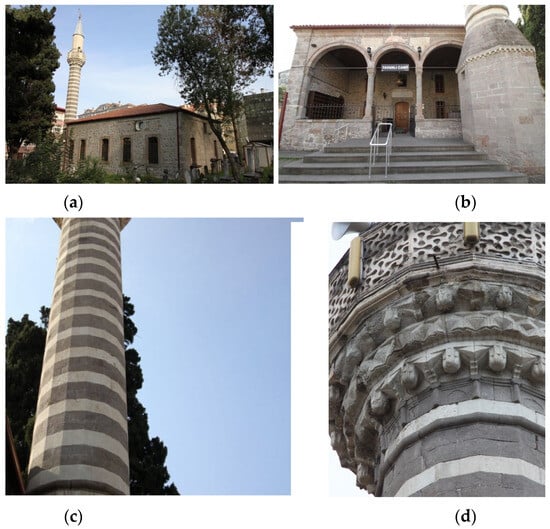
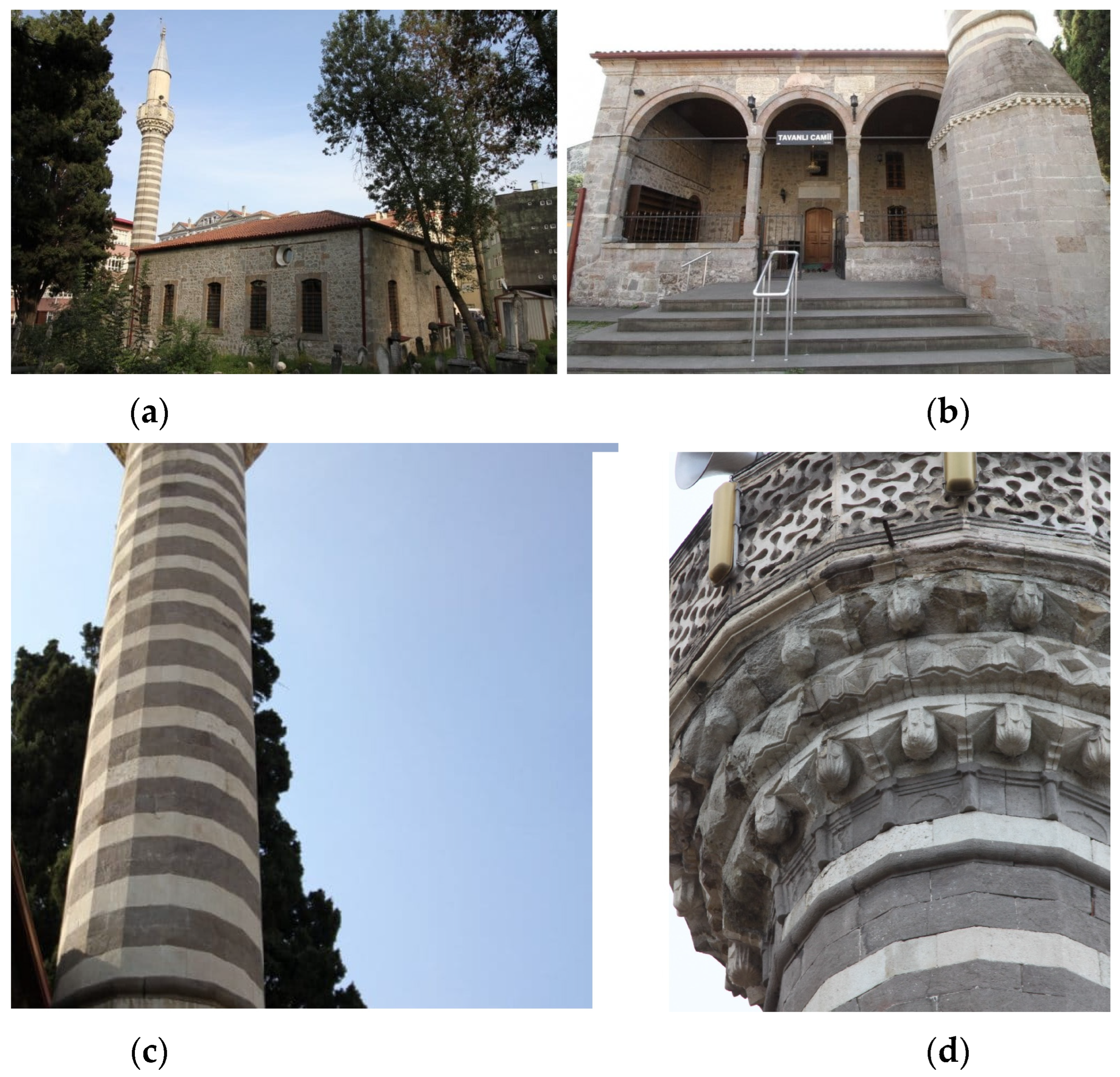
The primary construction material of the minaret is finely cut stone, bonded with lime-based mortar. The use of high-quality cut stone contributes to compressive strength but provides limited tensile capacity, rendering the minaret vulnerable to bending-dominated seismic response. No modern reinforcement elements are present within the masonry, and the structural behavior is governed by the interaction between stone units and mortar joints. Selected views of the Tavanlı Mosque Minaret and its architectural details are presented in Figure 2 and Figure 3. The geometric proportions, material characteristics, and partial base restraint conditions make the minaret a representative example of slender historical masonry towers commonly found in near-fault seismic regions of Türkiye. These features provide the basis for the subsequent numerical modeling and linear seismic performance assessment conducted in this study.
Figure 2.
(a–d) facade views of the Tavanlı Mosque Minaret showing (a) southern, (b) northern, (c) eastern, and (d) western façades. Adapted from [34].
Figure 3.
(a) The Tavanlı Mosque and (b–d) different side views of the mosque’s minaret.
3. Materials and Method
3.1. Numerical Solution Approach
For the structural analysis of complex historical masonry buildings, advanced numerical techniques such as the Finite Element Method (FEM) and the Discrete Element Method (DEM) are widely employed due to their ability to capture the complex behavior of masonry under various loading conditions. Among these, FEM remains the most commonly used approach in heritage structure assessments, primarily due to its flexibility in modeling diverse material properties, boundary conditions, and structural geometries. This approach allows for the modeling of both linear and non-linear material behavior, taking into account factors such as cracking, crushing, and anisotropy in masonry assemblies [35].
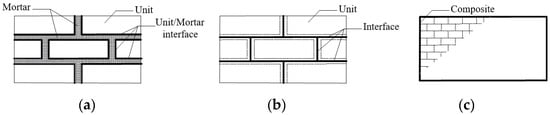
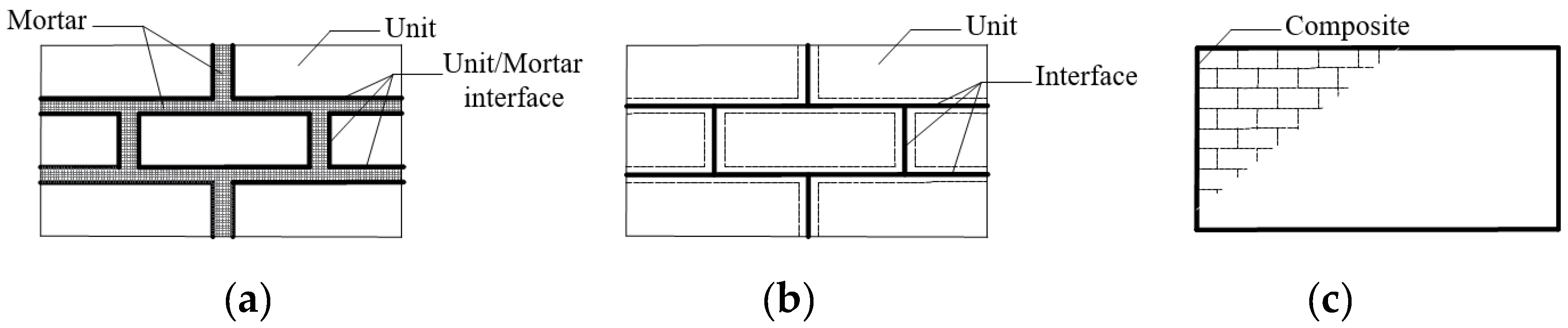
In the context of FEM, three principal modeling strategies are typically adopted for masonry structures: detailed micro-modeling, simplified micro-modeling, and macro-modeling [36,37], as shown in Figure 4. Each approach involves varying degrees of geometric and material idealization to achieve a balance between computational efficiency and modeling accuracy. The detailed micro-modeling technique explicitly represents individual masonry units and mortar joints using distinct continuum elements, while their interfaces are modeled with discontinuity or contact elements [38]. Although this approach allows for highly accurate simulation of local failure mechanisms, it demands substantial computational resources and detailed input parameters, such as the elastic and inelastic properties of both bricks and mortar [39,40]. Therefore, its use is generally limited to small-scale components, such as isolated wall segments or joints. The simplified micro-modeling strategy reduces computational complexity by representing masonry as an assembly of elastic blocks connected through potential failure planes, without explicitly modeling the mortar joints [37,41]. This method offers a reasonable compromise between accuracy and computational efficiency, particularly for moderately sized structures. In contrast, the macro-modeling approach treats masonry as a homogeneous anisotropic continuum, assuming uniform mechanical behavior throughout the material volume [4,42]. This modeling strategy, although more generalized, significantly reduces computational demand and is well-suited for the global analysis of large-scale structures [43,44,45,46]. Given the architectural complexity of the Tavanlı Mosque Minaret, the macro-modeling approach was selected for the present study. A three-dimensional FEM was developed in the ANSYS V19.3 Workbench environment, and the structure was discretized using solid elements with appropriate boundary and loading conditions. The mesh configuration and modeling assumptions adopted in this study provide a practical yet robust framework for evaluating the global seismic behavior of the minaret.
Figure 4.
Finite element mesh techniques. (a) Detailed micro modeling, (b) Simplified micro modeling, (c) Macro modeling.
3.2. Finite Element Modeling and Verification
Three-dimensional geometric and structural information, including relief and restoration drawings, was acquired from the Trabzon Regional Directorate of Foundations and served as the basis for the FEM of the Tavanlı Mosque Minaret. The model geometry was developed through an integrated workflow using ANSYS Workbench [47] for structural analysis. Material properties implemented in the initial FEM were selected based on values reported in the literature [10]. These properties were assigned to the corresponding elements to ensure consistency between the physical behavior of the structure and its numerical representation.
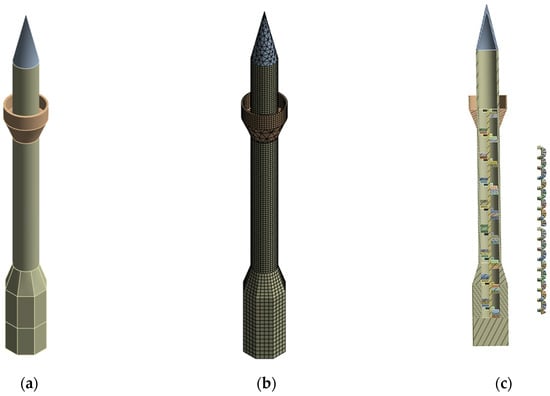
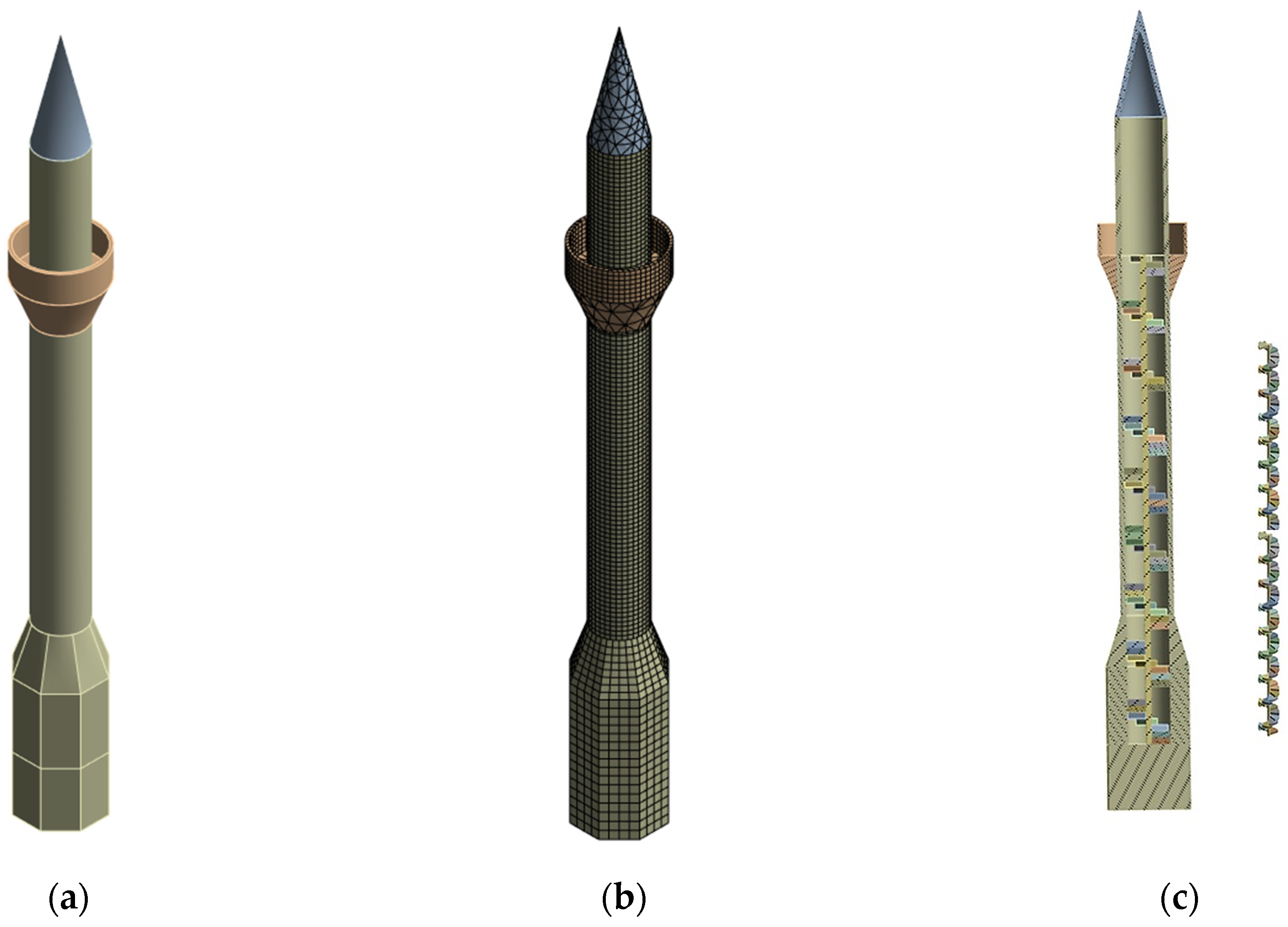
The structural model of the minaret was developed using a macro-modeling approach due to its computational efficiency and suitability for representing the dynamic behavior of large-scale masonry structures, in which the masonry walls are idealized as a homogeneous continuum. Using this approach, the global structural response under both static and dynamic loading conditions could be efficiently captured while maintaining computational tractability. Firstly, modal analysis was performed within the FEM environment to extract the natural frequencies and mode shapes of the minaret. Then, the dynamic response of the minaret was investigated using the linear time history analysis method. The modal properties and seismic analysis results obtained from the numerical analyses were used to evaluate the structural behavior and seismic performance of the minaret. The FE model of the minaret were modeled using three-dimensional (3D) solid elements. Figure 5 presented the three-dimensional visualization of the geometric model, mesh network and section of the minaret. During the modeling process, non-structural architectural components serving primarily decorative or aesthetic purposes were simplified or omitted to reduce computational cost without affecting the global structural response.
Figure 5.
(a) 3D FEM of the minaret (b) FEM mesh network (c) The section of the minaret.
In the FEM discretization of the minaret, Solid186 elements from the ANSYS element library were employed [47]. Solid186 is a twenty-node hexahedral element with quadratic displacement formulation, also featuring three translational degrees of freedom per node and supporting nonlinear material and geometric behavior. Owing to its higher accuracy in capturing stress distributions in slender components, Solid186 was primarily adopted for the minaret modeling [47].
In this paper, the initial FE model of the minaret was generated with 8307 solid elements and 47,116 nodes. In the initial model, fixed supports at the base of the minaret were considered as boundary conditions, and cut stone was taken into consideration as the construction material. The material properties assigned to the minaret in the initial FE model were an elasticity modulus of 1750 MPa, a density of 23 kN/m3, and a Poisson’s ratio of 0.2 [10]. To determine an appropriate mesh resolution for the numerical model, a mesh sensitivity study was conducted by comparing the modal frequencies obtained using element sizes ranging from 0.40 m to 0.20 m. The results indicated that the 0.30 m mesh produced modal frequencies very close to those obtained with the finer 0.20 m mesh, whereas the 0.40 m mesh showed slightly larger deviations. Therefore, a mesh size of 0.30 m was selected as the optimal discretization, ensuring sufficient accuracy while avoiding excessive computational cost.
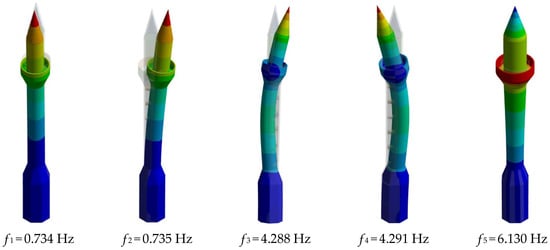
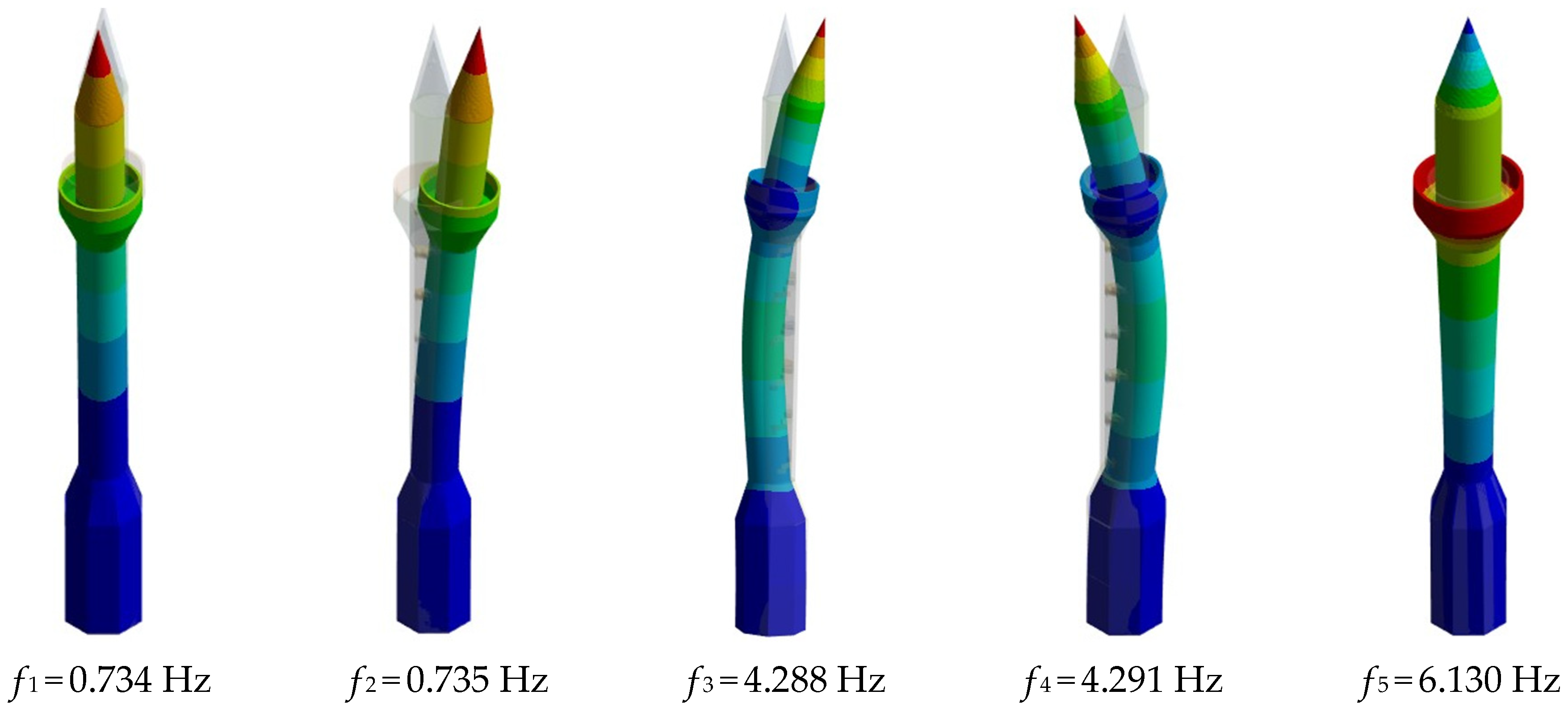
The first five frequencies of the minaret’s initial FE model were obtained within the range of 0.734–6.130 Hz as illustrated in Figure 6. The modal analysis results indicated that the first two modes corresponded to fundamental bending in horizontal directions. The third and fourth modes represented higher-order flexural modes. The fifth mode was identified as a torsional mode. The modal analysis included the thirty modes in order to ensure adequate representation of the dynamic characteristics of the minaret, achieving approximately 95% mass participation ratio. However, since the first five modes dominated the structural response and adequately described the fundamental dynamic behavior, only these modes (corresponding to about 47% mass participation ratio) were reported herein. Figure 6 showed the first five mode shapes and their corresponding frequencies of the minaret.
Figure 6.
Mode shapes and frequencies of the minaret’s initial FE model.
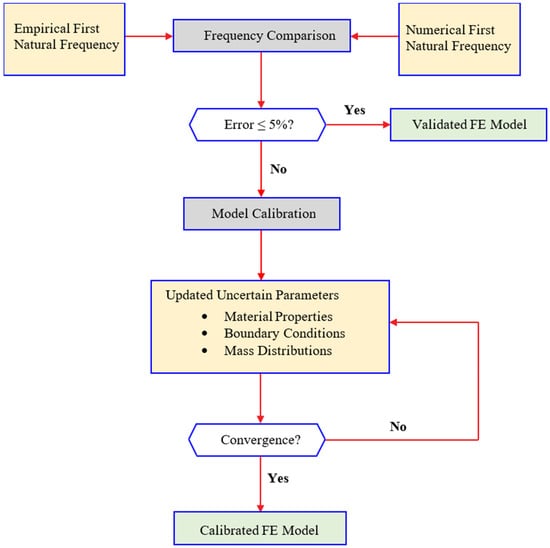
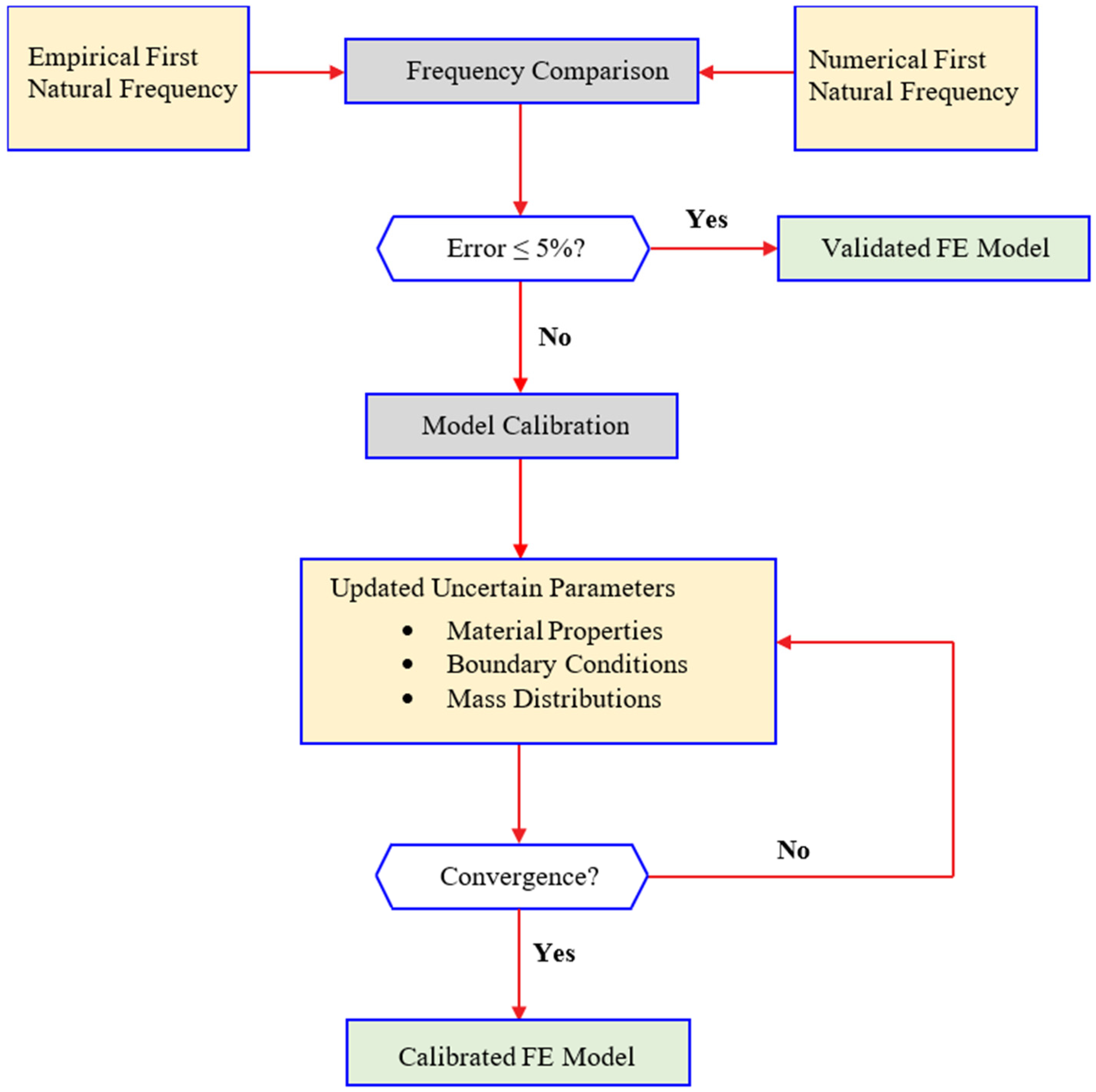
To ensure that the initial FE model developed in ANSYS accurately represents the real dynamic behavior of the masonry minaret, a model calibration procedure was conducted. Model calibration is essential for masonry structures due to inherent uncertainties in material properties, construction techniques, boundary conditions, and mass distribution, particularly in historical minarets where detailed material characterization is often unavailable. As a result, numerical models constructed using nominal or assumed parameters may not adequately capture the actual dynamic response of the structure. In this study, the calibration process was carried out by adjusting selected uncertain parameters, including the elasticity modulus and material density. A manual calibration approach was adopted, in which these parameters were iteratively calibrated through a trial-and-error procedure until the discrepancy between the numerical results and the reference values was reduced to within an acceptable threshold, typically less than 5%. Accordingly, FE model calibration flowchart of the minaret is illustrated in Figure 7. The first numerical natural frequency was adjusted through an iterative trial-and-error procedure by modifying the elasticity modulus and material density of each segment until a close agreement with the empirical frequency was achieved. For the calibrated FE model, the elasticity modulus, material density and Poisson’s ratio were taken as 3775 MPa, 2100 kg/m3, and 0.2, respectively. Following the calibration process based on the empirical formulation, the calibrated FE model exhibited dynamic characteristics that closely matched the reference fundamental frequencies, indicating a significant improvement in the accuracy of the numerical representation of the masonry minaret. It should be noted that the calibration procedure in this study relies on empirical estimation of the fundamental frequency rather than full experimental modal identification. While this approach allows for practical model updating in cases where detailed modal testing is unavailable—particularly for heritage structures—it inherently limits the validation to global dynamic characteristics. Mode shapes, higher-order modes, and damping ratios were not experimentally verified, which may influence the predictive capability of the model under complex loading scenarios. Therefore, the calibrated model should be interpreted as a globally representative analytical tool rather than a fully experimentally validated dynamic model. Future studies incorporating operational modal analysis (OMA) or ambient vibration testing would further enhance model reliability and predictive robustness.
Figure 7.
FE model calibration flowchart of the minaret.
In this study, the calibration procedure was performed by comparing the fundamental natural frequency obtained from the FE model with the corresponding value estimated using empirical formulations reported in the literature. Specifically, the empirical expression proposed by Shakya [48] (Equation (1)), which has been widely adopted for estimating the fundamental frequencies of masonry minarets, was used as a reference benchmark.
This equation estimates the fundamental frequency () of slender masonry structures based on the height (H) and the lowest base width (W). The parameters C, φ, and δ are adopted as 0.1, 1, and 1, respectively, for all masonry minaret structures. According to this equation, the fundamental frequency of the minaret was calculated as 1.125 Hz for a height of 24.58 m and a base width of 2.51 m.
When the frequency difference exceeded the acceptable tolerance, the FE model was iteratively calibrated by adjusting uncertain parameters such as elastic material properties, mass distribution, and boundary conditions, while maintaining the original geometry of the minaret. This iterative process was continued until a satisfactory agreement between the empirical and numerical fundamental frequencies was achieved. Once the discrepancy was reduced to within the predefined limit, the FE model was considered calibrated and subsequently employed for further dynamic and seismic analyses.
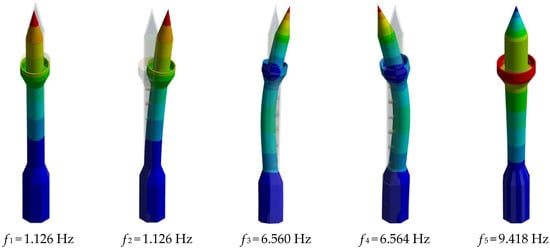
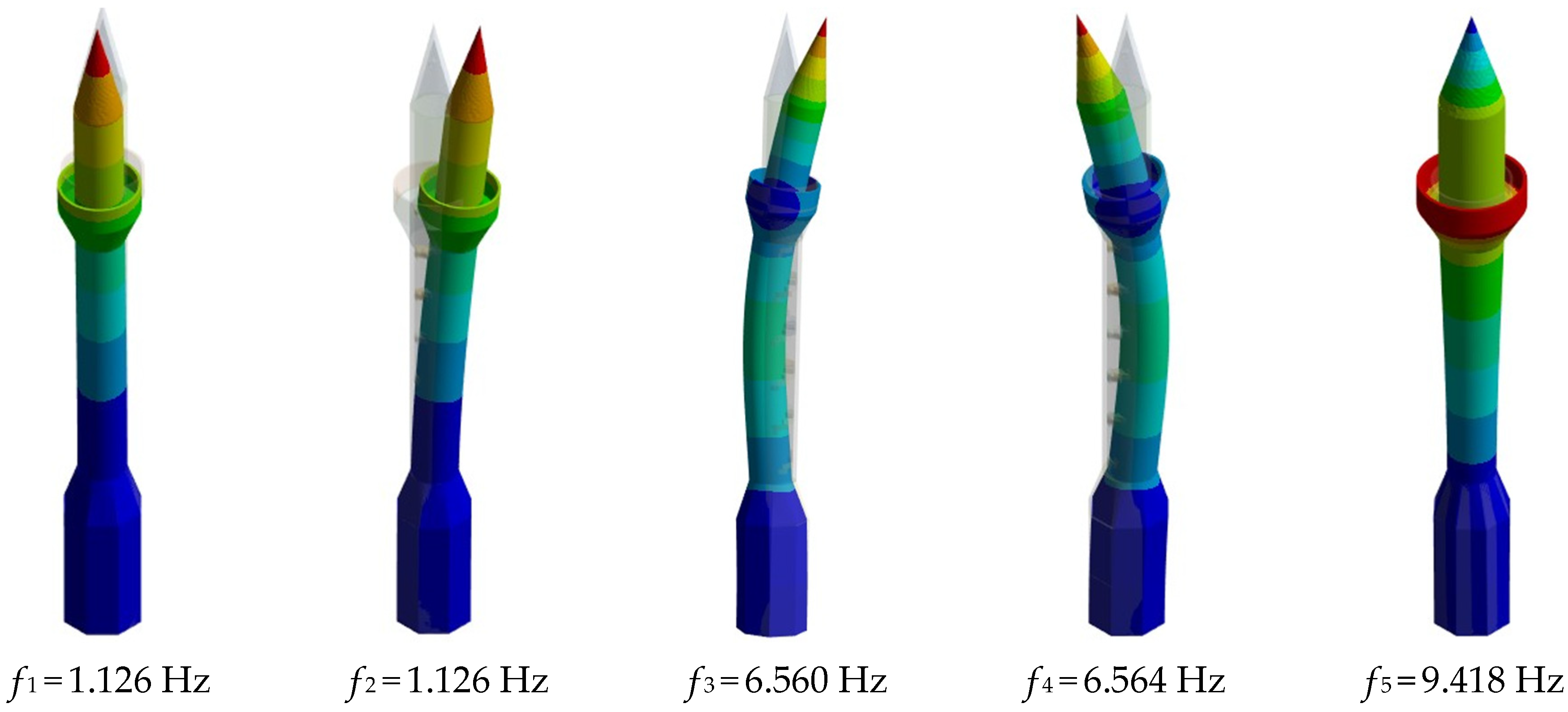
Following the model calibration process, the first five natural frequencies of the minaret were computed within the range of 1.126–9.418 Hz. The corresponding mode shapes obtained from the calibrated FE model exhibited deformation patterns consistent with those observed in the initial numerical model, indicating that the calibration process primarily refined the dynamic properties without altering the global modal characteristics of the structure as illustrated in Figure 8.
Figure 8.
Mode shapes and frequencies of the minaret’s calibrated FE model.
As a result of the modal calibration, the discrepancy between the empirical estimation and the numerical prediction of the fundamental frequency was significantly reduced from 34.76% to 0.07%. This substantial reduction confirms the effectiveness of the adopted calibration strategy in improving the accuracy of the numerical model. For the fundamental mode, a very good agreement was achieved between the empirical and numerical results, with the error ratio remaining well below the commonly accepted threshold of 5%. Based on this agreement, the final numerical model was selected as the calibrated FE model and subsequently employed for further analyses. The first five natural frequencies and their associated mode shapes of the calibrated FE model are also presented in Figure 8. Subsequently, seismic analyses were conducted using the calibrated FE model, which was considered to provide a more realistic representation of the existing condition of the minaret, and the impact of model calibration on the seismic response was systematically evaluated through a comparative assessment with the initial numerical model.
3.3. Selected Ground Motions (GMs)
Near-fault ground motions (NFGMs) are known to impose distinctive seismic demands on structures due to source-related effects such as forward directivity and fling-step mechanisms. Among these characteristics, pulse-like (PL) GMs exhibit large-amplitude velocity pulses concentrated within a short duration, which can govern the structural response, particularly for systems whose fundamental periods are comparable to the pulse period () [49,50]. Numerous experimental and analytical studies have demonstrated that such PL motions may induce significantly larger deformation and force demands compared to ordinary non-pulse like (NPL) near-fault records, even when the peak ground acceleration levels are similar [51,52,53,54].
The ratio of the pulse period to the fundamental period of the structure () is widely recognized as a critical parameter governing the structural response to PL near-fault ground motions. Previous studies have demonstrated that when is smaller than , higher-mode effects become significant, typically leading to amplified response demands in the upper stories. In contrast, ground motions characterized by greater than tend to produce a first-mode-dominated response, with maximum deformation and force demands concentrated in the lower stories [49,51,55,56]. It has also been shown that elastic response demands reach their maximum when is approximately equal to , indicating a resonance-like condition between the pulse and the structural fundamental mode [56]. Beyond this resonance range, when the ratio increases further—typically exceeding values of about 2.0—the structural response is increasingly governed by global first-mode behavior, resulting in pronounced overall displacement demands rather than localized higher-mode effects [49,51]. Conversely, decreasing ratios enhance the contribution of higher modes, giving rise to more complex deformation patterns and potentially localized damage mechanisms along the height of the structure [50,55]. It should be noted, however, that under nonlinear structural behavior, effective periods elongate due to stiffness degradation, which may reduce elastic response demands and alter the direct correspondence between and . Nevertheless, the ratio remains a fundamental indicator for interpreting and comparing the dynamic response of structures subjected to near-fault pulse-like earthquakes.
In this study, a set of six NFGM records was selected from the strong-motion database of the Turkish Disaster and Emergency Management Authority (AFAD) and obtained through the Turkish Accelerometric Database and Analysis System (TADAS) [57,58]. The selected records correspond to the 6 February 2023 Kahramanmaraş (Pazarcık) earthquake sequence and were recorded at stations located in the near-fault region with rupture distances ≤ 20 km, where pronounced near-fault effects and PL characteristics are expected. The ground motion dataset consists of three PL and three NPL near-fault records, selected to ensure comparable seismological characteristics, including earthquake magnitude and source-to-site distance, while preserving their inherent pulse features. The identification and classification of PLGMs were based on the presence of a clear velocity pulse and an associated pulse period, following established pulse-recognition criteria proposed in the literature [49,50]. In contrast, the NPL records were selected from the same earthquake sequence and from stations with similar near-fault conditions but without dominant velocity pulse characteristics, thereby providing a consistent and unbiased comparative framework. The main characteristics of the selected near-fault ground motion records, including key seismological and intensity parameters, are summarized in Table 1. All ground motion records were obtained in unprocessed format from the AFAD database. The selected records provided a consistent basis for comparing structural performance under distinct near-fault excitation mechanisms while maintaining comparable site and distance conditions. A clear distinction between PL and NPL records was evident in terms of intensity measures. The NPL records exhibit PGV/PGA ratios ranging approximately from 6.6 to 18.3, whereas the PL records are characterized by significantly higher ratios, varying between 11.0 and 35.0. In addition, the pulse periods () associated with the PL records are notably larger and, in some cases, comparable to the fundamental period of the structure, as reflected by elevated ratios. This proximity between the pulse period and the structural fundamental period indicates a potential resonance-type interaction, which can significantly intensify the dynamic response. In contrast, NPL records generally exhibit smaller ratios, suggesting a reduced likelihood of pulse-induced amplification effects. From a performance perspective, these differences in ground-motion characteristics are expected to translate into markedly different structural response patterns. Therefore, the comparison of seismic response results obtained under PL and NPL excitations enables a comprehensive evaluation of the sensitivity of the minaret to near-fault pulse effects.
Table 1.
Seismological and intensity characteristics of the near-fault PL and NPL ground motions recorded during the 6 February 2023, Pazarcık-Kahramanmaraş earthquake.
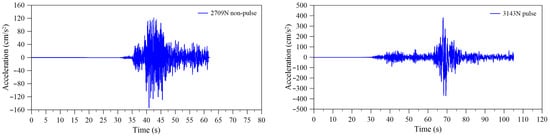
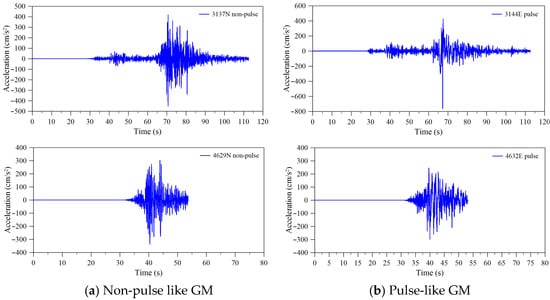
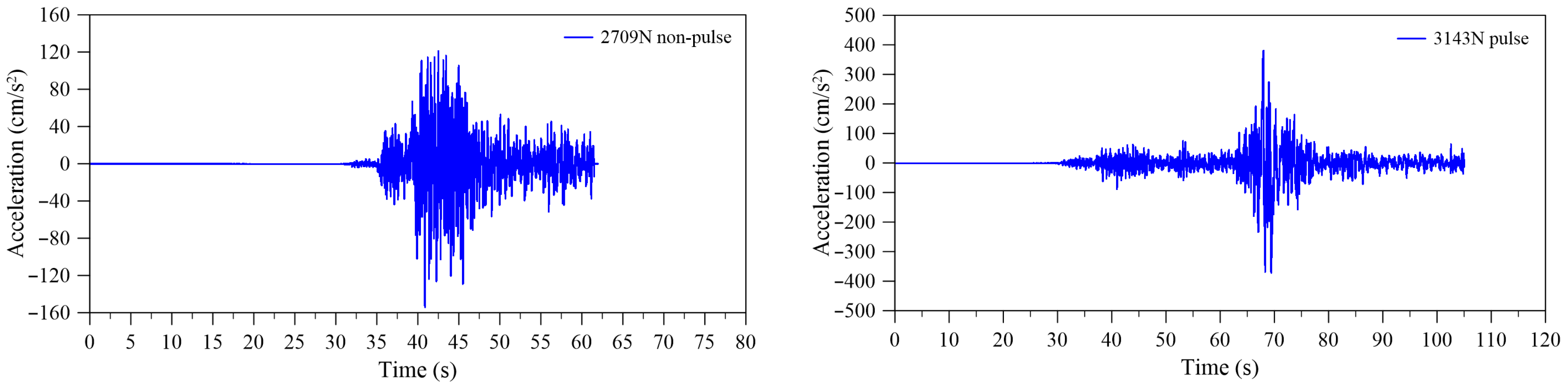
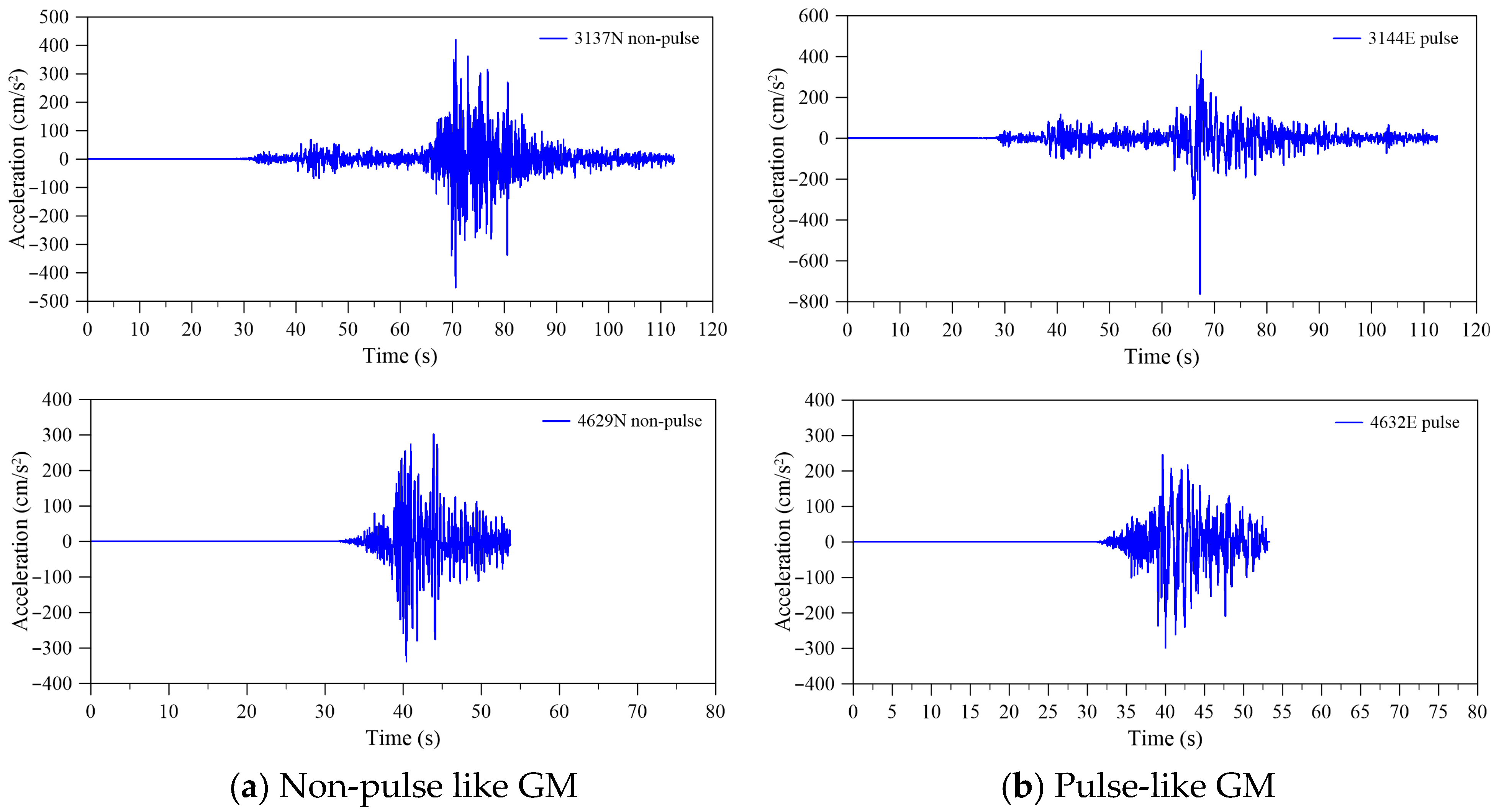
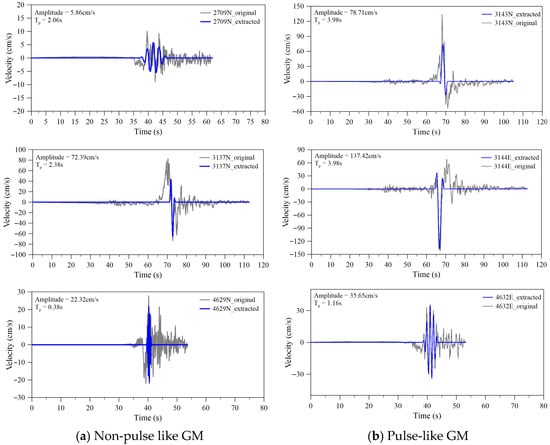
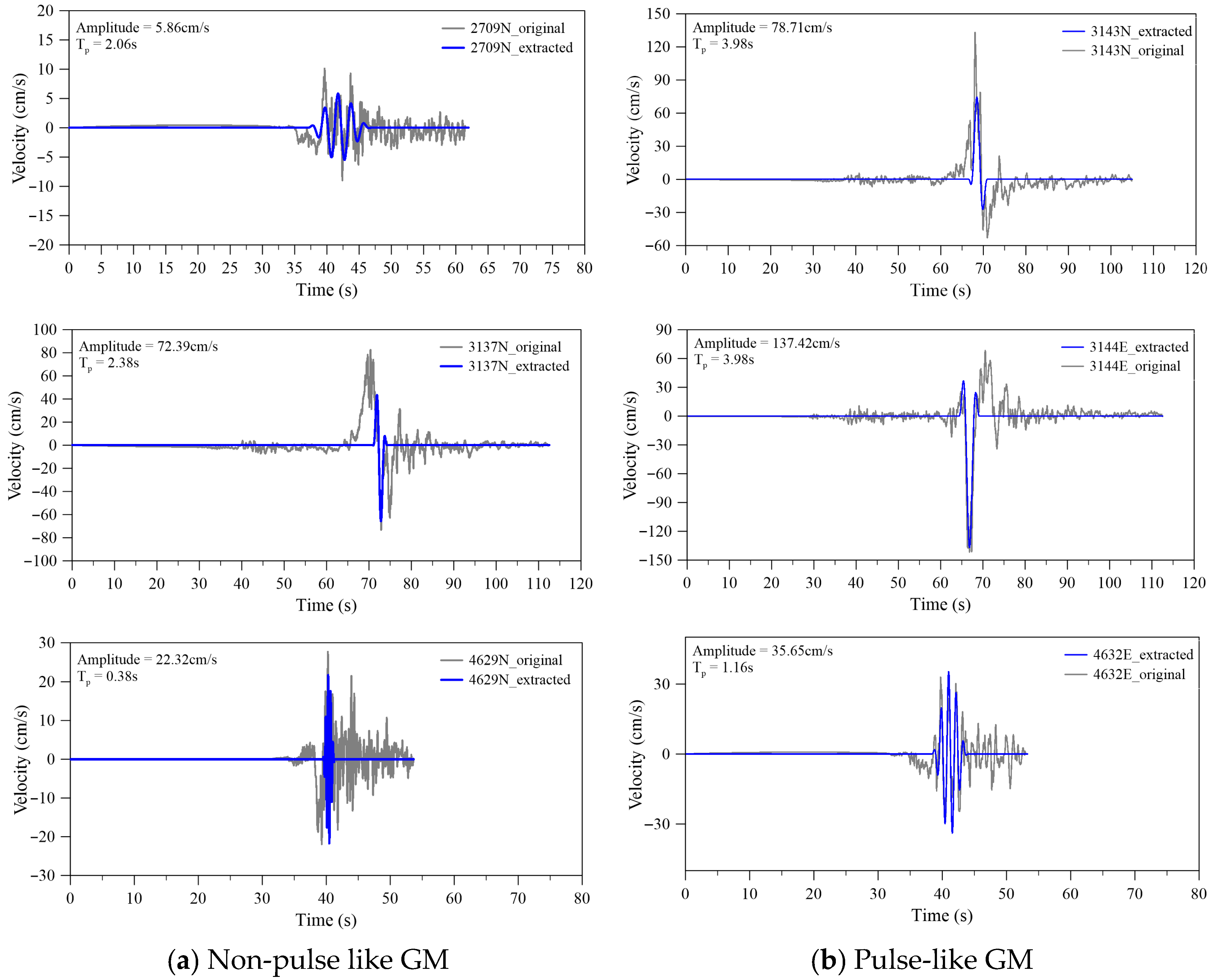
The classification of ground motions into PL and NPL records was performed using the pulse identification module implemented in SeismoSignal [59], which follows the methodology proposed by Kardoutsou et al. [60]. In this approach, a predominant velocity pulse is extracted from each ground-motion record using a wavelet-based representation (Mavroeidis and Papageorgiou wavelet), and a pulse indicator (PI) is defined as the cross-correlation factor between the extracted pulse and the original velocity time history. According to Kardoutsou et al. [60], records with PI > 0.65 are classified as PL, records with PI < 0.55 are classified as NPL, while intermediate values correspond to ambiguous cases. This objective, energy-consistent classification framework ensures that the identification of PL and NPL motions is based on quantitative criteria rather than solely on pulse-period ratios. In the study, the raw ground motion records were used in their original, unscaled form without any intensity normalization or spectral matching, in order to preserve their inherent pulse characteristics and recorded intensity levels. Figure 9 presents the acceleration time histories of the selected NFGMs, while Figure 10 shows the corresponding original velocity time histories together with the extracted velocity pulse components for all selected records. These figures clearly illustrate the distinct characteristics of PL and NPL records and support the interpretation of the observed performance differences.
Figure 9.
Acceleration time histories of (a) NPL (left side) and (b) PL (right side) GMs.
Figure 10.
The original velocity time histories and extracted pulses (a) NPL (left side), (b) PL GMs (right side).
4. Results and Discussion
4.1. Structural Responses Under PL and NPL Motions
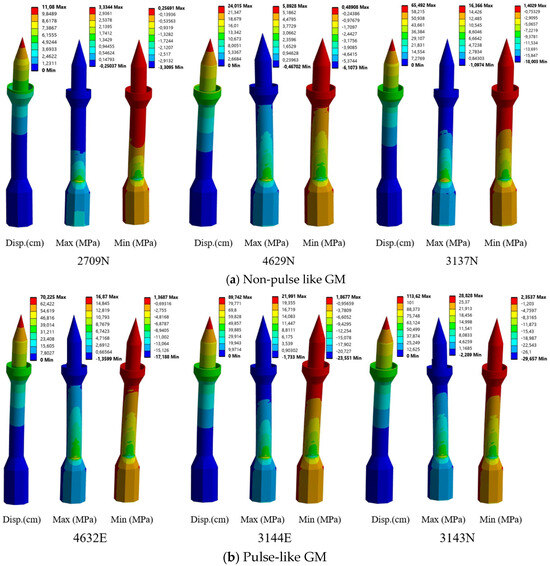
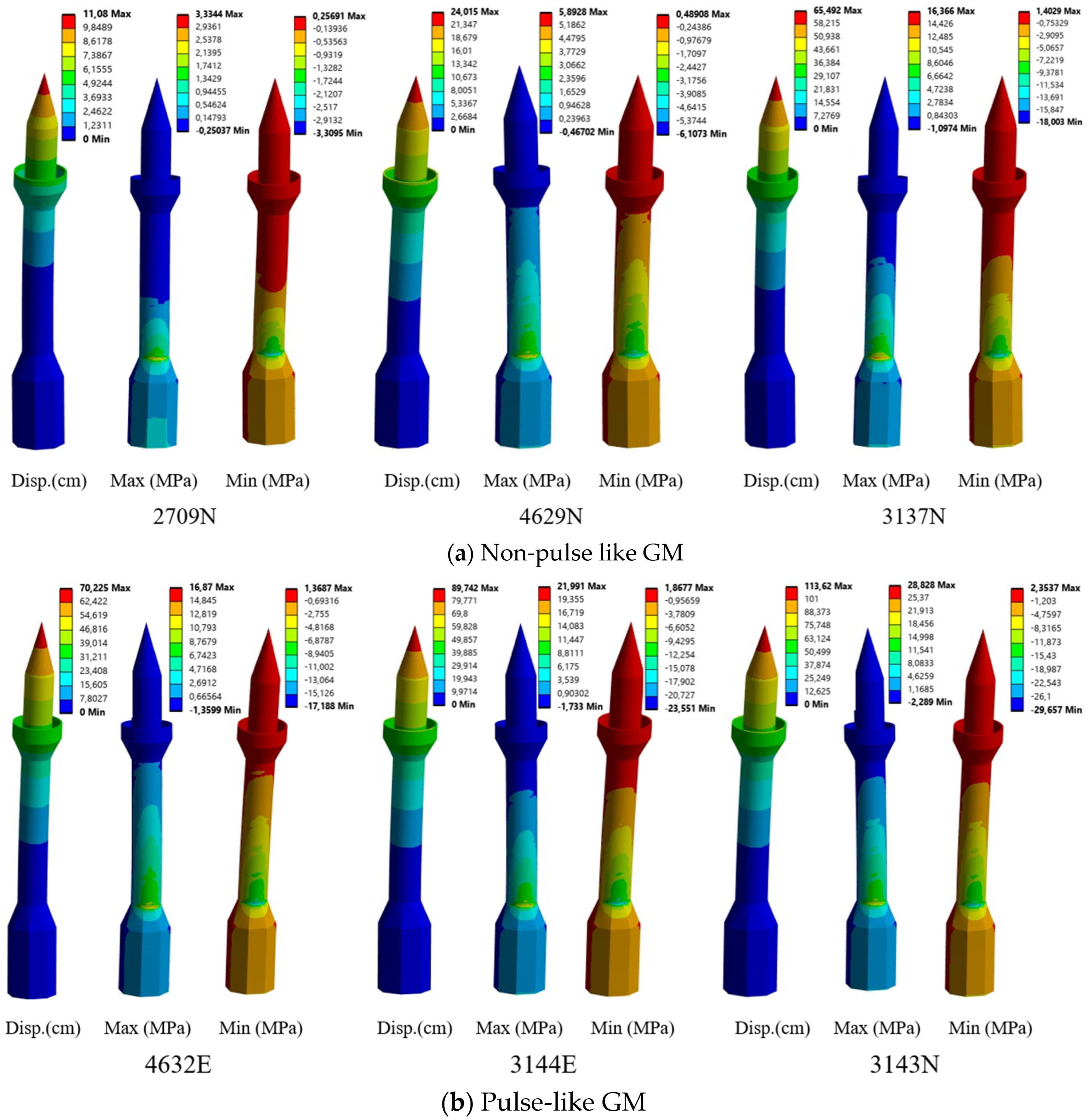
The displacement and stress contour distributions (i.e., maximum and minimum principal stresses) obtained under the corresponding seismological and intensity characteristics of PL and NPL near-fault ground motions are presented in Figure 11 for the initial model. Additionally, Table 2 summarizes the maximum displacement and stress demands obtained from the initial FE model. The combined evaluation of these results allows for a detailed assessment of the influence of ground-motion characteristics on the seismic response of the masonry minaret. The results clearly indicate a pronounced influence of pulse characteristics on both displacement and stress responses of the structure.
Figure 11.
Displacement and stress counter diagrams of the earthquakes for initial FE model.
Table 2.
Comparison structural response for PL and NPL motions.
For the NPL ground motions as shown in Figure 11 and Table 2, the maximum displacement demand varies from 11.08 cm (S2709N) to 65.49 cm (S3137N), while the corresponding maximum stress values range between 3.33 MPa and 16.37 MPa. Similarly, the minimum stress magnitudes remain relatively limited, with values not exceeding 18.00 MPa. These results suggest that, under NPL excitations, the seismic response of the initial model is comparatively moderate and primarily governed by acceleration-dominated effects, consistent with the higher PGV, PGA values and PGV/PGA ratios reported in Table 1. In contrast, the PL motions induce substantially larger response demands in the initial FE model. As shown in Table 2, the maximum displacement increases significantly, reaching 70.22 cm for record S4632E and up to 113.62 cm for record S3143N. A similar trend is observed in the stress response, where maximum stress values increase to 28.83 MPa and minimum stress magnitudes reach 29.66 MPa under PL excitations. Compared to the NPL cases, both displacement and stress demands are amplified by approximately 1.5–2.0 times, highlighting the severity of pulse-like ground motions. A direct comparison between records S3137N (NPL) and S4632E (PL) provides valuable insight into the role of pulse characteristics beyond conventional intensity measures (PGA, PGV). As summarized in Table 1, S4632E exhibits lower PGA (299.25 cm/s2) and lower PGV (32.95 cm/s) than S3137N (PGA = 453.09 cm/s2; PGV = 82.72 cm/s). Similarly, the PGV/PGA ratio of S4632E (11.01) is also lower than that of S3137N (18.26), indicating that S4632E is not “stronger” in terms of peak acceleration or velocity demands. Nevertheless, the seismic response results of the initial FE model reveal comparable—and in some response measures slightly higher—demands under the PL record: the maximum displacement increases from 65.49 cm (S3137N) to 70.22 cm (S4632E), while the maximum stress remains nearly unchanged (16.37 MPa vs. 16.87 MPa). This outcome highlights that the structural demand is not governed solely by PGA, PGV, or PGV/PGA; instead, the temporal and spectral compatibility between the excitation and the structure plays a decisive role. In particular, the pulse period ratio differs markedly between the two records ( = 0.85 for S4632E and 1.75 for S3137N). The PL record (S4632E), despite lower peak intensity indicators, can still impose significant displacement and stress demands due to its coherent near-fault pulse content, which tends to concentrate energy in a limited number of cycles and promote displacement-controlled response mechanisms in slender structures. Therefore, this comparison demonstrates that pulse classification and pulse-period-related parameters should be explicitly considered in the assessment of masonry minarets, as reliance on peak intensity measures alone may lead to misleading interpretations of structural demand.
Overall, the results obtained from the initial FE model clearly indicate that pulse-like near-fault ground motions impose significantly higher displacement and stress demands on the masonry minaret compared to non-pulse-like motions. The comparative evaluation demonstrates that peak intensity measures alone are insufficient to explain the observed response differences, and that pulse-related characteristics, particularly the temporal concentration of energy, play a critical role in governing the seismic demand of slender masonry structures.
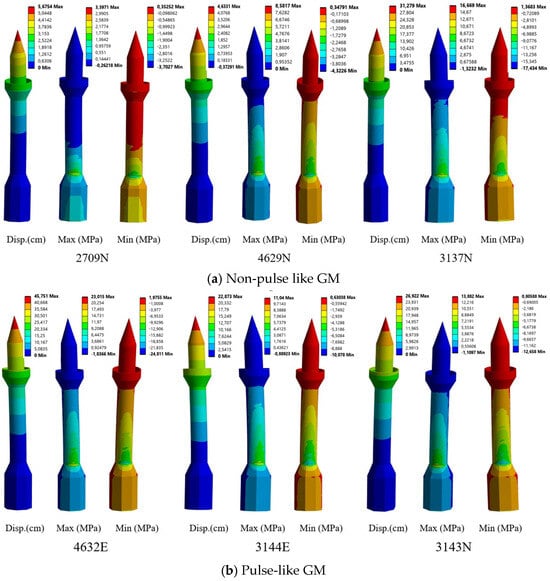
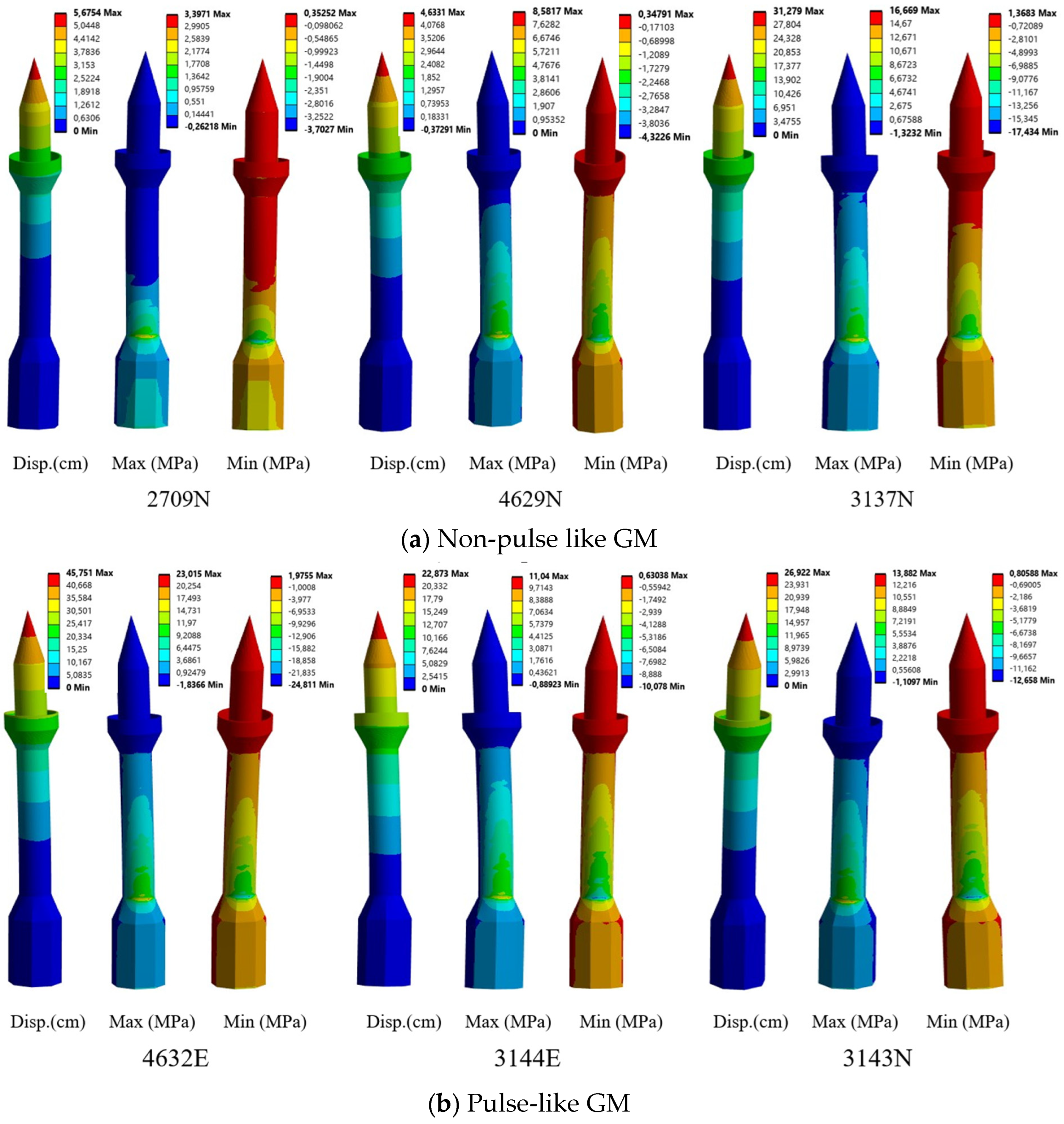
The displacement and stress contour distributions (i.e., maximum and minimum principal stresses) obtained under the corresponding seismological and intensity characteristics of PL and NPL motions are presented in Figure 12 for the calibrated model. The comparative results summarized in Table 2 and illustrated in Figure 12 provide insight into the influence of pulse effects on the seismic response of the masonry minaret after model calibration.
Figure 12.
Displacement and stress counter diagrams of the earthquakes for calibrated FE model.
After the calibration process, the calibrated FE model generally exhibits lower displacement demands compared to the initial model for all selected earthquakes. However, the extent of displacement reduction differs markedly between PL and NPL motions. For NPL records as shown in Figure 12a, the reduction in maximum displacement is approximately in the range of 45–65%, whereas substantially larger reductions, varying between 35% and 76%, are observed for PL ground motions. For the NPL cases, the calibrated model shows relatively small displacement demands, with maximum displacements ranging from 5.68 cm (S2709N) to 31.28 cm (S3137N), confirming that model calibration leads to a stiffer and more realistic dynamic representation of the structure. In terms of stress response, the effect of calibration is not uniform across all records. For the NPL ground motions, a pronounced reduction in both maximum and minimum principal stresses is observed for record S4629N, whereas only minor changes in stress levels are noted for the remaining NPL records. In contrast, the influence of calibration is more pronounced for the PL ground motions. Records S3144E and S3143N exhibit significant reductions in both maximum and minimum principal stresses, while record S4632E shows an increase in principal stress magnitudes, indicating that calibration may lead to either stress redistribution or stress amplification depending on the specific characteristics of the excitation. Moreover, a clear correlation is observed between the PGV/PGA ratio and the resulting structural demand as indicated in Figure 12b. Records with higher PGV/PGA ratios generally induce larger displacement and stress demands, particularly in the initial FE model. In addition to PL motions, it is also observed that NPL records characterized by relatively high PGV, and PGV/PGA ratios can have a significant impact on the seismic response of the structure. This observation confirms that peak intensity measures alone are insufficient to fully describe seismic demand and that velocity-related parameters play a critical role in the response of slender masonry structures.
Overall, the results obtained from the calibrated FE model confirm that PL near-fault ground motions impose more critical displacement- and stress-controlled demands on masonry minarets than NPL motions. While model calibration significantly reduces the absolute response levels and improves the reliability of numerical predictions, the relative severity of PL ground motions remains evident. These findings emphasize that incorporating pulse-related ground motion characteristics together with FE model calibration is essential for achieving reliable seismic performance evaluations of slender minaret-type structures located in near-fault regions.
In both FE models, the maximum displacement for all earthquakes was obtained from the top of the minaret, and it was observed that the maximum and minimum principal stresses occurred in the transition region of the minaret. The results presented in Table 2 indicate notable differences between the initial and calibrated FE models in terms of displacement and principal stresses under both PL and NPL ground motions.
The comparison in Table 3 demonstrates that the calibration process has a more pronounced influence on displacement response under pulse-like excitations. In contrast to the displacement response, the effect of calibration on stress demand is not uniform across all records. For the NPL ground motions, stress reductions are observed for record S4629N (21.29%), while minor stress increases are noted for records S2709N (−2.10%) and S3137N (−1.83%), indicating limited sensitivity of stress response to calibration for these cases. For the PL motions, the influence of calibration is more significant. Records S3144E and S3143N exhibit substantial reductions in maximum principal stress, reaching 49.79% and 51.86%, respectively. Conversely, record S4632E shows a marked increase in stress demand (−36.58%), suggesting localized stress amplification following calibration. Overall, the results presented in Table 3 indicate that model calibration consistently improves the prediction of global deformation response, as reflected by the systematic reduction in displacement demands for both PL and NPL motions. However, stress response remains more sensitive to record-specific characteristics, and calibration may result in either stress reduction or amplification depending on the excitation.
Table 3.
Comparison of seismic response differences before and after model calibration.
A more detailed examination of the time-history characteristics reveals a consistent relationship between velocity-related parameters and structural demand. Records characterized by high PGV and elevated PGV/PGA ratios, such as the PL records S3143N and S3144E and the NPL record S3137N, produced the largest displacement and stress demands in both the initial and calibrated models. In addition, records with longer significant duration (), such as S3144E, were associated with large deformation demands; however, the results do not indicate a systematic monotonic relationship between duration and displacement level. Although classified as PL, record S4632E exhibits lower PGV and shorter significant duration, resulting in comparatively moderate displacement demand. These observations indicate that peak velocity and velocity-dominated pulse characteristics play a dominant role in deformation amplification of slender masonry minarets, whereas peak acceleration and duration alone do not fully explain the observed response levels. Moreover, the global displacement pattern, characterized by maximum response at the top of the minaret, is consistent with lower-mode-dominated behavior typical of slender cantilever-type structures.
4.2. Structural Assessment
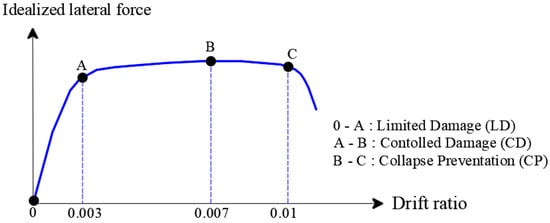
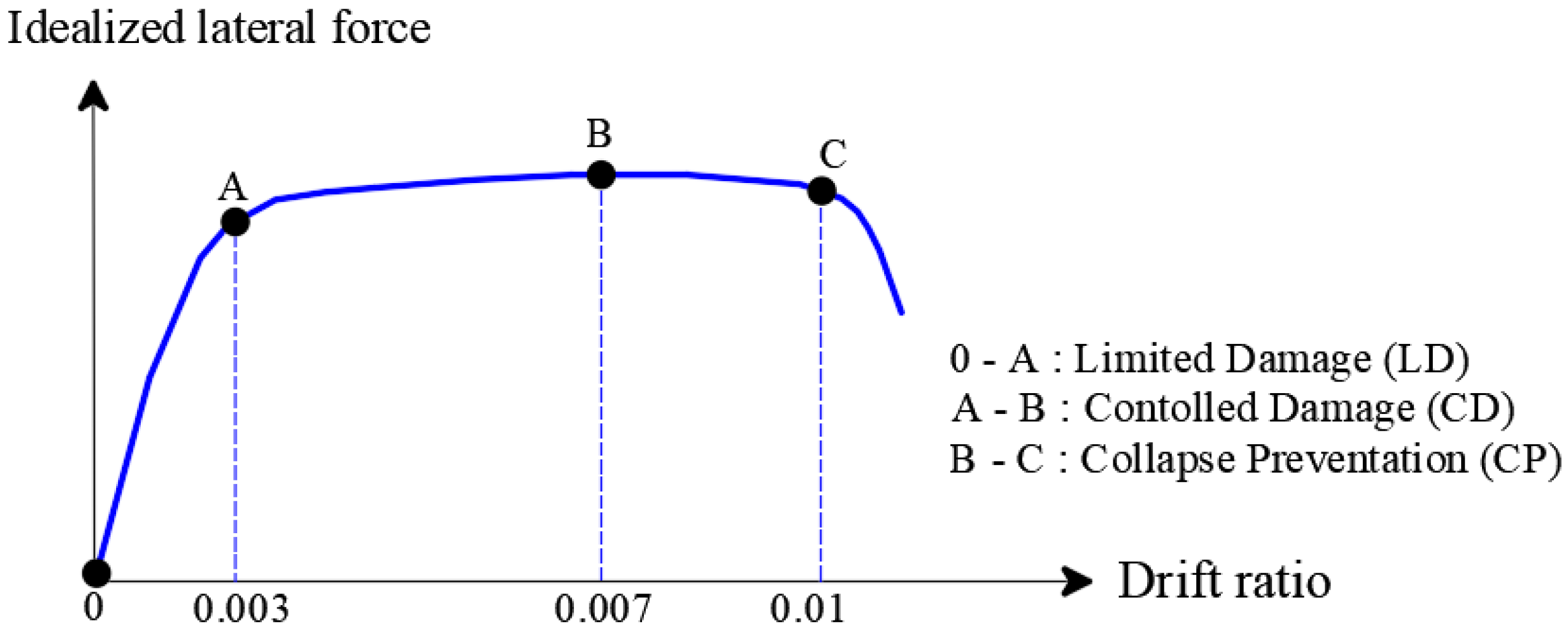
Following the dynamic analyses of the historical minaret subjected to pulse-like and non-pulse-like ground motions, the seismic performance of the minaret was evaluated for each earthquake record. Figure 13 presents a conceptual representation of drift-based performance levels used in this study. The horizontal axis denotes the drift ratio, while the vertical axis represents an idealized lateral force level to illustrate the relationship between structural demand and performance states. The diagram serves to schematically define the drift-based limit states, namely Limited Damage (LD), Controlled Damage (CD), and Collapse Prevention (CP). The seismic performance assessment is based on drift demands obtained from linear time-history analyses. As shown in Figure 13, the associated drift ratio limits for LD, CD and CP were taken as 0.3%, 0.7%, and 1.0% limit values, respectively, which are specified in the Earthquake Risk Management Guide for Historic Buildings [61]. The drift ratios for all records were calculated using Equation (2), as reported in Table 4.
where is the relative lateral displacement (inter-story drift) between two consecutive levels (i-th segment), and is the corresponding segment height. Accordingly, represents the drift ratio at level i, and denotes the limit drift ratio associated with the selected performance level, as illustrated in Figure 13.
Figure 13.
Limit states based on drift ratios. Adapted from ERMGMH (2017) [61].
Table 4.
Drift ratio-based performance limit states.
The results in Table 4 indicate that, for all considered records, the initial FE model exhibits higher drift ratios compared to the calibrated model, leading to more unfavorable performance levels. Under NPL ground motions, the initial model shows drift ratios of 0.0045 for S2709N and 0.0098 for S4629N, corresponding to controlled damage (CD) and collapse prevention (CP) performance levels, respectively. In contrast, the calibrated model significantly reduces the drift ratios to 0.0023 and 0.0035, resulting in improved performance levels limited to LD and CD. This comparison demonstrates that model calibration has a direct and beneficial effect on reducing deformation demand and improving the drift-based performance classification under NPL excitations. A similar but more pronounced trend is observed for stronger NPL and PL records. For record S3137N (NPL record), the drift ratio decreases from 0.0266 in the initial model to 0.0127 in the calibrated model; however, both values remain above the CP limit. This indicates that, although calibration substantially reduces drift demand, the performance level remains in the exceedance of collapse prevention (>CP) for this record. Likewise, for the PL record S4632E, the drift ratio is reduced from 0.0286 to 0.0186 after calibration, yet the performance level still exceeds the CP threshold. For the remaining PL records, the effect of calibration on performance level is more evident. Record S3144E exhibits a reduction in drift ratio from 0.0365 in the initial model to 0.0093 in the calibrated model, corresponding to a shift from exceeding CP to a controlled damage (CD) performance level. Similarly, for record S3143N, calibration reduces the drift ratio from 0.0462 to 0.0110. Although this reduction is substantial, the resulting drift ratio remains slightly above the CP limit, indicating that the calibrated model still experiences severe deformation demand for this record.
Overall, the drift-ratio-based evaluation demonstrates that model calibration consistently reduces deformation demand and improves seismic performance classification for both PL and NPL ground motions. However, the results also reveal that, for several strong records-particularly those associated with larger displacement demands-the calibrated model may still exceed the collapse prevention limit. These findings highlight that, while FE model calibration plays a critical role in achieving more realistic and less conservative deformation estimates, pulse-like ground motions can continue to impose severe drift demands that govern the ultimate performance level of slender masonry minaret structures.
It should be noted that the seismic response assessment was conducted within a linear dynamic framework. Although this approach efficiently captures the global elastic response characteristics of slender masonry minarets, it does not explicitly simulate nonlinear material degradation or cracking mechanisms. Therefore, the drift-based performance interpretation represents a global approximation of structural demand rather than a fully nonlinear damage representation. Nonlinear time-history analysis would enable a more detailed simulation of damage evolution and performance states; however, the present approach provides a rational first-order estimation of seismic demand for slender masonry minarets dominated by fundamental-mode behavior.
The exceedance of collapse prevention drift limits under several strong ground motions, particularly pulse-like records, can be attributed primarily to the structural characteristics of the minaret. The slender geometry and high height-to-diameter ratio result in low lateral stiffness and increased flexibility, which amplifies displacement demands under long-period pulse-type excitations. Furthermore, the concentration of stresses and deformation in the transition regions and upper sections of the minaret contributes to localized drift amplification. To mitigate excessive drift response, potential strategies may include increasing lateral stiffness, improving material strength, enhancing section properties in critical regions, or implementing vibration control and structural strengthening measures. These findings highlight the need for appropriate retrofit interventions to reduce the seismic vulnerability of slender minaret structures.
5. Conclusions
This study establishes that for slender masonry minarets, the interaction between model calibration and near-fault pulse effects is the primary determinant of seismic reliability. While systematic calibration using empirical formulations significantly reduces unrealistic deformation demands, it also reveals a heightened vulnerability to PL ground motions that standard NPL motions fail to capture. The findings demonstrate that even “calibrated” historical structures remain at risk of exceeding collapse prevention limits under specific pulse characteristics, highlighting a critical gap in traditional seismic assessments that overlook near-fault dynamics for masonry heritage. Based on the analysis results, the following conclusions can be drawn:
- Empirical frequency-based model calibration significantly modified the dynamic characteristics of the minaret, increasing the fundamental frequency from 0.734 Hz to 1.126 Hz and shifting the first five natural frequencies from 0.7346.130 Hz to 1.126–9.481 Hz. This demonstrates that frequency-consistent calibration enhances the physical realism of numerical models for slender masonry minarets.
- Calibration reduced global displacement demands by approximately 35–76% under PL motions and 48–64% under NPL motions, confirming that deformation-controlled performance predictions are highly sensitive to dynamic property adjustments.
- Despite calibration, PL near-fault ground motions consistently generated higher drift and displacement demands than NPL motions, frequently exceeding Collapse Prevention (CP) limits. This confirms the governing role of velocity pulses in drift-controlled slender masonry structures. This response is mainly associated with the slender geometry and low lateral stiffness of the minaret, highlighting its vulnerability to pulse-type seismic excitations and the need for structural strengthening measures.
- Records characterized by high PGV/PGA ratios produced critical deformation demands regardless of their PGA levels, indicating that velocity-related intensity measures govern structural response more decisively than peak acceleration alone.
- The findings indicate that pulse-period-related parameters alone are not sufficient to characterize seismic demand. The comparison between S3137N ( = 1.75, NPL) and S4632E ( = 0.85, PL) reveals that displacement demand cannot be reliably predicted by pulse-period ratio alone. Pulse coherence and temporal characteristics may override conventional period-based indicators.
- The main novelty of this study lies in demonstrating that reliable seismic performance assessment of slender historical masonry minarets requires the combined use of empirical dynamic calibration and pulse-sensitive ground-motion characterization. Neglecting either aspect may lead to unconservative drift predictions in near-fault regions.
Future research should extend the present approach by incorporating nonlinear time-history analyses to capture cracking, stiffness degradation, and damage evolution under pulse-type excitations. Experimental or operational modal testing is also recommended to validate frequency-based calibration strategies and reduce uncertainties in dynamic property estimation. Finally, the development of refined pulse-intensity measures and the evaluation of retrofit strategies tailored to pulse-induced deformation effects would enhance the reliability of seismic assessment and conservation planning for slender masonry minarets.
Author Contributions
Methodology, A.G., Z.T., and B.D.; analysis, Z.T., and B.D.; investigation, A.G., Z.T., and B.D.; supervision, B.D., and A.G.; writing—original draft preparation, A.G., Z.T., and B.D.; writing—review and editing, A.G., Z.T., and B.D. All authors have read and agreed to the published version of the manuscript.
Funding
This research received no external funding.
Data Availability Statement
Dataset available on request from the authors.
Conflicts of Interest
The authors declare no conflicts of interest.
References
- Wu, X.; Lu, J.; Wang, Z.; Yang, W.; Qiao, N. Dynamic characteristics and seismic response analysis of the bottle-shaped masonry ancient pagoda. Structures 2022, 44, 1648–1659. [Google Scholar] [CrossRef] [Scilit]
- Bayraktar, A.; Türker, T.; Sevim, B.; Altunişik, A.C.; Yildirim, F. Modal Parameter Identification of Hagia Sophia Bell-Tower via Ambient Vibration Test. J. Nondestruct. Eval. 2009, 28, 37–47. [Google Scholar] [CrossRef] [Scilit]
- Betti, M.; Bonora, V.; Galano, L.; Pellis, E.; Tucci, G.; Vignoli, A. An integrated geometric and material survey for the conservation of heritage masonry structures. Heritage 2021, 4, 585–611. [Google Scholar] [CrossRef] [Scilit]
- Kiral, A.; Ergün, M.; Tonyali, Z.; Artar, M.; Şentürk, İ. A case study comparing seismic retrofitting techniques for a historically significant masonry building’s minaret. Eng. Fail. Anal. 2024, 166, 108873. [Google Scholar] [CrossRef] [Scilit]
- Ergun, M.; Tonyali, Z.; Kiral, A.; Elias, S. Resilience-oriented seismic retrofit of heritage masonry minarets using hybrid base isolation and supplemental damping. Structures 2026, 83, 110893. [Google Scholar] [CrossRef] [Scilit]
- Zizi, M.; Rouhi, J.; Chisari, C.; Cacace, D.; De Matteis, G. Seismic vulnerability assessment for masonry churches: An overview on existing methodologies. Buildings 2021, 11, 588. [Google Scholar] [CrossRef] [Scilit]
- Lourenço, P.B. Computations on historic masonry structures. Prog. Struct. Eng. Mater. 2002, 4, 301–319. [Google Scholar] [CrossRef] [Scilit]
- Latifi, R.; Hadzima-Nyarko, M.; Radu, D.; Rouhi, R. A brief overview on crack patterns, repair and strengthening of historical masonry structures. Materials 2023, 16, 1882. [Google Scholar] [CrossRef] [Scilit]
- Aras, F.; Krstevska, L.; Altay, G.; Tashkov, L. Experimental and numerical modal analyses of a historical masonry palace. Constr. Build. Mater. 2011, 25, 81–91. [Google Scholar] [CrossRef] [Scilit]
- Günaydin, M.; Genc, A.F.; Altunışık, A.C.; Haciefendioğlu, K.; Okur, F.Y.; Okur, E.; Adanur, S. Structural condition assessment of a historical masonry school building using experimental and numerical methods. J. Civ. Struct. Health Monit. 2022, 12, 1083–1113. [Google Scholar] [CrossRef] [Scilit]
- Atmaca, B.; Atmaca, E.E.; Roudane, B.; Güleş, O.; Demirkaya, E.; Aykanat, B.; Altunişik, A.C.; Günaydin, M.; Arslan, M.E.; Kahya, V. Field observations and numerical investigations on seismic damage assessment of RC and masonry minarets during the February 6th, 2023, Kahramanmaraş (Mw 7.7 Pazarcık and Mw 7.6 Elbistan) earthquakes in Türkiye. Int. J. Archit. Herit. 2025, 19, 1117–1142. [Google Scholar] [CrossRef] [Scilit]
- Günaydın, M.; Tonyali, Z. Dynamic response of a reinforced concrete minaret. J. Struct. Eng. Appl. Mech 2018, 1, 62–72. [Google Scholar] [CrossRef] [Scilit]
- Yanik, Y.; Türker, T.; Öztürk, H.T.; Demirtaş, B.; Aymelek, A.; Yildirim, Ö.; Çalik, İ. Investigation of environmental effects through long-term vibration monitoring on the structural behavior and seismic performance assessment of the Hagia Sophia Bell Tower. Eng. Fail. Anal. 2025, 182, 110171. [Google Scholar] [CrossRef] [Scilit]
- Hejazi, M.; Moayedian, S.M.; Daei, M. Structural analysis of Persian historical brick masonry minarets. J. Perform. Constr. Facil. 2016, 30, 04015009. [Google Scholar] [CrossRef] [Scilit]
- Cakir, F.; Uckan, E.; Shen, J.; Seker, B.S.; Akbas, B. Seismic damage evaluation of historical structures during Van earthquake, October 23, 2011. Eng. Fail. Anal. 2015, 58, 249–266. [Google Scholar] [CrossRef] [Scilit]
- Basaran, H.; Demir, A.; Ercan, E.; Nohutcu, H.; Hokelekli, E.; Kozanoglu, C. Investigation of seismic safety of a masonry minaret using its dynamic characteristics. Earthq. Struct. 2016, 10, 523–538. [Google Scholar] [CrossRef] [Scilit]
- Khider, T.A.; Al-Baghdadi, H.A. Dynamic response of historical masonry minaret under seismic Excitation. Civ. Eng. J. 2020, 6, 142–155. [Google Scholar] [CrossRef] [Scilit]
- Adam, M.A.; El-Salakawy, T.S.; Salama, M.A.; Mohamed, A.A. Assessment of structural condition of a historic masonry minaret in Egypt. Case Stud. Constr. Mater. 2020, 13, e00409. [Google Scholar] [CrossRef] [Scilit]
- Yurdakul, M.; Yılmaz, F.; Artar, M.; Can, Ö.; Öner, E.; Daloğlu, A.T. Investigation of time-history response of a historical masonry minaret under seismic loads. Structures 2021, 30, 265–276. [Google Scholar] [CrossRef] [Scilit]
- Bayraktar, A.; Hökelekli, E.; Halifeoğlu, F.M.; Mosallam, A.; Karadeniz, H. Vertical strong ground motion effects on seismic damage propagations of historical masonry rectangular minarets. Eng. Fail. Anal. 2018, 91, 115–128. [Google Scholar] [CrossRef] [Scilit]
- Kılıç, İ.; Bozdoğan, K.B.; Aydın, S.; Gök, S.G.; Gündoğan, S. Kule tipi yapıların dinamik davranışının belirlenmesi: Kırklareli hızırbey camii minaresi. Politek. Derg. 2019, 23, 19–26. [Google Scholar] [CrossRef] [Scilit]
- Aymelek, A.; Yanik, Y.; Demirtaş, B.; Yildirim, Ö.; Çalik, İ.; Türker, T. Full-scale structural evaluations of İskenderpaşa minaret. Structures 2023, 55, 1028–1044. [Google Scholar] [CrossRef] [Scilit]
- Usta, P. Assessment of seismic behavior of historic masonry minarets in Antalya, Turkey. Case Stud. Constr. Mater. 2021, 15, e00665. [Google Scholar] [CrossRef] [Scilit]
- Nohutcu, H. Seismic failure pattern prediction in a historical masonry minaret under different earthquakes. Adv. Civ. Eng. 2019, 2019, 8752465. [Google Scholar] [CrossRef] [Scilit]
- Bayraktar, A.; Altunişik, A.C.; Sevim, B.; Türker, T.; Akköse, M.; Çoşkun, N. Modal Analysis, Experimental validation, and Calibration of a Historical Masonry Minaret. J. Test. Eval. 2008, 36, 516–524. [Google Scholar] [CrossRef] [Scilit]
- Yanik, Y.; Aymelek, A.; Yildirim, Ö.; Demirtaş, B.; Türker, T. Variations of natural frequencies of masonry minarets due to environmental effects. J. Civ. Struct. Health Monit. 2024, 14, 635–661. [Google Scholar] [CrossRef] [Scilit]
- Türker, T.; Demirtaş, B.; Ural, A.; Kömür, M.A. Seismic Behavior of Historical Inclined Minarets under Near and Far Fault Ground Motions. J. Earthq. Eng. 2022, 26, 5866–5880. [Google Scholar] [CrossRef] [Scilit]
- Hökelekli, E.; Demir, A.; Ercan, E.; Nohutçu, H.; Karabulut, A. Seismic assessment in a historical masonry minaret by linear and non-linear seismic analyses. Period. Polytech. Civ. Eng. 2020, 64, 438–448. [Google Scholar] [CrossRef] [Scilit]
- Demirtaş, B.; Türker, T.; Yanik, Y.; Dede, T. Frequency-Based Damage Detection with ANN and Seismic Behaviour Assessment of a Historical Masonry Tower. Iran. J. Sci. Technol. Trans. Civ. Eng. 2025, 50, 621–646. [Google Scholar] [CrossRef] [Scilit]
- Evci, P.U.; Sever, A.E.; Şakalak, E.; Karimzadeh, S.; Lourenço, P.B. Seismic Damage Assessment of Minarets: Insights from the 6 February 2023 Kahramanmaraş Earthquakes, Türkiye. Buildings 2025, 15, 4358. [Google Scholar] [CrossRef] [Scilit]
- Işık, E.; Harirchian, E.; Arkan, E.; Avcil, F.; Günay, M. Structural Analysis of Five Historical Minarets in Bitlis (Turkey). Buildings 2022, 12, 159. [Google Scholar] [CrossRef] [Scilit]
- Trešnjo, F.; Humo, M.; Casarin, F.; Ademović, N. Experimental Investigations and Seismic Assessment of a Historical Stone Minaret in Mostar. Buildings 2023, 13, 536. [Google Scholar] [CrossRef] [Scilit]
- Erkek, H.; Yetkin, M. Assessment of the performance of a historic minaret during the Kahramanmaraş earthquakes (Mw 7.7 and Mw 7.6). Structures 2023, 58, 105620. [Google Scholar] [CrossRef] [Scilit]
- General Directorate of Foundations; Trabzon Regional Directorate Ministry of Culture and Tourism Republic of Türkiye. Trabzon Ortahisar Tavanlı Mosque Restoration Project. 2016. Available online: https://www.vgm.gov.tr/ (accessed on 19 September 2025).
- Dogangun, A.; Acar, R.; Sezen, H.; Livaoglu, R. Investigation of dynamic response of masonry minaret structures. Bull. Earthq. Eng. 2008, 6, 505–517. [Google Scholar] [CrossRef] [Scilit]
- Pepe, M.; Sangirardi, M.; Reccia, E.; Pingaro, M.; Trovalusci, P.; De Felice, G. Discrete and continuous approaches for the failure analysis of masonry structures subjected to settlements. Front. Built Environ. 2020, 6, 43. [Google Scholar] [CrossRef] [Scilit]
- Demir, U. Experimental Integration of Stone Topologies to the Simplified Micro-modeling for the Seismic Response of Masonry Walls: A Novel Insight. Arab. J. Sci. Eng. 2025, 1–21. [Google Scholar] [CrossRef] [Scilit]
- Annecchiarico, M.; Portioli, F.; Landolfo, R. Micro and macro finite element modeling of brick masonry panels subject to lateral loadings. In Urban Habitat Constructions Under Catastrophic Events—Proceedings of the COST C26 Action Final Conference; CRC Press: London, UK, 2010; pp. 315–320. ISBN 978-0-415-60685-1. [Google Scholar]
- Giordano, A.; Mele, E.; De Luca, A. Modelling of historical masonry structures: Comparison of different approaches through a case study. Eng. Struct. 2002, 24, 1057–1069. [Google Scholar] [CrossRef] [Scilit]
- Chácara, C.; Mendes, N.; Lourenço, P.B. Simulation of shake table tests on out-of-plane masonry buildings. Part (IV): Macro and micro FEM based approaches. Int. J. Archit. Herit. 2017, 11, 103–116. [Google Scholar] [CrossRef] [Scilit]
- Ma, P. Analyzing seismic behavior and micro-modeling of masonry walls using ABAQUS software. Multiscale Multidiscip. Model. Exp. Des. 2024, 7, 2515–2534. [Google Scholar] [CrossRef] [Scilit]
- Palhares, R.A.; Medeiros, K.A.; Parsekian, G.A.; Shrive, N.G.; Marques, R. A macro-modeling approach for non-linear analysis of multi-story perforated masonry walls with grout and reinforcement concentrated at their pier ends. J. Build. Eng. 2023, 73, 106785. [Google Scholar] [CrossRef] [Scilit]
- Valente, M. Seismic behavior and damage assessment of two historical fortified masonry palaces with corner towers. Eng. Fail. Anal. 2022, 134, 106003. [Google Scholar] [CrossRef] [Scilit]
- Valente, M. Earthquake response and damage patterns assessment of two historical masonry churches with bell tower. Eng. Fail. Anal. 2023, 151, 107418. [Google Scholar] [CrossRef] [Scilit]
- Demircan, R.K. Determination of earthquake resistance of historical masonry inn with finite element analysis. Bull. Earthq. Eng. 2025, 23, 3269–3293. [Google Scholar] [CrossRef] [Scilit]
- Demircan, R.K. Simplified FE-Based Post-Earthquake Vulnerability Assessment of a Partially Collapsed Historic Mosque. Buildings 2025, 15, 1849. [Google Scholar] [CrossRef] [Scilit]
- ANSYS, Inc. ANSYS Workbench, version 2023 R2; ANSYS, Inc.: Canonsburg, PA, USA, 2023.
- Shakya, M.; Varum, H.; Vicente, R.; Costa, A. Empirical formulation for estimating the fundamental frequency of slender masonry structures. Int. J. Archit. Herit. 2016, 10, 55–66. [Google Scholar] [CrossRef] [Scilit]
- Baker, J.W.; Cornell, C.A. Vector-valued intensity measures for pulse-like near-fault ground motions. Eng. Struct. 2008, 30, 1048–1057. [Google Scholar] [CrossRef] [Scilit]
- Güneş, N.; Ulucan, Z.Ç. Nonlinear dynamic response of a tall building to near-fault pulse-like ground motions. Bull. Earthq. Eng. 2019, 17, 2989–3013. [Google Scholar] [CrossRef] [Scilit]
- Champion, C.; Liel, A. The effect of near-fault directivity on building seismic collapse risk. Earthq. Eng. Struct. Dyn. 2012, 41, 1391–1409. [Google Scholar] [CrossRef] [Scilit]
- Kalkan, E.; Kunnath, S.K. Effects of fling step and forward directivity on seismic response of buildings. Earthq. Spectra 2006, 22, 367–390. [Google Scholar] [CrossRef] [Scilit]
- Han, J.; Wang, J.; Li, L.; Wang, X.; El Naggar, M.H.; Du, X. Seismic response of sloping sites subject to near-fault pulse-like ground motions. Soil Dyn. Earthq. Eng. 2025, 195, 109424. [Google Scholar] [CrossRef] [Scilit]
- Demirtas, B.; Bayraktar, A.; Dumanoglu, A. Model updating effects on the seismic behavior of tall buildings under far and near-fault ground motions. Res. Eng. Struct. Mater. 2017, 3, 99–112. [Google Scholar] [CrossRef] [Scilit]
- Alavi, B.; Krawinkler, H. Behavior of moment-resisting frame structures subjected to near-fault ground motions. Earthq. Eng. Struct. Dyn. 2004, 33, 687–706. [Google Scholar] [CrossRef] [Scilit]
- Akkar, S.; Yazgan, U.; Gülkan, P. Drift estimates in frame buildings subjected to near-fault ground motions. J. Struct. Eng. 2005, 131, 1014–1024. [Google Scholar] [CrossRef] [Scilit]
- AFAD. Turkish Ministry of Interior Affairs Disaster and Emergency Management Presidency (AFAD). Available online: http://www.afad.gov.tr (accessed on 19 September 2025).
- TADAS. Turkish Accelerometric Database and Analysis System (TADAS). Available online: https://tadas.afad.gov.tr (accessed on 19 September 2025).
- SeismoSignal-Signal Processing of Strong Motion Data. 2023. Available online: https://seismosoft.com (accessed on 19 September 2025).
- Kardoutsou, V.; Taflampas, I.; Psycharis, I.N. A new pulse indicator for the classification of ground motions. Bull. Seismol. Soc. Am. 2017, 107, 1356–1364. [Google Scholar] [CrossRef] [Scilit]
- ERGMH. Earthquake Risk Management Guide for Historical Buildings (ERMGHB) (2017); Prime Ministry General Directorate of Foundations, Ministry of Culture and Tourism, Istanbul Governorship: Ankara, Turkey; ICOMOS (International Council on Monuments and Sites) Turkish National Committee: Ankara, Turkey; Department of Artistic Works and Construction Affairs: Ankara, Turkey; Istanbul Governorship Istanbul Coordination Unit and Project General Coordination: Ankara, Turkey, 2017. (In Turkish) [Google Scholar]

Disclaimer/Publisher’s Note: The statements, opinions and data contained in all publications are solely those of the individual author(s) and contributor(s) and not of MDPI and/or the editor(s). MDPI and/or the editor(s) disclaim responsibility for any injury to people or property resulting from any ideas, methods, instructions or products referred to in the content. |
© 2026 by the authors. Licensee MDPI, Basel, Switzerland. This article is an open access article distributed under the terms and conditions of the Creative Commons Attribution (CC BY) license.