


Abstract
Ultra-High-Performance Concrete (UHPC) reinforced with steel fibers has emerged as a promising alternative to conventional concrete, which exhibits limited tensile capacity and a low modulus of rupture and is prone to brittle damage under cyclic loading—a critical drawback in seismic applications. The increasing demand for resilient, damage-tolerant construction materials in seismically active regions worldwide has intensified the need to evaluate the seismic performance of UHPC structural systems at the structural scale. However, the seismic behavior of full structural frames built entirely with cast-in-place UHPC remains largely unexplored. This study presents a full-scale experimental evaluation of single-story UHPC frames with two steel fiber volume fractions (1.0% and 1.5%) subjected to pseudostatic in-plane cyclic loading. A conventional reinforced concrete frame was tested for comparison. Key performance parameters—including hysteretic response, stiffness degradation, and energy dissipation—were assessed. The results suggest that the UHPC frames exhibited enhanced performance in comparison to the conventional frame across the measured parameters. The UHPC frame with 1.5% steel fiber content consistently outperformed both the 1.0% UHPC frame and the conventional reinforced concrete frame in terms of lateral strength, initial stiffness, and energy dissipation capacity, highlighting the critical role of fiber dosage in optimizing seismic performance. The 1.5% fiber UHPC frame reached approximately 59 kN in maximum lateral strength and 6.3 kN/mm in initial stiffness, representing increases of around 59% and 58%, respectively, relative to the conventional frame (~37 kN and 4.0 kN/mm). While stiffness degradation was observed in all specimens, the UHPC frames retained higher stiffness values throughout the test. At 5.5% drift, the 1.5% UHPC frame dissipated approximately 146,000 J, compared to 80,000 J for the conventional frame. These findings indicate that steel fiber-reinforced UHPC may improve the cyclic performance of frame structures and could serve as a viable alternative for earthquake-resistant construction. The results reported here should be interpreted as indicative trends rather than statistically generalizable conclusions. A key limitation of this study is that the experimental program focused solely on single-story frames under quasi-static loading; dynamic effects and multi-story behavior were not addressed.
1. Introduction
The construction industry plays a fundamental role in global economic and social development by enabling the design, execution, and maintenance of critical infrastructure that supports society’s basic needs [1]. Within this context, concrete remains the most widely used and versatile construction material, continuously evolving to improve its properties and performance. However, conventional concrete presents an intrinsic limitation—its low tensile and low modulus of rupture—which poses a major challenge in structural design, especially where tensile or bending demands are expected.
To address this limitation, the structural engineering field has traditionally employed steel reinforcement—both longitudinal and transverse—within the cementitious matrix [2]. While this strategy has proven effective, it often requires larger and more complex cross-sections to meet design requirements, potentially reducing material efficiency, increasing structural self-weight, and complicating construction due to the handling of large-volume elements [3]. These challenges have driven continuous research into advanced construction materials and techniques that offer improved efficiency and performance.
In the pursuit of innovative and optimized construction materials, Ultra-High-Performance Concrete (UHPC) emerges as a disruptive solution capable of addressing modern structural demands [4]. With exceptional compressive strength and enhanced stiffness [2,5,6], UHPC enables the development of durable, efficient, and resilient structures under extreme loads. This material marks an advancement in structural engineering, offering effective and sustainable alternatives to conventional systems. Ongoing international research aims to better understand its mechanical, physical, and durability properties, fully harness its advantages, and evaluate its potential to reshape construction standards and practices. UHPC is composed of high-performance ingredients, including high-strength Portland cement, pozzolanic or latent hydraulic supplementary materials (e.g., microsilica, slag, fly ash), fine reactive powders, mineral additions with high reactivity (e.g., quartz flour, micronized limestone), fine graded siliceous sand, high-efficiency polycarboxylate-based superplasticizers, and quality-controlled mixing water [7,8]. Its superior density and mechanical performance stem from a very low water-to-cementitious materials ratio (w/cm), typically between 0.15 and 0.25 [9]. Combined with optimized particle size distribution—ensuring a packing density above 0.79 [10]—this reduces capillary porosity, enhances strength, and increases durability and compactness.
A defining feature of UHPC is the inclusion of short, randomly distributed fibers that enhance its toughness and mechanical properties. Although different fiber types can be used—including polymeric, alkali-resistant glass, or carbon fibers—high-strength steel fibers are the most effective for structural applications under high demands [11]. Their incorporation improves the modulus of rupture [12], direct tensile strength, fracture toughness, and ductility, mitigating the brittleness of conventional concrete and enabling ductile behavior under diverse load conditions [4]. Steel fibers may vary in shape (e.g., straight, hooked-end, or corrugated), each affecting bond performance and mechanical response [13]. UHPC was initially developed for high-security and defense applications due to its superior strength and durability [2,14]. Landmark uses such as the Laurentienne Building in Montreal (1984) [15] and the Union Square Building in Seattle (1988) [16] demonstrated its viability in precast structural elements, reaching compressive strengths above 110 MPa and 145 MPa, respectively. These early implementations showcased UHPC’s long-term performance and durability, establishing it as a material of choice for high-demand infrastructure worldwide [4].
Despite these advances, structural systems in seismically active regions, particularly those along the Pacific Ring of Fire, continue to face challenges in resisting strong ground motions [17,18]. Earthquakes induce severe cyclic deformations that often push materials into their inelastic range. In this context, steel fiber-reinforced UHPC has shown promise for seismic applications due to its improved fracture resistance, energy dissipation, and overall ductility—key attributes for structural resilience under cyclic loading [19,20].
UHPC offers key advantages for seismic applications, including enhanced energy dissipation, improved drift control, increased resilience, and high strength and ductility that help prevent brittle failure modes [21,22,23]. Despite these benefits, challenges remain in optimizing fiber dosage, characterizing the cementitious matrix, and understanding structural behavior under cyclic loading [24]. While extensive research exists on the intrinsic properties of UHPC and isolated components (e.g., beams, columns, or walls), there is limited literature on the seismic performance of complete UHPC frames subjected to displacement-controlled cyclic loads [22]. This gap is particularly pronounced in Latin America, where seismic risk is high, but experimental studies and structural implementations of UHPC remain in early stages.
Globally, cyclic/seismic tests on UHPC structural elements have been reported [17]. The seismic performance of UHPC columns has been studied in references [25,26,27,28,29,30,31,32]. Regarding tests on beam-column joints, studies include [33,34,35,36,37,38,39]. The advancements have explored the Seismic Performances of SRC Special-Shaped Columns and RC Beam Joints under cyclic loading [39], highlighting the importance of understanding joint behavior and energy dissipation mechanisms in framed systems. General findings from the tests conducted on columns, beams, and beam-column joints are summarized as follows:
- UHPC exhibits higher energy dissipation capacity compared to conventional concrete.
- The application of UHPC in plastic hinge regions of beams and columns is highly effective for energy dissipation.
- Better control of seismic drifts and increased resilience (reduced damage) were observed.
- The use of UHPC in structures enhances serviceability, strength, and ductility.
- UHPC prevents brittle failure modes such as crushing, spalling, buckling of longitudinal bars, loss of bond, and fracture of stirrups.
- Steel fibers in UHPC improve deformability, ductility, and energy dissipation, preventing the separation of the concrete cover from the core.
- The modulus of rupture and the shear strength of UHPC components are high.
At the international level, research on the seismic behavior of complete UHPC frame systems remains limited. Although studies such as [36,37] have examined precast or cast-in-place frames that combine High-Strength Concrete (HSC) and UHPC—demonstrating favorable seismic performance, effective damage control, and improvements in structural integrity, ductility, and energy dissipation, particularly due to the inclusion of UHPC—most recent experimental efforts have predominantly focused on isolated structural components or hybrid solutions rather than fully monolithic UHPC frame systems. Recent studies have investigated the cyclic behavior of cast-in-place or precast beam–column joints incorporating UHPC [40,41,42], as well as assembled or emulative frame systems where UHPC is primarily concentrated in connections or localized regions [43]. While these investigations represent important advancements in understanding the seismic response of UHPC-enhanced systems, they do not fully capture the global cyclic behavior of full-scale, monolithic, cast-in-place UHPC moment-resisting frames. As a result, significant uncertainties remain regarding the system-level seismic performance, stiffness degradation, and energy dissipation capacity of UHPC frames when the material is used as the primary structural matrix throughout the entire frame, and a critical gap persists in the documented literature.
Before detailing the experimental program, this study addresses the following research problems: (i) how the steel fiber volume fraction influences the cyclic performance of UHPC moment-resisting frames, particularly in terms of lateral strength, stiffness degradation, and hysteretic energy dissipation; and (ii) how the intrinsic mechanical characteristics of UHPC, including enhanced tensile strength, crack-bridging capacity, and improved ductility due to steel fibers, differentiate its seismic response from that of conventional reinforced concrete (RC) frame systems. These issues are investigated through full-scale, displacement-controlled cyclic testing of monolithic cast-in-place UHPC frames with two steel fiber volume fractions (1.0% and 1.5%).
The present research offers a novel contribution to the understanding of UHPC structural systems by presenting one of the first full-scale experimental studies on monolithic cast-in-place UHPC frames subjected to seismic-type cyclic loading. While previous studies have predominantly examined the behavior of individual UHPC components (such as beam-column joints) or hybrid precast systems that combine UHPC with high-strength or conventional concrete, comprehensive experimental data on entire cast-in-place UHPC frame systems remains scarce. Unlike most existing literature, this study evaluates complete one-story, one-bay UHPC moment-resisting frames reinforced with two different steel fiber volume contents (1.0% and 1.5%) and subjected to in-plane, displacement-controlled pseudo-static cyclic loading. It provides direct comparisons with a conventional reinforced concrete benchmark under identical testing conditions. The findings offer new and quantitative insights into how fiber content influences global seismic performance, including strength, stiffness degradation and energy dissipation—phenomena typically evaluated at the component level. By addressing this gap, the study contributes to expanding the experimental basis for UHPC implementation in earthquake-resistant structural systems. Unlike precast alternatives, the frames tested in this study were entirely cast in place using UHPC, ensuring full monolithic continuity throughout the structural system.
2. Methodology
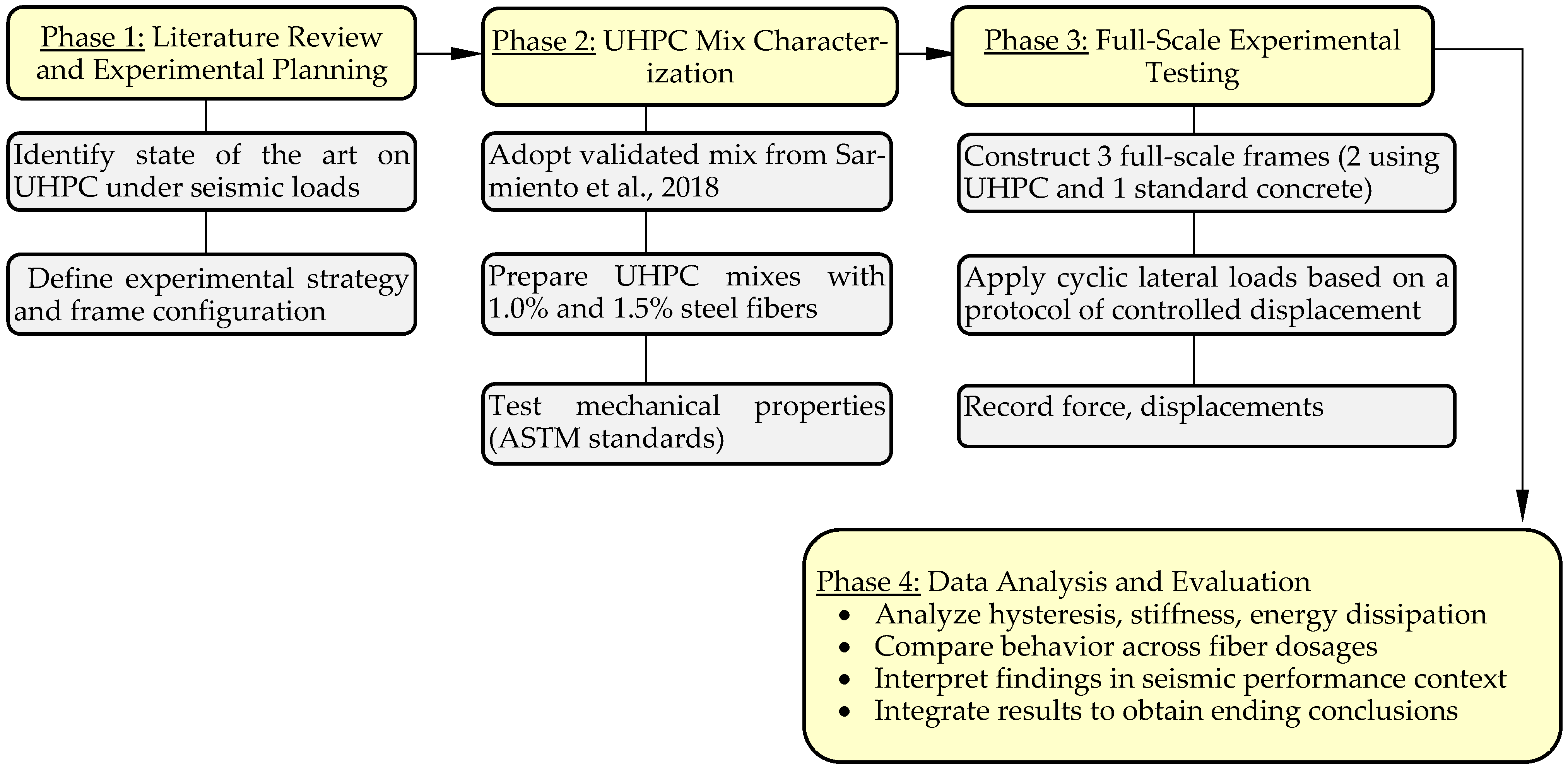
Based on the objectives outlined in the introduction, this section presents the experimental methodology designed to evaluate the seismic performance of full-scale UHPC frames. The methodology includes the definition of specimen geometry, material properties, fabrication process, instrumentation, and loading protocol. These aspects were selected to ensure that the experimental conditions reflect realistic structural behavior and comply with applicable code-based design criteria. Figure 1 presents the methodology used in this study, which includes four different phases:
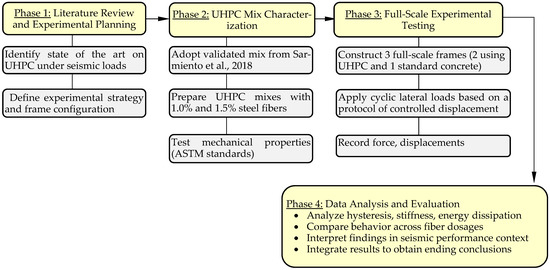
Figure 1.
Methodological framework for the experimental evaluation of seismic performance in UHPC frame structures varying steel fiber content under cyclic loads [2].
- Phase 1: Consists of an exhaustive and systematic bibliographic review of specialized literature. The objective is to establish the state of the art regarding the seismic behavior of UHPC frames and the general characteristics of UHPC. The review analyzes previous research on cyclic load tests on similar structural elements of UHPC and its performance.
- Phase 2: The UHPC mixture used in this research was based on the formulation developed and experimentally validated by some of the authors in Sarmiento et al. [2], which had demonstrated favorable mechanical performance under cyclic loads. This formulation was adopted due to its compressive strength, adequate workability, and its previous successful application in seismic testing of UHPC joints. The mix included high-performance cementitious materials and steel fibers at 1.0% and 1.5% by volume. Two types of steel fibers were used in equal proportions: hooked-end fibers and short straight fibers. The mixture was prepared following a multi-phase mixing protocol to ensure homogeneity and proper fiber dispersion. Compressive strength tests were conducted on standard cylinders per ASTM C39/C39M-05 [44] and modulus of elasticity following ASTM C469/C469M-22 [45].
- Phase 3: Pseudo-static cyclic load tests were carried out on full-scale UHPC frames to simulate in-plane seismic action. Prior to testing, the authors estimated the expected lateral load capacity and defined the target displacement amplitudes. During testing, displacement-controlled cyclic lateral loads were applied, and key parameters such as lateral force, displacement, and unit deformations were recorded. The goal was to assess seismic performance through hysteresis, energy dissipation, stiffness, and failure mechanisms. To compare the influence of fiber dosage, three frames were tested: two made with UHPC (1.0% and 1.5% steel fibers by volume) and one reference frame made with conventional concrete.
- Phase 4: This phase involved the processing and analysis of the experimental data. The influence of fiber content on the structural response was evaluated through quantitative metrics and qualitative observations. Results were interpreted in light of the state-of-the-art literature, and conclusions were drawn regarding the benefits of UHPC in improving seismic performance. Preliminary recommendations and directions for future research were also proposed.
3. Experimental Design
To evaluate the structural performance of UHPC frames under seismic loading, an extensive experimental program was conducted. This section provides a detailed description of the materials used, the preparation of the specimens, and the testing procedures. The experimental plan was designed to assess key parameters such as lateral strength, stiffness degradation, and energy dissipation. Each subsection below follows the logical sequence of the experimental workflow, beginning with the characterization of materials and progressing through the assembly of test specimens and implementation of loading protocols.
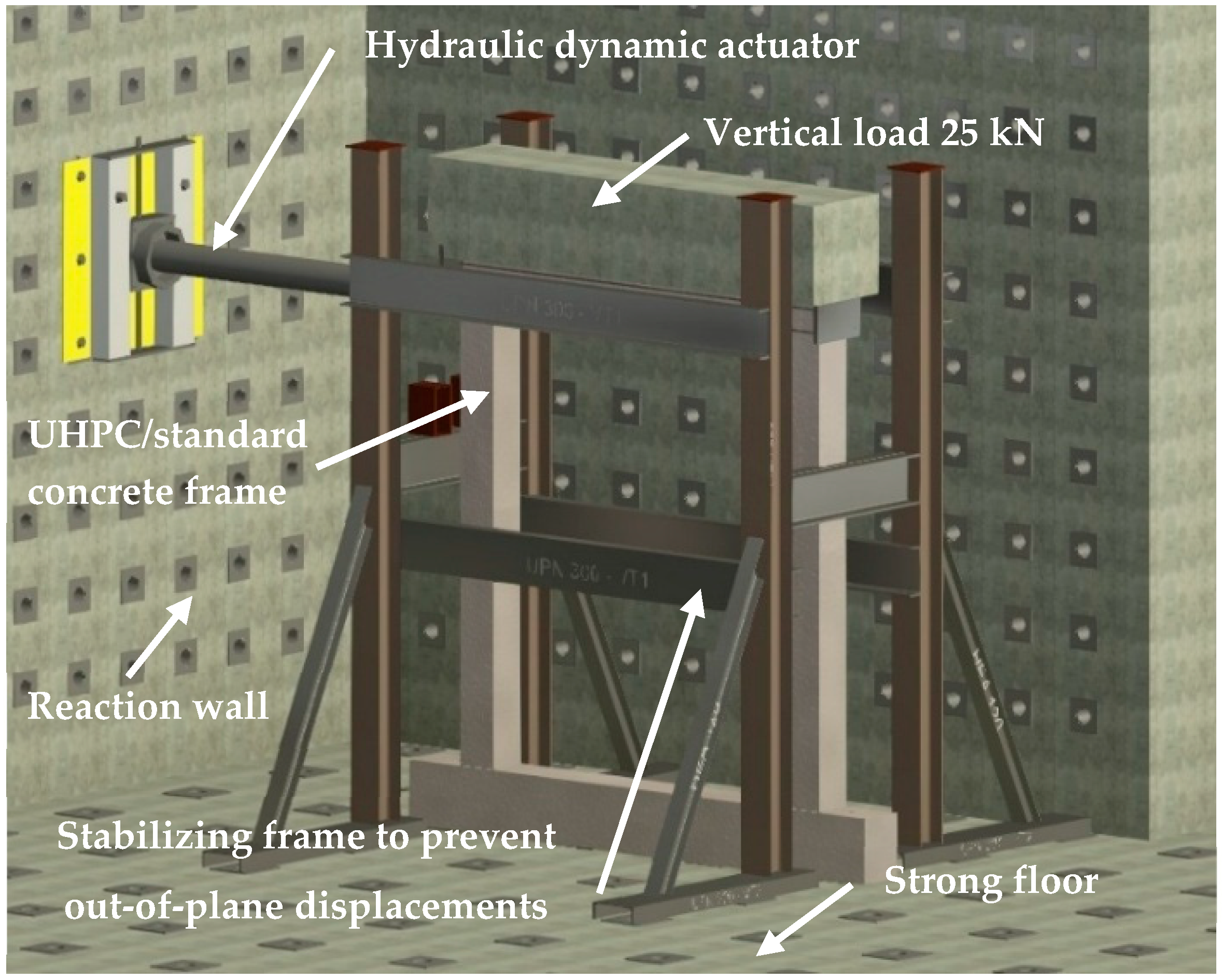
The experimental program comprised two main types of specimens: three full-scale frames subjected to in-plane cyclic loading, and standardized specimens used for the mechanical characterization of the UHPC mixtures. Figure 2 illustrates the test setup for the three frame specimens—two constructed with UHPC (containing different fiber contents) and one with conventional reinforced concrete—tested under in-plane cyclic loading.
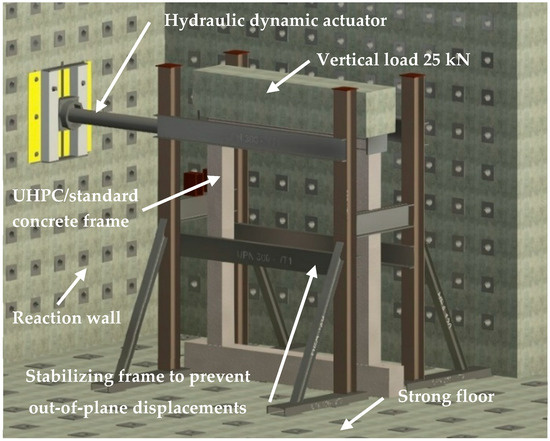
Figure 2.
Experimental setup for in-plane load testing on frames.
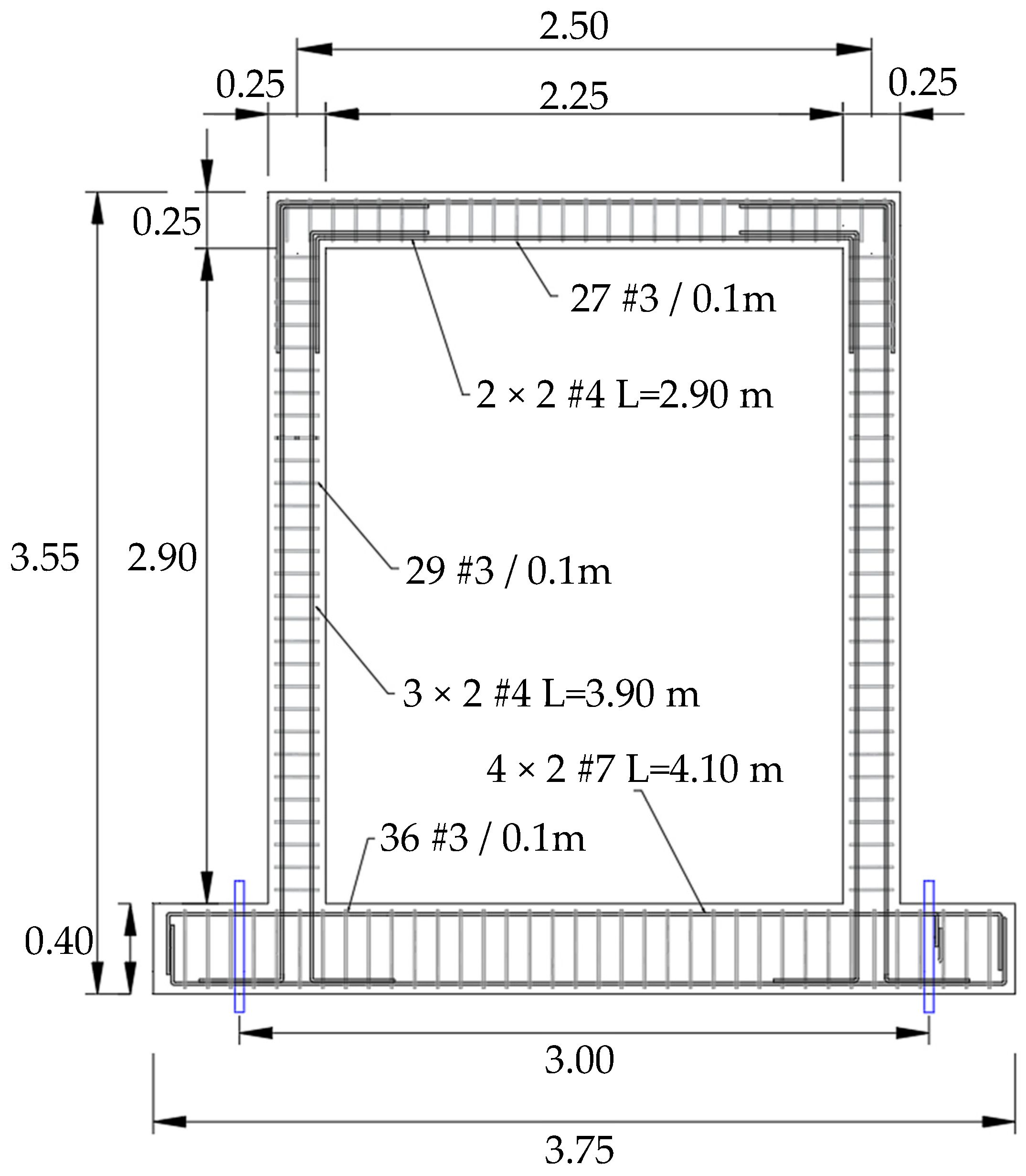
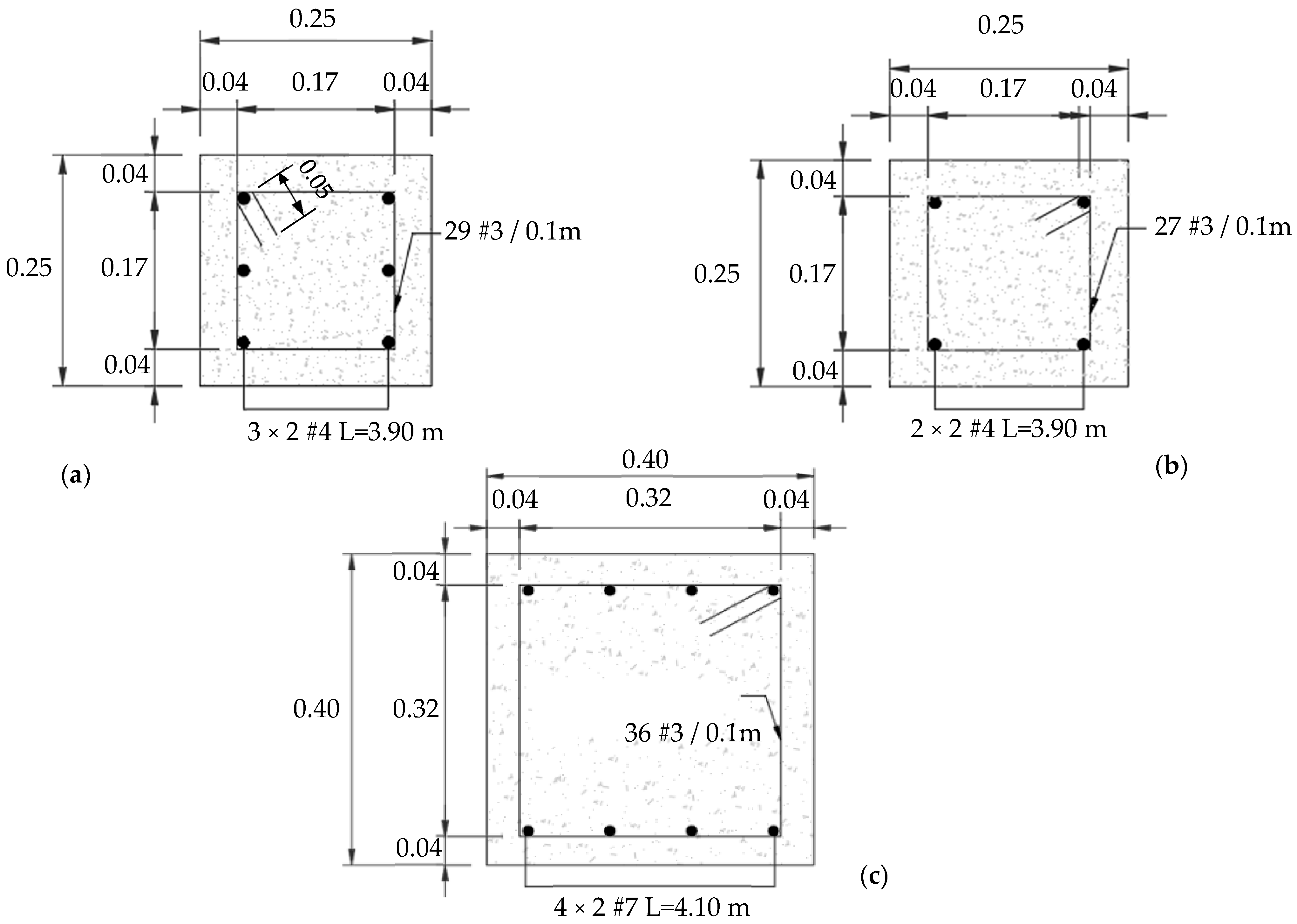
UHPC frames reinforced with steel fibers (Figure 3) were designed to assess their structural performance under pseudostatic in-plane cyclic loading. The geometry and reinforcement details of the frames are shown in Figure 4. The main dimensions include a total frame height of 3.15 m, a foundation beam length of 3.75 m, and a span between columns of 2.50 m. Cross-sectional dimensions are 0.25 × 0.25 m for columns (Figure 4a), 0.25 × 0.25 m for beams (Figure 4b), and 0.40 × 0.40 m for foundation beams (Figure 4c). Frame dimensions were selected based on theoretical and practical design considerations, supported by previous research such as Sarmiento et al. [2]. These cross-sectional dimensions correspond to the minimum full-size sections permitted by the Colombian Seismic Design Code for intermediate seismic hazard zones. Specifically, the code requires that the smallest dimension of a reinforced concrete structural member must not be less than 250 mm. In addition, the longitudinal reinforcement ratio in the columns was set at 1%, in accordance with the minimum required by the same design code. As such, the frame specimens reflect realistic, full-scale construction and were not scaled-down laboratory models. In addition, these proportions are representative of typical structural frames and allow for the observation and quantification of critical seismic performance phenomena, including plastic hinge development, global failure mechanisms, hysteretic behavior, and energy dissipation.
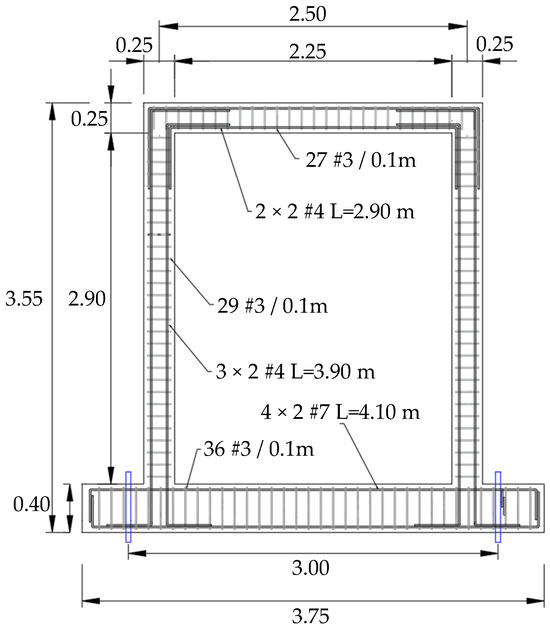
Figure 3.
Front view of frames (UHPC and standard concrete). Dimensions in meters.
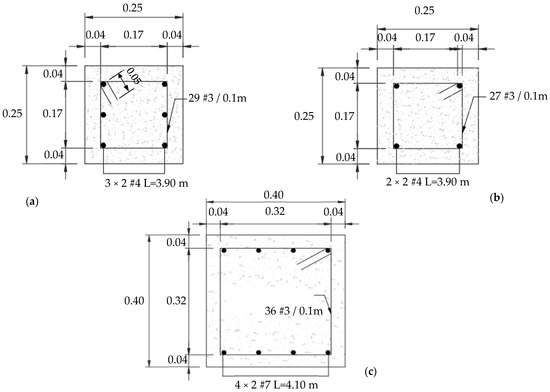
Figure 4.
Cross-sectional details of the UHPC frame structural elements (a) Column Cross Section; (b) Beam Cross Section; (c) Foundation Beam Cross Section. All dimensions in m.
Dimensions were also selected to ensure sufficient strength and stiffness, in line with standard reinforced concrete design practices. During the entire test, a constant vertical load of 25 kN was applied to the top of each frame, simulating the tributary gravity load that the frames would support in a real building. Given that the tested frames simulate one-story structures, the applied vertical load of 25 kN was selected to represent the expected roof-level gravity load. This value was calculated based on a typical ribbed slab system consisting of concrete joists measuring 0.15 m in height and 0.075 m in width, spaced at 0.80 m, topped with a 0.05 m concrete layer. The tributary area considered was 2.5 m × 2.5 m, and the estimated dead load includes the weight of the joists, top slab, and a 0.025 m finishing layer. Additionally, a conservative dead load of 2.0 kN/m2 was added to account for ceilings, partitions, and potential waterproofing or finishing layers. The resulting total load is approximately 26 kN, which supports the use of 25 kN in the experimental setup as a realistic representation of axial demand in single-story buildings without upper floors.
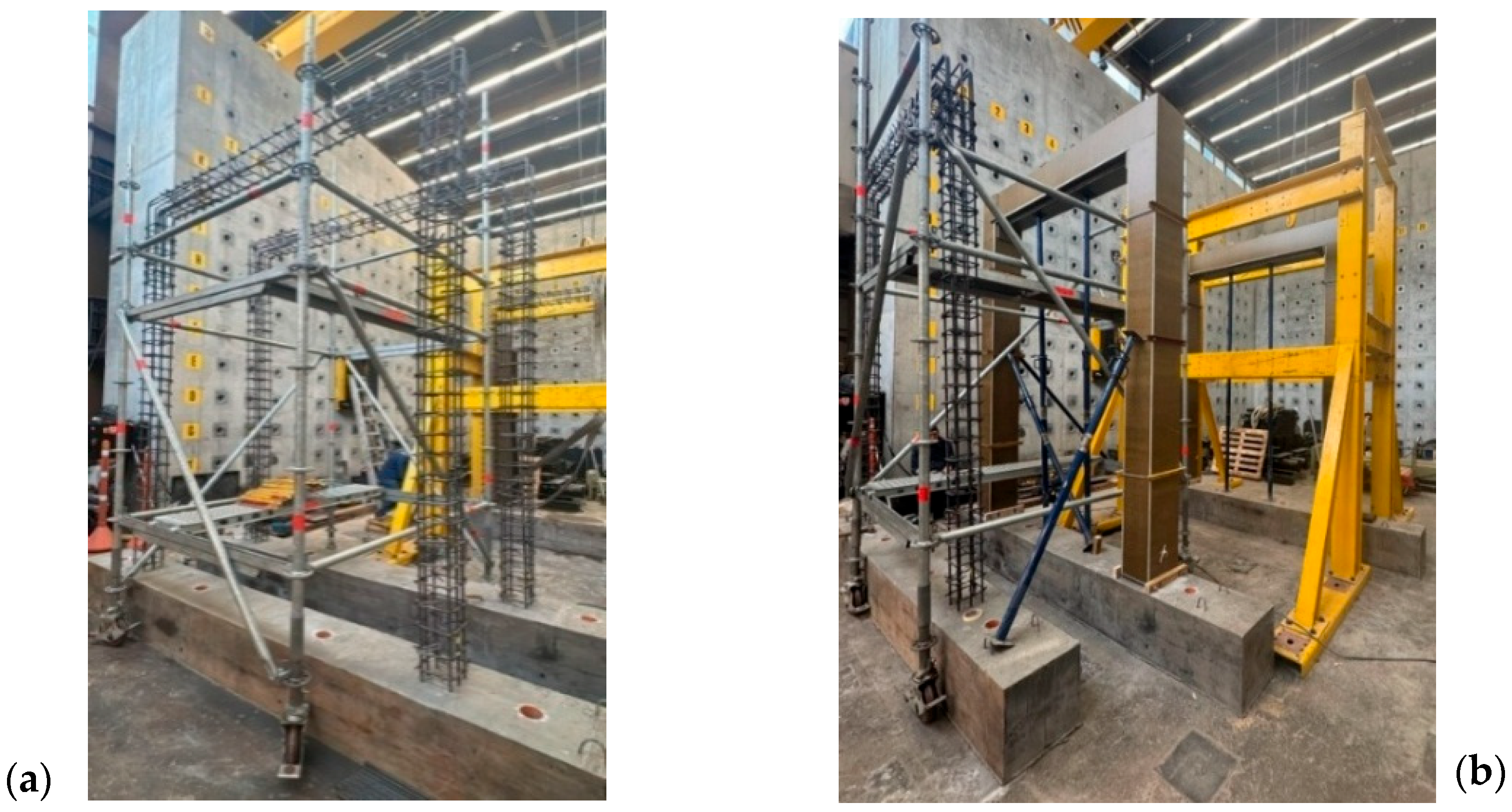
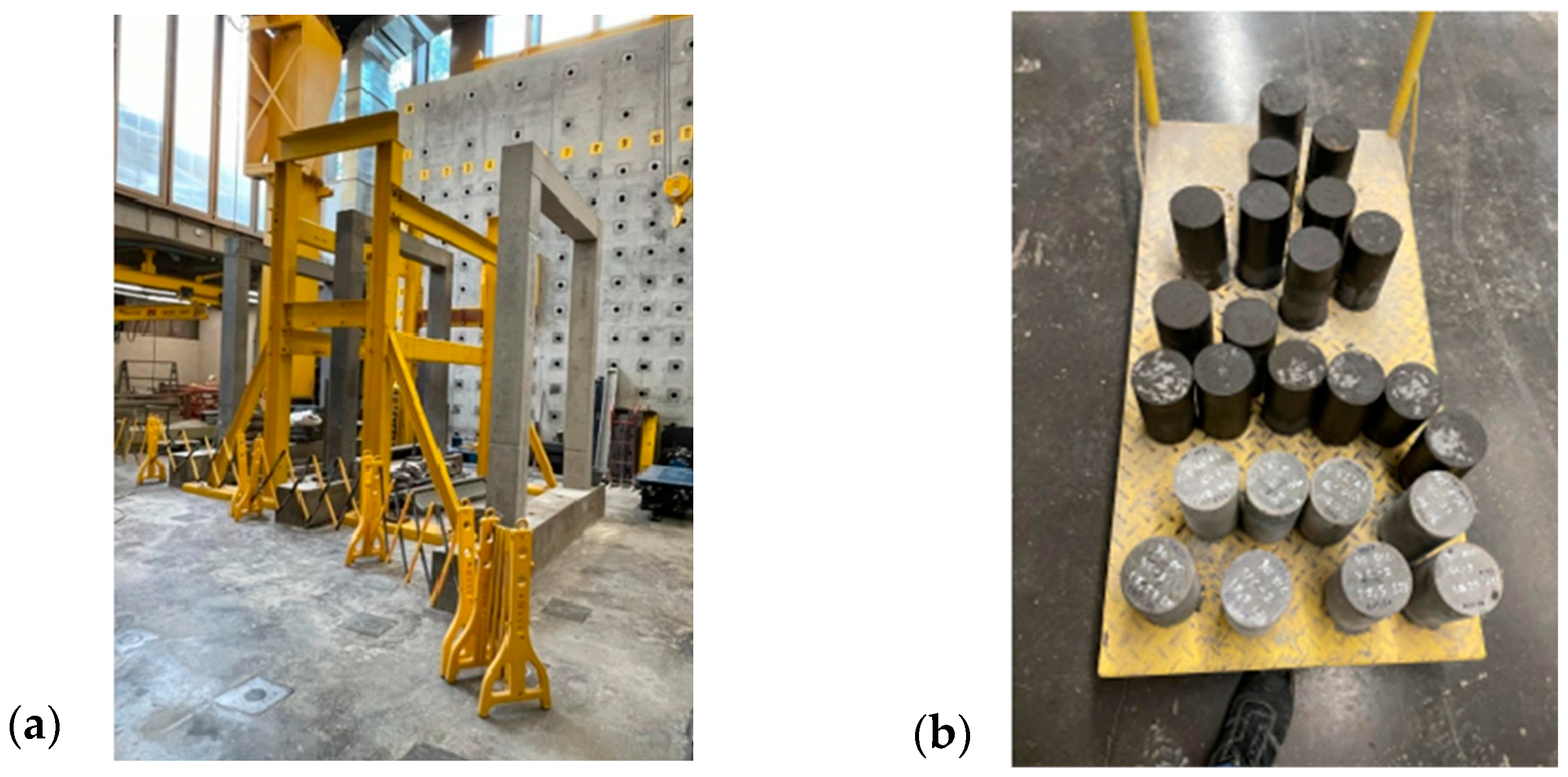
Prior to formwork installation, steel reinforcement was bent and assembled as illustrated in Figure 5a. Wooden formwork (Figure 5b) was then constructed to match the target geometry specified in Figure 3 and Figure 4. In addition to the frames, standardized specimens were cast for mechanical characterization of the UHPC. These included cylinders and prismatic elements, prepared in accordance with ASTM C39/C39M-05 [44] and ASTM C78–02 [46]. The final UHPC frames are presented in Figure 6a,b and show the specimens for material characterization tests.
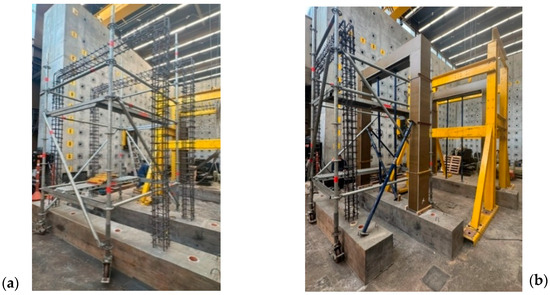
Figure 5.
Construction stages of the cast-in-place UHPC frame (a) Assembly of reinforcement steel; (b) Formwork for UHPC Frame construction.
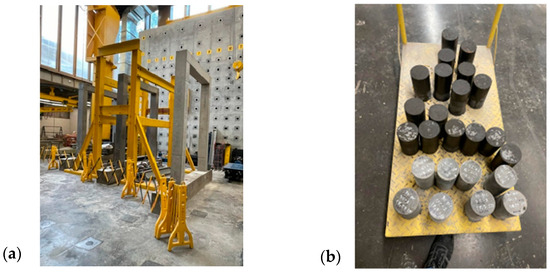
Figure 6.
UHPC frame construction and material testing specimens. (a) Final Result of UHPC Frame construction; (b) UHPC Specimens for material characterization tests.
After casting the UHPC into the formwork, curing of the full-scale frames was performed by periodically spraying water on the exposed surfaces to maintain adequate moisture during the initial curing period. Standardized specimens (cylinders and beams) were cured in a chamber under controlled temperature and relative humidity conditions for 28 days, following recommended procedures for UHPC curing [38].
4. Materials
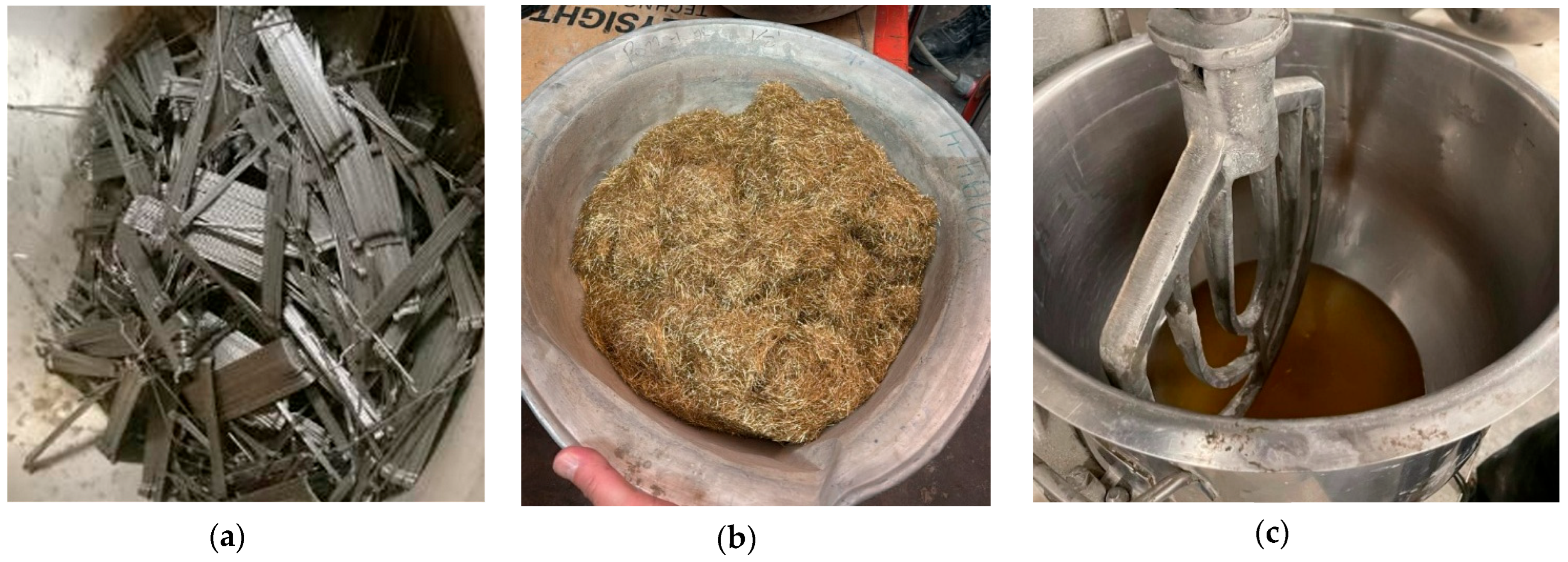
The Ultra-High-Performance Concrete (UHPC) used in this study corresponds to a dry pre-mixed formulation supplied by Argos Colombia. The material was provided in 25 kg bags, allowing for efficient transport, storage, and batching in the laboratory. This UHPC is characterized by high mechanical strength, durability, and versatility, making it suitable for demanding structural applications. To enhance the base UHPC’s toughness, tensile strength, and energy dissipation capacity, steel fibers were incorporated. Steel fibers enhance UHPC behavior by bridging cracks, delaying crack localization, and providing post-cracking tensile resistance, which promotes strain-hardening behavior and improves energy dissipation under cyclic loading. The selected fiber dosages were based on prior studies and specialized literature, including the study by Sarmiento et al. [2], which investigates comparable fiber contents for UHPC in seismic-resistant applications, providing a foundation and benchmark for the present research. The selection of 1.0% and 1.5% steel fiber contents for the actual study was based on experimental evidence from Sarmiento et al. [2], where UHPC beam-column joints with fiber contents ranging from 0.0% to 2.0% were tested under cyclic loading. While 0.5% fibers provided some improvement in energy dissipation, the 1.5% mix demonstrated the highest energy absorption and an optimal balance between strength and workability. In contrast, the 2.0% mix suffered from fiber balling and reduced workability, limiting its practical applicability. Consequently, 1.5% was selected as the upper-bound dosage, and 1.0% as a lower-bound reference to evaluate the influence of reduced fiber content. This approach allowed us to assess the sensitivity of seismic performance to fiber volume fraction, aiming to optimize structural behavior while maintaining constructability. The characteristics of the fibers used in the actual study are summarized below:
- Dramix 4D Fibers: Hooked-end steel fibers (Figure 7a) with a 4D geometry, exhibiting the mechanical properties listed in Table 1.
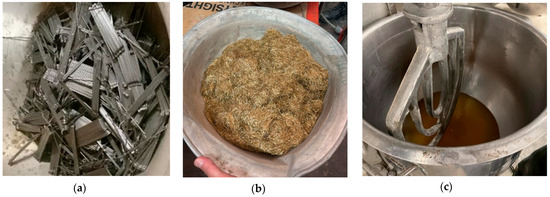 Figure 7. Fibers and chemical admixture used in the UHPC mix (a) Dramix 4D Fibers; (b) Dramix OL 13/0.20 Fibers; (c) Water—Reducing Superplasticizer.
 Table 1. Fiber Properties [47,48].
The inclusion of steel fibers, along with the need to maintain a low water-to-cement ratio, required the use of a high-range water-reducing admixture. To enhance workability and facilitate proper dispersion of cement particles, a polycarboxylate-based superplasticizer (Figure 7c) was used. This Superplasticizer reduces mix viscosity, improves fluidity, and enables effective placement of UHPC in molds with complex geometries.
Finally, the water used for preparing the UHPC mixtures was obtained from Bogotá’s public water supply system. Potable water, meeting the standard quality requirements for concrete production, was employed to ensure the absence of impurities or substances that could adversely affect the setting, strength development, or durability of the UHPC.
With all components defined, the adopted mix design followed established principles for UHPC formulation and aligns with recommendations from leading researchers in the field. The low water-to-cementitious materials ratio (0.15–0.25), essential for achieving high density and mechanical performance, was made possible through the use of a high-range water-reducing superplasticizer [7,9].
The dry components, including high-strength cement and supplementary materials such as microsilica [8], were optimized to promote a dense and reactive cementitious matrix. Table 2 and Table 3 present the mix proportions used in this study for UHPC with 1.0% and 1.5% steel fiber contents by volume, respectively. These tables detail the quantities of each component—dry materials, effective water, chemical admixture, and fibers—in kilograms (kg), as well as the total mix volume in liters (L).
Table 2.
UHPC Mix Dosage with 1.0% Fibers (0.5% Dramix OL and 0.5% Dramix 4D).
Table 3.
UHPC Mix Dosage with 1.5% Fibers (0.75% Dramix OL and 0.75% Dramix 4D).
Finally, the UHPC mix was produced following a controlled sequence of component addition and mixing phases to ensure homogeneity and target material properties. The step-by-step mixing procedure is detailed in Table 4. The total mixing time ranged from 25 to 30 min, depending on the fiber volume content and the workability of each mixture.
Table 4.
Mixing process steps.
Although the UHPC mix is commercially produced, the fiber type, geometry, volume fractions, and mixing procedure are fully reported in Table 1, Table 2, Table 3 and Table 4, providing sufficient information to interpret the observed trends and ensure experimental reproducibility at the structural level.
5. Pseudo-Static and Material Test Setup
This section describes the experimental program developed for the characterization of Ultra-High-Performance Concrete (UHPC) and the evaluation of the seismic behavior of full-scale frames constructed with this material. The program included pseudostatic cyclic tests on full-scale specimens. To properly guide the design and execution of these tests, preliminary estimations of the expected lateral load capacities were conducted to define realistic and safe loading protocols.
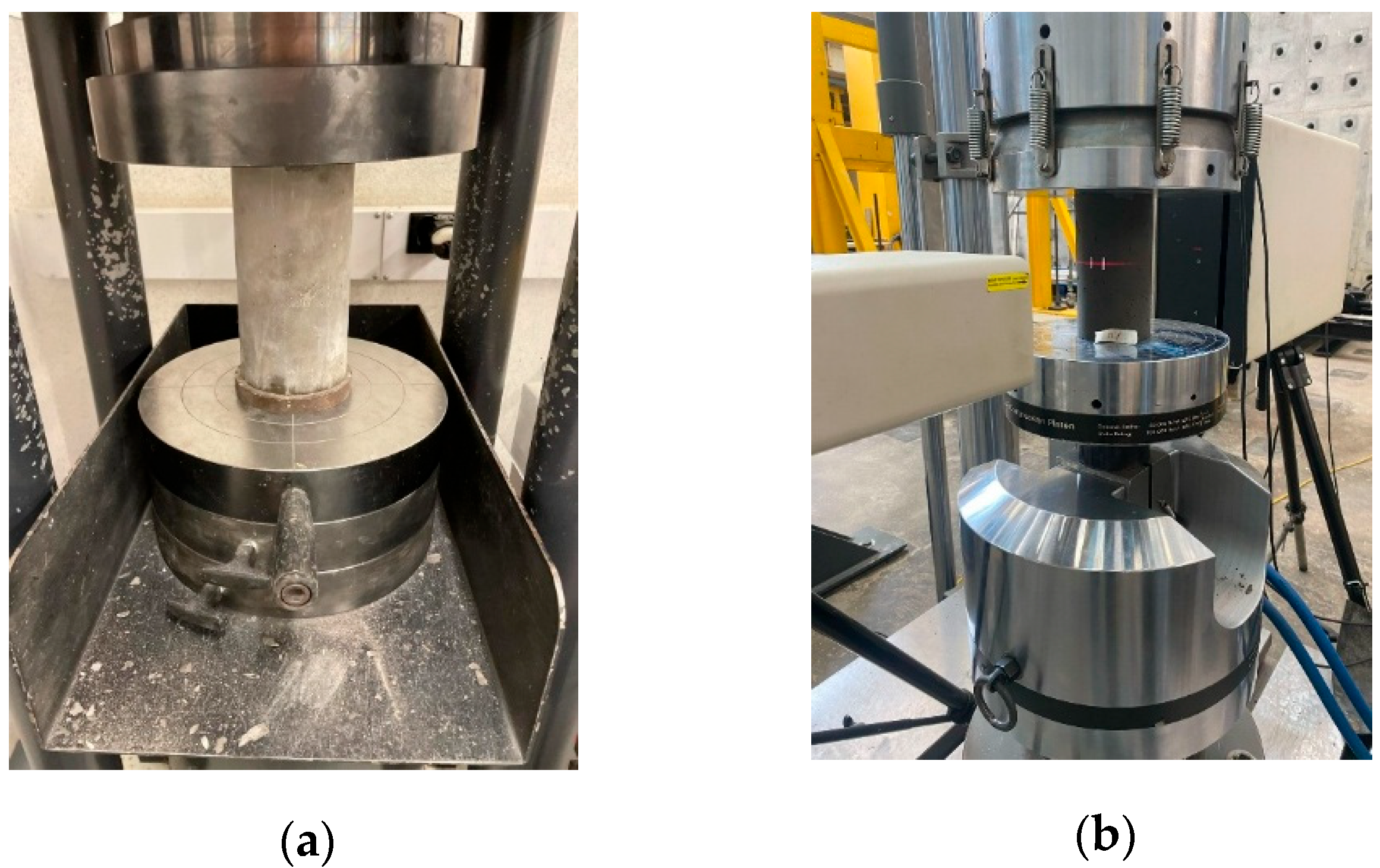
As a fundamental component of the study, the program also included the mechanical characterization of the UHPC to determine its intrinsic material properties. Standardized specimens were tested in accordance with ASTM C39/C39M-05 [44] and ASTM C469/C469M-22 [45] to evaluate compressive strength (Figure 8a) and modulus of elasticity (Figure 8b). In accordance with ASTM C469/C469M, the elastic modulus corresponds to the chord modulus of elasticity, calculated between the prescribed stress levels defined by the standard, and not to an instantaneous tangential modulus. These tests provide essential input for interpreting the global response of the frame specimens under cyclic loading.
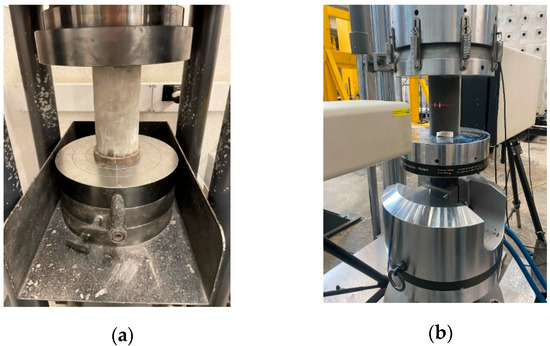
Figure 8.
Experimental setup for mechanical characterization tests of UHPC specimens. (a) Uniaxial Compressive Strength Test; (b) Compressive Elastic Modulus Test.
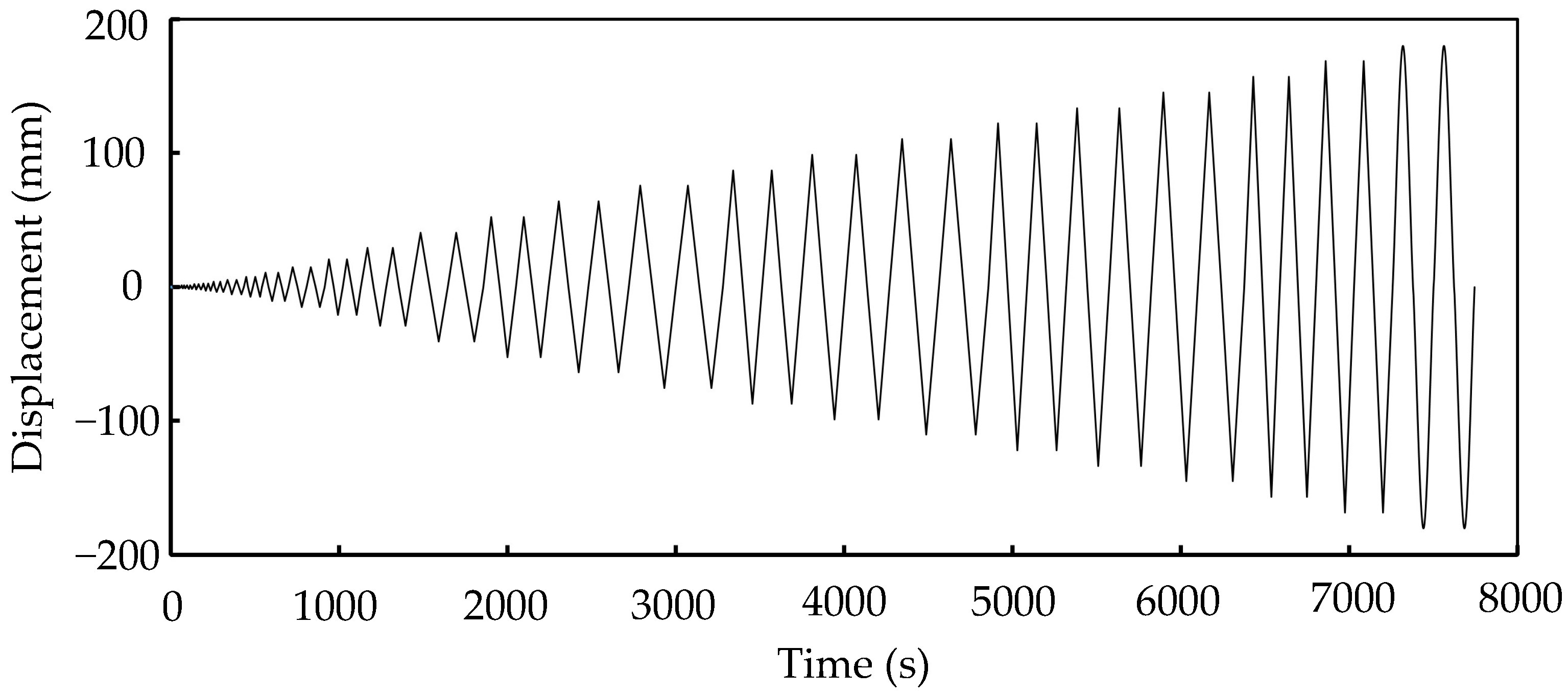
Following the characterization of the UHPC’s fundamental mechanical properties, the study proceeded with the evaluation of the structural behavior of full-scale frames constructed with this material. A pseudostatic in-plane cyclic load was applied to each frame under displacement control. The imposed horizontal displacements simulated seismic deformation demands and were applied at low speed to enable detailed observation and accurate measurement of the structural response. A triangular displacement waveform was used due to its ease of implementation and its capacity to replicate the abrupt directional changes typical of seismic loading. The complete loading protocol as a function of time is presented in Figure 9.
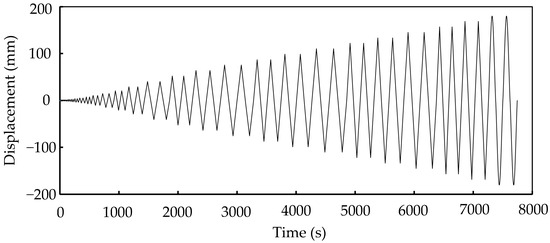
Figure 9.
Loading protocol as a function of time.
The cyclic loading protocol followed the guidelines of FEMA 461 [49], commonly used for seismic testing of structural components. It consisted of displacement-controlled cycles with increasing amplitude levels defined in terms of interstory drift ratios. The applied drift ratios began at 0.012% and increased progressively through the following sequence: 0.017%, 0.024%, 0.033%, 0.046%, 0.065%, 0.090%, 0.126%, 0.177%, 0.248%, 0.347%, 0.486%, 0.680%, 1.000%, 1.330%, 1.710%, 2.100%, 2.480%, 2.860%, 3.240%, 3.620%, 4.000%, 4.380%, 4.760%, 5.140%, and 5.520%. The target interstory drift ratio of 1.0% was selected based on seismic design codes, where this threshold is commonly adopted to control damage to non-structural components. Drift levels up to this target were defined in accordance with FEMA 461, using a geometric progression in which each drift level was approximately 1.40 times the previous one. For drift ratios exceeding 1.0%, the imposed increments corresponded to approximately 30–40% of the target drift, in order to capture post-yield behavior and progressive degradation. The test continued until a maximum drift of 5.52% was reached, which corresponded to the maximum horizontal displacement of 180 mm allowed by the experimental setup. Although the actuator had a stroke of 250 mm, the physical constraints of the supporting frame and connection system defined the operational limits.
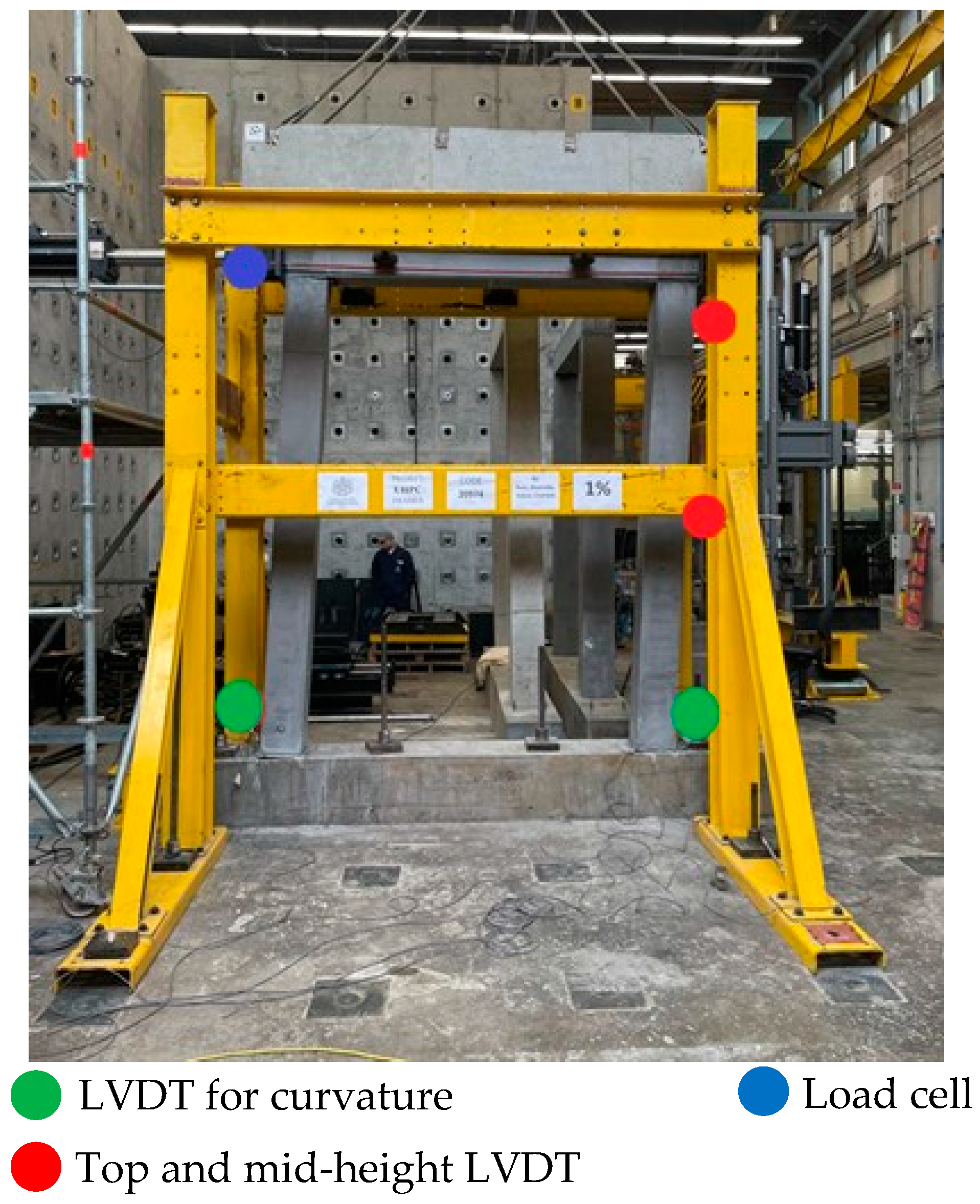
Two loading cycles were applied at each amplitude level. The sequence was monotonic in terms of increasing displacement demands and continued until failure of the specimen or until the maximum stroke capacity of the test equipment was reached. The actuator was operated under displacement control using a triangular waveform. The loading rate varied across the displacement cycles, with speeds ranging approximately from 0.20 mm/s to 2.95 mm/s, depending on the amplitude of each cycle. These quasi-static loading rates were chosen to minimize inertial effects while ensuring stable control and sufficient time to capture damage evolution during testing, following recommendations in FEMA 461 [49]. Cyclic loads were applied using a hydraulic actuator mounted at the top of the concrete frame (Figure 10), reacting against the laboratory’s strong wall.
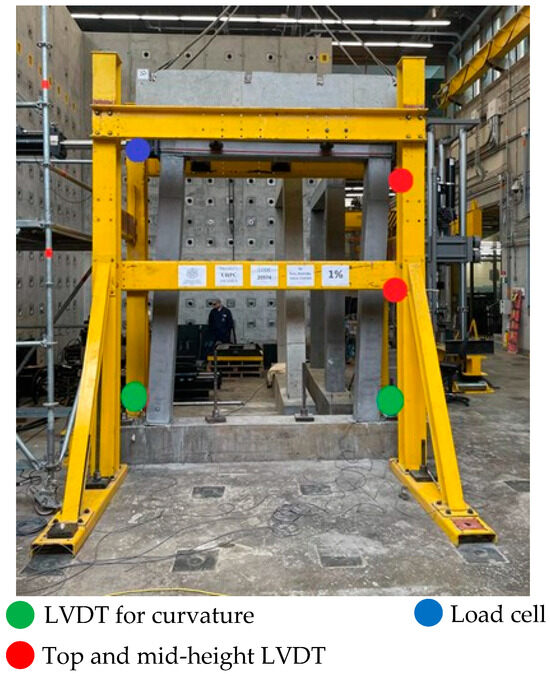
Figure 10.
UHPC frame and its instrumentation.
The actuator had a load capacity of 250 kN, a displacement range of ±250 mm, and was equipped with spherical hinges at both ends to accommodate rotational demands during testing. The base of the frame—comprising a 0.4 m × 0.4 m rigid UHPC beam—was anchored to the strong floor with four bolts to simulate fixed-end boundary conditions. Additionally, out-of-plane displacements were restrained using a lateral steel bracing system. To accurately capture the structural response of the UHPC frames under pseudostatic cyclic loading, a comprehensive instrumentation system was implemented. Lateral forces were measured using a load cell integrated into the actuator (Figure 11) with a capacity of 250 kN.
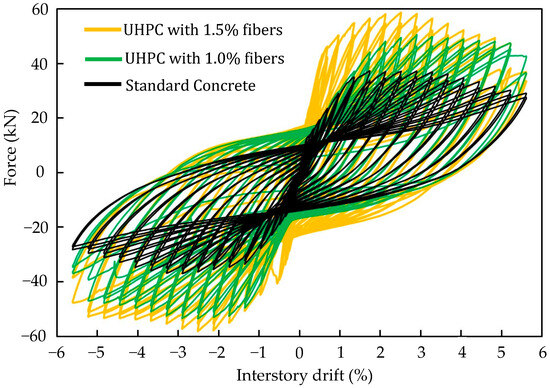
Figure 11.
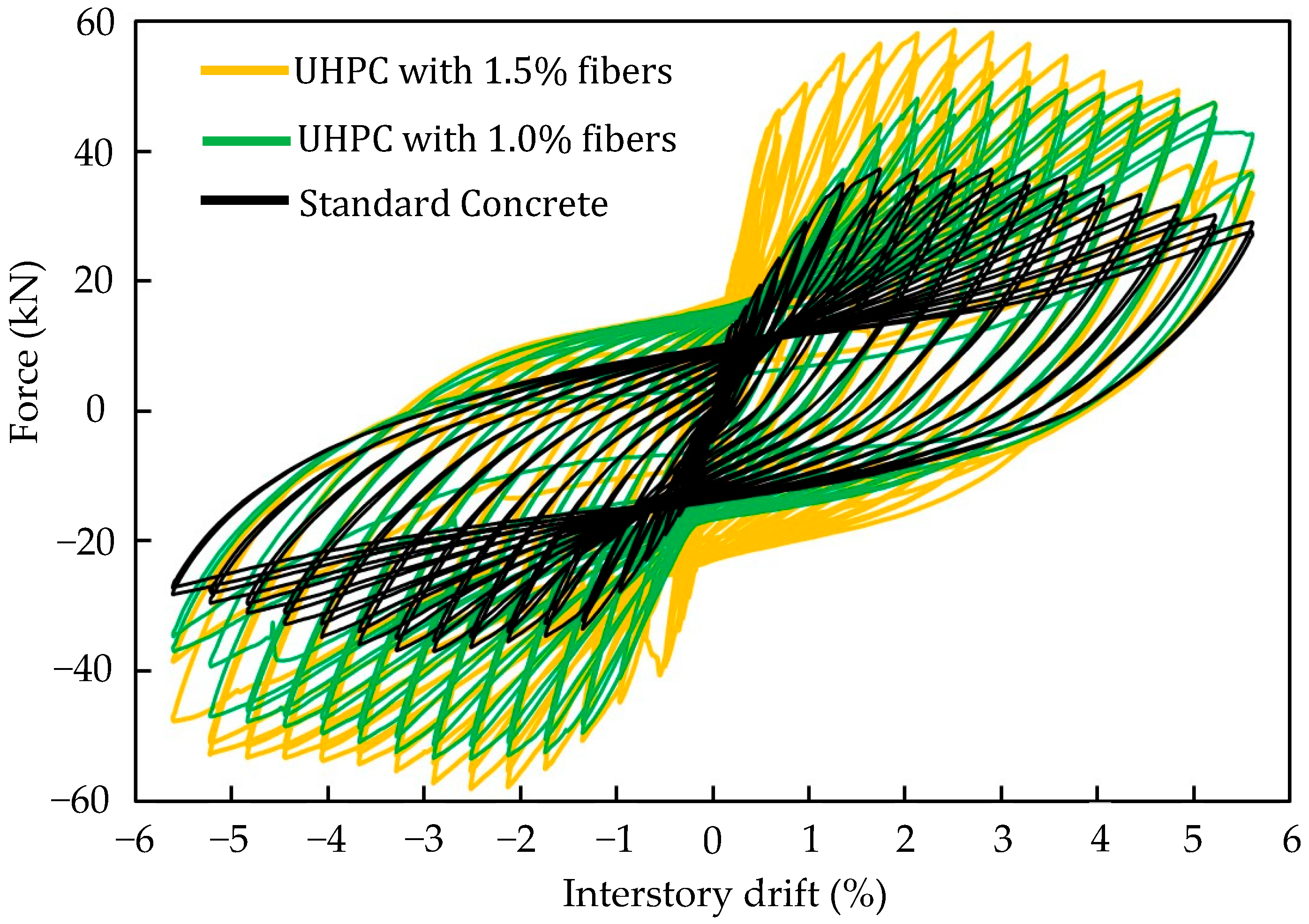
Force–displacement hysteretic response of the tested frames under pseudo-static cyclic loading (1.5%, 1.0% and Concrete Conventional).
To characterize the deformation of the columns, one column was instrumented with LVDT (Linear Variable Differential Transformer) placed at its top and mid-height to record horizontal displacements along its height. At the base of both columns, pairs of LVDTs were installed on opposite faces of the cross section in the loading direction to estimate curvature demands in critical regions where plastic hinge formation was expected (Figure 10). The sensitivity of all LVDTs used was at least 1 hundredth of a millimeter, reaching up to 1 thousandth of a millimeter. In addition, the longitudinal reinforcement of both columns was instrumented with strain gauges in the lower region to monitor the tensile strains in the steel bars during the loading protocol. All instrumentation—LVDTs, load cells, and strain gauges—was connected to an MTS automated data acquisition system, with a sampling rate of 5 Hz (5 data points per second). This sampling frequency was selected considering the quasi-static nature of the loading protocol, which imposed two displacement-controlled cycles per drift level, with cycle durations ranging from approximately 7.3 s to over 200 s, ensuring sufficient temporal resolution to accurately capture the force–displacement response.
6. Results and Discussion
6.1. Compressive Strength
The 28-day compressive strength of UHPC was evaluated for both steel fiber volume fractions. For the 1.0% fiber mix, the strength of cylindrical specimens ranged from 101.0 MPa to 107.0 MPa, yielding an average compressive strength of 104 MPa with a standard deviation of 3.0 MPa (Table 5). The corresponding coefficient of variation was 2.9%, which falls within the acceptable range established by ASTM C39/C39M-05 [44] for this type of material.
Table 5.
Results—Compression Cylinders—1.0% Frame.
For the UHPC mix with 1.5% steel fibers, the 28-day compressive strength of the four tested specimens ranged from 109.3 MPa to 113.6 MPa, with an average strength of 111 MPa (Table 6). The standard deviation was 1.8 MPa, resulting in a coefficient of variation of 1.6%.
Table 6.
Results—Compression Cylinders—1.5% Frame.
For comparison purposes, a third set of specimens was tested using conventional concrete. The three cylinders exhibited compressive strengths ranging from 24 MPa to 26 MPa, with an average value of 25 MPa, a standard deviation of 0.8 MPa, and a coefficient of variation of 3.30% (Table 7). These results highlight the substantially superior compressive performance of UHPC mixtures.
Table 7.
Results—Compression Cylinders—Standard Concrete Frame.
6.2. Modulus of Elasticity
For the mix with 1.0% fiber content, the average elastic modulus was 64,689 MPa. Individual values ranged from 61,937 MPa to 67,194 MPa, with a standard deviation of 2389 MPa and a coefficient of variation (CoV) of 3.7% (Table 8). This average exceeds the typical range for conventional high-strength concrete (30–45 GPa) [2,5,10] and is consistent with values reported for UHPC with similar fiber contents [2,5,10].
Table 8.
Results—Modulus of Elasticity Cylinders.
For the mix with 1.5% fiber content, the recorded average modulus was 67,676 MPa, with values ranging from 64,421 MPa to 69,844 MPa. The standard deviation was 2308 MPa, and the CoV was 3.4% (Table 8). This result is also in agreement with previously reported data for UHPC containing comparable fiber dosages. In contrast, the conventional concrete mix exhibited a lower average elastic modulus of 19,350 MPa, with individual values between 19,051 MPa and 19,280 MPa. The standard deviation was 340 MPa, and the coefficient of variation was 1.76% (Table 8), indicating both lower stiffness and lower variability compared to UHPC. These results confirm the better stiffness performance of UHPC, even when accounting for variability introduced by fiber reinforcement.
6.3. Pseudostatic Cyclic Test on UHPC Frames
Frame behavior was evaluated by analyzing the relationship between applied cyclic displacements and corresponding lateral loads. The hysteresis curves obtained for the three frames are shown in Figure 11. The target interstory drift was 5.6%, corresponding to a maximum lateral displacement of 168 mm. All specimens exhibited stable and well-defined hysteresis loops, enabling comparative analysis of lateral strength, stiffness degradation, and energy dissipation. These results align with previous findings by reference [2], who reported ductile and wide hysteresis loops in UHPC beam-column joints with fiber contents up to 2%. Similarly, Zhang et al. [37] observed broad loops in UHPC-HSC precast frames, indicative of high displacement ductility. Xue et al. [36] also reported stable hysteretic behavior in precast HSC frames, with limited pinching and strong cyclic response. Additionally, good symmetry was observed in both loading directions, particularly in the UHPC frames, confirming stable and repeatable cyclic behavior.
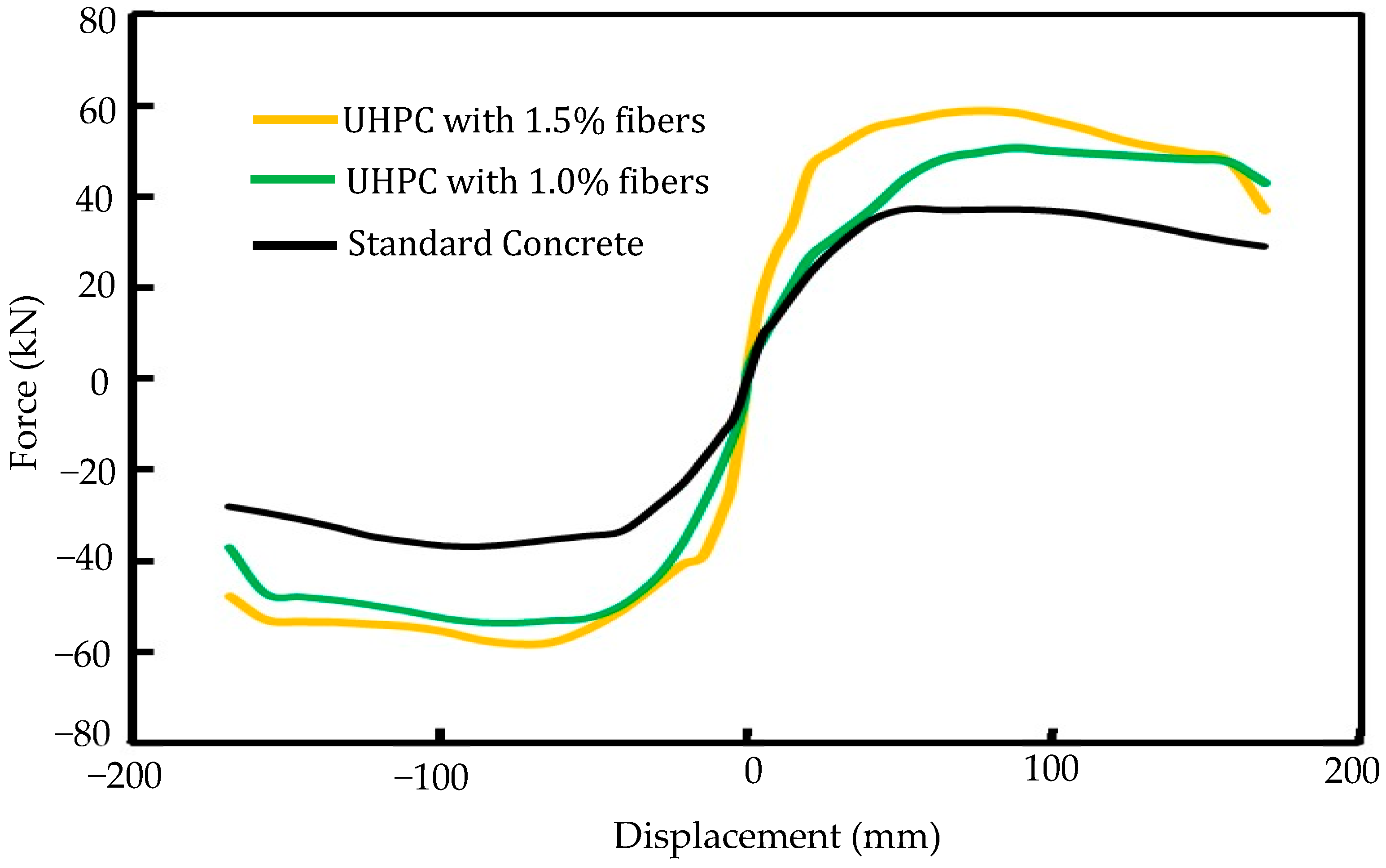
In this study, the UHPC frame with 1.5% steel fiber content exhibited the highest lateral resistance, followed by the 1.0% UHPC frame and, lastly, the conventional reinforced concrete frame. This trend remained consistent throughout the loading cycles. In terms of peak lateral strength, the 1.5% fiber frame reached 59.0 kN, representing a 17% increase relative to the 50.6 kN attained by the 1.0% fiber frame, and a 58% increase relative to the 37.4 kN recorded for the conventional frame. To validate the experimental lateral strengths, a simplified analytical comparison was performed using moment–curvature relationships derived from fiber-based section models. Plastic moment capacities of columns and beams were calculated, and a plastic mechanism was constructed to estimate the theoretical base shear. The resulting values—35 kN for the conventional frame and 58 kN for the UHPC frame with 1.5% fiber content—closely matched the experimental peak lateral strengths (37 kN and 59 kN, respectively), confirming the validity of the observed failure mechanisms and the consistency of the experimental data. These findings are consistent with those reported by Sarmiento et al. [2], where UHPC beam-column joints with 1.5% hooked steel fibers showed up to 44% greater lateral load capacity than conventional RC specimens. Similarly, Zhang et al. [37] observed a 16% increase in lateral strength for a precast UHPC-HSC composite frame compared to a cast-in-place RC frame. To complement the hysteretic response analysis, load–displacement envelope curves were used to visualize the peak load capacities of the three frames. Figure 12 shows the envelope curves corresponding to each system. The observed differences highlight the beneficial effect of increased fiber content on the structural load-carrying capacity, with a better performance for the 1.5% UHPC frame relative to the 1.0% and conventional concrete frames.
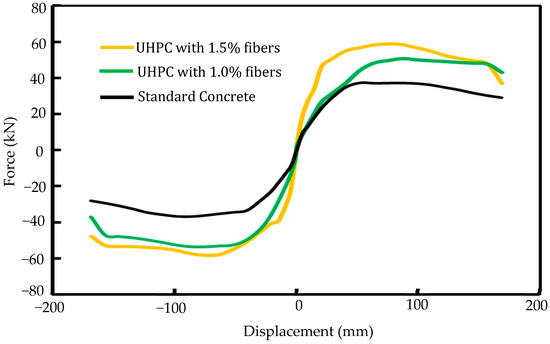
Figure 12.
Envelope curves derived from the cyclic force–displacement responses of the tested frames.
Based on the experimental results (Hysteretic load–displacement response) the ductility capacity, defined as the ratio between the ultimate drift and the yield drift, showed values of approximately 3.4 for standard reinforced concrete frame, 4.3 for the UHPC frame with 1.0% steel fibers, and 6.1 for the UHPC frame with 1.5% fibers. These results confirm that all frames exhibited moderate to high ductility, with a progressive improvement as fiber content increased.
6.4. Energy Dissipation and Stiffness Degradation
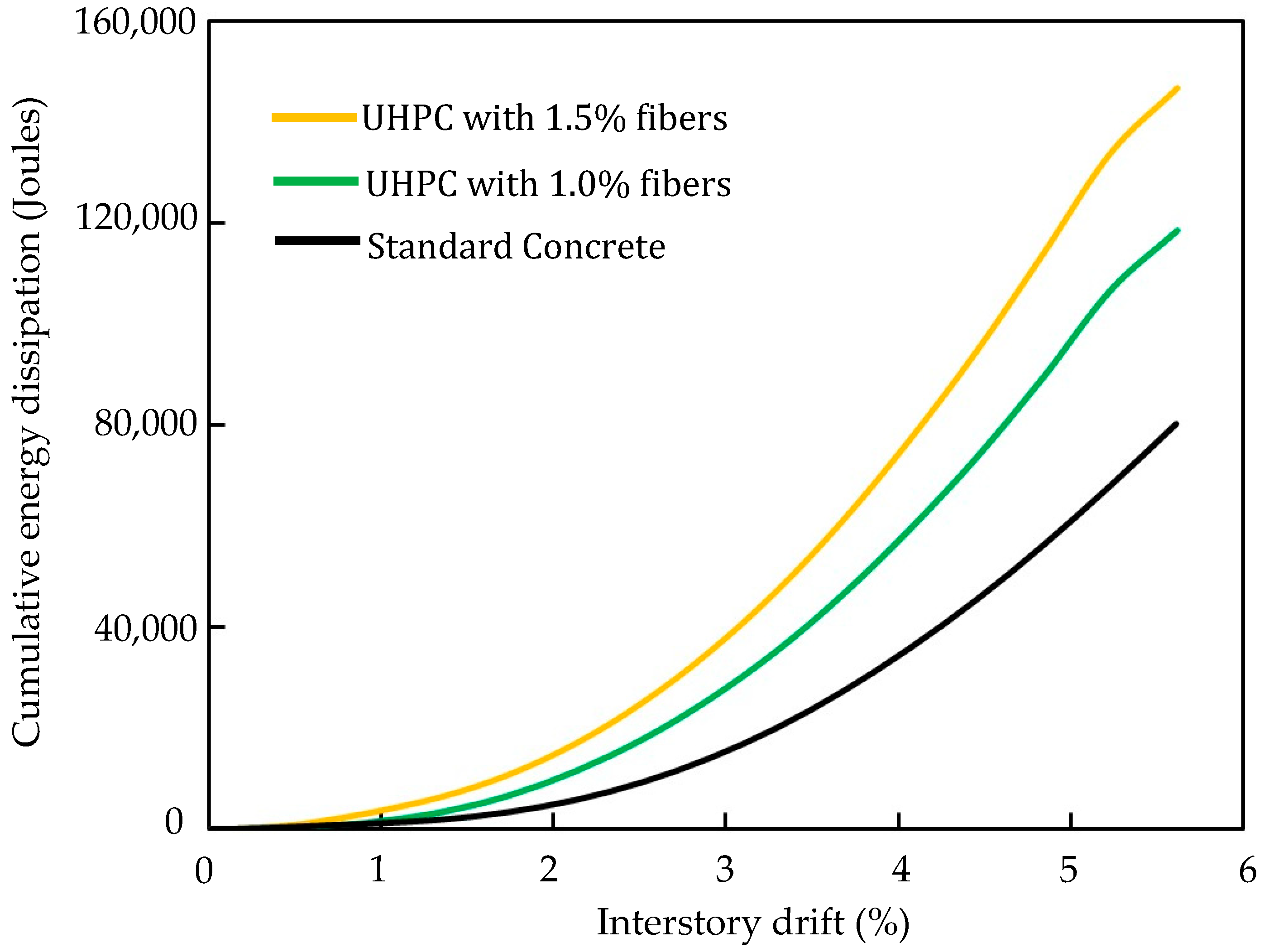
In addition to load capacity and displacement response, energy dissipation capacity is a key parameter for assessing the seismic performance of structural systems. In this study, the reported energy dissipation corresponds to the hysteretic energy, calculated as the area enclosed by the force–displacement hysteresis loops for each loading cycle. This quantity represents the structural-level energy dissipated through inelastic mechanisms activated under quasi-static cyclic loading, primarily associated with yielding of steel reinforcement, crack opening and closing, and inelastic interactions and pull-out of steel fibers. It is noted that hysteretic energy does not represent the total thermodynamic dissipated energy; however, it constitutes a consistent and widely adopted metric for comparative seismic performance assessment in cyclic testing of structural systems. A detailed distinction between hysteretic energy and total dissipated energy based on thermodynamic principles can be found in [50]. This aspect is analyzed in the following section. Figure 13 presents the cumulative dissipated energy as a function of interstory drift for the three tested frames: UHPC with 1.5% steel fibers, UHPC with 1.0% steel fibers, and conventional concrete (S.C.). Dissipated energy was computed as the area enclosed by each load–unload cycle (numerical integration of the force–displacement response using a trapezoidal rule), representing the system’s ability to absorb and dissipate energy under cyclic loading. The UHPC frame with 1.5% fiber content dissipated a total of 146,000 J, compared to 118,000 J for the 1.0% fiber frame and 80,000 J for the conventional concrete frame. These values suggest an increase in energy dissipation with higher fiber content, with differences on the order of 19% and 45% when compared to the 1.0% UHPC and conventional frames, respectively. It is important to note that no signs of significant pinching were observed in the hysteretic loops shown in Figure 11. All specimens—particularly the UHPC frames—exhibited relatively wide and stable loops, indicative of consistent energy dissipation capacity and ductile behavior throughout the loading protocol. This improvement in energy dissipation is primarily attributed to the combined effect of the UHPC matrix and the uniformly distributed steel fibers. These fibers enhance tensile strength, provide efficient crack-bridging mechanisms, and increase post-cracking ductility. Their presence helps delay the initiation and propagation of critical cracks, enabling the structure to undergo larger inelastic deformations while maintaining its load-bearing capacity. Such enhanced energy dissipation is particularly valuable in seismic design, as it reduces the overall demand on structural components and contributes to delaying both localized damage and potential global collapse. The results found are consistent with those reported by Sarmiento et al. [2], who found that reinforced concrete joints dissipated only 35% of the energy achieved by UHPC specimens with 1.5% steel fibers under comparable cyclic loading. Likewise, Zhang et al. [37] reported that a UHPC-HSC frame exhibited approximately 19% higher cumulative energy dissipation than an RC frame at a drift level of 4.5%. These differences underscore the beneficial effect of incorporating steel fibers into UHPC mixtures. Beyond increasing the energy dissipation capacity, higher fiber contents contribute to improved structural efficiency under moderate displacement levels, which are typical of controlled-damage states in earthquake-resistant design. The improved energy dissipation and ductility observed in the UHPC frames can be mechanistically explained by the microstructural behavior of the fiber-matrix system under cyclic loading. During repeated loading and unloading, steel fibers bridge microcracks, delaying their propagation and enabling multiple crack formation instead of brittle fracture.
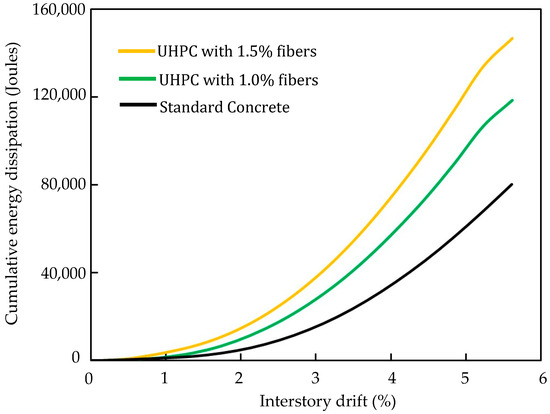
Figure 13.
Cumulative hysteretic energy dissipation as a function of interstory drift for the three tested frames.
This process is governed by fiber pull-out resistance and bond strength, which control energy absorption at the microscopic level. As cracks widen, fibers debond and slide, dissipating energy through frictional resistance. The superior performance of the 1.5% fiber frame is attributed to the increased number of fibers contributing to these mechanisms, resulting in enhanced toughness and damage tolerance at the structural scale.
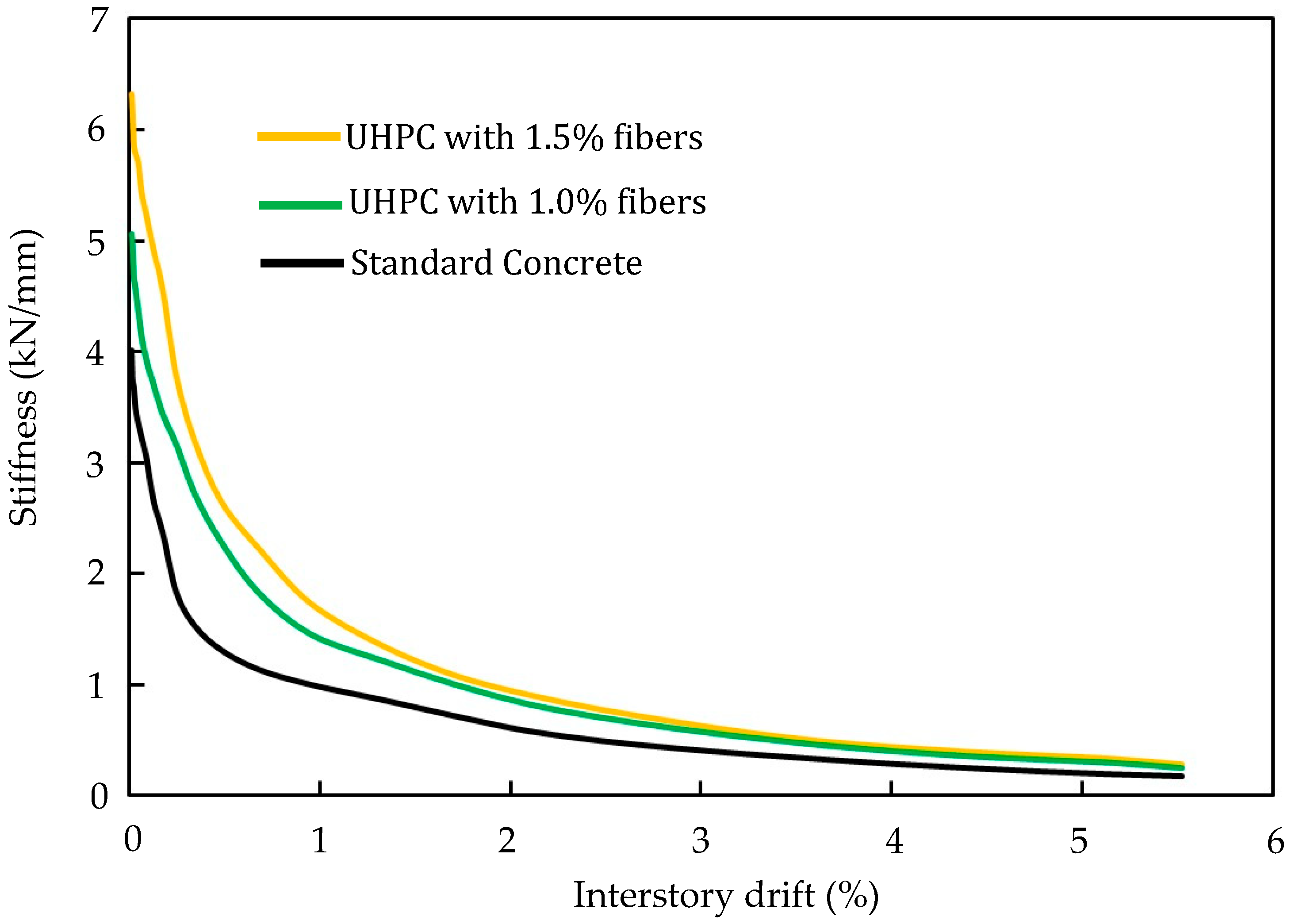
In addition to energy dissipation, the evolution of lateral stiffness under cyclic loading was analyzed, as its degradation with increasing drift reflects progressive damage accumulation in the structural system. Figure 14 shows the relationship between secant stiffness and interstory drift for the three tested frames. All specimens exhibited a systematic reduction in stiffness with increasing drift, primarily due to cracking of the concrete matrix. The initial secant stiffness (K0), measured at near-zero drift, was directly influenced by the type of concrete and fiber content. The UHPC frame with 1.5% fibers exhibited the highest initial stiffness (6.3 kN/mm), followed by the 1.0% fiber frame (5.0 kN/mm), and the conventional concrete frame (4.0 kN/mm). These results suggest an increase in initial stiffness of approximately 58% and 25% for the 1.5% and 1.0% UHPC frames, respectively, relative to the RC frame. For the target drift level commonly adopted in seismic evaluations (1% drift), the UHPC frame with 1.5% fiber content retained approximately 24% of its initial stiffness (1.5 kN/mm), the 1.0% fiber frame retained 26% (1.3 kN/mm), and the conventional concrete frame retained 23% (0.9 kN/mm). By the end of the test (3.0% drift), stiffness had degraded to around 10% of its initial value in all specimens, with residual values of 0.6 kN/mm (UHPC 1.5%), 0.6 kN/mm (UHPC 1.0%), and 0.4 kN/mm (conventional concrete). These results are consistent with those reported by Sarmiento et al. [2], who observed that UHPC beam-column joints with 1.5% hooked steel fibers exhibited initial stiffness values approximately 63% higher than conventional RC joints. Similarly, Zhang et al. [37] documented enhanced stiffness in UHPC-HSC systems, reporting up to 15% higher initial stiffness compared to RC frames. The degradation trend is characterized by a sharp initial drop in stiffness within the low drift range (0–0.5%), followed by a reduced rate of stiffness loss at higher drift levels. Despite initial differences, the relative stiffness hierarchy (UHPC 1.5% > UHPC 1.0% > conventional concrete) remained consistent throughout the entire drift range. However, at high drift levels (around 5.5%), the secant stiffness values of all specimens converged to values below 0.5 kN/mm, reducing the absolute differences between systems. These findings quantify the contribution of UHPC and fiber dosage to both the initial and residual stiffness of the system under cyclic loading representative of seismic demand.
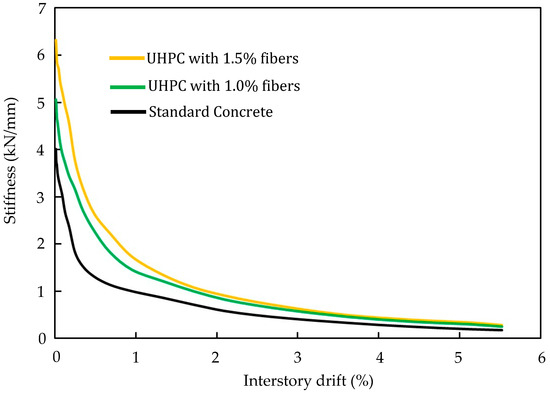
Figure 14.
Stiffness degradation vs. Interstory Drift.
For ease of comparison, Table 9 consolidates the main performance indicators derived from the cyclic tests, including stiffness, strength, drift capacity, and cumulative energy dissipation for the tested frames.
Table 9.
Main results—Pseudostatic Cyclic Test.
6.5. Limitations, Normative Implications, and Future Research
- Constructability Challenges of Higher Fiber Contents: Based on all the experimental results, the use of UHPC with steel fibers can be considered as an alternative to conventional reinforced concrete for seismic applications. The UHPC frames consistently outperformed the standard concrete frame in all evaluated parameters, including maximum lateral load capacity, initial stiffness, energy dissipation, and damage control. In particular, the incorporation of steel fibers led to more localized and reduced cracking, as well as improved deformation capacity—key attributes for maintaining structural integrity during seismic events. These findings offer compelling evidence of the advantages of steel fiber-reinforced UHPC and reinforce its suitability for resilient, earthquake-resistant construction. Although the UHPC frame with 1.5% fiber content exhibited the best structural performance, its practical implementation may face challenges. Higher fiber volumes can reduce workability and pumpability, increase mixing time, and require more robust placement equipment. These factors may increase labor costs, limit constructability in certain contexts, and necessitate stricter quality control. Therefore, the benefits of enhanced mechanical performance must be weighed against the potential increase in construction complexity and cost when selecting UHPC formulations for real-world applications.
- Limitations of the Experimental Setup: While the experimental results highlight the seismic advantages of UHPC frames reinforced with steel fibers, several limitations must be acknowledged. This study focused exclusively on single-story, single-bay frames, which may not fully represent the complexity of multi-story or multi-bay structural systems, nor account for realistic boundary conditions. In addition, the loading protocol consisted of in-plane, quasistatic cyclic displacements, differing from actual seismic ground motions that involve dynamic effects and structural inertia. Only two fiber volume fractions (1.0% and 1.5%) were investigated. Moreover, future experimental programs will incorporate Digital Image Correlation (DIC) techniques to enable a more precise and quantitative assessment of cracking behavior and deformation patterns during cyclic loading.
- Mix Design Variability and Material Performance: The variability in UHPC formulations is a critical factor influencing its mechanical performance, particularly in terms of tensile, shear and compressive strength. In this context, the recent study by Kazemi et al. (2025) [51] provides valuable insights into the use of machine learning models to predict the compressive strength of alkali-activated UHPC based on a wide range of input variables, including fiber aspect ratio, fiber volume, water content, water-to-binder ratio, sand-to-binder ratio, flow, fly ash content, silica fume content, curing days, molarity, among others. Their findings underscore the high sensitivity of UHPC strength to mix design parameters and propose data-driven approaches to streamline experimental efforts. Although the present study employed a commercially available UHPC mix with validated cyclic performance, a key limitation is that only a single formulation was tested, and the influence of mix design variability on performance was not experimentally addressed. Incorporating computational optimization strategies, as demonstrated by Kazemi et al. (2025) [51], could enhance future experimental campaigns by identifying optimal formulations tailored for seismic applications while also addressing sustainability concerns. Variations in water-to-binder ratio, fiber geometry, fiber dosage, among other factors, can affect the strength and energy dissipation capacity of UHPC. Therefore, future research should focus on determining the optimal steel fiber volume fraction within the practical range of 0.5% to 2.0%. Fiber contents below 0.5% offer limited enhancement in energy dissipation, while contents above 2.0% significantly compromise the workability of the UHPC mix, hindering proper casting in structural elements. Previous experimental studies on UHPC beam-column joints [2] support the effectiveness of this dosage range. Furthermore, future investigations should include parametric studies and sensitivity analyses on key structural variables—such as longitudinal reinforcement ratios, stirrup spacing, cross-sectional dimensions of beams and columns, and the ratio between Dramix 4D and Dramix OL fibers—to better understand their impact on the seismic performance of UHPC frame systems.
- Fiber Type, Orientation, and Distribution: The influence of hybrid fiber types, fiber orientation, and fiber distribution was not considered, though these variables could affect the global response and post-yield performance of UHPC frames. Despite these limitations, the observed improvements in energy dissipation, stiffness retention, and crack control suggest the potential of fiber-reinforced UHPC for seismic applications. The findings support its consideration as a viable structural material in earthquake-resistant design.
- Larger-Scale Testing and Dynamic Effects: Future research should address the scalability of UHPC by extending experimental studies to multi-story and multi-bay configurations. Investigations into different fiber types, orientations, and hybrid combinations are also needed to optimize the mechanical behavior of UHPC under cyclic and seismic loading. Additionally, incorporating dynamic loading protocols (shaking table tests) and real-time monitoring would provide deeper insight into the inelastic response and damage evolution of UHPC structural systems during actual seismic events. Finally, future research should expand the experimental program to include multiple specimens per configuration in order to enable statistical analysis of the results. This would allow for a more robust assessment of variability and increase confidence in the observed trends.
- Numerical Modeling and Parametric Studies: While the current study focused on full-scale experimental testing, future research should integrate numerical analyses—such as finite element simulations—to predict the cyclic performance of UHPC frames under varying design parameters. This will enable broader parametric studies and help generalize findings across different structural configurations and loading scenarios.
- Synergies with Other Innovative Materials: Lastly, future studies should explore the interaction between UHPC and other innovative materials, such as fiber-reinforced polymers (FRP), especially in critical regions of the frames like joints. Recent research ([51]) has shown promising results when combining UHPC and FRP to improve mechanical properties.
- Practical Guidelines and Economic Evaluation: In addition to the structural characteristics presented in this study, the practical implementation of UHPC in seismic applications must consider cost, constructability, and integration into design codes. The UHPC mix used in this research has an approximate cost of USD 1700 per cubic meter, which is significantly higher than that of conventional 25 MPa concrete (~USD 230/m3). Moreover, the inclusion of steel fibers further increases the material cost depending on the dosage. This substantial cost difference represents a major challenge for the widespread adoption of UHPC in typical construction projects. Workability is another critical factor; as fiber volume increases, the rheological properties of the UHPC mix are affected, reducing flowability and complicating casting. Additionally, effective mixing of UHPC with high fiber contents requires high-energy mixers to achieve proper dispersion of fibers and full hydration of fine particles. These specialized construction requirements may limit its use in conventional or low-tech construction environments. Furthermore, UHPC is not currently included in most seismic design codes in Latin America, despite its promising behavior under cyclic loading. Bridging this gap will require the development of simplified design provisions compatible with widely used standards.
- Data-Driven Approaches and Machine Learning for Seismic Performance Assessment: Beyond the experimental and material-related research directions addressed in this study, recent advances in data-driven methodologies suggest promising complementary approaches for seismic performance assessment. Machine learning techniques have been successfully applied to reinforced concrete frame systems to predict structural damage under single and multiple seismic events [52], as well as to efficiently quantify correlations between seismic intensity measures and global structural response parameters, such as interstory drift ratios [53]. These approaches have demonstrated the potential to reduce computational costs while capturing complex nonlinear damage mechanisms using large-scale datasets derived from nonlinear dynamic analyses. Although these studies have focused on conventional reinforced concrete frames rather than UHPC systems, their methodologies could be extended in future research to UHPC moment-resisting frames to support predictive modeling of damage evolution, stiffness degradation, and seismic demand under multiple ground motion scenarios.
7. Conclusions
From the comparative experimental analysis between UHPC frames (with 1.0% and 1.5% fibers) and a standard concrete frame under cyclic loading, the following conclusions are drawn:
- The UHPC frames tended to exhibit higher lateral load capacity than conventional concrete frames. The 1.5% UHPC specimen reached 59 kN, representing an increase of approximately 58% over the conventional frame (37.4 kN), while the 1.0% UHPC frame achieved 50.6 kN. These trends indicate that the inclusion of steel fibers may contribute positively to the lateral strength of UHPC structural elements.
- Initial stiffness was notably higher in the UHPC frames (6.3 kN/mm for 1.5%, 5.0 kN/mm for 1.0%) compared to the standard frame (4.0 kN/mm). Although stiffness degraded with drift, UHPC maintained superior values throughout the test.
- The energy dissipation capacity of the frames increased with fiber content. The UHPC frame with 1.5% fibers dissipated a total of 146,000 J, followed by the 1.0% UHPC frame with 118,000 J, and the conventional concrete frame with 80,000 J. These results suggest that higher fiber content contributes to improved hysteretic energy dissipation in UHPC frames.
- Fiber dosage played a decisive role: 1.0% content yielded clear structural benefits, while 1.5% led to optimal performance across all evaluated metrics—strength, stiffness, and energy dissipation—reinforcing the relevance of dosage optimization in UHPC design for seismic applications.
- Within the scope and limitations of this experimental investigation, UHPC frames incorporating steel fibers exhibited favorable performance under quasi-static cyclic loading when compared to a conventional reinforced concrete frame. Observed improvements included higher lateral strength, greater energy dissipation, and better stiffness retention throughout the test protocol. These trends suggest that steel fiber-reinforced UHPC has potential for enhanced seismic performance in structural frames. However, given the limited number of specimens, the absence of dynamic effects, and the focus on single-story configurations, further research is needed—particularly involving multi-story systems and dynamic loading—to validate and generalize these findings for broader seismic design applications.
- Based on the experimental findings, future research should focus on extending the investigation to larger-scale, multi-story and multi-bay UHPC frame systems; incorporating dynamic loading conditions such as shaking table tests; optimizing steel fiber dosage, fiber types, and hybrid fiber combinations; examining the effects of fiber orientation and distribution; and integrating numerical modeling and parametric studies. A detailed discussion of these future research directions is provided in Section 6.5.
Author Contributions
Conceptualization: D.M.R., D.F.L., Y.A.A. and H.V.; Funding acquisition: D.M.R., Y.A.A. and H.V.; Formal analysis: D.M.R. and D.F.L.; Methodology: D.M.R., Y.A.A., H.V. and D.F.L.; Project administration: D.M.R.; Supervision: D.F.L.; Resources: Y.A.A. and D.M.R.; Writing—original draft preparation: D.M.R. and D.F.L.; Visualization: D.M.R. and D.F.L.; Writing—review & editing: Y.A.A., H.V. and D.M.R. All authors have read and agreed to the published version of the manuscript.
Funding
This project was conducted in a collaborative research effort between Pontificia Universidad Javeriana and Argos, Colombia. The research was funded by Pontificia Universidad Javeriana through Project ID 20974. The title of the Project was Comportamiento sísmico de sistemas estructurales en concreto de ultra alto desempeño-UHPC.
Data Availability Statement
The data presented in this study are available upon request from the corresponding author. The data are not publicly available due to [the UHPC mix design and its constituent proportions are considered proprietary intellectual property of the research team].
Acknowledgments
The experimental research was conducted at the Structures Laboratory of Pontificia Universidad Javeriana, Bogotá. The authors thank the laboratory’s technical staff, especially Tito Pedraza, for his valuable support in the mixing process of the different UHPC batches and fiber dosages used in the study. The authors also acknowledge Jaime Cruz and his team for their dedicated work in assembling and casting the test specimens. In addition, the authors express their gratitude to Argos and Bekaert for providing the UHPC material and steel fibers used in the experimental program.
Conflicts of Interest
The authors declare no conflicts of interest. The funders had no role in the design of the study; in the collection, analyses, or interpretation of data; in the writing of the manuscript; or in the decision to publish the results.
Abbreviations
| UHPC | Ultra-High-Performance Concrete |
| RC | Reinforced Concrete |
| HSC | High-Strength Concrete |
| FEMA | Federal Emergency Management Agency |
| ASTM | ASTM International (American Society for Testing and Materials) |
| LVDT | Linear Variable Differential Transformer |
References
- López, L.; Duran, A.; González, J. Estado del desarrollo y aplicaciones de la tecnología del concreto. Cienc. Nicolaita 2022, 85, 27–43. [Google Scholar] [CrossRef]
- Sarmiento, P.; Torres, B.; Ruiz, D.; Alvarado, Y.; Gasch, I.; Machuca, A. Cyclic behavior of ultra-high-performance fiber reinforced concrete beam-column joint. Struct. Concr. 2018, 20, 348–360. [Google Scholar] [CrossRef]
- Puentes, J.; García, J.L.; Alonso, M.C. Diseño de Mezclas de Hormigones Autocompactantes Con Alto Contenido de Adiciones Minerales y Áridos de Diferentes Naturaleza Para Desempeño en Ambientes Altamente Agresivos. HAC2018|V Congreso Iberoamericano de Hormigón Autocompactante y Hormigones Especiales. 2018. Available online: https://ocs.editorial.upv.es/index.php/HAC-BAC/HAC2018/paper/view/6324 (accessed on 5 February 2026).
- Russell, H.G.; Graybeal, B.A. Ultra-High-Performance Concrete: A State-of-the-Art Report for the Bridge Community. Publication No. FHWA-HRT-13-060. Federal Highway Administration. 2013. Available online: https://rosap.ntl.bts.gov/view/dot/26387/dot_26387_DS1.pdf (accessed on 5 February 2026).
- Du, J.; Meng, W.; Khayat, K.H.; Bao, Y.; Guo, P.; Lyu, Z.; Abu-obeidah, A.; Nassif, H.; Wang, H. New development of ultra-high-performance concrete (UHPC). Compos. Part B Eng. 2021, 224, 109220. [Google Scholar] [CrossRef]
- Graybeal, B.A. Compressive behavior of ultra-high-performance fiber-reinforced concrete. ACI Mater. J. 2007, 104, 146–152. [Google Scholar] [CrossRef]
- Richard, P.; Cheyrezy, M. Composition of reactive powder concretes. Cem. Concr. Res. 1995, 25, 1501–1511. [Google Scholar] [CrossRef]
- Voo, Y.L.; Foster, S.J.; Voo, C.C. Ultrahigh-Performance Concrete Segmental Bridge Technology: Toward Sustainable Bridge Construction. J. Bridge Eng. 2014, 20, B5014001. [Google Scholar] [CrossRef]
- Días, L.V.; Soares, S.M.; Filho, J.A.A.S.; Da-Silva, F. Evaluation of chloride migration in ultra-high-performance concrete (UHPC) with glass powder. Rev. ALCONPAT 2021, 11, 61–75. [Google Scholar] [CrossRef]
- Wille, K.; El-Tawil, S.; Naaman, A.E. Properties of strain hardening ultra high performance fiber reinforced concrete (UHP-FRC) under direct tensile loading. Cem. Concr. Compos. 2014, 48, 53–66. [Google Scholar] [CrossRef]
- American Concrete Institute (ACI Committee 544). Report on the Physical Properties and Durability of Fiber-Reinforced Concrete. 2010. ISBN 978-0-87031-365-3. Available online: https://www.concrete.org/Portals/0/Files/PDF/Previews/544.5R-10web.pdf (accessed on 5 February 2026).
- Graybeal, B.A. Structural Behavior of Ultra-High Performance Concrete Prestressed I-Girders. Publication No. FHWA-HRT-06-115. Federal Highway Administration. 2006. Available online: https://www.fhwa.dot.gov/publications/research/infrastructure/structures/06115/index.cfm (accessed on 5 February 2026).
- Toledo, R.D.; Marangon, E.; de Andrade Silva, F.; Mobasher, B. Effect of Steel Fibres on the Tensile Behaviour of Self-Consolidating Reinforced Concrete Blocks. FRC-2014 Workshop Fibre Reinforced Concrete: From Design to Structural Application; FiB: Bern, Switzerland, 2016. [Google Scholar] [CrossRef]
- Homeland Security. UHPC- Ultra High Performance Concrete-Pathway to Commercialization. 2011. Available online: https://www.dhs.gov/xlibrary/assets/ultra-high-performance-concrete-roadmap.pdf (accessed on 5 February 2026).
- Malhotra, V.M.; Mehta, P.K. Pozzolanic and Cementitious Materials; CRC Press: Boca Raton, FL, USA, 2004. [Google Scholar] [CrossRef]
- Parra-Montesinos, G.; Reinhardt, H.; Naaman, A. High Performance Fiber Reinforced Cement Composites; RILEM Bookseries; Springer: Dordrecht, The Netherlands, 2012; ISBN 978-94-007-2436-5. [Google Scholar] [CrossRef]
- Elmorsy, M.; Hassan, W.M. Seismic behavior of ultra-high performance concrete elements: State-of-the-art review and test database and trends. J. Build. Eng. 2021, 40, 102572. [Google Scholar] [CrossRef]
- Asociación Colombiana de Ingeniería Sísmica (AIS). Reglamento Colombiano de Construcción Sismo Resistente NSR-10. 2010. Available online: https://asosismica.org.co/producto/reglamento-colombiano-de-construccion-sismo-resistente-nsr-10-incluye-4-tomos/ (accessed on 5 February 2026).
- Zaki, R.A.; AbdelAleem, B.H.; Hassan, A.A.; Colbourne, B. Impact resistance of steel fiber reinforced concrete in cold temperatures. Cem. Concr. Compos. 2021, 122, 104116. [Google Scholar] [CrossRef]
- Mobasher, B. M&S highlight: Naaman & Reinhardt. Proposed classification of HPFRC composites based on their tensile response. Mater. Struct. 2022, 55, 49. [Google Scholar] [CrossRef]
- Chao, S.; Kaka, V.; Palacios, G.; Kim, J.; Choi, Y.; Aghdasi, P.; Nojavan, A.; Schultz, A. Seismic Behavior of Ultra-High-Performance Fiber-Reinforced Concrete Moment Frame Members. Int. Interact. Symp. Ultra-High-Perform. Concr. 2016, 1, 1–10. [Google Scholar] [CrossRef]
- Shao, Y. Seismic Performance of Ultra-High-Performance Concrete (UHPC) Structural Members: A Review. Int. Interact. Symp. Ultra-High-Perform. Concr. 2023, 3, 125. [Google Scholar] [CrossRef]
- Huang, Y.; Gu, D.; Mustafa, S.; Grünewald, S.; Luković, M. Shear behaviour of reinforced concrete beams strengthened with ultra-high performance fiber reinforced concrete (UHPFRC). Case Stud. Constr. Mater. 2023, 19, e02441. [Google Scholar] [CrossRef]
- Niu, Y.; Huang, H.; Wei, J.; Jiao, C.; Miao, Q. Investigation of fatigue crack propagation behavior in steel fiber-reinforced ultra-high-performance concrete (UHPC) under cyclic flexural loading. Compos. Struct. 2022, 282, 115126. [Google Scholar] [CrossRef]
- Ma, J.; Li, G.T.; Deng, X.F.; Qian, K. Seismic behavior of ultra-high performance concrete columns with GFRP bars under different loading directions. Eng. Struct. 2023, 289, 116334. [Google Scholar] [CrossRef]
- Xu, S.; Wu, C.; Liu, Z.; Han, K.; Su, Y.; Zhao, J.; Li, J. Experimental investigation of seismic behavior of ultra-high performance steel fiber reinforced concrete columns. Eng. Struct. 2017, 152, 129–148. [Google Scholar] [CrossRef]
- Caballero, K.E.; Bonet, J.L.; Navarro, J.; Serna, P. An experimental study of steel fiber-reinforced high-strength concrete slender columns under cyclic loading. Eng. Struct. 2013, 57, 565–577. [Google Scholar] [CrossRef]
- Aboukifa, M.; Moustafa, M.; Saiidi, M.S. Seismic response of precast bridge columns with composite non-proprietary UHPC filled ducts ABC connections. Compos. Struct. 2011, 274, 114376. [Google Scholar] [CrossRef]
- He, S.; Deng, Z.; Yao, J. Seismic behavior of ultra-high performance concrete long columns reinforced with high-strength steel. J. Build. Eng. 2020, 32, 101740. [Google Scholar] [CrossRef]
- Ozbakkaloglu, T.; Saatcioglu, M. Seismic Behavior of High-Strength Concrete Columns Confined by Fiber-Reinforced Polymer Tubes. J. Compos. Constr. 2006, 10, 538–549. [Google Scholar] [CrossRef]
- Wei, J.; Ying, H.; Yang, Y.; Zhang, W.; Yuan, H.; Zhou, J. Seismic performance of concrete-filled steel tubular composite columns with ultra-high performance concrete plates. Eng. Struct. 2023, 278, 115500. [Google Scholar] [CrossRef]
- He, S.; Deng, Z. Seismic Behavior of Ultra-High Performance Concrete Short Columns Confined with High-Strength Reinforcement. KSCE J. Civ. Eng. 2019, 23, 5183–5193. [Google Scholar] [CrossRef]
- Khan, M.I.; Al-Osta, M.A.; Ahmad, S.; Rahman, M.K. Seismic behavior of beam-column joints strengthened with ultra-high performance fiber reinforced concrete. Compos. Struct. 2023, 2018200, 103–119. [Google Scholar] [CrossRef]
- Muthupriya, P.; Boobalan, S.C.; Vishnuram, B.G. Behaviour of fibre-reinforced high-performance concrete in exterior beam-column joint. Int J. Adv. Struct. Eng. 2014, 6, 57. [Google Scholar] [CrossRef][Green Version]
- Yang, Z.; Dong, Y.; Liu, X.; Zhou, J. Seismic Behavior of Concrete Beam-Column Joints Reinforced with Steel-Jacketed Grouting. Buildings 2014, 14, 3239. [Google Scholar] [CrossRef]
- Xue, W.; Hu, X.; Ren, D.; Hu, X. Seismic behavior of precast 100 MPa grade HSC frames under reversed cyclic loading. Eng. Struct. 2021, 243, 112662. [Google Scholar] [CrossRef]
- Zhang, X.; Wang, B.; Ju, Y.; Wang, D.; Han, Y.; Song, Y. Seismic performance of precast frame with UHPC composite beams and HSC columns under cyclic loadings. Eng. Struct. 2024, 302, 117429. [Google Scholar] [CrossRef]
- Niño, P.A. Influencia del Régimen de Curado Sobre la Resistencia a Compresión de Concretos de Ultra Alto Desempeño (CUAD). Trabajo de Grado. Pontificia Universidad Javeriana. 2014. Available online: https://repository.javeriana.edu.co/items/42058f3d-8412-4470-b855-8544cb9ab3a5 (accessed on 5 February 2026).
- Zhang, X.; Xia, Q.; Ye, B.; Yan, W.; Deng, Z.; Xiang, P. Seismic Performances of SRC Special-Shaped Columns and RC Beam Joints Under Double-Direction Low-Cyclic Reversed Loading. Front. Mater. 2021, 8, 761376. [Google Scholar] [CrossRef]
- Xu, S.; Huang, Q.; Yuan, P.; Wu, P.; Wu, C. Experimental investigation on cyclic behaviors of exterior cast-in-place UHPC–NSC hybrid beam–column joints. Eng. Struct. 2025, 343, 121021. [Google Scholar] [CrossRef]
- Xue, W.; Hu, X.; Song, J. Experimental study on seismic behavior of precast concrete beam–column joints using UHPC-based connections. Structures 2021, 34, 4867–4881. [Google Scholar] [CrossRef]
- Tang, L.; Zhang, Y.; Wang, X.; Li, Z.; Chen, Y. Experimental study of emulative precast concrete beam-to-column connections locally reinforced by U-shaped UHPC shells. Materials 2022, 15, 4066. [Google Scholar] [CrossRef]
- Chen, G.; Nie, X.; Zheng, Q.; Chen, W.; Jiang, H. Experimental study of seismic performance of assembled concrete frames with UHPC connections. Structures 2024, 63, 106355. [Google Scholar] [CrossRef]
- ASTM C39/C39M-05; Standard Test Method for Compressive Strength of Cylindrical Concrete Specimens. ASTM-American Society for Testing and Materials: West Conshohocken, PA, USA, 2005. [CrossRef]
- ASTM C469/C469M-22; Standard Test Method for Static Modulus of Elasticity and Poisson’s Ratio of Concrete in Compression. ASTM-American Society for Testing and Materials: West Conshohocken, PA, USA, 2022. [CrossRef]
- ASTM C78-22; Standard Test Method for Flexural Strength of Concrete (Using Simple Beam with Third-Point Loading). ASTM-American Society for Testing and Materials: West Conshohocken, PA, USA, 2022. [CrossRef]
- Bekaert. Datasheet (Ficha Técnica, Spanish) Dramix 4D 8060BGE. 2025. Available online: https://construction.bekaert.com/content/dam/dramix-construction/kcenter/productdatasheet/Datasheet_Dramix%204D%208060BGE_es-ES_20250826_8060BGE_Dramix%204D.pdf (accessed on 5 February 2026).
- Bekaert. EC Declaration of Performance (Declaración de Prestaciones CE, Spanish) DRAMIX® OL 13/.20. 2025. Available online: https://www.bekaert.com/content/dam/corporate/dop/DOP_CI.00005.BKZW_es-ES_20250618_1320_DRAMIX%20OL.pdf (accessed on 5 February 2026).
- FEMA. Interim Testing Protocols for Determining the Seismic Performance Characteristics of Structural and Nonstructural Components. 2007. Available online: https://www.atcouncil.org/pdfs/FEMA461.pdf (accessed on 5 February 2026).
- Panoskaltsis, V.P. Energy Dissipation in Engineering Materials and Structures by Using the Laws of Thermodynamics. Thermo 2025, 5, 20. [Google Scholar] [CrossRef]
- Kazemi, F.; Shafighfard, T.; Jankowski, R.; Yoo, D. Active learning on stacked machine learning techniques for predicting compressive strength of alkali-activated ultra-high-performance concrete. Arch. Civ. Mech. Eng. 2025, 25, 24. [Google Scholar] [CrossRef]
- Lazaridis, P.C.; Kavvadias, I.E.; Demertzis, K.; Iliadis, L.; Vasiliadis, L.K. Structural Damage Prediction of a Reinforced Concrete Frame under Single and Multiple Seismic Events Using Machine Learning Algorithms. Appl. Sci. 2022, 12, 3845. [Google Scholar] [CrossRef]
- Wang, W.; Luo, H. Machine Learning-Based Correlation Analysis of Seismic Intensity Measures and Structural Response for Reinforced Concrete Frame Structures. Earthq. Eng. Resil. 2025, 4, 317–335. [Google Scholar] [CrossRef]
Disclaimer/Publisher’s Note: The statements, opinions and data contained in all publications are solely those of the individual author(s) and contributor(s) and not of MDPI and/or the editor(s). MDPI and/or the editor(s) disclaim responsibility for any injury to people or property resulting from any ideas, methods, instructions or products referred to in the content. |
© 2026 by the authors. Licensee MDPI, Basel, Switzerland. This article is an open access article distributed under the terms and conditions of the Creative Commons Attribution (CC BY) license.