


Abstract
The large-scale accumulation of titanium-extraction tailing slag (TS) poses environmental concerns, while its application is constrained by high impurity contents and low hydraulic reactivity, which is further exacerbated by the necessary dechlorination process. This study aims to evaluate the effectiveness of synthetic calcium silicate hydrate (C-S-H) nanocrystals in improving the performance of cement pastes incorporating deeply dechlorinated TS (DD-TS). To ensure uniform dispersion and activity, C-S-H seeds with varying crystallinities (55–94%) were prepared via a dynamic hydrothermal method (180 °C for 1–3 h) and incorporated into the composite binder in a wet-powder form at dosages of 0.5–2.0%. Results indicate that C-S-H-1, with the lowest crystallinity, offered the highest efficiency. At 1.5% dosage, the 1 d compressive strength increased by 64.6% to 18.6 MPa, while the initial setting time decreased by approximately 40%. Microstructural analyses reveal that poorly crystalline C-S-H provides abundant nucleation sites, accelerating early hydration and densifying the matrix to levels comparable to 7 d control pastes. These findings demonstrate the potential of C-S-H seeding for enhancing the utilization of DD-TS in cement-based materials.
1. Introduction
The cement industry contributes approximately 8% of global anthropogenic CO2 emissions, placing substantial pressure on its decarbonization pathway [1]. Partial replacement of Portland cement clinker with supplementary cementitious materials (SCMs) is regarded as an effective approach to reducing the associated environmental burden [2]. Fly ash and granulated blast furnace slag have traditionally served as the primary SCMs in high-performance concrete, and thus regulate their material properties and sustainability. For instance, the contents of SCMs in highly ductile concrete and ultra-high performance concrete (UHPC) can reach 40% of total binders, and have been extensively studied in structural elements [3,4,5]. However, in regions such as Western China, the availability of high-quality fly ash and slag has declined due to industrial restructuring and resource depletion [6]. This regional imbalance highlights the need to investigate alternative industrial solid wastes that are locally abundant but remain insufficiently utilized in cement-based materials.
Titanium-extraction slag (TS) is a byproduct generated from the high-temperature carbonization and low-temperature selective chlorination process used in titanium sponge production, and it represents a potential alternative resource [7,8,9]. This secondary refining process introduces substantial amounts of chlorides and carbonaceous impurities, which impose significant constraints on practical application. High chloride content raises concerns regarding reinforcement corrosion, while the intrinsic structural inertness of TS limits its hydration reactivity [10].
Recent progress in deep dechlorination techniques, including water washing and calcination, has effectively reduced chloride-related corrosion risks [11]. However, these treatments simultaneously remove soluble chloride salts that can contribute to early hydration activation. As a result, the hydration activity of dechlorinated TS is further suppressed, leading to sluggish early-age strength development in cementitious systems incorporating TS [12].
Synthetic C-S-H seeds are typically prepared via sol–gel processes [13], co-precipitation [14], or hydrothermal reactions [15]. While the co-precipitation method offers a rapid and straightforward synthesis route, hydrothermal synthesis has gained increasing attention due to its ability to produce highly crystalline C-S-H with tunable morphology [16]. Functioning as heterogeneous nucleation sites, these nano-sized seeds effectively lower the nucleation energy barrier and shorten the induction period of hydration [17,18,19,20]. Furthermore, while traditional chemical accelerators—including chloride and nitrate salts, sulphates, and sodium hydroxide—can effectively promote the hydration of calcium silicate or aluminate phases [21,22], their application is constrained by significant durability and environmental concerns. Specifically, chloride salts introduce harmful ions (e.g., Cl−) that may induce reinforcement corrosion [23], and the presence of excessive would cause the late-age strength retrogression [24], whereas nano-silica suffers from severe agglomeration, limiting its dispersion and long-term performance [25]. In contrast, hydrothermally synthesized C-S-H seeds exhibit a distinct advantage due to their chemical composition, identical to the primary hydration products (C-S-H gel). This characteristic eliminates the harmful ion introduction and mitigates long-term durability issues. Owing to these superior characteristics, the seeding-induced acceleration effect has been proven particularly effective in systems containing SCMs [26,27,28,29], which often exhibit slow reaction kinetics. Specifically, in slag-blended cements, Li et al. [30] reported that C-S-H seeding shortened the initial setting time by 40–70% and enhanced the 1-day compressive strength by over 100%, effectively compensating for the dilution effect caused by SCMs.
However, the effectiveness of C-S-H seeding in cementitious systems incorporating deeply dechlorinated titanium-extraction slag (DD-TS) remains poorly understood. Most existing studies focus on high-reactivity matrices [17,30,31], and it is unclear whether C-S-H seeds can compensate for the hydration activity loss induced by dechlorination in inert waste-based systems. In addition, the role of seed crystallinity and its interaction with residual chloride ions in TS has rarely been considered, despite their potential influence on nucleation efficiency and early hydration behavior.
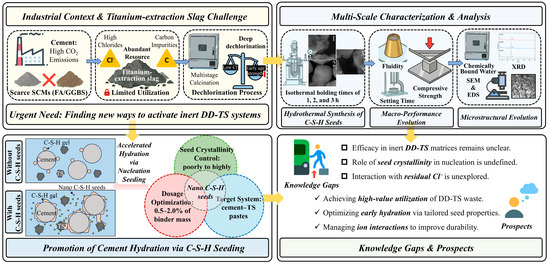
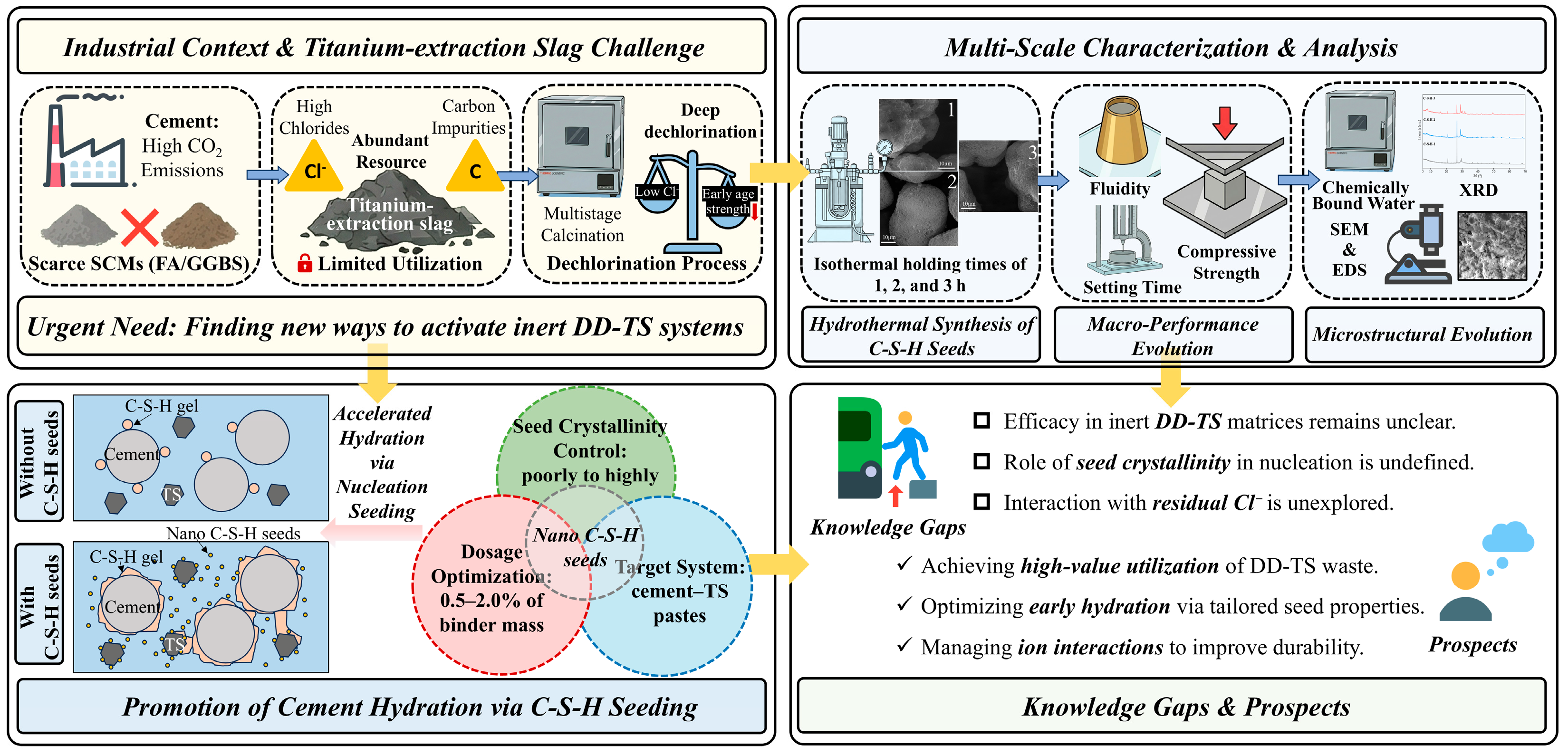
As illustrated in the research framework in Figure 1, this study systematically investigates the effects of C-S-H seed crystallinity and dosage on the performance of cement pastes incorporating DD-TS. C-S-H nanocrystals with different crystallinities were synthesized by controlling the hydrothermal reaction time, and their influences on fresh properties and compressive strength were evaluated. Microstructural evolution was examined using X-ray diffraction (XRD), scanning electron microscopy (SEM), and chemically bound water analysis to clarify the seeding-induced hydration behavior. The results elucidate the role of seed crystallinity in activating low-reactivity TS within a complex ionic environment and provide insight into the early-stage nucleation mechanisms governing hydration.
Figure 1.
Schematic diagram of the overall research framework: from industrial challenges of TS to C-S-H seeding activation mechanisms (Note: This figure was designed with the help of Gemini 3 Flash Image (Nano Banana, Google, USA)).
2. Materials and Methods
2.1. Raw Materials
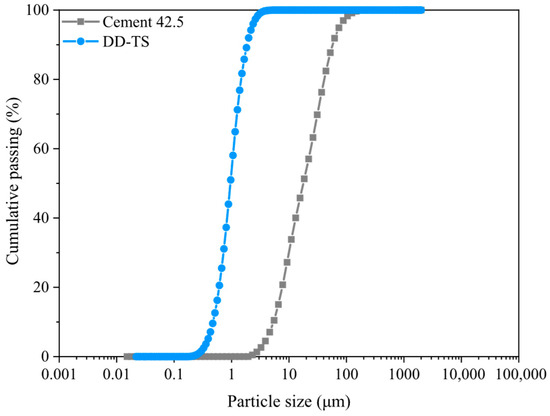
Portland cement (P·O 42.5R), short in PC, conforming to Chinese Standard GB 175 [32], Common Portland Cement was supplied by Chongqing Fuhuang Cement Co., Ltd. (Chongqing, China). X-ray fluorescence (XRF) analysis of the cement composition is presented in Table 1, while its particle size distribution is shown in Figure 2. Obviously, the majority of particles were in the range 3–30 μm with a sieve residue of 6.5% at 45 μm. Its initial and final setting time at a water requirement for normal consistency of 27.8% was 196 min and 240 min, respectively. When mixed at a water-to-cement (w/c) ratio of 0.40 with 0.18 wt.% polycarboxylate superplasticizer (SP, supplied by KZJ China, Chongqing, China) that contained 50% solid phase, the cement paste exhibited much longer setting times, with an initial setting time of 780 min and a final setting time of 870 min, indicating moderate hydration activity suitable for evaluating the effects of nano C-S-H seeds and TS on paste hydration and hardening.
Table 1.
Chemical Composition of Portland Cement (wt.%).
Figure 2.
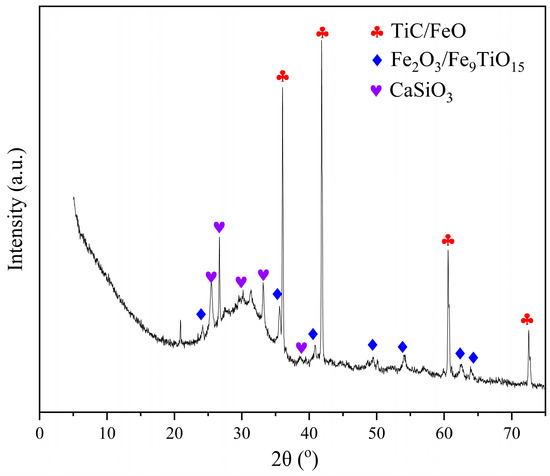
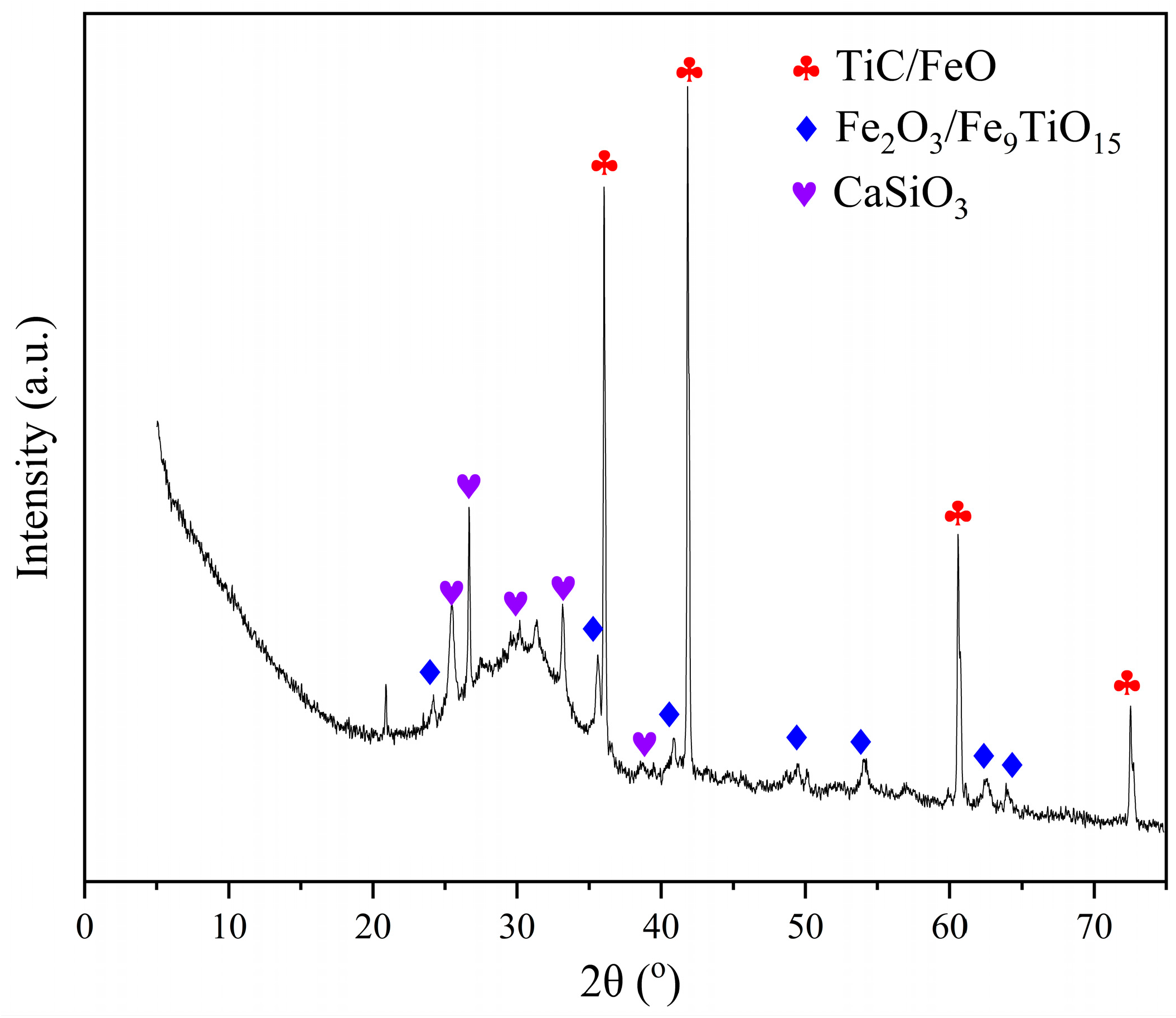
XRD pattern of DD-TS.
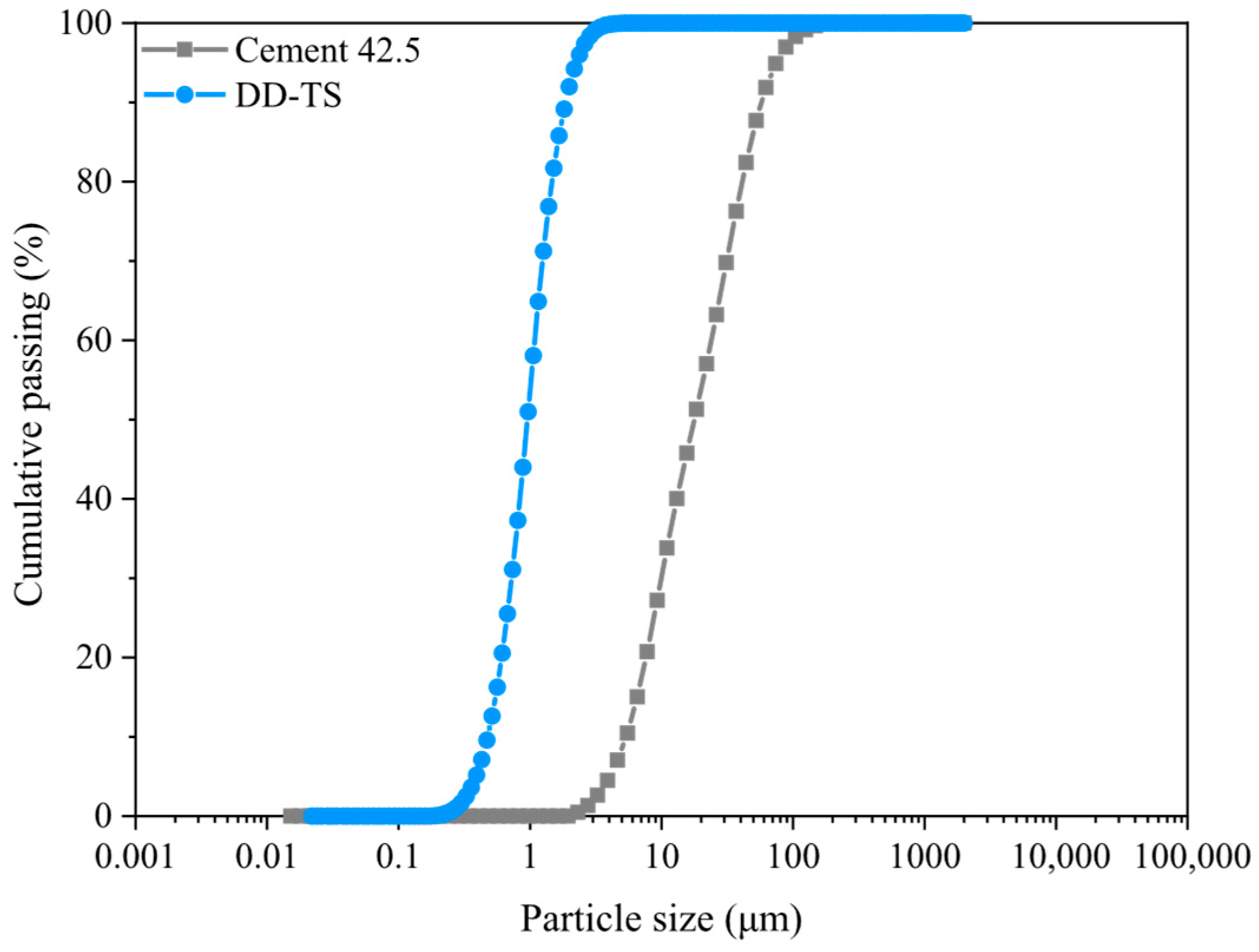
Titanium-extraction tailing slag (TS) used in this study was supplied by Pangang Group Engineering Technology Co., Ltd. (Panzhihua, China). Deeply dechlorinated TS (DD-TS), obtained through multi-stage calcination, was used as the sole slag source. Prior to use, the DD-TS was ground in a vibratory mill for 60 min to improve fineness (537.6 m2/kg). Its chemical composition was determined by XRF analysis (Table 2), and chloride content was measured by titration. The mineral phases of the slag are shown in Figure 2, and the particle size distribution is shown in Figure 3.
Table 2.
Chemical Composition of DD-TS (wt.%).
Figure 3.
Particle size distribution of Portland cement and DD-TS.
DD-TS mainly consists of CaO, SiO2, and Al2O3, with dechlorination markedly reducing the chloride content while leaving the oxide composition essentially unchanged. The XRD pattern revealed a glassy structure with a content of 79.7%, as indicated by a humped peak in the range of 20–40° 2θ (Figure 2), which demonstrates hydraulic potential. Additionally, crystalline phases, such as TiC (PDF 32-1383), FeO (PDF 06-0615), Fe2O3 (PDF 52-1449), Fe9TiO15 (PDF 54-1267), and CaSiO3 (PDF 43-1406) were present, reducing the pozzolanic reactivity of the waste. This indicates that deep dechlorination primarily alters early hydration kinetics rather than the chemical basis for the latent hydraulic reactivity of the slag. Specifically, the removal of soluble chlorides eliminates the ionic acceleration effect observed in chloride-rich TS, resulting in a material with lower early-age reactivity compared to traditional supplementary cementitious materials (SCMs). Although the finer particle size of DD-TS provides additional nucleation sites, it also decreases the availability of free water for dispersion. Consequently, the early-age behavior of cement–TS systems reflects a balance between diminished chloride-induced acceleration and particle-induced nucleation effects.
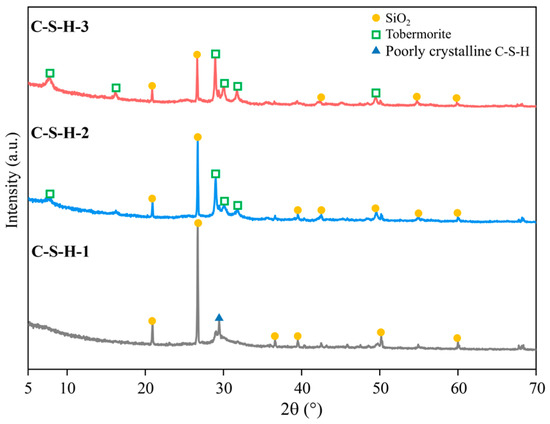
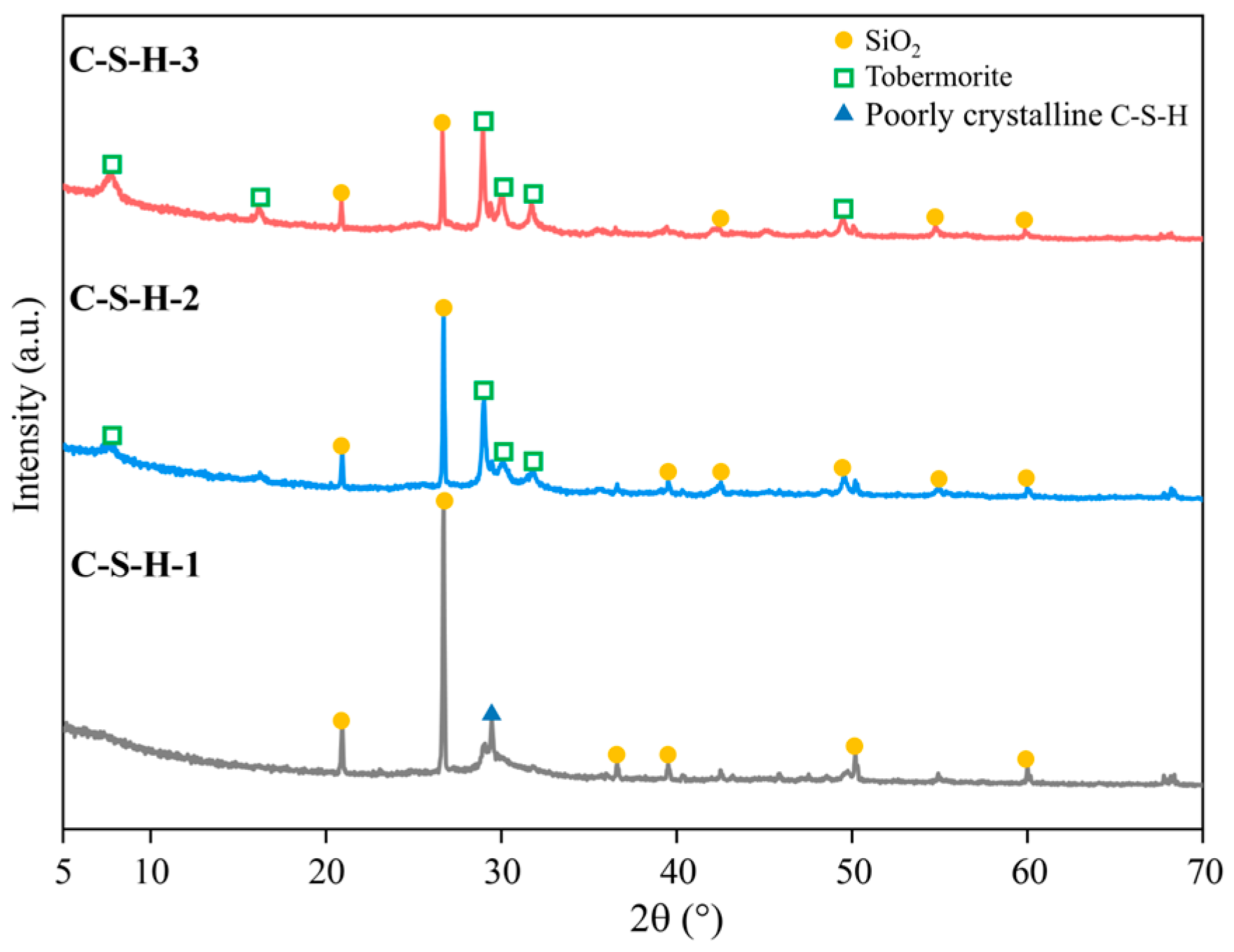
Poorly ordered calcium silicate hydrate (C-S-H) nanocrystals were synthesized via a hydrothermal method at 180 °C using ground quartz sand and hydrated lime as precursors with a Ca/Si molar ratio of 0.8. Samples, obtained after isothermal holding times of 1, 2, and 3 h, were designated as C-S-H-1, C-S-H-2, and C-S-H-3, respectively. As presented in Figure 4, XRD analysis reveals that all samples consist of poorly crystalline C-S-H phases alongside residual unreacted SiO2. To quantify the structural evolution, the relative degree of crystallinity (Xc) was calculated by deconvoluting the diffraction profile into sharp crystalline peaks (integrated area Ac) and the broad amorphous background (integrated area Aa). The calculation method was based on the principles of quantitative XRD analysis [33] and the area integration protocol specified in [34], using Equation (1):
Figure 4.
XRD patterns of the synthesized C-S-H samples.
Based on this calculation, the crystallinity values for C-S-H-1, C-S-H-2, and C-S-H-3 were determined to be 55.94%, 81.86%, and 93.49%, respectively. Consistent with these values, C-S-H-1 exhibits weak, poorly defined tobermorite reflections. In contrast, for C-S-H-2 and C-S-H-3, the consumption of residual SiO2 is evident, and the characteristic tobermorite peak at d = 1.13 nm, which corresponds to the (002) basal reflection, becomes progressively distinct and intense, confirming the enhanced structural ordering with prolonged synthesis time.
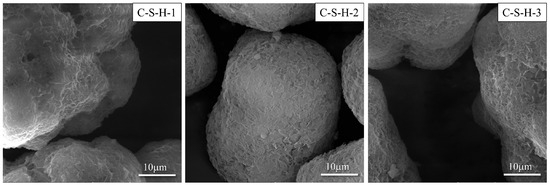
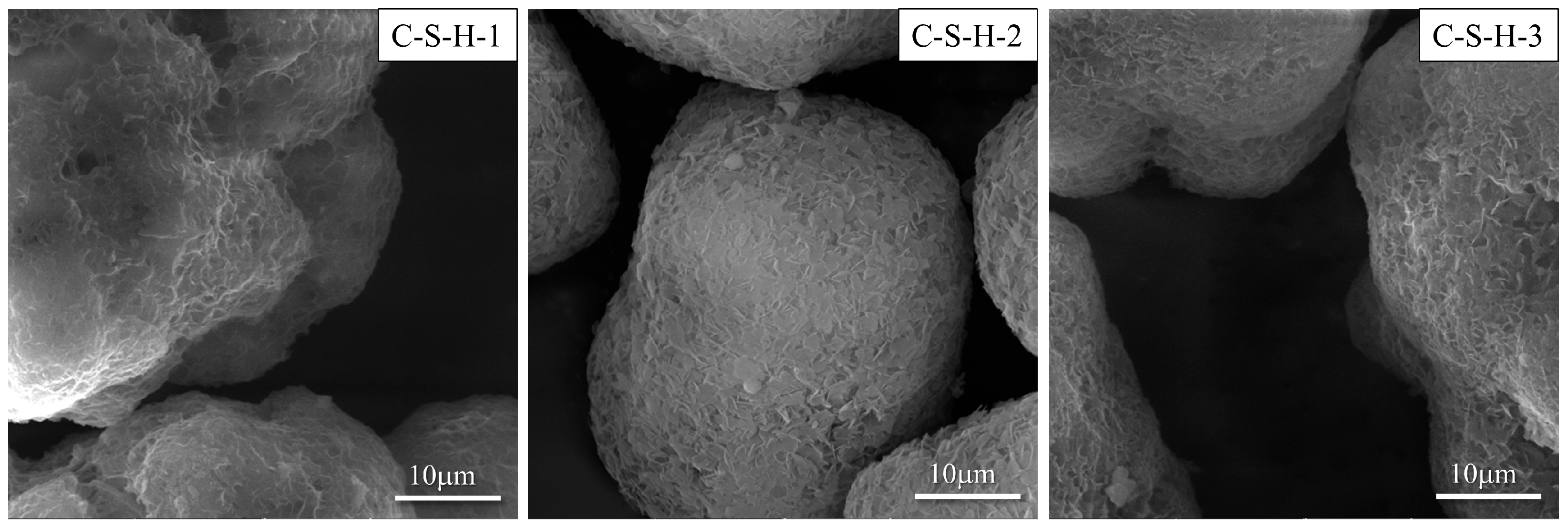
SEM images (Figure 5) reveal that C-S-H-1 has a flocculent, amorphous morphology with porous structure, C-S-H-2 displays an intermediate structure between flocculent and plate-like morphologies, and C-S-H-3 develops well-defined plate-like structures. These results indicate that prolonged hydrothermal treatment promotes the transformation of C-S-H from amorphous, flocculent forms to more crystalline, plate-like structures, with corresponding changes in microstructural features on the precursor particle surfaces.
Figure 5.
SEM images of the synthesized C-S-H samples.
2.2. Experimental Methods
2.2.1. Preparation of Cement-TS Composite Paste
A total of 13 distinct mixture combinations were prepared, as detailed in Table 3. The binder system comprised cement and DD-TS at a fixed mass ratio of 4:1. Three types of synthetic C-S-H nanocrystals (C-S-H-1, -2, and -3) were incorporated at dosages of 0.5%, 1.0%, 1.5%, and 2.0% by mass of the binder.
Table 3.
Mixture proportions of the cement–TS composite pastes.
The C-S-H nanocrystals were used in a wet-powder form to prevent agglomeration. To ensure a constant water-to-binder ratio (w/b) of 0.40, the moisture content of the wet powder was pre-determined by drying triplicate samples at ≥100 °C. The amount of mixing water was then precisely reduced for each mixture (see “Added Water” in Table 2) to compensate for the water introduced by the wet seeds and the superplasticizer solution. Superplasticizer dosage was adjusted to maintain the fluidity of the reference paste. For mixing, the C-S-H suspension, superplasticizer solution, and water were premixed, followed by the addition of cement and DD-TS to ensure uniform hydration.
2.2.2. Properties Tests
The fluidity was measured in accordance with GB/T 8077-2000 [35] by determining the paste spread along two perpendicular directions and taking the average value. Setting time was evaluated following GB/T 1346-2011 [36] using standard-consistency paste. Compressive strength was determined on 40 × 40 × 40 mm3 cubes cured under standard conditions to 1, 3, 7, and 28 days, following GB/T 17671-2021 [37], with the average of three specimens taken as the result. Chemically bound water was obtained by grinding hydrated samples to pass a 200-mesh sieve, heating the powders to 1050 °C for 30 min in a muffle furnace, and calculating the mass loss before and after calcination.
2.2.3. Microstructural Characterization
For XRD and SEM analyses, hydration was terminated at each target age by immersing freshly crushed fragments in anhydrous ethanol for at least 3 h, followed by vacuum-drying at 60 °C to constant mass. The dried powders (passing 200 mesh) were used for XRD to identify hydration products, while fracture surfaces were gold-coated for SEM observations to examine microstructural development and the morphological influence of C-S-H addition.
3. Results and Discussion
3.1. Macro-Performance and Hardening Characteristics
3.1.1. Fluidity
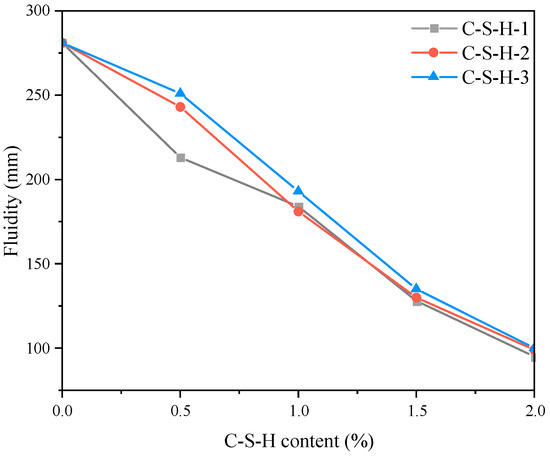
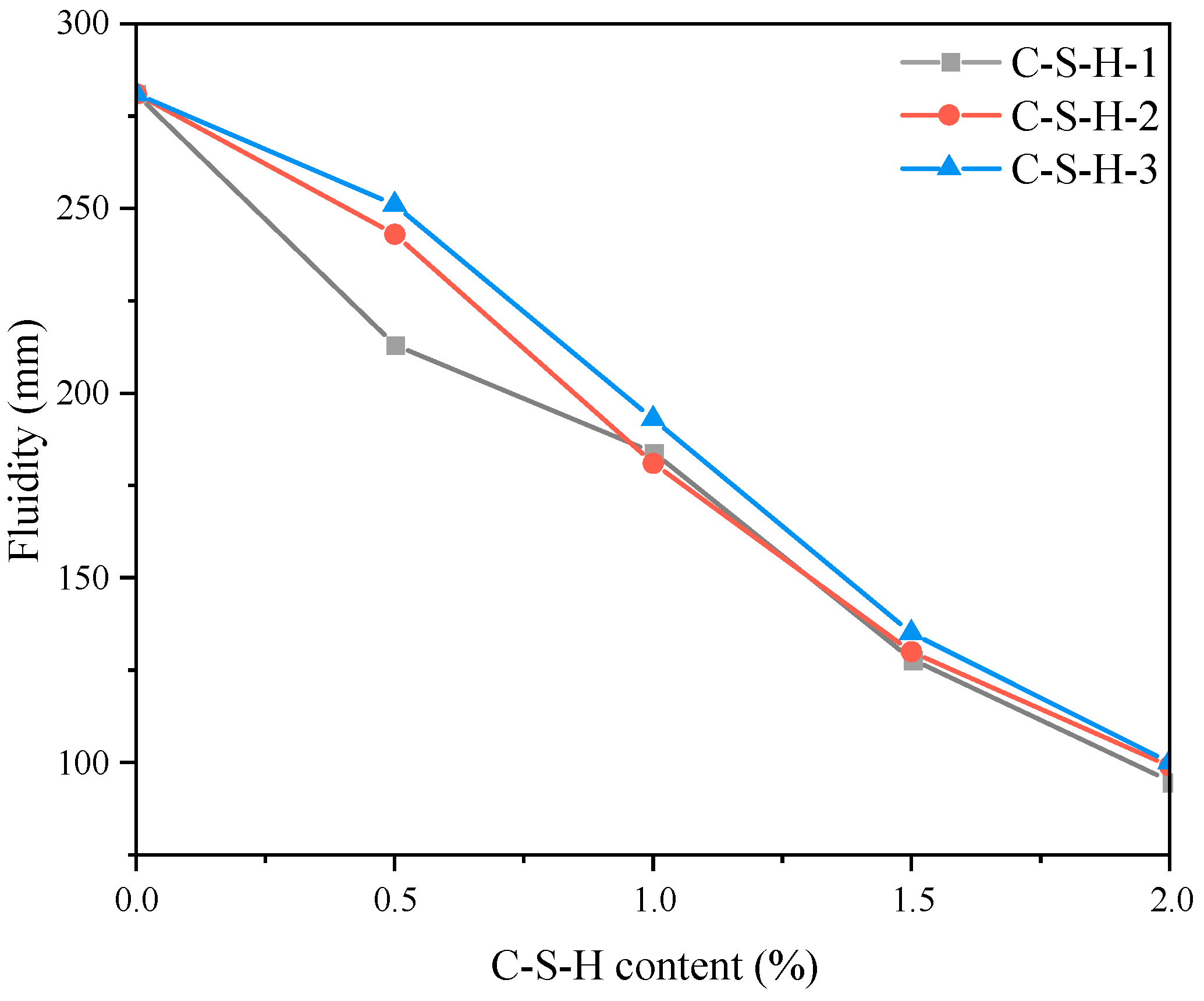
Different types of C-S-H exerted distinct influences on the fluidity of the cement-TS composite paste, as illustrated in Figure 6. The reference mixture without C-S-H exhibited a spread diameter of 281 mm. With the incorporation of C-S-H, the spread diameter decreased progressively as the dosage increased, indicating a systematic reduction in fresh fluidity.
Figure 6.
Effect of C-S-H content on the fluidity of cement–TS composite paste.
At the same C-S-H content, the composite pastes showed a consistent ranking in fluidity. C-S-H-1 resulted in the lowest spread diameter, followed by C-S-H-2, whereas C-S-H-3 maintained the highest fluidity. The contrast was most evident at a dosage of 0.5%, where spread diameters of 213 mm, 243 mm, and 251 mm were recorded for C-S-H-1, C-S-H-2, and C-S-H-3, respectively. When the dosage increased to 2%, all mixtures exhibited spread diameters of approximately 95 to 100 mm, reflecting severely restricted fluidity and only minor differences among the three C-S-H types.
These differences in fluidity can be interpreted by considering the crystallinity characteristics of the C-S-H materials established in the raw material characterization. As described in Section 2.1, crystallinity increased sequentially with prolonged synthesis duration, following the order C-S-H-1, C-S-H-2, and C-S-H-3. According to the classic colloidal model of C-S-H [38], lower crystallinity is intrinsically linked to a higher specific surface area and a more disordered gel structure. Consequently, the poorly crystalline C-S-H-1 seeds are inferred to possess a significantly larger surface area compared to the well-crystallized C-S-H-3. Consistent with the flow behavior observed in other nanoparticle-modified cementitious systems [39], this increased specific surface area enhances the physical adsorption of free water, thereby reducing the hydrodynamic lubrication and decreasing the paste fluidity.
C-S-H also affects early hydration behavior, while an increase in crystallinity may decrease the number of effective nucleation sites due to reduced surface energy [19]. This effect moderates early-stage water consumption. As the C-S-H dosage increases, the available free water for lubrication is progressively depleted, leading to strongly restricted fluidity across all mixtures and diminishing the differences among the three C-S-H types.
3.1.2. Setting Time
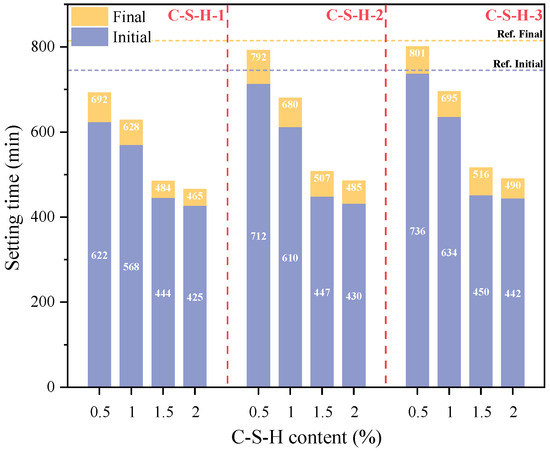
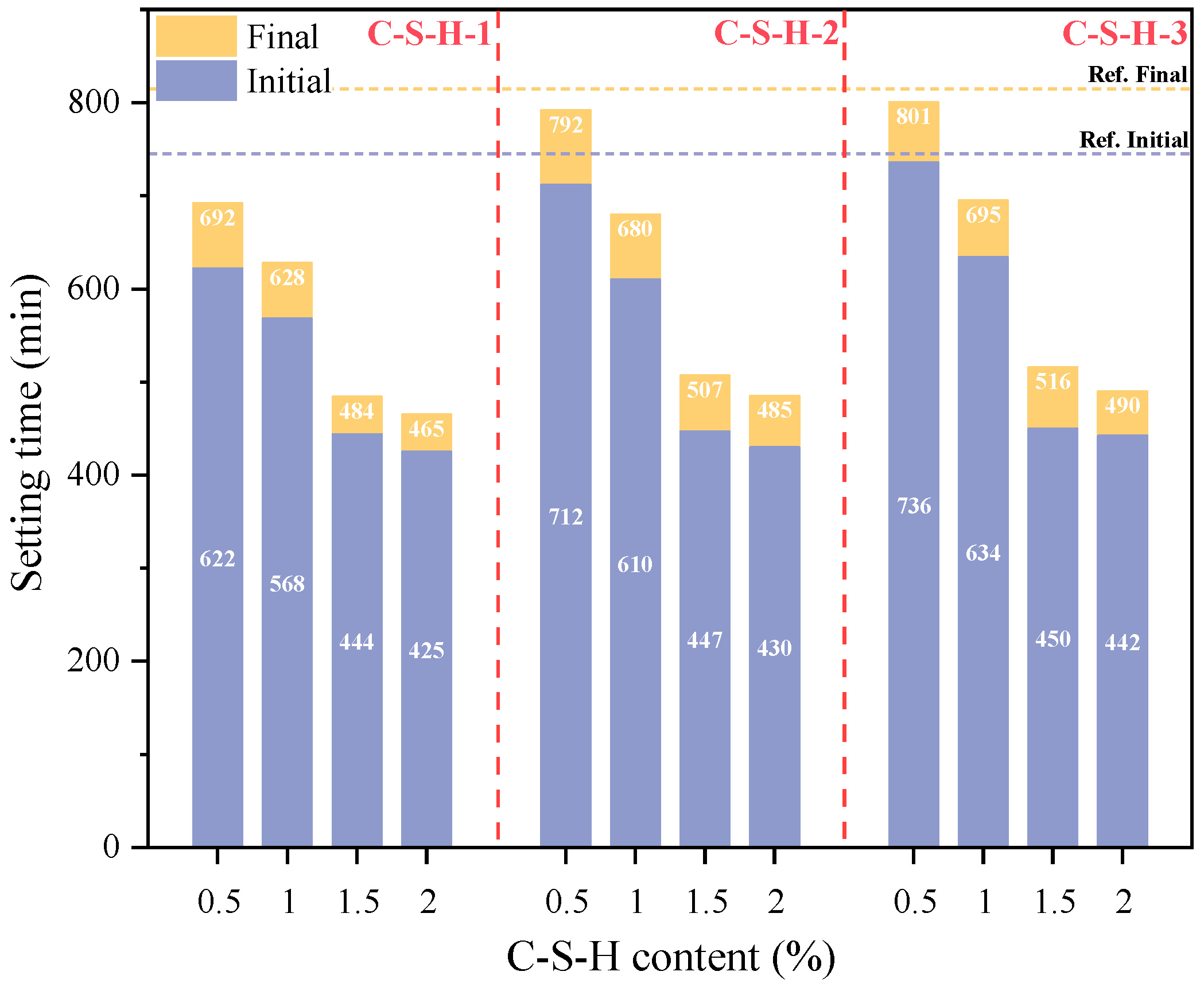
Figure 7 illustrates the effects of C-S-H addition on the initial and final setting times of the cement–TS composite pastes. With increasing C-S-H dosage, both the initial and final setting times exhibited an overall decreasing trend, indicating a pronounced acceleration of the setting process. For the reference mixture without C-S-H, the initial and final setting times were 745 min and 815 min, respectively. These values are lower than those of pure OPC (780/870 min), indicating that the physical presence of TS overcomes the typical retarding dilution effect. This acceleration is attributed to the fine TS particles acting as nucleation sites [40] and their high specific surface area (537.6 m2/kg) adsorbing free water, which reduces the effective w/b ratio [41]. When the C-S-H dosage increased to 1.5%, the initial setting time was markedly reduced to 444–450 min, while the final setting time decreased to 484–516 min. Further increasing the C-S-H dosage to 2.0% resulted in only a slight additional reduction, suggesting that the accelerating effect of C-S-H on setting behavior tends to approach saturation at higher dosages.
Figure 7.
Effect of C-S-H content on the setting time of cement–TS composite paste (Note: The horizontal dashed line represents the setting time of the reference paste without C-S-H addition).
At the same dosage level, systematic differences in setting time were observed among the three types of C-S-H. For instance, at a C-S-H dosage of 2.0%, the initial setting times of mixtures containing C-S-H-1, C-S-H-2, and C-S-H-3 were approximately 425 min, 430 min, and 442 min, respectively, while the corresponding final setting times were about 465 min, 485 min, and 490 min. Similar hierarchical trends were observed at lower dosages, with mixtures incorporating C-S-H-1 consistently exhibiting the shortest setting times, followed by C-S-H-2 and C-S-H-3.
In addition, the differences in both initial and final setting times among the three C-S-H types gradually diminished with increasing dosage. At a dosage of 0.5%, the maximum differences in initial and final setting times reached 114 min and 109 min, respectively, whereas these differences were reduced to 17 min and 28 min at a dosage of 2.0%. This convergence indicates that, under high C-S-H contents, the influence of C-S-H type on setting behavior becomes less pronounced.
The observed setting behavior can be attributed to the combined effects of C-S-H on early hydration kinetics and free water distribution within the paste. The introduction of C-S-H provides additional nucleation sites for hydration products, thereby accelerating early-age hydration and shortening the setting time [15]. However, as the C-S-H dosage increases, the accumulation of hydration products on the surfaces of C-S-H particles and cement grains may progressively limit the effective contact between free water and reactive phases [42]. This surface coverage effect constrains further acceleration of hydration, leading to the observed saturation in setting time reduction at higher dosages.
3.1.3. Compressive Strength
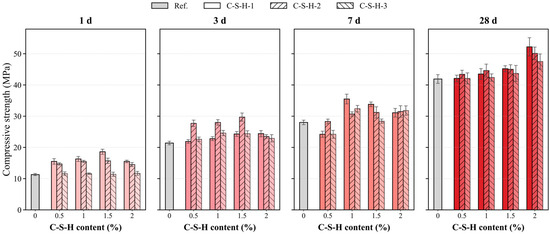
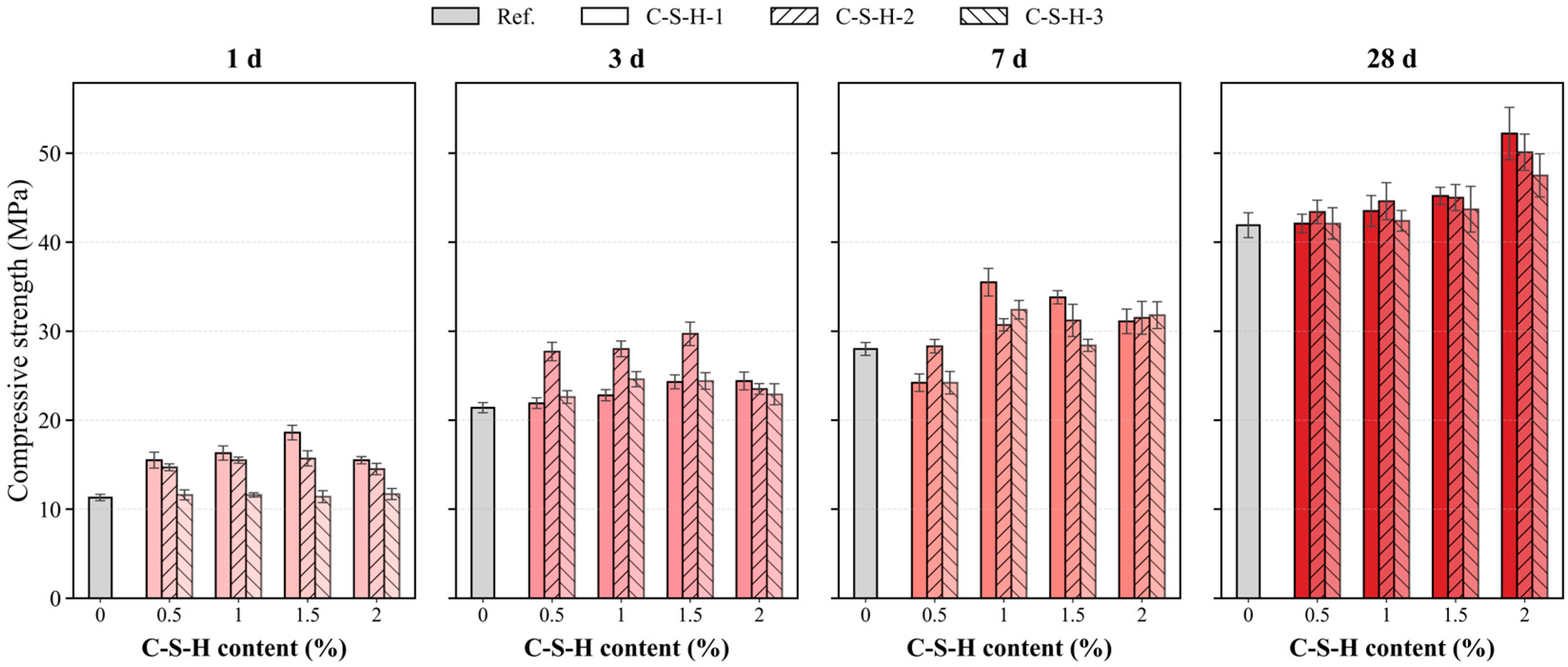
The compressive strength development of cement-TS composite pastes as a function of C-S-H type and dosage is presented in Figure 8. Overall, all three types of C-S-H seeds exhibited a significant promotional effect on the early-age strength, although the reinforcement efficiency showed a complex dependency on seed crystallinity, curing age, and dosage.
Figure 8.
Effect of C-S-H content on the compressive strength of cement–TS composite paste.
At 1 d of hydration, the strength development followed the sequence of C-S-H-1 > C-S-H-2 > C-S-H-3, confirming that the seeding effect is primarily governed by the crystallization degree. Quantitative analysis reveals that C-S-H-1 exhibits the lowest crystallinity at 55.94%, whereas C-S-H-2 and C-S-H-3 show significantly higher values of 81.86% and 93.49%, respectively. The extensive peak broadening observed in C-S-H-1 is a direct indicator of reduced crystallite size and lattice disorder. Intrinsically, this disordered nanostructure implies a higher specific surface area [38], thereby providing a greater density of nucleation sites. This physical characteristic effectively lowers the energy barrier for the precipitation of hydration products through heterogeneous nucleation [19]. Consequently, the 1 d strength of C-S-H-1 group reached a peak of 18.6 MPa at 1.5% dosage (a 64.6% increase). However, a strength retrogression was observed when the dosage increased to 2%, with values dropping to 15.5 MPa, 14.5 MPa, and 11.7 MPa for C-S-H-1, 2, and 3, respectively. This suggests an optimal dosage threshold, beyond which particle agglomeration occurs, reducing the effective surface area of the seeds and creating local structural defects within the matrix.
As the curing age extended to 3 d and 7 d, the enhancement effect began to weaken, and a shift in efficiency was observed. Interestingly, C-S-H-2 (moderate crystallinity) exhibited superior performance at 3 d, reaching 29.7 MPa at 1.5% dosage, surpassing C-S-H-1 (24.3 MPa). This indicates that seeds with moderate crystallinity might provide a more stable and sustained growth template during the mid-hydration stage. At 7 d, although some fluctuations occurred at low dosages (0.5%), the strengths of all groups became increasingly comparable, ranging from 31.1 to 31.8 MPa at the 2% dosage level.
By 28 d, the strength curves for different C-S-H types nearly converged at lower dosages, but a renewed differentiation appeared at 2%, with C-S-H-1 reaching 52.2 MPa (a 24.6% increment). This time-dependent attenuation of the seeding effect is attributed to the encapsulation mechanism. In the early stage, the amorphous seeds are fully exposed to the pore solution, acting as active templates. However, as hydration proceeds, the indigenous hydration products (C-S-H gels and AFt) progressively encapsulate both the pre-added seeds and the unreacted cement grains [43]. This encapsulation layer increases the diffusion resistance for water and ions, thereby neutralizing the template effect of the seeds and leading to a convergence of strength at later ages. In summary, while poorly crystalline C-S-H seeds significantly accelerate early-age strength gain through lowered nucleation energy barriers, their influence on the ultimate mechanical properties is gradually limited by the densification of the hydration product layer [44].
3.2. Microstructural Analysis and Mechanism
Based on the macro-performance evaluations presented in Section 3.1, the C-S-H-1 seeds exhibited the most pronounced acceleration effect on the hydration process among the three synthesized variants. Specifically, mixtures incorporating C-S-H-1 demonstrated the shortest setting times and achieved the highest early-age compressive strength (e.g., reaching a peak of 18.6 MPa at 1 d). This superior performance is attributed to the low crystallinity and high specific surface area of C-S-H-1, which provides the most effective heterogeneous nucleation sites. To further elucidate the fundamental mechanisms responsible for this enhancement, C-S-H-1 was selected as the representative seeding material for the subsequent microstructural analyses, including XRD, SEM, and chemically bound water measurements.
3.2.1. XRD Analysis
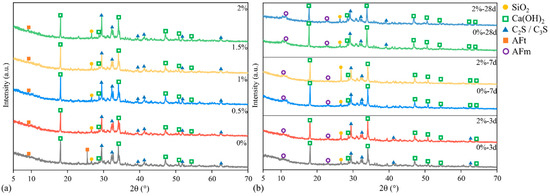
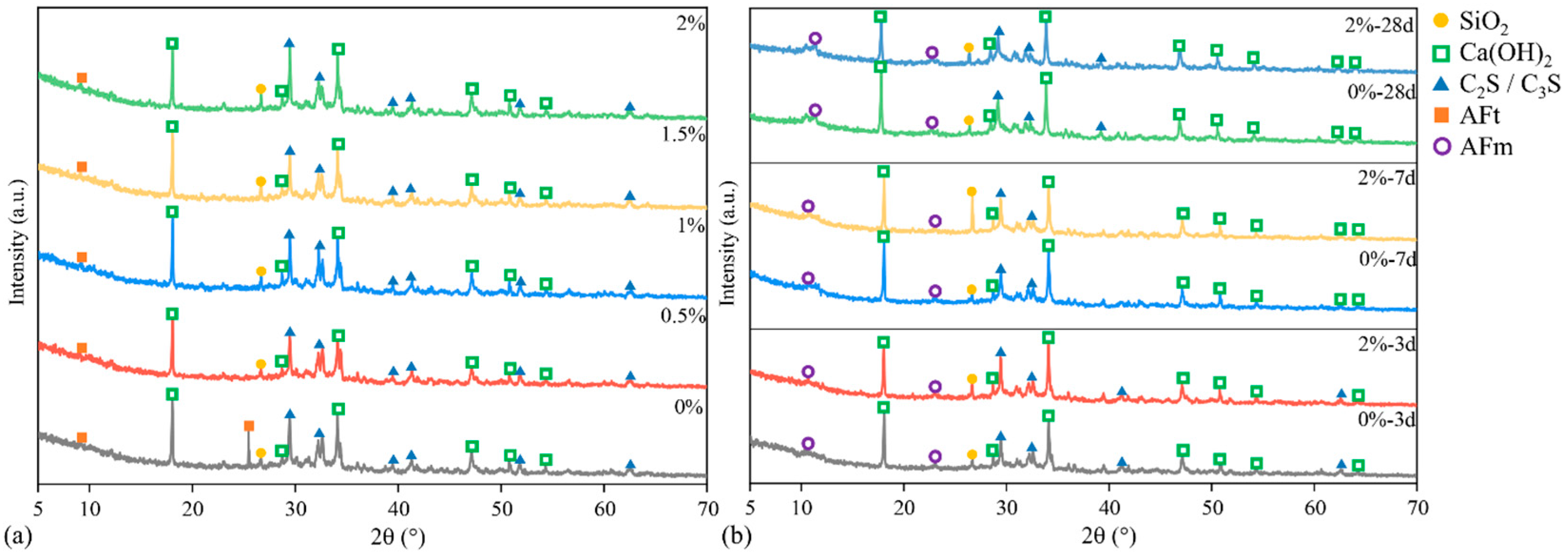
The XRD patterns of the cement–TS composite pastes containing C-S-H-1 at different curing ages of 1 d, 3 d, 7 d, and 28 d are shown in Figure 9. At 1 d of hydration, the diffraction peaks corresponding to ettringite (AFt) and calcium hydroxide (CH) became progressively more intense with increasing C-S-H-1 dosage, providing direct evidence for the accelerated formation of early hydration products. Peaks associated with unreacted anhydrous phases, including tricalcium silicate (C3S) and dicalcium silicate (C2S), were also detected at this stage. This enhanced intensity reflects the accelerated hydration kinetics induced by the seeding effect of C-S-H-1.
Figure 9.
XRD patterns of C-S-H-1 samples at different curing ages: (a) 1 d; (b) 3 d, 7 d, and 28 d.
For the samples cured for 3 d and 7 d, the analysis focused on the representative dosages of 0% and 2.0%. The diffractograms revealed significant phase evolution: the characteristic peaks of ettringite (AFt) vanished, indicating sulfate depletion, while diffraction reflections corresponding to monosulfoaluminate (AFm) appeared. Although these AFm peaks exhibited relatively low intensity, likely due to the low crystallinity and disordered stacking structure of the nascent phase [45], their presence is consistent with the thermodynamic AFt-to-AFm transformation [46,47].
Apart from this evolution, the seeded mixtures exhibited no distinct mineralogical deviation from the control paste. This mineralogical similarity aligns with the mechanical results, where strength gains at 3 d and 7 d remained limited and irregular, reaching 12.2% and 9.9%, respectively, for the 2% dosage. The reduced effectiveness at these ages is associated with the encapsulation mechanism, where the accumulation of hydration products on cement grain surfaces restricts ion diffusion and moderates the initial acceleration provided by the C-S-H seeds [43].
At 28 d, the XRD patterns of the 2% C-S-H-1 modified pastes remained nearly identical to those of the control mixture, with comparable peak intensities for the main hydration phases. Although the mixture containing 2% C-S-H-1 exhibited a compressive strength increase of 24.6%, the corresponding strength gains for the 0.5%, 1.0%, and 1.5% dosages were limited to 0.5%, 3.8%, and 7.8%, respectively. The absence of significant mineralogical differences between the control and the 2% dosage group indicates that C-S-H-1 primarily promotes early-age nucleation, while exerting no sustained influence on the ultimate phase assemblage [44]. Consequently, the late-age strength enhancement observed at higher dosages is more closely associated with physical filling effects and matrix densification rather than continued chemical acceleration of hydration.
3.2.2. SEM Analysis
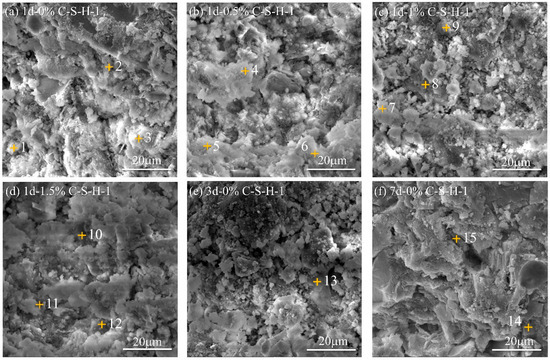
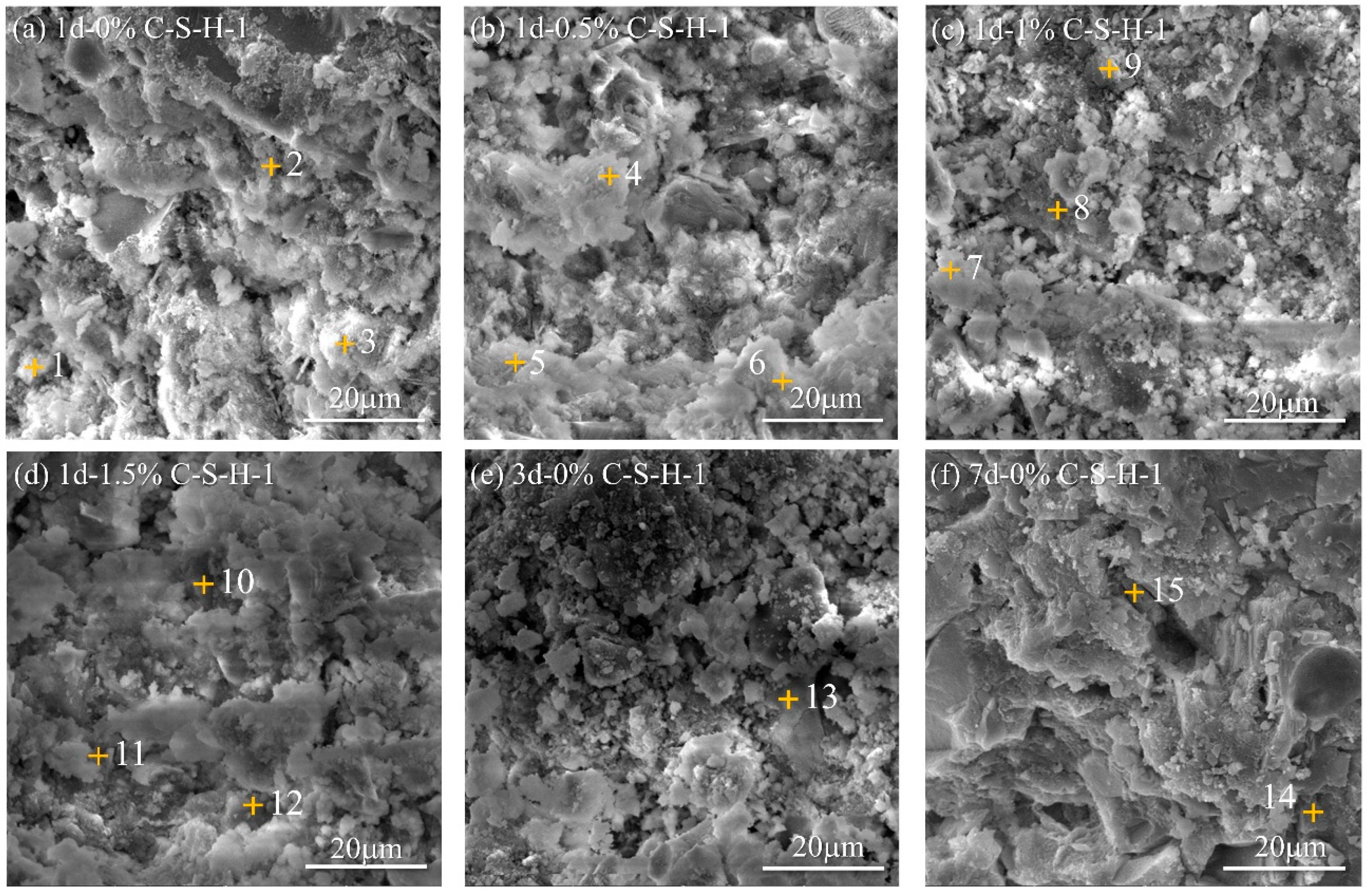
The microstructural morphology of cement–TS composite pastes after 1 d of hydration, with and without C-S-H-1 seeds, is compared in Figure 10a–d, with detailed elemental mass percentages provided in Table 4.
Figure 10.
SEM of cement-TS binder at different curing ages (magnification ×2000). (Note: The numbered ‘+’ symbols denote the specific locations of the EDS point analysis, with the corresponding results listed in Table 4).
Table 4.
EDS analysis results (elemental mass percentages and Ca/Si ratios) of selected points in C-S-H-1 seeded pastes.
In the control mixture (Figure 10a), the microstructure appears loose and porous. EDS analyses at representative points (1, 2, and 3) revealed Ca/Si mass ratios of 1.22, 1.48, and 2.44, respectively. These relatively low values correspond to the formation of early-stage, low-density C-S-H gels. As shown in the micrographs, these gels are sparsely distributed and appear loosely attached to the smooth surfaces of calcium aluminate hydrate (C-A-H) or unhydrated particles, reflecting the limited nucleation density and restrained reaction kinetics typical of the induction or early acceleration period.
In contrast, the addition of 0.5% C-S-H-1 seeds led to a visibly more consolidated microstructure (Figure 10b). The Ca/Si ratios at points 4, 5, and 6 increased to 2.77, 3.07, and 4.21, respectively. Notably, the elevated ratio at point 6 significantly exceeds the stoichiometry of pure C-S-H, indicating the extensive intergrowth of C-S-H with CH. This suggests that the seeding effect accelerates the saturation of the pore solution, promoting the early precipitation of CH alongside C-S-H to densify the matrix.
This acceleration effect is further amplified at a dosage of 1.5% (Figure 10d). Points 11 and 12 exhibited exceptionally high Ca/Si ratios of 6.66 and 8.41. These values signify regions dominated by massive CH precipitation intermixed with hydration products. Since CH is a direct product of silicate hydration, its abundant presence at such an early age (1 d) serves as a strong indicator of the rapid hydration kinetics induced by the high density of nucleation sites.
The observed evolution confirms that C-S-H-1 acts as an effective accelerator by providing surface area that reduces the nucleation barrier, enabling the formation of a compact matrix significantly earlier than in the unseeded system. This acceleration is quantitatively supported by chemical data, where the 0.5% seeded paste at 1 d (Point 6, Ca/Si = 4.21) exhibits phase maturity comparable to the 3 d control paste (Point 13, Ca/Si = 4.18, Figure 10e), and the 1.5% seeded paste at 1 d presents composition values aligning with the 7 d control paste (Point 15, Ca/Si = 10.80, Figure 10f). These findings demonstrate that C-S-H seeding drives early-stage densification and structural development, consistent with the observed enhancement in 1 d compressive strength.
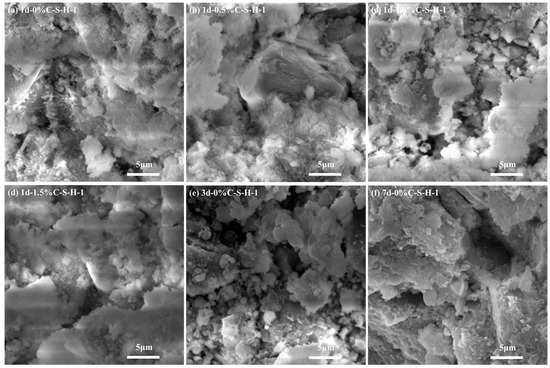
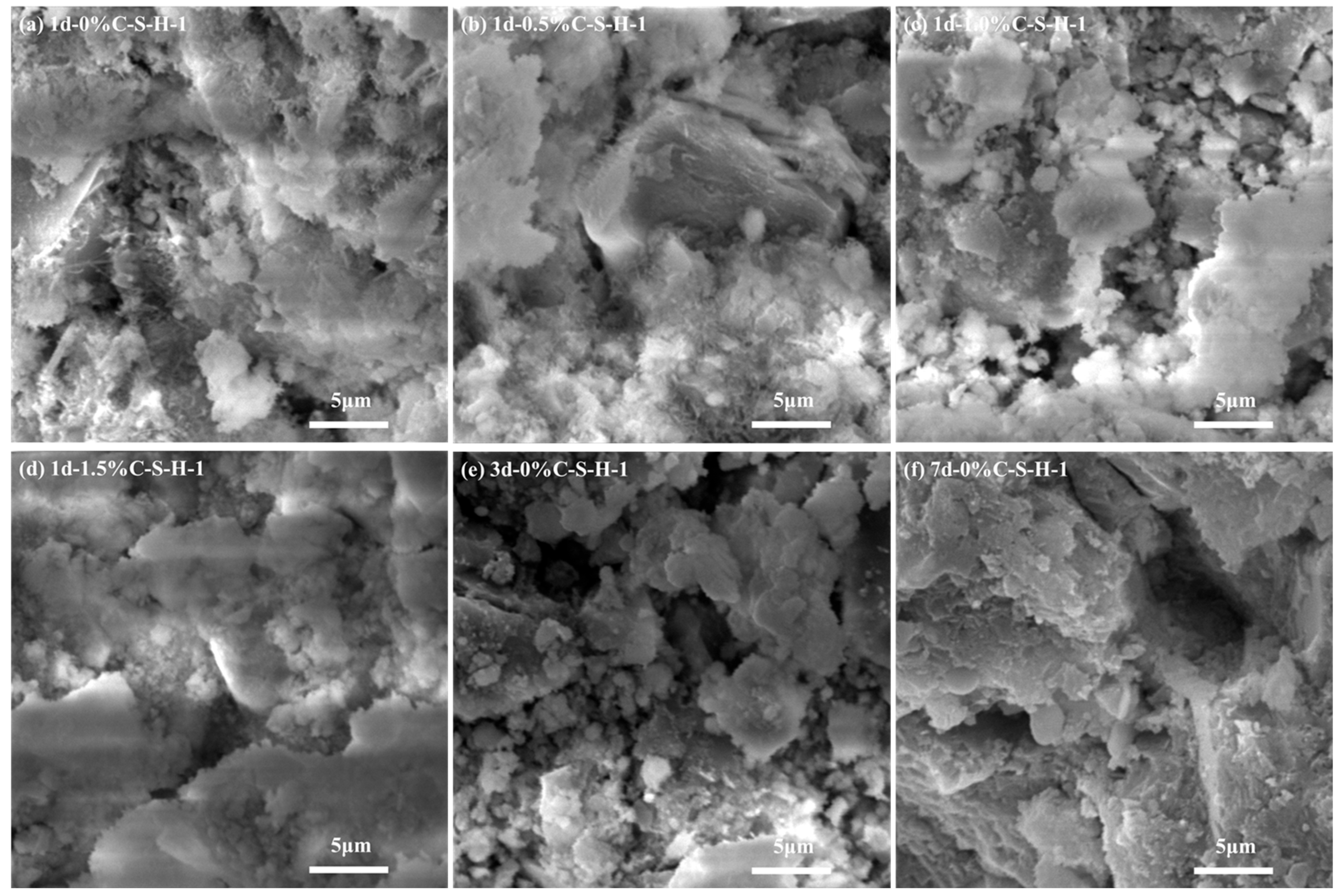
SEM images with higher magnification (×5000) of the mixtures are shown in Figure 11. A clear evolution in the morphology of hydrate phases is observed. In the reference sample (Figure 11a) and sample incorporating 0.5% C-S-H-1 (Figure 11b), fibrous particles with several micrometers in length could be identified at 1-day curing age, indicating early-stage hydration. As the dosage of C-S-H-1 increased or the curing age prolonged, the microstructure transitioned to a more flocculated and interconnected network, eventually forming a denser and more intact matrix (Figure 11c,d). This morphological transformation is attributed to the role of C-S-H sheets as heterogeneous nucleation sites, which accelerate the hydration process and promote uniform precipitation of hydration products.
Figure 11.
SEM of cement-TS binder at different curing ages (magnification ×5000).
3.2.3. Chemically Bound Water
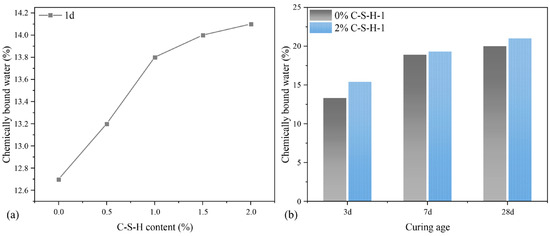
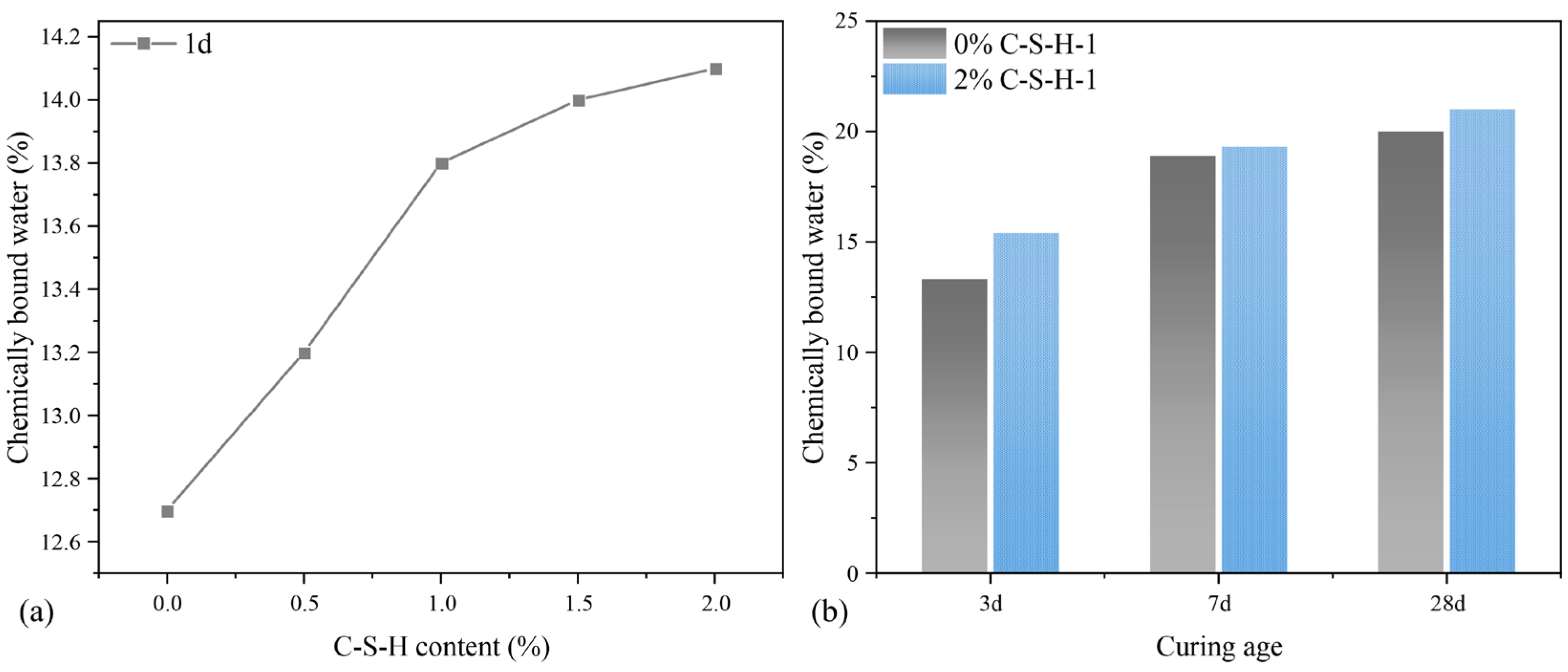
To quantitatively assess the maximum acceleration effect of the seeds on hydration, the chemically bound water content was determined for the composite pastes containing C-S-H-1, which showed the highest reactivity among the synthesized seeds. The analysis was conducted in two stages: dosage screening at 1 d and long-term evolution monitoring (3–28 d). The extent of hydration was further quantified by measuring the chemically bound water content (wb), as presented in Figure 12.
Figure 12.
Chemically bound water content of cement–TS composite pastes at different curing ages: (a) 1 d; (b) 3 d, 7 d, and 28 d.
For the 1 d samples, a clear positive correlation is observed between the C-S-H-1 dosage and the wb values. As the C-S-H-1 content increases from 0% to 1.0%, the chemically bound water rises sharply, providing quantitative evidence of the accelerated formation of hydration products. This trend is fully consistent with the microstructural densification and the increase in Ca/Si ratios revealed by the EDS analysis.
However, when the dosage increases beyond 1.0% (up to 2.0%), the growth rate of wb becomes noticeably attenuated. This plateau indicates a diminishing marginal effectiveness of the nanocrystal seeds, which can be attributed to the saturation of available nucleation sites within the capillary pore network or the potential agglomeration of the seeds at higher dosages. Despite this attenuation, the 2.0% dosage still yields the highest absolute wb value, confirming that the maximum initial acceleration is achieved at this level. This behavior aligns well with the compressive strength results in 28 d, identifying 2.0% as the optimal dosage for achieving maximum mechanical performance.
Consequently, the long-term hydration evolution (Figure 12b) focuses on comparing this optimal dosage (2.0%) against the reference control (0%). Regarding the hydration evolution from 3 d to 28 d, the seeded mixtures consistently exhibit higher wb values than the control group, although the difference gradually decreases with curing age. By 28 d, the bound water contents of all mixtures converge to similar levels. This convergence indicates that while C-S-H-1 effectively accelerates the early hydration kinetics, it does not significantly modify the degree of hydration at later ages. Therefore, the primary function of C-S-H-1 lies in promoting early-stage structural development by advancing the hydration process in time, rather than altering the final reaction extent of the system.
4. Conclusions
Based on a comprehensive investigation of cement–TS composite pastes modified with synthetic C-S-H nanocrystals, the following conclusions are drawn.
- (1)
- The hydrothermal synthesis method effectively regulates the crystallinity and morphology of C-S-H seeds. C-S-H-1, synthesized with a holding time of 1 h, exhibits a poorly crystalline and flocculent morphology with a high specific surface area, providing a greater density of effective nucleation sites than the more crystalline, plate-like C-S-H-2 and C-S-H-3.
- (2)
- The incorporation of C-S-H seeds significantly accelerates the setting process and early-age hydration of cement–TS composite pastes. Increasing the C-S-H-1 dosage from 0% to 1.5% reduced the initial setting time from 745 min to 450 min. This acceleration is primarily attributed to the seeding effect, which promotes heterogeneous nucleation and lowers the energy barrier for hydration product precipitation.
- (3)
- C-S-H-1 seeds markedly enhance early-age compressive strength. A maximum 1 d compressive strength of 18.6 MPa was achieved at a dosage of 1.5%, representing a 64.6% increase compared with the control mixture. A dosage threshold is observed at approximately 1.5% to 2.0%, beyond which the enhancement efficiency stabilizes or declines due to particle agglomeration and saturation of available nucleation sites within the capillary pore system.
- (4)
- Microstructural characterization confirms that C-S-H-1 accelerates the development of the cementitious matrix, as evidenced by the seeded pastes at 1 d exhibiting elevated Ca/Si mass ratios of 4.21 to 8.41 and a compact morphology comparable to the control samples at 3 d or 7 d. This early-age acceleration is substantiated by chemically bound water measurements, which reveal a marked increase in hydration products at 1 d followed by a convergence with the control mixture at 28 d.
- (5)
- The incorporation of C-S-H seeds does not induce the formation of new hydration products. The fundamental phase assemblage of the cement–TS binder, including C-S-H gels, CH, and sulfominerals (transitioning from AFt to AFm), remains qualitatively similar to that of the control system. The principal role of C-S-H-1 nanocrystals is therefore to function as a kinetic accelerator that hastens the precipitation of these phases and promotes early-stage matrix densification, rather than altering the thermodynamic stability or the ultimate phase types of the composite system.
- (6)
- From an economic and engineering perspective, the low dosage requirement (<2.0%) combined with rapid early-strength development supports industrial viability, particularly for precast applications. The accelerated hardening facilitates faster mold turnover, while the potential for higher tailings incorporation reduces cement consumption, effectively offsetting the production costs of C-S-H seeds.
Based on the current findings, future investigations will focus on quantifying the chloride-binding mechanism of C-S-H seeds to mitigate the corrosion risks associated with chlorinated tailings. In parallel, the development of functionalized C-S-H seeds via ion doping (e.g., Al3+ or Na+) will be explored to further tailor the microstructural development and enhance the value-added utilization of difficult-to-treat waste residues.
Author Contributions
Conceptualization, W.W., L.Y. and S.W. (Shuang Wang); methodology, L.Y., S.W. (Shuang Wang) and G.Z.; validation, Y.X., S.W. (Shuping Wang) and Z.Z.; formal analysis, W.W. and L.Y.; investigation, L.Y. and G.Z.; writing—original draft preparation, W.W. and L.Y.; writing—review and editing, Y.X., S.W. (Shuping Wang) and Z.Z.; supervision, S.W. (shuping Wang) and Z.Z. All authors have read and agreed to the published version of the manuscript.
Funding
This research was funded by “The National Natural Science Foundation of China, grant number 52204415”. Thanks are given to the microstructure test support from the Open Sharing Fund for the Large-Scale Instrument and Equipment of Chongqing University (202503150109, 202503150231).
Data Availability Statement
The data presented in this study are within this article.
Conflicts of Interest
The authors declare that they have no known competing financial interests or personal relationships that could have appeared to influence the work reported in this paper.
Abbreviations
The following abbreviations are used in this manuscript:
| TS | Titanium-Extraction Tailing Slag |
| C-S-H | Calcium Silicate Hydrate |
| DD-TS | Deeply Dechlorinated TS |
| SCMs | Supplementary Cementitious Materials |
| XRD | X-Ray Diffraction |
| SEM | Scanning Electron Microscopy |
| XRF | X-Ray Fluorescence |
| PC | Portland Cement |
| SP | Superplasticizer |
| w/c | Water-To-Cement |
| w/b | Water-To-Binder |
| C3S | Tricalcium Silicate |
| C2S | Dicalcium Silicate |
| CH | Calcium Hydroxide |
| AFt | Ettringite |
| AFm | Monosulfoaluminate |
| C-A-H | Calcium Aluminate Hydrate |
| wb | Chemically Bound Water Content |
References
- Monteiro, P.J.M.; Miller, S.A.; Horvath, A. Towards Sustainable Concrete. Nat. Mater. 2017, 16, 698–699. [Google Scholar] [CrossRef] [Scilit] [PubMed]
- Lu, C.; Shen, Q.; Zhang, Z. Sustainable design of high strength ECC using steel slag as fine aggregate: Toward waste valorization and environmental benefits. Sustain. Chem. Pharm. 2026, 49, 102288. [Google Scholar] [CrossRef] [Scilit]
- Zhang, Z.; He, J.; Li, Z.; Shi, X. Mechanical and self-healing properties of a high-volume fly ash ultrahigh-performance concrete incorporating microcapsules. J. Mater. Civ. Eng. 2026, 38, 04026044. [Google Scholar] [CrossRef] [Scilit]
- Liu, D.; Qin, F.; Zhang, Z.; Di, J. Cyclic behavior of GFRP-reinforced ECC-concrete composite bridge columns: Experimental, numerical, and analytical study. Compos. Part B Eng. 2026, 311, 113253. [Google Scholar] [CrossRef] [Scilit]
- Liu, D.; Zhang, C.; Zhang, Z.; Qin, F.; Li, Y. Experimental and analytical study on the flexural behavior of high-strength ECC–steel composite bridge decks under negative moment. Struct. Concr. 2026; early view.
- Li, J.; Wang, S.; Zhong, J.; Xin, Y.; Lv, X.; Zeng, L.; Zeng, G. Properties and Microstructure Development of Alkali-Activated Coal Bottom Ash and Titanium-Extraction Tailing Slag Binder. Constr. Build. Mater. 2023, 403, 133087. [Google Scholar] [CrossRef] [Scilit]
- Liu, Z.; Lai, Z.; Luo, X.; Xiao, R.; Liu, M.; Deng, Q.; Chen, J.; Lu, Z.; Lv, S. Effect of Titanium Slag on the Properties of Magnesium Phosphate Cement. Constr. Build. Mater. 2022, 343, 128132. [Google Scholar] [CrossRef] [Scilit]
- Liu, D.; Zhang, Z.; Wang, S.; Abdalla, J.A.; Hawileh, R.A.; Zhong, J.; Zeng, G. Microstructure and mechanical properties of engineered cementitious composites (ECC) with recycling extracted titanium tailing slag (ETTS). J. Build. Eng. 2024, 98, 111282. [Google Scholar] [CrossRef] [Scilit]
- Liu, G.; Li, M.; Zhang, S.; Zhang, Z.; Wu, Y. Strengthening Effect and Mechanism of Titanium Extraction Slag on the Mechanical Property of Calcium Aluminate Cement. Ceram. Int. 2023, 49, 30326–30334. [Google Scholar] [CrossRef] [Scilit]
- Liu, G.; Zhang, C.; Zhang, S.; Guo, C.; Liu, S.; Li, M.; Wu, Y. Effect and Mechanism of Calcination on Improving the Hydration Activity of Titanium Extraction Slag. Constr. Build. Mater. 2024, 447, 138144. [Google Scholar] [CrossRef] [Scilit]
- Cai, Y.; Song, N.; Yang, Y.; Sun, L.; Hu, P.; Wang, J. Recent Progress of Efficient Utilization of Titanium-Bearing Blast Furnace Slag. Int. J. Min. Met. Mater. 2022, 29, 22–31. [Google Scholar] [CrossRef] [Scilit]
- Sun, K.; Xuan, D.; Li, J.; Ji, G.; Poon, C.-S.; Wang, S.; Peng, X.; Lv, X.; Zeng, G. Effect of the Ti-Extracted Residue on Compressive Strength and Microstructural Properties of Modified Cement Mortar. Constr. Build. Mater. 2022, 320, 126190. [Google Scholar] [CrossRef] [Scilit]
- Tome, S.; Etoh, M.-A.; Etame, J.; Kumar, S. Improved Reactivity of Volcanic Ash Using Municipal Solid Incinerator Fly Ash for Alkali-Activated Cement Synthesis. Waste Biomass Valor 2020, 11, 3035–3044. [Google Scholar] [CrossRef] [Scilit]
- He, Z.; Liang, W.; Wang, L.; Wang, J. Synthesis of C3S by Sol-Gel Technique and Its Features. J. Wuhan Univ. Technol. Mat. Sci. Edit. 2010, 25, 138–141. [Google Scholar] [CrossRef] [Scilit]
- Naber, C.; Bellmann, F.; Neubauer, J. Influence of w/s Ratio on Alite Dissolution and C-S-H Precipitation Rates during Hydration. Cem. Concr. Res. 2020, 134, 106087. [Google Scholar] [CrossRef] [Scilit]
- John, E.; Matschei, T.; Stephan, D. Nucleation Seeding with Calcium Silicate Hydrate—A Review. Cem. Concr. Res. 2018, 113, 74–85. [Google Scholar] [CrossRef] [Scilit]
- Li, X.; Dengler, J.; Hesse, C. Reducing Clinker Factor in Limestone Calcined Clay-Slag Cement Using C-S-H Seeding—A Way towards Sustainable Binder. Cem. Concr. Res. 2023, 168, 107151. [Google Scholar] [CrossRef] [Scilit]
- Wang, F.; Kong, X.; Jiang, L.; Wang, D. The Acceleration Mechanism of Nano-C-S-H Particles on OPC Hydration. Constr. Build. Mater. 2020, 249, 118734. [Google Scholar] [CrossRef] [Scilit]
- Thomas, J.J.; Jennings, H.M.; Chen, J.J. Influence of Nucleation Seeding on the Hydration Mechanisms of Tricalcium Silicate and Cement. J. Phys. Chem. C 2009, 113, 4327–4334. [Google Scholar] [CrossRef] [Scilit]
- Zhan, P.; Wang, J.; Zhao, H.; Li, W.; Shah, S.P.; Xu, J. Impact of Synthetic C-S-H Seeds on Early Hydration and Pore Structure Evolution of Cement Pastes: A Study by 1H Low-Field NMR and Path Analysis. Cem. Concr. Res. 2024, 175, 107376. [Google Scholar] [CrossRef] [Scilit]
- Pizoń, J.; Łaźniewska-Piekarczyk, B. Microstructure of CEM II/B-S Pastes Modified with Set Accelerating Admixtures. Materials 2021, 14, 6300. [Google Scholar] [CrossRef] [Scilit]
- du Toit, G.; van der Merwe, E.M.; Kruger, R.A.; McDonald, J.M.; Kearsley, E.P. Characterisation of the Hydration Products of a Chemically and Mechanically Activated High Coal Fly Ash Hybrid Cement. Minerals 2022, 12, 157. [Google Scholar] [CrossRef] [Scilit]
- Angst, U.; Elsener, B.; Larsen, C.K.; Vennesland, Ø. Critical Chloride Content in Reinforced Concrete—A Review. Cem. Concr. Res. 2009, 39, 1122–1138. [Google Scholar] [CrossRef] [Scilit]
- Liu, X.; Li, D.; Xie, H.; Yao, J.; Shen, X.; Wang, H.; Qu, Z.; Zhang, Z.; Feng, P. How does aluminum sulfate-based alkali-free accelerator affect calcium silicate hydrate (C-S-H) formation in accelerated cement pastes? Cem. Concr. Res. 2026, 199, 108052. [Google Scholar] [CrossRef] [Scilit]
- Kong, D.; Du, X.; Wei, S.; Zhang, H.; Yang, Y.; Shah, S.P. Influence of Nano-Silica Agglomeration on Microstructure and Properties of the Hardened Cement-Based Materials. Constr. Build. Mater. 2012, 37, 707–715. [Google Scholar] [CrossRef] [Scilit]
- Li, X.; Wanner, A.; Hesse, C.; Friesen, S.; Dengler, J. Clinker-Free Cement Based on Calcined Clay, Slag, Portlandite, Anhydrite, and C-S-H Seeding: An SCM-Based Low-Carbon Cementitious Binder Approach. Constr. Build. Mater. 2024, 442, 137546. [Google Scholar] [CrossRef] [Scilit]
- Fan, J.; Liu, P.; Li, X.; Wang, Z.; Shao, C.; Liu, Y.; Chen, M.; Liu, R.; Zhang, Q. Effect of C–S–H Seeds on the Hydration of Cemented Paste Backfill Containing Cement Clinker, Slag, and Iron Tailings. J. Sustain. Cem. Based Mater. 2025, 14, 1343–1354. [Google Scholar] [CrossRef] [Scilit]
- Villarreal-Centurión, L.E.; Soriano, L.; Payá, J.; Borrachero, M.V.; Monzó, J.M.; Gimenez-Carbó, E. Effect of Volcanic Ash and a C-S-H Nano-Additive on the Manufacture of Cementitious Systems. Constr. Build. Mater. 2025, 489, 142191. [Google Scholar] [CrossRef] [Scilit]
- Li, W.; Long, J.; Liu, S.; Wang, P.; Xu, L.; Lai, Y. Improvement of Vibration Resistance of Slag Blended Cement Mortar Using C-S-H Seeds. J. Therm. Anal. Calorim. 2024, 149, 13759–13771. [Google Scholar] [CrossRef] [Scilit]
- Li, X.; Bizzozero, J.; Hesse, C. Impact of C-S-H Seeding on Hydration and Strength of Slag Blended Cement. Cem. Concr. Res. 2022, 161, 106935. [Google Scholar] [CrossRef] [Scilit]
- Pedrosa, H.C.; Reales, O.M.; Reis, V.D.; das Dores Paiva, M.; Fairbairn, E.M.R. Hydration of Portland Cement Accelerated by C-S-H Seeds at Different Temperatures. Cem. Concr. Res. 2020, 129, 105978. [Google Scholar] [CrossRef] [Scilit]
- GB 175-2023; Common Portland Cement. Standards Press of China: Beijing, China, 2023.
- Cullity, B.D.; Stock, S.R. Elements of X-Ray Diffraction, 3rd ed.; Prentice Hall: Upper Saddle River, NJ, USA, 2001; ISBN 978-0-201-61091-8. [Google Scholar]
- GB/T 18046-2017; Ground Granulated Blast Furnace Slag Used for Cement, Mortar and Concrete. China Standard Press: Beijing, China, 2017.
- GB/T 8077-2023; Methods for Testing Uniformity of Concrete Admixture. China Standard Press: Beijing, China, 2000.
- GB/T 1346-2011; Test Methods for Water Requirement of Normal Consistency, Setting Time and Soundness of the Portland Cement. China Standard Press: Beijing, China, 2011.
- GB/T 17671-2021; Test Method of Cement Mortar Strength (ISO Method). China Standard Press: Beijing, China, 2021.
- Jennings, H.M. A Model for the Microstructure of Calcium Silicate Hydrate in Cement Paste. Cem. Concr. Res. 2000, 30, 101–116. [Google Scholar] [CrossRef] [Scilit]
- Senff, L.; Labrincha, J.A.; Ferreira, V.M.; Hotza, D.; Repette, W.L. Effect of Nano-Silica on Rheology and Fresh Properties of Cement Pastes and Mortars. Constr. Build. Mater. 2009, 23, 2487–2491. [Google Scholar] [CrossRef] [Scilit]
- Cyr, M.; Lawrence, P.; Ringot, E. Mineral Admixtures in Mortars. Cem. Concr. Res. 2005, 35, 719–730. [Google Scholar] [CrossRef] [Scilit]
- Oey, T.; Kumar, A.; Bullard, J.W.; Neithalath, N.; Sant, G. The Filler Effect: The Influence of Filler Content and Surface Area on Cementitious Reaction Rates. J. Am. Ceram. Soc. 2013, 96, 1978–1990. [Google Scholar] [CrossRef] [Scilit]
- Yin, W.; Yan, L.; Wu, H.; Lu, Y.; Zhang, C.; Zhong, H. Effects of Nanoscale C-S-H Seeds Dispersed in PCE on Rheological and Early Mechanical Properties of Mortar. Case Stud. Constr. Mater. 2024, 21, e04035. [Google Scholar] [CrossRef] [Scilit]
- Bullard, J.W.; Jennings, H.M.; Livingston, R.A.; Nonat, A.; Scherer, G.W.; Schweitzer, J.S.; Scrivener, K.L.; Thomas, J.J. Mechanisms of Cement Hydration. Cem. Concr. Res. 2011, 41, 1208–1223. [Google Scholar] [CrossRef] [Scilit]
- Land, G.; Stephan, D. The Effect of Synthesis Conditions on the Efficiency of C-S-H Seeds to Accelerate Cement Hydration. Cem. Concr. Compos. 2018, 87, 73–78. [Google Scholar] [CrossRef] [Scilit]
- Taylor, H.F.W. Cement Chemistry; Thomas Telford: London, UK, 1997; ISBN 978-0-7277-2592-9. [Google Scholar]
- Nakarai, K.; Ishida, T.; Kishi, T.; Maekawa, K. Enhanced Thermodynamic Analysis Coupled with Temperature-Dependent Microstructures of Cement Hydrates. Cem. Concr. Res. 2007, 37, 139–150. [Google Scholar] [CrossRef] [Scilit]
- Matschei, T.; Lothenbach, B.; Glasser, F.P. The Role of Calcium Carbonate in Cement Hydration. Cem. Concr. Res. 2007, 37, 551–558. [Google Scholar] [CrossRef] [Scilit]

Disclaimer/Publisher’s Note: The statements, opinions and data contained in all publications are solely those of the individual author(s) and contributor(s) and not of MDPI and/or the editor(s). MDPI and/or the editor(s) disclaim responsibility for any injury to people or property resulting from any ideas, methods, instructions or products referred to in the content. |
© 2026 by the authors. Licensee MDPI, Basel, Switzerland. This article is an open access article distributed under the terms and conditions of the Creative Commons Attribution (CC BY) license.