Skip Content
You are currently on the new version of our website. Access the old version .
BuildingsBuildings
  • This is an early access version, the complete PDF, HTML, and XML versions will be available soon.
  • Article
  • Open Access

29 January 2026

Optimization of Multi-Layer Neural Network-Based Cooling Load Prediction for Office Buildings Through Data Preprocessing and Algorithm Variations


,
and
1
CJU Industry-Academic Cooperation Foundation, Cheongju University, Cheongju-si 28503, Chungcheongbuk-do, Republic of Korea
2
Department of Architectural Engineering, Cheongju University, Cheongju-si 28503, Chungcheongbuk-do, Republic of Korea
3
Department of Architectural Engineering, Kangwon National University, Samcheok-si 25913, Gangwon-do, Republic of Korea
*
Authors to whom correspondence should be addressed.
This article belongs to the Special Issue Built Environment and Building Energy for Decarbonization

Abstract

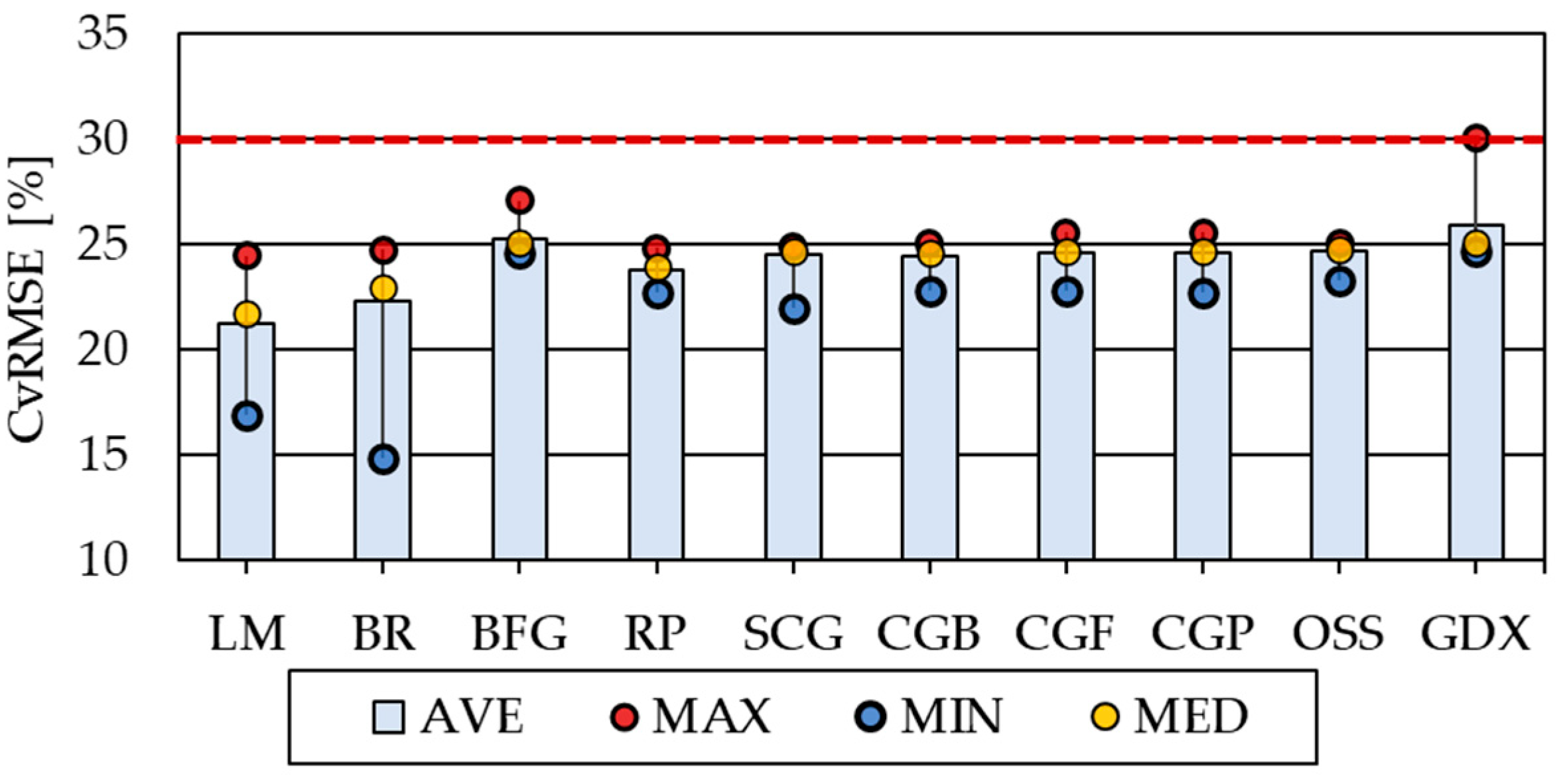
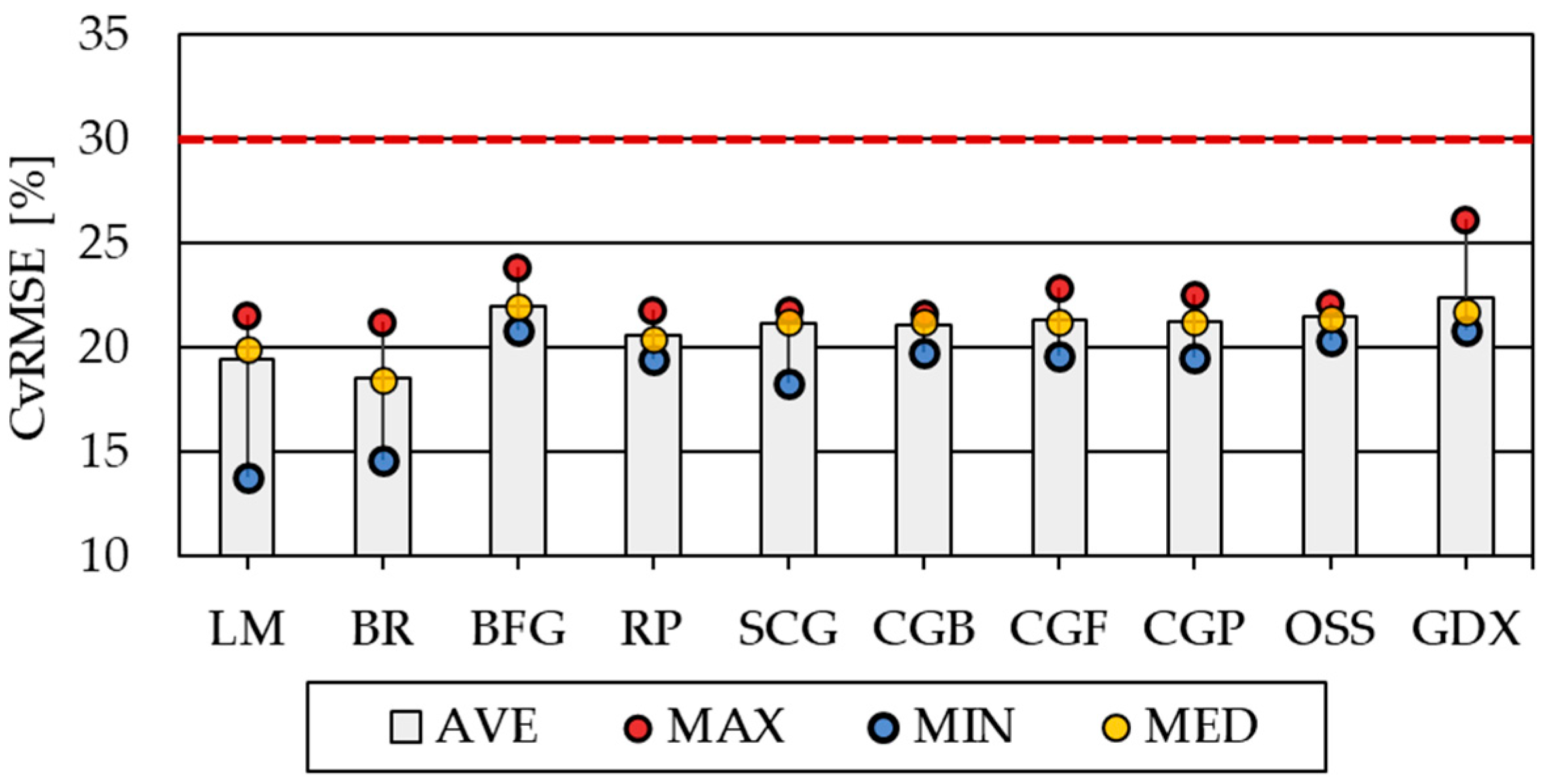
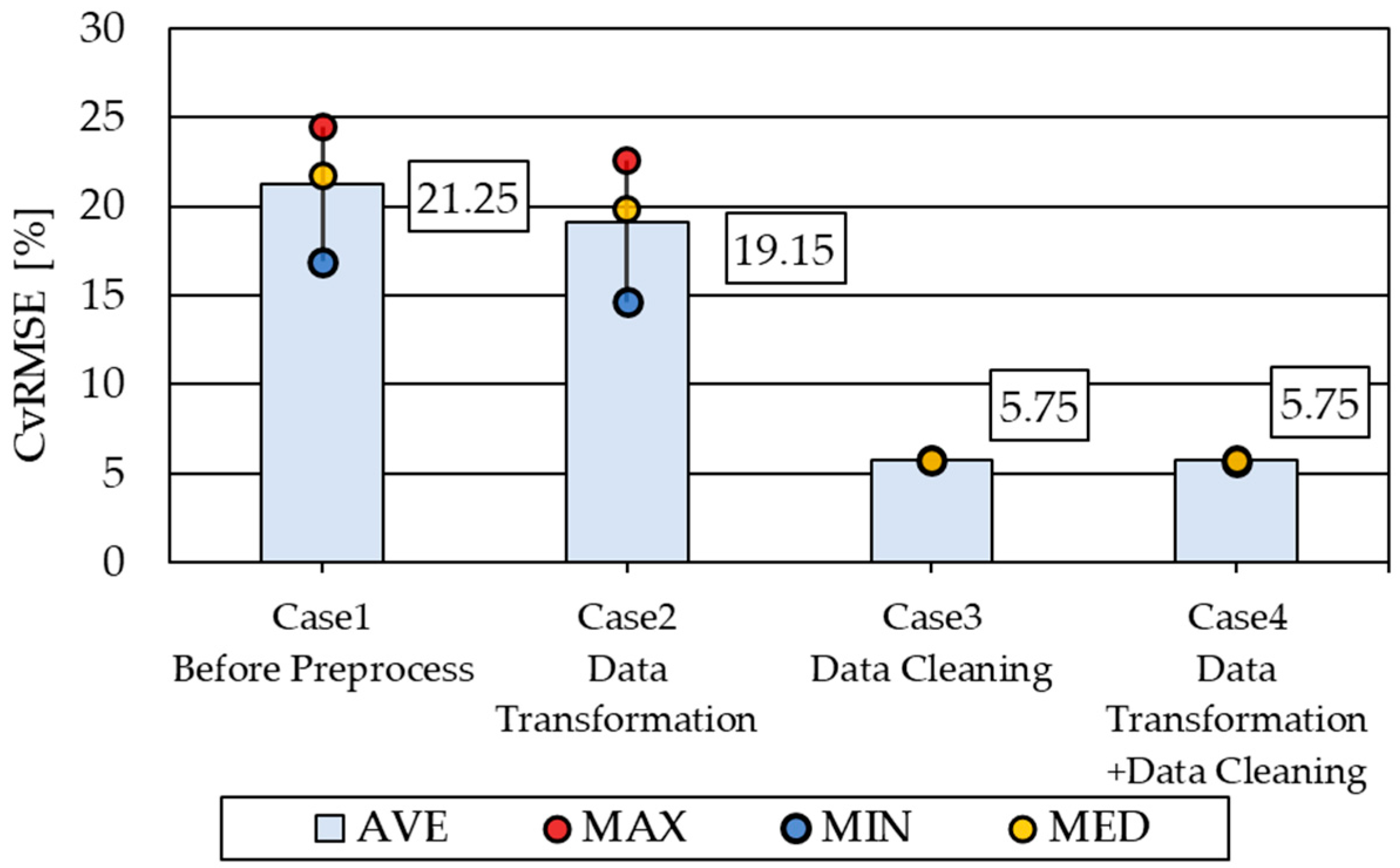
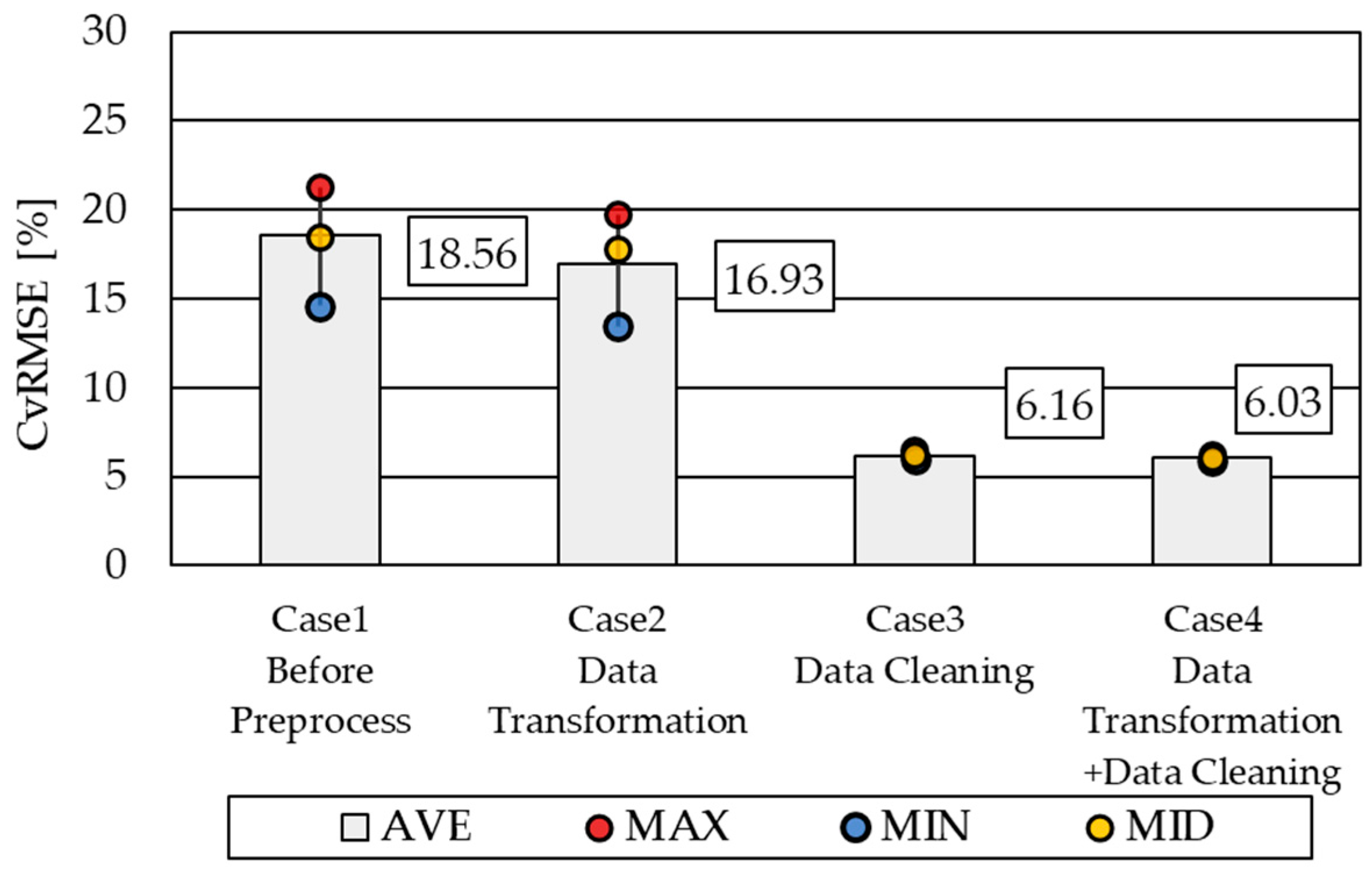
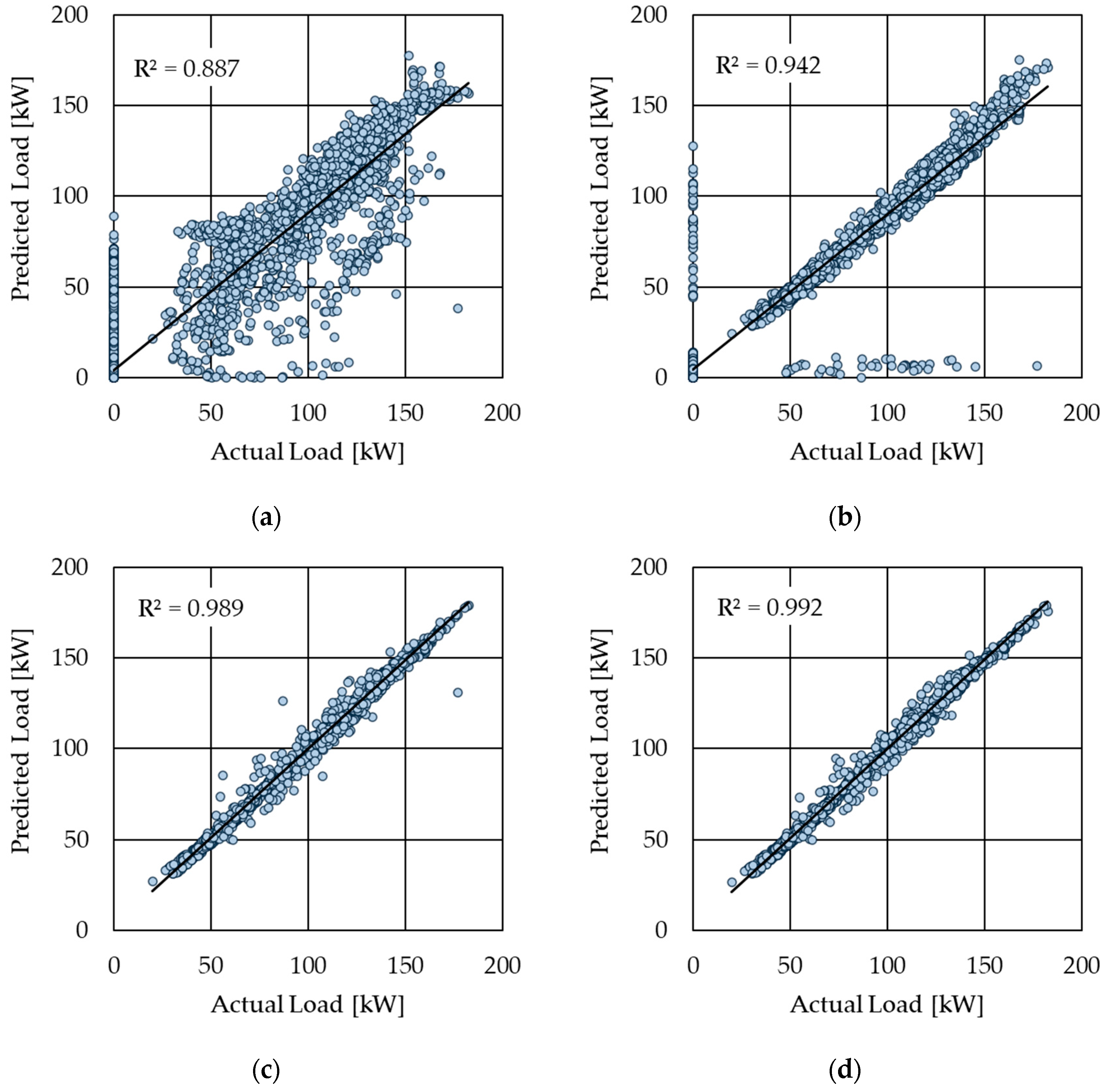
Accurate forecasting of cooling loads is essential for the effective operation of Building Energy Management Systems (BEMSs) and the reduction of building-sector carbon emissions. Although Artificial Neural Networks (ANNs), particularly Multi-Layer Perceptrons (MLPs), have shown strong capability in modeling nonlinear thermal dynamics, their reliability in practice is often limited by inappropriate training algorithm selection and poor data quality, including missing values and numerical distortions. To address these limitations, this study conducts a comprehensive empirical investigation into the effects of training algorithms and systematic data preprocessing strategies on cooling load prediction performance using an MLP model. Through benchmarking ten distinct training algorithms under identical conditions, the Levenberg–Marquardt (LM) algorithm was identified as achieving the lowest prediction error when integrated data preprocessing was applied. In particular, the application of data preprocessing reduced the CvRMSE from 18.56% to 6.03% during the testing period. Furthermore, the proposed framework effectively mitigated zero-load prediction errors during non-cooling periods and improved prediction accuracy under high-load operating conditions. These results provide practical and quantitative guidance for developing robust data-driven forecasting models applicable to real-time building energy optimization.

Article Metrics

Citations

Article Access Statistics

Multiple requests from the same IP address are counted as one view.