


Abstract
Building Information Modeling (BIM) has become a core competency in architectural practice, prompting increasing efforts to integrate BIM into design education. However, existing pedagogical approaches vary widely across institutions, regions, and curricular structures, ranging from software-focused instruction to more holistic, design-centered applications. This study presents a comprehensive review of BIM education in architecture by synthesizing trends, pedagogical models, and implementation strategies reported between 2010 and early 2025. A hybrid review design was employed by combining PRISMA-based systematic procedures with scoping and comparative analysis. Bibliometric mapping of 399 BIM education publications identified major research clusters and global trends, while an in-depth analysis of 31 architecture-focused studies revealed seven thematic categories encompassing curriculum integration, design studio pedagogy, immersive technologies, collaborative models, and algorithmic approaches. The findings show a gradual shift from tool-based training toward integrated studio environments where BIM supports design creativity, interdisciplinary coordination, and process-based learning. Persistent challenges—such as balancing technological proficiency with design thinking, adapting faculty expertise, and aligning curricula with industry expectations—continue to hinder deeper integration. Based on the synthesis, this study proposes an integrated educational framework that connects technological competence, design creativity, and collaborative cognition, offering guidance for the next stage of BIM-enabled architectural education.
1. Introduction
Building Information Modeling (BIM) has become a core paradigm that fundamentally transforms the processes of design, collaboration, and construction across the architecture, engineering, and construction (AEC) industry. BIM is defined as a technology that integrates architectural, structural, and mechanical information into a single three-dimensional model, enabling efficient and collaborative decision-making throughout a project’s life cycle [1,2]. Over the past two decades, many countries have recognized the potential of BIM and mandated its use in public projects. The United Kingdom, Singapore, and Finland have established national BIM roadmaps and standards [3,4,5]. Many Asian and Latin American countries are now gradually following this trajectory. This global movement underscores the growing need for systematic BIM education aligned with digital transformation and professional competency development [6].
However, the evolution of BIM education varies significantly across countries, institutions, and time periods. While many universities have integrated BIM into their curricula, the scope, depth, and pedagogy differ widely [7,8]. Some schools adopt an integrated approach by embedding BIM within design studios or interdisciplinary courses, whereas others limit instruction to software-based training focusing on tools such as Revit or Navisworks [9,10]. Consequently, students often struggle to understand the collaborative and integrative essence of BIM and its implications for the design and construction process [11].
In practice, the full transition to BIM-based workflows remains incomplete. Particularly among small and medium-sized firms, reliance on traditional CAD systems remains prevalent. This persistence is driven by conversion costs, uneven adoption across stakeholders, interoperability issues, limited collaboration structures, and the incomplete utilization of standards such as IFC [12,13]. These challenges reveal that BIM is not merely a digital tool but a complex competency that demands integrative thinking and interdisciplinary collaboration encompassing design, construction, and operation [14]. The challenges observed in practice are closely intertwined with those in education. Practitioners who lack sufficient BIM training often struggle to apply it in real projects, while limited industry engagement and a shortage of qualified instructors further constrain educational effectiveness. Therefore, BIM education must be grounded in interprofessional collaboration, close cooperation with industry, and a balance between technical proficiency and creative problem-solving capabilities [15].
Although the body of research on BIM education has grown steadily, most studies have focused on engineering and construction management perspectives. These studies primarily emphasize productivity, project efficiency, and data management, rather than pedagogical or design-oriented dimensions [16,17]. As a result, relatively few studies have systematically examined how BIM influences design thinking or collaborative learning within architectural studios [18,19]. More recent research has begun to explore integrative approaches, such as BIM-based design–construction education, immersive learning through VR/AR, and the convergence of AI and BIM in design pedagogy [20,21].
However, the limitations of existing BIM education research are not only methodological but also theoretical. Architectural design education has traditionally been grounded in pedagogical and cognitive perspectives such as design cognition, collaborative learning, and reflective practice. These perspectives emphasize iterative reasoning, situated problem solving, and knowledge construction through interaction. Despite the relevance of these perspectives, BIM education has rarely been examined through such theoretical lenses. Instead, BIM has often been treated as a technical or managerial system rather than as a cognitive and collaborative learning medium. This theoretical disconnect has contributed to the persistent fragmentation between tool-based instruction and integrative design learning in architectural education.
In response to these limitations, this study differentiates itself from prior BIM education reviews by explicitly foregrounding architectural design pedagogy and adopting an architecture-centered perspective on BIM education. Rather than treating BIM education primarily as a matter of technological adoption or instructional delivery, the study frames BIM as a cognitive and collaborative design medium and synthesizes existing research into an integrated educational framework tailored to architectural learning contexts.
To address this perspective, this study conducts a systematic review of BIM education research indexed in the Web of Science (WoS) and Scopus databases, focusing specifically on architectural education. The review employs a hybrid methodology that integrates PRISMA-based systematic procedures with scoping and comparative analysis to capture both empirical patterns and broader thematic trends (Section 2). Bibliometric mapping of publications is used to identify major clusters and global directions in BIM education research. In addition, an in-depth analysis of 31 architecture-focused studies provides detailed comparisons of curriculum structures, software adoption, interdisciplinary integration, pedagogical strategies, and regional characteristics (Section 3). The findings are then synthesized to interpret pedagogical challenges, institutional barriers, and emerging opportunities, leading to the formulation of an integrated educational framework that aligns technological competence, design creativity, and collaborative learning within architectural curricula (Section 4). Section 5 concludes by outlining theoretical and practical implications and proposing future research directions.
Accordingly, this study addresses the following research questions:
- How has BIM been integrated into architectural curricula across academic levels, instructional models, and software ecosystems?
- How do disciplinary, institutional, and regional contexts shape BIM education and its connection to professional practice?
- What challenges and opportunities emerge for developing architecture-oriented BIM education models distinct from engineering-centered approaches?
By synthesizing global trends and architecture-specific evidence, this study aims to reposition BIM education within a more integrated, interdisciplinary, and pedagogically grounded framework suited to the future of architectural design and practice.
2. Materials and Methods
2.1. Research Design and Scope
This study adopts a hybrid review design that integrates the systematic rigor of a PRISMA-based approach with the exploratory depth of a scoping review and the comparative perspective of cross-study analysis [22,23,24,25,26,27]. This combined approach enables both a broad mapping of BIM education research and a focused examination of how BIM has been incorporated into architectural curricula.
Peer-reviewed journal articles published between 2010 and early 2025 were retrieved from the Web of Science Core Collection and Scopus databases using standardized search terms to ensure transparency and reproducibility [17,28]. The resulting dataset spans a wide range of studies across the architecture, engineering, and construction (AEC) disciplines.
From this corpus, studies specifically addressing BIM education in architecture were selected for in-depth thematic and comparative analysis. This two-tiered structure—broad bibliometric overview followed by discipline-focused qualitative analysis—allows the review to capture both the evolution of BIM education at large and the pedagogical trajectories unique to architectural programs. By integrating systematic, scoping, and comparative methods, the study aims to build an interdisciplinary and pedagogically grounded framework to support the future development of architectural BIM education.
2.2. Research Process, Frame, and Analytical Framework
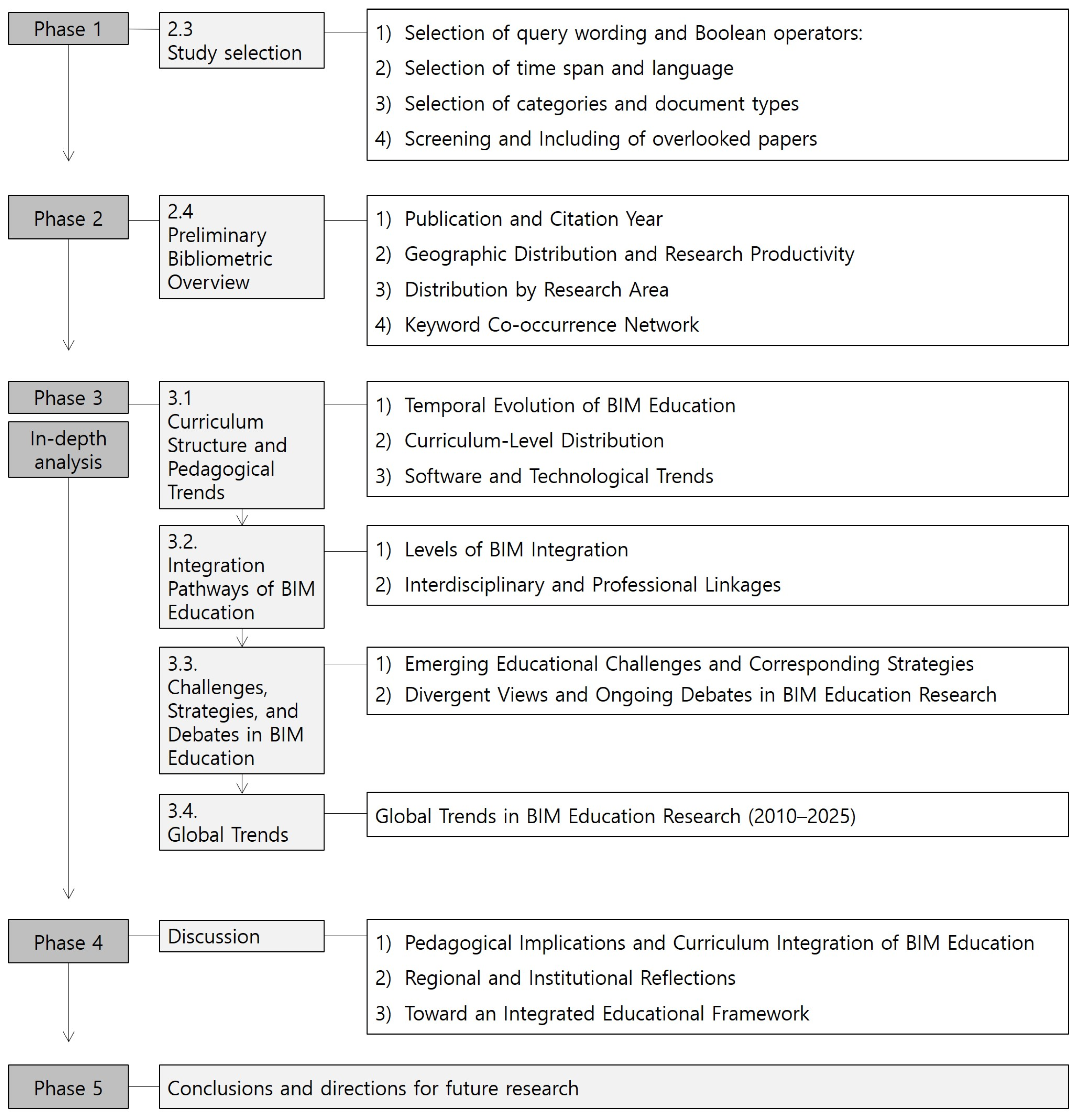
As illustrated in Figure 1, the research process unfolded through multiple interconnected stages, beginning with database construction and preliminary bibliometric mapping, followed by in-depth comparative analysis of architectural BIM education studies, and concluding with theoretical interpretation and framework synthesis.
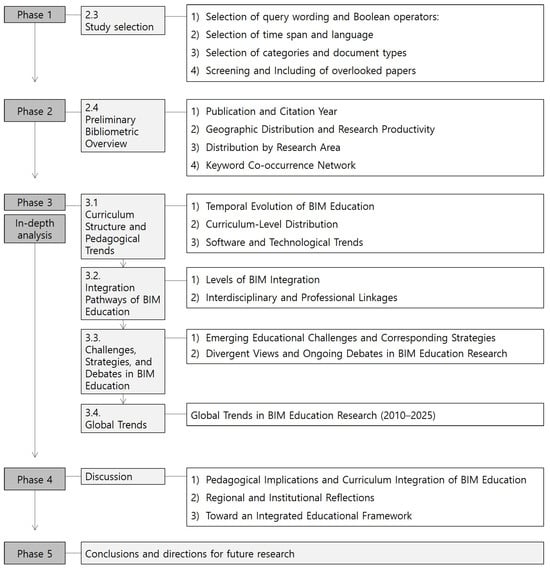
Figure 1.
Research Process.
Across this structure, the review employed three methodological phases forming the analytical core of the study:
- (1)
- Phase 1: Data Collection and Screening
Publications related to BIM education were retrieved. After removing duplicates and applying inclusion and exclusion criteria—based on relevance, document type, field, and language—a final set of architecture-focused studies was selected for detailed analysis.
- (2)
- Phase 2: Data Extraction and Coding
A structured extraction process was conducted to enable systematic cross-study comparison. A coding matrix was developed to categorize all studies under consistent analytical dimensions, supporting both quantitative mapping and qualitative thematic analysis.
- (3)
- Phase 3: Analytical Framing and Interpretation
To structure the comparative examination, an analytical framework was constructed around three complementary lenses:
- Comparative dimension—identifying disciplinary, regional, and institutional variations in BIM education;
- Pedagogical dimension—classifying instructional approaches and synthesizing recurring educational challenges and strategies;
- Theoretical dimension—situating findings within broader educational paradigms, including experiential learning, reflective design thinking, and sociotechnical adoption.
These phases collectively provide the systematic rigor and interpretive depth necessary to understand the evolution, diversity, and pedagogical implications of BIM education research.
To ensure analytical clarity and consistency across the review process, this study clarifies several key concepts used throughout the manuscript. “Tool-based BIM education” refers to instructional approaches primarily focused on software operation and modeling proficiency, whereas “design-centered BIM education” emphasizes BIM’s role in supporting design reasoning, reflection, and decision-making. The term “studio integration” denotes the curricular embedding of BIM within architectural design studios, rather than its treatment as a stand-alone technical subject. Accordingly, BIM is discussed in this study not only as a technology, but also as a process and a cognitive medium that supports collaborative and reflective architectural learning.
2.3. Study Selection
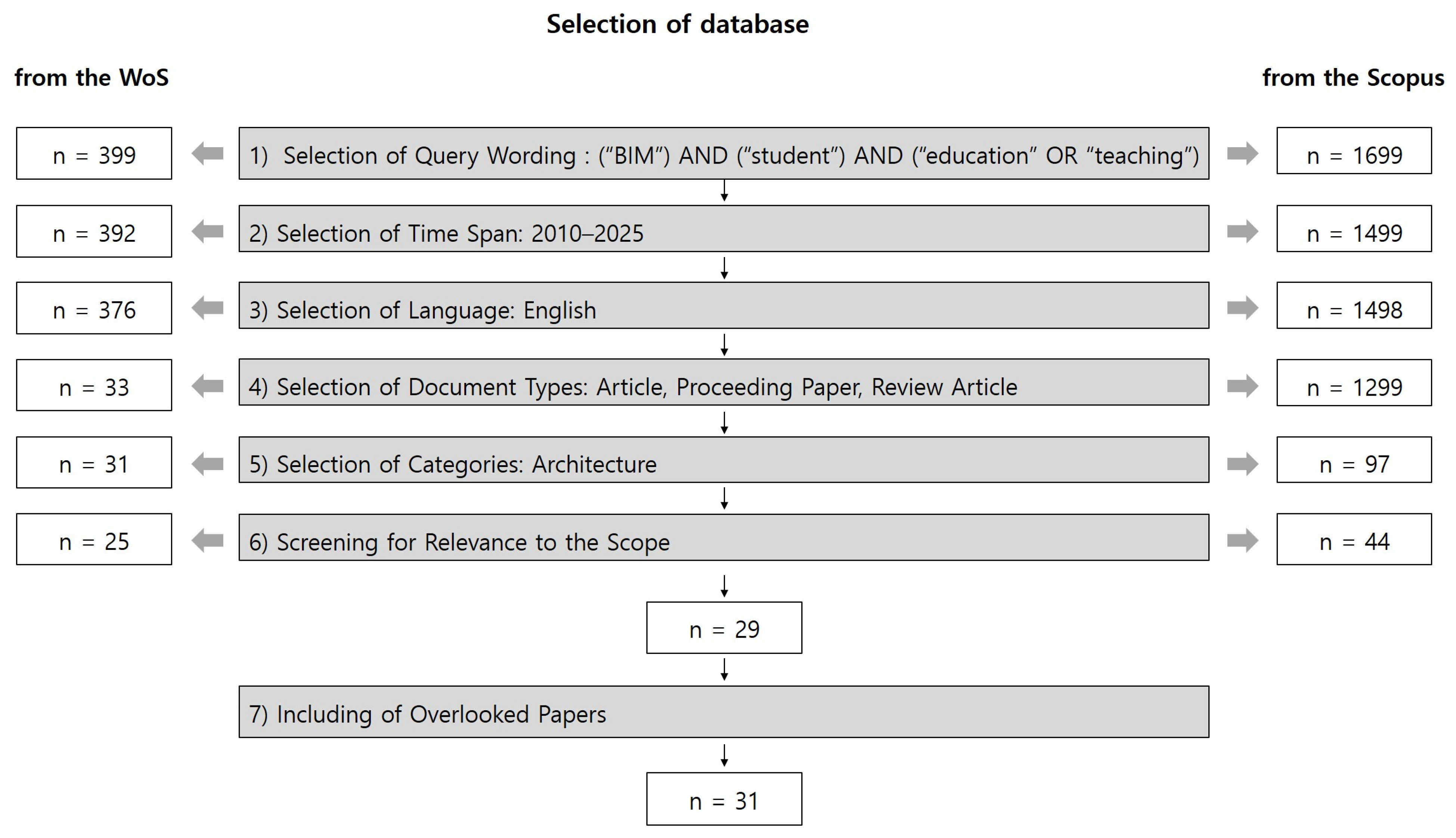
The overall study selection procedure is illustrated in Figure 2. The search strategy applied the query: (“BIM”) AND (“student”) AND (“education” OR “teaching”). This query was selected to capture studies focusing on the integration of BIM within architectural and AEC educational settings. The initial search results included bibliographic information such as authorship, abstract, keywords, document type, and citation data, which enabled subsequent screening and analysis. The selection process followed the PRISMA-ScR checklist guidelines [22]. The PRISMA-ScR checklist is provided as Supplementary Materials.
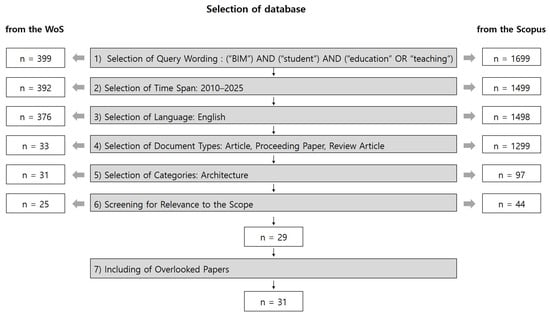
Figure 2.
Study selection criteria and procedure based on PRISMA-ScR.
Together, the two databases produced 107 unique records. These publications underwent an eligibility screening based on full-text review, assessing alignment with the study’s research scope—specifically, studies demonstrating educational strategies, learning outcomes, curricular frameworks, or pedagogical implications of BIM in architecture. Following this relevance-based screening, 31 studies were selected for in-depth qualitative analysis.
2.4. Preliminary Bibliometric Overview of BIM Education Research
Before conducting an in-depth analysis with a narrowed scope, this study first performed a broader quantitative and qualitative examination of BIM education research. This preliminary stage analyzed the full set of BIM education publications without restricting the scope to architecture, allowing the review to capture general patterns across the wider AEC and education domains. The analysis focused on the annual distribution of publications and citations, country-level output, and keyword co-occurrence networks to identify overarching trends and research directions. This preliminary overview provides the empirical basis for identifying research gaps and guiding the subsequent architecture-focused in-depth review.
- (1)
- Publication and Citation Year
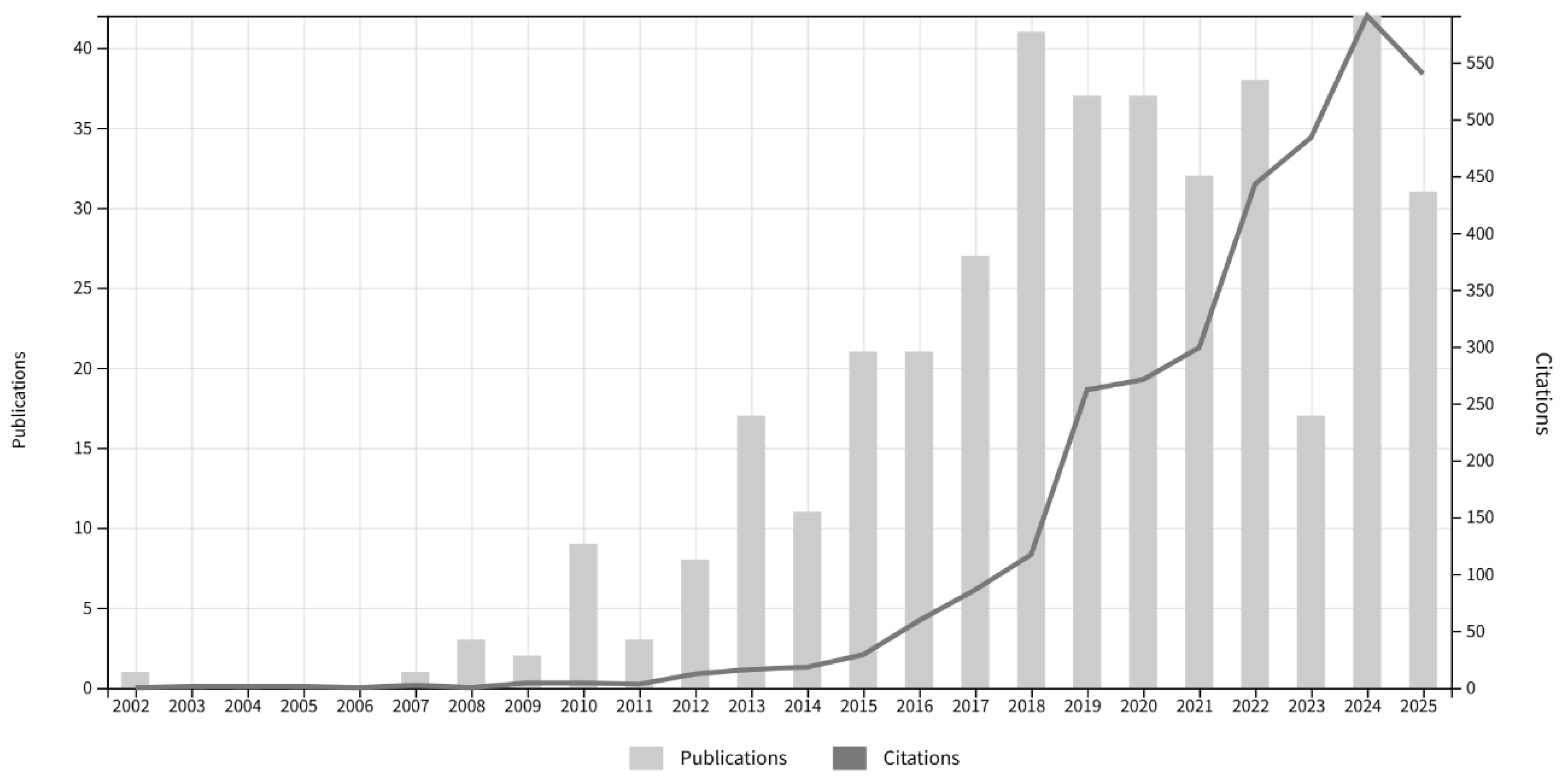
As illustrated in Figure 3, the number of publications remained minimal until 2010, reflecting the nascent stage of BIM education research. A noticeable growth began around 2015, coinciding with the global institutionalization of BIM practices and the introduction of BIM-integrated curricula in higher education. The volume of studies peaked between 2018 and 2023, indicating the establishment of BIM education as a distinct research domain within architecture and construction disciplines.
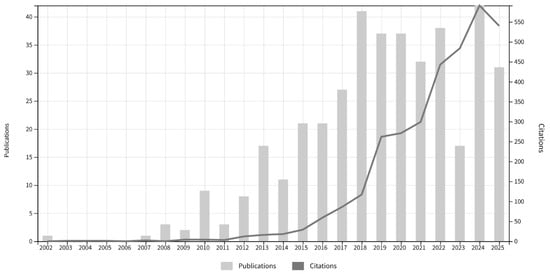
Figure 3.
Annual trends of publications and citations in BIM education research retrieved.
Citations exhibited a delayed but steeper rise, particularly after 2017, suggesting that earlier foundational works began to gain scholarly recognition and influence. The sharp increase in both publications and citations from 2016 onward signifies a period of theoretical consolidation and methodological diversification in BIM education research. The slight decline observed in 2025 is likely attributable to the incomplete citation accumulation for the most recent publications rather than a reduction in academic interest.
- (2)
- Geographic Distribution and Research Productivity
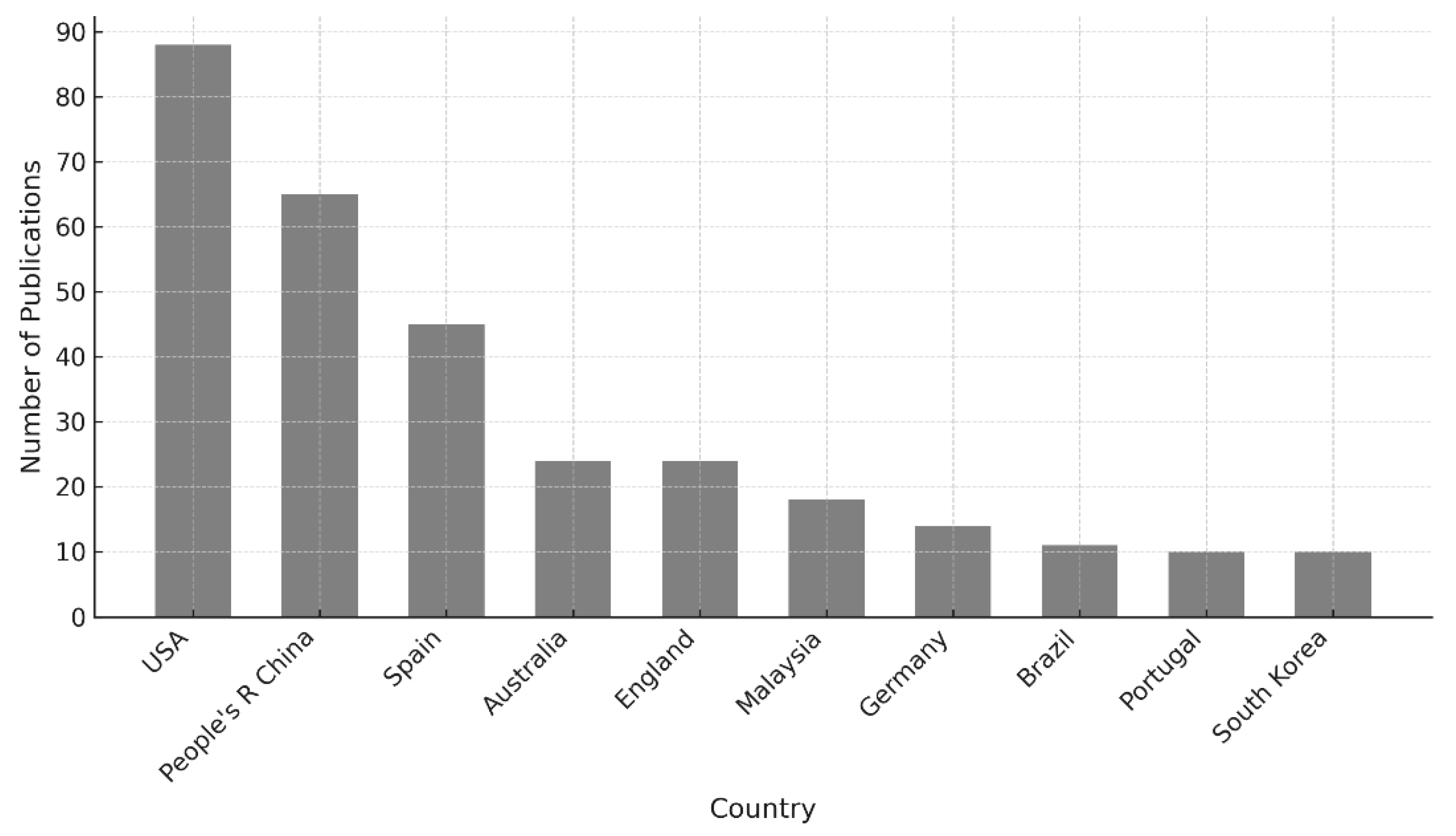
As shown in Figure 4, BIM education research is geographically concentrated in a few leading countries. The United States, China, and Spain account for the largest share of publications, followed by Australia, the United Kingdom, and Malaysia. This uneven distribution may partly reflect structural factors such as population size, research infrastructure, and the maturity of the construction industry rather than academic engagement alone.
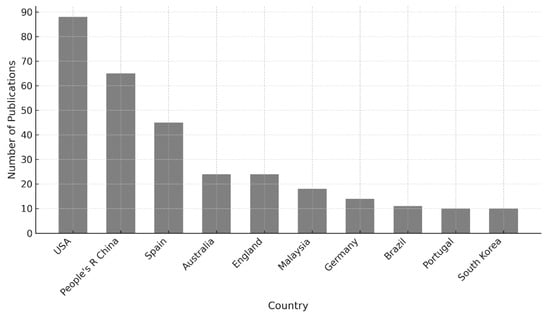
Figure 4.
Country-wise distribution of publications related to BIM education retrieved.
At the same time, this regional clustering tends to coincide with the timing of national BIM mandates, curriculum reforms, and governmental or institutional support initiatives in each country. Such parallel developments suggest that policy implementation and educational investment have played a role in stimulating research activity, highlighting the importance of considering contextual and policy-driven factors in comparative analyses. This understanding provides the international framework for the present study’s in-depth exploration of BIM education within the architectural discipline.
- (3)
- Distribution by Research Area
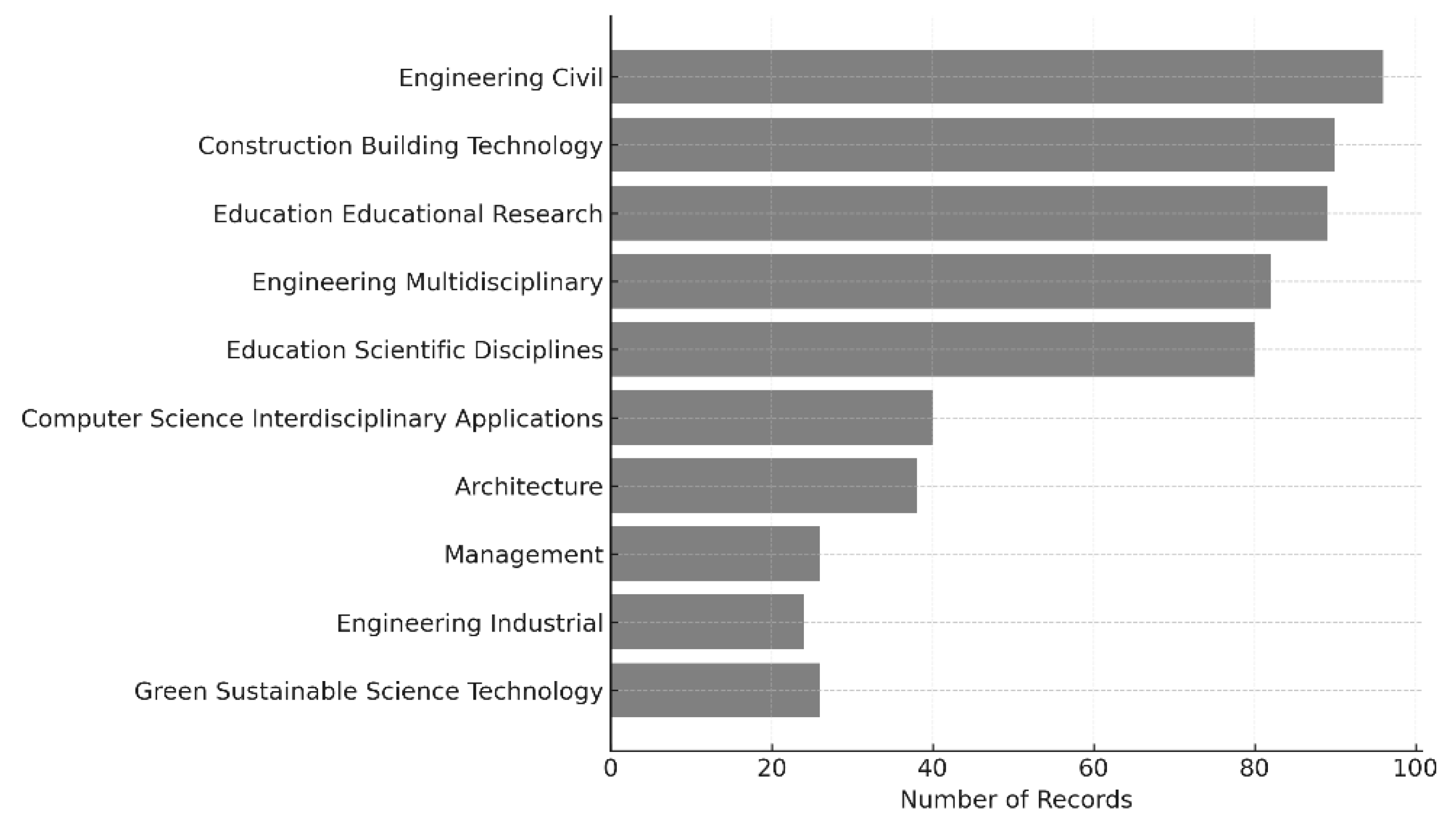
Figure 5 shows the disciplinary distribution of BIM education research. Ten detailed subject areas were reorganized into four categories—Engineering, Education, Architecture, and Others. Engineering accounts for nearly half of all publications (49.4%), followed by Education (28.6%), Others (15.6%), and Architecture (6.4%). This distribution indicates that BIM education research remains predominantly shaped by engineering-oriented perspectives, with strong emphasis on civil engineering, construction management, and technology-focused approaches. Even within the Education category, many studies originate from engineering contexts, whereas research addressing architectural curricula, design studios, or discipline-specific learning processes remains comparatively limited.
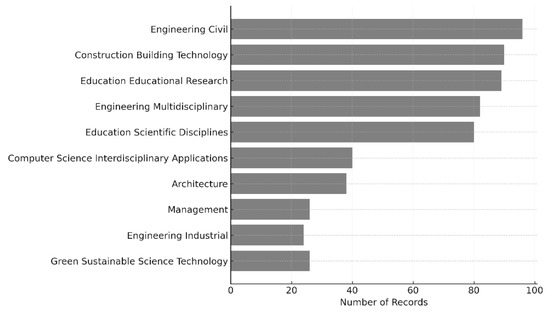
Figure 5.
Distribution of BIM Education Publications by Research Area.
In this context, the present review positions architectural education more prominently within the broader BIM education landscape. By synthesizing how BIM has been incorporated into architectural curricula and identifying key pedagogical challenges, the study highlights the gap between engineering-driven approaches and the needs of architectural education. This helps inform the development of a more integrated and discipline-appropriate educational framework.
- (4)
- Keyword Co-occurrence Network
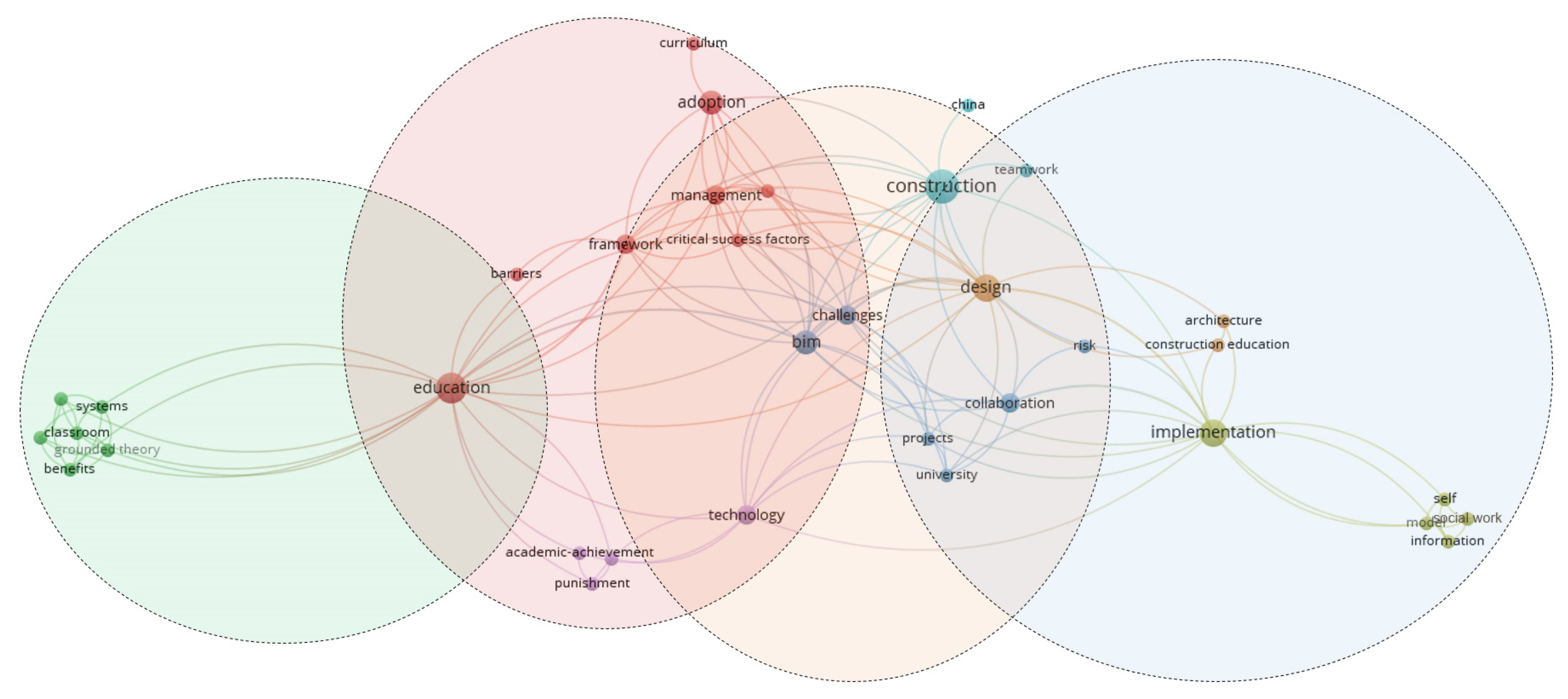
To identify the underlying research themes and conceptual relationships within the BIM education domain, a keyword co-occurrence network was generated using VOSviewer (VOSviewer 1.6.20) (Figure 6). Each node represents an author keyword, with node size indicating frequency of occurrence and link thickness denoting the strength of co-occurrence between two terms. Colors correspond to clusters of thematically related keywords automatically identified by VOSviewer, while spatial proximity indicates conceptual similarity.
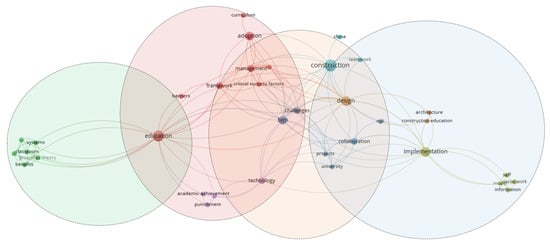
Figure 6.
Keyword co-occurrence network of BIM education research.
The resulting network reveals four major thematic clusters. The left-side cluster centers on pedagogical approaches and learning outcomes, whereas the right-side clusters emphasize technological adoption, management, and implementation frameworks. “Design” and “collaboration” emerge as bridging concepts that connect educational and professional discourses, reflecting BIM’s dual identity as both a pedagogical tool and an industry process.
Overall, the map highlights a visible education–implementation gap, as education-related terms form a distinct cluster isolated from practice-oriented keywords. The relative absence of cognitive or theoretical terms—such as reflection, learning theory, or cognition—suggests a conceptual disconnect between pedagogical and technological perspectives. Among the connecting nodes, collaboration functions as a mediating construct that bridges design, construction, and education clusters, underscoring its significance for developing more integrative BIM education frameworks.
3. Results from the In-Depth Review
This section presents the findings of the in-depth qualitative review of 31 BIM education studies situated within architectural contexts. The analysis examines the major themes addressed in these studies, the pedagogical and technological areas most frequently explored, and the extent to which theoretical considerations are incorporated into BIM-related teaching and learning.
The selected studies were organized into seven thematic groups based on their primary pedagogical focus and methodological orientation (Table 1). These themes range from curriculum-level integration and design studio pedagogy to immersive technologies, collaborative or interdisciplinary learning, awareness-based studies, technological or algorithmic approaches, and meta-level reviews. The categorization provides an overview of how BIM has been interpreted and implemented across diverse architectural education settings, while also revealing areas that have received comparatively limited attention.

Table 1.
Thematic Classification of 31 BIM Education Studies.
Among these categories, Design Studio Pedagogy and Curriculum Integration constitute the largest portion, addressing how BIM can be embedded within design studios and broader curricula. Other categories explore more specific or emerging directions, such as VR/AR-supported learning, cross-disciplinary collaboration through shared digital environments, learner and educator perceptions, and computational design workflows. Meta-level reviews synthesize existing work to identify broader pedagogical challenges and future directions.
Overall, the thematic patterns indicate that although BIM education research has expanded beyond technical implementation, studies explicitly engaging with architectural design pedagogy, cognitive learning processes, and design thinking remain comparatively limited.
3.1. Curriculum Structure and Pedagogical Trends
- (1)
- Temporal Trends of BIM Education Research Education
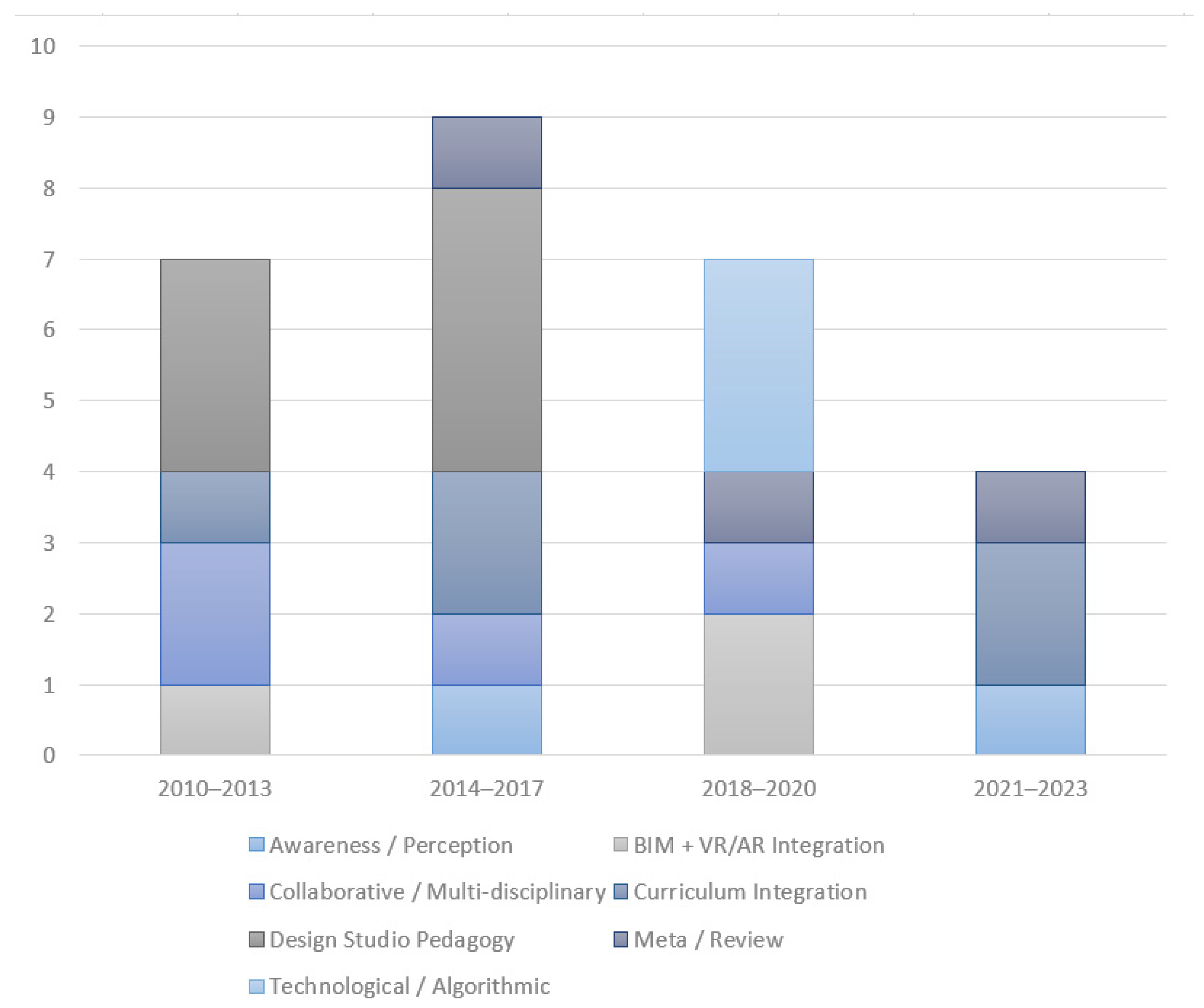
Table 2 and Figure 7 present the temporal evolution of BIM education research themes from 2010 to 2025.
Table 2.
Temporal Trends of BIM Education Research (2010–2025).
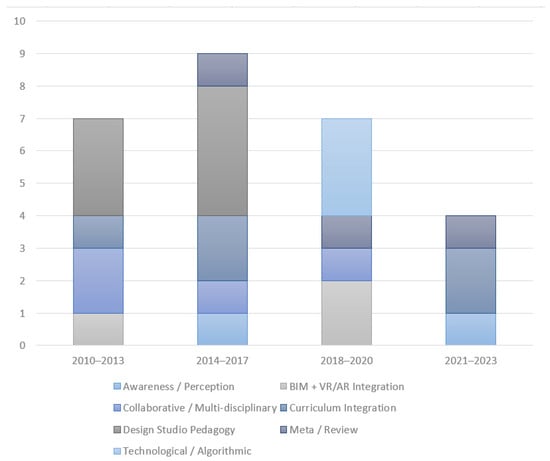
Figure 7.
BIM Education Research Themes by Period (2010–2025).
In the early phase (2010–2013), research was largely concentrated in Design Studio Pedagogy, reflecting initial experimentation with BIM in studio settings. These studies emphasized introductory tool use, modeling workflows, and feasibility testing within traditional design pedagogy. During 2014–2017, the focus expanded to Curriculum Integration and Collaborative/Multi-disciplinary Learning, aligning with institutional efforts to formalize BIM within academic programs and promote cross-disciplinary collaboration among AEC fields. The 2018–2020 period marked increasing interest in BIM + VR/AR Integration and Technological/Algorithmic Approaches. This shift mirrors the broader rise in immersive visualization and computational design in architectural education, positioning BIM as part of an expanded digital design ecosystem. In the most recent phase (2021–2025), research trends began to consolidate, with growing emphasis on Curriculum Integration and Meta/Review studies. This suggests a maturing stage of scholarship characterized by reflection, assessment, and institutional standardization rather than introductory implementation.
Overall, this chronological pattern demonstrates the gradual maturation and diversification of BIM education research—from early, tool-focused studio experimentation to broader curriculum-level strategies, interdisciplinary models, and reflective analyses. The rise in VR/AR and computationally oriented studies between 2018 and 2020 further illustrates BIM’s convergence with emerging digital technologies. These temporal findings provide a contextual foundation for the subsequent qualitative review, indicating that while BIM education research has evolved significantly, explicit theoretical engagement with design cognition and reflective learning remains limited.
- (2)
- Curriculum-Level Distribution
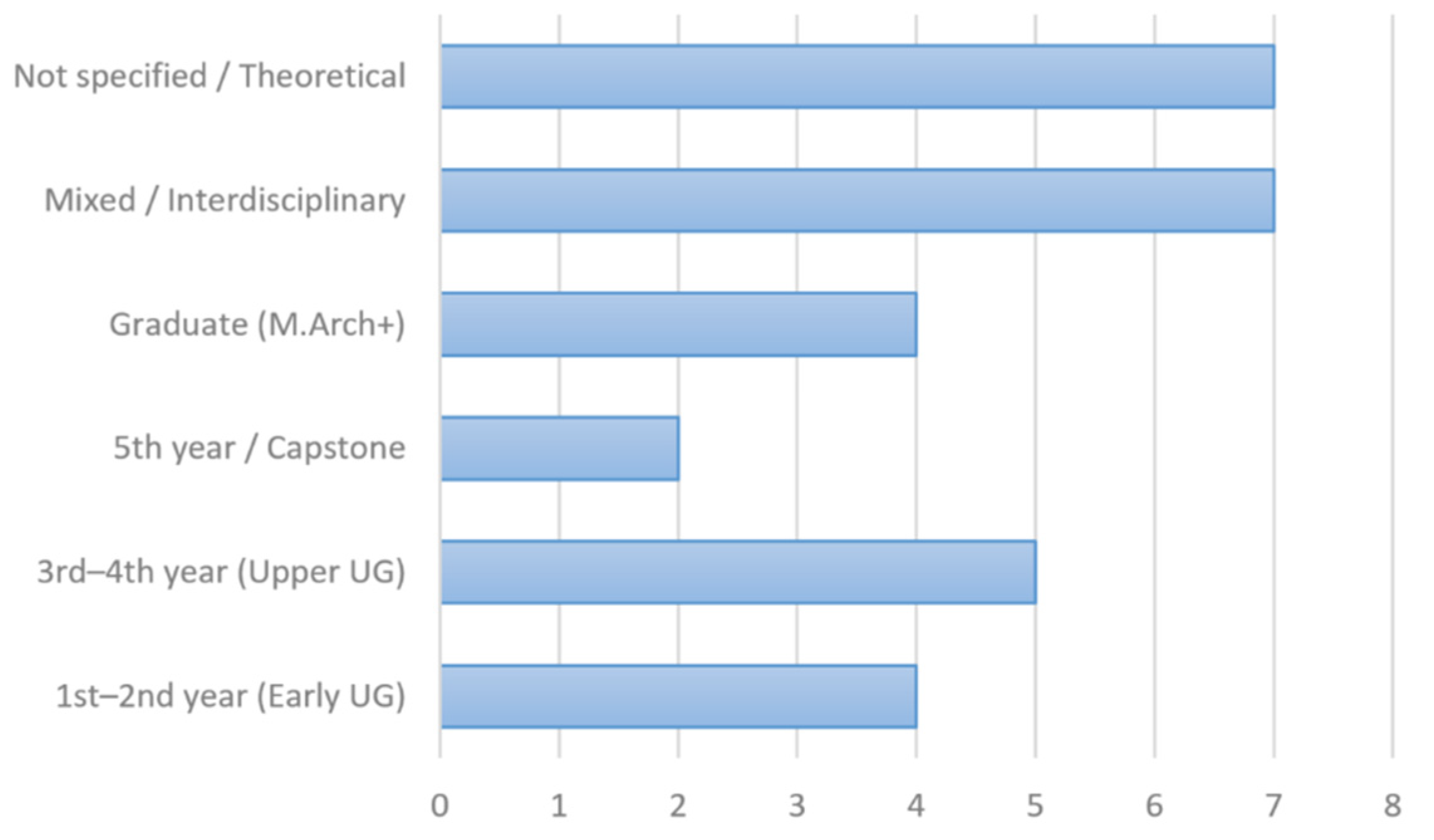
Figure 8 illustrates how BIM education studies are distributed across different student levels. Overall, BIM tends to appear more prominently in upper-level and advanced courses. Early undergraduate studies focus primarily on basic tool literacy and foundational modeling skills, whereas upper-level and interdisciplinary courses highlight process-oriented learning, coordination, and collaborative design. The presence of studies addressing interdisciplinary or theoretical approaches further indicates that BIM is increasingly positioned not merely as a stand-alone course topic but as an integrative component embedded across the broader architectural curriculum.
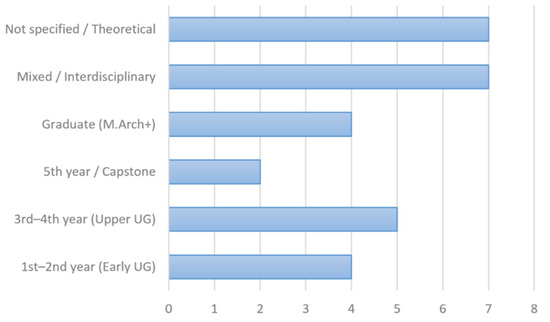
Figure 8.
Number of BIM Education Papers by Student Level.
- (3)
- Software and Technological Trends
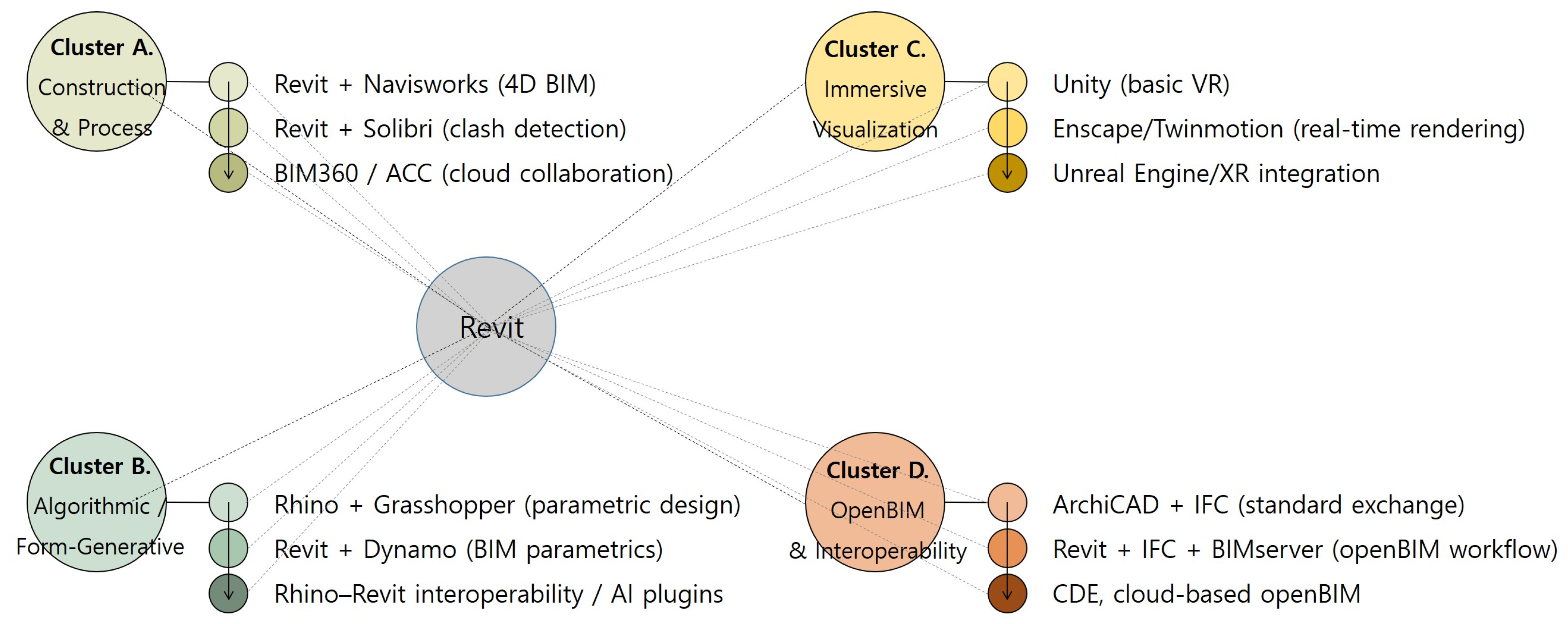
Table 3 and Figure 9 summarize the software co-occurrence network and its temporal evolution from 2010 to 2025. Four major clusters were identified, each reflecting a distinct educational focus.
Table 3.
Temporal Evolution of Software and Technology Clusters in BIM Education Research.
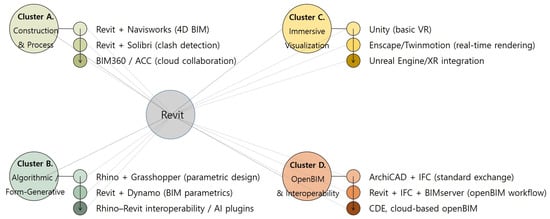
Figure 9.
Software & Technology Co-Occurrence Network in BIM Education (Arrows indicate the general direction of software evolution within each cluster over time).
Cluster A (Construction and Process Management) comprises Revit, Navisworks, Solibri, and BIM 360, emphasizing process management and coordination-based learning. The adoption of this cluster has gradually expanded: beginning with Revit–Navisworks workflows centered on 3D modeling and 4D process visualization, the focus later broadened to Solibri-based quality checking and rule-based validation, and more recently to cloud-enabled collaboration through platforms such as BIM 360/ACC, which support integrated construction-process management.
Cluster B (Algorithmic and Form-Generative Design) links Rhino, Grasshopper, Dynamo, and Revit, reflecting the growing importance of computational and parametric design in BIM education. Early applications were largely exploratory, centered on Rhino/Grasshopper-based parametric modeling; with the introduction of Dynamo, computational logic became more closely connected to BIM workflows; and the emergence of Rhino.Inside has enabled a more seamless integration in which form generation, information modeling, and analysis operate as a continuous workflow.
Cluster C (Immersive Visualization) connects Revit with Unity, Enscape, and Unreal Engine, representing the incorporation of VR- and experience-driven learning. What began as basic 3D/4D visualization progressively evolved into VR-based spatial exploration and rapid visual feedback, and more recently into XR-based user-experience evaluation and multi-user collaborative environments, marking a clear expansion of immersive BIM-supported pedagogies.
Cluster D (OpenBIM and Interoperability) comprises ArchiCAD, IFC, and BIMserver and reflects the increasing emphasis on open standards and cross-platform collaboration. Initially limited to selected IFC-based applications, this cluster expanded as interoperability-focused QC and data-checking practices grew more prominent, and has recently moved toward platform-based openBIM environments that support integrated, cross-software collaboration.
Across all clusters, Revit serves as a central hub connecting design, analysis, coordination, visualization, and interoperability workflows. This convergence indicates that BIM education has evolved beyond isolated software instruction toward an interconnecterksekd technological ecosystem that supports collaborative, interdisciplinary, and data-driven learning environments.
3.2. Integration Pathways of BIM Education
- (1)
- Levels of BIM Integration
Building on the curriculum-level patterns described earlier, the degree to which BIM is embedded within architectural education can be further examined through four levels of integration. These levels draw on established models of educational and technological integration [59,60] and describe a progression from operational adoption to curriculum-wide institutionalization. Applied to BIM education, the framework describes a progression in how BIM is positioned within architectural curricula, from software-oriented use toward broader pedagogical integration [17,29,30,32,53].
In this hierarchy, Levels 1–2 emphasize technical proficiency and procedural learning, whereas Levels 3–4 represent cognitive and curricular integration, where BIM becomes embedded in design thinking and cross-course structures. The 31 reviewed studies can be mapped onto this four-level framework (Table 4).
Table 4.
Levels of BIM Integration in Architectural Education.
Early studies predominantly fall within Level 1 (tool-based), where BIM functions as an alternative to drafting or 3D modeling. Later research moves toward Level 2 (process-oriented), using BIM to support teamwork, coordination, and simulation. More recent work reflects Level 3 (design-thinking integration), positioning BIM as a medium for conceptual, parametric, or algorithmic exploration. The most advanced examples correspond to Level 4 (curriculum-level integration), where BIM spans multiple courses or departments, indicating institutional and cross-disciplinary adoption.
- (2)
- Interdisciplinary and Professional Linkages
Across the reviewed studies, BIM increasingly functions as an integrative framework that connects academic disciplines and aligns architectural education with professional practice. Rather than serving as a software-oriented component, BIM acts as a platform linking design studios with building technology, structural systems, project management, and digital fabrication.
Within academic settings, BIM is incorporated into design studios and paired with related subjects to help students understand design decisions within broader technical and managerial contexts. Examples include collaborative studios in which architecture, engineering, and construction students share Revit or IFC models [32,52], as well as courses that combine BIM with computational and fabrication tools such as Rhino–Grasshopper and Dynamo [53,55]. Through these cross-disciplinary configurations, BIM serves as a knowledge integrator that supports process-based and multi-perspective design learning.
At the professional interface, many programs adopt industry-linked projects, expert-involved studios, and practice-oriented curricula. Joint courses with industry partners often use Integrated Project Delivery (IPD) or openBIM workflows, giving students experience with real-world collaboration and data exchange [48,61]. Some curricula also incorporate practitioner feedback through studio reviews or BIM advisory roles [17,62] while others embed emerging industry technologies such as VR/AR and cloud-based BIM platforms to reflect current professional expectations, as summarized in Table 5.
Table 5.
Types of Interdisciplinary and Professional Linkages in BIM Education.
3.3. Challenges, Strategies, and Debates in BIM
- (1)
- Emerging Educational Challenges and Corresponding Strategies
Table 6 synthesizes the challenges and pedagogical responses identified in the 31 reviewed studies. The difficulties associated with BIM integration span pedagogical, cognitive, technical, institutional, and collaborative dimensions.
Table 6.
Challenges and Strategies in BIM Education.
In the pedagogical and curricular domain, many studies point to fragmented, tool-centered instruction in which BIM is confined to isolated elective courses. This leads to short-term skill acquisition without conceptual progression [17,32]. To overcome this, spiral or scaffolded integration models have been proposed, gradually deepening BIM engagement across courses, studios, and capstone projects.
In the cognitive and conceptual domain, students often struggle to shift from 2D abstraction to object-based, information-rich reasoning [36,50]. Misunderstanding BIM as “just software” remains common. Strategies such as conceptual scaffolding, reflective assignments, and simulation-based studio work help strengthen methodological understanding rather than purely technical use.
Technical and operational challenges include interoperability issues, software dependency, and inconsistent model-exchange standards [46,47]. These are being addressed through openBIM workflows, IFC-based collaboration, and cloud-based Common Data Environments (CDE), which facilitate transparency and interdisciplinary engagement.
At the institutional level, faculty capacity, training gaps, and infrastructural constraints remain persistent barriers [17,32]. Suggested strategies include sustained faculty development, cross-departmental coordination, and alignment of BIM learning outcomes with accreditation standards.
Finally, collaborative and interdisciplinary issues—including disciplinary silos and limited communication among AEC programs—continue to hinder BIM’s integrative potential. Studies recommend role-defined, team-based learning environments that simulate Integrated Project Delivery (IPD) processes, helping students develop the social and managerial competencies required for digital collaboration [45,46,47]. Taken together, these findings show that effective BIM education extends beyond software proficiency.
- (2)
- Divergent Views and Ongoing Debates in BIM Education Research
Although there is broad agreement that BIM should play a central role in design education, the reviewed studies reveal several unresolved debates regarding its pedagogical positioning and curriculum implementation.
First, scholars differ on whether BIM should be approached primarily as a technical tool or as a cognitive framework that supports collaborative and process-based design thinking [36,45]. Second, the timing of integration remains contested: some argue for early exposure to shape design cognition, while others recommend postponing BIM instruction until foundational design skills are fully established [31,34].
Debates also arise around collaboration models. Open, real-time sharing environments promote transparency but may conflict with more controlled CDE systems that emphasize accountability and management structure [46]. A further point of tension concerns how curricula should balance industry relevance with academic autonomy, particularly when aligning BIM education with rapidly evolving professional expectations.
Despite these divergent views, recent studies show a gradual convergence toward information-centric, collaborative, and reflective BIM pedagogy that integrates technical proficiency with cognitive development and institutional coordination. Table 7 summarizes the contrasting perspectives and the emerging areas of consensus.
Table 7.
Divergent Views and Emerging Consensus in BIM Education Research.
3.4. Global Trends in BIM Education Research
In addition to thematic patterns, the reviewed studies show clear chronological and regional differences in the development of BIM education. As summarized in Table 8, the United States and the United Kingdom played an early role in redefining BIM within architectural pedagogy, emphasizing conceptual framing and foundational curriculum models. In contrast, recent studies from Asia, Europe, and Latin America highlight practice-oriented adoption, interdisciplinary collaboration, and the integration of advanced digital tools such as VR/AR and parametric workflows. These variations reflect differing institutional priorities and levels of digital transformation across regions.
Table 8.
Global and Regional Trends in BIM Education Research.
4. Discussion- Analytical Interpretation and Synthesis
4.1. Pedagogical Implications and Curriculum Integration of BIM Education
Building on the empirical patterns identified in Section 3, the findings from the 31 reviewed studies are here interpreted as indicating a shift in BIM education from tool-centered instruction toward broader pedagogical orientations emphasizing design reasoning, collaboration, and curricular coherence. Across the literature, there is strong agreement that BIM should function not merely as technical software but as a learning environment that supports reflective decision-making and integrative design thinking. Several studies [29,36,40] highlight BIM’s capacity to link conceptual intent with performance, constructability, and information-rich reasoning—positioning it as a meta-cognitive design medium.
A second area of consensus concerns the need for curricular continuity. Many programs still rely on isolated electives or short, intensive modules, which have been shown to produce fragmented learning and limited understanding of collaborative workflows [29,32]. In response, recent studies propose spiral integration models, beginning with introductory visualization and conceptual use [33,34], expanding into interdisciplinary teamwork in intermediate studios [31,52], and culminating in capstone courses that simulate IPD-like collaborative environments [30]. This progression solidifies BIM as a design language rather than a representational tool.
Despite these areas of alignment, the literature reveals several ongoing debates. One concerns the timing of BIM introduction. Advocates of early integration argue that information-based reasoning should shape early cognitive development [34], whereas others warn that premature exposure may limit conceptual exploration and reinforce tool dependency [31,32]. Another debate centers on creativity: while generative workflows using BIM and algorithmic tools can support exploratory thinking [53,55], prescriptive modeling interfaces may restrict novice designers.
Approaches to collaboration also vary. Some institutions implement fully co-taught interdisciplinary studios with shared deliverables, while others prefer parallel disciplinary courses linked through a common BIM model. Cloud-based platforms [46] offer opportunities to replicate professional workflows, yet practical inconsistencies and disciplinary silos often impede genuine collaborative behavior [47,57]. These divergent experiences underscore the need for context-sensitive curricular models rather than one-size-fits-all solutions.
Across the studies, several recurring challenges emerge: fragmented curricula, uneven faculty expertise, institutional resistance or resource limitations, and the absence of robust assessment methods for capturing cognitive, creative, or collaborative learning outcomes. Corresponding strategies include team-teaching approaches, shared repositories, reflection-based assignments, and cross-departmental coordination. A common direction is the design of learning environments where students not only model together but also think together, emphasizing joint problem-solving and iterative feedback.
Despite progress, significant research gaps remain. Most studies examine single courses or short-term implementations, providing limited evidence of longitudinal impact. Few employ rigorous measures of design cognition or collaborative performance, relying predominantly on self-reported perceptions. Comparative analyses across institutions or cultural contexts are rare, and theoretical grounding—particularly with respect to design learning theories—remains underdeveloped. Moreover, the effects of different integration strategies (e.g., early vs. late introduction, elective vs. core integration, embedded vs. stand-alone courses) have not been systematically evaluated.
From a learning-theoretical perspective, the pedagogical shifts identified in these studies resonate with experiential learning theories, which emphasize learning through iterative action, reflection, and feedback, as well as with cognitive load theory, particularly in discussions concerning the timing and depth of BIM introduction. These theoretical perspectives help explain why scaffolded, process-oriented BIM integration is more effective than isolated, tool-focused instruction in supporting design cognition and collaborative learning.
Overall, the reviewed studies suggest that effective BIM pedagogy requires aligning design reasoning, collaborative cognition, and curricular structure within a coherent educational ecosystem. Such integration supports more adaptive, reflective, and future-oriented architectural learning.
4.2. Regional and Institutional Reflections
The reviewed studies show that BIM education develops differently across regions and institutions, shaped by national policy environments, institutional capacity, and the maturity of local AEC industries. A commonly noted pattern is that governmental directives and national digital construction roadmaps play a decisive role in formalizing BIM education within universities. Policy-driven regions such as South Korea, Singapore, and the United Kingdom demonstrate how mandates can accelerate institutional uptake and resource allocation [30,50].
However, the effectiveness of such top-down approaches remains contested. While national directives can increase awareness and investment, several studies caution that they may result in superficial, tool-oriented adoption with limited pedagogical innovation. In contrast, countries with weaker mandates—such as Belgium, Portugal, and Chile—often rely on educator-led, bottom-up experimentation. Although slower, these approaches can yield contextually adaptive and pedagogically richer models of BIM integration [45,57].
Beyond policy, institutional capacity strongly influences BIM implementation. Even within the same national setting, variations in faculty expertise, digital infrastructure, and administrative flexibility produce uneven levels of integration [17,32]. Regions with established industry–university collaboration—particularly in Northern Europe and Oceania—tend to support interdisciplinary BIM studios simulating real-world project environments [47]. Meanwhile, institutions in parts of Asia and Latin America often prioritize foundational literacy due to constraints in staffing, curriculum structure, or industry readiness [50,57].
Across contexts, recurring institutional challenges include disciplinary silos, uneven faculty capabilities, administrative burdens associated with team-teaching, and the lack of shared assessment frameworks for collaborative learning. Suggested strategies include faculty development initiatives, inter-institutional resource sharing, CDE-based collaboration environments, and linking BIM competencies to accreditation criteria. Yet the degree to which these strategies succeed varies widely by institutional context.
Despite growing recognition of contextual factors, significant research gaps remain. Cross-country comparative studies are limited, and the long-term effects of top-down versus bottom-up adoption models have not been empirically evaluated. Theoretical explanations of how institutional capacity shapes pedagogical outcomes are still underdeveloped, and many studies describe practices without analyzing the cultural or organizational conditions that influence them. More comparative, theory-driven, and longitudinal research is needed to understand how regional and institutional structures enable or constrain transformative BIM pedagogy.
In sum, regional and institutional conditions create distinct trajectories for BIM education. Recognizing these contextual dynamics is essential for designing BIM curricula that operate not as uniform models but as flexible, context-responsive frameworks capable of adapting to diverse academic and professional environments.
4.3. Toward an Integrated Educational Framework
This section proposes an integrated educational framework for BIM education by analytically synthesizing the key empirical patterns identified in the preceding analyses. To construct the framework, the reviewed literature was systematically reorganized along analytical dimensions: thematic typologies, temporal shifts in research focus, software and technological trends, curricular configurations, recurring challenges and response strategies, and convergent or conflicting debates. Concepts that appeared repeatedly across studies were treated as core variables, while elements exhibiting pronounced temporal variation were interpreted as weighted analytical factors. To minimize subjective interpretation, the framework development was guided by empirical indicators such as frequency, recurrence, longitudinal trends, and the convergence of conceptual clusters.
Bibliometric analysis further served as a reference point for establishing the conceptual validity of the framework. Keyword co-occurrence analysis across the BIM education literature revealed three dense conceptual clusters: technology- and tool-oriented studies, design- and cognition-oriented studies, and collaboration- and management-oriented studies. These clusters align closely with the analytical categories identified in Section 3, reinforcing the internal coherence of the framework. By integrating analytical dimensions, conceptual clustering, and temporal trends, the proposed framework moves beyond a purely theoretical proposition and instead reflects empirically observable structural patterns within BIM education research.
A critical review of prior studies reveals a persistent fragmentation in BIM education, where technological skills, design creativity, and collaborative thinking have often been taught as separate components. This fragmentation has widened the gap between tool proficiency and integrative design thinking, limiting students’ opportunities to engage in reflective practice and iterative cycles of design, analysis, and collaboration. To address this issue, the present study reconceptualizes BIM not merely as a technical platform, but as a cognitive–collaborative learning medium that actively supports design reasoning and interaction. On this basis, an Integrated Educational Framework is proposed.
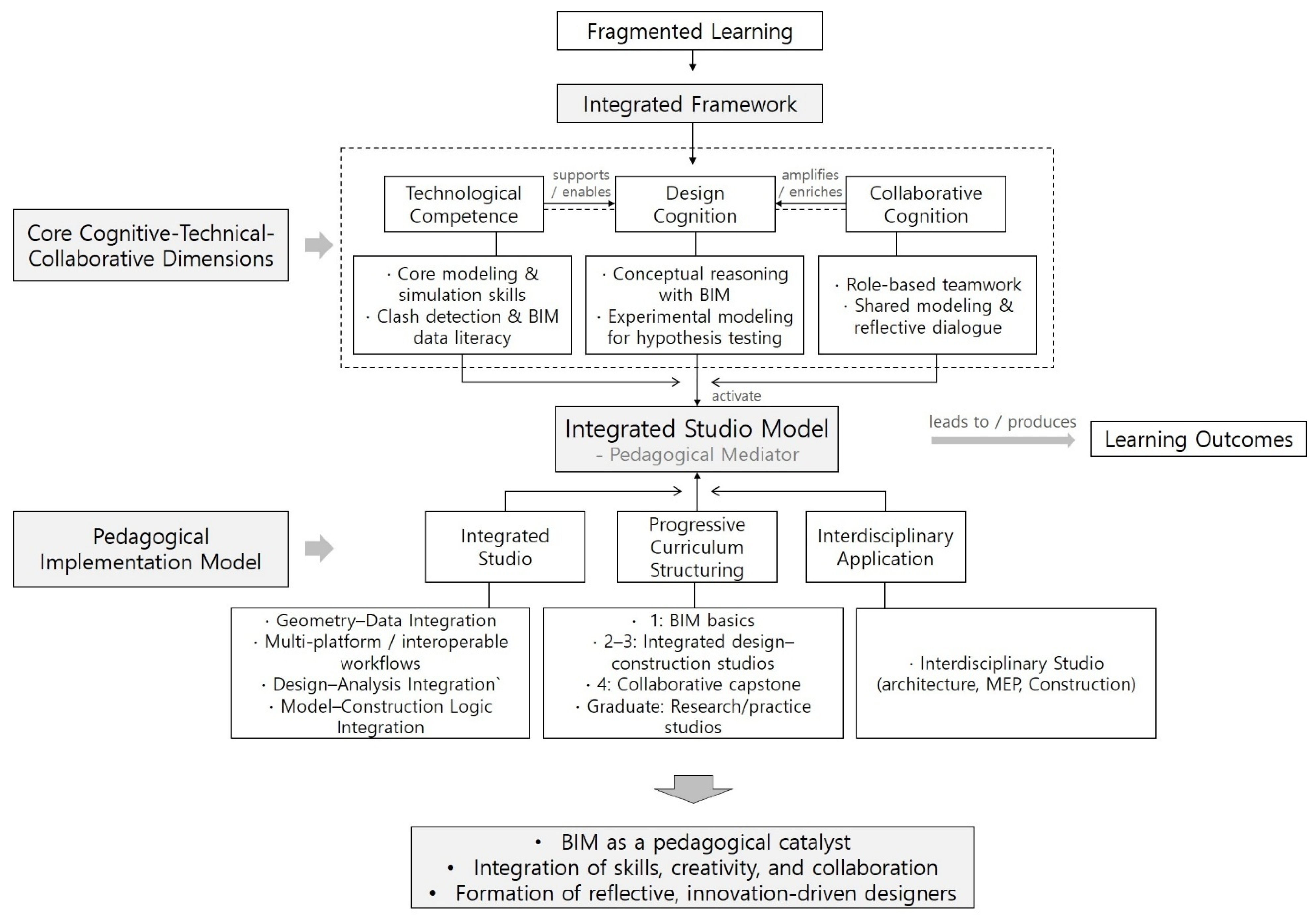
The framework is structured around the interaction of three core dimensions: technological competence, design cognition, and collaborative cognition. Technological competence refers to information literacy skills such as modeling, simulation, and data manipulation, which directly enable conceptual reasoning and exploratory design processes. Design cognition encompasses generative thinking, hypothesis testing, and iterative refinement, while collaborative cognition functions as a regulatory dimension that deepens design cognition through role-based teamwork, shared modeling environments, and reflective dialog. Rather than forming a hierarchical sequence, these three dimensions operate as causally interdependent elements, mutually reinforcing one another. Figure 10 visualizes this relationship through a structure of variables, flows, and causal linkages.
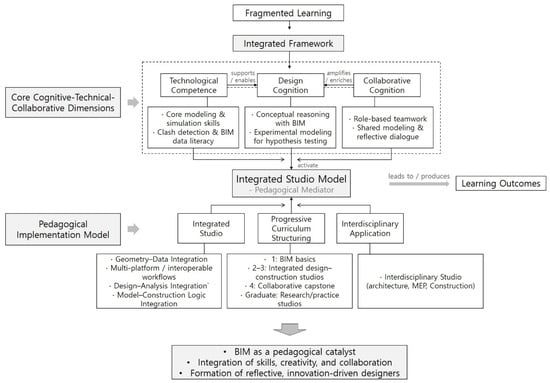
Figure 10.
Integrated Educational Framework and Studio Model for BIM-Based Design Education.
The spiral integration approach adopted in this framework is conceptually aligned with classical educational theories, particularly Bruner’s spiral curriculum, which emphasizes the iterative revisiting of core concepts with increasing levels of complexity. While Bruner’s model was originally formulated for general knowledge acquisition, the present study adapts this principle to the context of BIM-based architectural education by integrating technological competence, design cognition, and collaborative cognition across successive design stages. In this way, the framework situates established educational theory within a domain-specific, digitally mediated design learning context.
When these dimensions are integrated, an Integrated Studio Model emerges, centered on iterative cycles of design, analysis, and collaboration. In this model, BIM and AI are not confined to isolated technical courses but are embedded across the design curriculum as active learning infrastructures. Such integration requires structural changes in studio operation, including multi-platform data integration, tight coupling between design and analysis, and consistency between modeling logic and construction reasoning. The model is conceptually aligned with IPD-oriented professional practices and is adaptable to interdisciplinary studio settings.
To enhance practical applicability, the following operational guidelines are proposed for implementing the framework in educational contexts:
- Diagnose students’ initial levels of technological and cognitive competence to differentiate roles and learning pathways within the studio;
- Structure studios to ensure cyclical integration of design, analysis, and collaboration;
- Employ team-based projects and shared modeling processes to enable the simultaneous development of technological, cognitive, and collaborative capacities; and
- Evaluate integrated learning outcomes through portfolios, reflective documentation, and collective deliverables.
- These guidelines provide a practical foundation through which the conceptual structure of the framework can be enacted within real educational settings.
Finally, the proposed framework demonstrates clear structural differentiation from established educational models. While CDIO organizes competencies around a procedural cycle of Conceive–Design–Implement–Operate, the present framework is grounded in the non-hierarchical and interactive integration of technology, cognition, and collaboration. Similarly, whereas the Digital Bloom taxonomy aligns cognitive learning stages hierarchically with digital tool usage, the proposed framework emphasizes the simultaneous and reciprocal reinforcement of the three dimensions within the complex learning environments of design studios. This distinction positions the framework as a more direct response to the integrative competencies required in design education under conditions of digital transformation.
Ultimately, the framework reframes BIM not as a means of teaching technical functionality, but as an educational catalyst that stimulates design exploration, collaborative reasoning, and reflective understanding. By organically integrating technological, creative, and collaborative capacities, the framework contributes to the cultivation of future-oriented designers equipped to operate within increasingly complex digital design environments.
5. Conclusions
This study conducted a PRISMA-based systematic literature review supported by bibliometric mapping to examine how BIM has been introduced, structured, and pedagogically interpreted within architectural education. By analyzing 31 architecture-focused studies, the review provides a multilayered understanding of BIM education—its developmental trajectory, modes of integration, key challenges, and the influence of regional and institutional contexts. Overall, the findings indicate that BIM education remains in a transitional stage, shifting from tool-centered instruction toward a pedagogical paradigm that emphasizes design cognition, collaborative intelligence, and curriculum-level integration.
First, BIM education has progressively evolved from early tool-based experiments into a sociotechnical learning environment that supports design reasoning and collaborative processes. As BIM increasingly facilitates information-rich reasoning and links conceptual intent with performance, constructability, and process-based thinking, its role extends beyond modeling toward supporting evidence-based design decision-making. Yet many programs continue to confine BIM to stand-alone electives or short modules, limiting meaningful connections between digital workflows and conceptual exploration. Consequently, many studies point to the need for spiral, curriculum-wide integration that embeds BIM across the design sequence.
Second, BIM serves as a platform that enhances interdisciplinary and practice-oriented learning. By linking design with structure, construction, digital fabrication, and VR/AR, BIM enables interdisciplinary studios and industry-linked projects that foster role awareness, real-time communication, and collaborative problem solving. Nonetheless, institutional silos, limited faculty coordination, and administrative constraints often hinder the full realization of BIM’s integrative potential.
Third, an analysis of challenges and pedagogical strategies reveals that effective BIM education requires more than technical proficiency. Key challenges include fragmented curricula, cognitive overload, interoperability limitations, uneven faculty expertise, and limited opportunities for authentic collaboration. Proposed strategies include spiral curriculum design, conceptual scaffolding, openBIM/CDE-based collaboration environments, faculty development initiatives, and role-based project structures. However, most of these strategies remain localized, with limited evidence of long-term effectiveness.
Fourth, regional and institutional contexts strongly shape the trajectories of BIM education. Policy-driven regions such as South Korea, Singapore, and the UK demonstrate rapid adoption and resource investment but sometimes exhibit compliance-oriented and surface-level integration. In contrast, bottom-up environments such as Belgium, Portugal, and Chile often develop more context-responsive and pedagogically rich models. Even within the same country, variations in digital infrastructure, faculty expertise, and administrative flexibility produce heterogeneous levels of integration. These findings suggest that BIM education requires context-responsive frameworks rather than a single universal model.
Based on these insights, this study proposes an Integrated Educational Framework that aligns technological competence, design cognition, and collaborative cognition. Beyond its immediate pedagogical implications, this framework also provides a reference structure for future research exploring how integrative BIM-based learning environments evolve over time and across different institutional and curricular contexts. This framework reconceptualizes BIM not as a technical system but as a design medium that supports cognitive development, creativity, and teamwork. The accompanying Integrated Studio Model embeds BIM and AI seamlessly across the design curriculum, enabling students to iterate between conceptual exploration and technical resolution while experiencing the integrated workflows characteristic of contemporary practice.
This study has limitations. It focuses on English-language publications indexed in WoS and Scopus, and the field of architecture-oriented BIM education remains emergent, resulting in a corpus of 31 studies. This limitation reflects the developmental stage of the field rather than a methodological constraint. Additionally, although the review incorporates quantitative analyses—such as temporal trends, thematic distributions, and software co-occurrence networks—the existing literature provides limited empirical measures of changes in design cognition or collaborative performance. Therefore, the findings should be interpreted as indicative rather than exhaustive.
Building on the patterns and gaps identified in this review, future research should address these structural limitations by pursuing longitudinal evaluations of BIM integration; comparative and context-sensitive studies that examine how regional and institutional environments shape educational outcomes; frameworks for assessing design cognition and collaborative cognition; integrated learning ecosystems that connect BIM with AI, XR, and digital fabrication; and theory-informed educational models grounded in design learning theory.
In sum, BIM education stands at a critical inflection point: it is moving beyond software training toward cultivating design intelligence. Building an educational ecosystem where technology, cognition, and collaboration are fully integrated represents a foundational challenge—and opportunity—for redefining how future architects design, collaborate, and innovate.
Supplementary Materials
The following supporting information can be downloaded at: https://www.mdpi.com/article/10.3390/buildings16010166/s1, PRISMA-ScR checklist.
Author Contributions
Conceptualization, Y.-j.S.; Methodology, Y.-j.S.; Software, Y.-j.S.; Validation, Y.-j.S. and E.K.; Formal analysis, Y.-j.S.; Investigation, Y.-j.S.; Resources, Y.-j.S.; Data curation, Y.-j.S.; Writing—original draft, Y.-j.S.; Writing—review & editing, Y.-j.S. and E.K.; Visualization, Y.-j.S.; Supervision, Y.-j.S. and E.K.; Project administration, Y.-j.S. and E.K. All authors have read and agreed to the published version of the manuscript.
Funding
This research was supported by Basic Science Research Program through the National Research Foundation of Korea (NRF) funded by the Ministry of Education (NRF-2022R1I1A1A01059190).
Data Availability Statement
No new data were created or analyzed in this study. Data sharing is not applicable to this article.
Conflicts of Interest
The authors declare no conflict of interest.
References
- Azhar, S. Building information modeling (BIM): Trends, benefits, risks, and challenges for the AEC industry. Leadersh. Manag. Eng. 2011, 11, 241–252. [Google Scholar] [CrossRef]
- Eastman, C.M.; Teicholz, P.; Sacks, R.; Liston, K. BIM Handbook: A Guide to Building Information Modeling for Owners, Managers, Designers, Engineers, and Contractors; John Wiley & Sons: Hoboken, NJ, USA, 2011. [Google Scholar]
- Gu, N.; London, K. Understanding and facilitating BIM adoption in the AEC industry. Autom. Constr. 2010, 19, 988–999. [Google Scholar] [CrossRef]
- Khosrowshahi, F.; Arayici, Y. Roadmap for implementation of BIM in the UK construction industry. Eng. Constr. Archit. Manag. 2012, 19, 610–635. [Google Scholar] [CrossRef]
- Wong, A.K.D.; Wong, F.K.W.; Nadeem, A. Building information modelling for tertiary construction education in Hong Kong. J. Inf. Technol. Constr. 2015, 20, 104–122. [Google Scholar]
- Succar, B.; Sher, W. A competency knowledge-base for BIM learning. Australas. J. Constr. Econ. Build.-Conf. Ser. 2014, 2, 1–10. [Google Scholar] [CrossRef]
- Becerik-Gerber, B.; Gerber, D.J.; Ku, K. The pace of technological innovation in architecture, engineering, and construction education: Integrating recent trends into the curricula. J. Inf. Technol. Constr. 2011, 16, 411–432. [Google Scholar]
- Barison, M.B.; Santos, E.T. BIM teaching strategies: An overview of the current approaches. In Proceedings of the International Conference on Computing in Civil and Building Engineering (ICCCBE), Nottingham, UK, 30 June–2 July 2010. [Google Scholar]
- Clevenger, C.M.; Ozbek, M.E.; Glick, S.; Porter, D. Integrating BIM into construction management education. In Proceedings of the Associated Schools of Construction (ASC) 48th Annual International Conference, Birmingham, UK, 11–14 April 2012. [Google Scholar]
- Chegu Badrinath, A.; Chang, Y.T.; Hsieh, S.H. A review of tertiary BIM education for advanced engineering communication with visualization. Vis. Eng. 2016, 4, 9. [Google Scholar] [CrossRef]
- Sacks, R.; Pikas, E. Building information modeling education for construction engineering and management. II: Procedures and implementation case study. J. Constr. Eng. Manag. 2013, 139, 04013016. [Google Scholar] [CrossRef]
- Howard, R.; Björk, B.C. Building information modelling—Experts’ views on standardisation and industry deployment. Adv. Eng. Inform. 2008, 22, 271–280. [Google Scholar] [CrossRef]
- Succar, B.; Kassem, M. Macro-BIM adoption: Conceptual structures. Autom. Constr. 2015, 57, 64–79. [Google Scholar] [CrossRef]
- Liu, R.; Issa, R.R.A.; Olbina, S. Factors influencing the adoption of building information modeling in the AEC industry. Int. J. Constr. Educ. Res. 2017, 13, 283–301. [Google Scholar]
- Obi, L.I.; Omotayo, T.; Ekundayo, D.; Oyetunji, A.K. Enhancing BIM competencies of built environment undergraduates students using a problem-based learning and network analysis approach. Smart Sustain. Built Environ. 2024, 13, 217–238. [Google Scholar] [CrossRef]
- Becerik-Gerber, A.A.; Burcin; Ku, K.; Jazizadeh, F. BIM-enabled virtual and collaborative construction engineering and management. J. Prof. Issues Eng. Educ. Pract. 2012, 138, 234–245. [Google Scholar] [CrossRef]
- Abdirad, H.; Dossick, C.S. BIM Curriculum Design in Architecture, Engineering, and Construction Education: A Systematic Review. J. Inf. Technol. Constr. 2016, 21, 250–271. [Google Scholar]
- Lee, N.; Dossick, C.S. Leveraging building information modeling technology in construction engineering and management education. In Proceedings of the 2012 ASEE Annual Conference & Exposition, San Antonio, TX, USA, 10–13 June 2012; pp. 25.898.1–25.898.15. [Google Scholar]
- Ku, K.; Taiebat, M. BIM experiences and expectations: The constructors’ perspective. Int. J. Constr. Educ. Res. 2011, 7, 175–197. [Google Scholar] [CrossRef]
- Getuli, V.; Capone, P.; Bruttini, A.; Isaac, S. BIM-based immersive Virtual Reality for construction workspace planning: A safety-oriented approach. Autom. Constr. 2020, 114, 103160. [Google Scholar] [CrossRef]
- Pham Van, B.; Wong, P.; Abbasnejad, B. A Systematic Review of Criteria Influencing the Integration of Bim and Immersive Technology in Building Projects. J. Inf. Technol. Constr. 2025, 30, 243–297. [Google Scholar] [CrossRef]
- Tricco, A.C.; Lillie, E.; Zarin, W.; O’Brien, K.K.; Colquhoun, H.; Levac, D.; Moher, D.; Peters, M.D.; Horsley, T.; Weeks, L. PRISMA extension for scoping reviews (PRISMA-ScR): Checklist and explanation. Ann. Intern. Med. 2018, 169, 467–473. [Google Scholar] [CrossRef]
- Munn, Z.; Peters, M.D.; Stern, C.; Tufanaru, C.; McArthur, A.; Aromataris, E. Systematic review or scoping review? Guidance for authors when choosing between a systematic or scoping review approach. BMC Med. Res. Methodol. 2018, 18, 143. [Google Scholar] [CrossRef]
- Kohlbacher, F. The use of qualitative content analysis in case study research. Forum Qual. Sozialforschung/Forum Qual. Soc. Res. 2006, 7, 1–30. [Google Scholar] [CrossRef]
- Lee, S.; Shin, W.; Park, E.J. Implications of neuroarchitecture for the experience of the built environment: A scoping review. Archnet-IJAR Int. J. Archit. Res. 2022, 16, 225–244. [Google Scholar] [CrossRef]
- Al Sharif, R.; Pokharel, S. Smart city dimensions and associated risks: Review of literature. Sustain. Cities Soc. 2022, 77, 103542. [Google Scholar] [CrossRef]
- Nath, N.; Nitanai, R.; Manabe, R.; Murayama, A. A global-scale review of smart city practice and research focusing on residential neighbourhoods. Habitat Int. 2023, 142, 102963. [Google Scholar] [CrossRef]
- Kitchenham, B.; Charters, S. Guidelines for Performing Systematic Literature Reviews in Software Engineering; Keele University: Newcastle-under-Lyme, UK; Durham University: Durham, UK, 2007. [Google Scholar]
- Kocaturk, T.; Kiviniemi, A. Challenges of Integrating BIM in Architectural Education. In Proceedings of the 31st International Conference on Education and Research in Computer Aided Architectural Design in Europe, Delft, The Netherlands, 18–20 September 2013. [Google Scholar]
- Laovisutthichai, V.; Srihiran, K.; Lu, W. Towards Greater Integration of Building Information Modeling in the Architectural Design Curriculum: A Longitudinal Case Study. Ind. High. Educ. 2023, 37, 265–278. [Google Scholar] [CrossRef]
- Puolitaival, T.; Forsythe, P. Practical Challenges of BIM Education. Struct. Surv. 2016, 34, 351–366. [Google Scholar] [CrossRef]
- Macdonald, J.A. A Framework for Collaborative BIM Education Across the AEC Disciplines. In Proceedings of the 37th Annual Conference of the Australasian Universities Building Educators Association (AUBEA), Sydney, Australia, 4–6 July 2012. [Google Scholar]
- Veloso de Souza, L.P.; Ponzio, A.P.; Bruscato, U.M.; Cattani, A. A-BIM: A New Challenge for Old Paradigms. In Proceedings of the eCAADe 37/SIGraDi 23 Joint Conference Proceedings, Porto, Portugal, 11–13 September 2019. [Google Scholar]
- Nakapan, W. Challenge of Teaching BIM in the First Year of University: Problems Encountered and Typical Misconceptions to Avoid when Integrating BIM into an Architectural Design Curriculum. In Proceedings of the 20th International Conference of the Association for Computer-Aided Architectural Design Research in Asia (CAADRIA 2015), Daegu, Republic of Korea, 20–22 May 2015. [Google Scholar]
- Matejovská, D.; Vinšová, I.; Jirat, M.; Achten, H. The Uptake of BIM: From BIM Teaching to BIM Usage in the Design Studio in the Bachelor Studies. In Proceedings of the eCAADe 35—Building Information Modelling, Rome, Italy, 20–22 September 2017; Volume 1. [Google Scholar]
- Ibrahim, M.M. Thinking the BIM Way: Early Integration of Building Information Modelling in Education. In Proceedings of the eCAADe 32—Building Information Modelling, Newcastle upon Tyne, UK, 10–12 September 2014; Volume 2. [Google Scholar]
- Clayton, M.J.; Ozener, O.; Haliburton, J.; Farias, F. Towards studio 21: Experiments in design education using BIM. In Proceedings of the 14th Congress of the Iberoamerican Society of Digital Graphics, Bogotá, Colombia, 17–19 November 2010; pp. 43–46. [Google Scholar]
- Agirbas, A. Teaching Construction Sciences with the Integration of BIM to Undergraduate Architecture Students. Front. Archit. Res. 2020, 9, 940–950. [Google Scholar] [CrossRef]
- Özener, O.O.z. Studio Education for Integrated Practice Using Building Information Modeling. Doctoral Dissertation, Texas A&M University, College Station, TX, USA, 2009. [Google Scholar]
- Ambrose, M.A.; Fry, K.M. Re:Thinking BIM in the Design Studio—Beyond Tools, Approaching Ways of Thinking. In Proceedings of the ASCAAD 2010 Conference Proceedings, Manama, Kingdom of Bahrain, 21–23 February 2010. [Google Scholar]
- Hajirasouli, A.; Banihashemi, S.; Sanders, P.; Rahimian, F. BIM-enabled Virtual Reality (VR)-based Pedagogical Framework in Architectural Design Studios. Smart Sustain. Built Environ. 2024, 13, 1490–1510. [Google Scholar] [CrossRef]
- Aguilar, A.J.; de la Fuente, C.B.; Cuenca-Moyano, G.; Gutiérrez-Carrillo, L.; de la Hoz-Torres, M.L.; Martín-Morales, M.; Martínez-Aires, M.D.; Carrillo, M.M.; Nieto-Alvarez, R. Teaching Team for Digital Teaching and Transversal Coordination of the subjects of the Process Management Module of the Degree in Building. University of Granada. In Proceedings of the 1st Congress of Building and Technical Architecture Schools of Spain, Valencia, Spain, 17–18 November 2021; pp. 523–537. [Google Scholar]
- Hong, S.W.; Lee, Y.G. The Effects of Human Behavior Simulation on Architecture Major Students’ Fire Egress Planning. J. Asian Archit. Build. Eng. 2017, 17, 125–132. [Google Scholar] [CrossRef]
- Özener, O.Ö.; Farias, F.; Haliburton, J.; Clayton, M.J. Illuminating the Design: Incorporation of natural lighting analyses in the design studio using BIM. In Proceedings of the FUTURE CITIES—28th eCAADe Conference Proceedings, Zurich, Switzerland, 15–18 September 2010. [Google Scholar]
- Boeykens, S.; De Somer, P.; Klein, R.; Saey, R. Experiencing BIM Collaboration in Education. In Proceedings of the Computation and Performance—Proceedings of the 31st eCAADe Conference, Delft, The Netherlands, 18–20 September 2013; pp. 505–514. [Google Scholar]
- Hemmerling, M.; Maris, S. INTERCOM: A Platform for Collaborative Design Processes. In Proceedings of the eCAADe 38—Education and Digital Theory, Virtual, 16–17 September 2020. [Google Scholar]
- Singh, V.; Gu, N.; Wang, X. A Theoretical Framework of a BIM-based Multi-disciplinary Collaboration Platform. Autom. Constr. 2011, 20, 134–144. [Google Scholar] [CrossRef]
- Sundfør, I.; Selvær, H. BIM as a Transformer of Processes. In Proceedings of the CAADence in Architecture Conference, Budapest, Hungary, 16–17 June 2016. [Google Scholar]
- Özener, O.Ö.; Jeong, W.; Haliburton, J.; Clayton, M.J. Utilizing 4D BIM Models in the Early Stages of Design. In Proceedings of the eCAADe 28—CAAD Curriculum, Zurich, Switzerland, 15–18 September 2010. [Google Scholar]
- Ahn, E.; Kim, M. BIM Awareness and Acceptance by Architecture Students in Asia. J. Asian Archit. Build. Eng. 2016, 15, 419–424. [Google Scholar] [CrossRef]
- Valverde Cantero, D. BIM as a Teaching Tool in Building Engineering Degree. In Proceedings of the EDIFICATE 2021 Conference Proceedings, Valencia, Spain, 4–5 November 2021. [Google Scholar]
- Jung, Y.; Kim, H.; Kim, N. Virtual Plan–Design–Build for Capstone Projects in the School of Architecture: CM & BIM Studios in Five-Year B.Arch. Program. J. Asian Archit. Build. Eng. 2016, 15, 279–286. [Google Scholar]
- Caetano, I.; Leitão, A. Integration of an Algorithmic BIM Approach in a Traditional Architecture Studio. J. Comput. Des. Eng. 2019, 6, 327–336. [Google Scholar] [CrossRef]
- Schroeder, R.; Dean, W. Comprehensive BIM integration for architectural education using computational design visual programming environments. Build. Technol. Educ. Soc. 2019, 2019. [Google Scholar] [CrossRef]
- Benner, J.; McArthur, J.J. Data-Driven Design as a Vehicle for BIM and Sustainability Education. Buildings 2019, 9, 103. [Google Scholar] [CrossRef]
- Adamu, Z.A.; Thorpe, T. How universities are teaching BIM: A review and case study from the UK. J. Inf. Technol. Constr. 2016, 21, 119–139. [Google Scholar]
- García-Alvarado, R.; Forcael Durán, E.; Pulido-Arcas, J.A. Evaluation of Extreme Collaboration with BIM Modeling for the Teaching of Building Projects. Arquitetura Rev. 2020, 16, 137. [Google Scholar]
- Alonso-Rodríguez, M.; Álvarez-Arce, R. Drawing through a Screen: Teaching Architecture in a Digital World. In Proceedings of the JIDA’21—IX Jornadas Sobre Innovación Docente en Arquitectura, Valladolid, Spain, 11–12 November 2021. [Google Scholar]
- Biggs, J. Teaching for Quality Learning at University, 2nd ed.; Open University Press: London, UK, 2003. [Google Scholar]
- Mishra, P.; Koehler, M.J. Technological pedagogical content knowledge: A framework for teacher knowledge. Teach. Coll. Rec. 2006, 108, 1017–1054. [Google Scholar] [CrossRef]
- Witt, E.; Kähkönen, K. BIM-enabled education: A systematic literature review. In Proceedings of the 10th Nordic Conference on Construction Economics and Organization, Tallinn, Estonia, 7–8 May 2019; pp. 261–269. [Google Scholar]
- Ahmed, K.G. Integrating VR-enabled BIM in building design studios, architectural engineering program, UAEU: A pilot study. In Proceedings of the 2020 Advances in Science and Engineering Technology International Conferences (ASET), Dubai, United Arab Emirates, 4 February–9 April 2020; pp. 1–6. [Google Scholar]
Disclaimer/Publisher’s Note: The statements, opinions and data contained in all publications are solely those of the individual author(s) and contributor(s) and not of MDPI and/or the editor(s). MDPI and/or the editor(s) disclaim responsibility for any injury to people or property resulting from any ideas, methods, instructions or products referred to in the content. |
© 2025 by the authors. Licensee MDPI, Basel, Switzerland. This article is an open access article distributed under the terms and conditions of the Creative Commons Attribution (CC BY) license.