Evolution Analysis of Soil-Arching Effect and Calculation of Pile–Soil Stress Ratio of Bidirectionally Reinforced Composite Foundation

Abstract
1. Introduction
2. Numerical Model Establishment and Verification
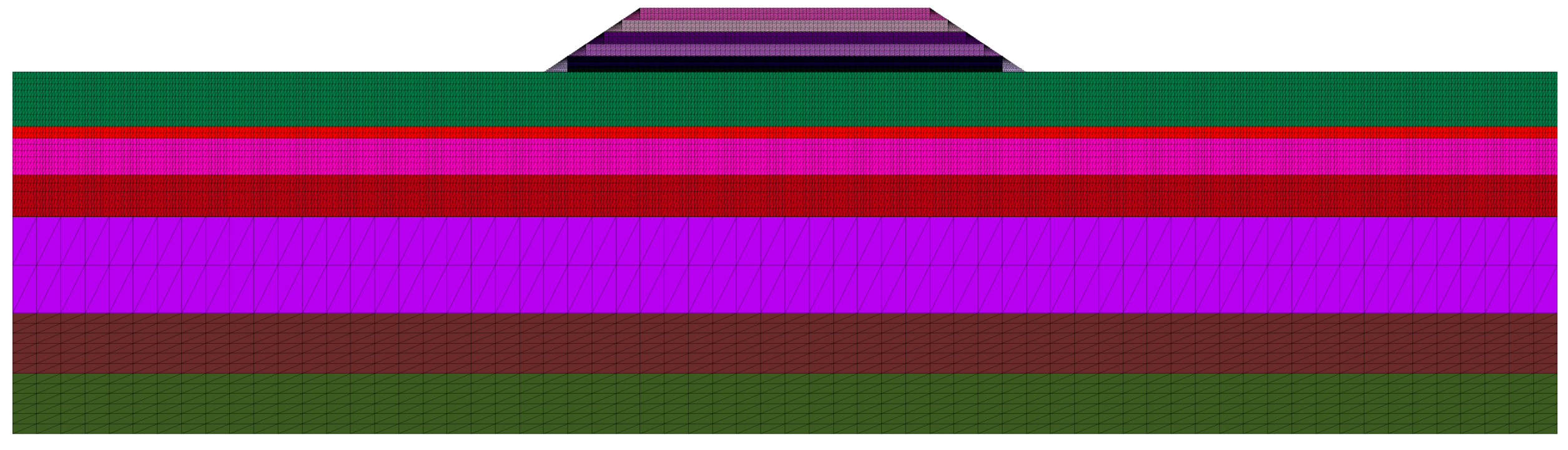
2.1. Establishment of FLAC Model
2.2. Parameters of FLAC Model
2.3. Establishment of PFC Model
2.4. Model Validation
3. Analysis of Evolution Process of Soil-Arching Effect
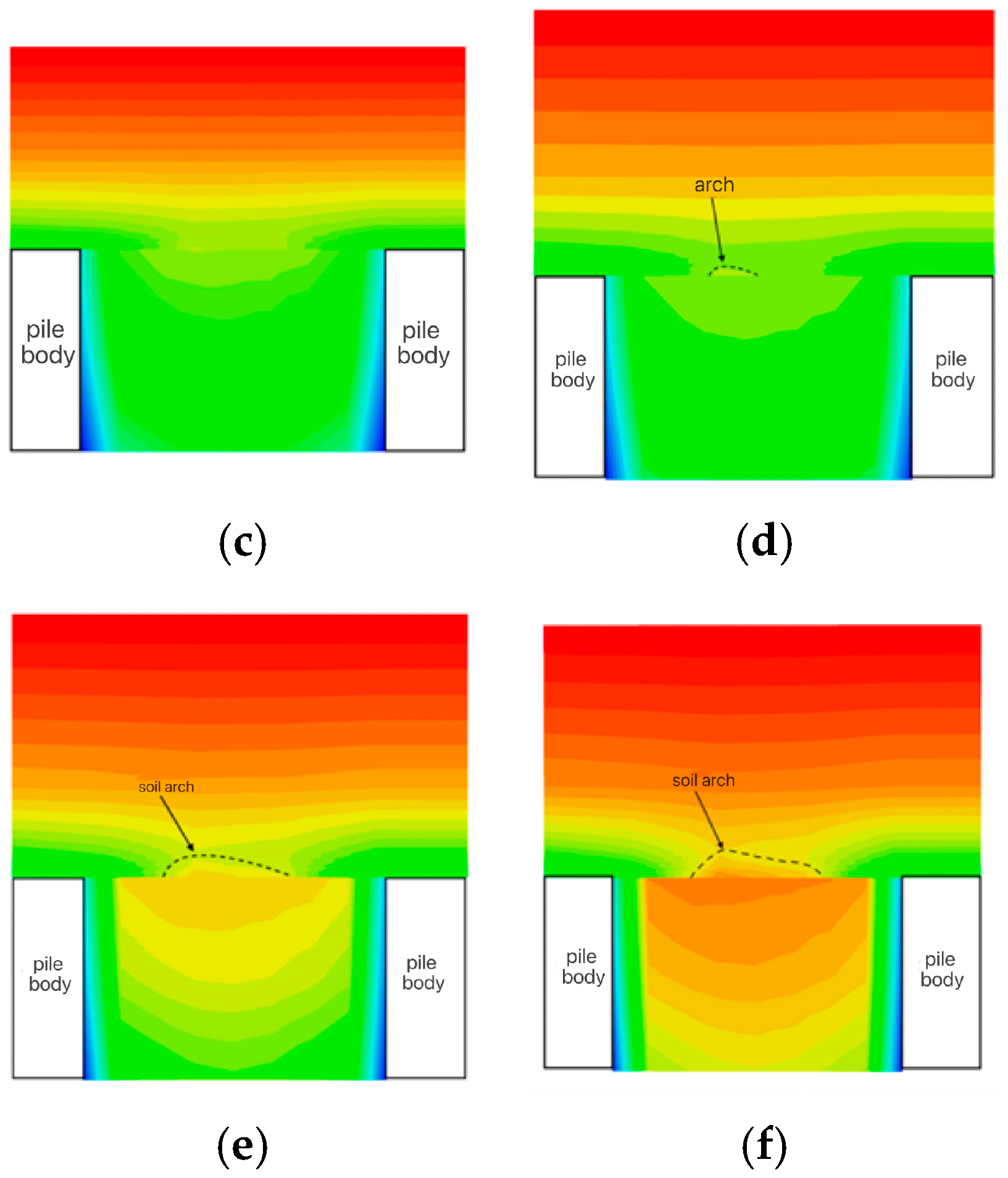
3.1. Macroscopic Analysis of Soil-Arching Effect
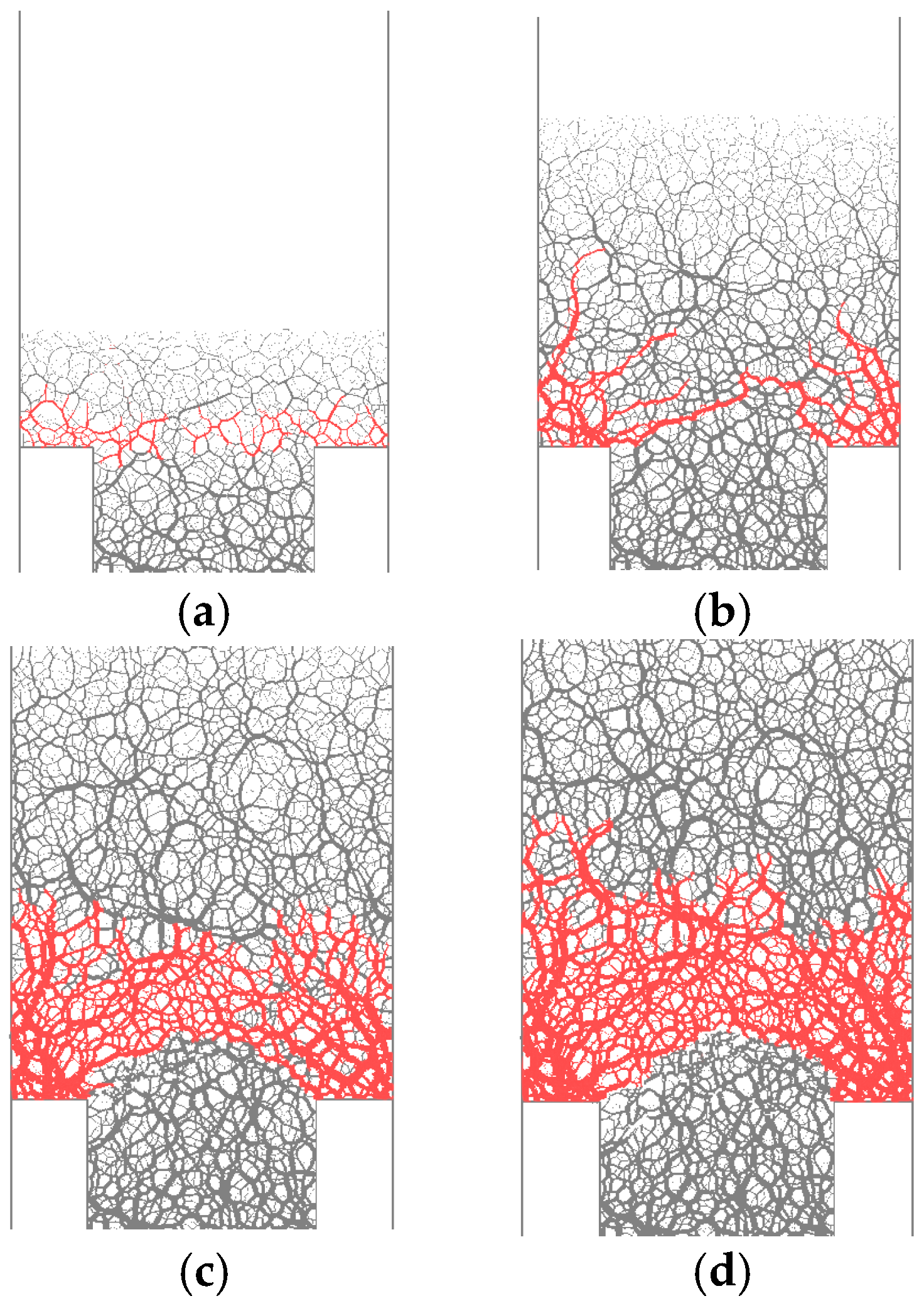
3.2. Microscopic Analysis of Soil-Arching Effect
3.3. Stress Transfer Efficiency of Soil Arch
3.3.1. Stress Transfer Efficiency
3.3.2. Analysis and Application of Stress Transfer Efficiency
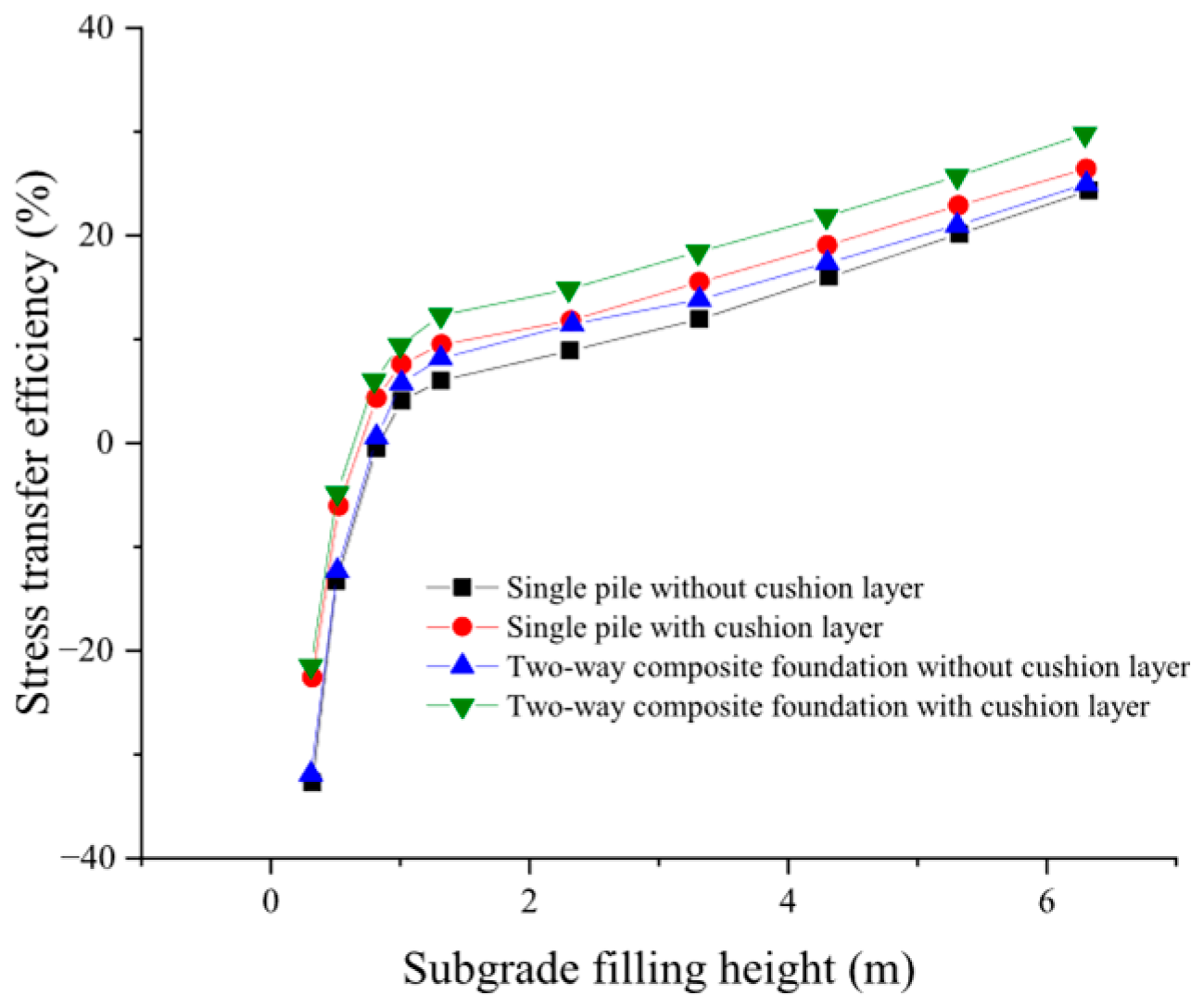
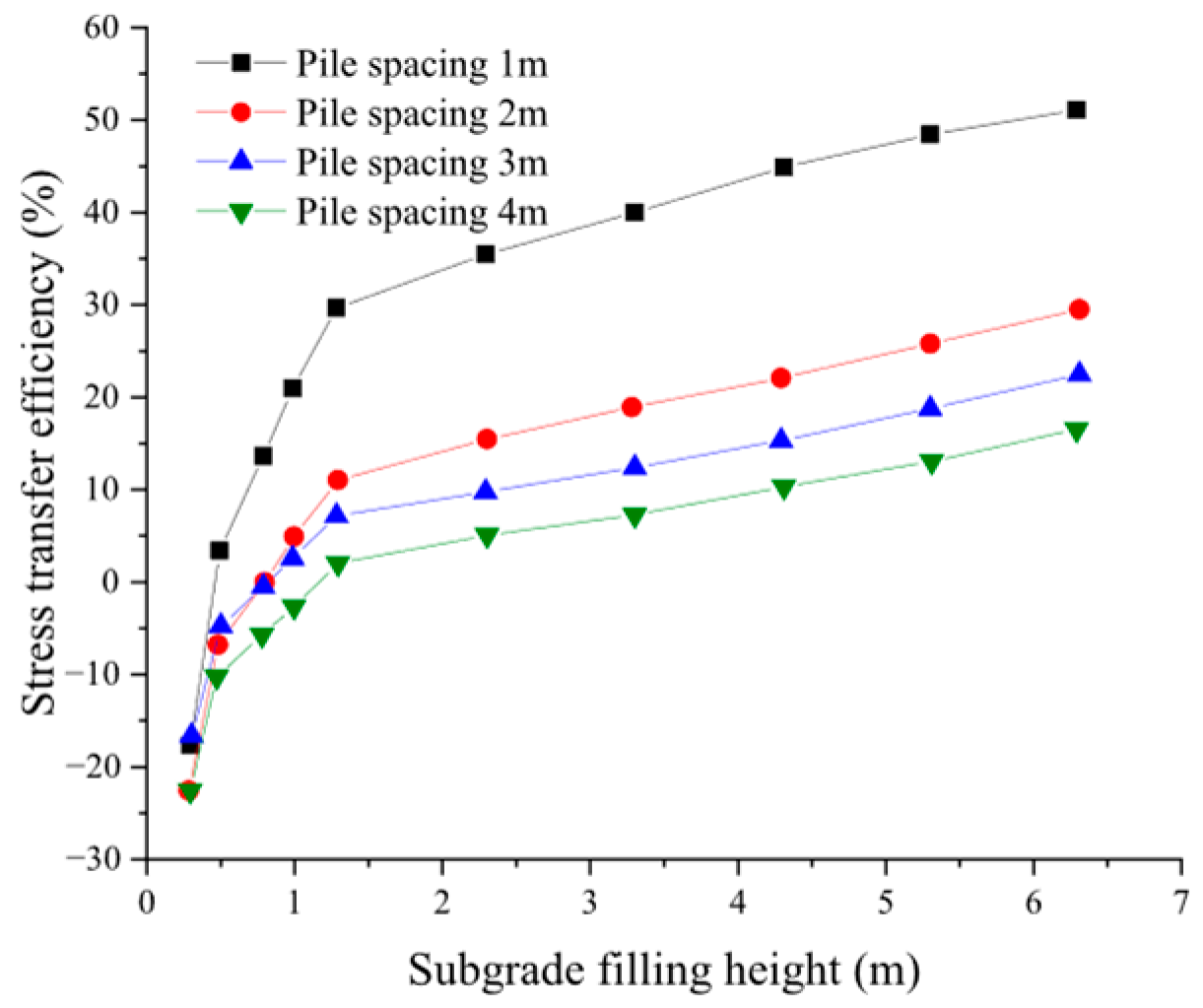
3.3.3. Influence of Reinforcement Form and Pile Spacing on Stress Transfer Efficiency
4. Calculation of Pile–Soil Stress Ratio Considering Soil-Arching Effect
4.1. Analysis of Soil-Arching Effect
4.1.1. Fundamental Assumption
- (1)
- The soil arch structure is homogeneous and isotropic.
- (2)
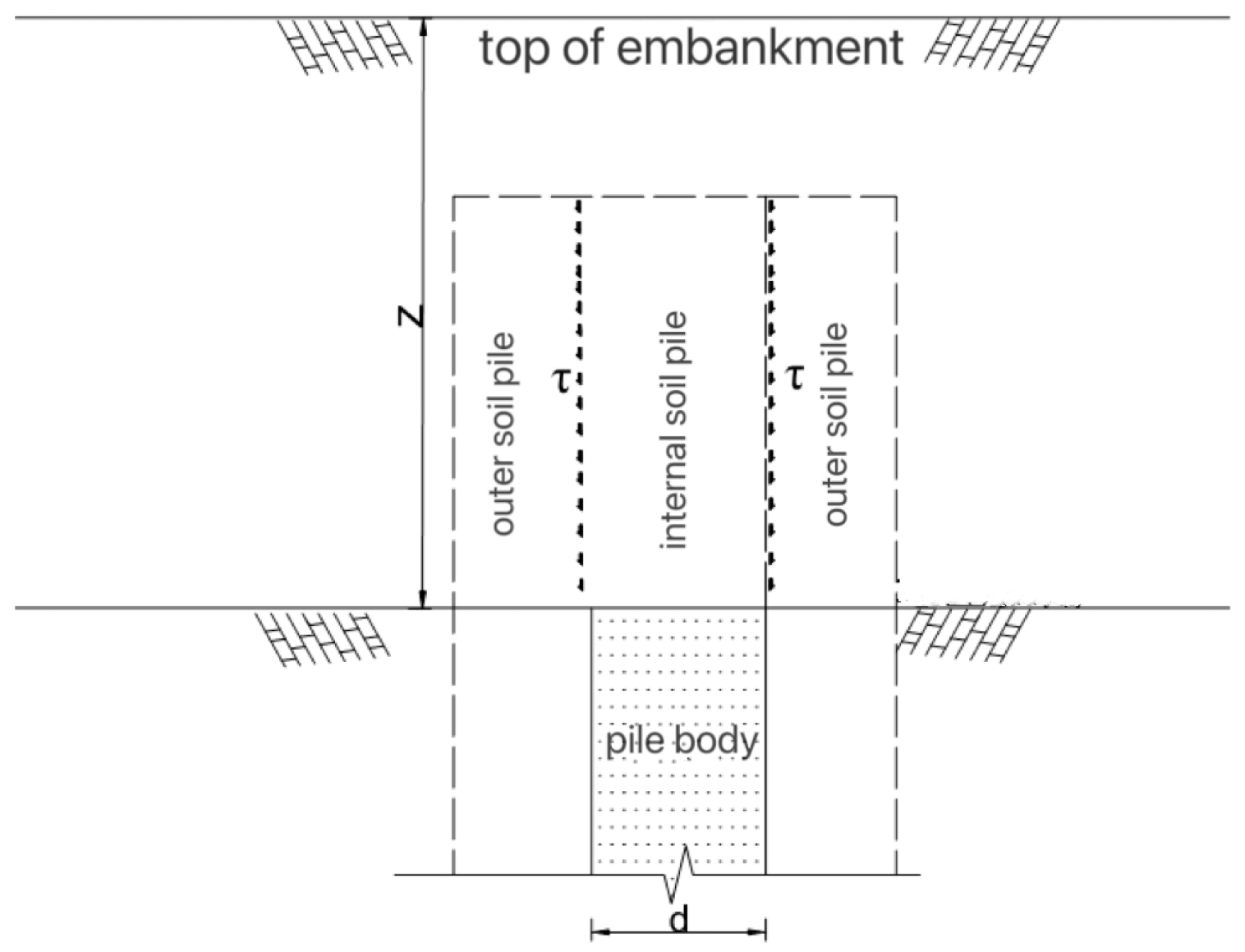
- The lateral friction resistance between the interior and exterior soil columns of the embankment is linearly distributed over the height range between the pile top and the equal settlement surface.
- (3)
- The soil arch foot is uniformly distributed over the pile top without superposition.
- (4)
- The weight of soil arch structure is negligible, and the arch thickness is less than its height.
- (5)
- Only the tensile properties of geogrids are considered without compressive properties.
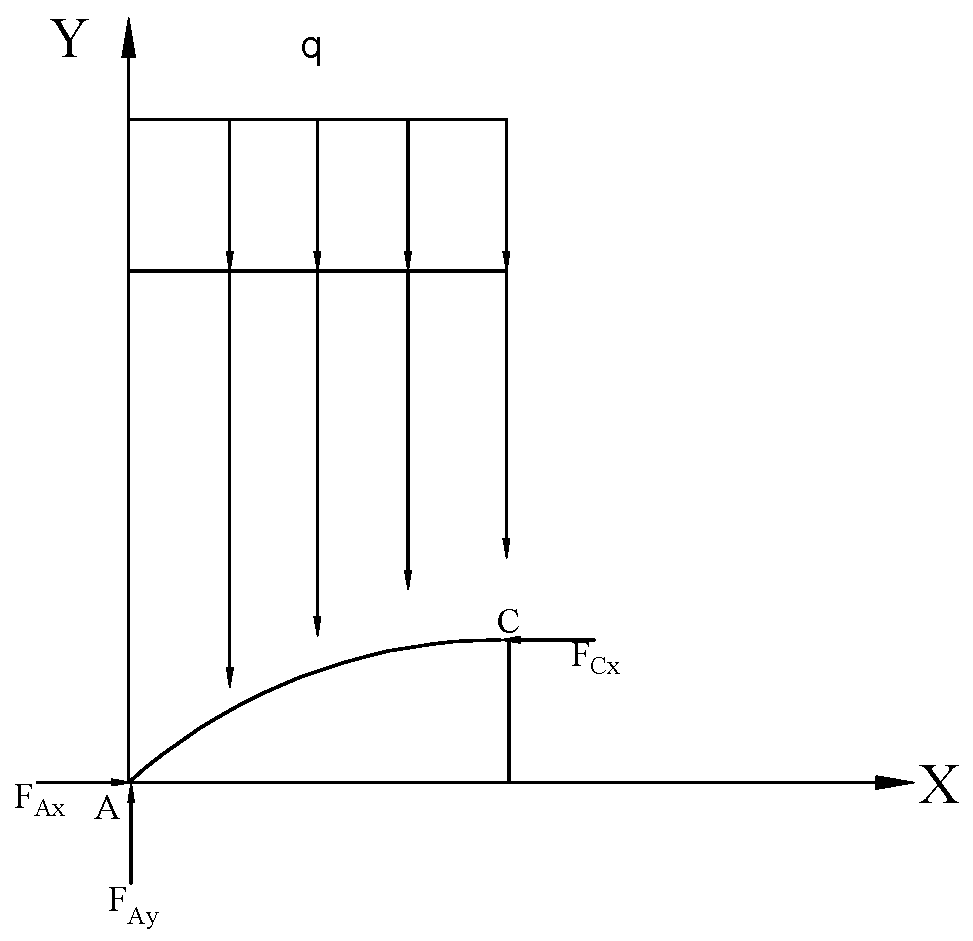
4.1.2. Reasonable Arch Line Equation
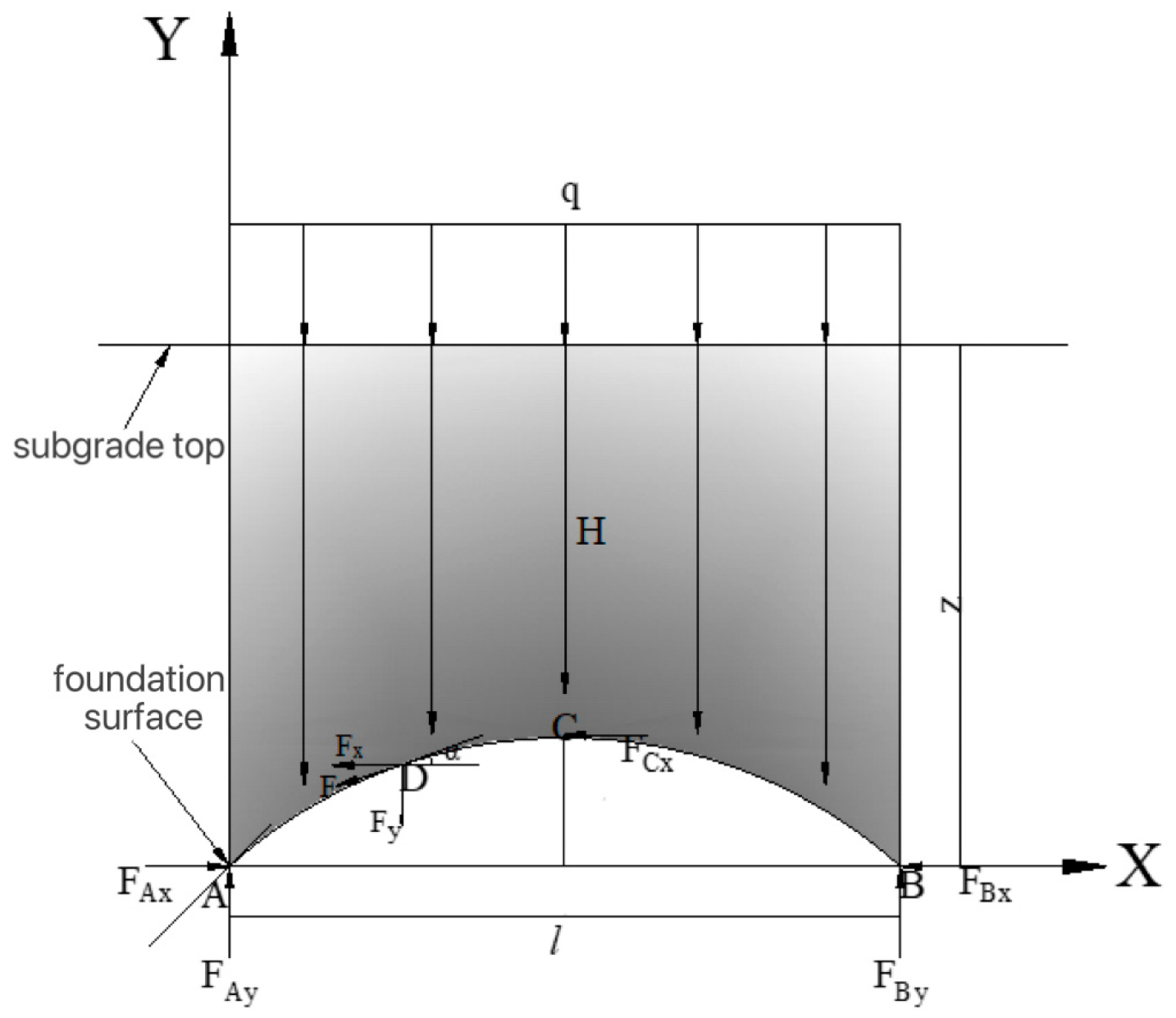
4.1.3. Soil Arch Stress Analysis
4.1.4. Stability Analysis of Soil Arch Limit State
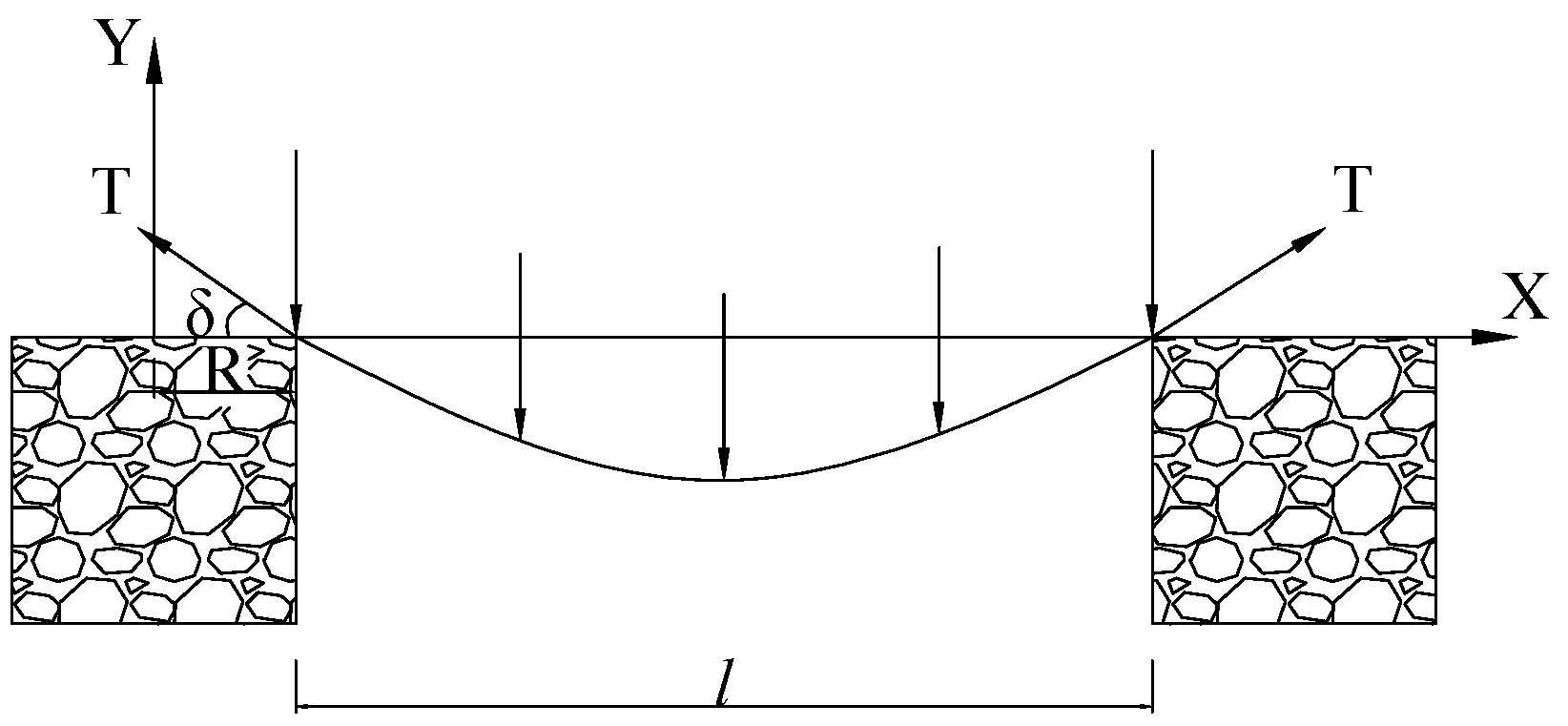
4.2. Stress Analysis of Geogrid Reinforcement Cushion
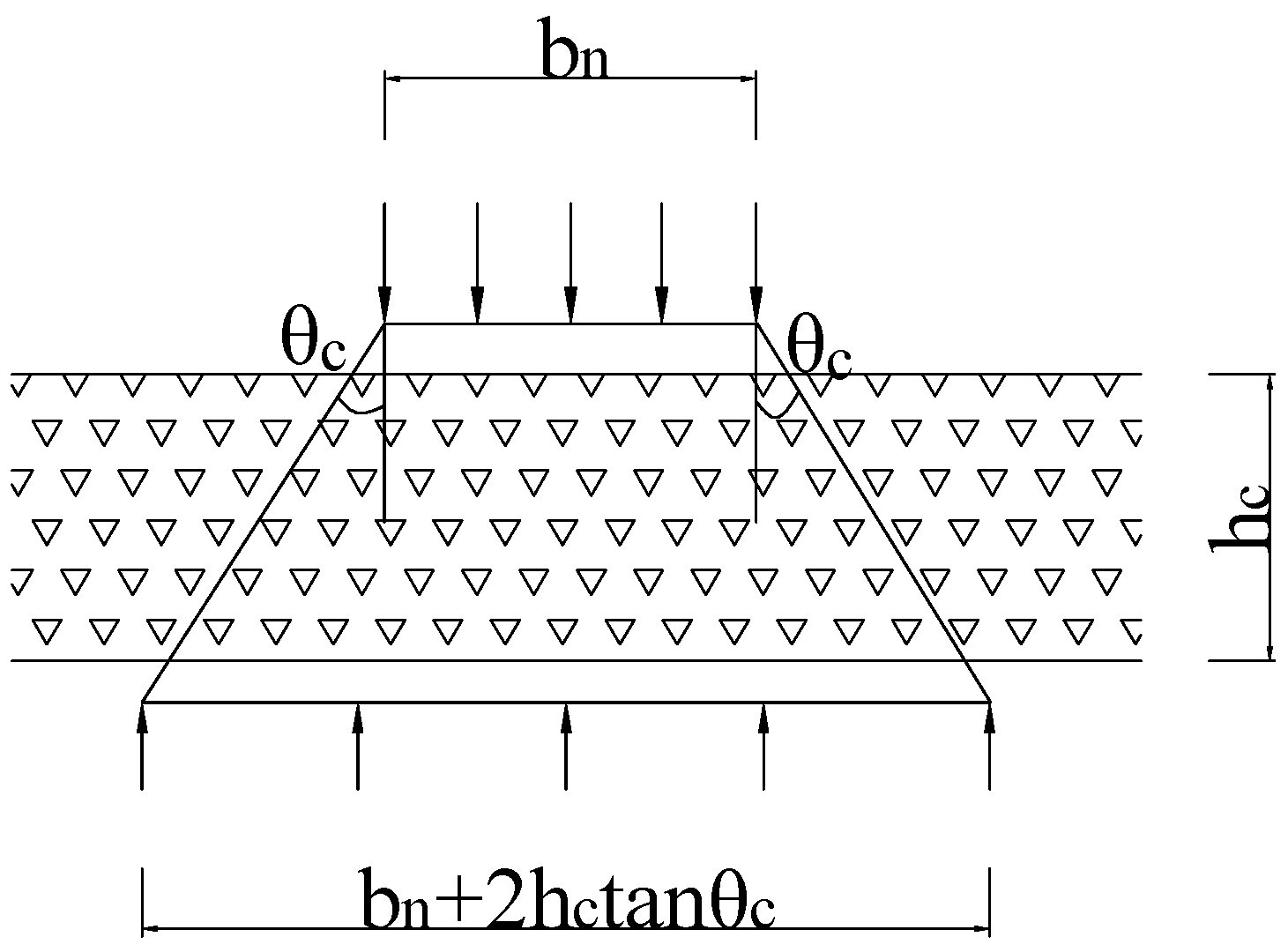
4.2.1. Stress Diffusion
4.2.2. Net Effect of Stiffened Body
4.3. Pile–Soil Stress Ratio Calculation of Bidirectional Reinforced Composite Foundation
4.4. Verification by Engineering Practice
5. Influencing Factors of Pile–Soil Stress Ratio
6. Conclusions
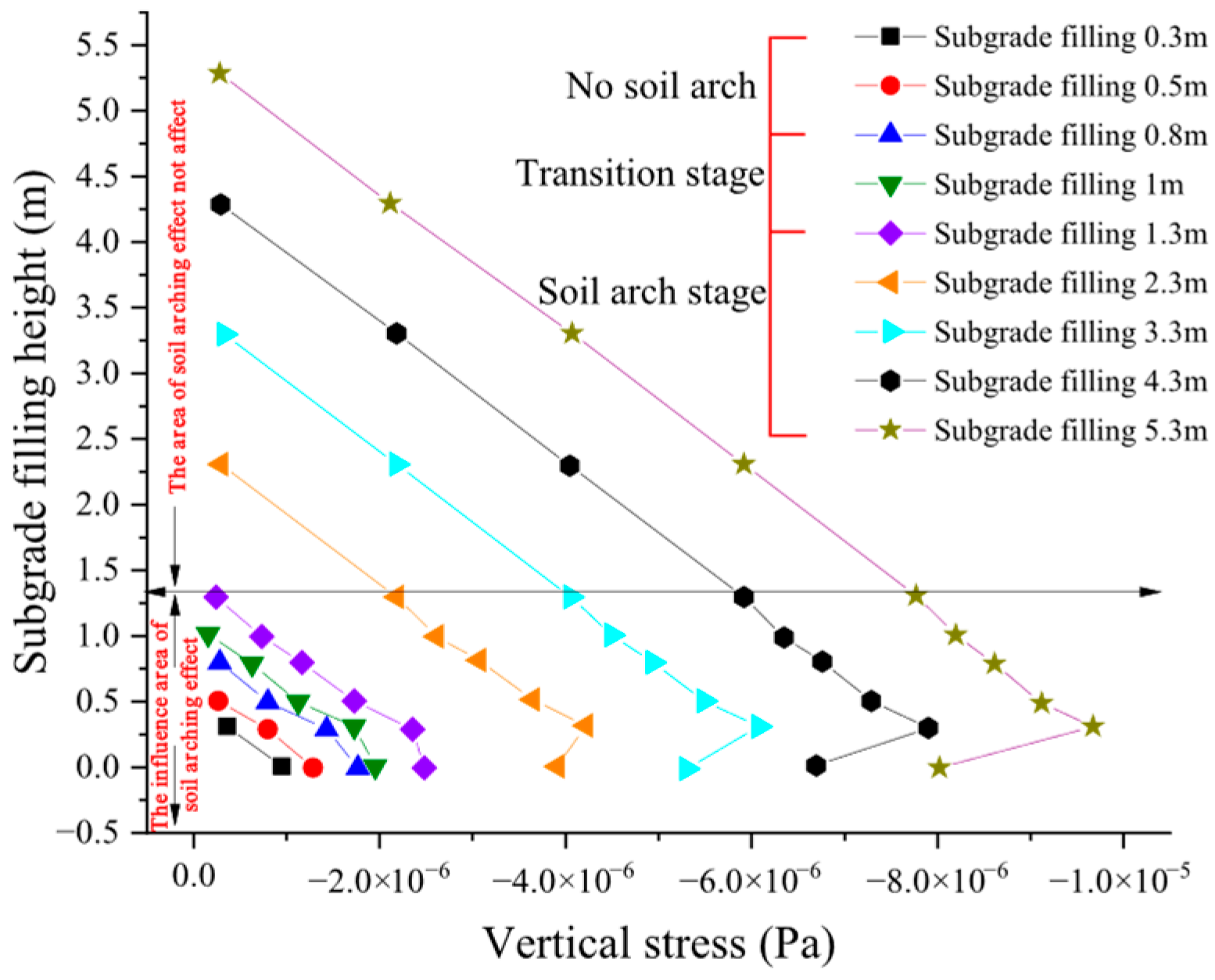
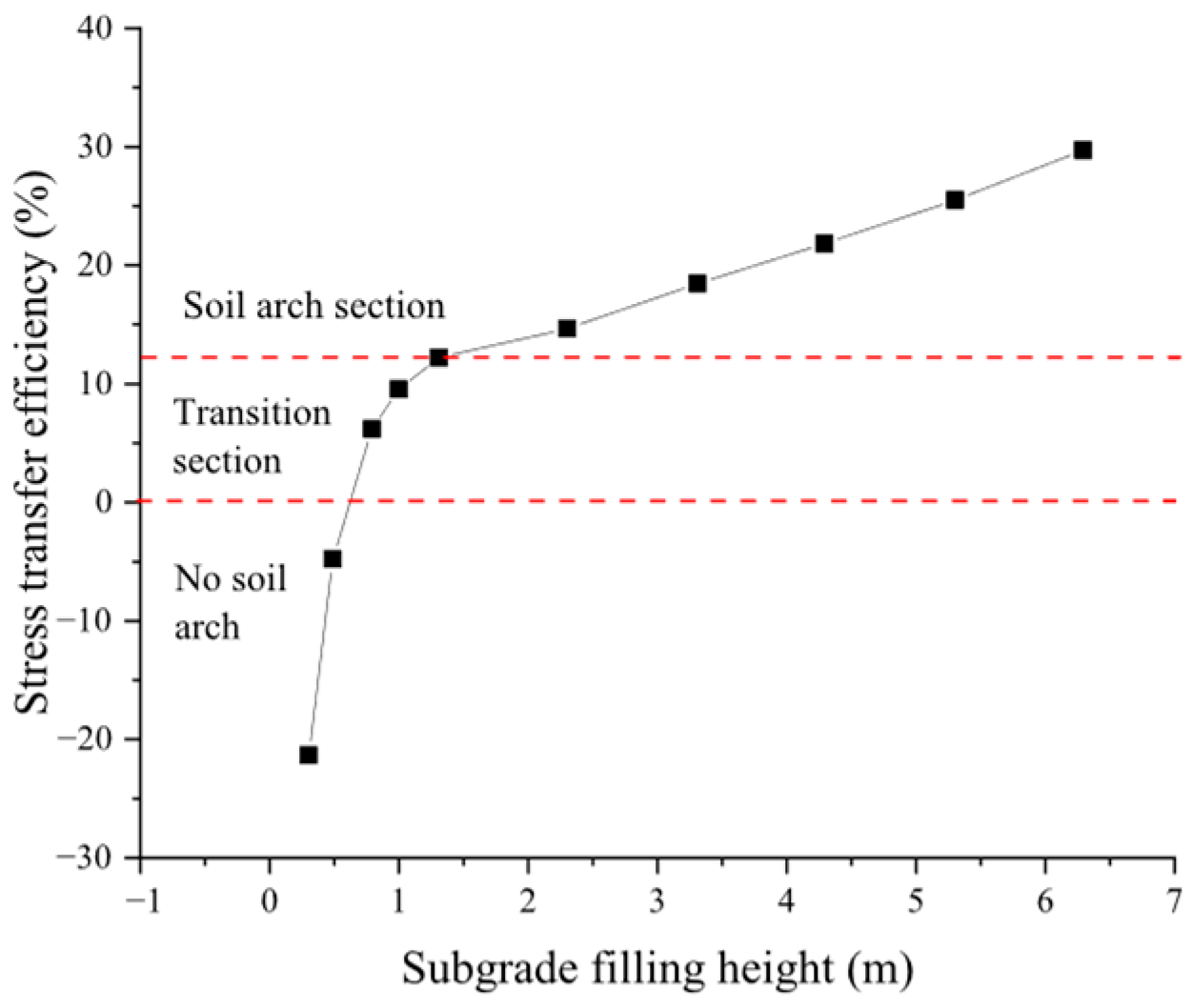
- The evolution process of the soil-arching effect can be divided into three stages: non-arch stage, arch transition stage, and soil-arching stage. When the filling subgrade reached 0.65 times the pile spacing, the vertical stress of the soil began to shift to the pile heads, leading to stress concentration and the forming of a stress arch. When the filling height reached 1.15 times the pile spacing, the overlying load was transmitted to the pile heads through the stress arch, a low-stress zone was formed, and the stability of the foundation was thereby enhanced.
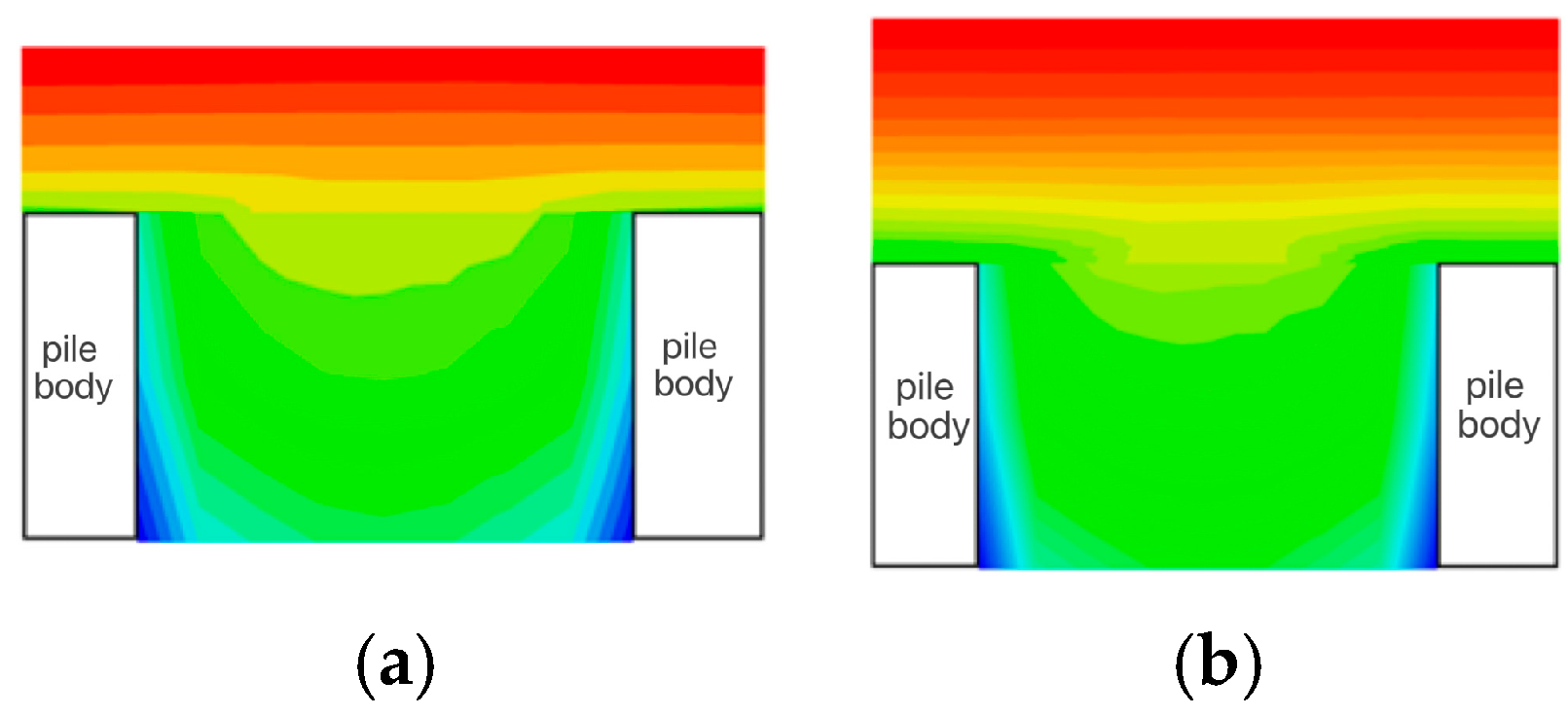
- After the soil arch formed, the subgrade can be divided into two zones: the zone unaffected by the soil-arching effect, where the vertical stress of the subgrade was linearly distributed, and the opposite one, where the vertical stress of soil decreased with depth. It reached the minimum in the surface layer between piles, and the stress distribution was curve. The dividing filling height was about 0.65 times of the pile spacing.
- With the multi-effect coupling analysis of the stress diffusion effect, soil-arching effect, and net effect, a calculation formula of the pile–soil stress ratio of the bidirectionally reinforced composite foundation was derived. The results demonstrate that when stress diffusion effect was considered, the calculated value of soil stress between piles was effectively reduced, and the calculated value of the pile–soil stress ratio was in closer agreement with the measured value.
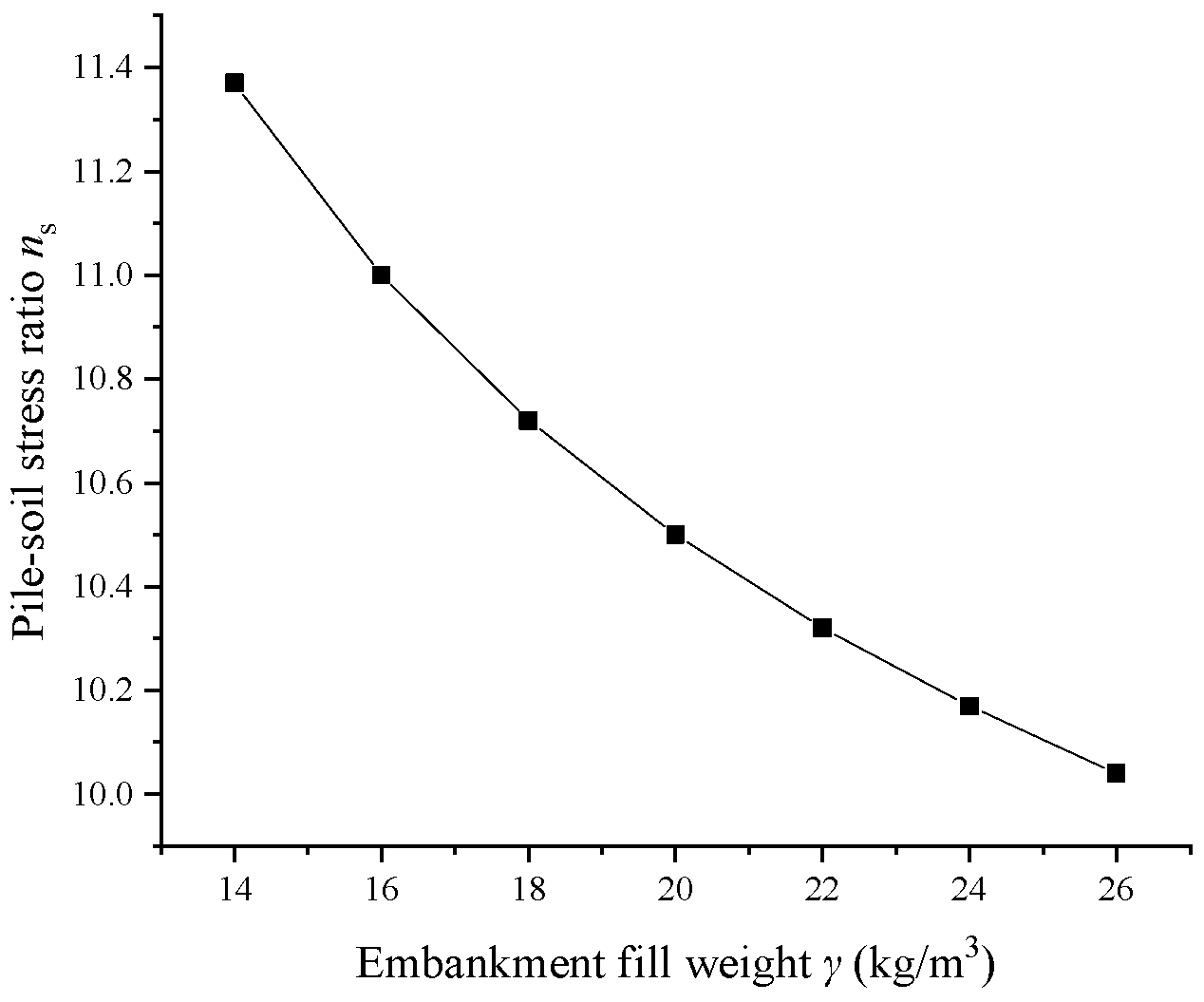
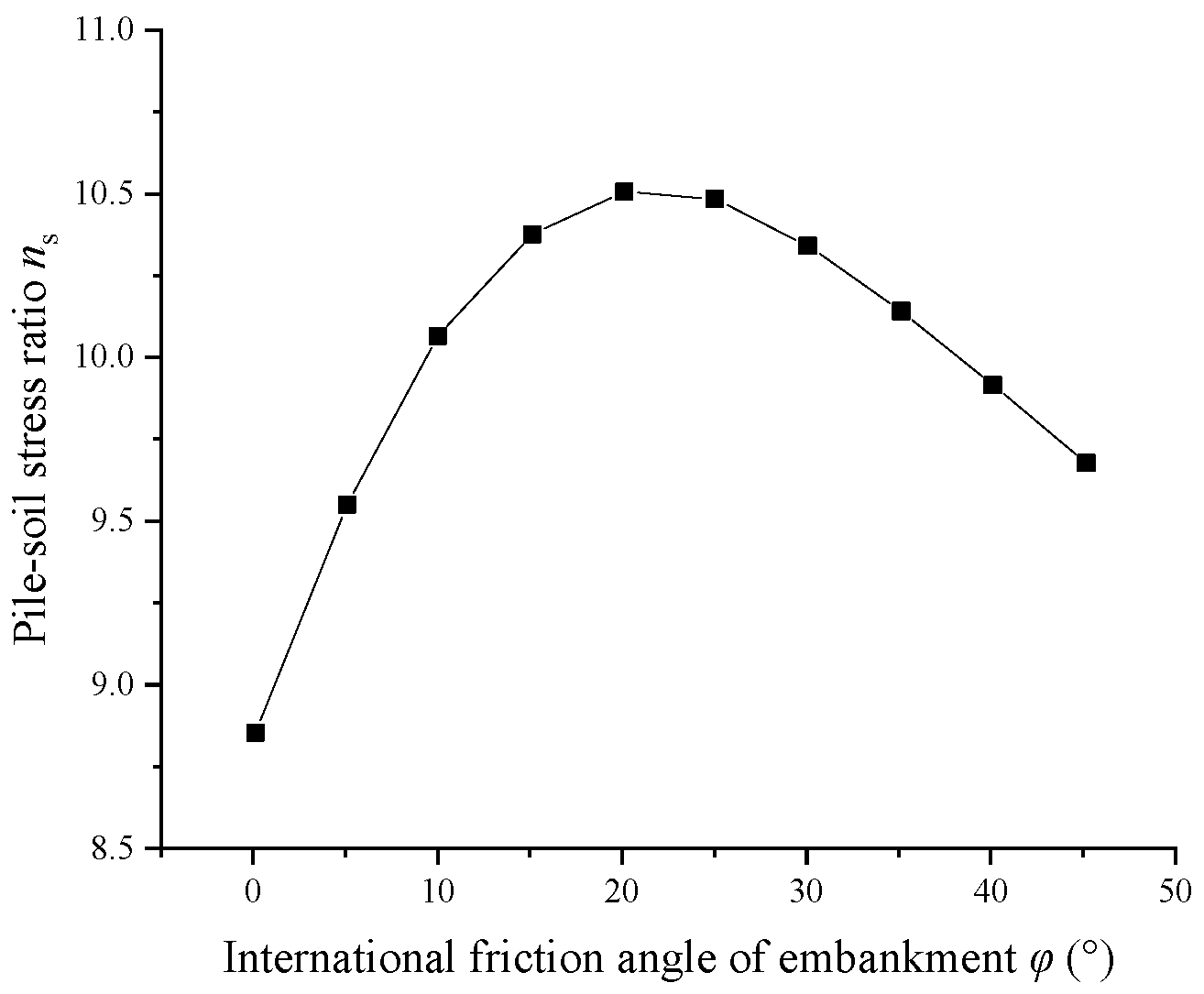
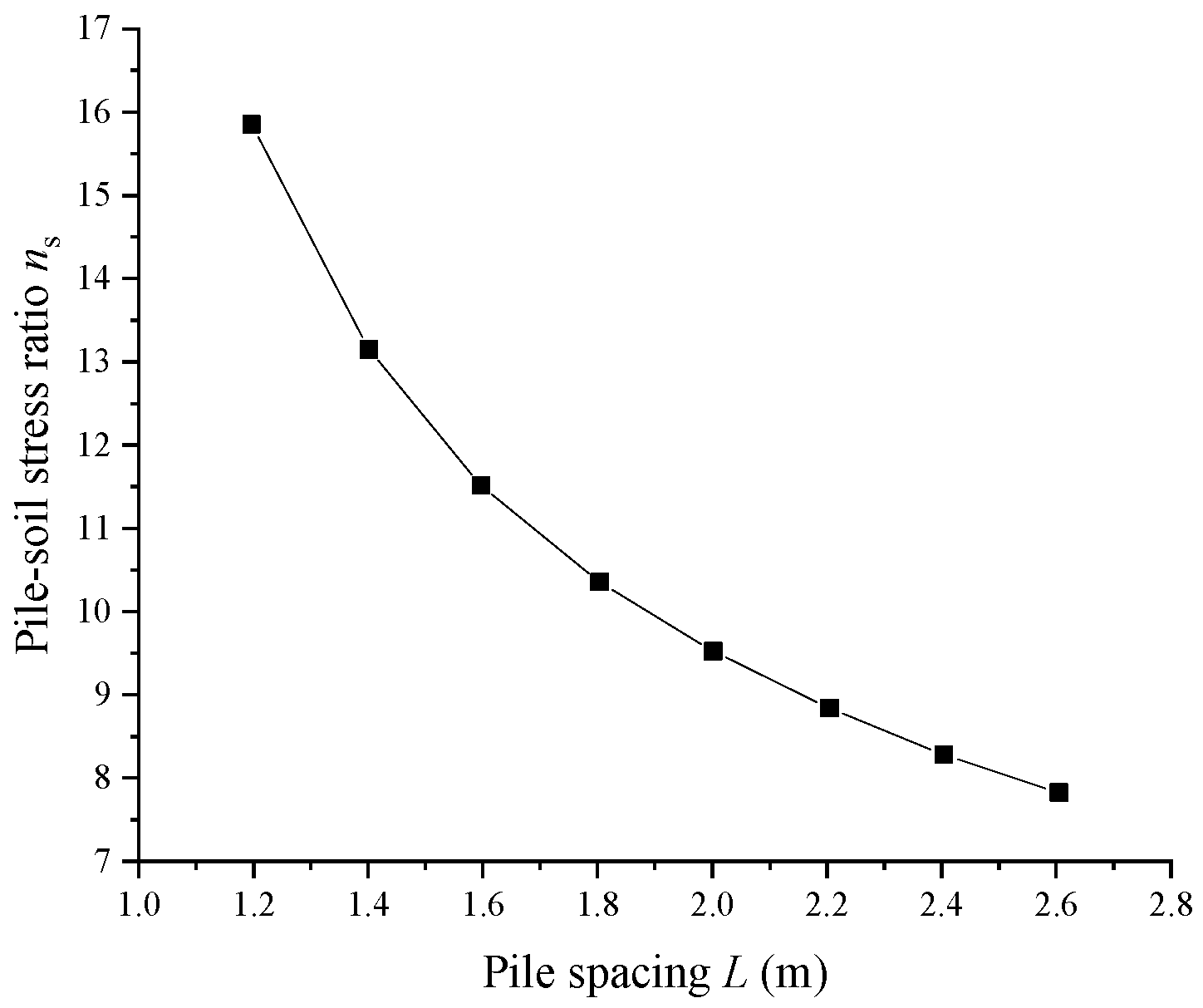
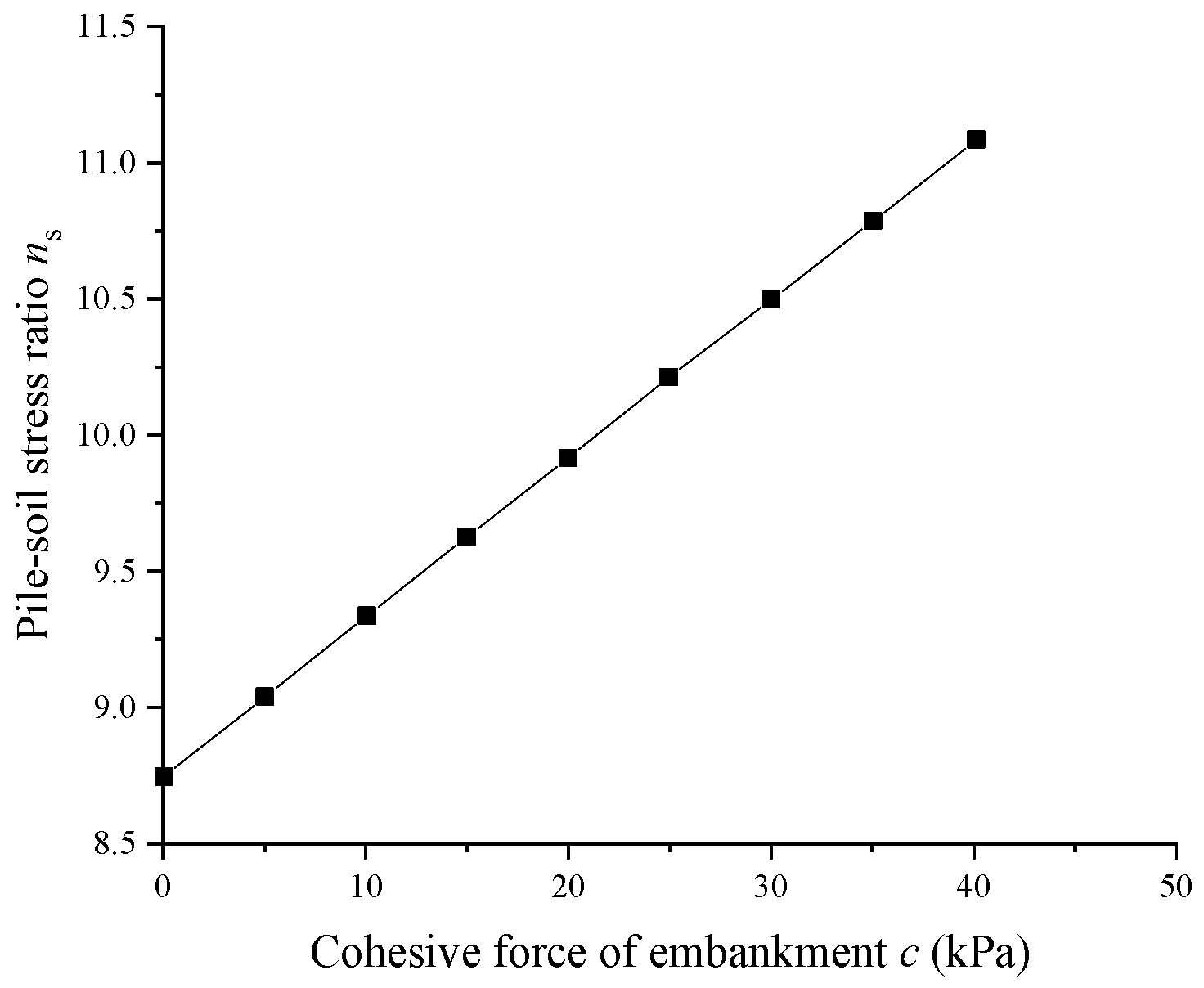
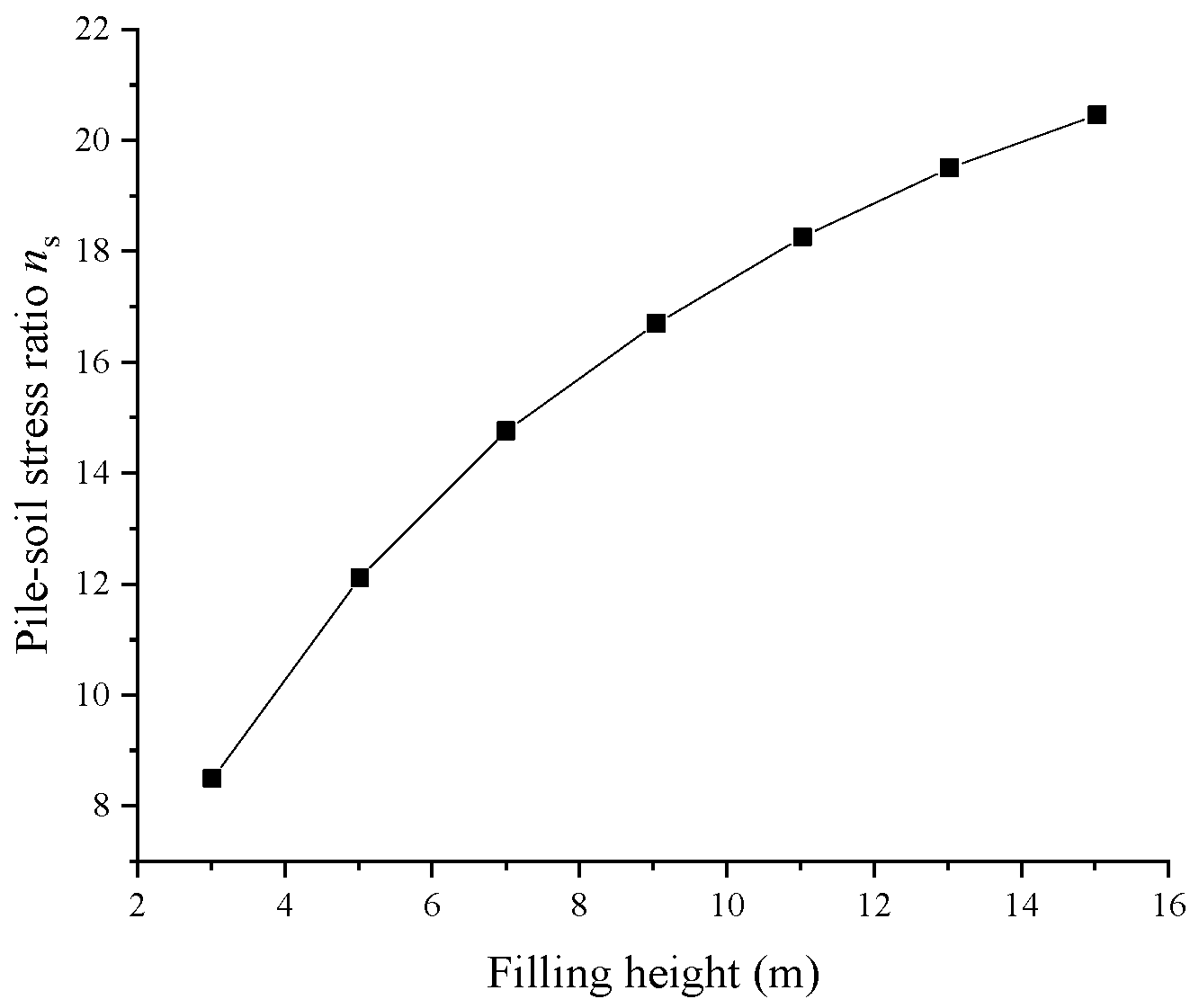
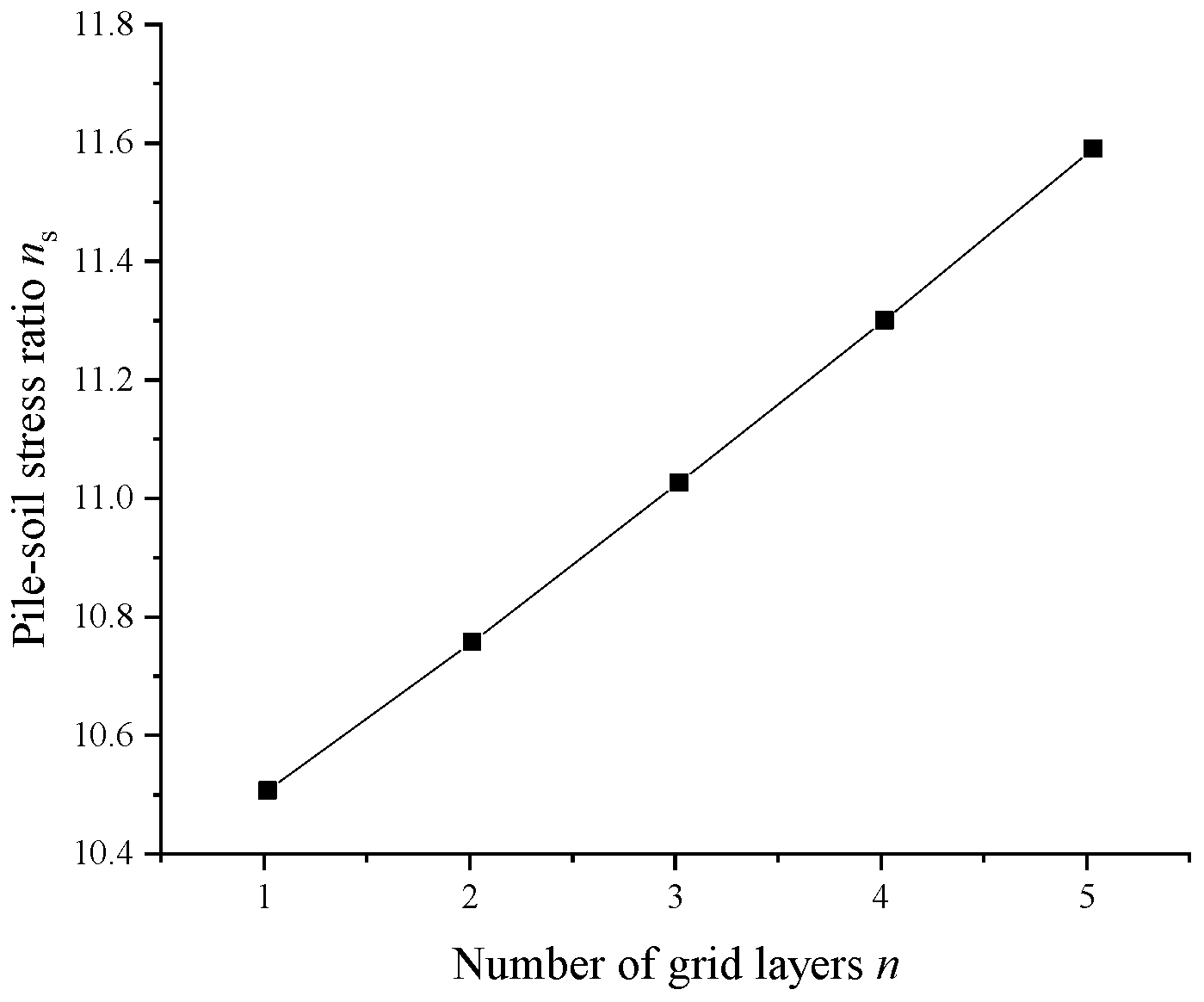
- The pile–soil stress ratio decreased with the increase in filling weight and pile spacing. It increased with the increase in embankment filling height, geogrid layer number, and soil filling cohesion, and increased first and then decreased with the increase in internal friction angle of soil filling.
Author Contributions
Funding
Data Availability Statement
Conflicts of Interest
References
- Nguyen, V.D.; Luo, Q.; Wang, T.; Liu, K.; Zhang, L.; Nguyen, T.P. Load transfer in geosynthetic-reinforced piled embankments with a triangular arrangement of piles. J. Geotech. Geoenviron. Eng. 2023, 149, 04022131. [Google Scholar] [CrossRef] [Scilit]
- Zhang, C.Z.; Liu, S.Y.; Zhang, D.V.; Wang, Z.; Li, H.B.; Zhang, G.K. Analytical and numerical investigation of soil arching effect of the composite foundation reinforced by penetrated PCCSs and partially penetrated DM columns under embankment loading. Comput. Geotech. 2025, 180, 107063. [Google Scholar] [CrossRef] [Scilit]
- Liu, S.Y.; Zhang, C.Z.; Liu, Y.Z.; Zhang, D.W.; Sun, Y.X.; Zhou, P. Load transfer and performance evaluation of the composite foundation reinforced by penetrated PCCSs and partially penetrated DCM columns under embankment loads. Int. J. Geomech. 2025, 25, 05024014. [Google Scholar] [CrossRef] [Scilit]
- Zhao, M.H.; Liao, B.B.; Liu, S.S. Calculation of anti-slide piles spacing based on soil arching effect. Rock Soil Mech. 2010, 31, 1211–1216. [Google Scholar] [CrossRef]
- Wang, Y.; Zhao, B. Multilayer soil arching effect calculation and soil pressure analysis in double-row anti-sliding piles. J. Beijing Univ. Technol. 2015, 8, 1193–1199. [Google Scholar] [CrossRef]
- Lu, Q.; Sun, H.Y.; Shang, Y.Q. The Mechanism and evolution of soil arch effect behind retaining piles. J. Hydraul. Eng. 2010, 4, 471–476. [Google Scholar] [CrossRef]
- Chen, Q.; Dong, C.C.; Wang, C.; Zhu, B.L.; Zhao, X.Y. Characteristics analysis of soil arching effect behind pile based on transparent soil technology. J. Southwest Jiaotong Univ. 2020, 3, 509–517. [Google Scholar] [CrossRef]
- Zhao, M.H.; Wu, J.J.; He, W.X. Researches on bearing mechanism and deformation of pile-supported embankments based on soil arch effect. J. Hunan Univ. (Nat. Sci.) 2016, 3, 135–141. [Google Scholar] [CrossRef]
- Xu, L.F.; Xu, W.J.; Zhang, A.J.; Weng, X.L.; Zhao, G.W.; Zhu, T.T. Laboratory model test to explore the bearing mechanism of composite foundation in the loess area. Adv. Civ. Eng. 2021, 2021, 6658726. [Google Scholar] [CrossRef] [Scilit]
- Xi, L.W.; Ren, Q.; Zhang, J.Q. Sensitivity analysis of stress and deformation characteristics of CFG pile net composite foundation considering embankment filling process. Highw. Eng. 2022, 3, 89–96. [Google Scholar] [CrossRef]
- Zheng, J.J.; Lu, J.T.; Liu, Y. Sensitivity analysis of foundation soil’s mechanical parameters to mechanical response of geogrid reinforced embankment considering spatial variability. J. Huazhong Univ. Sci. Technol. (Nat. Sci. Ed.) 2023, 8, 1–7. [Google Scholar] [CrossRef]
- Qian, L.P.; Zhang, P.F.; He, G.H. Study on bearing characteristics of composite foundation of new low-disturbance bidirectional mixing DJM pile. Subgrade Eng. 2022, 5, 86–91. [Google Scholar] [CrossRef]
- Ma, B.H.; Li, Z.; Cai, K.; Liu, M.; Zhao, M.H.; Chen, B.C.; Hu, Z.Y. Pile-Soil stress ratio and settlement of composite foundation bidirectionally reinforced by piles and geosynthetics under embankment load. Adv. Civ. Eng. 2021, 2021, 5575878. [Google Scholar] [CrossRef] [Scilit]
- Huang, Y.H.; Xu, L.R.; Zhou, J.J. Calculation of pile-soil stress in pile-net composite foundation based on improved Terzarghi method. Rock Soil Mech. 2020, 2, 667–675. [Google Scholar] [CrossRef]
- Huang, S. Mechanism of geocell and its engineering application. Sichuan Build. Mater. 2017, 43, 132–133+136. [Google Scholar]
- Zhang, W.P. Application of prestressed pipe pile in composite foundation engineering. Smart City 2020, 6, 217–218. [Google Scholar] [CrossRef]
- Rong, S.M. Numerical simulation of settlement deformation of high fill embankment construction in soft soil area. Subgrade Eng. 2025, 6, 31–37. [Google Scholar] [CrossRef]
- Bai, H.T.; Yang, L.C.; Tao, J. Analysis of effective stress principle of foundation soil. Manag. Technol. Small Medium-Sized Enterp. (Late Issue) 2014, 4, 316. [Google Scholar]
- Qu, L.H.; Qu, J.T.; Xie, Q.R. Study on soil arching effect between anti-slide piles based on additional stress theory of uniform strip load. J. Water Conserv. Constr. Eng. 2020, 18, 175–179. [Google Scholar] [CrossRef]
- Pham, M.T.; Vu, Q.G.; Nguyen, T.C.B.; Dias, D. Numerical analysis of soil arching development in geosynthetic-reinforced embankments over extended cavities. Geotech. Geol. Eng. 2024, 42, 7407–7432. [Google Scholar] [CrossRef] [Scilit]
- Hua, G.Q. Soil arching effect, stress diffusion effect, stress concentration effect and pile-supported embankment. Urban Roads Bridges Flood Control 2017, 5, 263–268+24-25. [Google Scholar] [CrossRef]
- Cossiga, G.A. According to the sustainability theory, the natural rebalance of resources and wealth may continue in global scenario. Adv. Soc. Sci. Res. J. 2020, 7, 927–957. [Google Scholar] [CrossRef] [Scilit]
- Cakir, T.; Kara, O. Effects of the variation of unit weight of backfill soil on seismic response of a cantilever retaining wall. Gümüşhane Üniversitesi Fen Bilim. Enstitüsü Derg. 2015, 2, 87–100. [Google Scholar]
- Xu, F.; Zhang, Q.S.; Leng, W.M. Stability analysis of new prestressed embankment based on additional stress diffusion effect. Geotech. Mech. 2022, 43, 431–442. [Google Scholar] [CrossRef]
- Lang, R.Q.; Yan, S.W.; Sun, L.Q.; Ji, Y.C.; Chen, J. Analysis of stress diffusion angle method for PTC pile composite foundation. Eur. J. Environ. Civ. Eng. 2018, 22, s434–s448. [Google Scholar] [CrossRef] [Scilit]
- Li, P. Study on the application of screw pile composite foundation for high-speed railway in Huanghuai alluvial plain area. Subgrade Eng. 2024, 1, 80–86. [Google Scholar] [CrossRef]
- Gong, X.N. The formation and development of composite foundation theory and technology application system. Found. Treat. 2019, 1, 7–16. [Google Scholar]
- Dai, T.Y.; Xiao, S.G. Settlement algorithm of rigid pile composite foundation considering embankment reinforcement interaction. Geomechanics 2022, 43, 479–489. [Google Scholar] [CrossRef]
- Jiang, D.S.; Zhang, C.F.; Zhao, M.H. Calculation of pile-soil stress ratio of pile-net composite foundation under embankment. J. Hunan Univ. (Nat. Sci. Ed.) 2019, 46, 23–132. [Google Scholar] [CrossRef]
- Yang, Y. Research on Bearing Capability of Double Direction Reinforced Composite Foundation; Hunan University: Changsha, China, 2006; pp. 28–29. [Google Scholar]
- ASTM D1143/D1143M-20; Standard Test Methods for Deep Foundation Elements Under Static Axial Compressive Load. American Society for Testing and Materials: Philadelphia, PA, USA, 2020.
- Zhao, M.H.; Liu, M.; Long, J. Calculation of pile-soil stress ratio of two-direction reinforcement composite foundation under embankment loads. Chin. J. Rock Mech. Eng. 2021, 1, 3286–3290. [Google Scholar] [CrossRef]
- Zhang, S.; Wang, R.C.; Zhu, S.D. Analysis of pile-soil stress ratio of solidified soil-micro pile composite foundation. J. Civ. Eng. Manag. 2025, 42, 27–33. [Google Scholar] [CrossRef]










| Soil Layer | Elastic Modulus Es (MPa) | Density ρ (kg/m3) | Force of Cohesion c (kPa) | Angle of Friction φ (°) | Poisson Ratio μ |
|---|---|---|---|---|---|
| Filling soil | 15 | 1850 | 20 | 28 | 0.3 |
| Cushion layer | 120 | 2580 | 0 | 30 | 0.3 |
| Silty soil | 6.53 | 1862 | 8.4 | 20.2 | 0.3 |
| Silty clay | 3.47 | 1790 | 23.2 | 24.3 | 0.35 |
| Silty soil | 6.86 | 2010 | 10 | 20 | 0.25 |
| Silty clay | 4.58 | 1880 | 37.7 | 11.8 | 0.3 |
| Muddy clay | 3.74 | 1820 | 23.2 | 10.5 | 0.28 |
| Silty soil | 4.5 | 2015 | 26.1 | 7.1 | 0.3 |
| Mechanical Parameter | Elastic Modulus Es (MPa) | Density ρ (kg/m3) | Force of Cohesion c (kPa) | Angle of Friction φ (°) | Poisson Ratio μ |
|---|---|---|---|---|---|
| Numerical value | 200 | 2450 | 500 | 25 | 0.2 |
| Mechanical Parameter | Bulk Modulus K (GPa) | Poisson Ratio μ | Thickness (m) | Coupling Area Stiffness (N·m−3) | Coupling Spring Cohesion (kPa) | Angle of Internal Friction φ (°) |
|---|---|---|---|---|---|---|
| Numerical value | 23 | 0.33 | 0.5 | 2.3 × 10⁶ | 0 | 25 |
| Method of Calculation | Stress of Pile Top (kPa) | Stress of Soil Among Piles (kPa) | Pile–Soil Stress Ratio (ns) |
|---|---|---|---|
| Measured values | 220.8 | 21 | 10.5 |
| Ref. [30] Calculated values | 341.9 | 26.3 | 13 |
| Ref. [32] Calculated values | 327.50 | 29.0 | 11.3 |
| Calculated value in this paper | 214.3 | 20.4 | 10.5 |
Disclaimer/Publisher’s Note: The statements, opinions and data contained in all publications are solely those of the individual author(s) and contributor(s) and not of MDPI and/or the editor(s). MDPI and/or the editor(s) disclaim responsibility for any injury to people or property resulting from any ideas, methods, instructions or products referred to in the content. |
© 2025 by the authors. Licensee MDPI, Basel, Switzerland. This article is an open access article distributed under the terms and conditions of the Creative Commons Attribution (CC BY) license (https://creativecommons.org/licenses/by/4.0/).
Share and Cite
Ma, C.; Li, C.; Zhang, X.; Fan, W.; Sun, Y. Evolution Analysis of Soil-Arching Effect and Calculation of Pile–Soil Stress Ratio of Bidirectionally Reinforced Composite Foundation. Buildings 2025, 15, 4544. https://doi.org/10.3390/buildings15244544
Ma C, Li C, Zhang X, Fan W, Sun Y. Evolution Analysis of Soil-Arching Effect and Calculation of Pile–Soil Stress Ratio of Bidirectionally Reinforced Composite Foundation. Buildings. 2025; 15(24):4544. https://doi.org/10.3390/buildings15244544
Chicago/Turabian StyleMa, Chuanyi, Chao Li, Xinyuan Zhang, Wei Fan, and Yafeng Sun. 2025. "Evolution Analysis of Soil-Arching Effect and Calculation of Pile–Soil Stress Ratio of Bidirectionally Reinforced Composite Foundation" Buildings 15, no. 24: 4544. https://doi.org/10.3390/buildings15244544
APA StyleMa, C., Li, C., Zhang, X., Fan, W., & Sun, Y. (2025). Evolution Analysis of Soil-Arching Effect and Calculation of Pile–Soil Stress Ratio of Bidirectionally Reinforced Composite Foundation. Buildings, 15(24), 4544. https://doi.org/10.3390/buildings15244544