A Comparative Study of Waste Red-Clay Brick Powder (WRCBP) and Fly Ash (FA) as Precursors for Geopolymer Production


Abstract
1. Introduction
2. Materials and Methods
2.1. Materials
2.2. Fabrication of Modified Paste
- —represents the content of Na2O in the alkaline activator under the current moduli (as shown in Table 3).


| Alkali-Activator | WRCBP | FA | GF | MT | Na2SiO3 | NaOH | Water |
|---|---|---|---|---|---|---|---|
| 1.4–8% | 910 | 0 | 260 | 130 | 401.4 | 77.9 | 112 |
| 1.4–6% | 910 | 0 | 260 | 130 | 301.0 | 58.4 | 145 |
| 1.2–8% | 910 | 0 | 260 | 130 | 344.3 | 66.8 | 130 |
| 1.2–6% | 910 | 0 | 260 | 130 | 258.2 | 50.1 | 168 |
| 1.4–8% | 780 | 0 | 390 | 130 | 401.4 | 77.9 | 117 |
| 1.4–6% | 780 | 0 | 390 | 130 | 301.0 | 58.4 | 149 |
| 1.2–8% | 780 | 0 | 390 | 130 | 344.3 | 66.8 | 135 |
| 1.2–6% | 780 | 0 | 390 | 130 | 258.2 | 50.1 | 174 |
| 1.4–8% | 0 | 910 | 260 | 130 | 401.4 | 77.9 | 35 |
| 1.4–6% | 0 | 910 | 260 | 130 | 301.0 | 58.4 | 60 |
| 1.2–8% | 0 | 910 | 260 | 130 | 344.3 | 66.8 | 52 |
| 1.2–6% | 0 | 910 | 260 | 130 | 258.2 | 50.1 | 70 |
| 1.4–8% | 0 | 780 | 390 | 130 | 401.4 | 77.9 | 45 |
| 1.4–6% | 0 | 780 | 390 | 130 | 301.0 | 58.4 | 71 |
| 1.2–8% | 0 | 780 | 390 | 130 | 344.3 | 66.8 | 63 |
| 1.2–6% | 0 | 780 | 390 | 130 | 258.2 | 50.1 | 80 |
2.3. Testing and Characterization Method
3. Results and Discussion
3.1. Water Demand Analysis of Modified Paste
3.2. Compressive Strength of the Samples
3.2.1. Effect of Activator Modulus and Na2O Content
3.2.2. Effect of Component Materials
3.2.3. Effect of Curing Temperature
3.2.4. Effect of Particle Size
3.3. Pore Structure
3.4. SEM-EDS Analysis
4. Conclusions
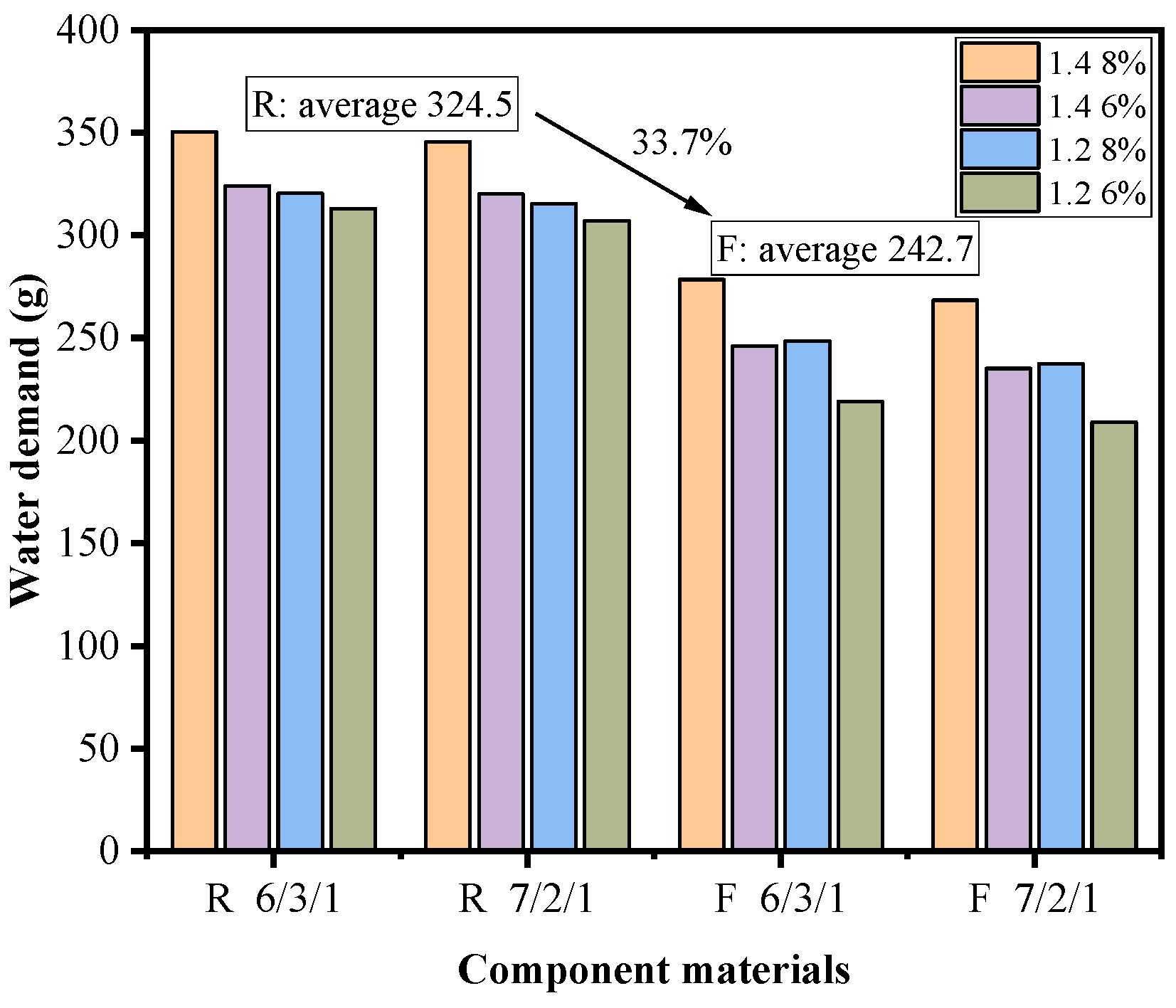
- Under identical conditions, WRCBP-based pastes exhibited about 33.7% higher water demand compared with FA-based pastes due to the coarser surface texture and higher porosity of WRCBP.
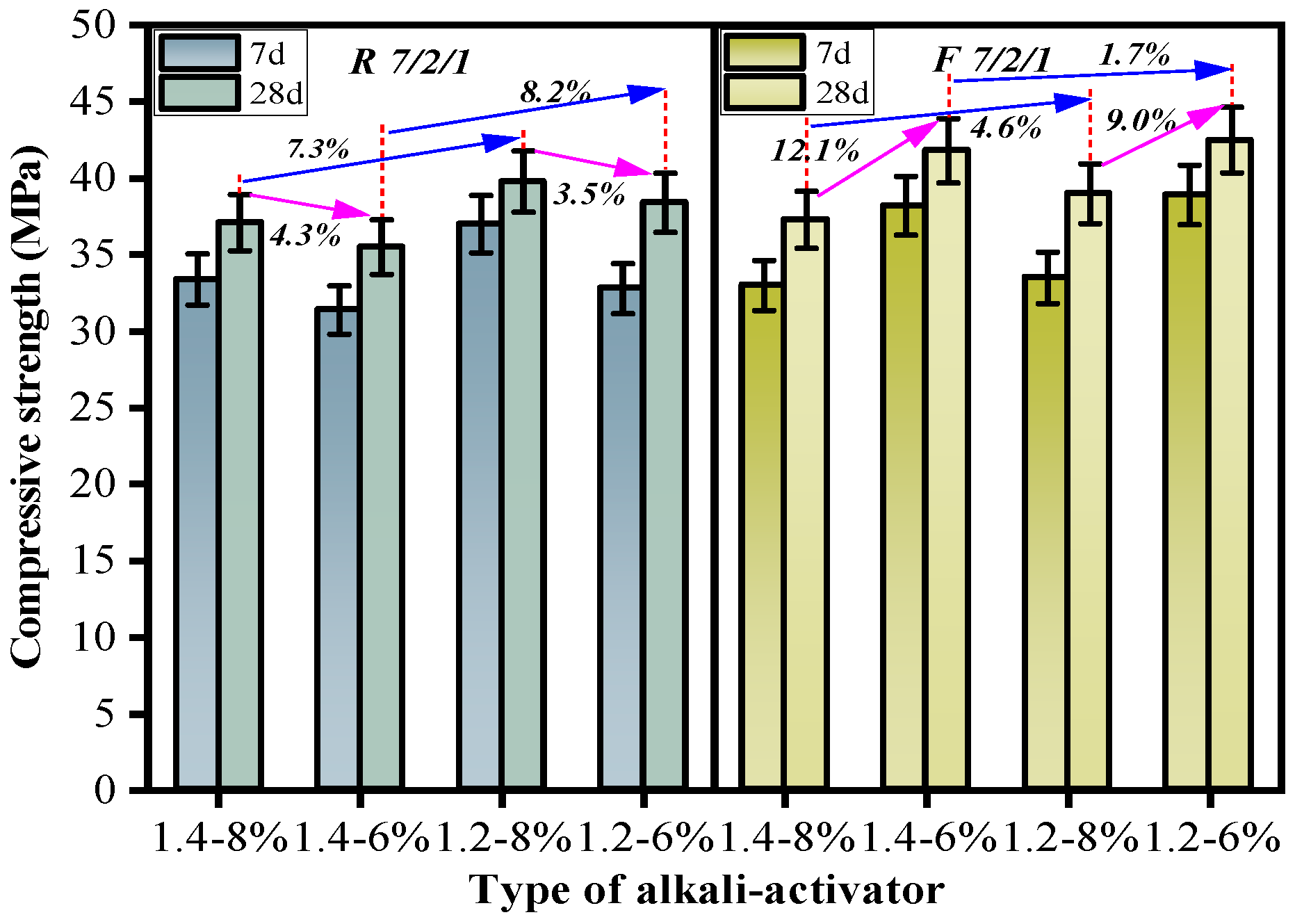
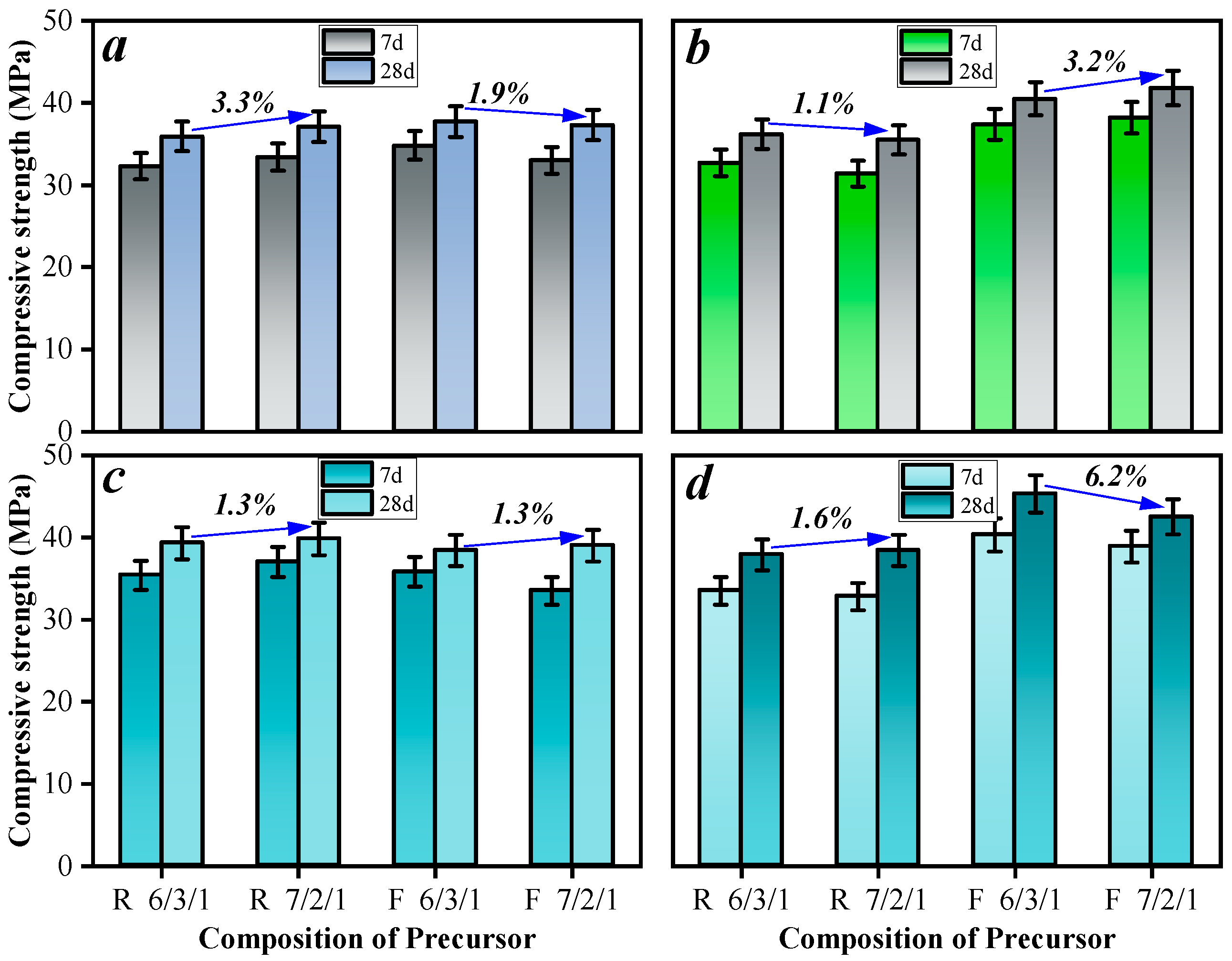
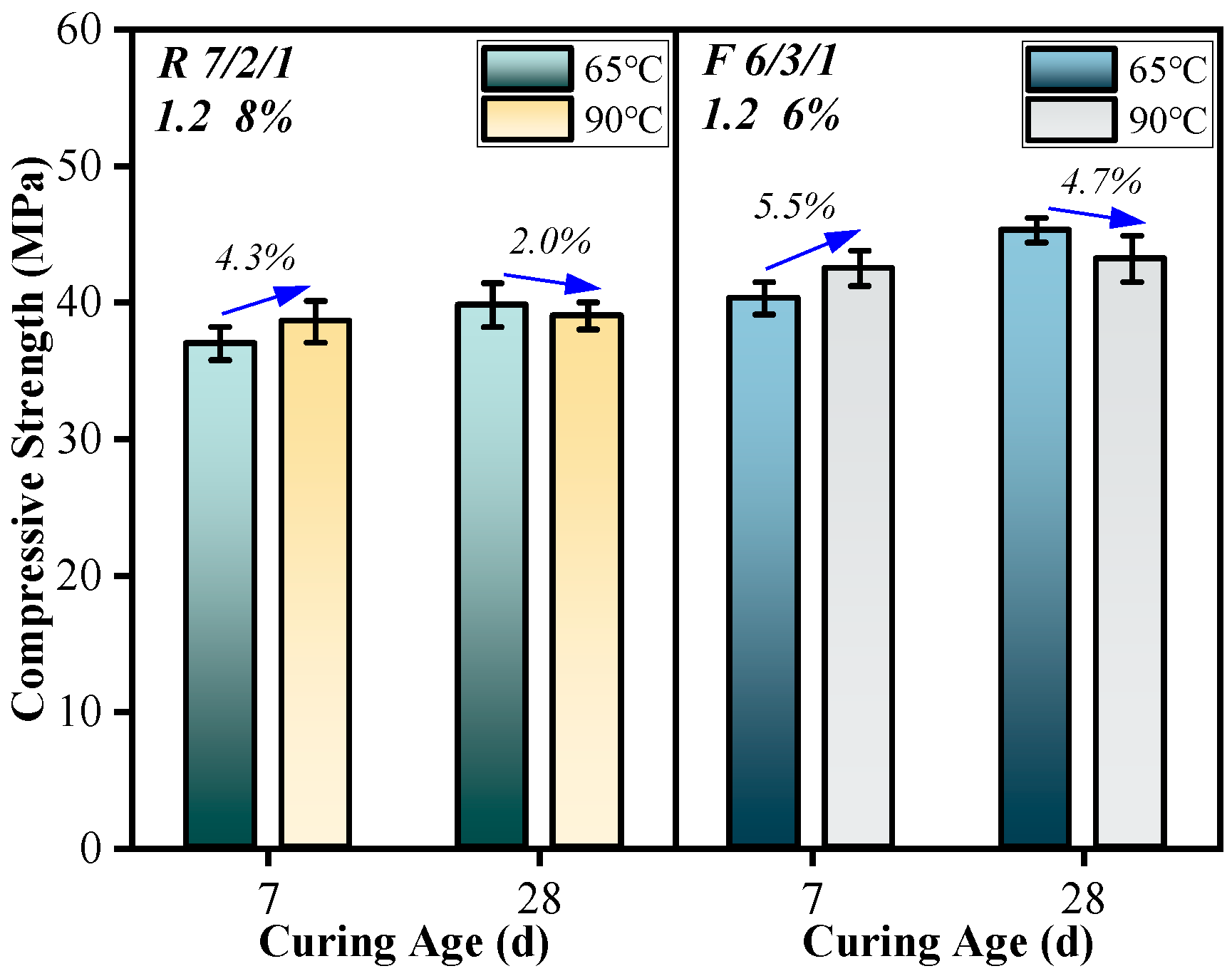
- WRCBP-based pastes cured at 65 °C for 7 days using a 1.2 modulus Na2SiO3 solution with 8% Na2O content achieved a compressive strength of 37.0 MPa, which increased to 39.8 MPa after 28 days. Under appropriate alkali-activated and curing conditions, WRCBP-based pastes attained 93.6% of the compressive strength of FA-based pastes.
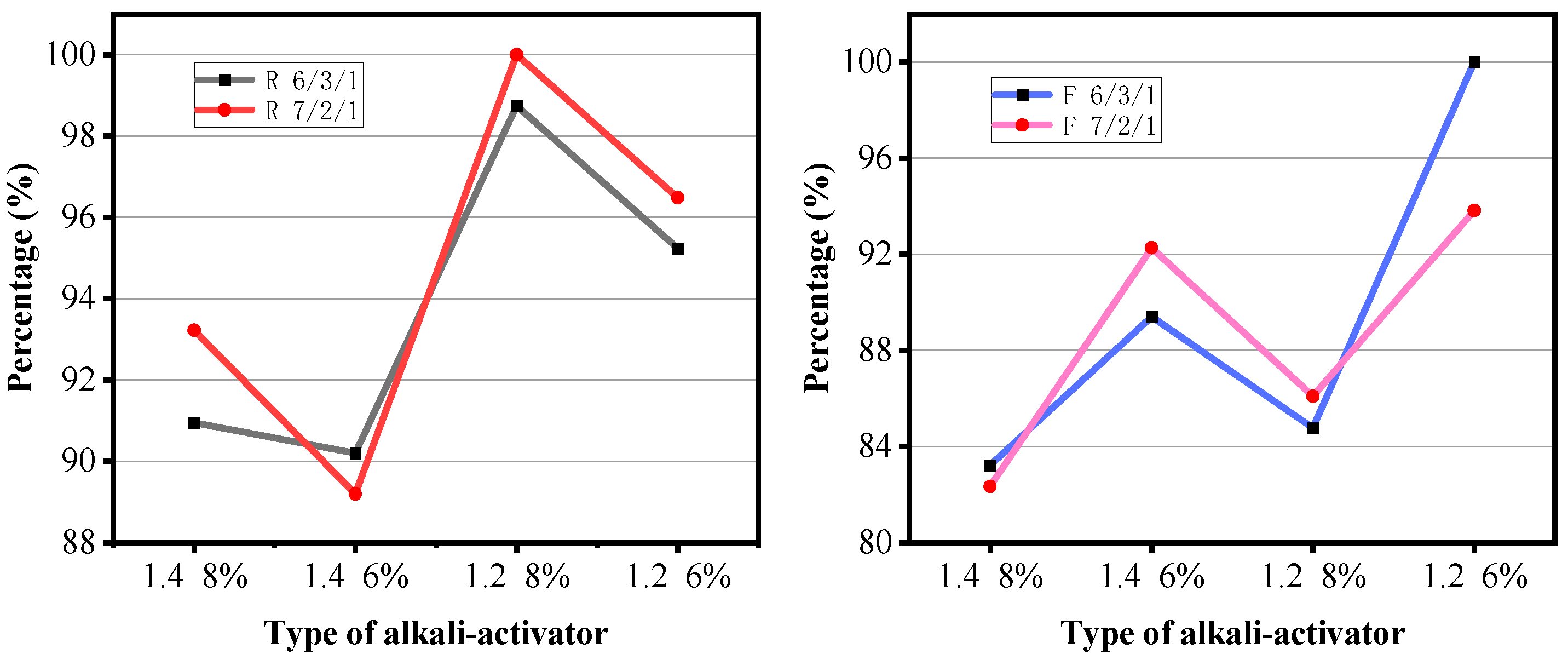
- For both WRCBP- and FA-based pastes, an optimal combination of activator modulus and Na2O content is required. Excessively high or low values adversely affect performance. A curing temperature of 65 °C was found optimal for both materials; 90 °C offered only marginal early-age benefits while impairing long-term strength.
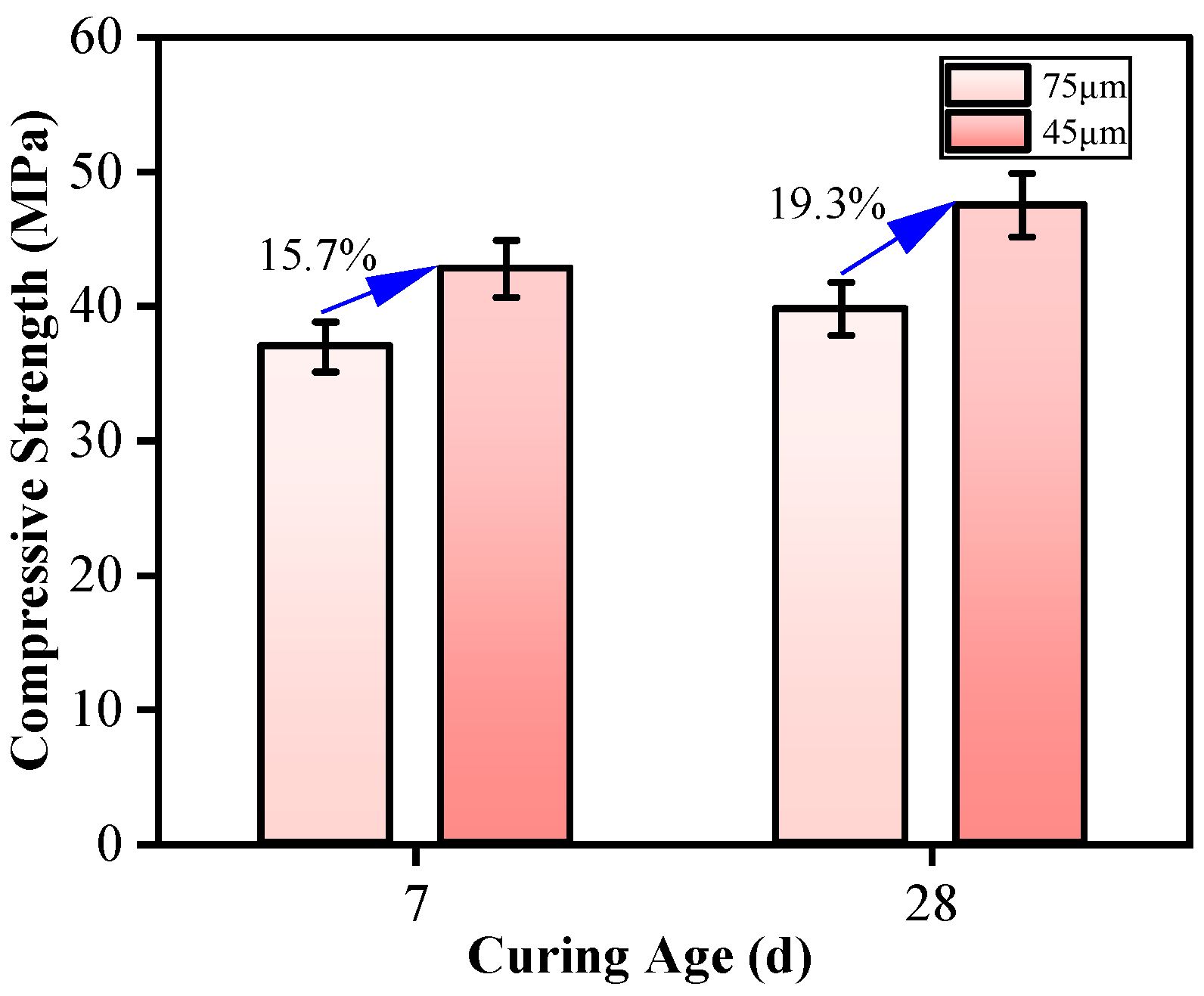
- Particle size significantly influences alkali activation. WRCBP-based pastes with particles <45 μm consistently demonstrated higher compressive strength than those with particles <75 μm, due to the larger specific surface area enhancing dissolution and gel formation during geopolymerization.
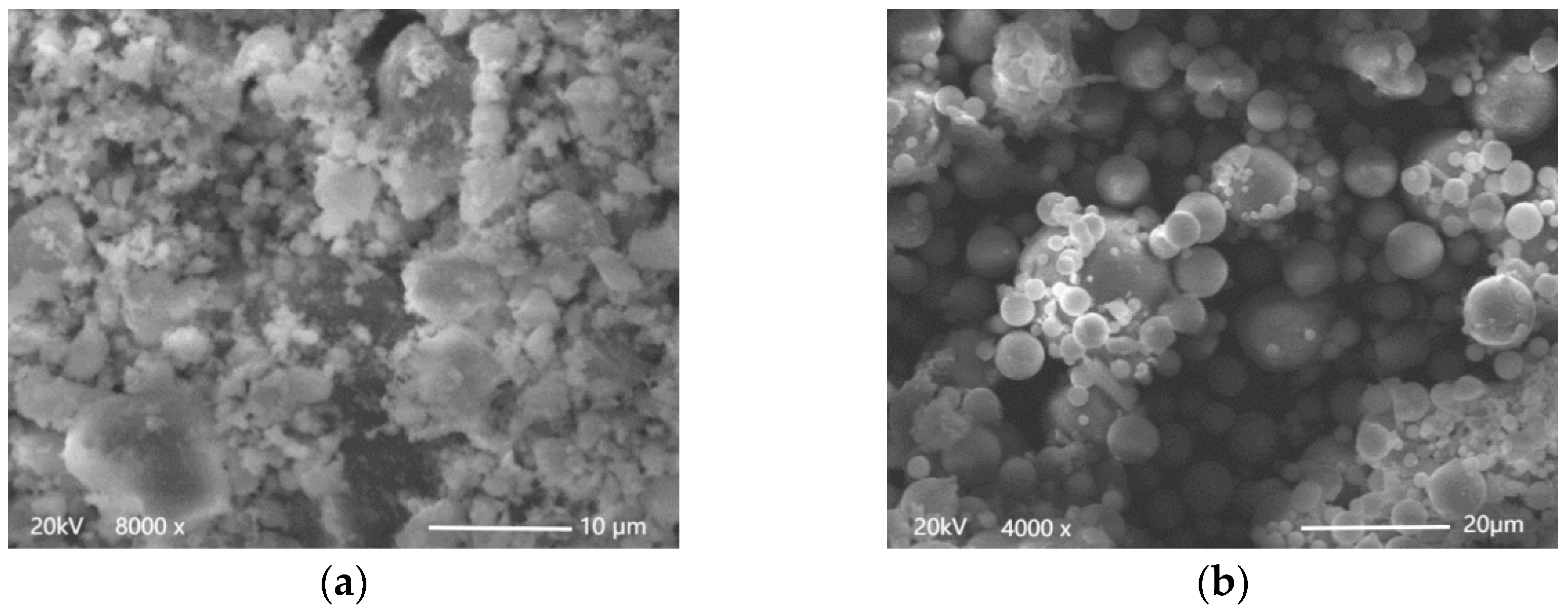
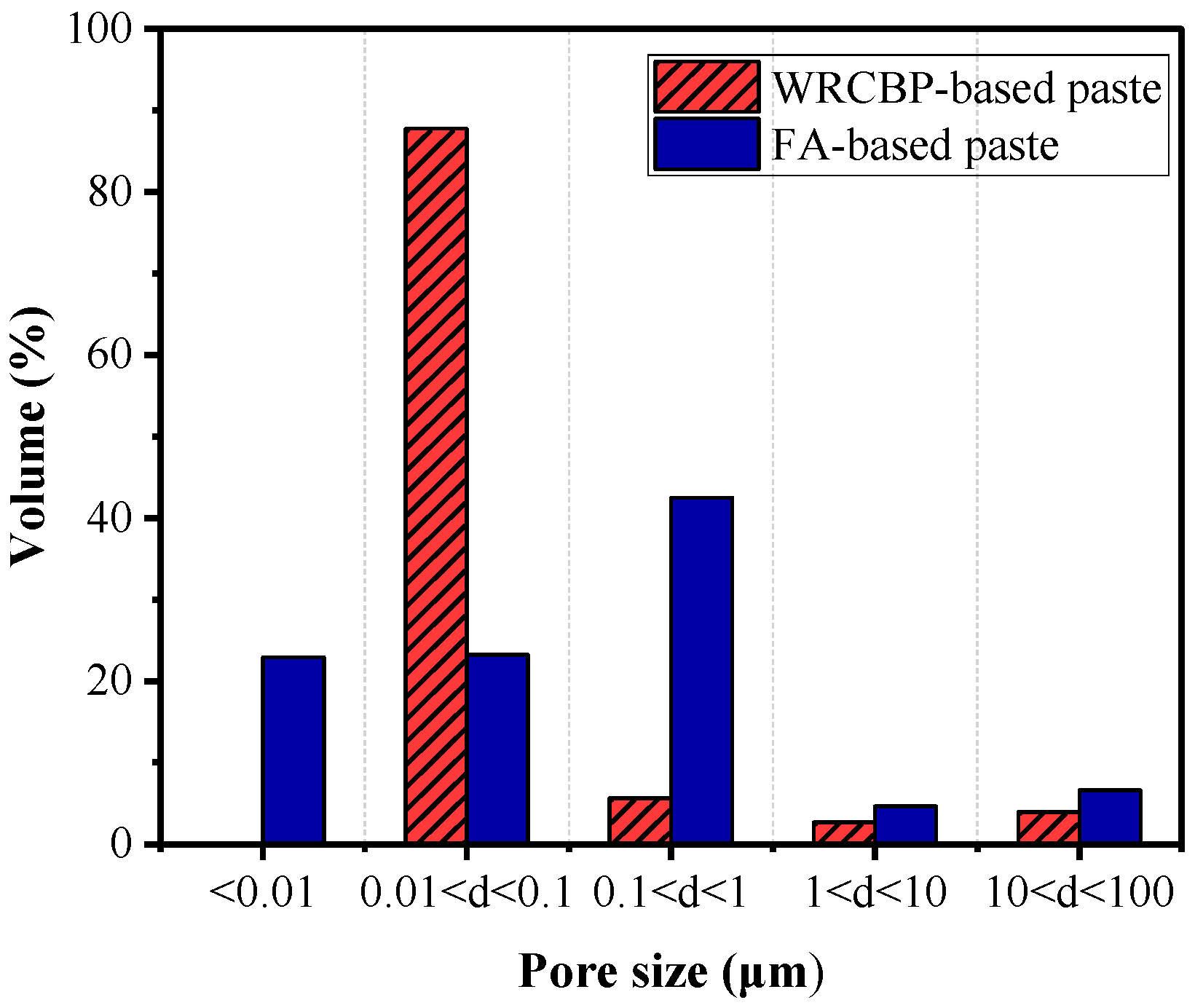
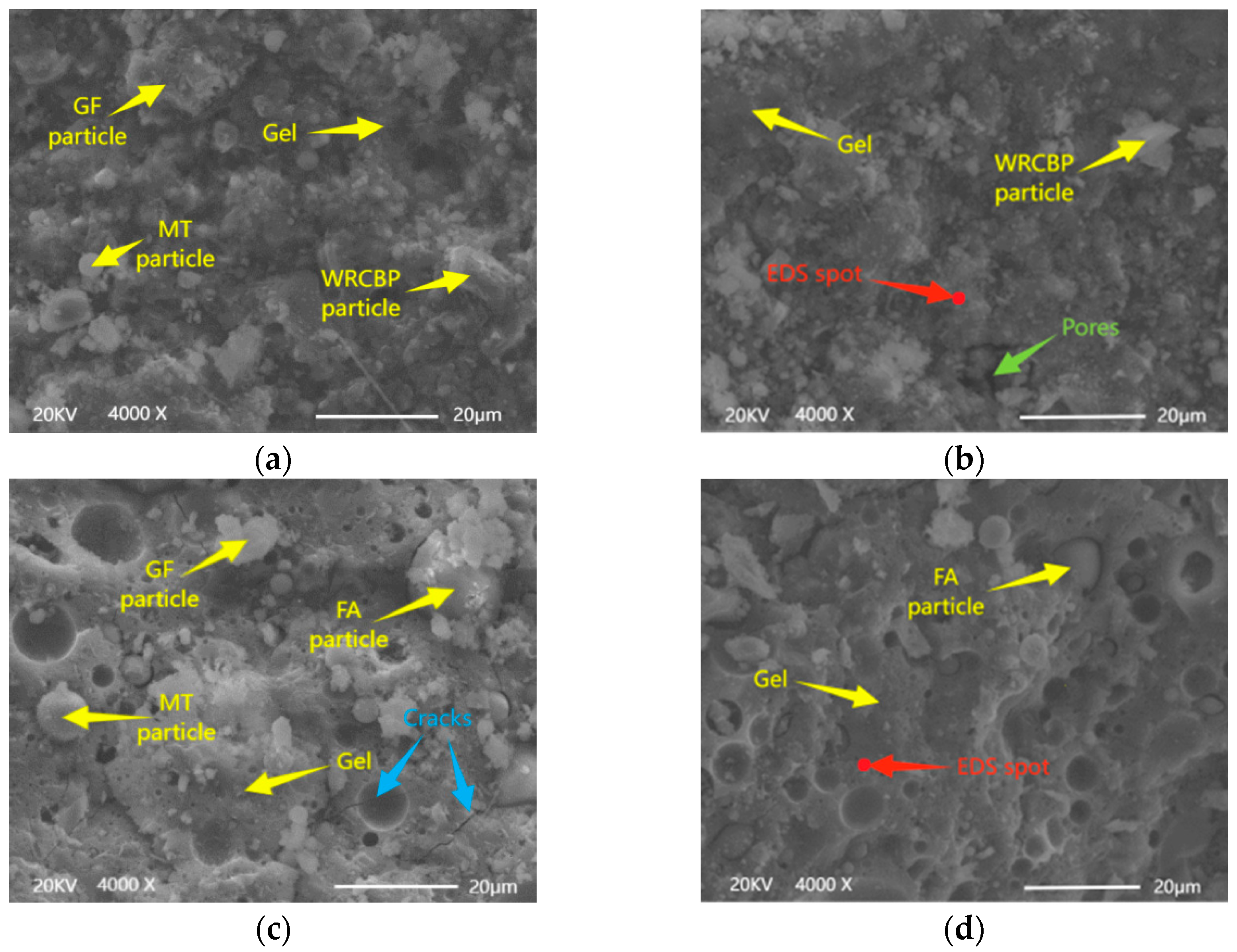
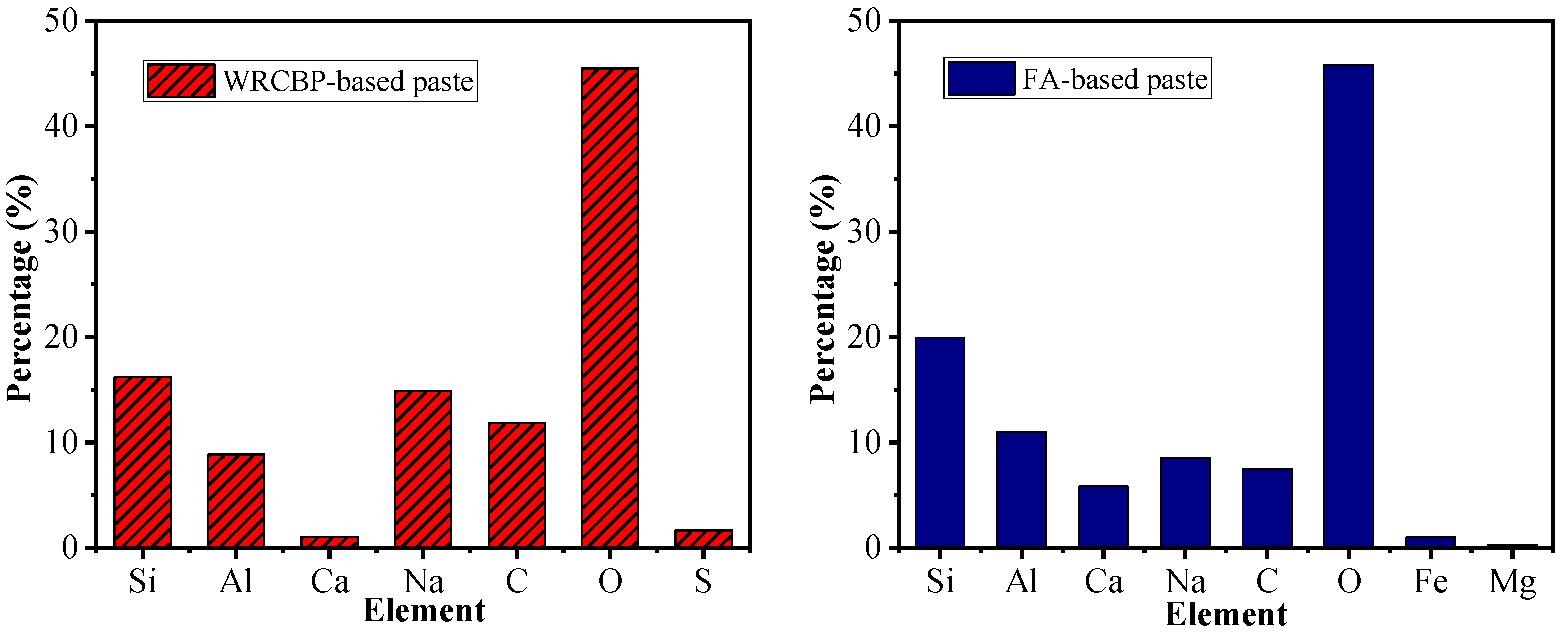
- MIP analysis showed that FA-based pastes had lower porosity and smaller average pore size than WRCBP-based pastes. SEM analysis confirmed the presence of unreacted particles in both matrices but revealed a more homogeneous microstructure in the FA-based pastes.
Author Contributions
Funding
Data Availability Statement
Acknowledgments
Conflicts of Interest
References
- Strieder, H.L.; Schreinert, G.G.; Matuella, M.F.; Fedrigo, W.; Delongui, L.; Rutzen, D.; Núñez, W.P. Mechanical behavior of construction and demolition waste as pavement materials: Influence of mix composition and compaction conditions. Constr. Build. Mater. 2023, 408, 133698. [Google Scholar] [CrossRef]
- Gao, X.; Yuan, Y.; Wang, Y.; Yang, T.; Chen, T. Prediction of Construction Waste Generation in China Based on Grey Model and Management Recommendations. Sustainability 2025, 17, 1711. [Google Scholar] [CrossRef]
- Huang, C.H.; Ho, C.H. The feasibility research on producing lightweight aggregates made from the waste stone sludge. Appl. Mech. Mater. 2013, 343, 3–8. [Google Scholar] [CrossRef]
- Chen, M.-Z.; Lin, J.-T.; Wu, S.-P.; Liu, C.-H. Utilization of recycled brick powder as alternative filler in asphalt mixture. Constr. Build. Mater. 2011, 25, 1532–1536. [Google Scholar] [CrossRef]
- Mah, C.M.; Fujiwara, T.; Ho, C.S. Construction and demolition waste generation rates for high-rise buildings in Malaysia. Waste Manag. Res. 2016, 34, 1224–1230. [Google Scholar] [CrossRef] [PubMed]
- Ge, Z.; Wang, Y.; Sun, R.; Wu, X.; Guan, Y. Influence of ground waste clay brick on properties of fresh and hardened concrete. Constr. Build. Mater. 2015, 98, 128–136. [Google Scholar] [CrossRef]
- Li, H.; Dong, L.; Jiang, Z.; Yang, X.; Yang, Z. Study on utilization of red brick waste powder in the production of cement-based red decorative plaster for walls. J. Clean. Prod. 2016, 133, 1017–1026. [Google Scholar] [CrossRef]
- Olofinnade, O.; Ogara, J. Workability, strength, and microstructure of high strength sustainable concrete incorporating recycled clay brick aggregate and calcined clay. Clean. Eng. Technol. 2021, 3, 100123. [Google Scholar] [CrossRef]
- Su, C.; Shi, J.; Tambara, L., Jr.; Yang, Y.; Liu, B.; Revilla-Cuesta, V. Improving the mechanical properties and durability of steam-cured concrete by incorporating recycled clay bricks aggregates from C&D waste. Powder Technol. 2024, 438, 119571. [Google Scholar] [CrossRef]
- Naceri, A.; Hamina, M.C. Use of waste brick as a partial replacement of cement in mortar. Waste Manag. 2009, 29, 2378–2384. [Google Scholar] [CrossRef]
- Şenol, A.F.; Karakurt, C. High-strength self-compacting concrete produced with recycled clay brick powders: Rheological, mechanical and microstructural properties. J. Build. Eng. 2024, 88, 109175. [Google Scholar] [CrossRef]
- Shao, J.; Gao, J.; Zhao, Y.; Chen, X. Study on the pozzolanic reaction of clay brick powder in blended cement pastes. Constr. Build. Mater. 2019, 213, 209–215. [Google Scholar] [CrossRef]
- De Castro Carvalho, I.; Dai, X.; Kirchheim, A.P.; da Costa, H.N.; Cabral, A.E.B. Early-age structural build-up and rheological assessment of alkali-activated slag-red clay brick waste pastes: Influence of silica modulus and precursors proportions. Cem. Concr. Compos. 2024, 153, 105730. [Google Scholar] [CrossRef]
- Schackow, A.; Stringari, D.; Senff, L.; Correia, S.; Segadães, A. Influence of fired clay brick waste additions on the durability of mortars. Cem. Concr. Compos. 2015, 62, 82–89. [Google Scholar] [CrossRef]
- Sedira, N.; Castro-Gomes, J.; Magrinho, M. Red clay brick and tungsten mining waste-based alkali-activated binder: Microstructural and mechanical properties. Constr. Build. Mater. 2018, 190, 1034–1048. [Google Scholar] [CrossRef]
- Tuyan, M.; Andiç-Çakir, Ö.; Ramyar, K. Effect of alkali activator concentration and curing condition on strength and microstructure of waste clay brick powder-based geopolymer. Compos. Part B 2018, 135, 242–252. [Google Scholar] [CrossRef]
- Reig, L.; Tashima, M.M.; Borrachero, M.; Monzó, J.; Cheeseman, C.; Payá, J. Properties and microstructure of alkali-activated red clay brick waste. Constr. Build. Mater. 2013, 43, 98–106. [Google Scholar] [CrossRef]
- Hwang, C.-L.; Yehualaw, M.D.; Vo, D.-H.; Huynh, T.-P. Development of high-strength alkali-activated pastes containing high volumes of waste brick and ceramic powders. Constr. Build. Mater. 2019, 218, 519–529. [Google Scholar] [CrossRef]
- Wielgus, N.; Kubica, J.; Górski, M. Influence of the composition and curing time on mechanical properties of fluidized bed combustion fly ash-based geopolymer. Polymers 2021, 13, 2527. [Google Scholar] [CrossRef]
- Chen, K.; Wu, D.; Zhang, Z.; Pan, C.; Shen, X.; Xia, L.; Zang, J. Modeling and optimization of fly ash–slag-based geopolymer using response surface method and its application in soft soil stabilization. Constr. Build. Mater. 2022, 315, 125723. [Google Scholar] [CrossRef]
- De Matos Riscado, A.L.L.; Vieira, C.M.F.; Monteiro, S.N.; de Azevedo, A.R.G.; Marvila, M.T. Parameter optimization for fly ash geopolymer mixtures: Molarity, silica modulus, and solution/binder influence. Sci. Rep. 2025, 15, 20355. [Google Scholar] [CrossRef] [PubMed]
- Hamed, E.; Demiröz, A. Optimization of geotechnical characteristics of clayey soils using fly ash and granulated blast furnace slag-based geopolymer. Constr. Build. Mater. 2024, 441, 137488. [Google Scholar] [CrossRef]
- Li, Y.; Shen, J.; Lin, H.; Li, Y. Optimization design for alkali-activated slag-fly ash geopolymer concrete based on artificial intelligence considering compressive strength, cost, and carbon emission. J. Build. Eng. 2023, 75, 106929. [Google Scholar] [CrossRef]
- Ahmed, J.K.; Atmaca, N.; Khoshnaw, G.J. Building a sustainable future: An experimental study on recycled brick waste powder in engineered geopolymer composites. Case Stud. Constr. Mater. 2024, 20, e02863. [Google Scholar] [CrossRef]
- Komljenović, M.; Baščarević, Z.; Bradić, V. Mechanical and microstructural properties of alkali-activated fly ash geopolymers. J. Hazard. Mater. 2010, 181, 35–42. [Google Scholar] [CrossRef]
- Chen, K.; Liu, Q.; Chen, B.; Zhang, S.; Ferrara, L.; Li, W. Effect of raw materials on the performance of 3D printing geopolymer: A review. J. Build. Eng. 2024, 84, 108501. [Google Scholar] [CrossRef]
- Zhang, Y.; Zhang, Z.; Jiang, S.; Wang, C.; Ma, Z. Characterization of geopolymer with 100% thermoactivated construction spoil powder: Effects of alkali dosage, silicate modulus and curing temperature. J. Build. Eng. 2024, 98, 111511. [Google Scholar] [CrossRef]
- Shoaei, P.; Musaeei, H.R.; Mirlohi, F.; Ameri, F.; Bahrami, N. Waste ceramic powder-based geopolymer mortars: Effect of curing temperature and alkaline solution-to-binder ratio. Constr. Build. Mater. 2019, 227, 116686. [Google Scholar] [CrossRef]
- Zhao, W.; Ji, C.; Sun, Q.; Gu, Q. Preparation and microstructure of alkali-activated rice husk ash-granulated blast furnace slag tailing composite cemented paste backfill. Materials 2022, 15, 4397. [Google Scholar] [CrossRef]
- ASTM C1437; Standard Test Method for Flow of Hydraulic Cement Mortar. ASTM: West Conshohocken, PA, USA, 2015.
- Alghamdi, H.; Abadel, A.A.; Khawaji, M.; Alamri, M.; Alabdulkarim, A. Strength performance and microstructures of alkali-activated metakaolin and GGBFS-based mortars: Role of waste red brick powder incorporation. Minerals 2023, 13, 848. [Google Scholar] [CrossRef]
- Kuri, J.C.; Khan, M.N.N.; Sarker, P.K. Workability, strength and microstructural properties of ground ferronickel slag blended fly ash geopolymer mortar. J. Sustain. Cem.-Based Mater. 2022, 11, 75–87. [Google Scholar] [CrossRef]
- Law, D.W.; Adam, A.A.; Molyneaux, T.K.; Patnaikuni, I.; Wardhono, A. Long term durability properties of class F fly ash geopolymer concrete. Mater. Struct. 2015, 48, 721–731. [Google Scholar] [CrossRef]
- Robayo, R.A.; Mulford, A.; Munera, J.; De Gutiérrez, R.M. Alternative cements based on alkali-activated red clay brick waste. Constr. Build. Mater. 2016, 128, 163–169. [Google Scholar] [CrossRef]
- Görhan, G.; Aslaner, R.; Şinik, O. The effect of curing on the properties of metakaolin and fly ash-based geopolymer paste. Compos. Part B 2016, 97, 329–335. [Google Scholar] [CrossRef]
- Noushini, A.; Castel, A. The effect of heat-curing on transport properties of low-calcium fly ash-based geopolymer concrete. Constr. Build. Mater. 2016, 112, 464–477. [Google Scholar] [CrossRef]
- Chi, M.; Huang, R. Binding mechanism and properties of alkali-activated fly ash/slag mortars. Constr. Build. Mater. 2013, 40, 291–298. [Google Scholar] [CrossRef]
- García-Lodeiro, I.; Palomo, A.; Fernández-Jiménez, A.; Macphee, D. Compatibility studies between NASH and CASH gels. Study in the ternary diagram Na2O–CaO–Al2O3–SiO2–H2O. Cem. Concr. Res. 2011, 41, 923–931. [Google Scholar] [CrossRef]
- Zhao, X.; Liu, C.; Zuo, L.; Wang, L.; Zhu, Q.; Wang, M. Investigation into the effect of calcium on the existence form of geopolymerized gel product of fly ash based geopolymers. Cem. Concr. Compos. 2019, 103, 279–292. [Google Scholar] [CrossRef]
- Hosan, A.; Haque, S.; Shaikh, F. Compressive behaviour of sodium and potassium activators synthetized fly ash geopolymer at elevated temperatures: A comparative study. J. Build. Eng. 2016, 8, 123–130. [Google Scholar] [CrossRef]
- Statkauskas, M.; Vaičiukynienė, D.; Grinys, A.; Borg, R.P. Mechanical properties and microstructure of ternary alkali activated system: Red brick waste, metakaolin and phosphogypsum. Constr. Build. Mater. 2023, 387, 131648. [Google Scholar] [CrossRef]
- Zhang, Z.; Li, L.; Ma, X.; Wang, H. Compositional, microstructural and mechanical properties of ambient condition cured alkali-activated cement. Constr. Build. Mater. 2016, 113, 237–245. [Google Scholar] [CrossRef]
- Bouguermouh, K.; Bouzidi, N.; Mahtout, L.; Pérez-Villarejo, L.; Martínez-Cartas, M.L. Effect of acid attack on microstructure and composition of metakaolin-based geopolymers: The role of alkaline activator. J. Non-Cryst. Solids 2017, 463, 128–137. [Google Scholar] [CrossRef]
- Komnitsas, K.; Zaharaki, D.; Vlachou, A.; Bartzas, G.; Galetakis, M. Effect of synthesis parameters on the quality of construction and demolition wastes (CDW) geopolymers. Adv. Powder Technol. 2015, 26, 368–376. [Google Scholar] [CrossRef]


| Parameter | Fine WRCBP | Coarse WRCBP | FA |
|---|---|---|---|
| Median size/μm | 2.342 | 8.612 | 27.365 |
| Volume average size/μm | 4.101 | 14.310 | 40.538 |
| Area average size/μm | 1.194 | 2.862 | 6.674 |
| Specific surface area/m2/g | 0.895 | 0.373 | 0.160 |
| Composition | WRCBP | FA | MT | GF |
|---|---|---|---|---|
| CaO | 11.6 | 13.2 | 3.1 | 19.2 |
| SiO2 | 50.2 | 53.5 | 51.3 | 44.5 |
| Al2O3 | 21.8 | 23.9 | 38.9 | 22.7 |
| Fe2O3 | 5.3 | 4.6 | 2.5 | 0.9 |
| SO3 | 4.5 | 0 | 0.6 | 1.5 |
| MgO | 0 | 2.7 | 0.5 | 5.3 |
| K2O | 0 | 0 | 0.5 | 0.4 |
| Na2O | 3.8 | 0.6 | 0.3 | 0.3 |
| ZnO | 0 | 0 | 0.1 | 0.1 |
| TiO2 | 0 | 0 | 0.4 | 2.5 |
| MnO | 0 | 0 | 0 | 0.5 |
| LOI | 2.6 | 1.2 | 1.8 | 2.1 |
| others | 0.2 | 0.3 | 0 | 0 |
| Modulus | Na2O Content (wt%) | SiO2 Content (wt%) | H2O Content (wt%) |
|---|---|---|---|
| 2.3 | 13.2% | 29.6% | 57.2% |
| 1.2 | 25.3% | 29.6% | 45.1% |
| 1.4 | 21.7% | 29.6% | 48.7% |
| Species | Total Intrusion Volume/mL/g | Porosity/% | Slurry Density/g/cm3 | Average Pore Diameter/nm | Median Pore Diameter (Volume)/nm | Median Pore Diameter (Area)/nm |
|---|---|---|---|---|---|---|
| F-paste | 0.1198 | 20.5377 | 1.7139 | 19.1500 | 16.5000 | 16.3000 |
| R-paste | 0.1457 | 23.3300 | 1.6015 | 27.1300 | 161.6000 | 9.1700 |
Disclaimer/Publisher’s Note: The statements, opinions and data contained in all publications are solely those of the individual author(s) and contributor(s) and not of MDPI and/or the editor(s). MDPI and/or the editor(s) disclaim responsibility for any injury to people or property resulting from any ideas, methods, instructions or products referred to in the content. |
© 2025 by the authors. Licensee MDPI, Basel, Switzerland. This article is an open access article distributed under the terms and conditions of the Creative Commons Attribution (CC BY) license (https://creativecommons.org/licenses/by/4.0/).
Share and Cite
He, Y.; Tang, W.; Wu, C.; Zhao, B.; Kou, S. A Comparative Study of Waste Red-Clay Brick Powder (WRCBP) and Fly Ash (FA) as Precursors for Geopolymer Production. Buildings 2025, 15, 4409. https://doi.org/10.3390/buildings15244409
He Y, Tang W, Wu C, Zhao B, Kou S. A Comparative Study of Waste Red-Clay Brick Powder (WRCBP) and Fly Ash (FA) as Precursors for Geopolymer Production. Buildings. 2025; 15(24):4409. https://doi.org/10.3390/buildings15244409
Chicago/Turabian StyleHe, Yifang, Wei Tang, Chunran Wu, Baojun Zhao, and Shicong Kou. 2025. "A Comparative Study of Waste Red-Clay Brick Powder (WRCBP) and Fly Ash (FA) as Precursors for Geopolymer Production" Buildings 15, no. 24: 4409. https://doi.org/10.3390/buildings15244409
APA StyleHe, Y., Tang, W., Wu, C., Zhao, B., & Kou, S. (2025). A Comparative Study of Waste Red-Clay Brick Powder (WRCBP) and Fly Ash (FA) as Precursors for Geopolymer Production. Buildings, 15(24), 4409. https://doi.org/10.3390/buildings15244409