Article

Features of Antimonate Concentrate Reduction in Alkaline Melts Under Carbon-Neutral Smelting Conditions

by
Feruza Berdikulova
,
Nazira Seidakhmetova
*,
Evgeny Mazulevsky
,
Tatyana Kovzalenko
and
Bagzhan Ondiris
Republican State Enterprise Under the Right of Economic Management “National Center on Complex Processing of Mineral Raw Materials of the Republic of Kazakhstan”, Zhandosova Street, 67, Almaty 050036, Kazakhstan
*
Author to whom correspondence should be addressed.
Metals 2026, 16(3), 265; https://doi.org/10.3390/met16030265
Submission received: 18 January 2026 / Revised: 23 February 2026 / Accepted: 24 February 2026 / Published: 27 February 2026
(This article belongs to the Section Extractive Metallurgy)

Abstract

In this study, we investigate the reduction smelting of antimony concentrate, where sodium antimonate is the primary antimony-bearing component, in alkaline melts. This study aims to reduce the carbon footprint of metallic antimony production. It is shown that traditional carbon reduction is accompanied by significant formation of carbon-containing gases and sodium losses due to volatilization. Based on thermodynamic analysis and experimental investigations, carbon monoxide is established as the key active gaseous reducing agent for antimonate compounds, predominantly operating in the temperature range of approximately 320–900 °C, which corresponds to the stages of coke oxidation and sodium antimonate decomposition. The authors propose introducing sodium hydroxide into the charge to form an alkaline melt with a lowered melting point when mixed with the antimony concentrate, ensuring the sequestration of carbon dioxide through the formation of sodium carbonate. Experiments confirmed the possibility of chemically fixing up to 75.5% of CO2 into the slag phase at the laboratory stage and up to 87% of CO2 during pilot tests of reduction smelting under a flux layer. Crude metal with an antimony content of 94–96.2% Sb was obtained, while coke consumption was reduced by 16–20%. The proposed approach ensures a simultaneous increase in the degree of antimony recovery, the utilization of carbon-containing gases, and the formation of a stable eutectic slag melt. This allows the process to be considered an element of carbon-neutral pyrometallurgical technology for processing antimony concentrates.

1. Introduction

Antimony is a strategically significant and critical metal due to its widespread use in the battery industry and the production of antifriction and radiation-protective alloys, semiconductor materials, specialty glasses, and ceramics [1,2,3]. Given the increasing global demand for and limited availability of high-quality ore resources, the challenges of processing low-grade antimony concentrates and intermediate products, as well as the development of technological solutions that combine industrial feasibility and reduced environmental impact, are becoming increasingly pressing [2,3,4].
Modern methods for processing antimony raw materials are conventionally divided into hydrometallurgical and pyrometallurgical methods. Hydrometallurgical processes based on the acid or alkaline leaching of antimony from stibnite concentrates and secondary materials are actively being developing due to the possibility of selectively extracting the metal at relatively low temperatures [5,6]. However, numerous studies show that such technologies are characterized by multi-stage processes, the formation of significant volumes of liquid waste, the need for reagent regeneration, and complex solution purification, which significantly limits their industrial application for the large-scale processing of concentrates [6,7,8].
A special application of hydrometallurgical processes is the processing of antimony-containing sodium compounds, including sodium antimonate, through dissolution in hydrochloric acid followed by the electrolytic reduction of antimony [7,9,10]. Despite the technological feasibility of hydrometallurgical processing schemes for antimony-containing sodium compounds, including sodium antimonate, these processes are characterized by several significant drawbacks, primarily due to the use of chloride solutions: the presence of Cl ions in the electrolyte causes intense corrosion of electrode materials and process equipment, promotes side electrochemical reactions (including chlorine release), reduces the antimony current efficiency and selectivity of reduction, degrades the stability of the electrolysis, complicates the control of process parameters, and also leads to the formation of highly reactive chlorine-containing waste, which collectively reduces the efficiency of the process and increases operating and environmental costs. Furthermore, the electrolytic reduction of antimony is energy-intensive but economically feasible primarily due to the production of high-purity metal from pre-purified solutions, but not for processing complex concentrates and process slags [10,11]. The formation of highly reactive chlorine-containing liquid waste also incurs additional costs for neutralization and purification [9].
Industry primarily relies on pyrometallurgical technologies for producing metallic antimony. The pyrometallurgical production of metallic antimony is accomplished by reducing antimony-containing compounds (Sb2O3, Sb2S3, and antimonates) with carbon, carbon monoxide, or iron at temperatures of 600–1300 °C in a reducing atmosphere with a low oxygen partial pressure, ensuring a negative Gibbs free energy change (ΔG < 0). The process is carried out at atmospheric pressure using reducing agents (coke, CO, Fe) and fluxes (SiO2, CaO, Na2CO3), which promote the formation of a free-flowing slag and the efficient separation of the metallic and slag phases. Under optimal thermodynamic and kinetic conditions, antimony recovery reaches 95–98%, yielding metallic antimony with a main component content of up to 96–99% [12,13,14]. Research shows that the reduction of antimony compounds is accompanied by the intense formation of a gas phase, represented primarily by carbon monoxide and carbon dioxide [13,14,15]. Traditional antimony production technologies have a significant carbon footprint due to the high energy intensity of these processes and significant CO and CO2 emissions [15,16]. Studies on the reductive and redox roasting of Sb2S3 have shown that the formation of CO is an inevitable consequence of carbon reduction, and its subsequent oxidation to CO2 requires either an additional oxygen supply or special gas exchange conditions [17]. In most existing process flowsheets, carbon monoxide is considered an undesirable by-product subject to post-combustion or removal in gas cleaning systems without its intended use directly in the metallurgical process [14,17].
Against the backdrop of the implementation of global climate initiatives, including the Paris Agreement and IPCC recommendations, interest in the development of low-carbon and carbon-neutral metallurgical technologies is increasing [18,19,20]. Best Available Techniques (BAT) documents emphasize the need to move from simple emission reduction to closed technological cycles that enable the utilization and chemical fixation of carbon-containing gases within a single production process [19,20]. In energy and chemical engineering industries, the high efficiency of alkaline and alkaline earth compounds, including Na2O, NaOH, and Na2CO3, has been demonstrated for binding CO2 to form thermodynamically stable carbonate phases [21,22,23]. Thermodynamic studies have also indicated the possibility of multi-stage reduction processes in alkaline melts involving both solid carbon and gaseous carbon monoxide, which can act as secondary reducing agents [24,25,26]. However, the application of these approaches in antimony pyrometallurgy has so far been covered only partially in the literature.
Region-specific resources are of significant importance when choosing a carbon-neutral metallurgy strategy. The Republic of Kazakhstan has significant coal reserves and a developed infrastructure for its extraction and use, ensuring high availability of carbon-containing reducing agents for metallurgical processes [27]. Under these conditions, the complete replacement of carbon with alternative reducing agents, such as hydrogen, is economically and technologically unjustified for the processing of mineral concentrates. Analysis of literary data shows that hydrogen reduction technologies are focused primarily on the production of high-purity metals and powders from oxide or pre-purified raw materials and are accompanied by high capital and energy costs [24,25,26,28,29]. Their use for complex antimony concentrates leads to a decrease in process selectivity and an increase in product costs. Several studies have demonstrated the effectiveness of pyrometallurgical methods for the recovery and refinement of antimony from concentrates and intermediate products, including those generated in lead production [30,31]. These studies highlight the technological stability of carbon-based antimony reduction and the need for further process improvements by controlling the composition of the charge and slag phase.
Thus, an analysis of the literature shows that existing hydrometallurgical and electrochemical methods for processing antimony-containing raw materials are primarily focused on producing high-purity metal and tend to be highly complex and expensive. Traditional pyrometallurgical technologies, despite being industrially mature, yield significant emissions of carbon-containing gases and do not provide a closed carbon balance for the process. Given the need to reduce the carbon footprint of metallurgical production and Kazakhstan’s resource base, the development of technological solutions aimed not at eliminating carbon reduction but at increasing efficiency and the intraregional recycling of the resulting gaseous products is particularly relevant.
In this regard, this work investigates the reduction smelting of antimony concentrate, the main antimony-containing component of which is sodium antimonate, in an alkaline environment with the simultaneous utilization of carbon-containing gases, mainly carbon monoxide (CO) and carbon dioxide (CO2), formed during the oxidation of carbon and participating in the reduction of antimonate compounds and carbonate-forming reactions. This study also aims to explore the mechanisms of antimony reduction, the role of the gas phase in multi-stage redox reactions, and the conditions for the chemical fixation of carbon dioxide needed to form stable carbonate phases. This allows us to consider the antimony production process as an element of a carbon-neutral pyrometallurgical technology aimed at processing concentrates and intermediate products on an industrial scale.
Thus, this study aims to investigate the reduction smelting of sodium antimonate concentrates in alkaline melts with the simultaneous utilization of carbon-containing gases. For the first time, a carbon-neutral pyrometallurgical scheme for antimony production based on internal CO utilization and chemical fixation of CO2 into stable carbonate phases is proposed and experimentally validated at laboratory and pilot scales.

2. Materials and Methods

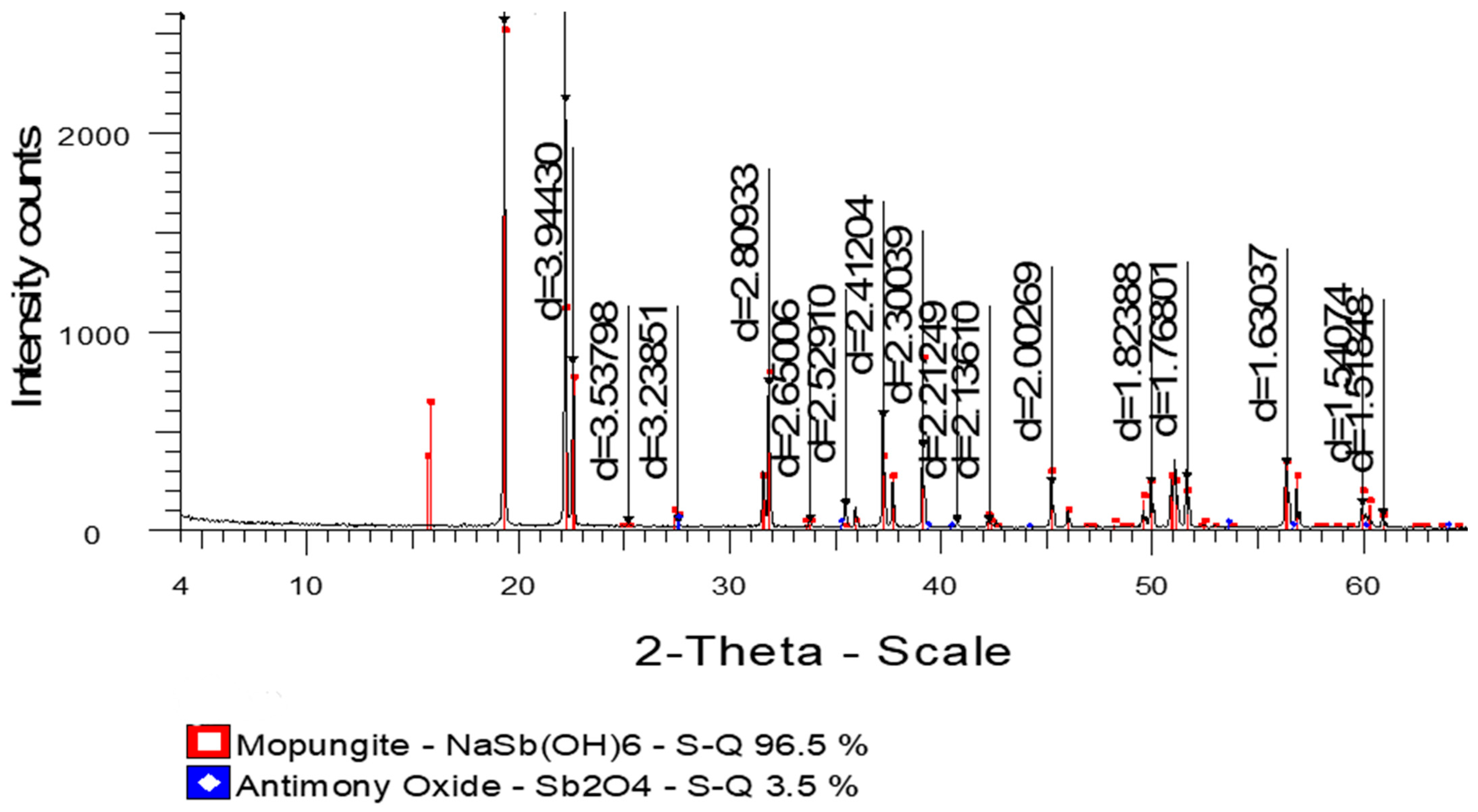
The investigated material is an antimony concentrate obtained during the alkaline refinement of crude lead for the removal of antimony, tin, and arsenic. The concentrate predominantly comprises mopungite NaSb(OH)6 (Figure 1). X-ray diffraction analysis (XRD) was performed with a D8 Advance (Bruker, Billerica, MA, USA) apparatus, α-Cu, with a tube voltage of 40 kV and a current of 40 mA. The obtained diffraction data were processed, and interplanar spacings were calculated using DIFFRAC.EVA software (accessed on 06 June 2012). Sample interpretation and phase identification were performed using the Search/match program and the PDF-2 release 2023 powder diffraction database.
Chemical composition: wt.%: 47.5 Sb; 0.62 Pb; 0.54 Sn; 0.2 As; 10 Na; 0.34 Fe.
The reducing agent was Shubarkul coal coke. The smelting process was carried out in a roasting furnace using silicon carbide heaters, and the reaction zone was an alundum crucible. The process temperature was controlled with chromel–alumel thermocouples connected to a millivoltmeter for temperature measurement and gas sampling tubes for the chromatograph.
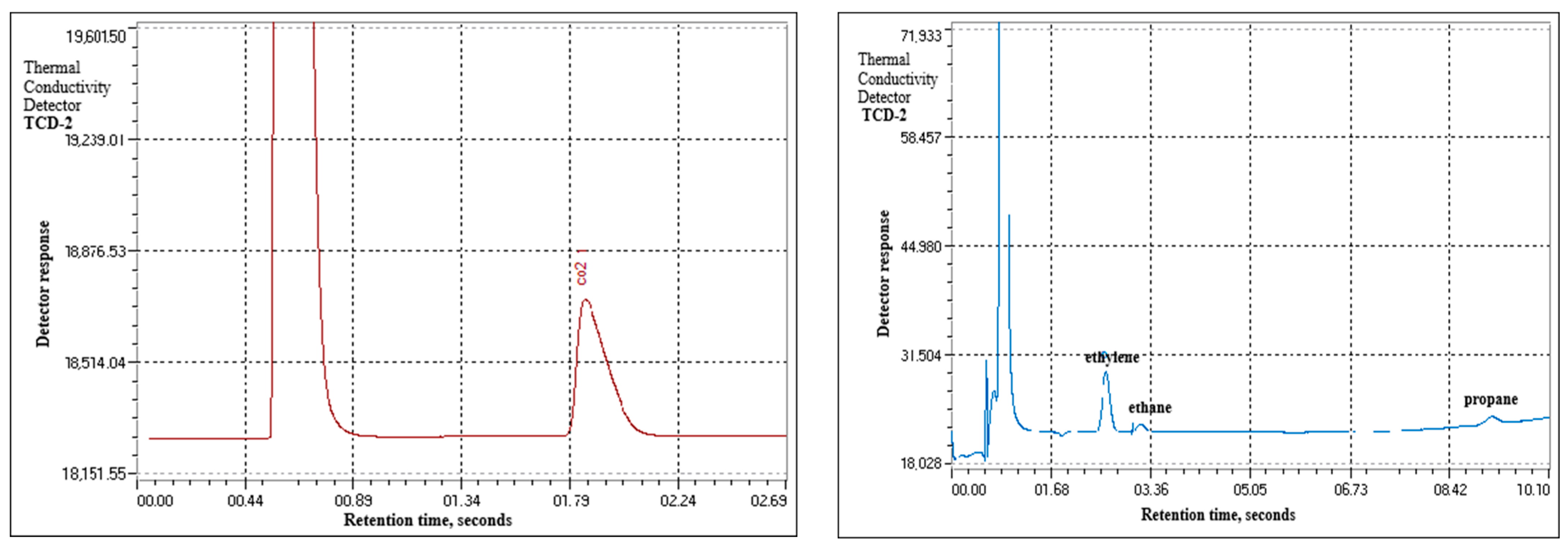
The gas phase was analyzed using a Crystal 4000M chromatograph (NPF Metallom LLC, Yoshkar-Ola, Russia, 2003) with a flame ionization detector (FID) to determine hydrocarbon gases and two thermal conductivity detectors (TCDs) to analyze the permanent gases carbon monoxide (CO), carbon dioxide (CO2), oxygen (O2), and nitrogen (N2).
Pilot tests of antimony concentrate with coke were conducted under a flux layer (a mixture of antimony concentrate and sodium hydroxide). The charge was prepared using the following method: 10 kg of granulated antimony concentrate and 1.4 kg of special coke from Shubarkul coal. Flux (granulated): 1.7 kg of antimony concentrate + 1.2 kg of sodium hydroxide. Melting unit: furnace with selite heaters; alundum crucible (H = 300 mm; d = 150 mm with a maximum charge of 4.5 kg of charge). Heating mode: gradual; initial current, 15 A; increase rate, 0.17 A/min.
Charge load: one-time batch of charge, 2.85 kg; flux above the charge, 0.725 kg. A total of 4 smeltings of crude antimony were carried out. The gas phase was captured in the gas cleaning system, with sampling for CO2 content. Process progress: Upon reaching a temperature of 920 °C, the melting process continued for 25 min, after which the slag was poured into molds; then, the next batch of charge was loaded into the molten metal, followed by the loading of flux.
The charge composition and NaOH addition levels were selected based on thermodynamic calculations, preliminary laboratory experiments, and analysis of phase equilibria in Na–Sb–C–O systems.

3. Results and Discussion

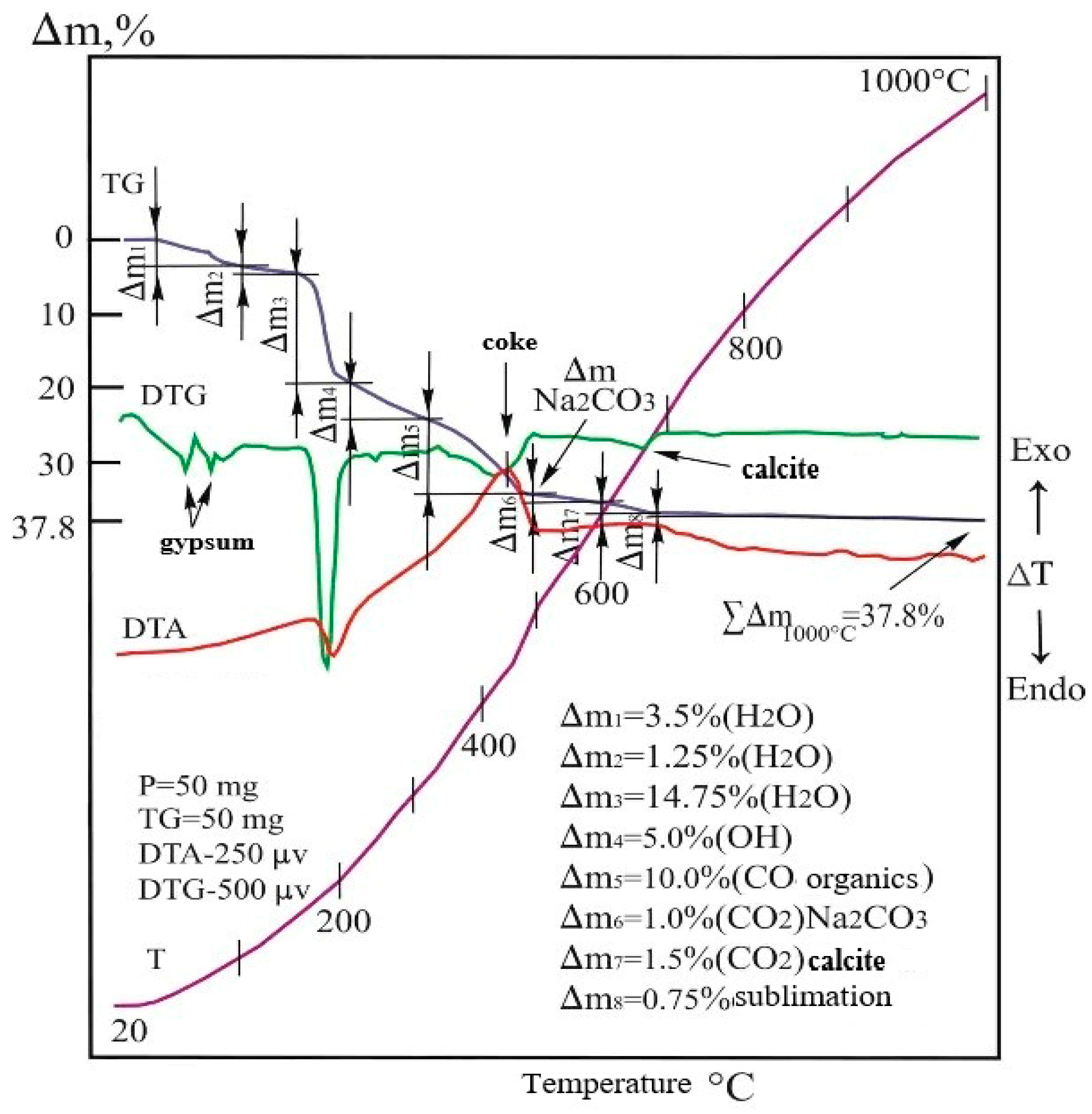
The reduction smelting of the concentrate proceeds through the decomposition stage of sodium hexahydroxoantimonate, Na[Sb(OH)6], to sodium antimonate, Na3SbO4 (Figure 2). TG analysis was performed at a heating rate of 10 °C/min under an air atmosphere.
At the beginning of the coke combustion process at 320–500 °C, CO is formed, which is an active reducing agent for sodium antimonate. Of all possible reduction reactions, only the reduction reaction (Table 1) involving CO, according to reaction (1), is thermodynamically possible:
2Na3SbO4 + 2C + CO (g) = 2Sb + 3Na2CO3
Stoichiometric calculations of the reaction show that 36 g of carbon is required to reduce 509.4 g of sodium antimonate; i.e., 5.6 g of carbon or 6.9 g of Shubarkul coal special coke is required per 100 g of concentrate (of which 80.5 g is anhydrous antimony concentrate). With this special coke consumption, the degree of antimony reduction does not exceed 50–60%.
Experimental work has established an optimal coke consumption of 12–14%. Moreover, the slag yield as soda does not exceed 30%, whereas based on the initial sodium content, the slag yield should be 50–54%. This is explained by the partial volatilization of sodium as sodium peroxide and elemental sodium, formed by reaction (2) at a temperature of 700 °C:
2Na2O → Na2O2 + 2Na
This effect is explained by carbon oxidation at temperatures of 320–500 °C and subsequent decomposition of the concentrate. This results in the release of CO2 from the reaction zone and partial loss of sodium oxides.
To address this issue, we propose introducing sodium hydroxide, which has a melting point of 323 °C, into the charge. Partial melting of the charge before carbon oxidation allows for the binding of the released carbon oxides and dissolution of sodium oxides, ensuring carbon neutrality in the process.
The experimental results are presented in Table 2 and Table 3. The degree of carbon recovery (81% of the carbon is contained in the special coke) into slag was calculated based on the carbon content of the sodium carbonate.
The experimental results demonstrate the ability to bind more than 75.5% of CO2 into the slag phase melt, forming soda (Table 3).
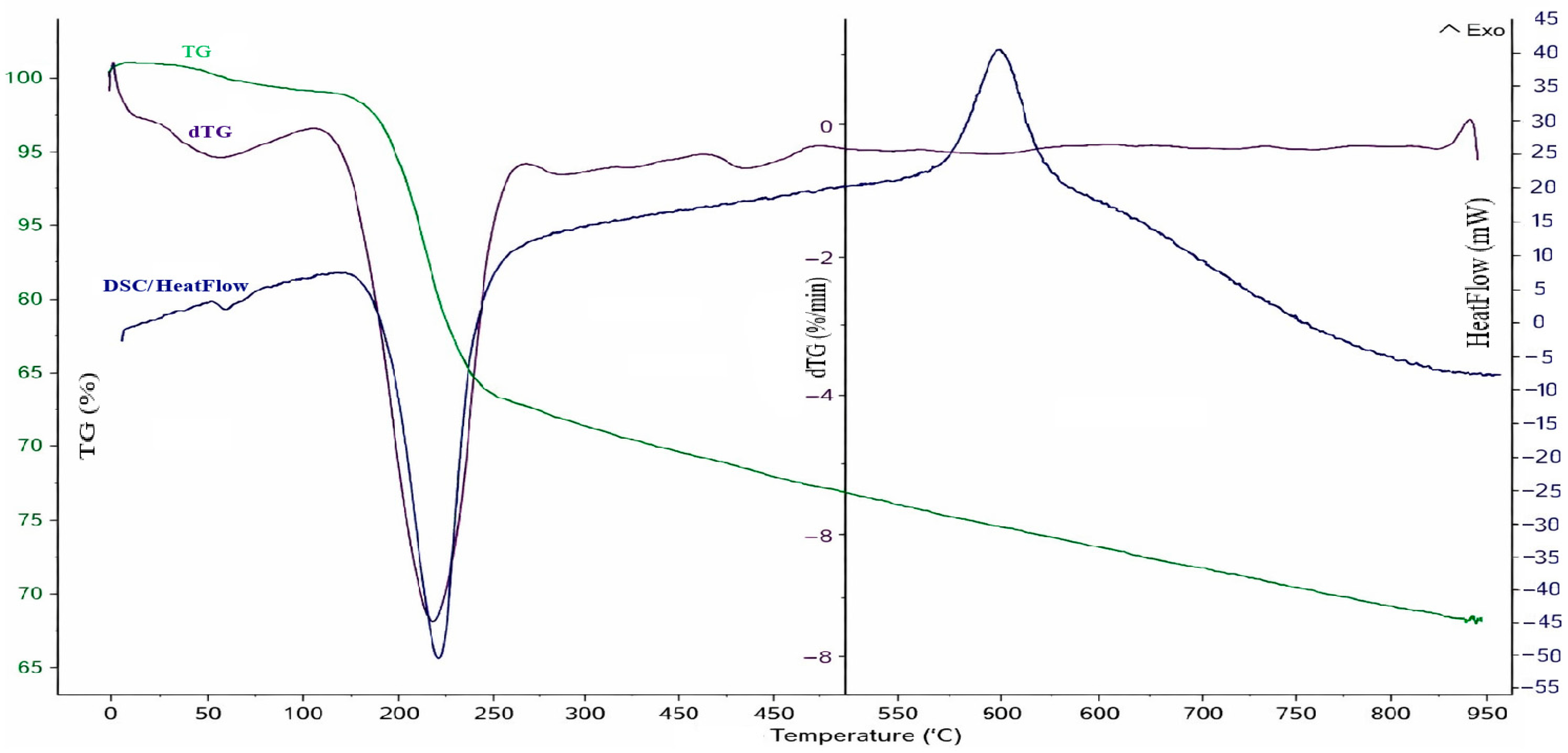
Thermogravimetric studies on the concentrate’s reduction smelting process in the presence of sodium hydroxide revealed the absorption of the resulting CO2 in the range of 500–560 °C, forming sodium carbonate (Figure 3).
Thus, the developed process mode for the reduction smelting of antimony concentrate ensures a low-carbon antimony technology: a metal yield of 46–47% with Sb content of 94–96.2%, and a rate of CO2 conversion to sodium carbonate of 75.5%. A reduction in the carbon dioxide content in the gas phase from 3 to 0.01% was achieved compared to the smelting process without the addition of sodium hydroxide (Figure 4).
To improve process efficiency and utilize the strong reducing agent CO, a process flow is proposed for the reductive smelting of antimony concentrate with coke under a flux layer of antimony concentrate and sodium hydroxide. This approach enables the further oxidation of CO during its interaction with sodium antimonate, yielding an additional amount of metal, and the conversion of CO2 to sodium carbonate via reaction (3) with sodium oxide from sodium antimonate and sodium hydroxide (Table 4). The role of sodium hydroxide in the charge is the formation of a eutectic mixture [20,21] with an optimal melting point for binding with carbon dioxide. The addition of sodium hydroxide promotes the formation of a low-melting eutectic alkaline melt, which reduces slag viscosity, enhances mass transfer, stabilizes sodium-containing phases, and creates favorable conditions for CO2 absorption with subsequent formation of sodium carbonate. This significantly intensifies reduction kinetics and improves impurity distribution between metal and slag phases.
Carbon monoxide acts as an active gaseous reducing agent predominantly in the temperature range of approximately 320–900 °C, corresponding to the stages of coke oxidation and sodium antimonate decomposition.
The experimental results are presented in Table 5, Table 6 and Table 7.
2Na3SbO4 + 5CO (g) + 4NaOH → 2Sb + 5Na2CO3 + 2H2O
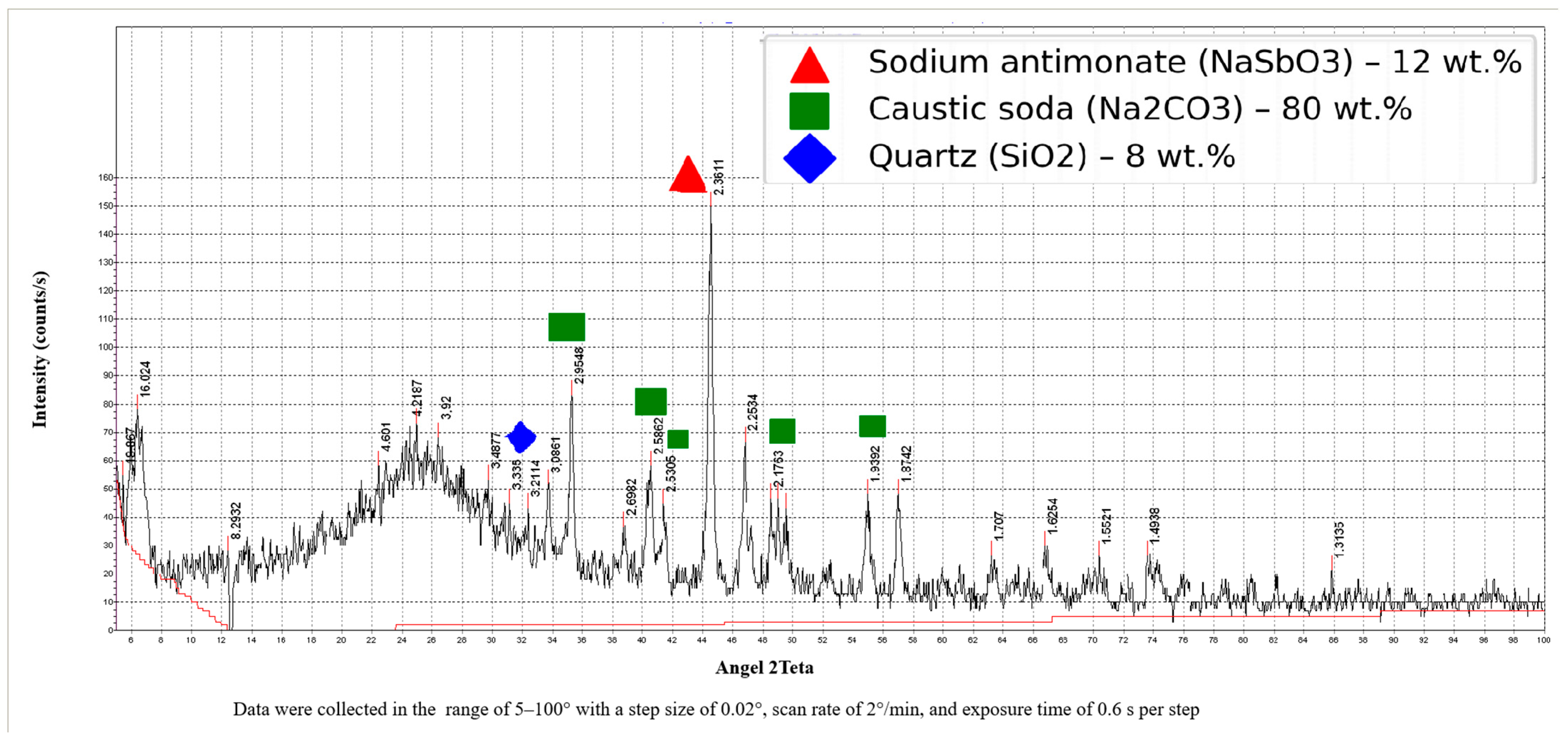
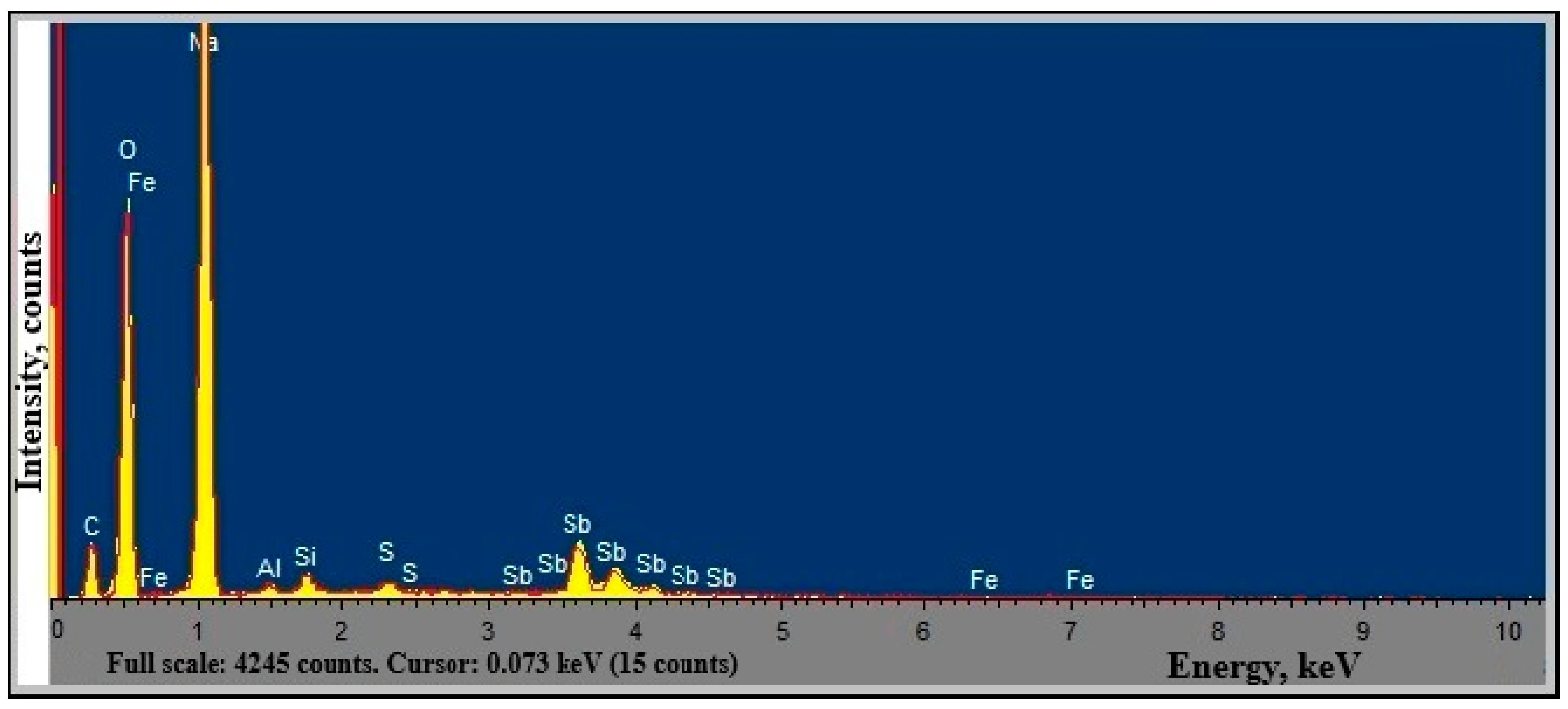
The slag, in addition to soda, contains 12–14% antimony, which consists of small metallic antimony inclusions and unreacted antimony concentrate. The X-ray diffraction composition of the slag was analyzed after the metallic antimony fraction was collected (Figure 5 and Table 8), and energy-dispersive X-ray spectral analysis was performed to determine the elemental composition (Figure 6, Table 9).
The experimental results demonstrate the possibility of efficiently utilizing CO as a reducing agent for antimony concentrate in a flux, resulting in the production of sodium carbonate. Thus, the process simultaneously increases the degree of antimony reduction, fixes CO2 in the solid phase, and forms a stable slag melt with a eutectic composition, ensuring a carbon-neutral balance in the system.
Pilot tests of antimony concentrate with coke were carried out under a layer of flux (a mixture of antimony concentrate and sodium hydroxide).
Test results:
-
A total of 4.6 kg of crude metal containing 94.3% Sb was obtained;
-
A total of 8.5 kg of slag containing metallic inclusions was formed, and an additional 0.9 kg of crude metal containing 92% Sb was recovered after its separation;
-
Phase analysis revealed that the slag was 81% sodium carbonate, confirming an 87% conversion and capture rate of CO2 emitted during concentrate reduction with coke;
-
The CO2 content in the exhaust gases was 0.001%.
The material balance of the pilot tests for the production of pilot batches of crude antimony is presented in Table 10.
Thus, pilot tests were conducted on a carbon-neutral technology for producing metallic antimony, involving smelting concentrate with coke under a flux layer (a mixture of antimony concentrate and sodium hydroxide), establishing the stability of the process modes and environmental performance. The rate of CO2 conversion to sodium carbonate was 87%. The resulting CO was used as a reducing agent for additional antimony concentrate, producing metallic antimony. This reduced the coke consumption of metal smelting by 16–20%.


4. Conclusions

This research established the principles of reducing antimony concentrate smelting in alkaline melts and demonstrated the fundamental possibility of reducing the process’s carbon footprint through the regional recycling of carbon-containing gases. It was experimentally confirmed that antimony reduction proceeds through a multi-stage mechanism involving the active participation of carbon monoxide, which effectively contributes to the re-reduction of antimonate compounds in the temperature range of approximately 320–900 °C.
The introduction of sodium hydroxide into the charge promotes the formation of a low-melting alkaline melt, ensuring the chemical fixation of carbon dioxide to form sodium carbonate and reducing sodium losses due to volatilization. A CO2 binding rate of up to 75.5% was achieved under laboratory conditions, and up to 87% was achieved in pilot tests under a flux layer consisting of a mixture of sodium hydroxide and antimony concentrate while simultaneously reducing the CO2 content in the exhaust gases to 0.001%. Pilot tests confirmed the stability of the process modes and the reproducibility of the results, ensuring the production of black antimony with Sb content of 94–96.2% and a reduction in coke consumption by 16–20%. The obtained data demonstrate the feasibility of implementing carbon-neutral reduction smelting of antimony concentrates without eliminating the use of carbon reducing agents.
The developed approach is recommended for further optimization and scaling under industrial conditions and is of practical interest for the processing of antimony concentrates and intermediate products in regions with a developed coal base.

Author Contributions

Conceptualization, F.B. and N.S.; Methodology, N.S.; Software, N.S.; Formal analysis, N.S.; Investigation, N.S., E.M. and B.O.; Resources, F.B. and B.O.; Data curation, F.B. and E.M.; Writing—original draft, E.M.; Writing—review & editing, E.M. and T.K.; Visualization, F.B. and E.M.; Supervision, T.K.; Project administration, F.B.; Funding acquisition, F.B. All authors have read and agreed to the published version of the manuscript.

Funding

This research is funded by the Committee of Industry of the Ministry of Industry and Construction of the Republic of Kazakhstan under program-targeted funding for scientific research for 2024–2026, BR23991563: “Creation of Innovative Resource-Saving Technologies for Mining and Integrated Processing of Mineral and Technogenic Raw Materials”.

Data Availability Statement

The original contributions presented in this study are included in the article. Further inquiries can be directed to the corresponding author.

Conflicts of Interest

The authors declare no conflict of interest.

References

  1. Moolayadukkam, S.; Appachettolanda, B.K.; Karathan, P.P.; Thomas, S. Antimony (Sb)-based anodes for lithium–ion batteries: Recent advances. Condens. Matter 2022, 7, 27. [Google Scholar] [CrossRef]
  2. He, J.; Wei, Y.; Zhai, T.; Li, H. Antimony-based materials as promising anodes for rechargeable lithium-ion and sodium-ion batteries. Mater. Chem. Front. 2018, 2, 437–455. [Google Scholar] [CrossRef]
  3. Dupont, D.; Arnout, S.; Jones, P.T.; Binnemans, K. Antimony recovery from end-of-life products and industrial process residues: A critical review. J. Sustain. Metall. 2016, 2, 79–103. [Google Scholar] [CrossRef]
  4. Li, Y.; Chen, Y.; Xue, H.; Tang, C.; Yang, S.; Tang, M. One-step extraction of antimony in low temperature from stibnite concentrate using iron oxide as sulfur-fixing agent. Metals 2016, 6, 153. [Google Scholar] [CrossRef]
  5. Zhu, X.; Yang, J.; Yang, Y.; Huang, Q.; Liu, T. Pyrometallurgical process and multipollutant co-conversion for secondary aluminum dross: A review. J. Mater. Res. Technol. 2022, 21, 1196–1211. [Google Scholar] [CrossRef]
  6. Alguacil, F.J. Recent hydrometallurgical investigations to recover antimony from wastes. Metals 2025, 15, 276. [Google Scholar] [CrossRef]
  7. Luo, D.; Wu, X.; Vázquez, B.; Maestre, M.; Davoise, D.; Lopez, J.; Cortina, J.L. Selective recovery of antimony from Sb-bearing copper concentrates by integration of alkaline sulphide leaching solutions and microwave-assisted heating: A new sustainable processing route. Sci. Total Environ. 2024, 951, 175576. [Google Scholar] [CrossRef]
  8. Pereira, A.C. Antimony hydrometallurgy from primary and secondary sources (2020–2025): Critical review of leaching systems and downstream separation. IKR J. Eng. Technol. 2026, 2, 1. [Google Scholar] [CrossRef]
  9. Sajadi, S.A.A.; Khorablou, Z.; Sadeghi Naeini, M. Recovery of antimony from acidic and alkaline leaching solution of low-grade antimony ore by electrowinning process. Heliyon 2024, 10, e35300. [Google Scholar] [CrossRef]
  10. Tang, Z.; Tang, X.; Liu, H.; Xiao, Z. A clean process for recovering antimony from arsenic-bearing crystals and immobilizing arsenic as scorodite. Sep. Purif. Technol. 2022, 295, 121276. [Google Scholar] [CrossRef]
  11. Zhang, Y.; Wang, C.; Ma, B.; Jie, X.; Xing, P. Extracting antimony from high arsenic and gold-containing stibnite ore using slurry electrolysis. Hydrometallurgy 2019, 186, 284–291. [Google Scholar] [CrossRef]
  12. Terlikbayeva, A.Z.; Sydykov, A.O.; Berdikulova, F.A.; Mazulevsky, E.A. Producing metallic antimony with low arsenic content from antimony concentrate. Russ. J. Non-Ferr. Met. 2018, 59, 256–260. [Google Scholar] [CrossRef]
  13. Sydykov, A.O.; Zharmenov, A.A.; Mazulevsky, E.A.; Seidakhmetova, N.M.; Mnadzharova, A. Fire refining of rough antimony from impurities for obtaining high-grade antimony. Metallurgist 2022, 65, 1187–1195. [Google Scholar] [CrossRef]
  14. Moosavi-Khoonsari, E.; Mostaghel, S.; Siegmund, A.; Cloutier, J.-P. A review on pyrometallurgical extraction of antimony from primary resources: Current practices and evolving processes. Processes 2022, 10, 1590. [Google Scholar] [CrossRef]
  15. Li, Y.; Xue, H.; Taskinen, P.; Yang, S.; Tang, C.; Jin, W.; Chen, Y.; Jokilaakso, A. Sustainable phase-conversion method for antimony extraction and sulfur conservation and waste treatment at low temperature. J. Clean. Prod. 2020, 268, 121950. [Google Scholar] [CrossRef]
  16. Padilla, R.; Chambi, L.C.; Ruiz, M.C. Antimony production by carbothermic reduction of stibnite in the presence of lime. J. Min. Metall. Sect. B-Metall. 2014, 50, 5–13. [Google Scholar] [CrossRef]
  17. Ye, L.; Ouyang, Z.; Chen, Y.; Chen, Y.; Xiao, L. Sulfur fixation and reduction roasting of stibnite for clean extraction of antimony by a combined metallurgy and beneficiation process. Miner. Eng. 2019, 144, 106049. [Google Scholar] [CrossRef]
  18. United Nations. Paris Agreement; United Nations: New York, NY, USA, 2015. [Google Scholar]
  19. IPCC. 2006 IPCC Guidelines for National Greenhouse Gas Inventories; Eggleston, H.S., Buendia, L., Miwa, K., Ngara, T., Tanabe, K., Eds.; IGES: Hayama, Japan, 2006. [Google Scholar]
  20. European Commission. Best Available Techniques (BAT) Reference Document for the Non-Ferrous Metals Industries (BREF); Publications Office of the European Union: Luxembourg, 2017. [Google Scholar]
  21. Luo, H.; Kanoh, H. Fundamentals in CO2 capture of Na2CO3 under a moist condition. J. Energy Chem. 2017, 26, 972–983. [Google Scholar] [CrossRef]
  22. Xu, Z.; Ma, J.; Chen, X.; Song, Z.; Liu, D.; Liang, C. CO2 capture performance of ZrO2-doped Na2CO3/γ-Al2O3 adsorbent. J. Environ. Sci. 2025, 155, 382–394. [Google Scholar] [CrossRef]
  23. Wang, Z.; Xu, Q.; Peng, K.; Wang, Z. Elucidating the promotion of Na2CO3 in CO2 capture by Li4SiO4. Phys. Chem. Chem. Phys. 2021, 23, 28014–28023. [Google Scholar] [CrossRef]
  24. Wiszniewski, L.; Raonic, Z.; Nuraeni, B.A.; Marschall, I.; Satritama, B.; Rhamdhani, M.A.; Riesel, S. Investigation of thermokinetics in carbo- and aluminothermic reduction of synthesized lithium iron phosphate black mass. J. Clean. Prod. 2025, 503, 145357. [Google Scholar] [CrossRef]
  25. Chery, D.; Albin, V.; Lair, V.; Cassir, M. Thermodynamic and experimental approach of electrochemical reduction of CO2 in molten carbonates. Int. J. Hydrogen Energy 2014, 39, 12330–12339. [Google Scholar] [CrossRef]
  26. Nur’aini, A.; Laasonen, E.; Ruuskanen, V.; Koiranen, T.; Kauranen, P.; Ahola, J. Comparative analysis of molten salt electrolytes for solid carbon production. Renew. Sustain. Energy Rev. 2024, 209, 115104. [Google Scholar] [CrossRef]
  27. Government of Kazakhstan. Strategy for Achieving Carbon Neutrality of the Republic of Kazakhstan Until 2060; Government of Kazakhstan: Astana, Kazakhstan, 2023. [Google Scholar]
  28. Miškovičová, Z.; Legemza, J.; Demeter, P.; Buľko, B.; Hubatka, S.; Hrubovčáková, M.; Futáš, P.; Findorák, R. An overview analysis of current research status in iron oxides reduction by hydrogen. Metals 2024, 14, 589. [Google Scholar] [CrossRef]
  29. Satritama, B.; Cooper, C.; Fellicia, D.; Pownceby, M.I.; Palanisamy, S.; Ang, A.; Mukhlis, R.Z.; Pye, J.; Rahbari, A. Hydrogen plasma for low carbon extractive metallurgy: Oxides reduction, metals refining, and wastes processing. J. Sustain. Metall. 2024, 10, 1845–1894. [Google Scholar] [CrossRef]
  30. Berdikulova, F.A.; Zharmenov, A.A.; Terlikbayeva, A.Z.; Sydykov, A.O.; Mazulevsky, E.A. Thermal studies of the process of interaction of tin oxide, lead and antimony with sodium phosphates. In Proceedings of the 17th International Multidisciplinary Scientific GeoConference Surveying Geology and Mining Ecology Management (SGEM 2017), Albena, Bulgaria, 29 June–5 July 2017; Volume 17, pp. 1133–1142. [Google Scholar] [CrossRef]
  31. Berdikulova, F.A.; Mazulevsky, E.A.; Zharmenov, A.A.; Terlikbayeva, A.Z.; Sydykov, A.O. Reagent for Refining Antimony from Lead and Tin. Kazakhstan Patent No. 32918, 29 June 2018. [Google Scholar]
Figure 1. X-ray phase analysis of antimony concentrate.
Metals 16 00265 g001
Figure 2. Thermogravimetric analysis: concentrate + 10% coke.
Metals 16 00265 g002
Figure 3. Thermogravimetric analysis: concentrate + 10% coke + 15% NaOH.
Metals 16 00265 g003
Figure 4. Chromatogram of gases from the smelting of antimony concentrate in the presence of sodium hydroxide.
Metals 16 00265 g004
Figure 5. Diffraction pattern of slag.
Metals 16 00265 g005
Figure 6. Energy-dispersive X-ray spectral analysis of slag.
Metals 16 00265 g006
Table 1. Thermodynamic data for the sodium antimonate reduction process.
T, °CΔH, kJ/molΔS, kJ/mol·KΔG, kJ/molKLog K
200−316.202−133.817−252.8858.320 × 102727.920
400−320.268−141.695−224.892.832 × 101717.452
600−328.712−151.846−196.1255.418 × 101111.734
800−296.056−115.378−172.2392.422 × 1088.384
1000−209.911−38.493−160.94.000 × 1066.602
1200−216.811−43.497−152.7332.606 × 1055.416
1400−227.036−49.982−143.4073.002 × 1044.477
1600−240.346−57.484−132.675.012 × 1033.700
1800−256.596−65.714−120.3611.079 × 1033.033
2000−275.68−74.492−106.3492.080 × 1022.444
Table 2. Degree of carbon extraction into slag depending on the composition of the charge; smelting duration, 30 min.
Consumption from Concentrate Mass, %t, °CResults of Recovery Smelting
CokeNaOHMetal Yield from Concentrate Mass, %Slag Yield from Concentrate Mass, %Degree of CO2 Binding in Slag Melt, %
110090047.42637.86
210690048.53040.5
310890048.53244.2
4101090048.03650.31
5101290047.64055.6
6101490047.24461.5
7101080046.74258.7
8101070045.74562.89
9101580046.75275.5
Table 3. Chemical composition of the obtained slags, %.
SbPbSnAsFe
16.40.080.240.050.26
25.80.10.300.10.3
35.20.10.300.20.3
45.50.10.300.30.3
55.00.270.300.340.3
64.80.280.480.340.3
74.80.30.550.340.36
84.50.30.680.340.55
94.20.40.710.340.67
Table 4. Thermodynamic data for the reduction of sodium antimonate (Na3SbO4) by CO (g) in the presence of NaOH.
T, °CΔH, kJ/molΔS, kJ/mol·KΔG, kJ/molKLog K
200−1011.02−0.79−797.058.320 × 102727.920
400−1015.20−0.79−644.975.418 × 101111.734
600−1033.41−0.82−316.518.353 × 101818.922
700−983.01−0.77−237.995.730 × 101212.758
800−968.87−0.75−161.857.494 × 1077.872
900−800.65−0.60−94.041.537 × 1044.187
1000−783.64−0.59−34.442.589 × 1011.413
1100−767.76−0.5823.801.241 × 10−1−0.906
1200−751.44−0.5780.911.353 × 10−3−2.869
1300−735.77−0.56136.972.839 × 10−5−4.547
Table 5. Average experimental results on the optimization of metallic antimony smelting modes at a pilot plant; smelting duration, 30 min.
MixtureFluxT, °CResults of Recovery Smelting
Concentrate, kgCoke, kgConcentrate, kgNaoh, kgYield of Crude Metal from the Mass of ConcentrateSlag Yield from Concentrate Mass, %Losses
kg%kg%kg%
13.250.4550.20.559001.3730.762.4755.440.6113.8
23.250.4550.3750.3759001.3630.632.6359.130.4610.24
33.250.4550.550.29001.4131.552.6058.320.4510.13
Table 6. Chemical composition of the resulting rough metal, wt.%.
SbPbSnNaFeCuZnC
194.33.870.320.360.260.110.10.41
294.074.030.270.230.330.170.220.29
395.13.350.390.330.490.100.180.37
Table 7. Chemical composition of slag with metal inclusions, %.
Na2CO3NaOHSbPbSnAsFeCuZnC
184.98not found12.470.430.240.180.0450.00150.0021.81
281.12not found16.640.340.300.190.130.0050.0012.04
380.82not found15.690.140.300.060.0410.00150.00251.52
Table 8. Phase composition of slag with metal.
Name of the PhaseFormulaCard Number in the DatabaseContent, %
Sodium antimonate catena-antimonateNaSbO300-074-012412
Sodium hydroxideNa2CO300-072-062880
QuartzSiO200-081-00688
Table 9. Elemental composition of slag.
SpectrumONaAlSiSFeSbResult
Spectrum 226.5940.100.740.910.660.7330.26100.00
Spectrum 337.2548.180.751.240.770.0011.81100.00
Spectrum 439.4149.250.661.740.720.008.23100.00
Average34.4245.840.721.300.720.2416.77100.00
Table 10. Material balance.
Flow of MaterialsUnitsWeight, kgSb, %Weight, kgNa2O, %Weight, kgC, %Weight, kg
Received
Reducing charge
Antimony concentratekg1047.74.7726.82.6800
Cokekg1.400.0000.00781.092
Flux
Antimony concentratekg1.69447.70.8126.80.4500
Sodium hydroxidekg1.200.0077.50.9300
Received
Rough metalkg4.65694.34.3900.000.80.037
Slag consisting of sodium carbonatekg7.5100.00544.0611.60.871
Slag consisting of metallic inclusionskg1.047920.965.50.002.50.026175
Dust–gas mixturem30.300.0000.005.050.01515
Mismatch 0.22 0.01 0.142
Disclaimer/Publisher’s Note: The statements, opinions and data contained in all publications are solely those of the individual author(s) and contributor(s) and not of MDPI and/or the editor(s). MDPI and/or the editor(s) disclaim responsibility for any injury to people or property resulting from any ideas, methods, instructions or products referred to in the content.