


Abstract
As industrial technology advances at an accelerated pace, the demands on the performance characteristics of aluminum alloys are becoming more stringent. Researchers have enhanced the casting process of aluminum alloys through a range of innovative methods, thereby significantly improving the overall performance of these materials. This advancement better equips aluminum alloys to meet the increasingly stringent requirements in the aerospace, new energy, and automotive industries. This paper reviews the current development status of casting aluminum alloys using directional solidification technology, details the process parameters and simulation techniques, and summarizes studies on the corrosion performance of directionally solidified aluminum alloys as evaluated by electrochemical testing. Additionally, this paper elaborates on the current research status regarding the enhancement of directionally solidified aluminum alloys through the application of magnetic fields, providing a valuable reference for future studies on directional solidification technology in casting aluminum alloys.
1. Introduction
Due to their advantageous attributes—including lightweight design, enhanced strength, robust corrosion resistance, high thermal coefficient, reduced elastic modulus and notable plasticity—aluminum alloys are extensively utilized in industries ranging from automotive and aerospace to electronics, machinery and consumer products [1]. However, with the increasing complexity of curved surface shapes, larger spans, and demanding usage environments—particularly in aerospace and new energy vehicles [2]—aluminum alloys produced by conventional casting methods often fail to meet the stringent industrial requirements. The appropriate addition of rare earth elements can significantly refine grain size and enhance alloy properties [3]. Despite the significant cost implications associated with rare earth elements, developing innovative processing techniques remains imperative to achieve concurrent optimization of aluminum alloy properties and economic viability.
Directional solidification technology addresses this need by creating a controlled temperature gradient between the molten metal and the unsolidified metal. This technique forces the formation of columnar or single crystals in a specific direction, effectively eliminating transverse grain boundaries. As a result, directional solidification significantly enhances the mechanical properties of alloys [4]. This technology has already seen successful application in the aerospace industry, particularly for the production of aeroengine and turbine blades, where it improves the performance of nickel-based alloys under extreme conditions.
Directional solidification technology was initially widely applied in the research and development of nickel-based superalloys and single crystal materials. By controlling the grain growth along the [001] crystal direction, it significantly enhanced the structural strength and microstructure stability of castings under harsh service conditions [5]. With the rapid development of directional solidification technology, the technology has been extended to aluminum alloys, magnesium alloys and semiconductor materials, and extensive research has demonstrated that fabricating aluminum alloys through directional solidification technology is an important method to improve their properties [6]. Sari et al. [7] conducted experiments on Al-6%Cu alloy using Bridgman directional solidification technology to study the evolution law of microstructure during solidification. The results showed that in the early stage of solidification, the double cone dendrite arms grew rapidly, followed by the remelting phenomenon of smaller dendrite arms. This evolution process was in good agreement with the existing time-dependent theoretical model including growth and coarsening mechanisms. Borkar et al. [8] prepared A380 Al-Si-Cu alloy through directional solidification process and obtained two samples with secondary dendrite arm spacing (SDAS) of 9 µm and 27 µm. The study found that a lower solidification rate tended to promote the formation of larger SDAS.
Directional solidification technology has certain differences from the current mainstream advanced processing techniques of aluminum alloys, especially in terms of corrosion resistance. Directional solidification technology can optimize material performance by precisely controlling the formation of microstructure during the solidification process, and it is widely applied in the fields of high-temperature alloys and single-crystal materials [9]. The current methods to enhance the corrosion resistance of alloys mainly include surface treatment and coating techniques, as well as heat treatment and mechanical processing. The corrosion resistance of aluminum alloys mainly depends on the stability and integrity of the oxide film formed on their surface. The performance of the oxide film is more significantly influenced by the distribution of alloying elements and the second phase particles (such as intermetallic compounds formed by elements like Mg, Cu, and Zn) [10]. Directional solidification technology effectively suppresses the formation of defects by regulating the temperature gradient and growth rate, not only enhancing the corrosion resistance of materials but also facilitating the formation of columnar crystal structures, which is conducive to the improvement of mechanical properties [11]. Directional solidification technology has certain differences from the current mainstream advanced processing techniques for aluminum alloys, especially in terms of corrosion resistance. Directional solidification technology can optimize material properties by precisely controlling the formation of microstructure during the solidification process, and is widely used in high-temperature alloys and single crystal materials [9]. Currently, the methods to improve the corrosion resistance of alloys mainly include surface treatment and coating technology, as well as heat treatment and mechanical processing techniques [12]. The corrosion resistance of aluminum alloys mainly depends on the stability and integrity of the oxide film formed on the surface. The performance of the oxide film is affected by the distribution of alloy elements and second-phase particles [13]. By regulating the temperature gradient and growth rate, directional solidification technology effectively suppresses the formation of defects, not only enhancing the corrosion resistance of the material, but also the formation of columnar crystal structure is conducive to the improvement of mechanical properties [10]. In some special application scenarios, aluminum alloy components with strict requirements for high strength and heat resistance, directional solidification technology may indirectly affect the corrosion behavior by controlling the phase distribution. For example, the corrosion behavior of the directional solidified FeCoNiCrAl high-entropy alloy changes as the solidification rate increases, and the interface morphology evolves from planar to honeycomb and dendritic [11].
The application of directional solidification technology in aluminum alloys has become more and more extensive; this paper discusses the current development status of aluminum alloys prepared by directional solidification technology through the four aspects of process parameters, trace elements, magnetic field and corrosion performance.
2. Influence of Process Parameters on Directional Solidification of Aluminum Alloys
The mechanical properties of aluminum alloys are critically dependent on processing variables, wherein temperature gradient (G) and solidification velocity (V) constitute the governing parameters in directional solidification systems as per constitutional undercooling theory. These parameters significantly influence metal solidification and dendritic growth [14]. The process parameters of directional solidification are key factors influencing its microstructure and mechanical properties, mainly including temperature gradient (G), solidification rate (V) or withdrawal rate, cooling rate (TR), alloy composition and mold design, etc. [15,16]. These parameters control the thermodynamic and kinetic conditions during the solidification process, thereby determining the dendritic morphology, dendrite spacing, grain size, and distribution of the second phase of the alloy, and ultimately affecting the macroscopic properties of the material. The temperature gradient (G) and solidification rate (V) are the two most core parameters in the directional solidification process. They jointly determine the advancement speed and morphology of the solid/liquid interface and have a decisive influence on the microstructure of aluminum alloys. The ratio of the temperature gradient to the solidification rate (G/V) is a key parameter for judging the morphology of the solid/liquid interface (such as planar, cellular, dendritic) [17]. When the G/V value is relatively high, the interface tends to remain planar; as the G/V value decreases, the interface may transform from planar to cellular and then to dendritic. The interarm spacing of dendrites is also influenced by the G/V value [18,19]. Research shows that a higher temperature gradient usually leads to a smaller dendrite arm spacing, which is conducive to improving the mechanical properties of the alloy [20]. Rios et al. [21] significantly influenced the growth of dendrites in the directional solidification of Al-Si-Cu alloys by adjusting the growth rate and thermal gradient. The primary dendrite arm spacing (λ1) and secondary dendrite arm spacing (λ2) usually have a power-law relationship with the solidification rate and cooling rate. A lower solidification rate and a higher temperature gradient are conducive to the formation of finer dendritic structures, thereby enhancing the strength and toughness of the material [22]. Carvalho et al. [23] conducted directional solidification of Al-7wt%Si alloy. The experiments indicated that the primary dendrite arm spacing was in a power-law relationship with the growth rate and cooling rate.
Researchers have conducted extensive studies on the process parameters of directional solidification. An increase in solidification rate usually leads to a significant improvement in the mechanical properties of aluminum alloys. The primary dendrite arm spacing (SDAS) has a significant impact on the mechanical behavior of cast aluminum alloy components. A smaller SDAS is conducive to enhancing fatigue strength.
He et al. [24] examined the microstructure and mechanical properties of 6061 alloy subjected to various pull rates through the use of liquid metal cooling (LMC). The findings indicate that the maximum tensile strength reaches 183.31 MPa at a cooling rate of 50 µm/s, whereas the peak microhardness of 67.66 HV is achieved when the cooling rate increases to 150 µm/s. Hu et al. [25] investigated the process of removing impurities from the silicon-rich layer during the directional solidification of Ti alloys and found that the optimal pulling rate was 5 µm/s. At this rate, the time of the directional solidification process was minimized while achieving excellent impurity removal efficiency. Zhao et al. [26] systematically investigated withdrawal rate effects (45–150 µm/s) on single-crystal blade solidification, correlating thermal field characteristics (G, T-distribution) with microstructural evolution in directional solidification systems. Their findings show that as the withdrawal speed increases, the temperature gradient (G) diminishes, resulting in a more significant reduction in the temperature field. Additionally, it was observed that higher extraction rates contribute to reducing the secondary dendrite arm spacing and refining the grain structure. The research on the process parameters of aluminum alloys mentioned above has significantly reduced industrial production costs and provided an important reference basis for the development of directional solidification aluminum alloy technology.
Directional solidification technology often leads to the formation of columnar dendrites, but there is limited research on equiaxed dendrites. Dendritic structures are the most common in cast alloys. The microstructure of Al-based alloy castings (columnar or equiaxed crystals) determines their macroscopic properties. Equiaxed crystals have better isotropy and compositional uniformity, while columnar crystals are suitable for high-temperature alloy turbine blades. Therefore, understanding the transformation between equiaxed and columnar dendrites (CET) is of certain significance.
The CET is influenced by multiple factors, such as the initial concentration C0, distribution coefficient k, and alloy parameters, etc. [27]. Researchers proposed the Hunt model [28], Hunt believed that at low growth rates, equiaxed growth depends on the efficiency of grain refiners, while at high gradients, the number of nucleation sites is more important. Although the Hunt model is crucial for the study of CET, it lacks a dynamic understanding of solute interactions, etc. The predictions of the CET model overly rely on undercooling of composition and nucleus density. Wang et al. [29] proposed a model in which the solute interaction between equiaxed grains was considered. However, the solute interaction between the equiaxed microstructure and columnar dendrites was neglected. Martorano et al. [30] developed a new model based on Wang et al.’s work, in which the interaction between equiaxed microstructure and solute was mutually reflected, successfully handling the columnar front. In this model, CET is a direct result of the interaction between the equiaxed microstructure and the columnar front, and thus is called solute blocking. Although the above model predicted the formation of CET, it lacks comparison with experimental results.
The above-mentioned research indicates that the mechanism of the CET transformation stems from the interaction of solutes between equiaxed grains and columnar grains. This interaction leads to an increase in solute concentration at the dendrite front, generating a solute repulsion effect, which in turn inhibits the growth of the columnar grain front, allowing equiaxed grains to nucleate and expand, and ultimately promoting the occurrence of the columnar-to-equiaxed transition. Jung et al. [31] investigated the factors influencing the columnar-to-equiaxed transition (CET) of Al-based alloys (Al-3.5 wt% Ni and Al-7.0 wt% Si) during directional solidification. By controlling the temperature gradient and withdrawal rate, the solid–liquid interface was observed using synchrotron X-ray imaging technology. The results showed that CET occurred in the Al-3.5 wt% Ni alloy at a high withdrawal rate (10 µm/s), with equiaxed grains originating from the activation of refined particles. This velocity-dependent morphological transformation is illustrated in Figure 1. For the Al-7.0 wt% Si alloy, due to the influence of Si on TiB2 particles, a lower temperature gradient (17 K/cm) and a higher withdrawal rate (300 µm/s) were required to achieve CET through dendrite fragmentation. During the CET process, solute segregation led to the cessation of columnar grain growth, and the sedimentation of grains affected the final microstructure. In non-refined alloys, fluctuations in dendrite growth rates caused secondary arm fragmentation, forming equiaxed grains. Synchrotron imaging revealed the dynamic processes of solute segregation, grain sedimentation, and dendrite fragmentation, verifying the “solute segregation” mechanism.
Figure 1.
(a) Longitudinal CET morphology in Al-3.5wt%Ni alloy solidified under G = 26 K/cm with V increased from 2 to 20 µm/s; (b,c) Transverse sections at V = 20 µm/s (equiaxed) and V = 2 µm/s (columnar). Reproduced with permission [31]. Copyright 2009, Journal of Alloys and Compounds.
Zimmermann et al. [32] utilized X-ray diagnostic techniques to study in situ the formation of columnar or equiaxed grains in Al-10wt%Cu alloy. It was found that at lower solidification speeds, a significant number of small grains are present. Compared with the lowest growth rate at v = 8.3 µm/s, the number of grains decreased by approximately half at v = 30 µm/s, while the average grain size doubled, as shown in Figure 2. For higher speeds, the grain size continued to increase, with the grain structure consisting of some predominantly columnar grains and some randomly oriented grains. The experimental findings revealed an atypical microstructural evolution where equiaxed grain formation dominated at reduced solidification rates, contrary to conventional expectations of columnar dominance. In situ monitoring of the solidification front demonstrated dynamic detachment of dendritic fragments from the primary tip zone, with these particulates maintaining spatial precedence ahead of the advancing solid–liquid interface. The minimal density contrast between the fragments and the melt promoted their excessive growth, ultimately triggering a classical columnar-to-equiaxed transition (CET) through competitive grain growth mechanisms at lower solidification velocities.
Figure 2.
Average number of grains (top) and average grain size (bottom) for different solidification velocities. Reproduced with permission [32]. Copyright 2017, Acta Materialia.
The above research fully demonstrates that the CET phenomenon in aluminum alloys is strongly influenced by two key process parameters: temperature gradient and solidification rate. However, the presence of gravity can disrupt the temperature and concentration fields in the melt, affecting dendrite and grain structures. Roósz et al. [33] conducted directional solidification experiments on Al-4, 10, 18 wt% Cu alloys and Al-7 wt% Si alloy under normal gravity conditions. The research results indicated that columnar-to-equiaxed transition (CET) could still be observed in the Al-Cu alloy samples without the addition of grain refiners; however, for the Al-Si alloy, the occurrence of CET required the addition of grain refiners. Zhang et al. [34] conducted directional solidification experiments on Al-Cu and Al-Si alloys under normal gravity and found that CET occurred in the Al-Cu alloy without grain refiners, while the Al-Si alloy maintained columnar growth. Although they observed this phenomenon, the underlying transformation mechanism lacks experimental verification and theoretical support. To explore this issue, Zhang et al. [35] conducted directional solidification experiments on Al-3.5 wt%Si and Al-10 wt%Cu alloys with and without grain refiners. The study found that the refined alloys experienced CET, while the unrefined alloys maintained columnar crystal growth. Moreover, the CET response rate of the refined alloys was faster than that of the unrefined alloys. The occurrence of CET depends on the relative magnitudes of the maximum solute undercooling and the critical undercooling for nucleation. Refiners promote CET by reducing nucleation undercooling. Gravity-induced thermosolutal convection enriches Si in the center and upper part and Cu in the center and lower part. The refined alloys experience more severe axial segregation due to the floating and sinking of equiaxed nuclei. This study quantitatively compared the differences in CET responses between Al-Si and Al-Cu alloys, revealing the influence of solute density on the direction of gravity-induced segregation, and provided experimental supplementation for the coordinated regulation of CET mechanisms by refiners and process parameters.
With the continuous deepening of research on aluminum alloys, more and more studies on CET have been carried out, including expanding the research on multi-component alloy systems, exploring the interaction of composite solutes, quantifying the influence of gravity convection on the stability of the solidification interface through numerical simulation, conducting microgravity environment experiments, and comparing the differences in CET mechanisms under different gravitational fields and optimizing the addition methods of grain refiners. As the comprehensive performance requirements for aluminum alloys in the industrial field continue to increase, CET-related research has become a hot direction in the current field of materials science.
3. Effect of Elemental Additions on Directional Solidification of Aluminum Alloys
In the directional solidification process, adding specific alloying elements to aluminum alloys is a key technology for regulating their solidification structure and optimizing mechanical properties. These added elements endow aluminum alloys with superior comprehensive performance through multiple complex mechanisms, such as influencing the nucleation and growth of grains, altering the morphology of eutectics and intermetallic compounds, and controlling the segregation behavior of elements. Grain refinement is one of the most effective ways to improve the as-cast microstructure and properties of aluminum alloys [36]. It significantly enhances the strength, toughness, fatigue resistance and machinability of the alloy by obtaining fine and uniform equiaxed crystal structure and eliminating coarse columnar crystals. During the directional solidification process, the addition of elements mainly achieves grain refinement through two mechanisms: heterogeneous nucleation and compositional undercooling. Rare earth elements such as scandium (Sc), erbium (Er), and transition elements such as zirconium (Zr), etc., can form Al3M-type (where M represents Sc, Er, Zr, etc.) intermetallic compounds in aluminum melts. These compounds possess high melting points, excellent thermodynamic stability, and good lattice matching with the α-Al matrix, making them efficient heterogeneous nucleating agents [37]. Sun et al. [38] investigated the relationship between the melting conditions and the morphology of the Al-2.2Sc primary phase, finding that the cooling rate is a key factor influencing the morphological evolution of the Al-2.2Sc primary phase. The melting point temperature has a significant impact on the dendrite degree, while the holding time has a considerable effect on the primary phase. Moderate melting point and rapid cooling lead to the diversity of the primary Al3Sc morphology, while a higher melting point and slower cooling rate may result in the primary Al3Sc phase mainly presenting a butterfly shape. When the Sc content exceeds the eutectic point, its refinement mechanism changes from composition undercooling to heterogeneous nucleation centered on Al3Sc, which can significantly reduce the grain size. When the addition amount of rare earth elements is lower than their solid solubility in aluminum, they mainly exist as solute atoms and segregate at the solidification front, causing significant composition undercooling. Research shows that the Grain Refinement Factor (GRF) values of different rare earth elements vary significantly. Zr has a GRF as high as 6.8C0, Sc is 3.9C0, while Er is only 0.88C0 [37]. This indicates that Zr and Sc in solute state have a strong ability to inhibit grain growth, while the effect of Er is relatively weak, mainly manifested in the refinement of dendrite arms.
The addition of rare earth elements has a significant modifying effect on the morphology, size and distribution of eutectic phases and intermetallic compounds in directionally solidified aluminum alloys, which is directly related to the plasticity, toughness and strength of the alloy. Whether through heterogeneous nucleation refinement of primary α-Al grains or directly acting on eutectic cells, the size of intermetallic compounds can be reduced, and their distribution made more uniform. Han et al. [39] investigated the influence of rare earth cerium (Ce) and yttrium (Y) on the solidification microstructure and fluidity of AZ91D magnesium alloy. The results showed that when the content of Ce and Y was 0.9 wt% and the Ce/Y ratio was 3/6, the average grain size was the smallest. The formation of rare earth phases reduced the size of the β-Mg17Al12 phase and significantly improved its morphology. Appropriate addition of rare earths changed the solidification characteristics of the alloy, and the fluidity was significantly improved.
The solubility of rare earth elements in the aluminum matrix is generally low. During the solidification process, their equilibrium partition coefficient k is much less than 1, which means they will be expelled from the solid phase that is solidifying and enriched in the liquid phase at the solid–liquid interface. As directional solidification proceeds, these enriched rare earth elements will be pushed to the interdendritic or grain boundary regions at the end of solidification [40]. When the concentration of rare earths in these regions exceeds their solubility limit, rare earth-rich intermetallic compounds will precipitate. This segregation behavior is a typical manifestation of immiscible elements during the solidification process. The microsegregation of rare earth elements is the basis for their modification effects (such as composition undercooling and eutectic modification). However, uncontrolled macrosegregation is harmful. In conventionally cast Al-Sc alloys, severe Sc element segregation can lead to grain coarsening and uneven performance. The directional solidification process itself helps to control macrosegregation in one-dimensional scale, and combined with technologies such as electromagnetic stirring, it can effectively suppress macrosegregation and promote uniform element distribution by enhancing melt convection [41]. Segregation behavior can also indirectly affect the distribution of other elements in the alloy. The enrichment of rare earth elements at the solid–liquid interface alters the local melt’s chemical composition, which may influence the activity and partitioning behavior of other solute elements. Based on the above mechanism of action, the functions of rare earth elements in directionally solidified aluminum alloys can be systematically classified according to Table 1, and this classification system provides theoretical guidance for alloy composition design and process parameter optimization.
Table 1.
The effect of rare earth elements on directionally solidified aluminum alloys. Sources: [40,41,42].
Rare earth elements significantly affect the mechanical properties of alloys by refining grains and improving the morphology of the second phase during the solidification of metals. In this regard, Ding et al. [42] discovered that incorporating the rare earth element Y led to a decrease in the tensile properties of Al-Mg-Si alloys while enhancing their elongation. Liao et al. [43] reported that introducing Ce significantly enhanced the electrical conductivity in aluminum-based alloys. Deyab et al. [44] discovered that adding cerium (Ce) results in the formation of a Ce2O3/Ce(OH)3 coating on the electrode surface. This layer obstructs the active sites, thereby decreasing the corrosion reaction rate and, consequently, reducing the corrosion rate of the 6061 alloy.
To address this problem, the addition of extra elements to immiscible alloys has been identified as a potential solution, attracting significant attention from many scientists in recent years. The appeal of this method lies in its simplicity and ease of use, its ability to be combined with other manufacturing approaches, and its promising prospects for industrial application. Research has demonstrated that incorporating additives or elements substantially influences the liquid phase separation, solidification process and microstructure of alloys [45]. Budai et al. [46] showed that it is possible to achieve homogeneous Al-Cd immiscible alloys with uniform microstructures through the in situ formation of intermetallic Al compounds. Sun et al. [47] effectively suppressed the liquid–liquid separation of Al-Pb alloy using TiC particles, forming a well-dispersed microstructure, indicating the role of TiC particles in nucleating Pb-concentrated droplets. Man et al. [48] experimentally demonstrated that introducing Ce into Al-Bi immiscible alloys effectively suppresses liquid–liquid phase separation in the melt. Their mechanistic analysis revealed that this suppression arises from the in situ formation of CeBi2 intermetallic compounds, which serve as heterogeneous nucleation sites to facilitate the preferential precipitation of Pb-rich droplets.
La and Ce exhibit similar structures, physical properties, and chemical characteristics. However, the effects of La on immiscible alloys have yet to be investigated. Jia et al. [49] conducted a study on the effect of the rare earth element La on gravity segregation in Al-Bi immiscible alloys, with the goal of clarifying the homogenization mechanism. The research shows that La addition effectively eliminates gravity segregation. With the addition of La, macroscopic segregation gradually improves, and when the La content reaches 5%, macroscopic segregation is completely inhibited, as shown in Figure 3.
Figure 3.
Diagram of the longitudinal sections for Al–25Bi–xLa (x = 0, 1, 2 and 5) alloys: a Al–25Bi, b Al–25Bi–1La, c Al–25Bi–2La, d Al–25Bi–5La. Reproduced with permission [49]. Copyright 2018, Metals and Materials International.
Man et al. [50] conducted a systematic analysis of the phase morphology evolution and mechanical strengthening mechanisms in Nd-modified Al-Bi immiscible alloy systems. Their findings indicate that incorporating Nd into Al-Bi immiscible alloys enhances wear resistance, thereby advancing the development of high-performance self-lubricating materials. Figure 4a illustrates the microstructure of the Al-Bi alloy in the absence of Nd. It is evident that the volume of bismuth-rich droplets is relatively large and there is a certain degree of non-uniformity in their distribution. The droplet size of bismuth-rich phases progressively increases from the top to the bottom, characteristic of immiscible alloys. Compared to the standard Al-Bi alloy, the Al-Bi-Nd alloy exhibits significantly finer distribution of Bi-rich droplets (Figure 4b). There is a notable decrease in the number of larger droplets, accompanied by a substantial increase in the quantity of smaller Bi-rich droplets.
Figure 4.
Reproduced with permission [50]. Copyright 2018, JOM. (a) Al–Bi; (b) Al–Bi–1 wt%Nd alloys.
Mousavi et al. [51] investigated the effects of varying levels of La-based master alloy (0.0–1.0 wt%) additions and heat treatment on the microstructural characteristics and tensile performance of two distinct regions in A357 Al-Si cast alloy. The findings indicated that the optimal levels of master alloy (MM) additions are 0.1 wt% for the thin section and 0.3 wt% for the thick section of the casting. Microstructural characterization revealed the development of a new Al-Si-La intermetallic phase at higher addition levels. Furthermore, the findings indicated that T6 heat treatment improved the tensile properties of the Sr-modified alloys.
Yttrium (Y) has been extensively studied qualitatively. The incorporation of Y can alter the morphology of eutectic silicon particles in Al-Si casting alloys and refine the primary α-Al structure [52,53]. For example, Li et al. [54] investigated the influence of Yttrium (Y) additions (0–0.3 wt%) on the microstructure of Al-7.5Si-0.5Mg alloy. Their findings revealed that incorporating 0.3 wt% Y induced a notable refinement of the eutectic silicon phase, transforming coarse needle-like structures into refined dendritic configurations accompanied by partial fibrous morphologies, thereby achieving microstructural enhancement. Based on the research by Liu et al. [55], incorporating Y can refine the α-Al grains in semi-solid A356 alloy and substantially enhance the morphology of the primary α-Al phase. While the Y element may function as impurity neutralizer for Fe, its efficacy has not been thoroughly examined [56]. Currently, there remains a scarcity of detailed research on the role of Y as an Fe impurity neutralizer.
Wan et al. [57] incorporated Y to modify the β-Fe phase and eutectic silicon, thereby refining the α-Al dendrites. They also conducted a quantitative analysis of the corresponding phases. Figure 5a demonstrates that with the addition of 0.3 wt% Y, the finest β-Fe phases, fully modified eutectic silicon particles, and the lowest secondary dendrite arm spacing (SDAS) are achieved. A further increase in Y addition beyond 0.3 wt%. Figure 5d,e results in the coarsening of β-Fe phases and dendrites of primary aluminum. At 0.7 wt% Y addition, larger clustered zones of β-Fe phases similar to those in Figure 5b are observed.
Figure 5.
Optical micrographs of as-cast Al–0.7Si–0.3Mg–1.0Fe alloy with different contents of Y: (a) 0 wt% Y, (b) 0.15 wt% Y, (c) 0.3 wt% Y, (d) 0.5 wt% Y, (e) 0.7 wt% Y [57]. Reproduced with permission. Copyright 2016, Materials Science and Engineering.
The role of rare earth elements in the directional solidification process of aluminum alloys is multi-faceted and interrelated. Through the comprehensive regulation of grain refinement, eutectic/intermetallic compound morphology, and element segregation, the addition of rare earth elements provides a broad space for the development of high-performance aluminum alloys. Future research should further explore the synergistic effects among different rare earth elements and combine advanced directional solidification processes to achieve more precise control of the alloy’s microstructure.
4. Aluminum Alloy Under Magnetic Field
During the directional solidification of aluminum alloys, solute flow can cause solute redistribution and compositional undercooling at the solid–liquid interface front, which in turn affects the microstructure of the alloy. However, research shows that an applied magnetic field can effectively suppress solute flow, thereby reducing the formation of defects in aluminum alloys during directional solidification [58]. Recently, magnetic fields have been extensively utilized during solidification to improve material characteristics. By minimizing thermal convection in the crucible through the use of magnetic fields, it is possible to produce silicon crystals of high quality, with reduced oxygen levels and lower resistivity [59,60]. Youdelis et al. [61] applied a 3.4 T transverse magnetic field to directionally solidified Al-Cu alloys and found that the effective solute partition coefficient decreased with the application of the magnetic field. Asai et al. [62] reported that during the solidification of Al-Si-Fe alloys, the primary crystalline phase reorients its major axis to align orthogonally with the applied magnetic field. Most of the above-mentioned studies have focused on the inhibitory effect of an external magnetic field on solute flow, while neglecting its enhancing effect on solute mobility.
As a distinctive form of external field, the static magnetic field has a dual effect: it can both inhibit and enhance fluid flow [63]. This duality makes the effects of magnetic fields on solidification microstructure more complex. Strong magnetic fields significantly influence the convection, solute diffusion, and phase migration in alloy melts through Lorentz force, thermoelectromagnetic force, and magnetization force, etc. The thermoelectromagnetic force is the magnetic driving effect produced by the thermal current caused by the Seebeck effect on the solid/liquid interface and the applied magnetic field. The phenomenon that this magnetic driving effect can induce convection in the metal melt is called thermo-electromagnetic convection (TEMC) [64].
The application of static magnetic fields induces thermo-electromagnetic convection (TEMC), which not only alters the morphological characteristics of the solid–liquid interface but also enhances the refinement of eutectic microstructures in directionally solidified alloys. However, this process may simultaneously promote defect formation, including freckle generation and localized solute channeling. In this regard, Li et al. [65] investigated the influence of a magnetic field on the growth of Al2Cu dendrites by applying a magnetic field and found that the magnetic field led to the formation of speckle separation and that the application of the magnetic field promoted the growth of primary Al2Cu dendrites and their axial separation. Li et al. [66] also found in their research on the effect of a transverse magnetic field on the morphology of the solid–liquid interface that the magnetic field could lead to the formation of spots and channels, and pointed out that the heat transfer driven by the TE (Thermo Electric) magnetic convection and the solute transport between dendrites changed the solidification structure. Regarding the phenomenon of defect generation caused by magnetic fields, Hu Shaodong et al. [67] clarified the role of microstructure in the directional solidification process of hypereutectic aluminum alloys under transverse magnetic fields. The research shows that under the action of a transverse static magnetic field, the TEMC cycle at the sample surface leads to the accumulation of solute Al on one side of the sample. When the magnetic field intensity increases to 0.5 T, both TEMC and solute enrichment increase with the increase of magnetic field intensity. The uneven distribution of solute Al on the sample causes the uneven dispersion of the primary dendrite arm spacing (PDAS). The applied magnetic field is more likely to cause the formation of freckles, and their position moves upstream along the circulation with the increase of magnetic field intensity. This was also verified in the experiments of subsequent researchers [68]. These studies show that applying a transverse magnetic field during directional solidification significantly alters the shape of the liquid-solid interface and the cellular/dendritic arrays of these alloys. With the refinement of cells/dendrites, the magnetic field causes the deflection of the liquid-solid interface and the extensive separation of the mushy zone, thus generating freckles and channels.
Although existing studies have explored the influence of melt flow on gradient structures under static magnetic field conditions [67,69]. However, the influence of external factors on experiments is often overlooked, especially environmental conditions such as the temperature field and gravity. In this context, Hu et al. [70] studied the interactive impact of magnetic fields, temperature fields and gravity field upon the gradient structure present in aluminum alloys, specifically focusing on Al-40wt%Cu alloys that contain the heavy solute element Cu. Experimental data indicate that the evolution of gradient configuration stems from the multi-physics coupling mechanism of metal melt dynamics, thermal field distribution and crystal phase evolution under the combined effect of magnetic field and gravity. Based on these findings, a theoretical model was formulated to assess the influence exerted by the magnetic field on the gradient structure. The model is established using a control volume approach, where the flow pattern within this control volume forms a recirculation loop (Figure 6). The theoretical analysis indicates that an increase in the melt flow rate leads to a corresponding rise in the solids fraction.
Figure 6.
Schematic diagram of the control volume (ABCD and EFGH) (a), temperature field (b) and velocity field (c) in the mushy zone under axial magnetic field during directional solidification. JAD, JEH, JCD and JEF represent the solute fluxes flowing out through AD and EH and flowing in through CD and EF. TL and TS denote the liquidus and solidus temperatures, while h and uh represent the length of the mushy zone and the flow velocity at the top of the mushy zone, respectively. Reproduced with permission [70]. Copyright 2020, Journal of Materials Research and Technology.
Du et al. [71] quantitatively analyzed the microstructural modifications and crystallographic texturing induced by high-intensity magnetic fields during directional solidification processing of Al-Cu-Ag ternary alloys, and the results showed that the magnetic field suppressed the crucible-scale convection and led to flattening of the protruding solid/liquid interface (Figure 7). Eutectic cell structures are formed at growth rates of 3 µm/s and 5 µm/s, and the eutectic cell spacing decreases with the increase of the magnetic field strength, and primary α-Al dendrites are formed and degraded under a strong magnetic field at a growth rate of 10 µm/s.
Figure 7.
Longitudinal microstructures in directionally solidified Al-21.5 wt% Cu-27 wt% Ag alloys formed at different growth velocities with a temperature gradient (GT) of 20 K/mm: (a1,a2) 0.8 µm/s, 0 T; (b1,b2) 3 µm/s, 0 T; (c1,c2) 5 µm/s, 0 T; (d1,d2) 10 µm/s, 0 T; (e1,e2) 0.8 µm/s, 6 T; (f1,f2) 3 µm/s, 6 T; (g1,g2) 5 µm/s, 6 T; (h1,h2) 10 µm/s, 6 T. Reproduced with permission [71]. Copyright 2016, Acta Materialia.
In recent years, with the increasing demand for cleaner energy and in order to minimize contamination, there have been studies on the separation of elements by electromagnetic directional solidification. Among various methods, alternating electromagnetic directional solidification (AEM-DS) shows greater potential because the temperature required for solvent refining is lower than that needed to melt Si [72,73].
The majority of research regarding solidification fundamentals has centered around pure substances [74]. These substances display growth patterns such as single—phase growth [75,76] (solid solutions), two-phase growth eutectic [77,78], and flash-crystallization type [79,80] reactions. However, the microstructural evolution during solidification of multicomponent alloys (≥3 elements) remains poorly characterized, particularly regarding phase transformation mechanisms along solidification pathways.
In this regard, He et al. [81] examined how different levels of silicon in pre-eutectic Al-Si alloys affect impurity removal in the AEM-DS process. The results show that AEM-DS can effectively separate silicon from hypereutectic aluminum-silicon alloys, with the silicon content in the silicon-rich zone remaining stable at over 85 wt%. The silicon content has a minor impact on the separation effect, but a low silicon content (35%) can more effectively remove impurities such as Fe, Ti, Ca, and B due to the lower solidification temperature and more thorough segregation. Analysis of the samples prepared by AEM-DS revealed the presence of metallic impurities in the eutectic Al-Si alloy structure at the bottom (Figure 8b–e). Further observation showed that the silicon-rich zone in this area exhibited a highly dense characteristic. The presence of cracks between the Si enriched regions and the eutectic Al-Si alloy suggests that satisfactory separation of Si was obtained in the samples (Figure 8).
Figure 8.
Microstructures in different positions: (a) Al–45 wt%Si under 3 kHz AEM. (b) Al–35 wt%Si, (c) Al–45 wt%Si, (d) Al–55 wt%Si and (e) Al–65 wt%Si. Reproduced with permission [81]. Copyright 2019, Separation and Purification Technology.
With the continuous deepening of research, the role of magnetic fields in the directional solidification process of aluminum alloys has become increasingly significant. Both transverse and longitudinal magnetic fields, as well as the influence of external environmental factors, have received extensive attention. Therefore, the application research of external magnetic fields has become a development direction worthy of attention.
5. Corrosion Resistance
In many cases, alloying improves mechanical strength but results in an increase in the alloy’s susceptibility to corrosion degradation. The reduction in corrosion resistance is due to the formation of intermetallic compounds which form insignificant films of non-passive corrosion products. This phenomenon can cause the formation of surface areas that operate as local anodes within the aluminum matrix, with these areas being suitably safeguarded by the passivated oxide film [82]. The corrosion resistance of aluminum alloys is closely related to their microstructure. In directionally solidified aluminum alloys, the temperature gradient (G) and growth rate (V) are key parameters that control the microstructure and its corrosion resistance. By precisely regulating G and V, the solidification interface morphology, dendrite spacing, grain size, and distribution of the second phase of the alloy can be significantly influenced, thereby altering its overall mechanical properties and corrosion behavior. Fine dendrite spacing and uniformly distributed second phases usually contribute to improving the corrosion resistance of the alloy. Li et al. [83] investigated the corrosion resistance of the alloy within a growth rate range of 1–200 µm/s. The results indicated that as the growth rate increased from 1 µm/s to 200 µm/s, the microstructure evolved, thereby influencing the corrosion behavior. The alloy exhibited the best corrosion resistance at a growth rate of 10 µm/s. With the increase in growth rate, the grains gradually refined, which in turn intensified intergranular corrosion. Leban et al. [84] also emphasized the influence of microstructure on the corrosion behavior in the study of the corrosion resistance of Al-Mn quasicrystalline cast aluminum alloys.
In the directional solidification of aluminum alloys, uneven grain boundaries and severe elemental segregation can form electrochemical corrosion cells, which also accelerate the corrosion process. Li et al. [85] studied the influence of the microstructure and corrosion resistance of 7075-T83 aluminum alloy. After two thermal-cold cycling treatments, the precipitated phases in the matrix were refined and evenly distributed, the precipitated phases at the grain boundaries were discontinuously distributed, the passive film thickened, and the corrosion resistance was improved in a coordinated manner. The intergranular corrosion depth, corrosion rate, and current density all reached the minimum values. Li et al. [86] systematically investigated the corrosion resistance of a new Al10Mg1Zn0.1Cu0.3Si alloy. Their research found that the continuous distribution of the β-Al3Mg2 phase along the grain boundaries in high-magnesium aluminum alloys significantly reduces their corrosion resistance. The micro-pores formed during solidification are detrimental to the alloy’s performance. The presence of micro-pores provides a penetration path for corrosive media, accelerating the occurrence and development of corrosion [87]. These microstructural changes directly affect the corrosion behavior of the alloy. Refining grains and uniformly distributing the second phase can enhance corrosion resistance, while porosity and grain boundary segregation will reduce it [88]. Therefore, directional solidification technology provides an important approach for designing and preparing aluminum alloys with excellent corrosion resistance.
In order to boost casting performance and create parts with fewer defects, foundries need to use higher levels of alloying elements, mainly silicon. However, this makes the castings more prone to localized corrosion and reduces the effectiveness of standard anodizing treatments. As a result, the corrosion resistance of aluminum castings is usually seen as worse than that of forged aluminum. Individual alloy castings processed by the directional solidification technique experience both rapid and slow cooling conditions along their length [89], and therefore this casting method can be considered advantageous for the production of specimens for galvanic corrosion testing.
In the evaluation of aluminum alloy corrosion characteristics, researchers employed Tafel extrapolation analysis on both cathodic and anodic polarization curve segments to quantitatively determine corrosion potential (Ecoor) and corrosion current density (icorr). Electrochemical impedance spectroscopy was used to characterize the corrosion product layer of aluminum alloys as a means of providing important information about the electrochemical properties and corrosion resistance of aluminum alloys [90,91]. For materials that are prone to passivation, (e.g., aluminum alloys), the pitting potential is a specific solution potential above which pitting will begin and expand, and below which pitting may form but not expand [92,93].
Rodrigues et al. [94] investigated the corrosion resistance of Al-xCu-1Ni alloys at different Cu contents by selecting samples at different locations, comparing all the samples analyzed, Al-5wt%Cu-1wt%Ni, p = 10 mm, presented the best corrosion resistance.
As shown in Figure 9a,b, the changes in Ecorr and Epit potentials of the sample at different positions (p) are as follows. The directional solidification (DS) Al-5wt%Cu-1wt%Ni alloy sample exhibits a higher potential at p = 75 mm, indicating its higher corrosion sensitivity. According to the maximum corrosion rate data, the corrosion rates of p = 75 mm, p = 45 mm and p = 10 mm decrease in sequence, with specific values of −469 mV, −510 mV and −512 mV. For the Al-15wt%Cu-1wt%Ni sample, although there was no significant change in Ecorr value, the Epit value was different, and no obvious passivation trend was observed. Specifically, the Ecorr values for p = 75 mm, p = 45 mm, and p = 10 mm are −544 mV, −548 mV and −540 mV; The Epit values are −520 mV, −527 mV and −535 mV. Comparing all samples comprehensively, Al-5wt%Cu-1wt%Ni alloy exhibits the best corrosion resistance at p = 10 mm.
Figure 9.
Ecorr and Epit values from samples at positions (p) 75, 45, and 10 mm [94]. (a) Al-5wt%Cu-1wt%Ni; (b) Al-15wt%Cu-1wt%Ni.
Osório et al. [95] compared the electrochemical corrosion resistance of two cast Al-6 wt%Cu-1 wt%Si and Al-8 wt%Cu-3 wt%Si alloys, EIS experiments were carried out at two different locations, p1 = 0 mm and p2 = 10 mm, and the results of the study show that the increase in Si content significantly enhances the corrosion resistance of the alloys, regardless of the size of the dendrite array. Electrochemical analysis using ZView® (version 2.1b) revealed distinct impedance characteristics between Al-6Cu-1Si and Al-8Cu-3Si alloys, with position p2 exhibiting elevated magnitudes of impedance modulus (|Z|), phase angle (θ), and capacitive semicircle diameters compared to position p1. Concurrently, sub-dendritic arm spacing (λ2) displayed an inverse correlation with solute concentration (Cu and Si), consistent with trends documented in binary alloy systems [96,97,98]. Furthermore, prior studies [99,100] have demonstrated that the synergistic interplay between capacitive behavior (quantified by ZCPE) and polarization resistance directly enhances corrosion resistance performance.
Aluminum alloys that have silicon as the primary alloying element constitute the most crucial segment among all fabricated formed castings. This is predominantly attributed to the remarkable impact of silicon in enhancing casting characteristics. Since most castings are produced without considering the direction of the dominant heat flow during solidification, it is especially crucial to inspect the upward and downward growth directions for a more comprehensive understanding of the casting system. The heat transfer characteristics at the metal-mold interface critically influence solidification kinetics and ultimately determine casting structural integrity. For Cu-8wt%Sn alloys undergoing unidirectional solidification, interfacial heat transfer coefficients have been quantitatively characterized through inverse analysis of phase-change heat transfer differential equations, employing the full-domain computational methodology [101].
Table 2 and Table 3 present the impedance parameters of Al–6Cu–1Si and Al–8Cu–3Si alloy samples that were measured using ZView® software in 0.5 M NaCl solution at a temperature of 25 °C [95].
Table 2.
The Si content is 1wt%.
Table 3.
The Si content is 3wt%.
Griffiths’ et al. [102] revealed a marked disparity in interfacial heat transfer coefficients between vertically ascending (2.5–9.0 kW·m−2·K−1) and descending solidification orientations during unidirectional solidification of Al-7 wt% Si alloy in water-cooled copper molds.
Spinelli et al. [103] examined the measurement and assessment of transient heat transfer coefficients associated with cooling profiles during the solidification of Al-5, 7, and 9 wt%Si alloys. Experimental data provided by a numerical solidification model based on finite-volume techniques were compared with theoretical temperature distributions, and the findings indicated that the optimal theoretical-experimental fit delivered suitable transient profiles for the two distinct approaches. The melt temperature is expressed as a function of position in the casting using the average melt temperature in Figure 10. Figure 10a,b present a quadratic equation based on the experimental heat readings. The comparative analysis of the (hi) profiles obtained under respective conditions is presented in Figure 10c, where a discernible discrepancy between the two characteristic curves is demonstrated through systematic evaluation. Assuming a steady melt temperature higher than the heat transfer coefficient between the metal and the mold, the two curves gradually diverge over time. In other words, for thick castings, employing an initial melt temperature distribution could serve as a foundation for achieving precise casting simulations.
Figure 10.
Reproduced with permission [103]. Copyright 2006, Structural and Multidisciplinary Optimization. (a) Simulated and measured temperature responses of the Al-3wt%Si alloy at distances of 5, 10, 20, 40, and 70 mm from the metal/mold interface using an average melt temperature. (b) Simulated and measured temperature responses of the Al-3wt%Si alloy at the same locations but with an initial melt temperature distribution. (c) The variation in the heat-transfer coefficient (hi) at the metal/mold interface over time for an Al-3wt%Si alloy casting.
While some studies have shown a direct correlation between the dissolution of Si particles and their peripheral Al matrix [104], other work has reported levels of inertia in the electrochemical activity of Si particles under acidic conditions that are due to SiO2 [105]. Although prior investigations have been conducted, the mechanistic correlation between the structural characteristics and spatial arrangements of microstructural components in Al-Cu-Si alloys and their degradation mechanisms in hydrochloric acid environments has not been fully established.
In this regard, Silva et al. [106] systematically investigated the electrochemical degradation mechanisms of directionally solidified Al-3Cu-2Si alloys through a multi-technique approach, combining potentiodynamic polarization, electrochemical impedance spectroscopy (EIS), and microstructural analyses in 0.2 M HCl medium (Figure 11). The well-defined corrosion potentials (P10, Ecorr = −683 mV and P70, Ecorr = −694 mV) are shown in Figure 11, where the values of the secondary dendritic arm spacing (λ2) are 22.62 µm and 40.56 µm for P10 and P70, respectively, which suggests that λ2 is a factor influencing the corrosion behavior of the studied alloys, this is in general agreement with Soares’ [107] findings on the electrochemical behavior of Al-Cu alloys in HCl solution. Belém used Tafel extrapolation and showed that secondary dendrite arm spacing (λ2) is a factor affecting the corrosion current density (Icorr), while the size of the semicircle of the EIS plot decreases with increasing intrusion time.
Figure 11.
Reproduced with permission [106]. Copyright 2022, International Journal of Metalcasting. (a) The relationship between the open circuit potential (OCP) and time for the Al-3Cu-2Si (wt%) alloy in 0.2 M HCl solutions at positions P10 and P70. (b) The dynamic polarization curves of Al-3Cu-2Si alloy at distances of P10 and P70 from the metal/mold interface in a 0.2 M HCl solution.
It is widely recognized that one of the key advantages of aluminum is its ability to readily alloy with various elements, thereby diversifying the types of alloys produced. Among these, the most significant elements are silicon, magnesium, manganese, copper, zinc and nickel [108]. For example, in Al-Si-Mg cast alloys, the addition of silicon enhances fluidity while reducing external volume shrinkage and expansion coefficients, which in turn boosts the alloy’s corrosion resistance. Magnesium, notably, enhances tensile strength, plastic deformation capability, and processing characteristics, resulting in a more favorable balance between mechanical properties and corrosion resistance. These elements affect the characteristics of the solidified alloys by altering their microstructure [109].
The corrosion resistance of aluminum alloys is closely related to their microstructural characteristics, particularly the phase composition and distribution within the material system. In particular, intermetallic phases (IMPs) formed during alloy processing possess distinct electrochemical characteristics compared to the aluminum matrix (α-phase), creating micro-galvanic couples that drive localized corrosion processes. This electrochemical heterogeneity typically manifests as preferential dissolution at phase boundaries or IMP-containing regions, thereby increasing the material’s susceptibility to localized corrosion attacks. Kordijazi et al. [110] investigated the impact of changes in solidification time on the microstructural features, wetting properties and corrosion behavior of the A205-T7 aluminum alloy. The study demonstrated that corrosion resistance improves with longer solidification times, attributed to an increase in grain size. In a systematic investigation of A356 aluminum matrix composites reinforced with in situ synthesized TiB2 particles, Kumar [111] demonstrated that elevated casting temperatures critically influence their corrosion performance. The experimental results revealed a direct correlation between processing parameters and material degradation resistance, with composites fabricated at higher solidification temperatures exhibiting markedly improved corrosion resistance. This enhancement is attributed to the optimized interfacial bonding between TiB2 reinforcements and the aluminum matrix, coupled with reduced microstructural defect density at elevated processing temperatures. However, most researchers have not proposed a mathematical correlation between microstructure and electrochemical parameters. Therefore, most studies involving solidification and electrochemical parameters have considered upward solidification [100,112].
Carolina et al. [113] systematically investigated the electrochemical degradation mechanisms of Al-Si-Mg alloys in 0.5 M NaCl electrolyte under transient horizontal solidification conditions, and investigated the relationship between the dendritic microstructure scale dimensions and the electrochemical parameters of aluminum alloys, and the results showed that higher icorr values were obtained at as-cast ingot positions in which higher VL and TR values and finer microstructures (smaller λ2) were observed.
As shown in Figure 12, the mathematical corrosion currents derived from transient horizontal solidification parameters are shown. It is evident that the iCORR dependence on the position in the as-cast ingot and λ2 (Figure 12a,b) as well as on VL and TR (Figure 12c,d) can be predicted by power-type mathematical equations given by iCORR = 4.6(P)0.15, iCORR = 2.2(λ2)0.41, iCORR = 8.0(VL)−0.47 and iCORR = 9.9(TR)−0.21. These mathematical expressions effectively capture the variations of VL and TR under the conditions assumed in this study, enabling the prediction of finer structures that are consequently more resistant to corrosion. Although the corrosion properties of aluminum alloys have been studied extensively, the corrosion properties in harsh conditions such as sewage and seawater environments need to be studied in depth.
Figure 12.
(a) Copyright 2021, International Journal of Metalcasting. (a) position in the as-cast ingot and (b) secondary dendritic spacing. (c) growth rates and (d) cooling rates. Reproduced with permission [113].
6. Conclusions and Prospect
Directional solidification processing has emerged as a critical methodology for optimizing the performance characteristics of aluminum alloys. Through systematic regulation of thermal gradient and growth velocity, this advanced solidification technique enables substantial enhancement in both corrosion resistance and mechanical attributes by refining grain structure and reducing microstructural defects. Introducing magnetic fields and rare earth elements during the solidification process of aluminum alloys can effectively eliminate structural defects. By adjusting the intensity and direction of the magnetic field as well as the content of rare earth elements, the solidification process can be optimized, thereby further strengthening the performance of the alloys.
(1) The process parameters involved in the directional solidification of aluminum alloys are critical to achieving optimal performance. A thorough understanding and study of these parameters are essential for improving the quality and properties of the alloys. Given the complexity of process control, industrial simulation using computer models presents a promising avenue for future research. This approach can help optimize the parameters more efficiently and effectively, offering significant potential for enhancing the production of aluminum alloys through directional solidification.
(2) The addition of other elements to aluminum alloys can significantly enhance their performance and help mitigate process defects that arise during directional solidification. While a substantial amount of research has been conducted in this area, the optimal composition of elemental additions remains a topic of ongoing investigation and discussion.
(3) The variation of magnetic field intensity has a significant impact on the solute distribution and segregation phenomenon in directionally solidified aluminum alloys, and can effectively regulate the microstructure of aluminum alloys. However, the existence of a magnetic field may also promote the formation of impurity crystals, and this phenomenon requires further in-depth research.
(4) The corrosion resistance of directionally solidified aluminum alloys has been significantly enhanced. The secondary dendrite arm spacing is a crucial factor influencing the corrosion performance of the alloy. Additionally, the addition of Si can effectively improve the corrosion resistance of aluminum alloys.
Directional solidification technology has demonstrated significant potential in the field of aluminum alloys. Its future development can be explored from multiple dimensions such as process parameters, magnetic field effects, addition of alloying elements, and improvement of corrosion resistance. Given the high cost of rare earth elements, exploring low-cost, functional substitutes has become an important research direction for the future. Under the influence of a magnetic field, aluminum alloys can achieve excellent comprehensive performance and targeted microstructures. If the magnetic field is combined with other processing methods, it is expected to further enhance material performance, presenting good development prospects. In terms of corrosion resistance, integrating directional solidification technology with current advanced processing techniques to simultaneously improve corrosion resistance and mechanical properties remains a key scientific and engineering issue to be overcome.
The future development of directional solidification aluminum alloys will be a multidisciplinary field, involving aspects such as material design, advanced manufacturing, process control, and performance evaluation. Through in-depth understanding and precise control of process parameters, magnetic field effects, addition of alloying elements, and their synergistic effects, combined with a profound understanding of corrosion mechanisms, it is expected to develop new aluminum alloy materials with excellent comprehensive performance, meeting the increasingly stringent application requirements in aerospace, automotive, electronic, and other fields.
Author Contributions
Conceptualization, Y.G.; formal analysis, H.W.; investigation, M.C. and M.H.; writing—original draft preparation, M.H.; writing—review and editing, H.W., Y.G., M.C. and W.Z.; supervision, W.Z.; funding acquisition, W.Z. All authors have read and agreed to the published version of the manuscript.
Funding
This work was supported by the Shenzhen Polytechnic University Research Fund, China (Grant No. 6023310017K), the China Postdoctoral Science Foundation, China (Grant No. 2023M740973), the National Natural Science Foundation of China, China (Grant Nos. 552501149), and Department Of Education Of Guangdong Province of Key Project Funds (Grant No. 2023ZDZX3081 and 2023ZDZX3080).
Data Availability Statement
No new data were created or analyzed in this study. Data sharing is not applicable to this article.
Conflicts of Interest
The authors declare no conflicts of interest.
References
- Majumdar, S.; Sinha, A.; Das, A.; Datta, P.; Nag, D. An Insight View of Evolution of Advanced Aluminum Alloy for Aerospace and Automotive Industry: Current Status and Future Prospects. J. Inst. Eng. (India) Ser. D 2024, 105, 1–18. [Google Scholar] [CrossRef] [Scilit]
- Guan, R.; Lou, H.; Huang, H. Development of aluminum alloy materials: Current status, trend, and prospects. Strateg. Study Chin. Acad. Eng. 2020, 22, 68–75. [Google Scholar] [CrossRef] [Scilit]
- Tekumalla, S.; Seetharaman, S.; Almajid, A.; Gupta, M. Mechanical properties of magnesium-rare earth alloy systems: A review. Metals 2014, 5, 1–39. [Google Scholar] [CrossRef] [Scilit]
- Wang, J.; Guo, C.; Li, J.; Wang, Z. Recent progresses in competitive grain growth during directional solidification. Acta Met. Sin. 2018, 54, 657–668. [Google Scholar]
- Yang, J.-M.; Jeng, S.M.; Bain, K.; Amato, R.A. Microstructure and mechanical behavior of in-situ directional solidified NiAl/Cr (Mo) eutectic composite. Acta Mater. 1997, 45, 295–308. [Google Scholar] [CrossRef] [Scilit]
- Sun, C.; Li, X.; Yang, M.; Ruan, Y. Corrosion Resistance Related to Eutectoid Orientation of Ti50Al48Mo2 Alloy by In-Situ Directional Solidification and Thermal Processing. Metall. Mater. Trans. B 2024, 55, 4876–4889. [Google Scholar] [CrossRef] [Scilit]
- Sari, I.; Alrasheedi, N.; Ahmadein, M.; Djuansjah, J.; Hachani, L.; Zaidat, K. Modeling Dendrite Coarsening and Remelting during Directional Solidification of Al-06wt.%Cu Alloy. Materials 2024, 17, 912. [Google Scholar] [CrossRef] [Scilit]
- Boeira Alexandre, P.; Ferreira, I.L.; Garcia, A. Modeling of macrosegregation and microporosity formation during transient directional solidification of aluminum alloys. Mater. Sci. Eng. A 2006, 435, 150–157. [Google Scholar] [CrossRef] [Scilit]
- Lu, H.; Liu, Z.; Zhu, Q. Application of Aluminum Alloy Semi-Solid Processing Technology in Automobile: A Review. Int. J. Automot. Manuf. Mater. 2023, 2, 5. [Google Scholar] [CrossRef] [Scilit]
- Adapala, P.; Avey, T.; Yuan, Y.; Lim, M.L.; Bhaskaran, G.; Das, S.; Luo, A. Understanding the effect of microstructure and composition on localized corrosion susceptibility of 6xxx aluminum alloys. npj Mater. Degrad. 2024, 8, 52. [Google Scholar] [CrossRef] [Scilit]
- dos Santos, G.A.; Ribeiro, A.N.; Nascimento, M.S.; Frajuca, C.; Nakamoto, F.Y.; da Silva, M.R.; Santos, V.T.D.; Batalha, G.F.; Couto, A.A. Influence of the thermal parameters on the microstructure, corrosion resistance and hardness on the unidirectional solidification of Al-10wt% Si-5wt% Cu alloy. Mater. Sci. Forum 2020, 1012, 308–313. [Google Scholar] [CrossRef] [Scilit]
- Gamba, M.; Cristoforetti, A.; Fedel, M.; Ceriani, F.; Ormellese, M.; Brenna, A. Plasma Electrolytic Oxidation (PEO) coatings on aluminum alloy 2024: A review of mechanisms, processes, and corrosion resistance enhancement. Appl. Surf. Sci. Adv. 2025, 26, 100707. [Google Scholar] [CrossRef] [Scilit]
- Mahdavi, M.; Bozorg, M. The impact of microstructural constituents on the corrosion performance of an Al-Zn-Mg-Cu aluminum alloy. J. Alloys Compd. 2025, 1042, 184019. [Google Scholar] [CrossRef] [Scilit]
- Júnior, P.F.; de Olivé Ferreira, L.; Garção, W.J.L. Heat-flow parameters affecting microstructure and mechanical properties of Al–Cu and Al–Ni alloys in directional solidification: An experimental comparative study. Int. J. Mater. Res. 2022, 113, 181–193. [Google Scholar] [CrossRef] [Scilit]
- Liu, Y.; Gao, M.; Wang, C.; Yang, B.; Yang, L.; Li, J.; Guan, R. Towards high performance Al–Si–Fe alloy castings via rheo-diecasting: Effect of injection velocity and heat treatment on microstructure evolution and property. J. Mater. Process. Technol. 2024, 327, 118384. [Google Scholar] [CrossRef] [Scilit]
- Ma, X.-D.; Yang, H.-Y.; Dong, B.-X.; Shu, S.-L.; Wang, Z.; Shao, Y.; Jiang, Q.-C.; Qiul, F. Novel method to achieve synergetic strength–ductility improvement of Al–Cu alloy by in situ TiC–TiB2 particles via direct reaction synthesis. Mater. Sci. Eng. A 2023, 869, 144810. [Google Scholar] [CrossRef] [Scilit]
- Wang, L.; Shen, J.; Xiong, Y.; Du, Y.; Fu, H. Phase and microstructure selection during directional solidification of peritectic alloy under convection condition. Acta Metall. Sin. (Engl. Lett.) 2014, 27, 585–592. [Google Scholar] [CrossRef] [Scilit]
- Dong, Y.; Shuai, S.; Zheng, T.; Cao, J.; Chen, C.; Wang, J.; Ren, Z. In-situ observation of solid-liquid interface transition during directional solidification of Al-Zn alloy via X-ray imaging. J. Mater. Sci. Technol. 2020, 39, 113–123. [Google Scholar] [CrossRef] [Scilit]
- Sasajima, Y.; Ichimura, M. Directional solidification simulation of Al-Zn alloy by the phase field method. Keikinzoku 2004, 54, 100–104. [Google Scholar]
- Fang, L.; Cheng, L.; Glerum, J.A.; Bennett, J.; Cao, J.; Wagner, G.J. Data-driven analysis of process, structure, and properties of additively manufactured Inconel 718 thin walls. npj Comput. Mater. 2022, 8, 126. [Google Scholar] [CrossRef] [Scilit]
- Rios, C.T.; Caram, R. Primary dendrite spacing as a function of directional solidification parameters in an Al Si Cu alloy. J. Cryst. Growth 1997, 174, 65–69. [Google Scholar] [CrossRef] [Scilit]
- Liu, M.; Zeng, Q.; Zhang, K.; Zhang, H.; Zheng, W.; Li, Y. Revealing the interrelation between process parameters and microstructure to promote the mechanical performance for Hastelloy-X. Vacuum 2023, 210, 111851. [Google Scholar] [CrossRef] [Scilit]
- Carvalho, D.D.L.B.; Costa, T.A.P.D.S.; Moreira, A.L.S.; Silva, M.A.P.D.S.D.; Dias Filho, J.M.; Moutinho, D.J.D.C.; Rocha, O.F.L.D. Solidification thermal parameters and dendritic growth during the horizontal directional solidification of Al-7wt.% Si alloy. REM Rev. Esc. Minas 2014, 67, 265–270. [Google Scholar] [CrossRef] [Scilit]
- He, T.; Min, L.; Huo, Y.M.; Liu, H.J.; Yi, X.J. Effect of temperatures and pulling rates on microstructure and mechanical properties of 6061 aluminum alloy in directional solidification. Mechanics 2018, 24, 149–154. [Google Scholar] [CrossRef] [Scilit]
- Hu, J.; Zhu, K.; Wei, K.; Ma, W.; Lv, T. Effects of pulling rate on metal impurity removal during Si refining in Ti-90 wt.% Si alloy directional solidification. J. Alloys Compd. 2020, 816, 152621. [Google Scholar] [CrossRef] [Scilit]
- Zhao, X.Y.; Cao, G.Q. Effect of pulling speed on directional solidification structure of the single crystal blade. J. Phys. Conf. Ser. 2023, 2566, 012054. [Google Scholar] [CrossRef] [Scilit]
- Cole, G.S.; Bolling, G.F. The importance of natural convection in casting. Trans. TMS-AIME 1965, 233, 1568–1572. [Google Scholar]
- Hunt, J.D. Steady state columnar and equiaxed growth of dendrites and eutectic. Mater. Sci. Eng. 1984, 65, 75–83. [Google Scholar] [CrossRef] [Scilit]
- Wang, C.Y.; Beckermann, C. Prediction of columnar to equiaxed transition during diffusion-controlled dendritic alloy solidification. Metall. Mater. Trans. A 1994, 25, 1081–1093. [Google Scholar] [CrossRef] [Scilit]
- Martorano, M.d.A.; Biscuola, V.B. Predicting the columnar-to-equiaxed transition for a distribution of nucleation undercoolings. Acta Mater. 2009, 57, 607–615. [Google Scholar] [CrossRef] [Scilit]
- Jung, H.; Mangelinck-Noël, N.; Nguyen-Thi, H.; Nguyen-Thi, B. Columnar to equiaxed transition during directional solidification in refined Al-based alloys. J. Alloys Compd. 2009, 484, 739–746. [Google Scholar] [CrossRef] [Scilit]
- Zimmermann, G.; Pickmann, C.; Hamacher, M.; Schaberger-Zimmermann, E.; Neumann-Heyme, H.; Eckert, K.; Eckert, S. Fragmentation-driven grain refinement in directional solidification of AlCu10wt-% alloy at low pulling speeds. Acta Mater. 2017, 126, 236–250. [Google Scholar] [CrossRef] [Scilit]
- Roósz, A.; Rónaföldi, A.; Li, Y.; Mangelinck-Noël, N.; Zimmermann, G.; Nguyen-Thi, H.; Svéda, M.; Veres, Z. Microstructure analysis of Al-7 wt% Si alloy solidified on earth compared to similar experiments in microgravity. Crystals 2022, 12, 1226. [Google Scholar] [CrossRef] [Scilit]
- Zhang, G.; Luo, X.; Li, Y.; Liu, S. Comparative study of gravity effects in directional solidification of Al-3.5 wt.% Si and Al-10 wt.% Cu alloys. npj Microgravity 2024, 10, 114. [Google Scholar] [CrossRef] [Scilit]
- Zhang, G.; Luo, X.; Li, Y.; Liu, S. Effects of Gravity and Process Factors on Dendrite Growth, Columnar-to-Equiaxed Transition, and Compositional Segregation in Directional Solidification of Al-3.5 wt.% Si and Al-10 wt.% Cu Alloys. JOM 2026, 78, 1025–1039. [Google Scholar] [CrossRef] [Scilit]
- Zheng, Q.; Wu, J.; Cao, R.; Chen, T.; Wei, W.; Yang, S. Recent advances in grain refinement of aluminum alloys: Nucleant particles and solute effects. J. Mater. Res. Technol. 2025, 39, 5720–5750. [Google Scholar] [CrossRef] [Scilit]
- Lei, Z.; Wen, S.; Huang, H.; Wei, W.; Nie, Z. Grain refinement of aluminum and aluminum alloys by Sc and Zr. Metals 2023, 13, 751. [Google Scholar] [CrossRef] [Scilit]
- Sun, Y.; Pan, Q.; Luo, Y.; Liu, Y.; Sun, Y.; Long, L.; Li, M.; Wang, X.; Liu, S. Study on the primary Al3Sc phase and the structure heredity of Al-Zn-Mg-Cu-Sc-Zr alloy. Mater. Charact. 2020, 169, 110601. [Google Scholar] [CrossRef] [Scilit]
- Han, J.; Guo, W. Effect of rare earth Ce and Y on solidification microstructure and fluidity of AZ91D magnesium alloy. J. Alloys Compd. 2025, 1047, 184885. [Google Scholar] [CrossRef] [Scilit]
- Bo, W.; Shang, S.; Cai, L.; Tang, H.; Lei, B.; Xu, Z. Rare earth elements in cast aluminum alloys: Microstructural control and performance enhancement. J. Rare Earths 2025, 35, 1002–1721. [Google Scholar]
- Ye, C.; Jia, L.; Jin, Z.; Wang, Y.; Zhang, H. Directional solidification of hypereutectic Nb-Si-Ti alloy: Influence of drawing velocity change on microstructures. J. Alloys Compd. 2020, 844, 156123. [Google Scholar] [CrossRef] [Scilit]
- Ding, W.; Zhao, X.; Chen, T.; Zhang, H.; Liu, X.; Cheng, Y.; Lei, D. Effect of rare earth Y and Al–Ti–B master alloy on the microstructure and mechanical properties of 6063 aluminum alloy. J. Alloys Compd. 2020, 830, 154685. [Google Scholar] [CrossRef] [Scilit]
- Liao, H.C.; Liu, Y.; Lü, C.L.; Wang, Q.G. Effect of Ce addition on castability, mechanical properties and electric conductivity of Al–0.3 Si–0.2 Mg alloy. Int. J. Cast Met. Res. 2015, 28, 213–220. [Google Scholar] [CrossRef] [Scilit]
- Deyab, M.A.; Abd El-Rehim, S.S.; Hassan, H.H.; Shaltot, A.M. Impact of rare earth compounds on corrosion of aluminum alloy (AA6061) in the marine water environment. J. Alloys Compd. 2020, 820, 153428. [Google Scholar] [CrossRef] [Scilit]
- Schwarz, B.; Mattern, N.; Shuleshova, O.; Eckert, J. Liquid–liquid demixing and microstructure of Co–Cu–Zr alloys with low Zr content. Intermetallics 2013, 32, 250–258. [Google Scholar] [CrossRef] [Scilit]
- Budai, I.; Kaptay, G. Monotectic Al/Cd alloys with homogeneously dispersed Cd-droplets stabilized by strontium aluminide precipitates. Intermetallics 2011, 19, 423–425. [Google Scholar] [CrossRef] [Scilit]
- Sun, Q.; Jiang, H.; Zhao, J.; He, J. Effect of TiC particles on the liquid–liquid decomposition of Al–Pb alloys. Mater. Des. 2016, 91, 361–367. [Google Scholar] [CrossRef] [Scilit]
- Man, T.; Zhang, L.; Xu, N.; Wang, W.; Xiang, Z.; Wang, E. Effect of Rare-Earth ce on macrosegregation in Al-Bi immiscible alloys. Metals 2016, 6, 177. [Google Scholar] [CrossRef] [Scilit]
- Jia, P.; Zhang, J.; Geng, H.; Teng, X.; Zhao, D.; Yang, Z.; Wang, Y.; Hu, S.; Xiang, J.; Hu, X. High-efficiency inhibition of gravity segregation in Al–Bi immiscible alloys by adding lanthanum. Met. Mater. Int. 2018, 24, 1262–1274. [Google Scholar] [CrossRef] [Scilit]
- Man, T.; Zhang, L.; Xiang, Z.; Wang, W.; Huang, M.; Wang, E. Improvement of microstructure and wear property of Al–Bi alloys by Nd addition. JOM 2018, 70, 1344–1348. [Google Scholar] [CrossRef] [Scilit]
- Mousavi, G.S.; Emamy, M.; Rassizadehghani, J. The effect of mischmetal and heat treatment on the microstructure and tensile properties of A357 Al–Si casting alloy. Mater. Sci. Eng. A 2012, 556, 573–581. [Google Scholar] [CrossRef] [Scilit]
- Kang, H.S.; Yoon, W.Y.; Kim, K.H.; Kim, M.H.; Yoon, Y.P.; Cho, I.S. Effective parameter for the selection of modifying agent for Al–Si alloy. Mater. Sci. Eng. A 2007, 449, 334–337. [Google Scholar] [CrossRef] [Scilit]
- Knuutinen, A.; Nogita, K.; McDonald, S.D.; Dahle, A.K. Modification of Al–Si alloys with Ba, Ca, Y and Yb. J. Light Met. 2001, 1, 229–240. [Google Scholar] [CrossRef] [Scilit]
- Li, B.; Wang, H.; Jie, J.; Wei, Z. Effects of yttrium and heat treatment on the microstructure and tensile properties of Al–7.5 Si–0.5 Mg alloy. Mater. Des. 2011, 32, 1617–1622. [Google Scholar] [CrossRef] [Scilit]
- Liu, Z.; Hu, Y. Effect of yttrium on the microstructure of a semi-solid A356 Al alloy. Rare Met. 2008, 27, 536–540. [Google Scholar] [CrossRef] [Scilit]
- Mbuya, T.O.; Odera, B.O.; Ng’ang’a, S.P. Influence of iron on castability and properties of aluminium silicon alloys: Literature review. Int. J. Cast Met. Res. 2003, 16, 451–465. [Google Scholar] [CrossRef] [Scilit]
- Wan, B.; Chen, W.; Liu, L.; Cao, X.; Zhou, L.; Fu, Z. Effect of trace yttrium addition on the microstructure and tensile properties of recycled Al–7Si–0.3 Mg–1.0 Fe casting alloys. Mater. Sci. Eng. A 2016, 666, 165–175. [Google Scholar] [CrossRef] [Scilit]
- Boden, S.; Eckert, S.; Gerbeth, G. Visualization of freckle formation induced by forced melt convection in solidifying GaIn alloys. Mater. Lett. 2010, 64, 1340–1343. [Google Scholar] [CrossRef] [Scilit]
- Jiang, W.; Ren, Z.; Fautrelle, Y.; Li, X.; Nguyen-Thi, H.; Mangelinck-Noel; Abou Jaoude, G.S.; Zhong, Y.; Kaldre, I.; Bojarevics, A. Modification of liquid/solid interface shape in directionally solidifying Al–Cu alloys by a transverse magnetic field. J. Mater. Sci. 2013, 48, 213–219. [Google Scholar]
- Li, X.; Fautrelle, Y.; Ren, Z. Morphological instability of cell and dendrite during directional solidification under a high magnetic field. Acta Mater. 2008, 56, 3146–3161. [Google Scholar] [CrossRef] [Scilit]
- Yasuda, H.; Ohnaka, I.; Yamamoto, Y.; Wismogroho, A.S.; Takezawa, N.; Kishio, K. Alignment of BiMn crystal orientation in Bi-20 at% Mn alloys by laser melting under a magnetic field. Mater. Trans. 2003, 44, 2550–2554. [Google Scholar] [CrossRef] [Scilit]
- Asai, Y.; Watanabe, S. Comparison of the effect of lipid A analog E5531 and the lipid A from Escherichia coli on phospholipid membrane properties. Drug Dev. Ind. Pharm. 2000, 26, 199–204. [Google Scholar] [CrossRef] [Scilit]
- Gillon, P. Uses of intense dc magnetic fields in materials processing. Mater. Sci. Eng. A 2000, 287, 146–152. [Google Scholar] [CrossRef] [Scilit]
- Harii, K.; Seo, Y.J.; Tsutsumi, Y.; Chudo, H.; Oyanagi, K.; Matsuo, M.; Shiomi, Y.; Ono, T.; Maekawa, S.; Saitoh, E. Spin Seebeck mechanical force. Nat. Commun. 2019, 10, 2616. [Google Scholar] [CrossRef] [Scilit]
- Li, H.; Du, D.; Gagnoud, A.; Fautrelle, Y.; Moreau, R.; Li, X. Effect of a transverse magnetic field on solidification structure in directionally solidified Al–40 wt% Cu alloys. J. Mater. Res. 2016, 31, 213–221. [Google Scholar] [CrossRef] [Scilit]
- Li, X.; Fautrelle, Y.; Gagnoud, A.; Du, D.; Wang, J.; Ren, Z.; Nguyen-Thi, H.; Mangelinck-Noel, N. Effect of a weak transverse magnetic field on solidification structure during directional solidification. Acta Mater. 2014, 64, 367–381. [Google Scholar] [CrossRef] [Scilit]
- Hu, S.; Hou, L.; Wang, K.; Liao, Z.; Zhu, W.; Yi, A.; Li, W.; Fautrelle, Y.; Li, X. Effect of transverse static magnetic field on radial microstructure of hypereutectic aluminum alloy during directional solidification. J. Mater. Sci. Technol. 2021, 76, 207–214. [Google Scholar] [CrossRef] [Scilit]
- Lin, W.; Feng, M.; Shen, Z.; Li, Q.; Ding, B.; Zheng, T.; Zhou, B.; Shuai, S.; Zhang, L.; Xi, C.; et al. In-situ X-ray study of transverse static magnetic field on nucleation and crystal growth of Al-20wt.% Cu alloy. J. Alloys Compd. 2025, 1031, 180966. [Google Scholar] [CrossRef] [Scilit]
- Li, X.; Gagnoud, A.; Fautrelle, Y.; Moreau, R.; Du, D.; Ren, Z.; Lu, X. Effect of a transverse magnetic field on solidification structures in unmodified and Sr-modified Al-7wtpctSi alloys during directional solidification. Metall. Mater. Trans. A 2016, 47, 1198–1214. [Google Scholar] [CrossRef] [Scilit]
- Hu, S.; Hou, L.; Wang, K.; Liao, Z.; Fautrelle, Y.; Li, W.; Li, X. Formation mechanism of gradient structure of aluminum matrix composite under static magnetic field during directional solidification. J. Mater. Res. Technol. 2020, 9, 4459–4468. [Google Scholar] [CrossRef] [Scilit]
- Du, D.; Fautrelle, Y.; Ren, Z.; Moreau, R.; Li, X. Effect of a high magnetic field on the growth of ternary Al-Cu-Ag alloys during directional solidification. Acta Mater. 2016, 121, 240–256. [Google Scholar] [CrossRef] [Scilit]
- Li, H.; Zhao, J. Directional solidification of an Al–Pb alloy in a static magnetic field. Comput. Mater. Sci. 2009, 46, 1069–1075. [Google Scholar] [CrossRef] [Scilit]
- Li, M.; Hu, M.; Wang, Y.; Ma, Y.; Yuan, Y.; Masahiro, T.; Wang, Q. Thermoelectric properties of Bi2Te3-based prepared by directional solidification under a high magnetic field. Materialia 2024, 38, 102294. [Google Scholar] [CrossRef] [Scilit]
- Chattopadhyay, C.; Sangal, S.; Mondal, K. A relook at the preferred growth direction of the solid–liquid interface during solidification of pure metals. Acta Mater. 2010, 58, 5342–5353. [Google Scholar] [CrossRef] [Scilit]
- Yang, L.; Li, S.; Chang, X.; Zhong, H.; Fu, H. Twinned dendrite growth during Bridgman solidification. Acta Mater. 2015, 97, 269–281. [Google Scholar] [CrossRef] [Scilit]
- Haxhimali, T.; Karma, A.; Gonzales, F.; Rappaz, M. Orientation selection in dendritic evolution. Nat. Mater. 2006, 5, 660–664. [Google Scholar] [CrossRef] [Scilit]
- Akamatsu, S.; Bottin-Rousseau, S.; Faivre, G. Determination of the Jackson–Hunt constants of the In–In2Bi eutectic alloy based on in situ observation of its solidification dynamics. Acta Mater. 2011, 59, 7586–7591. [Google Scholar] [CrossRef] [Scilit]
- Liu, S.; Lee, J.H.; Trivedi, R. Dynamic effects in the lamellar–rod eutectic transition. Acta Mater. 2011, 59, 3102–3115. [Google Scholar] [CrossRef] [Scilit]
- Vandyoussefi, M.; Kerr, H.W.; Kurz, W. Two-phase growth in peritectic Fe–Ni alloys. Acta Mater. 2000, 48, 2297–2306. [Google Scholar] [CrossRef] [Scilit]
- Dobler, S.; Lo, T.S.; Plapp, M.; Karma, A.; Kurz, W. Peritectic coupled growth. Acta Mater. 2004, 52, 2795–2808. [Google Scholar] [CrossRef] [Scilit]
- He, Y.; Yang, X.; Bao, Y.; Li, S.; Chen, Z.; Ma, W.; Lv, G. Effects of silicon content on the separation and purification of primary silicon from hypereutectic aluminum–silicon alloy by alternating electromagnetic directional solidification. Sep. Purif. Technol. 2019, 219, 25–32. [Google Scholar] [CrossRef] [Scilit]
- Brito, C.; Vida, T.; Freitas, E.; Cheung, N.; Spinelli, J.E.; Garcia, A. Cellular/dendritic arrays and intermetallic phases affecting corrosion and mechanical resistances of an Al–Mg–Si alloy. J. Alloys Compd. 2016, 673, 220–230. [Google Scholar] [CrossRef] [Scilit]
- Li, J.; Peng, P.; Yan, X.; Wang, J.; Cheng, S. The influence of growth rate on the microstructure and properties of directionally solidified Zn-11Al-3Mg-0.2 Si alloy. J. Alloys Compd. 2024, 1004, 175845. [Google Scholar] [CrossRef] [Scilit]
- Bajt Leban, M.; Drevenšek, T.; Kosec, T.; Leskovar, B.; Markoli, B. Comparative study of microstructural influence on corrosion resistance in conventional and Al-Mn quasicrystalline cast aluminum alloys. J. Mater. Sci. 2025, 60, 11517–11528. [Google Scholar] [CrossRef] [Scilit]
- Li, K.; Zhang, W.; Shi, L.; Su, R.; Liu, T.; Li, G. Effect of Thermal-Cold Cycling Treatment on the Microstructure and Corrosion Resistance of 7075-T83 Aluminum Alloy. JOM 2024, 76, 6037–6049. [Google Scholar] [CrossRef] [Scilit]
- Li, Z.; Wang, Y.; Feng, Z.; Wang, H.; Qu, Y.; Yang, Y.; Tan, J. Study on the Mechanical Properties and Corrosion Behavior of Lightweight Al10Mg1Zn0.1Cu0.3Si (wt.%) High-Magnesium Aluminum Alloy. J. Alloys Compd. 2025, 1039, 183251. [Google Scholar] [CrossRef] [Scilit]
- Yuan, W.; Zhao, H.D.; Shen, X.; Zou, C.; Liu, Y.; Xu, Q.Y. Numerical simulation of microstructure and microporosity morphology in directional solidification of aluminum-copper alloys: Effect of copper content and withdrawal rate. China Foundry 2025, 22, 33–44. [Google Scholar] [CrossRef] [Scilit]
- He, C.; Yu, W.; Li, Y.; Wang, Z.; Wu, D.; Xu, G. Relationship between cooling rate, microstructure evolution, and performance improvement of an Al–Cu alloy prepared using different methods. Mater. Res. Express 2020, 7, 116501. [Google Scholar] [CrossRef] [Scilit]
- Soares, T.; Cruz, C.; Barros, A.; Garcia, A.; Cheung, N. Microstructure growth morphologies, macrosegregation, and microhardness in Bi–Sb thermal interface alloys. Adv. Eng. Mater. 2020, 22, 1901592. [Google Scholar] [CrossRef] [Scilit]
- Luo, G.; Xiao, H.; Li, S.; Wang, C.; Zhu, Q.; Song, L. Quasi-continuous-wave laser surface melting of aluminium alloy: Precipitate morphology, solute segregation and corrosion resistance. Corros. Sci. 2019, 152, 109–119. [Google Scholar] [CrossRef] [Scilit]
- Viejo, F.; Coy, A.E.; García-García, F.J.; Merino, M.C.; Liu, Z.; Skeldon, P.; Thompson, G.E. Enhanced performance of the AA2050-T8 aluminium alloy following excimer laser surface melting and anodising processes. Thin Solid Films 2010, 518, 2722–2731. [Google Scholar] [CrossRef] [Scilit]
- Khireche, S.; Boughrara, D.; Kadri, A.; Hamadou, L.; Benbrahim, N. Corrosion mechanism of Al, Al–Zn and Al–Zn–Sn alloys in 3 wt.% NaCl solution. Corros. Sci. 2014, 87, 504–516. [Google Scholar] [CrossRef] [Scilit]
- Septimio Rudimylla, S.; Arenas, M.A.; Conde, A.; Garcia, A.; Cheung, N.; de Damborenea, J. Correlation between microstructure and corrosion behaviour of Bi-Zn solder alloys. Corros. Eng. Sci. Technol. 2019, 54, 362–368. [Google Scholar] [CrossRef] [Scilit]
- Rodrigues Adilson, V.; Lima, T.S.; Vida, T.A.; Brito, C.; Garcia, A.; Cheung, N. Microstructure and tensile/corrosion properties relationships of directionally solidified Al–Cu–Ni alloys. Met. Mater. Int. 2018, 24, 1058–1076. [Google Scholar] [CrossRef] [Scilit]
- Osório Wislei, R.; Peixoto, L.C.; Moutinho, D.J.; Gomes, L.G.; Ferreira, I.L.; Garcia, A. Corrosion resistance of directionally solidified Al–6Cu–1Si and Al–8Cu–3Si alloys castings. Mater. Des. 2011, 32, 3832–3837. [Google Scholar] [CrossRef] [Scilit]
- Quaresma José, M.V.; Santos, C.A.; Garcia, A. Correlation between unsteady-state solidification conditions, dendrite spacings, and mechanical properties of Al-Cu alloys. Metall. Mater. Trans. A 2000, 31, 3167–3178. [Google Scholar] [CrossRef] [Scilit]
- Osório, W.R.; Garcia, A. Modeling dendritic structure and mechanical properties of Zn–Al alloys as a function of solidification conditions. Mater. Sci. Eng. A 2002, 325, 103–111. [Google Scholar] [CrossRef] [Scilit]
- Rocha Otávio, L.; Siqueira, C.A.; Garcia, A. Heat flow parameters affecting dendrite spacings during unsteady-state solidification of Sn-Pb and Al-Cu alloys. Metall. Mater. Trans. A 2003, 34, 995–1006. [Google Scholar] [CrossRef] [Scilit]
- Osório Wislei, R.; Peixoto, L.C.; Canté, M.V.; Garcia, A. Electrochemical corrosion characterization of Al–Ni alloys in a dilute sodium chloride solution. Electrochim. Acta 2010, 55, 4078–4085. [Google Scholar] [CrossRef] [Scilit]
- Gudić, S.; Radošević, J.; Kliškić, M. Study of passivation of Al and Al–Sn alloys in borate buffer solutions using electrochemical impedance spectroscopy. Electrochim. Acta 2002, 47, 3009–3016. [Google Scholar] [CrossRef] [Scilit]
- Martorano, M.d.A.; Capocchi, J.D.T. Heat transfer coefficient at the metal–mould interface in the unidirectional solidification of Cu–8% Sn alloys. Int. J. Heat Mass Transf. 2000, 43, 2541–2552. [Google Scholar] [CrossRef] [Scilit]
- Griffiths, W.D. The heat-transfer coefficient during the unidirectional solidification of an Al-Si alloy casting. Metall. Mater. Trans. B 1999, 30, 473–482. [Google Scholar] [CrossRef] [Scilit]
- Spinelli, J.E.; Ferreira, I.L.; Garcia, A. Evaluation of heat transfer coefficients during upward and downward transient directional solidification of Al–Si alloys. Struct. Multidiscip. Optim. 2006, 31, 241–248. [Google Scholar] [CrossRef] [Scilit]
- Tan, X.; Zhang, Z.; Zheng, Z. Corrosion mechanism associated with Mg2Si and Si particles in Al–Mg–Si alloys. Trans. Nonferrous Met. Soc. China 2011, 21, 2559–2567. [Google Scholar]
- Mizuno, K.; Nylund, A.; Olefjord, I. Surface reactions during pickling of an aluminium–magnesium–silicon alloy in phosphoric acid. Corros. Sci. 2001, 43, 381–396. [Google Scholar] [CrossRef] [Scilit]
- Silva Têyla, C.; Barros, A.S.; Filho, J.C.; Moreira, A.L.; Barbosa, C.R.; Rocha, O. Study of electrochemical corrosion in samples of a horizontally solidified AlCuSi alloy. Int. J. Met. 2022, 16, 1191–1205. [Google Scholar] [CrossRef] [Scilit]
- Soares Daniele, L.; Barros, A.S.; Dias, M.; Moreira, A.L.; Filho, C.J.; Silva, A.P.; Rocha, O.L. The role of thermal and microstructural parameters on corrosion resistance of unsteady-state horizontally solidified aluminum-copper hypoeutectic alloys. Int. J. Electrochem. Sci. 2017, 12, 413–428. [Google Scholar] [CrossRef] [Scilit]
- Liu, Z.; Chong, P.H.; Skeldon, P.; Hilton, P.A.; Spencer, J.T. Fundamental understanding of corrosion performances of laser-melted metallic alloys. In Proceedings of the Pacific International Conference on Applications of Lasers and Optics, San Francisco, CA, USA, 4–7 October 2004; AIP Publishing: Melville, NY, USA, 2004. [Google Scholar]
- Shoja Razavi, R.; Gordani, G.R.; Man, H.C. A review of the corrosion of laser nitrided Ti-6Al-4V. Anti-Corros. Methods Mater. 2011, 58, 140–154. [Google Scholar] [CrossRef] [Scilit]
- Amir, K.; Weiss, D.; Das, S.; Behera, S.; Hathibelagal, M. Effect of solidification time on microstructure, wettability, and corrosion properties of A205-T7 aluminum alloys. Int. J. Met. 2021, 15, 2–12. [Google Scholar]
- Senthil Kumar, P.; Kavimani, V.; Soorya Prakash, K.; Murali Krishna, V.; Shanthos Kumar, G. Effect of TiB2 on the corrosion resistance behavior of in situ Al composites. Int. J. Met. 2020, 14, 84–91. [Google Scholar] [CrossRef] [Scilit]
- Osório Wislei, R.; Marina, C.; Freire, A.; Garcia, A. Dendritic solidification microstructure affecting mechanical and corrosion properties of a Zn4Al alloy. J. Mater. Sci. 2005, 40, 4493–4499. [Google Scholar] [CrossRef] [Scilit]
- Barbosa Carolina, R.; Silva, T.C.; Azevedo, H.M.; Filho, J.C.; Moreira, A.L.; Rocha, Q.L. Correlation between unsteady-state solidification and electrochemical corrosion parameters of an AlSiMg alloy. Int. J. Met. 2022, 16, 191–203. [Google Scholar] [CrossRef] [Scilit]
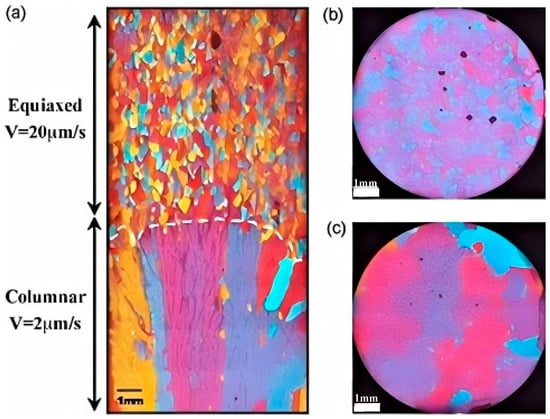
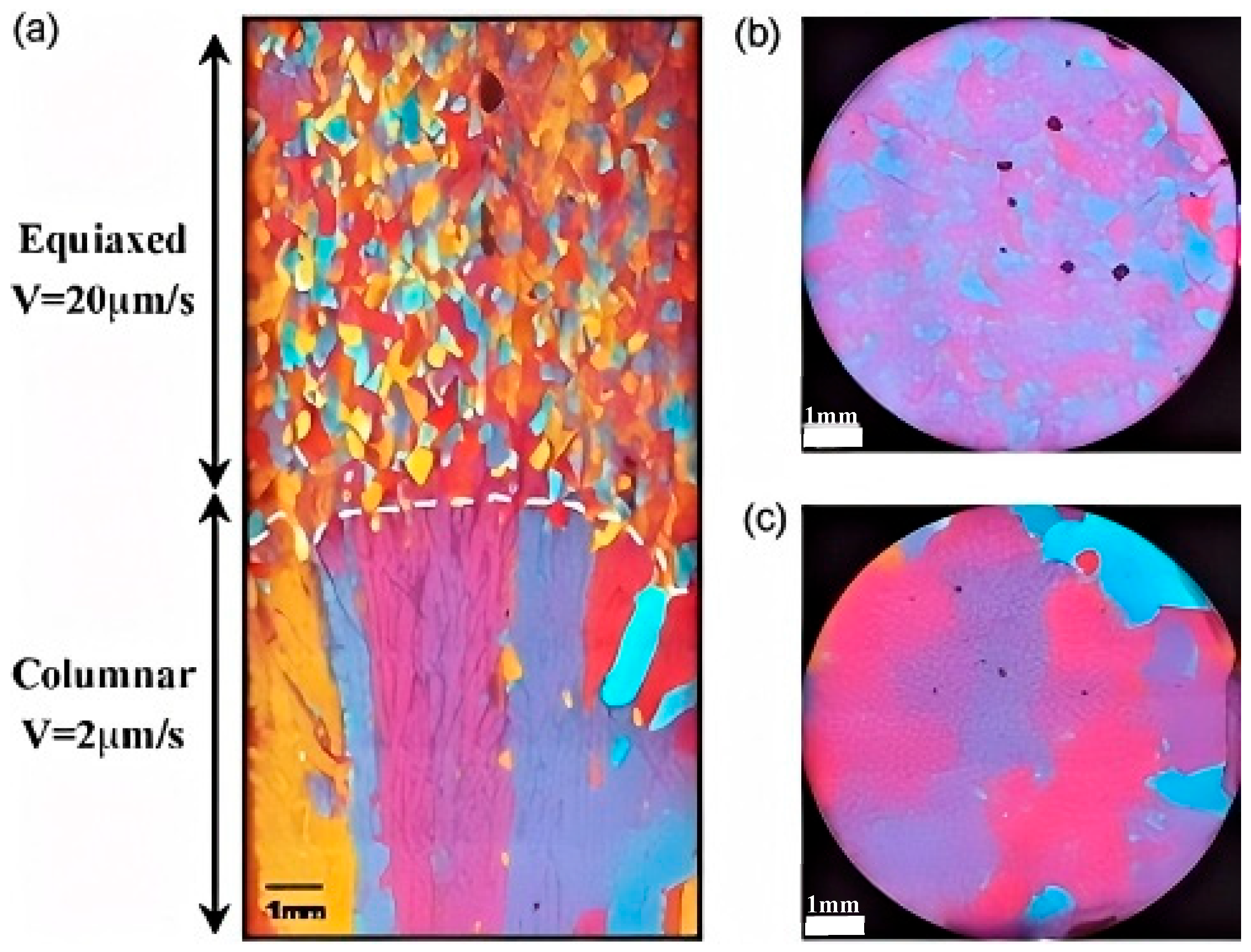
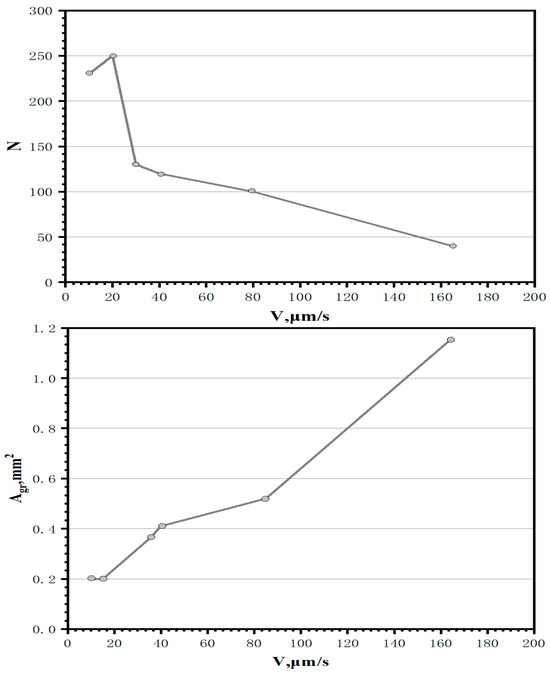
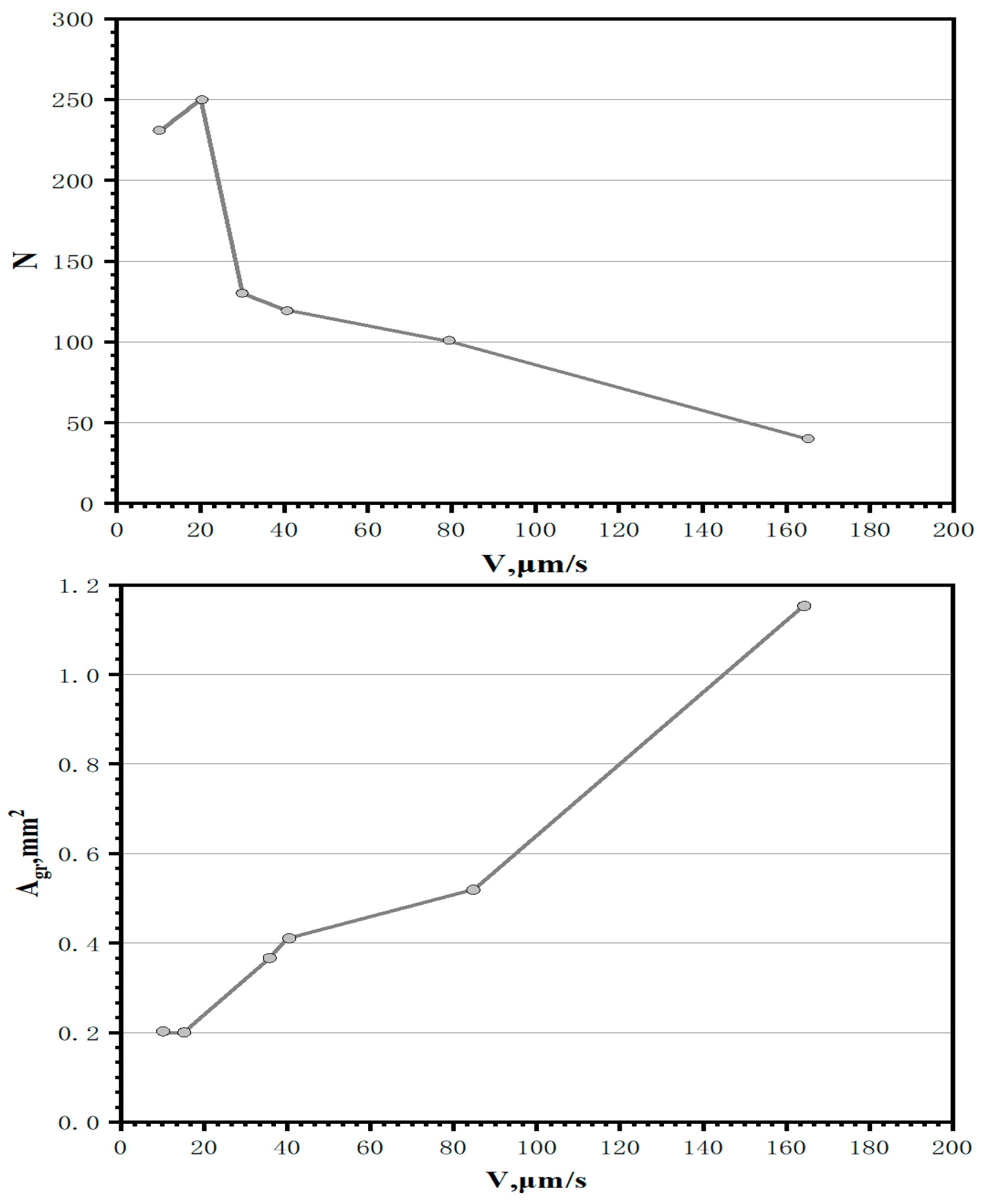
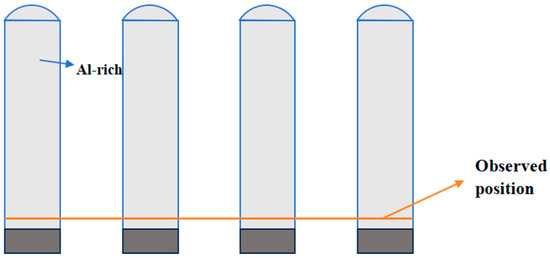
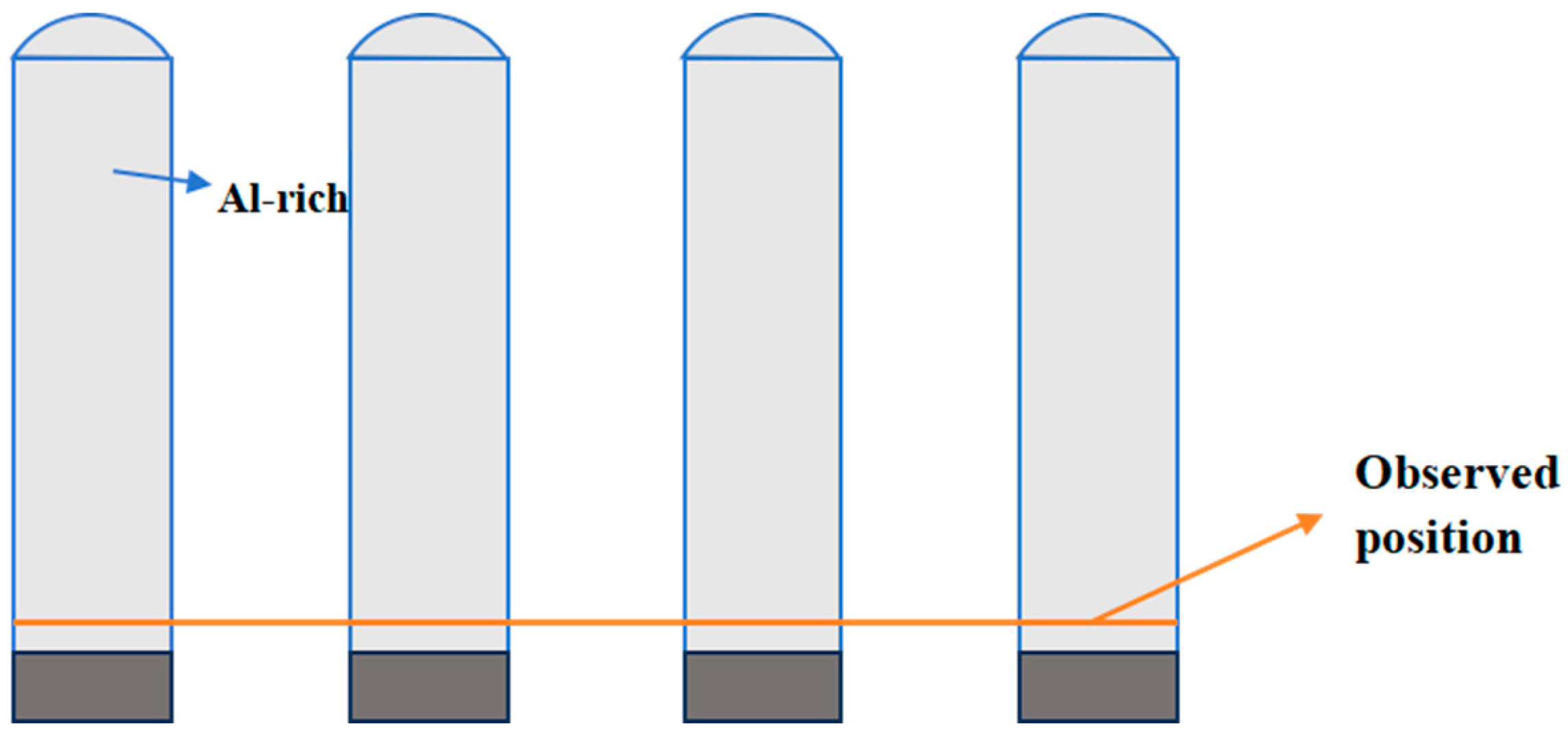
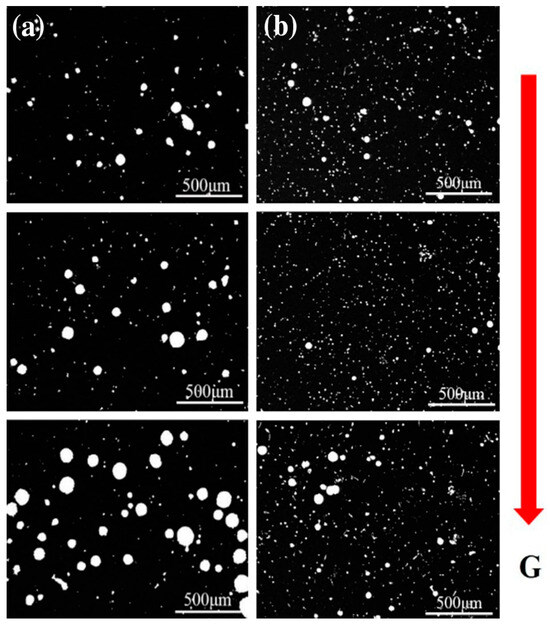
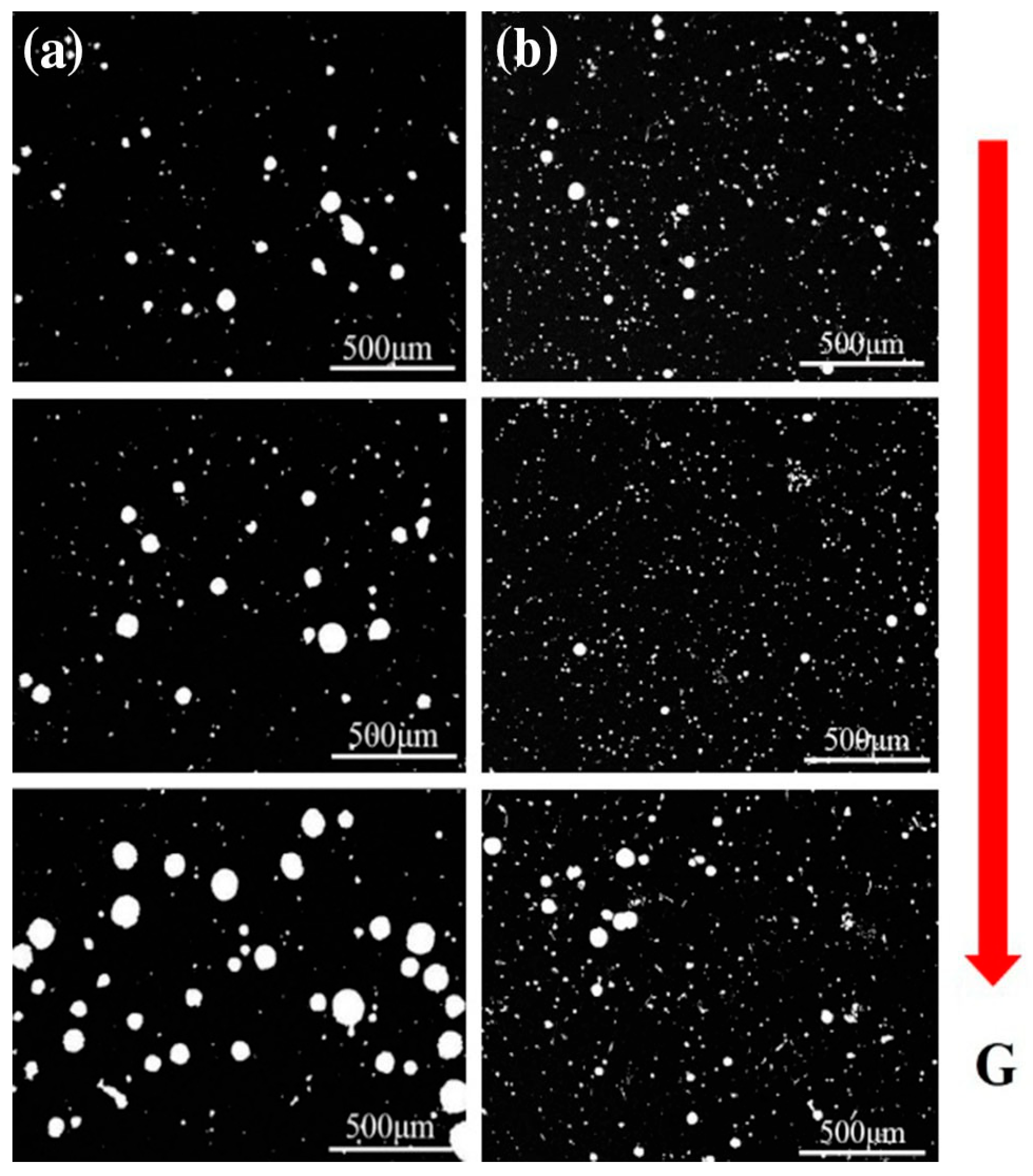
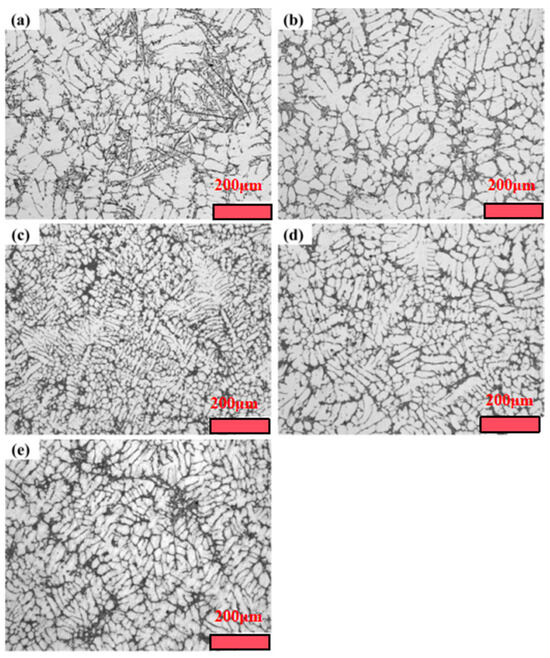
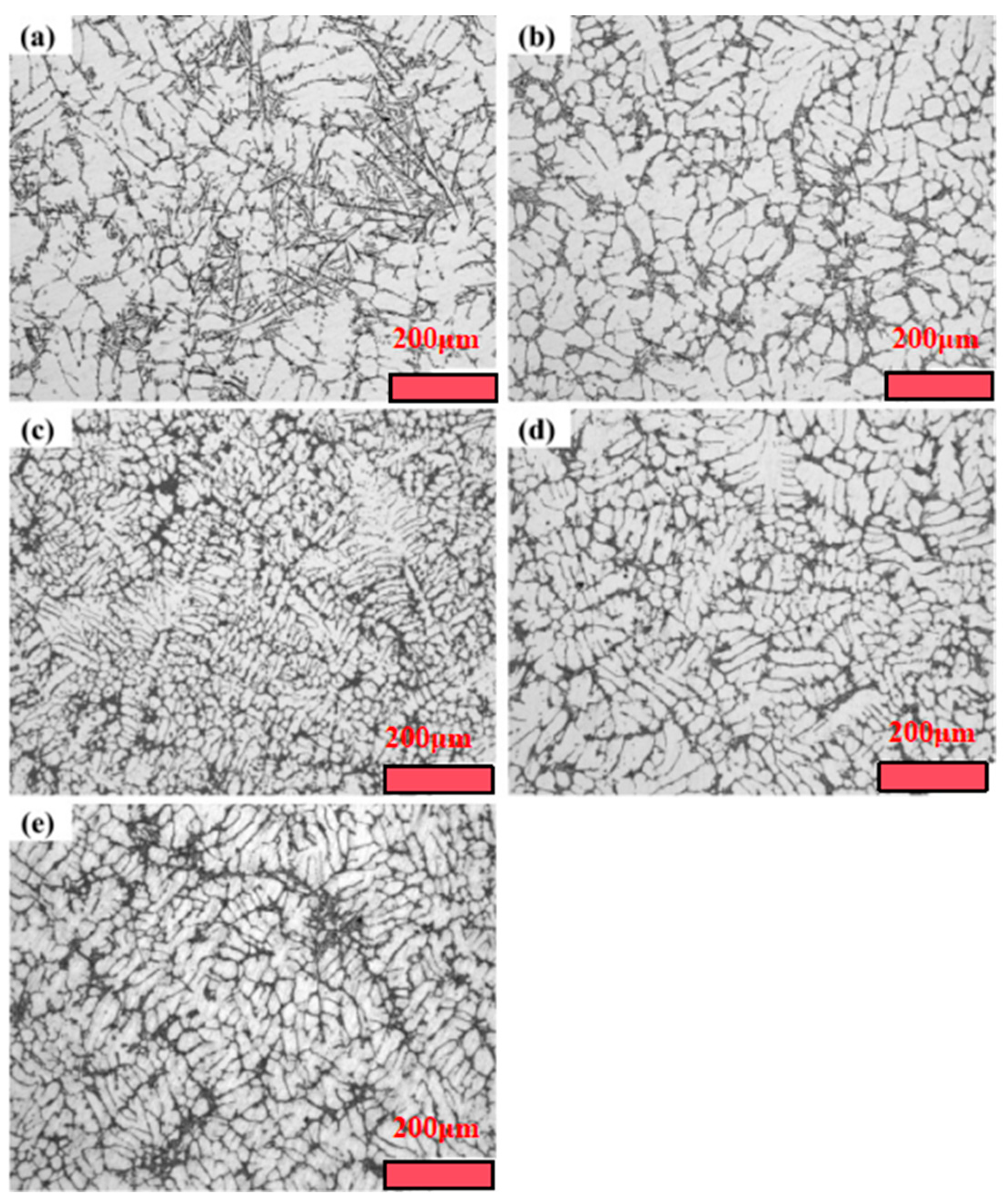
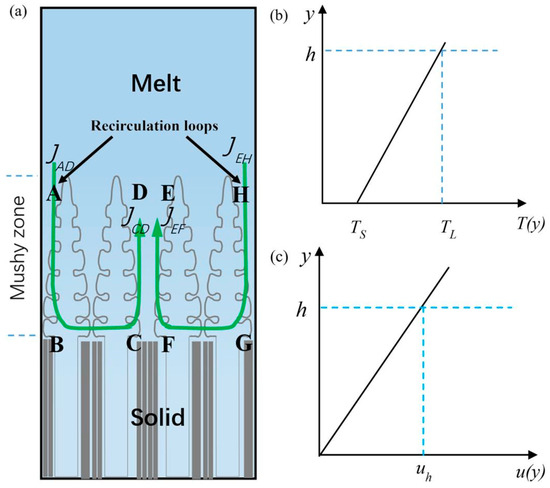
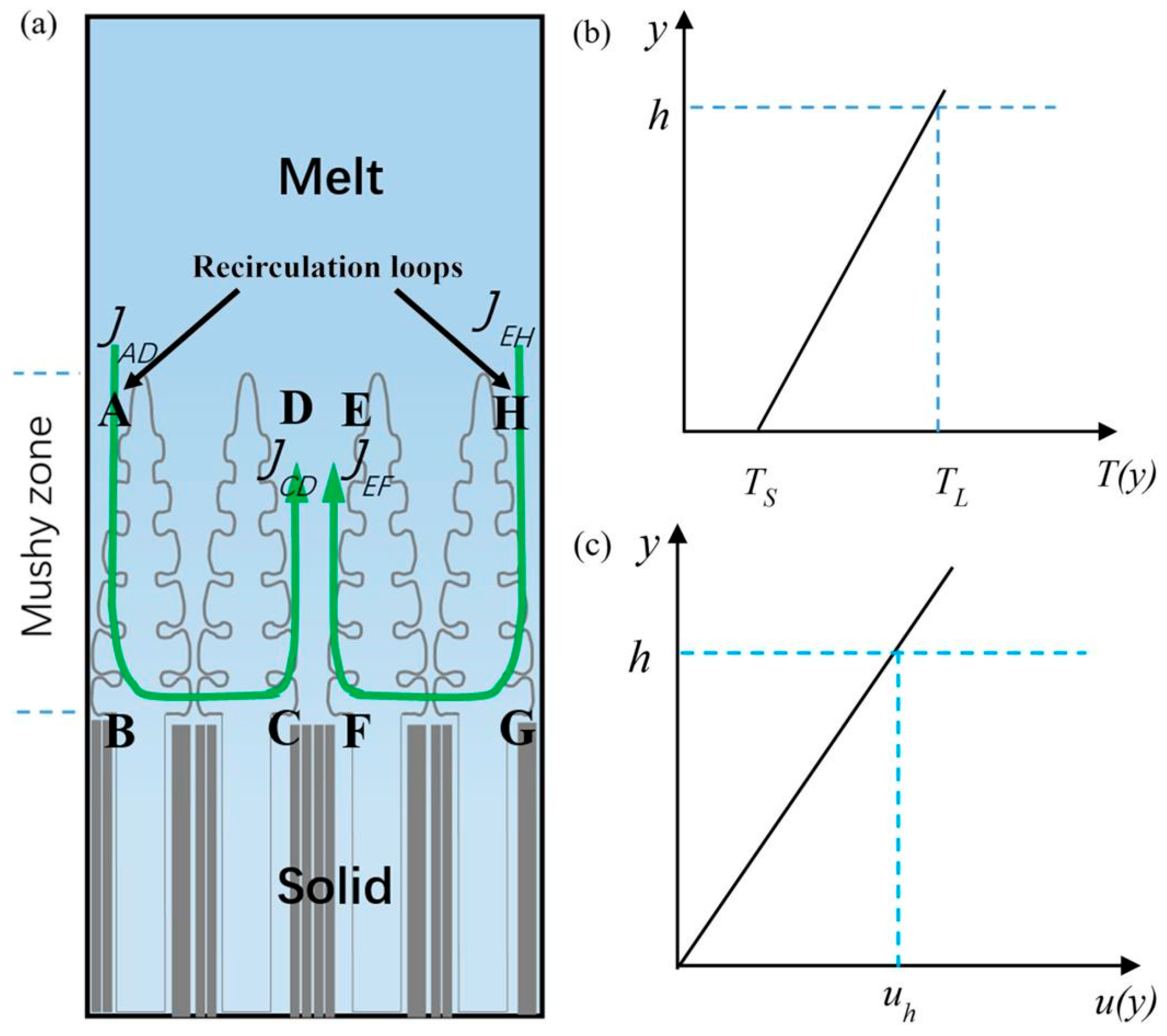
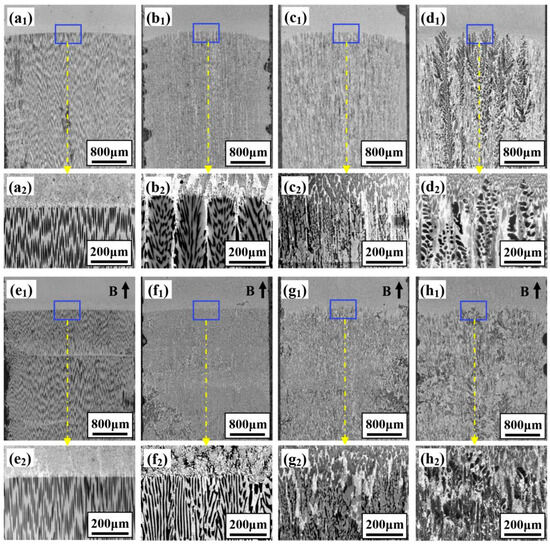
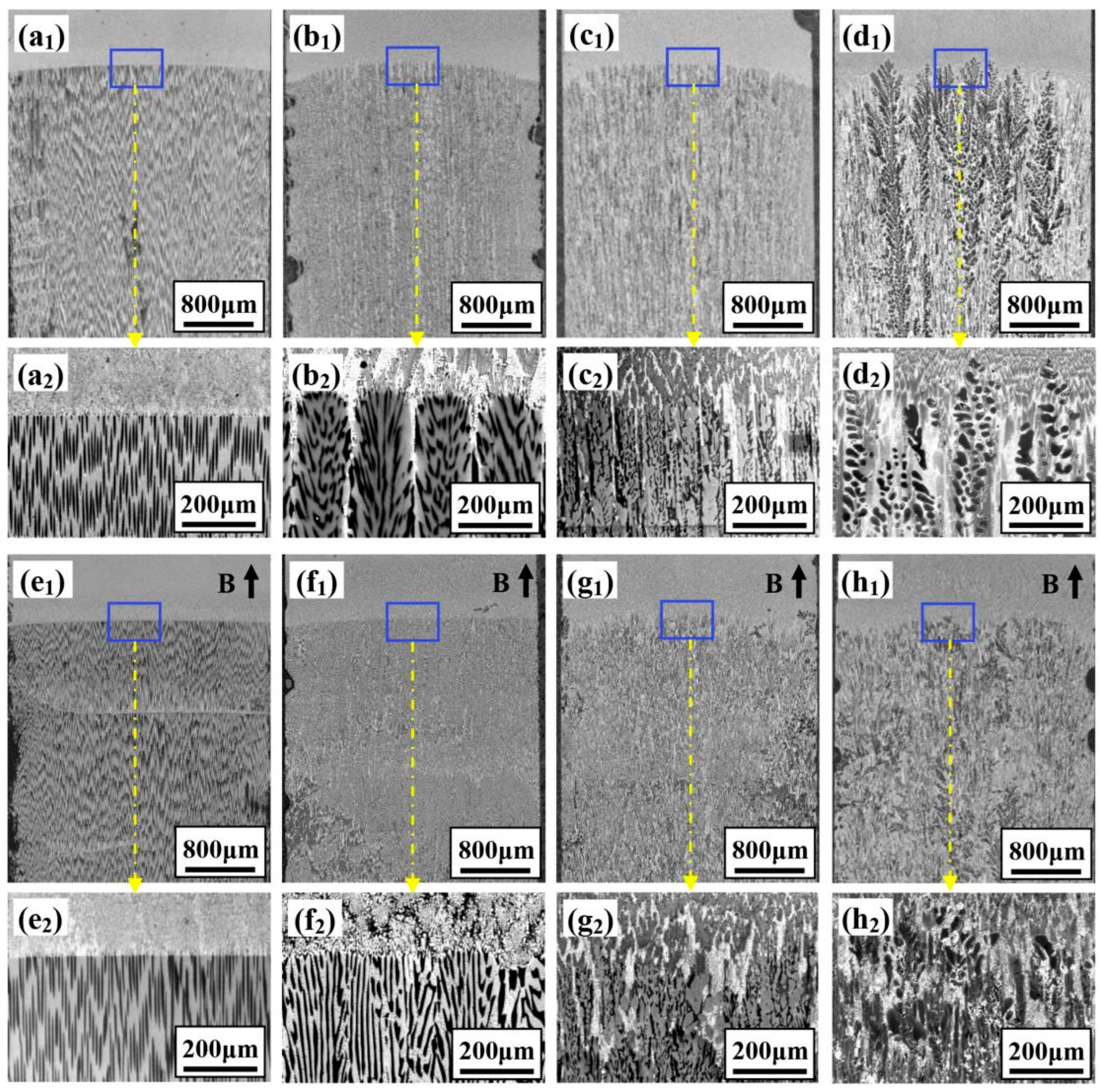
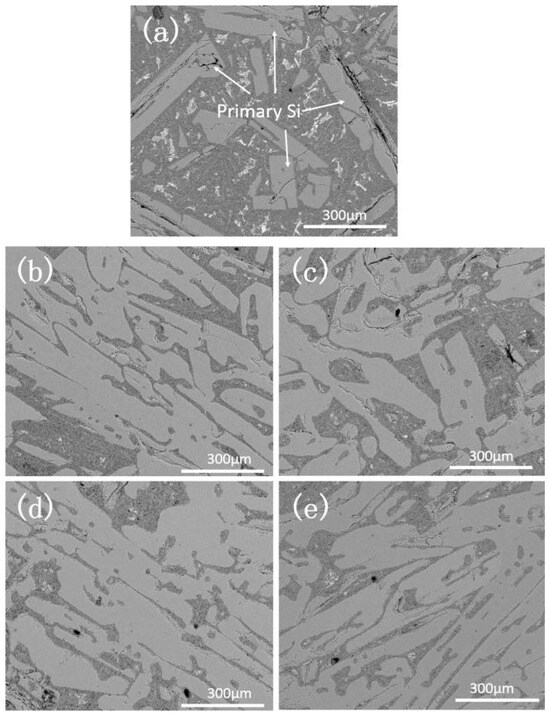
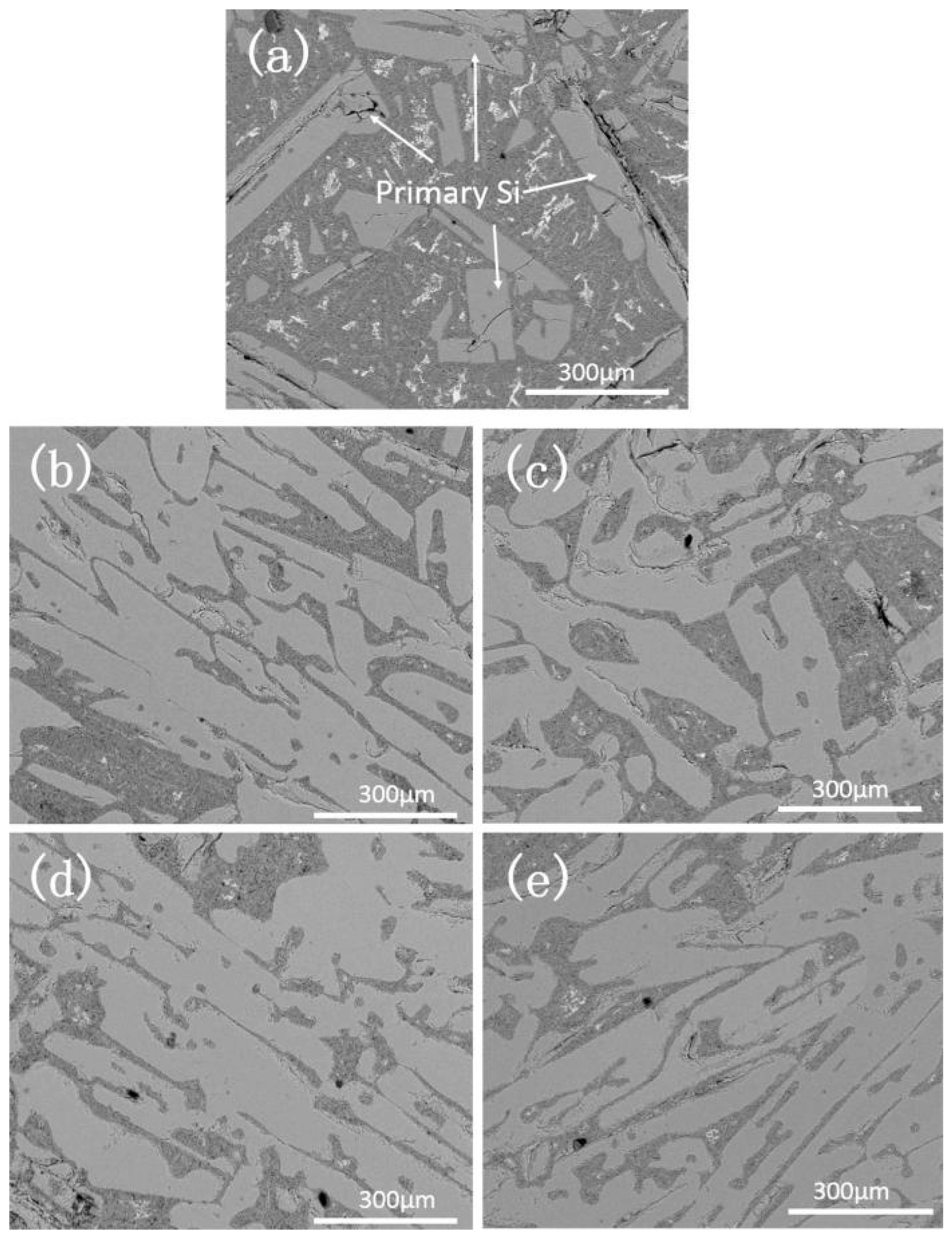
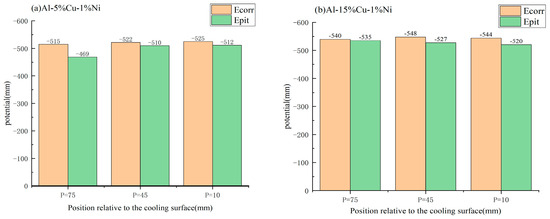
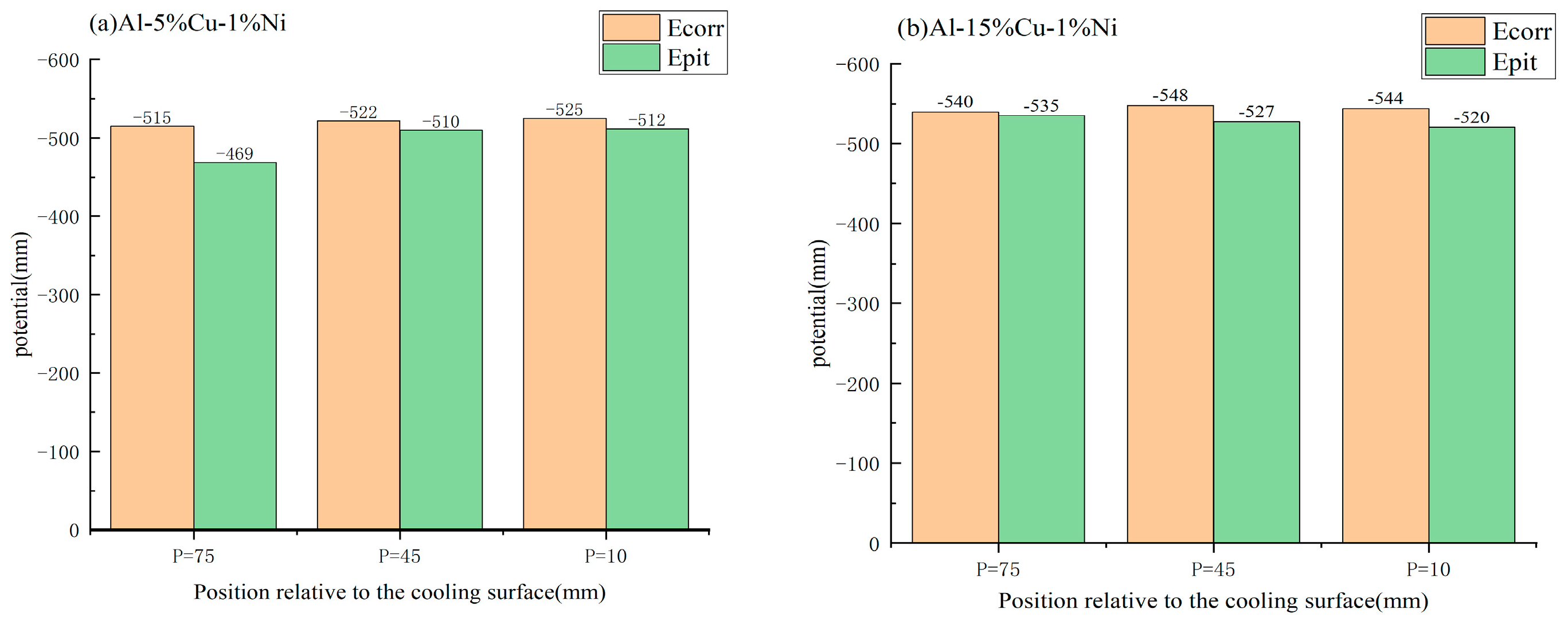
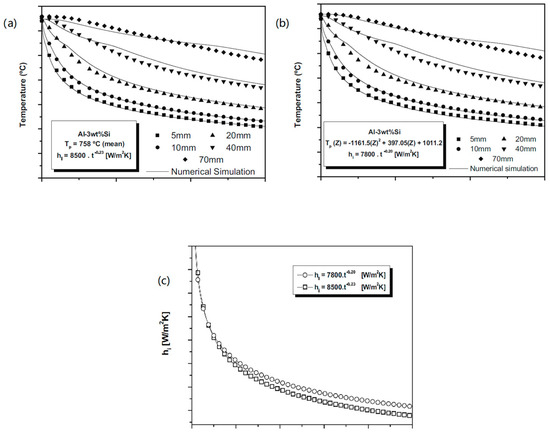
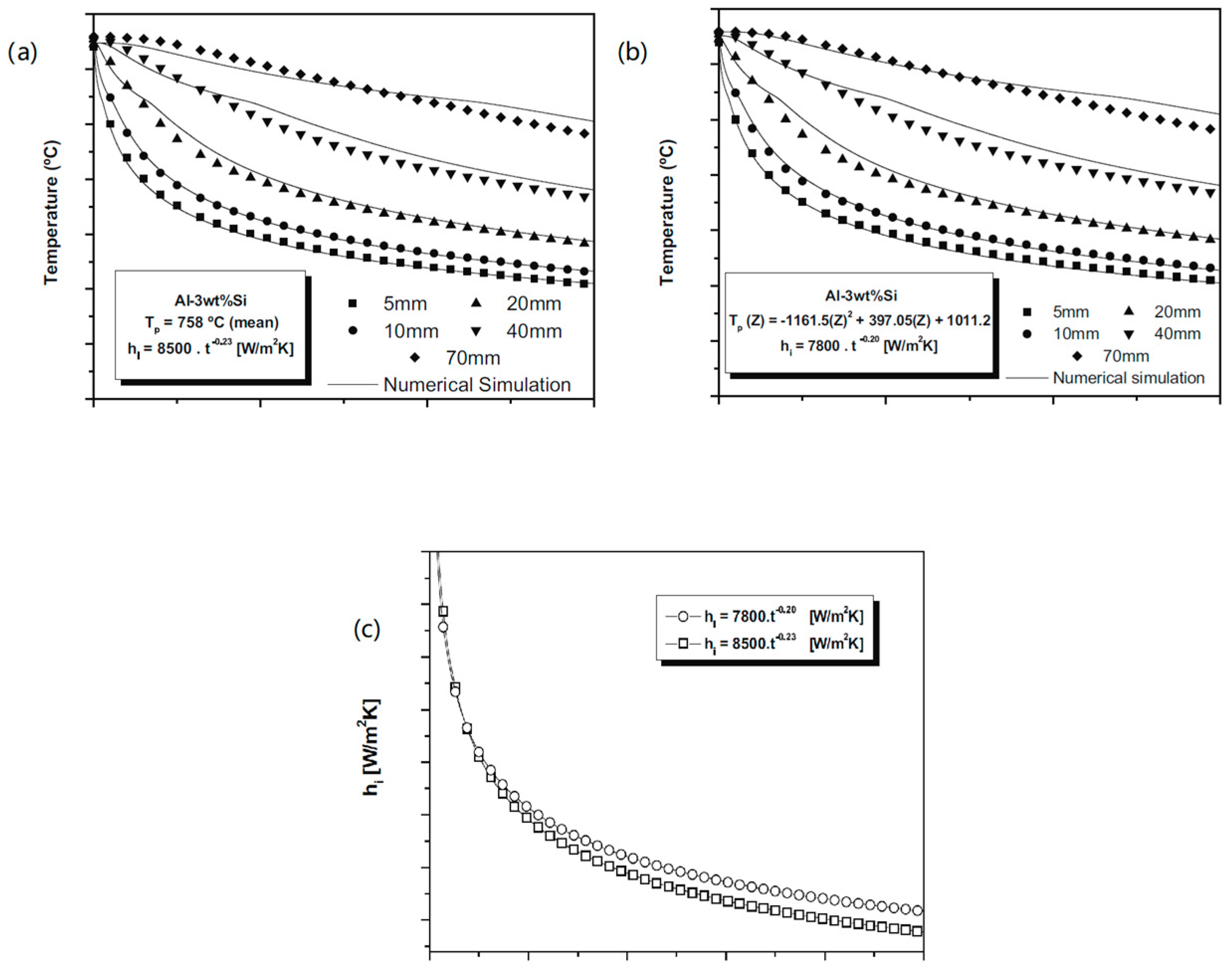
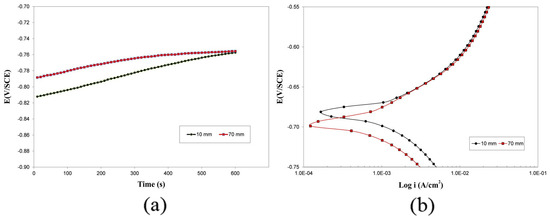
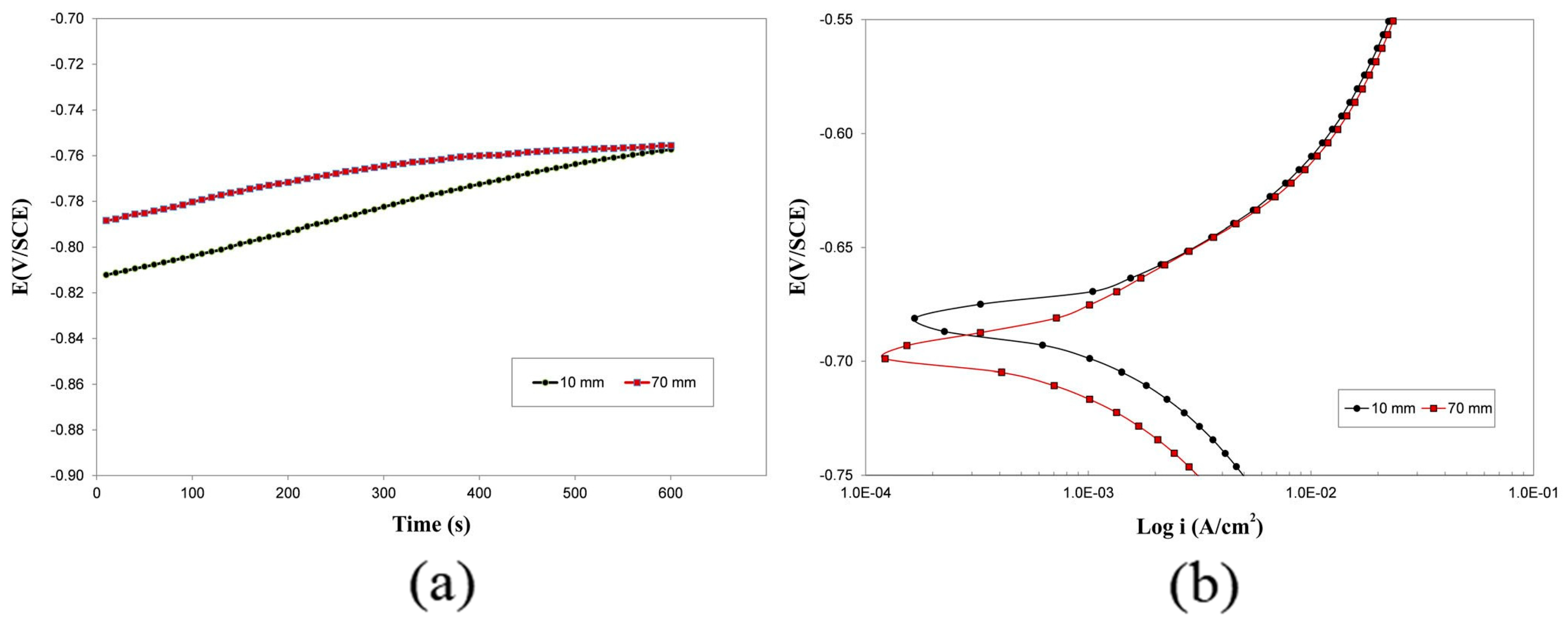
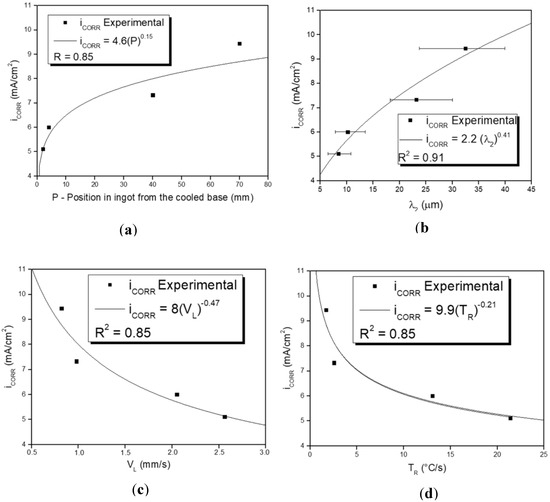
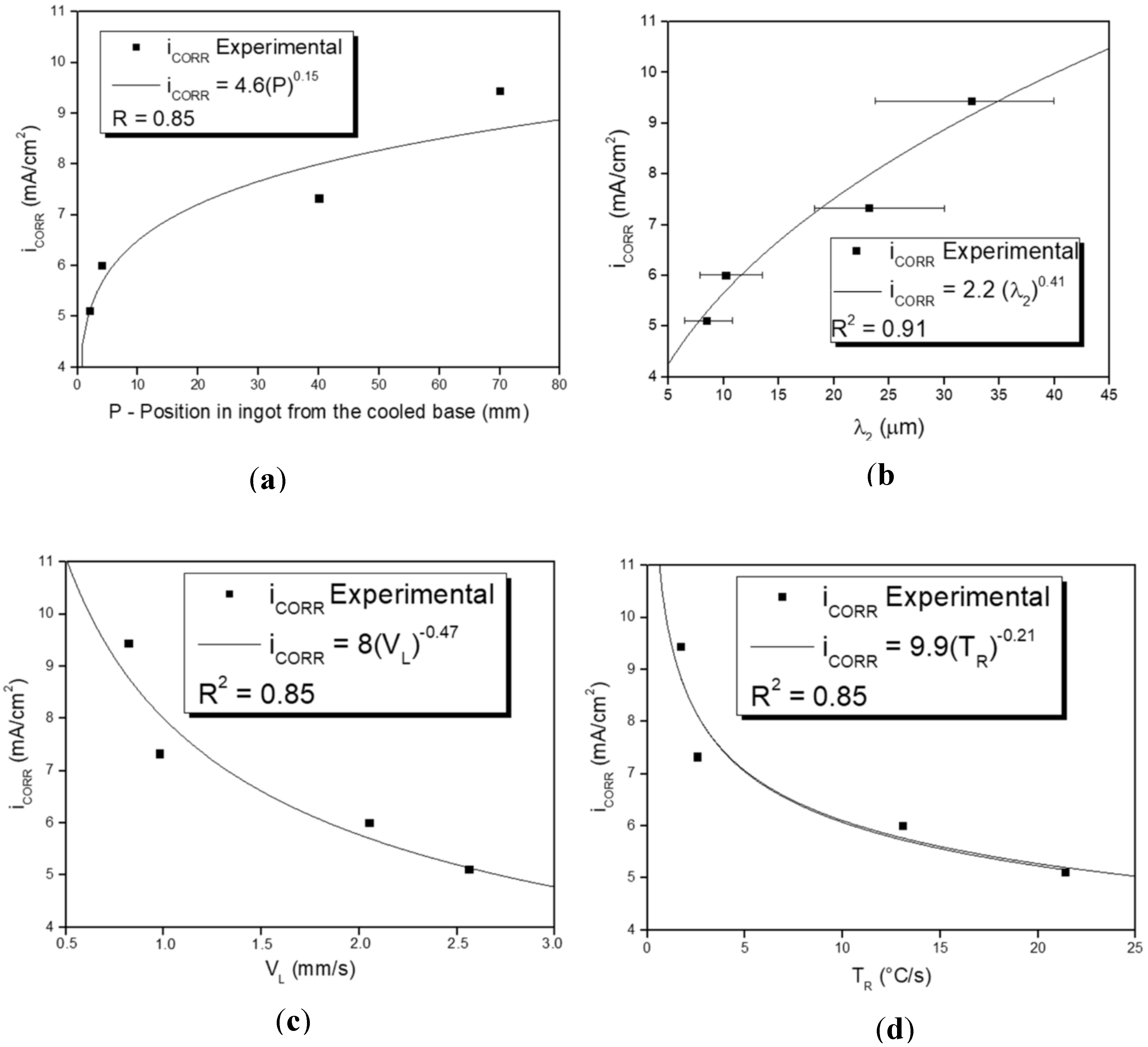

Disclaimer/Publisher’s Note: The statements, opinions and data contained in all publications are solely those of the individual author(s) and contributor(s) and not of MDPI and/or the editor(s). MDPI and/or the editor(s) disclaim responsibility for any injury to people or property resulting from any ideas, methods, instructions or products referred to in the content. |
© 2025 by the authors. Licensee MDPI, Basel, Switzerland. This article is an open access article distributed under the terms and conditions of the Creative Commons Attribution (CC BY) license.