1. Introduction
Universities play a central role in shaping future professionals who are not only technically skilled but also socially responsible and capable of contributing to sustainable community development [
1,
2,
3]. In medical and dental education, this mission extends beyond classroom learning to include experiential and community-based programs that strengthen students’ understanding of public health needs while fostering empathy and civic engagement [
4,
5,
6,
7]. As higher education institutions increasingly adopt the principles of sustainability, community engagement has become a key dimension of the so-called “third mission” of universities, creating direct social value through active collaboration with local communities [
1,
2,
8].
In recent years, higher education institutions worldwide have been called to redefine their missions in alignment with sustainable development principles, moving from traditional knowledge transmission toward transformative learning and societal impact [
9,
10,
11,
12,
13]. This shift reflects a growing expectation that universities must not only produce skilled professionals but also cultivate values, mindsets, and competencies necessary for addressing complex global challenges such as climate change, social inequality, and health disparities [
12,
14,
15]. As a result, sustainability in higher education now encompasses ecological, social, and institutional dimensions, emphasizing ethical leadership, inclusive practices, and the integration of sustainability into curricula across all disciplines [
3,
10,
11,
16,
17].
Within medical universities, community outreach and volunteering programs represent an essential component of sustainability-oriented education [
6,
7,
18,
19]. These initiatives include preventive health campaigns, educational projects, and volunteering in rural or underserved areas, offering students opportunities to apply theoretical knowledge while addressing real public health issues [
6,
7,
20,
21]. Such experiences enhance students’ professional and interpersonal competencies, promoting a holistic understanding of health as a social, environmental, and economic issue [
9,
14,
18,
22]. Studies show that student involvement in community-based projects increases awareness of health inequalities, strengthens motivation for lifelong learning, and fosters a sense of professional responsibility [
5,
6,
23,
24,
25,
26].
In medical and dental education, these principles are particularly relevant, as the practice of medicine inherently intersects with environmental, social, and behavioral determinants of health [
14,
15,
27,
28]. Sustainable higher education in the medical field therefore implies not only equipping students with scientific and technical expertise but also with an understanding of how healthcare systems can contribute to sustainable societies [
9,
27,
28]. Through volunteering and community-based projects, students gain insight into preventive healthcare, intersectoral collaboration, and ethical responsibility; competencies that align with global sustainability goals and reinforce the social mission of medical education [
4,
6,
7,
20,
21,
29,
30,
31,
32].
The global framework of the United Nations’ 17 Sustainable Development Goals (SDGs) provides a shared vision for addressing the world’s most pressing challenges, including health, education, equality, and environmental sustainability [
12,
13]. Among these, Goal 3 (Good Health and Well-being), Goal 4 (Quality Education), and Goal 10 (Reduced Inequalities) are particularly relevant to medical higher education, as they emphasize the integration of health promotion, inclusive learning, and social justice within educational systems [
12,
13,
14,
16]. Universities are thus encouraged to align their academic and community activities with these goals, transforming theoretical commitments to sustainability into measurable social outcomes [
10,
11,
17,
33,
34,
35,
36,
37,
38].
Numerous universities across Europe, Asia, and Latin America have already implemented community-based medical programs aligned with the SDGs, focusing on health literacy, preventive dentistry, and rural outreach [
3,
6,
7,
10,
11,
20,
21,
32,
35]. For instance, initiatives in Scandinavian countries integrate sustainable development modules into clinical practice [
18], while programs in Southeast Asia link student volunteering with public health interventions in remote communities [
2,
24,
39,
40]. In Eastern Europe, similar initiatives are gaining ground, although systematic evaluation of their impact on both students and communities remains limited. These comparative experiences demonstrate that sustainable volunteering programs can serve as laboratories for innovation, where academic knowledge meets local realities, contributing simultaneously to education, research, and societal well-being [
1,
3,
8,
17].
In this sense, community-based medical programs serve as a bridge between higher education and the SDGs, particularly by advancing health literacy, promoting preventive medicine, and fostering social inclusion [
6,
7,
20,
21]. These initiatives not only support local communities but also prepare students to become agents of sustainable change, capable of applying medical knowledge in ways that improve well-being and equity [
9,
14,
15,
18,
27,
33]. By participating in such programs, medical students actively contribute to the achievement of multiple SDGs, demonstrating how higher education can function as a catalyst for sustainable social transformation [
3,
10,
12,
13,
33].
However, despite growing recognition of their importance, the integration of sustainable volunteering programs into medical curricula remains uneven across institutions [
5,
6,
14,
15,
28]. Some universities treat these activities as extracurricular experiences rather than structured learning components, which limits their educational impact and sustainability [
1,
2,
8,
17]. Furthermore, students’ motivations for participation ranging from altruism and professional development to academic recognition are diverse and not yet fully understood [
19,
23,
24,
25,
26,
39,
40]. Understanding these motivational factors is essential for designing effective and enduring volunteering frameworks that align both with students’ expectations and institutional sustainability goals [
2,
6,
7,
14,
27].
Previous research highlights several challenges in implementing sustainable community programs in medical education, such as limited institutional support, insufficient evaluation tools, and lack of curricular integration [
1,
5,
8,
10,
14,
17,
28]. Moreover, there is a growing debate regarding how universities should measure the long-term community impact of student volunteering and whether such activities genuinely contribute to sustainable development or primarily serve as educational exercises [
2,
3,
6,
10,
12,
27,
33]. Addressing these issues requires a balanced perspective that connects individual motivations, institutional responsibility, and societal outcomes [
9,
11,
14,
15,
17].
Despite the increasing incorporation of sustainability discourse in medical education, empirical data on students’ perceptions of community-based programs remain scarce [
6,
7,
27,
28]. Few studies have systematically explored how students interpret the concept of sustainability in relation to their medical training or how they evaluate the long-term societal value of volunteering initiatives [
2,
18,
24,
39,
40]. Moreover, most existing research focuses on short-term satisfaction or skill acquisition, without considering the broader implications for sustainable development and institutional responsibility [
4,
5,
6,
25,
26,
29]. There is therefore a clear need to investigate how students’ motivations, attitudes, and perceived institutional support interact to shape their engagement in sustainable volunteering activities [
2,
6,
7,
14,
19,
27,
33].
In this context, the present study investigates students’ perceptions and motivations regarding university medical programs with community impact, emphasizing their role in promoting sustainable education and social responsibility [
2,
6,
7,
27]. The research explores how students perceive the value, effectiveness, and sustainability of volunteering initiatives and what factors influence their willingness to participate in future community programs [
19,
23,
24,
25,
39]. By examining these dimensions, this study aims to provide empirical evidence to support the integration of community engagement as a structured and sustainable element within medical education [
1,
2,
6,
10,
14,
33].
Given the specific social mandate of medical and health professions education, the literature consistently identifies Sustainable Development Goal 3 (Good Health and Well-being) and Sustainable Development Goal 4 (Quality Education) as particularly salient within this domain. Medical universities operate at the intersection of healthcare delivery and professional formation, positioning them as key actors in advancing both population health outcomes and competency-based education. In this context, structured volunteering initiatives such as the VADA program (Volunteering in academic development work) implemented at the “Victor Babeș” University of Medicine and Pharmacy represent institutional efforts to extend healthcare services to underserved and rural communities, thereby also contributing to Sustainable Development Goal 10 (Reduced Inequalities). While SDG 10 reflects the equity-oriented dimension of outreach interventions, SDG 3 and SDG 4 remain the most directly operationalizable objectives within medical education, as they simultaneously address health promotion and the development of professional competencies. This conceptual alignment informed the formulation of the present research questions and hypotheses, guiding the analytical focus of the study.
The present study contributes to filling this gap by providing empirical evidence from a sample of medical students, analyzed through quantitative methods. By examining the relationships among motivation, perceived impact, institutional support, and sustainability awareness, this research offers a multidimensional understanding of how community-based medical programs function as vehicles for sustainable education. The following research questions were formulated to guide the study and to examine the alignment between student volunteering activities and the objectives of SDG 3 and SDG 4:
To what extent do the reported activities align with SDG 3?
To what extent does volunteering contribute to SDG 4 (education/competencies)?
Is there evidence that the university supports the direction of SDG 3 and SDG 4?
3. Materials and Methods
The main objective of the present study is to assess the extent to which volunteer activities carried out by students of the “Victor Babeș” University of Medicine and Pharmacy in Timisoara, Romania contribute to the achievement of Sustainable Development Goal 3—Good Health and Well-being—and Sustainable Development Goal 4—Quality Education.
The research aims to determine the degree of alignment between students’ involvement in prevention activities, health education, and community intervention and the public health dimension specific to SDG 3, as well as the contribution of volunteering to the development of professional competencies and educational formation relevant to SDG 4.
By analyzing the collected data, the study investigates whether medical student volunteering represents an operational mechanism for supporting sustainable development at the university level, both through community impact and through strengthening the quality of the educational process.
3.1. Specific Objectives
O1: Operationalizing and constructing indicators corresponding to SDG 3 (Good Health and Well-being) and SDG 4 (Quality Education) based on relevant questionnaire items by aggregating variables related to the type of activities, perceived community impact, and the contribution of volunteering to professional training.
O2: Analyzing differences in the levels of SDG 3 and SDG 4 indicators according to respondents’ demographic characteristics (sex, age, faculty) and prior volunteering experience (Yes/No).
O3: Testing the relationships between the intensity of involvement in volunteer activities (number and diversity of activities performed) and the levels of indicators corresponding to SDG 3 and SDG 4 in order to evaluate the functional contribution of volunteering to sustainable development.
3.2. Hypotheses
In accordance with the stated objectives and the conceptual mapping of existing scores onto the dimensions of SDG 3 and SDG 4 the following hypotheses are proposed:
H1. Students who previously participated in medical volunteer activities will report significantly higher scores on the “Community Impact” dimension (operational indicator of SDG 3—Good Health and Well-being) compared to students without volunteering experience.
H2. Students who previously participated in volunteer activities will report significantly higher scores on the “Soft Skills Development” and “Motivation for Volunteering” dimensions (indicators of contribution to SDG 4—Quality Education) compared to non-involved students.
H3. Perceptions of community impact and the university’s role (SDG 3) are positively and significantly associated with motivational levels, competency development, and students’ orientation toward social responsibility among those involved in volunteering.
H4. There is a positive association between the level of involvement in volunteering (participation and/or intensity) and composite scores related to institutional support and social sustainability.
3.3. Study Design
The present study employs a quantitative, cross-sectional, descriptive–analytical design aimed at evaluating the contribution of student volunteer activities to the operational dimensions of Sustainable Development Goal 3 (Good Health and Well-being) and Sustainable Development Goal 4 (Quality Education).
The research uses data collected through a structured online questionnaire, which investigated both students’ volunteering experience and their perceptions regarding community impact, competency development, and the educational value of civic engagement.
The cross-sectional design allows for the analysis of relationships between demographic variables (sex, age, faculty), volunteering experience and intensity, and composite scores corresponding to the analyzed dimensions. The “Community Impact” dimension is used as an operational indicator of contribution to SDG 3, while the “Soft Skills Development” and “Motivation for Volunteering” dimensions are used to evaluate contribution to SDG 4.
The analytical approach includes descriptive statistics to characterize the sample and the mean levels of scores, as well as inferential analyses (group comparison tests and correlation analyses) to test the formulated hypotheses.
3.4. Participants and Inclusion/Exclusion Criteria
The study sample consisted of 499 students from the “Victor Babeș” University of Medicine and Pharmacy in Timișoara, enrolled in Medicine, Dental Medicine, and Pharmacy programs. Participants were recruited through the online distribution of the questionnaire via institutional channels and academic groups dedicated to students.
Participation was voluntary and anonymous. No personal identification data were collected, and completion of the questionnaire was considered equivalent to providing informed consent. The inclusion criteria were: student status at one of the mentioned faculties, minimum age of 18 years, and full completion of mandatory items. Incomplete or invalid responses were excluded from the analysis.
The sample distribution indicates a predominance of female students, and most respondents fall within the age range typical for undergraduate studies. A significant proportion of participants reported prior experience in medical volunteer activities, enabling comparative analysis between involved and non-involved students.
Through its size and diversity, the sample provides an adequate framework for evaluating the relationship between volunteering involvement and perceived contribution to SDG 3 and SDG 4 dimensions.
3.5. Instrument: Questionnaire (Structure and Items)
Data were collected using a structured questionnaire administered online via Google Forms. The instrument was designed to assess students’ volunteering experience and their perceptions regarding community impact, competency development, and the educational role of civic engagement.
The questionnaire was organized into three main sections:
Demographic data, including age, sex, and faculty.
Volunteering experience, assessing prior participation in volunteer activities (Yes/No) and types of activities performed (e.g., health education, prevention, screening, clinical activities, involvement in centers for vulnerable individuals, etc.). Based on these responses, a numerical indicator of involvement intensity was calculated, representing the total number of activities selected by each respondent.
Perceptions and attitudes toward volunteering, assessed using five-point Likert-scale items (1 = “strongly disagree”, 5 = “strongly agree”). Items were thematically grouped and later aggregated into composite scores (arithmetic mean of corresponding items).
The following composite scores were used in the present study:
Community Impact, used as an operational indicator of contribution to SDG 3—Good Health and Well-being;
Soft Skills Development, reflecting the formative dimension of volunteering;
Motivation for Volunteering, relevant for analyzing the educational and professional value of involvement;
Institutional Support, analyzed as a contextual factor facilitating contribution to sustainable development.
Composite scores were calculated as the mean of corresponding items, maintaining the original 1–5 scale to allow direct comparability between dimensions and facilitating interpretation of agreement levels.
This instrument structure enables analysis of relationships between volunteering experience, perceived community impact, and the educational dimension of involvement in relation to SDG 3 and SDG 4 objectives.
3.6. Research Variables
3.6.1. Operationalization of SDG 3 and SDG 4
The study included demographic, behavioral, and psychosocial variables organized according to the formulated objectives and hypotheses.
3.6.2. Independent Variables
Age—continuous variable (scale measure);
Sex—dichotomous nominal variable (male/female);
Faculty—multicategorical nominal variable (Medicine, Dental Medicine, Pharmacy, Nursing);
Prior participation in volunteer activities—dichotomous nominal variable (Yes/No);
Intensity of volunteering involvement—numeric count variable representing the number of volunteer activity types selected in item 5 (derived by counting multiple selected options).
This last variable operationalizes the behavioral dimension of involvement and was used to test the hypothesis regarding the association between intensity and community impact (SDG 3).
3.6.3. Dependent Variables (Composite Scores)
The following composite scores were calculated:
Motivation for Volunteering: Mean of items 6, 7, 8, and 10.
Soft Skills Development: Mean of items 9 and 19.
Community Impact and University Role (dimension associated with SDG 3): Mean of items 11, 12, 13, and 20.
This dimension reflects students’ perceptions of university volunteering contributions to:
- 4.
Sustainability and Social Responsibility: Mean of items 15, 23, 24, and 25.
- 5.
Institutional Support and Future Interest in Involvement: Mean of items 16, 17, 18, 21, and 22.
3.7. Data Collection Procedure and Ethics
Data were collected online via Google Forms in a single stage over approximately two months. The questionnaire was distributed to students of the “Victor Babeș” University of Medicine and Pharmacy in Timișoara through institutional channels and academic communication groups.
Participation was voluntary and anonymous. Before completing the questionnaire, respondents were informed about the research purpose, the anonymous nature of the data, and their exclusive use for scientific purposes. No personally identifiable data were requested. Questionnaire completion was considered equivalent to providing informed consent.
Data were exported electronically and subsequently processed for statistical analyses. Ethical principles of academic research and applicable data protection regulations were respected throughout all research stages.
3.8. Statistical Analysis Plan
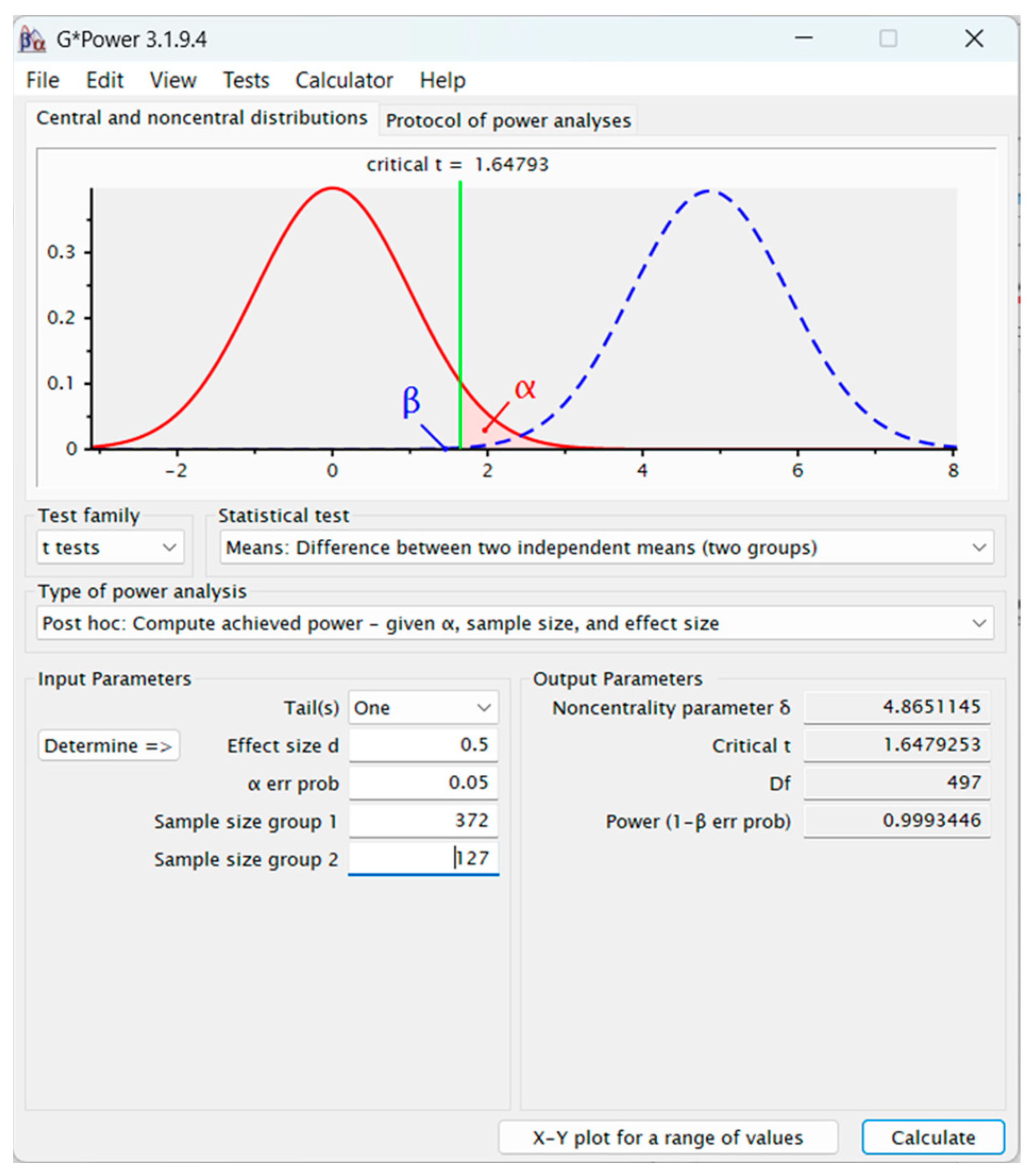
Statistical analysis was performed using Jamovi (version 2.6.44), and post hoc power analysis was conducted using G*Power 3.1.9.4 (
Figure 1).
Initially, descriptive statistics (means, standard deviations, frequencies, and percentages) were calculated to characterize the sample and evaluate the levels of composite scores. Distribution normality was assessed through visual inspection and skewness and kurtosis indicators.
Independent samples t-tests were used to examine differences between students with and without volunteering experience. Relationships between volunteering intensity (number of reported activities) and composite scores were analyzed using Pearson correlation coefficients. Correlations between the “Community Impact” dimension and formative volunteering dimensions were also examined to highlight the relationship between contributions to SDG 3 and SDG 4.
The level of statistical significance was set at p < 0.05 (two-tailed). A post hoc power analysis indicated high statistical power for detecting small-to-moderate effects relative to the final sample size (N = 499).
4. Results
The analysis of the distribution of responses indicates a high level of engagement in volunteer activities among the students participating in the study. Out of a total of 499 respondents, 372 (74.5%) reported having previously participated in volunteer activities in the medical field, while 127 (25.5%) stated that they had not yet had such an experience. The predominance of students involved in volunteer work suggests a favorable orientation toward volunteering within the academic community under investigation. This finding indicates that civic and professional engagement represents a relevant component of students’ educational trajectories, extending beyond the strictly curricular dimension.
Regarding the typology of activities performed, the most frequently reported were health education and clinical activities, followed by participation in prevention and screening campaigns, as well as blood donation campaigns. Additionally, some respondents mentioned involvement in projects coordinated by non-governmental organizations and community-based initiatives. Activities with an international component (e.g., exchanges or Erasmus projects) were reported to a lesser extent.
The structure of these activities highlights a predominant orientation toward interventions with direct relevance to public health, suggesting active student engagement in initiatives with community impact (
Table 1). In this context, volunteering emerges as an integrated dimension of the training of future healthcare professionals, contributing both to the development of professional competencies and to the strengthening of social responsibility.
4.1. H1: Students Who Have Previously Participated in Volunteer Activities in the Medical Field Score Significantly Higher on the “Community Impact” Dimension (Operational Indicator of SDG 3—Health and Well-Being) Compared to Students Without Volunteer Experience
The analysis of differences between students with volunteer experience and those without such experience was conducted using an independent samples t-test, with the composite score “Community Impact and the Role of the University” as the dependent variable (
Table 2). The results did not reveal statistically significant differences between the two groups, where t(498) = 0.681 and
p = 0.496. The effect size was very small (Cohen’s d = 0.07), indicating a practically negligible difference between volunteers and non-volunteers.
The descriptive analysis shows that students who had participated in volunteer activities recorded a slightly higher mean score (M = 4.31, SD = 0.74) compared to those without such experience (M = 4.25, SD = 0.81). However, this difference is neither statistically significant nor practically meaningful. Levene’s test for homogeneity of variances did not indicate a violation of the assumption of equal variances: F(1, 498) = 2.73, p = 0.099. Although the Shapiro–Wilk test suggested a deviation from normality (p < 0.001), the large sample size (N = 499) supports the use of the t-test as it is robust to moderate deviations from normality.
Overall, the findings indicate that perceptions regarding community impact and the role of the university in the field of health are high among all students, regardless of their actual involvement in volunteer activities. This observation suggests a declarative internalization of the values associated with SDG 3, even in the absence of direct participation in volunteering activities.
4.2. H2: Students Who Have Previously Participated in Volunteering Activities Have Significantly Higher Scores in the Dimensions “Soft Skills Development” and “Motivation for Volunteering” (Indicators of Contribution to SDG 4—Quality Education) Compared to Non-Involved Students
To test hypothesis H2, an independent samples
t-test (Welch’s correction) was conducted, comparing students who had previously participated in volunteer activities with those who had no such experience (
Table 3).
Regarding the dimension “Soft Skills Development”, statistically significant differences were observed between the two groups, where t(174) = −2.86 and p = 0.005. Students involved in volunteer activities obtained higher mean scores (M = 4.51, SD = 0.73) compared to those not involved (M = 4.23, SD = 0.99). The effect size was small-to-moderate (d = 0.32).
Similarly, for the dimension “Motivation for Volunteering”, the differences were statistically significant, where t(176) = −3.23 and p = 0.002. Students who had participated in volunteer activities reported higher levels of motivation (M = 4.50, SD = 0.81) compared to those without volunteer experience (M = 4.16, SD = 1.09). The effect size was also small-to-moderate (d = 0.35).
These findings support hypothesis H2 and indicate that volunteer experience is associated with the development of transversal competencies and higher levels of motivation, aspects that are relevant to the dimension of SDG 4—Quality Education. Active participation in volunteer programs appears to contribute to the strengthening of students’ socio-emotional and professional competencies, thereby reinforcing the formative role of civic engagement within the university environment.
4.3. H3: The Perception of Community Impact and the Role of the University (SDG 3) Is Positively and Significantly Associated with the Motivational Level, Skills Development and Orientation Towards Social Responsibility of Students Involved in Volunteering
To test hypothesis H3, a Pearson correlation analysis was conducted between the composite score “Community Impact and the Role of the University” (a dimension associated with SDG 3) and the other psychosocial dimensions of engagement in volunteer activities (
Table 4).
The results indicate the presence of positive, strong, and statistically significant correlations between “Community Impact and the Role of the University” and all other analyzed dimensions.
More specifically:
A strong correlation was identified between “Community Impact and the Role of the University” and “Soft Skills Development”, where r(498) = 0.703 and p < 0.001;
A strong correlation was found between “Community Impact and the Role of the University” and “Motivation for Volunteering”, where r(498) = 0.658 and p < 0.001;
A very strong correlation was observed between “Community Impact and the Role of the University” and “Sustainability and Social Responsibility”, where r(498) = 0.789 and p < 0.001;
A strong correlation was recorded between “Community Impact and the Role of the University” and “Institutional Support and Future Interest in Engagement”, where r(498) = 0.708 and p < 0.001.
The magnitude of the correlation coefficients indicates moderate-to-high associations, suggesting that students’ perceptions of the university’s role within the community and its contribution to public health are embedded within a coherent system of motivational, educational, and institutional factors.
4.4. H4: There Is a Positive Association Between the Level of Volunteering Involvement (Participation and/or Intensity) and the Composite Scores on Institutional Support and Social Sustainability
To test hypothesis H4, differences were examined between students who had previously participated in volunteer activities and those who had not, with regard to the composite scores for “Institutional Support and Future Interest in Engagement” and “Sustainability and Social Responsibility”.
For the dimension “Institutional Support and Future Interest in Engagement”, (
Table 5) the independent samples t-test (Welch’s correction) did not indicate statistically significant differences between the two groups, where t(206) = −1.73,
p = 0.086, and d = −0.18. Students involved in volunteer activities reported a slightly higher mean score (M = 4.21, SD = 0.77) compared to those not involved (M = 4.06, SD = 0.82); however, the difference did not reach the threshold for statistical significance.
In contrast, for the dimension “Sustainability and Social Responsibility”, a statistically significant difference between groups was identified, where t(180) = −2.86 and p = 0.005, with a small-to-moderate effect size (Cohen’s d = −0.31). Students who had participated in volunteer activities obtained higher scores (M = 4.51, SD = 0.63) compared to those not involved (M = 4.28, SD = 0.82).
To further assess the relationship between the level of volunteer engagement (measured through intensity of participation) and the institutional and social dimensions of impact, Pearson correlation coefficients were calculated (
Table 6). The results indicated a positive and statistically significant association between volunteer intensity and the composite score for “Institutional Support and Future Interest in Engagement”, where r(497) = 0.092 and
p = 0.039. Although statistically significant, the magnitude of the effect was small.
Additionally, a positive and statistically significant correlation was identified between the intensity of involvement and the dimension “Sustainability and Social Responsibility”, where r(497) = 0.123 and p = 0.006, indicating that a higher level of engagement is associated with a stronger internalization of social sustainability values.
These findings partially support hypothesis H4 and suggest that the intensity of involvement contributes, albeit modestly, to the consolidation of dimensions associated with social responsibility (SDG 3 and SDG 4).
4.5. Synthesis of Hypothesis Results
The integrated analysis of the results indicates that volunteer activities carried out by students of the “Victor Babeș” University of Medicine and Pharmacy in Timișoara contribute in a differentiated yet coherent manner to the achievement of Sustainable Development Goal 3 (Good Health and Well-being) and Sustainable Development Goal 4 (Quality Education).
With regard to SDG 3, the dimension “Community Impact and the Role of the University” recorded high mean scores across the entire sample, irrespective of actual participation in volunteer activities. The absence of significant differences between volunteers and non-volunteers (H1) suggests that values associated with public health and community responsibility are declaratively internalized by the majority of students. However, the correlational analysis (H3) revealed strong associations between perceived community impact and the other psychosocial dimensions (competence development, motivation, sustainability, institutional support), indicating the presence of an integrated value core that supports the convergence between medical education and public health.
Thus, SDG 3 appears to be achieved at a perceptual and attitudinal level, and the correlational coherence of the analyzed dimensions suggests that volunteering functions as a mechanism that reinforces orientation toward community health, even if differences between groups are not pronounced.
Regarding SDG 4, the results provide clearer empirical support. Hypothesis H2 was confirmed, as students with volunteer experience recorded significantly higher scores in both “Soft Skills Development” and “Motivation for Volunteering”. The magnitude of the effects (d ≈ 0.30–0.35) indicates a small-to-moderate but consistent impact, suggesting that practical volunteer experience contributes to the development of transversal competencies and the strengthening of professional motivation.
In the case of H4, the findings indicated partial support. Differences between volunteers and non-volunteers were significant for the dimension “Sustainability and Social Responsibility”, but not for “Institutional Support”. Nevertheless, the correlational analysis showed that the intensity of involvement was positively and significantly, albeit modestly, associated with both dimensions. This result suggests that not merely participation per se but the degree of engagement contributes to the consolidation of values related to sustainability and social responsibility.
Overall, the data suggest that:
SDG 3 is supported through a high level of perceived community impact and through strong correlations with motivational and institutional dimensions;
SDG 4 is more clearly supported by significant differences between volunteers and non-volunteers in terms of competence development and motivation;
The intensity of volunteer engagement enhances the internalization of social responsibility and sustainability values, even if the effects are of small magnitude.
5. Discussion
The findings of the present study contribute to the expanding literature examining the role of higher education institutions in advancing the Sustainable Development Goals (SDGs), particularly SDG 3 (Good Health and Well-being) and SDG 4 (Quality Education). Within the framework of the university’s “Third Mission”, conceptualized as societal engagement beyond teaching and research [
1,
2,
8], volunteering emerges as a tangible operational instrument through which medical universities translate institutional commitments into measurable community-oriented action.
The high proportion of students involved in volunteering (74.5%) aligns with Romanian and international evidence documenting strong engagement tendencies among medical students [
24,
25,
26,
29,
39,
40]. Research conducted during and after the COVID-19 pandemic consistently demonstrates that volunteering is not merely reactive crisis participation, but a formative experience associated with professional identity construction, skill acquisition, and civic responsibility [
24,
25,
26,
29,
40]. These findings reinforce the interpretation that, within the investigated academic context, volunteering has become embedded in institutional culture rather than remaining an optional extracurricular activity.
Regarding SDG 3, the absence of statistically significant differences between volunteers and non-volunteers on the “Community Impact and the Role of the University” dimension suggests that public health values are broadly internalized across the student population. This finding is consistent with theoretical and policy frameworks emphasizing the institutional integration of sustainability and global health principles into university missions [
3,
10,
11,
12,
13]. The 2030 Agenda for Sustainable Development positions higher education institutions as key drivers of systemic transformation toward health equity and well-being [
13], while implementation analyses highlight universities’ increasing alignment with SDG-oriented strategies and evaluation frameworks [
10,
16]. The high baseline scores observed in this study may therefore reflect a normative diffusion of sustainability discourse within medical education environments.
At the same time, the strong correlations between perceived community impact and psychosocial dimensions (skills development, motivation, sustainability, and institutional support) indicate the presence of a coherent value architecture. This pattern is congruent with systematic reviews demonstrating that service-learning and community-based education foster empathy, social accountability, and community health orientation [
4,
5,
6,
30]. Community-engaged healthcare education has been described as a structural pathway toward sustainable health systems, particularly when engagement extends to underserved populations [
9,
21]. This orientation toward community health is especially relevant in clinical fields such as dentistry, where psychosocial determinants, including dental anxiety, significantly influence access to care and quality of life [
32]. In this context, innovative, patient-centered approaches such as virtual reality-assisted anxiety reduction strategies further demonstrate how educational engagement can intersect with sustainable health interventions [
35]. Thus, even though H1 was not supported by group differences, volunteering appears to function as a reinforcing mechanism that consolidates community health values within an integrated motivational and institutional framework.
The findings related to SDG 4 provide clearer empirical differentiation. Students with volunteer experience reported significantly higher levels of soft skills development and motivation, consistent with prior evidence showing that service-learning enhances communication, teamwork, leadership, and reflective competencies [
4,
5]. Mixed methods and qualitative research further demonstrate improvements in empathy and social responsibility following community-engaged interventions [
6,
7,
30]. Experiential learning projects in oral health and clinical community contexts similarly report strengthened professional identity and accountability [
7,
30]. Recent analyses of virtual reality applications in dentistry highlight the expanding role of technology-enhanced interventions in clinical education and patient-centered care, suggesting that digital innovation may become an integral component of socially responsible medical training [
36]. Integrating exposure to such emerging practices within volunteering or community-based frameworks may further enhance transversal competencies and adaptive capacity among future healthcare professionals.
The association between volunteer participation and enhanced motivation also aligns with research on medical students’ willingness to volunteer in health emergencies, where intrinsic motivation, ethical commitment, and professional responsibility are recurrent themes [
23,
26,
29]. Importantly, curricular exposure to sustainability and global health concepts has been shown to shape students’ long-term professional orientations [
18,
22]. Studies examining transitions from curriculum to clinical practice indicate that structured engagement in sustainable development themes fosters durable competencies and awareness [
20,
22]. These findings support arguments advocating for the formal integration of SDG-related competencies, including sustainability literacy, planetary health, and social determinants of health, into medical curricula [
14,
15,
27,
28,
33].
The partial support for H4 offers further nuance. While participation status alone did not significantly differentiate institutional support perceptions, intensity of involvement was positively associated with sustainability and institutional dimensions. This suggests that depth and continuity of engagement may be more influential than simple participation. The literature on SDG implementation in higher education emphasizes that transformative institutional impact depends on structured, longitudinal integration rather than symbolic alignment [
10,
11,
12]. Roadmaps for embedding planetary health and sustainability into medical curricula likewise recommend competency-based, longitudinal strategies [
28,
33]. In dentistry and related healthcare fields, technological innovation, such as virtual reality-based interventions, has been analyzed as part of broader sustainability and patient-centered transformation trends [
36], indicating that institutional engagement with SDG 3 may also require pedagogical openness to emerging therapeutic modalities. Community-based education studies also demonstrate that sustained exposure predicts a stronger orientation toward community practice and health literacy promotion [
20,
21].
The modest effect sizes observed in correlation analyses may reflect broader structural constraints within higher education systems. European institutions are currently navigating transitions related to governance, accountability, and sustainability integration [
17], and evaluation frameworks increasingly assess universities’ societal contributions through SDG impact metrics [
16]. The internalization of sustainability and public health values may also be influenced by generational media consumption patterns and information ecosystems. Research examining generational differences in information sources and exposure to misinformation suggests that Generation Z demonstrates distinctive media engagement behaviors, which may shape attitudes toward civic participation and social responsibility [
37]. Understanding these informational dynamics is relevant when interpreting high baseline attitudinal support for SDG-oriented principles among students. As systemic transformation requires multi-sectoral coordination [
12], volunteering may represent an important yet partially underutilized mechanism within a broader institutional ecosystem.
Collectively, the results highlight a dual operational function of medical volunteering. First, it advances SDG 4 by strengthening transversal competencies and professional motivation. Second, it supports SDG 3 by reinforcing community health orientation and sustainability awareness. This duality is consistent with contemporary conceptualizations of socially accountable medical education, which emphasize an alignment between curricular objectives and population health needs [
9,
18,
27]. Educational theorists have further argued that integrating SDGs into health professions education bridges translational science and ethical humanistic formation, fostering systemic thinking and reflexivity among future professionals [
15].
From a policy perspective, these findings support the strategic institutionalization of volunteering within medical curricula. Structured community engagement, when embedded longitudinally and competency-based, may enhance both measurable educational outcomes and societal impact [
28,
33]. Aligning volunteering initiatives with SDG reporting frameworks could further strengthen universities’ Third Mission contributions [
1,
2,
8] and improve performance within international impact assessment systems [
16].
Several limitations warrant consideration. The cross-sectional design limits causal inference, and self-reported measures may introduce social desirability bias. The single institution context restricts generalizability; however, the large sample size and internal coherence of dimensions provide analytical robustness. Future research should adopt longitudinal and mixed methods approaches to explore identity formation processes and long-term professional trajectories associated with volunteer engagement, as suggested by prior community-based education studies [
20,
21,
22].
Medical student volunteering represents a meaningful interface between higher education and sustainable development. While public health values (SDG 3) appear broadly internalized at the attitudinal level, volunteer experience more distinctly enhances educational outcomes related to competence and motivation (SDG 4). Intensity of engagement further contributes to sustainability internalization. These findings reinforce the argument that universities, through structured community engagement, can operationalize their Third Mission [
1,
2] and actively contribute to the transformative agenda of the 2030 Sustainable Development framework [
13], positioning medical education as a strategic actor in advancing both health equity and quality education while simultaneously integrating innovative, technology-supported healthcare approaches and psychosocial awareness into medical training [
32,
35,
36].
6. Conclusions
The present study highlights a consistently high level of availability and openness toward volunteering among medical students. The large proportion of respondents who reported previous participation in volunteer activities, as well as the elevated motivational and attitudinal scores observed across the sample, indicate that civic engagement and community-oriented values are already strongly internalized. Students demonstrate not only declarative support for public health and social responsibility (SDG 3), but also measurable educational benefits associated with volunteer engagement (SDG 4), including enhanced transversal competencies and professional motivation.
However, the findings also suggest that this willingness is not fully matched by a structured and institutionalized framework capable of channeling students’ availability into sustained, systemic impact. While many students are motivated to contribute, volunteering remains, to a considerable extent, fragmented, episodic, or dependent on individual initiatives and temporary projects. This gap between willingness and institutional structuring represents both a limitation and an opportunity. In the Romanian context, where significant disparities persist between urban and rural healthcare access, the need for structured medical outreach is particularly acute. Numerous rural communities continue to face limited access to hospitals, specialist services, and preventive healthcare infrastructure. Within this landscape, medical universities and partner non-governmental organizations are uniquely positioned to transform student availability into organized community health interventions. Structured volunteering programs, developed in partnership with local authorities, NGOs, and healthcare institutions, could include supervised screening campaigns, preventive education initiatives, and preliminary triage activities designed to identify cases requiring a referral to hospital-based care.
Such initiatives would not replace formal medical services but could function as complementary, supervised mechanisms for early detection, health education, and patient orientation within underserved regions. Properly designed programs would ensure ethical standards, professional supervision, and alignment with curricular competencies, thereby simultaneously strengthening students’ clinical exposure and contributing to community health resilience.
Medical university volunteering may be interpreted as a dual operational mechanism: it simultaneously contributes to professional training (SDG 4) and to orientation toward community health (SDG 3), although its impact appears more pronounced in the educational sphere than in the strictly differentiated community dimension. These findings support the idea that the strategic integration of volunteering into the university curriculum could systematically strengthen institutional contributions to the Sustainable Development Goals, transforming student engagement from an extracurricular activity into a formal vector of socially responsible medical education.
From a strategic perspective, universities should consider integrating volunteering into a more formalized institutional framework, aligned with the SDG 3 and SDG 4 objectives. This may involve longitudinal community-based modules, credit-bearing service-learning components, or structured rural outreach partnerships. NGOs, in turn, could benefit from recognizing the substantial motivational capital represented by medical students and developing sustainable collaboration platforms that extend beyond short-term projects.
Ultimately, the study underscores a critical conclusion: the resource already exists in the form of student motivation and readiness. The challenge lies not in stimulating willingness, but in designing coherent institutional mechanisms capable of converting this willingness into structured, equitable, and sustainable community health impact. By strategically aligning student engagement with underserved community needs, medical faculties and civil society actors can simultaneously advance professional formation, reduce healthcare disparities, and operationalize the university’s social mission within the broader framework of sustainable development.




 ,
,