Systematic Review

Effects of Training Interventions on Physical Fitness and Performance in Kabaddi Players: A Systematic Review


by
Daniel González-Devesa
1,*,
Lidia Iglesias Vieites
2 and
Nerea Blanco-Martínez
3,4
1
Grupo de Investigación en Actividad Física, Educación, y Salud (GIAFES), Universidad Católica de Ávila, C/Canteros, 05005 Ávila, Spain
2
IES de Teis, Consellería de Educación, Ciencia, Universidades y Formación Profesional, Xunta de Galicia, 36216 Vigo, Spain
3
Departamento de Didácticas Especiáis, Universidade de Vigo, 36310 Vigo, Spain
4
Well-Move Research Group, Galicia Sur Health Research Institute (IIS Galicia Sur), SERGAS-UVIGO, 36310 Vigo, Spain
*
Author to whom correspondence should be addressed.
Sports 2026, 14(1), 37; https://doi.org/10.3390/sports14010037
Submission received: 19 December 2025 / Revised: 7 January 2026 / Accepted: 12 January 2026 / Published: 13 January 2026

Abstract

Kabaddi is a contact sport that demands high physical fitness and specific technical skills. Although multiple training programs have been designed to improve performance, no systematic review had previously synthesized their effects on physical, physiological, and performance-related outcomes. This systematic review of randomized controlled trials aimed to evaluate the impact of different training interventions on physical fitness, physiological parameters, and sport performance in kabaddi players. A systematic review was performed in the Web of Science, PubMed, and Scopus databases up to May 2025. Randomized controlled trials analyzing training interventions in kabaddi players were included. Ten studies with a total of 458 participants were included. Interventions lasted between 6 and 12 weeks and comprised modalities such as strength training, plyometrics, combined training, circuit training, SAQ (speed, agility, and quickness), and Tabata. Nine studies reported significant within-group improvements in variables such as strength, speed, agility, and flexibility. In studies with between-group comparisons, training interventions could be more effective than control conditions. One study also reported improvements in physiological and hematological parameters. Overall, training interventions in kabaddi players may improve physical fitness, sport-specific performance, and certain physiological and hematological parameters. However, the evidence should be interpreted with caution given the predominantly fair methodological quality of the included trials. PROSPERO (CRD420251272758).

1. Introduction

The Kabaddi is a contact team sport originating from South Asia, specifically India, which has gained worldwide popularity in recent years [1,2]. Although it was historically played on grass, sand, or other soft surfaces, the modern version of Kabaddi is played indoors on a synthetic rubber mat that conforms to specific dimensions [3,4]. Since its inclusion in the Asian Games in 1990 and the launch of the Pro Kabaddi League (PKL) in 2014, the sport has experienced significant growth in both popularity and professionalization, establishing itself as a symbol of Asian sports [5,6].
This sport is characterized by its combative and high-intensity intermittent nature, combining elements of wrestling and agility in a constantly physical environment [7,8]. During the game, athletes alternate between offensive and defensive situations that demand both technical skills and high levels of physicality [1,2,9]. The primary objective is for an offensive player to invade the opposing team’s half, touch as many defenders as possible, and return to their own side without being caught [10]. This requires a precise combination of strength, speed, agility, and endurance, as well as strict breath control, since the attacker must continuously chant “kabaddi” during their raid to comply with the game’s unique rule [11].
Performance in kabaddi relies heavily on body composition, muscle function, and neuromuscular coordination, along with the ability to make quick decisions in high-stress, physically intense situations [7,11]. These factors are critical, as small differences in strength, speed, or agility can be the deciding factor between scoring a point and a successful counterattack by the opposing team [12,13,14,15]. For this reason, kabaddi training not only focuses on developing the technical skills of the game but also aims to optimize the physical parameters essential for competitive performance [16]. However, while regular kabaddi practice is known to significantly improve parameters such as strength, speed, agility, endurance, and flexibility [16,17,18], it remains uncertain whether this approach is more effective than other specialized training methods for developing these physical qualities.
Given this context and the potential benefits of optimized training for kabaddi players, this study aims to conduct a systematic review to compare the effects of different training methods on key physical fitness parameters such as strength, speed, flexibility, endurance, and agility specifically in kabaddi athletes. To the best of the authors’ knowledge, no comprehensive systematic reviews have been published to evaluate the advantages and limitations of various training approaches for this sport, providing evidence to enhance the physical preparation of both high-performance and recreational kabaddi practitioners. In light of this, the aim of this systematic review of randomized controlled trials is to compare the effects of various training methods on the physical fitness and sport performance of kabaddi players.

2. Methods

This systematic review and meta-analysis was carried out in accordance with the Preferred Reporting Items for Systematic Reviews and Meta-Analyses (PRISMA) guidelines [19] (Supplementary Material File S1). This systematic review was registered in PROSPERO (CRD420251272758).

2.1. Search Strategy

A systematic search was conducted across three electronic databases, Web of Science, PubMed, and Scopus, covering all records available up to May 2025. The search strategy employed only the term “kabaddi”, as the authors intended to perform a broad search to minimize the risk of excluding potentially relevant studies. In addition, a snowballing strategy was also used to identify further relevant studies.

2.2. Eligibility Criteria

Randomized controlled trials (RCTs) that reported results on the effects of training interventions in kabaddi players were eligible for inclusion in this review. Studies were excluded if they: (a) lacked a control or comparison group; (b) did not provide quantitative data; or (c) had no full-text available. No studies were excluded based on language. Book chapters, books, theses, dissertations, notes, and conference abstracts or communications were also excluded.

2.3. Study Selection

Two authors independently reviewed the titles and abstracts of the retrieved studies to determine their eligibility. Full-text versions of all potentially relevant studies were then obtained. When eligibility remained unclear, a third author was involved to help resolve disagreements and make a final decision. Furthermore, Google Scholar was consulted to find additional studies that met the inclusion criteria.

2.4. Data Extraction

For each included study, data were collected on the title, authors, year of publication, study design, participant characteristics, intervention details, measured outcomes, and main findings, as well as dropouts and adverse events. This information was systematically organized in Table 1. Data extraction was carried out by one researcher and subsequently verified by a second reviewer to ensure accuracy.

2.5. Quality Appraisal

The methodological quality of each RCT was obtained from the Physiotherapy Evidence Database (PEDro). When a study was not listed in PEDro, two authors independently assessed its quality, resolving any disagreements through consensus. The quality of studies was classified using the cut-off points suggested by Silverman et al. [30]: excellent (9–10), good (6–8), fair (4–5), and poor (≤3).

3. Results

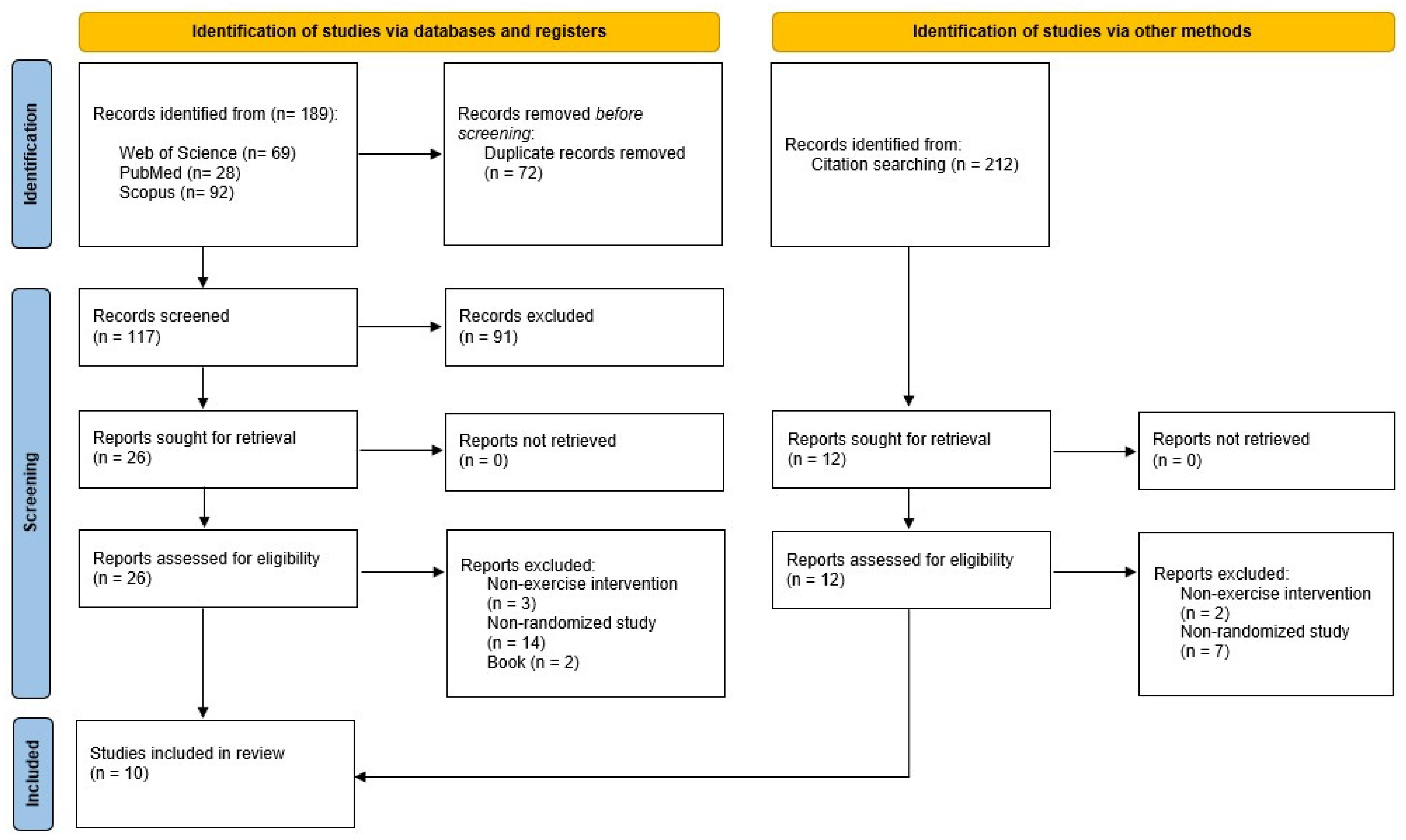
A total of 189 records were identified through the database search. After removing duplicates, 117 titles and abstracts were screened, and subsequently, 26 articles were retrieved for the full-text assessment. Finally, 10 RCTs met the inclusion criteria and were included in the systematic review (Figure 1).

3.1. Study Characteristics

The reviewed studies were published between 2014 and 2024 and included a total of 458 participants. Of these, 353 were male and 105 were female. Only two studies included female participants in their samples [25,26], and none included mixed-gender samples. Sample sizes in individual studies ranged from 30 [21,23,27] to 80 [24] participants. Only one study involved elite players [22], eight studies included young adult players, and one study focused on school-aged adolescents [28]. Table 1 provides a summary of the main characteristics of the included studies.

3.2. Interventions Characteristics

The training interventions lasted between 6 and 12 weeks. Most studies reported a training frequency of 3 to 5 sessions per week, with the exception of studies Shanmugam et al. [24] and Karuppaiah & Kumar [23], which did not report session frequency. Session durations ranged from 60 to 90 min. However, four studies did not provide information regarding session duration. Only the study by Irandoust & Taheri [22] reported training intensity, specifying a range of 60–86% of 1 RM for the strength training group. No studies reported dropouts or adverse events during or following the interventions.
The training interventions included a variety of modalities such as strength training, plyometric training, combined training (strength and plyometric), circuit training, interval/continuous training, speed, agility and quickness (SAQ) training, game-specific training, and Tabata. Control groups maintained their usual lifestyle without engaging in any structured exercise programs.

3.3. Main Outcomes

3.3.1. Physical Fitness

Nine of the ten studies included in this review assessed physical fitness parameters, including strength, speed, flexibility, and agility [20,21,22,24,25,26,27,28,29]. Four out of the five studies that examined muscular strength reported significant within-group improvements following the training interventions. Speed was assessed in five studies, and four of them reported within-group improvements in this variable. Flexibility was evaluated only in the study by Arjunan [20], which found significant within-group improvements in the intervention group. Agility was assessed in five studies, with four reporting significant within-group improvements in participants from the experimental groups. None of the included studies reported within-group improvements in the control groups for any of the physical fitness parameters analyzed.
In studies that included inter-group comparisons, the training programs were more effective than the control conditions in improving strength, speed, flexibility, and agility [20,21,22,25,26,27,28,29].

3.3.2. Sports Performance Variables

Three studies investigated the effects of training interventions on sport-specific performance outcomes [21,23,26]. Nithin et al. [21] reported significant within-group improvements in the intervention group. Additionally, the experimental group outperformed the control group after the 12-week intervention. Sureshkumar et al. [26] found that the experimental groups demonstrated superior performance compared to the control group when evaluating kabaddi-specific skills after interventions. Karuppaiah & Kumar [23] demonstrated that 12 weeks of circuit training improved the specific skills assessed.

3.3.3. Physiological Variables

Nithin et al. [21] analyzed physiological variables, including VO2max and resting heart rate. Significant within-group improvements were observed in both variables after 12 weeks of Bulgarian Bag Training. Furthermore, the group that performed Bulgarian Bag Training showed superior outcomes compared to the control group.

3.3.4. Hematological Variables

Nithin et al. [21] analyzed physiological variables including white blood cell count, red blood cell count, and hemoglobin levels. Significant within-group improvements were observed in all variables following the experimental intervention. Furthermore, the experimental group showed superior outcomes compared to the control group across all three variables assessed.

3.4. Methodological Quality

The methodological quality of the included RCT was considered poor in one study [23], fair in eight [20,22,24,25,26,27,28,29] and good in one [21] (Table 2).

4. Discussion

This systematic review gathered evidence from ten RCTs that evaluated the effects of various training methods on the physical fitness and sport performance of kabaddi players. Although the findings should be interpreted with caution due to the predominantly fair methodological quality of the included studies, the results suggest that structured training programs may have a positive impact, particularly on physical fitness parameters and kabaddi-specific skills. These findings may assist coaches and kabaddi practitioners in selecting and designing training methods to optimize player performance.
An optimal level of physical fitness is essential for performance in kabaddi due to the high demands it places on strength, endurance, speed, and agility [31]. Among the various physical capacities, strength, speed, and agility were the most frequently assessed, showing improvements in most studies within the experimental groups. Furthermore, between-group comparisons indicated that the different training methods employed were more effective in enhancing these capacities than conventional training or not participating in any training at all. These findings are consistent with results observed in basketball players [32] and tennis players [33], and may be attributed to the implementation of specific training protocols that include functional exercises aimed at improving these capacities, which tend to yield greater benefits than standard routines focused on technical or tactical elements. Moreover, the inclusion of plyometric exercises may have also contributed to the observed improvements, as there is strong evidence supporting the positive effects of this training method, particularly on strength, speed, and agility [34]. On the other hand, flexibility, although only assessed in one study, also showed significant intra- and intergroup improvements favoring the experimental training methods. These differences were more notable in the group that followed the dands and baithaks exercise training, which likely contributed to enhanced flexibility due to the mobility elements integrated into this traditional training modality [20].
The development and mastery of sport-specific technical skills are essential to ensure effective performance across various game situations [35]. Both intra- and intergroup results suggested that all training methods used were more effective than abstaining from any physical activity in improving technical skills. This can be attributed to the fact that even general or non-specific physical training enhances motor coordination, which is a fundamental pillar for the execution of motor skills [36,37]. Furthermore, compared to the group that participated solely in specific kabaddi games, the group that followed a training program incorporating Bulgarian bag exercises integrated with kabaddi-specific drills showed greater improvements in overall game ability. This effect can be explained by the specificity of Bulgarian bag exercises in developing functional strength, grip, core stability, and movement patterns [38,39]. Specifically, in kabaddi, the successful execution of sport-specific skills relies heavily on a combination of technical proficiency and optimal physical conditioning [40].
The available evidence on physiological variables such as VO2max and resting heart rate, as well as hematological parameters including blood cell count, red blood cell count, and hemoglobin levels, suggested significant benefits of Bulgarian Bag Training. Moreover, compared to participants who engaged exclusively in kabaddi-specific training, the positive effects on physical performance were primarily observed in the training method that combined Bulgarian Bag Training with their standard kabaddi-specific routine. These effects may be attributed to the fact that Bulgarian Bag Training incorporates multi-joint functional movements that enhance vital capacity [38], as well as aerobic [41] and anaerobic capacity [42], leading to greater physiological adaptation compared to traditional sport-specific training. In turn, this has been shown to more effectively stimulate the cardiovascular and hematological systems [43]. However, due to the limited number of studies, this review cannot establish a definitive relationship on this matter.
Despite the relevance of this review, several limitations must be acknowledged. First, the included interventions were heterogeneous in terms of type, duration, and intensity, which complicates direct comparisons across studies. Second, the small sample sizes in most studies limit the generalizability of the findings and reduce the statistical power necessary for a meta-analysis. Third, the overall methodological quality of the included studies was fair to low, further restricting the strength of the conclusions. Therefore, future research should focus on conducting high-quality RCTs and exploring alternative training methods to better understand their effects. In addition, future investigations should standardize outcome selection and measurement protocols to improve comparability across studies, and report training dose and progression transparently (e.g., frequency, intensity, time, type, volume, adherence, and adverse events), including follow-up assessments when possible.

5. Conclusions

The findings of this systematic review suggest that structured training programs can significantly enhance physical fitness and kabaddi-specific skills among players. Improvements were particularly evident in strength, speed, and agility, as well as in technical performance and certain physiological parameters in several studies. These results indicate that incorporating targeted physical training into routine practice may help optimize athletic performance in kabaddi. Therefore, coaches and physical trainers working with kabaddi players should consider integrating these evidence-based training methods into their conditioning programs. Nevertheless, given the heterogeneity and limited methodological quality of the included studies, further high-quality randomized controlled trials are necessary to validate these findings.

Supplementary Materials

The following supporting information can be downloaded at: https://www.mdpi.com/article/10.3390/sports14010037/s1, File S1: The PRISMA 2020 statement: an updated guideline for reporting systematic reviews.

Author Contributions

Conceptualization, N.B.-M. and D.G.-D.; Methodology, N.B.-M., L.I.V. and D.G.-D.; Formal Analysis, N.B.-M. and L.I.V.; Data Curation, N.B.-M. and L.I.V.; Writing—Original Draft Preparation, N.B.-M. and D.G.-D.; Writing—Review & Editing, L.I.V. and D.G.-D.; Supervision, D.G.-D. All authors have read and agreed to the published version of the manuscript.

Funding

This research received no external funding.

Institutional Review Board Statement

Not applicable.

Data Availability Statement

The data that support the findings of this study are available from the corresponding author (D.G.-D.), upon reasonable request.

Conflicts of Interest

The authors declare no conflicts of interest.

References

  1. Pal, S.; Kalra, S.; Kumar, S.; Pawaria, S.; Rishi, P. A Literature Review on Common Injuries and Their Prevention in Kabaddi. Eur. J. Sport. Exerc. Sci. 2021, 9, 1–9. [Google Scholar]
  2. Kumar, S.; Sudhakara, G. Selected Physical Fitness Components and Kabaddi Performance. Int. J. Acad. Res. Dev. 2018, 3, 908–910. [Google Scholar]
  3. Sidhu, H. Kabaddi. J. Phys. Educ. Recreat. Danc. 1986, 57, 75–77. [Google Scholar] [CrossRef]
  4. Patel, D.M.P.; Singh, A.; Ghosh, S.; Adhikari, D.R. Season-Wise Performance Analysis of the Gujarat Giants Team in the Pro Kabaddi League. J. Adv. Sport. Phys. Educ. 2025, 8, 155–167. [Google Scholar] [CrossRef]
  5. Dhillon, M.S.; John, R.; Sharma, S.; Prabhakar, S.; Behera, P.; Saxena, S.; Singh, H.; Chouhan, D. Epidemiology of Knee Injuries in Indian Kabaddi Players. Asian J. Sports Med. 2017, 8, e31670. [Google Scholar] [CrossRef]
  6. Singh, P.; Parashar, B.; Agrawal, S.; Mudgal, K.; Singh, P. Kabaddi: A Quantitative Approach to Machine Learning Model in Pro Kabaddi. In Proceedings of the Second International Conference on Computational Electronics for Wireless Communications, Surathkal, India, 9–10 June 2022; Springer: Singapore, 2023; Volume 554, pp. 243–260. [Google Scholar] [CrossRef]
  7. Kumar, D.; Nara, K.; Dhull, S. The Advantage and Disadvantage of Body Composition on Athletic Success: A Kabaddi Player Perspective. Int. J. Yogic Hum. Mov. Sport. Sci. 2023, 8, 151–153. [Google Scholar] [CrossRef]
  8. Sudhakar, H.H.; Majumdar, P.; Umesh, V.; Panda, K. Second to Fourth Digit Ratio Is a Predictor of Sporting Ability in Elite Indian Male Kabaddi Players. Asian J. Sports Med. 2014, 5, 31–34. [Google Scholar] [CrossRef]
  9. Pawar, S.B.; Borkar, P. Effect of Ladder Drills Training in Female Kabaddi Players. Int. J. Phys. Educ. Sport. Health 2018, 5, 180–184. [Google Scholar]
  10. Shobha, S. Selected Physical Fitness Components of Kabaddi and Kho-Kho Intercollegiate Male Players of Bangalore University: A Comparative Study. Int. J. Multidiscip. Res. Dev. 2019, 6, 23–24. [Google Scholar]
  11. Kumar, D.; Kumar, S.; Kumar, N.; Sagre, S. Effects of Circuit Training on Selected Physical Fitness Components of Kabaddi Players. Sport. Sci. Health Adv. 2023, 1, 143–148. [Google Scholar] [CrossRef]
  12. Dey, S.K.; Khanna, G.L.; Batra, M. Morphological and Physiological Studies on Indian National Kabaddi Players. Br. J. Sports Med. 1993, 27, 237–242. [Google Scholar] [CrossRef]
  13. Deepak; Kumar, N.; Yadav, A.; Sagre, S. Relationship between Motor Ability and Anthropometric Components of Kho-Kho and Kabaddi Players. Int. J. Physiol. Nutr. Phys. Educ. 2022, 7, 200–203. [Google Scholar] [CrossRef]
  14. Thakur, J.S. Association of Obesity with Agility and Speed of University Level Kabaddi Players. Int. J. Phys. Educ. Sport. Health 2016, 3, 254–256. [Google Scholar]
  15. Shelke, A.; Bawari, B.; Adhikari, R.; Kamath, S.; Kumar, R. Anthropometric Characteristics and Somatotypes in Elite Pro Kabaddi League Players. Int. J. Kinanthropometry 2024, 4, 57–62. [Google Scholar] [CrossRef]
  16. Rao Kagitha, V.; Kumar, P.P.S.P. Effect of Complex Training with Yogic Practices on Selected Motor Fitness Variables and Playing Ability Among Kabaddi Men Players. Int. J. Humanit. Soc. Sci. Invent. 2013, 2, 10–14. [Google Scholar]
  17. Arumugam, S. Effect of Complex Training on Muscular Strength Among Men Kabaddi Players. Int. J. Adv. Res. Innov. Ideas Educ. 2016, 2, 23–26. [Google Scholar]
  18. Sakthivel, S.; Kumaresan, G. Influence of Specific Skill Training with Kinematic Instructional Analysis Training on Physical Fitness Components and Overall Playing Ability of Male Kabaddi Players. Rev. Res. 2019, 8, 48514. [Google Scholar]
  19. Page, M.J.; McKenzie, J.E.; Bossuyt, P.M.; Boutron, I.; Hoffmann, T.C.; Mulrow, C.D.; Shamseer, L.; Tetzlaff, J.M.; Akl, E.A.; Brennan, S.E.; et al. The PRISMA 2020 Statement: An Updated Guideline for Reporting Systematic Reviews. BMJ 2021, 372, 71. [Google Scholar] [CrossRef]
  20. Arjunan, R. Effect of Rope Skipping Dands and Baithaks Exercises on Selected Physical Fitness Variables Among Kabaddi Players. Int. J. Humanit. Arts Med. Sci. 2015, 3, 69–74. [Google Scholar]
  21. Nithin, B.S.; Singh, R.M.; Kaur, D.; Astuti, Y.; Chaeroni, A.; Elayaraja, M.; Orhan, B.E.; Singh, Y.; Kumasi, B.; Balaji, E.; et al. Effects of Bulgarian Bag Training on Bio-Motor Fitness, Physiological, Haematological, and Performance in Young Adult Male Kabaddi Players. Retos 2024, 61, 868–877. [Google Scholar] [CrossRef]
  22. Irandoust, K.; Taheri, M. Effects of 8-Week Plyometric and Strengthtr Aining Programs on Selected Physical Fitness Factors of Elite Kabbadi Players. Indian J. Fundam. Appl. Life Sci. 2014, 4, 3942–3948. [Google Scholar]
  23. Karuppaiah, M.; Kumar, M.S. Examination of the Changes on Selected Performance Parameters in Response to Circuit Training among Kabaddi Players. Asian Pac. J. Health Sci. 2022, 9, 25–26. [Google Scholar] [CrossRef]
  24. Shanmugam, S.V.; Rameshkumar, S.; Balasundar, G. Impact of Unilateral Bilateral and Complex Training on Selected Motor Fitness Components and Physiological Variables among College Level Men Kabaddi Players. Int. J. Sport. Exerc. Phys. Educ. 2024, 6, 202–204. [Google Scholar] [CrossRef]
  25. Sureshkumar, R.; Venkatachalam, K.; Sankar, A. Effect of Isolated Mixed Interval and Continued Training on Speed Components among College Level Kabaddi Players. Indian J. Nat. Sci. 2022, 13, 51189–51194. [Google Scholar] [CrossRef]
  26. Sureshkumar, R.; Venkatachalam, K.; Sankar, A.; Mohankumar, K. Impact of Isolated Mixed Interval and Continues Training on Physical Fitness and Skill Related Performance Variables Among College Level Kabaddi Players. Eur. Chem. Bull. 2023, 12, 1758–1772. [Google Scholar]
  27. Tandel, B.S. Effect of Strength Training on elected Physical Variables of Kabaddi Players. Int. J. Physiol. Nutr. Phys. Educ. 2018, 3, 39–41. [Google Scholar]
  28. Thinakaran, S.; Balasundar, G.; Kumar, S.R. The Impact of Tabata Training and Resistance Training on Motor Performance Component among School Level Kabaddi Players. Int. J. Sport. Exerc. Phys. Educ. 2024, 6, 243–246. [Google Scholar] [CrossRef]
  29. Upadhyay, V.H. Effects of Speed Agility Quickness Training and Plyometric Training on Selected Physical Fitness Variable among College Men Kabaddi Players. Int. Res. J. Manag. Sociol. Humanit. 2023, 14, 86–93. [Google Scholar]
  30. Silverman, S.R.; Schertz, L.A.; Yuen, H.K.; Lowman, J.D.; Bickel, C.S. Systematic Review of the Methodological Quality and Outcome Measures Utilized in Exercise Interventions for Adults with Spinal Cord Injury. Spinal Cord 2012, 50, 718–727. [Google Scholar] [CrossRef] [PubMed]
  31. Sardar, S.; Kumar Pandey, A. An Estimation of Kabaddi Performance on the Basis of Selected Physical Fitness Components. Indian J. Phys. Educ. Sport. Appl. Sci. 2016, 6, 27–35. [Google Scholar]
  32. Cao, S.; Liu, J.; Wang, Z.; Geok, S.K. The Effects of Functional Training on Physical Fitness and Skill-Related Performance among Basketball Players: A Systematic Review. Front. Physiol. 2024, 15, 1391394. [Google Scholar] [CrossRef]
  33. Xiao, W.; Bu, T.; Zhao, F.; Zhang, J.; Bai, X.; Geok, S.K. Effects of Functional Training on Skill Performance and Movement Quality among Skilled Youth Male Tennis Players: A Cluster Randomized Control Trial. BMC Sports Sci. Med. Rehabil. 2025, 17, 43. [Google Scholar] [CrossRef]
  34. Markovic, G.; Mikulic, P. Neuro-Musculoskeletal and Performance Adaptations to Lower-Extremity Plyometric Training. Sport. Med. 2010, 40, 859–895. [Google Scholar] [CrossRef]
  35. Seirulo, F. La Técnica y Su Entrenamiento. Apunts 1987, 24, 189–199. [Google Scholar]
  36. Newell, K.M. What Are Fundamental Motor Skills and What Is Fundamental about Them? J. Mot. Learn. Dev. 2020, 8, 280–314. [Google Scholar] [CrossRef]
  37. Bennasar-García, M.I.; Romero, O.S.; Durán, Á.L. Importancia de La Coordinación Motriz Para El Desarrollo de Capacidades Físicas En Estudiantes de Primaria. Rev. Multi-Ensayos 2024, 10, 64–76. [Google Scholar] [CrossRef]
  38. Antony, B.; Maheswri, M.U.; Maheswri, U.; Palanisamy, A. Impact of Battle Rope and Bulgarian Bag High Intensity Interval Training Protocol on Selected Strength and Physiological Variables among School Level Athletes. Int. J. Appl. Res. 2015, 1, 403–406. [Google Scholar]
  39. Mohamed Fayez Fouad, A. The Effectiveness of Using the Bulgarian Bag on the Level of Some Physical Variables and the Digital Level of Javelin Throwers. Assiut J. Sport Sci. Arts 2020, 2020, 305–315. [Google Scholar] [CrossRef]
  40. Bhaskara, D.R.; Murthy, D.K. Physical Fitness Components As Predictors Of Kabaddi Performance. Indian Fed. Comput. Sci. Sport. 2016, 23, 103. [Google Scholar]
  41. Hajji, S.; Aldimkhi, B. Effect of Bulgarian Bag Exercises on Anticipation and Certain Physical Variables for Kuwaiti Sabre Fencers. Sci. Mov. Health 2022, 22, 172–176. [Google Scholar]
  42. Jasim, N.M.; Rahim, H.R.; Kazem, T. Bulgarian Bag Exercises and Their Effect on Some Physical and Motor Abilities to Develop Handball Scoring Skills. In Proceedings of the ZAC Conference Series: Social Sciences and Humanities, Baghdad, Iraq, 9–10 June 2024; Volume 1, pp. 1–157. [Google Scholar]
  43. Atan, T.; Alacam, H. The Effects of Acute Aerobic and Anaerobic Exercise on Blood Parameters. Anthropologist 2015, 19, 87–93. [Google Scholar] [CrossRef]
Figure 1. PRISMA (Preferred Reporting Items for Systematic Reviews and Meta-Analyses) study flow diagram.
Sports 14 00037 g001
Table 1. General characteristics of the included studies.
First Author (Year), DesignSampleInterventionOutcomesResults (p < 0.05)
Arjunan (2015)
[20]

Design:
RCT
Participants (n):
45 players
(15 EG1; 15 EG2; 15 CON)

Sex:
Male

Age, years (range):
21–28
Duration: 6-weeks
Frequency: 5 days/week
Volume: NR
Intensity: NR

EG1: Rope skipping dands
EG2: Dands and baithaks exercise training

CON
Activities: Do not participate any training
Physical fitness:
  • Flexibility
  • Agility
Intra-group
↑ Flexibility in EG1 and EG2
↑ Agility in EG1 and EG2

Inter-group:
EG1 and EG2 > Agility than CON
EG2 > Agility than EG1
EG1 and EG2 > Flexibility than CON
EG2 > Flexibility than EG1
Nithin et al. (2024)
[21]

Design:
RCT
Participants (n):
30 young adult players
(15 EG; 15 CON)

Sex:
Male

Age, years (mean; SD):
EG: 20.73 ± 1.83
CON: 20.80 ± 1.69
Duration: 12-weeks
Frequency: 3 days/week
Volume: 60 min
Intensity: NR

EG: Bulgarian Bag training (BBT)
Activities: following the BBT component, merged with those in the CON to finish the remaining section of their standard kabaddi-specific training routine.

CON
Activities: participated only in kabaddi-specific training
Physical fitness:
  • Strength:
    Shoulder Strength
    Explosive Strength
    Muscular Strength
  • Agility

Physiological Variables:
  • Resting Heart Rate
  • VO2Max

Hematological Variables:
  • White Blood Cells
  • Red Blood Cells
  • Hemoglobin

Sports Performance:
Playing Ability
Intra-group
↑ Shoulder Strength in EG
↑ Explosive Strength in EG
↑ Muscular Strength in EG
↑ Agility in EG
↑ Resting Heart Rate in EG
↑ VO2Max in EG
↑ White Blood Cells in EG
↑ Red Blood Cells in EG
↑ Hemoglobin in EG
↑ Playing Ability in EG

Inter-group:
EG > Agility than CON
EG > Shoulder, Explosive and Muscular Strength than CON
EG < Resting Heart Rate than CON
EG > VO2Max than CON
EG > White Blood Cells, Red Blood Cells and Hemoglobin than CON
EG > Playing Ability than CON
Irandoust & Taheri (2014)
[22]

Design:
RCT
Participants (n):
48 elite players
(12 EG1; 12 EG2; 12 EG3; 12 CON)

Sex:
Male

Age, years (mean; SD):
23.58 ± 0.51
Duration: 8-weeks
Frequency: 3 days/week

EG1: Strength training
Volume: NR
Intensity: 60–86% 1 RM

EG2: Plyometric training
Volume: NR
Intensity: low-high exercises

EG3: Combined (strength + plyometric) training
Volume: NR
Intensity: 60–86% 1 RM; low-high exercises

CON
Activities: Do not participate any training
Physical fitness:
  • Strength:
    Leg explosive power
  • Speed
  • Agility
Intra-group
↑ Leg explosive power in EG1, EG2 and EG3
↑ Agility in EG1, EG2 and EG3
↑ Speed in EG1, EG2 and EG3

Inter-group:
EG1, EG2 and EG3 > leg explosive power than CON
EG1, EG2 and EG3 > Speed than CON
EG1, EG2 and EG3 > Agility than CON
Karuppaiah &
Kumar
(2022)
[23]

Design:
RCT
Participants (n):
30 college level players
(15 EG; 15 CON)

Sex:
Male

Age, years (range):
18–25
Duration: 12-weeks
Frequency: NR
Volume: NR
Intensity: NR

EG: Circuit training

CON
Activities: Do not participate any training
Sports Performance:
  • Knee Hold
  • Kicking
Intra-group
↑ Knee Hold in EG
↑ Kicking in EG

Inter-group:
NR
Shanmugam et al. (2024)
[24]

Design:
RCT
Participants (n):
80 college level players (20 EG1; 20 EG2; 20 EG3; 20 CON)

Sex:
Male

Age, years (range):
18–28
Duration: 12-weeks
Frequency: NR
Volume: 60 min
Intensity: NR

EG1: Game specific with unilateral training

EG2: Game specific with bilateral training group

EG3: Game specific with complex training group

CON
Activities: not inducted into any specific training program
Physical fitness:
  • Speed
  • Aerobic capacity
Intra-group:
↑ Speed EG1, EG2 and EG3
↑ Aerobic capacity EG1, EG2 and EG3

Inter-group:
NR
Sureshkumar et al. (2022)
[25]

Design:
RCT
Participants (n):
60 college level players
(15 EG1; 15 EG2; 15 EG3; 15 CON)

Sex:
Women

Age, years (range):
18–25
Duration: 8-weeks
Frequency: 3 days/week
Volume: 60 min
Intensity: NR

EG1: Interval training
EG2: Continues training
EG3: Combined interval and continuous training

CON
Activities: do not participate any kind of activities.
Physical fitness:
Stride Length
Intra-group
NR

Inter-group:
EG1, EG2 and EG3 > Stride Length than CON
Sureshkumar et al. (2023)
[26]

Design:
RCT
Participants (n):
45 college level players
(15 EG1; 15 EG2; 15 CON)

Sex:
Women

Age, years (range):
18–25
Duration: 12-weeks
Frequency: 3 days/week
Volume: 60 min
Intensity: NR

EG1: Interval training
EG2: Continues training

CON
Activities: do not participate any kind of activities.
Physical fitness:
  • Strength:
    Leg explosive power
  • Agility
  • Speed

Sports Performance:
  • Toe touch
  • Hand touch
Ankle touch
Intra-group
NR

Inter-group:
EG1 and EG2 > Agility than CON
EG1 and EG2 > Leg explosive power than CON
EG1 and EG2 > Speed than CON
EG1 and EG2 > Hand touch than CON
EG1 and EG2 > Toe touch CON
EG1 and EG2 > Ankle touch than CON
Tandel (2018)
[27]

Design:
RCT
Participants (n):
30 young adult players
(15 EG; 15 CON)

Sex:
Male

Age, years (range):
17–21
Duration: 6-weeks
Frequency: 3 days/week
Volume: 60–75 min
Intensity: NR

EG: Strength training

CON
Activities: Do not participate any training
Physical fitness:
  • Strength:
    Muscular Endurance
  • Agility
Speed
Intra-group
↑ Muscular Endurance in EG
↑ Agility in EG
↑ Speed in EG

Inter-group:
EG > Agility than CON
EG > Muscular Endurance than CON
EG > Speed than CON
Thinakaran et al. (2024)
[28]

Design:
RCT
Participants (n): 45 school level kabaddi players (15 EG1; 15 EG2; 15 CON)

Sex:
Male

Age, years (range):
14–17
Duration: 12-weeks
Frequency: 5 days/week
Volume: 80 min
Intensity: NR

EG1: Tabata training
Activities: The load was increased by every four weeks of their training program

EG2: Resistance training
Activities: The load was increased by every four weeks of their training program

CON
Activities: participated only in kabaddi-specific training
Physical fitness:
  • Speed
Intra-group:
↑ Speed EG1 and EG2

Inter-group:
EG1 and EG2 > Speed than CON
Upadhyay
(2023)
[29]

Design:
RCT
Participants (n):
45 college level players
(15 EG1; EG2; 15 CON)

Sex:
Male

Age, years (range):
19–23
Duration: 6-weeks
Frequency: 4 days/week
Volume: NR
Intensity: NR

EG1: Speed agility quickness training

EG2: Plyometric training

CON
Activities: asked to refrain from any
special training except their leisure time pursuit as college students.
Physical fitness:
  • Strength:
    Power
  • Speed
  • Agility
Intra-group
↑ Speed EG1 and EG2
↑ Agility EG1 and EG2
↑ Power EG1 and EG2

Inter-group:
EG1 and EG2 > speed than CON
EG1 and EG2 > agility than CON
EG1 and EG2 > power than CON
>: Greater; <: Lower; ↑: Increment; CON: Control Group; EG: Experimental Group; NR: Not Reported; RCT: Randomized controlled trial.
Table 2. Quality Assessment of Randomized Controlled Trials.
Authors (Year)Items Quality Rating
1234567891011Score
Arjunan (2015) [20]Y++++4/10Fair
Nithin et al. (2024) [21]Y+++++++7/10Good
Irandoust & Taheri (2014) [22]Y+++++5/10Fair
Karuppaiah & Kumar (2022) [23]Y+++3/10Fair
Shanmugam et al. (2024) [24]Y++++4/10Fair
Sureshkumar et al. (2022) [25]Y++++4/10Fair
Sureshkumar et al. (2023) [26]Y++++4/10Fair
Tandel (2018) [27]Y++++4/10Fair
Thinakaran et al. (2024) [28]Y++++4/10Fair
Upadhyay (2023) [29]Y++++4/10Fair
Note. Eligibility criteria item does not contribute to total score. Items: (1) eligibility criteria; (2) randomization; (3) concealed allocation; (4) similarity at baseline; (5) subjects blinding; (6) therapists blinding; (7) assessors blinding; (8) one key outcome measured in >85% of subjects; (9) intention-to-treat analysis; (10) between-group statistical results for one key outcome; (11) measures of variability and point measures for one key outcome. “+” indicates that the criterion was met; “−” indicates that the criterion was not met.
Disclaimer/Publisher’s Note: The statements, opinions and data contained in all publications are solely those of the individual author(s) and contributor(s) and not of MDPI and/or the editor(s). MDPI and/or the editor(s) disclaim responsibility for any injury to people or property resulting from any ideas, methods, instructions or products referred to in the content.