



Risk Factors of Ankle Sprain in Soccer Players: A Systematic Review and Meta-Analysis
 , ,
, ,
Abstract
1. Introduction
2. Materials and Methods
3. Results
4. Discussion
5. Conclusions
Author Contributions
Funding
Data Availability Statement
Conflicts of Interest
Appendix A
- MEDLINE/PubMed
- Scopus
- CENTRAL
- Web of Science
- ProQuest
Appendix B

| Author | Year | Study Design | Q1 | Q2 | Q3 | Q4 | Q5 | Q6 | Q7 | Q8 | Q9 | Q10 | Q11 |
|---|---|---|---|---|---|---|---|---|---|---|---|---|---|
| Aoki, H [23] | 2010 | prospective cohort | yes | yes | yes | unclear | yes | yes | yes | yes (1 year) | unclear | unclear | yes |
| Arni Arnason [24] | 2004 | prospective cohort | yes | yes | yes | yes | yes | yes | yes | yes (4 months) | yes | yes | yes |
| Carling, C [42] | 2015 | prospective cohort | yes | yes | yes | no | no | yes | yes | yes (6 seasons) | unclear | no | yes |
| De Ridder, R [25] | 2016 | prospective cohort | yes | yes | yes | yes | yes | yes | yes | yes (3 seasons) | yes | yes | yes |
| Soligard T [39] | 2012 | prospective cohort | yes | yes | unclear | unclear | not applicable | yes | unclear | yes (3 seasons) | yes | unclear | yes |
| Ekstr, J [26] | 1983 | prospective cohort | unclear | yes | yes | no | no | yes | yes | yes (12 months) | unclear | no | yes |
| Ekstr, J [27] | 2011 | prospective cohort | yes | yes | yes | yes | yes | yes | yes | yes (February 2003 to October 2008) | no | yes | yes |
| Ekstr, J [47] | 2006 | prospective cohort | yes | yes | yes | yes | yes | yes | yes | yes (2003–2004 season) | no | yes | yes |
| Ekstr, J [47] | 1990 | prospective cohort | yes | yes | yes | no | no | yes | yes | yes (12 months) | unclear | no | yes |
| Emery, C [28] | 2005 | prospective cohort | yes | yes | yes | unclear | no | yes | yes | yes (13 weeks) | yes | unclear | yes |
| Engebretsen, A. H [29] | 2010 | prospective cohort | yes | yes | yes | yes | yes | yes | yes | yes | yes | yes | yes |
| Faude, O [30] | 2006 | prospective cohort | yes | yes | yes | yes | unclear | yes | yes | yes (10 months) | yes | yes | yes |
| Fousekis, K [31] | 2012 | prospective cohort | yes | yes | yes | yes | yes | yes | yes | yes (10 months) | yes | yes | yes |
| Fransz, D [43] | 2018 | prospective cohort | yes | yes | yes | yes | yes | yes | yes | yes | yes | yes | yes |
| Hägglund, M [32] | 2006 | prospective cohort | yes | yes | yes | yes | yes | yes | yes | yes (2 seasons: 2001–2002) | yes | yes | yes |
| Henry, T [18] | 2016 | prospective cohort | yes | yes | yes | yes | yes | yes | yes | yes (2 seasons: 2008–2009) | unclear | no | yes |
| Kristenson [46] | 2013 | prospective cohort | no | yes | unclear | unclear | not applicable | yes | yes | 2010–2011 | yes | no | yes |
| Bjørneboe J [40] | 2010 | prospective cohort | no | yes | yes | unclear | not applicable | yes | yes | yes 2004–2007 | yes | unclear | yes |
| McHugh [36] | 2006 | prospective cohort | yes | yes | yes | yes | yes | yes | yes | 2 years | yes | not applicable | yes |
| McCann [37] | 2018 | prospective cohort | yes | yes | yes | yes | unclear | yes | yes | unclear | yes | not applicable | yes |
| Christopher M [38] | 2017 | prospective cohort | yes | yes | yes | yes | unclear | yes | yes | 2 years | yes | not applicable | yes |
| Kawaguchi [34] | 2021 | prospective cohort | yes | yes | yes | yes | unclear | yes | yes | 2019 season | yes | not applicable | yes |
| Kofotolis [4] | 2006 | prospective cohort | yes | yes | yes | yes | unclear | yes | yes | 2 years | yes | not applicable | yes |
| Vieira [41] | 2012 | prospective cohort | yes | yes | unclear | yes | unclear | yes | unclear | 2009 season | yes | not applicable | unclear |
| Jupil ko [35] | 2018 | prospective pilot study | yes | yes | yes | yes | unclear | yes | yes | 2014/2015 | yes | not applicable | yes |
| Author | Random Sequence Generation | Allocation Concealment | Blinding of Participants and Personnel | Blinding of Outcome Assessment | Incomplete Outcome Data | Selective Reporting | Other Bias |
|---|---|---|---|---|---|---|---|
| Emery C 2010 [33] | yes | yes | yes | yes | No | probably | not detected |
References
- Junge, A.; Dvorak, J.; Graf-Baumann, T. Football injuries during the World Cup 2002. Am. J. Sports Med. 2004, 32 (Suppl. S1), 23–27. [Google Scholar]
- Cloke, D.J.; Spencer, S.; Hodson, A.; Deehan, D. The epidemiology of ankle injuries occurring in English Football Association academies. Br. J. Sports Med. 2009, 43, 1119–1125. [Google Scholar]
- Hootman, J.M.; Dick, R.; Agel, J. Epidemiology of collegiate injuries for 15 sports: Summary and recommendations for injury prevention initiatives. J. Athl. Train. 2007, 42, 311. [Google Scholar]
- Kofotolis, N.D.; Kellis, E.; Vlachopoulos, S.P. Ankle sprain injuries and risk factors in amateur soccer players during a 2-year period. Am. J. Sports Med. 2007, 35, 458–466. [Google Scholar] [PubMed]
- Fong, D.T.-P.; Hong, Y.; Chan, L.-K.; Yung, P.S.-H.; Chan, K.-M. A systematic review on ankle injury and ankle sprain in sports. Sports Med. 2007, 37, 73–94. [Google Scholar] [PubMed]
- Andersen, T.E.; Floerenes, T.W.; Arnason, A.; Bahr, R. Video analysis of the mechanisms for ankle injuries in football. Am. J. Sports Med. 2004, 32 (Suppl. S1), 69–79. [Google Scholar] [CrossRef] [Scilit] [PubMed]
- Palmer-Green, D.S.; Batt, M.E.; Scammell, B.E. Simple advice for a simple ankle sprain? The not so benign ankle injury. Osteoarthr. Cartil. 2016, 24, 947–948. [Google Scholar]
- Verhagen, E.; Van Der Beek, A.; Twisk, J.; Bouter, L.; Bahr, R.; Van Mechelen, W. The effect of a proprioceptive balance board training program for the prevention of ankle sprains: A prospective controlled trial. Am. J. Sports Med. 2004, 32, 1385–1393. [Google Scholar]
- Emery, C.; Roos, E.M.; Verhagen, E.; Finch, C.; Bennell, K.; Story, B.; Spindler, K.; Kemp, J.; Lohmander, L. OARSI clinical trials recommendations: Design and conduct of clinical trials for primary prevention of osteoarthritis by joint injury prevention in sport and recreation. Osteoarthr. Cartil. 2015, 23, 815–825. [Google Scholar]
- Valderrabano, V.; Hintermann, B.; Horisberger, M.; Fung, T.S. Ligamentous posttraumatic ankle osteoarthritis. Am. J. Sports Med. 2006, 34, 612–620. [Google Scholar]
- Whittaker, J.L.; Woodhouse, L.; Nettel-Aguirre, A.; Emery, C. Outcomes associated with early post-traumatic osteoarthritis and other negative health consequences 3–10 years following knee joint injury in youth sport. Osteoarthr. Cartil. 2015, 23, 1122–1129. [Google Scholar]
- Emery, C.A.; Roy, T.-O.; Whittaker, J.L.; Nettel-Aguirre, A.; Van Mechelen, W. Neuromuscular training injury prevention strategies in youth sport: A systematic review and meta-analysis. Br. J. Sports Med. 2015, 49, 865–870. [Google Scholar]
- Hägglund, M.; Atroshi, I.; Wagner, P.; Waldén, M. Superior compliance with a neuromuscular training programme is associated with fewer ACL injuries and fewer acute knee injuries in female adolescent football players: Secondary analysis of an RCT. Br. J. Sports Med. 2013, 47, 974–979. [Google Scholar] [PubMed]
- Olsen, O.-E.; Myklebust, G.; Engebretsen, L.; Holme, I.; Bahr, R. Exercises to prevent lower limb injuries in youth sports: Cluster randomised controlled trial. BMJ 2005, 330, 449. [Google Scholar] [PubMed]
- Owoeye, O.B.; Akinbo, S.R.; Tella, B.A.; Olawale, O.A. Efficacy of the FIFA 11+ warm-up programme in male youth football: A cluster randomised controlled trial. J. Sports Sci. Med. 2014, 13, 321. [Google Scholar] [PubMed]
- Soligard, T.; Nilstad, A.; Steffen, K.; Myklebust, G.; Holme, I.; Dvorak, J.; Bahr, R.; Andersen, T.E. Compliance with a comprehensive warm-up programme to prevent injuries in youth football. Br. J. Sports Med. 2010, 44, 787–793. [Google Scholar]
- Faude, O.; Rößler, R.; Junge, A. Football injuries in children and adolescent players: Are there clues for prevention? Sports Med. 2013, 43, 819–837. [Google Scholar]
- Henry, T.; Evans, K.; Snodgrass, S.J.; Miller, A.; Callister, R. Risk factors for noncontact ankle injuries in amateur male soccer players: A prospective cohort study. Clin. J. Sport. Med. 2016, 26, 251–258. [Google Scholar]
- Liberati, A.; Altman, D.G.; Tetzlaff, J.; Mulrow, C.; Gøtzsche, P.C.; Ioannidis, J.P.; Clarke, M.; Devereaux, P.J.; Kleijnen, J.; Moher, D. The PRISMA statement for reporting systematic reviews and meta-analyses of studies that evaluate health care interventions: Explanation and elaboration. Ann. Intern. Med. 2009, 151, W-65–W-94. [Google Scholar]
- Ouzzani, M.; Hammady, H.; Fedorowicz, Z.; Elmagarmid, A. Rayyan—A web and mobile app for systematic reviews. Syst. Rev. 2016, 5, 1–10. [Google Scholar]
- Porritt, K.; Gomersall, J.; Lockwood, C. JBI’s systematic reviews: Study selection and critical appraisal. AJN Am. J. Nurs. 2014, 114, 47–52. [Google Scholar] [PubMed]
- Wan, X.; Wang, W.; Liu, J.; Tong, T. Estimating the sample mean and standard deviation from the sample size, median, range and/or interquartile range. BMC Med. Res. Methodol. 2014, 14, 135. [Google Scholar]
- Aoki, H.; Kohno, T.; Fujiya, H.; Kato, H.; Yatabe, K.; Morikawa, T.; Seki, J. Incidence of injury among adolescent soccer players: A comparative study of artificial and natural grass turfs. Clin. J. Sport Med. 2010, 20, 1–7. [Google Scholar] [PubMed]
- Arnason, A.; Sigurdsson, S.B.; Gudmundsson, A.; Holme, I.; Engebretsen, L.; Bahr, R. Risk factors for injuries in football. Am. J. Sports Med. 2004, 32, 5–16. [Google Scholar]
- De Ridder, R.; Witvrouw, E.; Dolphens, M.; Roosen, P.; Van Ginckel, A. Hip strength as an intrinsic risk factor for lateral ankle sprains in youth soccer players: A 3-season prospective study. Am. J. Sports Med. 2017, 45, 410–416. [Google Scholar]
- Ekstrand, J.; Gillquist, J. Soccer injuries and their mechanisms: A prospective study. Med. Sci. Sports Exerc. 1983, 15, 267–270. [Google Scholar] [PubMed]
- Ekstrand, J.; Hägglund, M.; Fuller, C. Comparison of injuries sustained on artificial turf and grass by male and female elite football players. Scand. J. Med. Sci. Sports 2011, 21, 824–832. [Google Scholar]
- Emery, C.A.; Meeuwisse, W.H.; Hartmann, S.E. Evaluation of risk factors for injury in adolescent soccer: Implementation and validation of an injury surveillance system. Am. J. Sports Med. 2005, 33, 1882–1891. [Google Scholar]
- Engebretsen, A.H.; Myklebust, G.; Holme, I.; Engebretsen, L.; Bahr, R. Intrinsic risk factors for acute ankle injuries among male soccer players: A prospective cohort study. Scand. J. Med. Sci. Sports 2010, 20, 403–410. [Google Scholar]
- Faude, O.; Junge, A.; Kindermann, W.; Dvorak, J. Risk factors for injuries in elite female soccer players. Br. J. Sports Med. 2006, 40, 785–790. [Google Scholar]
- Fousekis, K.; Tsepis, E.; Vagenas, G. Intrinsic risk factors of noncontact ankle sprains in soccer: A prospective study on 100 professional players. Am. J. Sports Med. 2012, 40, 1842–1850. [Google Scholar] [PubMed]
- Hägglund, M.; Waldén, M.; Ekstrand, J. Previous injury as a risk factor for injury in elite football: A prospective study over two consecutive seasons. Br. J. Sports Med. 2006, 40, 767–772. [Google Scholar] [PubMed]
- Emery, C.; Meeuwisse, W. The effectiveness of a neuromuscular prevention strategy to reduce injuries in youth soccer: A cluster-randomised controlled trial. Br. J. Sports Med. 2010, 44, 555–562. [Google Scholar]
- Kawaguchi, K.; Taketomi, S.; Mizutani, Y.; Inui, H.; Yamagami, R.; Kono, K.; Takagi, K.; Kage, T.; Sameshima, S.; Tanaka, S. Hip abductor muscle strength deficit as a risk factor for inversion ankle sprain in male college soccer players: A prospective cohort study. Orthop. J. Sports Med. 2021, 9, 23259671211020287. [Google Scholar] [CrossRef] [Scilit] [PubMed]
- Ko, J.; Rosen, A.B.; Brown, C.N. Functional performance tests identify lateral ankle sprain risk: A prospective pilot study in adolescent soccer players. Scand. J. Med. Sci. Sports 2018, 28, 2611–2616. [Google Scholar]
- McHugh, M.P.; Tyler, T.F.; Tetro, D.T.; Mullaney, M.J.; Nicholas, S.J. Risk factors for noncontact ankle sprains in high school athletes: The role of hip strength and balance ability. Am. J. Sports Med. 2006, 34, 464–470. [Google Scholar]
- McCann, R.S.; Kosik, K.B.; Terada, M.; Beard, M.Q.; Buskirk, G.E.; Gribble, P.A. Acute lateral ankle sprain prediction in collegiate women’s soccer players. Int. J. Sports Phys. Ther. 2018, 13, 12. [Google Scholar]
- Powers, C.M.; Ghoddosi, N.; Straub, R.K.; Khayambashi, K. Hip strength as a predictor of ankle sprains in male soccer players: A prospective study. J. Athl. Train. 2017, 52, 1048–1055. [Google Scholar]
- Soligard, T.; Bahr, R.; Andersen, T.E. Injury risk on artificial turf and grass in youth tournament football. Scand. J. Med. Sci. Sports 2012, 22, 356–361. [Google Scholar]
- Bjørneboe, J.; Bahr, R.; Andersen, T.E. Risk of injury on third-generation artificial turf in Norwegian professional football. Br. J. Sports Med. 2010, 44, 794–798. [Google Scholar]
- Vieira, R.B.; Bertolini, F.M.; Vieira, T.C.; Aguiar, R.M.; Pinheiro, G.B.; Lasmar, R.C.P. Incidence of ankle sprains in soccer players with joint hypermobility syndrome. Rev. Bras. Ortop. 2012, 47, 710–713. [Google Scholar] [CrossRef] [Scilit]
- Carling, C.; McCall, A.; Le Gall, F.; Dupont, G. The impact of short periods of match congestion on injury risk and patterns in an elite football club. Br. J. Sports Med. 2016, 50, 764–768. [Google Scholar] [CrossRef] [Scilit] [PubMed]
- Fransz, D.P.; Huurnink, A.; Kingma, I.; de Boode, V.A.; Heyligers, I.C.; van Dieën, J.H. Performance on a single-legged drop-jump landing test is related to increased risk of lateral ankle sprains among male elite soccer players: A 3-year prospective cohort study. Am. J. Sports Med. 2018, 46, 3454–3462. [Google Scholar] [CrossRef] [Scilit]
- Ekstrand, J.; Tropp, H. The incidence of ankle sprains in soccer. Foot Ankle 1990, 11, 41–44. [Google Scholar] [CrossRef] [Scilit] [PubMed]
- Engebretsen, A.H.; Myklebust, G.; Holme, I.; Engebretsen, L.; Bahr, R. Prevention of injuries among male soccer players: A prospective, randomized intervention study targeting players with previous injuries or reduced function. Am. J. Sports Med. 2008, 36, 1052–1060. [Google Scholar] [CrossRef] [Scilit] [PubMed]
- Kristenson, K.; Bjørneboe, J.; Waldén, M.; Andersen, T.E.; Ekstrand, J.; Hägglund, M. The Nordic Football Injury Audit: Higher injury rates for professional football clubs with third-generation artificial turf at their home venue. Br. J. Sports Med. 2013, 47, 775–781. [Google Scholar] [CrossRef] [Scilit]
- Ekstrand, J.; Timpka, T.; Hägglund, M. Risk of injury in elite football played on artificial turf versus natural grass: A prospective two-cohort study. Br. J. Sports Med. 2006, 40, 975–980. [Google Scholar] [CrossRef] [Scilit]
- Brinkman, R.E.; Evans, T.A. History of ankle sprain as a risk factor of future lateral ankle sprain in athletes. J. Sport. Rehabil. 2011, 20, 384–388. [Google Scholar] [CrossRef] [Scilit]
- Garrett, W.E., Jr. Muscle strain injuries. Am. J. Sports Med. 1996, 24, S2–S8. [Google Scholar] [CrossRef] [Scilit]
- Tedeschi, R.; Ricci, V.; Tarantino, D.; Tarallo, L.; Catani, F.; Donati, D. Rebuilding Stability: Exploring the Best Rehabilitation Methods for Chronic Ankle Instability. Sports 2024, 12, 282. [Google Scholar] [CrossRef] [Scilit]
- Williams, S.; Hume, P.A.; Kara, S. A review of football injuries on third and fourth generation artificial turfs compared with natural turf. Sports Med. 2011, 41, 903–923. [Google Scholar] [CrossRef] [Scilit] [PubMed]
- Steffen, K.; Andersen, T.E.; Bahr, R. Risk of injury on artificial turf and natural grass in young female football players. Br. J. Sports Med. 2007, 41 (Suppl. S1), i33–i37. [Google Scholar] [CrossRef] [Scilit] [PubMed]
- Fuller, C.W.; Dick, R.W.; Corlette, J.; Schmalz, R. Comparison of the incidence, nature and cause of injuries sustained on grass and new generation artificial turf by male and female football players. Part 1: Match injuries. Br. J. Sports Med. 2007, 41 (Suppl. S1), i20–i26. [Google Scholar] [CrossRef] [Scilit]
- Griffith, G.G.; Brett, A.G.; Gregory, P.G.; Heath, P.G. Playing Surface and Injury Risk: Artificial Turf vs. Natural Grass. In Chapter 3: Injuries and Sports Medicine; Thomas Robert, W., Stanislaw, P.S., Eds.; IntechOpen: Rijeka, Croatia, 2022. [Google Scholar]
- Bocchinfuso, C.; Sitler, M.R.; Kimura, I.F. Effects of Two Semirigid Prophylactic Ankle Stabilizers on Speed, Agility, and Vertical Jump. J. Sport Rehabil. 1994, 3, 125–134. [Google Scholar] [CrossRef] [Scilit]
- Greene, T.A.; Wight, C.R. A comparative support evaluation of three ankle orthoses before, during, and after exercise. J. Orthop. Sports Phys. Ther. 1990, 11, 453–466. [Google Scholar] [CrossRef] [Scilit]
- Gross, M.T.; Everts, J.R.; Roberson, S.E.; Roskin, D.S.; Young, K.D. Effect of Donjoy Ankle Ligament Protector and Aircast Sport-Stirrup orthoses on functional performance. J. Orthop. Sports Phys. Ther. 1994, 19, 150–156. [Google Scholar] [CrossRef] [Scilit]
- Macpherson, K.; Sitler, M.; Kimura, I.; Horodyski, M. Effects of a semirigid and softshell prophylactic ankle stabilizer on selected performance tests among high school football players. J. Orthop. Sports Phys. Ther. 1995, 21, 147–152. [Google Scholar] [CrossRef] [Scilit] [PubMed]
- Paris, D.L.; Sullivan, S.J. Isometric strength of rearfoot inversion and eversion in nonsupported, taped, and braced ankles assessed by a hand-held dynamometer. J. Orthop. Sports Phys. Ther. 1992, 15, 229–235. [Google Scholar] [CrossRef] [Scilit]
- Gross, M.T.; Liu, H.Y. The role of ankle bracing for prevention of ankle sprain injuries. J. Orthop. Sports Phys. Ther. 2003, 33, 572–577. [Google Scholar] [CrossRef] [Scilit]
- Putnam, A.R.; Bandolin, S.N.; Krabak, B.J. Impact of Ankle Bracing on Skill Performance in Recreational Soccer Players. PM&R 2012, 4, 574–579. [Google Scholar] [CrossRef] [Scilit]
- Burks, R.T.; Bean, B.G.; Marcus, R.; Barker, H.B. Analysis of athletic performance with prophylactic ankle devices. Am. J. Sports Med. 1991, 19, 104–106. [Google Scholar] [CrossRef] [Scilit]
- Bot, S.D.; van Mechelen, W. The effect of ankle bracing on athletic performance. Sports Med. 1999, 27, 171–178. [Google Scholar] [CrossRef] [Scilit] [PubMed]
- Tropp, H.; Askling, C.; Gillquist, J. Prevention of ankle sprains. Am. J. Sports Med. 1985, 13, 259–262. [Google Scholar] [CrossRef] [Scilit]
- Surve, I.; Schwellnus, M.P.; Noakes, T.; Lombard, C. A fivefold reduction in the incidence of recurrent ankle sprains in soccer players using the Sport-Stirrup orthosis. Am. J. Sports Med. 1994, 22, 601–606. [Google Scholar] [CrossRef] [Scilit] [PubMed]
- Ekstrand, J.; Gillquist, J.; Liljedahl, S.-O. Prevention of soccer injuries: Supervision by doctor and physiotherapist. Am. J. Sports Med. 1983, 11, 116–120. [Google Scholar]
- Sharpe, S.R.; Knapik, J.; Jones, B. Ankle braces effectively reduce recurrence of ankle sprains in female soccer players. J. Athl. Train. 1997, 32, 21–24. [Google Scholar]
- Kofotolis, N.; Kellis, E. Ankle sprain injuries: A 2-year prospective cohort study in female Greek professional basketball players. J. Athl. Train. 2007, 42, 388–394. [Google Scholar] [PubMed]
- Botsis, A.E.; Schwarz, N.A.; Harper, M.E.; Liu, W.; Rooney, C.A.; Gurchiek, L.R.; Kovaleski, J.E. Effect of Kinesio(®) Taping on Ankle Complex Motion and Stiffness and Jump Landing Time to Stabilization in Female Ballet Dancers. J. Funct. Morphol. Kinesiol. 2019, 4, 19. [Google Scholar] [CrossRef] [Scilit]
- Bailey, D.; Firth, P. Does kinesiology taping of the ankles affect proprioceptive control in professional football (soccer) players? Phys. Ther. Sport 2017, 25, 94–98. [Google Scholar] [CrossRef] [Scilit]
- Briem, K.; Eythörsdöttir, H.; Magnúsdóttir, R.G.; Pálmarsson, R.; Rúnarsdöttir, T.; Sveinsson, T. Effects of kinesio tape compared with nonelastic sports tape and the untaped ankle during a sudden inversion perturbation in male athletes. J. Orthop. Sports Phys. Ther. 2011, 41, 328–335. [Google Scholar] [CrossRef] [Scilit]
- Callaghan, M.J. Role of ankle taping and bracing in the athlete. Br. J. Sports Med. 1997, 31, 102–108. [Google Scholar] [CrossRef] [Scilit]
- Fong, D.T.; Chan, Y.Y.; Mok, K.M.; Yung, P.S.; Chan, K.M. Understanding acute ankle ligamentous sprain injury in sports. Sports Med. Arthrosc. Rehabil. Ther. Technol. 2009, 1, 14. [Google Scholar] [CrossRef] [Scilit]
- Olmsted, L.C.; Vela, L.I.; Denegar, C.R.; Hertel, J. Prophylactic Ankle Taping and Bracing: A Numbers-Needed-to-Treat and Cost-Benefit Analysis. J. Athl. Train. 2004, 39, 95–100. [Google Scholar] [PubMed]
- Dizon, J.M.; Reyes, J.J. A systematic review on the effectiveness of external ankle supports in the prevention of inversion ankle sprains among elite and recreational players. J. Sci. Med. Sport 2010, 13, 309–317. [Google Scholar] [CrossRef] [Scilit] [PubMed]
- Feger, M.A.; Donovan, L.; Hart, J.M.; Hertel, J. Lower extremity muscle activation in patients with or without chronic ankle instability during walking. J. Athl. Train. 2015, 50, 350–357. [Google Scholar] [CrossRef] [Scilit] [PubMed]
- Mendez-Rebolledo, G.; Guzmán-Venegas, R.; Cruz-Montecinos, C.; Watanabe, K.; Calatayud, J.; Martinez-Valdes, E. Individuals with chronic ankle instability show altered regional activation of the peroneus longus muscle during ankle eversion. Scand. J. Med. Sci. Sports 2024, 34, e14535. [Google Scholar] [CrossRef] [Scilit]
- Tyler, T.F.; Mchugh, M.P.; Mirabella, M.R.; Mullaney, M.J.; Nicholas, S.J. Risk factors for noncontact ankle sprains in high school football players: The role of previous ankle sprains and body mass index. Am. J. Sports Med. 2006, 34, 471–475. [Google Scholar]
- Mason, J.; Kniewasser, C.; Hollander, K.; Zech, A. Intrinsic Risk Factors for Ankle Sprain Differ Between Male and Female Athletes: A Systematic Review and Meta-Analysis. Sports Med. Open 2022, 8, 139. [Google Scholar] [CrossRef] [Scilit]
- Bahr, R.; Krosshaug, T. Understanding injury mechanisms: A key component of preventing injuries in sport. Br. J. Sports Med. 2005, 39, 324–329. [Google Scholar] [CrossRef] [Scilit]
- van Mechelen, W.; Hlobil, H.; Kemper, H.C. Incidence, severity, aetiology and prevention of sports injuries. A review of concepts. Sports Med. 1992, 14, 82–99. [Google Scholar] [CrossRef] [Scilit]
- Willems, T.M.; Witvrouw, E.; Delbaere, K.; Philippaerts, R.; De Bourdeaudhuij, I.; De Clercq, D. Intrinsic risk factors for inversion ankle sprains in females—A prospective study. Scand J. Med. Sci. Sports 2005, 15, 336–345. [Google Scholar] [CrossRef] [Scilit] [PubMed]
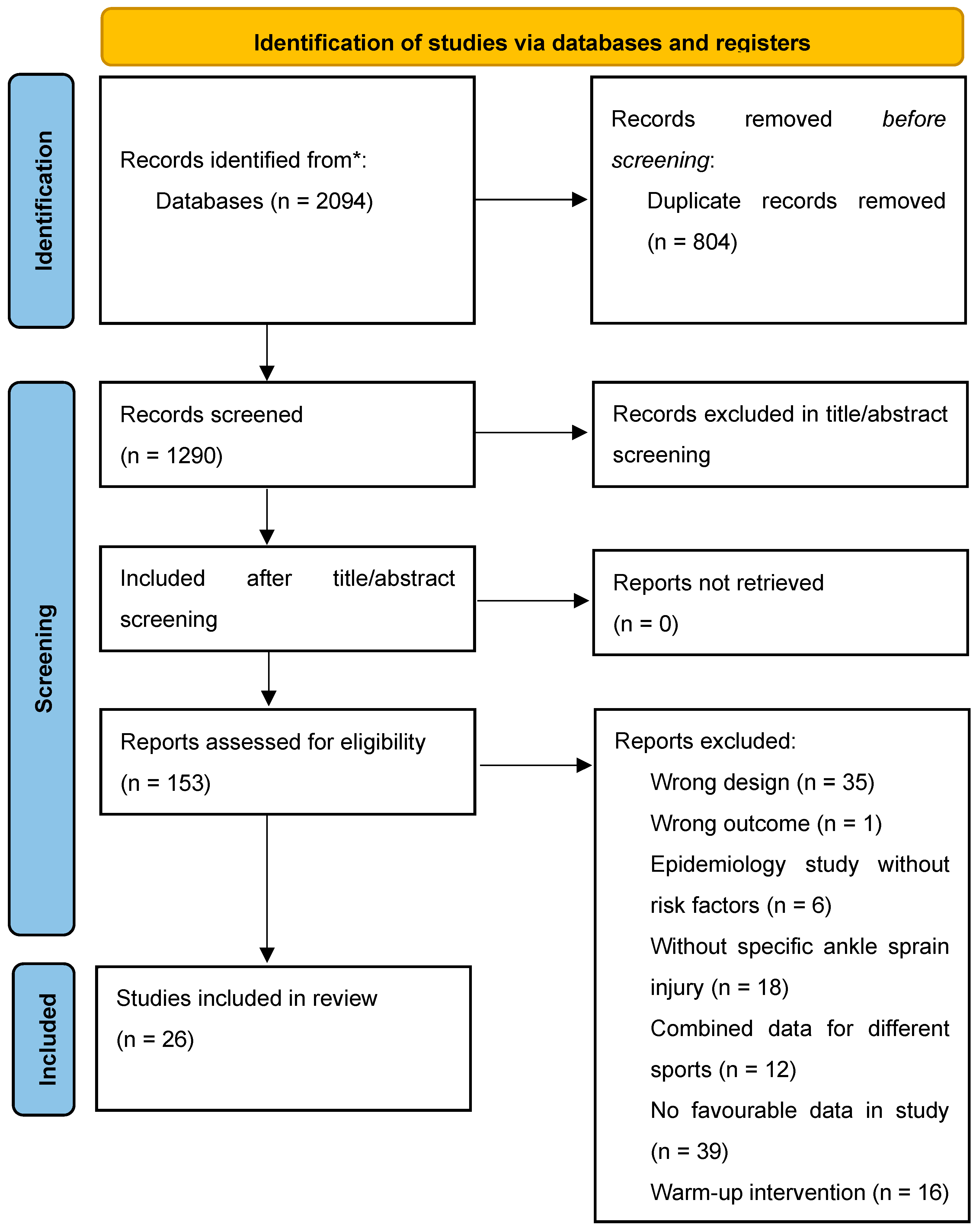
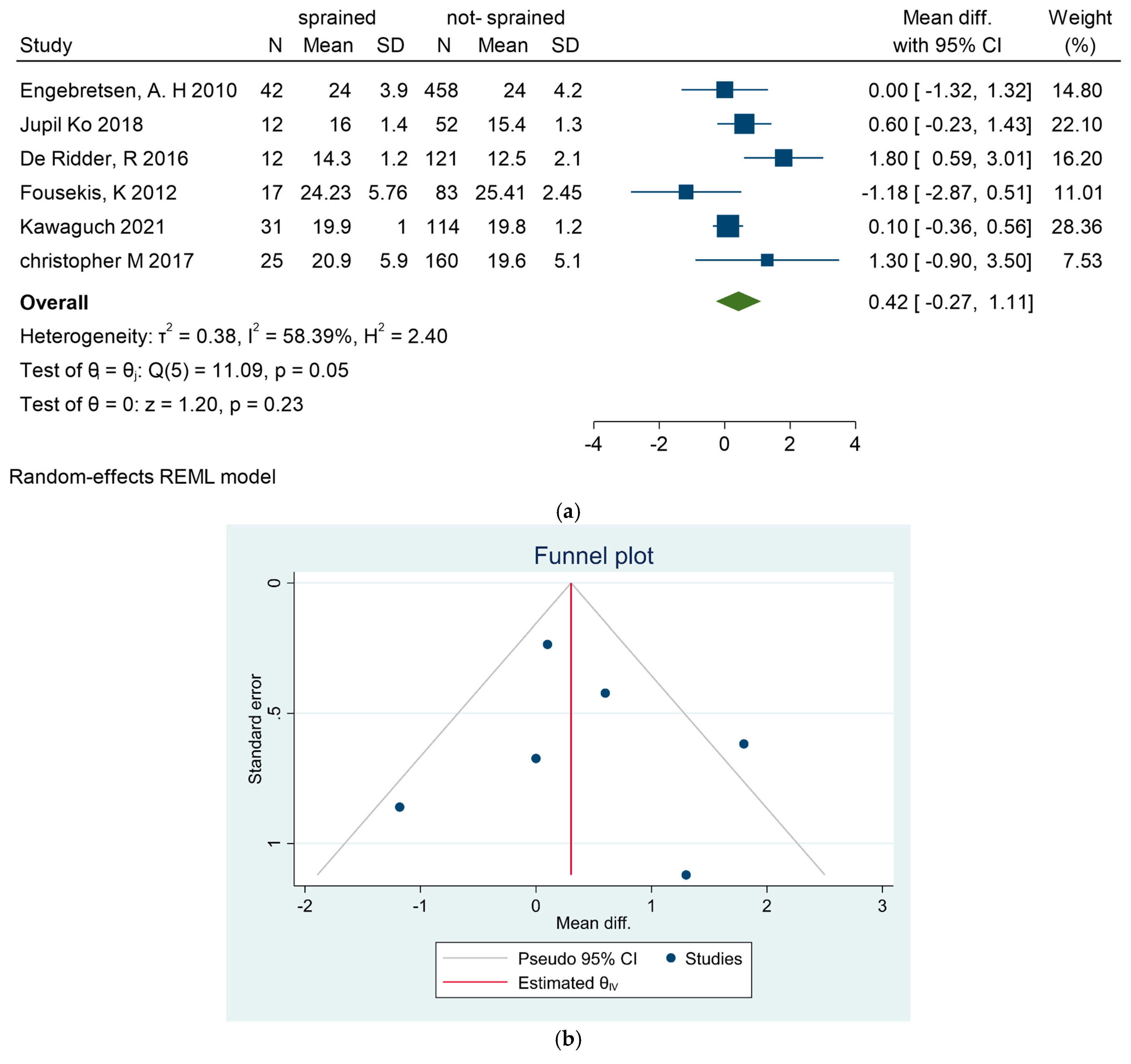
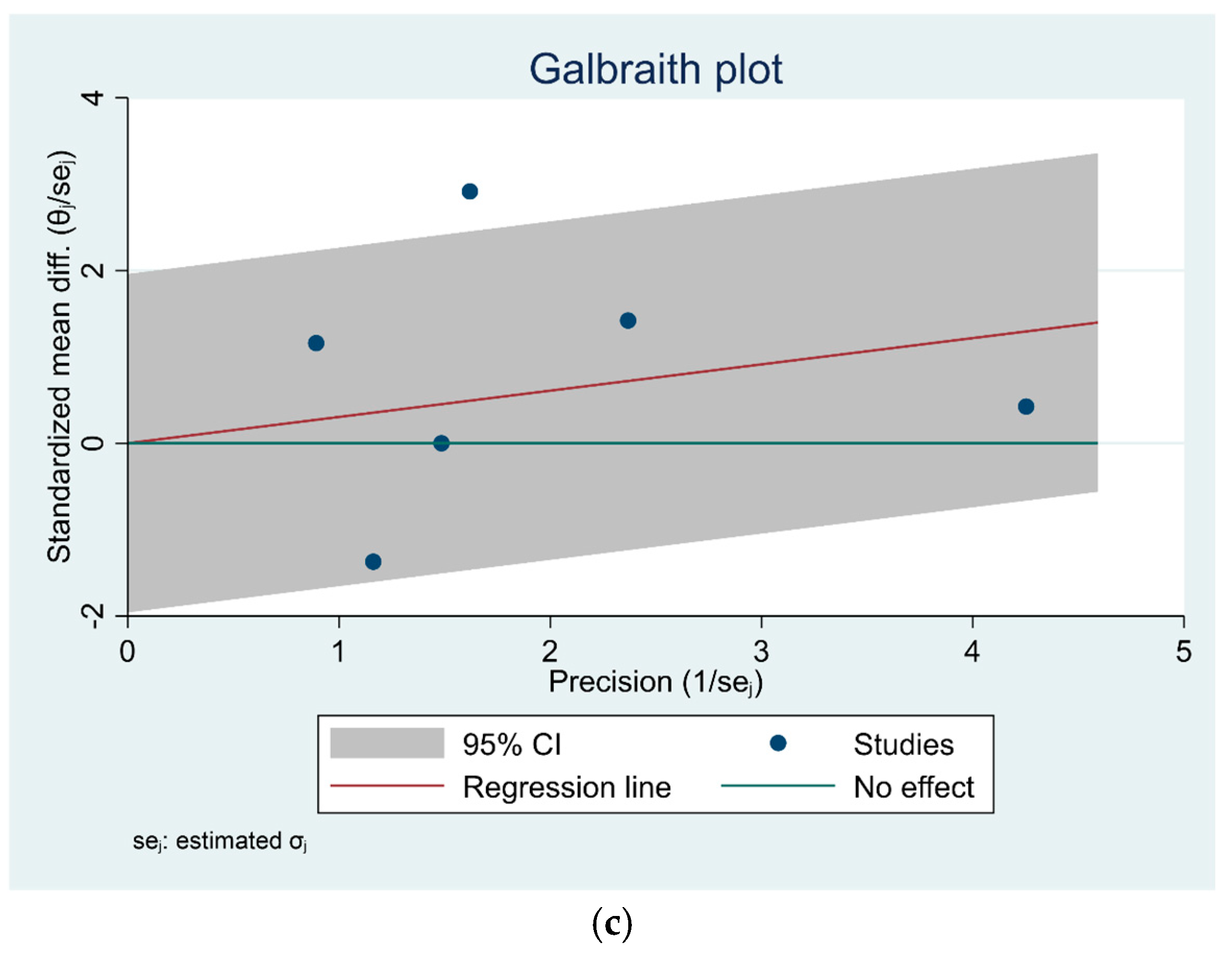
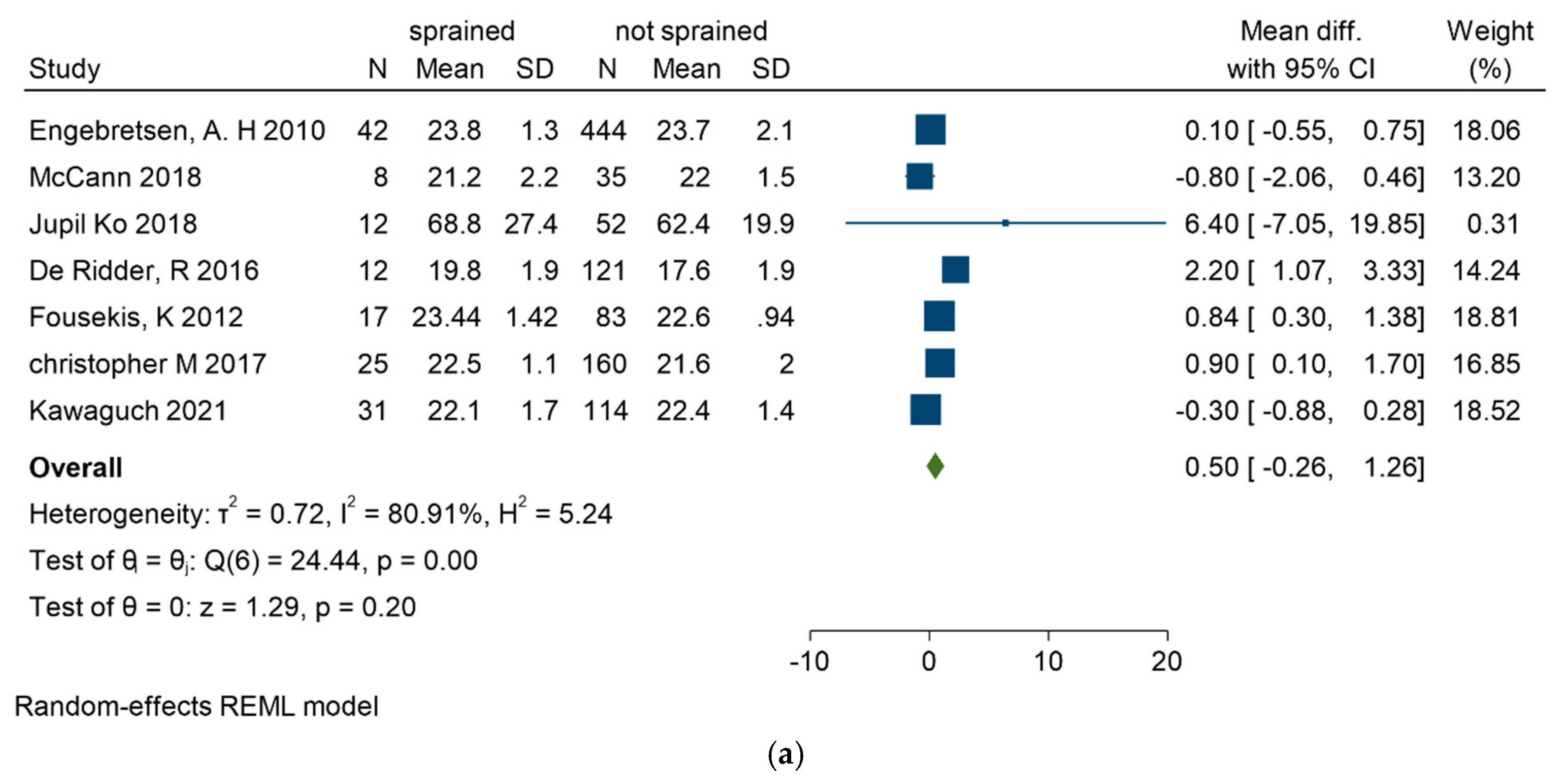
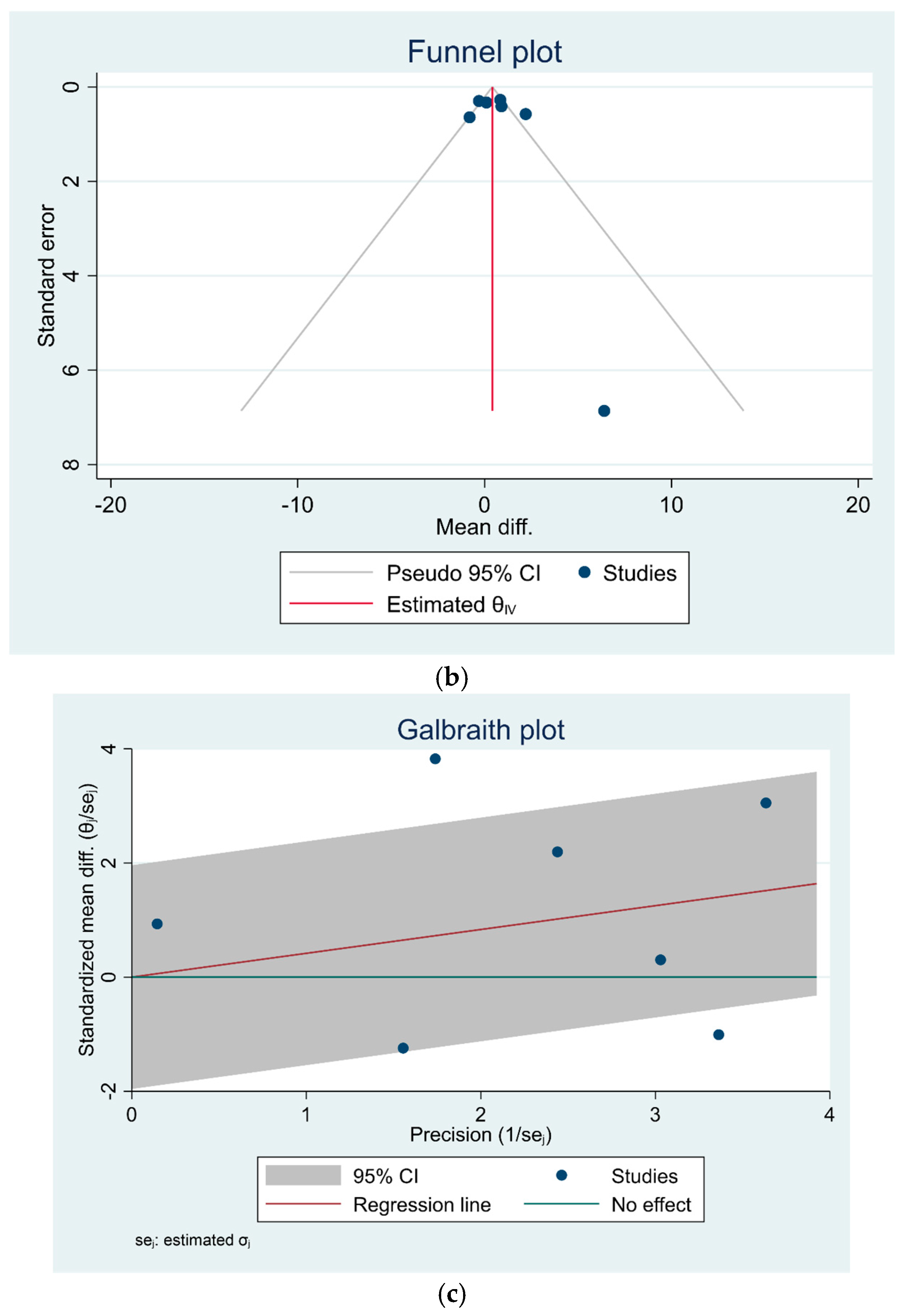
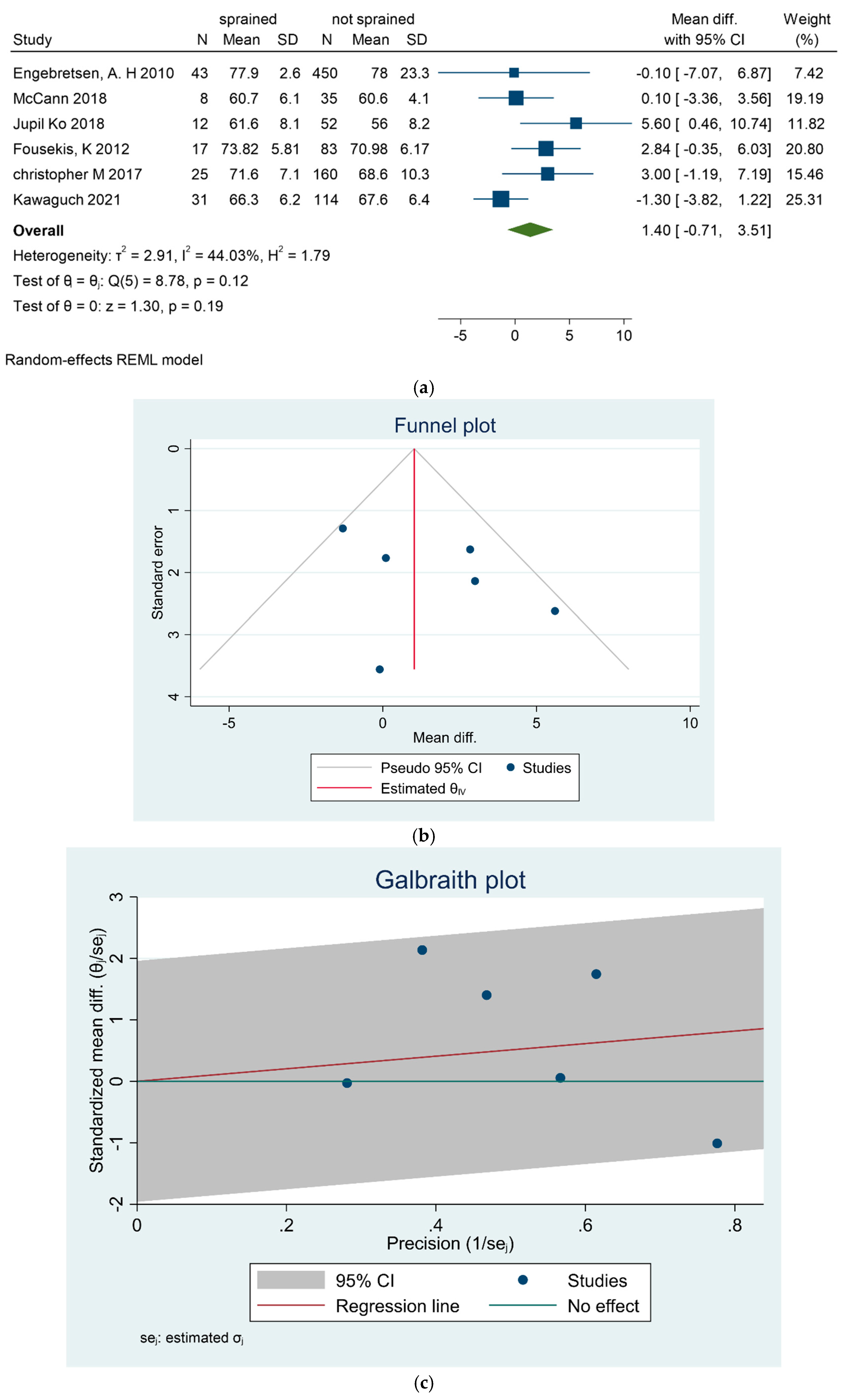
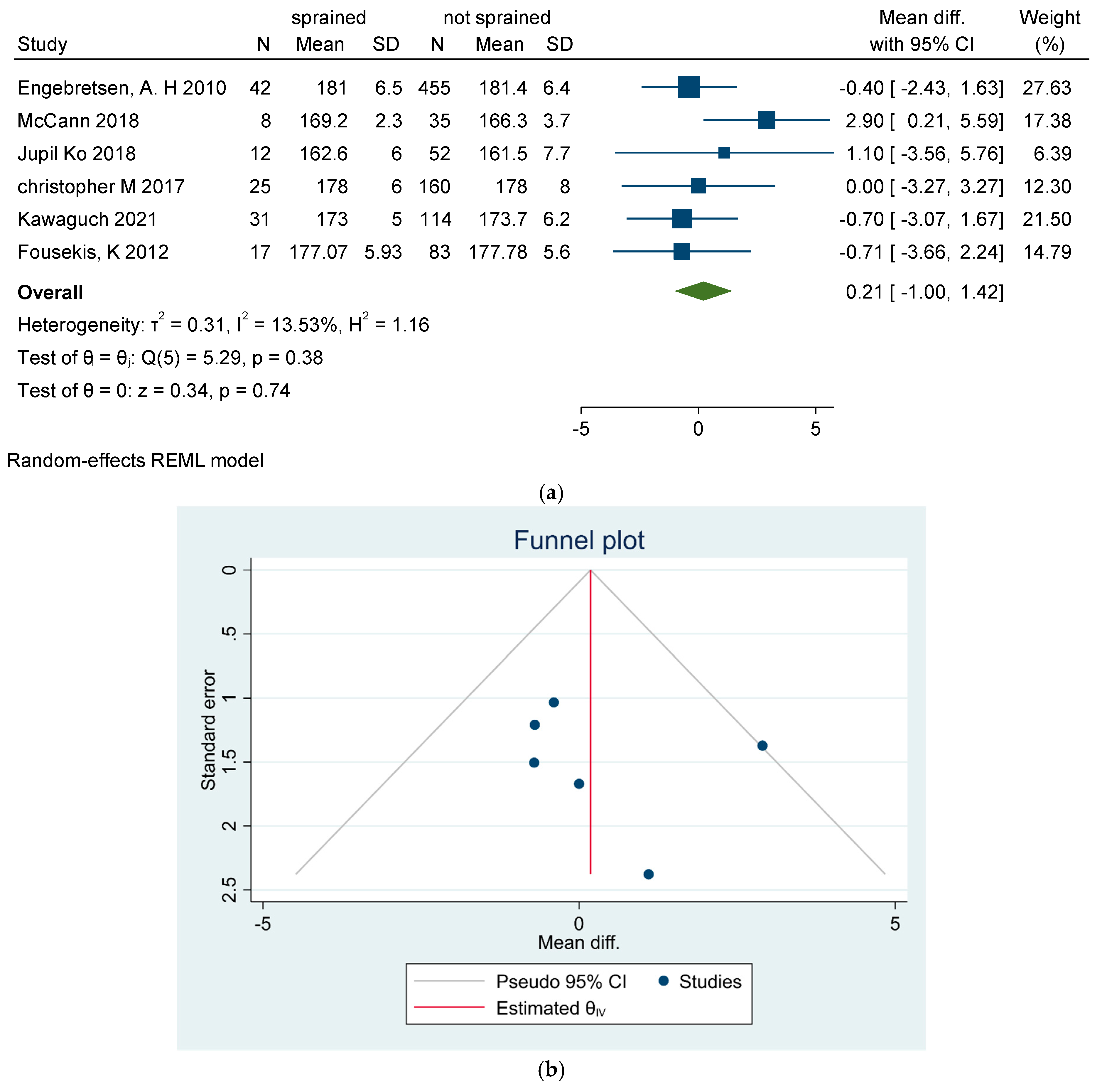
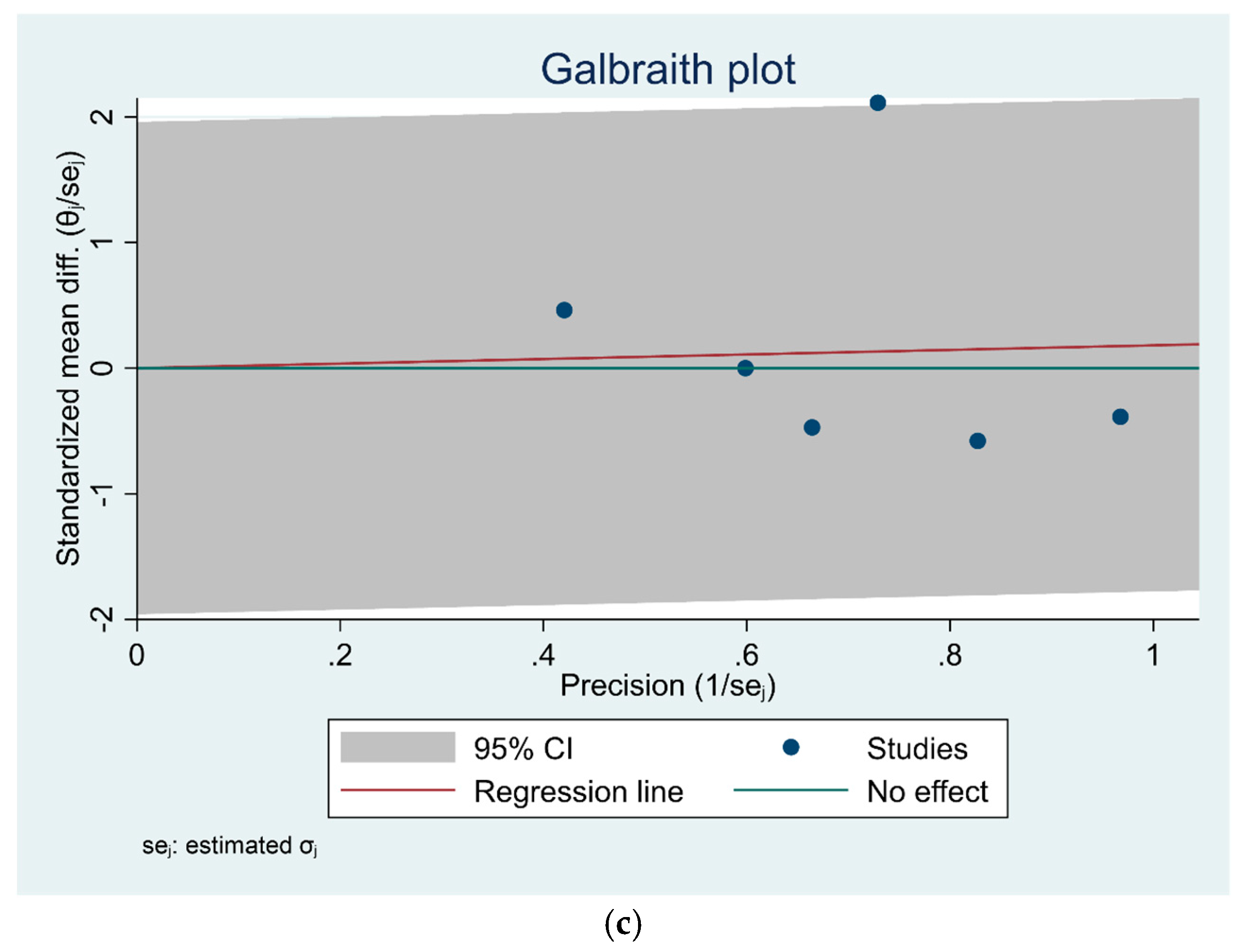
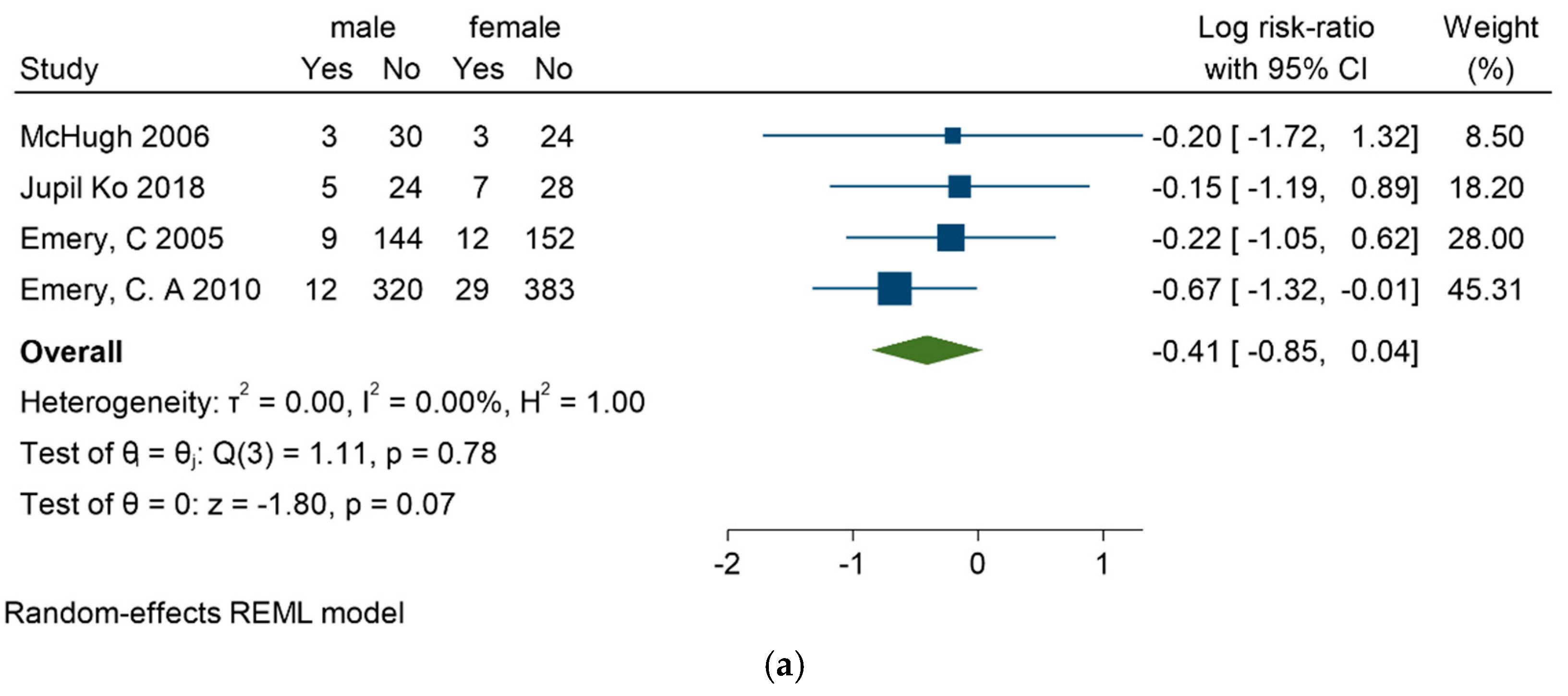
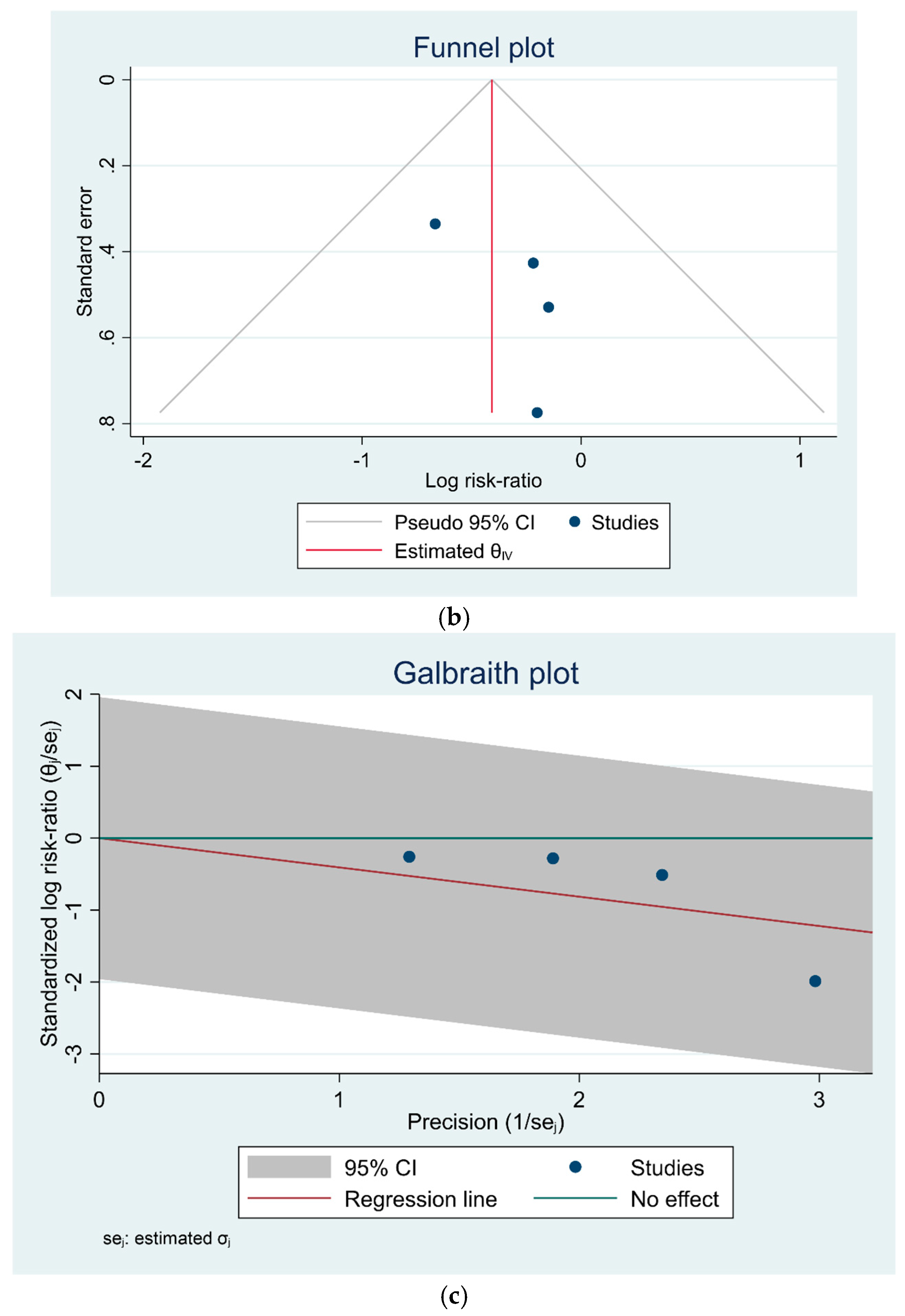
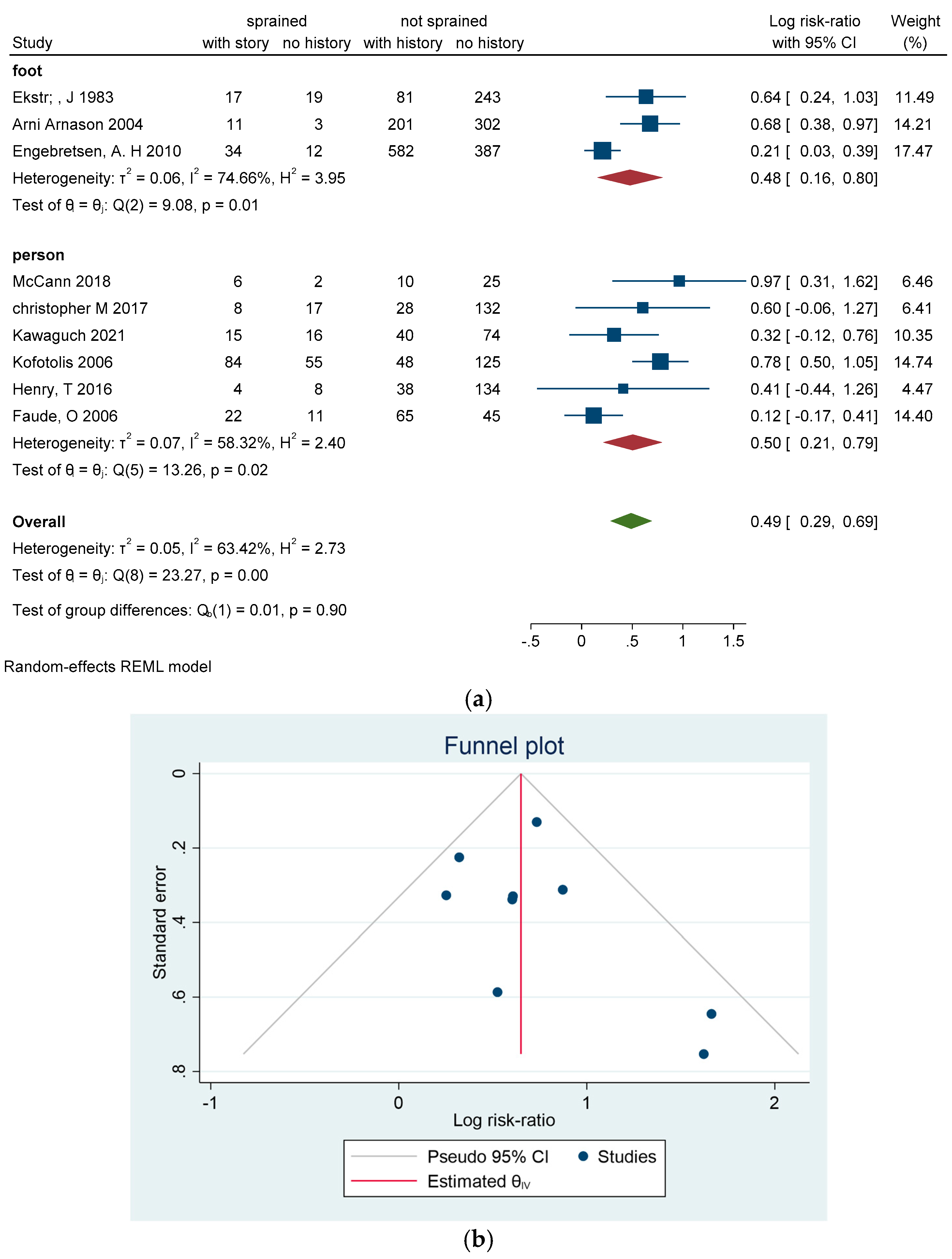
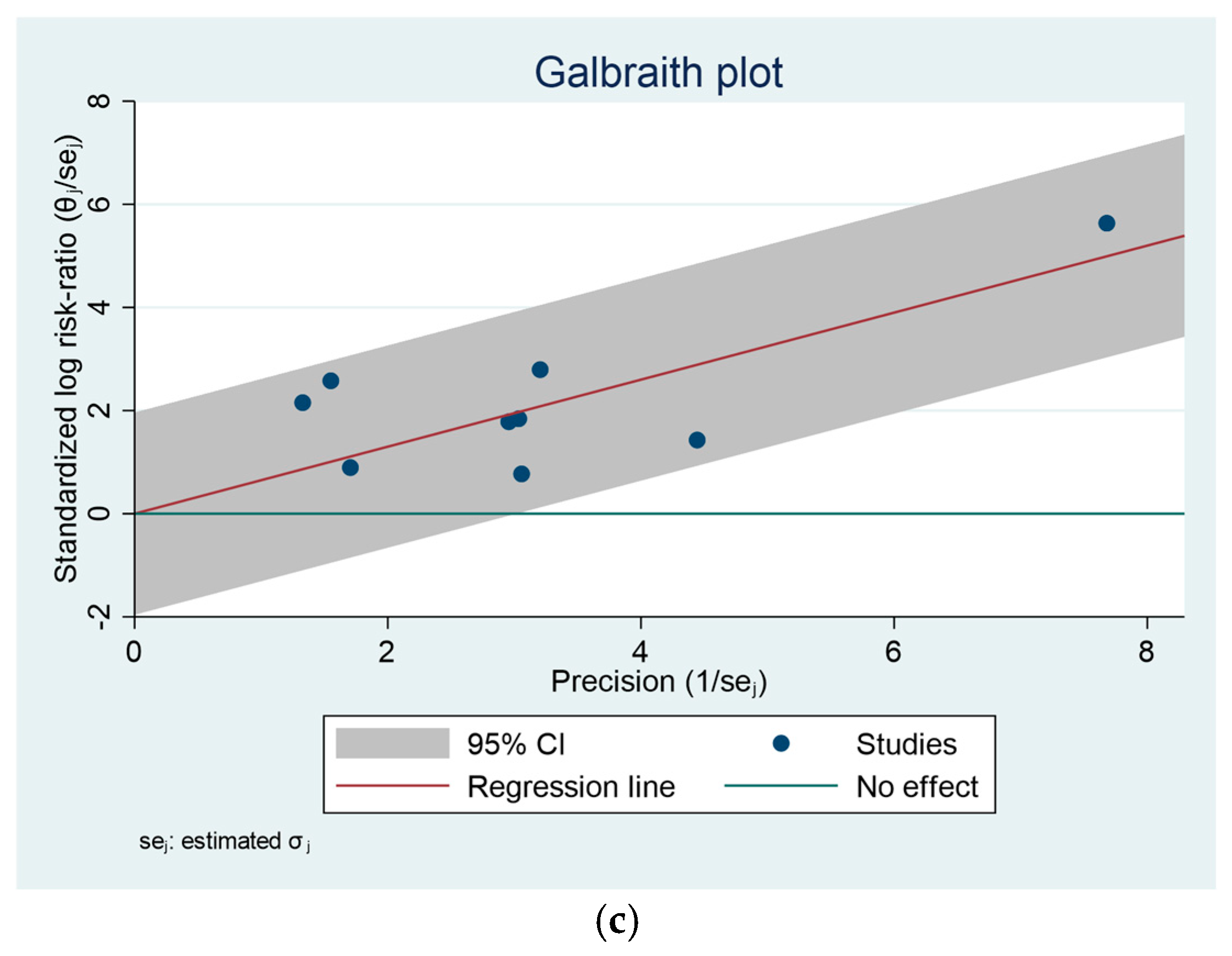
| First Author Name | Year | Country | Study Design | Final Population Entered in Analysis | Male/Female | Age | Risk Factors with Details | Results | |
|---|---|---|---|---|---|---|---|---|---|
| 1 | Aoki, H [23] | 2010 | Japan | Prospective Cohort | 301 | Not mentioned | 14.5 ± 1.7 (range: 12–17) | Turf Type (Artificial Turf or Natural Grass): The inclusion criteria for players were an age between 12 and 17 years and that they had played on artificial turf (AT) for more than 1 year prior to participation in this study. | All players from the natural turf (NT) group and 52 players from the AT group (a total of 264 players) trained on NT, and all players from the AT group and 87 from the NT group (a total of 176 players) trained on AT. Of 264 players, 153 were injured while training on NT, totaling 256 acute injuries. The total number of players injured while training on AT was 66 of 176 players, totaling 169 acute injuries. |
| 2 | Arni Arnason [24] | 2004 | Norway | Prospective Cohort | 259 | All male | Mean age: 24; range: 16 to 38 years | History of Previous Ankle Sprain: The players answered a questionnaire about previous and recurrent injuries (type, location, and severity) just before the start of the season. The risk of new ankle sprains among players who previously had sustained such an injury and players with no previous injury was compared. Each leg was treated as a separate case. | 11 out of 212 legs with a history and 3 out of 305 legs without a history of previous ankle sprain sustained a new ankle sprain. |
| 3 | De Ridder, R [25] | 2016 | Belgium | Prospective Cohort | 133 | All male | 12.7 ± 2.1 | Age and BMI: All participants played in the national league of their age category, ranging from 10 to 16 years. | A total of 133 soccer players were included for analysis. In total, 12 participants sustained a lateral ankle sprain. The p-values for age and BMI for sustaining ankle sprain were significant. (both < 0.001) |
| 4 | Ekstrand, J [26] | 1983 | Sweden | Prospective Cohort | 180 | All male | 24.6 ± 4.6 (range: 17–38) | History of Previous Ankle Sprain: The 180 players (age = 24.6 ± 4.6, range: 17–38 years) were examined before the season for past injuries. | Of the 36 sprained ankles, 17 had been previously sprained—out of 324 ankles that did not sustain a sprain during the year, 81 had been previously sprained. Thus, ankle sprains were significantly more common (p < 0.01) in those with a previous sprain. |
| 5 | Ekstrand, J [27] | 2011 | Sweden | Prospective Cohort | 767 | 613 male/154 female | 25 ± 5 (range: 16–38) | Turf Type (Artificial Turf or Natural Grass): Twenty-five elite teams (nineteen male and six female teams) that had reported the installation of a third-generation artificial turf pitch to UEFA were invited to participate. In total, 767 (613 male and 154 female) players were included. | There were no significant differences in the overall incidence of injury between the surfaces during training or match play for either males or females. There were also no significant differences between artificial turf and grass when the incidences were compared in terms of injury severity sub-categories. |
| 6 | Emery, C [28] | 2005 | Canada | Prospective Cohort | 317 | 153 male/164 female | 14.89 for males/14.75 for females (range: 12–18) | Gender: Competitive soccer players in Alberta are divided into age groups of 2 years each (under 18, 16, and 14) and by skill level (divisions 1–4), in which division 1 is the most elite division of play. One team for each gender, division (1–4), and age group from the Calgary Blizzard Soccer Club was randomly selected to participate in this study. | 12 ankle sprain (rate = 1.73) occurred in girls and 9 (rate = 1.28) in boys. |
| 7 | Engebretsen, A. H [29] | 2010 | Norway | Prospective Cohort | 508 | All male | 24.0 (range: 16.2–37.7) | History of Previous Ankle Sprain, Height, Weight, Age, and BMI: 508 players were tested for potential risk factors for ankle injuries during the 2004 preseason, January through March, at the Norwegian School of Sport Sciences. Every player capable (not injured at the time) completed single-leg balance tests for both legs (both on a balance mat and on the floor), a clinical examination, and a questionnaire. | Univariate analyses revealed the number of previous acute ankle injuries as a potential leg-dependent risk factor for acute ankle injuries. None of the balance tests (floor or balance mat) or clinical tests were candidates for predicting an increased risk of ankle injury. Additionally, none of the player-dependent factors (age, height, body mass index, position on the field, having played at the junior national team level or at the senior national team level, level of play this season, or level of play the previous season) were significantly associated with the risk of ankle injury. |
| 8 | Faude, O [30] | 2006 | Germany | Prospective Cohort | 143 | All female | 22.4 (5.0) years | History of Previous Ankle Sprain: 143 players (22.4 (5.0) years of age, 61 (60) kilograms, and 169 (6) centimeters—values shown as mean (SD)) provided baseline information as well as complete data on injuries and exposure times. They were followed over a whole outdoor season from August 2003 to mid-June 2004, including preseason conditioning. Baseline information was recorded at the start of the season for each player by the physiotherapist. | Players with previous sprains of the ankle had a slightly, but not significantly, higher risk of the same injury. When each leg was treated as a separate case, no higher risk of an actual sprain in players with a previous sprain was found. The OR (95%CI) was 0.71 (0.31 to 1.62; p = 0.42). |
| 9 | Fousekis, K [31] | 2012 | Greece | Prospective Cohort | 100 | Not mentioned | 23.6 (4.2) | Age, BMI, Weight, and Generalized Joint Hypermobility: A cohort of 100 players was recruited from 4 third division professional soccer teams. The players were screened for inclusion in this study if they sustained no injury for at least a period of 6 months before testing. A preseason evaluation of the ankle joint was conducted for isokinetic muscle strength, flexibility, joint stability, neuromuscular coordination, and anthropometric characteristics. | Seventeen (70.8%) of the ligament injuries in the ankle joint were non-contact lateral sprains; the logistic regression analysis revealed 3 significant predictors of non-contact ankle sprains: (A) eccentric isokinetic strength asymmetries of ankle dorsal and plantar flexors (OR = 8.88; 95% CI, 1.95–40.36; p = 0.005), (B) increased BMI (OR = 8.16; 95% CI, 1.42–46.63; p = 0.018), and (C) increased body weight (OR = 5.72; 95% CI, 1.37–23.95; p = 0.017). |
| 10 | Hägglund, M [32] | 2006 | Sweden | Prospective Cohort | 197 | All male | 25 ± 4 years (range: 17–38) | History of Previous Ankle Sprain, Height, Weight, and Age: 197 players who participated in both seasons were included (mean (SD) values: age: 25 (4) years (range: 17–38), height: 182 (5) centimeters (range: 170–197), and weight: 79 (6) kilograms (range: 65–98)). The baseline variables used in the risk factor analysis in season 2002 were (a) prospectively recorded injuries in season 2001 and (b) anthropometrics (age, height, weight, and body mass index (BMI)) | Previous injury, age, height, and weight were all associated with ankle sprain in the univariate analysis (BMI was not found to be a risk factor for ankle sprain, p > 0.2). In the multivariate model, there was a tendency towards an increase in risk for ankle sprain in the previously injured leg and a decrease in risk for ankle sprain with increasing age, but none of the variables reached statistical significance. |
| 11 | Henry, T [18] | 2016 | Australia | Prospective Cohort | 210 | All male | 18.9 ± 3.5 | History of Previous Ankle Sprain, Height, Weight, Age, and BMI: Participants were excluded if they were younger than 15 years, showed signs or symptoms of illness, or had an injury preventing them from completing preseason screening. Before preseason testing, each of the participants completed a questionnaire to identify their age, injury history, and team competition level. | None of them showed a significant effect on ankle sprain. |
| 12 | Emery, C. A [33] | 2010 | Canada | RCT | 380 intervention and 364 control | Intervention: 161 female/219 male Control: 251 female/113 male | 13–18 years | History of Previous Ankle Sprain, Age, and Gender: The main outcome measure was a warm-up intervention program, but these 3 factors were also measured as risk factors for ankle sprain. | History of previous ankle sprain: adjusted incidence rate ratio (95% CI) (previous sprain vs. no previous sprain) = 2.29 (1.23 to 4.28) p < 0.05. Age: (U15–U18) vs. (U13–U15): adjusted incidence rate ratio (95% CI) = 2.62 (1.14 to 6.0) p < 0.05 Gender: gender was not a significant risk factor for any injury definition; however, point estimates suggest a greater risk for females for ankle sprain (IRR = 1.86 (95% CI: 0.72 to 4)). |
| 13 | Kawaguchi [34] | 2021 | Japan | Prospective Cohort | 145 | All male | Injured: 19.9 ± 1.0 Uninjured: 19.8 ± 1.2 | BMI, Age, and Isometric Hip Abduction: The results indicated that inversion ankle sprain was significantly associated with hip abductor strength. | In this season, there were 31 inversion ankle sprains (21.4%) in 31 players. Only isometric hip abductor strength was considerably lower in injured players compared to unaffected ones. A logistic regression analysis identified hip abductor muscle strength deficiency as a significant risk factor for inversion ankle sprain (odds ratio, 0.978 [95% CI, 0.976–0.999]; p= 0.05). |
| 14 | Jupil Ko [35] | 2018 | USA | Prospective Cohort | 64 | Injured: 5 males and 7 females; uninjured: 24 male and 28 female | Injured: 16.1 ± 1.4 Uninjured: 15.4 ± 1.3 | Age, Gender, Height, BMI, and Mass: There were no significant differences in age, height, mass, and BMI between the injured and the uninjured groups. | A total of 64 participants (age = 15.5 ± 1.3 years; height = 161.7 ± 7.7 cm; and mass = 57.1 ± 8.4 kg) were recruited from a junior soccer club and monitored for 10 months. |
| 15 | Kofotolis [4] | 2006 | Greece | Prospective Cohort | 312 | All male | 24.8 ± 4.63 | History, Position, and Exposure Time: Multinomial logistic regression showed that previous ankle sprain (p < 0.05) is a significant predictor of ankle sprain injury. | The injury rate was higher in the first two months of the season compared to the last month (p < 0.05). Using multinomial logistic regression, previous ankle sprain was found to be a significant predictor of injury (p < 0.05). |
| 16 | McHugh [36] | 2006 | USA | Prospective Cohort | 60 | 33 male and 27 female | 16 ± 1 | Balance Test, Hip Abduction Strength, Hip Adduction Strength, and History of Previous Ankle Sprain: At the beginning of each season, all athletes completed preseason physical examinations that included measurements of height; weight; BMI; strength in hip flexion, abduction, and adduction; balance in single-limb stance; and generalized ligamentous laxity. | The incidence of grade II and grade III sprains was higher in athletes with a history of a previous ankle sprain. |
| 17 | McCann [37] | 2018 | Australia | Prospective Cohort | 43 | All female | 19.7 ± 1.1 | History of Previous Ankle Sprain, BMI, Mass, and Height: Participants who sustained an LAS (n = 8) were significantly taller than those who did not sustain an LAS (n = 35). A logistic regression analysis (odds ratio = 1.30 [1.00, 1.70]) and area under the ROC curve analysis (AUROC = 0.73 [0.58, 0.89], p = 0.04) further exhibited the predictive value of height. A logistic regression analysis (odds ratio = 1.87 [1.22, 1.98]) exhibited the predictive value of previous ankle sprain history. Mass and BMI demonstrated no predictive value for LAS. | Taller collegiate women’s soccer players and those with previous ankle sprain history may have a greater predisposition to LAS. |
| 18 | Christopher M [38] | 2017 | Prospective Cohort | 185 | All male | Injured: 20.9 ± 5.9 Uninjured: 19.6 ± 5.1 | Age, Height, Mass, BMI, Previous History, and Hip Abductor Strength: Baseline hip abductor strength was lower in injured players than in uninjured players (p: 0.008). Logistic regression indicated that impaired hip abductor strength increased the future injury risk (OR: 1.10 [95% CI: 1.02–1.18], p: 0.010). | Reduced isometric hip abductor strength predisposed competitive male soccer players to non-contact lateral ankle sprains. | |
| 19 | Soligard T [39] | 2012 | Norway | Prospective Cohort | Not mentioned | Not mentioned | 13–19 | Turf Type: While there was no difference in the risk of ankle sprains between the two surfaces (rate ratio: 0.39; 95% CI: 0.12–1.23), the risk of ankle injuries overall was almost half on artificial turf compared to grass. | |
| 20 | Bjørneboe J [40] | 2010 | Norway | Prospective Cohort | Not mentioned | All male | Not mentioned | Turf Type: 48 ankle sprains on grass and 17 on artificial turf (artificial versus grass IRR = 0.83 (0.48–1.44). | A trend towards an increased risk of knee and ankle sprains on artificial turf was observed, albeit only during matches. |
| 21 | Vieira [41] | 2012 | Prospective Cohort | 83 | All male | 14–19 | Joint Hypermobility: A total of 43 cases of ankle injury due to sprains were recorded, of which 9 episodes were in players with JHS, thus making p = 0.106. The significance level was 5%. | There was insufficient evidence to assert that there is an association with an increased incidence of ankle sprains among patients with JHS. | |
| 22 | Emery C [28] | 2005 | Canada | Prospective Cohort | 317 | 153 male/164 female | 14.89 for males and 14.75 for females | Sex: Ankle sprain injury rate was 1.73 in girls and 1.28 in boys. | |
| 23 | Carling, C [42] | 2015 | United Kingdom | Prospective Cohort | Not mentioned | All male | Not mentioned | Match Congestion: Risk of ankle sprain risk during 2 consecutive matches separated by a short time interval of ≤72 h, 3 consecutive matches during 96 h, and matches outside these congestion cycles. | There was a higher risk of ankle sprain in the final match in the two-match congestion cycles (IRR = 5.4 [1.0–29.3]; p = 0.0522) and three-match congestion cycles (IRR = 10.4 [1.9–57.9]; p = 0.0068) compared to matches played outside these congested cycles. |
| 24 | Fransz D [43] | 2018 | Netherlands | Prospective Cohort | 190 (cohort 1 from 2012 to 2015 = 138; cohort 2 from 2013 to 2016 = 52) | All male | U13 (n = 34): 11.8 ± 0.6 U15 (n = 45): 13.9 ± 0.6 U17 (n = 43): 15.7 ± 0.8 U19 (n = 44): 17.7 ± 0.7 First and second (n = 24): 23.2 ± 3.2 | Ground Reaction Force (GRF): They measured GRF in the vertical, anteroposterior, and mediolateral directions in a single-legged drop-jump landing from 20 cm height in 190 male soccer players and followed them to measure the incidence of ankle sprain. | The root mean square of the GRF in the mediolateral direction with regard to the first 0.4 s after landing (RMS ML: 0.4) was found to be a significant predictor of ankle sprain (p = 0.017). Horizontal GRF during the late dynamic phase (3.0–5.0 s) (Hor GRF late dyn) had a significant predictive capacity for ankle sprain as well (p = 0.029). In the multivariate analysis with regard to the prediction of all ankle sprains, the RMS ML: 0.4 and Hor GRF late dyn were combined into a significant risk factor model (p = 0.005). |
| 25 | Ekstrand. J [44] | 1990 | Sweden | Prospective Cohort | 639 | All male | 25 ± 4 (range: 17–38) | Soccer Skill Level: They followed 41 soccer teams from 4 different skill levels (with division 1 being the highest-skill group and division 6 being the lowest-skill group). | There was a significant difference in the incidence of ankle sprains/team between divisions 2 and 4 (p < 0.05), but the p-value of the difference between other divisions was not significant. Players in the higher divisions are at higher risk for ankle injury during a season because of longer exposure time. The higher injury rate during matches for high-level players is probably due to intensity, speed, etc., which differs between divisions. The higher injury rate during practice for low-level players may be due to factors such as bad training conditions, as well as physical differences among the players. |
| 26 | Engebretsen, A [45] | 2008 | Norway | Prospective Cohort | 508 | All male | Not mentioned | Balance: players were asked to stand barefoot on one straight leg and maintain this position only using their ankle joint to correct balance. Soccer Skill Level: they studied the effect of the level of soccer play on the incidence of ankle sprain. | No significant difference between the injured and uninjured group was detected regarding balance test scores (p = 0.64 for balance score on the floor and p = 0.41 for balance score on the mat). No significant differences between the 1st and 2nd divisions (2nd to 1st OR = 1.08 [0.5–2.34]; p = 0.85) and between 1st and 3rd divisions (3rd to 1st OR = 0.89 [0.36–2.21]; p = 0.8) were found. |
| Author | Risk Factors | Details | Results | Conclusion | |
|---|---|---|---|---|---|
| 1 | Carling, C [42] | Match Congestion | Risk of ankle sprain during 2 consecutive matches separated by a short time interval of ≤72 h, 3 consecutive matches during 96 h, and matches outside these congestion cycles. | There was a higher risk of ankle sprain in the final match in the two-match congestion cycles (IRR = 5.4 [1.0–29.3]; p = 0.0522) and three-match congestion cycles (IRR = 10.4 [1.9–57.9]; p = 0.0068) compared to matches played outside these congested cycles. | Match congestion is a risk factor for ankle sprain incidence. |
| 2 | De Ridder [25] | Hip Muscle Force | They measured the strength of the flexors, extensors, abductors, adductors, and internal and external rotators of the hip. | They only identified posterior chain hip muscle force as an independent risk factor for a lateral ankle sprain (HR = 0.3 [0.1–0.9]; p = 0.028). | Players with stronger posterior chain hip muscles had significantly lower hazards of sustaining a lateral ankle sprain. |
| 3 | Kawaguchi [34] | Hip and Knee Muscle Force, Muscle Flexibility, and Height of the Navicular Tubercle | They measured knee extension, knee flexion, and hip abduction strength in 145 soccer players. They also investigated muscle flexibility (iliopsoas, quadriceps femoris, hamstrings, gastrocnemius, and soleus muscles) and the height of the navicular tubercle in each player’s foot. | The odds of a male collegiate soccer player sustaining an inversion ankle sprain were increased by approximately 2% for each 1 N.m (Newton.meter) decrease in hip abductor strength (OR = 0.978 [0.976–0.999]; p = 0.047). | The only significant difference in muscle forces between injured and uninjured players was for hip abductors. |
| 4 | Fousekis, K [31] | Muscle Strength, Flexibility, Joint Stability, and Neuromuscular Coordination | A preseason evaluation of the ankle joint was conducted for isokinetic muscle strength, flexibility, joint stability, neuromuscular coordination, and anthropometric characteristics. | Eccentric isokinetic strength asymmetries of ankle dorsal and plantar flexors were significant predictors of non-contact ankle sprains (OR = 8.88 [1.95–40.36]; p = 0.005). | Soccer players with preseasonal eccentric strength asymmetries (15%) in the ankle joint had 8.8 times the odds of sustaining a non-contact ankle sprain than did players with no eccentric strength asymmetry in the same joint at the same period. Other factors, such as muscle flexibility and proprioceptive traits, do not seem to affect ankle sprain occurrence. |
| 5 | Fransz D [43] | Ground Reaction Force (GRF) | They measured GRF in the vertical, anteroposterior, and mediolateral directions in a single-legged drop-jump landing from 20 cm height in 190 male soccer players and followed them to measure the incidence of ankle sprain. | The root mean square of the GRF in the mediolateral direction with regard to the first 0.4 s after landing (RMS ML: 0.4) was found to be a significant predictor of ankle sprain (p = 0.017). Horizontal GRF during the late dynamic phase (3.0–5.0 s) (Hor GRF late dyn) had a significant predictive capacity for ankle sprain as well (p = 0.029). In the multivariate analysis with regard to the prediction of all ankle sprains, the RMS ML of 0.4 and Hor GRF late dyn were combined into a significant risk factor model (p = 0.005). | The root mean square of the GRF in the mediolateral direction during the first 0.4 s after landing (RMS ML: 0.4) and the mean resultant horizontal GRF during the late dynamic phase (3.0–5.0 s; Hor GRF late dyn) following a single-legged drop-jump landing are related to the occurrence of a lateral ankle sprain among male elite soccer players. |
| 6 | Engebretsen [45] | Balance | 999 players were asked to stand barefoot on one straight leg and maintain this position only using their ankle joint to correct balance. | No significant difference between the injured and uninjured group was detected regarding balance test scores (p = 0.64 for balance score on the floor and p = 0.41 for balance score on the mat). | Balance tests do not increase our ability to identify players at risk. |
| 7 | Henry T. [18] | Balance | They used an electronic board to measure the balance score while standing with both legs on the board in 67 soccer players. | The results showed a significant difference in balance test scores (p = 0.015). | Poorer lower limb relative balance scores are associated with an increased risk of non-contact ankle injury among amateur soccer players. |
| 8 | Jupil Ko [35] | Balance | They measured Star Excursion Balance Test (SEBT) and Single-Leg Hop Test (SLHT) scores in a cohort of 64 soccer players. | They reported a significant difference between injured (n = 12) and uninjured (n = 52) groups (p < 0.05). | Adolescent soccer players who sustained a lateral ankle sprain(s) demonstrated shorter SEBT-posteromedial and SEBT-posterolateral reach distances and a longer completion time in the SLHT. |
| 9 | Kawaguchi [34] | Balance | They measured double- and single-leg stances with a 1 m Footscan pressure plate, and the total distance of the center of pressure during the 30 s of standing on the plate in both tests was measured as the balance parameter. | They found no difference between the injured and uninjured groups (42 ± 27.1 vs. 41.6 ± 20.9, respectively; p = 0.53) | |
| 10 | Faude O. [30] | Leg Dominance | 143 female soccer players sustained 41 ankle sprains in 10 months. | 27 ankle sprains occurred in dominant legs and 14 in non-dominant legs (kai2 = 4.122, p = 0.04). | They found a significant difference in ankle sprains according to limb dominance. |
| 11 | Kofotolis [4] | Leg Dominance | The dominant legs sustained 68.3% of all ankle injuries (p < 0.05). | They found a significant difference in ankle sprains according to limb dominance. | |
| 12 | Ekstrand J. [44] | Soccer Skill Level | They followed 41 soccer teams from 4 different skill levels (with division 1 being the highest-skill group and division 6 being the lowest-skill group). | There was a significant difference in the incidence of ankle sprains/team between divisions 2 and 4 (p < 0.05), but the p-value of the difference between other divisions was not significant. | Players in the higher divisions are at higher risk for ankle injury during a season because of longer exposure time. The higher injury rate during matches for high-level players is probably due to intensity, speed, etc., which differs between divisions. The higher injury rate during practice for low-level players may be due to factors such as bad training conditions, as well as physical differences among the players. |
| 13 | Engebretsen [45] | Soccer Skill Level | They studied the effect of the level of soccer play on the incidence of ankle sprain. | No significant differences between the 1st and 2nd divisions (2nd to 1st OR = 1.08 [0.5–2.34]; p = 0.85) and between 1st and 3rd divisions (3rd to 1st OR = 0.89 [0.36–2.21]; p = 0.8) were found. | |
| 14 | Henry T. [18] | Soccer Skill Level | They studied the effect of the level of soccer play on the incidence of ankle sprain. | High competition level to low-level ankle sprain RR = 1.81 [0.65–5.04]; p = 0.247 | They found a non-significant difference between different skill levels. |
| 15 | De Ridder [25] | Soccer Experience (Years) | They studied the effect of years of soccer experience on the incidence of ankle sprain. | Ankle sprain group experience was 9.1 ± 1.8 years, and the rest of the players’ experience was 7.2 ± 1.9 years (p = 0.004). | Longer soccer experience (years) was found to be a risk factor for ankle sprain. |
| 16 | Engebretsen A. [29] | Foot Anatomy and Dynamics | They studied foot type (normal, pes planus, pes cavus, and splayed forefoot), standing rearfoot alignment (normal and valgus), hallux position (normal, valgus), anterior drawer (normal, pathologic), and range of motion for supination, pronation, and dorsiflexion as intrinsic risk factors for ankle sprain. | None of them showed a significant difference in the incidence of ankle sprain. | |
| 17 | Henry T. [18] | Foot Anatomy and Dynamics | There was a higher incidence of ankle sprain in soccer players with an ankle dorsiflexion range of motion of more than 13 cm, but the p-value was not great enough to prove that it was a risk factor (RR = 3.49 [0.73–16.6]; p = 0.142). However, they could prove poorer lower limb relative power output on vertical jump (W/Kg) as an independent risk factor for ankle sprain (RR = 6.24 [0.82–47.32]; p = 0.038). | ||
| 18 | Kawaguchi [34] | Foot Anatomy and Dynamics | They investigated ankle dorsiflexion range of motion (degrees) as a risk factor for ankle sprain. | There was not a significant difference between injured and uninjured limbs in injured players (40.4 ± 7.1 vs. 40.4 ± 5.7; p = 0.85), and there was no difference between injured and uninjured players in the ankle dorsiflexion range of motion (40.4 ± 7.1 vs. 39.6 ± 6.3; p = 0.50). | |
| 19 | Engebretsen [29] | Playing Position | They compared the risk of ankle sprain in different positions with forward players. | Attacking midfielders had the greatest odds of sustaining an ankle injury (OR = 1.93 [0.63–5.87]; p = 0.25) and goalkeepers had the lowest odds (OR = 0.3 [0.03–2.53]; p = 0.27), but the difference between positions was not significant. | |
| 20 | Kofotolis [4] | Playing Position | Goalkeepers had the lowest injury rate, and defenders had a greater injury rate compared to forwards and midfielders. Only the p-value for the higher rate of injury in defenders was significant (<0.05). |
Disclaimer/Publisher’s Note: The statements, opinions and data contained in all publications are solely those of the individual author(s) and contributor(s) and not of MDPI and/or the editor(s). MDPI and/or the editor(s) disclaim responsibility for any injury to people or property resulting from any ideas, methods, instructions or products referred to in the content. |
© 2025 by the authors. Licensee MDPI, Basel, Switzerland. This article is an open access article distributed under the terms and conditions of the Creative Commons Attribution (CC BY) license (https://creativecommons.org/licenses/by/4.0/).
Share and Cite
Hoveidaei, A.H.; Moradi, A.R.; Nakhostin-Ansari, A.; Mousavi Nasab, M.M.; Taghavi, S.P.; Eghdami, S.; Forogh, B.; Bagherzadeh Cham, M.; Murdock, C.J. Risk Factors of Ankle Sprain in Soccer Players: A Systematic Review and Meta-Analysis. Sports 2025, 13, 105. https://doi.org/10.3390/sports13040105
Hoveidaei AH, Moradi AR, Nakhostin-Ansari A, Mousavi Nasab MM, Taghavi SP, Eghdami S, Forogh B, Bagherzadeh Cham M, Murdock CJ. Risk Factors of Ankle Sprain in Soccer Players: A Systematic Review and Meta-Analysis. Sports. 2025; 13(4):105. https://doi.org/10.3390/sports13040105
Chicago/Turabian StyleHoveidaei, Amir Human, Amir Reza Moradi, Amin Nakhostin-Ansari, Mohammad Mehdi Mousavi Nasab, Seyed Pouya Taghavi, Shayan Eghdami, Bijan Forogh, Masumeh Bagherzadeh Cham, and Christopher J. Murdock. 2025. "Risk Factors of Ankle Sprain in Soccer Players: A Systematic Review and Meta-Analysis" Sports 13, no. 4: 105. https://doi.org/10.3390/sports13040105
APA StyleHoveidaei, A. H., Moradi, A. R., Nakhostin-Ansari, A., Mousavi Nasab, M. M., Taghavi, S. P., Eghdami, S., Forogh, B., Bagherzadeh Cham, M., & Murdock, C. J. (2025). Risk Factors of Ankle Sprain in Soccer Players: A Systematic Review and Meta-Analysis. Sports, 13(4), 105. https://doi.org/10.3390/sports13040105

