
Epigenome-Wide Search for Distinctive Methylation Biomarkers of Endothelial and Leukocyte DNA



Abstract
1. Introduction
2. Results
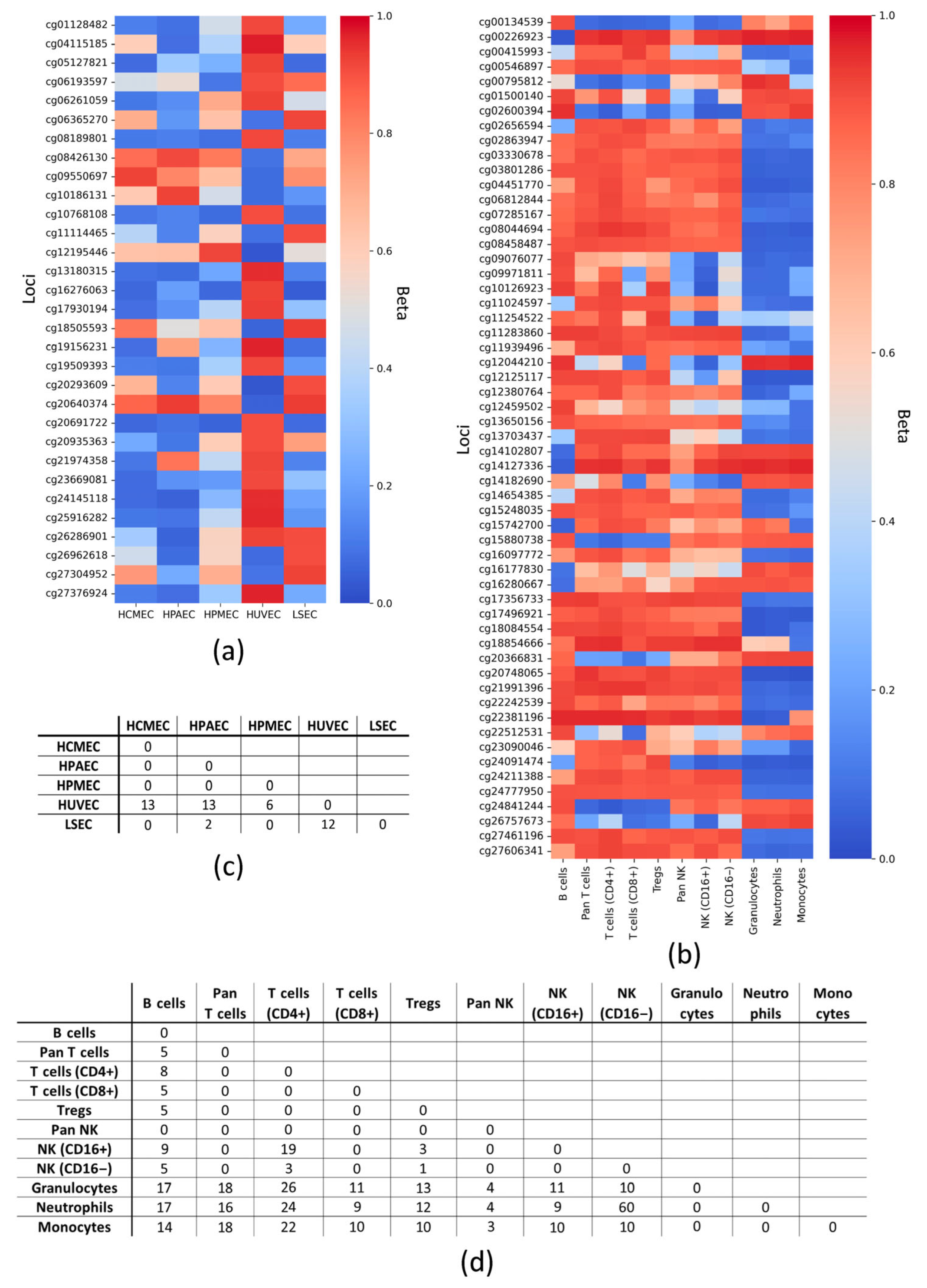
2.1. Distinctive Features of DNA Methylation Within EC and LC Groups
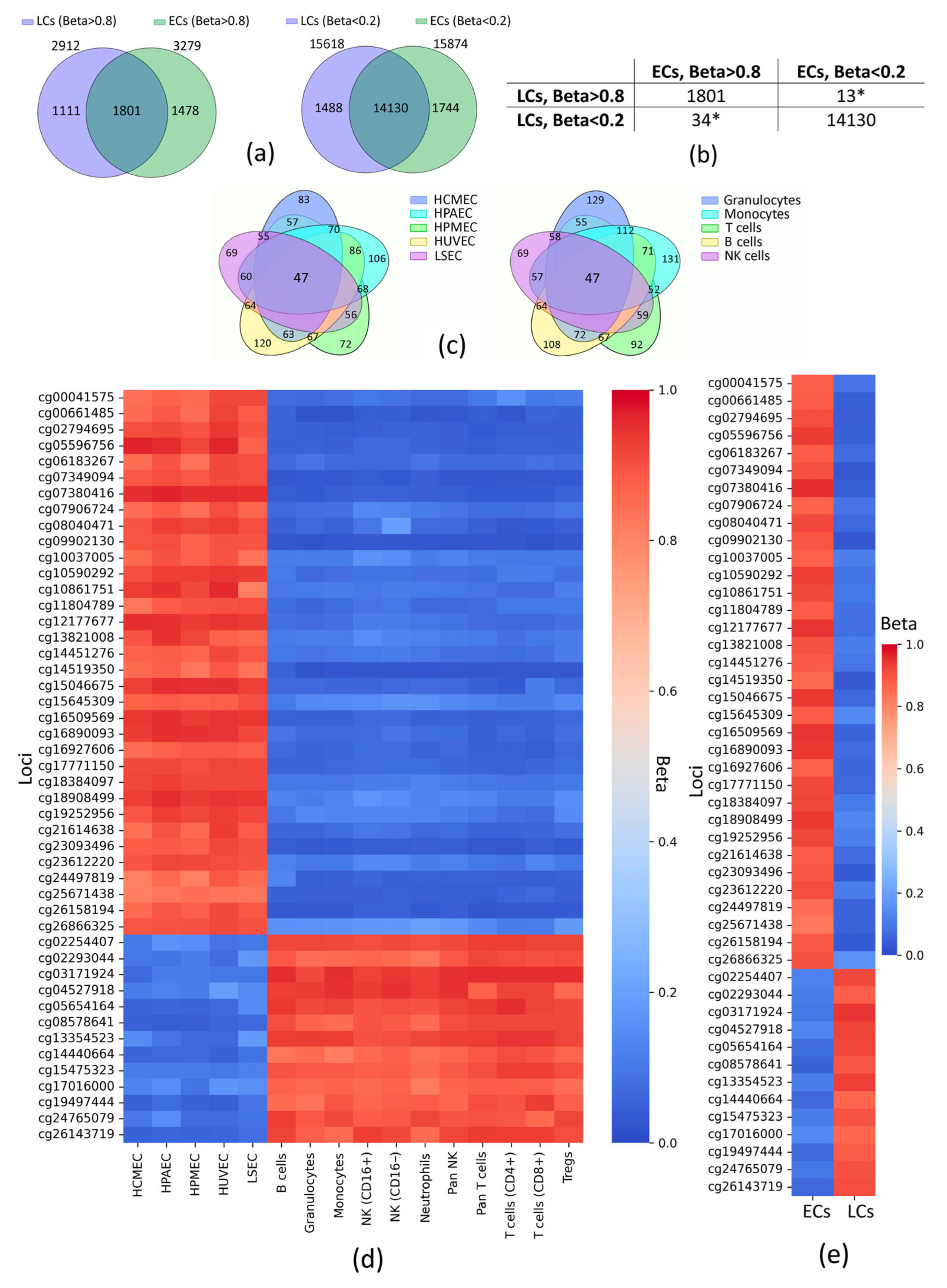
2.2. Potential Markers of EC/LC DNA
3. Discussion
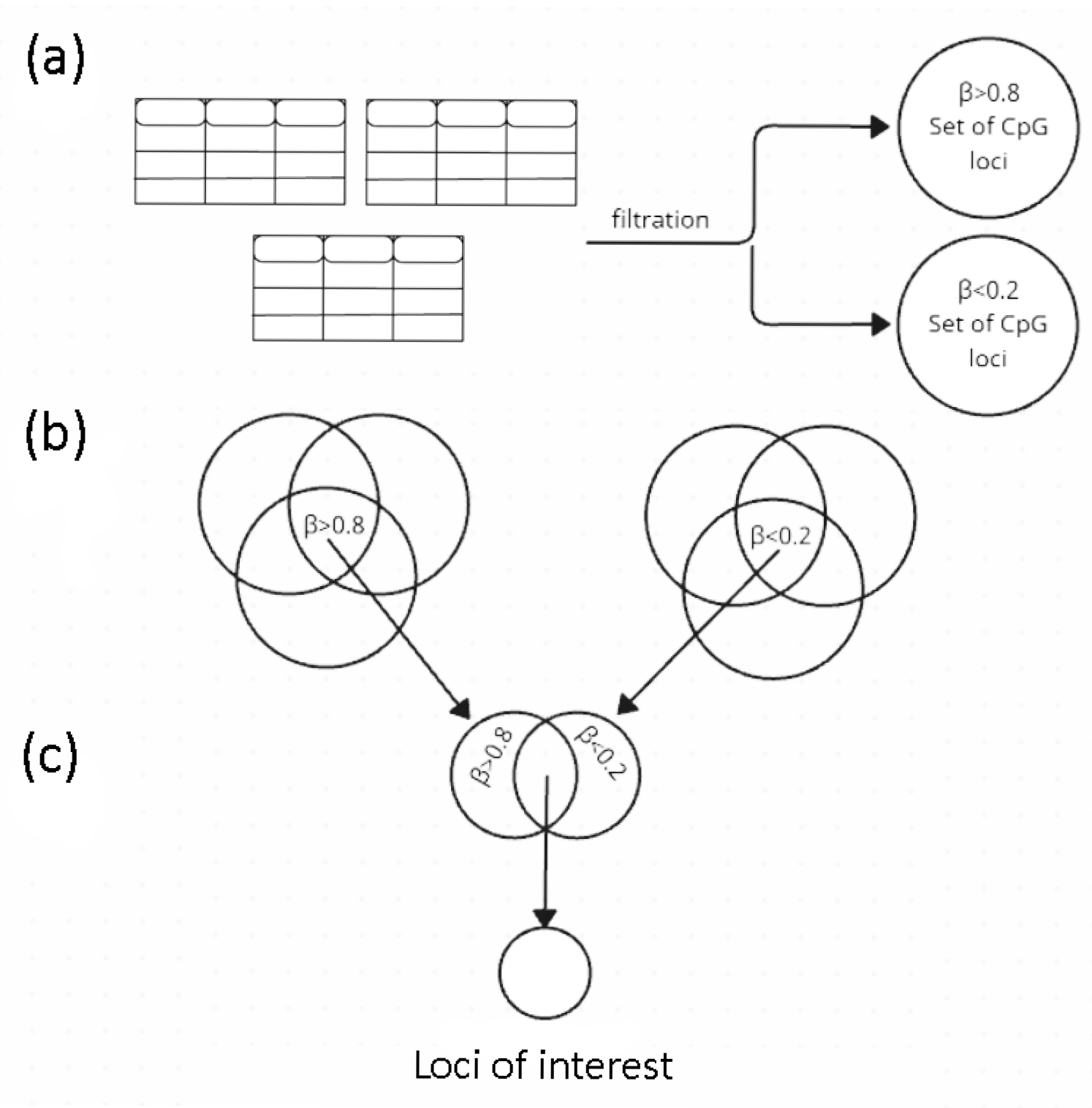
4. Materials and Methods
5. Conclusions
Supplementary Materials
Author Contributions
Funding
Institutional Review Board Statement
Informed Consent Statement
Data Availability Statement
Conflicts of Interest
Abbreviations
| EC | Endothelial cell |
| LC | Leukocyte |
Appendix A

| Locus 1 | Gene Name | Gene Description |
|---|---|---|
| cg18505593 | CCDC85C | Coiled-coil domain containing 85C |
| cg05127821 | CYP26C1 | Cytochrome P450 family 26 subfamily C member 1 |
| cg20293609 | CYR61 (CCN1) | Cellular communication network factor 1 |
| cg23669081 | HOXB7 | Homeobox B7 |
| cg01128482 | HOXD3 | Homeobox D3 |
| cg19509393 | HOXD4 | Homeobox D4 |
| cg12195446 | IRS2 | Insulin receptor substrate 2 |
| cg17930194 | LHX6 | LIM homeobox 6 |
| cg08189801 | LOC404266 (HOXB-AS3) | HOXB cluster antisense RNA 3 |
| HOXB5 | Homeobox B5 | |
| cg06261059 | MCPH1 | Microcephalin 1 |
| cg20935363 | PDE2A | Phosphodiesterase 2A |
| cg26286901 | PEBP4 | Phosphatidylethanolamine binding protein 4 |
| cg09550697 | PLEC1(PLEC) | Plectin |
| cg19156231 | SCN8A | Sodium voltage-gated channel alpha subunit 8 |
| cg21974358 | ||
| cg27304952 | ||
| cg10768108 | SOX2OT (SOX2-OT) | SOX2 overlapping transcript |
| cg16276063 | ||
| cg20691722 | ||
| cg06365270 | TNXB | Tenascin XB |
| cg20640374 | TRPM1 | Transient receptor potential cation channel subfamily M member 1 |
| cg13180315 | - | - |
| cg24145118 | - | - |
| cg25916282 | - | - |
| cg04115185 | - | - |
| cg27376924 | - | - |
| cg26962618 | - | - |
| cg06193597 | - | - |
| cg08426130 | - | - |
| cg10186131 | - | - |
| cg11114465 | - | - |
| Locus 1 | Gene Name | Gene Description |
|---|---|---|
| cg24211388 | AIF1 | Allograft inflammatory factor 1 |
| cg12044210 | APBA2 | Amyloid beta precursor protein binding family A member 2 |
| cg20366831 | APBA3 | Amyloid beta precursor protein binding family A member 3 |
| cg18084554 | ARID3A | AT-rich interaction domain 3A |
| cg12459502 | BCL2 | BCL2 apoptosis regulator |
| cg15742700 | BLK | BLK proto-oncogene, Src family tyrosine kinase |
| cg08044694 | BRD4 | Bromodomain containing 4 |
| cg09076077 | C20orf197 (LINC02910) | Long intergenic non-protein coding RNA 2910 |
| cg15248035 | CCIN | Calicin |
| cg14102807 | CD19 | CD19 molecule |
| cg11939496 | CD244 | CD244 molecule |
| cg24841244 | CD3D | CD3 delta subunit of the T cell receptor complex |
| cg15880738 | CD3G | CD3 gamma subunit of the T cell receptor complex |
| cg22512531 | CRTAM | Cytotoxic and regulatory T cell molecule |
| cg07285167 | CSF3R | Colony-stimulating factor 3 receptor |
| cg09971811 | CST7 | Cystatin F |
| cg24777950 | CTSG | Cathepsin G |
| cg16280667 | CXCR5 | C-X-C motif chemokine receptor 5 |
| cg22381196 | DHODH | Dihydroorotate dehydrogenase (quinone) |
| cg04451770 | ENTPD1 | Ectonucleoside triphosphate diphosphohydrolase 1 |
| cg11024597 | ECRG4 | ECRG4 augurin precursor |
| cg00415993 | F2RL2 | Coagulation factor II thrombin receptor-like 2 |
| IQGAP2 | IQ motif containing GTPase-activating protein 2 | |
| cg14654385 | FERMT3 | FERM domain-containing kindlin 3 |
| cg00226923 | FGD2 | FYVE, RhoGEF, and PH domain-containing 2 |
| cg11254522 | FGR | FGR proto-oncogene, Src family tyrosine kinase |
| cg27461196 | FXYD1 | FXYD domain-containing ion transport regulator 1 |
| cg13703437 | FYB (FYB1) | FYN binding protein 1 |
| cg27606341 | ||
| cg12125117 | GPR97 (ADGRG3) | Adhesion G protein-coupled receptor G3 |
| cg17356733 | IFNGR2 | Interferon gamma receptor 2 |
| cg12380764 | IL19 | Interleukin 19 |
| cg02656594 | IL21R | Interleukin 21 receptor |
| cg26757673 | IL2RB | Interleukin 2 receptor subunit beta |
| cg03801286 | KCNE1 | Potassium voltage-gated channel subfamily E regulatory subunit 1 |
| cg23090046 | KLC1 | Kinesin light chain 1 |
| cg01500140 | LIM2 | Lens intrinsic membrane protein 2 |
| cg00546897 | LOC284837 (AATBC) | Apoptosis-associated transcript in bladder cancer |
| cg16097772 | LYZ | Lysozyme |
| cg10126923 | NKG7 | Natural killer cell granule protein 7 |
| cg21991396 | NLRP3 | NLR family pyrin domain-containing 3 |
| cg02863947 | NR1I2 | Nuclear receptor subfamily 1 group I member 2 |
| cg00795812 | PDCD1 | Programmed cell death 1 |
| cg13650156 | PILRA | Paired immunoglobulin-like type 2 receptor alpha |
| cg20748065 | POR | Cytochrome p450 oxidoreductase |
| cg14182690 | RUNX3 | RUNX family transcription factor 3 |
| cg03330678 | SEPT9 (SEPTIN9) | Septin 9 |
| cg22242539 | SERPINF1 | Serpin family F member 1 |
| cg08458487 | SFTPD | Surfactant protein D |
| cg18854666 | SLC11A1 | Solute carrier family 11 member 1 |
| cg11283860 | SLC45A1 | Solute carrier family 45 member 1 |
| cg14127336 | TCL1A | TCL1 family AKT coactivator A |
| cg16177830 | TNFRSF17 | TNF receptor superfamily member 17 |
| cg06812844 | TRPM2 | Transient receptor potential cation channel subfamily M member 2 |
| cg17496921 | TSPAN16 | Tetraspanin 16 |
| cg02600394 | TXK | TXK tyrosine kinase |
| cg24091474 | TYROBP | Transmembrane immune signaling adaptor TYROBP |
| cg00134539 | UBASH3A | Ubiquitin-associated and SH3 domain-containing A |
References
- Alberts, B.; Johnson, A.; Lewis, J.; Raff, M.; Roberts, K.; Walter, P. Blood Vessels and Endothelial Cells. In Molecular Biology of the Cell, 4th ed.; Garland Science: New York, NY, USA, 2002. Available online: https://www.ncbi.nlm.nih.gov/books/NBK26848/ (accessed on 20 October 2025).
- Ray, A.; Maharana, K.; Meenakshi, S.; Singh, S. Endothelial dysfunction and its relation in different disorders: Recent update. Health Sci. Rev. 2023, 7, 100084. [Google Scholar] [CrossRef] [Scilit]
- Wang, X.; He, B. Endothelial dysfunction: Molecular mechanisms and clinical implications. MedComm 2024, 5, e651. [Google Scholar] [CrossRef] [Scilit] [PubMed]
- Sreelakshmi, B.J.; Karthika, C.L.; Ahalya, S.; Kalpana, S.R.; Kartha, C.C.; Sumi, S. Mechanoresponsive ETS1 causes endothelial dysfunction and arterialization in varicose veins via NOTCH4/DLL4 signaling. Eur. J. Cell Biol. 2024, 103, 151420. [Google Scholar] [CrossRef] [Scilit] [PubMed]
- Trimm, E.; Red-Horse, K. Vascular endothelial cell development and diversity. Nat. Rev. Cardiol. 2023, 20, 197–210. [Google Scholar] [CrossRef] [Scilit] [PubMed]
- Granger, D.N.; Senchenkova, E. Chapter 7: Leukocyte–Endothelial Cell Adhesion. In Inflammation and the Microcirculation; Morgan & Claypool Life Sciences: San Rafael, CA, USA, 2010. Available online: https://www.ncbi.nlm.nih.gov/books/NBK53380/ (accessed on 20 October 2025).
- Stanford Medicine Children’s Health: What Are White Blood Cells? Available online: https://www.stanfordchildrens.org/en/topic/default?id=what-are-white-blood-cells-160-35 (accessed on 20 October 2025).
- El Brihi, J.; Pathak, S. Normal and Abnormal Complete Blood Count with Differential. In StatPearls [Internet]; StatPearls: Treasure Island, FL, USA, 2025; Available online: https://www.ncbi.nlm.nih.gov/books/NBK604207/ (accessed on 20 October 2025).
- Ignatiadis, M.; Sledge, G.W.; Jeffrey, S.S. Liquid biopsy enters the clinic—Implementation issues and future challenges. Nat. Rev. Clin. Oncol. 2021, 18, 297–312. [Google Scholar] [CrossRef] [Scilit]
- Greenberg, M.V.C.; Bourc’his, D. The diverse roles of DNA methylation in mammalian development and disease. Nat. Rev. Mol. Cell Biol. 2019, 20, 590–607. [Google Scholar] [CrossRef] [Scilit]
- Yin, Y.; Morgunova, E.; Jolma, A.; Kaasinen, E.; Sahu, B.; Khund-Sayeed, S.; Das, P.K.; Kivioja, T.; Dave, K.; Zhong, F.; et al. Impact of cytosine methylation on DNA binding specificities of human transcription factors. Science 2017, 356, eaaj2239. [Google Scholar] [CrossRef] [Scilit]
- Tao, Y.; Xi, S.; Shan, J.; Maunakea, A.; Che, A.; Briones, V.; Lee, E.Y.; Geiman, T.; Huang, J.; Stephens, R.; et al. Lsh, chromatin remodeling family member, modulates genome-wide cytosine methylation patterns at nonrepeat sequences. Proc. Natl. Acad. Sci. USA 2011, 108, 5626–5631. [Google Scholar] [CrossRef] [Scilit]
- Myant, K.; Termanis, A.; Sundaram, A.Y.; Boe, T.; Li, C.; Merusi, C.; Burrage, J.; de Las Heras, J.I.; Stancheva, I. LSH and G9a/GLP complex are required for developmentally programmed DNA methylation. Genome Res. 2011, 21, 83–94. [Google Scholar] [CrossRef] [Scilit]
- Jeong, Y.; Jun, Y.; Kim, J.; Park, H.; Choi, K.S.; Zhang, H.; Park, J.A.; Kwon, J.Y.; Kim, Y.M.; Lee, S.; et al. Integrative analysis of DNA methylation and mRNA expression during differentiation of umbilical cord blood derived mononuclear cells to endothelial cells. Gene 2017, 635, 48–60. [Google Scholar] [CrossRef] [Scilit]
- Joo, J.E.; Hiden, U.; Lassance, L.; Gordon, L.; Martino, D.J.; Desoye, G.; Saffery, R. Variable promoter methylation contributes to differential expression of key genes in human placenta-derived venous and arterial endothelial cells. BMC Genom. 2013, 14, 475. [Google Scholar] [CrossRef] [Scilit] [PubMed]
- Lagarkova, M.A.; Shutova, M.V.; Bogomazova, A.N.; Vassina, E.M.; Glazov, E.A.; Zhang, P.; Rizvanov, A.A.; Chestkov, I.V.; Kiselev, S.L. Induction of pluripotency in human endothelial cells resets epigenetic profile on genome scale. Cell Cycle 2010, 9, 937–946. [Google Scholar] [CrossRef] [Scilit] [PubMed]
- Khodadadi, E.; Fahmideh, L.; Khodadadi, E.; Dao, S.; Yousefi, M.; Taghizadeh, S.; Asgharzadeh, M.; Yousefi, B.; Kafil, H.S. Current Advances in DNA Methylation Analysis Methods. BioMed Res. Int. 2021, 2021, 8827516. [Google Scholar] [CrossRef] [Scilit] [PubMed]
- National Human Genome Research Institute: Microarray Technology. Available online: https://www.genome.gov/genetics-glossary/Microarray-Technology#:~:text=Microarray%20technology%20is%20a%20general,nucleotide%20polymorphisms%2C%20or%20SNPs%20 (accessed on 20 October 2025).
- Mitsuyasu Barbosa, B.; Todorovic Fabro, A.; da Silva Gomes, R.; Rainho, C.A. Deciphering the Heterogeneity of Pancreatic Cancer: DNA Methylation-Based Cell Type Deconvolution Unveils Distinct Subgroups and Immune Landscapes. Epigenomes 2025, 9, 34. [Google Scholar] [CrossRef] [Scilit]
- Ahmed, M.I.; Hossain, M.D.; Rahman, M.M.; Mia, M.S.; Watanobe, Y.; Habib, M.A.; Rashid, M.M.; Reza, M.S.; Alam, M.A. Identifying Multi-Omics Interactions for Lung Cancer Drug Targets Discovery Using Kernel Machine Regression. Appl. Sci. 2025, 15, 11506. [Google Scholar] [CrossRef] [Scilit]
- Glaser, S.; Kretzmer, H.; Kolassa, I.T.; Schlesner, M.; Fischer, A.; Fenske, I.; Siebert, R.; Ammerpohl, O. Navigating Illumina DNA methylation data: Biology versus technical artefacts. NAR Genom. Bioinform. 2024, 6, lqae181. [Google Scholar] [CrossRef] [Scilit]
- Pearson, J.C.; Lemons, D.; McGinnis, W. Modulating Hox gene functions during animal body patterning. Nat. Rev. Genet. 2005, 6, 893–904. [Google Scholar] [CrossRef] [Scilit]
- Krumlauf, R. Hox genes, clusters and collinearity. Int. J. Dev. Biol. 2018, 62, 659–663. [Google Scholar] [CrossRef] [Scilit]
- Morgan, R. Hox genes: A continuation of embryonic patterning? Trends Genet. 2006, 22, 67–69. [Google Scholar] [CrossRef] [Scilit]
- Lin, M.; Zhou, X.; Yang, Y.; Xie, P.; Li, Q.; He, C.; Lin, Q.; Wei, X.; Ding, Y. A Peptide Encoded by lncRNA HOXB-AS3 Promotes Cigarette Smoke-Induced Inflammation in Bronchial Epithelial Cells via EZH2-Mediated H3K27me3 Modification. Int. J. Chronic Obstr. Pulm. Dis. 2025, 20, 1543–1553. [Google Scholar] [CrossRef] [Scilit]
- Amaral, P.P.; Neyt, C.; Wilkins, S.J.; Askarian-Amiri, M.E.; Sunkin, S.M.; Perkins, A.C.; Mattick, J.S. Complex architecture and regulated expression of the Sox2ot locus during vertebrate development. RNA 2009, 15, 2013–2027. [Google Scholar] [CrossRef] [Scilit]
- Wang, Y.; Wu, N.; Luo, X.; Zhang, X.; Liao, Q.; Wang, J. SOX2OT, a novel tumor-related long non-coding RNA. Biomed. Pharmacother. 2020, 123, 109725. [Google Scholar] [CrossRef] [Scilit] [PubMed]
- Janeway, C.A., Jr.; Travers, P.; Walport, M.; Shlomchik, M.J. The components of the immune system. In Immunobiology: The Immune System in Health and Disease; Austin, P., Lawrence, E., Eds.; Garland Science: New York, NY, USA, 2001; Available online: https://www.ncbi.nlm.nih.gov/books/NBK27092/ (accessed on 20 October 2025).
- Bernabei, P.; Coccia, E.M.; Rigamonti, L.; Bosticardo, M.; Forni, G.; Pestka, S.; Krause, C.D.; Battistini, A.; Novelli, F. Interferon-γ receptor 2 expression as the deciding factor in human T, B, and myeloid cell proliferation or death. J. Leukoc. Biol. 2001, 70, 950–960. [Google Scholar] [CrossRef] [Scilit] [PubMed]
- Ratliff, M.L.; Garton, J.; Garman, L.; Barron, M.D.; Georgescu, C.; White, K.A.; Chakravarty, E.; Wren, J.D.; Montgomery, C.G.; James, J.A. ARID3a gene profiles are strongly associated with human interferon alpha production. J. Autoimmun. 2019, 96, 158–167. [Google Scholar] [CrossRef] [Scilit] [PubMed]
- Fu, J.; Wu, H. Structural Mechanisms of NLRP3 Inflammasome Assembly and Activation. Annu. Rev. Immunol. 2023, 41, 301–316. [Google Scholar] [CrossRef] [Scilit]
- Fang, C.; Zuo, K.; Liu, Z.; Xu, L.; Yang, X. Disordered GPR43/NLRP3 expression in peripheral leukocytes of patients with atrial fibrillation is associated with intestinal short chain fatty acids levels. Eur. J. Med. Res. 2024, 29, 233. [Google Scholar] [CrossRef] [Scilit]
- Honda, T.S.B.; Ku, J.; Anders, H.J. Cell type-specific roles of NLRP3, inflammasome-dependent and -independent, in host defense, sterile necroinflammation, tissue repair, and fibrosis. Front. Immunol. 2023, 14, 1214289. [Google Scholar] [CrossRef] [Scilit]
- Zhang, K.; Lu, J.; Fang, F.; Zhang, Y.; Yu, J.; Tao, Y.; Liu, W.; Lu, L.; Zhang, Z.; Chu, X.; et al. Super Enhancer Regulatory Gene FYB1 Promotes the Progression of T Cell Acute Lymphoblastic Leukemia by Activating IGLL1. J. Immunol. Res. 2023, 2023, 3804605. [Google Scholar] [CrossRef] [Scilit]
- Li, C.; Li, W.; Xiao, J.; Jiao, S.; Teng, F.; Xue, S.; Zhang, C.; Sheng, C.; Leng, Q.; Rudd, C.E.; et al. ADAP and SKAP55 deficiency suppresses PD-1 expression in CD8+ cytotoxic T lymphocytes for enhanced anti-tumor immunotherapy. EMBO Mol. Med. 2015, 7, 754–769. [Google Scholar] [CrossRef] [Scilit]
- Litvinov, I.V.; Tetzlaff, M.T.; Thibault, P.; Gangar, P.; Moreau, L.; Watters, A.K.; Netchiporouk, E.; Pehr, K.; Prieto, V.G.; Rahme, E.; et al. Gene expression analysis in Cutaneous T-Cell Lymphomas (CTCL) highlights disease heterogeneity and potential diagnostic and prognostic indicators. Oncoimmunology 2017, 6, e1306618. [Google Scholar] [CrossRef] [Scilit]
- Dorasamy, M.S.; Choudhary, B.; Nellore, K.; Subramanya, H.; Wong, P.F. Dihydroorotate dehydrogenase Inhibitors Target c-Myc and Arrest Melanoma, Myeloma and Lymphoma cells at S-phase. J. Cancer 2017, 8, 3086–3098. [Google Scholar] [CrossRef] [Scilit] [PubMed]
- Ishikawa, C.; Mori, N. Pivotal role of dihydroorotate dehydrogenase as a therapeutic target in adult T-cell leukemia. Eur. J. Haematol. 2024, 113, 99–109. [Google Scholar] [CrossRef] [Scilit] [PubMed]
- Pandey, A.V.; Sproll, P. Pharmacogenomics of human P450 oxidoreductase. Front. Pharmacol. 2014, 5, 103. [Google Scholar] [CrossRef] [Scilit] [PubMed]
- Hernando-Herraez, I.; Garcia-Perez, R.; Sharp, A.J.; Marques-Bonet, T. DNA Methylation: Insights into Human Evolution. PLoS Genet. 2015, 11, e1005661. [Google Scholar] [CrossRef] [Scilit]
- Gu, J.; Stevens, M.; Xing, X.; Li, D.; Zhang, B.; Payton, J.E.; Oltz, E.M.; Jarvis, J.N.; Jiang, K.; Cicero, T.; et al. Mapping of Variable DNA Methylation Across Multiple Cell Types Defines a Dynamic Regulatory Landscape of the Human Genome. G3 Genes Genomes Genet. 2016, 6, 973–986. [Google Scholar] [CrossRef] [Scilit]
- Jjingo, D.; Conley, A.B.; Yi, S.V.; Lunyak, V.V.; Jordan, I.K. On the presence and role of human gene-body DNA methylation. Oncotarget 2012, 3, 462–474. [Google Scholar] [CrossRef] [Scilit]
- NCBI GEO: Molecular Atlas of Fetal and Adult Human Liver Sinusoidal Endothelial Cells: A F8 Secreting Cell [Methylation II]. Available online: https://www.ncbi.nlm.nih.gov/geo/query/acc.cgi?acc=GSE140295 (accessed on 20 October 2025).
- EMBL-EBI: Purified Human Leukocyte Subtype DNA Methylation Profiles. Available online: https://www.ebi.ac.uk/biostudies/ArrayExpress/studies/E-GEOD-39981?query=HumanMethylation27%20BeadChips%20(Illumina)%20neutrophils%20human (accessed on 20 October 2025).
- Jamil, M.A.; Singer, H.; Al-Rifai, R.; Nüsgen, N.; Rath, M.; Strauss, S.; Andreou, I.; Oldenburg, J.; El-Maarri, O. Molecular Analysis of Fetal and Adult Primary Human Liver Sinusoidal Endothelial Cells: A Comparison to Other Endothelial Cells. Int. J. Mol. Sci. 2020, 21, 7776. [Google Scholar] [CrossRef] [Scilit]
- Accomando, W.P.; Wiencke, J.K.; Houseman, E.A.; Butler, R.A.; Zheng, S.; Nelson, H.H.; Kelsey, K.T. Decreased NK cells in patients with head and neck cancer determined in archival DNA. Clin. Cancer Res. 2012, 18, 6147–6154. [Google Scholar] [CrossRef] [Scilit]
- Marabita, F.; Almgren, M.; Lindholm, M.E.; Ruhrmann, S.; Fagerström-Billai, F.; Jagodic, M.; Sundberg, C.J.; Ekström, T.J.; Teschendorff, A.E.; Tegnér, J.; et al. An evaluation of analysis pipelines for DNA methylation profiling using the Illumina HumanMethylation450 BeadChip platform. Epigenetics 2013, 8, 333–346. [Google Scholar] [CrossRef] [Scilit]


| Locus 1 | Gene Name (Genomic Element) | Gene Description | GO Processes |
|---|---|---|---|
| Loci stably methylated in ECs (Beta > 0.8) | |||
| cg25671438 e | ACAP1 (Body) | ArfGAP with coiled-coil, ankyrin repeat and PH domains 1 | Regulation of GTPase activity; intracellular signaling cascade |
| cg06183267 | AFF3 (TSS200) | ALF transcription elongation factor 3 | Transcription; development; regulation of transcription; DNA-dependent |
| cg07349094 | AFF3 (1stExon, 5′UTR) | ||
| cg14451276 | AOAH (1stExon, 5′UTR) | Acyloxyacyl hydrolase | Lipid metabolism; inflammatory response |
| cg15645309 | BATF (TSS200) | Basic leucine zipper ATF-like transcription factor | Transcription; regulation of transcription; DNA-dependent; antimicrobial humoral response (sensu Vertebrata) |
| cg10590292 | BIN2 (Body) | Bridging integrator 2 | Cell chemotaxis; phagocytosis, engulfment; plasma membrane tubulation; podosome assembly |
| cg08040471 * | CYBC1 (5′UTR) | Cytochrome b-245 chaperone 1 | Innate immune response; respiratory burst after phagocytosis |
| cg23093496 | C16orf54 (1stExon, 5′UTR) | Chromosome 16 open reading frame 54 | No data |
| cg10037005 † | CD37 (TSS200) | CD37 molecule | Protein amino acid N-linked glycosylation |
| cg15046675 † | CD37 (1stExon, 5′UTR) | ||
| cg07380416 | CD6 (5′UTR, 1stExon) | CD6 molecule | Cell adhesion; immune response |
| cg09902130 | CD6 (5′UTR, 1stExon) | ||
| cg07906724 | CHRNA6 (TSS1500) | Cholinergic receptor nicotinic alpha 6 subunit | Ion transport; signal transduction; synaptic transmission |
| cg11804789 | CST7 (TSS200) | Cystatin F | Immune response |
| cg12177677 | CYTIP (1stExon) | Cytohesin 1 interacting protein | Regulation of cell adhesion |
| cg21614638 | DAPP1 (TSS200) | Dual adaptor of phosphotyrosine and 3-phosphoinositides 1 | Intracellular signaling cascade; protein amino acid dephosphorylation |
| cg19252956 | DOCK8 (Body) | Dedicator of cytokinesis 8 | Cellular response to chemokine; dendritic cell migration; immunological synapse formation; memory T cell proliferation; negative regulation of T cell apoptotic process; positive regulation of establishment of T cell polarity; positive regulation of GTPase activity; positive regulation of T cell migration; regulation of Rho protein signal transduction; regulation of small GTPase-mediated signal transduction; small GTPase-mediated signal transduction |
| cg00661485 I | FOXI1 (1stExon) | Forkhead box I1 | Transcription; development; regulation of transcription; DNA-dependent |
| cg18908499 | GCSAML (TSS1500) | Germinal center-associated signaling and motility, like | Regulation of the B cell receptor signaling pathway; regulation of lymphocyte migration |
| cg16509569 | HEM1 (1stExon) | Homo sapiens hematopoietic protein 1 | Cellular response to insulin stimulus; erythrocyte development; hemoglobin biosynthetic process; protoporphyrinogen IX biosynthetic process; response to bile acid; response to camp; response to cobalt ion; response to ethanol; response to gonadotropin; response to herbicide; response to hypoxia; response to nickel cation; response to nutrient levels; response to platinum ion; response to xenobiotic stimulus |
| cg16927606 # | IGFLR1 (1stExon, 5′UTR) | IGF-like family receptor 1 | No data |
| cg17771150 | LCP1 (5′UTR) | Lymphocyte cytosolic protein 1 | Actin crosslink formation; actin filament bundle assembly; actin filament network formation; animal organ regeneration; cell migration; cortical actin cytoskeleton organization; extracellular matrix disassembly; positive regulation of podosome assembly; protein kinase A signaling; regulation of intracellular protein transport; T cell activation involved in immune response |
| cg26158194 | LSP1 (5′UTR, 1stExon) | Lymphocyte-specific protein 1 | Cell motility; signal transduction; cellular defense response |
| cg14519350 | OSM (Body) | Oncostatin M | Development; immune response; cell–cell signaling; cell proliferation; regulation of cell growth; negative regulation of cell proliferation |
| cg05596756 | PCED1B (5′UTR, 1stExon) | PC-esterase domain containing 1B | No data |
| PCED1B-AS1 (Body) | PCED1B antisense RNA 1 | No data | |
| cg26866325 | PPBPL2 (Body) | Pro-platelet basic protein pseudogene 2 | No data |
| cg16890093 # | PSMB8 (TSS1500) | Proteasome 20S subunit beta 8 | Proteolysis; immune response; ubiquitin-dependent protein catabolism |
| TAP1 (3′UTR) | Transporter 1, ATP-binding cassette subfamily B member | Adaptive immune response; antigen processing and presentation of endogenous peptide antigen via MHC class I; cytosol to endoplasmic reticulum transport; defense response; peptide transport; transmembrane transport | |
| cg18384097 | PTPN7 (TSS1500, 5′UTR) | Protein tyrosine phosphatase non-receptor type 7 | Protein amino acid dephosphorylation; protein amino acid dephosphorylation |
| cg10861751 | RGS1 (TSS200) | Regulator of G protein signaling 1 | B cell activation; immune response; signal transduction; negative regulation of signal transduction; G-protein signaling; adenylate cyclase inhibiting pathway |
| cg24497819 | SELPLG (TSS200) | Selectin P ligand | Cell adhesion |
| cg02794695 | SLA (TSS200, Body, 5′UTR) | Src-like adaptor | Intracellular signaling cascade |
| TG (Body) | Thyroglobulin | Hormone biosynthetic process; iodide transport; regulation of myelination; signal transduction; thyroid gland development; thyroid hormone generation | |
| cg23612220 | TNFAIP8L2 (5′UTR) | TNF alpha induced protein 8 like 2 | Innate immune response; negative regulation of inflammatory response; negative regulation of T cell activation; regulation of apoptotic process; T cell activation |
| cg00041575 | TSPAN32 (Body) | Tetraspanin 32 | Cell–cell signaling |
| C11orf21 (TSS1500) | Chromosome 11 open reading frame 21 | No data | |
| cg13821008 | WIPF1 (5′UTR) | WAS/WASL interacting protein family member 1 | Protein complex assembly; actin polymerization and/or depolymerization |
| Loci stably methylated in LCs (Beta > 0.8) | |||
| cg05654164 # | C1orf52 (TSS1500) | Chromosome 1 open reading frame 52 | No data |
| cg26143719 e | C1QTNF6 (1stExon) | C1q and TNF-related 6 | Phosphate transport |
| cg24765079 # | CDH1 (Body) | Cadherin 1 | Cell adhesion; homophilic cell adhesion |
| cg13354523 | CLEC1A (5′UTR, 1stExon) | C-type lectin domain family 1 member A | Cell surface receptor signaling pathway; signal transduction |
| cg08578641 I | DNAI1 (Body) | Dynein axonemal intermediate chain 1 | Cilium movement; determination of left/right symmetry; epithelial cilium movement involved in extracellular fluid movement; flagellated sperm motility; heart development; insulin receptor signaling pathway; outer dynein arm assembly |
| FAM219A (TSS1500) | Family with sequence similarity 219 member A | No data | |
| cg02293044 I | GAS2L1 (5′UTR) | Growth arrest specific 2 like 1 | Cell cycle arrest |
| cg15475323 † | MAMSTR (1stExon, Body, 5′UTR) | MEF2 activating motif and SAP domain-containing transcriptional regulator | Positive regulation of myotube differentiation; positive regulation of transcription by RNA polymerase II; regulation of transcription by RNA polymerase II |
| cg14440664 | PDCD1LG2 (TSS1500) | Programmed cell death 1 ligand 2 | Immune response |
| cg02254407 | PLEKHB1 (TSS200, TSS1500) | Pleckstrin homology domain containing B1 | Phototransduction |
| cg17016000 | RIN2 (TSS1500) | Ras and Rab interactor 2 | Small GTPase-mediated signal transduction |
| cg03171924 I | RUNX3 (Body) | RUNX family transcription factor 3 | transcription; cell proliferation; regulation of transcription; DNA-dependent; transcription from RNA polymerase II promoter |
| cg19497444 I | SLC67A1 (Body) | Solute carrier family 67 member 1 | Excretion; transport; response to drug; tetracycline transport |
| cg04527918 I | UCN (TSS200) | Urocortin | G-protein-coupled receptor protein signaling pathway |
Disclaimer/Publisher’s Note: The statements, opinions and data contained in all publications are solely those of the individual author(s) and contributor(s) and not of MDPI and/or the editor(s). MDPI and/or the editor(s) disclaim responsibility for any injury to people or property resulting from any ideas, methods, instructions or products referred to in the content. |
© 2025 by the authors. Licensee MDPI, Basel, Switzerland. This article is an open access article distributed under the terms and conditions of the Creative Commons Attribution (CC BY) license (https://creativecommons.org/licenses/by/4.0/).
Share and Cite
Korolenya, V.A.; Filipenko, M.L.; Smetanina, M.A. Epigenome-Wide Search for Distinctive Methylation Biomarkers of Endothelial and Leukocyte DNA. Epigenomes 2025, 9, 53. https://doi.org/10.3390/epigenomes9040053
Korolenya VA, Filipenko ML, Smetanina MA. Epigenome-Wide Search for Distinctive Methylation Biomarkers of Endothelial and Leukocyte DNA. Epigenomes. 2025; 9(4):53. https://doi.org/10.3390/epigenomes9040053
Chicago/Turabian StyleKorolenya, Valeria A., Maxim L. Filipenko, and Mariya A. Smetanina. 2025. "Epigenome-Wide Search for Distinctive Methylation Biomarkers of Endothelial and Leukocyte DNA" Epigenomes 9, no. 4: 53. https://doi.org/10.3390/epigenomes9040053
APA StyleKorolenya, V. A., Filipenko, M. L., & Smetanina, M. A. (2025). Epigenome-Wide Search for Distinctive Methylation Biomarkers of Endothelial and Leukocyte DNA. Epigenomes, 9(4), 53. https://doi.org/10.3390/epigenomes9040053