
Insulin Resistance in Bipolar Disorder: A Real-World Cross-Sectional Study

 ,
,  ,
,  and
and 
Abstract
1. Introduction
1.1. Cardiometabolic Comorbidities and Clinical Impact
1.2. External Factors
1.3. Pathophysiological Hypotheses
1.4. Study Rationale
2. Materials and Methods
2.1. Sample
2.2. Assessments and Procedure
2.3. Statistical Analysis
3. Results
3.1. Sociodemographic Variables
3.2. Clinical and Metabolic Variables
4. Discussion
4.1. Main Findings
4.2. Clinical Correlates
4.3. Pharmacological and Metabolic Considerations
4.4. Lifestyle and Behavioral Factors
4.5. Pathophysiological Implications
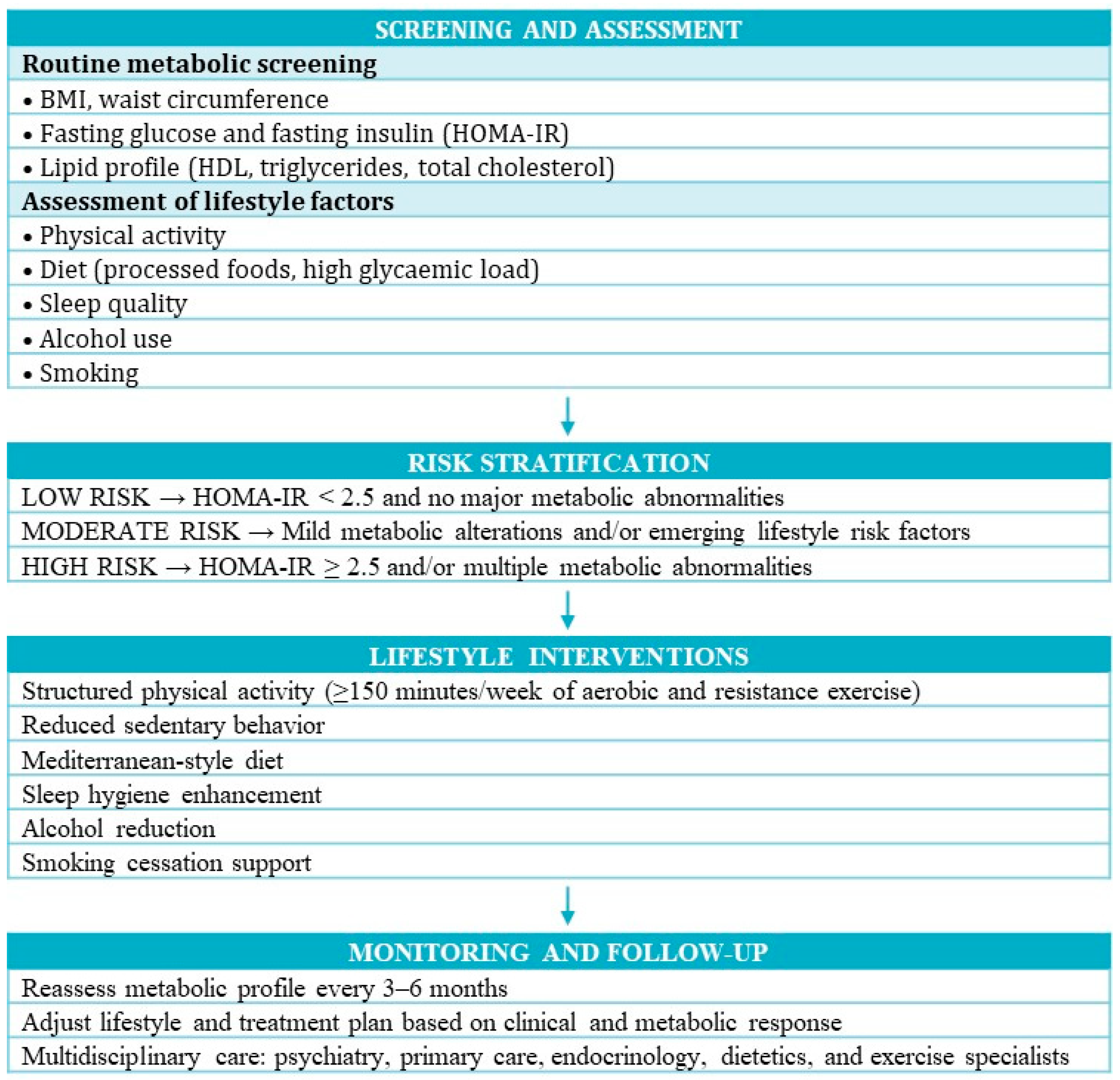
5. Conclusions and Clinical Implications
Supplementary Materials
Author Contributions
Funding
Institutional Review Board Statement
Informed Consent Statement
Data Availability Statement
Conflicts of Interest
Abbreviations
| BD | Bipolar Disorder |
| BDNF | Brain-derived neurotrophic factor |
| CCI | Charlson Comorbidity Index |
| CI | Confident interval |
| CRP | C reactive protein |
| HDL | High density lipoprotein |
| HOMA | Homeostasis Model Assessment |
| HPA | Hypothalamic–pituitary–adrenal |
| IL | Interleukin |
| IR | Insulin resistance |
| LDL | Low density lipoprotein |
| MetS | Metabolic syndrome |
| OR | Odd ratio |
| SGA | Second-generation antipsychotics |
| TC | Total cholesterol |
| TG | Triglyceride |
| TNF | Tumor necrosis factor |
References
- Merikangas, K.R.; Jin, R.; He, J.P.; Kessler, R.C.; Lee, S.; Sampson, N.A.; Viana, M.C.; Andrade, L.H.; Hu, C.; Karam, E.G.; et al. Prevalence and Correlates of Bipolar Spectrum Disorder in the World Mental Health Survey Initiative. Arch. Gen. Psychiatry 2011, 68, 241–251. [Google Scholar] [CrossRef] [PubMed]
- Oliva, V.; Fico, G.; De Prisco, M.; Gonda, X.; Rosa, A.R.; Vieta, E. Bipolar disorders: An update on critical aspects. Lancet Reg. Health Eur. 2024, 48, 101135. [Google Scholar] [CrossRef] [PubMed]
- Laursen, T.M.; Wahlbeck, K.; Hällgren, J.; Westman, J.; Ösby, U.; Alinaghizadeh, H.; Gissler, M.; Nordentoft, M. Life Expectancy and Death by Diseases of the circulatory system in patients with bipolar disorder or schizophrenia in the Nordic countries. PLoS ONE 2013, 8, e67133. [Google Scholar] [CrossRef]
- Salvi, V.; Aguglia, A.; Barone-Adesi, F.; Bianchi, D.; Donfrancesco, C.; Dragogna, F.; Palmieri, L.; Serafini, G.; Amore, M.; Mencacci, C. Cardiovascular risk in patients with severe mental illness in Italy. Eur. Psychiatry 2020, 63, e96. [Google Scholar] [CrossRef]
- Paljärvi, T.; Herttua, K.; Taipale, H.; Lähteenvuo, M.; Tanskanen, A.; Tiihonen, J. Cardiovascular mortality in bipolar disorder: Population-based cohort study. Acta Psychiatr. Scand. 2024, 150, 56–64. [Google Scholar] [CrossRef]
- Liu, Y.K.; Ling, S.; Lui, L.M.W.; Ceban, F.; Vinberg, M.; Kessing, L.V.; Ho, R.C.; Rhee, T.G.; Gill, H.; Cao, B.; et al. Prevalence of type 2 diabetes mellitus, impaired fasting glucose, general obesity, and abdominal obesity in patients with bipolar disorder: A systematic review and meta-analysis. J. Affect. Disord. 2022, 300, 449–461. [Google Scholar] [CrossRef]
- Almasabi, A.A. Metabolic Abnormalities, Cognitive Functions, and Bipolar Disorder: A Meta-Analysis. Ann. Med. Health Sci. Res. 2020, 10, 1105–1110. [Google Scholar]
- Antony, P.S.N.; Mathew, K.A.; Menon, B. Prevalence of Metabolic Syndrome and Its Association with Clinical Correlates and Caregiver Burden in Patients with Bipolar Disorder at a Tertiary Hospital. Cureus 2024, 16, e72211. [Google Scholar] [CrossRef]
- Li, C.; Birmaher, B.; Rooks, B.; Gill, M.K.; Hower, H.; Axelson, D.A.; Dickstein, D.P.; Goldstein, T.R.; Liao, F.; Yen, S.; et al. High Prevalence of Metabolic Syndrome Among Adolescents and Young Adults with Bipolar Disorder. J. Clin. Psychiatry 2019, 80, 18m12422. [Google Scholar] [CrossRef]
- Shapiro, L.R.; Kennedy, K.G.; Dimick, M.K.; Goldstein, B.I. Elevated atherogenic lipid profile in youth with bipolar disorder during euthymia and hypomanic/mixed but not depressive states. J. Psychosom. Res. 2022, 156, 110763. [Google Scholar] [CrossRef] [PubMed]
- Aguglia, A.; Salvi, V.; Amerio, A.; Gari, M.; Dragogna, F.; Mencacci, C.; Volpe, U.; Serafini, G.; Amore, M. Number of episodes and duration of illness associated with hypertension and 10-year cardiovascular risk in patients with bipolar disorder type I. Psychiatry Res. 2022, 308, 114344. [Google Scholar] [CrossRef] [PubMed]
- Lee, Y.B.; Kim, H.; Lee, J.; Kang, D.; Kim, G.; Jin, S.M.; Kim, J.H.; Jeon, H.J.; Hur, K.Y. Bipolar disorder and the risk of cardiometabolic diseases, heart failure, and all-cause mortality: A population-based matched cohort study in South Korea. Sci. Rep. 2024, 14, 1932. [Google Scholar] [CrossRef]
- Li, K.; Li, T.; Yang, T.; Lin, Y.; Liao, Y.; Gan, Z. Prevalence of insulin resistance and its associated factors in drug-naive patients with bipolar disorder among Han Chinese population. BMC Psychiatry 2024, 24, 388. [Google Scholar] [CrossRef]
- Jeppesen, J.; Hansen, T.W.; Rasmussen, S.; Ibsen, H.; Torp-Pedersen, C.; Madsbad, S. Insulin Resistance, the Metabolic Syndrome, and Risk of Incident Cardiovascular Disease. J. Am. Coll. Cardiol. 2007, 49, 2112–2119. [Google Scholar] [CrossRef]
- Alberti, K.G.M.M.; Eckel, R.H.; Grundy, S.M.; Zimmet, P.Z.; Cleeman, J.I.; Donato, K.A.; Fruchart, J.C.; James, W.P.T.; Loria, C.M.; Smith, S.C. Harmonizing the Metabolic Syndrome: A joint interim statement of the International Diabetes Federation Task Force on Epidemiology and Prevention; National Heart, Lung, and Blood Institute; American Heart Association; World Heart Federation; International Atherosclerosis Society; and International Association for the Study of Obesity. Circulation 2009, 120, 1640–1645. [Google Scholar] [CrossRef]
- Fusar-Poli, L.; Amerio, A.; Cimpoesu, P.; Natale, A.; Salvi, V.; Zappa, G.; Serafini, G.; Amore, M.; Aguglia, E.; Aguglia, A. Lipid and Glycemic Profiles in Patients with Bipolar Disorder: Cholesterol Levels Are Reduced in Mania. Medicina 2020, 57, 28. [Google Scholar] [CrossRef]
- Calkin, C.; Van De Velde, C.; Růžičková, M.; Slaney, C.; Garnham, J.; Hajek, T.; O’Donovan, C.; Alda, M. Can body mass index help predict outcome in patients with bipolar disorder? Bipolar Disord. 2009, 11, 650–656. [Google Scholar] [CrossRef] [PubMed]
- Weiss, F.; Brancati, G.E.; Elefante, C.; Petrucci, A.; Gemmellaro, T.; Lattanzi, L.; Perugi, G. Type 2 diabetes mellitus is associated with manic morbidity in elderly patients with mood disorders. Int. Clin. Psychopharmacol. 2024, 39, 294–304. [Google Scholar] [CrossRef]
- Hayes, J.F.; Marston, L.; Walters, K.; Geddes, J.R.; King, M.; Osborn, D.P.J. Adverse Renal, Endocrine, Hepatic, and Metabolic Events during Maintenance Mood Stabilizer Treatment for Bipolar Disorder: A Population-Based Cohort Study. PLoS Med. 2016, 13, e1002058. [Google Scholar] [CrossRef] [PubMed]
- Kong, L.; Wang, H.; Yan, N.; Xu, C.; Chen, Y.; Zeng, Y.; Guo, X.; Lu, J.; Hu, S. Effect of antipsychotics and mood stabilisers on metabolism in bipolar disorder: A network meta-analysis of randomised-controlled trials. EClinicalMedicine 2024, 71, 102581. [Google Scholar] [CrossRef]
- Pillinger, T.; McCutcheon, R.A.; Vano, L.; Mizuno, Y.; Arumuham, A.; Hindley, G.; Beck, K.; Natesan, S.; Efthimiou, O.; Cipriani, A.; et al. Comparative effects of 18 antipsychotics on metabolic function in patients with schizophrenia, predictors of metabolic dysregulation, and association with psychopathology: A systematic review and network meta-analysis. Lancet Psychiatry 2020, 7, 64–77. [Google Scholar] [CrossRef]
- Wang, F.; Wang, F.; Tao, X.; Ni, W.; Li, W.; Lin, J. Evaluation of Clinical Correlation between Insulin Resistance and Antipsychotic Drug Therapy in Patients with Schizophrenia. Actas Esp. Psiquiatr. 2024, 52, 412–419. [Google Scholar] [CrossRef]
- Kukucka, T.; Ferencova, N.; Visnovcova, Z.; Ondrejka, I.; Hrtanek, I.; Kovacova, V.; Macejova, A.; Mlyncekova, Z.; Tonhajzerova, I. Mechanisms Involved in the Link between Depression, Antidepressant Treatment, and Associated Weight Change. Int. J. Mol. Sci. 2024, 25, 4511. [Google Scholar] [CrossRef] [PubMed]
- Firth, J.; Solmi, M.; Wootton, R.E.; Vancampfort, D.; Schuch, F.B.; Hoare, E.; Gilbody, S.; Torous, J.; Teasdale, S.B.; Jackson, S.E.; et al. A meta-review of “lifestyle psychiatry”: The role of exercise, smoking, diet and sleep in the prevention and treatment of mental disorders. World Psychiatry 2020, 19, 360–380. [Google Scholar] [CrossRef]
- Solmi, M.; Suresh Sharma, M.; Osimo, E.F.; Fornaro, M.; Bortolato, B.; Croatto, G.; Miola, A.; Vieta, E.; Pariante, C.M.; Smith, L.; et al. Peripheral levels of C-reactive protein, tumor necrosis factor-α, interleukin-6, and interleukin-1β across the mood spectrum in bipolar disorder: A meta-analysis of mean differences and variability. Brain Behav. Immun. 2021, 97, 193–203. [Google Scholar] [CrossRef] [PubMed]
- Munkholm, K.; Vinberg, M.; Kessing, L.V. Peripheral blood brain-derived neurotrophic factor in bipolar disorder: A comprehensive systematic review and meta-analysis. Mol. Psychiatry 2016, 21, 216–228. [Google Scholar] [CrossRef]
- Rowland, T.; Perry, B.I.; Upthegrove, R.; Barnes, N.; Chatterjee, J.; Gallacher, D.; Marwaha, S. Neurotrophins, cytokines, oxidative stress mediators and mood state in bipolar disorder: Systematic review and meta-analyses. Br. J. Psychiatry 2018, 213, 514–525. [Google Scholar] [CrossRef]
- Tilg, H.; Moschen, A.R. Adipocytokines: Mediators linking adipose tissue, inflammation and immunity. Nat. Rev. Immunol. 2006, 6, 772–783. [Google Scholar] [CrossRef]
- Hotamisligil, G.S.; Budavari, A.; Murray, D.; Spiegelman, B.M. Reduced tyrosine kinase activity of the insulin receptor in obesity-diabetes. Central role of tumor necrosis factor-alpha. J. Clin. Investig. 1994, 94, 1543–1549. [Google Scholar] [CrossRef] [PubMed]
- Belvederi Murri, M.; Prestia, D.; Mondelli, V.; Pariante, C.; Patti, S.; Olivieri, B.; Arzani, C.; Masotti, M.; Respino, M.; Antonioli, M.; et al. The HPA axis in bipolar disorder: Systematic review and meta-analysis. Psychoneuroendocrinology 2016, 63, 327–342. [Google Scholar] [CrossRef]
- Milo, T.; Maimon, L.; Cohen, B.; Haran, D.; Segman, D.; Danon, T.; Bren, A.; Mayo, A.; Cohen Rappaport, G.; McInnis, M.; et al. Longitudinal hair cortisol in bipolar disorder and a mechanism based on HPA dynamics. iScience 2024, 27, 109234. [Google Scholar] [CrossRef]
- Lei, A.A.; Phang, V.W.X.; Lee, Y.Z.; Kow, A.S.F.; Tham, C.L.; Ho, Y.-C.; Lee, M.T. Chronic Stress-Associated Depressive Disorders: The Impact of HPA Axis Dysregulation and Neuroinflammation on the Hippocampus—A Mini Review. Int. J. Mol. Sci. 2025, 26, 2940. [Google Scholar] [CrossRef]
- Mosili, P.; Mkhize, B.C.; Sibiya, N.H.; Ngubane, P.S.; Khathi, A. Review of the direct and indirect effects of hyperglycemia on the HPA axis in T2DM and the co-occurrence of depression. BMJ Open Diabetes Res. Care 2024, 12, e003218. [Google Scholar] [CrossRef]
- Werdermann, M.; Berger, I.; Scriba, L.D.; Santambrogio, A.; Schlinkert, P.; Brendel, H.; Morawietz, H.; Schedl, A.; Peitzsch, M.; King, A.J.F.; et al. Insulin and obesity transform hypothalamic-pituitary-adrenal axis stemness and function in a hyperactive state. Mol. Metab. 2020, 43, 101112. [Google Scholar] [CrossRef]
- Giménez-Palomo, A.; Andreu, H.; de Juan, O.; Olivier, L.; Ochandiano, I.; Ilzarbe, L.; Valentí, M.; Stoppa, A.; Llach, C.D.; Pacenza, G.; et al. Mitochondrial Dysfunction as a Biomarker of Illness State in Bipolar Disorder: A Critical Review. Brain Sci. 2024, 14, 1199. [Google Scholar] [CrossRef]
- Burkart, A.M.; Tan, K.; Warren, L.; Iovino, S.; Hughes, K.J.; Kahn, C.R.; Patti, M.E. Insulin Resistance in Human iPS Cells Reduces Mitochondrial Size and Function. Sci. Rep. 2016, 6, 22788. [Google Scholar] [CrossRef] [PubMed]
- Zachos, K.A.; Choi, J.; Godin, O.; Chernega, T.; Kwak, H.A.; Jung, J.H.; Aouizerate, B.; Aubin, V.; Bellivier, F.; Belzeaux, R.; et al. Mitochondrial Biomarkers and Metabolic Syndrome in Bipolar Disorder. Psychiatry Res. 2024, 339, 116063. [Google Scholar] [CrossRef]
- Mansur, R.B.; Fries, G.R.; Subramaniapillai, M.; Frangou, S.; De Felice, F.G.; Rasgon, N.; McEwen, B.; Brietzke, E.; McIntyre, R.S. Expression of dopamine signaling genes in the post-mortem brain of individuals with mental illnesses is moderated by body mass index and mediated by insulin signaling genes. J. Psychiatr. Res. 2018, 107, 128–135. [Google Scholar] [CrossRef] [PubMed]
- Kleinridders, A.; Cai, W.; Cappellucci, L.; Ghazarian, A.; Collins, W.R.; Vienberg, S.G.; Pothos, E.N.; Kahn, C.R. Insulin resistance in brain alters dopamine turnover and causes behavioral disorders. Proc. Natl. Acad. Sci. USA 2015, 112, 3463–3468. [Google Scholar] [CrossRef]
- Gruber, J.; Hanssen, R.; Qubad, M.; Bouzouina, A.; Schack, V.; Sochor, H.; Schiweck, C.; Aichholzer, M.; Matura, S.; Slattery, D.A.; et al. Impact of insulin and insulin resistance on brain dopamine signalling and reward processing—An underexplored mechanism in the pathophysiology of depression? Neurosci. Biobehav. Rev. 2023, 149, 105179. [Google Scholar] [CrossRef] [PubMed]
- Baykara, B.; Koc, D.; Resmi, H.; Akan, P.; Tunca, Z.; Ozerdem, A.; Ceylan, D.; Yalcın, N.G.; Binici, N.C.; Guney, S.A.; et al. Brain-derived neurotrophic factor in bipolar disorder: Associations with age at onset and illness duration. Progr. NeuroPsychopharmacol. Biol. Psychiatry 2021, 108, 110075. [Google Scholar] [CrossRef]
- Krabbe, K.S.; Nielsen, A.R.; Krogh-Madsen, R.; Plomgaard, P.; Rasmussen, P.; Erikstrup, C.; Fischer, C.P.; Lindegaard, B.; Petersen, A.M.W.; Taudorf, S.; et al. Brain-derived neurotrophic factor (BDNF) and type 2 diabetes. Diabetologia 2007, 50, 431–438. [Google Scholar] [CrossRef]
- Monteggia, L.M.; Barrot, M.; Powell, C.M.; Berton, O.; Galanis, V.; Gemelli, T.; Meuth, S.; Nagy, A.; Greene, R.W.; Nestler, E.J. Essential role of brain-derived neurotrophic factor in adult hippocampal function. Proc. Natl. Acad. Sci. USA 2004, 101, 10827–10832. [Google Scholar] [CrossRef] [PubMed]
- Lindholm, J.S.O.; Castrén, E. Mice with altered BDNF signaling as models for mood disorders and antidepressant effects. Front. Behav. Neurosci. 2014, 8, 143. [Google Scholar] [CrossRef]
- Berk, M.; Kapczinski, F.; Andreazza, A.C.; Dean, O.M.; Giorlando, F.; Maes, M.; Yücel, M.; Gama, C.S.; Dodd, S.; Dean, B.; et al. Pathways underlying neuroprogression in bipolar disorder: Focus on inflammation, oxidative stress and neurotrophic factors. Neurosci. Biobehav. Rev. 2011, 35, 804–817. [Google Scholar] [CrossRef]
- Abé, C.; Ching, C.R.K.; Liberg, B.; Lebedev, A.V.; Agartz, I.; Akudjedu, T.N.; Alda, M.; Alnæs, D.; Alonso-Lana, S.; Benedetti, F.; et al. Longitudinal Structural Brain Changes in Bipolar Disorder: A Multicenter Neuroimaging Study of 1232 Individuals by the ENIGMA Bipolar Disorder Working Group. Biol. Psychiatry 2022, 91, 582–592. [Google Scholar] [CrossRef]
- Macoveanu, J.; Damgaard, V.; Ysbæk-Nielsen, A.T.; Frangou, S.; Yatham, L.N.; Chakrabarty, T.; Stougaard, M.E.; Knudsen, G.M.; Vinberg, M.; Kessing, L.V.; et al. Early longitudinal changes in brain structure and cognitive functioning in remitted patients with recently diagnosed bipolar disorder. J. Affect. Disord. 2023, 339, 153–161. [Google Scholar] [CrossRef] [PubMed]
- Yan, C.; Zhou, Y.; Chen, Q.; Luo, Y.; Zhang, J.H.; Huang, H.; Shao, A. Dysfunction of the neurovascular unit in diabetes-related neurodegeneration. Biomed. Pharmacother. 2020, 131, 110656. [Google Scholar] [CrossRef] [PubMed]
- Alagiakrishnan, K.; Halverson, T. Role of Peripheral and Central Insulin Resistance in Neuropsychiatric Disorders. J. Clin. Med. 2024, 13, 6607. [Google Scholar] [CrossRef]
- American Psychiatric Association. Diagnostic and Statistical Manual of Mental Disorders—Fifth Edition, Text Revised (DSM 5-TR); American Psychiatric Publishing: Washington, DC, USA, 2022. [Google Scholar]
- World Medical Association. World Medical Association Declaration of Helsinki: Ethical principles for medical research involving human subjects. JAMA 2013, 310, 2191–2194. [Google Scholar] [CrossRef]
- Aguglia, A.; Natale, A.; Fusar-Poli, L.; Amerio, A.; Costanza, A.; Fesce, F.; Gnecco, G.B.; Marino, M.; Placenti, V.; Serafini, G.; et al. Complex polypharmacy in bipolar disorder: Results from a real-world inpatient psychiatric unit. Psychiatry Res. 2022, 318, 114927. [Google Scholar] [CrossRef]
- Aguglia, A.; Natale, A.; Fusar-Poli, L.; Amerio, A.; Bruno, E.; Placenti, V.; Vai, E.; Costanza, A.; Serafini, G.; Aguglia, E.; et al. Bipolar Disorder and Polysubstance Use Disorder: Sociodemographic and Clinical Correlates. Front. Psychiatry 2022, 13, 913965. [Google Scholar] [CrossRef] [PubMed]
- Aguglia, A.; Giacomini, G.; De Michiel, C.F.; Garbarino, N.; Lechiara, A.; Magni, C.; Meinero, M.; Verrina, E.; Costanza, A.; Amerio, A.; et al. Characterization of Bipolar Disorder I and II: Clinical Features, Comorbidities, and Pharmacological Pattern. Alpha Psychiatry 2024, 25, 472–479. [Google Scholar] [CrossRef] [PubMed]
- Teobaldi, E.; Albert, U.; Di Salvo, G.; Mencacci, C.; Rosso, G.; Salvi, V.; Maina, G. Manic-Depressive Cycles in Bipolar Disorder: Clinical and Treatment Implications. Psychopathology 2021, 54, 98–105. [Google Scholar] [CrossRef]
- Watt, M.J.; Heigenhauser, G.J.F.; O’Neill, M.; Spriet, L.L. Hormone-sensitive lipase activity and fatty acyl-CoA content in human skeletal muscle during prolonged exercise. J. Appl. Physiol. 2003, 95, 314–321. [Google Scholar] [CrossRef]
- Bonora, E.; Targher, G.; Alberiche, M.; Bonadonna, R.C.; Saggiani, F.; Zenere, M.B.; Monauni, T.; Muggeo, M. Homeostasis model assessment closely mirrors the glucose clamp technique in the assessment of insulin sensitivity: Studies in subjects with various degrees of glucose tolerance and insulin sensitivity. Diabetes Care 2000, 23, 57–63. [Google Scholar] [CrossRef]
- Pillinger, T.; Beck, K.; Gobjila, C.; Donocik, J.G.; Jauhar, S.; Howes, O.D. Impaired glucose homeostasis in first-episode schizophrenia: A systematic review and meta-analysis. JAMA Psychiatry 2017, 74, 261–269. [Google Scholar] [CrossRef] [PubMed]
- Hajek, T.; Calkin, C.; Blagdon, R.; Slaney, C.; Uher, R.; Alda, M. Insulin resistance, diabetes mellitus, and brain structure in bipolar disorders. Neuropsychopharmacology 2014, 39, 2910–2918. [Google Scholar] [CrossRef]
- Hajek, T.; Calkin, C.; Blagdon, R.; Slaney, C.; Alda, M. Type 2 diabetes mellitus: A potentially modifiable risk factor for neurochemical brain changes in bipolar disorders. Biol. Psychiatry 2015, 77, 295–303. [Google Scholar] [CrossRef]
- Chang, H.H.; Tseng, H.H.; Chang, W.H.; Huang, K.C.; Lu, T.H.; Yang, Y.K.; Chen, P.S. Peripheral insulin sensitivity predicting cognitive function in euthymic bipolar disorder patients. CNS Spectr. 2022, 27, 598–603. [Google Scholar] [CrossRef]
- Miola, A.; Alvarez-Villalobos, N.A.; Ruiz-Hernandez, F.G.; De Filippis, E.; Veldic, M.; Prieto, M.L.; Singh, B.; Sanchez Ruiz, J.A.; Nunez, N.A.; Resendez, M.G.; et al. Insulin resistance in bipolar disorder: A systematic review of illness course and clinical correlates. J. Affct. Disord. 2023, 334, 1–11. [Google Scholar] [CrossRef]
- Khayachi, A.; Nunes, A.; Alda, M.; Rouleau, G.A. The overlooked role of metabolic disorders in bipolar disorder. Neurosci. Biobehav. Rev. 2025, 174, 106203. [Google Scholar] [CrossRef]
- Grunze, H.; Schaefer, M.; Scherk, H.; Born, C.; Preuss, U.W. Comorbid Bipolar and Alcohol Use Disorder-A Therapeutic Challenge. Front. Psychiatry 2021, 12, 660432. [Google Scholar] [CrossRef] [PubMed]
- Bolstad, I.; Alakokkare, A.E.; Bramness, J.G.; Rognli, E.B.; Levola, J.; Mustonen, A.; Miettunen, J.; Niemelä, S. The relationships between use of alcohol, tobacco and coffee in adolescence and mood disorders in adulthood. Acta Psychiatr. Scand. 2022, 146, 594–603. [Google Scholar] [CrossRef]
- Shi, X.; Zhao, Y.; Yang, H.; Xu, X.; Fang, Y.; Yu, X.; Tan, Q.; Li, H.; Sun, G.; Wu, H.; et al. Factors associated with hospitalization times and length of stay in patients with bipolar disorder. Front. Psychiatry 2023, 14, 1140908. [Google Scholar] [CrossRef] [PubMed]
- Samalin, L.; de Chazeron, I.; Vieta, E.; Bellivier, F.; Llorca, P.M. Residual symptoms and specific functional impairments in euthymic patients with bipolar disorder. Bipolar Disord. 2016, 18, 164–173. [Google Scholar] [CrossRef]
- Grover, S.; Chakrabarti, S.; Sahoo, S. Prevalence and clinical correlates of residual symptoms in remitted patients with bipolar disorder: An exploratory study. Indian J. Psychiatry 2020, 62, 295–305. [Google Scholar] [CrossRef] [PubMed]
- Cairns, K.; McCarvill, T.; Ruzickova, M.; Calkin, C.V. Course of bipolar illness worsens after onset of insulin resistance. J. Psychiatr. Res. 2018, 102, 34–37. [Google Scholar] [CrossRef]
- Kim, A.M.; Salstein, L.; Goldberg, J.F. A Systematic Review of Complex Polypharmacy in Bipolar Disorder: Prevalence, Clinical Features, Adherence, and Preliminary Recommendations for Practitioners. J. Clin. Psychiatry 2021, 82, 20r13263. [Google Scholar] [CrossRef]
- Chow, R.; Whiting, D.; Favril, L.; Ostinelli, E.; Cipriani, A.; Fazel, S. An umbrella review of adverse effects associated with antipsychotic medications: The need for complementary study designs. Neurosci. Biobehav. Rev. 2023, 155, 105454. [Google Scholar] [CrossRef]
- Zhuo, C.; Xu, Y.; Hou, W.; Chen, J.; Li, Q.; Liu, Z.; Dou, G.; Sun, Y.; Li, R.; Ma, X.; et al. Mechanistic/mammalian target of rapamycin and side effects of antipsychotics: Insights into mechanisms and implications for therapy. Transl. Psychiatry 2022, 12, 13. [Google Scholar] [CrossRef]
- Grajales, D.; Ferreira, V.; Valverde, Á.M. Second-Generation Antipsychotics and Dysregulation of Glucose Metabolism: Beyond Weight Gain. Cells 2019, 8, 1336. [Google Scholar] [CrossRef] [PubMed]
- Feng, Y.; Wong, K.C.; Leung, P.B.; Lee, B.K.; Sham, P.C.; Lui, S.S.; So, H.C. Longitudinal impact of different treatment sequences of second-generation antipsychotics on metabolic outcomes: A study using targeted maximum likelihood estimation. Psychol. Med. 2025, 55, e123. [Google Scholar] [CrossRef] [PubMed]
- Mehdi, S.; Wani, S.U.D.; Krishna, K.L.; Kinattingal, N.; Roohi, T.F. A review on linking stress, depression, and insulin resistance via low-grade chronic inflammation. Biochem. Biophys. Rep. 2023, 36, 101571. [Google Scholar] [CrossRef]
- Hotamisligil, G.S. Inflammation and metabolic disorders. Nature 2006, 444, 860–867. [Google Scholar] [CrossRef]
- Foroughi, M.; Medina Inojosa, J.R.; Lopez-Jimenez, F.; Saeidifard, F.; Suarez, L.; Stokin, G.B.; Prieto, M.L.; Rocca, W.A.; Frye, M.A.; Morgan, R.J. Association of Bipolar Disorder with Major Adverse Cardiovascular Events: A Population-Based Historical Cohort Study. Psychosom. Med. 2022, 84, 97–103. [Google Scholar] [CrossRef]
- Duez, H.; Staels, B. Circadian Disruption and the Risk of Developing Obesity. Curr. Obes. 2025, 14, 20. [Google Scholar] [CrossRef] [PubMed]
- Campbell, I.H.; Frye, M.A.; Campbell, H. Metabolic plasticity: An evolutionary perspective on metabolic and circadian dysregulation in bipolar disorder. Mol. Psychiatry 2025, 30, 5600–5612. [Google Scholar] [CrossRef]
- Gonnissen, H.K.; Hulshof, T.; Westerterp-Plantenga, M.S. Chronobiology, endocrinology, and energy- and food-reward homeostasis. Obes. Rev. 2013, 14, 405–416. [Google Scholar] [CrossRef]
- Westerterp-Plantenga, M.S. Sleep, circadian rhythm and body weight: Parallel developments. Proc. Nutr. Soc. 2016, 75, 431–439. [Google Scholar] [CrossRef]
- Ballena-Caicedo, J.; Zuzunaga-Montoya, F.E.; Loayza-Castro, J.A.; Bustamante-Rodríguez, J.C.; Vásquez Romero, L.E.M.; Tapia-Limonchi, R.; De Carrillo, C.I.G.; Vera-Ponce, V.J. Global prevalence of insulin resistance in the adult population: A systematic review and meta-analysis. Front. Endocrinol. 2025, 16, 1646258. [Google Scholar] [CrossRef] [PubMed]
- Tsai, S.F.; Yang, C.T.; Liu, W.J.; Lee, C.L. Development and validation of an insulin resistance model for a population without diabetes mellitus and its clinical implication: A prospective cohort study. EClinicalMedicine 2023, 58, 101934. [Google Scholar] [CrossRef] [PubMed]
- Berk, M.; Corrales, A.; Trisno, R.; Dodd, S.; Yatham, L.N.; Vieta, E.; McIntyre, R.S.; Suppes, T.; Agustini, B. Bipolar II disorder: A state-of-the-art review. World Psychiatry 2025, 24, 175–189. [Google Scholar] [CrossRef] [PubMed]


| N (%) or Mean ± SD | Total Sample (N = 86) | BD with IR (N = 28) | BD Without IR (N = 58) | X2/t | p |
|---|---|---|---|---|---|
| Gender (male) | 37 (43.0) | 13 (46.4) | 24 (41.4) | 0.196 | 0.658 |
| Current age (years) | 49.17 ± 15.03 | 53.14 ± 15.65 | 47.26 ± 14.46 | −1.721 | 0.089 |
| Marital Status Single Married Separated/Divorced Widowed | 35 (40.7) 28 (32.6) 19 (22.1) 4 (4.6) | 13 (46.4) 8 (28.6) 6 (21.4) 1 (3.6) | 22 (37.9) 20 (34.5) 13 (22.4) 3 (5.2) | 0.650 | 0.885 |
| Educational level (years) | 12.24 ± 3.68 | 12.21 ± 3.55 | 12.26 ± 3.76 | 0.052 | 0.959 |
| Occupational status, employed | 33 (38.4) | 9 (32.1) | 24 (41.4) | 0.681 | 0.409 |
| Living condition Alone Family Therapeutic Community | 26 (30.2) 55 (64.0) 5 (5.8) | 9 (32.1) 15 (53.6) 4 (14.3) | 17 (29.3) 40 (69.0) 1 (1.7) | 5.875 | 0.053 |
| Having child | 51 (59.3) | 17 (60.7) | 34 (58.6) | 0.034 | 0.853 |
| Total Sample (N = 86) |
BD with IR (N = 28) |
BD Without IR (N = 58) | X2/t | p | |
|---|---|---|---|---|---|
| Clinical Characteristics, N (%) or Mean ± SD | |||||
| Psychiatric family history | 54 (62.8) | 17 (60.7) | 37 (63.8) | 0.077 | 0.782 |
| Diagnosis Bipolar disorder type I Bipolar disorder type II Cyclothymia | 39 (45.3) 36 (41.9) 11 (12.8) | 14 (50.0) 13 (46.4) 1 (3.6) | 25 (43.1) 23 (39.7) 10 (17.2) | 3.164 | 0.206 |
| Bipolar cycle DMI MDI Irregular | 20 (23.3) 17 (19.8) 49 (57.0) | 7 (25.0) 0 (0.0) 21 (75.0) | 13 (22.4) 17 (29.3) 28 (48.3) | 10.628 | 0.005 |
| Predominant polarity Depressive (Hypo)Manic Mixed | 44 (51.2) 22 (25.5) 20 (23.3) | 16 (57.2) 6 (21.4) 6 (21.4) | 28 (48.3) 16 (27.6) 14 (24.1) | 0.630 | 0.730 |
| Age at onset (years) | 26.47 ± 10.95 | 26.39 ± 9.37 | 26.50 ± 11.72 | 0.042 | 0.966 |
| Duration of illness (years) | 22.03 ± 13.62 | 26.57 ± 13.21 | 19.84 ± 13.38 | −2.194 | 0.031 |
| Psychotic symptoms | 29 (33.7) | 11 (39.3) | 18 (31.0) | 0.575 | 0.448 |
| Residual symptoms | 33 (38.4) | 15 (53.6) | 18 (31.0) | 4.056 | 0.044 |
| Number of hospitalizations > 5 | 31 (36.0) | 16 (57.1) | 15 (25.9) | 8.015 | 0.005 |
| Duration of hospitalization | 16.31 ± 9.15 | 18.50 ± 11.91 | 15.26 ± 7.36 | −1.552 | 0.124 |
| Lifetime involuntary hospitalization | 27 (31.7) | 9 (32.1) | 18 (31.0) | 0.011 | 0.917 |
| Current suicide ideation | 21 (24.4) | 6 (21.4) | 15 (25.9) | 0.201 | 0.654 |
| Lifetime suicide attempts | 20 (23.3) | 5 (17.9) | 15 (25.9) | 0.754 | 0.686 |
| Lifetime non suicidal self-injuries | 16 (18.6) | 3 (10.7) | 13 (22.4) | 1.707 | 0.191 |
| Comorbidities, N (%) | |||||
| Medical comorbidity | 45 (52.9) | 18 (64.3) | 27 (47.4) | 2.157 | 0.142 |
| Psychiatric comorbidity | 38 (44.2) | 12 (42.9) | 26 (44.8) | 0.030 | 0.863 |
| Presence of one illicit substance | 41 (47.7) | 16 (57.1) | 25 (43.1) | 1.492 | 0.222 |
| Nicotine | 55 (64.0) | 18 (64.3) | 37 (63.8) | 0.002 | 0.964 |
| Alcohol | 33 (38.4) | 17 (60.7) | 16 (27.6) | 8.764 | 0.003 |
| Cannabinoids | 24 (27.9) | 8 (28.6) | 16 (27.6) | 0.009 | 0.924 |
| Psychostimulants | 20 (23.3) | 7 (25.0) | 13 (22.4) | 0.071 | 0.790 |
| Pharmacological treatment, N (%) | |||||
| Polypharmacy complex | 42 (48.8) | 18 (64.3) | 24 (41.4) | 3.965 | 0.046 |
| Number of medications | 3.83 ± 1.30 | 4.18 ± 1.47 | 3.66 ± 1.19 | −1.757 | 0.081 |
| Metabolic parameters, N (%) or mean ± SD | |||||
| Physical activity (Yes) | 41 (47.7) | 8 (28.6) | 33 (56.9) | 6.073 | 0.014 |
| Weight in Kg | 71.90 ± 14.96 | 80.00 ± 16.73 | 67.99 ± 12.38 | −3.747 | <0.001 |
| Height in m | 1.68 ± 0.81 | 1.68 ± 0.86 | 1.67 ± 0.79 | −0.057 | 0.954 |
| Body mass index | 25.56 ± 4.75 | 28.35 ± 4.91 | 24.21 ± 4.08 | −4.115 | <0.001 |
| Systolic pressure (mmHg) | 126.53 ± 12.00 | 130.11 ± 10.20 | 124.81 ± 12.50 | −1.949 | 0.055 |
| Diastolic pressure (mmHg) | 75.43 ± 10.81 | 77.64 ± 10.01 | 74.36 ± 11.10 | −1.325 | 0.189 |
| Total cholesterol | 186.86 ± 49.33 | 200.30 ± 59.98 | 179.97 ± 42.09 | −1.515 | 0.135 |
| High density lipoprotein cholesterol | 49.68 ± 16.89 | 40.90 ± 14.67 | 54.56 ± 16.21 | 3.122 | 0.003 |
| Low density lipoprotein cholesterol | 113.32 ± 38.35 | 119.20 ± 42.87 | 110.06 ± 35.81 | −0.853 | 0.397 |
| Triglycerides | 127.42 ± 69.50 | 160.82 ± 77.01 | 105.58 ± 55.35 | −2.739 | 0.009 |
Disclaimer/Publisher’s Note: The statements, opinions and data contained in all publications are solely those of the individual author(s) and contributor(s) and not of MDPI and/or the editor(s). MDPI and/or the editor(s) disclaim responsibility for any injury to people or property resulting from any ideas, methods, instructions or products referred to in the content. |
© 2026 by the authors. Licensee MDPI, Basel, Switzerland. This article is an open access article distributed under the terms and conditions of the Creative Commons Attribution (CC BY) license.
Share and Cite
Aguglia, A.; Meinero, M.; Aprile, V.; Cerisola, T.; Mazzarello, G.; Oggianu, A.; Costanza, A.; Amore, M.; Amerio, A.; Serafini, G. Insulin Resistance in Bipolar Disorder: A Real-World Cross-Sectional Study. J. Pers. Med. 2026, 16, 47. https://doi.org/10.3390/jpm16010047
Aguglia A, Meinero M, Aprile V, Cerisola T, Mazzarello G, Oggianu A, Costanza A, Amore M, Amerio A, Serafini G. Insulin Resistance in Bipolar Disorder: A Real-World Cross-Sectional Study. Journal of Personalized Medicine. 2026; 16(1):47. https://doi.org/10.3390/jpm16010047
Chicago/Turabian StyleAguglia, Andrea, Matteo Meinero, Valentina Aprile, Tommaso Cerisola, Giuditta Mazzarello, Angelo Oggianu, Alessandra Costanza, Mario Amore, Andrea Amerio, and Gianluca Serafini. 2026. "Insulin Resistance in Bipolar Disorder: A Real-World Cross-Sectional Study" Journal of Personalized Medicine 16, no. 1: 47. https://doi.org/10.3390/jpm16010047
APA StyleAguglia, A., Meinero, M., Aprile, V., Cerisola, T., Mazzarello, G., Oggianu, A., Costanza, A., Amore, M., Amerio, A., & Serafini, G. (2026). Insulin Resistance in Bipolar Disorder: A Real-World Cross-Sectional Study. Journal of Personalized Medicine, 16(1), 47. https://doi.org/10.3390/jpm16010047