


Effect of Exercise on Inflammation in Hemodialysis Patients: A Systematic Review

 , ,
, , 
 ,
,  ,
, 
Abstract
1. Introduction
2. Materials and Methods
2.1. Search Strategy
2.2. Study Selection
2.2.1. Type of Studies
2.2.2. Type of Participants
2.2.3. Data Extraction
2.2.4. Quality Assessment
2.2.5. Certainty of Evidence
3. Results
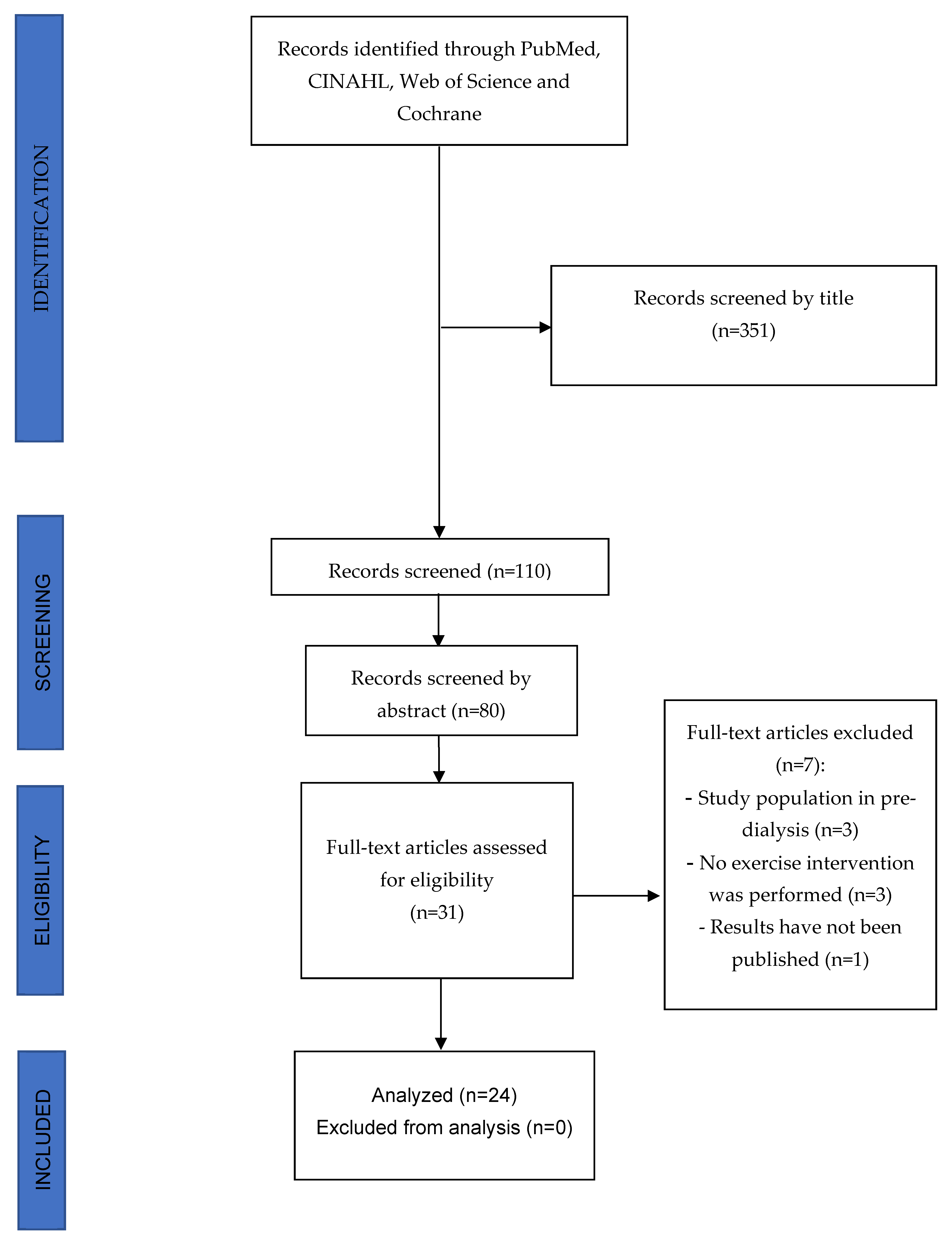
3.1. Study Selection
3.2. Study Characteristics
3.3. Methodological Quality and Risk of Bias of the Included Studies
3.4. Quality of Evidence
3.5. Data from Studies
3.5.1. Effect of Exercise on Main Inflammatory Biomarkers
C-Reactive Protein
IL-6
TNFα
3.5.2. Effect of Exercise on Other Inflammatory Biomarkers
4. Discussion
4.1. Aerobic Exercise
4.2. Resistance Exercise
4.3. Compared and Combined Interventions
4.4. Future Directions
4.5. Limitations
5. Conclusions
Author Contributions
Funding
Institutional Review Board Statement
Informed Consent Statement
Data Availability Statement
Acknowledgments
Conflicts of Interest
References
- Stenvinkel, P. Chronic kidney disease: A public health priority and harbinger of premature cardiovascular disease. J. Intern. Med. 2010, 268, 456–467. [Google Scholar] [CrossRef] [PubMed]
- Eleftheriadis, T.; Antoniadi, G.; Liakopoulos, V.; Kartsios, C.; Stefanidis, I. Basic science and dialysis: Disturbances of acquired immunity in hemodialysis patients. In Seminars in Dialysis; Blackwell Publishing Ltd.: Oxford, UK, 2007; Volume 20, pp. 440–451. [Google Scholar]
- Dalrymple, L.S.; Go, A.S. Epidemiology of acute infections among patients with chronic kidney disease. Clin. J. Am. Soc. Nephrol. 2008, 3, 1487–1493. [Google Scholar] [CrossRef] [PubMed]
- Naqvi, S.B.; Collins, A.J. Infectious complications in chronic kidney disease. Adv. Chronic Kidney Dis. 2006, 13, 199–204. [Google Scholar] [CrossRef] [PubMed]
- Segura-Ortí, E. Ejercicio en pacientes en hemodiálisis: Revisión sistemática de la literatura. Nefrología 2010, 30, 236–246. [Google Scholar]
- Nieman, D.C. Moderate exercise improves immunity and decreases illness rates. Am. J. Lifestyle Med. 2011, 5, 338–345. [Google Scholar] [CrossRef]
- Gleeson, M.; Bishop, N.C.; Stensel, D.J.; Lindley, M.R.; Mastana, S.S.; Nimmo, M.A. The anti-inflammatory effects of exercise: Mechanisms and implications for the prevention and treatment of disease. Nat. Rev. Immunol. 2011, 11, 607. [Google Scholar] [CrossRef]
- Petersen, A.M.W.; Pedersen, B.K. The anti-inflammatory effect of exercise. J. Appl. Physiol. 2005, 98, 1154–1162. [Google Scholar] [CrossRef]
- Beiter, T.; Hoene, M.; Prenzler, F.; Mooren, F.C.; Steinacker, J.M.; Weigert, C.; Niess, A.M.; Munz, B. Exercise, skeletal muscle and inflammation: ARE-binding proteins as key regulators in inflammatory and adaptive networks. Exerc. Immunol. Rev. 2015, 21, 42–57. [Google Scholar]
- Pillastrini, P.; Ferrari, S.; Rattin, S.; Cupello, A.; Villafañe, J.H.; Vanti, C. Exercise and tropism of the multifidus muscle in low back pain: A short review. J. Phys. Ther. Sci. 2015, 27, 943–955. [Google Scholar] [CrossRef]
- Timmerman, K.L.; Flynn, M.G.; Coen, P.M.; Markofski, M.M.; Pence, B.D. Exercise training-induced lowering of inflammatory (CD14 CD16) monocytes: A role in the anti-inflammatory influence of exercise? J. Leukoc Biol. 2008, 84, 1271–1278. [Google Scholar] [CrossRef]
- McFarlin, B.K.; Flynn, M.G.; Campbell, W.W.; Stewart, L.K.; Timmerman, K.L. TLR4 is lower in resistance-trained older women and related to inflammatory cytokines. Med. Sci. Sports Exerc. 2004, 36, 1876–1883. [Google Scholar] [CrossRef] [PubMed]
- Carrero, J.J.; Stenvinkel, P.; Cuppari, L.; Ikizler, T.A.; Kalantar-Zadeh, K.; Kaysen, G.; Mitch, W.E.; Price, S.R.; Wanner, C.; Wang, A.Y.; et al. Etiology of the protein-energy wasting syndrome in chronic kidney disease: A consensus statement from the international society of renal nutrition and metabolism (ISRNM). J. Ren. Nutr. 2013, 23, 77–90. [Google Scholar] [CrossRef] [PubMed]
- Shamseer, L.; Moher, D.; Clarke, M.; Ghersi, D.; Liberati, A.; Petticrew, M.; Shekelle, P.; Stewart, L.A. Preferred reporting items for systematic review and meta-analysis protocols (PRISMA-P) 2015: Elaboration and explanation. BMJ. 2015, 349, g7647. [Google Scholar] [CrossRef]
- Slim, K.; Nini, E.; Forestier, D.; Kwiatkowski, F.; Panis, Y.; Chipponi, J. Methodological index for non-randomized studies (minors): Development and validation of a new instrument. ANZ J. Surg. 2003, 73, 712–716. [Google Scholar] [CrossRef]
- Guyatt, G.H.; Oxman, A.D.; Vist, G.E.; Kunz, R.; Falck-Ytter, Y.; Alonso-Coello, P.; Schünemann, H.J. GRADE Working Group GRADE: An emerging consensus on rating quality of evidence and strength of recommendations. BMJ. 2008, 336, 924–926. [Google Scholar] [CrossRef] [PubMed]
- Andrews, J.; Guyatt, G.; Oxman, A.D.; Alderson, P.; Dahm, P.; Falck-Ytter, Y.; Nasser, M.; Meerpohl, J.; Post, P.N.; Kunz, R.; et al. GRADE guidelines: 14. Going from evidence to recommendations: The significance and presentation of recommendations. J. Clin. Epidemiol. 2013, 66, 719–725. [Google Scholar] [CrossRef]
- Cuenca-Martínez, F.; Suso-Martí, L.; Herranz-Gómez, A.; Varangot-Reille, C.; Calatayud, J.; Romero-Palau, M.; Blanco-Díaz, M.; Salar-Andreu, C.; Casaña, J. Effectiveness of Telematic Behavioral Techniques to Manage Anxiety, Stress and Depressive Symptoms in Patients with Chronic Musculoskeletal Pain: A Systematic Review and Meta-Analysis. Int. J. Environ. Res. Public Health 2022, 19, 3231. [Google Scholar] [CrossRef]
- Afshar, R.; Shegarfy, L.; Shavandi, N.; Sanavi, S. Effects of aerobic exercise and resistance training on lipid profiles and inflammation status in patients on maintenance hemodialysis. Indian J. Nephrol. 2010, 20, 185–189. [Google Scholar]
- Moraes, C.; Stockler-Pinto, M.B.; Lobo, J.C.; Barros, A.F.; Wady, M.T.; Seguins, W.S.; Bessa, B.; Fouque, D.; Mafra, D. Resistance exercise program: Intervention to reduce inflammation and improve nutritional status in hemodialysis patients. Kidney Res. Clin. Pract. 2012, 31, A16–A96. [Google Scholar] [CrossRef][Green Version]
- Moraes, C.; Marinho, S.M.; Da Nobrega, A.C.; de Oliveira Bessa, B.; Jacobson, L.V.; Stockler-Pinto, M.B.; Da Silva, W.S.; Mafra, D. Resistance exercise: A strategy to attenuate inflammation and protein-energy wasting in hemodialysis patients? Int. Urol Nephrol. 2014, 46, 1655–1662. [Google Scholar] [CrossRef]
- Peres, A.; Perotto, D.L.; Dorneles, G.P.; Fuhro, M.I.S.; Monteiro, M.B. Effects of intradialytic exercise on systemic cytokine in patients with chronic kidney disease. Ren. Fail. 2015, 37, 1430–1434. [Google Scholar] [CrossRef] [PubMed]
- Esgalhado, M.; Stockler-Pinto, M.B.; de França Cardozo, L.F.M.; Costa, C.; Barboza, J.E.; Mafra, D. Effect of acute intradialytic strength physical exercise on oxidative stress and inflammation responses in hemodialysis patients. Kidney Res. Clin. Pract. 2015, 34, 35–40. [Google Scholar] [CrossRef] [PubMed][Green Version]
- Fuhro, M.I.; Dorneles, G.P.; Andrade, F.P.; Romão, P.R.; Peres, A.; Monteiro, M.B. Acute exercise during Hemodialysis prevents the decrease in natural killer cells in patients with chronic kidney disease: A pilot study. Int. Urol. Nephrol. 2017, 50, 527–534. [Google Scholar] [CrossRef] [PubMed]
- Cruz, L.G.D.; Zanetti, H.R.; Andaki, A.C.R.; Mota, G.R.D.; Barbosa Neto, O.; Mendes, E.L. Intradialytic aerobic training improves inflammatory markers in patients with chronic kidney disease: A randomized clinical trial. Mot. Rev. Educ. Física 2018, 24, e017517. [Google Scholar] [CrossRef][Green Version]
- Figueiredo, P.H.S.; Lima, M.M.O.; Costa, H.S.; Martins, J.B.; Flecha, O.D.; Gonçalves, P.F.; Alves, F.L.; Rodrigues, V.G.B.; Maciel, E.H.B.; Mendonça, V.A.; et al. Effects of the inspiratory muscle training and aerobic training on respiratory and functional parameters, inflammatory biomarkers, redox status and quality of life in hemodialysis patients: A randomized clinical trial. PLoS ONE 2018, 13, e0200727. [Google Scholar] [CrossRef]
- e Silva, V.R.O.; Belik, F.S.; Hueb, J.C.; de Souza Gonçalves, R.; Caramori, J.C.T.; Vogt, B.P.; Barretti, P.; Bazan, S.G.Z.; De Stefano, G.M.M.F.; Martin, L.C.; et al. Aerobic Exercise Training and Nontradicional Cardiovascular Risk Factors in Hemodialysis Patients: Results from a Prospective Randomized Trial. Cardiorenal Med. 2019, 9, 391–399. [Google Scholar]
- Lopes, L.C.C.; Mota, J.F.; Prestes, J.; Schincaglia, R.M.; Silva, D.M.; Queiroz, N.P.; de Souza Freitas, A.T.V.; Lira, F.S.; Peixoto, M.D.R.G. Intradialytic Resistance Training Improves Functional Capacity and Lean Mass Gain Individuals on Hemodialysis: A Randomized Pilot Trial. Arch. Phys. Med. Rehabil. 2019, 100, 2151–2158. [Google Scholar] [CrossRef]
- Corrêa, H.L.; Moura, S.R.G.; Neves, R.V.P.; Tzanno-Martins, C.; Souza, M.K.; Haro, A.S.; Costa, F.; Silva, J.A.B.; Stone, W.; Honorato, F.S. Resistance training improves sleep quality, redox balance and inflammatory profile in maintenance hemodialysis patients: A randomized controlled trial. Sci. Rep. 2020, 10, 11708. [Google Scholar] [CrossRef]
- Gołȩbiowski, T.; Kusztal, M.; Weyde, W.; Dziubek, W.; Woźniewski, M.; Madziarska, K.; Krajewska, M.; Letachowicz, K.; Strempska, B.; Klinger, M. A Program of physical rehabilitation during hemodialysis sessions improves the fitness of dialysis patients. Kidney Blood Press Res. 2012, 35, 290–296. [Google Scholar] [CrossRef]
- Dungey, M.; Young, H.M.; Churchward, D.R.; Burton, J.O.; Smith, A.C.; Bishop, N.C. Regular exercise during haemodialysis promotes an anti-inflammatory leucocyte profile. Clin. Kidney J. 2017, 10, 813–821. [Google Scholar] [CrossRef]
- Dungey, M.; Bishop, N.C.; Young, H.M.; Burton, J.O.; Smith, A.C. The impact of exercise during haemodialysis on blood pressure, markers of cardiac injury and systemic inflammation—Prelimminay results of a pilot study. Kidney Blood Press Res. 2015, 40, 593–604. [Google Scholar] [CrossRef] [PubMed]
- Wong, J.; Davis, P.; Patidar, A.; Zhang, Y.; Vilar, E.; Finkelman, M.; Farrington, K. The effect of intra-dialytic exercise on inflammation and blood endotoxin levels. Blood Purif. 2017, 44, 51–59. [Google Scholar] [CrossRef] [PubMed]
- Martin, N.; Smith, A.C.; Dungey, M.R.; Young, H.M.; Burton, J.O.; Bishop, N.C. Exercise during hemodialysis does not affect the phenotype or prothrombotic nature of microparticles but alters their proinflammatory function. Physiol. Rep. 2018, 6, e13825. [Google Scholar] [CrossRef] [PubMed]
- March, D.S.; Lai, K.B.; Neal, T.; Graham-Brown, M.P.M.; Highton, P.J.; Churchward, D.R.; Young, H.M.L.; Dungey, M.; Stensel, D.J.; Smith, A.C.; et al. Circulating endotoxin and inflammation: Associations with fitness, physical activity and the effect of a 6-month programme of cycling exercise during haemodialysis. Nephrol. Dial. Trans. 2022, 37, 366–374. [Google Scholar] [CrossRef]
- Highton, P.J.; March, D.S.; Churchward, D.R.; Grantham, C.E.; Young, H.M.L.; Graham-Brown, M.P.M.; Estruel, S.; Martin, N.; Brunskill, N.J.; Smith, A.C.; et al. Intradialytic cycling does not exacerbate microparticles or circulating markers of systemic inflammation in haemodialysis patients. Eur. J. Appl. Physiol. 2022, 122, 599–609. [Google Scholar] [CrossRef]
- Liao, M.T.; Liu, W.C.; Lin, F.H.; Huang, C.F.; Chen, S.Y.; Liu, C.C.; Lin, S.H.; Lu, K.C.; Wu, C.C. Intradialytic aerobic cycling exercise alleviates inflammation and improves endothelial progenitor cell count and bone density in hemodialysis patients. Medicine 2016, 95, e4134. [Google Scholar] [CrossRef]
- Dong, Z.J.; Zhang, H.L.; Yin, L.X. Effects of intradialytic resistance exercise on systemic inflammation in maintenance hemodialysis patients with sarcopenia: A randomized controlled trial. Int. Urol. Nephrol. 2019, 51, 1415–1424. [Google Scholar] [CrossRef]
- Umami, V.; Tedjasukmana, D.; Setiati, S. The effect of intradialytic exercise twice a week on the physical capacity, inflammation, and nutritional status of dialysis patients: A randomized controlled trial. Hemodial. Int. 2019, 23, 486–493. [Google Scholar]
- Torres, E.; Aragoncillo, I.; Moreno, J.; Vega, A.; Abad, S.; García-Prieto, A.; Macias, N.; Hernandez, A.; Godino, M.T.; Luño, J. Exercise training during hemodialysis sessions: Physical and biochemical benefits. Ther. Apher. Dial. 2020, 24, 648–654. [Google Scholar] [CrossRef]
- Meléndez-Oliva, E.; Sánchez-Vera Gómez-Trelles, I.; Segura-Orti, E.; Pérez-Domínguez, B.; García-Maset, R.; García-Testal, A.; Lavandera-Díaz, J.L. Effect of an aerobic and strength exercise combined program on oxidative stress and inflammatory biomarkers in patients undergoing hemodialysis: A single blind randomized controlled trial. In International Urology and Nephrology; Springer: Berlin/Heidelberg, Germany, 2022. [Google Scholar]
- Sovatzidis, A.; Chatzinikolaou, A.; Fatouros, I.G.; Panagoutsos, S.; Draganidis, D.; Nikolaidou, E.; Avloniti, A.; Michailidis, Y.; Mantzouridis, I.; Batrakoulis, A.; et al. Intradialytic Cardiovascular Exercise Training Alters Redox Status, Reduces Inflammation and Improves Physical Performance in Patients with Chronic Kidney Disease. Antioxidants 2020, 9, 868. [Google Scholar] [CrossRef]
- Dungey, M.; Hull, K.L.; Smith, A.C.; Burton, J.O.; Bishop, N.C. Inflammatory factors and exercise in chronic kidney disease. Int. J. Endocrinol. 2013, 2013, 569831. [Google Scholar] [CrossRef]
- Paolucci, E.M.; Loukov, D.; Bowdish, D.M.E.; Heisz, J.J. Exercise reduces depression and inflammation but intensity matters. Biol. Psychol. 2018, 133, 79–84. [Google Scholar] [CrossRef] [PubMed]
- Kim, S.D.; Yeun, Y.R. Effects of Resistance Training on C-Reactive Protein and Inflammatory Cytokines in Elderly Adults: A Systematic Review and Meta-Analysis of Randomized Controlled Trials. Int. J. Environ. Res. Public Health 2022, 19, 3434. [Google Scholar] [CrossRef] [PubMed]
- Gadelha, A.B.; Cesari, M.; Corrêa, H.L.; Neves, R.V.P.; Sousa, C.V.; Deus, L.A.; Souza, M.K.; Reis, A.L.; Moraes, M.R.; Prestes, J.; et al. Effects of pre-dialysis resistance training on sarcopenia, inflammatory profile, and anemia biomarkers in older community-dwelling patients with chronic kidney disease: A randomized controlled trial. Int. Urol. Nephrol. 2021, 53, 2137–2147. [Google Scholar] [CrossRef] [PubMed]
- Sadjapong, U.; Yodkeeree, S.; Sungkarat, S.; Siviroj, P. Multicomponent Exercise Program Reduces Frailty and Inflammatory Biomarkers and Improves Physical Performance in Community-Dwelling Older Adults: A Randomized Controlled Trial. Int. J. Environ. Res. Public Health 2020, 17, 3760. [Google Scholar] [CrossRef]
- Wilkinson, T.J.; Shur, N.F.; Smith, A.C. “Exercise as medicine” in chronic kidney disease. Scand J. Med. Sci. Sports 2016, 26, 985–988. [Google Scholar] [CrossRef]
- Moinuddin, I.; Leehey, D.J. A comparison of aerobic exercise and resistance training in patients with and without chronic kidney disease. Adv. Chronic Kidney Dis. 2008, 15, 83–96. [Google Scholar] [CrossRef]
- Noor, H.; Reid, J.; Slee, A. Resistance exercise and nutritional interventions for augmenting sarcopenia outcomes in chronic kidney disease: A narrative review. J. Cachexia Sarcopenia Muscle 2021, 12, 1621–1640. [Google Scholar] [CrossRef]

| Author, Year | Study Design | Aim of the Study | Participants | Treatment | Outcome Measures | Reported Results |
|---|---|---|---|---|---|---|
| Afsar et al. (2010) [19] | Randomized controlled trial | To establish the effects of resistance and aerobic exercises on blood lipids and inflammation state in HD patients. | 21 HD patients (males) were randomized into 3 groups: aerobic exercise (n = 7; mean age 50.7 ± 21.06 years), resistance training (n = 7; mean age 51 ± 16.4 years) and control group (n = 7; mean age 53 ± 19.4 years). Inclusion criteria: maintenance HD >3 months; age >20 years. | 8 weeks intradialytic exercise program (3 times/week). Aerobic group: 10–30 min stationary cycling at an intensity of 12–16 at RPE (65–85% individual’s maximal capacity). Resistance group: ankle weights for knee extension, hip abduction and flexions at an intensity of 15–17 at RPE (60% of 3RM for 2 sets of 8 repetitions and was increased to 3 sets as tolerated). | -Inflammation measures: hs-CRP. -Other measures: BMI, Kt/V, creatinine, serum urea, albumin, hemoglobin and lipid levels (triglycerides, HDL-C, LDL-C and total cholesterol). -Exercise adherence: Not described. | Aerobic and resistance exercises were correlated with hs-CRP levels (p = 0.005 and p = 0.036) and serum creatinine (p < 0.0001 and p < 0.001) reduction so that aerobic exercise induced more reduction (p < 0.001 between groups). There were no changes in BMI, Kt/V values, serum urea, albumin, hemoglobin and lipid levels (p > 0.05). |
| Moraes et al. (2012) [20] | Uncontrolled trial | To analyze the effects of a resistance exercise (RE) program on biochemical parameters, inflammation markers and body composition in HD patients. | 36 HD patients (61.1% men, mean age 46.7 ± 2.5 years) were studied. All patients exercised at the same time in a single group. | 6-month RE program was performed to reduce inflammation and improve nutritional status in HD patients. Type of exercise and intensity are not specified. | -Biochemical parameters: albumin, globulin, creatinine, IL-6, TNF-α and CRP. -Anthropometric parameters: BMI, AMA, body fat and lean mass. | -Statistically significant improvements were observed in body composition (AMA, body fat and lean mass, p < 0.001), albumin (p < 0.001) and CRP levels (p < 0.001). -No significant changes were observed for BMI, creatinine, IL-6 and TNF-α. |
| Golebiowski et al. (2012) [30] | Uncontrolled trial | To assess the influence of cycling exercise during HD on patients’ physical capacity, muscle strength, quality of life and some laboratory parameters. | 29 patients (15 men; mean age 64.2 ± 13.1 years; 4–192 months on HD maintenance) were recruited. Inclusion criteria: maintenance HD >3 months; age >18 years, and hemoglobin level >8 g/dL. | 3-month intradialytic exercise program by cycle ergometer (3 times/week). Each time patients started exercising after the beginning of HD sessions and continued for 50 ± 19 min. The physical load was individually adapted to exercise tolerance (the energy expenditure during one session with exercise was diverse and amounted to 403 ± 219 kJ). | -Inflammatory parameters: hs-CRP, IL-6, IL-1β, IL-1ra and TNF. -Parameters of nutrition and lipid metabolism: BMI, albumin, HDL, LDL and TG. -Muscle strength of lower extremities: isokinetic knee extension and flexion peak torque. -Physical capacity: 6-minute walk test (6MWT). -Quality of life: SF-36 questionnaire. -Exercise adherence. Measures were taken at T0 and T3. | The exercise program did not produce significant changes in nutrition and inflammation parameters (p > 0.05). In the 6-minute walk test, the increase in walk velocity was 4% (p < 0.01). At angular velocity (AV) of 60°/s, extension peak torque in the knee joint rose by 7% and at AV of 300°/s by 4% (p = 0.04). Flexion peak torque at AV of 180°/s increased by 13% (p = 0.0005). Exercise adherence: 72.4% (21 of 29 patients completed the exercise program). |
| Moraes et al. (2014) [21] | Uncontrolled trial | To assess the effects of 6 months of an intradialytic resistance exercise training program (RETP) on inflammation biomarkers, physical activity and protein-energy wasting (PEW) in patients undergoing HD. | 52 HD patients started RETP, and 41 (78,4%) completed the program. A total of 37 patients (56.7% men, 45.9 ± 14.1 years, 23.5 ± 3.9 kg/m2) had their blood collected at the end of RETP for biomedical analysis. Inclusion criteria: age >18 years and patients on maintenance HD for at least 6 months. Patients who complied with <75% (<54 exercise sessions) of RETP were excluded. | Participants performed 6 months of intradialytic RETP. Exercise was performed during the first 2 h of HD, 3 times per week for 6 months (72 sessions). The exercises were performed in both limbs with elastic bands, and the intensity was based on the 1RM; the initial intensity was 60% of 1RM and according to the patients’ performance, the intensity reached 70% of 1RM. Patients rested 1 min between the 4 sets of 10 repetitions, and 3 min between the exercise categories. | -Plasma adhesion molecules levels: ICAM-1 and VCAM-1. -Inflammation biomarkers: IL-6, CRP and TNF-α. -Anthropometric: body weight (kg), height (m), WC, skinfold measurement (mm) (biceps, triceps, subscapular and suprailiac), muscle area and body fat. -Nutritional status: SGA (quantitative score system). -Physical capacity: muscle strength (using an isokinetic dynamometer). -PEW (simultaneously presence of BMI <23 kg/m2, serum albumin and reduced arm muscle area). -Adherence exercise. | -After 6 months of RETP, decreased ICAM-1 (p < 0.05), decreased VCAM-1 (p < 0.05) and decreased CRP levels (p < 0.001). -Body composition improved, albumin increased (p < 0.05) and the number of patients presenting PEW was decreased (p = 0.005). -IL-6 and TNF-α did not undergo significant changes. -Adherence exercise: 37 patients performed 75% of the sessions scheduled in the program (≥54 sessions). Only 2 subjects were excluded for not reaching this percentage. |
| Peres et al. (2015) [22] | Randomised controlled crossover trial | To evaluate the acute inflammatory response to intradialytic exercise in the peripheral blood of individuals with ESRD. | 9 HD patients of 64.88 ± 1.98 years, of both genders (77.8% female). | Participants were randomly assigned to perform 2 HD sessions in different conditions with an interval of 1 week between each: -Aerobic intradialytic exercise sessions (EX), conducted by a physiotherapist and consisting of an HD session with aerobic exercise on a lower limb cycle ergometer. Exercise was performed after the first 2 h of HD, with a duration of 20 min to 6–7 in the Modified Borg Scale (MBS). -A control HD session (CON), when the subjects performed a conventional HD session lasting 4 h, without exercise. | -Peripheral blood collection was made at T0, during and immediately after HD to evaluate the cytokine profile: IL-6, IL-10, IL-17a, IFN-γ and TNF-α. -Physical capacity: 6MWT. -Anthropometric measures: body mass, height, abdominal circumference (AC) and BMI. | -IFN-γ decreased during HD when compared with the pre-moment in both sessions (p = 0.001), while an increase in post-HD was only found in the CON session (p = 0.001). -IL-17a was higher in the post when compared with during HD in both sessions (p = 0.004 for EX and p = 0.001 for CON). -IL-10 presented a time x group interaction (p = 0.018), and the relative changes were significantly higher in EX when compared with the CON session (p < 0.05). -The relative changes in TNF-α tended to be higher in CON when compared with EX immediately post-HD session (p = 0.06). |
| Esgalhado et al. (2015) [23] | Non-randomized clinical trial | To assess the effect of acute intradialytic strength physical exercise on oxidative stress and inflammatory responses in HD patients. | 16 HD patients (11 women; 44 ± 16.6 years) served as their own controls on a nonphysical-exercise day. Inclusion criteria: maintenance HD ≥6 months; age >18 years and ability to perform strength physical exercise. | Acute (single session) intradialytic physical exercise was performed at 60% of the one-repetition maximum test for 3 sets of 10 repetitions for 4 exercise categories in both lower limbs for 30 min. Blood samples were collected on two different days at exactly the same time (30 min and 60 min after initiating dialysis with and without exercise). | -Antioxidant enzymes activity: superoxide dismutase (SOD), catalase, and glutathione peroxidase (GPx). -Lipid peroxidation marker levels: malondialdehyde (MDA). -Inflammatory marker levels: hs-CRP. | -SOD plasma levels were significantly reduced after acute physical exercise from 244.8 ± 40.7 U/mL to 222.4 ± 28.9 U/mL (p < 0.03) and by contrast increased on the day without exercise (218.2 ± 26.5 U/mL to 239.4 ± 38.6 U/mL, p < 0.02). -There was no alteration in plasma catalase, GPx, MDA or hs-CRP levels on either day (with or without exercise). |
| Dungey et al. (2015) [31] | Randomized controlled crossover trial | To analyse the immediate effects of a bout of physical exercise during HD on hemodynamic stability, circulating markers of inflammation and aspects of immune function compared to a usual-care HD session. | 15 HD patients (9 male; 57.9 ± 10.5 years). All patients completed both study periods: randomization of trial order (exercise trial first, n = 7) or (control trial first, n = 8). Exclusion criteria: <18 years, had established contraindications to exercise, lower limb vascular access, recent clinically overt infection, prescribed immunosuppressive therapy or an insufficient command of English to consent. | Patients participated in two trial arms during HD treatment usually separated by a week and carried out on the same day of the week. Exercise arm (single session): 5-min warm-up followed by a 30-min bout of intradialytic exercise using a cycle ergometer 60 min into their HD session. (Perceived exertion of “somewhat hard”, 12–14 in RPE). Control arm (single session): patients rested throughout HD. | -Blood pressure: pre-exercise (60 min), immediately post-exercise (100 min), 1 h post-exercise (160 min) and at the end of dialysis (240 min). -Haematology and differential white cell count. -Inflammatory markers: IL-6, TNF-α, IL-1ra and CRP (CRP was measured at 60 min time-point as a reference marker of systemic inflammation). -Cardiac injury markers: heart-type fatty acid-binding protein (h-FABP), myoglobin, cardiac troponin I (cTnI) and creatine kinase MB (CKMB). -Monocyte phenotyping and neutrophil degranulation. | -Blood pressure increased immediately post-exercise; however, 1 h after exercise, blood pressure was lower than resting levels (160 ± 22 vs. 117 ± 25 mmHg). -No differences in h-FABP, cTnI, myoglobin or CKMB were observed between trial arms. -Exercise did not alter circulating concentrations of IL-6 or TNF-α or IL-1ra nor clearly suppress neutrophil function. -CRP concentrations were similar between trial arms (p = 0.7). |
| Liao et al. (2016) [37] | Randomized controlled trial | To research whether physical exercise can improve inflammation, the endothelial progenitor cell count (EPC) and bone mineral density (BMD) in HD patients. | 40 HD patients were randomly assigned to either an exercise group (n = 20, 8 male, 62 ± 8 years) or control group (n = 20, 9 male, 63 ± 8 years). Inclusion criteria: maintenance HD ≥6 months; age >18 years and ability to perform strength physical exercise. | Exercise group (EX): 5-min warm-up, 20 min of cycling at the desired workload, and 5-min cool down during 3 HD sessions per week for 3 months. The initiative time was from 30 and 90 min and increased over time according to each patient’s ability until reaching maximal duration. The intensity of exercise was from 12–15 on the RPE. Exercise supervised by an expertise physician and a nurse. Control group (CON): subjects performed a conventional HD session lasting 4 h, without exercise. | -Blood pressure and HR. -Biochemical and anthropometric parameters: creatinine, albumin, calcium, cholesterol, ALT, tHcy, hematocrit, KT/V, nPCR, BW and BMI. -Inflammatory cytokines: IL-6 and hs-CRP. -EPC count: CD133, CD34 and KDR. -BMD, measured using DEXA at L2-L4 and right proximal femur, and iPTH levels measured through radioimmunoassay. -Physical capacity: 6MWT. | After 3 months of exercise: -In EX, increased Albumin (p < 0.01), increased BMI (p = 0.05) and decreased IL-6 and hs-CRP (p < 0.05), which did not occur in CON. -EX exhibited significant increase in circulating CD133, CD34 and KDR-positive EPCs (p < 0.05), whereas the number of circulating EPCs did not change in CON. -Bone loss at the femoral neck was attenuated in EX compared with CON (p < 0.05). However, there was no significant differences in bone loss of L1-L4 between the 2 groups. -Patients in EX also had a significantly greater 6-MWD after completing the program (p < 0.05). -The number of EPCs was correlated with 6-MWD both at the baseline and after 3 months (p < 0.0001 and p < 0.001, respectively). |
| Dungey et al. (2017) [32] | Non-randomized controlled trial | To determine the impact of a pragmatic 6-month intradialytic exercise program on circulating soluble and cellular markers of chronic systemic inflammation. | Exercise group: 16 HD patients (8 men, 57.0 ± 10.5 years). Non-exercising group: 15 HD patients (10 men, 70.2 ± 13.7 years). Baseline characteristics were compared with 16 healthy age-matched individuals (8 men, 61.5 ± 10.9 years). Inclusion criteria: age >18 years and patients on maintenance HD for at least 3 months. | Exercise program: 6-month intradialytic cycling exercise was performed. Patients exercised 3 times/week, for 30 min each session with a cycle ergometer at rating of “somewhat hard (12–14)” in the RPE. Non-exercising control group: continued HD treatment as per their usual care. | -Inflammatory markers: IL-6, CRP, and TNF-α. -Monocyte phenotypes (classical: CD14++CD16−, intermediate: CD14++CD16+ and non-classical: CD14CD16++). -Regulatory T cells (Tregs: CD4+CD25+CD127low/−). -Physical function: STS60 test. | -HD patients were less active than healthy counterparts and had significant elevations in IL-6, CRP, TNF-α, intermediate and non-classical monocytes (all p < 0.001). -Physical function (STS60) improved in the exercise group (p < 0.001) but not in non-exercise group (p = 0.21). -The proportion of intermediate monocytes in the exercising patients was reduced compared with non-exercisers (p < 0.01). -Number (but not proportion) of Tregs decreased in the non-exercising patients only (p < 0.05). -Training had no significant effect on circulating IL-6, CRP or TNF-α levels. |
| Fuhro et al. (2017) [24] | Randomized controlled crossover trial | To analyse the effects of an acute bout of intradialytic exercise on NK subsets and circulating biomarkers in patients with ESRD. | 9 HD patients (2 men, 64.88 ± 1.98 years). All participants were randomly assigned to perform 2 HD sessions with different protocol: exercise trial or control trial. Inclusion criteria: patients aged between 45 and 70 years, performed HD 3 times/week for at least 6 months prior to the study, urea reduction ratio (URR) ≥65%, not practicing any physical activity. | All trials were performed with an interval of at least 1 week (7 days). Exercise trial: single bout of 20-min intradialytic exercise in the second hour of HD session, using lower a limb cycle ergometer. (Perceived exertion of 6–7 in the MBS). After the trial, patients performed stretches of lower limb muscles. Control trial: a conventional rested HD session within exercise. | -NK cells and their subsets (CD3-CD56bright and CD3-CD56dim). -Systemic cortisol concentrations. -CRP. -Creatine kinase activity. -Urea and creatinine. -Anthropometric measures: body mass, weight and BMI. -Physical capacity: 6MWT. Peripheral blood sample was collected at baseline, during HD and immediately after HD in each trial. | -HD therapy induced a significant decrease in NK cell frequency (p = 0.039), CD3-CD56bright (p = 0.04) and CD3-CD56dim (p = 0.036). -No significant alterations were observed in NK and NK subsets during and after intradialytic exercise trial (p > 0.05). -Neither trial altered CRP levels or serum CK activity during and after HD therapy (p > 0.05). -HD therapy increased cortisol concentrations after HD therapy (p = 0.034). |
| Wong et al. (2017) [33] | Randomized controlled crossover trial | 1. To determine the effect of intradialytic exercise on blood endotoxin levels and markers of inflammation. 2. To determine if endotoxin levels were falsely elevated in HD patients due to (1→3)-β-D glucan-based activation of the LAL assay. | 10 HD patients who regularly performed intradialytic exercise (70% male, mean age 62 years). Half of the studies were randomly assigned to be carried with the non-exercise session following the exercise session. The remaining studies were carried out with the sessions completed in reverse order. | Patients were studied on 2 separate HD sessions. First session: patients were asked to abstain from intradialytic exercise during HD (non-exercise day). Second session: patients were asked to perform their routine intradialytic exercise program with a cycle ergometer (exercise day). 2-min warm-up, 30-min cycling. Perceived Exertion was recorded with the RPE. These sessions were carried out 1 week apart. | -Inflammation markers: IL-6, hs-CRP and TNF-α. -Blood endotoxin levels by LAL assay (limulus amebocyte lysate). -(1→3)-β-D glucan (BG) by Fungitell assay. -D-lactate (a sensitive marker of intestinal ischaemia). Blood samples were collected at 3 time-points: pre-dialysis, immediately post-dialysis and 1–3 h post-dialysis. | -Patients exercised for a mean of 100 min (95% CI 57.7-142.2) and the mean of RPE was 12 (“fairly light”). -With the exception of one sample, all samples tested negative for endotoxin. -Intradialytic exercise attenuated the rise of IL-6, TNF-α and hs-CRP after the HD procedure. -No significant changes in (1→3)-β-D glucan (BG) or D-lactate were observed in either group after the intervention. |
| Gonçalves da Cruz et al. (2018) [25] | Randomized controlled trial | To assess the effect of 12 weeks of intradialytic aerobic training on serum levels of IL-1β, IL-6, IL-8, IL-10, TNF-α and functional capacity. | 30 sedentary volunteers in HD treatment were randomly assigned to either exercise (15 subjects, 10 men, aged 43.5 ± 14.4 years) or control group (15 subjects, 3 men, aged 39.9 ± 13.5 years). Inclusion criteria: aged 18–65 years, in HD treatment for at least 3 months, sedentary and healthy conditions for practice exercise. | Exercise group (EX): were summited to 12 weeks of aerobic training performed on a cycle ergometer for 30 min at an intensity of 6–7 in the RPE, 3 times a week. Control group (CON): kept the daily habits. | -Anthropometric measures: body mass, weight and BMI. -Kt/V Index. -Inflammatory markers: IL-1β, IL-6, IL-8, IL-10 and TNF-α. -Functional capacity: 6MWT. | -After 12 weeks, only EX presented a significant reduction in serum levels of IL-1β, IL-6, IL-8, TNF-α (p < 0.05 in all of them) and an increase in serum levels of IL-10 and 6MWT (p < 0.05 in both). -There was also a significant reduction in BMI in EX (p < 0.05), which was not observed in CON. |
| Figueiredo et al. (2018) [26] | Randomized controlled trial | To research and compare the isolated and mixed effects of both inspiratory muscle training and aerobic training on respiratory and functional measures, inflammatory biomarkers, redox status and health-related quality of life in HD patients. | 37 HD patients were randomized into 3 groups: Inspiratory Muscle training (IMT): n = 11; mean age = 52.8 years (43.1–62.5). Aerobic Training (AT): n = 13; mean age = 49.5 years (41.6–57.3). Combined Training (CT): n = 13; mean age = 45.2 years (34.8–55.5). Inclusion criteria: HD patients >18 years, clinically stable and in response to exercise. | 8 weeks intradialytic exercise program (3 times/week). IMT: 3 sets of 15 deep inspirations at the equipment mouthpiece and rested for 60 s with the linear loud adjusted to 50% MIP. AT: 5-min warm-up, 30 min by cycle ergometer and 5-min cooling-down. Loud was adjusted between 3 and 5 in the RPE. Speed remained ≥50 rpm. CT: IMT was performed immediately before AT. Prior to the interventions, all volunteers underwent an 8-week control period (no training). | -Inflammatory parameters: IL-6, sTNFR1 and sTNFR2, adiponectin, resistin and leptin. -Redox status: SOD, catalase, TBARS and FRAP plasma levels. -HRQoL: KDQOL-SF. -Functional capacity: incremental shuttle walk test. -MIP. -Lower limb strength: sit-to-stand test of 30 s. -Anthropometric parameters: weight, BMI, WC and body fat percentage. -Exercise adherence. -Measures were taken at T0, T8 and T16 (baseline, 8 and 16 weeks). | -increased MIP, functional capacity, lower limbs strength and resistin levels, and decreased sTNFR2 levels at T16, compared to T0 and T8, in all groups (p < 0.001), without between-group differences. -increased adiponectin levels (p < 0.001) and fatigue domain of HRQoL (p < 0.05) at T16 only in CT. -No significant differences in IL-6, sTNFR1 and leptin levels, nor in any of the oxidative stress parameters. -Exercise adherence was >94.9% in the 3 groups. |
| Martin et al. (2018) [34] | Non-randomized crossover trial | To evaluate the acute effect of intradialytic exercise (IDE) on microparticle (MP) number and phenotype, and their ability to induce endothelial cell reactive oxygen species (ROS) in vitro. | 11 patients (7 males, mean age = 59 ± 10 years) were studied during a routine HD session and one where they exercised. Inclusion criteria: HD patients > 18 years, clinically stable and in response to exercise. | Patients participated in 2 trial arms, separated by a week and carried out on the same day each week. Exercise arm (EX): 60 min into their HD treatment, patients performed a 5-min warm-up followed by a 30-min bout of IDE using a cycle ergometer. | -Total number of MPs over the course of HD in exercising and non-exercising CKD patients. -Procoagulant MPs over the course of HD in exercising and non-exercising CKD patients. -Effects of HD and IDE on the cellular origin of MPs (platelets, EC, neutrophils and monocytes) -ROS-inducing effects of MPs from dialyzing and IDE. Measures were taken at 60 min of HD (pre-EX), 100 min into HD (post-EX), 160 min into HD (60 min post-EX) and at the end of HD. | MP number increased during HD (p < 0.001) as did phosphatidylserine+ (p < 0.05), platelet-derived (p < 0.01) and percentage procoagulant neutrophil-derived MPs (p < 0.05), but this was not affected by IDE. However, MPs collected immediately and 60 min after IDE (but not later) induced greater ROS generation from cultured endothelial cells (p < 0.05), suggesting a transient proinflammatory event. |
| Dong et al. (2019) [38] | Randomized controlled trial | To research the effect of intradialytic resistance exercise on inflammation markers and sarcopenia indices in maintenance hemodialysis (MHD) patients with sarcopenia. | 41 MHD patients with sarcopenia were randomized into an exercise group (n = 21; 9 male, mean age 59.0 [32.5, 66.5]) and a control group (n = 20; 12 male, mean age 62.5 [50.5, 70.0]). Inclusion criteria: aged 18–80 years, stable dialysis time ≥3 months, no central systemic disease, can walk independently, no physical disability and muscle strength ≥III. | Exercise group (E): patients received progressive intradialytic resistance exercise with high or moderate intensity (>15 in the RPE) for 12 weeks at 3 times/week (using their own body weight and elastic balls). 5-min warm-up followed by 1–2 h bout of intradialytic exercise. Control group (C): patients only received routine HD care. | -Inflammatory parameters: IL-6, IL-10, TNF-α and hs-CRP. -Physical activity status: maximum grip strength, daily pace, and physical activity level (questionnaire). -Dialysis adequacy: Kt/V. -Body component-related nutritional indicators: BIA, SMI, SMM, FM, FMI, FFM, FFMI and WHR. The volunteers were evaluated at baseline, and after 12 weeks (intervention period). | -After 12 weeks, a significant difference in physical activity status, Kt/V, and hs-CRP was found between groups E and C (p < 0.05). -IL-6 and IL-10, as representatives of anti-inflammatory factors, did not significantly change after the exercise intervention (p > 0.05). -The pro-inflammatory factor TNF-α decreased significantly after the exercise intervention (p < 0.05). |
| Suhardjono et al. (2019) [39] | Randomized controlled trial | To determine the role of intradialytic exercise performed 2 times per week on physical capacity, inflammation and nutritional status in HD patients and to determine which exercises were more suitable for this population. | 120 HD participants were randomized into 3 groups: Aerobic group: n = 42; 28 men, mean age 49.78±11.65 years. Aerobic and resistance group: n = 39; 21 men, mean age 46.38 ± 14.19 years. Control group: n = 39; 18 men, mean age 50.54 ± 10.83 years. Inclusion criteria: HD patients > 18 years, maintenance HD for >3 months. | A physical exercise program was carried out twice a week for 12 weeks. Aerobic exercise program: 30 min using a cycle ergometer. Resistance exercise program: 3 sets of 10 repetitions of ankle weightlifting with 1-min rest between each repetition. (Exercise intensity: 12–13 in the RPE). | -Physical capacity: skeletal muscle mass index (by bioimpedance), muscle strength (by dynamometer) and gait speed and physical component of KDQOL. -Nutritional status: malnutrition inflammation score (MIS). -Inflammation: hs-CRP. The volunteers were evaluated at baseline, and after 12 weeks. | -A significant increase in lower extremity strength occurred in the aerobic and combined exercise groups compared to the lower extremity strength of the control group. -A significant increase in the physical component score (PCS) of the KDQL-SFTM instrument was also present in the aerobic training and combined exercise groups compared to the PCS of the control group. -There were no significant differences between the two exercise groups in any outcome. -There was no significant effect on handgrip, gait speed, inflammation markers, or nutritional status. |
| Torres et al. (2020) [40] | Uncontrolled trial | To evaluate the effects of exercise training during HD sessions on physical functioning, body composition and nutritional and inflammatory status. | 36 patients on HD therapy (61% male, mean age 56 ± 17 years). Inclusion criteria: age >18 years, clinical stability with no hospitalization in the previous 3 months and 3-month prevalence in HD program before inclusion. | 3-month exercise training was performed, 3 weekly sessions from 45 to 50 min. The exercise routine was performed during the first hour of each HD session and was based on sets of bending and stretching of arms and legs repetitions, hip abduction and hand grip exercises. The objective was to perform 4 sets of 3 exercises in the lower limbs and 4 sets of 5 exercises in the upper limb. The exercise program was monitored by the staff of HD units in each HD session and the weights lifted and hand grip resistances were progressively increased according to the progression of the patients. | -Functional ability: 6MWT, STS-30 and upper extremity strength measured by dynamometry. -Body composition: bioimpedance, weight, BMI, lean tissue index and fat tissue index. -Laboratory parameters: cholesterol, LDL, HDL, triglycerides, proteins, albumin, hemoglobin and ferritin. -Inflammatory parameters: CRP. The volunteers were evaluated at baseline, and after 3 months (intervention period). | After 3 months of exercise training: -Functional ability (6MWT, STS-30 and dynamometry) improved significantly (p < 0.001, p = 0.003 and p < 0.001, respectively). -Body composition improved with an increase of BMI (p = 0.01) at the expense of lean tissue index (p = 0.038) and lipid parameters with LDL-cholesterol decrease (p = 0.03) and lower serum triglyceride levels (p = 0.006). -In addition, a decrease in iron (p = 0.029) and erythropoietin (p = 0.023) requirements was observed. -There were no significant changes in albumin, total proteins or CRP levels. |
| Oliveira e Silva et al. (2019) [27] | Randomized controlled trial | To assess the impact of aerobic training on non-traditional cardiovascular risk factors in CKD patients on HD. | 30 HD patients were randomized into 2 groups: Intervention group (IG): n = 15; 7 males, mean age 50 ± 17.2 years. Control group (CG): n = 15; 8 males, mean age 58 ± 15.0 years. Inclusion criteria: HD patients > 18 years, maintenance HD for >3 months, on stable medication, and who did not present contraindications for physical exercise. | IG: 4-month intradialytic aerobic physical training performed during HD session 3 times a week, during the first 2 hours of the session, with a cyclo-ergometer. The aerobic training lasted 30 min without interruption, at between 65 and 75% HRmax, with a Borg scale score around 13. CG: no intervention. | -Physical activity: short version of the International physical Activity Questionnaire (IPAQ), VO2 max and HRmax. -Left ventricular mass (LVM) and left ventricular hypertrophy (LVH). -Aldosterone concentration and flow-mediated vasodilatation (FMV). -Arterial stiffness. -Inflammatory measures: CRP. The volunteers were evaluated at baseline, and after 4 months. | - In IG, there was a statistically significant improvement in FMV (p = 0.002) and a reduction in LVH (p = 0.006) and serum aldosterone (p = 0.016). -There was no statistically significant difference regarding alterations of VO2 max and arterial stiffness between groups or moments. -There was an increase in CRP in CG (p = 0.002) after 4 months. |
| Lopes et al. (2019) [28] | Randomized controlled trial | To compare the effects of high vs moderate loads of intradialytic resistance training on body composition, sarcopenia prevalence, functional capacity, inflammatory markers and quality of life in individuals on HD. | 80 HD patients were randomized into 3 groups, 2 intervention groups and 1 control group. Finally, 50 subjects were analyzed. Intervention groups: High-load intradialytic group (HLG): n = 14; mean age 48.1 ± 10.8 years. Moderate-load intradialytic group (MLG): n = 16; mean age 56.2 ± 12.5 years. Patients with adherence <70% were excluded. Control group (CG): n = 20; mean age 56.9±12.4 years. | 12-week intradialytic resistance training (RT) was performed 3 times a week; each session involved 5 exercises: unilateral knee extension, knee curl, hip flexion, seated calf raises and leg press. Individuals were asked to perform as many repetitions as possible. HLG: 8–10 repetitions. MLG: 16–18 repetitions. CG: stretching exercises. The subject perception exertion was recorded using the OMNI Resistance Exercise Scale. | -Body composition. -Sarcopenia prevalence. -Skeletal muscle index (SMI). -Functional capacity: Short Physical Performance Battery and Timed Up and Go test. -Inflammatory markers: IL-6, IL-10 and TNF-α. -Quality of life (KDQOL). -Adherence to the resistance training program. The volunteers were evaluated at baseline, and after 12 weeks. | -High-load intradialytic RT was associated with gains in lean leg mass (p = 0.04). -SMI was improved in both RT groups when compared with CG (p = 0.01). -Regarding QoL, only HLG showed a decreased pain perception (p = 0.04) and an increase in physical function (p = 0.04) compared to CG. -No differences in IL-6, IL-10, and TNF-α concentrations were observed after intervention. -3 subjects from HLG and 3 from MLG were excluded for not performing 70% of the sessions. |
| Sovatzidis et al. (2020) [42] | Randomized controlled trial | To investigate the effectiveness on redox status of a 6-month intradialytic exercise training program, inflammation and physical performance in ESRD. | 20 HD patients were randomly assigned to either an intradialytic training group or a control group for 6 months. Intradialytic training group (TR): n = 10; mean age 52.8 ± 17.1 years. Control group (CG): n = 10; mean age 53 ± 7.6 years. Inclusion criteria: maintenance HD for ≥12 months, no use of antioxidant supplements and ability to execute a stationary bike workout. | 6-month intradialytic cardiovascular exercise program with cycle ergometer was performed, 3 times a week. Each exercise session consisted of 5-min warm-up, cycling at the desired workload for a self-selected time (depending on each participant’s tolerance) and 5-min cool-down. Exercise intensity: 11–13 in the RPE. CG: patients only received routine HD care. | -Anthropometric profile: body mass and height, BMI, body composition. -Physical performance: VO2 peak. -Functional capacity: NSRI walk test and STS-60. -Quality of life: short form-36 (SF36). -Redox status: TBARS, PC, GSH, GSSG, GSH/GSSG, TAC and CAT. -Inflammatory markers: hs-CRP. | -VO2 peak increased by 15% only in TR (p < 0.01). -Performance in NSRI, STS-60 and SF-36 improved by 4–13% only in TR (p < 0.01). -Exercise training reduced TBARS (by 28%), PC (by 31%) and hs-CRP (by 15%), and elevated GSH (by 52%), GSH/GSSG (by 51%), TAC (by 59%) and CAT (by 15%) (p < 0.01). |
| Corrêa et al. (2020) [29] | Randomized controlled trial | To assess the effects of 3 months of resistance training (RT) on sleep quality, redox balance, nitric oxide (NO) bioavailability, inflammation profile and asymmetric dimethylarginine (ADMA) in patients undergoing HD. | 55 men undergoing maintenance HD were randomized into either a control or resistance training group. Resistance training group (RTG): n = 30; mean age 66.0 ± 4.0 years. Control group (CG): n = 25; mean age 65.7 ± 3.8 years. Inclusion criteria: HD patients ≥ 50 years, maintenance HD for at least 3 months. | The patients on RTG were enrolled in a structured periodized program of 50-minute sessions, 3 sessions per week for 12 weeks undergoing HD (intradialytic exercise). RT repetitions balanced concentric and eccentric lifting phases with TheraBand (each phase lasted 2 seconds), verified and supervised by a strength and conditioning specialist. RTG sessions consisted of 11 strength exercises where the upper and lower limb muscles were worked with weights and Thera-bands. | -Biochemical parameters. -Sleep quality. -Redox profile: TBARS, and total antioxidant capacity (Trolox equivalent). -Inflammatory profile: TNF-α and IL-10. -Biomarkers of endothelial function: NO and ADMA. -Muscle strength. The volunteers were evaluated at baseline, and after 12 weeks (intervention period). | -Total sleep time and sleep efficiency improved in RTG as compared with pre-training and CG (p < 0.05). -TBARS and TNF-α decreased, while total antioxidant capacity (Trolox equivalent) and IL-10 increased in RTG in the post-training as compared with pre-training and CG (p < 0.0001). -The CG participants also experienced a decrease in Trolox (p < 0.0001). -NO2− increased and ADMA decreased in RT when compared to pre-training and CG (p < 0.0001). -ADMA increased in CG over time (p < 0.0001). |
| Meléndez et al. (2022) [41] | Randomized controlled trial | To evaluate the effect of a 4-month combined strength and aerobic endurance exercise program on biomarkers of inflammation and oxidative stress in patients with CKD in HD. | 71 HD patients were randomized in 2 groups who performed aerobic and strength exercise combined. Intradialysis exercise group: n = 36; mean age 70.55 ± 13.26 years. Exercise group Domicile: 35; mean age 67.26 ± 16.21 years. | 4 months, 3 sessions per week, 12–15 RPE, until reaching 60 min per session. Aerobic exercise with cycloergometer and strength exercises with Thera-bands and weights. | -Inflammatory parameters: IL-6, TNF-α, CRP, MCP-1, ICAM-1. -Oxidative stress parameters: MDA, PC, GSH, GSSG, GSH/GSSG. | IL-6 plasma levels showed a significant decrease in the intra-dialysis group after exercise (p = 0.03), while CRP levels decreased significantly in the home-based group (p = 0.03). MCP-1, TNF-α, ICAM-1 and the oxidative stress markers MDA, GSH and GSSG, did not undergo significant changes after the intervention. |
| March et al. (2022) [35] | Randomized controlled trial | To investigate the effect of aerobic exercise on circulating endotoxins and cytokines in patients receiving haemodialysis. | 92 HD patients (mainly males) were randomized into 2 groups: aerobic exercise (n = 46; mean age 61 ± 14 years) and control group (n = 46; mean age 53 ± 15 years). Inclusion criteria: individuals receiving HD; age >18 years. | 6 months intradialytic exercise program (3 times/week). Aerobic group: 30 minutes at 12–14 RPE. Control group: Usual care. | -Endotoxin measurement -Cytokine analysis (IL-6, IL-10, TNF-α, CRP). | Circulating levels of endotoxins did not change from baseline to 6 months in the aerobic group, while there was a small increase in control group. No differences between groups at 6 months (p = 0.137). No significant differences between groups after 6 months in any cytokine. |
| Highton et al. (2022) [36] | Randomized controlled trial | To investigate how regular, moderate-intensity exercise affects inflammation in haemodialysis patients | 40 HD patients (mainly males) were randomized into 2 groups: aerobic exercise (n = 20; mean age 56.8 ± 14 years) and control group (n = 20; mean age 51.4 ± 18.1 years). Inclusion criteria: Individuals >3 months HD; age >18 years | 6 months intradialytic exercise program (3 times/week). Aerobic group: 5 minutes of warm-up, 30 minutes of exercise and 5 minutes of cool-down from 12 to14 RPE. Control group: Usual care. | -Cytokines (IL-2, IL-6, IL-10, IL-17a, TNF-α) -Chemokines (IL-8, MCP-1). | No differences between groups in IL-6 and IL-10 values (p > 0.060). No differences between groups in IL-17a values (p > 0.262). Strong evidence to suggest a significant time*group interaction in TNF-α (p = 0.001), but no further statistical differences upon post hoc analysis. No differences in IL-8 and MCP-1 at baseline (p > 0.101) and after treatment (p > 0.151). |
| Scale “Physiotherapy Evidence Database (PEDro)” to Analyze the Methodological Quality of Clinical Studies | ||||||||||||
|---|---|---|---|---|---|---|---|---|---|---|---|---|
| Authors | Specified Selection Criteria | Randomization | Hidden Assignment | Similar Groups to Start | Blinded Subjects | Blinded Therapists | Blinded Raters | Outcomes 85% | Treatment or Intention to Treat | Comparison between Groups | Point Measures Variability | Outcome |
| Afshar et al. (2010) [19] | Yes | Yes | Yes | Yes | No | No | Yes | Yes | Yes | Yes | Yes | 9 |
| Moraes et al. (2012) [20] | No | No | No | No | No | No | Yes | Yes | Yes | No | Yes | 4 |
| Golebiowski et al. (2012) [30] | Yes | No | No | No | No | No | Yes | Yes | Yes | No | Yes | 5 |
| Moraes et al. (2014) [21] | Yes | No | No | Yes | No | No | Yes | No | Yes | No | Yes | 5 |
| Peres et al. (2015) [22] | Yes | Yes | Yes | Yes | No | No | Yes | Yes | Yes | Yes | Yes | 9 |
| Esgalhado et al. (2015) [23] | Yes | No | No | No | No | No | Yes | Yes | Yes | Yes | Yes | 6 |
| Dungey et al. (2015) [31] | Yes | Yes | Yes | Yes | No | No | Yes | Yes | Yes | Yes | Yes | 9 |
| Liao et al. (2016) [37] | Yes | Yes | Yes | Yes | No | No | Yes | Yes | Yes | Yes | Yes | 9 |
| Dungey et al. (2017) [32] | Yes | No | No | No | No | No | Yes | No | Yes | Yes | Yes | 5 |
| Fuhro et al. (2017) [24] | Yes | Yes | Yes | Yes | No | No | Yes | Yes | Yes | Yes | Yes | 9 |
| Wong et al. (2017) [33] | Yes | Yes | Yes | Yes | No | No | Yes | Yes | Yes | Yes | Yes | 9 |
| Gonçalves da Cruz et al. (2018) [25] | Yes | Yes | Yes | Yes | No | No | Yes | Yes | Yes | Yes | Yes | 9 |
| Figueiredo et al. [26] (2018) | Yes | Yes | Yes | Yes | No | No | Yes | Yes | Yes | Yes | Yes | 9 |
| Martin et al. (2018) [34] | Yes | Yes | Yes | Yes | No | No | Yes | Yes | Yes | Yes | Yes | 9 |
| Dong et al. (2019) [38] | Yes | Yes | Yes | Yes | No | No | Yes | Yes | Yes | Yes | Yes | 9 |
| Suhardjono et al. (2019) [39] | Yes | Yes | Yes | Yes | No | No | Yes | Yes | Yes | Yes | Yes | 9 |
| Torres et al. (2020) [40] | Yes | No | No | No | No | No | Yes | Yes | Yes | No | Yes | 5 |
| Oliveira e Silva et al. (2019) [27] | Yes | Yes | Yes | Yes | No | No | Yes | Yes | Yes | Yes | Yes | 9 |
| Lopes et al. (2019) [28] | Yes | Yes | Yes | Yes | No | Yes | Yes | Yes | Yes | Yes | Yes | 10 |
| Sovatzidis et al. (2020) [42] | Yes | Yes | Yes | Yes | No | No | Yes | Yes | Yes | Yes | Yes | 9 |
| Corrêa et al. (2020) [29] | Yes | Yes | Yes | Yes | No | No | Yes | No | Yes | Yes | Yes | 8 |
| Meléndez et al. (2022) [41] | Yes | Yes | Yes | Yes | No | Yes | Yes | Yes | Yes | Yes | Yes | 10 |
| March et al. (2022) [35] | Yes | Yes | Yes | Yes | No | Yes | Yes | Yes | Yes | Yes | Yes | 10 |
| Highton et al. (2022) [36] | Yes | Yes | Yes | Yes | No | Yes | Yes | Yes | Yes | Yes | Yes | 10 |
| Risk of Bias of Cochrane Collaboration Tool of Randomized Controlled Trials Included | |||||||
|---|---|---|---|---|---|---|---|
| Author (Year) | Random Sequence Generation | Allocation Concealment | Blinding (Participants and Personnel) | Blinding (Outcome Assessment) | Incomplete Outcome Data | Selective Reporting | Other Sources of Bias |
| Afshar et al. (2010) [19] | Low risk | High risk | High risk | Unclear | Low risk | Low risk | Low risk |
| Peres et al. (2015) [22] | Low risk | High risk | High risk | Unclear | High risk | Low risk | Low risk |
| Dungey et al. (2015) [31] | Low risk | Low risk | High risk | Low risk | Low risk | Low risk | Low risk |
| Liao et al. (2016) [37] | Low risk | Low risk | High risk | Low risk | Low risk | Low risk | Low risk |
| Fuhro et al. (2017) [24] | Low risk | High risk | High risk | Unclear | Low risk | Low risk | Low risk |
| Wong et al. (2017) [33] | Low risk | High risk | High risk | Unclear | Low risk | Low risk | Low risk |
| Gonçalves da Cruz et al. (2018) [25] | Low risk | Low risk | High risk | Unclear | Low risk | Low risk | Low risk |
| Figueiredo et al. (2018) [26] | Low risk | Low risk | High risk | Low risk | Low risk | Low risk | Low risk |
| Dong et al. (2019) [38] | Low risk | High risk | High risk | Unclear | Low risk | Low risk | Low risk |
| Suhardjono et al. (2019) [39] | Low risk | Low risk | High risk | Low risk | Low risk | Low risk | Low risk |
| Oliveira e Silva et al. (2019) [27] | Low risk | High risk | High risk | Low risk | Low risk | Low risk | Low risk |
| Lopes et al. (2019) [28] | Low risk | Low risk | High risk | Low risk | Low risk | Low risk | Low risk |
| Sovatzidis et al. (2020) [42] | Low risk | Unclear | High risk | Low risk | Low risk | Low risk | Low risk |
| Corrêa et al. (2020) [29] | Low risk | High risk | High risk | Unclear | High risk | Low risk | Low risk |
| Meléndez et al. (2022) [41] | Low risk | Unclear | High risk | Low risk | Low risk | Low risk | Low risk |
| March et al. (2022) [35] | Low risk | Unclear | High risk | Low risk | Low risk | Low risk | Low risk |
| Highton et al. (2022) [36] | Low risk | Unclear | High risk | Low risk | Low risk | Low risk | Low risk |
| Methodological Index for Non-Randomized Studies (MINORS) | |||||||||||||
|---|---|---|---|---|---|---|---|---|---|---|---|---|---|
| Authors | A Clearly Stated Aim | Inclusion of Consecutive Patients | Prospective Collection of Data | Endpoints Appropriate To The Aim Of The Study | Unbiased Assessment of the Study Endpoint | Follow-Up Period Appropriate to the Aim of the Study | Loss to Follow Up Less than 5% | Prospective Calculation of the Study Size | An Adequate Control Group * | Contemporary Groups * | Baseline Equivalence of Groups * | Adequate Statistical Analyses * | Outcome |
| Moraes et al. (2012) [20] | 2 | 0 | 1 | 2 | 1 | 2 | 0 | 1 | 0 | 0 | 0 | 2 | 11 |
| Golebiowski et al. (2012) [30] | 2 | 2 | 2 | 2 | 1 | 2 | 0 | 2 | 0 | 0 | 0 | 2 | 15 |
| Moraes et al. (2014) [21] | 2 | 2 | 2 | 2 | 1 | 2 | 0 | 2 | 0 | 0 | 0 | 2 | 15 |
| Esgalhado et al. (2015) [23] | 2 | 2 | 2 | 2 | 1 | 2 | 2 | 1 | 1 | 0 | 2 | 1 | 18 |
| Dungey et al. (2017) [32] | 2 | 2 | 2 | 2 | 1 | 2 | 0 | 1 | 2 | 2 | 1 | 2 | 19 |
| Martin et al. (2018) [34] | 2 | 2 | 2 | 2 | 1 | 2 | 2 | 0 | 1 | 0 | 1 | 2 | 17 |
| Torres et al. (2019) [40] | 2 | 2 | 2 | 2 | 0 | 2 | 0 | 2 | 0 | 0 | 0 | 2 | 14 |
| Quality Assessment of Aerobic Exercise Studies Improving Systemic Inflammation Biomarkers | |||||||
|---|---|---|---|---|---|---|---|
| Number of Studies (Subjects) | Risk of Bias | Inconsistency | Indirectness | Imprecision | Publication Bias | Quality | Grade of Recommendation |
| 14 (n = 388) | Serious * | Serious ‡ | Not serious | Not serious | Not serious | Low quality | Weak in favor |
| Quality Assessment of Resistance Exercise Studies Improving Systemic Inflammation Biomarkers | |||||||
| Number of Studies (Subjects) | Risk of Bias | Inconsistency | Indirectness | Imprecision | Publication Bias | Quality | Grade of Recommendation |
| 7 (n = 316) | Serious * | Serious ‡ | Not serious | Not serious | Not serious | Low quality | Weak in favor |
Publisher’s Note: MDPI stays neutral with regard to jurisdictional claims in published maps and institutional affiliations. |
© 2022 by the authors. Licensee MDPI, Basel, Switzerland. This article is an open access article distributed under the terms and conditions of the Creative Commons Attribution (CC BY) license (https://creativecommons.org/licenses/by/4.0/).
Share and Cite
Meléndez Oliva, E.; Villafañe, J.H.; Alonso Pérez, J.L.; Alonso Sal, A.; Molinero Carlier, G.; Quevedo García, A.; Turroni, S.; Martínez-Pozas, O.; Valcárcel Izquierdo, N.; Sánchez Romero, E.A. Effect of Exercise on Inflammation in Hemodialysis Patients: A Systematic Review. J. Pers. Med. 2022, 12, 1188. https://doi.org/10.3390/jpm12071188
Meléndez Oliva E, Villafañe JH, Alonso Pérez JL, Alonso Sal A, Molinero Carlier G, Quevedo García A, Turroni S, Martínez-Pozas O, Valcárcel Izquierdo N, Sánchez Romero EA. Effect of Exercise on Inflammation in Hemodialysis Patients: A Systematic Review. Journal of Personalized Medicine. 2022; 12(7):1188. https://doi.org/10.3390/jpm12071188
Chicago/Turabian StyleMeléndez Oliva, Erika, Jorge H. Villafañe, Jose Luis Alonso Pérez, Alexandra Alonso Sal, Guillermo Molinero Carlier, Andrés Quevedo García, Silvia Turroni, Oliver Martínez-Pozas, Norberto Valcárcel Izquierdo, and Eleuterio A. Sánchez Romero. 2022. "Effect of Exercise on Inflammation in Hemodialysis Patients: A Systematic Review" Journal of Personalized Medicine 12, no. 7: 1188. https://doi.org/10.3390/jpm12071188
APA StyleMeléndez Oliva, E., Villafañe, J. H., Alonso Pérez, J. L., Alonso Sal, A., Molinero Carlier, G., Quevedo García, A., Turroni, S., Martínez-Pozas, O., Valcárcel Izquierdo, N., & Sánchez Romero, E. A. (2022). Effect of Exercise on Inflammation in Hemodialysis Patients: A Systematic Review. Journal of Personalized Medicine, 12(7), 1188. https://doi.org/10.3390/jpm12071188

