Artificial Intelligence in Thoracic Surgery: Transforming Diagnostics, Treatment, and Patient Outcomes

 ,
,  ,
,  ,
,
Abstract
1. Introduction
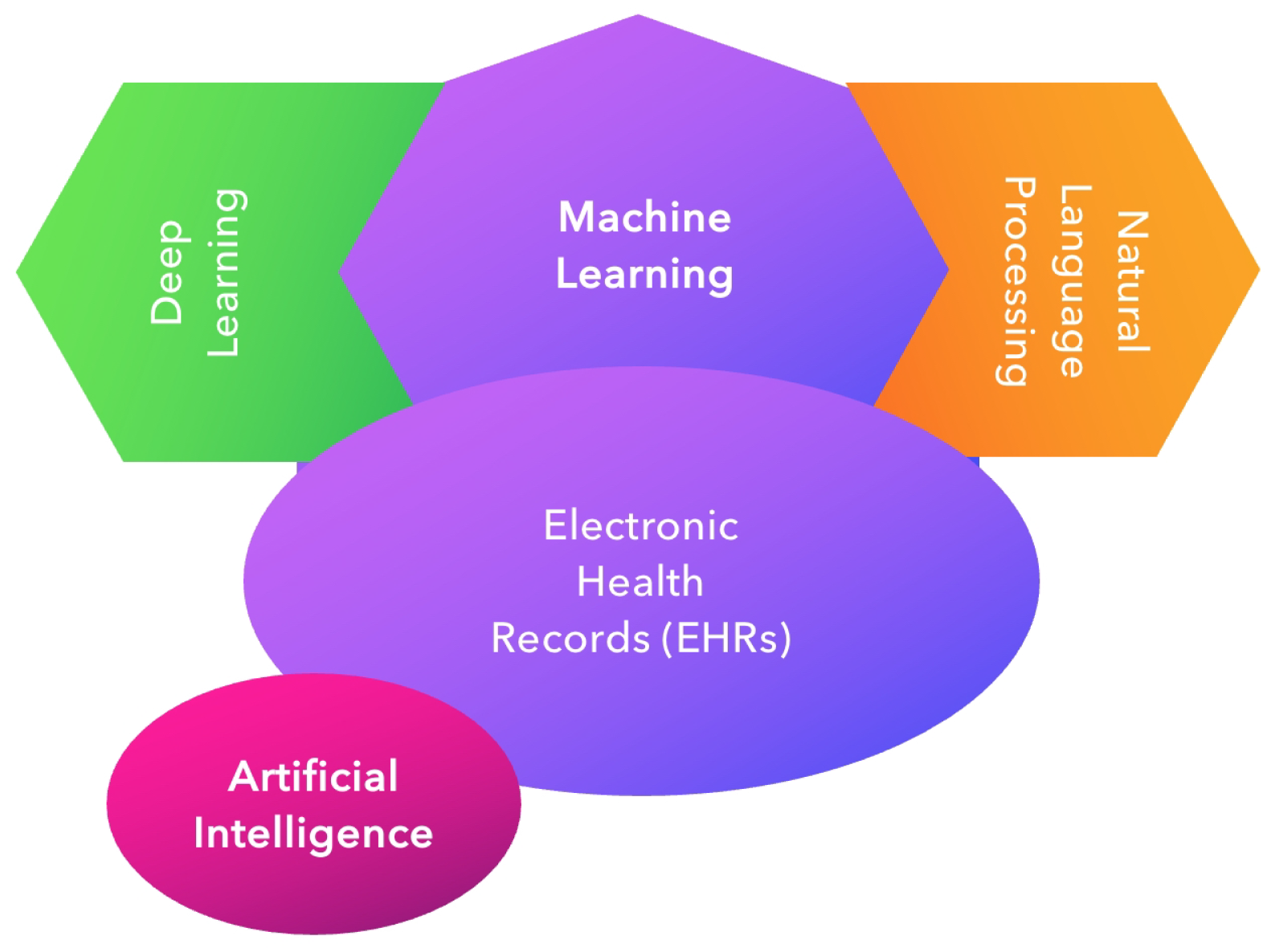
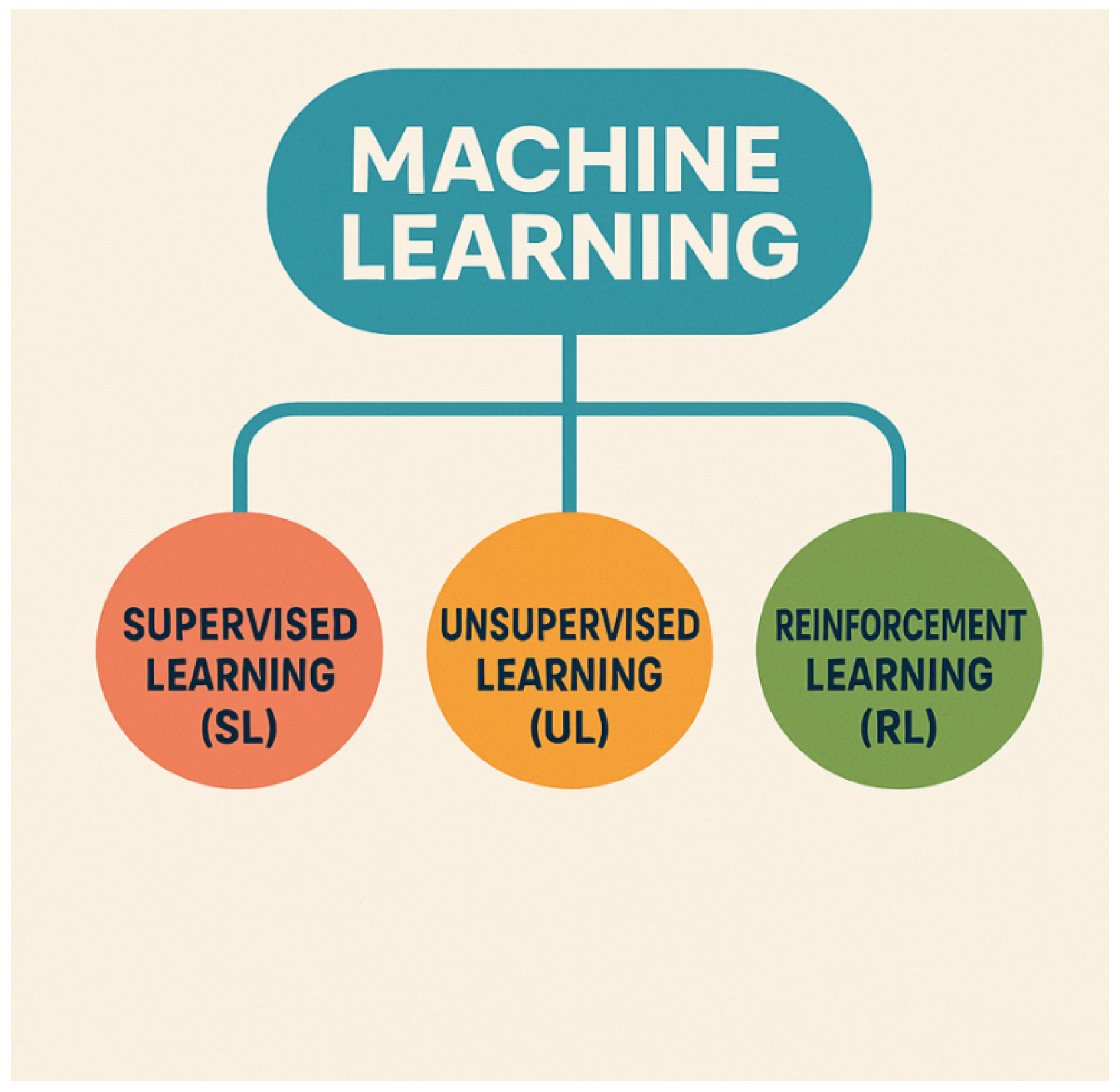
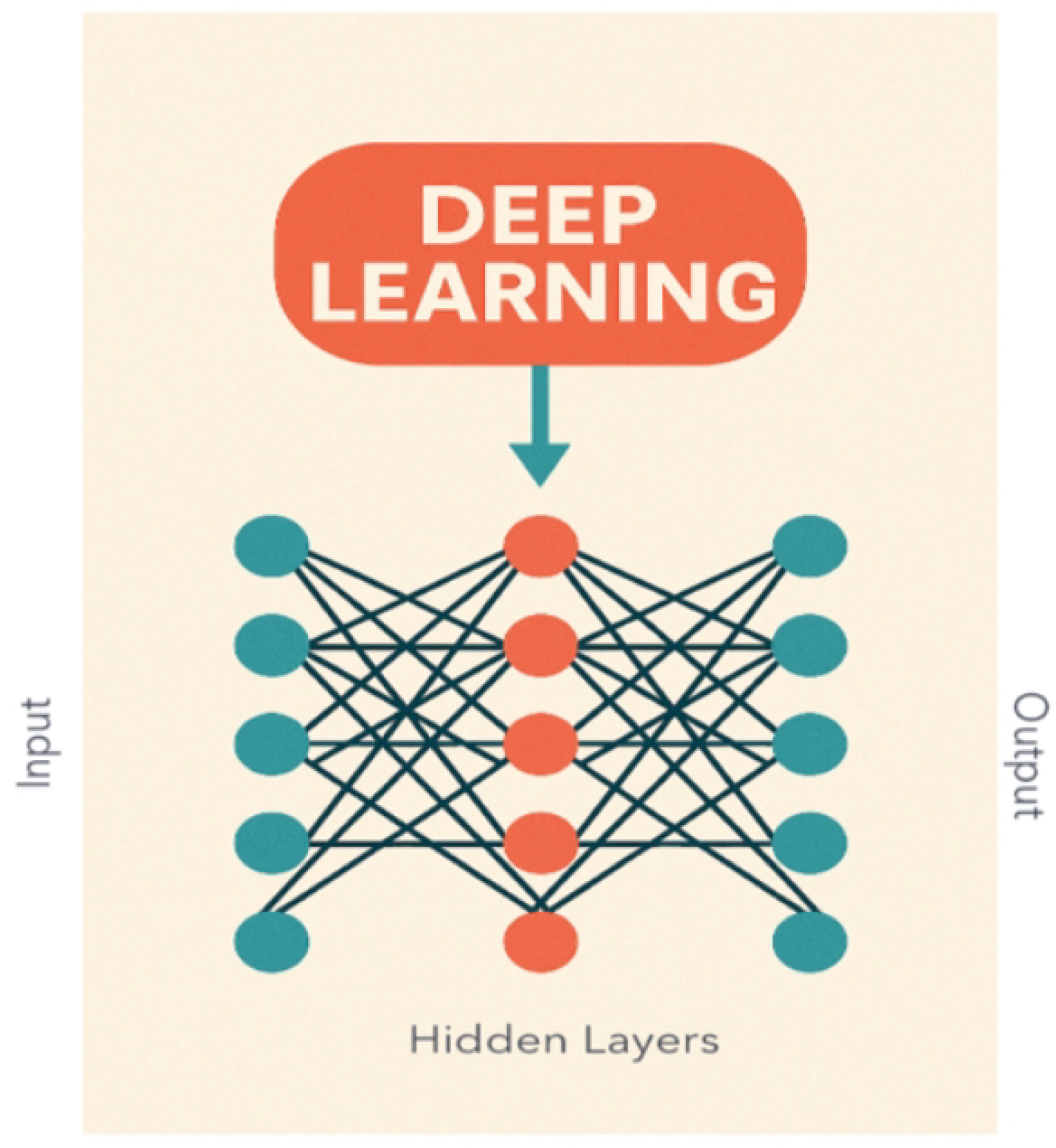
Overview of Artificial Intelligence in Medicine: Definitions, Types, and Subtypes
2. AI in Diagnosis and Disease Detection
2.1. Medical Imaging
2.1.1. CXR, CT Scan, and LUS: Chronic and Infectious Lung Diseases

| Author/ Paper | Year of Publication | Field of Application | Dataset | AI Type | Results |
|---|---|---|---|---|---|
| Eppenhof et al. [74] | 2017 | To develop a deformable registration method based on a 3D convolutional neural network, together with a framework for training such a network | The network directly learns transformations between pairs of 3D images, and is trained on synthetic random transformations which are applied to a small set of representative images for the desired application | CNNs | Results: an accurate and very fast deformable registration method Without requirement for parametrization at test time or manually annotated data for training |
| Nibali et al. [75] | 2017 | To improve the ability of CAD systems to predict the malignancy of nodules from cropped CT images of lung nodules | Directly compare the system against 2 state-of-the-art DL systems for nodule classification on the LIDC/IDRI dataset using the same experimental setup and dataset. Using the state-of-the-art ResNet architecture as basis | Deep residual networks (ResNets) | - The system achieves the highest performance in terms of all metrics measured including sensitivity, specificity, precision, AUROC, and accuracy |
| da Silva G et al. [76] | 2018 | Propose a methodology to reduce the number of false positives using a DL technique in conjunction with an evolutionary technique The methodology was tested on CT scans | - The PSO algorithm was used to optimize the network hyperparameters in CNN, in order to enhance the network performance and eliminate the requirement of manual search | CNNs | Lung nodule false positive reduction on CT images Accuracy = 97.62% Sensitivity = 92.20% Specificity = 98.64% AUROC curve of 0.955 |
| Choi et al. [77] | 2018 | To develop a radiomics prediction model to improve pulmonary nodule classification in low-dose CT To compare the model with the Lung-RAD Early detection of LC | - A set of 72 PNs (31 benign and 41 malignant) from the LIDC-IDRI - 103 CT radiomic features were extracted from each PN | Support vector machine and LASSO | - Accuracy = 84.1% (11.9% higher than Lung-RADS) - AUC = 0.71–0.83 (indicating strong discriminative ability) |
| Nam et al. [21] | 2019 | To develop and validate a DLAD for malignant PN on chest radiographs To compare its performance with physicians including thoracic radiologists | 43292 chest radiographs (normal radiograph-to-nodule radiograph ratio, 34,067:9225) in 34,676 patients | DL-based automatic detection algorithm (DLAD) | - Radiograph classification performances of DLAD were a range of 0.92–0.99 (AUROC) and 0.831–0.924 (JAFROC FOM), respectively - Enhanced detection of malignant PN |
| Bashir et al. [78] | 2019 | To compare the performance of random forest algorithms utilizing CT radiomics and/or semantic features in classifying NSCLC | 2 thoracic radiologists scored 11 semantic features on CT scans of 106 patients with NSCLC (specifically for distinguishing adenocarcinoma and schamous cell carcinoma Total of 115 radiomic featuresextracted from CT scans | Random forest | Non-invasive classification of NSCLC can be done accurately Superior performance of models based on semantic features |
| Author/ Paper | Year of Publication | Field of Application | Dataset | AI Type | Results |
|---|---|---|---|---|---|
| Roy et al. [99] | 2020 | US: Multiclass—COVID-19 pneumonia - Severity - covid-19 markers | LUS | CNN | - Video processing - 96% accuracy |
| Tsai et. al. [96] | 2021 | US: BINARY—normal versus abnormal (bronchiolitis, bacterial pneumonia) | -5907 images from 33 healthy infants -3286 images from 22 infants with bronchiolitis -4769 images from 7 children with bacterial pneumonia | CNN | -Ablation study - 91.1% accuracy |
| Muhammad and Hossain [97] | 2021 | US: Multiclass—COVID-19, Pneumonia | POCUS (LUS Dataset comprising COVID-19, NON-COVID-19 and HEALTHY CASES | CNN | - Feature analysis - 92.5% accuracy |
| Barros et al. [92] | 2021 | US: Multiclass—COVID-19 Pneumonia | LUS | Hybrid CNN, LSTM | - Video processing - Ablation study - 93% accuracy |
| Diaz-Escobar et al. [93] | 2021 | Multiclass—COVID-19, Pneumonia, Healthy | POCUS -3326 pulmonary US frames | CNN | - Ablation study - 89.1% accuracy |
| Magrelli et al. [100] | 2021 | US: Multiclass—Healthy, Bronchiolitis, Bacterial Pneumonia Lung disease in children | Collected from Agostino Gemelli University Hospital | CNN | - Feature analysis - 97.75% accuracy |
| Dastider et al. [95] | 2021 | Severity prediction | COVID-19 LUS Database (ICLUSDB) | CNN, LSTM, | - 79.2% accuracy |
| Bhandari et al. [81] | 2022 | US: Multiclass-COVID-19, Pneumonia, Tuberculosis | Kermany, Chest X-ray (Covid-19 & Pneumonia) TUBERCULOSIS (TB) CHEST X-RAY DATABASE | CNN | - XAI - 94.31 accuracy |
| Ebadi et al. [90] | 2022 | US: Multiclass—A-lines, B-lines, consolidation, or pleural effusion | LUS | CNN | - 3D - Feature analysis - 90% accuracy |
| Shea et al. [72] | 2023 | US: Multiclass—Pleural effusion and B Lines (single and merged) | Collected from patients of all ages in Nigeria and China. | CNN, LSTM | - Video processing - XAI - 90% accuracy |
| Li et al. [98] | 2023 | US: Binary—Negative, Positive | Clinical dataset collected from 8 U.S. clinical sites between 2017 and 2020 | CNN, LSTM | - 93.6% accuracy |
2.1.2. CXR, CT Scan, and LUS: Pulmonary Nodules and Lung Cancer Screening
2.1.3. MRI
2.1.4. Bronchoscopy
2.2. AI-Liquid Biopsy in Lung Cancer Screening
2.3. AI in Pulmonary Function Testing
3. AI Applications in Treatment
3.1. AI in Thoracic Surgery
| Author/ Paper | Year of Publication | Field of Application | Dataset | AI Type | Results |
|---|---|---|---|---|---|
| Esteva et al. [131] | 2002 | Assessment of surgical risk in patients undergoing pulmonary resection Prediction of postoperative outcomes in lung resections | 96 clinical and laboratory features from each one of 141 patients who underwent lung resection (retrospectively collected) | Neural network | NN can integrate results from multiple data predicting the individual outcome for patients, rather than assigning them to less-precise risk group categories |
| Santos-Garcia et al. [132] | 2004 | To propose an ensemble model of ANNs to predict cardio-respiratory morbidity after pulmonary resection for NSCLC | -Prospective clinical study based on 489 NSCLC operated cases. -An artificial neural network ensemble was developed using a training set of 348 patients undergoing lung resection between 1994 and 1999 | Artificial neural network | - ANN ensemble offered a high performance to predict postoperative cardio-respiratory morbidity |
| Naqi et al. [133] | 2018 | To develop a multistage segmentation model to accurately extract nodules from lung CT images. Lung nodule segmentation method. | -Publicly available dataset, namely lung image database consortium and image database resource initiative | Support vector machine | - 99% accuracy -98.6% sensitivity -98.2% specificity -3.4% false positives per scan |
| Bolourani et al. [129] | 2021 | To identify risk factors for respiratory failure after pulmonary lobectomy | National (Nationwide) Inpatient Sample for 2015 was used to establish the model. -A total of 4062 patients who underwent pulmonary lobectomy | Random forest ML | - The first ML-model, with high accuracy and specificity, is suited for performance evaluation, - The second ML-model, with high sensitivity, is suited for clinical decision making |
| Salati et al. [130] | 2021 | To verify if the application of an AI analysis could develop a model able to predict cardiopulmonary complications in patients submitted to lung resection | -Retrospectively analyzed data of patients submitted to lobectomy, bilobectomy, segmentectomy and pneumonectomy (January 2006-December 2018) -1360 patients (lobectomy: 80.7%, segmentectomy: 11.9%, bilobectomy 3.7%, pneumonectomy: 3.7% | Extreme gradient boosting | XGBOOST algorithm generated a model able to predict complications with an area under the curve of 0.75 |
| Chang et al. [102] | 2021 | Prediction of staged weaning from ventilator after lung resection surgery | -Retrospectively collected EHRs of 709 patients who underwent lung resection between 1 January 2017 and 31 July 2019 | Multiple ML algorithms | The AI model with Naïve Bayes Classifier algorithm had the best testing result and was therefore used to develop an application to evaluate risk based on patients’ previous medical data, to assist anesthesiologists, and to predict patient outcomes in pre-anesthetic clinics |
| Sang et al. [134] | 2025 | Comparison of the application effects of AI software and Mimics software for 3D reconstruction in thoracoscopic anatomic segmentectomy. -Multiclass—COVID-19, Pneumonia, Normal, Other LUS TD-CNNLSTM-Lung-Net | Retrospective cohort study -168 patients divided into 3 groups: AI group (n = 79), Mimics group (n = 53), and control group without 3D reconstruction (n = 36) | -AI software -Mimics Software | - Preoperative 3D reconstruction, whether using AI or Mimics, resulted in shorter operation times, reduced intraoperative bleeding, and shorter postoperative hospital stays compared to the control group. - AI software demonstrated comparable efficacy to Mimics, with the added advantage of reducing the workload on clinicians due to its automated processes. - Video processing - 3D model - Ablation study - Feature analysis - XAI - 96.57% accuracy |
| Author/ Paper | Year of Publication | Field of Application | Dataset | AI Type | Results |
|---|---|---|---|---|---|
| Shademan et al. [117] | 2016 | Feasibility of supervised autonomous robotic soft tissue surgery in na open surgical setting. Demonstrate in vivo supervised autonomous soft tissue surgery in an open surgical setting, enabled by a plenoptic three-dimensional and near-infrared fluorescent (NIRF) imaging system and an autonomous suturing algorithm. | Ex vivo porcine intestines | Smart Tissue Autonomous Robot | The outcome of supervised autonomous procedures is superior to surgery performed by expert surgeons |
| Cho et al. [135] | 2018 | To enhance the accuracy of gesture recognition for contactless interfaces | —Used 30 features including finger and hand data, which were computed selected, and fed into a multiclass support vector machine (SVM), and Naïve Bayes classifiers: to predict and train five types of gestures including hover, grab, click, one peak, and two peaks. | Support vector machine classifier and Naïve Bayes classifier | Overall accuracy of the five gestures was 99.58% and 98.74%, on a personal basis using SVM and Naïve Bayes classifiers |
| Wang et al. [57] | 2018 | Objective skill evaluation in robotic-assisted surgery | -Perform experiments on the public minimally invasive surgical robotic dataset, JHU-ISI Gesture and Skill Assessment Working Set (JIGSAWS). | CNN DL | - Achieved competitive accuracies of 92.5%, 95.4%, and 91.3%, in the standard training tasks: suturing, needle-passing, and knot-tying |
| Fard et al. [136] | 2018 | To build a classification framework to automatically evaluate the performance of surgeons with different levels of expertise - Automated robotic-assisted surgical evaluation | 8 global movement features are extracted from movement trajectory data captured by a da Vinci robot for surgeons with 2 levels of expertise—novice and expert | Multiple ML algorithms | -The proposed framework can classify surgeons’ expertise as novice or expert with an accuracy of 82.3% for knot tying, and 89.9% for a suturing task |
| Dai et al. [45] | 2019 | To develop and validate a novel grasper-integrated system with biaxial shear sensing and haptic feedback to warn the operator prior to anticipated suture breakage | Novice subjects (n = 17) were instructed to tighten 10 knots, five times with the Haptic Feedback System (HFS) enabled, five times with the system disable | Biaxial haptic feedback system sensors were integrated with a da Vinci robotic surgical system. | This system may improve outcomes related to knot tying tasks in robotic surgery and reduce instances of suture failure while not degrading the quality of knots produced |
| Ershad et al. [137] | 2019 | To propose a sparse coding framework for automatic stylistic behavior recognition in short time intervals using only position data from the hands, wrist, elbow, and shoulder - Evaluation of technical skills in robotic surgery | - A codebook is built for each stylistic adjective using the positive and negative labels provided for each trial through crowd sourcing. Sparse code coefficients are obtained for short time intervals (0.25 s) in a trial using this codebook. A support vector machine classifier is trained and validated through tenfold cross-validation using the sparse codes from the training set | Support vector machine | - The proposed dictionary learning method can assess stylistic behavior performance in real time |
| Wu et al. [114] | 2021 | Effectiveness in localizing small pulmonary nodules during thoracic surgery | 30 patients | AI-based semi-automatic and high-precision pulmonary 3D reconstruction system - DL to segment and reconstruct tumors, lobes, bronchi, and vessels. | - Significantly reduced reconstruction time compared to conventional tools like Mimics - Maintaining high accuracy in identifying pulmonary nodules and anatomical structures. |
| Li et al. [128] | 2022 | Reconstruction system to assist Thoracic Surgery: - Proposed goals: enhance preoperative planning and intraoperative navigation | 500 cases (Retrospective) 113 patients with lung cancer before surgery (Prospective) 139 patients scheduled to undergo lobectomy or segmentectomy | AI- assisted three-dimensional reconstruction (AI-3DR) (CNN) | - Automates the reconstruction process, significantly reducing the time required compared to manual methods. - Decrease reconstruction time from 30 min to approximately 5 min. - high accuracy in predicting affected lung segments - Operation time shortened by 24.5 min for lobectomy (p < 0.001) and 20 min for segmentectomy (p = 0.007). |
| Author/ Paper | Year of Publication | Field of Application | Dataset | AI Type | Results |
|---|---|---|---|---|---|
| Chang et al. [102] | 2021 | Prediction of staged weaning from ventilator after lung resection surgery | -Retrospectively collected the EHRs of 709 patients who underwent lung resection | Multiple ML algorithms | The AI model with Naïve Bayes Classifier algorithm had the best testing result and was therefore used to develop an application to evaluate risk based on patients’ previous medical data, to assist aesthesiologists, and predict patient outcomes in pre-anesthetic clinics |
| Kana et al. [94] | 2025 | Improvement of postoperative documentation. Proposed goals: AI can generate post-operative notes more accurately than surgeons | 158 cases from a tertiary referral centre | By utilizing computer-vision systems to observe robot-assisted surgeries | - AI produced narratives with fewer discrepancies and significant errors - AI enhances surgical documentation and reduces the workload on surgeons. —Overall accuracy is higher for AI operative reports as compared to surgeon operative reports (87.3% versus 72.8%). |
3.1.1. Preoperative AI Applications
3.1.2. Intraoperative AI Applications
| AI Technology/Algorithm | Description | Application in Robotic Thoracic Surgery |
|---|---|---|
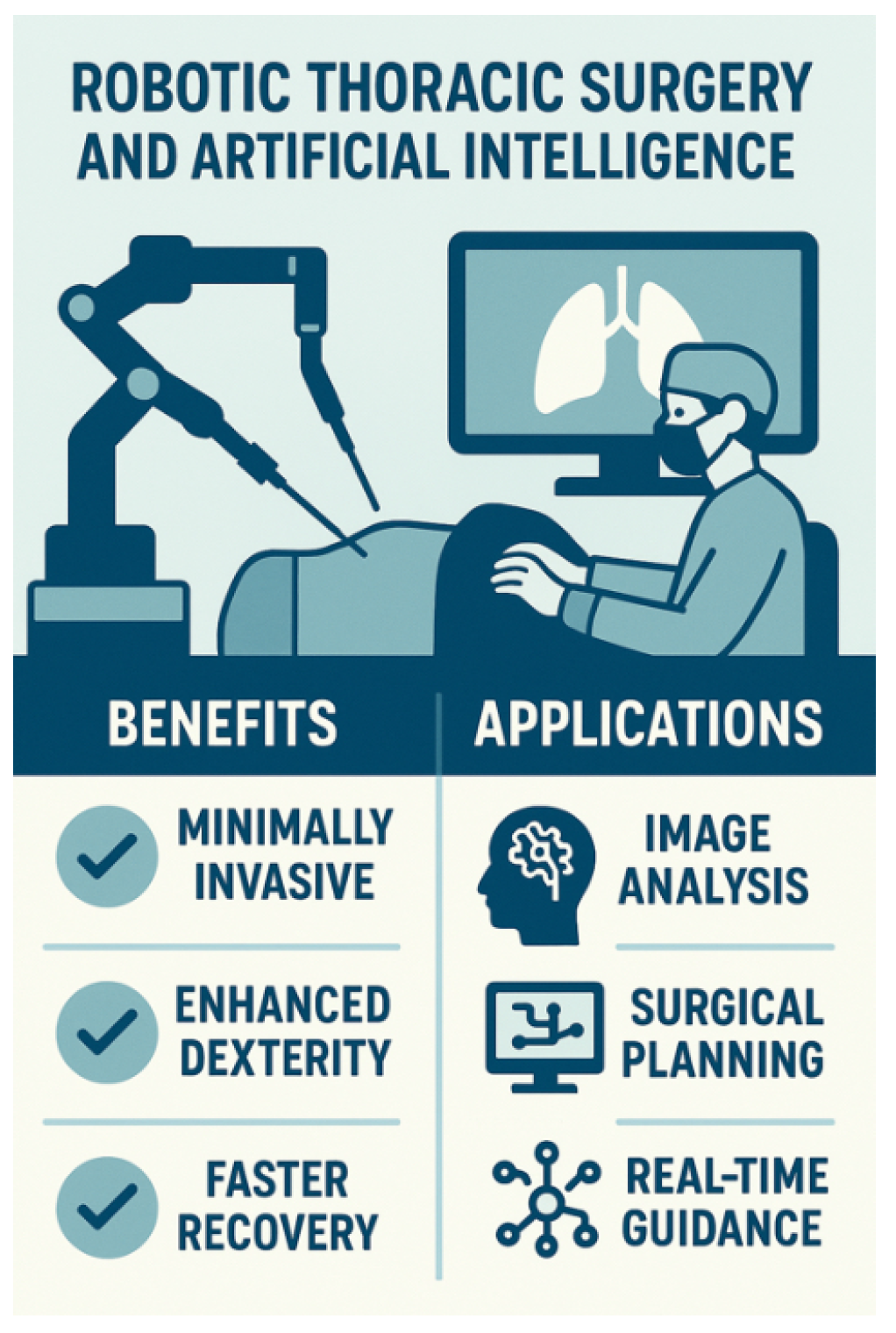
| AI-Driven Robotics | Refers to robotic systems that use AI to enhance automation, improve precision, and assist in decision-making. AI algorithms analyze patient data to optimize surgical planning and execution. | Robotics like the da Vinci Surgical System and Ion Endoluminal System are AI-driven, assisting with tasks like nodule localization, resection planning, and enhancing the surgeon’s ability to navigate complex anatomy. |
| Convolutional Neural Networks (CNN) | A deep learning model primarily used for image recognition and classification tasks, especially in medical imaging. | Applied in robotic thoracic surgery for tumor detection, classification of lung lesions, and segmentation of anatomical structures in CT scans and MRI. |
| Reinforcement Learning (RL) | AI learns through trial and error, receiving rewards or penalties based on its actions. In surgery, it improves decision-making and optimizes robotic arm movements. | RL can improve robot control systems in surgery, learning optimal movements to improve precision and reduce errors during complex thoracic surgeries. |
| Support Vector Machines (SVM) | A machine learning model used for classification tasks by finding the best boundary between classes. | Used for classifying lung lesions based on their radiographic features, helping in preoperative planning and diagnosis. |
| Random Forest | An ensemble method that uses multiple decision trees for classification and prediction. | Applied in predicting surgical outcomes or complications, or for improving the classification of lesions based on imaging features. |
| K-Nearest Neighbors (K-NN) | A machine learning algorithm that classifies data points based on their proximity to other points in feature space. | Used for comparing lung lesions to a database of known cases, assisting in the classification of lesions or abnormal tissue. |
| Generative Adversarial Networks (GANs) | AI where two networks compete to generate synthetic data. GANs can create realistic images or datasets. | Used to generate high-quality medical images for training AI models or simulating surgical scenarios, improving robotic system training. |
| Artificial Neural Networks (ANN) | Computational models inspired by the human brain, often used for prediction, classification, and decision-making. | ANN is used in robotic systems to predict the outcome of surgery, assess patient data, or assist in real-time decision-making during procedures. |
| Bayesian Networks | Probabilistic graphical models that represent variables and their conditional dependencies. | Used for predicting surgical risks, complications, or likely patient outcomes based on preoperative data. |
| AI-Augmented Reality (AR) | Combines AI with AR to overlay digital information onto the real-world view. | In thoracic surgery, AR can overlay 3D imaging data (e.g., from CT or MRI scans) onto the surgeon’s view, guiding robotic instruments and improving navigation to target tissues. |
| AI-Enhanced Image-Guided Surgery | Uses AI to interpret real-time imaging data to guide the surgical robot’s actions. | In thoracic surgery, AI-driven systems analyze live images (e.g., CT, MRI, or fluoroscopy) to help surgeons navigate and perform delicate procedures such as biopsy or tumor resection. |
| Natural Language Processing (NLP) | AI techniques that understand and process human language from text or voice data. | Used in robotic surgery to analyze patient records, surgical notes, or voice commands to assist in planning or executing surgery. NLP can also help in analyzing large datasets from patient histories. |
| AI-Powered Robotic Arm Control | AI algorithms that assist in the control of robotic arms, ensuring high precision during surgery. | Used in systems like the da Vinci to provide real-time feedback, adjust the robot’s movements, and improve surgical precision, especially in complex thoracic procedures. |
| AI in Patient Monitoring | AI algorithms monitor and analyze patient vitals, detecting abnormalities in real-time. | During robotic surgery, AI helps track patient vitals (e.g., heart rate, oxygen levels), ensuring the safety of the patient by alerting the surgical team to any significant changes. |
| Autonomous Surgical Systems | AI systems capable of performing portions of surgery with little to no human intervention. | Some AI-powered robotic systems may assist with tasks such as tissue resection, suturing, and even autonomously guiding tools through specific parts of the thoracic anatomy. |
| AI in Surgical Planning | AI algorithms that analyze patient data to suggest the best surgical approach and plan. | AI can analyze CT, MRI, and biopsy data to recommend the optimal approach for thoracic surgery, including which surgical instruments to use and the most efficient path to reach the target tissue. |
| Study | Authors | Year | AI Application | Quantitative Results |
|---|---|---|---|---|
| Artificial intelligence in thoracic surgery: a narrative review | Bellini V, et al. [55] | 2022 | Review of AI applications across thoracic surgery | Highlights AI’s role in enhancing perioperative evaluations, decision-making, surgical performance, and operating room scheduling. Specific quantitative data not provided. |
| Evaluation of the Postoperative Nursing Effect of Thoracic Surgery Assisted by Artificial Intelligence Robot | Hu et al. [145] | 2021 | AI-assisted postoperative nursing in thoracic surgery | Utilized the Da Vinci robotic system for lobectomy. Reported operation times ranging from 62 to 225 min and blood loss between 70 to 300 mL. No intraoperative blood transfusions were required. |
| Artificial intelligence–assisted augmented reality robotic lung surgery: Navigating the future of thoracic surgery | Sadeghi AH, et al. [146] | 2024 | AI-assisted augmented reality in robotic lung surgery | Achieved a 99.58% overall accuracy in gesture recognition using support vector machine and Naïve Bayes classifiers. Developed a deep learning framework for surgical skill assessment, achieving accuracies of 92.5%, 95.4%, and 91.3% for suturing, needle-passing, and knot-tying tasks, respectively. |
3.1.3. Postoperative AI Applications
3.2. AI in Lung Cancer Treatment Planning
| Author | Primary Goals | AI technology | Main Goals | Results |
|---|---|---|---|---|
| Yu et al. [148] | To improve the prognostic prediction of lung adenocarcinoma and squamous cell carcinoma patients through objective features from histopathology images | Elastic net-Cox proportional hazards model | Prediction of the prognosis of lung cancer by automated pathology image features and thereby contribution to precision oncology | -Image features can predict the prognosis of lung cancer patients |
| Coudray et al. [26] | To train a deep convolutional neural network on whole-slide images obtained from The Cancer Genome Atlas to accurately and automatically classify them | DL-CNN | Detection of cancer subtype or gene mutations and mutation prediction from NSCLC histopathology | -DL models can assist pathologists in the detection of cancer subtype or gene mutations |
| Wei et al. [27] | To propose a DL model that automatically classifies the histologic patterns of lung adenocarcinoma on surgical resection slides | Deep neural network | Improvement of classification of lung adenocarcinoma patterns | All evaluation metrics for the model and the 3 pathologists were within 95% confidence intervals of agreement |
| Gertych et al. [25] | To a pipeline equipped with a CNN to distinguish 4 growth patterns of pulmonary adenocarcinoma (acinar, micropapillary, solid, and cribriform) and separate tumor regions from non-tumor | CNN | To assist pathologists in improving classification of lung adenocarcinoma patterns by automatically pre-screening and highlighting cancerous regions prior to review | -Overall accuracy of distinguishing the tissue classes was 89.24% |
| KanavatI et al. [65] | To train a CNN, using transfer learning and weakly-supervised learning, to predict carcinoma in Whole Slide Images | CNN | Development of software suites that could be adopted in routine pathological practices and potentially help reduce the burden on pathologists | -Differentiating between lung carcinoma and non-neoplastic |
3.3. AI in Prognosis and Survival Prediction: Lung Cancer
4. Challenges, Ethical Considerations, and Future Directions of AI in Thoracic Surgery
4.1. Challenges and Ethical Considerations
4.2. Future Directions and Emerging Trends
5. Conclusions
Author Contributions
Funding
Institutional Review Board Statement
Informed Consent Statement
Data Availability Statement
Conflicts of Interest
References
- A Proposal for the Dartmouth Summer Research Project on Artificial Intelligence. Available online: http://jmc.stanford.edu/articles/dartmouth.html (accessed on 15 March 2025).
- Gupta, R.; Srivastava, D.; Sahu, M.; Tiwari, S.; Ambasta, R.K.; Kumar, P. Artificial Intelligence to Deep Learning: Machine Intelligence Approach for Drug Discovery. Mol. Divers. 2021, 25, 1315–1360. [Google Scholar] [CrossRef] [PubMed]
- Kulikowski, C.A.; Shortliffe, E.H.; Weiss, S.M.; Bleich, H.L.; Buchanan, B.G. Beginnings of Artificial Intelligence in Medicine (AIM): Computational Artifice Assisting Scientific Inquiry and Clinical Art—With Reflections on Present AIM Challenges. Yearb. Med. Inform. 2019, 28, 249–256. [Google Scholar] [CrossRef] [PubMed]
- Clancey, W.J. Shortliffe, E.H. Readings in Medical Artificial Intelligence: The First Decade; Addison-Wesley Longman Publishing Co., Inc.: Boston, MA, USA, 1984. [Google Scholar]
- Mathematics and Physics of Emerging Dynamic Biomedical Imaging, Chapter 12, Image-Guided Minimally Invasive Diagnostic and Therapeutic Interventional Procedures. Available online: https://www.ncbi.nlm.nih.gov/books/NBK232483/ (accessed on 15 March 2025).
- Buchanan, B.G.; Shortliffe, E.H.; Shortliffe, E.H. Rule-Based Expert Systems: The MYCIN Experiments of the Stanford Heuristic Programming Project; Addison-Wesley Series in Artificial Intelligence; Addison-Wesley: Boston, MA, USA, 1984. [Google Scholar]
- Acenture. Artificial Intelligence: Healthcare’s New Nervous System. Available online: https://www.accenture.com/us-en/insight-artificial-intelligence-healthcare (accessed on 15 March 2025).
- He, J.; Baxter, S.L.; Xu, J.; Xu, J.; Zhou, X.; Zhang, K. The practical implementation of artificial intelligence technologies in medicine. Nat. Med. 2019, 25, 30–36. [Google Scholar] [CrossRef]
- Lyakhov, P.A.; Litvinova, T.A.; Shirokikh, B.S.; Lunin, A.V.; Frolov, N.S. System for the Recognizing of Pigmented Skin Lesions with Fusion and Analysis of Heterogeneous Data Based on a Multimodal Neural Network. Cancers 2022, 14, 1819. [Google Scholar] [CrossRef]
- Esteva, A.; Kuprel, B.; Novoa, R.A.; Ko, J.; Swetter, S.M.; Blau, H.M.; Thrun, S. Dermatologist-level classification of skin cancer with deep neural networks. Nature 2017, 542, 115–119. [Google Scholar] [CrossRef]
- FDA Permits Marketing of Clinical Decision Support Software for Alerting Providers of a Potential Stroke in Patients. February 13, 2018. Available online: https://www.fda.gov/news-events/press-announcements/fda-permits-marketing-clinical-decision-support-software-alerting-providers-potential-stroke (accessed on 15 March 2025).
- Le Berre, C.; Sandborn, W.J.; Aridhi, S. Application of Artificial Intelligence to Gastroenterology and Hepatology. Gastroenterology 2020, 158, 76–94. [Google Scholar] [CrossRef]
- Pecere, S.; Holler, A.; Bagutti, C.; Zuber-Jerger, I.; Neurath, M.F. Applications of Artificial Intelligence for the Diagnosis of Gastrointestinal Diseases. Diagnostics 2021, 11, 1575. [Google Scholar] [CrossRef]
- Hosny, A.; Parmar, C.; Quackenbush, J.; Schwartz, L.H.; Aerts, H.J.W.L. Artificial Intelligence in Radiology. Nat. Rev. Cancer 2018, 18, 500–510. [Google Scholar] [CrossRef]
- FDA Permits Marketing of Artificial Intelligence-Based Device to Detect Certain Diabetes-Related Eye Problems. Available online: https://www.prnewswire.com/news-releases/fda-permits-marketing-of-artificial-intelligence-based-device-to-detect-certain-diabetes-related-eye-problems-300628218.html (accessed on 15 March 2025).
- A.I. Chinese AI Beats Human Doctors in Diagnosing Brain Tumours. Available online: https://aibusiness.com/chinese-ai-diagnosis-brain-tumours/ (accessed on 15 March 2025).
- Kim, S.H.; Kwon, H.J.; Kim, S.; Park, S.J.; Lee, J.H. Artificial Intelligence in Capsule Endoscopy: A Practical Guide to Its Past and Future Challenges. Diagnostics 2021, 11, 1722. [Google Scholar] [CrossRef]
- Mascarenhas, M. Artificial Intelligence and Capsule Endoscopy: Unravelling the Future. Diagnostics 2021, 34, 300–309. [Google Scholar] [CrossRef]
- Iddan, G.; Meron, G.; Glukhovsky, A.; Swain, P. Wireless Capsule Endoscopy. Nature 2000, 405, 417. [Google Scholar] [CrossRef] [PubMed]
- Litiens, G.; Marami, B.; Abolmaesumi, P. A Survey on Deep Learning in Medical Image Analysis. Image Anal. 2017, 42, 60–88. [Google Scholar] [CrossRef]
- Nam, J.G.; Park, S.; Hwang, E.J.; Lee, J.H.; Jin, K.N.; Lim, K.H.; Kim, S.H.; Goo, J.M.; Park, C.M.; Goo, J.M. Development and validation of deep learning-based automatic detection algorithm for malignant pulmonary nodules on chest radiographs. Radiology 2019, 290, 218–228. [Google Scholar] [CrossRef]
- Pei, Q.; Zhang, Z.; Shen, Y. Artificial intelligence in clinical applications for lung cancer: Diagnosis, treatment and prognosis. Clin. Chem. Lab. Med. 2022, 60, 1974–1983. [Google Scholar] [CrossRef]
- Jiang, L.; Chen, S.; Zhu, Y.; Zhao, L.; Yang, J.; Li, X.; Zhang, J. Artificial intelligence-assisted quantitative CT parameters in predicting the degree of risk of solitary pulmonary nodules. Ann. Med. 2024, 56, 2405075. [Google Scholar] [CrossRef]
- Mu, W.; Jiang, L.; Chen, S.; Zhang, J.; Li, X. Non-invasive measurement of PD-L1 status and prediction of immunotherapy response using deep learning of PET/CT images. J. Immunother. Cancer 2021, 9, e002118. [Google Scholar] [CrossRef]
- Gertych, A.; Swiderska-Chadaj, Z.; Ma, Z.; Ing, N.; Markiewicz, T.; Cierniak, S.; Salemi, H.; Guzman, S.; Walts, A.E.; Knudsen, B.S.; et al. Convolutional neural networks can accurately distinguish four histologic growth patterns of lung adenocarcinoma in digital slides. Sci. Rep. 2019, 9, 1483. [Google Scholar] [CrossRef]
- Coudray, N.; Ocampo, P.S.; Sakellaropoulos, T.; Narula, N.; Snuderl, M.; Fenyo, D.; Moreira, A.L.; Razavian, N.; Tsirigos, A. Classification and mutation prediction from non-small cell lung cancer histopathology images using deep learning. Nat. Med. 2018, 24, 1559–1567. [Google Scholar] [CrossRef]
- Wei, J.W.; Tafe, L.J.; Linnik, Y.A.; Vaickus, L.J.; Fu, Y.; Lu, X.; Zhang, L.; Madabhushi, A. Pathologist-level classification of histologic patterns on resected lung adenocarcinoma slides with deep neural networks. Sci. Rep. 2019, 9, 3358. [Google Scholar] [CrossRef]
- Seastedt, K.P.; Moukheiber, D.; Mahindre, S.A.; Thammineni, C.; Rosen, D.T.; Watkins, A.A.; Hashimoto, D.A.; Hoang, C.D.; Kpodonu, J.; Celi, L.A. A scoping review of artificial intelligence applications in thoracic surgery. Eur. J. Cardiothorac. Surg. 2022, 2, 239–248. [Google Scholar] [CrossRef]
- Ostberg, N.P.; Barnes, M.; Segev, D.L.; Gaughan, J.P.; D’Amico, T.A. Machine learning: Principles and applications for thoracic surgery. Eur. J. Cardiothorac. Surg. 2021, 60, 213–221. [Google Scholar] [CrossRef] [PubMed]
- Jiang, F.; Jiang, Y.; Zhi, H.; Dong, Y.; Li, H.; Ma, S.; Wang, Y.; Dong, Q.; Shen, H.; Wang, Y. Artificial intelligence in healthcare: Past, present and future. Stroke Vasc. Neurol. 2017, 2, 230–243. [Google Scholar] [CrossRef] [PubMed]
- Mascarenhas, M.; Sousa, D.; Carvalho, A.; Ferreira, A.; Dinis-Ribeiro, M. The Promise of Artificial Intelligence in Digestive Healthcare and the Bioethics Challenges It Presents. Medicina 2023, 59, 790. [Google Scholar] [CrossRef] [PubMed]
- Auerbach, A.D.; Troxel, A.B.; Gimbel, R.; Jha, A.K.; Bates, D.W. Balancing innovation and safety when integrating digital tools into health care. Ann. Intern. Med. 2018, 168, 733–734. [Google Scholar] [CrossRef]
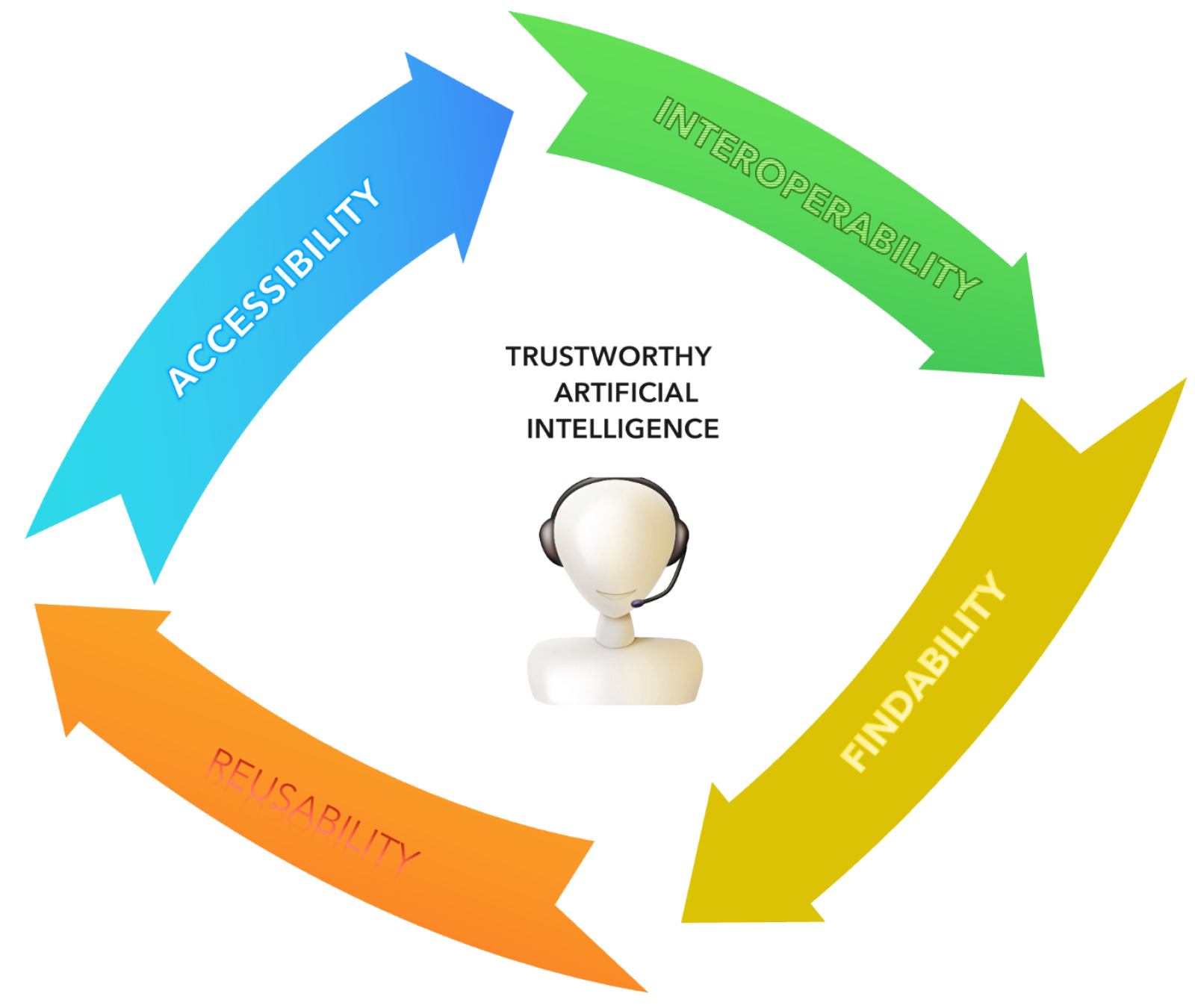
- Ethics Guidelines for Trustworthy AI. Available online: https://ec.europa.eu/futurium/en/ai-alliance-consultation.1.html (accessed on 15 March 2025).
- Mnih, V.; Kavukcuoglu, K.; Silver, D.; Rusu, A.A.; Veness, J.; Bellemare, M.G.; Graves, A.; Riedmiller, M.; Fidjeland, A.K.; Ostrovski, G. Human-level control through deep reinforcement learning. Nature 2015, 518, 529–533. [Google Scholar] [CrossRef]
- Xiong, W.; Droppo, J.; Huang, X.; Seide, F.; Seltzer, M.L.; Stolcke, A.; Yu, D.; Zweig, G. Toward human parity in conversational speech recognition. IEEE/ACM Trans. 2017, 25, 2410–2423. [Google Scholar] [CrossRef]
- Sidey-Gibbons, J.A.M.; Sidey-Gibbons, C.J. Machine learning in medicine: A practical introduction. BMC Med. Res. Methodol. 2019, 19, 64. [Google Scholar] [CrossRef]
- Murdoch, T.B.; Detsky, A.S. The inevitable application of big data to health care. JAMA 2013, 309, 1351–1352. [Google Scholar] [CrossRef]
- Editors, N. Auspicious machine learning. Nat. Biomed. Engineer. 2017, 1, 0036. [Google Scholar]
- Rusk, N. Deep Learning. Nat. Methods. 2015, 13, 35. [Google Scholar] [CrossRef]
- Silver, D.; Huang, A.; Maddison, C.J.; Guez, A.; Sifre, L.; Van Den Driessche, G.; Schrittwieser, J.; Antonoglou, I.; Panneershelvam, V.; Lanctot, M.; et al. Mastering the game of go with deep neural networks and tree search. Nature 2016, 529, 484–489. [Google Scholar] [CrossRef] [PubMed]
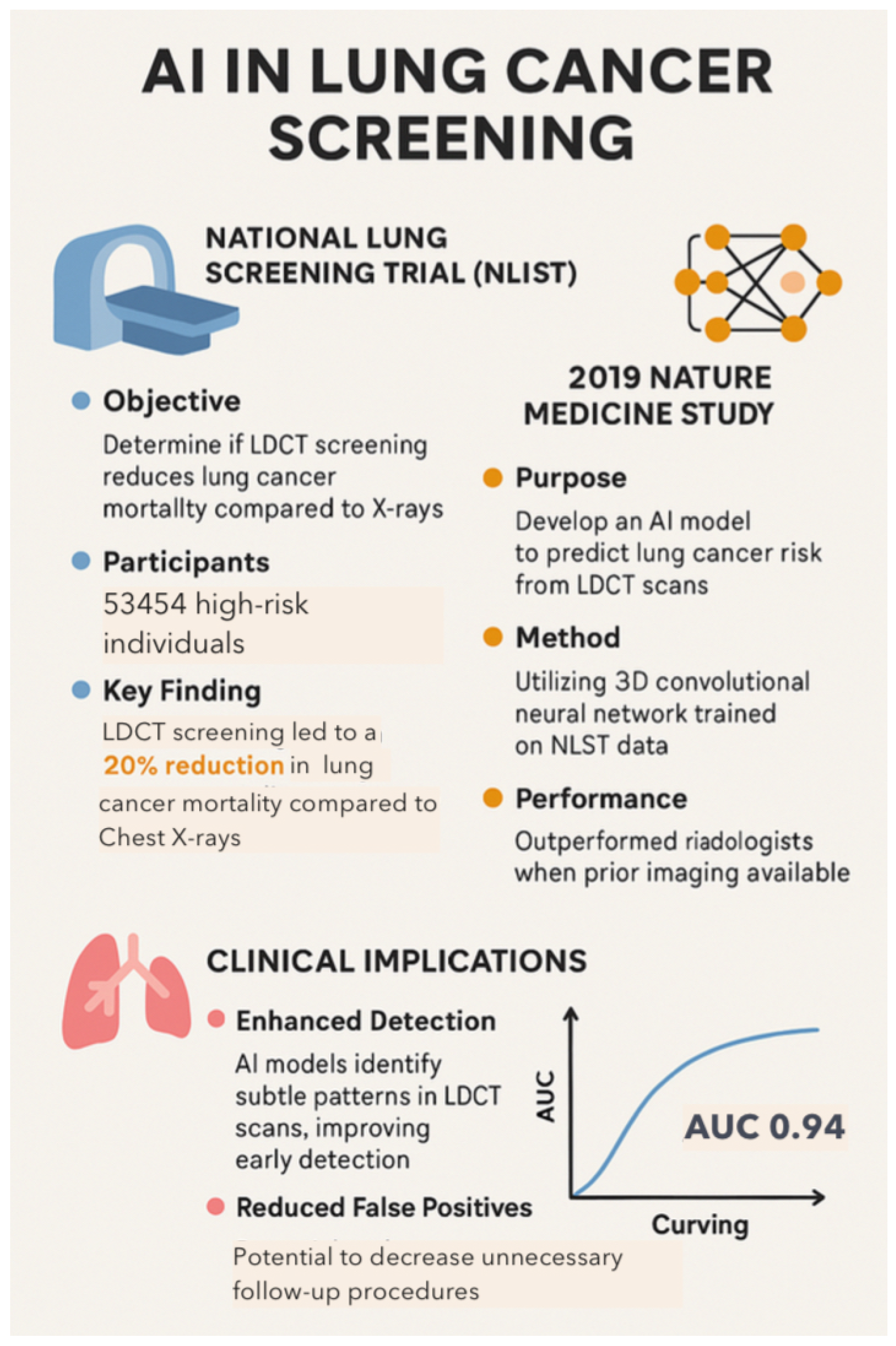
- Deep Machine Learning Predicts Cancer Risk in Follow-up Lung Screening. Available online: https://ssrn.com/abstract=3384912 (accessed on 15 March 2025).
- Pendleton, S.D.; Andersen, H.; Du, X.; Shen, X.; Meghjani, M.; Eng, Y.H.; Rus, D.; Ang, M.H. Perception, planning, control, and coordination for autonomous vehicles. Machines 2017, 5, 6. [Google Scholar] [CrossRef]
- Grace, K.; Salvatier, J.; Dafoe, A.; Zhang, B.; Evans, O. When will AI exceed human performance? Evidence from AI experts. arXiv 2017, arXiv:1705.08807. [Google Scholar] [CrossRef]
- Beam, A.L.; Kohane, I.S. Big Data and Machine Learning in Health Care. JAMA 2018, 319, 1317–1318. [Google Scholar] [CrossRef]
- Dai, Y.; Xu, Q.; Song, W.; Zhao, J.; Zhu, Z. Biaxial sensing suture breakage warning system for robotic surgery. Biomed. Microdevices 2019, 21, 10. [Google Scholar] [CrossRef]
- Marchiori, C.; Dykeman, D.; Girardi, I.; Ivankay, A.; Thandiackal, K.; Zusag, M.; Giovannini, A.; Karpati, D.; Saenz, H. Artificial intelligence Decision Support for Medical Triage. AMIA Annu. Symp. Proc. 2021, 2020, 793–802. [Google Scholar]
- Nomura, A.; Noguchi, M.; Kometani, M.; Furukawa, K.; Yoneda, T. Artificial Intelligence in Current Diabetes Management and Prediction. Curr Diab Rep 2021, 21, 61. [Google Scholar] [CrossRef]
- Busnatu, Ș.; Niculescu, A.G.; Bolocan, A.; Petrescu, G.E.; Păduraru, D.N.; Năstasă, I.; Lupușoru, M.; Geantă, M.; Andronic, O.; Grume-zescu, A.M.; et al. Clinical Applications of Artificial Intelligence-An Updated Overview. Respiration 2022, 11, 2265. [Google Scholar] [CrossRef]
- Birkhoff, D.C.; van Dalen, A.S.H.M.; Schijven, M.P. A Review on the Current Applications of Artificial Intelligence in the Operating Room. Surg. Innov. 2021, 28, 611–619. [Google Scholar] [CrossRef]
- Tiwari, A.; Shah, P.C.; Kumar, H.; Borse, T.; Arun, A.R.; Chekragari, M.; Ochani, S.; Shah, Y.R.; Ganesh, A.; Ahmed, R.; et al. The Role of Artificial Intelligence in Cardiovascular Disease Risk Prediction: An Updated Review on Current Understanding and Future Research. Curr Cardiol Rev 2025. [Google Scholar] [CrossRef] [PubMed]
- Zhang, G.; Shao, F.; Yuan, W.; Wu, J.; Qi, X.; Gao, J.; Shao, R.; Tang, Z.; Wang, T. Predicting sepsis in-hospital mortality with machine learning: A multi-center study using clinical and inflammatory biomarkers. Eur. J. Med. Res. 2025, 29, 156. [Google Scholar] [CrossRef] [PubMed]
- Erickson, B.J.; Korfiatis, P.; Akkus, Z.; Kline, T.L. Machine Learning for Medical Imaging. Radiographics 2017, 37, 505–515. [Google Scholar] [CrossRef] [PubMed]
- Faes, L.; Liu, X.; Wagner, S.K.; Fu, D.J.; Balaskas, K.; Sim, D.A.; Bachmann, L.M.; Keane, P.A.; Denniston, A.K. A clinician’s guide to artificial intelligence: How to critically appraise machine learning studies. Trans. Vis. Sci. Tech. 2020, 9, 7. [Google Scholar] [CrossRef]
- Kaplan, A.; Gupta, R.; Keim, J.; Ferkol, T. Artificial Intelligence/Machine Learning in Respiratory Medicine and Potential Role in Asthma and COPD Diagnosis. J. Allergy Clin. Immunol. Pract 2021, 6, 2255–2261. [Google Scholar] [CrossRef]
- Bellini, V.; Bonacini, M.; Borri, A.; Capponi, M. Artificial intelligence in thoracic surgery: A narrative review. J. Thorac. Dis. 2021, 13, 6963–6975. [Google Scholar] [CrossRef]
- Andras, I.; Dabrowski, P.; Kaczmarek, D.; Duda, D.G. Artificial intelligence and robotics: A combination that is changing the operating room. World J. Urol. 2020, 38, 2359–2366. [Google Scholar] [CrossRef]
- Wang, Z.; Lu, A.; Hu, S.; Zeng, X.; Lu, C.; Huang, Q. Deep learning with convolutional neural network for objective skill evaluation in robot-assisted surgery. Int. J. Comput. Assist. Radiol. Surg. 2018, 13, 1959–1970. [Google Scholar] [CrossRef]
- Wang, Z.; Li, X.; Wang, Y. Deep learning and radiomics in precision medicine. Expert Rev. Precis. Med. Drug Dev. 2019, 2, 59–72. [Google Scholar]
- Luo, L.; Chen, H.; Xiao, Y.; Zhou, Y.; Wang, X.; Vardhanabhuti, V.; Wu, M.; Han, C.; Liu, Z.; Fang, X.H.; et al. Rethinking Annotation Granularity for Overcoming Shortcuts in Deep Learning-based Radiograph Diagnosis: A Multicenter Study. Radiol Artif. Intell. 2022, 4, 5. [Google Scholar] [CrossRef]
- De Margerie-Mellon, C.; Kalra, M.K.; D’Souza, B.; Padole, A. Artificial intelligence: A critical review of applications for lung nodule and lung cancer. Diagn. Interv. Imaging. 2023, 104, 11–17. [Google Scholar] [CrossRef]
- Mascarenhas, M.; Sousa, D.; Carvalho, A.; Ferreira, A.; Dinis-Ribeiro, M. Software as a Medical Device (SaMD) in Digestive Healthcare: Regulatory Challenges and Ethical Implications. Diagnostics 2024, 14, 2100. [Google Scholar] [CrossRef] [PubMed]
- Kumar, D. The Trajectory for Software-Based Medical Devices. Front. Med. Technol. 2023, 5, 1195929. [Google Scholar] [CrossRef] [PubMed]
- Zhong, Y.; She, Y.; Deng, J.; Chen, S.; Wang, T.; Yang, M.; Ma, M.; Song, Y.; Qi, H.; Wang, Y.; et al. Deep Learning for Prediction of N2 Metastasis and Survival for Clinical Stage I Non–Small Cell Lung Cancer. Radiology 2021, 302. [Google Scholar] [CrossRef] [PubMed]
- Wang, S.; Zhou, M.; Liu, Z.; Gu, D.; Zang, Y.; Wang, X.; Dong, J.; Yang, W.; Tian, J.; Liu, Y. Mining whole-lung information by artificial intelligence for predicting EGFR genotype and targeted therapy response in lung cancer: A multicohort study. Lancet Digit Health 2022, 4, e309–e319. [Google Scholar] [CrossRef]
- Kanavati, F.; Tsuneki, M.; Aoki, T. Weakly-supervised learning for lung carcinoma classification using deep learning. Respiration 2020, 10, 9297. [Google Scholar] [CrossRef]
- Risman, A.; Kwon, G.R.; Nguyen, P.A.; Meystre, S.M. Evaluation of multiple open-source deep learning models for detecting and grading COVID-19 on chest radiographs. J. Med. Imaging (Bellingham) 2021, 8, 064502. [Google Scholar] [CrossRef]
- Majumder, S.; Mondal, T.; Deen, M.J.; Alrubaian, M. Wearable sensors for remote health monitoring. Sensors 2017, 12, 1–44. [Google Scholar] [CrossRef]
- Jiang, W.; Gao, C.; Lu, M.; Wang, J.; Zhang, Y. A Wearable Tele-Health System towards Monitoring COVID-19 and Chronic Diseases. IEEE Rev. Biomed Eng. 2022, 15, 61–84. [Google Scholar] [CrossRef]
- Wani, S.U.D. Development and validation of a deep learning model to predict the survival of patients in ICU. Healthcare 2022, 10, 608. [Google Scholar] [CrossRef]
- Palmer, M.; Theron, G.; van Zyl-Smit, R.; Scott, L.; Drain, P.K.; Dheda, K. Optimising computer aided detection to identify intra-thoracic tuberculosis on chest x-ray in South African children. PLoS Glob. Public Health 2023, 3, e0001799. [Google Scholar] [CrossRef]
- Miró, C.Q.; Martínez-Rodríguez, I.; Castro, H.; López-Pineda, A. Developing an Artificial Intelligence Model for Reading Chest X-rays: Protocol for a Prospective Validation Study. JMIR Res. Protocolo. 2022, 11, 11. [Google Scholar]
- Shea, D.; Grant, J.; Akolekar, D.; Nash, M. Deep learning video classification of LUS features associated with pneumonia. In Proceedings of the IEEE/CVF Conference on Computer Vision and Pattern Recognition, Vancouver, BC, Canada, 17–24 June 2023; pp. 3103–3112. [Google Scholar]
- Paudyal, R.; Zhang, B.; Hu, Y. Artificial Intelligence in CT and MR Imaging for Oncological Applications. Cancers 2023, 15, 2573. [Google Scholar] [CrossRef] [PubMed]
- Eppenhof, K.A.J.; Lafarge, M.W.; Moeskops, P.; Veta, M.; Pluim, J.P.W. Deformable image registration using convolutional neural networks - Medical Image Computing and Computer-Assisted Intervention. MICCAI 2017, 990–998. [Google Scholar]
- Nibali, A.; He, Z.; Wollersheim, D. Pulmonary nodule classification with deep residual networks. Int. J. Comput. Assist. Radiol. Surg. 2017, 12, 1799–1808. [Google Scholar] [CrossRef]
- da Silva, G.L.F.; Valença, T.L.A.; Silva, A.C.F.; de Paiva, A.C.; Gattass, M. Lung nodule false positive reduction on CT images using a deep convolutional neural network and evolutionary algorithm. Comput. Methods Programs Biomed. 2018, 162, 109–118. [Google Scholar] [CrossRef]
- Choi, W.; Oh, J.H.; Lee, K.H.; Park, S.H. Radiomics analysis of pulmonary nodules in low-dose CT for early detection of lung cancer. Med. Phys. 2018, 45, 1537–1549. [Google Scholar] [CrossRef]
- Bashir, U.; Siddique, M.M.; Mclean, E.; Goh, V.; Cook, G.J.R. Imaging and data-driven approaches to predict treatment response and outcomes in non-small cell lung cancer. Eur. J. Radiol. 2019, 113, 108–114. [Google Scholar]
- Rajpurkar, P.; Irvin, J.; Zhu, K.; Yang, B.; Mehta, H.; Duan, T.; Ding, D.; Bagul, A.; Ball, R.L.; Langlotz, C.; et al. CheXNet: Radiologist-level pneumonia detection on chest X rays with deep learning. ArXiv preprint 2017, arXiv:1711.05225. [Google Scholar]
- Hwang, E.J.; Park, S.; Jin, K.N.; Kim, J.I.; Choi, S.Y.; Lee, J.H.; Goo, J.M.; Aum, J.; Yim, J.J.; Park, C.M.; et al. Development and validation of a deep learning-based automatic detection algorithm for active pulmonary tuberculosis on chest radiographs. Clin. Infect. Dis. 2019, 69, 739–747. [Google Scholar] [CrossRef]
- Bhandari, M.; Verma, A.; Thakur, A.; Sharma, N. Explanatory classification of CXR images into COVID-19, pneumonia and Tuberculosis using deep learning and XAI. Comput. Biol. Med 2022, 150, 106156. [Google Scholar] [CrossRef]
- Wieslander, H.; Forslid, G.; Bengtsson, E.; Wahlby, C.; Hirsch, J.M.; Runow Stark, C.; Kecheril Sadanandan, S. Deep Convolutional Neural Networks for Detecting Cellular Changes Due to Malignancy. In Proceedings of the 2017 IEEE International Conference on Computer Vision Workshops (ICCVW), Venice, Italy, 22–29 October 2017; pp. 82–89. [Google Scholar]
- Raghu, G.; Remy-Jardin, M.; Myers, J.L.; Richeldi, L.; Ryerson, C.J.; Lederer, D.J.; Behr, J.; Cottin, V.; Danoff, S.K.; Morell, F.; et al. Diagnosis of idiopathic pulmonary fibrosis: An Official ATS/ERS/JRS/ALAT Clinical Practice Guideline. Am. J. Respir. Crit. Care Med. 2018, 198, e44–e68. [Google Scholar] [CrossRef] [PubMed]
- Qin, Z.Z.; Sander, M.S.; Rai, B.; Titahong, C.N.; Sudrungrot, S.; Laah, S.N.; Adhikari, L.M.; Carter, E.J.; Puri, L.; Codlin, A.J.; et al. Using artificial intelligence to read chest radiographs for tuberculosis detection: A multi-site evaluation of the diagnostic accuracy of three deep learning systems. Sci. Rep. 2019, 9, 1500. [Google Scholar] [CrossRef] [PubMed]
- Pasa, F.; Golkov, V.; Pfeiffer, F.; Cremers, D.; Pfeiffer, D. Efficient deep network architectures for fast chest X-ray tuberculosis screening and visualization. Sci. Rep. 2019, 9, 6268. [Google Scholar] [CrossRef]
- Walsh, S.L.F.; Calandriello, L.; Silva, M.; Sverzellati, N. Deep learning for classifying fibrotic lung disease on high-resolution computed tomography: A case-cohort study. Lancet Respir Med. 2018, 6, 837–845. [Google Scholar] [CrossRef]
- She, Y.; Liu, X.; Chen, S.; Yin, Y.; Qian, Z.; Chen, X.; Huang, Z. Development and Validation of a Deep Learning Model for Non-Small Cell Lung Cancer Survival. JAMA Netw. Open 2020, 3, e205842. [Google Scholar] [CrossRef]
- Seah, J.C.Y.; Wong, Y.C.; Tay, K.W.; Koh, Z.H. Chest radiographs in congestive heart failure: Visualizing neural network learning. Radiology 2019, 290, 514–522. [Google Scholar] [CrossRef]
- Kesselheim, A.S.; Cresswell, K.M.; Phansalkar, S.; Bates, D.W.; Sheikh, A. Clinical decision support systems could be modified to reduce ‘alert fatigue’ while still minimizing the risk of litigation. Health Aff. Millwood 2011, 30, 2310–2317. [Google Scholar] [CrossRef]
- Ebadi, A.; Golmohammadi, R.; Garcia-Gomez, J.M.; Deller, T.; O’Reilly, M. COVIDx-US: An open-access benchmark dataset of ultrasound imaging data for AI-driven COVID-19 analytics. Front. Biosci. 2022, 27, 198. [Google Scholar] [CrossRef]
- Ebadi, S.; Keshavarzi, A.; Taghizadeh, H.; Farahm, F. Automated detection of pneumonia in lung ultrasound using deep video classification for COVID-19. Inform. Med. 2021, 25, 100687. [Google Scholar]
- Barros, B.; Filho, F.F.; Silva, L.S. Oliveira. Pulmonary COVID-19: Learning spatiotemporal features combining CNN and LSTM networks for LUS video classification. Sensors 2021, 21, 5486. [Google Scholar] [CrossRef]
- Diaz-Escobar, J.; Vellido, A.; Grau, A.; Herrera, L.J. Deep-learning based detection of COVID-19 using lung ultrasound imaging. PLoS ONE 2021, 16, e0255886. [Google Scholar] [CrossRef] [PubMed]
- Khanna, A.M.B.; Wolf, T.; Frank, I.; Krueger, A.; Shah, P.; Sharma, V.; Gettman, M.T.; Boorjian, S.A.; Asselmann, D.; Tollefson, M.K. Enhancing Accuracy of Operative Reports with Automated Artificial Intelligence Analysis of Surgical Video. J. Am. Coll. Surg. 2021, 240, 739–746. [Google Scholar] [CrossRef] [PubMed]
- Dastider, R.; Razzak, M.I.; Singh, D. Severity prediction for COVID-19 patients using lung ultrasound images and deep learning. Comput. Biol. Med. 2021, 139, 104944. [Google Scholar]
- Tsai, C.H.; Lin, C.H.; Hsu, C.H.; Wu, Y.H. Automatic deep learning-based pleural effusion classification in LUS images for respiratory pathology diagnosis. JAMA Netw. Open 2021, 83, 38–45. [Google Scholar]
- Muhammad, G.; Hossain, M.S. COVID-19 and non-COVID-19 classification using multi-layers fusion from LUS images. Inform. Fusion 2021, 72, 80–88. [Google Scholar] [CrossRef]
- Li, G.Y.; Chen, L.; Zahiri, M.; Balaraju, N.; Patil, S.; Mehanian, C.; Gregory, C.; Gregory, K.; Raju, B.; Kruecker, J.; et al. Weakly semi-supervised detector-based video classification with temporal context for LUS. In Proceedings of the IEEE/CVF International Conference on Computer Vision, Paris, France, 2–3 October 2023; pp. 2483–2492. [Google Scholar]
- Roy, S.; Menapace, W.; Oei, S.; Lu, Y.; Das, V.; Maier, A. Deep learning for classification and localization of COVID-19 markers in point-of-care lung ultrasound. IEEE Trans. Med. Imaging 2020, 39, 2676–2687. [Google Scholar] [CrossRef]
- Magrelli, S.; Rossi, F.; Bianchi, A.; Moretti, G. Classification of lung disease in children by using LUS images and deep convolutional neural network. Front. Physiol. 2021, 12, 693448. [Google Scholar] [CrossRef]
- Lam, C.; Thapa, R.; Maharjan, J.; Rahmani, K.; Tso, C.F.; Singh, N.P.; Chetty, S.C.; Mao, Q. Multitask learning with recurrent neural networks for acute respiratory distress syndrome prediction using only electronic health record data: Model development and validation study. JMIR Med. Inform. 2022, 10, e36202. [Google Scholar] [CrossRef]
- Chang, Y.J.; Hung, K.-C.; Wang, L.-K.; Yu, C.-H.; Chen, C.-K.; Tay, H.-T.; Wang, J.-J.; Liu, C.-F. A Real-Time Artificial Intelligence-Assisted System to Predict Weaning from Ventilator Immediately after Lung Resection Surgery. Int. J. Environ. Res. Public Health 2021, 18, 2713. [Google Scholar] [CrossRef]
- Murff, H.J.; FitzHenry, F.; Matheny, M.E.; Gentry, N.; Kotter, K.L.; Crimin, K.; Dittus, R.S.; Rosen, A.K.; Elkin, P.L.; Brown, S.H.; et al. Automated identification of postoperative complications within an electronic medical record using natural language processing. JAMA 2011, 306, 848–855. [Google Scholar] [CrossRef]
- Brunelli, A.; Salati, M.; Rocco, G.; Varela, G.; Van Raemdonck, D.; Decaluwe, H.; Falcoz, P.E.; the ESTS Database Committee. European risk models for morbidity (EuroLung1) and mortality (EuroLung2) to predict outcome following anatomic lung resections: An analysis from the European Society of Thoracic Surgeons database. Eur. J. Cardiothorac. Surg. 2017, 51, 490–497. [Google Scholar] [CrossRef]
- Aczon, M.; Ledbetter, D.; Ho, L.; Gunny, A.; Flynn, A.; Williams, J.; Wetzel, R. Dynamic mortality risk predictions in pediatric critical care using recurrent neural networks. arXiv 2017, arXiv:1701.06675. [Google Scholar]
- Setio, A.A.A.; Ciompi, F.; Litjens, G.; Gerke, P.K.; Jacobs, C.; van Riel, S.J.; Scholten, E.T.; van Ginneken, B. Pulmonary nodule detection in CT images: False positive reduction using multi-view convolutional networks. IEEE Trans. Med. Imaging 2016, 35, 1160–1169. [Google Scholar] [CrossRef] [PubMed]
- Ardila, D.; Kiraly, A.P.; Bharadwaj, S.; Choi, B.; Reicher, J.J.; Peng, L.; Tse, D.; Etemadi, M.; Ye, W.; Corrado, G.; et al. End-to- end lung cancer screening with three-dimensional deep learning on low-dose chest computed tomography. Nat. Med. 2019, 25, 954–996. [Google Scholar] [CrossRef] [PubMed]
- Hawkins, S.; Wang, H.; Liu, Y.; Garant, A.; van der Gucht, A.; Aerts, H.J.W.L.; Dekker, A.; Gillies, R.J. Predicting malignancy in pulmonary nodules with CT radiomics. Nat. Commun. 2016, 7, 128495. [Google Scholar]
- Choi, J.W.; Park, H.S.; Lee, J.G.; Kim, E.Y.; Lee, J.H.; Oh, H.S.; Goo, J.M. Deep learning-based assessment of subsolid pulmonary nodules using CT. Investig. Radiol. 2020, 55, 536–543. [Google Scholar]
- Aerts, H.J.W.L.; Velazquez, E.R.; Leijenaar, R.T.H.; Parmar, C.; Grossmann, P.; Carvalho, S.; Bussink, J.; Monshouwer, R.; Haibe-Kains, B.; Rietveld, D.; et al. Decoding tumour phenotype by noninvasive imaging using a quantitative radiomics approach. Nat. Commun. 2014, 5, 4006. [Google Scholar] [CrossRef]
- Dong, X.; Zhou, Y.; Wang, L.; Peng, J.; Lou, Y.; Fan, Y. Liver Cancer Detection Using Hybridized Fully Convolutional Neural Network Based on Deep Learning Framework. Respiration 2020, 8, 129889–129898. [Google Scholar] [CrossRef]
- Non-Small Cell Lung Cancer. Available online: https://www.nccn.org/guidelines/guidelines-detail?category=1&id=1450 (accessed on 15 March 2025).[Green Version]
- Adams, S.J.; Mondal, P.; Penz, E.; Tyan, C.-C.; Lim, H.; Babyn, P.S. Development and Cost Analysis of a Lung Nodule Management Strategy Combining Artificial Intelligence and Lung-RADS for Baseline Lung Cancer Screening. J. Am. Coll. Radiol. 2021, 18, 741–751. [Google Scholar] [CrossRef]
- Wu, N.; Yan, S.; Li, X.; Zhang, S.; Liu, L. AI-Based Three-Dimension Reconstruction for Pulmonary Nodules -New Auxiliary Exploration for Thoracic Surgery. J. Thorac. Oncol. 2021, 16, 104422. [Google Scholar] [CrossRef]
- She, Y.; He, B.; Wang, F.; Zhong, Y.; Wu, T.; Liu, Z.; Yang, M.; Yu, B.; Deng, J.; Sun, X.; et al. Deep learning for predicting major pathological response to neoadjuvant chemoimmunotherapy in non-small cell lung cancer: A multicentre study. EBioMedicine 2022, 86, 104364. [Google Scholar] [CrossRef] [PubMed]
- Zhang, N.; Zhang, H.; Liu, Z.; Dai, Z.; Wu, W.; Zhou, R.; Li, S.; Wang, Z.; Liang, X.; Wen, J.; et al. An artificial intelligence network-guided signature for predicting outcome and immunotherapy response in lung adenocarcinoma patients based on 26 machine learning algorithms. Cell Prolifera 2023, 56, e13409. [Google Scholar] [CrossRef] [PubMed]
- Shademan, A.; Decker, R.S.; Opfermann, J.D.; Leonard, S.; Krieger, A.; Kim, P.C.W. Supervised autonomous robotic soft tissue surgery. Sci. Transl. Med. 2016, 8, 337–364. [Google Scholar] [CrossRef]
- Etienne, H.; Hamdi, S.; LeRoux, M.; Camuset, J.; Khalife-Hocquemiller, T.; Giol, M.; Debrosse, D.; Assouad, J. Artificial intelligence in thoracic surgery: Past, present, perspective and limits. Eur. Respir. Rev. 2020, 29, 200010. [Google Scholar] [CrossRef]
- Zhong, Y.; Cai, C.; Chen, T.; Gui, H.; Deng, J.; Yang, M.; Yu, B.; Song, Y.; Wang, T.; Sun, X.; et al. PET/CT based cross-modal deep learning signature to predict occult nodal metastasis in lung cancer. Nat. Commun. 2023, 14, 7513. [Google Scholar] [CrossRef]
- Owens, C.; Hindocha, S.; Lee, R.; Millard, T.; Sharma, B. The lung cancers: Staging and response, CT, 18F-FDG PET/CT, MRI, DWI: Review and new perspectives. Br. J. Radiol. 2023, 96, 20220339. [Google Scholar] [CrossRef]
- Chatanaka, M.K.; Diamandis, E.P. Implosion of Grail’s Galleri Cancer Screening Test? EJIFCC 2025, 36, 7–8. [Google Scholar]
- Topalovic, M.; Das, N.; Burgel, P.-R.; Daenen, M.; Derom, E.; Haenebalcke, C.; Janssen, R.; Kerstjens, H.A.M.; Liistro, G.; Louis, R.; et al. Artificial intelligence outperforms pulmonologists in the interpretation of pulmonary function tests. Eur. Respir J. 2019, 53, 1801660. [Google Scholar] [CrossRef]
- GINA Report, Global Strategy for Asthma Management and Prevention. Available online: https://ginasthma.org/gina-reports/ (accessed on 15 March 2025).
- Global Strategy for Prevention, Diagnosis and Management of COPD. Available online: https://goldcopd.org/gold-reports/ (accessed on 15 March 2025).
- Kilic, A. Artificial intelligence and machine learning in cardiovascular health care. Ann. Thorac. Surg. 2020, 109, 1323–1329. [Google Scholar] [CrossRef]
- Lee, C.K.; Hofer, I.; Gabel, E.; Baldi, P. Cannesson, M. Development and Validation of a Deep Neural Network Model for Prediction of Postoperative In-hospital Mortality. Anesthesiology 2018, 129, 649–662. [Google Scholar] [CrossRef]
- Bihorac, A.; Ozrazgat-Baslanti, T.; Ebadi, A.; Motaei, A.; Madkour, M.; Pardalos, P.M.; Lipori, G.; Hogan, W.R.; Efron, P.A.; Moore, F.; et al. MySurgeryRisk: Development and Validation of a Machine-learning Risk Algorithm for Major Complications and Death After Surgery. Ann. Surg. 2019, 269, 652–662. [Google Scholar] [CrossRef] [PubMed]
- Li, X.; Zhang, S.; Luo, X.; Gao, G.; Luo, X.; Wang, S.; Li, S.; Zhao, D.; Wang, Y.; Cui, X.; et al. Accuracy and efficiency of an artificial intelligence-based pulmonary broncho-vascular three-dimensional reconstruction system supporting thoracic surgery: Retrospective and prospective validation study. EBioMedicine 2023, 87, 104422. [Google Scholar] [CrossRef] [PubMed]
- Bolourani, S.; Wang, P.; Patel, V.M.; Manetta, F.; Lee, P.C. Predicting respiratory failure after pulmonary lobectomy using machine learning techniques. Surgery 2021, 168, 743–752. [Google Scholar] [CrossRef]
- Salati, M.; Migliorelli, L.; Moccia, S.; Andolfi, M.; Roncon, A.; Guiducci, G.M.; Refai, M. A Machine Learning Approach for Postoperative Outcome Prediction: Surgical Data Science Application in a Thoracic Surgery Setting. World J. Surg. 2021, 45, 1585–1594. [Google Scholar] [CrossRef]
- Esteva, H.; Marchevsky, A.; Núñez, T. Neural networks as a prognostic tool of surgical risk in lung resections. Ann. Thorac. Surg. 2002, 4975, 03415–03418. [Google Scholar] [CrossRef]
- Santos-García, G.; Varela, G.; Novoa, N.; Jiménez, M.F. Prediction of postoperative morbidity after lung resection using an artificial neural network ensemble. Artif. Intell. Med. 2004, 30, 61–69. [Google Scholar] [CrossRef]
- Naqi, S.M.; Sharif, M.; Yasmin, M.; Lali, I.U. CheXNet: Multistage segmentation model and SVM ensemble for precise lung nodule detection. Int. J. Comput. Assist. Radiol. Surg. 2018, 13, 1083–1095. [Google Scholar] [CrossRef]
- Tang, Z.; Sang, C.; Zhu, Y.; Wang, Y.; Gong, L.; Min, B.; Hu, H. Application of AI versus Mimics software for three-dimensional reconstruction in thoracoscopic anatomic segmentectomy: A retrospective cohort study. Chin. J. Clin. Thorac. Cardiovasc. Surg. 2025, 32, 313–321. [Google Scholar]
- Cho, Y.; Lee, A.; Park, J.; Ko, B.; Kim, N. Enhancement of gesture recognition for contactless interface using a personalized classifier in the operating room. Comput. Methods Programs Biomed 2018, 161, 39–44. [Google Scholar] [CrossRef]
- Fard, M.J.; Ameri, S.; Darin Ellis, R.; Chinnam, R.B.; Pandya, A.K.; Klein, M.D. Automated robot-assisted surgical skill evaluation: Predictive analytics approach. Int. J. Med. Robot 2018, 14, e1850. [Google Scholar] [CrossRef]
- Ershad, M.; Rege, R.; Majewicz-Fey, A. Automatic and near real-time stylistic behavior assessment in robotic surgery. Int. J. Comput. Assist. Radiol. Surg. 2019, 14, 635–643. [Google Scholar] [CrossRef] [PubMed]
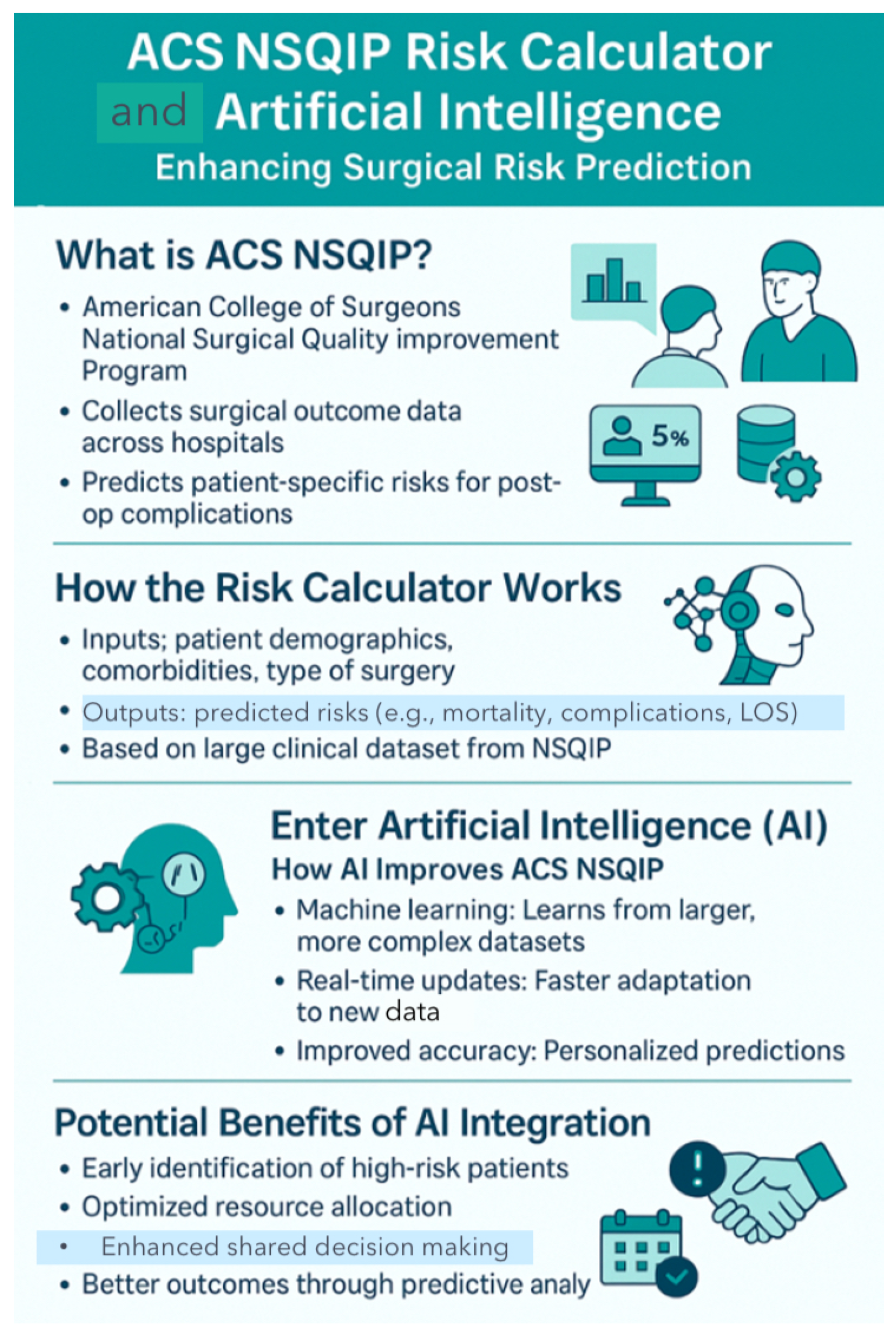
- Bilimoria, K.Y.; Liu, Y.; Paruch, J.L.; Zhou, L.; Kmiecik, T.E.; Ko, C.Y.; Cohen, M.E. Development and evaluation of the universal ACS NSQIP Surgical Risk Calculator: A decision aid and informed consent tool for patients and surgeons. J. Am. Coll. Surg. 2013, 217, 833–842. [Google Scholar] [CrossRef] [PubMed]
- Khuri, S.F.; Daley, J.; Henderson, W.; Hur, K.; Demakis, J.; Aust, J.B.; Chong, V.; Fabri, P.J.; Gibbs, J.O.; Grover, F.; et al. The Department of Veterans Affairs’ NSQIP: The first national, validated, outcome-based, risk-adjusted, and peer-controlled program for the measurement and enhancement of the quality of surgical care. Ann. Surg. 1998, 228, 491–507. [Google Scholar] [CrossRef]
- Van de Schoot, A.J.; Hoffmans, D.; van Ingen, K.M.; Simons, M.J.; Wiersma, J. Characterization of Ethos therapy systems for adaptive radiation therapy: A multi-machine comparison. J. Appl. Clin. Med. Phys. 2023, 24, e13905. [Google Scholar] [CrossRef]
- Lin, C.-M.; Tai, H.-C.; Cheng, Y.-F.; Ke, P.-C.; Liu, C.-C.; Wang, B.-Y. Size measurement and segmentectomy resection margin of early-stage lung adenocarcinoma manifesting on virtual 3D imagery and pathology: A pilot correlation study. J. Clin. Med. 2022, 11, 6155. [Google Scholar] [CrossRef]
- Madani, A.; Namazi, B.; Altieri, M.S.; Hashimoto, D.A.; Rivera, A.M.; Pucher, P.H.; Navarrete-Welton, A.; Sankaranarayanan, G.; Brunt, L.M.; Okrainec, A.; et al. Artificial intelligence for intraoperative guidance: Using semantic segmentation to identify surgical anatomy during laparoscopic cholecystectomy. Ann. Surg. 2018, 276, 363–369. [Google Scholar] [CrossRef]
- Hashimoto, D.A.; Rosman, G.; Rus, D.; Meireles, O.R. Artificial intelligence in surgery: Promises and perils. Ann. Surg. 2018, 268, 70–76. [Google Scholar] [CrossRef]
- Rico-Contreras, J.O.; Aguilar-Lasserre, A.A.; Méndez-Contreras, J.M.; López-Andrés, J.J.; Cid-Chama, G. Moisture content prediction in poultry litter using artificial intelligence techniques and Monte Carlo simulation to determine the economic yield from energy use. Int. J. Environ. Manag. 2017, 202, 254–267. [Google Scholar] [CrossRef]
- Hu, X.; He, X. Evaluation of the postoperative nursing effect of thoracic surgery assisted by artificial intelligence robot. Contrast Media Mol. Imaging 2021, 3941600. [Google Scholar] [CrossRef]
- Sadeghi, A.H.; Mank, Q.; Tuzcu, A.S.; Hofman, J.; Siregar, S.; Maat, A.P.W.M.; Mottrie, A.; Kluin, J.; De Backer, P. Artificial intelligence–assisted augmented reality robotic lung surgery: Navigating the future of thoracic surgery. JTCVS Techniques 2024, 26, 121–125. [Google Scholar] [CrossRef] [PubMed]
- Somashekhar, S.P.; Sepúlveda, M.J.; Puglielli, S.; Norden, A.D.; Shortliffe, E.H.; Kumar, C.R.; Rauthan, A.; Kumar, N.A.; Patil, P.; Rhee, K. Watson for Oncology and breast cancer treatment recommendations: Agreement with an expert multidisciplinary tumor board. Ann. Oncol. 2025, 29, 418–423. [Google Scholar] [CrossRef] [PubMed]
- Yu, K.H.; Zhang, C.; Berry, G.J.; Altman, R.B.; Ré, C.; Rubin, D.L.; Snyder, M. Predicting non-small cell lung cancer prognosis by fully automated microscopic pathology image features. Nat. Commun. 2016, 7, 12474. [Google Scholar] [CrossRef] [PubMed]
- Rajkomar, A.; Dean, J.; Kohane, I.S. Machine learning in medicine. N. Engl. J. Med. 2019, 380, 1347–1354. [Google Scholar] [CrossRef]


| Category | Algorithm Type | Common Applications | Notable Examples |
|---|---|---|---|
| Support Vector Machine (SVM) | Classification tasks, disease diagnosis, image analysis | Cancer classification, early Alzheimer’s detection | |
| Random Forest | Risk prediction, feature selection, clinical decision support | Cardiovascular disease risk modeling | |
| Supervised Learning | Logistic Regression | Binary classification (e.g., disease presence) | Diabetes outcome prediction deling |
| Naïve Bayes | Text classification, clinical document tagging | Medical literature triage | |
| K-Nearest Neighbors (KNN) | Pattern recognition | Patient similarity-based diagnostics | |
| Decision Trees | Clinical decision-making | Rule-based triage systems | |
| Unsupervised Learning | K-Means Clustering | Patient stratification | Identifying phenotypic clusters in sepsis |
| Hierarchical Clustering | Genetic data classification | Genomic sequence analysis | |
| Principal Component Analysis (PCA) | Dimensionality reduction | Omics data preprocessing | |
| Q-Learning | Personalized treatment, adaptive trials | Optimizing chemotherapy dosing | |
| Reinforcement Learning | Deep Q-Networks (DQN) | Robotic control, real-time surgical assistance | Autonomous suturing, tool trajectory optimization in robotic-assisted surgery |
| Policy Gradient Methods (e.g., PPO, A3C) | Fine-grained motion control, dexterous manipulation in surgery | Enhancing robotic precision and safety during minimally invasive procedures, real-time feedback control | |
| Model-Based RL | Adaptive strategy learning in robotic systems | Robotic systems adjusting to changing environments, patient-specific anatomy, or tissue feedback during procedures | |
| Deep Learning | Artificial Neural Networks (ANNs) | Complex pattern recognition | ECG interpretation, pathology image classification |
| Convolutional Neural Networks (CNNs) | Medical image classification | Radiology: tumor detection, fracture classification | |
| Recurrent Neural Networks (RNNs) | Time-series data (e.g., vital signs) | ICU monitoring systems, disease progression modeling | |
| Ensemble Methods | Boosting (e.g., XGBoost) | High-performance classification and regression | Heart failure prediction models |
| Bagging (e.g., Random Forest) | Reducing variance and enhancing accuracy | Cancer prognosis modeling | |
| Stacking | Combining multiple models for improved performance | Multimodal diagnostic platforms | |
| Named Entity Recognition (NER) | Extracting clinical terms, symptoms, and drug names from text | Identifying conditions and treatments from EHRs | |
| Bag-of-Words/TF-IDF | Feature extraction from medical notes | Creating input vectors for classifiers in radiology reports | |
| Natural Language Processing (NLP) | Word Embeddings (Word2Vec, GloVe, BioBERT) | Semantic understanding, clinical term relationships | Mapping patient descriptions to ICD codes |
| Transformer Models (BERT, GPT, BioBERT) | Text summarization, question answering, clinical trial matching | Biomedical Q&A systems, literature summarization, patient eligibility screening | |
| Topic Modeling (LDA, NMF) | Discovering latent themes in patient notes or research abstracts | Mining medical literature to detect emerging disease trends |
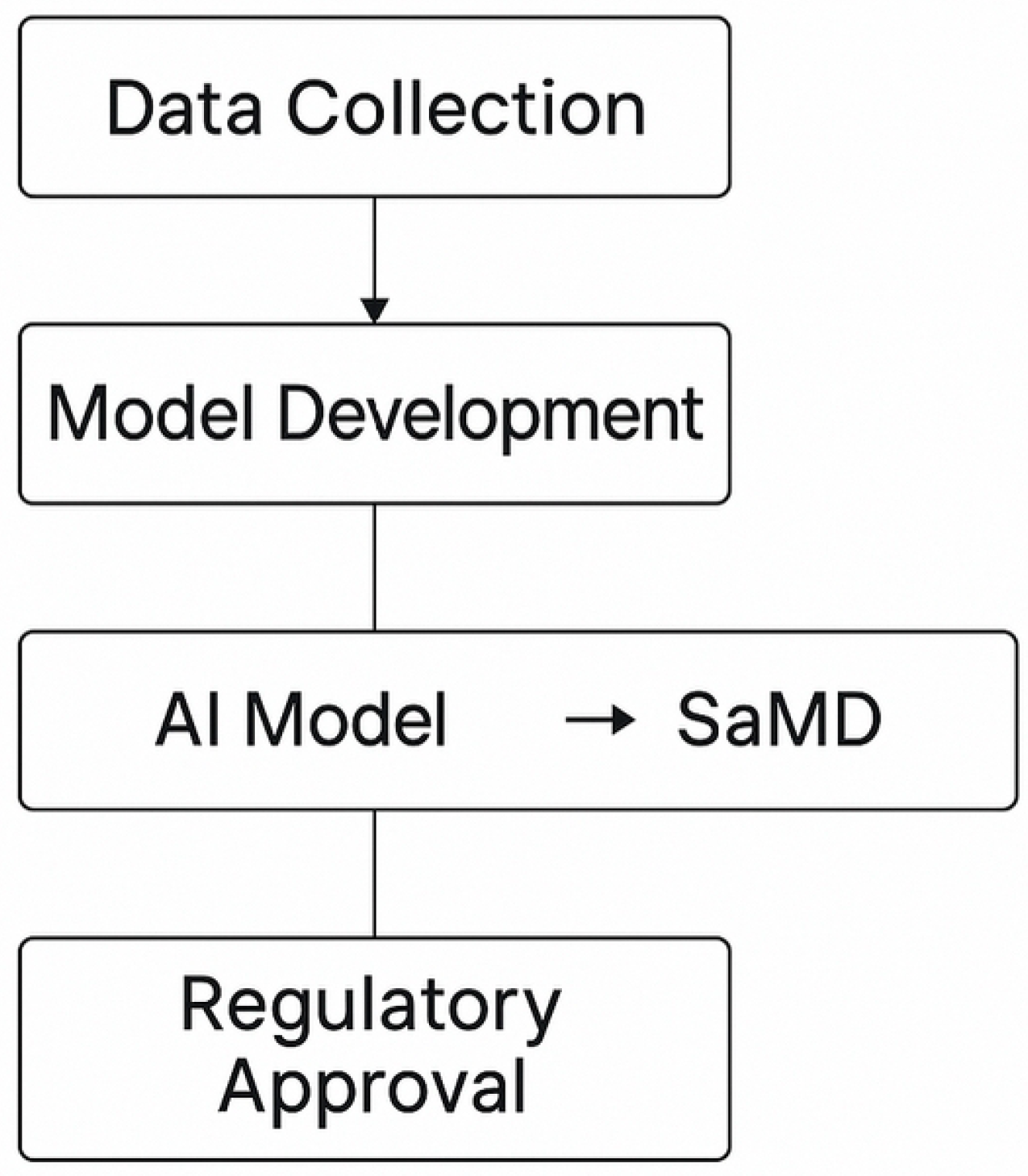
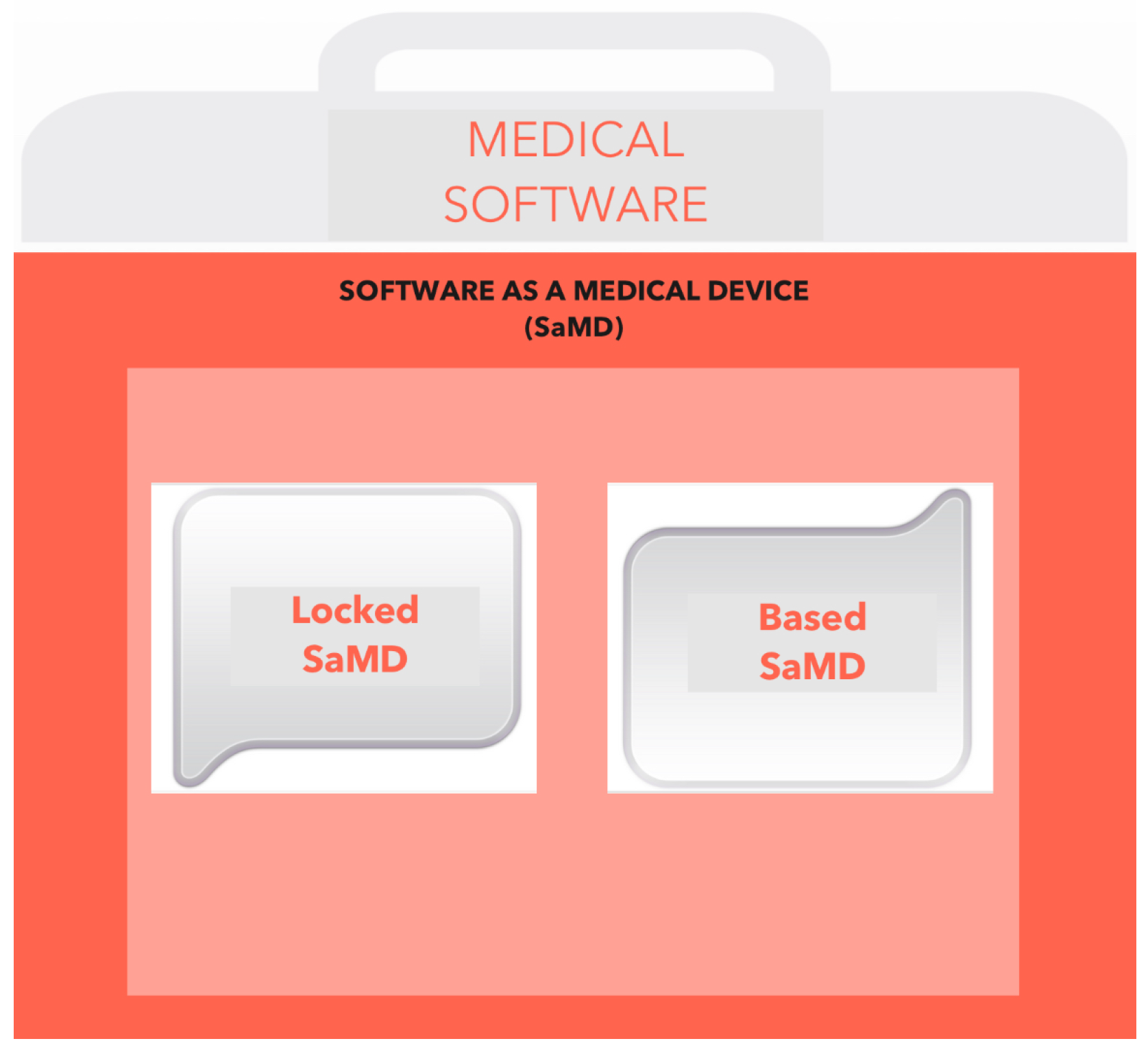
| Aspect | AI Algorithms | Software as a Medical Device (SaMD) |
|---|---|---|
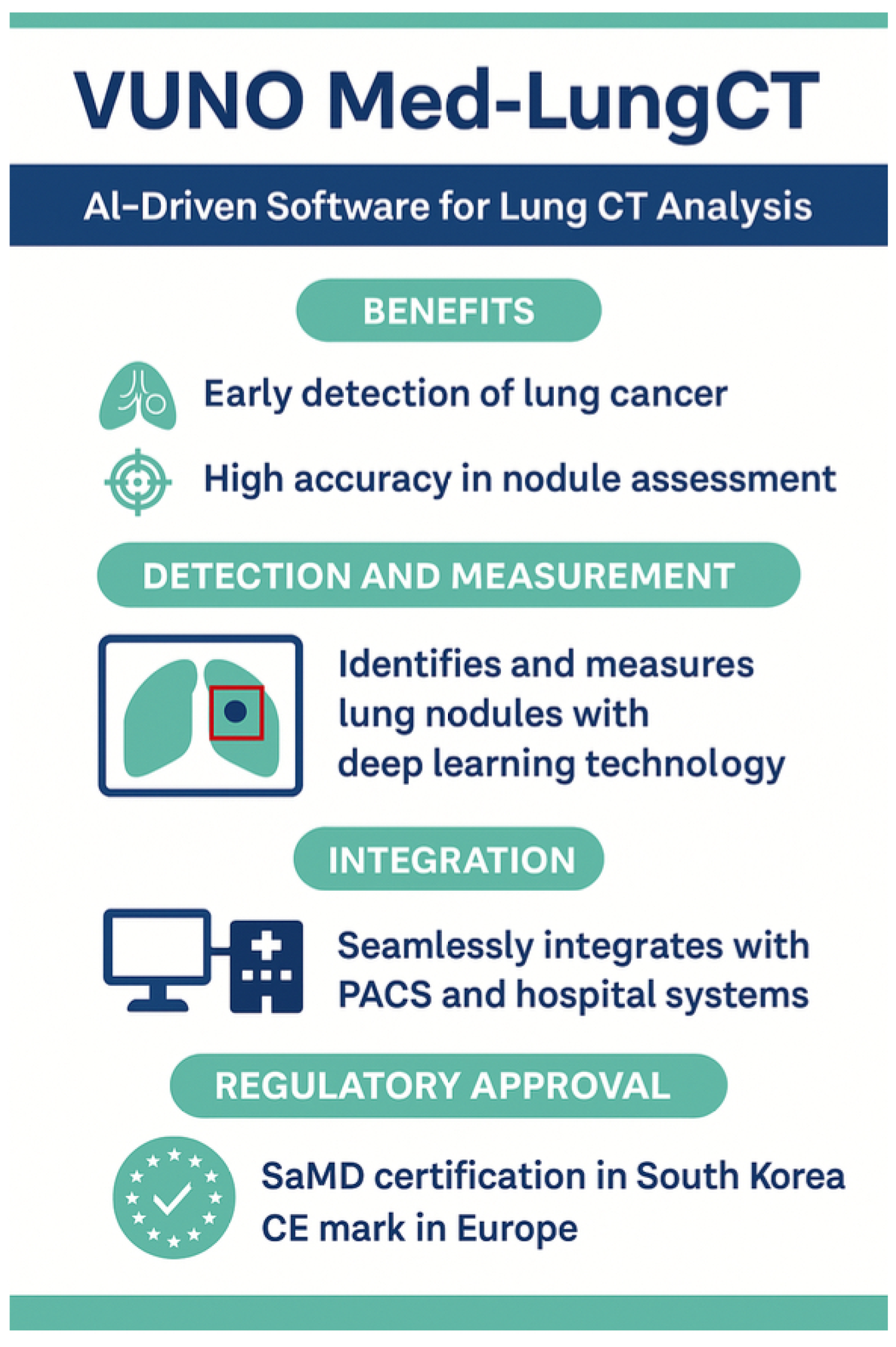
| Definition | Computational models designed to learn patterns from data and make predictions. | Standalone software intended for medical purposes without needing hardware to achieve its function. |
| Purpose | To perform specific tasks like classification, prediction, pattern recognition. | To diagnose, monitor, prevent, or treat a disease or condition. |
| Use in Healthcare | Detect tumors, analyze ECGs, predict complications, extract info from clinical notes. | Provide clinical decisions, risk assessments, or alerts to healthcare providers or patients. |
| Standalone or Not? | Not typically standalone—it’s a component in a larger system. | Standalone software, even if deployed on mobile apps, cloud platforms, or hospital systems. |
| Requires Regulation? | Not directly regulated unless integrated into a medical device or SaMD. | Yes, strictly regulated by authorities like FDA, EMA, or ANVISA. |
| Examples | CNNs, RNNs, SVMs, decision trees, BERT-based NLP models. | AI-powered ECG interpretation app, diabetes risk predictor, digital pathology tools. |
| Medical Claims | Cannot independently make medical claims. | Can make regulated medical claims (e.g., “detects AFib from smartwatch data”). |
| Clinical Validation | Requires technical validation (accuracy, precision, recall, etc.). | Requires clinical validation (safety, effectiveness, benefit-risk profile). |
| Lifecycle Oversight | Focus on development, testing, retraining. | Requires full lifecycle management (design, development, deployment, updates, post-market monitoring). |
| Can It Use AI? | Is AI. | May or may not use AI—can also be rule-based or statistical. |
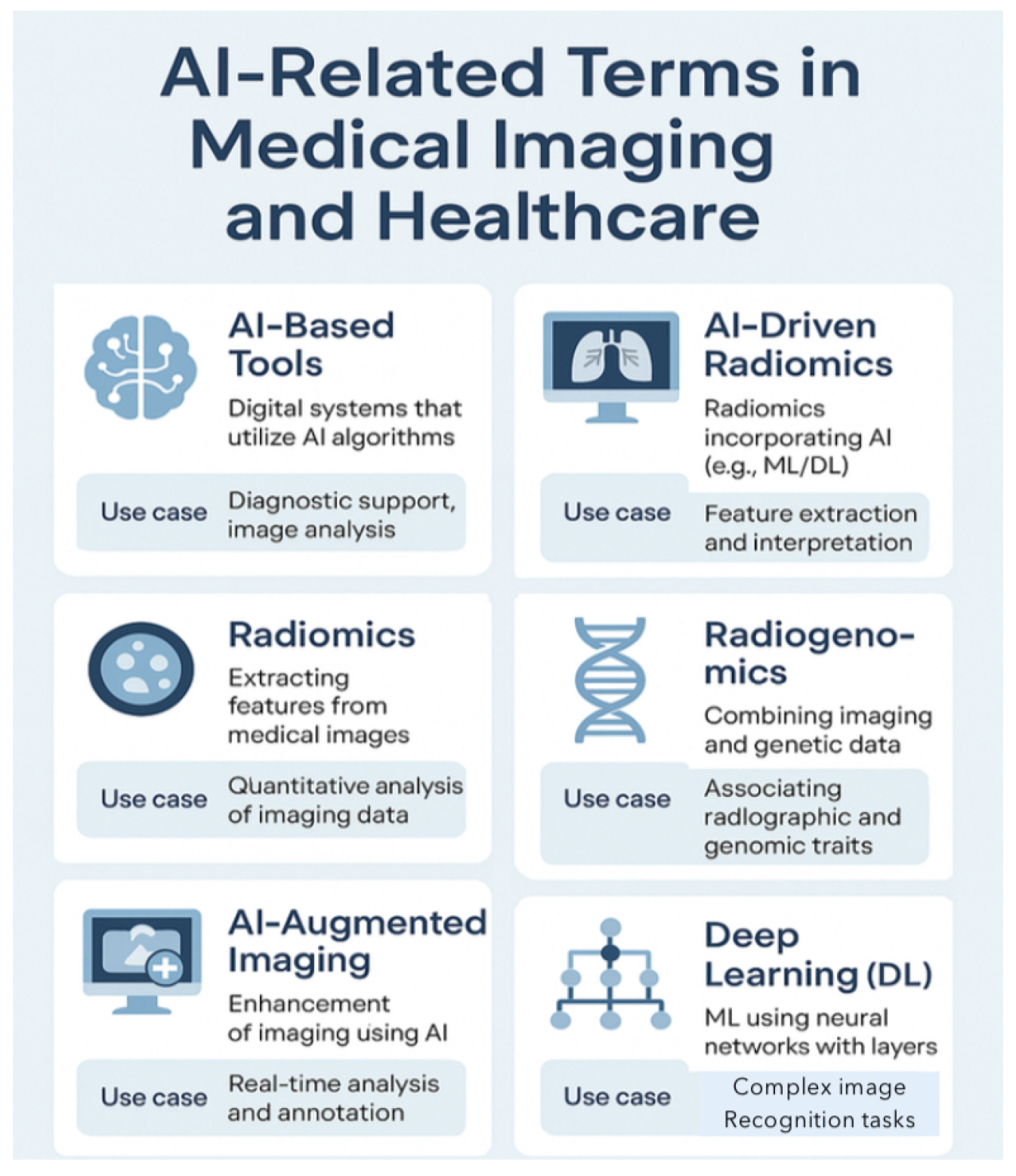
| Term | Definition | Purpose/Use Case | Example |
|---|---|---|---|
| AI-Based Tools | General term for digital systems that incorporate AI algorithms to support or perform healthcare-related tasks. | Diagnostic support, image analysis, workflow automation. | AI triage tools in radiology that prioritize abnormal chest X-rays. |
| AI-Driven Radiomics | Radiomics that use AI (especially ML/DL) to automatically extract and interpret quantitative features from medical images. | Predict disease outcome, phenotype tumors, guide personalized treatment. | Predicting lung cancer survival based on CT features using ML. |
| Radiomics | Process of extracting a large number of quantitative features from medical images using data-characterization algorithms (not always AI-based). | Feature extraction for risk stratification, treatment response prediction. | Texture analysis in MRI to differentiate benign from malignant lesions. |
| Radiogenomics | Integrates imaging features (radiomics) with genetic or molecular data to identify associations between imaging phenotypes and genomics. | Discover imaging biomarkers that reflect gene expression, guide targeted therapy. | Linking imaging patterns on CT with EGFR mutations in lung cancer. |
| AI-Augmented Imaging | Imaging processes enhanced with AI for real-time analysis, annotation, or image quality improvement. | Improve speed, accuracy, and confidence of radiologists during interpretation. | Real-time AI overlay for polyp detection during colonoscopy. |
| Computer-Aided Detection (CAD) | Systems designed to assist in the detection of abnormalities by highlighting suspicious areas in medical images. | Assist radiologists by flagging potential pathology. | CAD for mammography to detect breast cancer. |
| Explainable AI (XAI) | Methods and techniques to make the decision-making process of AI models understandable and transparent to humans. | Build trust, ensure accountability in clinical AI systems. | Heatmaps (e.g., Grad-CAM) showing regions influencing AI image classification. |
| AI-Based Clinical Decision Support Tools | |
|---|---|
| Definition | Software tools that use AI (often ML or NLP) to provide evidence-based clinical recommendations. |
| Function | Support clinicians in diagnosis, prognosis, treatment selection, and risk prediction. |
| Inputs | Electronic Health Records (EHR), imaging data, lab results, genomics, clinical notes. |
| Core AI Techniques | ML, DL, NLP, Expert Systems. |
| Types | - Diagnostic support - Prognostic modeling - Treatment recommendation - Alerts & reminders |
| Examples | - AI predicting sepsis risk in ICU - Suggesting personalized chemotherapy regimens - Flagging drug interactions |
| Benefits | - Reduces errors - Enhances decision-making - Supports evidence-based care - Increases efficiency |
| Challenges | - Bias in training data - Explainability of models - Integration with clinical workflows - Regulatory compliance |
| Regulation | Often classified as SaMD and must meet standards set by bodies like FDA or EMA. |
| Areas of Thoracic Surgery Application | Challenges | AI-Based SaMD and Potential Applications |
|---|---|---|
| AI-Based Radiological Imaging Analysis |
|
|
| AI-Guided Bronchoscopy Navigation |
|
|
| AI-Powered Pulmonary Function Testing (PFT) and Spirometry Analysis |
|
|
| AI-Enabled Remote Monitoring for Respiratory Patients |
|
|
| AI for Post-Thoracic Surgery Monitoring and Predictive Analytics |
|
|
Disclaimer/Publisher’s Note: The statements, opinions and data contained in all publications are solely those of the individual author(s) and contributor(s) and not of MDPI and/or the editor(s). MDPI and/or the editor(s) disclaim responsibility for any injury to people or property resulting from any ideas, methods, instructions or products referred to in the content. |
© 2025 by the authors. Licensee MDPI, Basel, Switzerland. This article is an open access article distributed under the terms and conditions of the Creative Commons Attribution (CC BY) license (https://creativecommons.org/licenses/by/4.0/).
Share and Cite
Lopes, S.; Mascarenhas, M.; Fonseca, J.; Fernandes, M.G.O.; Leite-Moreira, A.F. Artificial Intelligence in Thoracic Surgery: Transforming Diagnostics, Treatment, and Patient Outcomes. Diagnostics 2025, 15, 1734. https://doi.org/10.3390/diagnostics15141734
Lopes S, Mascarenhas M, Fonseca J, Fernandes MGO, Leite-Moreira AF. Artificial Intelligence in Thoracic Surgery: Transforming Diagnostics, Treatment, and Patient Outcomes. Diagnostics. 2025; 15(14):1734. https://doi.org/10.3390/diagnostics15141734
Chicago/Turabian StyleLopes, Sara, Miguel Mascarenhas, João Fonseca, Maria Gabriela O. Fernandes, and Adelino F. Leite-Moreira. 2025. "Artificial Intelligence in Thoracic Surgery: Transforming Diagnostics, Treatment, and Patient Outcomes" Diagnostics 15, no. 14: 1734. https://doi.org/10.3390/diagnostics15141734
APA StyleLopes, S., Mascarenhas, M., Fonseca, J., Fernandes, M. G. O., & Leite-Moreira, A. F. (2025). Artificial Intelligence in Thoracic Surgery: Transforming Diagnostics, Treatment, and Patient Outcomes. Diagnostics, 15(14), 1734. https://doi.org/10.3390/diagnostics15141734