


Abstract
Climatic variability and silicate weathering are remarkable features throughout the Late Cretaceous period. Late Campanian black shale is considered the most significant silicate source rock in the southern Tethys. Here, we used mineralogical and geochemical data to evaluate the continental weathering intensity and climatic changes as well as their impact on the deposition of the Late Campanian black shale in the Western Desert of Egypt. The studied black shale has a relatively high concentration of Al, Fe, Mg, Ca, Sr, Ga, Co, Cr, and V when compared to the average Post-Archean Australian Shales (PAAS). The studied samples have elevated values of Ga/Rb, and low values of Rb/Sr, Sr/Cu, and K2O/Al2O3, supporting the deposition of Late Campanian shale under warm/humid conditions. Furthermore, the average chemical index of alteration (CIA, 78.6%), chemical index of weathering (CIW; 83.8%), C-value (1.26), Fe/Mn (408), and Mg/Ca (1.54) reveal the predominance of warm/humid climate. The chemical weathering proxies (CIA, CIW, PIA, LnAl2O3/Na2O) and ACNK diagram imply that the Late Campanian samples were exposed to a moderate grade of chemical alteration. The deposition of black shale occurred under high seawater salinity conditions based on Sr/Ba (Avg = 3.6). Additionally, the weathering indices are well correlated with paleoclimatic proxies, suggesting that weathering intensity is strongly affected by paleoclimate. However, chemical weathering during the Late Campanian has a weak influence on oceanic nutrient fluxes. No substantial impact of the paleoclimate during the deposition of Late Campanian black shale on water salinity was reported.
Keywords:
paleoceanography; Abu Tartur; black shale; geochemistry; greenhouse climate; nutrients; salinity; source rocks 1. Introduction
The Late Cretaceous period of Earth’s history is broadly acknowledged as a greenhouse period [1]. It is distinguished by the warm temperature emitted by the icehouse environment [2]. This time period experienced significant environmental changes in both the marine and terrestrial domains, resulting in climatic fluctuations and an increase in silicate weathering. The primary regulatory forces on erosion and chemical weathering have been assessed as tectonic-driven mountain uplift, precipitation, and climate variability [3,4]. Additionally, the global carbon cycle can be influenced by silicate chemical weathering [5].
Black shales were the most notable deposits during the Cretaceous greenhouse climate. As a result, it may be used to keep track of prior environmental occurrences. The development of organic-rich black shale is a complicated process that involves the interaction of several climatic and oceanographic elements, including continental weathering, hydrographic setting, sea-level rise, biosphere change, biological productivity, and the availability of oxygen in the bottom water [6,7]. Thus, the evaluation of the past climate and paleoweathering conditions during the deposition of black shales is critical to estimating the carbon cycle during the Late Cretaceous.
Late Campanian marine black shale is distributed in the Western Desert of Egypt. It is associated with phosphate rocks and glauconite-bearing rocks [8,9]. These sediments are part of Upper Cretaceous ore deposits in the Middle East and North Africa’s Tethyan belts. So far, no study has been proposed to evaluate the paleoclimate and paleoweathering during the Late Campanian in detail, as well as their impact on the deposition of organic-rich black shale. Therefore, multiple geochemical markers and mineralogical data are used to reconstruct the chemical weathering and climatic variations during the accumulation of the Late Campanian black shales in the Western Desert of Egypt. Additionally, this study focuses on the link between weathering intensity, paleoclimatic changes, and oceanographic conditions. Thus, this study will give an improved idea of the past environmental conditions that will help to understand the carbon cycle during the formation of these sediments in southern Tethys.
2. Geological Background
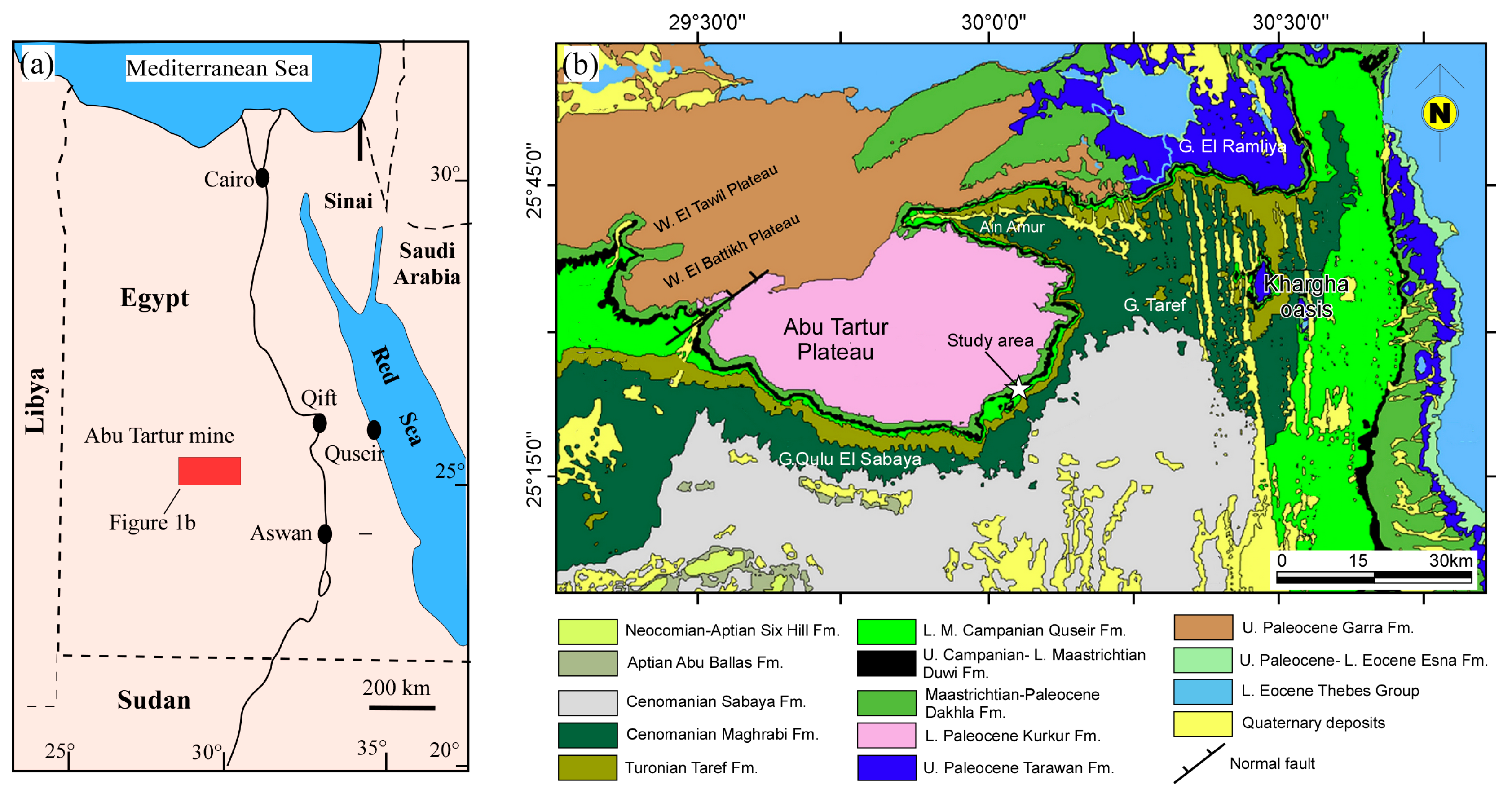
The Late Campanian black shale is distributed along the Western Desert in the Abu Tartur plateau, which is located in an area of 600 km2 southwest of Cairo and 50 km west of El Kharga Oasis in the Western Desert (Figure 1).
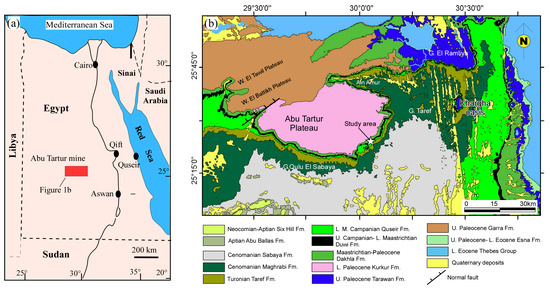
Figure 1.
(a) The location map gives an overview of the Abu Tartur mine; and (b) geological map shows the studied area in the Western Desert of Egypt (modified after Banerjee et al. [10]).
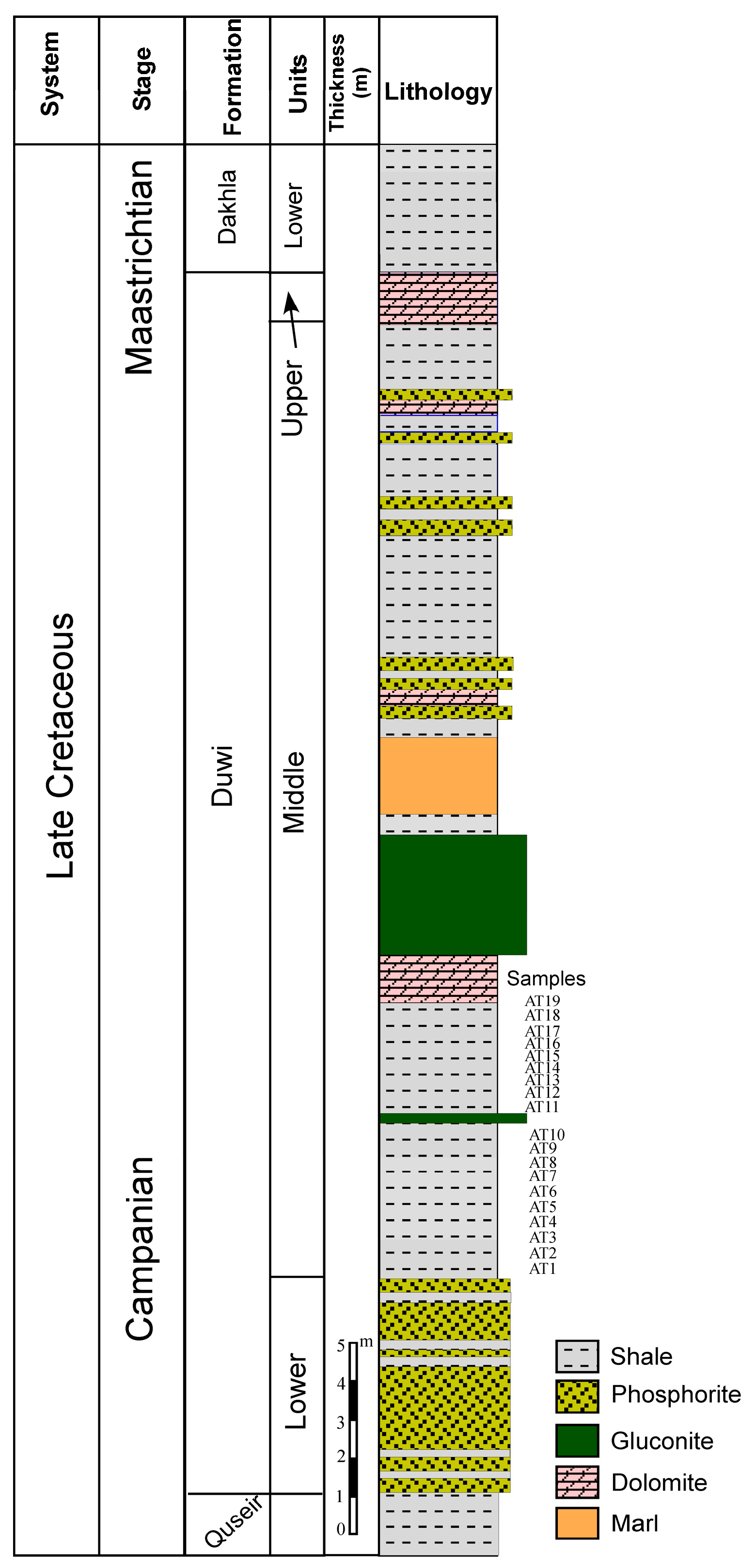
The Duwi Formation marks the beginning of fully marine conditions in Egypt. These sediments were formed in shallow epeiric seas that surrounded the Tethyan trough’s southern margin. Black shale deposits are formed beneath the deeper-water marine Maastrichtian Dakhla Formation and overlie the Campanian lacustrine to marginal marine shale of the Quseir Formation [11,12] (Figure 2). The upper Cretaceous sediments in the Abu Tartur plateau are restricted by a preexisting depression bounded by the Kharga (in the east) and the Dakhla uplifts (in the west). Due to the obvious horizontal bedding of these formations, this succession is revealed in scarps across the Abu Tartur plateau [13].
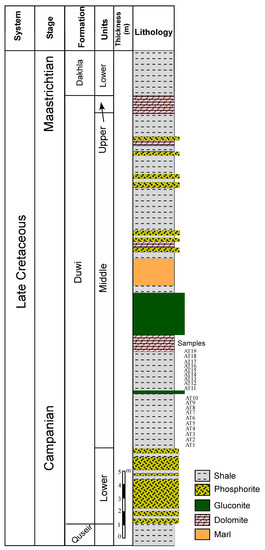
Figure 2.
Lithostratigraphic log for the Abu Tartur mine in the Western Desert of Egypt (modified after El Ayyat, ref. [14]).
The Duwi Formation in the Western Desert of Egypt can be classified into three units: lower, middle, and upper, based on their depositional conditions [14]. The black shale occurs in the middle unit. This unit consists of shales intercalated with phosphate, siltstone, carbonates, glauconite, and gypsum beds. This unit is overlain by carbonates-dominant units and underlain by phosphate-dominant beds. The age of the Duwi Formation is late Campanian to early Maastrichtian [8].
3. Material and Methods
In this study, a total of 32 samples were collected from the Duwi Formation black shale bed of the Abu Tartur mine in the Western Desert of Egypt. The bulk mineralogical analyses were performed on the black shale samples, using a Panalytical PW 3040/60 X’Pert PRO X-ray diffractometer (Cu K radiation, 40 kV, 40 mA, step size 0.0167,5 s per step) at the Department of Geology, University of Vienna, Austria. For clay mineralogy, powdered black shale samples were treated with H2O2 to remove the organic matter. Then, the samples were disaggregated with a 400 W ultrasonic probe for 3 min. The <2 mm fraction was separated by sedimentation in Atterberg cylinders and then saturated with K+ and Mg+2. About 8 mg of the samples were dispersed in 1 mL of distilled water and put on glass slides. They were dried overnight at room temperature. The oriented mounts were measured, after vapor saturation with ethylene glycol and glycerol at 60 °C for 12 h and after heating to 550 °C for 1 h. The X-ray patterns were qualitatively interpreted according to Brindley and Brown [15], Moore and Reynolds [16], and quantitatively evaluated using the Schultz [17] method.
Nineteen representative black shale samples were selected for the geochemical analysis. The geochemical analyses for major and trace elements were done at the Department of Lithospheric Research, University of Vienna, Austria. This analysis was performed using the sequential X-ray fluorescence spectrometer Phillips PW 2400. Major elements were measured using fused pellets, while the powder pellets were used for analyzing trace elements. The analytical precision was estimated to be better than 3%. More details are provided in Sami et al. [18].
The paleoclimatic and paleoweathering proxies (e.g., Sr/Cu, Ga/Rb, K2O/Al2O3, and Rb/Sr elemental ratios) were calculated and investigated to infer the paleoclimatic conditions. A high Sr/Cu ratio (>5) implies a hot and dry climate, whereas a low ratio (<5) indicates a warm and humid climate [19,20]. A warm-wet environment is indicated by the high Ga/Rb (>0.25) and low K2O/Al2O3 (<0.2) ratios. While the low Ga/Rb (0.25) and high K2O/Al2O3 (>0.2) ratios imply a cold-dry environment [21]. Additionally, the C-value is used to evaluate past climatic conditions [22,23]. This proxy is a ratio between the transition metals to the alkali elements (Σ (Fe + Mn + Cr + Ni + V + Co)/Σ (Ca + Mg + Sr + Ba + K + Na)). The high values (>0.6) indicate humid conditions whilst the low values (< 0.4) indicate more arid climatic conditions [24].
The chemical index of alteration (CIA) and chemical index of weathering (CIW) are used to evaluate the past climate and weathering intensity. CIA is calculated from this equation: CIA = Al2O3/(Al2O3 + CaO* + Na2O + K2O) *100 [25]. Where CaO* refers to the calcium content in the silicate fraction [26]. The chemical index of weathering is applied to evaluate the climatic changes from this equation: CIW = Al2O3/Al2O3 + CaO* + Na2O) * 100 [27]. The low CIA and CIW values (<65%) reflect a low degree of chemical weathering as well as cold and dry climate, whilst the high values (>80%) reflect a high degree of chemical weathering and humid/warm climate [28].
As a geochemical proxy for paleo salinity, the ratio of Sr/Ba is often utilized [29]. In salty water, very high Sr/Ba ratios (greater than 1) were found, but in freshwater environments, extremely low Sr/Ba ratios (less than 0.6) were documented [21].
4. Results
4.1. Mineralogy
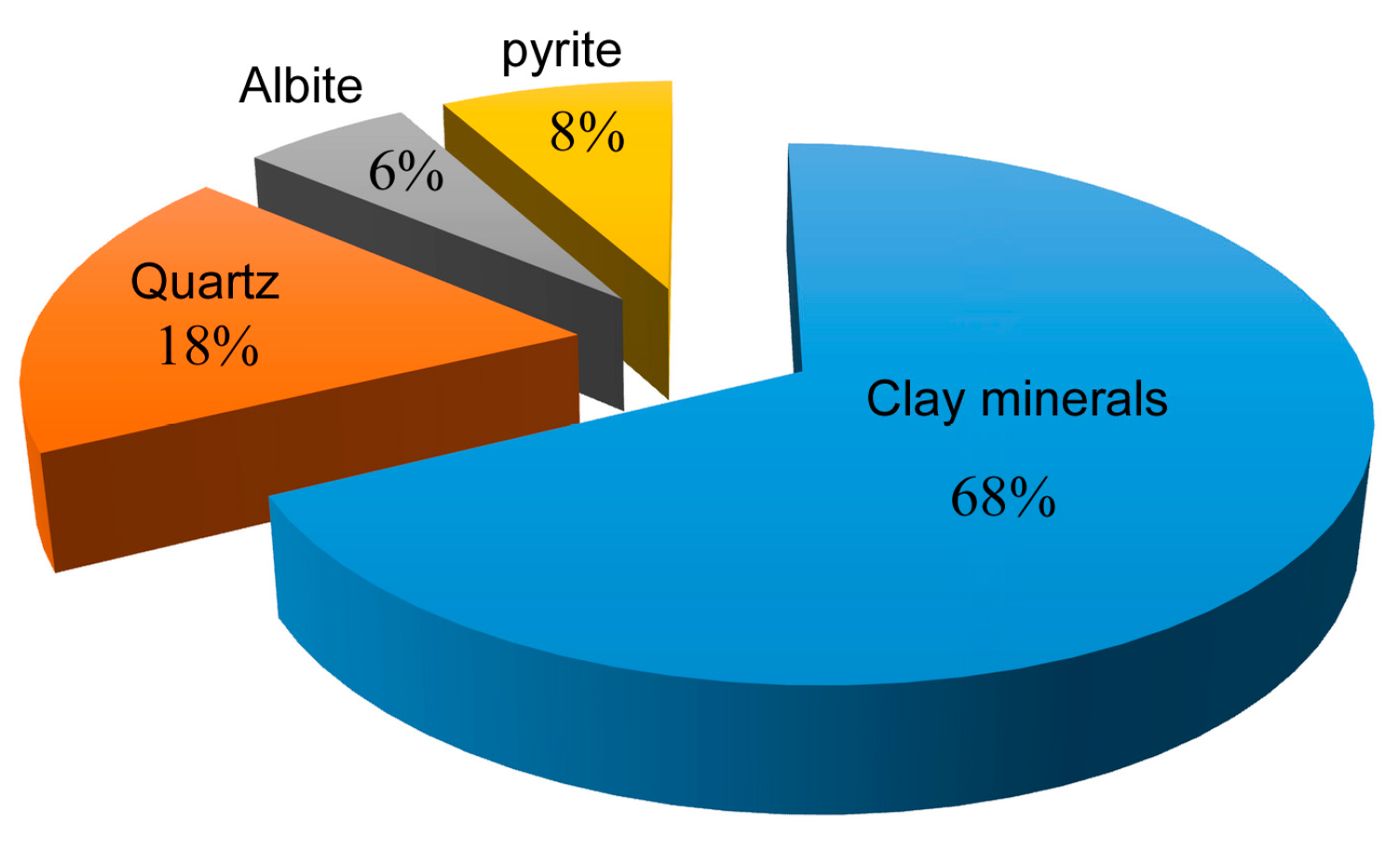
According to the whole-rock X-ray diffraction data, the examined samples include varying proportions of clay and non-clay minerals. The studied samples are mainly composed of clay minerals (64%–71%, avg. = 68%), quartz (15%–24%, avg. = 18%), pyrite (6%–10%, avg. = 8%), and albite (5%–6%, avg. = 6%) (Figure 3). Additionally, the clay mineralogy data shows that smectite is the most common clay mineral (89%–92%), although the kaolinite is also reported but in low quantities (8%–12%).
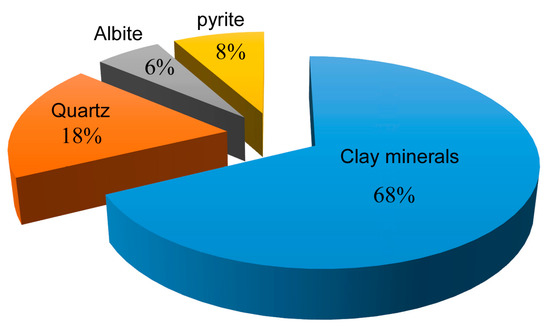
Figure 3.
Pie chart is showing the average mineral composition of the studied Late Campanian black shales.
4.2. Whole-Rock Geochemistry
The concentration of major oxides is shown in Table 1. The most prevalent oxides found in the studied samples are SiO2 (avg. = 56.36 wt.%) and Al2O3 (avg. = 19.6 wt.%), Fe2O3 (avg. = 8.25 wt.%), MgO (avg. = 3.33 wt.%), CaO (avg. = 1.94 wt.%), and K2O (avg. = 1.43 wt.%) are the next most prevalent oxides, while the concentrations of other oxides such as TiO2, Na2O, MnO, and P2O5 are less than 1.0 wt.%. The concentrations of Al, Fe, Mg, and Ca are higher than those of the Post Archaean Australian Shales (PAAS, [30]).

Table 1.
The concentrations of major elements (wt.%) and calculated geochemical parameters for the selected black shale samples from Abu Tartur mine.
Trace element concentrations are listed in Table 2. The most abundant trace elements are Sr (avg. = 273 ppm), V (avg. = 155 ppm), Cr (avg. = 103 ppm), and Ba (avg. = 83 ppm). The second most predominant trace metals are Ni (avg. = 31 ppm), Rb (avg. = 29 ppm), Cu (avg. = 26 ppm), Ga (avg. = 23 ppm), and Co (avg. = 18 ppm). The concentration of Sr, Ga, Co, Cr, and V within the upper Cretaceous black shales is relatively higher compared to the average of the PAAS. The studied black shale has elemental ratios of Sr/Cu (7.93–13.04), Ga/Rb (0.59–1.64), K2O/Al2O3 (0.052–0.083), Rb/Sr (0.05–0.18), Mg/Ca (0.9–3.7), and Fe/Mn (96.4–752.8). The C-value varies between 0.72 and 1.79 (Table 1 and Table 2).
Table 2.
The concentrations of trace elements (ppm) and calculated geochemical parameters for the selected black shale samples from Abu Tartur mine.
The calculated CIA ranges from 72.6 to 85.04%, while the CIW value fluctuates between 77.61 and 91.04%. The values of PIA range from 76.2 to 90.4, and Ln (Al2O3/Na2O) varies between 4.2 and 5.1 (Table 1). The Sr/Ba ratio ranges between 1.98 and 7.6, while that of Ni/Al and Cu/Al ranges from 2.46 to 3.79 and from 2.15 to 2.91, respectively (Table 2).
5. Discussion
5.1. Climatic Conditions
Evaluating the past climate is critical for gaining a better knowledge of earth science events [31]. The climatic changes have an impact on the geochemistry of clastic rocks. Thus, the metal concentration could be utilized as a paleo-tracer for the former climate [32,33]. Cu, Ga, Cr, Mn, Ni, V, Co, Al, and Fe are significantly more concentered in sediments under more warm and humid climatic conditions than Sr, Ba, Na, Mg, Ca, and K [34,35,36,37]. Thus, the geochemical proportions for these elements in sediments have been applied as a paleo-tracer for the past climate.
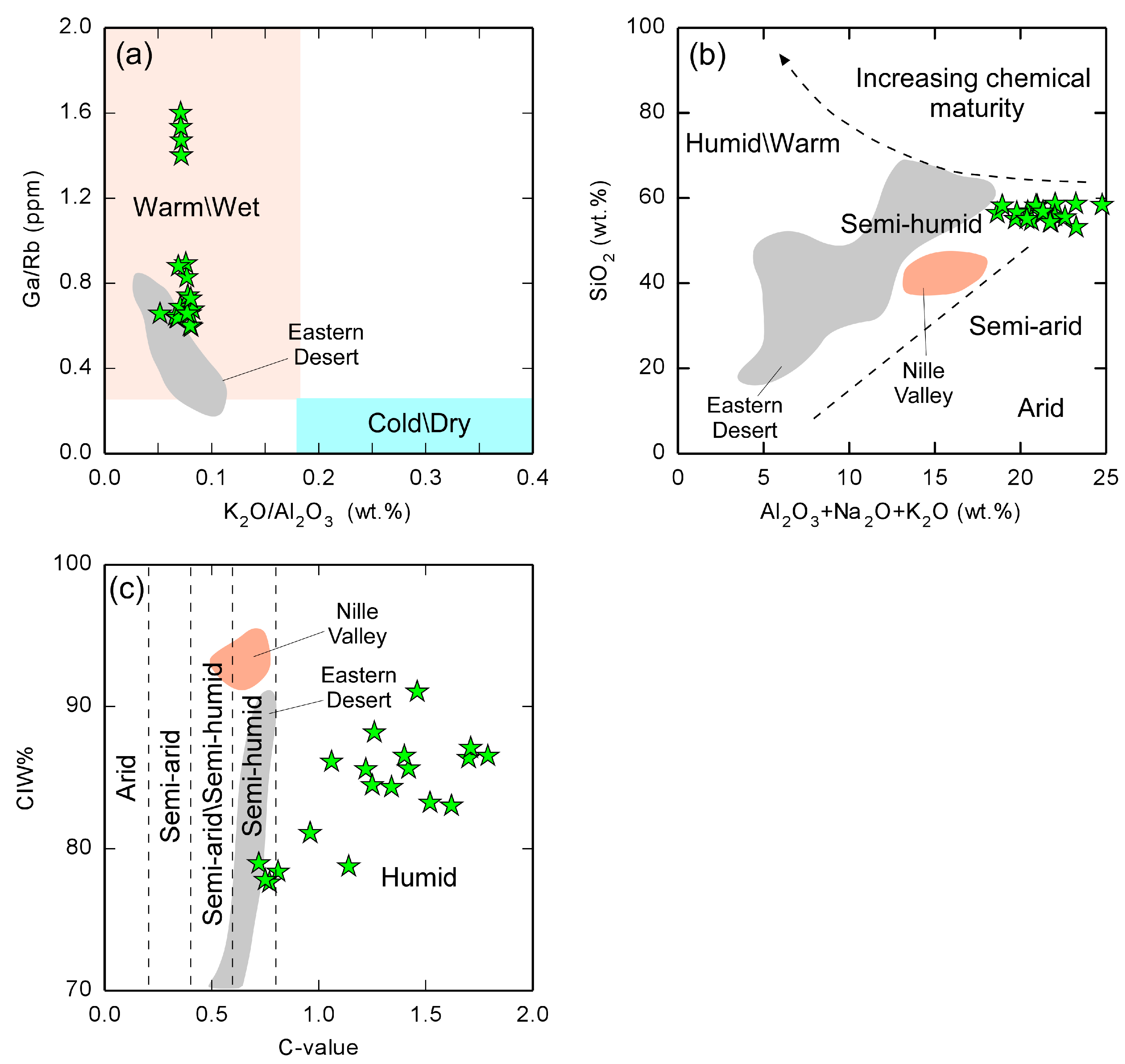
The studied samples have a significantly low value of Sr/Cu (avg. = 10.53), Ga/Rb (avg. = 0.87), and low values of Rb/Sr (avg. = 0.11) and K2O/Al2O3 (avg. = 0.07; Table 1), implying the deposition of Campanian black shale during warm climatic conditions. This result is confirmed by the discrimination diagram between Ga/Rb and K2O/Al2O3 (Figure 4a), which indicates that all the studied samples are plotted in a warm/humid field [35]. This field is close to Maastrichtian black shale in the Eastern Desert, reflecting more warm-humid conditions during deposition of late Campanian shale. The binary diagram between SiO2 and (Al2O3 + K2O + Na2O) (Figure 4b), implies that the accumulation of Late Campanian shale was formed under a semi-humid and warm climate [32]. This result agrees with Upper Cretaceous black shale from the Eastern Desert and the Nile Valley, indicating a comparable climatic state. However, the samples analyzed were deposited in rather humid and warm settings.
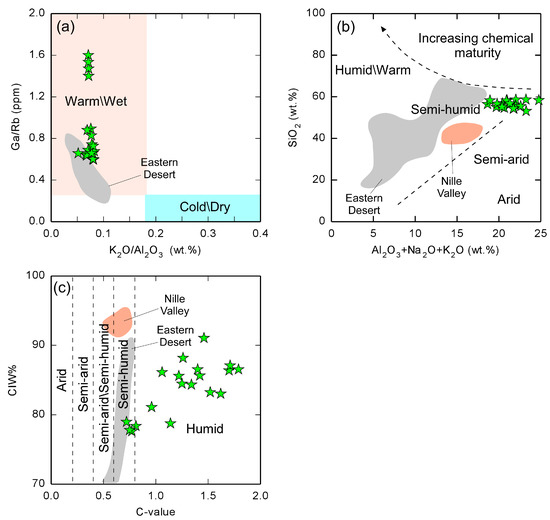
Figure 4.
Discrimination diagrams for the studied black shale samples: (a) Ga/Rb and K2O/Al2O3 [35]; (b) SiO2 and (Al2O3+ NaO+ K2O; [32]), and (c) C-values and CIW [24]. The fields of the Upper Cretaceous black shale (Duwi Formation) from the Eastern Desert [20] and the Nile Valley [39], were used for comparison.
The elemental ratios of Fe/Mn and Mg/Ca are commonly employed as paleoclimate proxies [38]. The average values for Fe/Mn and Mg/Ca are 408 and 1.54, respectively. These values are relatively high and display Campanian black shale formation in warm/humid climate. Moreover, the geochemical proxies such as CIA, CIW, and C-value, are usually used as indexes for the past climate [24,25,28]. The average values for CIA and CIW are 78.6% and 83.8%, respectively. This finding suggests that the Campanian black shale formed in a warm/humid paleoclimate. Additionally, the average C-value is 1.26, indicating the predominance of humid conditions during the deposition of the Campanian black shale [24]. This assumption is also confirmed by the binary relation between C-values and CIW that reflects the Campanian black shale accumulation under relatively humid environmental conditions (Figure 4c). This diagram also demonstrates that the late Campanian black shale was exposed to more humid and hotter conditions than the Upper Cretaceous black shale deposits in the Nile Valley and the Eastern Desert.
Clay mineralogy is often used to assess the past climate [40]. The dominance of smectite within the studied samples indicates the deposition of upper Campanian black shale under warm/humid with intermitted arid circumstances [41]. Thus, this result is consistent with the geochemical data. Additionally, these data indicate that the Late Campanian black shale samples were deposited under a cooler/drier climate than those of the lower Maastrichtian deposits [20].
5.2. Chemical Weathering Trend
The weathering of siliciclastic parent materials is highly influenced by climate fluctuations, tectonic settings, parent rock lithology, and weathering durations [42]. During chemical weathering, mobile cations (Na, Ca, and K) are more easily eliminated than the stable elements (Al and Ti) [28]. Thus, the elemental concentration of these elements is used as a paleotracer for weathering intensity [26]. The CIA and CIW are mostly used to determine the degree of weathering on parental material [30,43,44]. The average CIA (78.52%) and CIW (83.8%) values, supposing that the studied samples were subject to a moderate chemical weathering alteration.
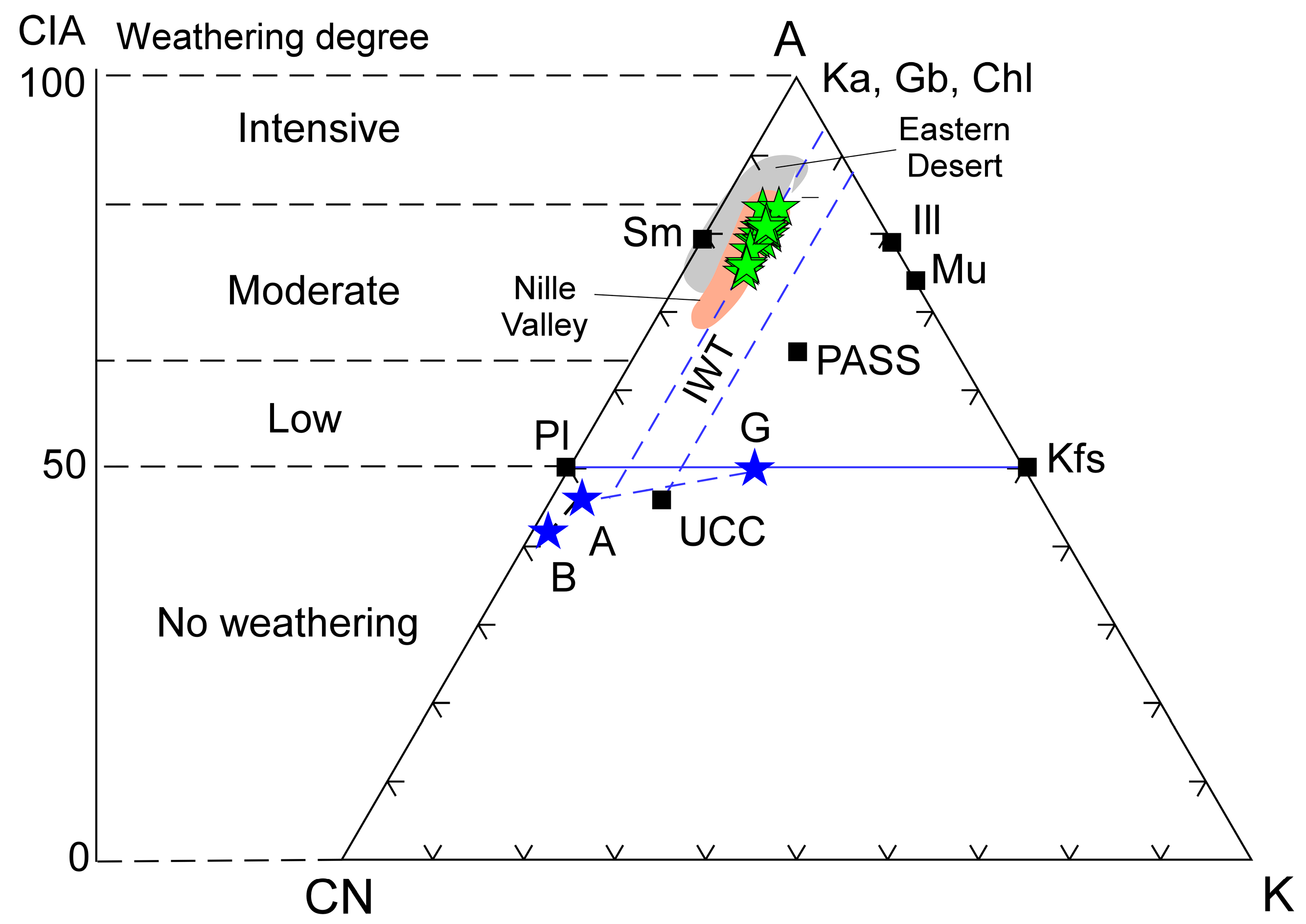
The plagioclase index of alteration (PIA) is used to monitor the strength of chemical weathering [28]. The average PIA is 82.56%, indicating that the black shale samples are subject to medium grade of chemical weathering. Moreover, the ln (Al2O3/Na2O) can be used to assess the weathering intensity [45]. This ratio varies between 4.2 and 5.1 (avg. = 4.5), suggesting moderately weathered source rock. The ACNK ternary diagram also evaluates the weathering intensity (Figure 5). The distribution of the studied samples is parallel to the ideal weathering trend (IWT), indicating a steady-state trend of paleoweathering conditions. Negligible potash metasomatism is determined in the studied samples, as evidenced by the distribution of black shale samples near the Al2O3 apex. Further, this diagram indicates that the parent rock of these black shale deposits underwent moderate chemical alteration. To sum up, the studied Campanian black shale deposits were exposed to moderately intense chemical weathering. Furthermore, they were subjected to moderate chemical weathering conditions similar to the Upper Cretaceous black shale of the Nile Valley but slightly lower than those of the Eastern Desert.
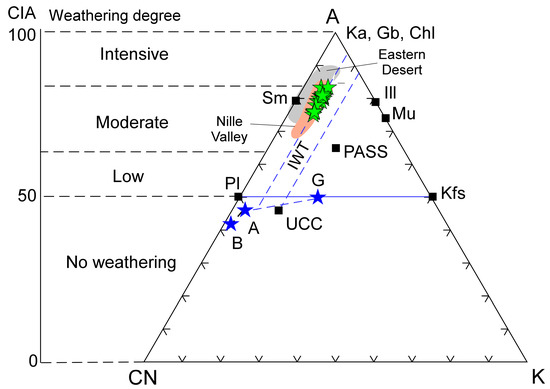
Figure 5.
A−CN−K ternary diagram showing moderate chemical weathering trend for the studied Campanian black shale. A = Al2O3; CN = (CaO* + Na2O); K = K2O; Ka = kaolinite; Gb = gibbsite; Chl = chlorite; Ill = Illite; Mu = muscovite; Kfs = K-feldspar; Pl = plagioclase; Sm = smectite [43]. Stars: A = andesite; B = basalt; G = granite represent typical primary source trend [46]. UCC = upper continental crust and PAAS = post-Archean Australian shale [30]. The ideal weathering trend (dashed line; IWT). The fields of the Upper Cretaceous black shale (Duwi Formation) from the Eastern Desert [20] and the Nile Valley [39], were used for comparison.
5.3. Salinity and Nutrient Fluxes
The water chemistry of seas is greatly affected by climatic changes, basin structure, and hydrological settings [21]. The concentrations of Sr and Ba are mostly linked to the salinity of the water body; freshwater has a high Ba content, while saline water has a higher Sr concentration [47]. Therefore, the salinity is appraised by the elemental ratio of Sr/Ba [47,48]. The average Sr/Ba for the analyzed samples (avg. = 3.6) indicates that the Late Campanian black shale was formed under highly saline conditions. This ratio is slightly higher than the Sr/Ba ratio for the Maastrichtian black shale in the Eastern Desert (avg. = 3.5, [20]), reflecting more seawater salinity and a higher evaporative rate during the Late Campanian.
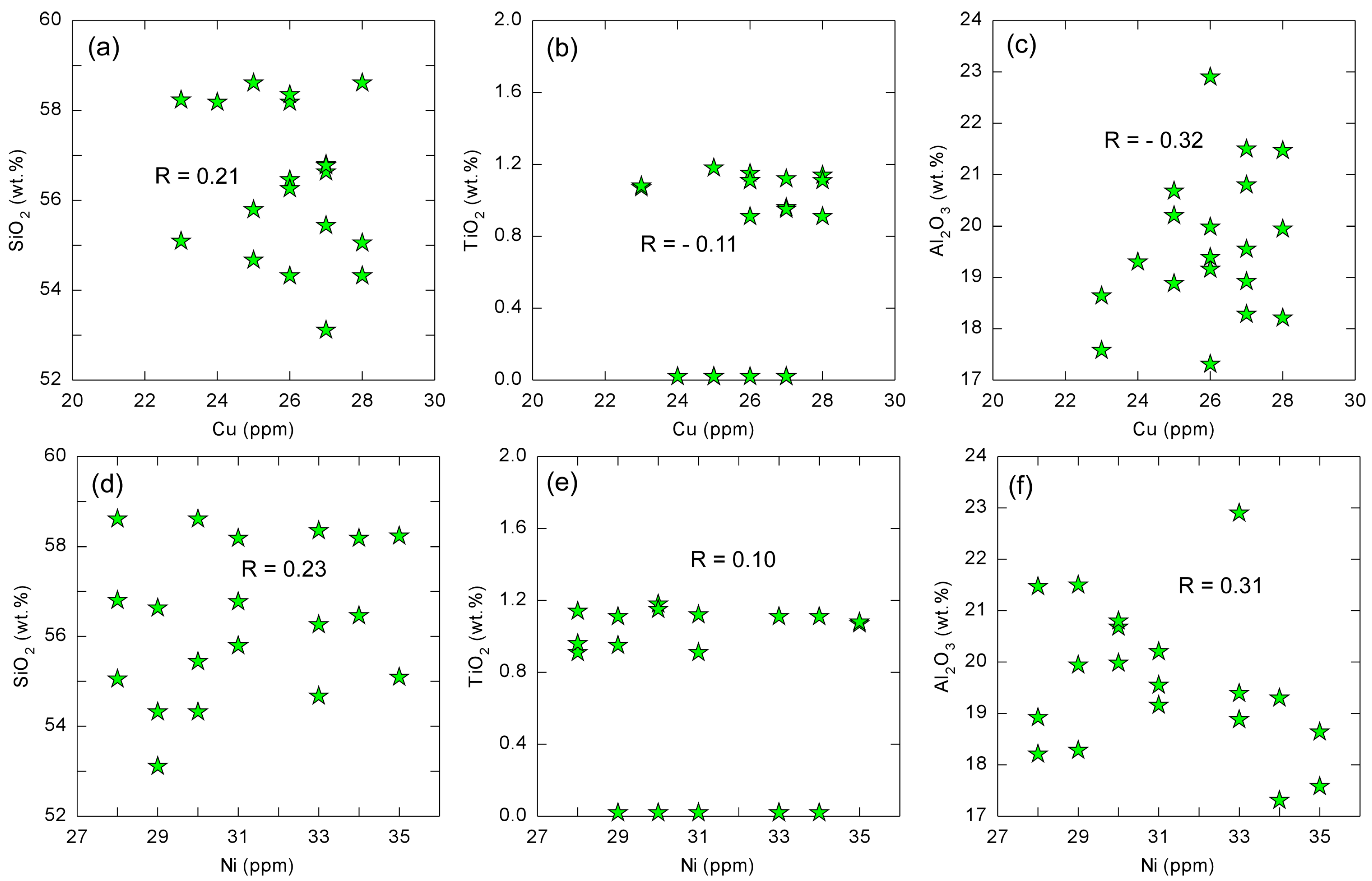
Assessing the nutrient levels and trace metal concentrations in seawater is a significant part of understanding the evolution of life on Earth [49]. Nutrients are basically derived from detrital input, mass water circulation, and/or remobilization of trace metals [50]. Ni and Cu are used as nutrient proxies [51]. Extraordinary greenhouse conditions were also a typical occurrence, which led to improved marine nutrient supplies. The studied samples have average ratios of Ni/Al (3.02), and Cu/Al (2.51). These values are higher than those of PASS (~2.3 and 2.7, respectively, [30]). This indicates high nutrient influxes to the surface water during the deposition of Upper Campanian black shales. The nutrient proxies are negatively to weakly correlated with detrital inputs (Figure 6), indicating that the terrigenous inputs are not the main source of nutrients. Therefore, the enhanced nutrient fluxes during the Late Campanian could have resulted from mass water circulation or the remobilization of trace metals under anoxic conditions. Most importantly, these ratios are lower than those of Maastrichtian marine black shale [20]. This probably reflects relatively low nutrients and surface productivity.
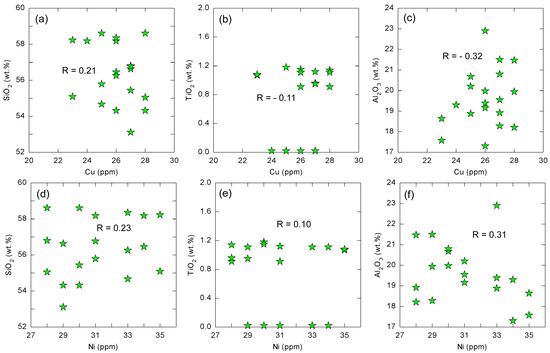
Figure 6.
Cross plots: (a) Cu vs. SiO2, (b) Cu vs. TiO2; (c) Cu vs. Al2O3; (d) Ni vs. SiO2; (e) Ni vs. TiO2, and (f) Ni vs. Al2O3, showing the relation between nutrients proxies and detrital inputs for the Late Campanian black shale in the Western Desert of Egypt.
5.4. Controlling Factors on Deposition of Late Campanian Black Shales
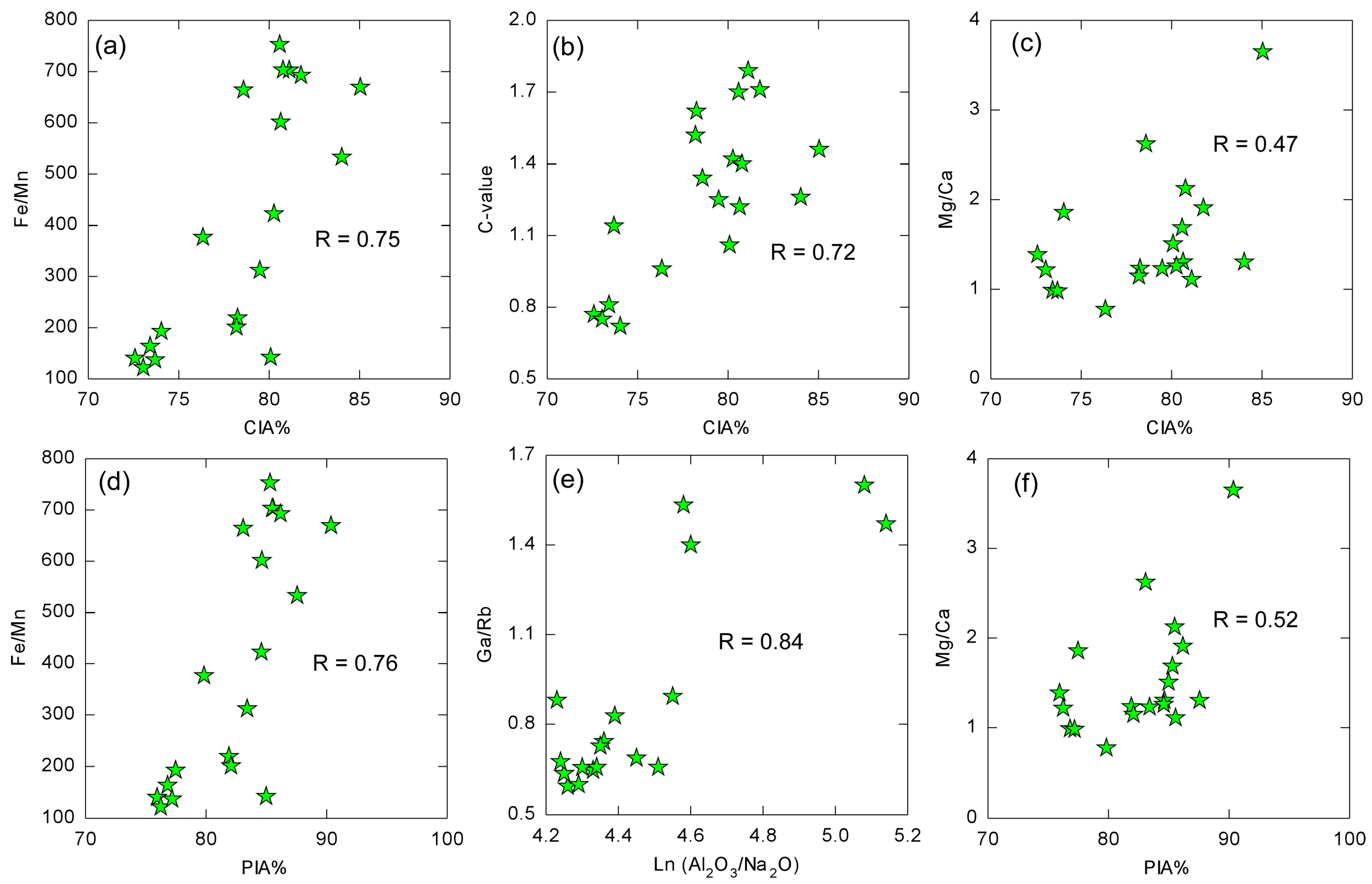
Variations in greenhouse climate led to changes in sea level, the hydrographic setting of the sedimentary basin, and water chemistry, as well as enhancing the rate of nutrient input into the oceans. All these changes influence the deposition of organic-rich black shale [52,53]. In this study, the paleoweathering proxies are well correlated with paleoclimate proxies (Figure 7). This result shows that the paleoclimate plays a significant role in controlling weathering intensity. Therefore, the hydrological cycle is likely to promote chemical weathering.
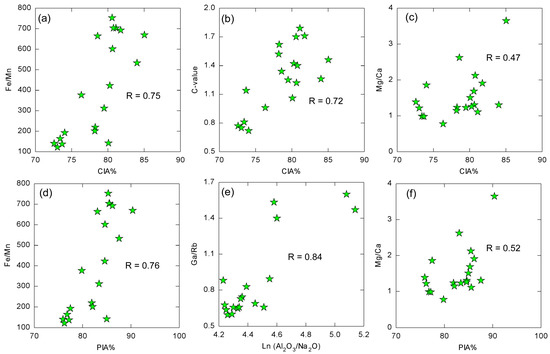
Figure 7.
Cross plots: (a) CIA vs. Fe/Mn, (b) CIA vs. C-value; (c) CIA vs. Mg/Ca; (d) PIA vs. Fe/Mn; (e) Ln (Al2O3/Na2O) vs. Ga/Rb, and (f) PIA vs. Mg/Ca, showing the relation between paleoweathering and paleoclimate proxies for the Late Campanian black shale in the Western Desert of Egypt.
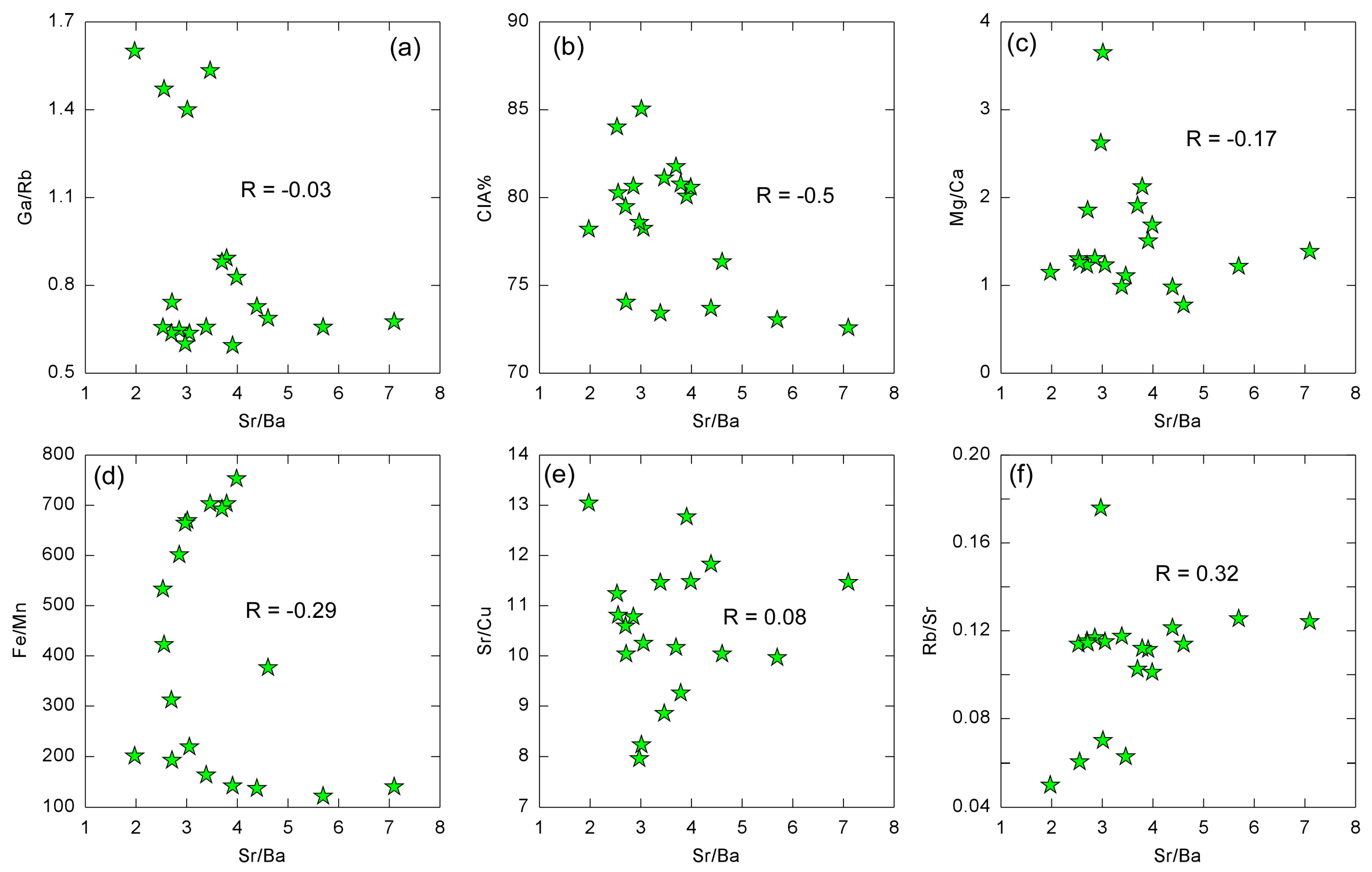
Additionally, there is no correlation between salinity proxies Sr/Ba and paleoclimatic indices (Ga/Rb, CIA, Mg/Ca, and Fe/Mn) (Figure 8). The Sr/Ba proxy is weakly correlated with paleoclimatic proxies (Rb/Sr and Sr/Cu) (Figure 8), reflecting a negligible effect of climatic variations on seawater salinity.
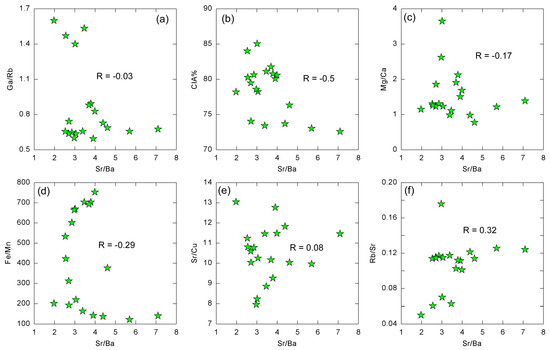
Figure 8.
Cross plots: (a) Sr/Ba vs. Ga/Rb; (b) Sr/Ba vs. CIA; (c) Sr/Ba vs. Mg/Ca; (d) Sr/Ba vs. Fe/Mn; (e) Sr/Ba vs. Sr/Cu, and (f) Sr/Ba vs. Rb/Sr, showing the relation between salinity and paleoclimate proxies for the studied black shale samples.
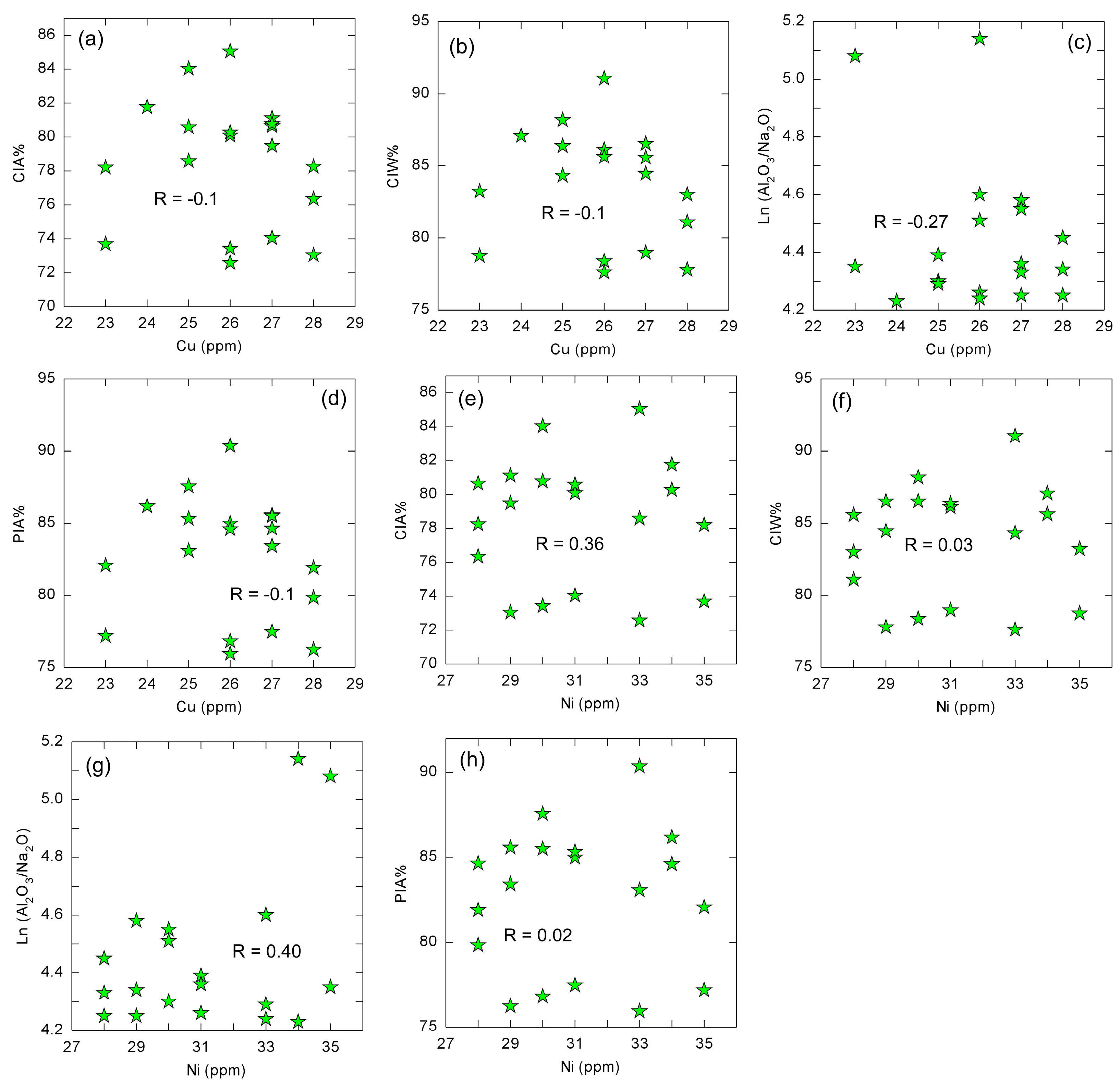
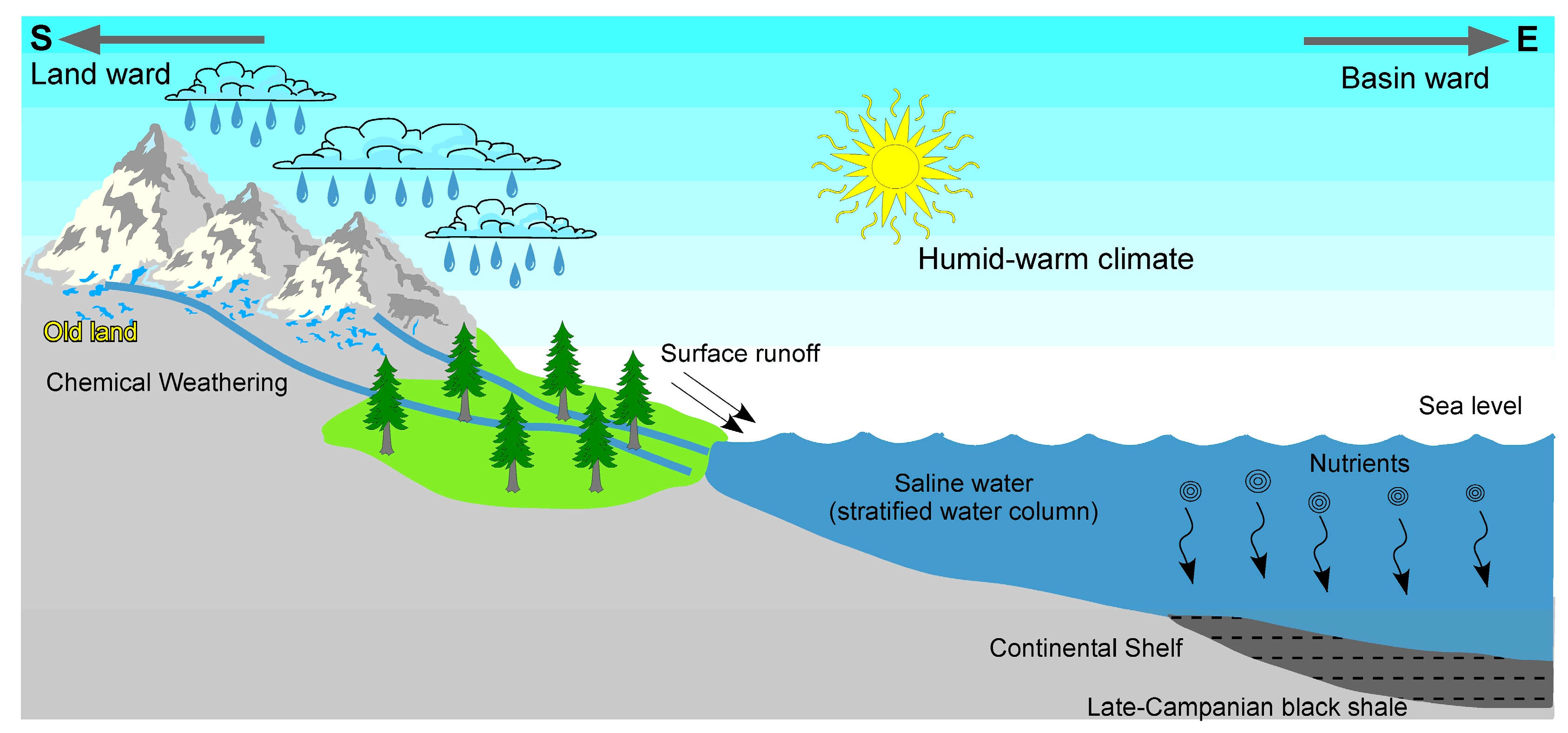
Weathering and riverine transport are important factors in nutrient transport to oceans [54]. The hydrological cycle accelerates chemical weathering and probably intensifies the ocean’s nutrient input. The nutrients, such as Ni and Cu, are weakly to negatively correlated with weathering proxies (Figure 9). This result indicates that chemical weathering has a negligible impact on nutrients. To sum up, paleoclimate and chemical weathering play a significant role during the deposition of Late Campanian black shale in the Tethys Ocean and enhance the detrital input (Figure 10). Furthermore, nutrient availability and salinity influence the deposition of this bed.
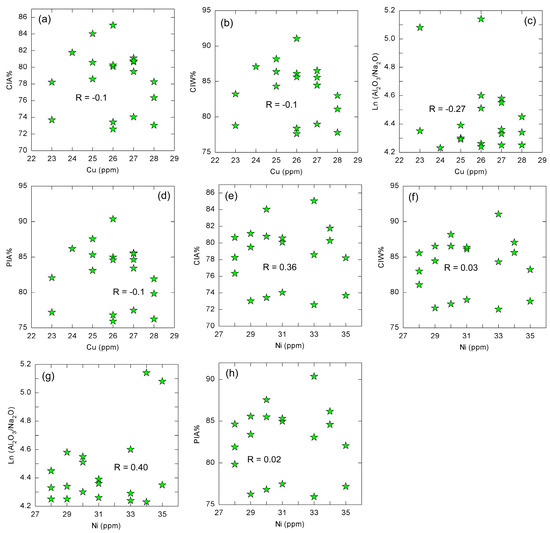
Figure 9.
Cross plots: (a) Cu vs. CIA; (b) Cu vs. CIW; (c) Cu vs. Ln (Al2O3/Na2O); (d) Cu vs. PIA; (e) Ni vs. CIA; (f) Ni vs. CIW; (g) Ni vs Ln (Al2O3/Na2O), and (h) Ni vs. PIA, showing the relation between nutrient fluxes and paleoweathering proxies for the Late Campanian black shale in the Western Desert of Egypt.
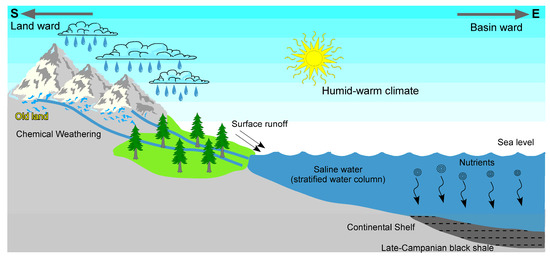
Figure 10.
Proposed deposition model for the late Campanian black shale in the Western Desert of Egypt.
6. Conclusion
The mineralogical, and geochemical data provide significant insights into the past environment conditions during the accumulation of the Late Campanian organic-rich shales on southern Tethys:
- 1-
- The Late Campanian black shale in the Abu Tartur area was deposited under a humid/warm climate based on geochemical proxies such as Sr/Cu, Ga/Rb, Rb/Sr, K2O/Al2O3, Fe/Mn, Mg/Ca, C-value, CIA, and CIW, as well as clay mineralogy.
- 2-
- The paleoweathering indices, such as CIA, PIA, CIW, and Ln Al2O3/Na2O, indicate that the studied samples experienced moderate chemical weathering.
- 3-
- The Campanian black shales were deposited under highly saline conditions with sufficient nutrient input.
- 4-
- The hydrographic settings played a fundamental role during late Campanian black shale sedimentation and improve the chemical weathering. Meanwhile, the climate has little influence on seawater salinity. Additionally, paleoweathering has a negligible impact on the nutrient inputs during the deposition of Late Campanian black shales.
Author Contributions
Conceptualization, D.F. and M.S.; methodology, M.W.; software, M.S.; validation, D.F., M.S. and M.S.A.; formal analysis, R.A. and S.G.; investigation, D.F.; resources, M.S.; data curation, D.F.; writing—original draft preparation, D.F.; writing—review and editing, D.F. and M.S.; visualization, S.G.; funding acquisition, M.S.A. All authors have read and agreed to the published version of the manuscript.
Funding
This research was funded by Researchers Supporting Project number (RSP 2023R455), King Saud University, Riyadh, Saudi Arabia.
Data Availability Statement
Not applicable.
Acknowledgments
The authors would like to thank Theodoros Ntaflos for his help to accomplish this work. Maria Meszar is also acknowledged for providing substantial laboratory assistance. This work is funded by Researchers Supporting Project number (RSP 2023R455), King Saud University, Riyadh, Saudi Arabia. We thank the two anonymous reviewers who provided insightful comments that enhanced this manuscript.
Conflicts of Interest
The authors declare no conflict of interest.
References
- Keller, G. Cretaceous climate, volcanism, impacts, and biotic effects. Cretac. Res. 2008, 29, 754–771. [Google Scholar] [CrossRef]
- Miller, K.G.; Wright, J.D.; Browning, J.V. Visions of ice sheets in a greenhouse world. Mar. Geol. 2005, 217, 215–231. [Google Scholar] [CrossRef]
- Peizhen, Z.; Molnar, P.; Downs, W.R. Increased sedimentation rates and grain sizes 2–4 Myr ago due to the influence of climate change on erosion rates. Nature 2001, 410, 891–897. [Google Scholar] [CrossRef] [PubMed]
- Zhang, B.; Cheng, W.; Zhang, Q.; Li, Y.; Sun, P.; Fathy, D. Occurrence Patterns and Enrichment Influencing Factors of Trace Elements in Paleogene Coal in the Fushun Basin, China. ACS Earth Space Chem. 2022, 6, 3031–3042. [Google Scholar] [CrossRef]
- Raymo, M.E.; Ruddiman, W.F.; Froelich, P.N. Influence of late Cenozoic mountain building on ocean geochemical cycles. Geology 1988, 16, 649–653. [Google Scholar] [CrossRef]
- Armstrong, H.A.; Abbott, G.D.; Turner, B.R.; Makhlouf, I.M.; Muhammad, A.B.; Pedentchouk, N.; Peters, H. Black shale deposition in an Upper Ordovician–Silurian permanently stratified, peri-glacial basin, southern Jordan. Palaeogeogr. Palaeoclimatol. Palaeoecol. 2009, 273, 368–377. [Google Scholar] [CrossRef]
- Fathy, D.; Wagreich, M.; Sami, M. Geochemical Evidence for Photic Zone Euxinia During Greenhouse Climate in the Tethys Sea, Egypt. In Geophysics, Tectonics and Petroleum Geosciences. CAJG 2019. Advances in Science, Technology and Innovation; Springer: Cham, Switzerland, 2022; pp. 373–374. [Google Scholar] [CrossRef]
- Glenn, C.R.; Arthur, M.A. Anatomy and origin of a Cretaceous phosphorite-greensand giant, Egypt. Sedimentology 1990, 37, 123–154. [Google Scholar] [CrossRef]
- Lasheen, E.S.R.; Zakaly, H.M.H.; Alotaibi, B.M.; Saadawi, D.A.; Ene, A.; Fathy, D.; Awad, H.A.; El Attar, R.M. Radiological Risk Parameters of the Phosphorite Deposits, Gebel Qulu El Sabaya: Natural Radioactivity and Geochemical Characteristics. Minerals 2022, 12, 1385. [Google Scholar] [CrossRef]
- Banerjee, S.; Farouk, S.; Nagm, E.; Choudhury, T.R.; Meena, S.S. High Mg-glauconite in the Campanian Duwi Formation of Abu Tartur Plateau, Egypt and its implications. J. Afr. Earth Sci. 2019, 156, 12–25. [Google Scholar] [CrossRef]
- El-Azabi, M.H.; Farouk, S. High-resolution sequence stratigraphy of the Maastrichtian-Ypresian succession along the eastern scarp face of Kharga Oasis, southern Western Desert, Egypt. Sedimentology 2011, 58, 579–617. [Google Scholar] [CrossRef]
- Fathy, D.; Wagreich, M.; Ntaflos, T.; Sami, M. Provenance Characterization of Campanian Lacustrine Organic-Rich Mudstones on the Southern Tethyan Margin, Egypt. ACS Earth Space Chem. 2021, 5, 197–209. [Google Scholar] [CrossRef]
- Van Houten, F.B.; Bhattacharyya, D.P.; Mansour, S.E.I. Cretaceous Nubia Formation and correlative deposits, eastern Egypt: Major regressive-transgressive complex. Geol. Soc. Am. Bull. 1984, 95, 397. [Google Scholar] [CrossRef]
- El Ayyat, A.M. Lithostratigraphy, sedimentology, and cyclicity of the Duwi Formation (late Cretaceous) at Abu Tartur plateau, Western Desert of Egypt: Evidences for reworking and redeposition. Arab. J. Geosci. 2015, 8, 99–124. [Google Scholar] [CrossRef]
- Brown, G.; Brindley, G.W. X-ray Diffraction Procedures for Clay Mineral Identification. In Crystal Structures of Clay Minerals and their X-ray Identification; Brindley, G.W., Brown, G., Eds.; Mineralogical Society of Great Britain and Ireland: London, UK, 1980; Volume 5. [Google Scholar]
- Moore, D.M.; Reynolds, R.C., Jr. X-ray Diffraction and the Identification and Analysis of Clay Minerals; Oxford University Press (OUP): Oxford, UK, 1989. [Google Scholar]
- Schultz, L.G. Quantitative Interpretation of Mineralogical Composition from X-ray and Chemical Data for the Pierre Shale; US Geological Survey Professional Paper 391-C; U.S. Government Printing Office: Washington, DC, USA, 1964.
- Sami, M.; El Monsef, M.A.; Abart, R.; Toksoy-Köksal, F.; Abdelfadil, K.M. Unraveling the Genesis of Highly Fractionated Rare-Metal Granites in the Nubian Shield via the Rare-Earth Elements Tetrad Effect, Sr–Nd Isotope Systematics, and Mineral Chemistry. ACS Earth Space Chem. 2022, 6, 2368–2384. [Google Scholar] [CrossRef]
- Lerman, A.; Imboden, D.M.; Gat, J.R.; Chou, L. Physics and Chemistry of Lakes; Springer: Berlin, Germany, 1995. [Google Scholar]
- Fathy, D.; Wagreich, M.; Gier, S.; Mohamed, R.S.A.; Zaki, R.; El Nady, M.M. Maastrichtian oil shale deposition on the southern Tethys margin, Egypt: Insights into greenhouse climate and paleoceanography. Palaeogeogr. Palaeoclimatol. Palaeoecol. 2018, 505, 18–32. [Google Scholar] [CrossRef]
- Xu, J.; Liu, Z.; Bechtel, A.; Meng, Q.; Sun, P.; Jia, J.; Cheng, L.; Song, Y. Basin evolution and oil shale deposition during Upper Cretaceous in the Songliao Basin (NE China): Implications from sequence stratigraphy and geochemistry. Int. J. Coal Geol. 2015, 149, 9–23. [Google Scholar] [CrossRef]
- Cao, J.; Wu, M.; Chen, Y.; Hu, K.; Bian, L.; Wang, L.; Zhang, Y. Trace and rare earth element geochemistry of Jurassic mudstones in the northern Qaidam Basin, northwest China. Geochemistry 2012, 72, 245–252. [Google Scholar] [CrossRef]
- Fathy, D.; Wagreich, M.; Ntaflos, T.; Sami, M. Paleoclimatic variability in the southern Tethys, Egypt: Insights from the mineralogy and geochemistry of Upper Cretaceous lacustrine organic-rich deposits. Cretac. Res. 2021, 126, 104880. [Google Scholar] [CrossRef]
- Qiu, X.; Liu, C.; Mao, G.; Deng, Y.; Wang, F.; Wang, J. Major, trace and platinum-group element geochemistry of the Upper Triassic nonmarine hot shales in the Ordos basin, Central China. Appl. Geochem. 2015, 53, 42–52. [Google Scholar] [CrossRef]
- Nesbitt, H.W.; Young, G.M. Early Proterozoic climates and plate motions inferred from major element chemistry of lutites. Nature 1982, 299, 715–717. [Google Scholar] [CrossRef]
- McLennan, S.M.; Hemming, S.; McDaniel, D.K.; Hanson, G.N.; Johnsson, M.J.; Basu, A. Geochemical approaches to sedimentation, provenance, and tectonics. In Processes Controlling the Composition of Clastic Sediments; Geological Society of America: Boulder, CO, USA, 1993; Volume 284. [Google Scholar]
- Harnois, L. The CIW index: A new chemical index of weathering. Sediment. Geol. 1988, 55, 319–322. [Google Scholar] [CrossRef]
- Fedo, C.M.; Wayne Nesbitt, H.; Young, G.M. Unraveling the effects of potassium metasomatism in sedimentary rocks and paleosols, with implications for paleoweathering conditions and provenance. Geology 1995, 23, 921–924. [Google Scholar] [CrossRef]
- Deng, H.; Qian, K. Sedimentary geochemistry and environmental analysis. Gansu Sci. Technol. Press Lanzhou 1993, 18–31. [Google Scholar]
- Taylor, S.R.; McLennan, S.M. The Continental Crust: Its Composition and Evolution; Blackwell Scientific Pub.: Palo Alto, CA, USA, 1985; p. 328. [Google Scholar]
- Gaillardet, J.; Dupré, B.; Louvat, P.; Allègre, C.J. Global silicate weathering and CO2 consumption rates deduced from the chemistry of large rivers. Chem. Geol. 1999, 159, 3–30. [Google Scholar] [CrossRef]
- Suttner, L.J.; Dutta, P.K. Alluvial sandstone composition and paleoclimate, I. Framework mineralogy. J. Sediment. Res. 1986, 56. [Google Scholar]
- Martinez-Ruiz, F.; Kastner, M.; Gallego-Torres, D.; Rodrigo-Gámiz, M.; Nieto-Moreno, V.; Ortega-Huertas, M. Paleoclimate and paleoceanography over the past 20,000 yr in the Mediterranean Sea Basins as indicated by sediment elemental proxies. Quat. Sci. Rev. 2015, 107, 25–46. [Google Scholar] [CrossRef]
- Hieronymus, B.; Kotschoubey, B.; Boulègue, J. Gallium behaviour in some contrasting lateritic profiles from Cameroon and Brazil. J. Geochem. Explor. 2001, 72, 147–163. [Google Scholar] [CrossRef]
- Roy, D.K.; Roser, B.P. Climatic control on the composition of Carboniferous–Permian Gondwana sediments, Khalaspir basin, Bangladesh. Gondwana Res 2013, 23, 1163–1171. [Google Scholar] [CrossRef]
- He, J.; Ding, W.; Jiang, Z.; Jiu, K.; Li, A.; Sun, Y. Mineralogical and chemical distribution of the Es3L oil shale in the Jiyang Depression, Bohai Bay Basin (E China): Implications for paleoenvironmental reconstruction and organic matter accumulation. Mar. Pet. Geol. 2017, 81, 196–219. [Google Scholar] [CrossRef]
- Li, Q.; Wu, S.; Xia, D.; You, X.; Zhang, H.; Lu, H. Major and trace element geochemistry of the lacustrine organic-rich shales from the Upper Triassic Chang 7 Member in the southwestern Ordos Basin, China: Implications for paleoenvironment and organic matter accumulation. Mar. Pet. Geol. 2020, 111, 852–867. [Google Scholar] [CrossRef]
- Deng, T.; Li, Y.; Wang, Z.; Yu, Q.; Dong, S.; Yan, L.; Hu, W.; Chen, B. Geochemical characteristics and organic matter enrichment mechanism of black shale in the Upper Triassic Xujiahe Formation in the Sichuan basin: Implications for paleoweathering, provenance and tectonic setting. Mar. Pet. Geol. 2019, 109, 698–716. [Google Scholar] [CrossRef]
- Zaid, S.M.; El-Badry, O.A.; Akarish, A.M.; Mohamed, M.A. Provenance, weathering, and paleoenvironment of the Upper Cretaceous Duwi black shales, Aswan Governorate, Egypt. Arab. J. Geosci. 2018, 11, 1–17. [Google Scholar] [CrossRef]
- Singer, A. The paleoclimatic interpretation of clay minerals in sediments—A review. Earth-Sci. Rev. 1984, 21, 251–293. [Google Scholar] [CrossRef]
- Liu, Z.; Colin, C.; Huang, W.; Le, K.P.; Tong, S.; Chen, Z.; Trentesaux, A. Climatic and tectonic controls on weathering in south China and Indochina Peninsula: Clay mineralogical and geochemical investigations from the Pearl, Red, and Mekong drainage basins. Geochem. Geophys. Geosystems 2007, 8, 1–18. [Google Scholar] [CrossRef]
- Fathy, D.; Wagreich, M.; Zaki, R.; Mohamed, R.S.A.; Gier, S. Geochemical fingerprinting of Maastrichtian oil shales from the Central Eastern Desert, Egypt: Implications for provenance, tectonic setting, and source area weathering. Geol. J. 2018, 53, 2597–2612. [Google Scholar] [CrossRef]
- Nesbitt, H.W.; Young, G.M. Prediction of some weathering trends of plutonic and volcanic rocks based on thermodynamic and kinetic considerations. Geochim. Et Cosmochim. Acta 1984, 48, 1523–1534. [Google Scholar] [CrossRef]
- Armstrong-Altrin, J.S.; Lee, Y.I.; Verma, S.P.; Ramasamy, S. Geochemistry of Sandstones from the Upper Miocene Kudankulam Formation, Southern India: Implications for Provenance, Weathering, and Tectonic Setting. J. Sediment. Res. 2004, 74, 285–297. [Google Scholar] [CrossRef]
- Ma, Y.; Fan, M.; Lu, Y.; Liu, H.; Hao, Y.; Xie, Z.; Liu, Z.; Peng, L.; Du, X.; Hu, H. Climate-driven paleolimnological change controls lacustrine mudstone depositional process and organic matter accumulation: Constraints from lithofacies and geochemical studies in the Zhanhua Depression, eastern China. Int. J. Coal Geol. 2016, 167, 103–118. [Google Scholar] [CrossRef]
- Condie, K.C. Chemical composition and evolution of the upper continental crust: Contrasting results from surface samples and shales. Chem. Geol. 1993, 104, 1–37. [Google Scholar] [CrossRef]
- Wang, A.; Wang, Z.; Liu, J.; Xu, N.; Li, H. The Sr/Ba ratio response to salinity in clastic sediments of the Yangtze River Delta. Chem. Geol. 2021, 559, 119923. [Google Scholar] [CrossRef]
- Wei, W.; Algeo, T.J. Elemental proxies for paleosalinity analysis of ancient shales and mudrocks. Geochim. Et Cosmochim. Acta 2020, 287, 341–366. [Google Scholar] [CrossRef]
- Zerkle, A.L.; House, C.H.; Brantley, S.L. Biogeochemical signatures through time as inferred from whole microbial genomes. Am. J. Sci. 2005, 305, 467–502. [Google Scholar] [CrossRef]
- Algeo, T.J.; Ingall, E. Sedimentary Corg:P ratios, paleocean ventilation, and Phanerozoic atmospheric pO2. Palaeogeogr. Palaeoclimatol. Palaeoecol. 2007, 256, 130–155. [Google Scholar] [CrossRef]
- Zhao, J.; Jin, Z.; Jin, Z.; Geng, Y.; Wen, X.; Yan, C. Applying sedimentary geochemical proxies for paleoenvironment interpretation of organic-rich shale deposition in the Sichuan Basin, China. Int. J. Coal Geol. 2016, 163, 52–71. [Google Scholar] [CrossRef]
- Wagner, T.; Hofmann, P.; Flögel, S. Marine black shale deposition and Hadley Cell dynamics: A conceptual framework for the Cretaceous Atlantic Ocean. Mar. Pet. Geol. 2013, 43, 222–238. [Google Scholar] [CrossRef]
- Yan, D.; Wang, H.; Fu, Q.; Chen, Z.; He, J.; Gao, Z. Organic matter accumulation of Late Ordovician sediments in North Guizhou Province, China: Sulfur isotope and trace element evidences. Mar. Pet. Geol. 2015, 59, 348–358. [Google Scholar] [CrossRef]
- Guidry, M.W.; Mackenzie, F.T. Apatite weathering and the Phanerozoic phosphorus cycle. Geology 2000, 28, 631–634. [Google Scholar] [CrossRef]
Disclaimer/Publisher’s Note: The statements, opinions and data contained in all publications are solely those of the individual author(s) and contributor(s) and not of MDPI and/or the editor(s). MDPI and/or the editor(s) disclaim responsibility for any injury to people or property resulting from any ideas, methods, instructions or products referred to in the content. |
© 2023 by the authors. Licensee MDPI, Basel, Switzerland. This article is an open access article distributed under the terms and conditions of the Creative Commons Attribution (CC BY) license (https://creativecommons.org/licenses/by/4.0/).