“Clearer” or More “Blurred”? The Evolution of Urban–Rural Boundaries Since the Proposal of Urban–Rural Integrated Development: A Case Study of Zhengzhou

 , and
, and
Abstract
1. Introduction
2. Materials and Methods
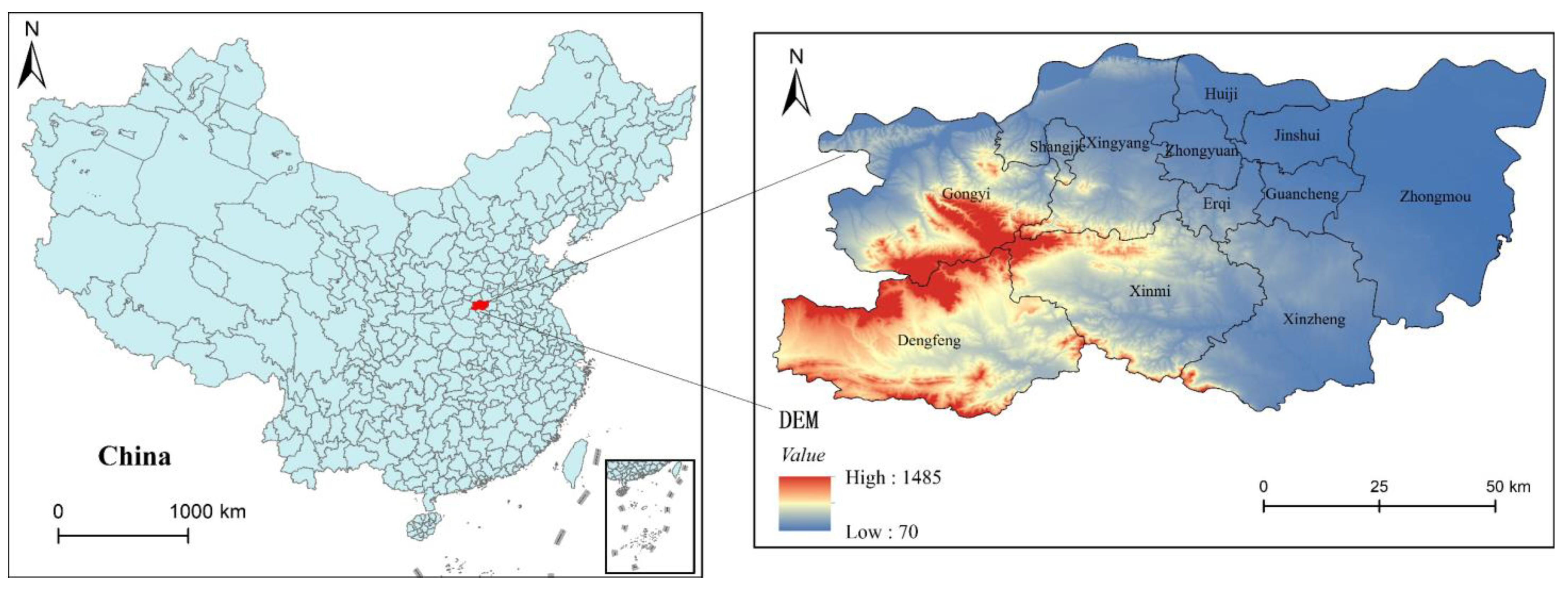
2.1. Study Area
2.2. Study Data
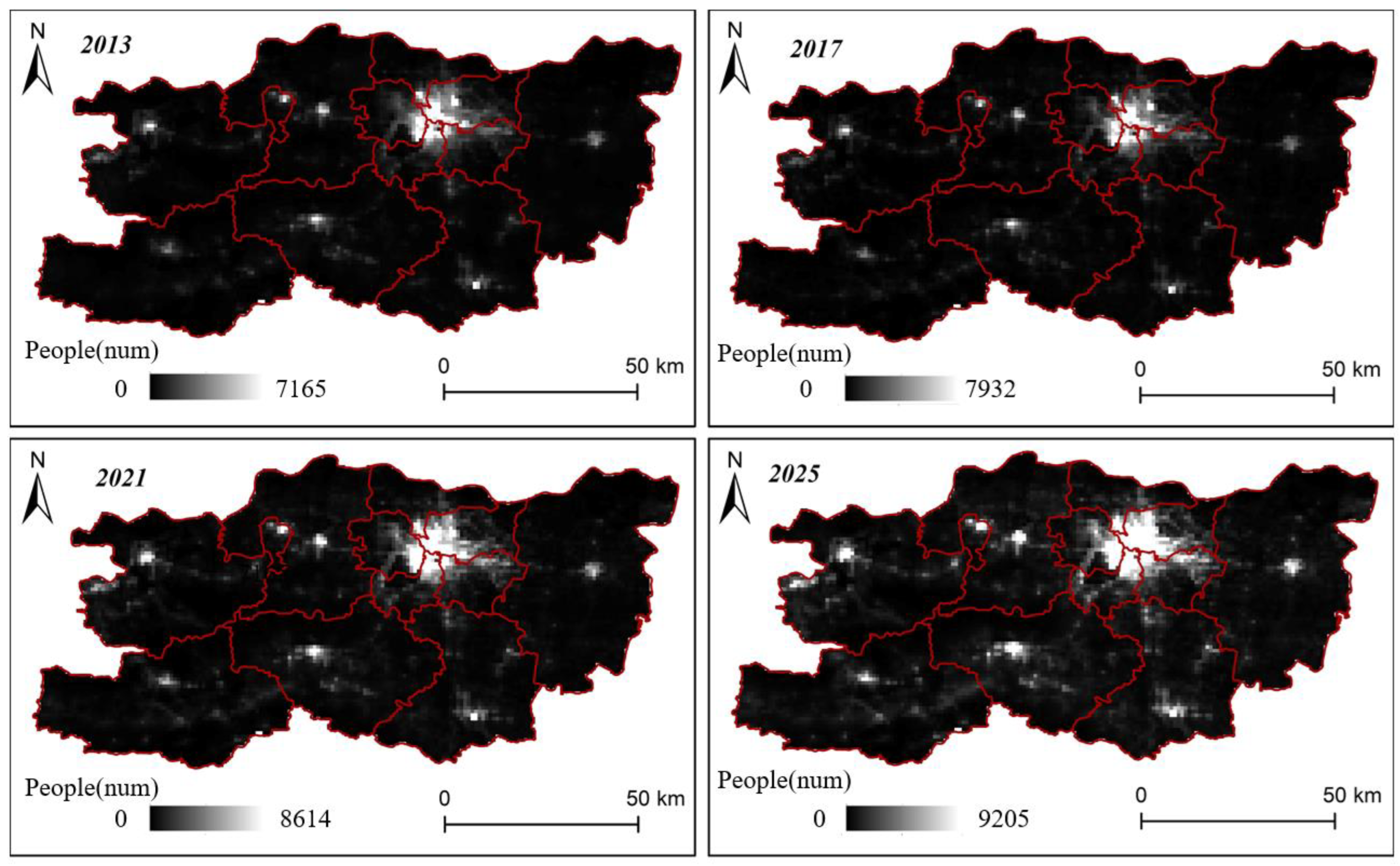
2.2.1. LandScan Data
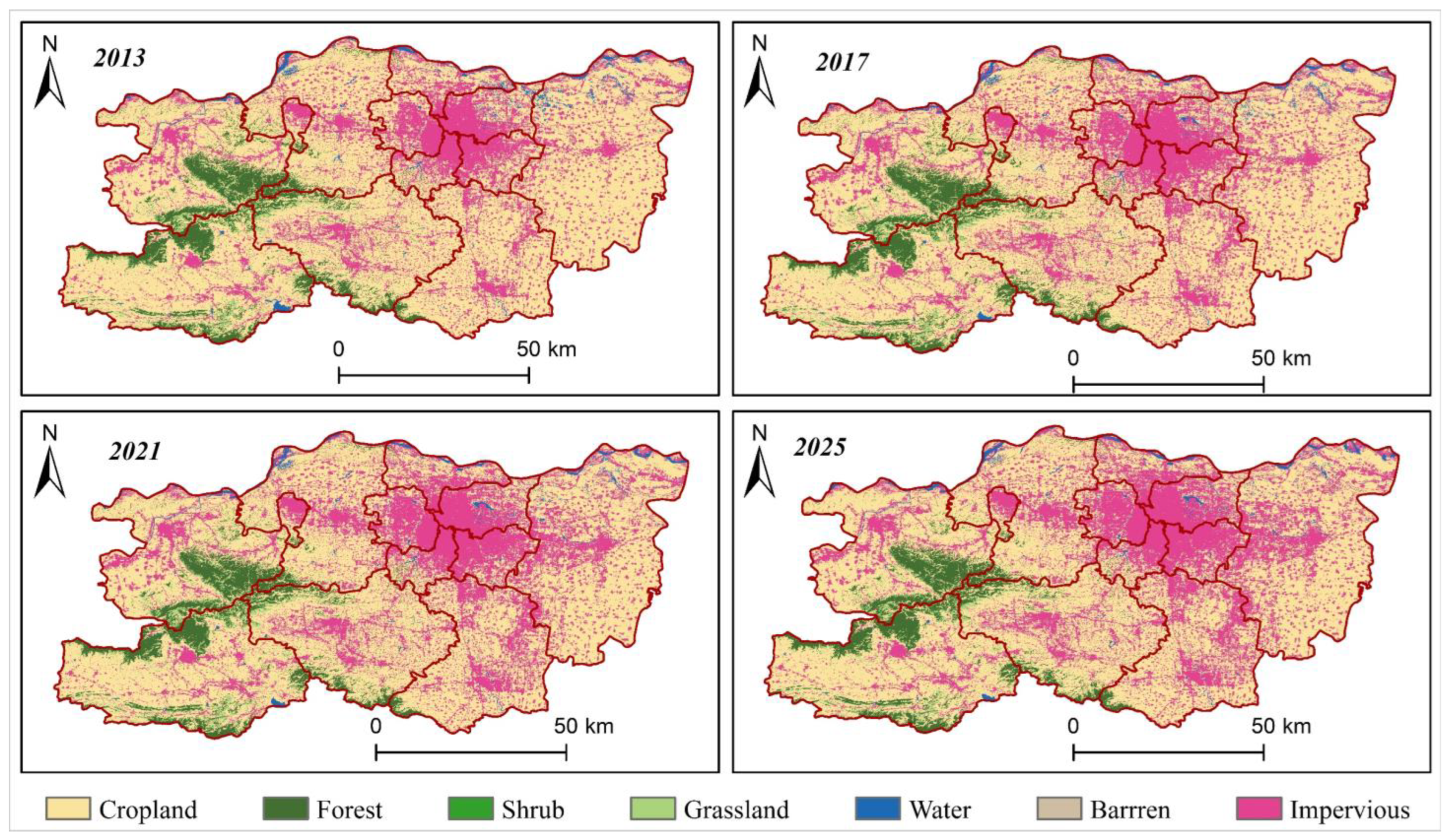
2.2.2. Land-Use Data
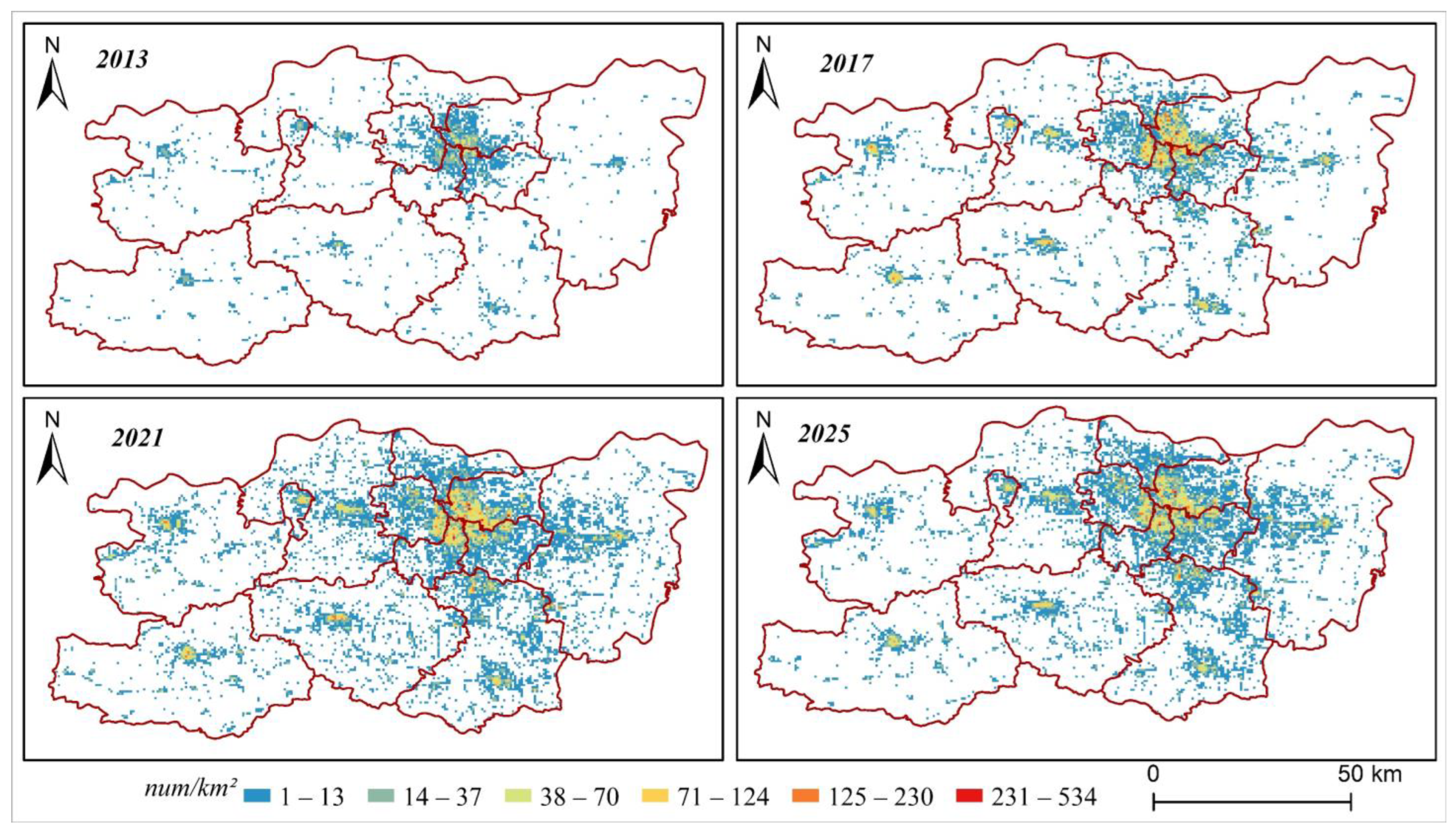
2.2.3. POI Data
2.3. Methods
2.3.1. Land Continuity Index
2.3.2. Shannon Index
2.3.3. Gaussian Smoothing Index
2.3.4. Urban–Rural Fuzziness Index (URFI)
3. Results
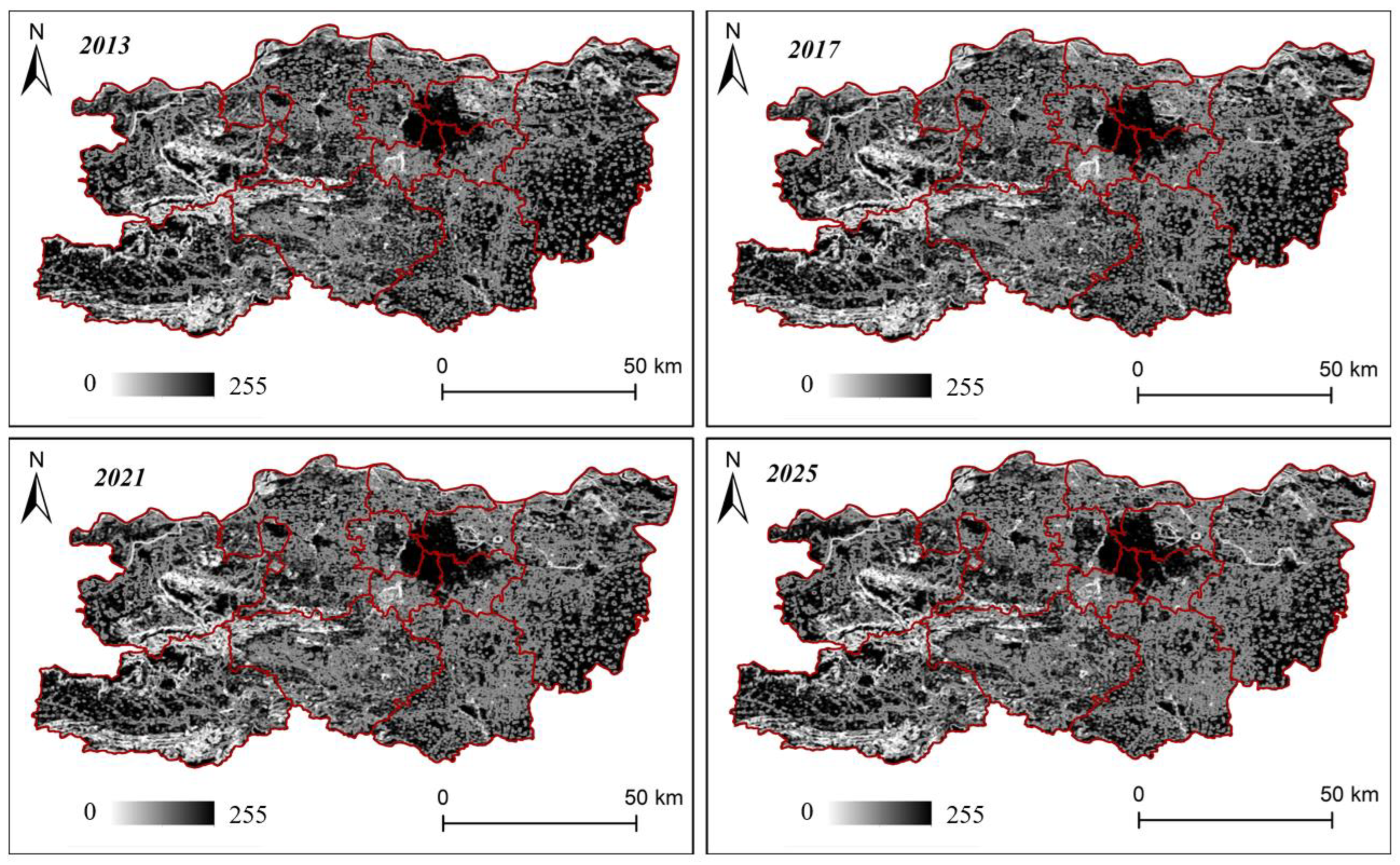
3.1. Analysis of Urban–Rural Boundaries Based on Land-Use Data
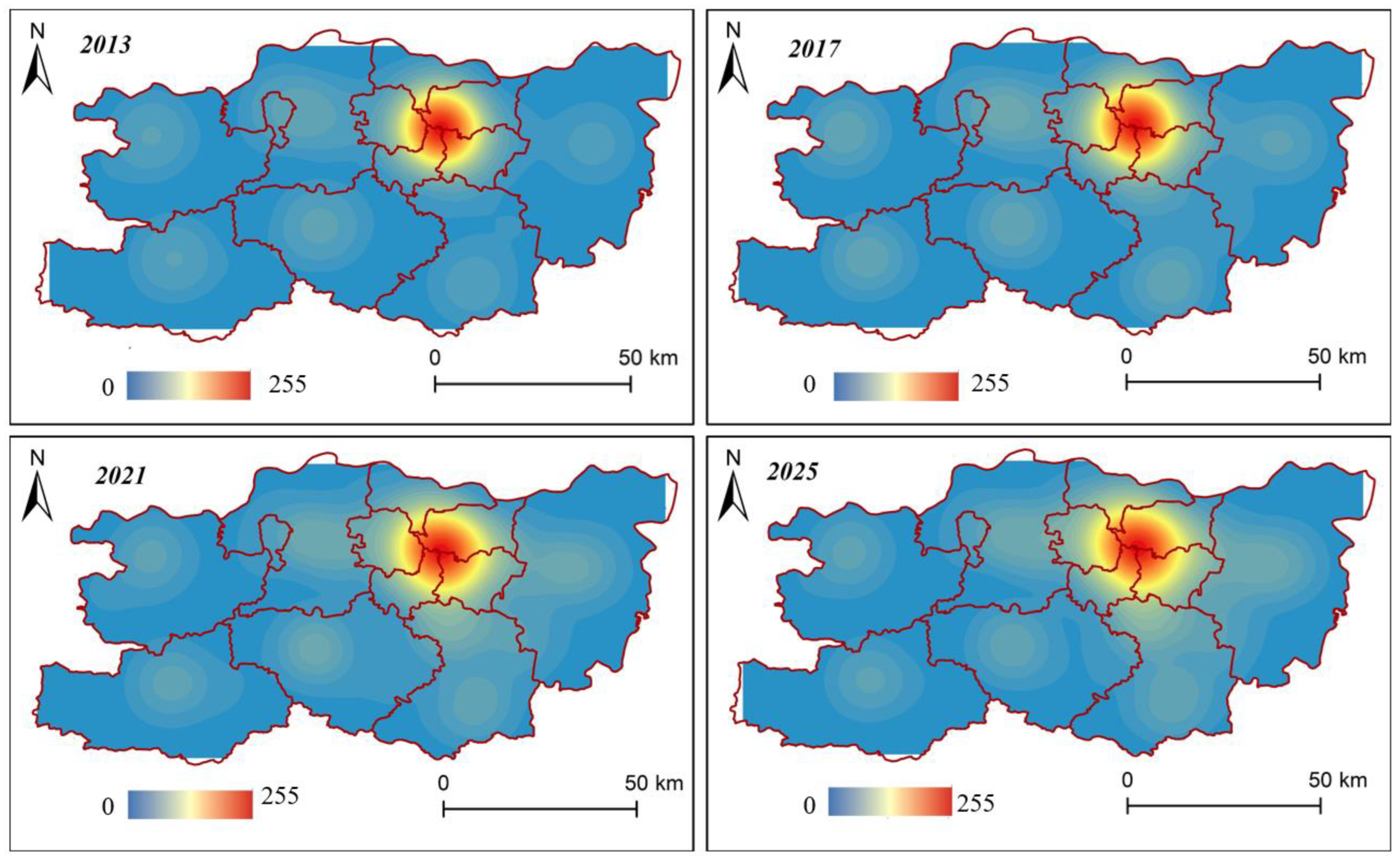
3.2. Analysis of Urban–Rural Boundaries Based on POI Data
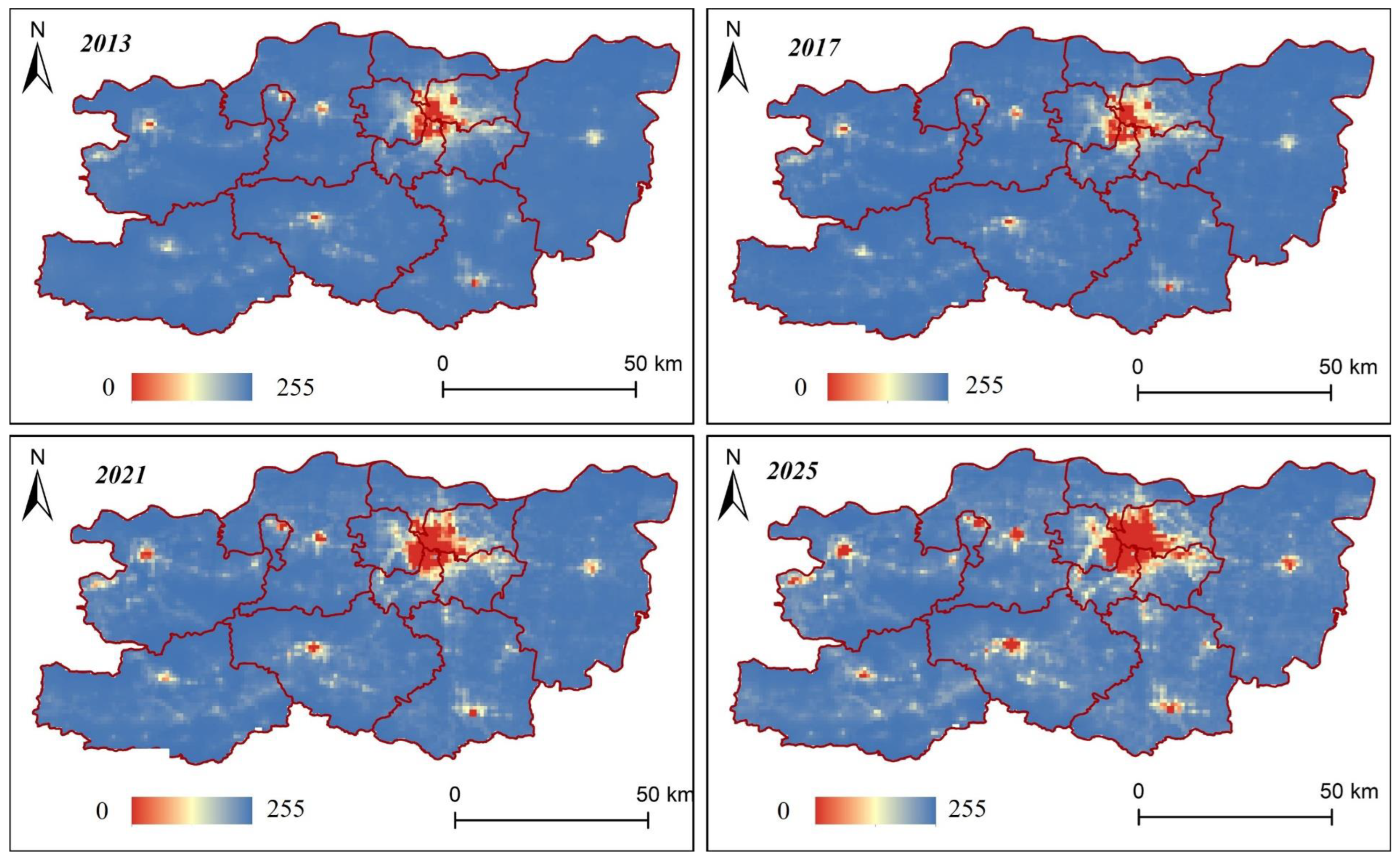
3.3. Analysis of Urban–Rural Boundaries Based on LandScan Data
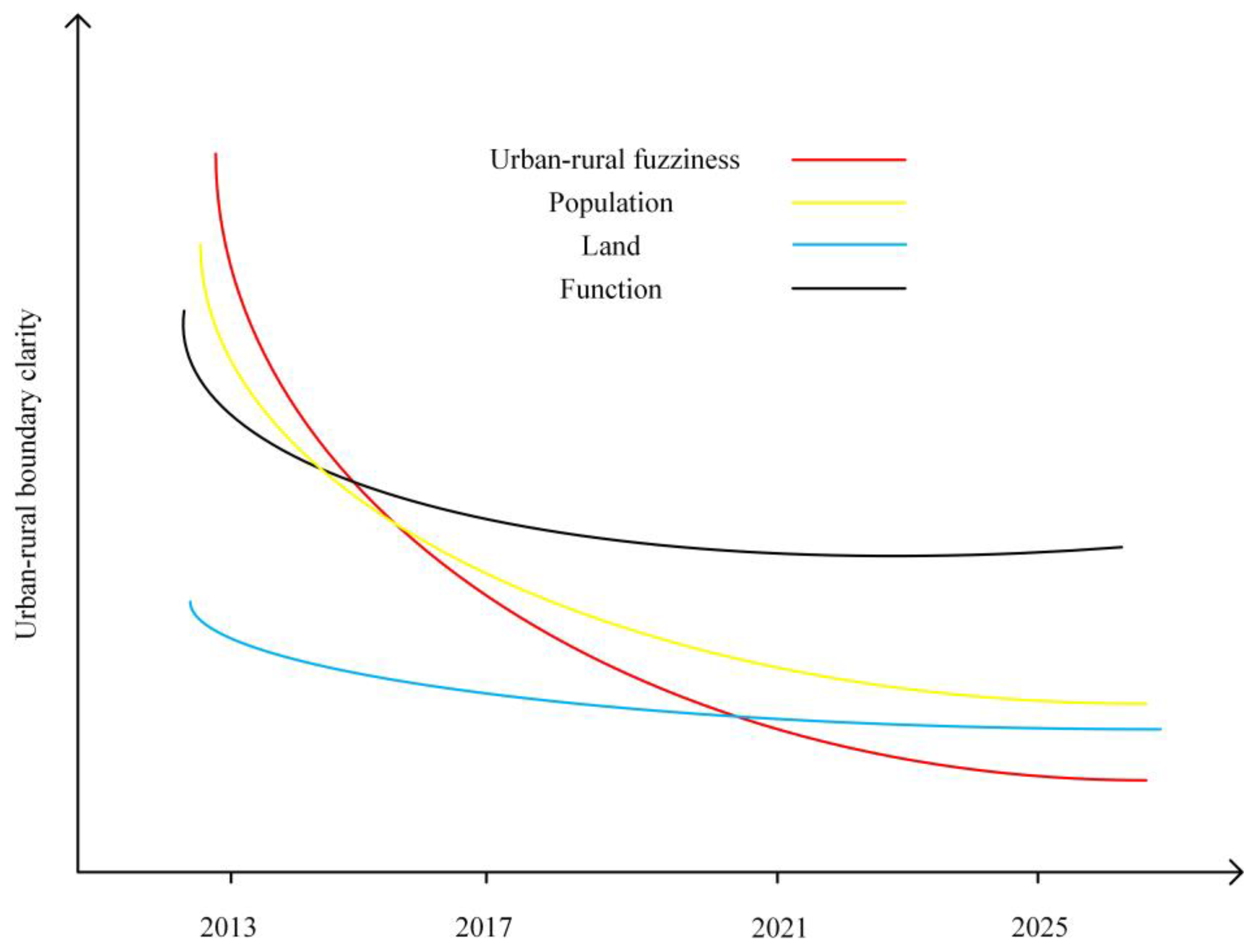
3.4. Analysis of Urban–Rural Boundaries Based on Urban–Rural Fuzziness
4. Discussion
5. Conclusions
Author Contributions
Funding
Data Availability Statement
Conflicts of Interest
References
- Brandner, E.; Mayer, H. The Diverse Powers of Urban–Rural Linkages: A Growth-Critical Review. Geogr. Compass 2025, 19, e70045. [Google Scholar] [CrossRef]
- Massey, D. For Space; SAGE Publications Ltd.: Thousand Oaks, CA, USA, 2005. [Google Scholar]
- Lin, M. The urban-rural continuum: A new approach to the future planning for rural China. Eur. J. Sustain. Dev. 2020, 9, 100. [Google Scholar] [CrossRef]
- Chen, K.Z.; Mao, R.; Zhou, Y. Rurbanomics for common prosperity: New approach to integrated urban-rural development. China Agric. Econ. Rev. 2023, 15, 1–16. [Google Scholar] [CrossRef]
- Chen, M.; Zhou, Y.; Huang, X.; Ye, C. The integration of new-type urbanization and rural revitalization strategies in China: Origin, reality and future trends. Land 2021, 10, 207. [Google Scholar] [CrossRef]
- Liu, H.; Chen, W.; Sun, S.; Yu, J.; Zhang, Y.; Ye, C. Revisiting China’s urban transition from the perspective of urbanisation: A critical review and analysis. Sustainability 2024, 16, 4122. [Google Scholar] [CrossRef]
- Lu, Q.; Yao, S. From urban–rural division to urban–rural integration: A systematic cost explanation and Chengdu’s experience. China World Econ. 2018, 26, 86–105. [Google Scholar] [CrossRef]
- Meriggi, M.; Lin, M.; Chu, X.; Chen, K. Learning from the countryside: Designing in Chinese rural-urban areas. J. Chin. Archit. Urban. 2023, 5, 1–21. [Google Scholar] [CrossRef]
- Ma, L.; Liu, S.; Fang, F.; Che, X.; Chen, M. Evaluation of urban-rural difference and integration based on quality of life. Sustain. Cities Soc. 2020, 54, 101877. [Google Scholar] [CrossRef]
- He, Y.; Wen, C.; Fang, X.; Sun, X. Impacts of urban-rural integration on landscape patterns and their implications for landscape sustainability: The case of Changsha, China. Landsc. Ecol. 2024, 39, 129. [Google Scholar] [CrossRef]
- Tian, J.; Ma, J.; Zeng, S.; Bai, Y. Characteristics and Driving Factors of the Spatial and Temporal Evolution of County Urban–Rural Integration—Evidence from the Beijing–Tianjin–Hebei Region, China. Land 2025, 14, 1563. [Google Scholar] [CrossRef]
- Li, Y.; Xiong, C.; Song, Y. How do population flows promote urban–rural integration? Addressing migrants’ farmland arrangement and social integration in China’s urban agglomeration regions. Land 2022, 11, 86. [Google Scholar] [CrossRef]
- Zhang, S.; Sun, K.; Zhao, H.; Yao, H.; Shen, L. Research on the construction and practice of an urban–rural integration planning model from the perspective of element flow: A case study of Xiuzhou District, Jiaxing City. Land 2025, 14, 1067. [Google Scholar] [CrossRef]
- Tang, C.; Liu, Y.; Wan, Z.; Liang, W. Evaluation system and influencing paths for the integration of culture and tourism in traditional villages. J. Geogr. Sci. 2023, 33, 2489–2510. [Google Scholar] [CrossRef]
- Xiang, B.; Chen, Y.; Zhang, Y. Effects of the pilot policy on integrated urban-rural development in China: A quasi-natural experiment analysis. Cities 2026, 168, 106420. [Google Scholar] [CrossRef]
- Wang, Y.; Tian, L.; Wang, Z.; Wang, C.; Gao, Y. Effects of Transfer of Land Development Rights on Urban–Rural Integration: Theoretical Framework and Evidence from Chongqing, China. Land 2023, 12, 2045. [Google Scholar] [CrossRef]
- Liu, H.; Liu, X. Research on the impact of urban-rural integration on rural land use efficiency in China. Front. Environ. Sci. 2025, 13, 1626893. [Google Scholar] [CrossRef]
- Zheng, Y.; Tan, J.; Huang, Y.; Wang, Z. The governance path of urban–rural integration in changing urban–rural relationships in the metropolitan area: A case study of Wuhan, China. Land 2022, 11, 1334. [Google Scholar] [CrossRef]
- Zhang, C.; Fan, Y.; Fang, C. Orderly and synergistic development of urban-rural integration based on evolutionary game model: A case study in the Jiangxi Province, China. Land Use Policy 2024, 146, 107331. [Google Scholar] [CrossRef]
- Ran, H.; Liu, R.; Xing, L.; Zhao, Y.; Zhang, K. Can urban-rural public services drive the realization of sustainable development goals? An empirical study of a typical rural–urban integration pilot area in China. J. Rural Stud. 2025, 120, 103818. [Google Scholar] [CrossRef]
- Liu, B.; Qi, C.; Xue, B.; Yang, Z. Measuring urban–rural integration through the lenses of sustainability and social equity: Evidence from China. Habitat Int. 2025, 165, 103559. [Google Scholar] [CrossRef]
- Xiong, B.; Li, J. The Impact of Public Employment Services Efficiency on the Urban Rural Income Gap and Its Spatial Spillover Effect. Sustainability 2025, 17, 1012. [Google Scholar] [CrossRef]
- Qian, J. Improving policy design and building capacity in local experiments: Equalization of public service in China’s urban-rural integration pilot. Public Adm. Dev. 2017, 37, 51–64. [Google Scholar] [CrossRef]
- Wang, J.; Meng, F.; Dong, L.; Yu, S.; Zhang, Y. A comparative study on the identification methods of urban–rural integration zones from the perspective of symbiosis theory and urban expansion theory. Land 2023, 12, 1272. [Google Scholar] [CrossRef]
- Wang, W.; Zhu, Y. Impact of Labour Productivity Differences on Urban-Rural Integration Development and Its Spatial Effect: Evidence from a Spatial Durbin Model. Complexity 2022, 2022, 4675682. [Google Scholar] [CrossRef]
- Song, Z.; Yu, L. A study on the generalised space of urban–rural integration in Beijing suburbs during the present day. Urban Stud. 2015, 52, 2581–2598. [Google Scholar] [CrossRef]
- Lichter, D.T.; Brown, D.L. Rural America in an urban society: Changing spatial and social boundaries. Annu. Rev. Sociol. 2011, 37, 565–592. [Google Scholar] [CrossRef]
- Guo, C.; Xie, G.; Yu, W.; Zhou, W.; Pickett, S.T. An integrative social-ecological approach for urban boundary mapping. Appl. Geogr. 2025, 180, 103665. [Google Scholar] [CrossRef]
- Hiner, C.C. Beyond the edge and in between: (Re) conceptualizing the rural–urban interface as meaning–model–metaphor. Prof. Geogr. 2016, 68, 520–532. [Google Scholar] [CrossRef]
- Lichter, D.T.; Brown, D.L.; Parisi, D. The rural–urban interface: Rural and small town growth at the metropolitan fringe. Popul. Space Place 2021, 27, e2415. [Google Scholar] [CrossRef]
- Benti, S.; Terefe, H.; Callo-Concha, D. Managing the challenges of competing interests of different regions in setting the boundaries of neighboring urban areas: The case of Addis Ababa city administration and oromia regional state, Ethiopia. Heliyon 2022, 8, e11024. [Google Scholar] [CrossRef]
- He, X.; Zhang, L.; Zhao, X.; Yuan, X.; Yuan, Y.; Zhou, C. Patterns and Mechanisms of Relative Urban Spatial Growth in China from 2000 to 2020. Sustain. Cities Soc. 2025, 135, 107041. [Google Scholar] [CrossRef]
- Mortoja, M.G.; Yigitcanlar, T. Why is determining peri-urban area boundaries critical for sustainable urban development? J. Environ. Plan. Manag. 2022, 66, 67–96. [Google Scholar] [CrossRef]
- He, X.; Yuan, X.; Zhang, D.; Zhang, R.; Li, M.; Zhou, C. Delineation of urban agglomeration boundary based on multisource big data fusion—A case study of Guangdong–Hong Kong–Macao Greater Bay Area (GBA). Remote Sens. 2021, 13, 1801. [Google Scholar] [CrossRef]
- Ferreira, L.S.; di Giulio, G.; Chaves, R.B.; Lupinetti-Cunha, A.; Duarte, D.; Nascimento, N.; Ruggiero, P.; e Silva, L.S.; Victor, R.A.B.M.; Metzger, J.P. Urban boundaries are an underexplored frontier for ecological restoration. Sci. Rep. 2025, 15, 34829. [Google Scholar] [CrossRef] [PubMed]
- Alvioli, M. Administrative boundaries and urban areas in Italy: A perspective from scaling laws. Landsc. Urban Plan. 2020, 204, 103906. [Google Scholar] [CrossRef] [PubMed]
- Luqman, M.; Rayner, P.J.; Gurney, K.R. Combining measurements of built-up area, nighttime light, and travel time distance for detecting changes in urban boundaries: Introducing the BUNTUS algorithm. Remote Sens. 2019, 11, 2969. [Google Scholar] [CrossRef]
- He, X.; Zhou, Y.; Yuan, Y. Exploring the relationship between urban polycentricity and consumer amenity development: An empirical study using Dianping Data in China. Cities 2025, 166, 106197. [Google Scholar] [CrossRef]
- Lin, X.; Yang, T.; Law, S. From points to patterns: An explorative POI network study on urban functional distribution. Comput. Environ. Urban Syst. 2025, 117, 102246. [Google Scholar] [CrossRef]
- Duan, H.; Du, F.; Zhang, Y.; Jiang, X.; Chen, B. An urban-rural Fringe extraction method based on Combined Urban-rural Fringe Index (CUFI). Geocarto Int. 2024, 39, 2311211. [Google Scholar] [CrossRef]
- Small, C.; Pozzi, F.; Elvidge, C.D. Spatial analysis of global urban extent from DMSP-OLS night lights. Remote Sens. Environ. 2005, 96, 277–291. [Google Scholar] [CrossRef]
- Li, Y.; Westlund, H.; Cars, G. Future urban-rural relationship in China: Comparison in a global context. China Agric. Econ. Rev. 2010, 2, 396–411. [Google Scholar] [CrossRef]
- Urso, G. Metropolisation and the challenge of rural-urban dichotomies. Urban Geogr. 2021, 42, 37–57. [Google Scholar] [CrossRef]
- Zhang, A. Analysis of the Sustainable Development Pathway of Urban–Rural Integration from the Perspective of Spatial Planning: A Case Study of the Urban–Rural Fringe of Beijing. Sustainability 2025, 17, 1857. [Google Scholar] [CrossRef]
- Lang, W.; Chen, T.; Li, X. A new style of urbanization in China: Transformation of urban rural communities. Habitat Int. 2016, 55, 1–9. [Google Scholar] [CrossRef]
- Karkun Sen, S.; Pearsall, H.; Gutierrez-Velez, V.H.; Gilbert, M.R. Measuring equity through spatial variability of infrastructure systems across the urban-rural gradient. Land 2021, 10, 1202. [Google Scholar] [CrossRef]
- Wang, M.; de Vries, W.T.; Sang, W.; Bao, H.; Lyu, Y.; Liu, S. A Method for Delineating Urban Development Boundaries Based on the Urban–Rural Integration Perspective. Land 2025, 14, 859. [Google Scholar] [CrossRef]
- Peng, J.; Hu, Y.N.; Liu, Y.; Ma, J.; Zhao, S. A new approach for urban-rural fringe identification: Integrating impervious surface area and spatial continuous wavelet transform. Landsc. Urban Plan. 2018, 175, 72–79. [Google Scholar] [CrossRef]
- Carlow, V.; Mumm, O.; Neumann, D.; Schneider, A.K.; Schröder, B.; Sedrez, M.; Zeringue, R. Topoi–a method for analysing settlement units and their linkages in an urban–rural fabric. Environ. Plan. B Urban Anal. City Sci. 2022, 49, 1663–1681. [Google Scholar] [CrossRef]
- Zhu, J.; Chai, Z.; Song, Z.; Chen, Z.; Shi, Q. A fuzzy-boundary enhanced trident network for parcel extraction in the Urban–Rural area. IEEE J. Sel. Top. Appl. Earth Obs. Remote Sens. 2023, 16, 2654–2667. [Google Scholar] [CrossRef]
- Mu, F.; Li, Z.; Shen, Q.; Zuo, L.; Chen, Z.; Jing, M. Mapping urban-rural land use division and spatial patterns in China from multi-source remote sensing. Environ. Res. Commun. 2025, 7, 125001. [Google Scholar] [CrossRef]
- Li, S.; Zhu, C.; Deng, X. Exploring the urban–rural gradient effects of construction land expansion processes on land use function trade-off/synergy in rapidly urbanizing areas. Land Degrad. Dev. 2024, 35, 46–61. [Google Scholar] [CrossRef]
- Wang, Y.; Lu, Y.; Zhu, Y. Can the integration between urban and rural areas be realized? A new theoretical analytical framework. J. Geogr. Sci. 2024, 34, 3–24. [Google Scholar] [CrossRef]
- Liang, X.; Zhang, P. Relationship between land use transformation and ecosystem service value in the process of urban–rural integration: An empirical study of 17 prefecture-level cities in Henan province, China. Sustainability 2024, 16, 9029. [Google Scholar] [CrossRef]
- Mubareka, S.; Ehrlich, D.; Bonn, F.; Kayitakire, F. Settlement location and population density estimation in rugged terrain using information derived from Landsat ETM and SRTM data. Int. J. Remote Sens. 2008, 29, 2339–2357. [Google Scholar] [CrossRef]
- He, X.; Zhou, Y.; Yuan, X.; Zhu, M. The coordination relationship between urban development and urban life satisfaction in Chinese cities-An empirical analysis based on multi-source data. Cities 2024, 150, 105016. [Google Scholar] [CrossRef]
- Liu, J.; Ren, Y.; Chen, X. Regional accuracy assessment of 30-meter GLC_FCS30, GlobeLand30, and CLCD products: A case study in Xinjiang area. Remote Sens. 2023, 16, 82. [Google Scholar] [CrossRef]
- Zong, C.; Zeng, G. The impact of blue-green spatial landscape pattern on population distribution pattern in Chinese cities. Sci. Rep. 2025, 15, 26047. [Google Scholar] [CrossRef] [PubMed]
- Liu, K.; Yin, L.; Lu, F.; Mou, N. Visualizing and exploring POI configurations of urban regions on POI-type semantic space. Cities 2020, 99, 102610. [Google Scholar] [CrossRef]
- Yang, X.; Bo, S.; Wang, J. Classifying Urban Functional Zones by Integrating the Homogeneity and Structural Similarity of POIs. J. Urban Plan. Dev. 2024, 150, 04024052. [Google Scholar] [CrossRef]
- Yılmaz, M.; Terzi, F. Quantitative spatial assessment of the impact of urban growth on the landscape network of Türkiye’s coastal cities. Environ. Monit. Assess. 2023, 195, 466. [Google Scholar] [CrossRef]
- Hermida, M.A.; Cabrera-Jara, N.; Osorio, P.; Cabrera, S. Methodology for the assessment of connectivity and comfort of urban rivers. Cities 2019, 95, 102376. [Google Scholar] [CrossRef]
- Mondal, T.; Onkar, P. Estimating the Urban Sprawl in the Kolkata Metropolitan Area Using the Shannon–Weiner Index and Evenness Index in the Google Earth Engine. J. Urban Plan. Dev. 2025, 151, 04025043. [Google Scholar] [CrossRef]
- Bozkurt, S.G.; Basaraner, M. Spatio-temporal investigation of urbanization and its impact on habitat fragmentation in natural ecosystems of Istanbul using Shannon’s entropy and landscape metrics in GIS. Environ. Dev. Sustain. 2024, 26, 26879–26907. [Google Scholar] [CrossRef]
- Pérez, I.A.; García, M.Á.; Rasekhi, S.; Pazoki, F. The London pollution island under Lamb weather types. Urban Clim. 2024, 53, 101834. [Google Scholar] [CrossRef]
- Savory, D.J.; Andrade-Pacheco, R.; Gething, P.W.; Midekisa, A.; Bennett, A.; Sturrock, H.J. Intercalibration and Gaussian process modeling of nighttime lights imagery for measuring urbanization trends in Africa 2000–2013. Remote Sens. 2017, 9, 713. [Google Scholar] [CrossRef]
- Ankareddy, R.; Delhibabu, R. Dense segmentation techniques using deep learning for urban scene parsing: A review. IEEE Access 2025, 13, 34496–34517. [Google Scholar] [CrossRef]
- Soudeep, S.; Aurthy, M.L.N.; Jim, J.R.; Mridha, M.F.; Kabir, M.M. Enhancing road traffic flow in sustainable cities through transformer models: Advancements and challenges. Sustain. Cities Soc. 2024, 116, 105882. [Google Scholar] [CrossRef]
- Skinner, G.W. Marketing and social structure in rural China, Part I. J. Asian Stud. 1964, 24, 3–43. [Google Scholar] [CrossRef]
- Chen, K.; Long, H.; Liao, L.; Tu, S.; Li, T. Land use transitions and urban-rural integrated development: Theoretical framework and China’s evidence. Land Use Policy 2020, 92, 104465. [Google Scholar] [CrossRef]
- Yang, Y.; Liu, Y.; Li, Y.; Li, J. Measure of urban-rural transformation in Beijing-Tianjin-Hebei region in the new millennium: Population-land-industry perspective. Land Use Policy 2018, 79, 595–608. [Google Scholar] [CrossRef]
- Li, S.; Congmou, Z.; Li, Y.; Dong, B.; Tan, K.; Deng, X. Agricultural space function transitions in rapidly urbanizing areas and their impacts on habitat quality: An urban–Rural gradient study. Environ. Impact Assess. Rev. 2023, 99, 107019. [Google Scholar] [CrossRef]
- Miao, S.; Li, S. Urban-rural population mobility, government governance and regional coordinated development. Int. Rev. Econ. Financ. 2025, 101, 104229. [Google Scholar] [CrossRef]
- Morandell, T.; Wicki, M.; Kaufmann, D. Between fragmentation and integration: Exploring urban-rural coordination in the planning of medium-sized European cities. Territ. Politics Gov. 2025, 1–24. [Google Scholar] [CrossRef]
- Yin, G.; Feng, Y.; Jiang, Y.; Bao, Y. A Scene–Object–Economy Framework for Identifying and Validating Urban–Rural Fringe Using Multisource Geospatial Big Data. Appl. Sci. 2024, 14, 10191. [Google Scholar] [CrossRef]
- Feng, Z.; Peng, J.; Wu, J. Using DMSP/OLS nighttime light data and K–means method to identify urban–rural fringe of megacities. Habitat Int. 2020, 103, 102227. [Google Scholar] [CrossRef]
- Caffyn, A.; Dahlström, M. Urban–rural interdependencies: Joining up policy in practice. Reg. Stud. 2005, 39, 283–296. [Google Scholar] [CrossRef]
- Somanje, A.N.; Mohan, G.; Lopes, J.; Mensah, A.; Gordon, C.; Zhou, X.; Moinuddin, M.; Saito, O.; Takeuchi, K. Challenges and potential solutions for sustainable urban-rural linkages in a Ghanaian context. Sustainability 2020, 12, 507. [Google Scholar] [CrossRef]
- Zhong, H.; Liu, Z.; Huang, Y. Exploring Divergent Patterns and Dynamics of Urban and Active Rural Developments—A Case Study of Dezhou City. ISPRS Int. J. Geo-Inf. 2023, 12, 362. [Google Scholar] [CrossRef]
- Hornis, W.; Van Eck, J.R. A Typology of Peri-urban Areas in the Netherlands. Tijdschr. Voor Econ. En Soc. Geogr. 2008, 99, 619–628. [Google Scholar] [CrossRef]
- González-Arellano, S.; Larralde-Corona, A.H.; Cruz-Bello, G.M. The peri-urban in Mexico: Identification and sociodemographic and territorial characterization. Papeles De Población 2021, 27, 119–145. [Google Scholar] [CrossRef]
- Sahana, M.; Ravetz, J.; Patel, P.P.; Dadashpoor, H.; Follmann, A. Where is the peri-urban? A systematic review of peri-urban research and approaches for its identification and demarcation worldwide. Remote Sens. 2023, 15, 1316. [Google Scholar] [CrossRef]
- Mortoja, M.G.; Yigitcanlar, T.; Mayere, S. What is the most suitable methodological approach to demarcate peri-urban areas? A systematic review of the literature. Land Use Policy 2020, 95, 104601. [Google Scholar] [CrossRef]
- Fisher, T. Differentiation of growth processes in the peri-urban region: An Australian case study. Urban Stud. 2003, 40, 551–565. [Google Scholar] [CrossRef]
- Spyra, M.; Kleemann, J.; Calò, N.C.; Schürmann, A.; Fürst, C. Protection of peri-urban open spaces at the level of regional policy-making: Examples from six European regions. Land Use Policy 2021, 107, 105480. [Google Scholar] [CrossRef]
- Ye, Y.; LeGates, R.; Qin, B. Coordinated Urban-Rural Development Planning in China. J. Am. Plan. Assoc. 2013, 79, 125–137. [Google Scholar] [CrossRef]
- Chen, C.; LeGates, R.; Fang, C. From coordinated to integrated urban and rural development in China’s megacity regions. J. Urban Aff. 2019, 41, 150–169. [Google Scholar] [CrossRef]
- Cui, J.; Luo, J.; Kong, X.; Sun, J.; Gu, J. Characterising the hierarchical structure of urban-rural system at county level using a method based on interconnection analysis. J. Rural Stud. 2022, 93, 263–272. [Google Scholar] [CrossRef]


Disclaimer/Publisher’s Note: The statements, opinions and data contained in all publications are solely those of the individual author(s) and contributor(s) and not of MDPI and/or the editor(s). MDPI and/or the editor(s) disclaim responsibility for any injury to people or property resulting from any ideas, methods, instructions or products referred to in the content. |
© 2026 by the authors. Licensee MDPI, Basel, Switzerland. This article is an open access article distributed under the terms and conditions of the Creative Commons Attribution (CC BY) license.
Share and Cite
Zhang, R.; Sun, Y.; Zhang, S.; Dai, Z.; Fan, J.; Han, J.; Sun, Z.; Sun, G. “Clearer” or More “Blurred”? The Evolution of Urban–Rural Boundaries Since the Proposal of Urban–Rural Integrated Development: A Case Study of Zhengzhou. Land 2026, 15, 195. https://doi.org/10.3390/land15010195
Zhang R, Sun Y, Zhang S, Dai Z, Fan J, Han J, Sun Z, Sun G. “Clearer” or More “Blurred”? The Evolution of Urban–Rural Boundaries Since the Proposal of Urban–Rural Integrated Development: A Case Study of Zhengzhou. Land. 2026; 15(1):195. https://doi.org/10.3390/land15010195
Chicago/Turabian StyleZhang, Rongrong, Yanan Sun, Shaoyang Zhang, Zhiming Dai, Jiaqi Fan, Jiaxiang Han, Zhongmiao Sun, and Guangyu Sun. 2026. "“Clearer” or More “Blurred”? The Evolution of Urban–Rural Boundaries Since the Proposal of Urban–Rural Integrated Development: A Case Study of Zhengzhou" Land 15, no. 1: 195. https://doi.org/10.3390/land15010195
APA StyleZhang, R., Sun, Y., Zhang, S., Dai, Z., Fan, J., Han, J., Sun, Z., & Sun, G. (2026). “Clearer” or More “Blurred”? The Evolution of Urban–Rural Boundaries Since the Proposal of Urban–Rural Integrated Development: A Case Study of Zhengzhou. Land, 15(1), 195. https://doi.org/10.3390/land15010195