


Abstract
The rapid industrialization and urbanization of the modern era caused widespread deforestation and ecological degradation, raising global concerns about sustainable planning, urban green space, and environmental governance. Around the turn of the 20th century, Guangdong Province in China suffered severe environmental decline due to extensive deforestation, threatening public health, ecological resilience, and urban livability. In response, returning Chinese intellectuals and foreign forestry experts introduced advanced Western forestry theories and practices to address these crises and promote green urban development. This study examines how these transnational forestry ideas were ideologically embraced, locally adapted, and institutionally embedded in modern Guangdong’s afforestation and urban greening efforts. Drawing on a systematic review of historical literature, forestry journals, and government archives, it identifies three key developments. (1) In ideology, figures such as Yat-sen Sun and German forester Fenzel played vital roles in raising public awareness of afforestation. (2) In practice, Guangdong developed a diversified greening model integrating commemorative, ecological, and aesthetic functions. This included transforming Arbor Day into a civic ritual honoring Yat-sen Sun, establishing nurseries and forest farms for large-scale afforestation, systematically planting street trees in urban centers, and creating forest parks that combined conservation, recreation, and historical commemoration. (3) In regulation, Guangdong formulated forestry laws inspired by Western models. By this way, Guangdong effectively addressed the management challenges in urban greening practices. It should also be emphasized that these modern-era practices have persisted in Guangdong, and their historical experience provides a valuable reference for present-day urban greening. Additionally, Fenzel’s methods for planning nurseries and forest farms can be seen as early prototypes of “evidence-based planning”. By highlighting a historically grounded yet under-explored case, this research offers new insights into the long-term evolution of urban greening strategies and provides lessons for current global efforts in sustainable land use and resilient urban design.
1. Introduction
In the context of modern history, the rapid advancement of industrialization and urbanization has led many countries to face issues such as forest resource depletion and environmental degradation [1]. To address these pressing issues, Western countries pioneered the development of afforestation knowledge and technologies, which extended beyond large-scale reforestation efforts to include urban greening practices aimed at enhancing urban green spaces and promoting ecological sustainability. These experiences provide valuable references for the sustainable planning and development of afforestation and urban green spaces in modern China and other regions worldwide [2].
In the late 19th and early 20th centuries, Guangdong, as a vital gateway for the introduction of Western ideas, experienced a severe period of forest degradation. The deterioration of its natural environment posed significant threats to public well-being and the sustainable development of its urban landscapes. Recognizing the crucial role of urban green space in sustainable city planning, a group of returning Chinese and foreign scholars introduced advanced Western concepts of afforestation and urban greening during the late Qing dynasty and early Republican periods. Notably, influenced by the U.S. municipal system, Guangzhou became the first Chinese city to establish a formal city hall in 1921 [3]. During this era, municipal construction was widely seen as a primary vehicle for national revitalization in the West, with afforestation playing an integral role in creating resilient and livable urban environments. Within this framework, Guangdong—centered on Guangzhou—actively integrated afforestation and urban greening into its municipal development plans, positioning these green initiatives as key strategies for promoting sustainable urban modernization and enhancing urban vibrancy. This historical process highlights that Western afforestation thought influenced not only forestry development but also the broader sustainable planning and resilience-building of Guangdong’s urban environments.
However, despite its importance, this chapter in history has received relatively limited attention from scholars. A limited number of studies have touched on related topics. Chen [4] analyzed the legal framework of modern forestry in Guangdong. Chen [5] investigated ecological disaster prevention related to forest degradation in the Hanjiang River Basin from the Qing Dynasty to the Republican era. Marks [6] and Saito [7] studied the Lingnan region with Guangdong as the focus. Saito contrasted Lingnan with Japan, examining population growth’s impact on forest cover, while Marks briefly noted that Lingnan’s 18th–19th century forest planting patterns were influenced by Sino–Western trade but did not elaborate further. From a broader perspective of urban planning and sustainable development, Xu [8] reviewed the century-long history of public green space development in modern Guangzhou, including street greening and the evolution of sidewalks and street trees, highlighting the significance of public green spaces for urban planning and sustainability in Guangzhou. Han [9] examined how municipal planning in Guangzhou facilitated urban expansion, road construction, and land management, interpreting the specific content of urban greening work carried out in modern Guangzhou based on programmatic documents such as the Guangzhou Municipal Government Administration Plan and the Outline Draft of Guangzhou Urban Design. Similarly, Zou [10] analyzed these foundational documents, noting that the urban greening measures they proposed not only advanced the modernization of Guangzhou’s urban planning but also served as a reference for greening initiatives in other cities.
While these studies contribute to understanding the history of afforestation and urban greening in modern Guangdong, there remains a significant gap concerning the knowledge sources, development logic, and sustainable planning principles underlying these efforts. Therefore, this paper aims to systematically review the development of afforestation and urban greening in modern Guangdong under the influence of advanced Western forestry knowledge, with a special focus on their role in enhancing urban green spaces and sustainable urban planning. By deepening the understanding of the knowledge sources and development logic behind afforestation and urban green space initiatives, this study seeks to shed light on their significance for sustainable urban and land development in Guangdong. Moreover, it offers new perspectives and methodological approaches that can inform the planning and management of urban green spaces and sustainable forestry development in other rapidly urbanizing regions worldwide.
2. Materials and Methods
A wealth of local historical documents from the modern era provide extensive records of the development of afforestation and urban greening in Guangdong during the modern period, serving as crucial primary sources for this historical study. To ensure the accuracy of the research findings, this paper primarily references primary sources, including various agricultural and forestry journals in modern times, such as Journal of the New Seedlings, Guangdong Agriculture and Forestry Monthly, Agricultural Voice, etc., agricultural journals of the National Sun Yat-sen University, as well as Republican Daily, Municipal Gazette, etc., and relevant republican-era books, totaling 30 historical documents (See Table A1 in Appendix A).
Through text analysis, the aforementioned historical materials were systematically organized and categorized by theme to extract key information related to modern Guangdong afforestation and urban greening, primarily covering the following aspects: (1) Ideological enlightenment—for example, how Yat-sen Sun and returning Chinese scholars promoted Western concepts of afforestation and urban greening through public speeches, published writings, and other channels. (2) Institutional policies and events—such as the dates of Arbor Day, the procedures of tree-planting ceremonies, the establishment time, location, and scale of various forest farms and nurseries, as well as the formulation of forestry regulations. (3) Spatial and landscape dimensions—including the planting and layout patterns of roadside trees, the functions of forest parks, and their relationship with urban planning and national policy. (4) Technological and knowledge transfer—for instance, the introduction of afforestation practices from various countries by Fenzel, the ways in which domestic scholars incorporated foreign experiences and knowledge in afforestation and urban greening, and how such knowledge was localized in implementation.
It should also be noted that the data mentioned in this paper, such as the area of nurseries and forest farms, the types and quantities of trees and statistical rankings, are all original data recorded in historical records. This paper collates these data and incorporates them into the analytical logic. Although not strictly quantitative research, they have empirical significance in supporting arguments and verifying trends.
This paper aims to address the following research questions: (1) Why did Guangdong choose to embrace Western afforestation thought? (2) What did Guangdong learn from the West in afforestation and urban greening practice? (3) How did Guangdong localize and adapt foreign knowledge to create contextually appropriate models of sustainable urban and land development?
3. Results
3.1. The Ideological Enlightenment of Afforestation and Urban Greening
The term “forests” was initially defined by a German scholar named Sadakage as “extensive wild tree species”. However, due to deforestation, the term gradually took on the meaning of “cultivated tree areas” [11]. The evolution of the definition of “forests” reflects the interaction between human society and the natural environment. It not only illustrates the growing awareness of ecological transformation but also marks a pivotal shift toward proactive environmental planning and sustainable land management practices [12]. Therefore, to revitalize forests, the focus must shift from “over exploitation” to “large-scale artificial tree planting and afforestation”.
Yat-sen Sun (1866–1925), dedicated to reforming China, conceived the idea of mobilizing the populace for tree planting and afforestation as early as the late Qing Dynasty. Having studied in Europe and America from a young age, Yat-sen Sun’s thoughts and actions were deeply influenced by Western civilization. As early as the late Qing Dynasty, he observed that Western powers were beginning to consciously protect forests. So in 1890 and 1894, he twice approached Chinese officials to raise concerns about deforestation, suggesting that China emulate Western afforestation systems as part of broader national modernization and urban development reforms [13]. Unfortunately, his proposals did not gain traction at that time due to his limited political influence.
After assuming the role of Provisional President of the Republic of China, Yat-sen Sun began to institutionalize afforestation on a national scale. In 1912, after establishing the Provisional Government in Guangzhou, he continued to promote his vision for forest development. Recognizing its value for public welfare and national strength, he collaborated with Daoyang Ling (1888–1993)1, a returned overseas scholar, to incorporate afforestation into major national policy documents, including The Strategy for Building a Nation (1917), The Outline of National Reconstruction (1924), and The Three Principles of the People (1924)2.
Through public speeches and planning directives in Guangzhou, Sun emphasized the importance of tree planting in improving the urban environment and laid the conceptual groundwork for transforming Guangzhou into a “garden city”—a notion aligned with early 20th-century Western sustainable planning ideals. In The Strategy for Building a Nation, he explicitly advocated for tree planting as a means to beautify and modernize cities [14]. In The Three Principles of the People, he positioned afforestation as a necessary response to environmental and public health challenges [15].
It is clear that Yat-sen Sun deeply understood the strategic role of afforestation in shaping modern cities and promoting sustainable urban development, an idea that resonated with contemporary Western leaders. Previously, U.S. President Roosevelt remarked”, The wealth and strength of a nation depend upon the revival of its forestry”. Under Yat-sen Sun’s strong advocacy, afforestation and urban green space development began to be recognized in Guangdong as foundational components of modernization and sustainable urban land use planning [16]. At the same time, a cohort of returned Chinese scholars and foreign experts based in Guangdong actively promoted advanced Western afforestation and urban greening concepts, translating them into local policies and practices.
Forestry serves as the foundational infrastructure for sustainable national development, supporting agriculture, industry, transportation, and the provision of essential resources for everyday life. Recognizing this, a number of returning Chinese scholars understood that to promote afforestation as a tool for urban and land development, it was essential to first enhance public understanding of afforestation and its broader societal value. To this end, these scholars actively leveraged their overseas education and experiences to disseminate Western afforestation and urban greening concepts through public lectures, articles, and policy making.
Kutong Huang, a graduate of the Department of Forestry at the University of Tokyo, Japan, later worked as an instructor at the Guangdong Agriculture and Forestry Training Institute and as a technician at the Guangdong Agricultural and Forestry Farm. By comparing forestry laws from different countries, he proposed targeted forest management strategies and viewpoints on artificial afforestation. Between 1916 and 1917, he published a series of articles in Guangdong Agricultural and Forestry Monthly. In his essay On the Neglect of Forests and Suggestions for Their Recovery [17], he introduced forest legislation from Japan and Western nations, advocating for legal regulation of deforestation and tree cutting. Furthermore, based on Dr. Honda Seiroku’s Principles of Afforestation, he clarified the distinctions between natural and artificial forests, urging Guangdong to implement large-scale afforestation as a response to environmental degradation and a cornerstone of sustainable urban development [18].
Jikuan Zeng (1883–1950), a graduate of the Forestry Department of Kagoshima Agricultural School in Japan, later served as a professor in the Department of Agriculture and Forestry at National Sun Yat-sen University and worked as an agricultural and forestry technician. Xianguo Chen, a graduate of the Agronomy Department of Cornell University in the U.S., together with Jikuan Zeng, further advanced the societal influence and emerging functions of forests. Zeng highlighted the etymological origins of “afforestation” from the German term Waldbau, referencing J.W.F. Hager’s 1864 book Unterricht Von Waldbau. In his essay The Trend of World Cultures and the Issue of Forest Socialization in the Monthly Agricultural Journal, Zeng discussed international afforestation strategies in response to global forestry crises. Xianguo Chen approached the issue from a systemic perspective, outlining how forestry intersects with agriculture, industry, commerce, and politics. He especially emphasized Western understandings of forests as spaces for public recreation and therapeutic health, which aligned with emerging urban planning priorities [19].
Ke Sun (1891–1973), a graduate of the University of California in the U.S., where he majored in Literature and Law, and the son of Yat-sen Sun, later served as the mayor of Guangzhou. He actively promoted the integration of afforestation into urban planning to create livable and resilient cities. In 1921, influenced by modern Western urban design concepts, Sun published Urban Planning Theory and began applying its principles to the redevelopment of Guangzhou. Regarding recreational space for residents, he wrote [20], “Westerners usually reserve open spaces, create parks of various sizes and playgrounds. Parks are often built in the suburbs, especially near mountains or water. The key to such parks lies in planting trees, creating a natural landscape that gives visitors a sense of a paradise”. This illustrates that tree planting was not merely decorative, but a key element of urban green space design, directly influencing site selection and spatial planning in the context of sustainable urban development.
In addition, returning Chinese scholars such as Youheng Tang, Guo Hou, Huanyong Chen, Pengfei Shen, and Jingxin Qi also played important roles in afforestation and urban greening in modern Guangdong. They received systematic education in forestry or botany in countries such as the U.S., Japan, and Germany. Upon returning to China, they were active in forestry experimental stations, the Department of Agriculture and Forestry, universities, and research institutions, introducing advanced foreign theories and techniques of afforestation to Guangdong (Table 1).

Table 1.
Introduction to the main modern returning Chinese scholars in Lingnan area who studied Forestry in the West.
Amid these political and intellectual reforms, the returning scholars upheld the principle of “scientific salvation of the country”, promoting an international vision for national revitalization. Their efforts reflect an early form of sustainable planning rooted in science, transnational knowledge transfer, and the localization of Western afforestation ideals. This wave of thought not only reshaped Guangdong’s ecological landscape but also laid the foundation for the integration of green space into modern urban governance.
3.2. An Exploration of the Afforestation and Urban Greening Practice
To encourage tree planting among the populace, the U.S. was the first to establish Arbor Day. In 1915, during a memorial for Civil War veterans, American educator Moina Michael (1869–1944) tree planting activities with the commemoration of significant individuals [21].
China adopted this practice by integrating it with the remembrance of Yat-sen Sun [22]. Arbor Day in China originated in 1915, initially observed on Tomb Sweeping Day. In 1916, Qinglan Zhu (1874–1941), the governor of Guangdong Province, promoted large-scale tree planting on Arbor Day. As part of early sustainable urban initiatives, he invited political figures to lead by example in tree planting and encouraged student participation from primary and secondary schools (Figure 1a) [23]. On 12 March 1925, Arbor Day was moved to coincide with the anniversary of Yat-sen Sun’s death, further intertwining tree planting with national memory. Political scientist Seymour Martin Lipset (1922–2006) emphasized that personal commemorations play a vital role in constructing political symbols [24]. By linking afforestation with the symbolic heritage of Yat-sen Sun, the Nationalist government transformed a basic environmental initiative into a public ritual of ideological education and civic engagement. Citizens who admired Sun were encouraged to participate more actively in greening activities.
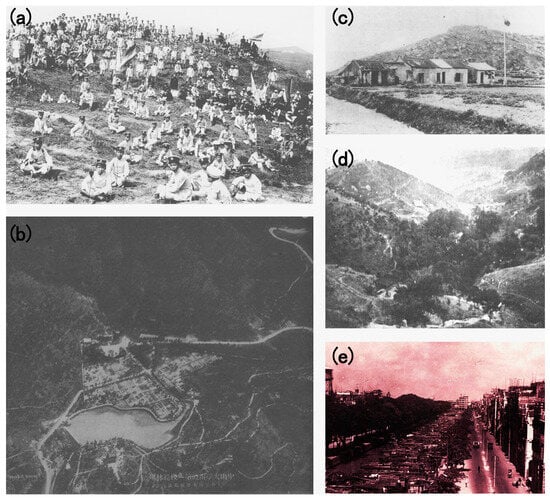
Figure 1.
Historical Photographs. (a) Guangzhou students planting trees on 4 April 1916 at Baiyun Mountain in Guangzhou (Source: Photo Record of Guangdong in 20th Century, 2002); (b) Aerial View of the First Model Forest Farm at Baiyun Mountain (Source: The Popular Illustrated Newspaper, 1934); (c) Before reforestation, Baiyun Mountain (Source: Photo Record of Guangdong in 20th Century, 1900); (d) After reforestation, Baiyun Mountain (Source: Guangzhou Guide, 1934); (e) Street Trees along 623 Road in Guangzhou, 1925 (Source: Sun Yat-sen Library of Guangdong Province, 2002).
To institutionalize this connection, Guangdong’s political leadership introduced a formalized tree-planting ceremony. The event included flag salutes, the reading of Yat-sen Sun’s testament, moments of silence, patriotic speeches, and the singing of tree-planting songs [25]. This ceremony created a politically charged yet socially inclusive space that emphasized national identity, while simultaneously embedding the values of environmental stewardship into daily civic life. Such practices exemplify how afforestation became not only an environmental goal but also a socially embedded strategy within sustainable planning frameworks. By transforming Arbor Day into a ritualized, participatory practice of urban green space promotion, the Guangdong government successfully increased public involvement and environmental awareness.
The integration of tree planting with the commemoration of Yat-sen Sun was thus not merely symbolic, but also a strategic cultural and political innovation. It enhanced the visibility and legitimacy of green initiatives and allowed environmental actions to be grounded in nationalist sentiment and transnational cultural adaptation [26]. This approach elevated afforestation into a form of sustainable urban social practice, intertwining environmental consciousness with civic identity, and reinforcing long-term public commitment to green space creation. Historical records document the tree-planting achievements of various counties in Guangdong in 1931 (Table 2), demonstrating the significant impact of this cultural and political innovation in advancing local green development.
Table 2.
Afforestation Achievements Reported by Various County and City Governments (1931).
It should also be noted that, from a social observation perspective, tree-planting activities have a highly mobilizing effect on the public. They not only attract widespread participation from local officials, school teachers and students, social organizations, and ordinary citizens, but also evoke strong emotional resonance and a sense of political belonging among the public. This collective activity has transformed tree planting from an isolated official project into an important event that permeates daily life and is embedded in the public memory of the local community. Clearly, tree-planting activities reflect the initial state of political mobilization and social participation mechanisms in Guangdong’s modern public greening initiatives.
As the ideology of tree planting became ingrained in the public consciousness, the Guangdong provincial government began to promote the development of nurseries and forest farms to provide the necessary support for large-scale afforestation. This shift marked a transition from symbolic tree-planting campaigns to the institutional infrastructure required for long-term sustainable land and forestry management. German forester Gottlieb Fenzel (1896–1936), a key figure in this transformation, made outstanding contributions to the establishment of nurseries and forest farms in Guangdong during the modern period3.
Fenzel first emphasized to the people of Guangdong the critical necessity of establishing nurseries and forest farms as foundational components of rational land use and sustainable resource planning. Drawing a comparison between Guangdong and Germany, he noted that while Germany had a much higher population density, it also benefited from more advanced industrial development. In contrast, Guangdong, despite its population of nearly 30 million, lagged significantly behind Europe in economic growth. Fenzel attributed this disparity in part to Guangdong’s severely underdeveloped forestry sector. He observed [27], “Guangdong residents had no idea of cultivating mountainous land. In Europe, 25% of the land in each country is used for afforestation, resulting in only 10–15% being wasteland. In contrast, Guangdong’s former forests were mostly burned, with the remaining survivors accounting for only 1% of the total area, leaving the rest, 92%, as barren land”. His observations not only highlighted a forestry crisis but also pointed to inefficient land spatial patterns and the urgent need for ecological restoration and planning interventions.
To raise public awareness and promote forest recovery, Fenzel published numerous educational articles in agricultural and forestry journals. These writings aimed to foster public understanding of afforestation as a scientific practice, and to build institutional capacity for the creation of sustainable green infrastructure across urban and rural territories.
While actively promoting awareness, Fenzel also engaged in the practical implementation of sustainable forestry infrastructure. In 1927, after observing 18,000 mu of abandoned land on Baiyun Mountain in Guangzhou, he requested and was granted responsibility for reforesting the area. In 1928, with the goal of developing the forestry sector, the Guangdong provincial government established the Forestry Bureau and appointed Fenzel as its Deputy Director [28]. Following this, he introduced advanced German afforestation theories and techniques, implementing them first at the First Model Forest Farm on Baiyun Mountain and later at a major nursery in Chaozhou.
These projects represented early prototypes of multifunctional green space planning, with each site tailored to local topographic and environmental conditions. The Baiyun Mountain Forest Farm spanned 1453 hectares and was divided into 27 forest zones, including five nurseries, one arboretum, eight experimental zones, one model forest avenue, and 22 small forest avenues [29] (Figure 1b). Data from April 1935 show that under Fenzel’s management, all zones had been afforested (Figure 1c,d), totaling 2,592,276 trees, with Masson pine comprising 96.1% of the total stock (Table 3) [30]. To further enhance the forest farm’ s functionality, Fenzel advocated for infrastructure that supported both research and public engagement. Facilities such as a forest farm office, workers’ dormitories, multiple rest pavilions, and a library were added to support education, leisure, and knowledge dissemination, thus transforming the site into a comprehensive node of green infrastructure and civic interaction. This model contributed to the optimization of land use patterns and reinforced forest farms as spaces of public value.
Table 3.
Overview of Trees in the First Model Forest Farm at Baiyun Mountain.
The Chaozhou nursery, by contrast, consisted of a main nursery and several branch nurseries, each with a distinct functional orientation. The main nursery, covering 228 mu, was divided into seedling cultivation areas, experimental plots, and dedicated afforestation zones. Initial plantings focused on Pinus densiflora Siebold & Zucc., complemented by Eucalyptus globulus, Acacia confusa Merr., and later species such as Albizia lebbeck (Linn.) Benth., Sapium sebiferum (Linn.) Roxb., and Melia azedarace L [31]. The branch nurseries near the western entrance of Chaozhou were deliberately positioned to serve as public-facing green spaces, with easy access for residents. Fenzel also introduced a “foreign tree zone” showcasing non-native species with detailed botanical and economic annotations. This transformed the nursery into a living educational exhibit, enriching biodiversity while fostering public environmental literacy [32].
It can be observed that, in terms of site utilization, the different functional configurations reflect Fenzel’s modern and pragmatic planning approach to land-use optimization. Regarding planting methods, Fenzel clearly adopted differentiated strategies. At the Baiyun Mountain Forest Farm, he prioritized monoculture of native species such as Pinus massoniana Lamb., while at the nursery in Chaozhou, a diversified planting strategy was employed to support experimentation, education, and biodiversity enhancement. This divergence is rooted in practical planning logic: monoculture facilitates large-scale forest operations and standardized management, requiring fewer technical inputs, whereas nurseries, by nature, permit lower-risk experimentation and therefore can support a broader range of species for research and pedagogical purposes.
Fenzel’s practical work at the Baiyun Mountain Model Forest Farm and Chaozhou Nursery, including spatial zoning, species diversity experiments, and tree species adaptability verification, not only represents the localization of German forestry knowledge but also embodies the early practice of modern “evidence-based planning”. Through field experiments, he accumulated data, developed site-specific planting strategies, and utilized plot studies to advance research and education. This not only optimized land use but also provided a reference for subsequent greening and landscape management efforts.
Under Fenzel’s leadership, various regions across Guangdong began constructing forest farms and nurseries. To enhance public knowledge and operational efficiency, he authored Practical Methods for Afforestation and Nursery Facilities in Guangdong. This handbook integrated European forestry knowledge with local conditions, drawing directly from his experience at Baiyun Mountain, and offered a systematic, localized approach to nursery construction and afforestation. It was recognized at the time as a work that “can alleviate the lack of general afforestation knowledge and indeed herald the revitalization of Guangdong’s forestry” [33].
By 1930, in addition to the Baiyun Mountain and Chaozhou sites, new forest farms had been established in Nanhua, Shaoguan, Luofu, Dinghu, and Deqing, with the total number of such facilities across Guangdong exceeding 20 (Table 4). These facilities were widely distributed, encompassing small urban-adjacent nurseries for street and park greening as well as large mountainous plantations for the cultivation of commercial and protective forests. Annual seedling production at these nurseries ranged from several thousand to several hundred thousand, covering evergreen trees, broadleaf species, and economically valuable tree varieties. Moreover, management practices and afforestation techniques at these sites increasingly incorporated advanced methodologies, including systematic seedling propagation, thinning, and experimental afforestation. Collectively, these efforts substantially enhanced both forestry production and urban greening capacity in Guangdong, laying a solid foundation for subsequent large-scale tree planting and urban landscaping initiatives.
Table 4.
Overview of the Establishment of Forest Nurseries in Guangdong (As of 1930).
Additionally, according to the national tree planting statistics for 1933 (Figure 2), Guangdong had approximately 34,074 hectares of forest land and approximately 370.56 million tree seedlings, ranking among the top provinces nationwide. While its forest land area was second only to Hebei, Guangdong led Hebei in terms of the number of tree seedlings. Compared to other southern provinces such as Guangxi, Fujian, and Chaozhou, Guangdong significantly surpassed most provinces in both forest land area and number of seedlings, demonstrating its clear advantages in afforestation and seedling cultivation. Considering the construction of model forest farms and nurseries at the time, it is evident that Guangdong achieved outstanding accomplishments in modern afforestation and urban greening practices, serving as a leading national model.
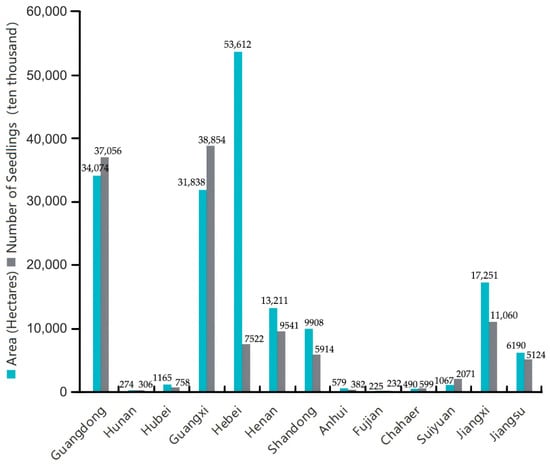
Figure 2.
Forest Plantation Statistics in Various Provinces of China in 1933. (Source: Forestry: Statistical Tables of Forest Planting by Province, 1933). Notes: The survey data, obtained from the Ministry of Industry’s Statistical Department and reported by various provinces and cities, excludes non-reporting counties and cities from the calculation. Despite incomplete reporting at the county and city level, the effectiveness of afforestation in Guangdong is evident from the known planting areas and corresponding tree counts.
It is evident that in this movement, imported forestry knowledge was not merely transplanted but skillfully localized, aligning with the Kuomintang’s broader development strategy of “adopting Western techniques to meet China’s needs”. The widespread establishment of nurseries and forest farms during this period not only represented a major milestone in the modernization of Guangdong’s ecological infrastructure but also laid a foundational framework for the later development of road landscapes, forest parks, and urban green spaces.
There is no doubt that, as a pioneer in China’s “green wave”, Guangdong demonstrated an early form of sustainable land and urban planning. Despite limited prior experience, it took the lead in integrating ecological restoration with long-term development goals, and embarked on a trajectory of urban–rural spatial transformation that resonates with today’s sustainable planning principles.
The concept of linking street trees with urban beautification emerged in the mid-19th century. In major cities across Europe and America, it became a common practice to plant rows of trees along both sides of roads, forming what are known as “street trees”. [34] As early as 1853, Paris began transforming its urban landscape with tree-lined boulevards, reshaping not only traffic circulation but also the visual and ecological character of the city [35]. By the early 20th century, the U.S. had launched a nationwide urban beautification movement in which green infrastructure became central to road design. Multiple states emphasized the importance of tree planting: a California delegate noted, “Road beautification issues … We have 600 miles of roads lined with planned tree plantings”; Representative from Chowchilla said, “Next year’s program … The most important thing is to plan for roadside trees”; The Isle of Ruth delegate said, “There is no point in having straight roads, now we are trying to make the new roads go where the scenery is the best, and all the small trees that were there before have been eliminated and replaced by new ones”; The representative of Michigan said, “We planted 140,000 palm trees last spring, and we shall be very strict everywhere in the future, so that there will not be an unattractive road in the whole State of Michigan” [36]. Clearly, street trees had become symbolic of modern, livable, and scenic urban planning.
In the 1920s, Guangdong began adopting the practice of planting street trees, drawing inspiration from Western urban models. This occurred during a crucial period of modern urban transformation, when city walls were being demolished to expand road systems. Yet, newly built roads often lacked vitality and comfort. Kuomintang veteran Sen Lin (1868–1943) criticized the exposed condition of pedestrians, arguing: “As the public walks on the streets, they are drenched in sweat. We should plant street trees, just like in Paris, London, and Berlin, to shield the people from scorching heat and stifling dust”4 This raised key questions for Guangdong’s planners: How should street trees be arranged to balance aesthetics, shade, and spatial efficiency? What planting strategies suited local climate and urban form? In 1924, the Municipal Gazette introduced tree planting techniques from Berlin and Paris [37]. In 1928, Professor Guoren Jiang from the College of Agriculture at National Central University illustrated practical methods for roadside greening (Figure 3). By 1930, highway personnel in Jiepu, Guangdong had begun to synthesize Chinese and Western experiences, gradually developing a regionally adapted model of sustainable streetscape planning [38].
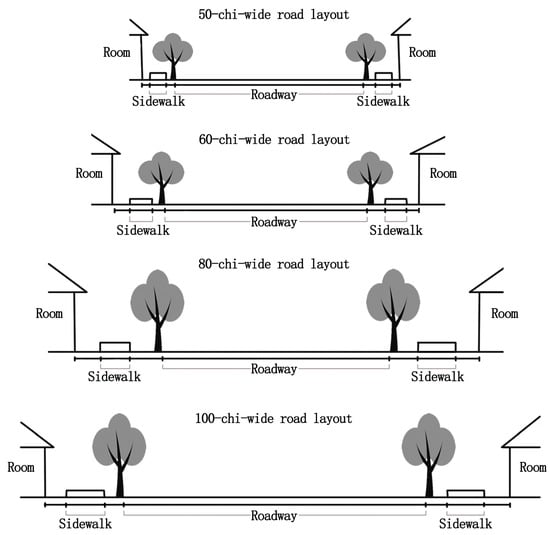
Figure 3.
The Arrangement Method of Street Trees on Wide and Narrow Roads. (Source: Journal of the College of Agriculture of the National Central University, 1928; Notes: 1 Chi = 0.33 m).
As a result, street trees were increasingly incorporated into Guangdong’s road planning not merely as ornamentation, but as functional, climate-sensitive urban elements. Their implementation reflects early efforts in urban greening, thermal comfort enhancement, and sustainable spatial organization, aligning closely with today’s principles of climate-resilient and people-centered urban development.
In the early stages of planting street trees, Guangdong faced significant challenges, with one of the greatest being the low survival rate of transplanted seedlings. To address this issue, the government looked to international practices, particularly those in Paris. For instance, Paris selected mature saplings for roadside planting, which not only improved survival rates but also helped resist soil acidification and human interference [39]. Prior to the widespread planting of roadside trees, Guangdong had already established numerous model forest farms and nurseries, which laid the foundation for sustainable urban greening. Species such as Autumn maple, Albizzia julibrissin, and Albizzia falcata had already matured in these forest farms, reaching 1.2 to 1.5 m in height. Drawing on Western practices, local authorities recognized the suitability of these native species—both in ecological adaptability and aesthetic value—as ideal candidates for urban roadside planting.
Despite encountering continued difficulties in roadside greening [37], Guangdong’s approach evolved through iterative learning and adaptive experimentation. By the 1930s, significant progress had been made in the implementation of tree-lined urban streets. Between 1925 and 1929, the Public Works Bureau of Guangzhou systematically planted dense trees and shrubs along major urban thoroughfares, including Weixin Road, Huifux Road, Wende Road, Yushan Road, and 623 Road (Figure 1e). Importantly, the act of roadside tree planting transcended ecological and functional objectives. It carried political and symbolic meaning, commemorating Yat-sen Sun and affirming governance principles rooted in the Three Principles of the People. These green spaces became vehicles for promoting modern civic ideals, reflecting both the people’s aspirations for improved urban living and the government’s vision of sustainable modernization.
In the 18th–19th centuries, with improvements in living standards, Western countries’ expectations of forests extended beyond traditional uses such as timber production and charcoal making. Instead, forests began to be associated with public health and well-being. The integration of recreational functions into forest environments gave rise to forest parks, which enhanced urban green space while providing restorative environments for both body and mind [40].
The concept of forest parks originated in Germany. In 1895, Germany designated the Lindenthal area on the western outskirts of Cologne as an urban forest, incorporating recreational infrastructure into it [41]. This marked the inception of the forest park model. Recognizing the therapeutic benefits of natural environments, other European countries soon followed suit. By the early 20th century, the U.S. had allocated 27% of its forest areas to recreational use, with the UK and Norway allocating 27% and 25%, respectively [42]. In contrast, only 47% of U.S. forests were used for timber production. These figures illustrate a growing shift in forest policy toward human-centered, multifunctional land use—an essential feature of sustainable planning.
The widespread recreational use of forest areas in Western countries sparked a desire in China to establish similar spaces. During the 1929 Afforestation Campaign Week, forestry official Xianguo Chen emphasized [19] the multi-functionality of forests, stating in Guangzhou’s Central Park: “In America, I visited a national park with magnificent scale… forests serve not only ecological but also recreational functions. We aspire to create such parks in China where people can gather and enjoy themselves”. In 1931, the Ministry of Industry issued the first order to build forest parks. Minister Xiangxi Kong emphasized [43], “In Western countries, forests are recreational areas. In our country, with a concentrated population in provincial capitals, it is urgent to use existing forests or spacious areas for park construction, promoting urban landscapes and public health”. Following this national policy, the Guangdong Agriculture and Forestry Bureau initiated preparations for forest parks in the province.
Guangdong selected Zhongshan Park in Shipai, Guangzhou, as the province’s first forest park, in line with the construction criteria outlined in the Guangzhou Municipal Gazette, which emphasized adequate area, topographical advantage, and ease of access For Guangdong, Baiyun Mountain Park and Zhongshan Park in Shipai best met these conditions. Compared to Baiyun Mountain Park, Zhongshan Park was considered more suitable due to its denser tree coverage and stronger symbolic significance.
Shipai Forest Park is a representative example of multifunctional green infrastructure, serving simultaneously as a forest park [44,45,46,47] and a memorial space dedicated to Yat-sen Sun. In fact, when Guangzhou chose to build Sun Yat-sen Park, it took into consideration Sun Yat-sen’s connection with tree planting and afforestation, and selected Shipai Forest Farm as the site. The Shibai Forest Farm was the largest forest farm in Guangzhou at the time, covering an area of over 5600 acres and planting tens of thousands of trees annually [48]. From the launch of Guangdong’s afforestation campaign until 1931, the Shibai Forest Farm had cultivated 121,560 saplings [49,50]. When considering the construction of a forest park, the Guangdong government also linked it to Sun Yat-sen, and due to its abundant forest resources, it was converted into a forest park.
Furthermore, the establishment of Shipai Forest Park marked the integration of afforestation with public green space development, embedding a strong sense of national symbolism into the landscape. In February 1937, a large-scale tree-planting campaign was held here, with over 1000 participants—from government departments, social organizations, schools, and the general public—planting more than 2000 trees [50]. This cross-class public movement combined elements of “ritualization” and “everyday life”, and local newspapers highlighted its dual values of “landscape education” and “national responsibility”, guiding the public to associate greening with national rejuvenation. In this way, the concept of “afforestation” gradually shed its purely technical connotations in public discourse, transforming into a social practice that integrated political mobilization, public education, and community participation. By commemorating Yat-sen Sun, the Guangdong provincial government incorporated the forest park into the narrative of modern nation-building. As a material embodiment of the political ideals of the Three Principles of the People, it functioned not only as urban infrastructure, ecological resource, and public recreational space, but also as a venue for ideological expression—demonstrating an integrated model of land development in which environmental, social, and symbolic values were co-produced and mutually reinforced.
3.3. Formulation of Forestry Legal Regulations
In the process of Guangdong citizens actively participating in afforestation practices, several challenges emerged. These included misunderstandings among citizens regarding the purpose of tree planting, confusion in the responsibilities of government departments, persistent unauthorized logging by ignorant citizens, and a lack of post-planting tree care. To further clarify the objectives of forestry development and enhance the administrative and management system, Guangdong initiated the formulation of a series of legal regulations.
The first comprehensive forest regulation in Guangdong, the Provisional Forest Regulations of Guangdong Province, originated from Fenzel’s May 1928 Draft of the Provisional Forest Regulations of Guangdong Province (referred to as the “Draft”). The “Draft” served as a foundation for the provincial government’s forestry laws. It comprised five chapters covering general regulations, economic forests, forest policing, protective forests, and reward/punishment. Fenzel assimilated global forestry law principles, drawing from German, Bavarian, French, Hungarian, Russian, Swiss, and Italian laws. Actively comparing Guangdong’s conditions with those of Western countries, he also tailored regional regulations. For example, Article 47 was applicable only in China, rarely mentioned in the forest laws of European countries. Article 49, following China’s mandatory afforestation law, stipulated that the government was not responsible for afforestation costs, whereas governments in European countries often bore such costs [27]. Although the “Draft” was eventually revoked two years later due to inadequacies in its content, it paved the way for the formulation of forestry laws in Guangdong, holding particular significance as Guangdong lacked experience in forestry law formulation at that time.
After studying various forest regulations from Western countries, Guangdong formulated multiple forestry regulations, with the peak period in 1930. In September of that year, the province issued the Provisional Regulations for Afforestation on Idle Land in Guangdong Province and the Regulations on Restrictions for Afforestation on Idle Land in Guangdong Province. In December, during the 126th meeting of the Guangdong Provincial Government, eight forestry regulations were simultaneously promulgated, covering group afforestation, incentive mechanisms, management of private and public forests, as well as the composition of forestry institutions. Despite Guangdong’s developmental lag compared to Western countries, the adoption of Western ideas not only prompted practical initiatives but also propelled the province to keep pace with Western forestry development in legal formulation, surpassing other provinces in China.
4. Discussion
Guangdong’s various explorations in afforestation and urban greening during the modern era not only reflected the modernization aspirations of “Western learning for practical use” at the time, but also, to some extent, laid the groundwork for today’s green development philosophy. Guided by Yat-sen Sun’s vision of Guangzhou as a “garden city”, and through the construction of forestry farms, nurseries, street trees, and forest parks, a three-pronged approach to greening was gradually established, combining “political commemoration, ecological construction, and public mobilization”. This experience provided an important ideological foundation for the evolution of contemporary green policy systems.
In the new era, Guangdong has continued to advance the systematic planning of urban ecological spaces through policies such as the “Green and Beautiful Guangdong Ecological Construction” initiative and the “Park City” development program. These policies not only reflect local governments’ sustained focus on green development but also build upon and deepen the public greening concepts and practices that have evolved since modern times. Many specific measures, such as the long-standing Arbor Day system and its ongoing updates in promotional formats, the exploration of multifunctional forest parks (covering health and wellness, education, disaster prevention, and research), and the growing emphasis on the synergistic relationship between street tree landscapes and urban aesthetics, can be seen as extensions and transformations of modern ideas and practices at the contemporary institutional level.
Furthermore, Guangdong has continuously introduced information technology, legal frameworks, and social collaborative mechanisms into its modern green governance system, transforming the afforestation methods, which were primarily based on political mobilization since modern times, into a composite governance model involving multi-stakeholder participation and driven by data. For instance, the “ Green and Beautiful Guangdong Ecological Construction” project not only established a scientific indicator system but also guided the public to participate in urban greening through methods such as “adopt-a-tree” and the “community forest chief system”, thereby strengthening the active role of the populace in public ecological affairs. This broad participation mechanism shares a profound linkage of inheritance and evolution with the methods used in modern Guangdong to mobilize the public for afforestation through schools, associations, and trade unions.
In summary, Guangdong’s afforestation and greening practices in the modern era have not merely been historical events but have transformed into a conceptual legacy and institutional inertia, continuously shaping the green landscape of local governance today. This deep interaction between history and the present not only reveals the historical foundations of regional green policies but also provides empirical grounding for understanding the logic of ecological governance within Chinese modernization. Furthermore, it opens up avenues for further in-depth exploration in future research.
5. Conclusions
Taking Guangdong as the case, this study examines how Western modern forestry thought were ideologically embraced, locally adapted, and institutionally embedded in modern Guangdong’s afforestation and urban greening efforts. The main findings are summarized as follows:
- (1)
- In ideology, returning Chinese scholars, such as Yat-sen Sun, Ke Sun, Kutong Huang, and Xianguo Chen, as well as foreign foresters like Fenzel, leveraged their overseas education to actively convey the necessity of afforestation to the public through various media, ultimately raising societal awareness of ecological issues.
- (2)
- In practice, first, the introduction of Arbor Day in the U.S. inspired the province to institutionalize afforestation through public rituals, symbolically linking tree planting with the commemoration of Yat-sen Sun—thereby embedding ecological practice into political culture and civic identity. Second, Fenzel applied site-specific afforestation strategies and advanced planning logic to nurseries and forest farms, demonstrating localized models of sustainable land use. Additionally, drawing on Western concepts of street trees and forest recreation, Guangdong constructed tree-lined avenues and forest parks, enhancing urban aesthetics and comfort while creating new green spaces with ecological, cultural, and political functions.
- (3)
- In regulation, Guangdong formulated forestry laws inspired by Western models. Starting with the Draft of the Provisional Forest Regulations of Guangdong Province and followed by the intensive issuance of multiple afforestation and forest administration regulations in 1930, Guangdong effectively addressed the management challenges in urban greening practices and promoted the institutionalization of urban green space development. This legal framework not only provided a sustainable governance structure for urban greening but also offered valuable green governance experience for other regions in China.
- (4)
- Historical insights and contemporary continuity: These modern practices continue to have relevance in contemporary Guangdong. The current “Green and Beautiful Guangdong Ecological Construction” project and the “Park City” concept continue to integrate ecological construction, urban beautification, and social mobilization. The ongoing observance of Arbor Day, the expansion of multi-functional forest parks, and the systematic layout of street trees reflect the institutionalization of early concepts and systems in contemporary governance. Re-examining these historical experiences under the lens of sustainable planning also reveals important lessons. For instance, during rapid afforestation efforts, attention must be paid to ecological benefits, species diversity, long-term management, and social equity. Additionally, Fenzel’s approach to establishing nurseries and forest farms (zoning, experimentation, and diversity assessment) can be seen as a pioneering practice of “evidence-based planning”, offering insights for modern data-driven and feedback-optimized urban greening initiatives.
In summary, Guangdong’s sustainable afforestation and urban greening efforts were not a mere replication of Western models, but rather a localization of foreign knowledge adapted to the local context. Due to the lack of existing historical records, this study does not provide a detailed account of the entire process of modern afforestation in Guangdong under Western influence. However, the author still attempts to take a holistic perspective, looking back at this history to help readers better understand the knowledge sources, developmental logic, and underlying principles of modern sustainable afforestation and urban greening in Guangdong. This also provides new insights for researching the modernization of China’s forestry and urban greening sectors. At the same time, it highlights the importance of cross-border knowledge exchange in addressing global ecological issues.
Author Contributions
Conceptualization: Y.W.; Methodology: Y.W. and P.H.; Resources: Y.W.; Writing—original draft preparation: Y.W.; Writing—review and editing: Y.W., P.H. and C.P.; Supervision: P.H. and C.P.; Funding acquisition: Y.W. and C.P. All authors have read and agreed to the published version of the manuscript.
Funding
This research was funded by the National Natural Science Foundation of China, grant number 51978271.
Data Availability Statement
The data is available from the authors upon reasonable request and in accordance with relevant confidentiality regulations.
Conflicts of Interest
The authors declare no conflicts of interest.
Abbreviations
The following abbreviations are used in this manuscript:
| CZ | Chaozhou |
| SG | Shaoguan |
| ZQ | Zhaoqing |
| HZ | Huizhou |
| DQ | Deqing |
| GZ | Guzngzhou |
| GD | Guangdong |
| SANSYU | The School of Agriculture at National Sun Yat-sen University |
| FMFFBM | The First Model Forest Farm at Baiyun Mountain |
Appendix A
Table A1.
Overview of the primary historical materials used in this study.
Table A1.
Overview of the primary historical materials used in this study.
| Year | Title | Source | Type |
|---|---|---|---|
| 1917 | Governor Zhu’s advocacy of tree-planting commemoration | Guangdong Agriculture and Forestry Monthly | Journal |
| 1917 | On the Neglect of Forests and Suggestions for Their Recovery | Guangdong Agriculture and Forestry Monthly | Journal |
| 1924 | Encouraging everyone to plant trees. | Agricultural Monthly | Journal |
| 1928 | A Further Explanation for Those Planting Street Trees | Journal of the College of Agriculture of the National Central University | Journal |
| 1929 | Forest Service proceeds to draft forest regulations | Agricultural Voice | Journal |
| 1929 | What we should know about forests | Agricultural Monthly | Journal |
| 1929 | Tree Planting Ceremony in front of the Mausoleum | Republican Daily | Journal |
| 1929 | Guangzhou Municipal Forest Farm Began Setting Boundaries Yesterday | Guangzhou Municipal Gazette | Journal |
| 1929–1930 | Practical methods of afforestation work and nursery facilities in Guangdong | Book | |
| 1930 | Importance of Forestry in Guangdong’s Economic Development | Agricultural Voice | Journal |
| 1931 | The plan to establish seven major forest farms across Guangdong | Journal of the New Seedlings | Journal |
| 1931 | Report on the work of planting street trees on the Jiepu highway in the 19th year of the republic of China | Journal of the New Seedlings | Journal |
| 1931 | Overview of Nurseries in Chaozhou | Journal of the New Seedlings | Journal |
| 1931 | Guangdong Agriculture and Forestry | Agriculture and Forestry Bureau | Journal |
| 1932 | Pine Forest in Front of Baiyun Mountain | Zhejiang Provincial Construction Monthly | Journal |
| 1932 | Public Works Bureau Adds Pavilion in Zhongshan Park (Shipai) | Guangzhou Municipal Government Gazette | Journal |
| 1932 | Proposed Addition of Four-Eaved Pavilion in Zhongshan Park (Shipai) | Guangzhou Municipal Government Gazette | Journal |
| 1932 | Public Works Bureau Renovates Zhongshan Park | Guangzhou Municipal Government Gazette | Journal |
| 1932 | Tree Planting Achievements in Various Counties in Guangdong, 1931 | Special Issue for the 7th Anniversary of Sun Yat-sen’s Death | Journal |
| 1934 | The regulation of Shipai Zhongshan Park as a forest park | Nanhua Daily | Journal |
| 1934 | National Sun Yat-sen University’s First Model Forest Farm | The Popular Illustrated Newspaper | Journal |
| 1934 | Preparation of Forest Park by the Ministry of Industry | Municipal Gazette | Journal |
| 1934 | Guangzhou’s Parks | Commemorative Issue for New Government Office Completion | Journal |
| 1934 | Guangzhou Guide | Book | |
| 1935 | Guangdong Provincial Government Builds Astronomical Observatory in Zhongshan Park (Shipai) | Liangyou (The Young Companion) | Journal |
| 1935 | National Sun Yat-sen University | Current status of National Sun Yat-sen University | Book |
| 1935 | Guangzhou Government Three-Year Policy Report | Book | |
| 1936 | Statistical Data: Forestry—Provincial Afforestation Statistics (1933) | Ministry of Industry Monthly | Journal |
| 1937 | Various Sectors Planted 2000 Trees in Zhongshan Park | Central Daily | Journal |
| 1937 | Landscape Quarterly | Book |
Notes
| 1 | Daoyang Ling was born in Baoan, Guangdong. He completed his Bachelor’s and Master’s degrees in Agriculture and Forestry at MIT and Yale University School of Forestry. After returning to China, he worked at the Guangdong Provincial Agriculture and Forestry Bureau, he published works such as “The Relationship between Forests and Drought”, “The Relationship between Forests and the Country”, “Afforestation and Livelihood”, and “Reflections on Guangzhou’s Street Trees and Parks”. |
| 2 | The Principle of People’s Livelihood is one of Yat-sen Sun’s The Three Principles of the People, the other two being “nationalism”and “democracy”. Principle of People’s Livelihood is Yat-sen Sun’s “social revolution” program, the theme of which is to realize the modernization of China, the development of social economy, and to achieve the people’s welfare. |
| 3 | Gottlied Fenzel (1896–1936), a native of Nuremberg, Bavaria, Germany, graduated from the University of Munich. He came to China twice, in 1927 and 1933, to teach at the National Sun Yat-sen University and the Northwest College of Agriculture and Forestry, and served as an advisor to the Guangdong Provincial Government of the Republic of China, deputy director of the Guangdong Provincial Forestry Bureau, and director of the First Model Forest Farm at Baiyun Mountain. He has written books such as “The Practical Methods of Afforestation and Nursery Facilities in Guangdong”, “The Importance of Afforestation in the Economic Development of Guangdong”, “The Relationship between the Natural Environment and Forestry is Enough to Influence the Rural Economy of Guangdong”, and “Participation of Guangdong Province in the Protection of Natural Forests and the Natural Forests in the Southern Part of Shixing”, et al. |
| 4 | Sen Lin (1868–1943) was born in Fujian. President of the National Government of the Republic of China. Although he did not study abroad in his early years, he was educated at the Peiyuan Academy run by the American Church and the Yinghua College founded by American missionaries McKinley and Wulinji. Afterwards, he traveled to Japan, America, and Canada to work with Dr. Yat-sen Sun on national issues. These experiences fostered Sen Lin’s modern thinking and influenced his governance of Guangdong. |
References
- Gloaguen, T.; Gadal, S.; Kamičaitytė, J.; Zaleckis, K. Structural Evolution of the Coastal Landscape in Klaipėda Region, Lithuania: 125 Years of Political and Sociocultural Transformations. Land 2025, 14, 1356. [Google Scholar] [CrossRef]
- Roudometof, V. In search of global sociology: A critical overview of competing research agendas. Humanit. Soc. Sci. Commun. 2024, 11, 889. [Google Scholar] [CrossRef]
- Peng, C. Modernity Localization: The Modern Transformation of Lingnan Cities and Architecture; Tongji University Press: Shanghai, China, 2012; p. 74. [Google Scholar]
- Chen, Y.; Yao, Z. A preliminary study of the forestry legal system in Guangdong Province in Republican. South China Today 2008, 4, 205–207. [Google Scholar]
- Chen, Z. The ecological consciousness and ecological protection of Hanjiang river watershed from the Qing dynasty to the republic of China (1644–1949). J. Beijing For. Univ. (Soc. Sci.) 2017, 16, 1–8. [Google Scholar] [CrossRef]
- Marks, R. Tigers Rice, Silk, and Silt: Environment and Economy in Late Imperial South China; Cambridge University Press: Cambridge, MA, USA, 1998; p. 194. [Google Scholar]
- Saito, O. Forest history and the Great Divergence: China, Japan, and the West compared. J. Glob. Hist. 2009, 4, 379–404. [Google Scholar] [CrossRef]
- Xu, R. From Central Park to Greenway: A Review on the Construction of Public Green Space in Guangzhou for the Past Century. Urban Insight 2016, 5, 122–138. [Google Scholar]
- Han, Y.; Li, B. Analysis of City Planning Practice of Guangzhou around the Period of Establishing its Municipal System. Urban Plan. Forum 2019, 5, 102–109. [Google Scholar]
- Zou, D. Guangzhou Urban Planning and Construction in Chinese Republican Period. Planners 2017, 33, 142–146. [Google Scholar]
- Sadakage, O.; Fan, B. Forestry. J. Agric. Sci. 1900, 125, 15–60. [Google Scholar]
- Chi, X. Living from death: The modernization of mausoleum forest in Fengtian province in the early years of the republic of China. Seek. Truth 2020, 47, 171–180. [Google Scholar] [CrossRef]
- Institute of Modern History Chinese Academy of Social Science. The Complete Works of Sun Yat-sen; Zhonghua Book Company: Beijing, China, 1981; Volume 1, p. 11. [Google Scholar]
- Sun, Y. Plans of National Reconstruction; Guangdong People’s Press: Guangzhou, China, 1996; p. 367. [Google Scholar]
- Institute of Modern History Chinese Academy of Social Science. The Complete Works of Sun Yat-sen; Zhonghua Book Company: Beijing, China, 1986; Volume 9, pp. 407–408. [Google Scholar]
- Fu, Z. The forest and the anti-japanese war during the extraordinary period. J. Sichuan For. 1938, 20–27. [Google Scholar]
- Huang, K. On the Neglect of Forests and Suggestions for Their Recovery (Continued 7). Guangdong Agric. For. Mon. 1916, 2, 1–10. [Google Scholar]
- Huang, K. On the Neglect of Forests and Suggestions for Their Recovery (Continued). Guangdong Agric. For. Mon. 1916, 1, 5–15. [Google Scholar]
- Chen, X. What we should know about forests. Agric. Mon. 1929, 7, 16–21. [Google Scholar]
- Sun, K. Urban Planning Theory. Construction 1919, 1, 855–871. [Google Scholar]
- Schmid, A. Yesterday’s Reflections: A Repository of Memories; iUniverse: Lincoln, NE, USA, 2013; p. 39. [Google Scholar]
- Wang, D.; Liang, S. Discourse construction of Chinese modernization from the perspective of Malaysian media. Humanit. Soc. Sci. Commun. 2024, 11, 653. [Google Scholar] [CrossRef]
- Governor Zhu’s advocacy of tree-planting commemoration. Guangdong Agric. For. Mon. 1917, 1, 121.
- Lipset, S. Political Man: The Social Bases of Politics; The Commercial Press: Beijing, China, 1986; p. 56. [Google Scholar]
- Tree Planting Ceremony in front of the Mausoleum. (Shanghai) Republican Daily, 13 March 1929; 6.
- Chen, Y. Arbor day and worship of Sun Yet-san. J. Nanjing Univ. (Philos. Humanit. Soc. Sci.) 2006, 43, 15. [Google Scholar]
- Fenzel, G.; Qi, J. Importance of Forestry in Guangdong’s Economic Development. Agric. Voice 1930, 100, 67–68. [Google Scholar]
- Forest Service proceeds to draft forest regulations. Agric. Voice 1929, 118, 74.
- National Sun Yat-sen University. Current Status of National Sun Yat-sen University; Department of National Sun Yat-sen University Press: Guangzhou, China, 1935; pp. 162–184. [Google Scholar]
- Pine Forest in Front of Baiyun Mountain. Zhejiang Prov. Constr. Mon. 1932, 5, 1.
- The plan to establish seven major forest farms across Guangdong. J. New Seedl. 1931, 2, 21–22.
- Nai, M. Overview of Nurseries in Chaozhou. J. New Seedl. 1931, 2, 28. [Google Scholar]
- Fenzel, G.; Qi, J. Practical Methods of Afforestation Work and Nursery Facilities in Guangdong; National Sun Yat-sen University Press: Guangzhou, China, 1929; p. 5. [Google Scholar]
- Tang, J. My Opinion on Cultivating City Street Trees. Munic. Rev. 1936, 3, 23–24. [Google Scholar]
- Kunstler, J. The City in Mind: Notes on the Urban Condition; Simon and Schuster: New York, NY, USA, 2003; pp. 21–26. [Google Scholar]
- Xu, Q. Road beauty. Road Mon. 1929, 28, 30–32. [Google Scholar]
- Lin, S. Encouraging everyone to plant trees. Agric. Mon. 1924, 2, 8–10. [Google Scholar]
- Wang, F. Report on the work of planting street trees on the Jiepu highway in the 19th year of the Republic of China. J. New Seedl. 1931, 76–77. [Google Scholar]
- Hopkins, R., Jr. Engineering Nature: Public Green Spaces in Nineteenth-Century Paris; Arizona State University: Phoenix, AZ, USA, 2023. [Google Scholar]
- Emge, D.; Kleespies, M.; Wenzel, V. Measuring attitudes towards historic gardens: Development and validation of the Garden Heritage Scale. Humanit. Soc. Sci. Commun. 2024, 11, 911. [Google Scholar] [CrossRef]
- Shirakawa, Y. A History of Modern Urban Parks; New Star Press: Beijing, China, 2014; p. 92. [Google Scholar]
- Gao, C. A Discussion on Forest Parks. Chin. Landsc. Archit. 1997, 6, 7–8. [Google Scholar]
- Kong, X. For the provincial capitals should be prepared to set up forest parks. Ind. Bull. 1931, 26, 23. [Google Scholar]
- Public Works Bureau Adds Pavilion in Zhongshan Park (Shipai). Guangzhou Munic. Gaz. 1932, 403, 52.
- Proposed Addition of Four-Eaved Pavilion in Zhongshan Park (Shipai). Guangzhou Munic. Gaz. 1932, 406, 88–89.
- Public Works Bureau Renovates Zhongshan Park. Guangzhou Munic. Gaz. 1932, 407, 63.
- Guangdong Provincial Government Builds Astronomical Observatory in Zhongshan Park (Shipai). The Young Companion, 1935; 103.
- The regulation of Shipai Zhongshan Park as a forest park. Nanhua Daily, 18 December 1934.
- Guangdong Agriculture and Forestry. Agriculture and Forestry Bureau; Guangdong Provincial Department of Construction: Guangzhou, China, 1931; p. 345.
- Various Sectors Planted 2,000 Trees in Zhongshan Park. Central Daily News, 21 February 1937.
Disclaimer/Publisher’s Note: The statements, opinions and data contained in all publications are solely those of the individual author(s) and contributor(s) and not of MDPI and/or the editor(s). MDPI and/or the editor(s) disclaim responsibility for any injury to people or property resulting from any ideas, methods, instructions or products referred to in the content. |
© 2025 by the authors. Licensee MDPI, Basel, Switzerland. This article is an open access article distributed under the terms and conditions of the Creative Commons Attribution (CC BY) license (https://creativecommons.org/licenses/by/4.0/).