


Abstract
Birds, potential pollinators and bio-indicators of ecosystem health, are important components of the global ecosystems. Habitat degradation and anthropogenic disturbance have influenced their survival. Here, we highlight the bird diversity and habitat preferences in scrublands in the Eastern Ghats by considering nine scrub sites. We documented 128 bird species, where Passeriformes were most abundant with 77 species. Shrub cover, herbaceous vegetation, exposed rock surfaces, bryophytes vegetation, and soil characteristics were studied to assess habitat preferences using analysis of variance, cluster analysis, and redundancy analysis. The studies on nine selected sites revealed reduced bird diversity in places of high anthropogenic disturbances and interrupted foraging. Argya strita, Cinnyris asiaticus, Merops orientalis, Picnonotus cafer, and Saxicola caprata showed close association with shrubs with ample foraging opportunities and nesting sites; Gracopica contra and Picnonotus jocosus showed preferences for herbs. C. asiaticus was not found to be associated with any vegetation. While herbs and shrubs have a strong and positive correlation, bryophytes and rocks exhibited strong but negative relationships. Scrubland sites with greater vegetation diversity and structural complexity supported more birds, indicating the significance of habitat characteristics in bird′s distribution. The present study at Koraput provides a basis for site-specific conservation to preserve the avian biodiversity in the Eastern Ghats of India. It also highlights the need for long-term monitoring and adaptive management to address environmental changes and ensure the preservation of these ecosystems.
1. Introduction
Birds are one of the best indicators of the environmental quality of any ecosystem. Their functional roles within ecosystems as pollinators, seed dispersers, ecosystem engineers, scavengers, and predators support the build-up and maintenance of biodiversity and human activities such as sustainable agriculture via pest control [1]. Birds have seasonal habitat requirements for nesting and feeding and show variations in species composition between habitats [2]. Scrub-shrub areas are an important habitat for bird species. Scrublands, characterised by their sparse, low-growing vegetation and variable moisture levels, represent a globally significant yet often underappreciated habitat for avian species. These ecosystems, found on every continent except Antarctica, support a diverse array of birds adapted to their unique environmental conditions [3]. Comprising a mixture of shrubs, grasses, and occasional trees, scrublands cover extensive areas of the Earth′s surface, playing a crucial role in sustaining biodiversity [4]. Scrub-shrub habitats are commonly associated with other ecosystems, including forests, grasslands, and human-modified agricultural areas, often acting as natural barriers or hedgerows dividing fields, pastures, and property boundaries [5]. These habitats are composed of flowering plants and thorny shrubs, offering shelter and resources for various species [5]. Bushes are also places for shelter, sleeping, and food storage [6].
Scrublands are important habitats for wildlife [7], where larger mammals are usually absent. Smaller mammals are often abundant in these scrublands and play key role in vegetation regeneration by consuming seeds [8]. Scrub-shrub areas are an important habitat for several breeding and wintering bird species, and these scrubland birds contribute to important ecosystem functions like pollination, seed dispersal, and insect regulation [9]. Specialised adaptations of bird species that inhabit these environments underscore the ecological importance of scrublands as avian habitats. Birds residing in scrublands exhibit various behaviours and physiological traits tailored to exploit their habitat′s sparse resources and harsh conditions [8]. The interplay between habitat structure, plant composition, and bird ecology in scrublands underscores the need for a comprehensive understanding of these ecosystems to appreciate their role in global avian biodiversity [10].
Studies have been conducted in different parts of the world on avian species diversity in disturbed and fragmented landscapes. Studies on scrub forest/scrubland/scrub vegetation report that shrubland birds respond to land use and land cover (LULC) changes and targeted habitat management efforts at local and landscape scales [11,12]. These the include bird diversity in the Protea heathlands (scrublands dominated by vegetations of Proteaceae family) of Australia [13]; the effect of scrub fragmentation on breeding bird species in Negev, Israel [14]; the area requirement of shrubland birds in eastern North America [15]; habitat use and nest success of scrub-shrub birds in Massachusetts, USA [16]; the declining population of shrubland birds in eastern USA [17]; the functional diversity studies in scrubland agricultural landscapes of Northern-Central Mexican dryland environments [18]; the spatial and seasonal use of scrub habitat by birds in northern Nigeria [19]; and the impact of urbanization, agricultural intensification, and land abandonment on bird diversity in the Mediterranean Basin [20].
India, which lies at the junction of the Indo-Malayan, Eurasian, and Afro-tropical realms [21], has one of the most diverse avifauna on earth. The diversity of climatic and physical features of its landmass has given rise to a wide range of habitat types ranging from desert to montane forests [22]. India is recognised with seven scrub types: (i) tropical moist scrub, (ii) subtropical scrub, (iii) temperate scrub, (iv) moist alpine scrub, (v) dry alpine scrub, (vi) mangrove scrub, and (vii) tropical dry scrub [21]. Several studies highlight on scrubland bird species in India [23,24,25,26], and some report the maximum avian diversity in scrublands [27,28]. But the significance of scrub forest on scrubland birds is less focused [29,30].
Some studies have been performed on the avian diversity of the Eastern Ghats. The Deccan thorn scrub forests in the Eastern Ghats are home to almost 350 species, with three near-endemic species [31]. Deshwal et al. (2022) [32] examined foraging sites for 14 shrubland bird species in three shrubland forest sites in the southern Eastern Ghats of Chittoor, Andhra Pradesh, India. They reported the significance of shrub density, vegetational height, vertical foliage stratification, grass height, and percent rock cover for bird species. They also indicated that shrubland bird communities face habitat loss due to human activities and climate change.
Odisha, an eastern coastal state of India, because of its unique bio-geographical features and strategic positioning in the Deccan Peninsula, supports a large variety of flora and fauna [33], and it is rich with 588 bird species [34]. Nestled in the Eastern Ghats of India and situated in southern Odisha, Koraput is characterised by variable climatic conditions, thereby presenting unique and ecologically significant habitats with diverse flora and fauna. The scrublands of Koraput, which have been increasing over the years, are distinguished by a mix of thorny shrubs, grasses, and scattered trees, adapted to the region′s semi-arid climate and seasonal variations [35,36,37,38]. These ecosystems provide critical resources for various avian species that are specially adapted to the challenges of this habitat, including limited water availability and fluctuating food sources. Birds in this region have evolved distinct behaviours and adaptations to thrive in the scrubland environment, utilizing the available resources for nesting, foraging, and shelter [39]. Though studies have been conducted to study the diversity of birds from the scrubland habitats of Koraput [40], an association of scrubland birds with microhabitat features, their foraging strategy, and plant–bird interactions is lacking. We hypothesise that shrubland habitats with good vegetation cover and food might attract more bird species. A disturbed habitat condition with human interference and cattle grazing is likely to discourages birds who prefer scrublands with a majority of herbs and shrubs. The absence of large trees and availability of shrubs/herbs as major green cover provide suitable places for breeding and nesting, thereby influencing specific bird diversity. To understand the bird′s abundance in scrubland habitats and the effects of disturbances on bird diversity and their foraging behaviour, we selected nine scrubland ecosystems of Koraput and applied redundancy analysis and other analytical techniques to study their food preferences and interactions with habitat characteristics.
2. Materials and Methods
2.1. Study Area
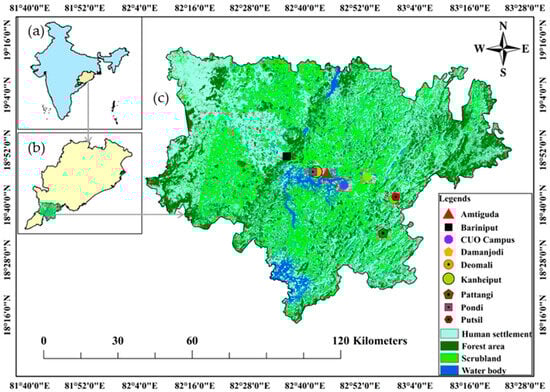
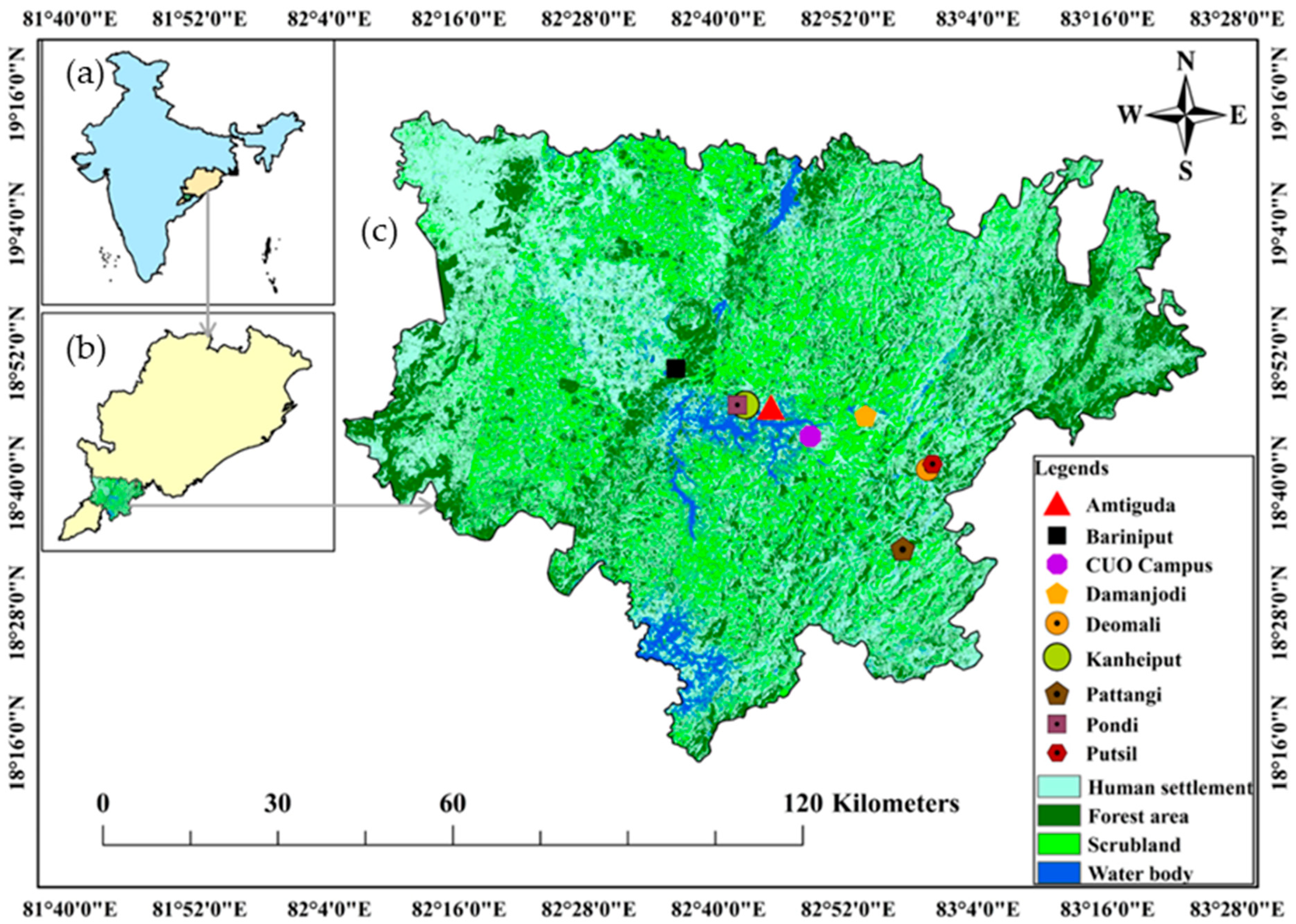
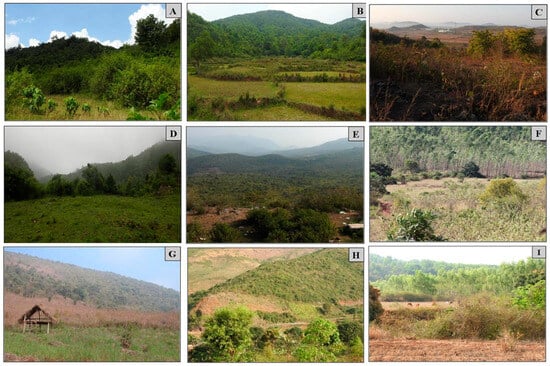
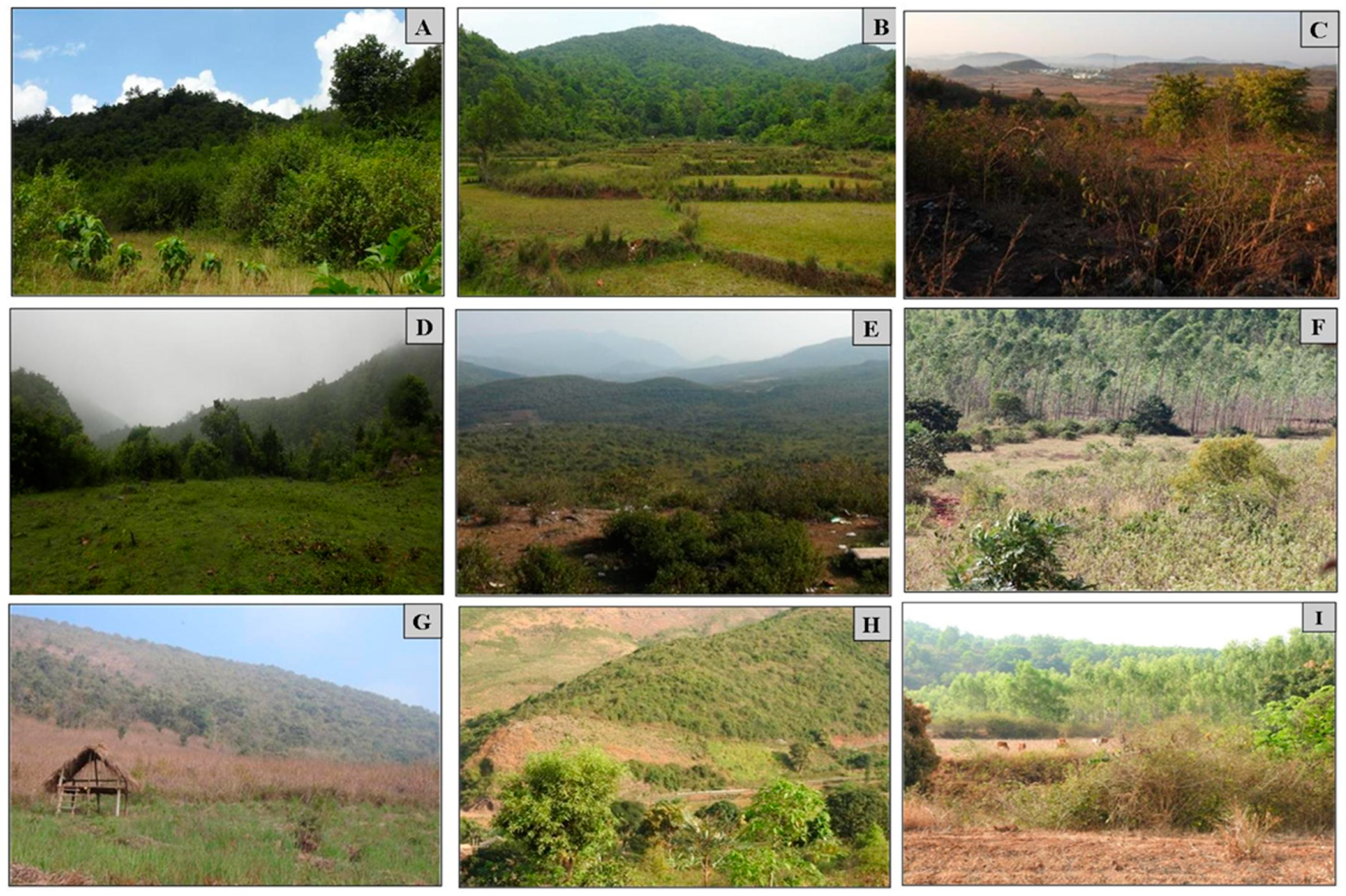
The present study was carried out in the Koraput district of Southern Odisha (Figure 1), a state of India located 18°13′ N and 19°10′ N latitude and 82°5′ E and 83°23′ E longitude with an area of 8807 sq. km. Koraput has discontinuous hill ranges of the northern Eastern Ghats, ranging in elevation from 123 to 1655 m above mean sea level [41]. The predominant forest types in this area are dry deciduous and moist deciduous tropical forests [42]. The present study site falls under the dry deciduous scrub forest type. Such forests are also referred to as biotic climax type as they result from ongoing biotic interference. The species composition of these forests resembles type-5B/C1, type-5B/C2, and type-5A/C3 as they are on the verge of a degraded stage of dry deciduous forests [43]. The area has distinct rainy (June to September) and dry (October to May) seasons. The climate is seasonal and generally humid, with temperatures ranging from 12 °C to 38 °C [44] and 1452.2 mm of precipitation for roughly 77 rainy days annually. The southwest monsoon contributes to over 81% of the yearly rainfall [45]. It is a region rich in biodiversity and endemic species due to its undulating landscapes, varied vegetation, and seasonal warmer and cooler climates [44,46,47,48,49,50]. Major parts of the Koraput district are under the northern Eastern Ghats of India. The India State of Forest Report 2017, 2019, and 2021 [36,37,38] indicated a gradual increase in scrub cover over the years in four districts of Odisha, including Koraput. In Koraput, scrub cover has increased from 947.86 Km2 in 2017 to 1141.91 Km2 in 2021. This increase in scrub cover was attributed to anthropogenic disturbance, urbanisation, and loss of natural forest cover. For the present study, based on the land use and land cover (LULC) classification, nine scrubland sites in Koraput district were surveyed and selected for avian diversity study, which included Amtiguda (S1), Bariniput (S2), Central University of Odisha campus (CUO) main campus (S3), Damanjodi (S4), Deomali (S5), Kanheiput (S6), Pattangi (S7), Putsil (S8), and Pondi (S9) (Figure 1 and Figure 2; Table 1).
Figure 1.
Map showing (a) India, (b) Odisha state, and (c) physical map of the Koraput district with study sites.
Figure 2.
Study sites for scrubland birds: (A)—Amtiguda (S1), (B)—Bariniput (S2), (C)—CUO campus (S3), (D)—Damanjodi (S4), (E)—Deomali (S5), (F)—Kanheiput (S6), (G)—Pattangi (S7), (H)—Putsil (S8), (I)—Pondi (S9).
Table 1.
Scrubland habitats of the Koraput district and their area (in acres); vegetation profile of each selected study site (20 acres each of the scrubland habitat area) and their disturbance profile (H = human encounters, G = cattle grazing).
The details of the sampled sites include information on altitude, survey area, sampling area, habitat, vegetation (shrubs, herbs, and trees), and disturbance patterns that were recorded and represented (Table 1). The intensities of human disturbances were assessed based on the frequency of human encounters in the sampling site. The numbers of human encounter (H) and grazing (G) seen during study were based on a scale of 10, where a 0–1 encounter represents the least, 3–4 encounters as moderate H, and 8–10 encounters as high [44].
2.2. Sampling
Birds were observed in the Eastern Ghats of the Koraput district, Odisha, between January 2023 and April 2024. The altitude and the area of nine selected sites ranged from 803 m ASL to 1193 m ASL and from 81 to 273 acres, respectively. Out of the total area, bird observations of nine observation sites were carried out in an area of 20 acres (0.0809 sq. km) with the length and breadth of the area measuring 400 m × 200 m. Each site was divided into 8 × 4 grids with 50 m × 50 m quadrates [51]. Out of these 32 grids, we randomly selected five grids for sampling. Birds were surveyed between 06:30 and 09:30 h in the morning and between 15:30 and 18:30 h in the evening.
Birds are usually active and vocal during early dawn to mid-morning and before dusk. In the present study, the point count method [52] was employed. The sampling was performed between 06:30 h and 09:30 h in the morning and between 15:30 h and 18:30 h in the evening. A transect length of 200 m was walked out with four points of observation placed at 50 m, and all birds in a radius of 50 m were observed and counted.
We used Nikon Monarch 8 × 42 binoculars (Nikon, Tokyo, Japan) for bird surveying; Nikon Coolpix P900 cameras (Nikon, Tokyo, Japan) and a Nikon DSLR 5200 camera (Nikon, Tokyo, Japan) for photographs with a tripod; and a Canon ET83D zoom lens (Canon, Tokyo, Japan). Birds were identified after [53,54] and categorised based on their migratory status, IUCN standard, feeding guild, and habitat types. Birds of each selected grid were counted using the point count method [52]. The foraging behaviour of birds was recorded if the bird was sighted feeding on fruits/nectar or observed catching its prey.
For the vegetation sampling, the grids selected for the bird survey were considered, and the number of trees and shrubs; the density of herbs, rock, and soil types; and bryophytes were documented. Trees were defined as stems standing >45° relative to the ground and diameter at breast height (dbh) >5 cm. Shrubs/Small trees were identified as stems >1 m in height and <5 cm dbh or trees that were still alive but tipped to <45° relative to the ground. The ground-layer vegetation cover (<1 m height) was estimated in five 1 m2 sub-quadrates placed at the centre of the point of observation. At these specified points, the percentage of exposed rocks, soil, and bryophyte covers was recorded [51]. Tree and shrub counts were noted down. The number of live and dead trees rooted within 25 m to either side of the transect were recorded. The foraging behaviour and the association of birds to scrubs were observed. Sampling efforts for each study site are recorded (Table 2). Disturbances such as human impact (H) and grazing of cattle (G) were measured in and around a 5 m visual distance along each side of the transect [44].
Table 2.
Sampling efforts during the bird survey in nine study sites of Koraput (January 2023–April 2024).
2.3. Statistical Analysis
We estimated the Margalef species richness index (R), Shannon diversity index (H′), and Dominance index (D) to analyse the community structure of birds of each study site using the following formulas:
Margalef species richness index (R): This index was used as a simple measure of species richness [55].
where S = total number of species; N = total number of individuals in the sample.
Shannon–Weiner diversity index (H′): This is an abundance-based diversity index to measure the diversity of species in a community [56].
where S = number of species; pi = proportion of the total sample belonging to ith species (ni/N); ni = number of individuals of ith species in the sample; and N = total number of individuals in the sample.
Dominance index (D): The dominance index quantifies the dominance of one or few species in a community [57]. Greater values indicate higher dominance. Dominance indices are in general negatively correlated with alpha diversity indices (species richness, evenness, diversity, rarity). More dominant communities are less diverse. The value of D ranges between 0 and 1.
where S = number of species; ni = number of individuals of ith species in the sample; and N = total number of individuals in sample.
Pielou′s evenness index (J): It measures the community evenness by using Shannon′s diversity index. The range of Pielou′s evenness is from 0 (no evenness) to 1 (complete evenness).
where H′ = Shannon′s diversity index; and S = total number of species.
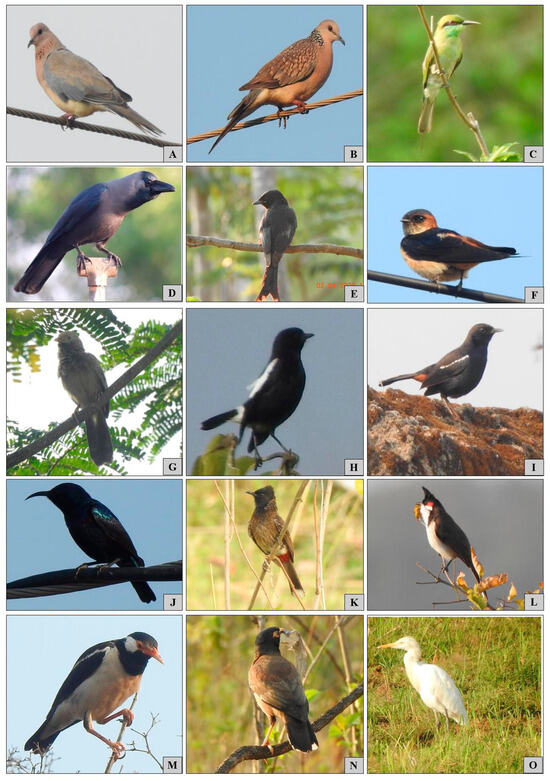
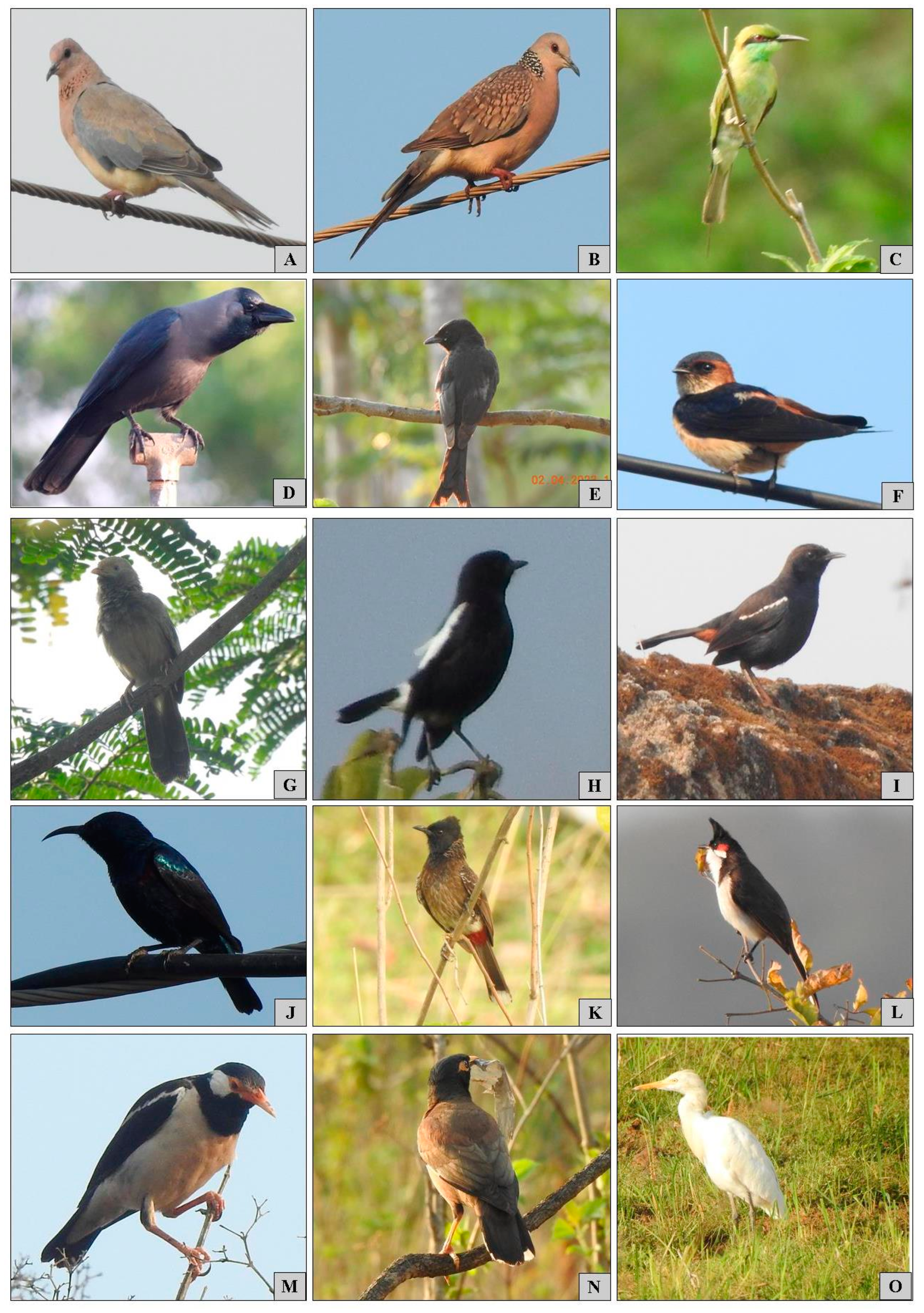
Similarities in the abundance of birds between each site were analysed using a multivariate cluster analysis and Bray–Curtis dendrogram, and to assess the significance of habitat characteristics across sites, a one-way analysis of variance (ANOVA) was applied. The ANOVA values significant at p < 0.05 were recorded and highlighted. We applied a detrended correspondence analysis (DCA) to the species abundance data to understand the homogeneity or heterogeneity in data structure. Then, based on the values of the DCA1 axis, we selected the redundancy analysis (RDA) to quantify the relationships between the birds′ abundance and habitat characteristics. We normalised the herb characteristics with high count values by applying logarithm before RDA analysis. Of a total of 128 birds, we considered 15 bird species common in nine selected scrublands (Figure 3). We used R Version 4.4.2 for statistical analyses and QGIS Version 3.06 for map preparation.
Figure 3.
Picture showing 15 common birds of the study site: (A) laughing dove (S. senegalensis), (B) spotted dove (S. chinesis), (C) Asian green bee-eater (M. orientalis), (D) house crow (C. splendens), (E) black drongo (D. macrocercus), (F) barn swallow (H. rustica), (G) jungle babbler (A. striata), (H) oriental magpie robin (C. saularis), (I) pied bush chat (S. caprata), (J) purple sunbird (C. asiaticus), (K) red-vented bulbul (P. cafer), (L) red-whiskered bulbul (P. jocusus), (M) Asian pied starling (G. contra), (N) common myna (A. tristis), and (O) cattle egret (B. ibis).
3. Results and Discussion
3.1. Bird Diversity
The current study enlisted 128 bird species that belonged to 16 orders, 53 families, and 93 genera. Passeriformes was the most dominant order with 77 species, represented by 31 families. Based on migration pattern, 113 species were identified as resident birds, and 15 were migratory.
The IUCN status of the green munia (Amandava formosa) and the Alexandrine parakeet (Psittacula eupatria) and of other bird species were documented and listed (Table 3). The dominance of Passeriformes in the study site aligns with the global patterns and their wide range of ecological niches and adaptations [50].
Table 3.
Checklist of birds in the selected scrubland patches of the Koraput district (* indicates bird species selected for habitat preference analysis).
3.2. Relative Abundance
The 15 selected bird species were distributed under 10 families: three species under family Hirundinidae (Pycnonotus cafer, P. jocosus, and Hirundo rustica), with a relative abundance (RA) of 22.43%; two species each under family Sturnidae (Gracupica contra; Acridotheres tristis), with an RA of 16.495%, under Colubridae (Streptopelia chinensis, Streptopelia senegalensisis) with an RA of 8.259%, and under Muscicapidae (Copsychus saularis, S. caprata) with an RA of 3.149%; and one species each under Nectariniidae (C. asiaticus) with an RA of 4.864%, Corvidae (Corvus splendens) with an RA of 3.406%, Meropidae (M. orientalis) with an RA of 2.671%, Ardeidae (Bubulcus ibis) with an RA of 2.627%, Leiothrichidae (A. striata) with an RA of 1.942%, Dicruridae (Dicrurus macrocercus) with an RA of 1.579% (Table 2).
The highest relative abundance (RA) of 11.08% was observed for the Red-vented bulbul (P. cafer). Dominance of this species in scrubland habitats of the present study is likely due to the availability of its broad diet, which includes fruits, nectar, and insects. The ability of P. cafer to thrive in a range of habitats, from urban areas to scrublands, also helps. This supports the generalist nature of P. cafer and its abundance in diverse environments [50]. On the other hand, the common myna (A. tristis) and the red-whiskered bulbul (P. jocosus) showed relative abundances of 9.13% and 8.02%, respectively. A. tristis is known for its opportunistic feeding behaviour and adaptability to human-modified landscapes [50]. The Asian pied starling (G. contra) had an RA of 7.37%, and the spotted dove (S. chinensis) had an RA of 6.36%. This indicates that the scrubland patches provide adequate resources, including nesting sites and foraging opportunities [56]. Earlier studies also report their abundance in open and semi-open habitats [50] (Table 2).
3.3. Habitat Preferences
The habitat preferences of different bird species for certain shrubs, herbs, rock-covered areas, and exposed soil are recorded (Table 4). Bulbuls, such as the red-vented bulbul (P. cafer) and red-whiskered bulbul (P. jocusus), exhibit preferences for shrubs like L. camara, Butea superba, Dendrophtoe falcate, Ficus hispida, and Woodfordia fruticosa. The spotted dove (S. chinensis) prefers habitats with shrubs like F. hispida and W. fruticose, but it avoids rock-covered or exposed soil environments. In contrast, the laughing dove (S. senegalensis) prefers habitats with rock-covered and exposed soil but shows no association with shrubs or herbs.
Table 4.
Diversity indices of birds of nine selected scrublands.
The jungle babbler (A. striata), however, demonstrated a strong affinity for a variety of shrubs, including Alangium salvifolium, D. falcate, F. hispida, Holarrhena pubescens, Mallotus philippensis, and W. fruticosa, indicating a preference for shrub-rich environments. The Oriental magpie robin (Copsychus saularis) associates with shrub L. camara and rock-covered areas and exposed soil. The pied bush chat (S. caprata) only favours the shrub L. camara, not the others. The purple sunbird (C. asiaticus) is found to prefer L. camara, Butea superba, Mallotus philippensis, and W. fruticose but showed no preferences for herbs or specific terrain features.
The black drongo (D. macrocercus) associates with L. camara but does not show any notable preference for herbs or rock-covered areas and exposed soil. The Asian pied starling (G. contra) associates with B. superba and F. hispida, showing an affinity for herbs but not for rock-covered or exposed soil areas. The common myna (A. tristis), cattle egret (B. ibis), Asian green bee-eater (M. orientalis), and house crow (C. splendens) exhibited no specific preference for shrubs, herbs, or other terrain features, indicating a more generalised habitat requirement. Similarly, the barn swallow (H. rustica) avoided shrubs, herbs, and varied ground features.
3.4. Foraging Behaviour
Lantana camara, an invasive species, was found to be preferred by six bird species: P. cafer, P. jocosus, S. caprata, C. saularis, C. asiaticus, and D. macrocercus. Surprisingly, L. camara supports a wide array of birds for its abundant fruits and flowers [58,59]. Ficus hispida was utilised by G. contra, P. cafer, S. chinensis, and A. striata, and W. fruticosa was preferred by P. cafer, S. chinensis, A. striata, and C. asiaticus. B. superba was a shrub preferred by P. cafer, P. jocossus, C. asiaticus, and G. contra. On the other hand, M. philipinensis and D. falcata were preferred by A. striata and C. asiaticus. D. falcata was utilised by P. cafer, and A. striata, A. salvifolium, and H. pubescens by A. striata only. The jungle babbler (A. striata) was found to utilise a maximum of six shrub species, followed by the red-vented bulbul (P. cafer) at five, the purple sunbird (C. asiaticus) at four, and the Asian pied starling (G. contra) and spotted dove (S. chinensis) at two. Out of 15 selected scrubland birds, nine species were associated with at least one plant species.
3.5. Distribution
The Margalef species richness index (R), which is influenced by the sample size, was found to be the highest in Kanheiput (S6; R = 2.03). This suggests that S6 supports a relatively higher number of bird species compared with other sites. Factors like habitat complexity, availability of resources, and minimal human disturbance could have influenced the high richness of birds at this site. It has also been reported that high species richness is often associated with a habitat that provides diverse microhabitats and resources allowing for the coexistence of a wide range of species [60]. On the other hand, the Shannon diversity index (H′) was the highest in Bariniput (S2; H′ = 2.51), indicating its maximum bird diversity among the sampled sites. This describes that S2 has a balanced ecosystem with a stable environment facilitating its rich bird diversity. Contrastingly, the lowest Shannon diversity index was recorded at the CUO campus (S3: H′ = 2.23). The habitat degradation and anthropogenic disturbances have limited birds′ smooth roaming and other associated activities such as brooding and roasting for this site. The CUO campus was found to have the highest dominance index (D = 0.14) and the lowest evenness (J = 0.62), suggesting dominance by certain species and a potentially reduced bird diversity owing to low ecosystem resilience. This explains that this site has undergone habitat simplification, where adaptable or opportunistic species thrive at the expense of more sensitive species [60]. In contrast, Bariniput (S2) was recorded with the lowest dominance index (D = 0.093) and the highest evenness value (0.82), explaining its ecosystem stability (Table 4).
3.6. Association Between Study Sites
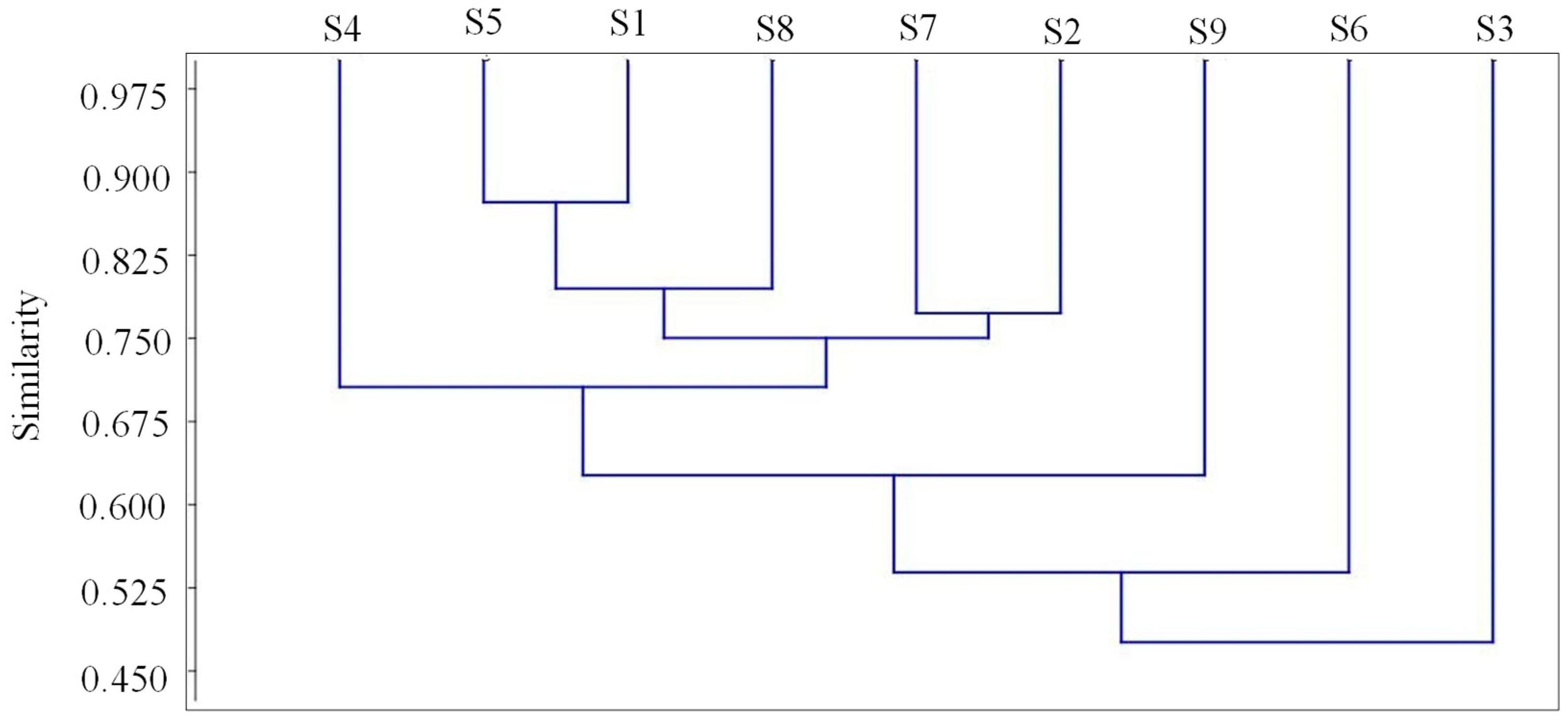
The multivariate cluster analysis of avian communities across the nine scrubland sites indicated that Amtiguda (S1) has strong similarities with Deomali (S5; 0.90), Putsil (S8; 0.79), and Damanjodi (S4; 0.72). The maximum similarity between S1 and S5 suggests their closeness in habitat characteristics such as vegetation structure, food resources, and microhabitat conditions essential for bird species. The similarities between Bariniput (S2) with Kanheiput (S6) and Pottangi (S7) were 0.61 and 0.77, which explain the influences of vegetation and landscape features on bird community composition. However, the CUO campus (S3), which showed the maximum similarity with Pondi (S8; 0.56), indicates their common habitat conditions, intensity of disturbance and urban influence, and limited resources availability for birds (Table 5).
Table 5.
Similarity indices between study sites. Abbreviations of sample sites are in parentheses.
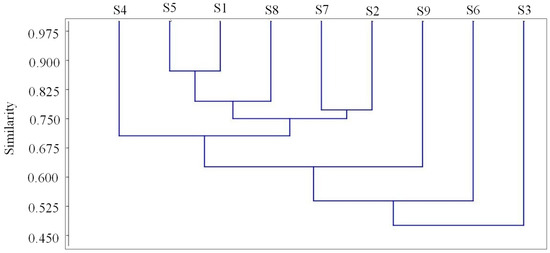
The Bray–Curtis similarity matrix and corresponding dendrogram (Figure 4) further illustrated the clustering patterns among the sites. It also supported the maximum similarity between Deomali (S5) and Amtiguda (S1). Both locations were adjacent to agricultural lands that provide additional resources for food (seeds and insects) and habitat (trees and shrubs). The diverse plant species in Deomali (A. auriculiformis, P. emblica, F. hispida, E. globules, D. falcate, S. cumini, D. melanoxylon, L. camara, B. ceiba, M. philippensis, M. indica, S. album, and A. concinna) create a heterogeneous environment with varieties of food resources that attracted a wide variety of bird species. Similarly, in Amtiguda, plant species such as M. indica, R. piresii, T. chebula, B. monosperma, P. emblica, F. hispida, E. globules, A. lebbeck, S. siamea, B. ceiba, and L. camara contributed to its habitat diversity and resource availability, which favoured a higher abundance of birds in those habitats. On the other hand, Kanheiput (S6) was distinctly different from the other sites for its unique habitat characteristics, primarily dominated by plantations of A. auriculiformis (Table 1). This monoculture plantation with a reduced habitat complexity has limited the diversity of bird species compared with more diverse and mixed vegetation types of other sites. Monoculture plantations are typically associated with lower biodiversity because of its fewer niches, reduced food variety, and altered natural landscape, making it less attractive to a broad range of bird species [61].
Figure 4.
Dendrogram showing the Bray–Curtis similarity among the nine scrubland sites. Abbreviations: S1—Amtiguda, S2—Bariniput, S3—CUO campus, S4—Damanjodi, S5—Deomali, S6—Kanheiput, S7—Pottangi, S8—Putsil, S9—Pondi.
3.7. Habitat Characteristics
A one-way analysis of variance (ANOVA) assessed the significance of habitat characteristics across the nine selected scrubland sites. Shrub cover, herbaceous vegetation, rocky surface, bryophyte cover, and exposed soil characteristics were recorded at a significance level of p < 0.05 (Table 6). This highlights the importance of habitat characteristics in avian diversity. Herb and shrub have greater variabilities, and therefore, they provide greater opportunities for birds for foraging, nesting, and roosting. The ANOVA also explains the significance of preserving native vegetation and natural habitat features such as rocks and bryophyte-rich areas.
Table 6.
Habitat characteristics in the nine selected sites and their significance as derived by an analysis of variance (ANOVA).
3.8. Species–Habitat Relationships
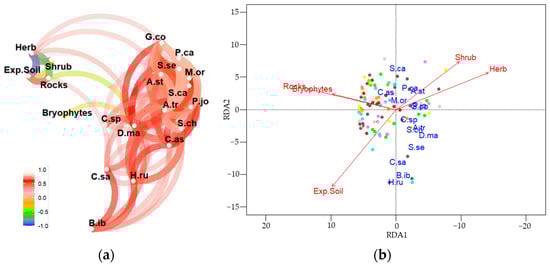
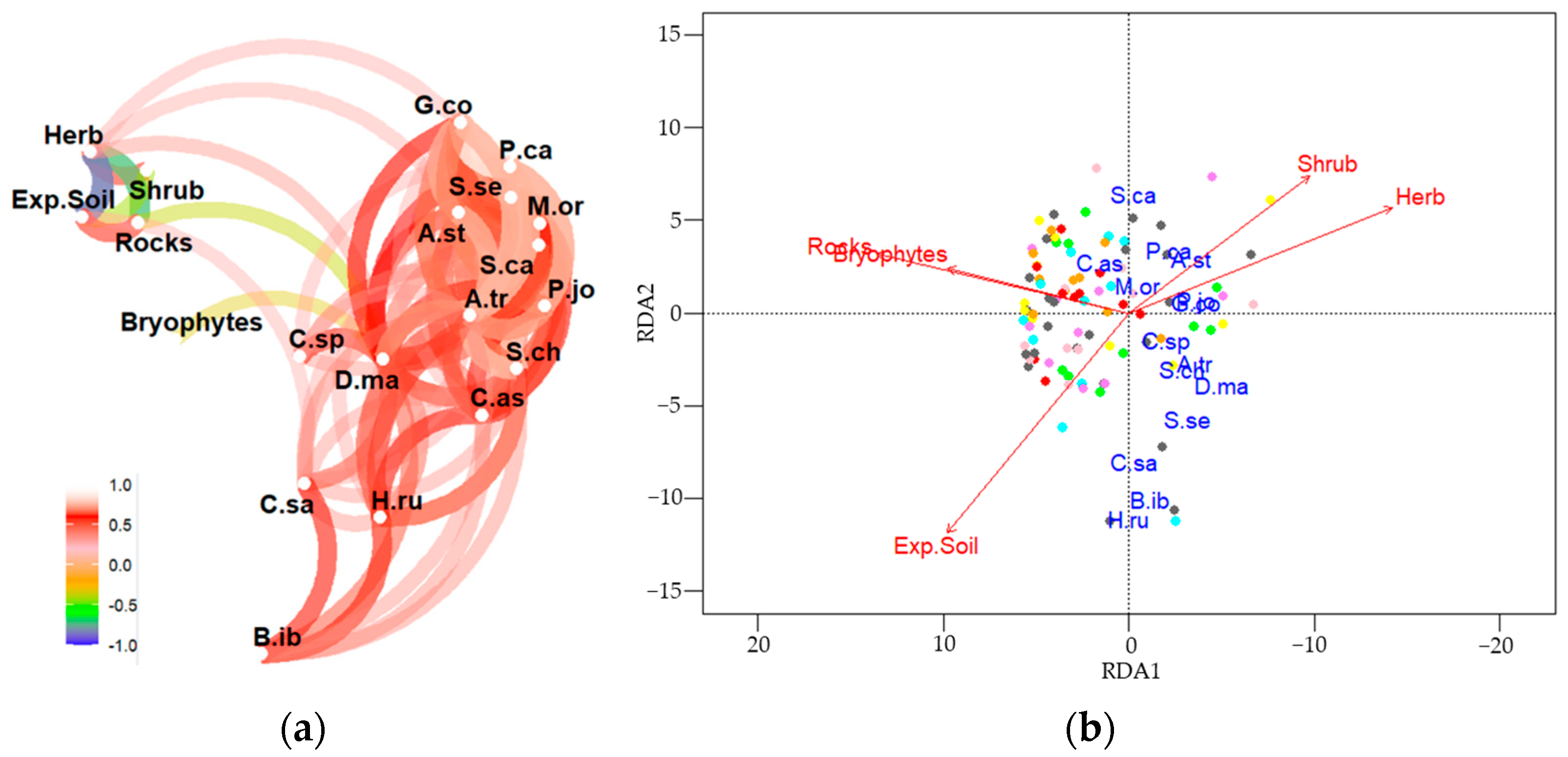
The Pearson coefficient between habitat characteristics and species indicate strong relationships among habitat characteristics, except for the bryophytes. A. tristis, B. ibis, C. saularis, C. splendens, D. macrocerus, H. rustica, S. chinensis, and S. senegalensis have close relationships. Similarly, A. striata, C. asiaticus, M. orientalis, P. cafer, and S. caprata showed close associations (Figure 5a). The value of the DCA1 axis was <3 (=2.2), explaining the linear distribution of the data structure. Therefore, the redundancy analysis (RDA) was applied, and its results were highlighted (Figure 5b). As a correlation, A. tristis, B. ibis, C. saularis, C. splendens, D. macrocerus, H. rustica, S. chinensis, and S. senegalensis showed a specific group of species that do not show preference to any habitat characteristics. B. ibis feeds on ground-dwelling insects and aligns with habitats offering exposed soil and rocks, emphasizing the importance of these substrates in supporting ground-feeding behaviours. C. splendens and H. rustica are less strongly associated with multiple habitat conditions, indicating their broader habitat tolerance and adaptability. The omnivorous diet of C. splendens allows it to exploit a wide range of habitats and food resources. At the same time, H. rustica, an insectivore, depends more on the availability of open spaces for foraging rather than specific vegetation types [62]. This highlights their role as generalists within the avian community, capable of utilizing a variety of environments (Figure 5b).
Figure 5.
(a) Correlation plot among habitats and species; (b) redundant analysis showing the association between habitat characteristics and bird′s abundances. Abbreviations: A.tr = Acridotheres tristis; A.st = Argya striata; B.ib = Bubulcus ibis; C.as = Cinnyris asiaticus; C.sa = Copsycus saularis; C.sp = Corvus splendens; D.ma = Dicrurus macrocercus; G.co = Gracupica contra; H.ru = Hirundo rustica; M.or = Merops orientalis; P.ca = Pycnonotus cafer; P.jo = Pynonotus jocosus; S.ch = Streptopelia chinensis; S.ca = Saxicola caprata; S.se = Streptopelia senegalensis.
S. chinensis is primarily granivorous and benefits from shrub habitats that offer seeds and shelter. A. strita, C. asiaticus, M. orientalis, P. cafer, and S. caprata formed a separate group of bird species showing close association with shrubs, which provide fruits, seeds, nectar, and insects as a diet with ample foraging opportunities and nesting sites [62]. S. caprata and M. orientalis are understory insectivores, and they benefit from complex ground habitats like shrubs that offer diverse insect prey. C. asiaticus, which is primarily nectarivores but occasionally insectivorous, is also attracted to shrubs that likely harbour insect prey. G. contra and P. jocosus showed preferences for herbs. C. asiaticus was not found to be associated with any vegetation. While herb and shrubs have a strong and positive correlation, bryophytes and rocks exhibited strong but negative relationships. Along with the rocks and bryophytes, soil features were not found to influence birds. However, A. tristis and D. macrocercus show strong affinities with herbaceous vegetation. A. tristis, known for its highly adaptable foraging habits, prefers varieties of diets, including fruits, seeds, nectar, and insects [62], and herbs provide ample ground-level resources. D. macrocercus lives on seeds and insects, and its insectivorous habit is benefitted from open areas with herbaceous cover that facilitate its aerial hunting strategy for insects. The present study also supports this association of A. tristis to open spaces over herb cover, which underscores the importance of maintaining herb-rich areas to support this adaptable and opportunistic species (Figure 5b).
The present study in nine scrubland sites of the northern Eastern Ghats indicates close plant–bird relationships. The opportunities it provides, in the form of foraging, shelter, and breeding, have ample conservation significance for bird communities. The varieties of habitat conditions in scrublands facilitates the birds′ abundance and diversity of the region. Though soil surfaces, rocks, and bryophytes do not exhibit preferred habitat characteristics for birds, their presence in herb-shrub patches of scrubland promotes insectivore species. Our findings corroborate with the observations made by [32], who observed that the shrub density, vegetational height, vertical foliage stratification, grass height, and percent rock cover attracted birds to scrub-shrub habitats.
3.9. Conservation Significance
During the study, two species of birds of conservation concern have been recorded: these are the IUCN near-threatened (NT) P. euptria and vulnerable (VU) A. formosa [63]. This underscores their conservation significance on an urgent basis in these scrublands. However, house building, agriculture expansion, and industrialization have altered the very nature of the land cover. Even though there is a steady increase in scrublands, the human disturbances by LULC changes have become centre stage in habitat modification, creating immediate threats to scrubland birds [31] of this region. More research on birds that includes studying population, nesting potential, and foraging adaptability and the creation of a database for birds would be the first major step towards long-term monitoring. A machinery that incorporates changes by updating database regularly could further improve the conservation standard. These databases need to be shared among different agencies, NGOs, and govt. organisations so that management planning can be decided. The preservation of scrublands and associated natural landscapes essential for bird conservation need special attention. Planners and conservationists could put their shoulders together to save these unique habitats, not only for bird conservation, but also for the preservation of this biodiversity-rich region. The role of local inhabitants and institutions could provide immense support to organise wholesome conservation for the sake of future generations. A database for birds and their distribution in scrubland areas need to be maintained and shared among researchers, NGOs, and govt. agencies to facilitate management planning.
4. Conclusions
This study highlights the significant associations between habitat and bird species distributions in scrubland habitats in the northern Eastern Ghats. Understanding these relationships is crucial for effective habitat management and conservation strategies. It underscores the importance of maintaining diverse habitat features to support the foraging needs of different bird species in scrublands. Overall, the present study provides a clear picture of the avian community diversity and distribution across the scrubland patches in Koraput. Understanding the distribution and dominance patterns of bird species and the importance of habitat heterogeneity in scrublands could help planners and conservationists protect the diverse avian communities of this region. Conservation efforts that focus on preserving native vegetation and natural features, discouraging habitat homogenization through monoculture plantations, and enhancing habitat complexity to meet the varied ecological needs of bird species could be prioritised. These findings also provide a basis for site-specific conservation strategies aimed at preserving avian biodiversity in the Koraput district, highlighting the need for continued monitoring and adaptive management to address environmental changes and ensure the long-term conservation of these ecosystems. Research needs are to be focused on scrublands and their faunal and floral resources, including disturbances and threats, which could help in management planning.
Author Contributions
Conceptualization, G.M. and S.K.P.; Methodology, G.M., R.M.P. and S.K.P.; Software, R.M.P. and G.M.; Validation, G.M. and R.M.P.; Formal analysis, G.M. and R.M.P.; Investigation, G.M. and R.M.P.; Resources, S.K.P.; Data curation, G.M.; Writing—original draft, G.M.; Writing—review & editing, R.M.P. and S.K.P.; Visualization, R.M.P. and S.K.P.; Supervision, R.M.P. and S.K.P.; Project administration, S.K.P.; Funding acquisition, S.K.P. All authors have read and agreed to the published version of the manuscript.
Funding
This research received no external funding.
Data Availability Statement
The original contributions presented in this study are included in the article. Further inquiries can be directed to the corresponding authors.
Conflicts of Interest
The authors declare no conflict of interest.
References
- Lees, A.C.; Haskell, L.; Allinson, T.; Bezeng, S.B.; Burfield, I.J.; Renjifo, L.M.; Rosenberg, K.V.; Viswanathan, A.; Butchart, S.H.M. State of the World′s Birds. Annu. Rev. Environ. Resour. 2022, 47, 231–260. [Google Scholar] [CrossRef] [Scilit]
- Mali, S.; Srinivasulu, C.; Rahmani, A.R. Avifaunal diversity in the scrub forest of Sri Lankamalleswara Wildlife Sanctuary, Andhra Pradesh, India. J. Threat. Taxa 2017, 9, 10679–10691. [Google Scholar] [CrossRef] [Scilit]
- Harrison, S. Ecology of Scrublands: Insights and Perspectives; Academic Press: Cambridge, MA, USA, 2018. [Google Scholar] [CrossRef] [Scilit]
- Ramsar Convention. The Ramsar Convention on Wetlands: Handbook; Ramsar Convention Secretariat: Gland, Switzerland, 2020. [Google Scholar]
- Montgomery, I.; Caruso, T.; Reid, N. Hedgerows as ecosystems: Service delivery, management, and restoration. Annu. Rev. Ecol. Evol. Syst. 2020, 51, 81–102. [Google Scholar] [CrossRef] [Scilit]
- Golawski, A.; Mróz, E.; Golawska, S. The function of food storing in shrikes: The importance of larders for the condition of females and during inclement weather. Eur. Zool. J. 2020, 87, 282–293. [Google Scholar] [CrossRef] [Scilit]
- Smith, T.E. Scrub-shrub Birds. In Fish and Wildlife Leaflet Management Leaflet, No. 42; The US Dept. of Agriculture (USDA): Washington, DC, USA, 2007. Available online: https://www.researchgate.net/publication/305347976_Scrub-shrub_Birds (accessed on 29 December 2024).
- Smith, J.M.B. “Scrubland”. Encyclopedia Britannica. 15 September 2009. Available online: https://www.britannica.com/science/scrubland (accessed on 15 October 2022).
- Woinarski, J.C.Z.; Recher, H.F. Impact and response: A review of the effects of fire on the Australian avifauna. Pac. Conserv. Biol. 1997, 3, 183–205. [Google Scholar] [CrossRef] [Scilit]
- Morrison, M.L. Birds and their Habitats: An Ecological Perspective; Cambridge University Press: Cambridge, UK, 2021. [Google Scholar]
- Quinn, J.E.; Johnson, R.J.; Brandle, J.R. Identifying opportunities for conservation embedded in cropland anthromes. Landsc. Ecol. 2014, 29, 1811–1819. [Google Scholar] [CrossRef] [Scilit]
- Schlossberg, S.; King, D.I. Ecology and Management of Scrub-Shrub Birds in New England: A Comprehensive Review; Natural Resources Conservation Service: Beltsville, MD, USA, 2007.
- Cody, M.L. Bird diversity within and among Australian heathlands. In Plant-Animal Interactions in Mediterranean-Type Ecosystems; Chapter 5; Arianoutsou, M., Groves, R.H., Eds.; Kluwer Academic Publishers: Dordrecht, the Netherlands, 1994; pp. 47–61. [Google Scholar]
- Shochat, E.; Abramsky, Z.; Pinshow, B. Breeding bird species diversity in the Negev: Effects of scrub fragmentation by planted forests. J. Appl. Ecol. 2001, 38, 1135–1147. [Google Scholar] [CrossRef] [Scilit]
- Rodewald, A.D.; Vitz, A.C. Edge- and Area-Sensitivity of Shrubland Birds. J. Wildl. Manag. 2005, 69, 681–688. [Google Scholar] [CrossRef] [Scilit]
- King, D.I.; Chandler, R.B.; Schlossberg, S.; Chandler, C. Habitat use and nest success of scrub-shrub birds in wildlife and silvicultural openings in western Massachusetts, USA. For. Ecol. Manag. 2009, 257, 421–426. [Google Scholar] [CrossRef] [Scilit]
- Schlossberg, S.; King DIChandler, R.B.; Mazzel, B.A. Regional Synthesis of Habitat Relationships in Shrubland Birds. J. Wildl. Manag. 2010, 74, 1513–1522. [Google Scholar] [CrossRef] [Scilit]
- Tinajero, R.; Barragan, F.; Chapa-Vargas, L. Raptor Functional Diversity in Scrubland-Agricultural Landscapes of Northern-Central-Mexican Dryland Environments. Trop. Conserv. Sci. 2017, 10, 1940082917712426. [Google Scholar] [CrossRef] [Scilit]
- Muhammad, S.I.; Then, A.Y.; Ramli, R. Spatial and seasonal use of habitat by birds in northern Nigeria. Bird Study 2019, 65, 484–494. [Google Scholar] [CrossRef] [Scilit]
- Fusco, J.; Walker, E.; Papaix, J.; Deboloni, M.; Bondeau, A.; Barnagaud, J.Y. Land use changes, threaten birds taxonomic and functional diversity across the Mediterranean basin: A spatial analysis to prioritize monitoring for conservation. Front. Ecol. Evol. 2021, 9, 612356. [Google Scholar] [CrossRef] [Scilit]
- Reddy, C.S.; Jha, C.S.; Diwakar, P.G.; Dadhwal, V.K. Nationwide classification of forest types of India using remote sensing and GIS. Environ. Monit. Assess. 2015, 187, 777. [Google Scholar] [CrossRef] [Scilit]
- Manakadan, R.; Khan, A.S. Birds of the Indian Subcontinent—In a NutShell. BUCEROS 2020, 24, 2–3. [Google Scholar]
- Gandhi, T. A Comparative Study of Birds in Monoculture Plantations and Natural Scrub Near Madras. Master′s Thesis, University of Mumbai, Mumbai, India, 1986. [Google Scholar]
- Gandhi, T. Birds in scrub jungles and monocultures in Tamil Nadu. Blackbuck 2006, 21, 1–11. [Google Scholar]
- Johnsingh, A.J.T.; Martin, M.H.; Balasingh, J.; Chelladu, V. Vegetation and avifauna in a thorn scrub habitat in south India. Trop. Ecol. 1987, 28, 22–34. [Google Scholar]
- Santharam, V. Species Richness and Avifaunal Composition of Scrub Jungles In and Around Madras City. Master′s Thesis, Pondicherry University, Pondicherry, India, 1989. [Google Scholar]
- Aggarwal, A.; Tiwari, G.; Harsh, S. Avian diversity and density estimation of birds of the Indian Institute of Forest Management Campus, Bhopal, India. J. Threat. Taxa 2015, 7, 6891–6902. [Google Scholar] [CrossRef] [Scilit]
- Khan, M.S.; Pant, A. Conservation status, species composition, and distribution of Avian Community in Bhimbandh Wildlife Sanctuary, India. J. Asia Pac. Biodivers. 2016, 10, 20–26. [Google Scholar] [CrossRef] [Scilit]
- Jeganathan, P.; Rahmani, A.R.; Green, R.E. Construction of Telugu-Ganga Canal in and around two protected areas in Cuddapah District, Andhra Pradesh, India. In Immediate Threat to the World Population of the Critically Endangered Jerdon′s Courser Rhinoptilusbitorquatus; Survey Report; Bombay Natural History Society: Mumbai, India, 2005; 10p. [Google Scholar]
- Jeganathan, P.; Rahmani, A.R.; Green, R.E.; Norris, K.; Vogiatzakis, I.N.; Bowden, C.; Pain, D. Quantification of threats and suggested ameliorative measures for the conservation of the Critically Endangered Jerdon′s Courser Rhinoptilusbitorquatus and its habitat. J. Bombay Nat. Hist. Soc. 2008, 105, 73–83. [Google Scholar]
- India Net Zone. Deccan Thorn Scrub Forests in India. 2013. Available online: http://www.indianetzone.com/40/deccan_thorn_scrub_forests_india.htm (accessed on 13 November 2022).
- Deshwal, A.; Stephenson, S.L.; Panwar, P.; DeGregorio, B.A.; Kannan, R.; Willson, J.D. Foraging habitat selection of shrubland bird community in tropical dry forest. Ecol. Evol. 2022, 12, e9192. [Google Scholar] [CrossRef] [Scilit]
- Rahmani, A.R.; Islam, M.Z.; Kasambe, R.M. Important Bird and Biodiversity Areas in India Priority Sites for Conservation; Bombay Natural History Society: Mumbai, India, 2016. [Google Scholar]
- Lepage, D. Avibase—Bird Checklists of the World: Orissa. 2022. Available online: https://avibase.bsc-eoc.org/checklist.jsp?region=INhior (accessed on 26 December 2024).
- Patnaik, S.; Reddy, M. Floral and Faunal Diversity in the Scrublands of Eastern Ghats. Indian J. Ecol. 2018, 45, 123–134. [Google Scholar]
- ISFR. State of Forest Report 2017; Forest Survey of India (Ministry of Environment, Forest and Climate Change): Dehradun, India, 2017. Available online: https://fsi.nic.in/forest-report-2017 (accessed on 26 December 2024).
- ISFR. State of Forest Report 2019; Forest Survey of India (Ministry of Environment Forest and Climate Change): Dehradun, India, 2019. Available online: https://fsi.nic.in/forest-report-2019 (accessed on 26 December 2024).
- ISFR. State of Forest Report 2021; Forest Survey of India (Ministry of Environment Forest and Climate Change): Dehradun, India, 2021. Available online: https://fsi.nic.in/forest-report-2021 (accessed on 26 December 2024).
- Sahoo, R.; Sharma, P.; Patel, V. Avian Diversity and Habitat Use in Koraput District: A Field Study. Biodivers. Res. J. 2020, 33, 501–514. [Google Scholar]
- Purohit, S. Avian Diversity in Different Habitat: A Study from Koraput District of Odisha. Ph.D Thesis, Central University of Odisha, Koraput, India, 2023. [Google Scholar]
- Adhikary, P.P.; Barman, D.; Madhu, M.; Dash, C.J.; Jakhar, P.; Hombegowda, H.C.; Naik, B.S.; Sahoo, D.C. Land use and land cover dynamics with special emphasis on shifting cultivation in Eastern Ghats Highlands of India using remote sensing data and GIS. Environ. Monit. Assess. 2019, 191, 315. [Google Scholar] [CrossRef] [Scilit]
- Champion, H.G.; Seth, S.K. A Revised Survey of Forest Types of India; Government of India Press: Delhi, India, 1968; pp. 1–404.
- Taradatt. Odisha District Gazetteers: Koraput; Gopabandhu Academy of Adminstration: Bhubaneswar, India, 2016. [Google Scholar]
- Mahata, A.; Samal, K.T.; Palita, S.K. Buttery diversity in agroforestry plantations of Eastern Ghats of southern Odisha, India. Agrofor. Syst. 2019, 93, 1423–1438. [Google Scholar] [CrossRef] [Scilit]
- Adhikary, P.P.; Madhu, M.; Dash, C.J.; Sahoo, D.C.; Jakhar, P.; Naik, B.S.; Gowda, H.C.; Naik, G.B.; Dash, B. Prioritization of traditional tribal eld crops based on RWUE in Koraput district of Odisha. Indian J. TraditKnowl. 2015, 1, 88–95. [Google Scholar]
- Majumdar, N. Collection of Birds from Koraput District, Orissa, India; Zoological Survey of India: Calcutta, India, 1988.
- Misra, M.K.; Das, P.K.; Dash, S.S. Phytodiversity and Useful Plants of Eastern Ghats of Orissa; A Special Reference to the Koraput Region; International Book Distributors: Dehradun, India, 2009. [Google Scholar]
- Agarwal, I.; Datta-Roy, A.; Bauer, A.M.; Giri, V.B. Rediscovery of Geckoellajeyporensis (Squamata: Gekkonidae), with notes on morphology, coloration and habitat. Hamadryad 2012, 36, 17–24. [Google Scholar]
- Agarwal, I.; Wilkinson, M.; Mohapatra, P.P.; Dutta, S.K.; Giri, V.B.; Gower, D.J. The teresomatan caecilian (Amphibia: Gymnophiona) from the Eastern Ghats of India- a new species of Gegeneophis Peters, 1880. Zootaxa 2013, 3693, 534–546. [Google Scholar] [CrossRef] [Scilit]
- FAO. Koraput Traditional Agriculture. 2020. Available online: https://www.fao.org/giahs/giahsaroundtheworld/india-koraput/en (accessed on 17 July 2020).
- Lain, E.J.; Haney, A.; Burris, J.M.; Burton, J. Response of vegetation and birds to severe wind disturbance and salvage logging in a Southern bored forest. For. Ecol. Manag. 2008, 256, 863–871. [Google Scholar] [CrossRef] [Scilit]
- Bibby, C.; Jones, M.; Marsden, S. Expedition Field Techniques Bird Surveys. In Geography Outdoors: The Centre Supporting Field Research, Exploration and Outdoor Learning; Royal Geographical Society with IBG: London, UK, 1998; pp. 1–134. [Google Scholar]
- Grimmett, R.; Inskipp, C.; Inskipp, T. Birds of the Indian Subcontinent; Oxford University Press: Oxford, UK, 2011. [Google Scholar]
- Ali, S. The Book of Indian Birds, 13th ed.; BNHS: Mumbai, India; Oxford University Press: Oxford, UK, 2002; pp. 1–326. [Google Scholar]
- Margalef, R. Temporal succession and spatial heterogeneity in phytoplankton. In Perspectives in Marine Biology; Traverso, B., Ed.; University of California Press: Berkeley, CA, USA, 1958; pp. 323–347. [Google Scholar]
- Shannon, C.E.; Wiener, W. The Mathematical Theory of Communication; University of Illinois Press: Urbana, IL, USA, 1949; 177p. [Google Scholar]
- Simpson, E.H. Measurement of Diversity. Nature 1949, 163, 688. [Google Scholar] [CrossRef] [Scilit]
- Negi, G.C.S.; Sharma, S.; Vishvakarma, S.C.; Samant, S.S.; Maikhuri, R.K.; Prasad, R.C.; Palni, L.M. Ecology and Use of Lantana camara in India. Bot. Rev. 2019, 85, 109–130. [Google Scholar] [CrossRef] [Scilit]
- Bitani, N.; Downs, C.T. The native avian species visiting fruiting invasive Lantana camara in KwaZulu-Natal, South Africa: Potential dispersal concerns. S. Afr. J. Bot. 2022, 148, 573–579. [Google Scholar] [CrossRef] [Scilit]
- Magurran, A.E. Measuring Biological Diversity; Blackwell Publishing: Oxford, UK, 2004. [Google Scholar]
- Chazdon, R.L.; Harvey, C.A.; Komar, O.; Griffith, D.M.; Ferguson, B.G.; Martinez-Ramos, M.; Sinclair, F.L. Beyond reserves: A research agenda for conserving biodiversity in human-modified tropical landscapes. Biotropica 2009, 41, 142–153. [Google Scholar] [CrossRef] [Scilit]
- Ali, S.; Ripley, S.D. Compact Handbook of the Birds of India and Pakistan, 2nd ed.; University Press: Bombay, India, 1987; Volume 10. [Google Scholar]
- Purohit, S.; Khamari, B.P.; Palita, S.K. Studies on Breeding Populations of Green Munia (Amandava formosa) in Koraput of Eastern Ghats, Southern Odisha, India. Proc. Natl. Acad. Sci. India Sect. B Biol. Sci. 2021, 91, 423–429. [Google Scholar] [CrossRef] [Scilit]

Disclaimer/Publisher’s Note: The statements, opinions and data contained in all publications are solely those of the individual author(s) and contributor(s) and not of MDPI and/or the editor(s). MDPI and/or the editor(s) disclaim responsibility for any injury to people or property resulting from any ideas, methods, instructions or products referred to in the content. |
© 2025 by the authors. Licensee MDPI, Basel, Switzerland. This article is an open access article distributed under the terms and conditions of the Creative Commons Attribution (CC BY) license (https://creativecommons.org/licenses/by/4.0/).