


Abstract
Karst ground collapses triggered by groundwater fluctuations pose a significant threat to the safety and stability of tunnel engineering. In this study, taking the Yakouzai Tunnel as a case, a combination of physical model tests and numerical simulations was employed to investigate the mechanisms of groundwater-induced karst collapse. A self-designed physical model device reproduced the full process of soil cavity initiation, expansion, and roof failure. Numerical simulations were further conducted to analyze the evolution of pore water pressure, stress distribution, and displacement under both groundwater drawdown and rise conditions. The results indicate that concentrated seepage erosion at the cavity arch foot is the primary driver of cavity initiation, with cyclic suffusion promoting its progressive expansion. Rapid groundwater drawdown generates vacuum suction that markedly reduces roof stability and may induce sudden collapse, whereas groundwater rise, although providing partial support to the roof, intensifies shear stress concentration and leaves the cavity in an unstable state. The findings highlight that karst collapse is governed by the coupled effects of seepage erosion, arching degradation, differential settlement, and vacuum suction, providing a scientific basis for monitoring, prediction, and mitigation of karst hazards.
1. Introduction
Karst ground collapse is a typical geological hazard in carbonate rock regions, posing serious threats to urban development, transportation, and ecological safety. In China, approximately one-third of the national territory is underlain by carbonate rocks, making it one of the most extensively karst-developed countries in the world. Frequent collapse disasters are closely associated with intense groundwater activity and pronounced fluctuations in the water table [1]. Field investigations have revealed that instability zones within natural or anthropogenic karst cavities commonly propagate upward toward the ground surface, with thinner overburden being more prone to failure [2,3]. Groundwater-level decline and the resulting reduction in pore-water pressure are often the dominant triggers of such collapses [4,5].
Groundwater dynamics have long been recognized as the key driver of collapse development. Rapid and high-amplitude fluctuations of the groundwater table can induce alternating positive and negative pressure effects, thereby enhancing the instability of the overburden [6]. Regional studies in Turkey further revealed that lithology, cover thickness, and seasonal groundwater fluctuations—often intensified by groundwater overexploitation—govern sinkhole distribution. Quantitative assessments also indicated that collapse probability varies with extraction intensity, highlighting the need to distinguish between primary and secondary factors [7,8]. Long-term monitoring has identified critical drawdown thresholds for cavity development and roof failure, suggesting that groundwater-level observation can provide effective early warning of collapse risk [9].
To understand the underlying mechanisms, extensive laboratory experiments have been conducted. Seepage has been identified as the initiating condition for subsidence sinkholes, with soil anti-permeability strength as the key triggering parameter. Groundwater-level rise may also induce pressurized failure, with uplift-type collapse occurring in thick covers and fracture-type collapse in thin covers. Repeated water-level fluctuations accelerate roof instability and promote progressive evolution from cavity development to surface collapse [10,11,12]. Cavity air pressure variations have also been shown to influence deformation: vacuum suction during drawdown significantly reduces cover stability, while rapid recharge generates positive pressure that may induce collapse [13,14]. Mechanical modeling demonstrated that the relationship between initial water level, drawdown amplitude, and cavity geometry governs vacuum evolution and collapse stability [15]. Further physical model tests revealed that seepage erosion, hydraulic forces, and soil-arching effects jointly control collapse initiation in dual-structure strata, while coupled dual-cavity systems exhibit complex seepage-driven progression under varying water levels and soil moisture conditions [16,17]. Field investigations in Guangxi also indicated that under extreme rainfall, groundwater–air interactions can trigger air blasting within karst conduits, leading to large-scale collapses [18].
Theoretical and mechanistic studies have refined the conceptual understanding of collapse processes. Three developmental modes—disintegration, suffusion, and hydraulic fracturing—have been proposed, dominated by seepage erosion and hydraulic forces [19,20]. Classical analyses divided the collapse process into four stages: groundwater decline, cavity formation, expansion, and surface failure [21]. Hydro-mechanical coupling analyses showed that higher seepage velocity significantly reduces roof stability, while rainfall infiltration and groundwater fluctuations act jointly through suffusion, seepage pressure, and gravity to accelerate cavity failure [22,23]. The influence of seepage direction was also emphasized, with confined aquifer exploitation particularly unfavorable to stability [24]. In engineering contexts, water inrush has been identified as a trigger for shallow collapses, while mining-induced groundwater drawdown can destabilize collapse columns and induce water inrush [25,26].
With the advancement of computational methods, numerical simulations have become a powerful approach to analyzing collapse mechanisms. Combined field investigation and FLAC3D modeling have demonstrated that seepage suffusion is a dominant process, and groundwater drawdown has a stronger destabilizing influence than air pressure changes or rainfall infiltration [27]. Particle flow simulations revealed that covered karst soil cavities generally evolve through three stages—crack initiation, connection, and particle detachment—with vertical expansion proceeding faster than horizontal [28]. Physical–numerical integrated approaches further showed that drainage rate and fluctuation frequency accelerate pressure evolution and deformation, although the fundamental mechanism remains consistent [29]. Recent CFD–DEM numerical and physical modeling studies on ground collapse induced by urban pipeline leakage similarly indicate that soil erosion, cavity expansion, and sinkhole formation are governed by seepage-driven particle loss and groundwater conditions, reinforcing the central role of seepage erosion across different collapse scenarios [30,31].
However, despite the considerable progress achieved, the current understanding of collapse mechanisms remains incomplete. Most existing research focuses on groundwater drawdown as the primary triggering factor, while the effects of groundwater rise and cyclic fluctuations of rise–fall are still poorly understood. Moreover, the coupling effects of groundwater dynamics and air pressure within confined cavities have not been systematically explored, particularly in the context of underground construction. With the increasing development of tunnels and subsurface infrastructures in karst regions, collapse disasters related to groundwater inrush during excavation have become more frequent, yet the mechanisms governing these processes remain inadequately investigated.
To bridge these gaps, this study integrates physical model testing and numerical simulation to systematically analyze the mechanisms of karst ground collapse under dynamic groundwater conditions. By examining pore-water pressure evolution, stress transfer, and deformation response during groundwater recharge and drainage, this work aims to develop a generalized hydro-mechanical model that captures the interactive effects of groundwater fluctuation on collapse initiation and progression. The results are expected to provide new insights into the fundamental mechanisms of karst collapse and support risk prediction and prevention in groundwater-disturbed karst regions.
2. Project Overview
The Ya Kouzhai Tunnel, a section of the Shanghai–Kunming High-Speed Railway, is situated between Anshun West Station and Guanling Station in Guizhou Province, Southwest China. The regional strata along the tunnel are predominantly composed of carbonate rocks, and the area is characterized by an erosional–karstic trough valley landform. The geological setting can be broadly described as a binary stratigraphic structure, consisting of a clay-rich overburden overlying soluble carbonate bedrock. The overburden is generally about 12 m thick, with a maximum thickness of less than 20 m. Such a relatively thin and weakly consolidated cover provides favorable conditions for the development of covered karst ground collapse.
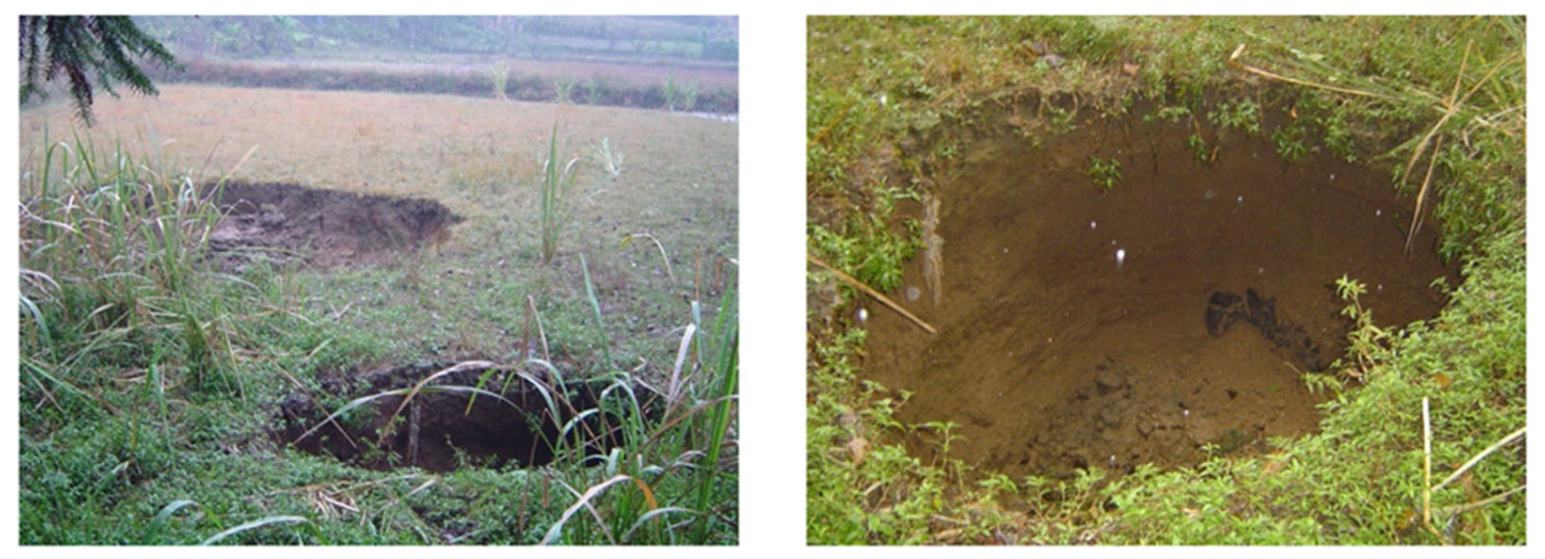
The trough valleys are typically aligned with major structural joints and display a linear distribution pattern, reflecting the regional tectonic control. The valley floors are commonly occupied by chains of karst depressions and sinkholes, indicating strong groundwater erosion and dissolution. In addition, numerous karst depressions, funnels, and sinkholes are distributed across the surrounding terrain, forming typical karst geomorphological landscapes. Figure 1 presents typical ground-collapse features observed near the tunnel site.
Figure 1.
Field photographs showing typical karst collapse pits developed within thin overburden.
3. Study on the Process of Karst Ground Collapse Based on Physical Model Test
3.1. Physical Model Test
3.1.1. Experimental Apparatus
According to the Engineering Geological Report of the Ya Kouzhai Tunnel, the study area exhibits a typical binary structure consisting of an overlying cohesive soil layer directly underlain by limestone bedrock. This configuration was therefore adopted in both the physical and numerical models.
To investigate the mechanism of karst ground collapse under dynamic groundwater conditions, a custom-designed physical modeling system was developed and constructed. This apparatus allows precise control of key experimental parameters, including overburden thickness, groundwater level, karst conduit dimensions, and drainage rate, enabling the reproduction of typical collapse-inducing processes such as seepage erosion and vacuum suction.
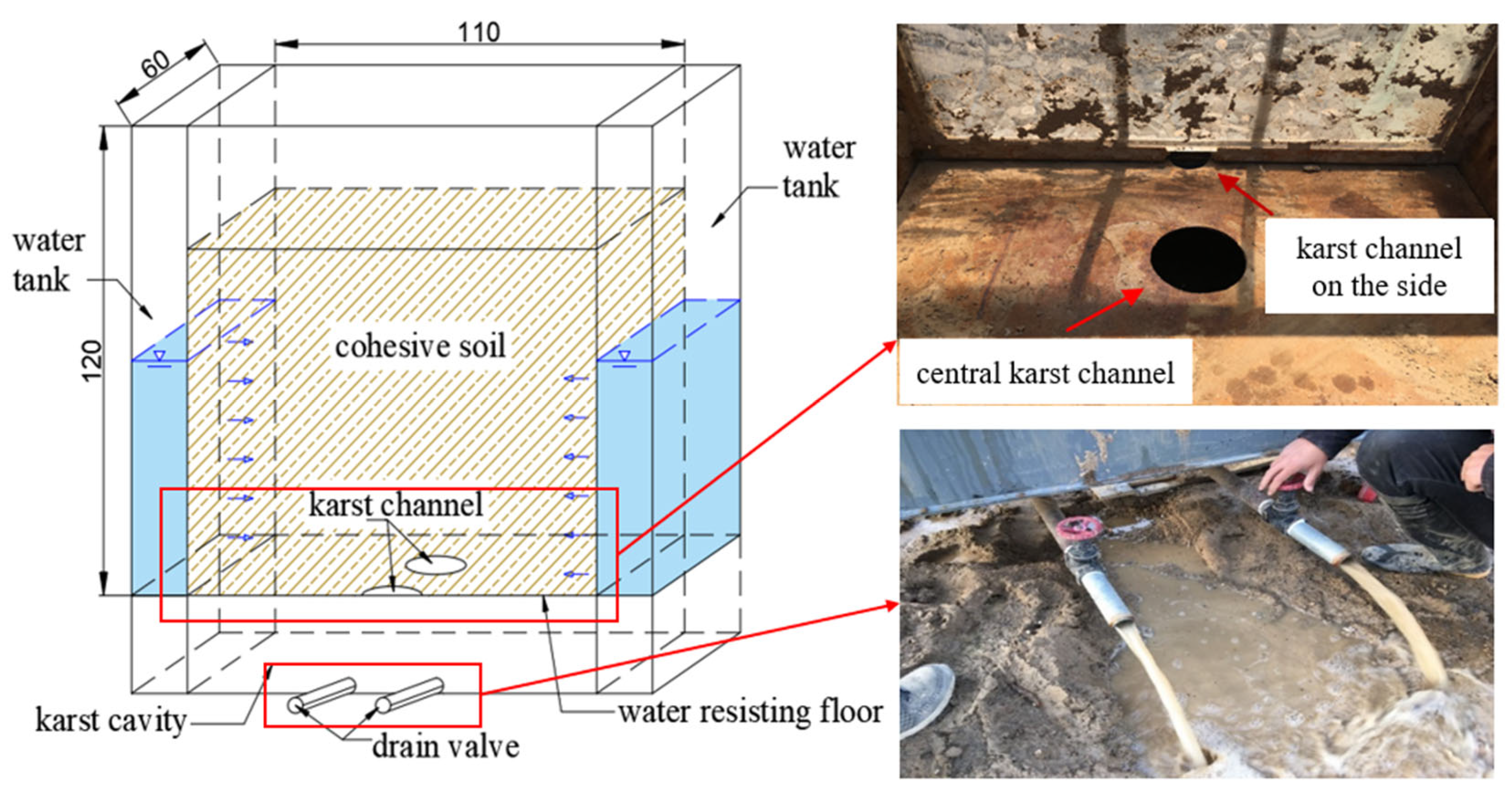
The apparatus consists of a container measuring 1.5 m in length, 0.6 m in width, and 1.8 m in height, within which a rectangular soil tank (1.1 m × 0.6 m × 1.2 m) is embedded. A schematic diagram of the physical model is shown in Figure 2. The upper section of the model was filled with soil, while the partition wall separating the soil tank and the water tank was perforated with uniformly distributed holes (6 mm in diameter) to allow water infiltration and to establish a stable groundwater table within the soil mass. The front face of the model was fitted with a transparent acrylic observation panel, which enabled direct visualization of groundwater-level variations and the entire collapse evolution process.
Figure 2.
Physical model apparatus for simulating karst ground collapse (The blue arrow indicates water infiltration between the water tank and the soil tank.).
Two openings were installed in the impermeable baseplate. The central opening served as the main karst conduit, into which rectangular inserts with different aperture sizes could be placed to simulate conduits of various dimensions. The semi-circular opening located near the observation window functioned as an auxiliary conduit, providing a cross-sectional view of the internal deformation and collapse progression during the experiments. At the bottom of the cavity, two drainage valves were mounted to regulate different outflow rates. When drainage was initiated, a negative pressure zone formed above the receding water surface within the cavity, effectively reproducing the vacuum-suction effect that typically develops during rapid groundwater drawdown in karst conduits.
3.1.2. Experimental Soil
Because a large volume of soil was required and the test site was located far from the karst collapse area of the Ya Kouzhai Tunnel, it was not feasible to obtain sufficient undisturbed in situ soil for the physical model test. Therefore, locally sourced soil with physical and mechanical properties similar to those of the field overburden was selected as the test material. Based on the Engineering Geological Report of the Ya Kouzhai Tunnel, key geotechnical parameters of the in situ soil in the study area were obtained (Table 1). Multiple sampling campaigns were conducted near the test site, and the final selected soil was subjected to laboratory tests. The measured physical and mechanical parameters of the test soil are presented in Table 2.
Table 1.
Soil parameters in the study area.
Table 2.
The results of soil laboratory tests.
According to the Engineering Geology Handbook, the natural water content of typical cohesive soils generally ranges from 15% to 30%. The locally sourced soil exhibited a relatively low natural water content of 15.24%. To ensure that the experimental soil better represented field conditions, the soil was adjusted to a target water content of 20% prior to model preparation. The mixed soil was then sieved to remove coarse particles and used as the fill material for the physical model.
3.1.3. Experimental Procedure
The physical model test aimed to reproduce and visualize the development process of karst ground collapse. During the test, the central karst conduit was sealed, and the lateral conduit adjacent to the observation window was opened to enable real-time visualization of cavity formation and collapse evolution in cross-section.
The prepared soil was placed into the model tank in three layers, each approximately 20 cm thick and manually compacted to about 16 cm after each filling. The surface was loosened before placing the next layer, resulting in a total overburden thickness of about 48 cm. After filling, the model was allowed to stabilize before alternately injecting water into the two side tanks in 10 cm increments until the water level rose 35 cm above the soil surface, ensuring hydraulic equilibrium. Simultaneously, the underlying cavity was filled with water, maintaining the level about 3 cm below the partition wall to allow subsequent groundwater seepage. The entire cavity formation and collapse process was then observed and recorded through the transparent observation window.
3.2. Results and Analysis
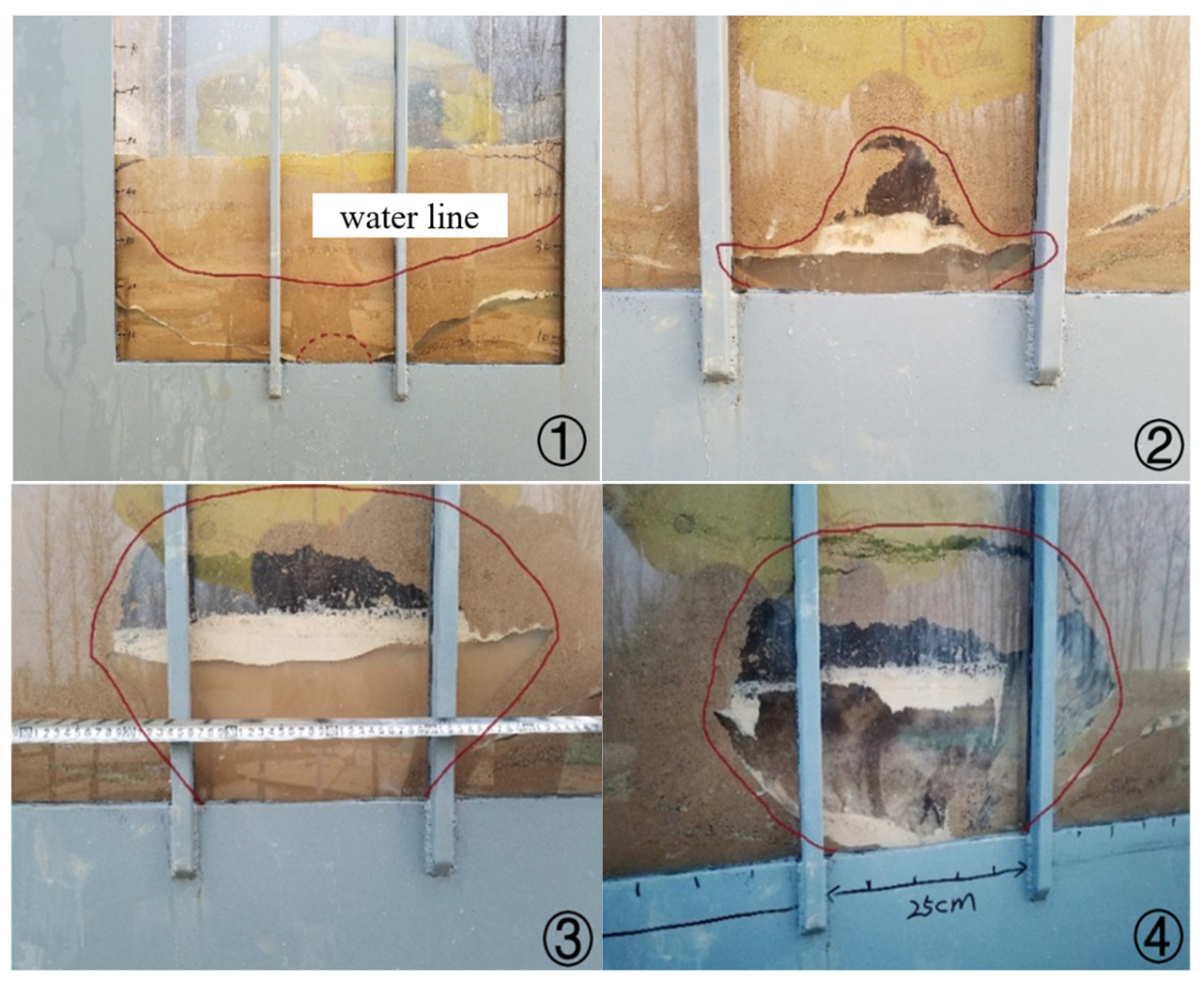
From the onset of water injection to the attainment of the target water level and eventual collapse, the process lasted approximately 3.5 h and could be divided into four stages (See Figure 3).
Figure 3.
Typical stages of the overburden collapse.
In Stage ①, once the water levels in both side tanks stabilized at 35 cm, gravity caused the water table within the soil to curve downward toward the center, where it stabilized at around 25 cm. Due to limited space at the model boundaries, compaction was less effective, resulting in lower soil strength compared with the center. As water infiltrated, the soil adjacent to the tanks became saturated, weakened, and partially disintegrated under hydraulic pressure, with tensile cracks forming in the upper zone. When seepage paths eventually connected, piping intensified, producing two distinct erosion channels. Soil particles were visibly transported downward along these paths, discharging into the karst conduit adjacent to the observation window.
In Stage ②, the combined effects of concentrated seepage and gravity rapidly drove the soil above the side orifice to failure, forming a circular cavity approximately 25 cm in diameter. Continued erosion at both haunches propagated backward along the seepage channels, and the cavity temporarily stabilized in an “ingot-shaped” configuration.
Stage ③ began when the collapsed soil and infiltrated water filled the basal cavity, followed by recharge from surrounding seepage. Ongoing failure on both sides increased the amount of overhanging soil, which eventually exceeded its strength and detached. The rising water level altered the hydraulic gradient, sealing the original erosion paths and generating new ones above. A circular arch, about 35 cm in diameter, developed above the cavity, while the lower portion contracted into a dish-shaped profile due to the failure angle and seepage direction.
In Stage ④, as the water level in the tanks was lowered and seepage diminished, the drainage valve was opened to simulate rapid drawdown in the karst conduit and the resulting vacuum-suction effect. The sudden drop in cavity water level caused the roof to fracture downward, producing a distinct tensile crack in the overlying soil. However, because the cover was relatively thick and the model box was not fully sealed, the failure did not propagate to the surface.
The experimental results indicate that lateral seepage erosion plays a dominant role in the initiation and development of soil cavities. Continuous lateral seepage at the haunches gradually removes fine particles, enlarging the voids between the cavity floor and sidewalls. Meanwhile, chemical dissolution of the soil matrix by groundwater further reduces soil strength, promoting progressive failure. The overall process can be summarized as a cyclic seepage–erosion mechanism: lateral undercutting at the haunches → formation of voids between the cavity body and floor → cavity detachment → collapse of the sidewalls → cavity expansion → renewed lateral undercutting. Under this cyclic action, the cavity progressively propagates upward until it eventually connects with the ground surface, forming a sinkhole. If, during this evolution, the water level in the underlying karst conduit drops rapidly, the resulting vacuum-suction effect may act in combination with hydraulic and gravitational forces. Such multi-factor coupling can trigger a sudden ground collapse, even when the overburden still retains partial stability.
4. Numerical Simulation of Karst Ground Collapse Induced by Groundwater Fluctuations
4.1. Model Establishment
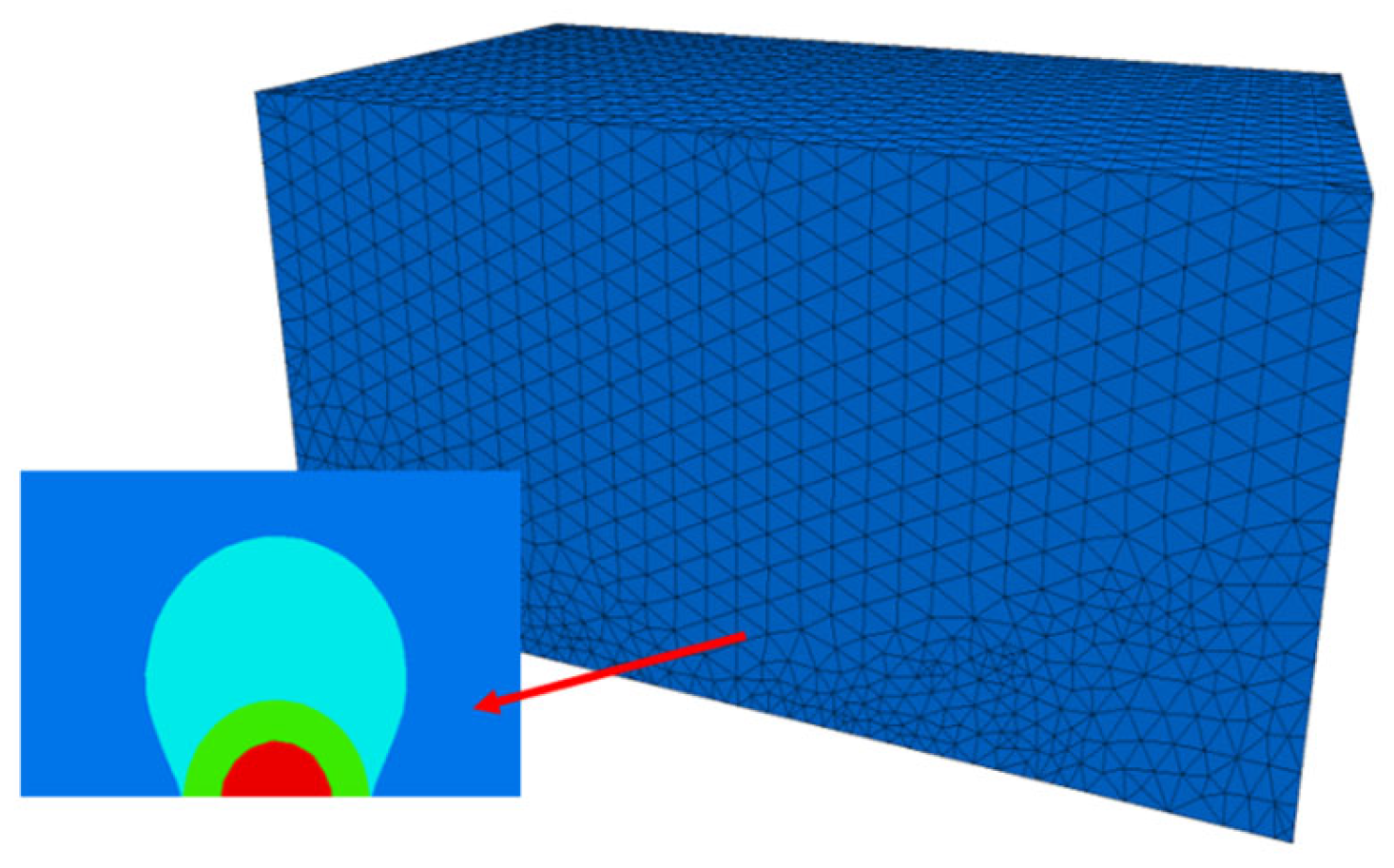
Numerical simulations were performed using FLAC3D, which is based on the finite difference method (FDM). FLAC3D was selected because it is well-suited for simulating large-deformation, time-dependent geotechnical processes, and can accurately capture the coupled hydro-mechanical response required to investigate groundwater-driven cavity evolution. The numerical model adopted the same physical and mechanical parameters as the soil used in the physical tests (Table 1). Based on the observed morphology and extent of collapse in the experiments, the numerical model was constructed with identical geometry and analysis procedures, maintaining a 1:1 scale with the five developmental stages of soil-cavity evolution. The model dimensions were 1.1 m × 0.6 m × 0.5 m, incorporating both the soil layer and the karst cavity structure. These plan dimensions were selected to ensure that the central collapse zone remained sufficiently distant from the model boundaries, thereby minimizing boundary effects and allowing deformation to develop naturally within the target region.
The three cavity diameters—0.15 m, 0.25 m, and 0.35 m—were selected based on ground-penetrating radar (GPR) measurements obtained in our previous physical model study on water-inrush–induced karst collapse [25]. In that study, GPR imaging revealed progressive cavity development with typical transverse sizes of approximately 15 cm, 25 cm, and 35 cm as the collapse evolved. These observed cavity sizes represent three representative stages of natural cavity enlargement and therefore provide a realistic basis for defining the numerical cavity geometries in the present study. A maximum spacing of 0.3 m was maintained between the cavity roof and the base of the overlying soil. The model was discretized using a tetrahedral mesh, with mesh refinement applied around the cavity to improve numerical accuracy in regions experiencing strong stress and seepage gradients. Boundary conditions were applied by fixing horizontal displacements on the lateral boundaries and vertical displacements at the model base, while leaving the top surface free; this combination is widely used in geotechnical numerical modeling and provides a mechanically reasonable approximation of in situ constraints. The overall configuration of the model is shown in Figure 4.
Figure 4.
The numerical analysis model.
4.2. Simulation of Groundwater Drawdown-Induced Collapse
4.2.1. Working Condition Design
To investigate the process and mechanism of collapse induced by groundwater drawdown, the numerical simulation was designed to reproduce, step by step, the cavity development stages observed in the physical model tests. After establishing an initial phreatic surface 0.35 m above the soil base and allowing the model to reach mechanical equilibrium under boundary constraints, seepage toward the basal karst opening was introduced to simulate the onset of soil erosion and the formation of the first soil cavity, consistent with the initiation stage captured in the laboratory. A 0.15 m cavity was then excavated to represent the earliest cavity size detected through geophysical monitoring in previous experiments, followed by an expansion to 0.25 m to simulate the intermediate stage of cavity growth observed in both the current and earlier physical tests. The final cavity enlargement, in which the cavity diameter exceeded the size of the initial karst opening, reproduced the pre-drainage geometry prior to sudden collapse. In this last stage, vacuum suction induced by rapid groundwater drawdown was applied as a radial tensile load on the cavity wall, mirroring the abrupt water-level drop and associated negative-pressure effects documented in the physical model. Through this sequential reconstruction, the numerical analysis directly corresponds to the experimentally observed evolution of cavity initiation, expansion, and destabilization under groundwater drawdown. The vacuum load was calculated using Equation (1):
where is the vacuum pressure (kPa), is atmospheric pressure (kPa), is the unit weight of water (kN/m3), and is the water head inside the cavity (m).
4.2.2. Result Analysis
- (1)
- Porewater Pressure Distribution
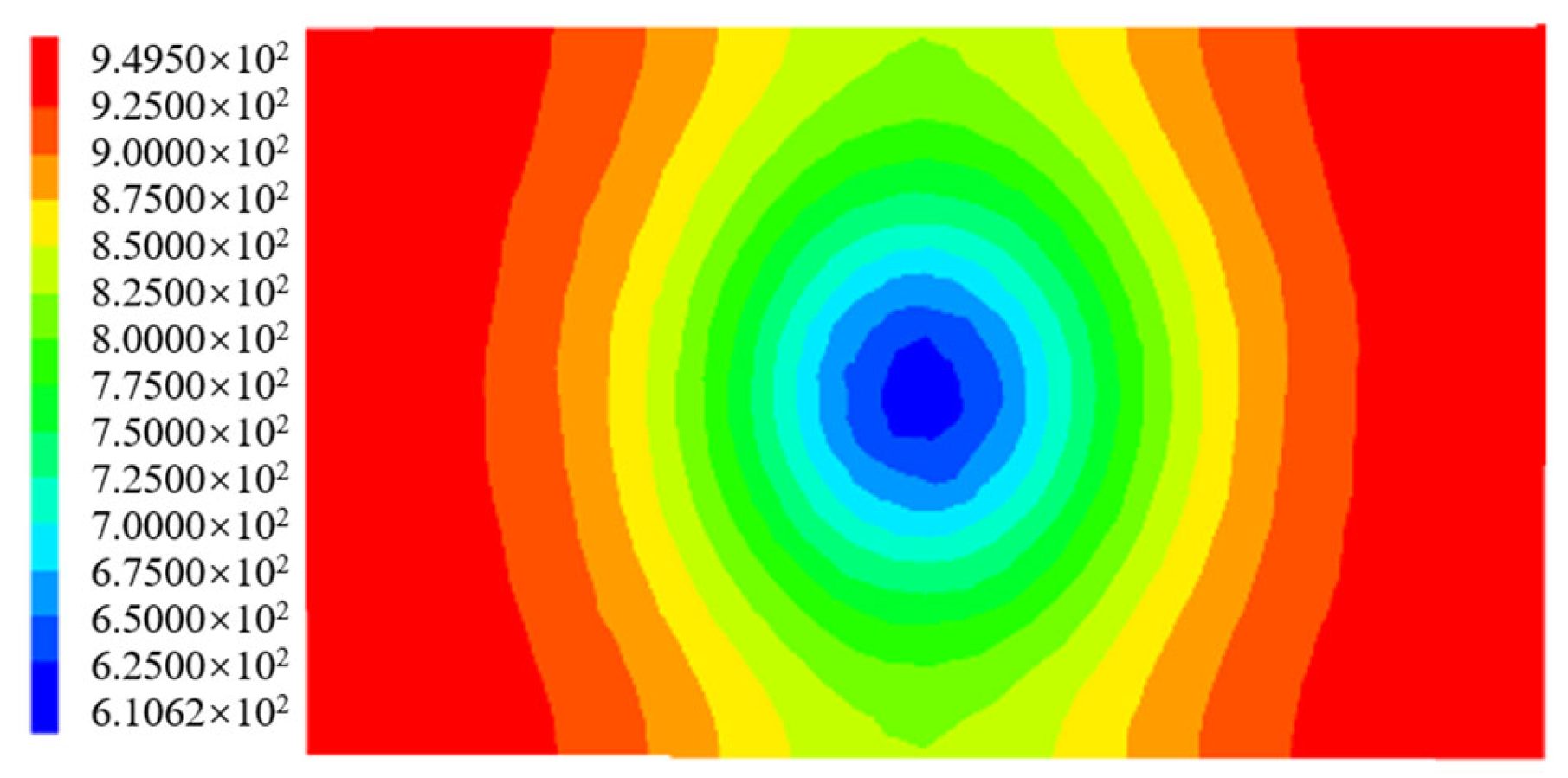
At the initial loading stage, the porewater pressure distribution corresponds to the groundwater level, with the maximum pressure occurring at the model base. Figure 5 illustrates the pore-water pressure distributions at three representative stages of cavity evolution: the initial seepage-driven erosion stage, the development of a 0.15 m soil cavity, and the enlargement to a 0.25 m cavity, while Figure 6 presents the pore-water pressure profile at the cavity roof during the 0.25 m cavity stage. During the early stage of groundwater drawdown, a pronounced conical drawdown funnel forms above the karst opening at the model base, with an influence radius of approximately 30 cm. Within this zone, porewater pressure is lower than that at the same elevation in the adjacent soils, resulting in concave-shaped isobaric lines. The maximum pressure difference near the opening reaches about 3413 Pa, creating a steep hydraulic gradient and strong seepage forces acting on the overlying soils.
Figure 5.
Comparison of pore-water pressure distributions during three representative stages of cavity evolution: (a) initial seepage-driven soil erosion, (b) development of a 0.15 m soil cavity, and (c) enlargement to a 0.25 m cavity.
Figure 6.
Pore-water pressure profile at the cavity roof for the 0.25 m cavity stage.
As the cavity develops, the low-pressure zone shifts to the cavity wall, where large pressure differences emerge at the footings, while the roof remains relatively less affected, indicating that the footings are the primary zones of seepage concentration. With further cavity expansion, porewater pressure at the roof becomes generally low, and the pressure gradient is significantly weakened, suggesting a reduced seepage effect on the roof. In contrast, high pressure differences persist at the cavity sides and footings, showing that groundwater infiltration continues mainly through these regions. In summary, the porewater pressure distribution evolves dynamically during groundwater drawdown: it is initially concentrated above the karst opening, but progressively shifts to the cavity sides and footings. This redistribution is a critical factor driving further cavity development.
- (2)
- Stress Distribution Around the Cavity
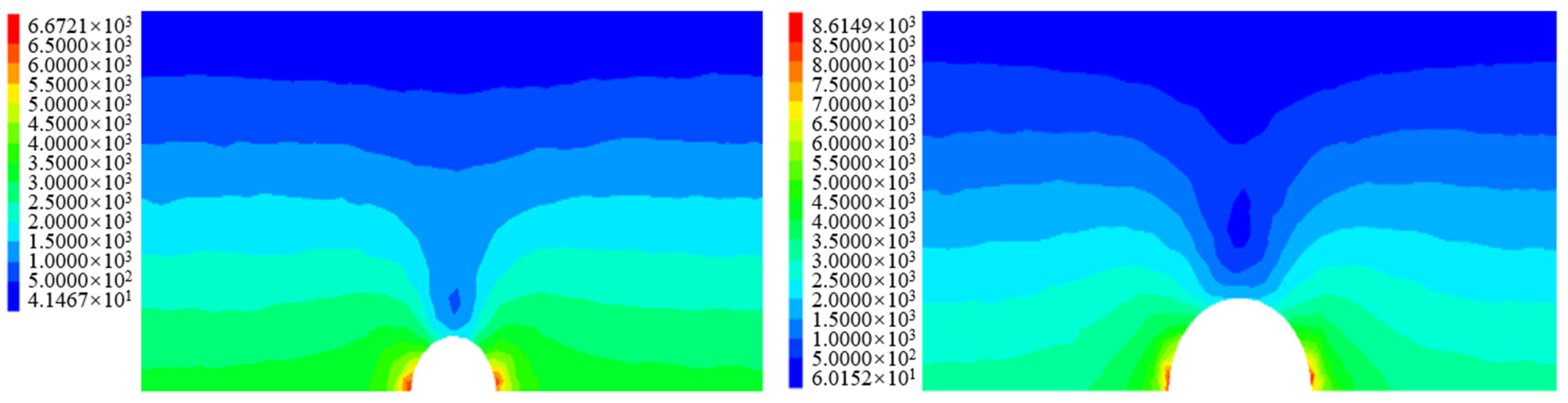
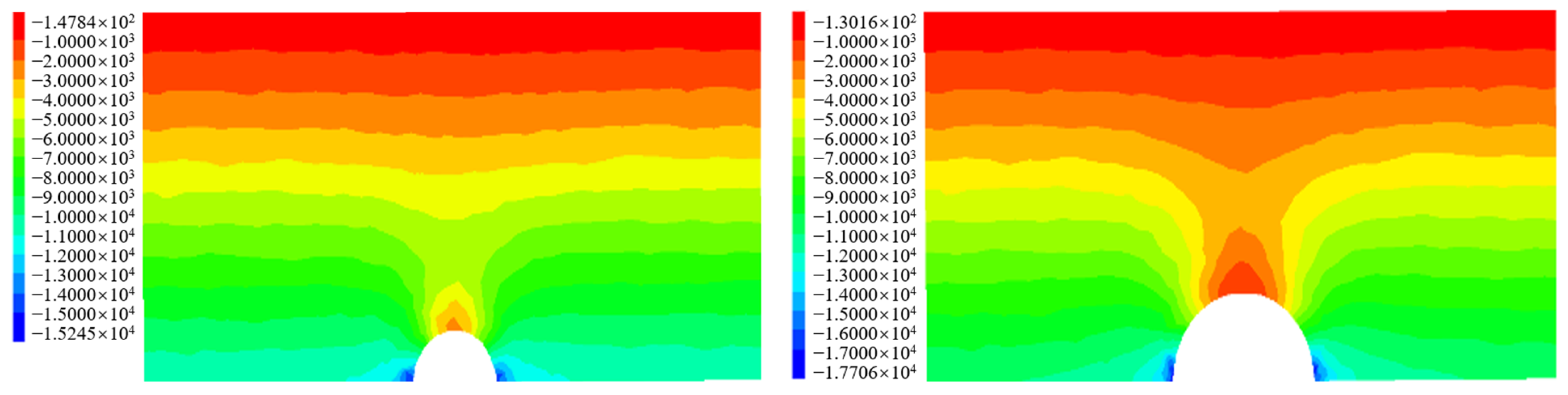
Figure 7 and Figure 8 present the comparisons of maximum shear stress and vertical stress distributions for the two representative cavity stages (0.15 m and 0.25 m). At the onset of seepage, the distribution of maximum shear stress at the model base coincides with the high porewater pressure gradient zone, indicating that the annular region above the karst opening is simultaneously subjected to significant shear stress and seepage forces. This combined loading renders the soils in this zone more susceptible to tensile and shear failure.
Figure 7.
Comparison of maximum shear stress distributions for the 0.15 m cavity and 0.25 m cavity stages.
Figure 8.
Comparison of vertical stress distributions for the 0.15 m cavity and 0.25 m cavity stages.
As the cavity begins to form and enlarge, maximum shear stress progressively concentrates at the footings, with peak values of approximately 6.67 kPa, while a distinct conical low-stress zone emerges above the cavity roof. This pattern reflects the development of the soil-arch effect: vertical stresses originally borne by the roof are redistributed to the footings and surrounding soils, leading to stress concentration at the footings. If the shear stress at the footings exceeds the soil shear strength, shear failure may initiate and propagate upward toward the cavity roof. With further cavity expansion, the maximum shear stress above the roof increases, and the low-stress zone diminishes, signaling reduced roof stability. Meanwhile, vertical stresses remain concentrated at the footings, while the vertical stress at the cavity roof stays at a low level (approximately 0.13 kPa). This suggests that although the soil-arch effect continues to function, its stabilizing capacity is significantly weakened at this stage.
- (3)
- Displacement Evolution Around the Cavity
Displacement evolution is primarily characterized by the coupled effects of settlement and horizontal movement, as illustrated in Figure 9 and Figure 10. These figures compare the vertical and horizontal displacement fields across three representative stages of cavity development—initial seepage-driven erosion, formation of a 0.15 m cavity, and enlargement to a 0.25 m cavity—highlighting the progressive deformation around the evolving soil cavity. During the initial seepage stage, significant settlement occurred within the influence zone of the drawdown funnel. Differential settlements developed laterally between the central zone and its flanks, undermining soil integrity. At this stage, horizontal displacements on both sides of the karst opening were directed toward the cavity, indicating a tendency for soils to migrate into the erosional void.
Figure 9.
Comparison of vertical displacements during three representative stages of cavity evolution: (a) initial seepage-driven soil erosion, (b) development of a 0.15 m soil cavity, and (c) enlargement to a 0.25 m cavity.
Figure 10.
Comparison of horizontal displacements during three representative stages of cavity evolution: (a) initial seepage-driven soil erosion, (b) development of a 0.15 m soil cavity, and (c) enlargement to a 0.25 m cavity.
With cavity formation, settlement at the roof became most pronounced, reaching approximately 1.2 cm, while settlement diminished progressively with elevation, reducing to less than 2 mm at the ground surface. Simultaneously, symmetric horizontal contraction occurred along the cavity walls, though the magnitude was relatively small. As the cavity further expanded, the settlement influence extended toward the ground surface, where surface settlement increased to about 2–4 mm, and roof settlement reached approximately 2 cm. Horizontal displacement along the cavity sides intensified markedly, with maximum values up to 9 mm, while still retaining a symmetric pattern. The progressive accumulation of roof settlement, coupled with the amplification of lateral displacements, highlights a distinct developmental pattern of collapse, evolving from localized deformation around the cavity toward large-scale instability involving the overlying strata.
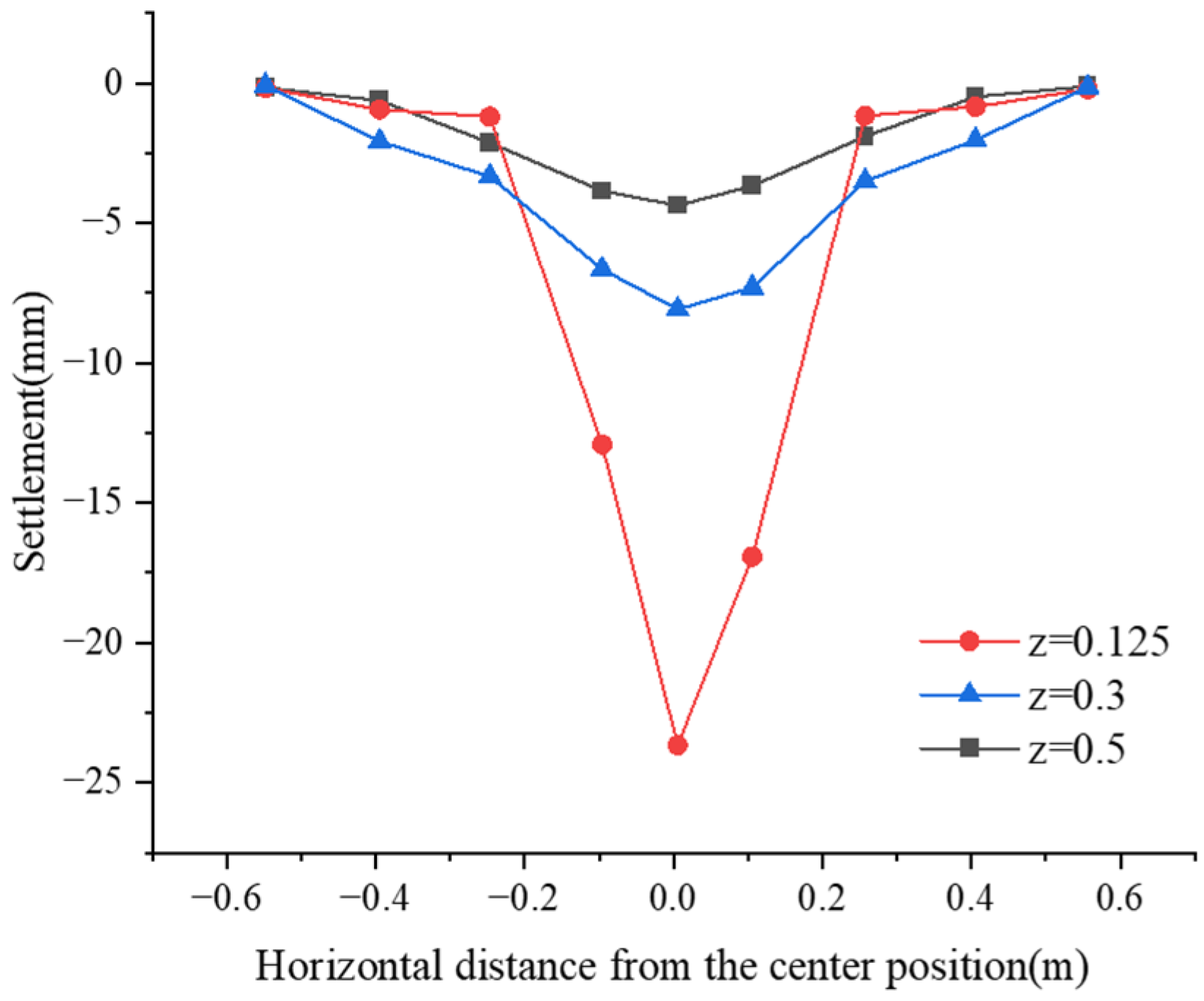
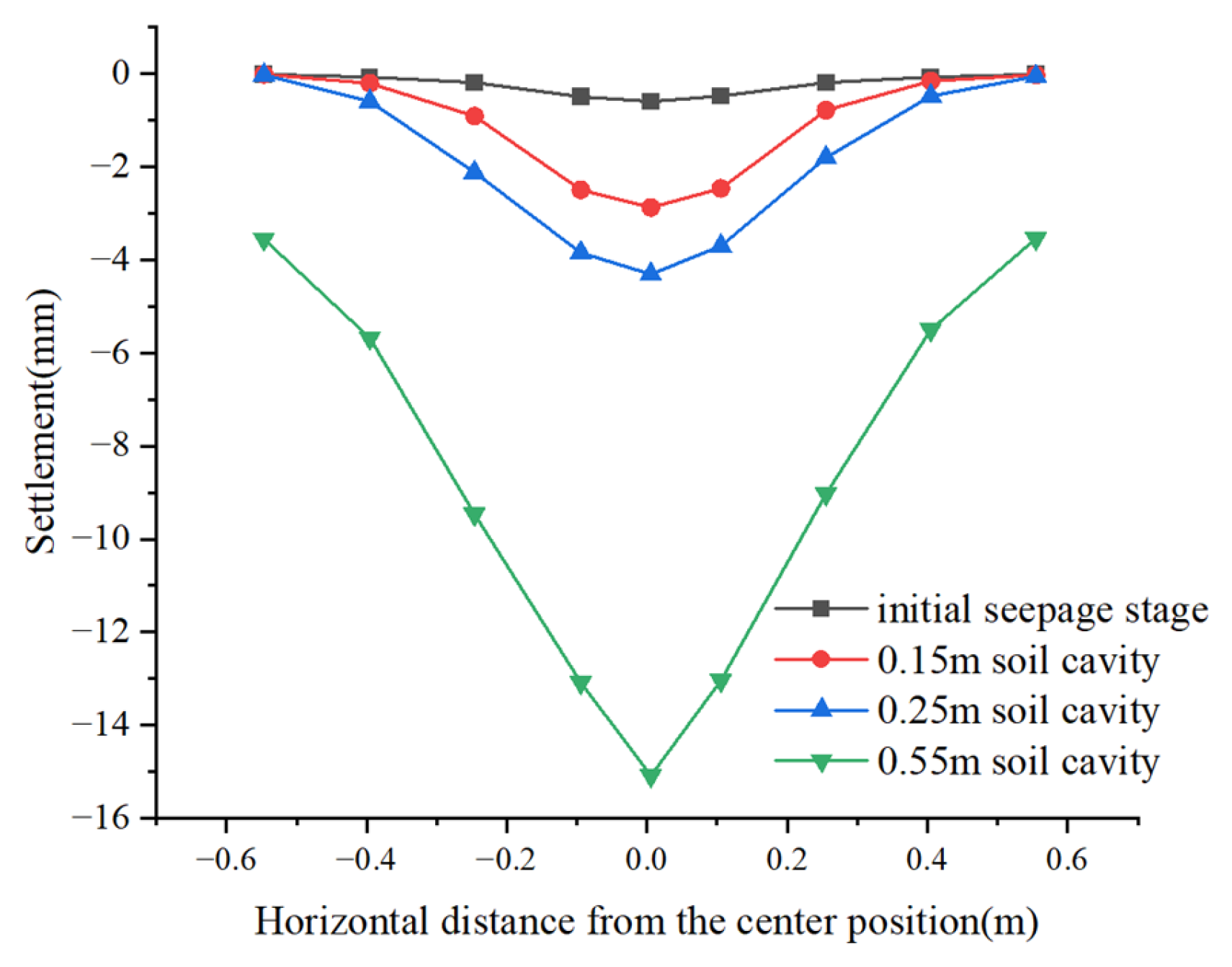
As shown in Figure 11, the settlement curves at different elevations above the cavity (z = 0.125 at the cavity roof, z = 0.3, and z = 0.5 at the ground surface) indicate that the maximum settlement occurs at the cavity roof, with a relatively limited lateral influence. With increasing elevation, the magnitude of settlement progressively decreases, whereas the horizontal influence range expands, highlighting a characteristic of ‘vertical attenuation and lateral extension.’ The evolution of surface settlement across different stages is illustrated in Figure 12. As the cavity radius enlarges, both the magnitude of settlement directly above the cavity and the lateral extent of influence increase accordingly. In Scenario 5, the sudden surge in surface settlement reflects excessive differential deformation, which induced tensile failure of the thinned cavity roof and ultimately triggered karst ground collapse.
Figure 11.
Settlement curves of overlying soil at different positions above the cavity for the 0.25 m cavity stage.
Figure 12.
Surface settlement curves at different stages.
- (4)
- Analysis of Vacuum Suction Effect
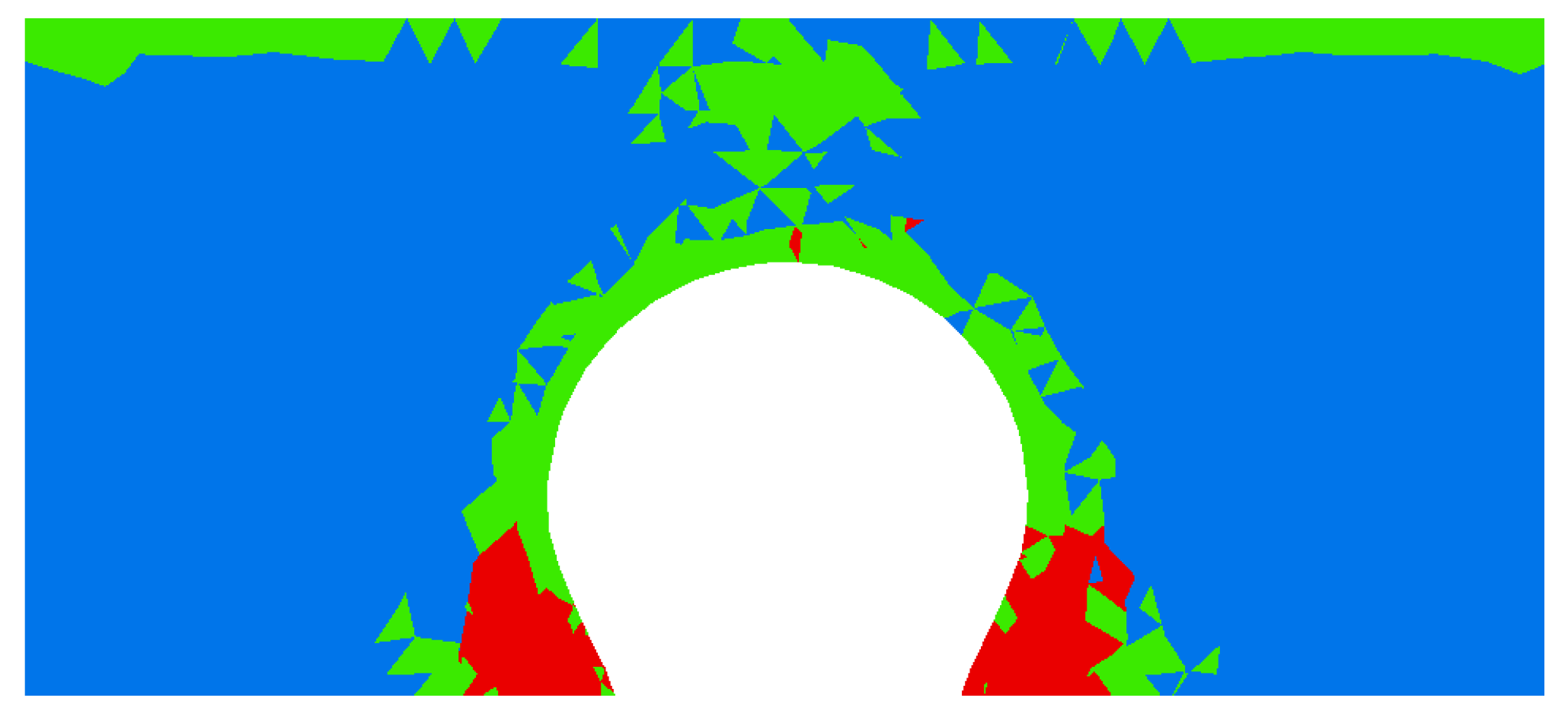
When rapid drainage was applied to simulate the vacuum suction effect, shear failure first occurred at the cavity footings. Subsequently, a tensile failure zone developed at the cavity roof, propagated upward, and eventually reached the ground surface, leading to collapse. The distribution of plastic zones under this condition is shown in Figure 13. Due to the relatively thin roof, the tensile stresses induced by the sudden drawdown caused premature instability, triggering an abrupt collapse. In practice, once the roof failed and air pressure was rebalanced, the tensile stresses acting on the surrounding soil rapidly dissipated. As a result, no further structural failure occurred in adjacent zones. Such a failure mechanism suggests that this type of collapse may develop into a caldron-shaped sinkhole.
Figure 13.
The failure zone for the 0.35 m cavity stage. Adapted with permission from Ref. [25]. Copyright 2019 American Society of Civil Engineers.
4.2.3. Mechanism Analysis
The combined results of physical model tests and numerical simulations indicate that karst ground collapse induced by groundwater drawdown is governed by a progressive–sudden failure mechanism, which can be summarized as ‘seepage erosion—degradation of soil-arch effect—structural destabilization—vacuum suction acceleration’.
At the onset, groundwater infiltrates through karst conduits, generating concentrated seepage pathways. Under hydraulic gradients and gravity, soil particles are gradually eroded and transported downward, leading to the initial formation of cavities. During this stage, a soil arch develops above the cavity, temporarily maintaining stability of the overburden. With continuous seepage, however, progressive undercutting and differential settlement at the cavity shoulders trigger stress redistribution, gradually weakening the soil-arch effect. Shear failure initiates at the shoulders and propagates upward, causing cavity enlargement in both vertical and lateral directions, accompanied by increasing surface settlement.
As the cavity expands and the roof becomes thinner, the stress regime transitions from compression-dominated to tension-dominated. Once the induced tensile stress exceeds the soil’s tensile strength, tensile fracturing occurs, leading to roof collapse. A rapid groundwater drawdown further amplifies this process: vacuum suction generated within the conduit imposes additional tensile stress on the cavity walls, thereby accelerating roof failure and triggering abrupt collapse.
In summary, the collapse mechanism under groundwater decline can be characterized as a cyclic process of concentrated seepage erosion, cavity expansion, soil-arch weakening, and vacuum-induced tensile rupture. This mechanism highlights the intrinsic vulnerability of karst terrains during tunneling or sudden drainage events, where rapid water-level decline may induce catastrophic ground failures.
4.3. Simulation of Groundwater Rise-Induced Karst Collapse
4.3.1. Working Condition Design
To investigate the process and mechanism of collapse induced by rising groundwater levels, numerical simulations were conducted to reproduce the hydrological conditions typically observed during the wet season. During this period, groundwater may be recharged from surrounding soils toward the collapse zone, or ascend upward through karst conduits, resulting in a local rise in the water table. Based on the 0.25 m cavity model, two recharge patterns were simulated to examine the influence of groundwater rise on cavity stability:
- Lateral infiltration from both side boundaries, where groundwater gradually infiltrates into the soil, raising the water level and altering the pore-water pressure distribution within the soil–cavity system.
- Upward recharge through the karst conduit, where groundwater directly enters the cavity from below, exerting hydraulic pressure on the cavity walls and significantly affecting their stability.
4.3.2. Results Under Recharge from Lateral Boundaries
- (1)
- Porewater Pressure Distribution
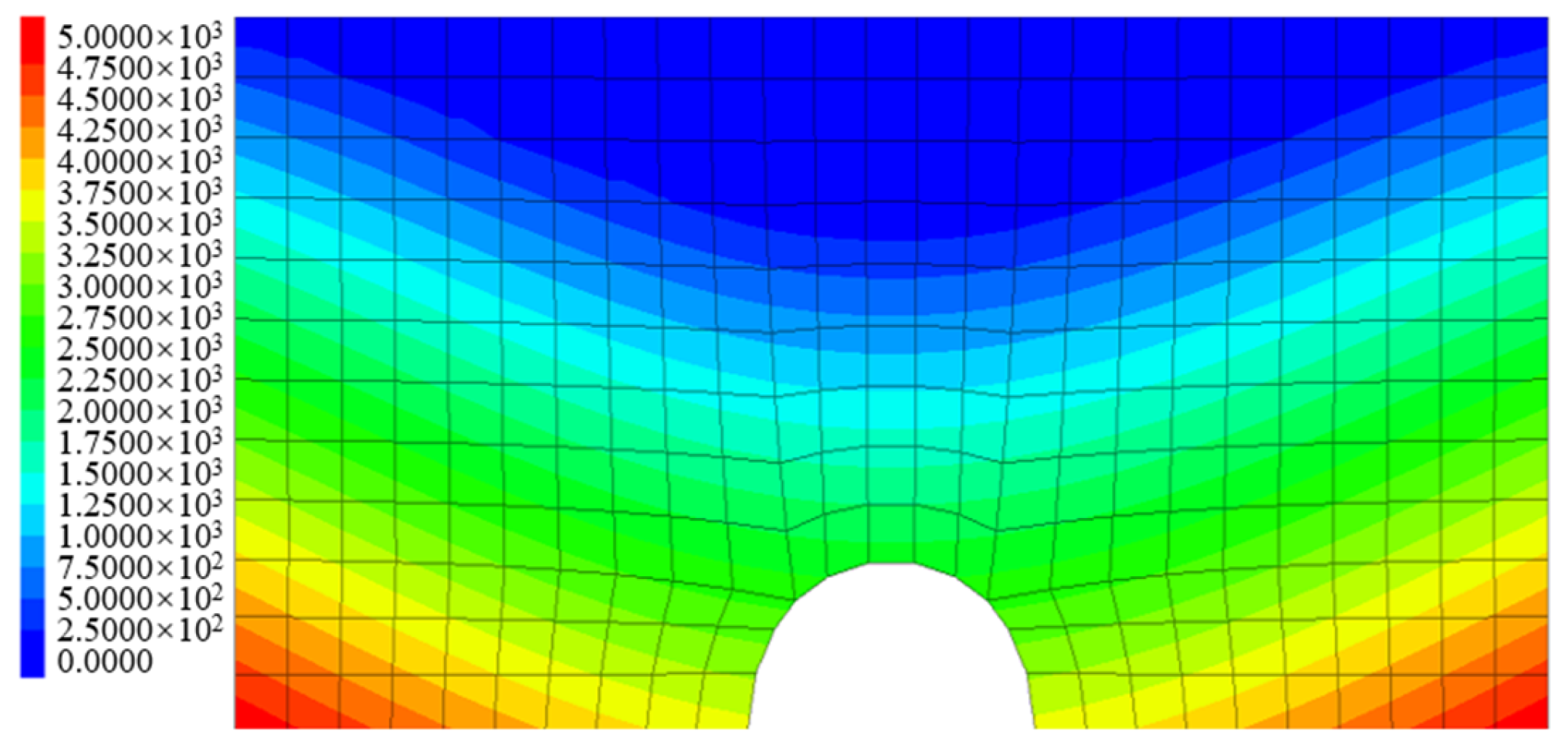
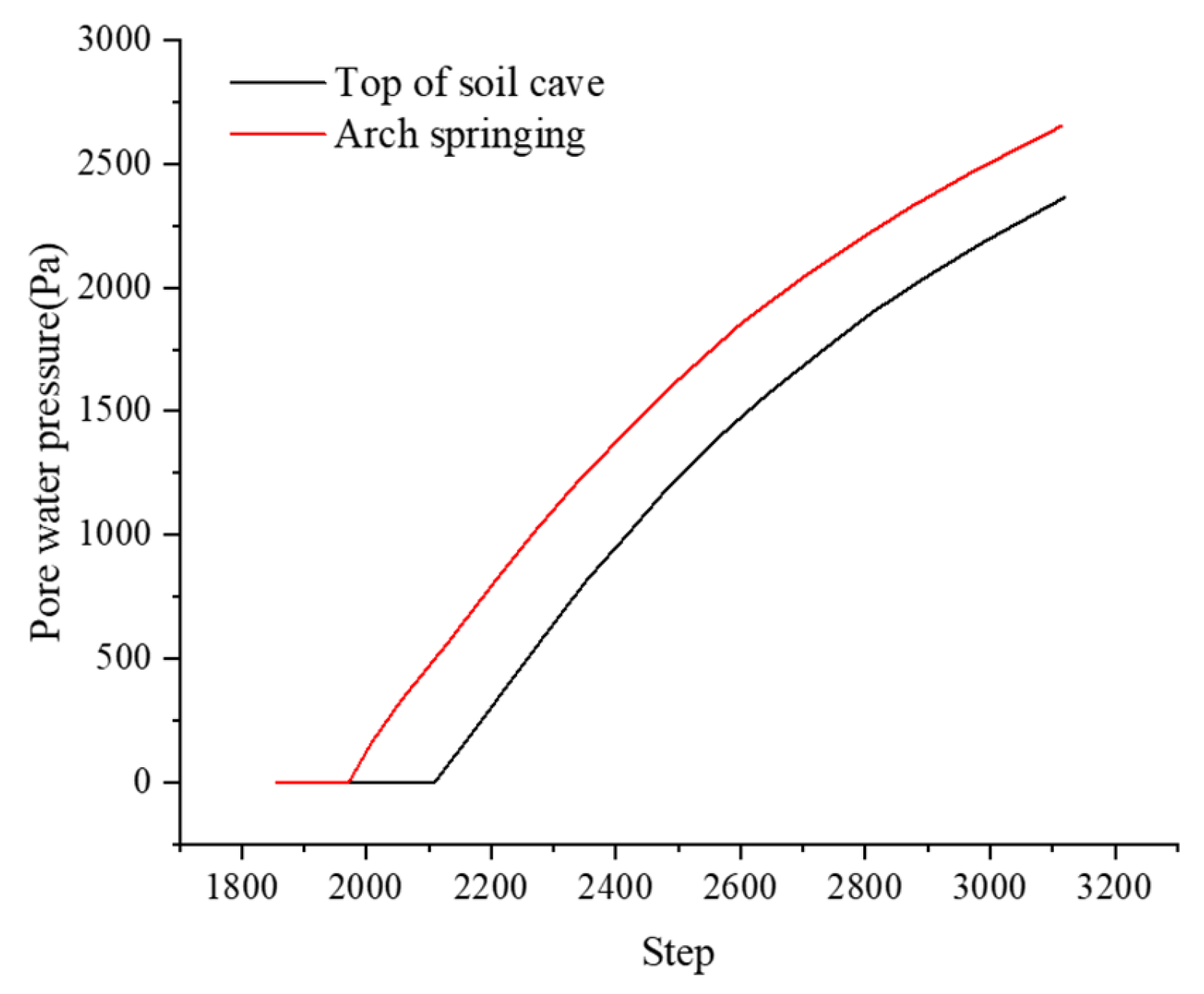
At step t = 2800, the porewater pressure distribution is shown in Figure 14. Groundwater recharged from both lateral boundaries of the model and, under the influence of gravity, the seepage flow migrated obliquely downward toward the central bottom. Consequently, the phreatic surface exhibited a concave profile rather than a horizontal line, consistent with the concave water table observed in the physical model tests after water injection. The temporal variations in porewater pressure at the cavity roof and footings are presented in Figure 15. During the rise in the groundwater table, pore pressure was first recorded at the footings and increased continuously with the rising water level. Once the water table reached the cavity roof, pore pressure was also observed at the roof. Subsequently, the two curves rose almost in parallel, indicating that the groundwater table rose in a stable manner, with synchronous increases in porewater pressure at both the roof and the footings.
Figure 14.
The contour of porewater pressure under recharge from lateral boundaries.
Figure 15.
The variation in porewater pressure under recharge from lateral boundaries.
- (2)
- Displacement Evolution around the Cavity
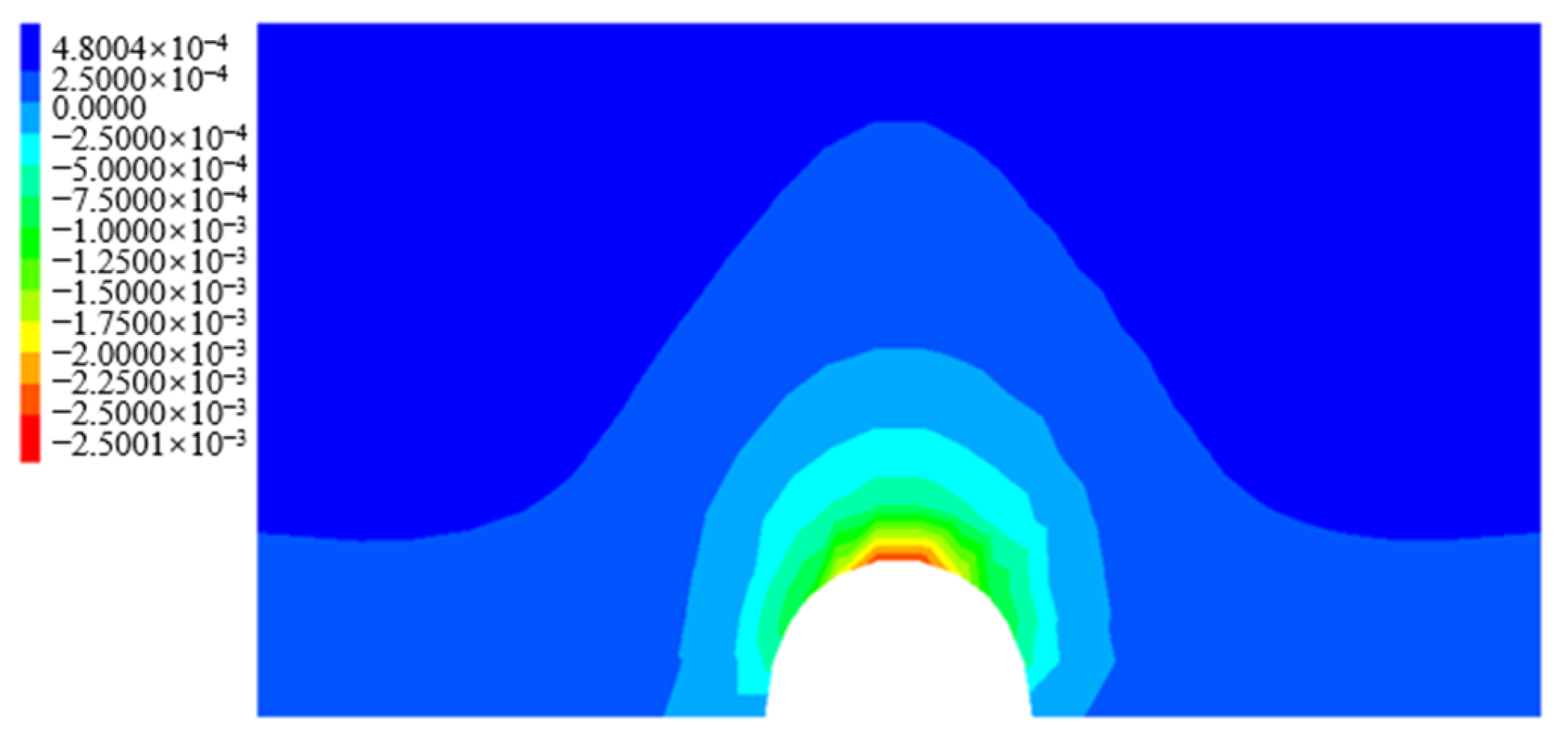
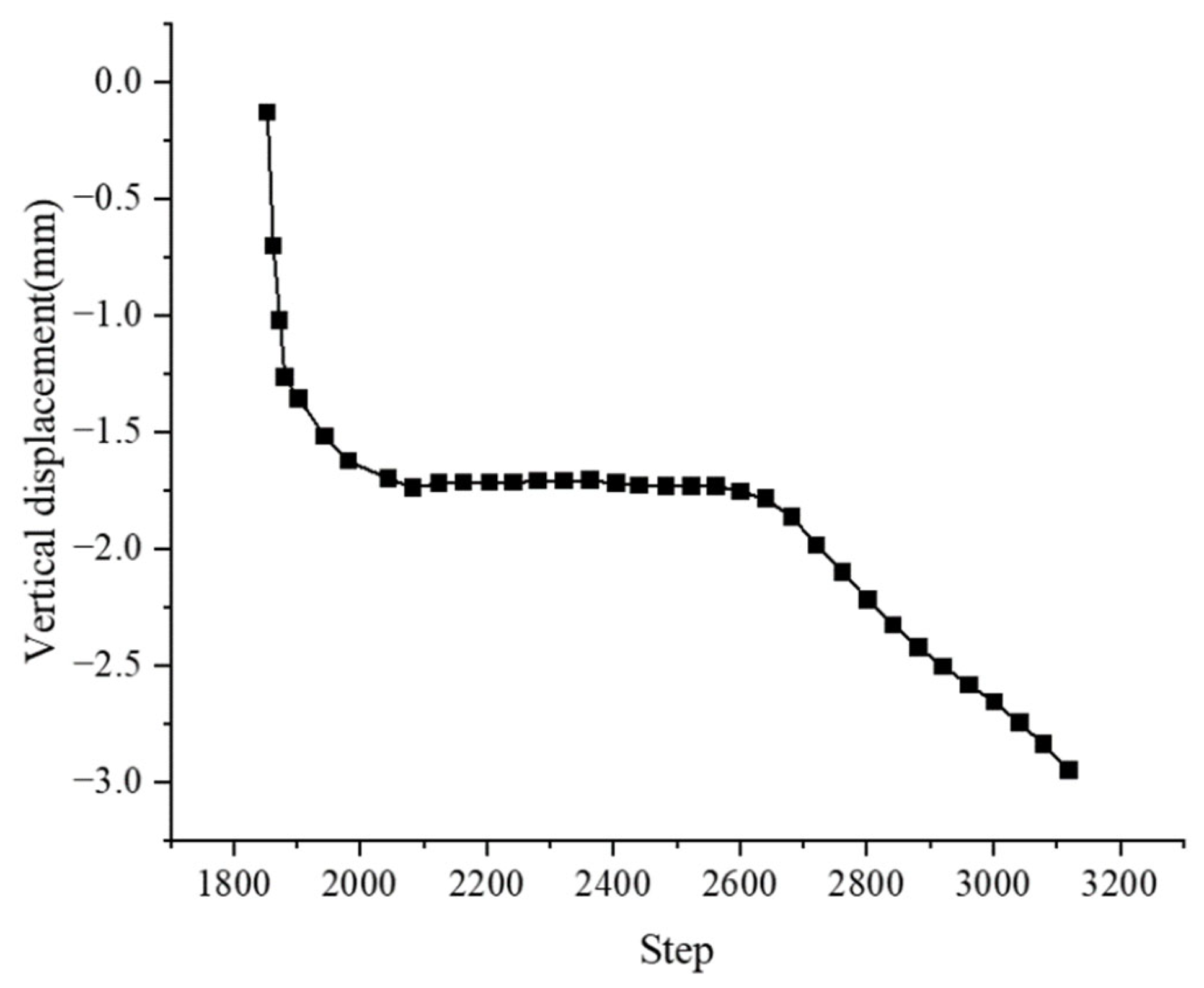
At step t = 2800, the vertical displacement around the cavity is illustrated in Figure 16. During the groundwater table rise, the soil mass on both sides of the cavity experienced an overall upward movement. In contrast, soils adjacent to the exposed cavity face subsidence due to the absence of support at the bottom, with gravity being the dominant factor. The maximum settlement occurred at the cavity roof, reaching approximately 2.5 mm. The temporal evolution of the roof displacement is shown in Figure 17, where the curve exhibits a stepped pattern. At the early stage of groundwater recharge, the cavity roof settled rapidly to about 1.6 mm. Once porewater pressure developed at the footings and the cavity gradually became saturated, the hydraulic support partially offset the gravitational load, slowing the settlement and leading to a temporary stabilization. As the groundwater level continued to rise, however, the additional load imposed by the overlying water column exceeded the supporting force from below, causing the cavity roof to resume a slow settlement.
Figure 16.
The contour of vertical displacement under recharge from lateral boundaries.
Figure 17.
The displacement of the top point of the cavity under recharge from lateral boundaries.
- (3)
- Evolution of Maximum Shear Stress
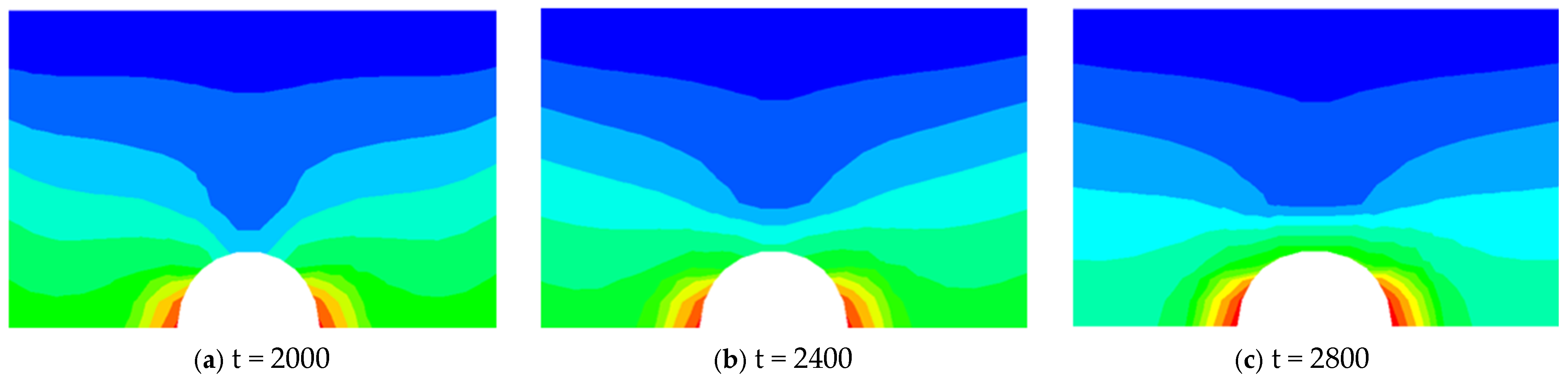
The distribution of maximum shear stress at steps t = 2000, t = 2400, and t = 2800 is compared in Figure 18. The footings consistently remained the primary zones of stress concentration, while additional concentrated bands gradually emerged in the lower sidewalls of the cavity. With the continued rise in the groundwater table, the low-stress zone above the cavity roof progressively shifted upward, accompanied by the upward extension of shear stress concentration along both sidewalls. Once the low-stress zone above the roof disappeared, roof settlement resumed, indicating that groundwater level rise diminishes the overall stability of the soil–cavity system.
Figure 18.
The evolution of maximum shear stress under recharge from lateral boundaries.
4.3.3. Results Under Recharge from Karst Conduit
- (1)
- Porewater Pressure Distribution
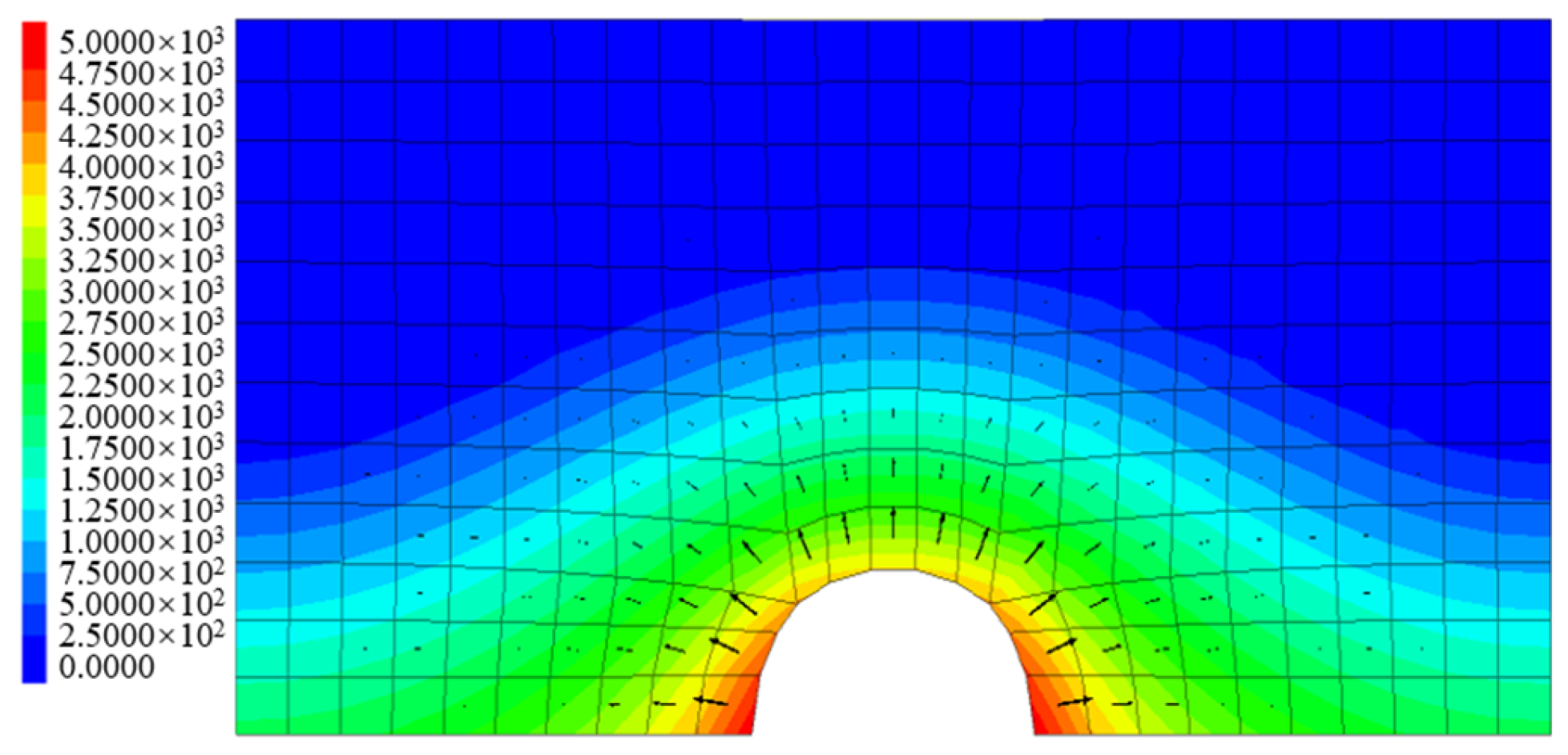
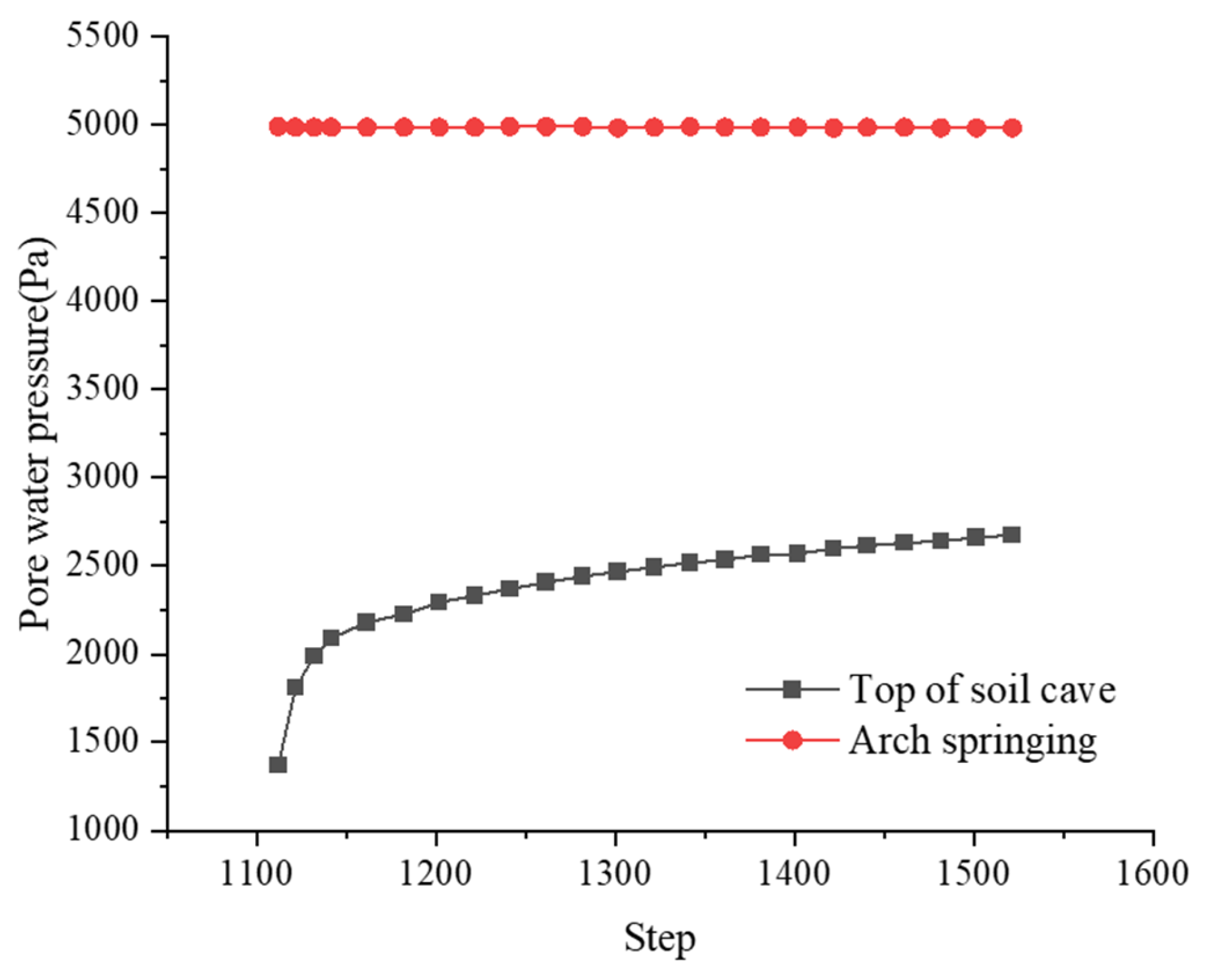
At t = 1500 steps, the porewater pressure distribution is shown in Figure 19. Under a hydraulic head of 0.5 m, groundwater infiltrated the cavity upward through the karst conduit. Influenced by gravity, the seepage predominantly entered the sidewalls of the cavity, resulting in relatively high porewater pressure along the entire cavity boundary, with the highest values (~5 kPa) observed at the footings. The time-dependent porewater pressure curves at the cavity roof and footings are presented in Figure 20. The footing consistently exhibited high and stable pore pressure, whereas the pressure above the roof increased more slowly, indicating that hydraulic forces acted more intensively on the footings than on the roof.
Figure 19.
The contour of porewater pressure under recharge from karst conduit.
Figure 20.
The variation in porewater pressure under recharge from karst conduit.
- (2)
- Displacement Around the Cavity
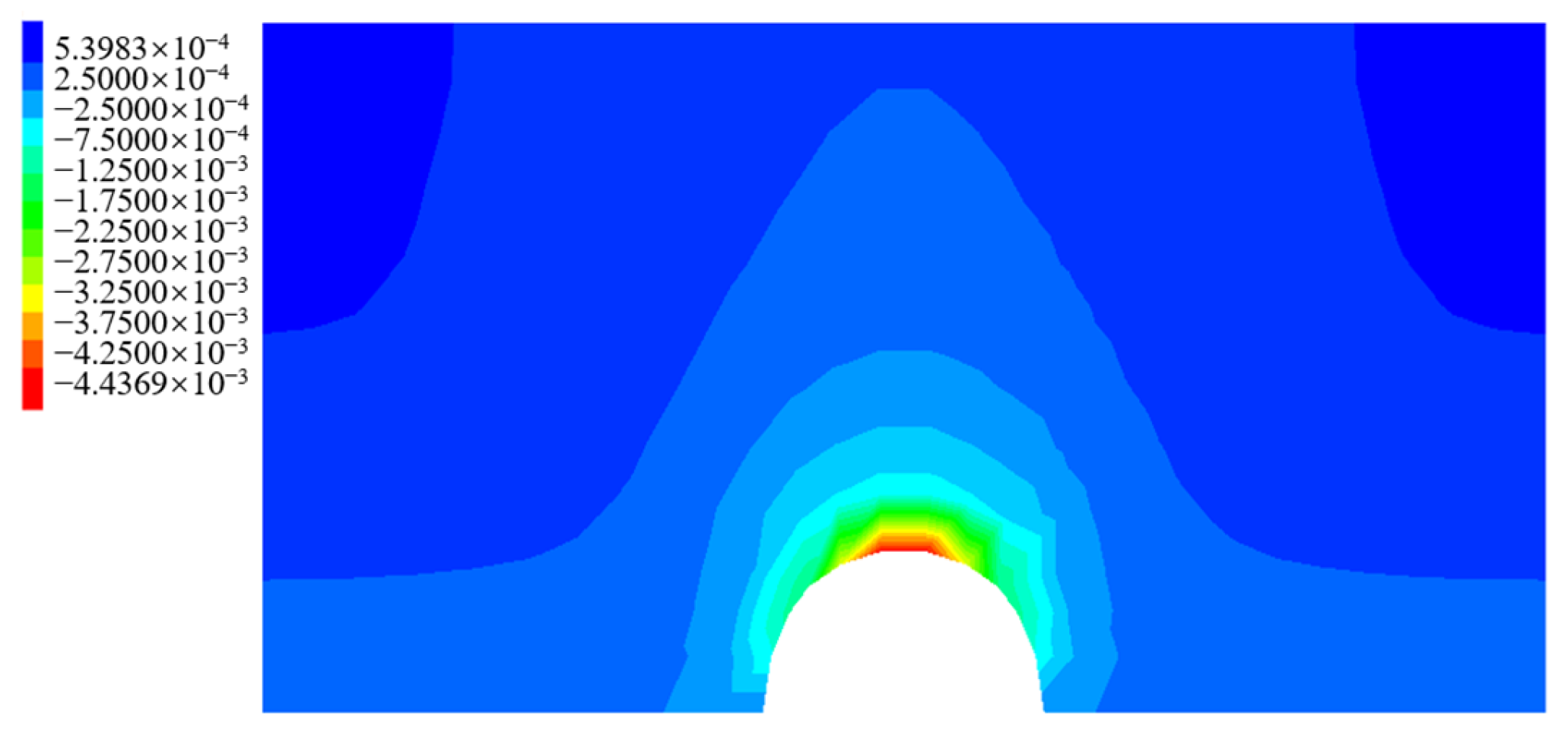
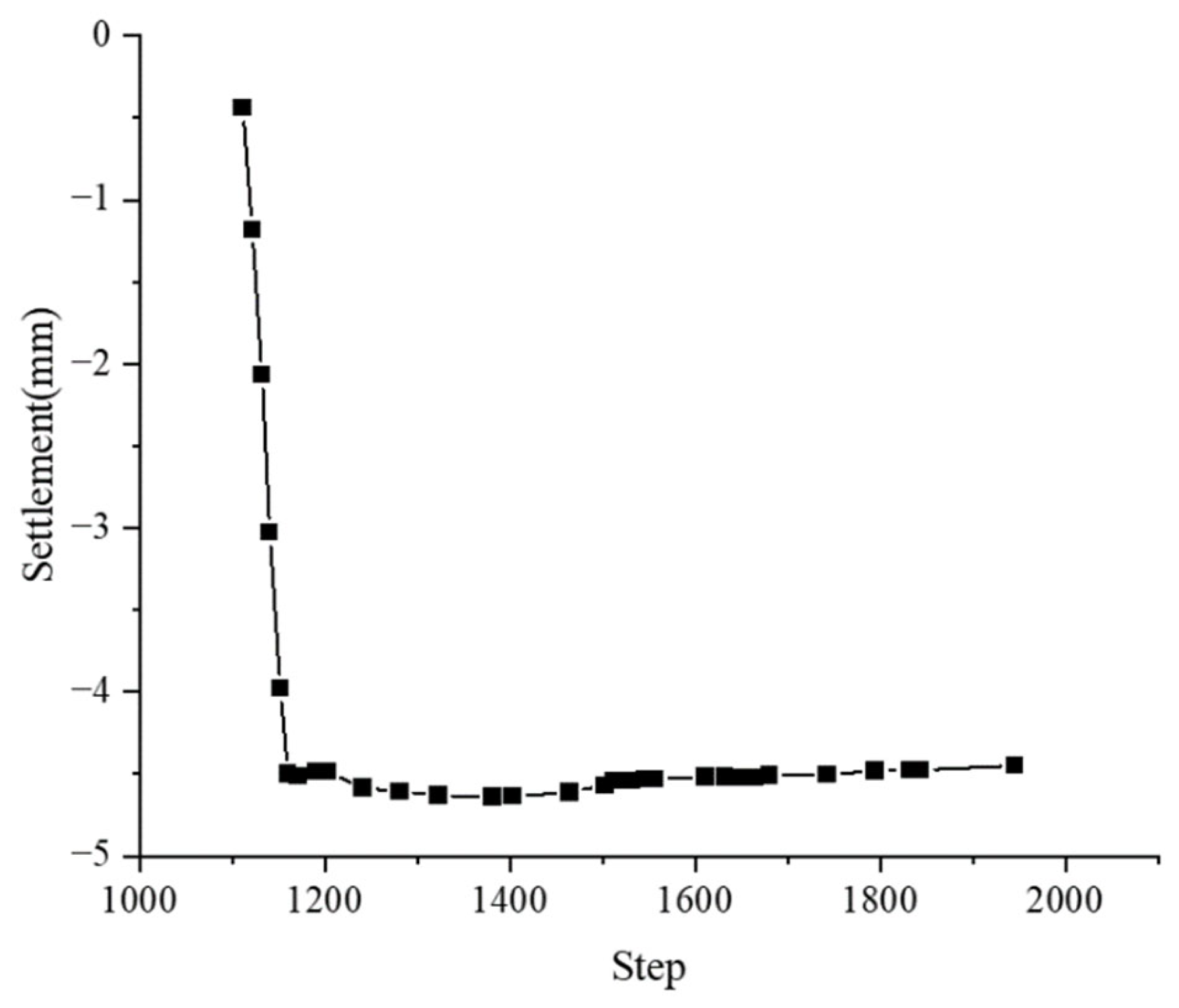
The vertical displacement distribution around the cavity at t = 1200 steps is shown in Figure 21. Settlement was mainly concentrated at the cavity roof, with a maximum value of approximately 4.4 mm. Compared with the case under groundwater drawdown, the affected zone was smaller, and the overall settlement magnitude was lower. The time-history curve of vertical displacement at the cavity roof (See Figure 22) indicates that settlement primarily occurred during the early stage, when porewater pressure was relatively low. As the pore pressure above the roof increased, the supporting effect of water gradually enhanced, causing the settlement to stabilize.
Figure 21.
The contour of vertical displacement under recharge from karst conduit.
Figure 22.
The displacement of the top point of the cavity under recharge from karst conduit.
- (3)
- Variation in Maximum Shear Stress
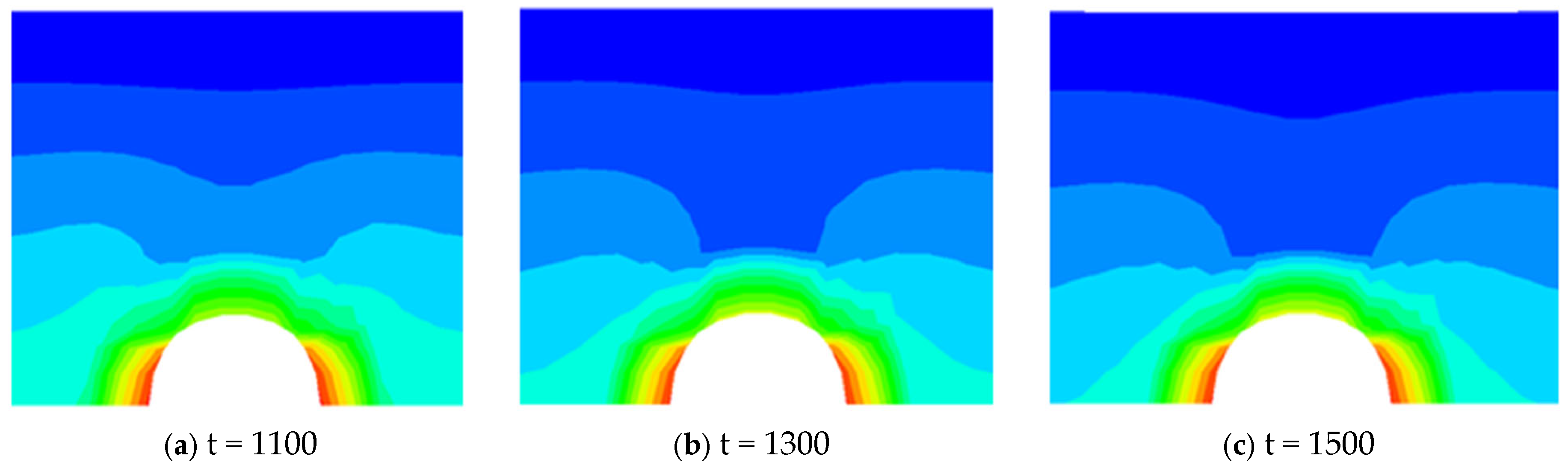
As shown in Figure 23, with increasing calculation steps, a low-value shear stress zone gradually developed above the cavity roof but did not directly connect to the roof, indicating a progressive weakening of the soil arching effect. The distribution of maximum shear stress was generally consistent with the case of lateral recharge, remaining concentrated at the two side footings and the cavity shoulders. Meanwhile, shear stress at the cavity roof exhibited an increasing trend, suggesting that the cavity was in a progressively less stable condition.
Figure 23.
The evolution of maximum shear stress under recharge from karst conduit.
4.3.4. Mechanism Analysis
Numerical simulations demonstrate that groundwater table rise can also induce karst ground collapse, but its mechanism differs from that under drawdown conditions. The influence of groundwater rise depends strongly on the recharge pathway, leading to distinct stress redistribution around the cavity. When groundwater infiltrates from the lateral boundaries, the pore water pressure first alters the overall stress and displacement field of the soil mass, causing parts of the soil body to move upward. Only after seepage pathways connect with the cavity does the hydraulic pressure begin to affect the cavity walls. In this case, the roof receives limited hydraulic support, and its displacement is primarily governed by gravity and seepage-induced stresses.
By contrast, when groundwater rises directly from the karst conduit beneath the cavity, the elevated pore pressure acts immediately on the cavity walls. The cavity roof and sidewalls are subjected to higher water pressures, which provide a temporary supporting effect that reduces vertical displacement of the roof. This hydraulic support delays but does not prevent subsequent instability. In both recharge scenarios, the maximum shear stress distribution exhibits similar patterns. Stress concentration develops at the arch foot and progressively extends upward into the sidewalls. Meanwhile, the low-stress zone above the cavity roof migrates upward, weakening the soil arch effect. As a result, differential settlement increases and the cavity system transitions toward instability.
A quantitative comparison of the two recharge pathways further highlights their distinct hydraulic behaviors. Under lateral infiltration, the pore-water pressure at the arch springing gradually increased from approximately 0 Pa to around 2.7 kPa, while the pressure at the cavity roof rose more slowly to about 2.3 kPa. The persistent difference of roughly 400 Pa between the two curves reflects a relatively mild hydraulic gradient and a stable, progressive recharge process. In contrast, under upward recharge through the karst conduit, the footing maintained a nearly constant pore-water pressure of approximately 5 kPa, significantly higher than that observed in the lateral infiltration case. Meanwhile, the pore-water pressure at the cavity roof increased rapidly from about 1.3 kPa to 2.6 kPa within only 600 calculation steps, indicating a much steeper vertical hydraulic gradient. This contrast demonstrates that conduit recharge exerts a more direct and intense hydraulic load on the cavity boundary. From a displacement perspective, lateral recharge resulted in a maximum roof settlement of approximately 2.5 mm, whereas upward recharge from the karst conduit produced a larger settlement of about 4.4 mm. These differences confirm that the recharge pathway plays a critical role in determining the rate and extent of cavity instability during groundwater rise, with conduit recharge inducing a more rapid and pronounced destabilization.
Overall, the mechanism of collapse under groundwater rise is characterized by a progressive process: initial hydraulic disturbance of the soil stress field, temporary hydraulic support of the cavity roof under conduit recharge, gradual transfer of stress concentration from the arch foot to the sidewalls, and eventual loss of soil arch stability. Unlike the abrupt collapse triggered by rapid drawdown, groundwater rise induces a more concealed and delayed form of instability, which may pose hidden risks during periods of seasonal recharge or high-intensity rainfall.
5. Analysis of the Collapse Mechanism in the Research Area
Based on the results of the physical model tests and numerical simulations, combined with the regional dual geological structure of “overlying cohesive soil–underlying soluble rock,” tunnel construction conditions, and groundwater recharge characteristics, it is inferred that the dominant mechanism of karst ground collapse in the study area is seepage-induced suffosion. During tunnel excavation, sudden drawdown of the local groundwater level caused by water inrush and drainage may trigger vacuum suction, while vibrations generated by construction machinery can further disrupt the mechanical balance of pre-existing soil cavities [32], thereby accelerating collapse. Accordingly, the predominant failure mode in the study area can be summarized as a compound mechanism driven by the coupled effects of seepage suffosion, vacuum suction, and external disturbances.
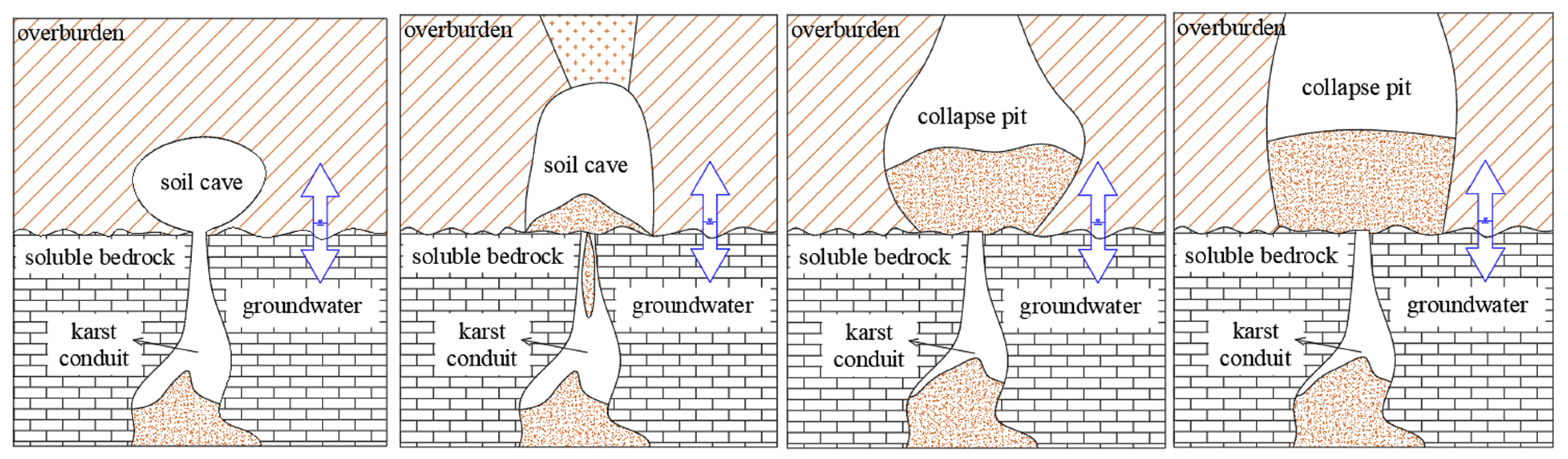
Figure 24 presents a conceptual geological model that synthesizes the collapse stages observed in the physical experiments and the stress–seepage evolution patterns obtained from numerical simulations. The evolutionary process can be outlined as follows:
Figure 24.
Conceptual geological model illustrating the staged evolution of karst ground collapse (soil cave initiation, upward expansion, roof failure, and sinkhole development).
- (a)
- Once karst conduits connect with the overlying soil, groundwater fluctuation and concentrated seepage gradually erode soil at the conduit opening, initiating soil cavity formation and upward extension.
- (b)
- Collapsed soils accumulate at the cavity bottom, with part of the material transported by groundwater. The cavity continues to expand upward, while the roof remains temporarily stable due to frictional support from surrounding soils.
- (c)
- Under external triggers—such as vacuum suction induced by a sudden groundwater drawdown during tunnel water inrush—or progressive thinning of the cavity roof, the balance of frictional resistance fails, leading to rapid roof collapse and the formation of a sinkhole.
- (d)
- Following sinkhole formation, the pit walls gradually slide toward the center or undergo secondary collapses, resulting in uneven surface subsidence and annular ground fissures.
In summary, the collapse mechanism of the study area can be generalized as a staged evolutionary process of suffosion → cavity expansion → roof destabilization → sinkhole formation → secondary failure, characterized by multi-factor interactions and compound triggering effects.
It should be noted that the effect of excavation-induced vibrations was not directly investigated in the present physical experiments or numerical simulations. Therefore, vibrations are discussed only as a potential external disturbance factor based on existing literature and engineering practice. Future work will incorporate vibration loading into both physical model tests and numerical simulations to quantitatively evaluate its influence on soil-cavity stability.
6. Conclusions
Based on the Ya Kouzhai Tunnel project, this study combined physical model experiments and numerical simulations to elucidate the mechanisms of karst ground collapse under dynamic groundwater fluctuations. The main conclusions are summarized as follows:
- Karst ground collapse is governed by the coupled effects of seepage erosion, vacuum suction, and gravity. Concentrated lateral seepage renders the arch foot the most vulnerable zone for cavity initiation and enlargement.
- The physical model reproduced the complete collapse evolution—from initial cavity formation and progressive enlargement to soil-arch weakening and roof failure—demonstrating the cyclic nature of seepage erosion. The cavity roof exhibited a maximum settlement of about 2.5 mm during lateral recharge and 4.4 mm under conduit recharge, confirming the strong influence of recharge conditions on instability development.
- Numerical simulations captured the spatiotemporal evolution of pore-water pressure, shear stress, and displacement within the soil mass. During groundwater drawdown, stress concentration and seepage pressure intensified at the arch foot and sidewalls, promoting cavity enlargement and settlement. Under groundwater rise, lateral recharge generated moderate hydraulic loading with roof and footing pore pressures increasing to approximately 2.3 kPa and 2.7 kPa, respectively, whereas conduit recharge imposed a stronger hydraulic gradient, with roof pressure rising rapidly from 1.3 kPa to 2.6 kPa. These quantitative differences confirm that the recharge pathway governs the degree of hydraulic disturbance and the rate of cavity destabilization.
- The collapse mechanism can be generalized as a cyclic process involving seepage erosion, arch weakening, differential settlement, and vacuum-induced failure. Dynamic groundwater fluctuations are the key external driver controlling this evolution. The simplified physical and numerical models used in this study reveal the underlying mechanisms but are not sufficient to derive quantitative engineering thresholds. More realistic modeling in future research will allow such parameters to be determined.
These findings provide a scientific basis for predicting and mitigating karst collapse hazards in tunnel and foundation engineering, emphasizing the importance of groundwater monitoring and regulation in karst-prone areas. In practical applications, measures such as controlling groundwater drawdown rates and reinforcing weak overburden zones can further reduce the likelihood of collapse during tunnel construction in karst terrains.
Author Contributions
Conceptualization, Y.L., L.Y. and Y.X.; methodology, L.Y.; software, Y.L., L.Y. and Y.X.; validation, Y.L. and Y.X.; formal analysis, L.Y.; investigation, Y.X.; resources, Y.X.; data curation, Y.L. and L.Y.; writing—original draft preparation, Y.L. and Y.X.; writing—review and editing, L.Y.; visualization, L.Y. and Y.X.; supervision, L.Y.; project administration, Y.X. All authors have read and agreed to the published version of the manuscript.
Funding
This research received no external funding.
Data Availability Statement
The original contributions presented in this study are included in the article. Further inquiries can be directed to the corresponding author.
Conflicts of Interest
The authors declare no conflicts of interest.
References
- He, K.Q.; Jia, Y.Y.; Chen, W.G.; Wang, R.L.; Luo, H.L. Evaluation of Karst Collapse Risks Induced by Over-Pumping and Karst Groundwater Resource Protection in Zaozhuang Region, China. Environ. Earth Sci. 2014, 71, 3443–3454. [Google Scholar] [CrossRef] [Scilit]
- Parise, M.; Lollino, P. A Preliminary Analysis of Failure Mechanisms in Karst and Man-made Underground Caves in Southern Italy. Geomorphology 2011, 134, 132–143. [Google Scholar] [CrossRef] [Scilit]
- Xie, Y.H.; Zhang, B.H.; Liu, Y.X.; Liu, B.C.; Zhang, C.F.; Lin, Y.S. Evaluation of the karst collapse susceptibility of subgrade based on the AHP method of ArcGIS and prevention measures: A case study of the Quannan expressway, section K1379+ 300-K1471+ 920. Water 2022, 14, 1432. [Google Scholar] [CrossRef] [Scilit]
- Vigna, B.; Fiorucci, A.; Banzato, C.; Forti, P. Hypogene Gypsum Karst and Sinkhole Formation at Moncalvo (Asti, Italy). Z. Geomorphol. 2010, 54, 285–306. [Google Scholar] [CrossRef] [Scilit]
- Galvão, P.; Schuch, C.; Pereira, S.; de Oliveira, J.M.; Assunção, P.; Conicelli, B.; Halihan, T.; de Paula, R. Modeling the Impact of Groundwater Pumping on Karst Geotechnical Risks in Sete Lagoas (MG), Brazil. Water 2024, 16, 1975. [Google Scholar] [CrossRef] [Scilit]
- Wei, Y.Y.; Sun, S.L.; Huang, J.J.; Hua, X.Q. A Study on Karst Development Characteristics and Key Control Factors of Collapse in Xuzhou, Eastern China. Carbonates Evaporites 2018, 33, 359–373. [Google Scholar] [CrossRef] [Scilit]
- Ozdemir, A. Investigation of Sinkholes Spatial Distribution Using the Weights of Evidence Method and GIS in the Vicinity of Karapinar (Konya, Turkey). Geomorphology 2015, 245, 40–50. [Google Scholar] [CrossRef] [Scilit]
- He, K.Q.; Zhang, S.Q.; Wang, F.; Wen, D. The Karst Collapses Induced by Environmental Changes of the Groundwater and Their Distribution Rules in North China. Environ. Earth Sci. 2010, 61, 1075–1084. [Google Scholar] [CrossRef] [Scilit]
- Jia, L.; Li, L.J.; Meng, Y.; Wu, Y.B.; Pan, Z.Y.; Yin, R.C. Responses of Cover Collapse Sinkholes to Groundwater Changes: A Case Study of Early Warning of Soil Cave and Sinkhole Activity on Datansha Island in Guangzhou, China. Environ. Earth Sci. 2018, 77, 488. [Google Scholar] [CrossRef] [Scilit]
- Jiang, F.W.; Dai, J.L.; Lei, M.T.; Qin, Y.Q.; Jiang, X.Z.; Meng, Y. Experimental Study on the Critical Triggering Condition of Soil Failure in Subsidence Sinkholes. Environ. Earth Sci. 2015, 74, 693–701. [Google Scholar] [CrossRef] [Scilit]
- Zhang, L.C.; Wei, Y.B.; Liu, Y.N.; Huang, W.J.; Lu, Y.; Zheng, K.X. Experimental Study on the Mechanism of Uplift Failure in Karst Overburden. J. Eng. Geol. 2025, 1–10. [Google Scholar] [CrossRef]
- Hong, R.B.; Jian, W.B.; Chen, X.Z. Study on response of covered karst soil cave to groundwater changes and its collapse evolution process. J. Eng. Geol. 2023, 31, 240–247. [Google Scholar] [CrossRef]
- Xiao, X.X.; Xu, M.; Ding, Q.Z.; Kang, X.B.; Xia, Q.; Du, F. Experimental Study Investigating Deformation Behavior in Land Overlying a Karst Cave Caused by Groundwater Level Changes. Environ. Earth Sci. 2018, 77, 64. [Google Scholar] [CrossRef] [Scilit]
- Xiao, X.X.; Gutierrez, F.; Guerrero, J. The Impact of Groundwater Drawdown and Vacuum Pressure on Sinkhole Development: Physical Laboratory Models. Eng. Geol. 2020, 279, 105894. [Google Scholar] [CrossRef] [Scilit]
- Chen, X.J.; Guo, R.J.; Tang, L.M.; Zhang, X.C. Study on Ground Collapse of Covered Karst Soil Caves by Sudden Drop of Groundwater. Adv. Civ. Eng. 2021, 2021, 7796401. [Google Scholar] [CrossRef] [Scilit]
- Gao, X.; Wu, S.; Yan, E.C.; Xiong, Q.H.; Chen, N. Seepage-induced Sand-leakage Karst Collapse Mechanism Considering the Soil Arching Effect. Hydrogeol. Eng. Geol. 2025, 52, 164–172. [Google Scholar] [CrossRef]
- Su, Y.H.; Yang, Z.W.; Liu, Y.Y.; Luo, B.; Guo, S.Y. Experimental Study on the Evolution Process of Ground Collapse Induced by Underground Double Hollow Cavities in Karst Regions. J. Saf. Environ. 2024, 24, 4194–4205. [Google Scholar] [CrossRef]
- Jiang, X.Z.; Lei, M.T.; Gao, Y.L. Formation Mechanism of Large Sinkhole Collapses in Laibin, Guangxi, China. Environ. Earth Sci. 2017, 76, 810–823. [Google Scholar] [CrossRef] [Scilit]
- Jiang, F.W. Discussion of the Pipe Flow Model to Analyze the Critical Parameter of Seepage Erosion Forming Sinkholes in Liuzhou, China. Bull. Eng. Geol. Environ. 2019, 78, 1417–1425. [Google Scholar] [CrossRef] [Scilit]
- Jiang, F.W. Criteria of Sinkhole Formation in Soils from Physical Models. Bull. Eng. Geol. Environ. 2020, 79, 3833–3841. [Google Scholar] [CrossRef] [Scilit]
- Ouyang, Z.H. The Role of Potential Soil Cavity on Ground Subsidence and Collapse in Coal Mining Area. Int. J. Coal Sci. Technol. 2010, 16, 240–245. [Google Scholar] [CrossRef] [Scilit]
- Bai, H.B.; Ma, D.; Chen, Z.Q. Mechanical Behavior of Groundwater Seepage in Karst Collapse Pillars. Eng. Geol. 2013, 164, 101–106. [Google Scholar] [CrossRef] [Scilit]
- Zhou, J.; Zhang, Y.Q.; Fang, Y.G.; Liu, Y. Analysis of Joint Action of Water Level Fluctuation and Rainfall on the Influence of Karst Ground Collapse. J. Water Resour. Archit. Eng. 2016, 14, 218–222. [Google Scholar] [CrossRef]
- Tao, X.H.; Zhao, J.; Wang, X.M.; Yc, M.; Castro, R.B.P. Analysis of Seepage Effect on the Formation of Sinkhole in Unconfined Aquifer-Aquitard System Caused by Groundwater Changes. Carsologica Sin. 2017, 36, 777–785. [Google Scholar] [CrossRef]
- Shi, H.; Li, Q.M.; Zhang, Q.L.; Yu, Y.Z.; Xing, Y.J.; Yu, K. Mechanism of Shallow Soil Cave–Type Karst Collapse Induced by Water Inrush in Underground Engineering Construction. J. Perform. Constr. Facil. 2020, 34, 04019091. [Google Scholar] [CrossRef] [Scilit]
- Liu, H.L.; Li, L.C.; Li, Z.C.; Yu, G.F. Numerical Modelling of Mining Induced Inrushes from Subjacent Water Conducting Karst Collapse Columns in Northern China. Mine Water Environ. 2018, 37, 652–662. [Google Scholar] [CrossRef] [Scilit]
- Su, T.J.; Hong, R.B.; Jian, W.B. Numerical Simulation and Prediction of Covered Karst Collapse. J. Nat. Disasters 2018, 27, 179–187. [Google Scholar] [CrossRef]
- Chen, X.X.; Huang, H.; Zhu, Y.; Zeng, B. Numerical Simulation of Critical Flow Velocity in the Covered Karst Soil Cave Formation. Hydrogeol. Eng. Geol. 2024, 51, 189–196. [Google Scholar] [CrossRef]
- Cheng, X.J.; Xue, M.M.; Song, Y. Influence of Water Level Dropping Rates on the Collapse of Karst Soil Caves. Carsologica Sin. 2024, 43, 922–936. [Google Scholar] [CrossRef]
- Dai, Z.L.; Zhao, L.K. CFD–DEM Modelling of Ground Collapse Induced by Underground Pipeline Leakage in Water-Rich Sand Layers. Modelling 2025, 6, 141. [Google Scholar] [CrossRef] [Scilit]
- Dai, Z.L.; Peng, L.H.; Qin, S.W. Experimental and numerical investigation on the mechanism of ground collapse induced by underground drainage pipe leakage. Environ. Earth Sci. 2024, 83, 32. [Google Scholar] [CrossRef] [Scilit]
- Wen, H.; Fang, Z.Y.; Tan, F.; Qi, X.; Zeng, H.; Tao, L. Disaster mechanisms of hourglass-type karst ground collapse. Carbonates Evaporites 2025, 40, 5. [Google Scholar] [CrossRef] [Scilit]




























Disclaimer/Publisher’s Note: The statements, opinions and data contained in all publications are solely those of the individual author(s) and contributor(s) and not of MDPI and/or the editor(s). MDPI and/or the editor(s) disclaim responsibility for any injury to people or property resulting from any ideas, methods, instructions or products referred to in the content. |
© 2025 by the authors. Licensee MDPI, Basel, Switzerland. This article is an open access article distributed under the terms and conditions of the Creative Commons Attribution (CC BY) license (https://creativecommons.org/licenses/by/4.0/).